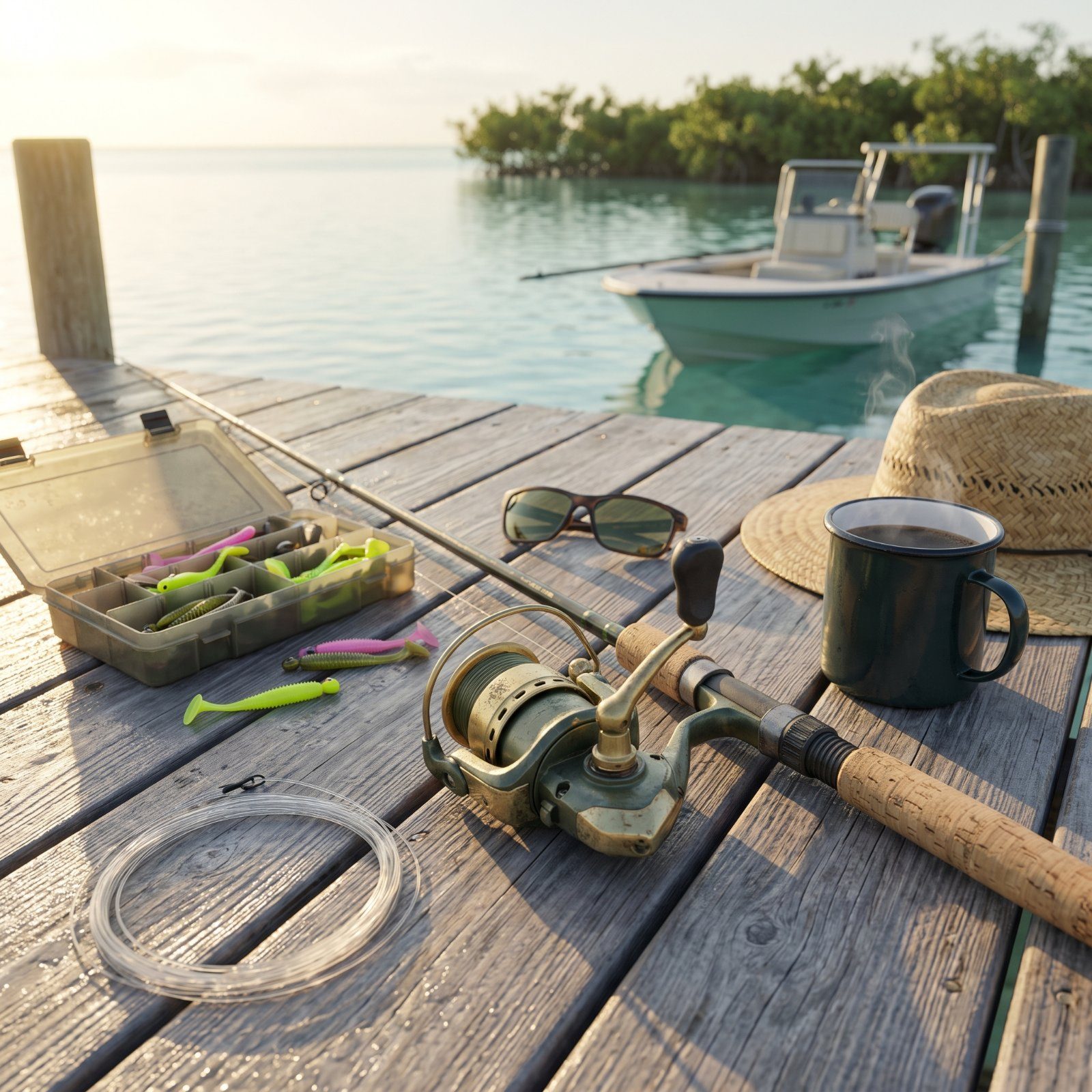
The dock creaks under your boots before the sun clears the mangroves, and the water lies so still you can hear a mullet jump two hundred yards off. That first hour is the whole reason people move to these towns. Not the amenities. Not the HOA pamphlet. The fishing, and the kind of slow afternoon that follows it. Some of the best fishing in the country sits a short ride from a modest house and a boat ramp you can back a trailer down without a crowd watching. These are the places where the water stays close and the pace stays honest. Grab coffee. Let’s go fishing.
Please note that some of the images in this article were created with the assistance of AI.
49. Stuart, Florida, Sailfish Mornings on the St. Lucie Inlet
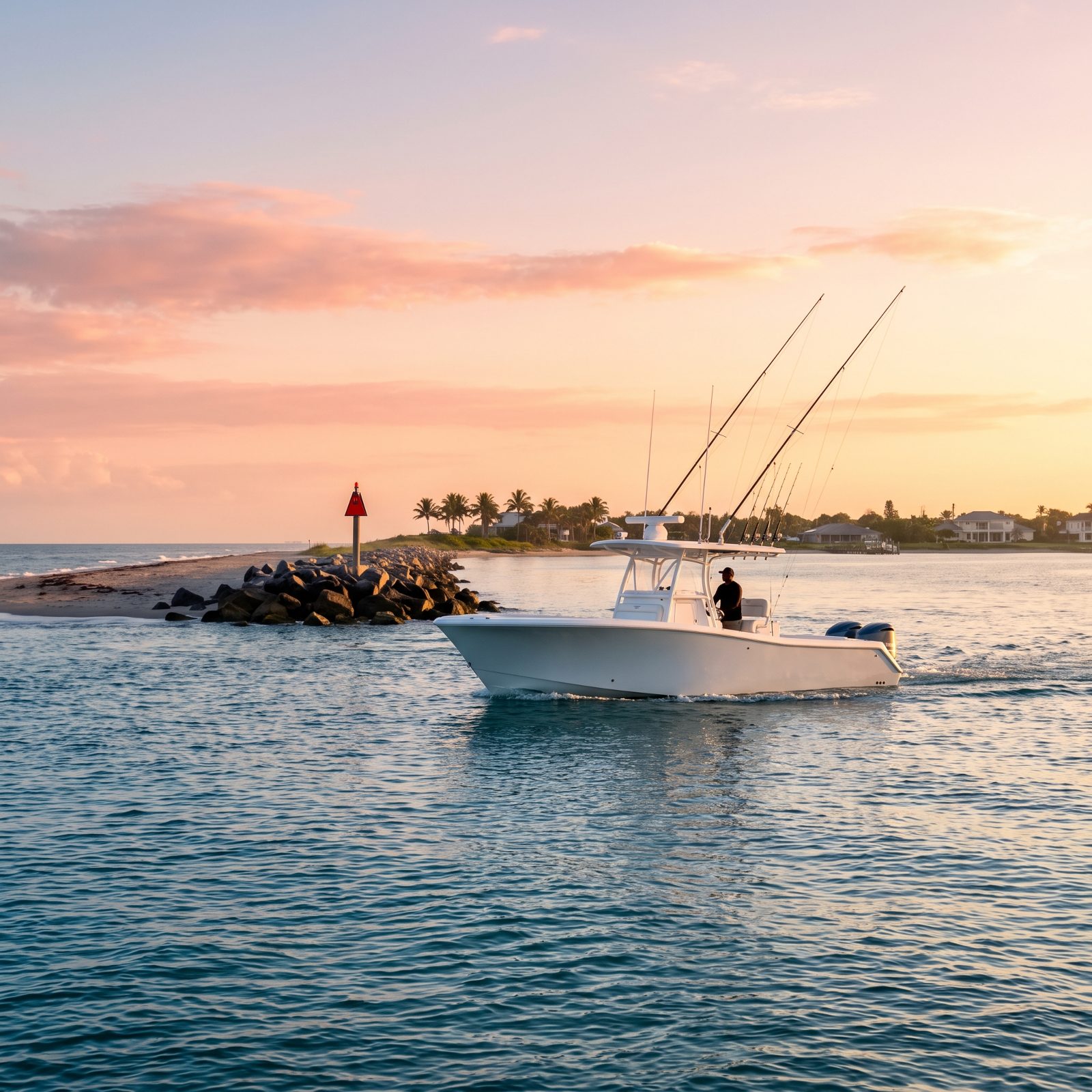
Stuart calls itself the Sailfish Capital, and for once the nickname earns its keep. Come winter, when cold fronts push bait south, sailfish stack up off the inlet in numbers that make grown anglers giddy. No forty-mile run required to find them.
The retiree math works here. Modest homes sit a short idle from blue water, and charter captains know most of their clients aren’t twenty-five anymore. Book a half-day, be back by lunch, and you’ve still got the whole afternoon ahead of you.
48. Rockport, Texas, Redfish and Speckled Trout on Aransas Bay
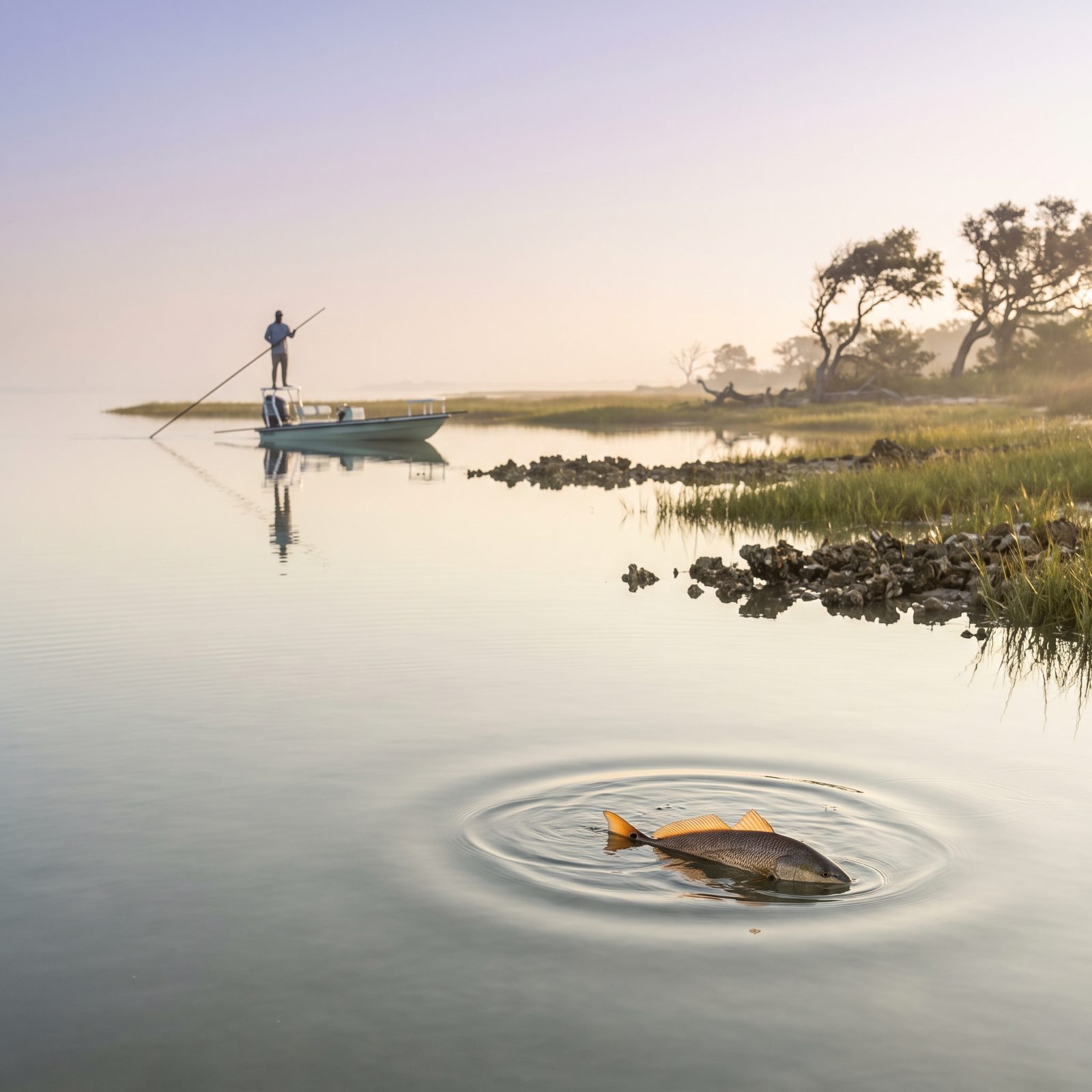
Rockport is where Texans who fish go to stop driving to the coast and just live there. The town took a hard hit from Hurricane Harvey in 2017 and rebuilt, and the fishing never left.
Aransas Bay runs shallow and grassy, which is exactly what reds and specks want. You can wade, you can drift, or you can pole a skiff and sight-cast to tailing redfish in a foot of water. Cost of living runs lower than the Florida coast, and that matters when you’re on a fixed income. Bring a stakeout pole and a wide-brim hat. The sun off that flat water is relentless by ten.
47. Punta Gorda, Florida, Back-Bay Fishing in Charlotte Harbor
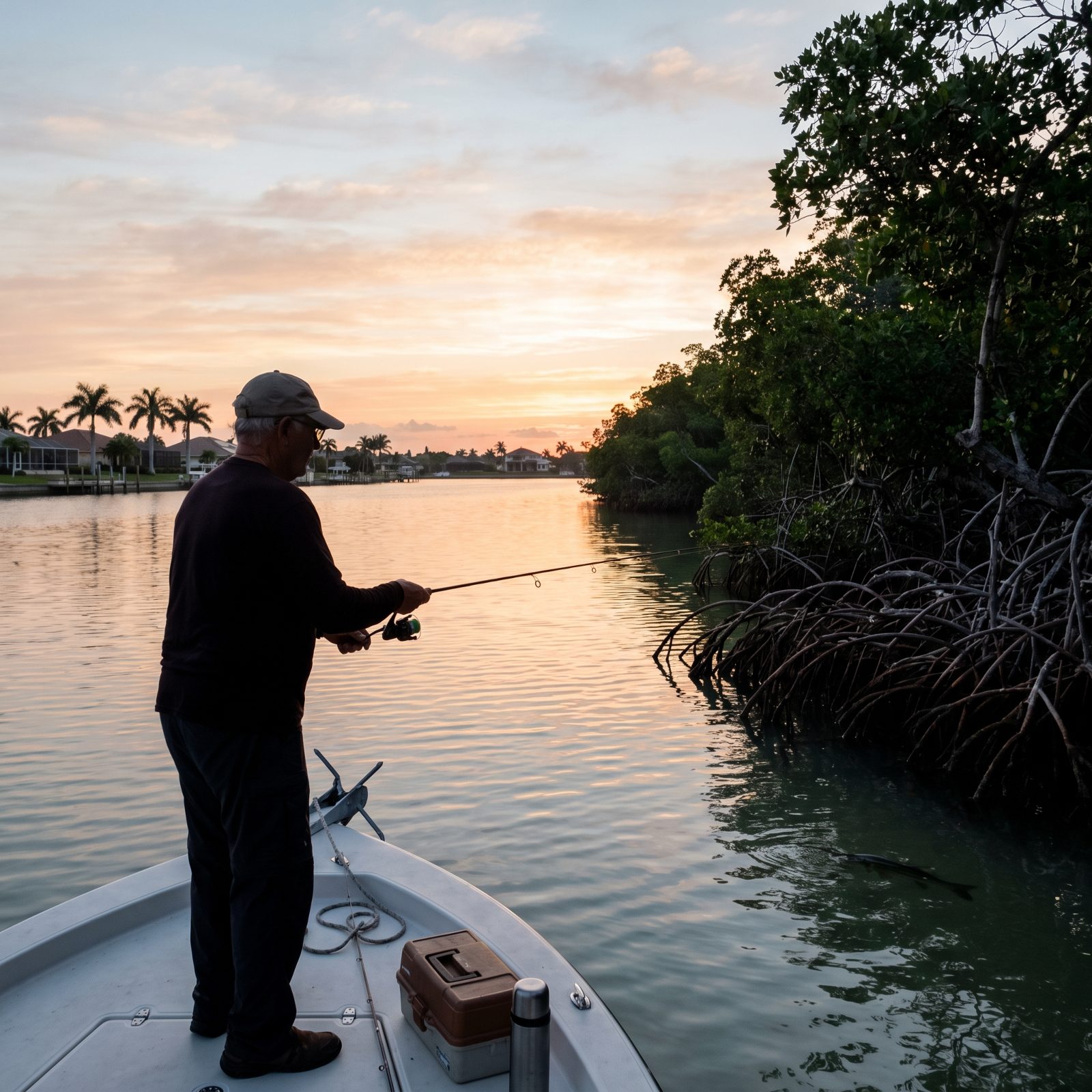
Charlotte Harbor is the second largest estuary in Florida, and most people have never heard of it. That anonymity is the gift. While crowds fight for ramp space farther south, Punta Gorda sits quiet at the mouth of the Peace River with miles of protected back bay.
The town rebuilt itself walkable and pretty after Hurricane Charley flattened it in 2004. Canal-front homes put a boat lift in your backyard, which means you fish on your schedule rather than the tide chart’s. Snook, redfish, and trout work the mangrove edges year-round. On a calm morning the water lies so flat you second-guess whether there’s any current at all.
46. Islamorada, Florida, A Retiree-Friendly Base in the Sportfishing Capital
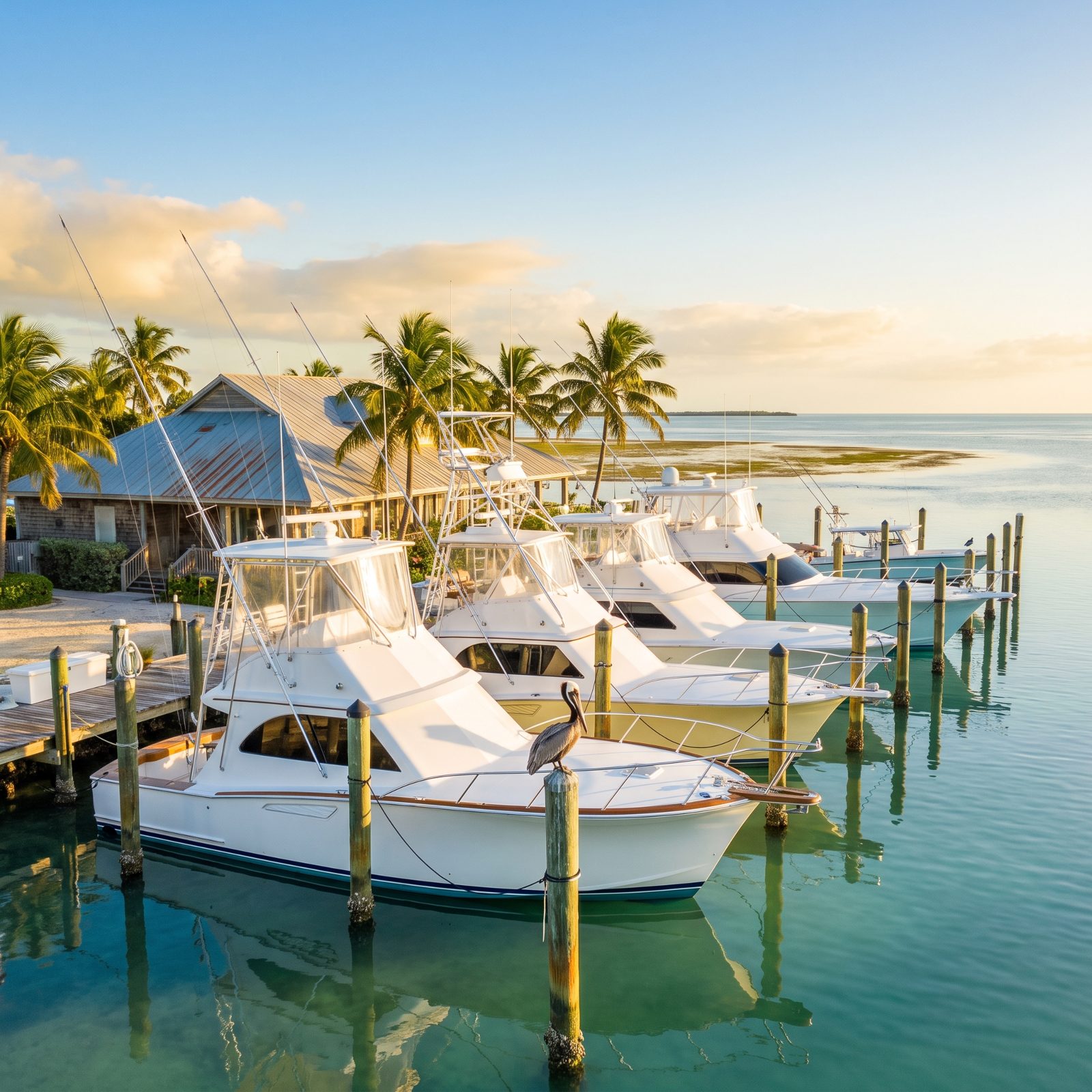
Islamorada packs more fishing into a few miles than seems fair. Bonefish and tarpon on the flats, mahi and sailfish out in the blue, and a tackle-shop culture that goes back to the days of wooden boats and hand-tied flies.
Now the honest part. The Keys are expensive, and the real estate will make your eyes water. Plenty of retirees split the difference by renting part of the year or buying a modest condo and skipping the waterfront premium.
45. Crystal River, Florida, Springs, Shallows, and Gulf Fishing
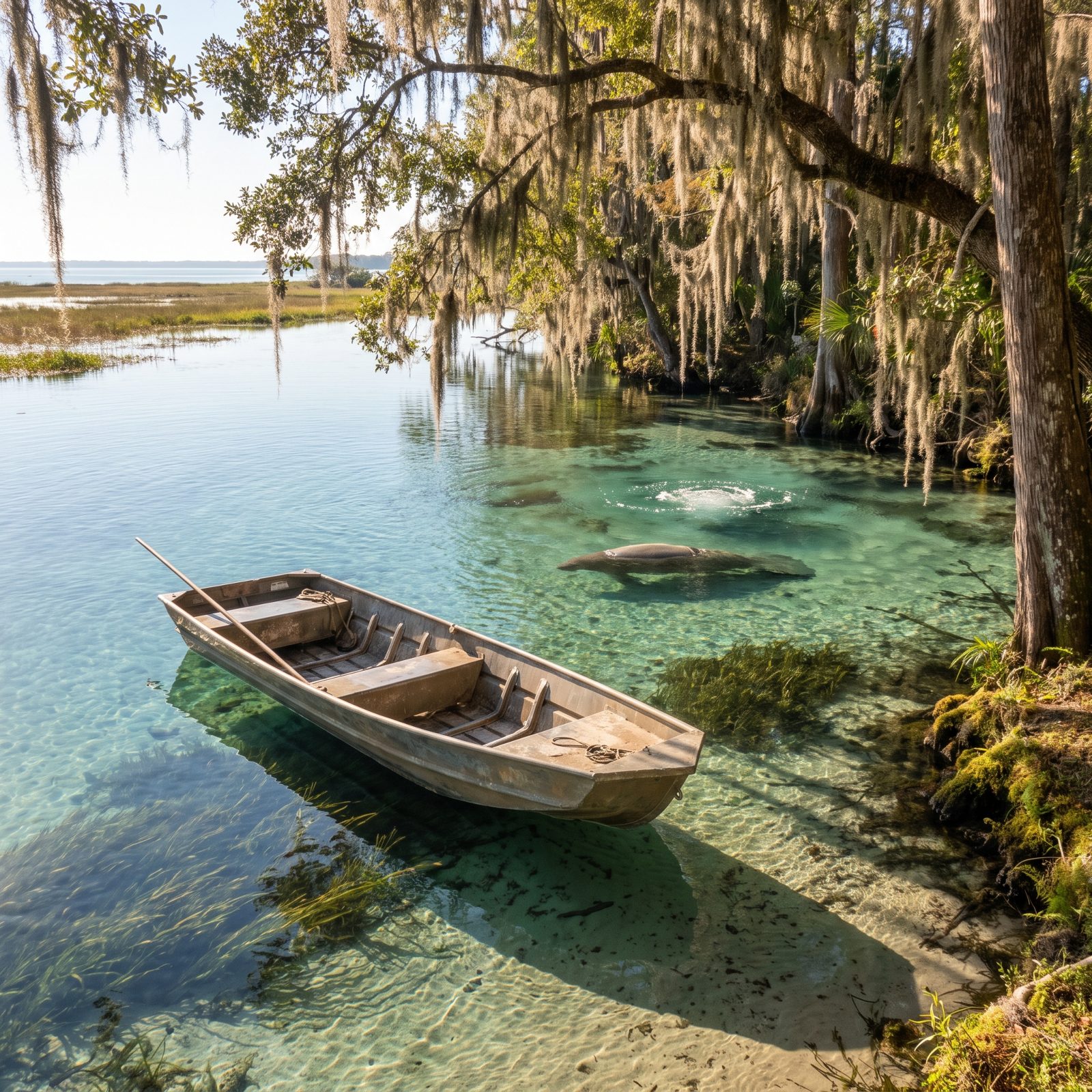
Crystal River gives you two kinds of water. Inland, you’ve got springs so clear you can count the blades of grass on the bottom, plus the manatees that made this town famous. Out past the river mouth, the Gulf flats hold redfish, trout, and some of the best summer scalloping anywhere.
Quieter and cheaper than the glamour towns down south. The pace suits folks who’d rather spend a morning poling a skiff than fighting marina traffic, and the spring water sits around 72 degrees all year, which keeps the fish feeding when cold snaps shut down the rest of the state.
44. Cedar Key, Florida, Old Florida Fishing Among Quiet Gulf Islands
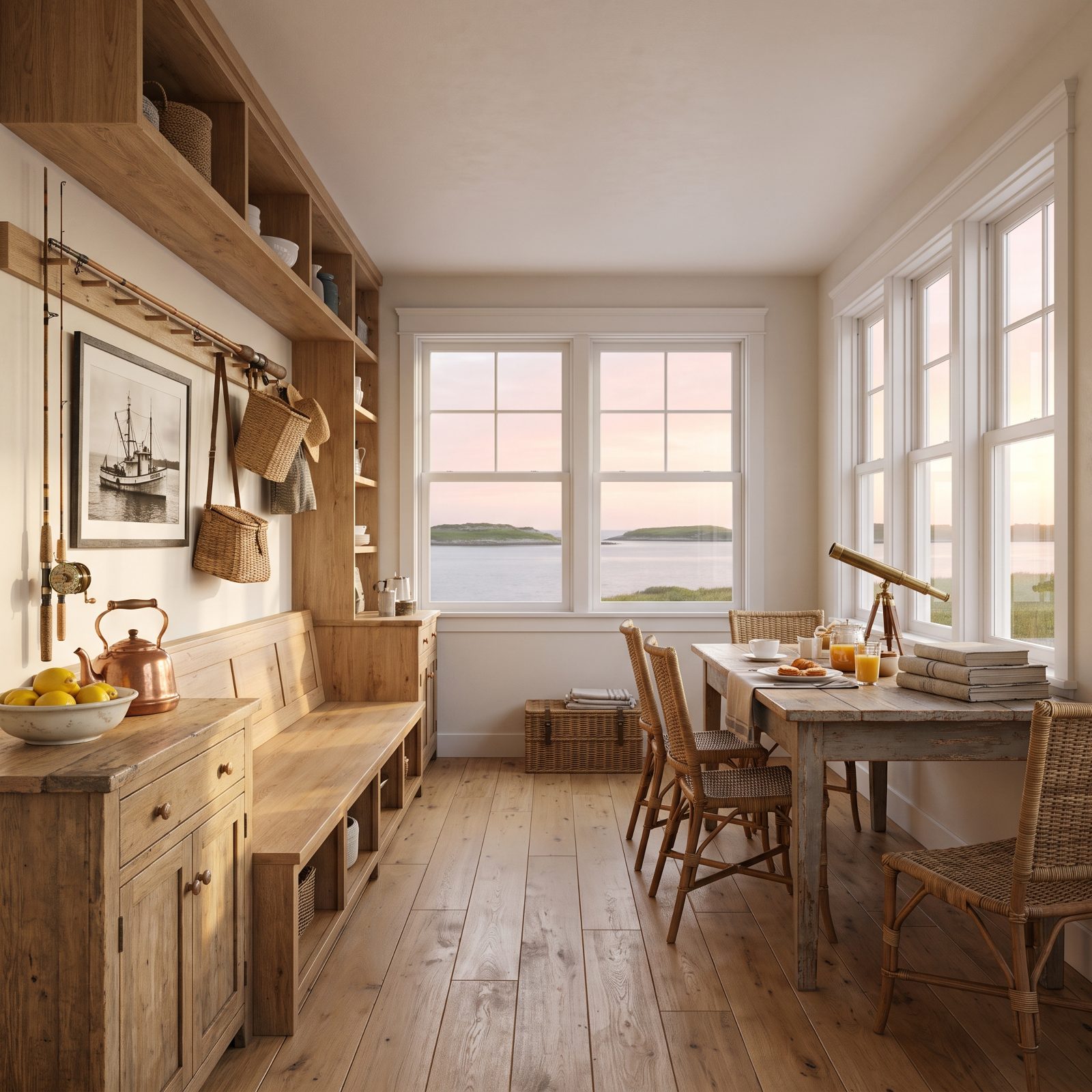
No chain restaurants. No high-rises. Cedar Key is what the rest of Florida looked like before the developers found it.
This little island town hangs off the Gulf coast on stilts, oyster bars and grass flats in every direction. You fish for trout, reds, and black drum in water nobody else is working, because getting here takes a real detour, and that detour is precisely what keeps it to yourself.
43. Sebastian, Florida, Snook and Redfish Along the Indian River Lagoon
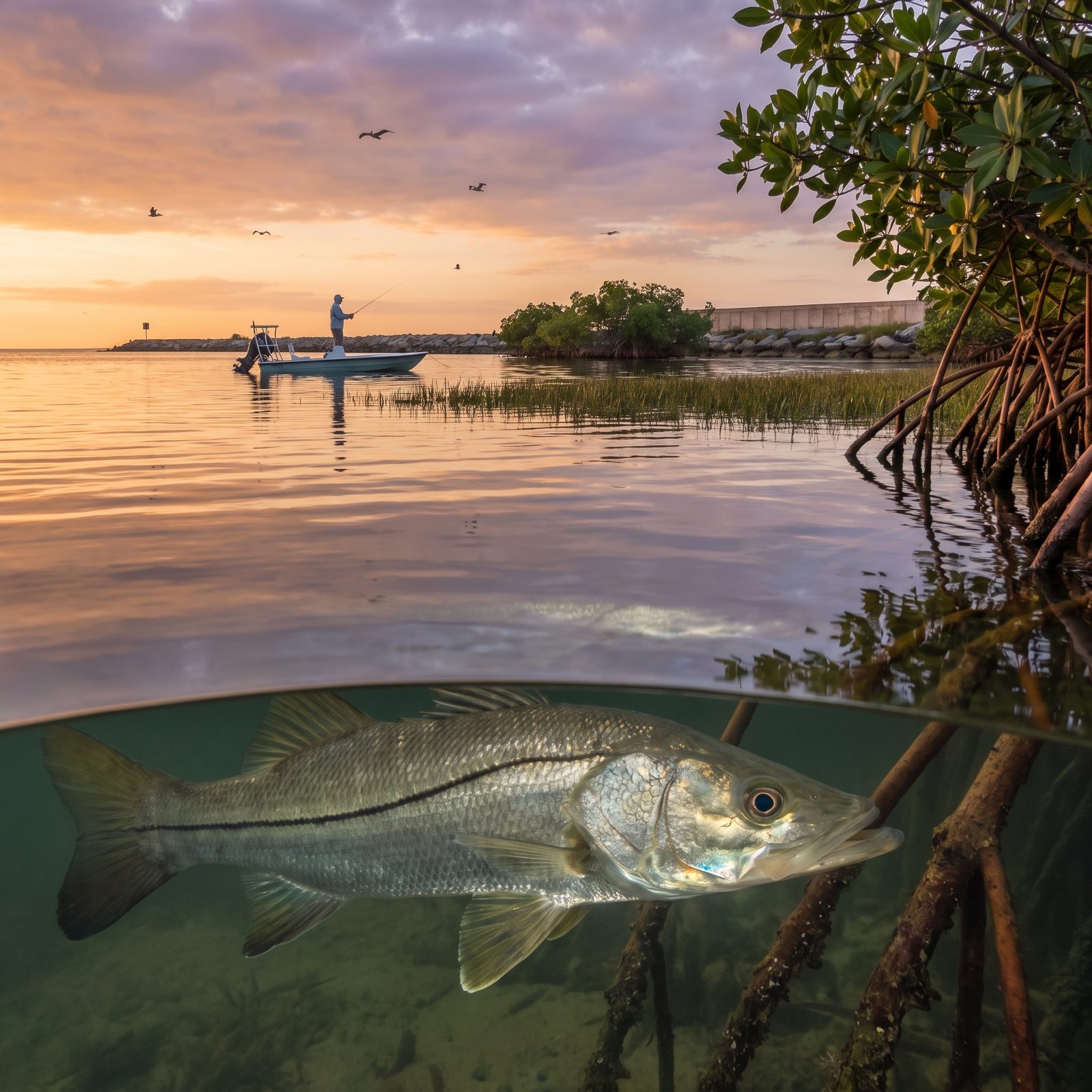
Sebastian sits on the Indian River Lagoon, one of the most diverse estuaries in North America, and the fishing proves it. Snook ambush bait along the mangroves, redfish push through the grass, and the famous Sebastian Inlet draws everything from tarpon to Spanish mackerel as the tide runs.
The town stays affordable by Treasure Coast standards and keeps its old fishing-village feel. Locals launch at dawn, fish the moving water at the inlet, and are home before the afternoon heat. The lagoon has had its ecological struggles, so keep an eye on seasonal regulations. Snook especially open and close on a schedule worth checking before you keep one.
42. Okeechobee, Florida, Legendary Largemouth Bass at the Big Lake
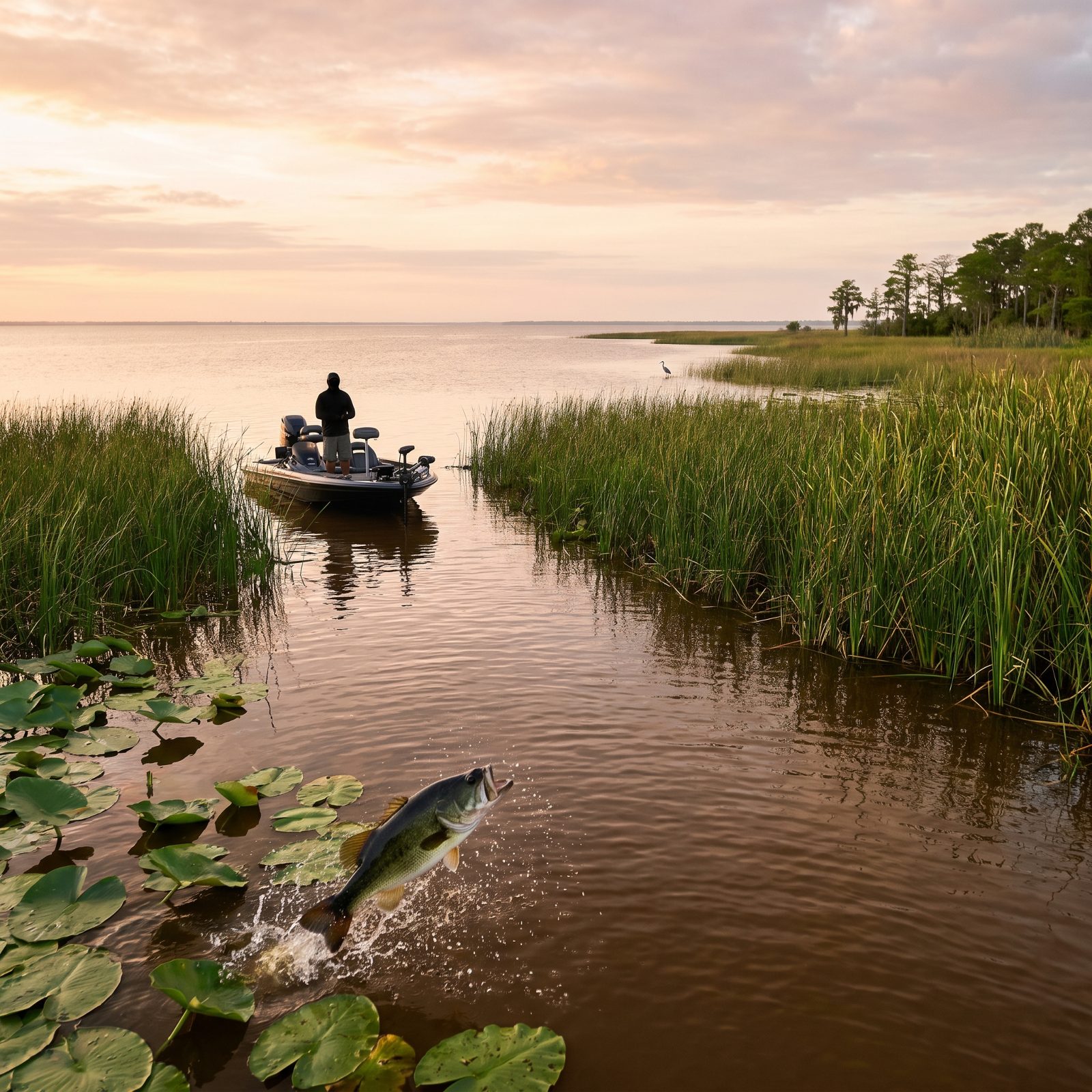
Okeechobee is not a coastal town, and that’s exactly the point. If saltwater isn’t your thing, the Big Lake ranks among the best largemouth bass fisheries in the country, and the land is cheap enough to make a retirement budget breathe.
The 730-square-mile lake is a maze of reeds, pads, and open water. Giant bass live in there, the kind that make a guide whisper. Winter and spring are prime, when fish move shallow to spawn.
Some people chase trophy bass their whole lives and never think to just move where the trophies live.
The town itself is modest, agricultural, and unpretentious. You come for the fishing and the price, not the nightlife.
41. Venice, Florida, Tarpon, Snook, and a Pier Made for Sunrise Fishing
Not everyone wants to own a boat. Venice gets that.
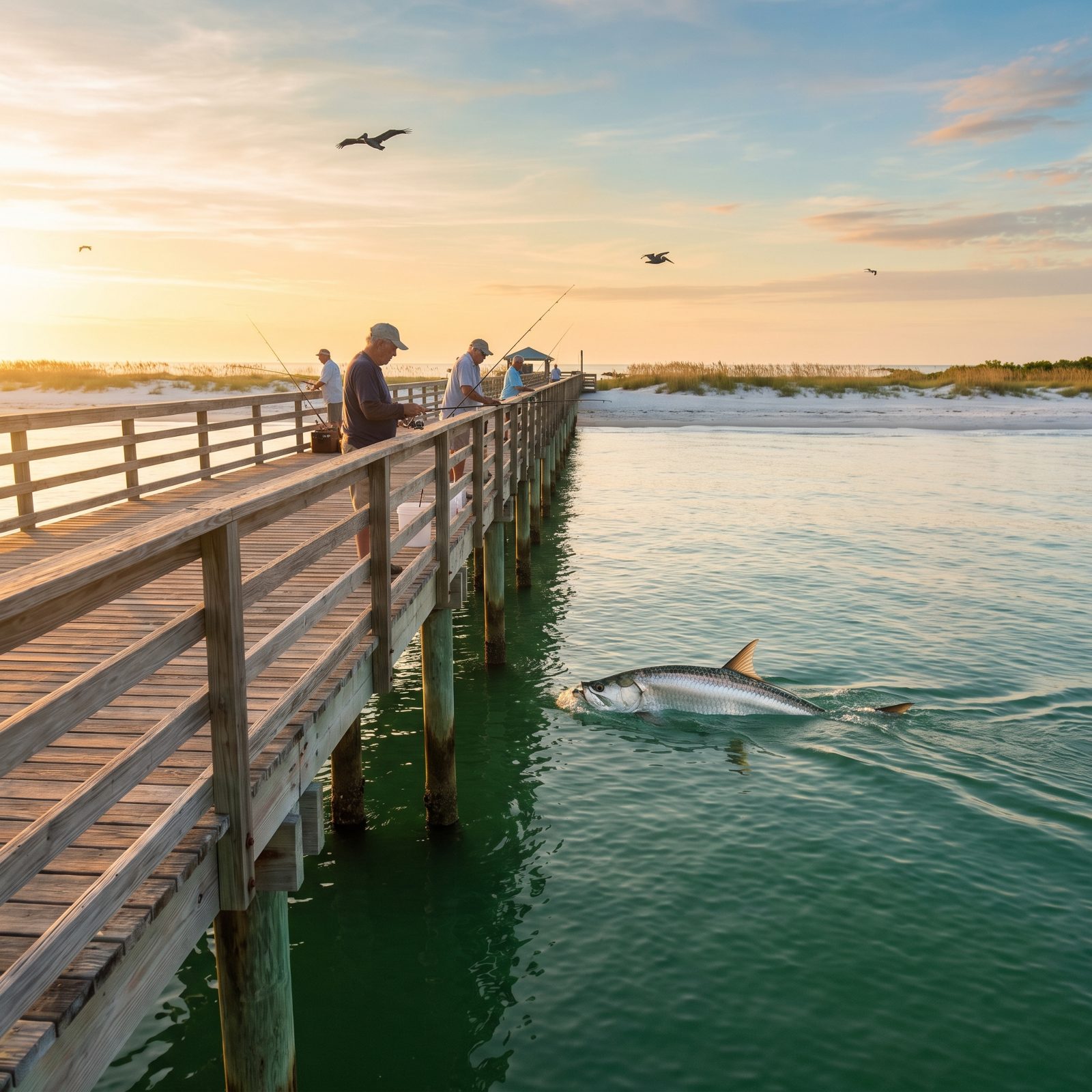
The city’s fishing pier runs along the shoreline right over the surf, with white sand and dunes just beside it, and from spring through summer, tarpon roll right past it. Snook stack under the pilings, and the sunrise from that pier is worth the early alarm by itself. You fish on foot, no trailer, no fuel bill, no launch headache.
The town is retiree-friendly to its core, walkable downtown and all, with the fishing woven right into daily life.
40. Fernandina Beach, Florida, Jetties and Tidal Creeks on Amelia Island
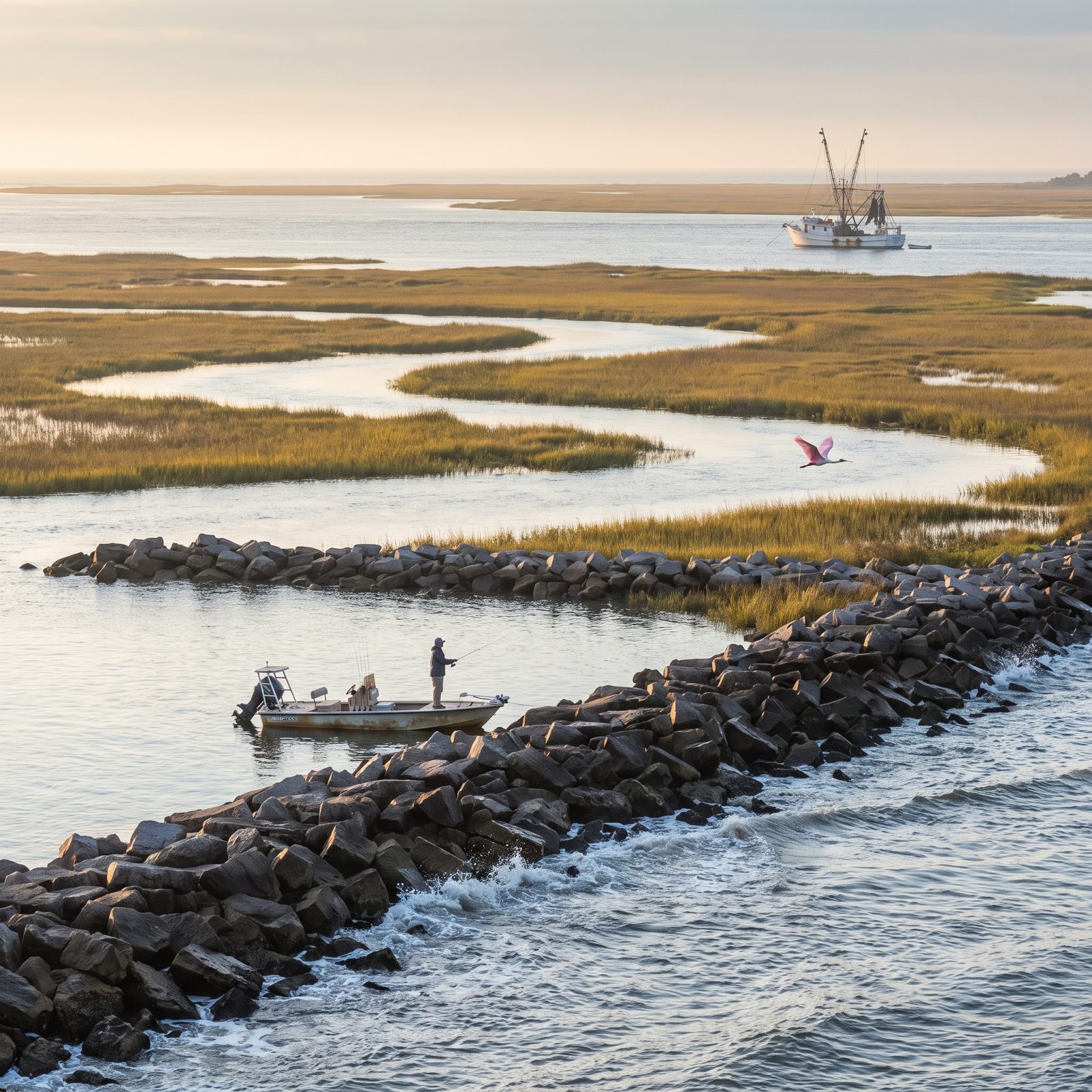
Fernandina Beach anchors the north end of Florida, close enough to Georgia that the fishing shifts with the seasons in a way the tropics never do. The St. Marys jetties hold redfish, flounder, sheepshead, and black drum, while the tidal creeks behind Amelia Island fill with reds on the flood.
The town has a real downtown, Victorian architecture, and a working shrimp fleet that’s been here for generations. That mix of history and fishing makes it feel like a place, not a resort. Tides swing big up here, often six feet or more, so the whole game revolves around moving water. Learn the local tide chart and the rest comes easy.
39. Gulf Shores, Alabama, Pier Fishing and Gulf Charters Close to Home
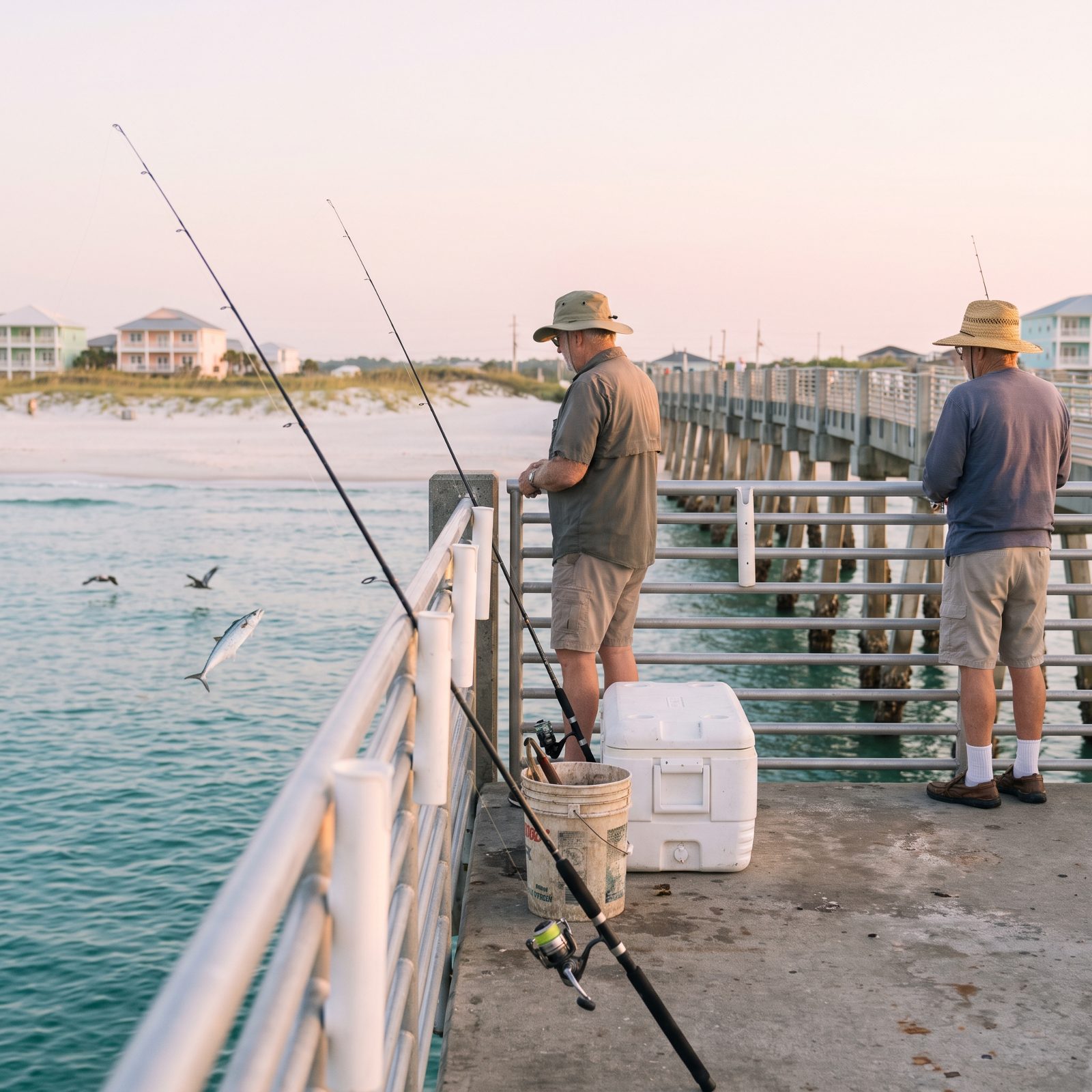
Gulf State Park Pier runs roughly 1,540 feet into the Gulf, and that reach puts king mackerel, Spanish mackerel, and the occasional cobia in front of anyone who can walk and bait a hook. No boat. No captain. No four-figure charter bill, just a daily pass and some patience.
Here’s what people miss. The pier bite follows the bait, so when the Spanish are schooling in fall you’ll watch the whole rail hook up at once, and when they’ve moved off you’ll stand there all afternoon wondering what you did wrong. Nothing. The fish just left.
Want deeper water? Charters run out of Orange Beach next door for red snapper when the season’s open, but that season is short and the rules shift year to year, so check before you book.
38. Bay St. Louis, Mississippi, Speckled Trout Along the Mississippi Sound
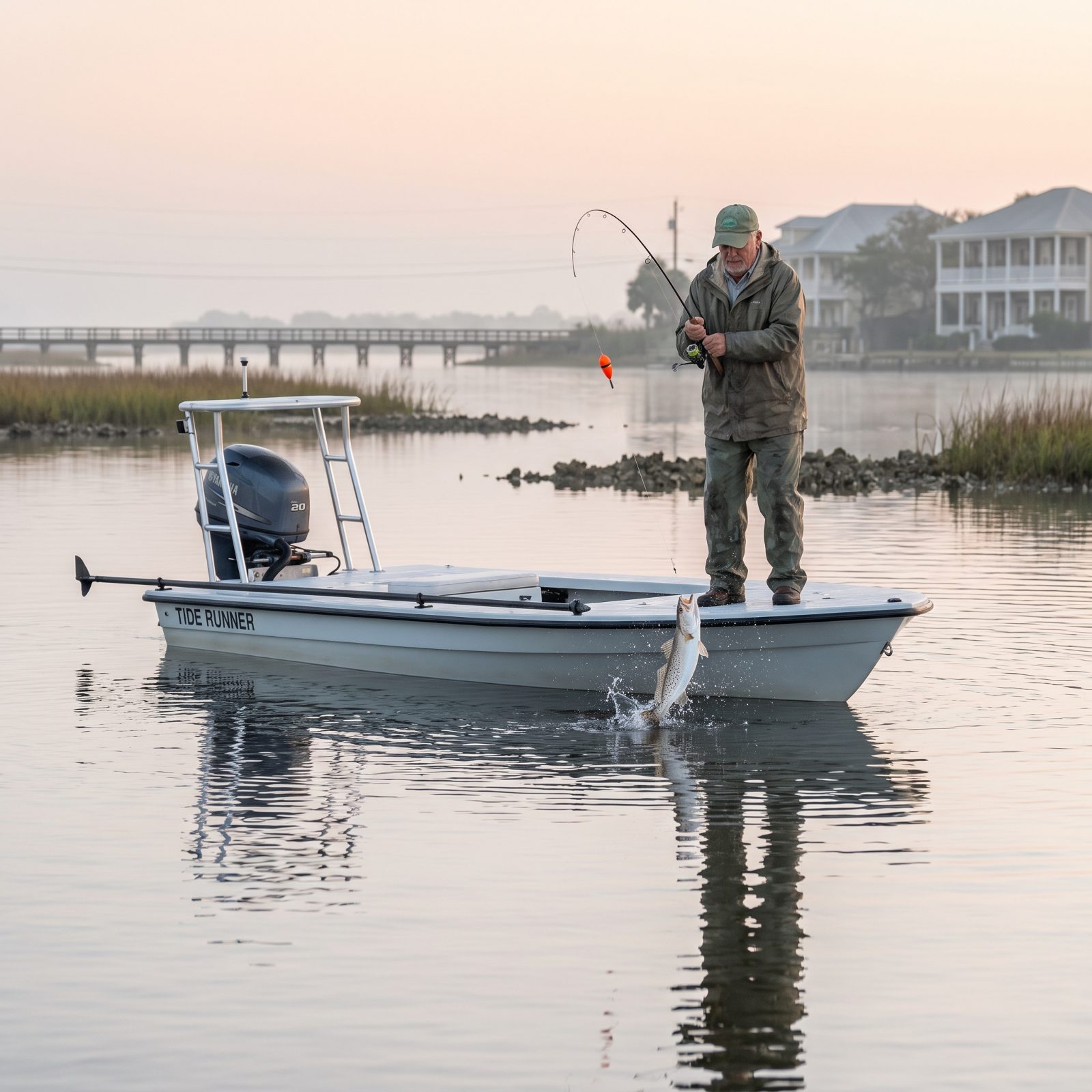
Bay St. Louis is the kind of town where the hardware store still knows your name and the speckled trout bite starts a short run from the launch. The Sound here is shallow and grassy and dotted with oyster reefs, which is exactly what specks and redfish want.
Popping cork, live shrimp under it. That one rig has fed more Mississippi families than I can count, and it still outfishes fancy gear most mornings. Spring and fall are the windows when the trout stack up predictably. Summer gets brutal, the fish go deep and early, and you’ll be on the water before the coffee’s even cold.
37. Port Aransas, Texas, Gulf Fishing From Jetties, Piers, and Charter Boats
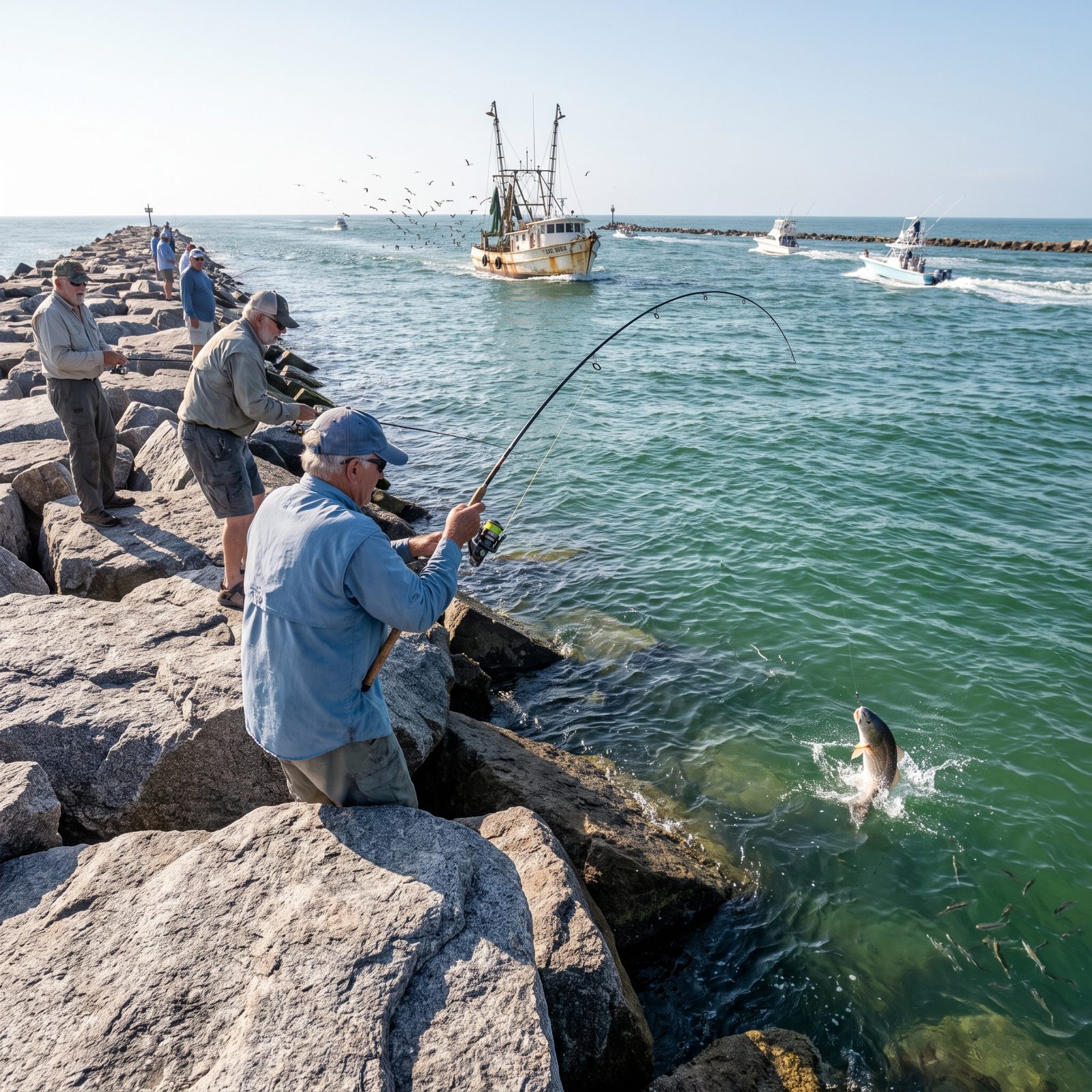
Port A hands you three fisheries without ever leaving town. The south jetty draws redfish, black drum, and sheepshead right up against the rocks. Horace Caldwell Pier takes care of the folks who’d rather not scramble over granite. And the charter fleet runs offshore for red snapper, kingfish, and the big bull reds that show up near the pass.
An honest word about the jetties: those rocks are slick, uneven, and no place to be careless. Wear shoes with grip, bring a friend. More than one good fishing day out there has ended with a turned ankle.
36. Beaufort, South Carolina, Redfish in the Lowcountry Marshes
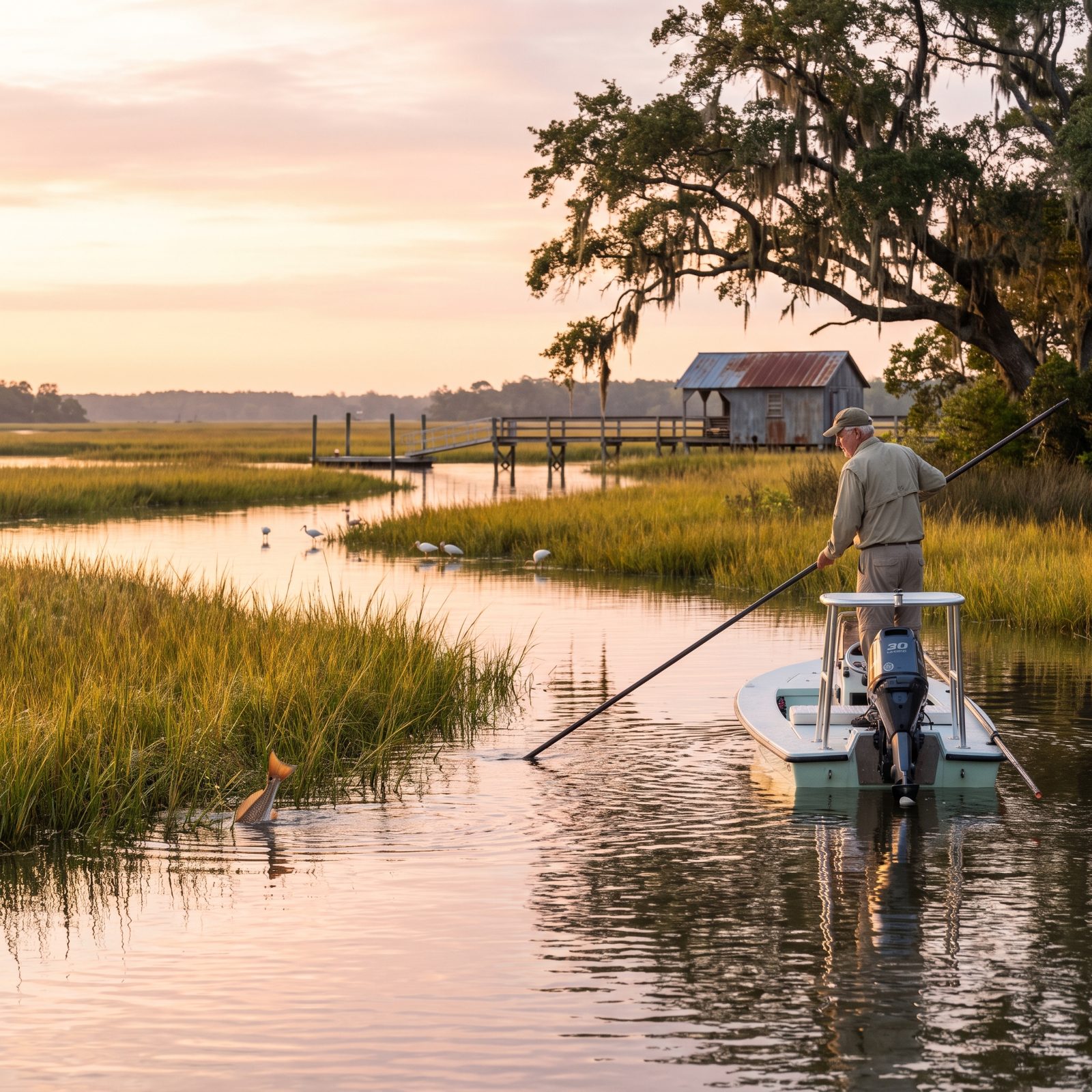
Beaufort sits in a maze of tidal creeks, Spanish moss, and marsh grass that goes gold in the fall. Redfish are the headline act, and the showstopper is the tailing bite. On a high spring tide, reds push up into the flooded grass to root for crabs, tails waving in the air, and you sight-fish them one at a time. It’s as close to hunting as fishing gets.
The town itself pulls in retirees with its antebellum homes and oak-lined streets, slower than Charleston and cheaper too. Fly anglers come here on purpose. Never thrown a fly at a tailing red? This is the place to learn why people get obsessed.
35. Murrells Inlet, South Carolina, Creek Fishing Beside the MarshWalk
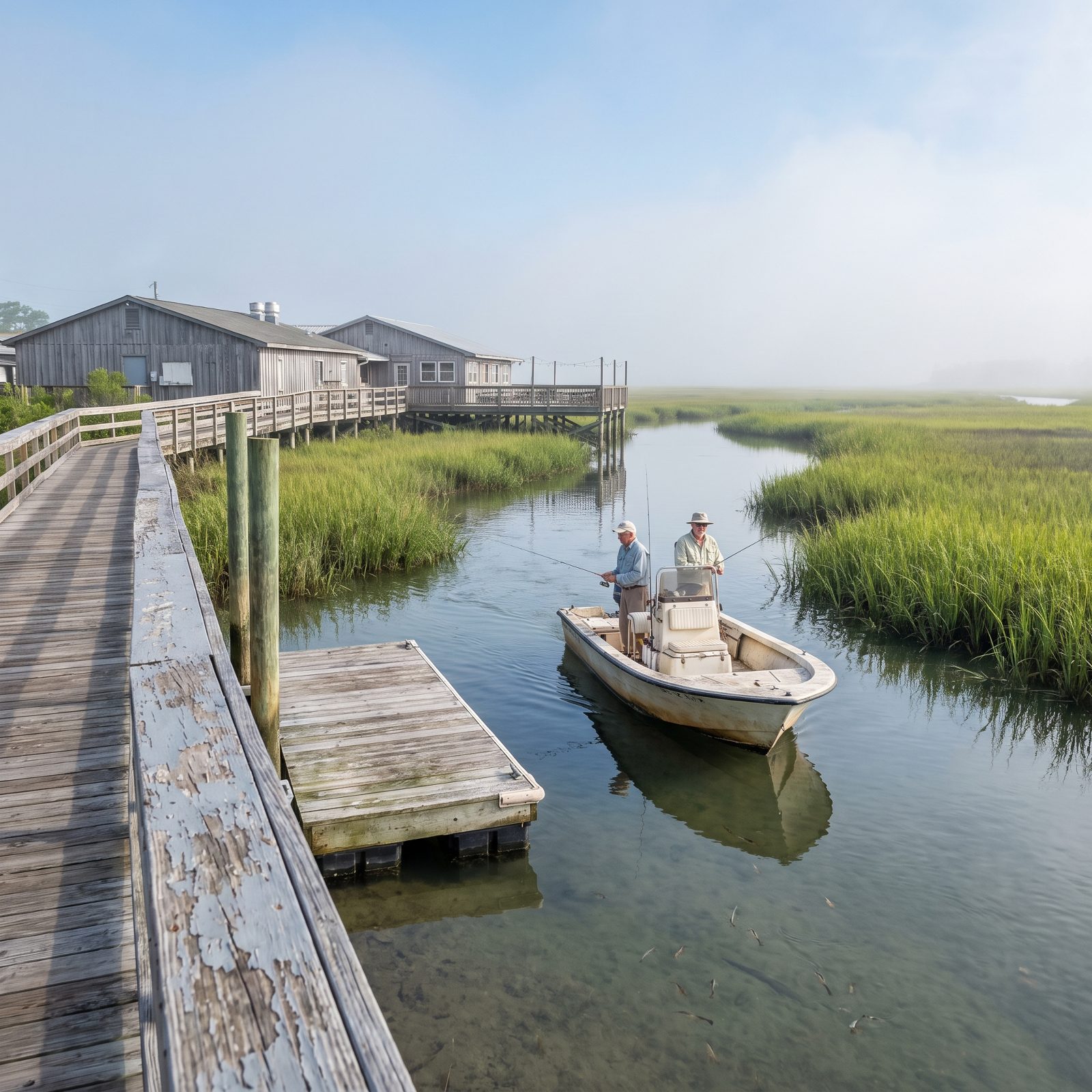
Murrells Inlet calls itself the Seafood Capital of South Carolina, and the MarshWalk strip of waterfront restaurants is the social center. Past the docks, though, the creeks hold flounder, specks, and redfish for anyone with a small boat or a kayak.
Here’s the trade most retirees like: fish the morning tide back in the quiet water, then tie up and walk to lunch right on the water. Ask a local about the flounder gigging at night, a tradition worth your curiosity. Shallow, social, and no need to run offshore into anything rough.
34. Edenton, North Carolina, Largemouth Bass and Striped Bass on Albemarle Sound
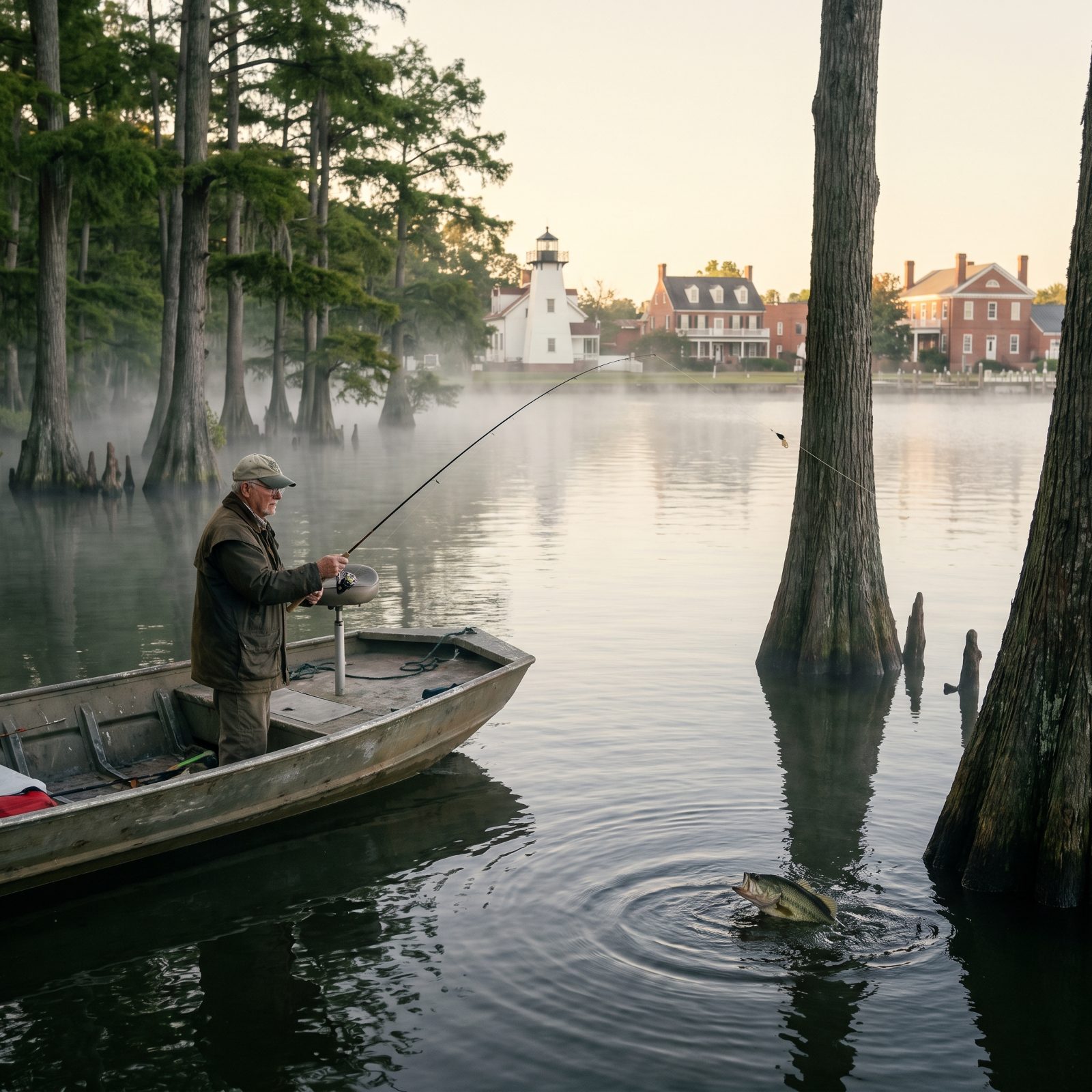
Edenton is one of the oldest towns in North Carolina and one of the most overlooked fishing spots on the coast. Albemarle Sound runs brackish-to-fresh, it’s enormous, and it holds a largemouth population that would make an inland angler weep.
The striped bass fishery here has bounced around with regulations, so check current rules before you keep anything. The bass fishing along the cypress shoreline is another matter entirely, steady and under-pressured. You’ll have whole stretches of water to yourself.
Few waterfronts this historic come with bass fishing this quiet. Edenton is the rare place that hasn’t been found yet.
Affordable, walkable, proud of its 1767 courthouse. For a retiree who wants water, history, and low cost in one package, it’s hard to beat.
33. Morehead City, North Carolina, Nearshore and Offshore Fishing From the Crystal Coast
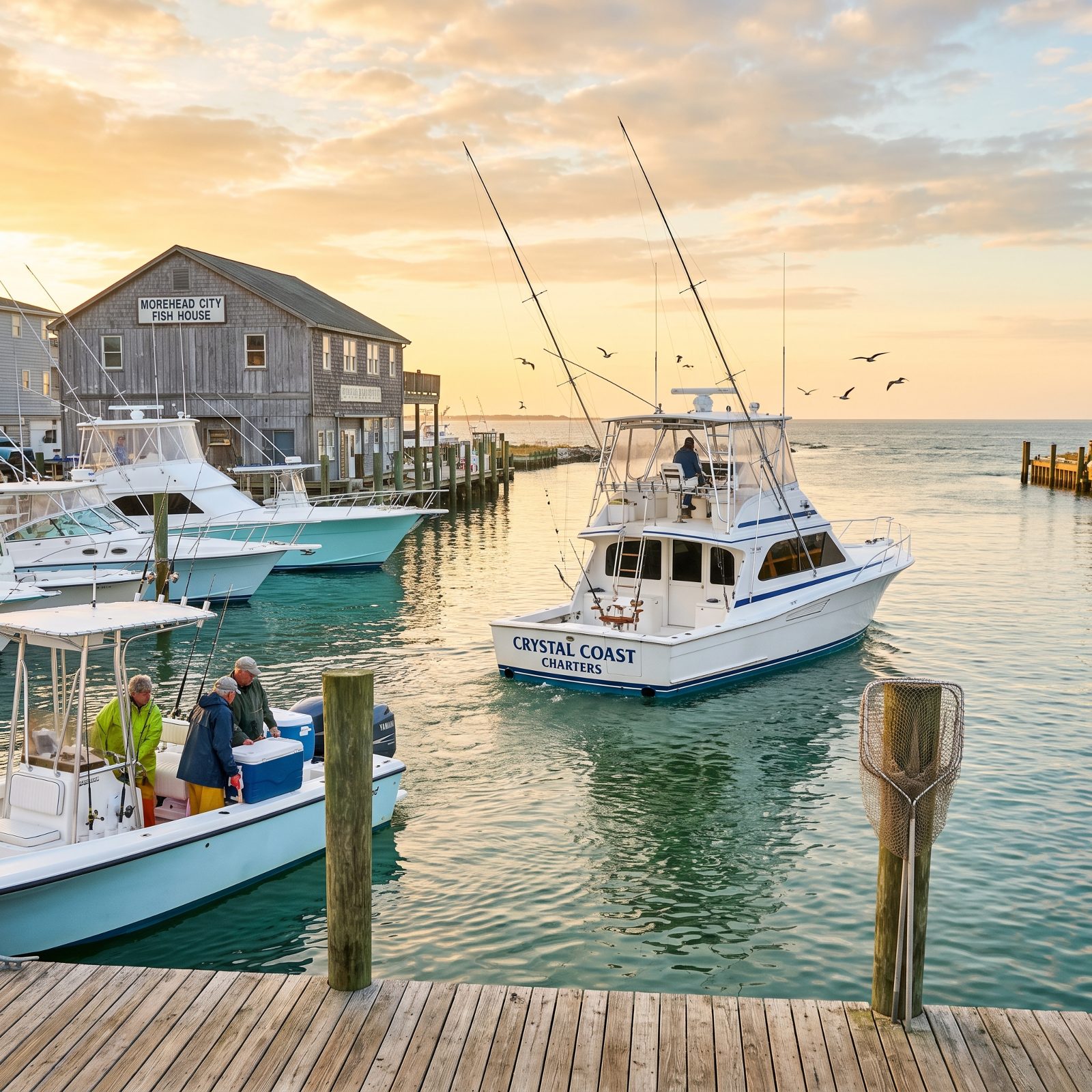
Morehead City is a serious fishing town, home to the big-money Big Rock Blue Marlin Tournament every June. But you don’t need a billfish budget to enjoy it.
Nearshore, the fleet runs for Spanish mackerel, false albacore in the fall, and bottom fish on the ledges. Go offshore and you’re into the Gulf Stream for mahi, tuna, and wahoo, though that’s a long, pricey ride. For most folks the half-day nearshore trip is the sweet spot: shorter run, calmer water, plenty of action.
Across the harbor sits Beaufort, prettier and pricier. Morehead City is where the working boats live.
32. Southport, North Carolina, River, Inlet, and Atlantic Fishing in One Town
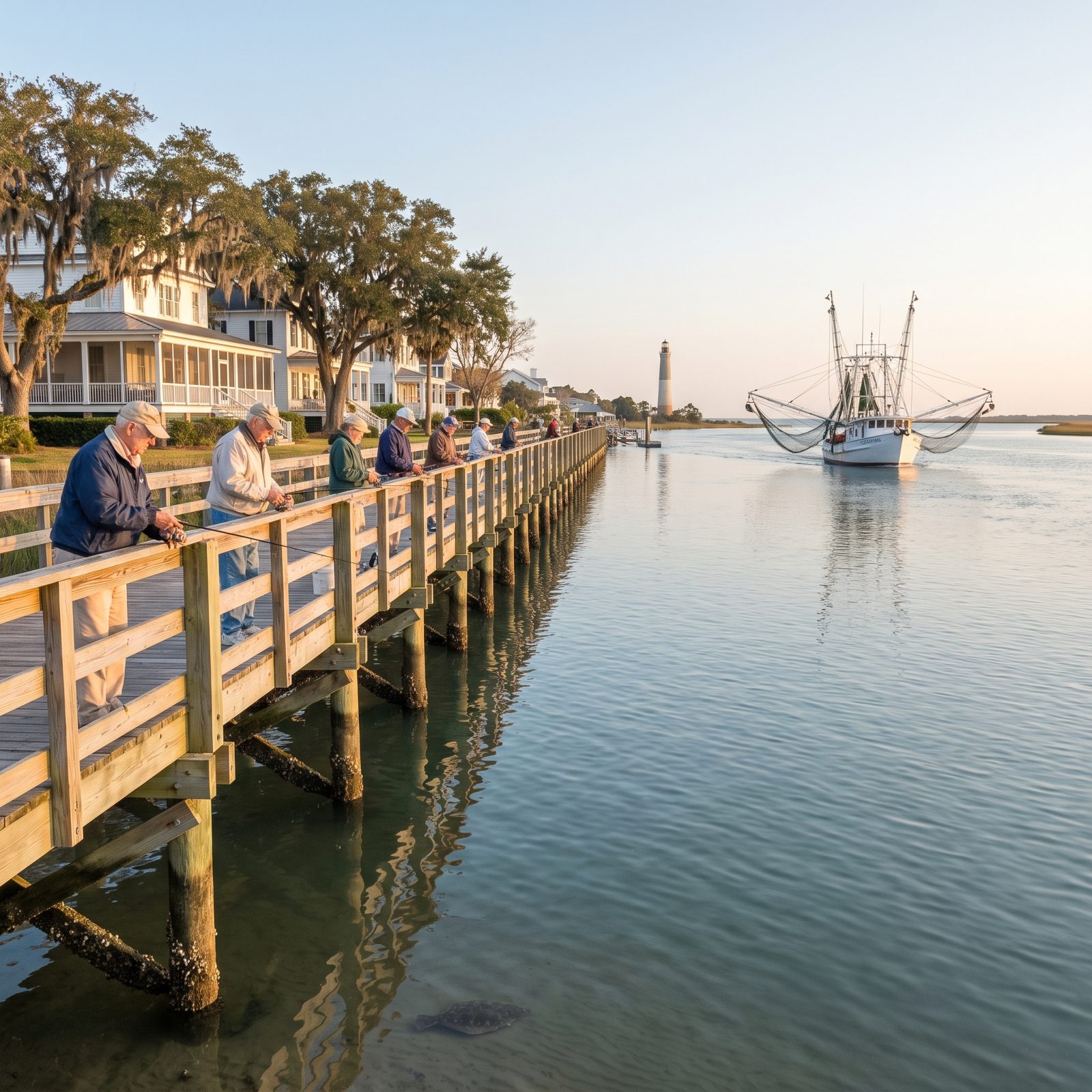
Southport sits right where the Cape Fear River empties into the Atlantic, which means three distinct fisheries without driving anywhere. River fishing for stripers and flounder. Inlet fishing where the bait funnels through. And the open Atlantic out past the point.
The town is a coastal postcard, Victorian homes and oak-shaded streets, which keeps landing it on retirement lists. Between the Southport Fishing Pier and the ferry to the Bald Head Island area, you’ve got plenty of access without owning a boat.
One honest note: it’s gotten popular, and prices have climbed right along with it. The fishing is still excellent. The waterfront bargains are mostly gone.
31. Oriental, North Carolina, A Quiet Fishing and Boating Village on the Neuse River
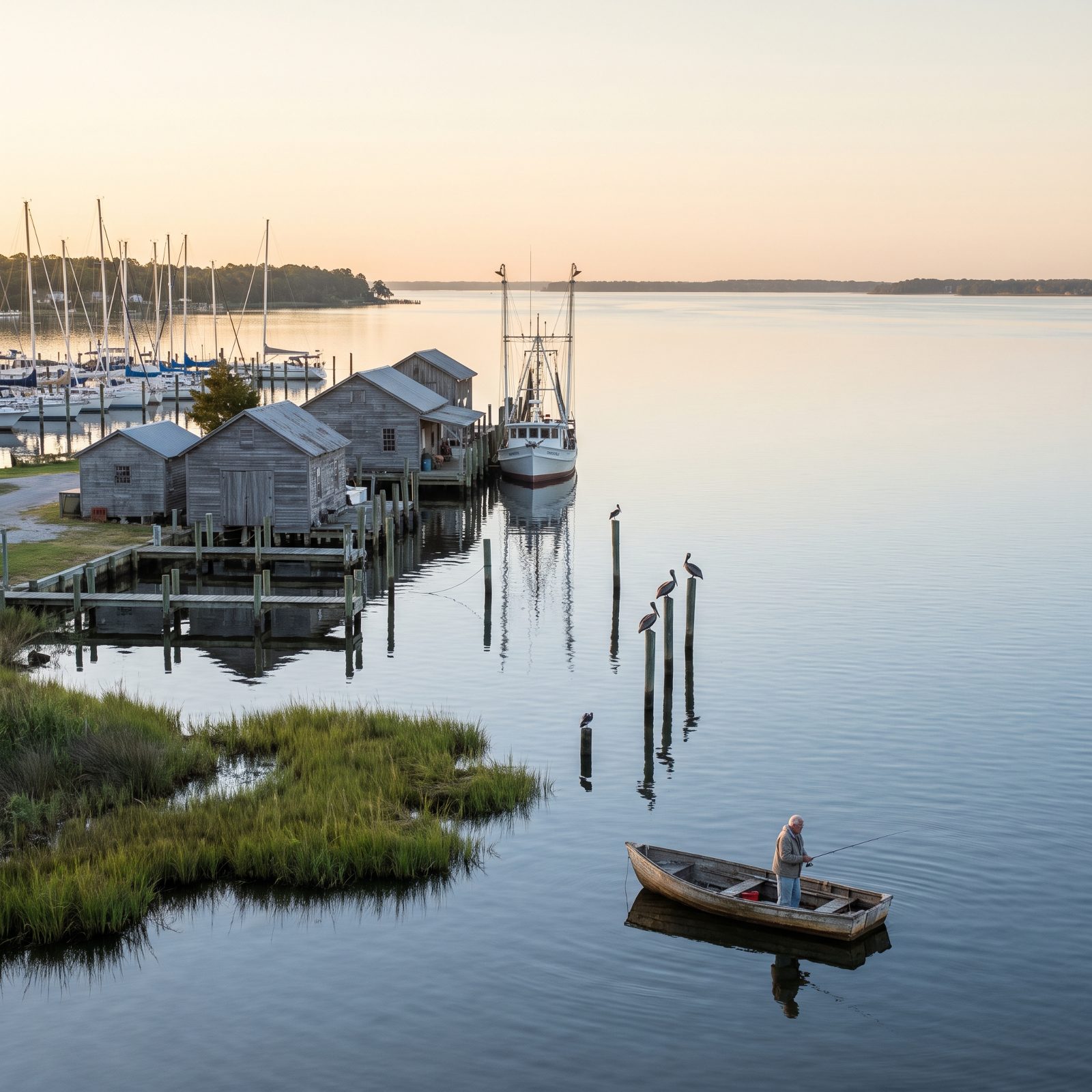
Oriental has around 900 residents and, by local reckoning, more boats than people. It calls itself the Sailing Capital of North Carolina, but the fishing is the quiet draw.
The Neuse River here is wide and brackish, loaded with red drum, speckled trout, and some genuinely big old drum in the fall run. This is a village, not a resort. No beach. No boardwalk. No crowds. For a retiree who wants to keep a small boat, know the harbormaster by name, and fish when the mood strikes, few places feel this unhurried.
30. Cape Charles, Virginia, Gentle Chesapeake Bay Fishing From a Historic Shore Town
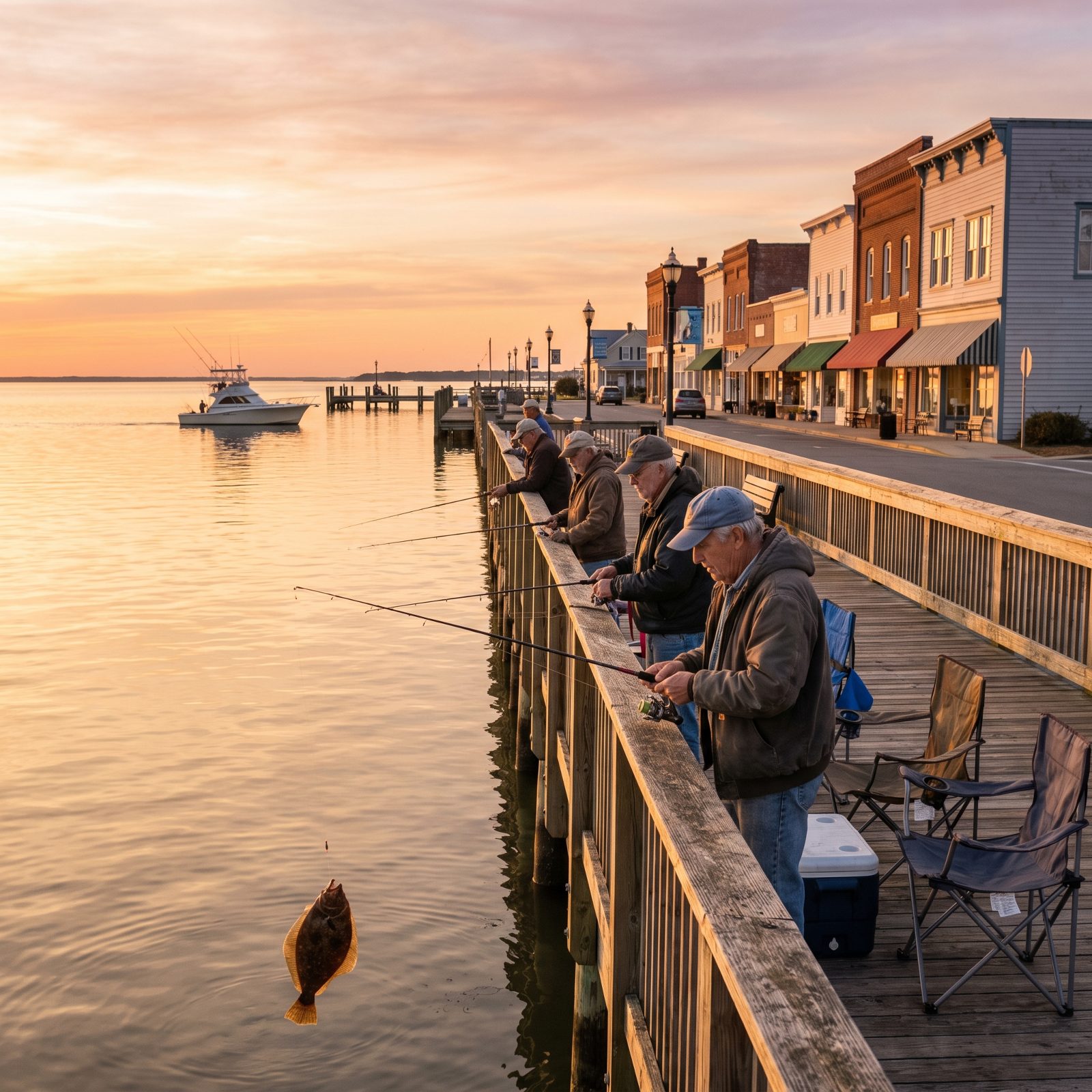
Cape Charles sits on Virginia’s Eastern Shore, a town of old railroad-era buildings with one of the few public beaches on the bay side where the water stays calm and the sunsets face west.
The Chesapeake here holds flounder, croaker, spot, and the striped bass they call rockfish. Charters run out to the Chesapeake Bay Bridge-Tunnel pilings, which pull fish in like a magnet. Sheltered compared to the open Atlantic, the bay stays gentle, and that matters a lot if you’re done getting knocked around offshore.
Small, walkable, affordable, and slowly waking up. Get here before it finishes.
29. Cambridge, Maryland, Choptank River Fishing on the Eastern Shore
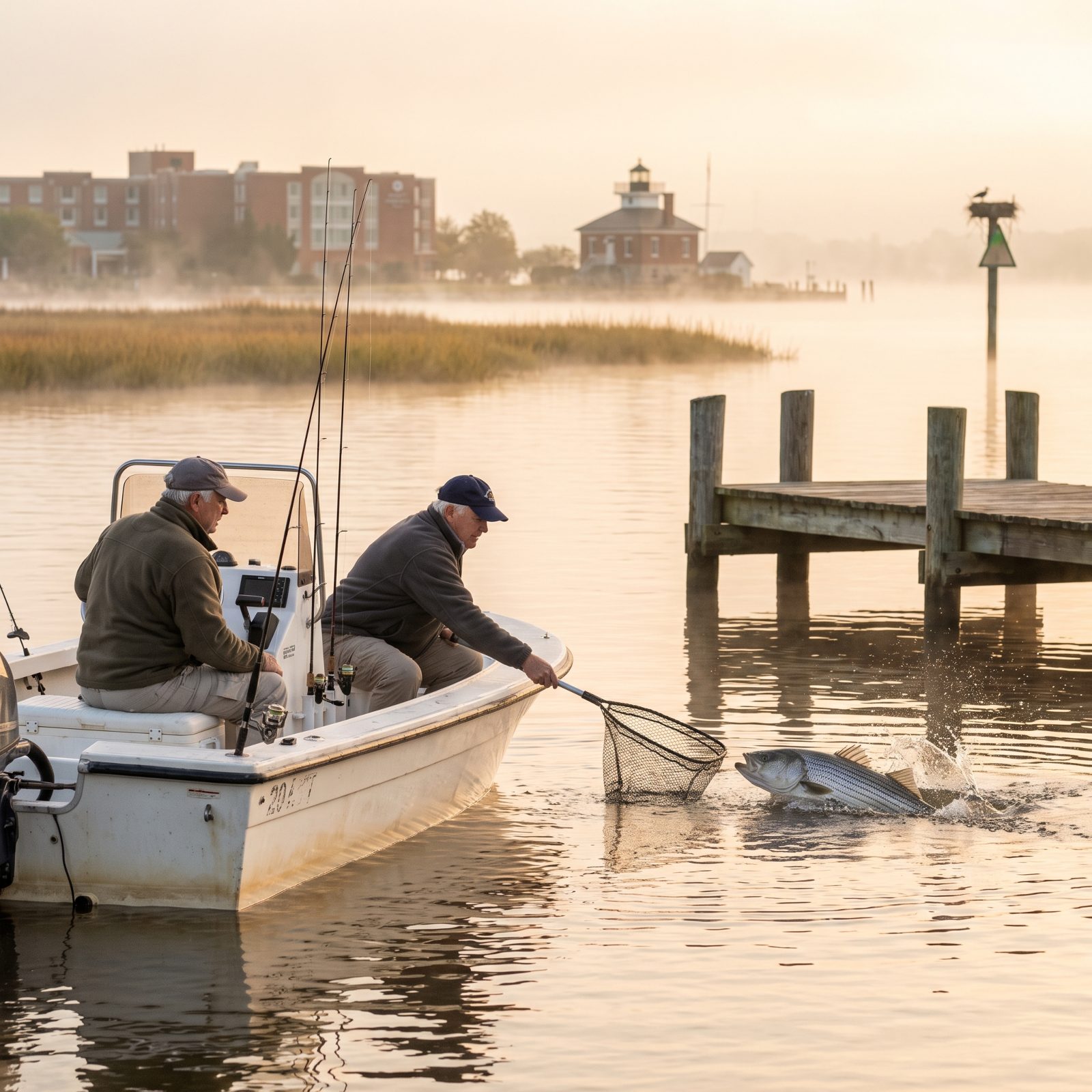
The Choptank is wide, slow, and forgiving, which is exactly why it suits a retiree who wants fishing without a fight to get there. Striped bass, white perch, and some outstanding late-summer red drum all run through here, and you can reach most of it from a modest skiff or even a public pier.
Cambridge is cheap by Chesapeake standards. Real estate near the water still sells for a fraction of what you’d pay across the Bay Bridge. The downside nobody mentions? Summer heat and biting flies in the marsh that’ll drive you off the water by nine. Fish the shoulder seasons and you dodge all of it.
28. Rock Hall, Maryland, Chesapeake Bay Angling With a Walkable Harbor
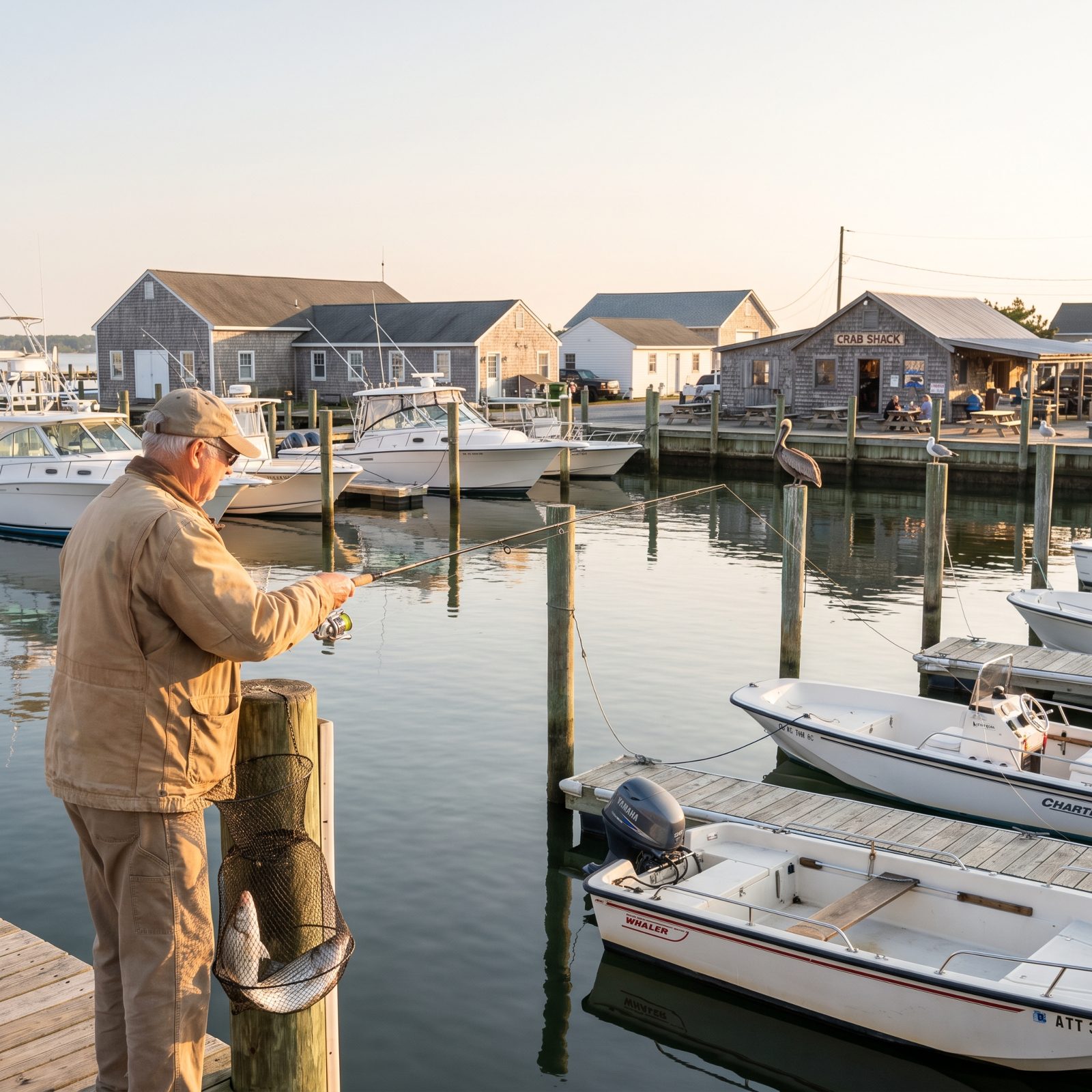
Rock Hall is the rare fishing town where you can walk from your front door to the dock to dinner without ever touching the car keys. Small harbor, slow pace. Charter captains chase striped bass, bluefish, and Spanish mackerel in season, and the light-tackle perch fishing off the public piers is genuinely fun on a quiet morning.
People hear “small harbor” and assume limited water. Wrong. You’re sitting on one of the most productive stretches of the upper Bay, with the Swan Point and Love Point rips a short run away.
27. Lewes, Delaware, Delaware Bay Fishing Beside Cape Henlopen
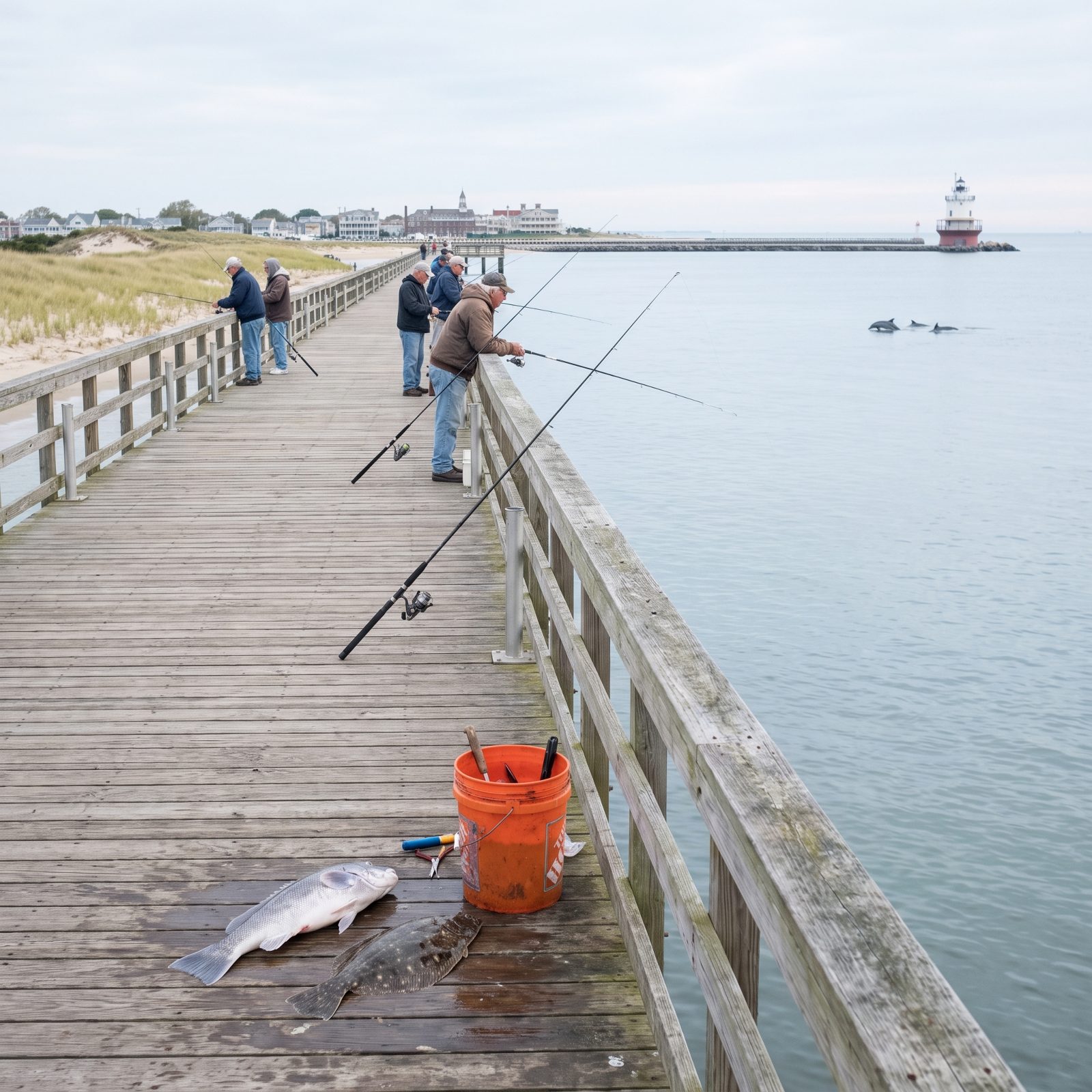
Few small towns give you this much water variety. From Lewes you can fish the sheltered bay for flounder and tautog, run the rips off Cape Henlopen for stripers, or head out of the inlet for tuna and mahi if the offshore itch strikes. Head boats leave the dock daily for a half day, no boat ownership required.
The town is colonial-pretty and walkable. It’s also not cheap anymore. Lewes caught on years ago, and waterfront prices have followed.
26. Cape May, New Jersey, Inshore and Offshore Fishing From a Victorian Seaside Town
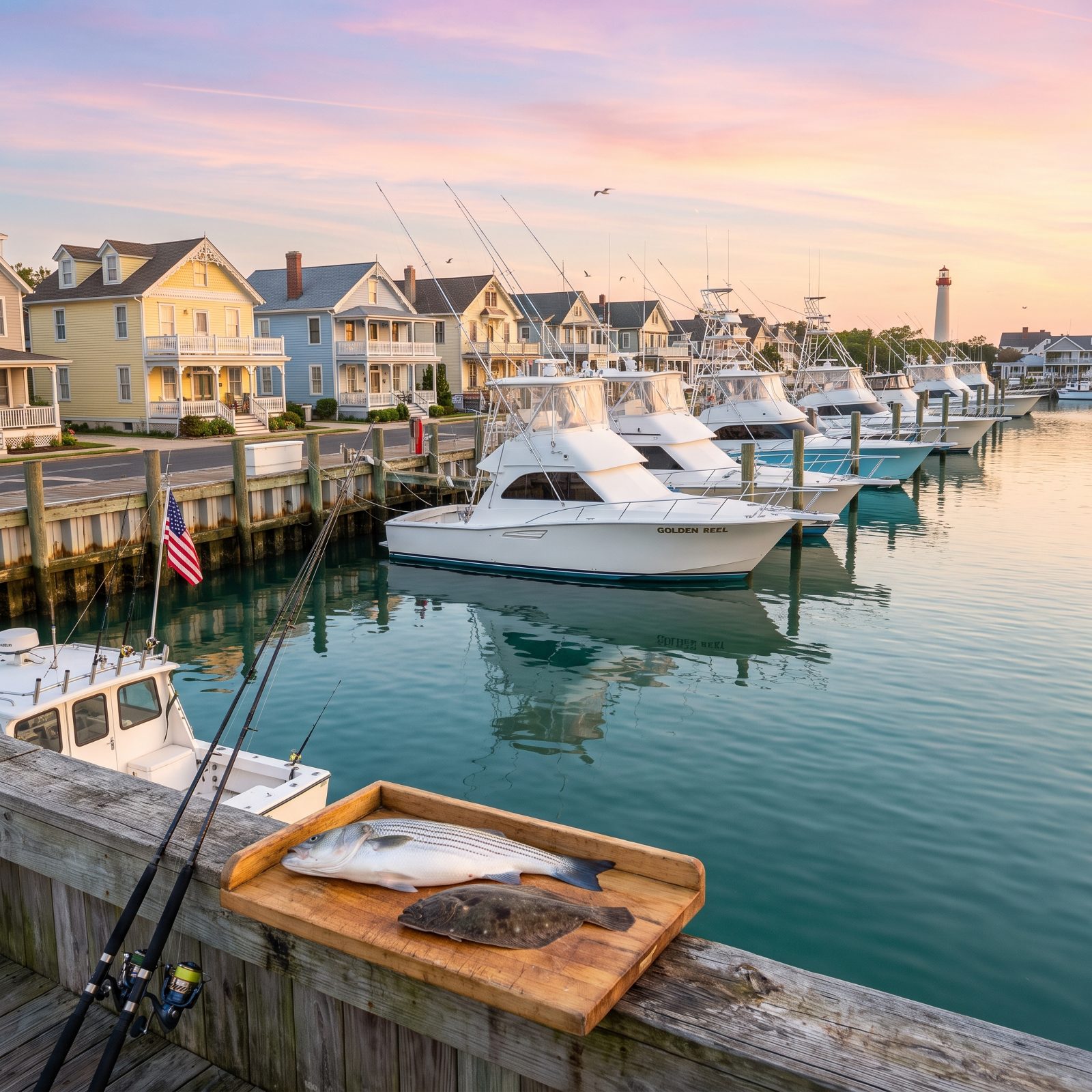
Cape May is the unicorn: a serious sportfishing port that also happens to be a national historic landmark full of Victorian homes. The canal and the harbor shelter a real charter fleet, and the fishing runs the full menu. Flounder and striped bass inshore, sea bass on the wrecks, and a genuine offshore run to the canyons for tuna and marlin when you’re feeling ambitious.
Retirement here means you can fish hard one day and spend the next on a porch with a book. The trade-off is summer, when the town fills up and the restaurants fill up faster. So fish fall instead. September stripers are worth the whole year.
25. Clayton, New York, Smallmouth Bass and Muskie in the Thousand Islands
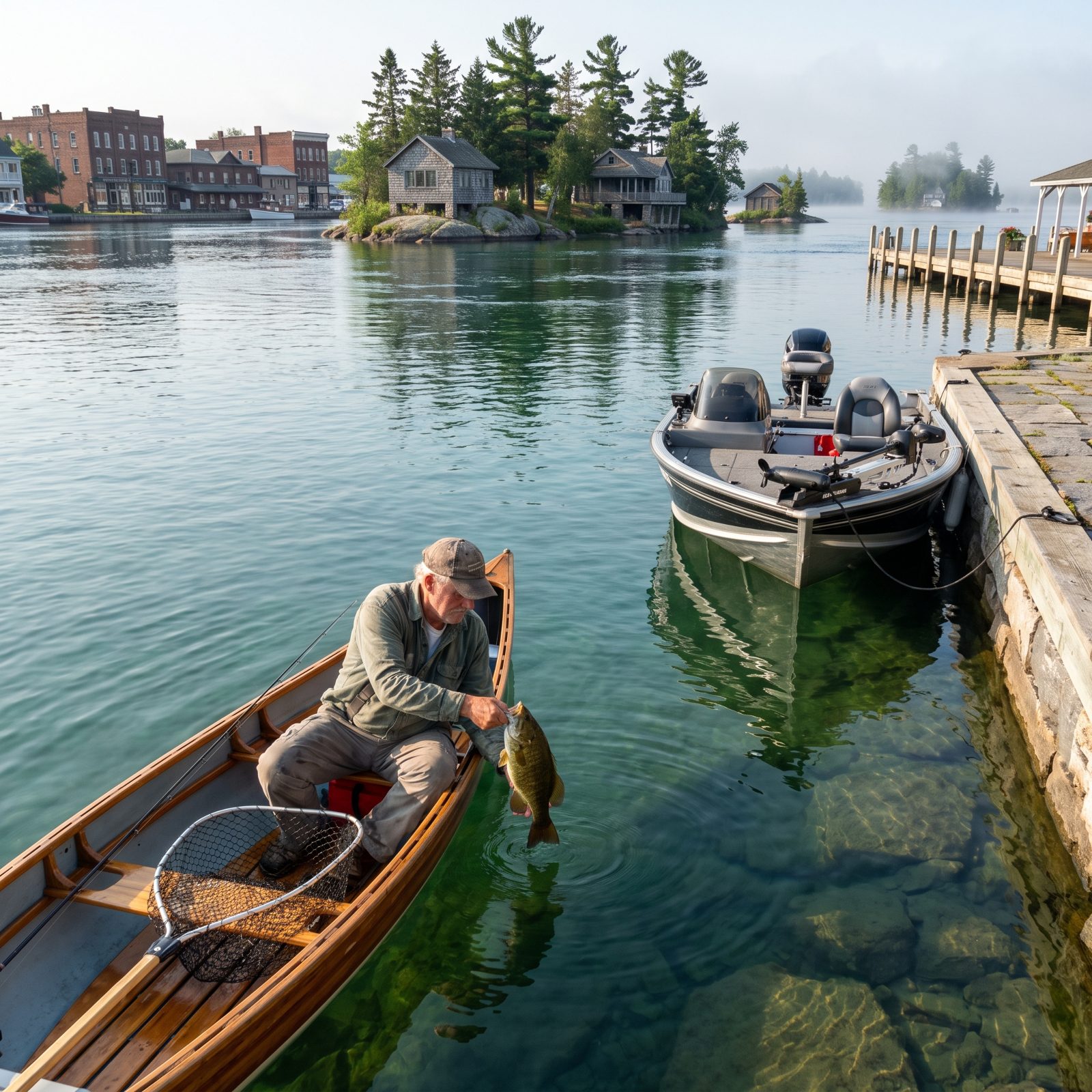
The St. Lawrence at Clayton holds some of the best smallmouth bass fishing in the country, and that’s not local bragging. The water is clear, cold, and packed with structure, so three-pound bronzebacks are an ordinary day. Muskie is the other draw, a fish that will humble you for a week and then crush you in a single strike.
Clayton stayed small and genuine. The Antique Boat Museum anchors the waterfront and the summers run mild. Winters, though? Long and hard. Know that going in.
A clear-water smallmouth will test your eyes as much as your tackle. You’ll watch the fish decide.
24. Oswego, New York, Salmon and Steelhead Where the River Meets Lake Ontario
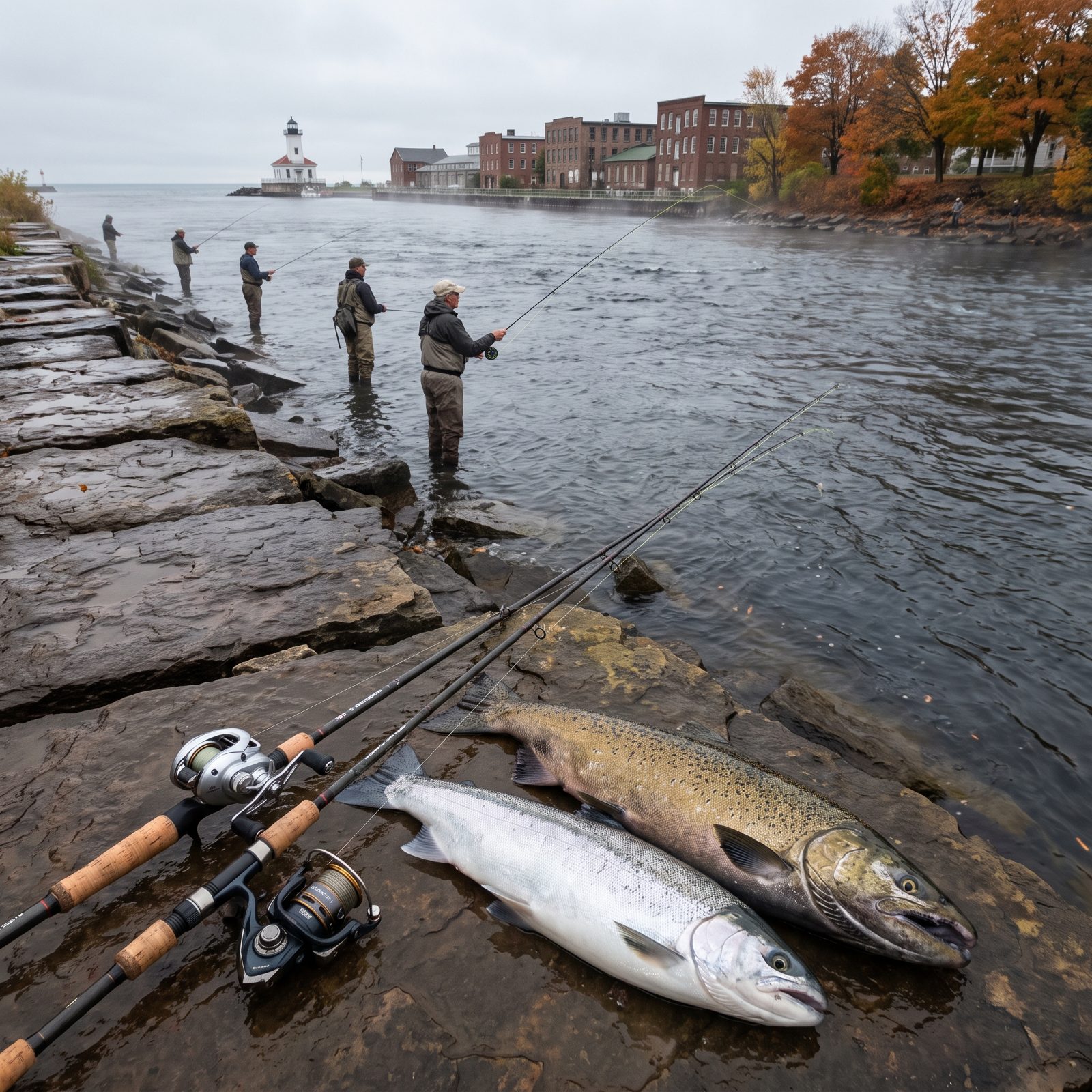
Oswego is a tributary town that punches far above its size. The fall run brings king and coho salmon up the river, then winter and spring steelhead follow, and you can fish much of it from shore without ever owning a boat. For a retiree who wants trophy fish on foot, that matters.
Lake Ontario itself gives up giant brown trout and more salmon if you charter out. And the housing is affordable in a way the coastal towns on this list simply are not.
23. Old Saybrook, Connecticut, Striped Bass at the Mouth of the Connecticut River
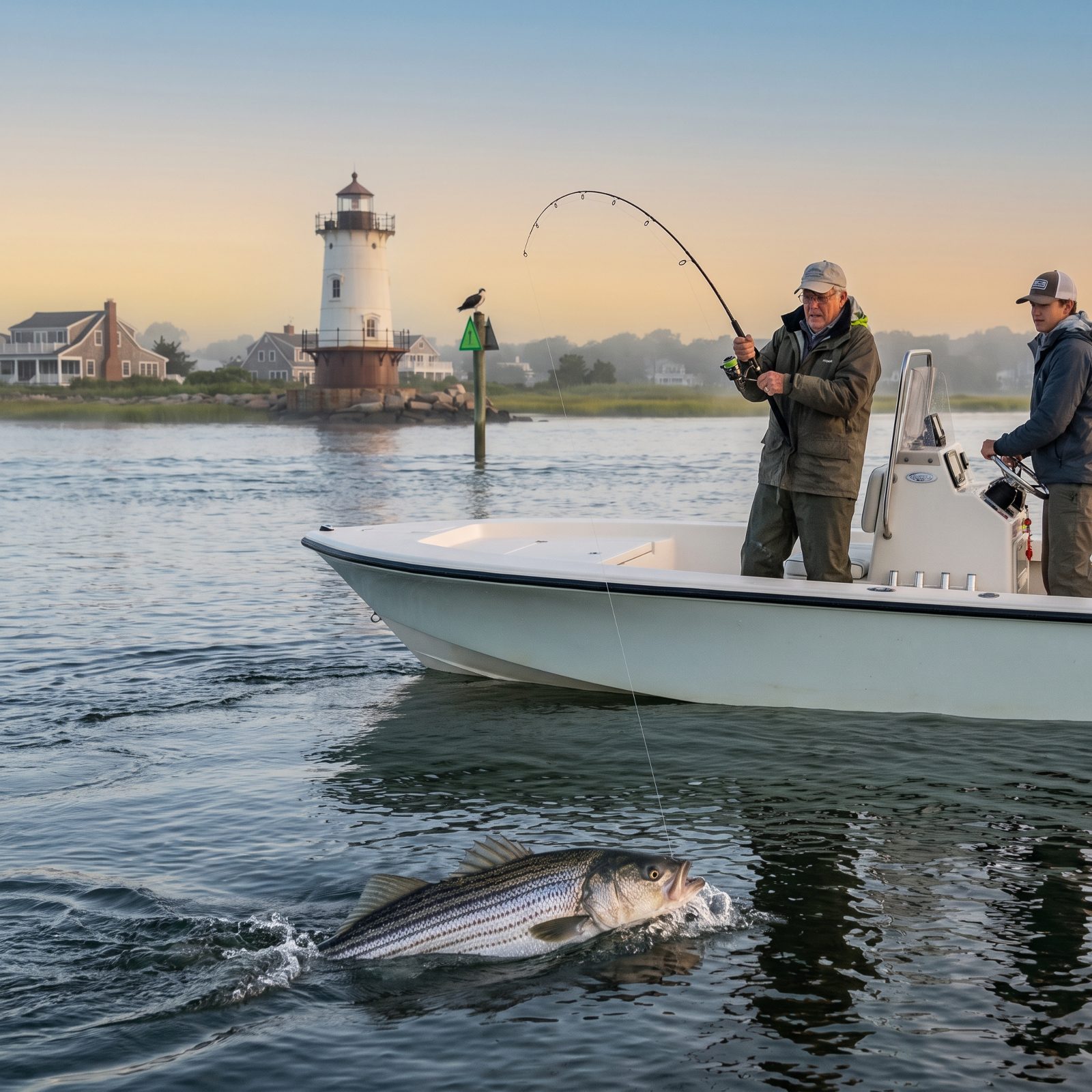
The mouth of the Connecticut River is one of the great striped bass funnels on the East Coast. Bait pours out of the river on the tide and the bass stack up to meet it. From spring through fall you can fish the rips, the flats, and the marsh edges, and some of the best action happens right at the river mouth within sight of the Saybrook lighthouse.
Old Saybrook is quintessential New England and priced accordingly. But the fishing access is real, the marina options plenty, and the striper season runs long.
22. Narragansett, Rhode Island, Surfcasting and Charter Fishing on Block Island Sound
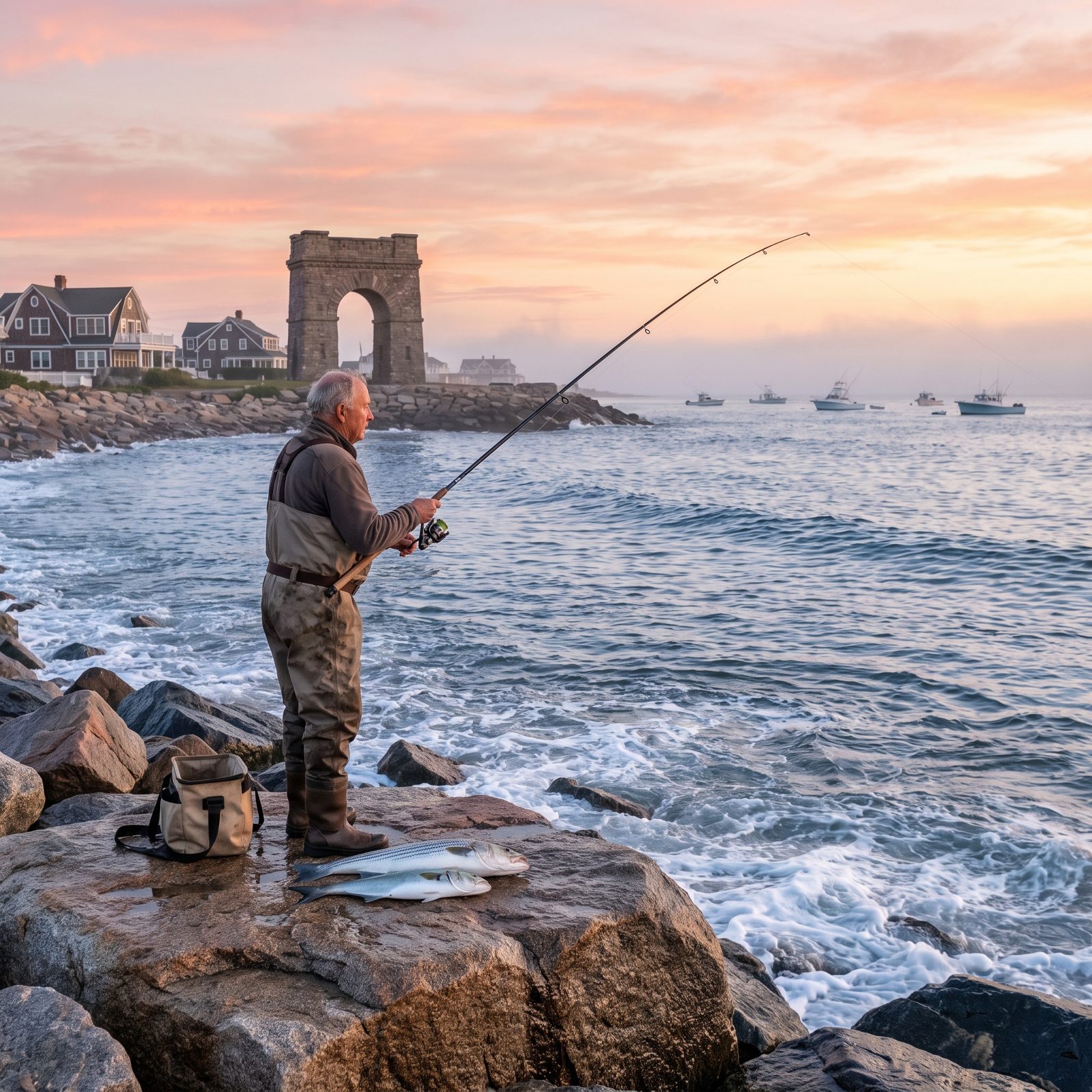
Narragansett is surfcasting country, the kind of place where people stand on the rocks at 4 a.m. in October because the striper bite from shore is that good. No boat required to catch serious fish here, which is exactly what sells it to a retiree who’d rather fish than nurse an engine through its moods.
When you do want to go out, charters out of the Harbor of Refuge chase stripers, bluefish, bonito, and false albacore. The town keeps a working beach-town feel without the Cape’s crush.
21. Rockland, Maine, Harbor Living With Easy Access to Penobscot Bay
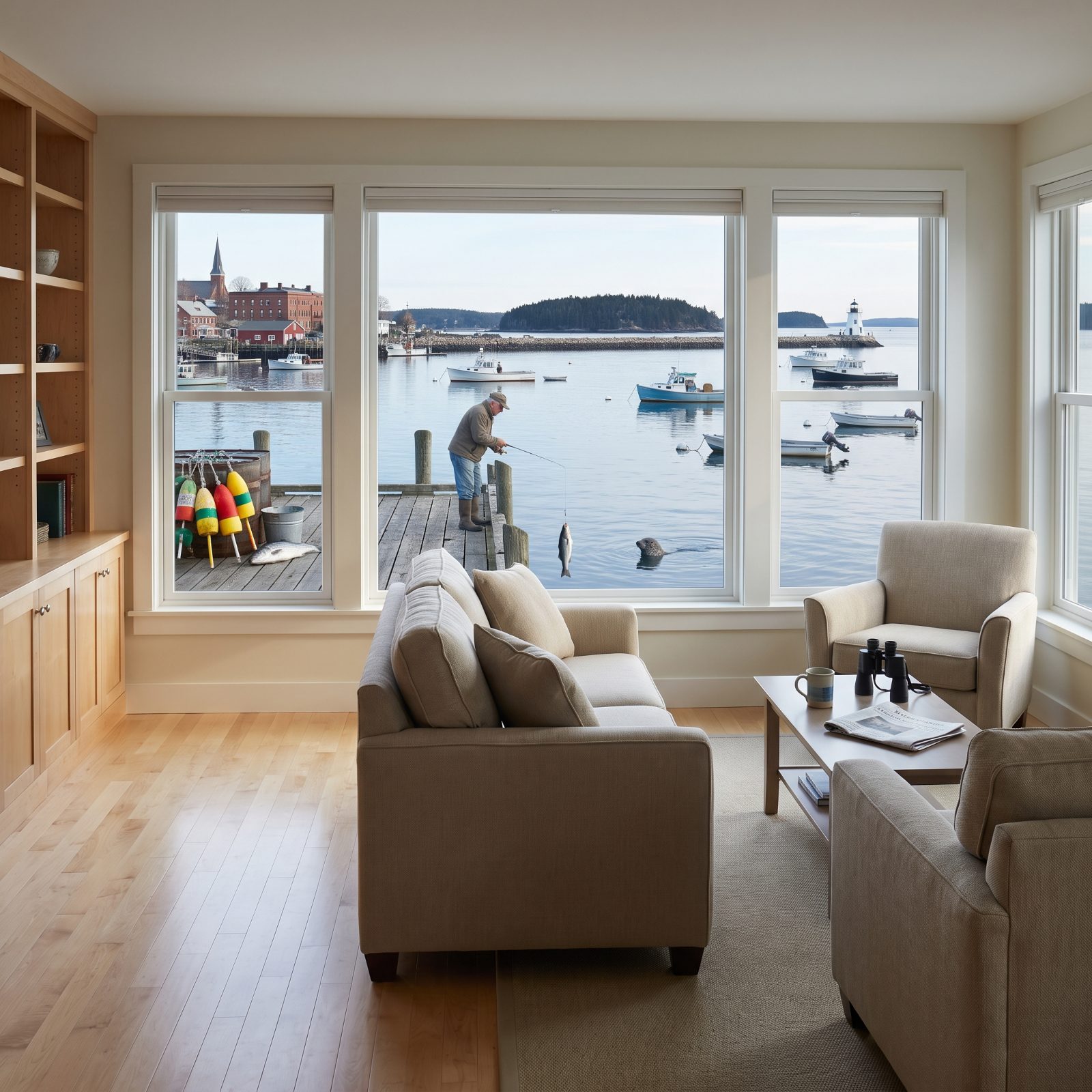
Rockland is a working harbor that didn’t sell its soul. Lobster boats still rumble out at first light, and the summer run of striped bass up Penobscot Bay gives rod-and-reel anglers something to chase along the ledges and river mouths. And the mackerel? They fill the harbor by midsummer, the most honest fun a kid or a retiree can have off a dock.
The town has become an arts hub, which means good food and real culture right alongside the fishing. Maine winters are not for everyone. But the shoulder seasons on this bay come close to perfect.
20. Erie, Pennsylvania, Walleye on the Lake and Steelhead in the Tributaries
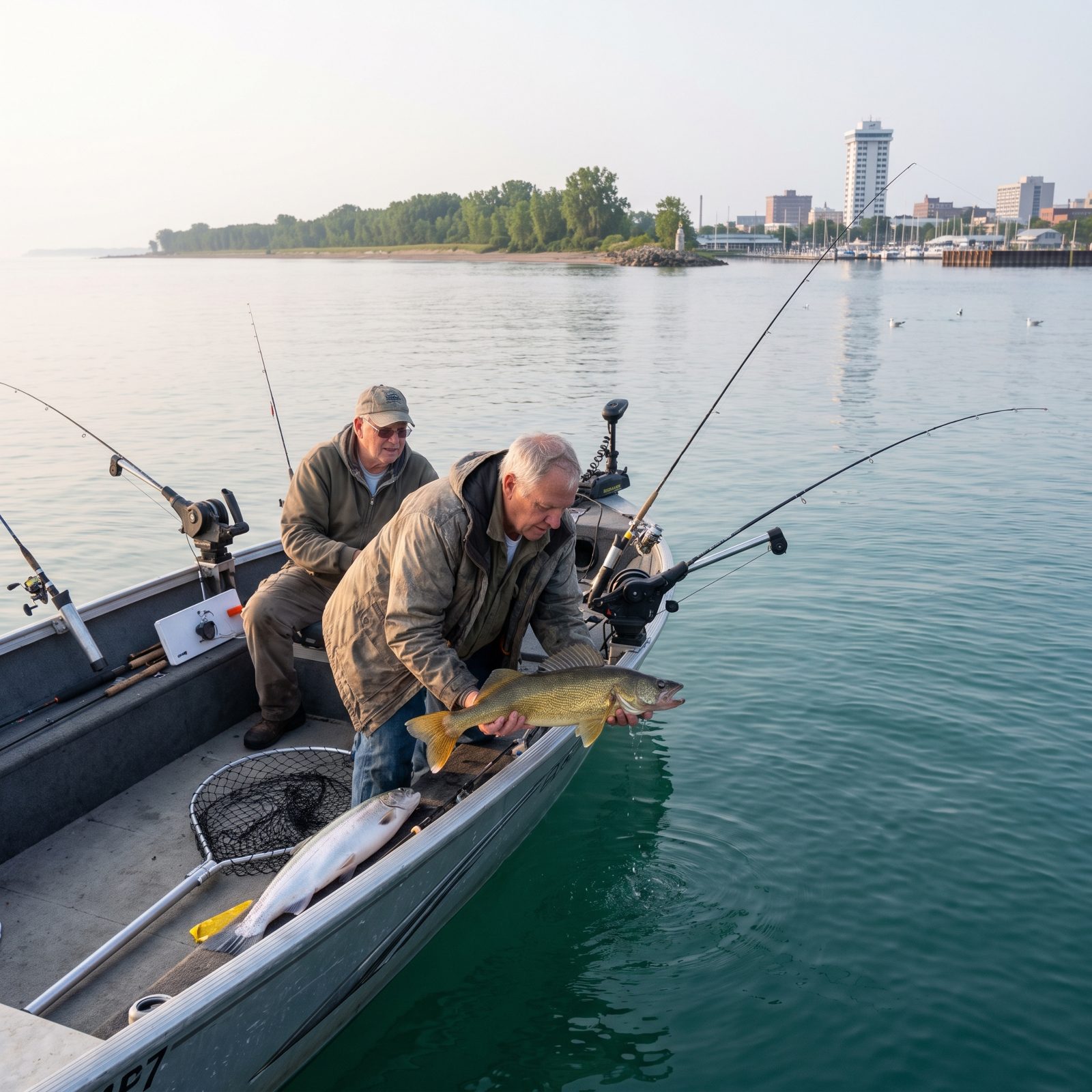
Erie gives you two world-class fisheries in one zip code, and that’s the pitch. Lake Erie walleye fishing has been off the charts the last several years, with a limit of fat, eating-sized fish a realistic goal most summer days. Then fall arrives and steelhead flood the tributaries, pulling fly and float anglers in from across the Midwest.
What seals it for retirees is cost. Erie is one of the most affordable waterfront cities going. Your housing dollar stretches further here than almost anywhere else on this list, and the fishing calendar never really closes.
19. Port Clinton, Ohio, Everyday Access to Lake Erie’s Walleye Capital
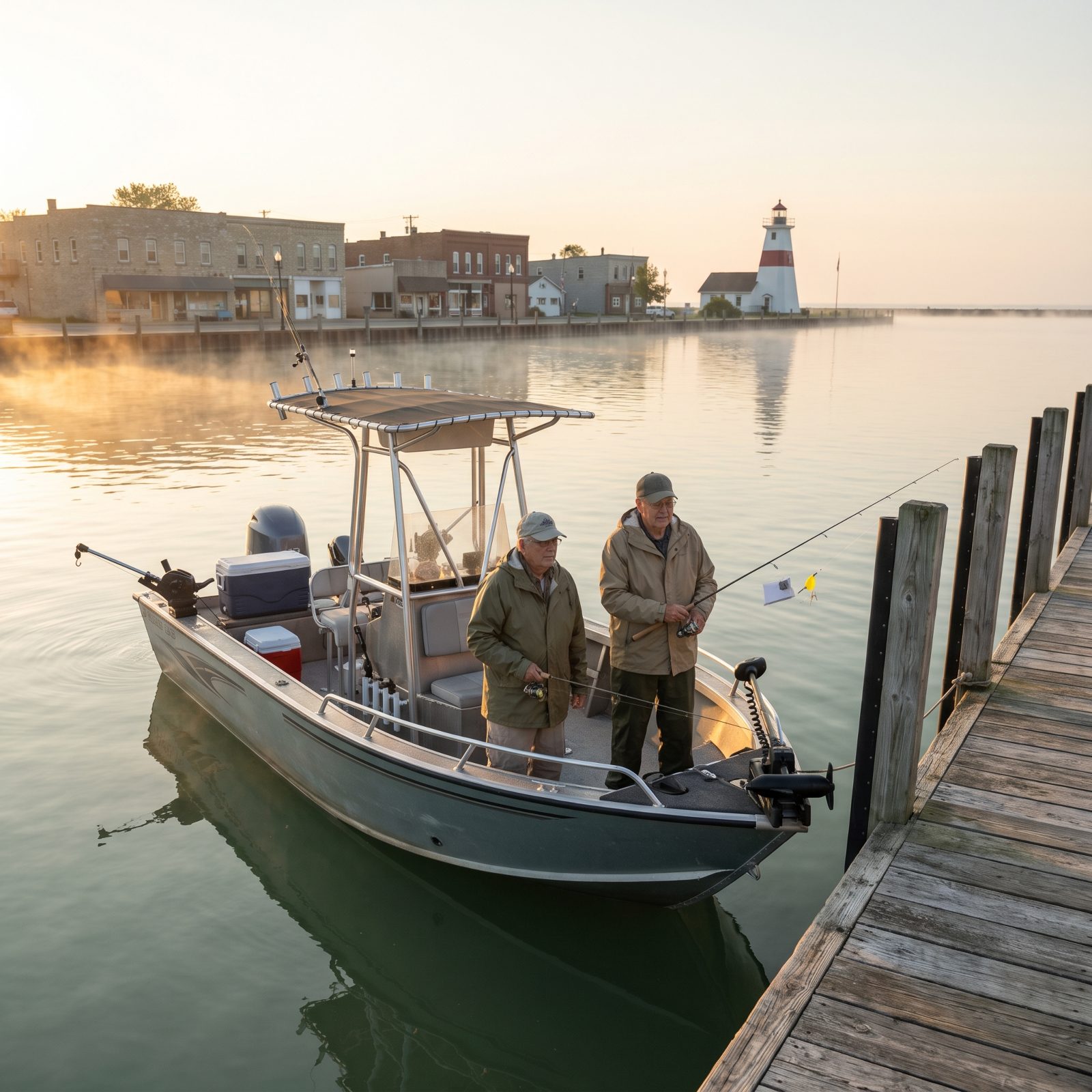
Port Clinton calls itself the Walleye Capital of the World, and for once the slogan isn’t marketing hot air. The western basin of Lake Erie runs shallow and warms early, and it’s packed with walleye that’ll hit four to eight pounds in a good spring. Twenty minutes off the dock and you’re on fish.
Here’s what nobody tells the retirees moving here: you don’t need a forty-foot sportfisher. A modest 18-foot aluminum rig handles the western basin fine on a calm morning, and plenty of folks fish off charters and never buy a hull at all. Launch fees are cheap. The bite is honest.
18. Ludington, Michigan, Salmon Fishing Between Lake Michigan and Pere Marquette Lake
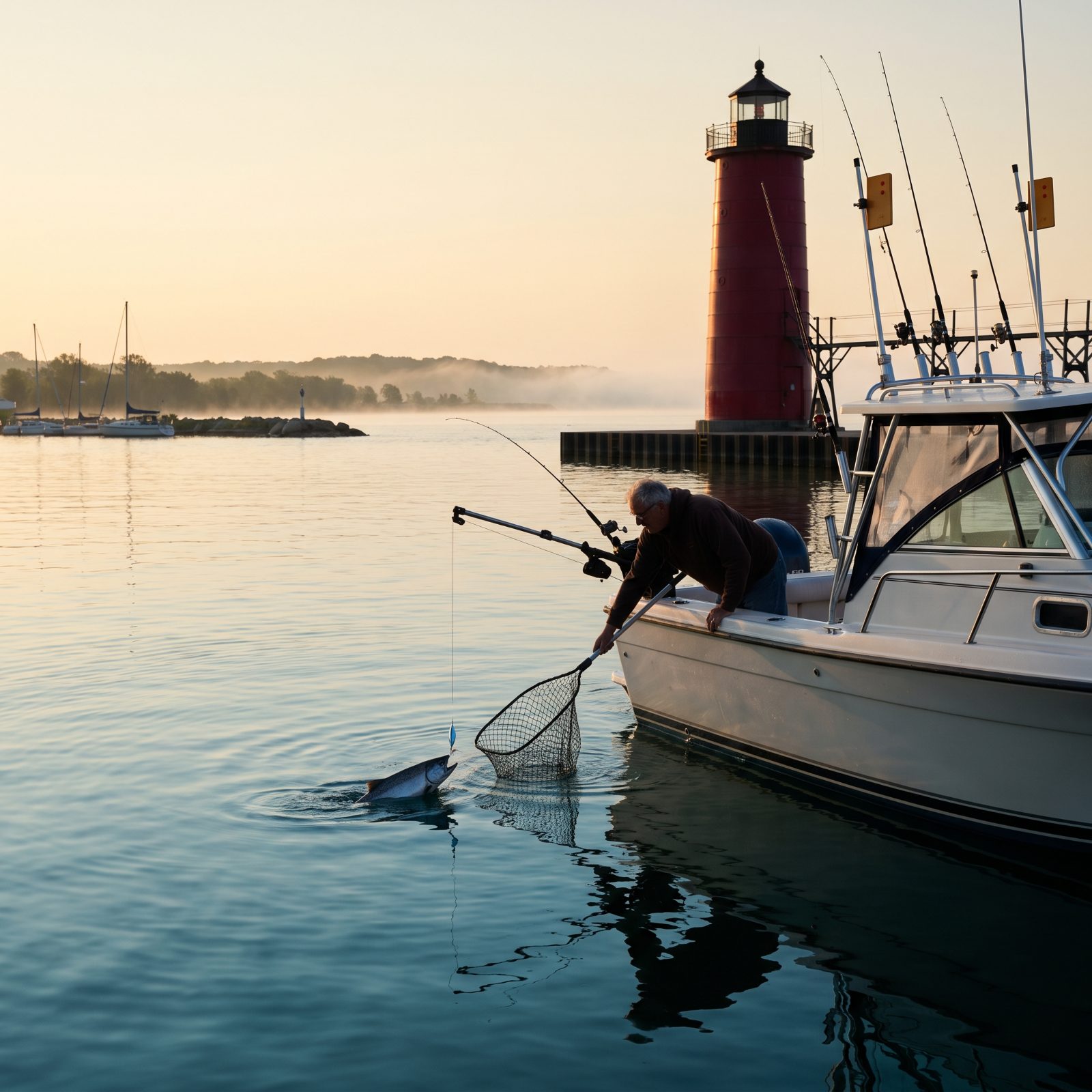
Ludington sits on a channel, and that channel is the whole point. You’ve got Pere Marquette Lake tucked behind town for calm-water perch and panfish, and the big blue Lake Michigan a short run beyond the pierheads for chinook and coho that can top twenty pounds.
Salmon fishing peaks late summer into fall, when the kings stage near the harbor mouth before running the river. Think of it as a two-speed town. Chase salmon on a settled morning, or stay inside and work the inner lake when the big water turns mean and gray and nobody in their right mind leaves the channel. For a retiree who wants both options without a long haul, that split personality is a gift.
17. Alpena, Michigan, Trout, Salmon, and Smallmouth on Thunder Bay
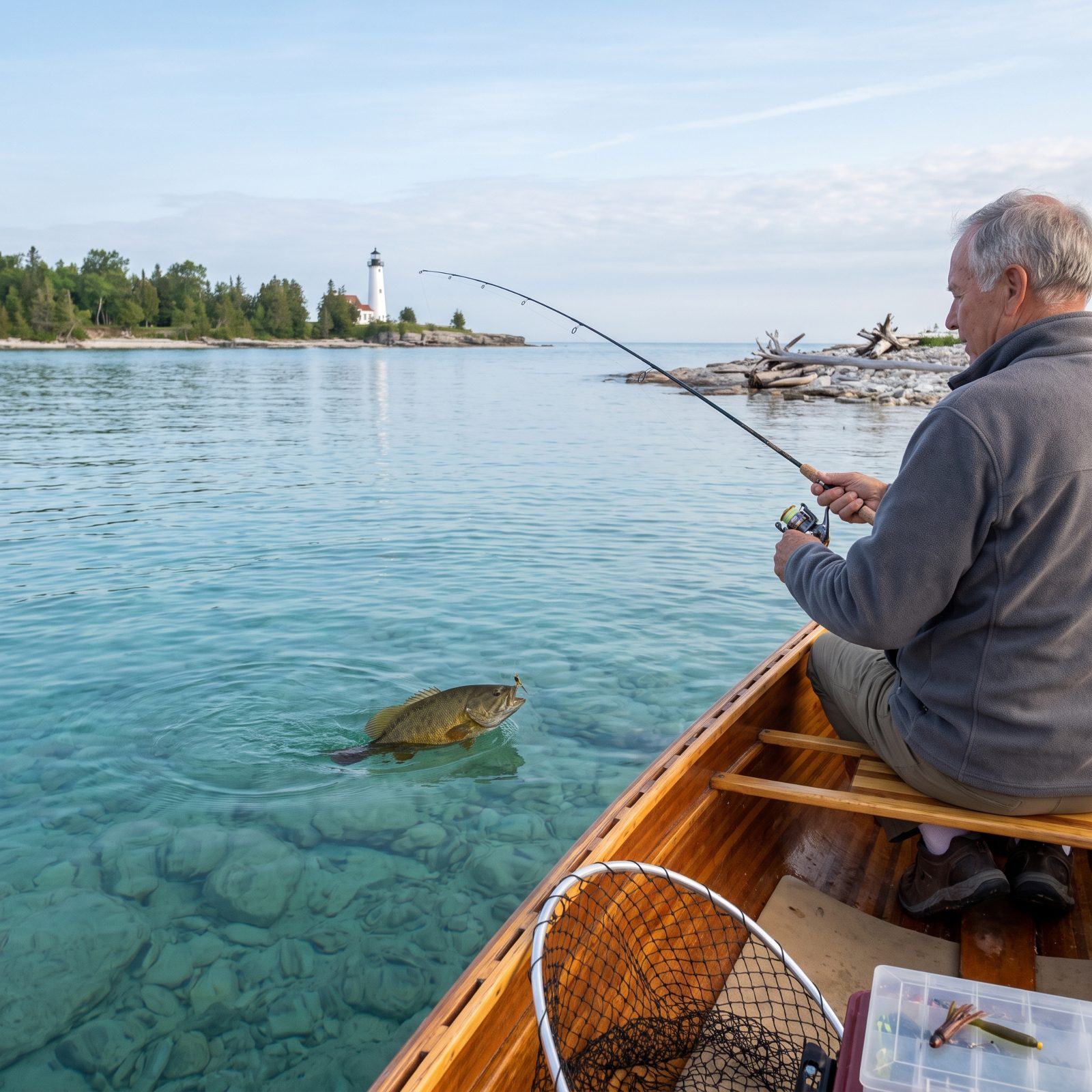
Thunder Bay is a sleeper. Most Great Lakes attention runs to Erie and Michigan, and meanwhile Alpena quietly holds some of the clearest water and best smallmouth fishing in the state, over limestone reefs you can watch the fish peel off of.
Lake Huron here hands you lake trout and salmon on the troll, plus brown trout close to shore come spring. And the bronzebacks? Three- and four-pounders are common, fives are real. Small town, affordable, built around a marina. Fewer crowds than down south, which is the quiet trade a lot of retirees are actually after.
16. Sturgeon Bay, Wisconsin, Door County Smallmouth and Great Lakes Fishing
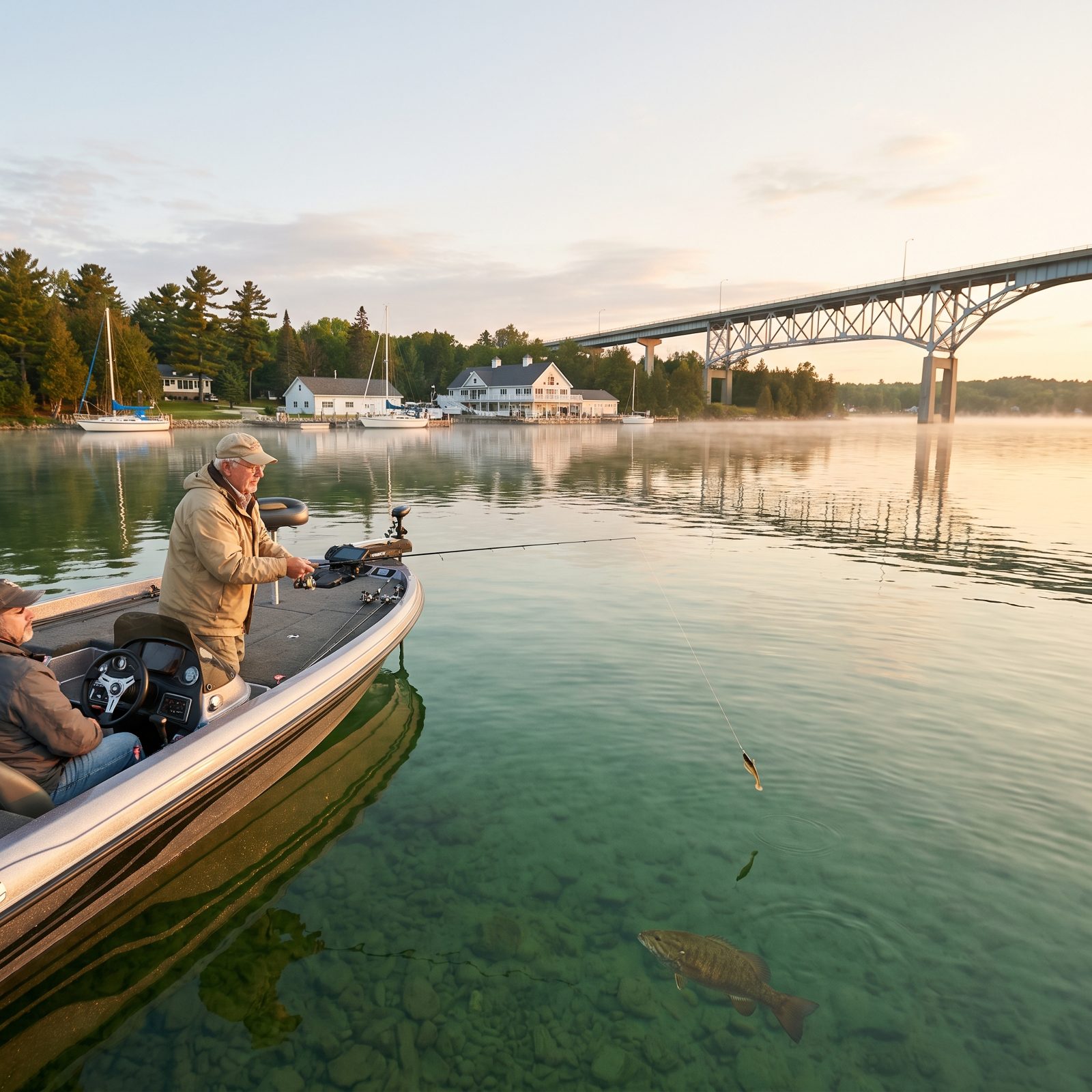
Door County gets sold as wine, cherries, and galleries, and the fishing hides in plain sight behind all of it. Sturgeon Bay is a genuine trophy smallmouth factory, and the anglers who know it treat late spring like a holiday.
The shallow rocky flats hold pre-spawn bronzebacks that push five and six pounds, bigger than most lakes will ever give you. Past that, the bay opens to Green Bay and Lake Michigan for walleye, salmon, and perch. A four-season fishing town wearing a tourist-town costume. Off-season rents stay reasonable, and once the summer crowd thins, the water is yours.
15. Heber Springs, Arkansas, Trout Below Greers Ferry Dam and Bass Above It
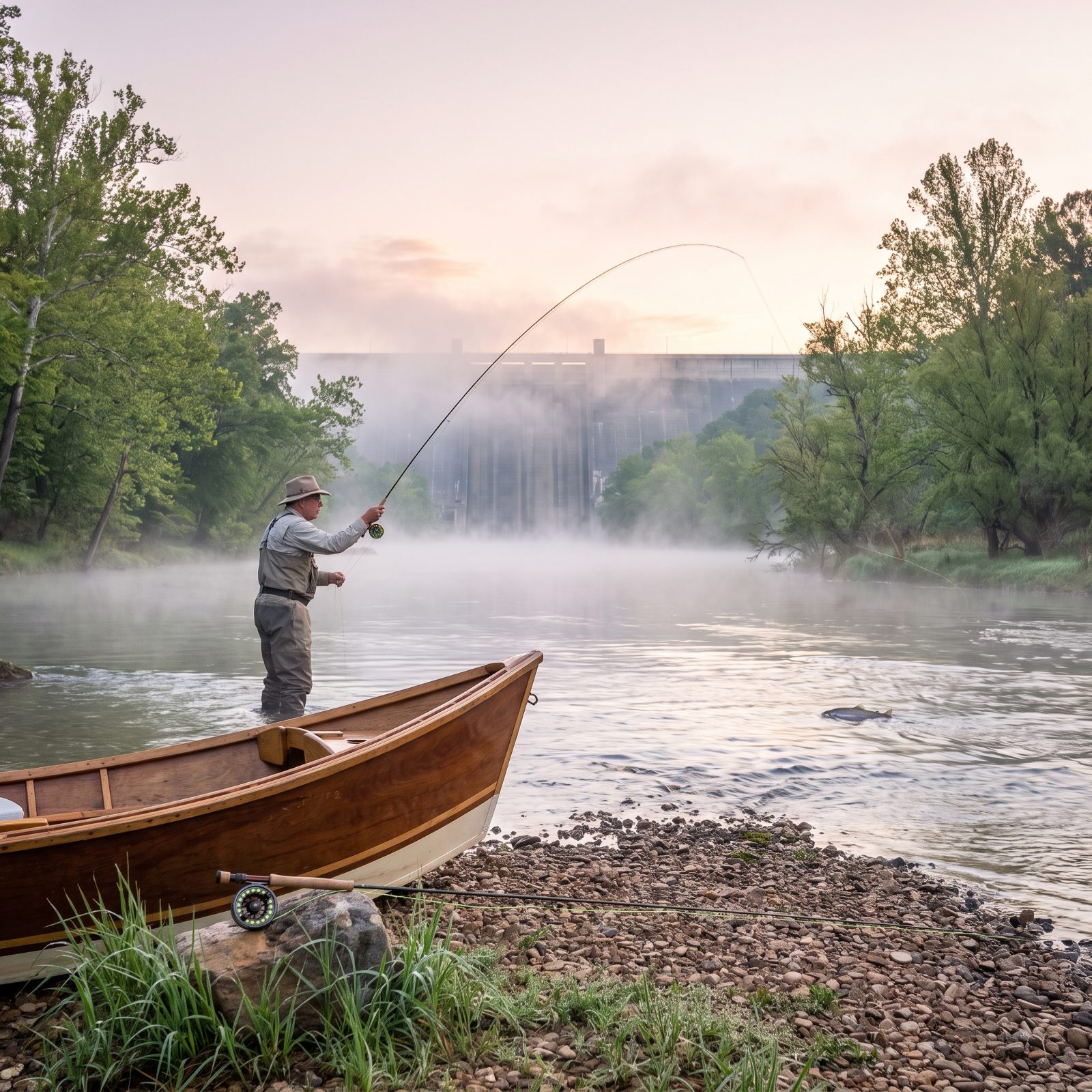
At Heber Springs, a concrete wall changes everything. Water releasing from the bottom of Greers Ferry Dam comes out cold year-round, and that cold water turns the Little Red River below it into a world-class trout fishery that once produced a world-record brown.
Above the dam, a clear highland reservoir full of largemouth, walleye, and hybrid bass. Below it, rainbows and browns in a river you can wade or float. Two completely different fisheries, ten minutes apart.
Learn the generation schedule before you wade. When they open the turbines, that gentle river becomes a cold, fast, dangerous thing in minutes.
Cost of living stays low, the pace is slow, and the river fog on a September morning is the kind of thing people retire specifically to see every single day.
14. Hot Springs, Arkansas, Retiree-Friendly Lake Fishing in the Ouachitas
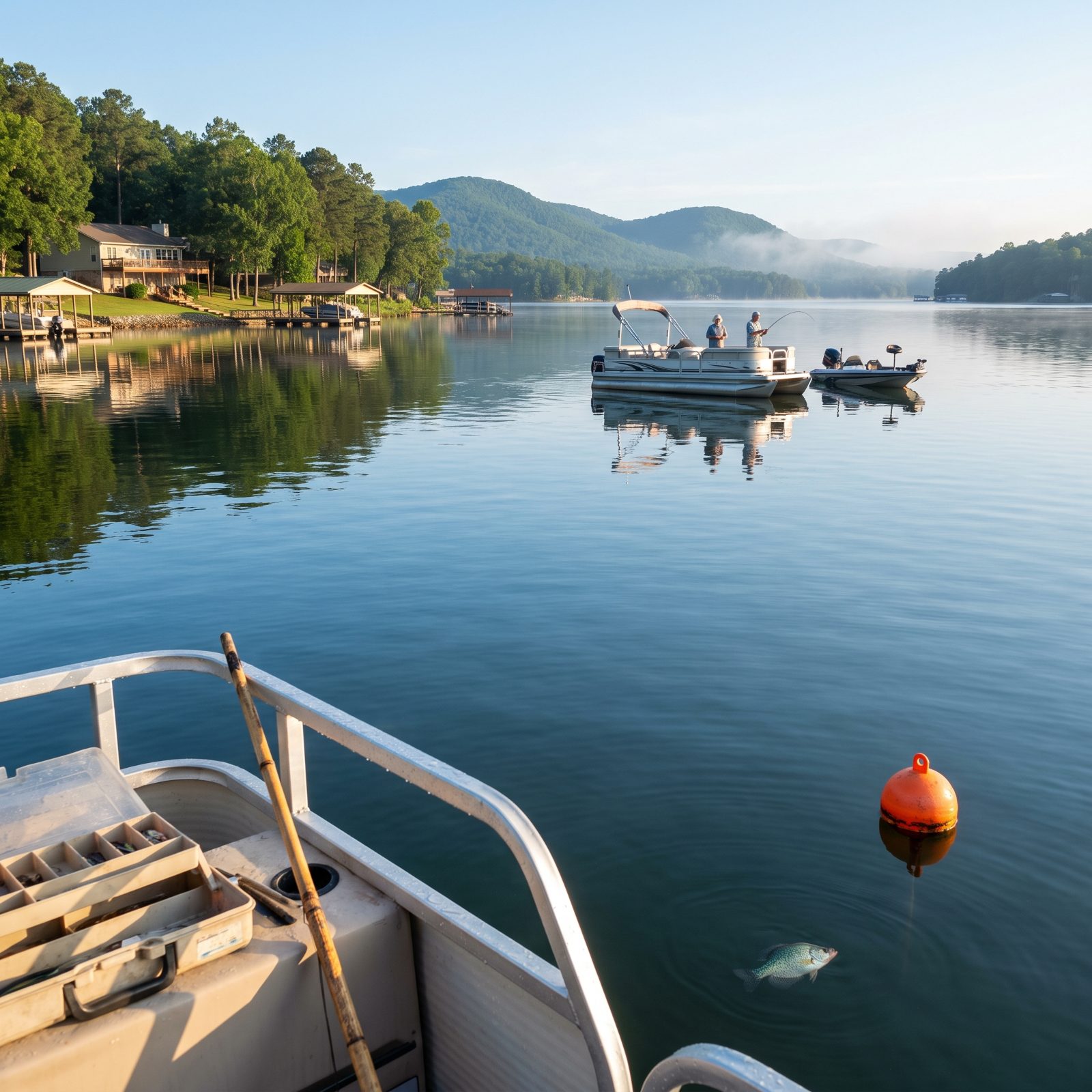
Hot Springs got famous for bathhouses and horse racing, but the retirees who settle here come for the water. Three lakes sit right at the edge of town, cradled in the Ouachita Mountains, and the fishing is easygoing in the best sense of the word.
Lake Hamilton and Lake Catherine are warm, developed, and friendly to a pontoon with a cooler and a couple of cane poles. Crappie, bream, catfish, largemouth, all of them show up without much fuss. Lake Ouachita is the big wild one, clear and deep, where you go for striper and smallmouth. Add a mild climate and a downtown with a pulse, and the appeal makes itself obvious.
13. Branson, Missouri, Table Rock Bass and Lake Taneycomo Trout
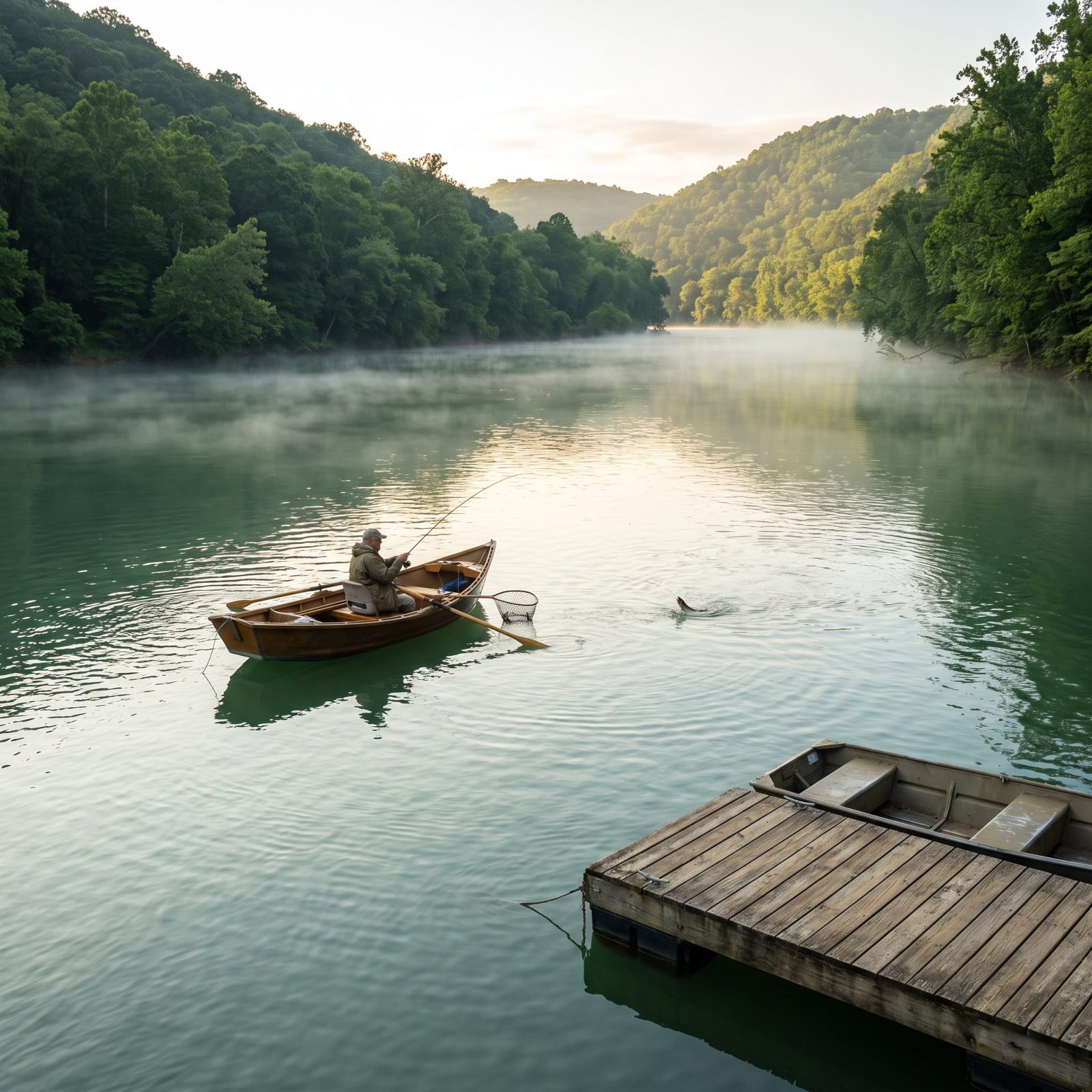
Branson is all neon and theaters until you get on the water. Then it’s two of the best fisheries in the Ozarks sitting back to back, Table Rock Lake upstream and Lake Taneycomo downstream, split by a dam.
Table Rock is clear-water bass heaven, largemouth, smallmouth, and spotted bass, plus some of the prettiest coves in the Midwest. Taneycomo is the cold tailwater below the dam, stocked heavy with rainbow and brown trout that fish like a river most of its length. One lake for a warm bass afternoon, one for a foggy dawn chasing trout. You’ll hear plenty of golf-course talk out here, but the fishing is the real quiet luxury.
12. Grove, Oklahoma, Bass, Crappie, and Catfish on Grand Lake
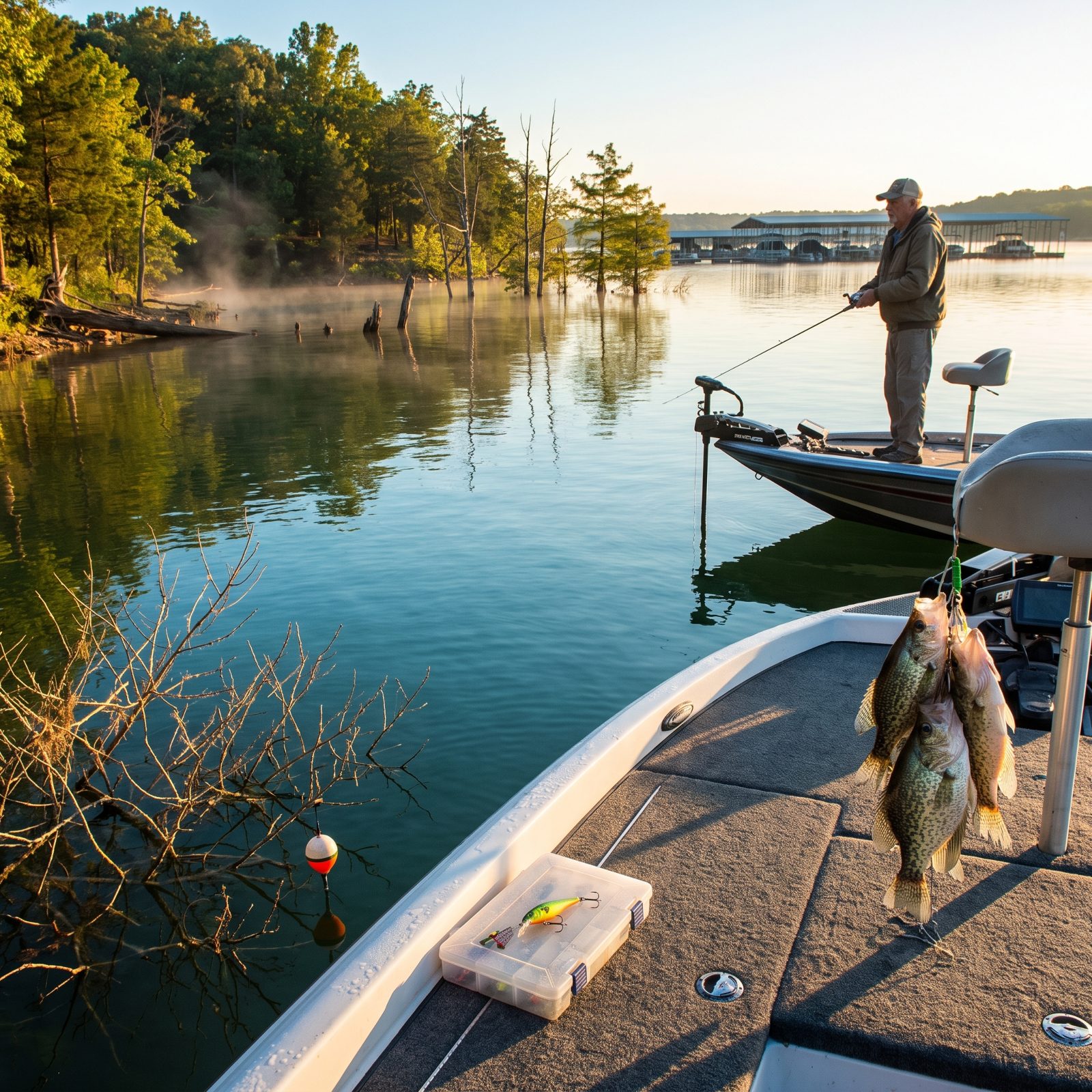
Grove sits on Grand Lake o’ the Cherokees, and the name tells you what you’re getting: a sprawling, friendly impoundment with more coves and docks than you could fish in a lifetime.
This is meat-and-potatoes fishing, and I mean that as a compliment. Crappie by the stringer in spring, catfish that go deep into the double digits, and a largemouth population strong enough to host serious tournaments. The town itself is built for retirees, with marinas, dock-access homes, and a cost of living that won’t scare you off.
11. Guntersville, Alabama, Trophy Largemouth Bass on a Legendary Reservoir
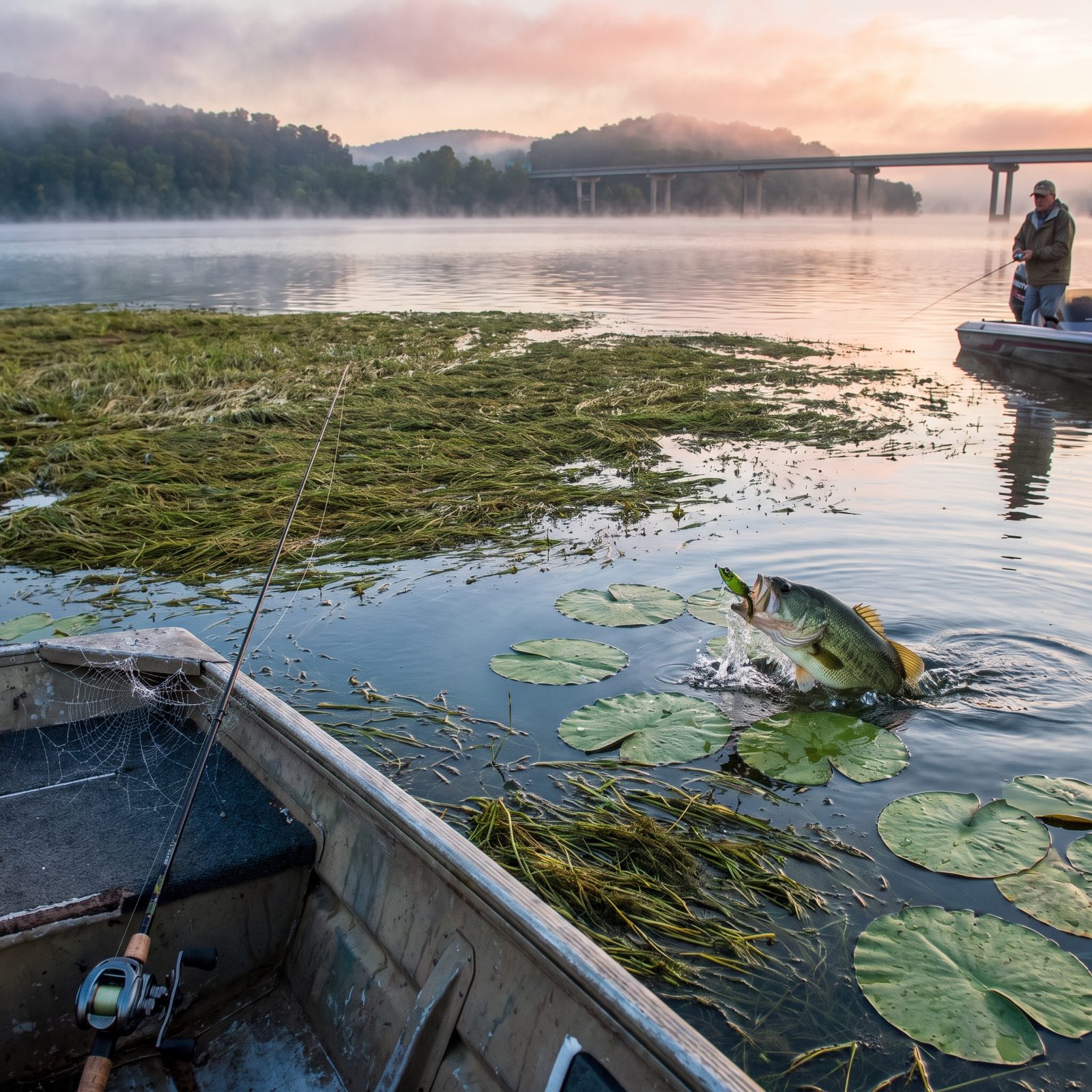
If you’ve followed bass fishing at all, you know Guntersville by reputation. This 69,000-acre Tennessee River impoundment lands on nearly every shortlist of the best largemouth lakes in America, and the grass beds are the reason.
Thick mats of hydrilla and milfoil grow big bass and give them everywhere to hide. Giant fish come out of here every season, and a morning on the vegetation with the topwater bite going will ruin you for ordinary lakes. It pulls in pros and tournaments, which can jam the ramps on event weekends.
For a retiree, the draw is simple. You can live modestly on a lake that genuinely competes for the biggest bass in the country.
10. Grand Rivers, Kentucky, A Waterfront Village Between Two Giant Lakes
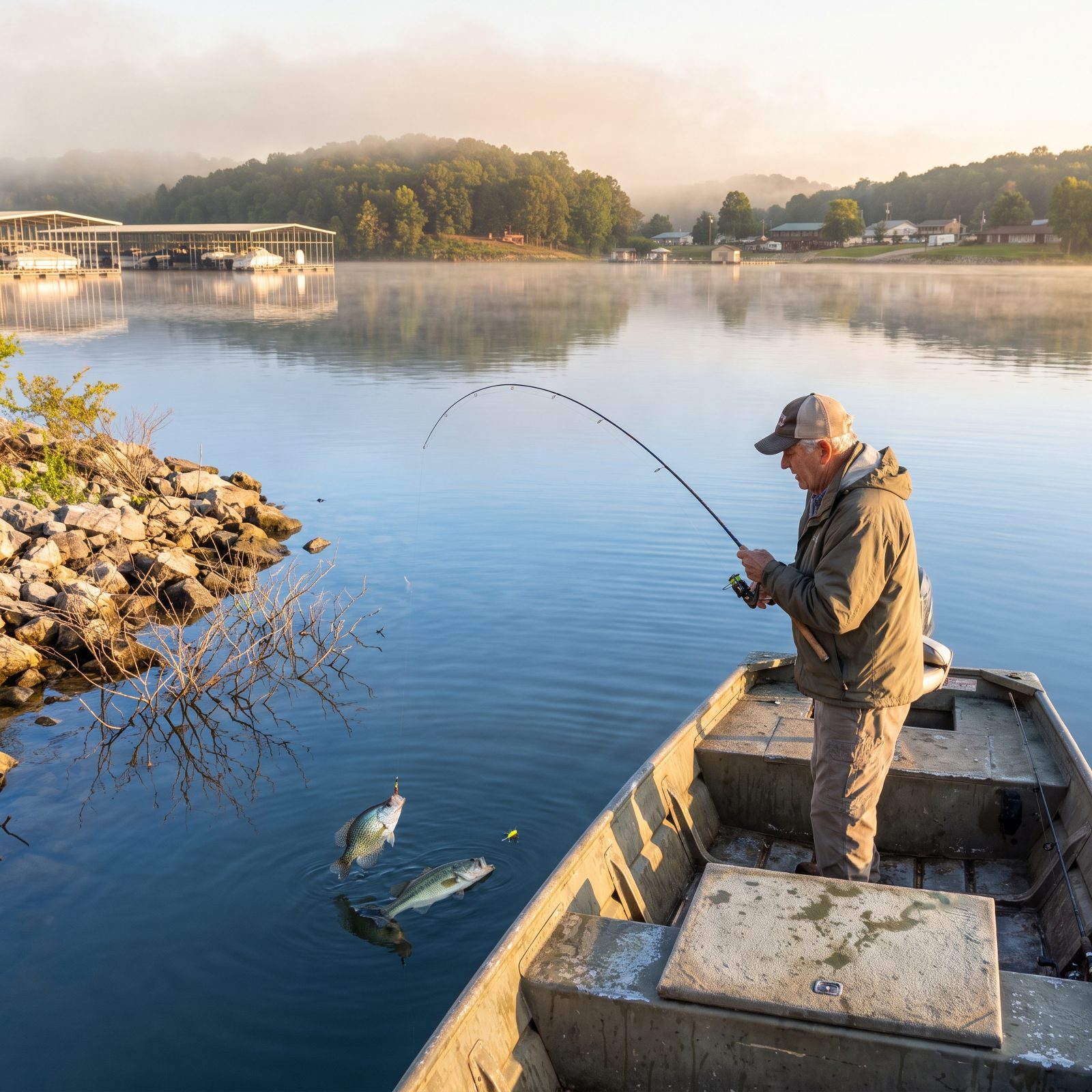
Grand Rivers is tiny, maybe a few hundred people, and it sits on a sliver of land with Kentucky Lake on one side and Lake Barkley on the other. A canal connects them. For a water person, the geography borders on unfair.
Between the two lakes you’ve got some of the best crappie fishing anywhere, plus largemouth, smallmouth, bluegill, catfish, and seasonal stripers. The Land Between the Lakes national recreation area wraps the whole thing in protected forest, so wildlife and quiet come bundled with the fishing.
9. Lake Havasu City, Arizona: Desert Bass Beneath the London Bridge
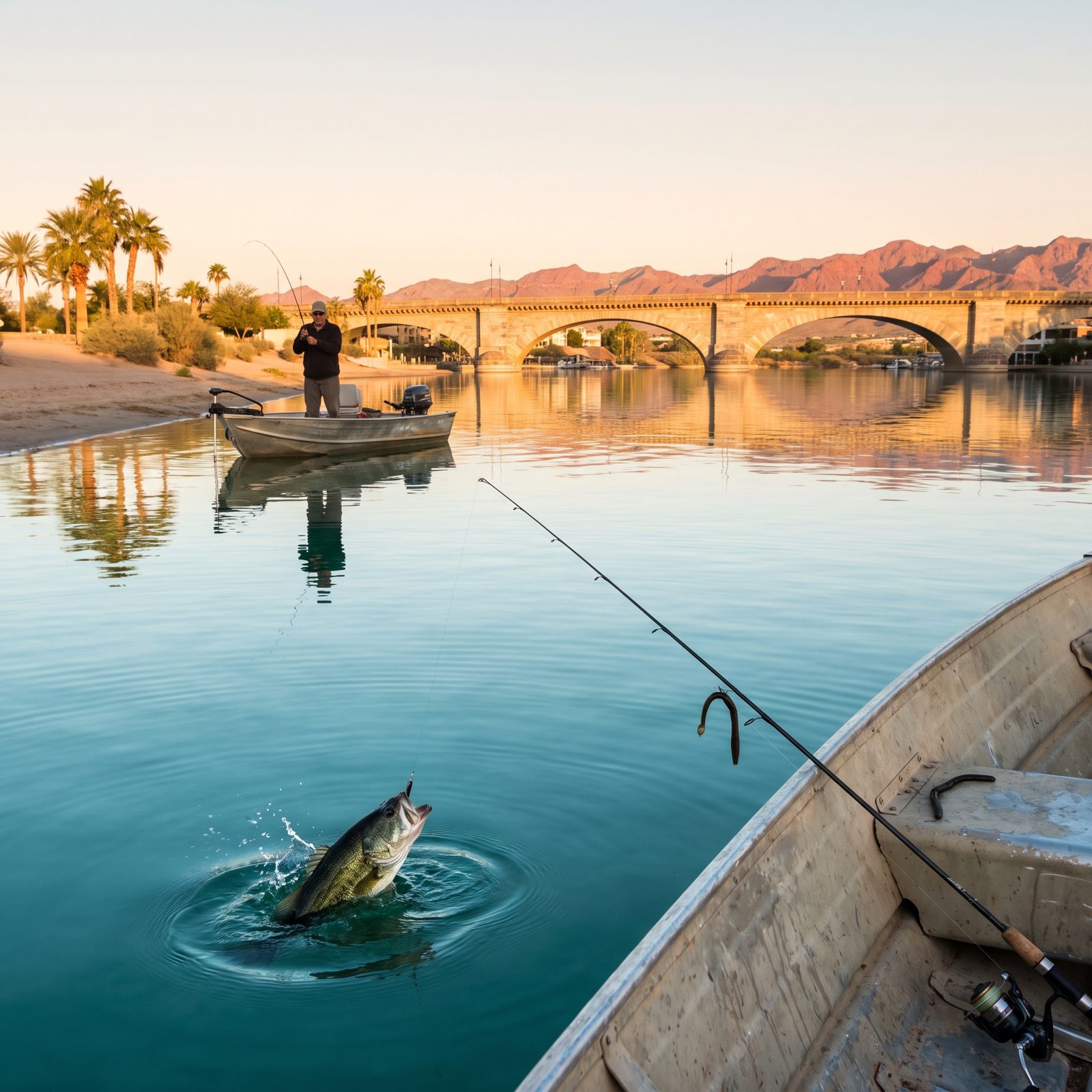
You can fish in a T-shirt here on New Year’s Day. That’s the pitch, and it mostly holds up. Lake Havasu sits on the Arizona-California line, a long stretch of Colorado River reservoir that stays open and warm while half the country is drilling holes in ice.
Largemouth, smallmouth, and striped bass all live here, and the spring striper run draws a serious crowd. For retirees, though, the water access does the selling. Launch ramps are everywhere, a lot of neighborhoods back right onto the water, and the town hauled the actual London Bridge over from England in 1968 and rebuilt it stone by stone.
8. Clearlake, California: Trophy Bass on the State’s Oldest Natural Lake
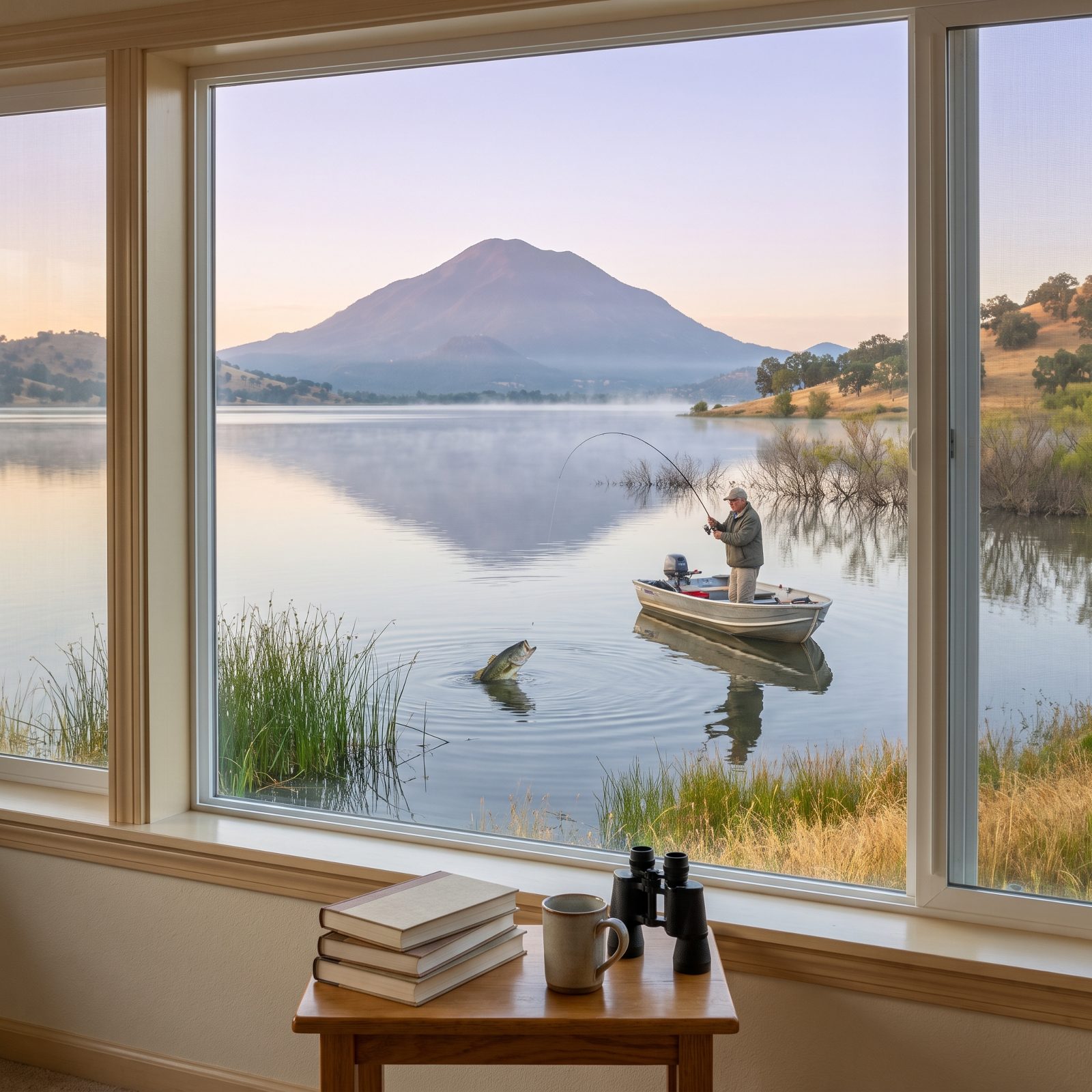
Anglers argue about a lot of things. The quality of bass fishing at Clear Lake is rarely one of them.
This is California’s largest natural lake and one of the oldest on the continent, a shallow, fertile, weed-choked bowl that grows largemouth to absurd sizes. Ten-pound fish come out of here often enough that locals shrug at them, because the nutrient-rich water fuels a food chain that packs weight onto bass fast.
For a retiree, the appeal goes past the fish. Housing around Lake County runs cheaper than almost anywhere else touching good water in the state, and the lake fishes every month of the year. Bring sunscreen and patience. Those weed mats are a puzzle every single time.
7. Morro Bay, California: Pier, Kayak, and Charter Fishing in a Postcard Harbor
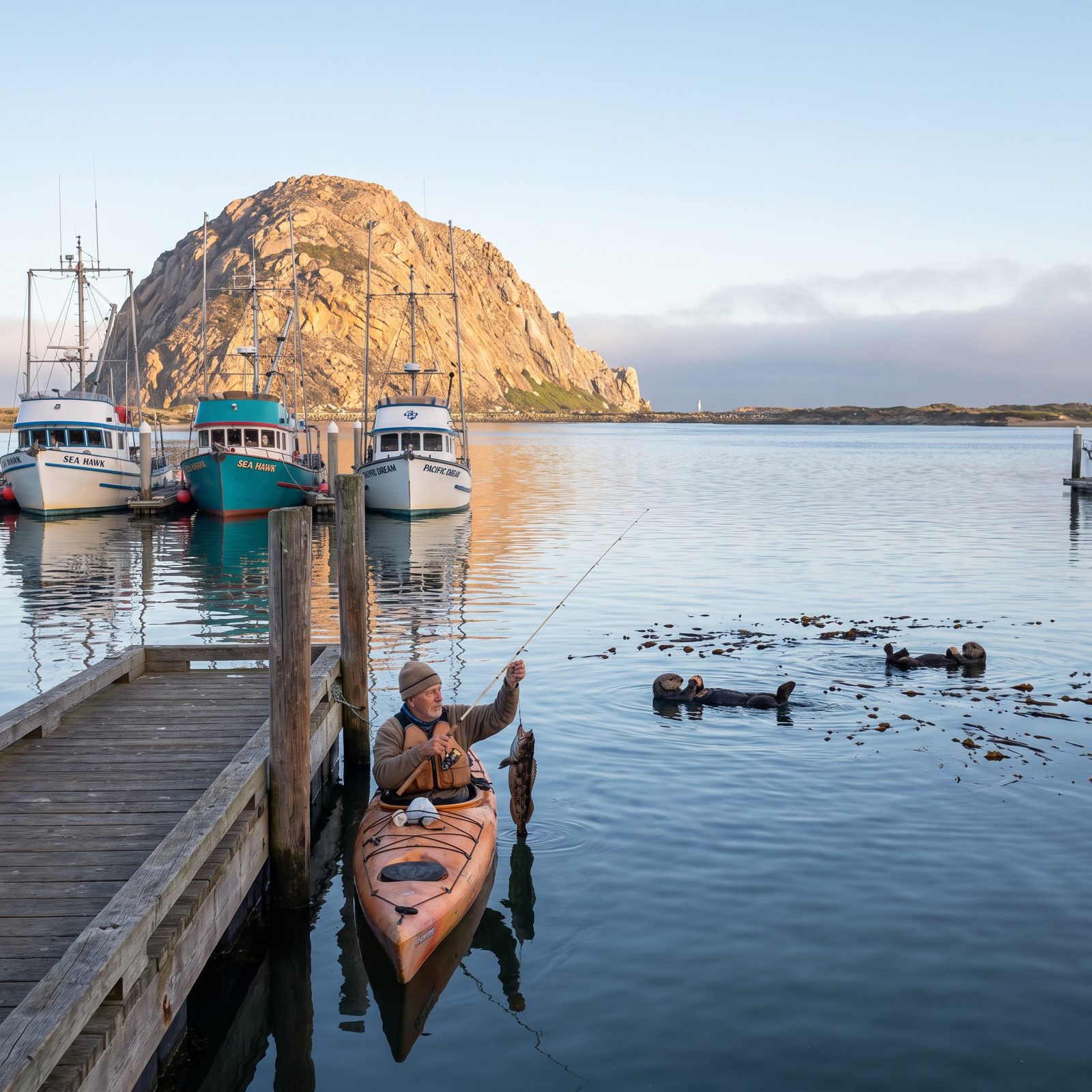
Morro Rock changes the whole mood of the place. A 576-foot volcanic plug sits at the harbor mouth, and the town wraps around a calm, protected bay in its shadow.
You get options most coastal towns can’t match. Fish the pier for free, launch a kayak for rockfish and lingcod along the kelp, or book a charter out through the mouth for a full-day bottom trip. The bay itself stays sheltered enough that older anglers who’ve given up on open-ocean slop can still get on fish.
6. Astoria, Oregon: Chasing Columbia River Salmon Where the River Meets the Sea
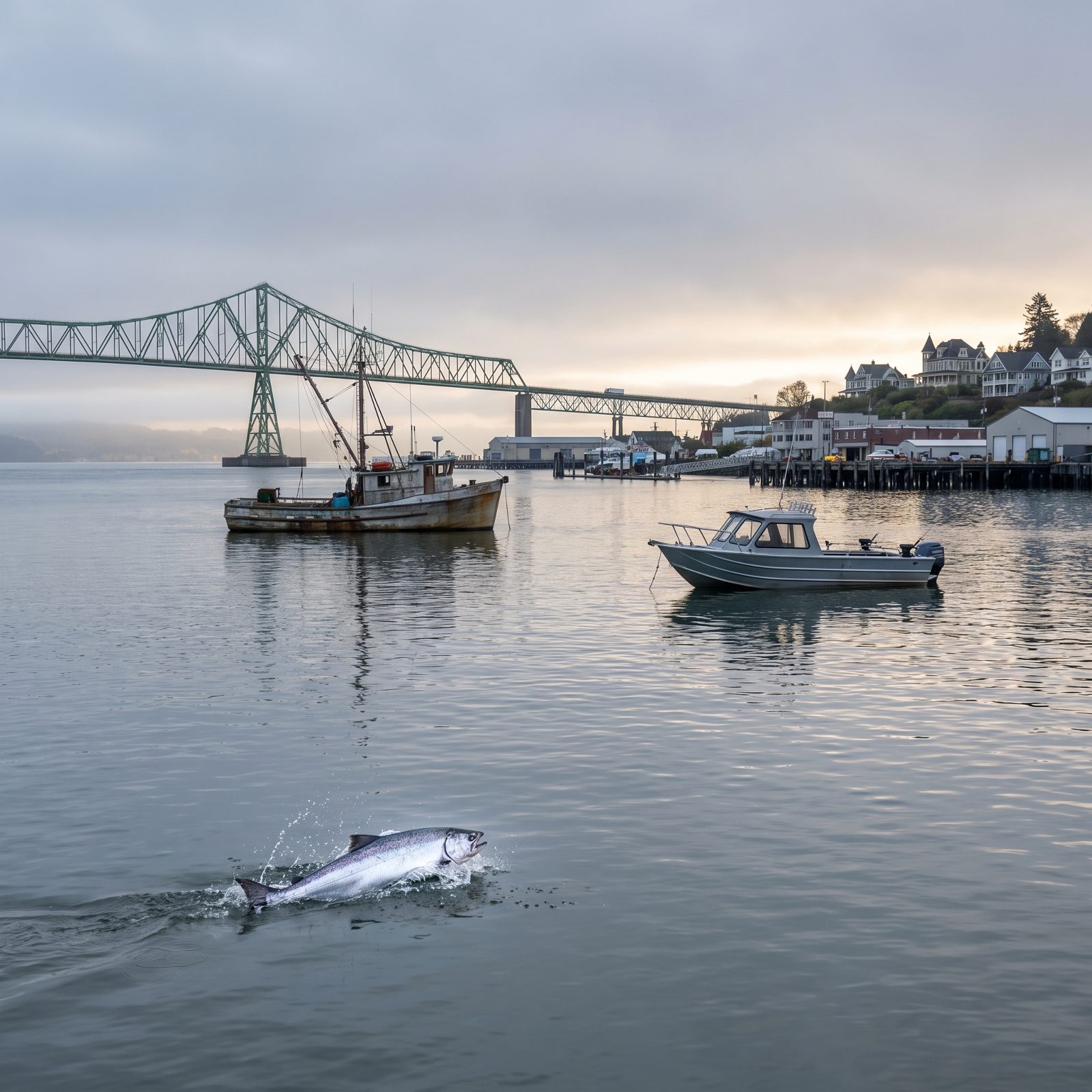
The bar at the mouth of the Columbia has earned its nickname. The Graveyard of the Pacific has swallowed a staggering number of ships over the years, and you do not fish out there casually.
Inside the river, though, Astoria ranks among the best salmon towns in the country. Fall Chinook push up the Columbia in enormous numbers, and the sport fishery for them runs from late summer into fall. Buoy 10, the stretch near the river mouth, is practically a pilgrimage for salmon anglers.
The town carries its old cannery-and-fishing-port bones proudly. Victorian houses climb the hills, the waterfront still works, and a retiree who moves here is signing up for weather. It rains. A lot. If gray skies wear on you, look elsewhere.
5. Newport, Oregon: Halibut, Lingcod, and a Crab Ring Off Yaquina Bay
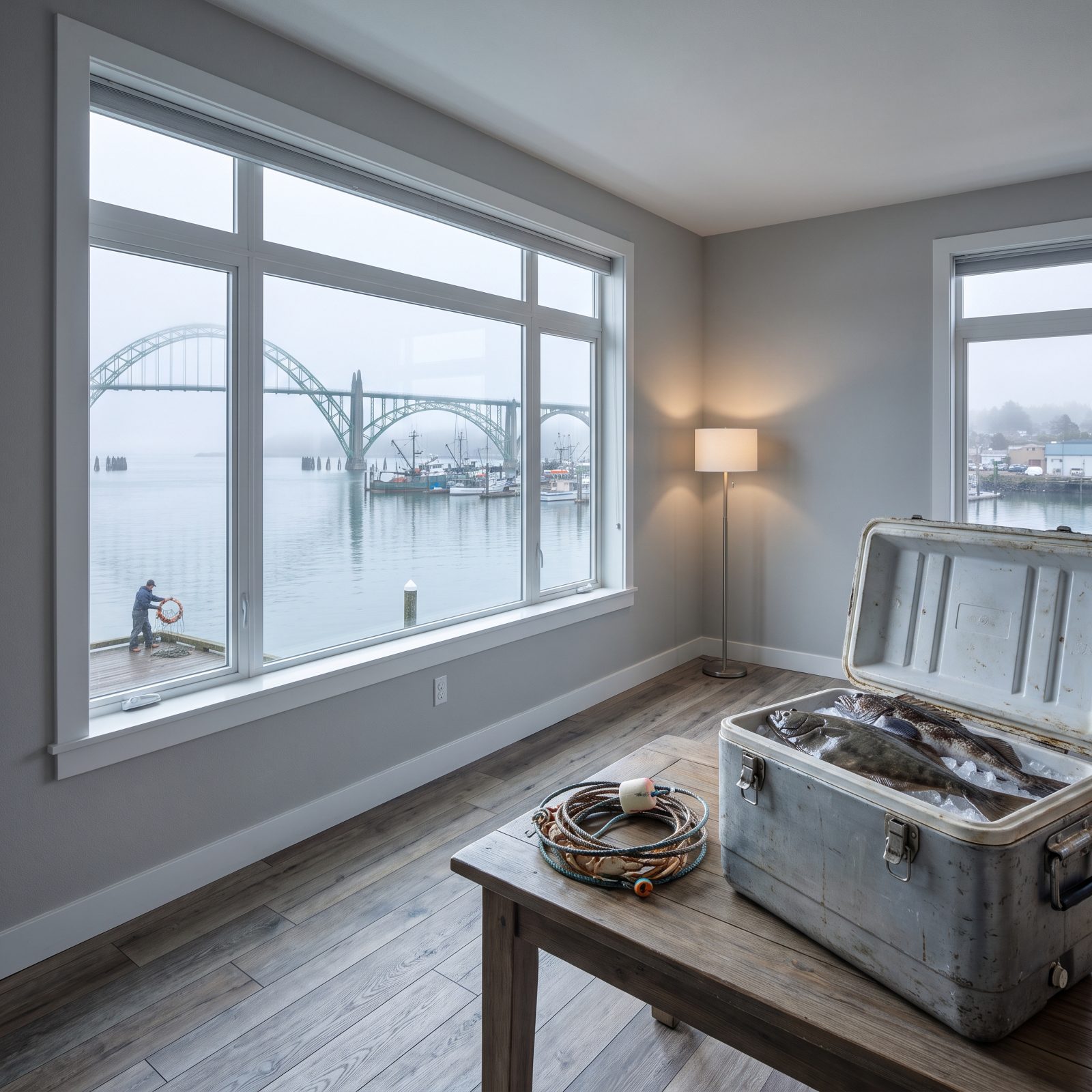
Newport gives you two fisheries for the price of one address. Head offshore for halibut and lingcod, or stay in the bay and run crab rings for Dungeness without ever firing up a big motor.
The crabbing is what sells the place to a lot of retirees. You rent gear on the Bayfront, drop rings off a public dock, and come home with dinner for the cost of a license and a little patience. Halibut season out of here is regulated tightly, so check the current openings before you plan a whole trip around it.
4. Gold Beach, Oregon: Salmon and Steelhead on the Legendary Rogue River
Zane Grey fished the Rogue and wrote about it, which tells you how long this river has been famous.
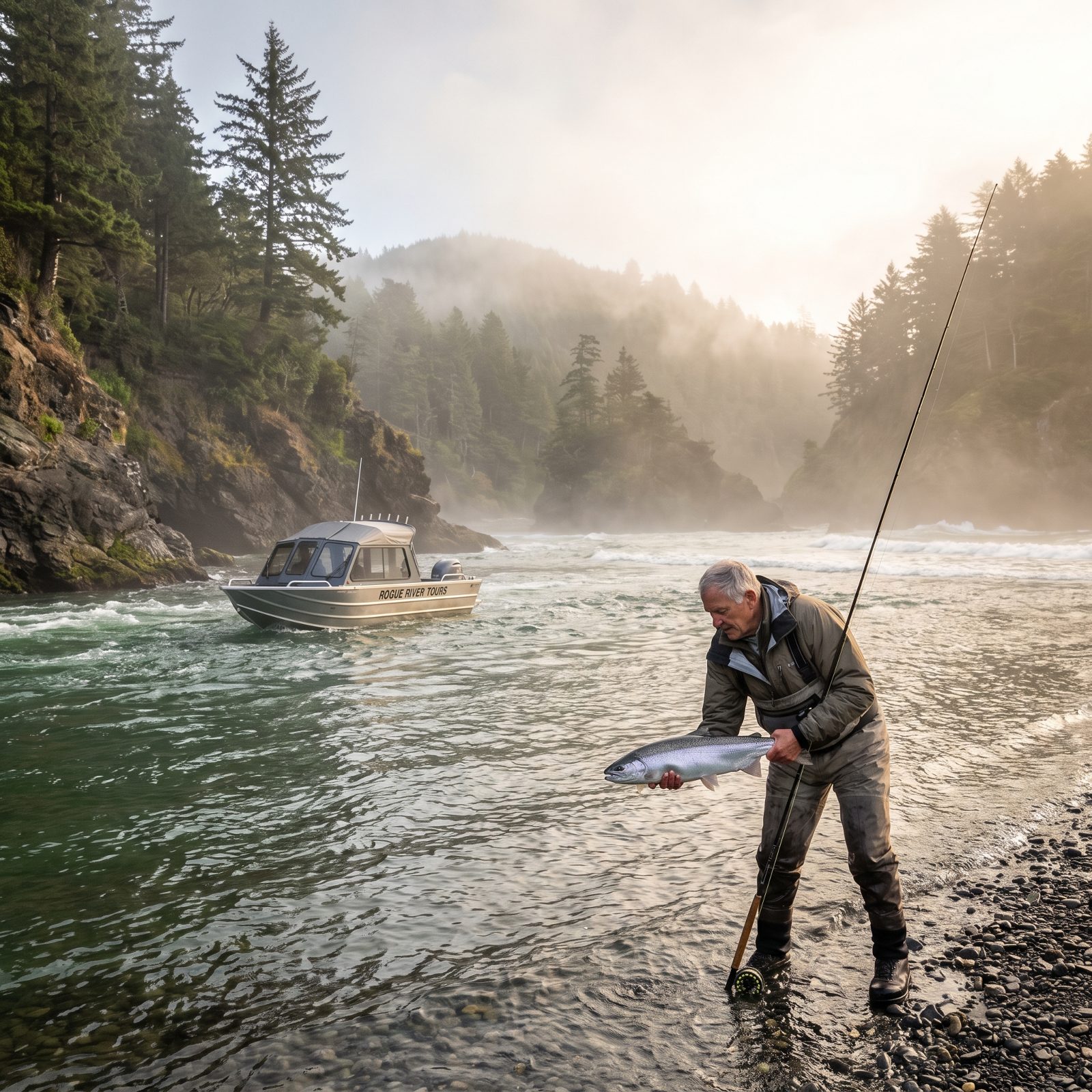
Gold Beach sits right where the Rogue empties into the Pacific, putting you at the front door of one of the West’s great anadromous rivers. Fall Chinook, summer steelhead, winter steelhead — the run calendar keeps a dedicated angler busy most of the year, and jet boat trips run upriver through the canyon for both fishing and sightseeing.
For a retiree who wants river over ocean, this is the move. No bar crossing, no big swell, just a world-class river and a small town that still feels like one. Services are limited, so get comfortable driving a bit for the things a bigger town takes for granted.
3. Port Townsend, Washington: Beach Casting and Boat Fishing on Puget Sound
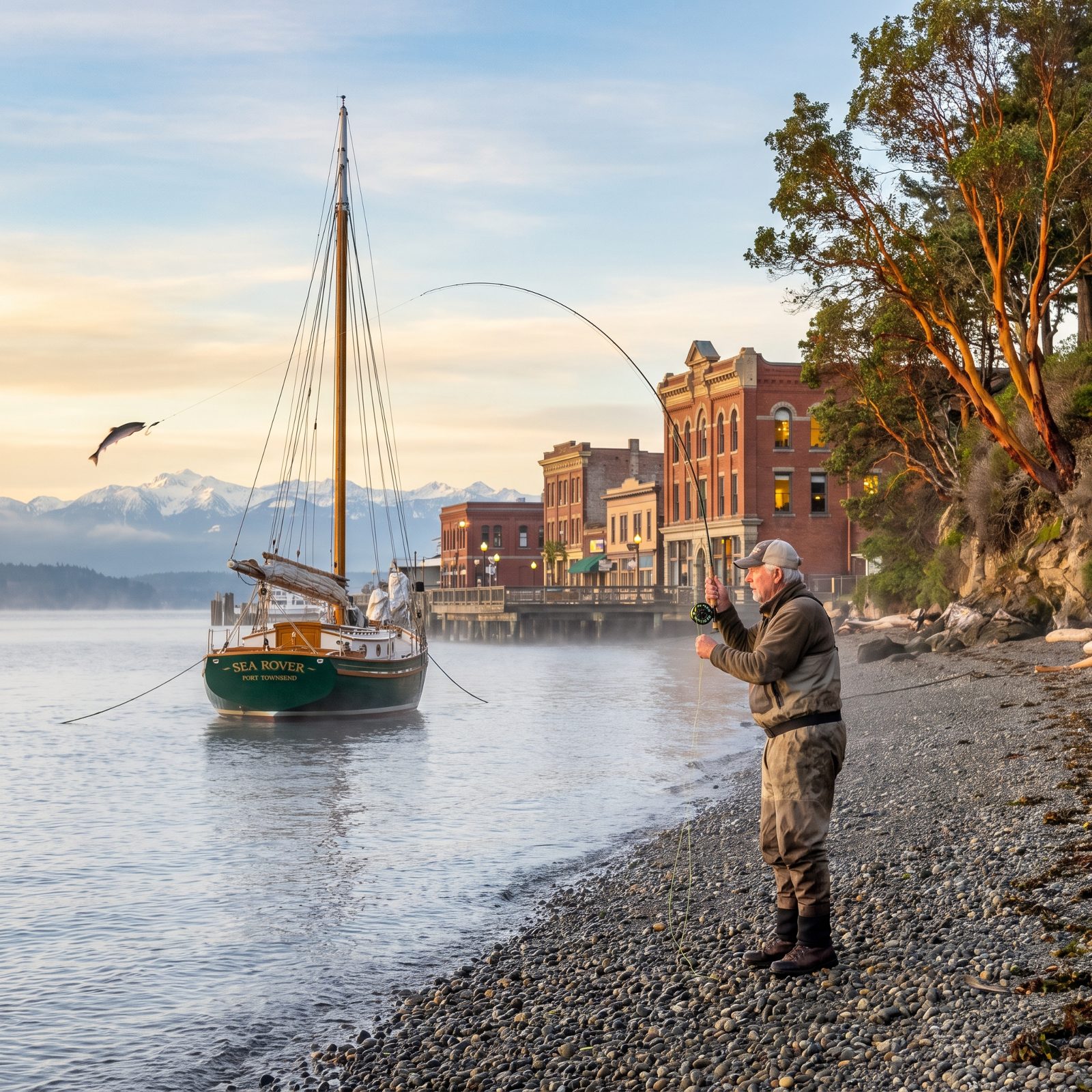
You’ve seen towns that trade on their old bones and feel fake doing it. Port Townsend isn’t one of them. This is a genuine Victorian seaport, one of the best-preserved in the country, perched at the tip of the Olympic Peninsula where it pokes into Puget Sound.
The fishing runs quieter than the ocean towns, and that’s the whole point. Beach-cast for salmon off the local shorelines, jig for lingcod and rockfish, or run out for the short, intense salmon seasons the Sound allows. Puget Sound salmon regulations shift year to year and area to area, so the rulebook is your first stop every season.
2. Sandpoint, Idaho: Giant Trout and Kokanee on Lake Pend Oreille
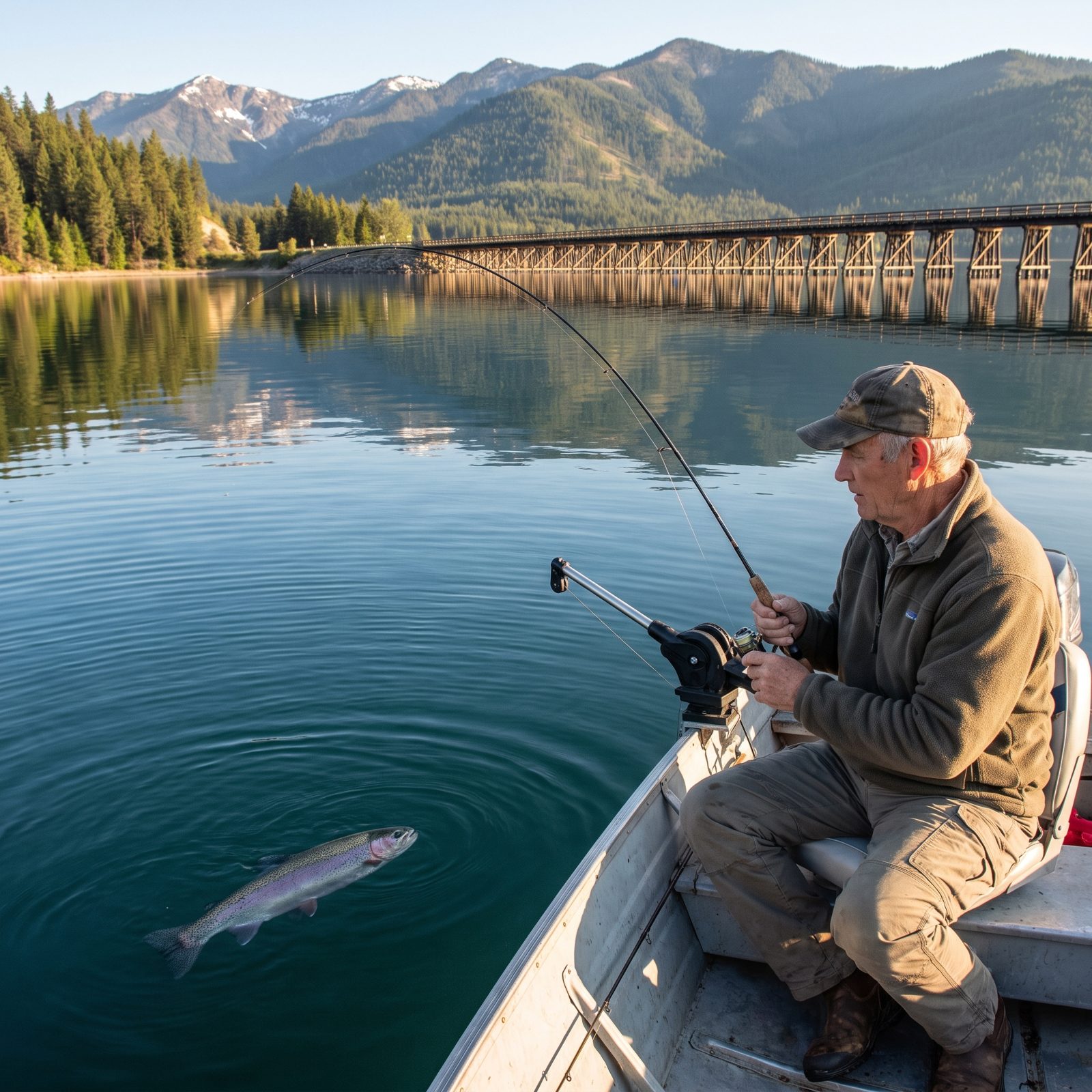
Lake Pend Oreille is deep. More than 1,100 feet in places, which puts it among the deepest lakes in the country — deep enough that the Navy tests submarine acoustics in it.
That depth grows big fish. The lake once held the world record for Kamloops rainbow trout, and it still kicks out monsters alongside kokanee salmon, lake trout, and bull trout. Trolling with downriggers is the game for the big rainbows.
Sandpoint itself is the quiet winner here. A walkable little mountain town on the north shore, with a long bridge crossing the lake, real winters, and a view of the Selkirks that doesn’t quit.
1. Mountain Home, Arkansas: Two Famous Trout Rivers and a Lake in One Zip Code
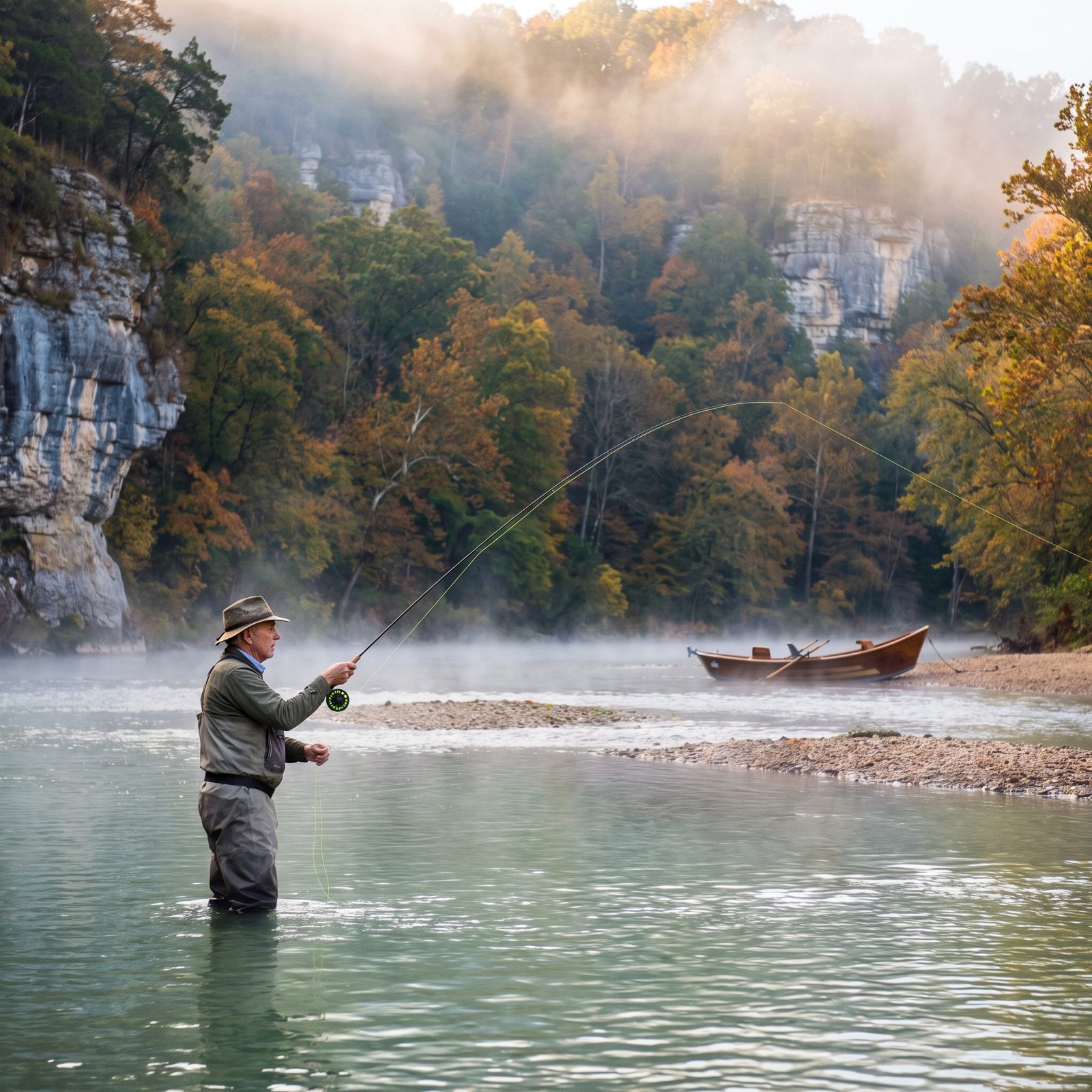
Most towns are lucky to have one great piece of water. Mountain Home has three, and they’re all famous.
The White River and the North Fork both run cold and clear below their dams, producing some of the best tailwater trout fishing in the country. The North Fork gave up a brown trout of more than 38 pounds once, a number that still turns heads in fly shops. Add Norfork Lake nearby for bass, stripers, and crappie, and you’ve got a trio that covers just about every freshwater mood a person could have.
The Ozark setting and the low Arkansas cost of living make this one easy on a retirement budget. Cold water, warm town, cheap living.