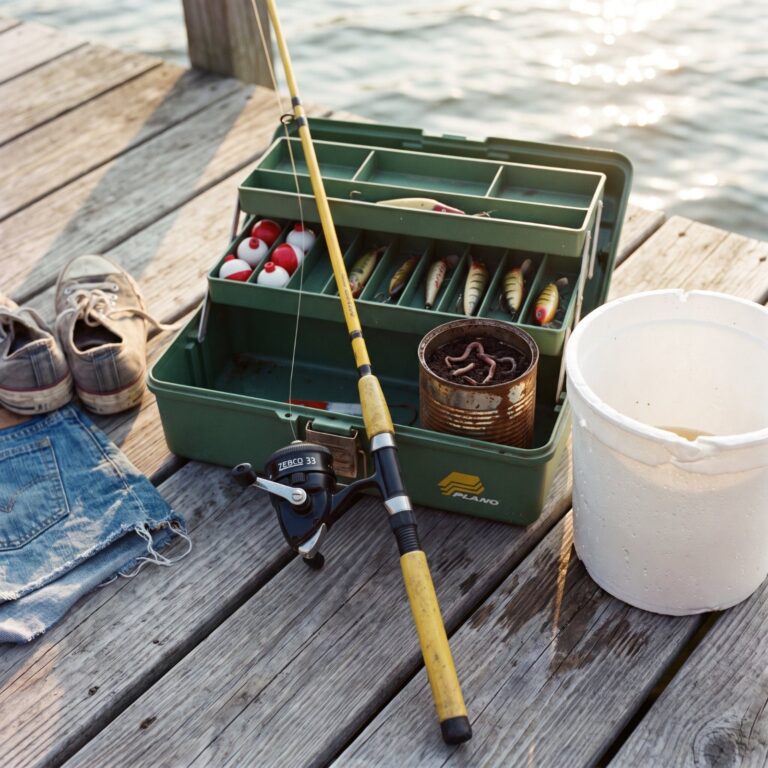
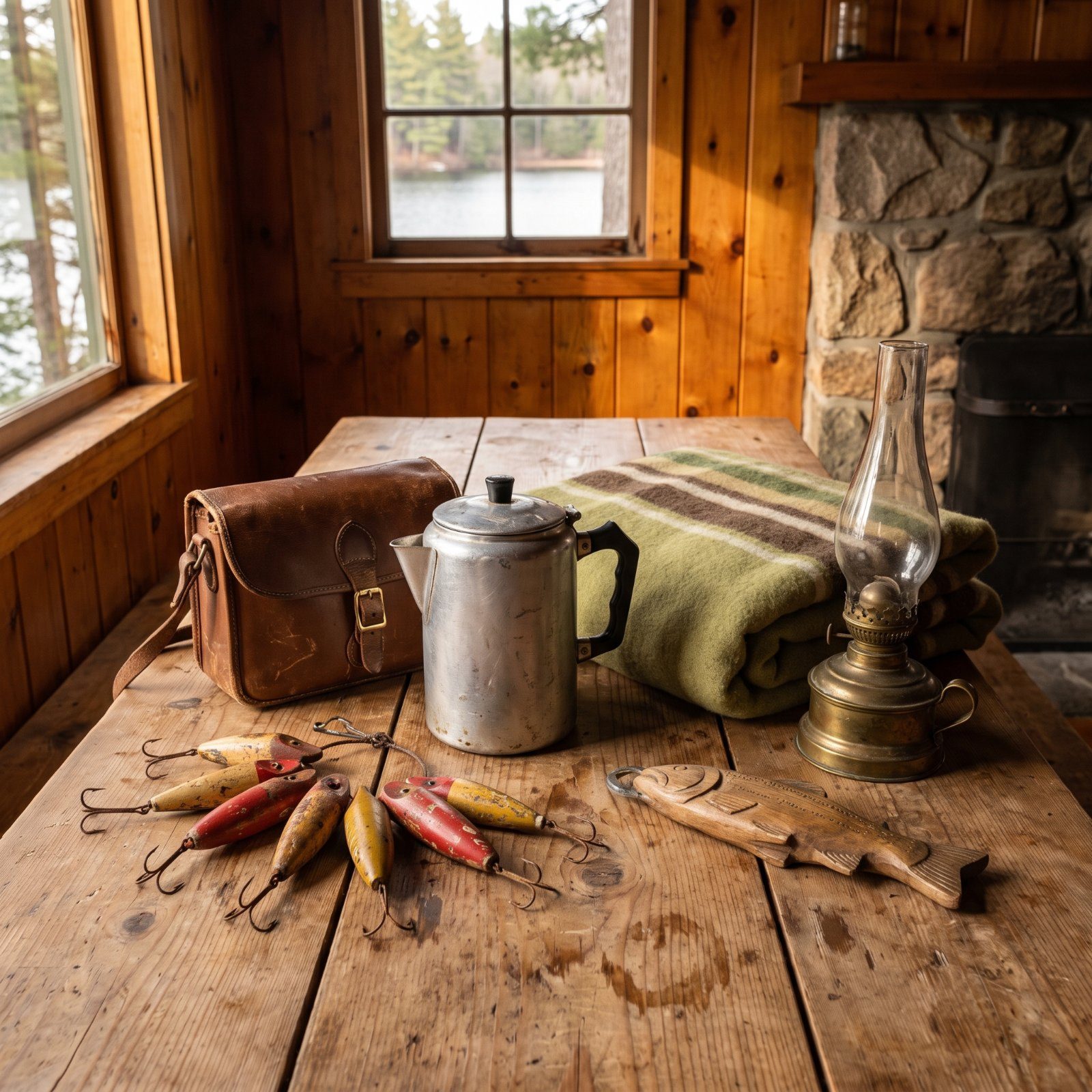
The smell gives it away first. Woodsmoke soaked into pine, bug spray, bacon grease from a stove that ran on splits of birch. A 1970s fishing cabin was built to do a job, and every board in it earned its keep. No two were alike because nobody hired anyone with a drafting table. Somebody’s uncle framed it one summer and the family finished it over the next twenty. Most of what made those places feel like home has quietly gone missing from the catalogs and the prefab plans. We went looking for the pieces worth remembering, and a few worth dragging back.
Please note that some of the images in this article were created with the assistance of AI.
31. The Spring-Hinged Wooden Screen Door
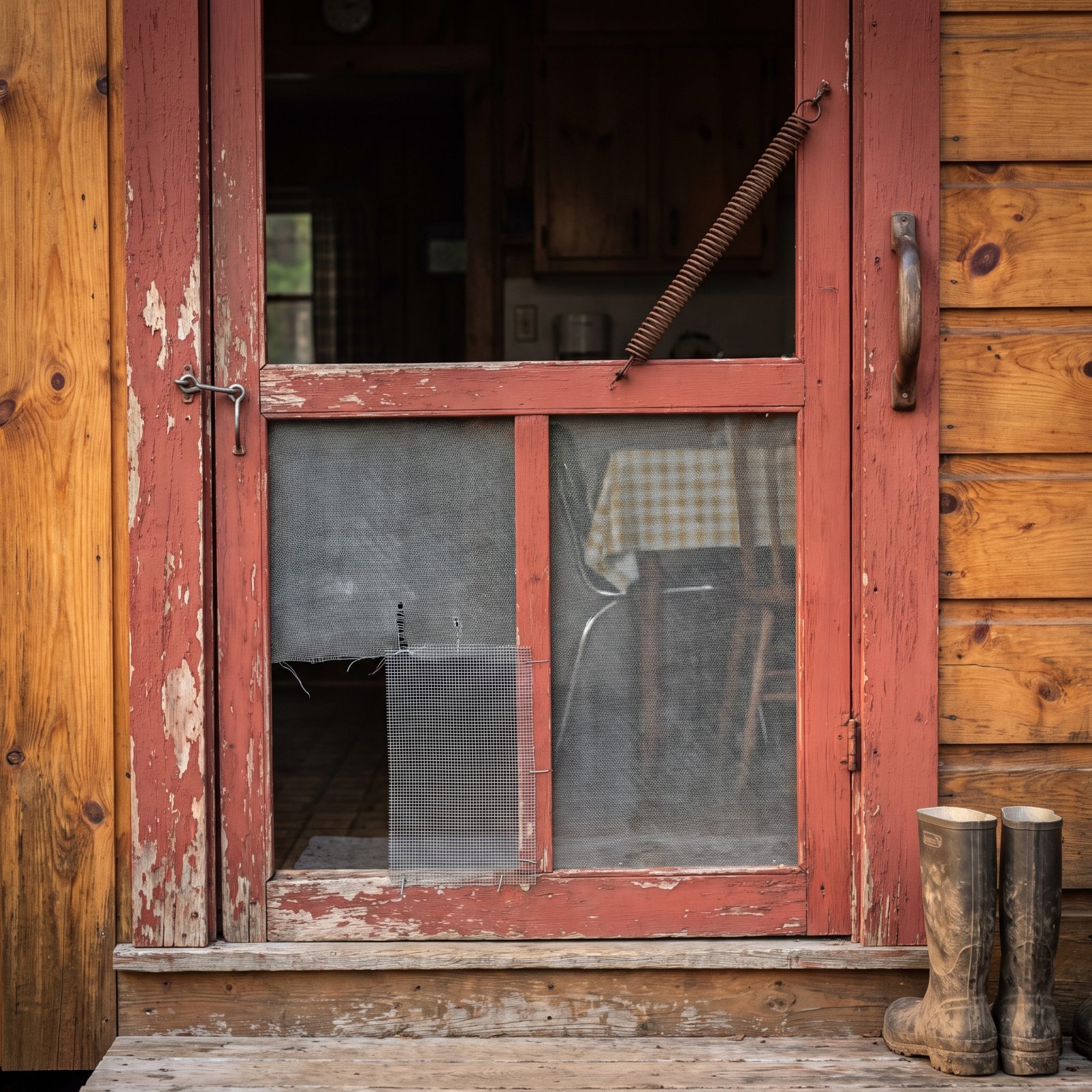
The sound is the thing. That slow wheeze of the spring stretching, then the flat crack of pine hitting the jamb — you heard it a hundred times a day and never once minded. It told you who was coming and going without anyone saying a word.
Modern cabins get a vinyl slider that whispers shut on a hydraulic arm. Quiet, sure. Also dead. The old screen door breathed with the house, let the lake air roll through, and, with its torn, sagging screen and that open slot between the middle rails, let the blackflies in about as freely as the breeze. We swatted a lot of mosquitoes standing guard at one of these, and it was worth every one.
30. A Screened Porch Facing the Water
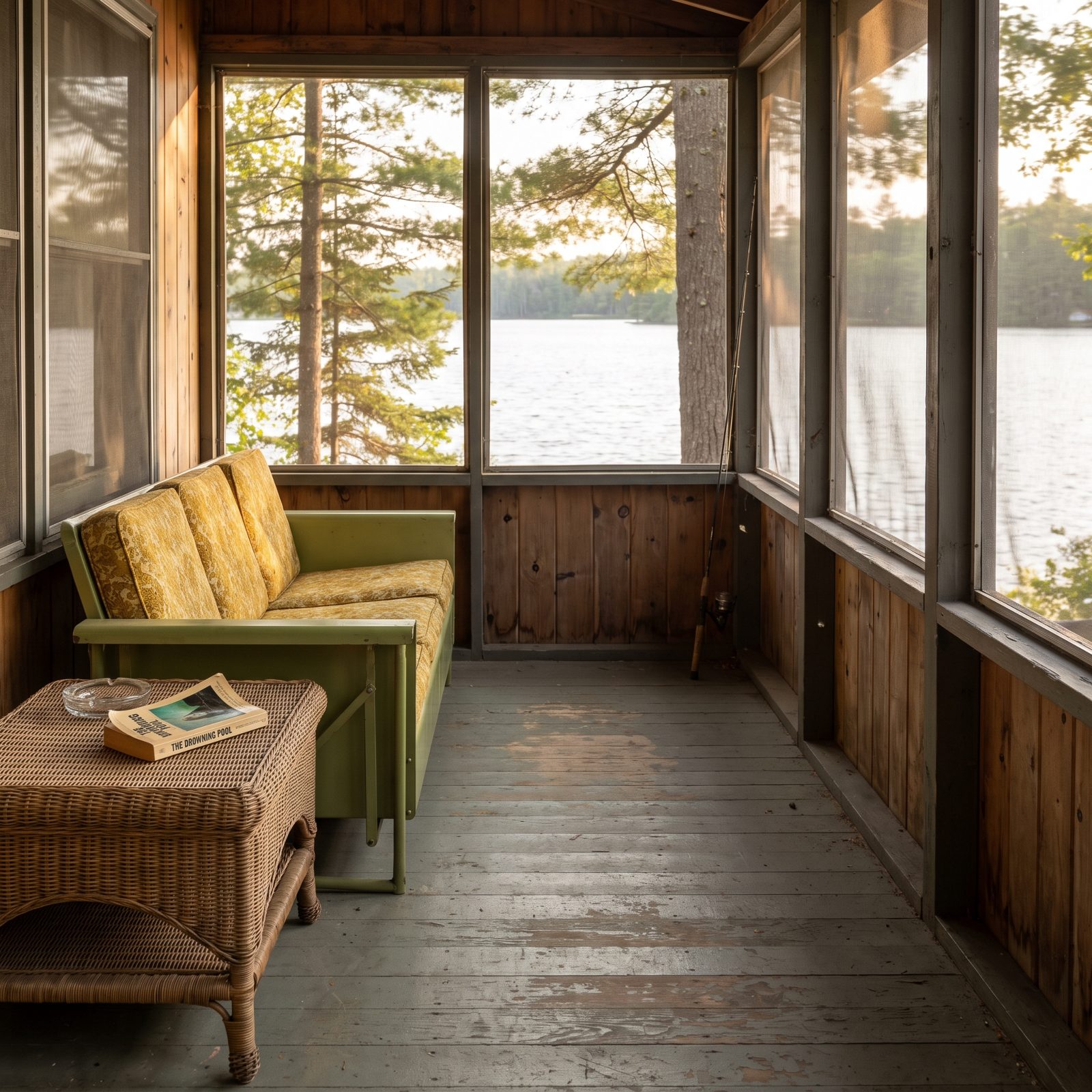
Half the reason anyone built on the water, and nobody puts them in anymore. The screened porch was the room that did the most living — you ate breakfast out there, tied leaders out there, took your afternoon nap to the sound of waves slapping the dock.
At night it turned into the overflow bunkhouse for whoever drew the short straw, which somehow became the best seat in the place once the loons started up. Now builders glass the whole thing in, run the AC, and call it a sunroom. They traded the lake air for climate control. Bad trade.
29. Knotty Pine Walls From Floor to Ceiling
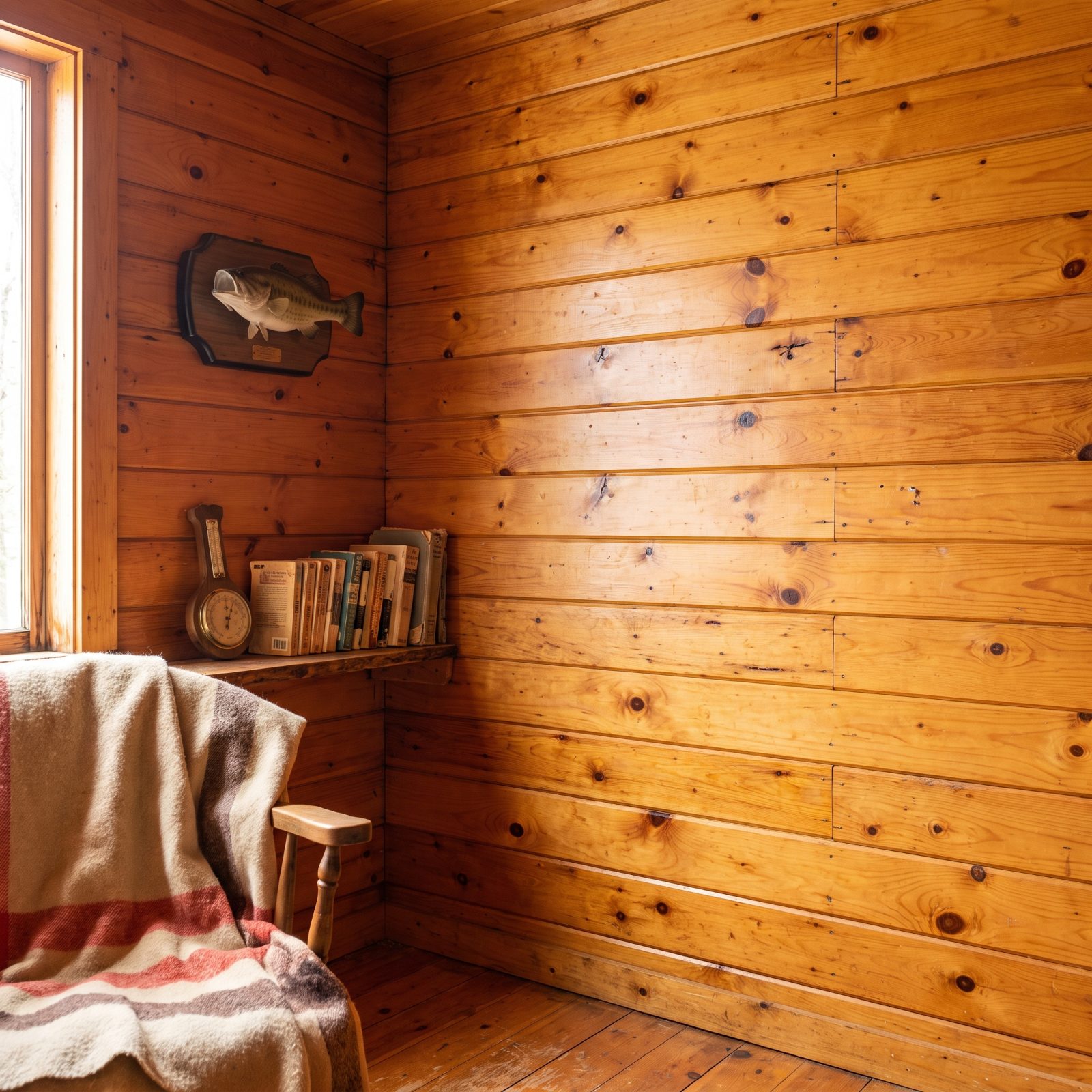
Everything was pine, and pine was everything. Walls, ceiling, trim, the shelves your tackle sat on. It arrived cheap and local, went up fast with a hammer and a mouthful of nails, and aged into that honey-amber color no stain in a can has ever matched honestly.
Drywall killed it. Builders went to painted gypsum board because it’s faster and the walls come out flat and white and forgettable. A knot in a pine board is a fingerprint. You knew the weird one over your bunk that looked like a surprised owl. Try memorizing a sheet of drywall.
28. The Massive Fieldstone Fireplace
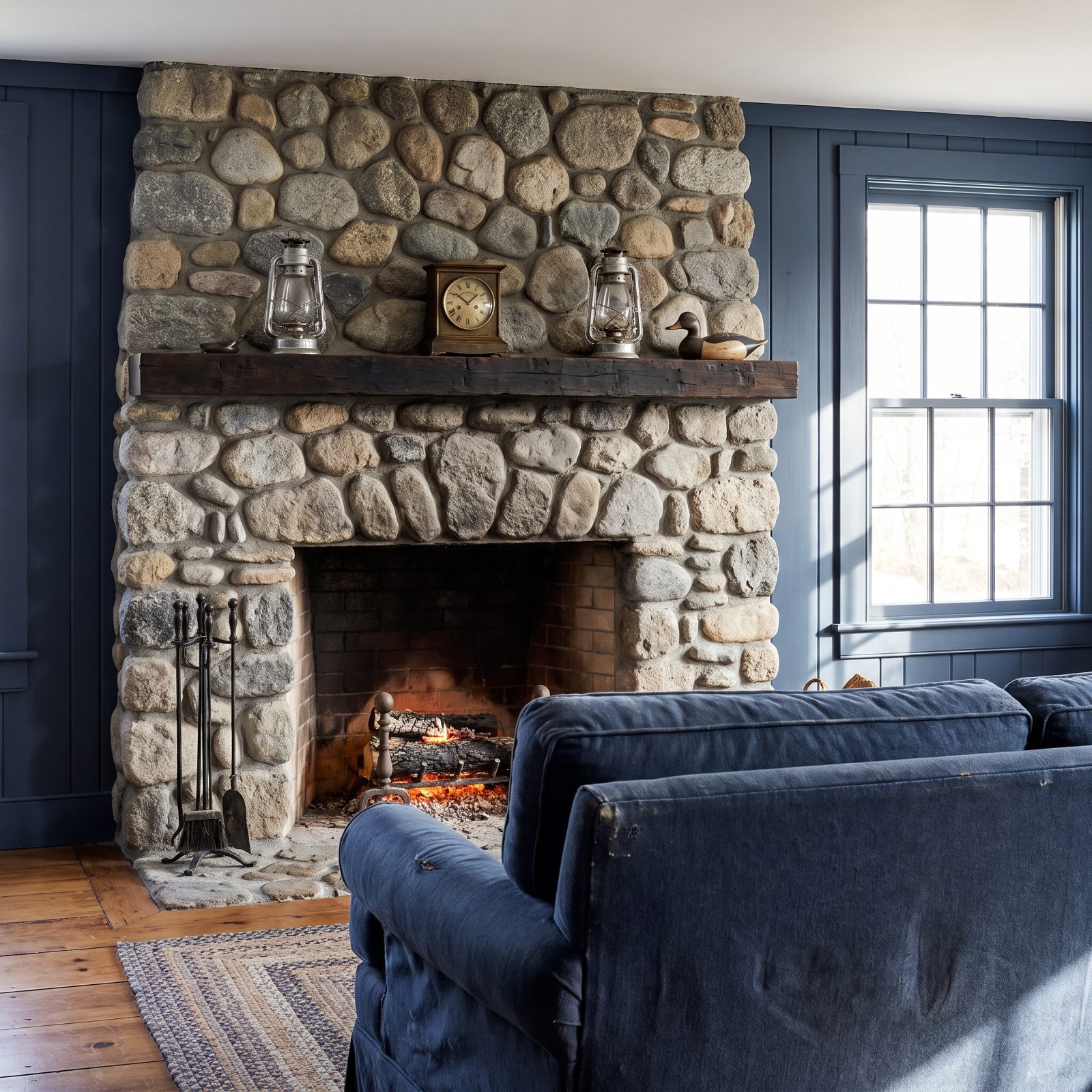
Somebody hauled every one of those rocks up from the shoreline in a wheelbarrow. You can still spot the round ones that obviously came off the beach, worn smooth by the same water you fish. That fireplace wasn’t ordered from anywhere. It was collected over a couple of sweaty summers.
It heated the main room, dried wet socks on the hearth, and gave everyone a place to point their chairs after dark. Modern cabins run a sealed gas insert with fake ceramic logs and a remote. Efficient. Clean. Also a television that happens to be warm. The stone asked you to stack wood and tend it, and in return it gave the room a pulse.
27. A Cast-Iron Wood Cookstove
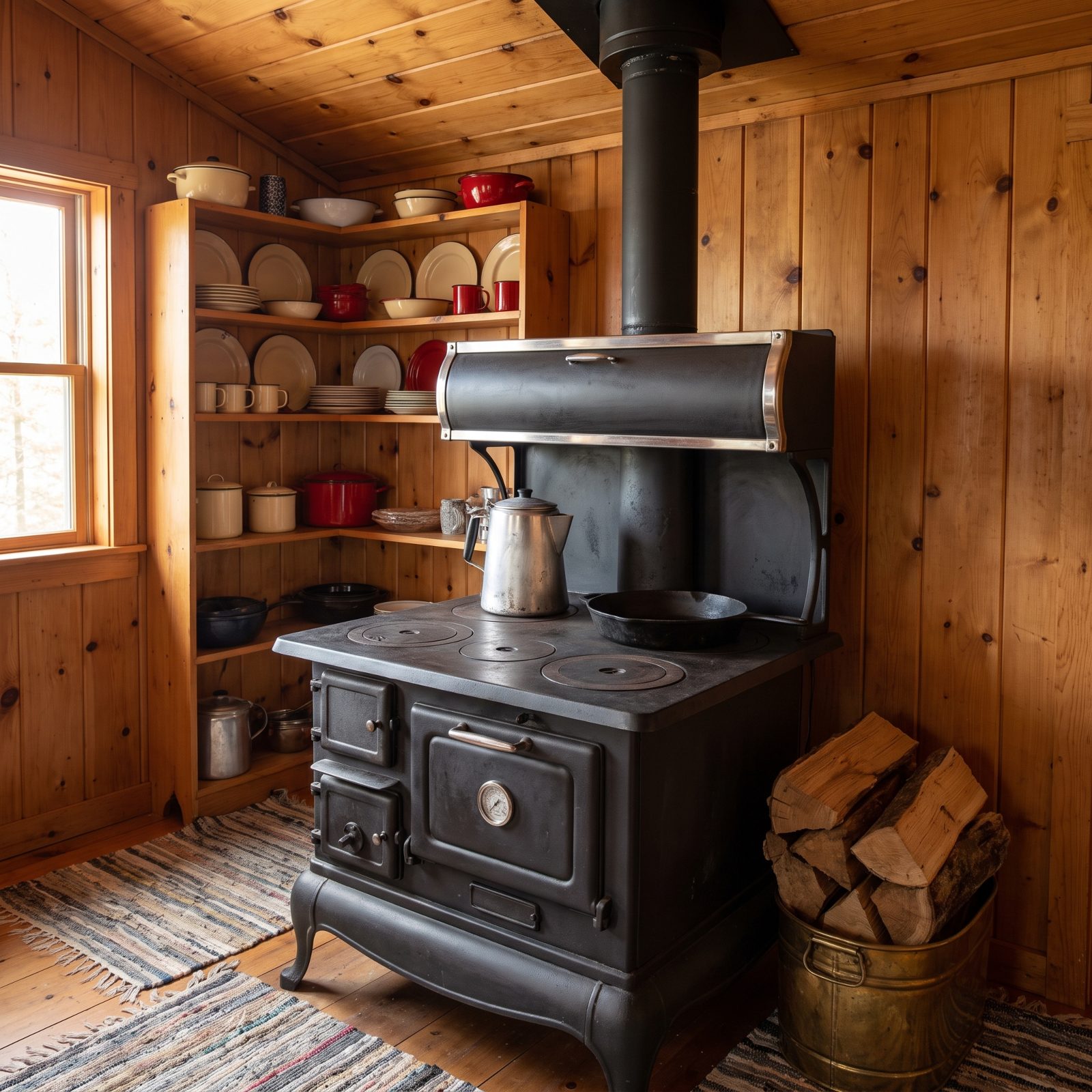
Cooked your morning eggs and heated the whole kitchen while it did it. Two jobs, one firebox, no electricity required — which mattered a lot when the nearest pole was four miles away.
The learning curve was real. You managed heat by feel, sliding the skillet toward the firebox for a hard sear and away from it to hold warm. Burned a few breakfasts getting there. But a trout fried in cast iron on a wood stove tastes like something a propane burner can’t touch, and I’ll stand by that till I’m cold.
26. Built-In Bunk Beds With Storage Underneath
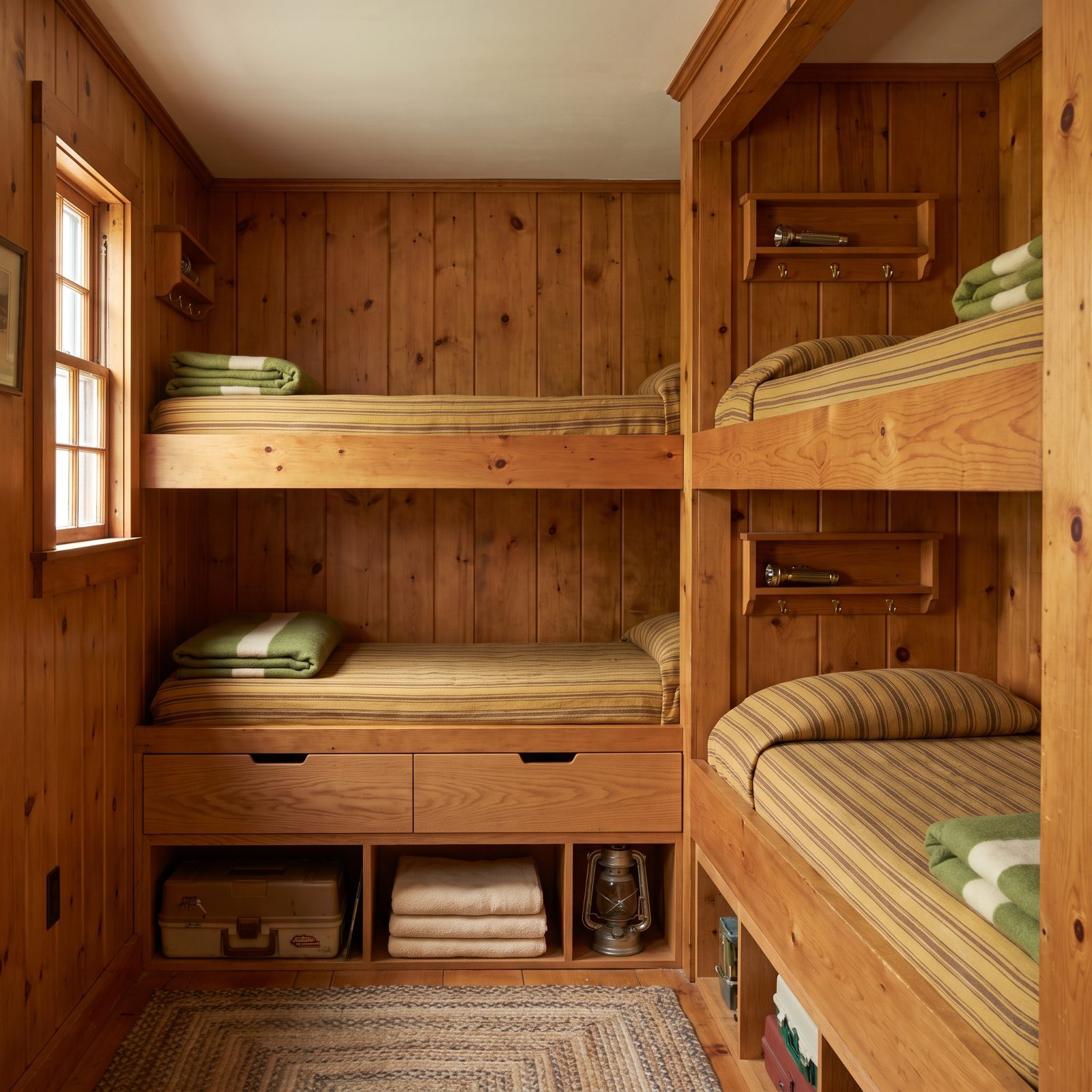
Space was tight and cash was tighter, so the beds got built right into the wall and the dead space underneath became your dresser. No frames to buy, no furniture to haul in by boat, no room wasted. Pure cabin logic.
Kids fought over the top bunk every single year. The drawers below held everything — spare blankets, out-of-season tackle, the life jackets, the Monopoly box with the thimble long gone. Modern cabins put in queen beds and a closet and suddenly need twice the square footage. A built-in bunk wall sleeps six in the footprint of one soft mattress. I’ve slept worse places than a pine bunk with a wool blanket and a window cracked to the lake.
25. The Hand-Pumped Kitchen Sink
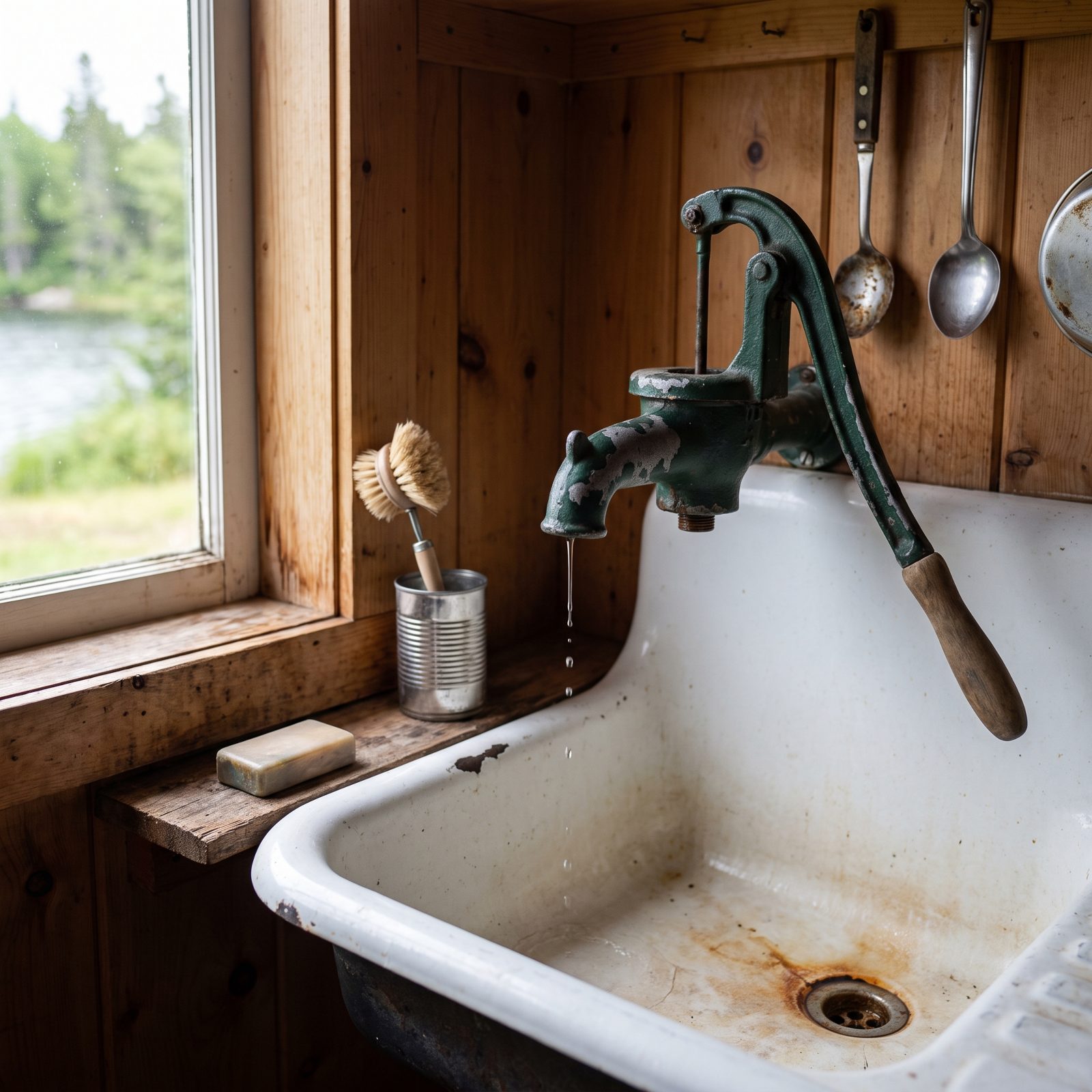
No well pump, no pressure tank, no electricity. Just a cistern or a lake line and your right arm. You primed it with a cup of water held back for exactly that, worked the handle until it caught, and out came cold water in those satisfying surges.
It made you respect every glass. Nobody ran the tap while they brushed their teeth, because running the tap was a workout. Modern cabins get a submersible pump and a faucet that behaves like your house back in the suburbs — convenient, no argument. But the hand pump taught the kids that water comes from somewhere, and that lesson stuck a lot longer than the sore shoulder did.
24. The Dockside Fish-Cleaning Bench
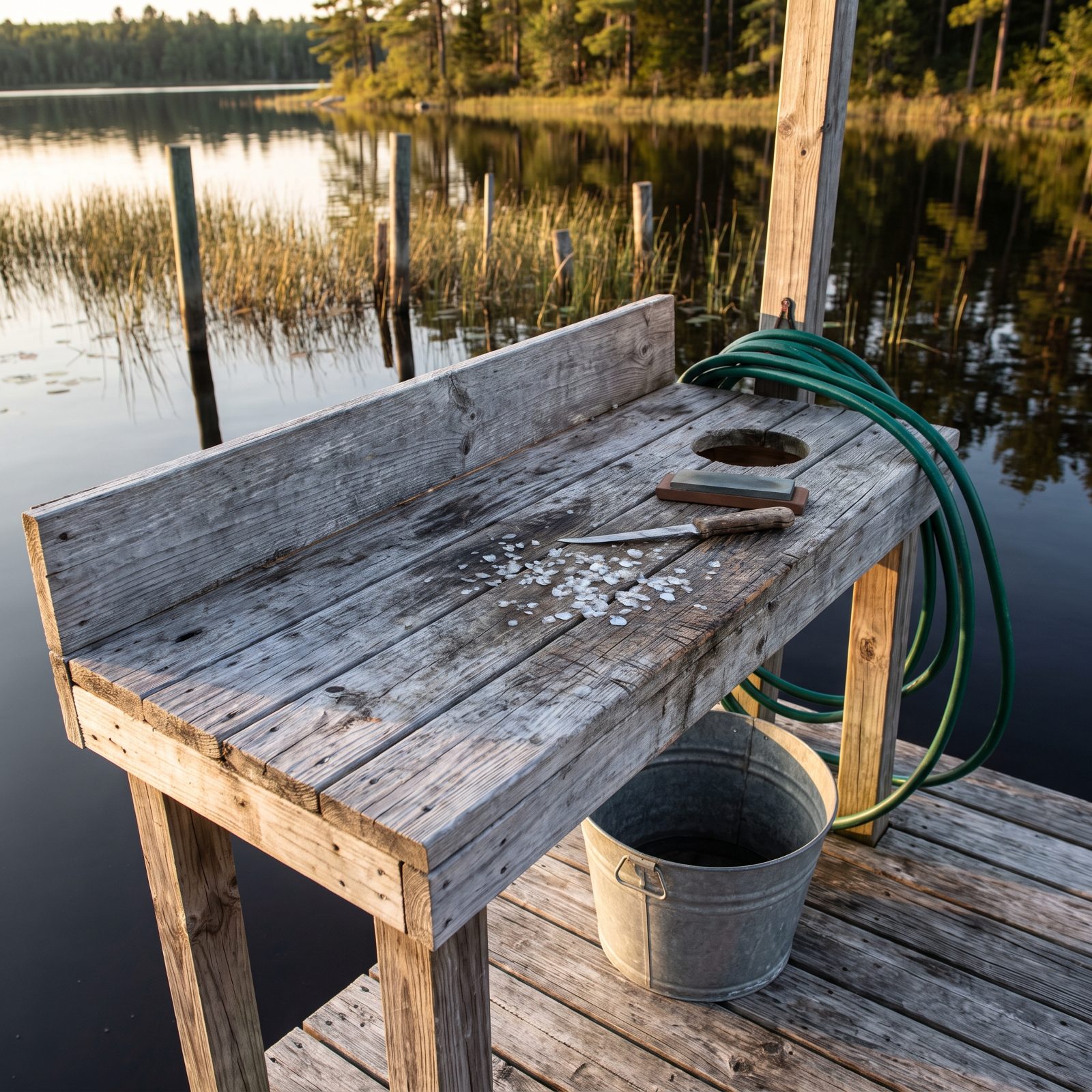
Every good cabin had one, bolted to the dock where it belonged, far from the kitchen and close to the water. A simple scarred plank with a knife, a hose, and a hole for the scraps the turtles and gulls cleaned up by morning.
Keeping the mess outside was the whole genius of it. You filleted your walleye, rinsed the board, and walked up with nothing but clean fillets in a bucket. New builds skip it entirely, and people end up scaling perch in a kitchen sink — which is how you spend July picking scales off the ceiling. Build the bench. Your spouse will thank you.
23. An Icebox With a Block-Ice Compartment
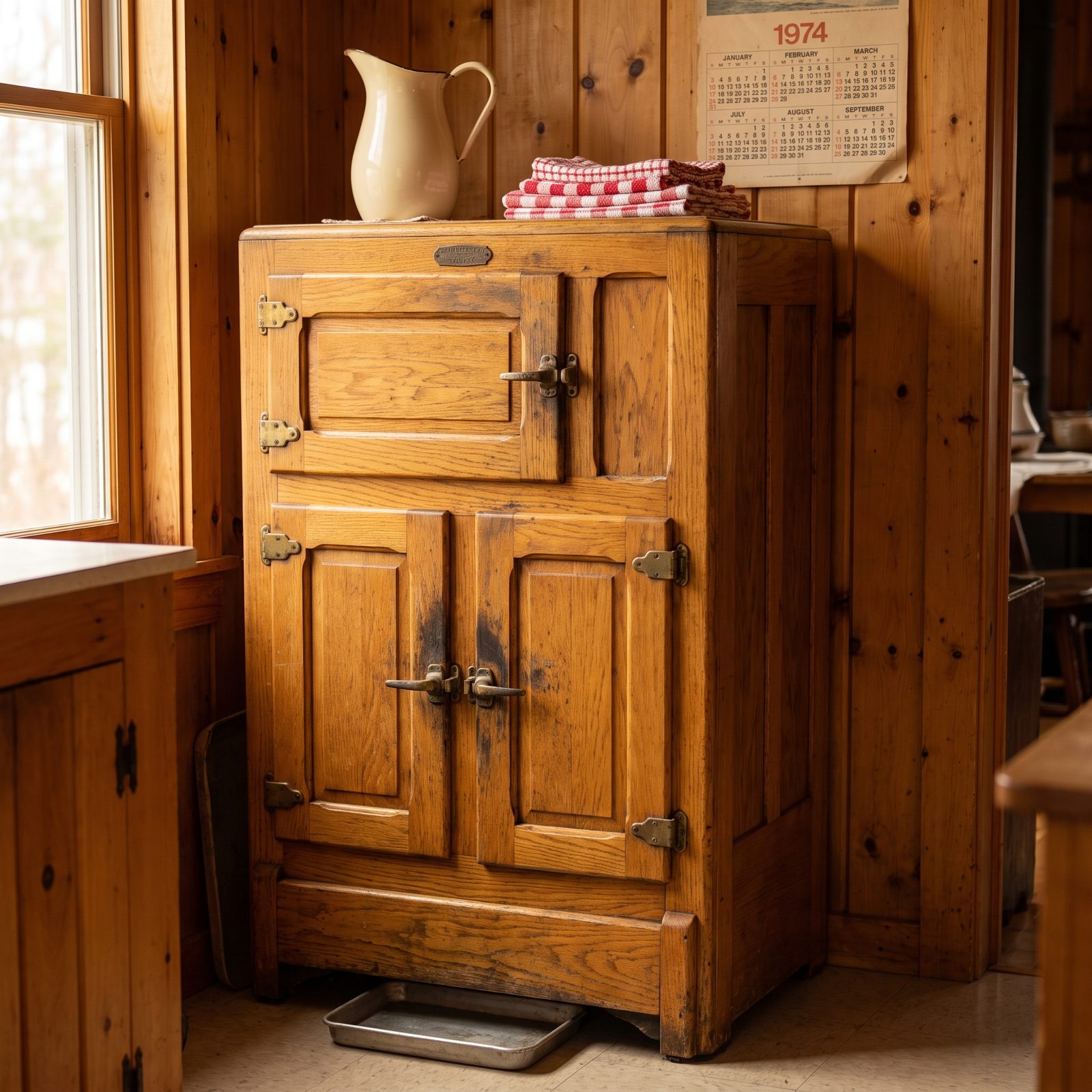
Before the propane fridge took over, you kept food cold with an actual block of ice sitting in an insulated oak cabinet. You bought the block at the bait shop in town, lugged it up in a burlap sack, and it lived in the top compartment slowly dripping into a pan you’d better remember to empty.
Forget the pan and you flooded the kitchen floor. Ask me how I know. The cold food sat below, the ice sat above, physics did the rest. It demanded a fresh block every few days and a trip to town, which quietly structured the whole week. These oak iceboxes sell as antique sideboards now, and most people have no idea the top door ever held ice.
22. The Freestanding Propane Refrigerator
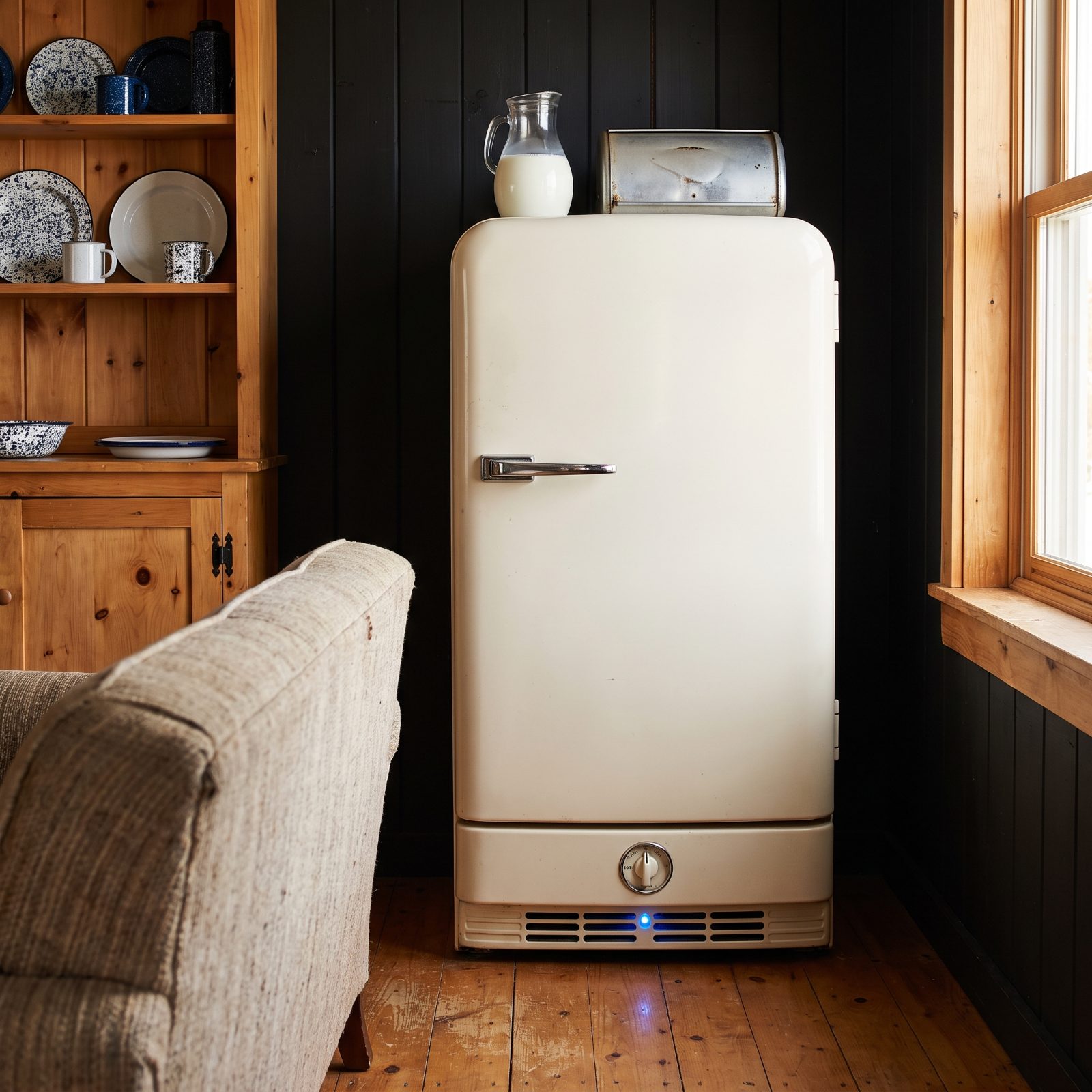
The quiet miracle of the off-grid cabin. A refrigerator that ran on a small blue flame instead of a wall outlet, using an absorption cycle with no moving parts to keep your beer cold and your worms alive. You lit the pilot in spring, and it hummed along all season on a tank out back.
It freed everyone from the ice run and the drip pan, which felt like magic in its day. The catch was you had to keep it level and keep the flame burning, and a cabin that tilts over the years will eventually win that argument. They still make them for boondockers and for anyone living past the power lines — the last of the great cabin conveniences that didn’t need the grid to come find you.
21. A Fold-Down Wall Table That Earned Its Keep
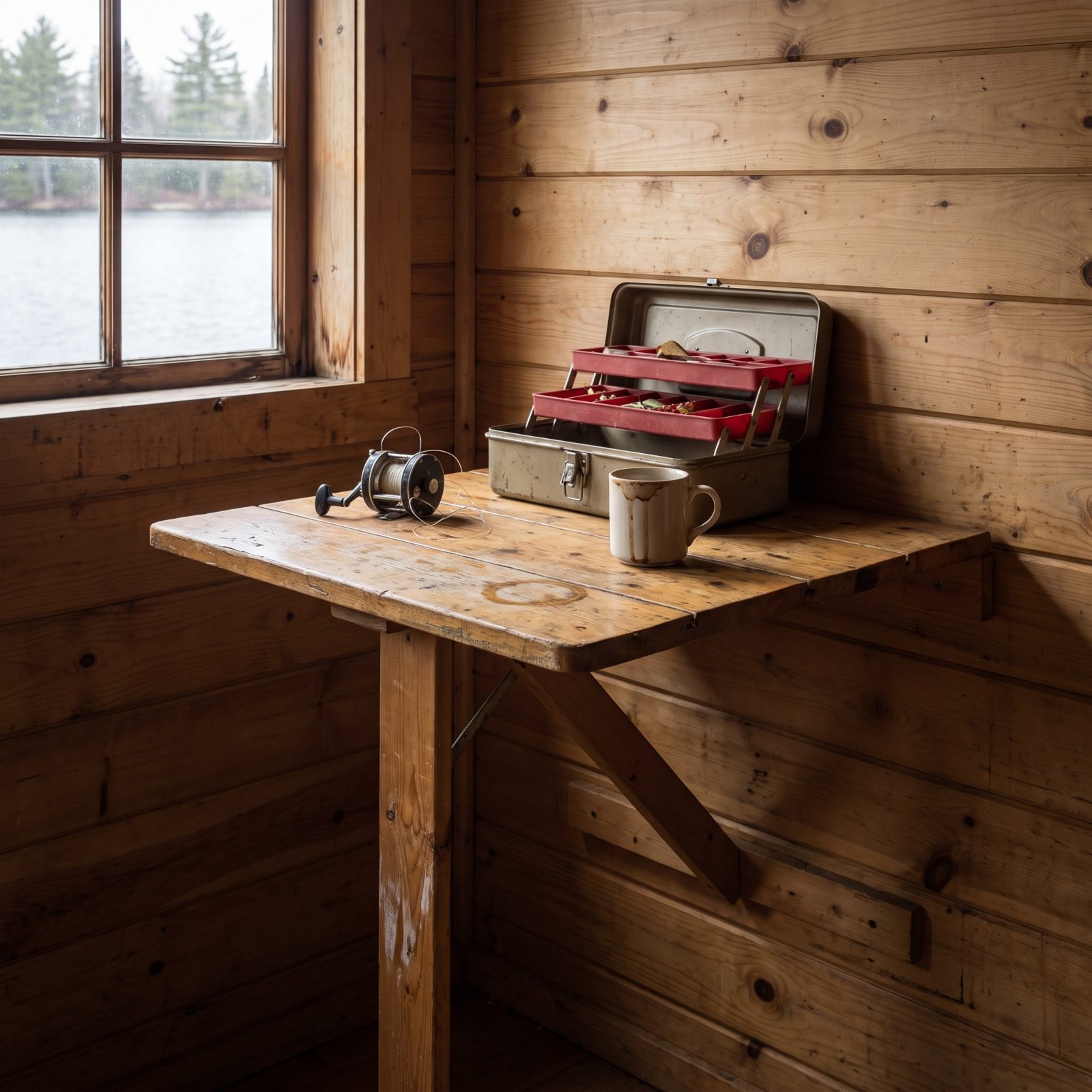
Floor space was currency in a one-room cabin, and the fold-down table spent it wisely. It hinged flat against the wall until supper or a reel teardown, then dropped level on a single folding leg. Clean a fish, tie leaders, deal a hand of cards, fold it back up and the floor returned.
You never see these anymore. Modern cabins come with a fixed dining nook and a kitchen island nobody walks around. The fold-down table assumed you’d be moving, dripping, and short on room — carpentry built around how people actually lived on the water.
20. The Floor-to-Ceiling Cedar Rod Rack
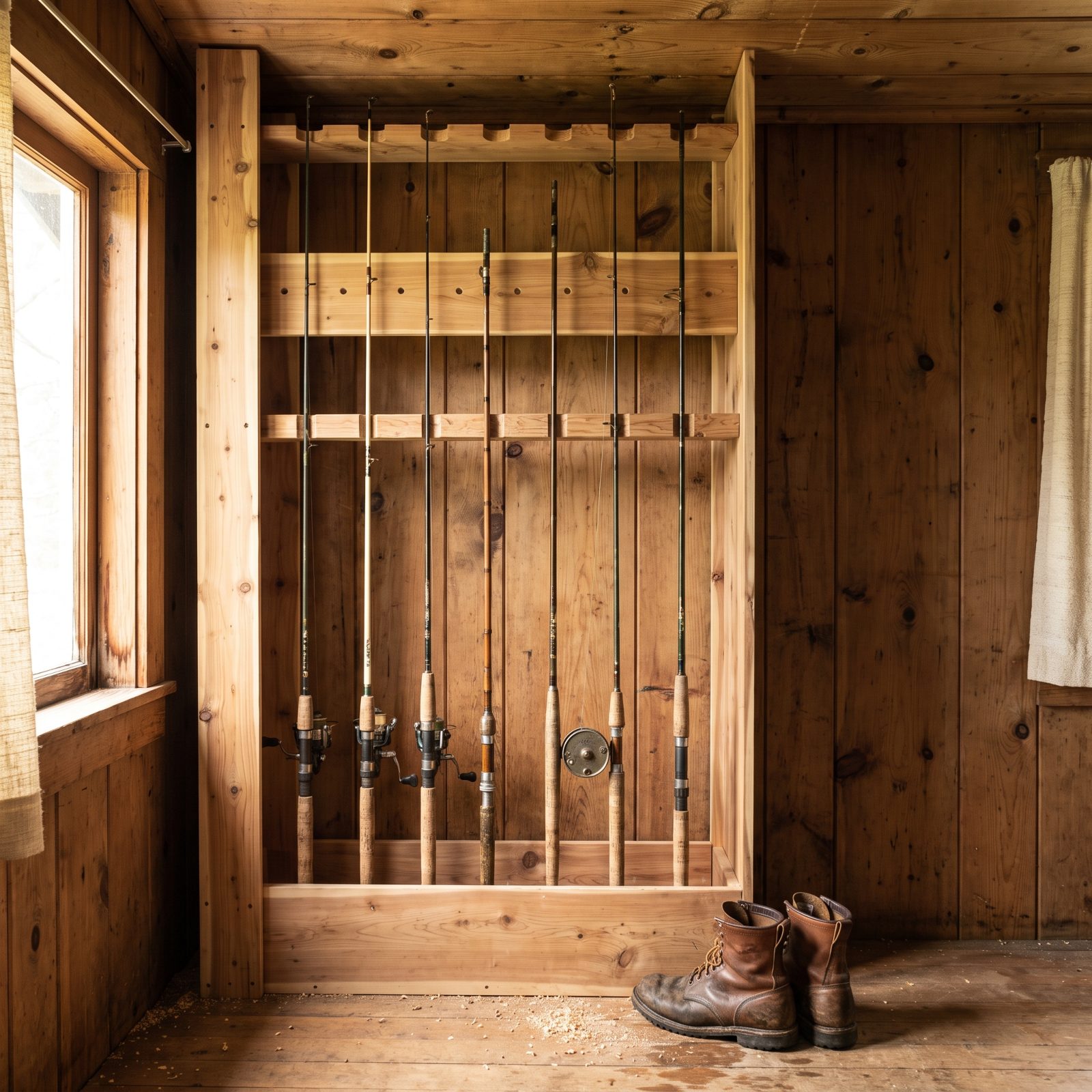
Rods standing at attention, floor to ceiling, in the corner by the door. Somebody built it over a weekend with cedar scraps, a drill, and a tape measure, because cedar smells good and warps slow. Each rod got its own slot so the tips never tangled and the guides never bent.
Compare that to now. Rods ride in foam racks from a big-box store, or worse, in a pile behind the couch. The cedar rack said something: these tools matter, and this is where they live. It doubled as a scent cabinet too. Open the cabin after a long winter and that cedar was the first thing you breathed in.
19. Peg Rails Instead of Closets
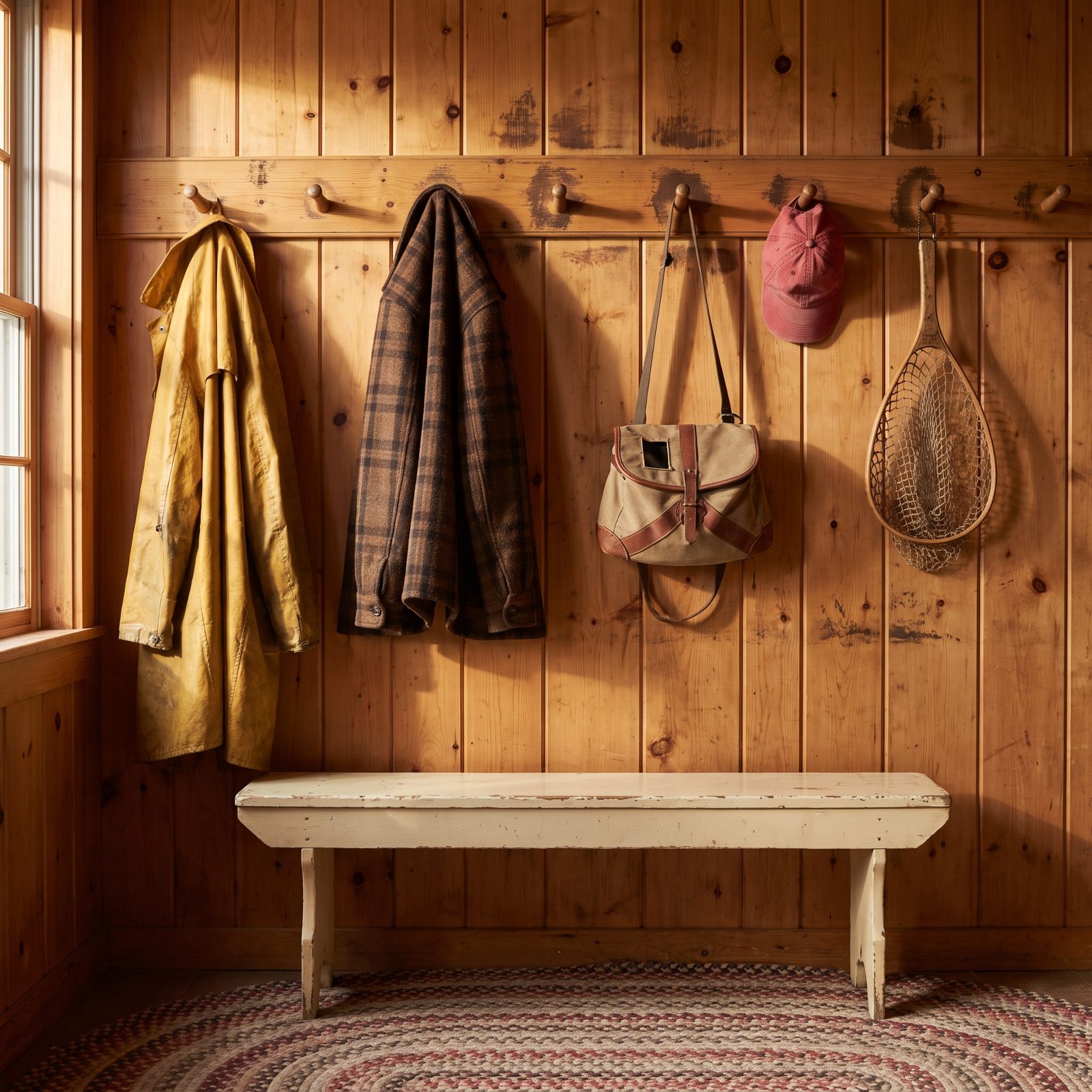
No cabin worth its salt had a closet. You had a peg rail, a plain board studded with turned pegs, and that was your wardrobe, your mudroom, and your drying line all at once.
Here’s why it beat a closet for cabin life:
- Wet gear dried in open air instead of mildewing behind a door.
- Everything was visible, so nobody lost a rain jacket for three weeks.
- It cost about four dollars in lumber and an hour of work.
Builders dropped peg rails the minute cabins started pretending to be houses. I call that a loss. A closet hides your mess. A peg rail makes you deal with it.
18. A Tin Roof That Amplified Every Rainstorm
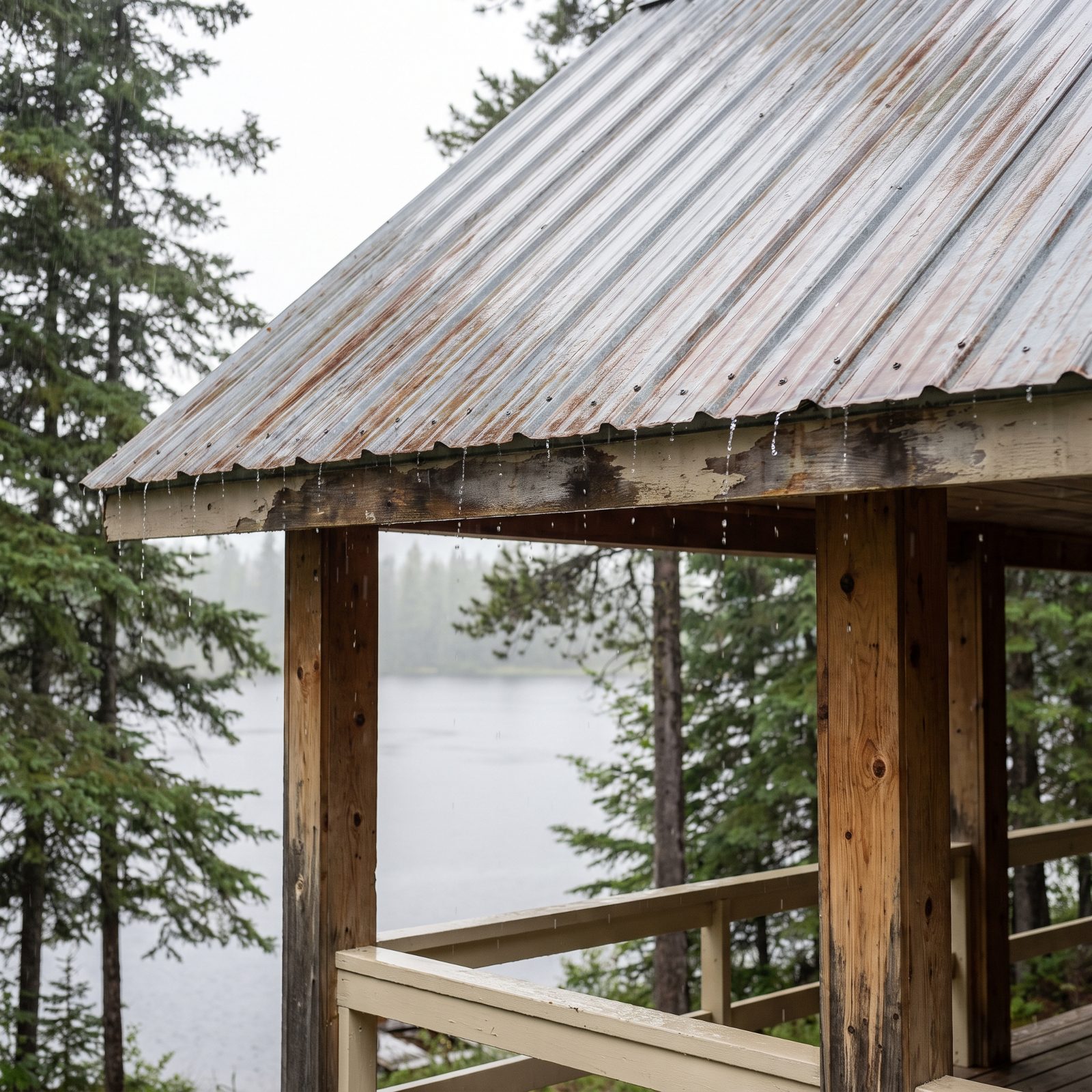
Ask anyone who grew up at a lake what they miss, and a lot of them say the sound. Rain on a corrugated tin roof is a whole weather system of its own — fat drops hammering galvanized steel, building to a roar, trailing off to a tick-tick as the storm moved down the lake.
Modern cabins get asphalt shingles and spray-foam insulation that swallows the sound dead. Quieter, sure. Drier, probably. But you lose the thing that made a rainy afternoon feel like permission to do nothing. A tin roof turned bad weather into a reason to stay put.
17. The Path to a Wooden Outhouse
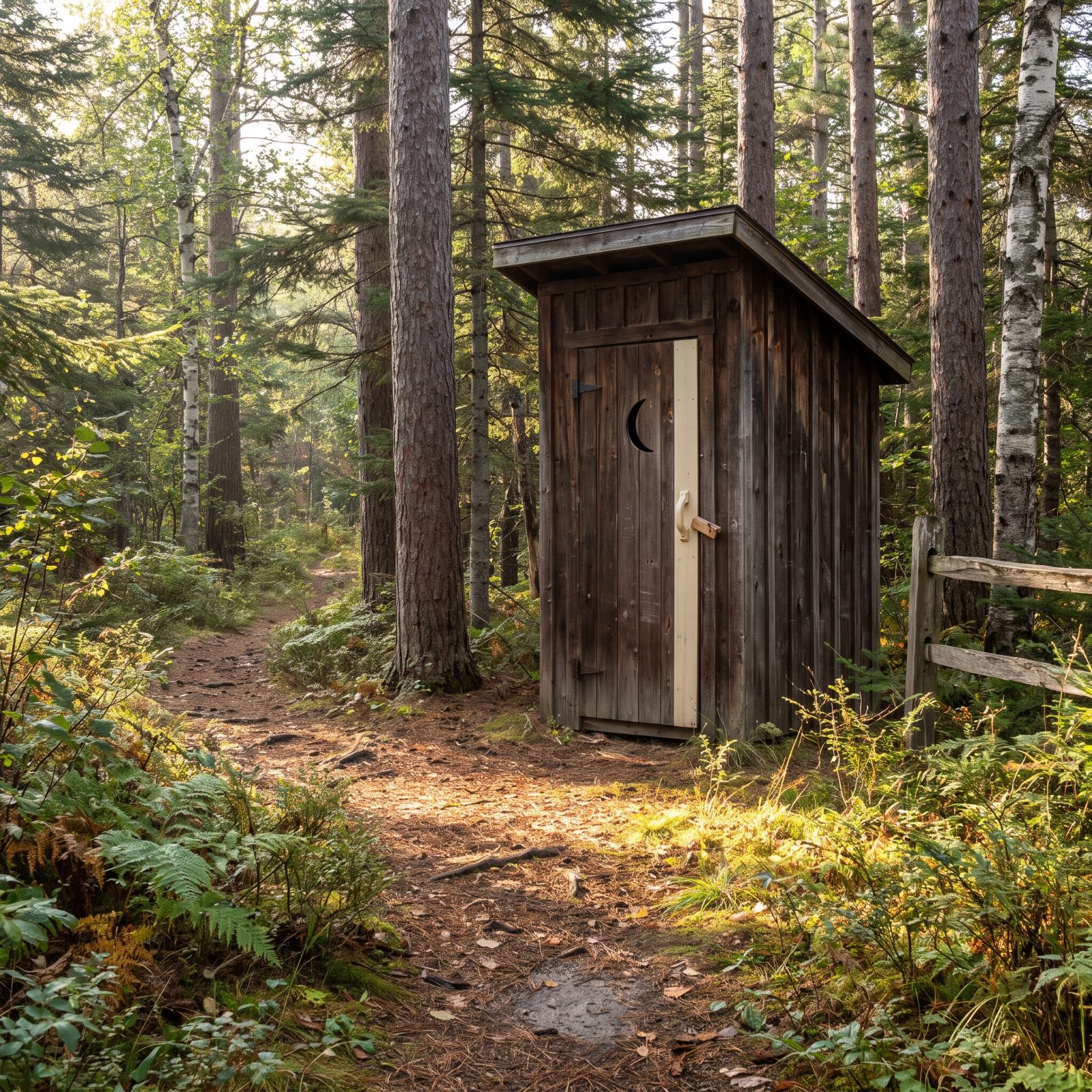
Nobody misses a January trip to the outhouse at four in the morning. I say that as someone who’s made the walk in a headlamp with frost on the seat.
But the path itself is worth remembering. Worn soft with pine needles, lit by the moon, it forced you outside into the cold air and the loon calls twice a day whether you wanted it or not. You noticed the stars. You heard the lake. Indoor plumbing arrived and that small daily walk into the woods vanished, and with it went a little piece of being genuinely outdoors at a cabin instead of just near the outdoors.
16. A Boat Shed Built Over the Water
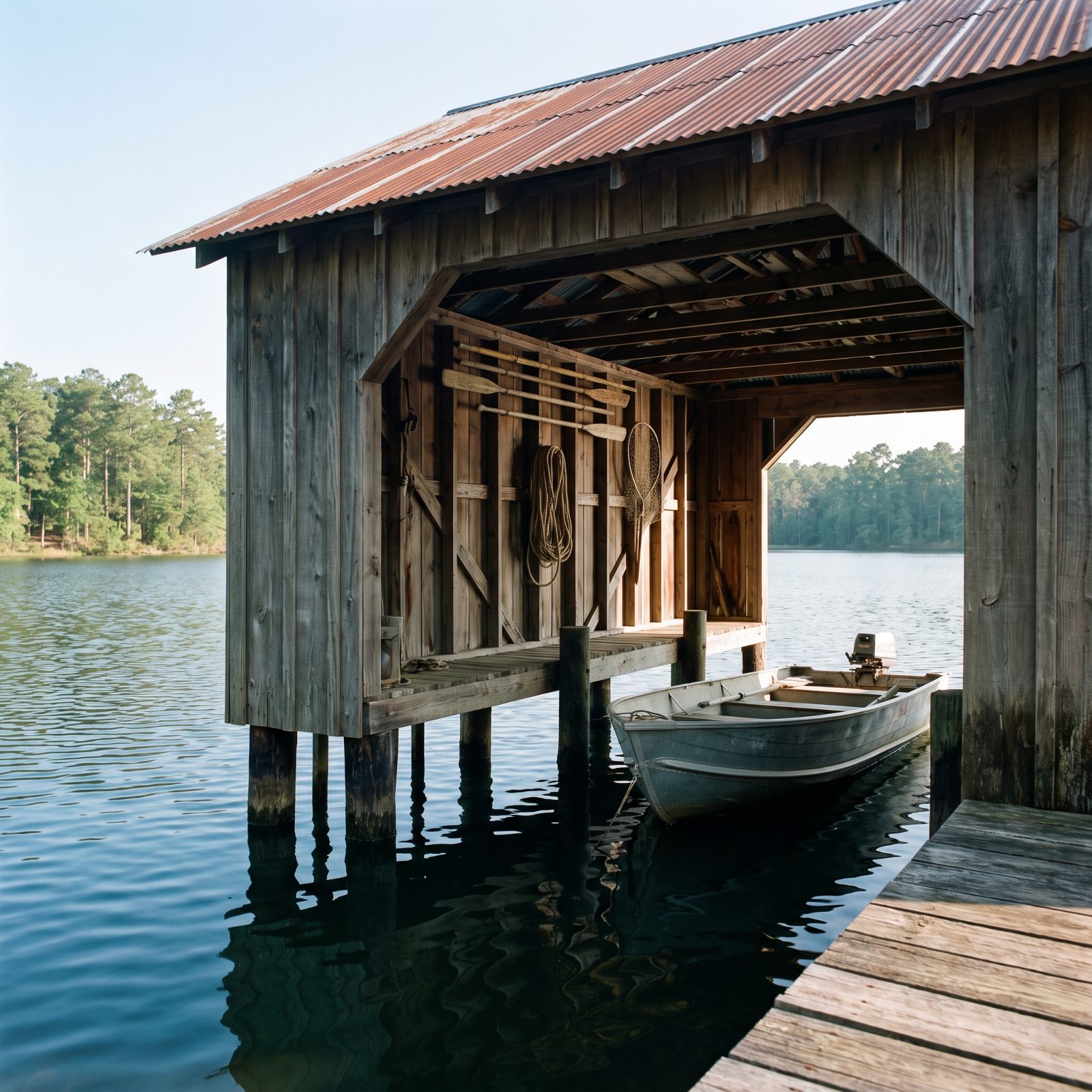
The boat tied up right alongside its own house, and that house stood over the lake. A shed on pilings with an open bay and a raised plank floor for oars, rope, and nets, so you could grab your gear and step down from the deck straight into the boat without ever touching the ramp. Protection from sun, hail, and prop-stealing neighbors, all in one.
The magic was the light. Sun bouncing off the water threw rippling patterns across the rafters all day long, and you’d sit in there baiting hooks while the whole ceiling moved like it was breathing. Zoning rules, dock permits, and the cost of building over water pretty much ended these. Most new setups use a steel boat lift instead. Functional. Not the same.
15. The Rough-Plank Dock With Tire Bumpers
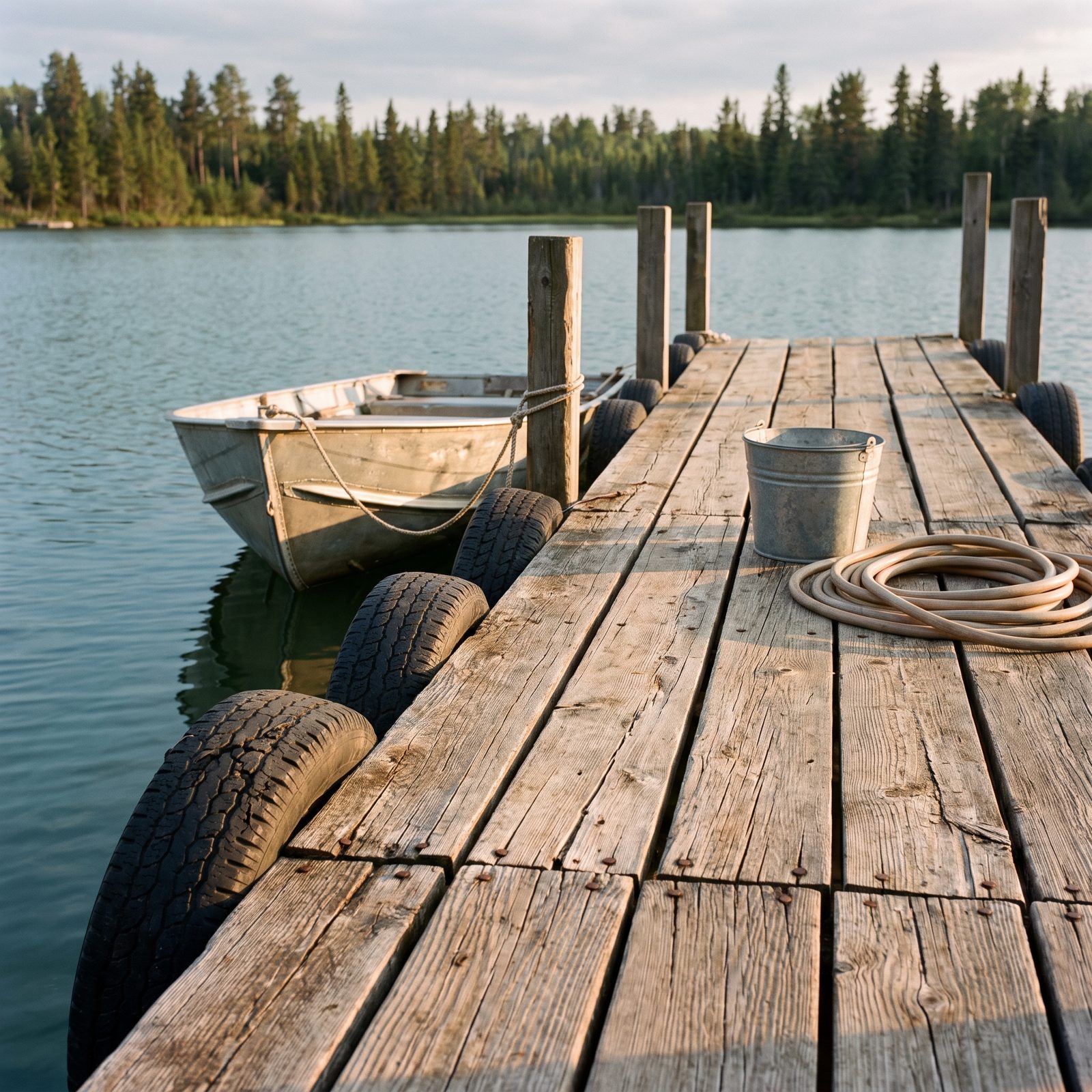
Every camp dock had tires. Old blackwalls bolted along the edge so the boat didn’t chew itself up when the wind came up overnight. They squeaked, they left black marks on the hull, and nobody cared.
The planks underfoot were rough-sawn and gray, with gaps wide enough to lose a lure through and splinters that found bare feet by July. You learned to walk it in flip-flops or not at all. New docks are smooth composite boards and injection-molded bumpers in matching gray. Cleaner. But there was something honest about a dock patched with whatever the lake handed you.
14. A Handmade Rack for Drying Hip Waders
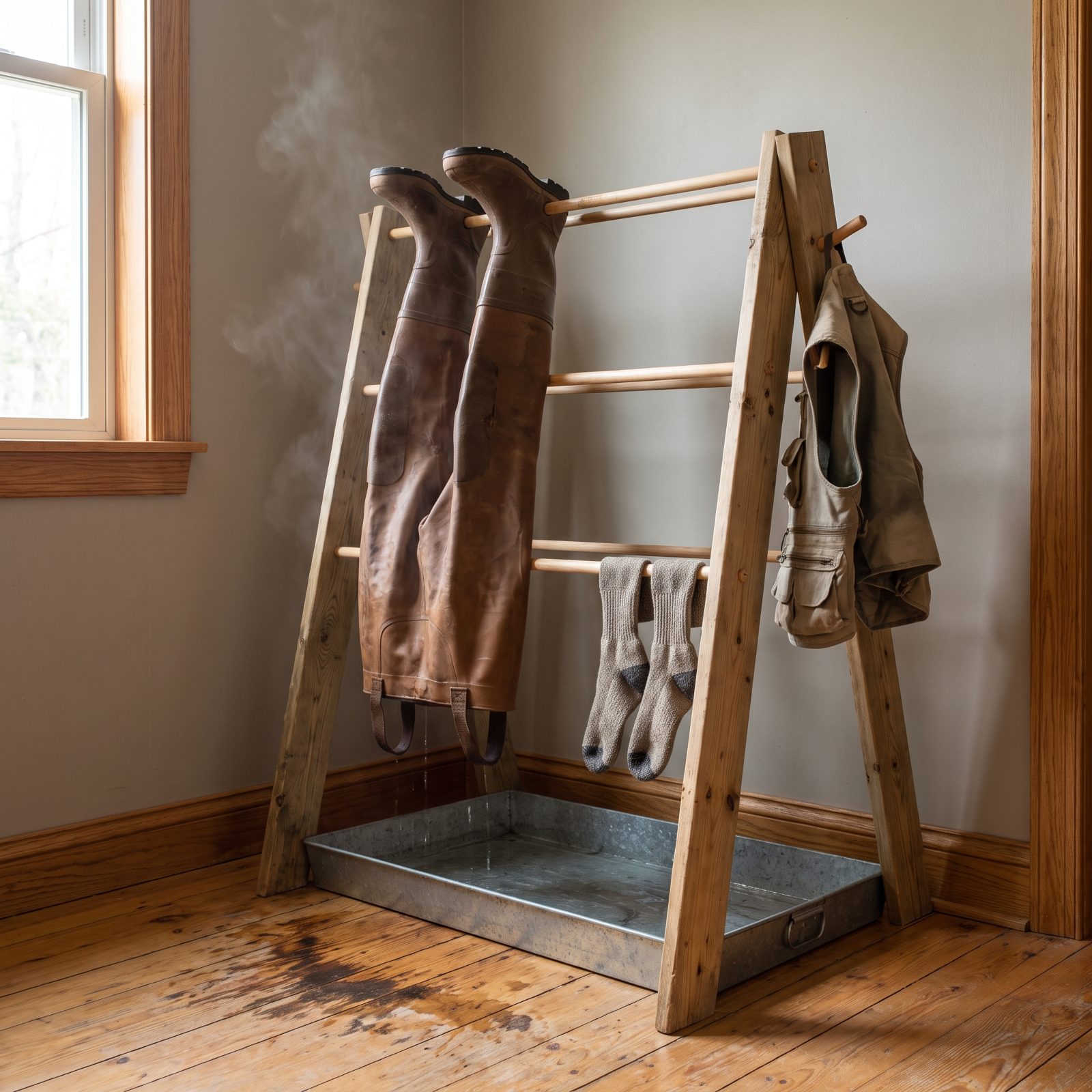
Wet waders are a problem as old as fishing. Hang them right-side up and the water pools in the feet and they stink by morning. So somebody built an upside-down rack, boot-soles pointed at the ceiling, drips meant for a galvanized pan on the floor, though the dark stain spreading across the boards in front of it says not every drop makes it in.
These were always handmade. Nobody sold them. You figured out your own version with dowels and scrap pine, and every cabin’s looked a little different. The electric boot dryer that plugs into the wall killed the craft. Faster drying, I’ll give it that. But a plug-in gadget doesn’t carry forty years of your family’s fishing trips in its joints.
13. The Red-and-White Gasoline Lantern
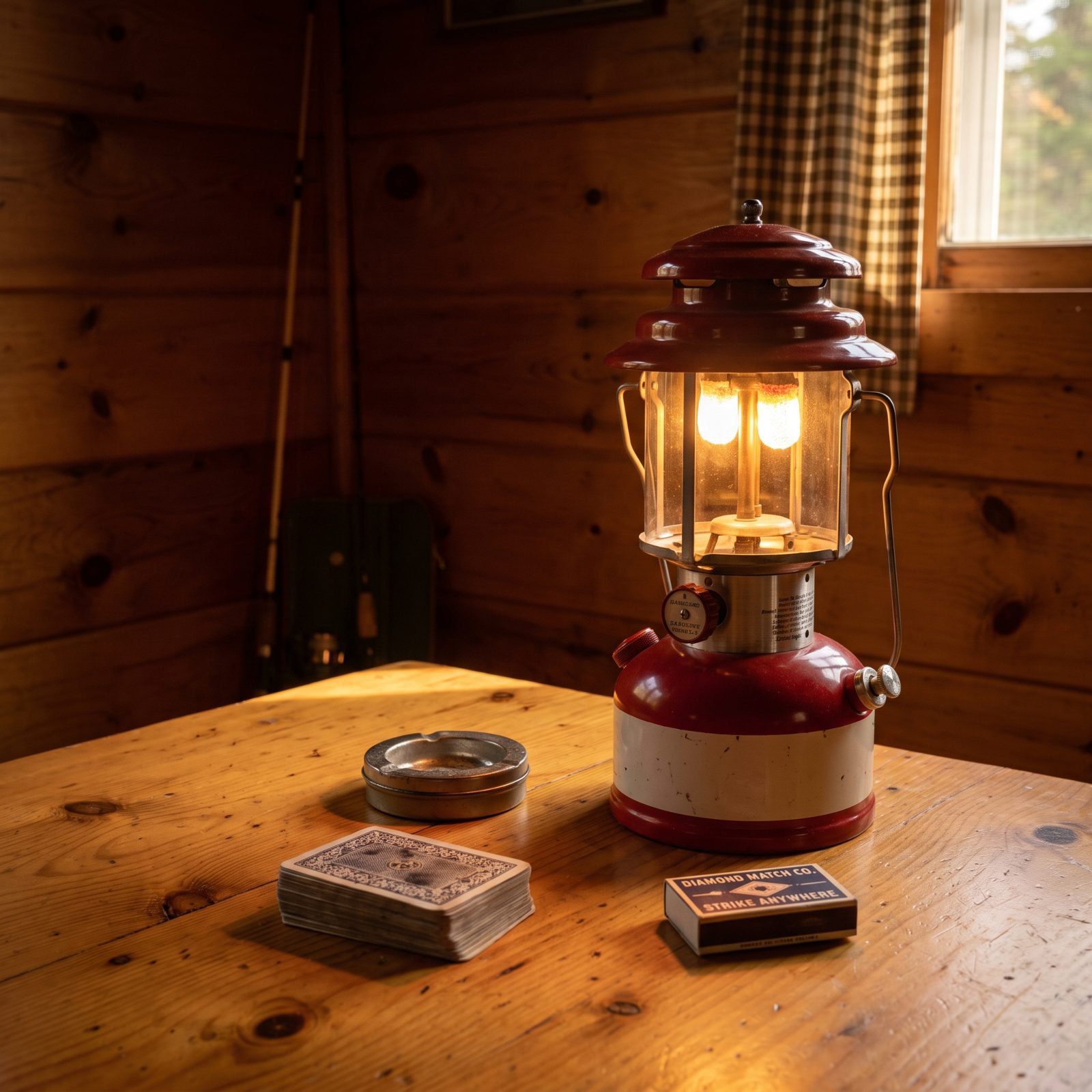
Before the generator or the solar panel, light came with a ritual. Fill the tank, pump up the pressure, light the mantle, adjust until that fragile ash cap glowed white-hot. The whole thing hissed like a contented cat all evening.
The red-and-white gas lantern threw a warm circle of light big enough for a card game and not much more, which was the whole point — it pulled everyone to one table. It also ran hot, smelled faintly of fuel, and was absolutely not something you’d describe as safe by modern standards. Worked for decades anyway.
The light didn’t fill the room. It gathered the room around it.
12. Stacks of Speckled Enamelware
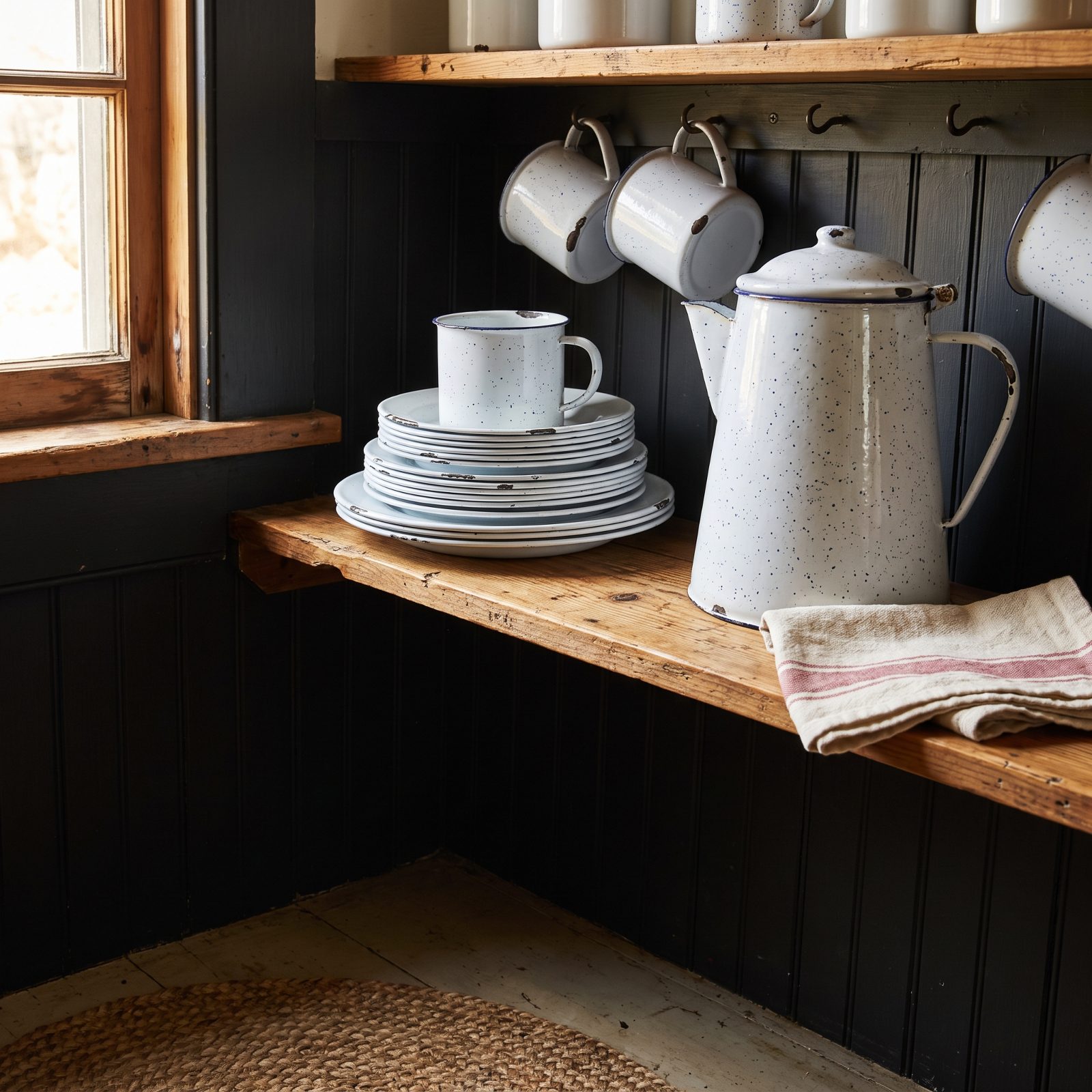
Drop a ceramic plate on a plank floor and you’re sweeping up shards. Drop enamelware and it bounces, picks up a chip, and goes right back in service. That’s why every camp kitchen ran on the speckled blue-and-white stuff.
The chips told the story — a dropped plate, a clattered mug, a pot that boiled over on the woodstove. A full set was never a full set. You had seven plates, five that matched, and a coffee percolator with a dent you’d stopped noticing. Modern cabins stock matched dishware from a home store. Tidy. Forgettable. The enamelware remembered every meal it survived.
11. The Aluminum Stovetop Percolator That Never Stopped
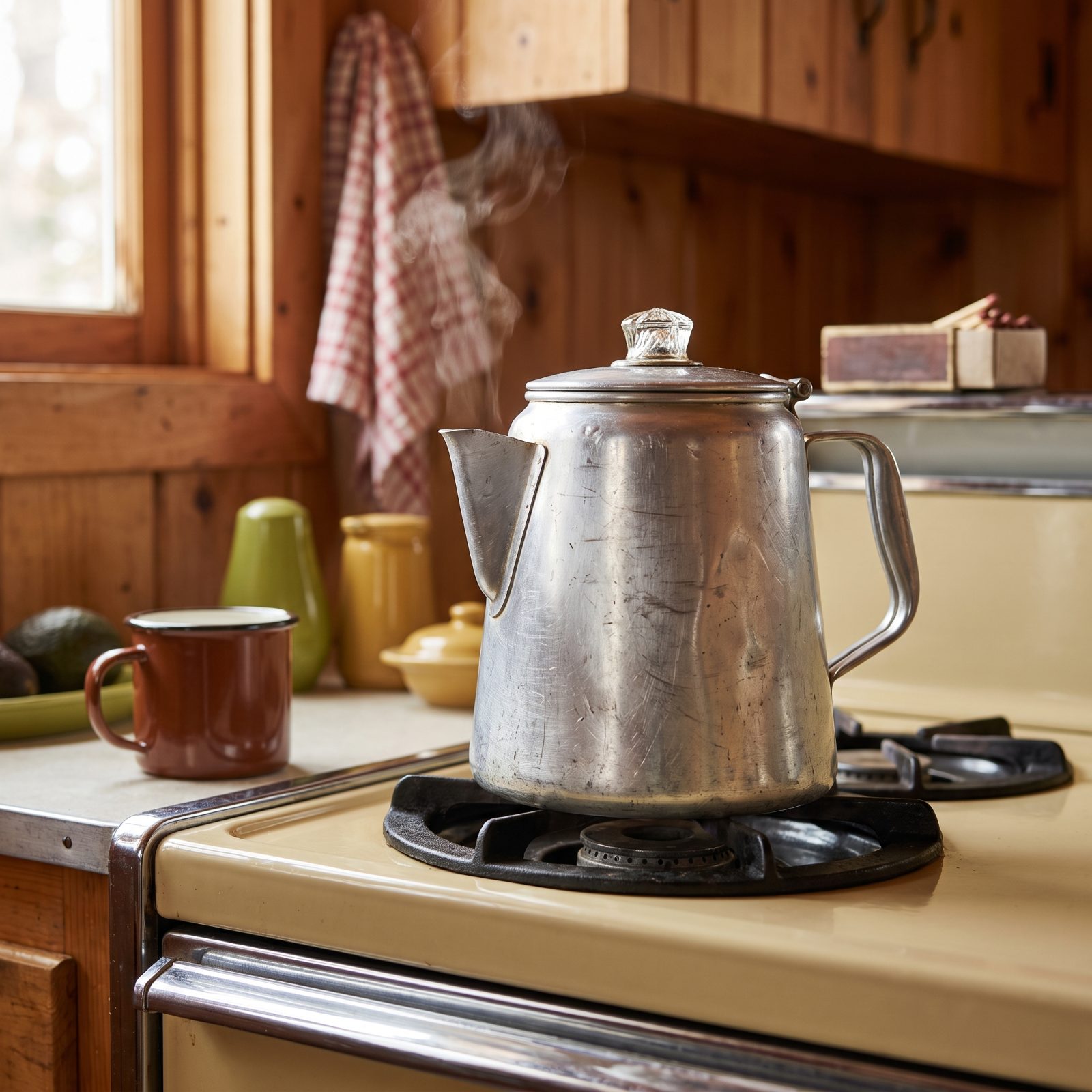
It burped and gurgled at 5 a.m., and you woke to the sound before you woke to anything else. The aluminum percolator didn’t make good coffee. It made strong coffee, which at a cabin amounts to the same thing. You scooped grounds straight into the basket, set it on the propane burner, and waited for the glass knob to go dark and busy.
New cabins run drip machines and pod brewers that die the first winter the power flickers. The percolator didn’t care about power — set it on a Coleman stove, a woodstove, or a campfire ring and it still worked. I burned the bottom of one black years ago and it still poured fine.
10. A Galvanized Tub That Did Double Duty
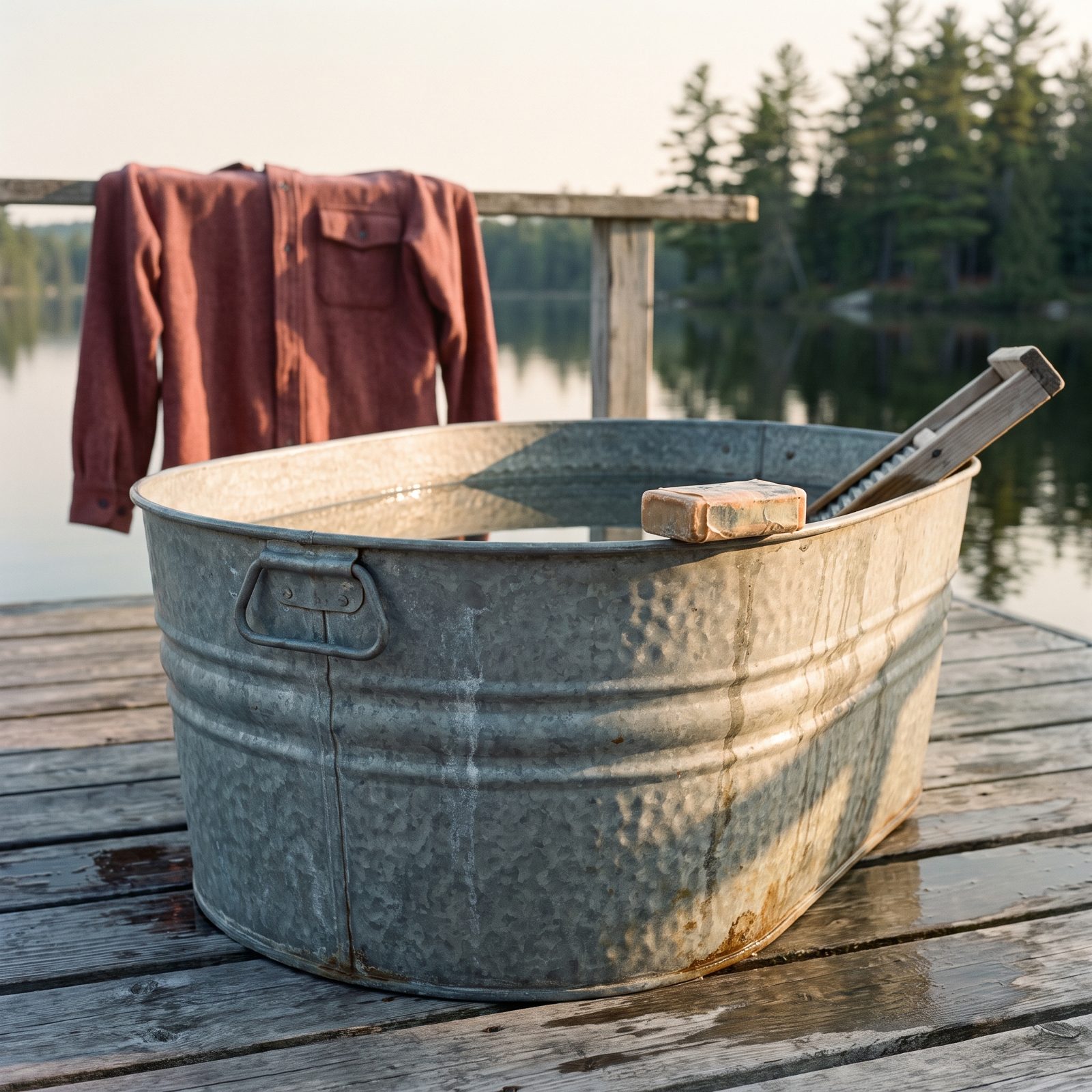
One tub, three jobs. Saturday night it was a bathtub for the kids, hauled onto the porch and filled kettle by kettle. Monday it held laundry and a scrub board. By July it was packed with ice and bottles of pop for whoever came off the water thirsty.
That ribbed gray steel was indestructible. Stand on it, drop it off the dock, leave it out all winter under three feet of snow — come spring it was still a tub. Modern cabins have plumbed showers and a mini fridge, which is nicer, I’ll grant you. But nothing today does three things with one dumb, perfect object.
9. A Metal Tackle Box With Cantilevered Trays That Fanned Open
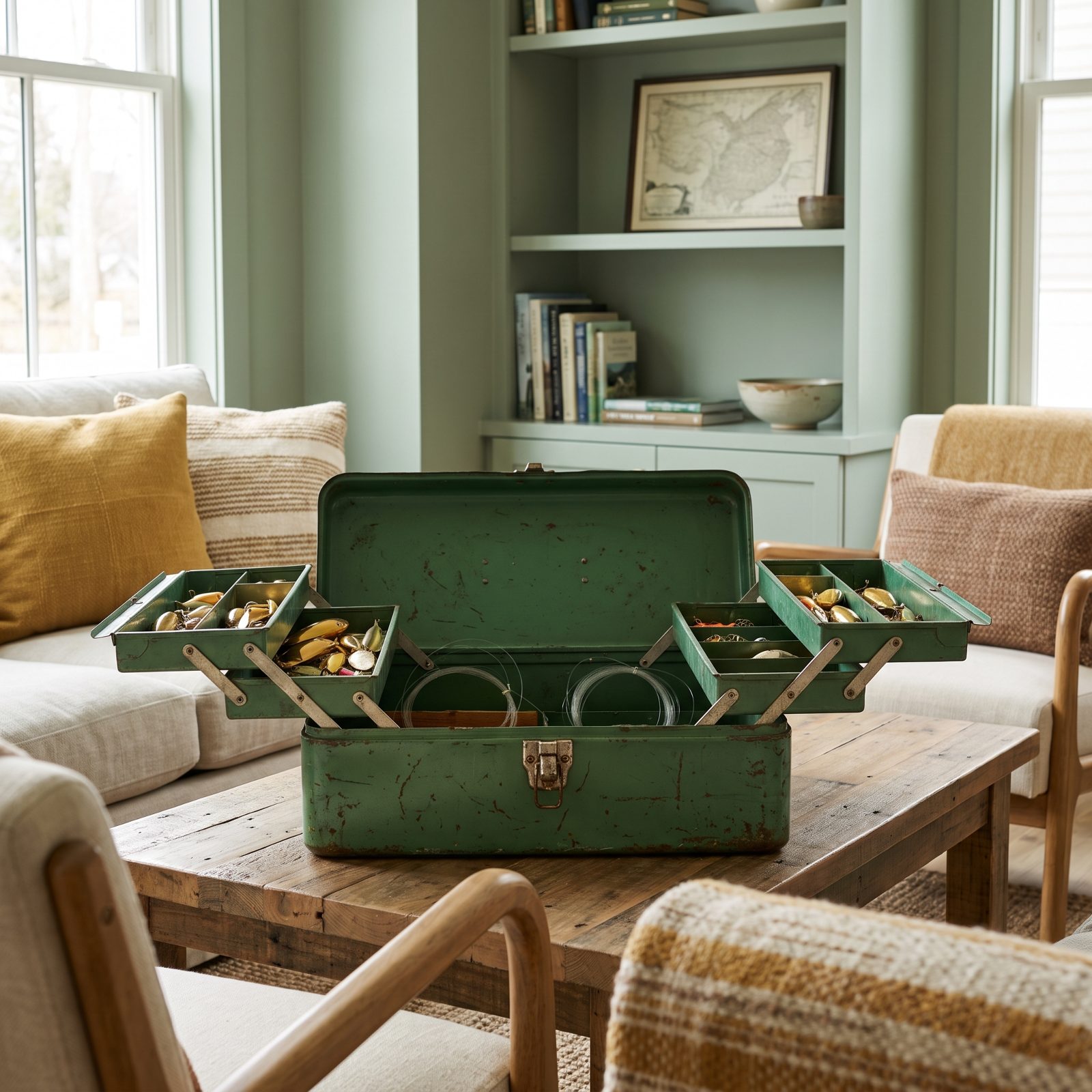
The sound alone takes you back. That metallic shunk-shunk as the cantilevered trays swung open on their riveted arms, tier after tier, every compartment stuffed with spoons gone dull and spinners you swore you’d lost.
These boxes were built from stamped steel and they outlived the people who filled them. Heavy, sure. They’d rust at the hinges and the latch would stick. But a plastic box today cracks at the corner the first time it slides across a boat floor, and then you’re buying another. The steel one is still in somebody’s garage, still full, still smelling faintly of oil and old worms.
8. A Wicker Fishing Creel Hanging by the Door
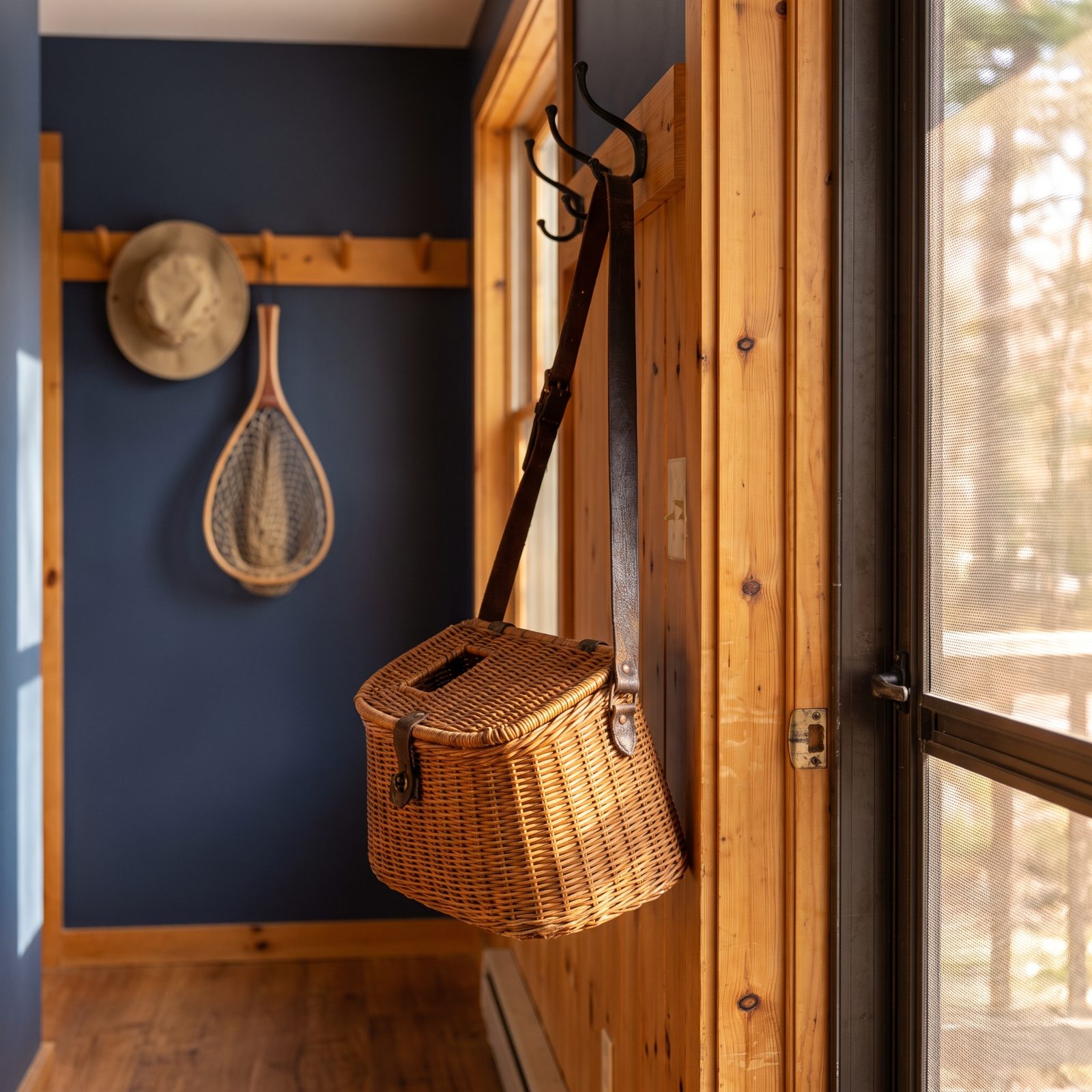
It hung by the door with the hats and the bug spray, and most of the year it just hung there looking handsome. The willow creel was for keeping trout cool. You lined it with wet ferns or grass, slid your catch through the slot in the lid, and the breeze passing through the weave did the rest — evaporation chilling the fish on the walk home.
Hardly anyone carries one now. We’ve got foam coolers and mesh stringers instead. But a well-made creel is a genuinely clever bit of design dressed up as a basket, and it ages into something you’d hang on the wall on purpose.
7. Kapok-Filled Canvas Life Jackets Stiff as a Board
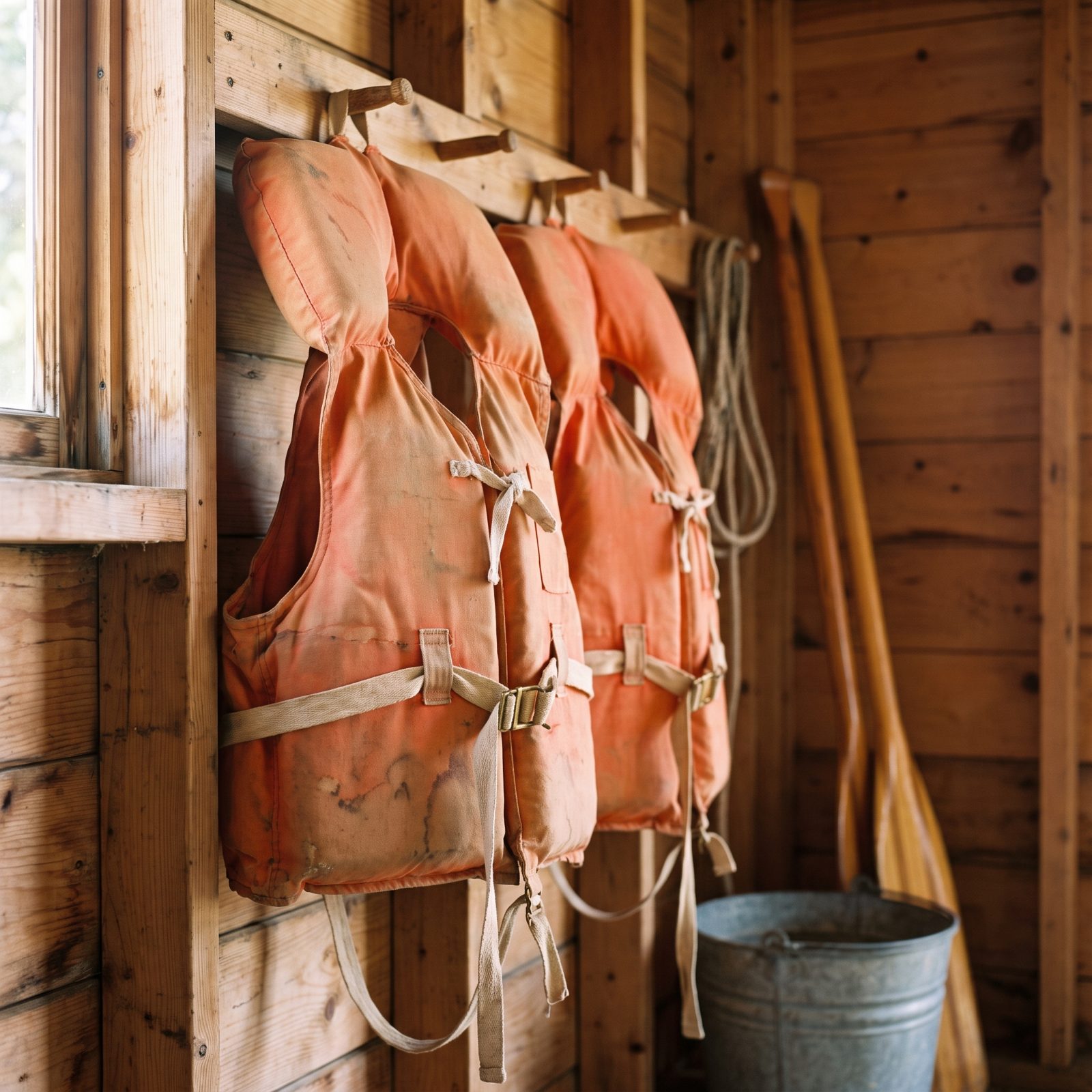
Horse collars, everybody called them. Stiff orange canvas stuffed with kapok — the fluff from a tropical tree — that floated like a cork until it didn’t. They were bulky, scratchy, and you could barely turn your head wearing one.
Now the part worth knowing. Kapok loses buoyancy as it gets waterlogged over the years, and the canvas rots from the inside where you can’t see it. An old one pulled down from the cabin rafters may not actually float anymore.
6. Varnished Wooden Oars and Paddles With a Glow
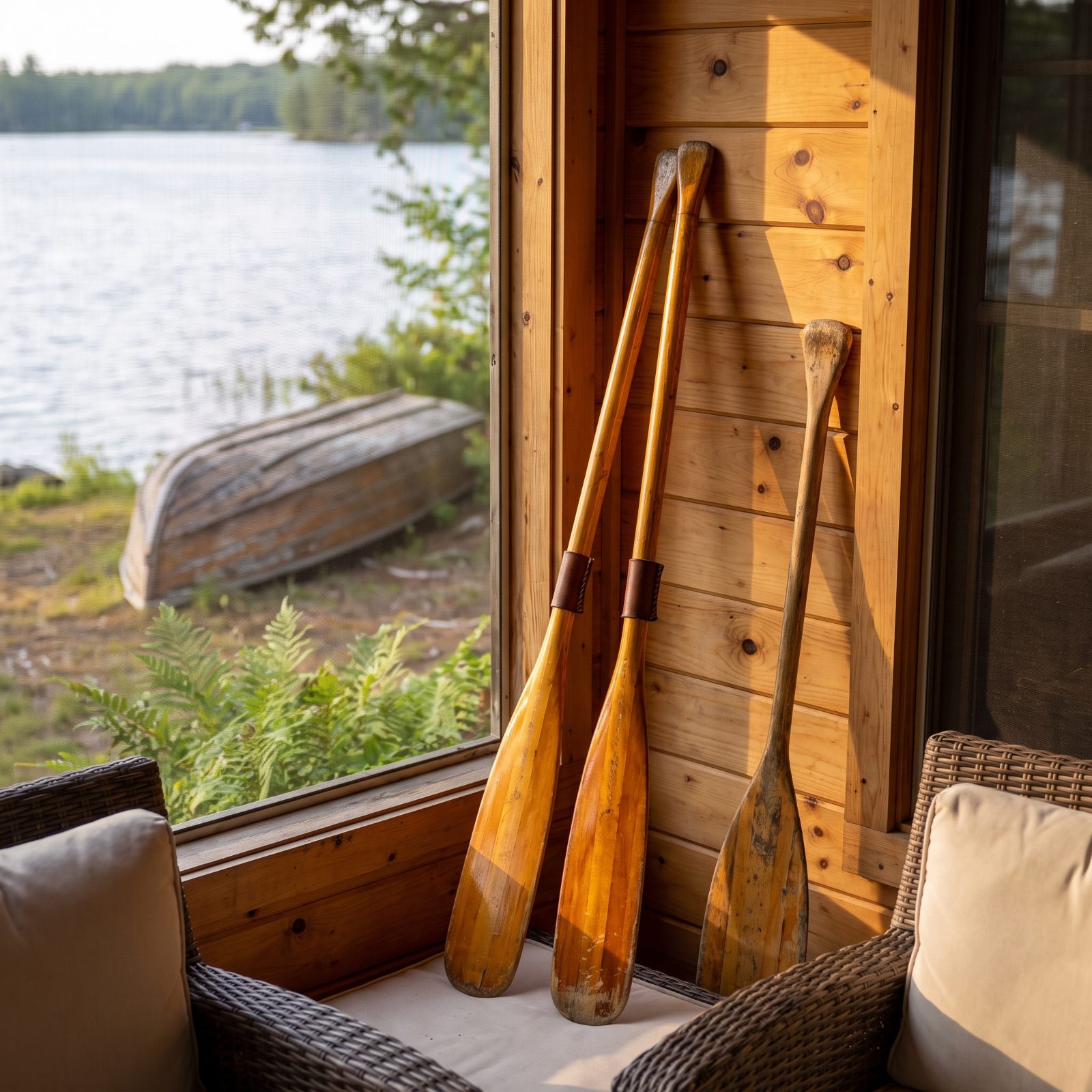
Ash or spruce, spoon-bladed, finished in varnish gone amber and warm. Pick one up and it feels alive in a way an aluminum oar never will. There’s a flex and a weight to wood that you feel in your shoulders by the end of a long row across a still morning lake.
They demanded upkeep, which is why they’re gone. Varnish cracks, water gets in, and the grain lifts until the blade splinters. You had to sand and re-coat them every couple of seasons. Nobody wants that chore now, which is a shame, because a varnished oar is about the prettiest tool a cabin ever owned.
5. A Coffee-Can Anchor Filled With Concrete
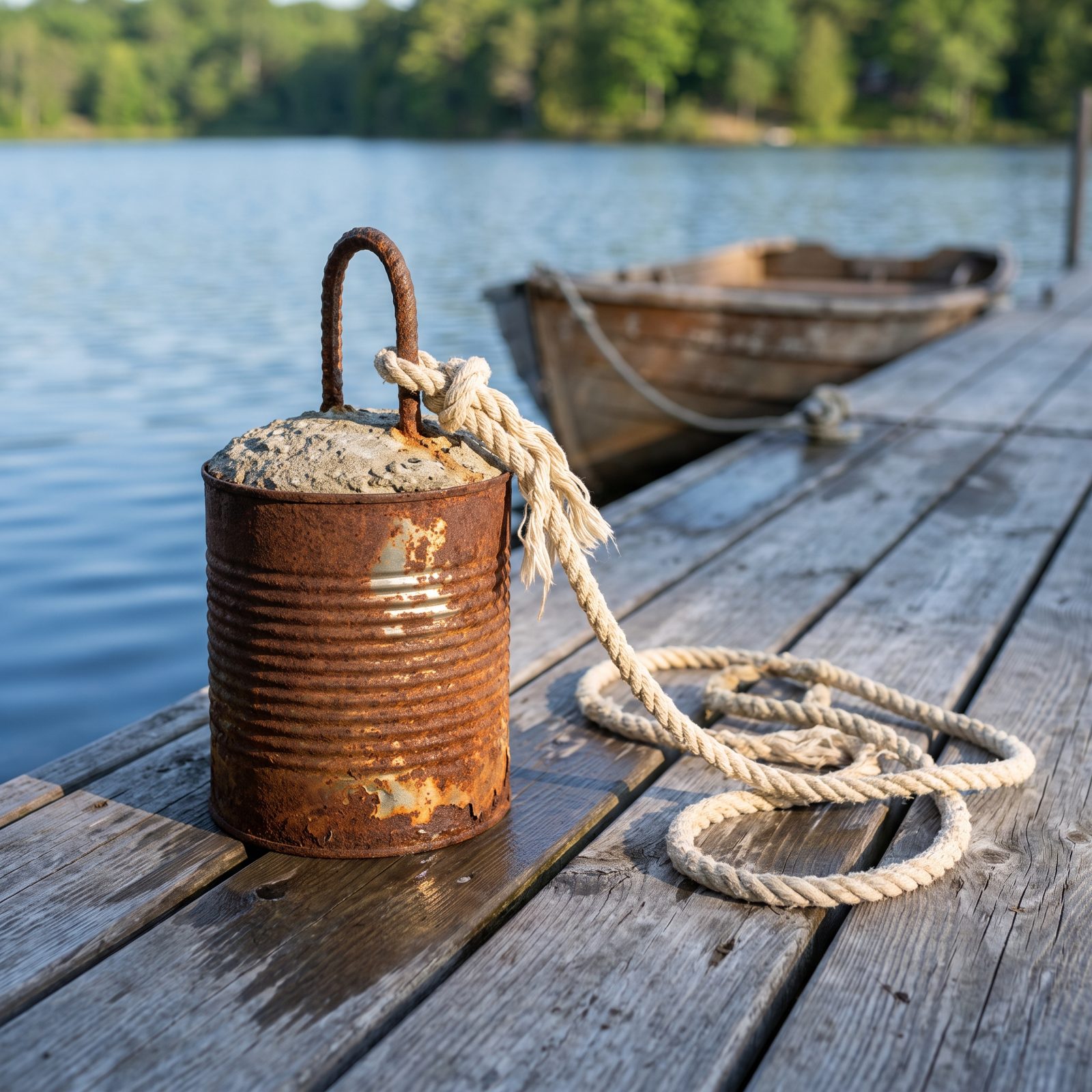
Somebody’s grandfather made this. A coffee can, a loop of bent rebar pushed into wet concrete, left to set on the workbench overnight. Cost: nothing. It held a rowboat in place over a crappie hole just fine.
Every old cabin had one, and half the garages up north still do. The store sells folding grapnel anchors now for cheap, and they work — I won’t argue. But there was pride in the homemade one. It said somebody looked at a problem and solved it with whatever was already in the shed, and that’s a skill the new cabins mostly bought their way out of.
4. The Wire Fish Basket Tied Beneath the Dock
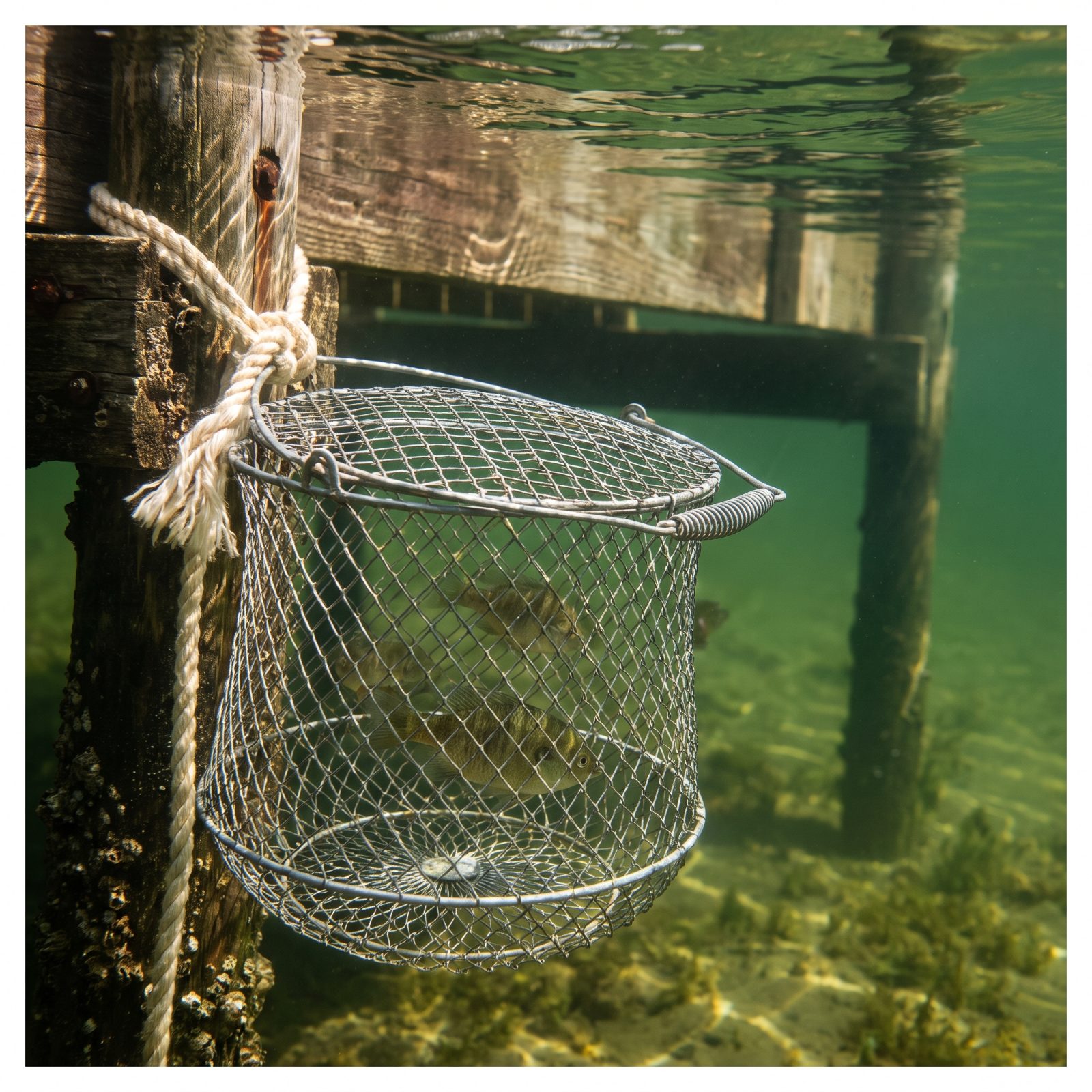
You kept the day’s catch alive in it, tied beneath the dock where the water stayed cool. A cylinder of galvanized wire with a spring-loaded door on top, it let the lake flow straight through so your fish stayed fresh until dinner, or until morning if you meant to keep fishing.
Livewells did away with it. These days the boat keeps your fish alive with an aerator and a pump. But I miss lifting a dripping wire basket off the dock, water sheeting off it, and seeing what the day actually brought up. Check your state rules first, though — keeping live fish this way is restricted in a lot of places now.
3. A Lake Map Marked Up With Grease Pencil
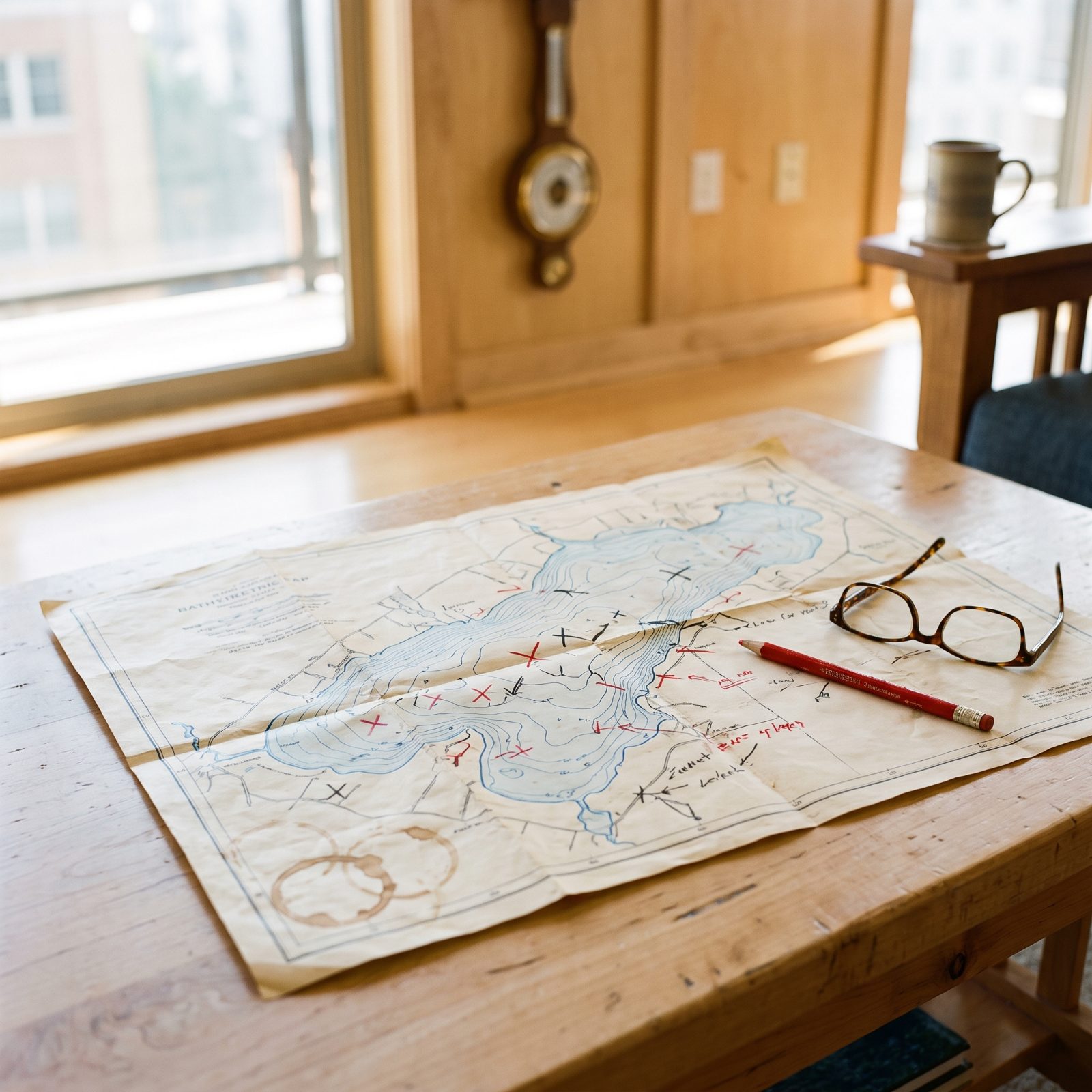
Every good spot lived on one piece of paper. The lake map, folded soft as cloth, covered in grease-pencil X’s where the walleye held, arrows to the drop-offs, a note by the weed bed that only the owner could read.
Grease pencil wiped off with a thumb and rewrote in the rain. That map was a family secret passed down with the cabin, and knowing those marks meant knowing the lake.
2. The Rotary Wall Telephone on a Party Line
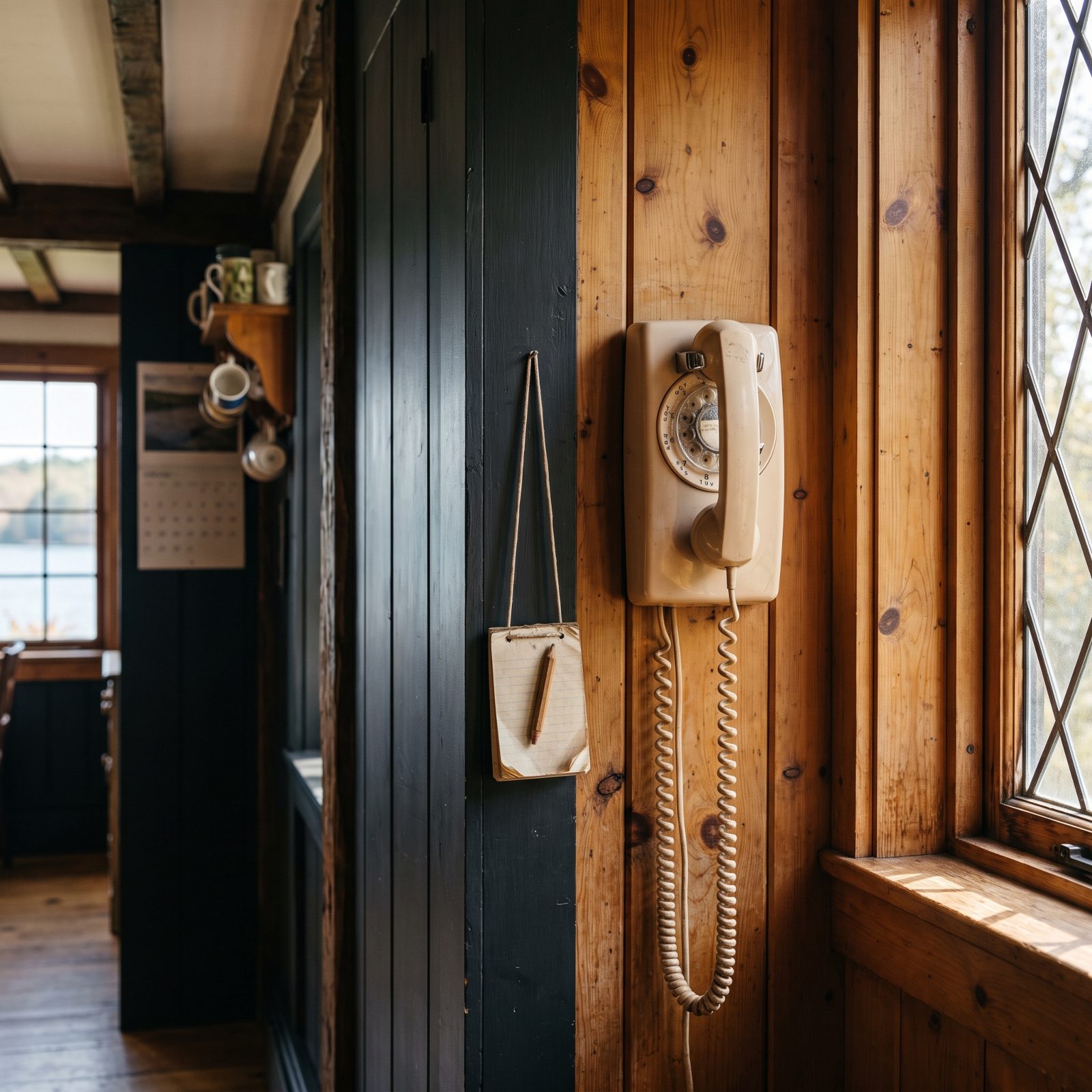
It hung on the kitchen wall, the only phone for a mile. You dialed with your finger, waiting out each number as the wheel clicked back. And you shared the line with three other cabins down the road, so you’d pick up to call your sister and hear the neighbors already mid-argument.
A party line taught you patience and eavesdropping both. You learned whose ring was whose by the pattern. These are gone completely now, replaced by a cell signal that drops out past the second bay — which is its own kind of nostalgia waiting to happen. Nobody misses the wrong numbers. Plenty of us miss not being reachable the second we stepped off the water.
1. A Hand-Painted Cabin Sign Nailed to a Tree
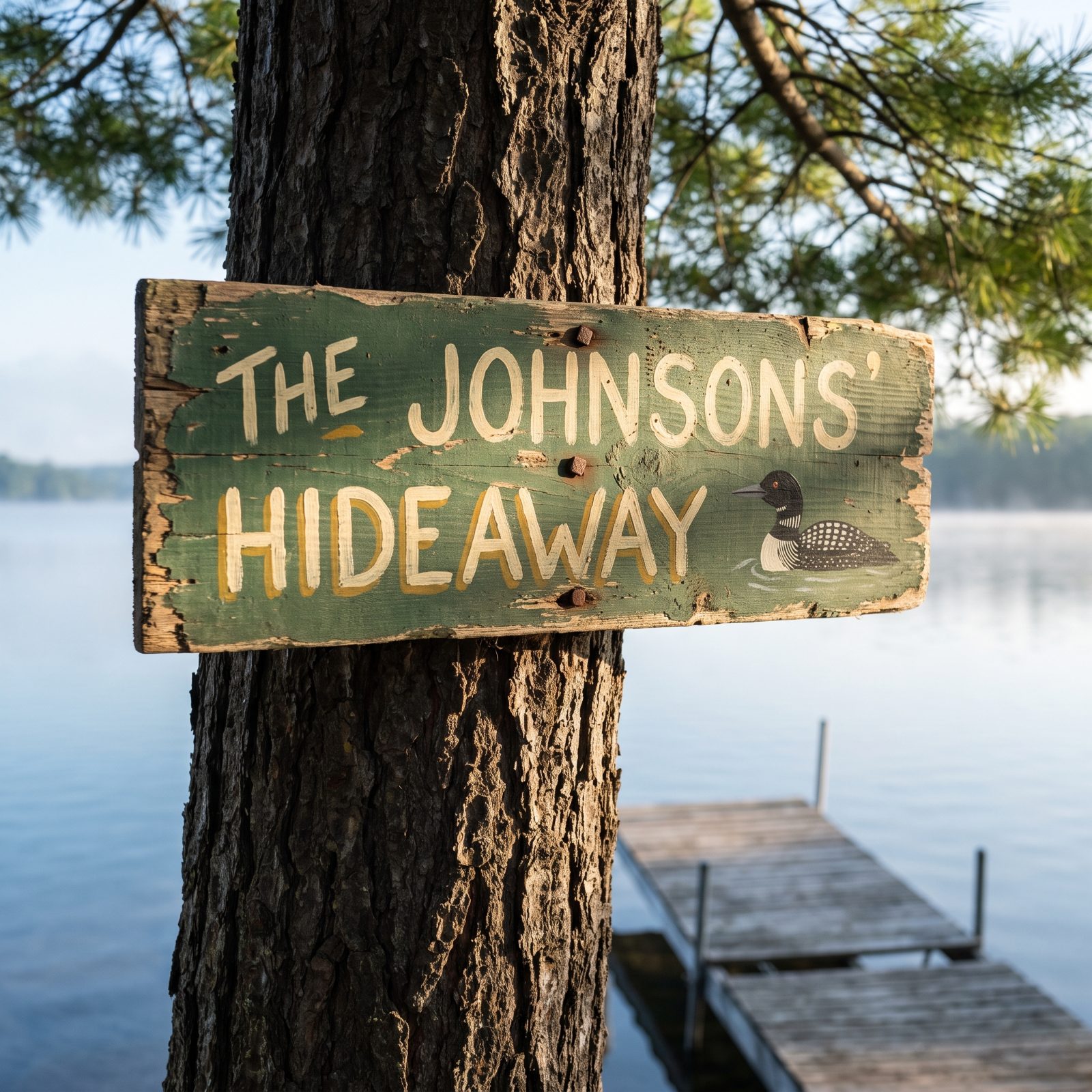
Every lake road used to have one. You slowed the station wagon, the kids pressed their faces to the glass, and there it was — a slab of pine with the family name painted on by somebody who was no sign maker. The letters leaned. The loon in the corner was painted with more care than the lettering, and nobody minded the wobble, because that crooked board meant you’d finally arrived.
The paint came from whatever was left in the shed, the board off a busted dock plank. Somebody nailed it straight into a tree, which no arborist would ever bless, and there it hung through thirty winters while the paint peeled and the nail heads rusted in plain sight.
Now they’re routered, varnished, ordered online with a tidy little brass plaque. Sharp-looking, sure. They also look exactly like everyone else’s. Something walked off into the woods when the hand-painted loon disappeared.