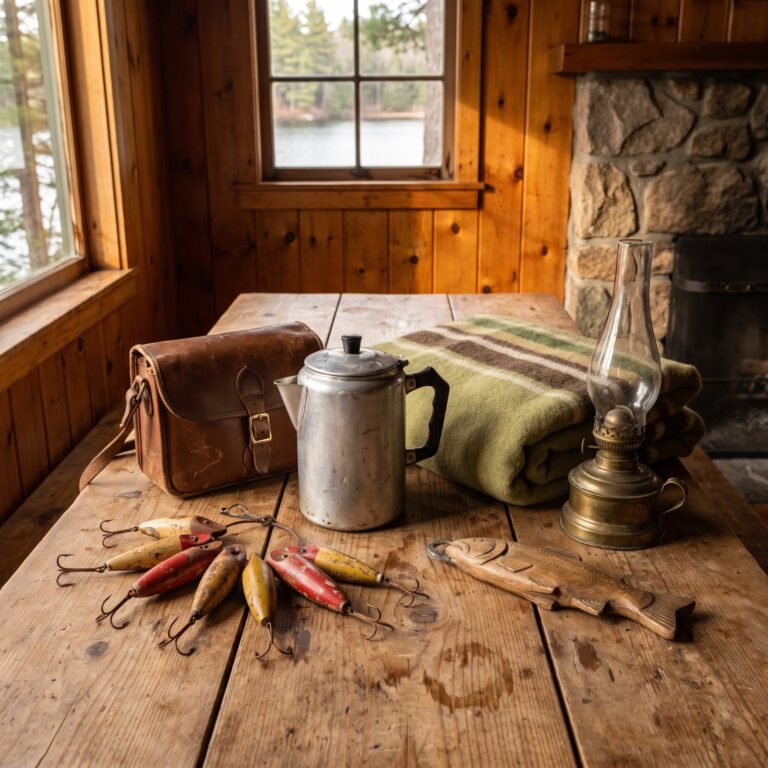
The smell gives it away first. Grape rubber worms, gas-station minnows, a styrofoam bucket sweating in the back of a wood-paneled station wagon. If any of that just landed somewhere behind your ribs, you spent summers on a dock before fishing got complicated. No electronics. No carbon-fiber anything — just a push-button reel, a coffee can of worms you dug yourself, and a bobber you watched until your eyes crossed. The gear below built a certain kind of angler. The patient kind. See how many of these you still feel in your hands.
Please note that some of the images in this article were created with the assistance of AI.
25. You Learned to Cast With a Zebco 33 Push-Button Reel
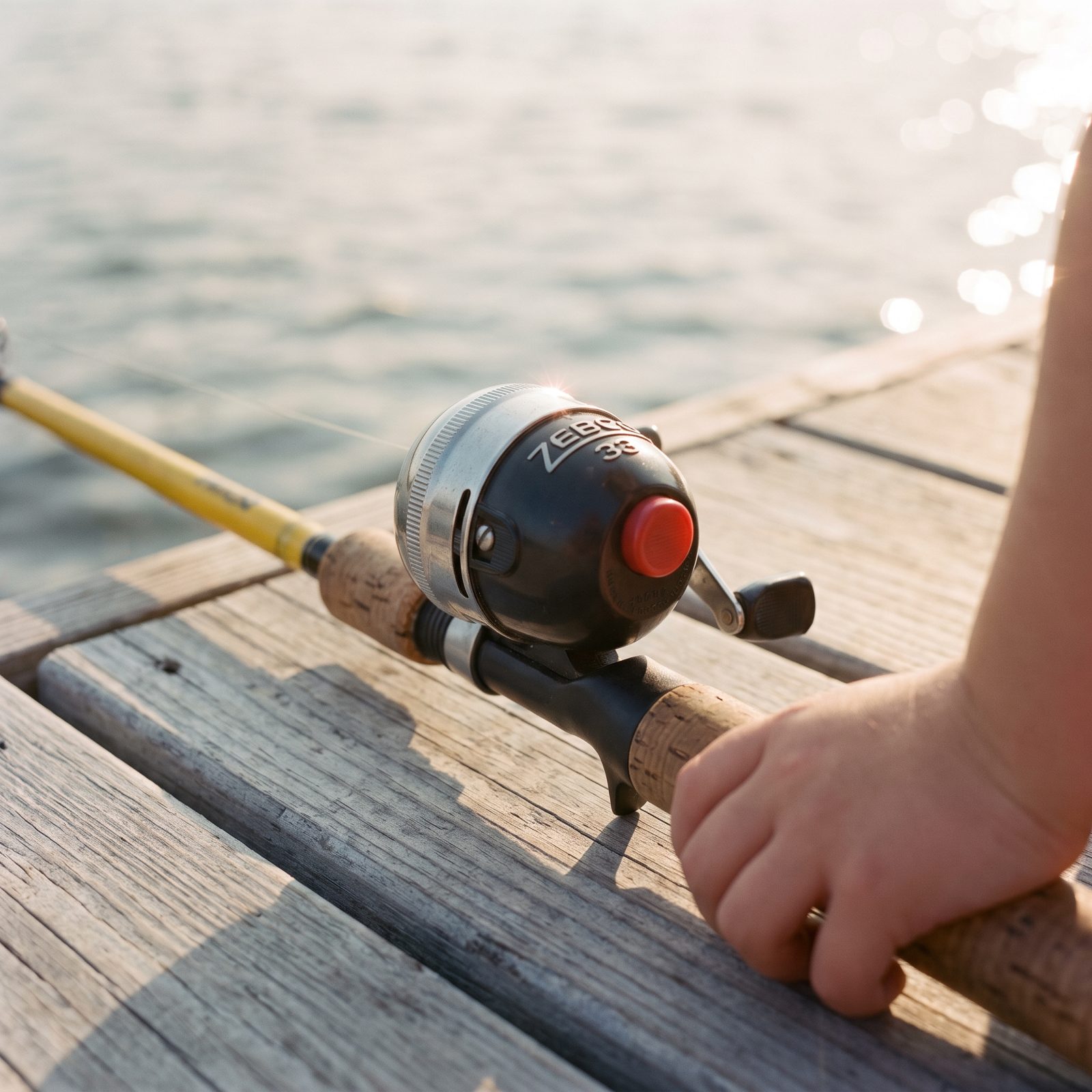
Push the button, swing the rod, let go at the right second. That was casting. No bail to flip, no backlash to pick out of a baitcaster for twenty minutes while your dad pretended not to watch. The Zebco 33 was foolproof, which is exactly why it ended up in so many small hands.
You could overrun it, underpower it, slam it against a dock post — it kept working. That reel taught a whole generation timing before it taught them anything else about fishing.
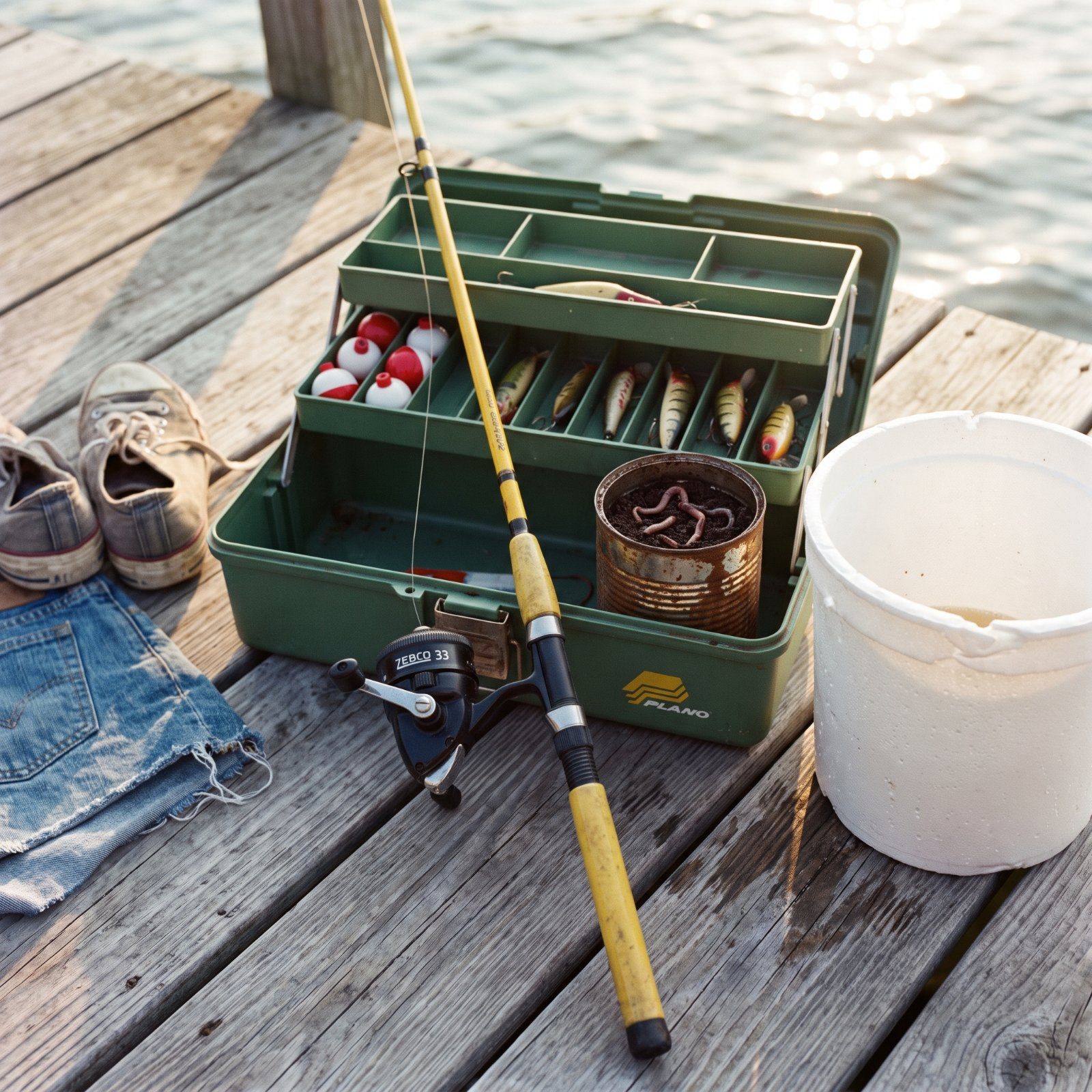
24. Your Tackle Box Was a Fold-Out Plano With Cantilever Trays
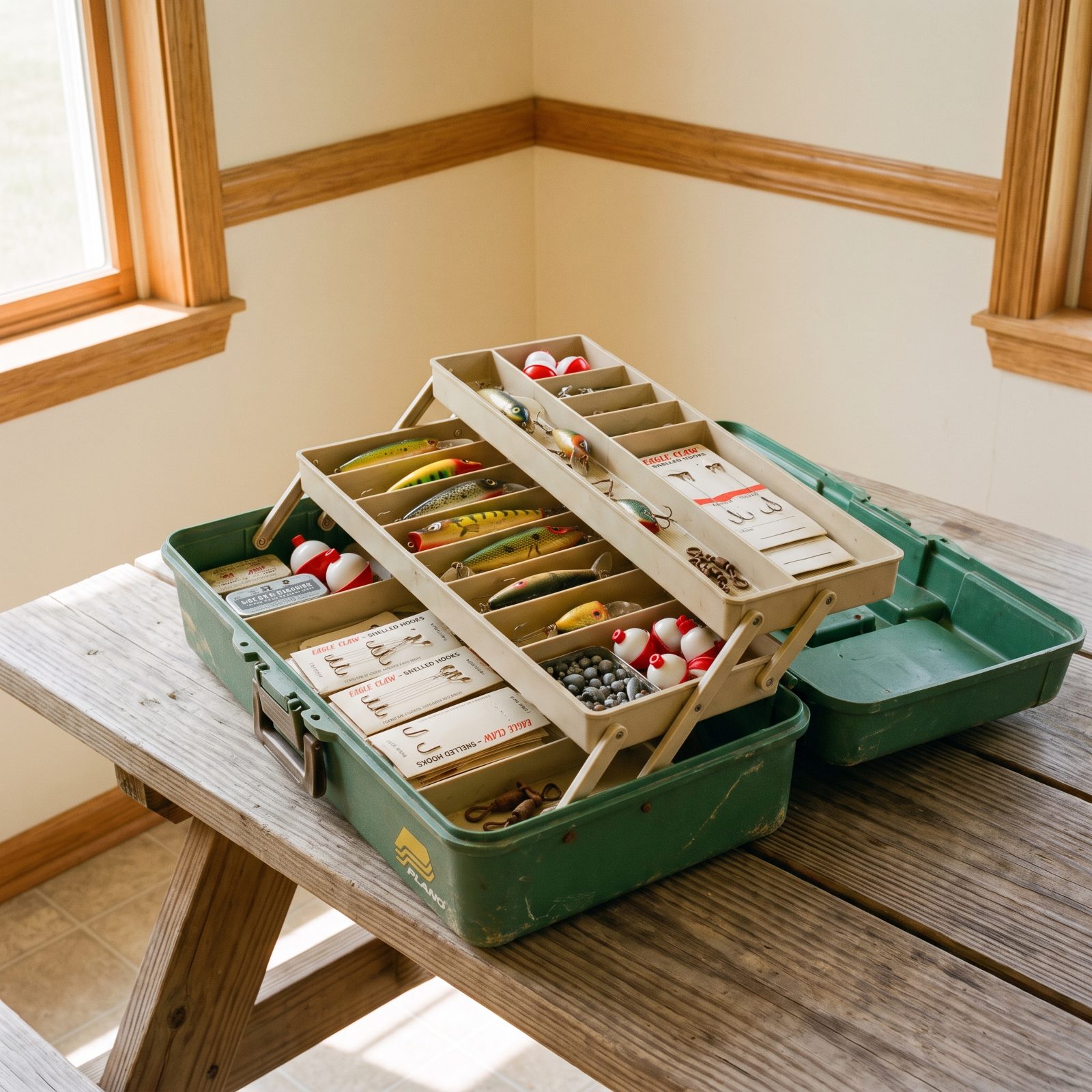
You opened it and the trays swung up and out like an accordion. Every compartment had a job, and you knew every job by heart. Split shot here. Snelled hooks on their little cardboard cards there, and a tangle of swivels in the corner that defied all sorting no matter how many rainy afternoons you spent trying.
The thing rattled when you walked and smelled faintly of old bait and WD-40. Half the lures in it had never caught a fish and never would, but you weren’t about to leave them behind.
23. Night Crawlers Came From the Lawn After a Rain, Not the Store
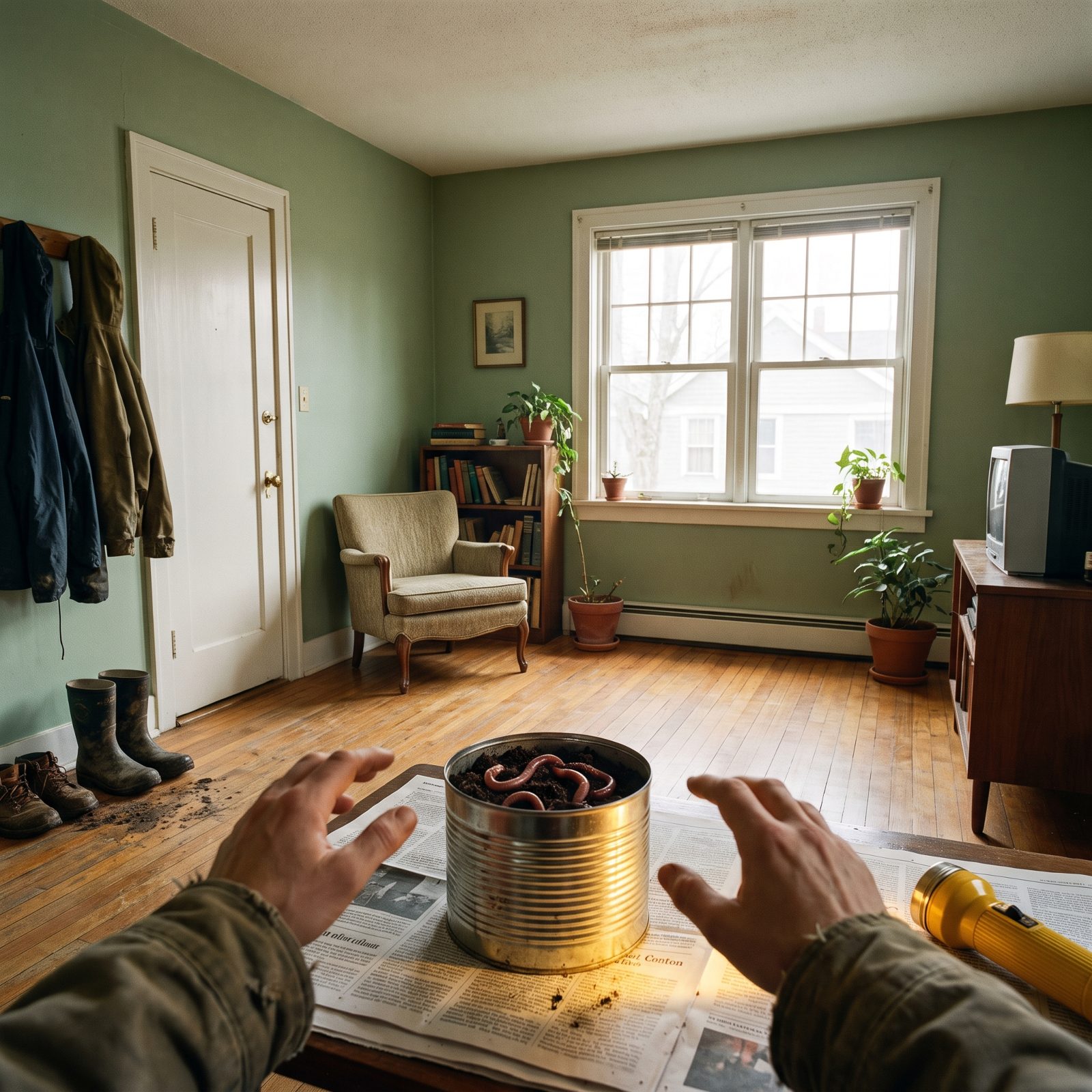
Buying worms? Why on earth would you buy worms.
A good soaking rain meant a flashlight and a tin can after dark, and by daylight the can sat on newspaper in the living room, flashlight set aside and muddy boots by the door. You learned to grab fast and grab gentle, because yank too hard and the crawler snapped in half and you were left holding the sad end. Free bait, a little patience, and a can full of them.
22. A Red-and-White Bobber Was the Only Strike Indicator You Knew
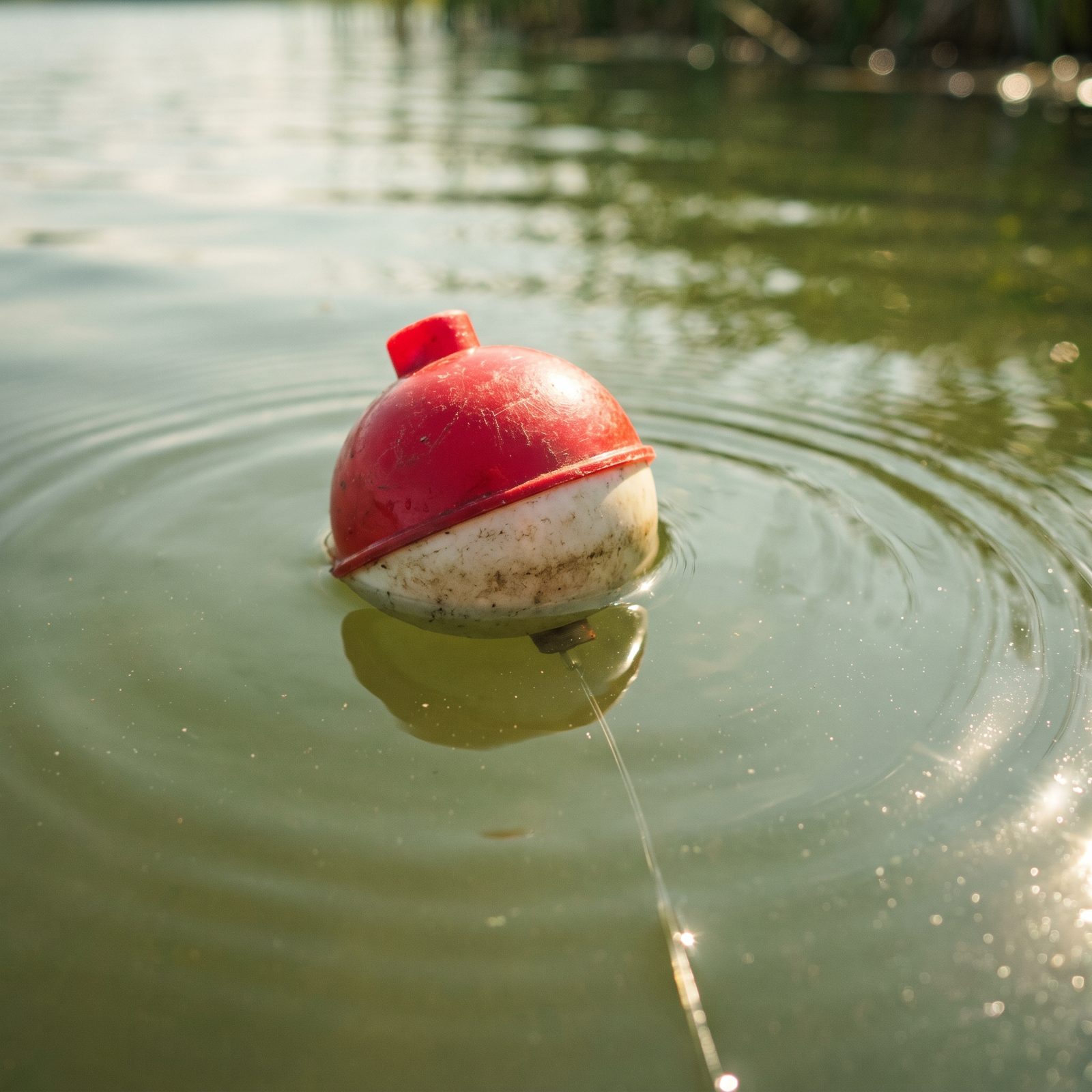
You didn’t call it a strike indicator. Nobody did. It was a bobber — round, red and white — and it told you everything you needed to know. It twitched. It dove. It dragged sideways across the surface and your heart went right along with it.
Half of fishing back then was just watching that little ball sit on the water, waiting for it to misbehave. You’d stare so long the ripples burned into your eyes.
21. You Fished Off a Wooden Dock in Cut-Off Jeans and Sneakers
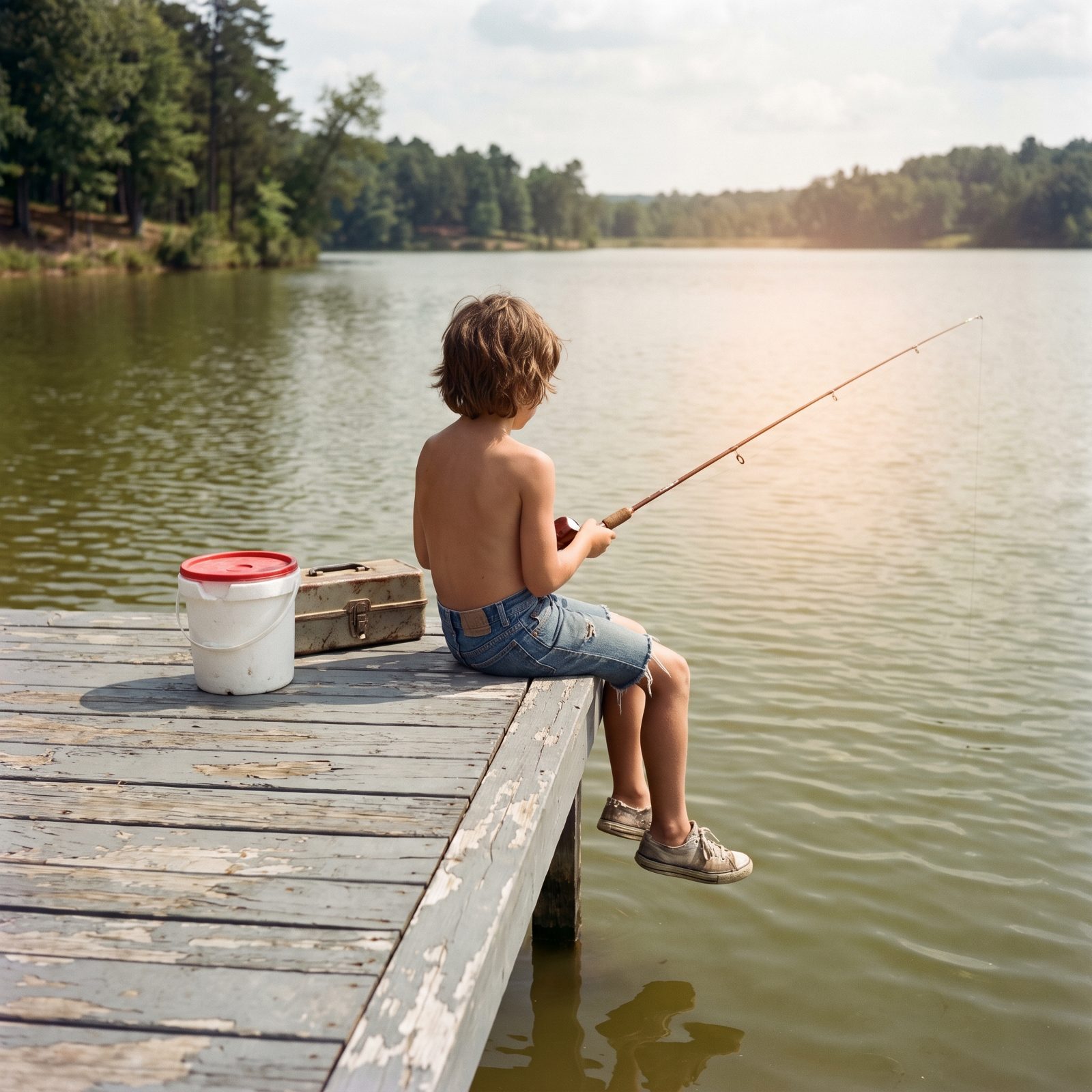
No waders. No breathable technical anything. You wore whatever you had on, which in July meant cut-off jeans sawed short at home with the kitchen scissors and a pair of canvas sneakers soaked through by noon that never really dried until October.
The dock boards were warm and splintery and you knew exactly where the loose nail was. Your feet hung over the edge. Nobody told you to be careful because everybody already knew you would be.
20. Your Dad’s Rod Was Fiberglass and Weighed a Ton
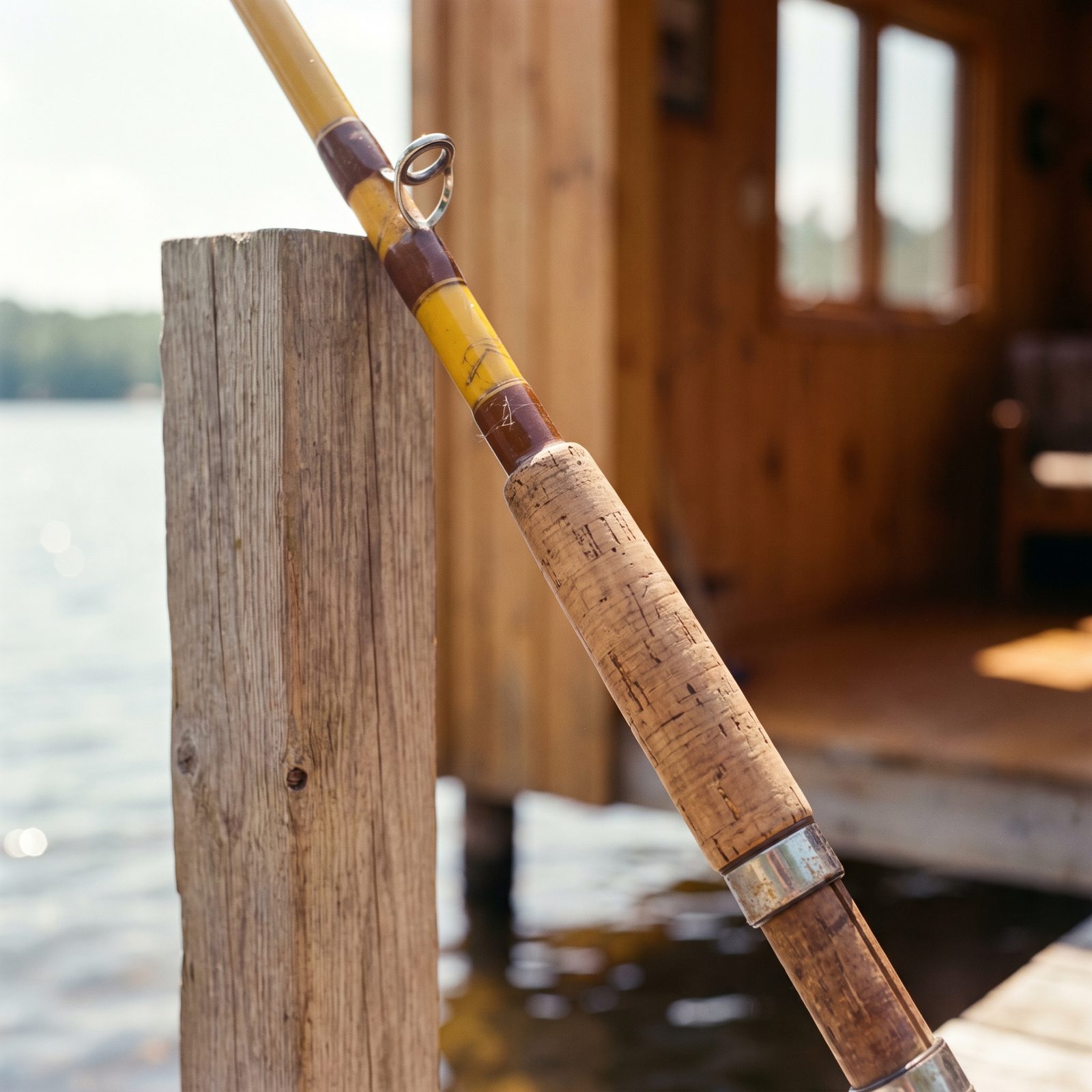
You could feel every minute of a long day in your forearm. Fiberglass rods were thick, slow, and heavy as a broom handle, and they’d take an absolute beating. Nobody worried about snapping one in a car door.
They flexed like a buggy whip and told you nothing subtle. But they’d horse a catfish out of a weed bed and never complain, and the graphite crowd forgets those old rods caught just fine.
19. A Styrofoam Minnow Bucket Rode Along on Every Trip
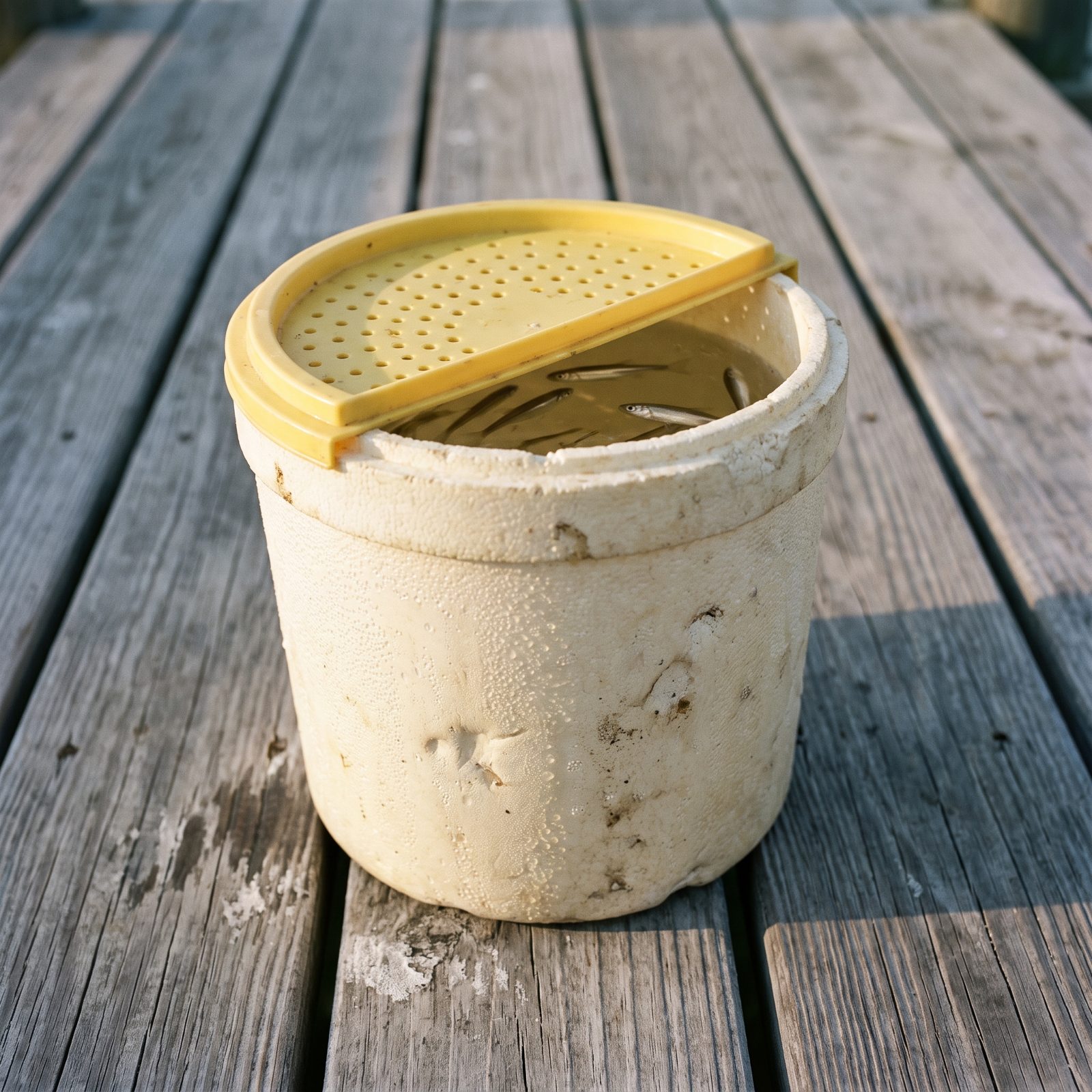
White, dented, and lighter than it had any right to be. The bucket went everywhere, usually sloshing in the footwell of the car and leaving a wet ring on the mat that nobody ever quite got out.
You’d lift the perforated lid and the minnows would scatter in a silver flash. By the end of a hot day the survivors were belly-up and the whole thing smelled like a creek bank. You kept it anyway for next time.
18. You Bought Bait at the Gas Station Next to the Pop Cooler
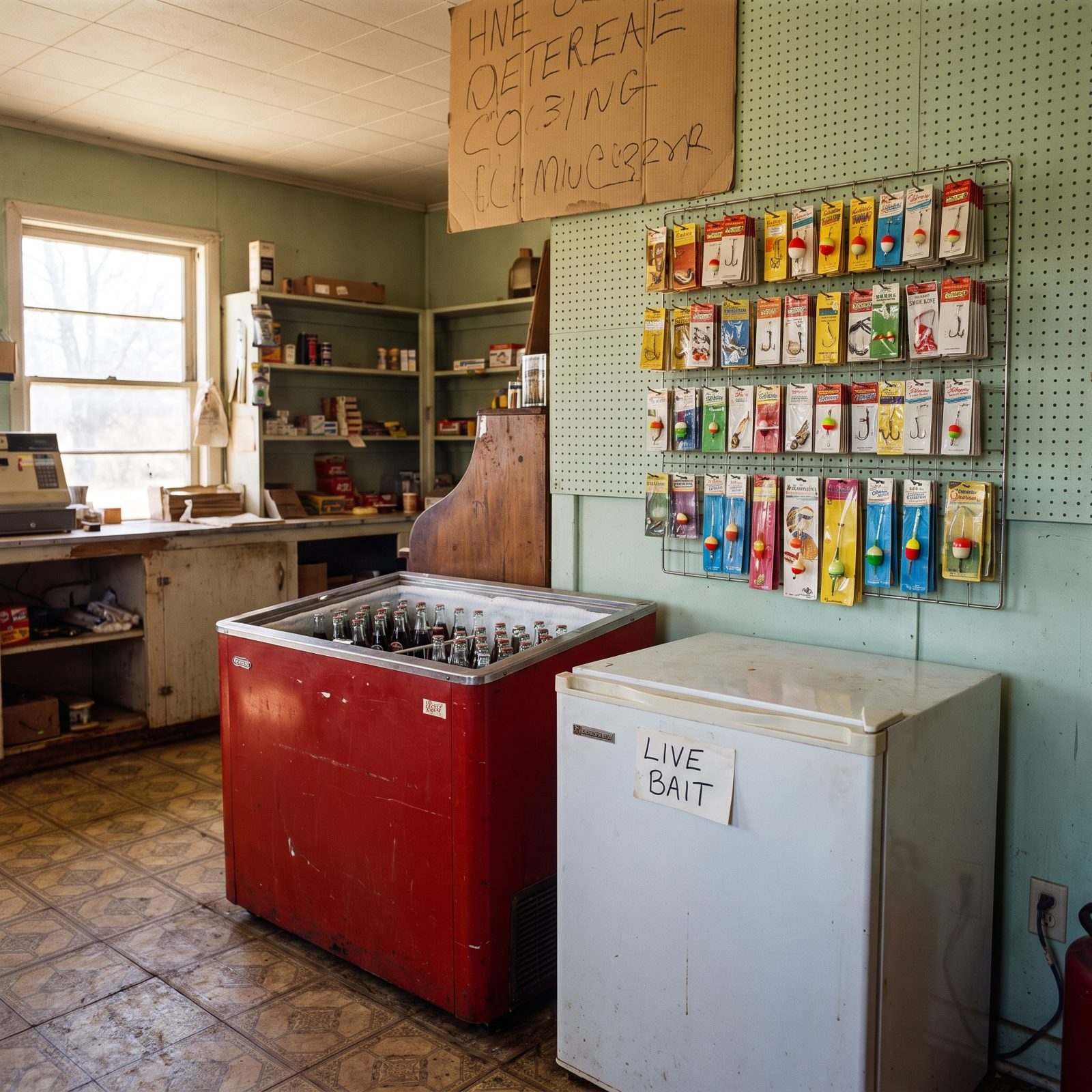
Bait and a cold Coke, same stop, same counter.
The gas station on the way to the lake had a little fridge of worms and minnows right next to the chest cooler full of glass-bottle pop. You grabbed a tub of crawlers, a bottle sweating with ice, and a card of hooks off the wire rack, and you were set for the whole morning.
The woman behind the counter always knew whether they were biting. Usually right, too.
17. The Rapala Floating Minnow Was the Lure Everyone Wanted
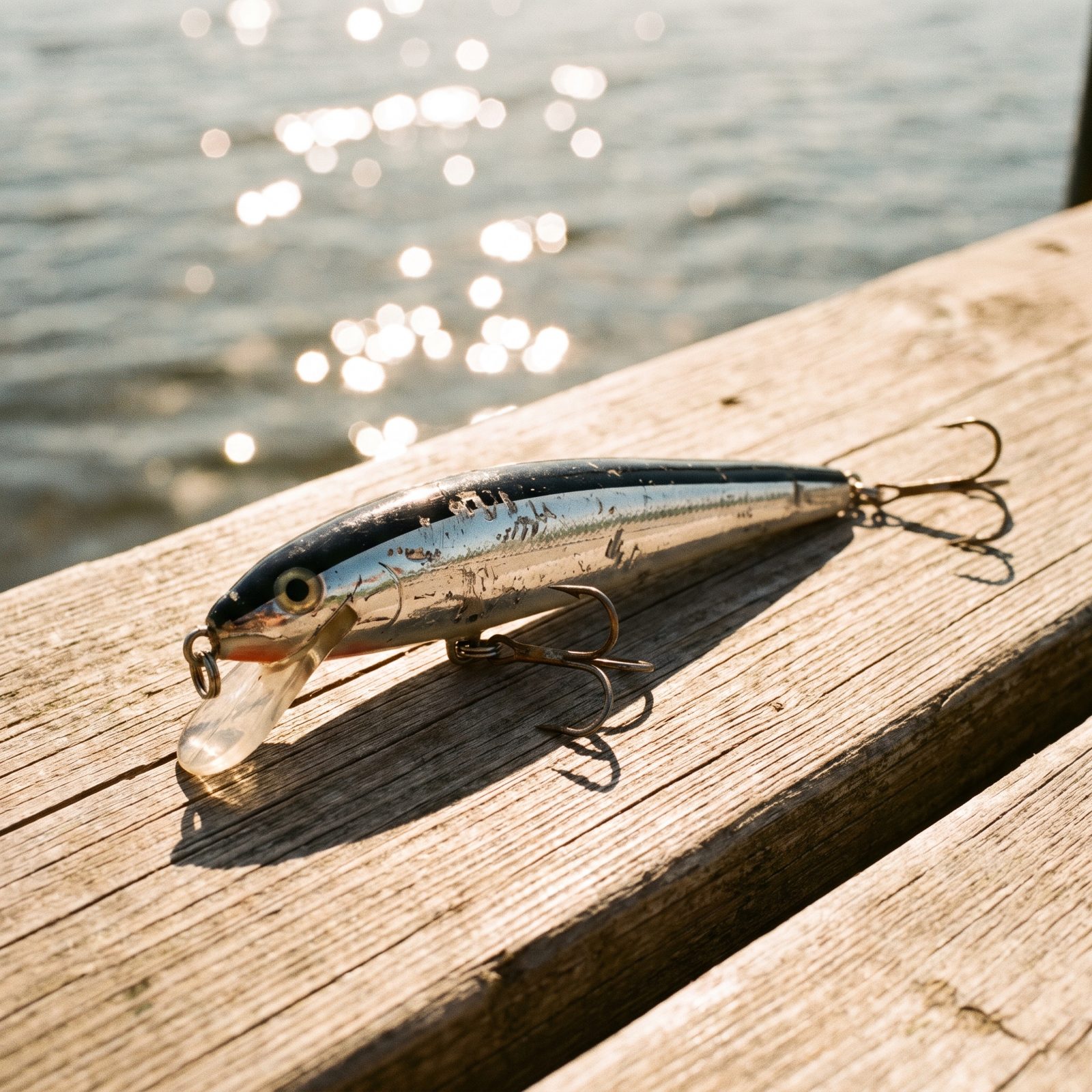
Everyone had heard about the Rapala before they ever owned one — the balsa minnow with the little wiggle, the one that supposedly caught fish when nothing else would. There was a waiting-list quality to the legend of it.
When you finally got one you were terrified to lose it to a snag. You’d wade in up to your chest to get it back. It earned its reputation and then some.
16. Rubber Worms Came in Purple and Smelled Like Grape
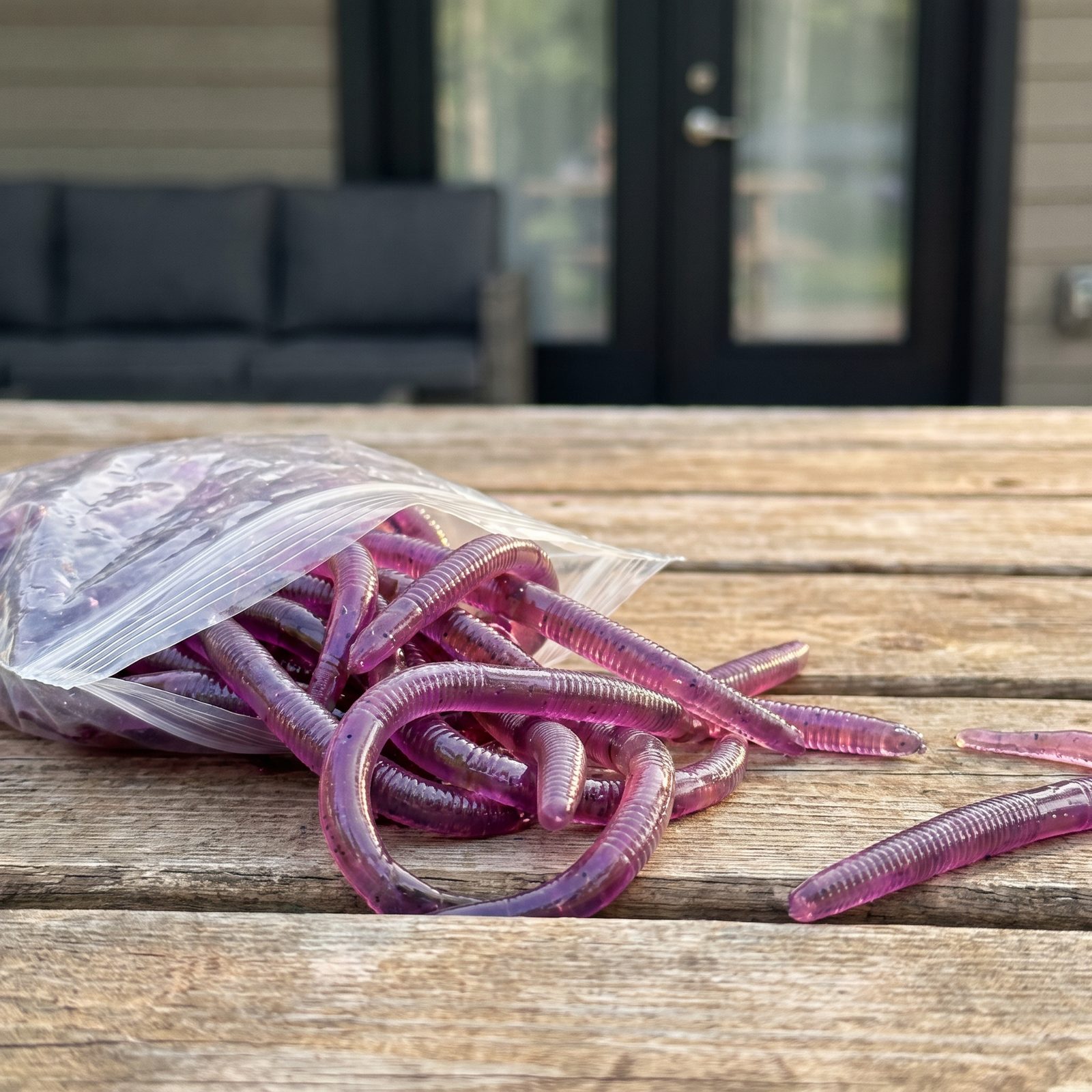
Purple. Almost always purple, with that unmistakable sweet grape smell that clung to your fingers all day. You’d open the bag and it hit you before you even saw them.
Half of us were convinced the smell was the secret. Bass didn’t care, but we did. You’d Texas-rig one onto a hook and swear by it — and honestly, for largemouth in the weeds, a purple plastic worm still puts fish in the boat. Some things got figured out early and never needed fixing.
15. You Kept Your Catch on a Metal Stringer Hanging Over the Side
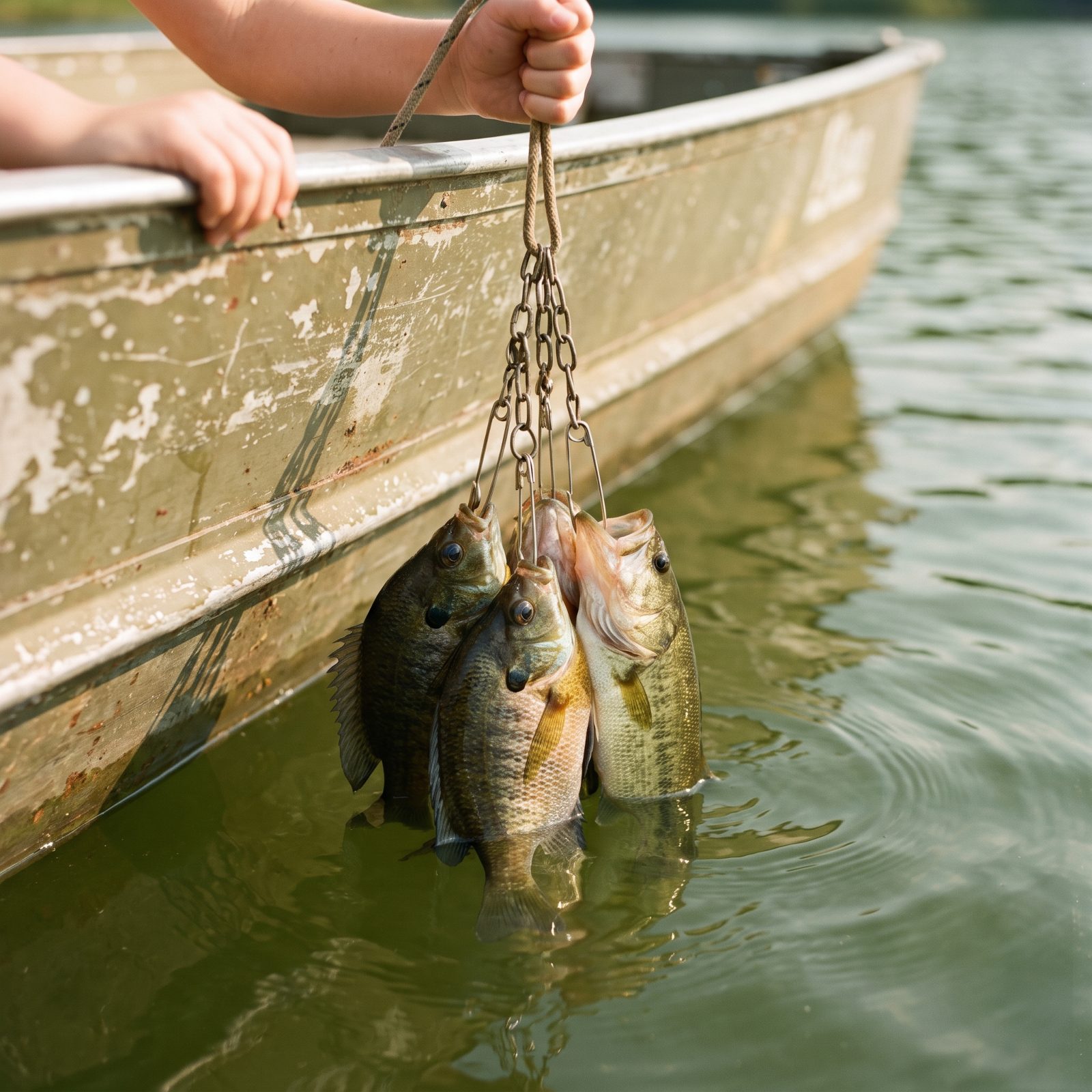
No livewell, no aerator, no plastic basket with a snap lid. Just a metal stringer looped through the gill and out the mouth, clipped off, and dropped over the side so your fish stayed alive in the water while you kept casting.
You checked it every so often to make sure a turtle hadn’t found an easy lunch. And here’s what you learned fast: a stringer tied too loose off a dock means you come back to an empty chain and a story nobody believes.
14. Fish Were Cleaned on Newspaper at the Picnic Table
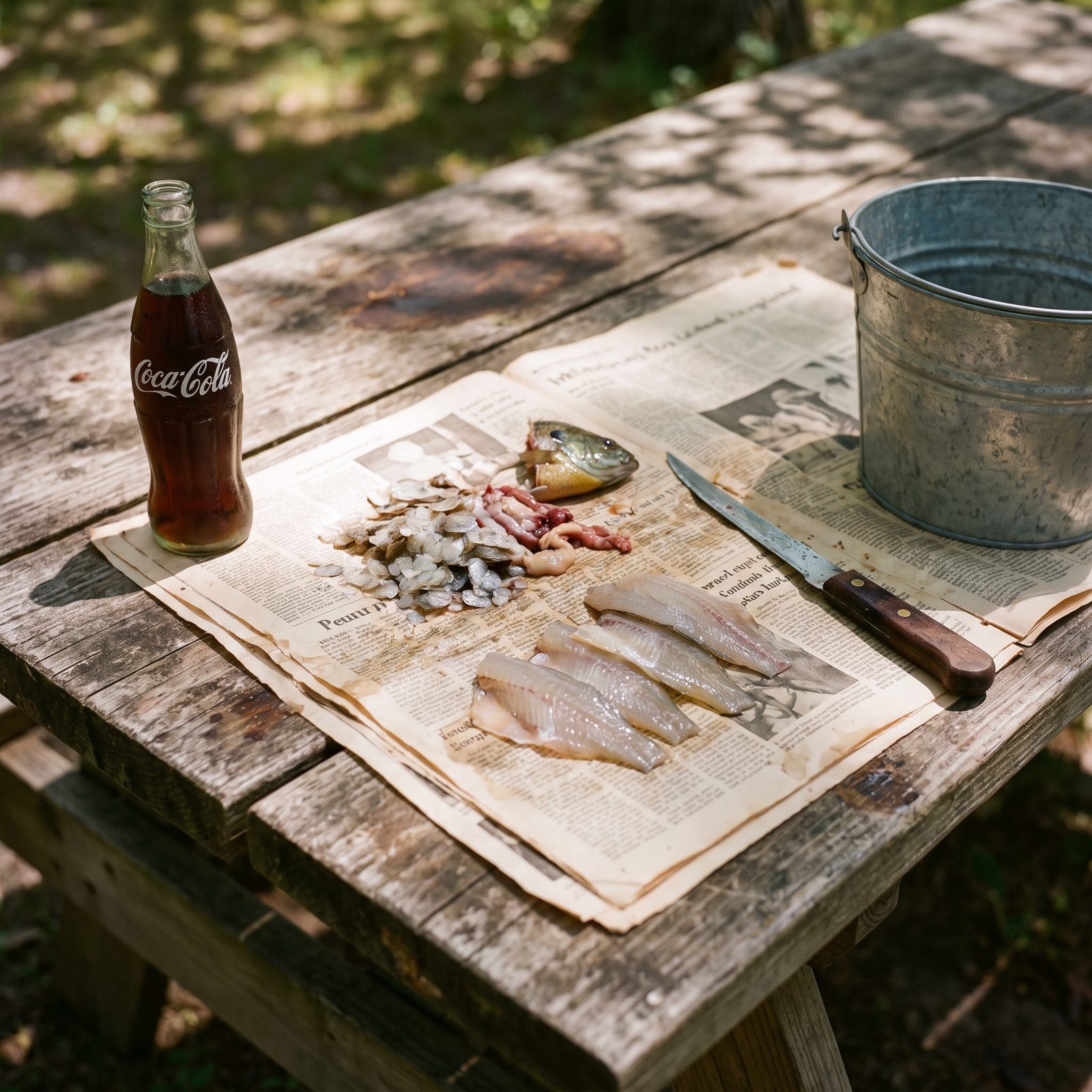
Cleaning station? You had the sports section and a sharp knife. Spread the newspaper thick, scale the sunfish right there, and when you were done you rolled the whole mess up and tossed it. The headlines did double duty.
Somebody always had an opinion on knife technique, usually an uncle, usually wrong. I’ll admit I ruined more fillets than I’ll ever own up to before I figured out which way the bones ran.
13. A Jon Boat and a Small Outboard Felt Like Luxury
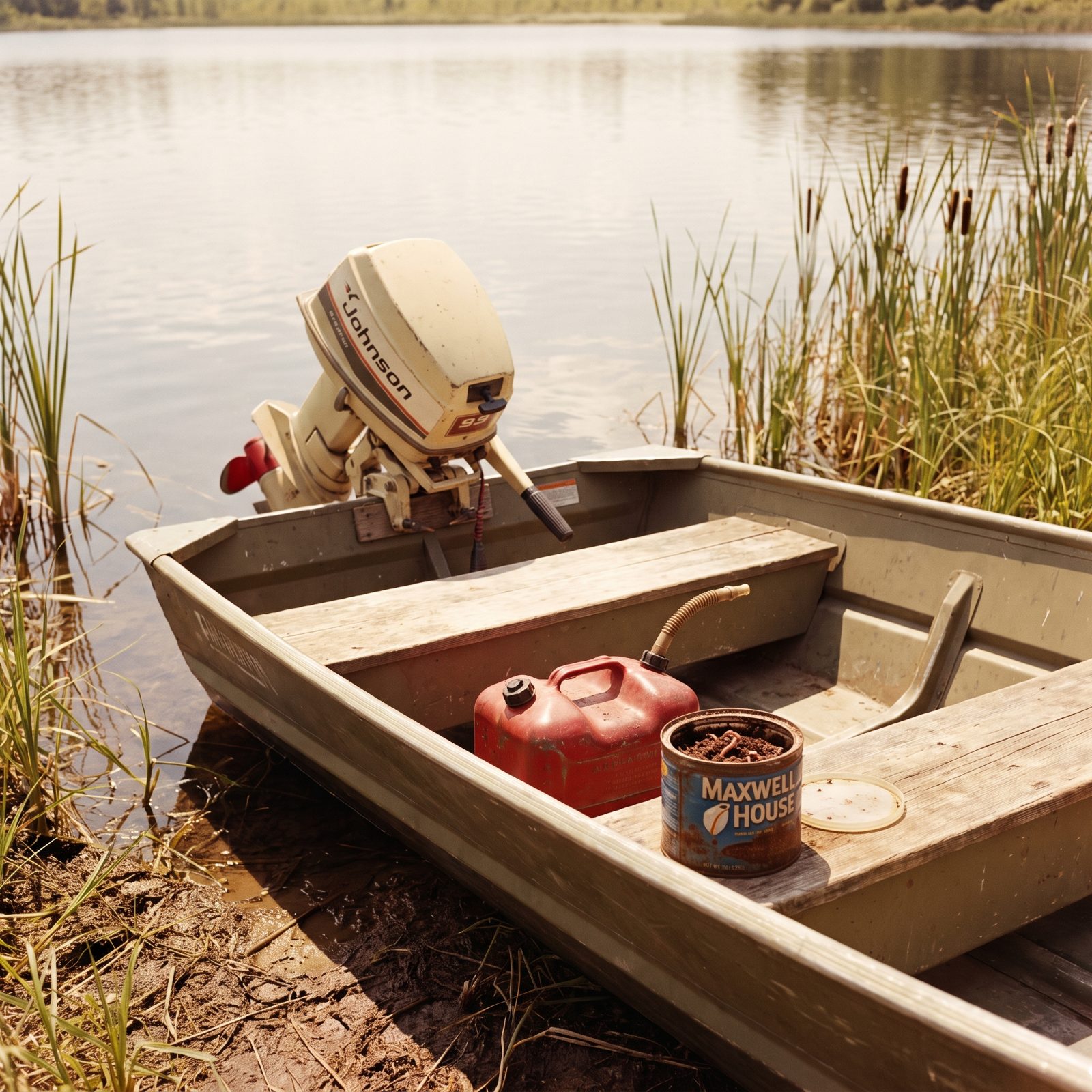
Fourteen feet of riveted aluminum and a motor you could lift with one arm. That was arriving in style. A jon boat didn’t care about looks. It got you off the bank and into the brush piles where the real fish lived, and that was all that mattered.
You rowed when the outboard sulked. You bailed with a coffee can. And you learned to read where a boat that size could and couldn’t go — a skill no depth gauge ever taught anybody.
12. Sunfish and Bluegill Were Your First Real Catches
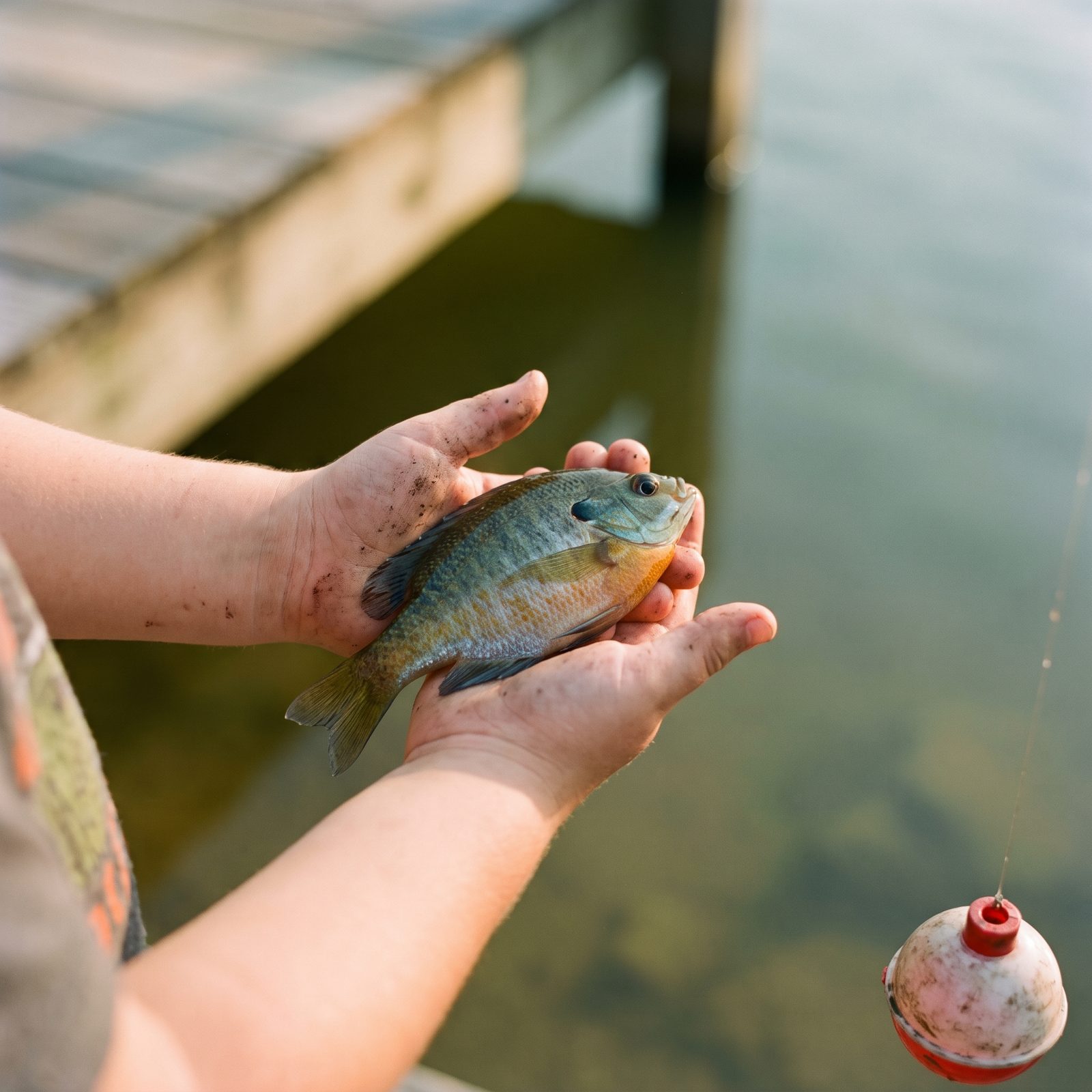
Nobody starts on trophy bass. You started on panfish, and panfish were generous teachers. A worm under a bobber off the end of a dock, and a bluegill would hammer it before the ripples settled.
Small fish, big lesson. That tug on the line that hooks you for life tends to happen around age seven, with a hand-me-down rod and a coffee can of nightcrawlers, and everything after is just chasing the same feeling.
11. Life Jackets Were Bulky Orange Horse-Collar Vests
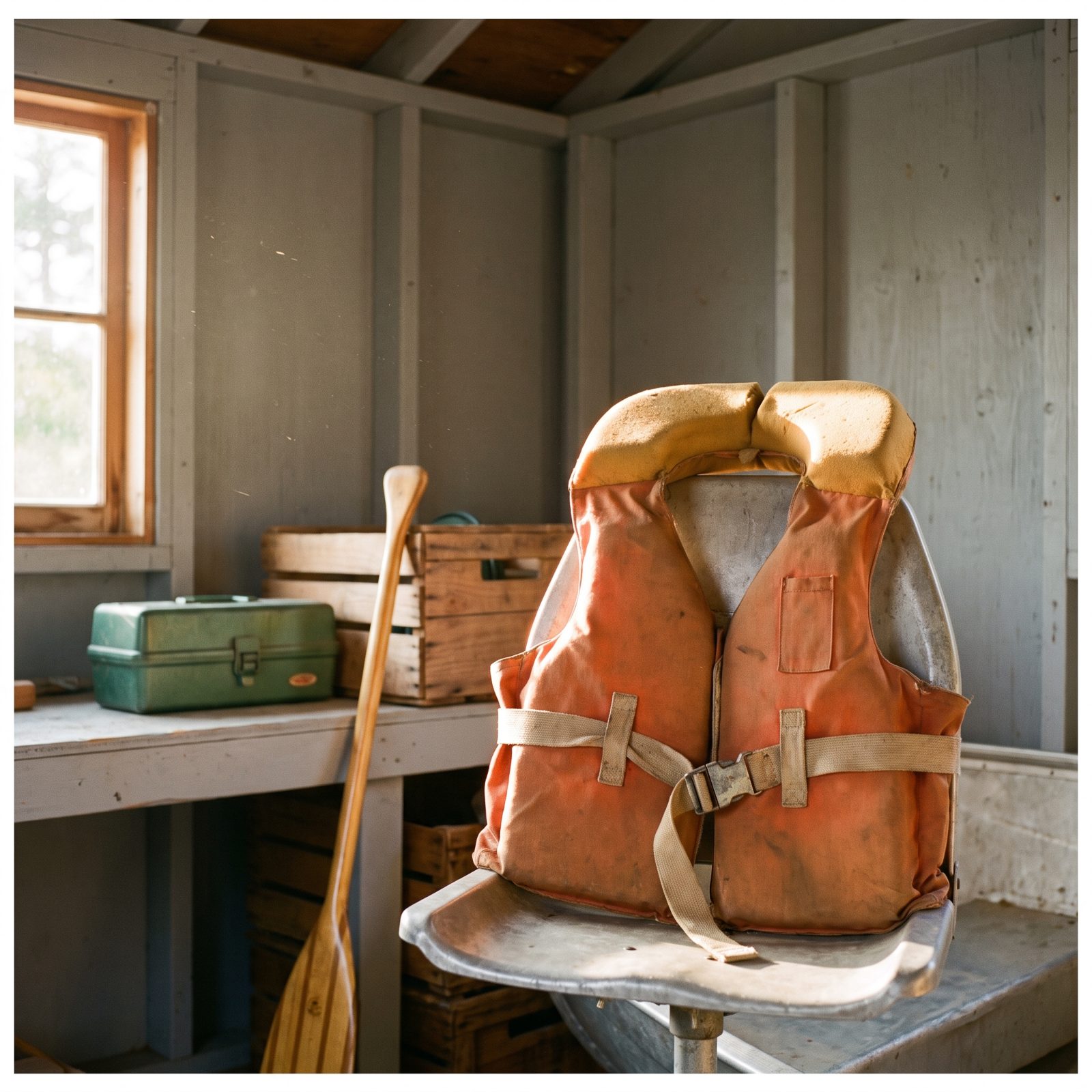
Comfort was not the goal. The horse-collar vest wrapped around your neck like a foam noose, chafed your chin, and rode up every time you leaned to cast. You hated it. Your mom made you wear it anyway, and she was right.
They were safe, they were loud orange, and they were everywhere. Modern vests are lighter and barely noticeable now. But there’s a whole generation that still feels that scratchy collar the second they smell boat fuel.
10. You Read Outdoor Life and Field & Stream Cover to Cover

Before the internet told you everything badly, these magazines told you everything well. You read the fishing columns, the gear reviews, the tall tales, and yes, the back-page ads for mail-order lures you saved up for.
The subscription came in the mail and got read until it fell apart. I still think the writing in those pages beats most of what passes for outdoor content now, and I’ll die on that hill.
A kid who memorized the gear pages grew up knowing the difference between a Rapala and a Rebel before he ever owned either.
9. A Fishing License Cost a Few Dollars and Came on Paper
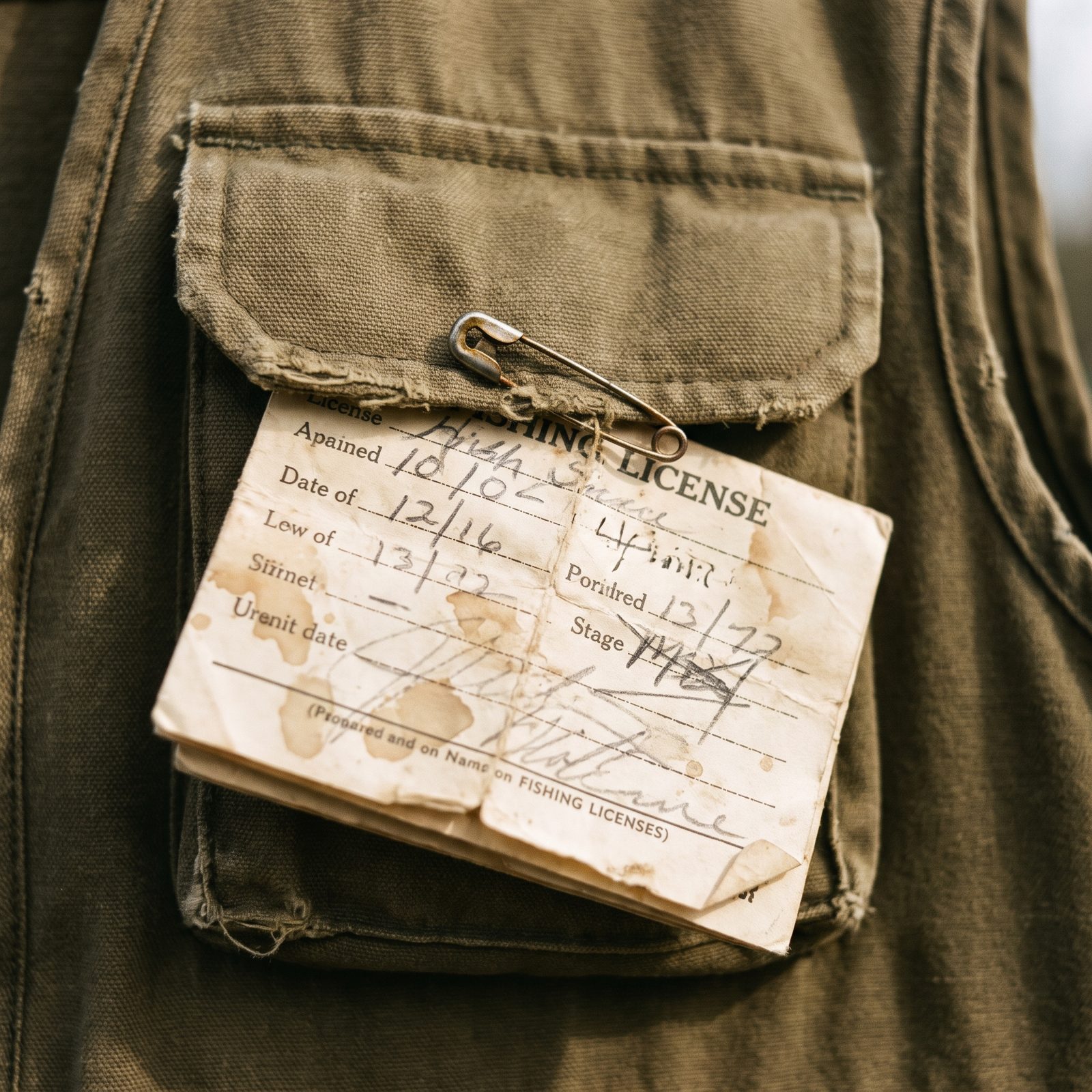
You bought it at the bait shop counter, the clerk filled it out by hand, and you pinned it to your vest or folded it into your wallet until it was soft as cloth. A few dollars, maybe. No app, no QR code, no printing it at home.
Prices and rules vary by state now, and a day license can run a good bit more. Check your state’s current regs before you go. But the paper one you earned by saving up felt like a membership to something.
8. Bait Shops Had Hand-Drawn Lake Maps on the Wall
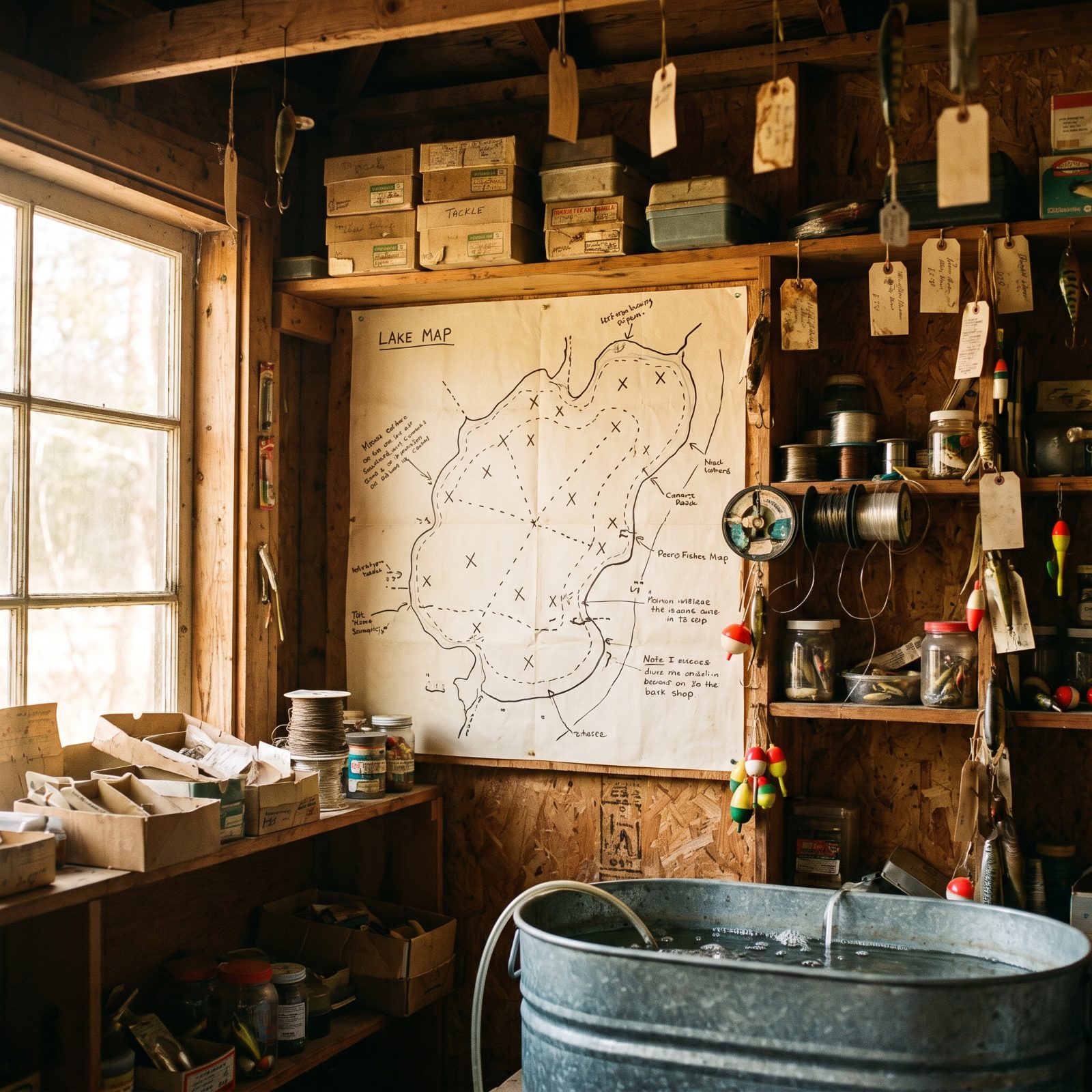
The GPS of its day hung behind the register, drawn in pencil by somebody who fished the lake longer than you’d been alive. Depth marks, brush piles, the spot where the crappie held in April. If the old-timer liked you, he’d tap the map and tell you where to go.
That map held knowledge no screen can replicate — local, hard-won, and free if you bought your worms there.
7. Your Fishing Hat Was Covered in Pins and Old Lures
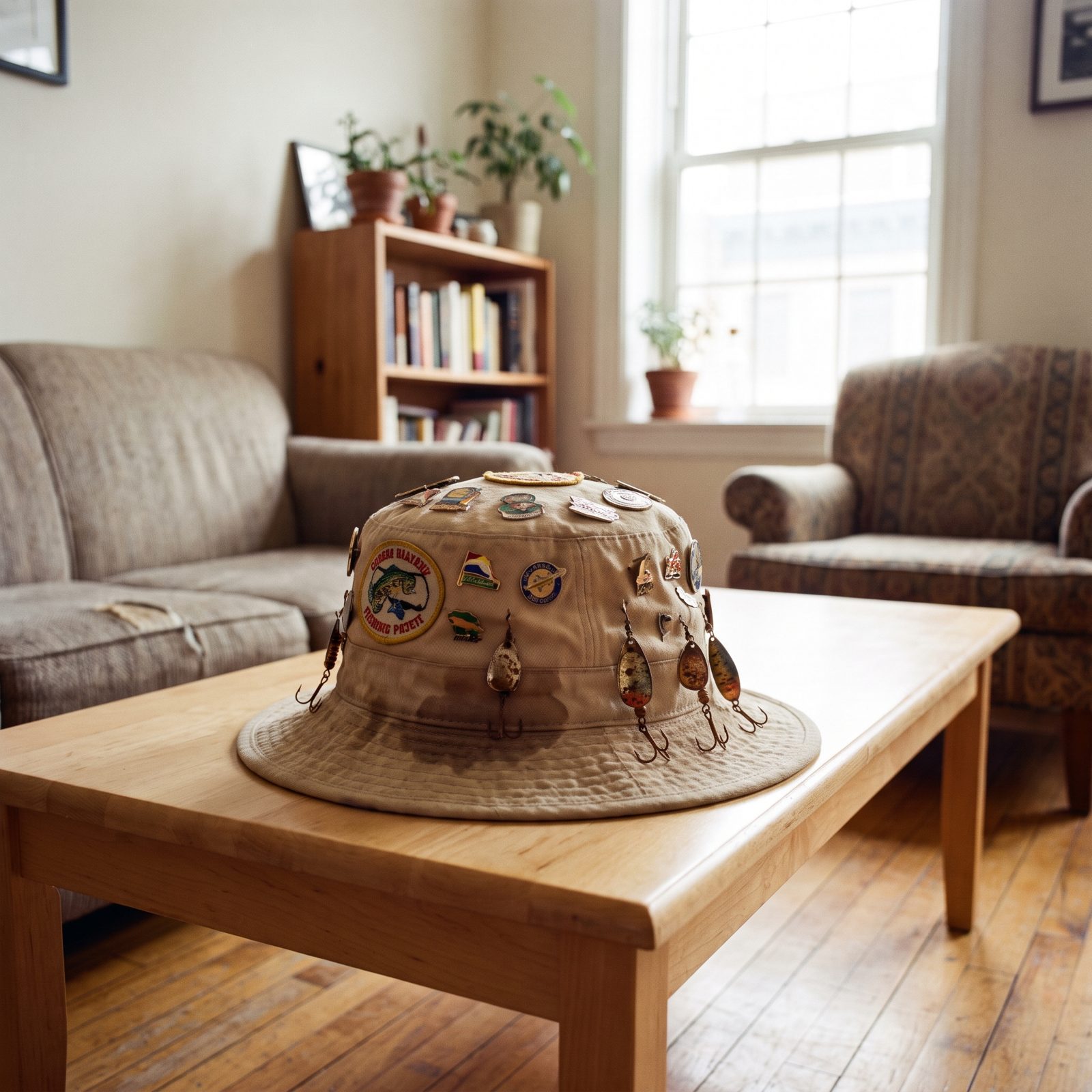
That hat was a resume. Every pin, badge, and retired lure hooked into the felt told a story about a trip, a tournament, or a lake you’d never see again. The brim sagged, the band held sweat and years, and you wore it until it practically walked itself to the boat.
Losing that hat was a genuine tragedy. Some of those are still in closets, too precious to wear and too loaded with memory to toss.
6. A Thermos of Coffee Came Before Sunrise on Every Trip
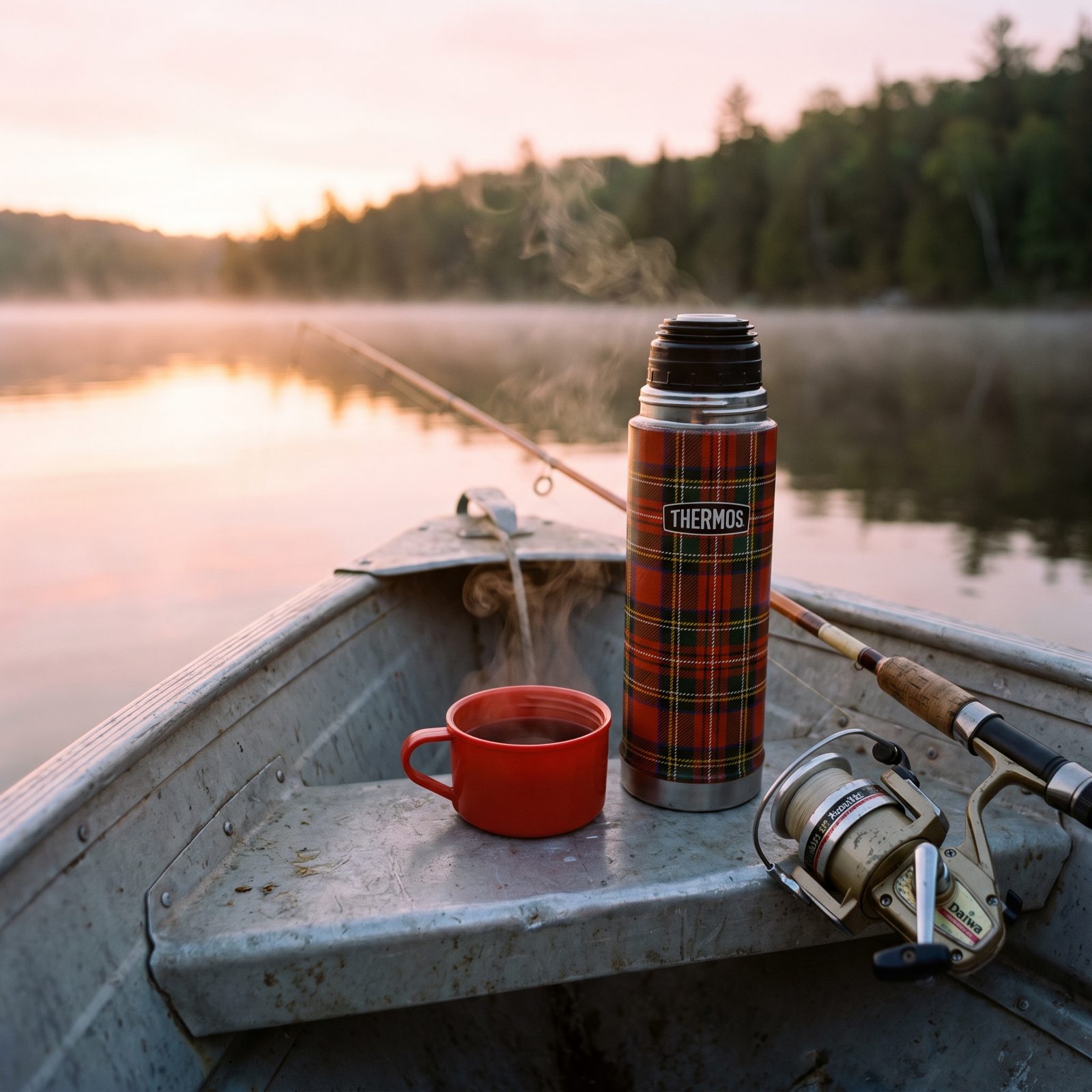
The plaid steel Thermos went everywhere. Filled the night before, the coffee tasted faintly of metal by the time the sun came up, and nobody cared one bit. You drank it on the water with your hands cold and the fog still sitting on the lake.
Getting there before sunrise wasn’t dedication. It was just how it was done. The best bite happens in that gray hour, and the coffee was the only thing keeping a kid upright for it. Still the best cup I’ve ever had, and I’ve had a lot of good ones since.
5. You Untangled Bird’s Nests in Your Line for Half the Morning
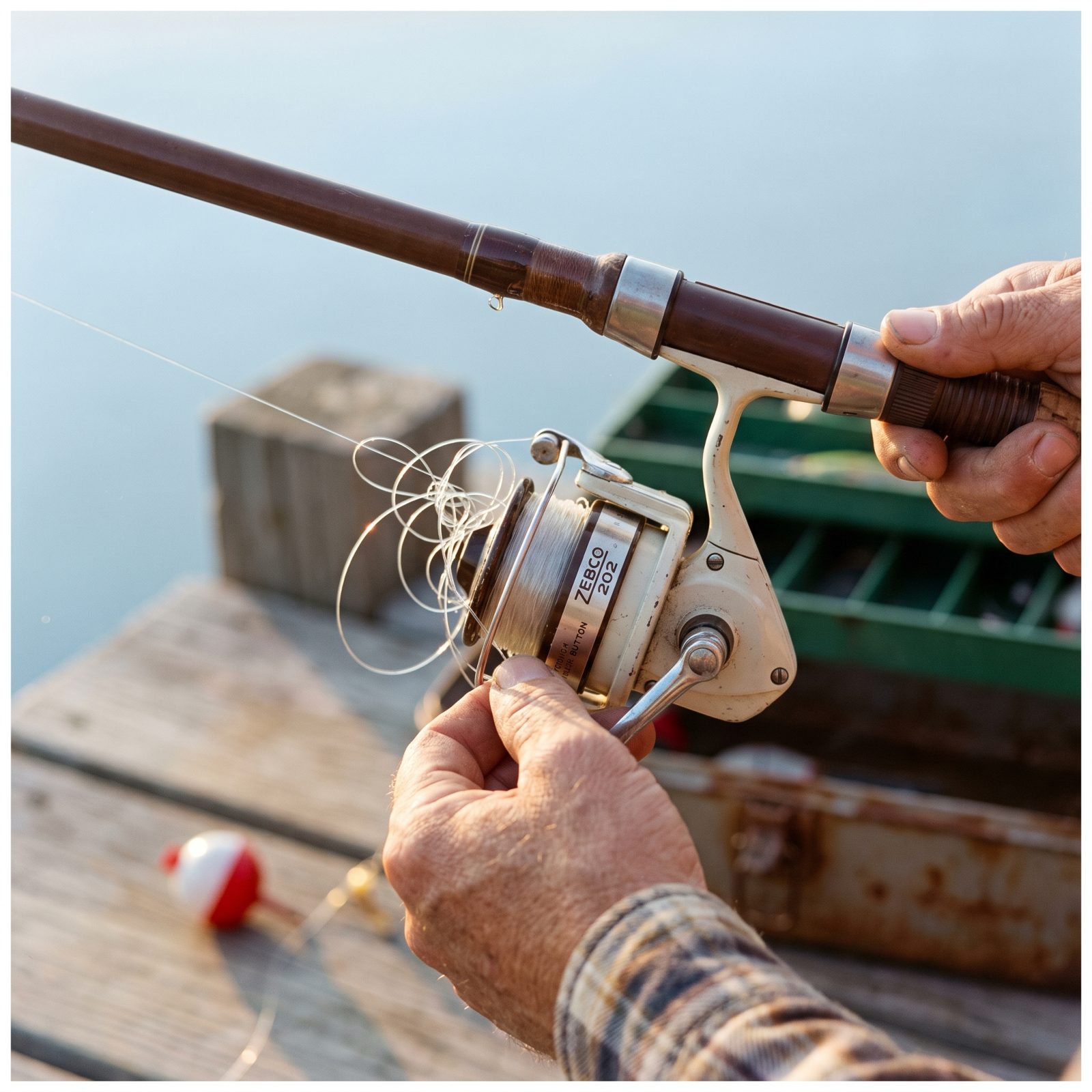
Bird’s nest. That was the word, though most of us just called it a mess. You cast too hard, loose coils of line sprang off the spool all at once, and suddenly half your morning belonged to a knot the size of a golf ball.
No YouTube video to bail you out. Just you, a pocketknife held in reserve, and the slow dawning that cutting the line meant re-tying the whole rig and losing twenty feet of mono you couldn’t afford to burn through.
If you grew up fishing then, your fingers remember it. They remember picking at that tangle while the fish fed thirty feet out, feeding hard, and you stuck on the dock unable to reach them.
4. Fried Fish Dinners Followed Every Good Day on the Water
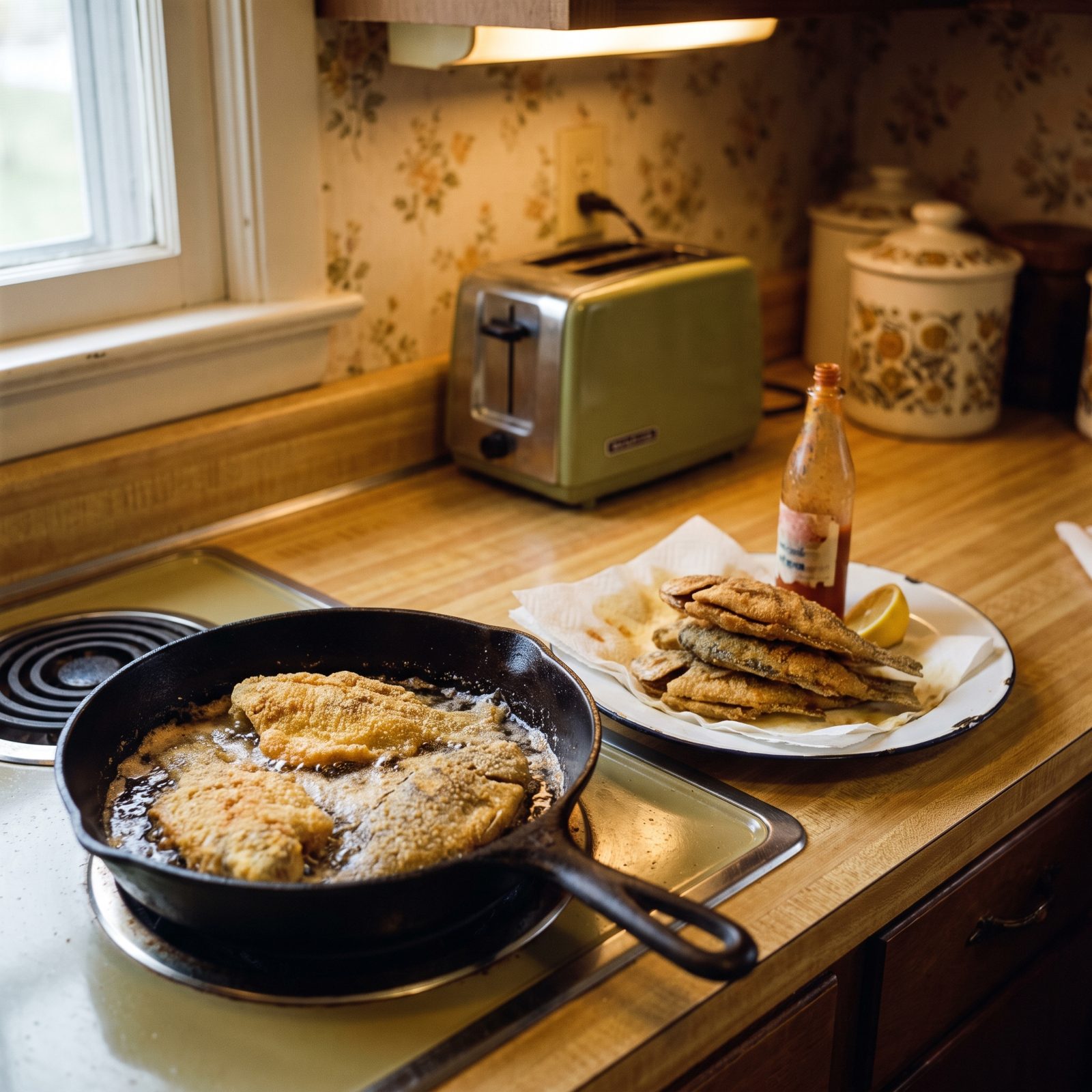
The reward wasn’t the catch. It was the smell of cornmeal hitting hot oil a few hours later.
A good stringer of bluegill or crappie meant somebody was dredging fillets in a brown paper bag of cornmeal and salt, then dropping them into a cast-iron skillet that had never once seen a dishwasher. You ate standing up, burning your fingers, because waiting for it to cool felt like a sin.
Store-bought fish never tasted like that. Still doesn’t. There’s a flavor to a fish you caught yourself that has nothing to do with the recipe and everything to do with the morning behind it.
3. Cane Poles Still Leaned in the Corner of the Garage
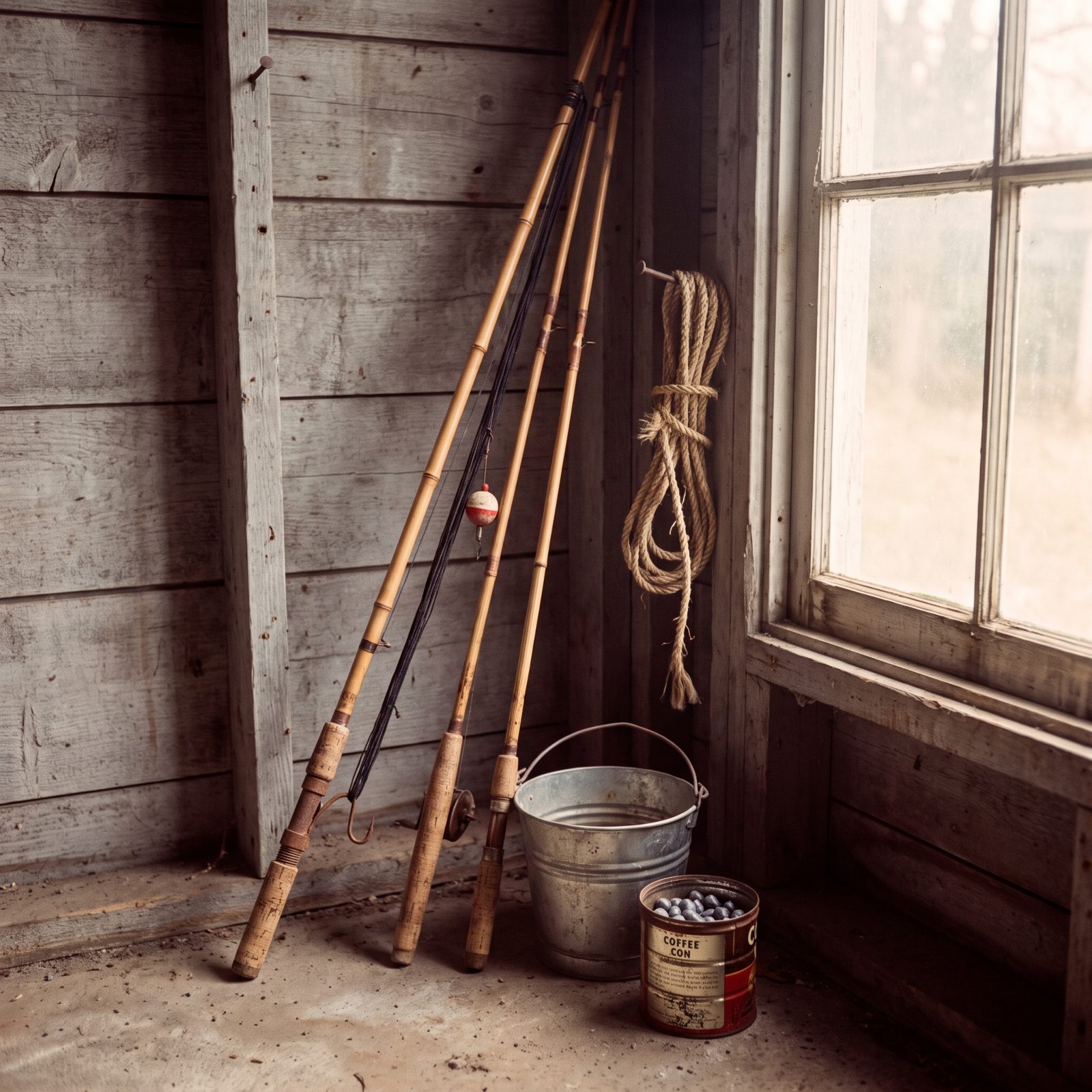
Before the tackle got fancy, there was the cane pole. Ten feet of bamboo with a cork grip, line tied straight to the tip, a bobber, a hook, and a coffee can of bait pellets. That was the whole operation, start to finish.
No reel. No drag. You swung the bait out, watched the bobber, and when it went under you lifted and swung the fish right into your hand. A kid could learn to fish in an afternoon with one of those, and plenty did.
Plenty of garages still have one in the corner, gathering dust next to the weed trimmer. Nobody can quite bring themselves to throw it out. Honestly, nobody should.
2. Cooler Lunches Meant Bologna Sandwiches and Cans of Pop
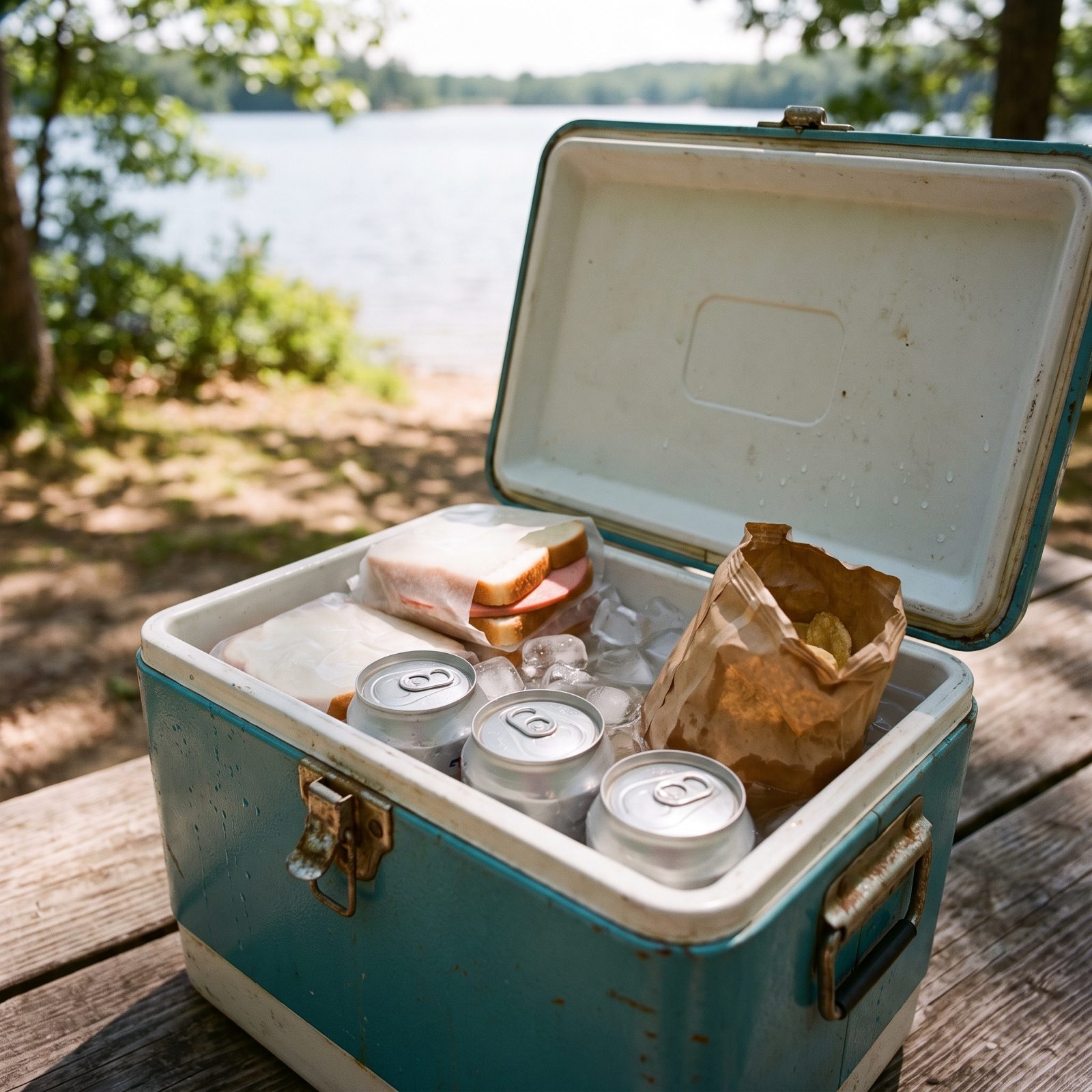
The cooler was steel, heavy enough to double as a seat, and lunch inside it never varied much. White bread, a slab of bologna, maybe a slice of American cheese if someone was feeling generous that day.
And the pop came in cans with ring-pull tabs that tore clean off, nestled down in the ice at the bottom of the cooler. Cold enough to ache your teeth after a morning baking in the sun.
It was never good food by any honest measure. But eaten on a dock with a line in the water, a soggy bologna sandwich tasted like a holiday.
1. You Measured Bragging Rights With a Polaroid Snapshot
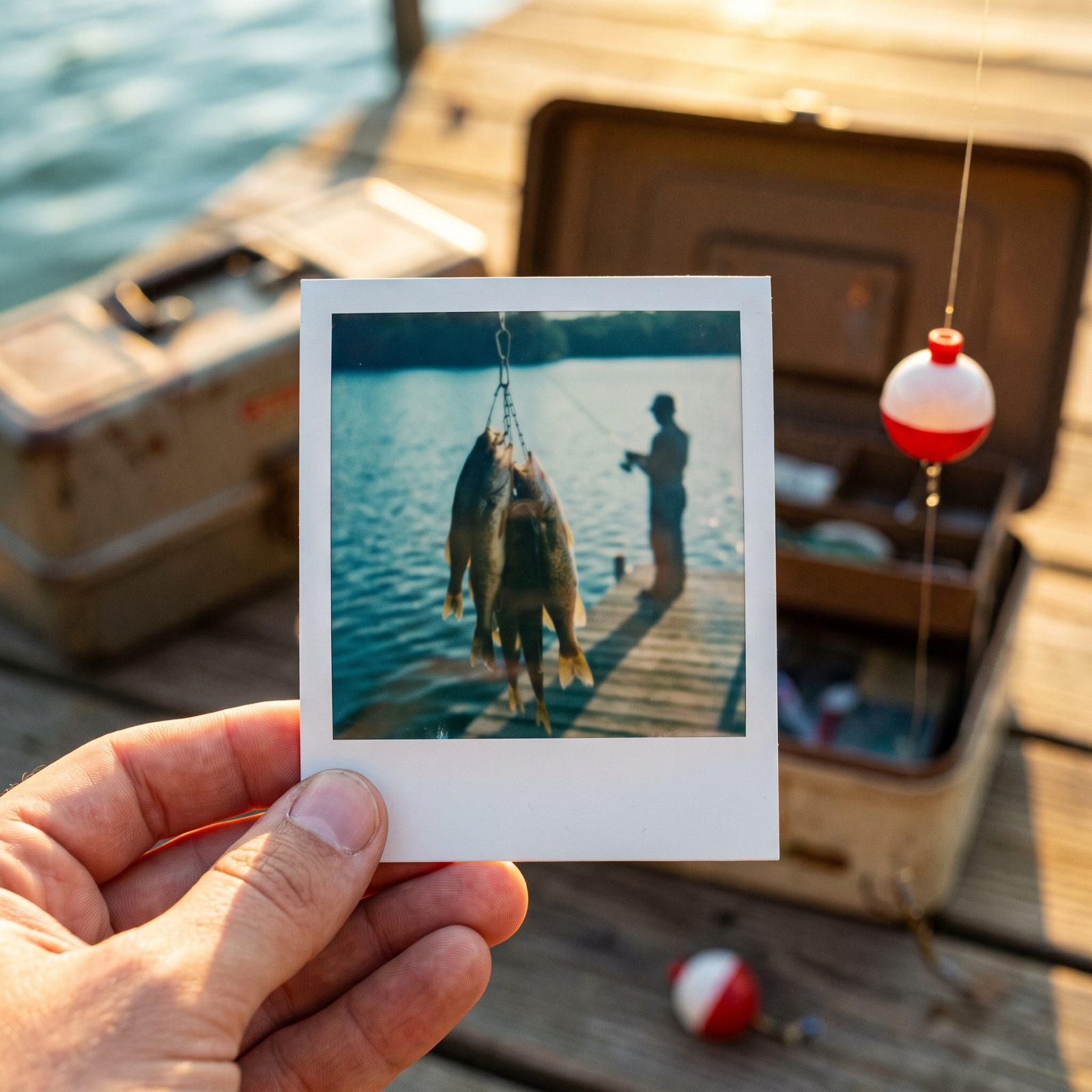
No instant gallery to scroll through. No way to fire off forty shots and keep the best one. You got one Polaroid, and you waved it in the air like a lunatic while it developed, convinced that helped it along.
The fish looked bigger than it was. That was half the appeal. By the time the color came up, you’d already settled on who needed to see it.
Those square white-bordered prints ended up curling in drawers and taped to tackle boxes. Faded now, a little yellow at the edges, but you can still read exactly what kind of day it was.