
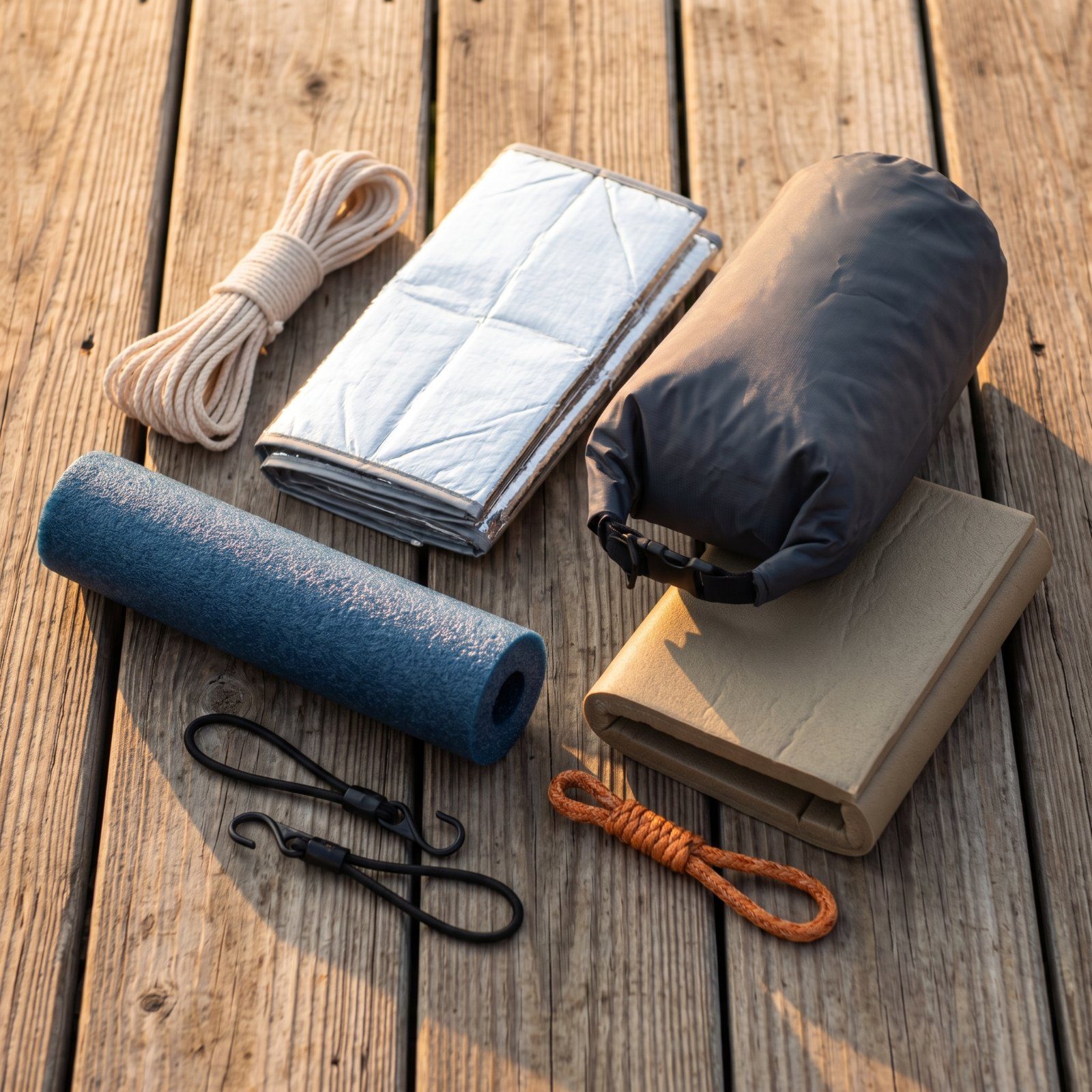
The difference between a rough night and a good one is almost never the tent. It’s the small stuff. A sleeping pad that skates across the floor at 2 a.m., a tarp that drips cold water onto your boots, a cot rail that bruises your hip through the fabric. Experienced campers fix these things with scraps most people throw away — foam, bungee, an empty dry bag, a windshield shade going soft in the garage. None of it costs much, and all of it works. Steal these before your next trip into the woods.
Please note that some of the images in this article were created with the assistance of AI.
42. Tie Short Cotton Drip Lines to the Lowest Tarp Corners
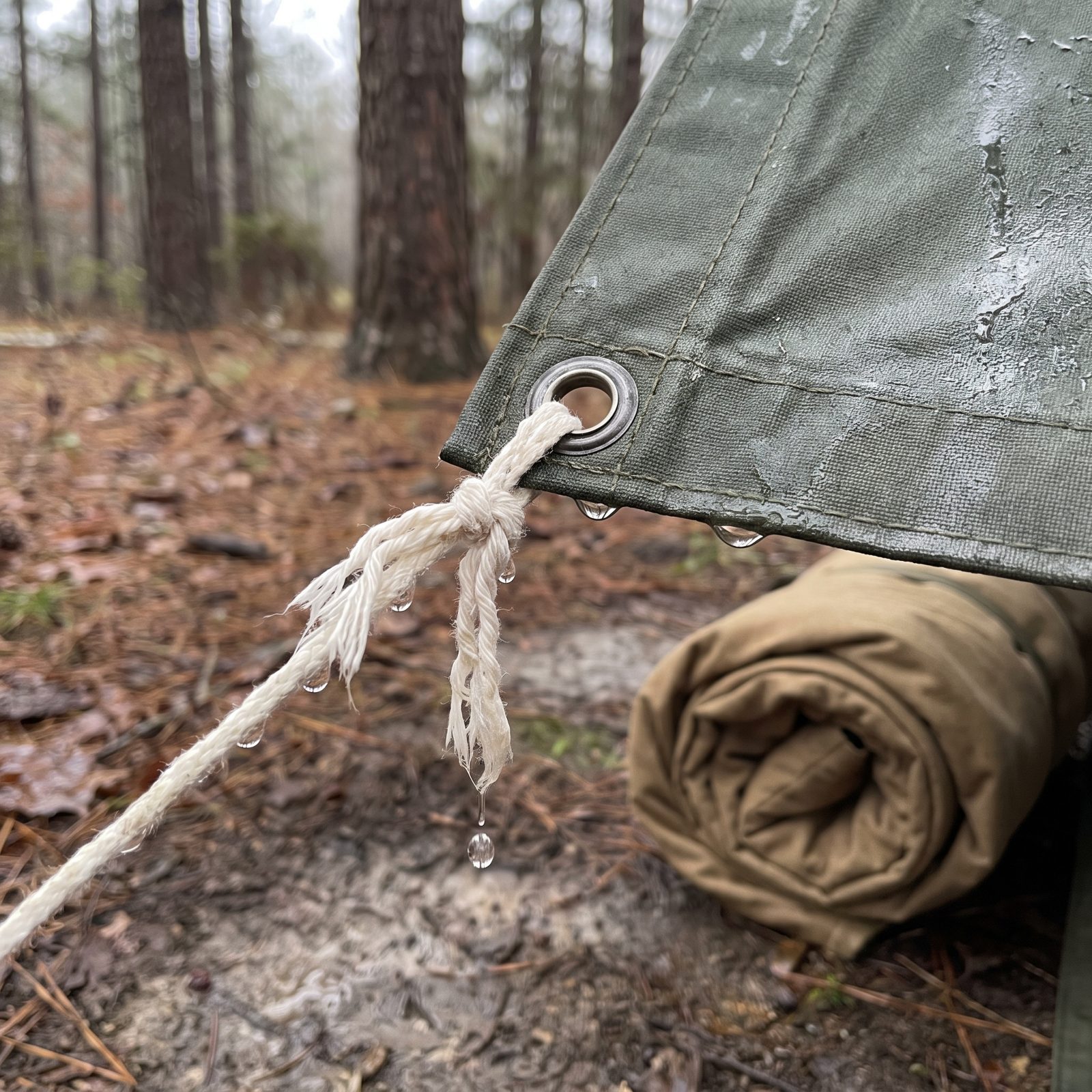
Water follows a thread. That’s the whole trick. Tie a six-inch length of absorbent cotton cord to the lowest corner of your tarp, and rain that would otherwise sheet off the fabric and splash back at your gear runs down the cotton and drips off the end instead — a few inches lower, well clear of your bedding.
Synthetic cord won’t do it. The water needs something that wicks, so an old bootlace or a strip of cotton t-shirt beats paracord here every time. Tiny detail. Dry boots in the morning.
41. Add Cured Silicone Dots Beneath a Sleeping Pad to Stop Sliding
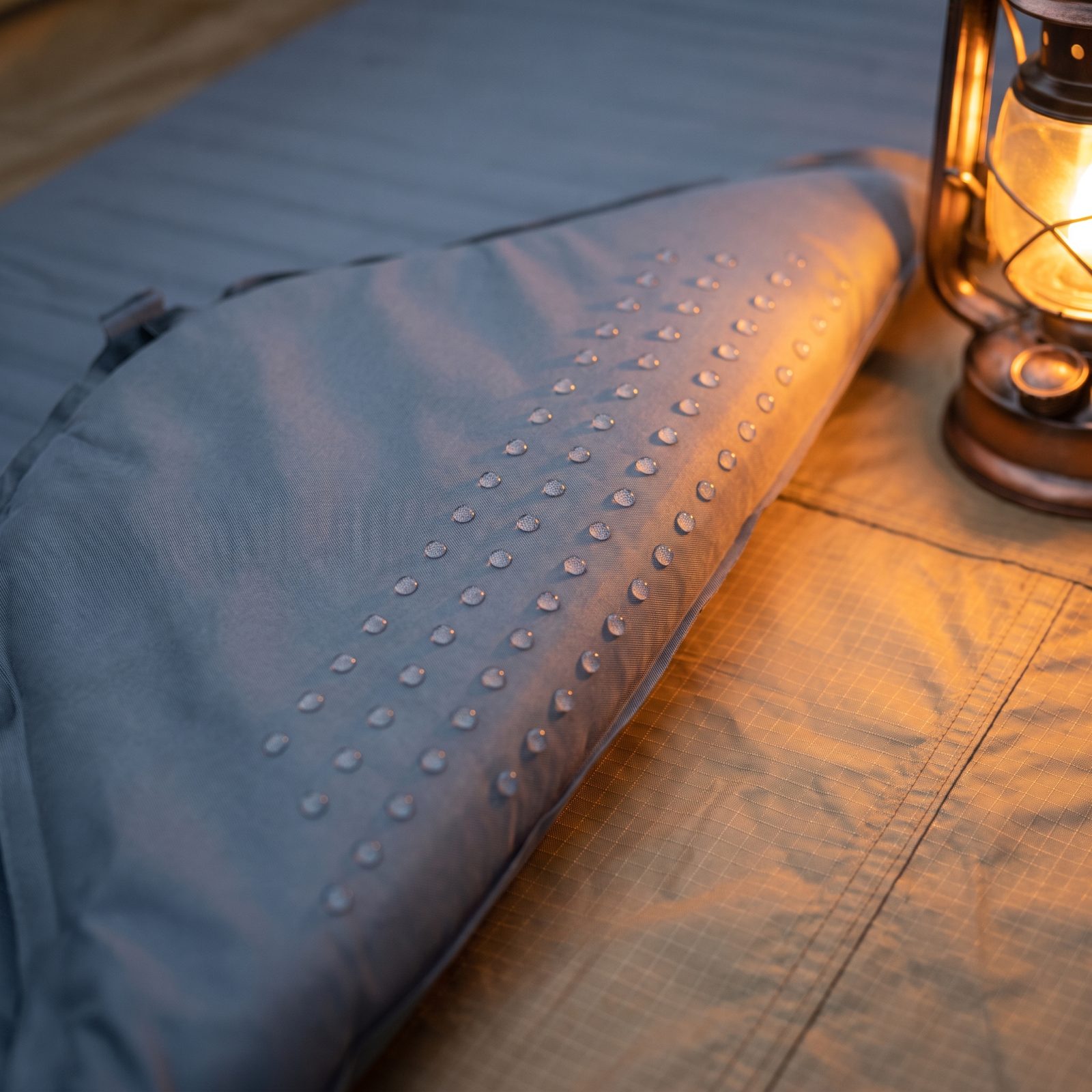
Inflatable pads are slippery by design, which is why you wake up halfway off yours and halfway off the tent. The fix lives in a tube of clear silicone caulk. Squeeze small dots across the bottom of the pad, let them cure fully for a day, and you’ve handed the pad a grip it never shipped with.
Those dots stay flexible, pack down flat, and grab the tent floor just enough to keep you where you lay down. Cheap, permanent, invisible.
40. Slide a Foam Sit Pad Inside the Sleeping Bag Beneath the Hips
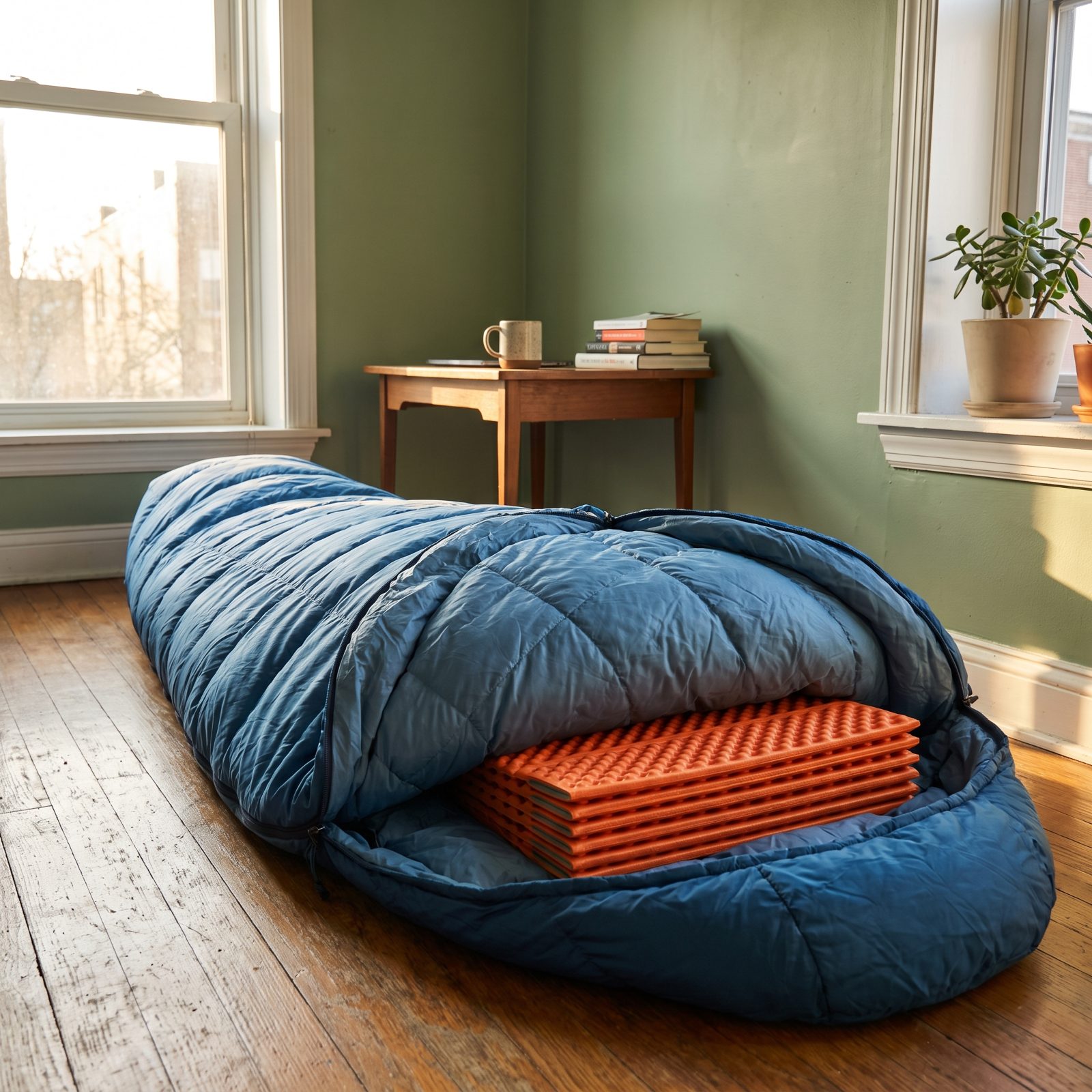
Your hips are where you lose heat and where the cold ground finds you first. A sleeping pad covers the whole body evenly, but the body isn’t even — the hips press harder and mash the insulation flat.
Tuck a folded foam sit pad inside the bag, right under the hip zone, and you add a dense layer of closed-cell foam exactly where the pressure is worst. You sleep warmer, and the pad never shifts because it’s trapped between you and the bag. Side sleepers feel it most.
39. Split a Pool Noodle Over a Hard Cot Rail
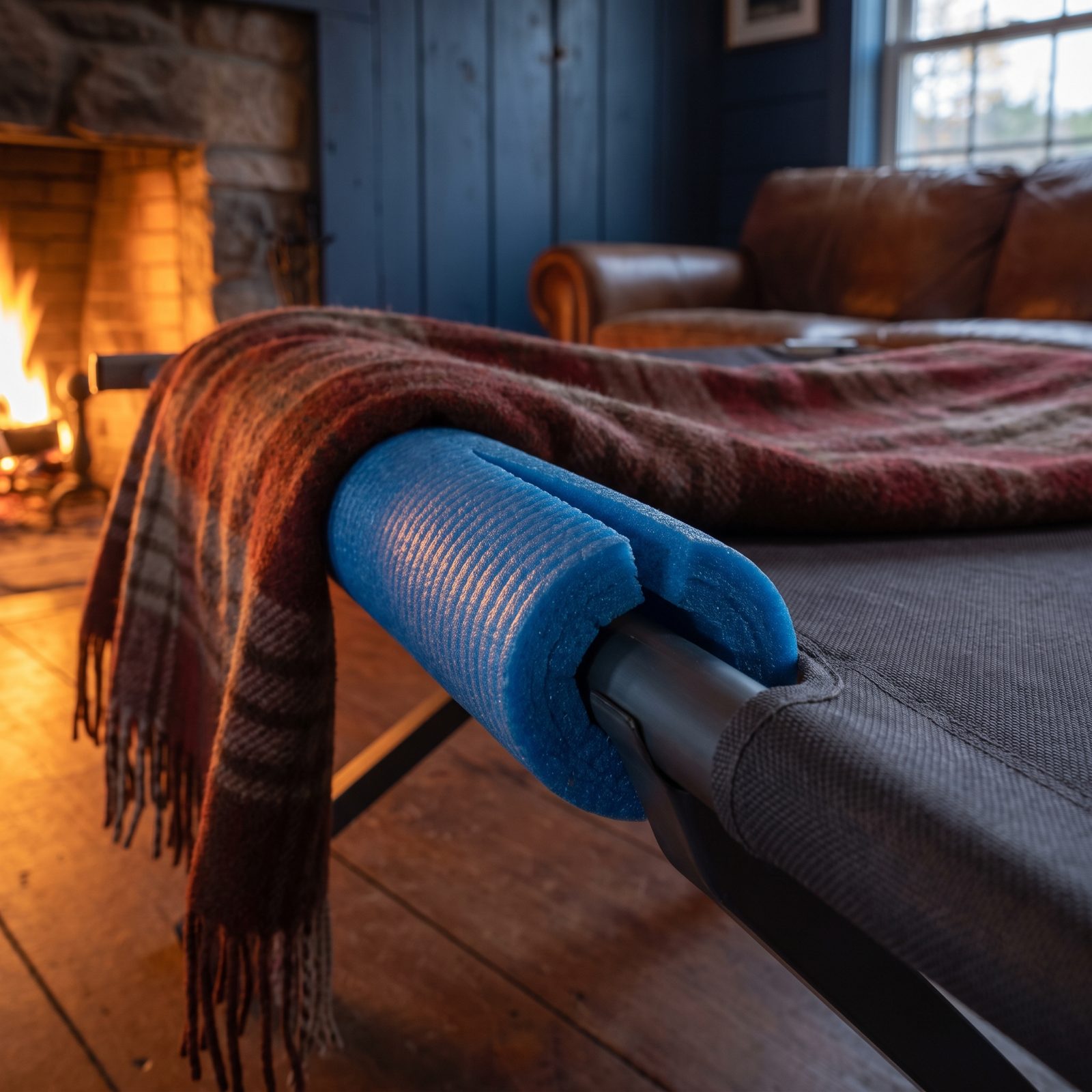
Anyone who’s slept on a camp cot knows the rail — that hard aluminum edge your shoulder or hip finds all night, pressing a dull ache through the thin fabric. Slit a pool noodle down one side and snap it over the rail. Done.
38. Cinch a Fitted Sheet Around Two Sleeping Pads to Keep Them Together
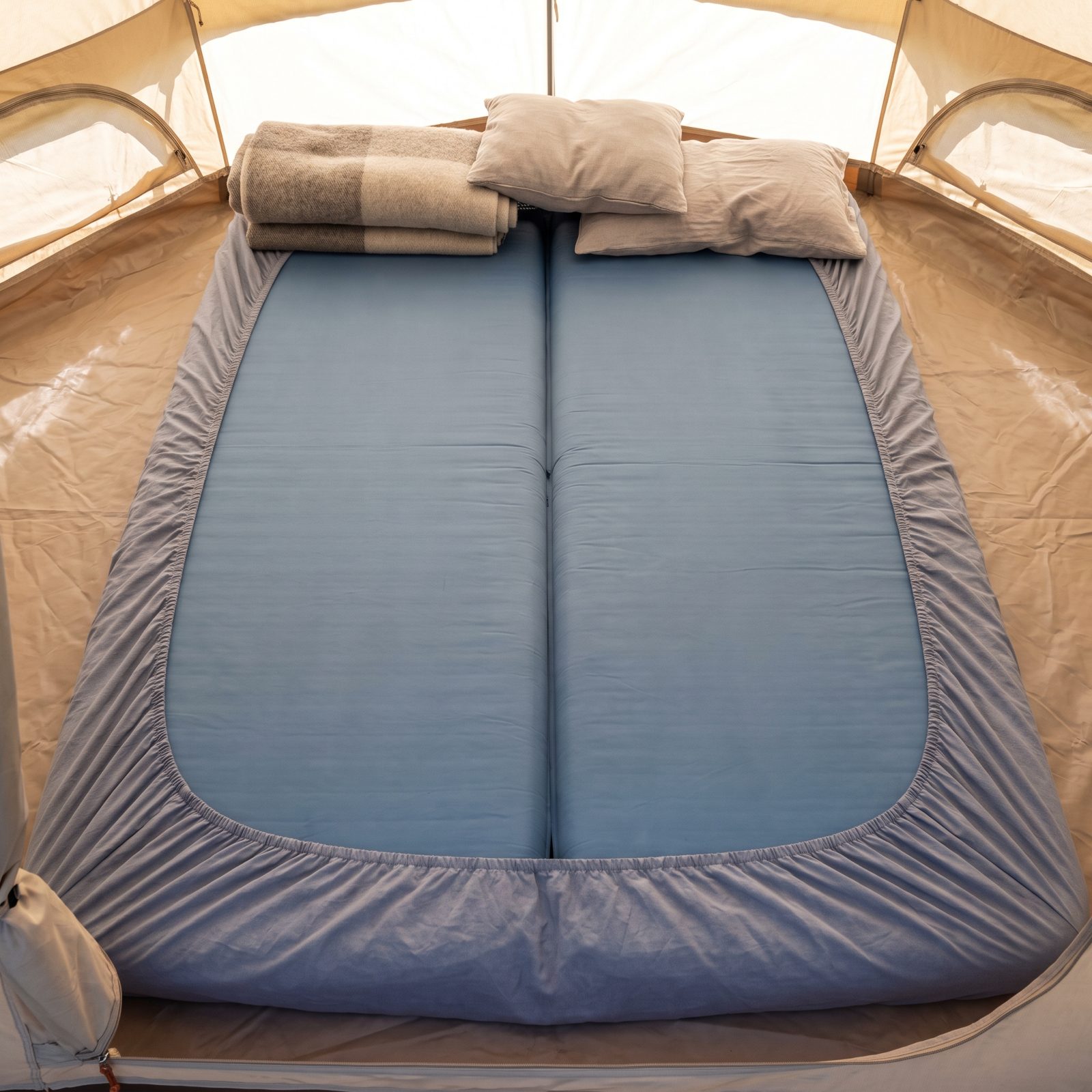
Two campers on two separate pads drift apart in the night, and that cold gap in the middle becomes a trench nobody wants to fall into. A regular fitted bedsheet solves it. Stretch one around both pads and the elastic edge cinches them together like a frame around the perimeter, so they can’t drift apart.
It keeps your bags from sliding off onto the tent floor too. Bring the sheet off your actual bed at home — it already fits the width of two pads surprisingly well.
37. Use an Empty Backpack as an Adjustable Knee Bolster
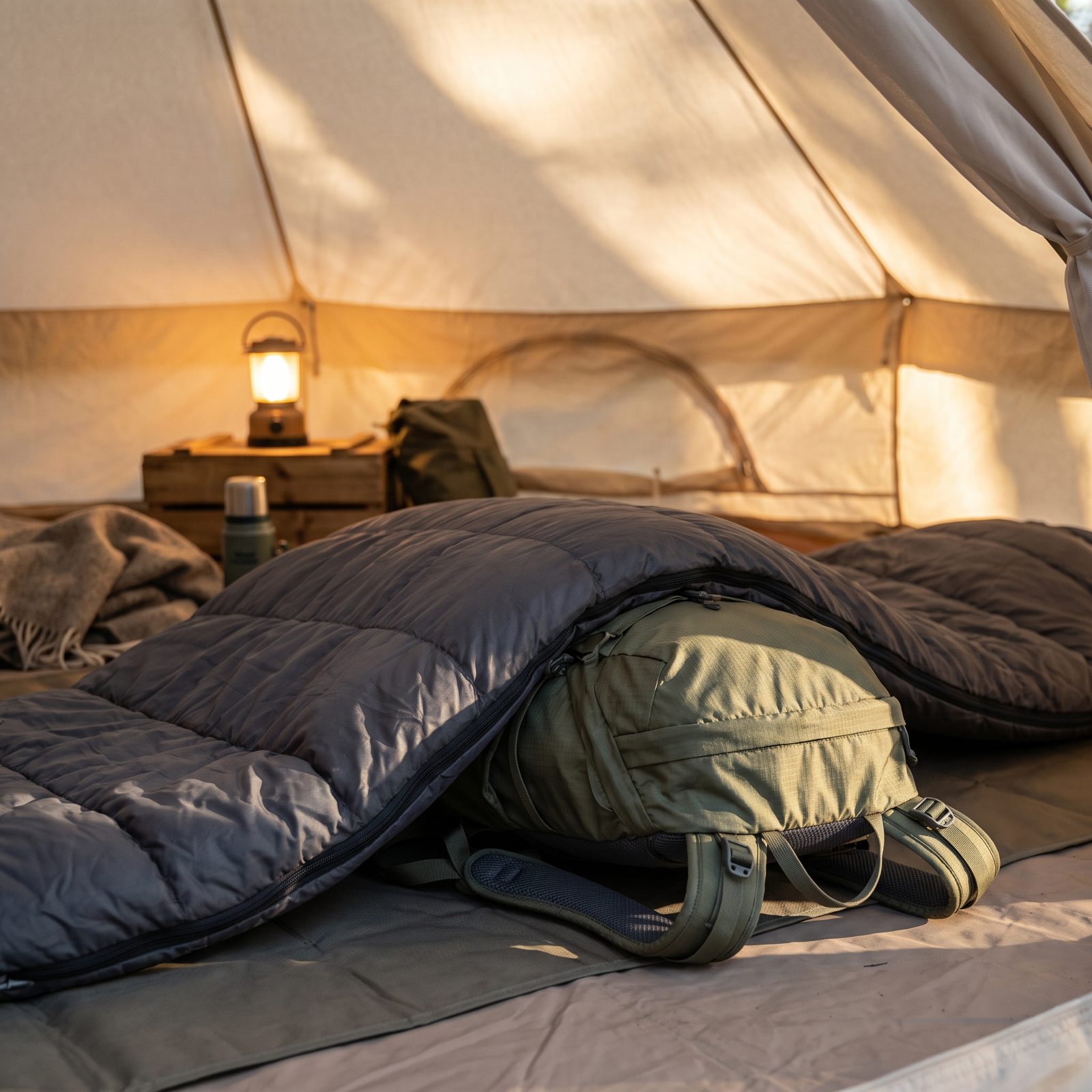
Back sleepers with cranky lower backs know this move from home: a pillow under the knees takes the strain off the spine. You don’t pack a spare pillow into the backcountry, but you do carry a backpack.
Empty it, roll or fold it under the knees, and you’ve got a bolster you tune by how much you stuff back inside. Add a jacket for more height. Pull it out for less. It flattens the arch in your lower back, and most people drop off faster for it.
36. Half-Inflate a Dry Bag for Custom Lumbar Support
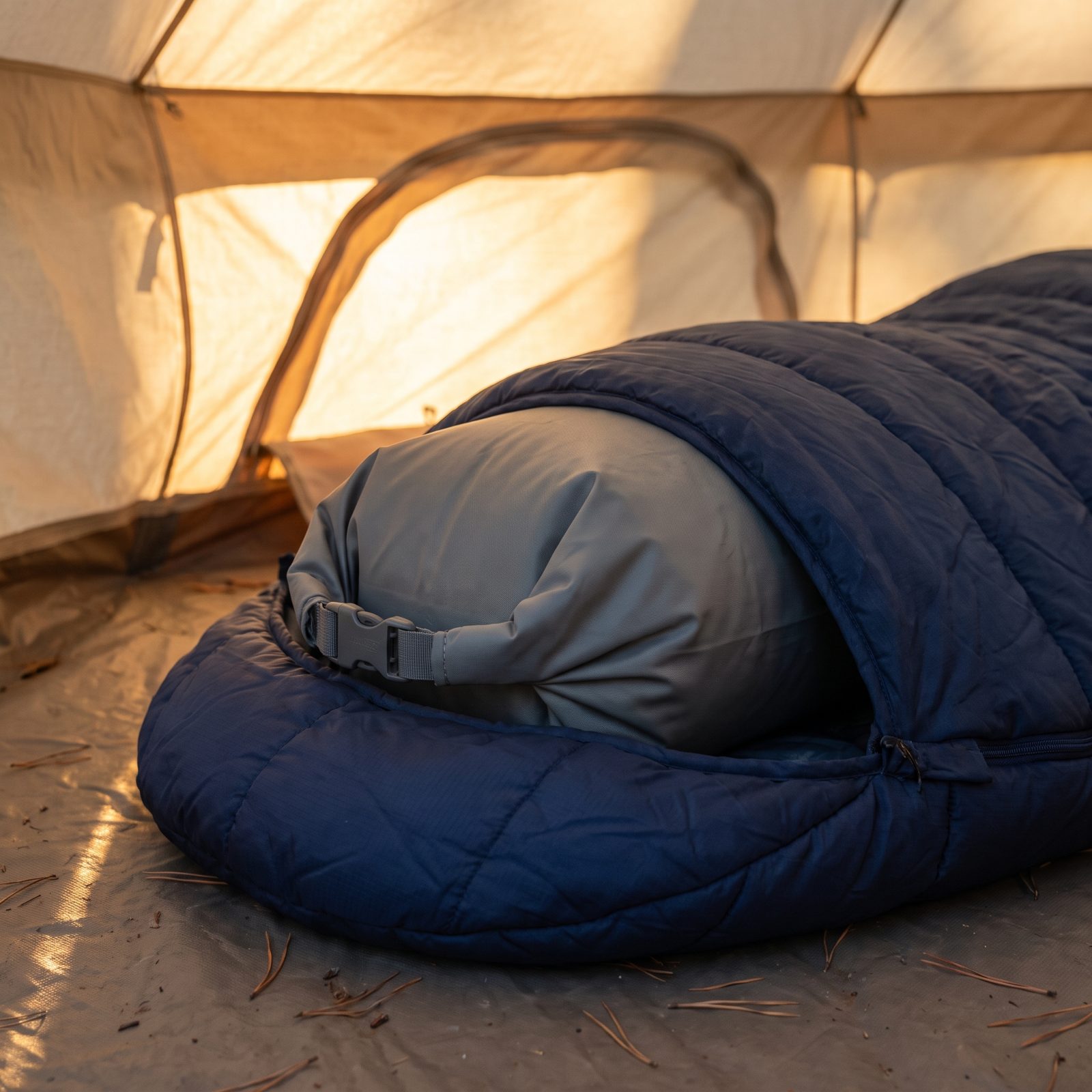
A roll-top dry bag already lives in your pack, and it makes a better lumbar pillow than anything you’d buy for the job. Blow a little air in before you seal the roll, then wedge it into the small of your back.
The beauty is the adjustment. Too firm? Burp some air out. Too soft? Unroll and add a breath. You dial in the exact support your back wants, and come morning it’s a waterproof bag again.
35. Place a Closed-Cell Windshield Shade Beneath the Mattress
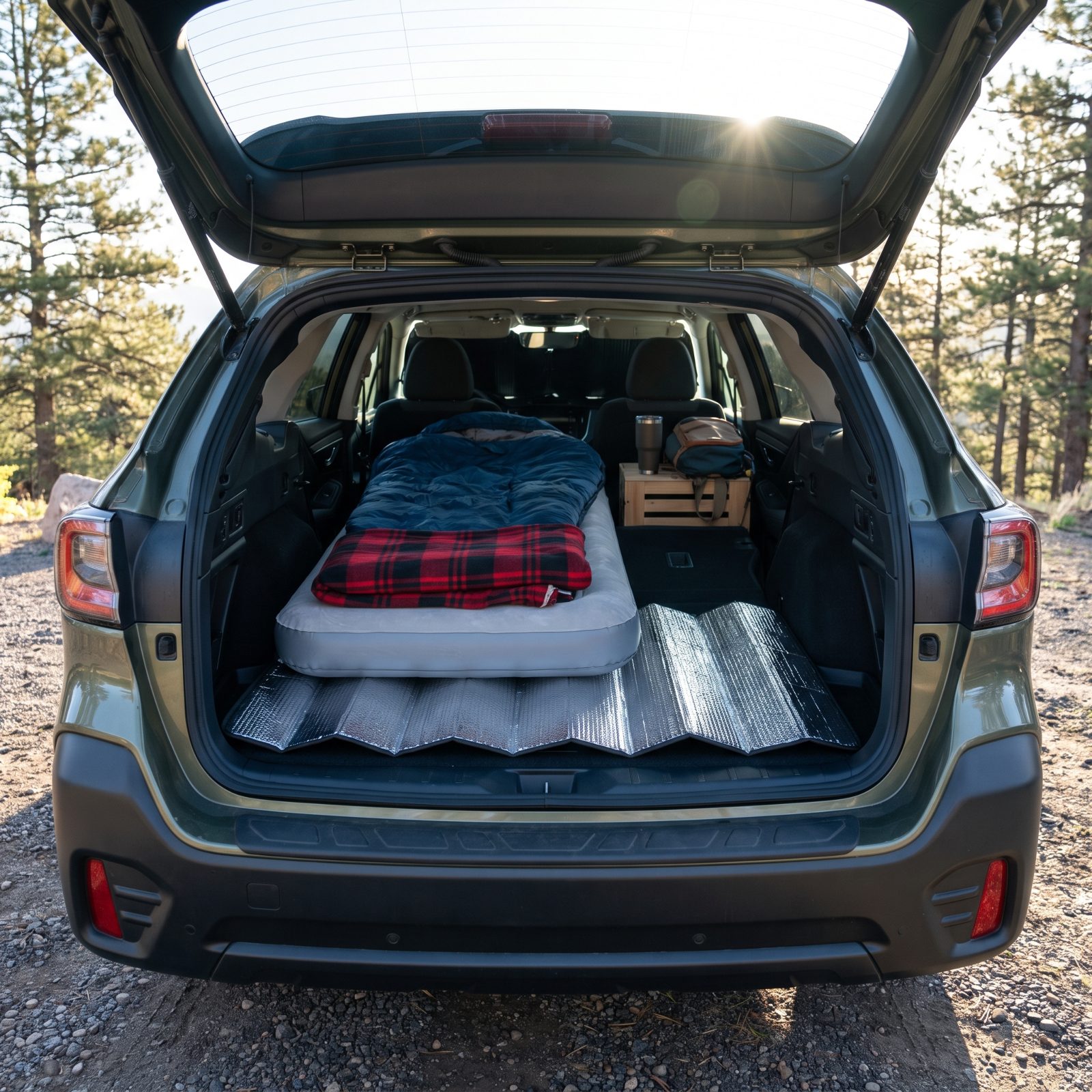
That folding reflective shade sitting useless in your garage is a closed-cell foam insulation panel wearing a mylar coat. Slide it under your mattress or pad and it pulls double duty: the foam blocks cold rising from the ground or the metal truck bed, and the reflective layer bounces body heat back up toward you.
Car campers and truck-bed sleepers get the most out of this, since steel pulls heat out fast. A couple of the folding shades cover a surprising amount of real estate for almost nothing.
34. Add Short Bungee Loops Between a Tarp and Its Stakes
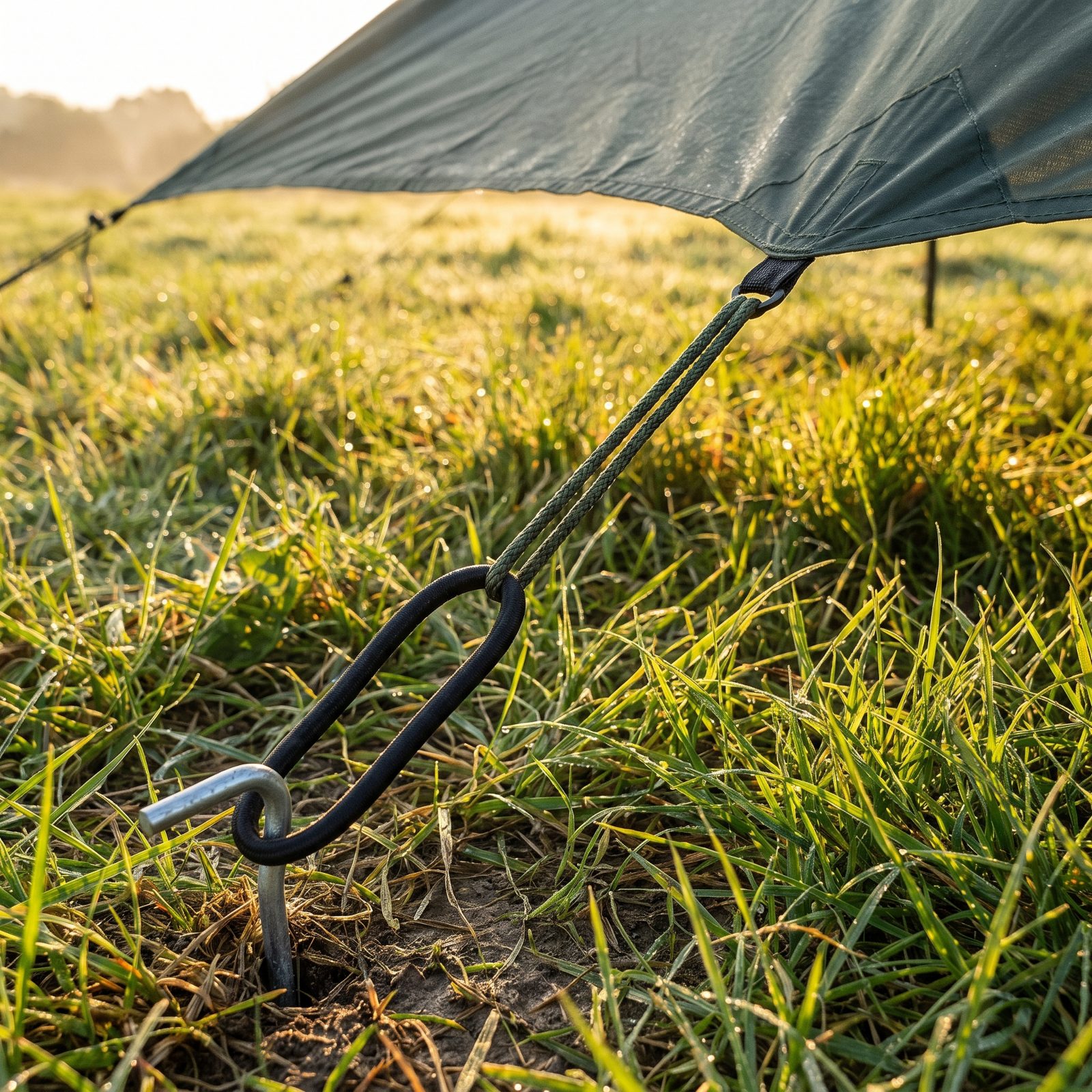
A tarp strung rigid tears in a gust because the fabric has nowhere to give. Add a short bungee loop between each guyline and its stake and the whole shelter breathes. When the wind shoves, the bungee stretches and swallows the shock instead of passing it straight to a grommet or a seam.
Everything stays put, nothing rips, and you’re not crawling out at midnight to re-tension lines that went slack. Small loops of shock cord weigh almost nothing and fold into a corner of the stake bag.
33. Build a Sliding Clothesline With Prusik Loops
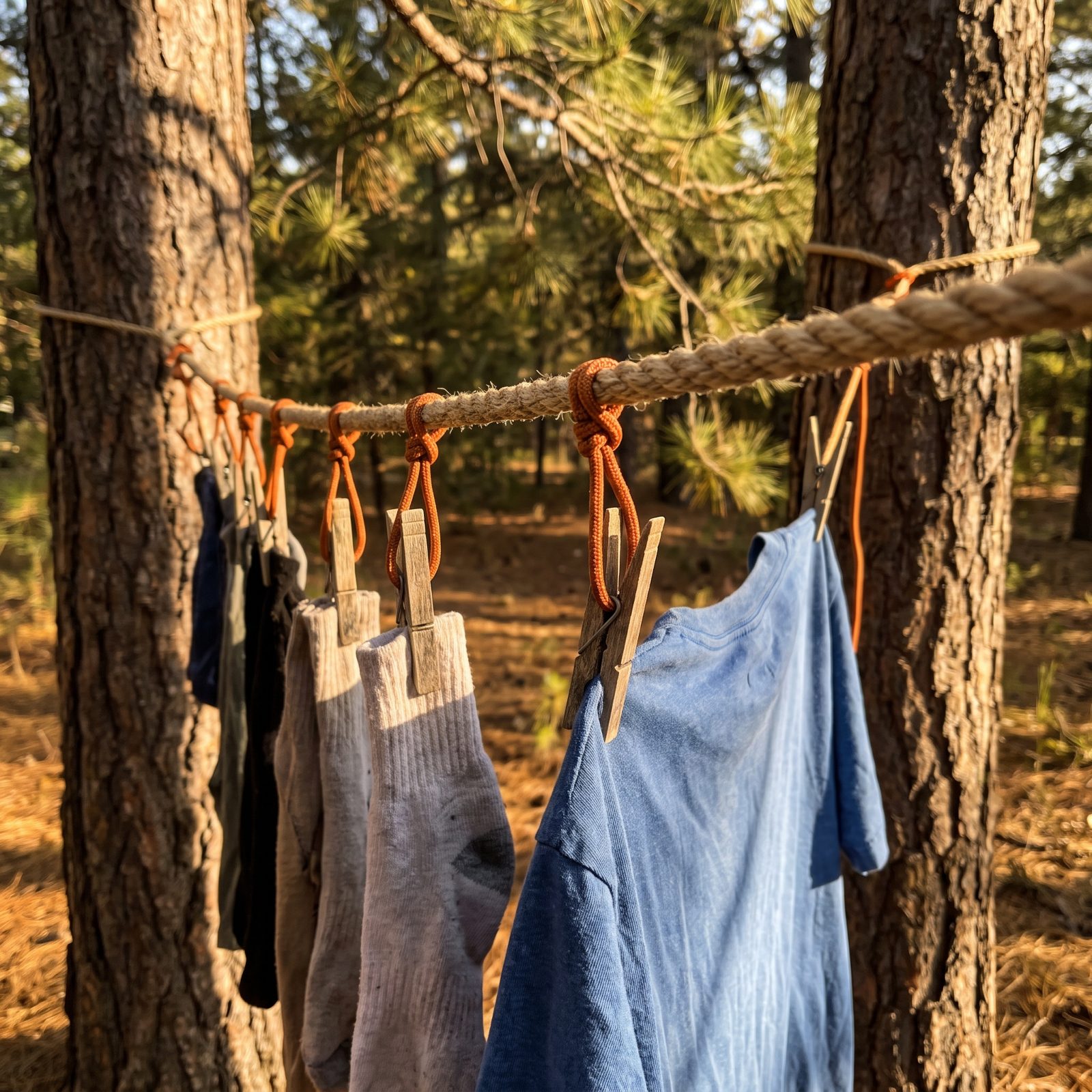
A plain clothesline sags, and everything you hang slides down into the wet bunch at the lowest point. Tie a few prusik loops around the main line and you fix a spot for each item. Each loop is cinched around the line with a simple wrap that grips when weighted and slides when you loosen it, so you can space your gear out and move it wherever you want.
It’s the same bright cord climbers trust with their lives, borrowed here for drying socks. Each loop holds its own sock in place, while a row of wooden clothespins grips the shirt — nothing creeping into a soggy pile at one end.
32. Hang Your Bar Soap in a Nylon Stocking at the Wash Station
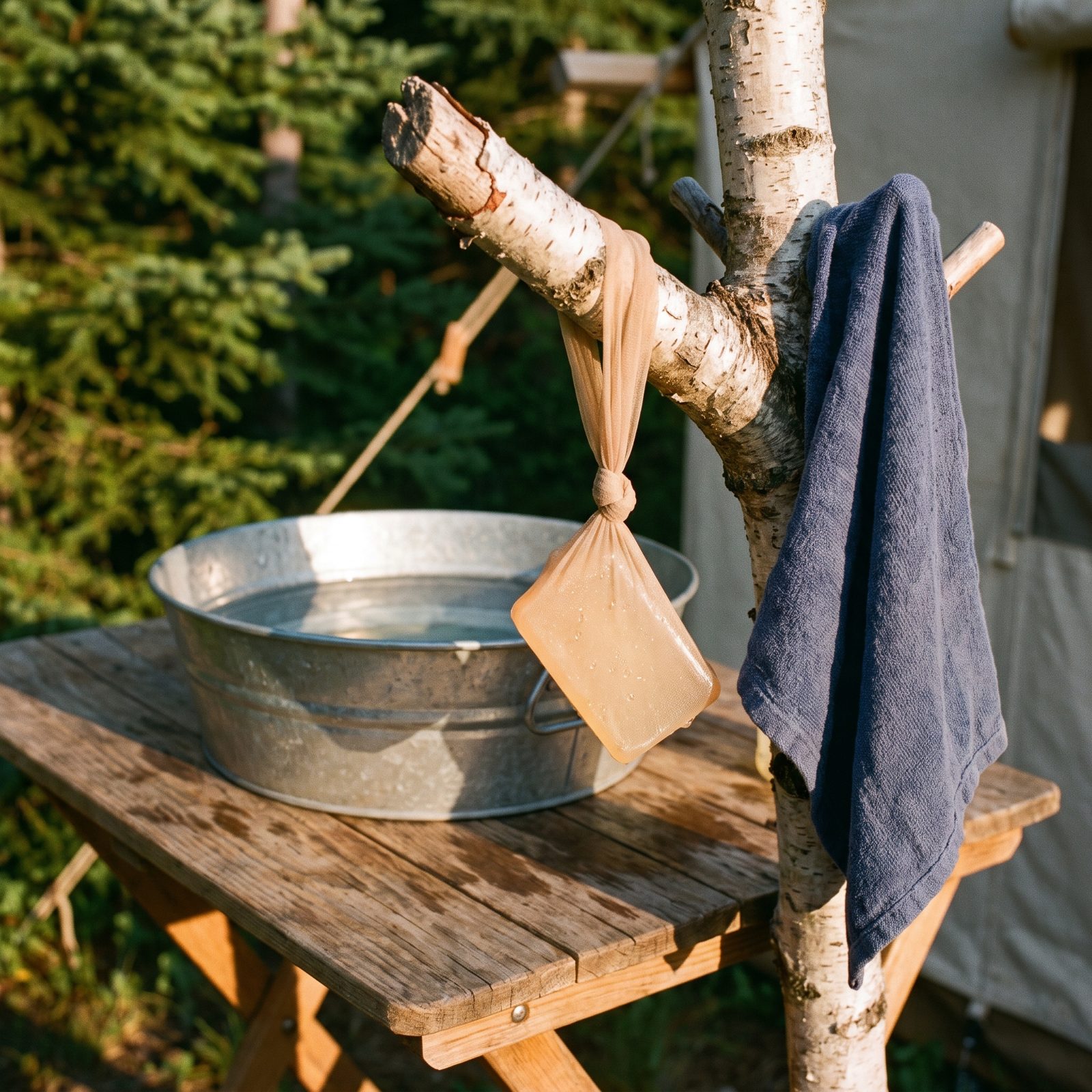
Bar soap at a campsite behaves like soap anywhere — it slips, drops in the dirt, and turns into gray paste on the ground by day two. The fix is a cheap nylon stocking. Drop the bar inside, knot it, and tie the whole thing to a branch or the wash-station frame.
Now it lathers right through the mesh. You scrub against it, it swings back into place, and nobody’s bending over to fish it out of the mud. It dries fast between uses too, instead of going slimy in a dish.
31. Wear a Brimmed Cap Under Your Head Net So the Mesh Stays Off Your Face
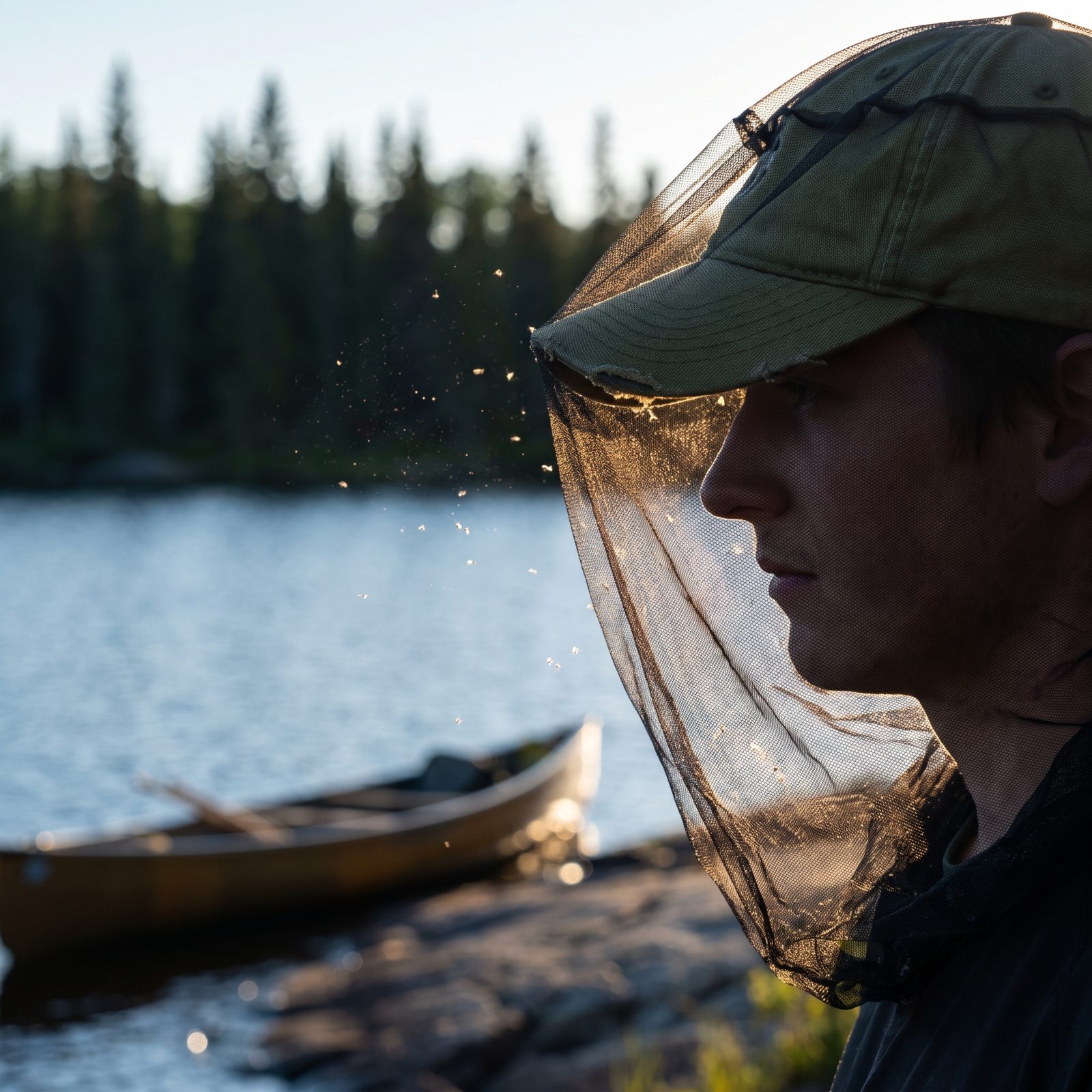
A head net worn straight against your skin is a trap. The mesh presses flat to your cheeks and the no-see-ums bite right through it like it isn’t there. You end up with a face full of welts and a net you’ve got no reason to trust.
Put a brimmed cap on first. The bill props the netting out past your nose, the band holds it off your forehead, and now there’s a half-inch of dead air between mesh and skin that no mosquito can cross. That gap is the whole difference between a miserable evening and actually enjoying the fire.
30. Slit Tennis Balls and Jam Them on Your Camp-Chair Feet
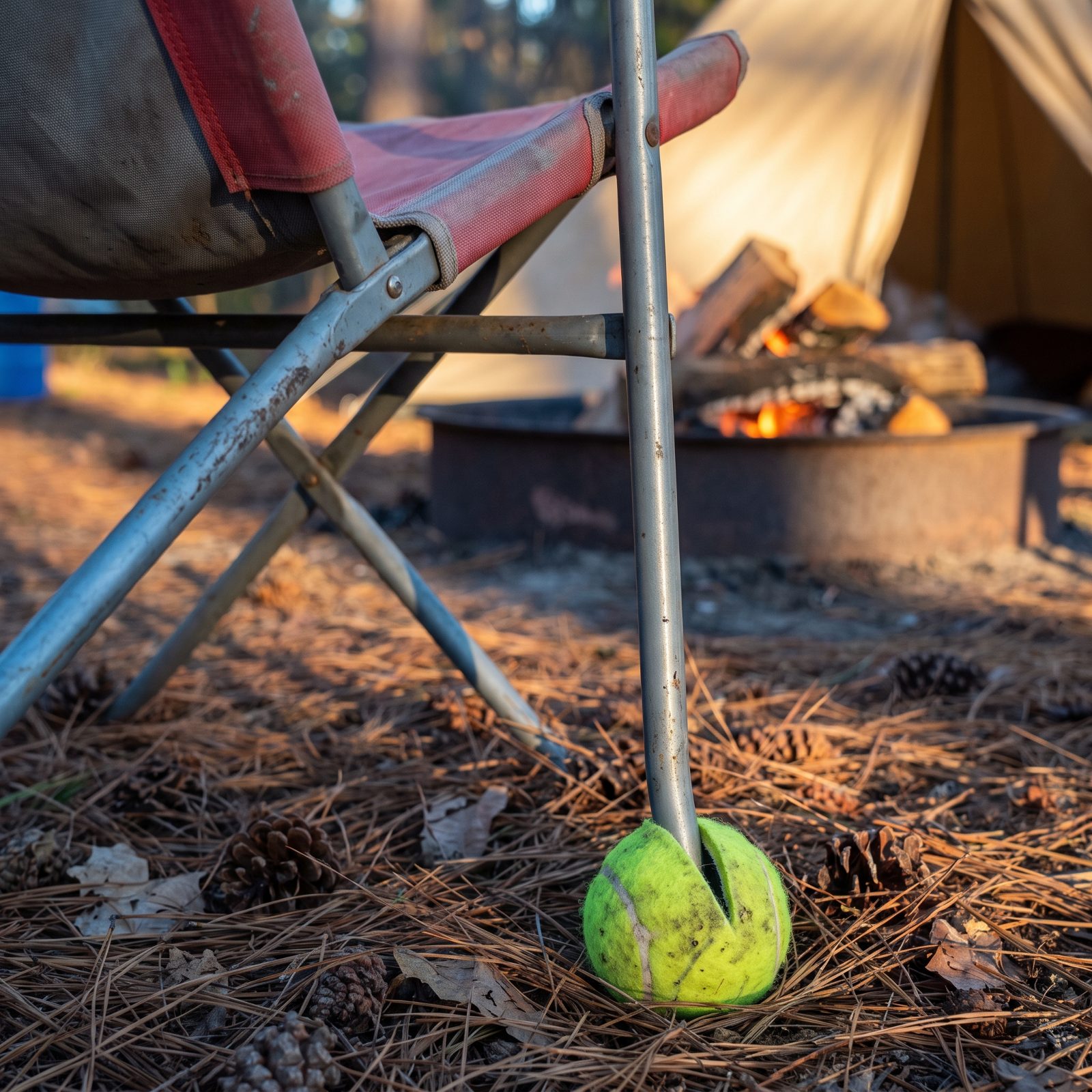
You know the sink. You set the chair up on grass or sand, lean back, and the back legs slowly bury themselves until you’re staring at your own knees. Here’s the cure: cut an X-slit into an old tennis ball and push one onto each chair foot.
The ball spreads the load across a wide soft surface, so the legs float instead of digging. Soft soil, beach sand, snow, a soggy lawn — all handled. And a bucket of dead tennis balls from the back of the garage covers a whole set of chairs for nothing.
29. Loop a Spare Strap Under Your Chair for a Hanging Footrest
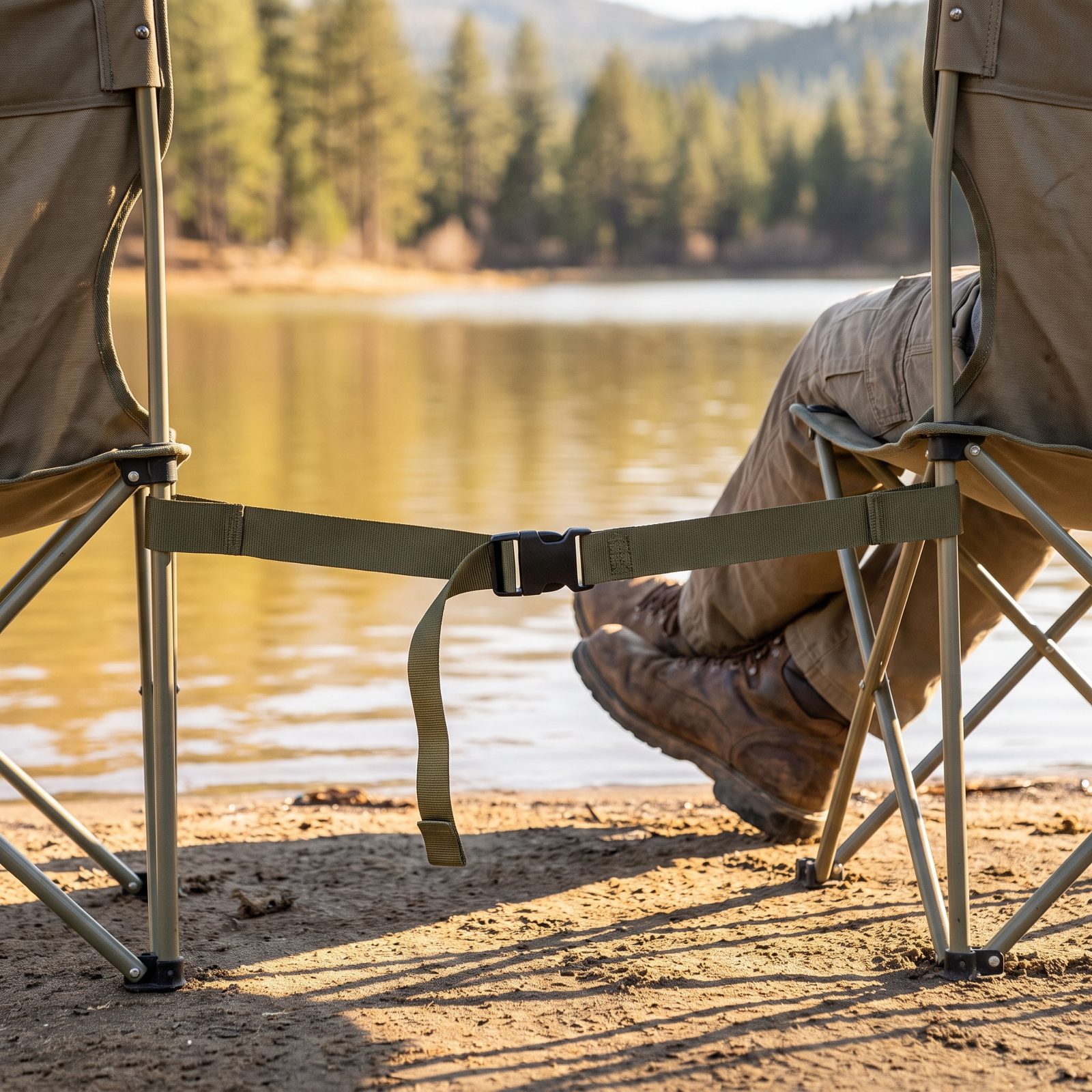
Most camp chairs forget your legs exist. Your feet stay flat on cold ground for hours and your lower back pays for it. Any adjustable strap you already carry fixes it — a tie-down, a spare dog leash, a length of webbing.
Clip or loop it between a leg of your chair and a leg of the chair beside you, cinch it to the height you want, and drop your heels onto it. Legs up, blood no longer pooling in your feet, and you can finally unwind by the fire. Tighten it for a flat rest, loosen it for a lazy slump.
28. Pour Warm Water Bottles Into Stiff Boots Before You Dress
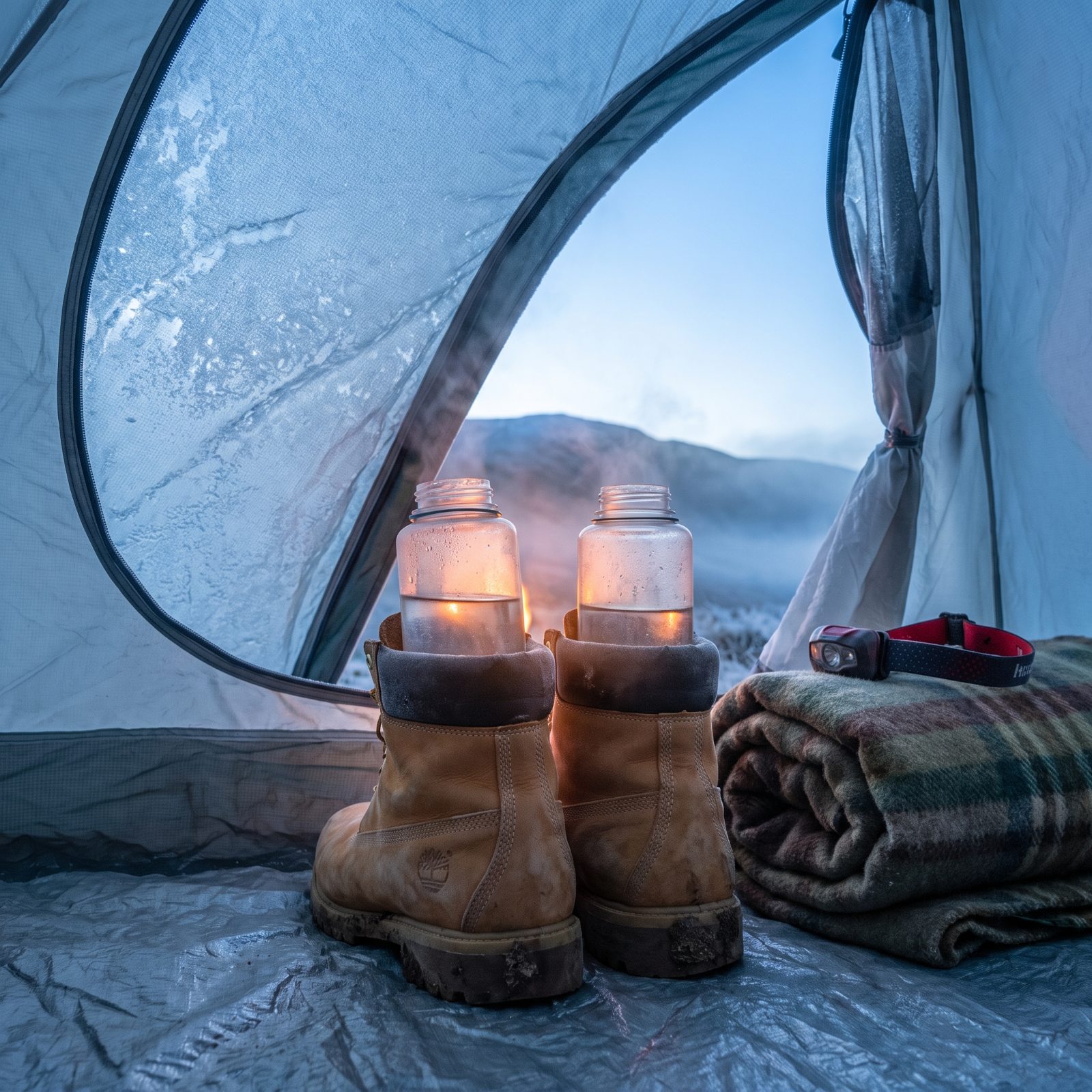
Cold-stiffened leather boots on a frosty morning feel like pulling on bricks, and sometimes they’re genuinely frozen solid. Fill a hard-sided bottle with warm — not boiling — water, fill it only partway so it won’t slosh over, and stand one upright inside each boot while you get dressed.
Ten minutes later the leather’s softened, the frost is gone, and your foot slides in without a fight. The same move thaws frozen laces. Nobody mentions this one until you’ve spent a morning wrestling your heel into a boot that won’t give.
27. Pull a Spare Beanie Over Your Eyes as a Dawn Blackout
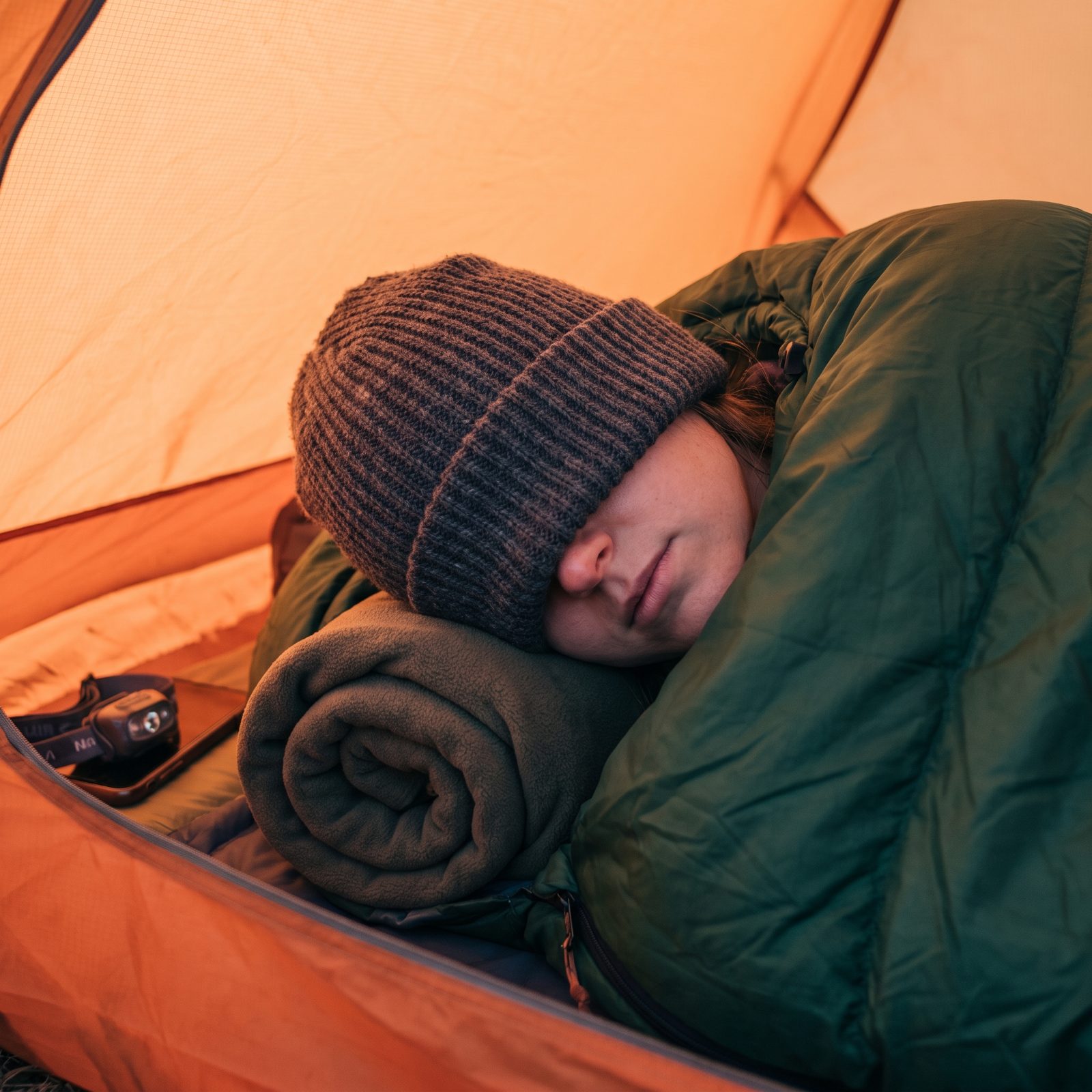
Summer camping has a cruel joke built into it. At 5 a.m. the sun turns your tent into a glowing orange lamp and your sleep is over whether you’re ready or not.
Skip the dedicated eye mask. Grab the spare beanie you packed for cold nights and pull it down over your eyes to the eyebrows. The knit blocks the glow, holds a little warmth on your face, and stays put better than any flimsy mask. You already own it, and it earns its spot twice over depending on which way you wear it.
26. Stretch a T-Shirt Over Pillow and Pad to Stop the Nightly Slide
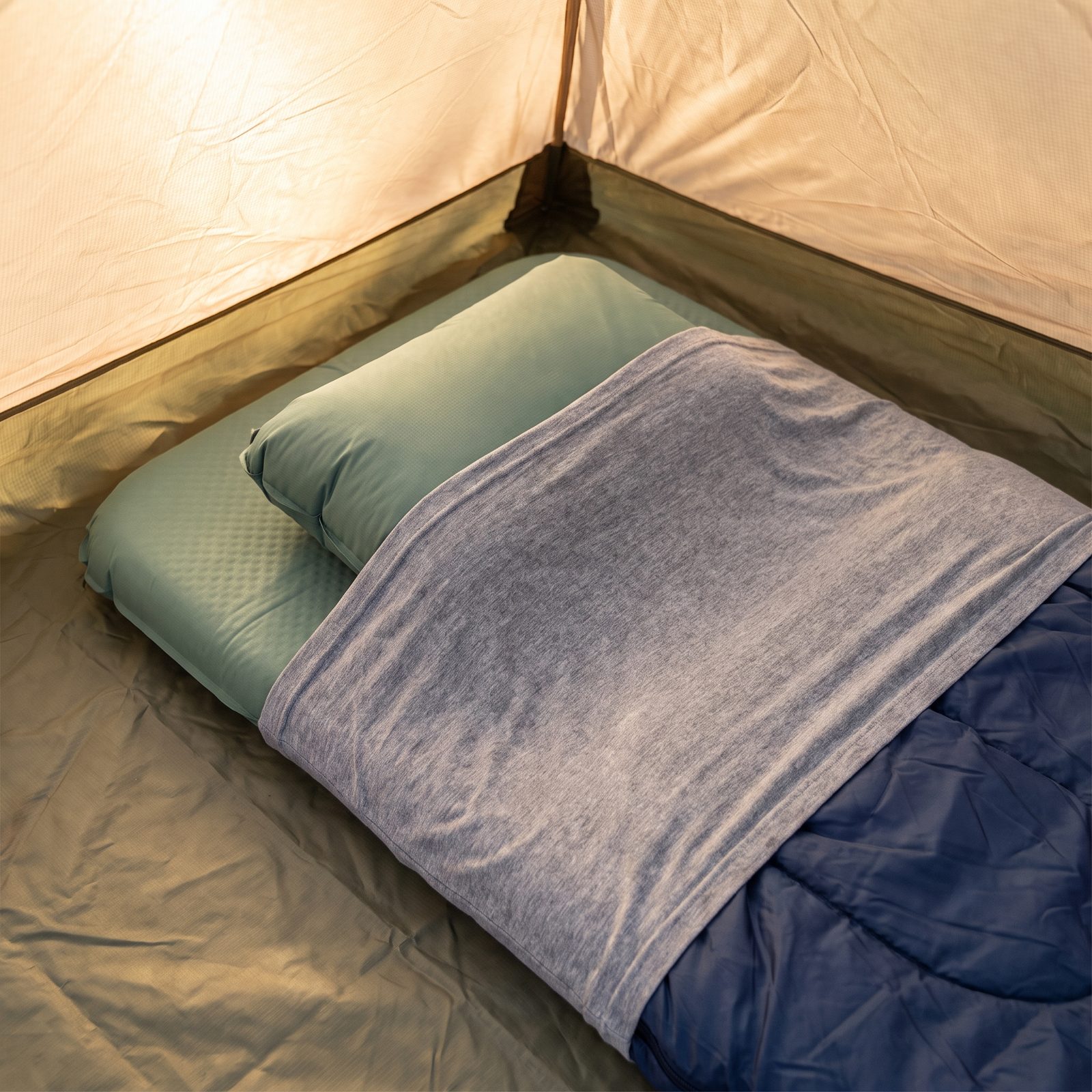
Sleeping pads are slick. Camp pillows are slicker. Put the two together and your pillow spends the whole night migrating toward the tent wall while you chase it with your head, half-asleep and losing.
Stretch a t-shirt over the pillow and down across the top of the pad, so the pillow sits wrapped in cotton instead of bare on the pad. The cotton grips the slick pad and the bag far better than bare nylon does. The pillow stays put on the mattress now. Nice side effect — soft cotton under your chin all night beats a clammy synthetic bag. You’ll keep doing this one forever.
25. Drop a Warm Water Bottle Into a Wool Sock Before Bed
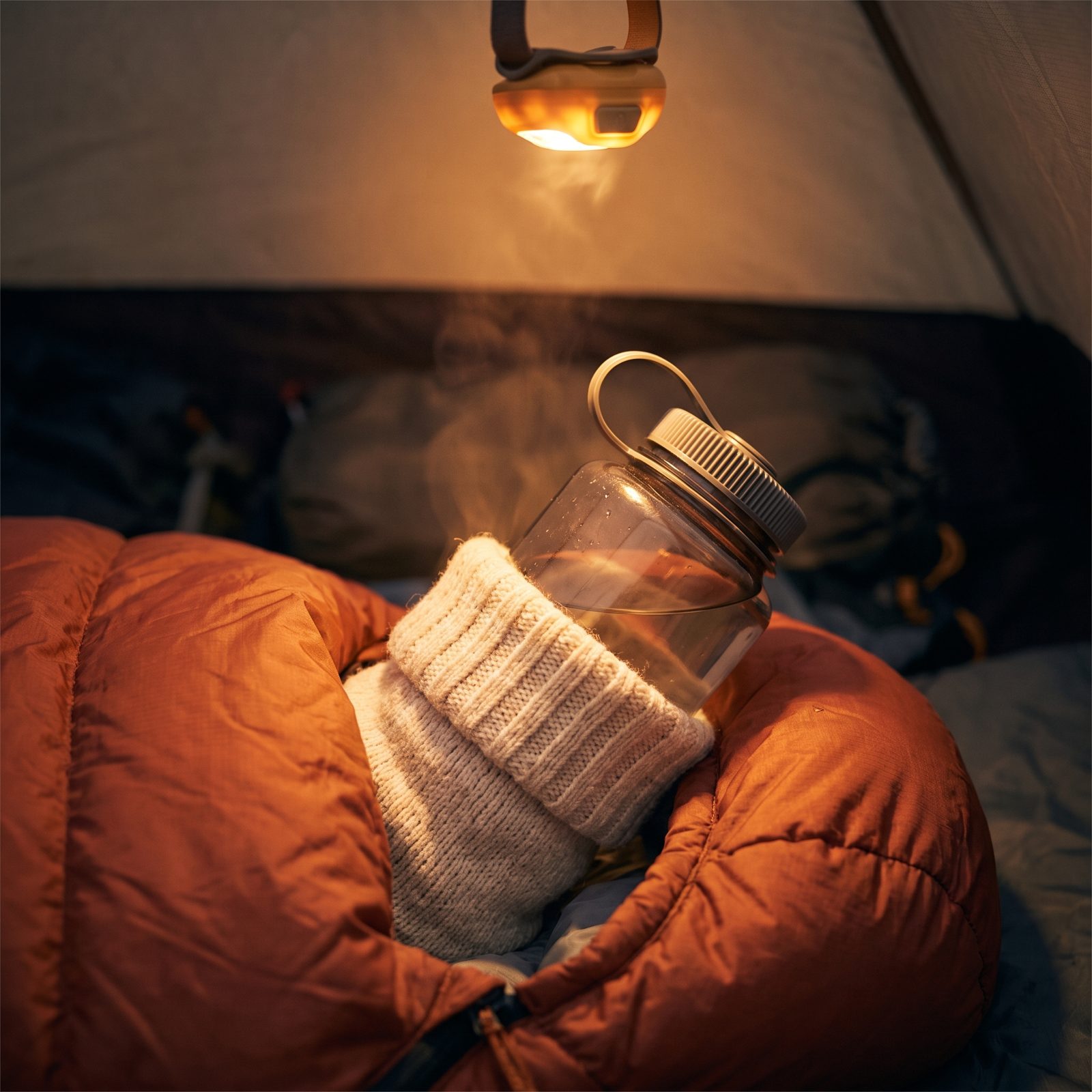
A bottle of hot water in your sleeping bag is the oldest warmth trick there is, and most people do it wrong. Bare plastic against your legs goes from scalding to lukewarm too fast, and it can burn before it comforts.
Wrap a long, thick wool sock snugly around the bottle first. The wool buffers that first blast of heat so you can tuck it straight against your feet, and it slows the cooling so the warmth lasts most of the night instead of an hour. Fill it before you crawl in, drop it at the footbox, and climb into a bed that’s already warm.
24. Stash Tomorrow’s Dry Clothes in Your Sleeping Bag Footbox
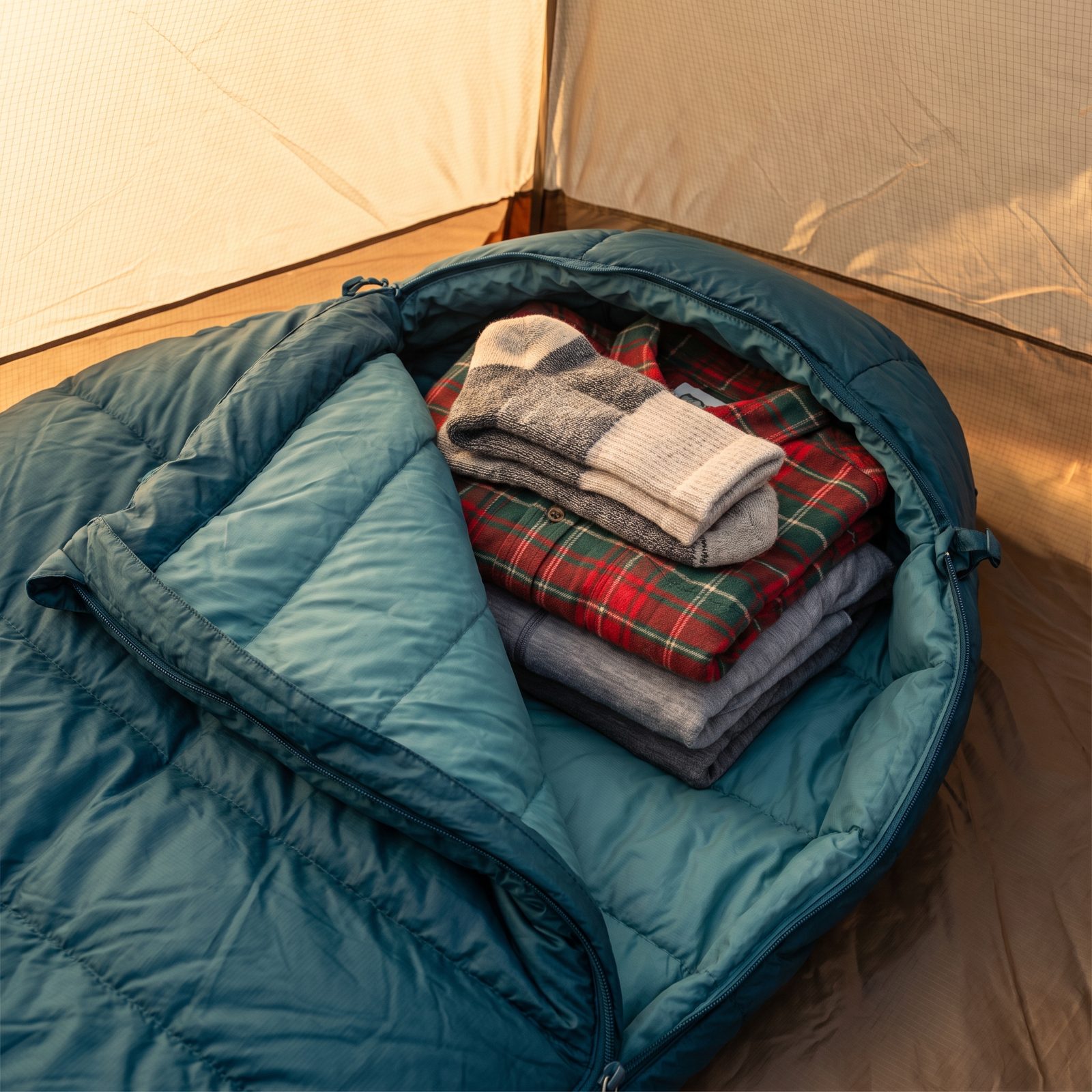
Pulling on cold, clammy clothes in a chilly tent is its own small punishment. There’s an easy way out, and it costs nothing.
Before you sleep, fold tomorrow’s base layers and socks and stack them inside the footbox of your bag, down by your feet. Your body heat warms them all night. In the morning you dress inside the bag with clothes that feel fresh out of a dryer. It fills dead air inside the bag too, so the bag has less cold volume to heat. Two wins, no extra gear.
23. Build a Real Pillow From a Jacket Stuffed in a Pillowcase
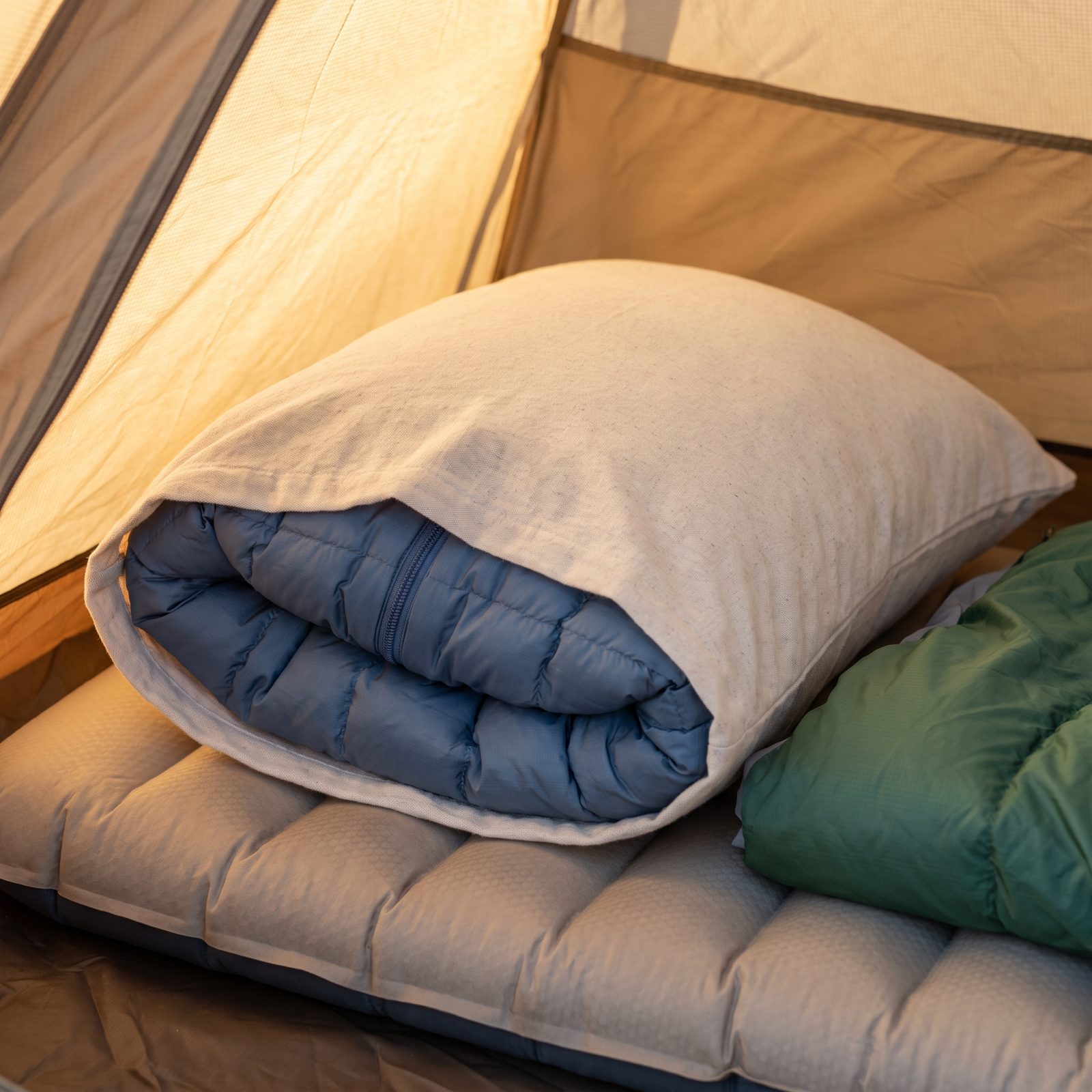
The classic move is to ball up a jacket under your head. Then it unrolls, the zipper finds your ear, and by midnight you’re sleeping on a lumpy nylon wad. The upgrade takes thirty seconds.
Stuff the jacket into a spare pillowcase — or a stuff sack with a soft shirt wrapped around it. The case holds the shape, keeps the jacket from unraveling, and puts cotton against your face instead of cold slippery shell fabric. Pack it loose for a soft pillow, tight for a firm one. Suddenly you’ve got an actual pillow and not a jacket under your head.
22. Layer a Closed-Cell Foam Pad Under an Inflatable Mattress
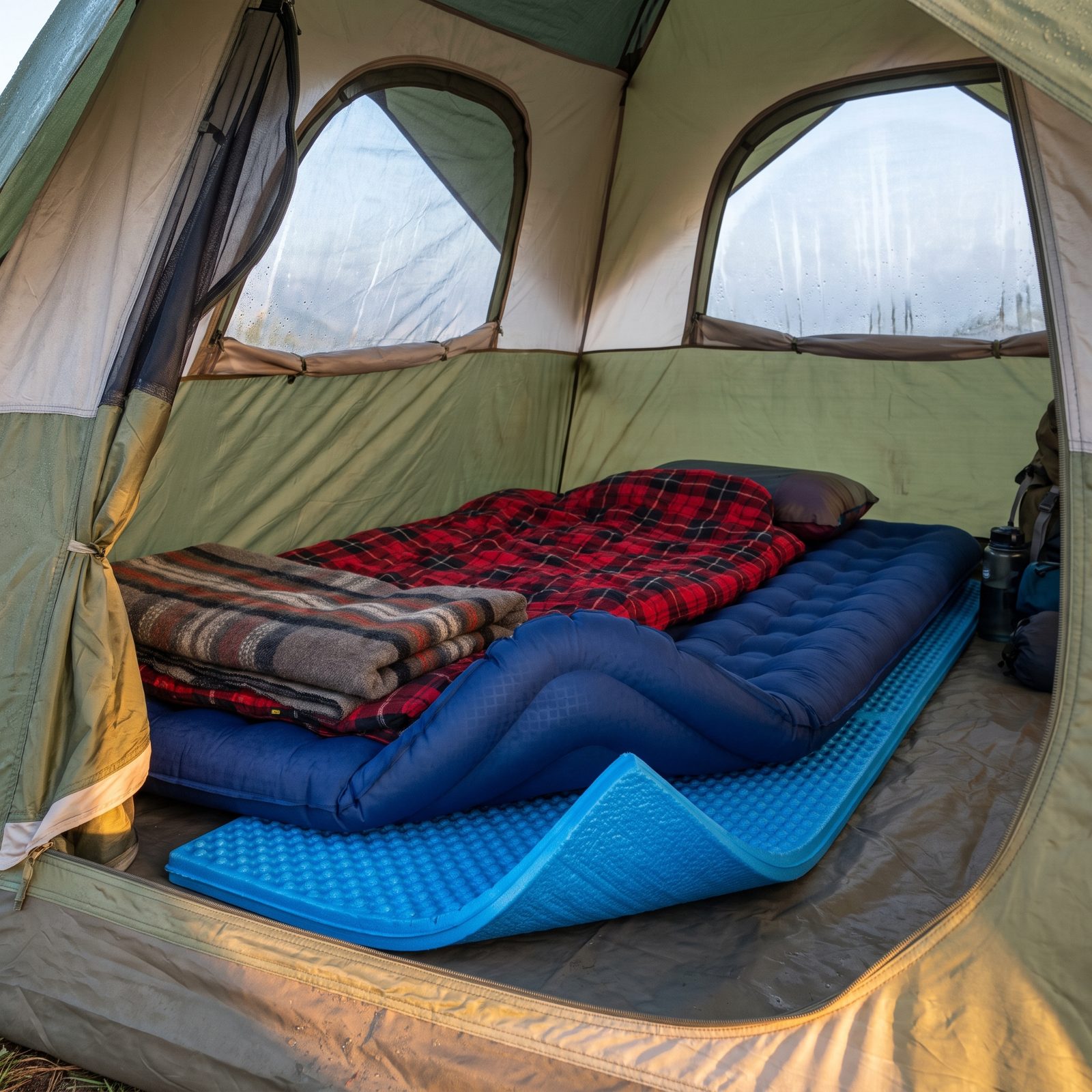
The ground doesn’t just feel cold. It pulls heat straight out of an air mattress all night, because the air inside circulates and dumps your body warmth into the dirt below. So people buy a thicker mattress hoping to fix it, then lie there shivering anyway.
A cheap closed-cell foam pad underneath breaks that cycle. Think of it as a thermal wall between the inflatable and the ground, and it doubles as insurance: when the air mattress springs a leak at 2 a.m. — and someday it will — you’re still off the cold earth instead of flat on it.
21. Set a Carpet Sample in the Vestibule as a Shoe Station
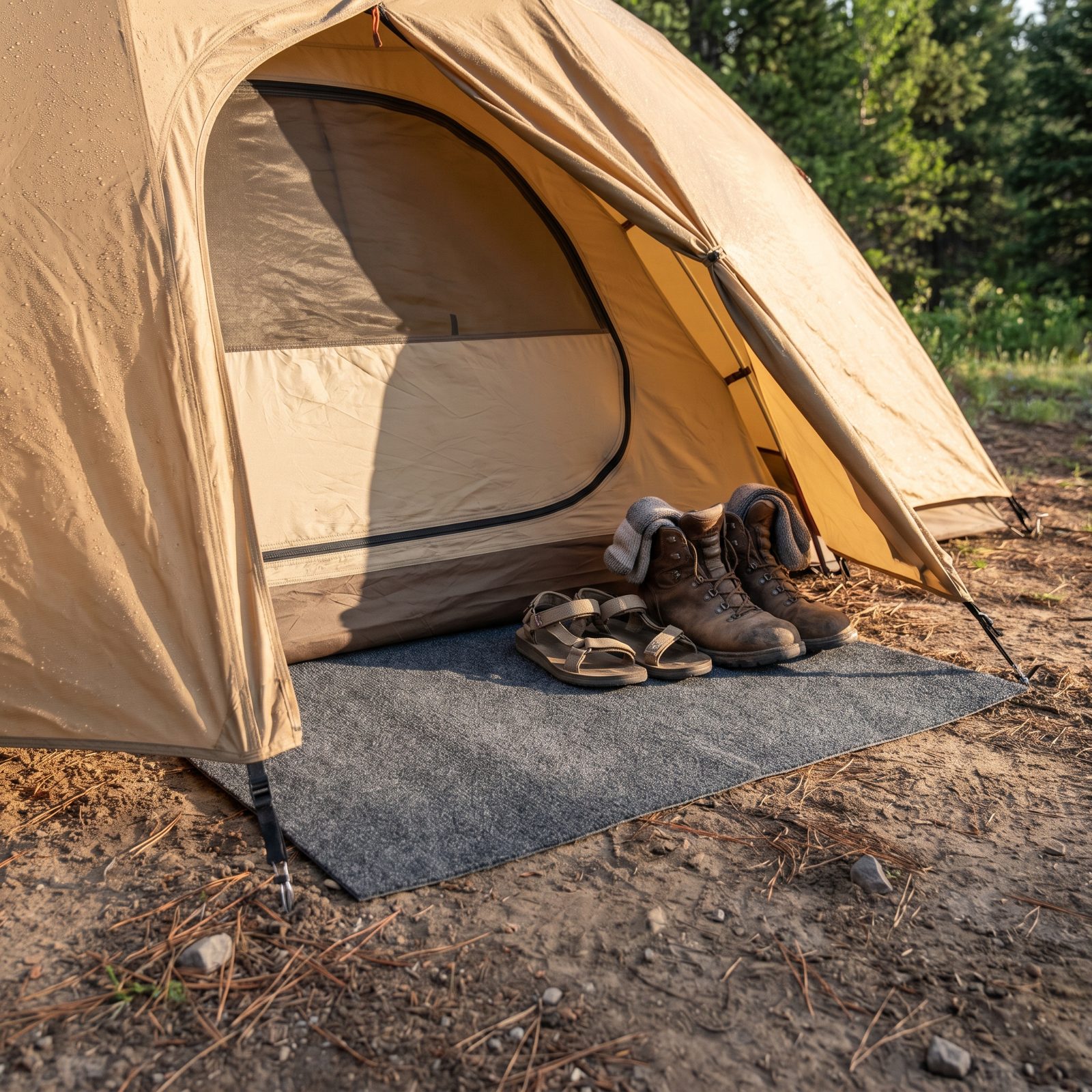
Grit inside the tent is the thing nobody warns you about. One sandy sock and you’re sleeping on fine grinding dirt for the rest of the trip.
One carpet sample fixes it — the kind flooring stores give away or sell for pocket change. Drop it in the vestibule as a landing zone. Boots come off on the carpet, feet touch down clean, and the pile traps sand and pine duff before it ever reaches your sleeping bag. Bonus: it’s warm underfoot on a cold morning when you’re fumbling for socks.
20. Cover Muddy Shoes With Reusable Shower Caps
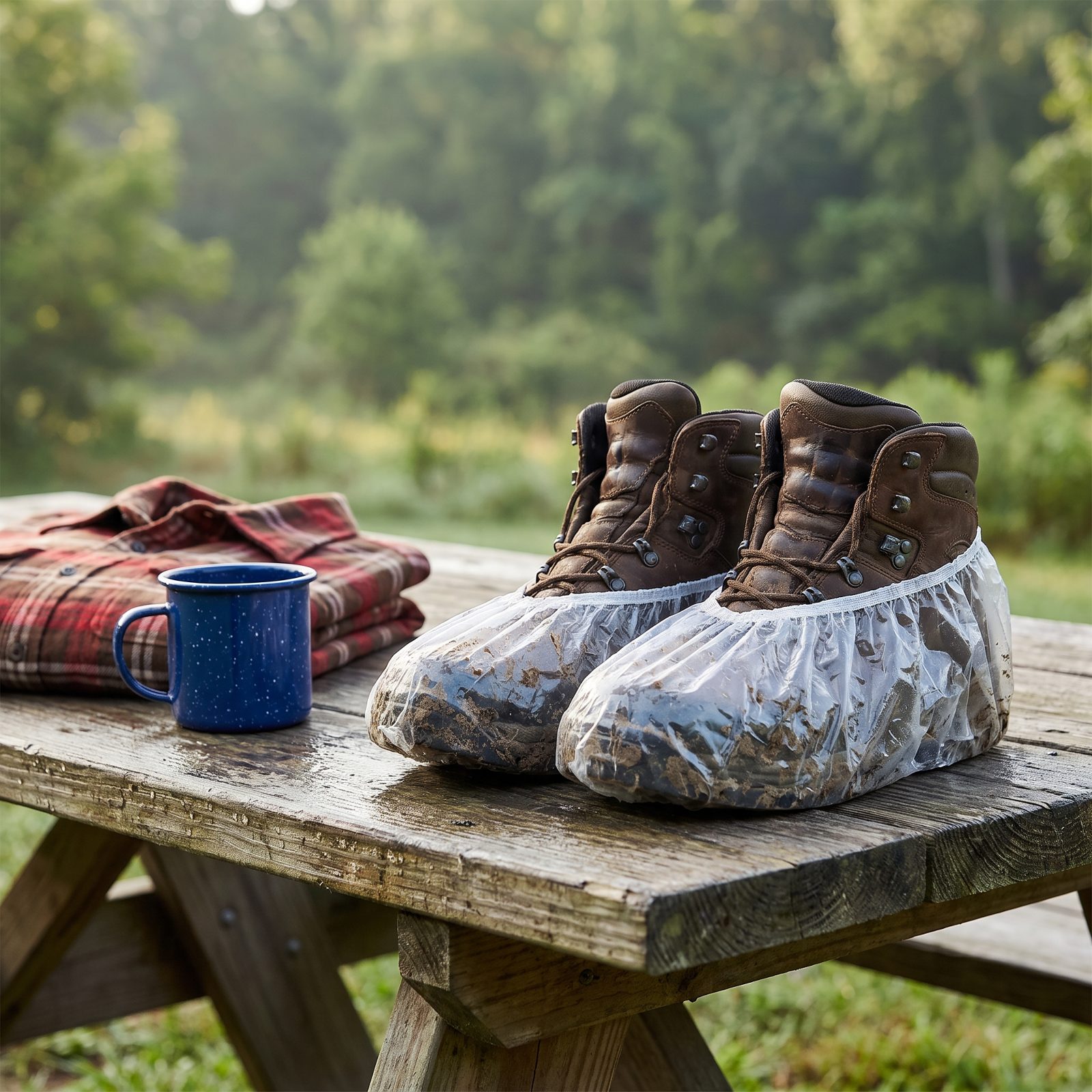
Pack muddy boots into a duffel and you’ve just painted the inside of your gear bag brown. Everything else in there pays the price.
Stretch a reusable shower cap over each boot and the mess stays put. The elastic grips the sole, the plastic holds the mud, and the whole thing wipes clean for next time — weighs nothing, packs flat. Same trick works on a dirty camp chair foot or a wet tent stake bag.
19. Wrap Guylines With Reflective Tape at Ankle Height
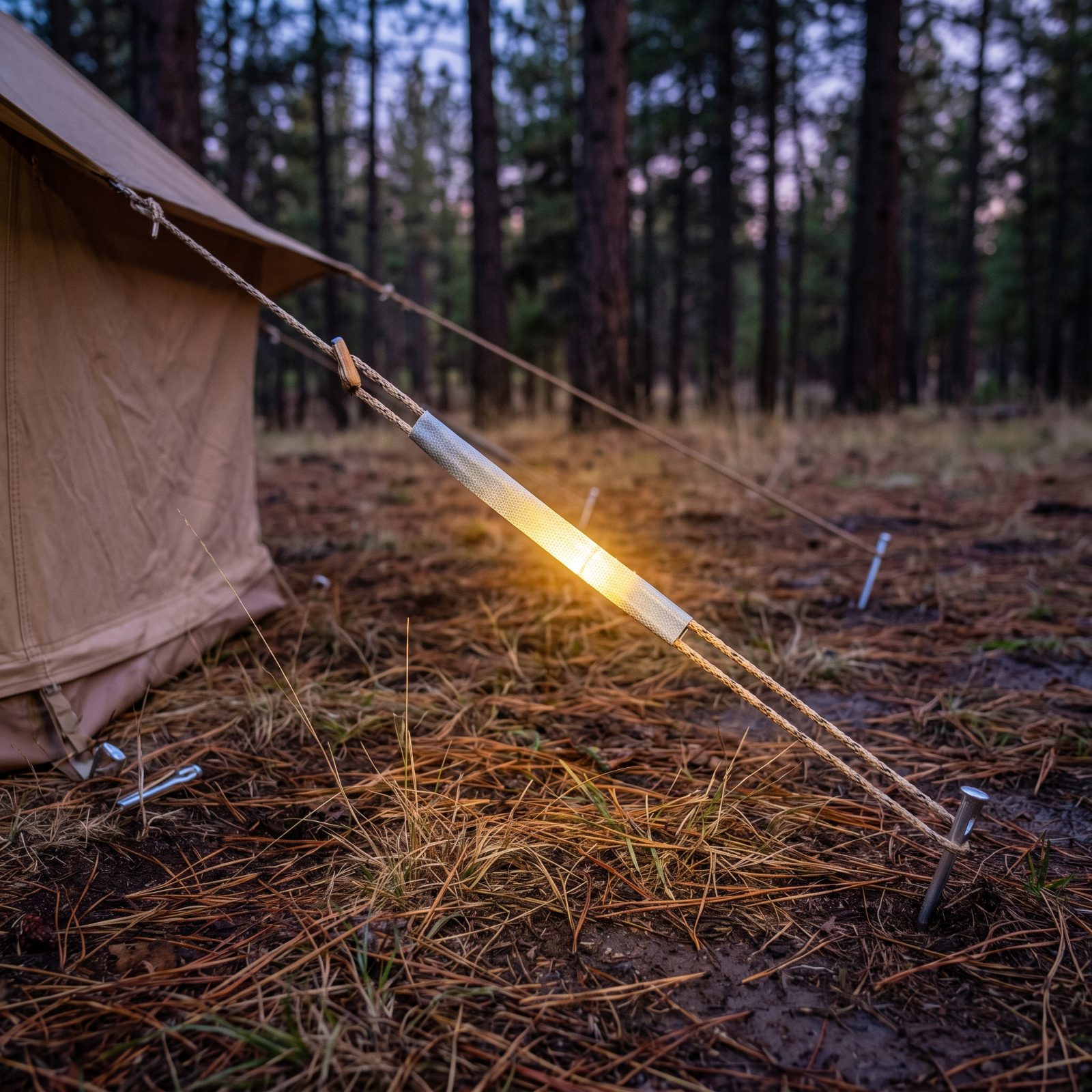
Everyone trips over a guyline eventually. Usually in the dark, usually carrying something, usually face-first into the dirt.
A wrap of reflective tape low on each line, roughly at ankle height, fixes it for good. In daylight it’s invisible. But the moment a headlamp or lantern hits it after sunset, the line glows like a trip wire and your feet step over it before your brain catches up. It saves the tent too — a yanked stake can rip a grommet or snap a pole, and that’s a longer night than a stubbed toe.
18. Use Binder Clips as Movable Tarp Attachment Points
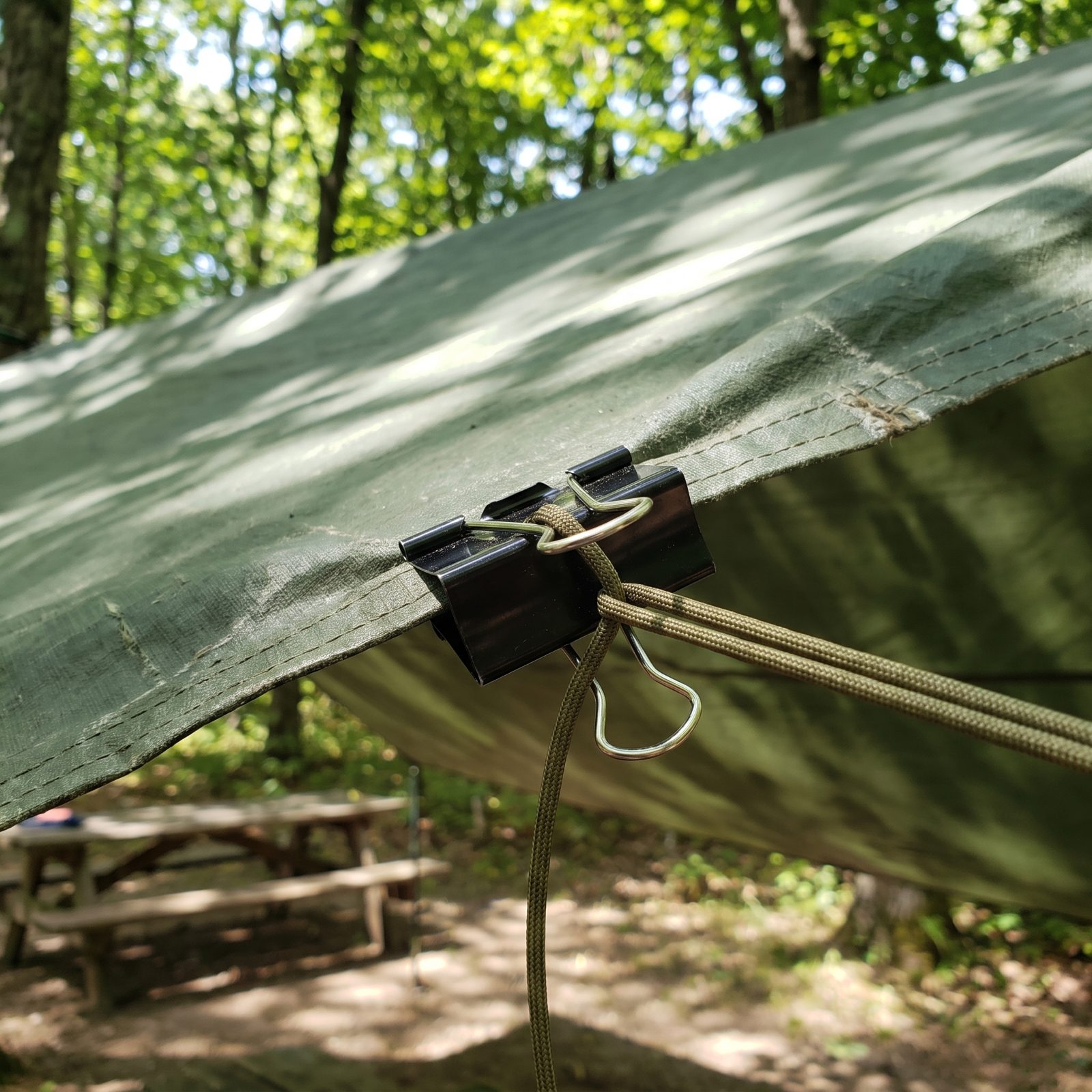
Tarp grommets never land where you actually need a tie-off, so you end up with a sagging low spot right over the dinner table.
Large binder clips create an anchor anywhere. Clamp one onto the tarp edge, thread cord through the wire handles, and you’ve got a fresh attachment wherever the wind or the slope demands. They grip hard, they don’t tear the fabric the way a jammed stick does, and they cost almost nothing.
17. Hang Clean Dishes in a Mesh Laundry Bag to Dry
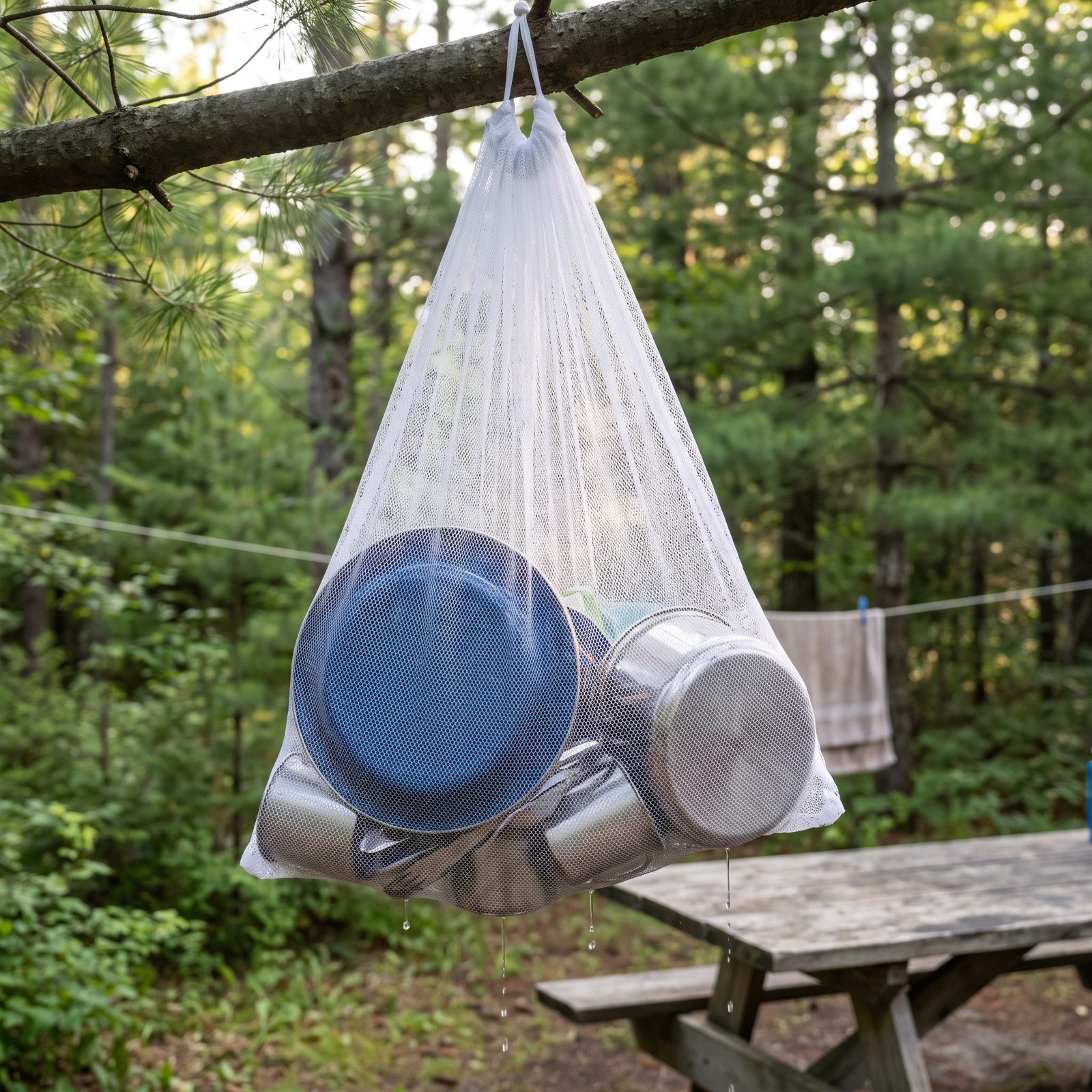
Dishes drying on a towel at a campsite are a magnet for dirt, bugs, and whatever blows through. By morning they’re grittier than when you washed them.
A mesh laundry bag ends that. Load the clean dishes in, cinch it, hang it from a branch. Air moves through the netting, water drips out the bottom, and everything dries off the ground and away from the ants. When it’s done, the dishes are already bagged and ready to pack.
16. Turn a Plastic Shower Caddy Into a Portable Camp Kitchen
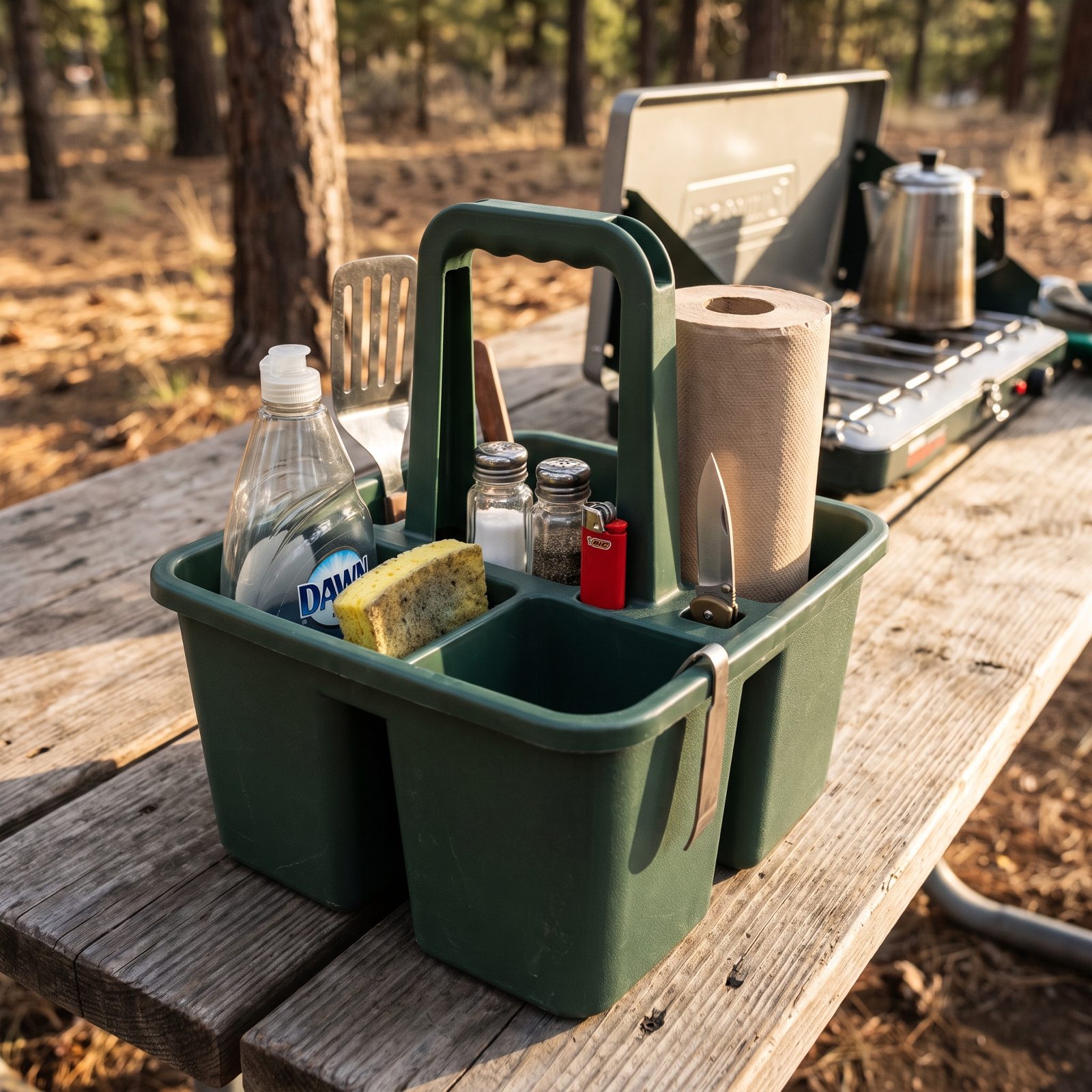
Camp kitchen chaos is always the same: soap in one bin, spatula in a bag, the lighter buried somewhere, dinner going cold while you dig through it all.
A plastic shower caddy — the shower-tote kind with a handle and divided slots — pulls everything into one grab-and-go unit. Soap, sponge, utensils, seasonings, matches, each in its own compartment. Carry it from tent to table in a single trip. And when the rain rolls in, it’s one thing to haul under cover instead of ten.
15. Hang a Shoe Organizer From a Canopy for Bedtime Supplies
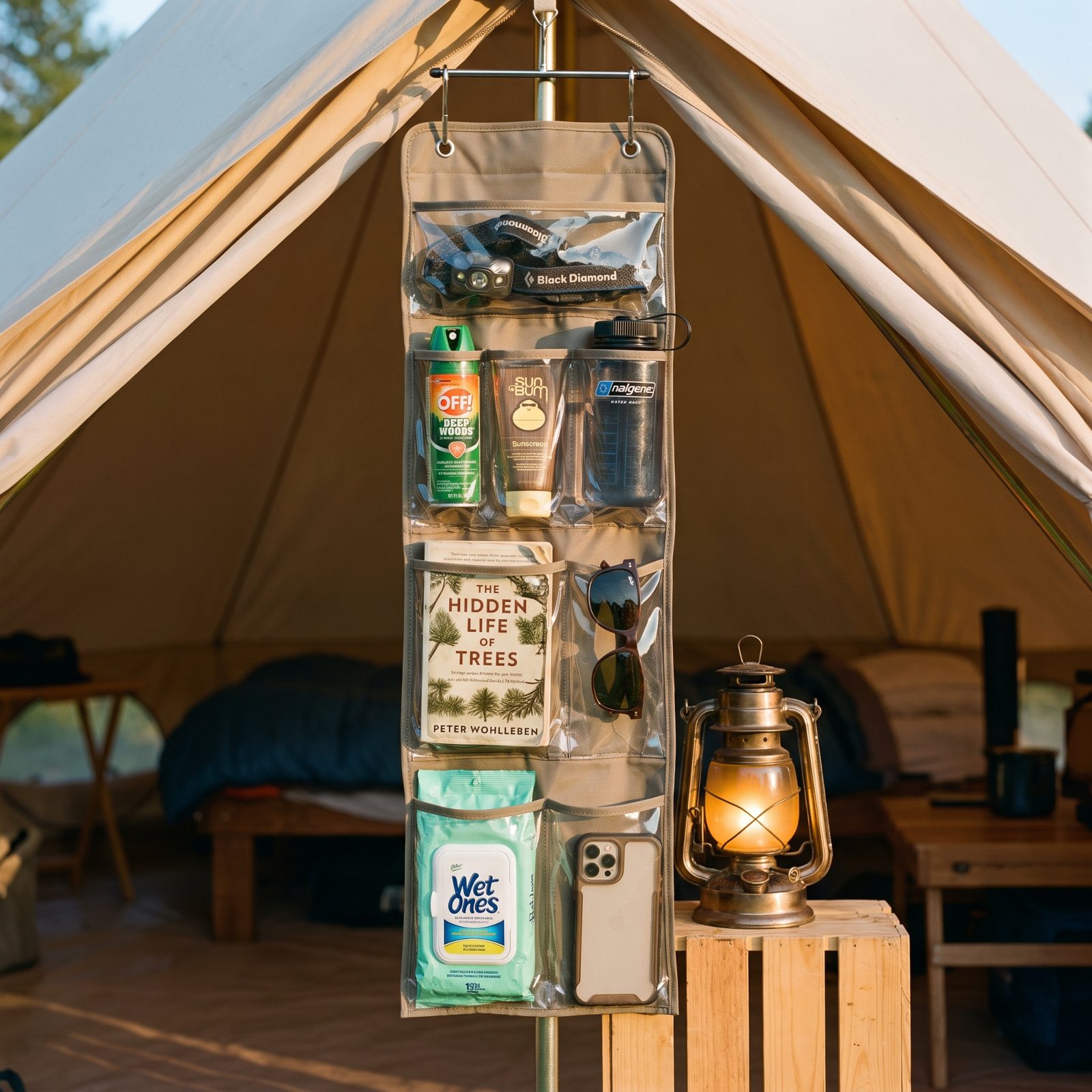
Fumbling for a headlamp in the dark, patting around the tent floor, knocking over the water bottle. Everyone’s done it.
A hanging shoe organizer with clear pockets ends the fumbling. Hang it from a canopy pole or inside the tent and sort your small stuff — headlamp, bug spray, glasses, phone, wipes, a paperback. Every pocket gets one job. You can see what’s where without turning a single bag upside down, and nothing migrates to the bottom of a duffel where it goes to die.
14. Freeze Drinking-Water Bottles Instead of Packing Loose Ice
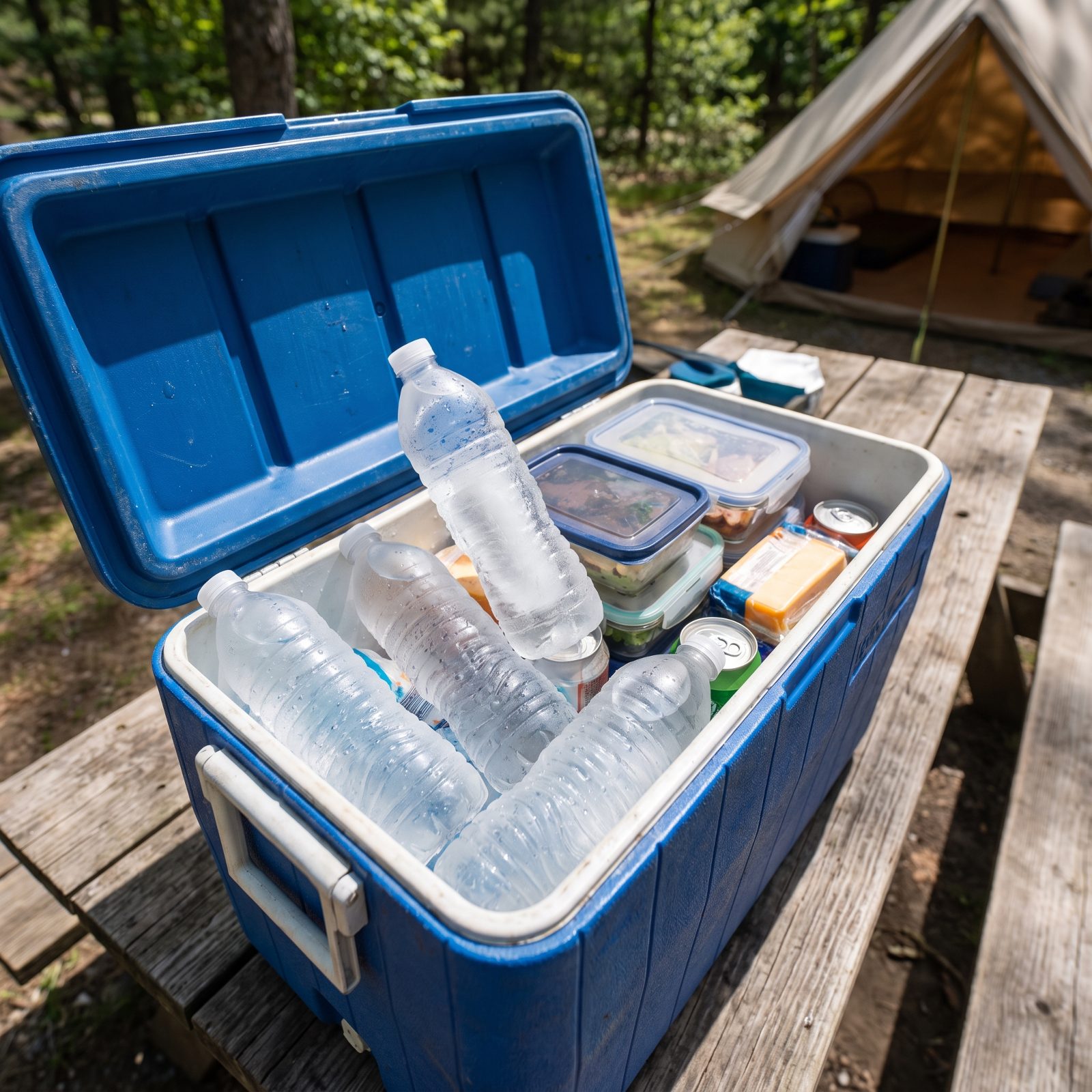
Loose ice melts into a swamp. By day two your sandwiches are floating and the cheese is ruined.
Freeze your drinking-water bottles solid before the trip and pack those as your ice. A big frozen mass melts slower than scattered chips, so the cooler stays cold longer and nothing gets soggy. And when a bottle finally thaws? You’ve got cold, clean water to drink instead of a puddle to dump in the weeds.
13. Strap a Headlamp Around a Translucent Water Jug
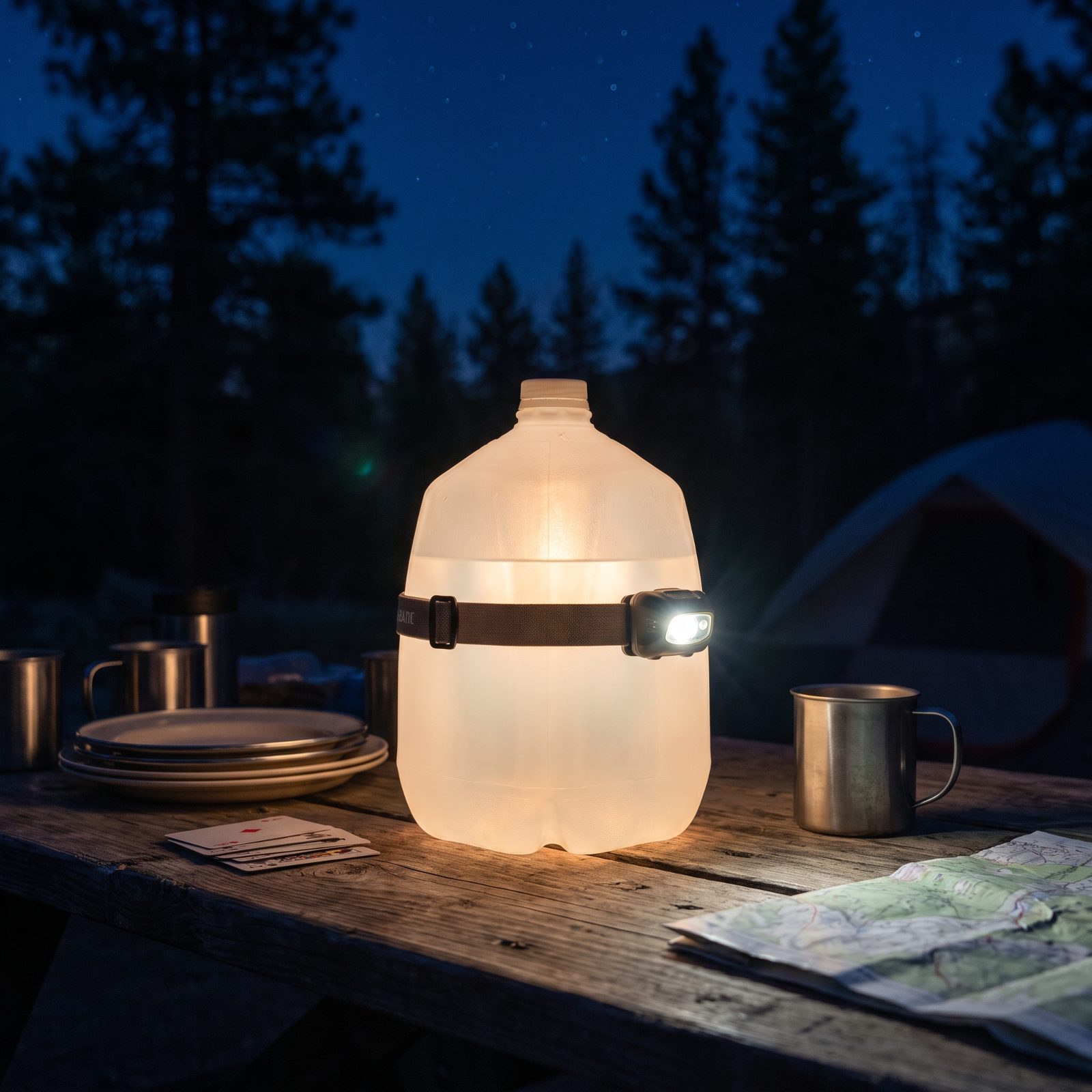
A headlamp pointed at the table blinds whoever sits across from you and lights almost nothing. It’s a tool, not a room light.
So strap it around a translucent water jug with the lamp on the side, beam facing into the water. The water scatters the light into a soft, even glow that fills the whole table — bright enough for cards or cleanup, no harsh hotspot, no extra gear you weren’t already carrying. That jug you were going to haul anyway becomes the best light in camp.
12. Mark Tent Zippers and Key Gear With Rechargeable Glow Tape
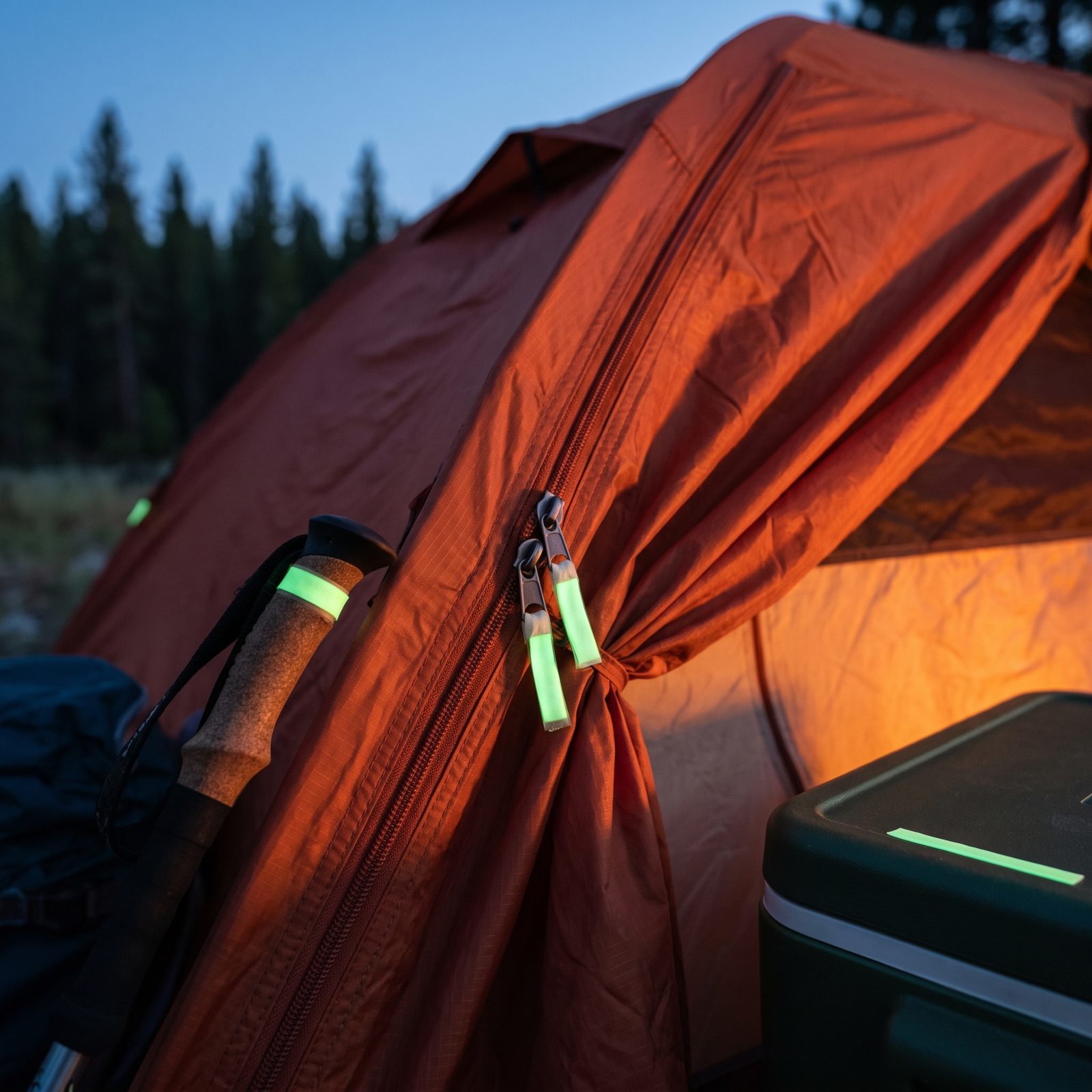
Finding the zipper pull at 2 a.m. without clawing the whole door panel is a small miracle, and rechargeable glow tape delivers it. A thumbnail-sized strip on each slider soaks up firelight or lantern light all evening, then throws a soft green beacon for hours.
Put a strip on the other things that vanish in the dark: the water filter, the cooler latch, the tent-pole bag. Few dollars a roll. Lasts seasons.
11. Keep Glasses, Medicine and a Flashlight in One Bedside Pouch
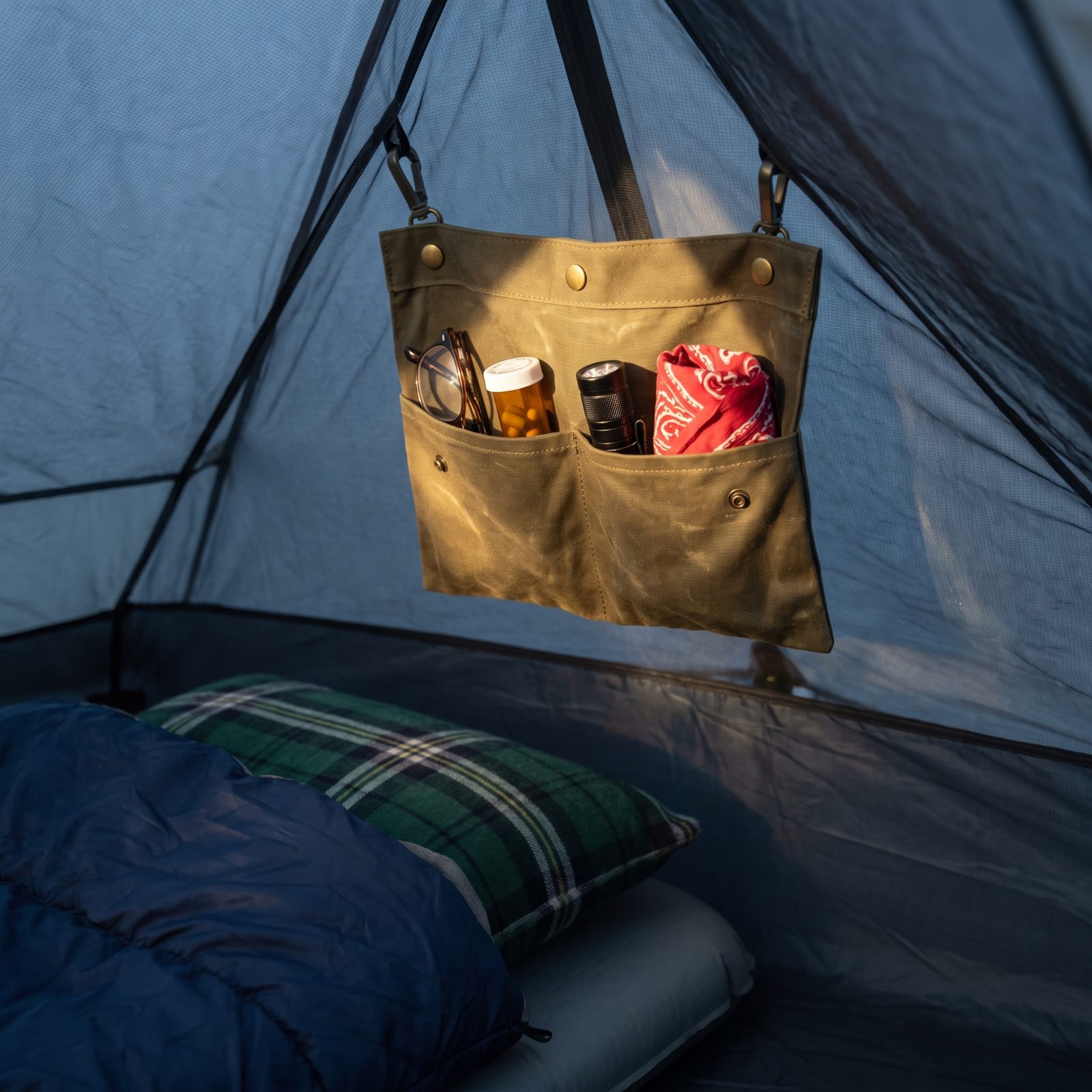
One snap-pocket canvas pouch, hung on the tent’s inner loop, holds everything a hand reaches for in the dark. Glasses so the world comes back into focus, medicine that has to happen on schedule, a flashlight, maybe a lip balm and a folded tissue.
Nothing migrates into the sleeping bag or gets kicked under the pad. One place, same place every night. A tired brain loves a system it doesn’t have to think about.
10. Use a Clearly Marked Wide-Mouth Nighttime Restroom Bottle
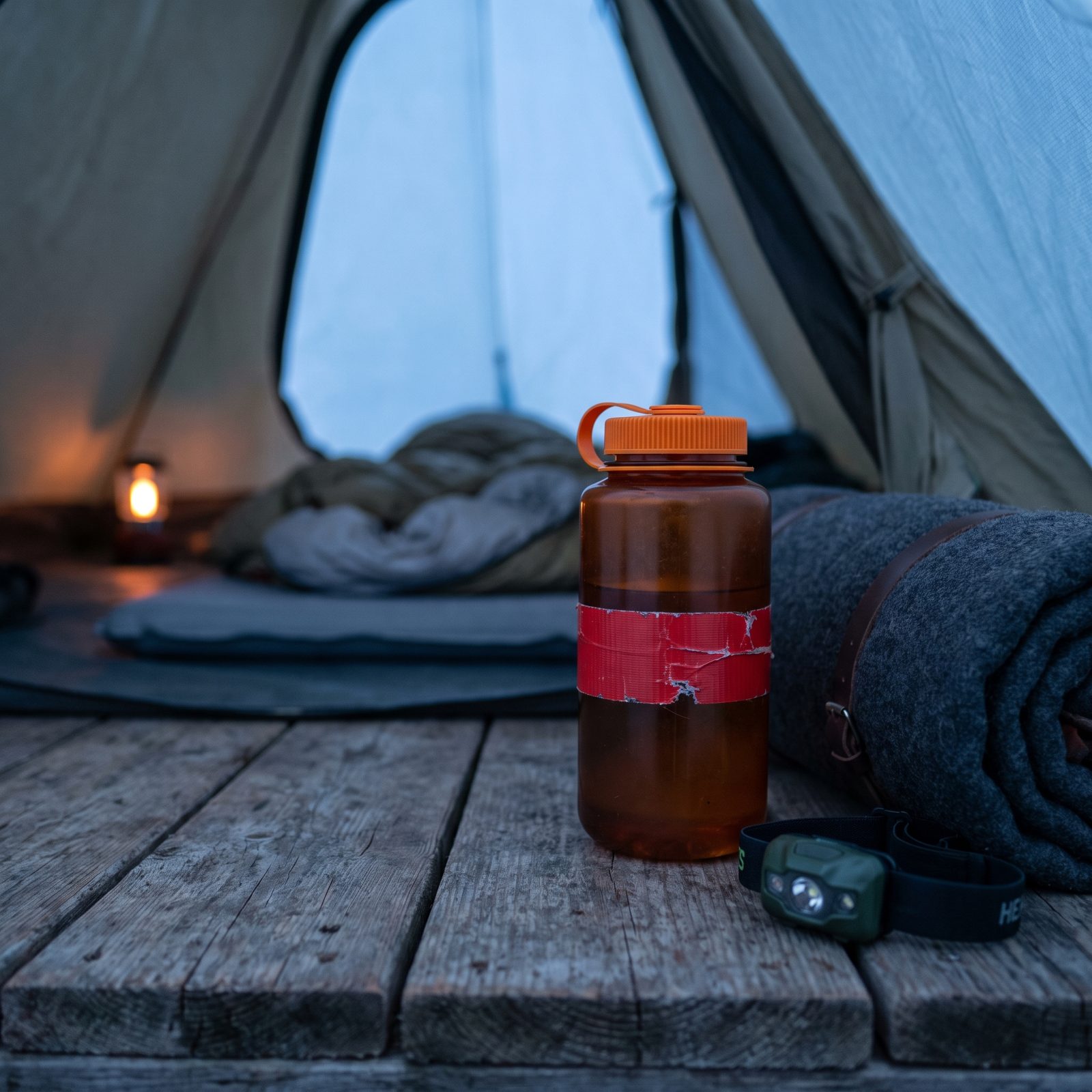
Nobody writes about this one, so here it is plainly. A wide-mouth, leak-proof bottle kept right beside your sleeping pad saves you a cold, fumbling walk at 3 a.m., especially in rain, in bear country, or when the nearest facility is a long dark trudge away.
Marking it is the non-negotiable part. Use a bright red band of tape, a distinct color, something your half-asleep hands and your morning coffee routine will never confuse. Dedicate the bottle to this and nothing else. And yes, a tinted amber bottle at least softens the view for everyone.
9. Pierce a Spare Bottle Cap for a Controlled Handwashing Spout
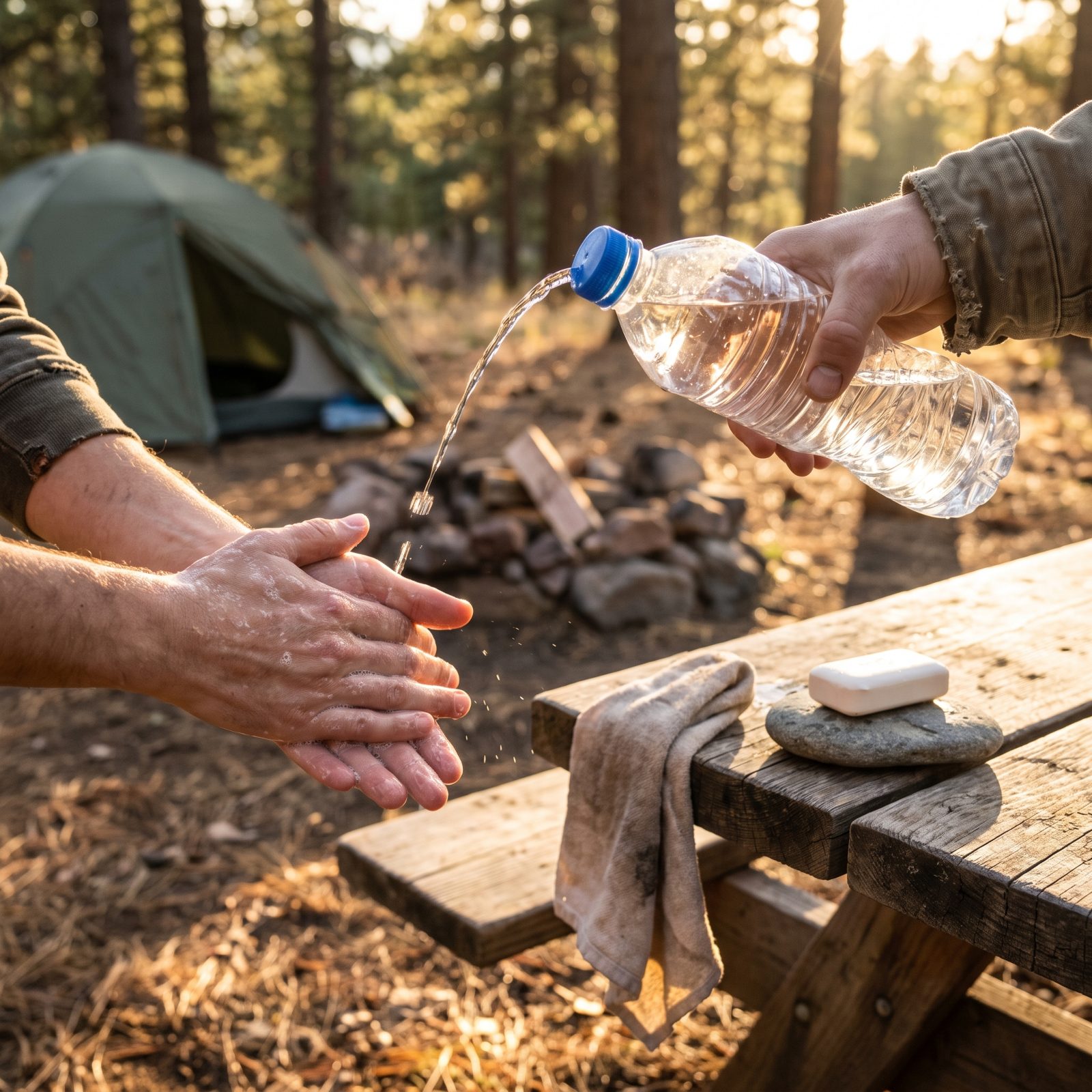
A full bottle poured over your hands wastes most of it in two seconds. Poke one small hole in a spare cap with a knife tip or a heated needle, and that same bottle becomes a slow, hands-free trickle you can actually wash under.
Thread the pierced cap on, hold the bottle nearly level, give it a squeeze. You get a steady thread of water, enough to rinse soap off both hands with plenty left for the next round. Closest thing to a sink you’ll ever build out of trash.
8. Run a Small Battery Fan Across the Tent Doorway to Deter Mosquitoes
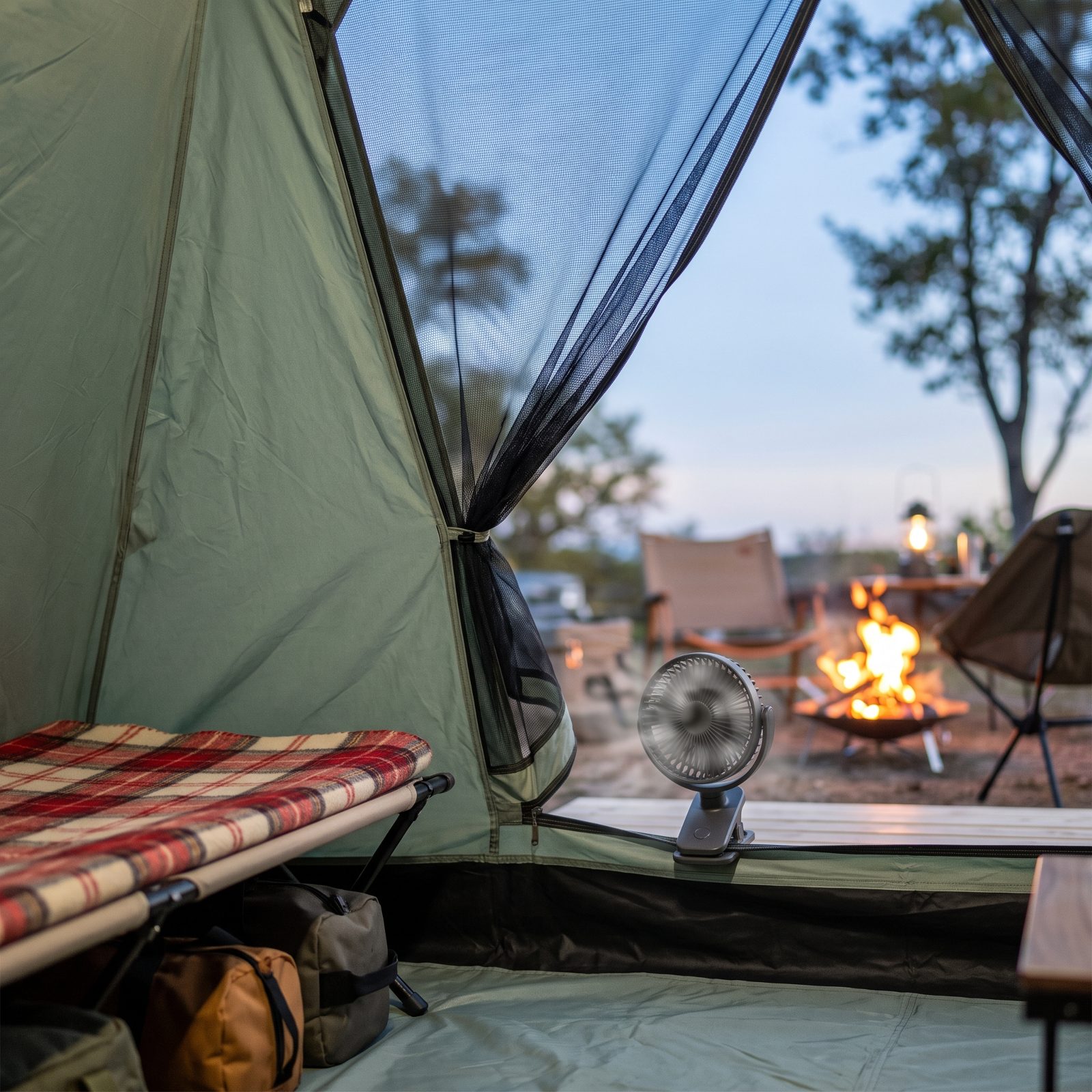
Mosquitoes are weak fliers. That’s the whole trick. A small clip fan blowing across your tent door or sleeping area makes the air too turbulent for them to track your breath and hold a steady approach.
It earns its keep twice on a muggy night, stirring stale air and taking the edge off the heat. A rechargeable clip fan runs most of a night on one charge and weighs almost nothing.
7. Wipe Off Sweat and Sunscreen With Unscented Wipes Before Bed
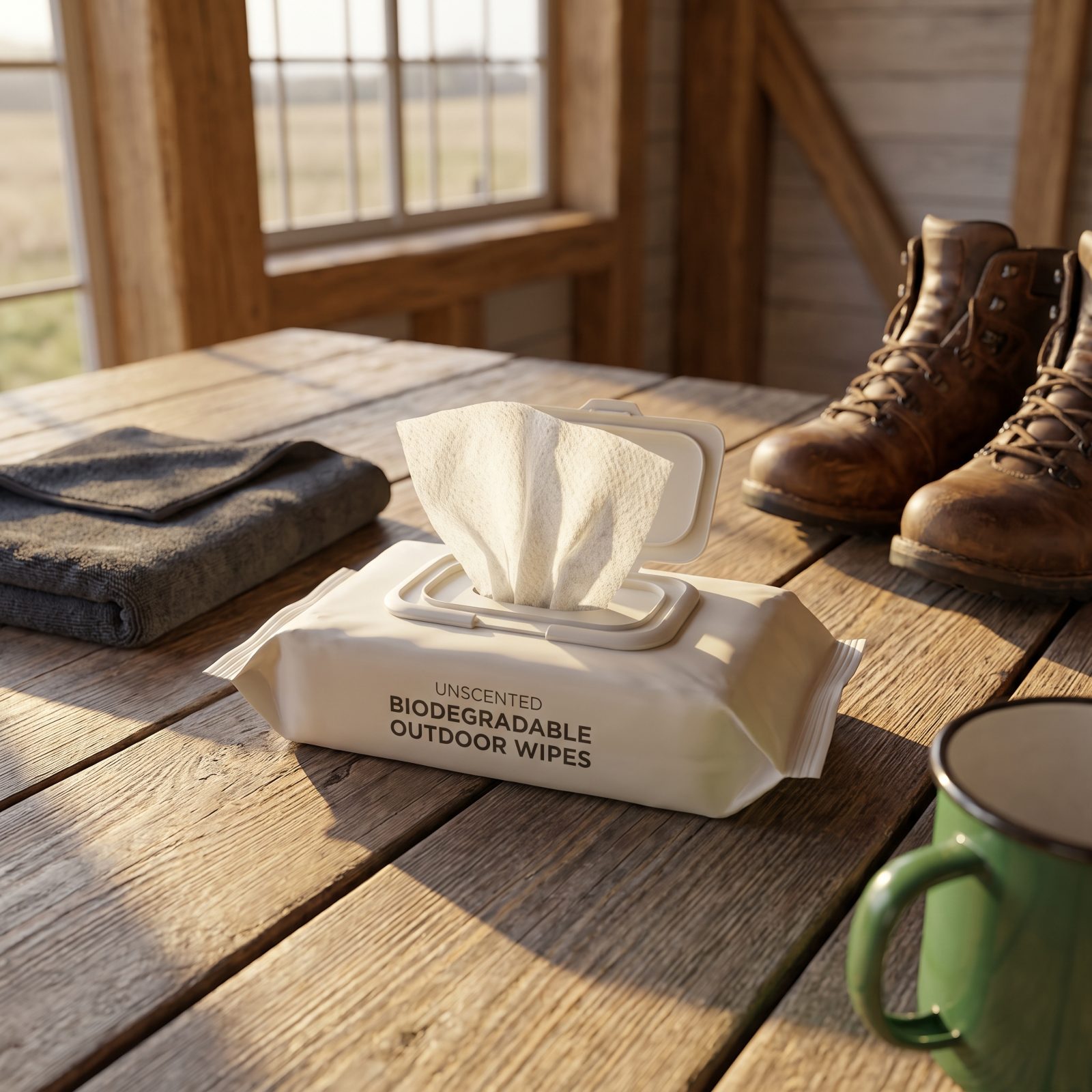
Climbing into a sleeping bag coated in a day of sweat, trail dust and oily sunscreen is why that bag starts to reek by night three. A couple of unscented wipes over your neck, face, feet and the backs of your knees makes a surprising difference in how you sleep and how your gear ages.
Go unscented on purpose. Fragranced wipes pull in insects and curious animals, and the goal here is clean skin, not a perfume cloud hanging over your pad.
6. Open the Sleeping Bag’s Foot Vent to Release Trapped Heat
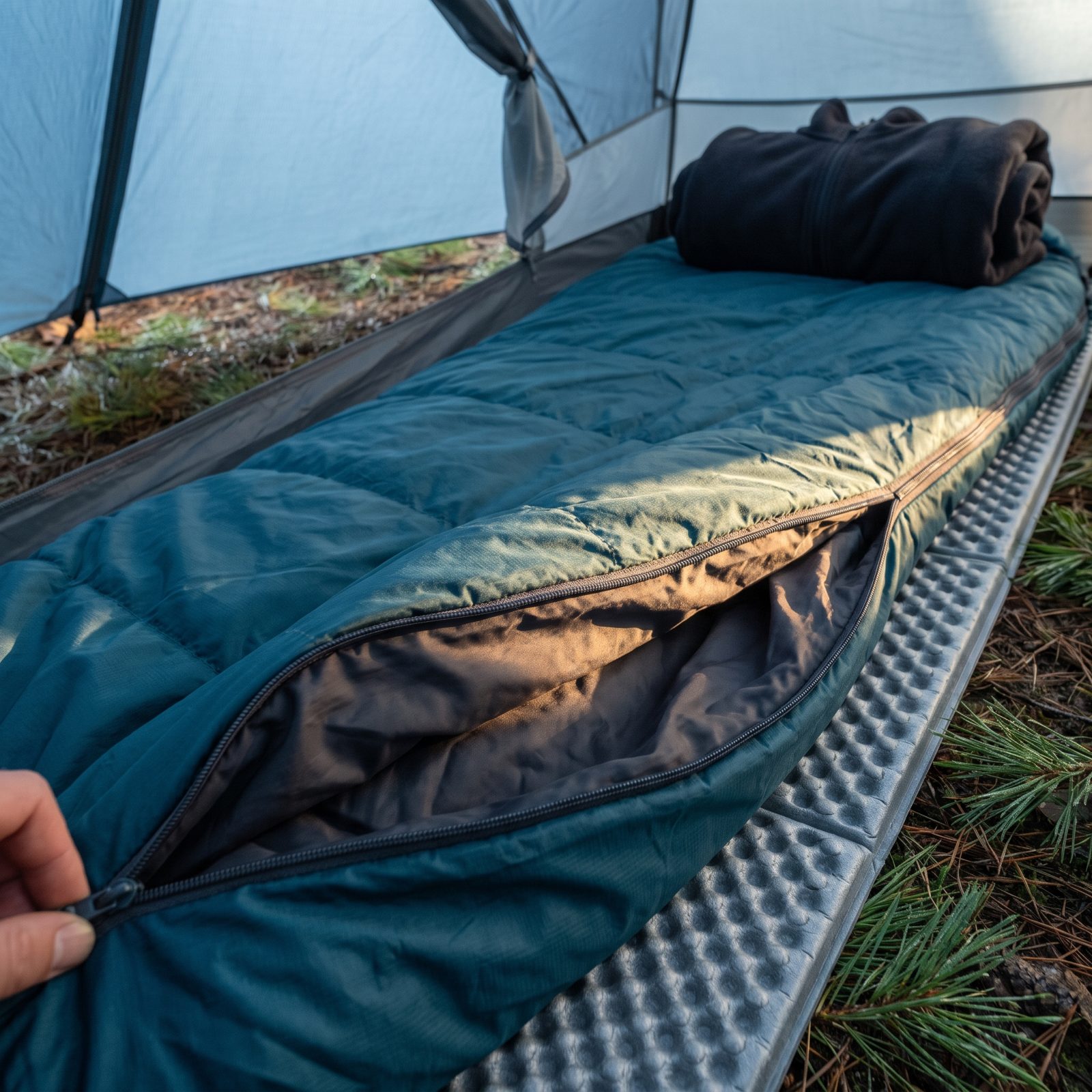
Most quality bags have a second zipper down by the feet, and most people never touch it. On a warm night, that’s a mistake.
Crack that foot vent a few inches and the heat pooling around your legs escapes instead of cooking you. You stay in the bag, covered up top, but you’re no longer kicking the whole thing off at 1 a.m. and freezing an hour later. Dial it as you go: more open when warm, cinched tight when the temperature drops.
5. Fold the Groundsheet Fully Beneath the Tent Floor
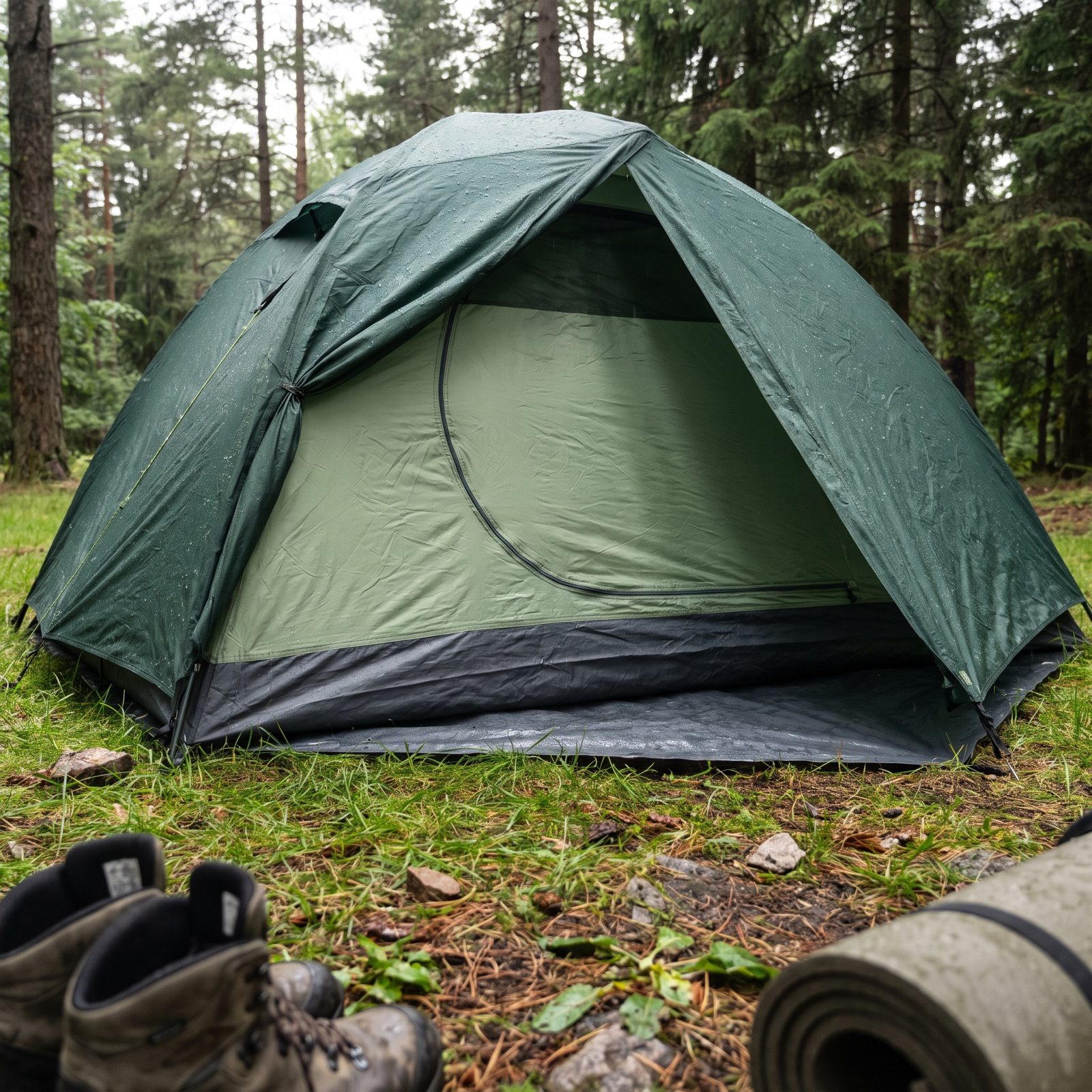
A groundsheet poking out past the edge of your tent isn’t protecting you. It’s collecting rain and funneling it straight under your floor, where it pools against the fabric all night. You learn this the wet way, usually once.
Tuck every edge of that tarp fully beneath the tent so nothing catches water from above. If anything, let the groundsheet sit slightly smaller than the footprint. Done right, you wake up dry even when the whole clearing is soaked.
4. Open One Low Vent and One High Vent to Beat Condensation
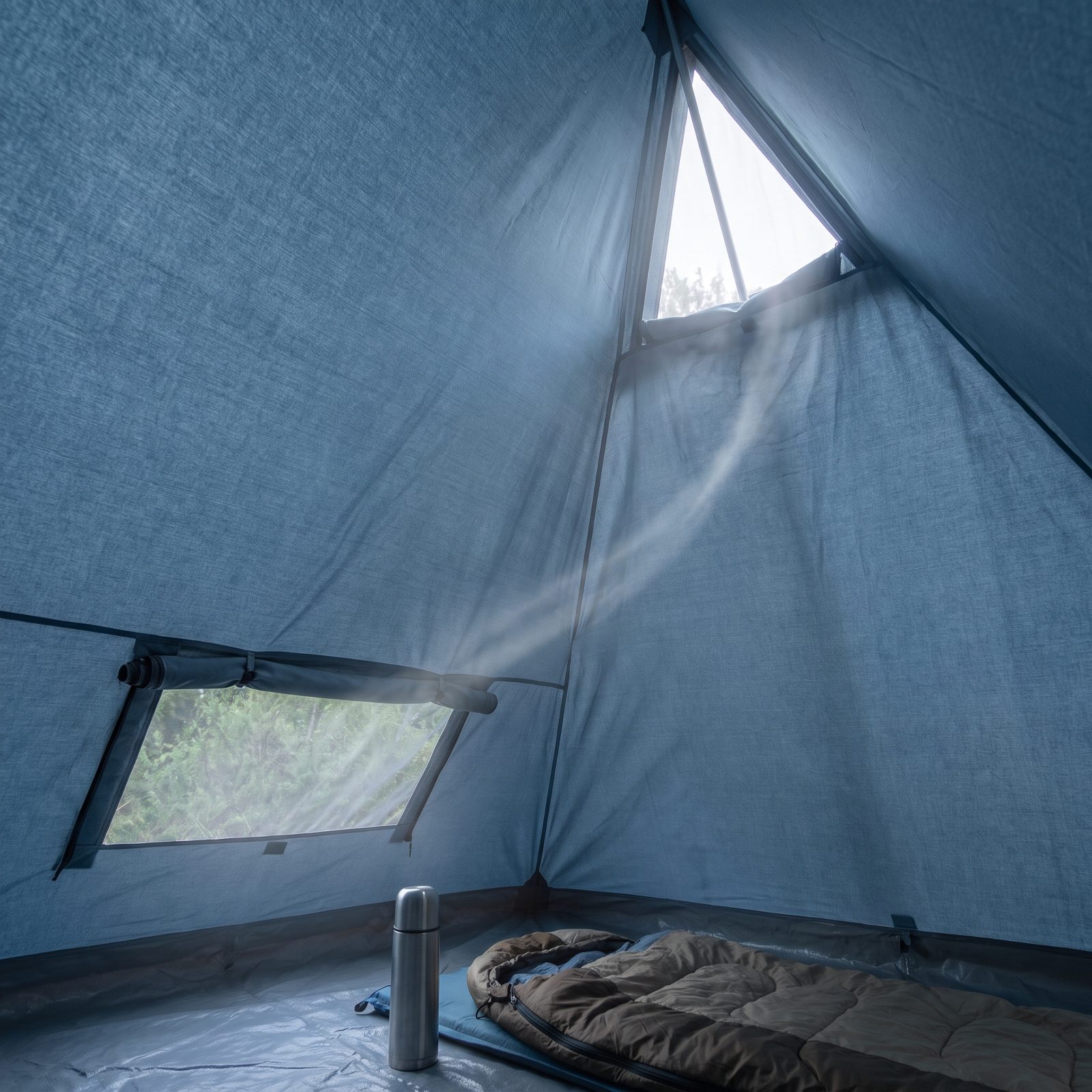
That wet drizzle dripping on your face at dawn isn’t rain. It’s your own breath, condensed on the cold inner wall and falling back down. Seal a tent up tight and you basically build a cloud over your head.
The fix is a draft, not more sealing. Open one low vent and one high vent on opposite ends. Warm, moist air rises and exits up top while dry air draws in down low, and the moisture leaves instead of settling. You trade a couple of degrees of warmth for a dry morning. Worth it every time.
3. Keep a Small Absorbent Sponge Ready for Tent-Wall Moisture
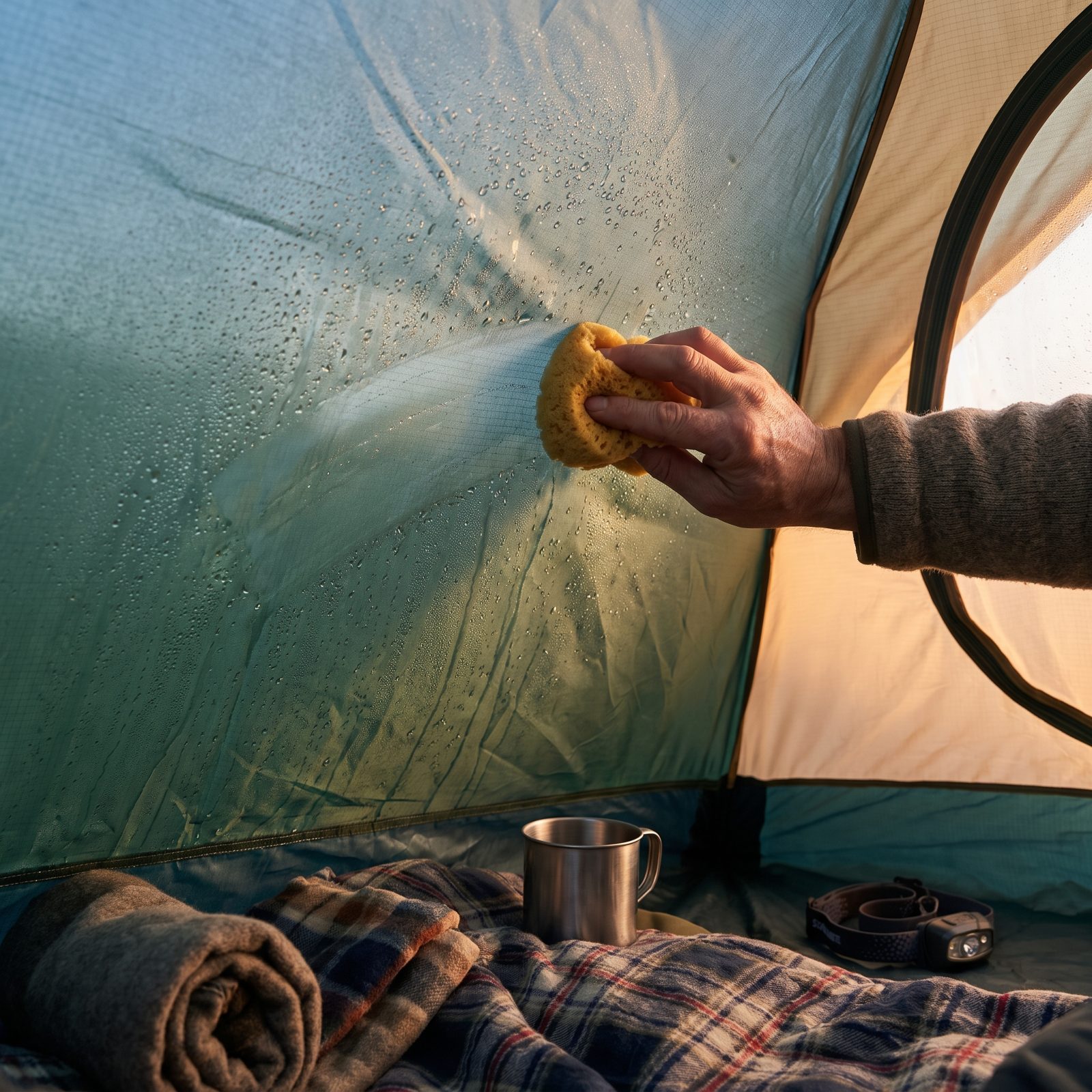
Nobody warns you about the drip. You zip up bone dry and wake to the tent ceiling raining on your face every time your knee bumps the wall. That’s condensation — your own breath and body heat meeting cold nylon overnight — and it soaks a sleeping bag faster than any storm ever will.
A flat kitchen sponge, the cheap cellulose kind, fixes it. Stash one in a sandwich bag by the door. Before bed and again at first light, run it along the inside walls and seams, wring it into a cup or out the vestibule, done. Two minutes of wiping buys you a dry morning.
2. Suspend a Tarp Above the Tent With an Air Gap
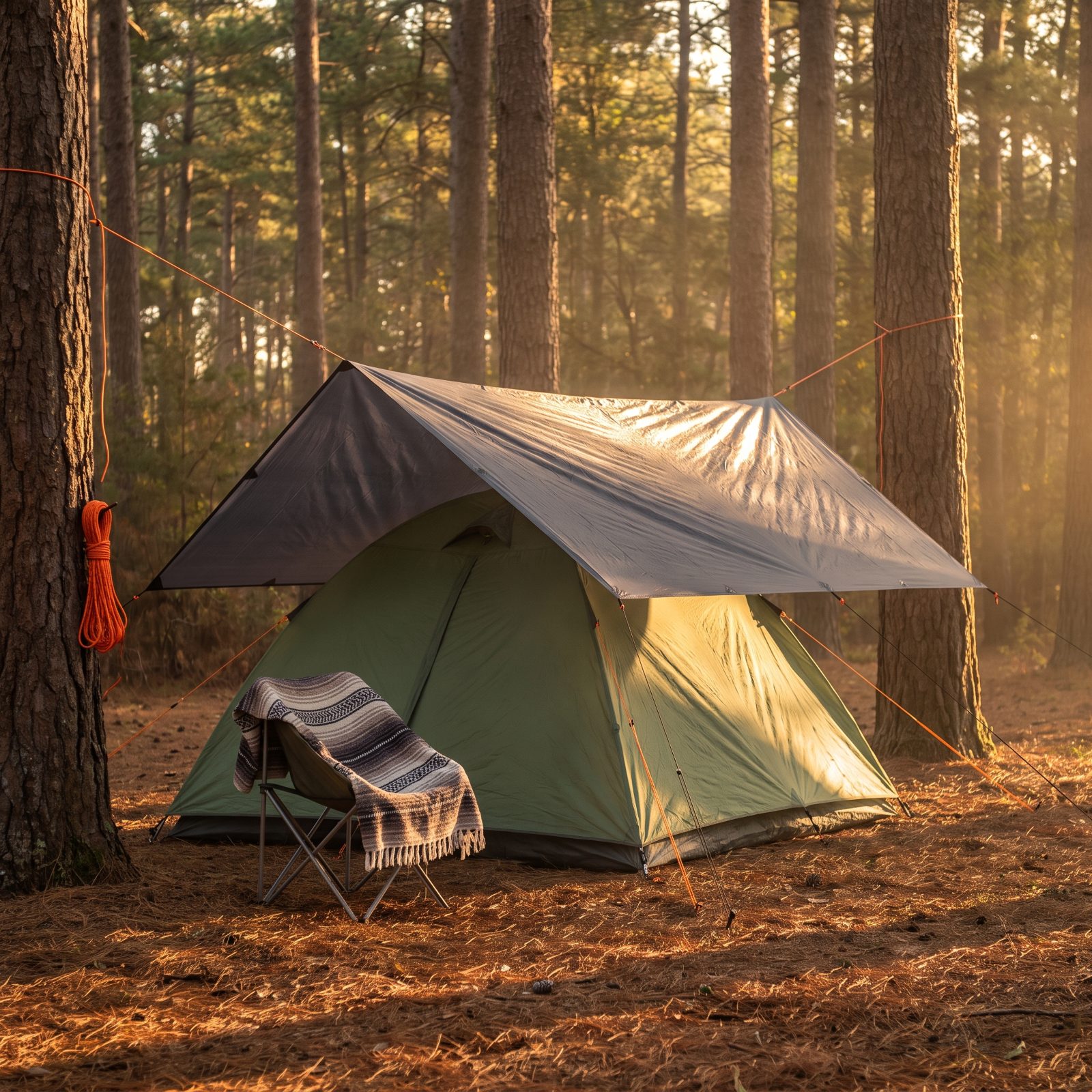
The trick isn’t the tarp. It’s the gap. Plenty of campers drape a tarp straight onto the rainfly and then wonder why they still bake all afternoon and still catch drips at night. Flat against the fly, a tarp just turns into a second hot skin.
Suspend it instead — a hand’s width to a foot above the tent, tied off to trees or trekking poles and pitched at a slant. Now you’ve got moving air between the two layers, and that gap earns its keep three ways. It shades the tent so the inside stays cooler under sun. It catches rain and throws it wide of your walls. And it carries off some of the moisture that would otherwise bead up on the fly.
Pitch it with a slope so water runs to one low corner. You do not want a sagging belly of water collecting over your head. A pooled tarp at 2 a.m. is the kind of cold surprise you only need once to never forget.
1. Reserve One Loose, Dry Pair of Socks for Sleeping
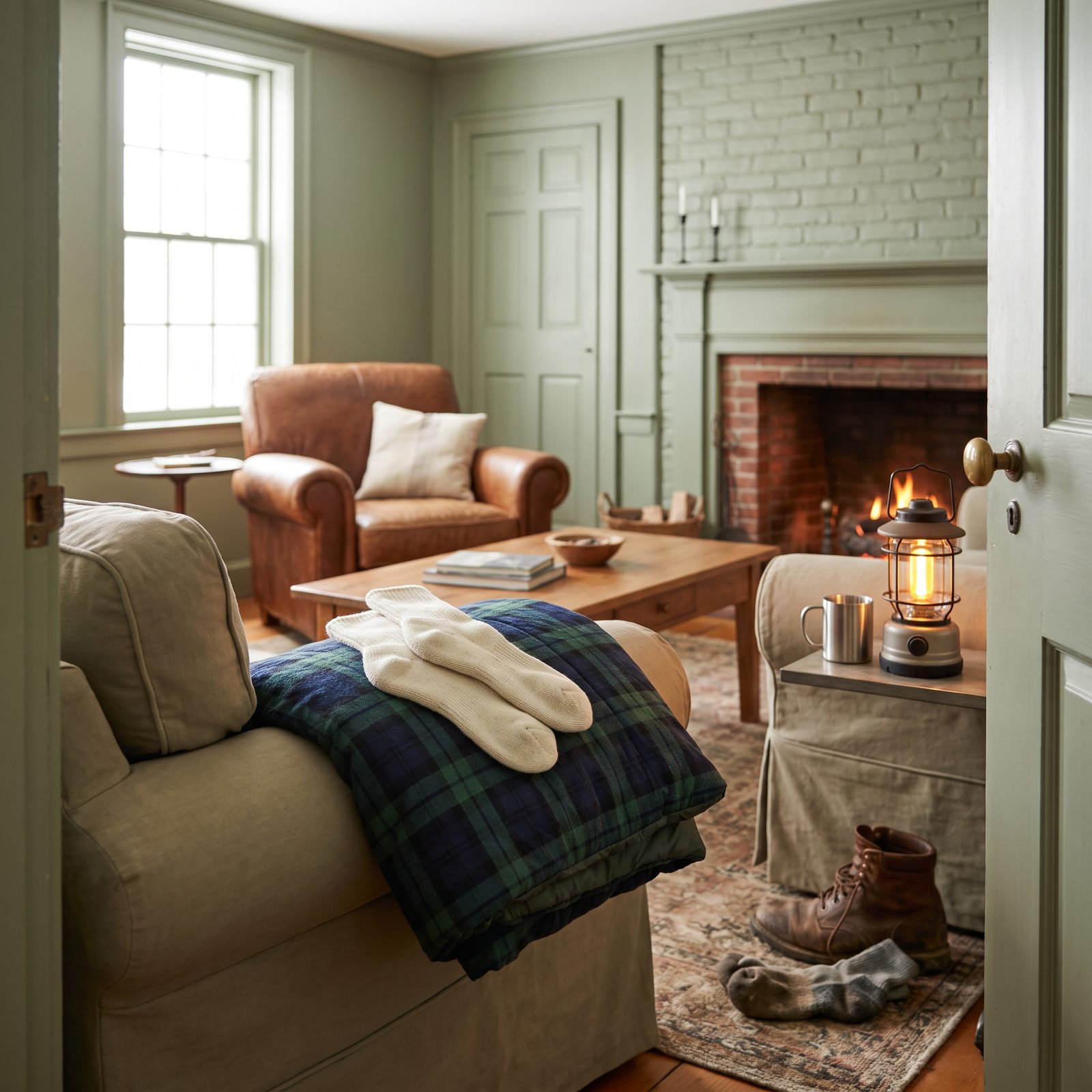
Cold feet don’t just feel miserable — they wreck sleep outright. Your body pulls warmth to the core and leaves your toes last in line, so once feet go cold at night they tend to stay that way.
So keep one pair of socks that never touch the trail. Thick, loose wool, bone dry, sealed in a bag all day, and they only come out at bedtime. The ones you hiked in are damp with sweat even when they feel fine to you, and damp socks pull heat off your skin hour after hour.
Loose matters as much as dry. Tight socks squeeze down the blood flow to your feet, which is the last thing you want when you’re trying to warm them back up. Save the compression pair for walking.