The smell hit you before the dock did. Pine sap, two-stroke oil, bacon grease off a flat-top that never cooled, and cigarette smoke worked so deep into the knotty-pine paneling it was basically part of the structure. A fishing lodge in 1975 ran on paper, patience, and a phone bolted to the wall. No apps. No key cards. No glowing screen telling you the bite would turn on at 6:14. You wrote your name in a book, got a key the size of a canoe paddle, and somebody at the front desk actually knew where the walleye were. Here’s what defined those places, and what quietly got carried off to the dump.
Please note that some of the images in this article were created with the assistance of AI.
24. The Hand-Painted Lodge Sign Beside the Highway
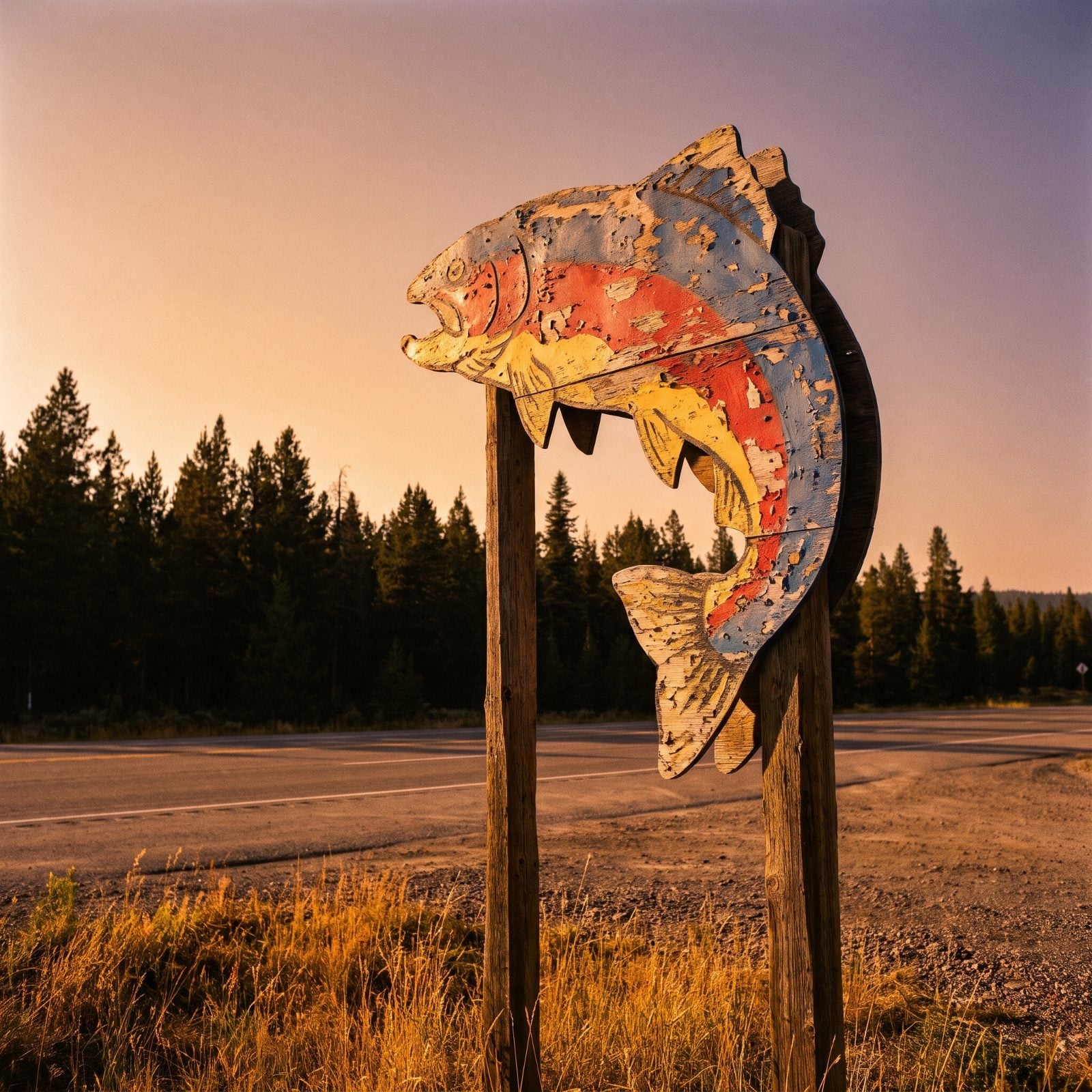
You found the place by looking for the fish. A leaping walleye or a bent-rod silhouette, cut from plywood and painted by the same guy who fixed the docks and ran the boats. The sign told you where to turn off the highway and nothing else, because nothing else existed to tell you.
Now it’s a backlit aluminum panel with a QR code, or no sign at all because the GPS already brought you in. The hand-cut ones fade, crack, and get replaced by something that photographs worse and lasts longer. I’ll take the plywood fish every time.
23. Wooden Key Cubbies and Heavy Keys on Oversized Lodge Fobs
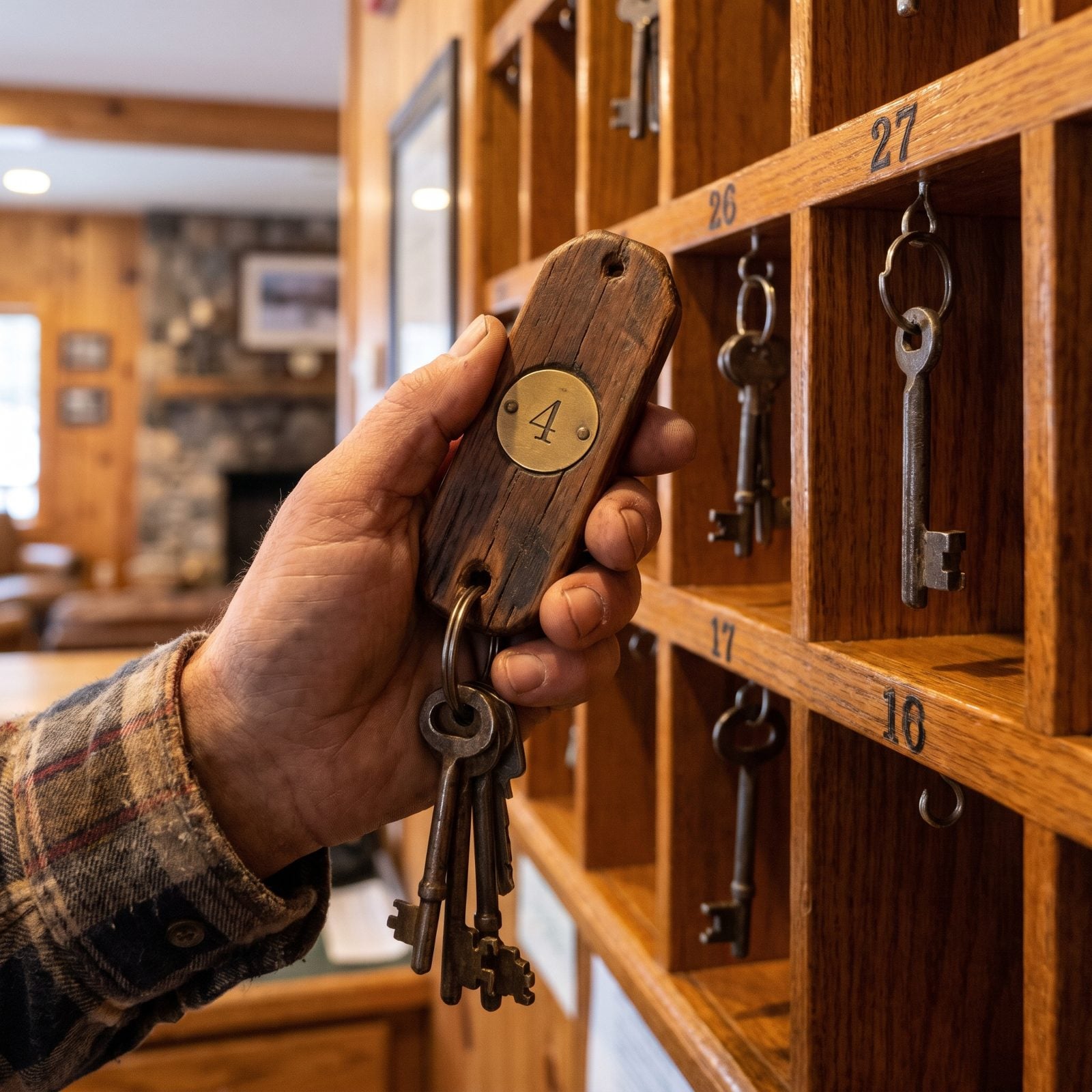
The key weighed a pound and the fob was the size of a bar of soap, and both were on purpose. You weren’t supposed to pocket a lodge key and walk off with it. You hung it on the board when you went out on the water, and the clerk could see at a glance which cabins sat empty.
Nobody carried the thing fishing. It clunked. Today you tap a plastic card or your phone and the lock blinks green, which works fine and remembers nothing. That wooden fob had its cabin number stamped crisp into a brass disc, still sharp after thirty years of hands.
22. The Lobby Payphone and Its Board of Pink Message Slips
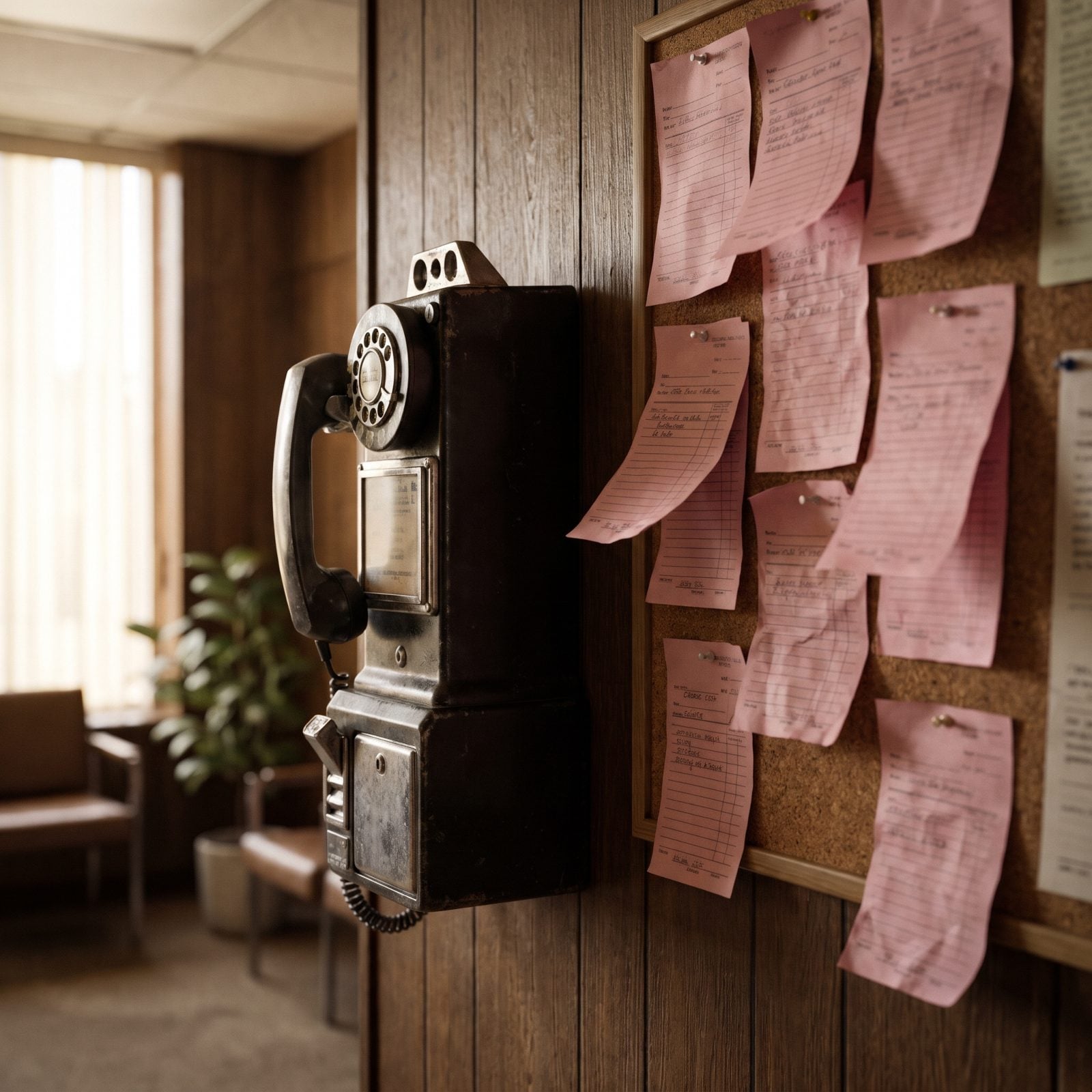
One phone served the whole lodge, bolted to the lobby wall, and if someone needed to reach you they called the front desk. The clerk scribbled it on a pink slip and pinned it to the board, and you checked the board when you came in off the water, smelling like fish and sunscreen.
Miss the call? The slip waited. Nobody expected an instant answer because nobody could give one. There’s a strange peace in that most of the lake has pretty much forgotten now. You went up north partly to be hard to reach, and the single payphone made sure of it.
21. Lodge-Branded Matchbooks at the Front Desk
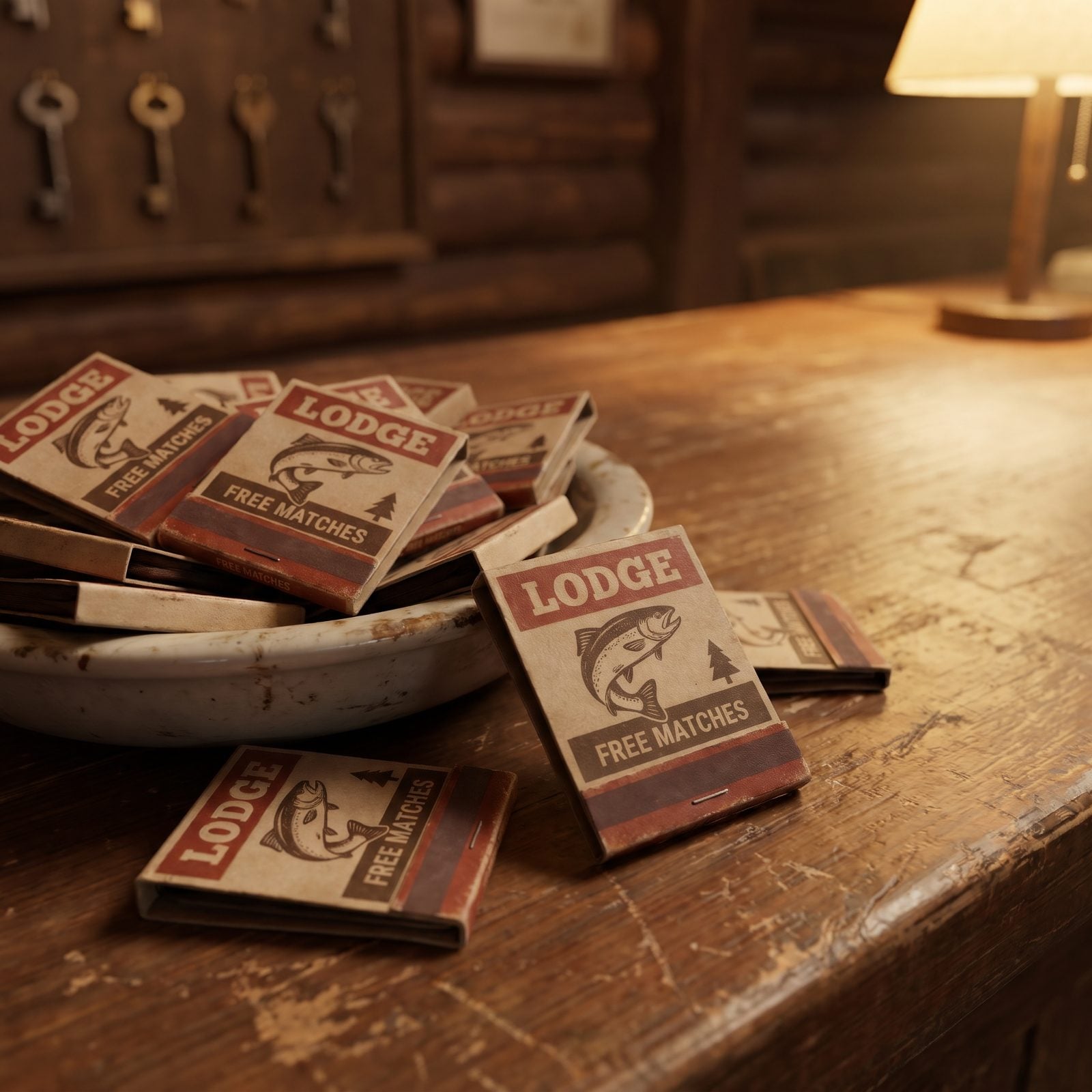
Free matchbooks sat in a dish by the register, and you took a few without thinking. A little fish on the cover, the word ‘LODGE’ in block letters, maybe a phone number with a two-letter exchange prefix. They lit your pipe, your campfire, your cigarette, and they rode home in your tackle box as a souvenir you didn’t know you were keeping.
People collected them. Shoeboxes full. Matchbooks are nearly gone from every lobby now, not just fishing lodges, and the little printed fish went with them.
Writing in a lodging trade magazine, a hotel history columnist recalls that “So common were branded matchbooks that they were easily accessible in the hotel lobby, and could also be found in the hotel bar, dining establishments, and guestrooms—often sitting on or near a clean ashtray.”
20. Postcard Racks Filled With Lodge Views
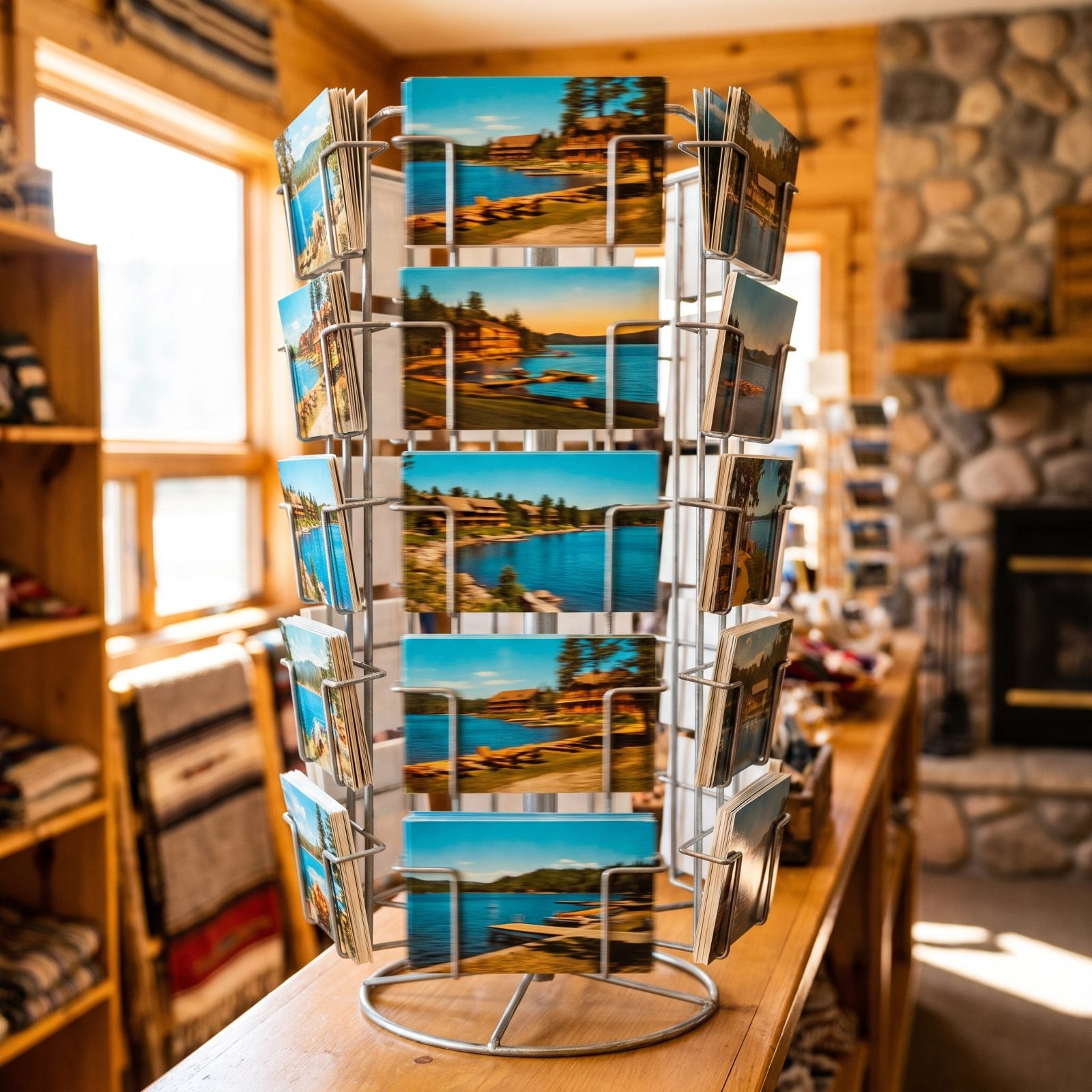
The rack spun with a squeak, and the cards were gloriously over-colored: a lake bluer than any real lake, a sunset cranked to eleven, a proud angler holding a stringer that had clearly been staged. You bought a few for a nickel, wrote three lines to your brother, and mailed them from the lodge.
That postcard was the only picture most people back home would ever see of the trip. You couldn’t text a lake photo. You bought the lake someone else had already shot, scribbled on the back, and trusted it to the mail.
19. Ashtrays on Every Lobby and Dining-Room Table
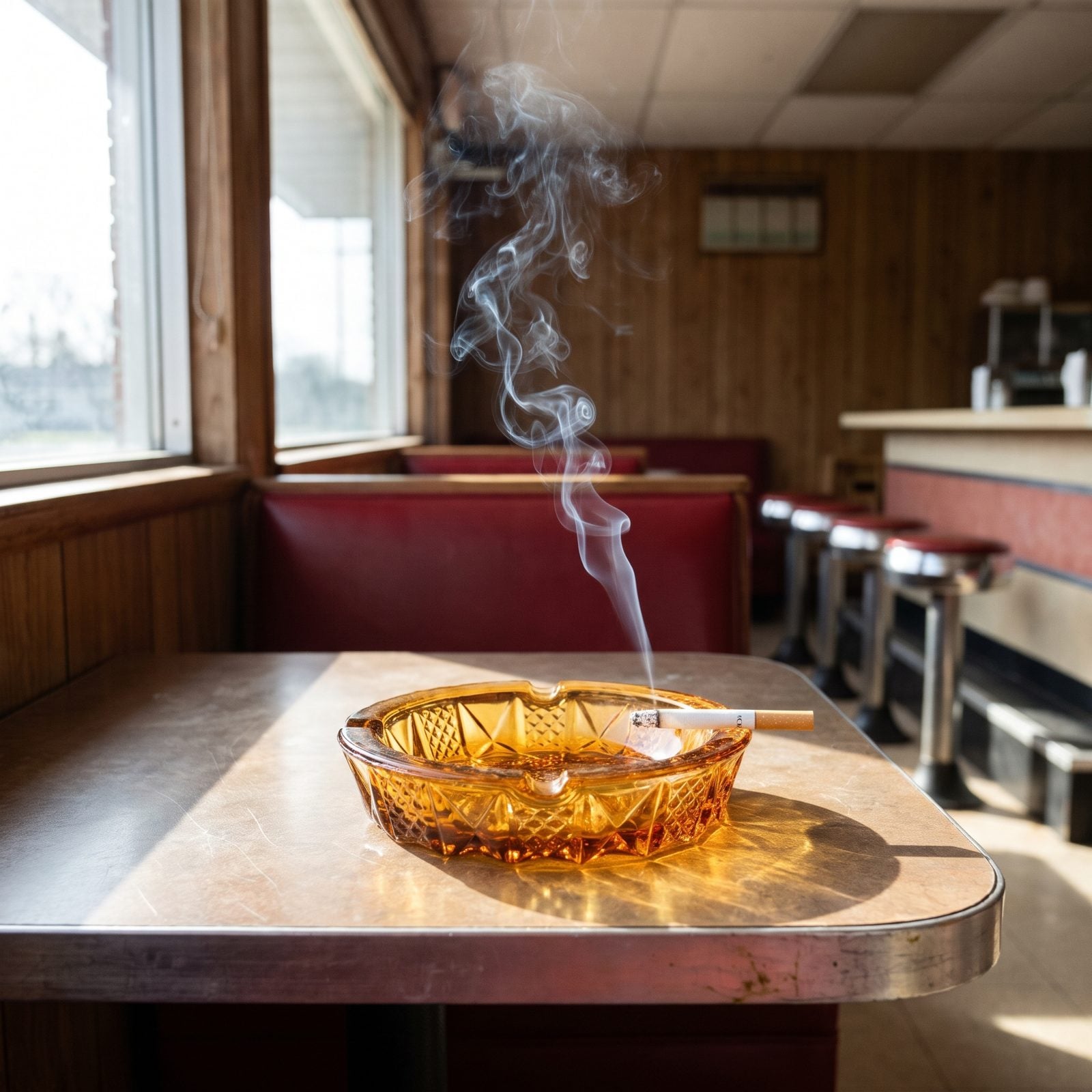
Every table had one. Amber glass, usually, with those little notches for resting a cigarette. The lobby, the dining room, the card table by the fireplace — all of them stocked with ashtrays because nearly everyone smoked and nobody thought twice about it.
You ate your walleye through a soft blue haze that hung under the ceiling and never fully cleared, and the smell lived in the paneling for decades. Walk into a modern lodge and the air is clean, which is better in every measurable way, and still somehow missing a thing I can’t quite name.
18. The Polaroid Wall of Guests Holding Their Catch
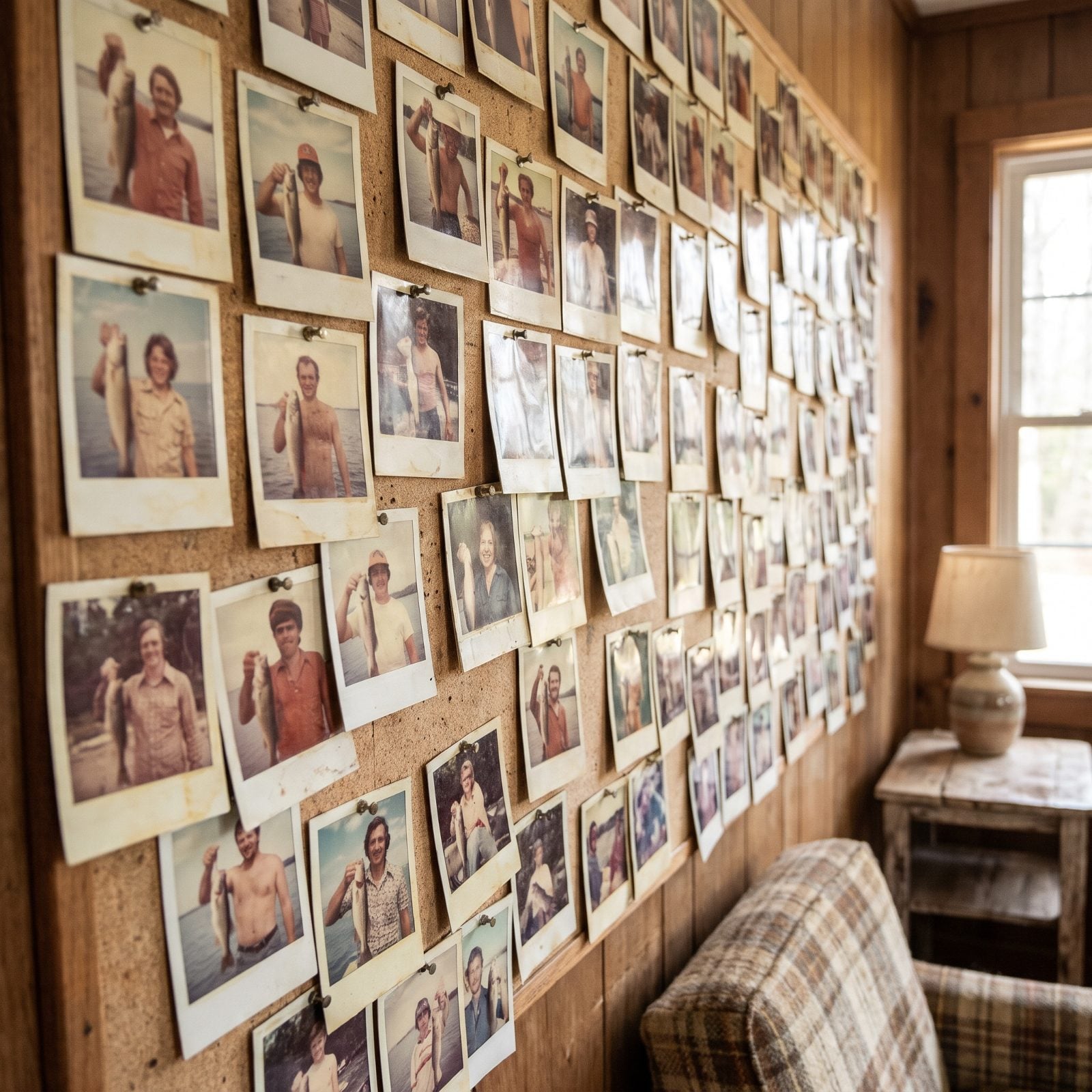
The best wall in the building wasn’t the fish mounts. It was the Polaroids — hundreds of them, pinned up by the front desk over years, every one a guest grinning behind a pike or a stringer of walleye. The clerk snapped it as you checked out, the film whirred, and in sixty seconds you joined the wall forever.
You’d hunt for last year’s picture when you came back. Sometimes it was still there, curled and yellowing, you a year younger and the fish just as big. That wall was the lodge’s memory, and it couldn’t be scrolled past or deleted. It just hung there, fading honestly in the lake light, the whole history of the place pinned to the pine.
17. The Dockside Chalkboard Tallying the Day’s Catch
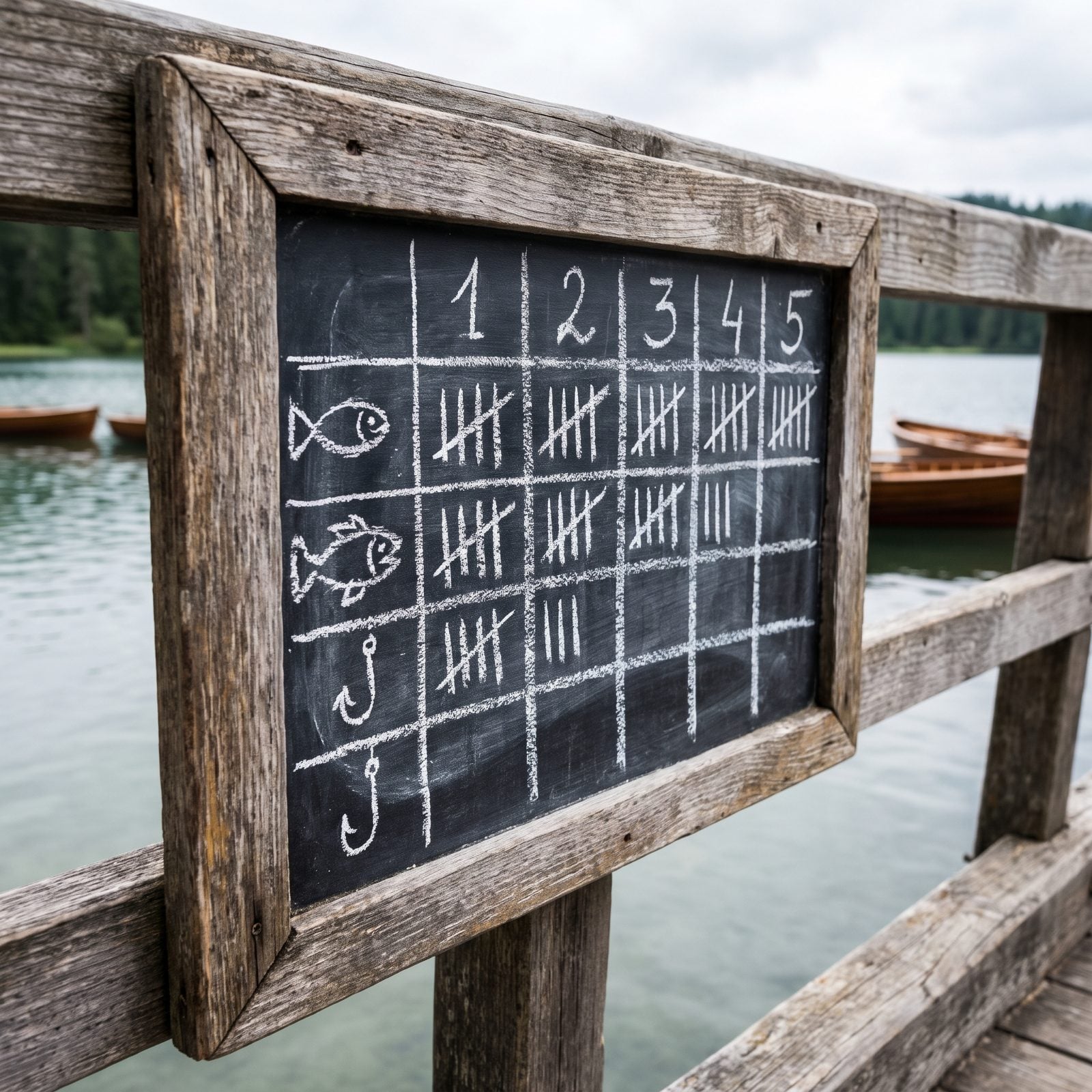
You walked up from the dock and the first thing you saw was the scoreboard. Cabin numbers across the top, chalk fish and fishhook doodles down the left side, and tallies filling the rows as the week wore on.
Gentle competition and gossip at once. You knew which guide was hot that week and which cabin had been skunked two days running. No one posted a photo — the proof was a chalk mark and your own eyes at supper.
16. The Pushpin Lake Map Where Good Water Got Marked in Secret
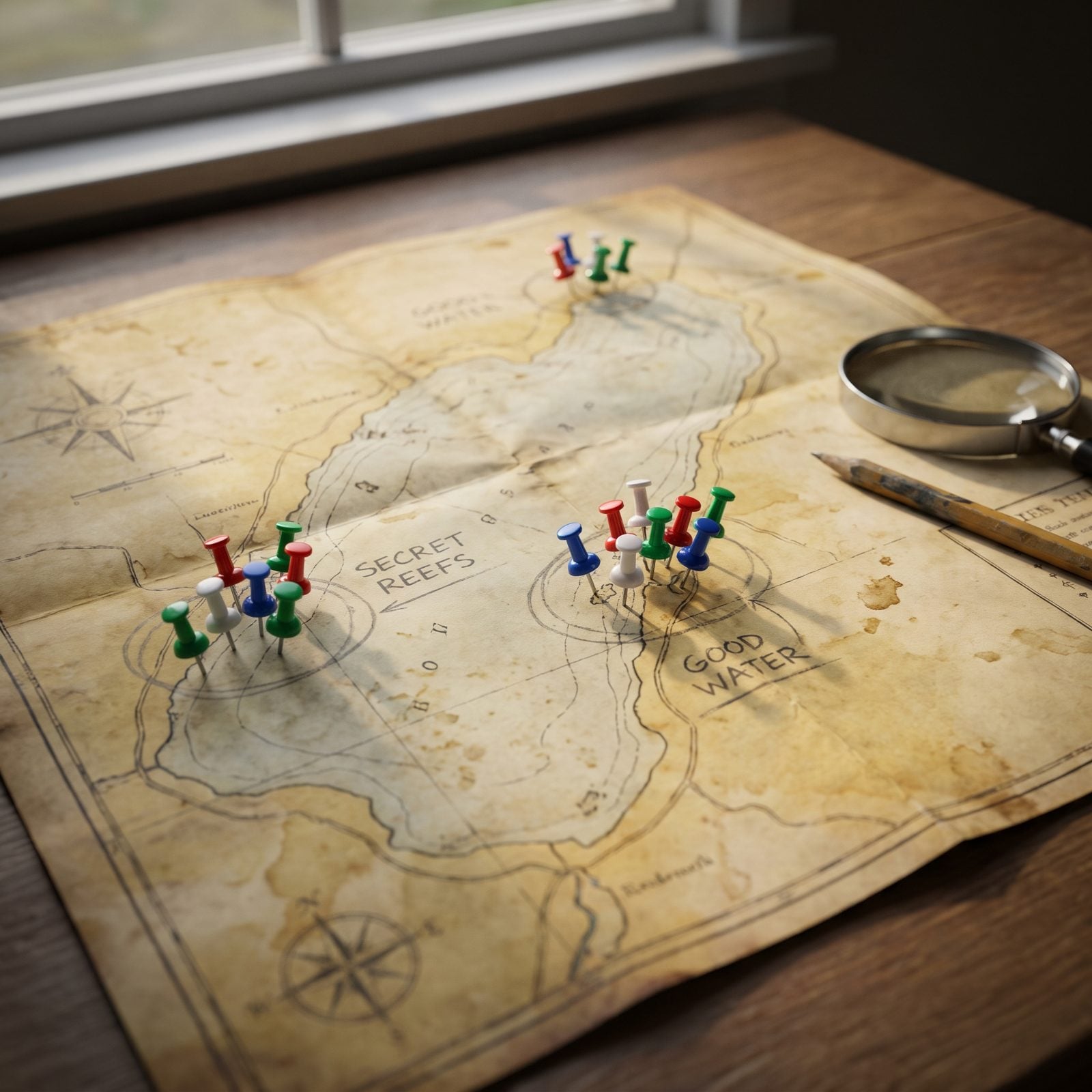
Every lodge had one map that mattered, and it lay spread flat on a wooden table where only the guides could study it. Pushpins marked the reefs, the sunken timber, the spring hole that cooled the water in August. Red for walleye, maybe — the code lived in the head of whoever ran the place.
Guests rarely saw the real one. They got a photocopy with the honey holes conveniently left blank. Decades of knowledge pinned down in colored plastic and pencil, and it took a season of listening to earn so much as a glance at it.
15. The Guide-Assignment Pegboard by the Kitchen Door
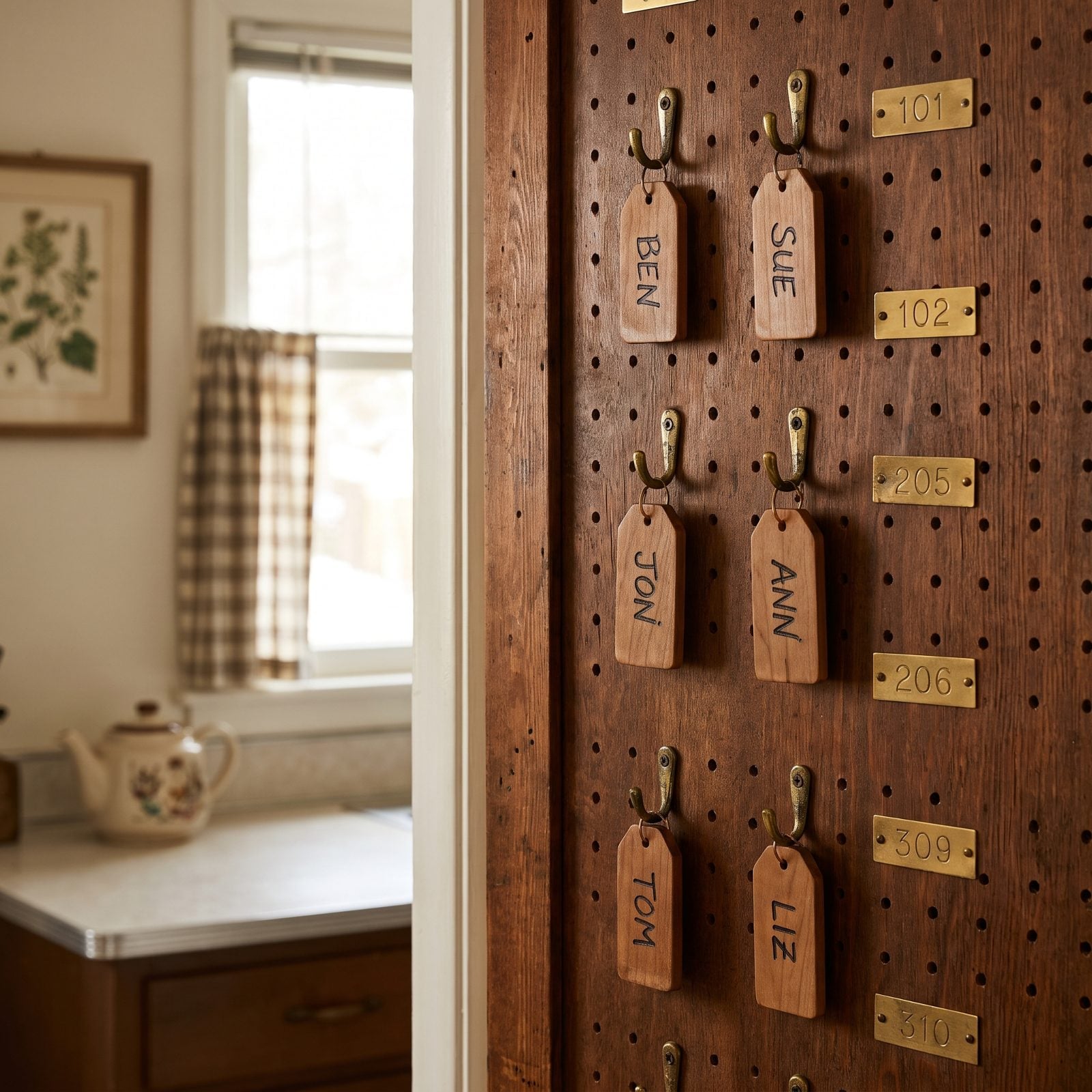
Dawn ran on this board. Little wooden tags with guide names on brass hooks, paired off against cabin numbers for the day’s trip. The head guide moved the pegs before coffee, matching the quiet fellow with the fussy anglers and the loud one with the bachelor party.
There was a hierarchy in it you learned to read. The guide whose peg always landed on the best water had earned it over years. Nobody wrote the rules down. The pegboard kept them.
14. The Dinner Bell That Pulled the Whole Lodge In
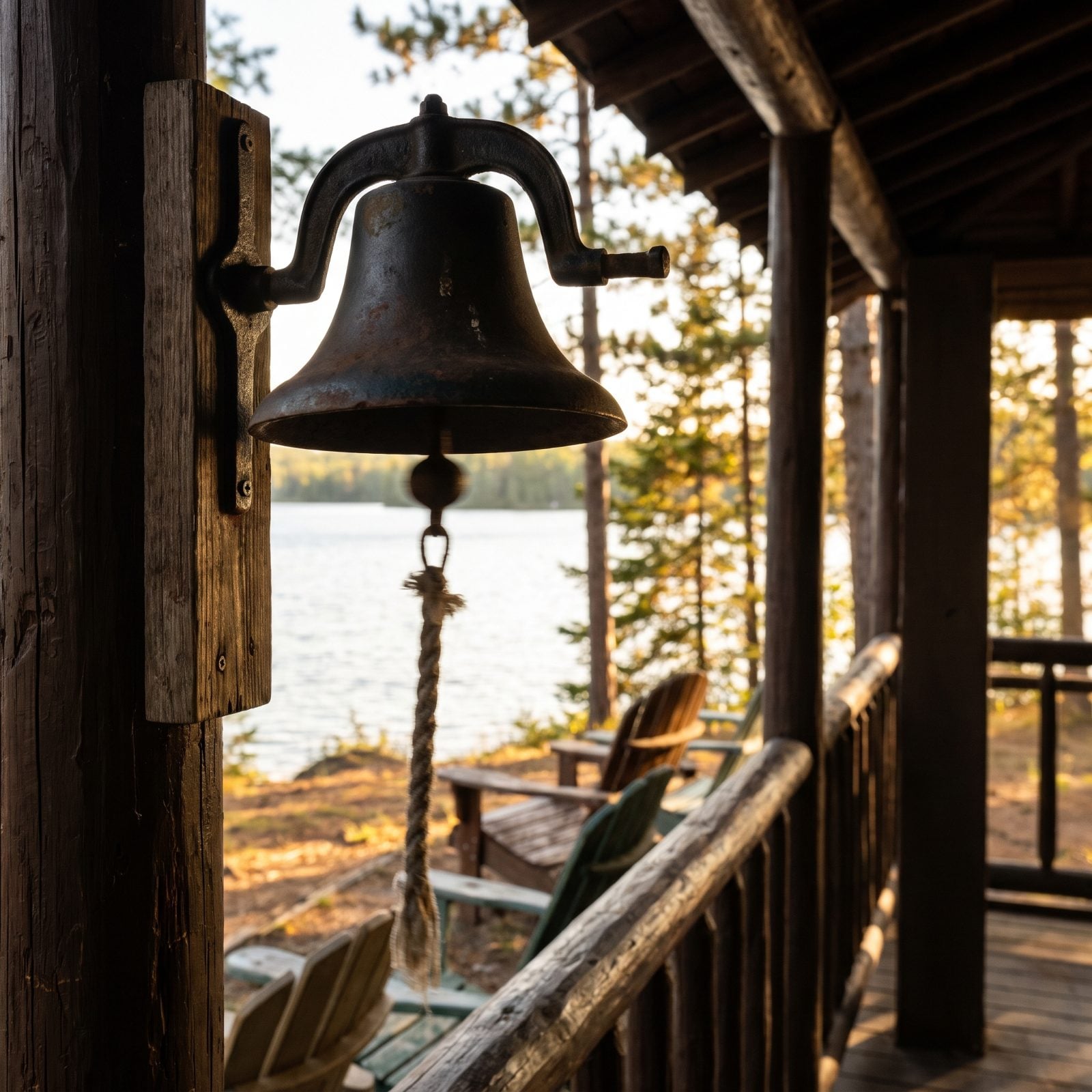
You could be a half mile out on the bay and still hear it. One bell, rung hard off the dining-hall porch, and every boat on the lake turned for home.
No intercom could do what that sound did. It carried across water, bounced off the far shore, and told you supper was on in fifteen minutes and you’d better reel in. Lodges today text you. The bell asked nothing of your pocket and reached everyone at once.
13. Wax-Paper Box Lunches Handed Out in Brown Bags
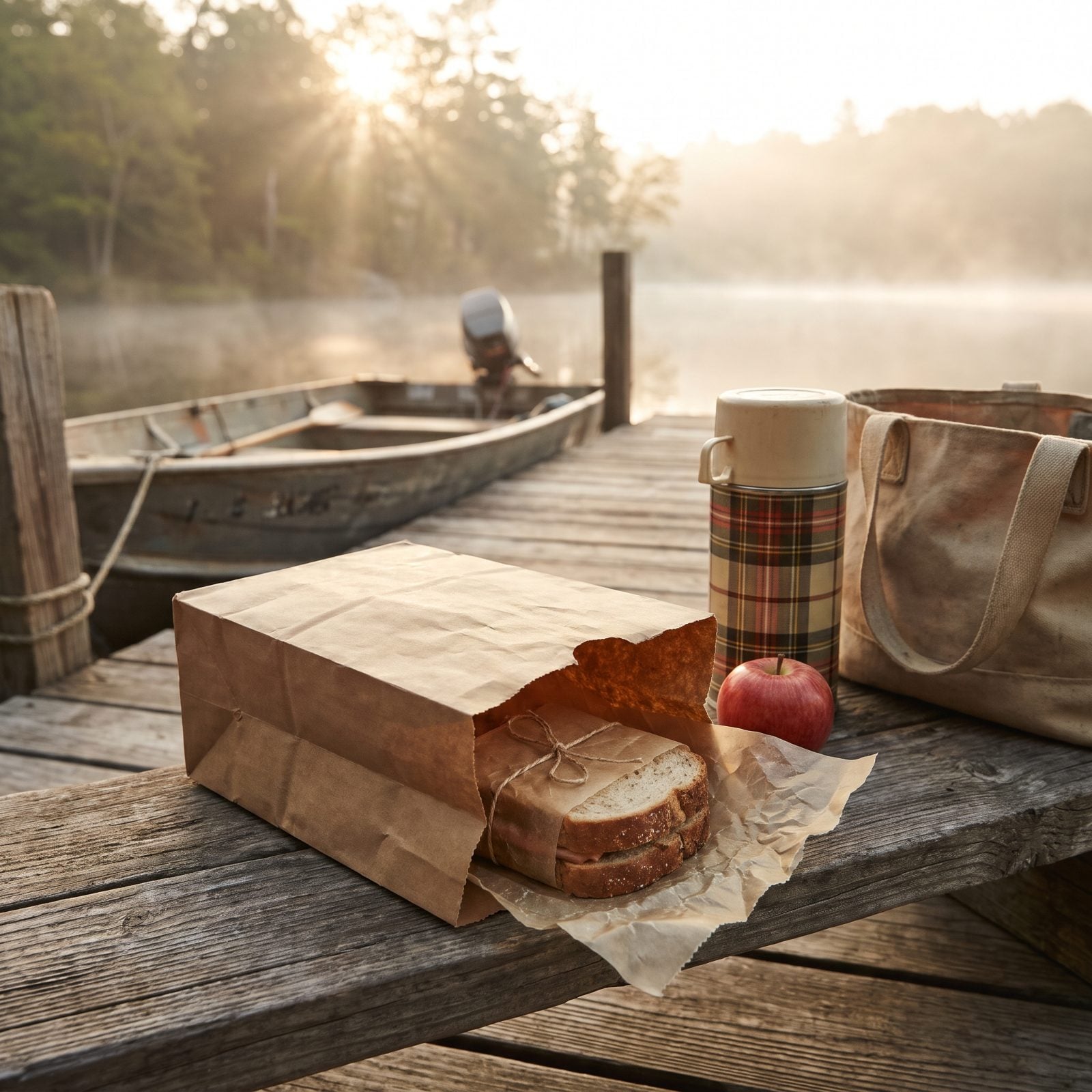
Before you shoved off for the morning, somebody from the kitchen handed you a brown bag heavy at the bottom. A sandwich in wax paper, an egg, an apple, a slab of cake wrapped twice. No plastic clamshell, no little tub of dressing.
You ate it at noon, drifting over a reef, crumbs going to the gulls. The wax paper folded flat and tucked back in the bag. Simple food, packed by hand, eaten where it tasted best.
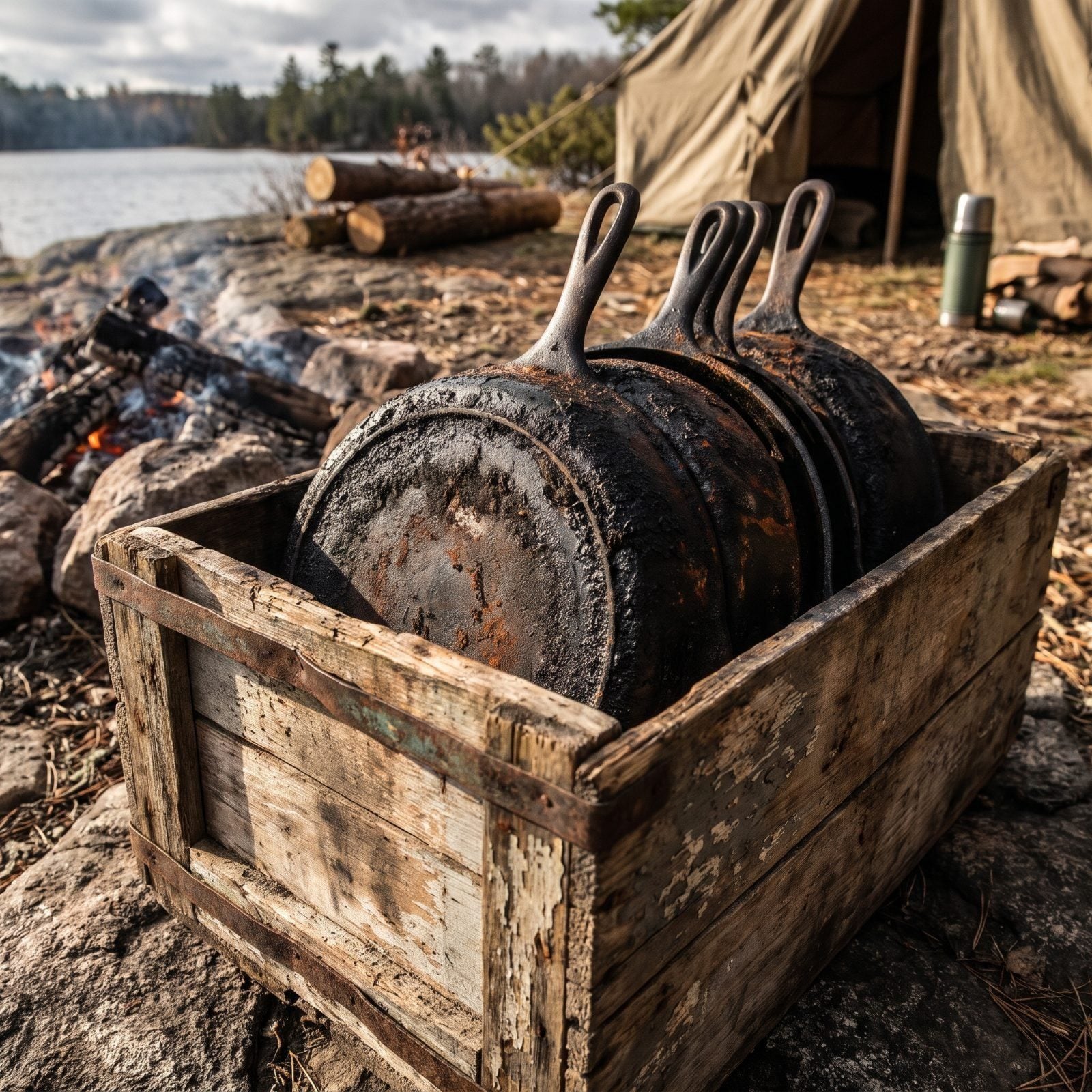
12. Blackened Shore-Lunch Pans Stacked in a Wooden Crate
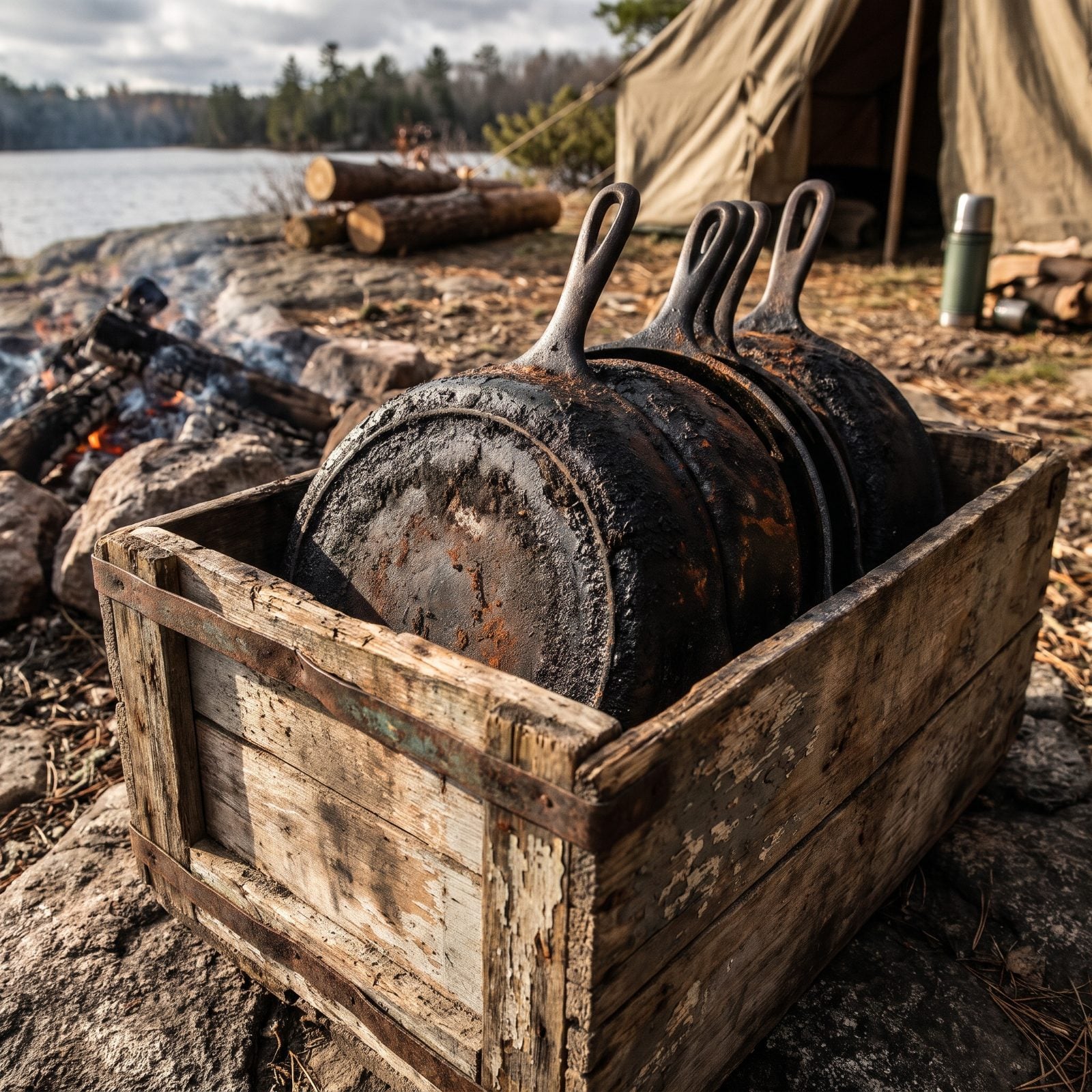
The shore lunch was the reason you got up at dawn, and the pans proved it. Blackened on the bottom from a hundred fires, seasoned by decades of fried walleye and fatback, stacked in a wooden crate that rode in the bow.
Nobody scrubbed those pans clean. That black was the flavor. The guide beached the boat on a rock island, built a fire, and fried your morning’s fish with potatoes and onions on cast iron that had cooked for men now long gone.
11. The Evening Slideshow Clicking Across a Pull-Down Screen
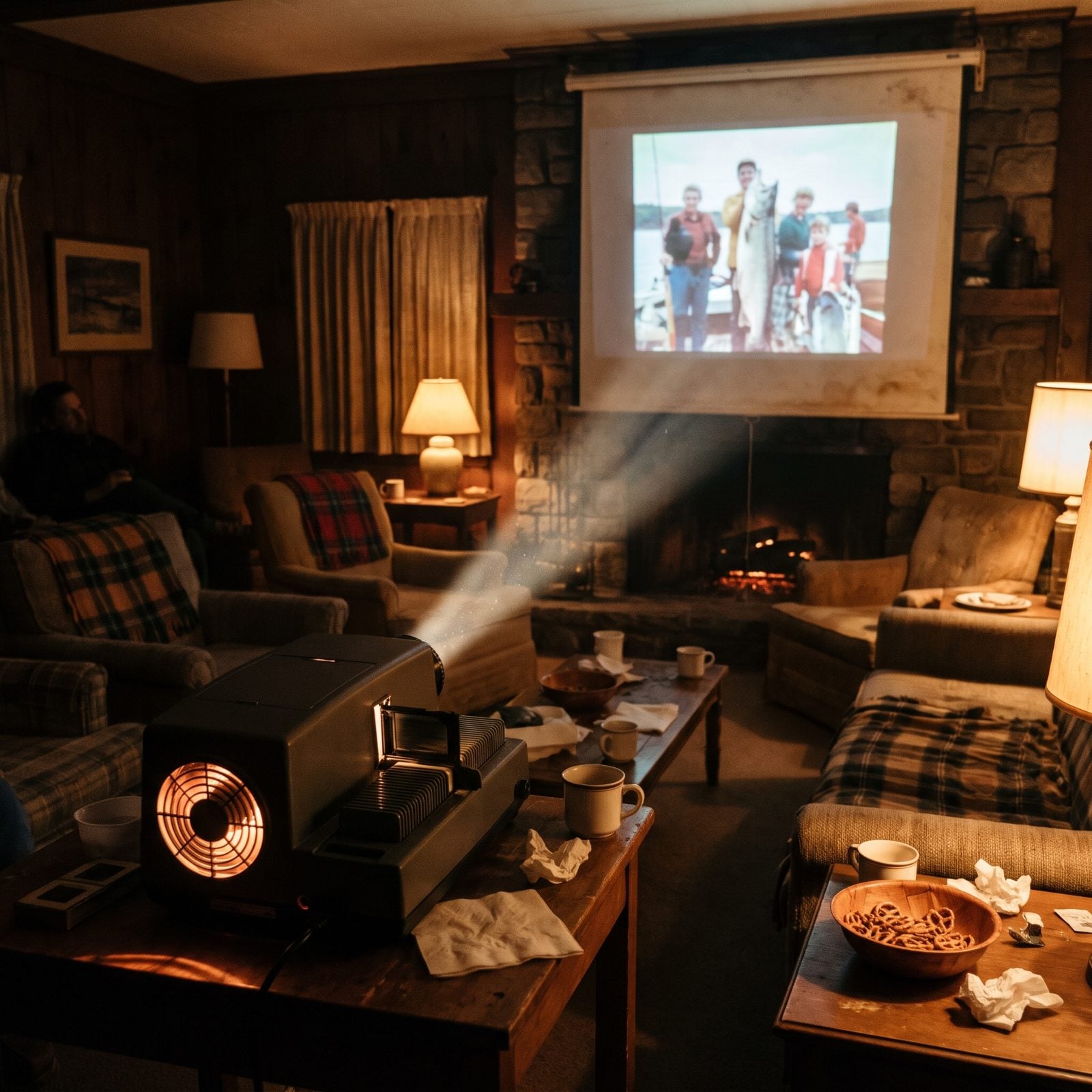
After supper the lights went down and the projector fan whirred to life. A pull-down screen, a straight tray of slides, and the lodge owner clicking through the week: a family crowded onto the boat dock, somebody holding up a huge fish nearly as tall as he was, a kid in a red sweater grinning beside it.
That chunk-click of the tray advancing was its own soundtrack. You sat in the dark with strangers and watched other people’s good days, and by week’s end those strangers weren’t strangers anymore. A phone screen glowing at the table never built a room the way that old projector did.
10. The Shared Bathhouse Between the Cabin Rows
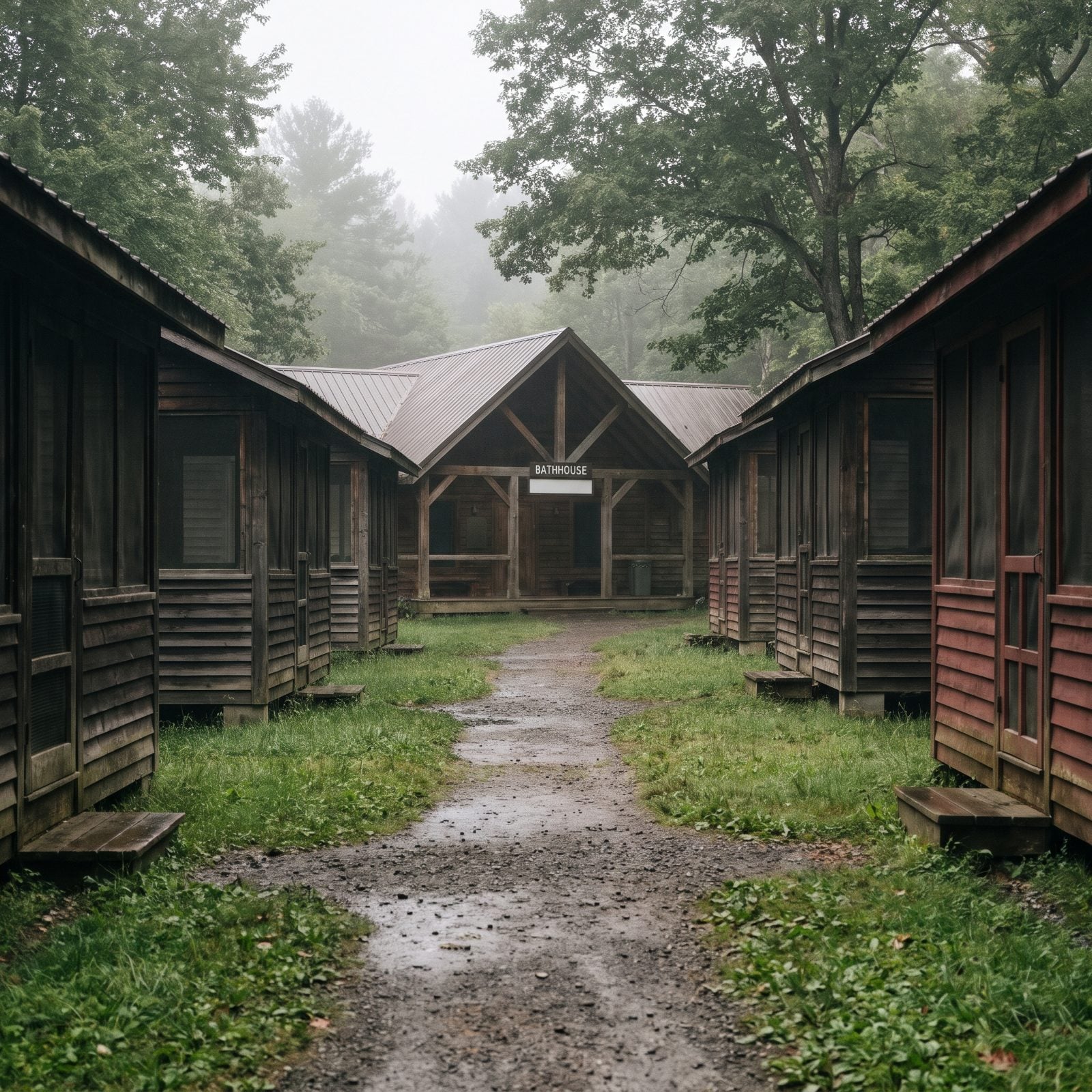
Your cabin had bunks, a table, and maybe a sink if you were lucky. No bathroom, though. For that you walked the gravel path in the dark, flashlight in one hand, toward the cinderblock-and-pine bathhouse everybody shared.
Showers ran on a coin timer or an honor system, and hot water was a rumor after 7 a.m. You learned to go early or go cold. Modern lodges put a full bath in every unit now, and nobody misses the walk. But there was something to it — bumping into the guy from cabin four at the sinks, both of you half asleep, comparing what you caught.
9. The Woodstove That Dried Your Boots and Your Socks
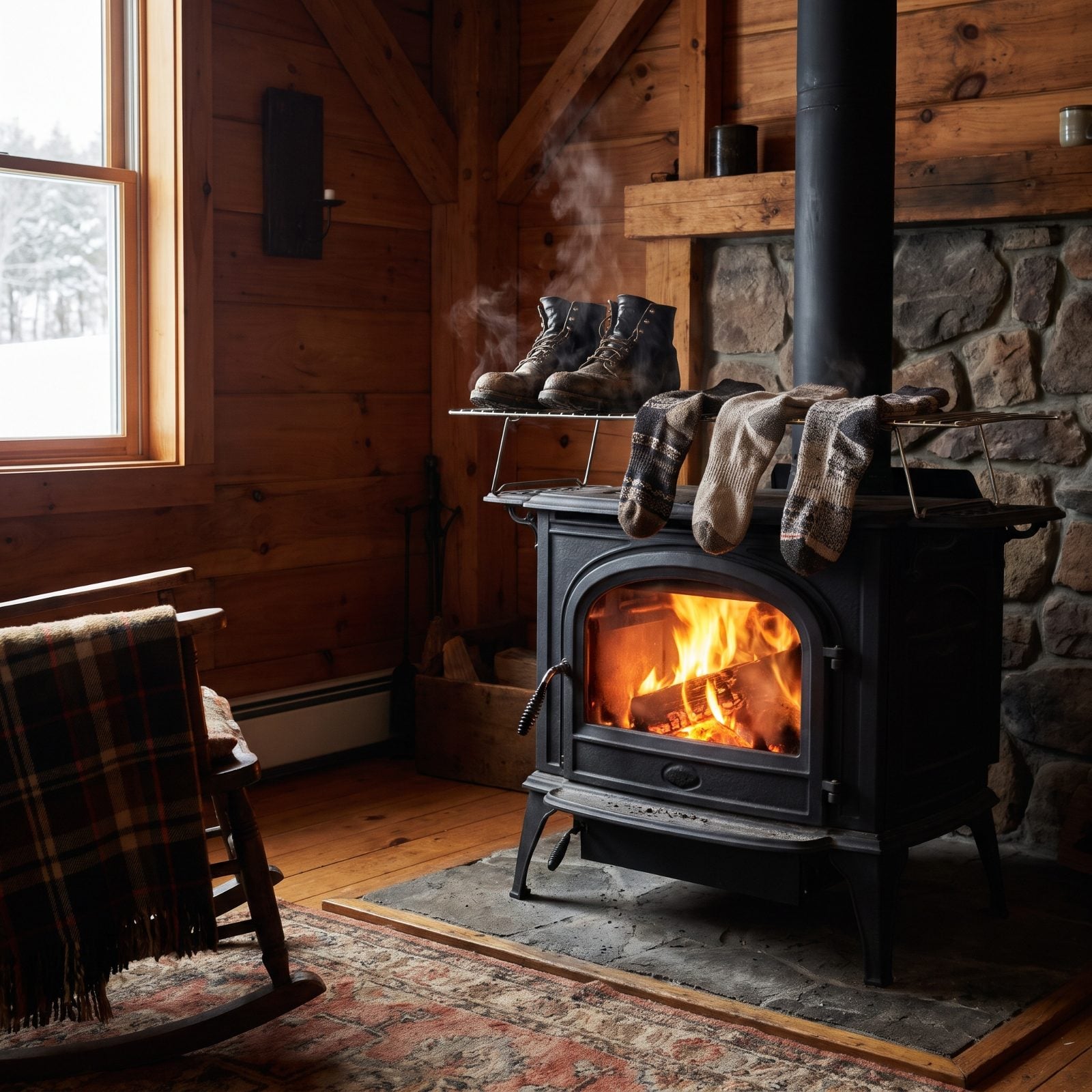
A good day of fishing in cold rain meant everything you wore came back soaked. The woodstove in the corner wasn’t just heat — it was the cabin’s clothes dryer, and by nine at night your boots sat upright on the wire rack on top of it, and your wool socks steamed where they were draped over that same rack.
You got good at reading a stove. Too much wood and your boots cracked; too little and the socks were still clammy at dawn. Electric baseboard along the wall could warm a room but never dry a boot; propane furnaces finally took over, and the whole ritual of setting out your gear and feeding the fire went with it.
8. Coleman Lanterns Hissing From the Rafters
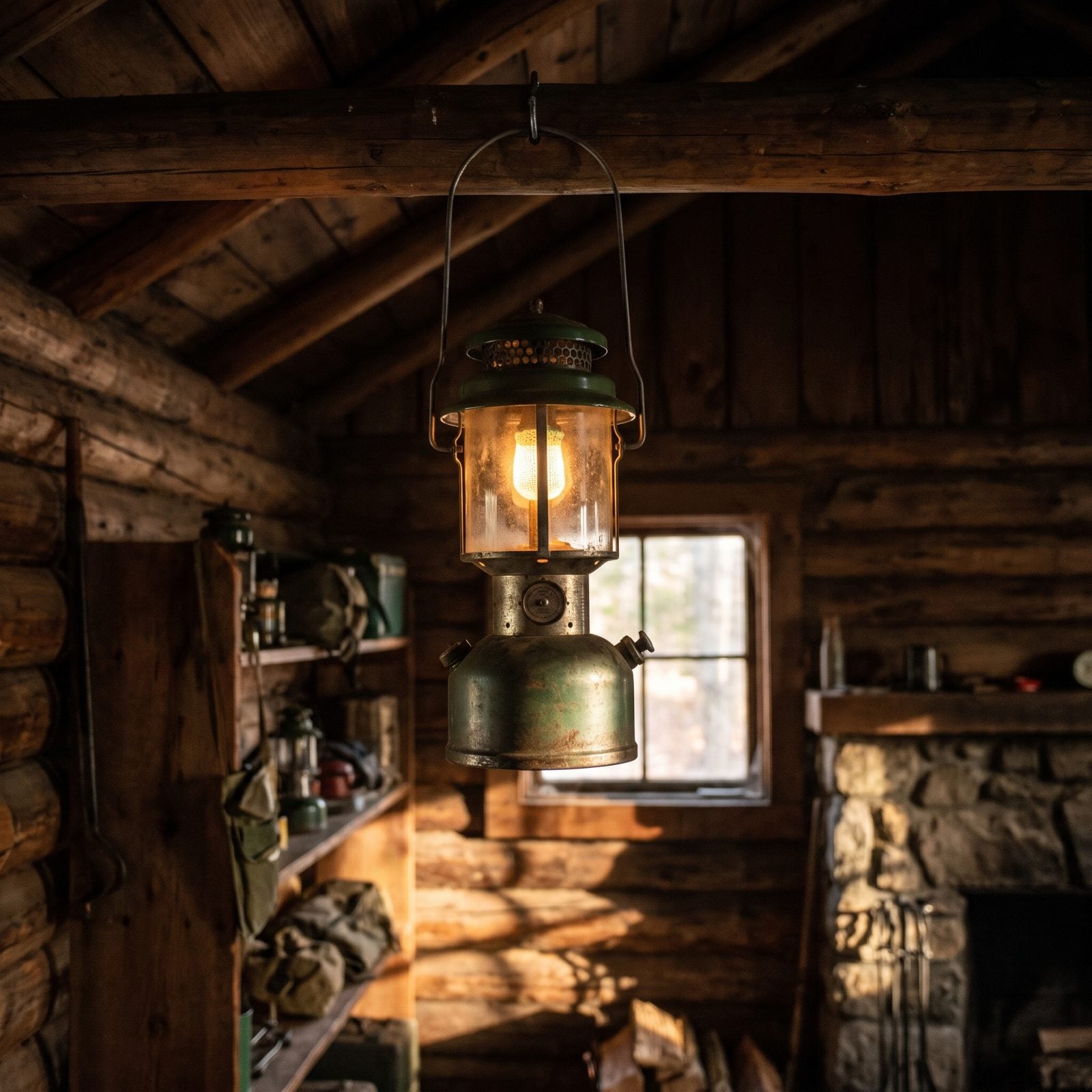
That hiss is a sound a generation grew up falling asleep to.
Before the cabins were wired, or on the nights the power was off, a Coleman lantern hanging from a rafter nail lit the whole room. You pumped it, lit the mantles, and got maybe four hours of white light per fill. The hiss never really stopped.
They threw real heat too, welcome in June and miserable in August. Pump one too hard and you could burn a fingerprint off. LED lanterns and wired cabins made them obsolete, but no battery light has ever matched that warm, living glow.
7. The Generator Curfew That Killed the Lights at Ten
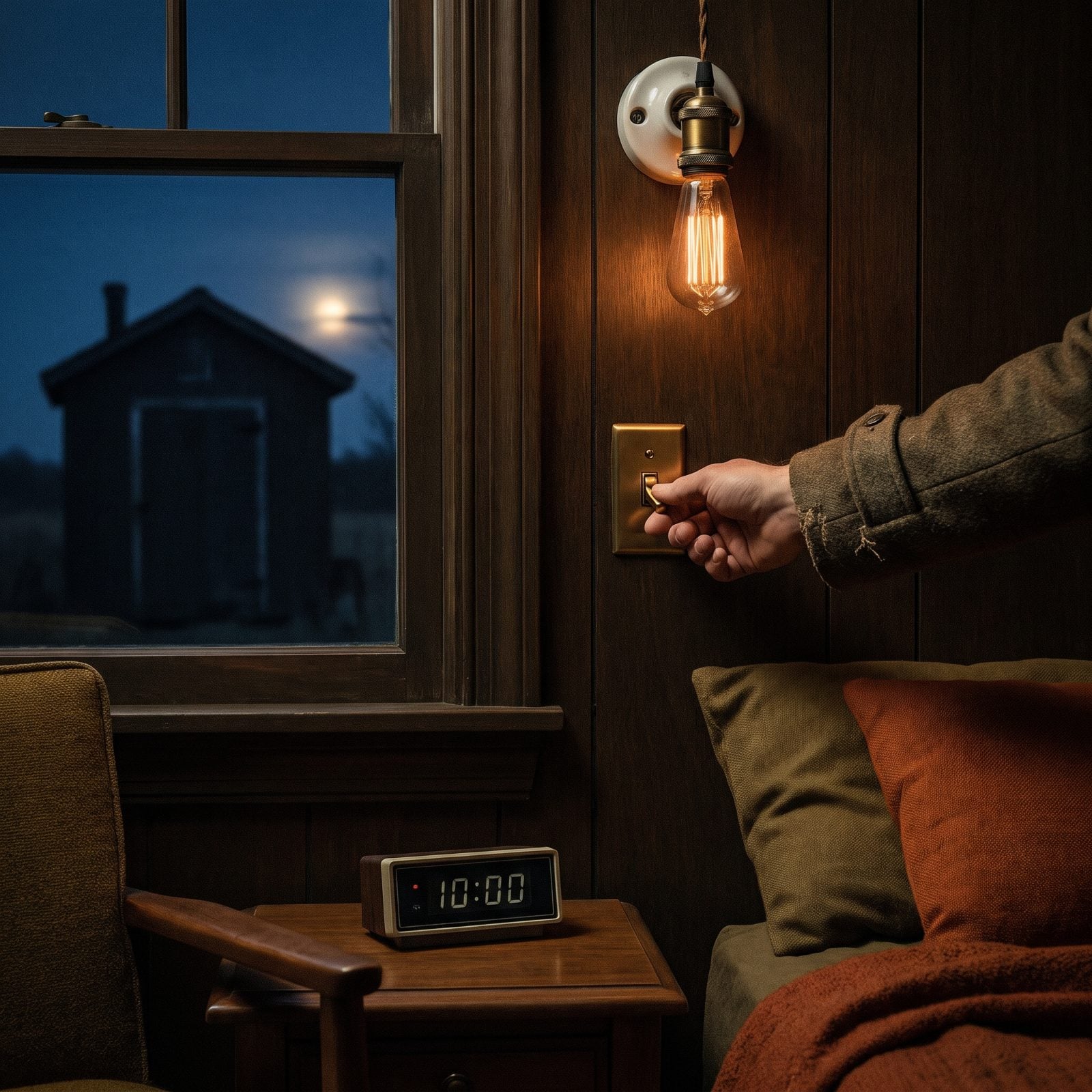
Power at a remote lodge came from one gas generator chugging away behind a shed, and running it all night burned fuel nobody wanted to haul in by boat. So the owner shut it down at a set hour. Ten o’clock, maybe eleven.
You heard it wind down, the lights browned out, and the whole camp went dark and quiet at once. Weren’t in your bunk with a flashlight ready? That was your problem. Solar banks, battery storage, and grid power ended the curfew. The forced early bedtime did more for fishing at dawn than any alarm clock ever has.
6. Galvanized Minnow Tanks Burbling at the Bait Shack
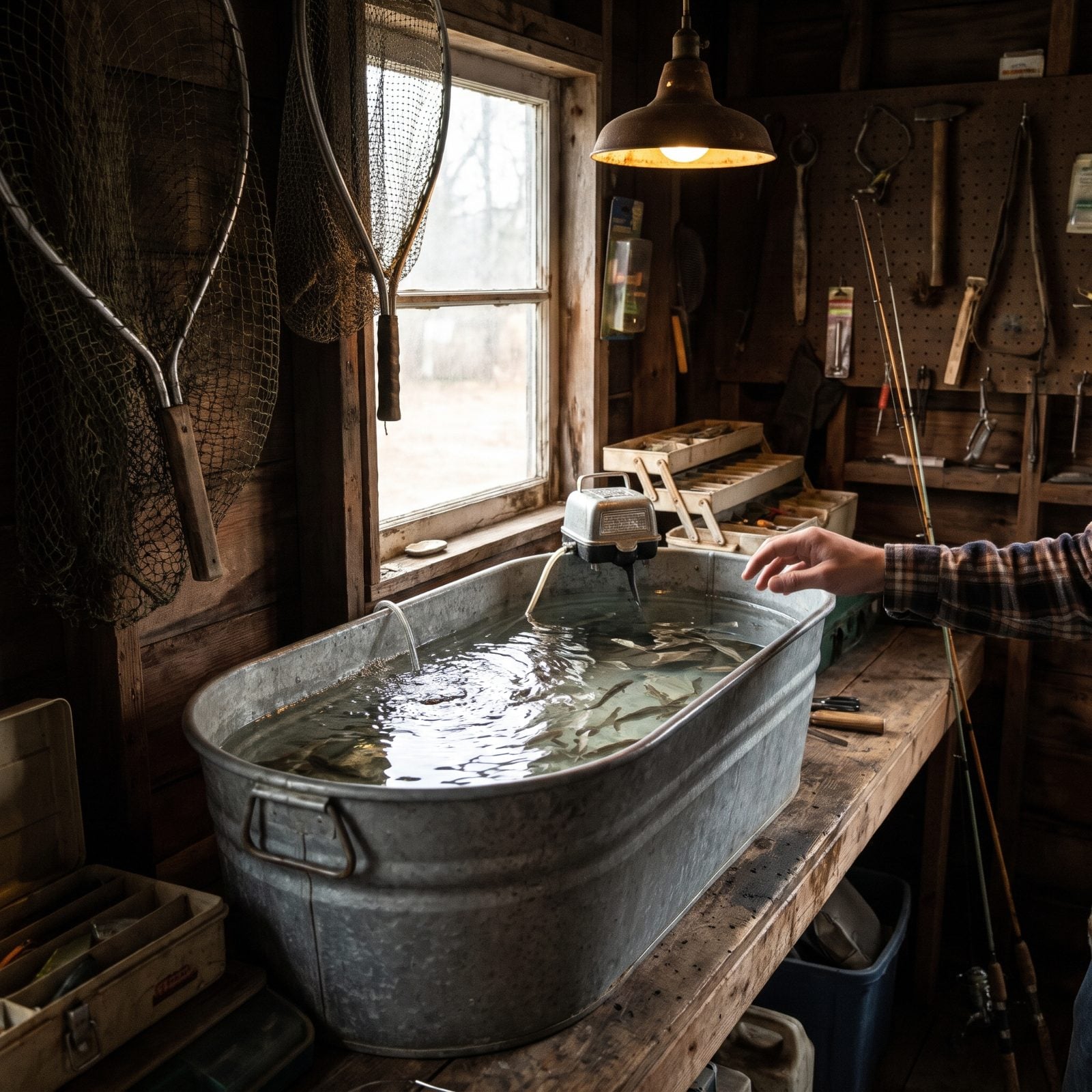
The bait shack had a sound before it had a smell. That steady burble of an aerator working a galvanized tank, keeping a few hundred shiners alive until somebody needed a dozen.
You scooped your own with a long net, counted them into a bucket, and paid by the dozen into a coffee can. The water was cold, the metal was cold, and your hand came out smelling like minnows for the rest of the morning.
Plastic tanks and aerated foam buckets replaced the galvanized ones, and plenty of lodges dropped live bait entirely once the fish-attractant plastics got good. The burble is getting rare.
5. Bulky Orange Kapok Life Jackets and Boat Cushions
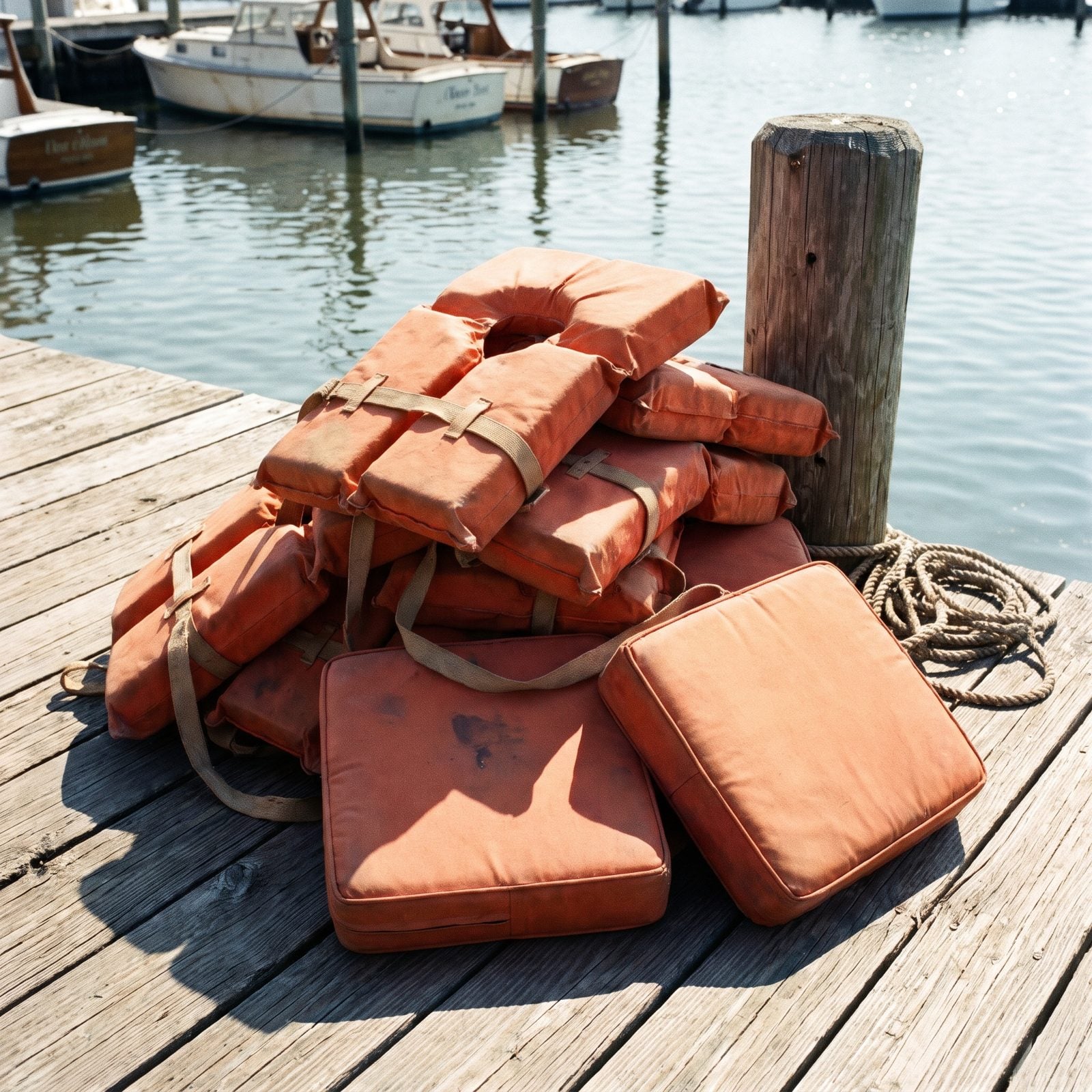
The life jackets at the dock were stiff orange blocks stuffed with kapok, a fluffy plant fiber that floated until it got waterlogged and quietly stopped. They rode up around your ears, chafed your neck, and made casting a chore. Nobody wore them unless they had to.
The square orange cushions doubled as seats and throwables, which meant they were always damp and smelled like the inside of a boat. Foam and inflatable PFDs you’ll actually keep on your body replaced both.
In a 2019 boating-safety release, a maritime safety official urged boaters to replace decades-old lifejackets, and the release warns that kapok filling can soak up water and make the wearer sink.
4. Bare Aluminum Rental Boats With Hard Bench Seats
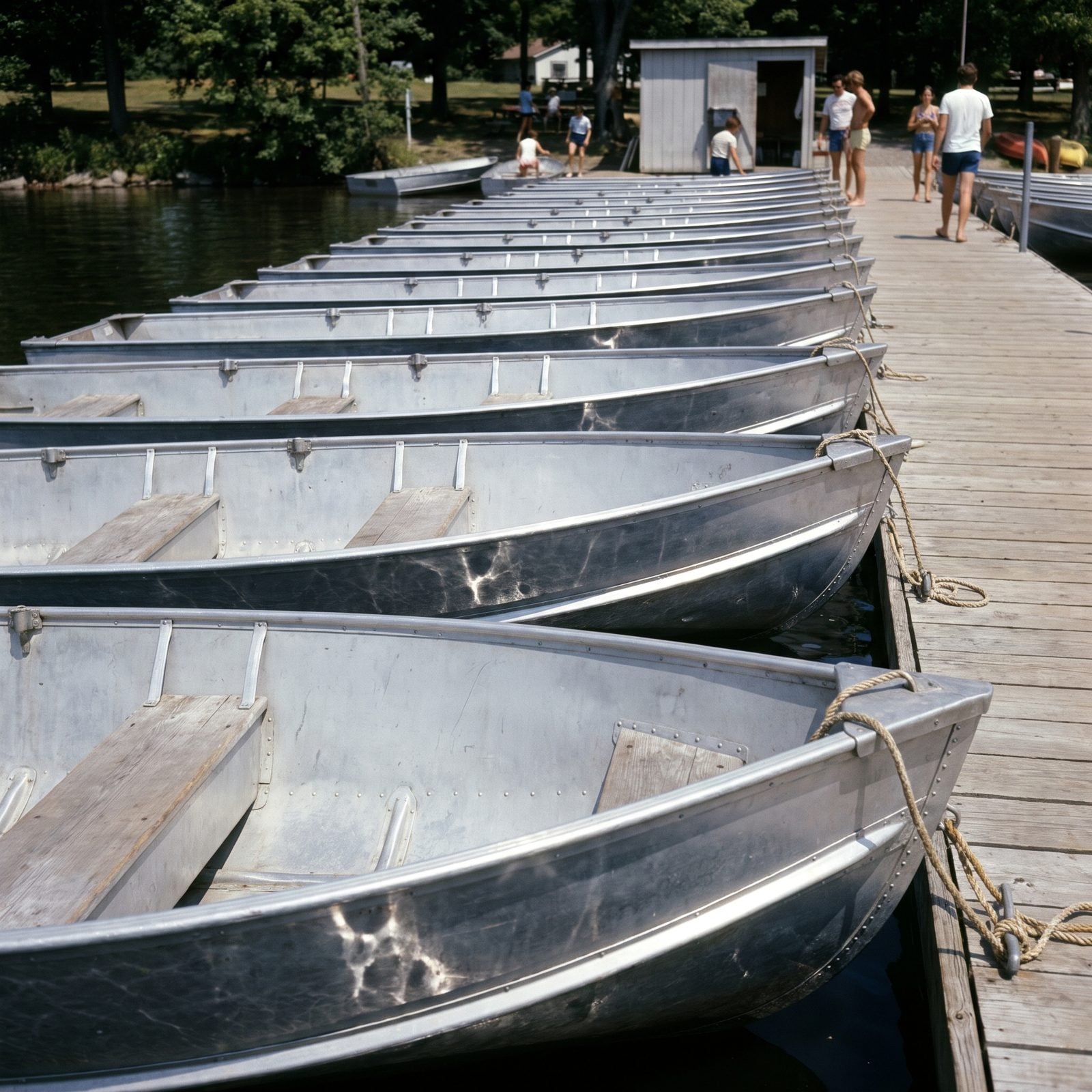
The rental fleet was a row of identical 14-foot aluminum boats, unpainted and riveted, baking silver in the sun. The bench seats were bare wooden planks. By noon they were hot enough to cook on, and by evening they held the day’s cold.
No casting deck, no swivel seats, no livewell. You sat on a bench, you bailed with a coffee can, and you got where you were going. Modern rentals come with padded seats, pedestal chairs, and sometimes a trolling motor. The old tin boats were indestructible, which is why a fair number of them are still floating.
3. Pull-Start Tiller Outboards and Red Metal Fuel Tanks
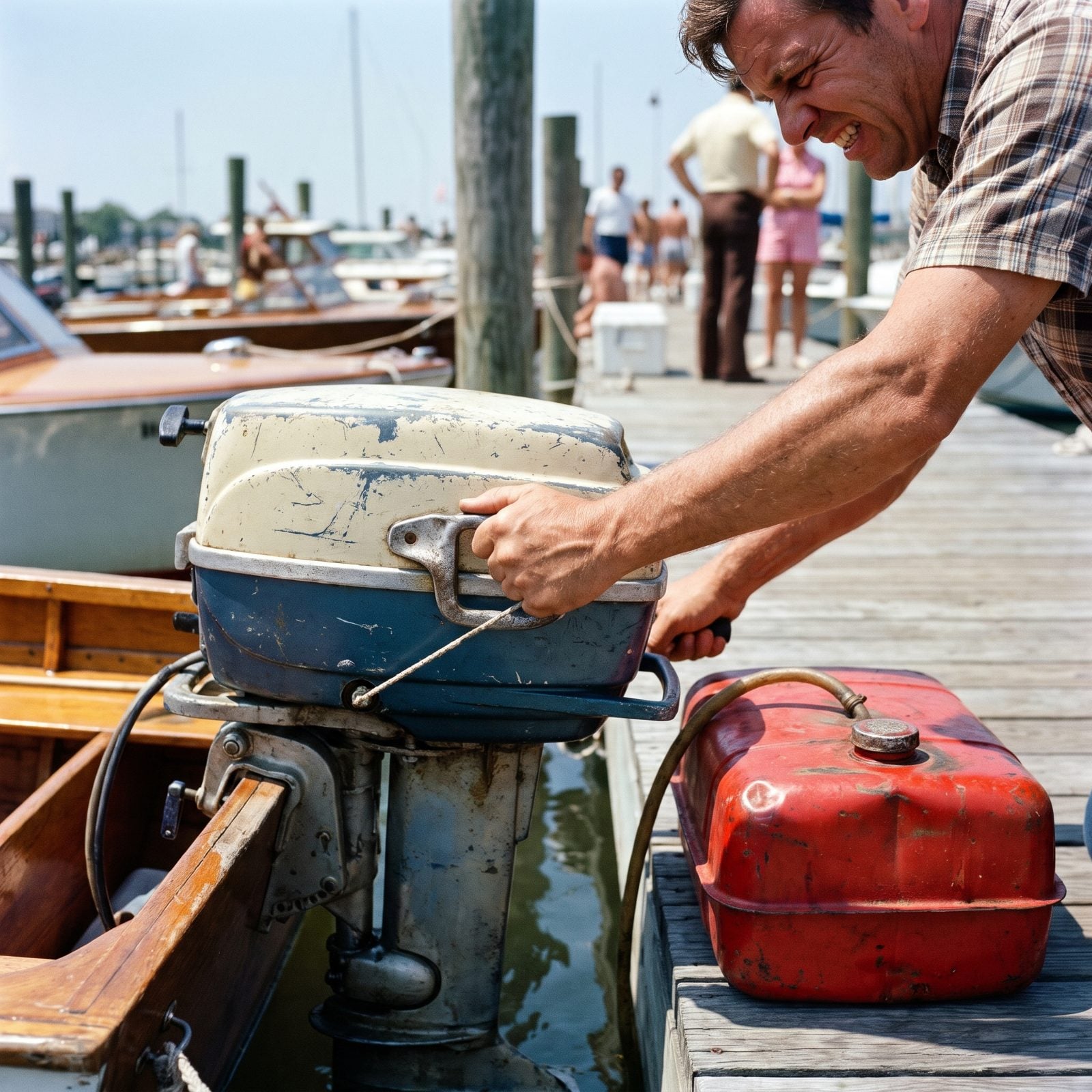
You pulled until it caught or until your shoulder gave out. Usually three pulls, sometimes thirty, especially on a cold morning when the choke needed coaxing.
These were small two-stroke tillers that ran on a gas-oil mix and sat connected to a squat red steel tank by a fuel line with a rubber primer bulb. You squeezed the bulb to prime, choked it, pulled, and prayed. The blue smoke was part of the deal.
Four-stroke motors with electric start and clean burn made them nearly extinct at lodges. Quieter, and they idle forever. But there’s no mistaking the smell of a two-stroke firing up at first light.
2. The Hand-Pumped Gas Dispenser on the Dock
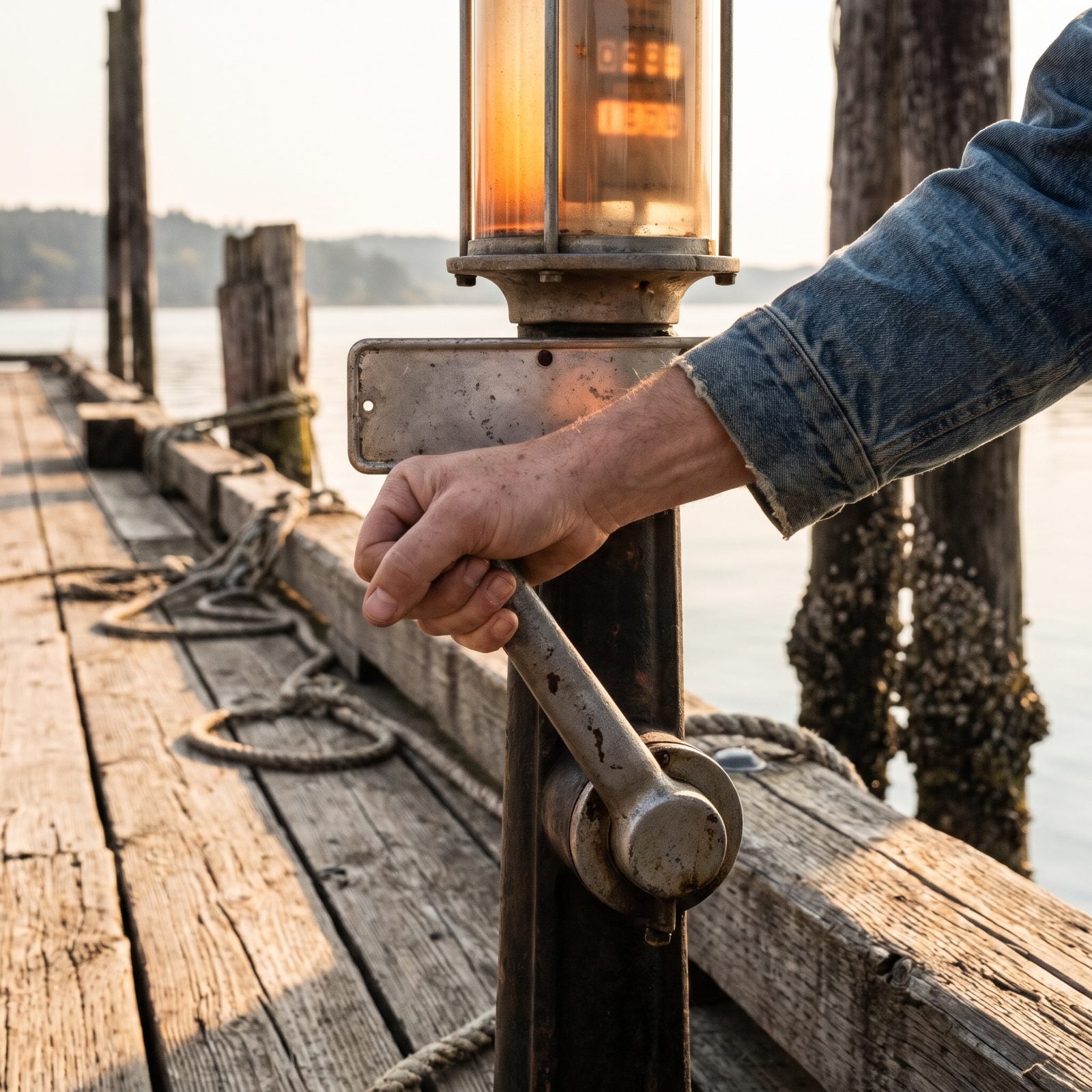
Fueling up meant walking to the dock and working a lever-action gas pump by hand, the kind with a glass cylinder up top where gallon markings showed what you were getting. You pumped it up, let it gravity-feed into your tank, and settled with the owner on the honor of a scribbled number.
No card reader, no receipt, no attendant. Lodges run proper marine fuel stations with metered dispensers and spill containment now, which the lakes are better for. The hand pump was slow, leaked a little, and ran entirely on trust.
1. Paper Lake Charts and a Brass Compass in the Guide Boat
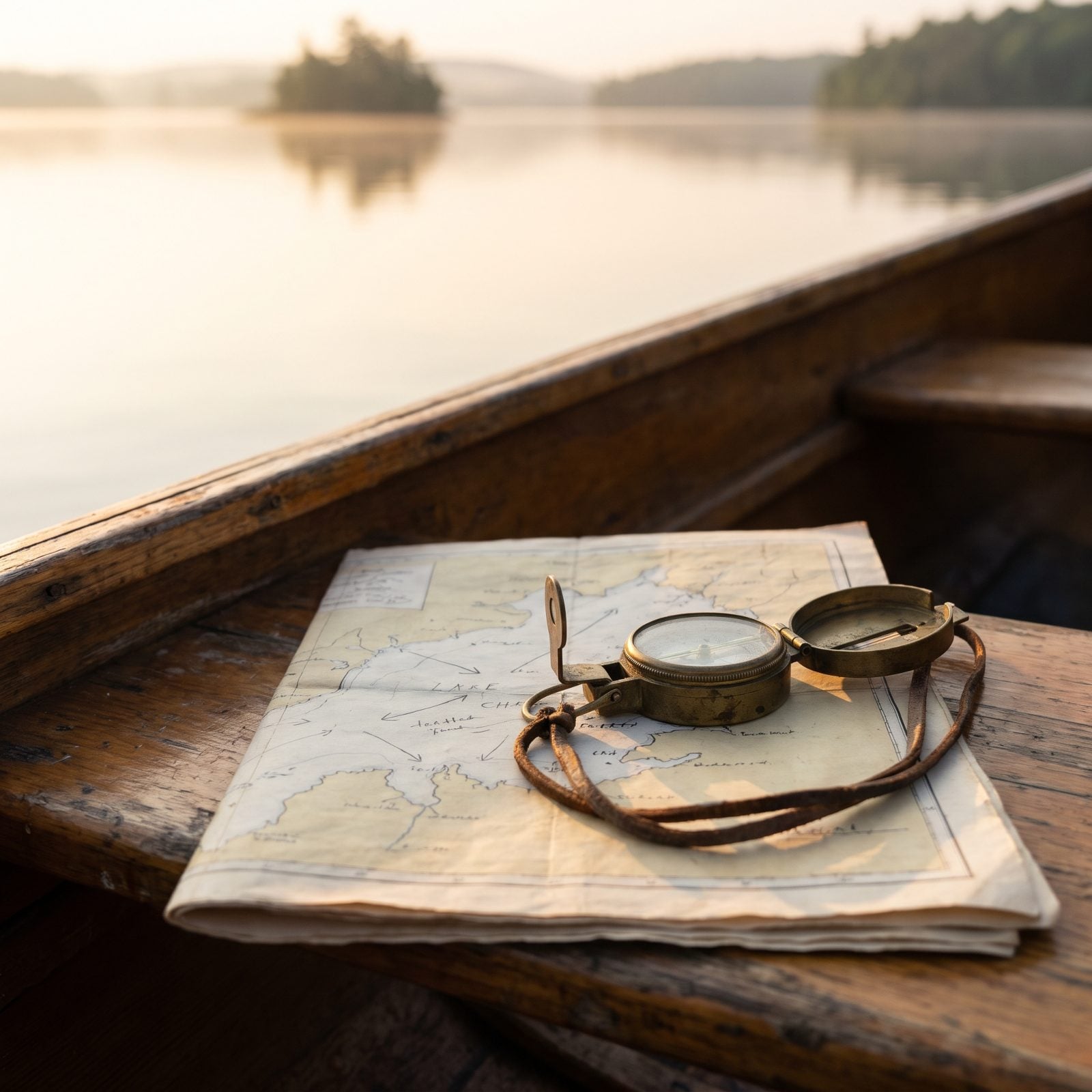
A good guide carried the lake in two places. Folded in a dry bag, a paper chart marked up in pencil with his own notes — the reefs and weedlines and the spot where the walleye stacked up in August. And in his head, where the real map lived.
The brass compass rode on the bench for the mornings fog rolled in and the far shore vanished. You trusted the needle and your count of the minutes, and you came out where you meant to.
GPS and sonar mapping put a lit screen in every boat. Faster, sharper, no argument there. But the guide who knew a lake by paper and feel knew it in a way the screen can’t teach.
The screen tells you where you are. The old guide knew where the fish were, and those were never the same thing.