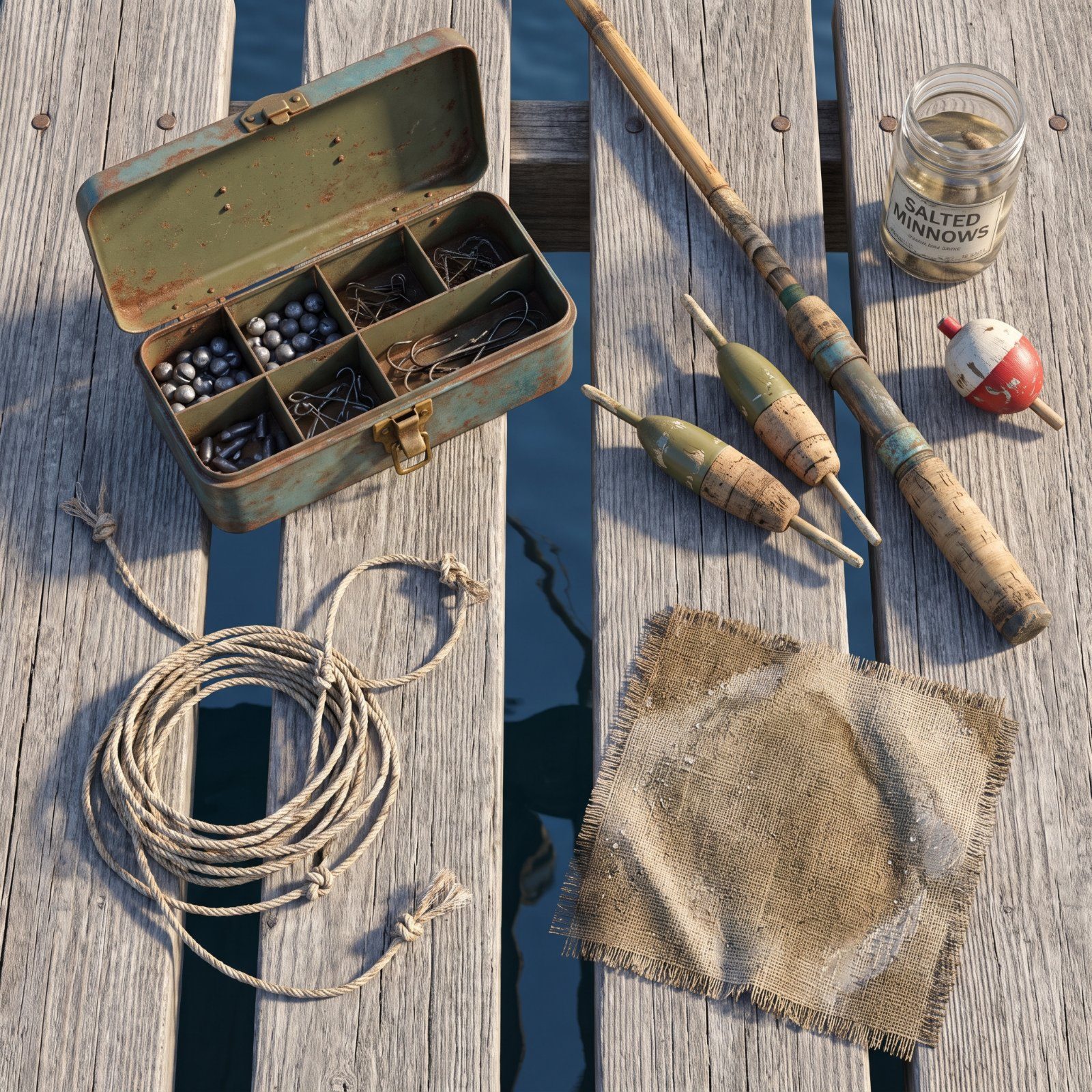
The best fish-finder on the lake belonged to a man who never owned a battery. He read the shoreline like a page, dropped a knotted string to feel the bottom, and filled a stringer while the bass boats idled past with their screens glowing. Those methods didn’t die when sonar showed up — they went underground, passed along at bait shops and from the back of aluminum skiffs. Most cost nothing. Most work anywhere there’s water and a little patience. These are the odd ones, the tricks that sound too simple to matter until the rod bends and you finally understand why the old-timers never bothered to upgrade.
Please note that some of the images in this article were created with the assistance of AI.
39. Relocate Submerged Structure by Crossing Two Pairs of Shoreline Landmarks

Before GPS waypoints, anglers triangulated. You find a brush pile or rock hump once, then look to shore and pick two landmarks that line up — say a dead pine stacked over a barn roof. Turn ninety degrees and find a second pair on the opposite bank. Where those two imaginary lines cross is your spot, and it never drains a battery or loses signal under a cliff.
Most people blow it by picking lazy landmarks. A single tree in a wall of trees is useless. You want two objects at different distances that stack, because depth gives you a true line instead of a wide guess.
38. Place a Tiny Dropper Shot Near the Hook to Reveal Lift Bites
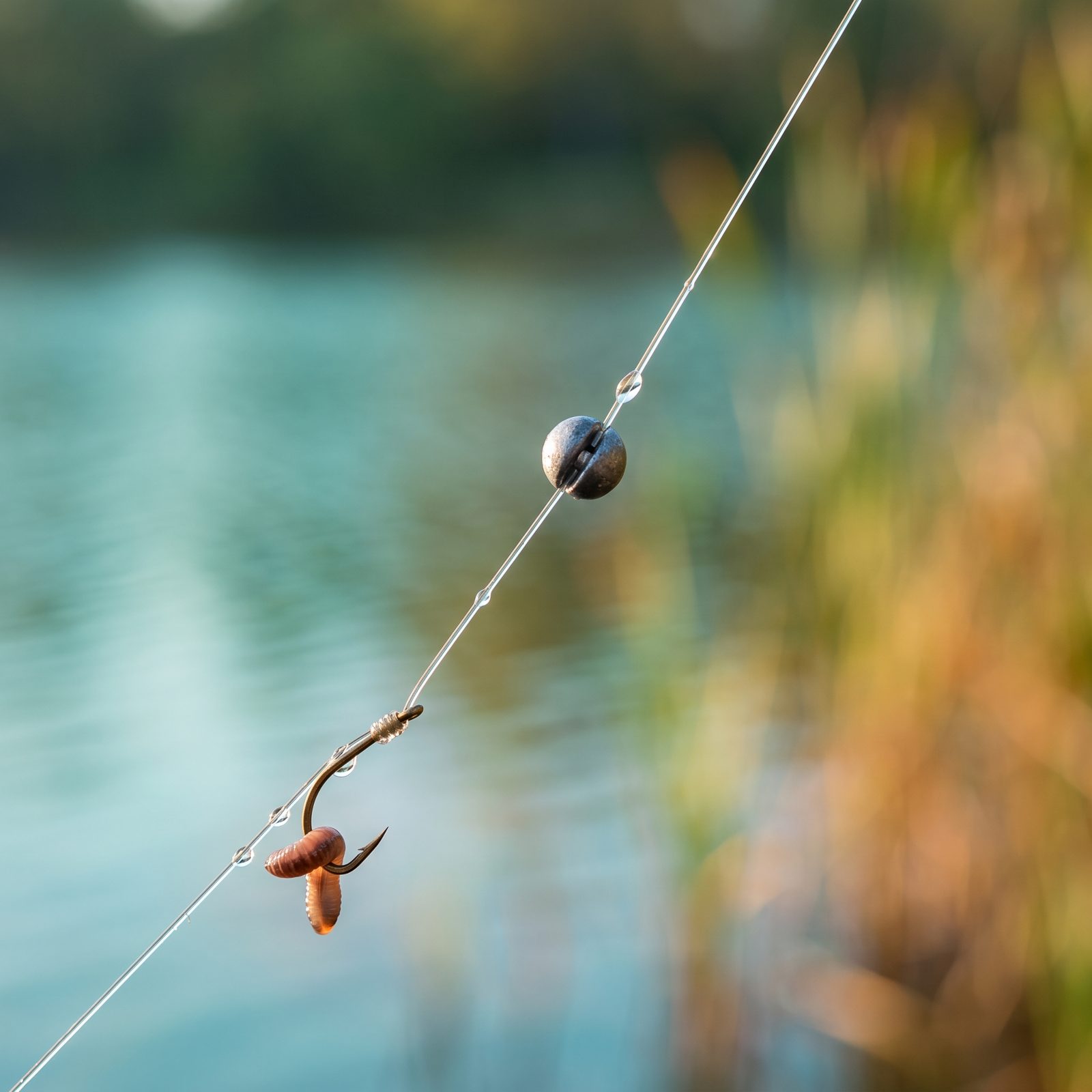
Some fish don’t pull. They lift. A panfish or a finicky walleye will mouth the bait and swim up, which takes all the tension off your line and makes the bite vanish into slack. You never feel the tap because there is no tap.
So crimp a single split-shot a few inches above the hook. When a fish lifts the bait, that weight tells on it — your line goes slack, or your rod tip springs back up instead of bending down. That upward slackening is the bite. Learn to read it and you’ll catch fish you used to miss all day long.
37. Pack Chum Inside a Mud Ball for a Slow Bottom Release
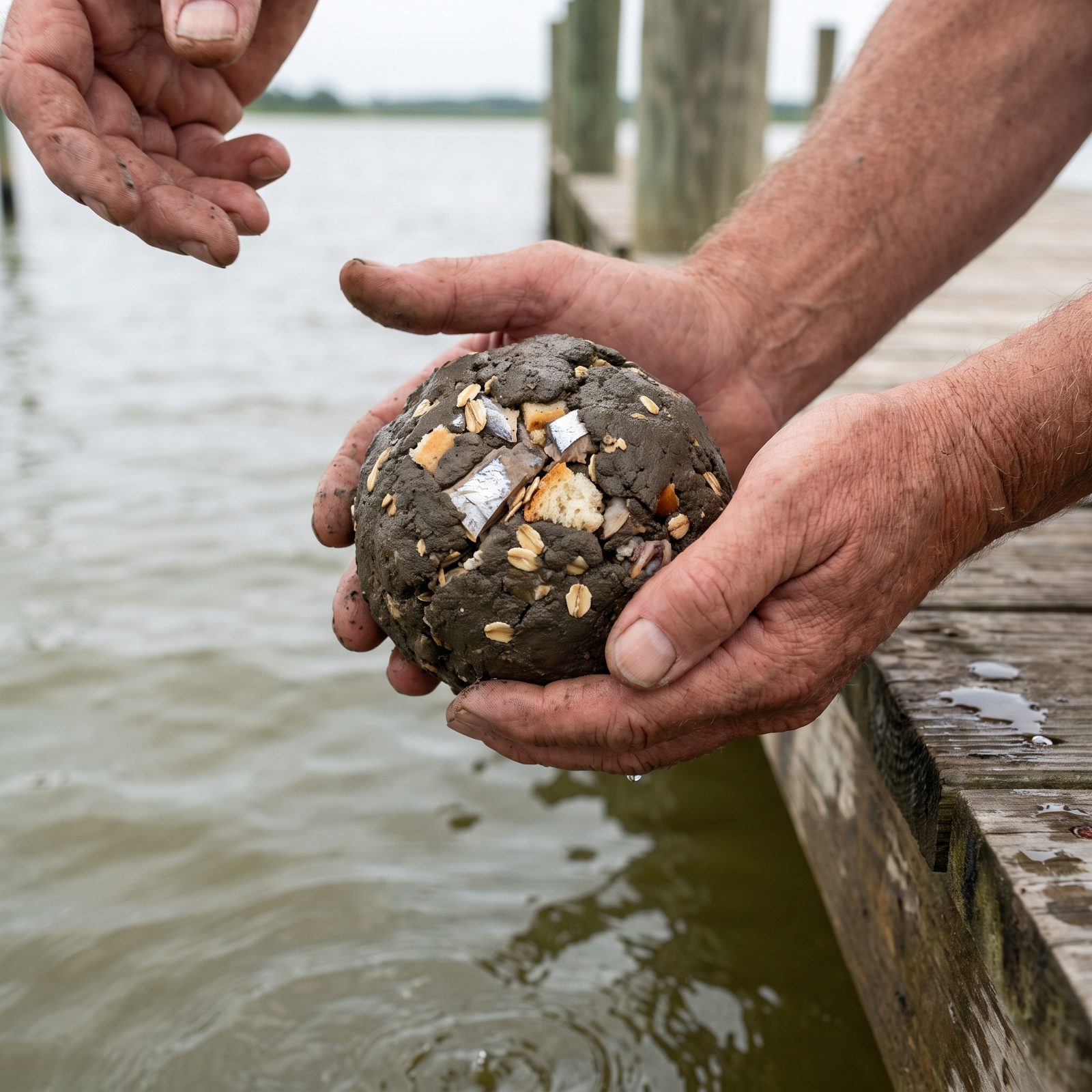
Throw loose chum and the current scatters it in seconds, pulling fish away from your hook instead of toward it. The old fix is a fistful of stiff mud or clay packed around your chum — crushed baitfish, oats, bread, whatever you’ve got — rolled into a ball and dropped where you’re fishing.
The ball sinks fast and sits on the bottom. As it dissolves it bleeds scent in a tight column right under your bait, holding catfish and carp in the exact square foot you want them. River clay is best because it packs tight and breaks down slow. Sandy mud falls apart on the way down and wastes the whole effort.
36. Probe Unfamiliar Water with a Knotted Sounding Cord
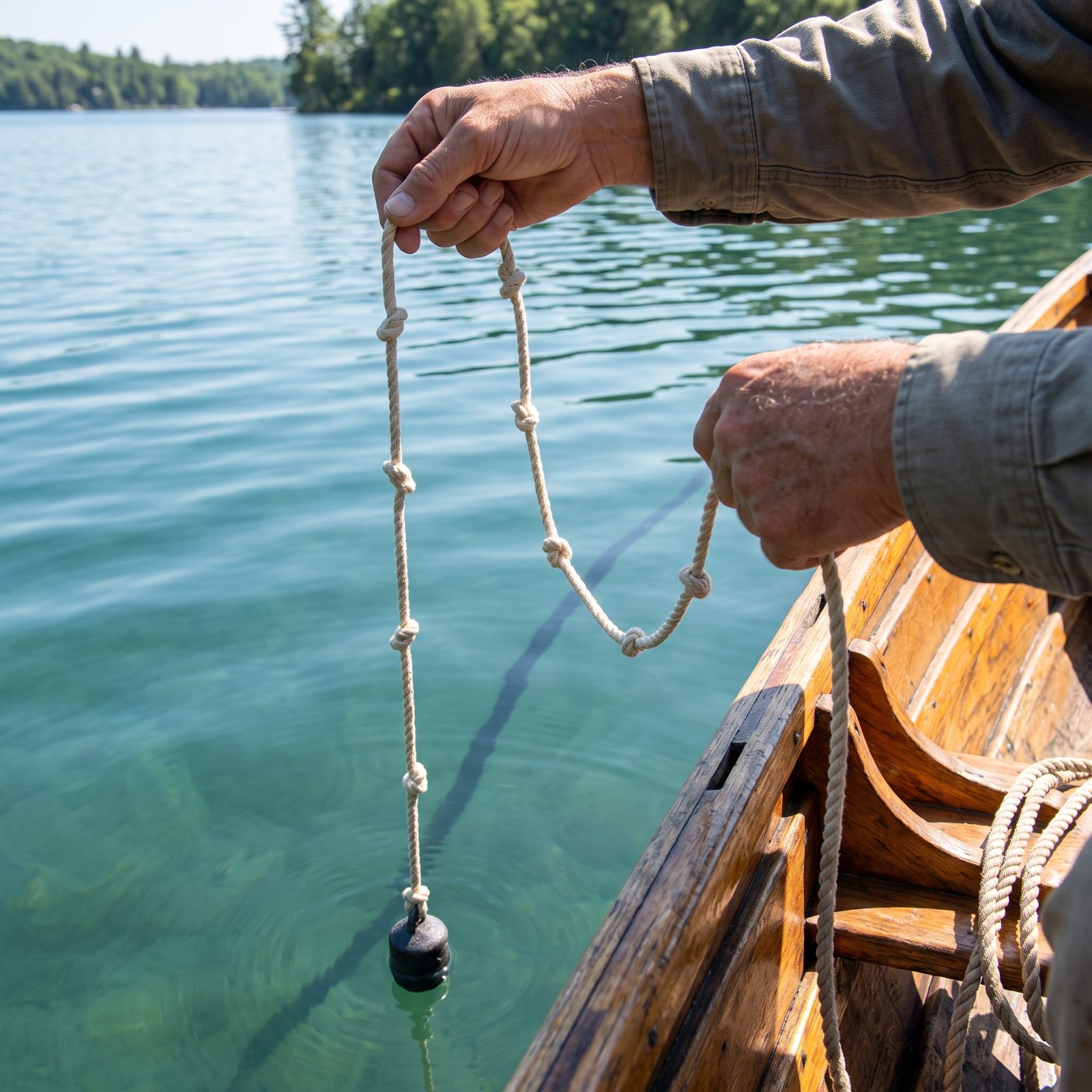
A lead weight on a knotted string will map a bottom as well as any screen, and it tells you something sonar skips: what the bottom feels like. Tie knots at known intervals — a foot apart, or a yard — add a heavy sinker, and lower it over the side. Count the knots as they pass your hand and there’s your depth.
Now smear a little tallow or soft wax on the flat bottom of the sinker before you drop it. Whatever the weight touches sticks: sand, gravel, mud, shell. You learn not just how deep but what kind of bottom you’re over, which for a lot of species matters more than the depth ever will.
35. Attach Sinkers with Rubber Bands to Avoid Nicking the Line
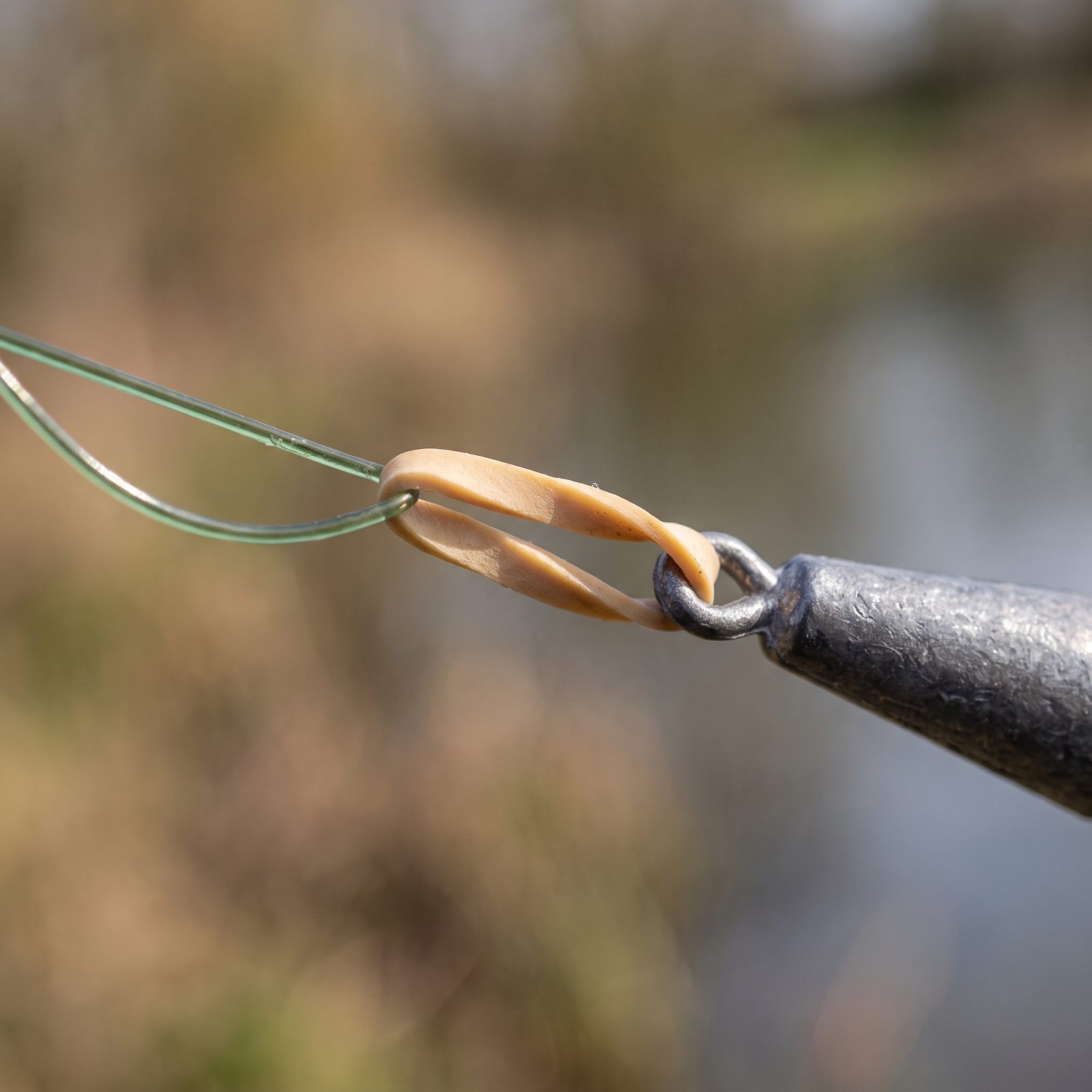
Crimped split-shot bites into the line. You pinch it on, the lead flattens the mono, and a weak spot is born right where you’ll lose a good fish. A loop of small rubber band fixes that. Thread the line through, twist the band around a few times, and hook it over the sinker’s eye or body.
Two bonuses nobody mentions. The rubber band gives before your line does, so a hung-up sinker often pops free and you save the whole rig. And you can slide or swap weights in seconds without re-tying. Keep a few orthodontic bands in your tackle box and watch your break-offs drop.
34. Blacken Shiny Sinkers with Candle Soot Around Wary Fish
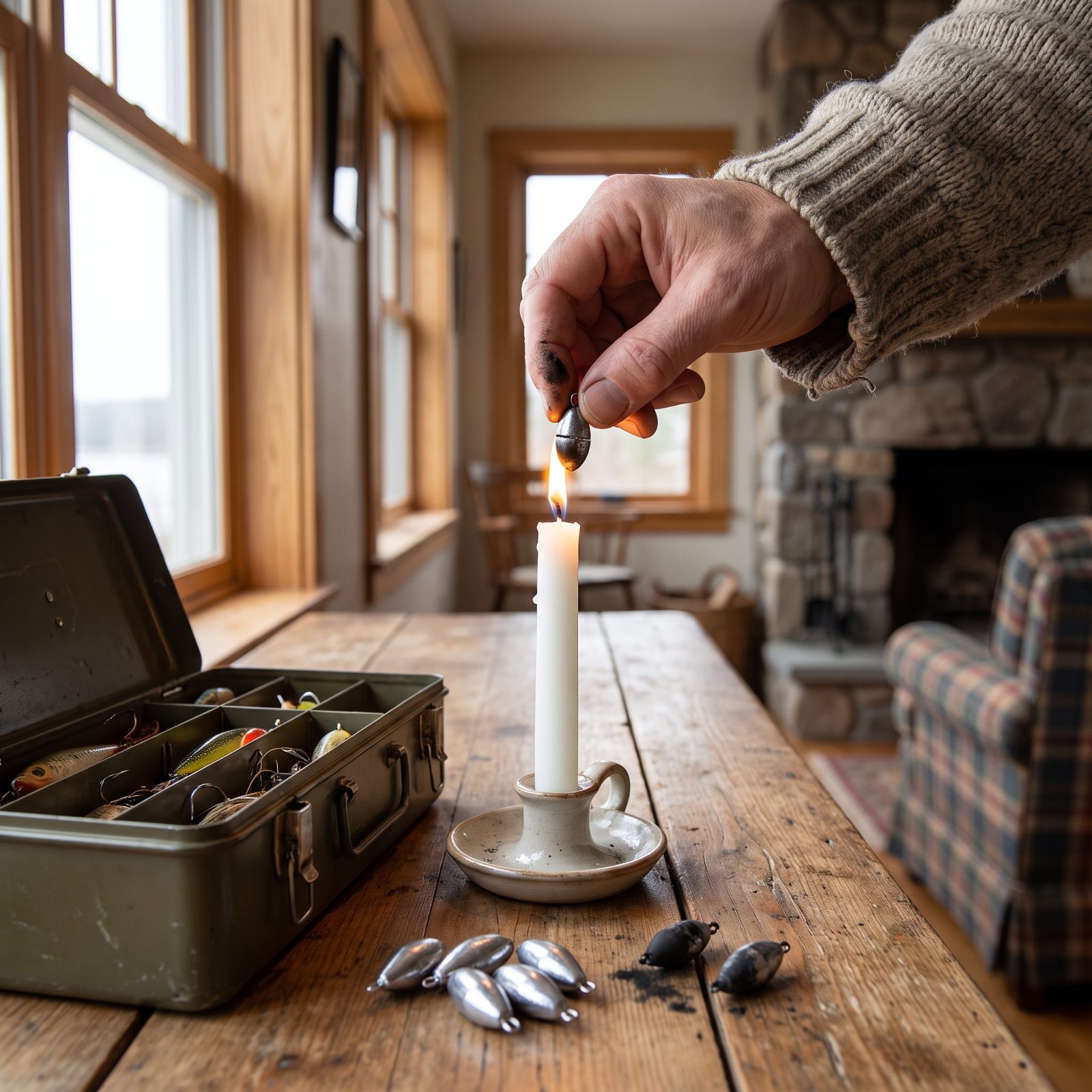
In clear, pressured water, a bright sinker flashes like a warning sign. Trout and smallmouth especially will shy off a glinting piece of lead a foot from the bait. Hold the sinker over a candle flame for a few seconds and let the soot coat it flat black. No flash, no spook.
It wipes off eventually, and it’ll never win a beauty contest. But on a sunny day over gravel, that dull coat can be the difference between a tapping rod and a dead one. A touch of mud rubbed on works in a pinch, though soot lasts longer.
33. Charm Nightcrawlers Up with a Vibrating Wooden Stake
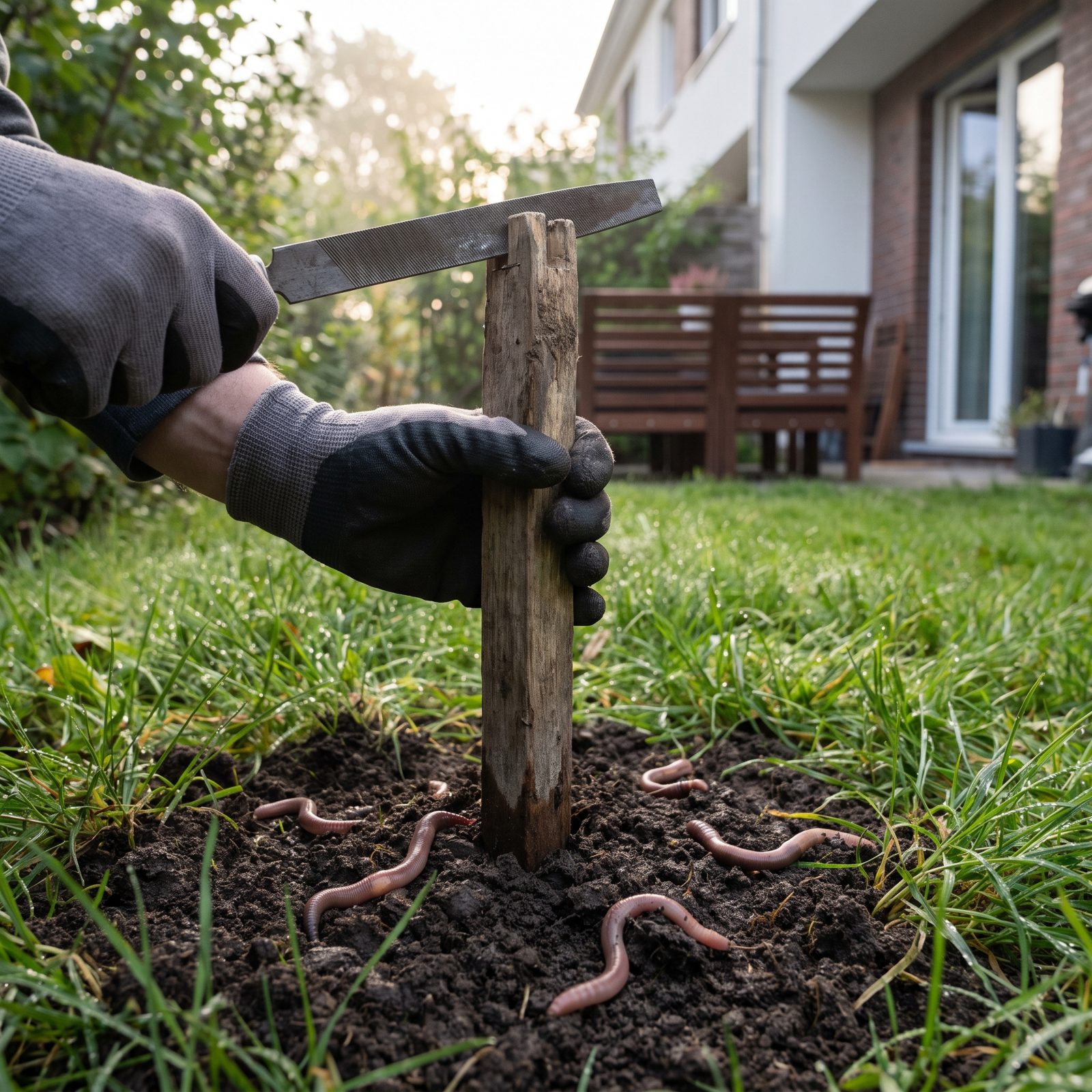
Drive a notched wooden stake into damp ground and rub a flat iron or a second stick across the top. The grunting vibration travels down into the soil, and nightcrawlers come boiling up out of the dirt to escape it. Folks call it worm grunting, or worm fiddling — it’s real documented behavior, not a tall tale.
The leading theory? The vibration mimics a digging mole, the worm’s worst enemy, so they flee toward the surface. Works best after rain when the ground’s soft. You’ll fill a coffee can with bait faster than you could ever dig it.
32. Drape Damp Burlap Over a Bait Bucket for Evaporative Cooling
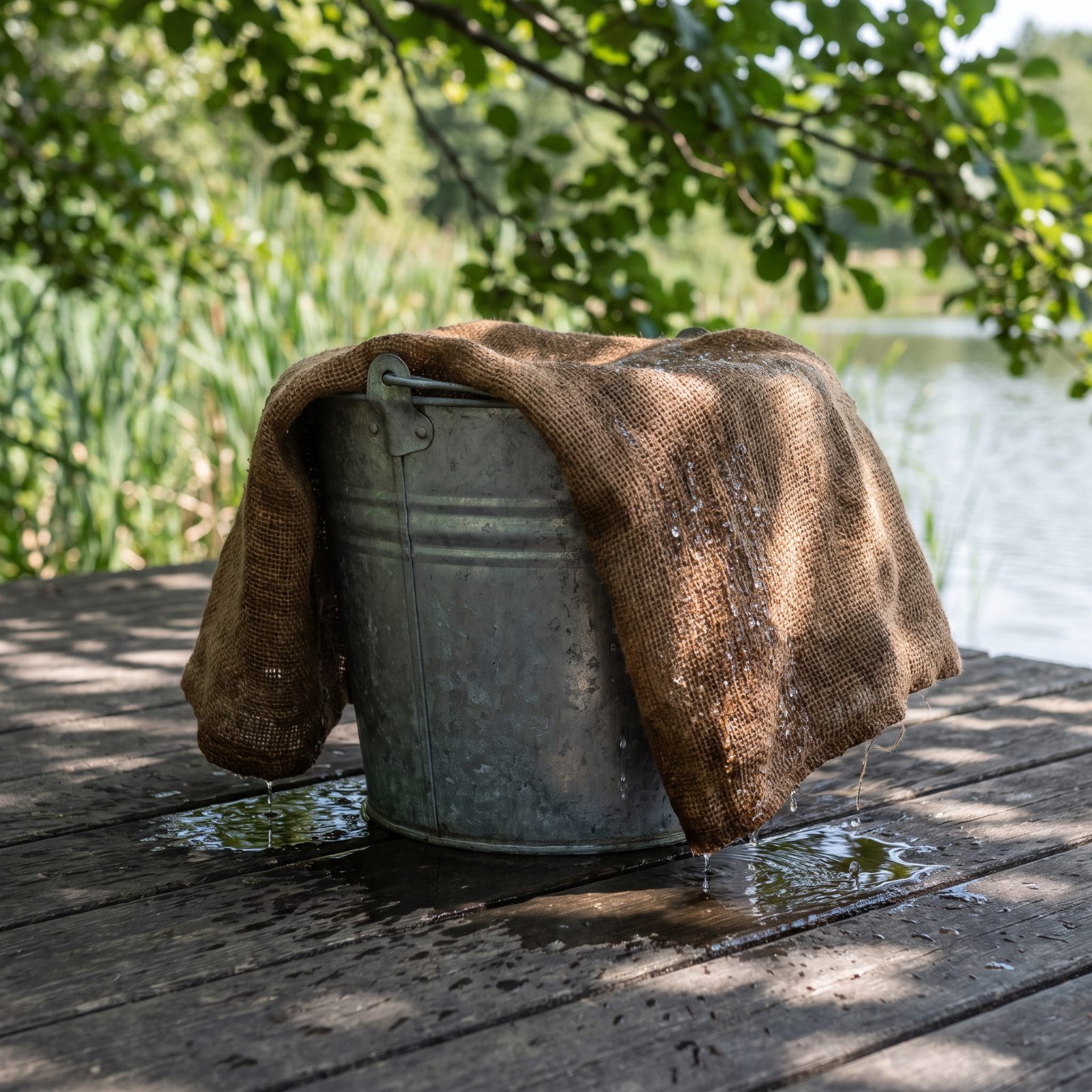
Warm water kills minnows fast, and dead minnows catch nothing. Before coolers, baitmen kept their shiners lively with a soaked burlap sack laid over the bucket. As the water evaporates off the burlap it pulls heat with it, dropping the bucket several degrees below the surrounding air.
Same physics that keeps a canvas water bag cool on a fence post. Keep the sack wet, keep the bucket in the shade, and your bait stays frisky through a hot afternoon. Costs nothing, weighs nothing, and your minnows wiggle when it counts.
31. Use a Goose-Quill Float to Reveal the Faintest Bites
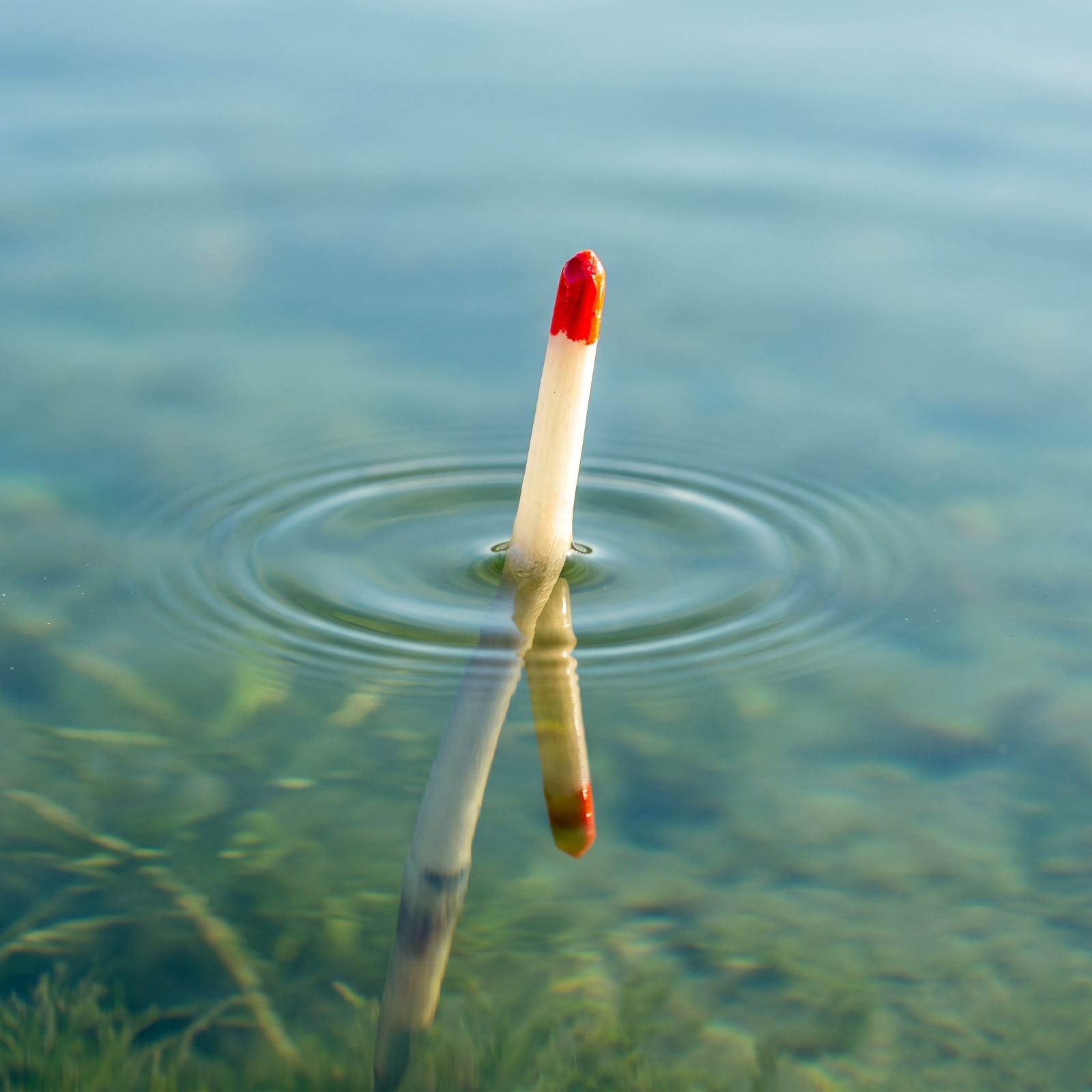
A fat plastic bobber hides small bites. It takes a solid pull to move all that buoyant plastic, so the gentle taps of a crappie or a bream never register. A hollow goose-quill float, shotted so a few inches of quill stand above water, is a different animal entirely.
The slightest nibble pulls that fine quill tip down or lays it flat on its side. You’ll see bites you’d never feel. English coarse anglers have fished quill floats for centuries for exactly this reason, and for finesse panfishing in still water, nothing store-bought beats one.
Set it so a few inches of quill show. A fish only has to move a feather’s worth of weight, and you’ll watch that red tip vanish without a sound.
30. Salt Leftover Minnows to Make Durable Cut Bait
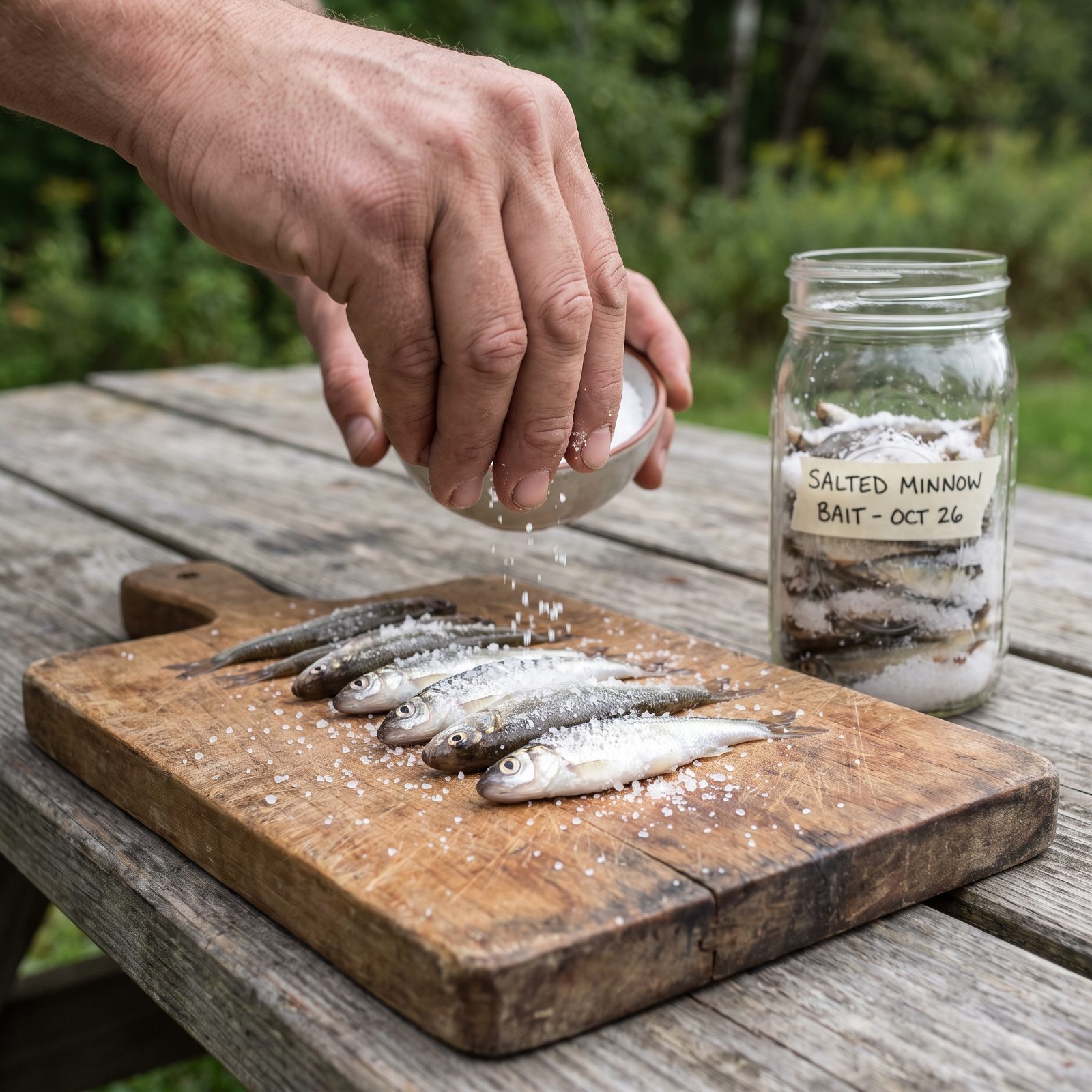
Don’t dump your leftover minnows at the dock. Layer them in a jar with coarse salt and you turn soft, spoiling baitfish into tough cut bait that keeps for months in the fridge. The salt draws out moisture and firms the flesh, so it stays on the hook through hard casts and nibbling bait-stealers.
Salted minnows and cut strips stay on far better than fresh, and the brine actually seems to pique catfish and bottom feeders. A jar in the tackle shed is cheap insurance — you’re never stuck without bait on a morning when the shop is closed. So salt your leftovers and quit wasting fish.
29. Cure Salmon or Trout Eggs with Borax
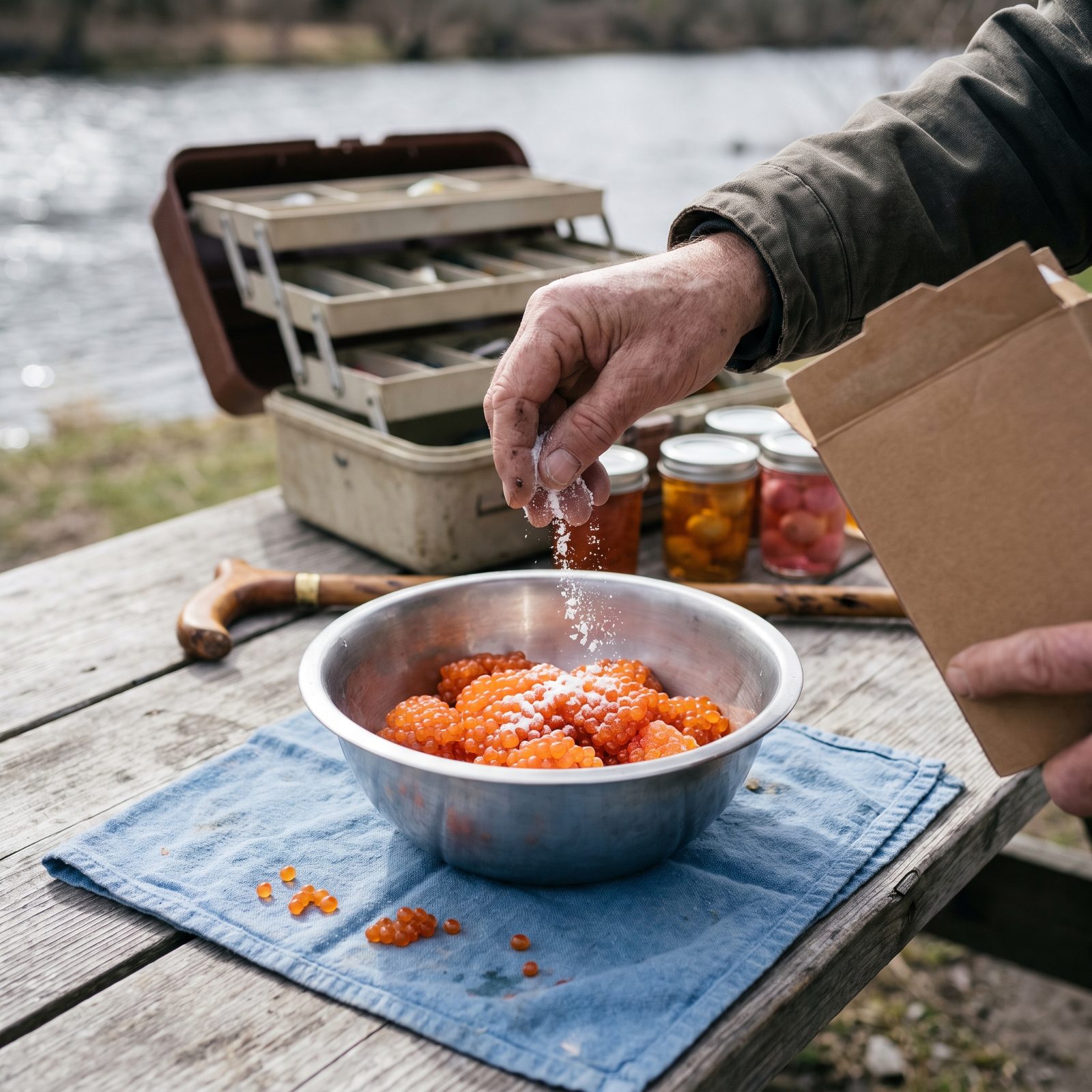
Fresh roe falls apart on the hook. A cast or two in, it’s a pale smear and the drift-fish want nothing to do with it. Borax fixes that by pulling the moisture out and toughening the skin on each egg, so you end up with a cluster that stays put through a dozen bounces along the gravel.
No cooking. Pat the skein dry, lay it in a tray, sprinkle borax over both sides, and leave it overnight in the fridge. The eggs firm up and hold their color for weeks in a jar.
28. Add a Strip of Bacon Rind as a Tough Lure Trailer
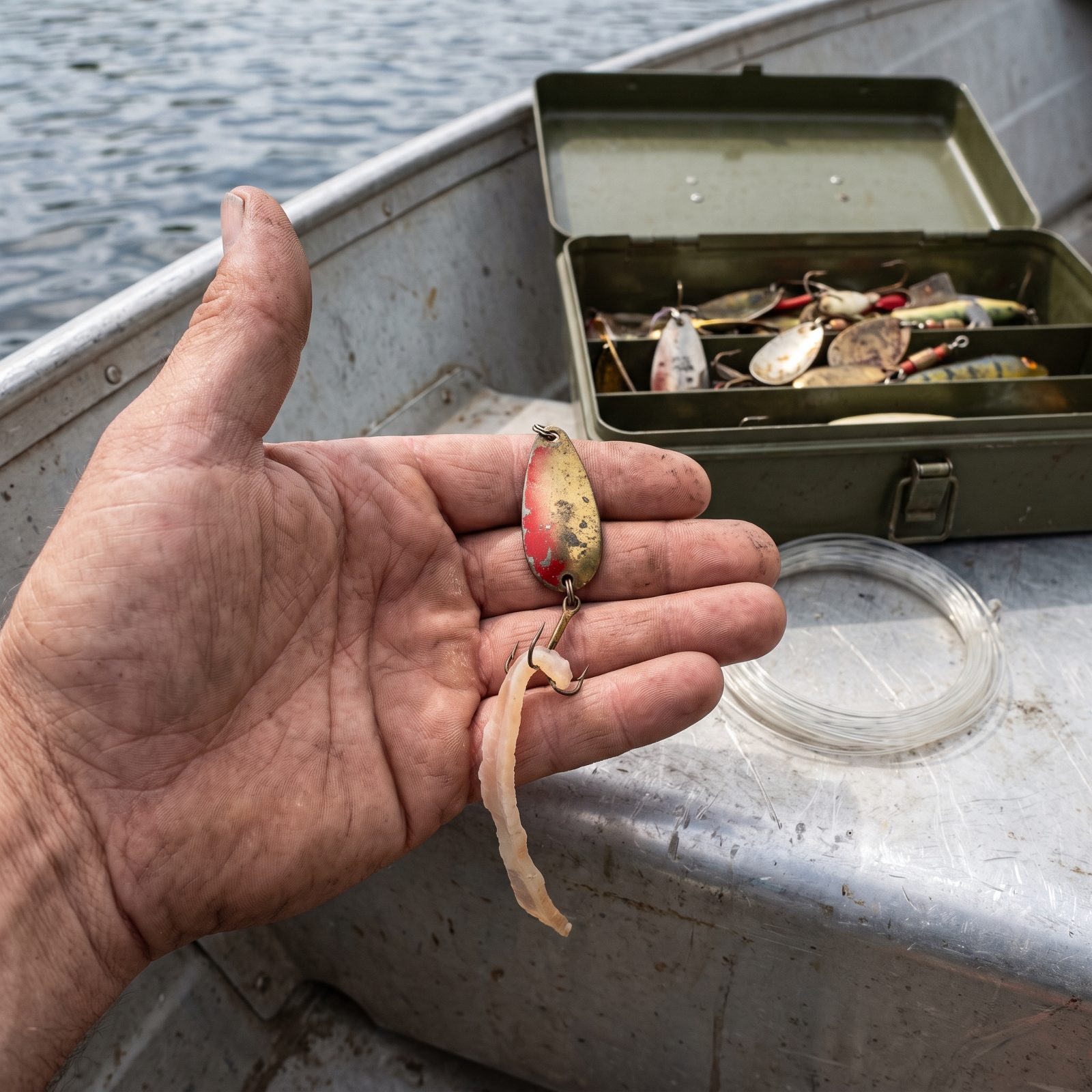
Natural meat trailers nearly disappeared when soft plastics took over, and that’s a shame. A strip of bacon rind, pale and tough, outfishes any plastic grub you’ll clip on. Fish chew it, fight on it, and it’s still hanging there for the next one.
Thread a wide strip several inches long onto the back hook of a spoon or spinner. You get a slow wiggle, a bit of scent, and that pale flutter that makes a following fish finally commit. Trim bacon rind into strips, salt them down, and they’ll keep in a jar on the boat all season.
27. Cut Unscented Bar Soap into Cubes for Catfish Bait
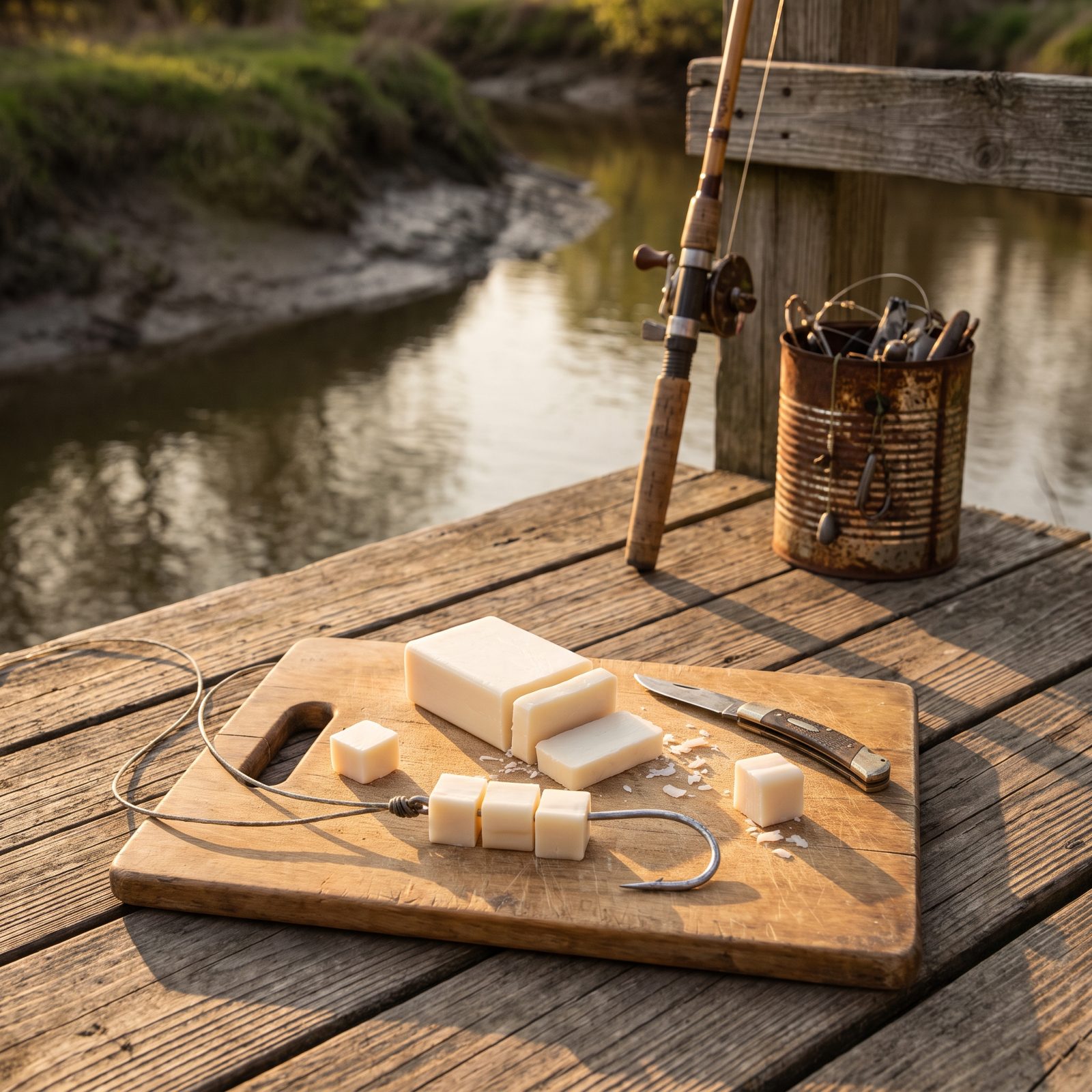
It sounds like a joke until a channel cat inhales it. Cheap unscented bar soap, cut into half-inch cubes, has pulled catfish out of slow rivers for generations. The fats in old tallow soap break down in warm water and leave a scent trail cats will hunt right down.
Thread a few cubes onto a big hook and fish them on the bottom in summer. It stays put far better than liver and won’t melt off the first cast. Go with lye-based soaps — the modern moisturizing bars loaded with perfume don’t do much of anything.
26. Wrap Chicken Liver in Stocking Mesh to Keep It on the Hook
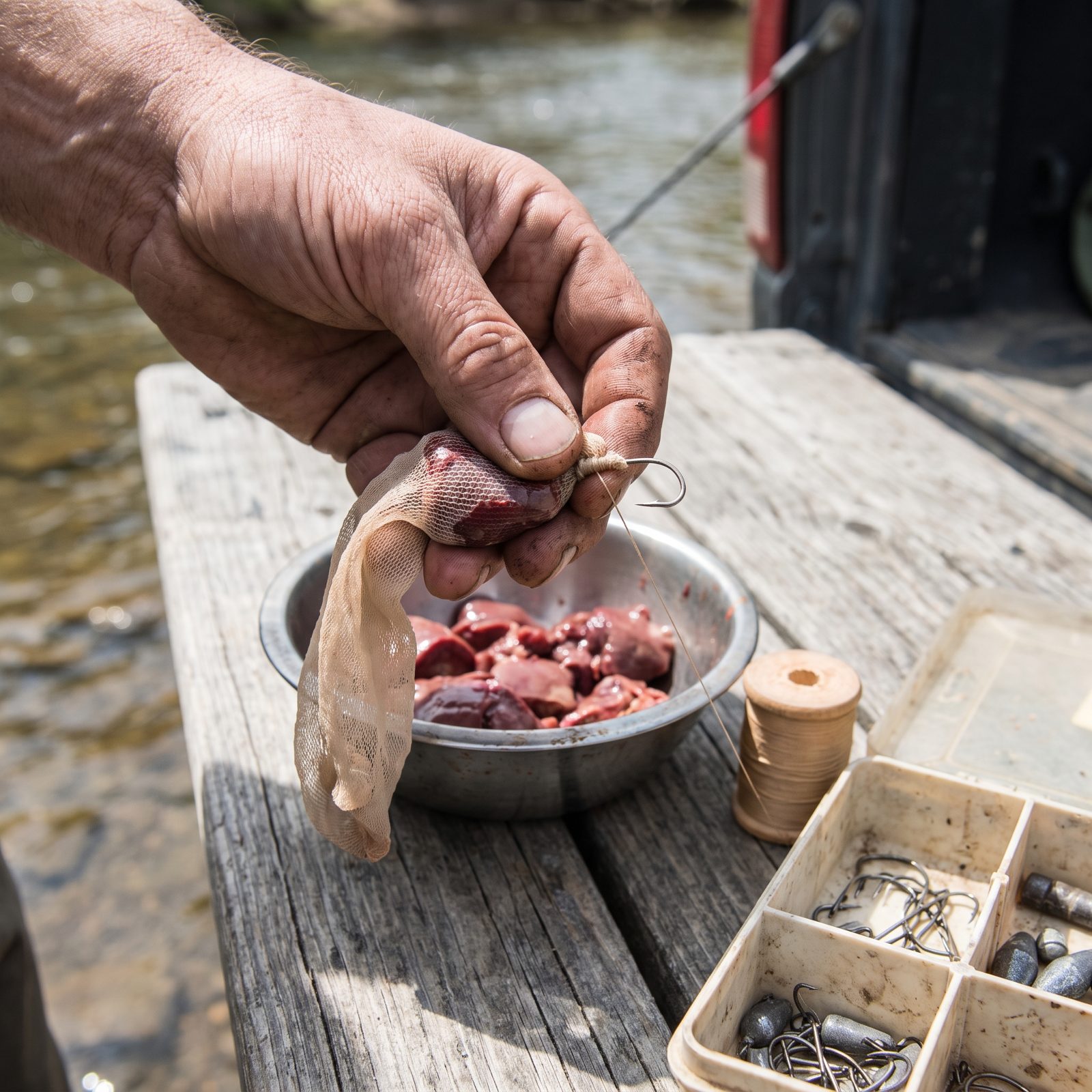
Chicken liver out-fishes almost everything for catfish, and it flings off the hook almost as well as it catches. The old fix is a scrap of pantyhose. Cut a small square, drop a chunk of liver in the center, gather it into a little pouch, and run your hook through the whole bundle.
The mesh holds that soft liver together through the cast and the fight while the blood and scent leak right through it. All the drawing power, none of the misery of rebaiting after every toss.
25. Turn Shoreline Rocks to Find the Crayfish Fish Are Eating
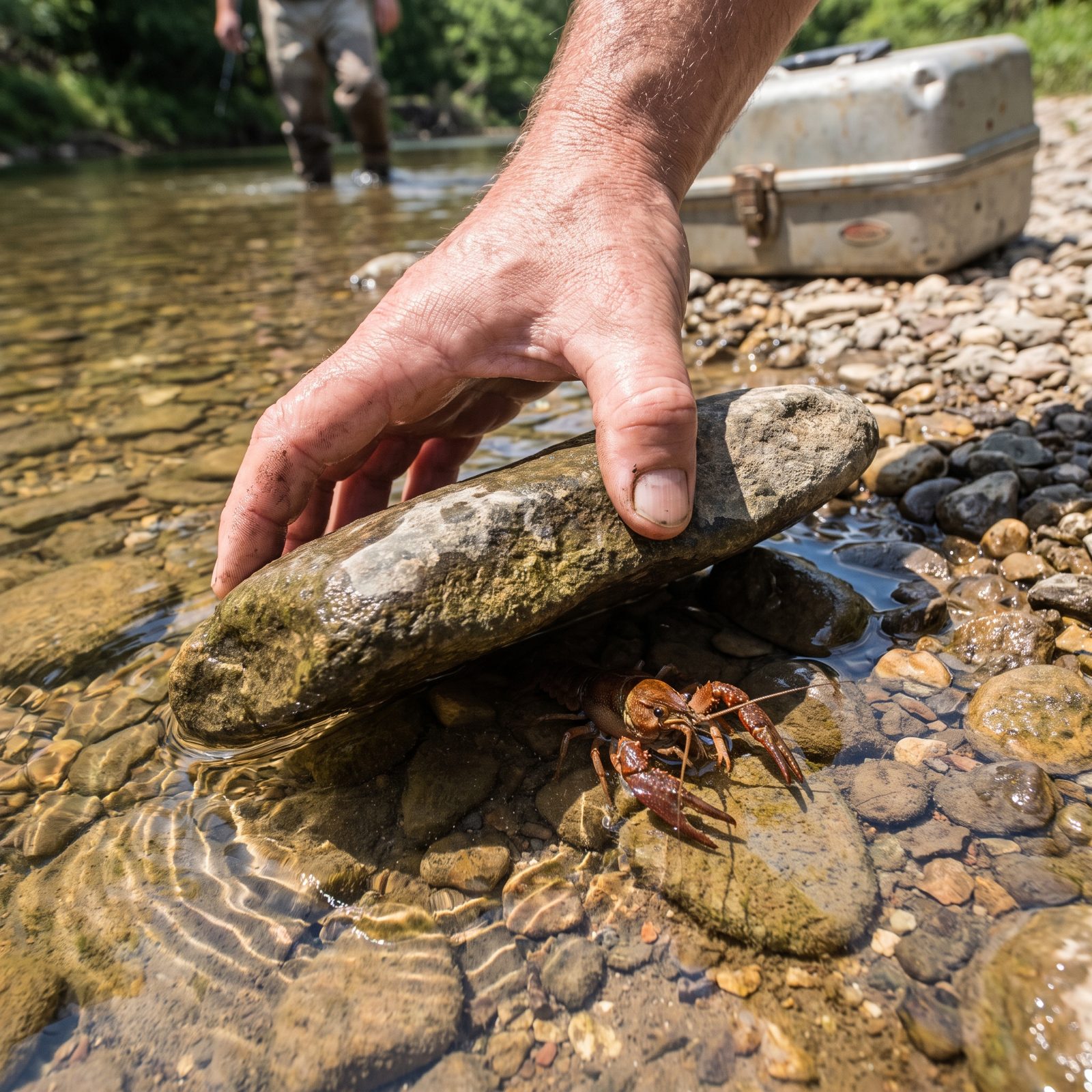
Match the hatch isn’t only a fly-fishing idea. Flip a few flat rocks along the shoreline before you tie anything on, and the water will tell you what the bass and panfish are already feeding on. More often than people expect, the answer is crayfish.
Note the size and color. A stream full of small olive crawdads means a brown tube jig beats a bright one. Lift the rock, look, set it back where it was. Those overturned rocks are home to a lot of life, and there’s no good reason to leave the bottom scoured behind you.
24. Gather Grasshoppers by Pulling a Sheet Through Dewy Grass
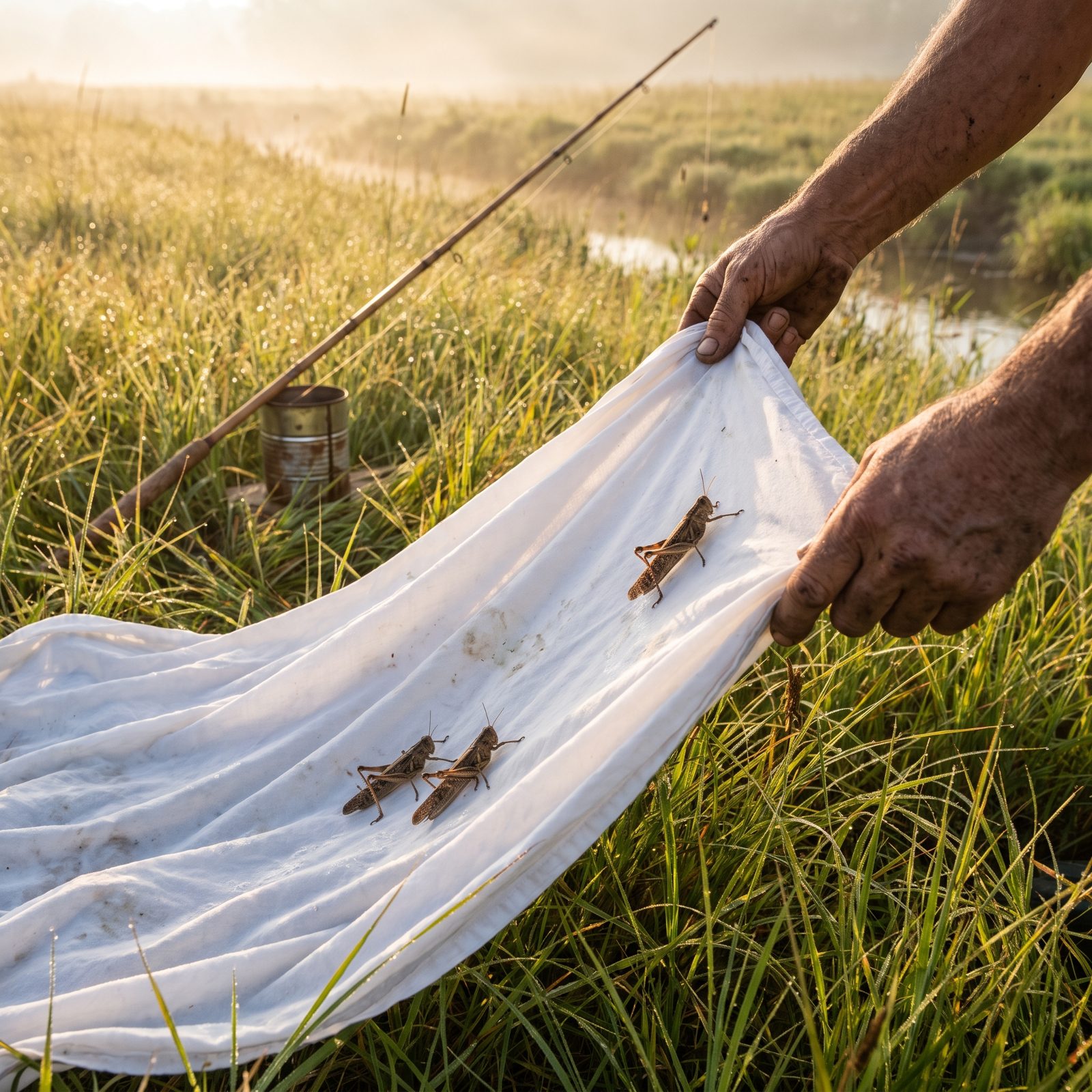
Live grasshoppers drive trout and panfish to recklessness, and you don’t need to chase them around a field all morning.
Work early, when dew weighs down their wings and the cool air keeps them sluggish. Drag an old bedsheet through the tall grass and the hoppers cling to the damp cloth instead of bolting off. Pick them into a jar with a few blades of grass.
Hook one through the collar just behind the head, cast it near an undercut bank, and let it kick on the surface. No spinner on earth fakes that.
23. Thread a Whole Worm with a Baiting Needle
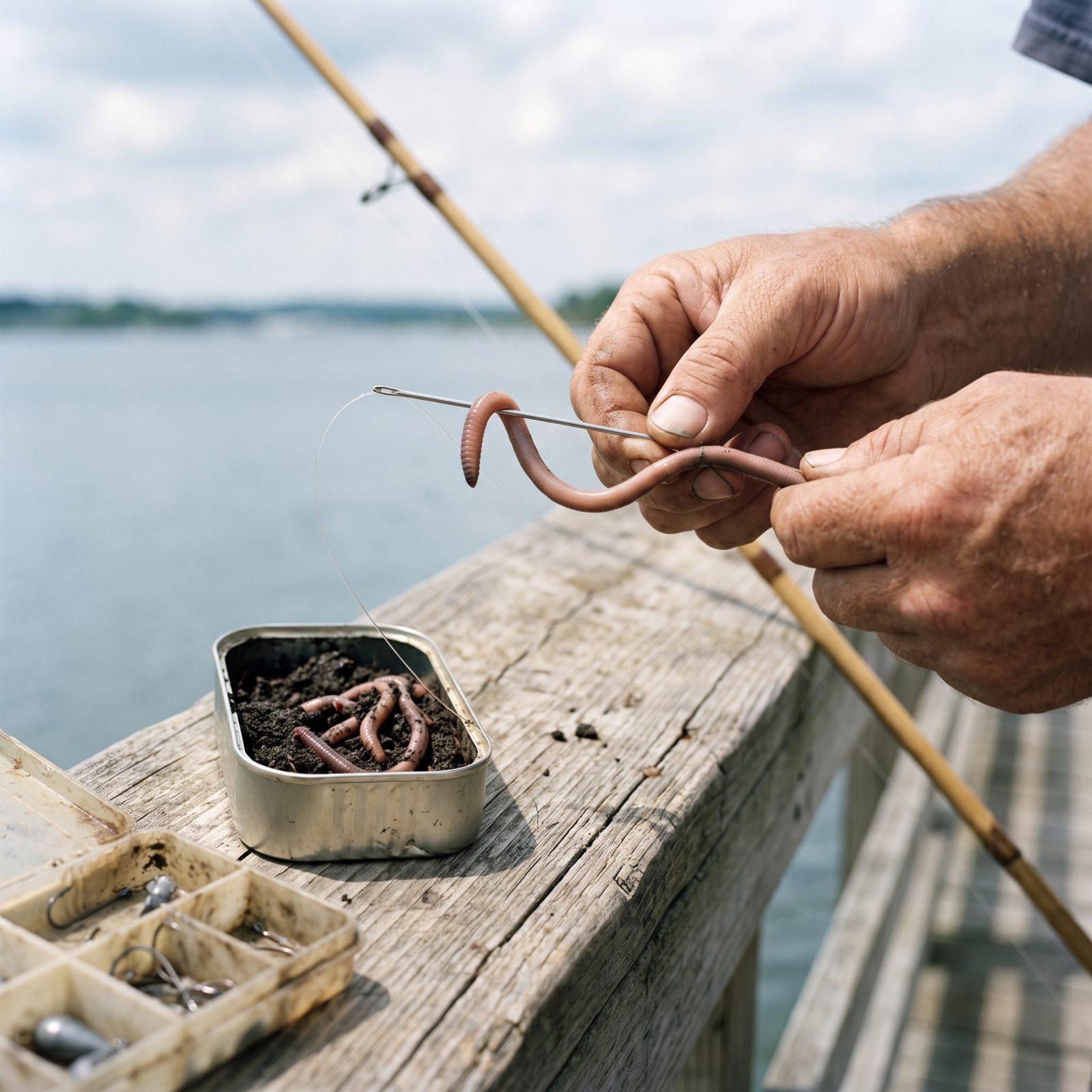
A worm balled up on a single hook looks nothing like a worm. Hang a whole nightcrawler from the line by one end with a baiting needle, letting the rest dangle in a loose, natural bend, and it looks exactly like the real thing drifting along the bottom.
Run the needle lengthwise through the worm from head to tail, slide it onto your line, then pull the line through and tie on the hook so it sits at the worm’s tail. Short-biting fish that peck at a wad end up with the whole mouthful this way, and far fewer of them steal your bait without getting hooked.
22. Clip a Small Safety-Pin Spinner Ahead of a Worm
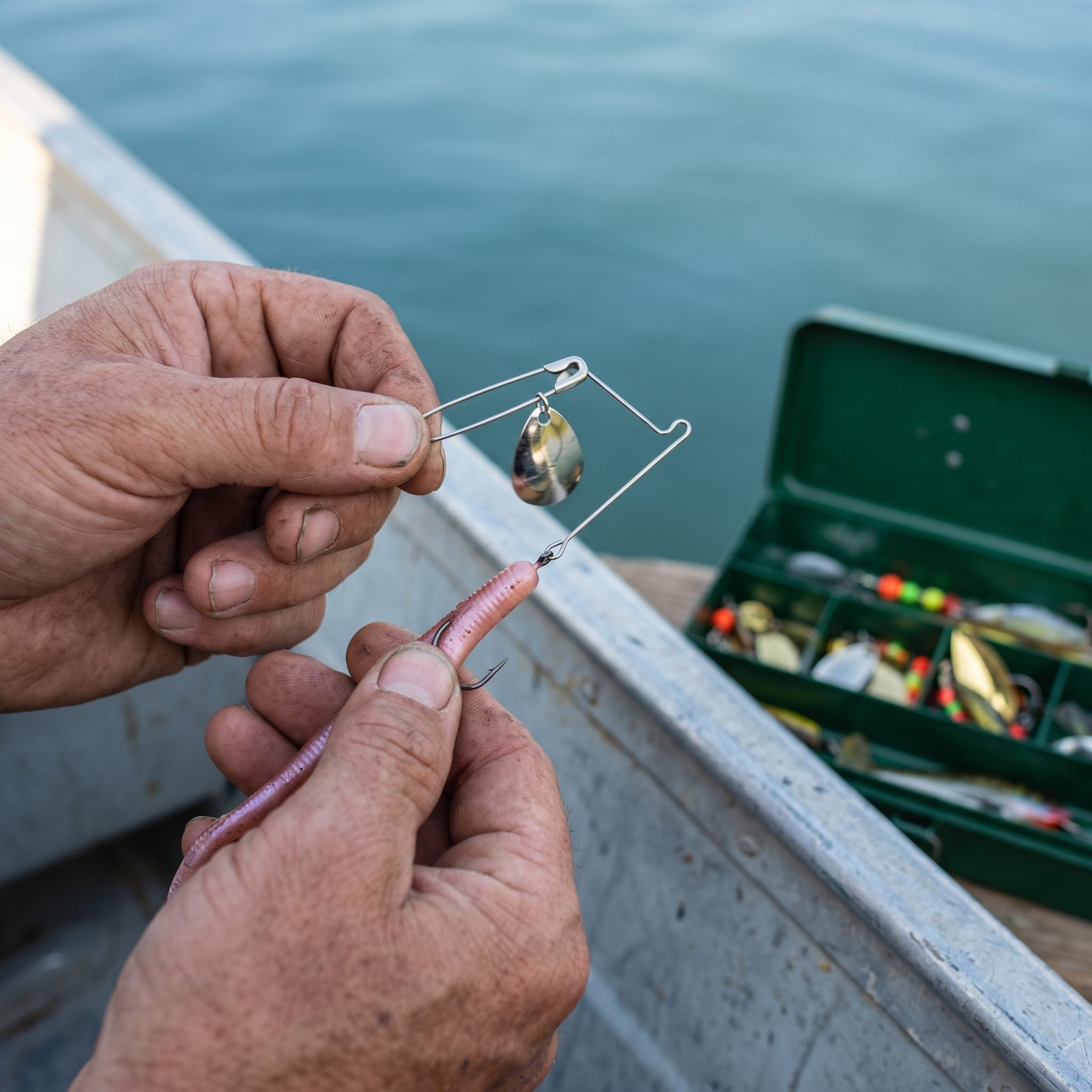
A plastic worm catches fish. A plastic worm with a little flash in front of it catches more — especially in stained water, where fish hunt by vibration as much as by sight. The old trick is a tiny safety-pin spinner, the kind that costs almost nothing, paired with a soft-plastic worm threaded on a hook, the two pinched together in hand and ready to rig.
The blade throbs and flickers as you drag it slow, pulling fish in from farther off. Then they find the worm. You’ve got the pulling power of a spinnerbait wedded to the lifelike appeal of a soft-plastic worm.
21. Use a Clothespin as a Simple Trolling Line Release
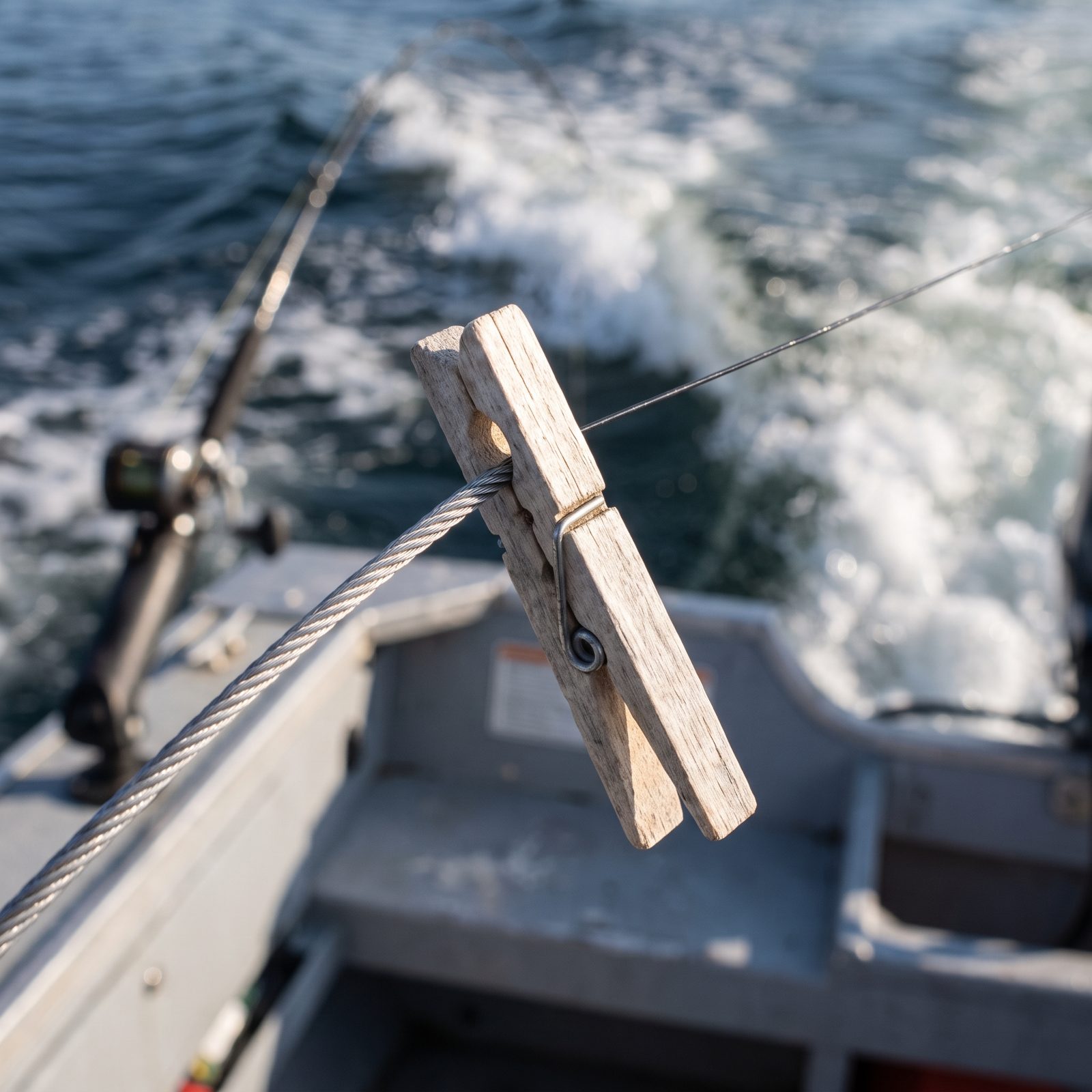
Manufactured line releases work fine and cost real money. A wooden spring clothespin does the same job for pennies. Clip it onto your downrigger cable or planer line, seat the fishing line between its legs just above the round notch, and troll. When a fish hits, the line snaps free of the pin and you fight it on a clean line.
Set the tension by where along the pin you seat the line, or wrap a rubber band around the spring for a firmer grip. Keep a handful in the boat. They cost nothing to swap out when one finally cracks.
20. Keep a Tin-Can Handline for Tight Spots and Backup Duty
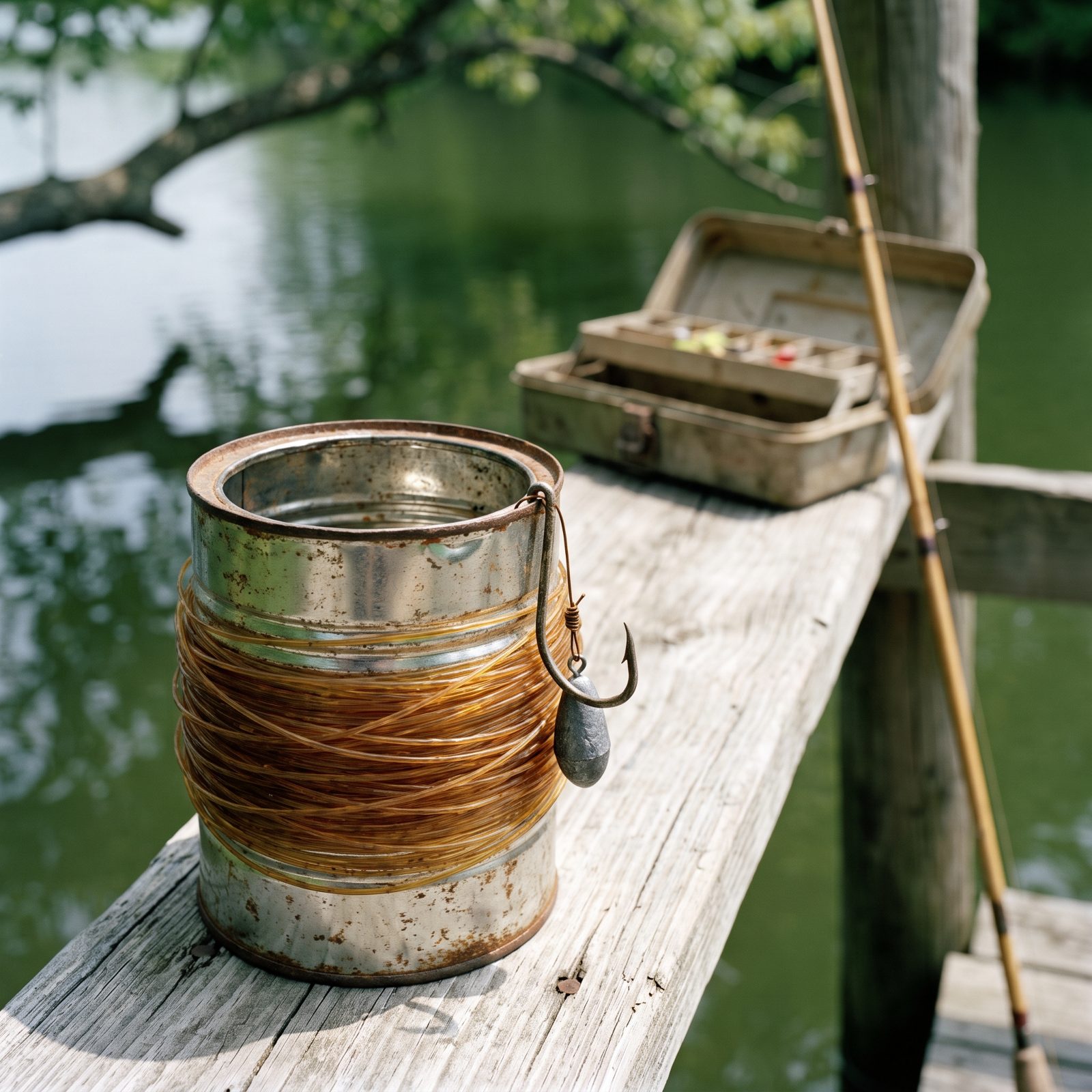
Before anyone owned a rod, they fished off a can. The handline still earns its keep. Wind a long length of heavy mono around an empty coffee or soup can, tie on a hook and sinker, and you’ve got a whole fishing outfit that rides in a jacket pocket.
Where it really shines is the places a rod can’t reach — dropping straight down off a steep bank, fishing through a gap in the brush, working a culvert mouth. Swing the baited end, let it fly, and feed line off the can. And when a rod snaps on a trip miles from the truck, the can in your pack keeps you fishing.
19. Keep Your Cane-Pole Line Shorter Than the Pole Itself
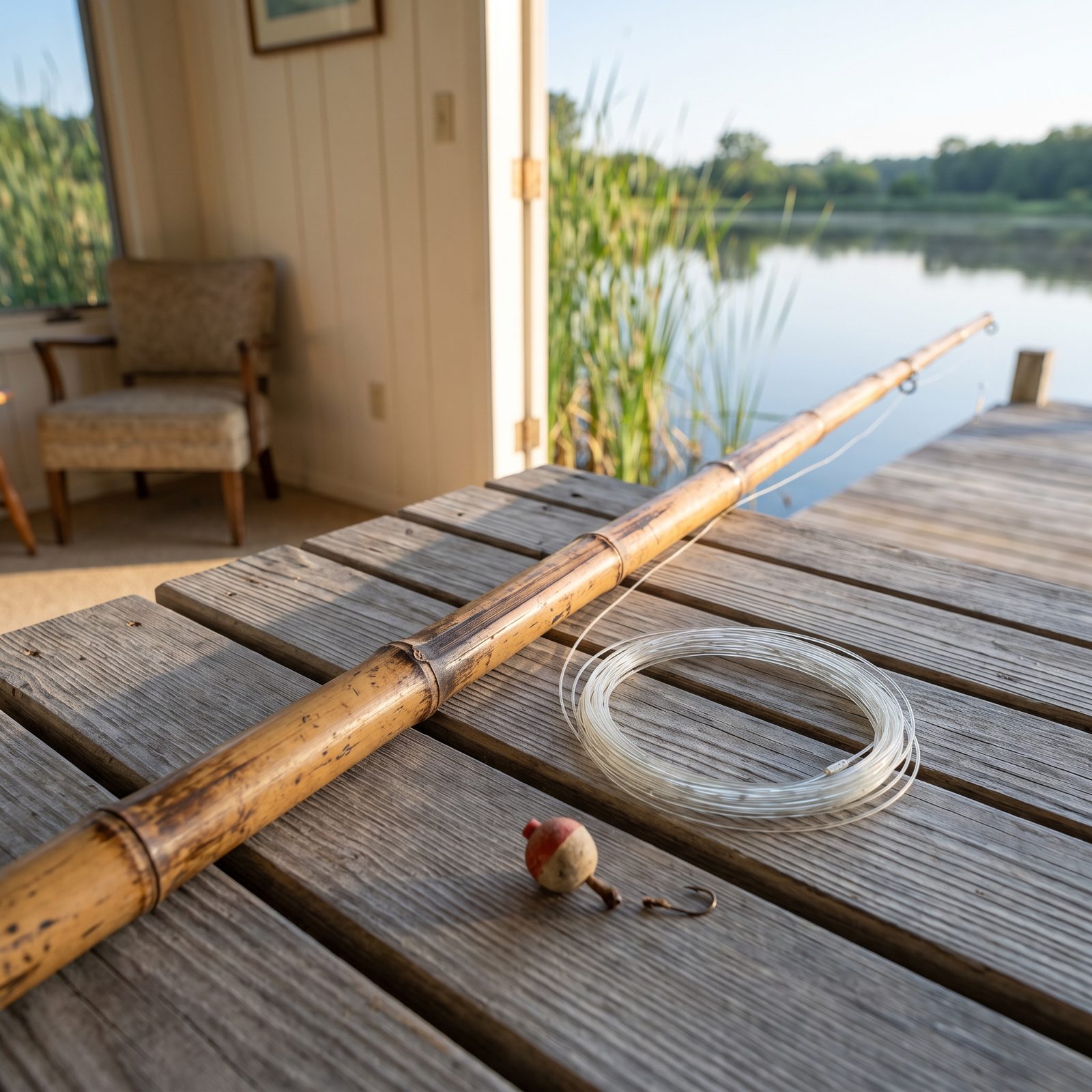
Tie on more line than the pole is long and you’ve already lost the fight. A cane pole has no reel to give or take, and a couple of guide rings near the tip don’t change that, so a fish on a line longer than the pole leaves you reaching out over the water with nowhere to bring it, grabbing line by hand. That’s how hooks find fingers.
Keep the line a hair shorter than the pole and a hooked bluegill swings up and over the bank in one clean motion. Old-timers knew this before anyone sold them a graphite anything.
18. Rest a Fingertip on the Line to Feel the Pickups You’d Otherwise Miss
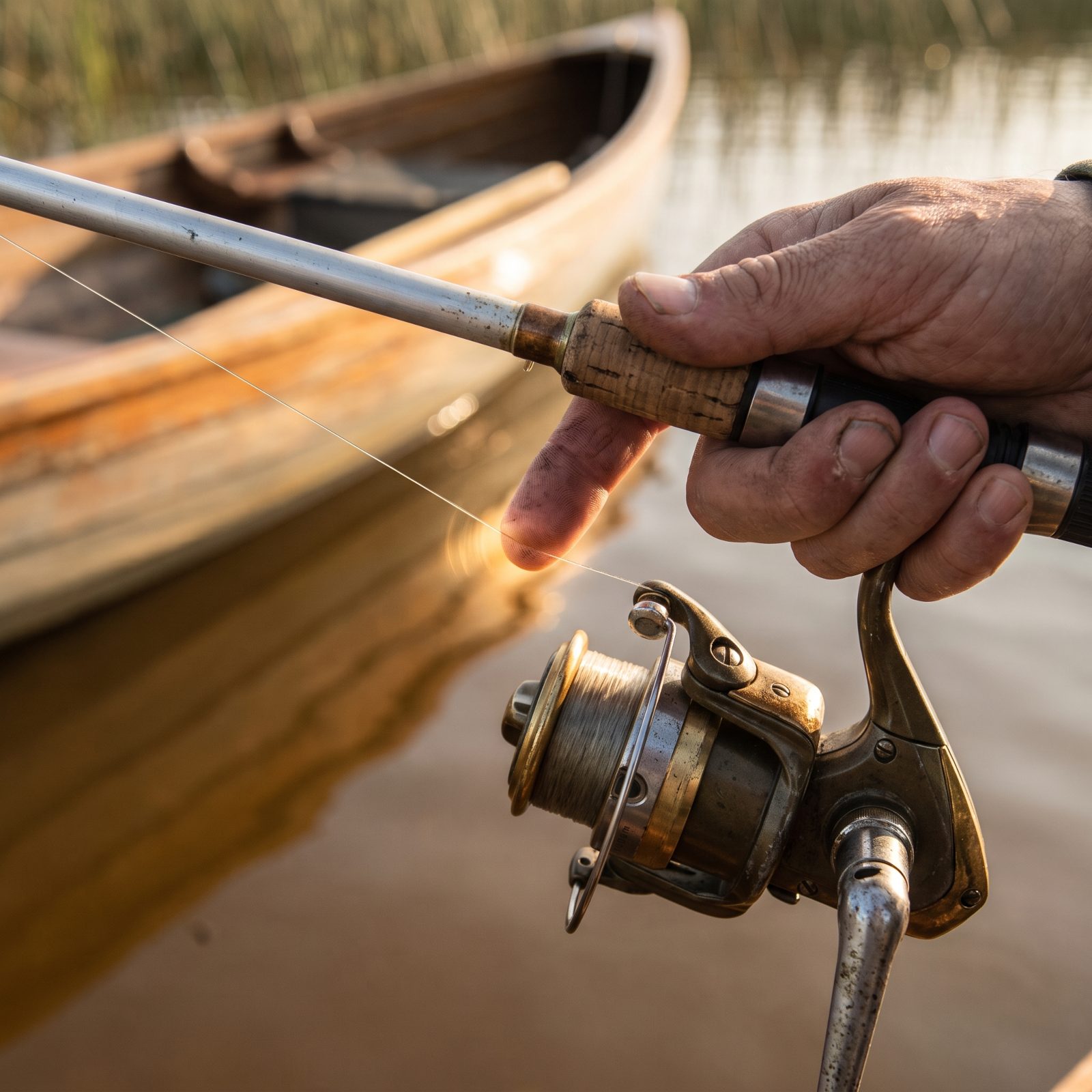
Your eyes lie to you more than your fingers do. A light crappie or a nibbling catfish can take the bait so gently the rod tip never twitches, and by the time you see slack line the fish has already spit it out.
Touch a fingertip to the line where it stretches off the reel toward the water and you’ll feel taps, tics, and that odd mushy heaviness that means something down there is mouthing your bait. Nerve endings read vibration faster than your eye reads movement. Oldest bite detector there is, and it costs nothing.
17. Count Your Reel-Handle Turns to Hit the Same Spot Twice
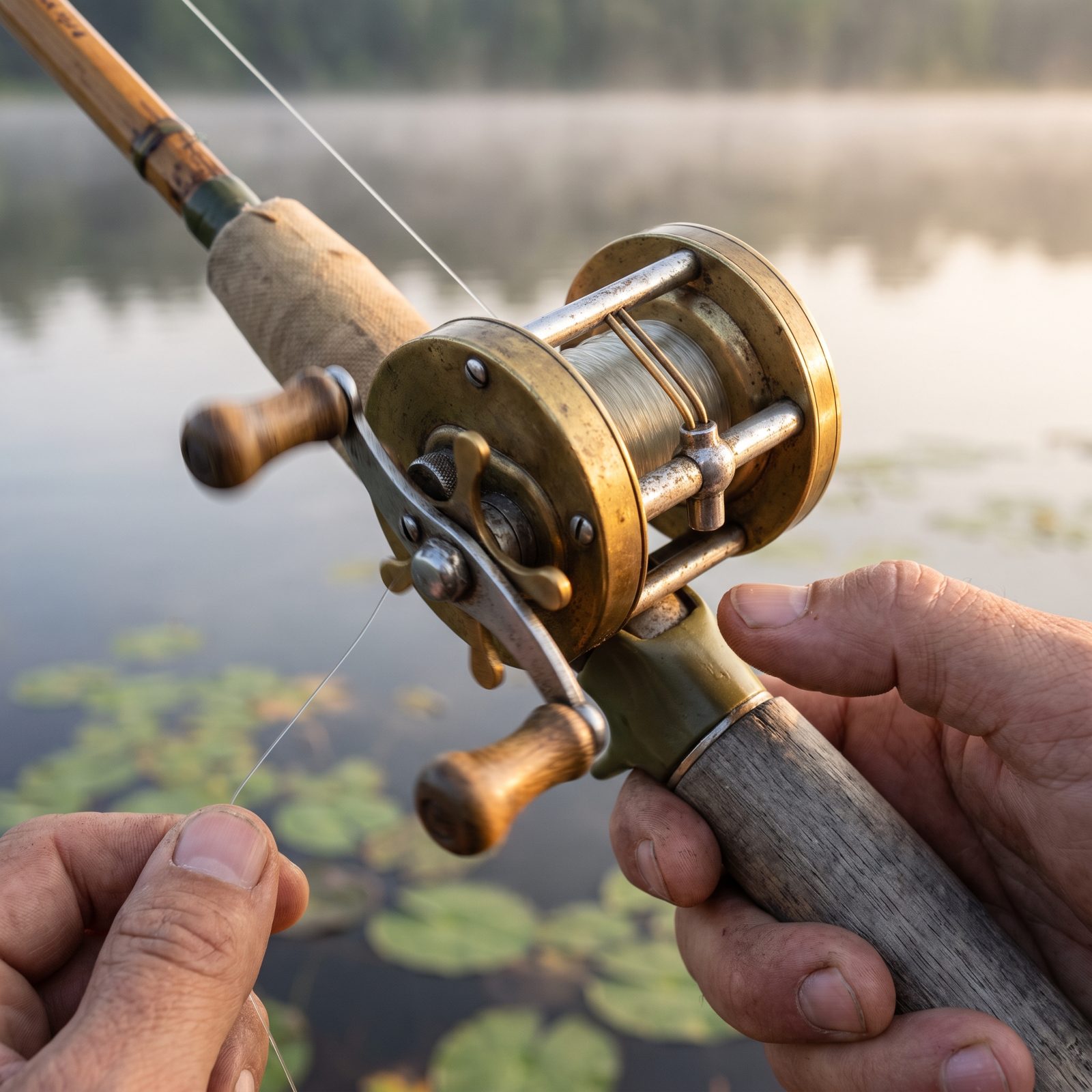
You drop a cast beside a stump, a fish hammers it, and then you can’t put the lure back in that exact window. Sound familiar?
Count your handle turns on the retrieve. If the fish hit at twelve cranks, you now know the distance to that stump as a number rather than a guess. Reel it back to twelve and your lure sits in the strike zone again. Guides who work the same brush piles all day lean on this constantly, because it turns a lucky cast into a repeatable one, and that’s the whole ballgame when fish are stacked on one piece of structure.
16. Work a Figure Eight Beside the Boat Before You Lift the Lure Out
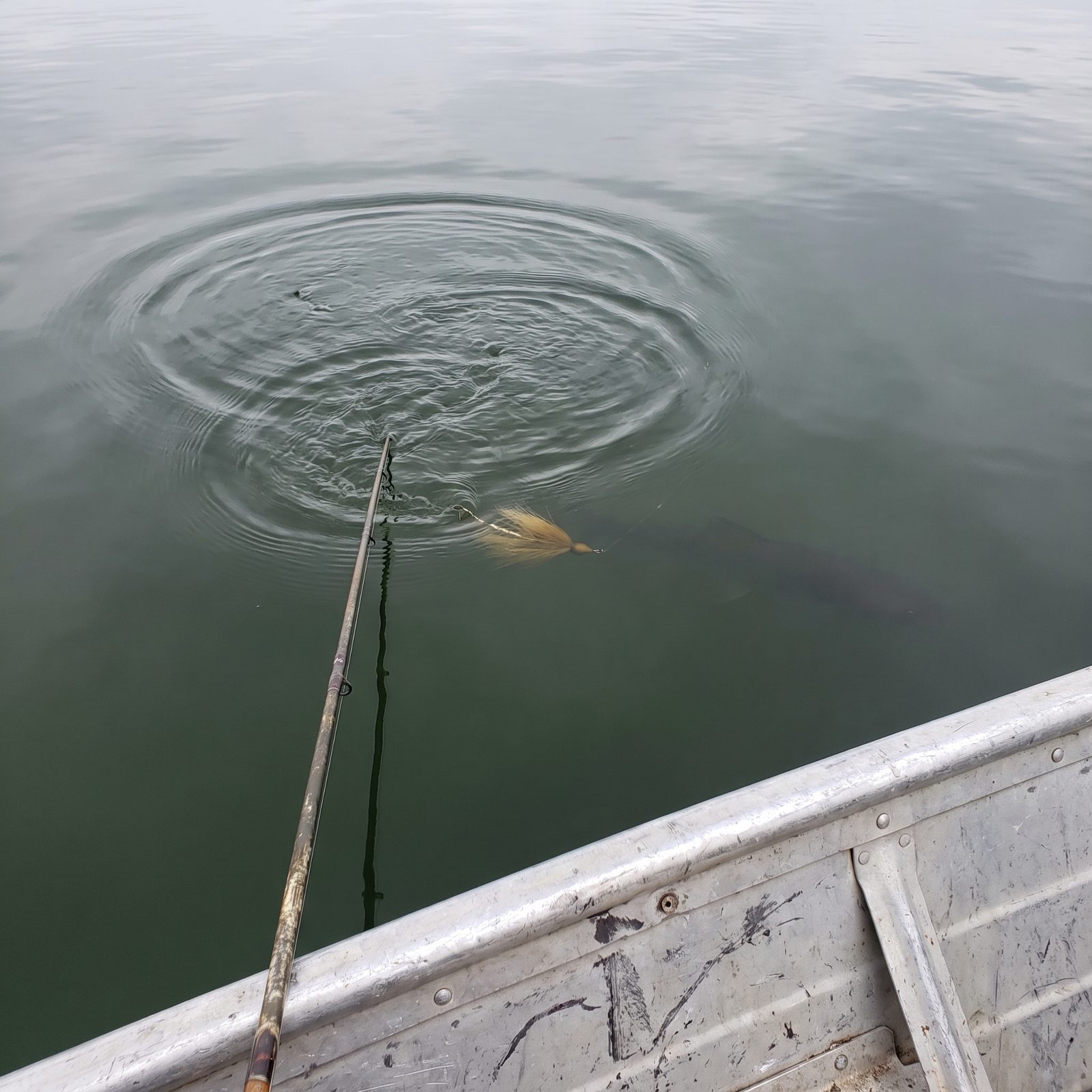
Half the fish you’ll ever see followed a lure right to the boat and then turned away. Musky and pike are famous for it. Bass and pickerel do it too. They track the bait, size it up, and stall out at the last second.
Instead of yanking the lure clear, drop the rod tip in the water and sweep it in a wide figure eight. The direction change and sudden speed shift trigger a strike the straight retrieve never could. Keep the turns wide, not tight, so the lure stays fast enough to look like it’s escaping.
15. Fish the Near Bank Before You Ever Walk Up to the Water
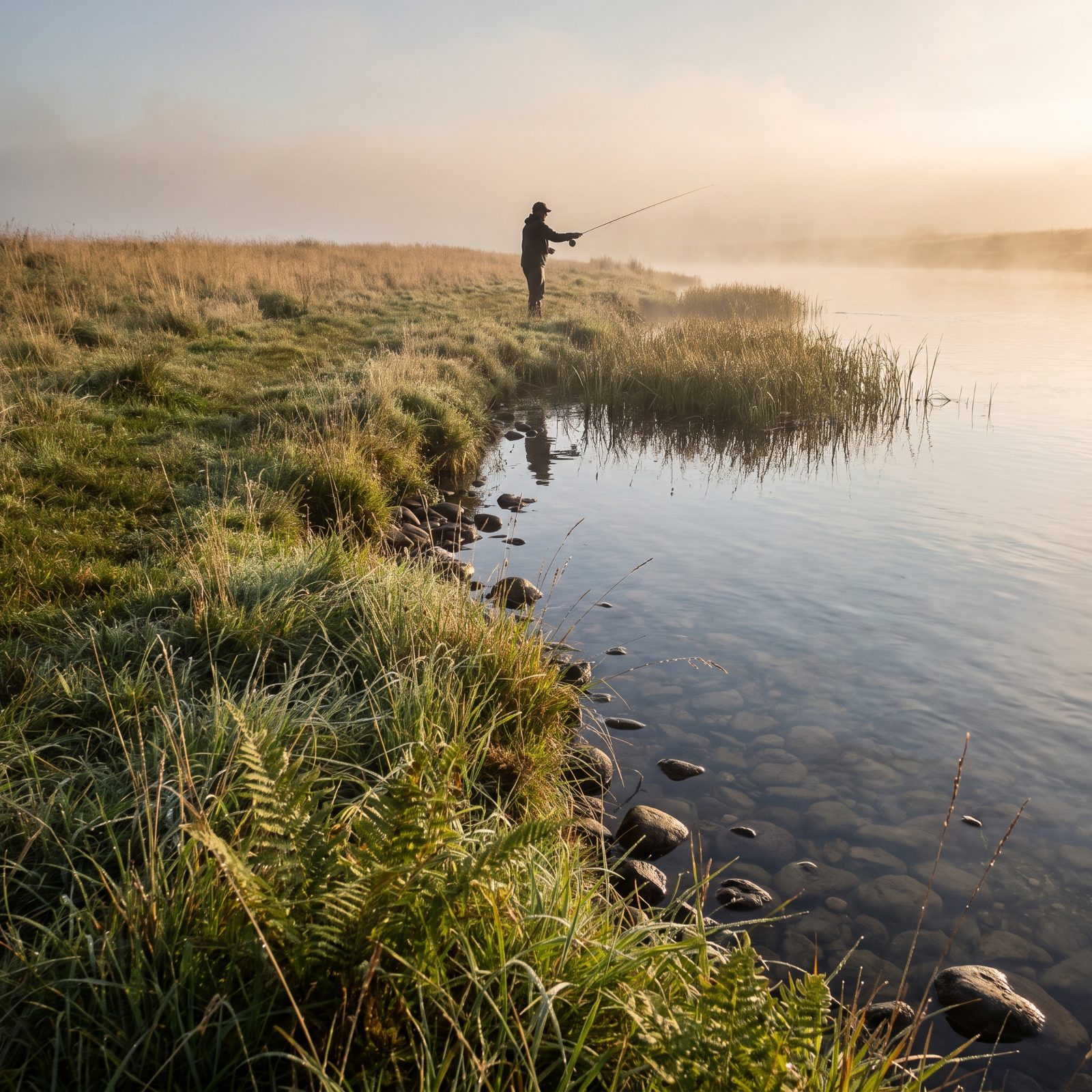
Most anglers march straight to the edge and chuck a cast as far as they can. That’s a mistake. The fish you just spooked were sitting three feet from your boots.
Shallow water right against the bank is prime holding ground, especially early and late. So stop short, make a few casts parallel to the near shoreline, then work your way out. You’ll pick up fish that every other angler walked past and scared off. Patience at the approach catches more than distance ever will.
14. Kneel Below the Skyline When Fish Are Holding in the Shallows
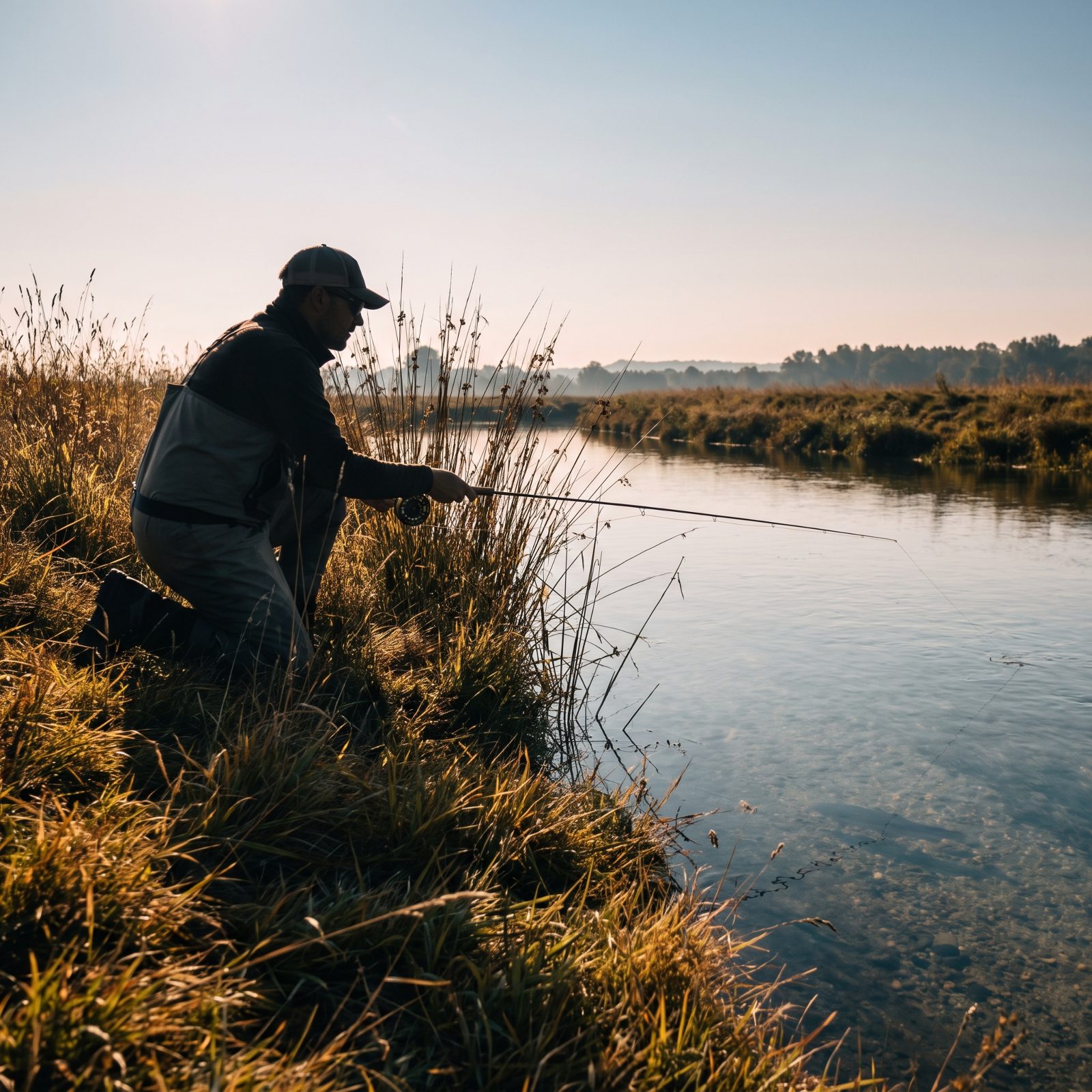
Fish in skinny water are jumpy for good reason. Everything up there wants to eat them, so they bolt at the first shape breaking the horizon.
When you see your outline against the sky, so does the fish. Your profile against bright sky reads as a predator, a heron or a hawk. Drop to a knee, but kneeling alone isn’t always enough if your head and shoulders still rise above the skyline. Get lower still, or position yourself so a bank or brush sits behind you as a backdrop, and keep low as you come in. Trout fishermen on clear streams live by this. The fish that seemed impossible to catch were just watching you walk up.
13. Walk Backward to Slide a Fish onto a Gentle Bank
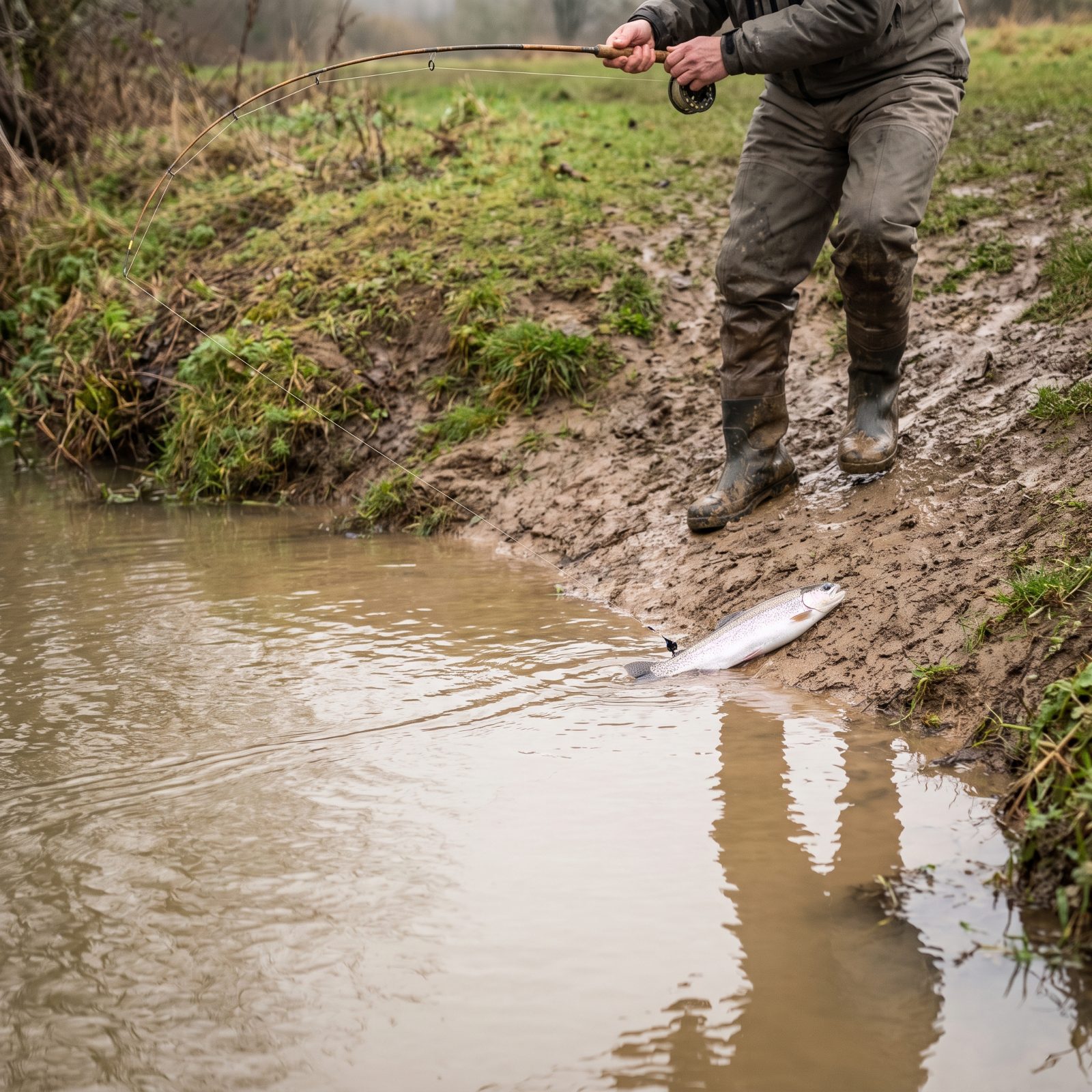
No net, no problem, as long as the bank slopes gently. Lift a heavy fish straight up and you strain the line and the hook hold, and that’s exactly when the hook pulls free.
Instead, stand at the water’s edge with the rod swung low and to the side, away from the fish, to keep steady pressure while you guide it to the shallows, then walk slowly backward up the bank to draw it out of the water. The fish slides along the gradual slope on a cushion of water. No sudden weight on the line, no dangling and thrashing. Trout and smaller catfish come ashore clean this way. It’s an old shore-fishing move that saves a lot of last-second heartbreak when the fish is already beaten and you just need to get it in.
12. Drag the Hook Point Across a Thumbnail to Test for Sharp
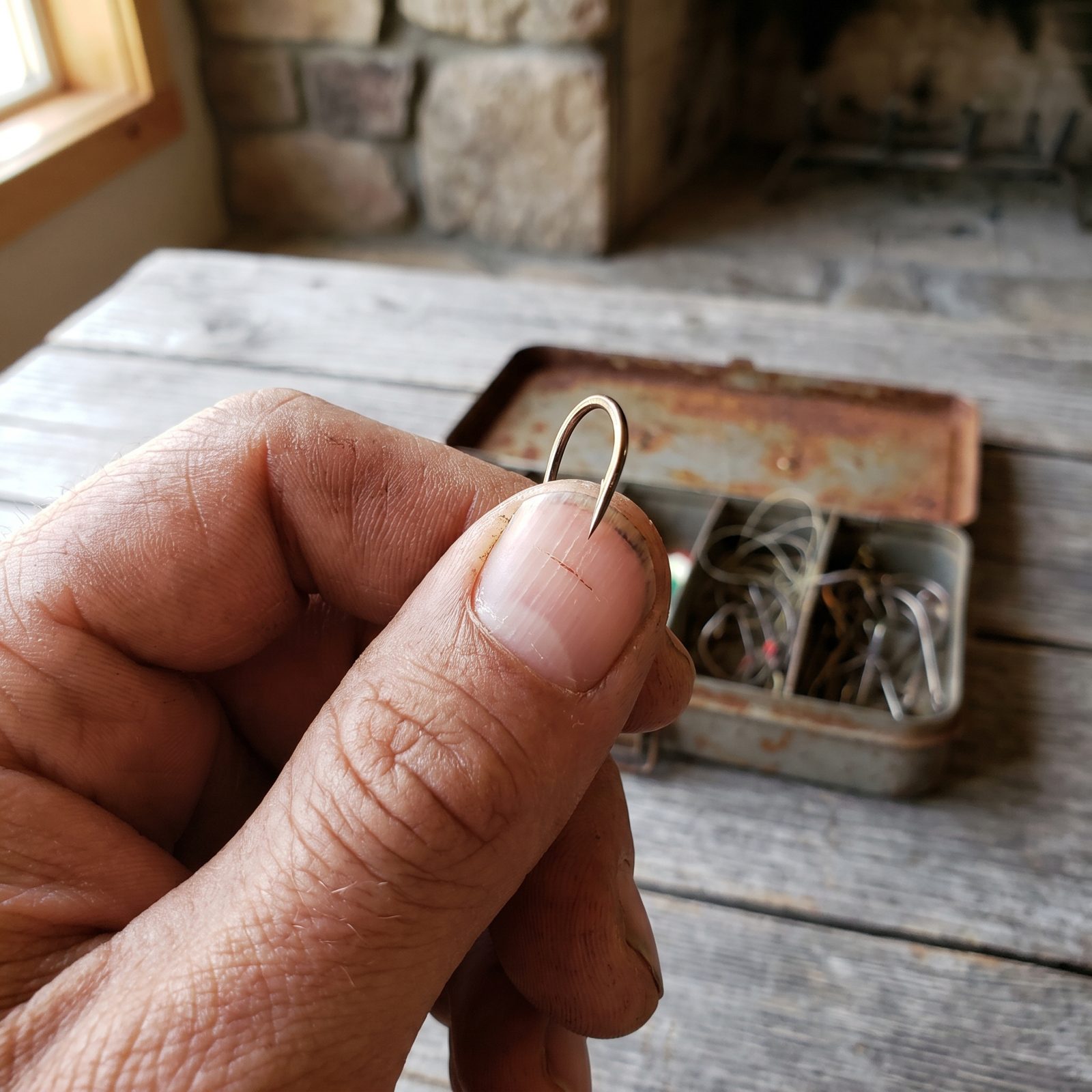
A dull hook is why you lost that fish, not bad luck. Points go dull faster than most people think, from rocks, from stumps, from the bottom of the tackle box.
Draw the point lightly across your thumbnail. Sharp, and it grabs and digs in with almost no pressure. Dull, and it skates right across without catching. If it slides, touch it up with a file or hone before your next cast. Two seconds of work, and nobody does it, which is a shame, because a sticky-sharp point sets with half the effort.
11. Bend a Metal Spoon Slightly to Change How It Wobbles
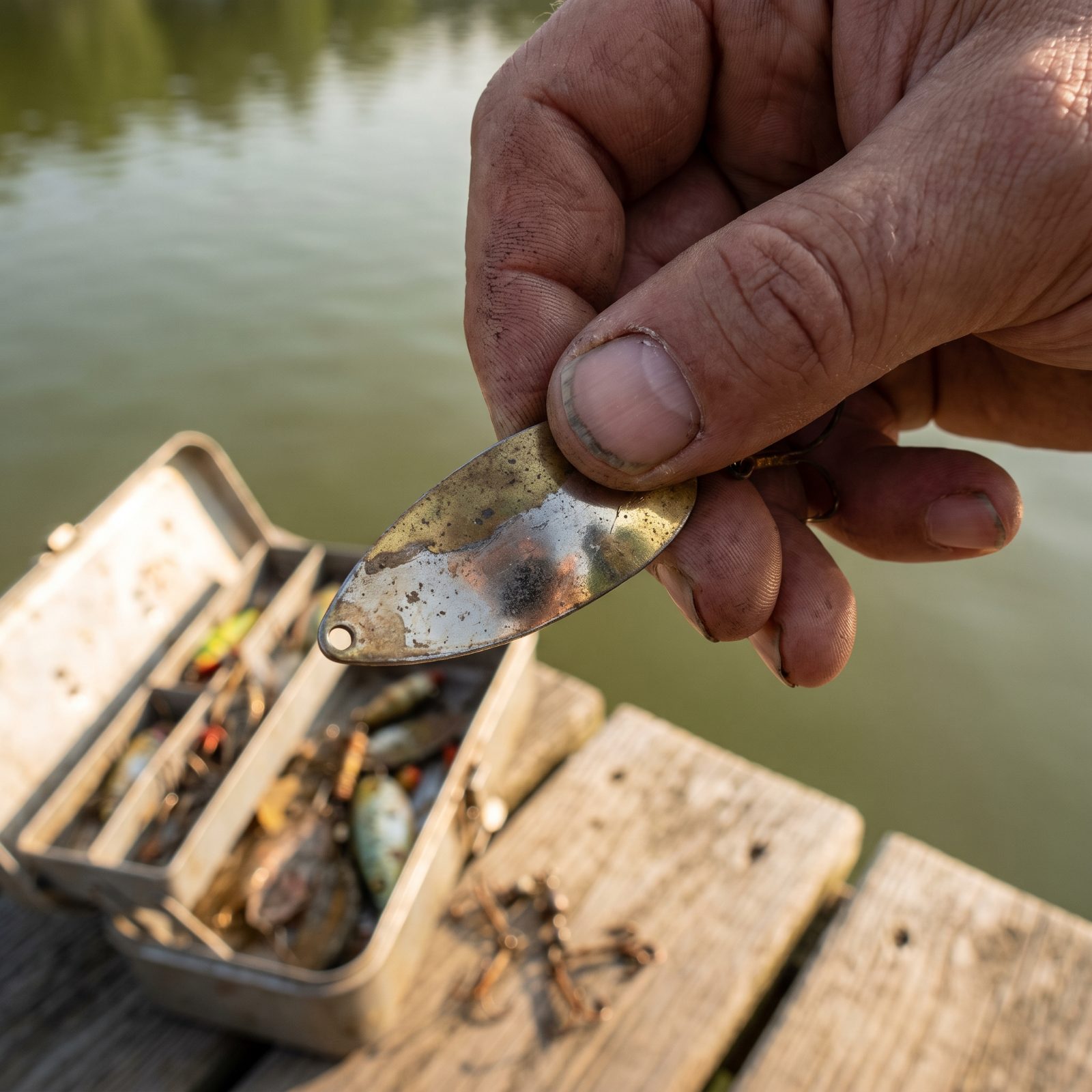
That spoon that worked last season and does nothing now? The water might be asking for a different action.
A deeper cupped bend gives you a wider, slower wobble that shines in cold or stained water. Flatten it a touch and the spoon tightens up, rolling fast for warm water and active fish. Your fingers are the only tool you need. Go gentle, bend a little at a time, and test the swim at boatside between adjustments. One spoon becomes three or four baits, which is the kind of thrift that catches fish and keeps money in your pocket.
10. Shine Up Tarnished Spoons with Plain White Toothpaste
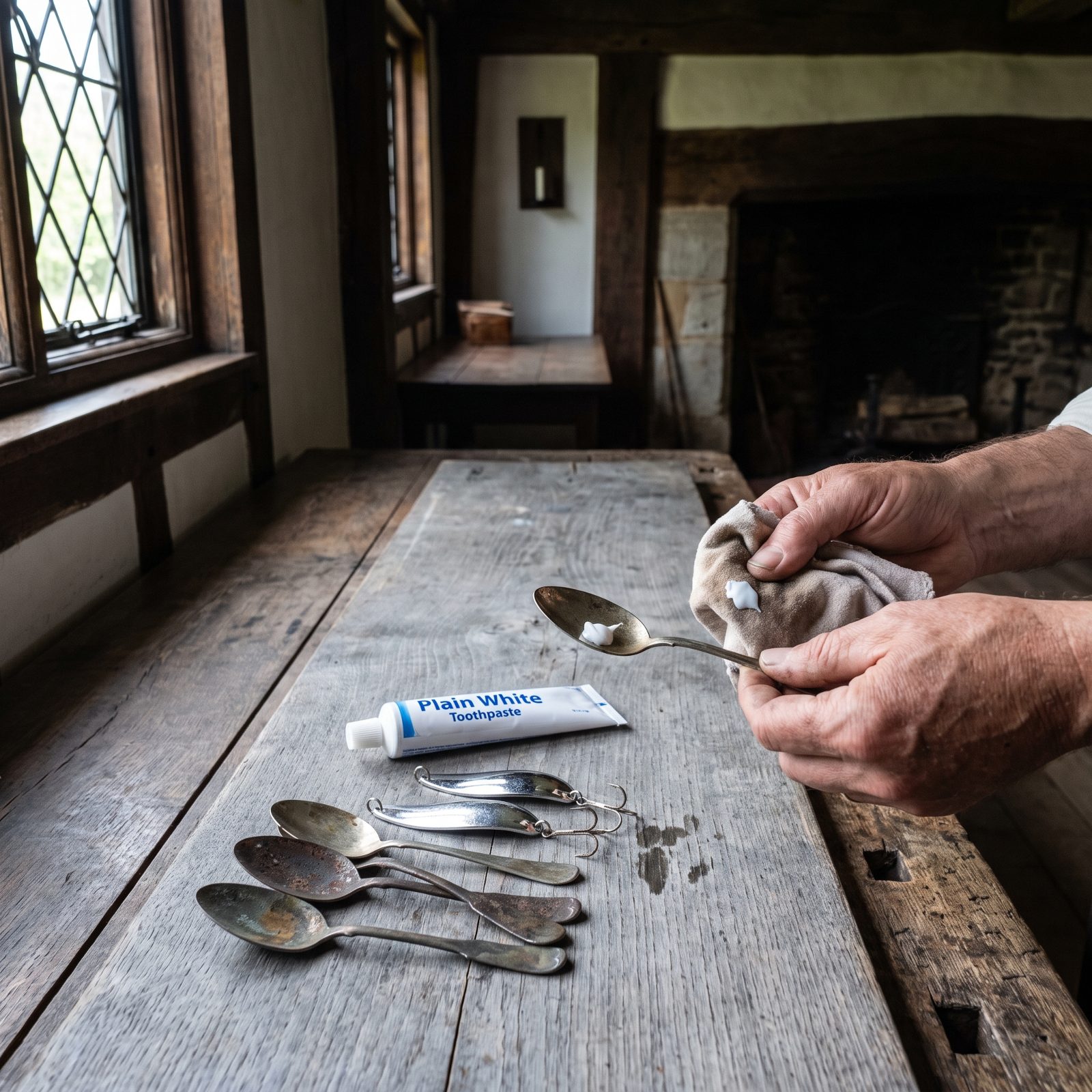
Flash sells. A dull spoon throws back a fraction of the light a shiny one does, and in the water that reflected glint is often what pulls a strike from across the murk.
Plain white toothpaste (the paste, not the gel) is a mild abrasive that lifts tarnish without scratching the metal. A dab on a rag, a minute of rubbing, a quick rinse, and a black-brown spoon looks new again. Same trick works on brass lures, blades and swivels. Skip the whitening and minty-crystal versions. Just the cheap basic stuff. Your grandfather kept a tube in the tackle shed for exactly this.
9. Rub Candle Wax on Metal Rod Ferrules to Prevent Sticking
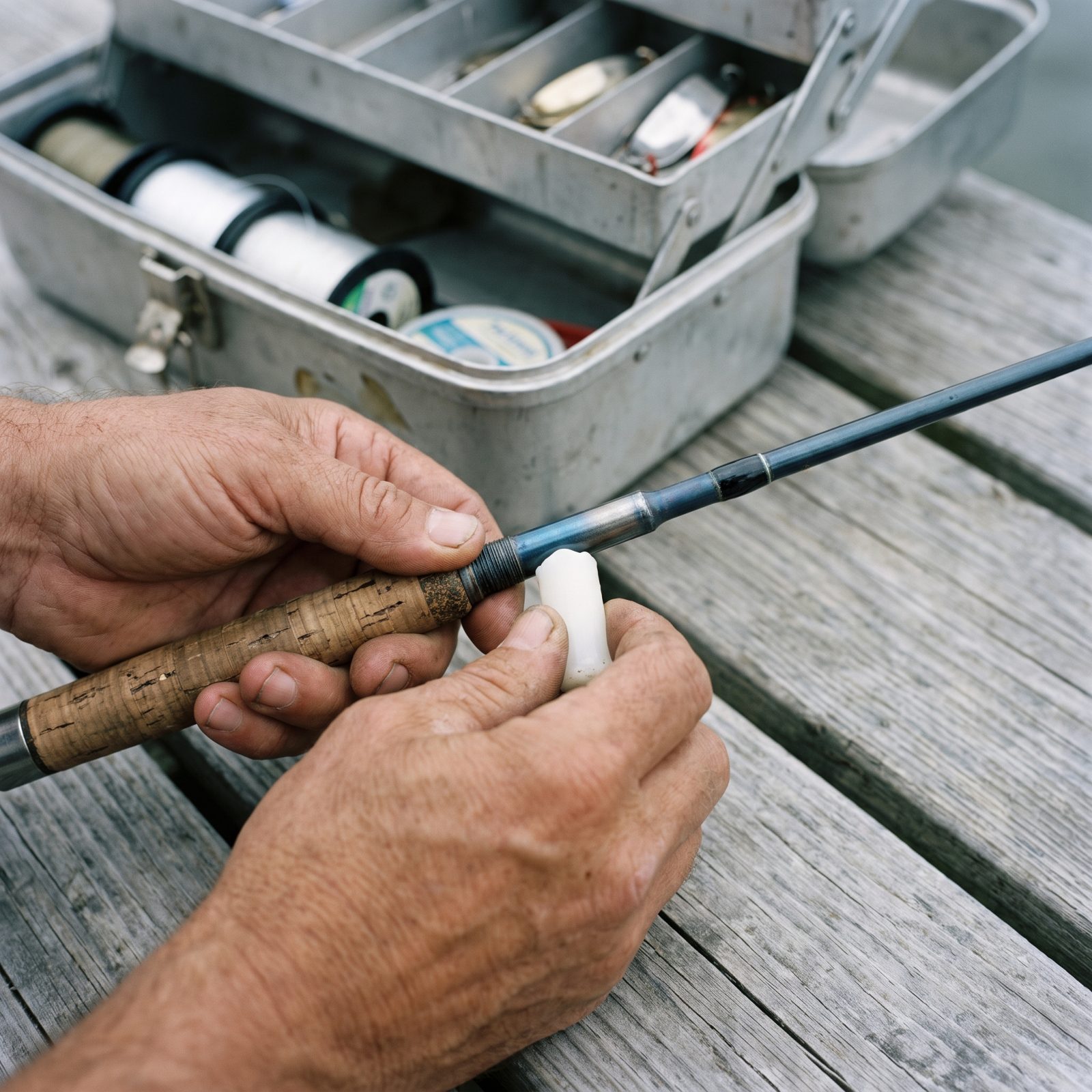
Metal ferrules seize, and they pick the worst moment to do it — a cold morning when you just want to break the rod down and get home. Grit and oxidation weld the sleeve to the pin. A thin film of candle wax rubbed onto the male ferrule stops that cold: it fills the microscopic pits, blocks moisture, and lets the two halves slide apart without that awful stuck-forever grind.
Most guides tell you to reach for graphite or spit, and for metal they’re flat wrong. Graphite is a cork-to-glass trick. Metal on metal wants paraffin, the old standard, free from the drawer under your kitchen sink.
8. Run a Cotton Swab Through Each Rod Guide to Find Cracks
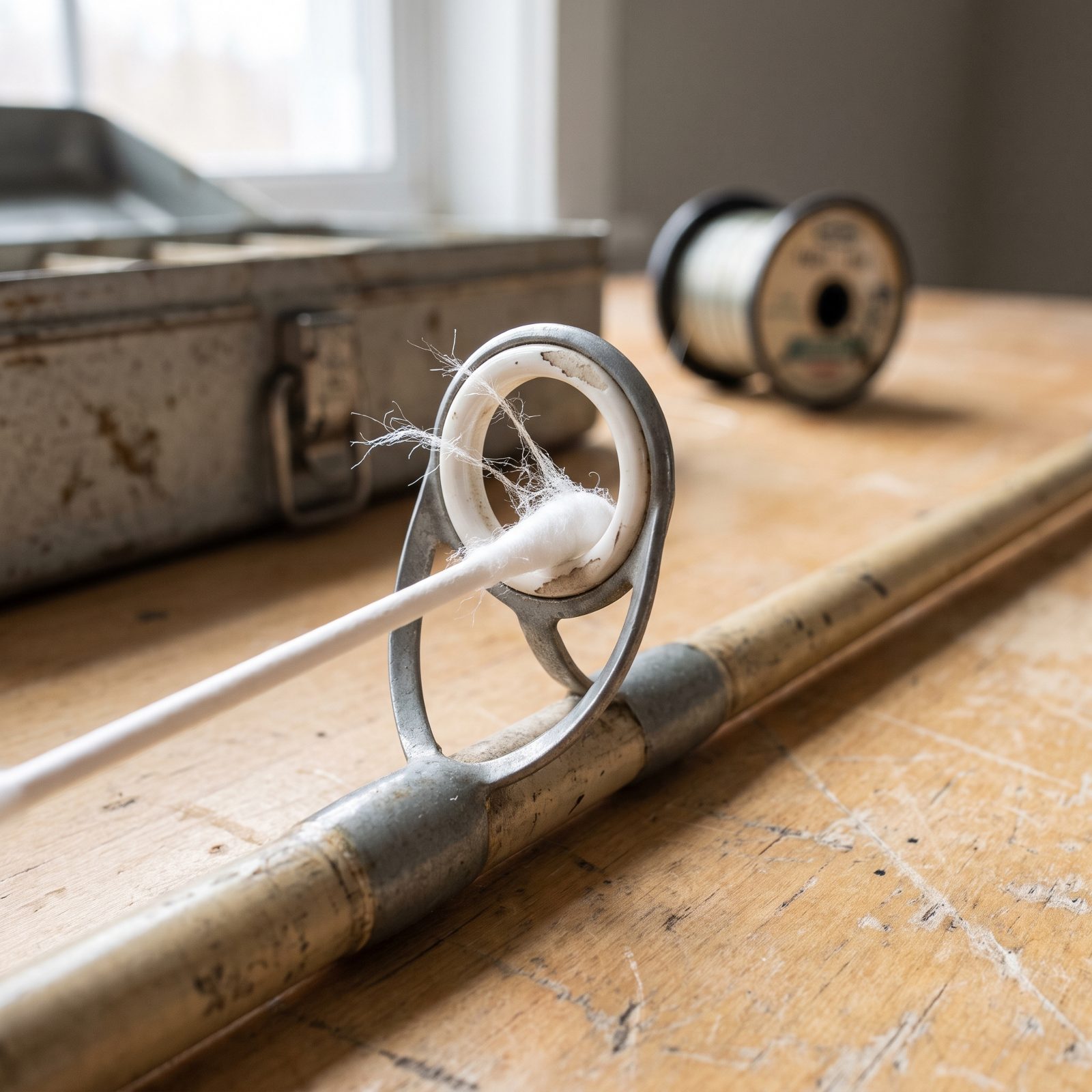
A hairline crack in a guide insert will shave your line like a razor, and you won’t spot it until a good fish is already gone. The fix costs nothing. Twist a dry cotton swab through the inside of every guide, and if the cotton catches and pulls fibers loose, you’ve found your crack.
Do this the night before, rod across your knees, not standing at the ramp. Ceramic and silicon-carbide rings chip whenever a rod bangs against a truck bed, and the damage tucks itself onto the inside curve where your eye never travels. One snagged swab saves a leader, a lure, and a story that ends badly.
7. Mark Legal Fish Lengths on the Rod with a Grease Pencil
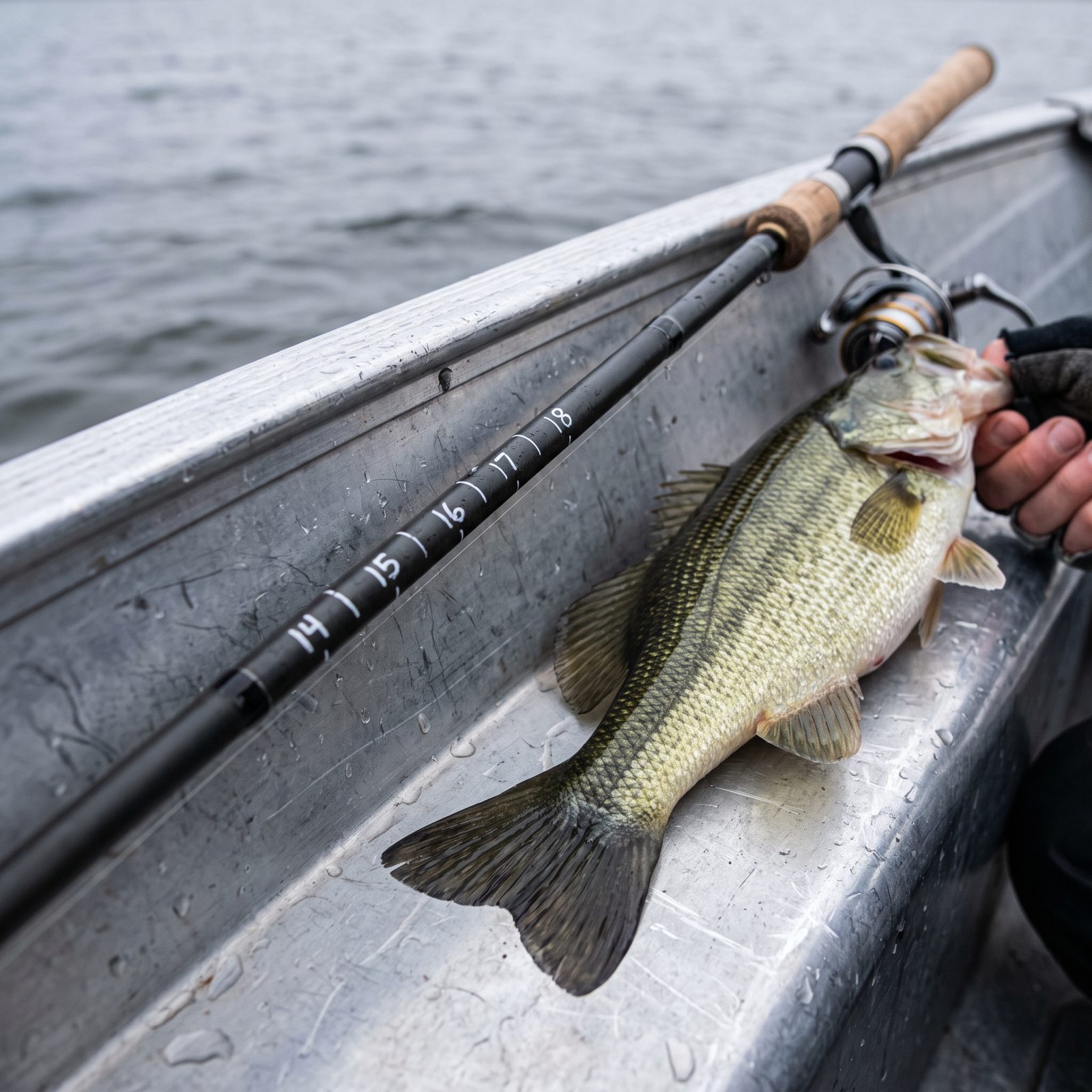
You can’t always lay hands on a tape measure with a flopping fish and a rocking boat. Hence the old trick: measure your rod once at home, then mark the keeper lengths right on the blank with a white grease pencil. Fourteen inches, eighteen, whatever your water calls for.
Lay the fish along the rod, read the mark, decide. No fumbling, no guessing, and no sheepishly keeping a short fish because you eyeballed it wrong.
6. Use a Bundle of Short Chain as a Rock-Bottom Anchor
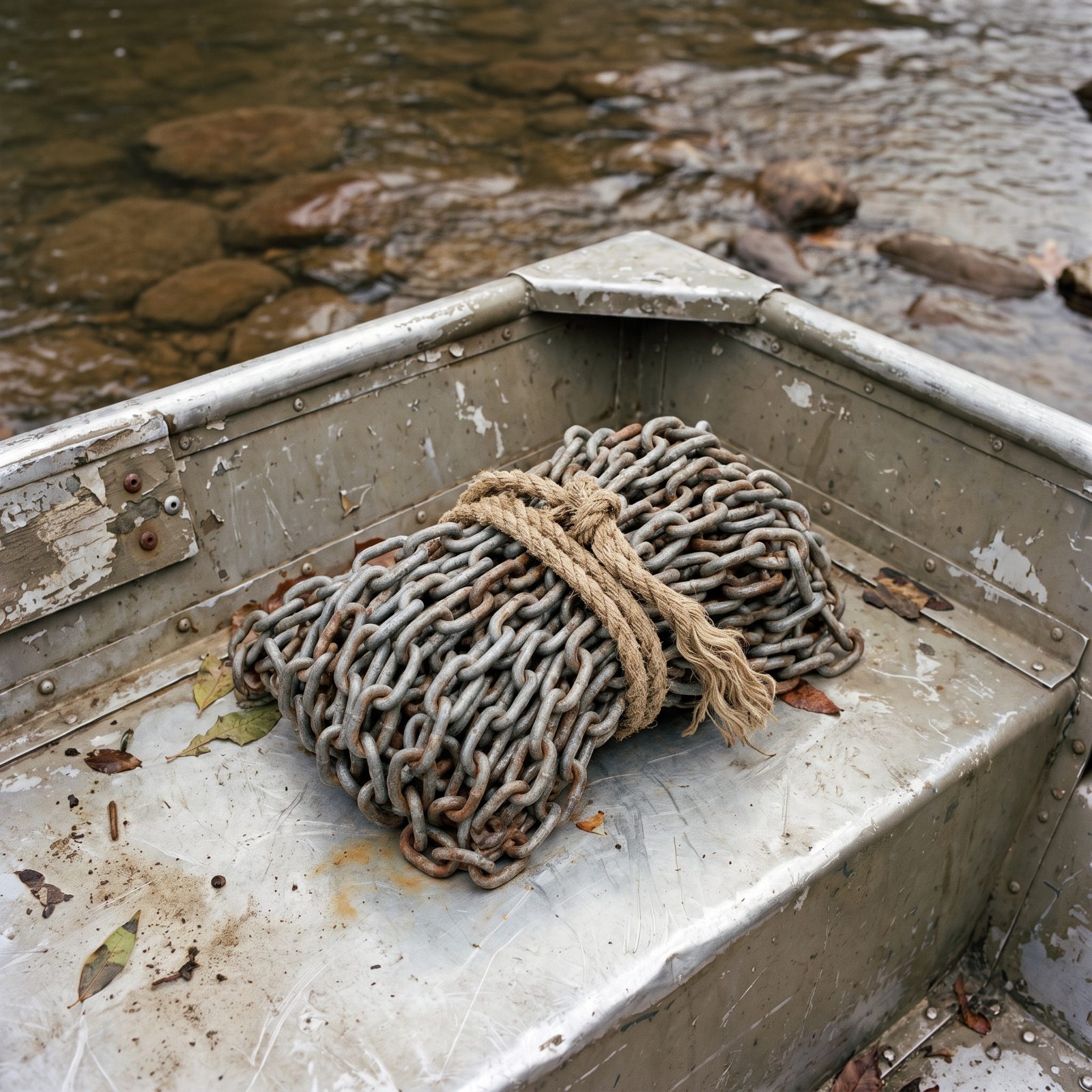
Try anchoring a flat-bottom boat on a boulder-strewn river with a mushroom anchor and you’ll spend the whole day either hung up or dragging. A bundle of short, heavy chain does the job better. It drapes over and between the rocks, gripping by sheer weight and friction rather than digging in, and it lifts free straight up when you want to move.
River guides have run chain for generations because it never wedges the way a fluke anchor loves to. Rig it on a trip line so you can break it loose from the other end if it does catch. Cheap, ugly, and it holds where some pretty anchor won’t.
5. Turn a Five-Gallon Bucket into an Emergency Drift Brake
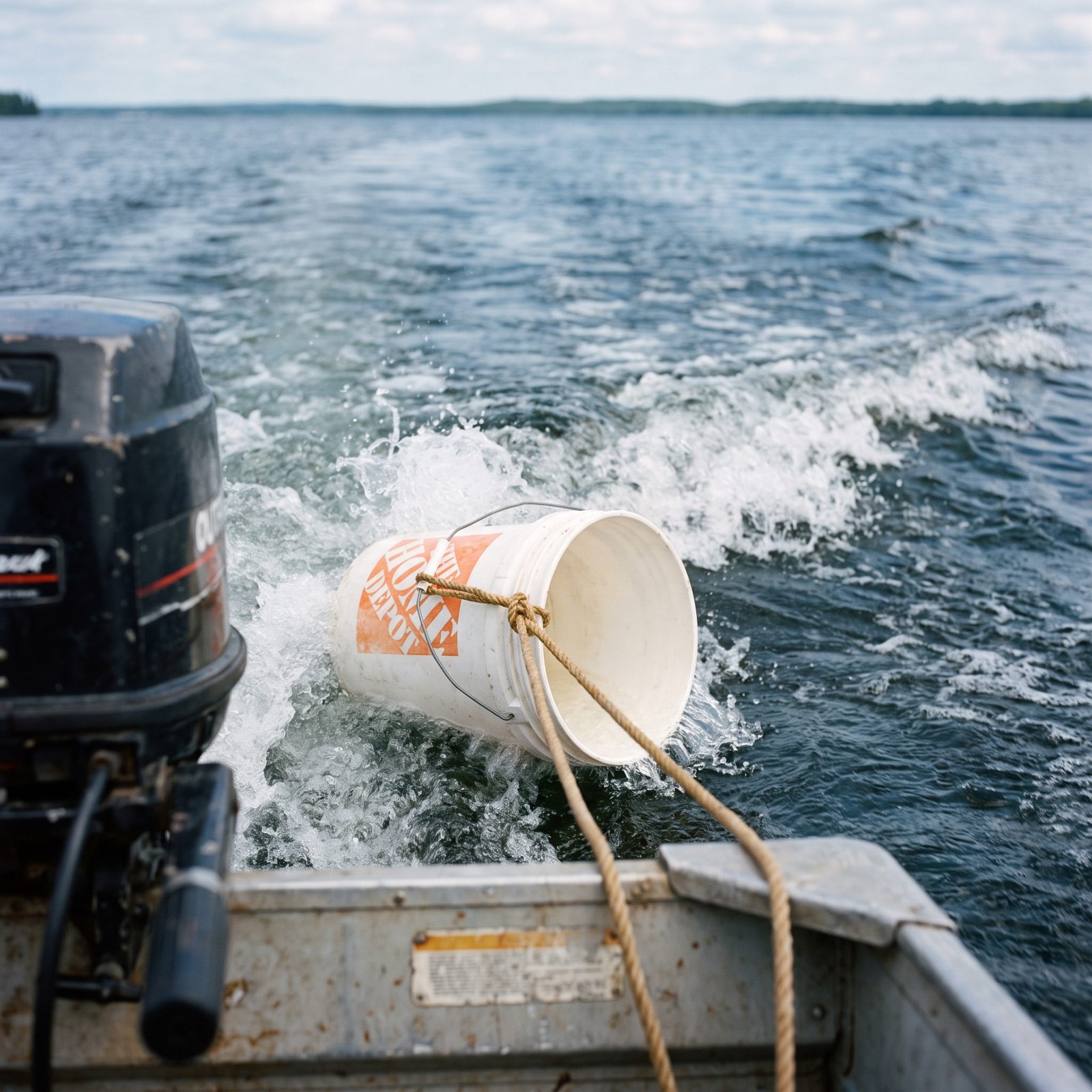
Outboard pushing you across a flat too fast to fish it right? Tie a rope to a five-gallon bucket, toss it off the stern, and let it drag in the wake. While you’re under power it’ll just skip across the surface on its side, empty and dry, open end facing sideways. Throttle back and it catches water and slows you to a crawl — a poor man’s drift sock, built from something already rattling around in the bilge.
4. Coat Iced Rod Guides with Plain Lip Balm
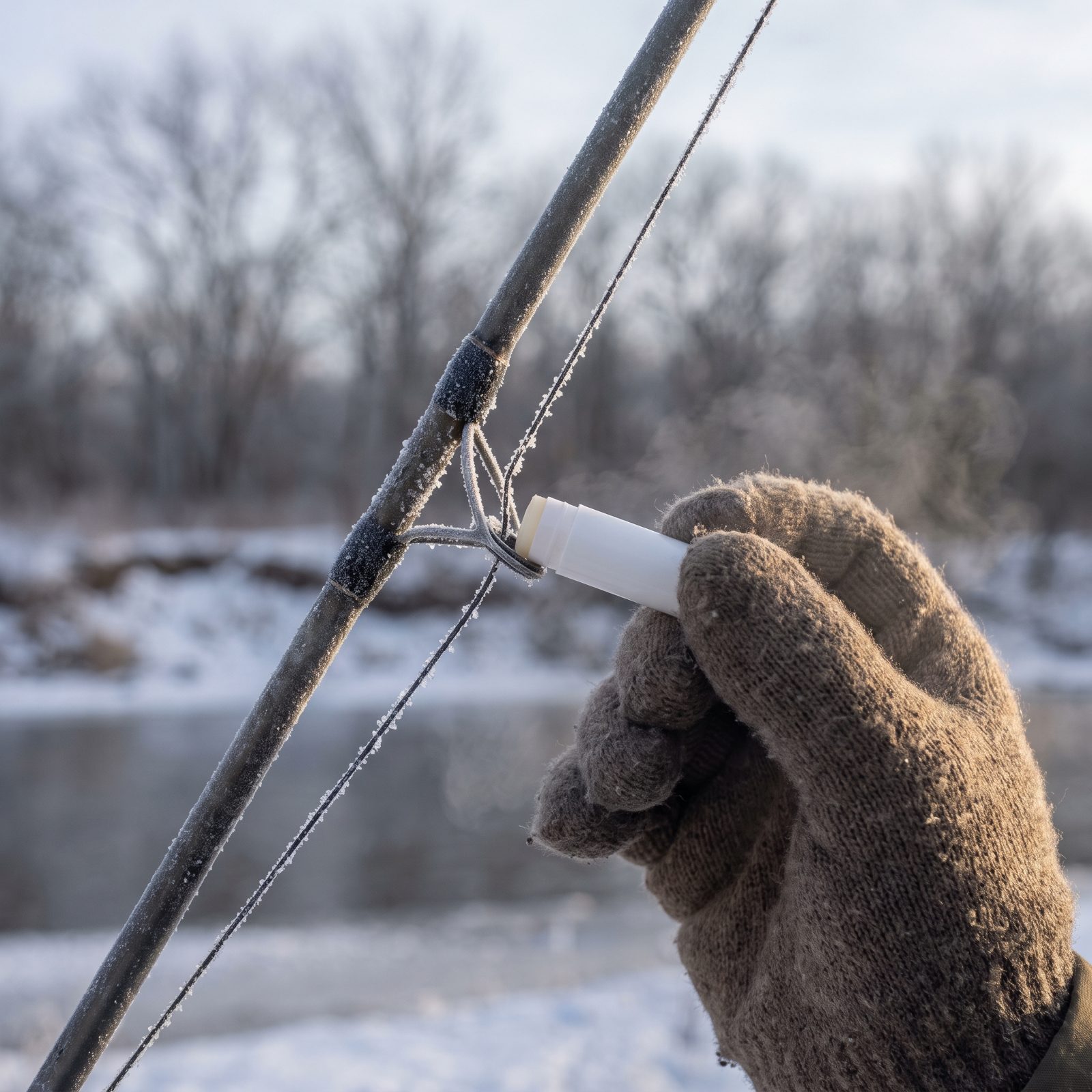
Winter steelhead and trout anglers know the misery well. Every cast, the guides ice over and your line jams in a plug of frost. Smear a little plain lip balm on each guide and ice won’t bond to the ring — the waxy film sheds water before it can freeze, and suddenly you get a dozen clean casts instead of three.
Go unscented and unflavored. Your hands are near the line and the water all day long, and nobody wants cherry-mint riding on their nightcrawlers.
3. Stuff Wet Boots with Crumpled Newspaper Overnight
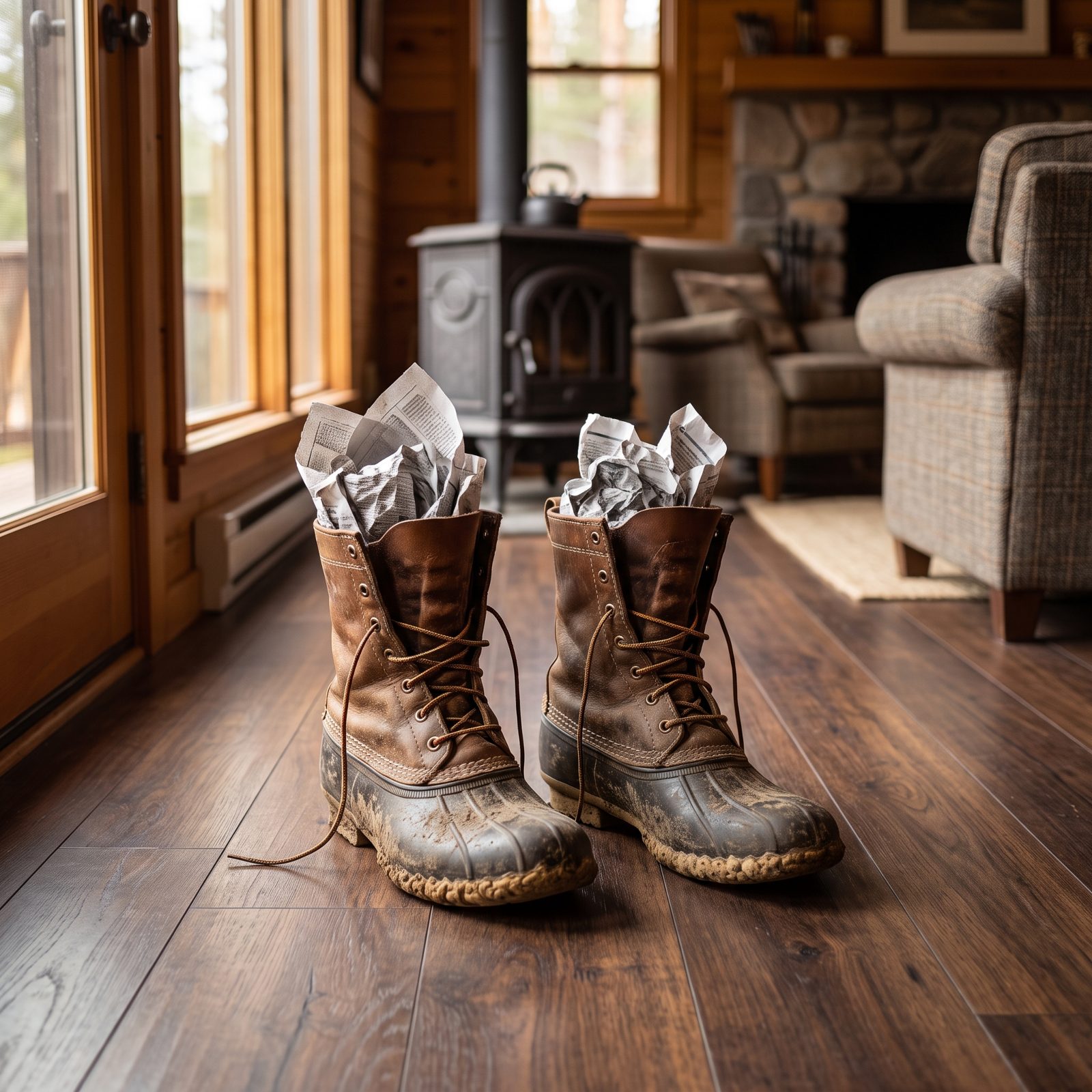
Soggy boots dry slow and stink worse, and parking them by the campfire just cracks the leather. Crumple up newspaper and pack it tight into each boot overnight. The paper wicks moisture out from the inside while holding the boot’s shape as it dries.
If they’re truly drenched, swap in fresh paper once before you turn in. Beats a stove-cooked boot every time. You’ll feel it most on the second morning of a trip, when dry feet count as a small miracle.
2. Run Line Through a Heavy Book for Even Spooling Tension
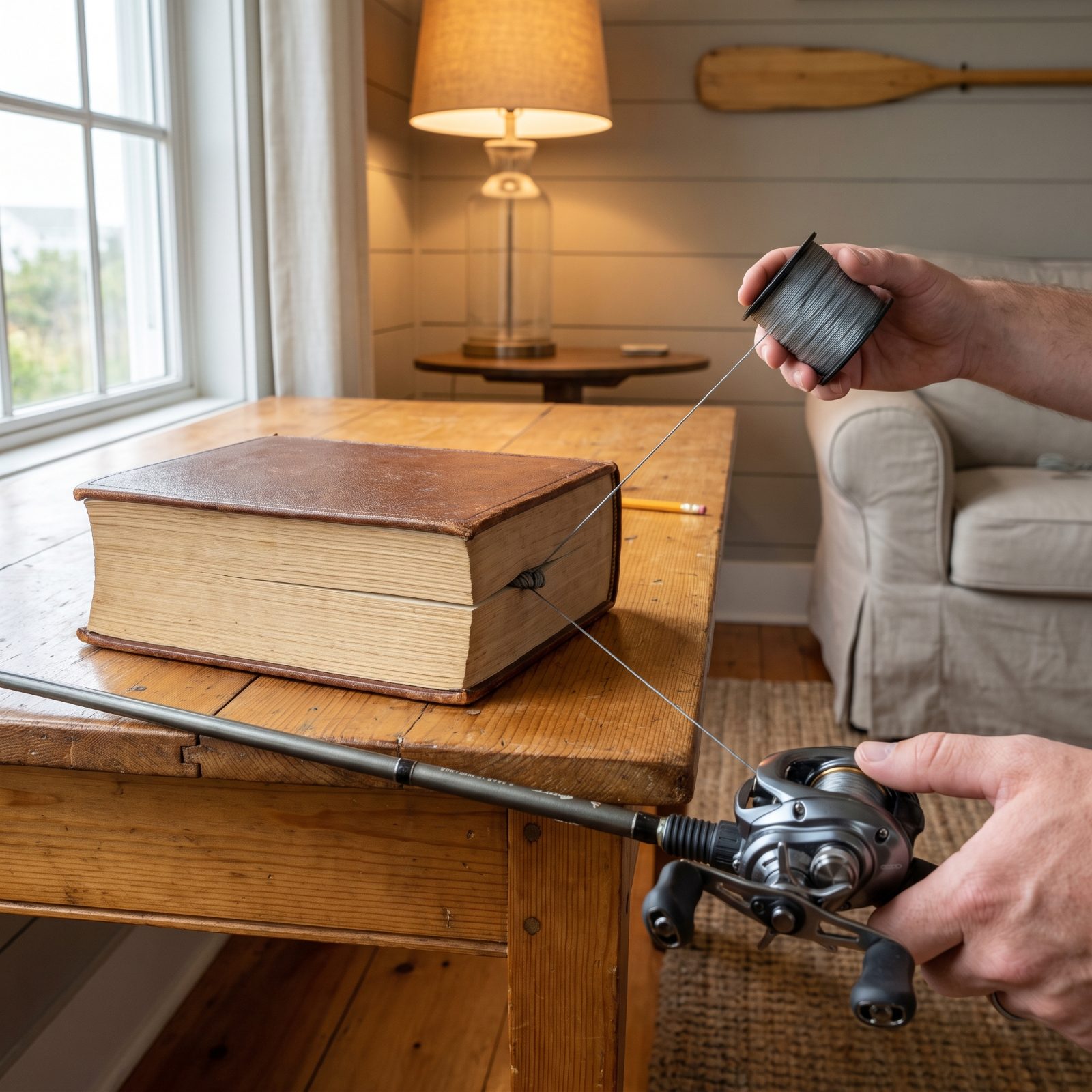
Loose line on a reel is a mess waiting to happen. Loops dig into the spool, wind knots pop up mid-cast, and a hard-fighting fish buries your line down into itself. The old fix wants nothing but a thick book: tuck the fresh line between the closed pages of a hardcover sitting on the table, and hold the filler spool loosely in one hand while you crank with the other.
The pages grip just enough to lay everything on tight and even. Want more tension? Press down harder. Less? Ease off. You could pinch the line in a damp rag instead, but the book sits flat on the table and holds the line for you — and it’s already sitting there on the shelf.
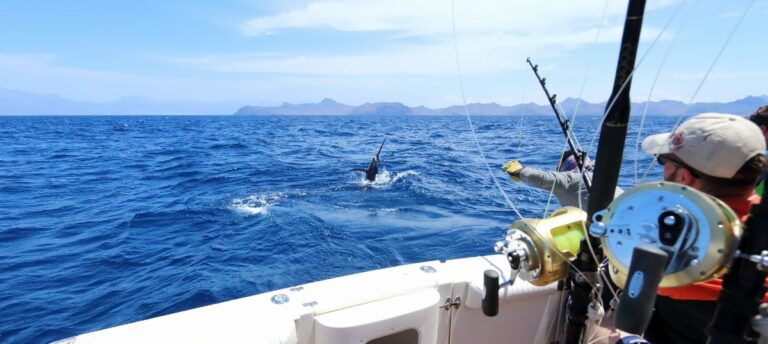
1. Lower the Rod Toward a Jumping Fish to Keep the Hook Seated
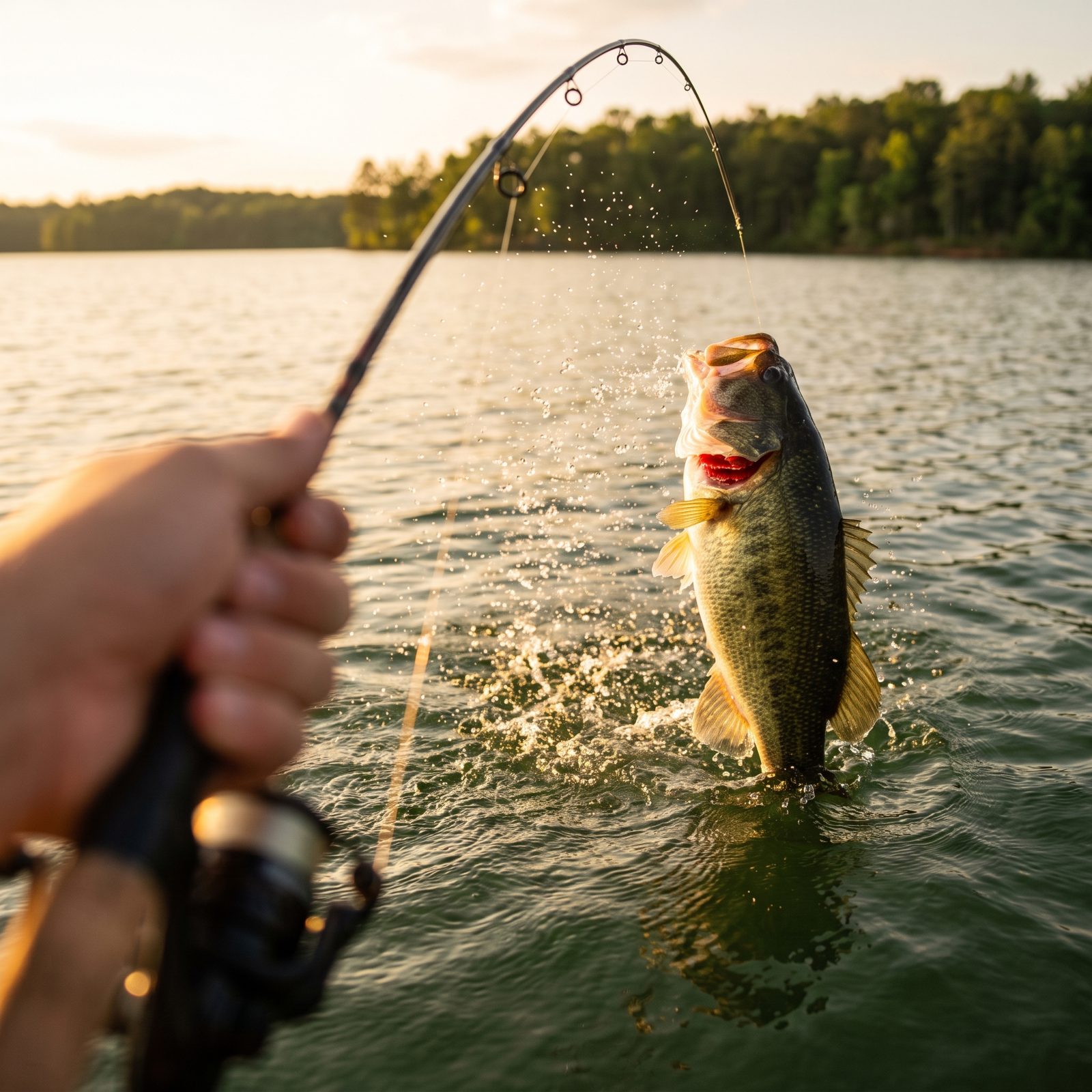
A bass or tarpon clears the water, thrashes, and that’s where most fish get lost. Hold the rod high and sharply bent on a tight line, and you hand the fish a stiff lever to throw the hook against. Counterintuitive move: drop the rod tip toward the fish the instant it goes airborne. Old-timers call it bowing to the fish.
Lowering the rod feeds slack into the line, so a headshake can’t snap the hook free against the tension. It feels dead wrong. Every instinct screams reel harder. Do the opposite anyway.