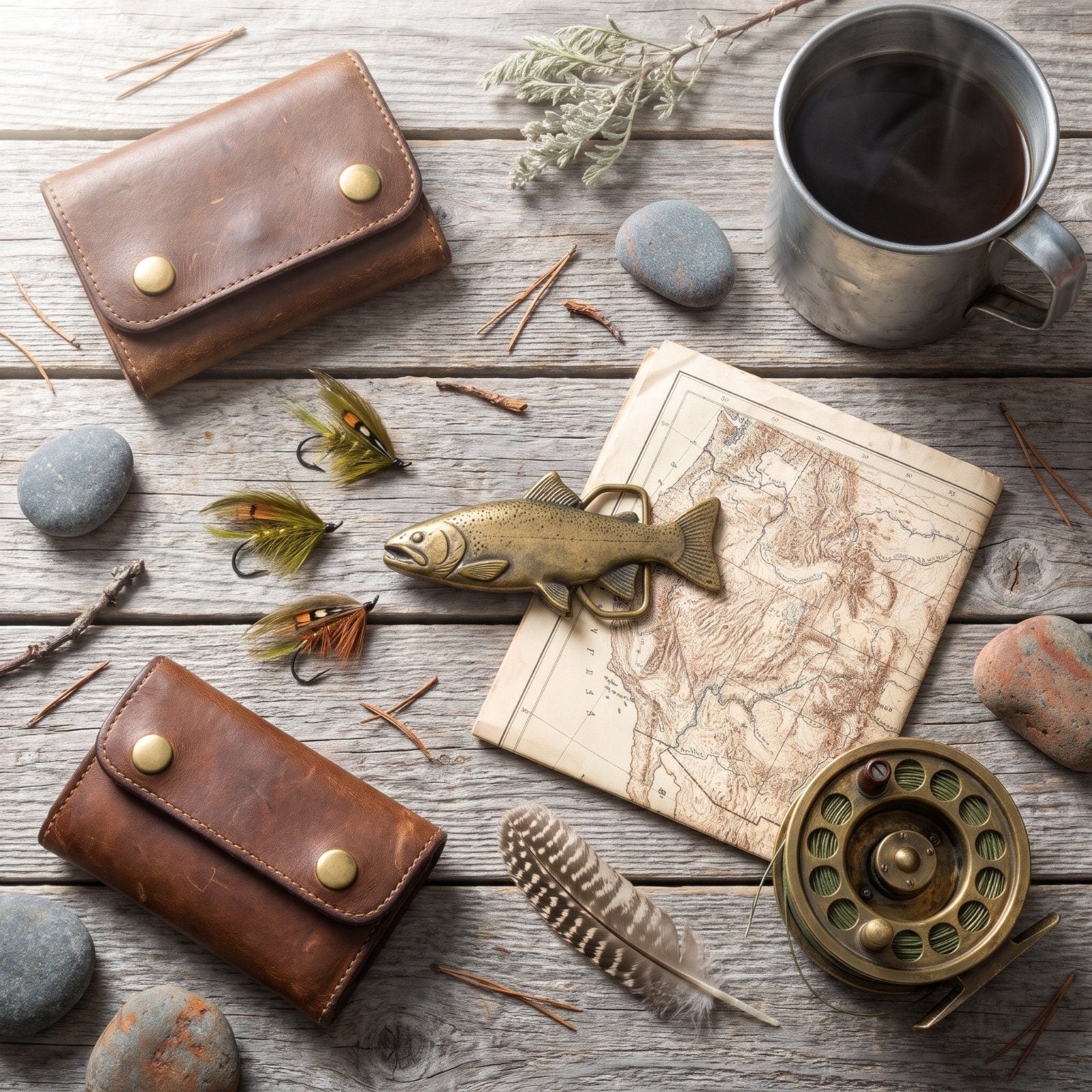
Pick a state and somewhere in its statute books sits a fish with legal standing. Not a mascot — an actual designated species, usually a trout or a salmon, often one that nearly blinked out before biologists dragged it back. What surprises me is how many still swim in water you can fish today, from glacier melt in Alaska to a desert lake in Nevada that could pass for the surface of Mars. Here are the state fish and the real water behind each one, with what makes the fish worth knowing and where the law lets you cast.
Please note that some of the images in this article were created with the assistance of AI.
46. Alaska: King Salmon on the Kenai River
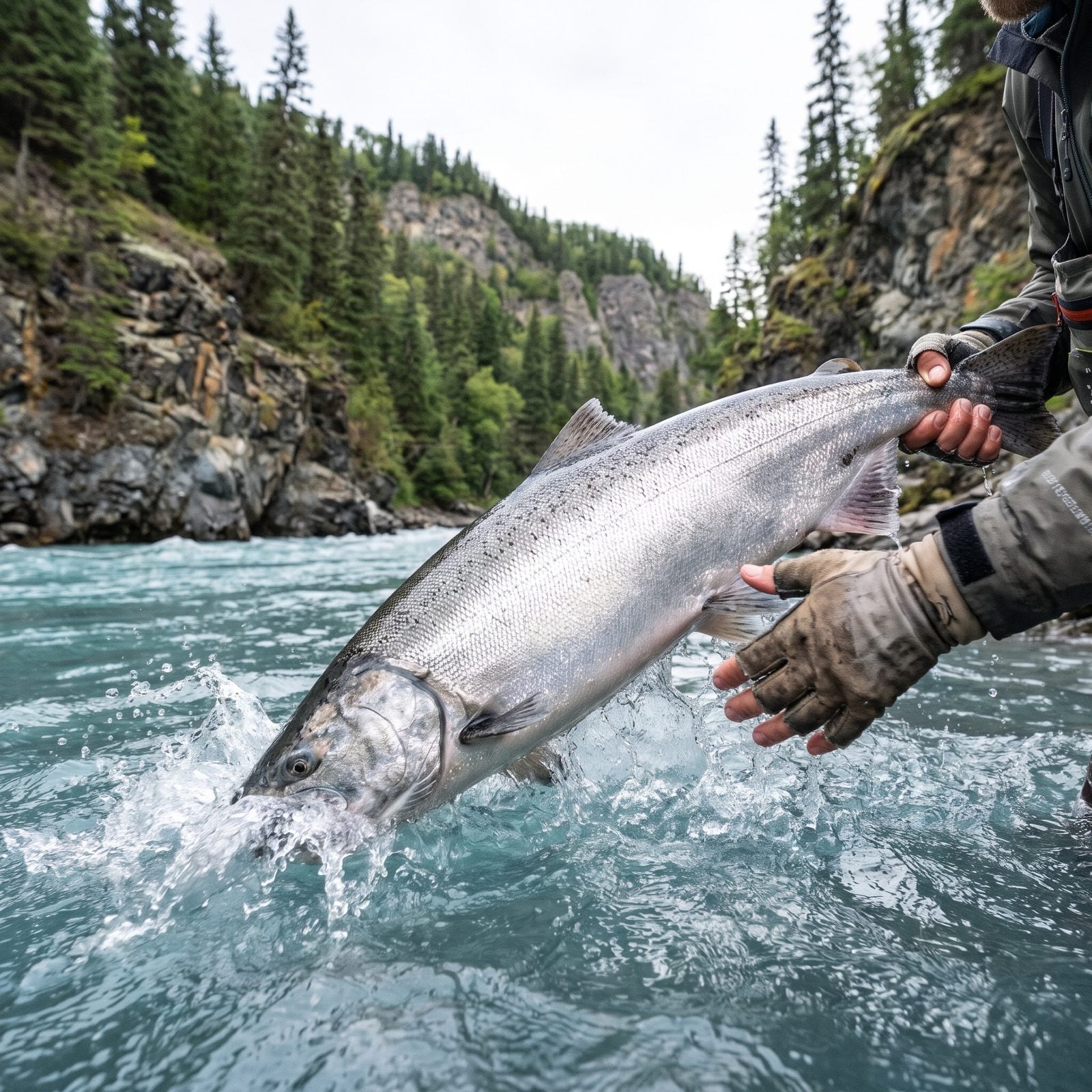
The king salmon isn’t just big. It’s the heaviest Pacific salmon on the planet, and the Kenai grows the biggest of them — the old world record, a 97-pounder, came out of this river in 1985.
What people get wrong is the timing. The Kenai runs two pulses of kings, an early run in late May and June and a larger late run in July. Regulations shift year to year and sometimes slam shut mid-season when escapement numbers come up short, so the river you fished last July might be catch-and-release this one.
45. Washington: Steelhead on the Olympic Peninsula
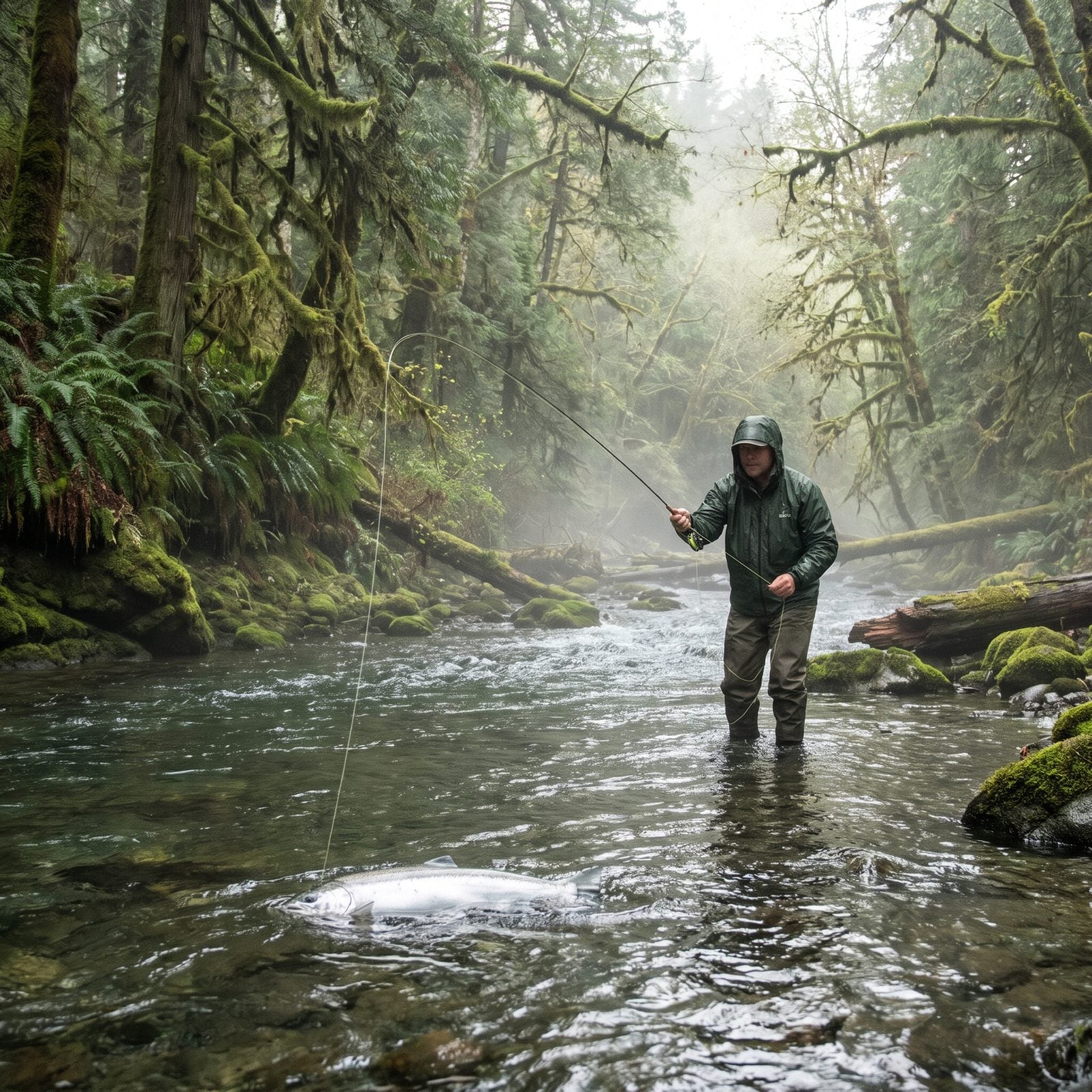
A steelhead is a rainbow trout that went to sea, came back, and refused to die the way salmon do. Same species, entirely different animal. They can spawn more than once, which salmon can’t, and a fresh winter fish off the Olympic Peninsula hits like a car door.
Rivers like the Hoh, Queets, and Bogachiel hold some of the last strong runs of wild steelhead in the lower 48. Most require you to release wild fish, and some stretches are fly or lure only. These are tough fish to catch on purpose. I’ll say it flat: you can do everything right and go home empty, and that’s part of why people drive hours in the rain for them.
44. Oregon: Chinook Salmon in the Columbia River
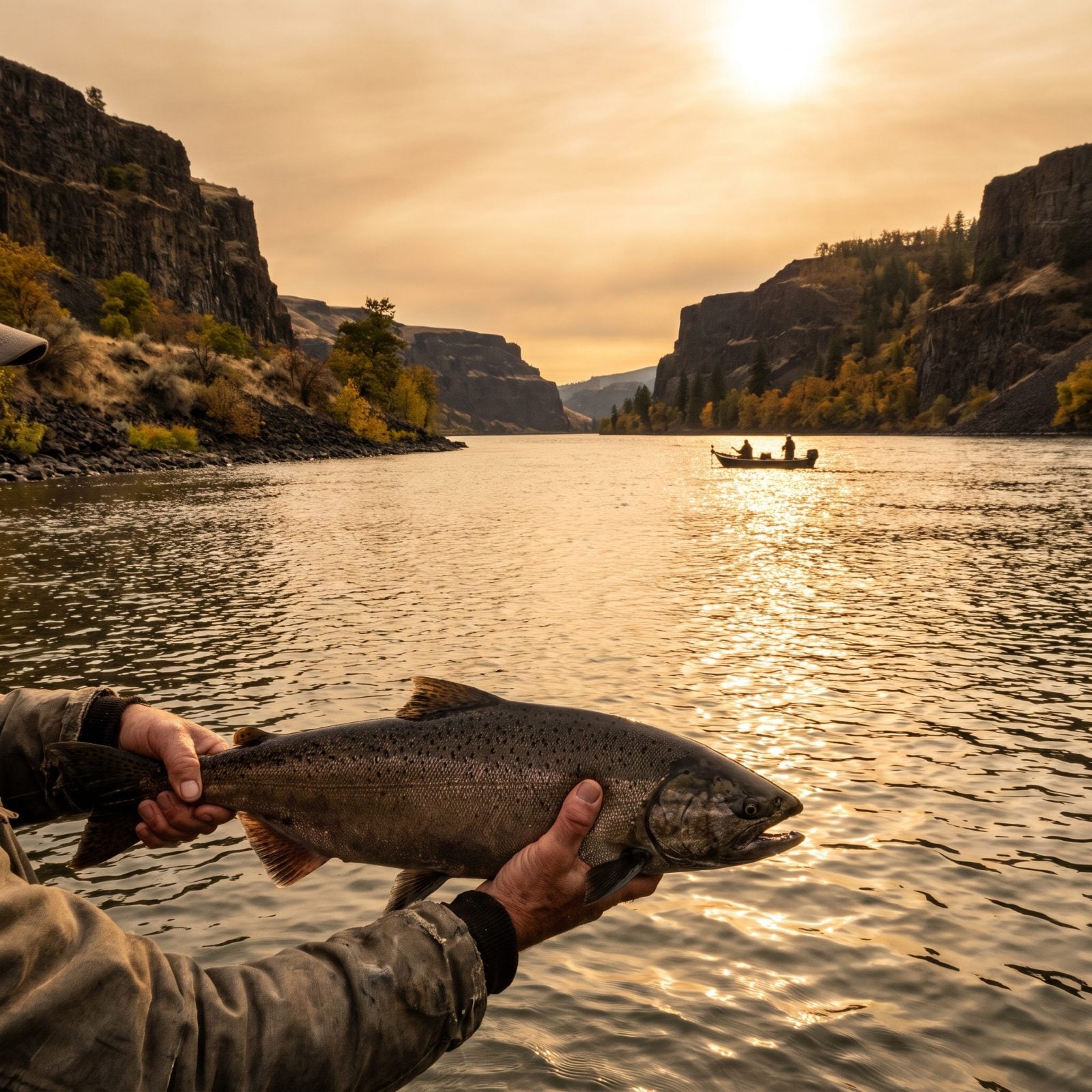
Oregon named the Chinook its state fish, and the Columbia is the stage it earned the honor on. Fall kings push up this river by the hundreds of thousands, staging below Bonneville Dam where bank anglers and boats crowd in every September.
Here’s the detail nobody mentions. The Columbia is a shared Oregon-Washington fishery, and your license situation depends on which bank you fish and where the state line runs down the middle. Buy wrong and you’re fishing illegal without knowing it. Seasons open and close by salmon run and by section, sometimes within days.
43. California: Golden Trout in the Golden Trout Wilderness
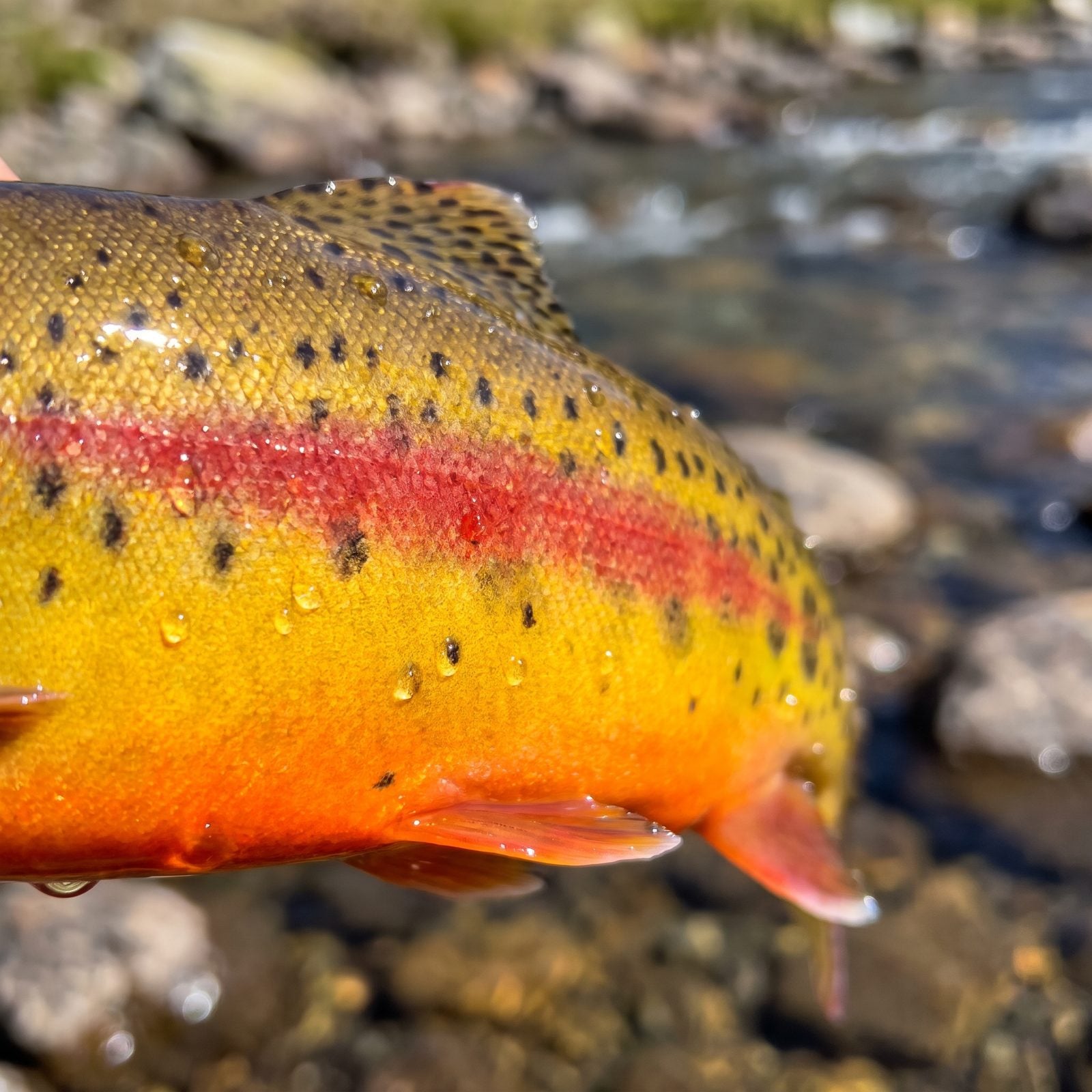
This might be the prettiest freshwater fish in North America, and California made it the state fish in 1947. The belly runs pure gold, a red stripe splits the flank, and round black spots are scattered across the back and flank.
You don’t catch a native golden by accident. The pure strain lives above 10,000 feet in headwater streams you reach only on foot or horseback — small fish, often under ten inches, spooky in gin-clear water. This is a trip you earn with your boots. Nobody drives to a golden.
42. Nevada: Lahontan Cutthroat Trout at Pyramid Lake
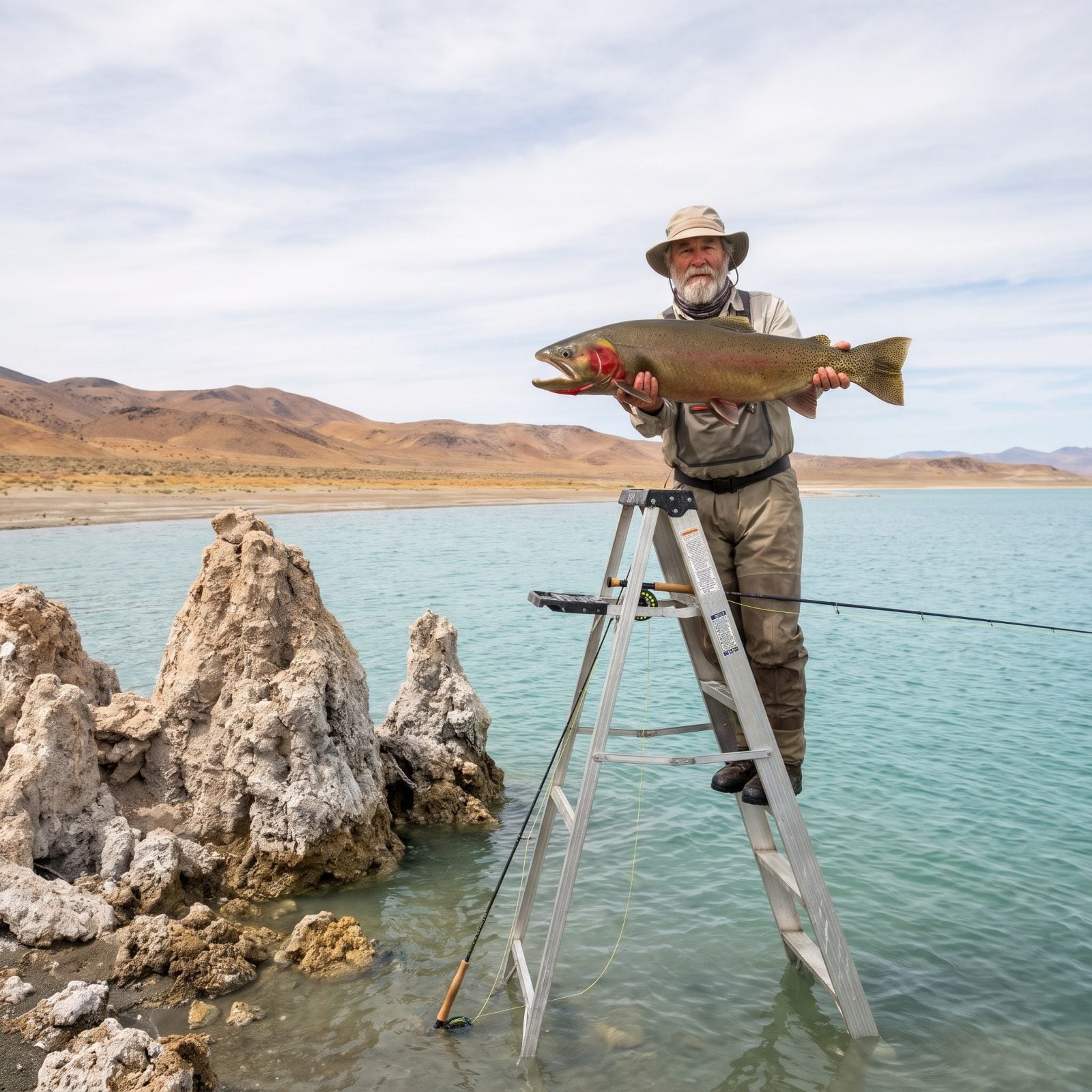
Pyramid Lake grows the largest cutthroat trout in the world. Fish over 20 pounds come out of this desert lake, which looks like nowhere a trout should live — all tufa spires and dry hills on the Pyramid Lake Paiute Reservation north of Reno.
The quirk you’ll spot from shore? An angler up on a stepladder set right in the lake beside the tufa, its legs standing in the water. The bottom drops off slow, and the ladder gets your cast past the shallows. You fish on a tribal permit, not a Nevada state license, and the reservation sets its own seasons and limits.
41. Arizona: Apache Trout in the White Mountains
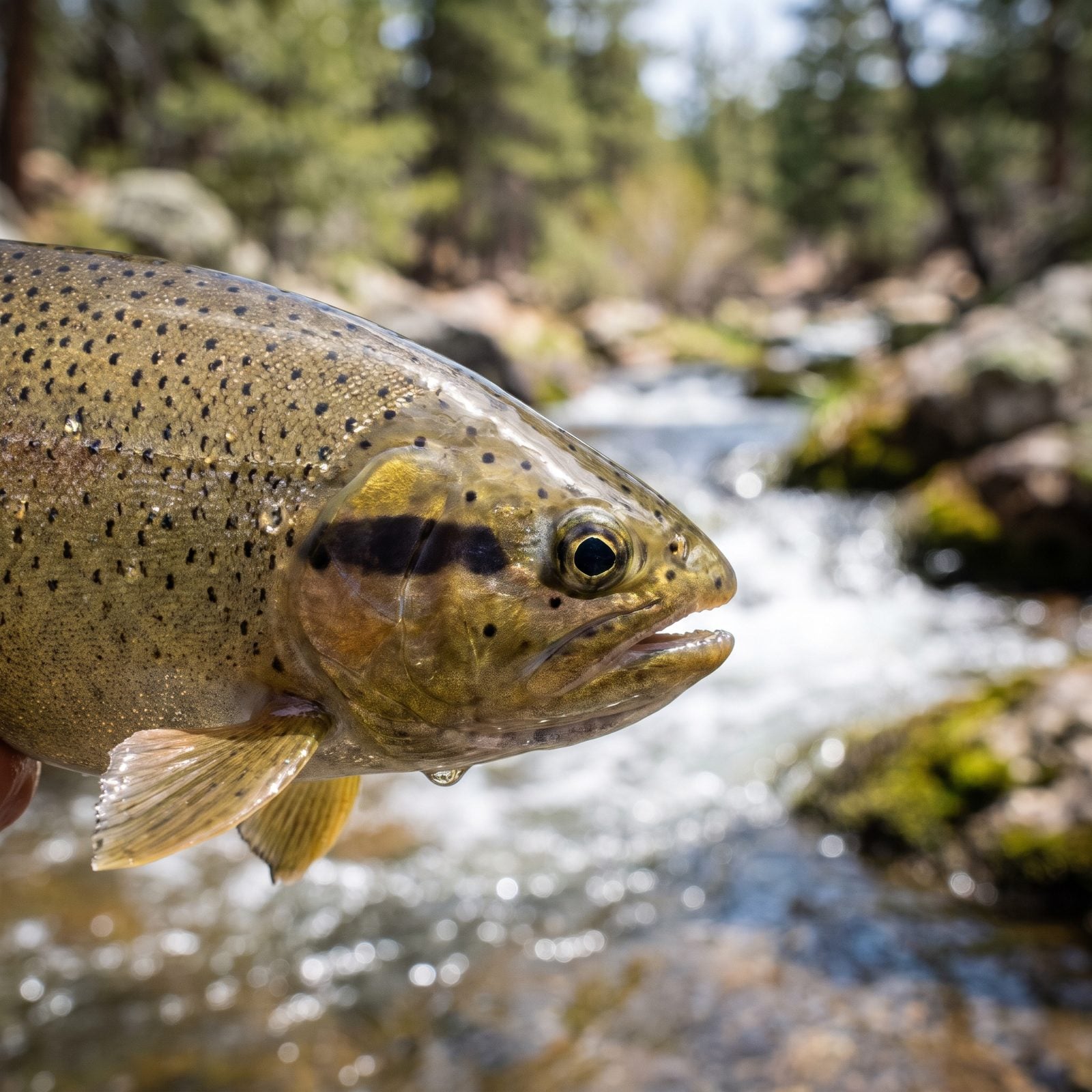
The Apache trout has a clean gold ring around the eye, a scattering of dark spots across the cheek and back, and a body the color of brass. It’s one of only two trout native to Arizona, and it nearly disappeared.
Here’s the part that matters. The White Mountain Apache Tribe is a big reason this fish still exists. Recovery work on reservation and Forest Service streams brought it back far enough that it was proposed for removal from the endangered list. You can fish for them legally in designated White Mountain waters, with a state or tribal license depending on the stretch. Small fish, big meaning.
40. Utah: Bonneville Cutthroat Trout at Strawberry Reservoir
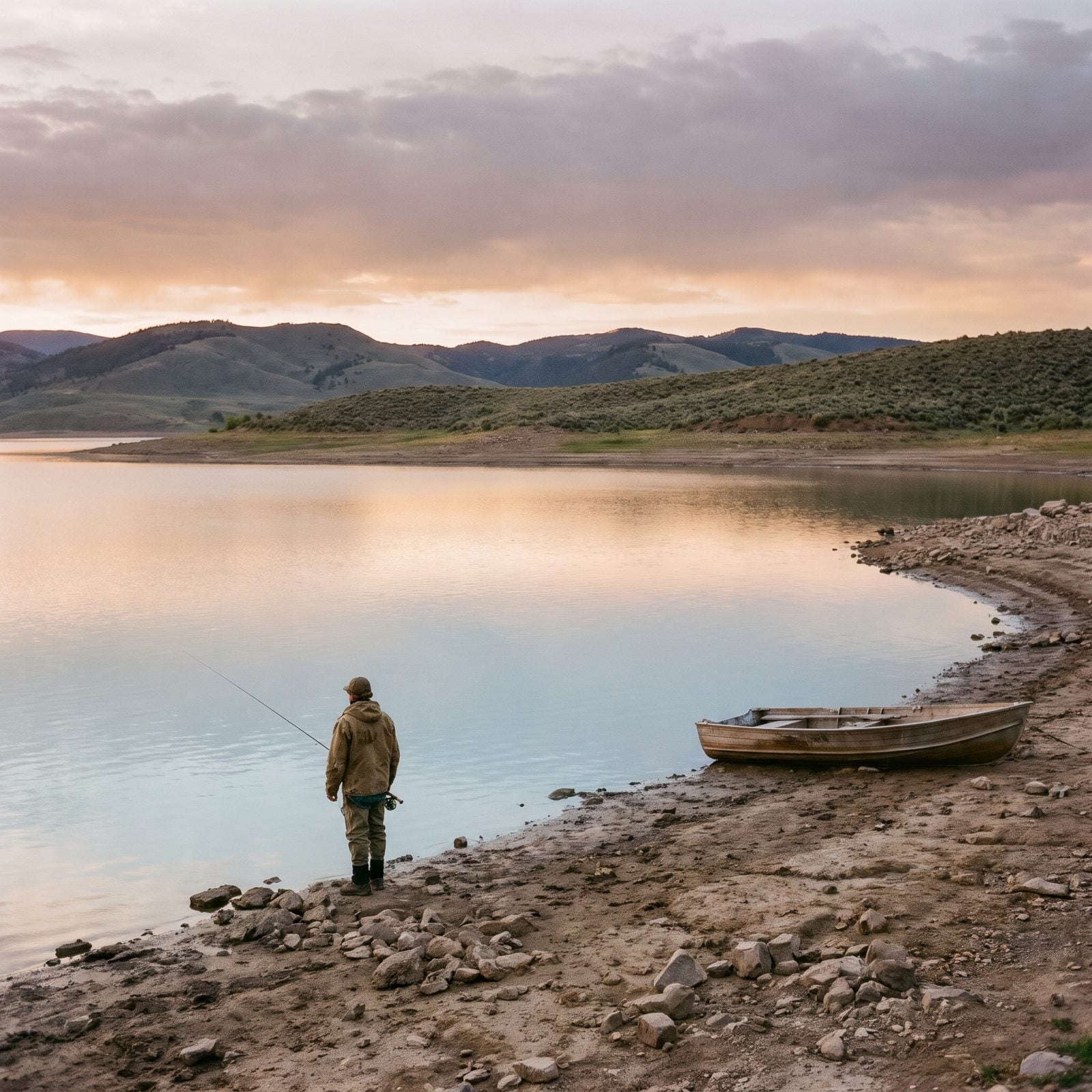
Utah’s state fish is the Bonneville cutthroat, a survivor of ancient Lake Bonneville, the inland sea that once covered much of the state. Strawberry Reservoir is where most anglers tangle with them.
Strawberry is a managed cutthroat fishery, which means slot limits you need to read before you keep a fish. Decades ago the reservoir got a major rotenone treatment to knock out illegally stocked chubs, and the cutthroat program came back strong. Winter here is a whole scene — trucks parked out on the frozen flats, tip-ups scattered to the horizon.
39. Colorado: Greenback Cutthroat Trout at Zimmerman Lake
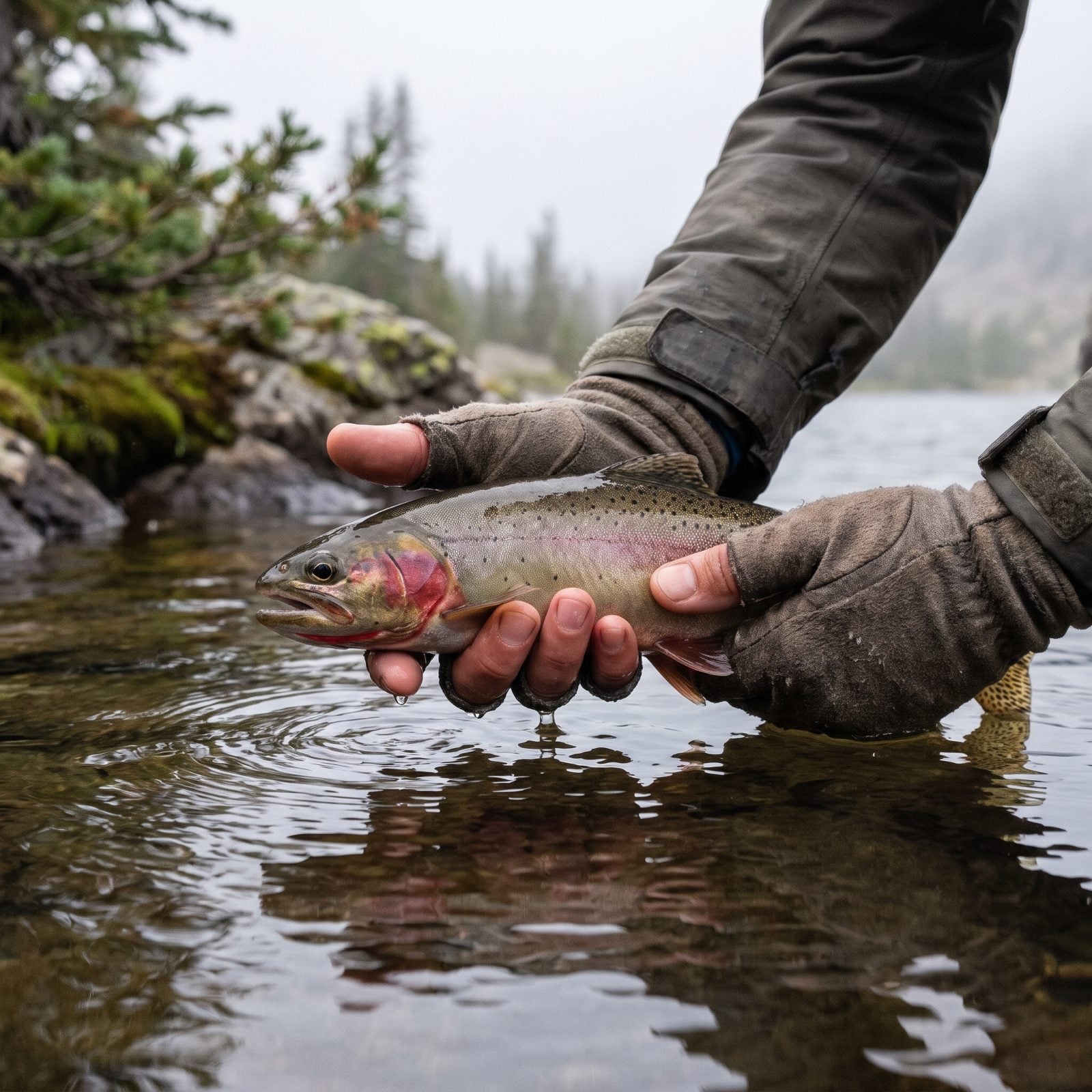
The greenback cutthroat is Colorado’s state fish and one of the rarest trout in America. For a stretch it was thought extinct, then rediscovered, then a 2012 genetic study revealed that most fish called greenbacks for decades were actually a different lineage. The real greenback hung on in a single creek.
Zimmerman Lake, in the Cache la Poudre high country, became a recovery and brood stock water. Access and regulations here are tight because the whole point is keeping this fish alive. Confirm current rules with Colorado Parks and Wildlife before you go. When a fish is this close to gone, you fish for it on its terms.
38. Wyoming: Cutthroat Trout in Yellowstone Lake
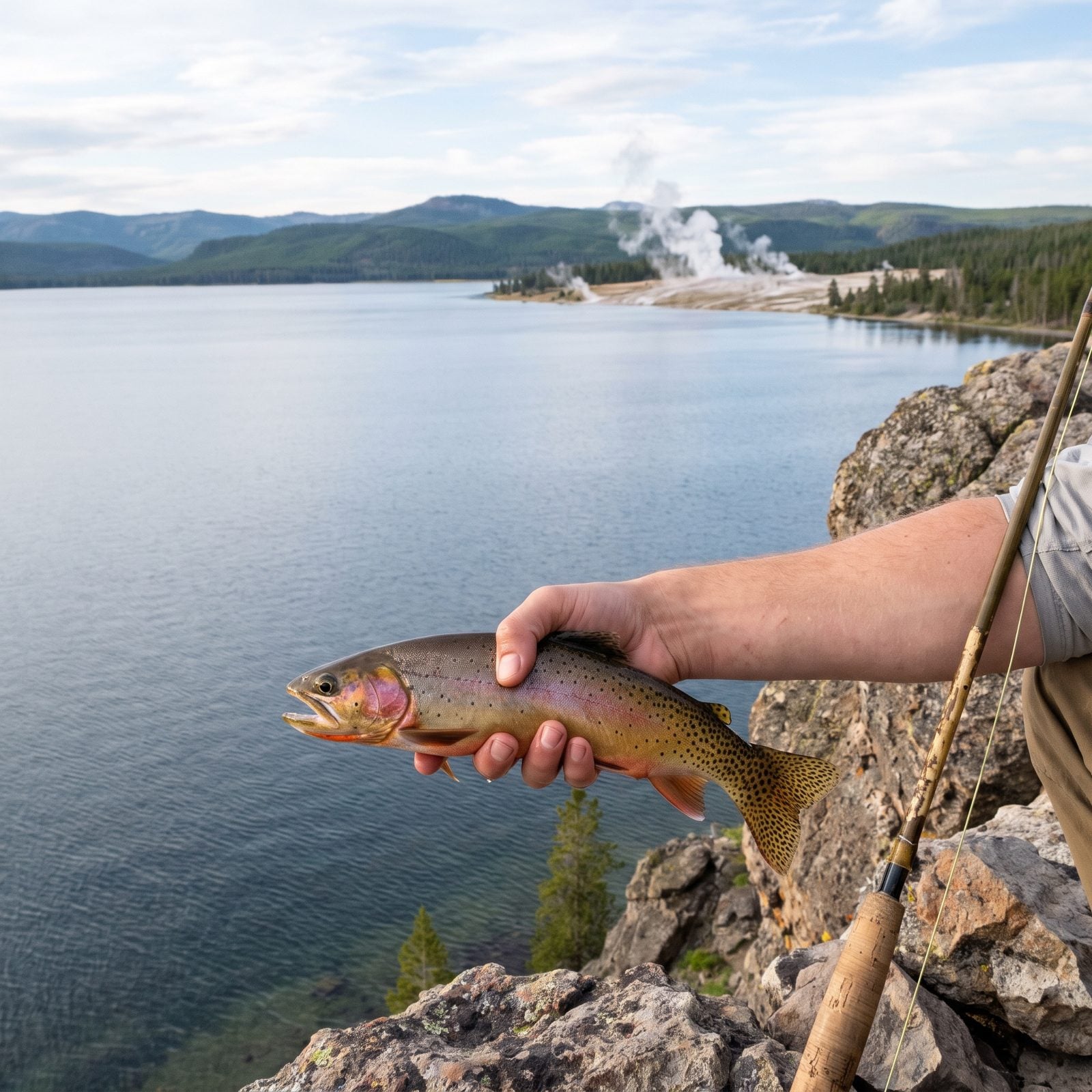
The Yellowstone cutthroat is Wyoming’s state fish, and Yellowstone Lake is its heartland — the largest high-elevation lake in North America, sitting above 7,700 feet.
This fishery carries a hard lesson. Illegally introduced lake trout, which eat cutthroat, crashed the native population in the 1990s, and the Park Service nets lake trout aggressively to this day to save them. That’s why park rules require you to kill any lake trout you catch and release the cutthroat. Fishing here means a Yellowstone National Park permit, not a state license, and the rules exist to protect a fish that feeds grizzlies, ospreys, and eagles. Cast a line and you’re part of the management.
37. Montana: Blackspotted Cutthroat Trout in the Flathead River
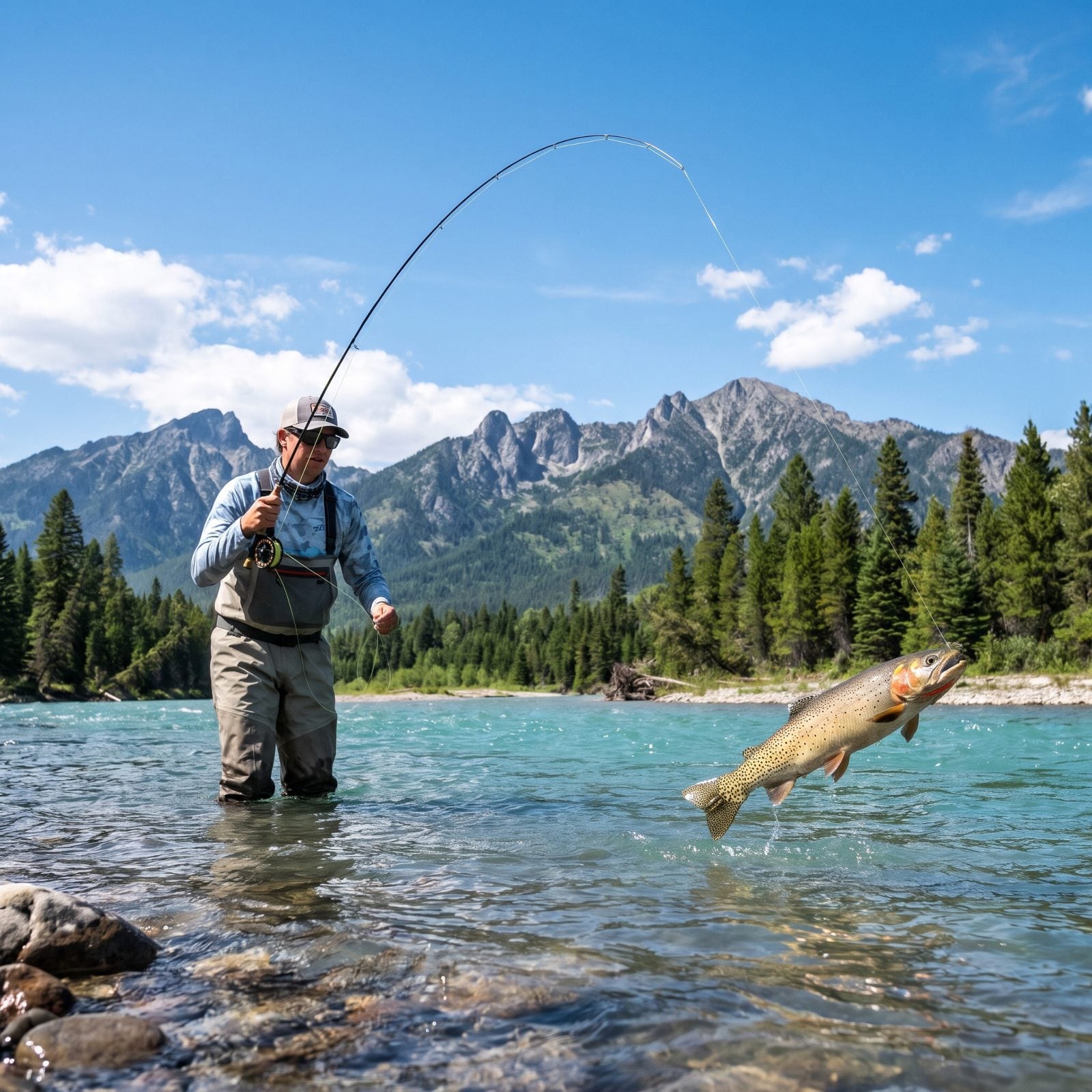
Montana’s state fish is the blackspotted cutthroat, which covers the westslope cutthroat you’ll find in the Flathead drainage below Glacier. The North and Middle Forks run so clear they look fake in photos. They’re not fake.
The westslope has a problem most trout don’t. It crossbreeds freely with introduced rainbow trout, so pure populations are shrinking into the coldest headwaters. The Flathead forks hold some of the best remaining genetically clean fish.
Most of this water is catch-and-release for cutthroat, often artificial lures or flies only. These fish aren’t big, but they eat a dry fly like they’ve never seen one, and in that water you’ll watch the whole thing happen.
36. Idaho, Cutthroat Trout at Henrys Lake
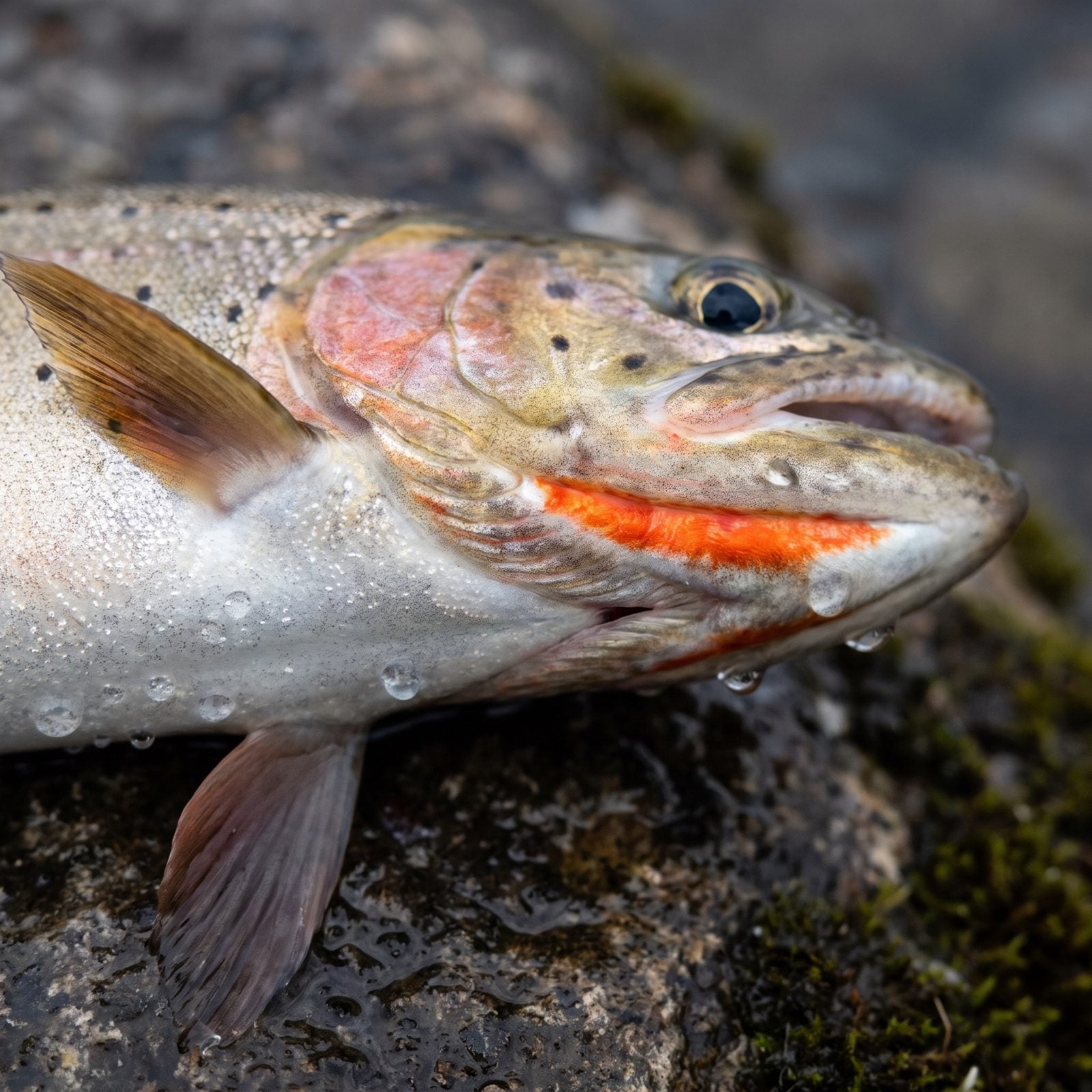
That orange-red slash under the jaw is how the fish got its name, and on Idaho’s official state fish it shows up like a fresh cut. Henrys Lake sits at nearly 6,500 feet near the Montana line, a shallow, weedy, spring-fed bowl that grows cutthroat fat on freshwater shrimp and leeches.
The lake runs trophy-heavy because the fishery is managed hard. You’ll find thick, deep-bodied fish here, nothing like the slim creek variety. Check the Idaho Fish and Game rules before you go, because seasons and gear restrictions change more here than on most waters, and the limits are tight on purpose.
35. New Mexico, Rio Grande Cutthroat Trout in Rio Costilla
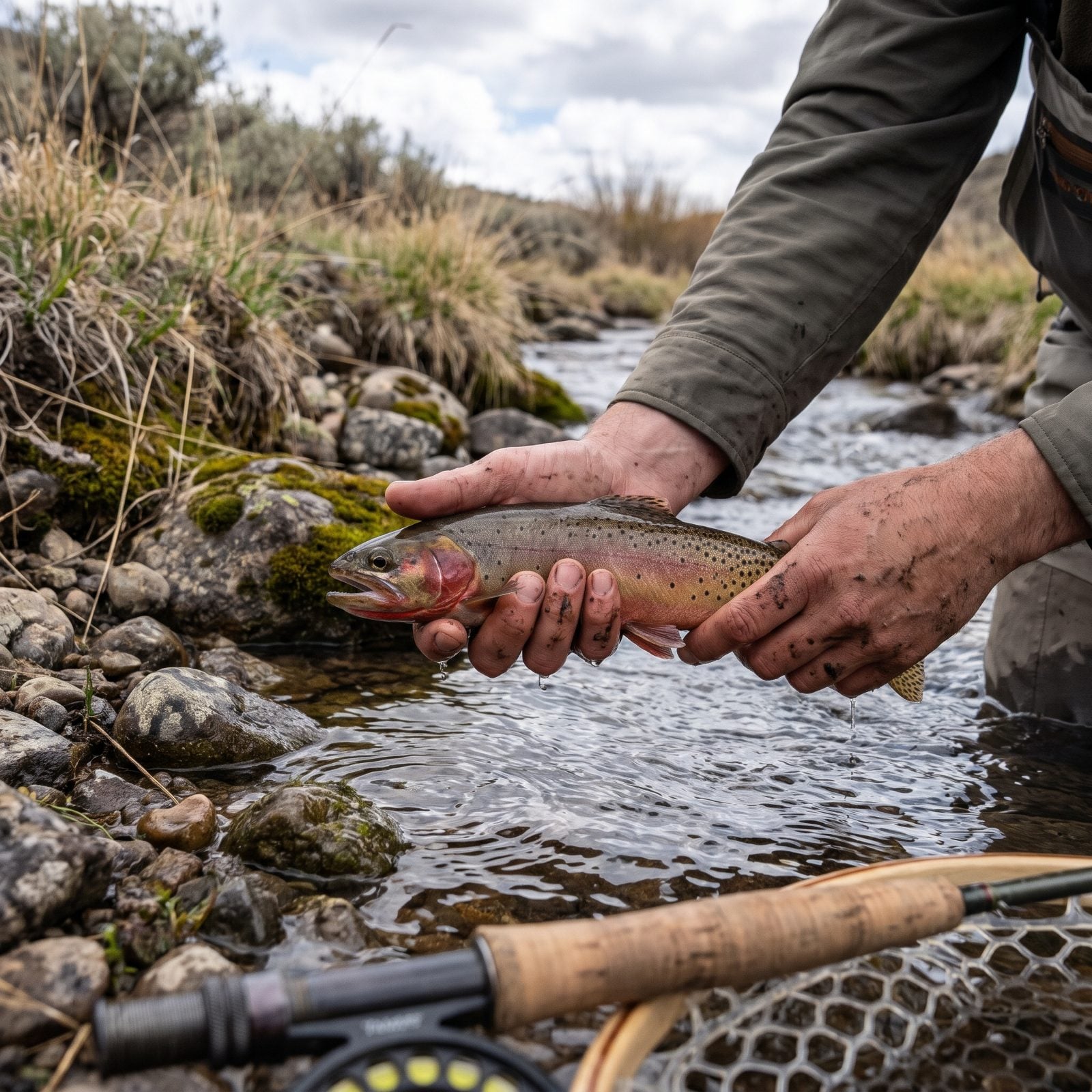
New Mexico’s state fish almost disappeared. The Rio Grande cutthroat is the southernmost cutthroat in North America, and non-native trout plus habitat loss squeezed it into a handful of isolated headwaters. Up near the Colorado border, the Rio Costilla drainage has been a long restoration project, with barriers built to keep rainbows and browns out.
These are not big fish. A hand-sized native in cold mountain water is the whole point, not a trophy. They hit dry flies with a recklessness that bigger, pressured trout gave up long ago.
34. Texas, Guadalupe Bass in the Guadalupe River
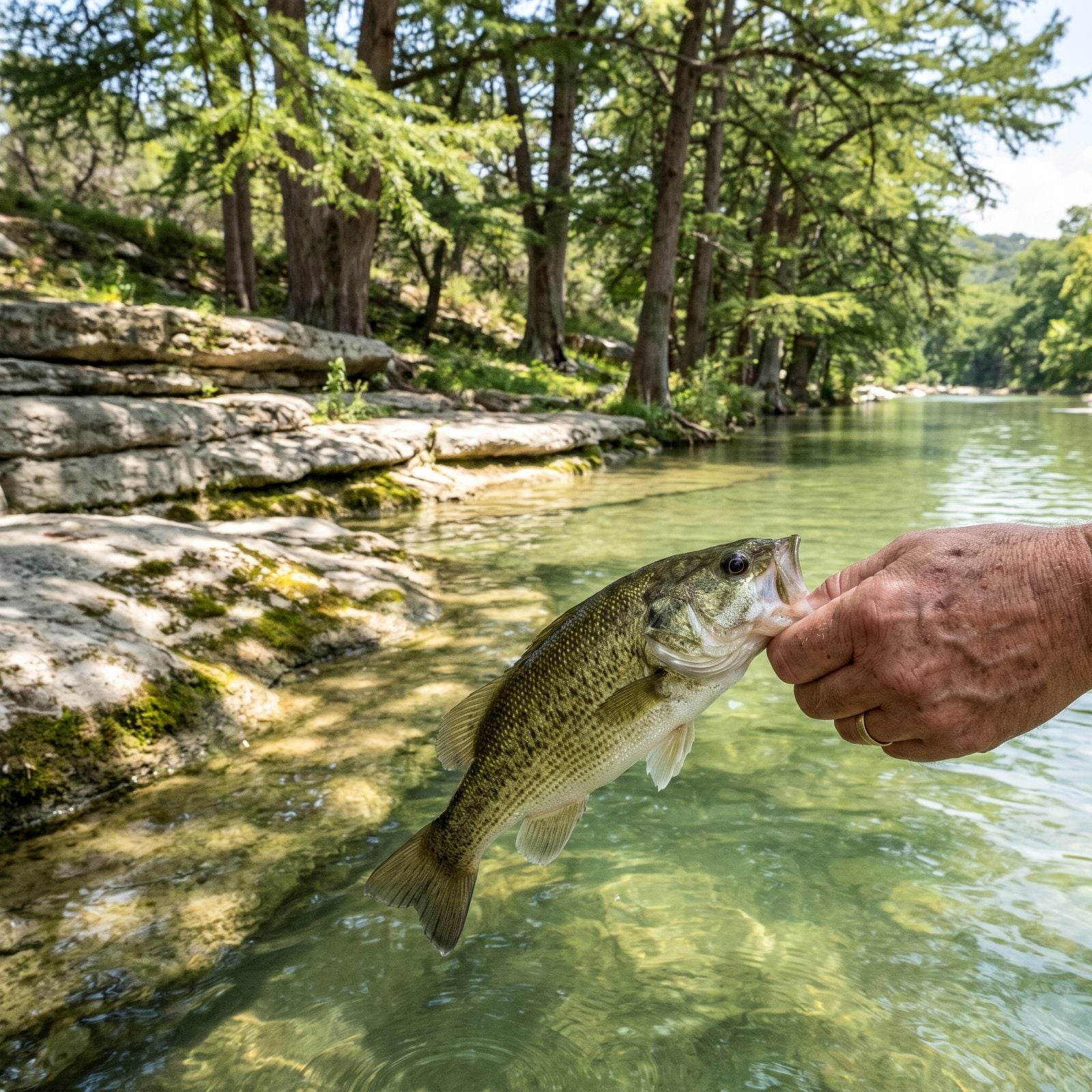
Found nowhere on earth but central Texas, the Guadalupe bass is a true endemic, which is why it carries the state fish title. People mix it up with a spotted or smallmouth bass constantly. Look for the dark blotches running low along the flank and a body built for current, leaner than a largemouth.
Pound for pound it fights like a fish twice its size, because it lives its whole life pushing against moving water.
The Guadalupe River through the Hill Country is the heartland. Clear, cypress-lined, spring-fed. Hybridization with introduced smallmouth has been the biggest threat, and crews have been stocking pure strains to push back for years now.
33. Oklahoma, White Bass at Lake Texoma
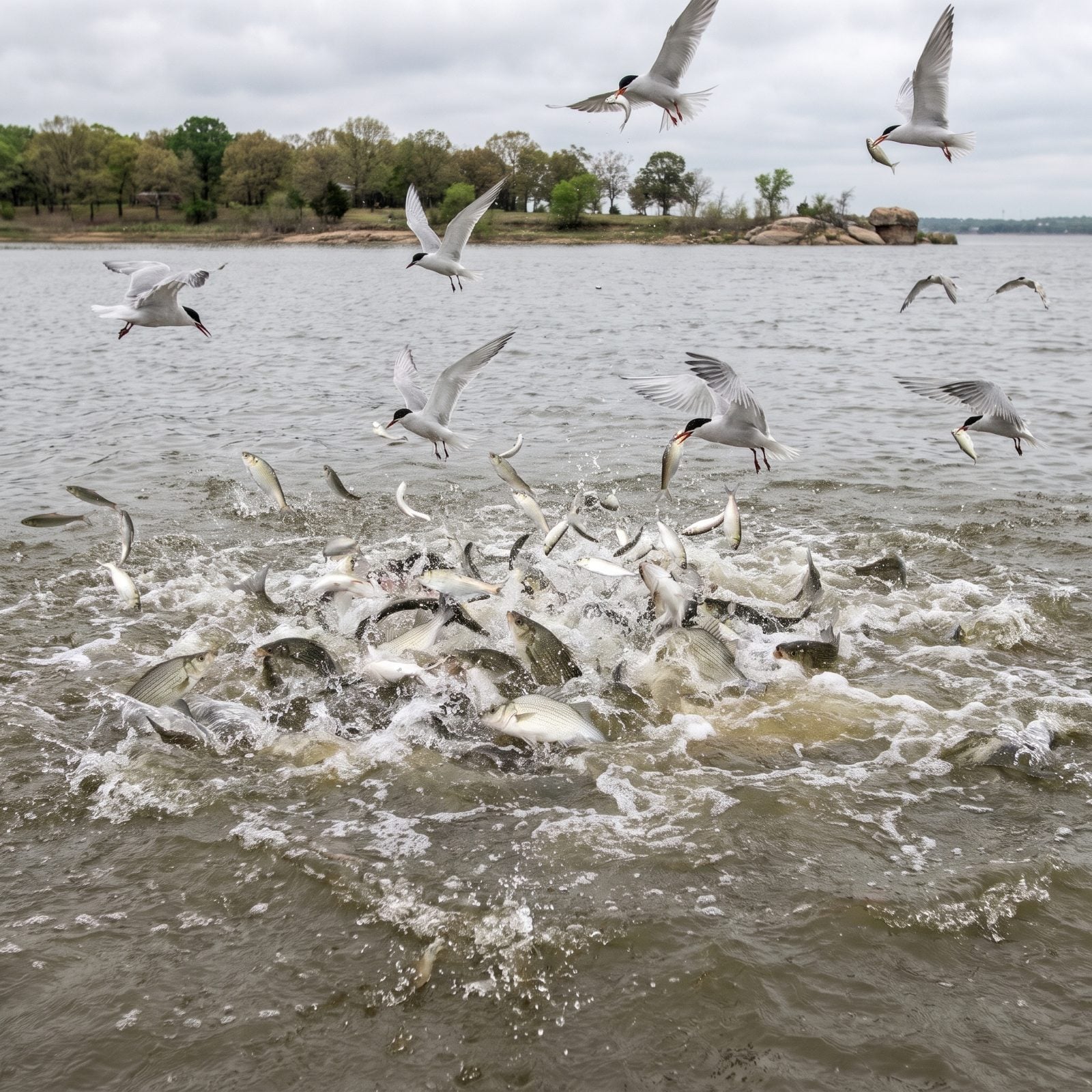
When the white bass run hits Lake Texoma in spring, it’s chaos in the best way. Schooling fish chase shad in packs, and once you find a school you can catch them until your arms give out. The dark horizontal stripes and chrome body give them away.
Texoma straddles the Oklahoma-Texas line, so a license question trips up a lot of anglers. There’s a special Texoma license covering both states’ waters on the lake. Sort that out before you launch, not at the ramp.
32. Kansas, Channel Catfish at Milford Reservoir
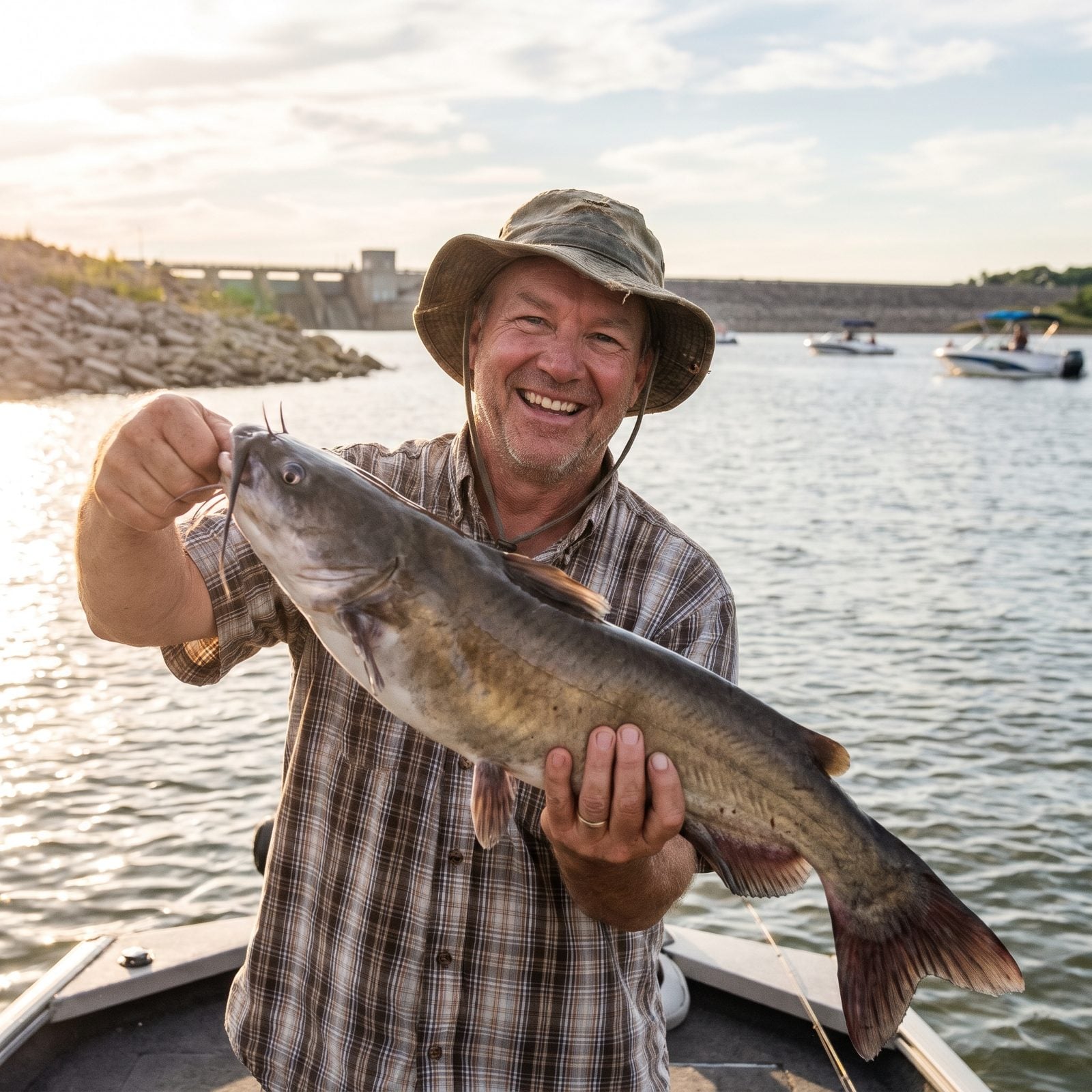
Kansas calls Milford “The Fishing Capital of Kansas,” and the channel cat is the reason as much as anything. The state’s biggest reservoir pumps out catfish in real numbers. That deeply forked tail and those long barbels set a channel cat apart from the flatheads and blues people lump together.
Young channel cats carry dark spots and get confused with other species. The forked tail settles it every time. Cut shad, prepared baits, nightcrawlers — they’re not picky.
31. Nebraska, Channel Catfish in the Missouri River
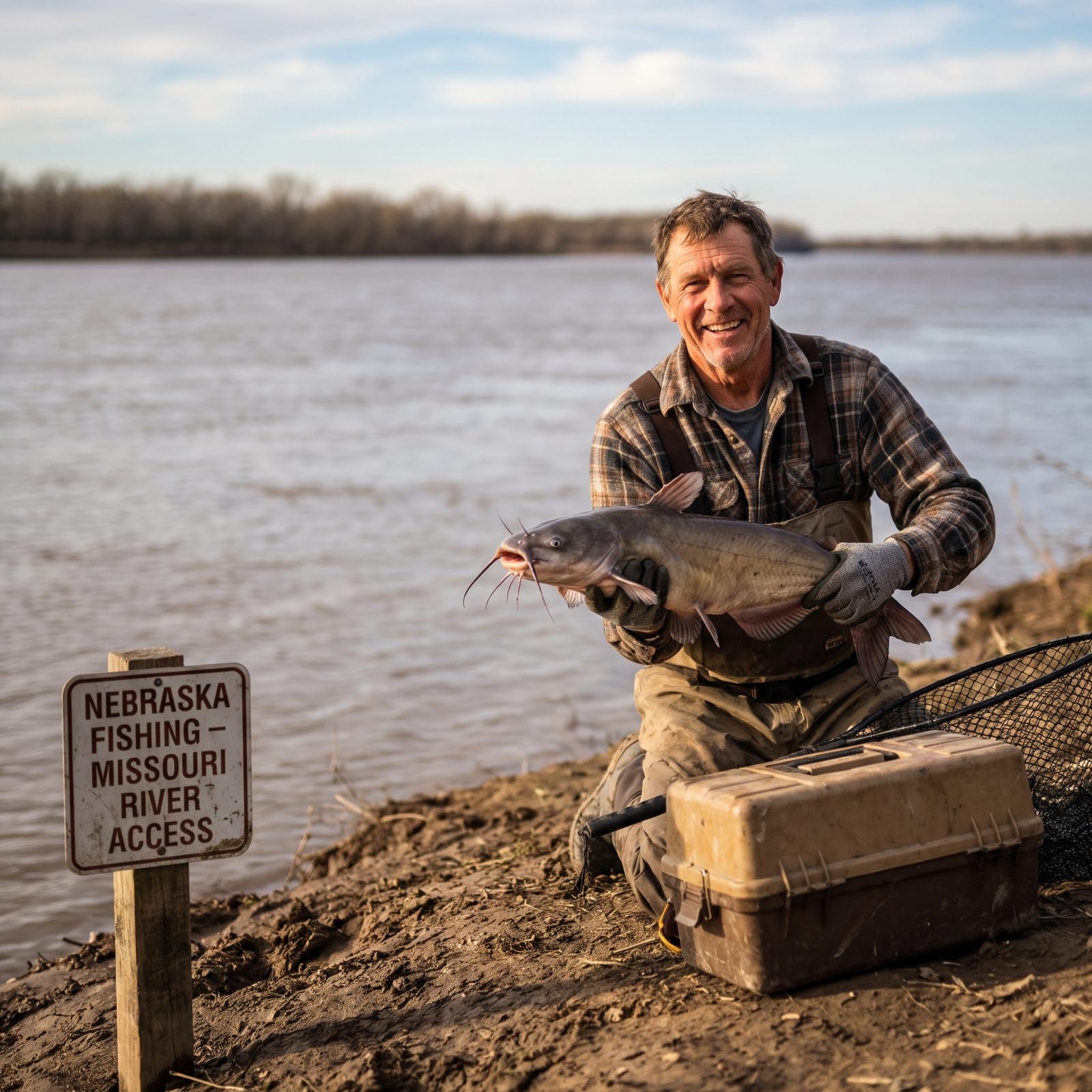
Same fish as Kansas, completely different water, and that’s the lesson. The channel catfish is Nebraska’s state fish too, but chasing them in the Missouri River means reading current, seams, and snags instead of still reservoir flats.
River cats hold behind anything that breaks the flow — wing dikes, log jams, holes below sandbars. A fish stacks up where food tumbles past and it can hold station without burning energy. Current changes everything about how you work the exact same species.
30. South Dakota, Walleye at Lake Oahe
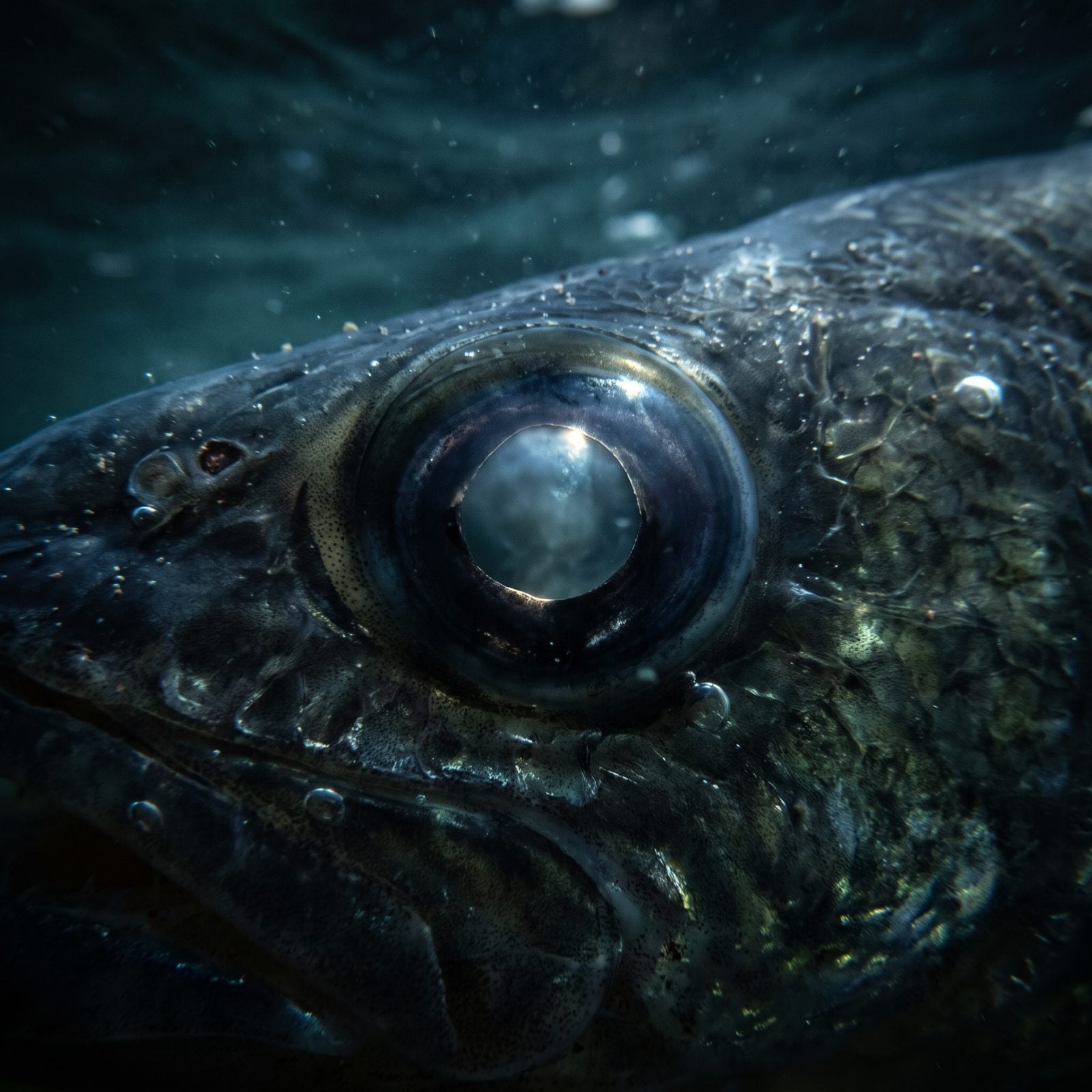
That milky, reflective eye is not a defect. A light-gathering layer lets the walleye hunt in low light and murky water, which is why dawn, dusk, and overcast days are prime. South Dakota picked a fish that genuinely rules its home water.
Lake Oahe is enormous, a Missouri River impoundment running well over a hundred miles. Walleye here get big and travel, following bait across huge flats. Trolling and jigging both produce. The hard part is finding fish in that much water.
29. North Dakota, Northern Pike at Devils Lake
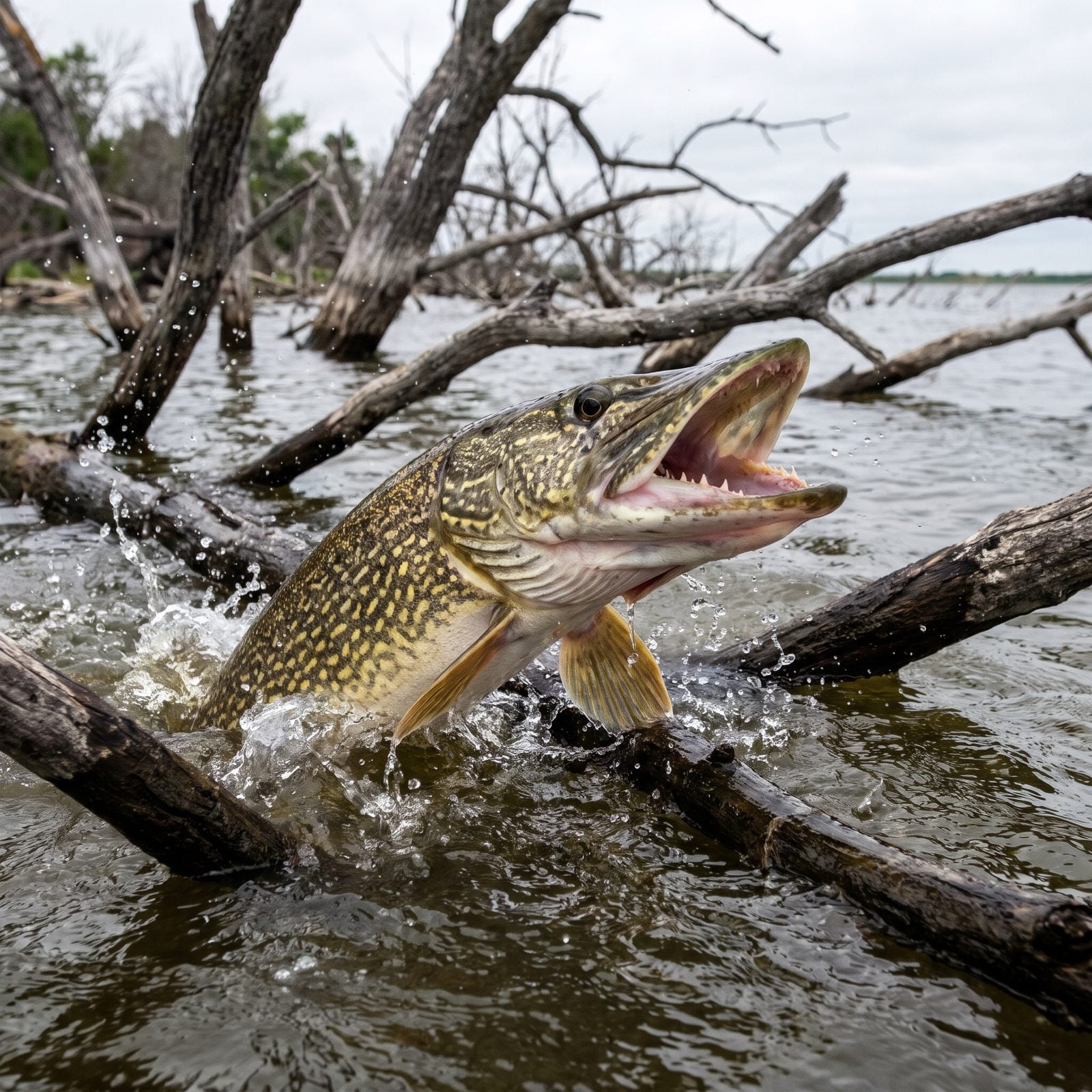
Pike are ambush killers, and Devils Lake is full of the flooded cover they love. This is a natural lake that has risen and swallowed trees, roads, and whole groves over the years, leaving a maze of submerged timber where a pike can sit still and detonate on anything that swims past.
Those light, bean-shaped spots on a dark green body are the mark. Handle them with respect, too — a mouth full of needle teeth and a hard thrash will open a careless hand fast. Jaw grips and pliers, always.
28. Minnesota, Walleye at Mille Lacs Lake
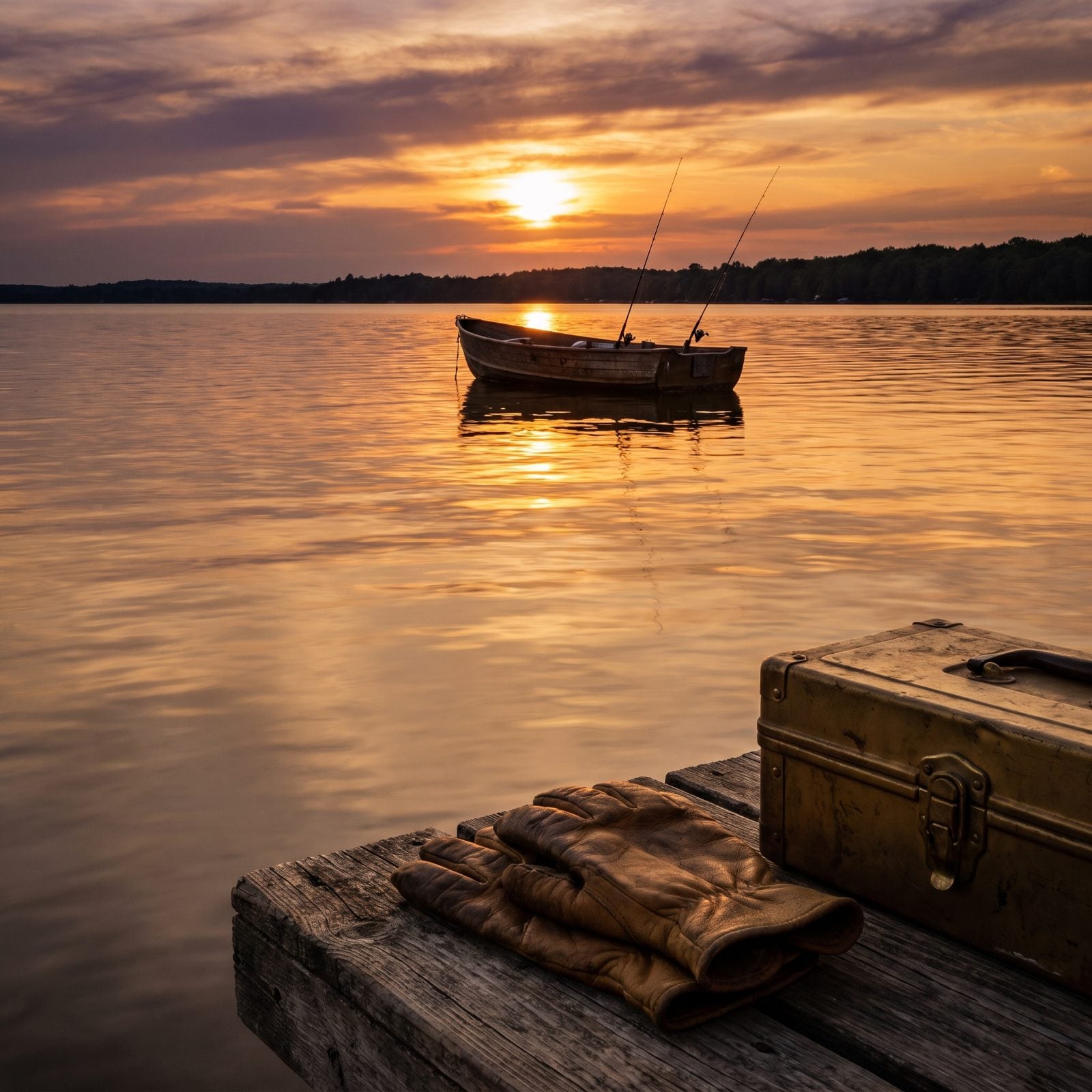
Minnesota and the walleye are practically synonymous, and Mille Lacs is the shrine. This big, relatively shallow lake has produced some of the most famous walleye fishing in the country for generations, pulling anglers from across the Midwest the way few waters do.
Here’s the catch, and it matters. Mille Lacs regulations shift year to year — slot limits, catch-and-release windows, closures tied to the walleye population and tribal-state co-management. Don’t assume. Pull the current Minnesota DNR regs for this specific lake before you keep a single fish.
27. Wisconsin, Muskellunge in Green Bay
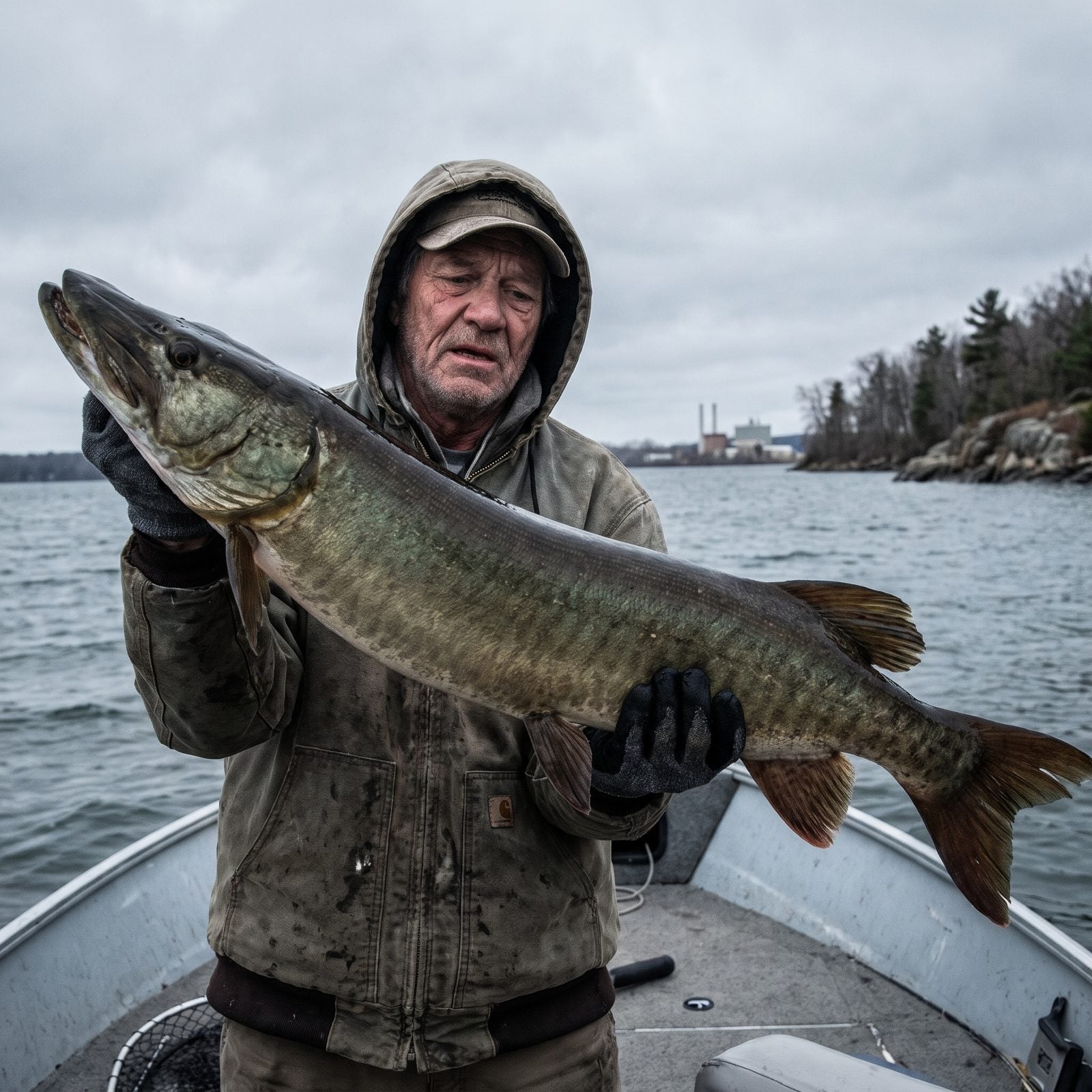
They call it the fish of ten thousand casts for a reason. The muskellunge is Wisconsin’s state fish and the top predator in its water, and it’ll trail your lure to the boat a dozen times before it ever commits. Chasing musky is a patience test most anglers flunk.
Green Bay off Lake Michigan has turned into one of the best big-musky fisheries anywhere, growing genuinely huge fish on a healthy forage base and cool, fertile water. These aren’t small lake muskies. Great Lakes giants, every one.
Treat every fish as catch and release. Big cradle net, jaw spreader, pliers, and get it back in the water fast. A musky that size took years to grow, and the fishery depends on it swimming off strong.
26. Iowa, Channel Catfish in the Mississippi River
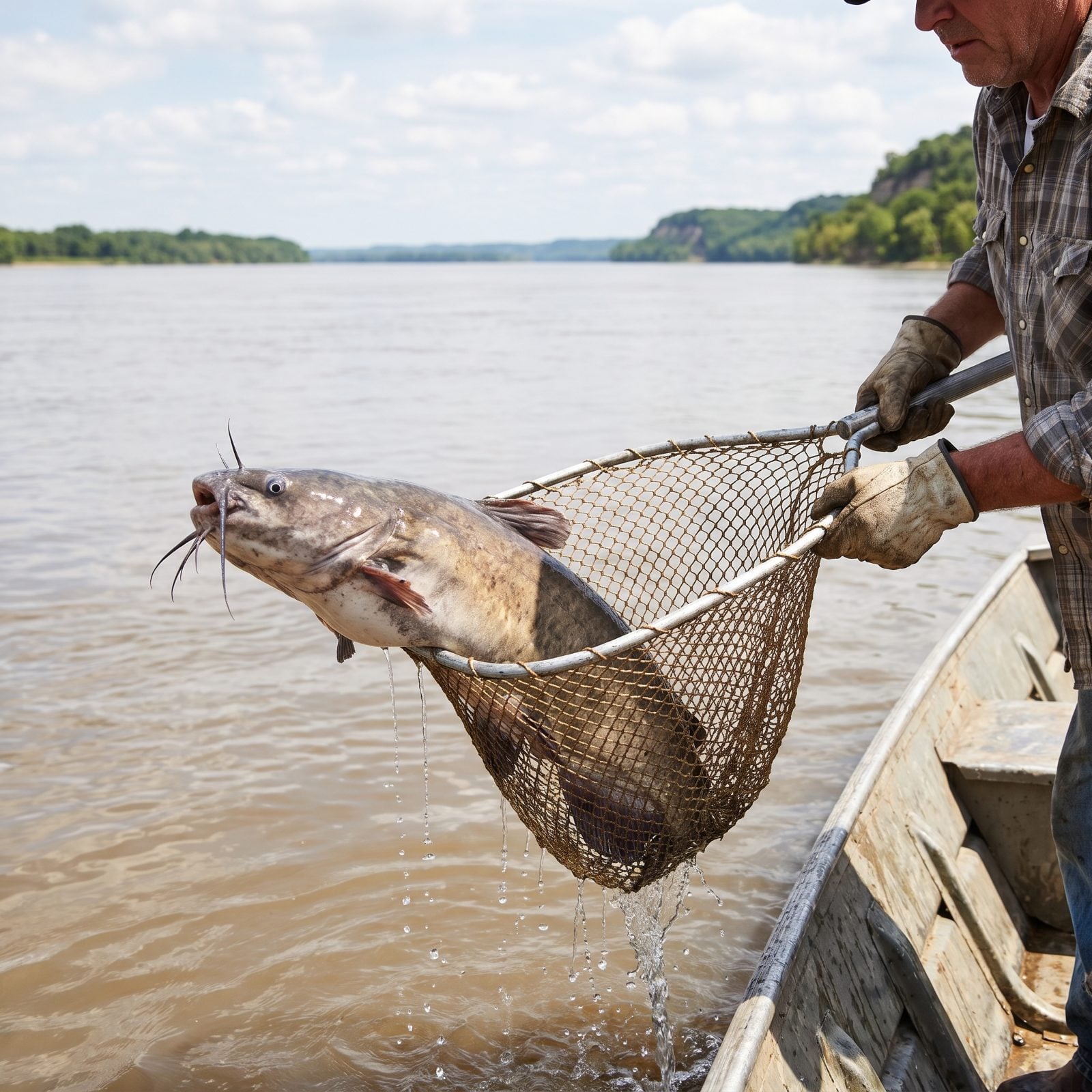
The channel catfish earned Iowa’s nod in 2001, and the Mississippi is where you meet it at full size. These fish read the river with their whole body. Those barbels aren’t just whiskers — they’re covered in taste buds, and so is most of the skin, which is how a catfish finds a live baitfish in water so muddy you couldn’t see your own hand.
Summer? Fish the current seams below wing dams. Channel cats stack up where fast water meets slow and wait for the river to carry dinner right to them.
25. Illinois, Bluegill at Lake Shelbyville
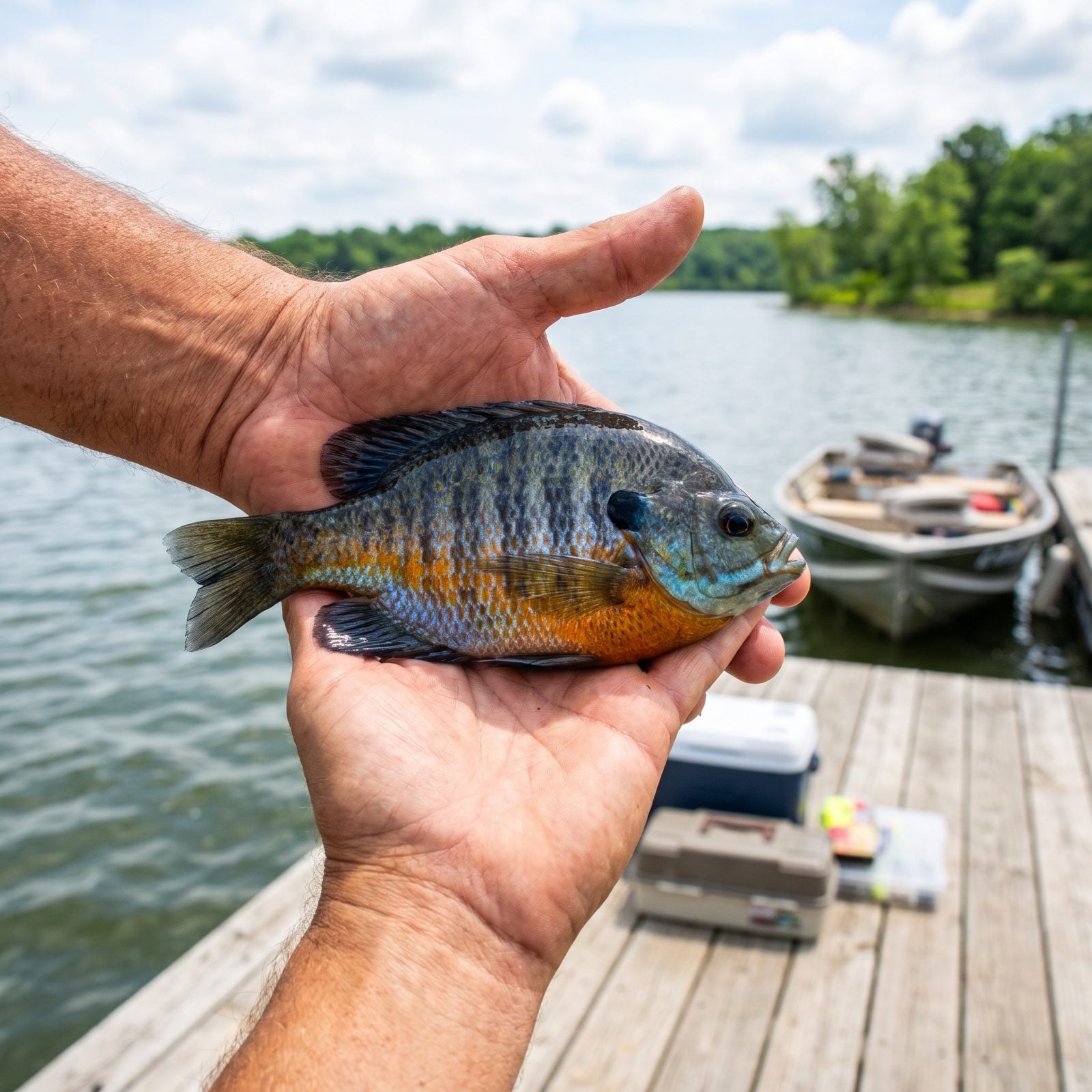
Don’t let the size fool you. A bull bluegill the size of your palm fights harder pound for pound than most bass, and Lake Shelbyville grows them thick.
Look for the solid black ear flap and the bruised-blue chin that gave the fish its name. Come the spring spawn, males fan out those saucer-shaped beds in colonies across firm shallow bottoms, and you’ll sometimes spot dozens of pale craters crowded into a single cove — a strange, pockmarked moonscape under three feet of water. Drop a cricket or a tiny jig on the edge of all that and hold on.
24. Michigan, Brook Trout in the Upper Peninsula’s Fox River
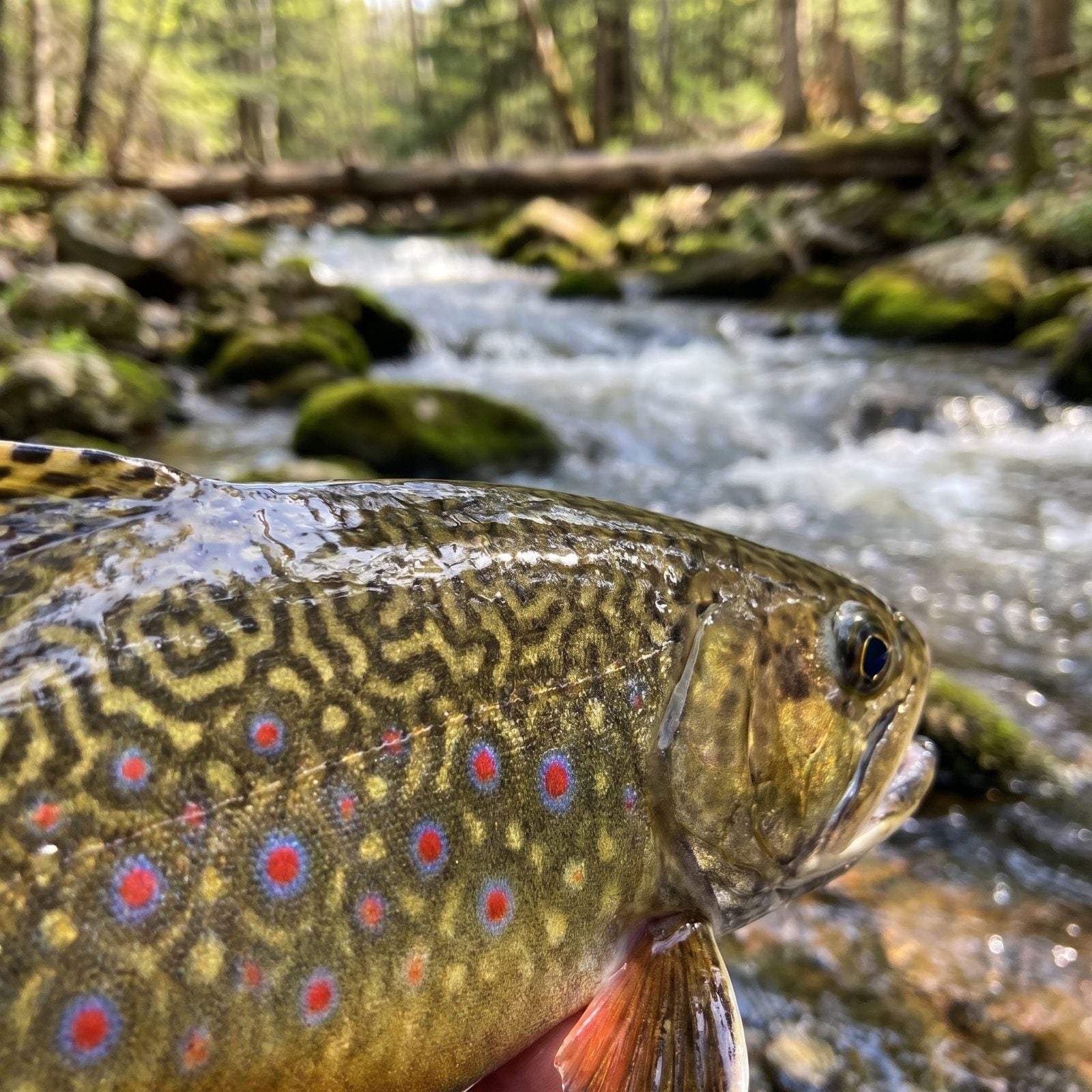
Brook trout aren’t trout at all. They’re char, cousins to lake trout and Arctic char, which is why the markings run opposite to a brown or rainbow — light spots on a dark body instead of dark on light.
The Fox runs cold and tannin-stained through the UP, famous water that drew Hemingway up there long ago. Don’t come expecting stocked lunkers. A wild brookie here might stretch seven or eight inches, and around these parts that’s a trophy worth bragging about.
23. Ohio, Walleye in Lake Erie
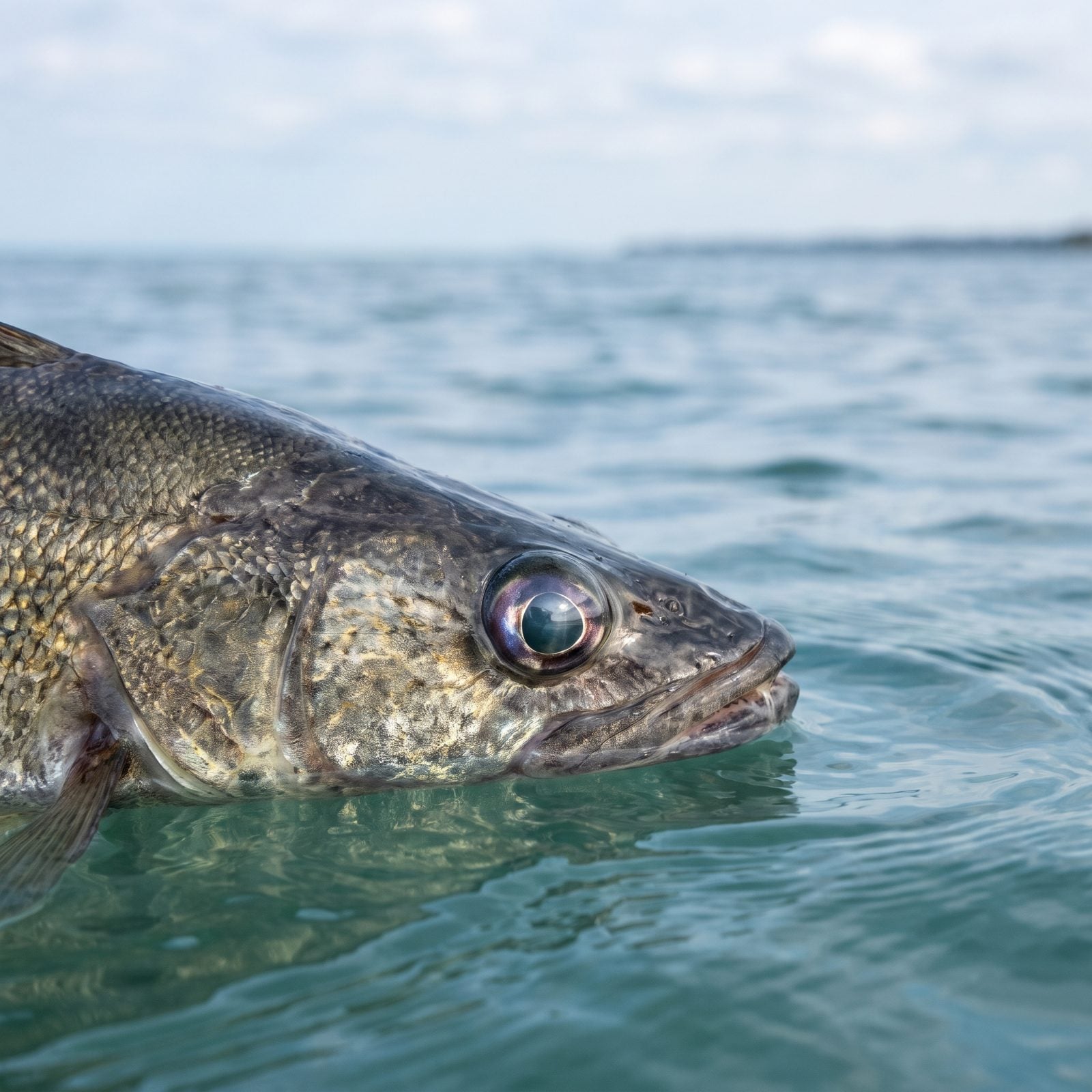
That glassy, reflective eye is the whole story. A layer behind the retina — the tapetum lucidum — gathers low light, which is why walleye feed hard at dawn, at dusk, and under chop that scatters the sun.
Erie’s western basin may be the best walleye water on the planet. Spring runs the fish up toward the reefs and the Maumee to spawn. Then they scatter across open water through summer, and dragging crankbaits behind boards puts fish in the box by the cooler-load.
22. Kentucky, Kentucky Spotted Bass in the Cumberland River
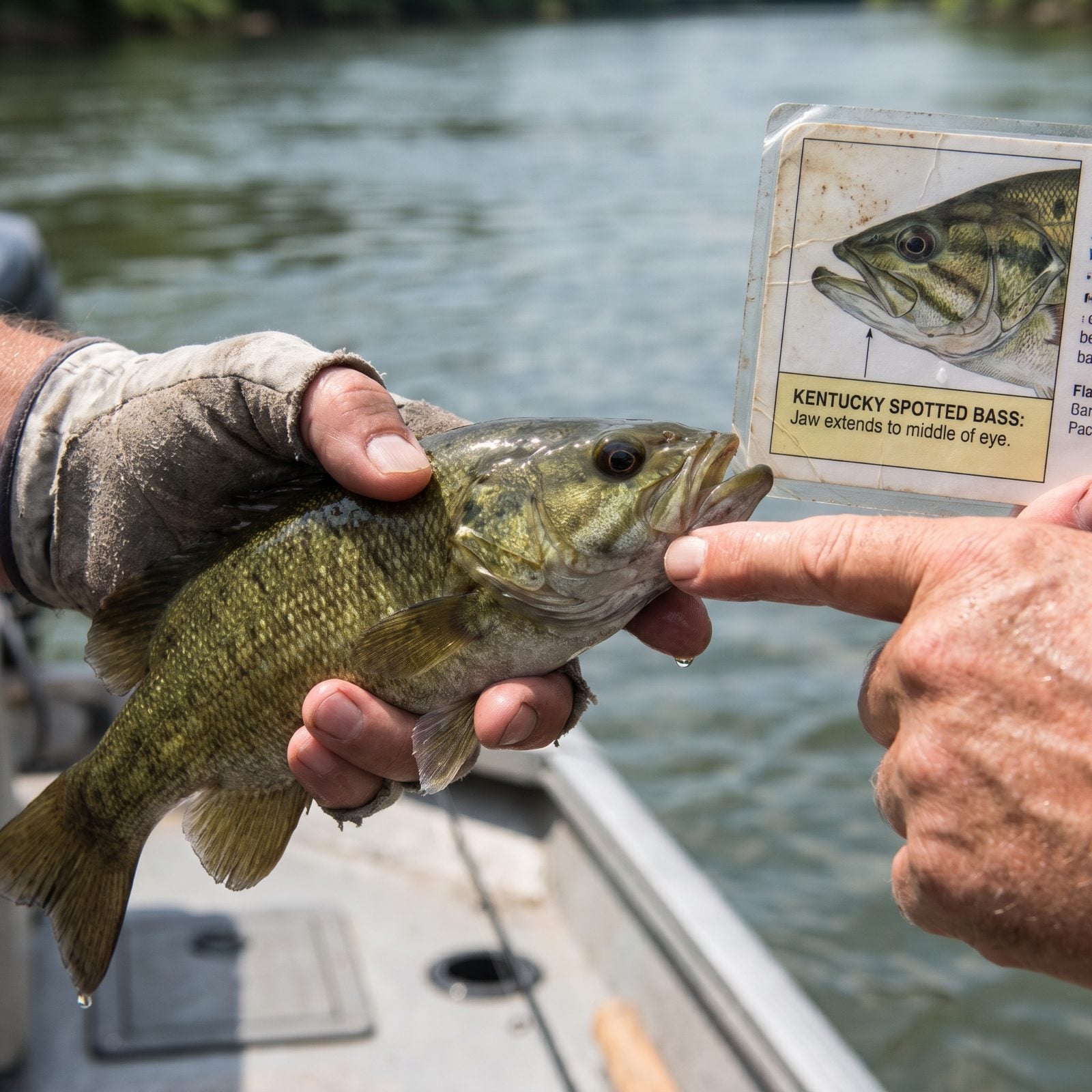
People mix this one up with the largemouth constantly, and the tells are small. The jaw stops under the eye instead of running past it. Rows of spots below the lateral line stack into faint stripes. And there’s a rough patch of teeth on the tongue you can feel with a thumb if you know to check.
Spotted bass love current and cooler, clearer water, which is exactly what you get in the Cumberland tailwaters below the dams. They hold deeper and cling to rock in a way a largemouth never bothers with. Work a jig along the bottom seams and stay sharp — the bite is often nothing more than a tick in the line.
21. Tennessee, Smallmouth Bass at Dale Hollow Lake
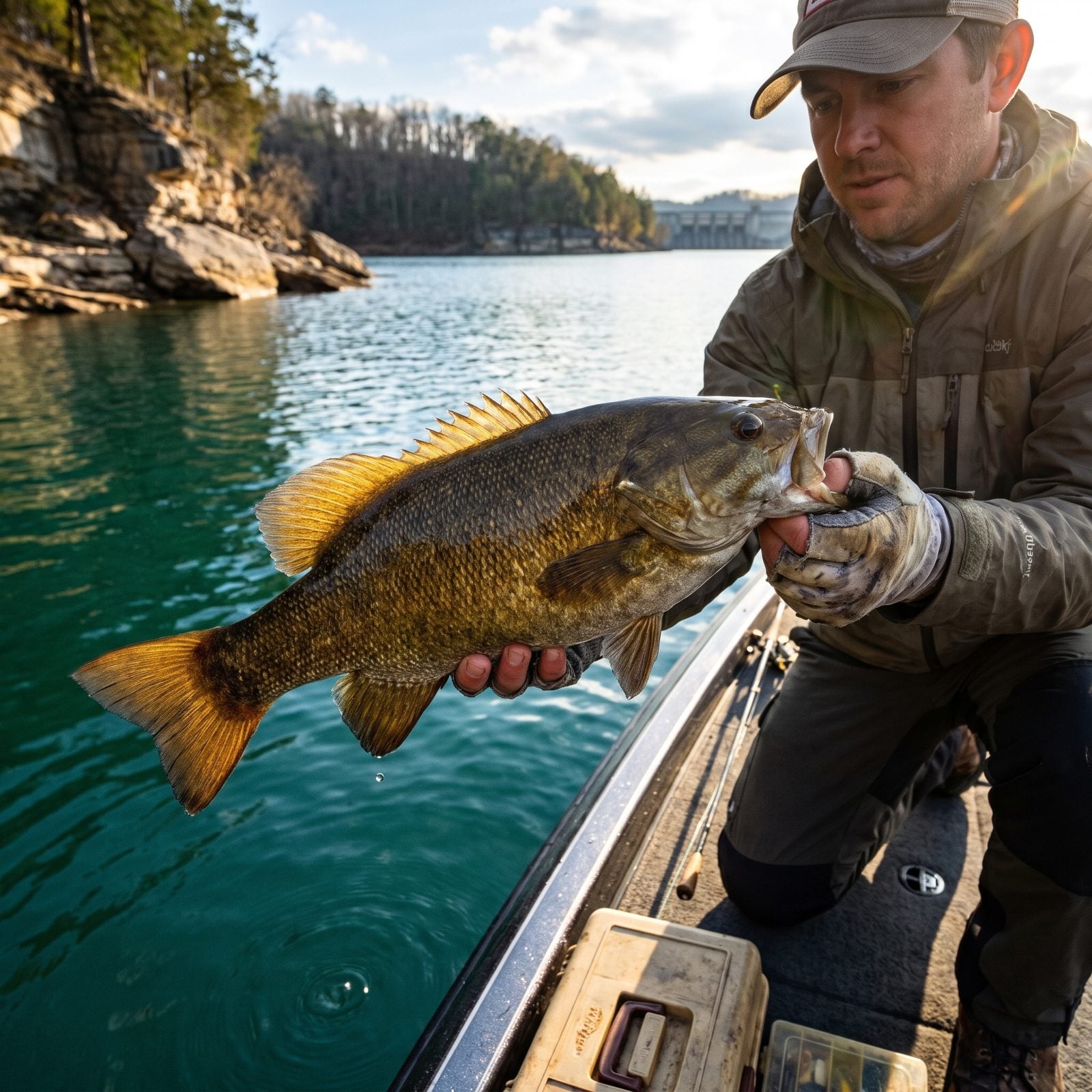
Dale Hollow is holy ground for smallmouth. The all-tackle world record — an 11-pound, 15-ounce giant — came out of this lake back in 1955 and has stood ever since. Think about that. Nearly seventy years, and nobody’s beaten it.
The water runs deep, clear, and cool over limestone ledges that smallmouth live and die on. A brown fish in cold water will peel drag like it owes you money. Winter and early spring are prime, when the big females move shallow to feed before the spawn. Fish slow. The strike can be so subtle you almost miss it, and then everything changes at once.
A smallmouth in clear cold water fights like a fish twice its size. Nobody who’s hooked one forgets it.
20. Arkansas, Alligator Gar in the Lower Arkansas River
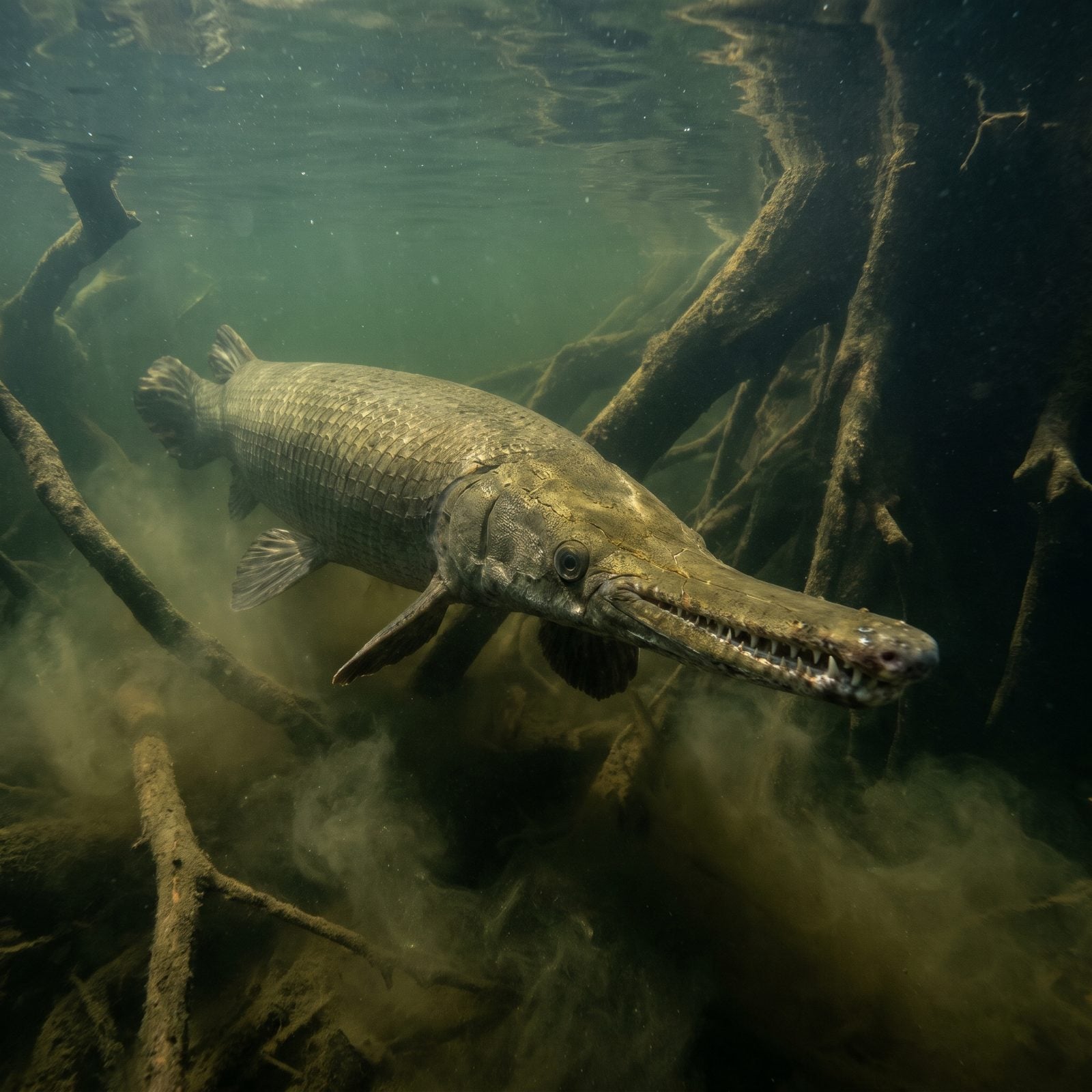
This is a living fossil. Alligator gar have been swimming essentially unchanged for well over a hundred million years, armored in diamond-hard ganoid scales so tough that early settlers cut the hides to cover plow blades.
They can top seven feet and well over a hundred pounds in the Lower Arkansas. When the water goes low on oxygen, they roll to the surface and gulp air, breathing from a specialized swim bladder — a trick most fish never managed to evolve. For decades people wrote them off as trash. We know better now. They’re a native apex predator, and a serious fish to chase.
19. Louisiana, White Perch in the Atchafalaya Basin
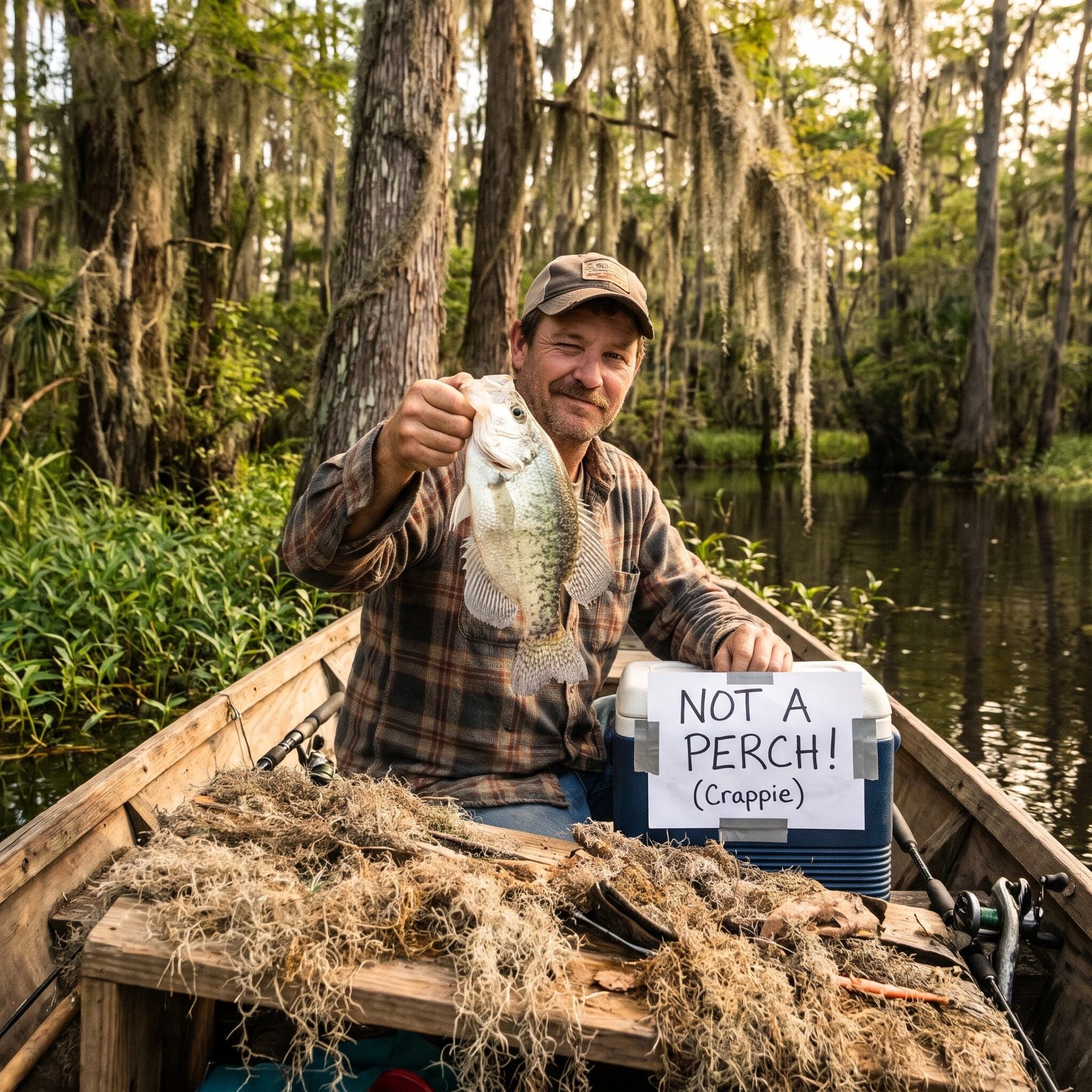
Quick heads-up on names. What Louisiana folks call white perch is really a crappie (this speckled one is a black crappie) — a sunfish, not a perch at all. The local name stuck generations ago and nobody down there is letting go of it.
In the Atchafalaya these fish stack up around cypress knees, sunken brush, and canal mouths. Spring draws them shallow to spawn, and that’s when a cork and a tube jig fills the ice chest fast. They school hard. Find one and you’ve usually found forty.
18. Mississippi, Largemouth Bass at Ross Barnett Reservoir
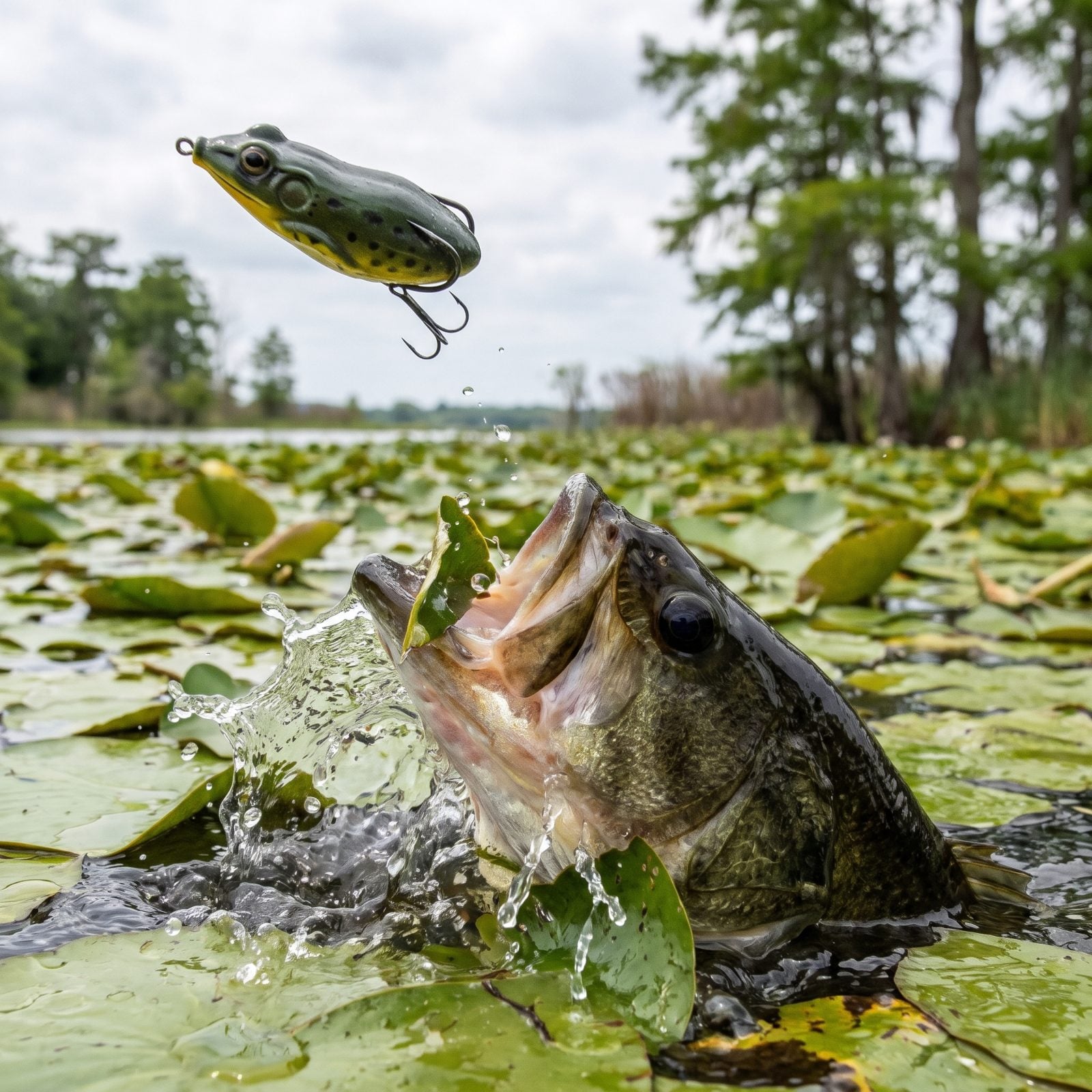
Ross Barnett is pad water, and pad water means frog fishing. Picture a hollow-body frog twitched across a thick mat of lily pads, then a hole blows open in the vegetation and your line goes tight. Nothing in bass fishing is more addictive than that.
Telling a largemouth apart is simple: the upper jaw hinges back past the rear of the eye, which a smallmouth or spotted bass never does. These fish ambush. They tuck into cover, wait, then inhale prey with a gulp that drags water and bait in together.
17. Alabama, Largemouth Bass at Lake Guntersville
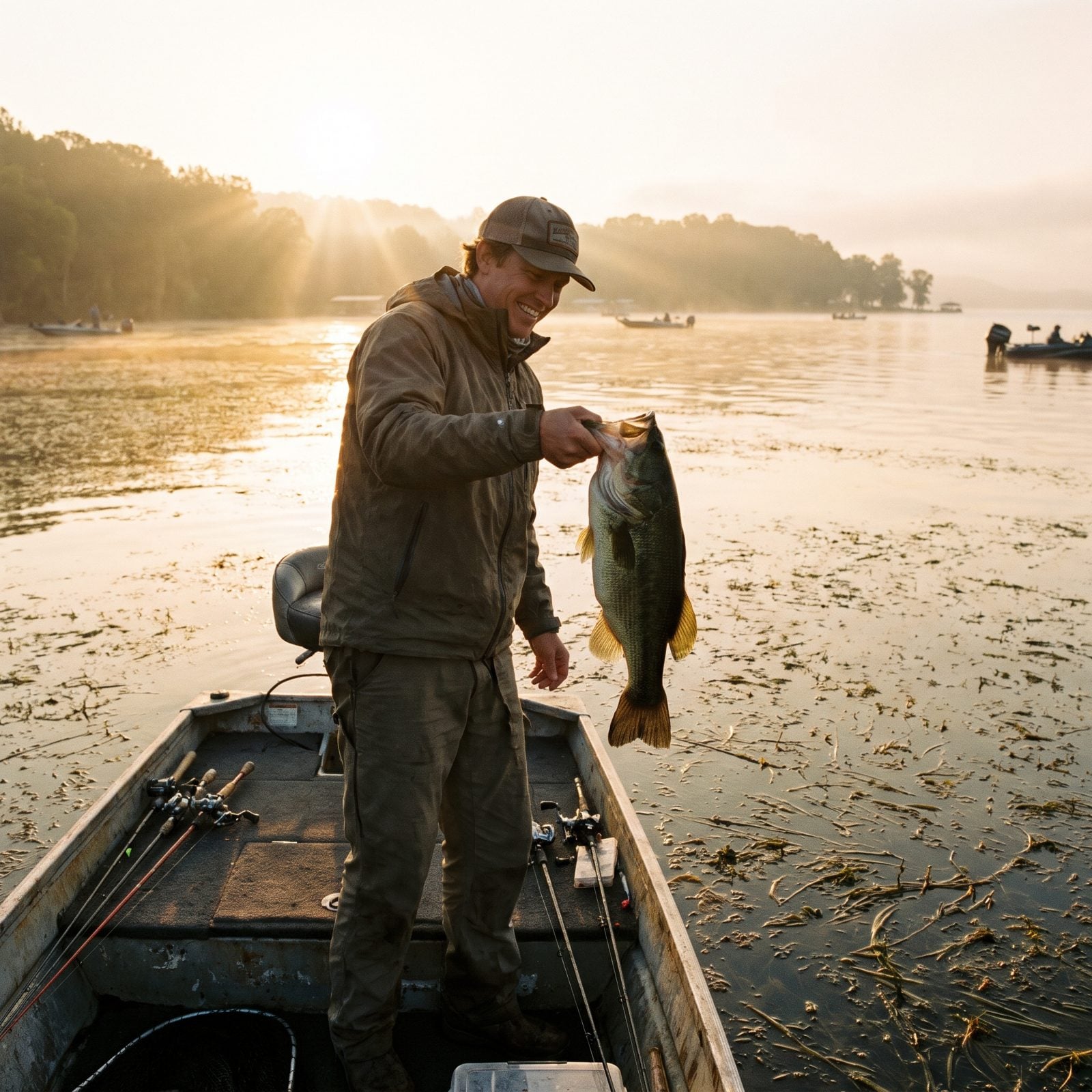
People call Guntersville the best bass lake in the country, and the argument isn’t hard to make. Tens of thousands of acres of the Tennessee River backed up behind a dam, choked with grass, pumping out double-digit bass season after season.
The grass is the secret. Hydrilla and milfoil hand the bass oxygen, ambush cover, and endless bait all at once, so learning to fish the edges and holes in that mess is the whole game here. Spring and fall are electric. But honestly, Guntersville gives up giants in every season if you put in the hours.
16. Georgia, Largemouth Bass Prowling the Stumps of Lake Seminole
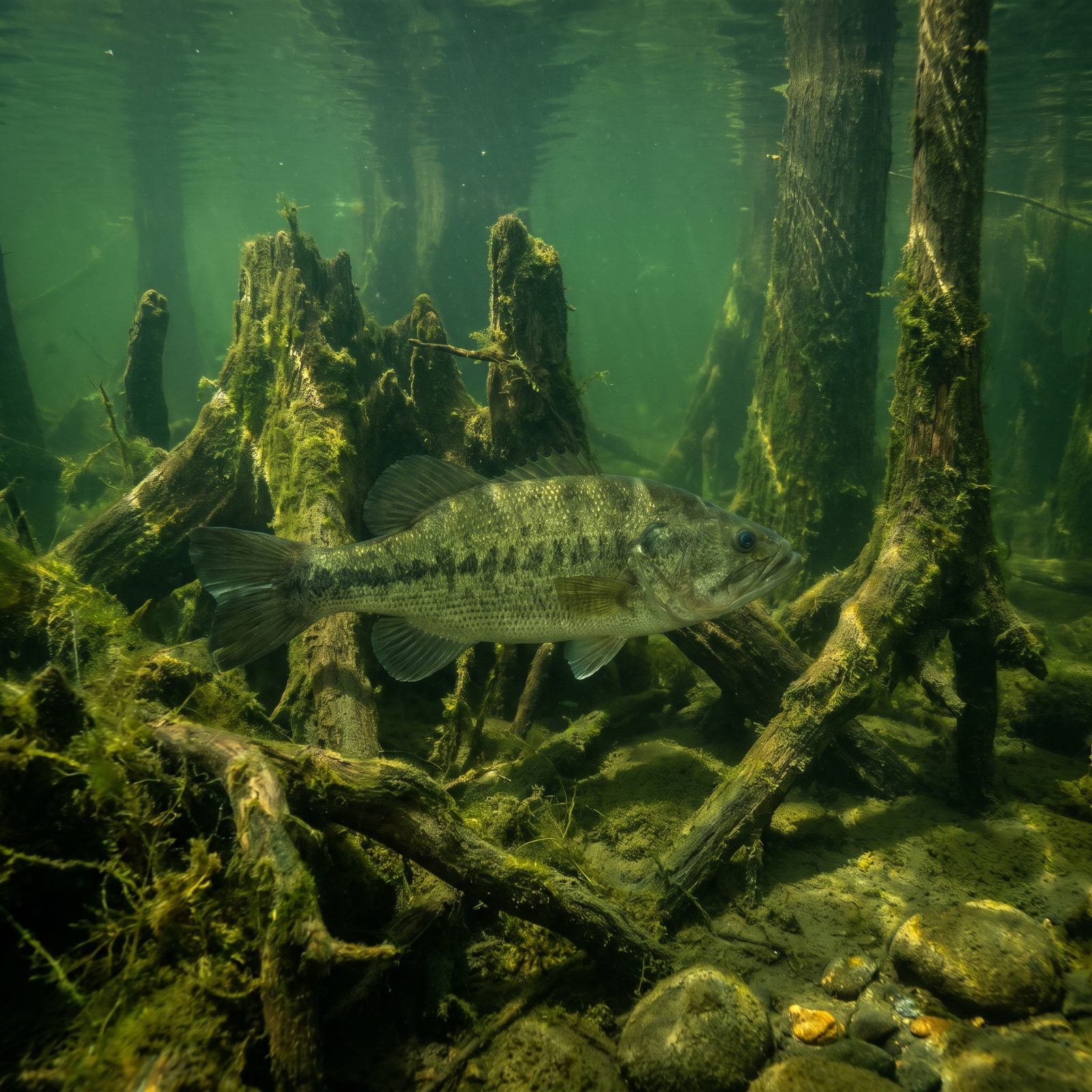
Lake Seminole sits where Georgia, Florida, and Alabama trade handshakes, and it grows largemouth that know exactly where to hide. The place is shallow and weedy, stuffed with hydrilla and standing timber, which is heaven for a fish built to ambush.
Georgia named the largemouth its state fish in 1970, and Seminole is the postcard. The giveaway on a true largemouth is the jaw, with the upper lip hinging back past the rear of the eye. Spotted and smallmouth don’t do that. Spring spawn pulls the big females shallow onto the flats, and that’s your window.
15. Florida, Trophy Largemouth Bass in the Vast Shallows of Lake Okeechobee
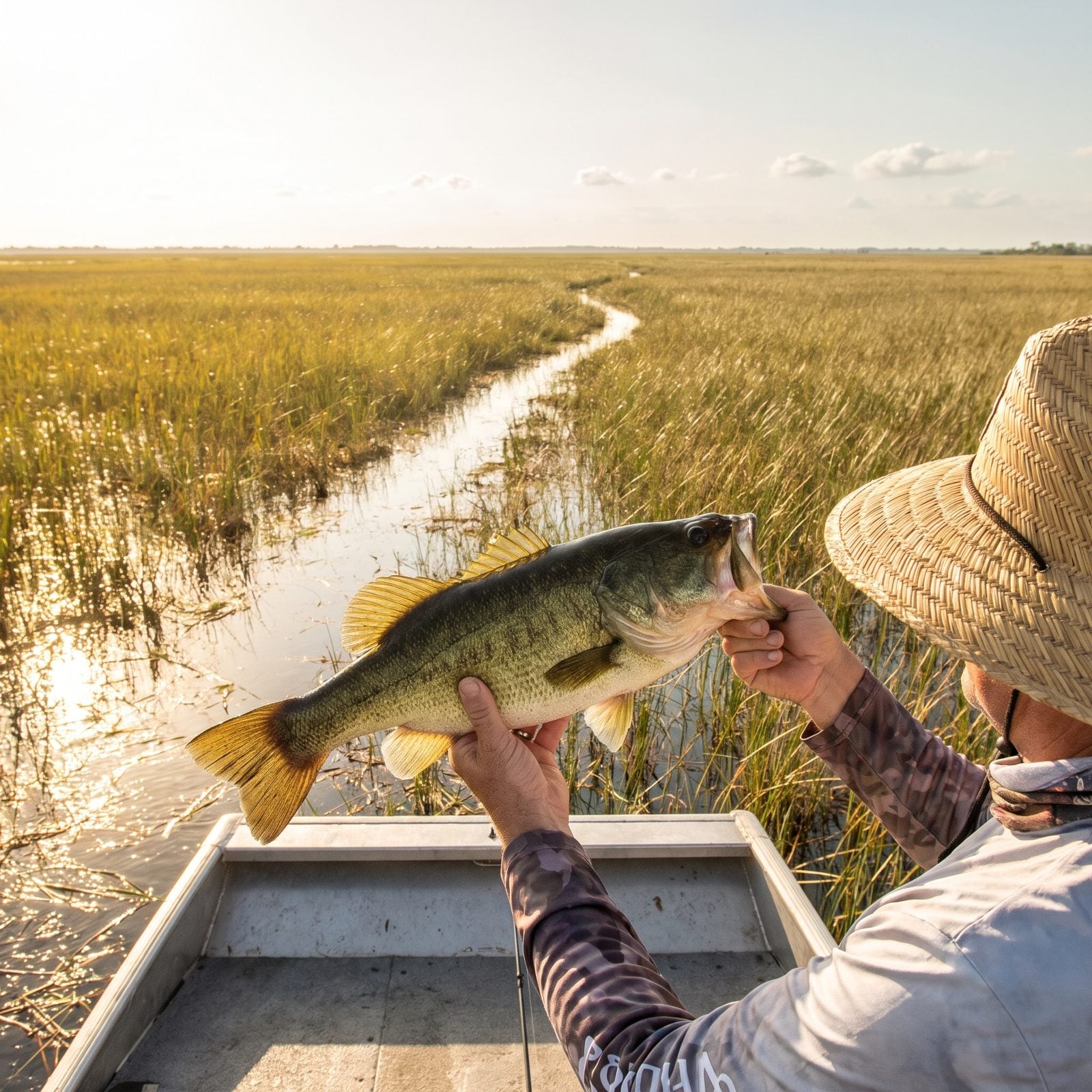
Okeechobee is not a lake so much as an inland sea with reeds. Hundreds of square miles of shallow water, and the Florida-strain largemouth that lives here grows fatter and faster than its northern cousins.
That’s the part people miss. Florida bass and the largemouth up north are the same species but different genetics. The Florida strain gets huge, which is why anglers fly in from everywhere in winter. January and February, when the water cools and the fish move up to spawn in the pads, is prime.
The Big O doesn’t give you a fish. It makes you learn the water first.
Mind the regulations on live bait and keep an eye on lake-level advisories. Water management here changes the game season to season.
14. South Carolina, Striped Bass Running Deep at Lake Murray
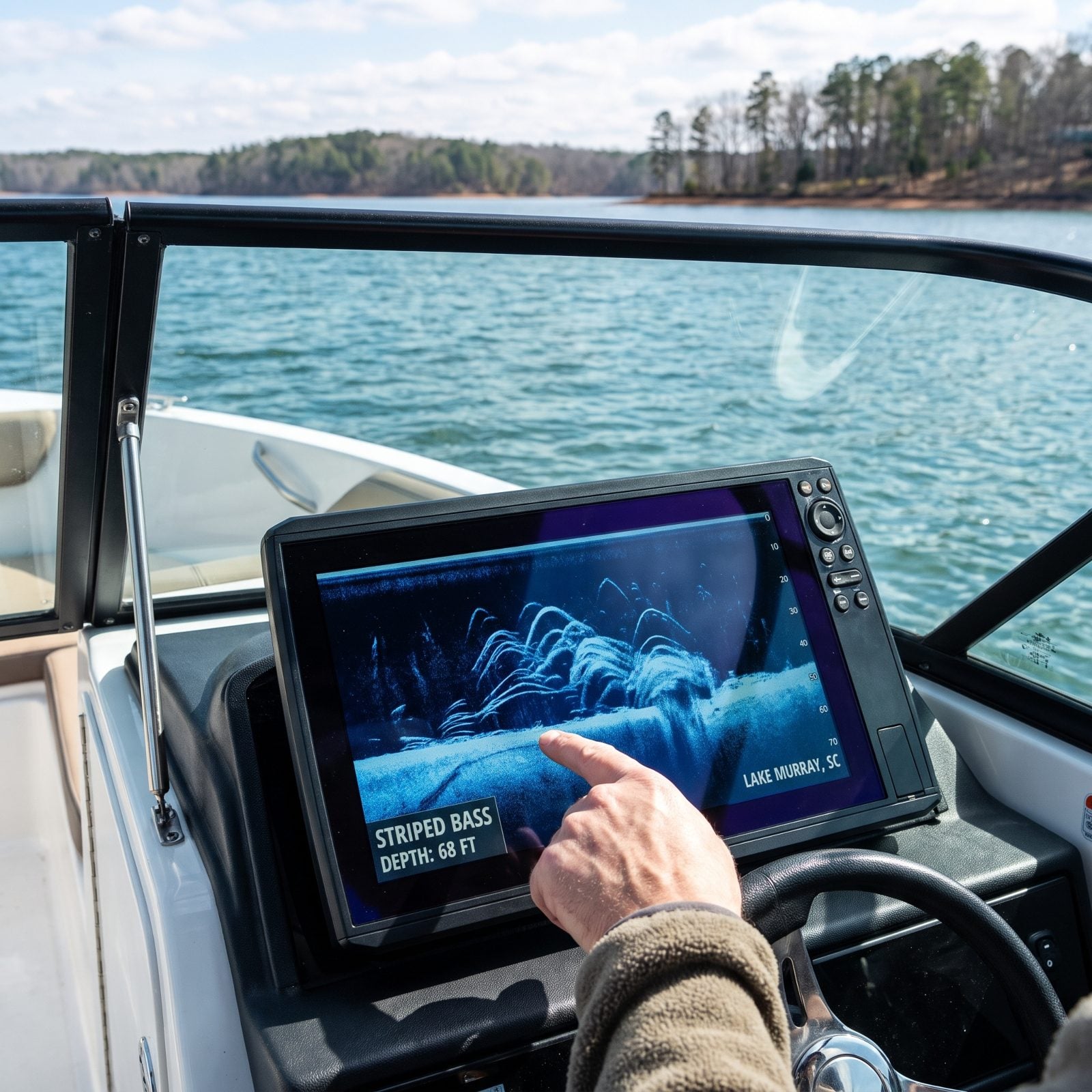
Here’s an odd one. South Carolina’s striped bass learned to live its whole life in fresh water, and Lake Murray’s stripers are landlocked and thriving. The state adopted the striped bass as its official fish in 1972, and Murray is one of the best places in the Southeast to find a big one.
Count the stripes. A true striper wears seven or eight unbroken horizontal lines down a chrome side, while hybrid bass break those lines up. In summer the fish stack deep near the thermocline chasing shad, so an electronics-and-downlines game beats blind casting. Winter pushes them shallow.
13. North Carolina, Red Drum Tailing the Flats of Pamlico Sound
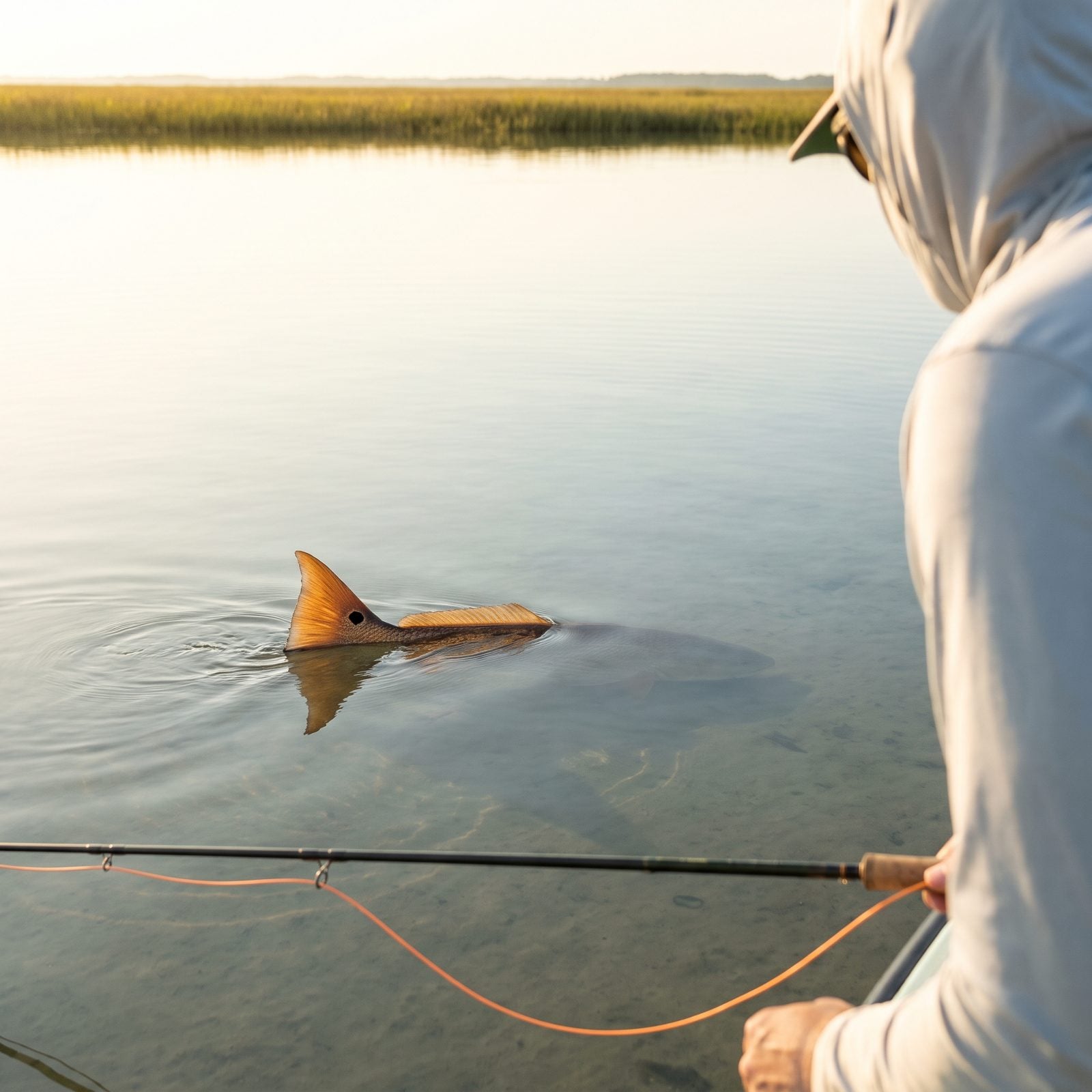
The red drum is the only fish on this list you might see before you cast to it. On a calm flat in Pamlico Sound, a cruising drum swims right at the surface, its tail and back fin cutting through the water. Anglers call it finning, and it will make your hands shake.
North Carolina named it the state saltwater fish in 1971. The ID is easy: coppery bronze body, one black spot near the tail. Some fish wear several spots, and old-timers swear a drum with more spots brings more luck. Fall brings the big bull reds. Just know the slot limit. Trophy fish go back.
12. Virginia, Native Brook Trout Hiding in Shenandoah’s Mountain Streams
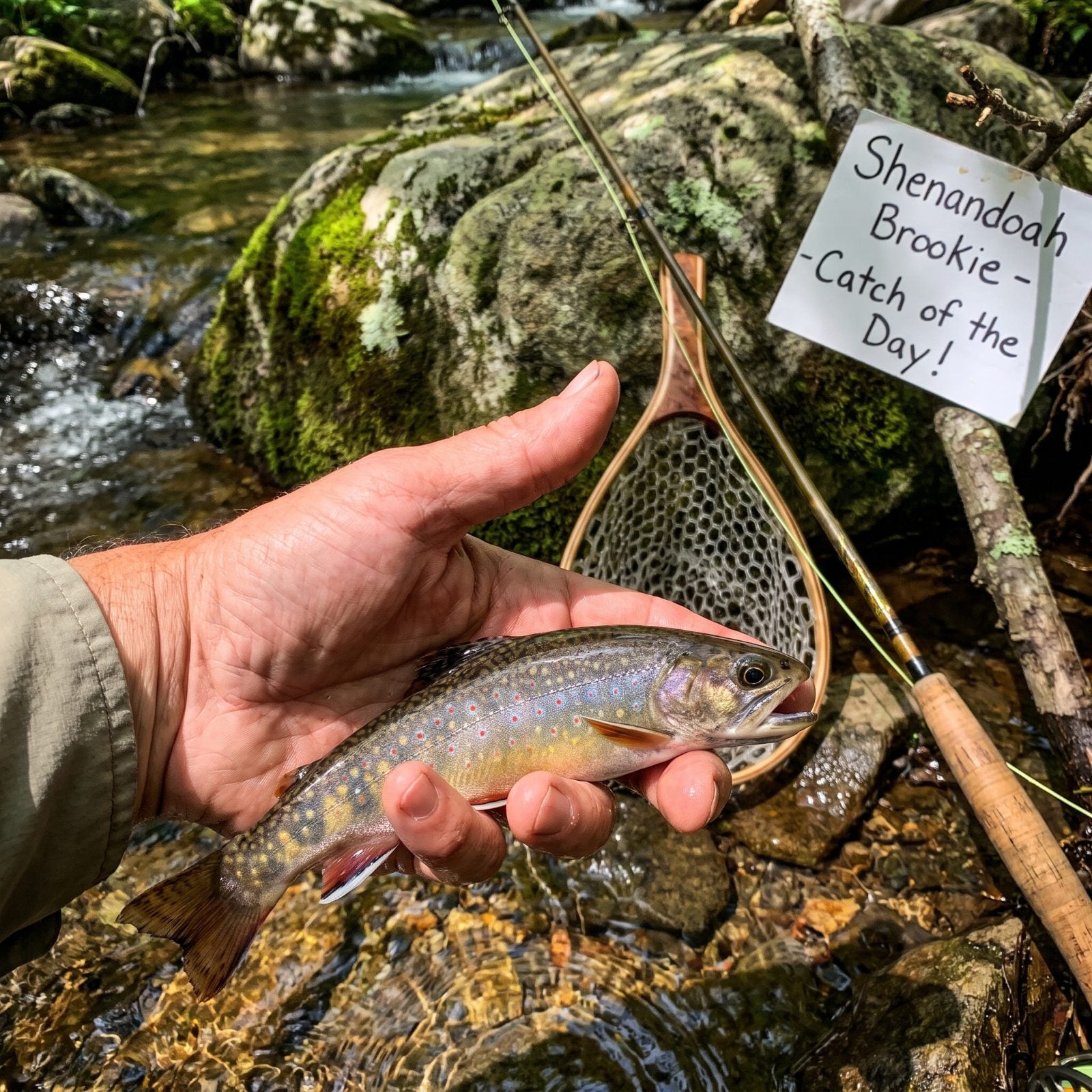
A Shenandoah brook trout the size of a hot dog is a trophy, and anyone who fishes these streams will tell you so with a straight face. These are wild native fish in cold headwater creeks, and they are the real article.
Virginia made the brook trout its state fish in 1993. The markings are a fingerprint: worm-track vermiculation on the back, blue-haloed red spots on the sides, white-edged fins. Nothing else looks like it.
Fish light, step soft, and keep your shadow off the pool. In water this thin, the trout sees you long before you see it. Check park regulations, because much of this is catch-and-release only with single barbless hooks.
11. West Virginia, Brook Trout in the Cold Pocket Water of the Cranberry River
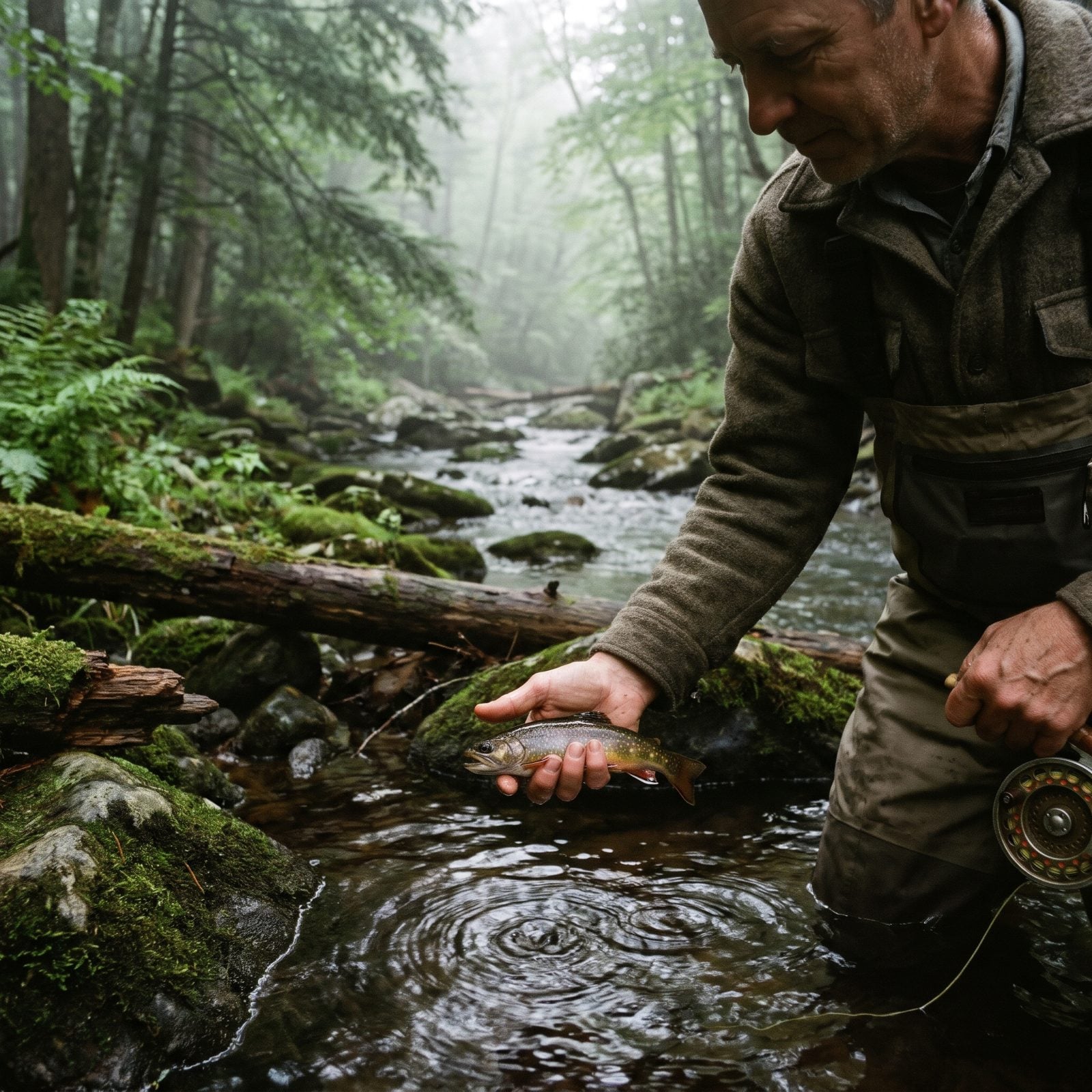
The Cranberry runs cold, acidic, and remote, which is exactly why wild brook trout still hold on here. West Virginia adopted the brook trout as its state fish in 1973, and the Cranberry is one of the better places in the state to meet a wild one.
Worth saying plainly: the brook trout isn’t a true trout. It’s a char, closer kin to lake trout and Arctic char than to the browns and rainbows stocked over them. Look at the light spots on a dark body and you’ve got it. Trout wear dark spots on light. Spring and fall fish best, and summer heat sends them seeking the coldest seeps.
10. Maryland, Striped Bass Prowling the Chesapeake Bay
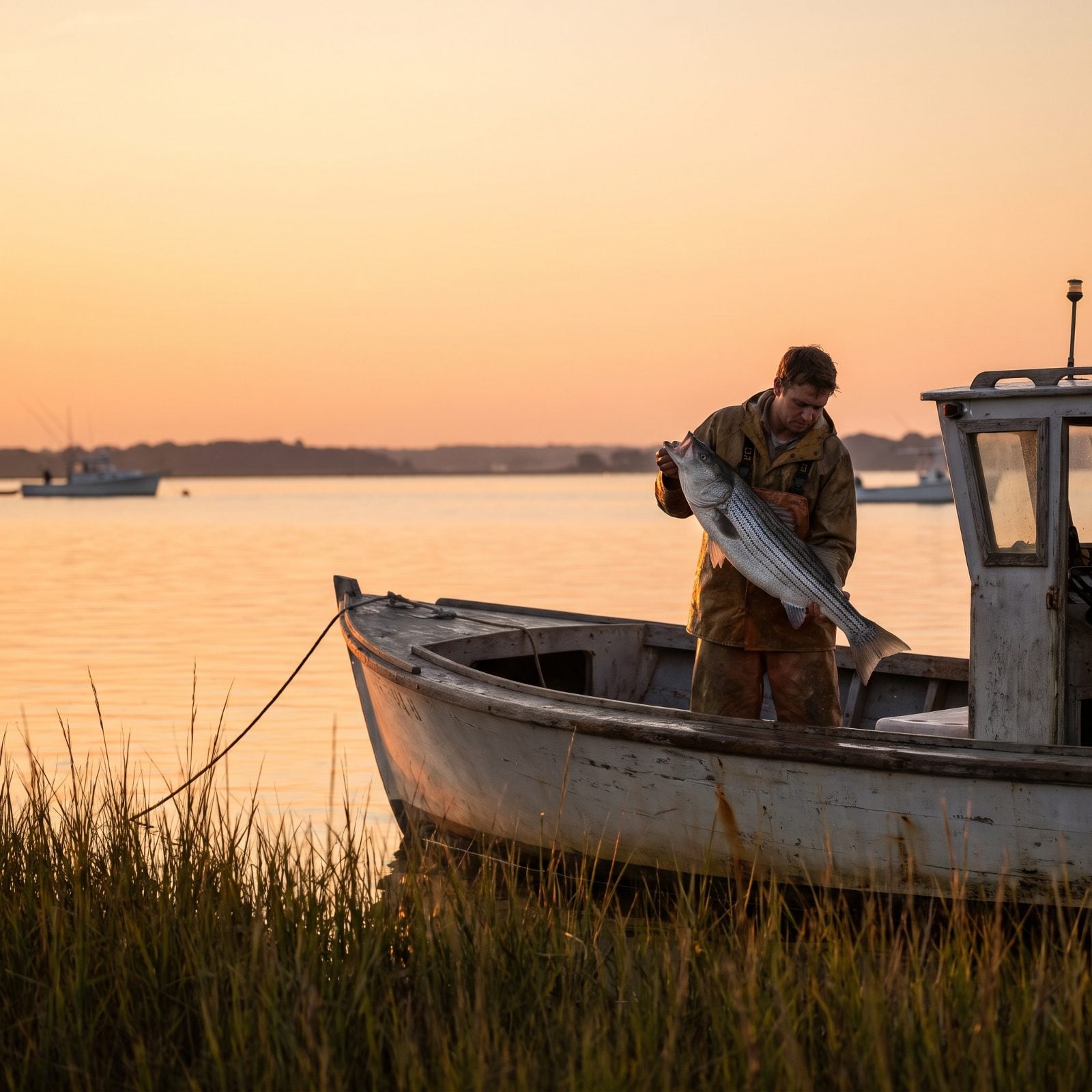
No fish is more tied to a place than the striped bass is to the Chesapeake. Marylanders call it rockfish, and it’s the state fish for good reason, since the bay is the spawning engine for a huge share of the entire Atlantic coast’s stock.
Which matters more than you’d think. The fish you catch off Cape Cod may have been born in a Maryland river. Spring and fall are the headline seasons as the fish stage and migrate. Rules here shift year to year because the stock has taken hits, so check the current slot, season, and closures before you go. Nobody wants to be the guy who keeps the wrong fish.
9. Delaware, Weakfish Chasing Bait in Delaware Bay
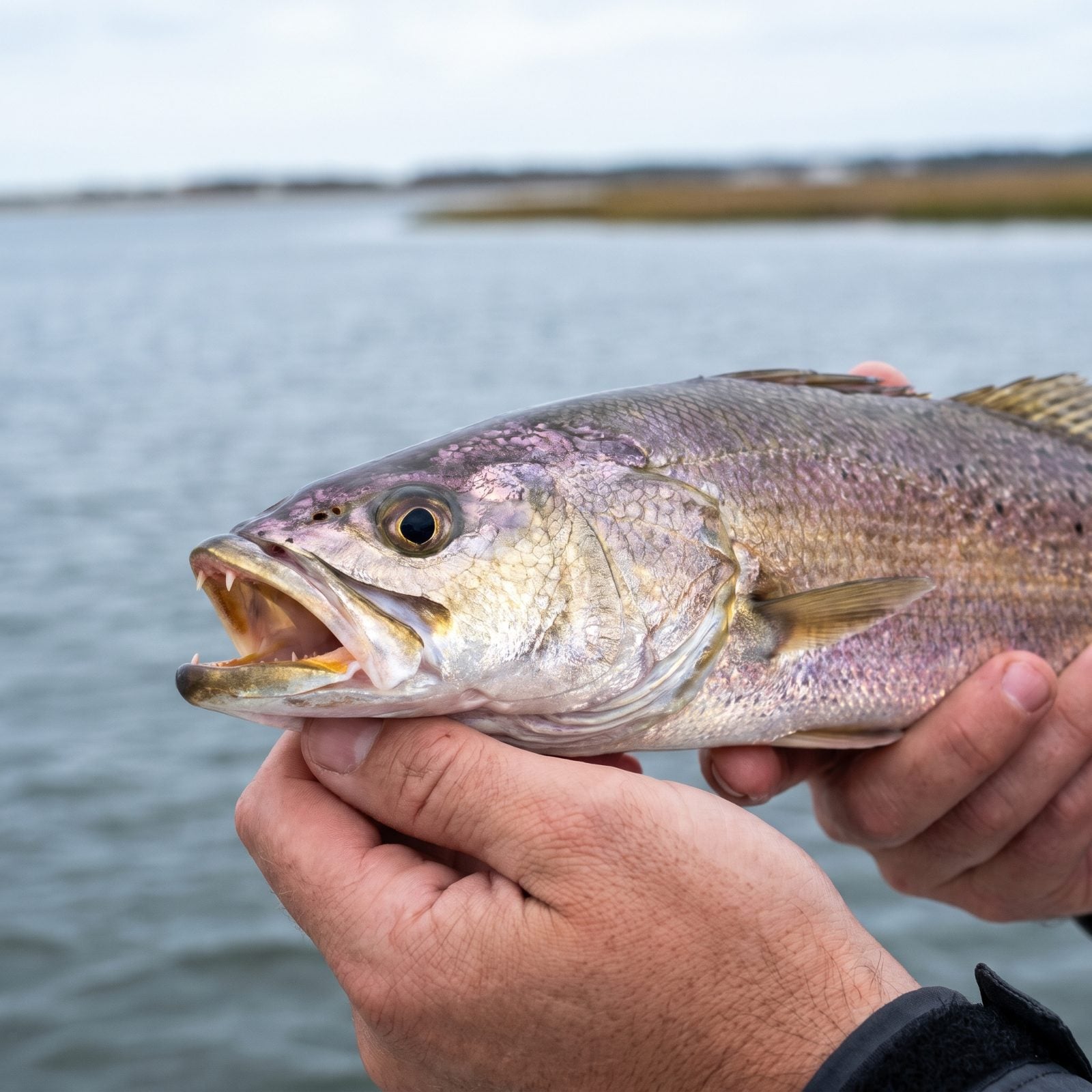
The weakfish got a rough name, and it isn’t earned. The name comes from its tender mouth, which tears easily on a hard hookset. Pull too hard and the hook rips free. Delaware named it the state fish in 1981, and Delaware Bay is its home water.
Catch one in good light and you’ll understand why anglers get sentimental. The back throws off purple, lavender, and bronze, which is why the old name is sea trout, though it isn’t a trout at all. Two sharp canines up front sort it out. Late spring into summer is the run, though numbers rise and fall with the stock. Mind the limits.
8. Pennsylvania, Brook Trout in the Pools of Pine Creek
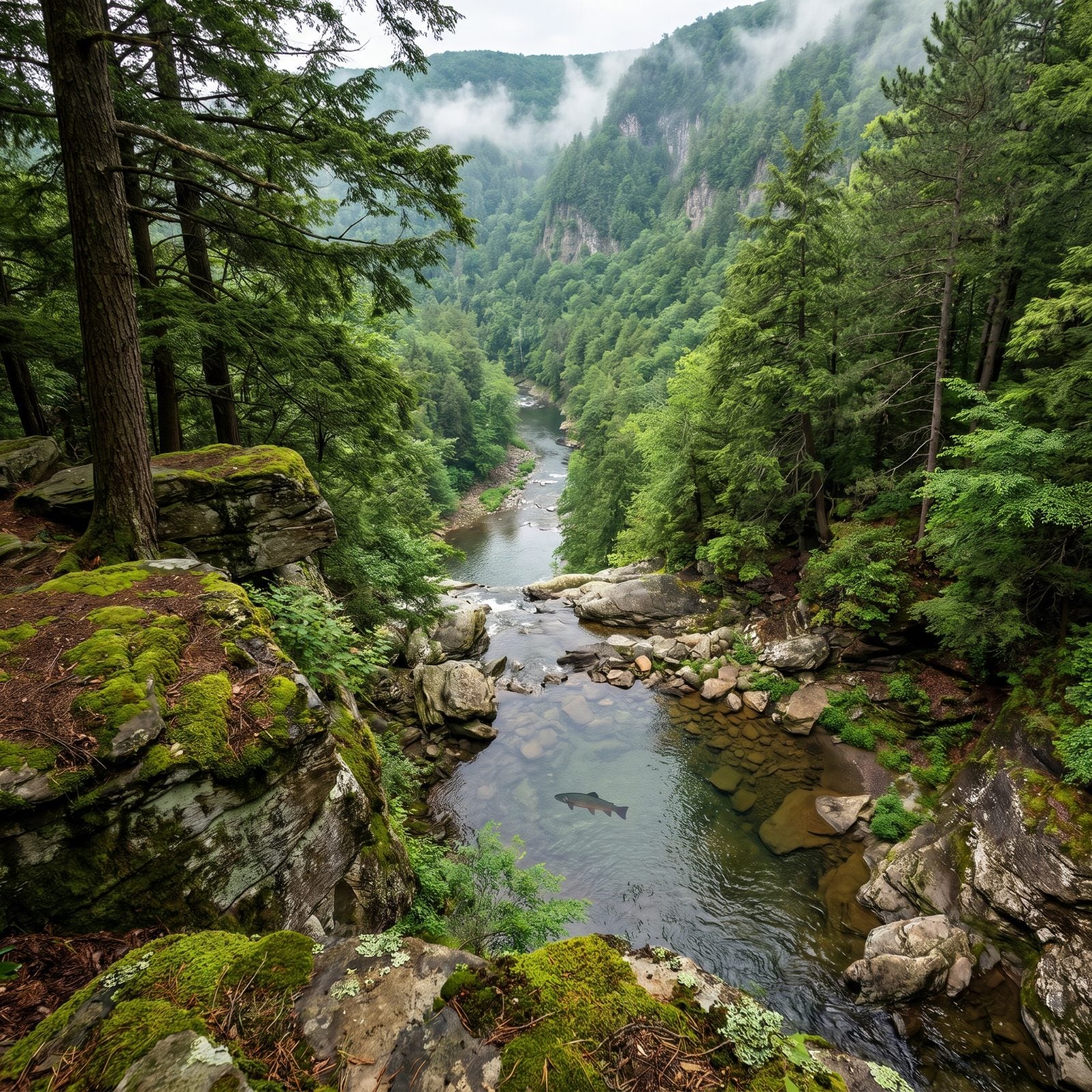
Pine Creek cuts through a forested canyon folks call Pennsylvania’s Grand Canyon, and tucked into its colder tributaries and headwaters are wild brook trout. Pennsylvania named the brookie its state fish in 1970.
And here’s a hard truth. The brook trout is the only trout native to most of the eastern US. The brown came from Europe, the rainbow from the west, so where you find wild brookies, you’re looking at the original tenant.
They need cold, clean water, which makes them a living thermometer for a stream’s health. Warming water and silt push them out first. Fish the upper, shaded water in the heat of summer, and tread gently.
7. New York, Brook Trout in the Backcountry Ponds of the Adirondacks
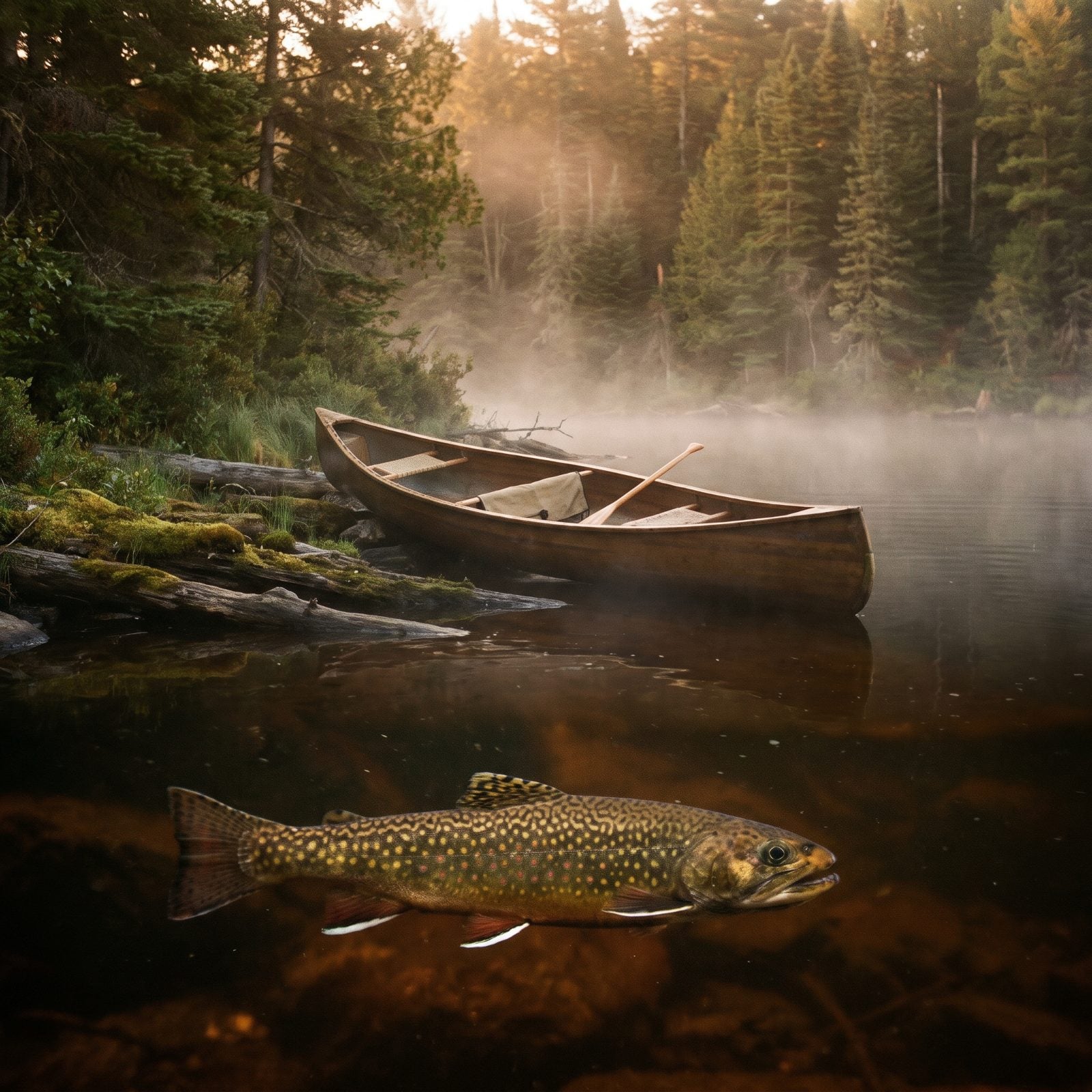
The Adirondacks hold hundreds of small, tea-dark ponds reachable only on foot, and some still hold heritage-strain brook trout that have lived there, unbroken, for a very long time. New York named the brook trout its state fish in 1975.
These backcountry fish are the reason people carry a packraft miles into the woods. In spring and fall they feed hard in the shallows. Come summer they slide deep to find the cold layer, which is why midsummer fishing from shore can feel like the pond is empty when it isn’t.
Some of these waters are managed carefully to protect the native strain, with gear and harvest rules that change pond to pond. Read the regs for the specific water. These trout earned your care the hard way.
6. Connecticut, American Shad Running the Connecticut River
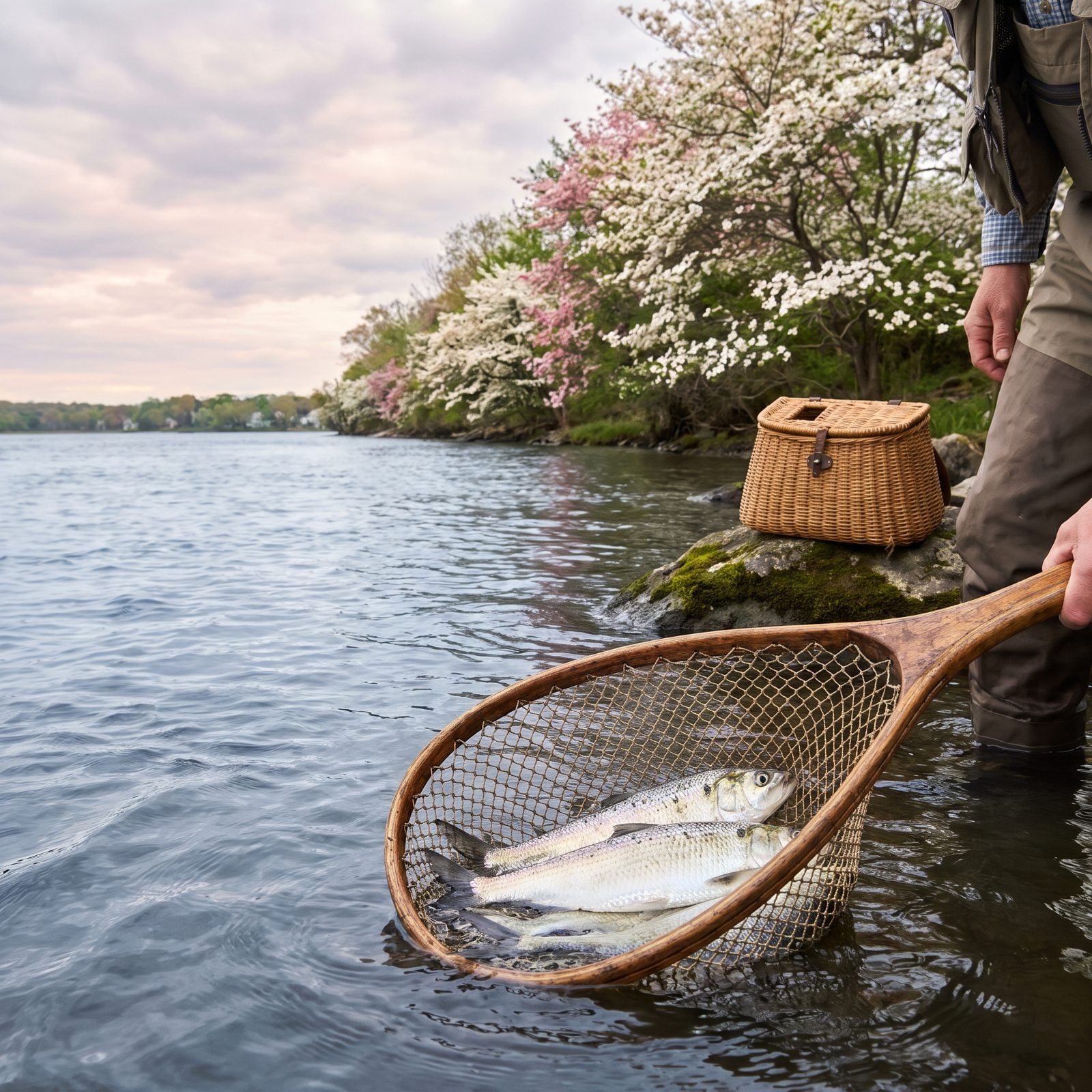
Every spring the shad show up before the dogwoods finish blooming, pushing up the Connecticut River from the sea to spawn. They’re herring, really — just oversized ones that fight like they’ve got somewhere to be. A fresh-run buck will peel line and cartwheel in a way that makes you forget you’re standing in your own hometown river.
The run peaks around late April into May near Enfield and Holyoke. Time it wrong and you’re casting into empty water. Time it right and you lose count.
5. Rhode Island, Striped Bass Prowling Narragansett Bay
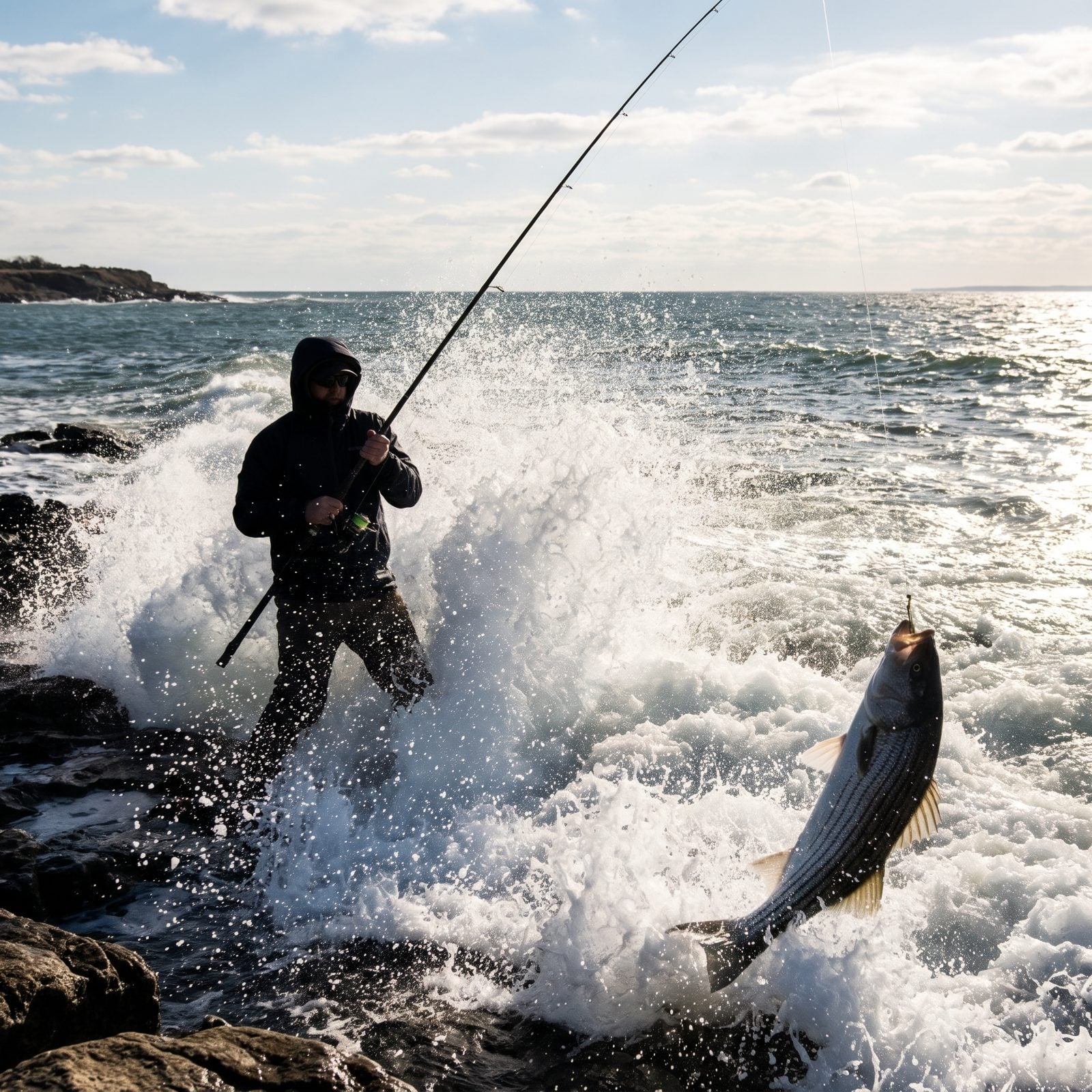
Ask any surfcaster in Rhode Island what they live for and the answer comes back fast: bass. Striped bass are the heartbeat of the Northeast coast, and Narragansett Bay is one of their great nurseries and highways.
They cruise the rips, the breachways and the mussel beds, hunting on moving water. Slack tide is dead time — the bite turns on when the current does. I’ve wasted whole mornings fishing a flat tide and learned the lesson the slow way.
Rhode Island runs a slot limit, so know your legal keeper range before you go. It changes, and the fines don’t.
4. Massachusetts, Atlantic Cod in the Gulf of Maine
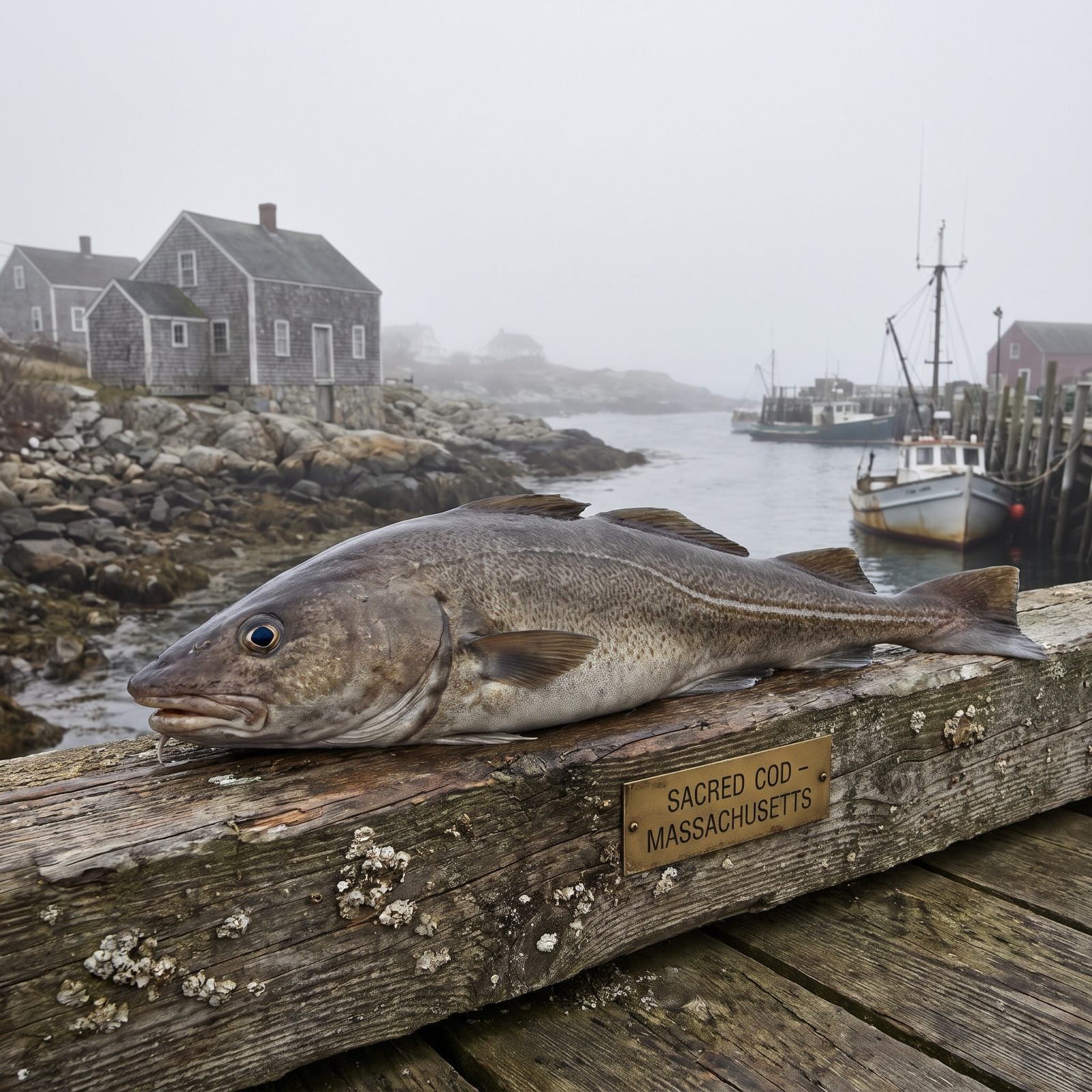
The sacred cod hangs in the Massachusetts State House for a reason.
This fish built towns, paid for churches and filled ship holds for four centuries. A cold-water bottom dweller with a chin barbel feeling along the gravel, it defined New England before New England had a name.
Here’s the hard part. Gulf of Maine cod stocks crashed, and the recreational seasons are tightly restricted now, with windows that open and close by federal and state rule. Check current regulations before you even bait a hook. Some years the fishery is barely open at all.
3. New Hampshire, Brook Trout in the Connecticut Lakes
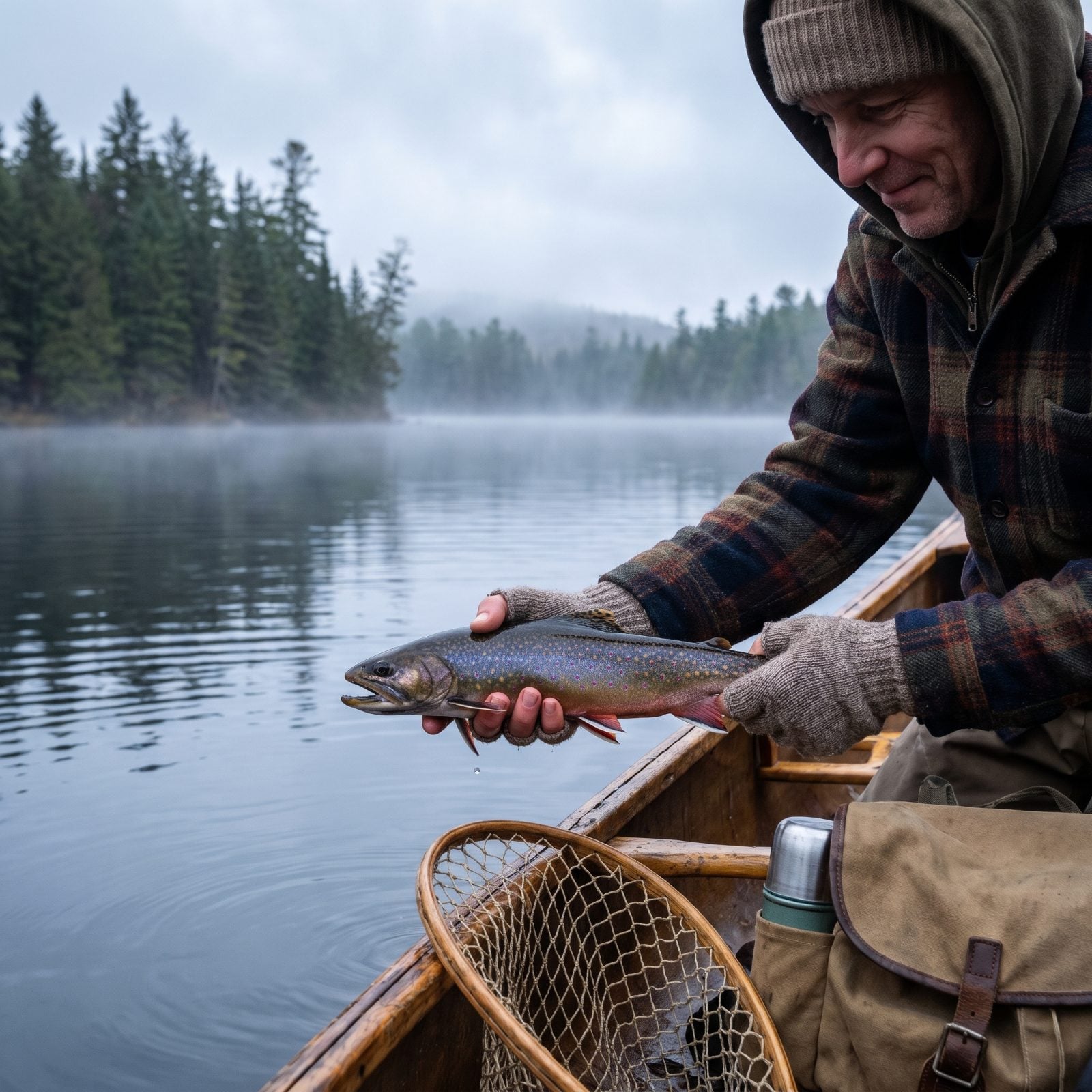
Up in the far north of New Hampshire, past where the cell signal gives out, sit the Connecticut Lakes. The headwaters of the whole river start here, and so do some of the state’s finest wild brook trout.
A brookie isn’t really a trout at all. It’s a char, closer kin to lake trout than to a brown or rainbow, and the color on a wild one in fall will stop you cold — red spots in blue halos, white piping on the fins, a belly gone pumpkin orange.
They need cold, clean water to survive, which makes them a living thermometer for a healthy stream.
2. Maine, Landlocked Salmon at Sebago Lake
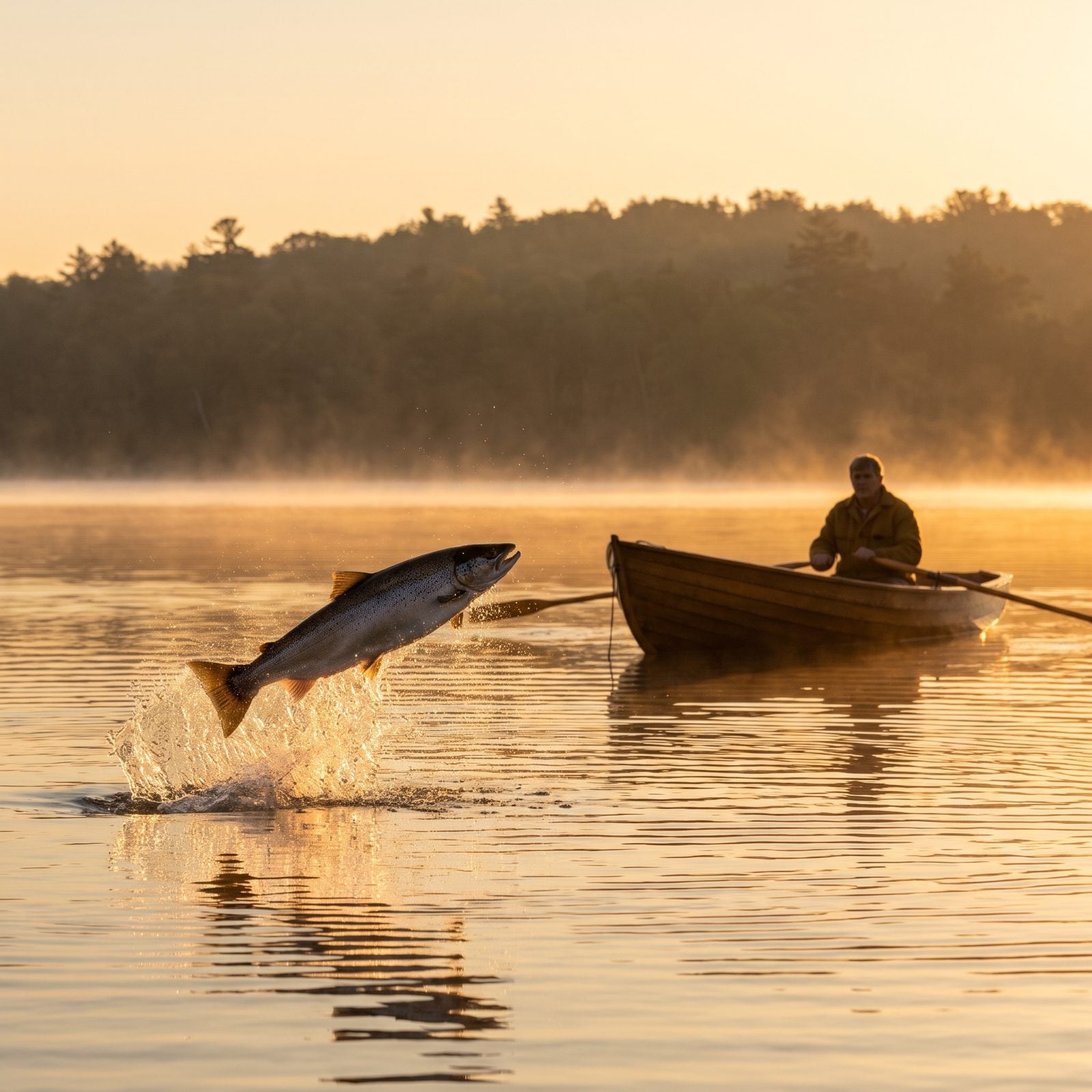
Sebago Lake is where the landlocked salmon story in America basically begins. These are Atlantic salmon that got cut off from the sea and decided to make a life in fresh water, and Maine has been managing them here for well over a century.
Early ice-out is prime time. The salmon chase smelt in the cold surface water, and trolling streamers or sewn bait near the top produces before the lake stratifies in summer.
They run smaller than their sea-going cousins. But a landlock on light tackle in forty-degree water doesn’t know it’s supposed to be modest — it jumps, it runs, it keeps you honest.
1. Hawaii, The Humuhumunukunukuāpuaʻa on Oahu’s Reefs
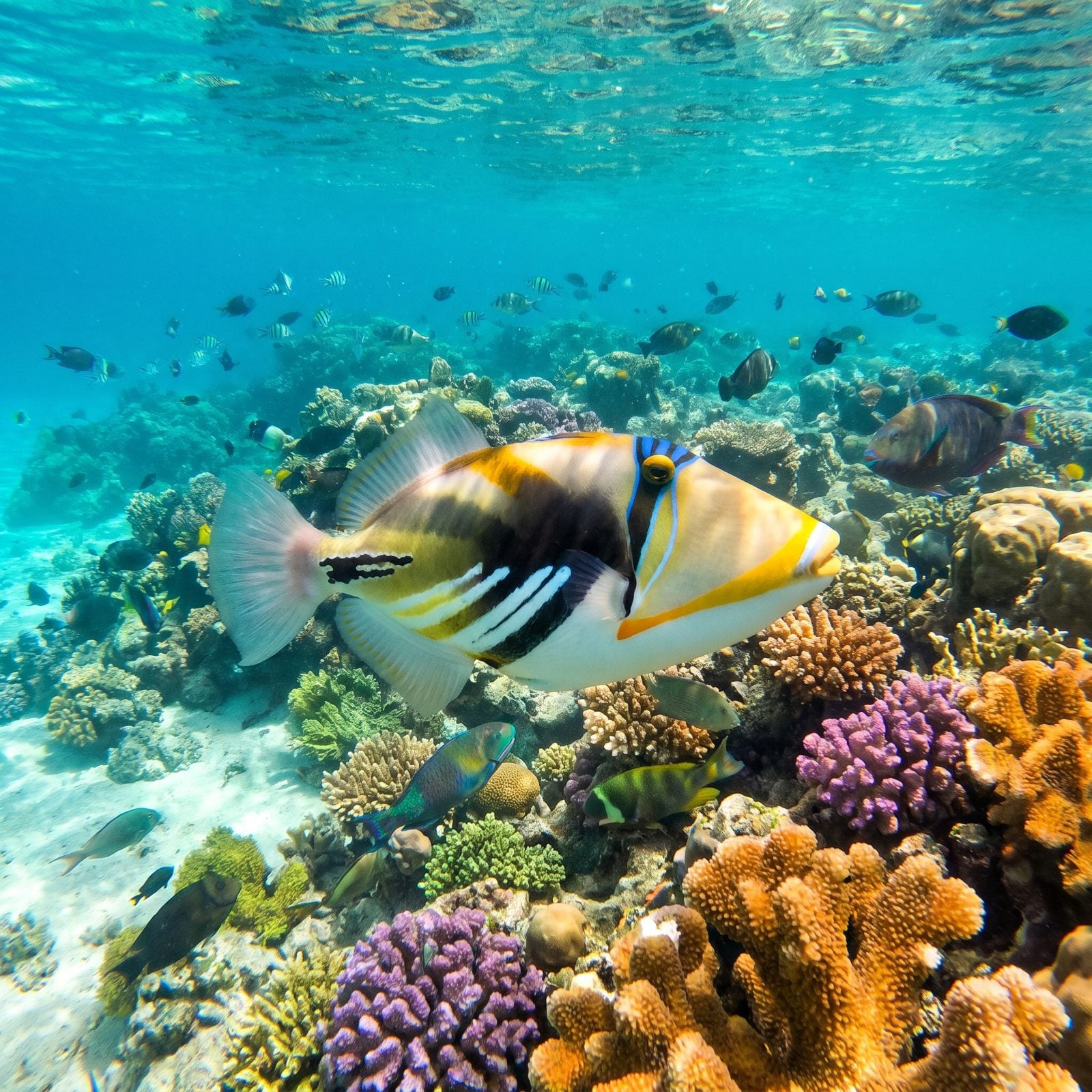
The name is longer than the fish. Humuhumunukunukuāpuaʻa translates roughly to the triggerfish that grunts like a pig, and yes, it really does grunt when you haul it from the water.
This is a reef triggerfish — armored, tough, with a locking dorsal spine it uses to wedge itself into coral cracks so nothing can pull it out. Those black bands and yellow stripes make it one of the most recognizable fish on an Oahu reef.
It’s more a diver’s and snorkeler’s prize than a rod-and-reel target. If you do pursue it, know Hawaii’s reef and marine protected area rules, which vary sharply from spot to spot.