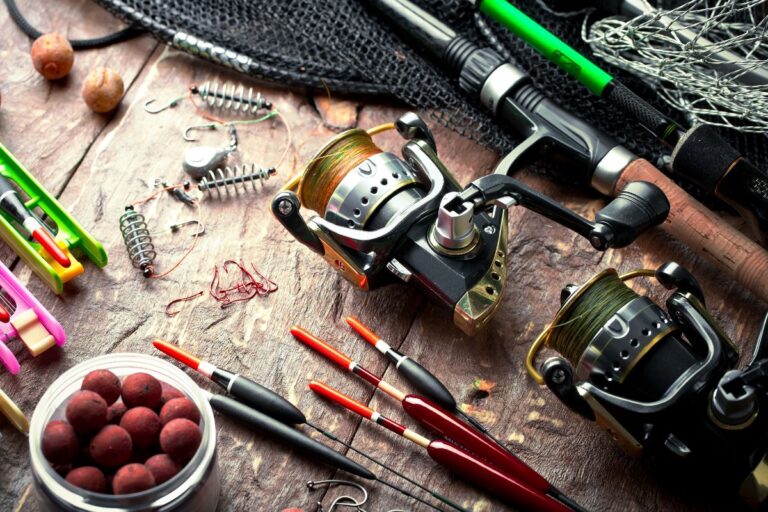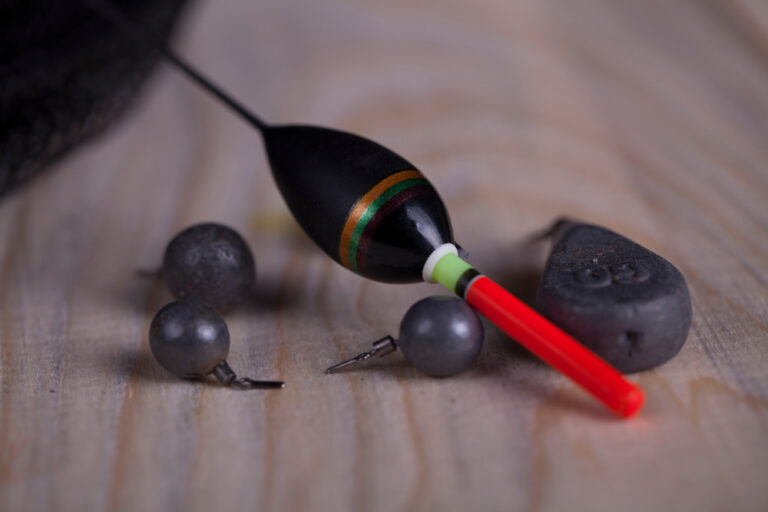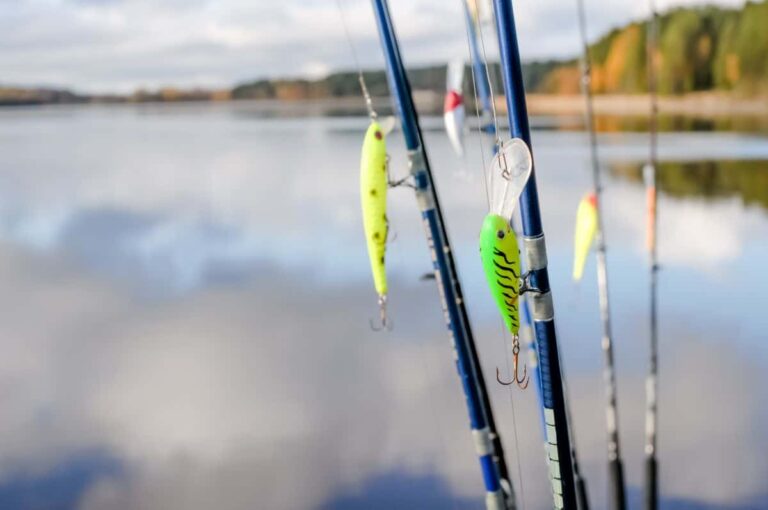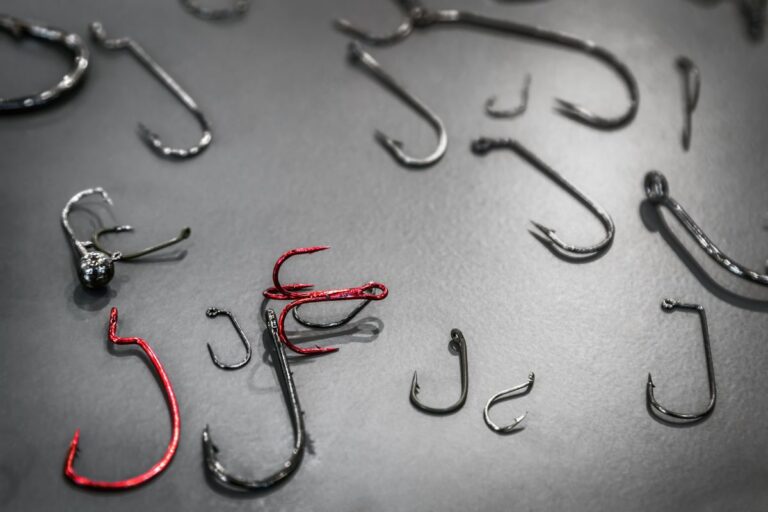
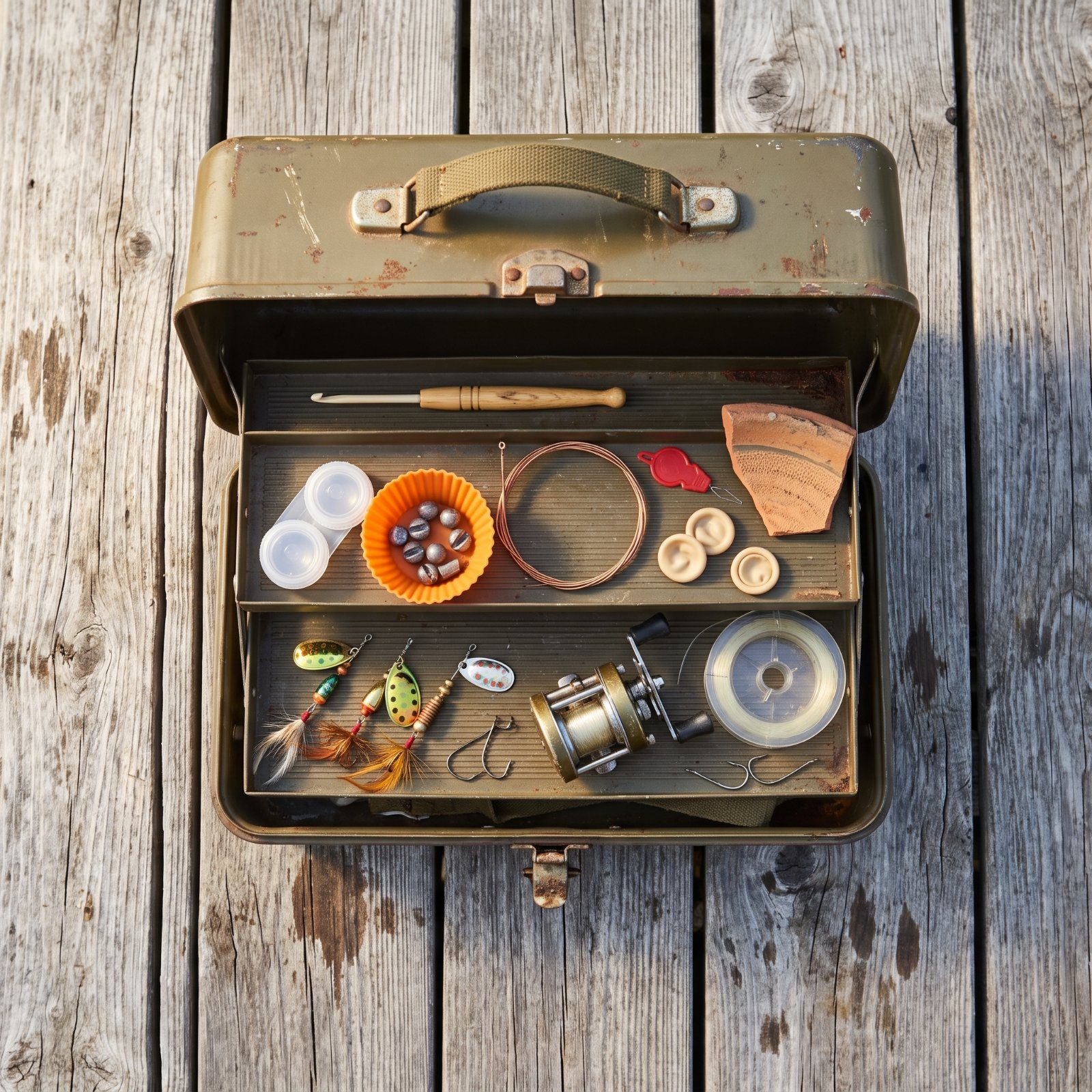
Pop open the tackle box of someone who’s fished for thirty years and you’ll find at least one thing that makes no sense. A contact lens case. A scrap of wedding veil. Half a guitar string. None of it came from a tackle shop, and all of it earns its place.
Please note that some of the images in this article were created with the assistance of AI.
These are the field fixes that never make the glossy gear reviews. They got discovered the hard way, usually on a day the fish were biting and something broke — a snapped guard, a dull point, a worm lying dead in the mud. The ones below solve real problems: picking apart a bird’s nest, touching up a hook, floating a nightcrawler off the bottom. Cheap, small, and a good deal smarter than the specialty tools sold to replace them.
39. A Micro Crochet Hook for Picking Apart Wind Knots
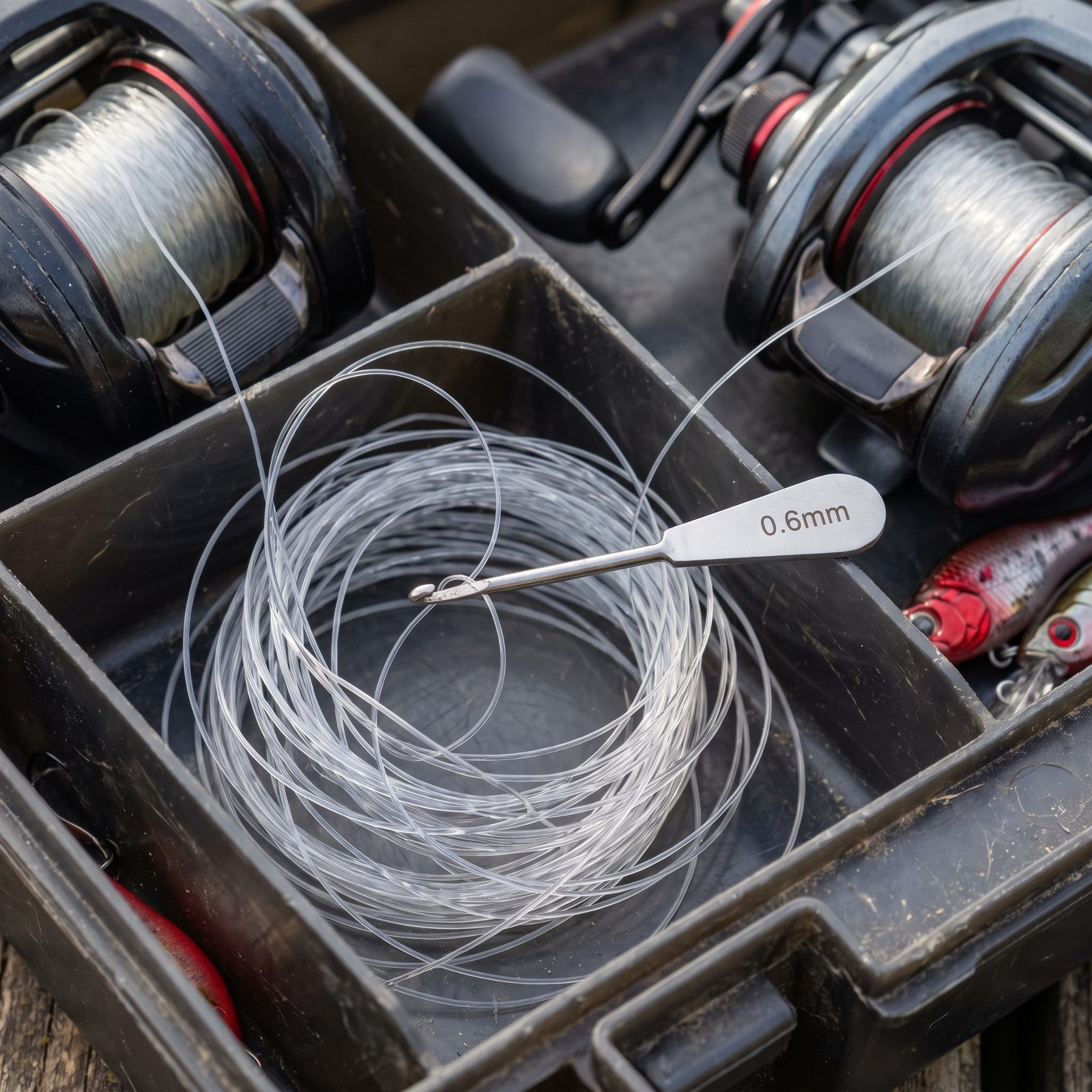
A backlash looks worse than it is. Most people go at it with their fingernails and only cinch it tighter. A micro crochet hook — the 0.6mm size meant for lace work — slips under individual loops and lifts them free without dragging the whole mess down into a knot you’ll never undo.
That thin shaft reaches into spaces your fingers never will. Costs a couple of bucks at any craft store, and one lives in the lid of the box, because you always need it when the light’s going and the fish are up.
38. A Contact Lens Case for Tiny Portions of Reel Grease
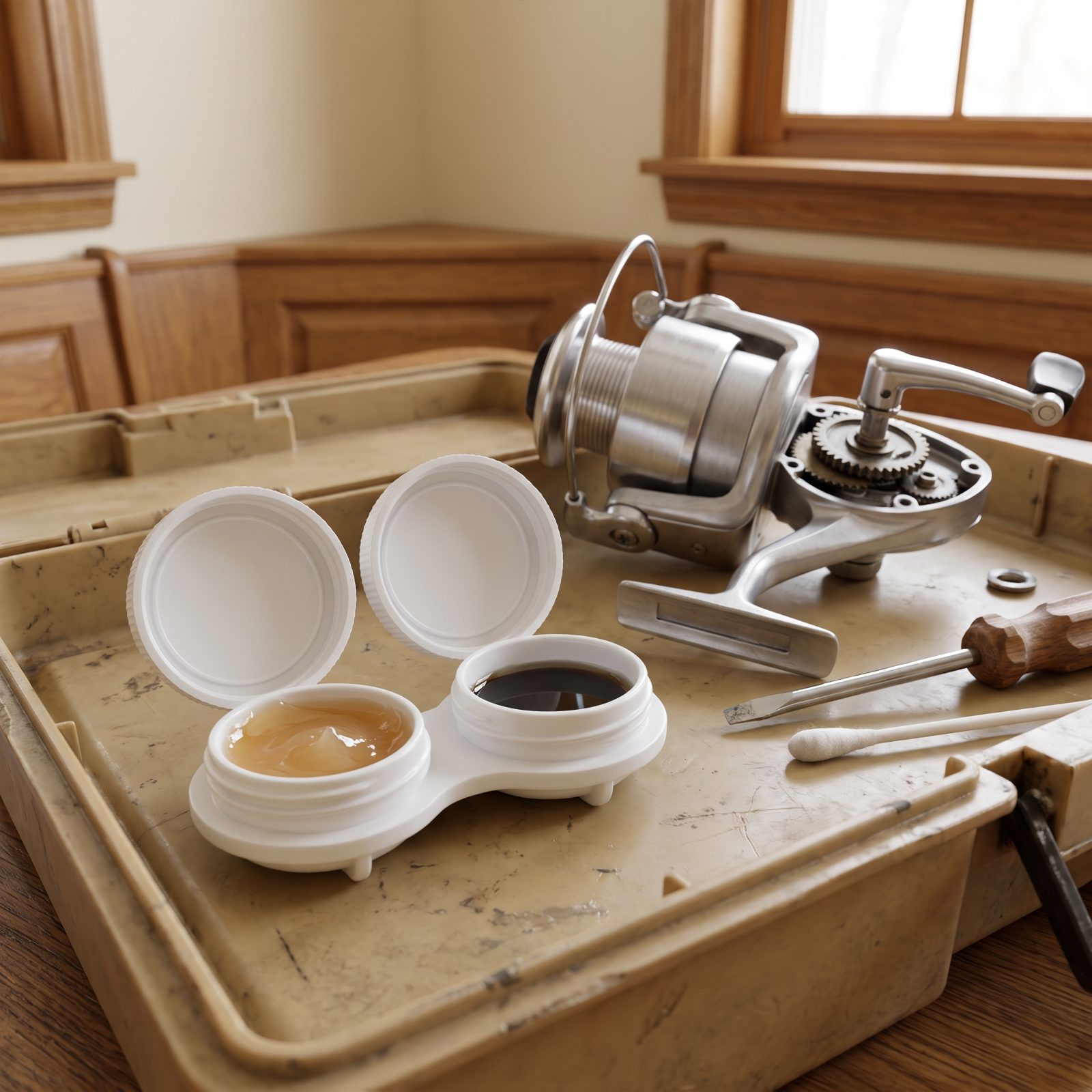
Nobody hauls a full tub of grease to the water, and you shouldn’t have to. A contact lens case holds two separate portions — grease on one side, oil on the other, each sealed under its own cap.
Small wells, but plenty for the job. Won’t leak in a hot truck, and it carries enough for a season of touch-ups. Dab it onto a cotton swab, hit the gears, close the lid. A proper service tub costs real money and never leaves the garage. This one goes everywhere for nothing.
37. A Silicone Cupcake Liner as a Collapsible Parts Tray
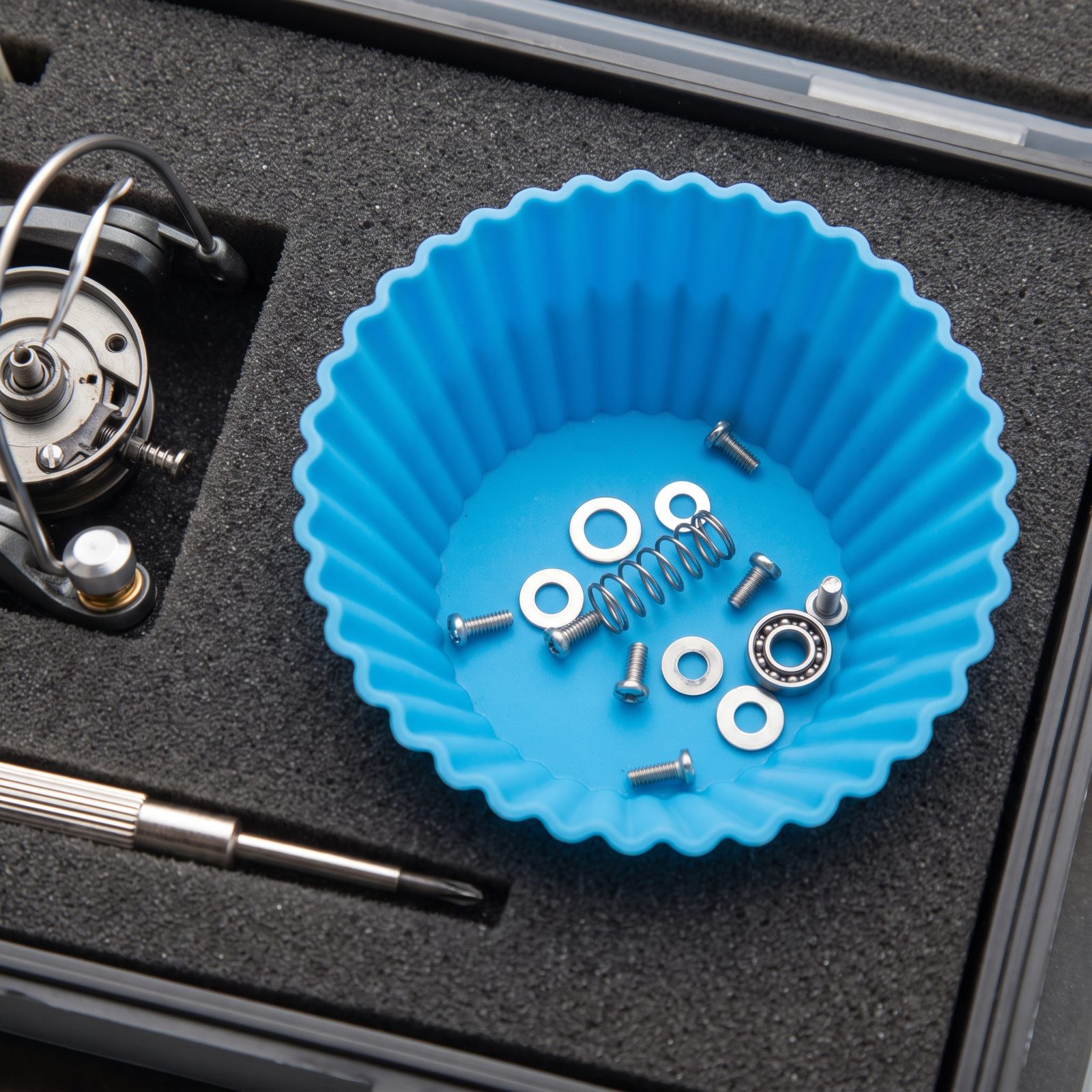
Field-stripping a reel on a rocking boat is how you lose a drag spring over the side. A silicone cupcake liner gives you a soft-walled bowl that won’t let parts bounce out, and those fluted sides keep stray screws from rolling off.
Done? It folds flat into a pocket of the box. Anyone who’s watched a bearing vanish into a dock crack knows exactly why that matters. Get the reusable silicone kind — paper just goes soggy and useless.
36. A Marinade Injector for Adding Scent Inside Dead Baits
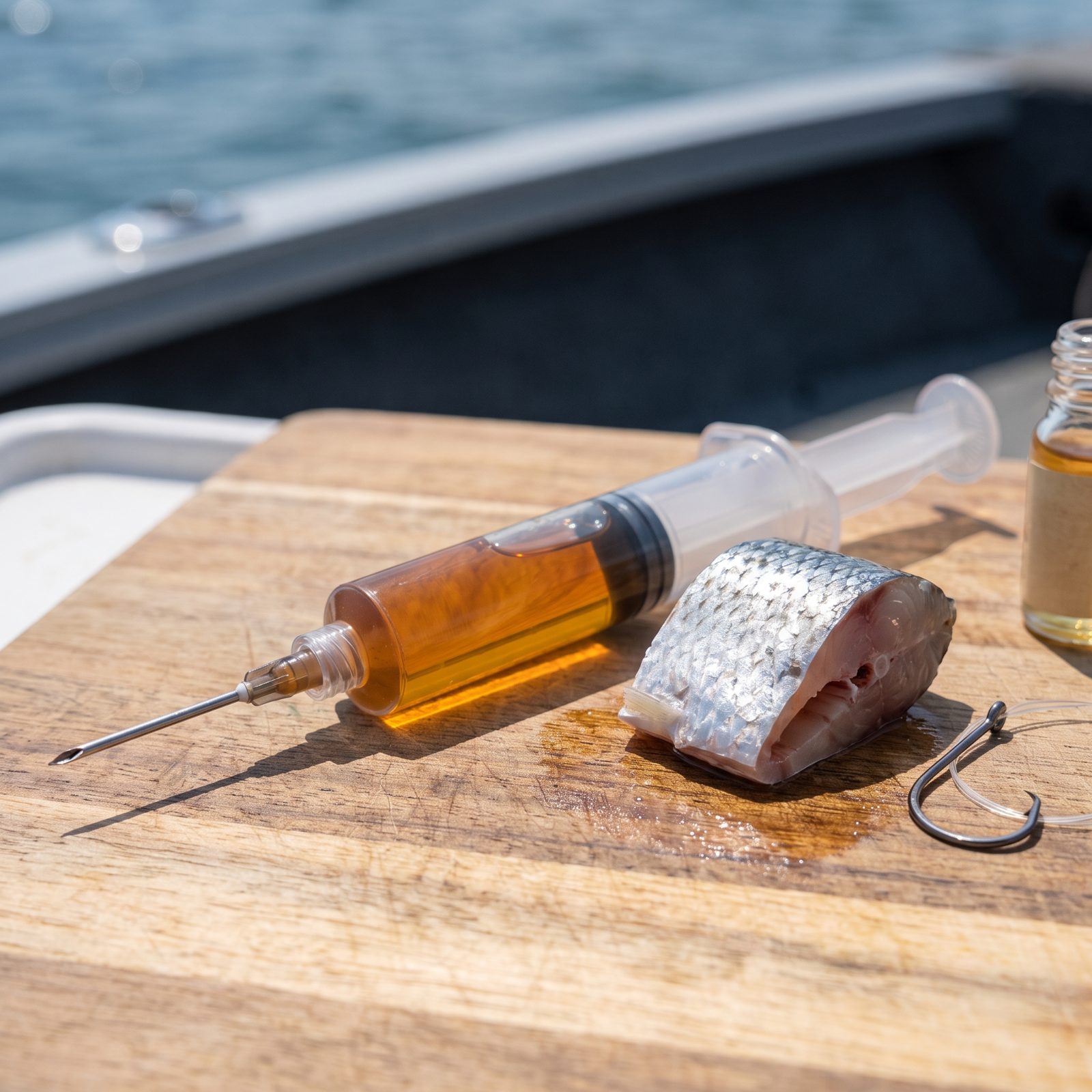
Scent sprayed on the outside of a cut bait washes off inside a minute. A marinade injector puts the attractant where it stays — down in the flesh, leaking out slowly as the bait soaks in the current.
Catfish folks and saltwater anglers swear by it for chunk baits and whole dead baitfish. Fill the barrel with menhaden oil or shrimp scent, push the needle deep, and inject in a few spots. That bait bleeds scent far longer than any surface coating ever managed.
35. Bridal Tulle for Making Durable Roe Sacks
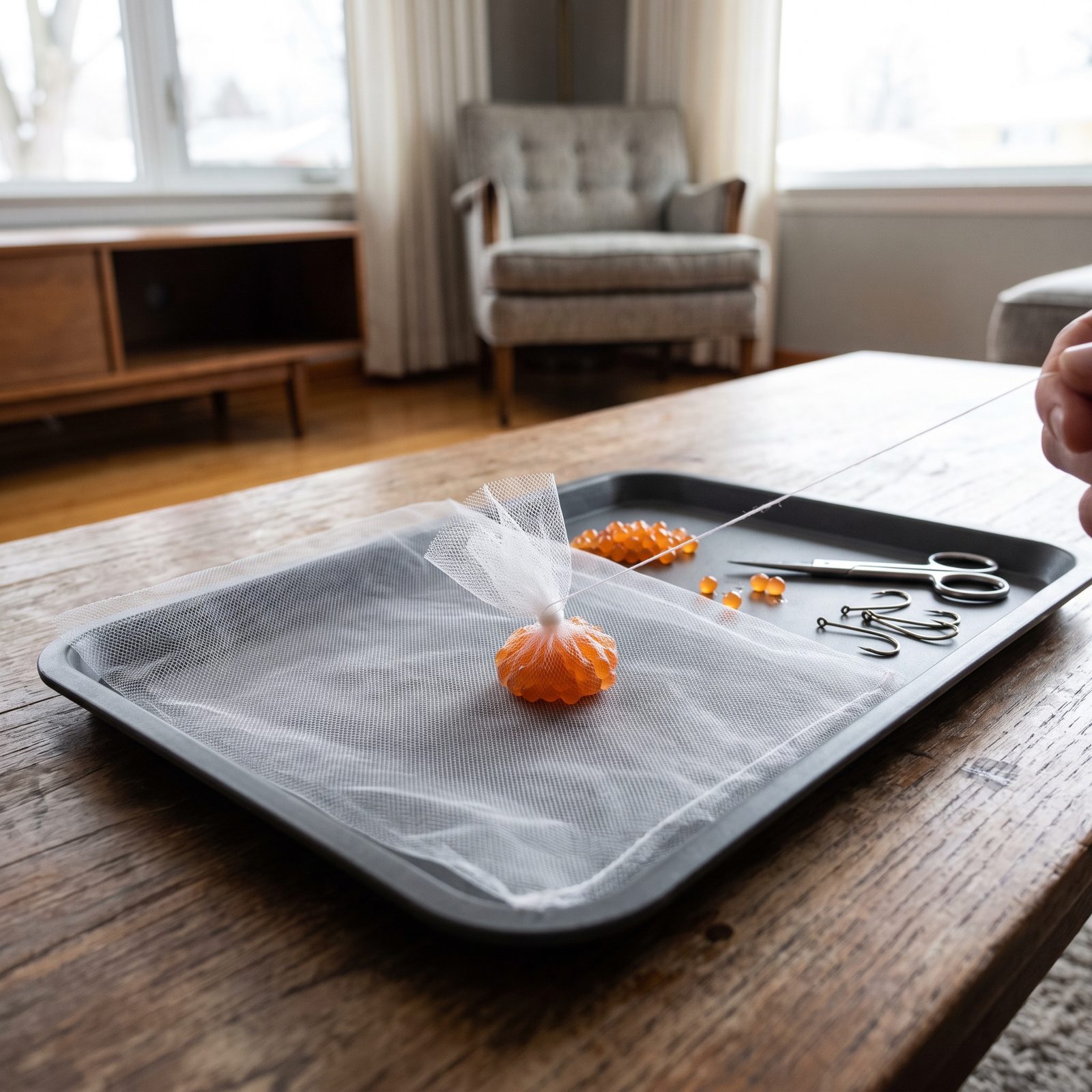
Steelhead and salmon anglers burn through roe sacks, and the cheap mesh tears after a single fish. Bridal tulle — that fine netting from the fabric store — holds together far better and comes in colors that either match the eggs or stand right out from them.
A yard runs a few dollars and makes hundreds of sacks. Cut it into squares, drop in the roe, tie it off with stretchy thread. The weave cradles the eggs without crushing them and shrugs off being chewed. Egg-colored tulle disappears against the bait; chartreuse adds a visual trigger in stained water.
34. An Unglazed Ceramic Shard for Touching Up Hook Points
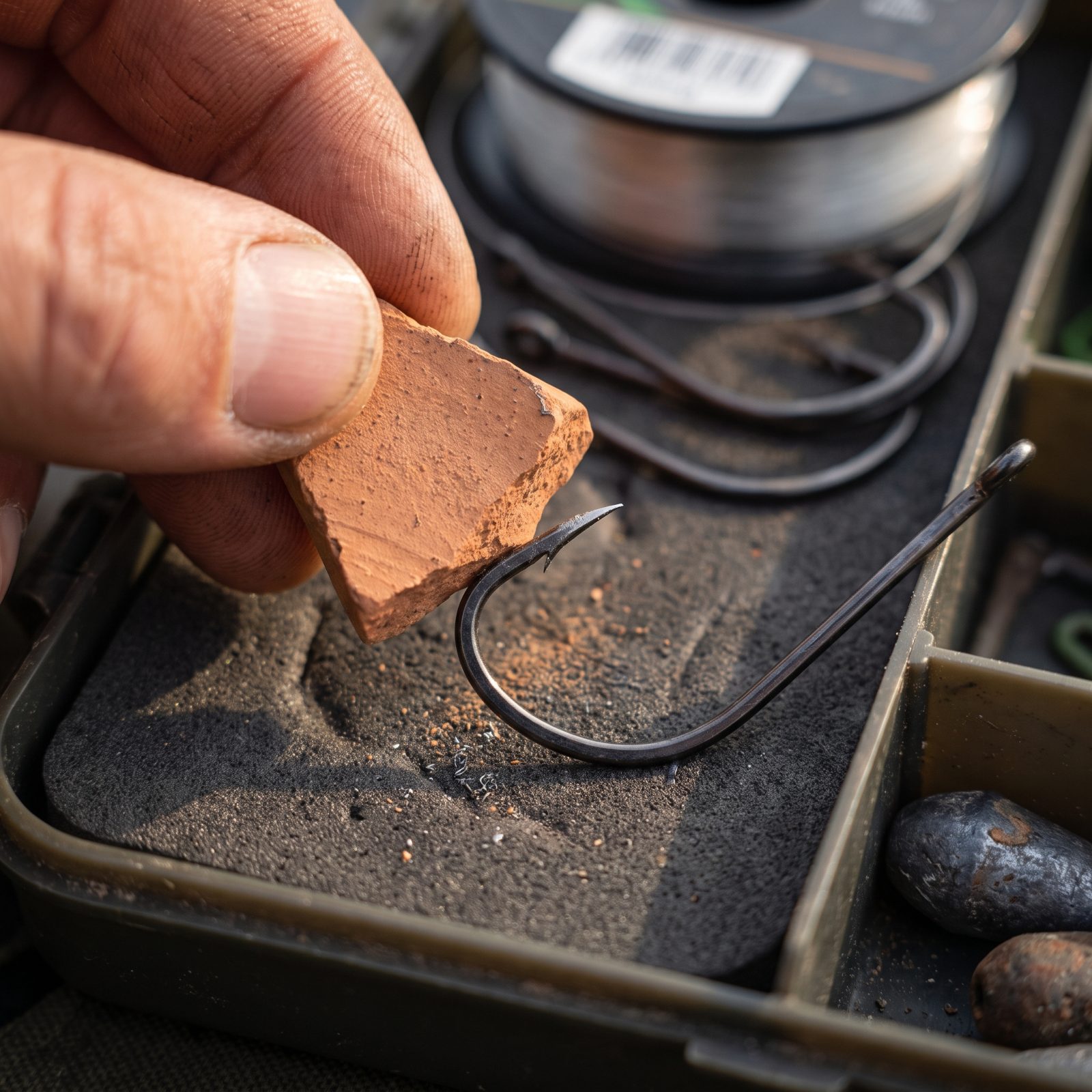
A dull hook costs you fish and you’ll never know it happened. The underside of an unglazed ceramic shard — the bottom rim of a cheap flowerpot works fine — has just enough grit to put a point back on a hook without grinding it down to nothing.
It never wears out, never rusts, tucks into a corner of the box. A few light passes from the barb toward the point and you’re sharp again. Drag the point across your thumbnail to check. If it skates, keep going. If it grabs and bites in, you’re done.
33. A Short Guitar-String Section for Replacing a Broken Weed Guard
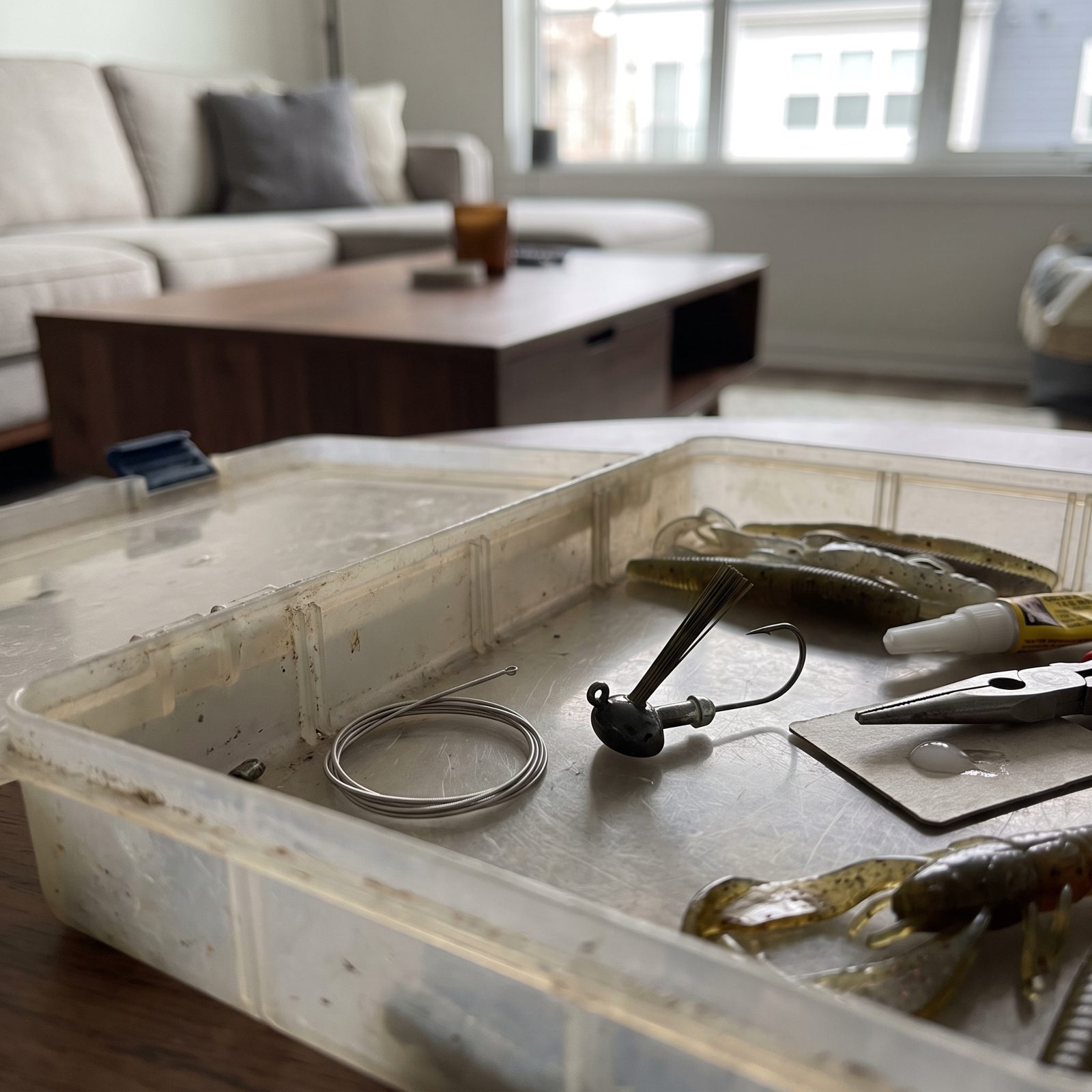
Weed guards snap off jigs and spinnerbaits, and you almost never pack a spare. A section of a worn guitar string — a light wound G or D — has exactly the right stiffness to deflect cover while still folding flat on a strike.
Glue a short piece into the jig collar and you’ve rebuilt a lure that was headed for the trash. One old string yields dozens of replacements. The fix feels like cheating right up until you drag a bass out of the slop with it.
32. A Worm Blower for Floating Nightcrawlers Off Bottom
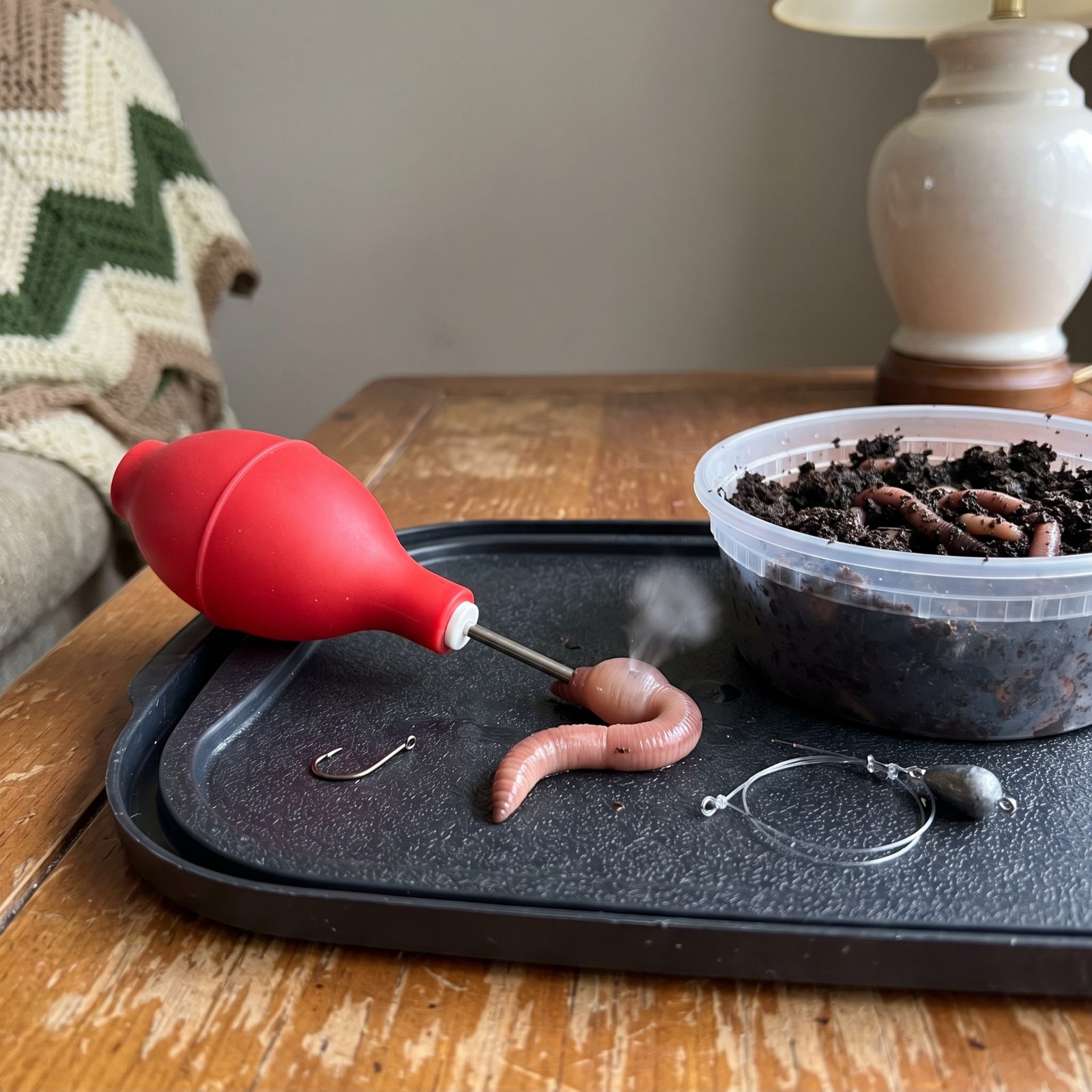
A nightcrawler lying flat in the mud is invisible to a trout cruising six inches up. A worm blower — a little rubber bulb with a hollow needle — puffs air into the crawler. Once it’s rigged and in the water, that air lifts it off bottom so it wiggles in the current where fish can actually see it.
Walleye and trout anglers run this on a slip-sinker rig to float the bait into the fish’s window. Costs a few dollars, lasts years. One puff is plenty. Overdo it and the worm spins like a propeller, which fish want no part of.
31. Rubber Finger Cots for Protecting Line-Stripping Fingers
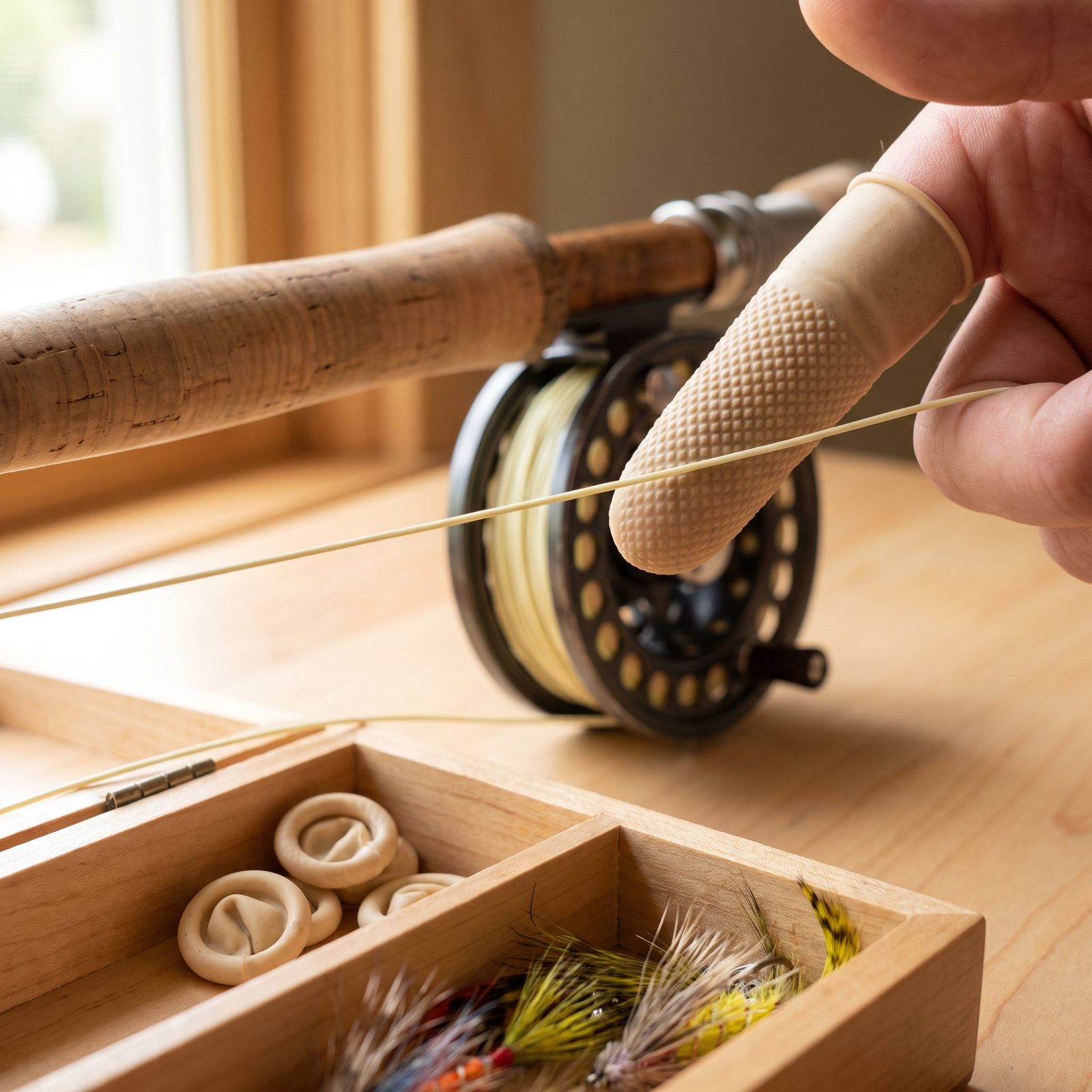
A long day of hard hooksets, or stripping line, will cut a groove into your trigger finger, and a line burn stings for days. Rubber finger cots — the little rolled covers from the drugstore — slip over a fingertip and take the abrasion instead of your skin.
Surf casters and anyone who strips fast fly line knows that particular hurt. A pack costs next to nothing. They fit in a corner the size of a film canister and spare you a raw stripe across your finger at the end of a good session.
30. A Needle Threader for Tiny Hook Eyes
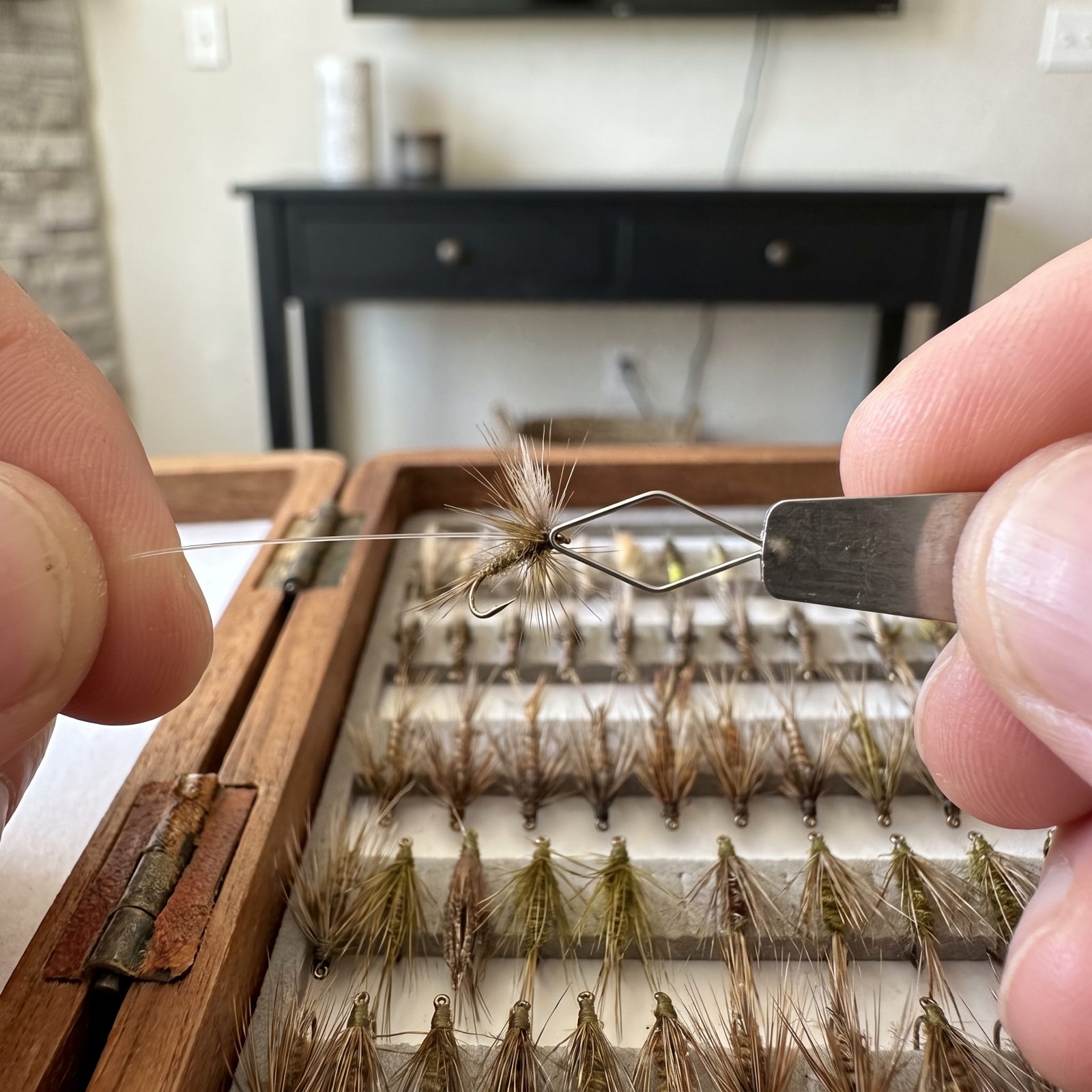
Tying a size 20 fly onto tippet at dusk, with the hatch coming off, is its own special torture. The diamond-wire needle threader from a sewing kit pokes through a tiny hook eye, you drop your line into the wide loop, and you pull it back through.
Two-minute squint becomes a two-second job. Anyone whose close vision isn’t what it was at twenty gets it instantly — this scrap of wire is worth more than most of the gadgets rattling around the box. Keep one on a lanyard, or it’ll end up on the river bottom by noon.
29. Bread Bag Tags for Containing Coiled Leaders
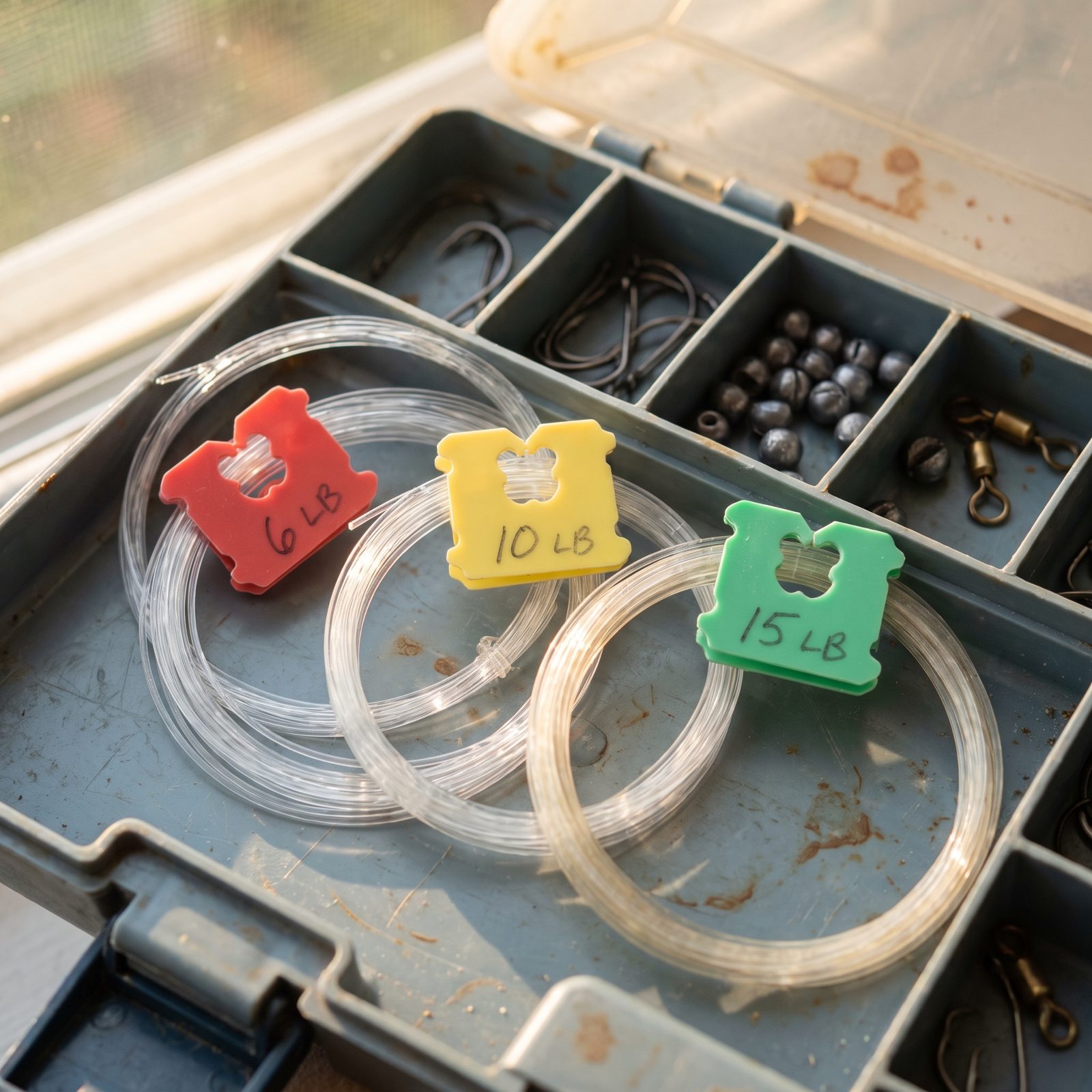
Loose leader is a nightmare. Pull one coil and the whole bundle turns into a bird’s nest in your tray. A plastic bread bag tag solves it for free: coil the leader, slot it into the tag’s notch, and it stays put.
Then there’s the flat surface, which is the part we love most. Write the pound-test on it in pencil and you’ll never squint and guess at 5 a.m. when the light is bad and your reading glasses are back in the truck. A dozen tags weigh nothing and cost you one loaf of bread.
28. A Disposable Shower Cap for Shielding a Reel From Spray
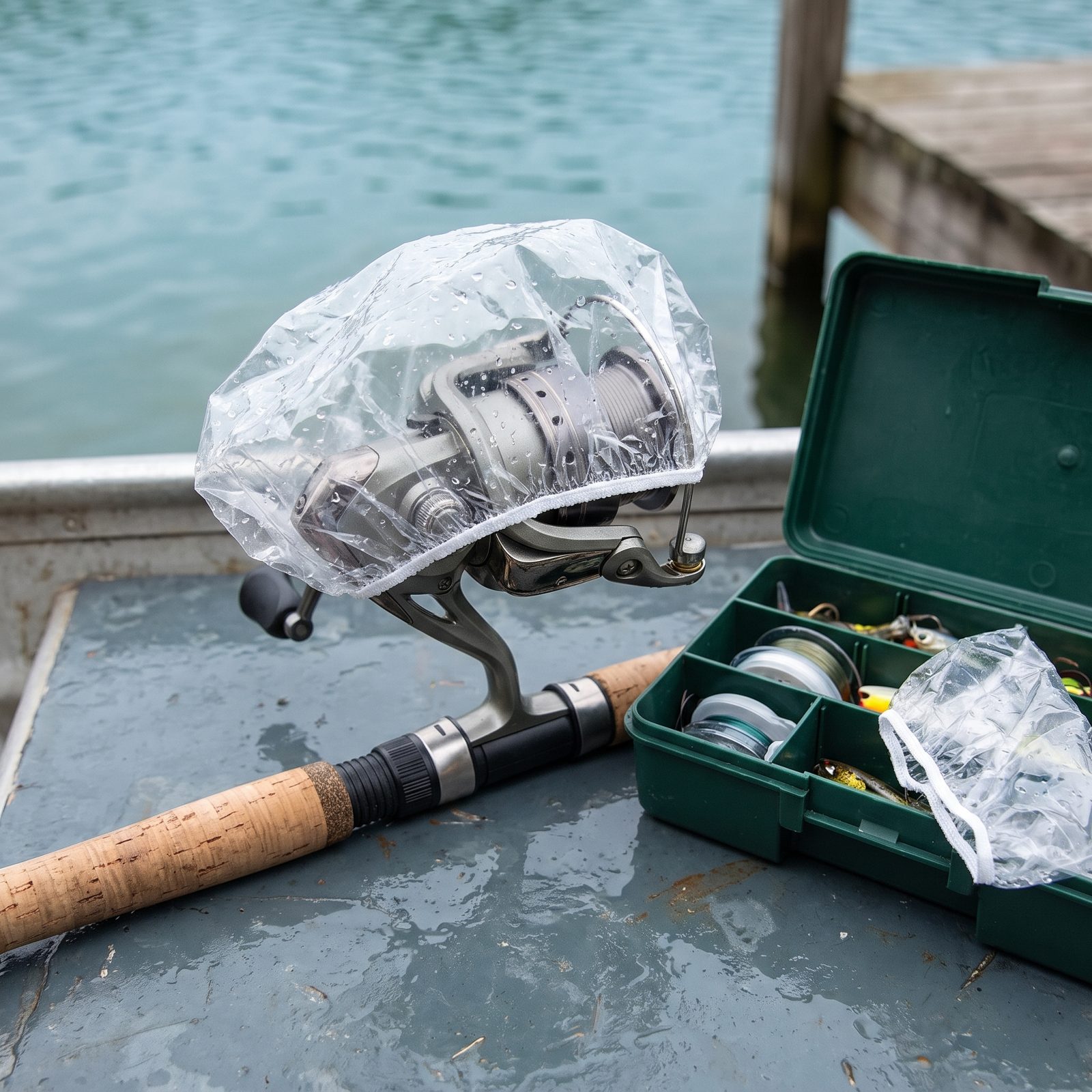
Saltwater is patient. It waits for the one day you forget, then finds its way into every bearing you own. A cheap disposable shower cap, the kind hotels leave by the sink, stretches right over a reel and keeps spray and salt mist off the works during a long run between spots.
They crush flat. They cost nothing, and you can grab a fistful on the way out next trip. Pull it off when you’re ready to fish, ball it up, done.
27. A Pool Noodle Slice for Storing Pre-Tied Rigs
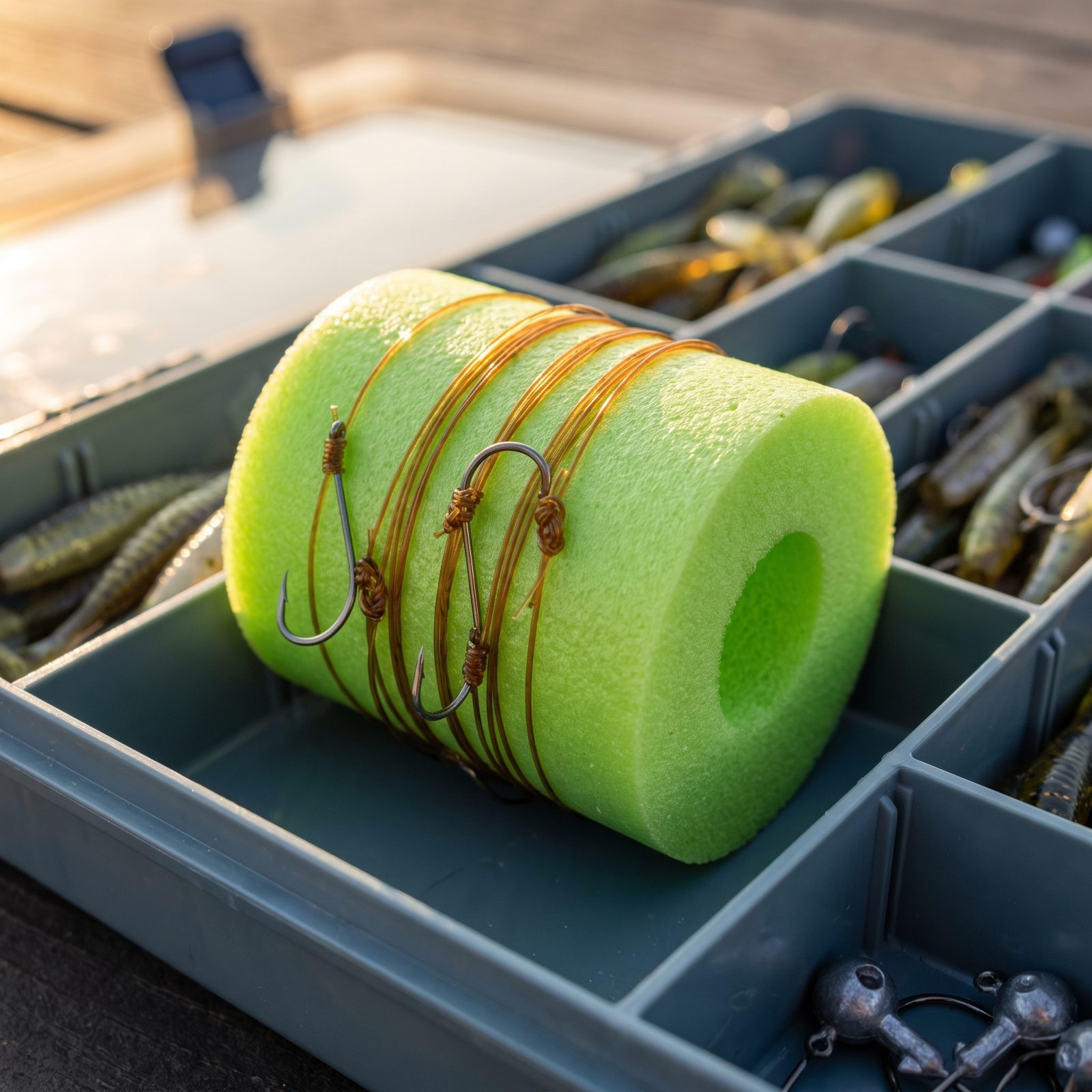
Cut a chunk off a pool noodle and you’ve got a rig holder better than anything in the catalog. Wind the leader around the foam, lay the hooks against the foam alongside the wraps, and the rig stays tangle-free. The foam shrugs off a dropped hook without complaint.
Walleye guys use these for harness rigs. Steelheaders love them for pre-tied beads and hooks. Slot a few short sections into your lid and you can swap a whole rig in seconds instead of re-tying in the wind with hands that have gone numb.
26. Waxed Dental Floss for Lashing a Loose Rod Guide
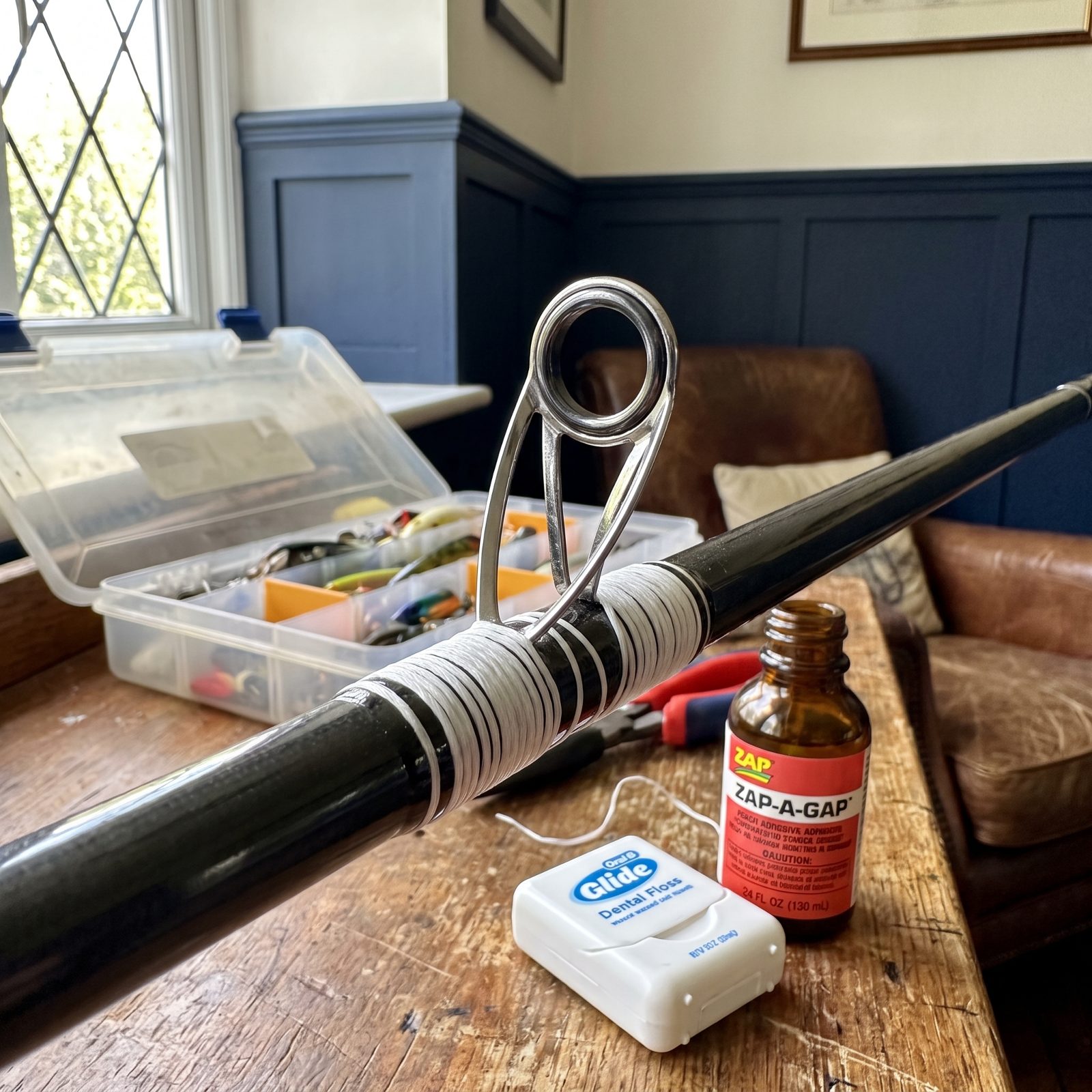
A rod guide works loose and most anglers panic. Don’t. Waxed dental floss makes a field repair that outlasts the trip. Wrap it tight and parallel over each guide foot, same as factory thread, packing each turn snug against the last, then run a drop of super glue or head cement over the wraps to lock it.
The wax keeps the thread from slipping as you wind. It’s thin, it’s strong, and the little dispenser lives in a corner of the box for years. Do it right and you’ll forget it was ever a floss repair, at least until someone leans in and asks why your rod smells faintly of mint.
25. A Pencil Eraser for Cleaning Corroded Battery Contacts
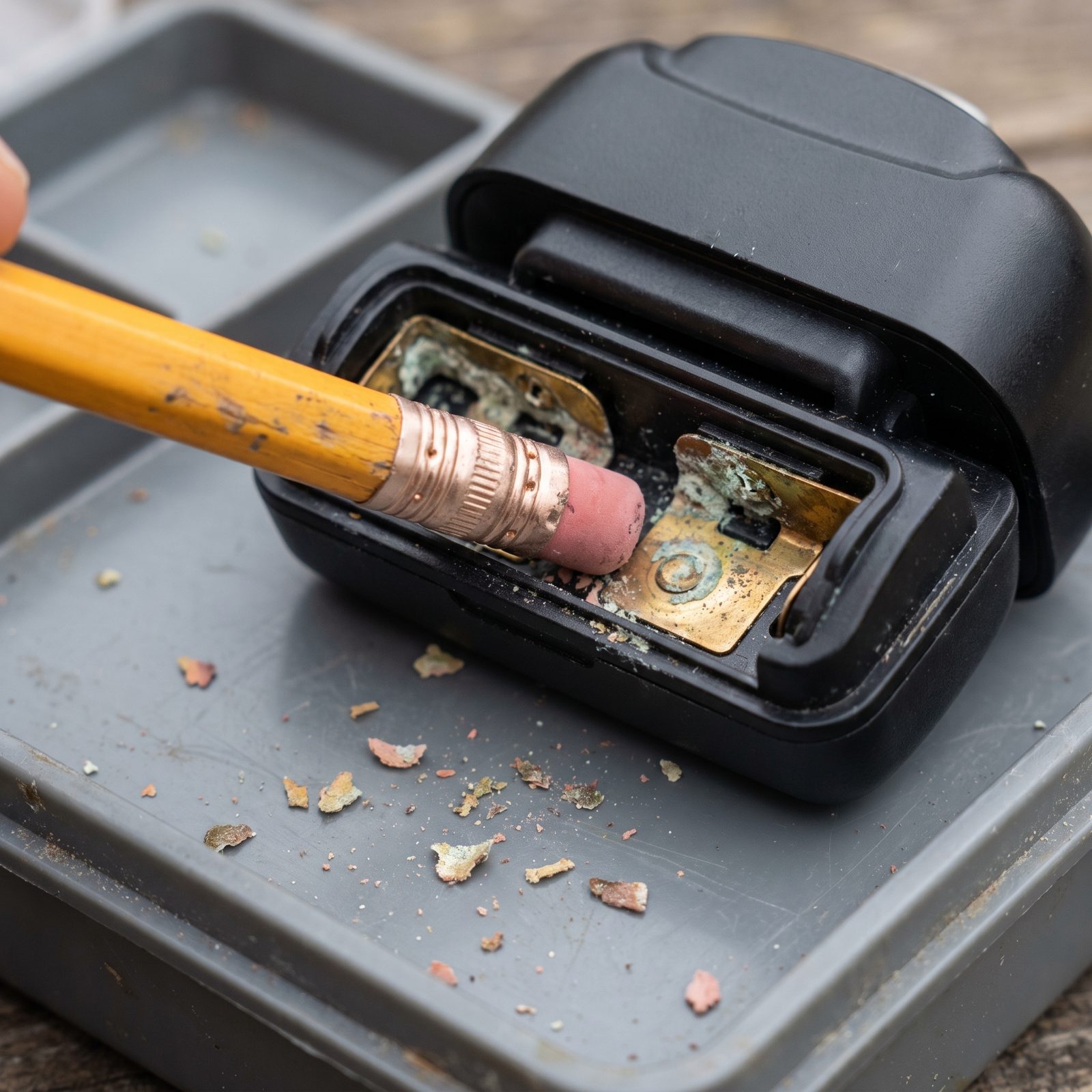
Your headlamp dies, the batteries are fine, and you burn ten minutes cursing in the dark. The culprit is usually a thin film of corrosion on the contacts. A pencil eraser scrubs it right off, down to bright metal, with no chemicals and no scratches.
The same trick rescues fish finders, digital scales, trolling motor battery leads, any contact that’s gone dull or green. The rubber is abrasive enough to cut the oxide but soft enough to spare the metal underneath.
24. A Glass Eyedropper for Applying Reel Oil Precisely
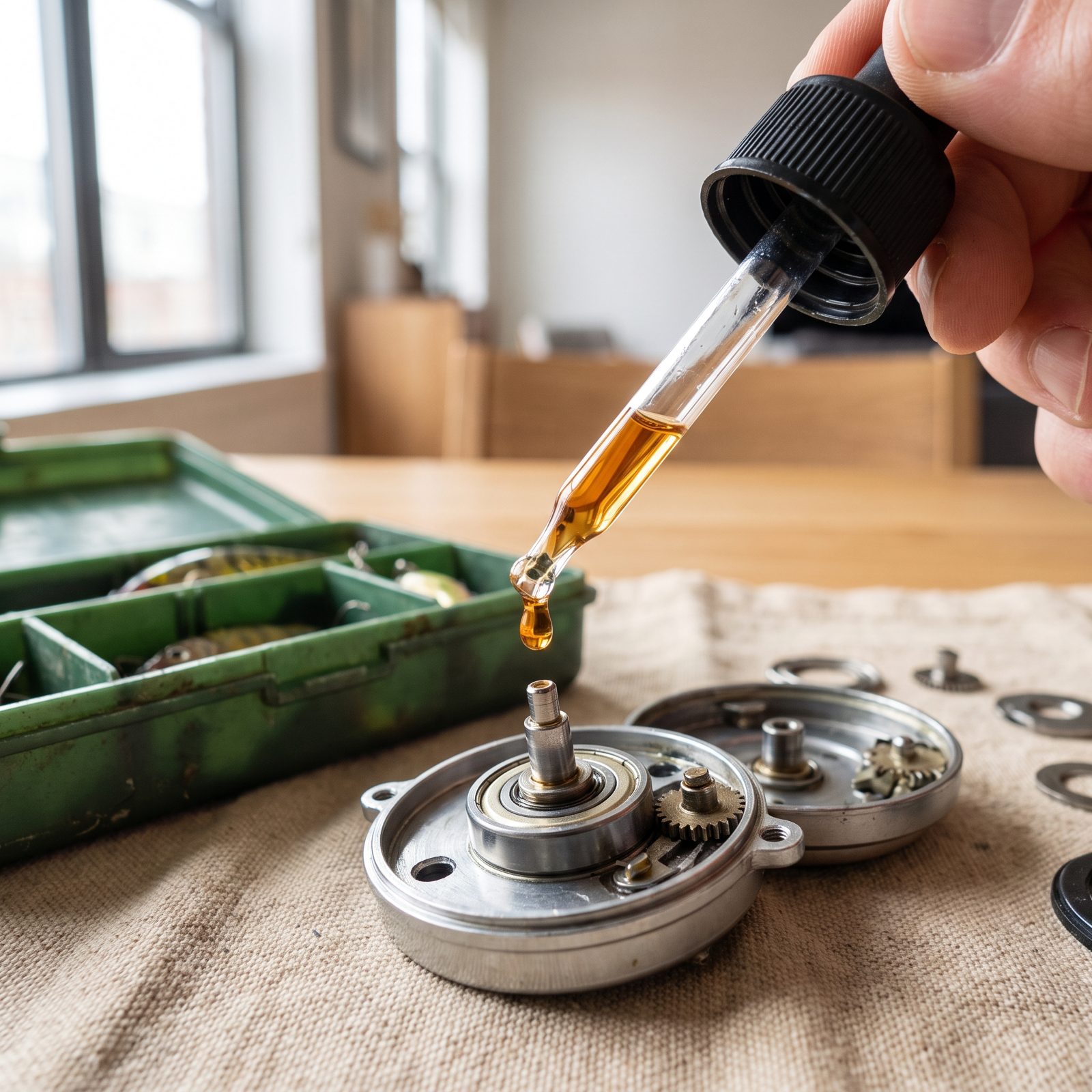
Reel oil comes in bottles with needle tips that either clog or flood. A plain glass eyedropper from the drugstore gives you control the manufacturer never bothered to offer. One drop where it belongs, none where it doesn’t.
Too much oil is worse than too little. It attracts grit, gums up bearings, and slows your spool, which is the opposite of the whole point. The dropper lets you place a single bead on a bearing and stop there. Glass won’t react with the oil either, so it keeps for seasons.
23. Orthodontic Elastics for Holding Soft Plastics in Place
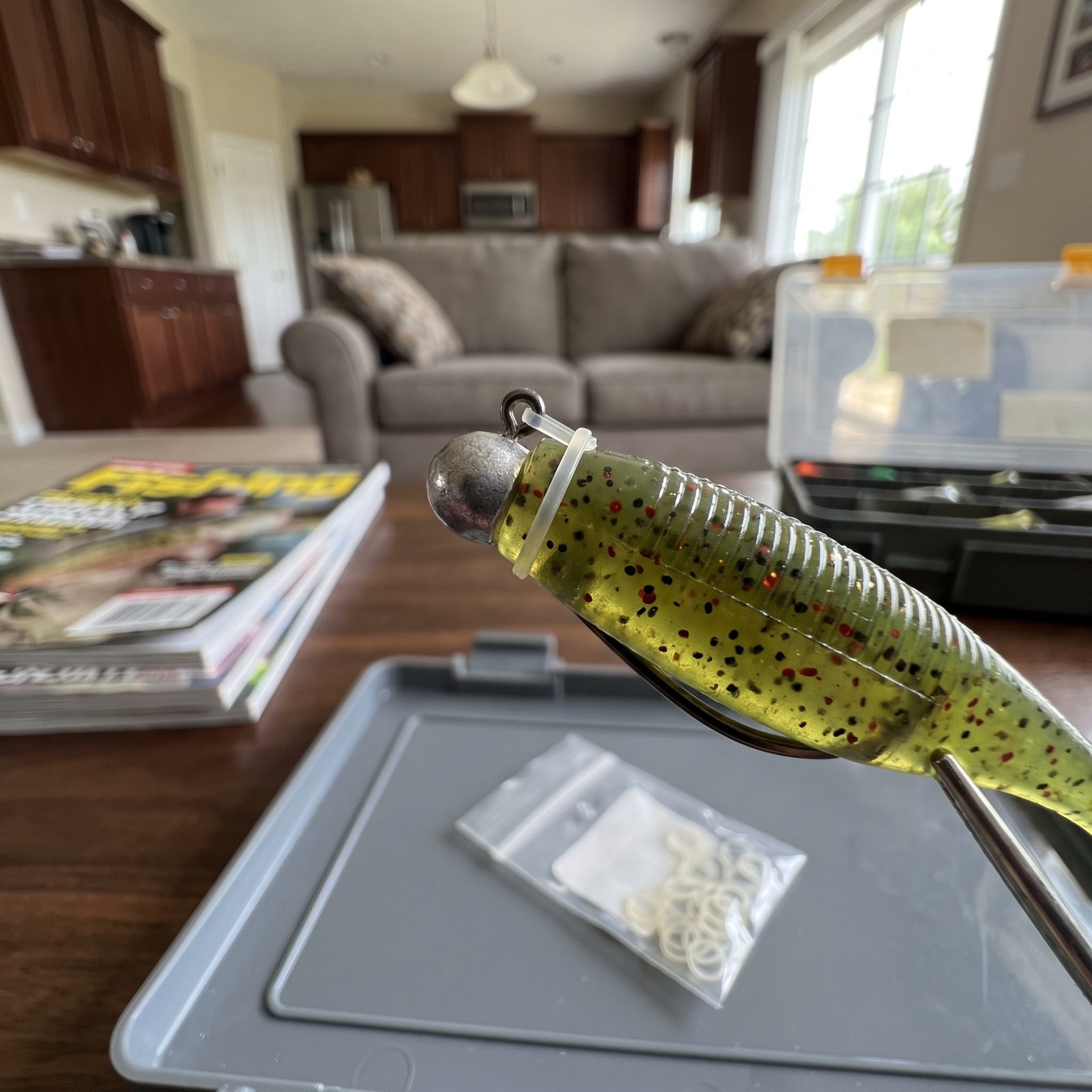
Soft plastics slide down the hook after a few fish, and you end up wasting the back half of the bag re-rigging. A single orthodontic elastic, the tiny clear bands dentists hand out by the dozen, wrapped at the hook collar holds everything in place. One bait suddenly outlasts five.
They cost almost nothing. You can carry hundreds in a film canister, and they vanish against the water. Bass guys figured this out years ago. The rest of us are still tossing torn-up worms that had plenty of fishing left in them.
22. An Interdental Brush for Cleaning Reel Crevices
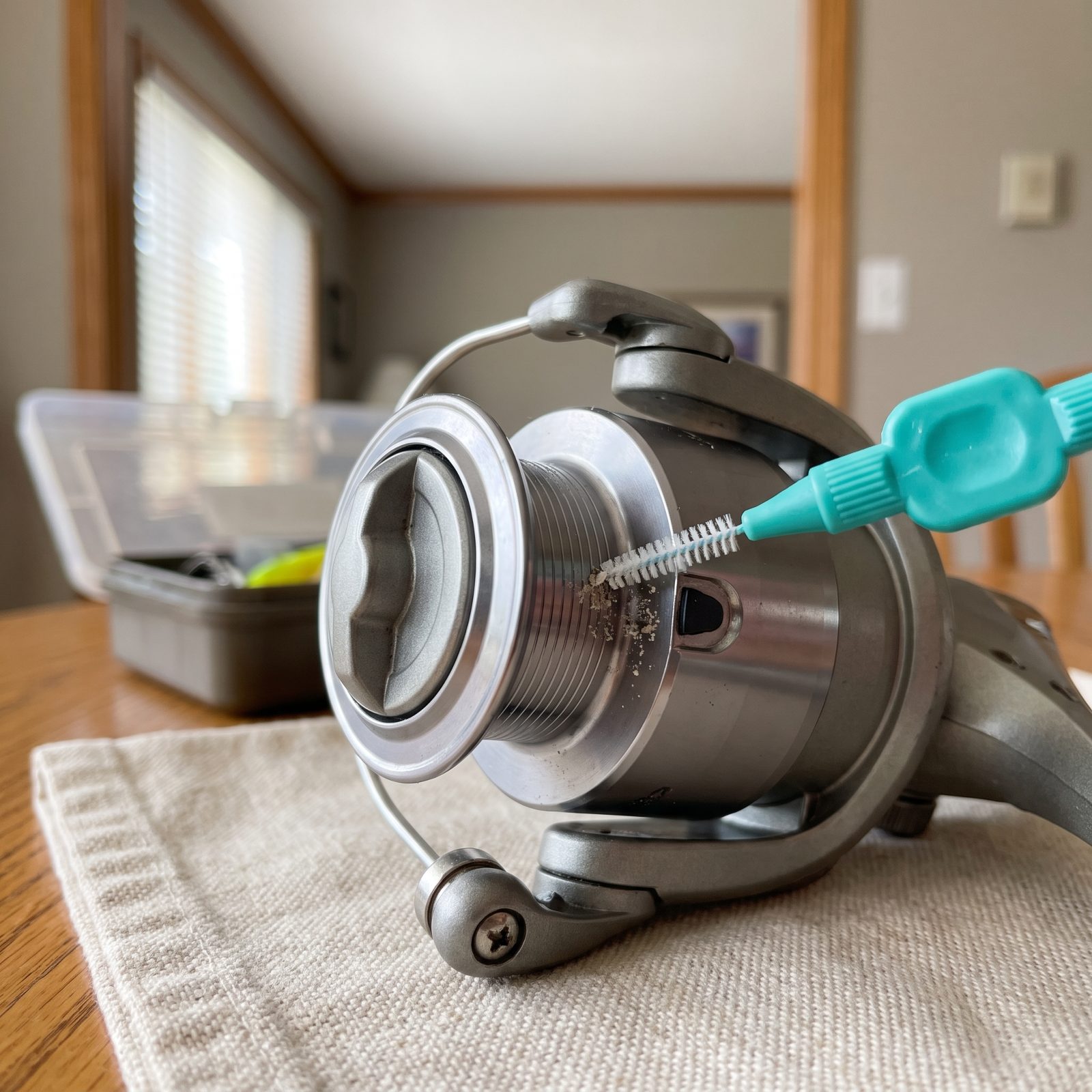
Grit hides where your fingers can’t reach: the gap under the spool, the line roller, the pinion area where salt dries into a crust. A long-handled interdental-style brush, scaled up with a bottle-brush head, works right into those tight spots and sweeps them out.
The bristles reach into corners a rag never finds and grab what a wipe leaves behind, while the chunky handle gives you a solid grip. Keep a couple in the box and give the reel a quick once-over before it has a chance to start grinding on you.
21. An Emery Board for Smoothing Rough Lure Bills
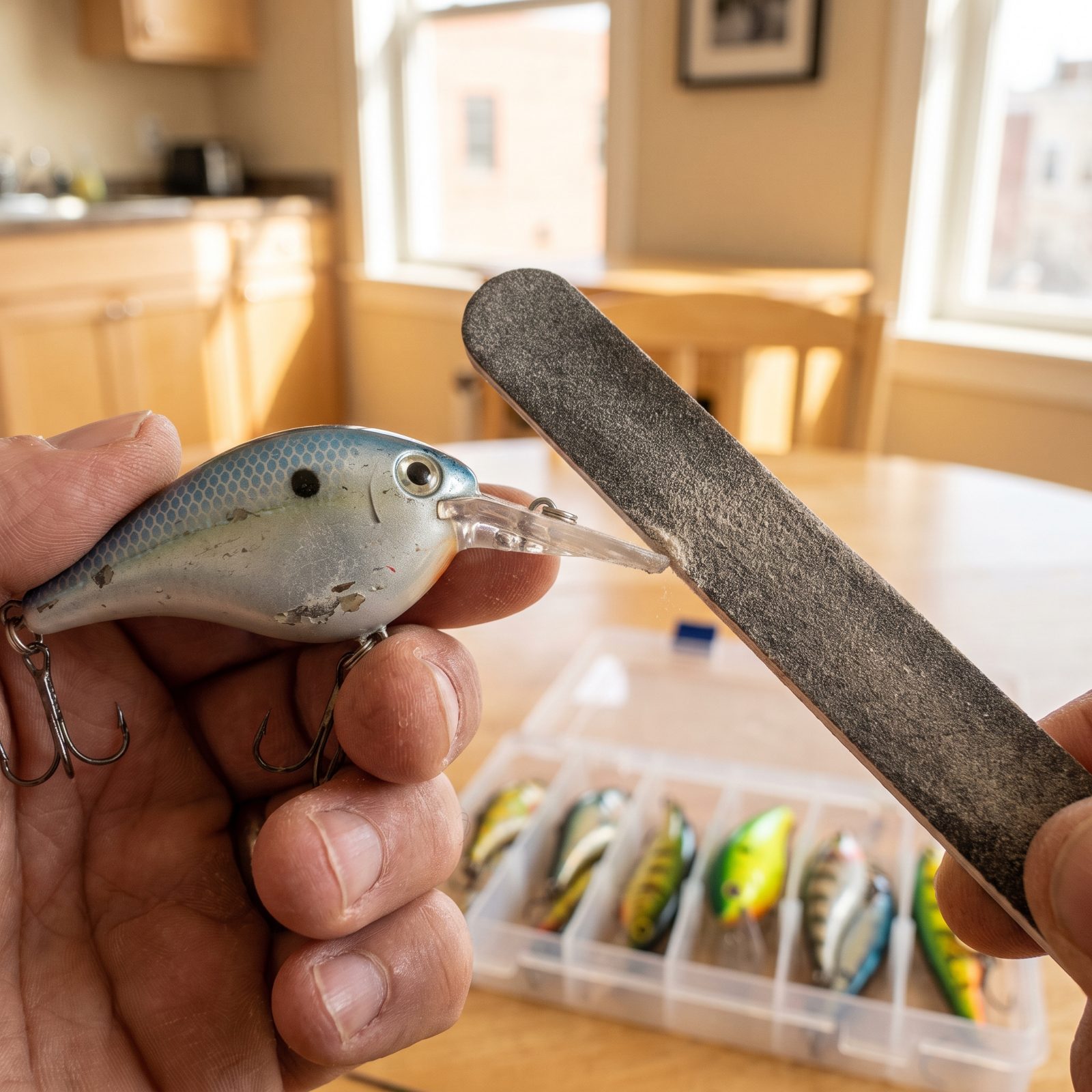
A new crankbait that won’t track straight usually has a rough or flashy molding seam left on the bill. A few passes with an emery board, the cardboard nail file that costs pennies, cleans up the edge and settles the wobble.
The same tool knocks burrs off hook points, smooths a nick on a jig head, and dulls a bill edge that’s spooking fish in clear water. Lighter than a stone, too, and it fits in any tray. The soft grit handles finesse work a metal file would botch.
20. An Expired Credit Card for Scraping Ice From Rod Guides
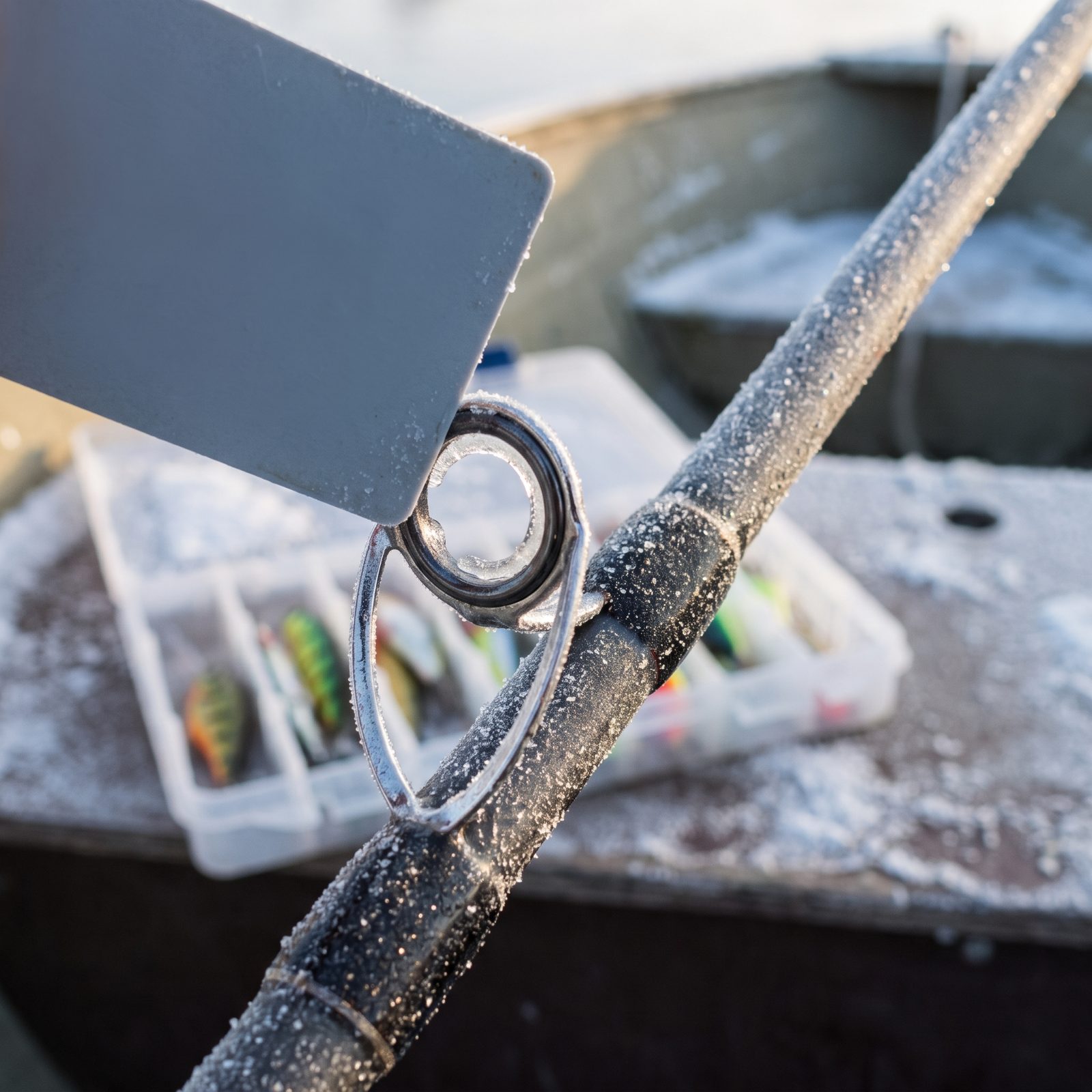
Winter steelhead and ice-edge walleye come with the same curse: guides that freeze solid every few casts. An expired credit card, or any stiff plastic card you’d otherwise shred, scrapes the ice ring out of a guide without the gouging a knife or key leaves on the ceramic insert.
The plastic flexes to the curve of the guide and won’t scratch the finish. Keep one in a chest pocket, not the box, so it’s warm and bendy when you need it. A frozen card snaps.
19. A Safety Pin for Clearing Paint From Hook Eyes
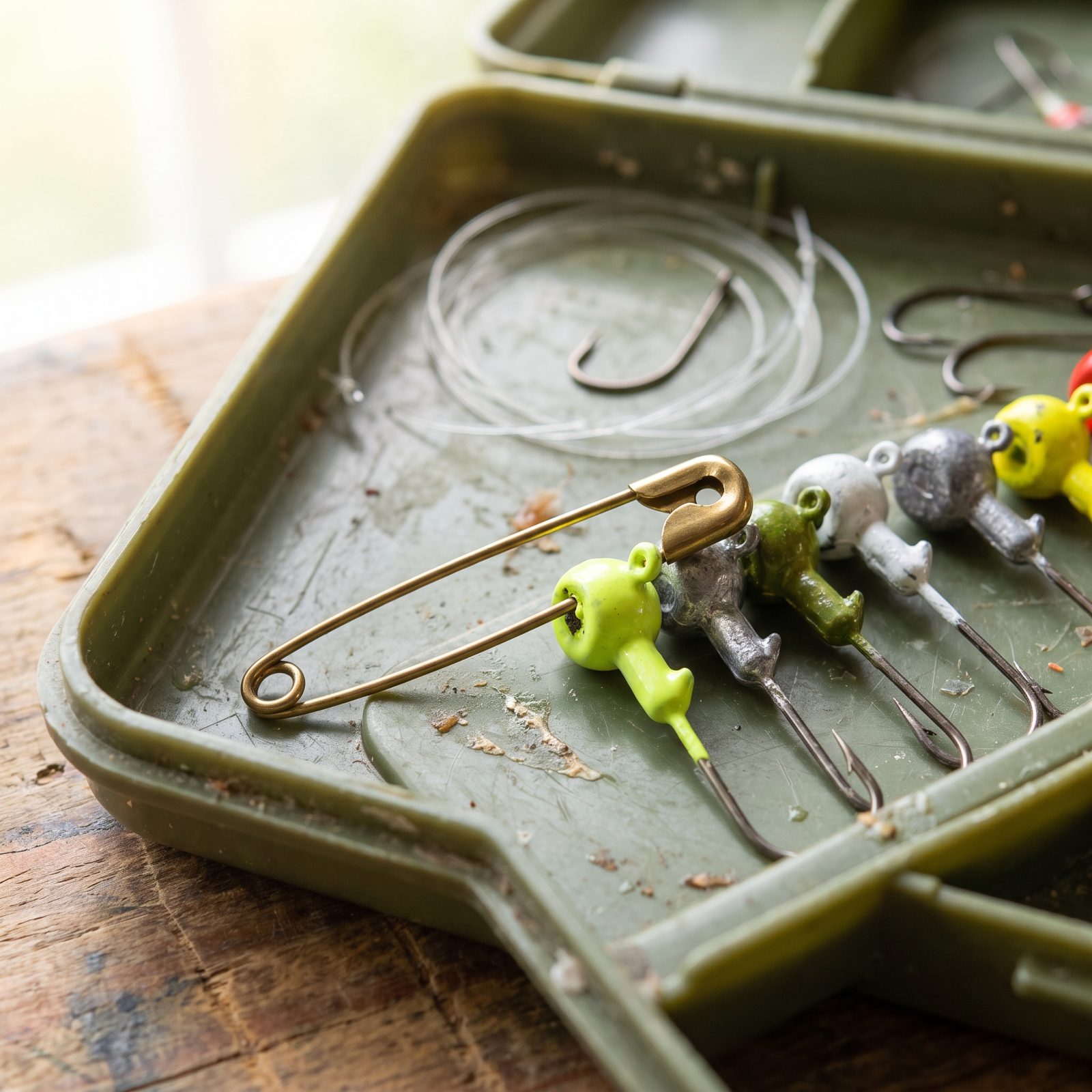
Freshly painted jigs always look better in the bin than on your line. The powder coat flows right into the holes in the head, and the first time you go to clear one out, you lose ten minutes and most of your patience.
A safety pin fixes it in two seconds. Pop it open, push the point into the clogged hole in the jig head, give it a twist, and the dried paint flakes away clean — no drill, no heat, no ruined finish on the rest of the jig. It clips to the inside lip of the tray and weighs nothing. Crappie and bass folks have carried one for years and rarely bring it up, because it feels too simple to be worth explaining.
18. Chemical Hand Warmers for Keeping Bait From Freezing
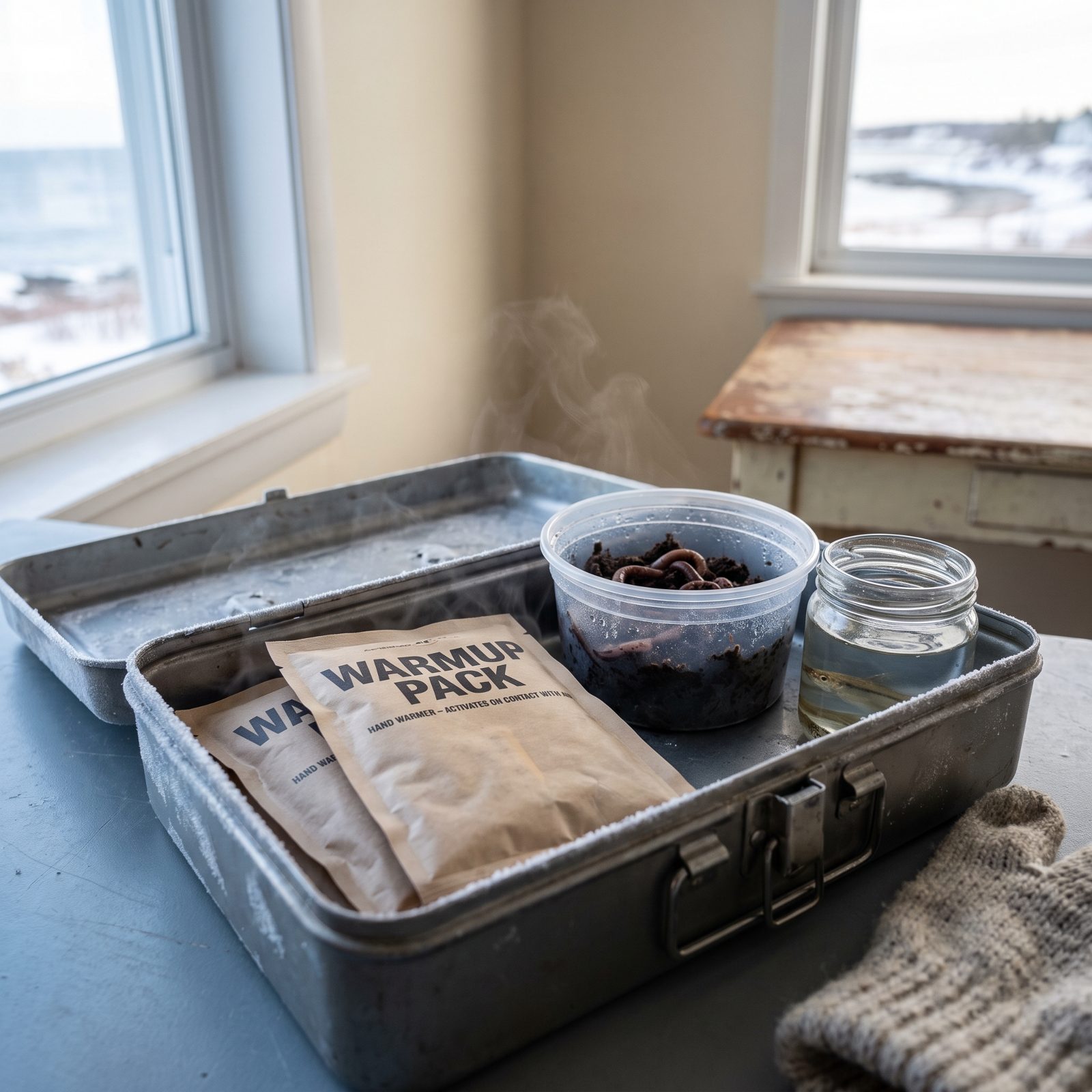
Live bait in January has a short clock. Leave crawlers or minnows exposed on a hard-water morning and they turn sluggish, then solid, long before you work through them.
Tuck a pair of activated hand warmers alongside the bait container — not touching it — and you hold a pocket of above-freezing air around your worms and leeches for hours. What most people miss is the insulation. A warmer alone fades fast in open air. Set it against the bait tub inside a closed tray or a small soft cooler, though, and the heat stays put.
17. An Upholstery Needle for Rigging Whole Baitfish
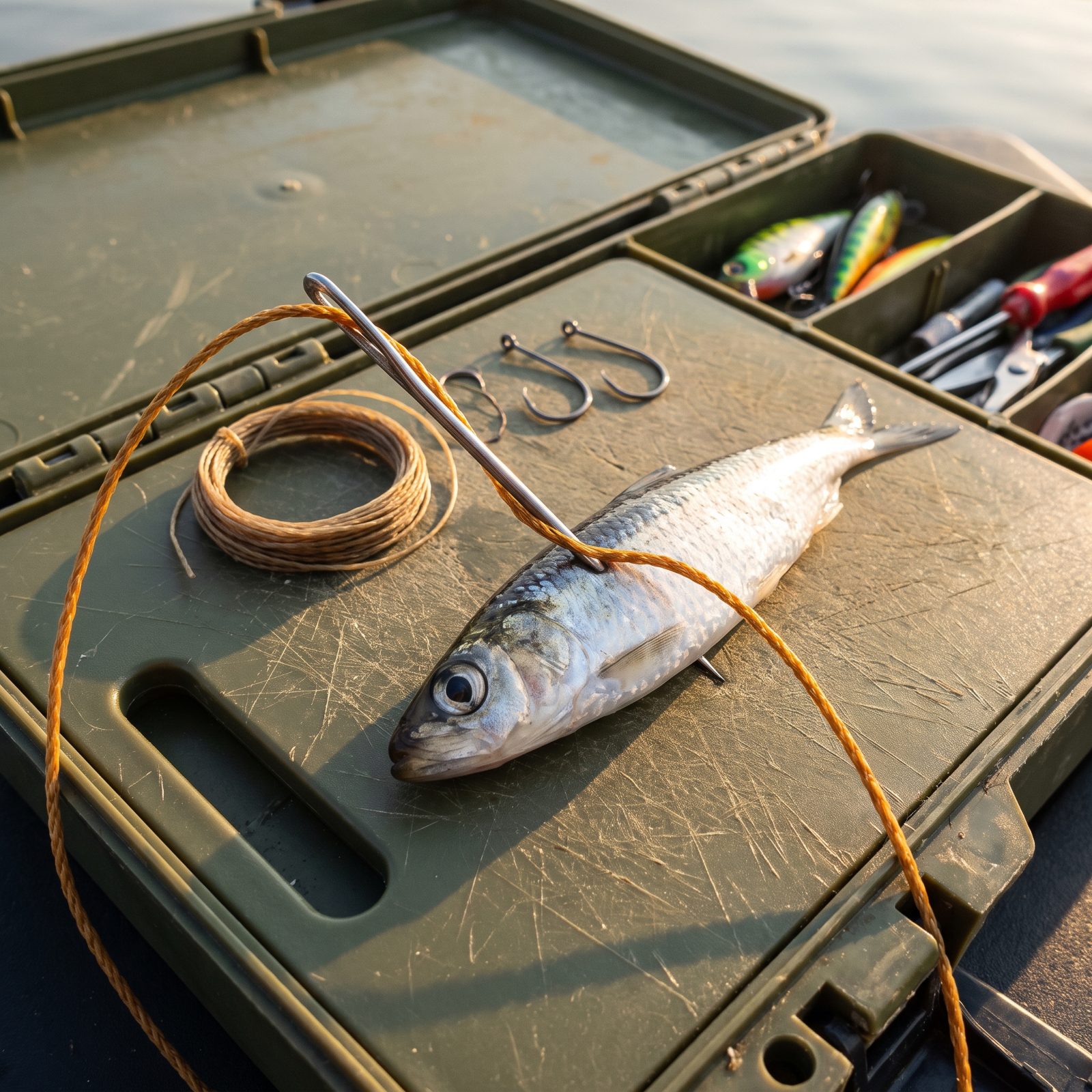
A regular bait needle is fine until you need to run a thread clean through a whole mullet or a chunk of herring. Then its short eye and flimsy shaft give up on you.
A long, straight upholstery needle from the sewing aisle handles that job better than most purpose-built tackle. The long, rigid shaft lets you drive straight through the baitfish and come back out exactly where you want, so the bait sits straight and swims true. The oversized eye takes heavy rigging floss or braid without fraying it. Saltwater anglers who stitch baits for trolling have quietly borrowed this one from the fabric store for decades — and never felt the need to pay four times as much for the tackle-shop version.
16. Plain Bar Soap Cut Into Cubes for Catfish Bait
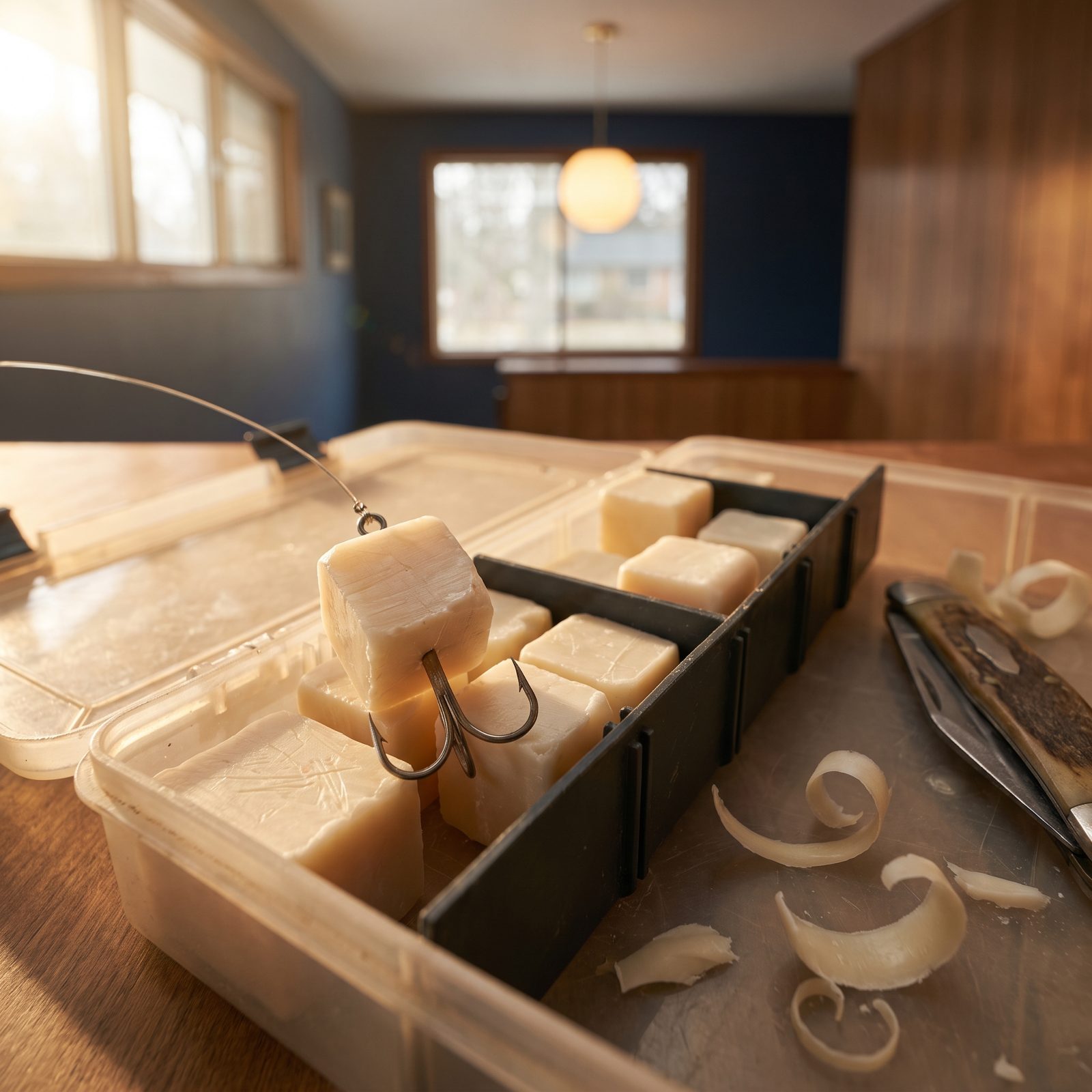
Sounds like a tall tale until you try it. Channel cats will hit a chunk of plain bar soap, and old-timers along southern rivers have sworn by it for generations.
The thinking goes that the lye and tallow in basic, cheap soap put off a scent cats track down. Cut a bar into cubes that fit a treble hook and you’ve got bait that stays put through current, never rots in your box, and costs almost nothing. Skip the fancy moisturizing bars. The plainer and more old-fashioned the soap, the better it seems to fish.
15. Mini Marshmallows for Lifting Trout Bait Above Weeds
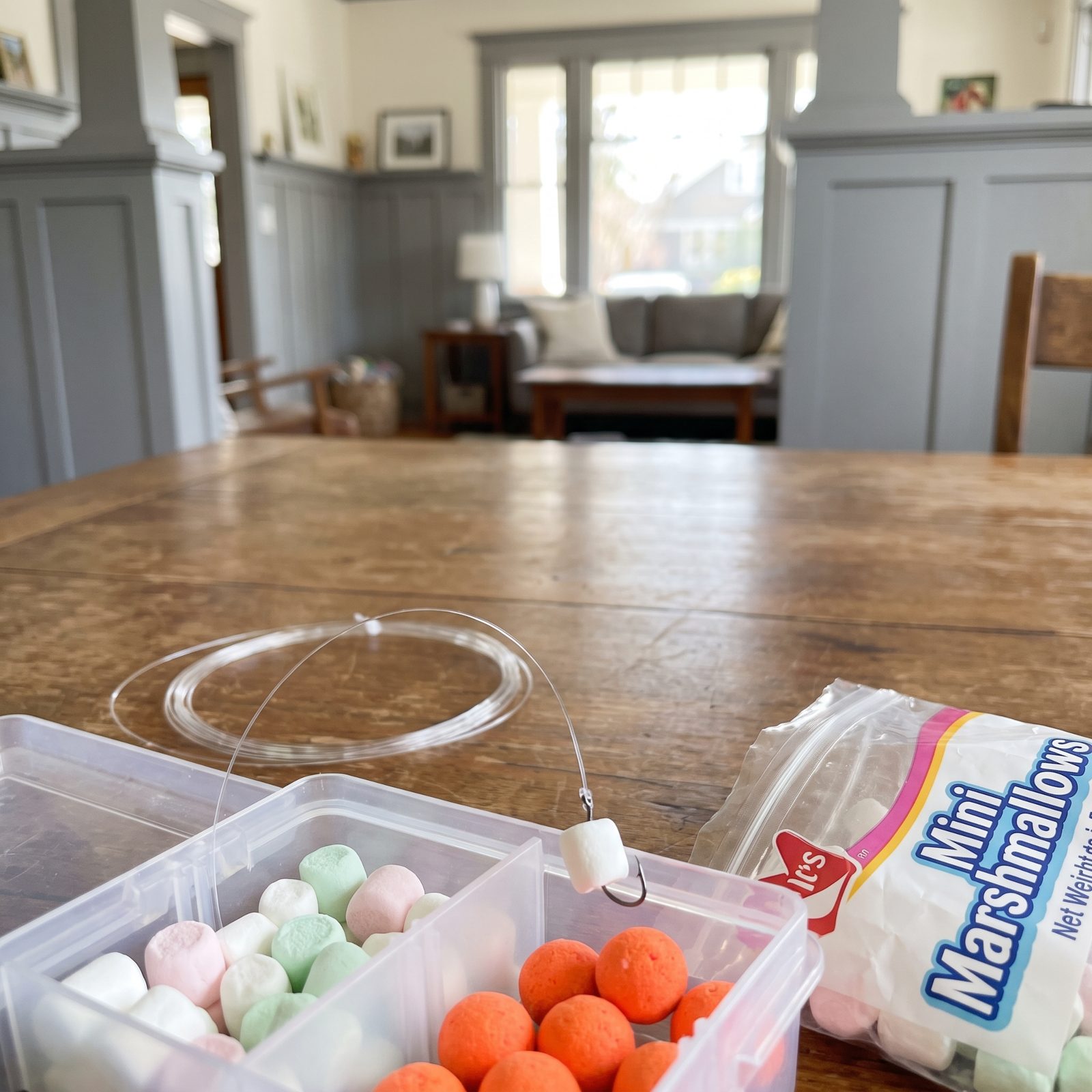
Trout bait that settles into the muck on a weedy bottom catches nothing. Mini marshmallows fix that for the price of a bag from the baking aisle.
Thread one onto the hook above your scented bait or worm. Its buoyancy floats the whole offering up off the bottom and into the zone where cruising trout actually feed. The marshmallow throws in a little color and sweetness too, which fish don’t seem to mind one bit. Half the ready-made floating trout rigs on the shelf run on exactly this idea — you’re just skipping the markup.
14. Borax for Curing Fresh Salmon Eggs
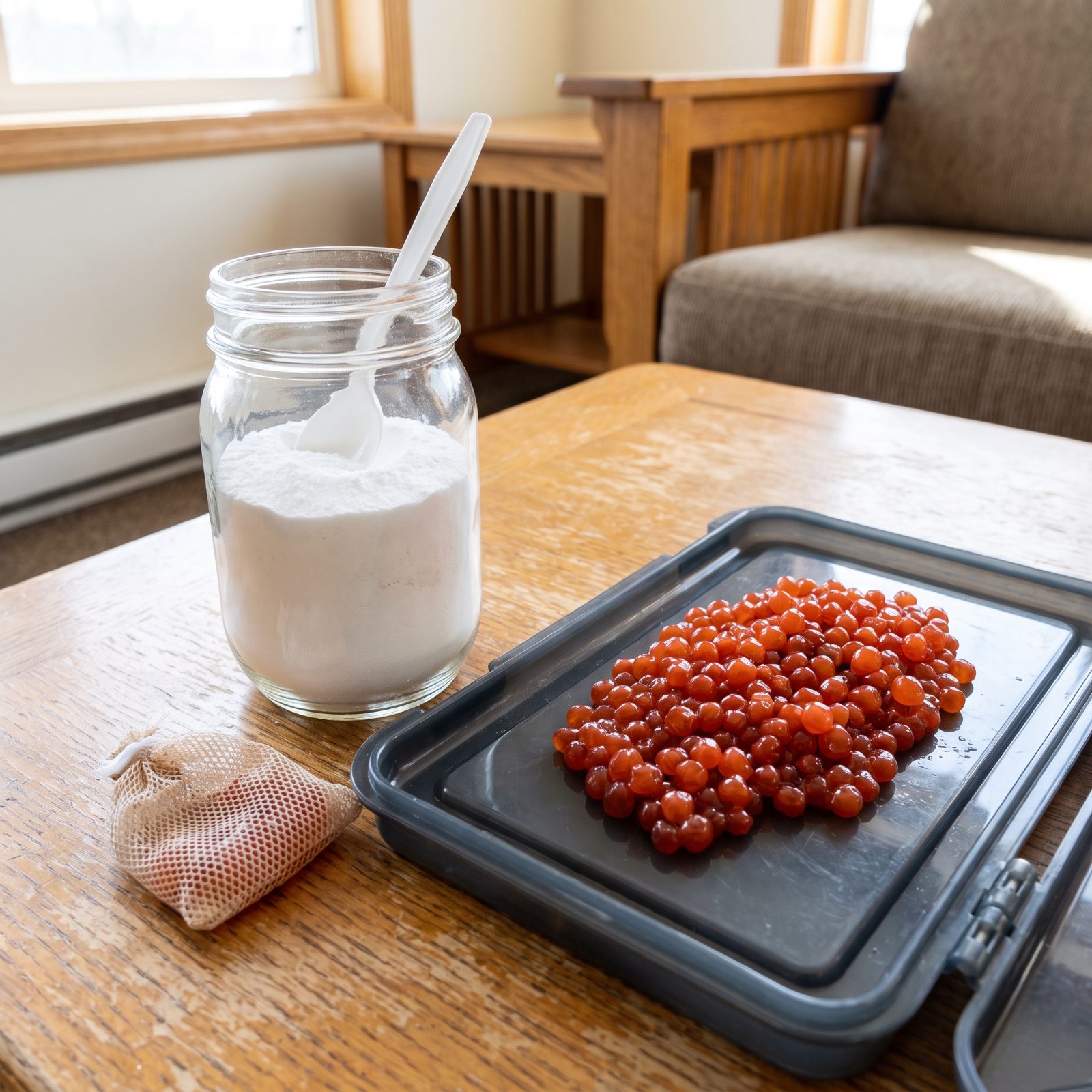
Fresh roe is fragile. Left raw, it goes soft, leaks, and falls off the hook within a cast or two.
A small container of borax — the plain laundry-booster kind — cures skeins and loose eggs into tough, milky baits that hang on the hook and keep in your box for weeks. It draws out moisture and firms the membrane without the harsh stuff in some commercial cures. Steelhead and salmon anglers in the Pacific Northwest treat a jar of borax as standard gear, right next to the hooks. Dust it on, let it sit, and you’ve got cured eggs that outlast anything fresh.
13. Powdered Gelatin for Firming Homemade Dough Bait
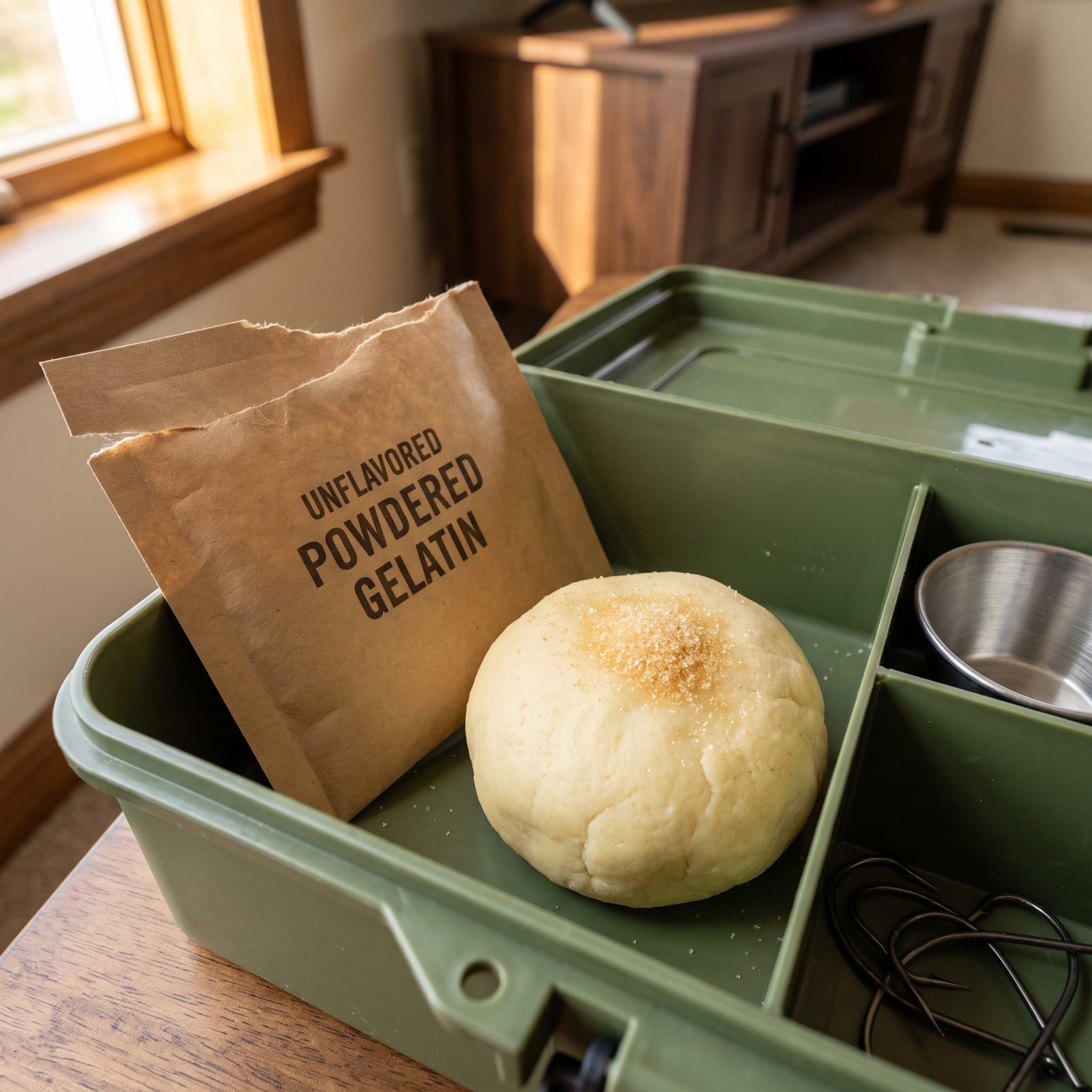
Homemade dough bait has one weakness. It sloughs off the hook the moment it hits the water, and cook it stiff enough to fix that and it stops smelling like anything a carp wants.
A spoonful of plain, unflavored gelatin worked into the mix changes everything. As it sets, the gelatin binds the dough into something that clings through a long soak but still bleeds scent. Serious carp and catfish bait makers reach for it for exactly that reason, and a single grocery-store box lasts a whole season.
12. Kitchen Sponge Cubes for Holding Dip Bait
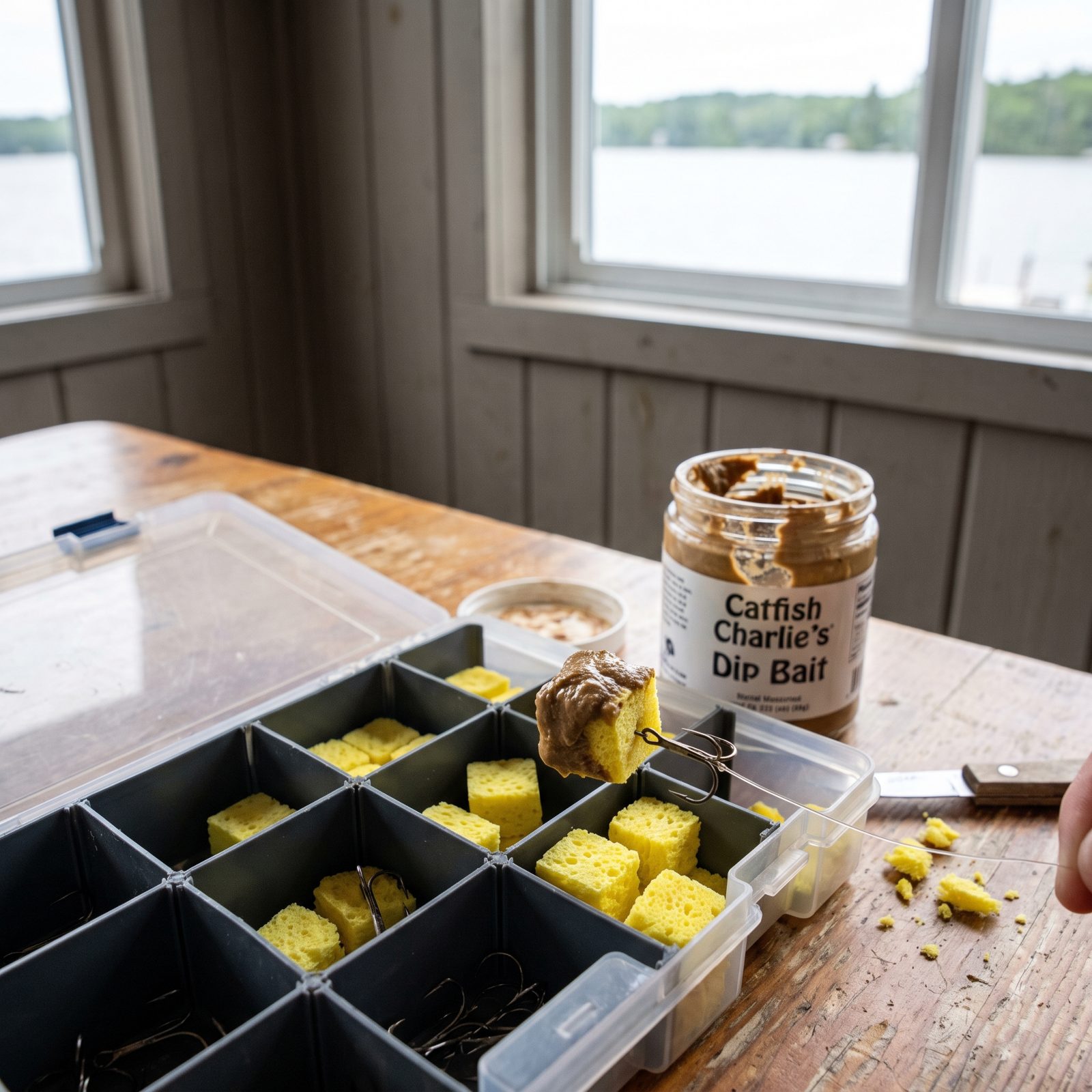
Dip bait is a mess that refuses to stay on a bare hook. Specialized dip worms and sponge hooks exist for exactly this, but a dollar sponge from under the sink does the same work.
Cut a cheap, porous kitchen sponge into cubes, push a treble hook into the side of a cube, and press it into the bait. The pores hold a surprising load of the sticky stuff and leak scent slowly as it sits on the bottom. When a cube gets ragged, cut a new one. One sponge makes enough to last a dozen trips.
11. Unscented Baby Wipes for Removing Sunscreen Before Baiting
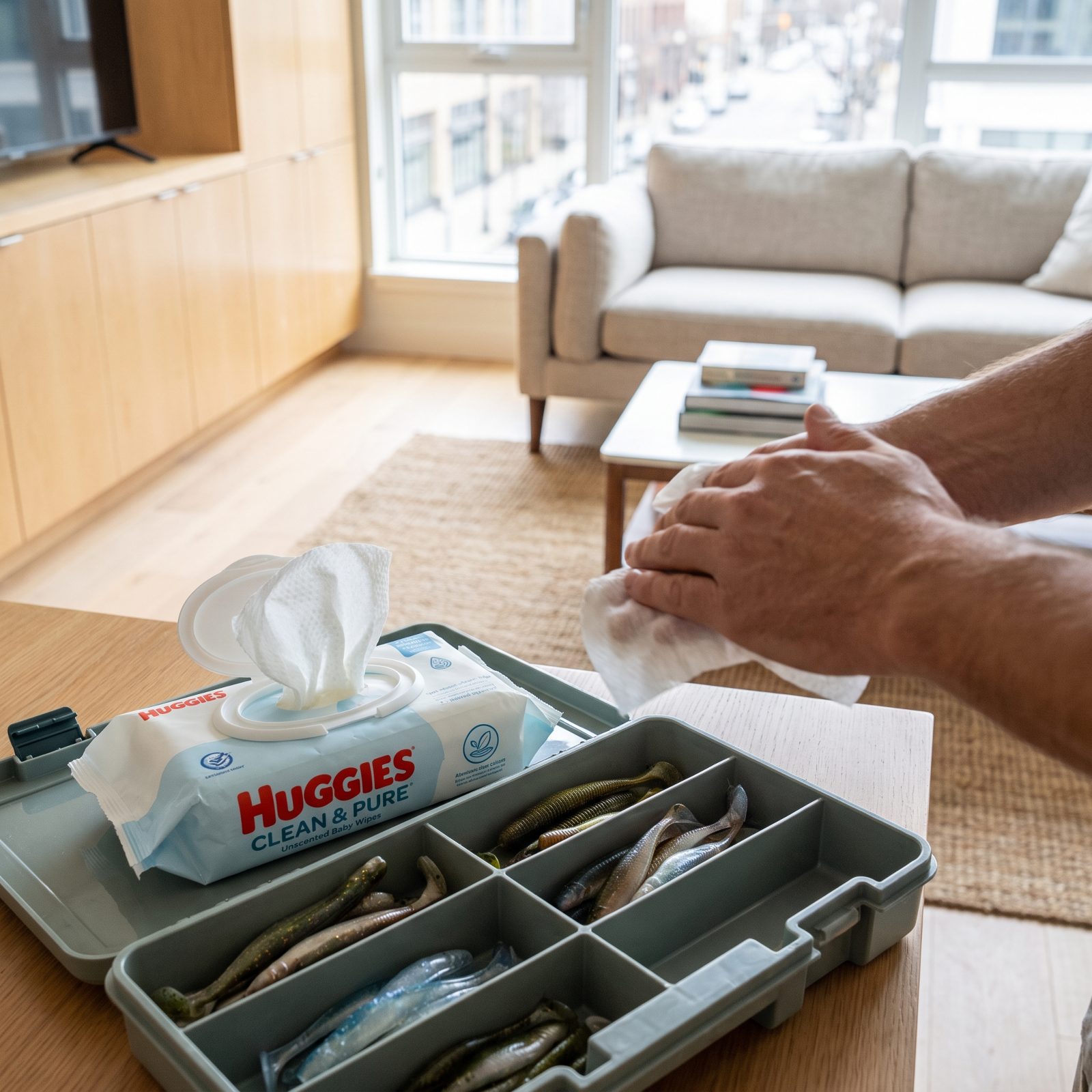
This is one most anglers never connect. Sunscreen, bug spray, and the gas you pumped on the way to the ramp all leave scents on your hands that transfer straight onto your bait.
Fish notice — pressured bass and finicky trout especially. A pack of unscented baby wipes lives in the tackle box so you can clean your hands before handling soft plastics or live bait. Wipe down, then rig up. Keeps the grips of your rods from turning into a greasy, sunscreen-smeared mess by noon, too, which your hands will thank you for the next time a good fish decides to run.
10. A Beeswax Block for Keeping Rod Ferrules From Sticking
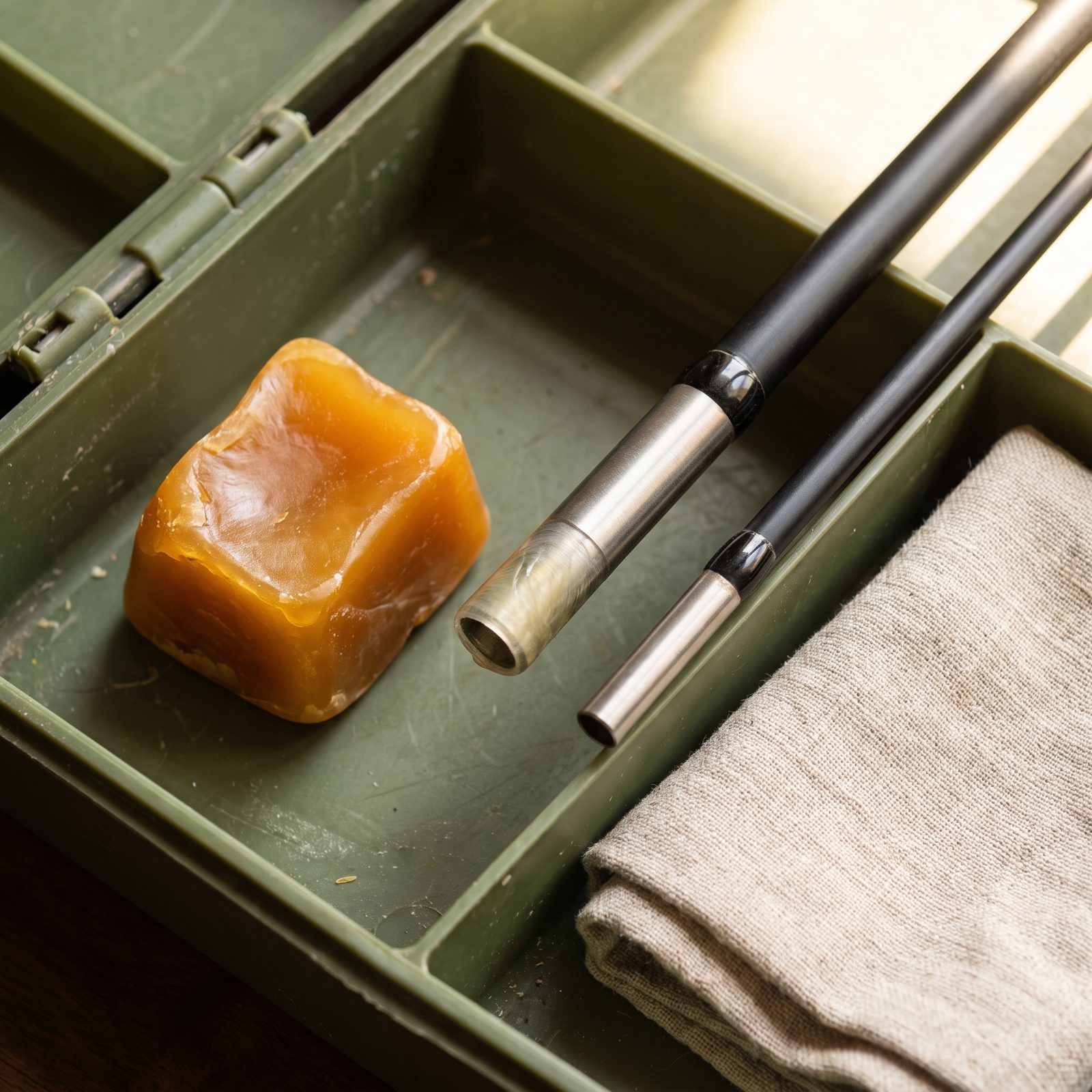
A rod section that seizes up at the ferrule is a bad end to a good day. Force it and you crack a blank. Leave it and you’re packing the rod home still jointed.
A block of beeswax heads off the whole problem. A light rub on the male ferrule lets the sections seat smoothly and come apart clean when the day’s done, without the stickiness graphite tends to develop after a few outings. Candle wax works in a pinch, but it gums up and softens in heat where beeswax holds its own. One block the size of a chess piece lasts years.
9. A Jeweler’s Loupe for Inspecting Knots and Hook Points
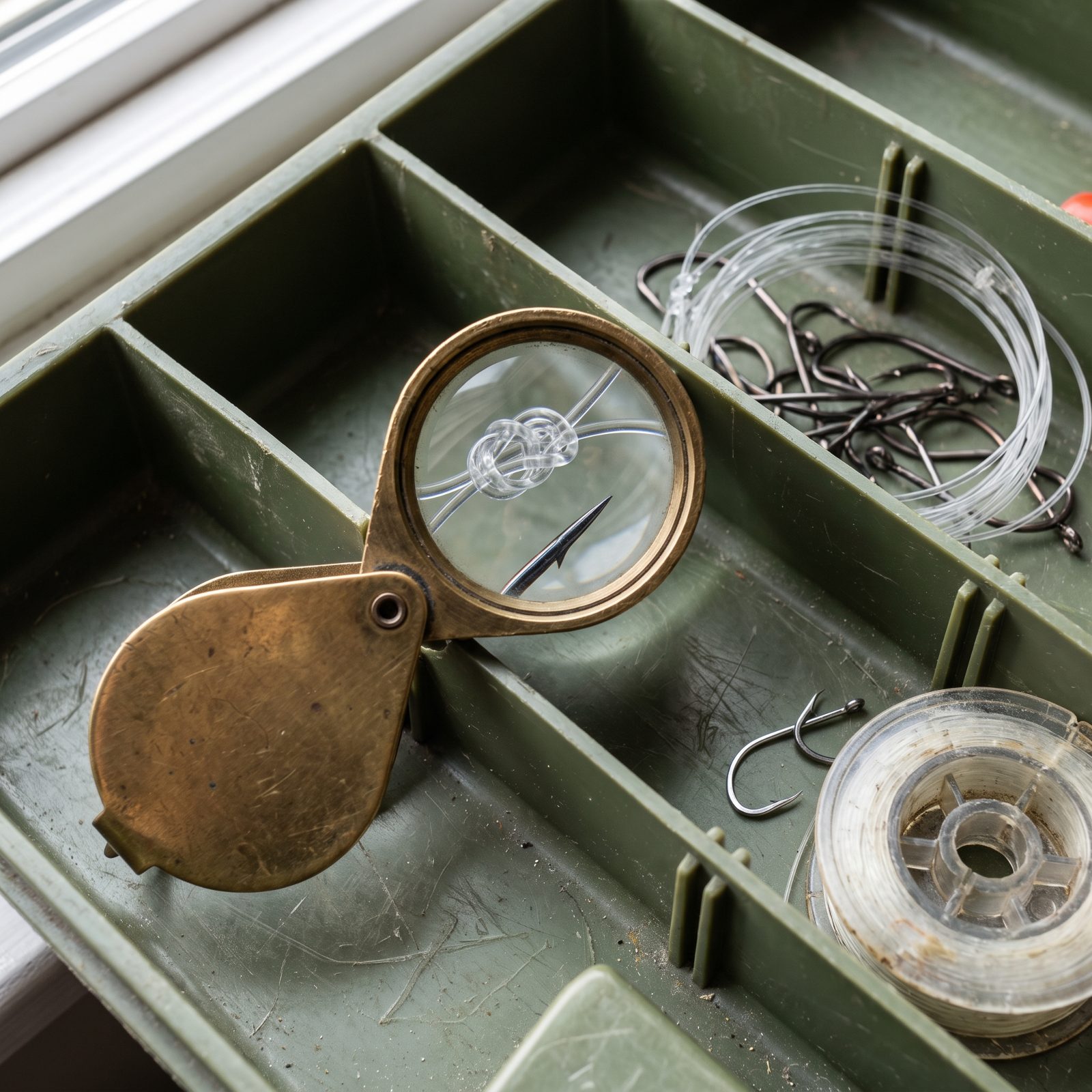
Most anglers judge a hook point with a thumbnail. Drag it across your nail, and if it skates, it’s dull. Fine. But your thumbnail lies — it tells you the tip is there without showing you the tiny rolled-over burr that’s been costing you fish all morning.
A 10x jeweler’s loupe runs five to ten bucks and tucks into a corner of the tray. Under that glass you’ll finally see what a hook point looks like after three snags on submerged rock, and you’ll catch the wind knots hiding in your leader before they let go on the hookset.
8. A Telescoping Magnet for Recovering Dropped Hooks
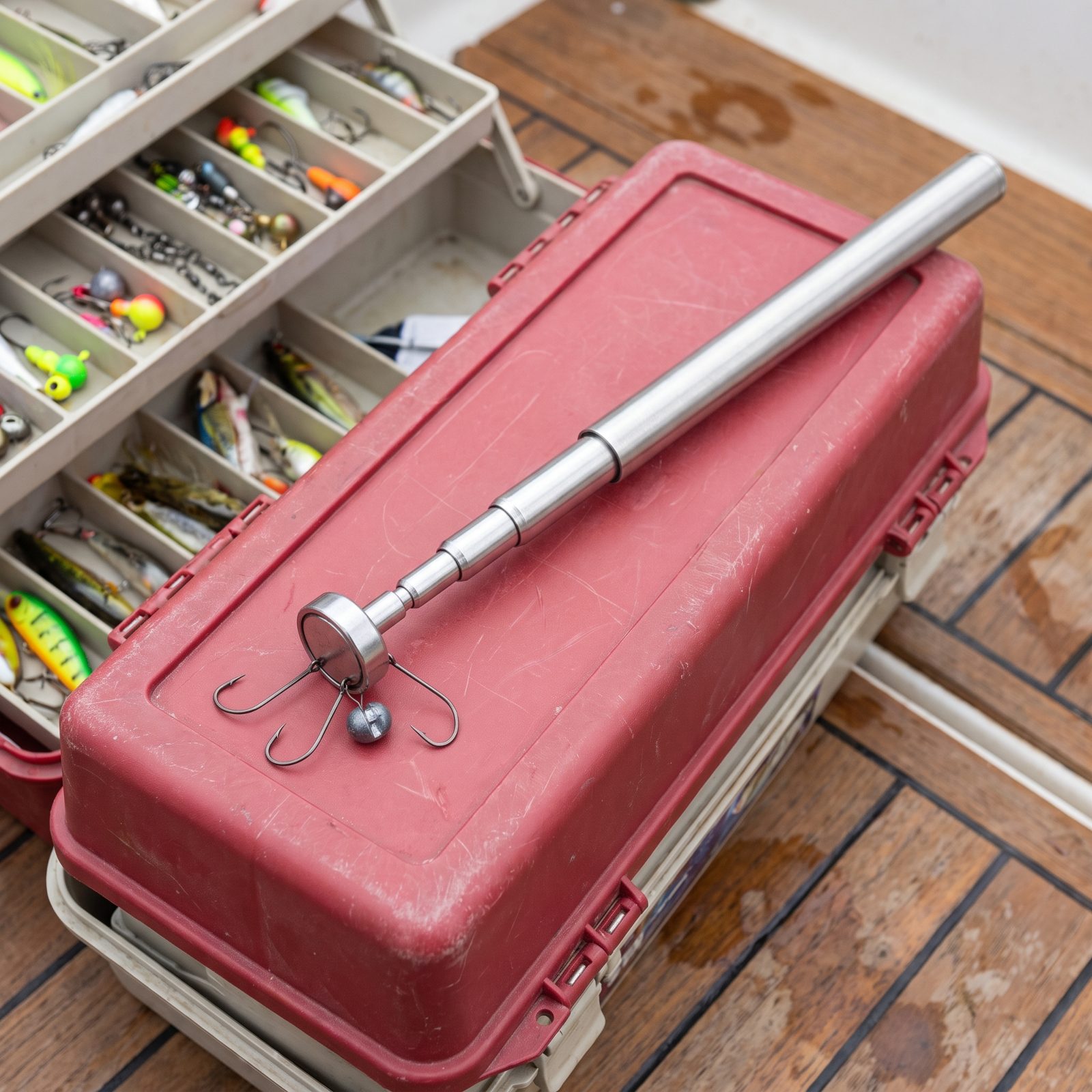
Drop a size 6 hook on a dark boat deck and you’ll find it later. With your foot. Barefoot.
A telescoping magnet — the kind mechanics use to pull bolts out of an engine bay — collapses to pen size and extends past two feet. A few dollars at any hardware store. Run it across a deck or along the bottom of a jon boat and it lifts every loose hook, split shot, and swivel you scattered during a fast re-tie. Out on the water, a dropped treble is both a lost lure and a trip to the first-aid kit, so this little thing earns its spot inside the first hour.
7. Drinking Straw Sections as Hook-Point Guards
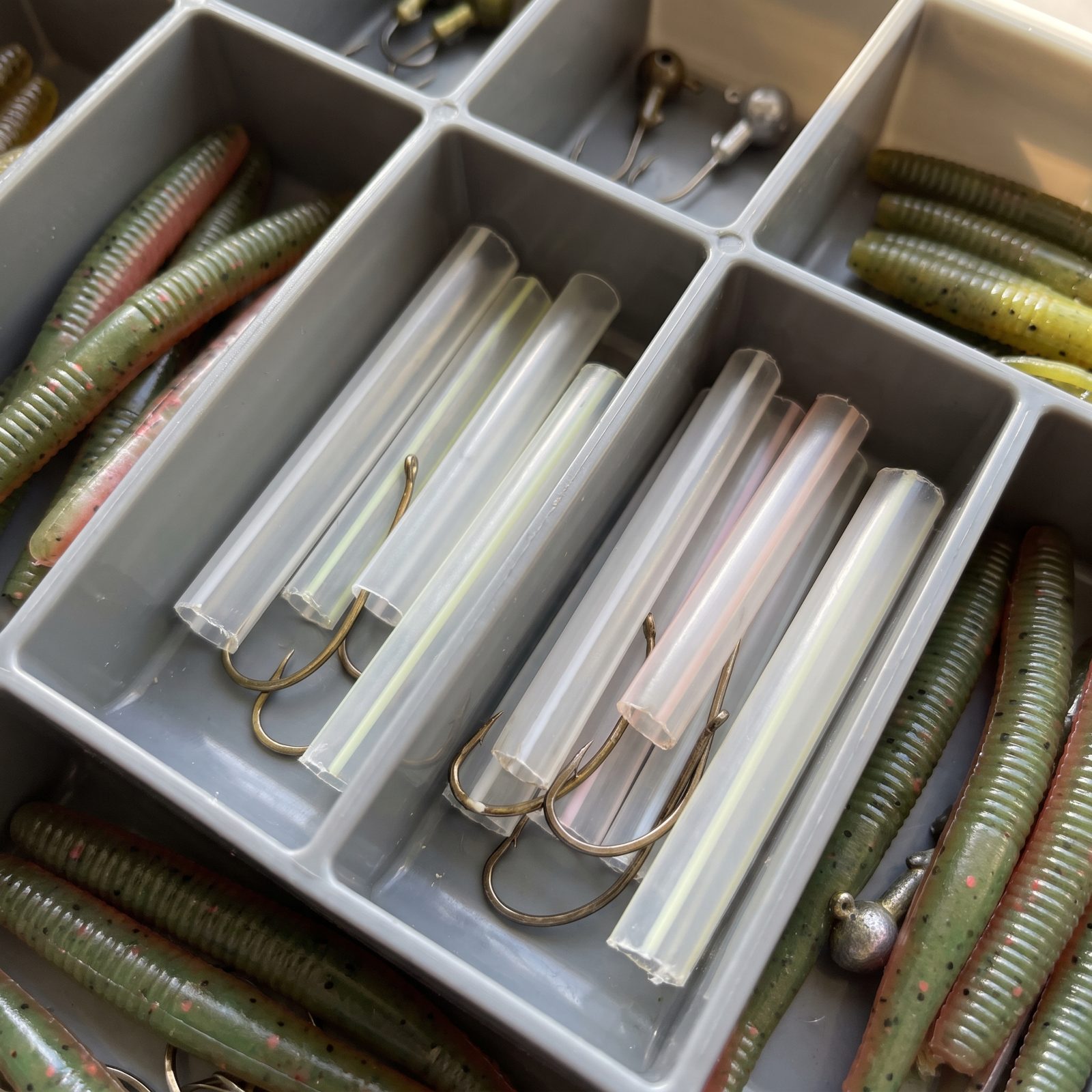
Loose hooks in a soft-bait bag turn into a knot of impaled worms and stuck points. Cut drinking straws into sections a few inches long and keep them in the compartment alongside your hooks, ready to push over the bend so they cap the point, and the whole problem goes away for nothing.
That little sleeve keeps the point from snagging everything it touches, shields it from dulling against metal, and lets you grab a hook without jabbing a finger. Free, too, and you probably tossed a dozen of them in the trash last week. Works on bare hooks, exposed worm hooks, and the trailing treble on a crankbait you’d rather not have chewing through its own box.
6. Foam Earplugs as Emergency Strike Indicators
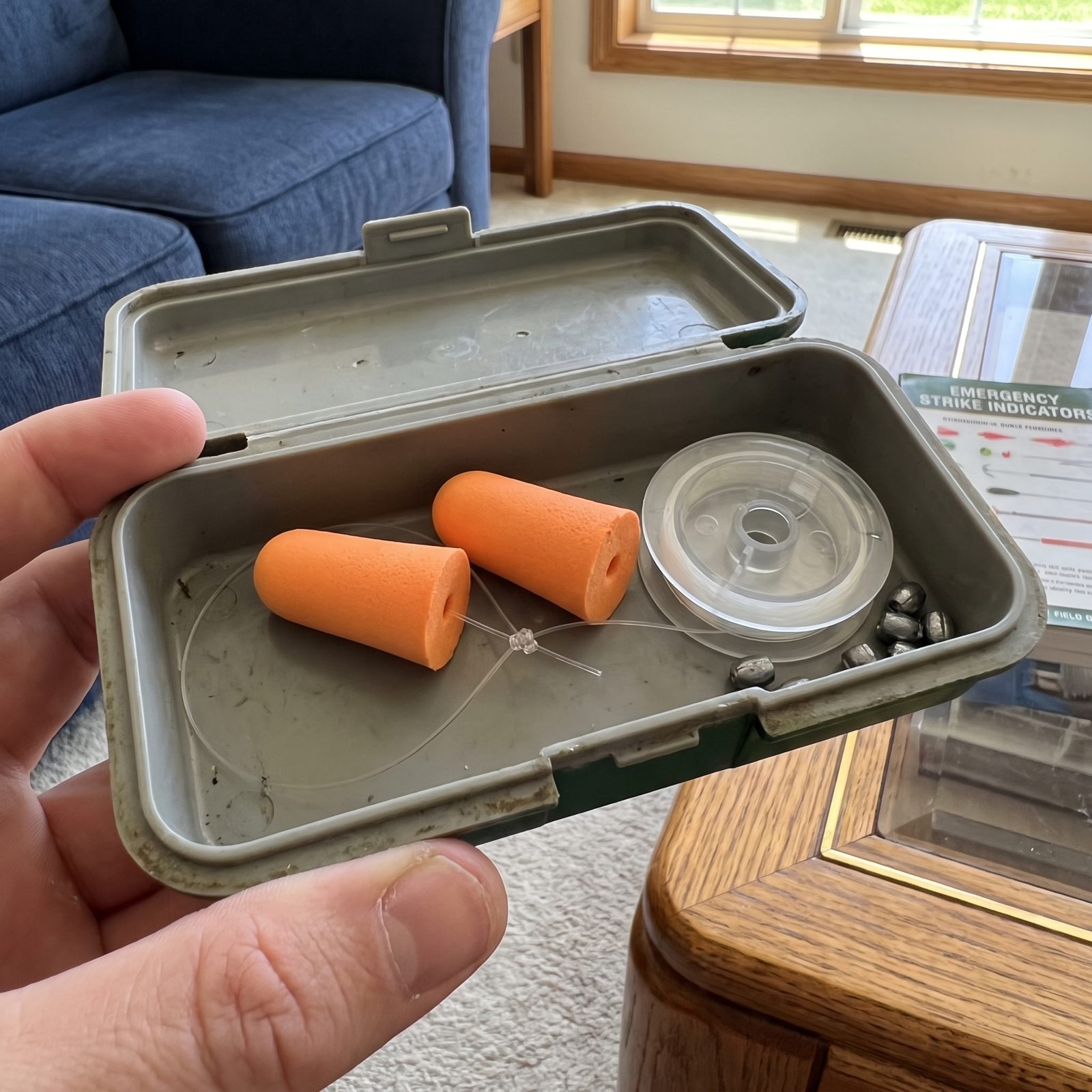
You forgot your bobbers. Or you need something a strike-shy trout won’t notice. Reach for the foam earplugs you keep stuffed in the console for the outboard.
Thread a bright foam plug onto the line with a toothpick or a small peg and it sits high, rides light, and telegraphs a take better than a hard plastic float — there’s almost no resistance, so a fish pulls it under without feeling the drag that makes it drop the bait. The orange ones are easy to track on riffled water, and a pair weighs nothing in the box.
5. Small Balloons as Adjustable Catfish Floats

Catfishermen figured this out ages ago, and most bass guys have never even heard of it.
Inflate a small balloon to whatever size you want, tie it straight to the line, and you’ve got a float sized to the current and the bait. Big bait in heavy flow? Blow it up more. Finicky bite? Keep it small so there’s barely any resistance when the rod loads up.
Depth is where it really shines. You tie it on at whatever point you like and cinch it with a half-hitch, which means you can set your bait anywhere in the water column in seconds — no stops, no bobber-stop knots to fuss with. When a cat runs with it, the balloon pulls under clean. And if it pops on the hookset? Who cares. You’ve got a whole bag of them.
4. Wooden Toothpicks for Pegging Bullet Weights
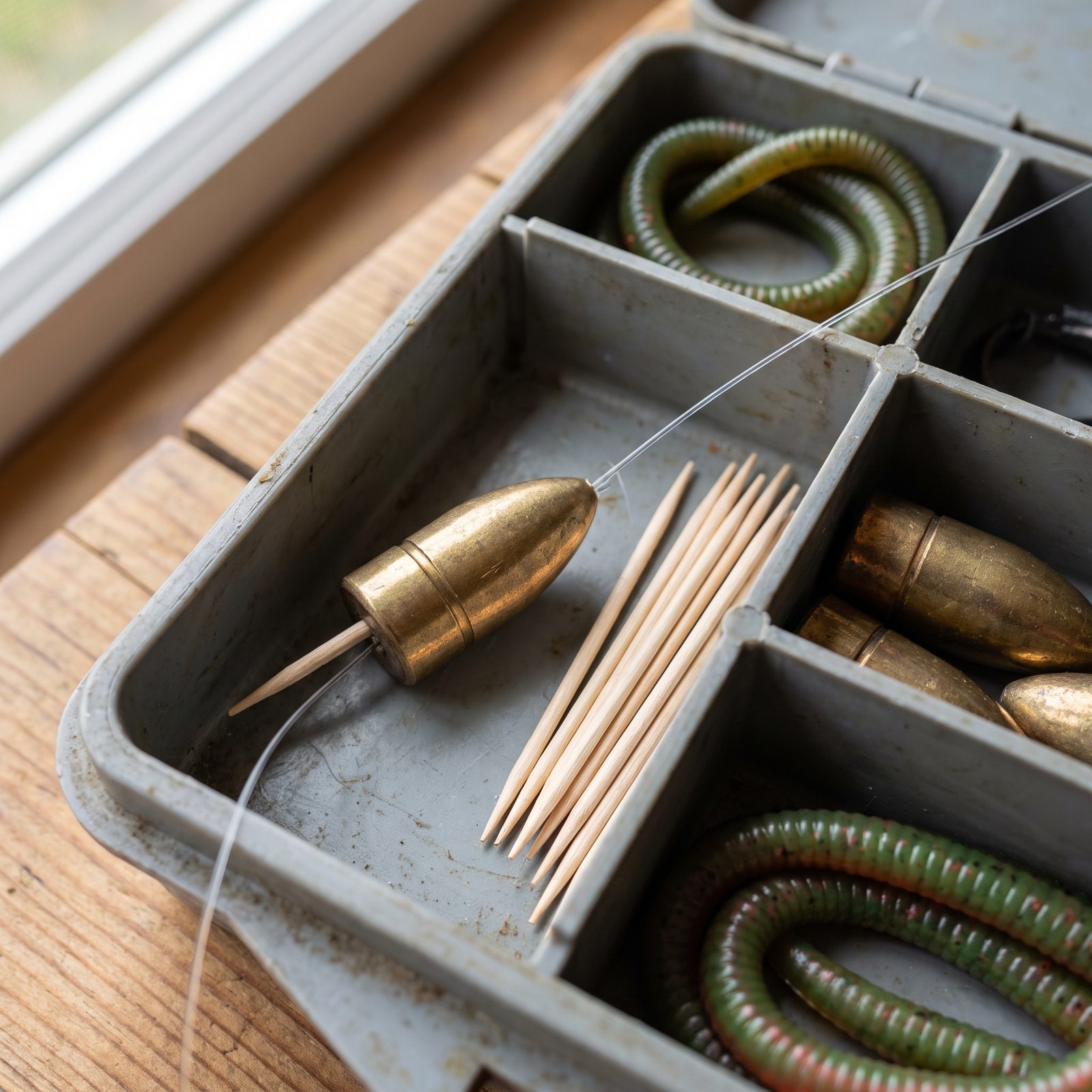
Texas rig anglers buy little rubber bobber stops to peg a bullet weight against the hook. They work. So does a box of wooden toothpicks — a buck, and it lasts three seasons.
Run the line through the weight’s center hole, jam a toothpick in beside it from the flat back end, snap off the excess, and the sinker quits sliding. Check your weights for cracks first. A split weight lets the line slip out sideways through the crack, so no peg can hold it. Once you tie on a hook and thread on a soft-plastic worm, bait and weight move through cover as one unit instead of separating on every twitch.
Wood swells a touch when wet, which only tightens the grip. Here’s the bonus most people skip right past: a snug peg also keeps your weight from hammering up against your knot and weakening it over a long day of flipping.
3. Binder Clips for Controlling Line During Respooling
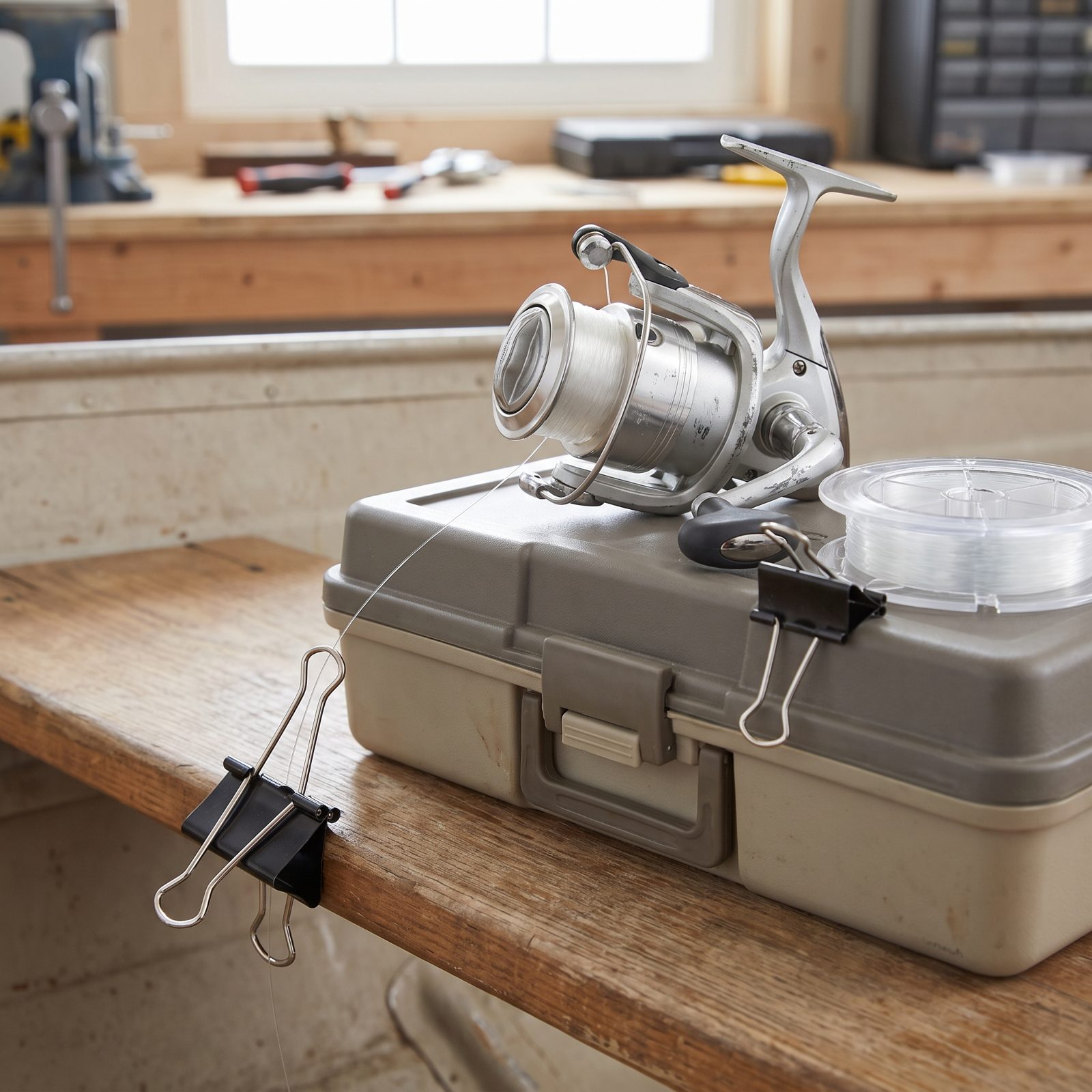
Respooling a reel at the kitchen table usually means roping in a helper to hold the spool and pinch the line. They never pinch hard enough, and the loose coils you get turn into a bird’s nest by your third cast.
Clamp a medium binder clip to the edge of the table and run the line through its wire handles on the way up to the reel. Steady, adjustable tension, no second pair of hands. Squeeze it tighter for more drag, ease off for less.
Fresh line laid on tight is the single biggest fix for casting loops. Most people skip it entirely.
2. Silica Gel Packets for Preventing Tackle-Box Rust
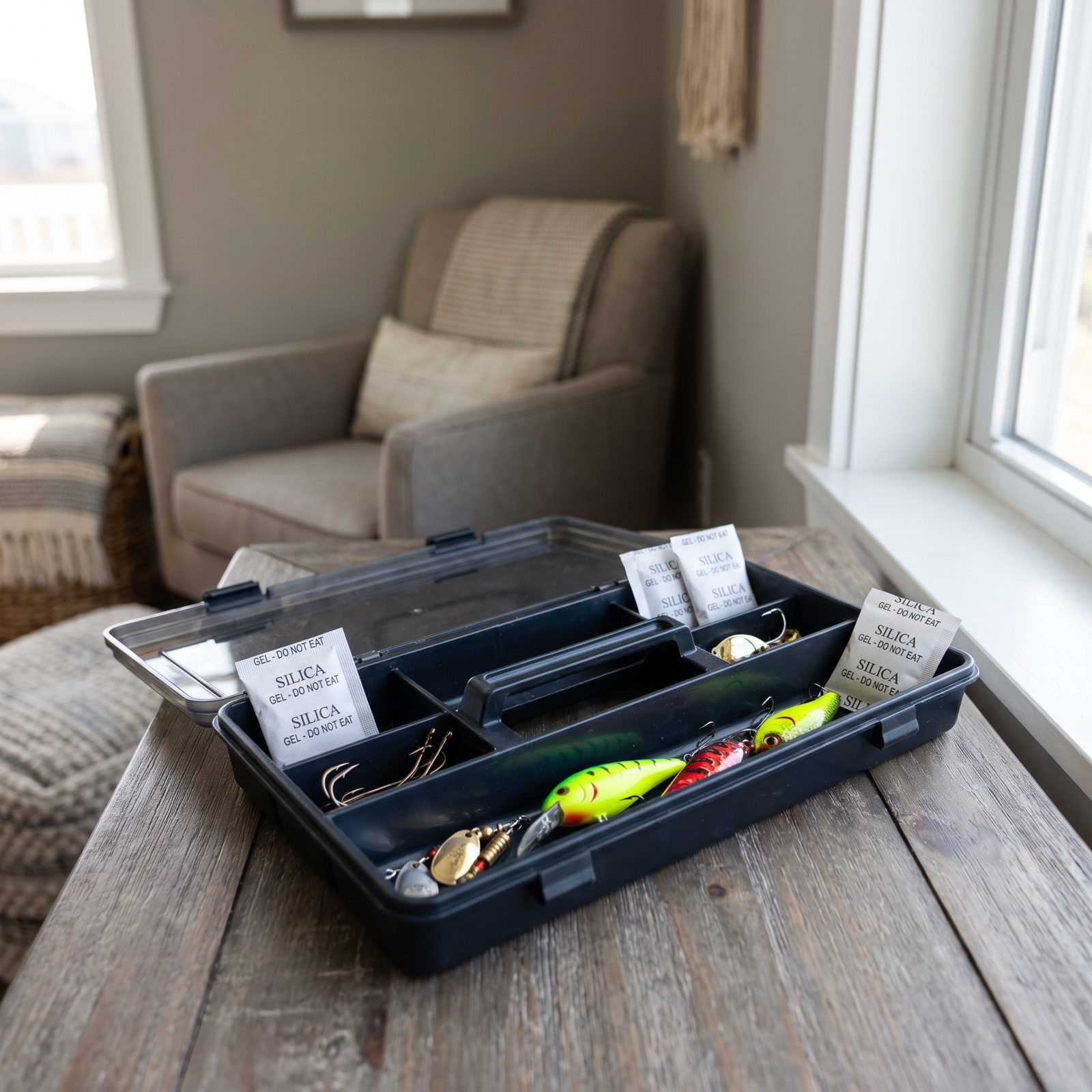
Open a tackle box that spent August baking in a hot truck and you’ll smell it before you see it: orange bloom on every hook, rust creeping into the spinnerbait wires, trebles welded to the foam by corrosion.
Toss a few silica gel packets — the ones that come packed in shoe boxes and vitamin bottles — into each tray. They pull the moisture that gets trapped every time you snap a wet box shut, and a dry hook stays sharp.
Dry them out in a low oven every few months and they’ll keep working for years.
1. A Weekly Pill Organizer for Sorting Micro Tackle
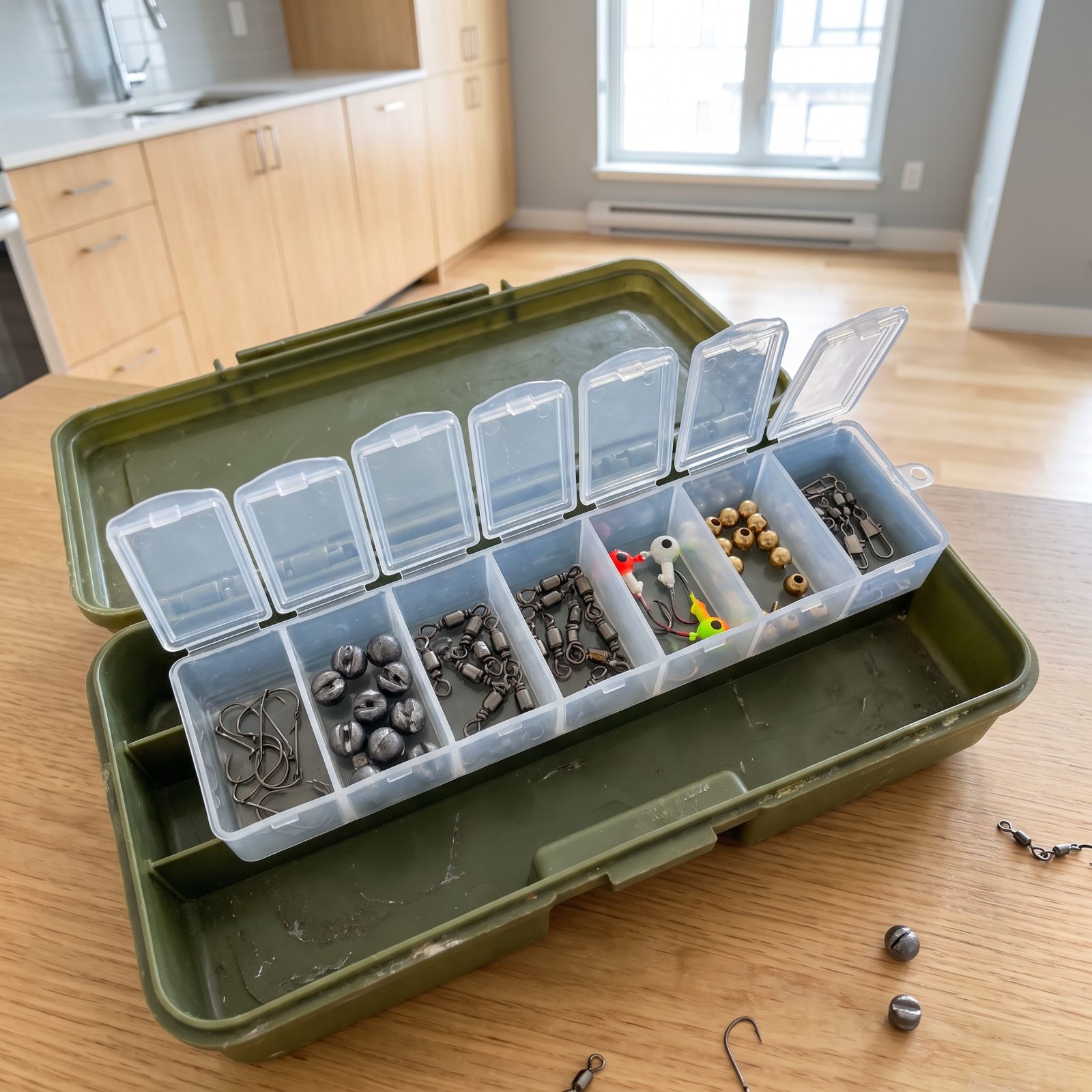
Tiny tackle is a nightmare. Size 12 hooks, micro swivels, split shot, drop-shot beads — they all wind up loose in one tray, a tangled pile you dig through with cold fingers while the bite window slams shut.
A dollar-store weekly pill organizer sorts the whole mess out. Seven snap-lid compartments, one per category of small terminal tackle, and the lids actually seal, so nothing migrates when the box tips over on the drive home.
Label the days with a marker if you want, or just learn the layout. It drops into a corner of the main box and turns a fifteen-minute fumble into a ten-second grab. Honest truth — this one saves more fishing time than gadgets costing fifty times as much.