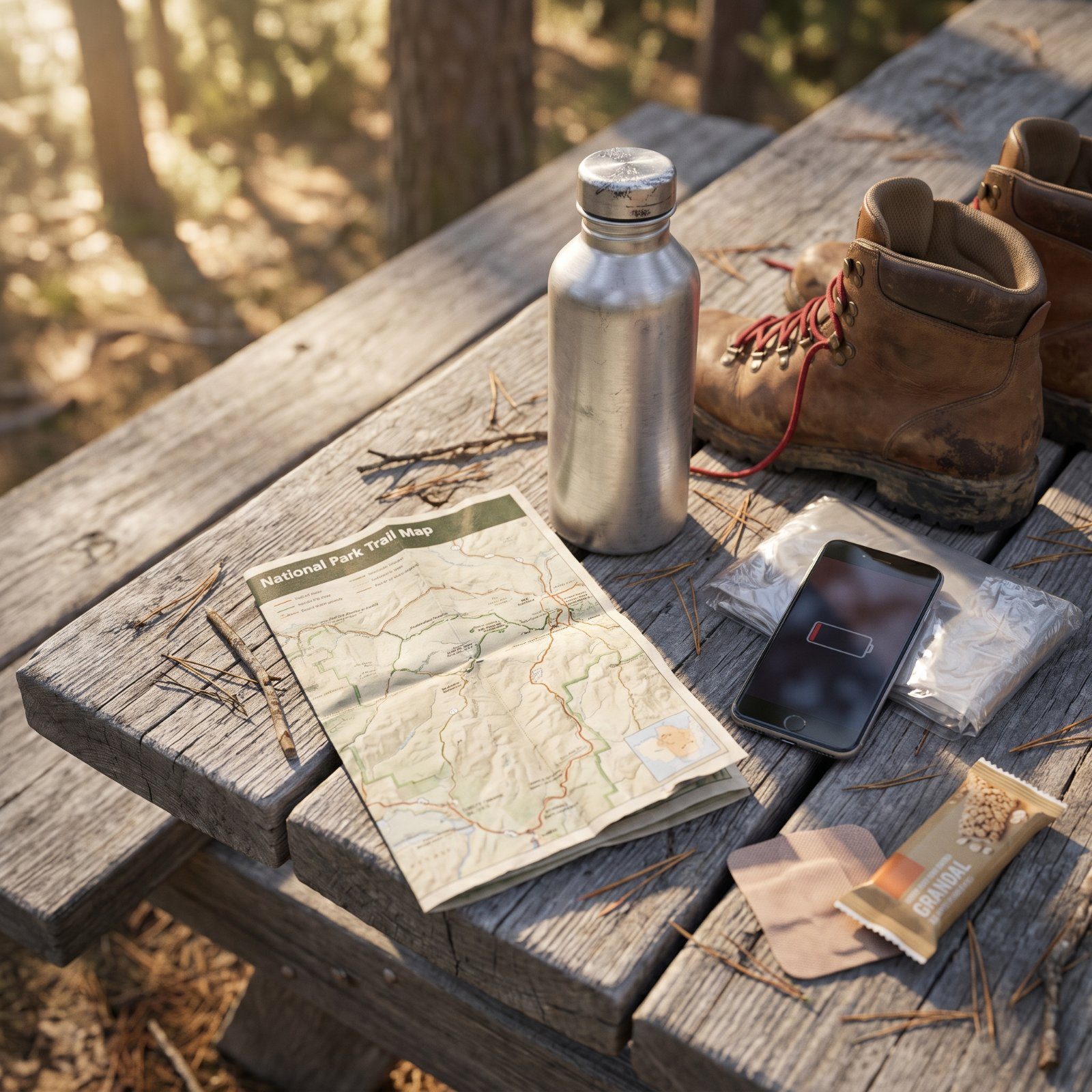
A ranger reads a parking lot the way an old angler reads water. Not the obvious stuff — the small things. A bottle that hasn’t been touched, or one person hauling four people’s worth of gear. The face that keeps swiveling back toward the trail like it’s trying to memorize an exit. None of these mean trouble on their own. Stack them together, though, and you’ve got the first page of a rescue report that hasn’t happened yet. The best rangers catch it before the radio crackles. These are the signs they watch for, and the quiet logic underneath each one.
Please note that some of the images in this article were created with the assistance of AI.
38. A Hiker’s Water Bottle Is Still Full Late in the Day
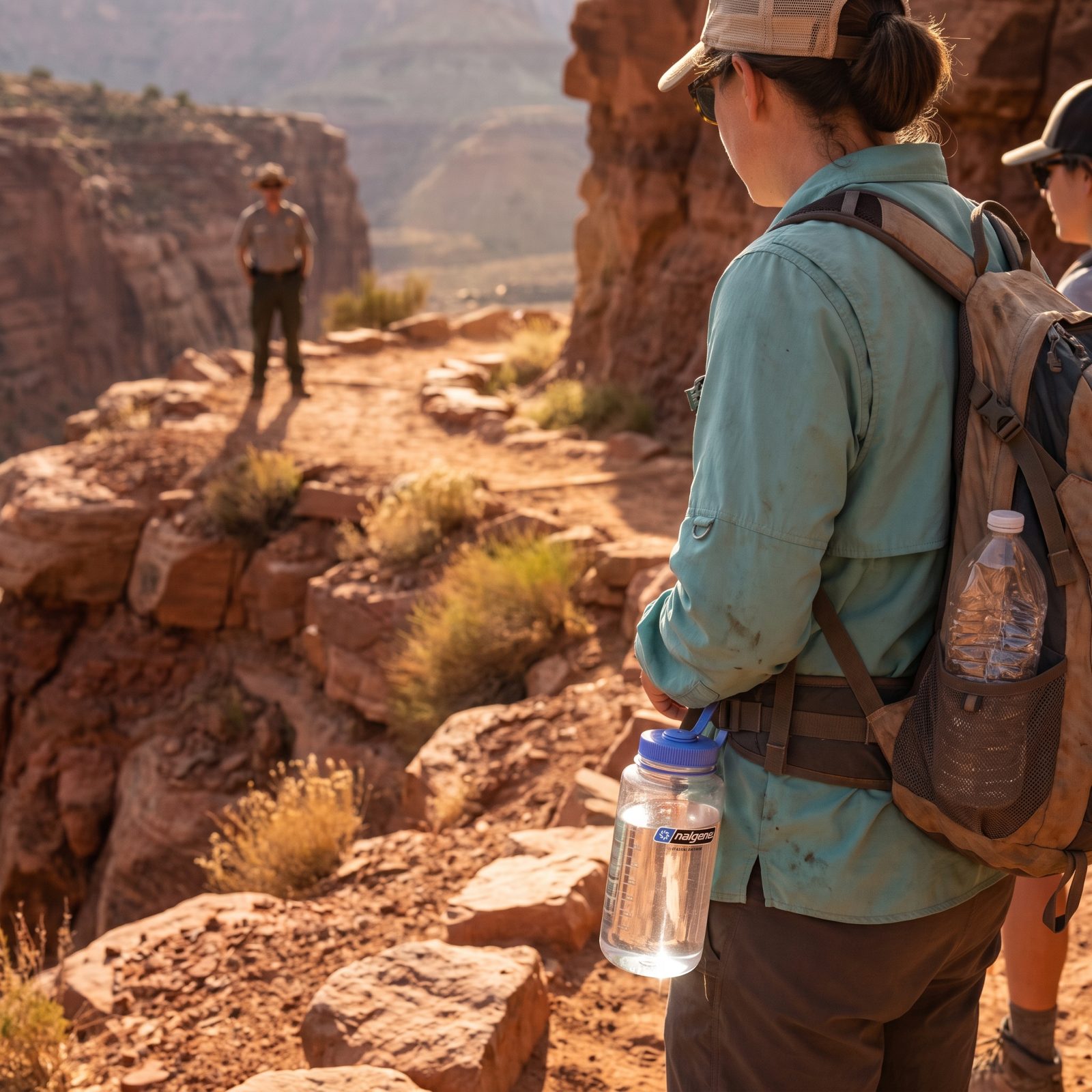
A full bottle at 3 p.m. isn’t discipline. It’s a red flag. People who aren’t drinking usually aren’t sweating the way they should be, or they’ve talked themselves into “drinking at the top.” By then the headache has started and the judgment has slipped.
Dehydration doesn’t announce itself — it shows up as a bad decision three miles from the car. Rangers watch bottle levels because thirst lags behind need, especially in dry heat where sweat evaporates before you ever notice it.
37. One Person Is Carrying Everyone Else’s Supplies
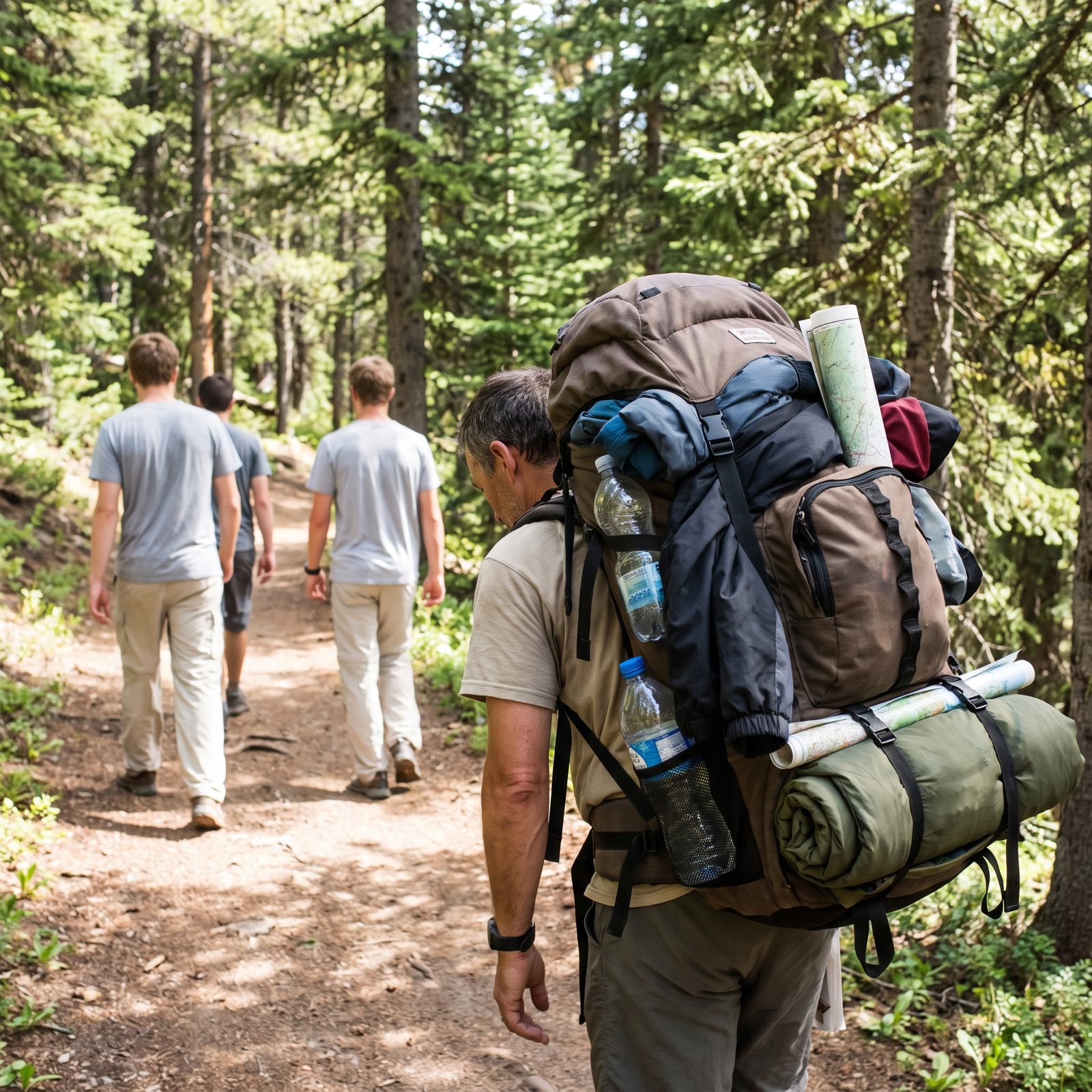
One loaded pack and three empty-handed companions tells a ranger the group planned as individuals rather than a team. The weight isn’t the problem. The problem is what happens when the group splits up or the carrier bonks — now three people have no water, no layers, and no map between them.
Redundancy is survival. Pool everything into one pack and you’ve built a single point of failure, then gone hiking on it.
36. A Visitor Keeps Turning Around to Recheck the Trail
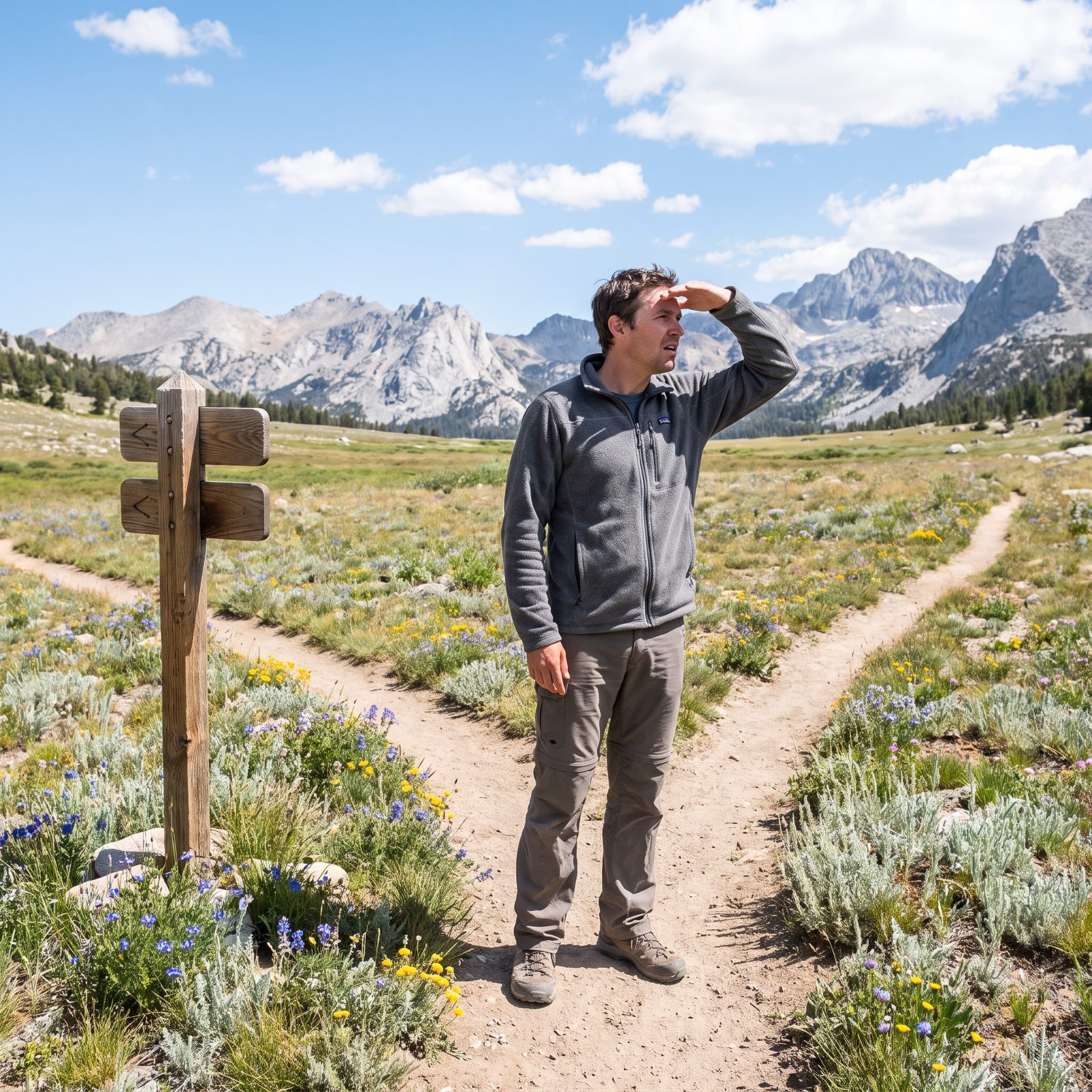
The over-the-shoulder glance is a confession. A hiker who keeps turning to memorize the way back doesn’t trust the way forward. On a loop with signage, fine. On a network of unmarked junctions where everything looks the same on the return, it’s a warning.
Rangers notice it because it signals someone navigating by memory instead of a map. And memory works beautifully right up until the light changes and every stand of trees looks like the last one.
35. Someone Gives a Vague Answer About the Turnaround Time
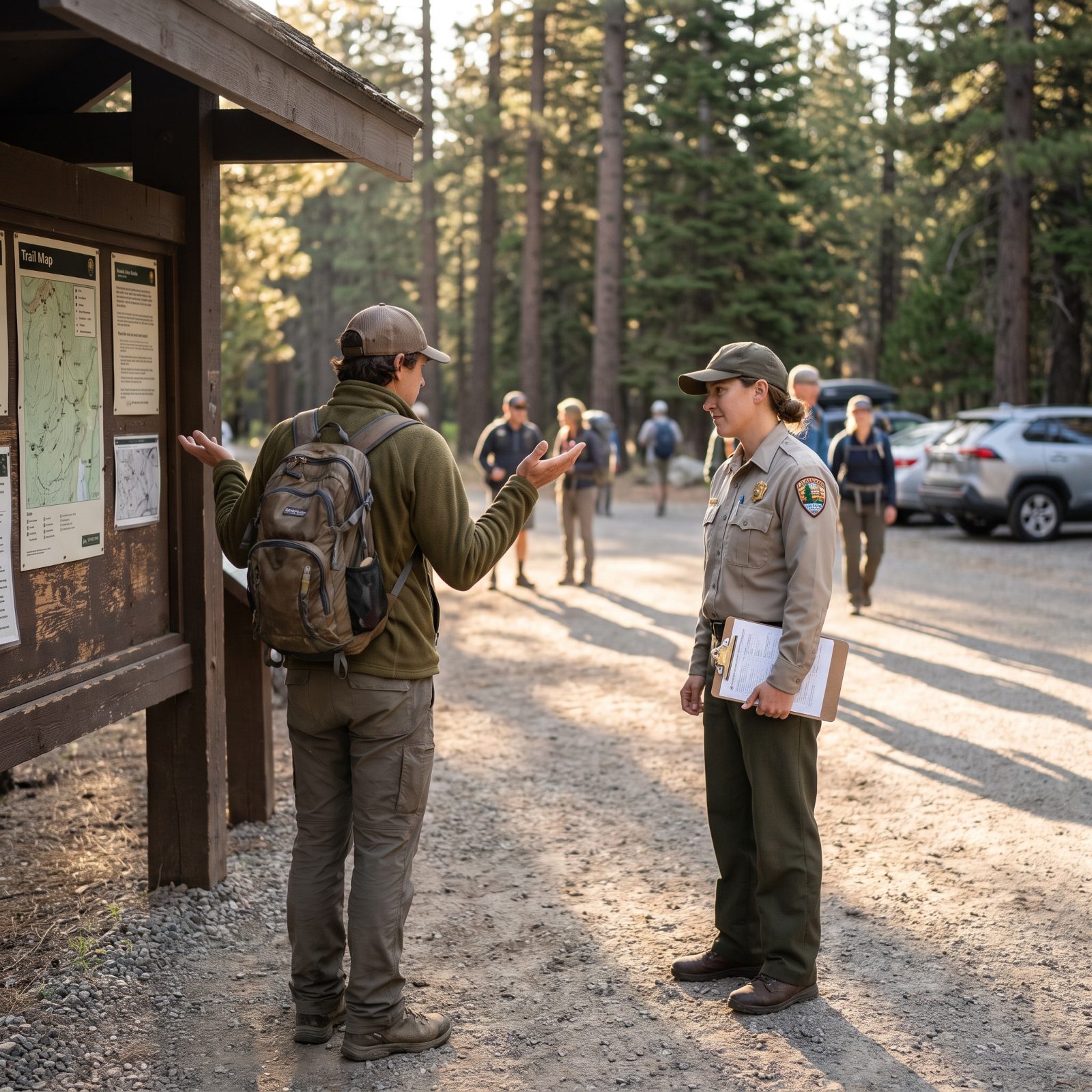
Ask a prepared hiker when they’ll turn around and you get a number. “Two o’clock, no matter where we are.” Ask an unprepared one and you get a shrug. “When we get there.” “When we’re tired.”
There’s no “there” they can name because they never set one. The turnaround time is the single most important call on a long hike, and it has to get made in the parking lot while the brain is still cool. Decide it on the summit and your tired, proud, deadline-ignoring self gets a vote — and that version of you always wants to keep going.
34. The Group’s Slowest Member Is Already Falling Behind
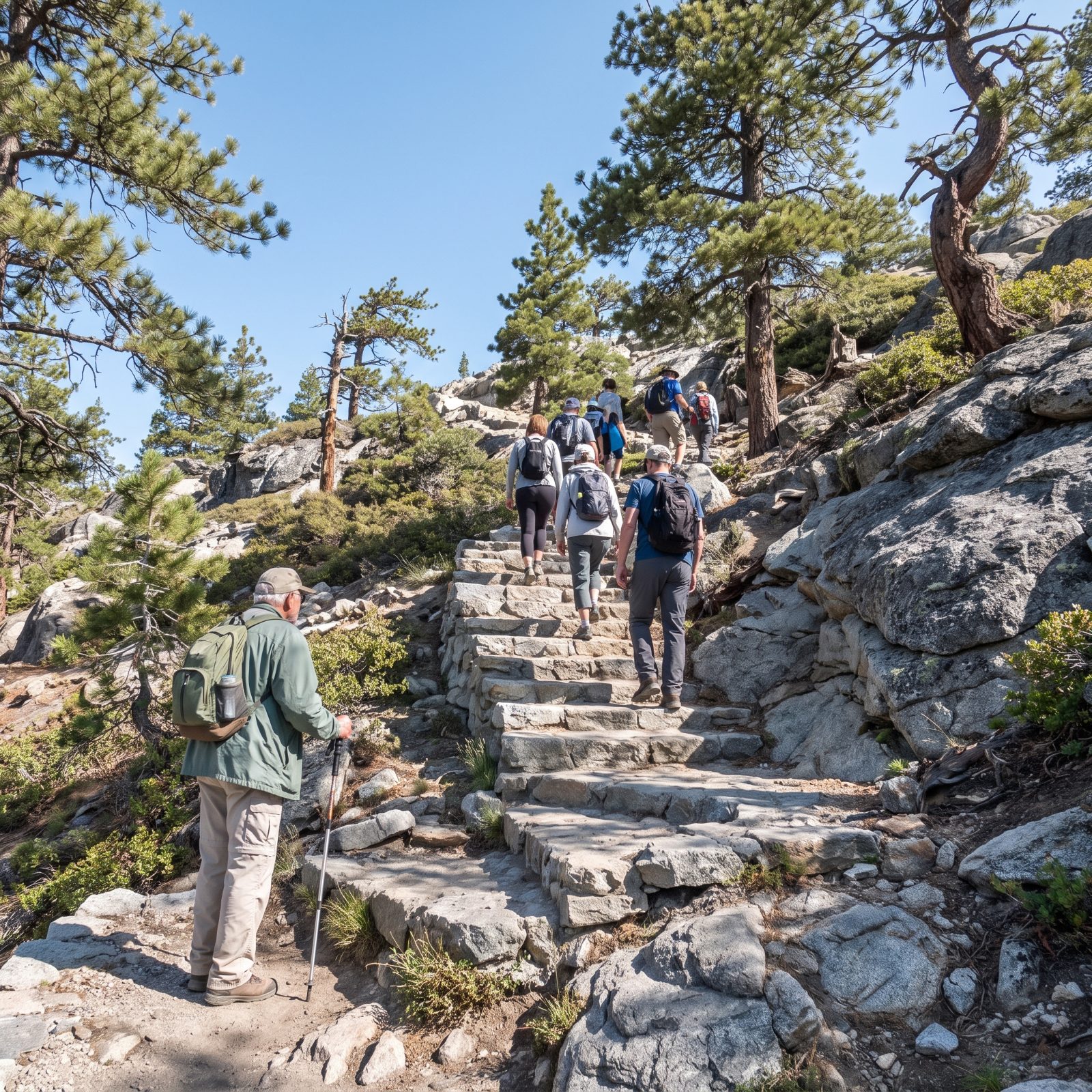
A group moves at the pace of its slowest member or it stops being a group. When the gap opens early — within the first mile — it only widens from there. That person ends up pushing harder than they safely can just to keep sight of everyone’s backs.
Rangers clock the gap because it predicts the whole day. The slow hiker gets more tired, the fast ones get impatient, and nobody wants to be the one who admits they should turn back.
33. The Car at the Trailhead Contains an Unopened Park Map
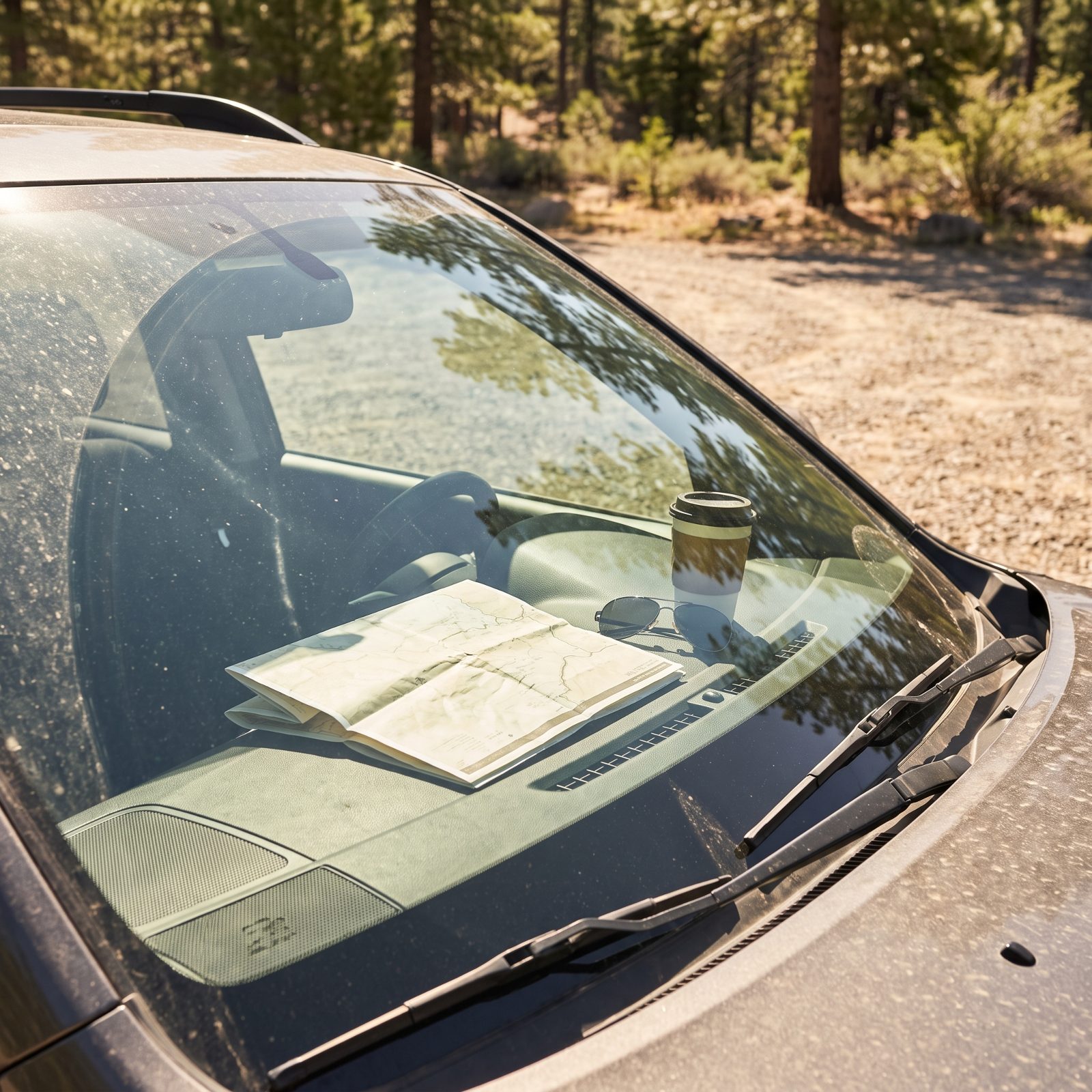
The map that never left the glovebox is a small tragedy in advance. Somebody grabbed it at the entrance station, meant to look at it, then walked off into the woods trusting a phone and a feeling instead.
Paper doesn’t die at 20 percent battery. It doesn’t lose signal down in a canyon. A ranger glancing into a parked car and spotting a map still factory-folded on the dash already knows something about the people who drove it. They traded the most reliable tool they own for the least reliable one, and they don’t know it yet.
32. A Stream Crossing Looks Different From the One on Their Map
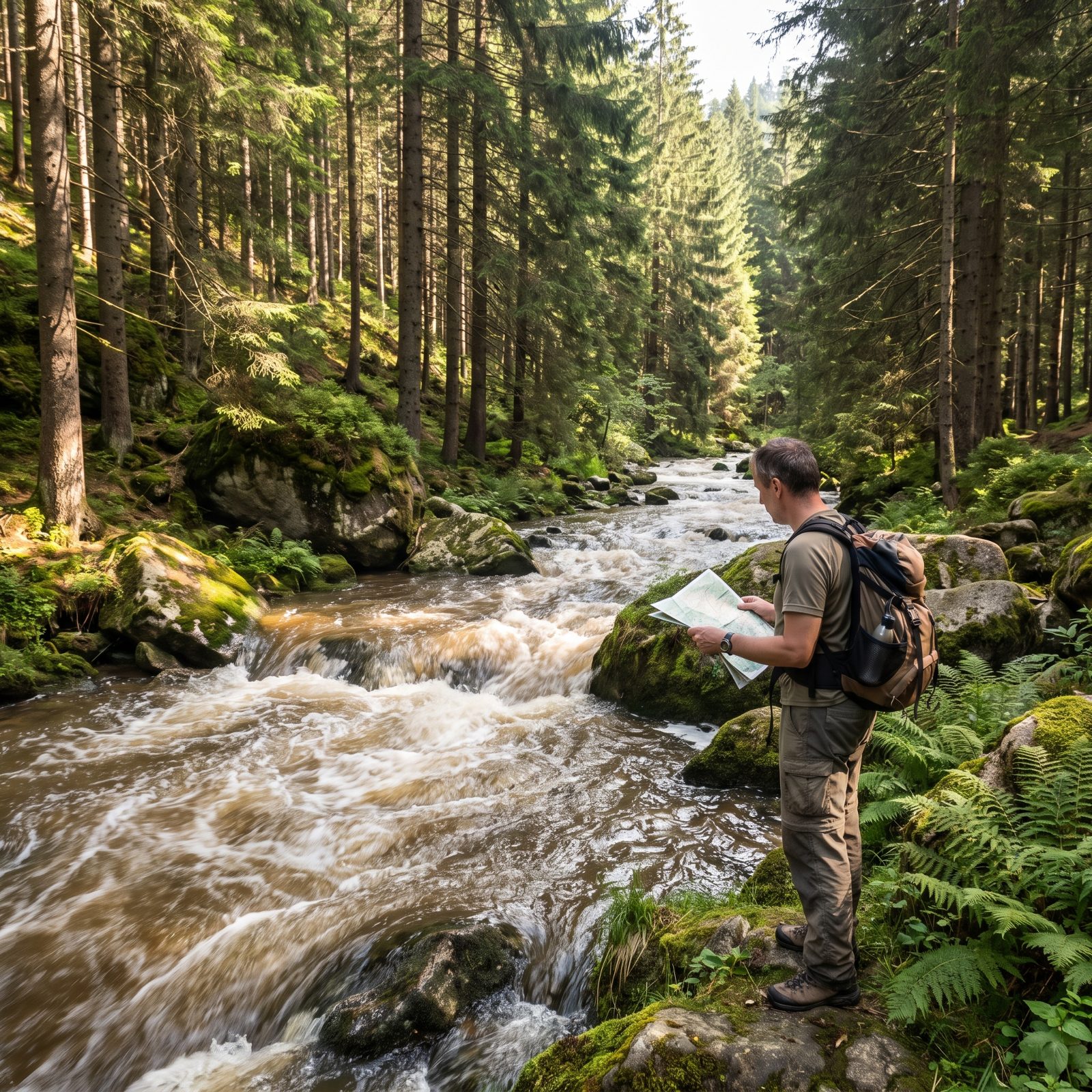
When the terrain argues with the map, believe the terrain. A crossing that’s wider, faster, or browner than the map suggests usually means recent rain upstream, snowmelt, or that you’re not where you think you are. All three are reasons to stop, not to splash through.
Moving water is the quiet killer out here. Knee-deep current moving fast can take your feet out from under you, and cold water drains strength faster than most people expect. A map showing a gentle ford and ground showing a torrent? That’s the mountain telling you the plan is out of date.
31. Fresh Blisters Are Changing a Hiker’s Stride
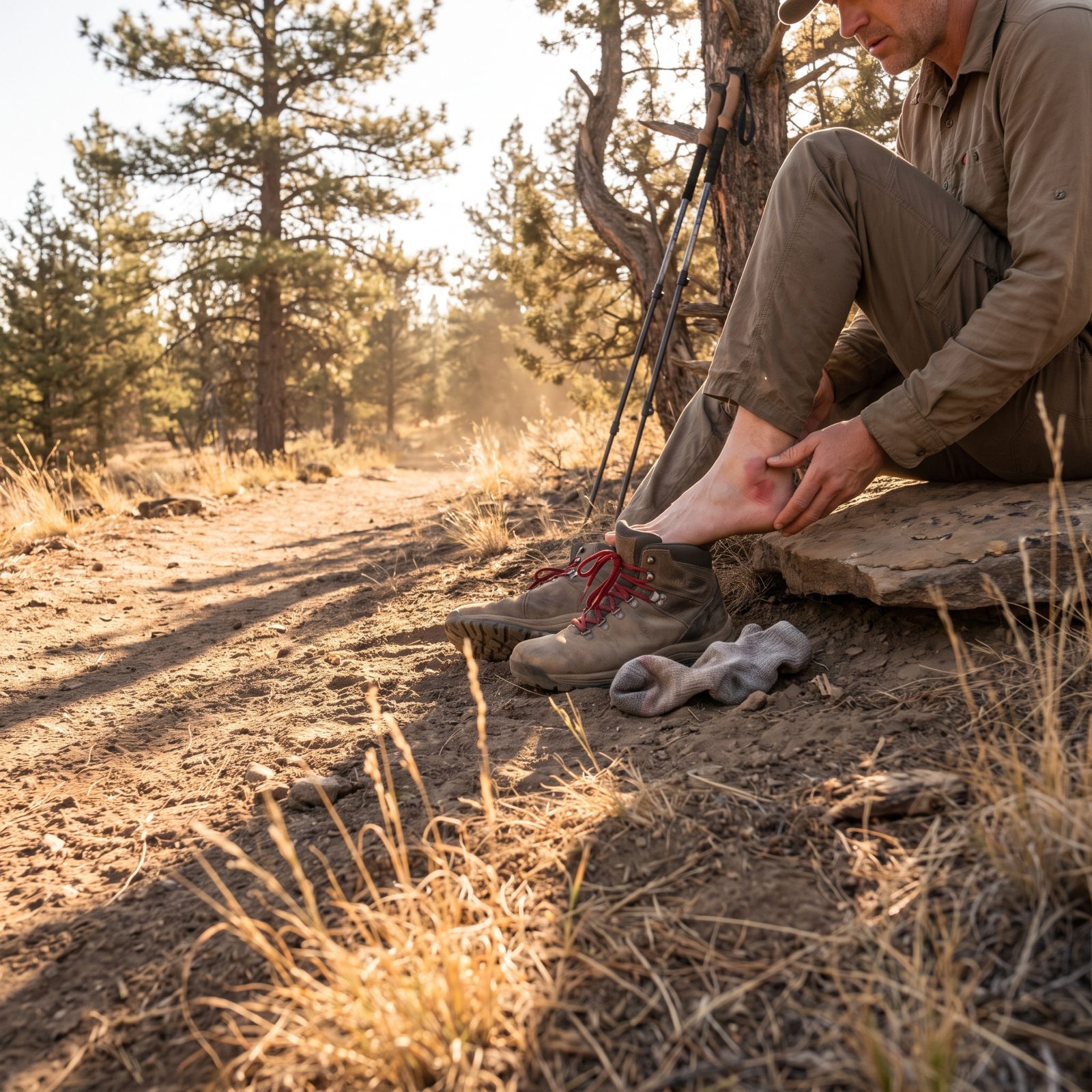
A changed gait shows up before the limp does. A hiker favoring one foot, shortening a stride, or rolling onto the outside edge of a boot is nursing a hot spot that’s already a blister. On the way out it’s annoying. On the way back it’s a two-mile-per-hour crawl that blows the whole turnaround plan apart.
Small problem, big consequences. The blister isn’t the danger — the slow, painful, behind-schedule walk it causes is where people run out of daylight.
30. Someone Starts a Long Trail After Most Hikers Are Returning
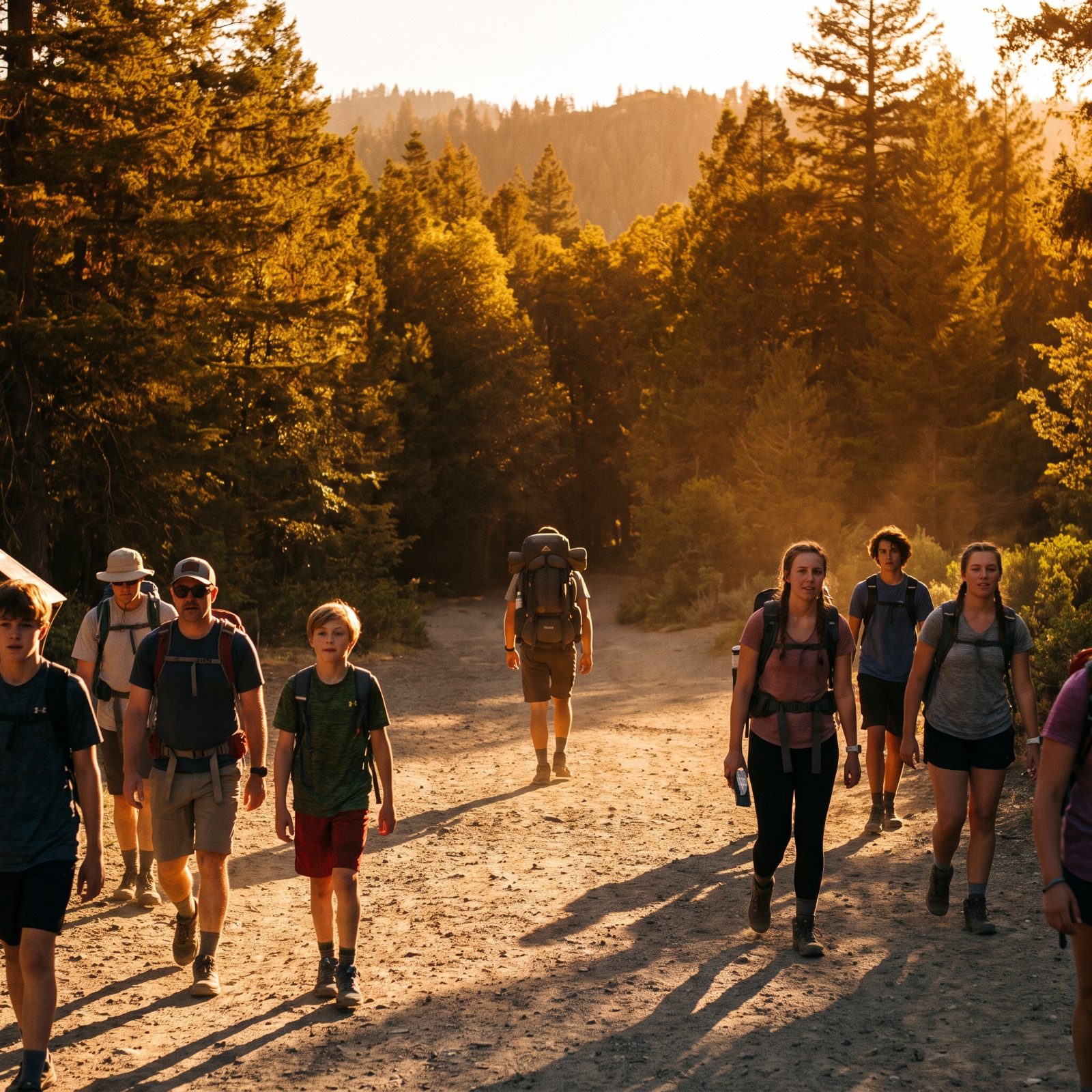
Watch the direction of foot traffic. When the lot is emptying and nearly everyone is walking out, the person lacing up to walk in has either a headlamp and a plan, or neither. A ranger can usually tell which within a few seconds of eyeing the pack.
Darkness in the backcountry is nothing like darkness in town. No ambient glow, no streetlight, no familiar shape to the ground. A trail that was obvious at noon turns into a guessing game at dusk, and most late starts badly underestimate how fast the light goes.
29. A Visitor Is Relying on Phone Battery for Every Essential
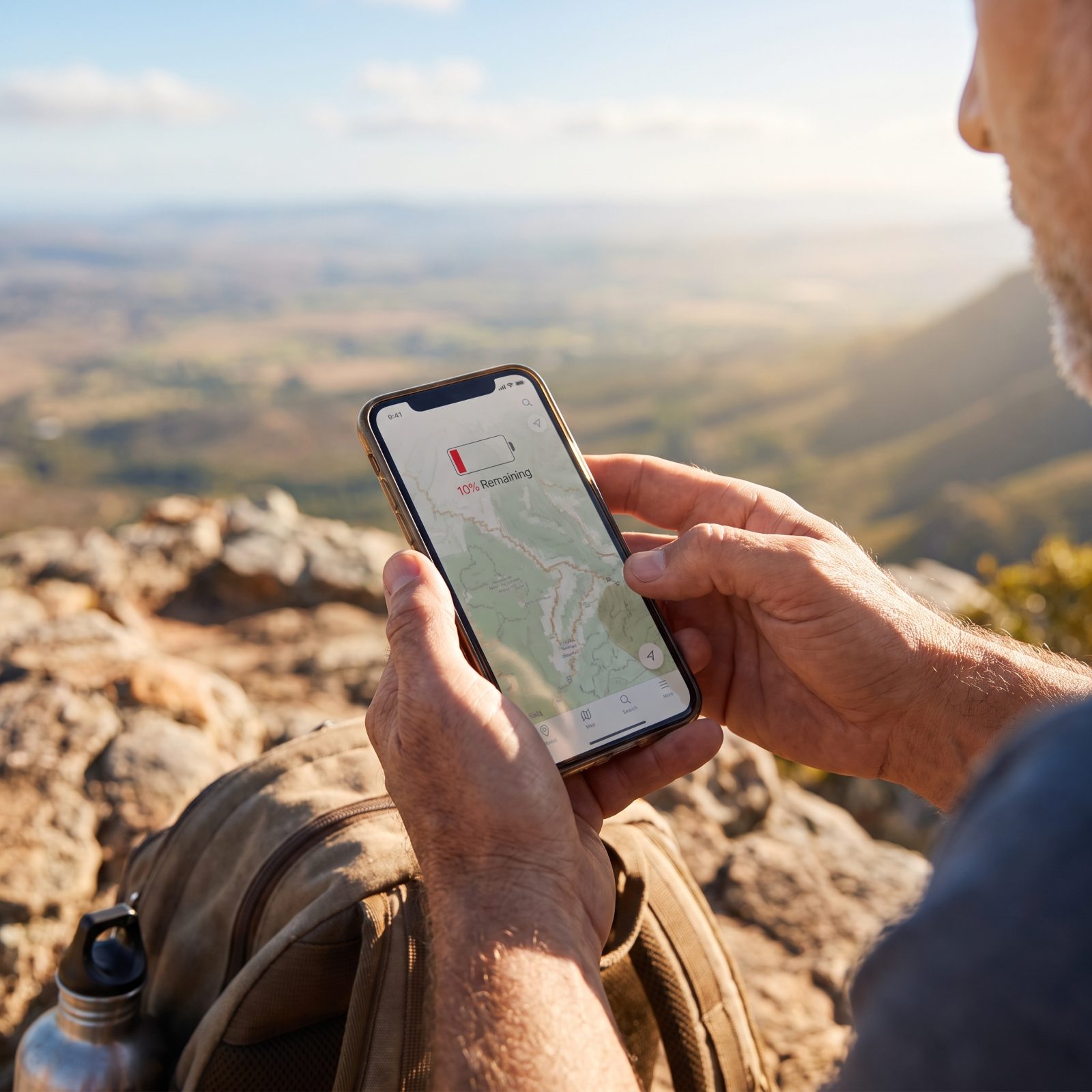
One device, every job. Map, flashlight, camera, compass, emergency call, and the clock that tells you when to turn around — all of it living on a battery that drains twice as fast in the cold and burns out hunting for a signal that isn’t there.
When that phone dies, a visitor doesn’t lose one tool. They lose the map and the light and the way to call for help in a single blink. Rangers watch for the person squinting at a dim screen at every stop because it’s a system with no backup. And the backup is everything.
28. The Group Cannot Agree on Its Destination
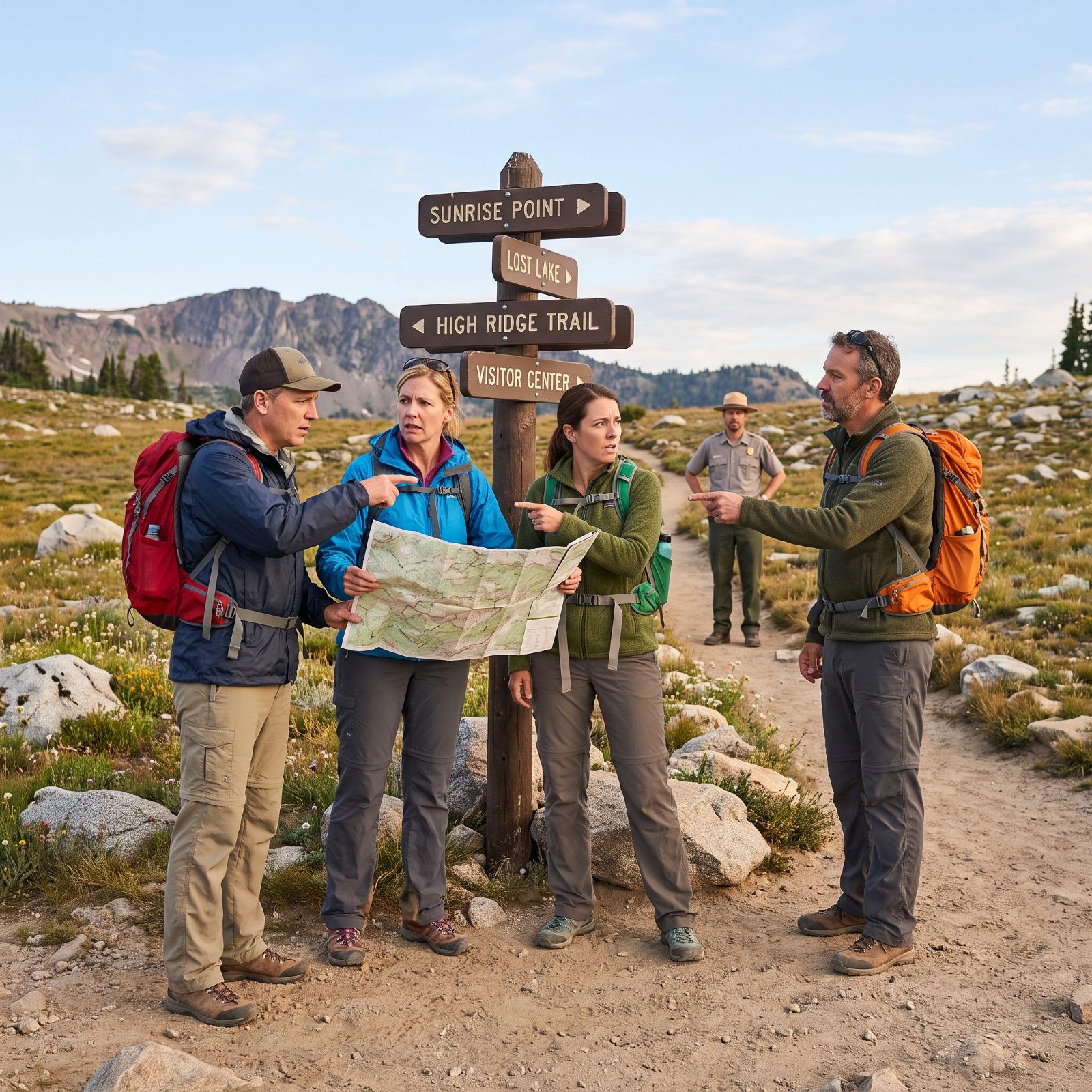
You’ve seen it in the parking lot. One wants the waterfall, one wants the summit, one just wants to be back by lunch. Nobody wins, so they start walking and figure it’ll sort itself out.
It won’t. A group with no agreed turnaround and no agreed goal makes decisions by drift, and drift at mile six becomes a search at mile nine. Rangers listen for the tell: when the talk is about where they might go instead of where they’re going, the day already has a crack running through it.
27. A Visitor Does Not Know the Name of the Trail
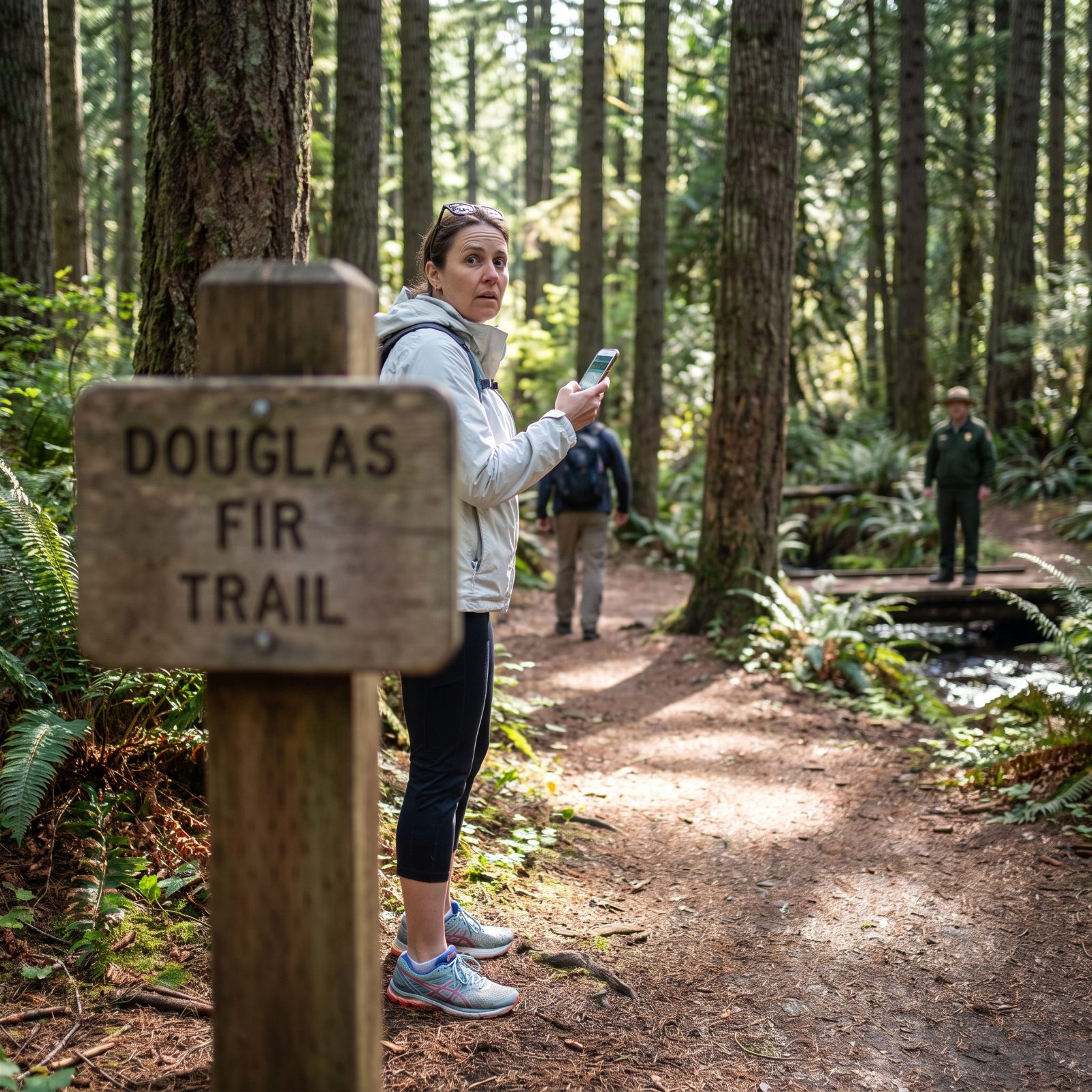
Ask a confident visitor what trail they’re on and watch the pause. Can’t name it, can’t report it. And a 911 call with no name is a guessing game while daylight burns off.
Rangers aren’t quizzing people for sport. The name anchors everything downstream — trailhead, mileage, water sources, the spots where folks reliably get turned around. A hiker who knows the name usually knows the rest, and a blank look usually means the rest is blank too.
26. A Group Mistakes One Landmark for Another
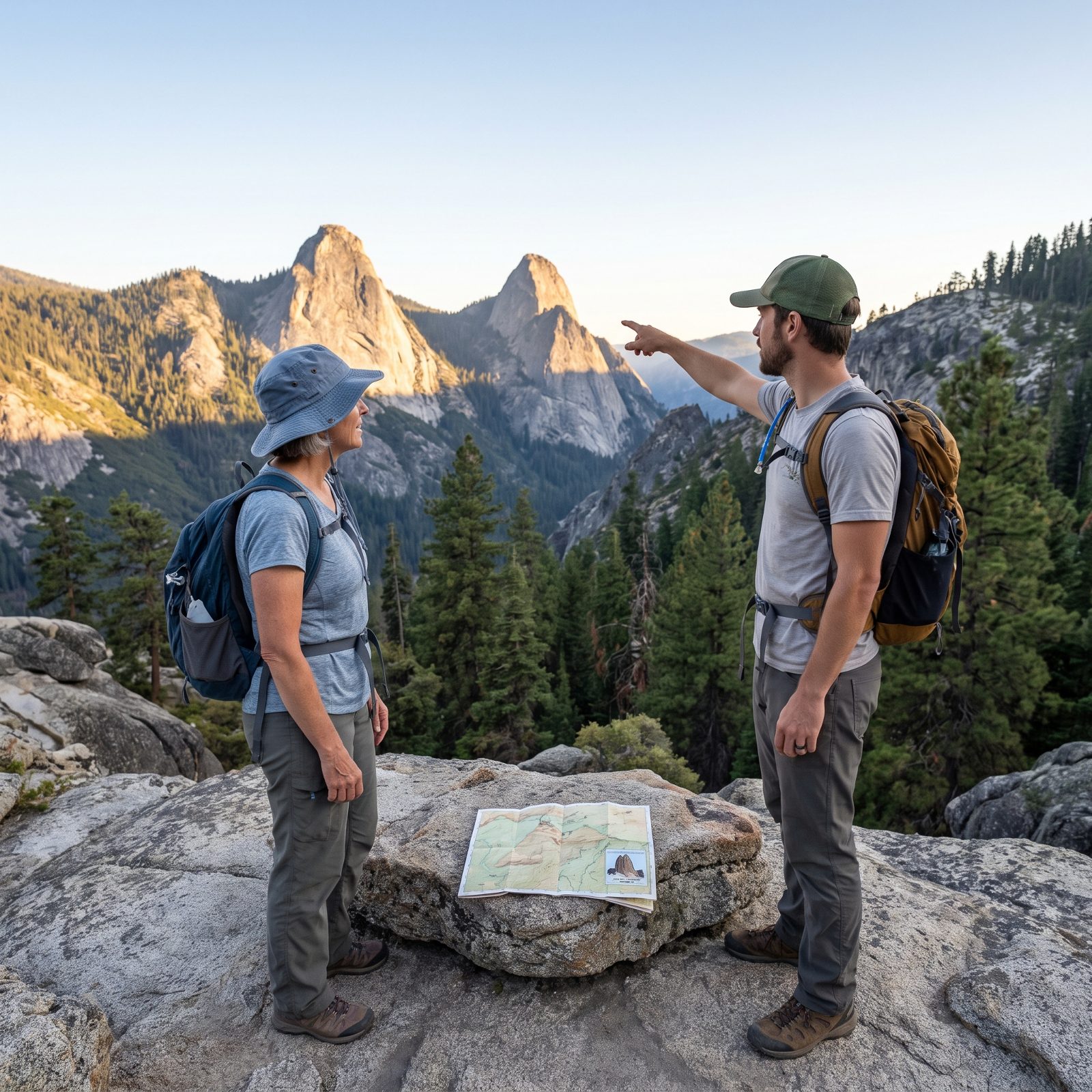
Two peaks that look alike from a distance are a classic trap. Point at the wrong one, march toward it sure of yourself, and the error compounds with every step. By the time the terrain quits matching the map, the right turnoff is miles behind you.
Rangers hear this in passing — a group names the ridge across the valley, and names it wrong. Seems small. It isn’t. Navigation built on a misread anchor doesn’t fail gently; it fails all at once, usually near dusk, usually nowhere near where help expects to look.
25. No One Outside the Group Knows the Day’s Route
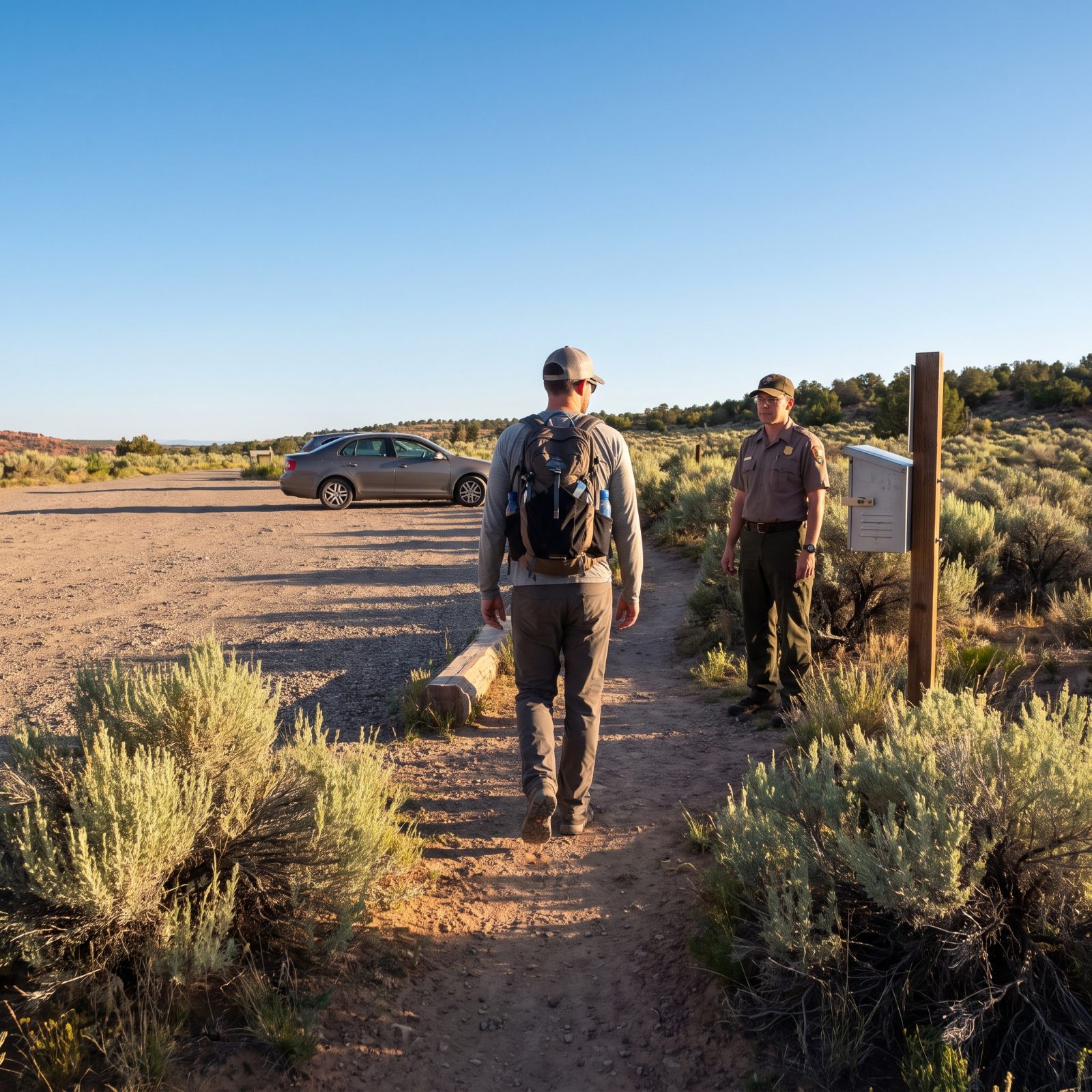
An empty trail register tells a story. So does the hiker who can’t say when anyone expects them home.
This is the gap that turns a sprained ankle into a cold night out. If nobody knows the route, nobody knows where to start looking, and the clock that matters most never even starts ticking. Rangers notice who signs the register and who strolls right past it.
The cheapest safety gear in any park is one person who knows where you went and when you’ll be back.
Text somebody the trail name, your turnaround time, and your plate number. Thirty seconds. That’s the difference between a search that starts at dark and one that starts at noon tomorrow.
24. A Hiker Has Stopped Sweating in Hot Weather
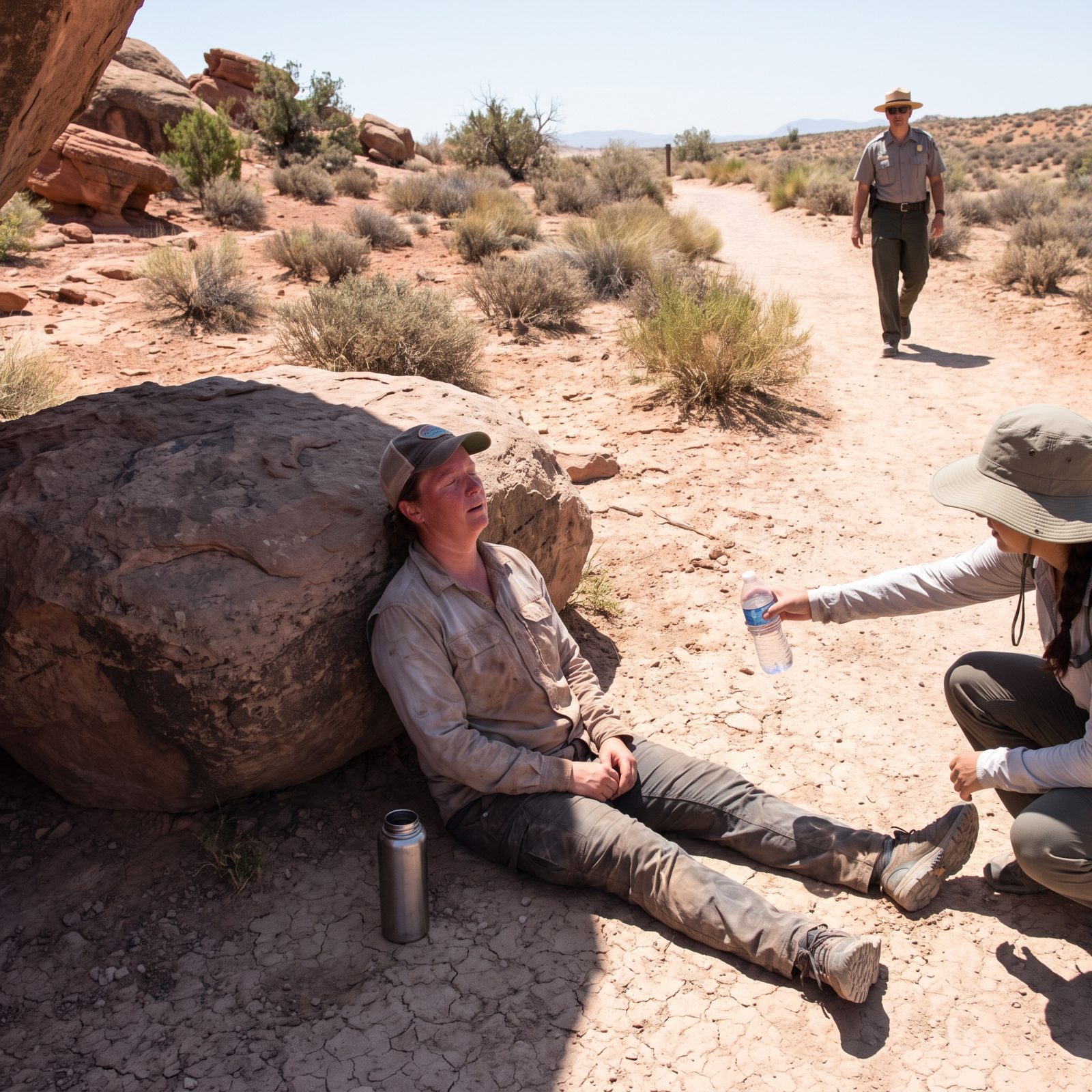
Sweating in the heat is the body doing its job. A hiker gone dry and quiet, flushed, not sweating a drop — that’s the body losing the fight. Heat stroke, knocking, and it moves fast.
Rangers in desert parks watch for the change, not the complaint. People in trouble tend to go quiet right before they stop being okay. Skin goes dry, the talk slows, the pace turns strange. Get them in shade with water now, before it becomes a helicopter.
23. Dark Clouds Are Building Behind Visitors Who Never Look Up
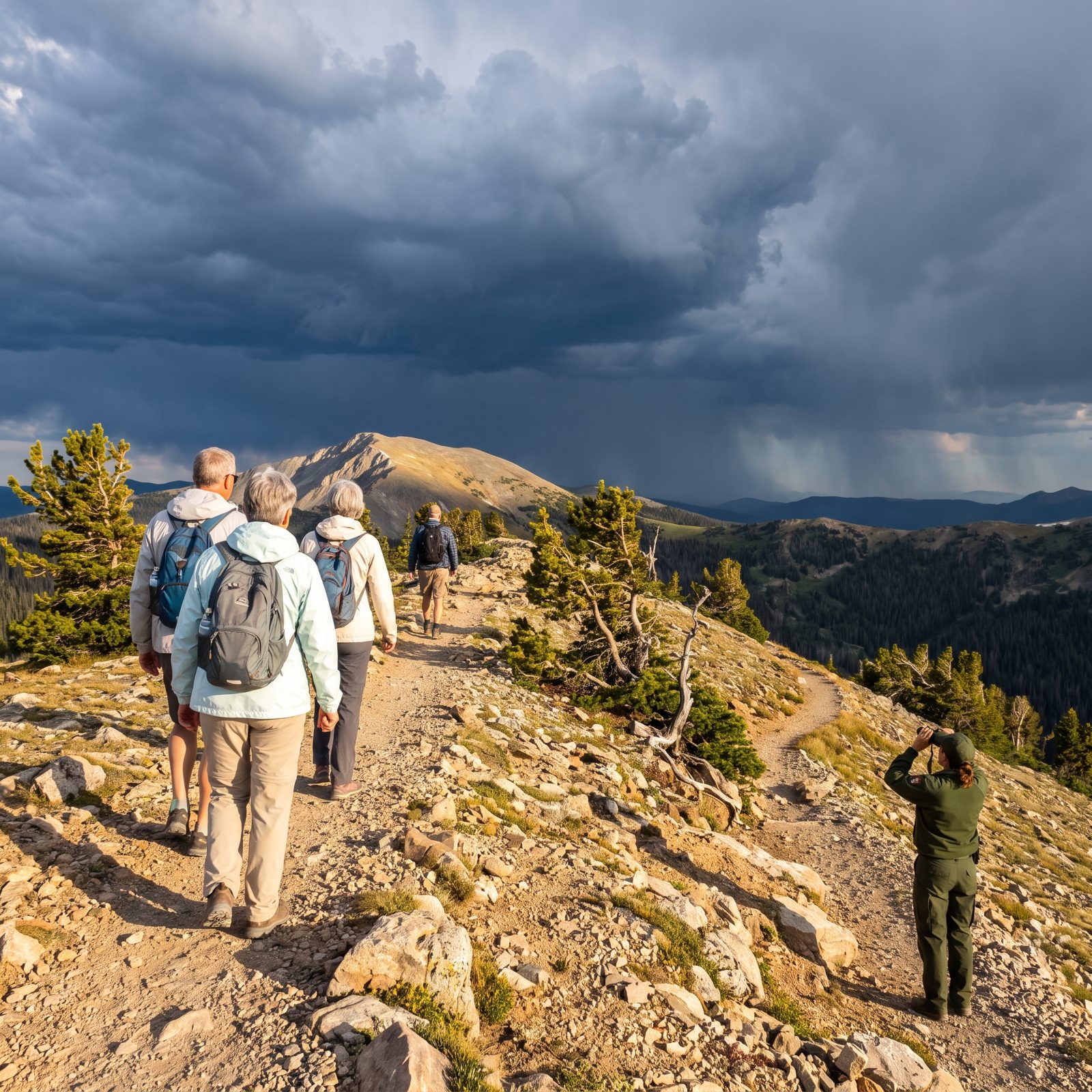
Mountain storms announce themselves early — if you’re facing the right way. The folks who keep marching along the trail without reading the sky miss the whole conversation it is trying to have with them.
In high country, afternoon thunderheads build on a schedule, often by early afternoon in summer. Rangers watch the tourists more than the clouds. A group walking single file along a ridge, eyes on the trail while a dark wall stacks up overhead, is a group about to become the tallest thing on an exposed ridge at precisely the wrong moment.
22. Smoke or Haze Is Thickening Along the Planned Route
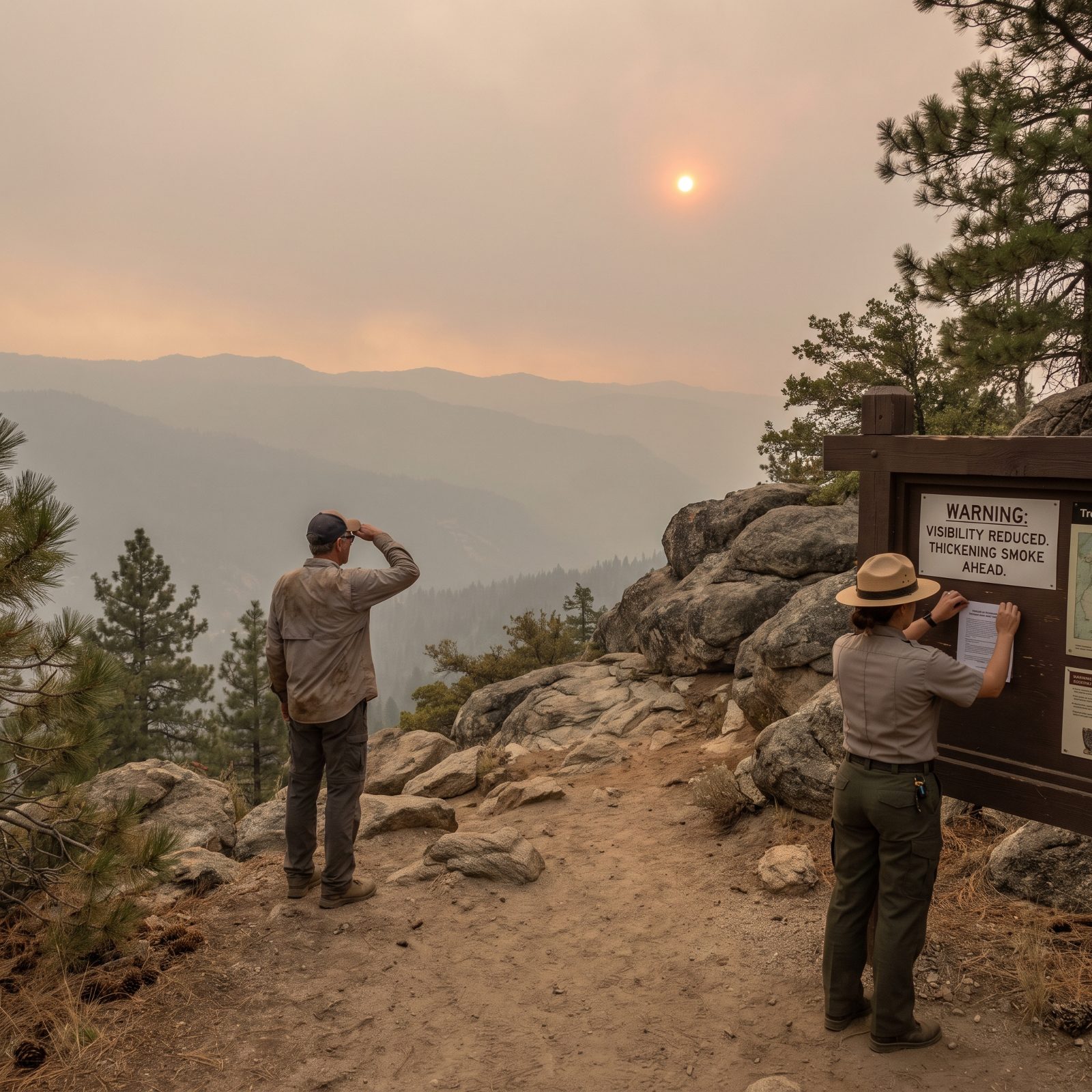
Haze getting worse in one direction isn’t weather. It’s a message. Smoke thickening along the route you planned is reason enough to pick another.
Rangers track air and wind because things turn by the hour in fire season. A route that looked clear at the trailhead can fill in before you reach the far end — and smoke doesn’t just sting your eyes, it saps your lungs and your legs on the climb back out, right when you need both.
21. Rising Water Is Covering Previously Dry Rocks
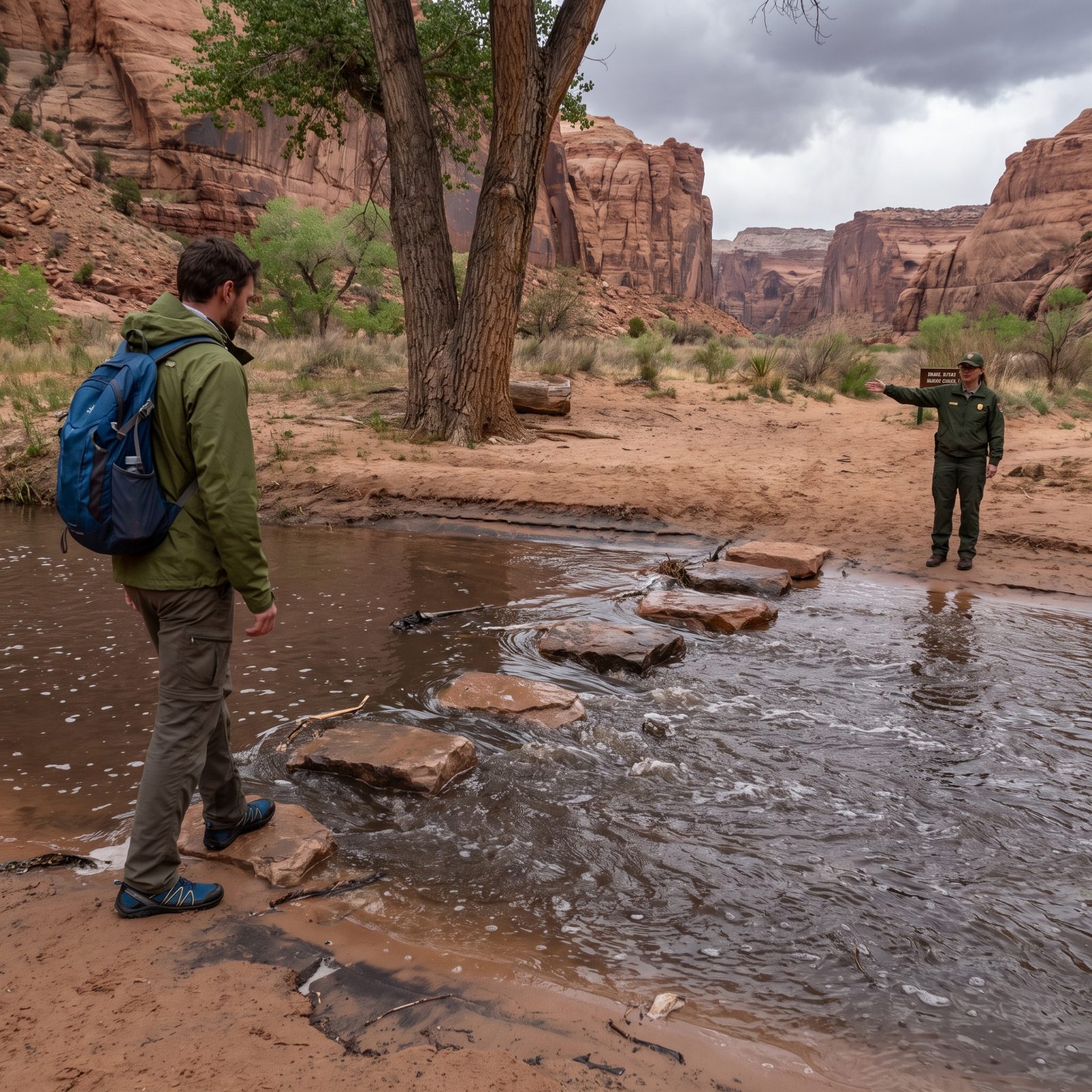
Rocks you crossed dry an hour ago, now underwater? Storm clouds are piling up over the canyon rim. Creek crossings and low ground flood fast under a sky like this, and the muddy water doesn’t stop at the stepping stones.
This is the warning rangers wish more people took seriously. Rising water, a muddy tint, a new whisper of debris drifting past. An ankle-deep crossing goes impassable in a hurry, and waiting it out on the wrong bank beats getting swept off your feet. Climbing water doesn’t negotiate.
20. A Paddler Launches Without Checking Wind Direction
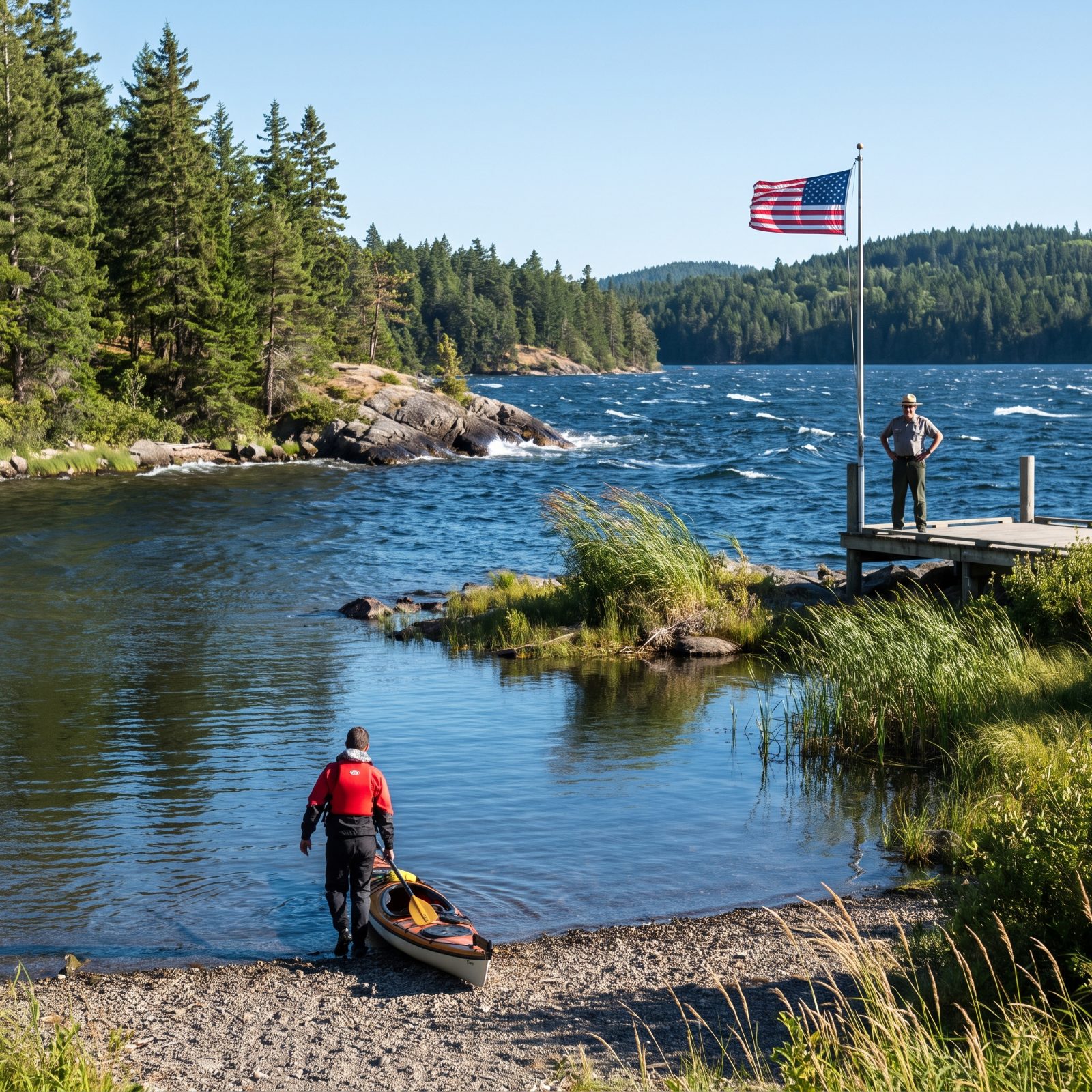
The cove is calm. That’s the trap. Wind makes for an easy paddle out and a brutal one back, and the paddler who launches with the breeze at their back rarely spares a thought for the return.
Rangers at big lakes and coastal parks watch the launch. Someone who checks the flag, the ripple line, the whitecaps out past the point is planning the whole loop. Someone who just slides in and coasts out on glass is planning half of it. The open water is where the wind lives, and that’s where the hard mile waits.
19. A Visitor Is Wearing Brand-New Boots on a Long Route
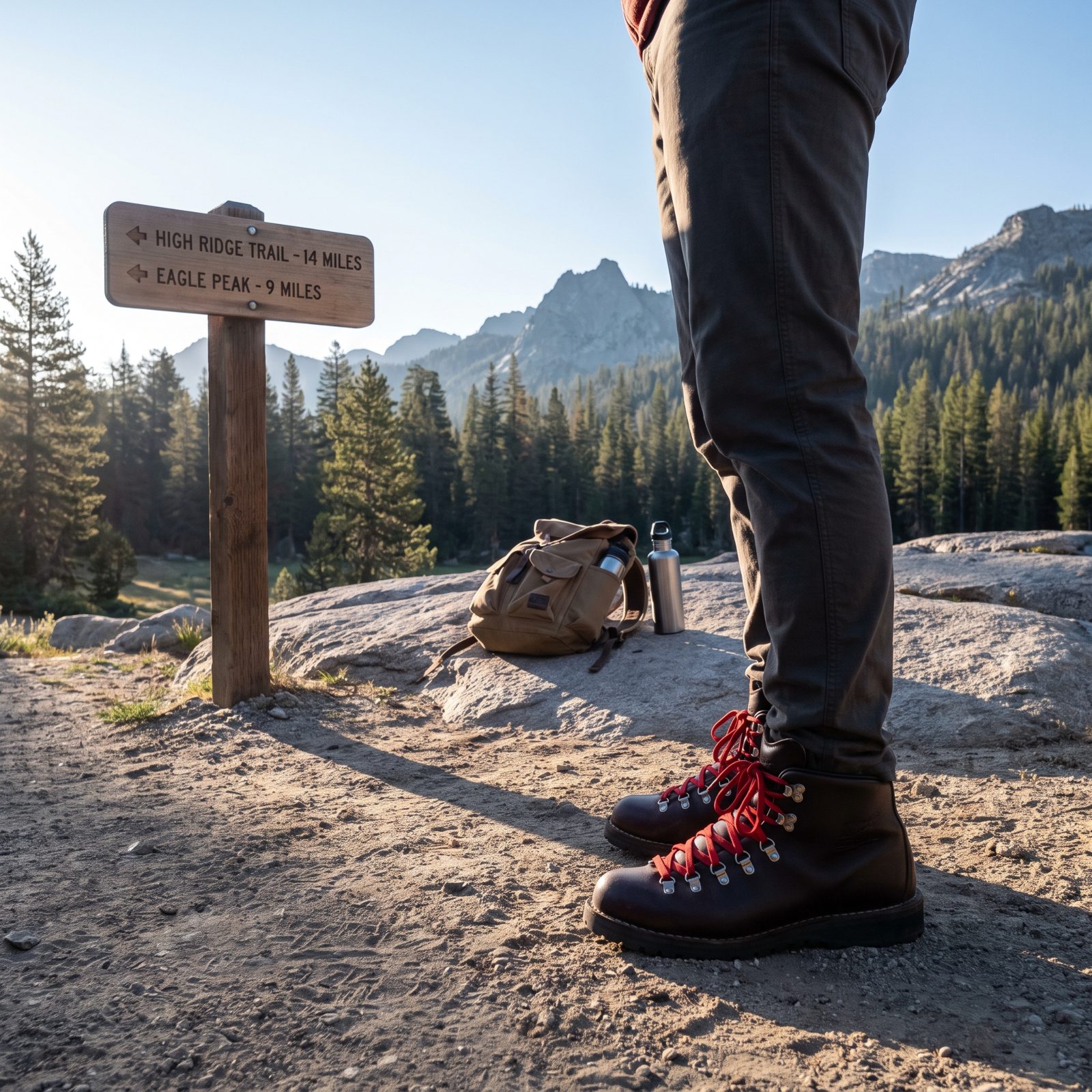
New boots on a twelve-mile day are a blister clock already ticking down. Rangers clock the unscuffed toe caps and the laces that still carry the store crimp. Leather that hasn’t softened folds wrong at the heel, and by mile four the back of the ankle is raw.
The problem isn’t the boot — it’s the math. A footwear failure out at the turnaround means a slow, painful walk back, often after dark, sometimes needing help. So break them in close to home first. A few errands around the neighborhood tell you more than the box ever will.
18. Smooth-Soled Shoes Appear at a Steep Trailhead
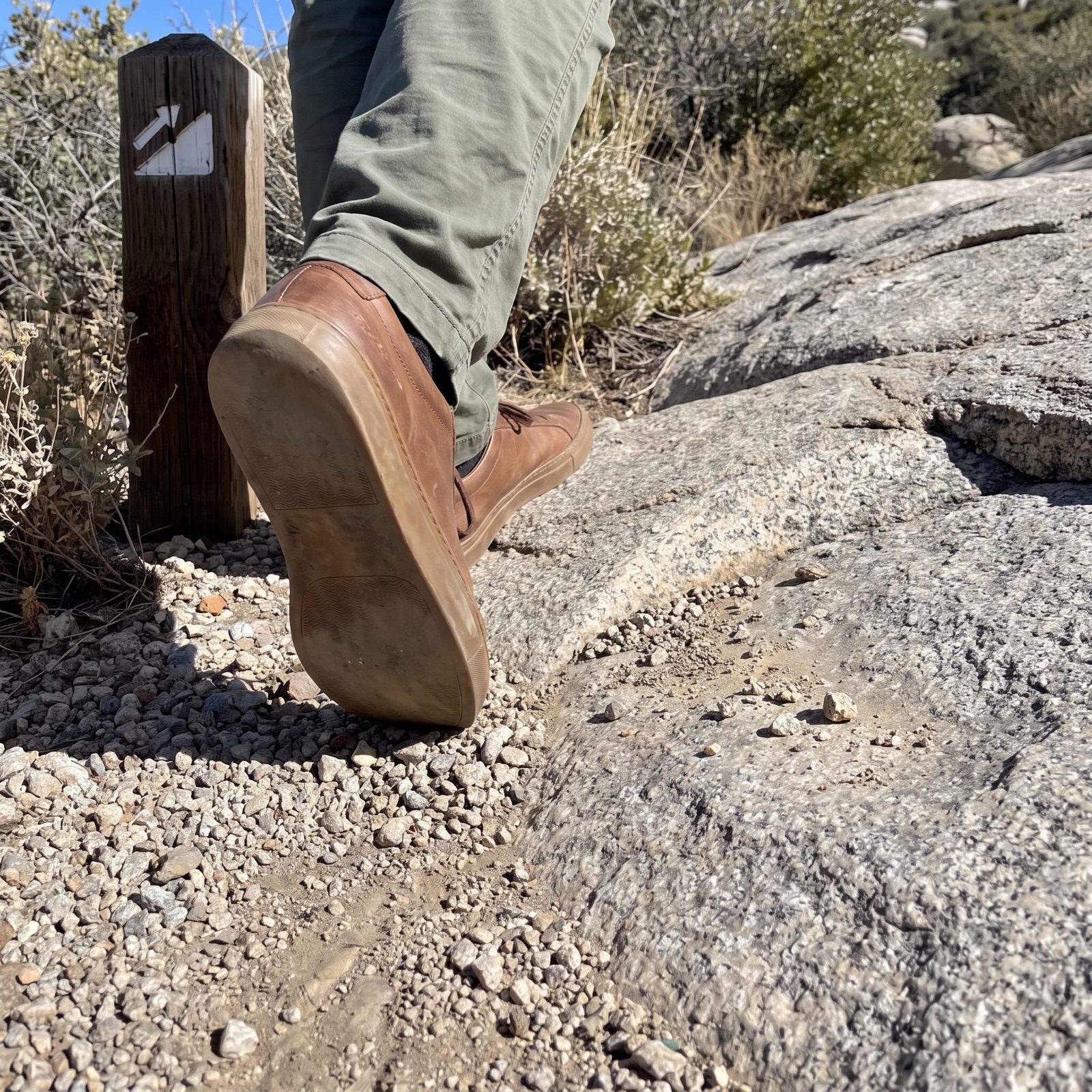
Flat soles and polished rock don’t negotiate. Worn or smooth tread turns a dry granite slab into a skating rink, and the steepest descents are exactly where the slips happen, because gravity is already helping the fall along.
Rangers watch the footwear more than the fitness. A strong, fit person in the wrong shoe goes down just as hard as anyone. Lugged soles bite; smooth ones glide. Out on exposed ground, the gap between those two is sometimes the only safety margin a visitor has got.
17. Heavy Cotton Clothing Is Being Worn in Cold, Wet Conditions
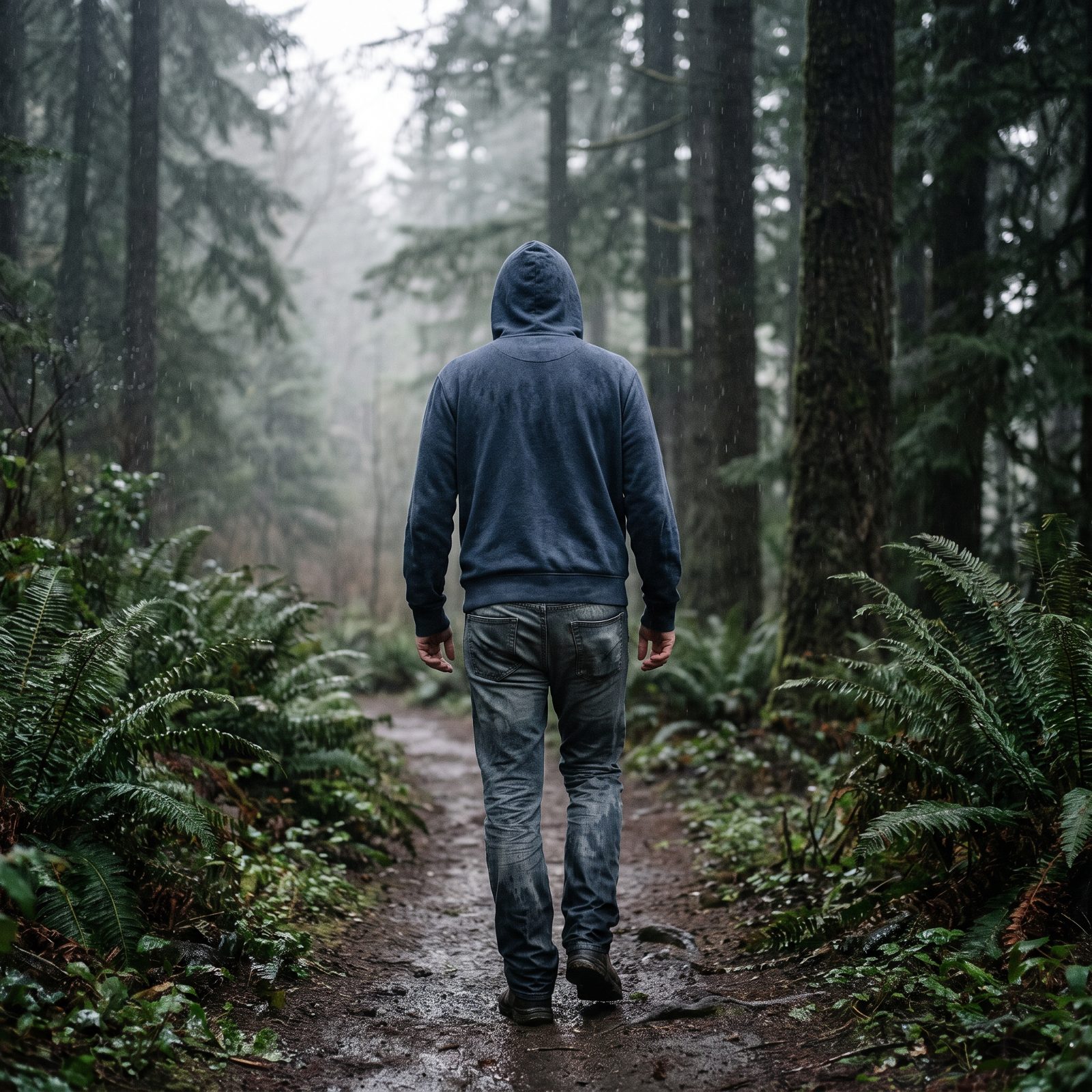
There’s an old line among guides: cotton kills. Sounds dramatic until you’ve watched it happen.
Wet cotton holds water against the skin and pulls heat out of a body far faster than air does. A soaked sweatshirt in a cold wind stops being clothing and becomes a cooling system you can’t switch off. Hypothermia doesn’t need a blizzard. It needs damp, cool, and tired — which describes a whole lot of ordinary afternoons.
Wool and synthetics keep insulating when they’re wet. Rangers notice soggy denim and heavy hoodies because that outfit, miles from the car with the temperature dropping, is a slow emergency getting slower.
16. A Hiker Has No Warm Layer After Sunset
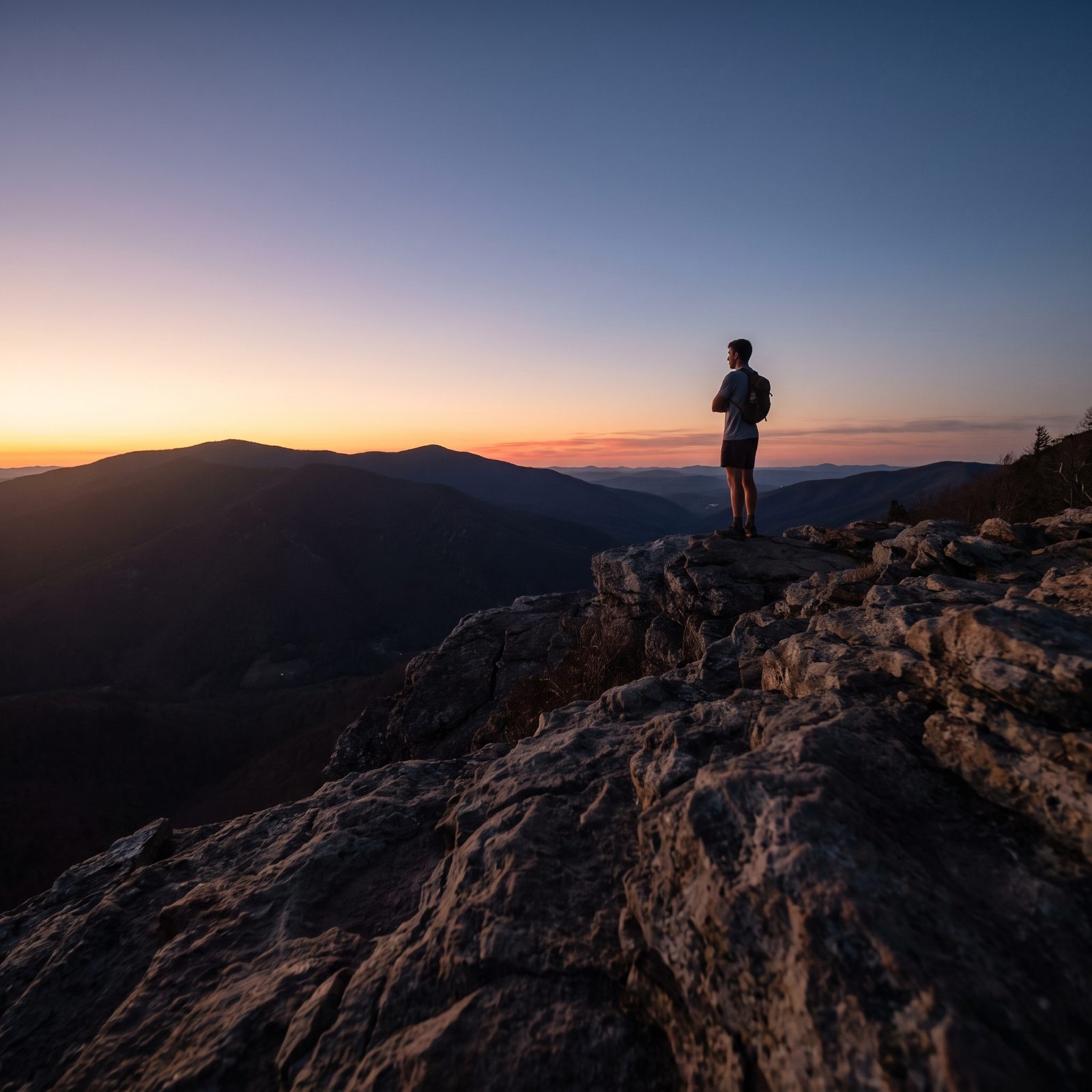
Day temperatures lie. The sun goes down and a comfortable 70-degree afternoon can shed twenty or thirty degrees in an hour, especially up high or out in the desert.
Someone standing at an overlook in a t-shirt as the light fails, with nothing stuffed in the pack, is about to learn that on the walk back. That extra layer, the one that felt like dead weight at noon, is the whole difference between a pleasant evening descent and a cold, shivering fumble by headlamp.
15. Visitors Are Entering a Slot Canyon With Rain Nearby
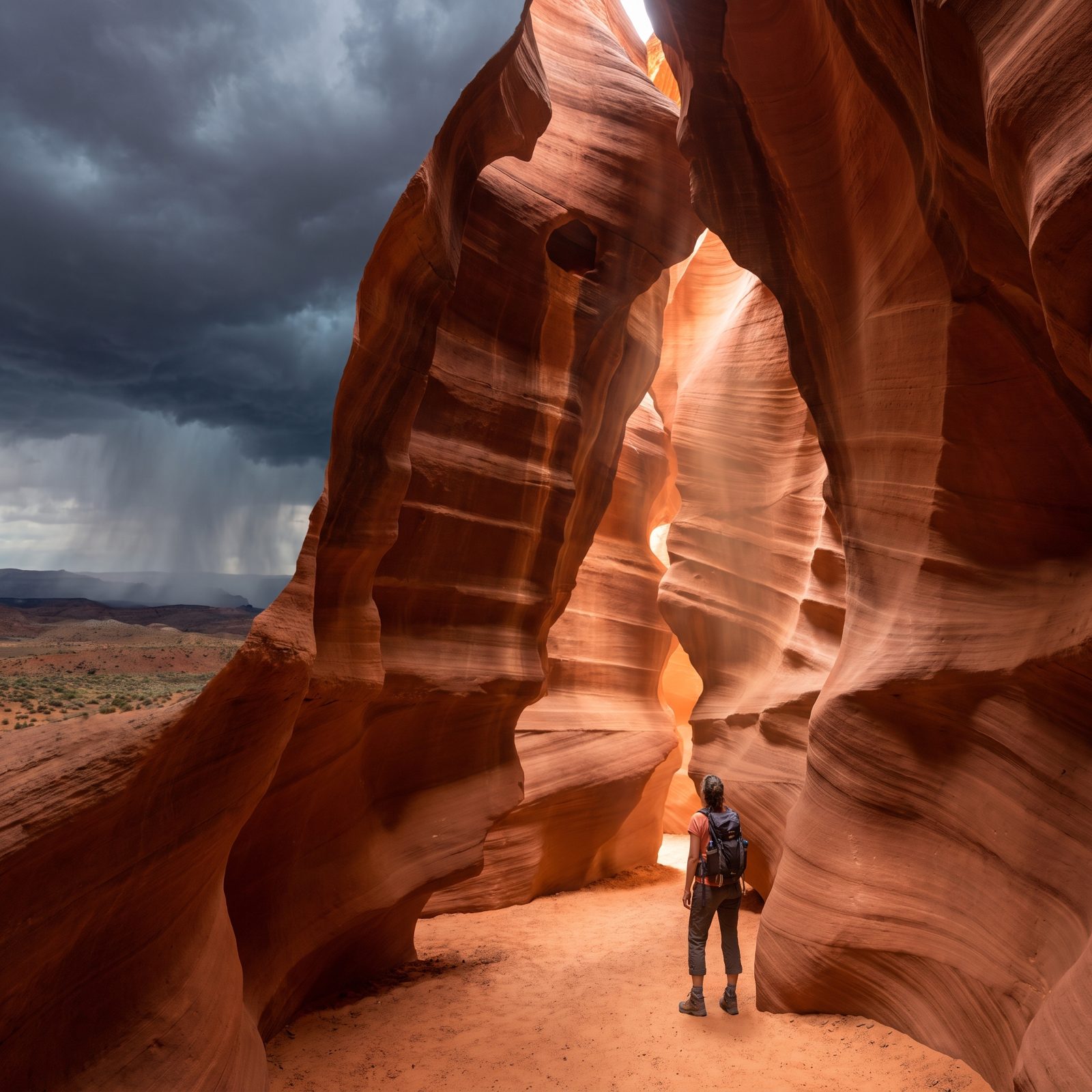
Slot canyons might be the most dangerous beautiful places in the whole park system. The walls that make them worth the trip are the exact thing that makes them deadly.
Here’s what rangers know that casual visitors don’t: the rain doesn’t have to be falling on you. A storm ten or twenty miles away, dumping on higher ground, can send a wall of water, mud, and debris funneling down a slot with almost no warning. Blue sky overhead means nothing.
In a slot canyon, the weather you need to worry about is the weather you can’t see.
Check the regional forecast, and check the watershed above the canyon too. When flash flood watches are posted, the answer is simple. Not today.
14. A Group Continues Toward Exposed Ground During Thunder
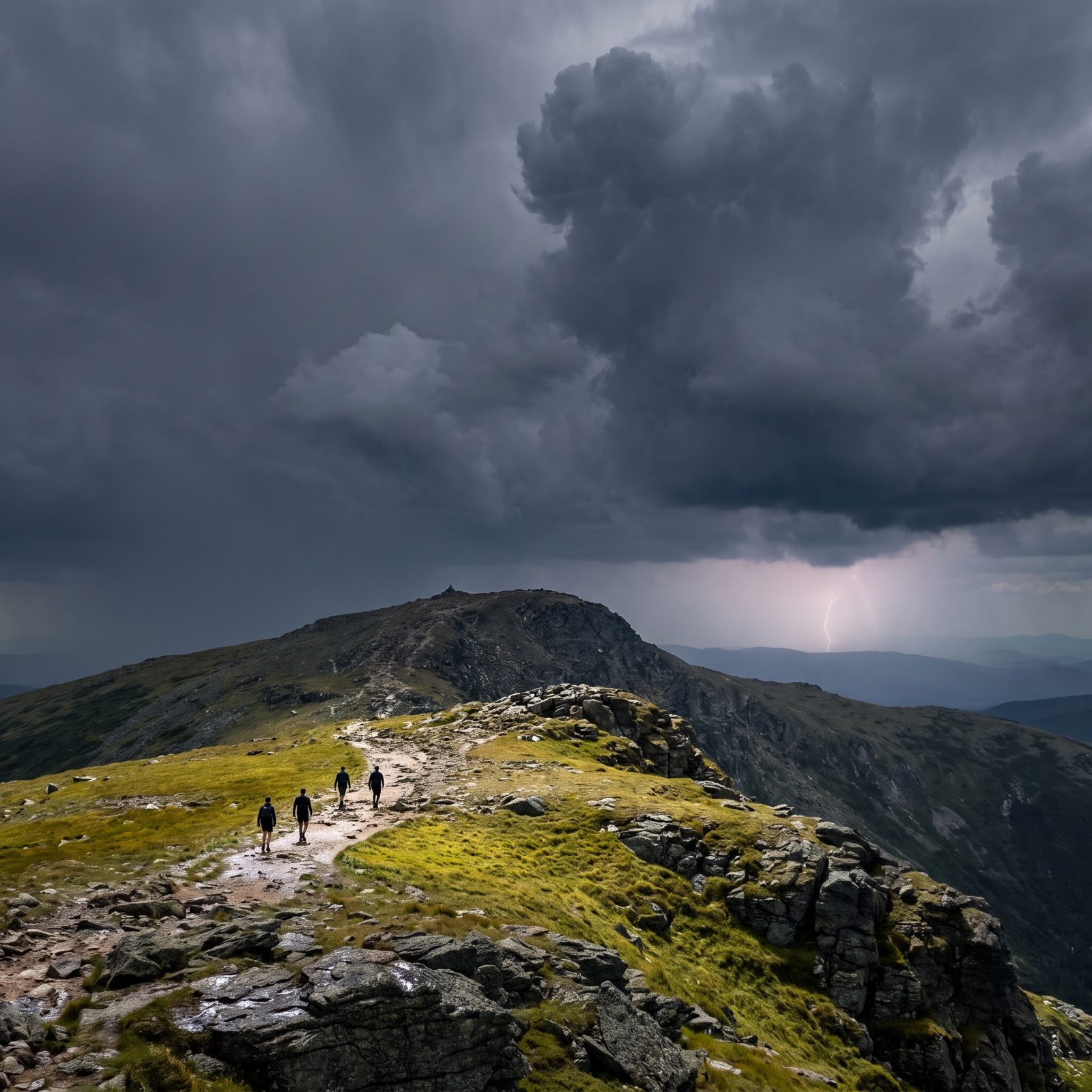
Thunder is the countdown. If you can hear it, the storm is close enough to hurt you, and climbing toward the one high, bare, exposed spot around is the exact opposite of what a body should be doing.
Above treeline, a person becomes the tallest thing for a long way. Rangers tense up when a group keeps pushing for the summit while the sky growls, because the urge to just finish runs strong and the physics couldn’t care less about anyone’s summit goals. The peak will still be there next week. Turn around, get low, get off the ridge.
13. Someone Approaches Wildlife While Watching a Screen
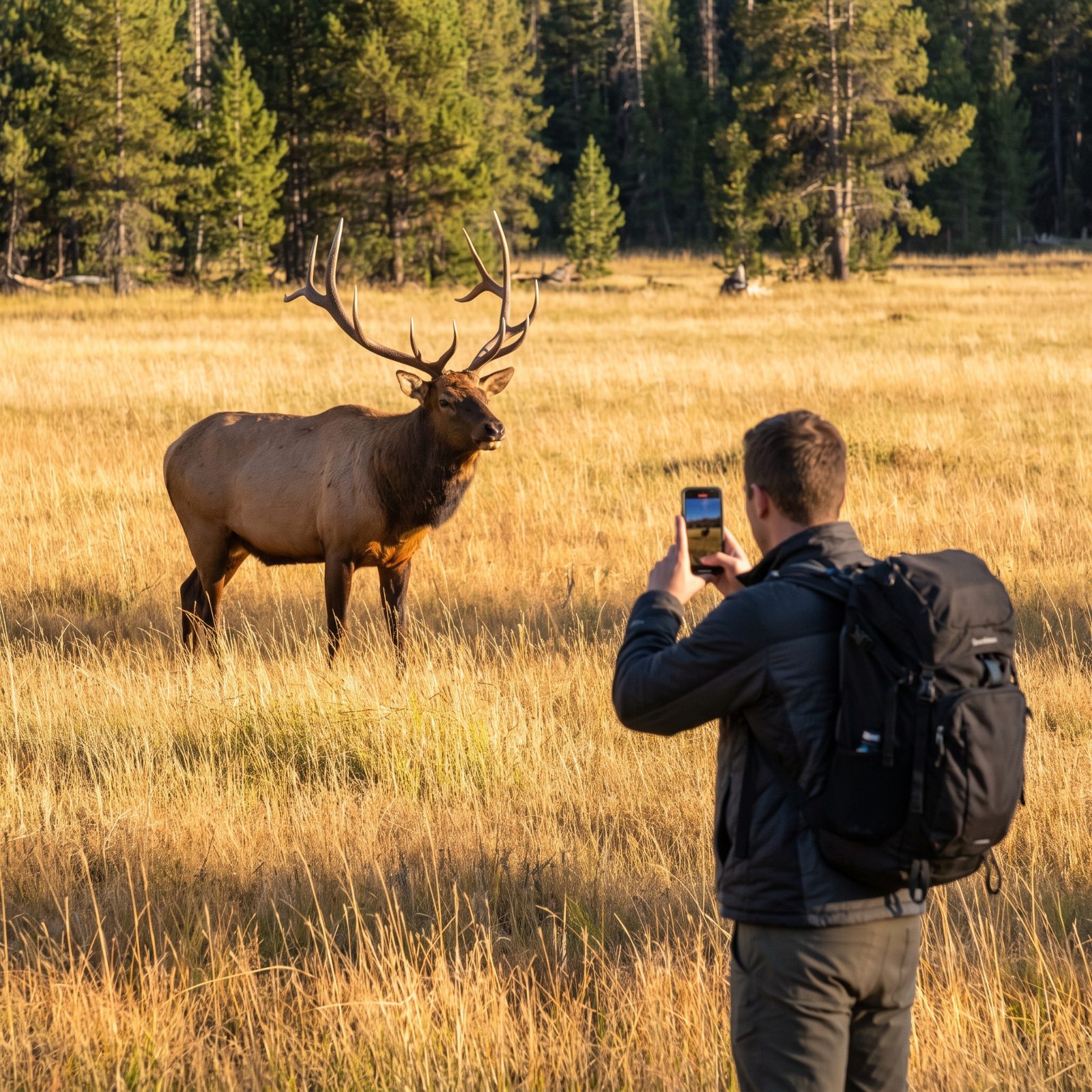
A screen flattens distance. Through a phone, a bison or a bull elk looks small and calm and far away, so people drift closer and closer to fill the frame without ever really looking at the animal.
And that’s the danger. The person watching the screen isn’t reading the animal’s body language — the pinned ears, the lowered head, the shift of weight that says back off. Wildlife gives warnings. You have to be looking at the animal, not the camera, to catch them.
12. A Parent Places a Child Between Adults and a Wild Animal
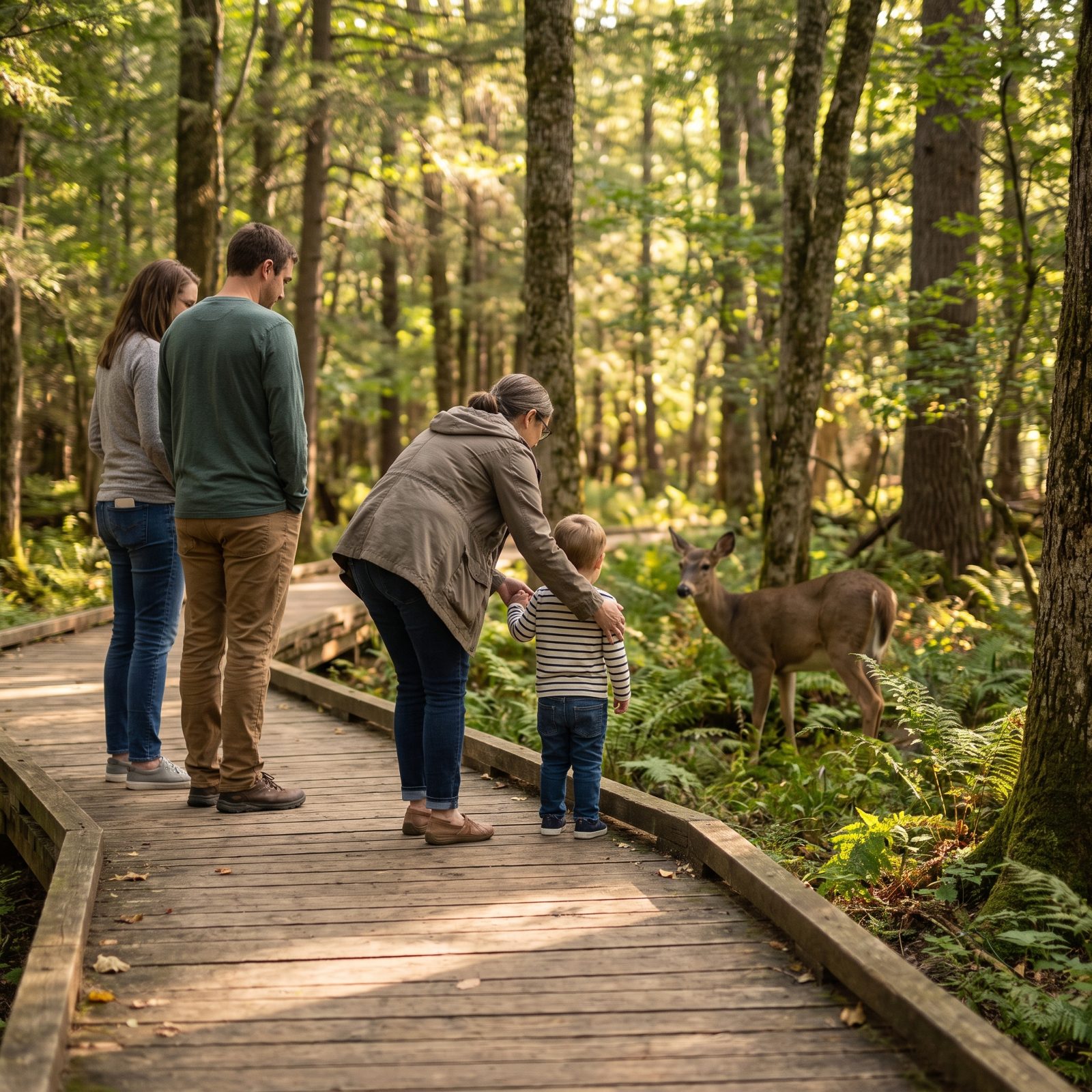
It happens with the best intentions. The adults want the photo, so the kids get nudged up front, closer to the deer or the elk or the bear cub, right into the space the animal considers its own.
A child is smaller, quicker to startle, less predictable, and less able to read a dangerous moment or get clear of one. Putting the most vulnerable person nearest the animal flips every bit of safety logic on its head. Rangers see this and move fast, because wild animals react to small, quick, unpredictable movement in precisely the way you don’t want.
11. A Dog Is Straining Toward Wildlife at the End of a Leash
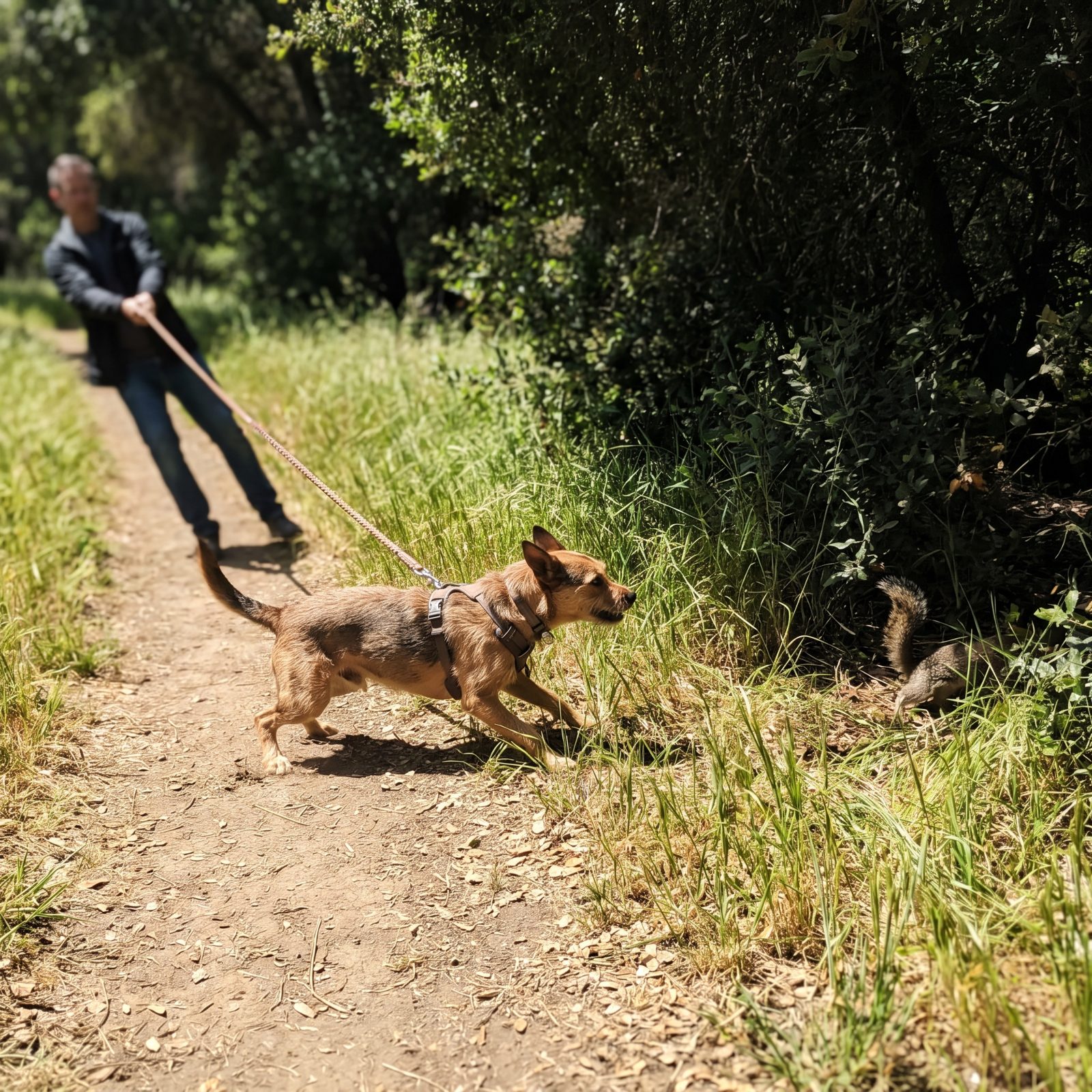
A dog pulling toward the brush is reading something the owner can’t see yet. Could be a deer. Could be a coyote. Could be something that fights back.
A barking, lunging dog reads as a predator to wildlife and as prey to the bigger animals — a bad hand to hold either way. The dog can provoke a charge, slip the leash in the excitement, and lead a defensive animal straight back to its owner. So keep the leash short, keep tight control, and read the dog, because the dog noticed the problem first.
10. Food Is Visible Inside an Unattended Tent
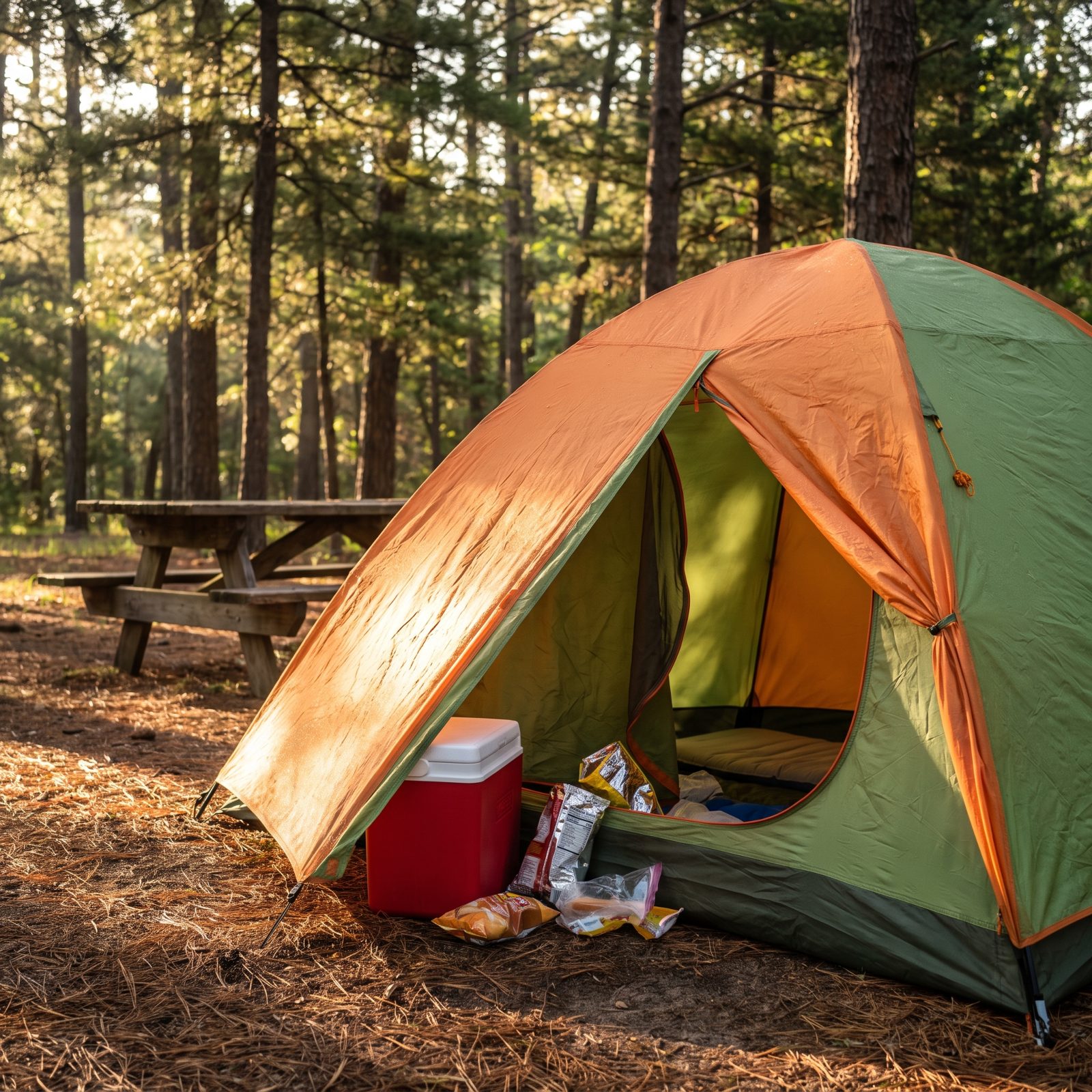
A tent is a thin wall, not a vault. To a bear, the smell of a granola bar through nylon is an open invitation, and food left out in an unattended tent is a problem just waiting for its hour.
The damage runs both ways. The camper loses gear and maybe walks into a dangerous encounter, but the bear usually loses more. An animal that learns tents mean food becomes a threat to every camper after it, and those bears frequently end up removed or killed. Lock food in a bear box, a canister, or the vehicle. Never the tent.
9. Visitors Step Around a Closure Barrier Instead of Turning Back
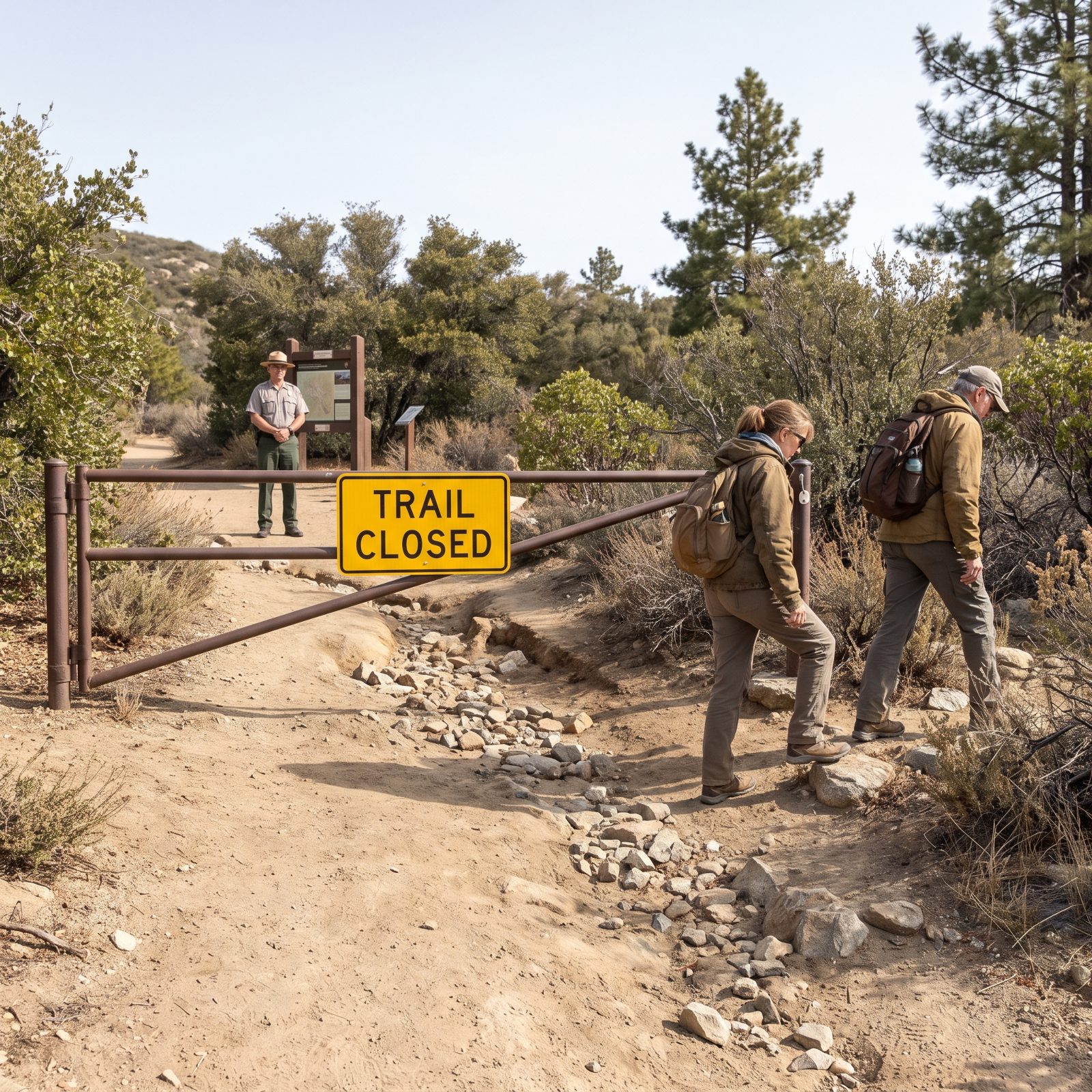
Closure signs don’t go up for decoration. Rangers put them where the ground has already failed — a slope that gave way last week, a bridge pulling off its footings, a bear working a carcass thirty yards in. A barrier is a record of something that already went wrong once.
So when someone slides around the gate with a shrug, the ranger reads it instantly. It’s not the rule-breaking that worries them. It’s the assumption underneath: the sign is for other people, less careful ones. That confidence is exactly the thing that turns a closed trail into a rescue.
8. A Group Leaves the Marked Trail to Follow an Informal Footpath
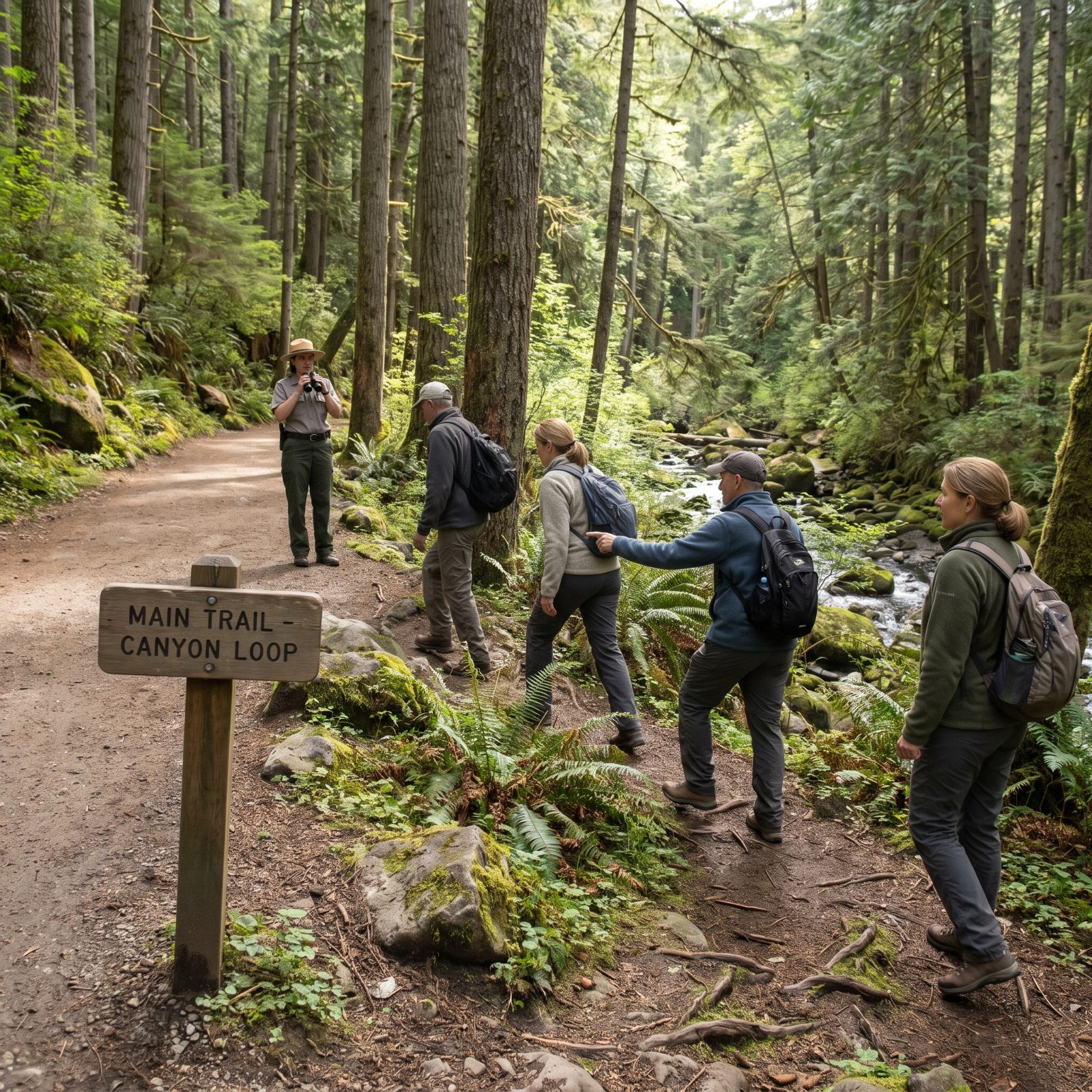
Every popular overlook has them: worn dirt scars peeling off the real trail, carved by people chasing a better angle or a shortcut back. Rangers call them social trails. They lead somewhere, most of the time. The problem is where.
These paths dead-end at crumbling edges, cliff bands, loose scree. They look like trails because feet made them, but nobody surveyed them and nobody maintains them. A group filing happily down one usually believes the worn dirt means someone vetted it. Nobody did. It just means other people made the same guess first.
7. Someone Climbs Over a Guardrail for a Photograph
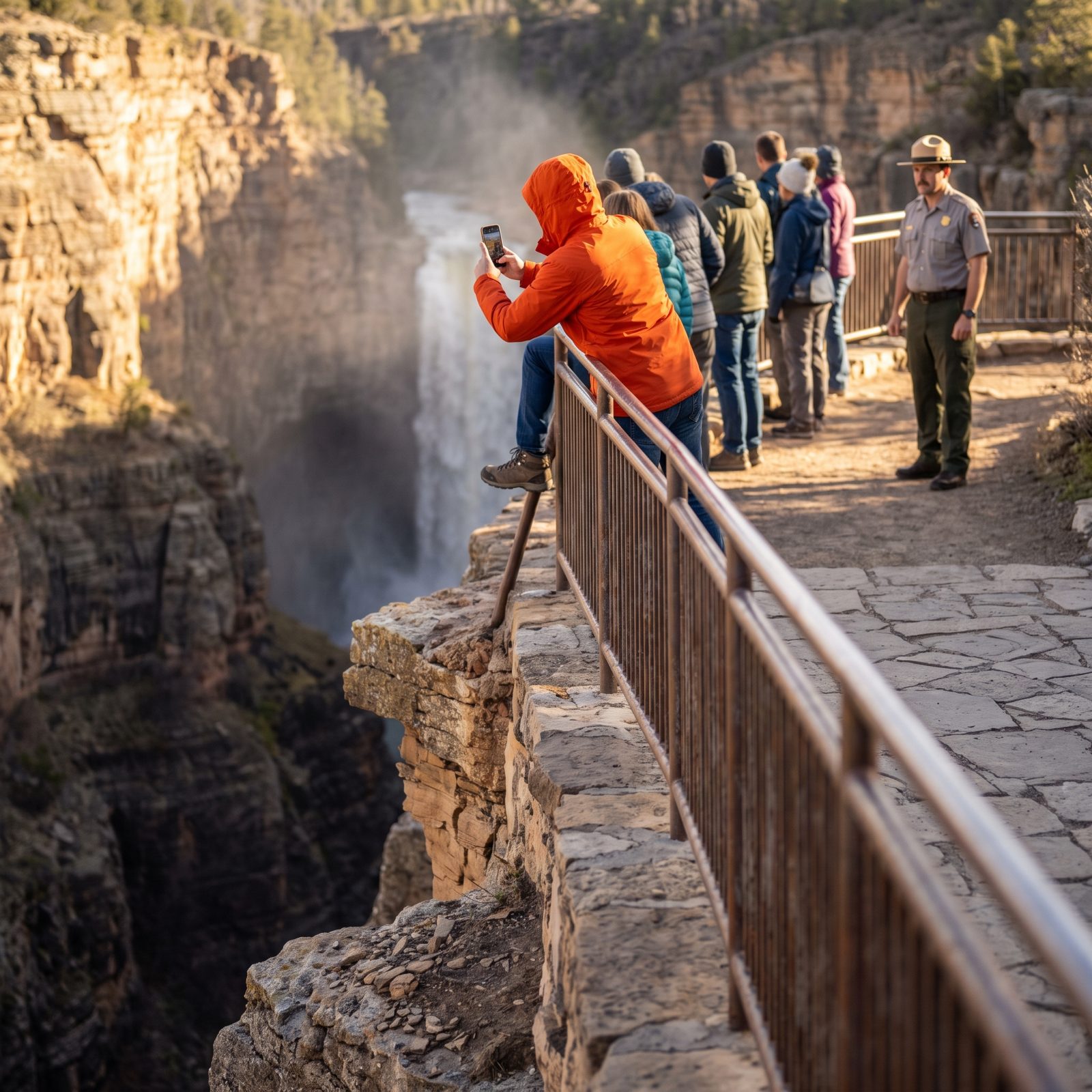
The railing marks where the known-safe ground stops.
Rangers see the over-the-rail photo so often it has a grim rhythm to it. The person focuses entirely on the frame, on the shot, on getting the drop behind them — and stops tracking their own feet. Wet rock, loose gravel, a gust they didn’t feel coming.
Edges near waterfalls and canyon rims run slicker than they look from the pavement, polished by spray and years of boots. The guardrail isn’t blocking the view. It’s standing on the last few feet you can trust.
6. A Visitor Walks Backward Near an Overlook Edge
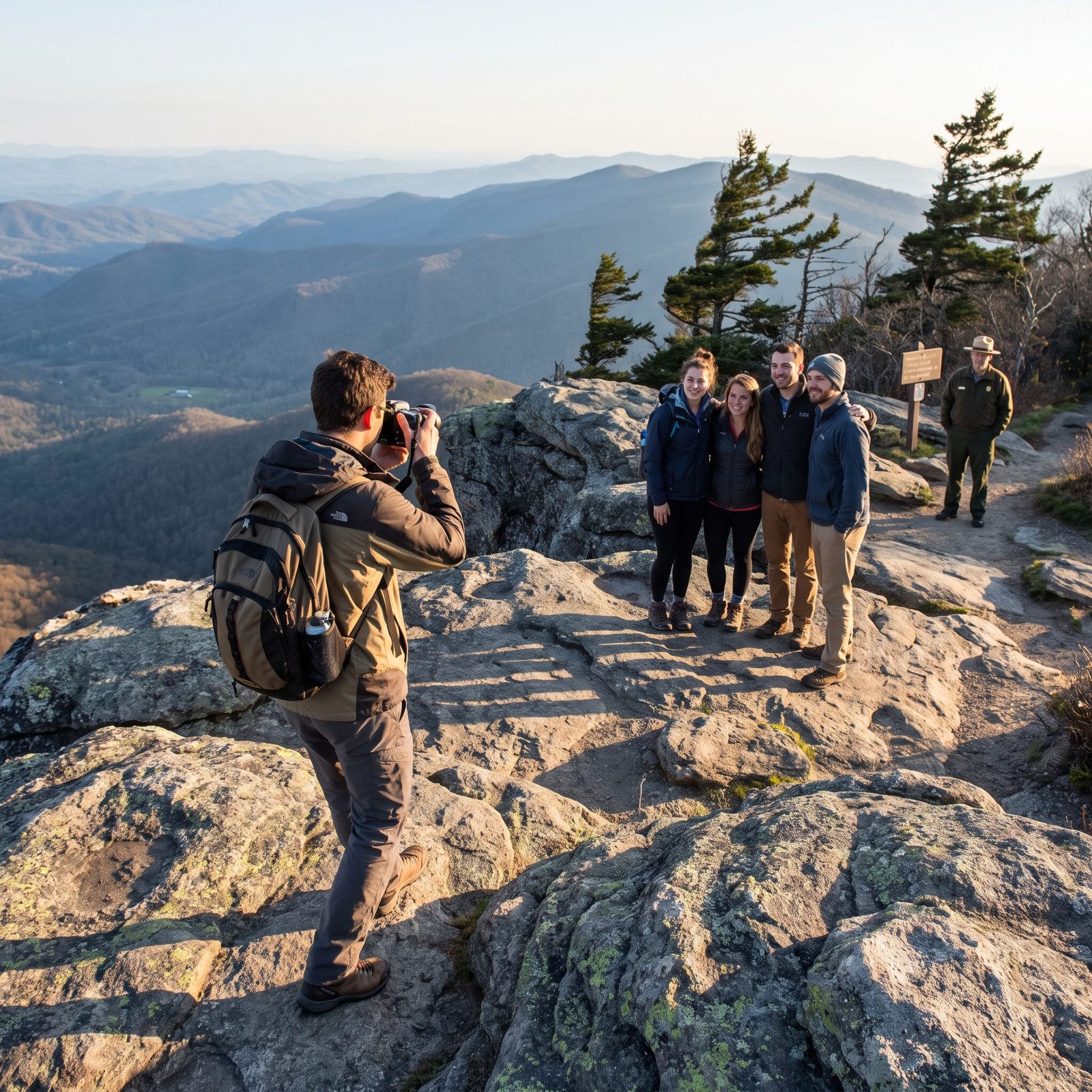
This one is almost always innocent. Somebody wants the perfect shot of the overlook, so they step back to frame the view, eye pressed to the viewfinder. Simple enough. Except they’re doing it on uneven rock near a rim they can no longer see.
Rangers flag it because the brain attends to exactly one thing well at a time, and right now that thing is the framing, not the ground. The feet go on autopilot at the precise moment the terrain demands attention.
5. Children Are Running Ahead Where Adults Cannot See Them
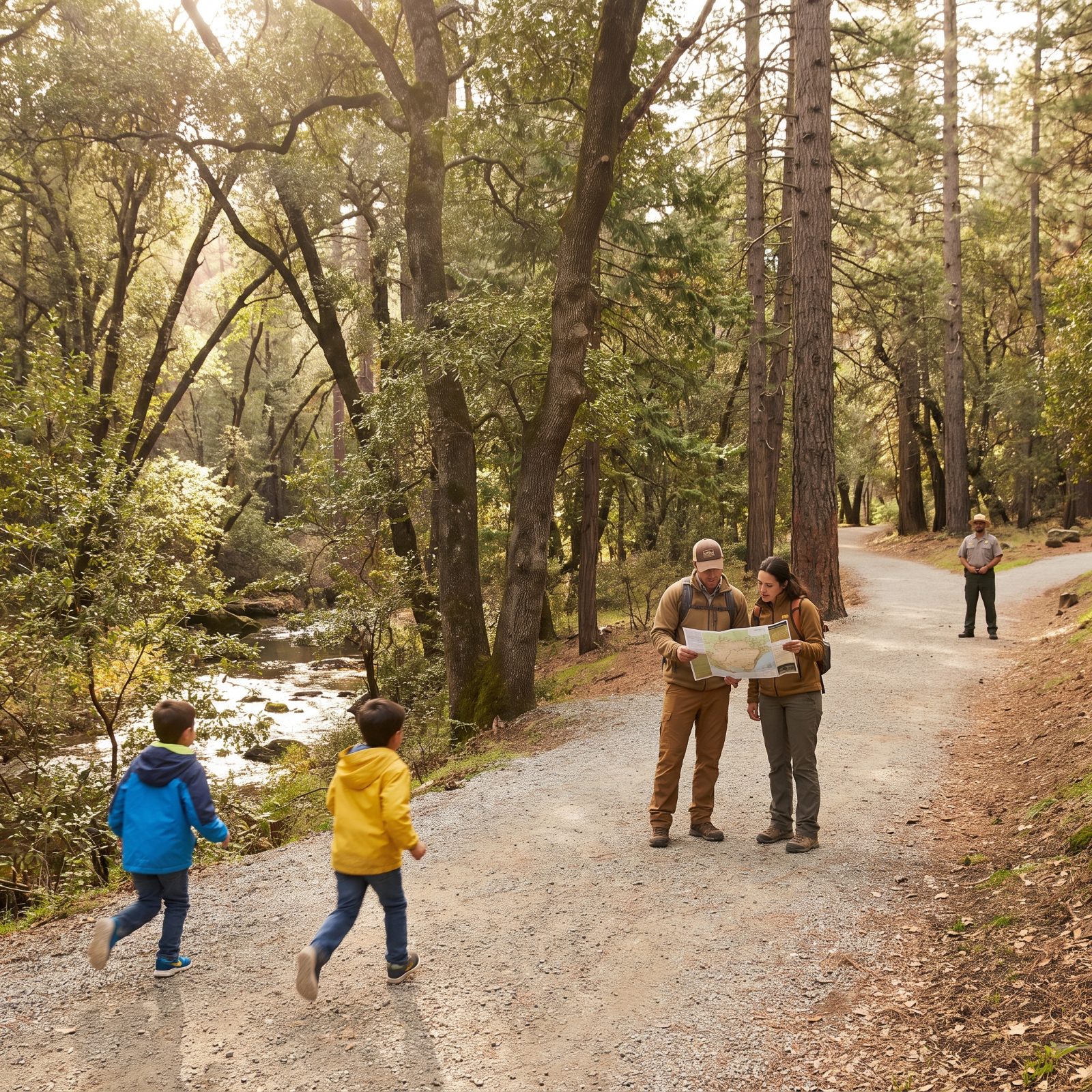
Kids run. That’s not the warning. The warning is the gap — the moment the adults slow to read a map or take a photo and the children keep going around the bend, out of line of sight.
Rangers know what sits just past those bends in a lot of parks. An unfenced creek crossing. A short drop to rock. A junction where a wrong turn means a long search. A child covers that distance in seconds, and the cost of a thirty-second lapse scales badly out here.
4. A Swimmer Enters Cold Water Without Testing the Temperature
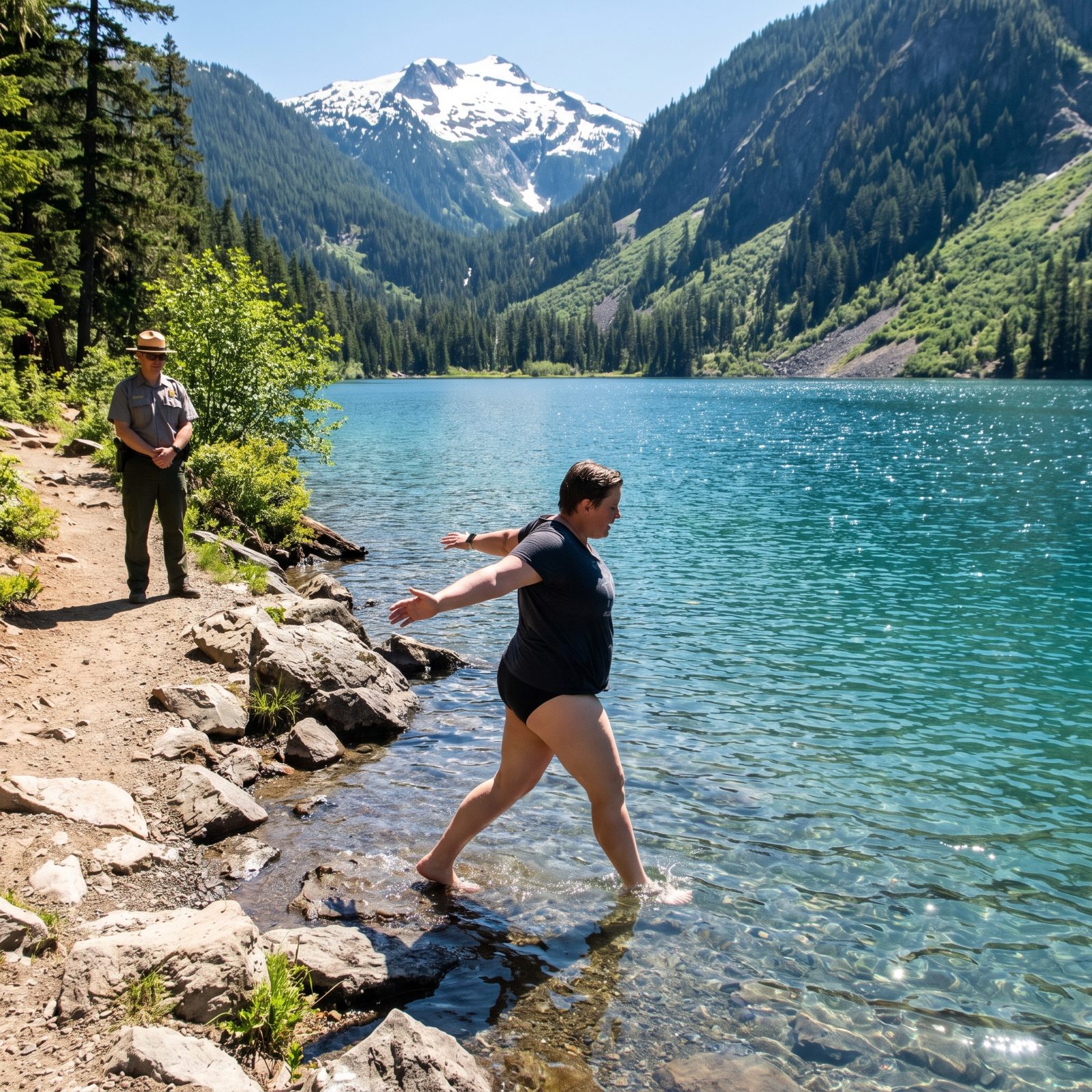
A lake can look like bathwater and run ice cold a foot below the surface, especially where snowmelt feeds it. Rangers watch for the confident wade-in — the person who treats the water like a backyard pool and plunges straight to swimming depth.
Cold water does something fast and sneaky to the body. The first gasp reflex can pull water into the lungs. Within minutes cold muscles stop cooperating, and strong swimmers lose the use of their arms and legs long before they expect to. The failure is skipping the test. No toe in first, no slow entry, no sense of what they just stepped into.
3. A Boat Leaves Shore With Life Jackets Still Stowed
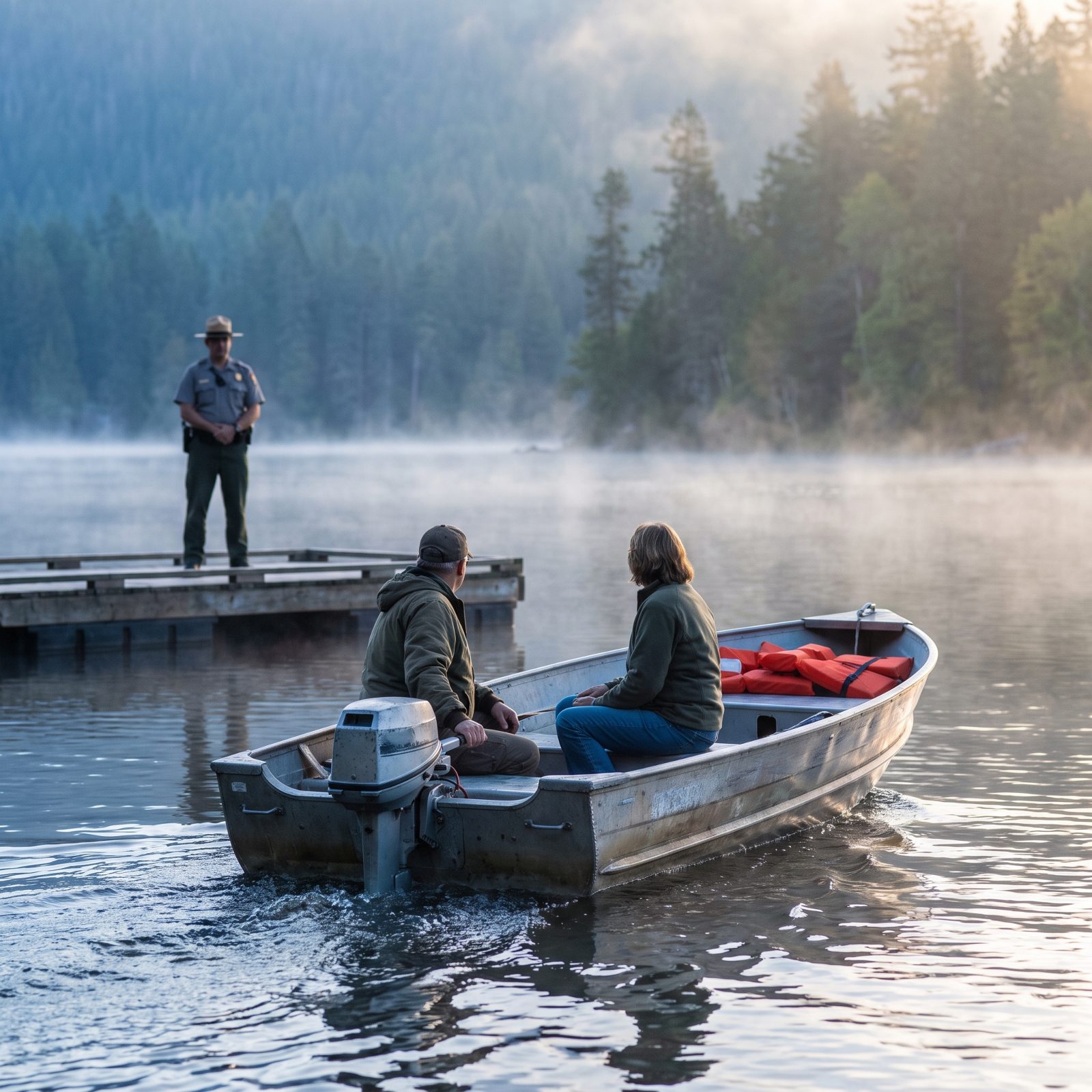
The jacket under the seat saves nobody.
Rangers and water patrols clock this in a glance: a boat idling away from the ramp with the life jackets visible but unworn, folded neat in the bow. The intent is usually fine — people plan to put them on if things get rough.
That plan has a flaw. Capsizes and falls overboard happen without warning, often in flat water, often from standing up to cast or move around. In the shock of a sudden dunk, nobody is calmly threading their arms into a jacket that just floated away. It works when it’s already on.
2. Alcohol Appears Before a Difficult Hike or Water Activity
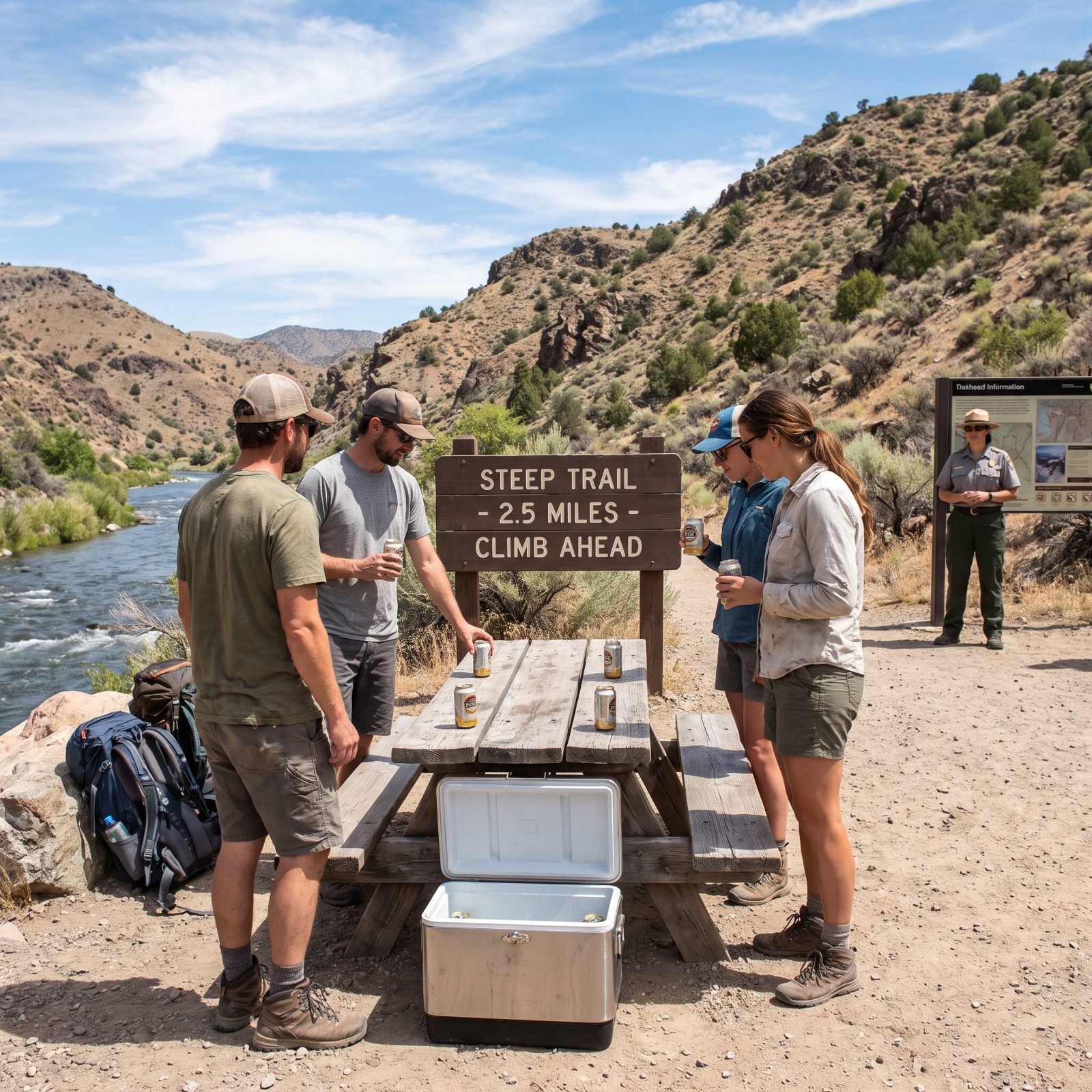
A cold drink at the trailhead feels earned before the work even starts. Rangers don’t begrudge anyone a beer. What they watch for is the timing — drinking that comes before the steep climb, the paddle, the swim, not after.
Alcohol dulls the exact systems the outdoors leans on. It throws off balance and judgment, speeds dehydration, and masks the early signals of heat trouble and cold. On a hard trail in summer sun, those are the warnings that keep people alive. Blunt them before the effort begins and you’ve set up a bad afternoon in slow motion.
1. A Vehicle Is Parked Where Flash Flooding Can Reach It
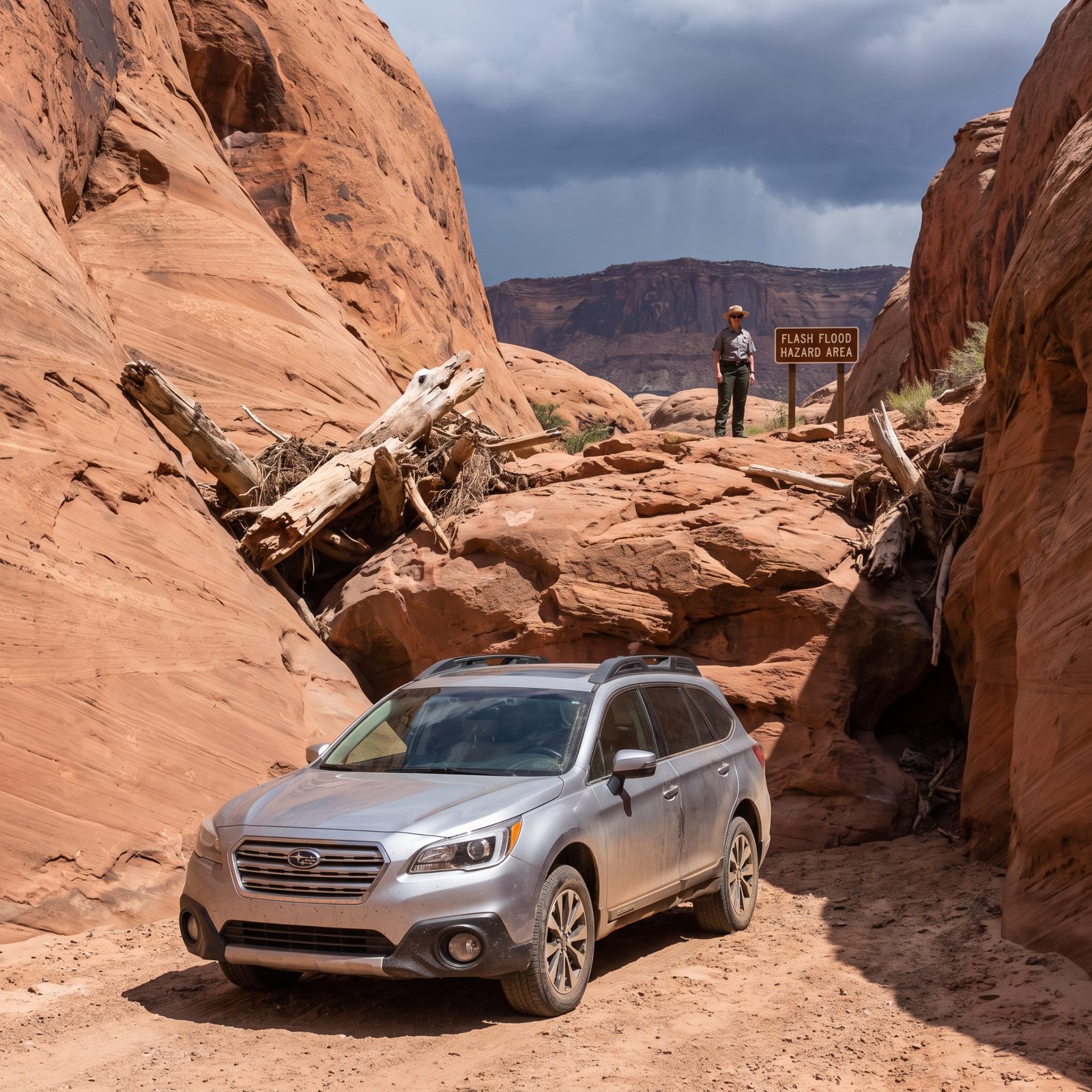
The sky overhead can be perfectly clear while a storm dumps rain twenty miles upstream. That’s the trap of desert canyons and washes, and rangers read the clues the drivers miss.
They look for the debris line — the snagged branches and mud stains high on the canyon walls that mark how deep past floods ran. A car parked below that line, on sand in a dry streambed, is parked in the floodway. Flash floods arrive as a wall of water and move faster than anyone can drive out. The dry ground is only borrowed.