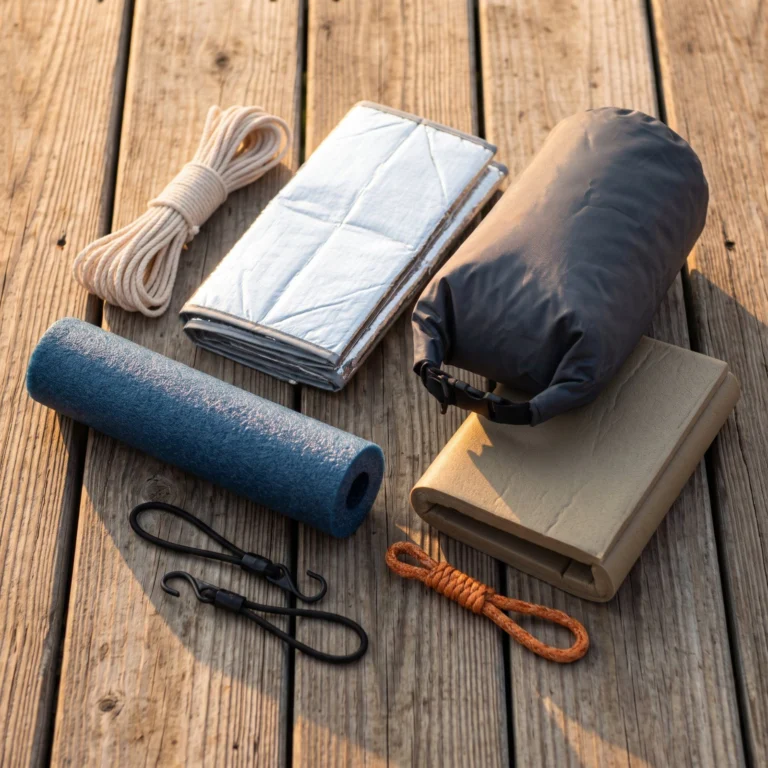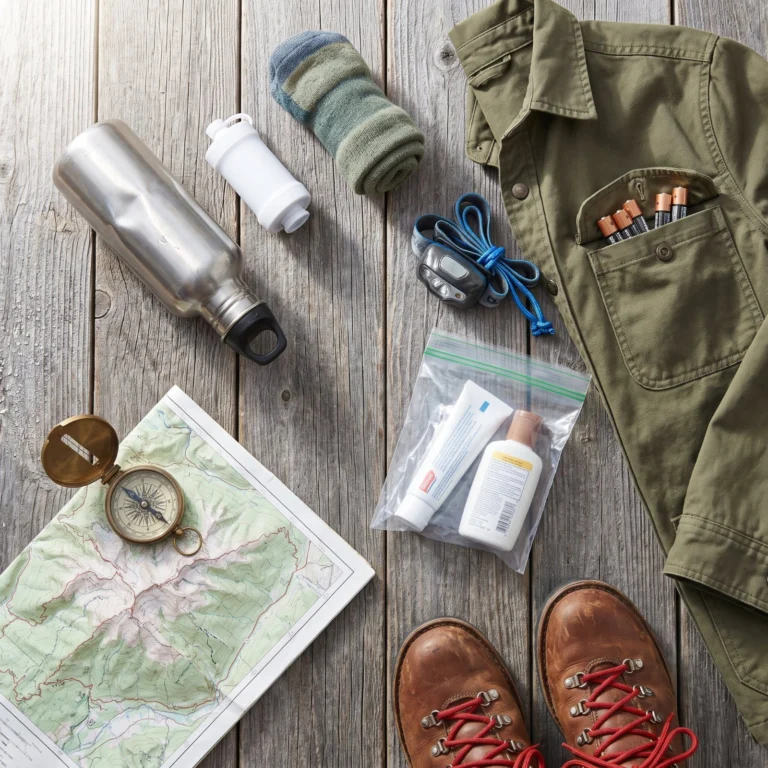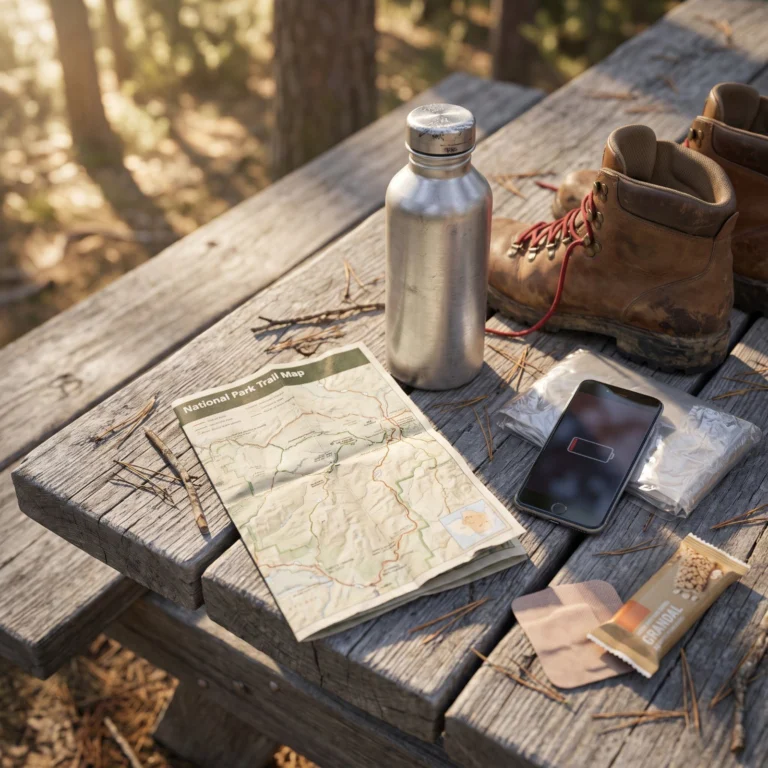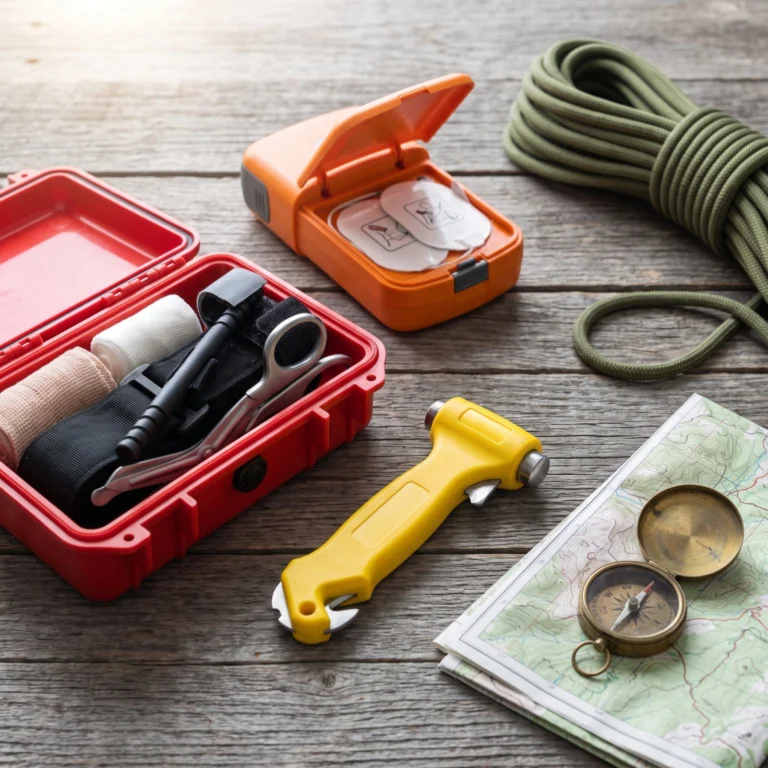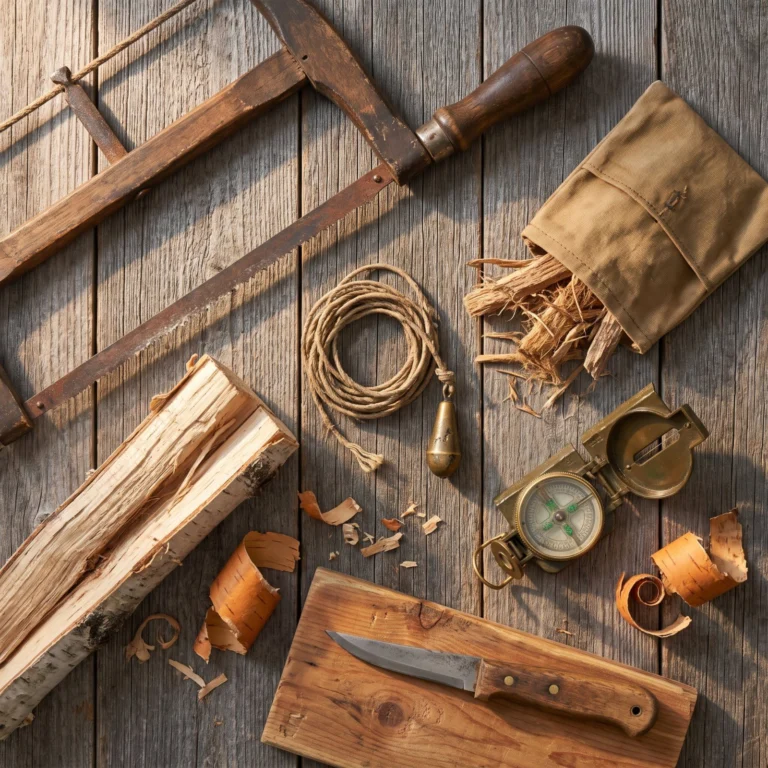
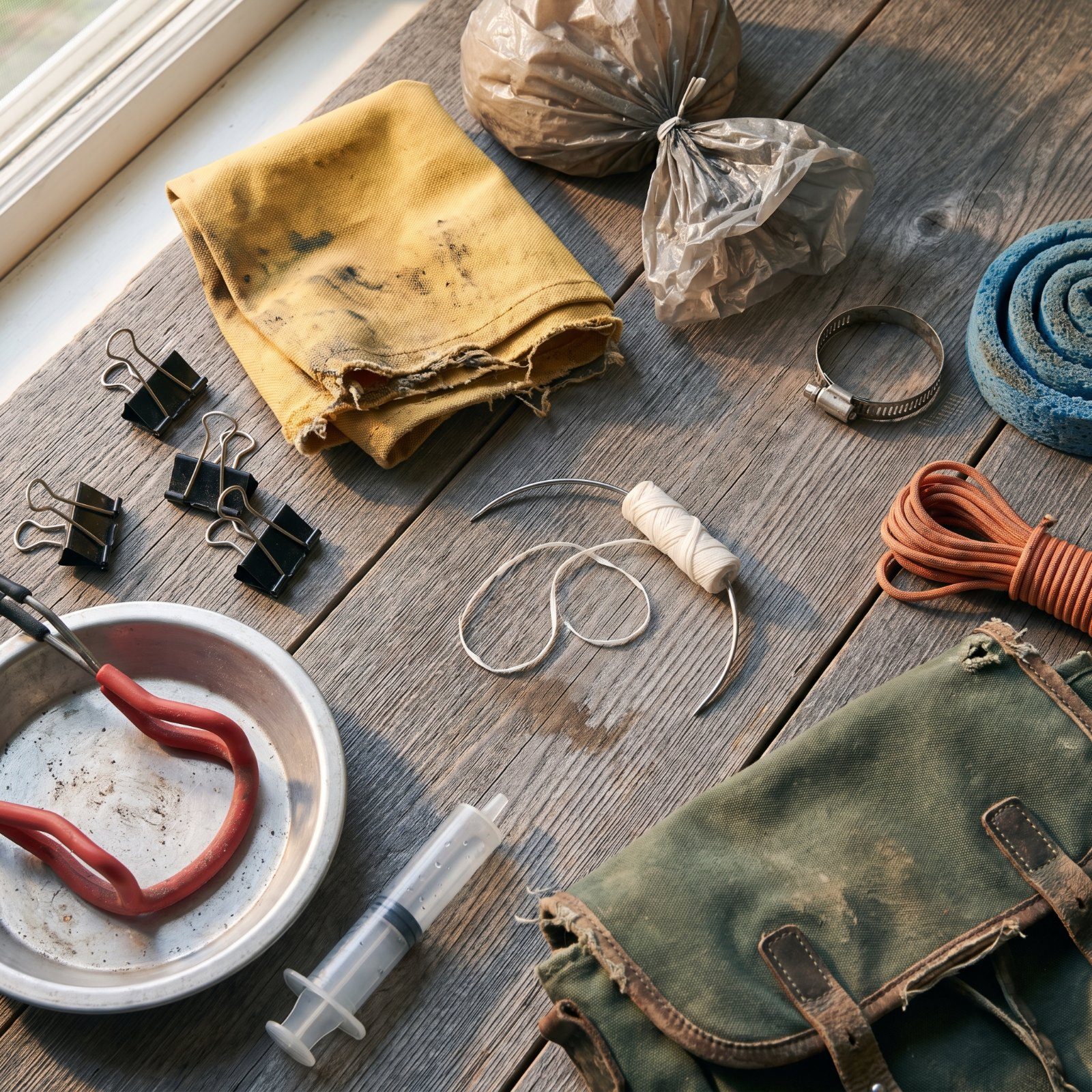
A torn pack strap at mile nine will teach you something about regret. So will a stove that tips over in slushy snow and spills your only hot dinner into the dirt. The gear that saves a trip is rarely the gear on the end cap at the outfitter. It’s the odd little thing borrowed from a hardware aisle or a kitchen drawer, the one that earns its ounces ten different ways. These are the picks the folks with twenty seasons behind them keep tucked in a pack pocket, and most of them cost less than a fast-food lunch.
Please note that some of the images in this article were created with the assistance of AI.
44. A Curved Upholstery Needle Wound With Waxed Dental Floss
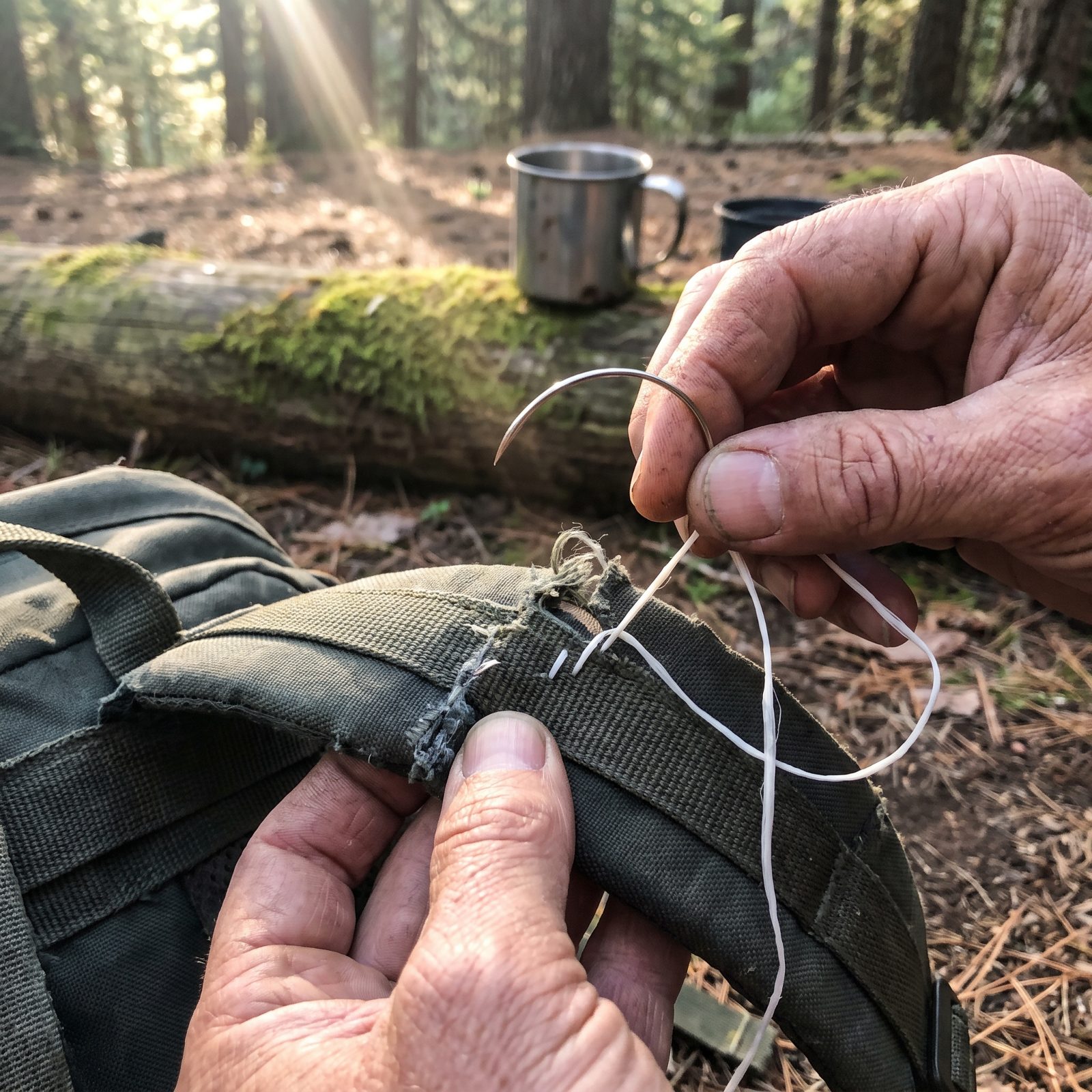
Straight needles are for people who sew flat things on a table. Out here, almost nothing you need to repair is flat. A curved upholstery needle lets you drive through heavy strap webbing, a pack’s hip belt, or a boot tongue without fighting to get the point back out the other side.
Thread it with dental floss instead of regular thread and the repair holds. Floss has absurd tensile strength for its weight, the wax keeps the stitch from slipping, and a travel container of it weighs nothing. The whole kit fits in a film canister.
43. A Paint-Strainer Bag That Pre-Filters Silt From Scooped Water
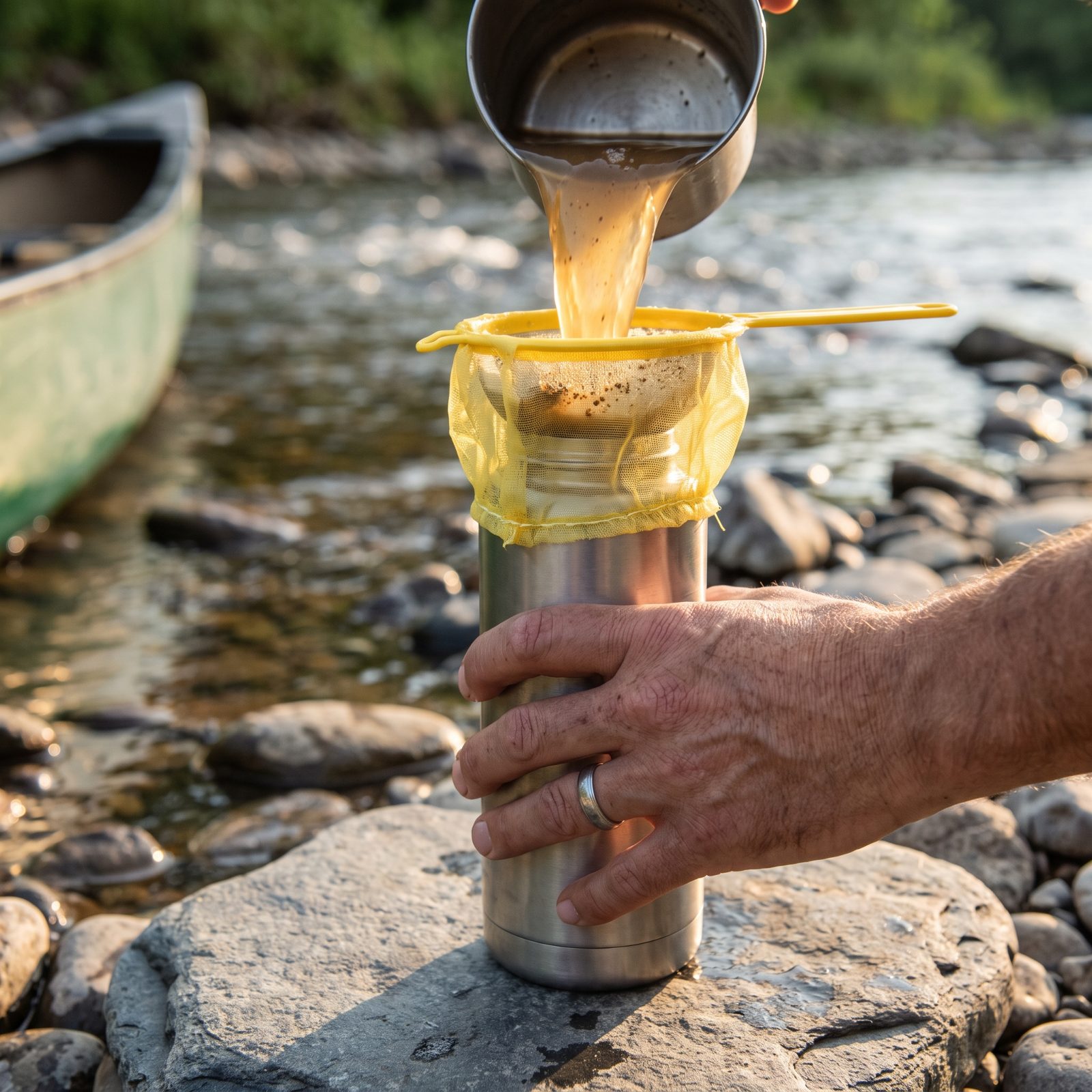
Your water filter has a nemesis, and it’s mud. Scoop from a silty tank or a trampled stock pond and that fine grit clogs the element fast — then you’re fieldstripping it with cold fingers while the drinkable water sits there waiting on you.
A yellow paint-strainer bag pulled over a handled kitchen sieve solves it for a few dollars. Rest the sieve on the mouth of your bottle with the bag’s elastic hem snug around the neck, pour the cloudy water through, and the worst of the sediment stays behind. Your filter lasts longer and flows faster. The bag weighs almost nothing and, slipped off the sieve, doubles as a mesh sack for airing out a wet dish rag.
42. Bread Bags That Turn Into Vapor-Barrier Socks
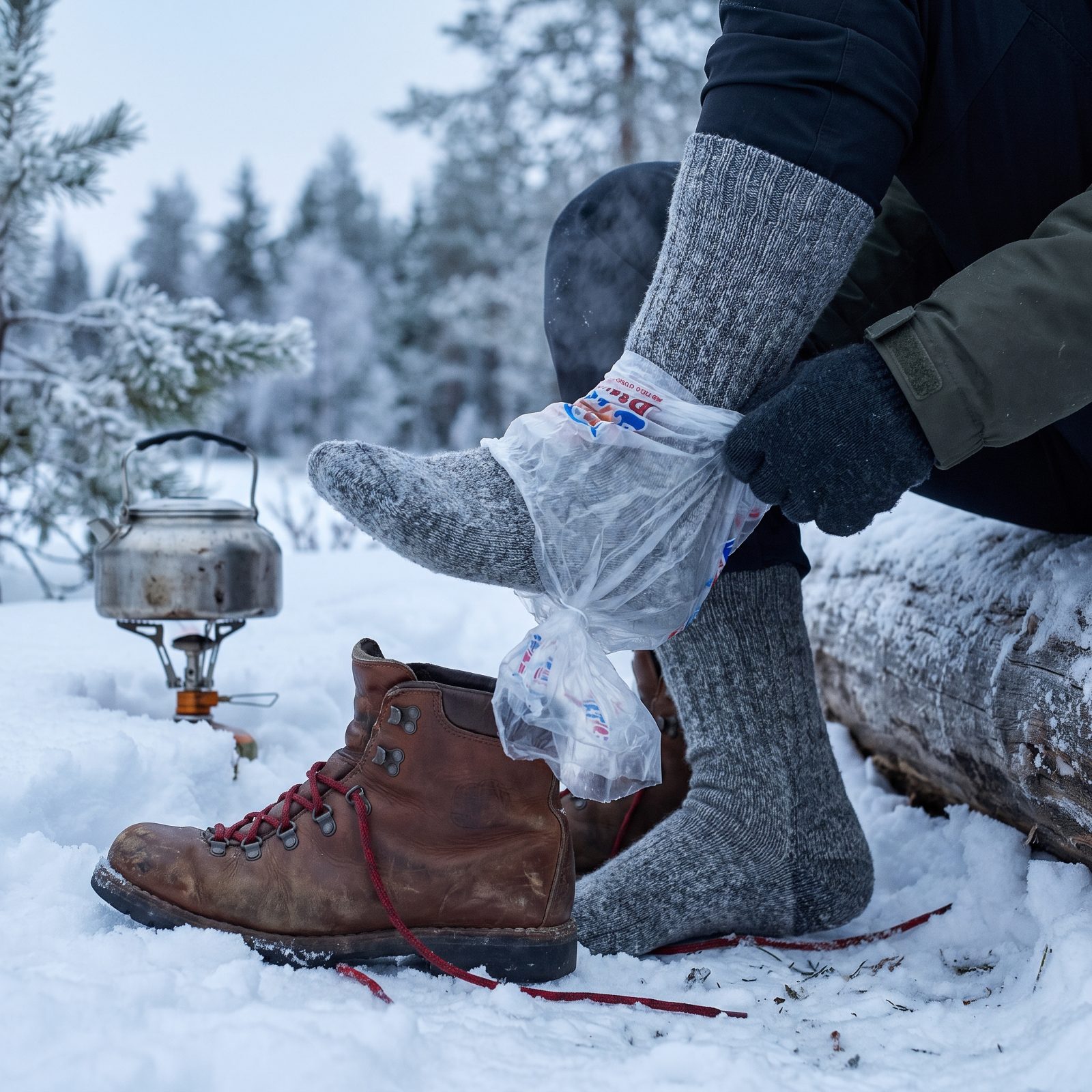
Cold wet feet have ended more trips than bad weather. The trick the old-timers use costs nothing: pull a thin plastic bread bag over your whole foot on top of a thin liner sock, then put your thick wool sock and boot on over that.
The bag traps your sweat inside instead of letting it soak into the boot’s insulation and leather. Your boot stays dry, which means it stays warm. Feels slightly clammy, sure. Clammy and warm beats dry and frostbitten every time, and this is a documented military and mountaineering trick, not a campfire rumor.
41. Binder Clips That Grip Tarp Edges Without Punching Holes
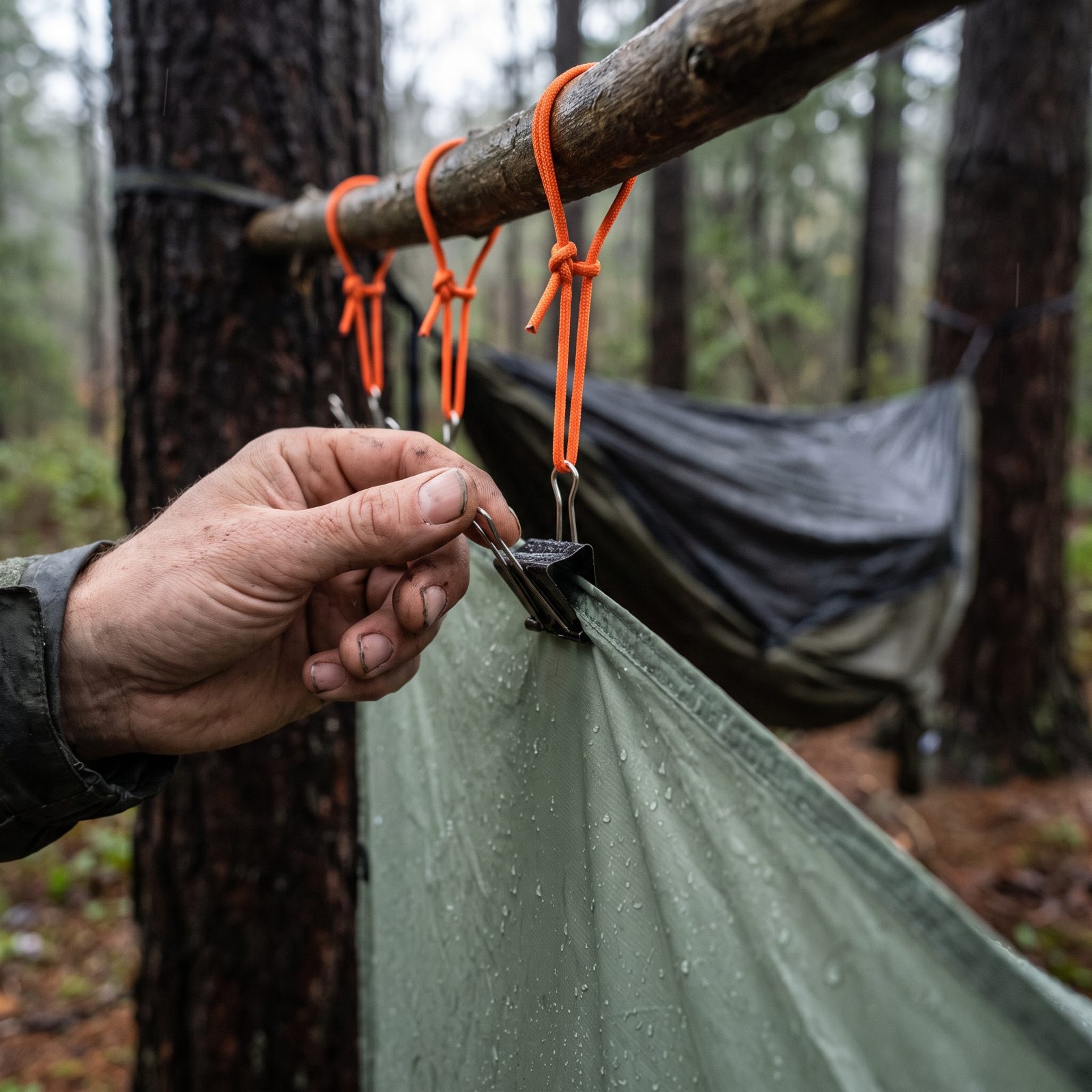
Every tarp eventually needs a tie-out where the manufacturer didn’t put a grommet. Punch a hole and you start a tear that grows all season. Or carry a few binder clips.
Clamp a few over the tarp edge and onto a stick lashed to a tree with paracord, and you’ve got a hold point anywhere you want it. Medium clips hold surprisingly hard. They also wrangle a sleeping bag closed for airing, pinch a map to a pack strap, and seal a chip bag so it survives the night.
40. A Stainless Hose Clamp That Splints a Cracked Tool Handle
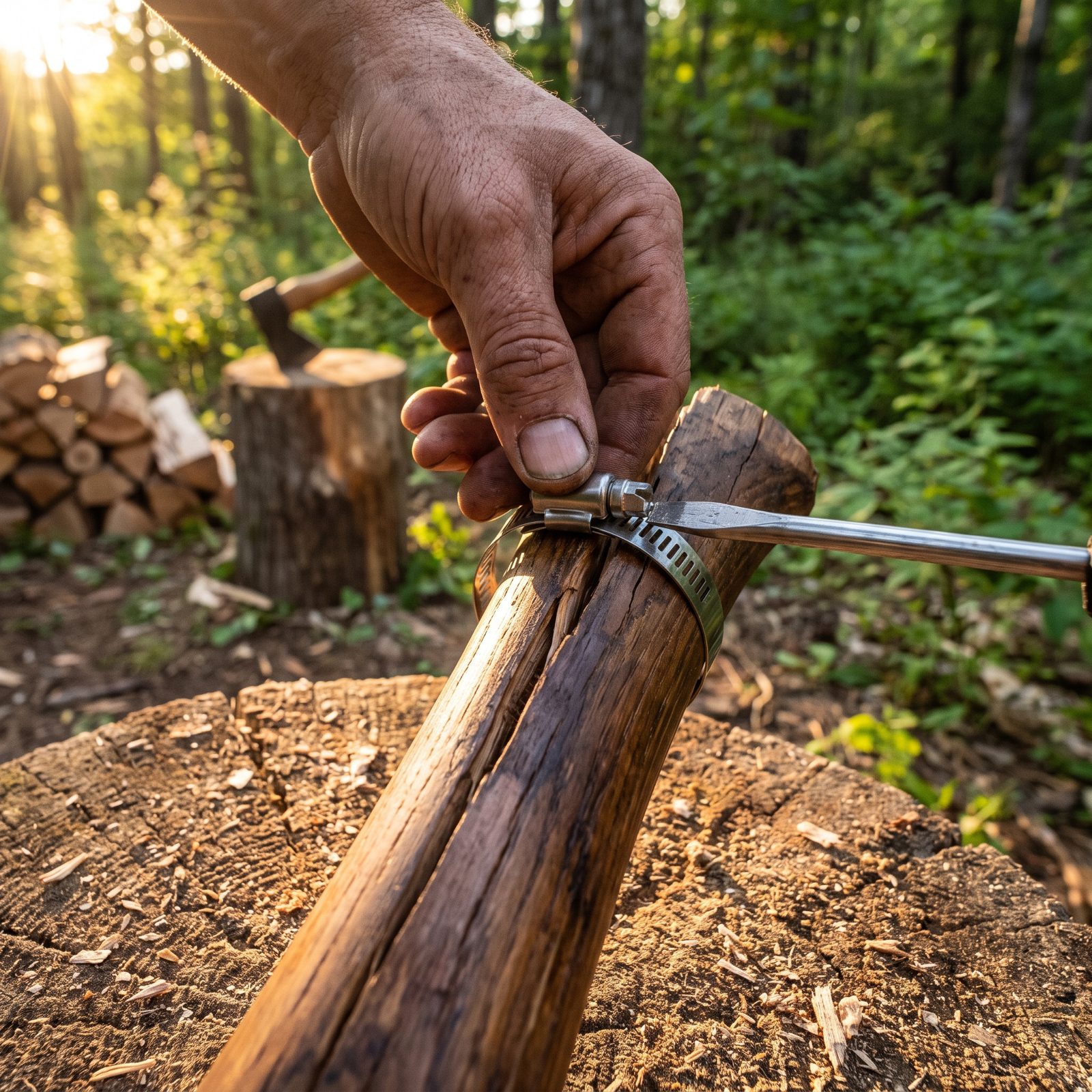
A split handle on your axe or folding saw is the kind of failure that turns useful tools into dead weight. Wrap a stainless hose clamp around the crack, cinch the worm gear down with a screwdriver, and you’ve got a splint that’ll hold for the rest of the trip.
Unlike tape or lashing, it bites into wood and actually clamps the split closed. One medium clamp lives in a side pocket forever and weighs next to nothing. It’ll mend a snapped trekking pole too, or secure a leaking hose on a camp water system.
39. A Disposable Shower Cap That Quarantines a Muddy Boot
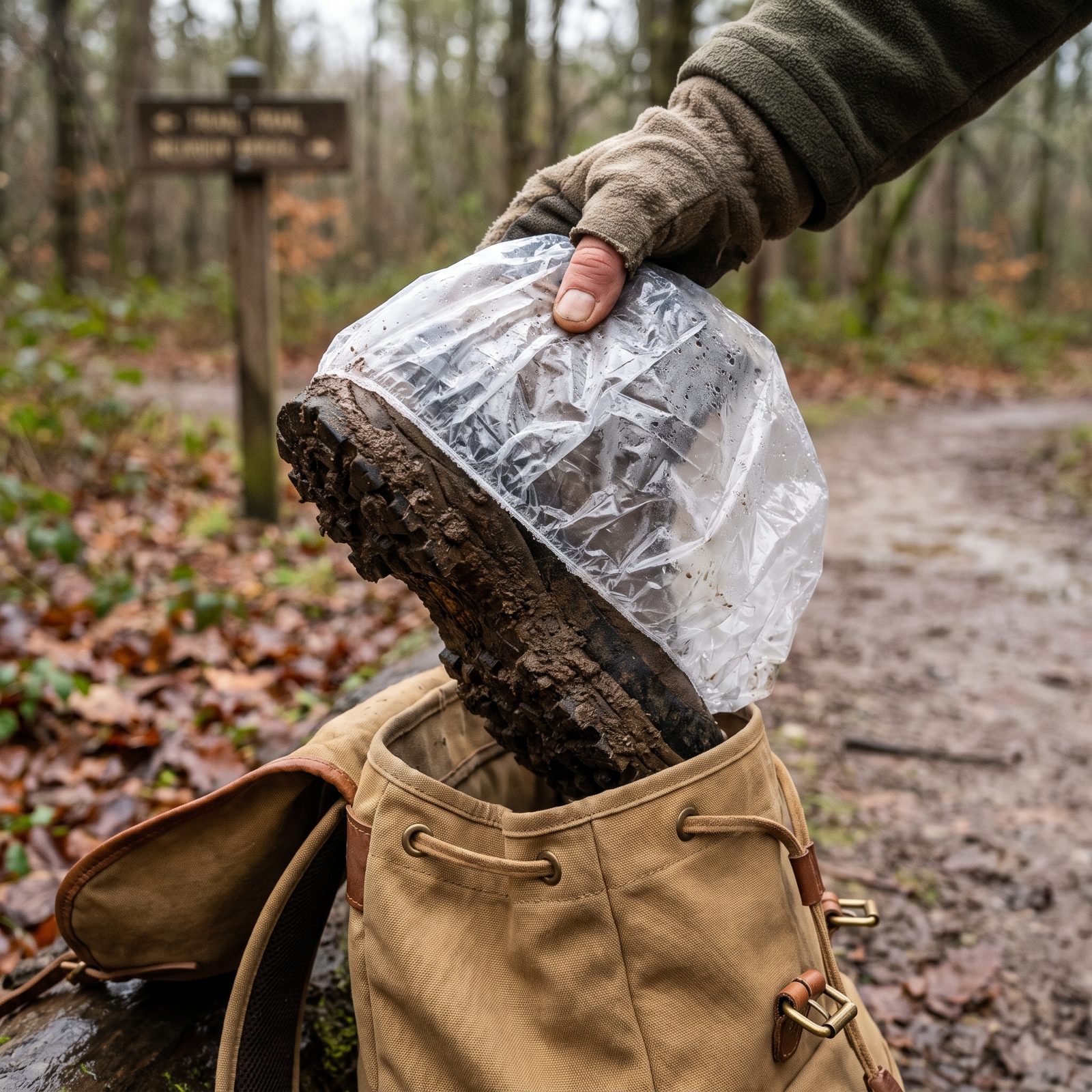
The problem with a soaked, mud-coated boot or a filthy water sandal is simple: it contaminates everything it touches inside your pack. A disposable shower cap, the kind hotels leave by the sink, stretches right over the mud-caked sole and traps the grime before the boot goes into the pack.
They pack flat, weigh almost nothing, and cost a few cents each. One holds a muddy boot. One covers a camp stove to keep soot off your gear. One keeps a fishing reel dry in a downpour. Carry three and forget about them until the day they save your sleeping bag.
38. A Silicone Jar Gripper for Hot Pots and Welded-Shut Lids
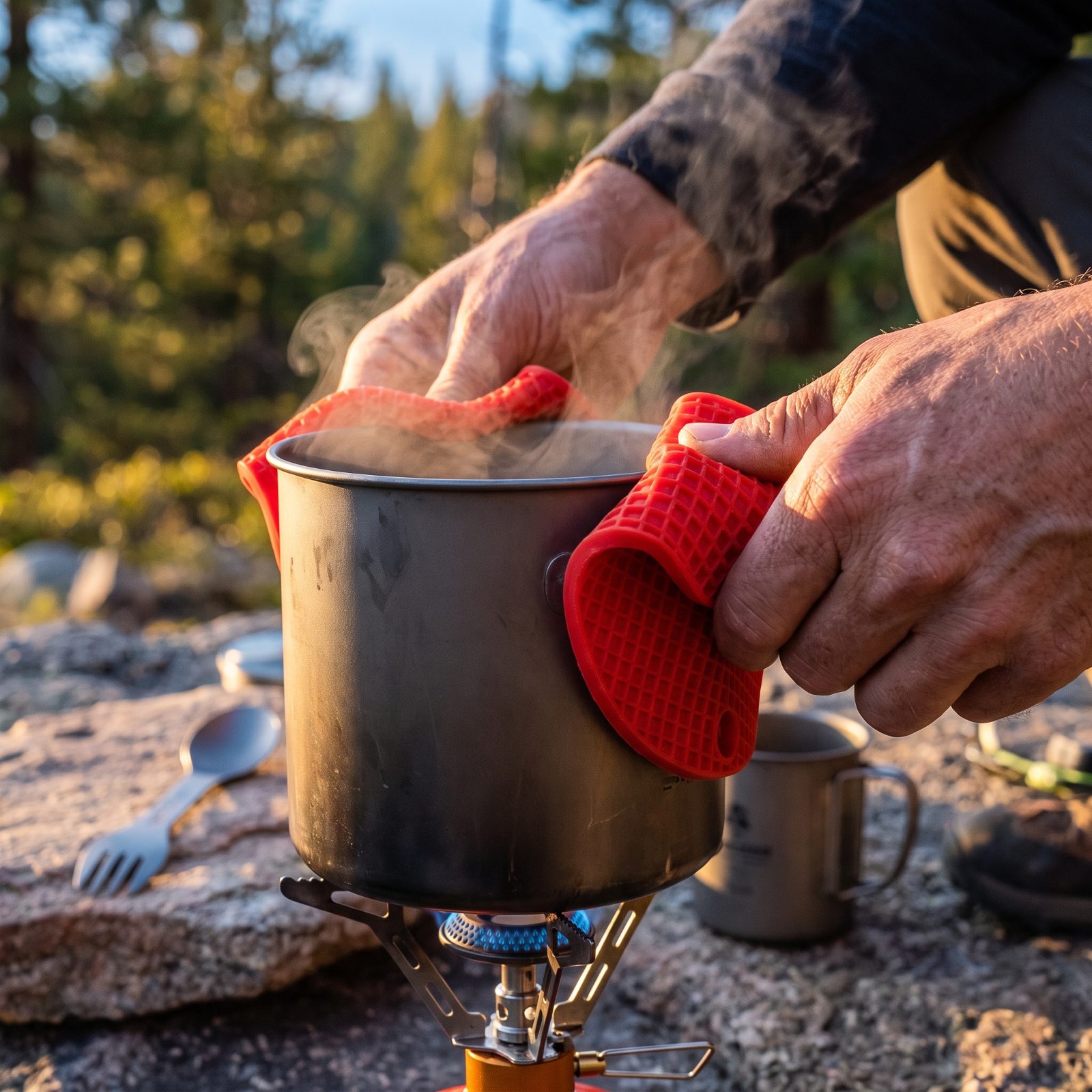
Pot grippers are forever getting lost or pinching sideways and dumping dinner. A thin silicone jar-gripper disc — the dollar-store kitchen kind — flattens into any pocket and solves two problems at once.
It gives you a sure grip on a screaming-hot pot rim or stove windscreen, no pinch to fumble. And when the peanut butter lid or fuel bottle cap has frozen shut overnight, the silicone bites down and breaks it loose. Heat-resistant, grippy when wet, and it doubles as a non-slip base so your mug doesn’t skate off a tilted rock.
37. A Grout Sponge That Bails Water and Dries Your Gear
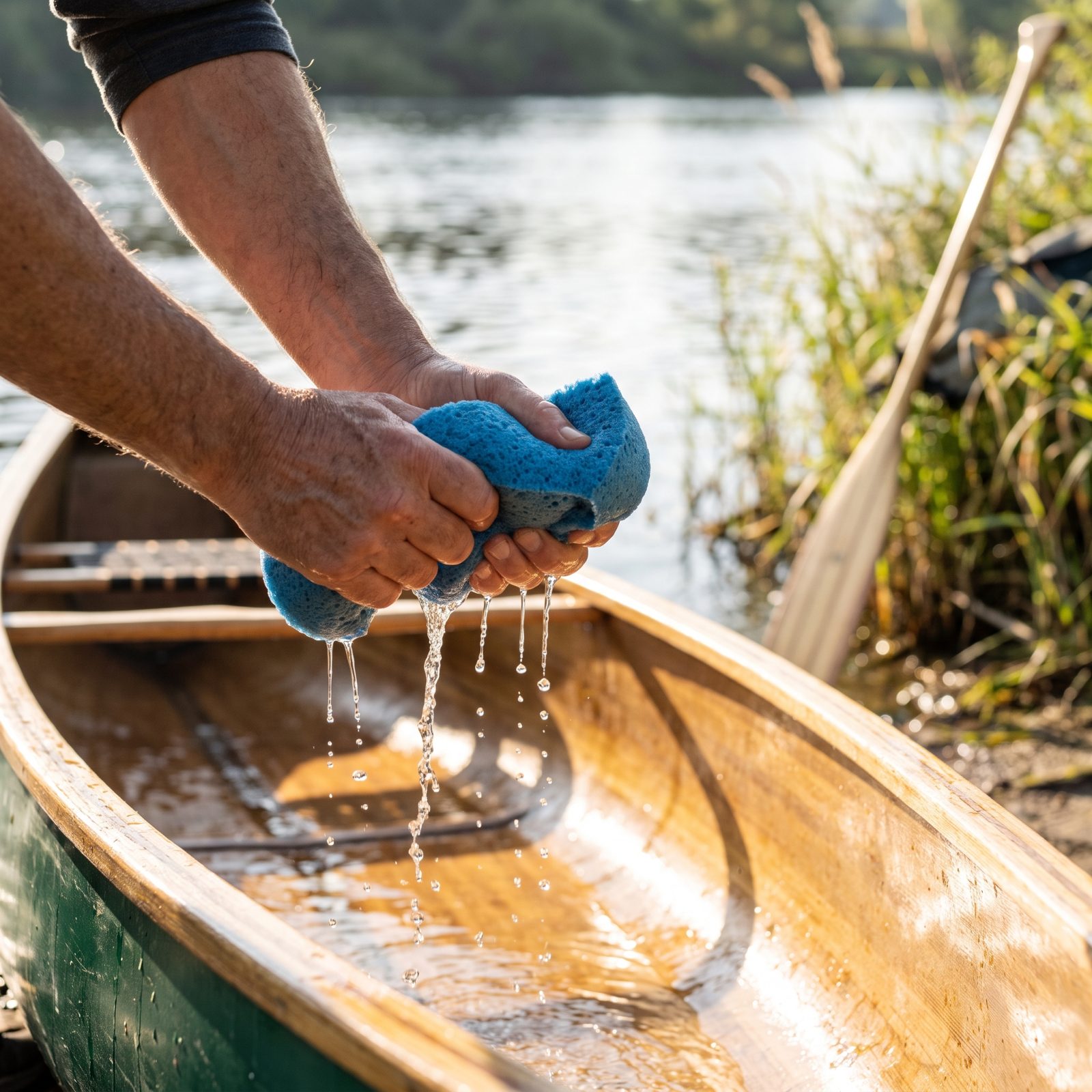
A grout sponge is denser than a kitchen sponge, so it holds more water and wrings out drier. In a canoe or kayak, it soaks up a big load of the water pooled in the hull, and one hard wring sends it all streaming out. Just lean over the gunwale first, or it splashes right back into the boat.
In camp it wipes condensation off the inside of a tent before it drips on your bag, mops down a wet cook kit, and sops up a spilled pot. It’s one of those things that disappears into a mesh pocket and then becomes what you reach for five times a day. For a buck, that’s a steal.
36. An Aluminum Pie Plate That Steadies a Stove on Snow
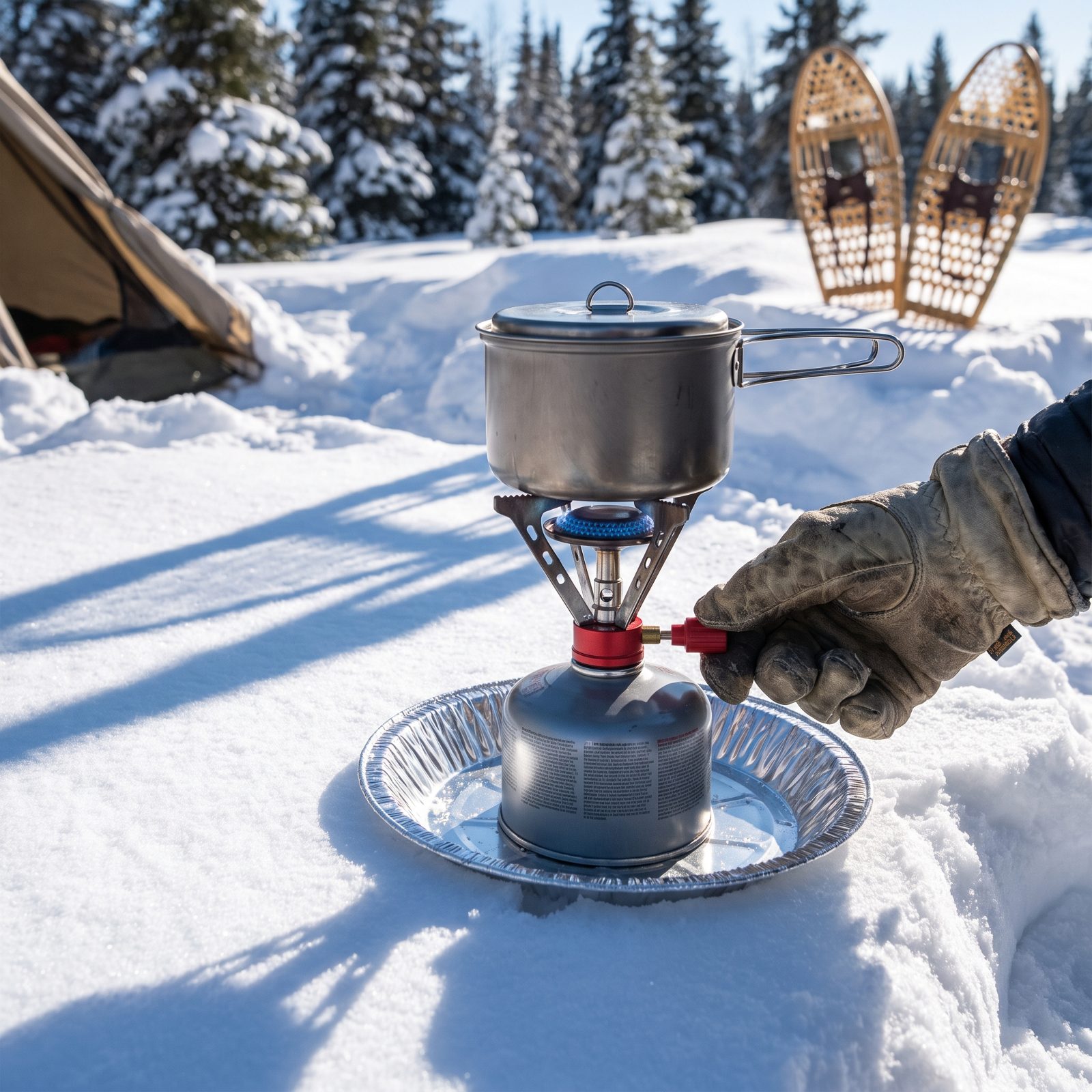
Light a stove directly on snow and physics turns against you. The heat melts a pit, the stove tilts, and your dinner ends up in the slush. A cheap aluminum pie plate gives the stove a flat, stable platform that spreads the load.
Works on soft sand and loose duff too, anywhere a stove might sink or tip. The reflective surface bounces a little heat back toward the pot, as a bonus. It nests flat against your pack frame, and in a pinch it’s a plate, a flasher for signaling, or a makeshift wind baffle.
35. An Irrigation Syringe That Flushes Grit From a Cut
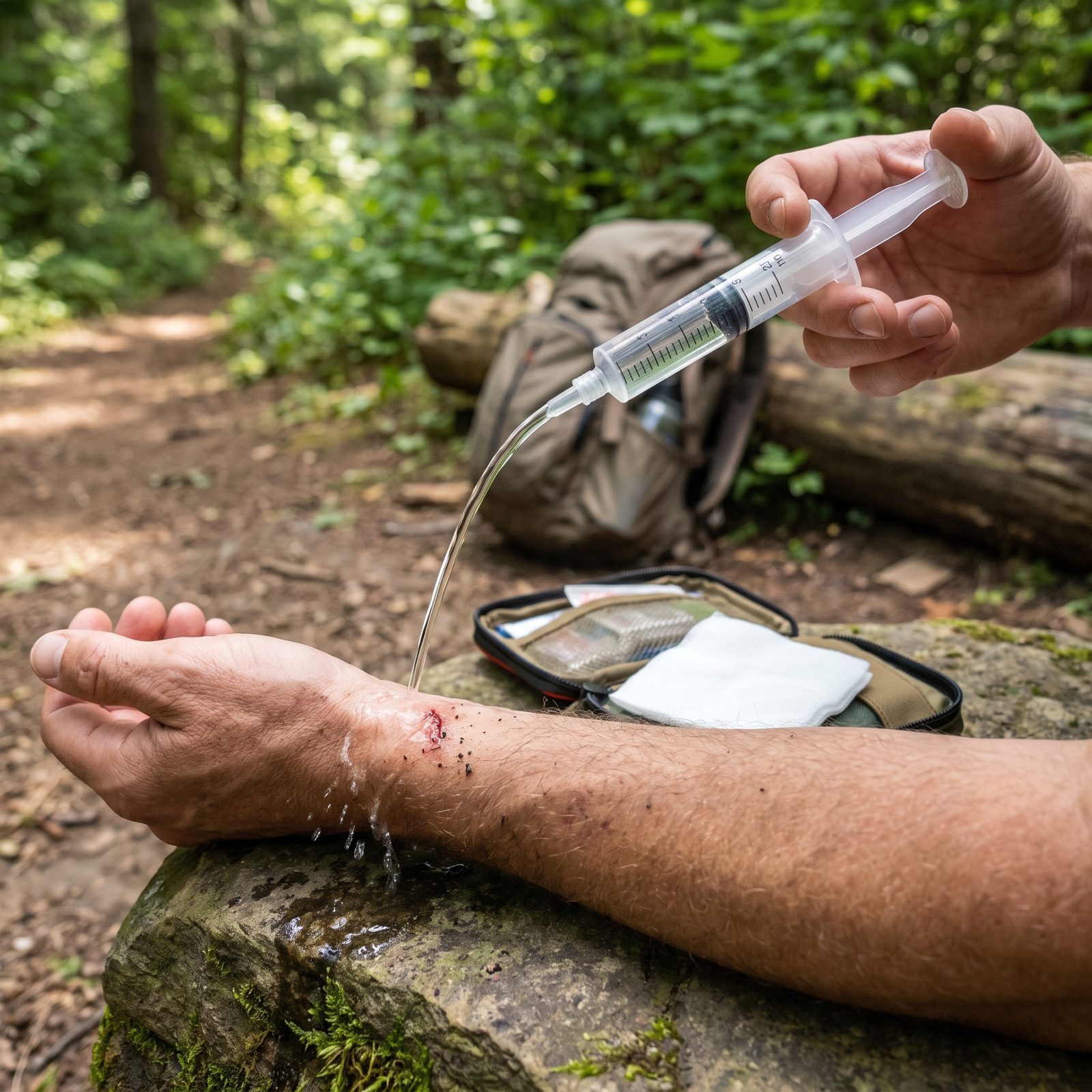
This is the one that actually matters. Wound infection in the backcountry is no joke, and the single best thing you can do for a dirty cut is irrigate it with pressure — not dribble water over it and hope for the best.
A curved-tip irrigation syringe, the kind sold for ear cleaning or dental use, delivers a focused stream that drives grit and debris out of a wound instead of leaving it to fester days from the trailhead. Fill it with your treated drinking water. It weighs almost nothing and tucks into a first-aid pouch, and it’s the item most people leave out and most wish they’d packed.
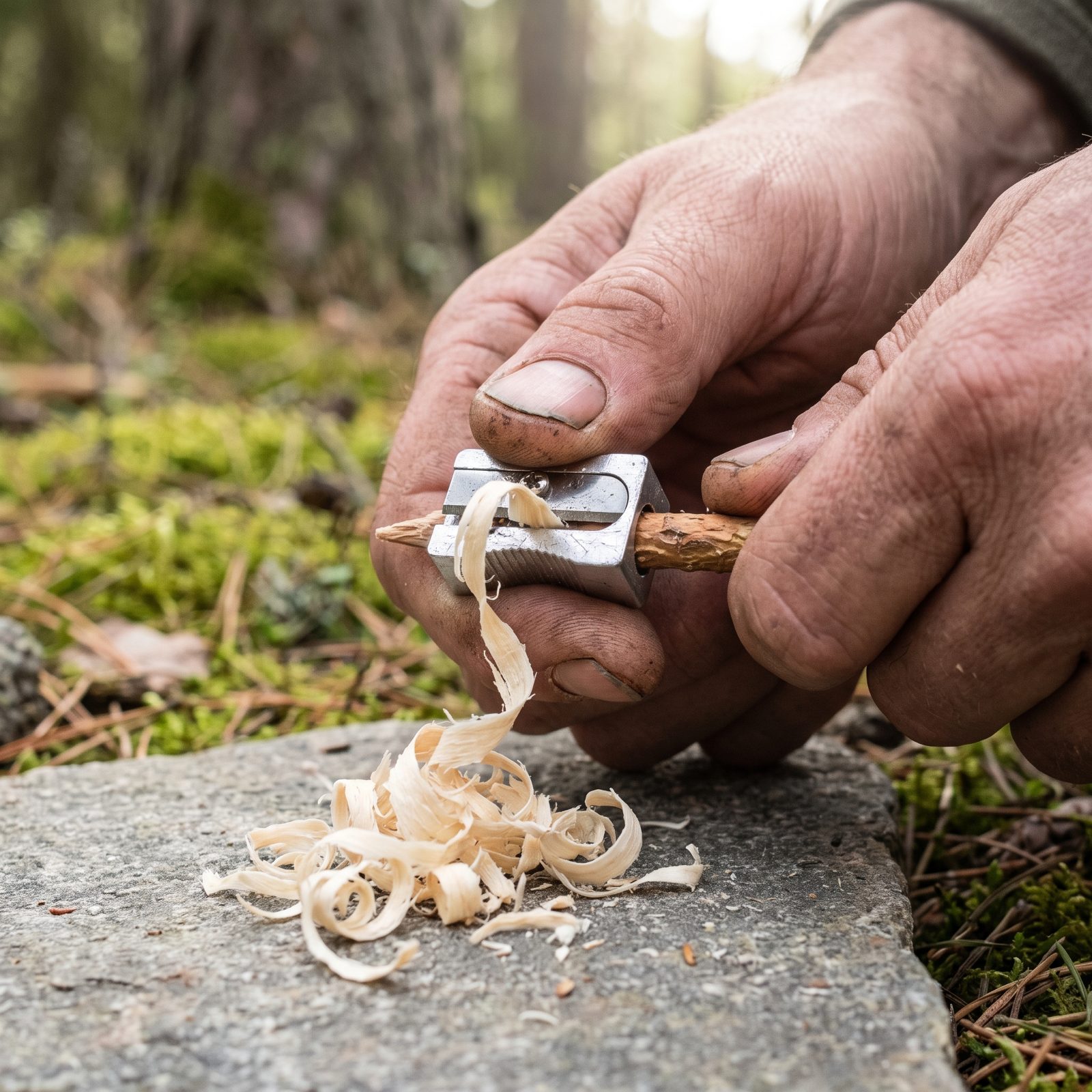
34. The Pencil Sharpener That Makes Fire Tinder on Demand
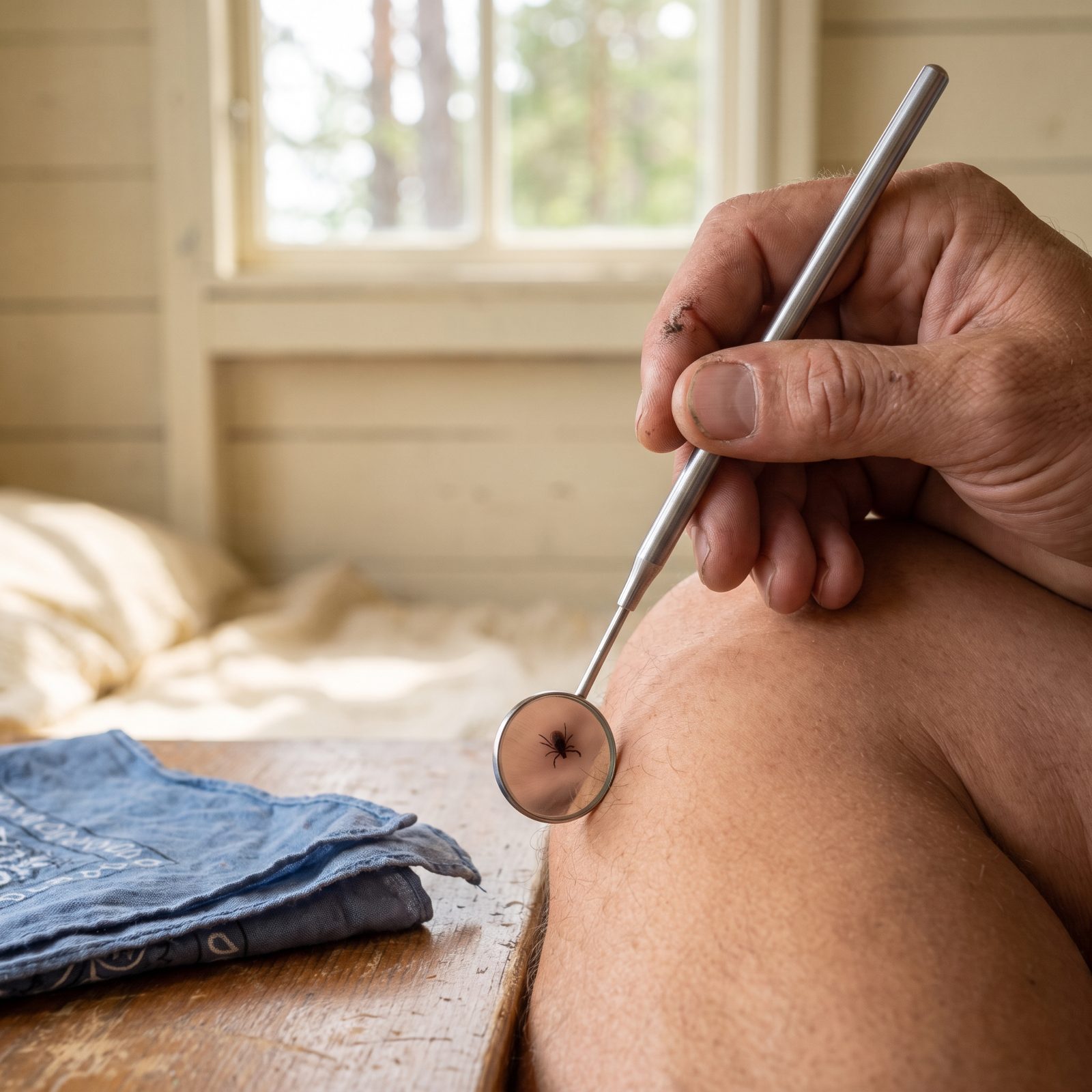
33. The Dental Mirror That Finds Ticks You’d Never Spot
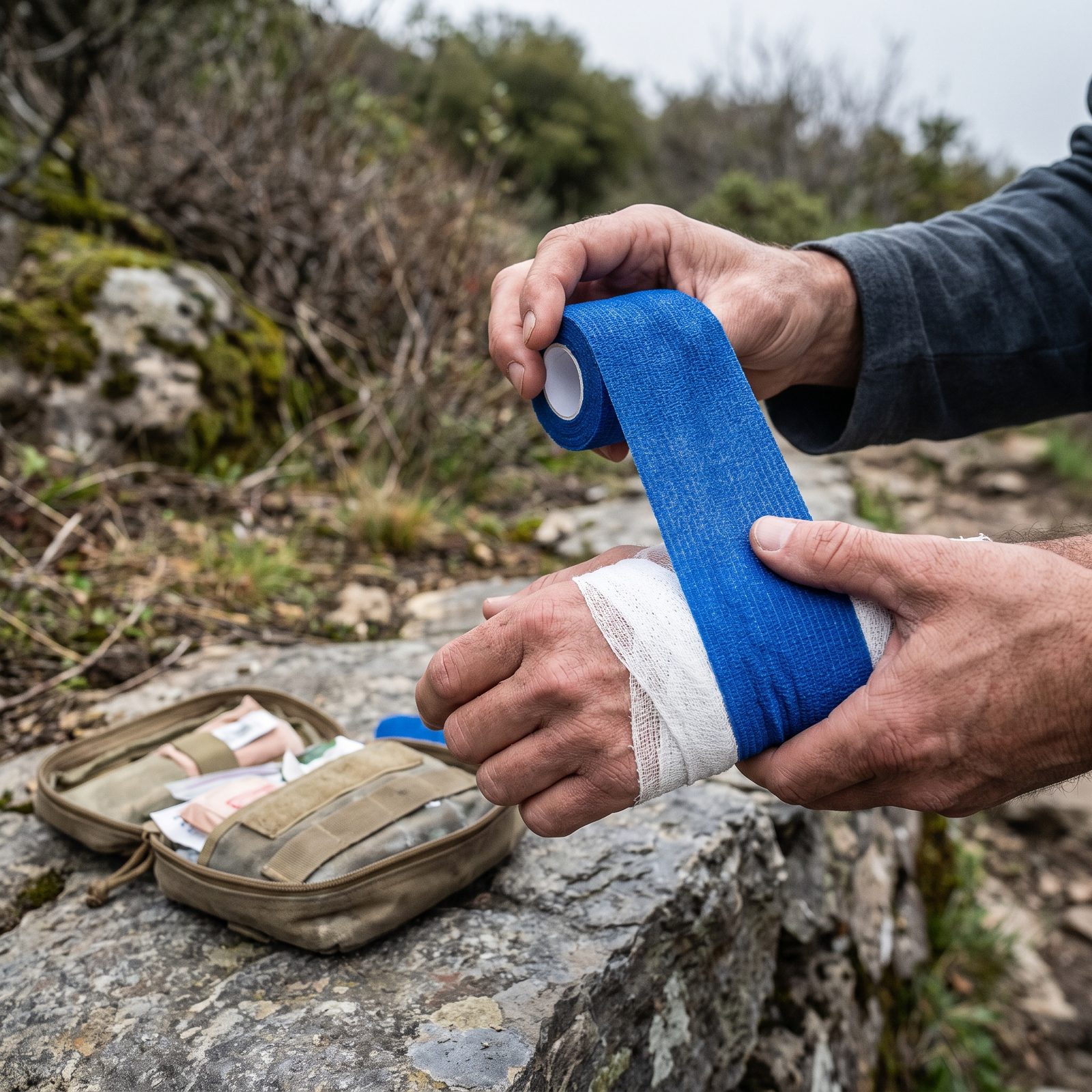
32. Vet Wrap: The Bandage That Grips Itself and Nothing Else
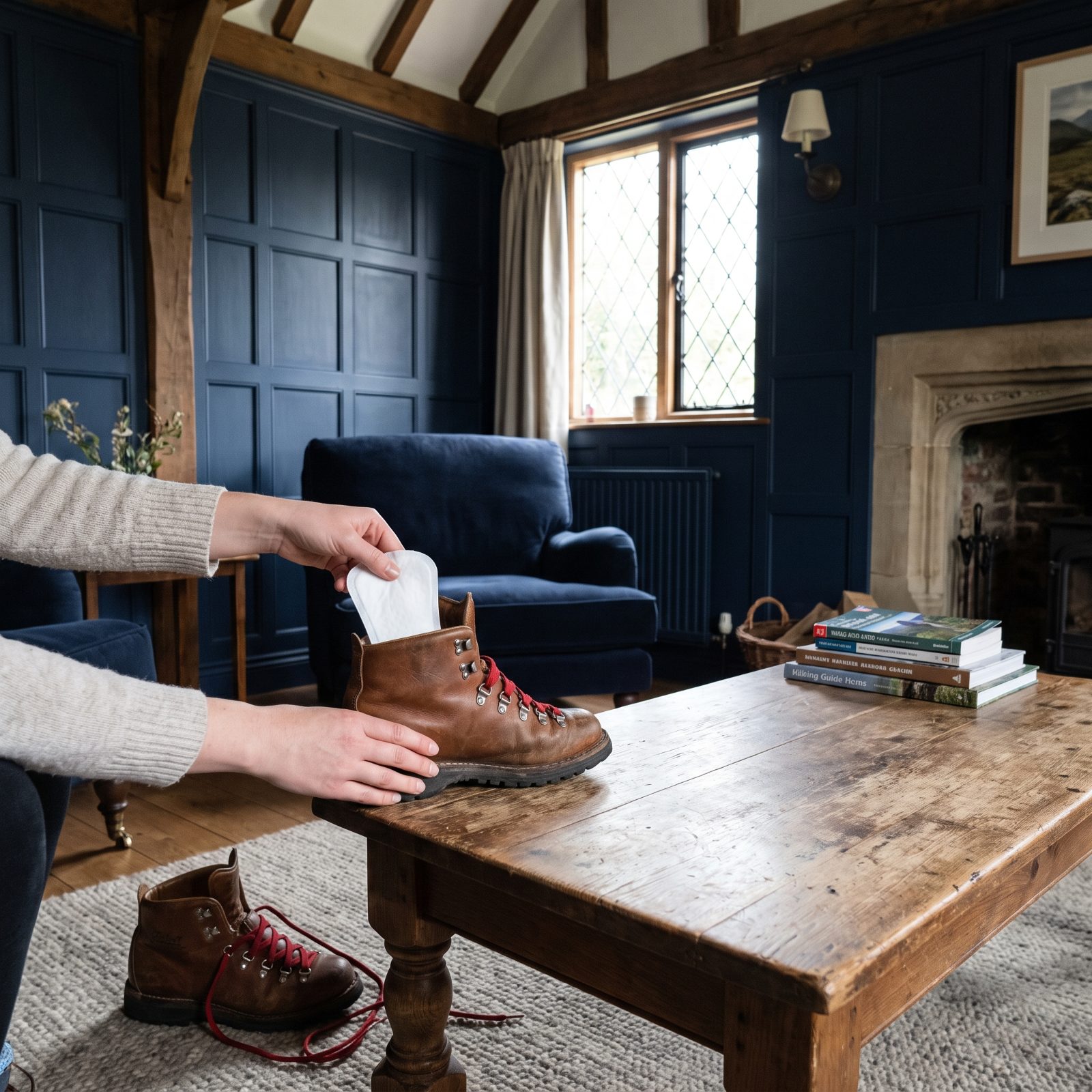
31. Panty Liners: The Blister Cushion Hikers Keep Quiet About
30. Ranger Beads: The Analog Odometer for Your Own Two Feet
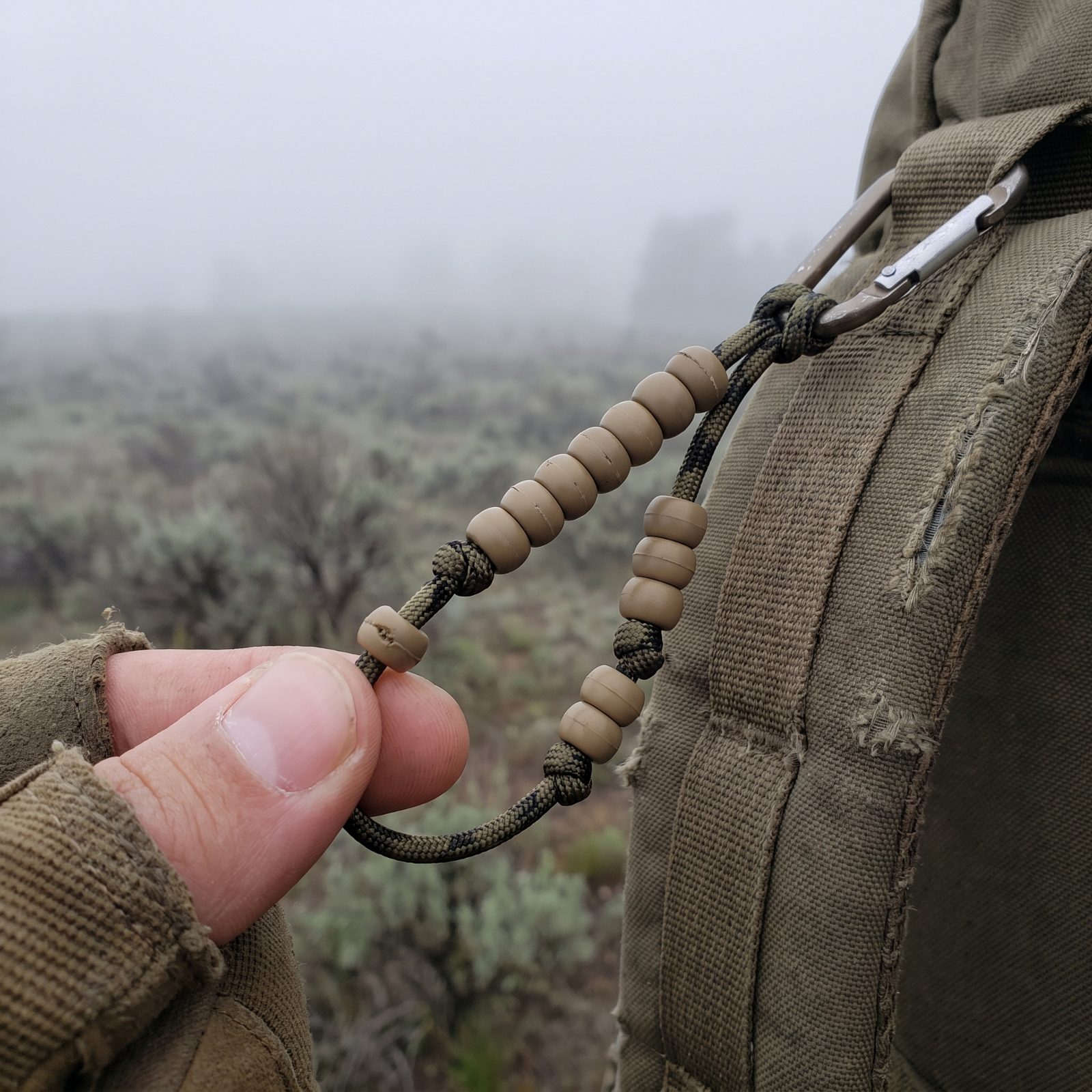
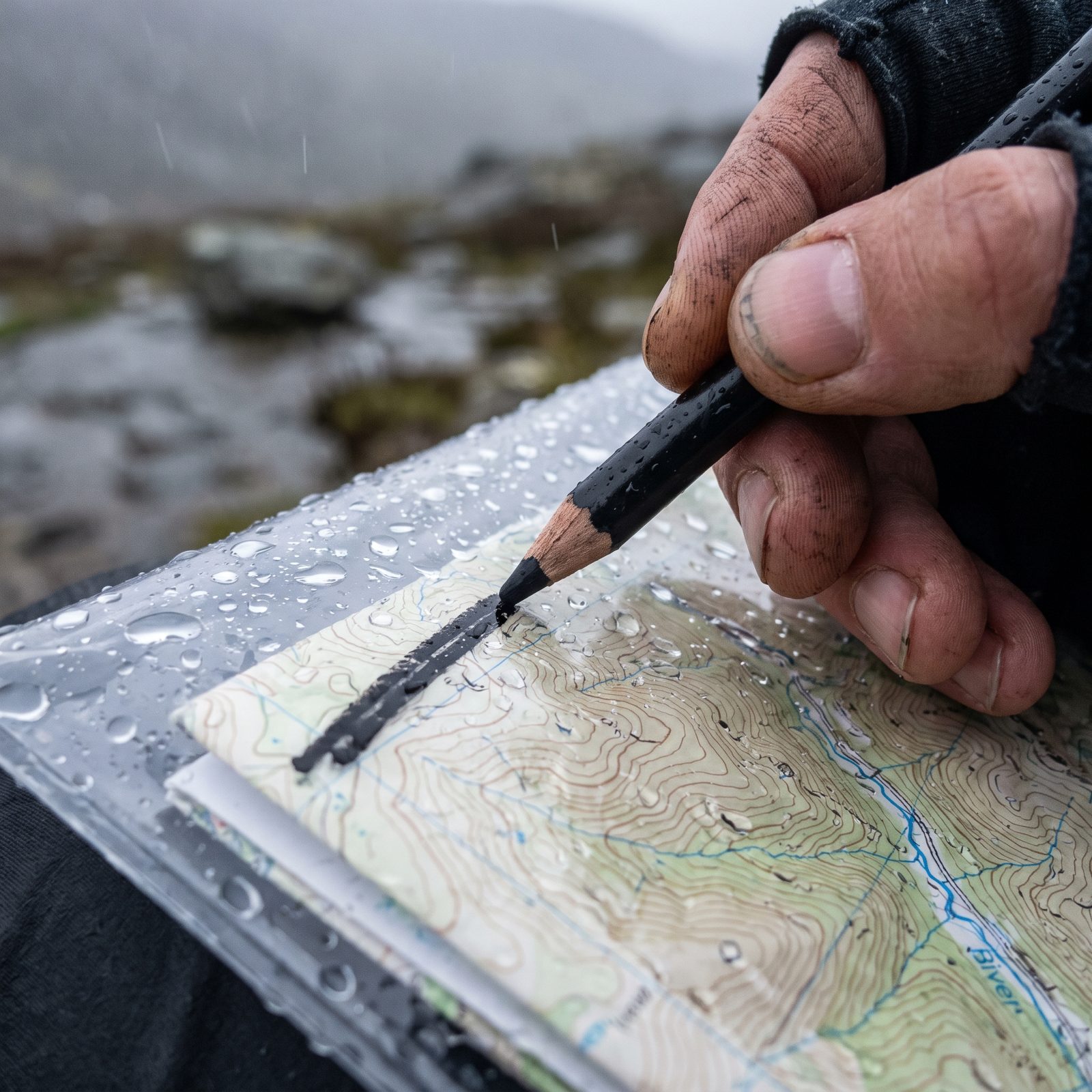
29. The Grease Pencil That Writes on Wet, Cold, and Greasy
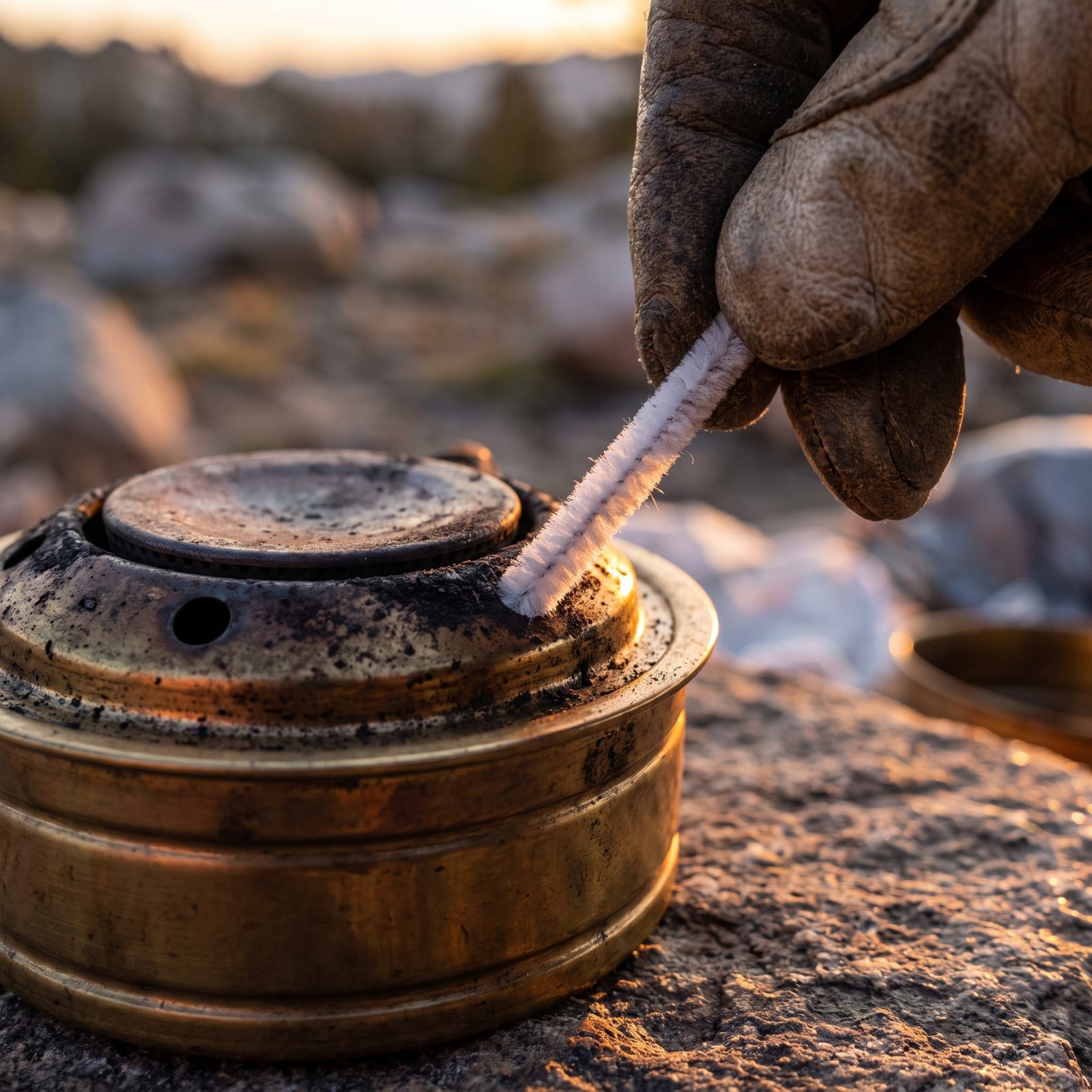
28. The Pipe Cleaner That Revives a Dying Camp Stove
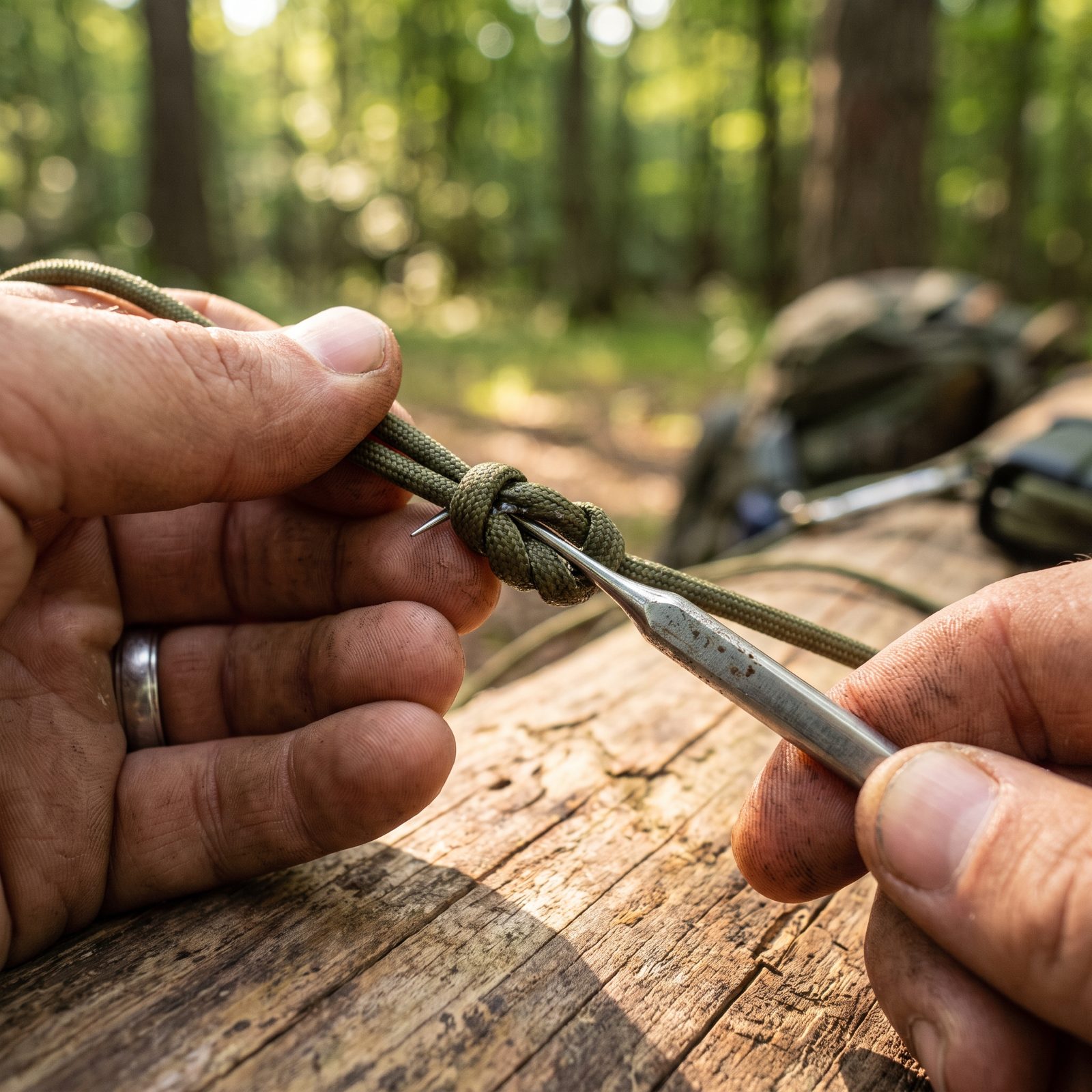
27. The Dental Pick That Beats Any Jammed Knot
26. The Collapsing Bellows That Wakes Up Dead Coals
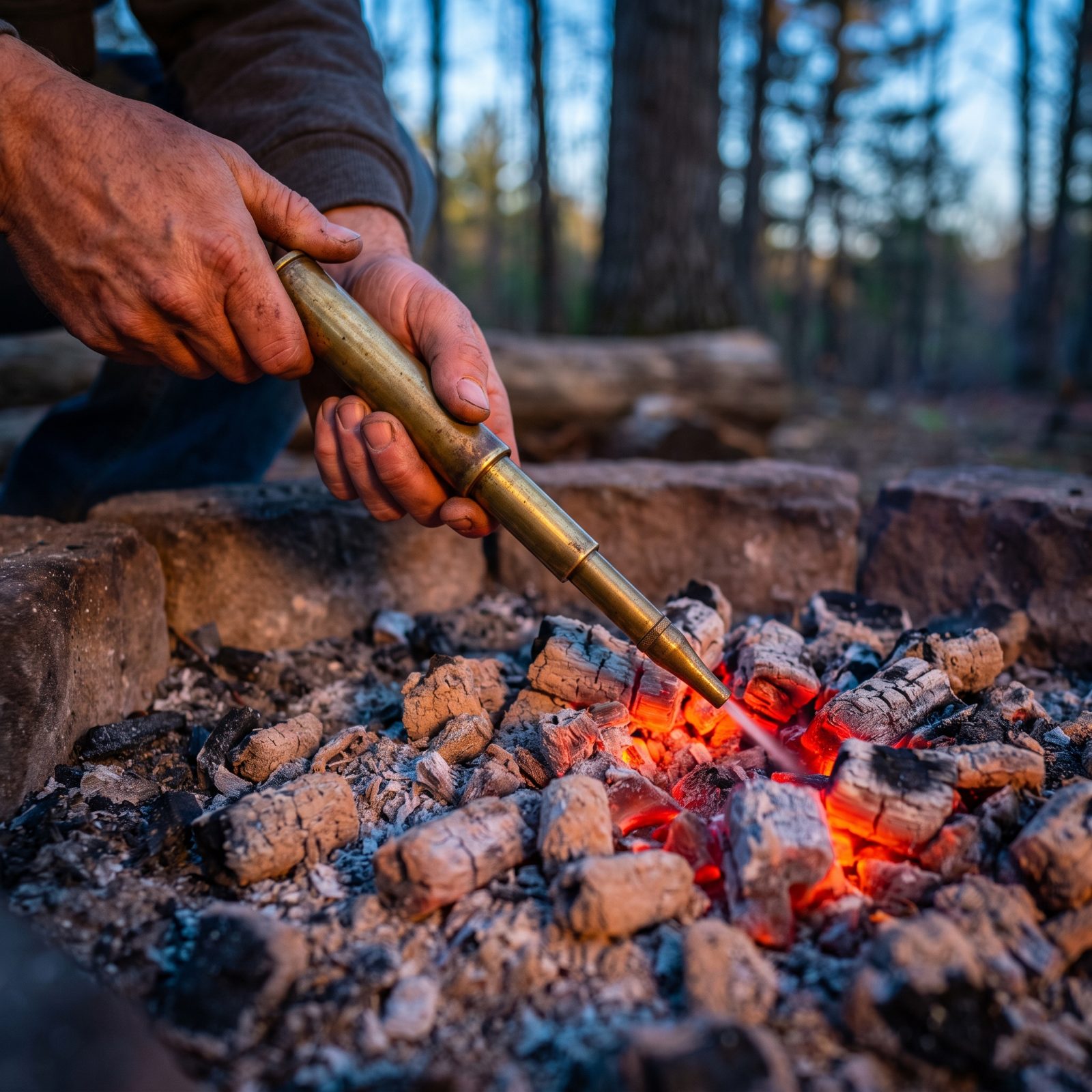
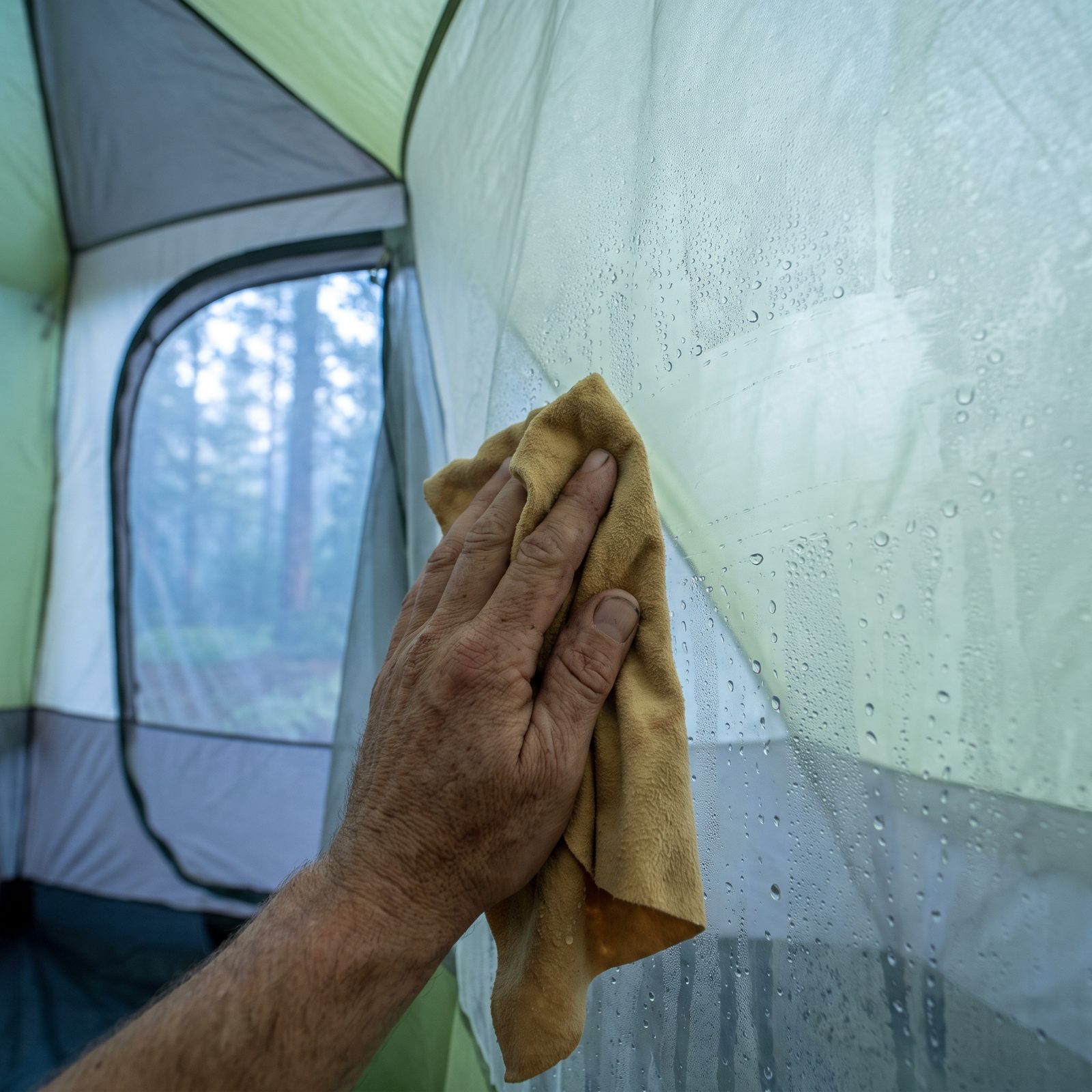
25. The Chamois That Wipes Your Tent Dry and Packs to Nothing
24. Mesh Produce Bag, Air-Dries Utensils and Carries Loose Tinder
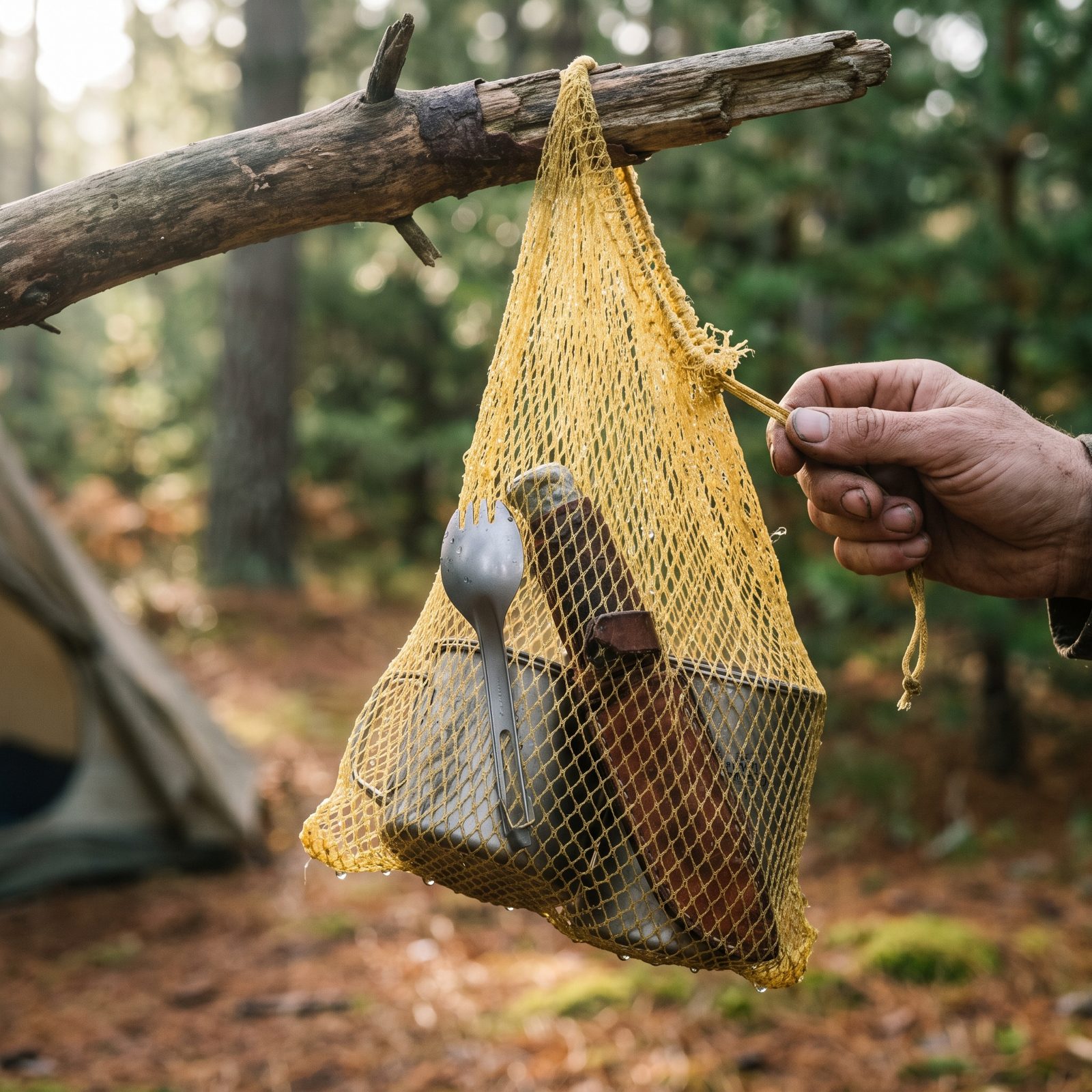
Almost nobody packs one on purpose. But the mesh bag off a sack of onions keeps showing up in experienced kits because it solves two problems that otherwise fight each other — wet gear and wet tinder.
Rinse your utensils after dinner and they sit in a pot collecting grit. Drop them in the mesh bag, hang it off a branch, and they air-dry overnight without touching anything. Same bag, turned inside out and emptied, carries dry birch bark, fatwood shavings, or dryer lint without turning your pack into a confetti mess. Weighs nothing. Packs flat as a napkin.
23. Wooden Clothespins, Hang Wet Socks and Hold Tent Vents Open
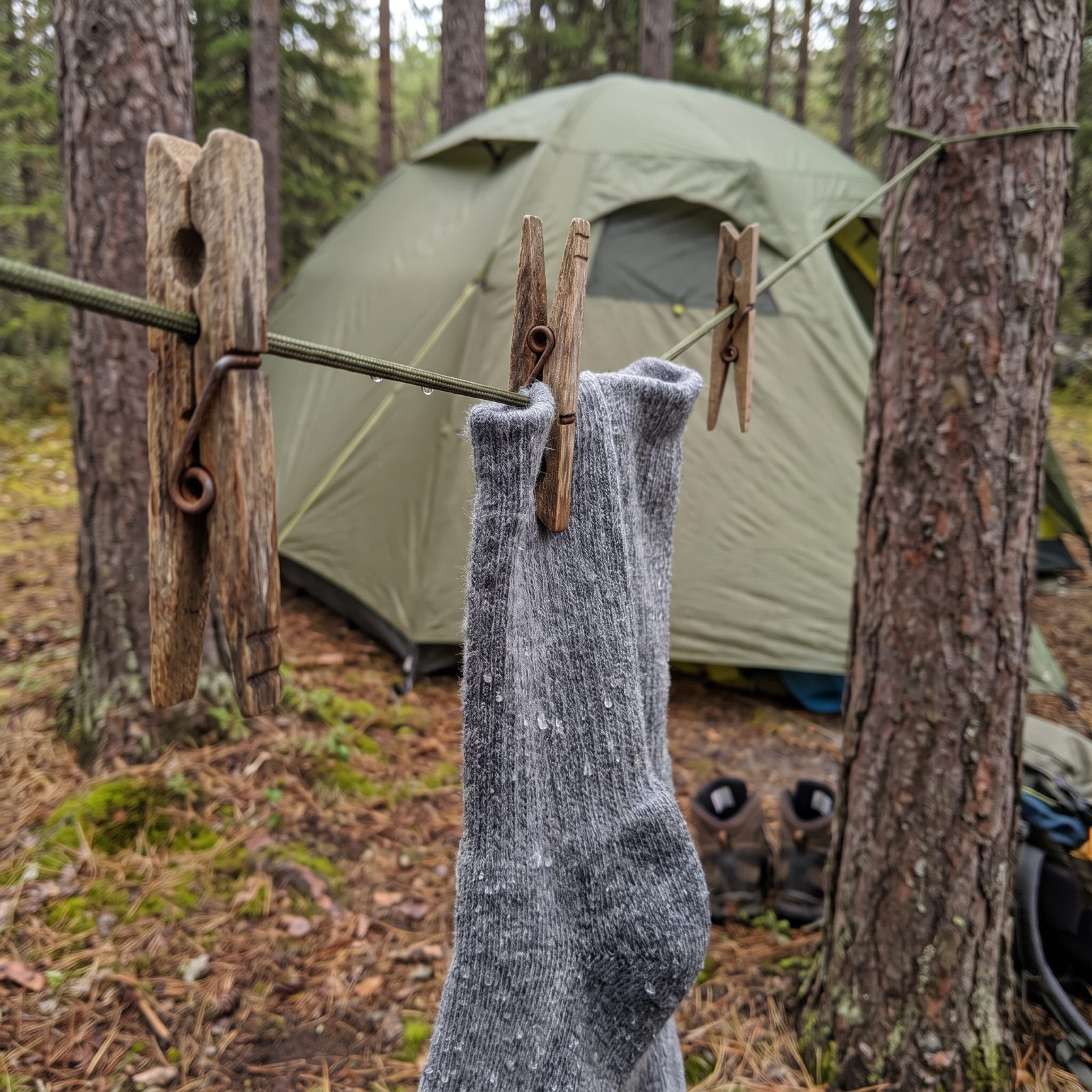
A half-dozen wooden clothespins ride in a side pocket for anyone who’s pulled on damp socks one too many cold mornings.
They clip wet layers to a ridgeline so the wind does the drying instead of a fire. They pinch a tent vent open on a humid night to cut condensation. They seal a torn chip bag, hold a map flat against a gust, and clamp a glove to your pack where it can dry while you walk. Wood over plastic for a reason — it won’t snap in the cold, and if you’re truly stuck, it burns.
22. Folded Heavy-Duty Aluminum Foil, Serves as a Windscreen or Cooking Surface
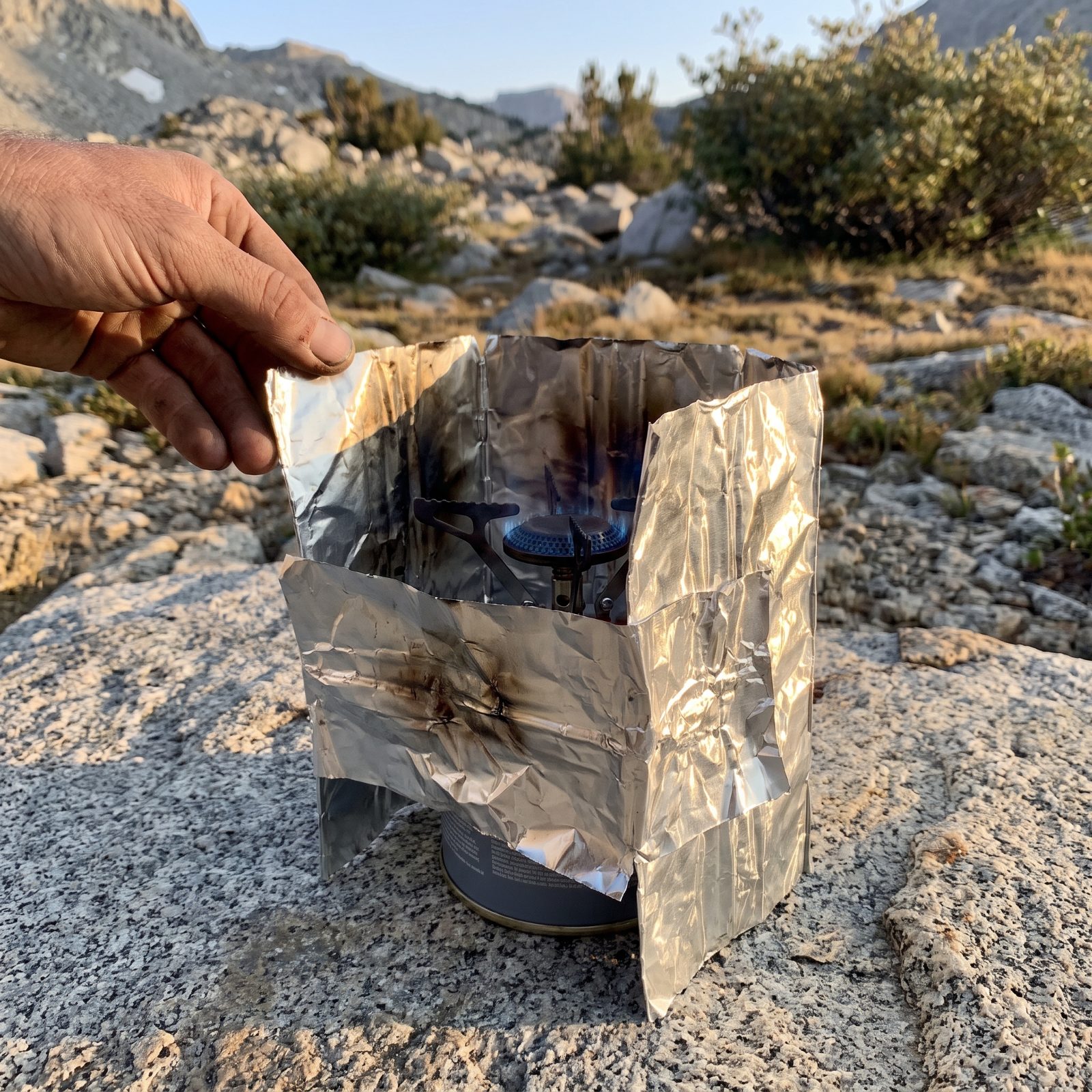
Three folded squares of heavy-duty foil cost almost nothing and earn their pack space a dozen ways.
Stand them around a canister stove and your burn time drops, because the wind stops stealing heat. Lay a sheet flat on a grill grate and you’ve got a cooking surface you can fold up and pack out, no scrubbed pan. Wrap a trout, a potato, or last night’s leftovers and bury the bundle in coals. It patches a torn stove heat shield, bounces warmth off a candle lantern, and doubles as a signal panel when you’re in a jam.
21. Folded Newspaper Sheets, Draw Moisture From Boots Overnight
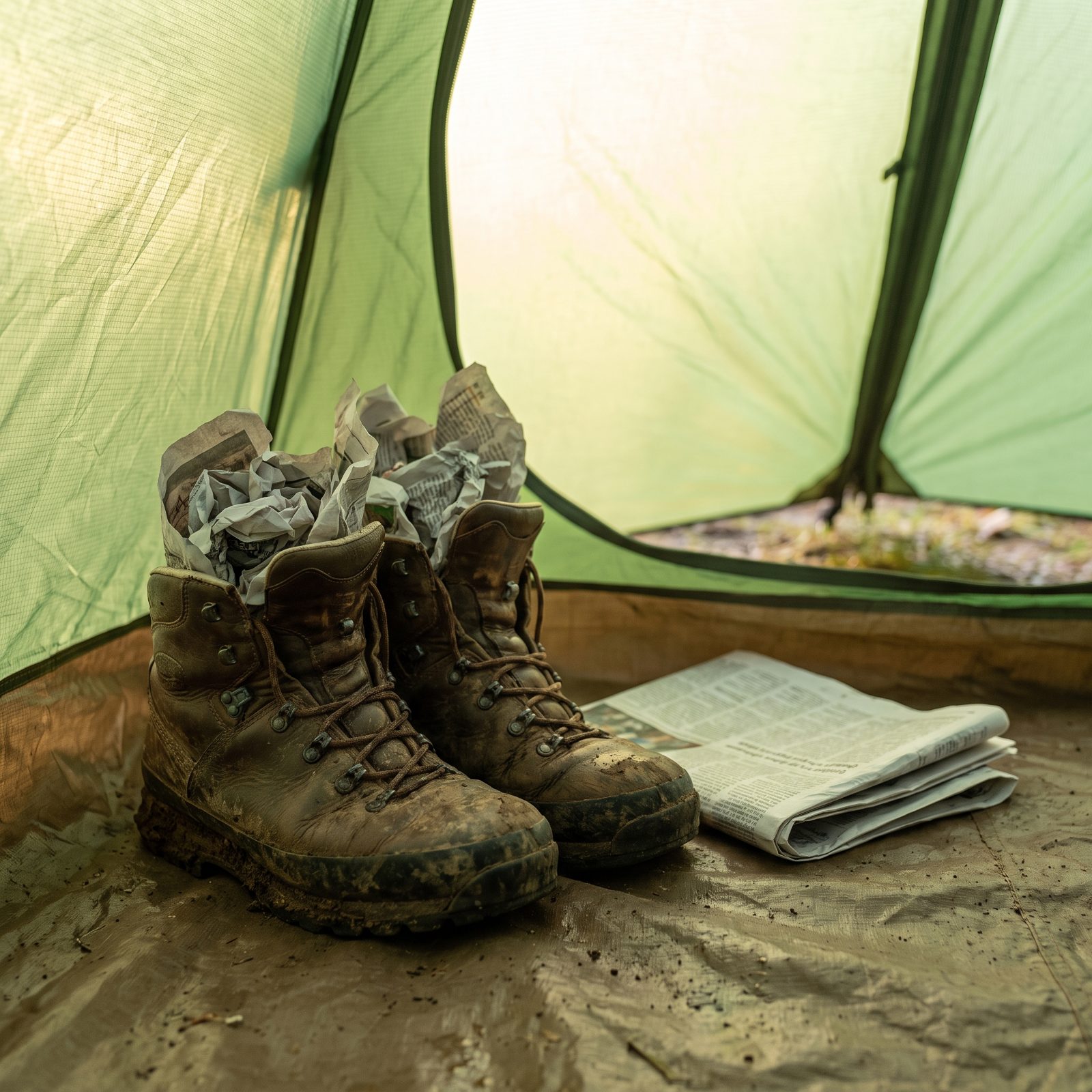
Wet boots at dawn ruin a morning faster than a cold tent. A few sheets of folded newspaper fix it while you sleep.
Crumple the paper loosely and pack it tight into each boot the moment you stop for the night. Newsprint pulls moisture out of the lining and leather, and by morning it’s wicked away most of the damp. Swap in a fresh wad if the first comes out soaked. And the used paper isn’t wasted — dry it by the fire and it becomes fire-starting tinder the next evening.
20. Cut Bicycle Inner-Tube Bands, Secure Loose Gear and Reinforce Field Repairs
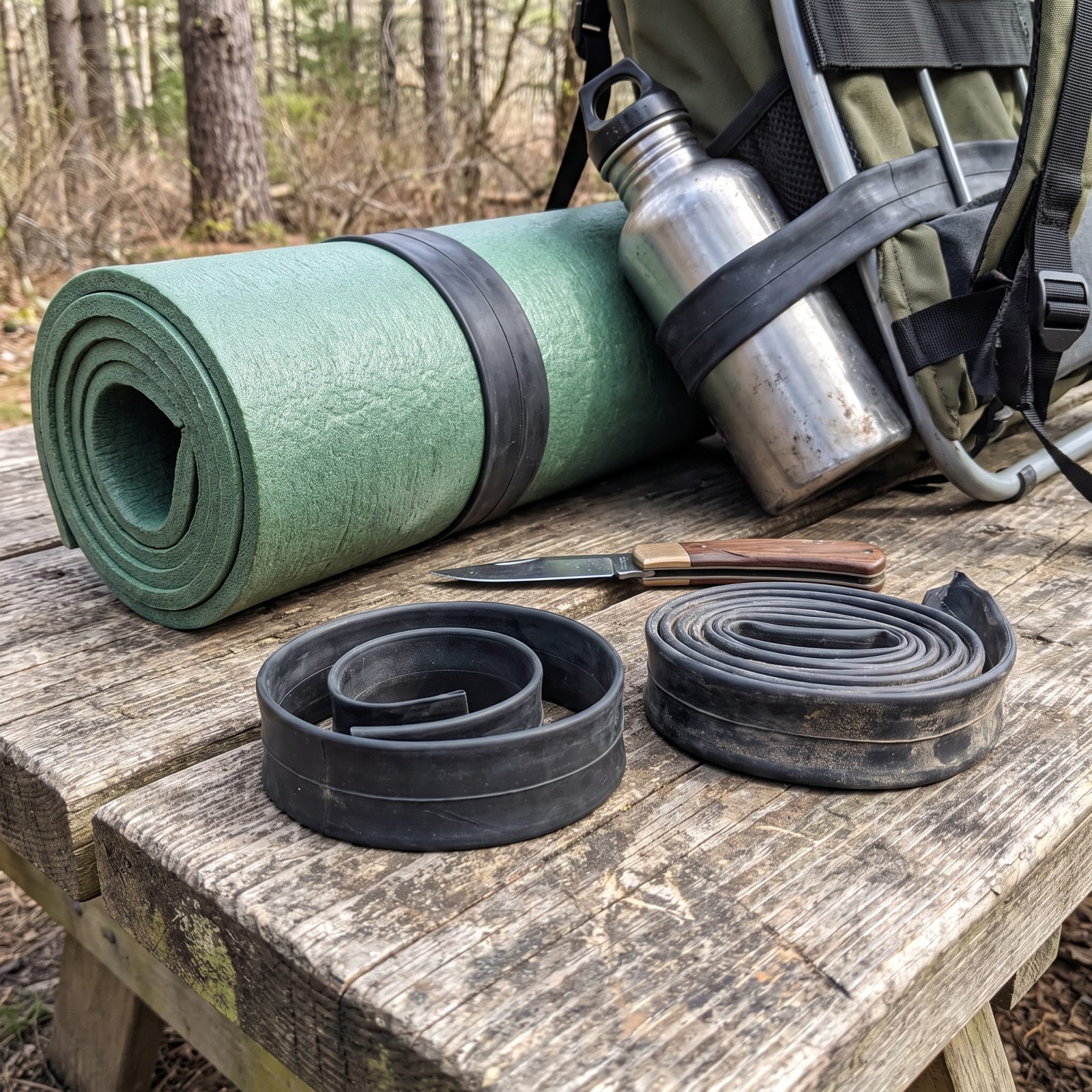
Cut an old bicycle inner tube into inch-wide bands and you’ve got the most useful rubber on the trail.
These grip where a regular rubber band gives up. They hold a rolled pad closed, lash a bottle to a pack frame, bundle tent poles so they stop rattling, and cinch a splint tight. Stretch one around a cracked hiking pole over a splint of stick, and it holds under real load.
Wide, tough, and the sun doesn’t rot them the way it kills party-store elastics. Free, if you’ve got a bike with a dead tube in the garage.
19. Short Coil of Baling Wire, Handles Repairs Too Hot for Plastic
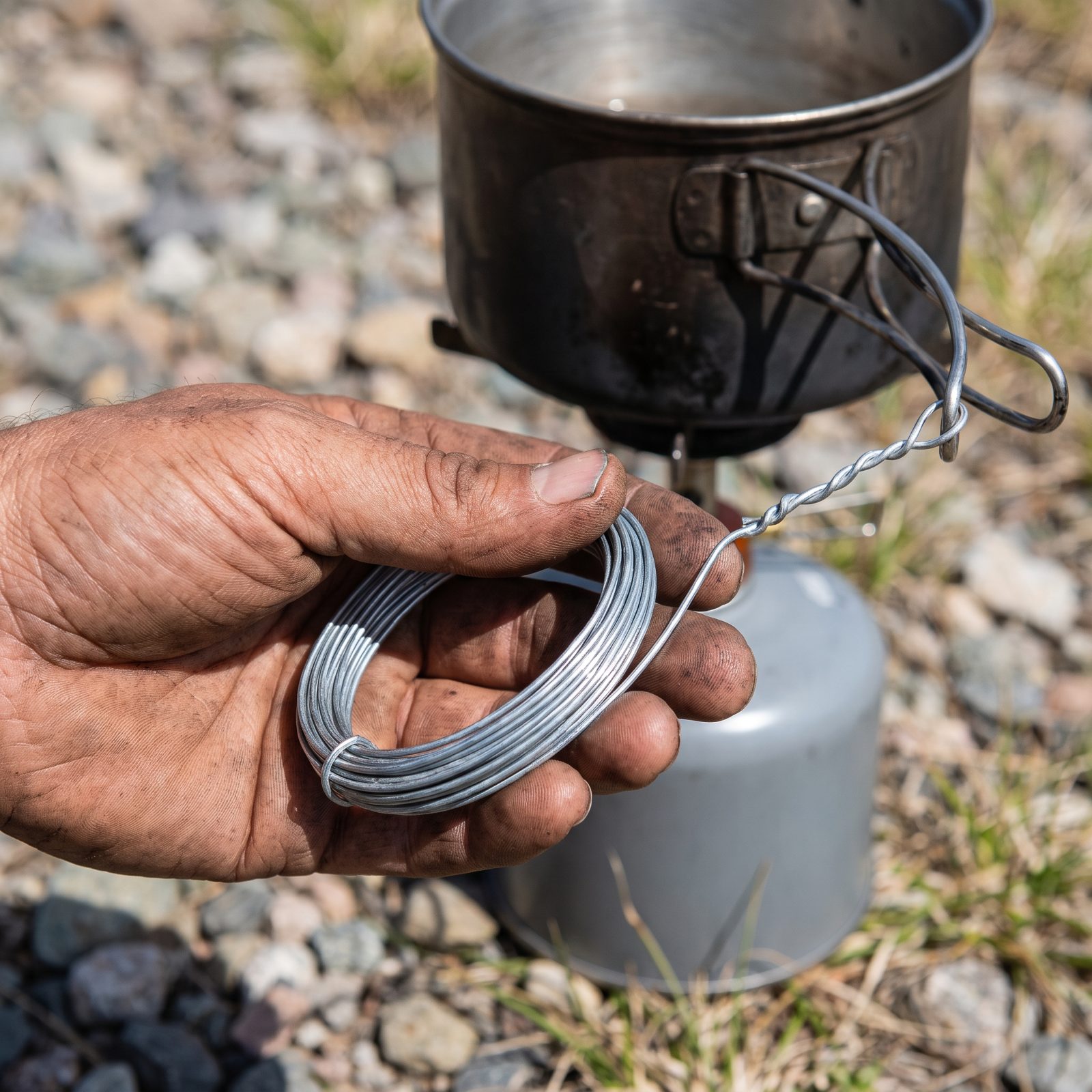
Zip ties melt. Paracord burns. Near anything hot, a short coil of soft baling wire is the repair that actually holds.
It reattaches a pot handle that popped a rivet, splints a snapped tent pole, wires a muffler bracket back onto a truck at the trailhead, and rigs a pot hanger over a fire. You can twist it by hand, bend it around any shape, and it couldn’t care less about heat. A couple feet coiled flat in a pack lid covers most trips.
18. Pocket Soap Leaves, Provide Measured Handwashing Without a Leaky Bottle
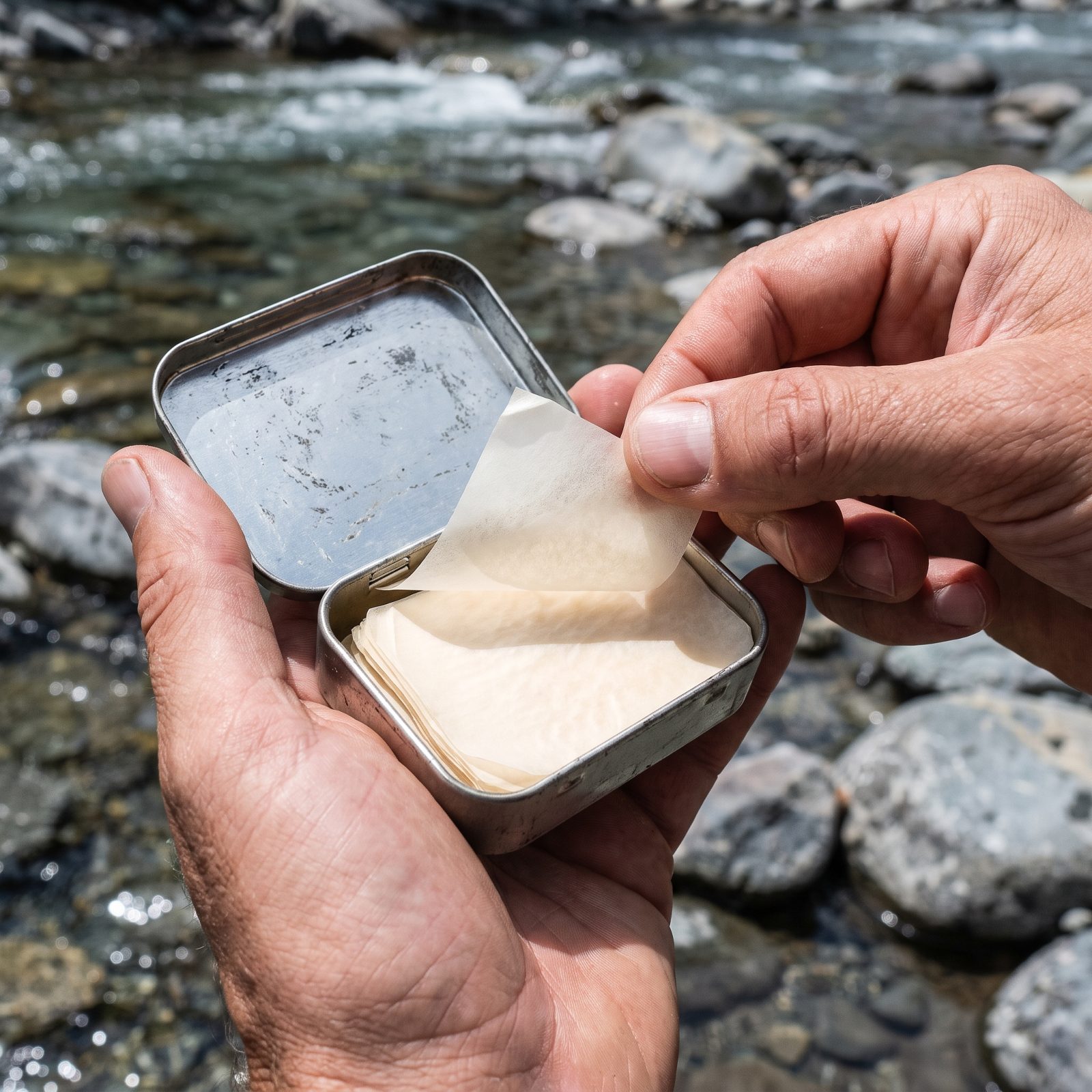
The soap bottle that leaks all over your food bag is a rite of passage nobody enjoys. Soap leaves end that story.
Each leaf is a paper-thin wafer that lathers the second it meets wet hands, then rinses clean away. One leaf per wash means no waste and no guessing. The tin is flat enough to forget it’s there. Before you handle food, after a questionable cathole, or when you just want to feel human again on day four — pull one leaf and you’re done.
17. Compressed Towel Tablets, Expand Into Cleaning Cloths or Sweat Towels
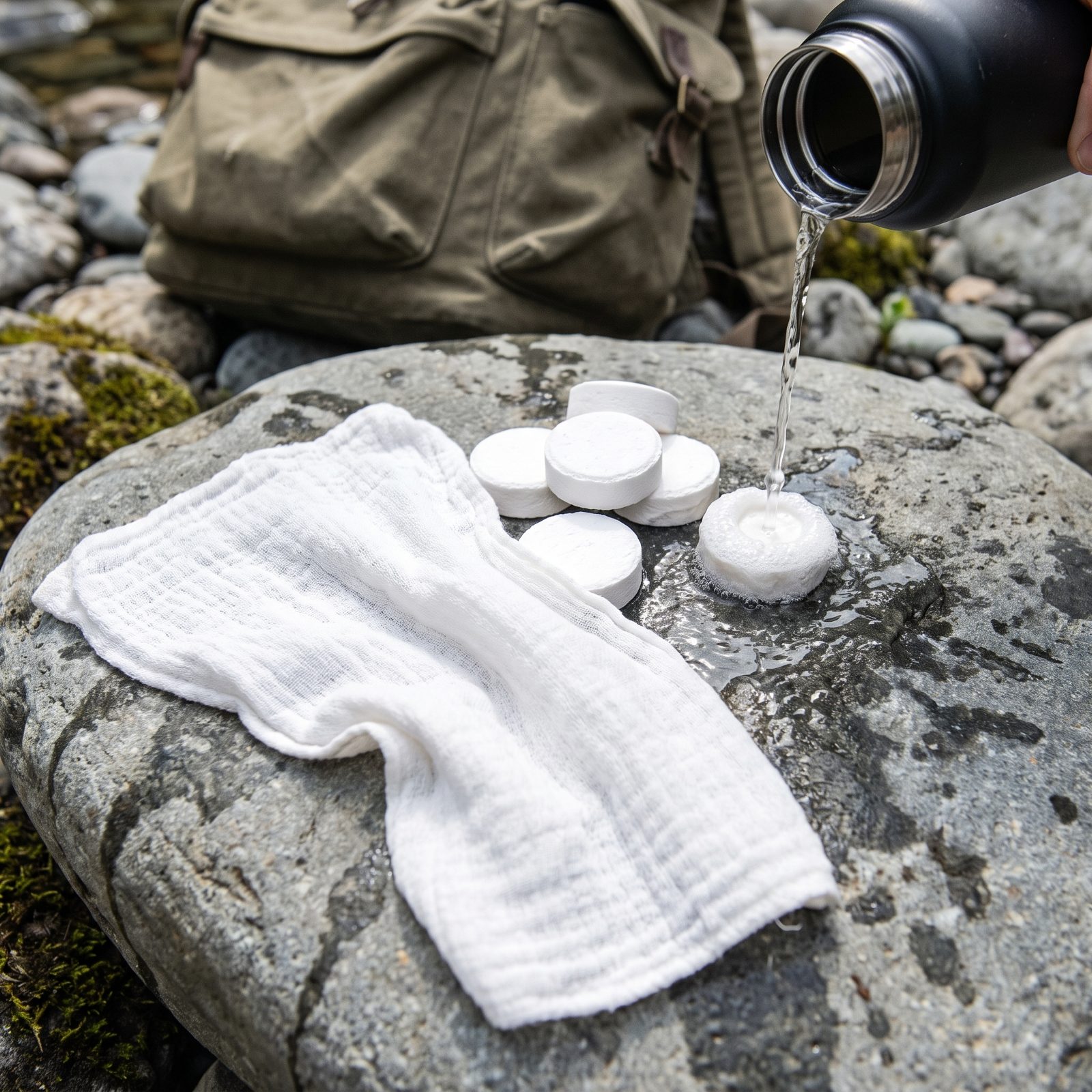
Each one looks like a flat white coin until water hits it. Splash a compressed towel tablet and it unfurls into a real cotton cloth.
A dozen weigh almost nothing and take up less room than a candy bar. Wipe down a sweaty neck after a climb, scrub a greasy pot, mop up a stove spill, or clean a scrape before you bandage it. Single-use, so you toss the dirty one and pull a fresh coin — no sour rag riding along from day one to day five.
16. Water-Bottle Bidet Cap, Improves Backcountry Hygiene With Minimal Paper
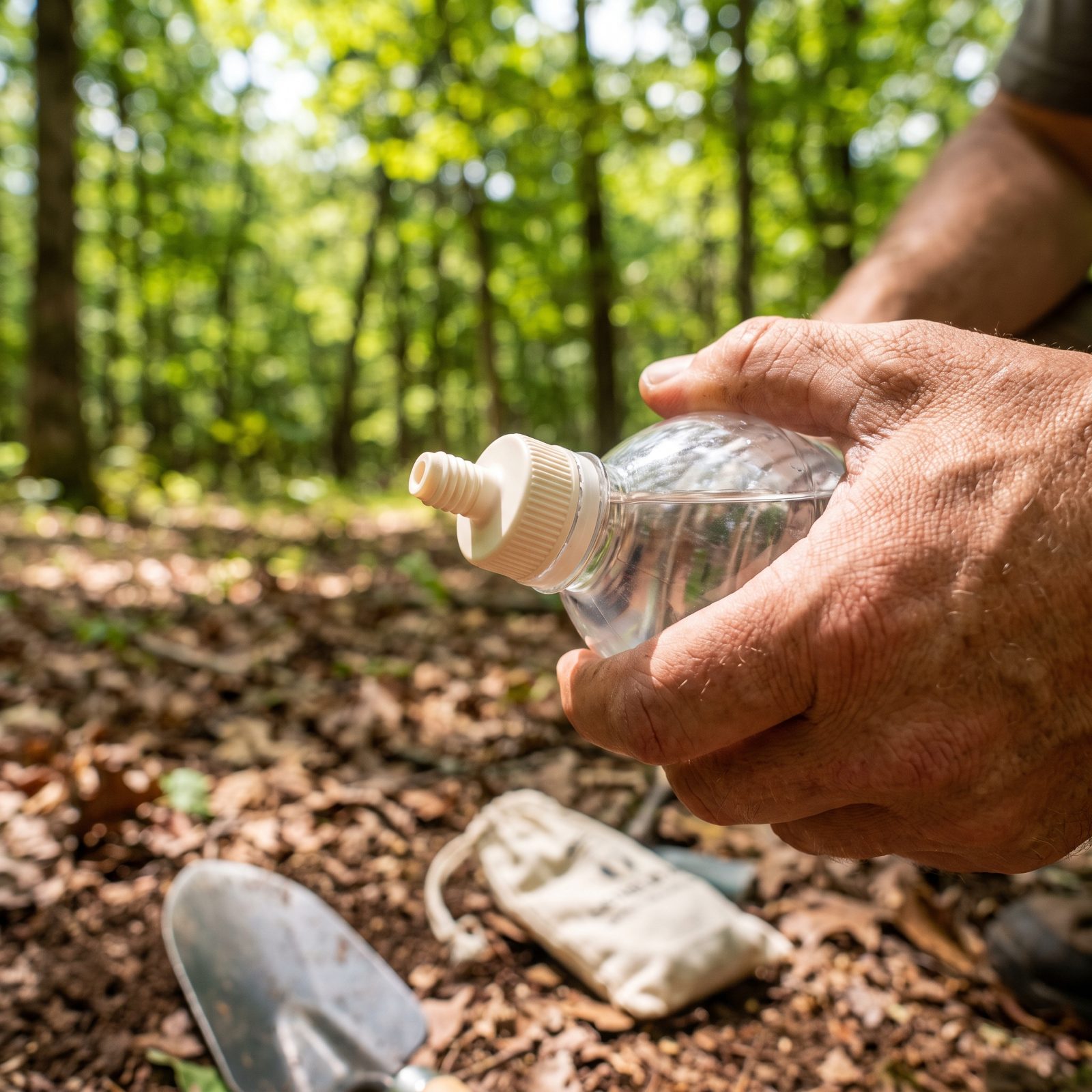
Nobody brings this up at the trailhead, which is exactly why it belongs on the list. A screw-on bidet cap turns any standard water bottle into a backcountry wash.
It threads onto the bottle you already carry, and a squeeze sends a directed stream right where you need it. You pack out a fraction of the toilet paper, you cut the risk of rash and infection on a long trip, and you feel genuinely clean instead of merely finished. A few grams. Disappears in a pocket.
15. Credit-Card Fresnel Lens, Magnifies Maps, Splinters, and Tiny Gear Parts
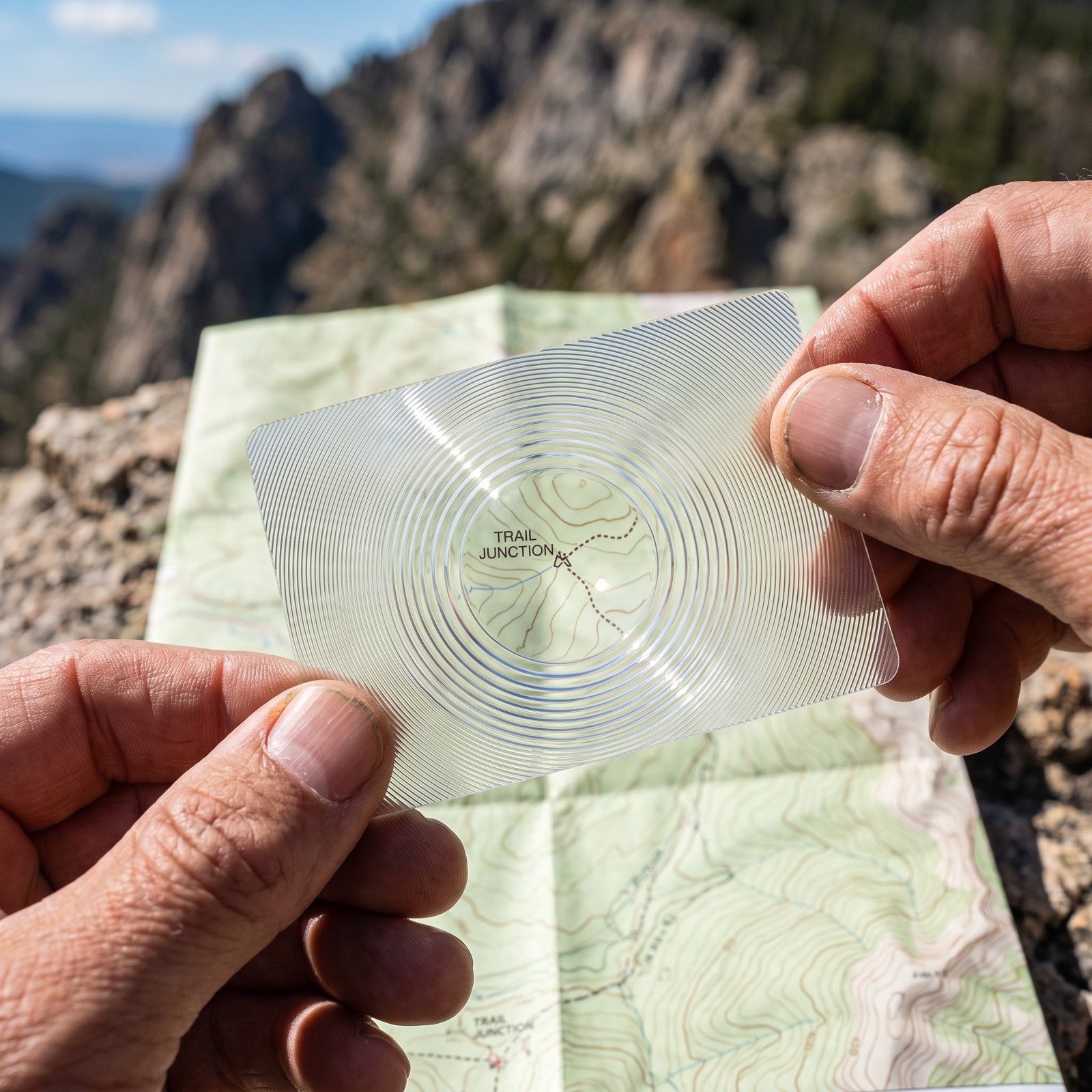
Aging eyes meet fine print, and a map suddenly keeps secrets. A credit-card Fresnel lens, flat as a playing card, hands them back.
Slide it over a topo map and the contour lines resolve. It magnifies a splinter deep enough to get the tweezers on it, reveals the thread on a stripped stove jet, and reads the micro-print on a medication bottle at a camp where you forgot your readers. On a clear day it’ll even focus sun onto tinder when you’re in a hard spot. Costs a couple dollars and lives in a wallet or map case forever.
14. Tick-Removal Key, Pulls Embedded Ticks Without Crushing Them
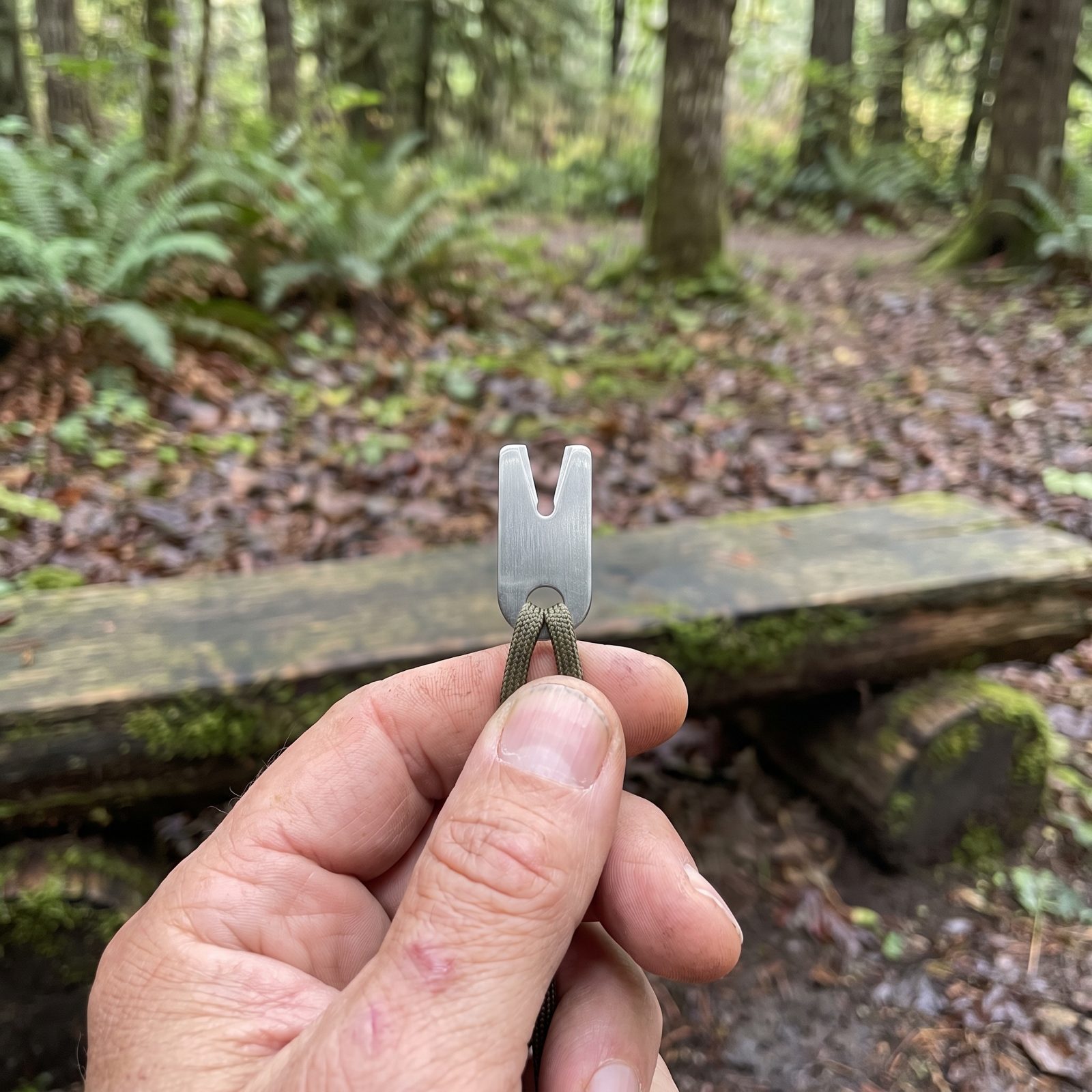
Most people reach for blunt tweezers or, worse, a lit match. Both can do the wrong thing: squeeze or stress the tick’s body and push its gut contents back into the bite. That’s how a nuisance becomes a Lyme problem.
A tick-removal key is a flat slotted sliver of steel, lighter than a quarter. You slide it along the skin and it lifts the tick straight out by the head — no squeezing, no twisting guesswork at arm’s length on your own calf.
They cost a few dollars and ride on a zipper pull or key ring where you’ll actually have one when a dog or a kid picks one up at the trailhead.
13. Nail Clippers, Stop a Split Nail Before It Becomes a Trail Injury
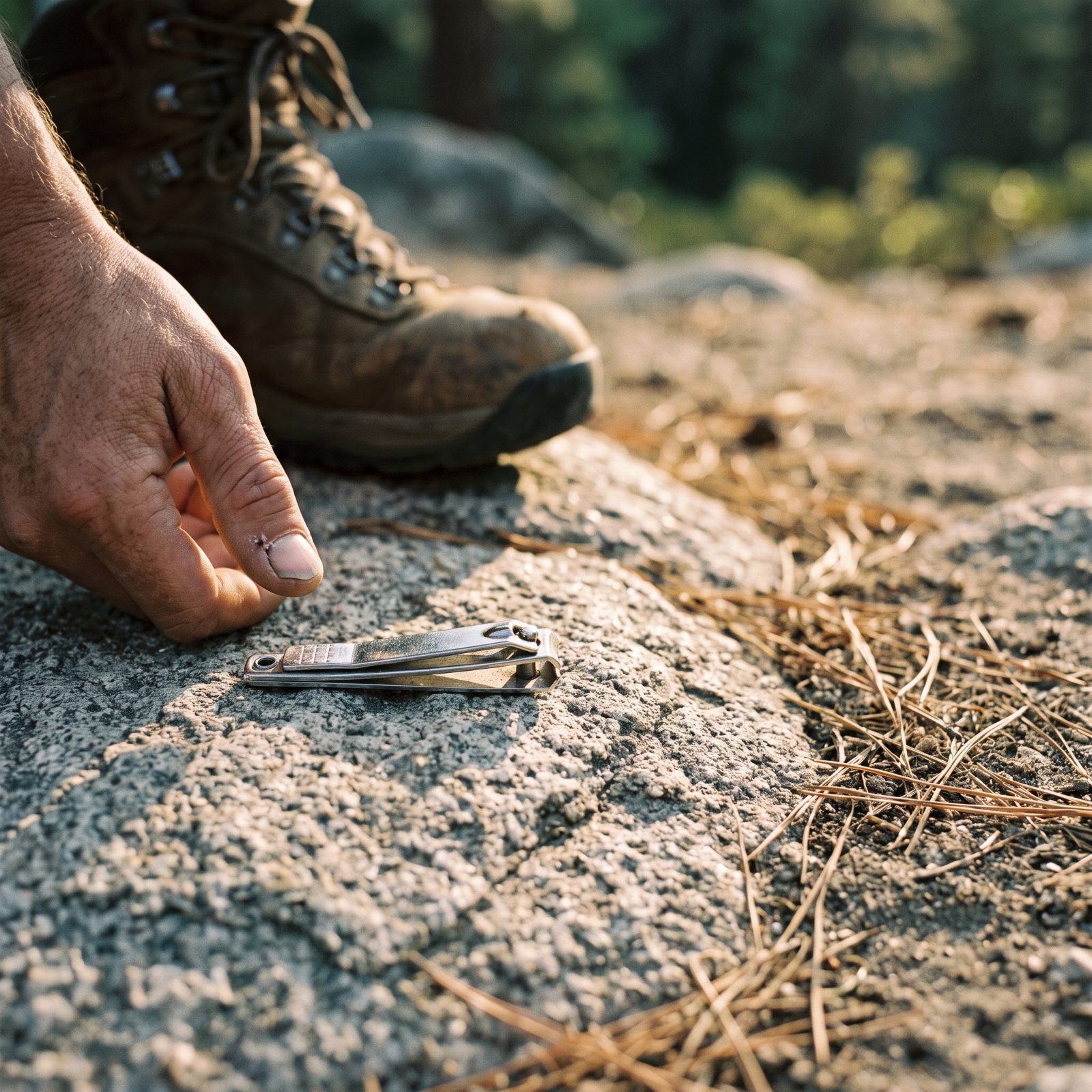
Sounds almost too dull to mention. Then a thumbnail snags on a pack strap three miles in, tears to the quick, and every rock scramble after that is a flinch.
Nail clippers weigh nothing and fix a dozen small miseries. A hangnail that would’ve caught on everything. A toenail bruising inside your boot on a long descent. A frayed cord end, a loose thread on a seam, a sliver of tape. For something you could lose in a jacket pocket, they punch well above their size.
12. Nitrile Gloves, A Clean Barrier for First Aid and the Grimy Jobs
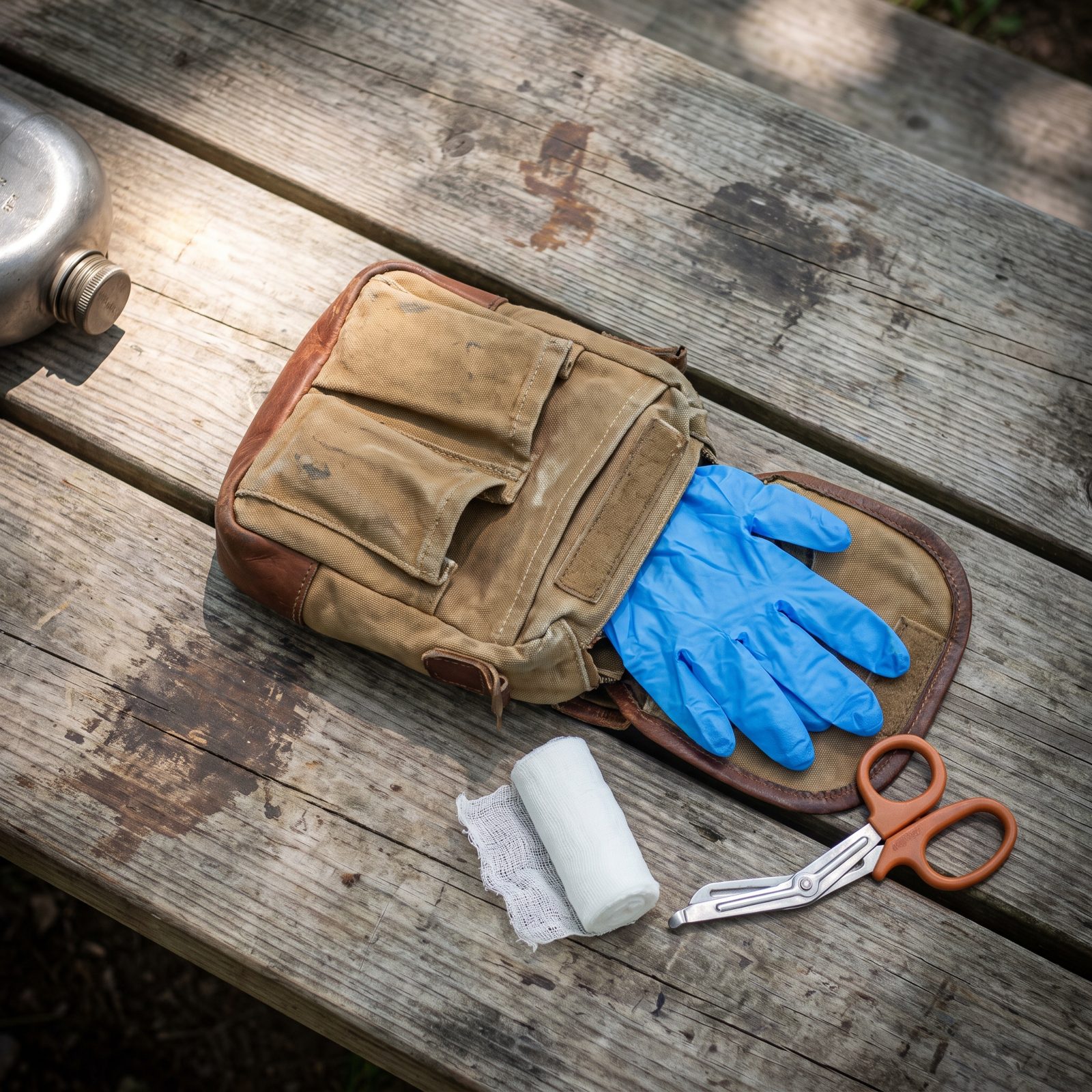
Blood, fish guts, chainsaw bar oil, a stranger’s wound. There are jobs you don’t want on bare skin, and out there you can’t just walk to a sink.
A few nitrile gloves flatten down to nothing in a sandwich bag. They keep a cut clean while you dress it, keep campfire soot off a blister, and keep you willing to help someone else without a second thought.
Go nitrile over latex. Latex allergies are common enough that offering a latex glove to an injured person can backfire badly. Nitrile also shrugs off oils and solvents better, which matters the day you’re wrestling a fuel line.
11. Trash-Compactor Bag, A Bombproof Pack Liner and Backup Bivy
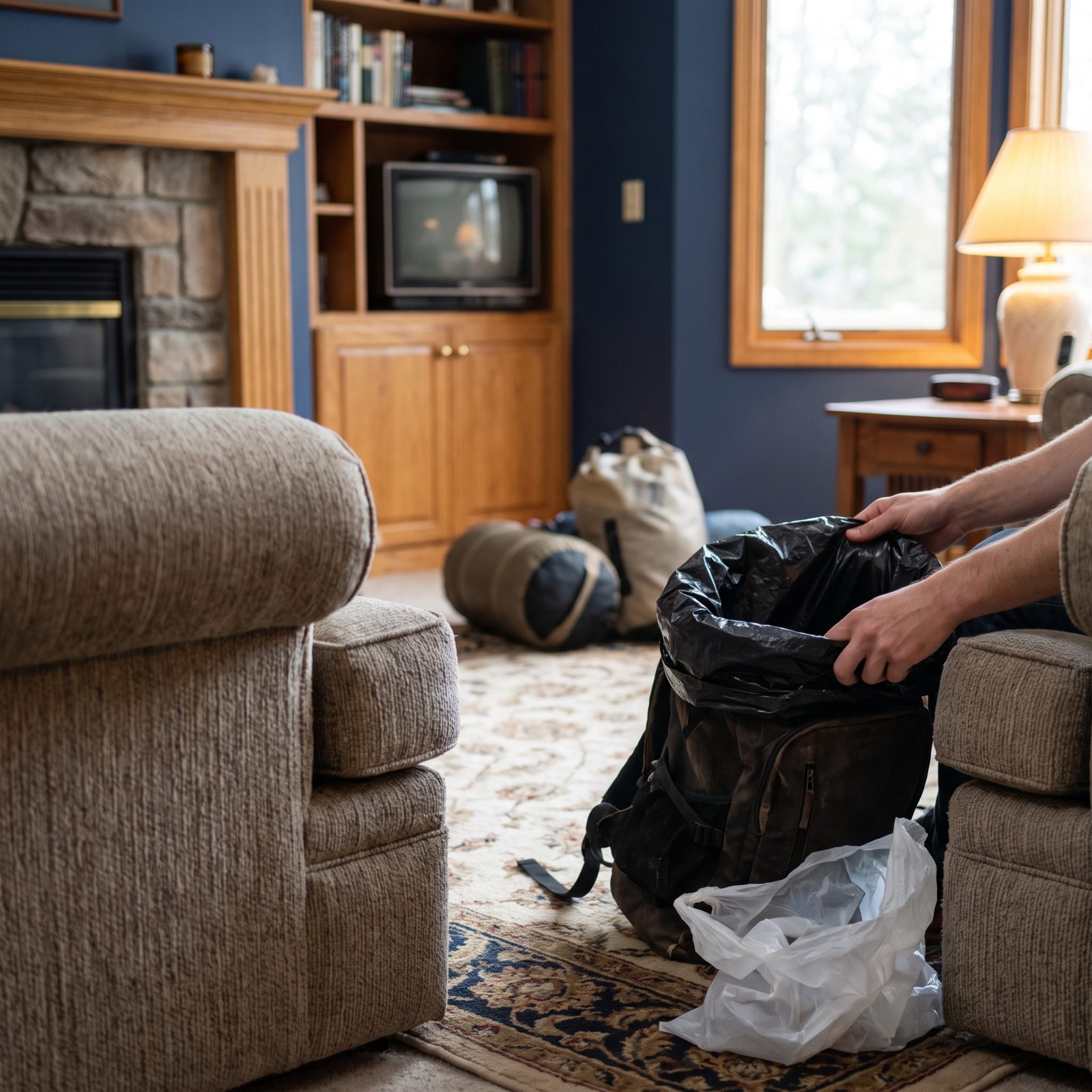
The grocery-store trash bag is a lie out here. One snag on a buckle and it shreds. A trash-compactor bag is a different animal, built thick enough to survive being stuffed, sat on, and dragged.
Used as a pack liner it’s the most reliable waterproofing there is, better than most rain covers because the water never gets near your gear in the first place. Drop your sleeping bag inside, cinch the top, and a surprise creek crossing stops being a disaster.
On a bad night it doubles as an emergency layer. Feet in the bottom, climb in, trap your body heat. Not comfortable. But warm beats comfortable when the temperature drops.
10. Peel-and-Stick Fabric Repair Tape, Patches Tents, Jackets, and Pads in the Field
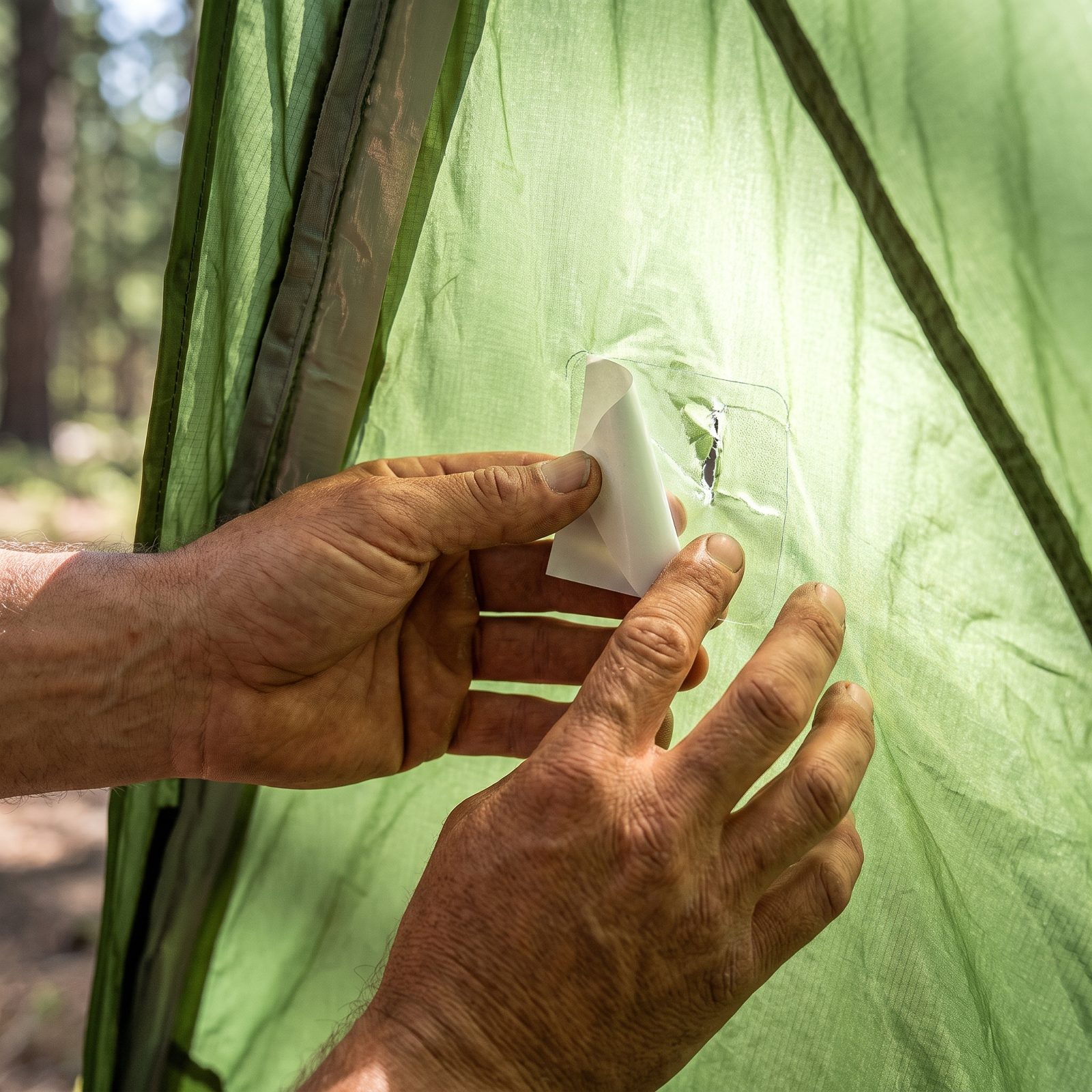
Duct tape gets all the glory and deserves about half of it. On technical fabrics it peels, gums up, and leaves a sticky mess that collects grit.
Purpose-made fabric repair tape — the stretchy, clear, peel-and-stick kind — actually bonds to the nylon it’s meant for. It’ll close a tear in a down jacket before the feathers escape, seal a puncture in a sleeping pad so you’re not sleeping on rock, and hold a tent panel through a storm.
One trick worth knowing: round the corners of your patch before you apply it. Square corners catch and start lifting. Rounded ones stay put for seasons.
9. Air-Activated Hand Warmers, Thaw Fingers and Dry Out Damp Gloves
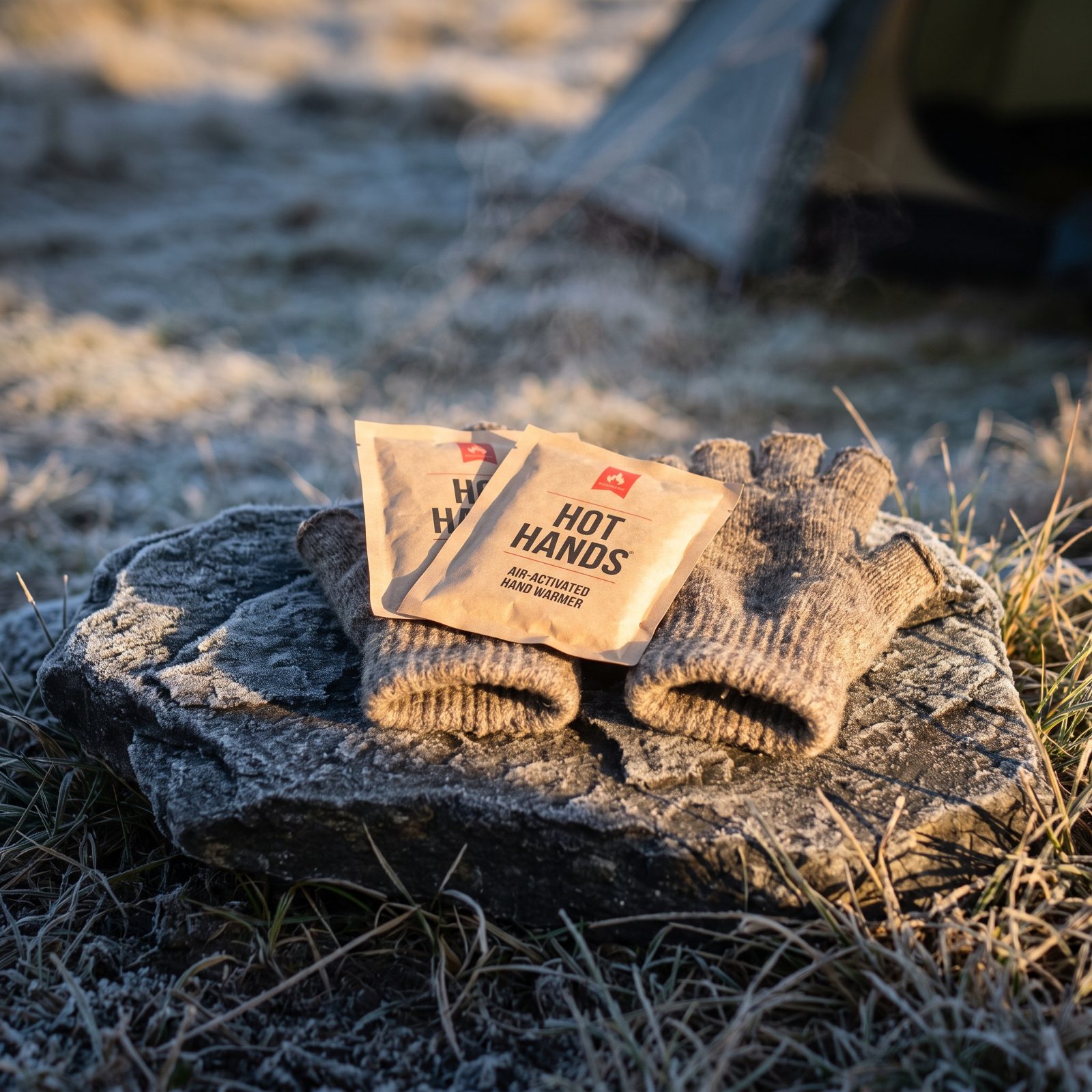
There’s a specific kind of cold where your fingers stop working and your mood goes with them. You can’t tie a knot, work a zipper, or strike a match.
Shake a couple awake and the iron inside starts oxidizing, throwing off steady low heat for hours. Slip one into each glove and the stiffness drains out of your hands.
Here’s the move most people miss. Stuff them into wet gloves or boots overnight. They won’t dry sopping gear completely, but they’ll pull the worst damp out of the lining so you’re not pulling on cold, soggy wool at first light.
8. Compact Umbrella, Portable Shade and Rain Cover in One
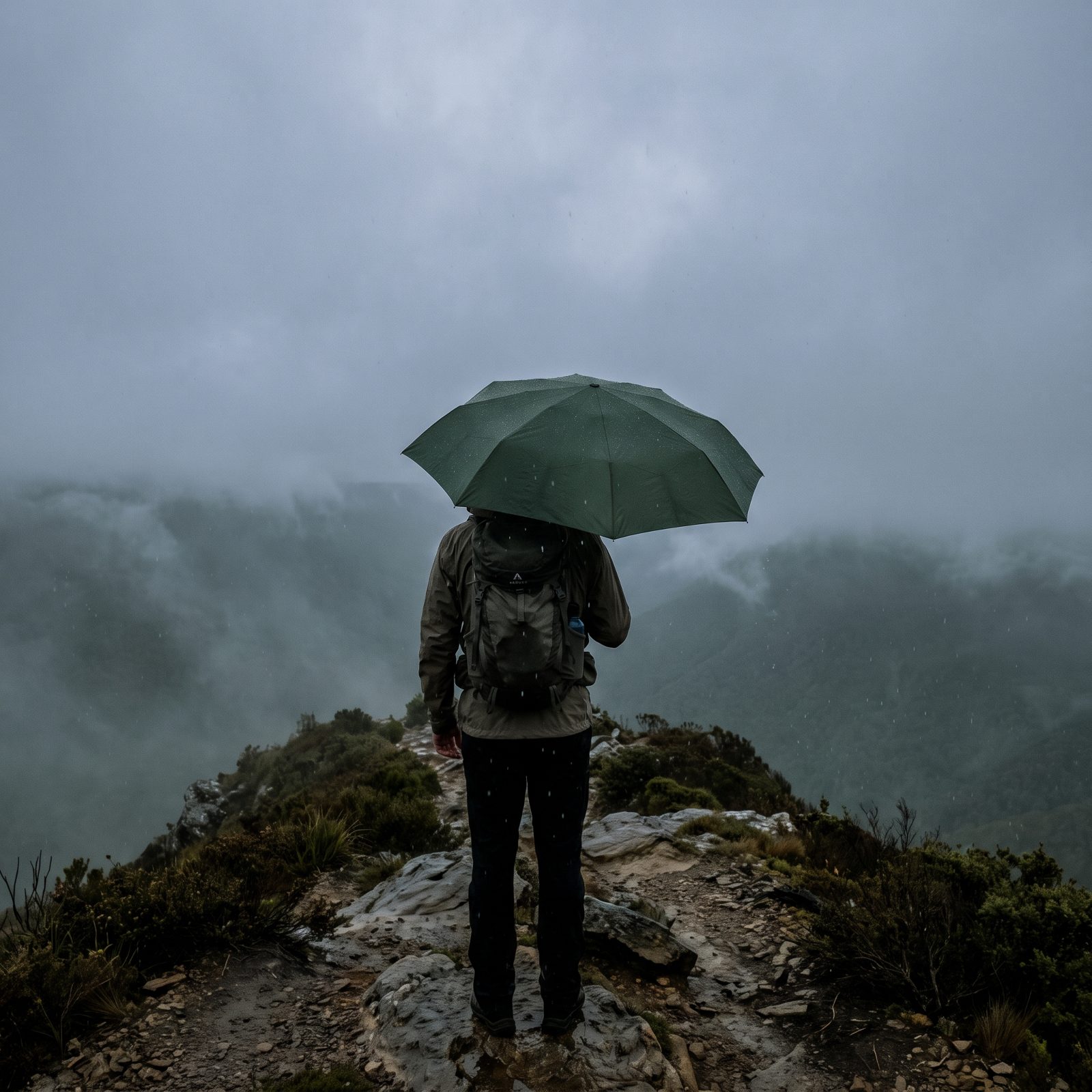
Serious backpackers used to snicker at umbrellas. Then a lot of them tried one on a long desert trail and shut up fast.
An umbrella does what no rain jacket can. It keeps the rain off while letting air move, so you don’t cook in your own sweat under a sealed shell. And out on open country with no trees, it throws shade that can drop the heat on your head and neck in a way you feel right away.
It struggles in real wind, no argument there. But on a steady soaking rain or a brutal exposed noon, it earns every ounce.
7. Fine-Mesh Head Net, Keeps Biting Bugs Off Without Coating Your Skin
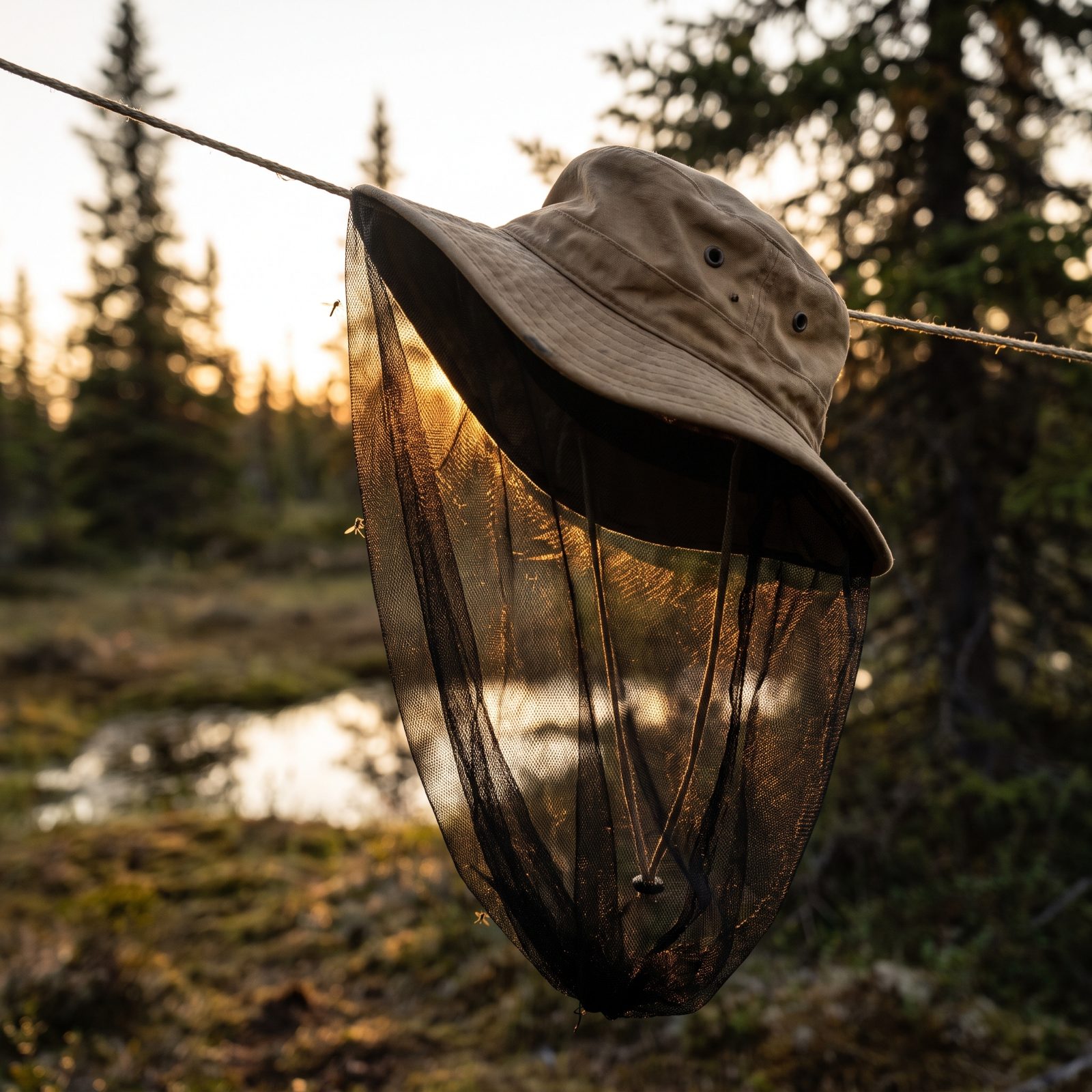
Anybody who’s spent a June evening in blackfly country knows the particular madness of bugs crawling into your ears while your hands are full. No amount of repellent fully fixes it.
A fine-mesh head net weighs about as much as a candy bar and stuffs into a pocket. Pull it over a brimmed hat and the mesh stands off your face, so the bugs land on fabric instead of skin. No chemicals, no greasy neck, no DEET melting your gear.
Get the fine mesh, not the loose stuff. No-see-ums and blackflies march straight through a wide weave like it’s an open door.
6. Unbreakable Signal Mirror, Flashes Rescuers From Miles Off
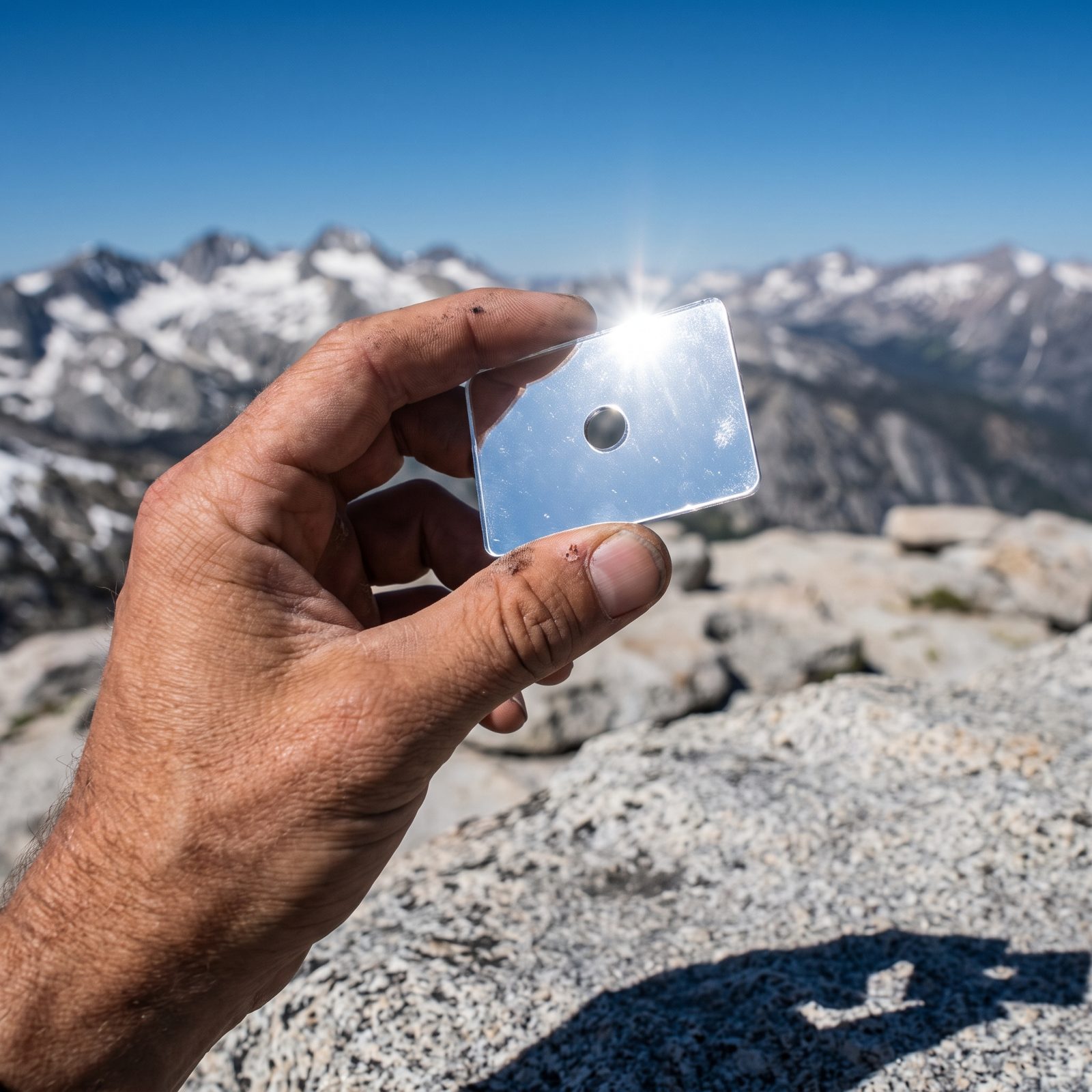
Your phone dies. Your whistle only carries so far. But a flash of sunlight off a mirror can be seen by a search plane from a shocking distance, far beyond shouting or waving range.
Skip the glass ones. A polycarbonate signal mirror won’t shatter in your pack, and the good ones have a small aiming hole in the center that lets you put the flash exactly where you want it instead of swinging light around the sky and hoping.
It weighs almost nothing and does nothing most days. The one day it matters, nothing else in the pack comes close.
5. Waterproofed Spare Vehicle Key, The Cheap Fix for a Lost-Key Stranding
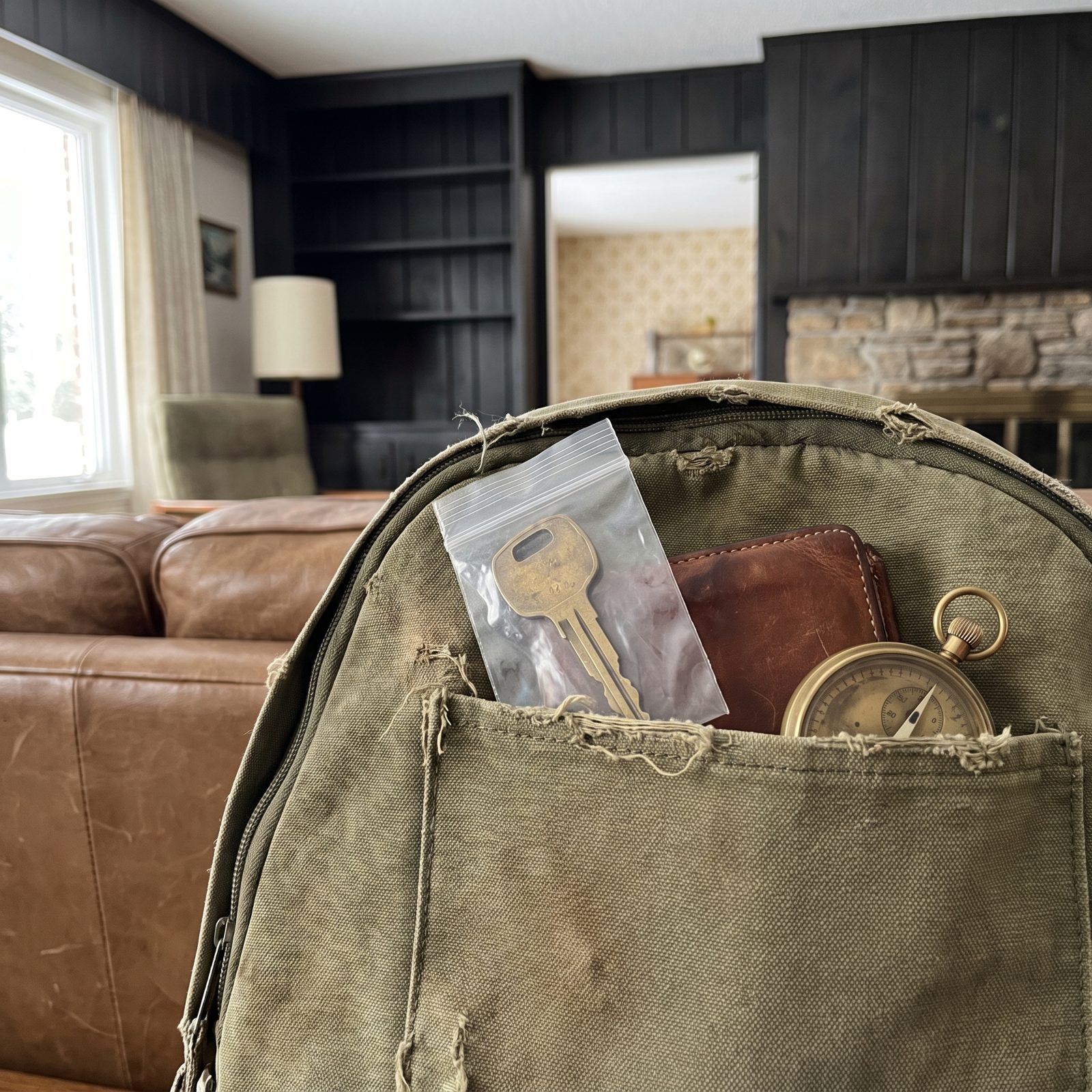
Picture the end of a perfect day on the water. Soaked, happy, dead on your feet at the boat launch. You reach for your keys and your stomach drops — they’re at the bottom of the lake, or back on the trail, or in the fish you just cleaned.
A spare key, sealed in a waterproof pouch and stashed in a fixed pocket of the pack you always carry, turns a ruined night and a long tow bill into a shrug. Many newer vehicles need the electronic fob, so test that your spare actually works before you trust it, not after.
It’s the least exciting thing on this list and probably the one that saves the most grief. A few dollars of plastic against a night stranded two hours from anywhere. Easy math.
4. Laminated Medical Information Card, Gives Rescuers Your Allergies and Contacts
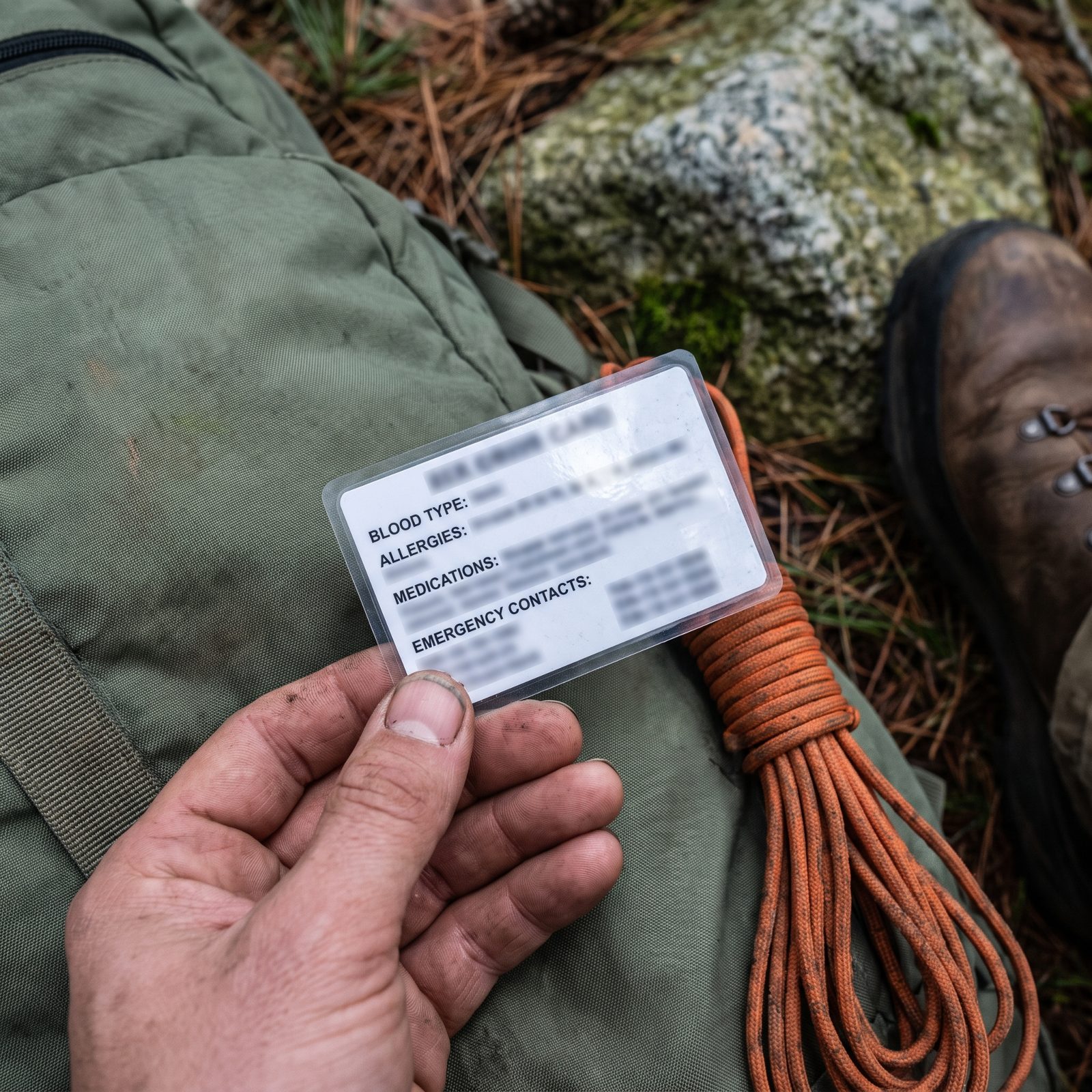
Unconscious hikers can’t answer questions, which is the whole reason this flat scrap of plastic earns its spot. Someone who finds a stranger face-down on a trail gets exactly what matters: blood type, drug allergies, the beta-blocker that changes how a medic treats shock, two phone numbers that aren’t trapped behind a locked phone screen.
Print it, laminate it, tuck it in the same pocket as the car keys so it’s always there. Cheap insurance against the one day talking isn’t an option.
3. Oral Rehydration Packets, Replace the Salt and Sugar a Hard Day Burns Off
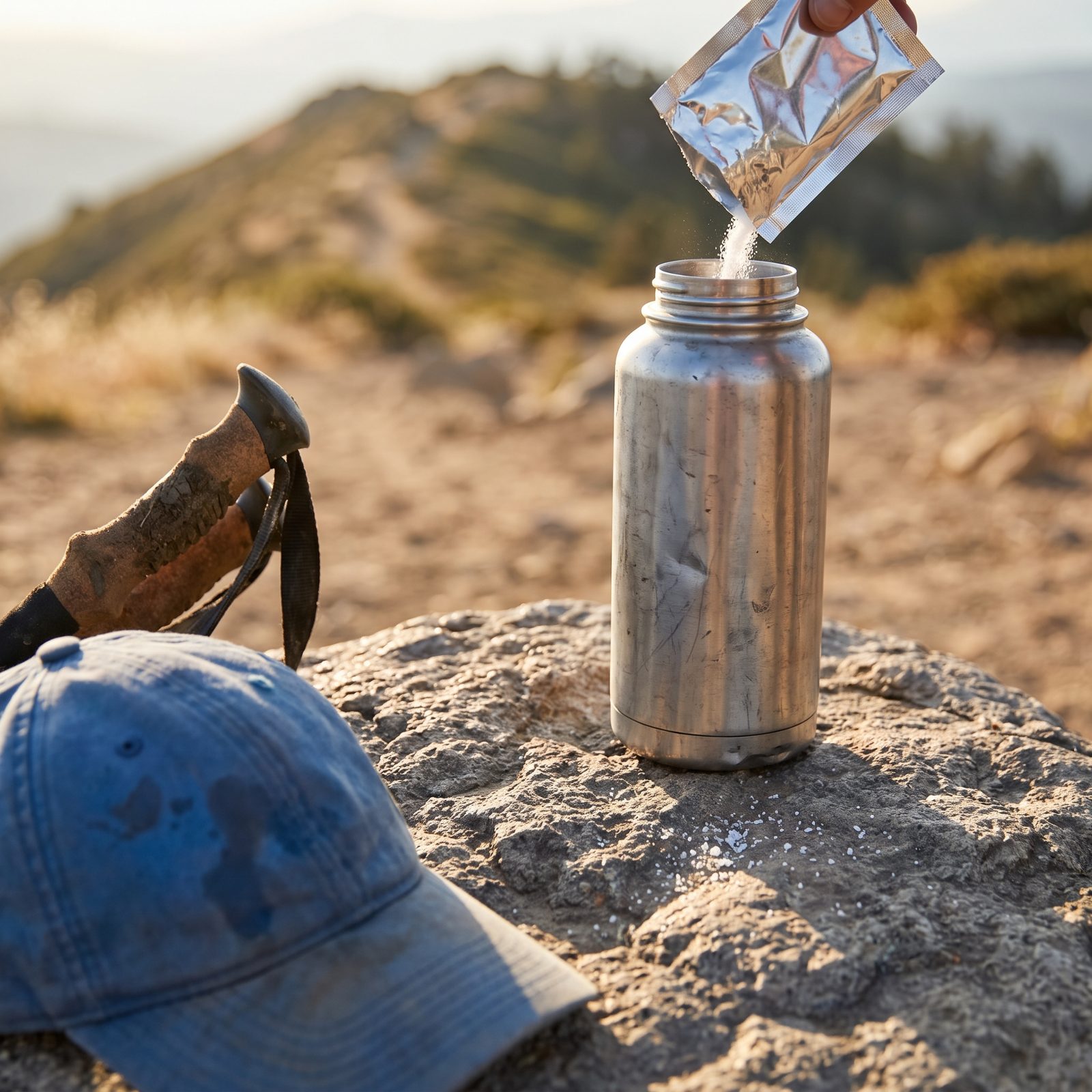
Water alone doesn’t fix a wrung-out body. Sweat carries out sodium and potassium, and chugging plain water on top of a big deficit can leave you worse off: lightheaded, crampy, foggy. These packets put the salt and sugar back in the right ratio so the water actually gets absorbed instead of running straight through you.
A hunter who sits still all morning can skip them. The person who clawed up a steep ridge in August cannot. They weigh almost nothing, cost a few dollars for a strip, and work faster than any sports drink mixed by guesswork at a gas station.
2. Wrapped Bouillon Cubes, Hot Water Becomes a Salty, Warming Drink in Seconds
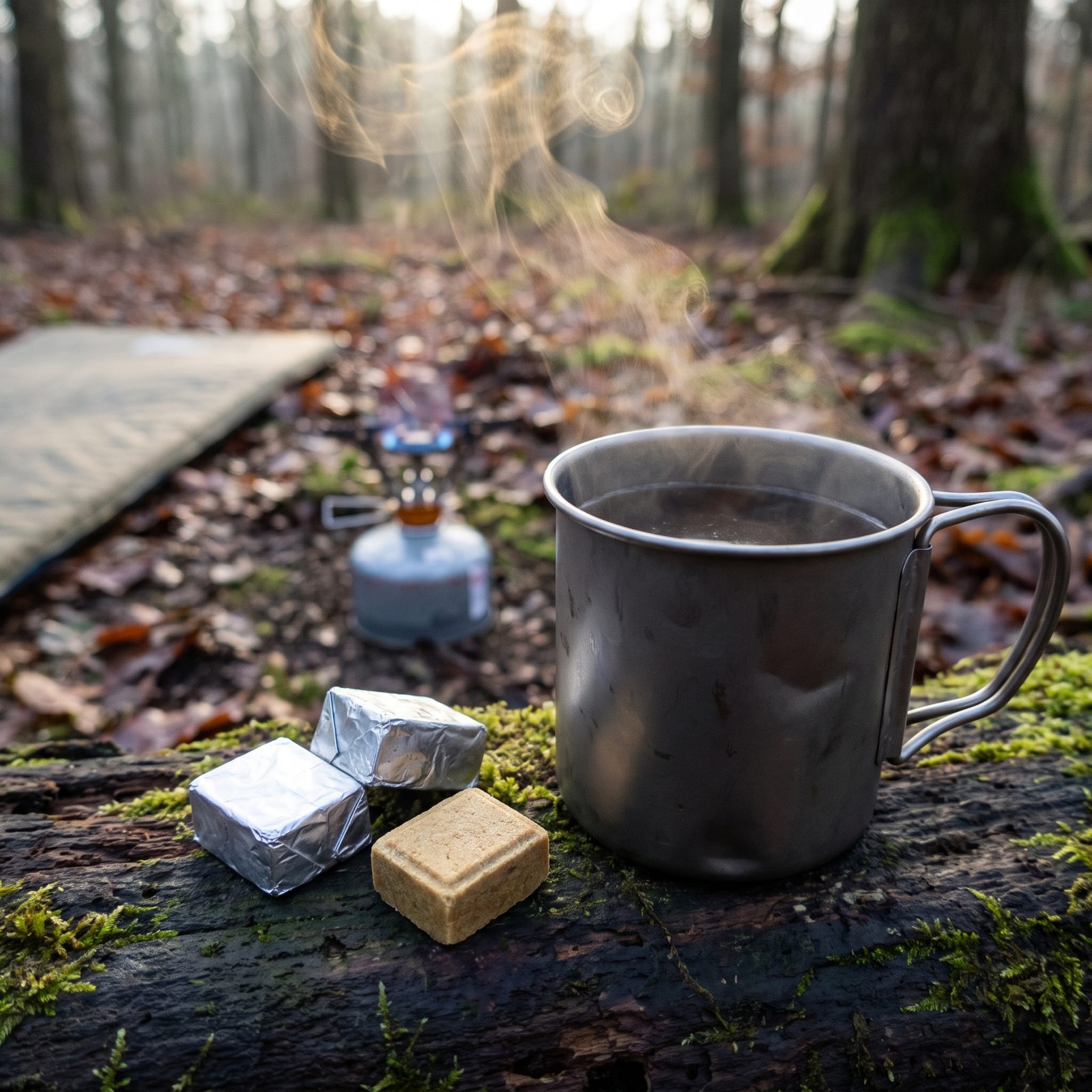
Cold, tired, and sick of another energy bar? Drop a cube in hot water.
There’s a reason these end up in packs after a few rough nights out. A hot mug of salty broth does what a snack never can. It warms you from the center, nudges you to drink more fluid, and tastes like actual food when morale is scraping bottom. The salt earns its place too, especially after a sweaty push when the body craves sodium more than another handful of trail mix.
Light. They don’t freeze into bricks, and a single cube turns a cup of boiled creek water into something you look forward to. Beef, chicken, vegetable — doesn’t matter. The folks who’ve done this a while carry a couple extra, and you’ll understand why around the second cold dusk.
1. Foil-Packed Water-Purification Tablets, The Backup for the Day the Filter Fails
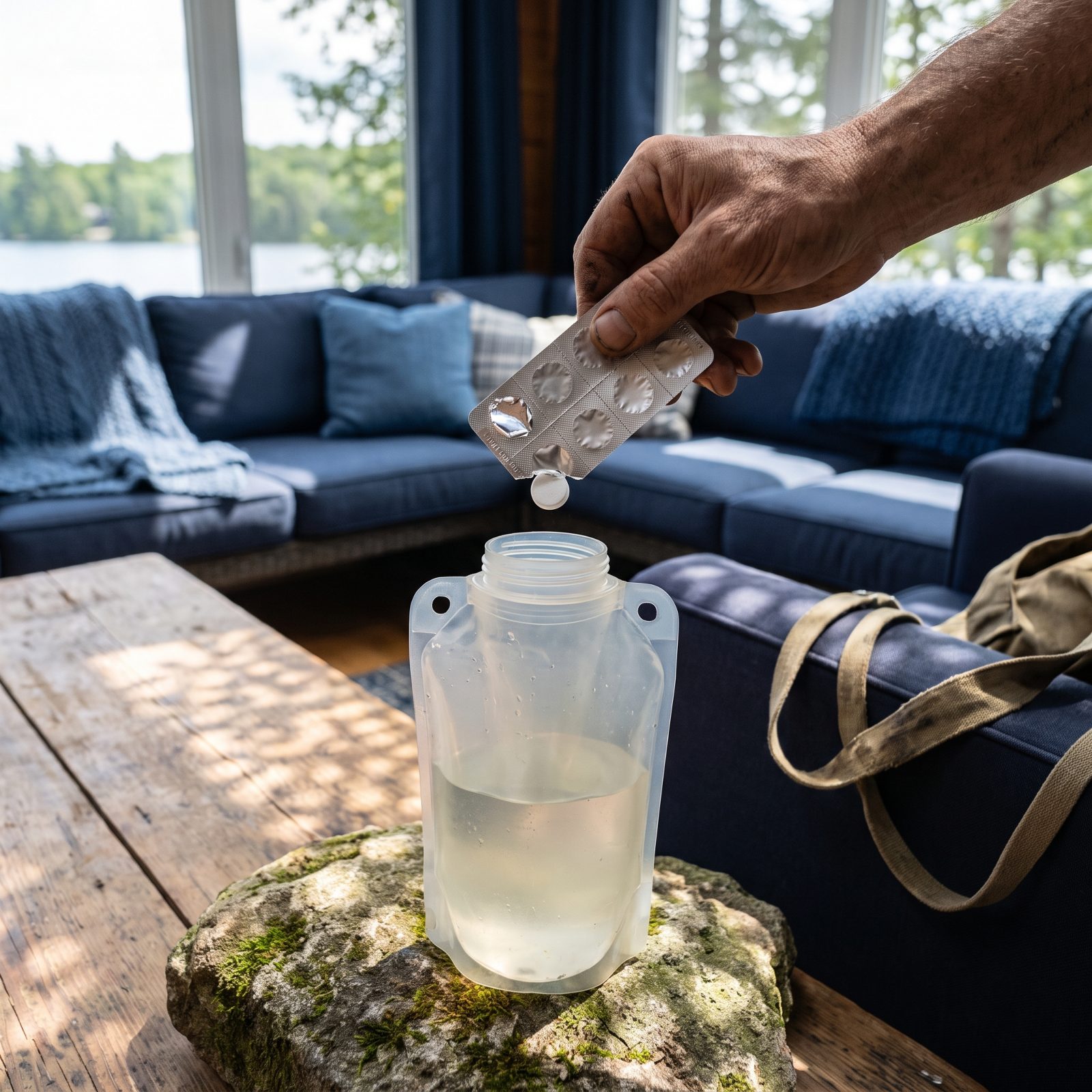
Pumps clog. O-rings dry out and crack. A cartridge freezes overnight and the ceramic fractures somewhere you can’t see, and now the gadget that was supposed to keep you drinking safe is a paperweight.
A foil strip of tablets never does any of that. It doesn’t move, doesn’t jam, and still works at the bottom of the pack three seasons later. Sure, the water takes a while to treat, and the iodine-based ones leave a taste some people can’t stand. Carry a drink-mix packet to bury the flavor and get on with your day.
Nobody plans on their filter dying. It just happens — usually on the trip where you needed it most.