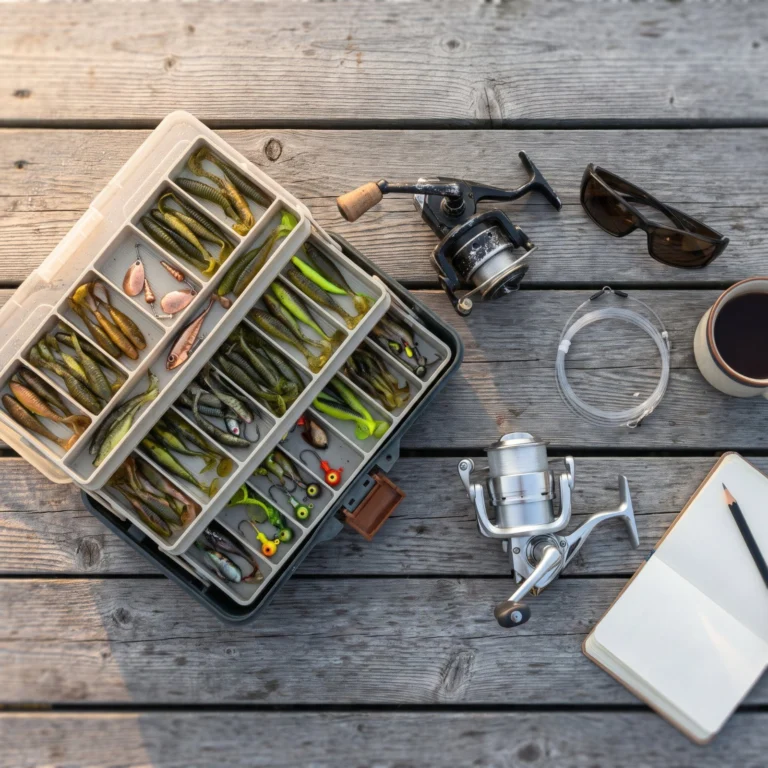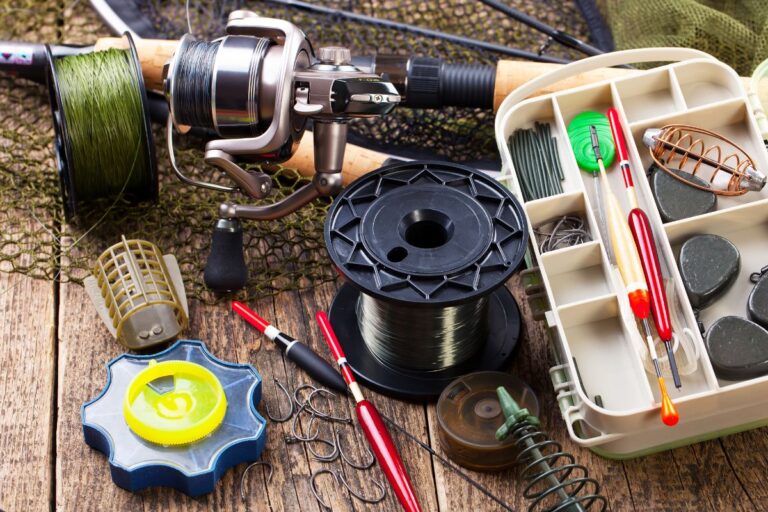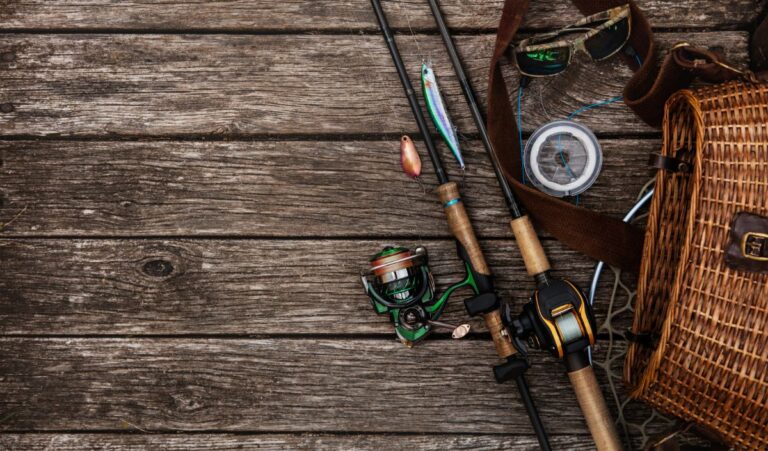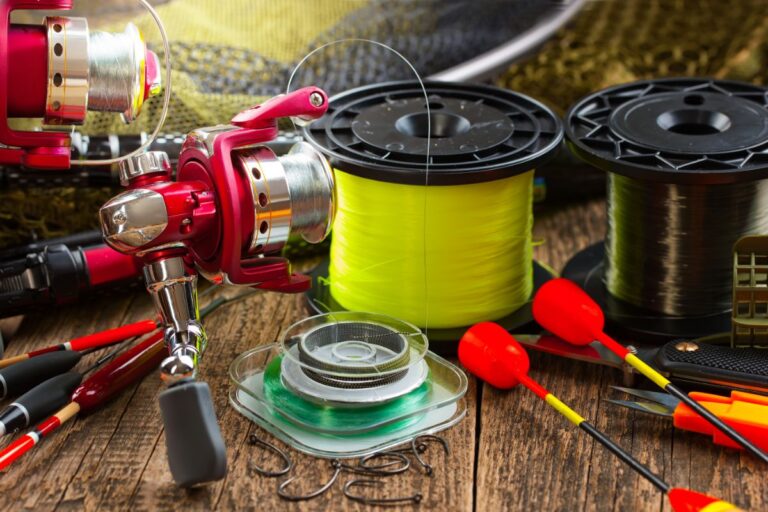
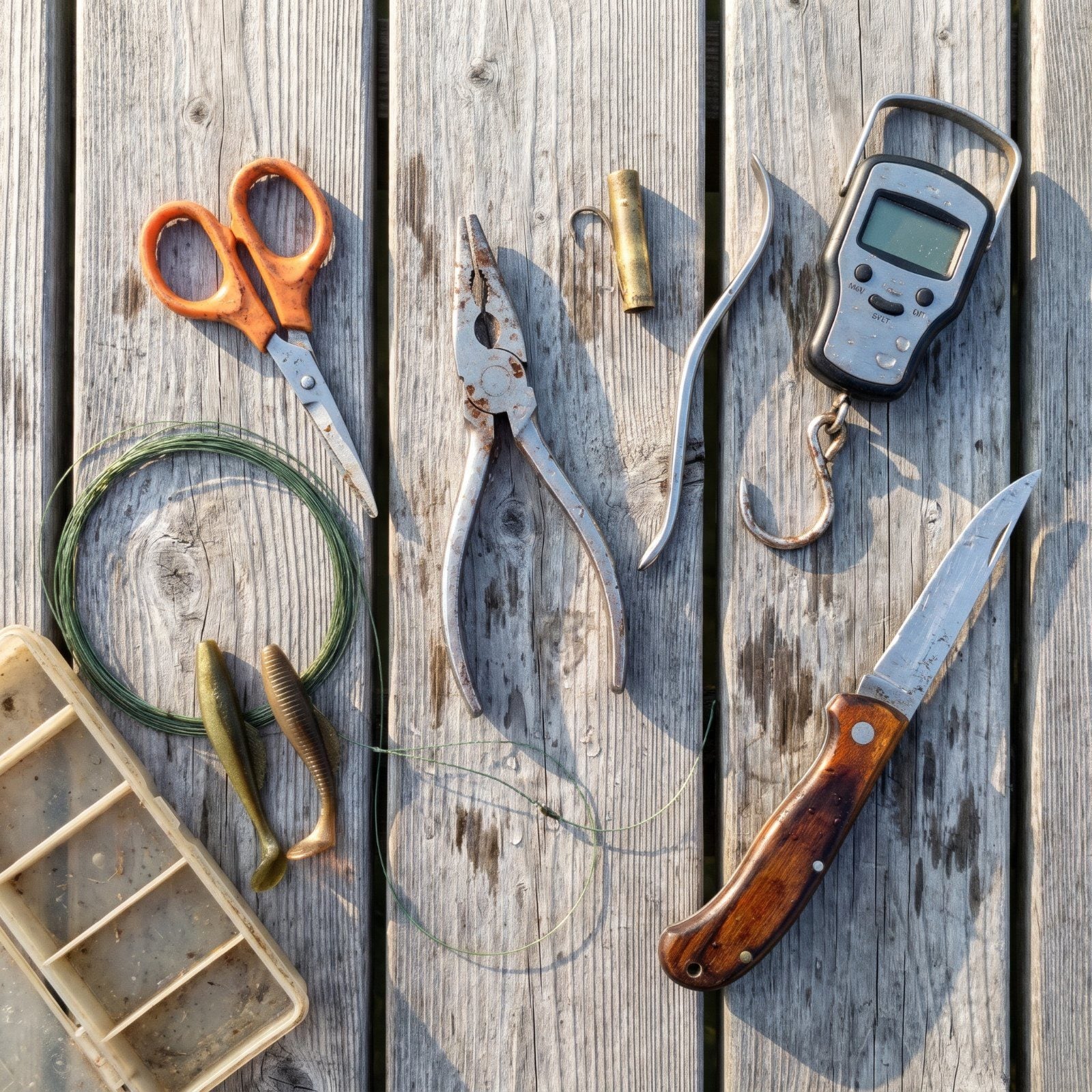
Open the tackle box of anyone who’s been fishing for thirty years and you won’t find the gadget wall from the catalog. You’ll find a handful of small, beat-up tools that earned their spot through use — scissors that still cut braid clean, pliers worn smooth where a thumb rests. These things leave the house every single trip, from the first crappie opener to the last cold-weather walleye run. Here’s what keeps coming back, why it matters, and the small details most people never think about until a hook is buried in a thumb.
Please note that some of the images in this article were created with the assistance of AI.
49. Braided Line Scissors That Actually Cut Braid
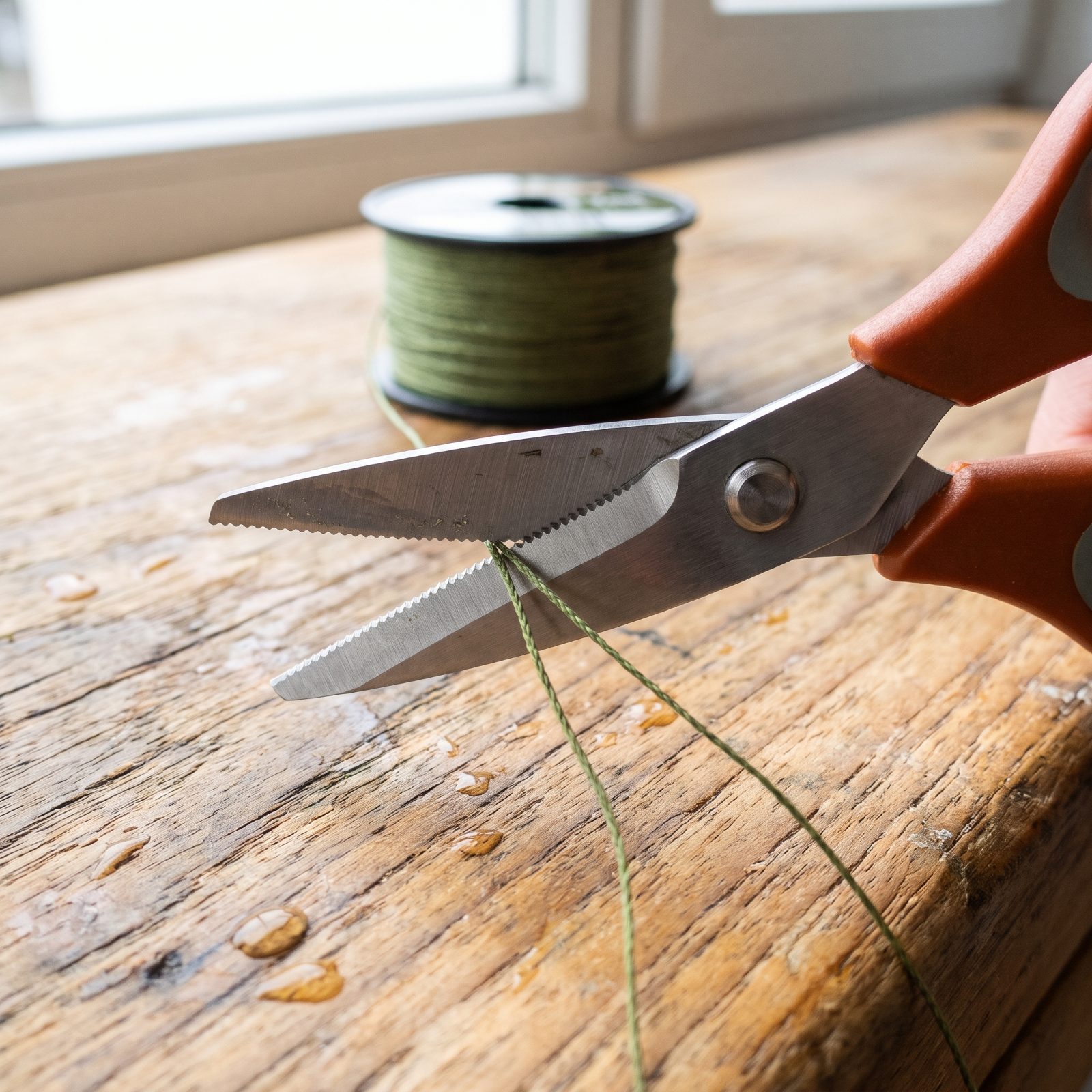
Regular scissors chew braid into a frayed mess. You tie, you trim, and three casts later you’re staring at a mushroomed tag end that won’t thread through anything. Micro-serrated braid scissors bite instead of slide — one clean snip and the line stays flat.
They cost more than you’d expect for scissors, which feels ridiculous until you’ve fought a knot at dusk with a dull pair. Buy the ones with a hole punched in a handle so you can tether or clip them. The single most lost tool in my boat used to be scissors. They sink, and they’re the exact color of the bottom.
48. Split-Ring Pliers for Swapping Hooks Without the Fingernail Battle
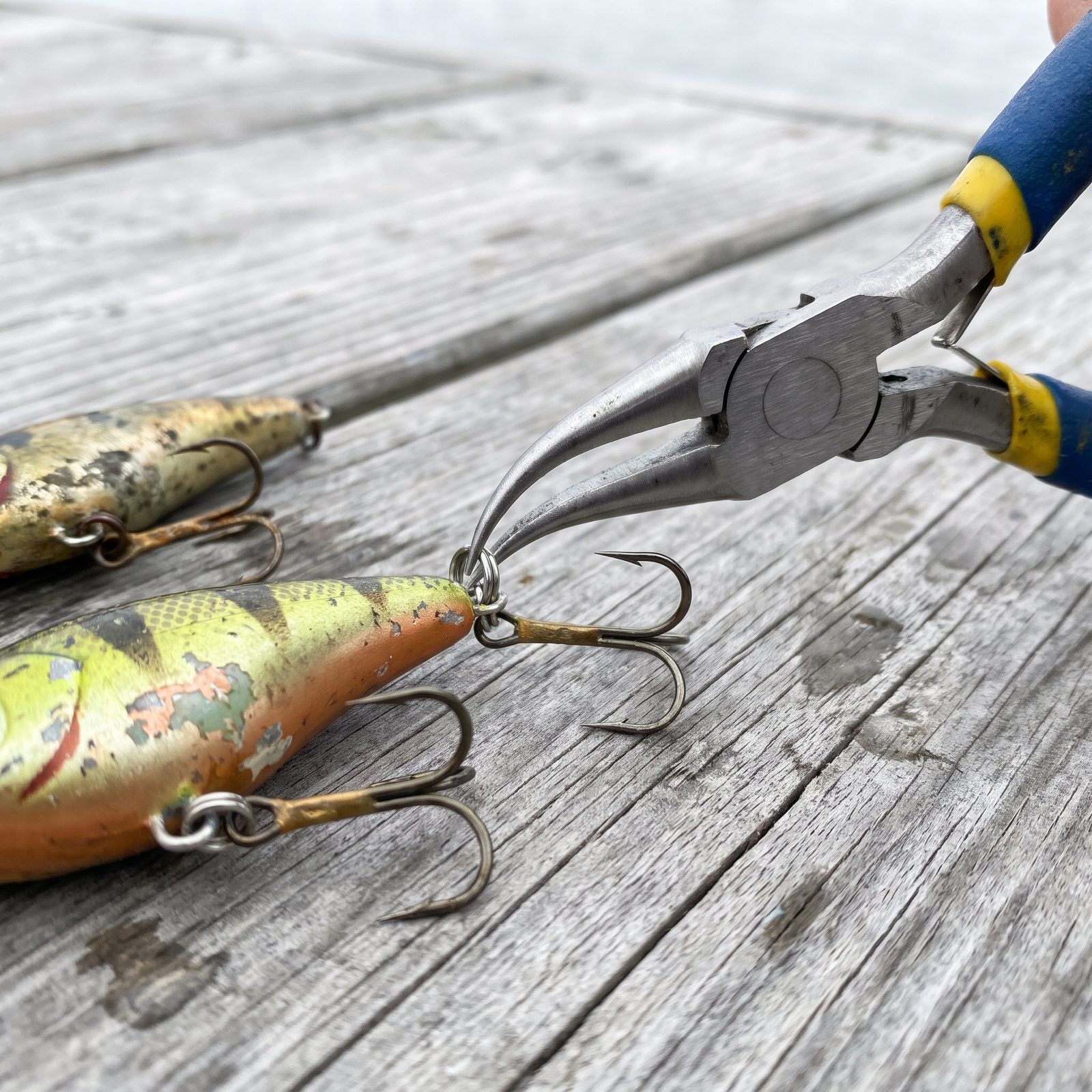
You’ve tried to open a split ring with a thumbnail. You lost. Probably bled a little. That tiny coiled ring is built to stay shut, which is exactly the problem when you want to swap a rusty treble for a fresh one.
Split-ring pliers have a hooked tip that slides into the coil and pries it open in a second, and the good ones double as needle-nose and side cutters — three tools in one. Keep that tip clean. Once it gets bent or burred, it slips off the ring and pinches you, which is how most of us learn to respect the thing.
47. Curved Forceps for Deep Hooks and Fast Releases
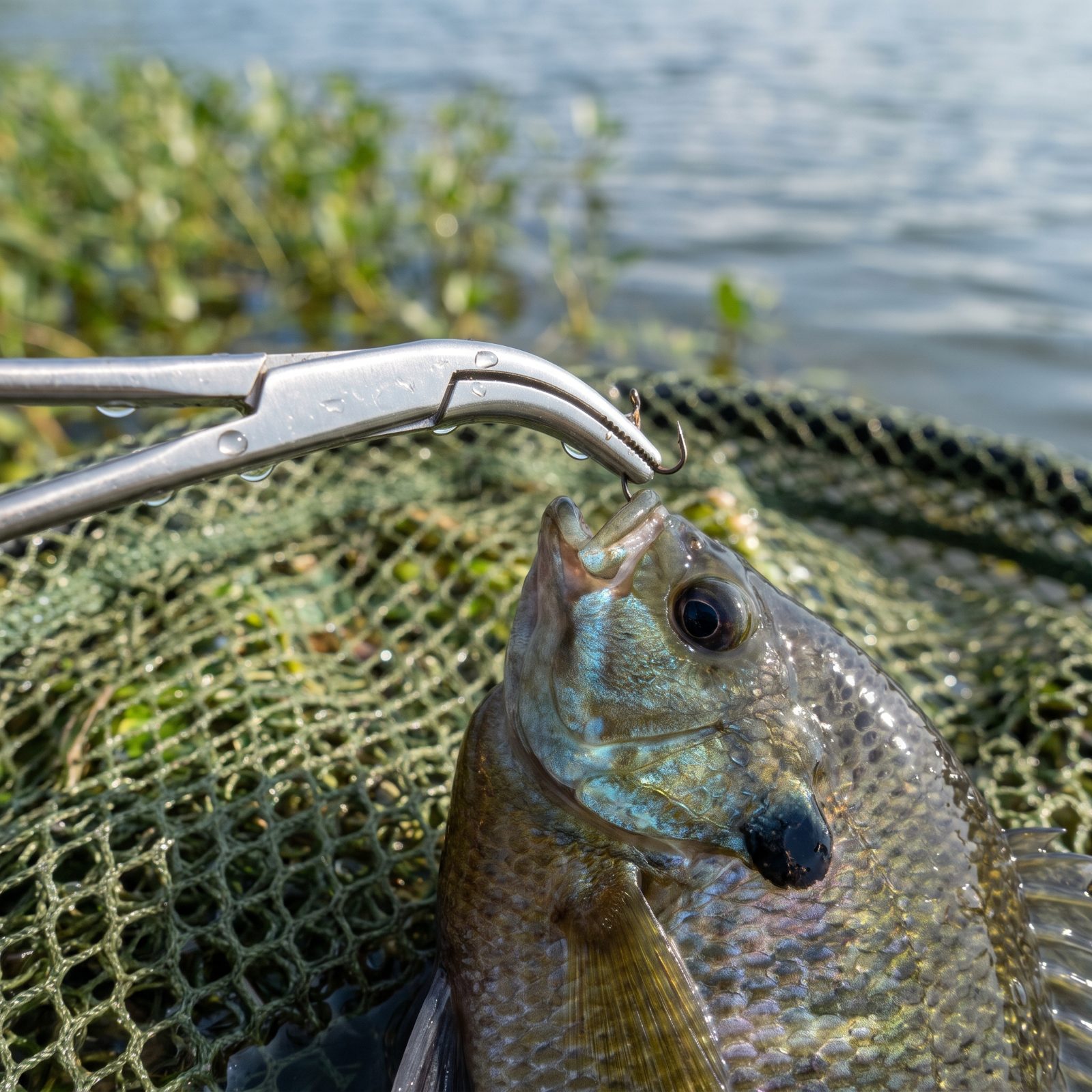
Forceps are the fastest release tool in the box. That locking hemostat grip lets you clamp the hook shank, back it out, and get the fish back in the water in seconds. For a fish you’re putting back, seconds matter.
The curved ones reach deeper than straight. Six inches handles panfish and trout fine. Go longer if you chase anything with teeth, because you want your hand nowhere near the back of a pike’s mouth. Forceps also make a perfect pinch for crimping barbs down, which you’ll want on catch-and-release water anyway.
46. Pocket Hook Sharpener That Brings Dull Points Back
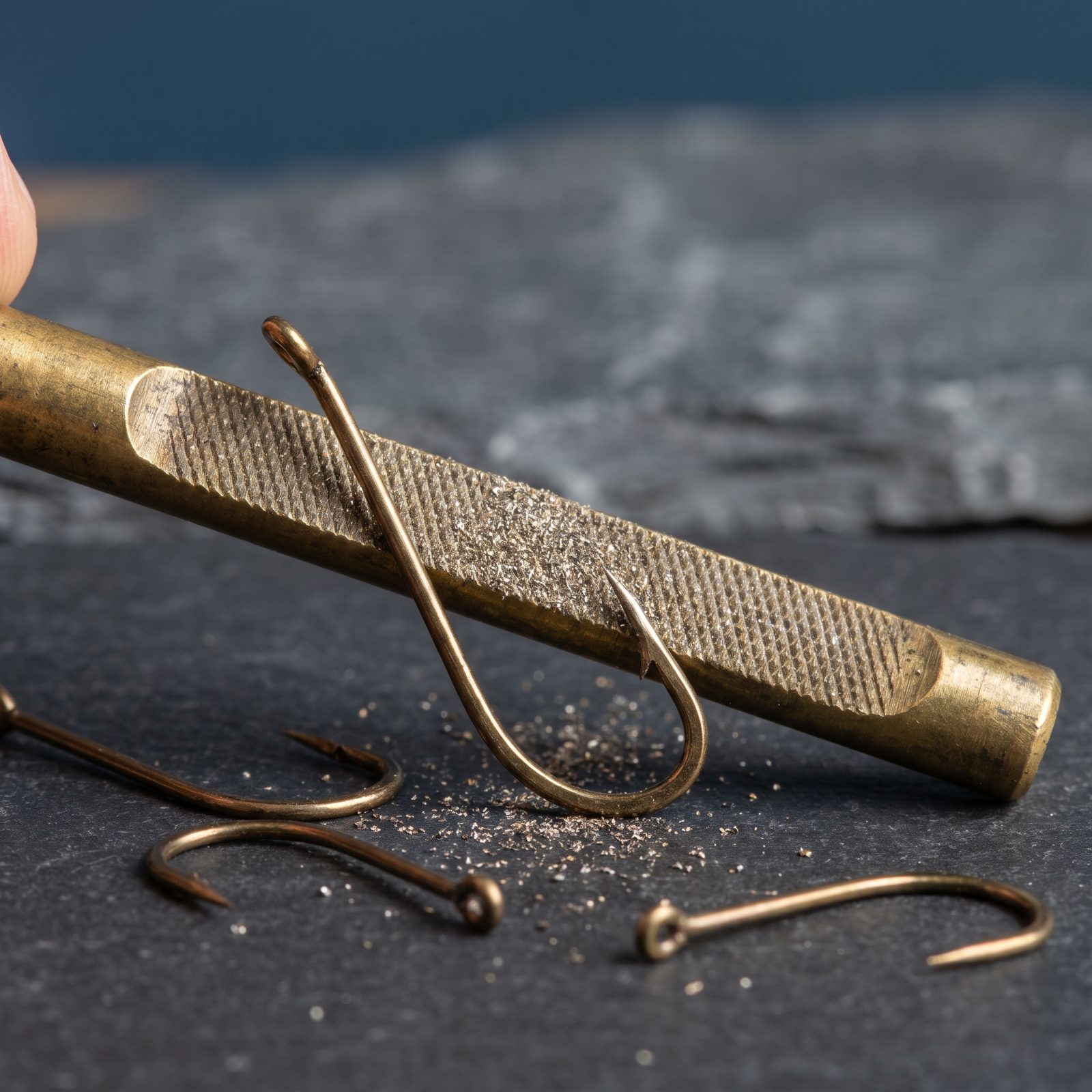
Nobody tells new anglers this: hooks come dull from the factory sometimes, and they go dull fast once they tick a rock. A dull point slides off a bony jaw instead of sticking. You feel the strike, you set, nothing. You blame the fish. It wasn’t the fish.
A pocket sharpener with a diamond groove costs almost nothing and lives in a vest pocket forever. Drag the point through a few times at an angle, then test it on a thumbnail. If it catches and bites in, it’ll hold a fish. If it skates, keep going. This one small habit catches you more fish than any lure upgrade ever will.
45. Compact Hook Remover for the Ones That Swallow Deep
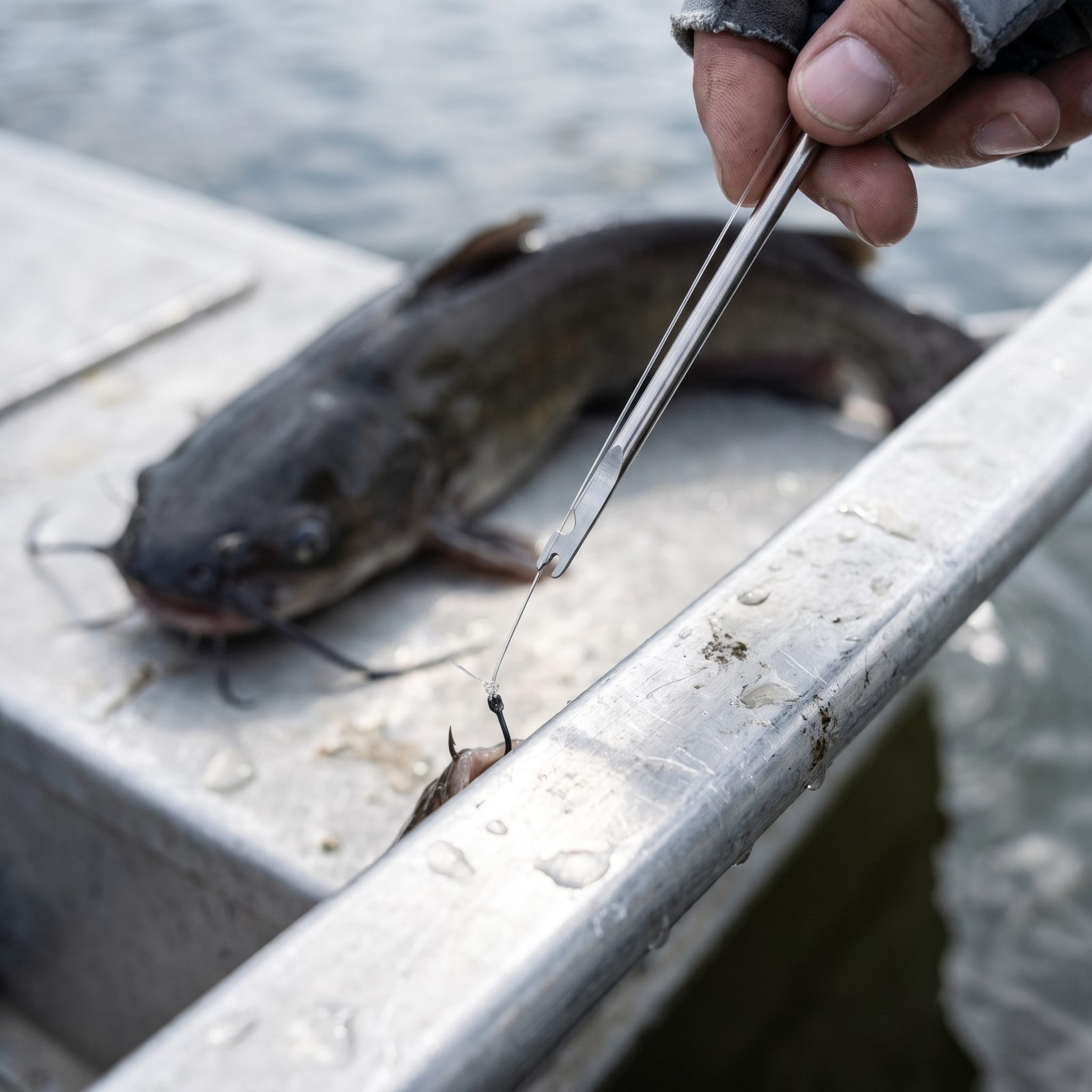
Catfish and bullheads swallow deep. So do bluegill when the bite’s hot and you’re a half-second slow on the hookset. Forceps can’t always reach, and your fingers definitely shouldn’t.
A dedicated hook remover is a long narrow shaft with a notch at the tip. You run it down the line, hook the notch over the bend, push, and the hook backs out the way it went in. Cheap, and it saves fish you’d otherwise gut-hook into a slow death. The disgorger style works for most freshwater. Keep it tethered — it’s thin enough to vanish in a gravel bank without a trace.
44. Compact Digital Fish Scale for Settling the Argument
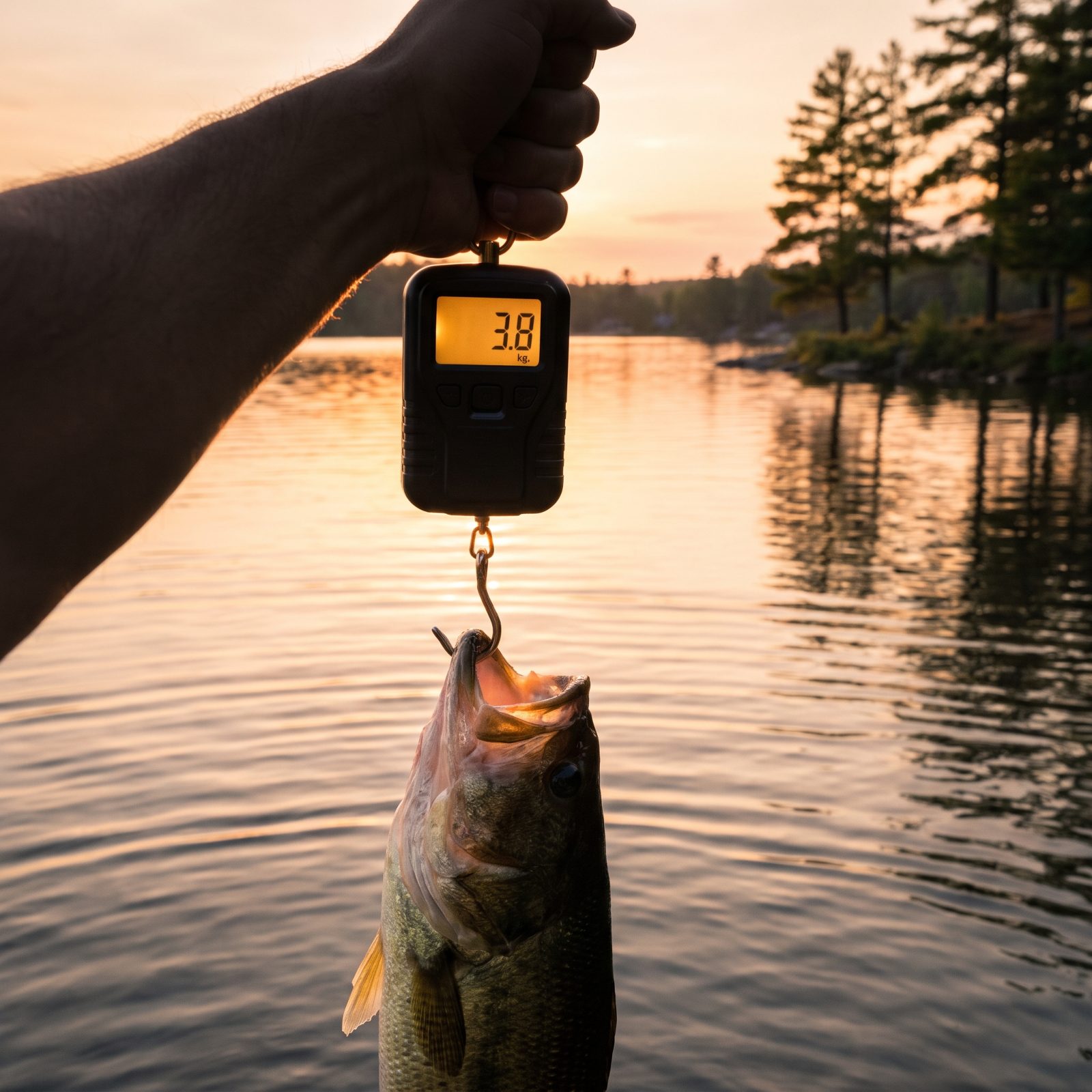
Every fishing partnership has one liar. A compact digital scale settles it in the fish’s favor, and it beats a hand hefting and a confident grin every time.
Look for one that reads down to the tenth of a pound with a sharp J-hook that hangs a fish you plan to keep right through the mouth. Most read in both pounds and kilos, and the batteries last a season or two. Just zero it before each use. A scale that drifts off calibration turns your biggest bass into a tall tale nobody believes.
43. Folding Fillet Knife That Rides in a Pocket
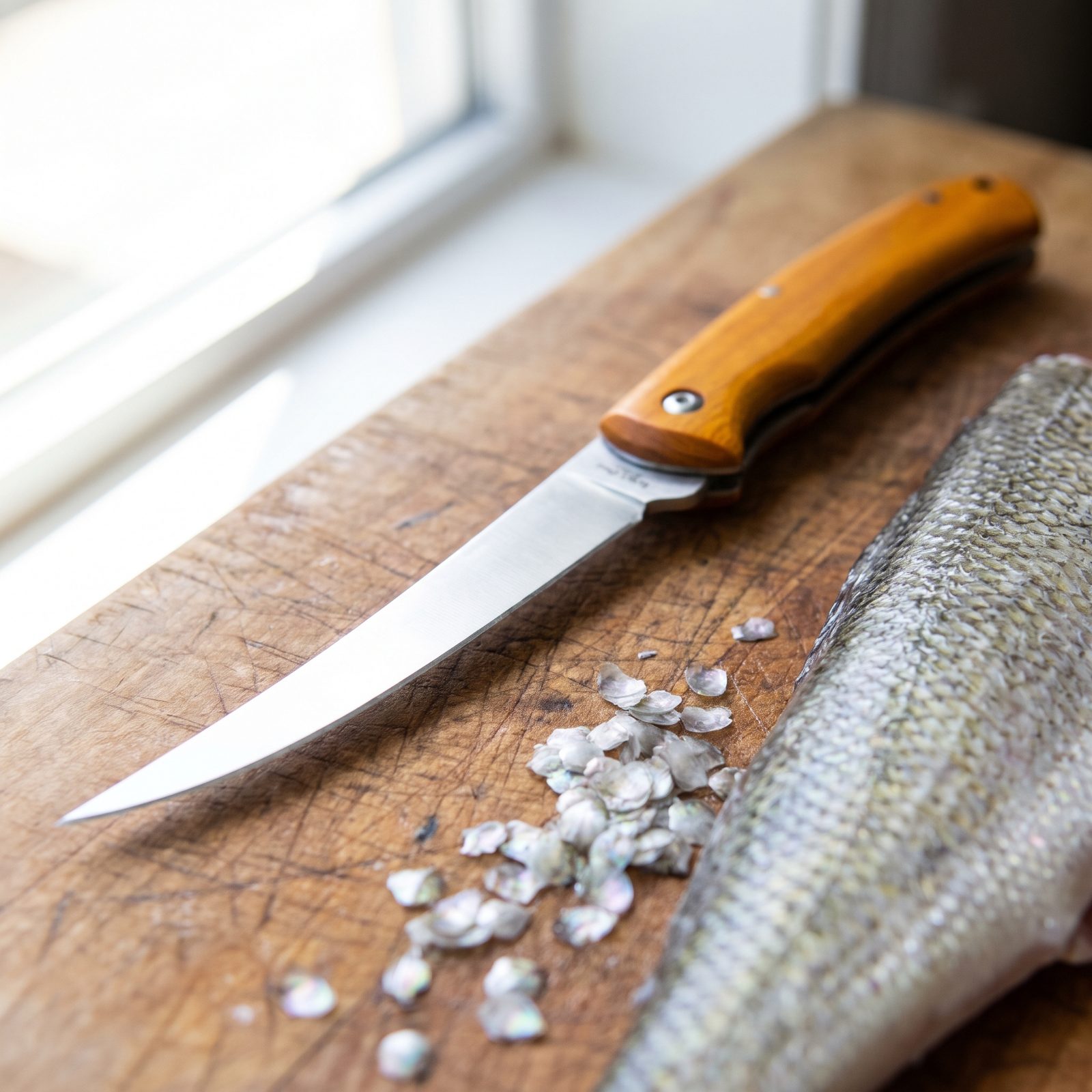
A fixed fillet knife is a better knife. Nobody argues that. But a fixed blade needs a sheath, and a sheath needs a belt, and somehow it always gets left at the cleaning station at home.
A folding fillet knife fixes the leaving-it-behind problem. It rides in a tackle bag or a jacket pocket and it’s there when a shore lunch suddenly becomes an option, and the blade flexes enough to follow a rib cage. Just dry it fully before you fold it. Water trapped in the hinge turns to rust, and a rusty pivot on a knife you use wet is a constant losing battle. Ask me how I know.
42. Line-Spooling Assistant for Fewer Twisted, Tangled Fills
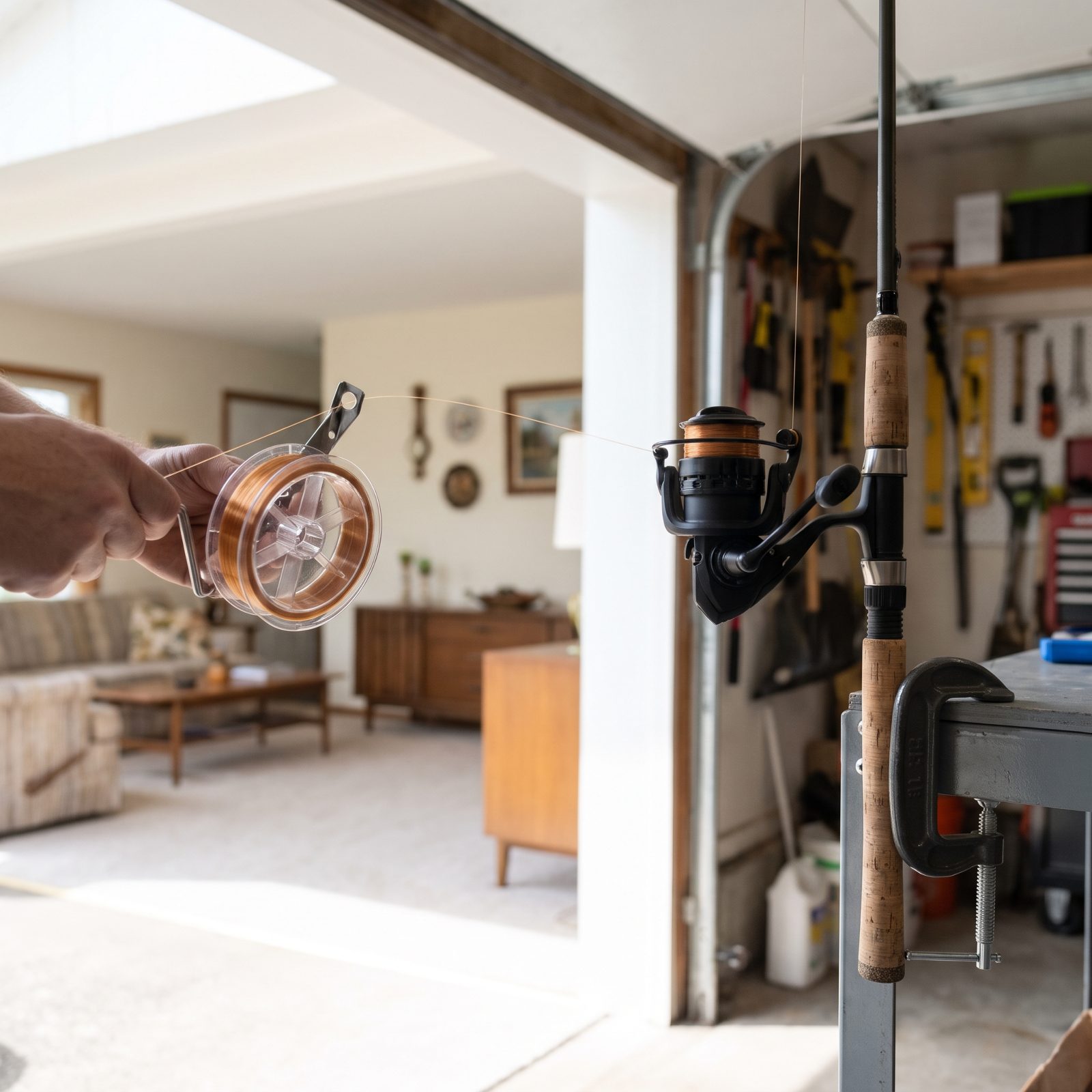
Memory coils and line twist start the moment you spool wrong. You’ve seen the result — a cast that lands in a bird’s nest, loops jumping off the reel for no reason, the whole afternoon spent picking knots.
A spooling assistant holds the filler spool at the right angle and applies steady tension while you crank. On spinning reels especially, it lays the line flat instead of loading up twist that haunts you all season. It’s one of those tools you ignore for years, try once, and then wonder why you suffered so long.
41. Rechargeable Clip-On Headlamp for Dawn Launches and Night Bites
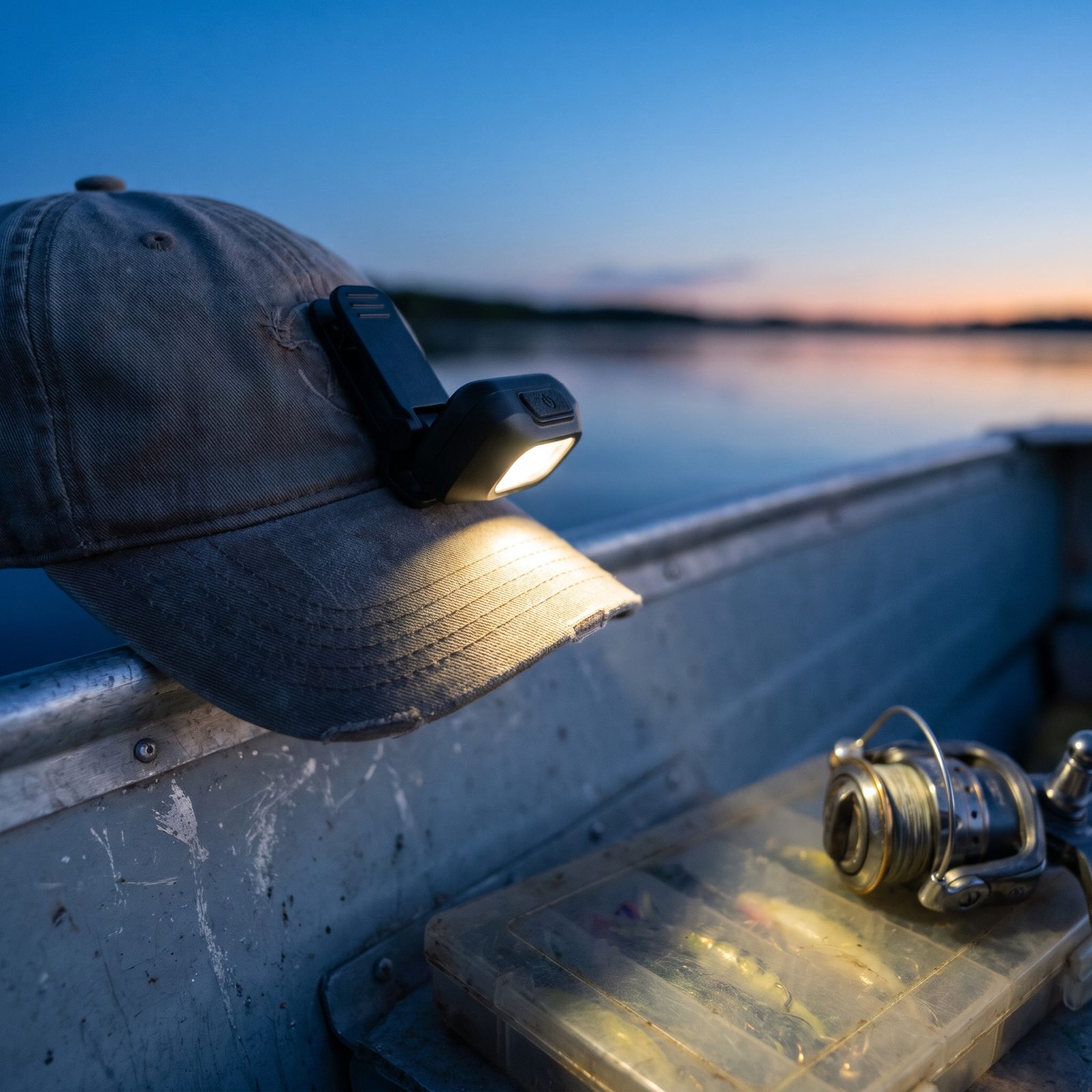
You tie knots in the dark more than you’d think. First-light launches, the walk back to the truck after dark, re-rigging when the night bite turns on. A phone flashlight means holding the phone, and you need both hands.
A clip-on rechargeable headlamp fixes to a cap brim and weighs almost nothing. USB charging means no hunting for odd batteries at the bait shop. Get one with a red mode. White light wrecks your night vision and spooks fish in the shallows; red lets you see your rig while your eyes stay adjusted. The battery holds a weekend on low.
40. Waterproof Phone Pouch That Keeps Your Lifeline Dry
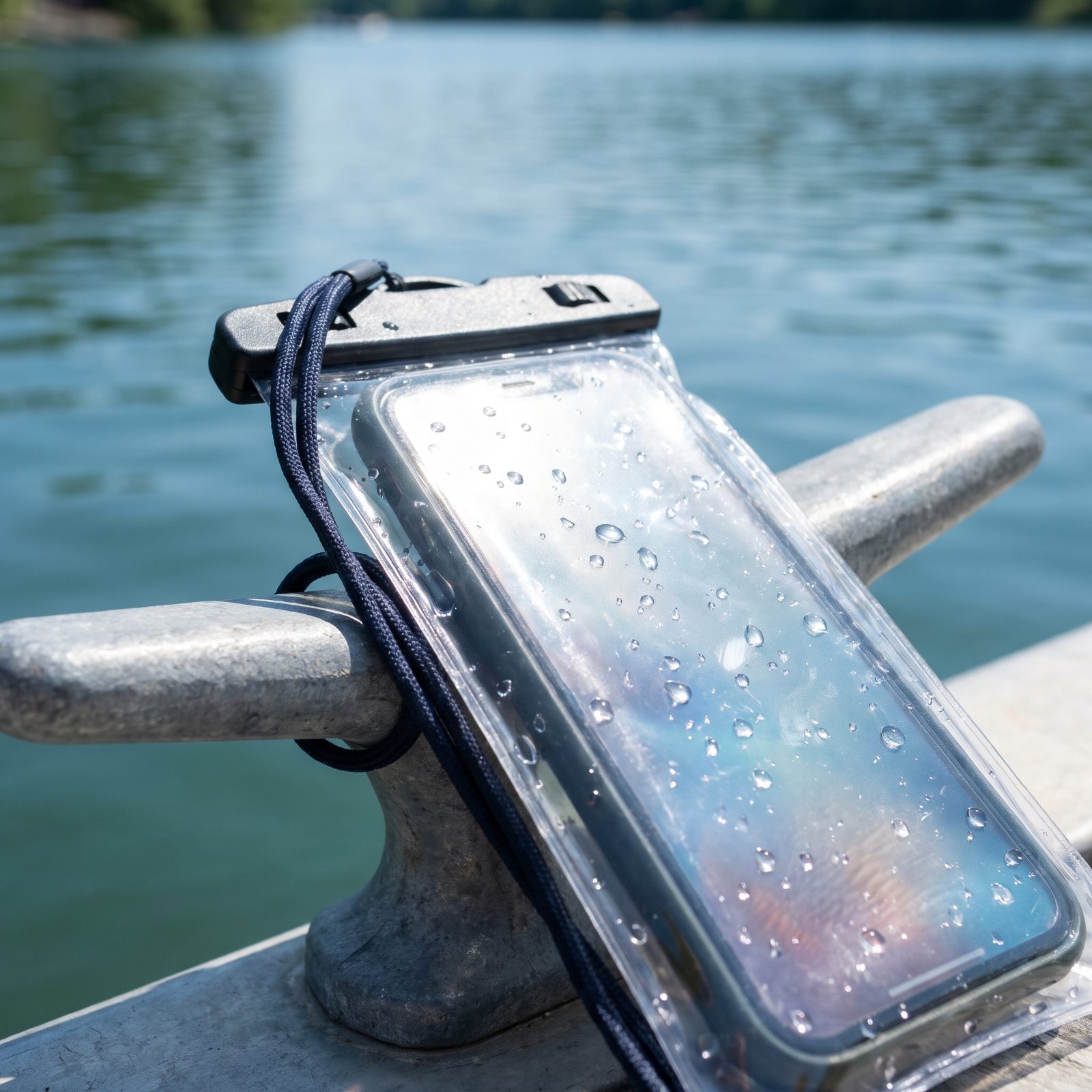
A phone that goes in the drink is a ruined day and a four-figure replacement. On a boat, over a rail, in the rain — it happens to everyone eventually. A clear waterproof pouch is cheap insurance.
The clear window lets you snap photos of your catch and read your mapping app without unsealing it, and most of them float, which matters when the alternative is watching your phone sink. Test the seal before you trust it. Drop it in a sink full of water with a dry paper towel inside and leave it an hour. Towel comes out dry, you’re good. If it doesn’t, you just saved yourself a very expensive lesson.
39. The Waterproof Pocket First-Aid Kit That Lives in the Tackle Bag
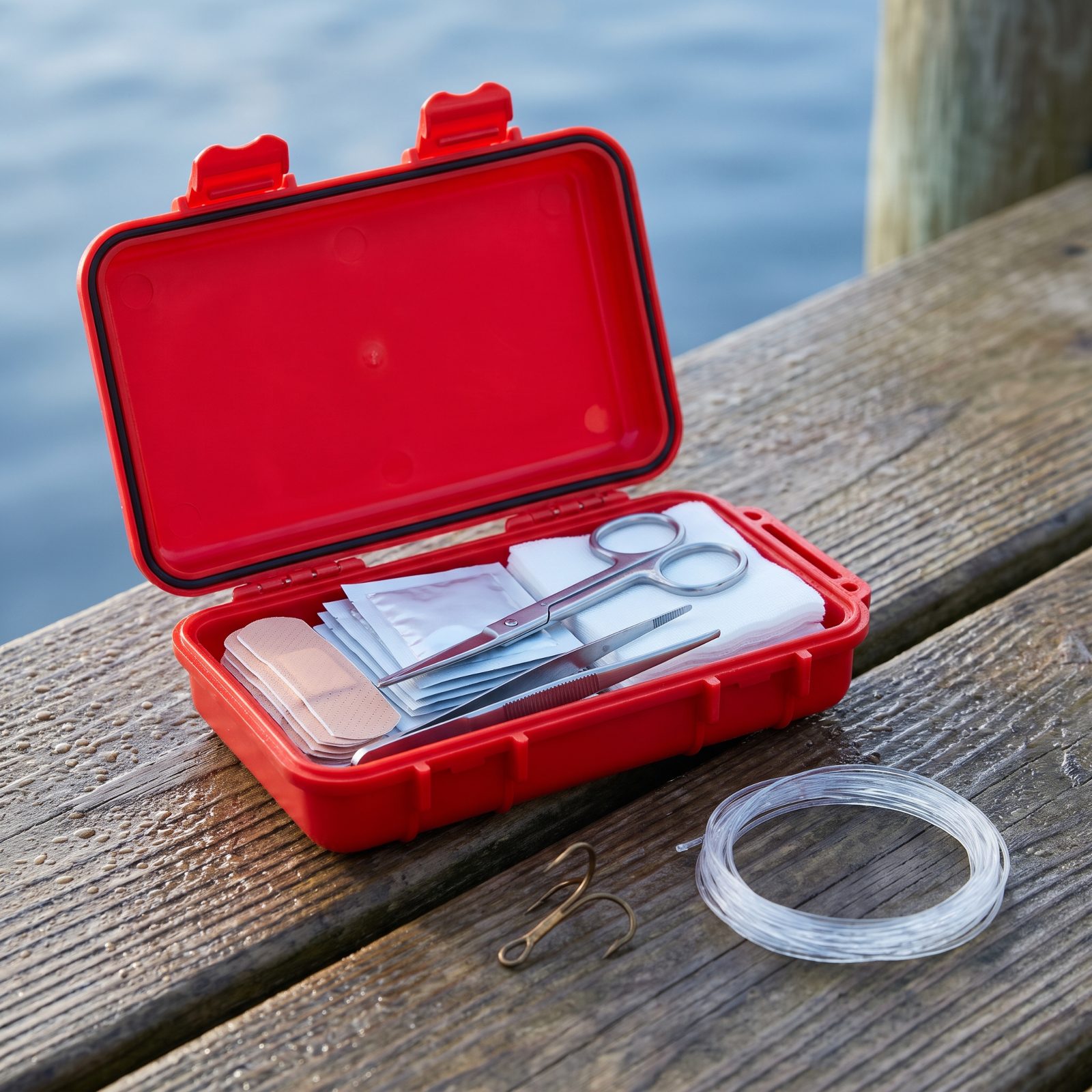
A treble hook buried past the barb in your thumb is not an abstract risk. It happens, and it happens fastest when you’re hurried and tired. A kit the size of a sandwich handles the real injuries fishing throws at you — hook punctures, fillet-knife slips, sunburn, blisters from a long day of casting.
Buy the waterproof one. Soft-sided fabric kits turn into a soggy brick of ruined bandages the first time your bilge sloshes over them. Something decent runs somewhere in the low tens of dollars, and you’ll want to restock it every spring. I’ve opened a kit in June only to find the antiseptic wipes had dried to crackers.
38. A Pocket Terminal-Tackle Organizer for Hooks, Swivels and Weights
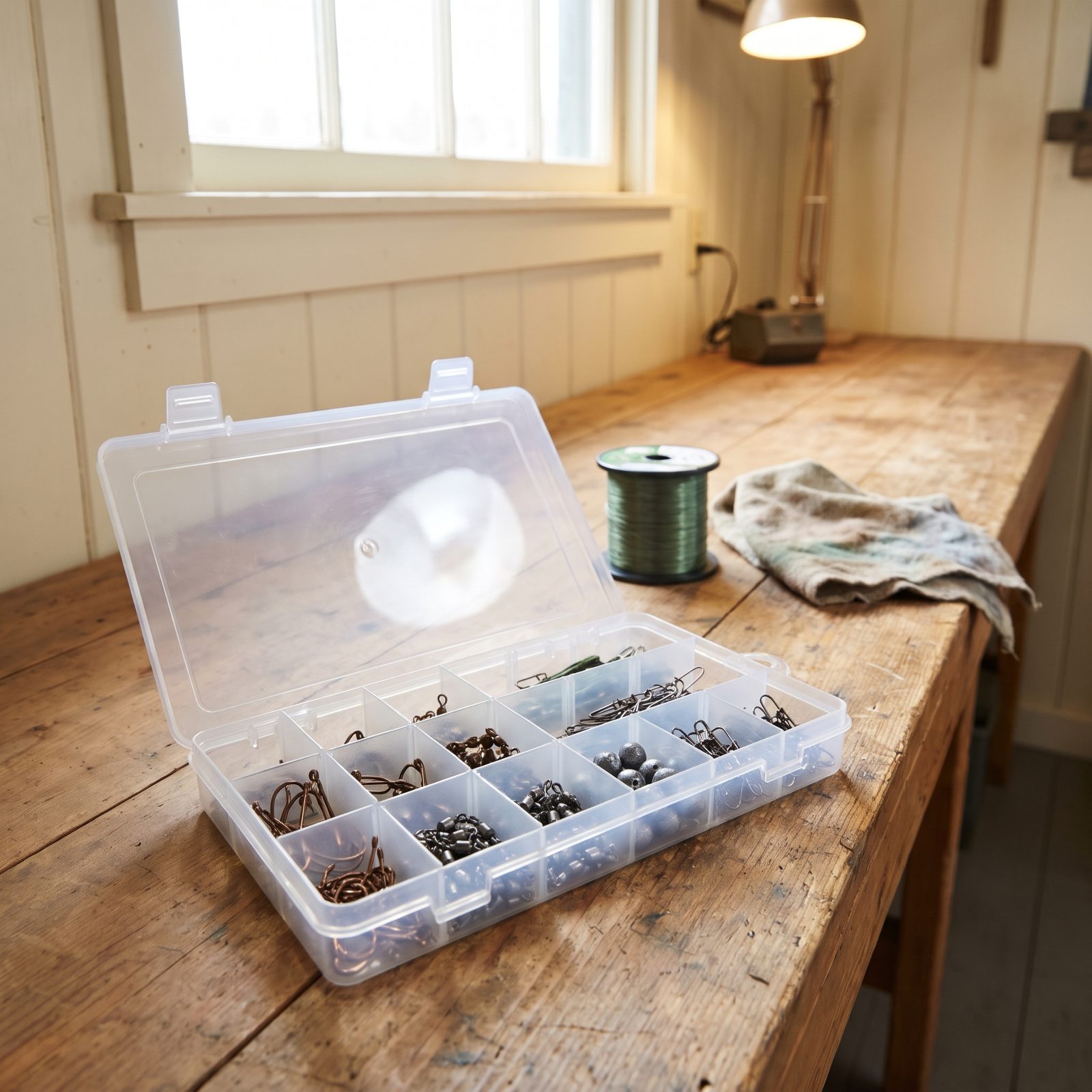
What separates a frustrating afternoon from a productive one is often whether you can put your hands on a size 2 hook without dumping the whole bag onto the deck.
A flat pocket organizer — the kind with a dozen tiny compartments and a lid that actually latches — keeps your small terminal stuff sorted and findable. Get movable dividers so you can size the slots to your rig. The cheap fixed-compartment boxes pop open in transit, and then you’ve got swivels in your sandwich.
37. The Zip-Close Leader Wallet That Keeps Pre-Tied Rigs Tangle-Free
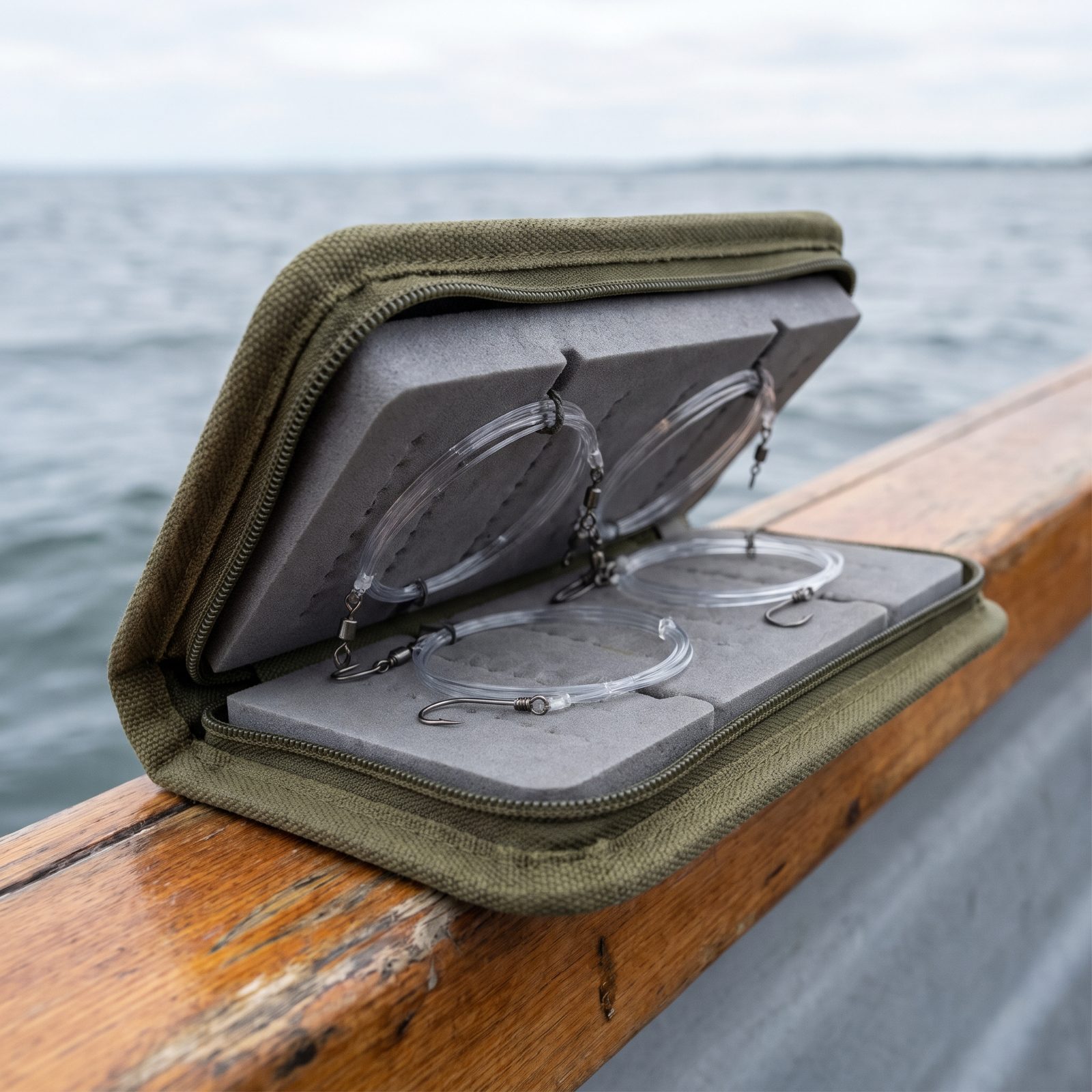
Tying leaders at home beats tying them cold-fingered on the water. A leader wallet lets you build a dozen rigs at the kitchen table the night before, then pull out a fresh one the moment a fish bites through your line.
The good ones use foam or felt pages with retainer clips, so the hooks stay anchored and the coils stay separated. Saltwater guys swear by them for wire and fluoro leaders that kink the second they tangle. Cheap, and it lives in the boat bag forever.
36. A Zippered Soft-Plastic Bait Binder That Stops the Melting Mess
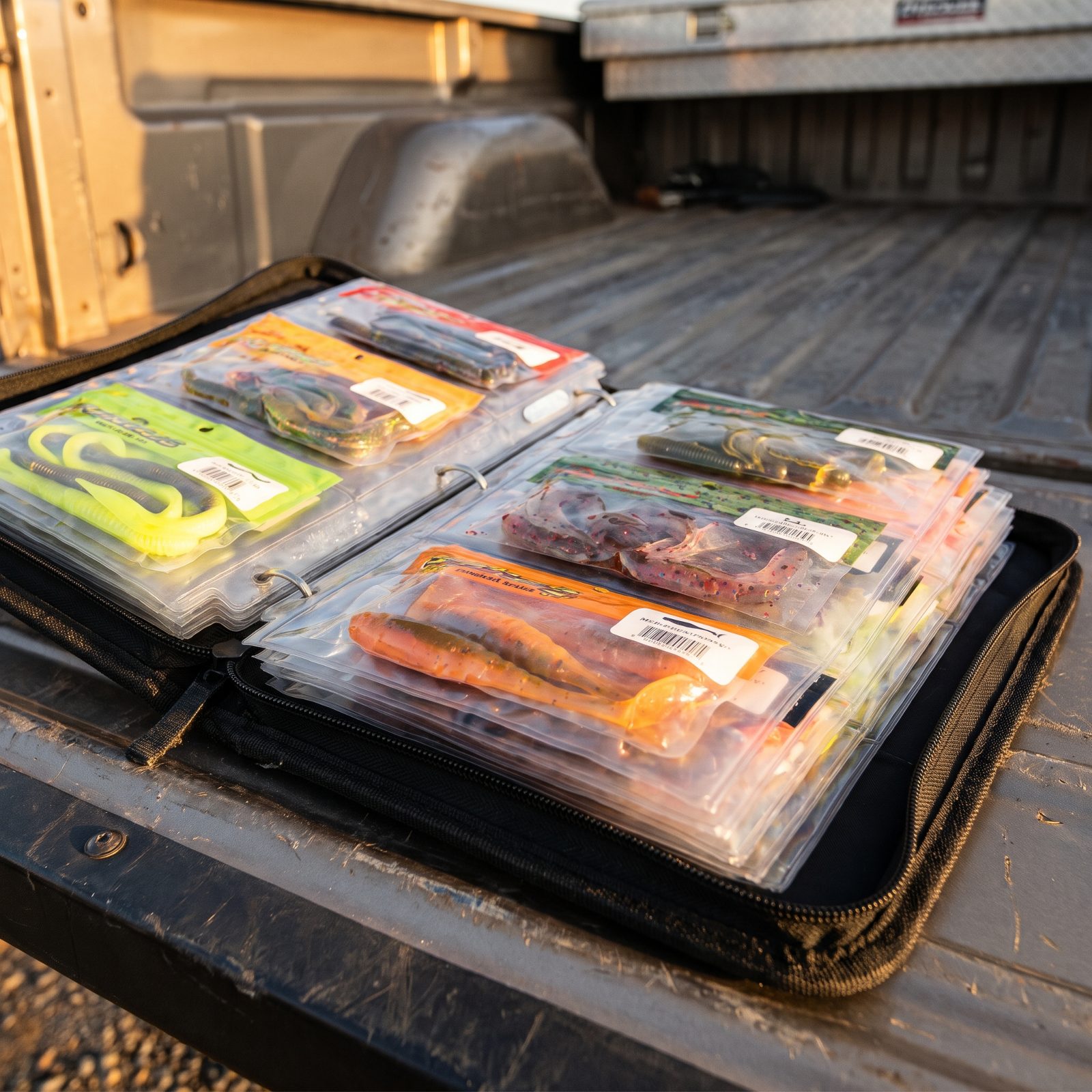
Soft plastics have a nasty habit. Leave two different colors touching in a hot truck and they fuse into a two-tone blob — or worse, the plasticizer eats through the bag and leaks oily goo across everything you own.
A bait binder with clear sleeve pages keeps each bag flat, separated, and visible, so you flip to the color you want instead of digging through a tangle. Keep the baits in their original scent bags inside the sleeves. I learned that the hard way after a binder page dissolved from direct contact with bare worms.
35. Neoprene Lure Wraps That Let You Store Rods Fully Rigged
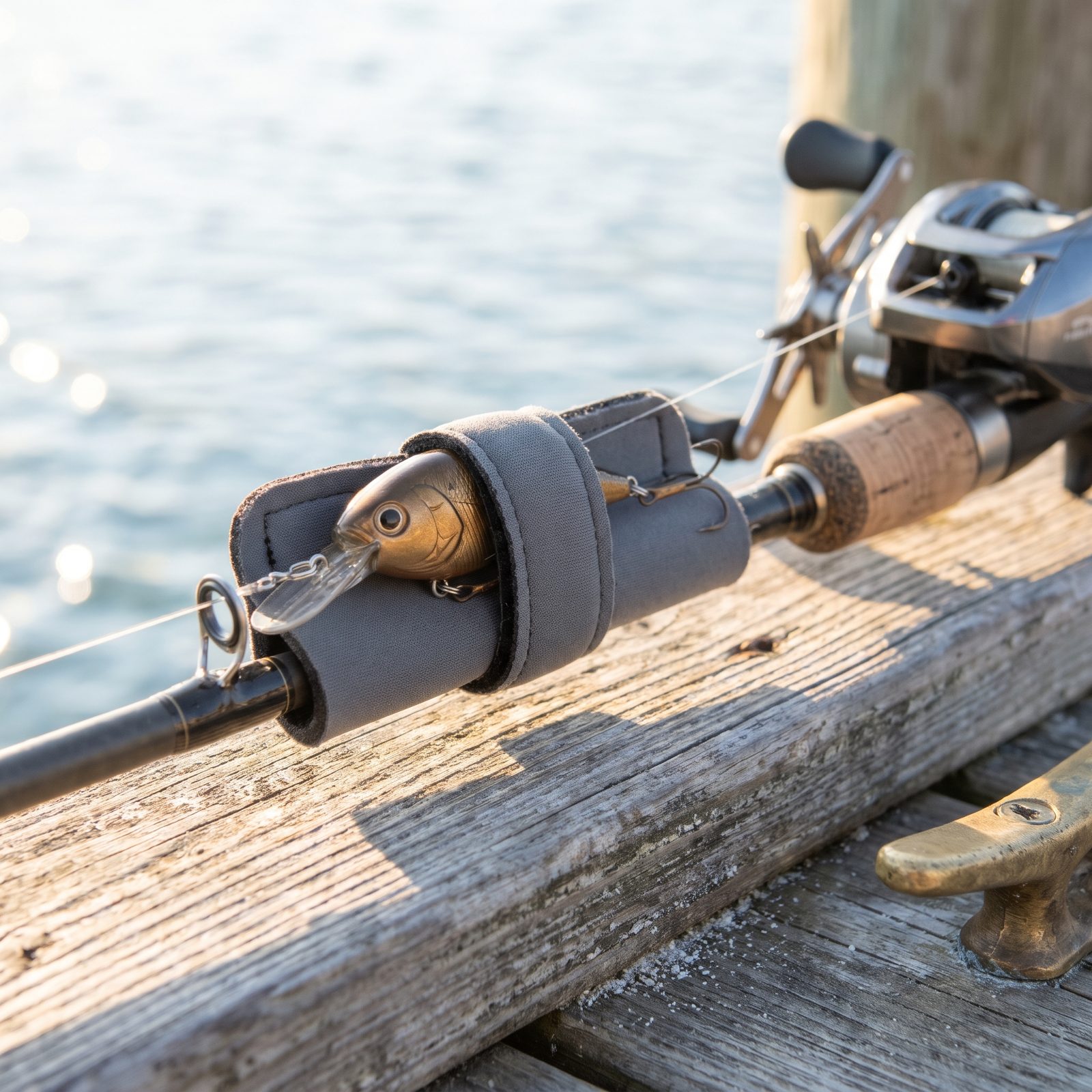
You can leave a lure tied on between trips if you protect it. A neoprene wrap rolls around the rod above the grip, and its hook-and-loop strap closes over a rigged crankbait or jig, so the hooks are covered and the lure stays put and you grab a ready-to-cast rod instead of re-tying every outing.
No more reaching into a rod locker full of exposed hooks and playing a bad game of chance. A few bucks each. Buy a pack.
34. Spring-Loaded Hook Bonnets for Treble-Hook Lures
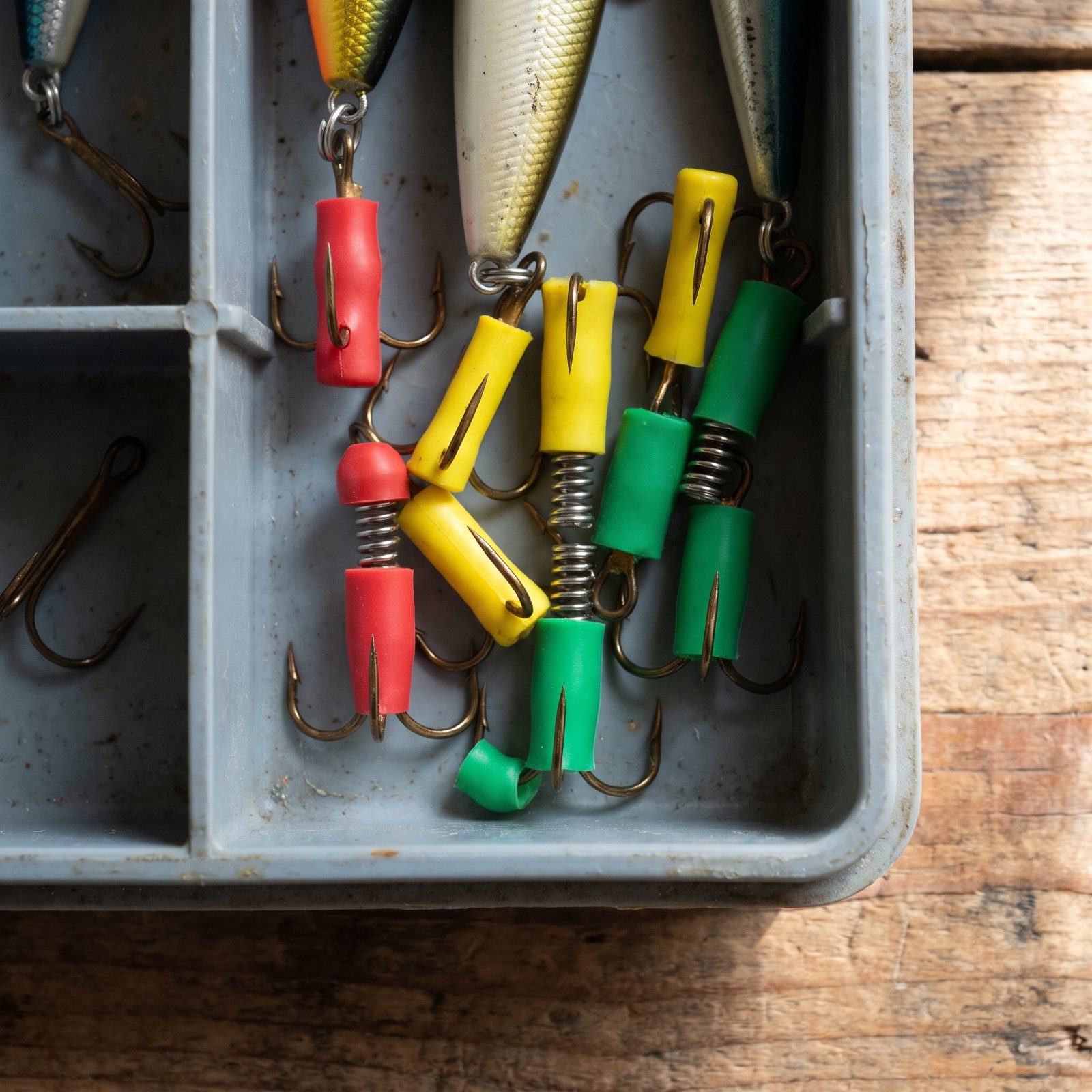
These little caps snap over the points of treble hooks, so lures don’t hook each other in a crowded box and you don’t hook yourself reaching in.
Get the kind with the spring hinge, not the plain slip-on sleeves. Slip-ons fall off and vanish into the bilge within a week. The spring ones stay put, and they come in sizes from tiny panfish trebles all the way up to musky hardware.
33. Adjustable Rod Straps That Keep Rods from Sliding Around the Truck
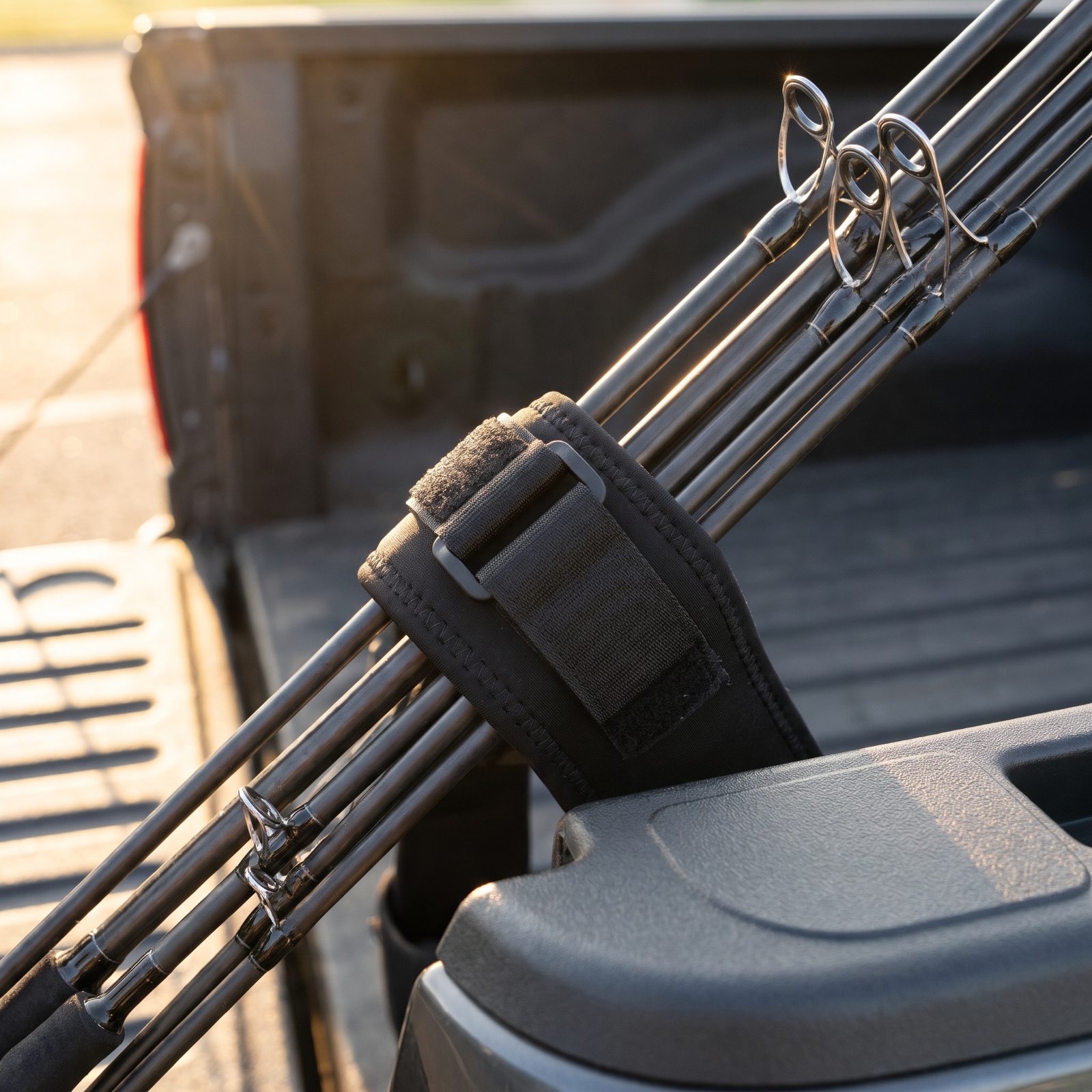
Loose rods are rods that break. A pile of unsecured sticks sliding across a truck bed or a boat deck is how tips snap and guides get crushed under a cooler.
A couple of adjustable neoprene straps bundle rods together and cinch them to a rack, a rail, or each other. The reusable hook-and-loop ones cost almost nothing, and they spare you the heartbreak of finding your favorite rod cracked after a bumpy launch road.
32. Rod Tip Protectors That Save the Most Fragile Inch of Your Rod
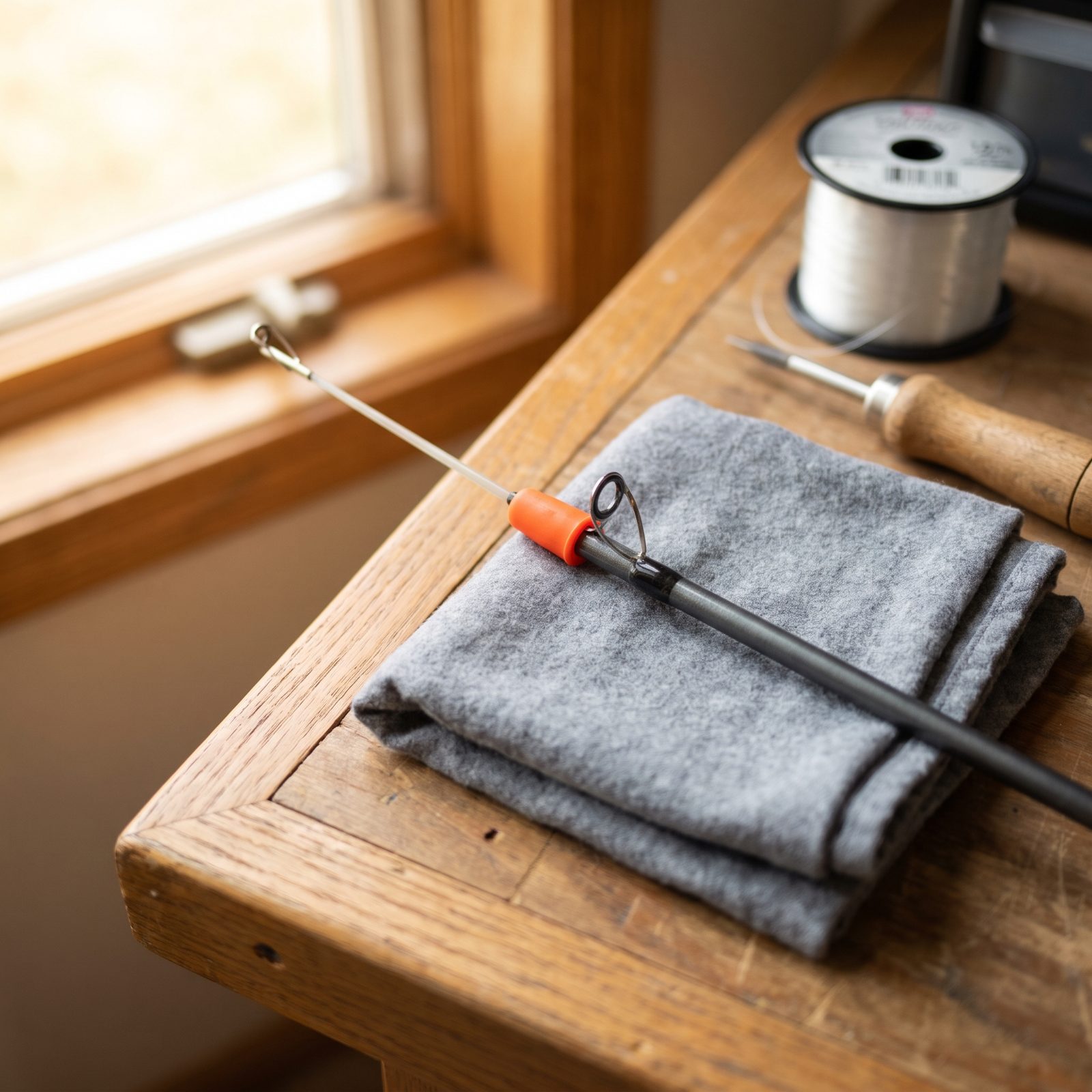
The last inch of a rod takes the most abuse and has the least to give. Catch the tip in a door jamb or a rod locker lid and it’s done.
A soft rubber protector slips over the tip top and cushions it in transit, and as a bonus it keeps your line from snagging on everything. Pennies apiece. Buy a pack and leave one on every rod you travel with.
31. Reusable Silicone Line Spool Bands That End the Loose-Line Mess
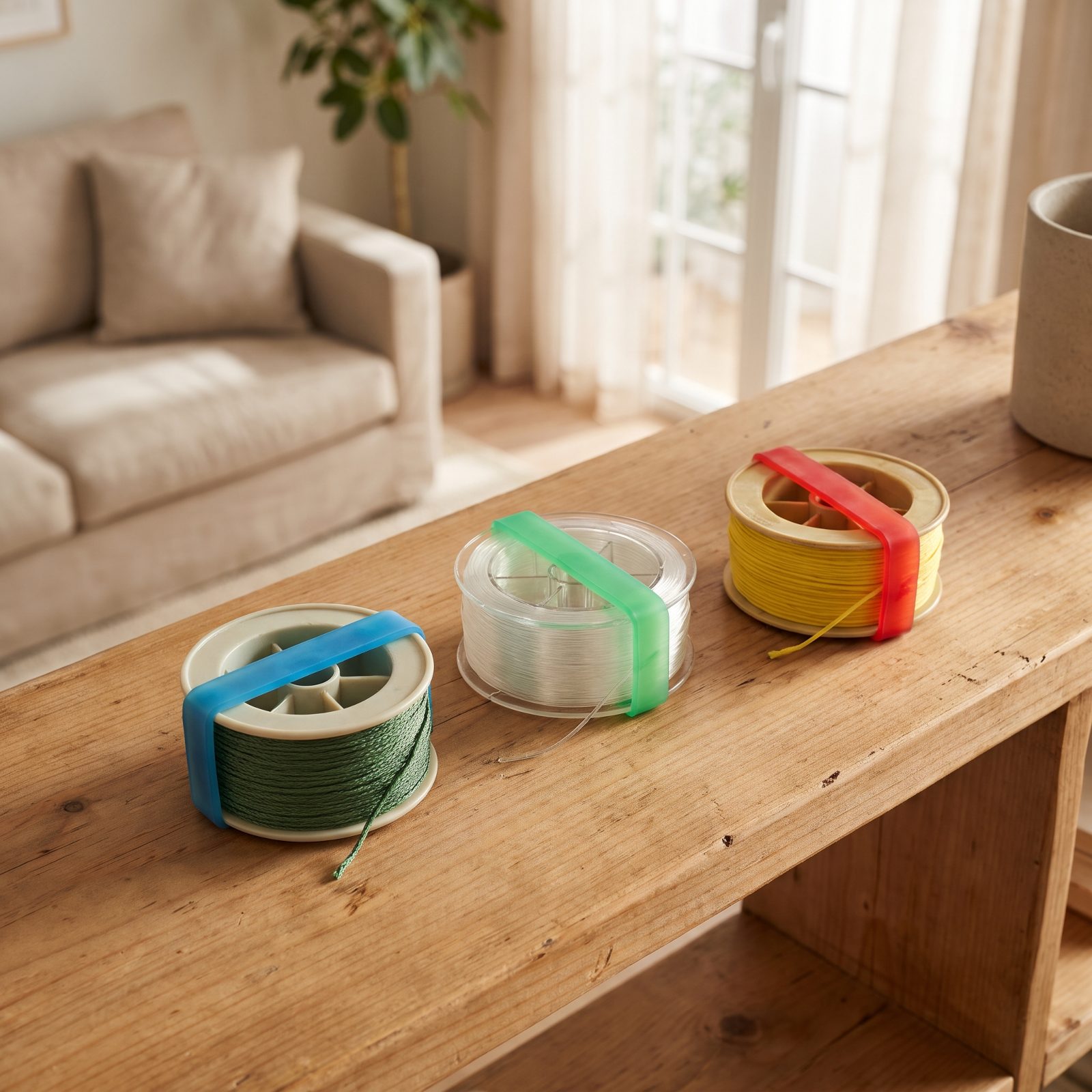
Pull a spool from the drawer with a loose tag end and you’ve got a bird’s nest of line wrapped around every other spool in there. Silicone bands stop that cold.
They stretch over the spool and hold the wraps in place — just tuck the tag end under the band to keep it from trailing. The silicone ones last for years and grip far better than rubber bands, which dry-rot and snap on you. Small thing, but it saves a small headache every single time you re-spool.
30. A Precision Bottle of Reel Bearing Lubricant for Smooth Casts
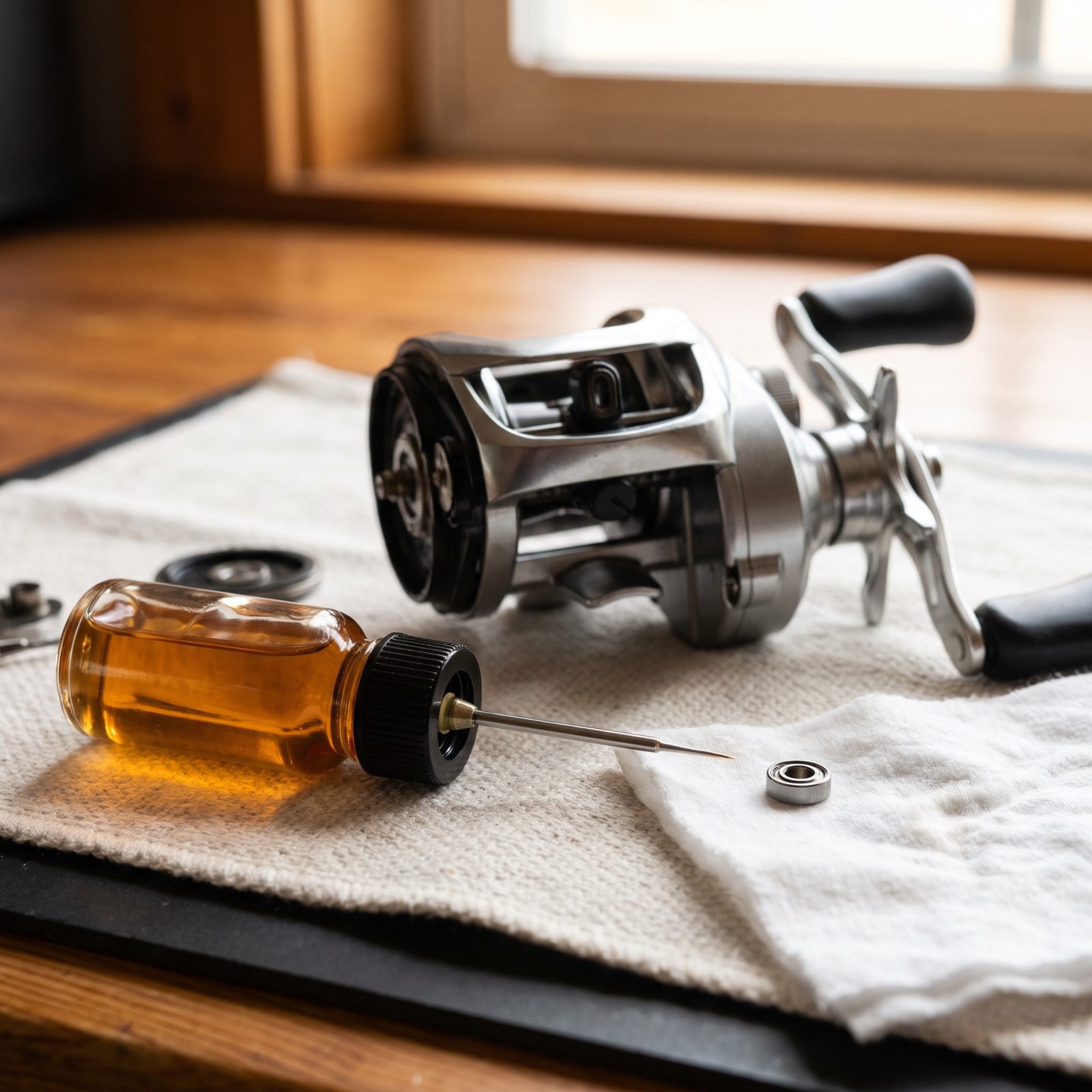
A reel that casts rough or grinds when you crank is usually dry, gritty, or both. A good bearing oil and a thicker gear grease are the two consumables that keep reels running for a decade instead of two seasons.
Oil on the bearings, grease on the gears, and go light with both — more is not better. A single drop on each spool bearing is plenty. Over-oil and you’ll actually slow your cast by gumming everything up. Spring-cleaning your reels is a quiet ritual worth keeping.
29. Marine-Grade Reel Grease
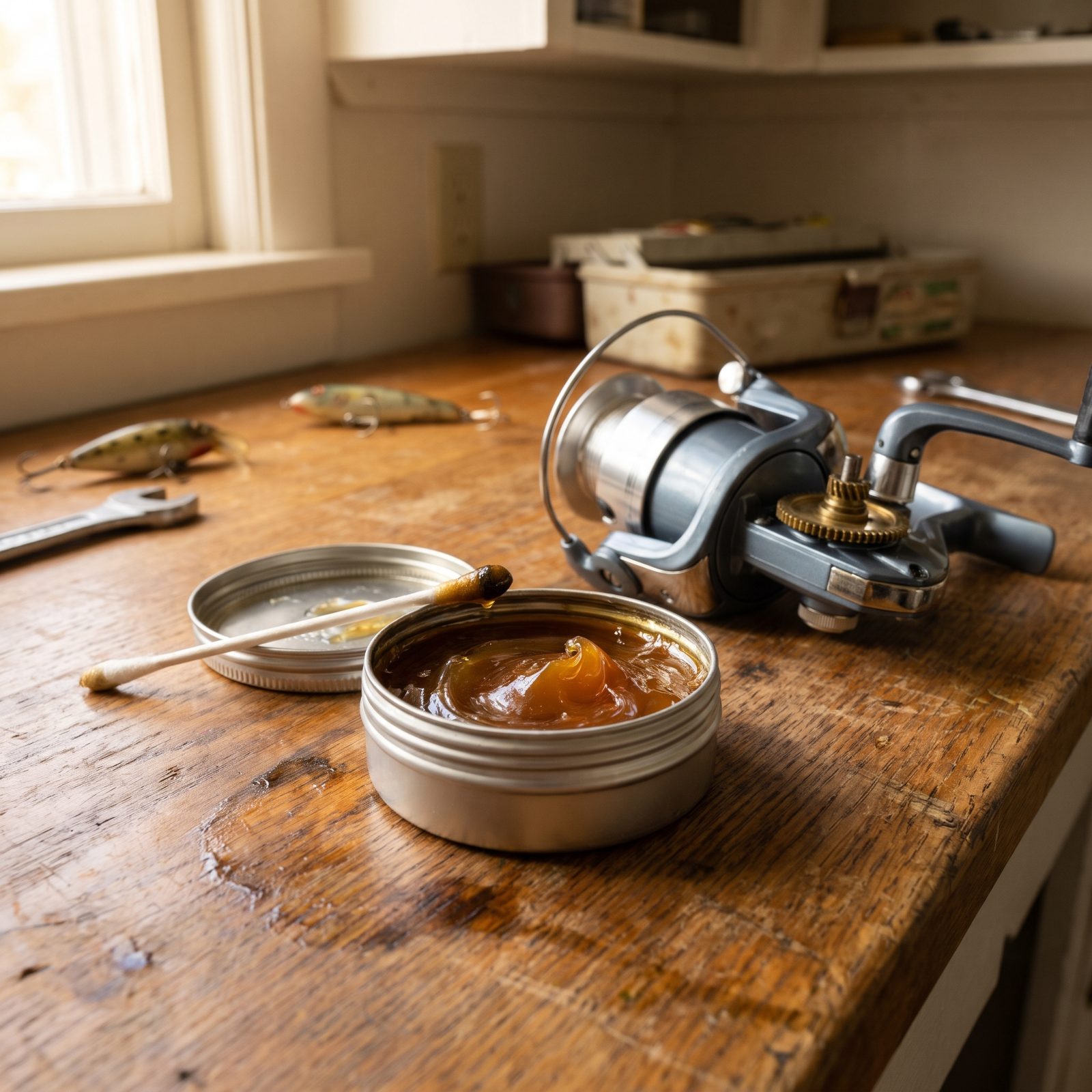
Most reels don’t die from hard use. They die from the wrong grease, or none at all, slowly seizing while they sit in a hot garage all winter.
Marine-grade grease is thicker and more water-resistant than the household stuff, and it won’t wash out the first time you drop your reel in the surf. A small tin runs cheap and lasts years, because you only need a dab on the gears.
I got this wrong for a long time, packing reels with whatever was on the shelf. A pinhead-sized amount is plenty. Overdo it and you’ll gum up the works and feel it on every cast.
28. Rod Ferrule Wax
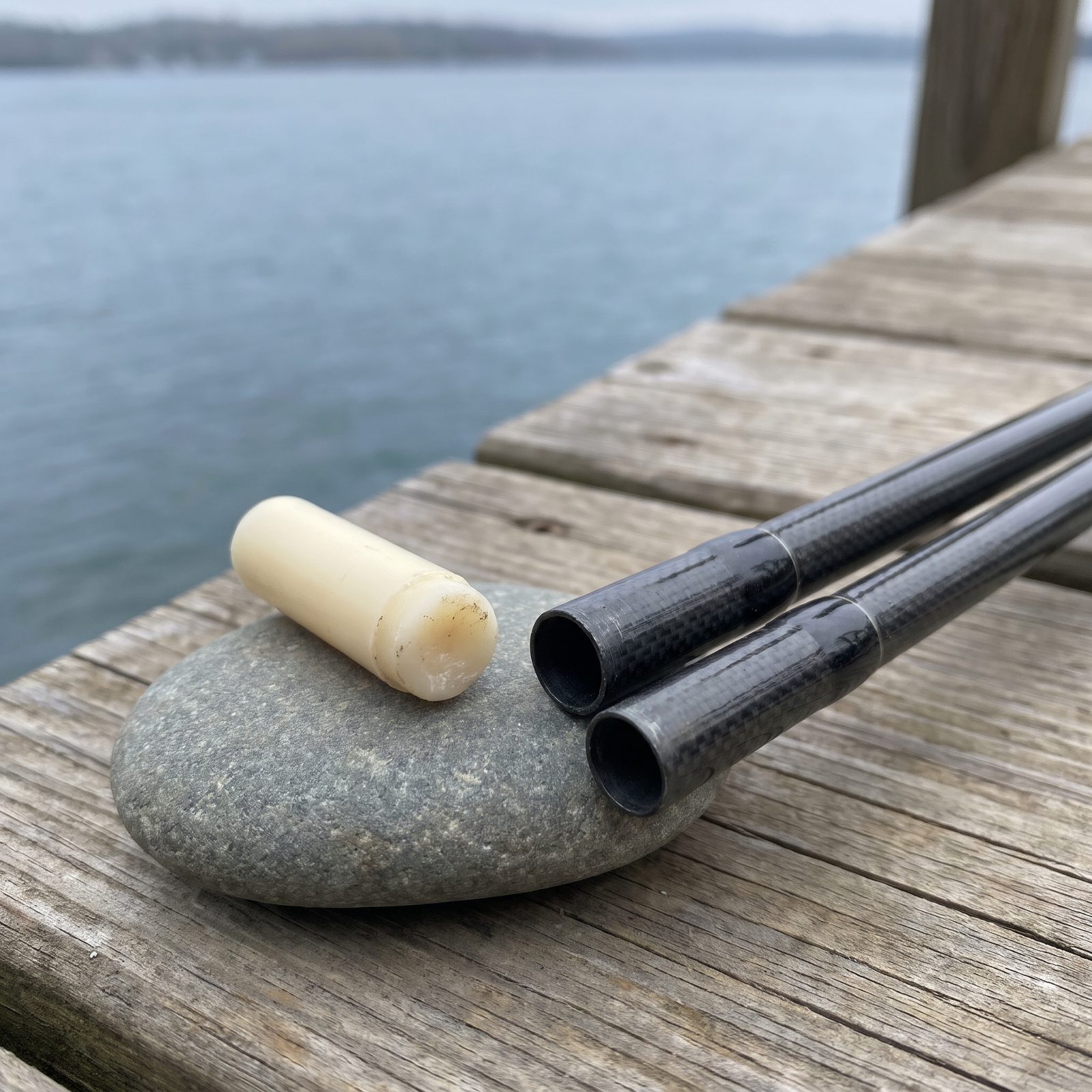
Ever had a rod lock up so tight at the ferrule you needed two people and a prayer to pull it apart? That’s a dry joint, and it’s how ferrules crack.
A swipe of ferrule wax on the male end keeps the connection snug without seizing, and it seals out the water and grit that work their way in on long days. It’s a tiny stick you can lose in a tackle tray, which is exactly why you buy two.
Candle wax works in a pinch. But the real stuff is cheap enough that there’s no reason to improvise.
27. Anti-Corrosion Tackle Spray
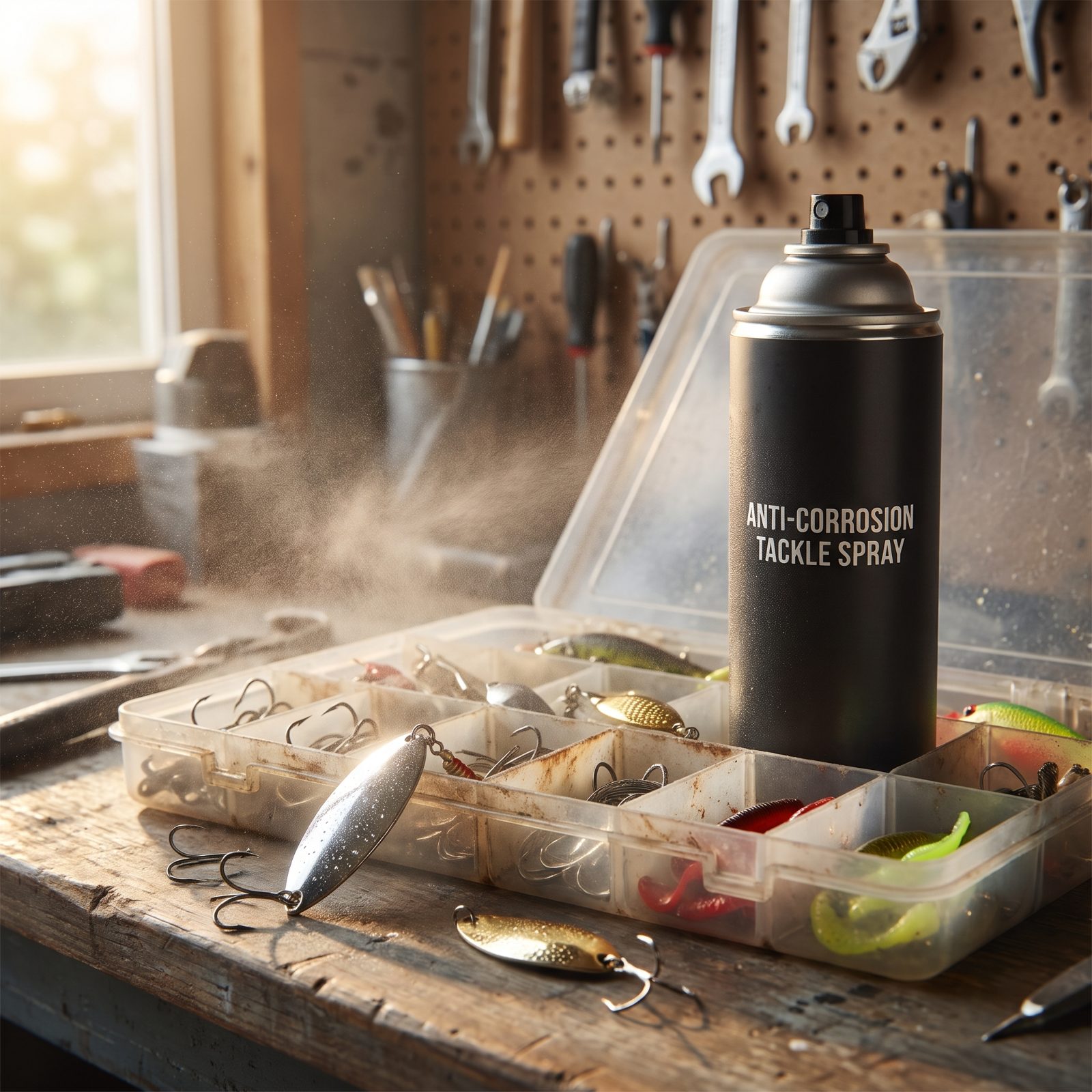
Salt is relentless. It finds the inside of your hook points, the hinge on your pliers, the eyelets on your lures, and it works while you sleep.
A light mist over a tray before you close the lid buys you months. It leaves a thin film that pushes out moisture, which is the whole game with rust. Don’t drench everything, though. A fine coat does more than a flood, and a soaked tray just attracts dust.
26. Reusable Silica Gel Packs
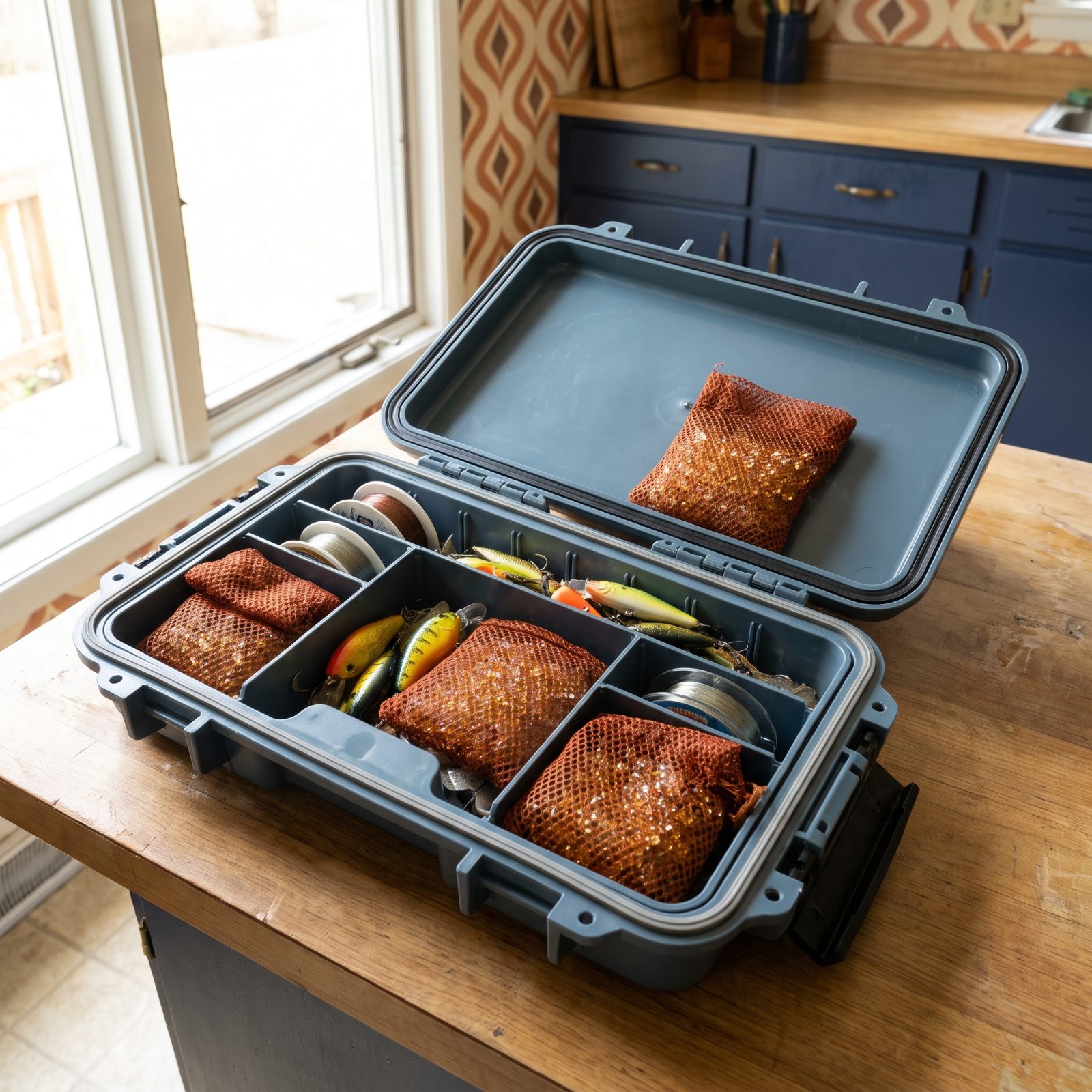
Those little packets you throw away with new shoes? Buy a bag of the reusable kind and toss a few in every tackle box you own.
They pull the moisture that fogs your box after a humid day on the water, the same moisture that turns treble hooks orange by midsummer. Once they’re saturated, you dry them in a low oven and they’re good again. That’s the part nobody mentions. They’re not one-and-done.
A jar costs almost nothing and does more for your tackle than half the pricey gear people buy instead.
25. Finger Guards for Braided Line
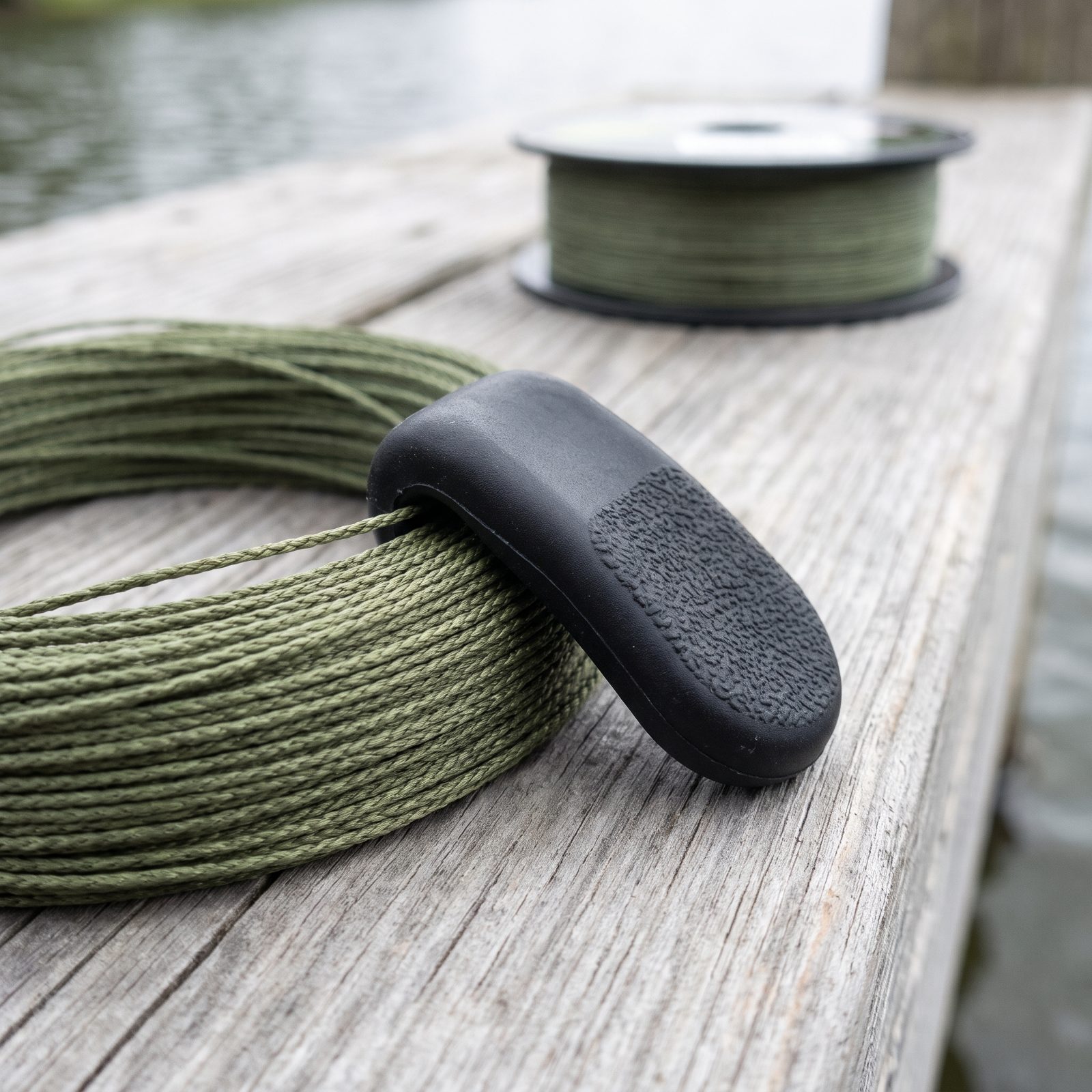
Braid casts like a dream and cuts like a razor. Anyone who’s set the hook hard on a long cast with bare fingers knows the thin red line it leaves behind.
A finger guard is basically a rubber sleeve for the pad of your casting finger, and it takes the bite out without killing your feel for the cast. Costs a couple of dollars. Lives in a pocket.
Skeptics call it unnecessary until the first time braid opens them up. Then they quietly order one.
24. UPF Fishing Gloves
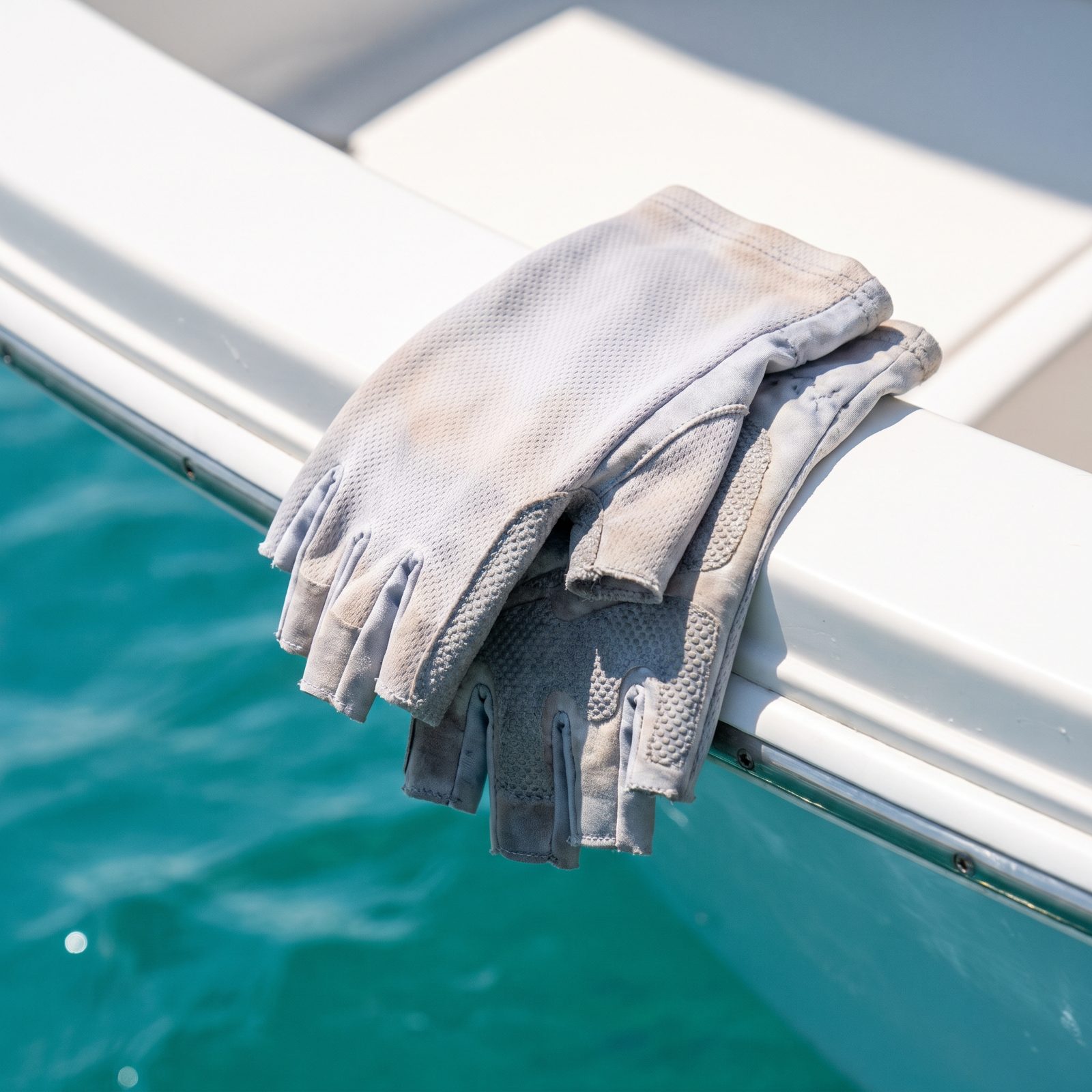
The backs of your hands take more sun than almost anywhere, and you never think about them until they’re cracked and leathery in your sixties.
UPF gloves are thin, breathable, and usually fingerless, so you keep your touch for knots and hooks. A decent pair runs the price of a few lures and saves you from smearing sunscreen onto greasy, fish-slimed hands all day long. They also help you grip a toothy fish without getting your palm filleted, which is a bonus I didn’t expect the first time I wore them.
23. Polarized Sunglasses Retainer
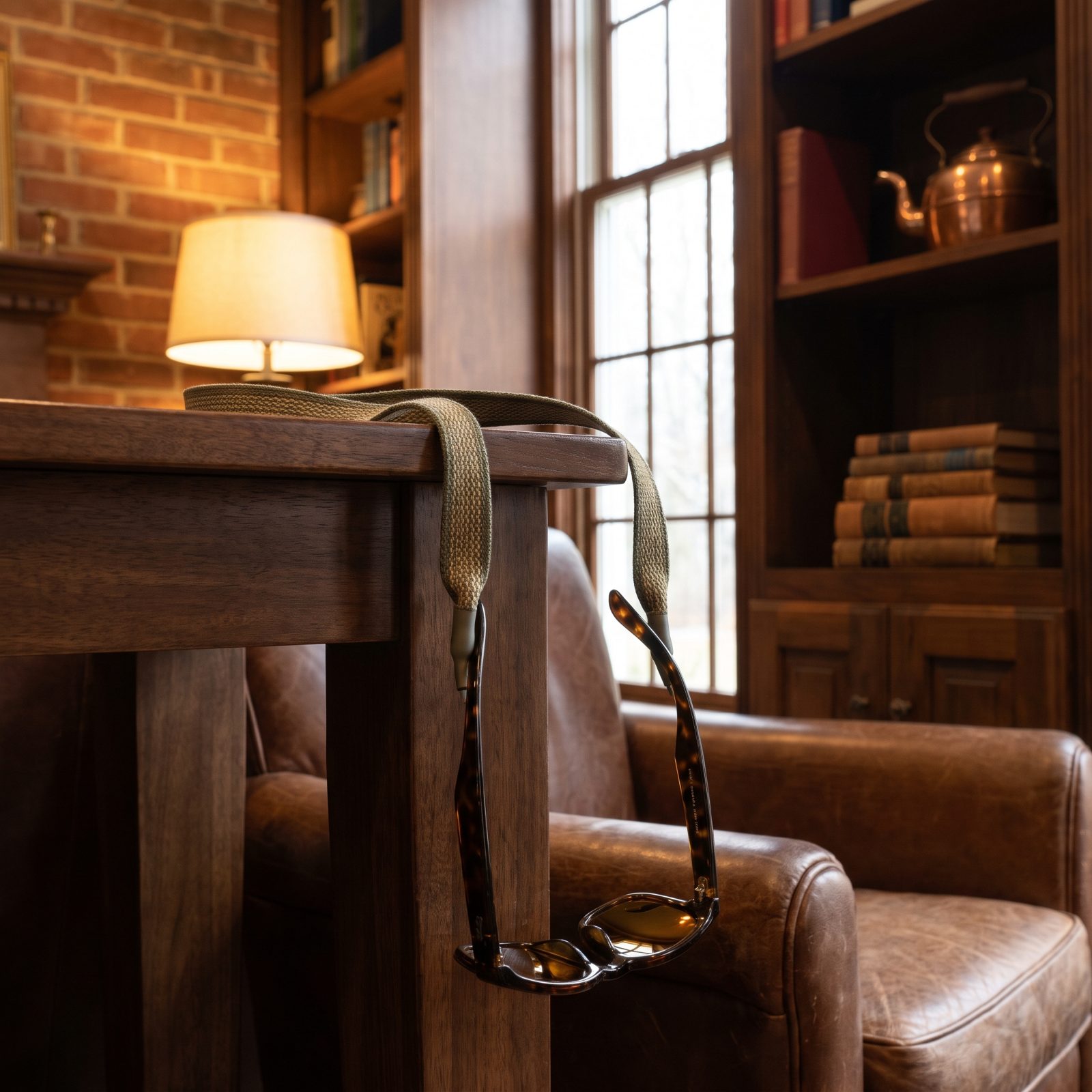
Good polarized glasses are the one piece of gear that genuinely changes what you see, the fish holding under the surface, the structure, the color of the water that tells you where to cast. And they sink like a stone.
A floating retainer, a few dollars, is the cheapest insurance you’ll ever buy for a pair of lenses worth real money.
The foam ones that float matter if you fish from a boat. Watching your sunglasses drift down into ten feet of water, still visible, still unreachable, is a special kind of frustration. Buy the floater.
22. Mini Sunscreen Stick
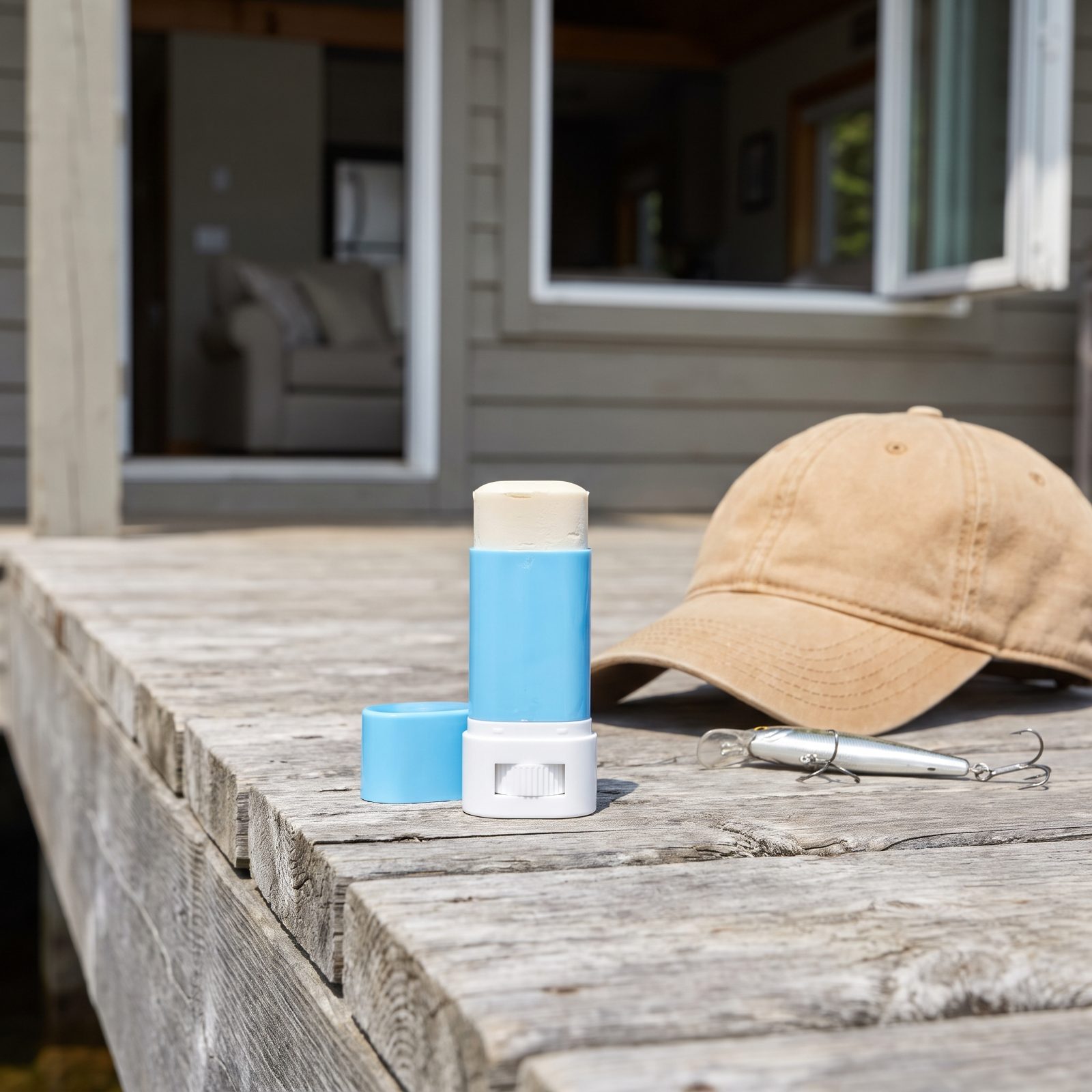
The bottle of sunscreen in your tackle bag is useless if your hands are covered in bait and fish slime, which they are, all day.
A stick fixes that. You swipe it over your cheeks, nose, ears, and the back of your neck without rubbing greasy lotion all over your grip. It won’t leak into your tray on a hot day, either, which the pump bottles love to do.
Keep one in the boat, one in the truck, one in the tackle bag. They’re small enough to lose and cheap enough that losing one doesn’t sting.
21. SPF Lip Balm
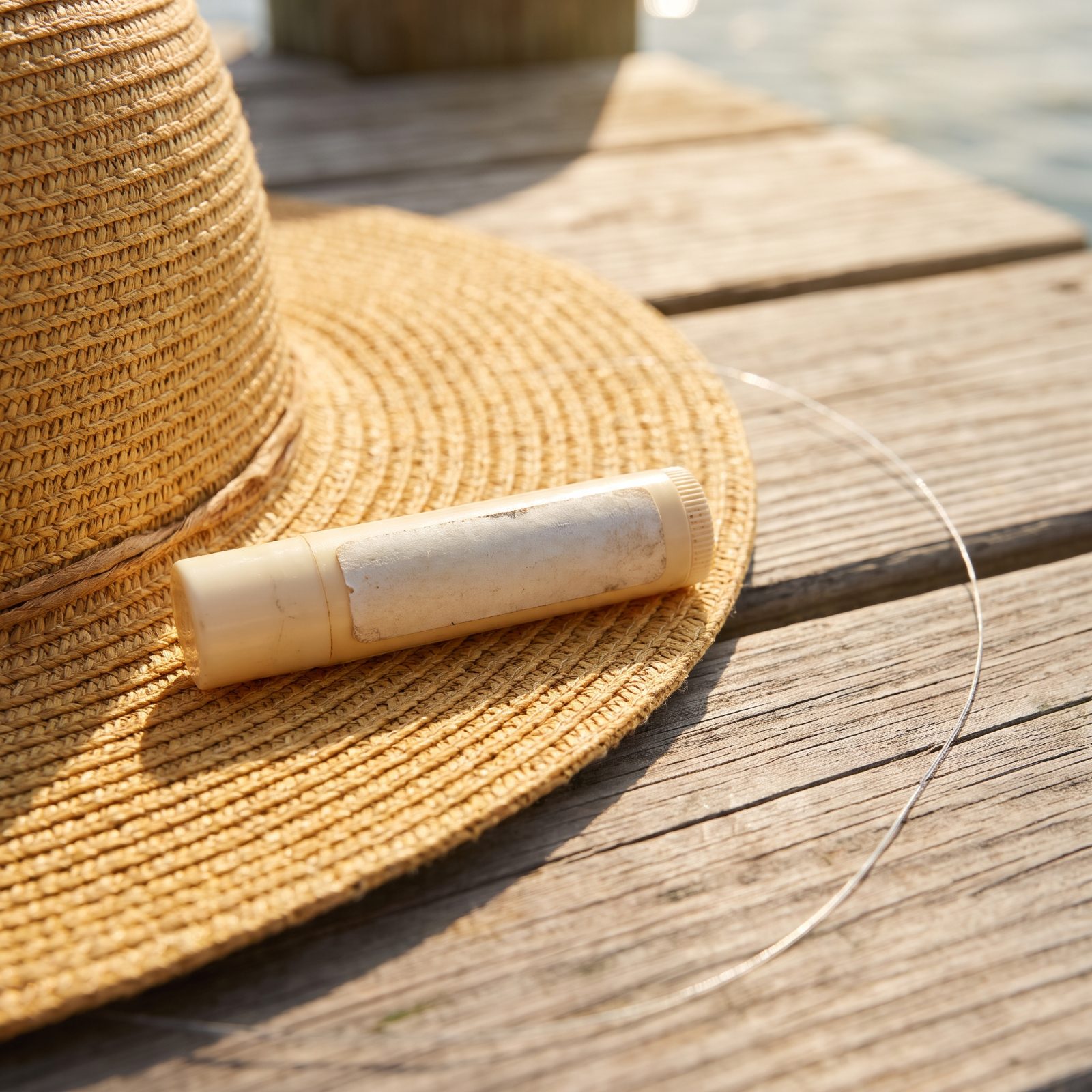
Lips burn faster than almost any skin on your body and heal slower, and sun off the water hits them twice, once from above and once bouncing up.
SPF 30 balm is the fix. It’s the one item everyone forgets until their lower lip is cracked and peeling two days after a trip, and a tube costs a few dollars.
Reapply more than you think. Talking, drinking, wiping your mouth with the back of a wet hand, it all comes off faster than the sunscreen on your face.
20. Insect-Repellent Wipes
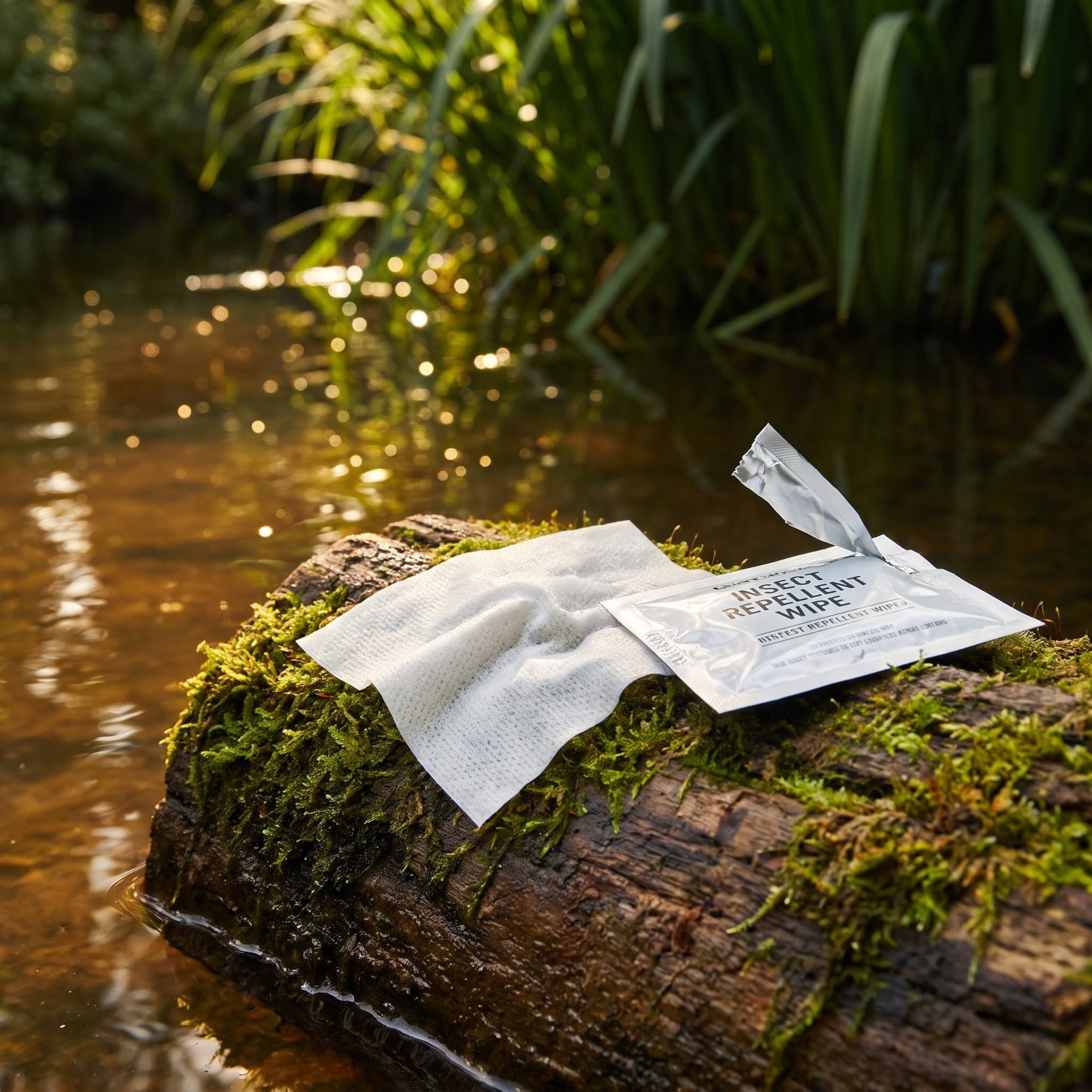
Mosquitoes and biting flies will end a good evening bite faster than a cold front, and the aerosol can you forgot in the garage does you no good at the water.
Individually wrapped wipes solve the whole mess. No spray drifting onto your lures or your line (DEET can cloud mono and melt some plastics, so keep it off your tackle). No leaking can. You wipe exposed skin, toss the packet, done.
19. The Tick-Removal Tool That Beats Your Fingernails
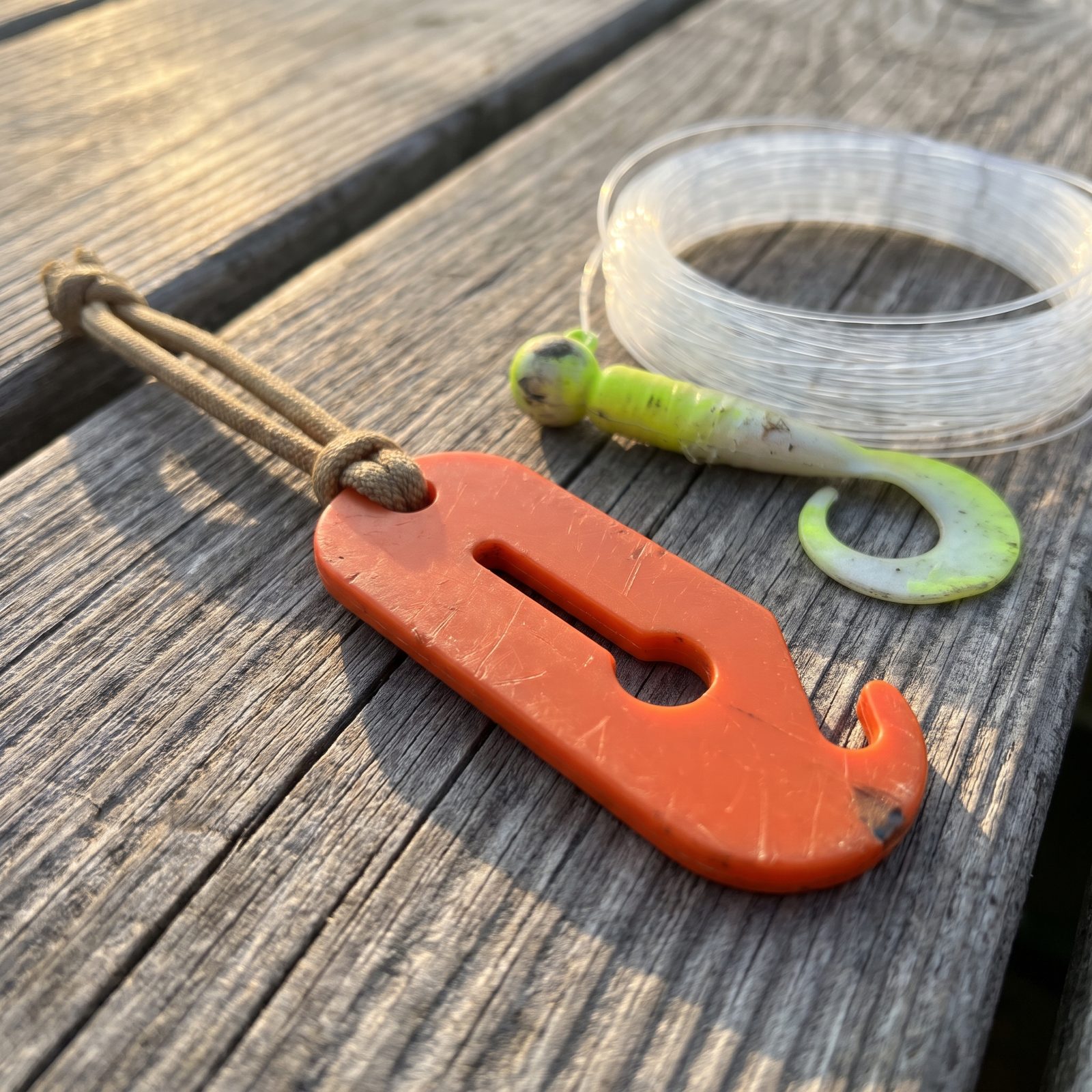
Pinch a tick with your fingers and you squeeze its guts right into the bite. There’s the whole problem. A slotted tick key slides under the body at skin level and lifts straight out, mouthparts and all, with no twisting and no leftover head burrowed in your calf.
Couple of bucks, weighs nothing. Keep one on your keys and one in the tackle bag, because the day you need it is never the day you planned for.
18. A Pea-Less Whistle Louder Than Your Voice Will Ever Be
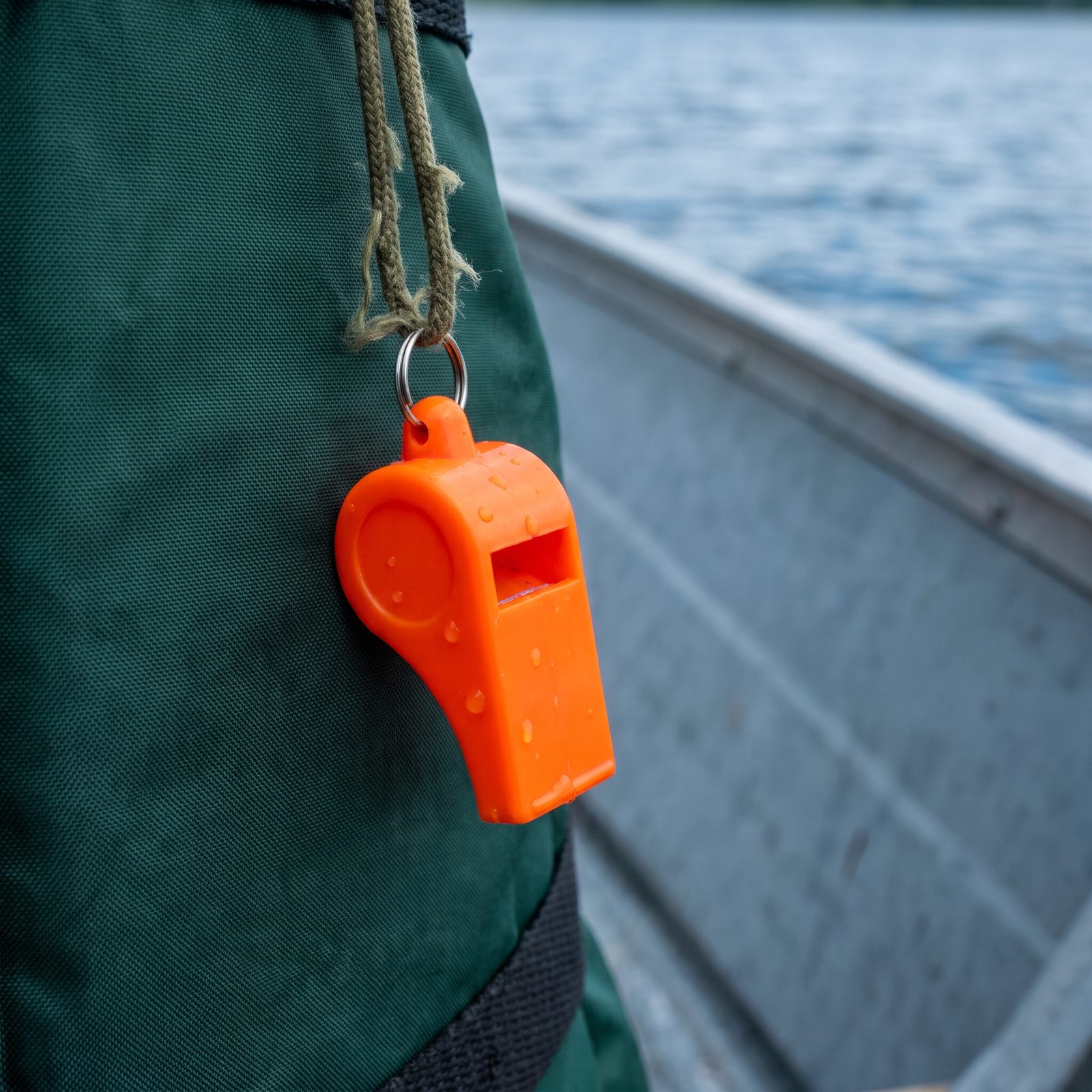
Your shout carries maybe a hundred yards over wind and water, and that’s being generous. A pea-less whistle cuts for a half mile and never clogs, freezes, or gives out when you’re cold and scared half to death. The pea is the part that fails, so get one without it.
Three sharp blasts means help. Tie it on a cord to the bag that rides beside you in the boat, out in the open where you can grab it fast — a whistle buried in a pocket is no use the moment you need it.
17. The Pocket Poncho That Lives in Your Jacket Forever
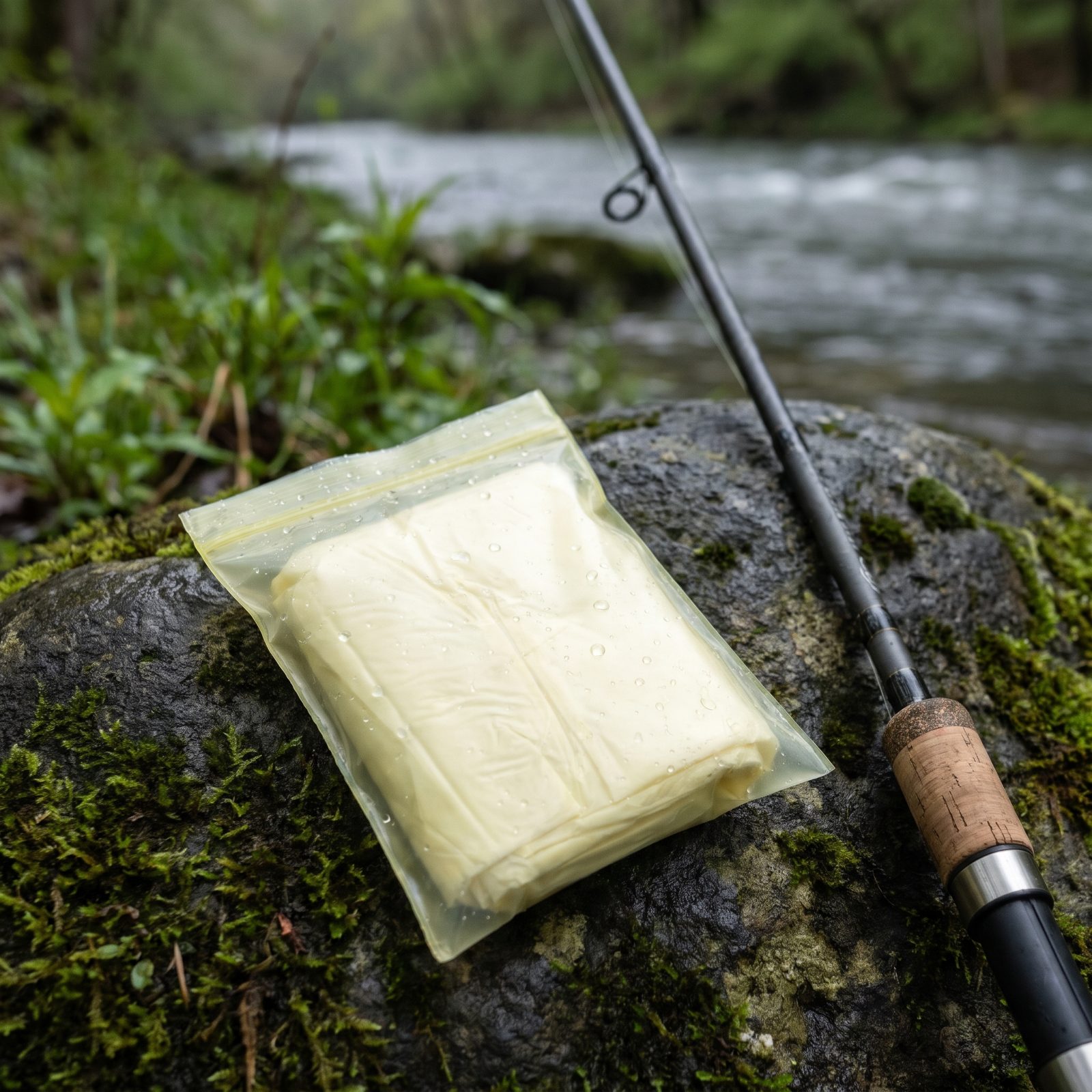
A good day on the water turns miserable the second you’re soaked and still an hour from the truck. A poncho folded down to about the size of a postcard fixes that for about a dollar.
It won’t survive ten storms. Fine by me. It’s insurance, not a rain shell. Stuff one in every jacket, the glovebox, the tackle bag, and forget about it until the sky opens and you’re the only one still fishing.
16. A Waterproof Flashlight Small Enough to Grip in Your Teeth
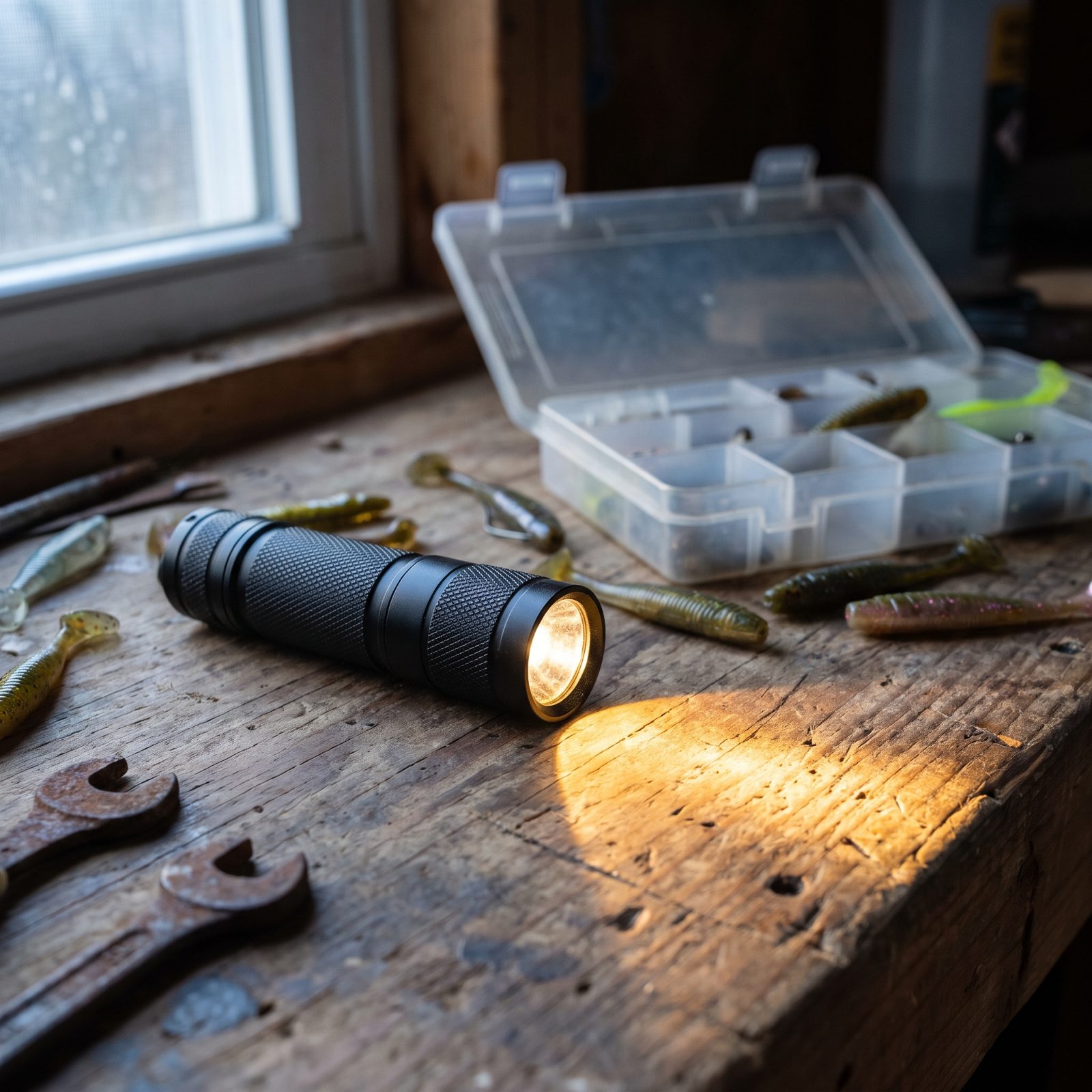
You’ve fumbled a backlash in the dark more than once. A palm-sized waterproof flashlight ends that, and the good ones throw real light now for a handful of bills.
Look for an actual IPX rating, not a vague “water resistant” splashed on the package. Those two things are not the same, and you learn the difference the first time one dies after a splash. A tail switch you can work with gloves on beats a side button every time.
15. The UV Flashlight That Puts a Charge Back in a Dead Glow Lure
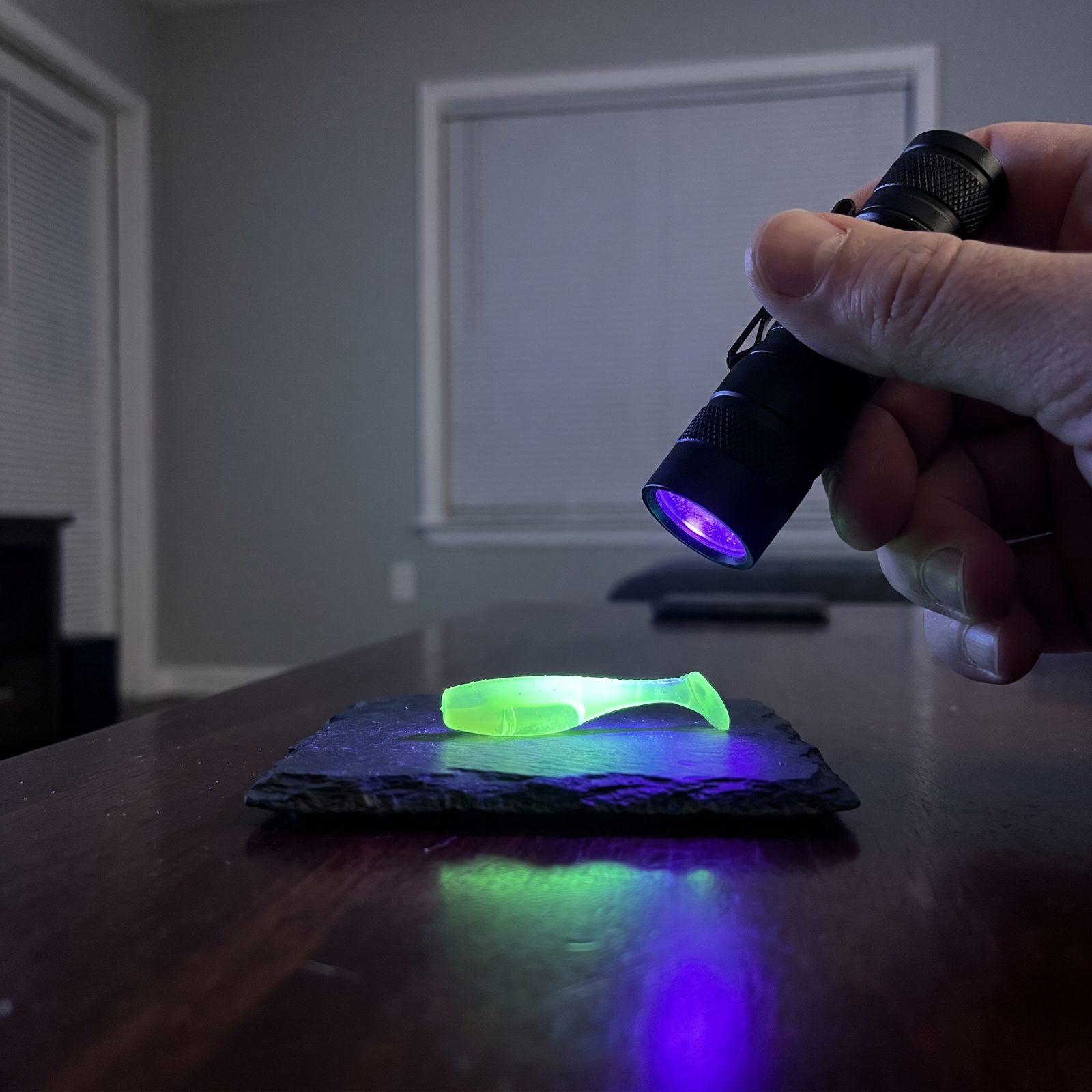
Glow lures fade fast. A few casts in and that chartreuse tube is barely lit. A cheap UV flashlight recharges the glow in seconds, far brighter and longer than holding it up to a headlamp ever managed.
Night walleye folks and ice anglers swear by these, and there’s a reason. The same light makes certain fluorescent lines leap out so you can watch for the twitch. Ten bucks or so, lives in a vest pocket, earns its keep.
14. The Floating Key Chain That Saves Your Truck Keys From the Bottom
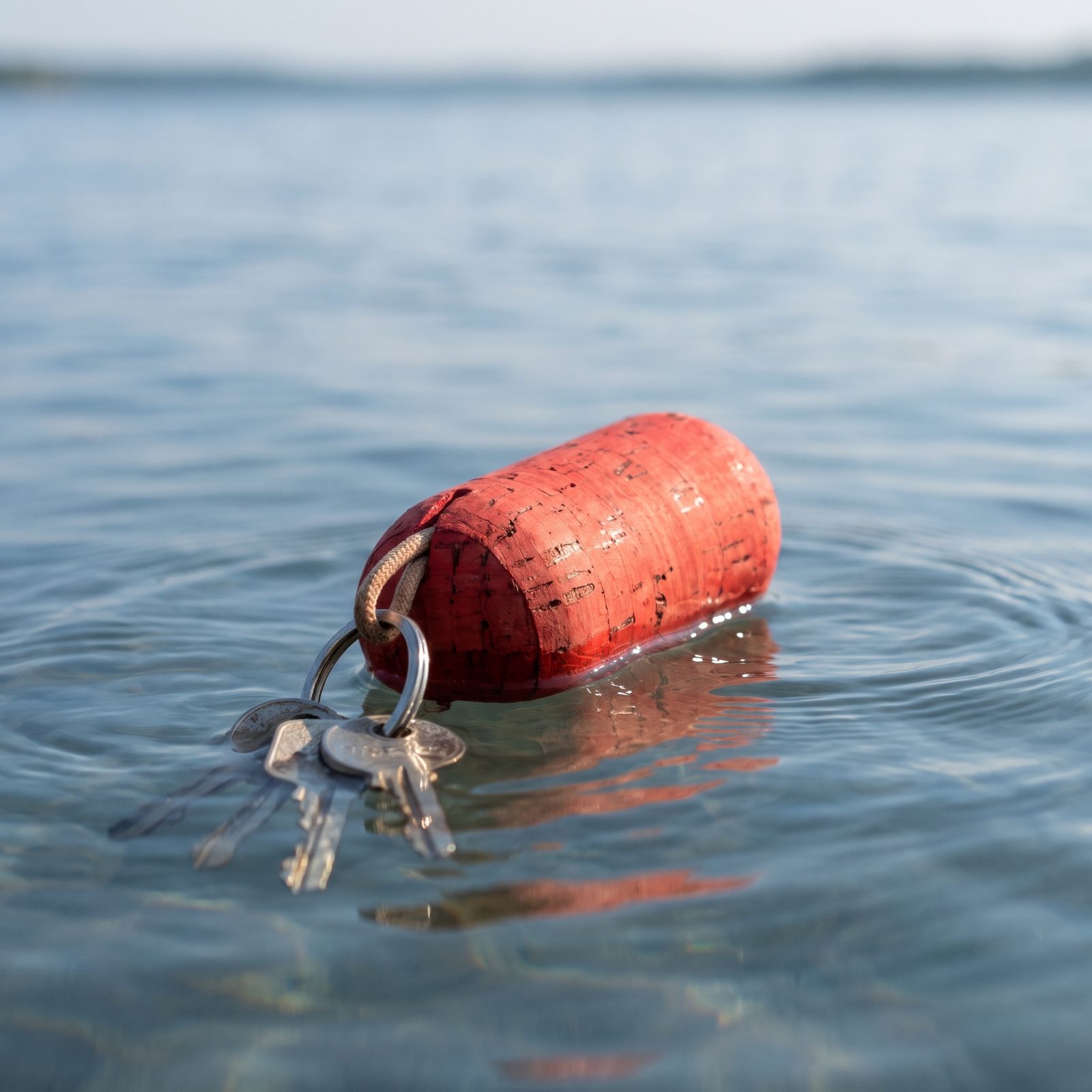
Drop your keys off the dock once and you’ll own one of these for life. A foam or cork float clips to your ring and keeps everything riding the surface instead of sitting in eight feet of silt.
Get one rated to float the actual weight of your keys. A tiny fob won’t hold up a loaded ring with a truck fob and a dozen keys, and finding that out the hard way is exactly the problem you bought the thing to avoid.
13. A Waterproof Notebook That Writes in the Rain
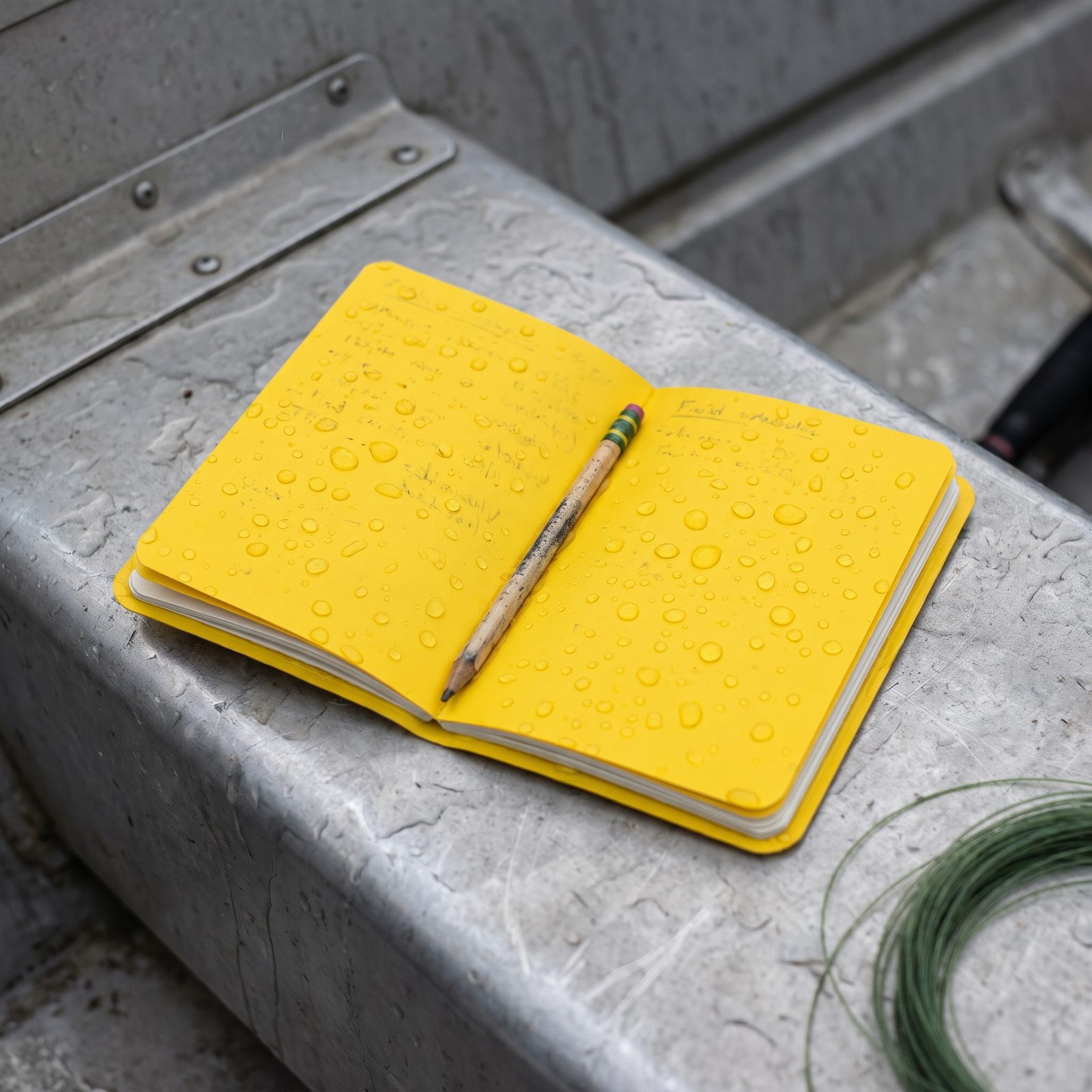
You swear you’ll remember the spot, the depth, the lure that worked. You won’t. By next week it’s gone, and the water has smeared every note you jotted on regular paper into blue mush.
A waterproof notebook writes wet — in rain, in snow, in a boat taking spray. Pencil works best on the synthetic pages. Log the GPS mark, the water temp, the pattern that produced, and you build a real record instead of guessing every trip.
12. The License Holder That Keeps the Warden Happy and the Paper Dry
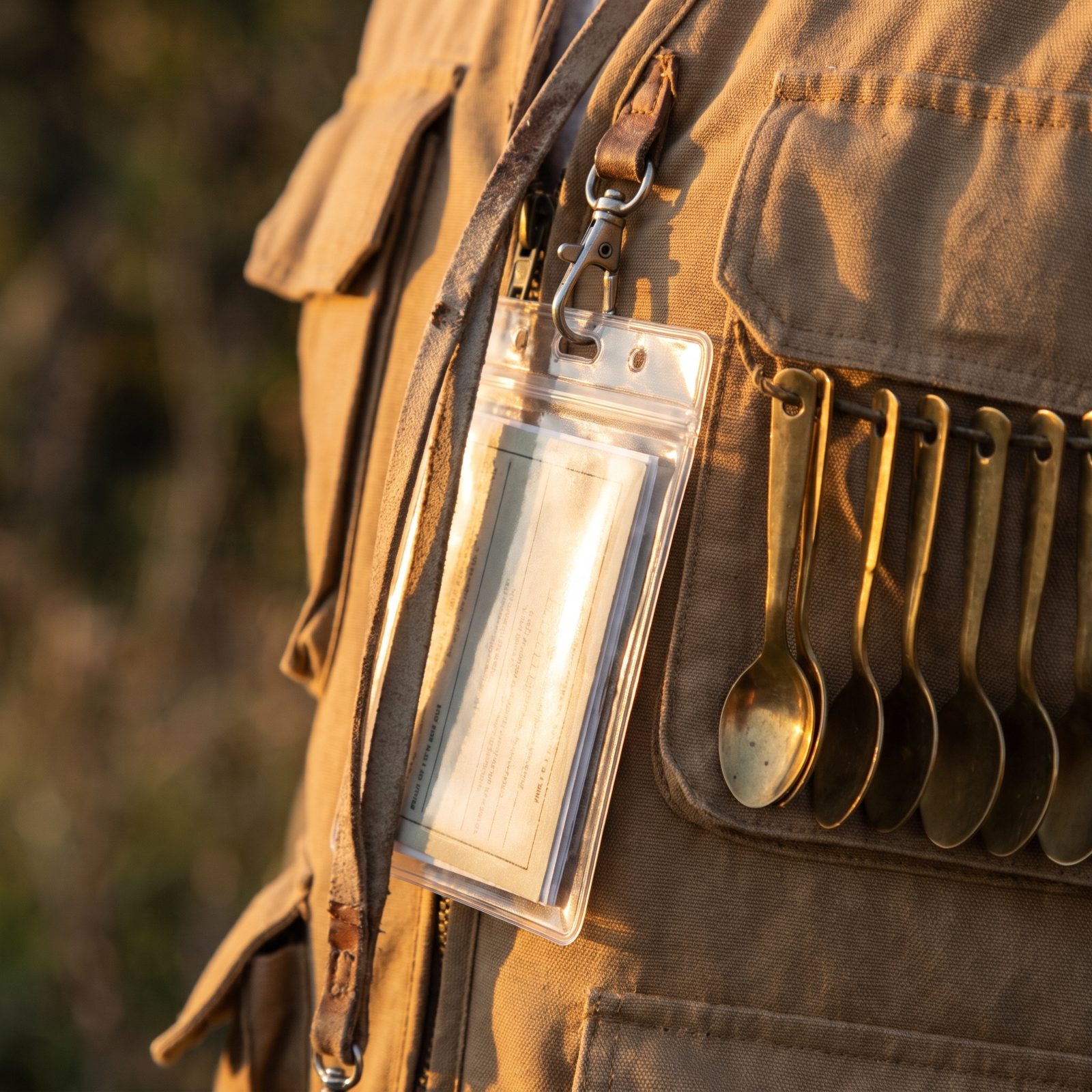
Most states still want you carrying proof, and a soggy wad of pulp in your back pocket does nobody any good. A sealed vinyl holder keeps the license readable and clipped where you can produce it without a wet-handed fumble.
Rules vary by state, and some now accept the digital version on your phone. Check before you lean on an app. That one creek with no signal is exactly where you’ll get checked — count on it.
11. A Compact Tape Measure Built for Slot Limits, Not Studs
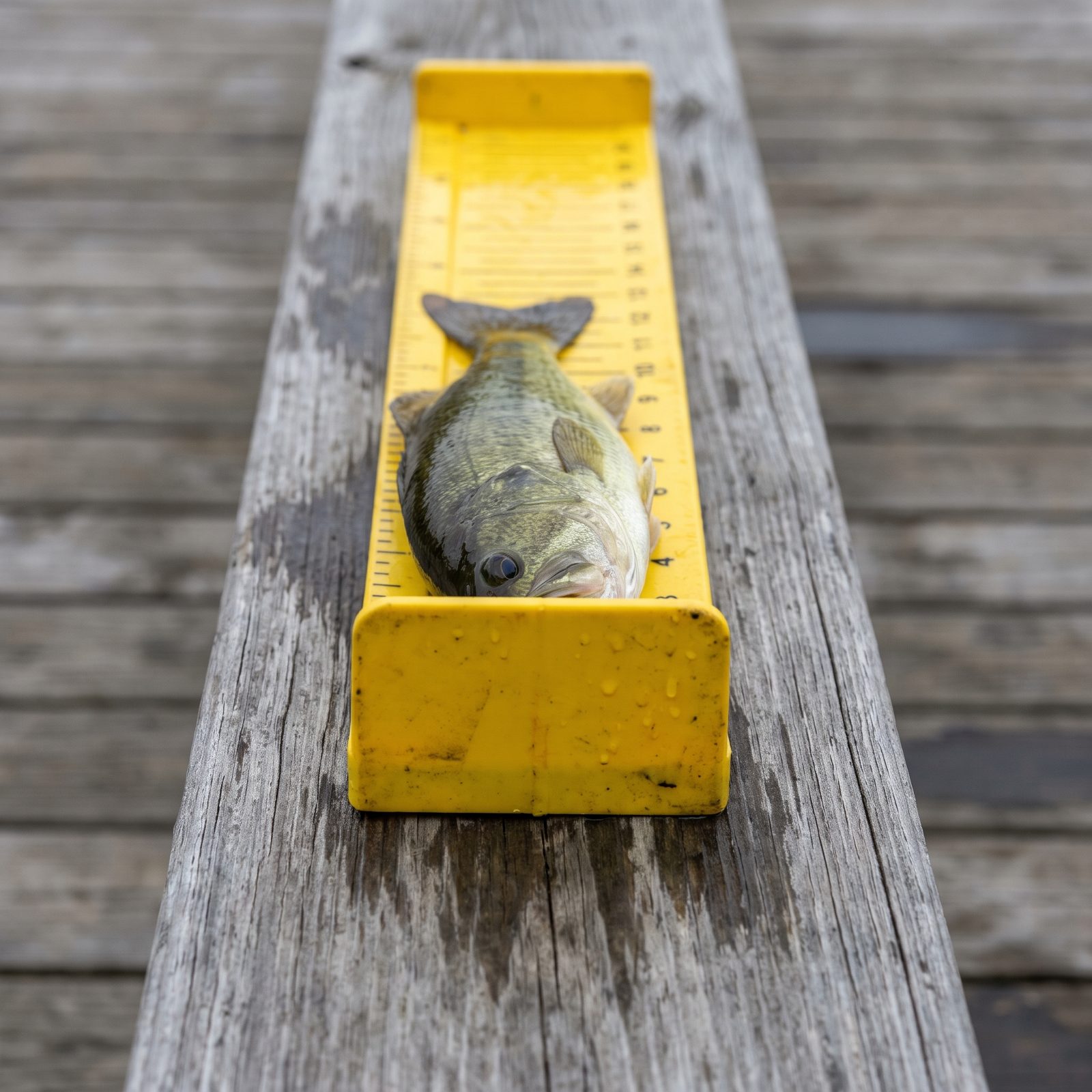
Slot limits don’t care about your eyeball estimate. A compact bump board or a soft fish-friendly tape settles the keeper question in a second, and keeps a fish you plan to release off a dry carpenter’s tape that strips its slime.
The rigid board handles a thrashing fish faster. A rollable cloth tape packs smaller. Pick by how you fish. Either way, a real measurement is the line between a legal cooler and a ticket you’ll remember for years.
10. Slip-Float Stops, the Tiny Thing That Changes Your Depth in Seconds
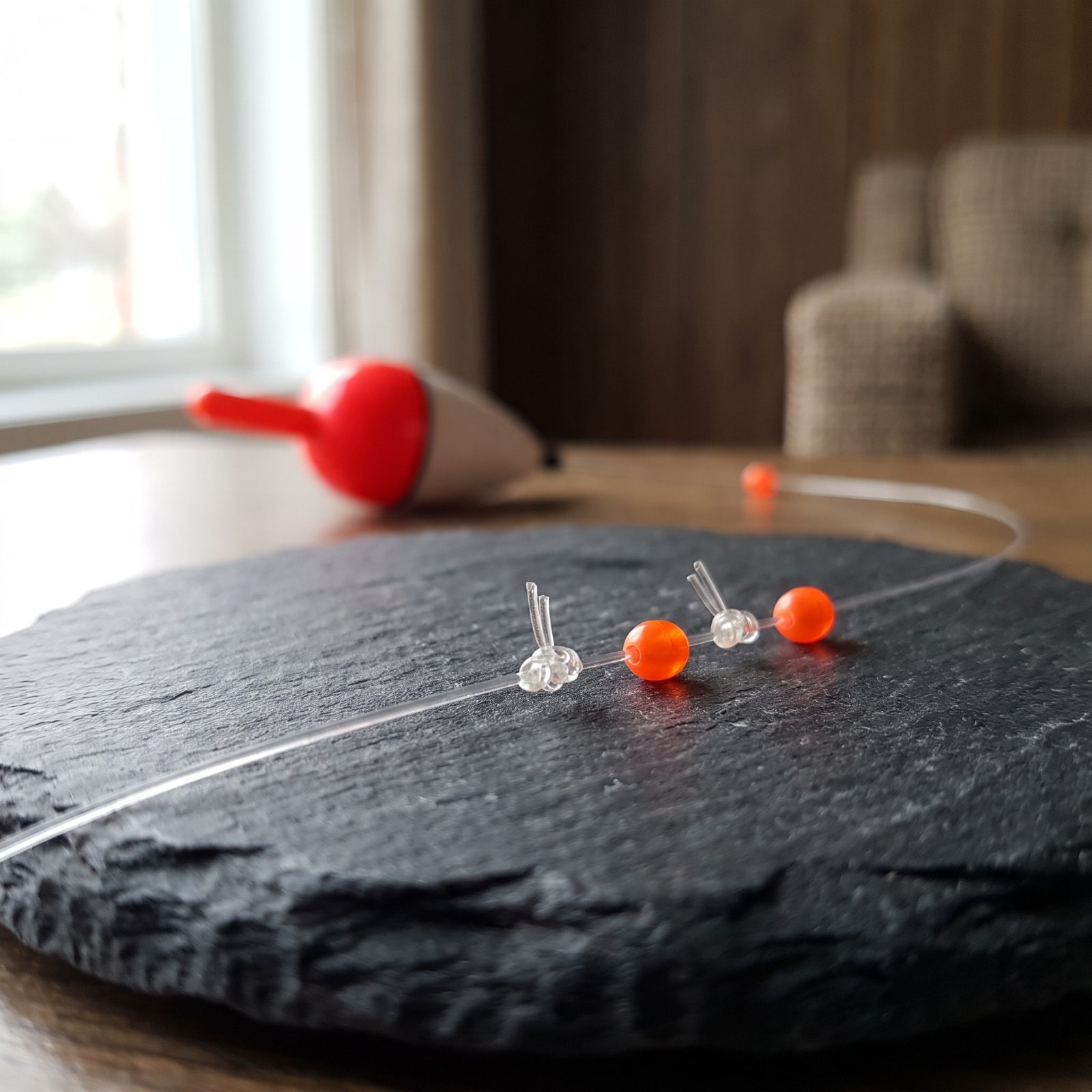
This is the cheapest upgrade in your box and most anglers skip it. Slip-float stops let your float slide down to a short cast, then set the exact depth once it hits the water, so you can fish fifteen feet down on a rod you can still cast.
They come pre-tied on tiny tubes you slide right onto your main line. Add a bead, then thread on the slip float. Now you’re covering water column no fixed bobber will ever reach.
9. Tungsten Worm Weights That Punch Above Their Size
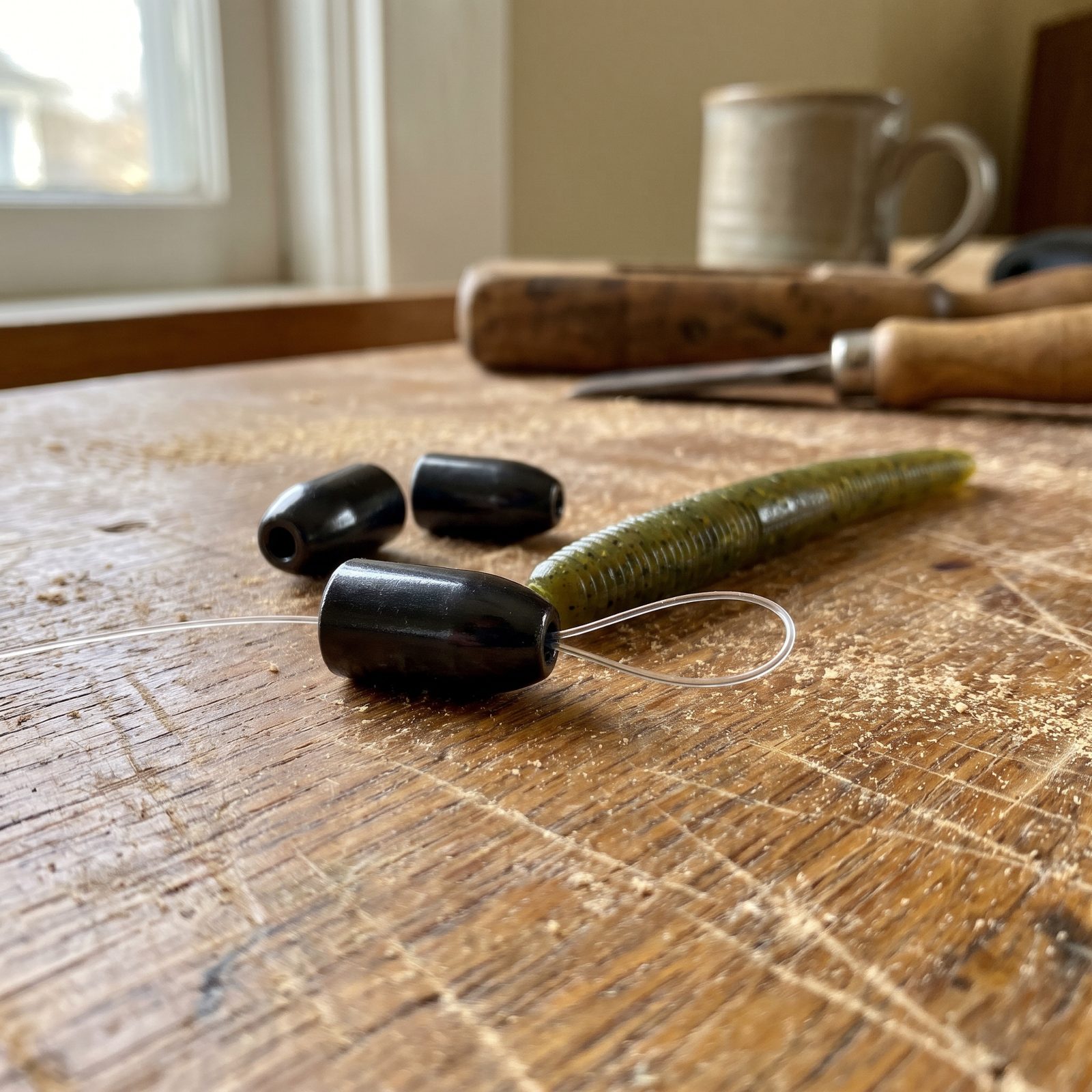
Tungsten costs more than lead, and anyone who tells you otherwise is selling lead. But it packs the same weight into a smaller package, so your bait slips through cover instead of hanging up on it. You also feel more — tungsten is harder, so it telegraphs rock, gravel, and the soft mush of a bass’s mouth right up the line.
Keep a few sizes. An eighth-ounce for calm shallows, a half-ounce for punching through matted vegetation. The small ones vanish in a tackle tray, so give them their own compartment or you’ll spend ten minutes digging.
8. Removable Split Shot You Can Pinch On and Pry Off
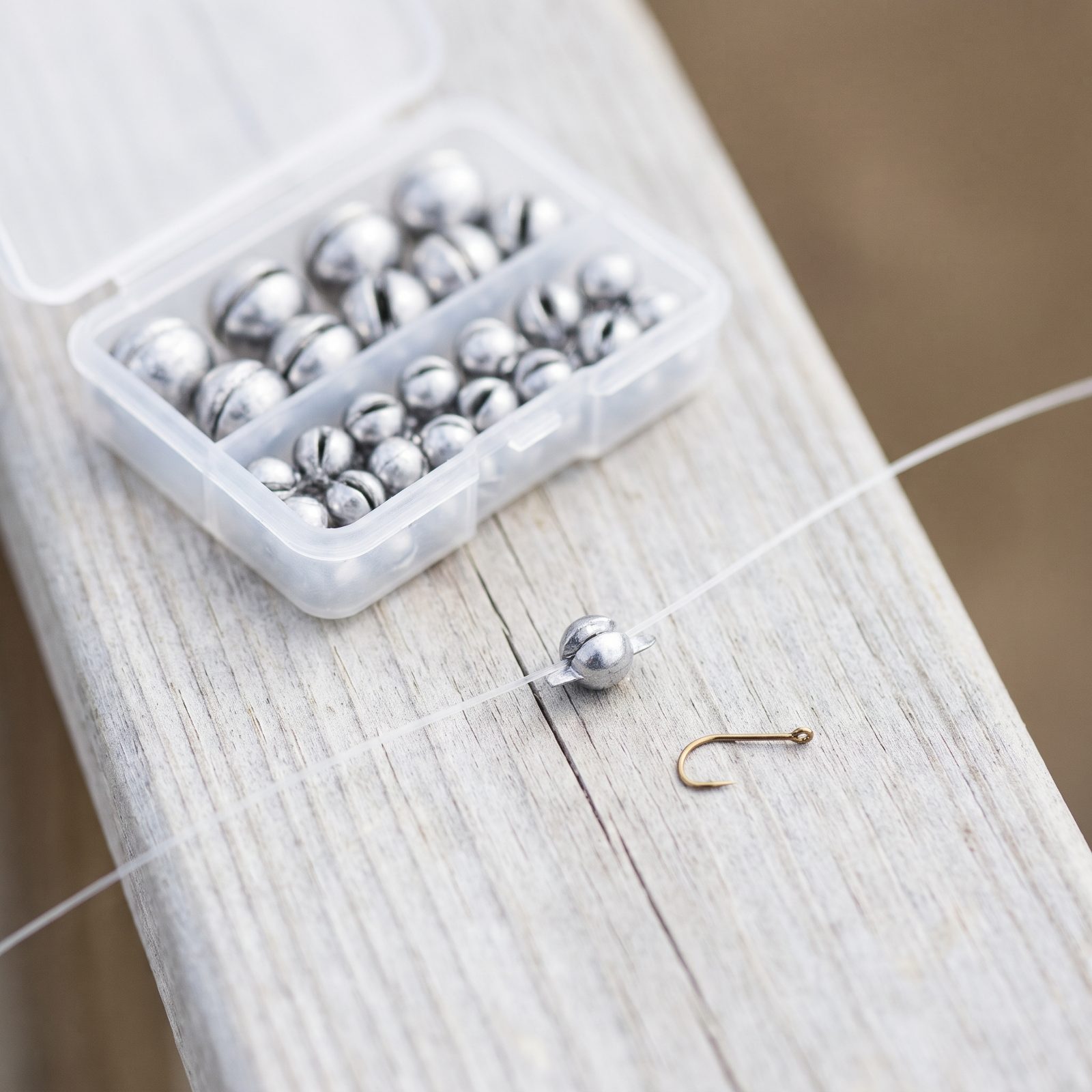
The old round split shot were a one-way street. Pinch them on, and good luck ever getting them off without mangling your line. The removable kind have two little ears on the back — squeeze those and the shot opens right back up.
That matters more than it sounds. You’ll want to add weight when the current picks up and drop it when the fish go shallow, all without re-tying. A dispenser of mixed sizes lives in a vest pocket for years and weighs nothing.
7. A Barrel Swivel Assortment for Every Line You Tie
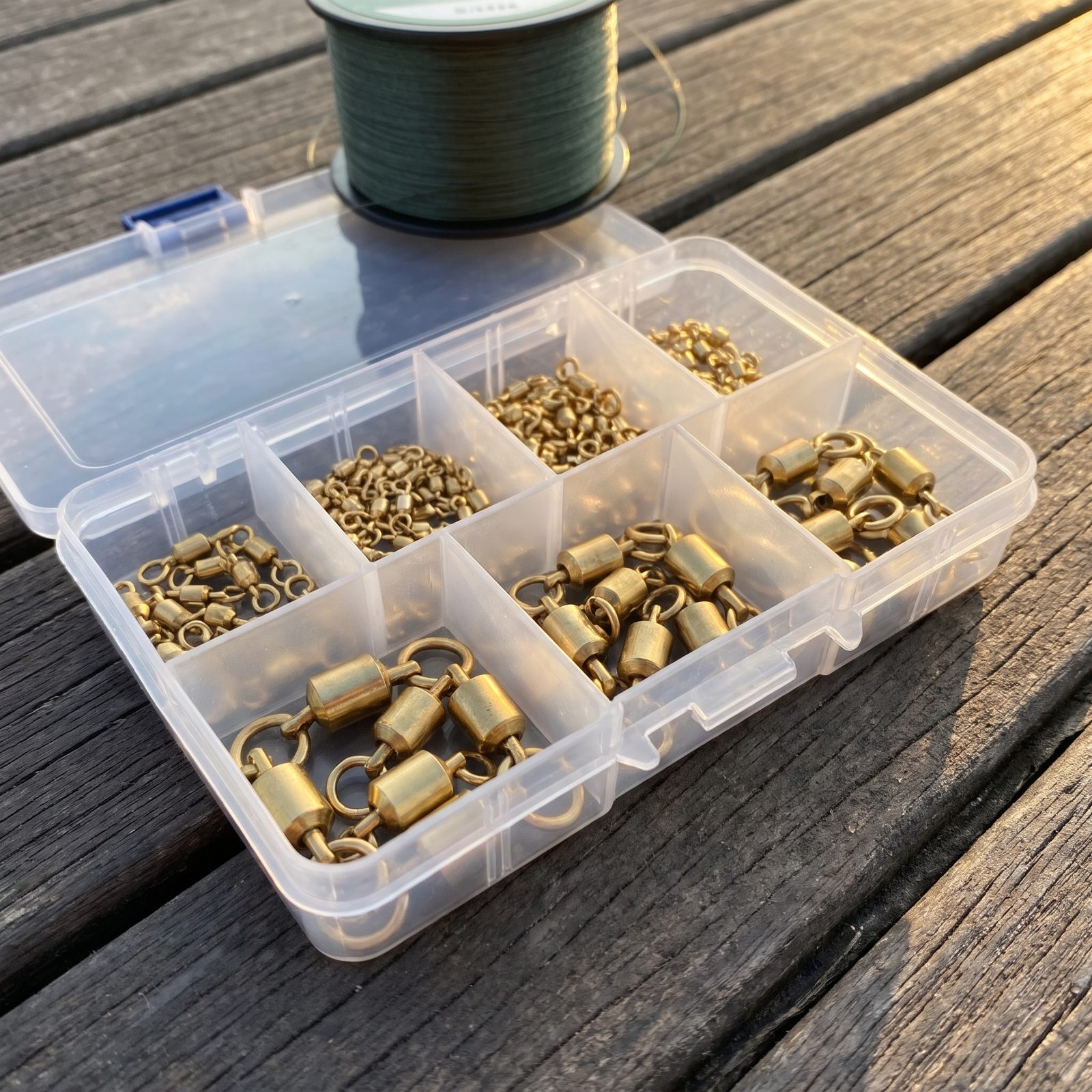
Line twist is a slow thief. It robs your casting distance, weakens your knots, and ruins a spool before you notice what happened. A barrel swivel sits between your main line and leader and lets one side spin freely while the other holds steady.
Spinners and inline baits are the worst offenders, and that’s exactly where a swivel earns its keep. Buy an assortment card with several sizes. A size 10 for light trout work, a chunkier one for anything with teeth. They’re pennies apiece, so there’s no excuse to run out mid-season.
6. Quick-Change Lure Clips That Save Your Fingers
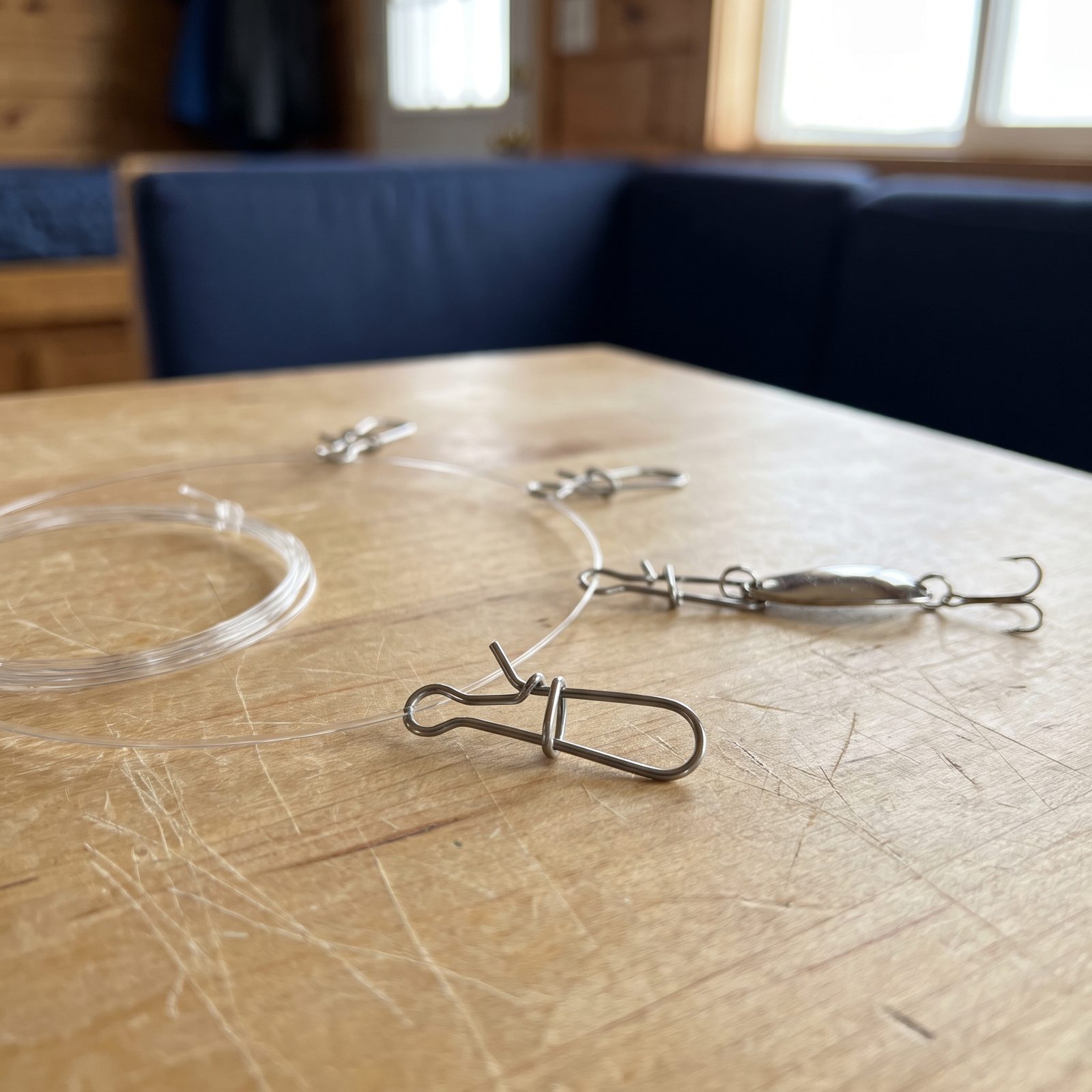
Tying a fresh knot in cold wind, with numb fingers, is one of fishing’s quiet miseries. A quick-change clip ends that. Snap it onto your line once, then swap lures in seconds without ever re-tying.
The catch, and there’s always one, is that a cheap clip can fail on a big fish. Buy the small, high-quality stainless ones and inspect the gate now and then. For finesse presentations, skip them entirely — the clip adds hardware a wary fish can see. But for searching with crankbaits and spoons? They’re a gift.
5. A Fishing Hook Assortment Sorted Before You Need It
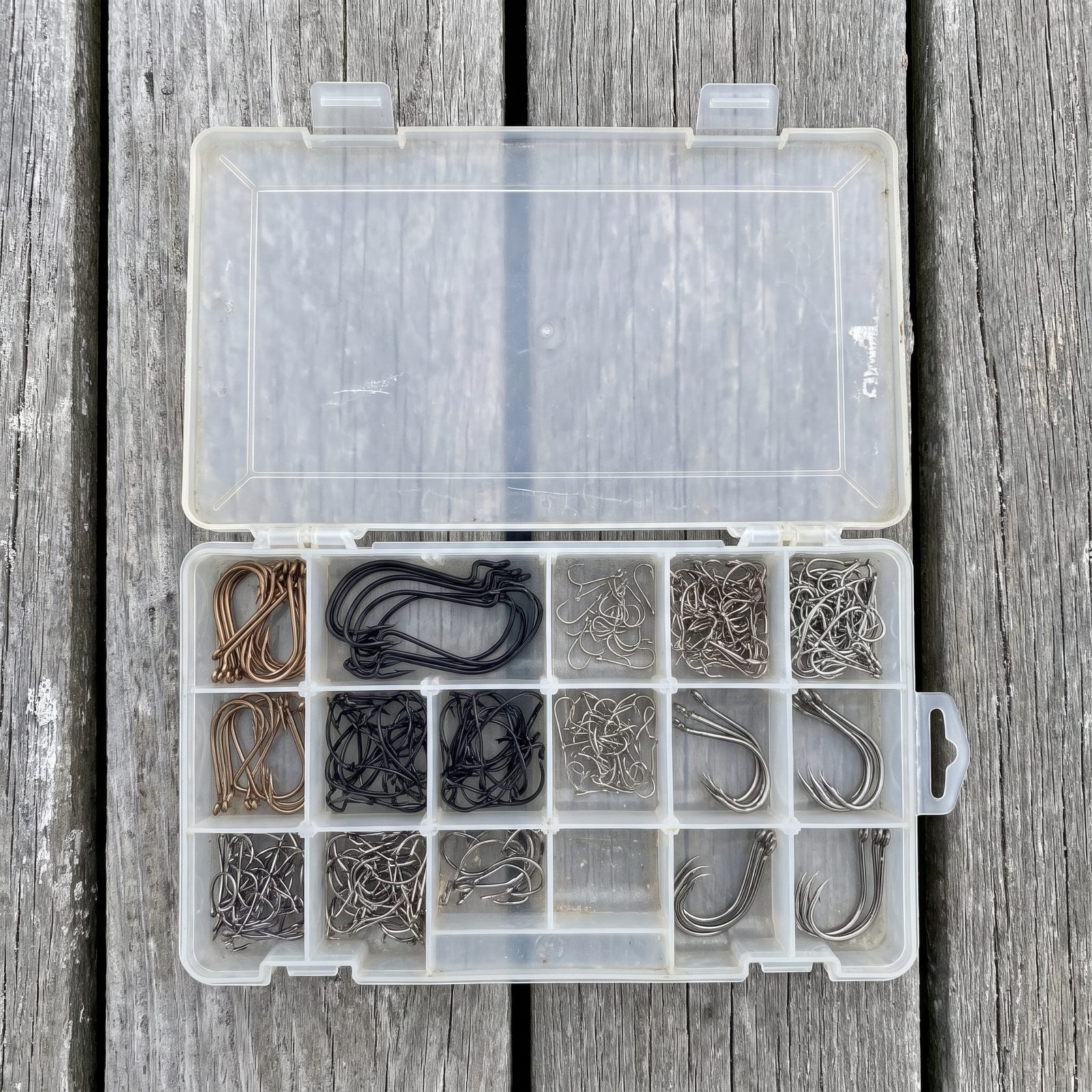
Everyone owns hooks. Almost nobody owns the right hook at the right moment. A decent assortment covers the gaps: offset worm hooks for soft plastics, baitholders for live bait, small circle hooks for anything you plan to release.
I lost years fishing one hook size for everything and wondering why my hookup rate was rotten. The hook has to match the bait and the fish’s mouth, not your habit. Keep the assortment organized by style, not jumbled, because a drawer of tangled hooks is a bloody finger waiting to happen.
4. Ned Rig Jig Heads for the Days Nothing Else Works
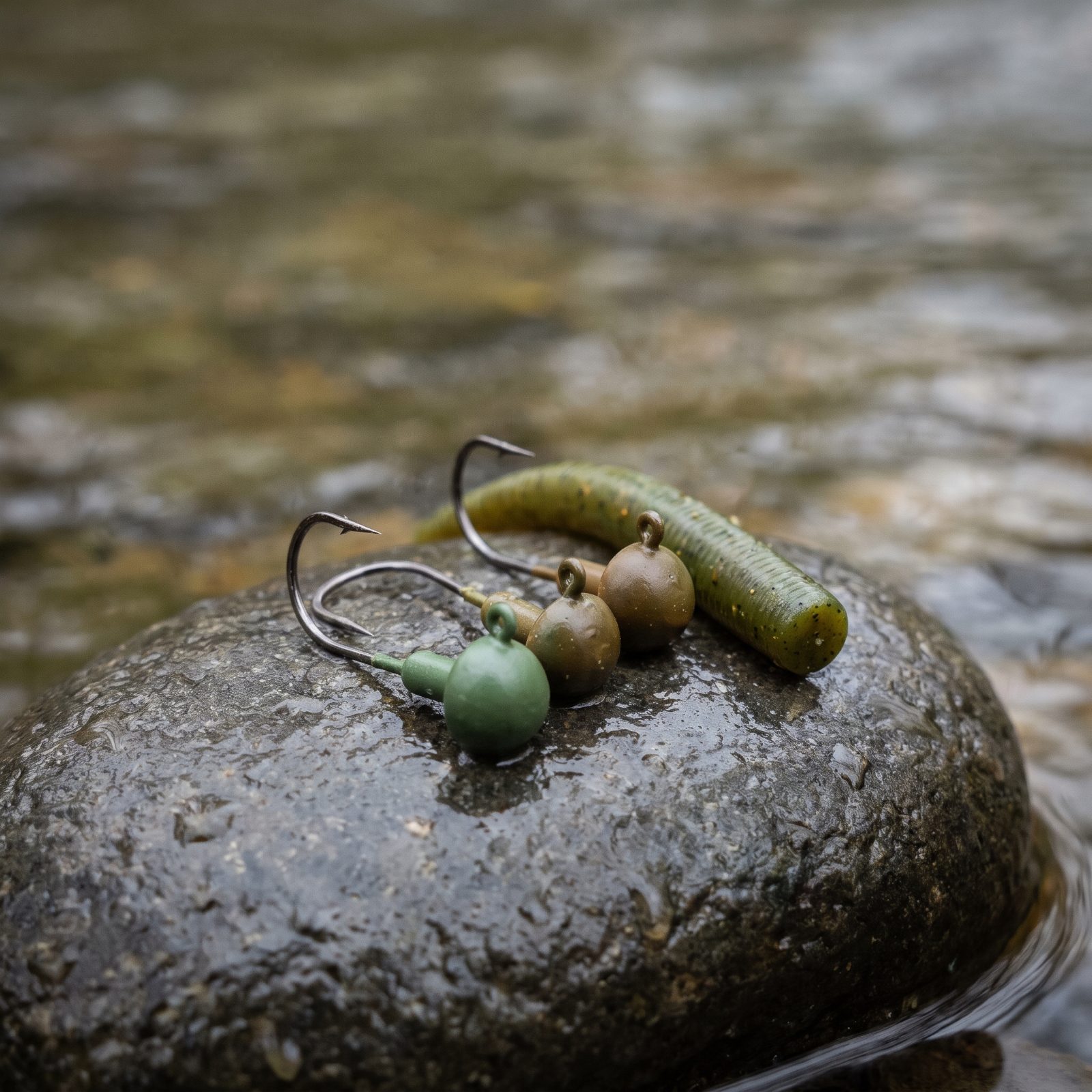
When the bite shuts off completely, the Ned rig is often what saves the day. Nothing fancy about it — a stubby piece of soft plastic on a small round ball-head jig, worked slow along the bottom.
The round head lets the bait settle and sway at rest, like a bluegill nosing the dirt, and pressured fish can’t leave it alone. Keep a few head weights so you can match the depth: a sixteenth-ounce for shallow, a quarter for deeper water or current. It isn’t glamorous fishing. It just catches when nothing else will.
3. Soft-Plastic Repair Glue That Resurrects Torn Baits
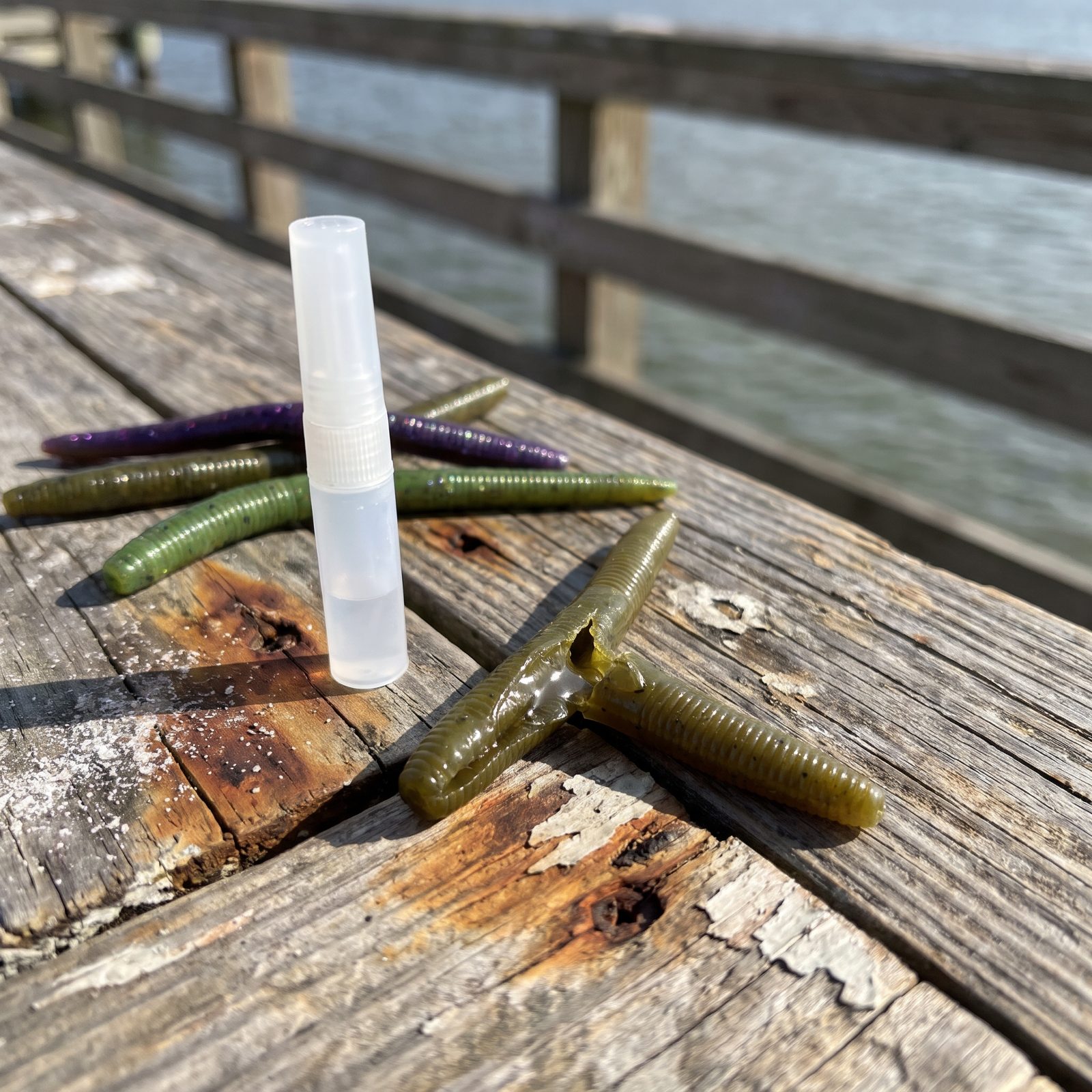
A fish grabs your soft plastic, tears it half off the hook, and most people reach for a new one. That’s money going in the water. A drop of soft-plastic glue welds the torn bait back together and you keep fishing the color that’s clearly working.
It’s thin, fast, and bonds the plastic itself, not just the surface. One small tube repairs a whole season’s worth of chewed worms and craws. The only trick is capping it tight. Leave it open in a hot boat and you’ll find a hardened brick next trip.
2. A Lure-Scent Marker You Can Swipe On and Forget
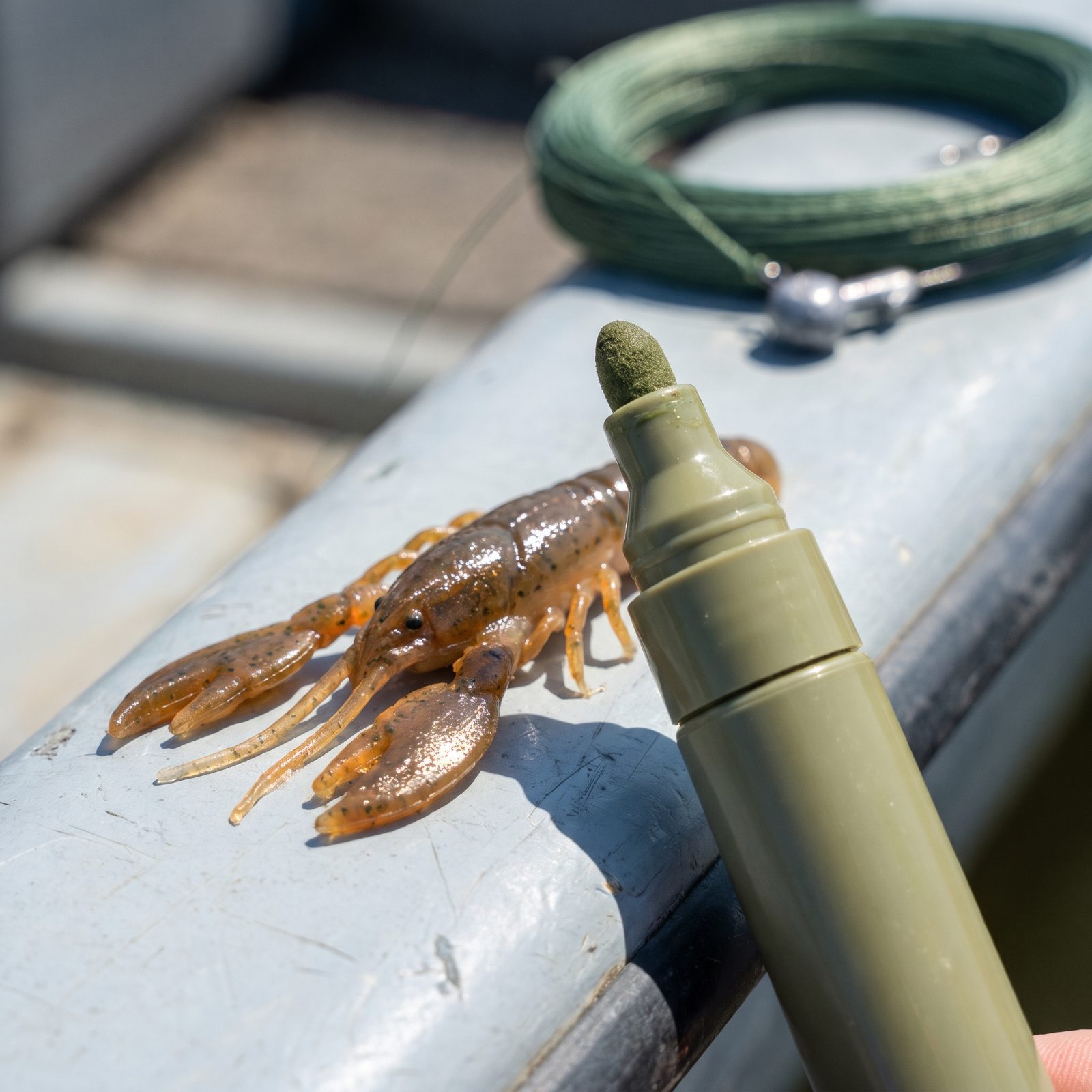
Scent fishing used to mean a greasy bottle and a mess all over your hands. The marker-style applicators changed that. Swipe it on the bait like a glue stick, and you’ve laid down a scent trail without coating your whole boat.
Does scent work? On finicky, line-shy fish it keeps them holding the bait a half-second longer, and that half-second is often the hookset. On an aggressive bite it barely matters. Keep one in the tray for the slow days. It takes up no room and it’s dry to the touch.
1. A Pocket-Sized Multitool That Does the Dirty Work
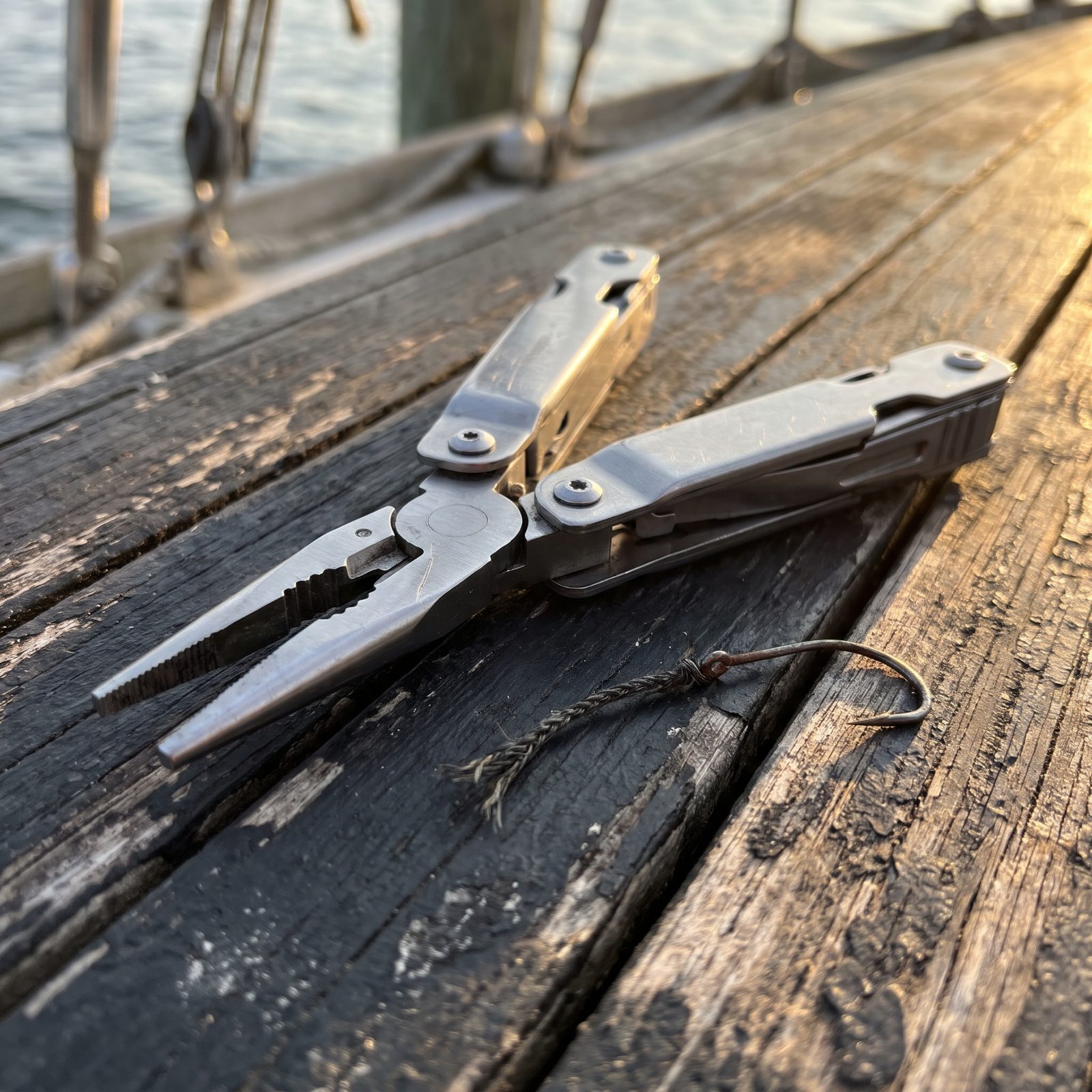
This is the one tool you’ll reach for every single trip. Split-ring pliers, line cutters that actually bite through braid, needle-nose jaws for backing a deep hook out of a toothy fish — all of it folds into something that rides in a pocket.
Spend a little here. Cheap multitools rust solid after one wet season, and a seized tool is worse than no tool because you thought you had one. Rinse it after saltwater, oil the joint now and then, and it’ll outlast three of your rods.