
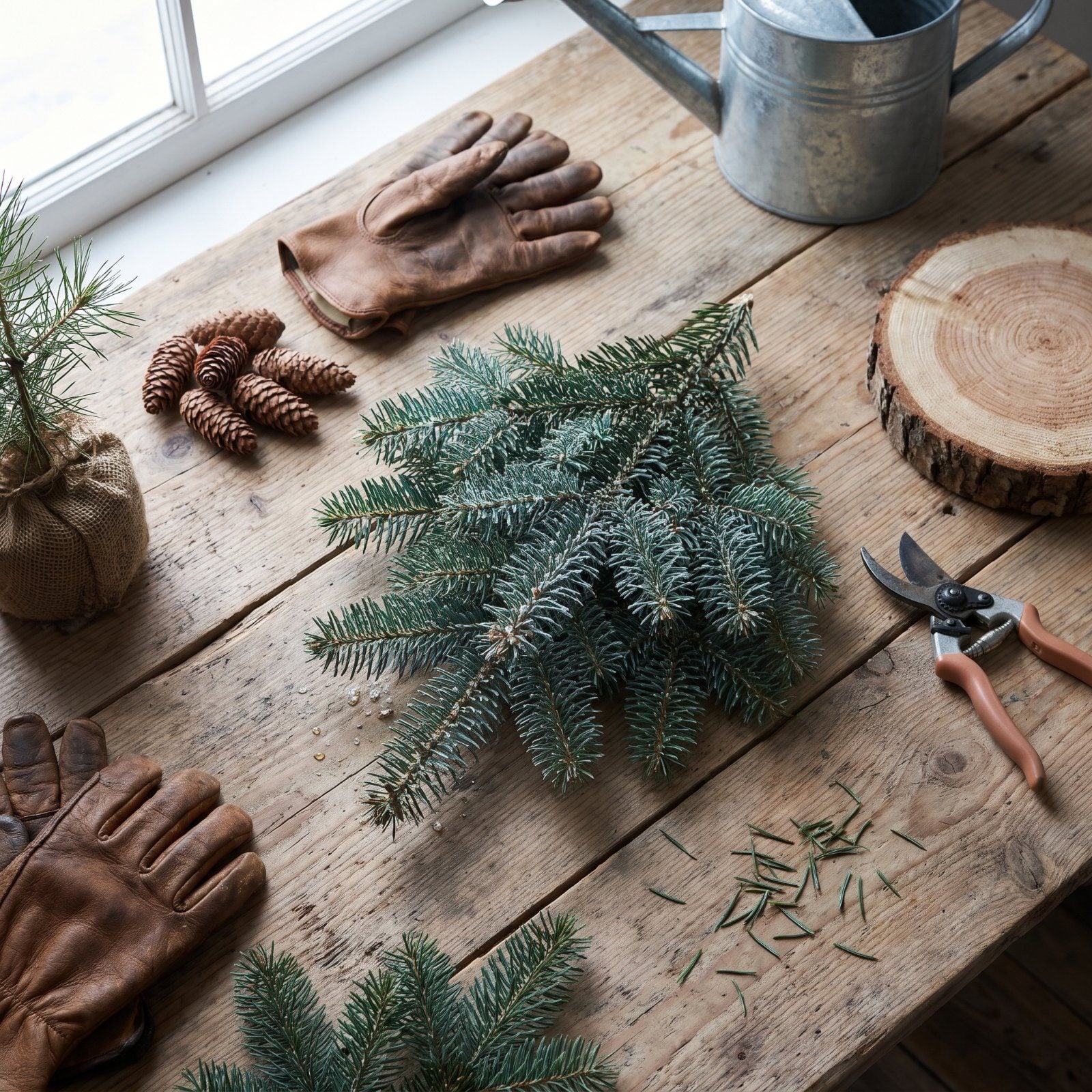
Every December someone at a party announces that cutting a real tree kills the forest, then reaches for the fake one in a box shipped from overseas. The logic sounds right. It’s almost entirely wrong. Real Christmas trees are a farm crop grown in rows like corn, replanted every spring, and recycled into mulch and fish habitat once the needles drop. Most of what people believe about how these trees get grown, picked, watered and tossed comes from a mix of good intentions and bad information. We dug into the ones that keep getting repeated and sorted the true from the nonsense.
Please note that some of the images in this article were created with the assistance of AI.
44. Myth: Cutting a Real Christmas Tree Causes Deforestation
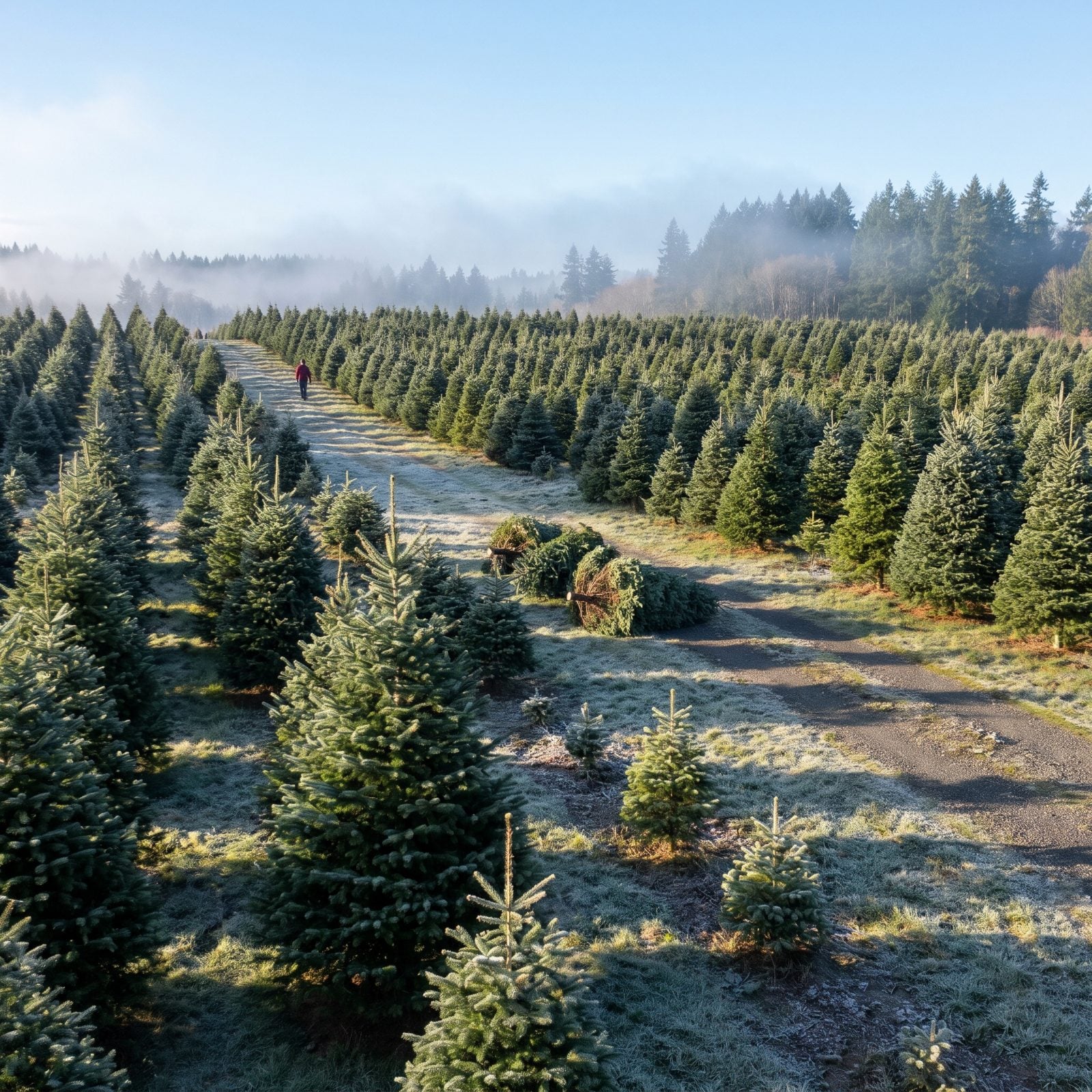
Here’s the part people skip: a cut Christmas tree was planted on purpose, on a farm, to be cut. Nobody drives into a wild forest with a chainsaw to find your living room tree. These are agricultural crops grown on land that’s often too steep or rocky for row crops, and harvesting one does no more damage than picking an apple does to an orchard.
The environmental math usually favors the real tree. A farmed fir spends six to ten years pulling carbon out of the air before it’s cut. The plastic alternative is petroleum, made overseas, shipped in a container, and bound for a landfill where it’ll sit for centuries.
43. Myth: Christmas Trees Come From Old-Growth Forests
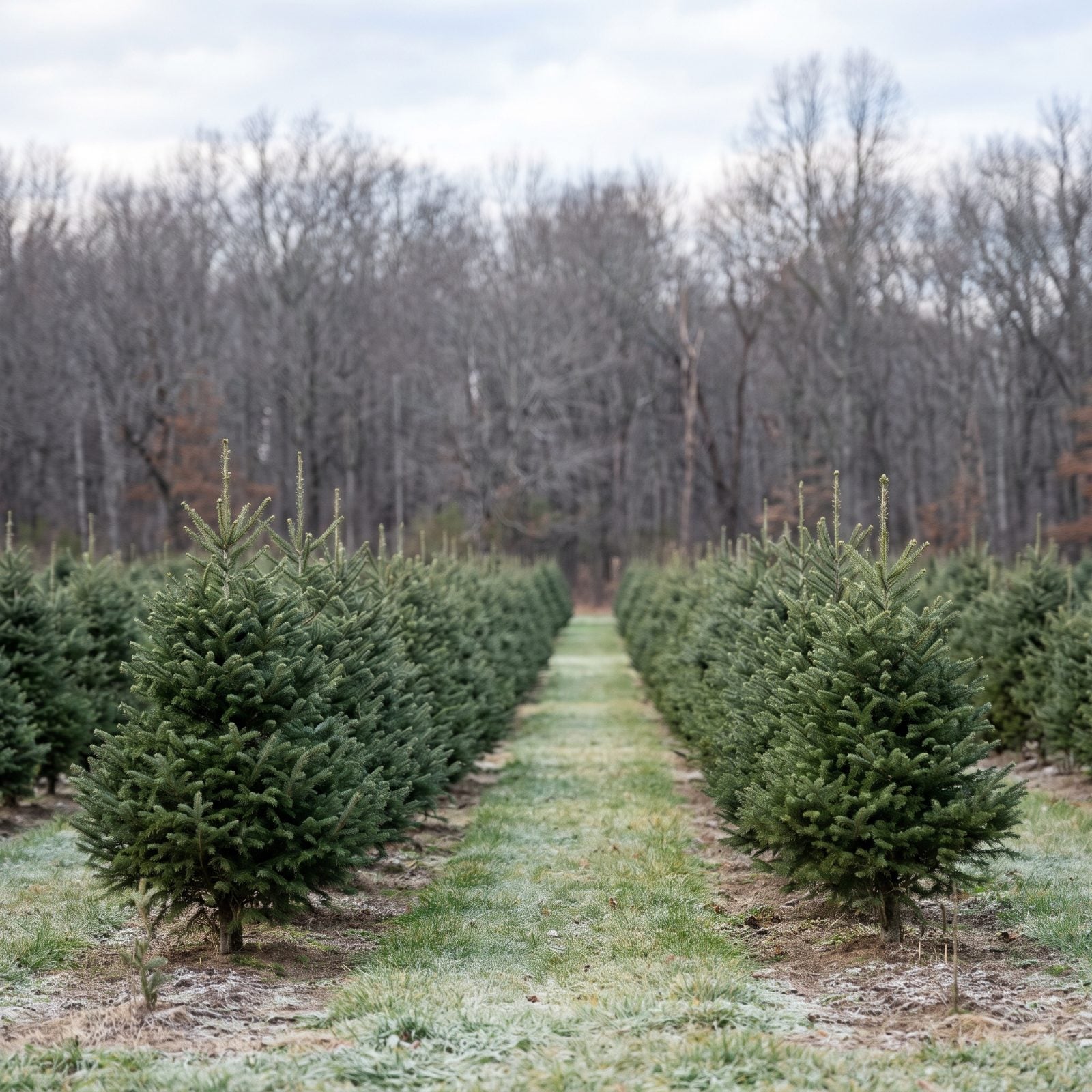
The image of loggers felling ancient firs for the holidays is pure fiction. Old-growth forest grows slowly, uneven and gnarled, and in most cases it’s legally protected. None of that produces the dense, evenly tapered tree you want standing in a stand by the window.
Your tree came from a plantation where everything was planted the same year, sheared the same way, and spaced in rows wide enough to run a mower through. Most retail trees are Fraser fir, Douglas-fir, balsam fir, Noble fir, or Scotch pine, and every one of them was raised as a crop. Growing a symmetrical specimen takes years of deliberate work that a wild forest would never bother with.
42. Myth: Christmas Tree Farms Never Replant What They Harvest
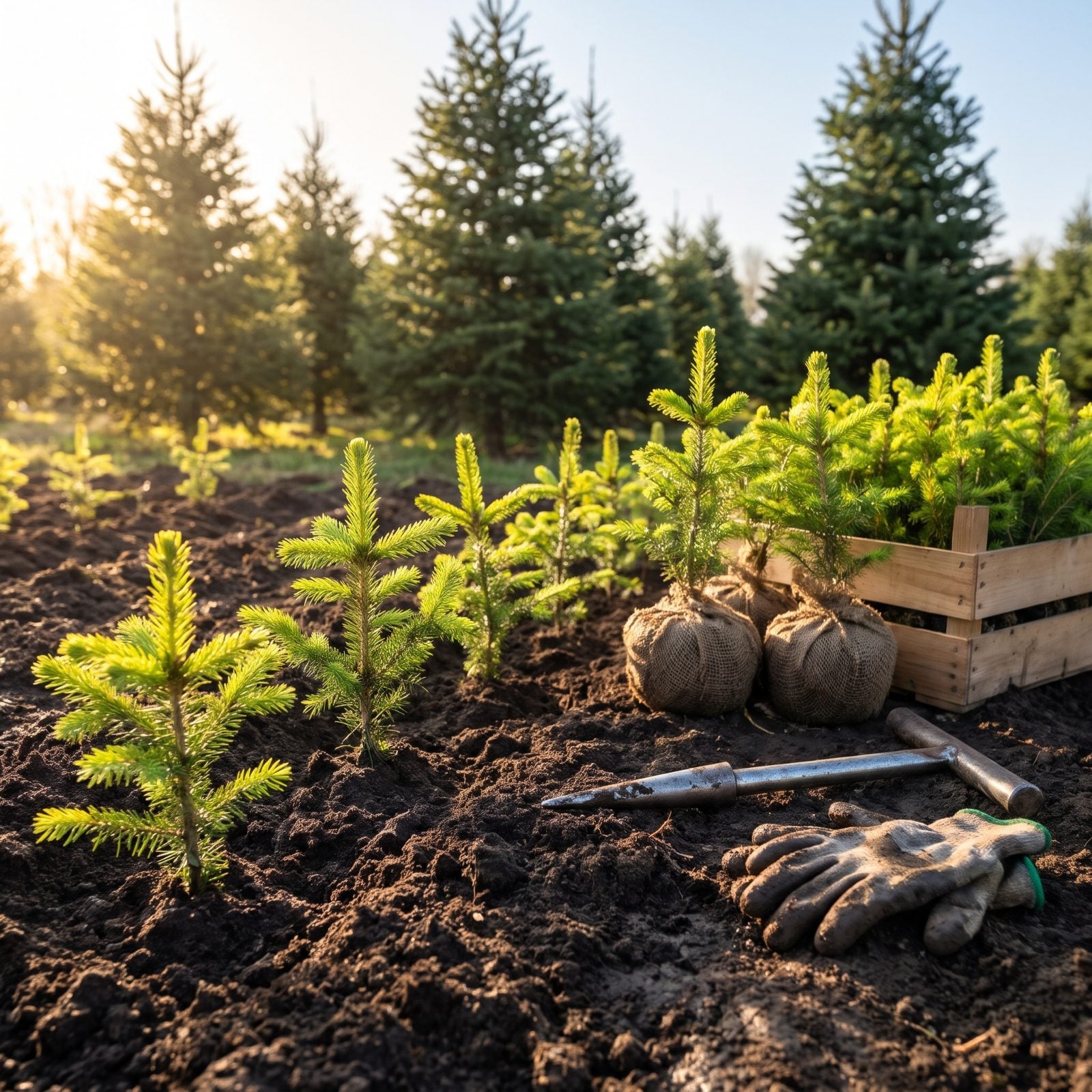
A grower who didn’t replant would be out of business in a decade. The whole model runs on a steady rotation: cut the mature trees in winter, plant new seedlings in spring, and repeat for thirty years running.
Walk a working farm and you’ll see every age at once, from inch-high seedlings to the ready-to-cut giants. That’s the business, not an accident.
A Christmas tree farm is one of the few crops where you can see ten years of planning standing in the field at the same time.
41. Myth: A Christmas Tree Reaches Full Size in One Year

This one surprises people most. That seven-foot fir in your living room spent six to ten years in the ground before it reached your hands, depending on species and climate.
Growth is slow and uneven. For the first couple of years a seedling barely moves while it establishes roots, then it puts on maybe six to twelve inches a year, plus all the shearing it takes to keep the shape tight. Pay sixty or eighty dollars for a cut tree and you’re paying for the better part of a decade of patience.
40. Myth: Christmas Tree Plantations Are Ecologically Dead and Provide No Wildlife Habitat
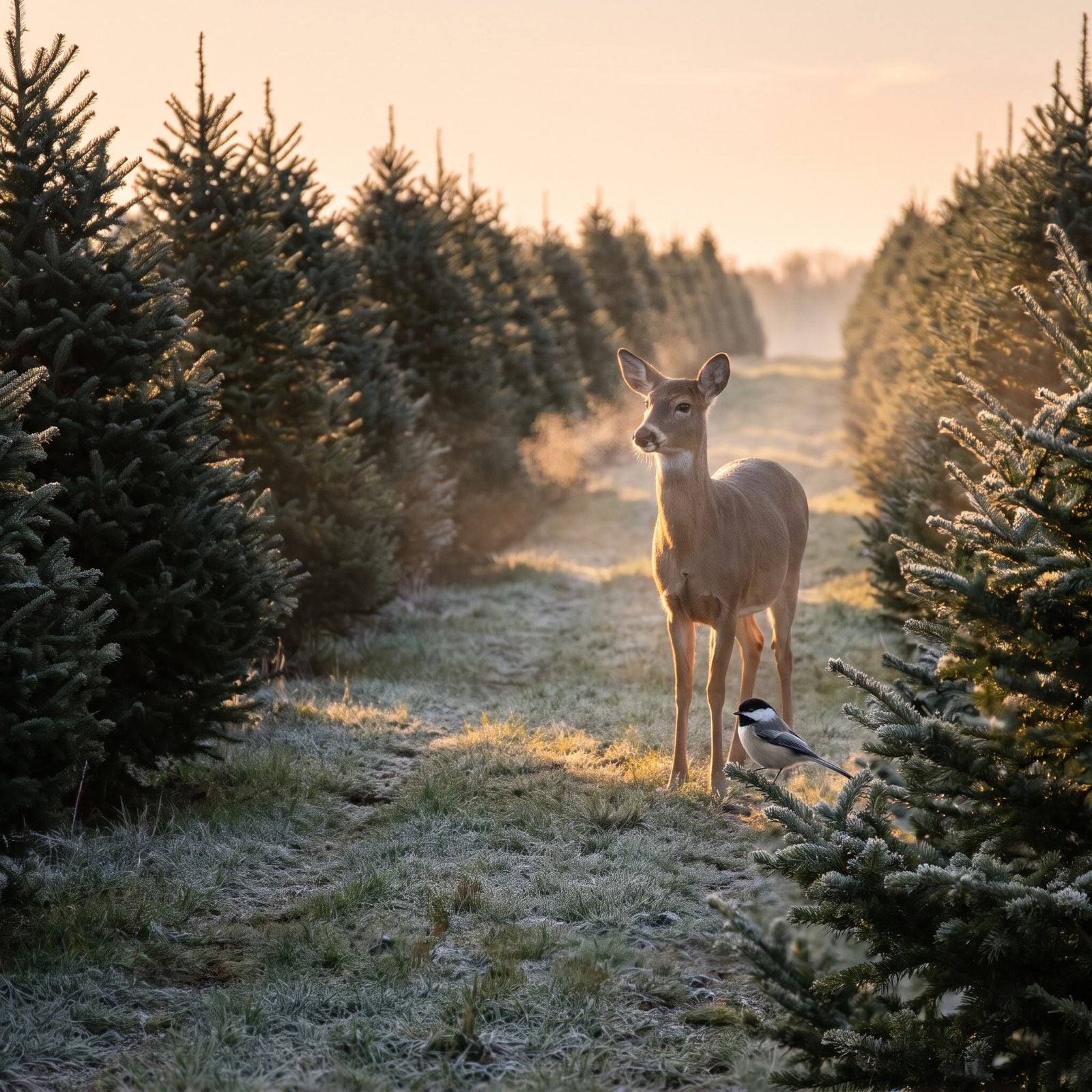
The word “plantation” makes people picture a green desert where nothing lives. The reality is messier, and a lot more alive.
Those grassy lanes between the rows feed deer, rabbits, and ground-nesting birds, the dense firs give songbirds cover and nesting sites, and pollinators work the wildflowers that come up along the margins. A tree farm is nowhere near as rich as native forest. But set it against the alternative, which is usually a housing development or a bare field, and it’s a working piece of green space that holds soil and shelters animals year-round.
39. Myth: Growing Christmas Trees Permanently Exhausts the Soil
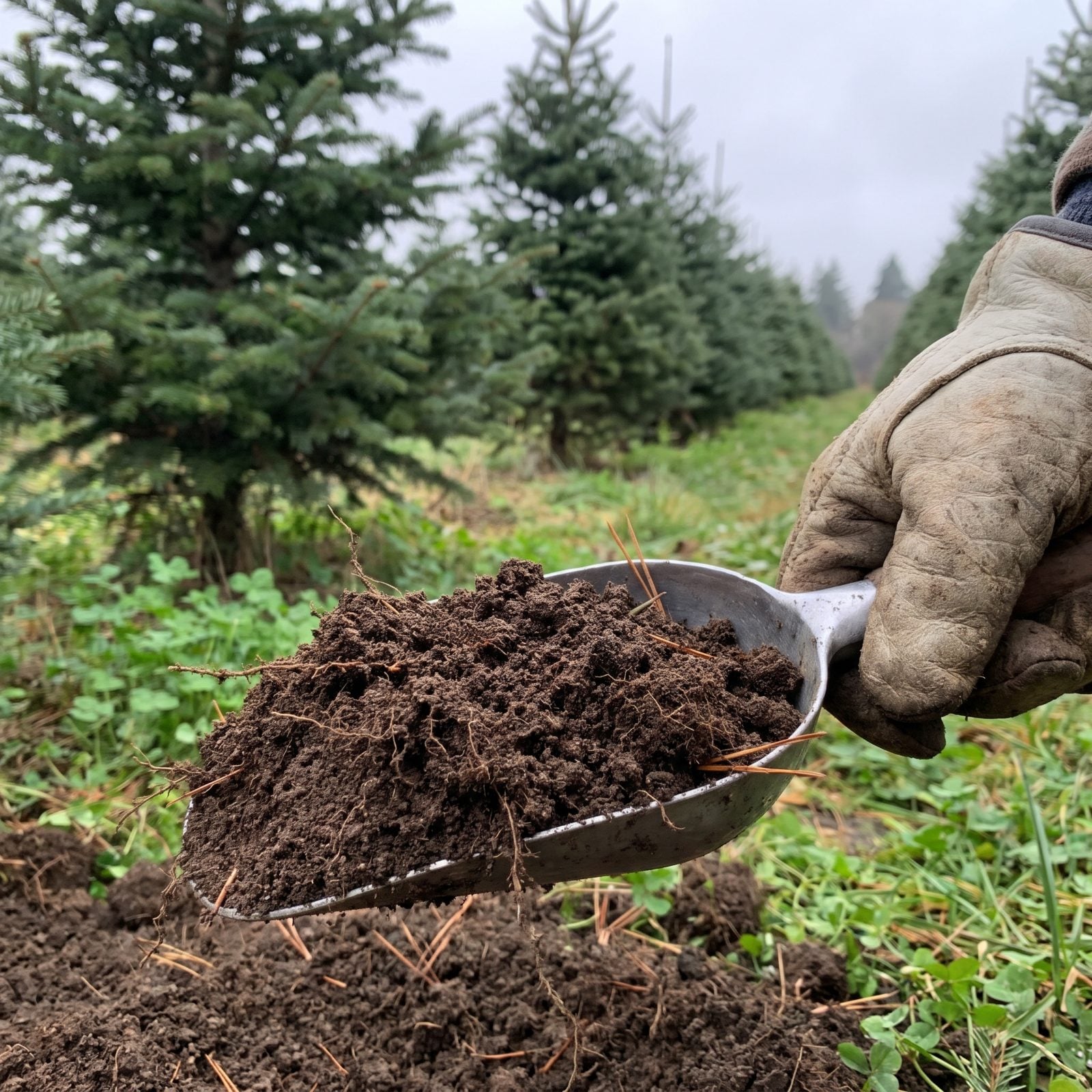
Any crop grown over and over will pull nutrients out of the soil if nobody manages it. Difference is, Christmas trees stay in the ground six to ten years instead of a single season, so the churn runs slow.
Good growers plant cover crops between the rows, test the soil, and amend it where it needs help. The understory grass holds the hillside in place and keeps it from washing away in the rain. Could a careless operation wear out a field? Sure. But “permanently exhausts” is the kind of absolute that doesn’t survive a conversation with anyone who actually farms this way.
38. Myth: Every Christmas Tree Is Heavily Treated With Pesticides
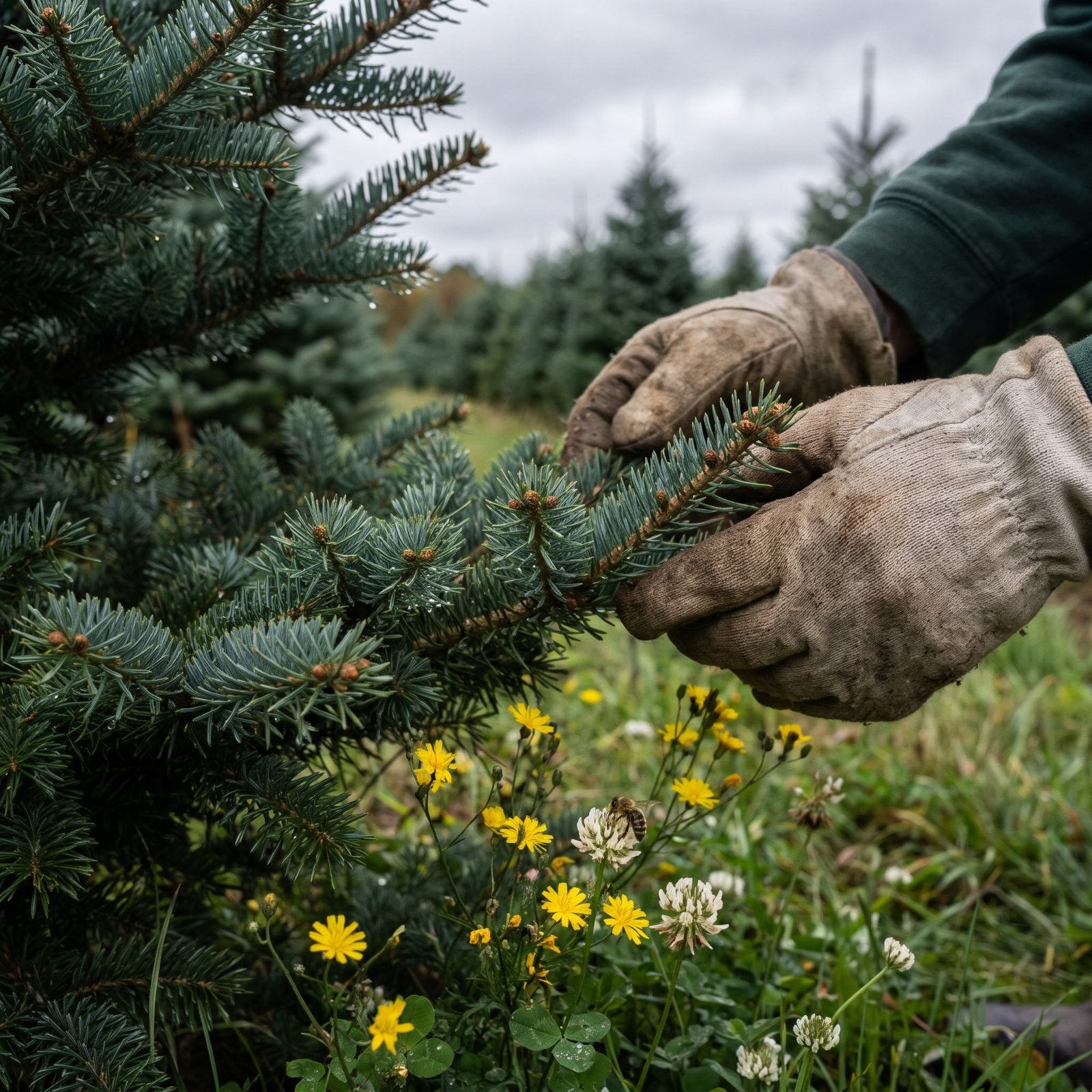
Pest and weed pressure exists on these farms, same as on any crop, and some growers do spray. But “heavily treated” paints every farm with the same brush, and that’s just not accurate.
Many operations lean on integrated pest management: scouting fields, releasing beneficial insects, mowing instead of spraying for weeds, and treating only where it’s actually needed. By the time a tree gets cut in winter, the growing season’s long over. Worried about chemicals? Ask the farm directly, or look for the growing number of organic and low-spray operations that advertise it.
37. Myth: Growers Dye Every Christmas Tree Green
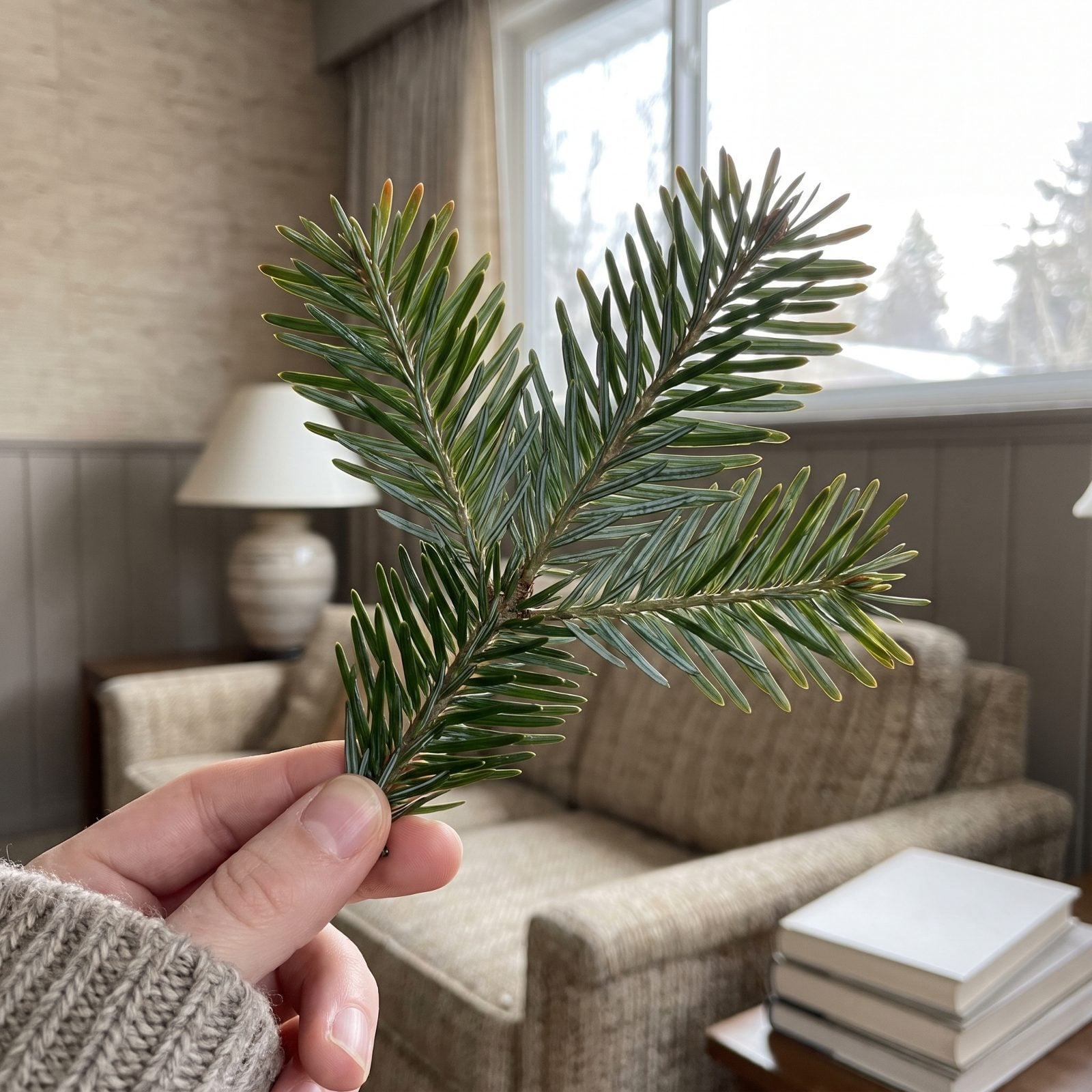
No. That deep green is the tree. The myth probably started because some growers apply a colorant to a fraction of trees that have faded or yellowed, and because sheared Christmas trees look almost too uniform to be real.
A healthy Fraser or Noble fir is naturally that rich blue-green, with pale silvery bands on the needle undersides that give it the frosted look. The vast majority of trees never see a drop of dye. Want to check? Run your hand along a branch at the lot. Real color doesn’t rub off on your palm.
36. Myth: A Perfectly Symmetrical Christmas Tree Grew That Way Naturally
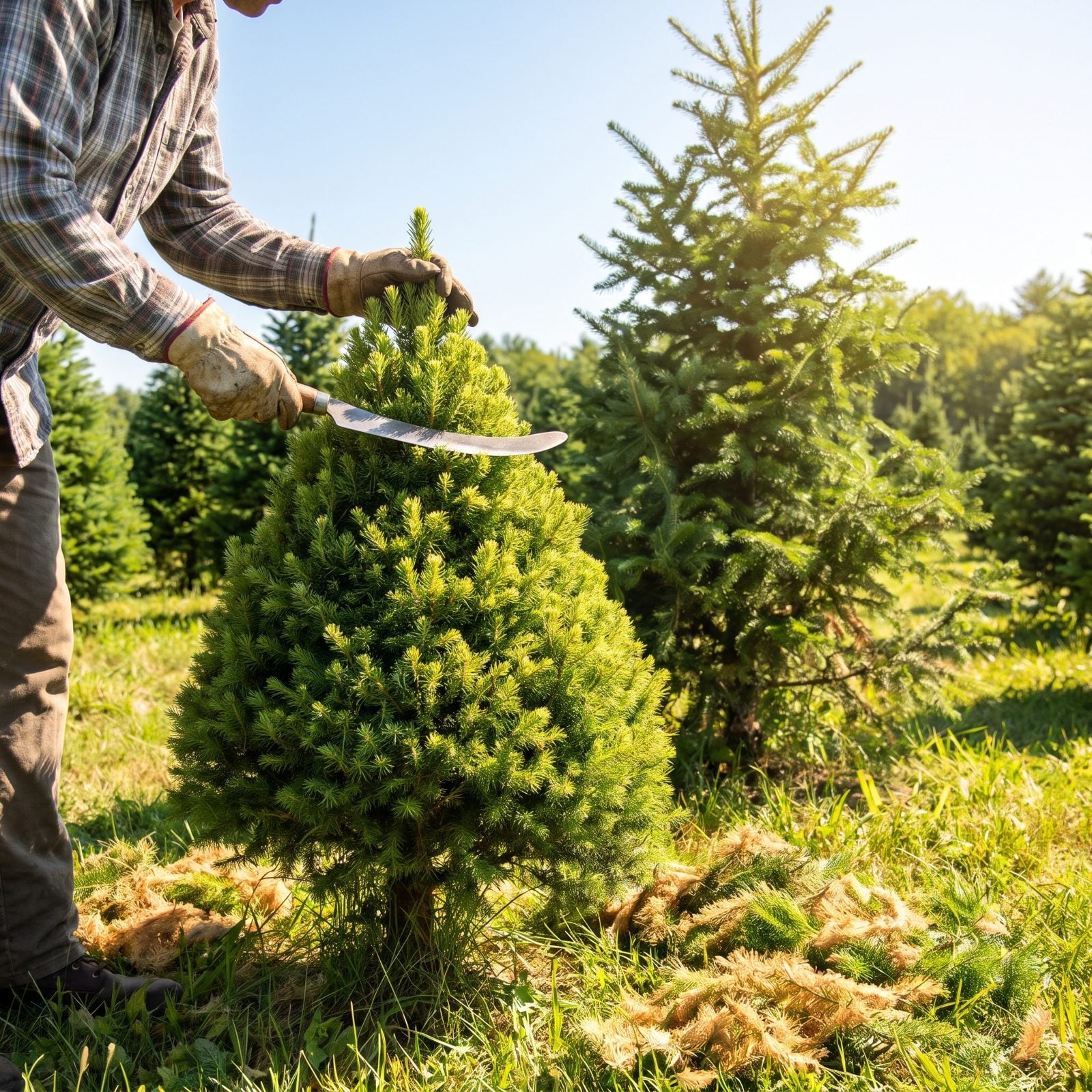
Left to its own devices, a fir grows loose, gappy, and lopsided, reaching for light wherever it can get it. That cone-shaped specimen with the even taper and the full, dense sides is the product of human hands.
Every summer, workers walk the rows with shearing knives and trim the new growth to force branching and shape the taper. Hot, repetitive work, usually done in July heat with the sap running. One tree gets passed over several seasons before it’s ready. So next time you reject a tree over a slightly bare spot, remember somebody shaped that thing by hand for years.
35. Myth: Every Unsold or Curbside Christmas Tree Goes to a Landfill
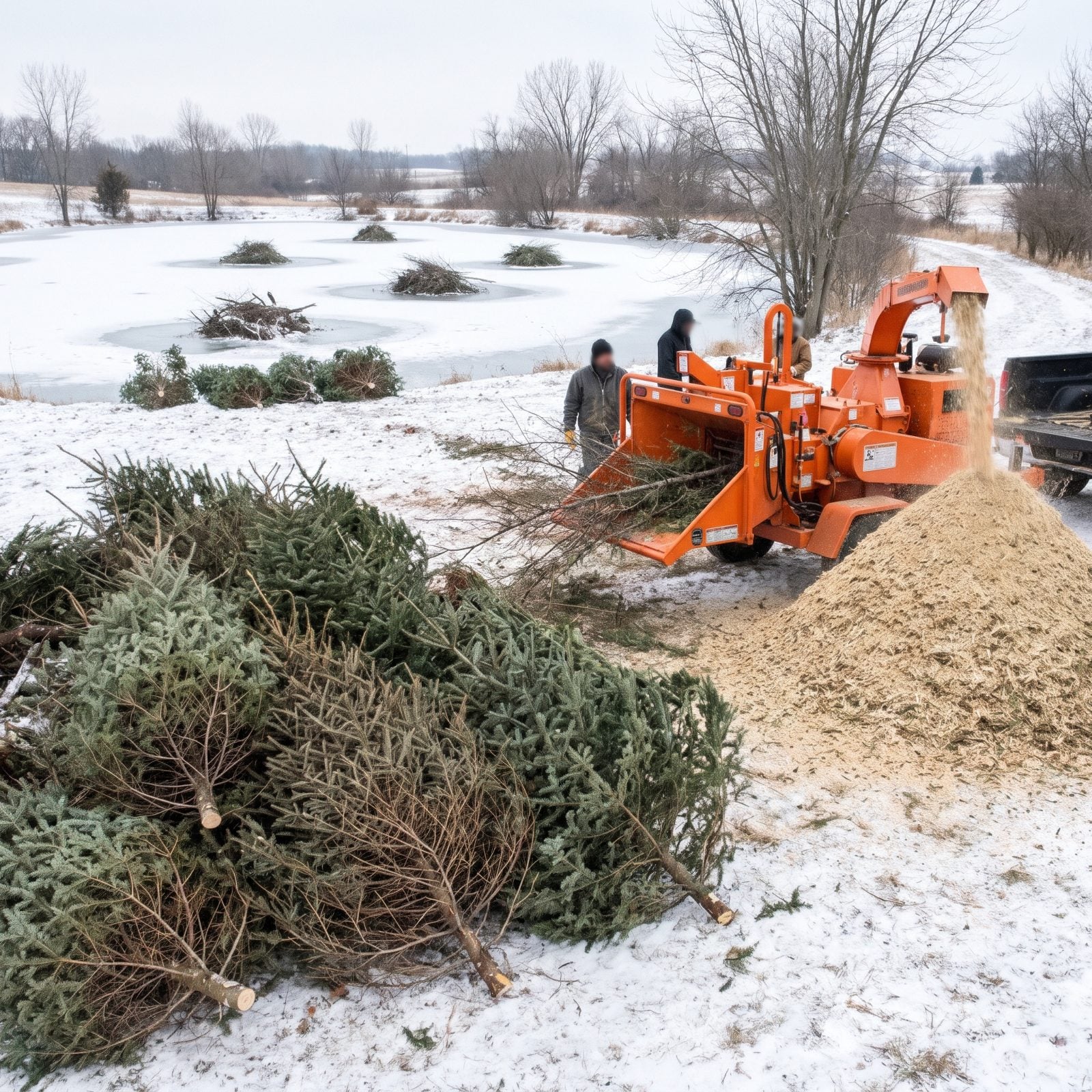
Plenty of trees do end up in landfills, mostly because people bag them in plastic or don’t know the alternatives exist. But a real tree is the easy one to deal with. It’s all organic and breaks down fast.
Most communities run a January collection program. The trees get chipped into mulch for parks and trails, or sunk into lakes and ponds where they become fish habitat, giving bass and bluegill cover to hide and spawn. Some get laid along dunes to catch sand and fight erosion.
- Check for a curbside chipping day in your town, usually the first two weeks of January.
- Strip off every ornament, hook, and strand of tinsel first, or the chipper jams.
- Never burn a dried tree in a fireplace. The resin flares hot and sends sparks up the flue.
34. Myth: Cutting a Tree Releases All Its Stored Carbon Immediately
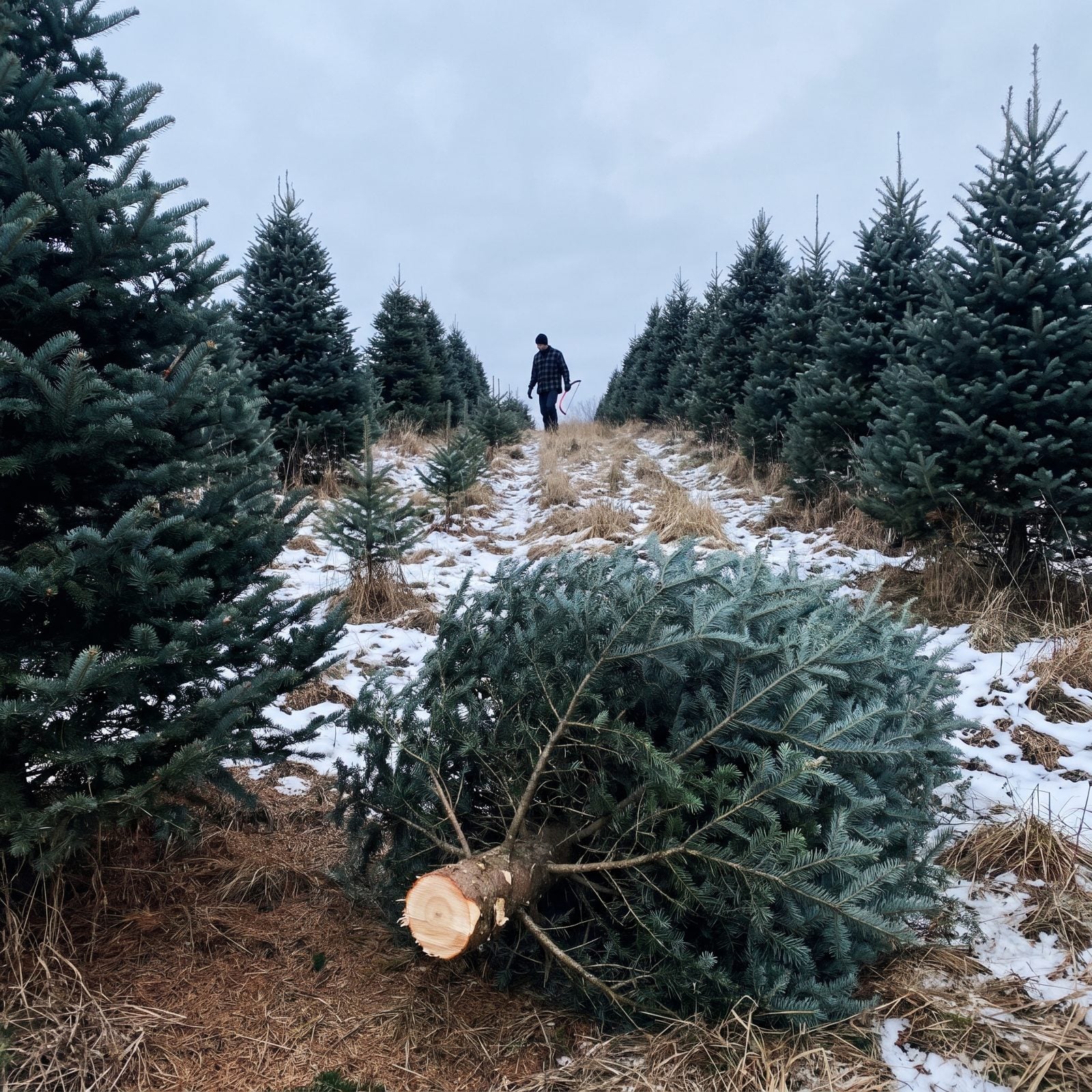
The carbon in a cut fir doesn’t puff into the sky the moment the saw goes through. It’s locked in the wood, the needles, the trunk, and it stays put while the tree sits in your living room and keeps sitting there after the holidays, right up until you burn it or send it to a landfill that leaks methane.
Here’s the part people skip. A Christmas tree farm is a crop. Cut one, plant one or two in its place come spring, and the land keeps pulling carbon down year after year. Those seedlings coming up between the stumps are already on the job.
33. Myth: An Artificial Tree Is Greener After a Single Christmas
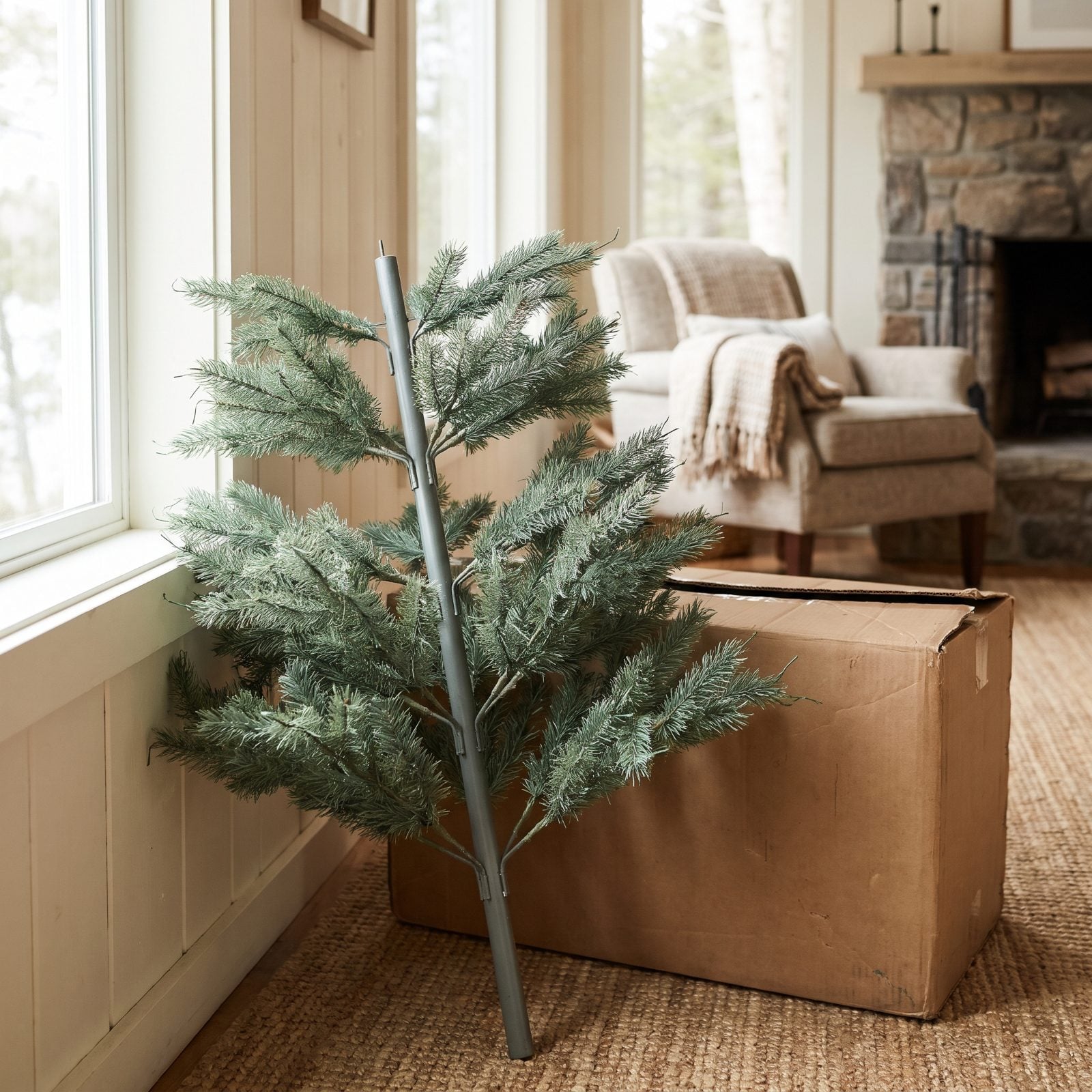
The math gets quoted a lot, and it gets it backward. An artificial tree carries a heavy footprint up front — PVC, steel, the oil to make the stuff, the ocean voyage to get it here. Most of the studies that stack one against the other land somewhere around keeping an artificial tree for a good stretch of years before it ever breaks even against buying fresh-cut each season.
Nobody keeps them that long. They sag, they shed, a strand of pre-lit bulbs dies, and out it goes to the curb — where, unlike a real tree, it never breaks down.
32. Myth: A Potted Christmas Tree Is Always the Greenest Choice
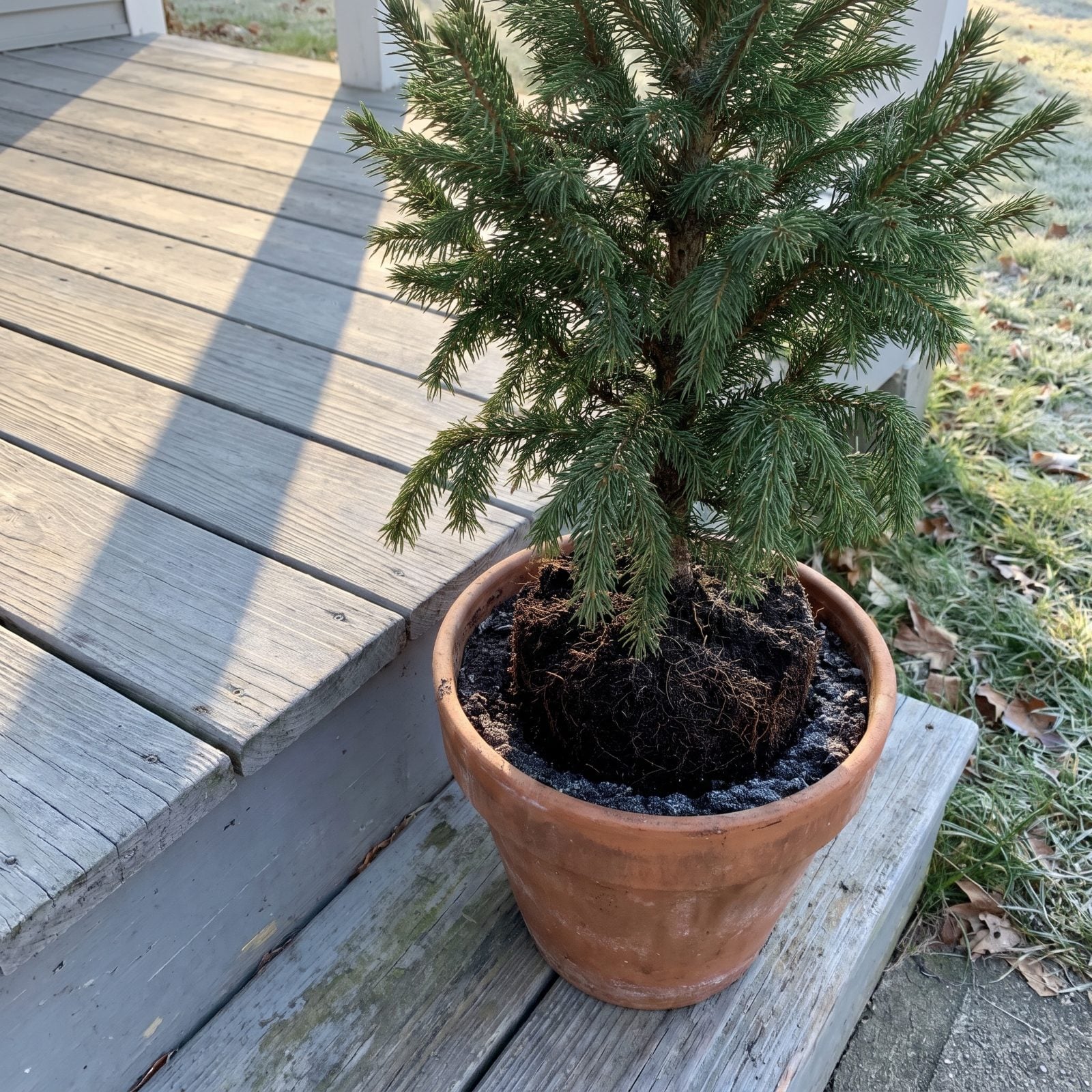
A living tree in a pot sounds like the obvious win. Keep it alive, plant it, no waste. Reality is pickier than that.
A potted tree is heavy, awkward, and fussy. Leave it indoors too long and it dies anyway, which turns your green gesture into a dead shrub and a bag of soil. And the nursery that grew it still burned fuel to pot it, truck it, and water it. If you’ve got the yard, the climate, and the patience, it’s a fine choice. If you’re in a third-floor apartment planning to “figure it out in January,” a cut tree from a local farm is honestly the kinder option.
31. Myth: A Living Christmas Tree Can Stay Indoors All December
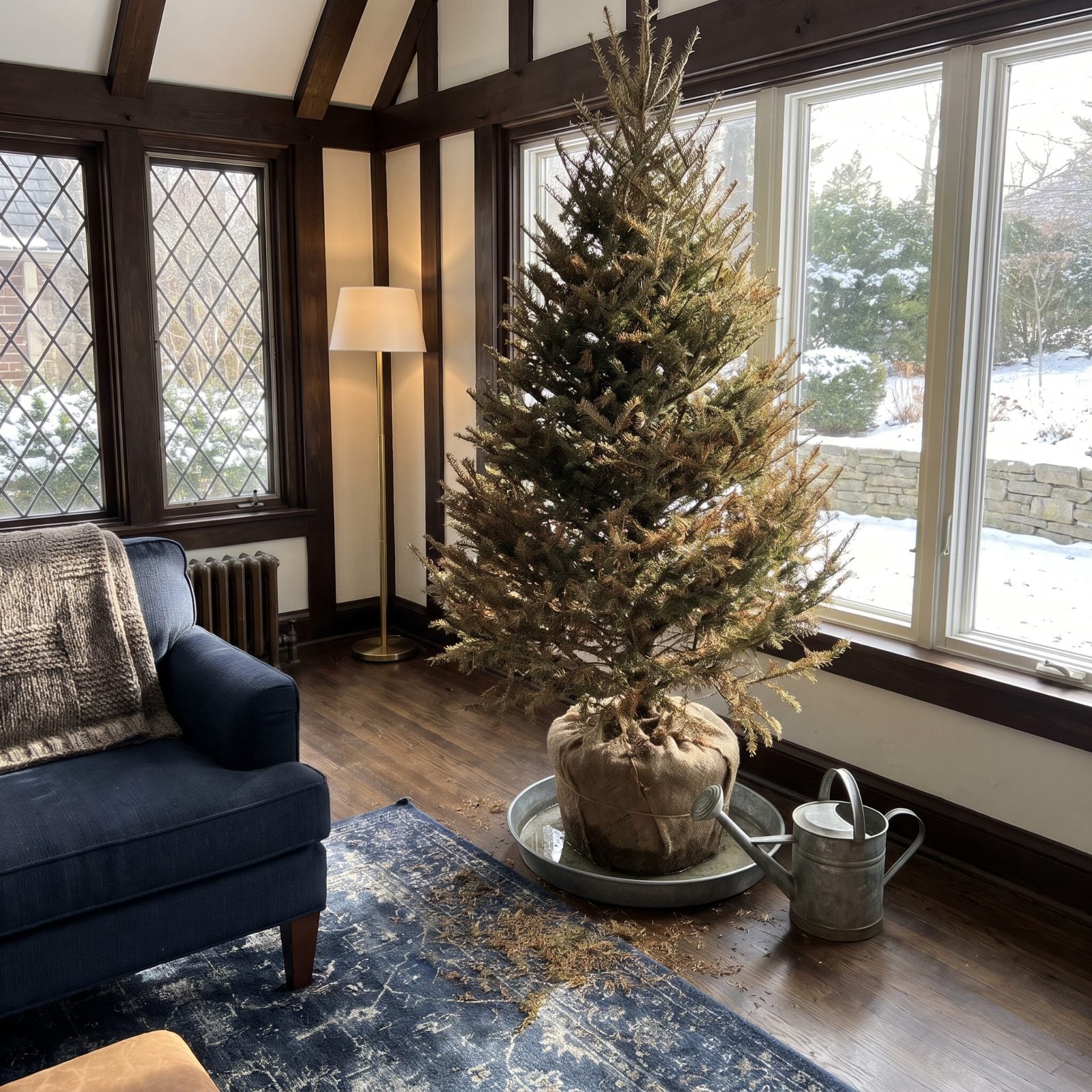
A live tree wants to be dormant in December, not warm. Bring it into a heated room and it thinks spring showed up early — it breaks dormancy, pushes soft new growth, then gets slapped when you set it back out into January cold.
The rule most growers hand you is simple and strict. A week to ten days inside, no more. Keep it near a cool window, away from the heat vent, soil kept moist. Any longer and you’re not decorating a tree. You’re slowly killing one.
30. Myth: Any Potted Christmas Tree Can Be Planted in Any Climate
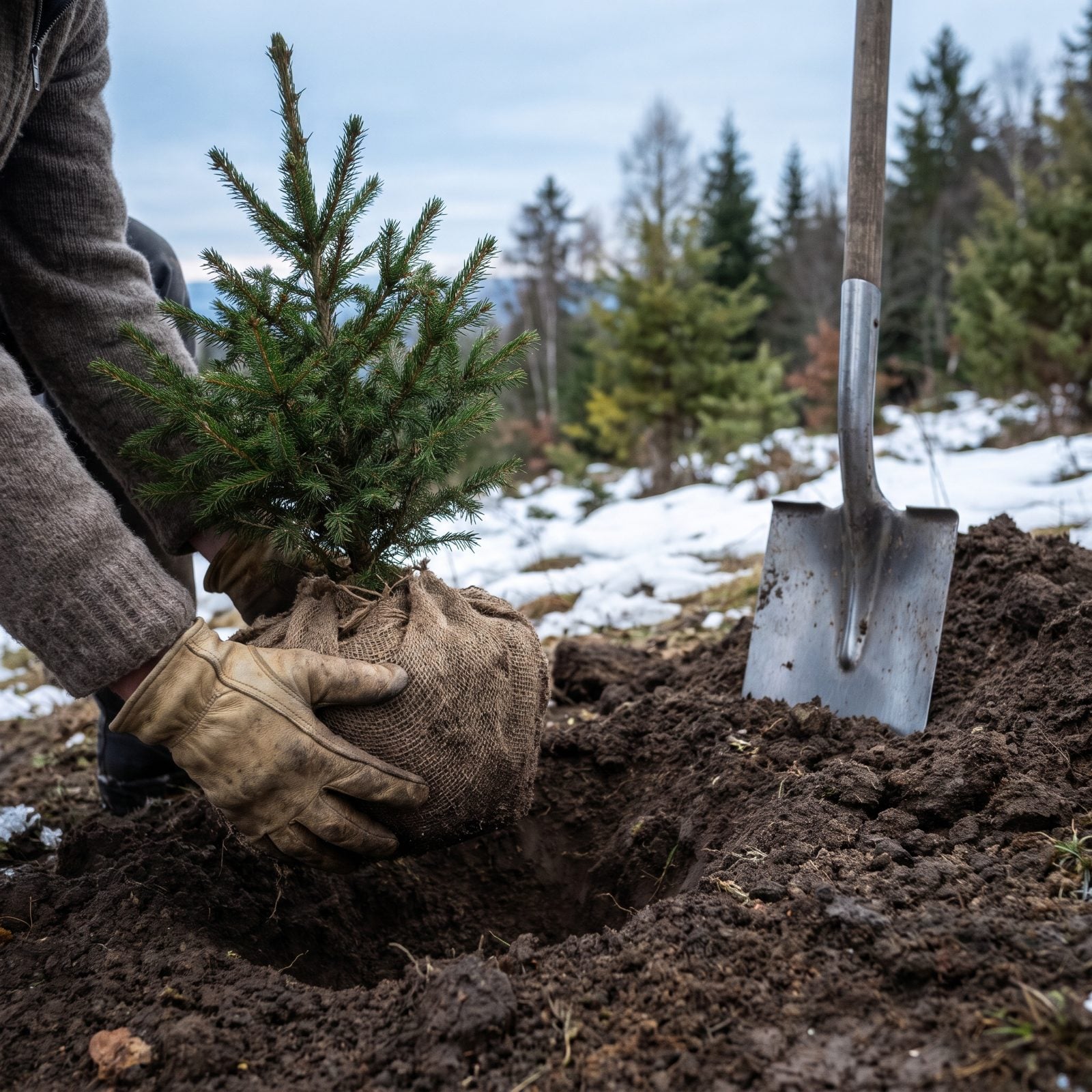
That cheerful little fir was probably grown for a cold climate. Ship it to a hot, humid yard and it sulks, then dies.
Firs, spruces, and most true Christmas-tree conifers are northern species. They want cold winters and well-drained soil. Plant a Fraser fir in heavy clay down South and you’ll be digging it back up by August. So before you buy a live tree with planting dreams, find out what actually thrives in your zone. Sometimes the right answer is a native pine instead. Sometimes it’s no planting at all.
29. Myth: A Cut Christmas Tree Stump Will Grow a Replacement Tree
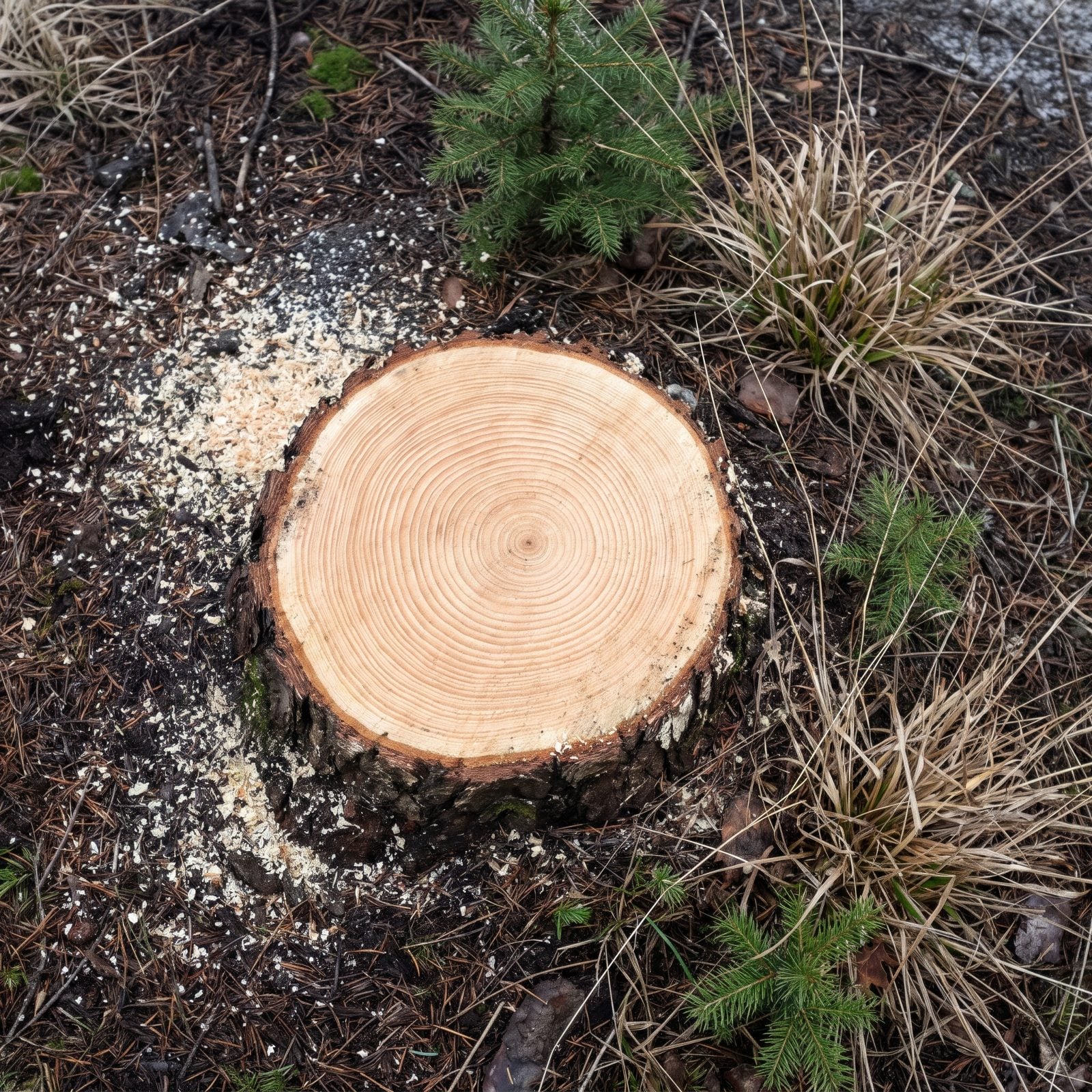
Firs and pines don’t resprout from a cut stump. That’s hardwood behavior, not conifer behavior. A maple or an oak will throw up shoots from the base all day long, while a fir stump just sits there and slowly rots.
Which is exactly why farms replant by hand every spring. The new tree comes from a seedling someone pressed into the dirt, not from last year’s stump. Cut your own and leave a tall stub hoping it’ll regrow, and you’ll be staring at the same grey post for years.
28. Myth: A Cut Christmas Tree No Longer Takes Up Water
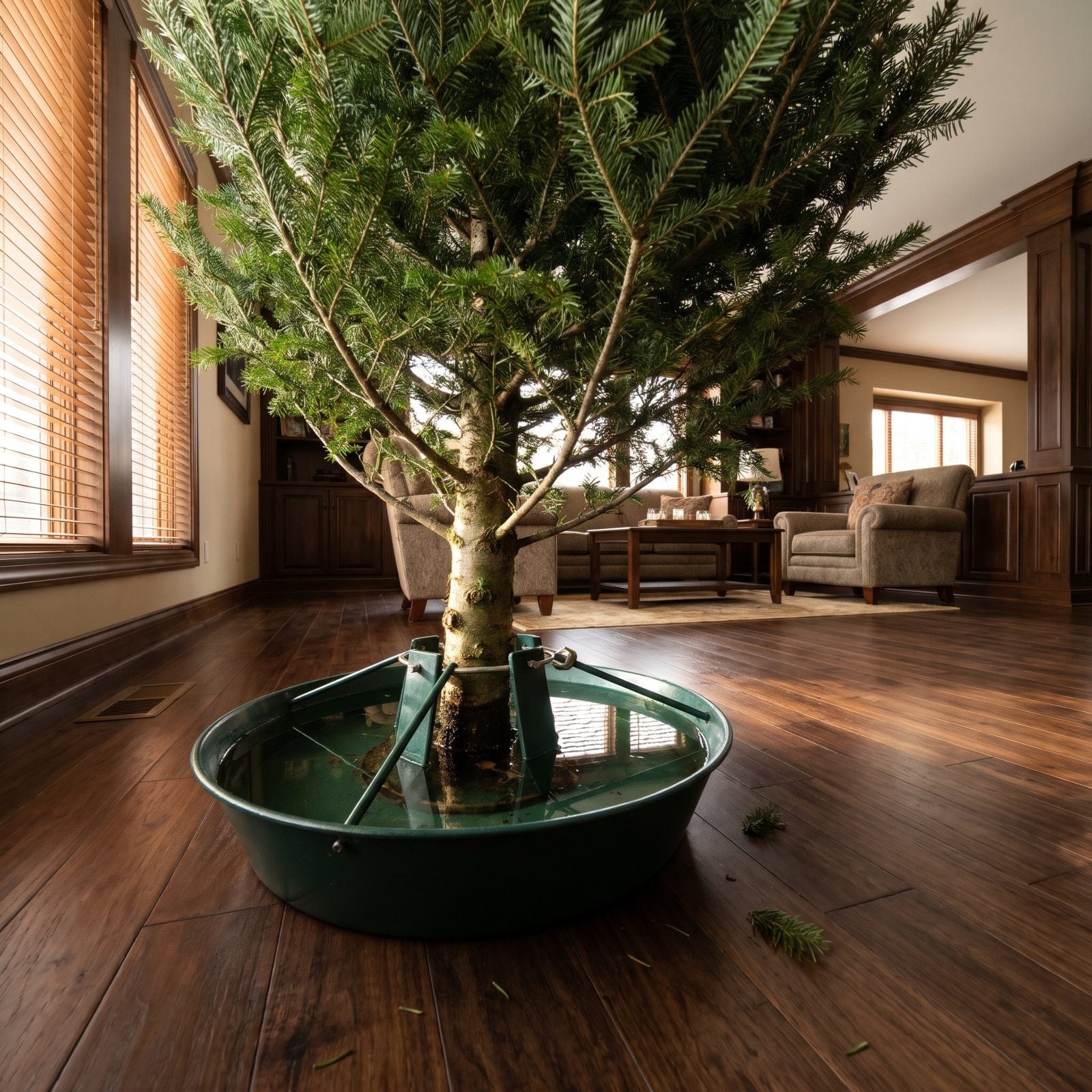
People assume a cut tree is dead and done drinking. Not true, and getting it wrong is how trees dry to tinder.
A fresh tree pulls water for weeks through the same tubes it used when it was rooted. A good stand on day one can take up a startling amount — a quart or more in those first hours. The drinking slows over time, but it never fully stops. Keep that reservoir topped and the needles stay soft and green. Let it run low and the trunk seals shut.
A cut tree is still thirsty. It just can’t tell you.
27. Myth: Filling the Stand Once, or Letting It Run Dry, Does No Lasting Harm
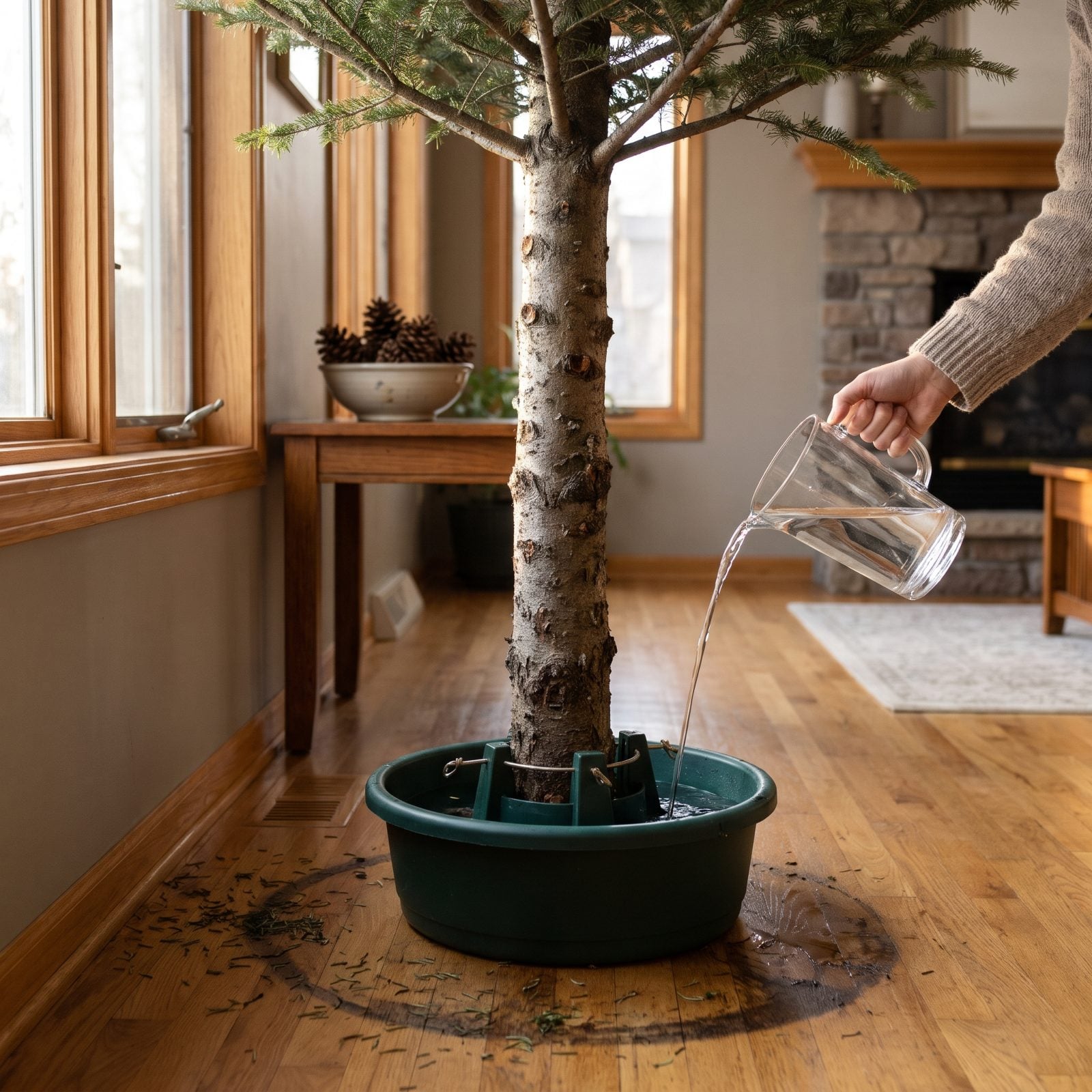
This is the mistake that ends trees early, and it’s completely avoidable.
Let the water drop below the cut end even once and the trunk starts to glaze over with sap and resin. After that, the tree can’t drink again no matter how much you pour in later. You’ll see it happen — needles go brittle, the tree browns fast, and the floor fills with shed.
So check it daily. Morning coffee, glance at the stand, top it off. A heated house in December is dry as a desert, and those first few days drink hard. Miss one and you may have sealed the deal without knowing it.
26. Myth: Drilling, Angling, Splitting, or Stripping the Trunk Improves Water Uptake
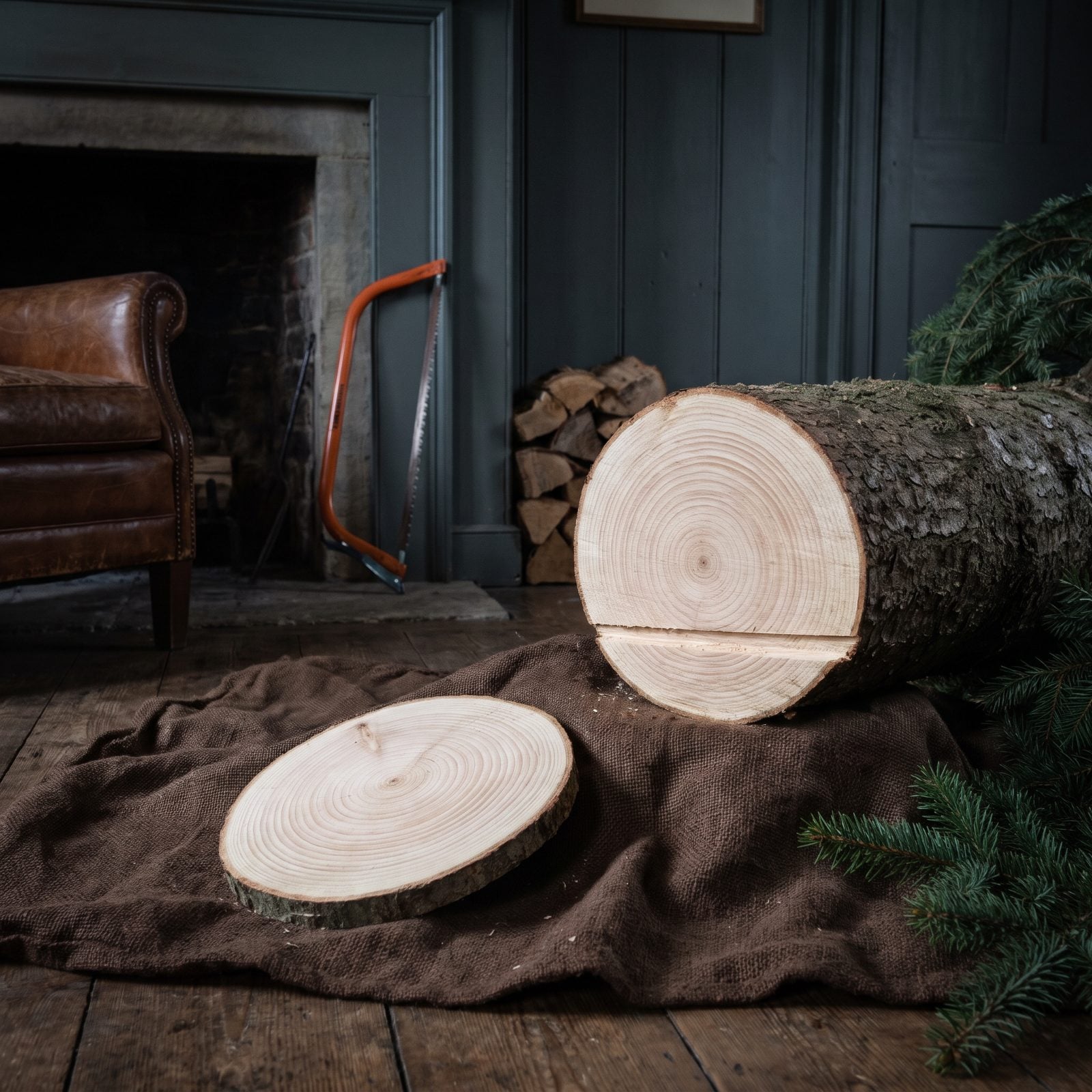
Drill a hole up the trunk, cut the base at an angle, split it, peel off the bark near the bottom — every one of these is either useless or actively harmful, and the tree doesn’t drink a drop better for the trouble.
Water climbs through the outer sapwood just under the bark. Strip that away and you’ve wrecked the exact tissue doing the work. Angle the cut and you shrink the surface sitting in water, sometimes tipping the trunk clean off the reservoir floor. Drilling a hole? It does nothing a straight cut doesn’t already do.
What works is dull and reliable. A fresh flat cut taking a half inch off the base right before it goes in the stand, then plain water kept topped. No tricks. The tree was built for this long before you came along.
In his cut-tree care checklist, a professor of ornamental horticulture states plainly: “Drilling a hole in the base of the trunk does not improve water uptake.”
25. Misting the Needles Won’t Save a Tree That’s Starving at the Trunk
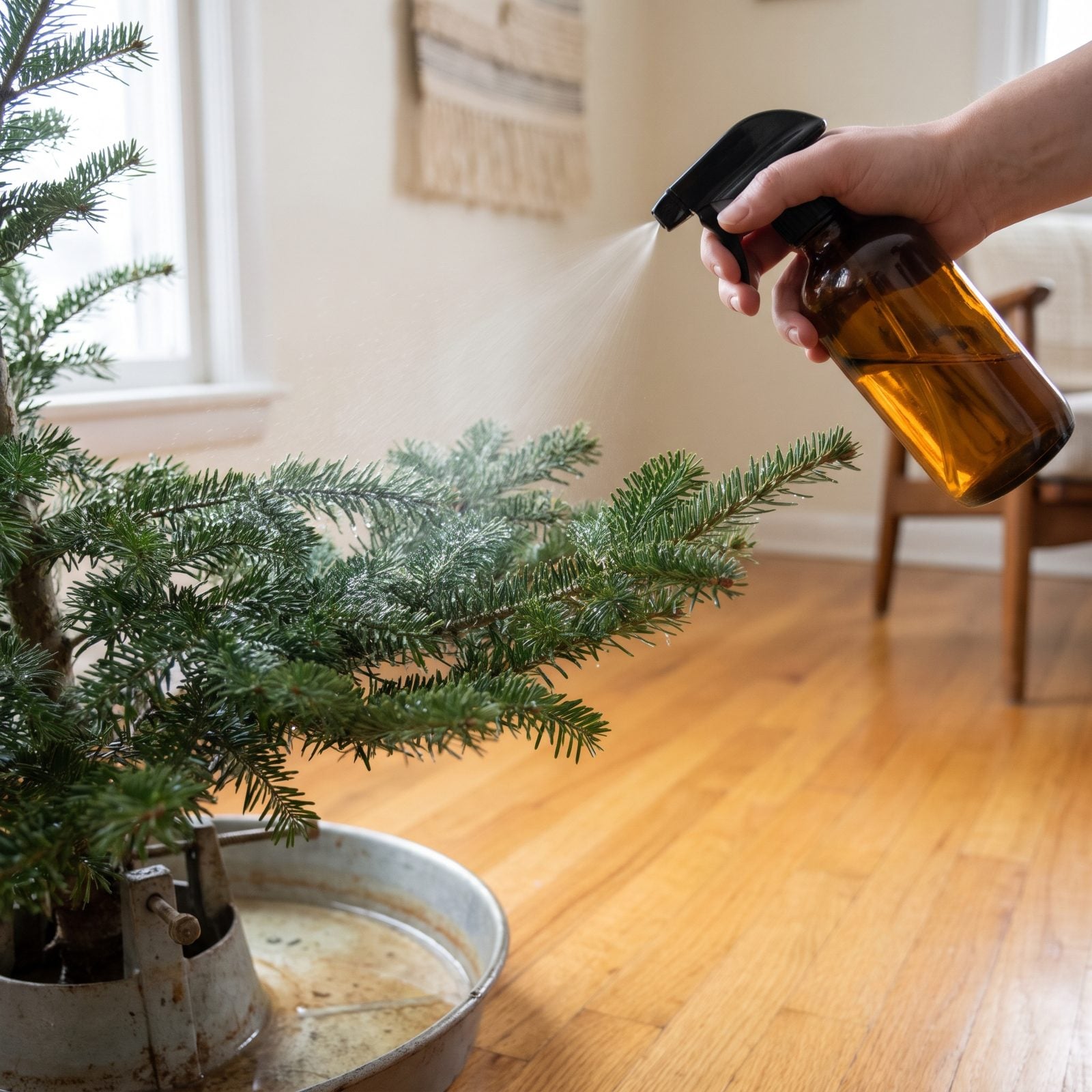
Needles don’t drink. A cut conifer takes up water through the fresh wound at the base of the trunk, pulls it up the stem, and pushes it out to the tips, so spraying the foliage does almost nothing for the tree’s actual supply. The droplets bead up on the waxy surface and evaporate.
I get why it feels productive. Misting is easy, and the stand is awkward to reach once the tree is up and loaded with lights. But the only water that keeps a tree fresh is the water in the stand. Check the reservoir daily — especially that first week, when a six-foot tree can pull a gallon or more.
24. A Well-Watered Fresh Tree Is Not a Bonfire Waiting to Happen
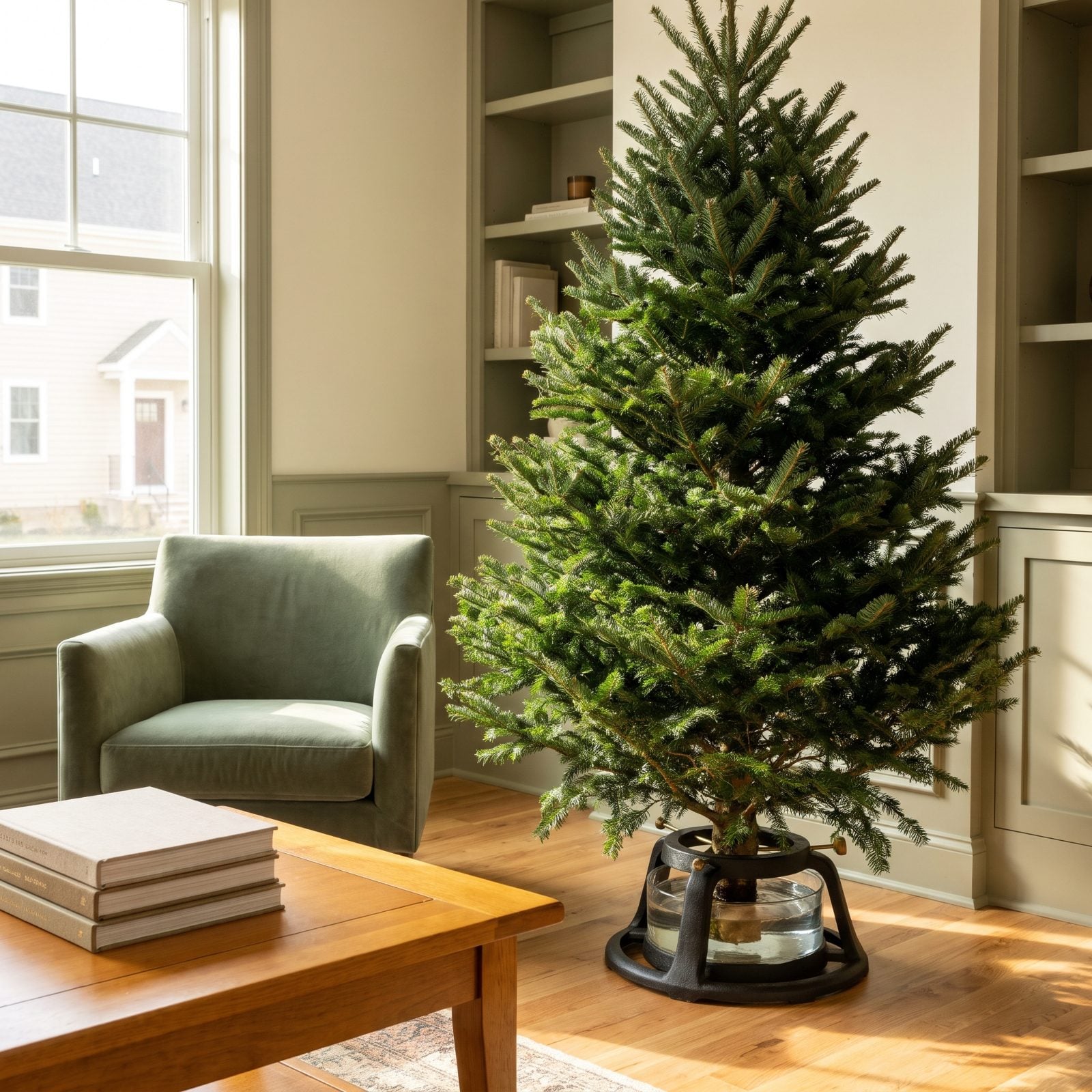
A hydrated fresh tree is hard to ignite. Green needles full of moisture resist flame the way a wet log resists a match. The fire-hazard reputation real trees carry comes almost entirely from dried-out ones — trees that sat too long, never got watered, or stood baking next to a heat source for three weeks.
The danger isn’t the species. It’s the moisture content. A fresh tree kept in water stays well below the point where it goes up fast. Let that same tree dry to brittle, though, and it turns genuinely dangerous in seconds.
23. LED Lights Run Cool, But They Don’t Cancel Fire Safety
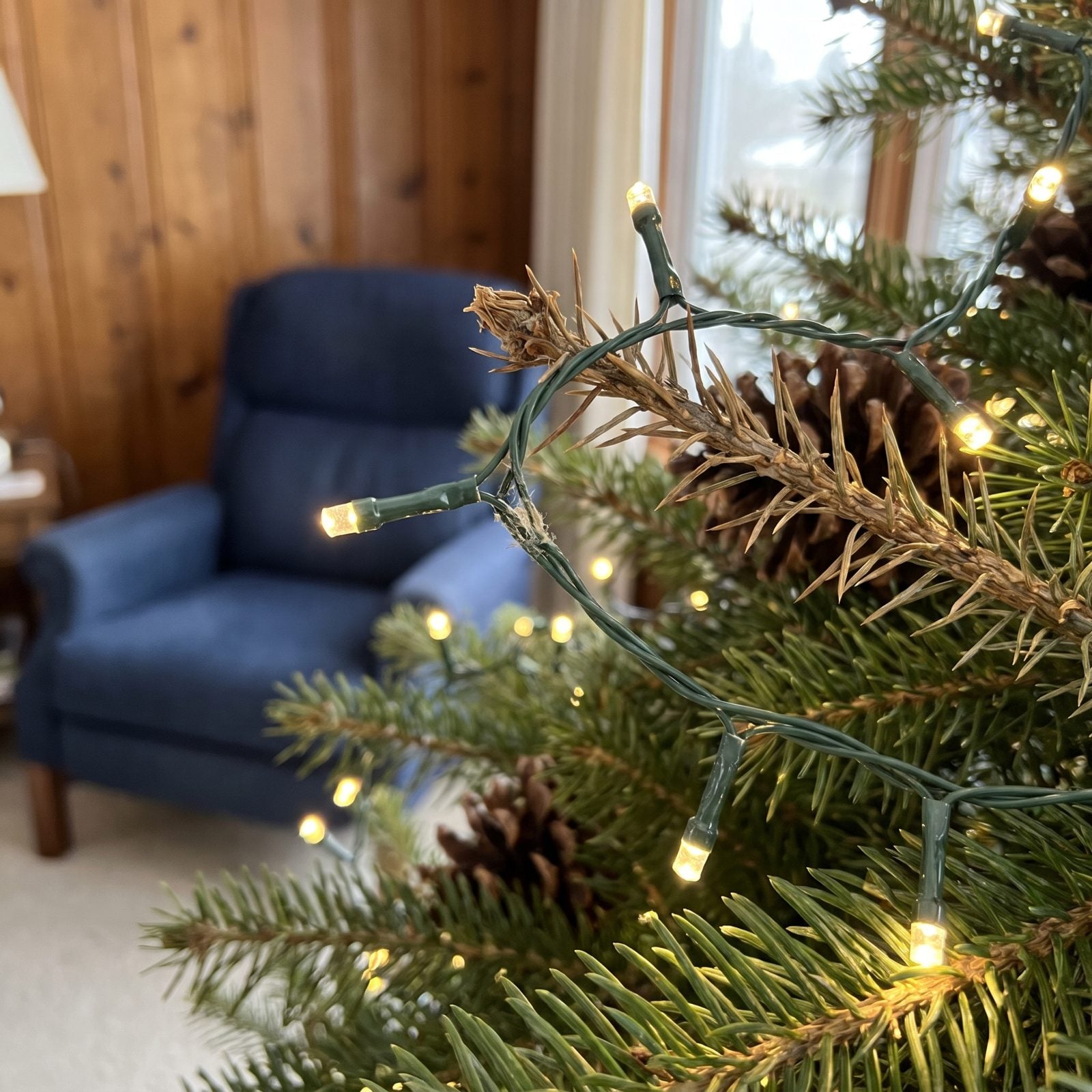
LEDs give off almost no heat compared to the old incandescent bulbs, and that’s a real improvement. But the bulb was never the only way a tree catches fire. Frayed wires, cracked insulation, overloaded outlets, a space heater running three feet away — none of them care what kind of light you strung up.
Switching to LEDs removes one risk. It doesn’t excuse you from unplugging the lights overnight, keeping cords off the carpet, and keeping the tree watered. A cool bulb on a bone-dry tree beside a faulty extension cord is still a bad night.
22. Fire-Retardant Spray Slows a Tree Down, It Doesn’t Make It Fireproof
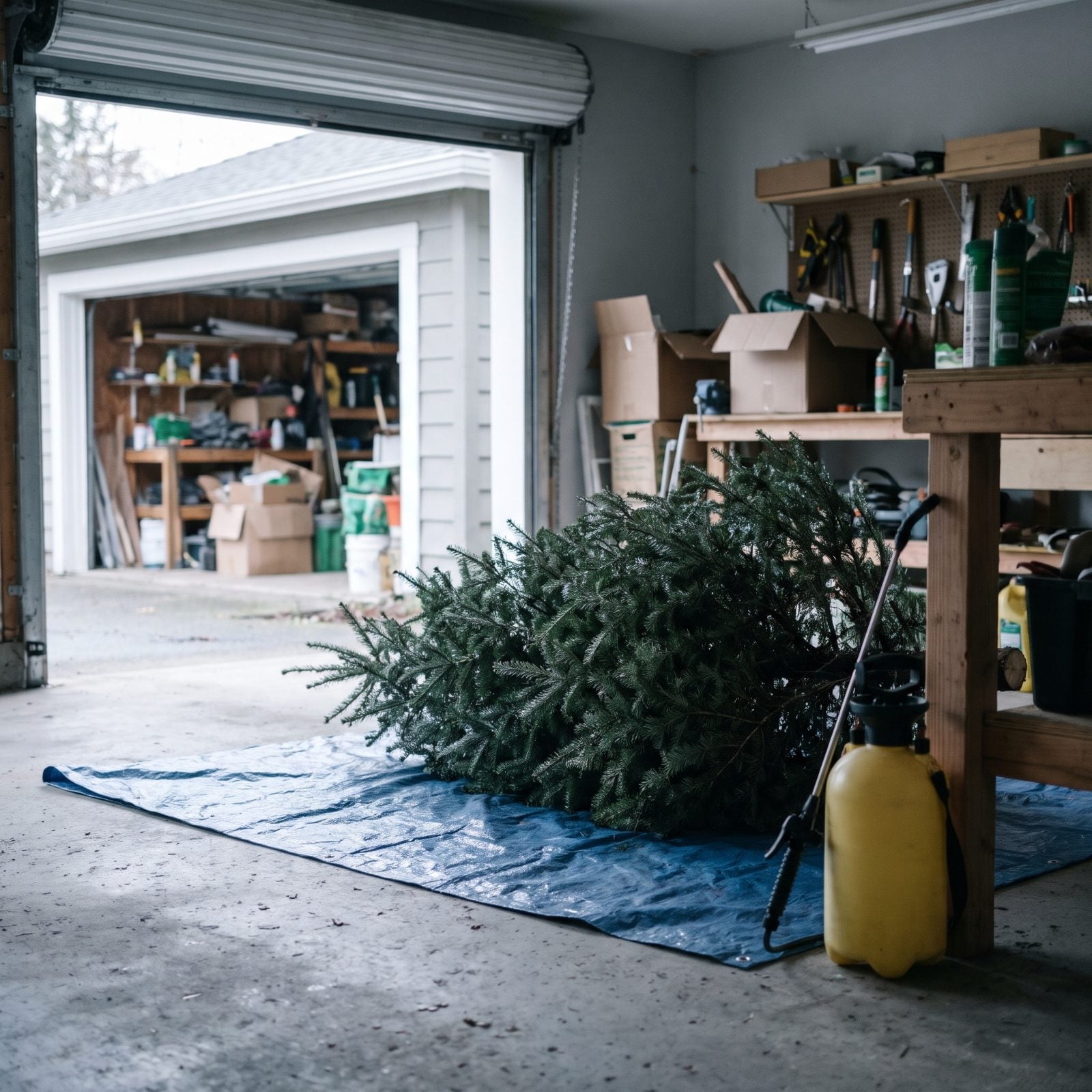
“Fireproof” is the word that gets people in trouble. Fire-retardant sprays can raise a tree’s ignition point and slow the spread of flame, which is useful. It is not the same as fireproof, and the product label almost never uses that word — even when the salesperson does.
A sprayed tree still burns if you give it enough heat and enough time. Treat the spray as one more layer, not a license to skip watering or park the tree next to the wood stove. Old rule still holds: water topped off, heat kept away. The spray is insurance, not armor.
21. Watered or Not, Keep the Tree Away From the Working Fireplace
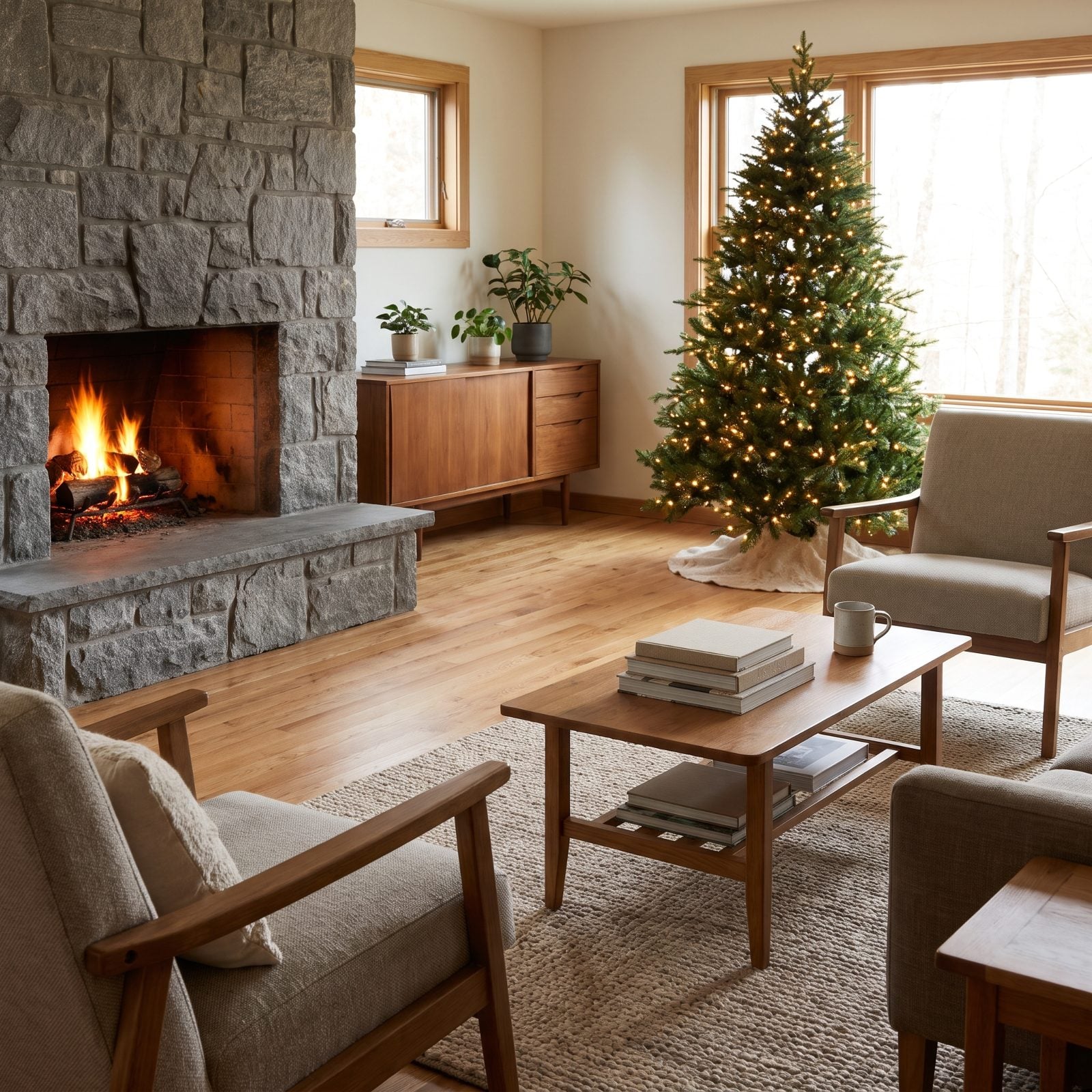
A full reservoir buys you margin against accidents and dry air. It does not make a tree indifferent to a live flame four feet away. Radiant heat from a working fireplace dries out the branches facing it faster than the stand can replace the moisture, and a popping ember only needs one unlucky bounce.
Give the tree real distance from any open flame. Several feet, not several inches. Near a cold hearth it’s fine. Beside a roaring fire, it’s a slow bet you don’t need to make.
20. Heat Vents and Toasty Rooms Quietly Kill a Tree Early
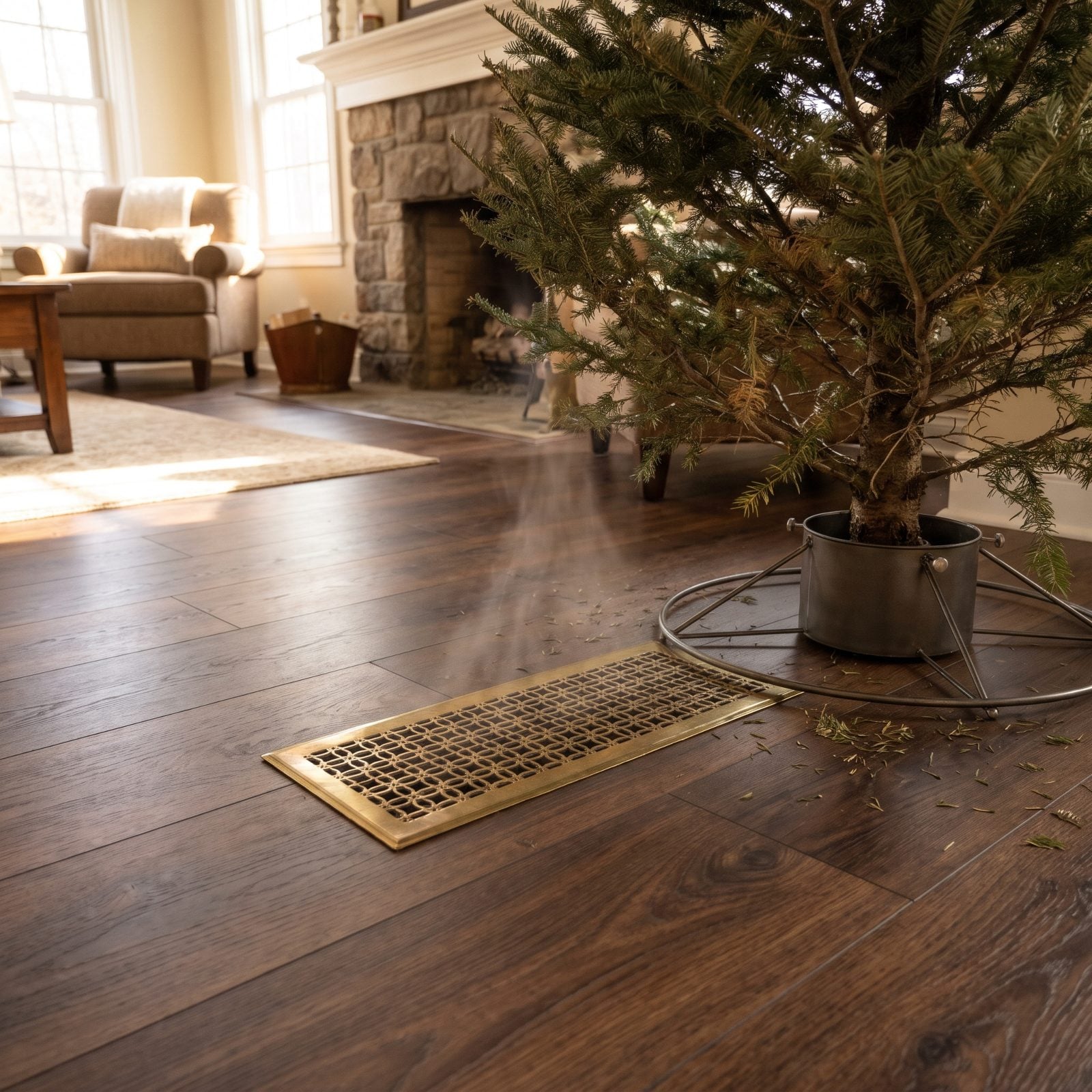
People blame the species when a tree sheds needles by the second week. Usually the real culprit is the forced-air vent blowing warm, dry air across the lower branches — or a room kept at 72 degrees around the clock.
Heat pulls moisture out of needles faster than the trunk can pump it back in. You’ll watch it happen: the tree drinks shockingly fast, then stops, then browns. Close the nearest vent, keep the room on the cooler side, and the same tree can hold its needles comfortably into January.
19. Never Thaw a Frozen Tree Next to a Heater
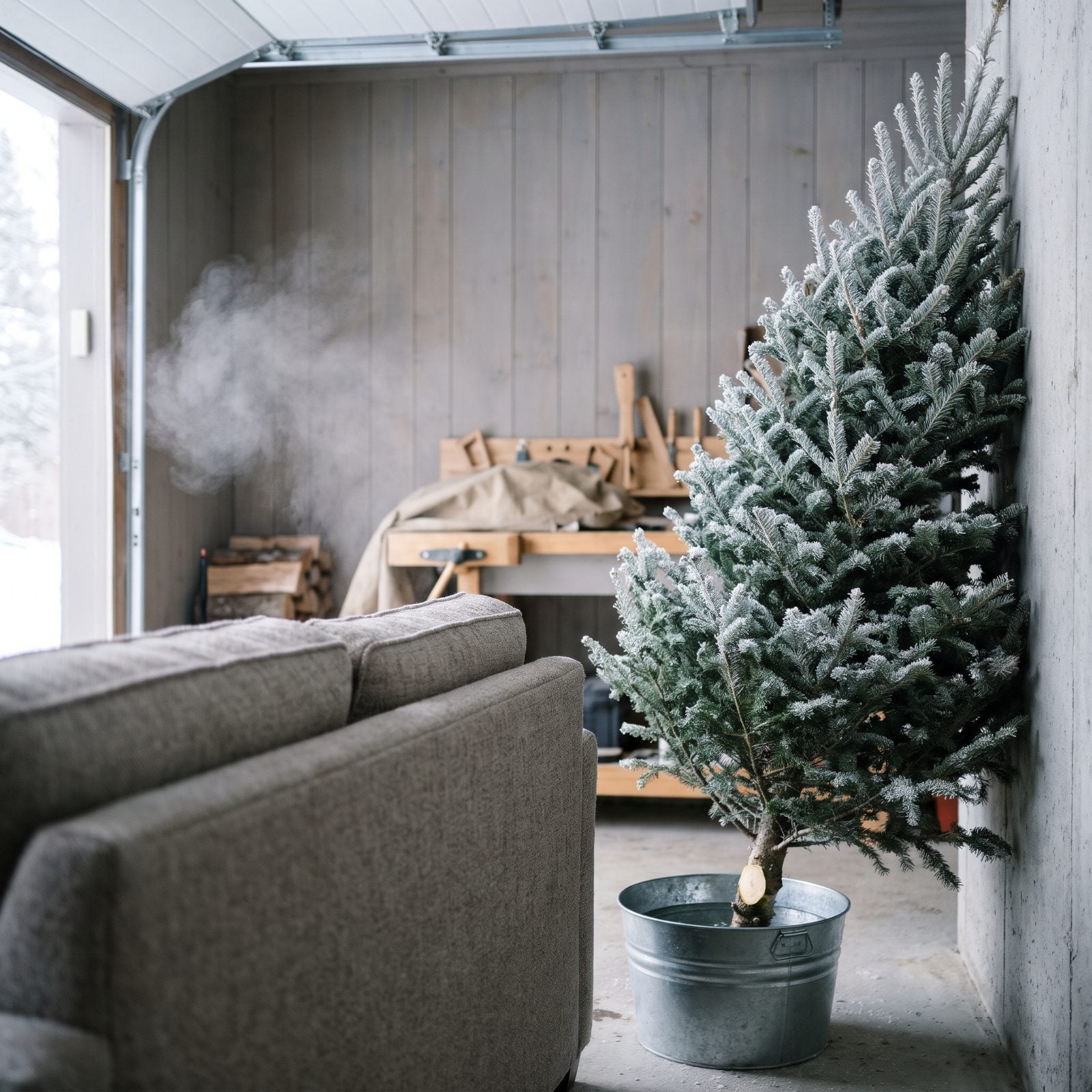
Bring a tree home in hard-frozen country and it’s tempting to stand it by the furnace to speed things along. Don’t. A rapid temperature swing shocks a tree, splits the needle tissue, and can wreck the trunk’s ability to take up water later.
Let a frozen tree thaw slowly in a cool garage or an enclosed porch, ideally in a bucket of water, over a day or so before it comes into the warm house. Slow is the whole point. Rush the thaw and you’ve traded frost for a tree that won’t drink.
18. The Bounce Test Fools You More Often Than People Admit
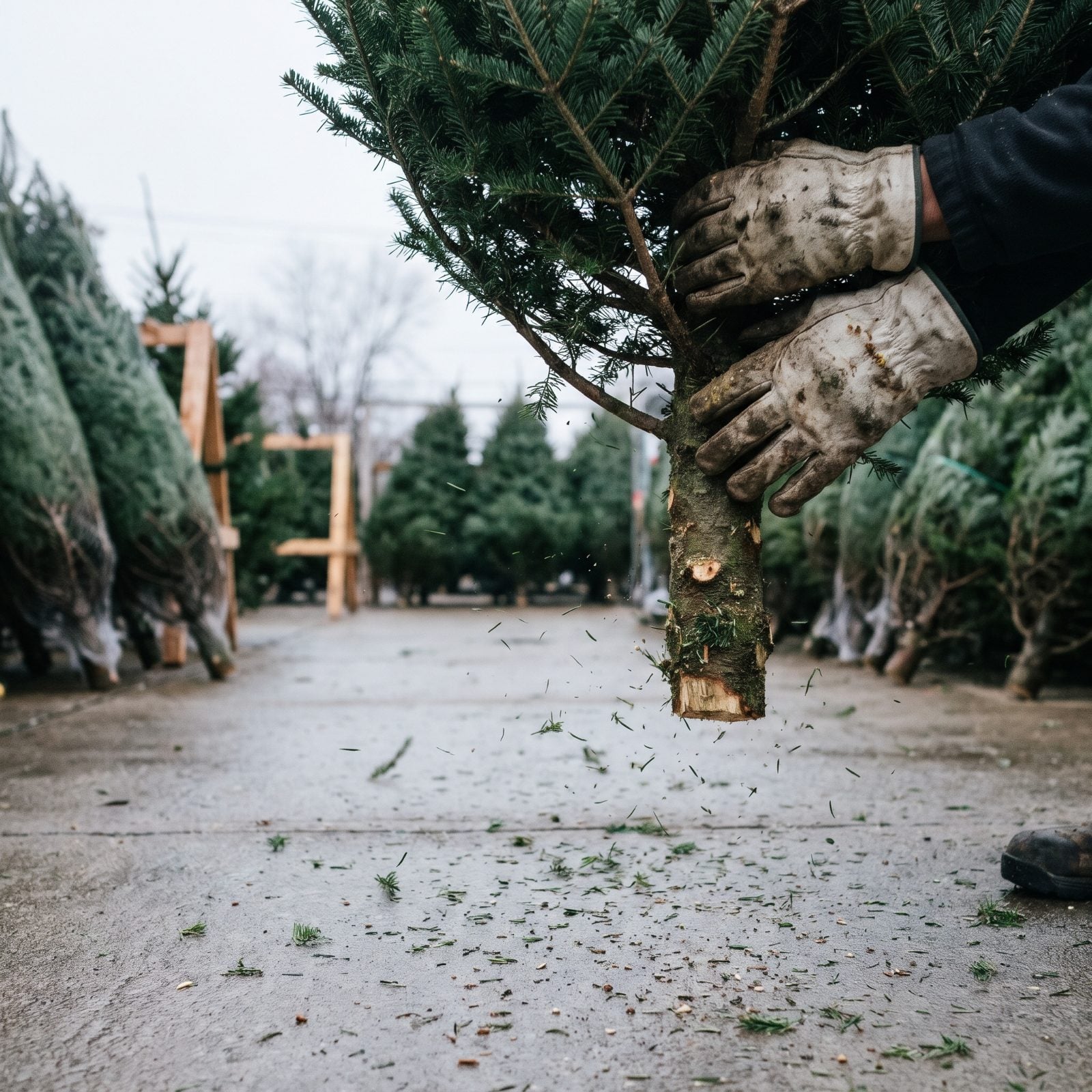
You’ve seen the move at every lot. Lift the tree, thump the trunk on the pavement, watch the needles. A fresh tree drops a few, a dry one rains them down. It’s a fine quick check, and it catches a truly dead tree.
But the bounce test lies both ways. A recently cut tree roughed up in shipping sheds old interior needles that mean nothing, and a tree drier than it looks can pass if you bounce it gently. Use it as a first pass. Then pull a branch through your hand and bend a few needles before you decide.
17. The Needle-Pull Test Doesn’t Read the Same on Every Species
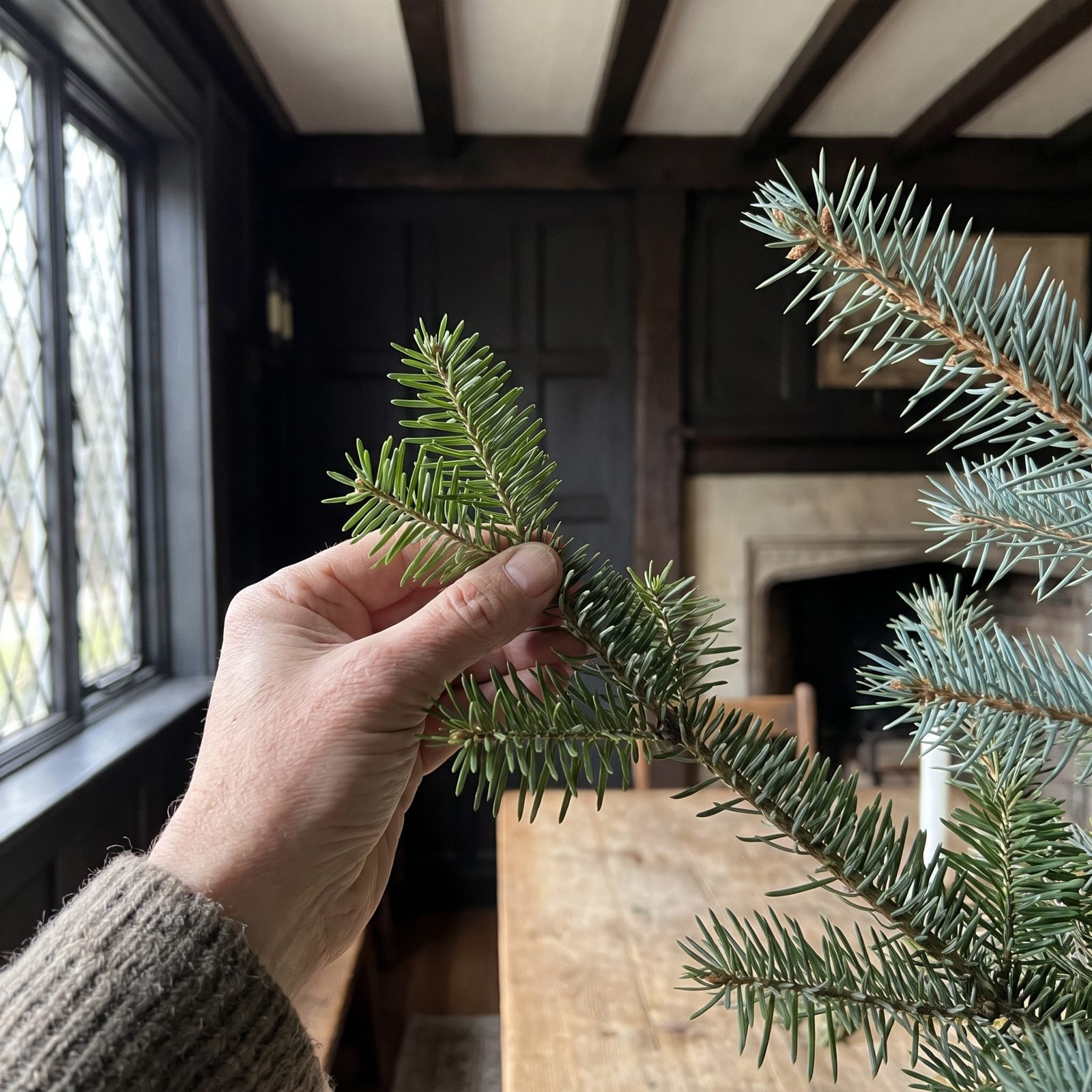
The classic freshness check: slide your fingers down a branch and see how many needles come off. Simple, and genuinely useful. The trap is assuming the result reads identically across every tree on the lot.
A Fraser or balsam fir holds its needles beautifully and bends soft. A spruce drops needles far more readily even when perfectly fresh, and those needles are sharp enough to remind you of it. A fresh pine feels different again. Judge a spruce by fir standards and you’ll walk right past a good tree. Learn what fresh feels like for the species you’re buying, then bend a needle — a fresh one snaps crisp instead of folding limp.
16. Myth 1: The Greenest Tree on the Lot Is the Freshest
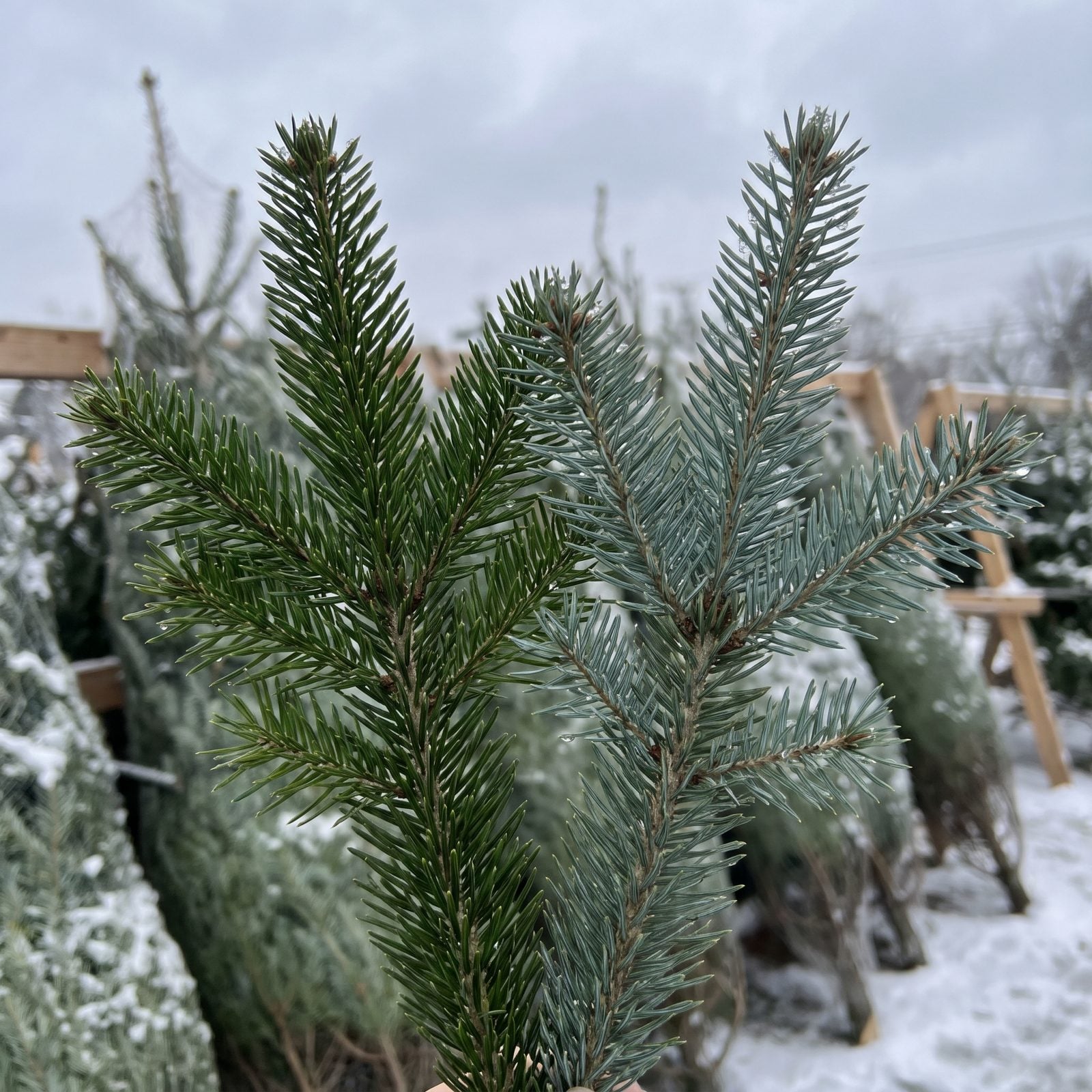
Color lies. A tree can glow deep green and still be weeks dead, because growers sometimes spray a colorant on species that fade, and a freshly cut tree of a naturally bluer variety can look duller than a tired one sitting right beside it. Green is no guarantee of freshness.
The needles tell the truth. Grab an inner branch and run your hand along it. Fresh needles stay put. If they come off in your hand or rain down on your boots, walk away, no matter how rich the color looks.
15. Myth 2: Sticky Sap Means It Was Cut This Morning
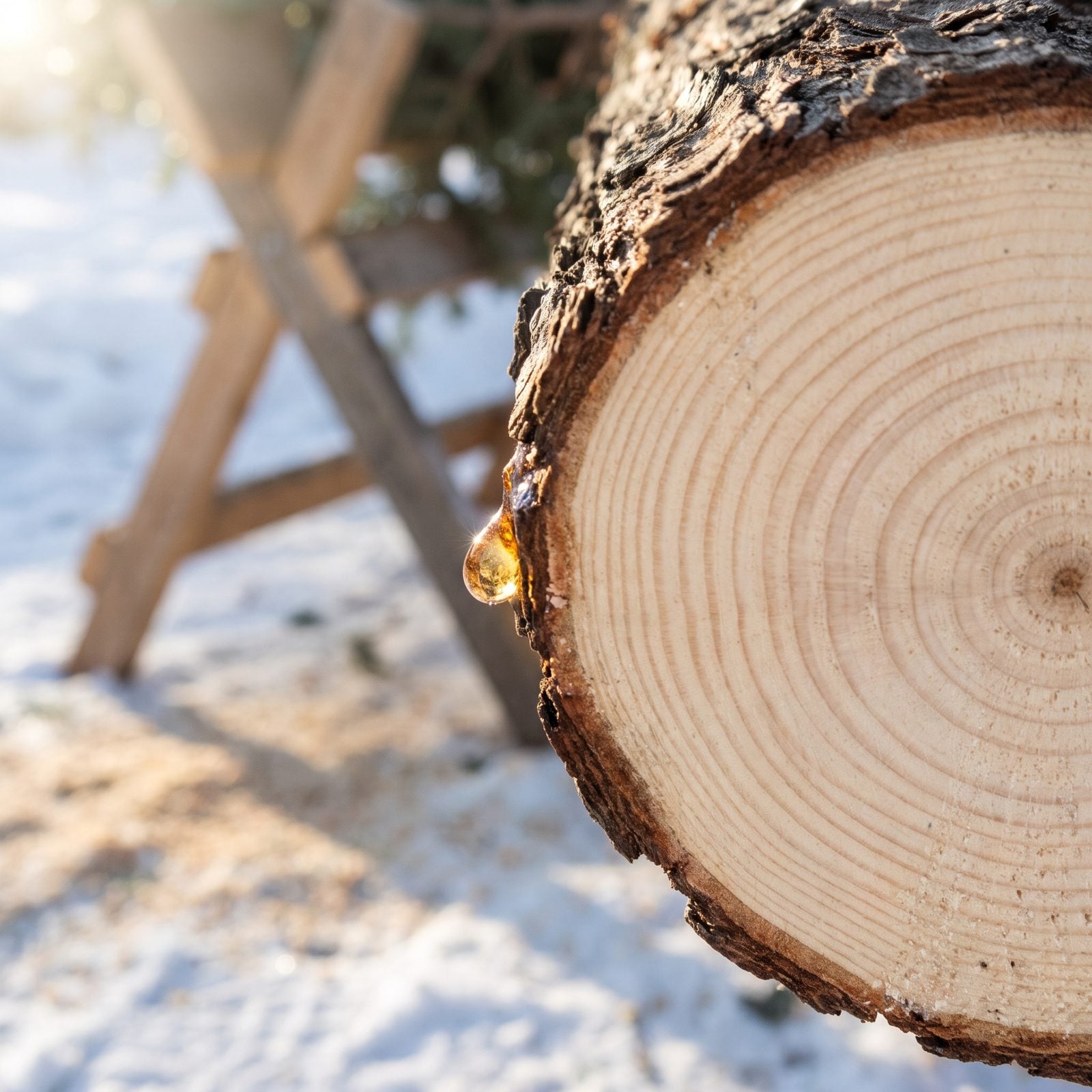
Sap on your hands feels like proof. It isn’t. Conifers hold resin in their wood for a long stretch after cutting, so a tree harvested in November can still weep a little at the base once it’s in your living room. Stickiness tells you the species runs resinous. It says nothing about when the saw touched it.
Freshness lives in the cut face. A pale, slightly moist cut end is a good sign. A dark, dried-out, almost gray base means the tree has been sitting and already started sealing over its own wound, which makes it drink less water once you get it home.
14. Myth 3: All Christmas Trees Hold Their Needles About the Same
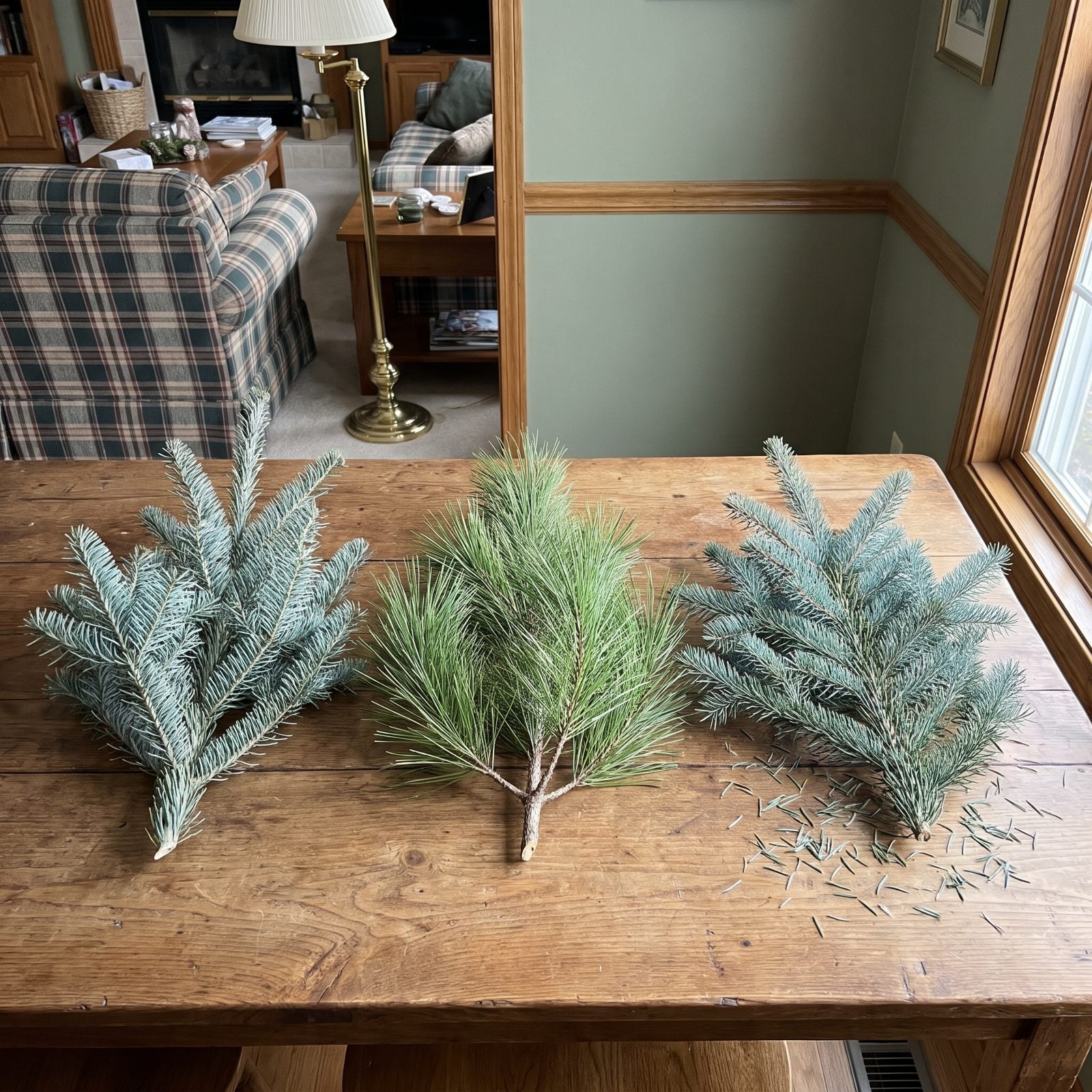
Needle retention is the single biggest difference between species, and almost nobody checks it at purchase.
Firs are the champions, with a Fraser or balsam holding needles well into January on decent water. Scotch pine is stubborn too, clinging to its needles even bone-dry, which is half the reason it caught on. Then there are the spruces, the problem children. A white spruce or Norway spruce will carpet your floor by New Year’s no matter how careful you are.
13. Myth 4: It’s a Christmas Tree, So It Must Be a Pine
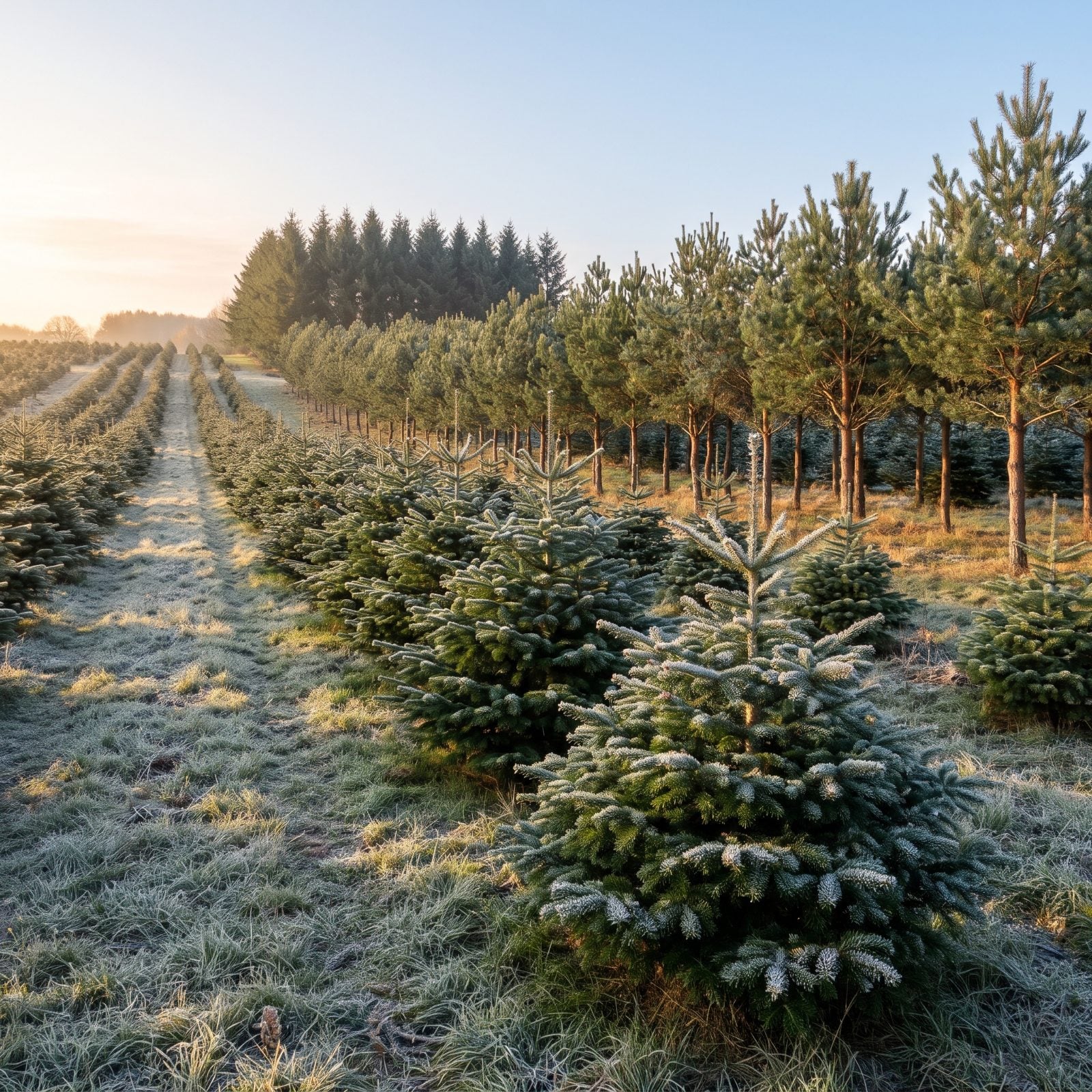
People call every Christmas tree a pine the way they call every soda a Coke. Most of them aren’t pines at all.
The big three groups sold in North America are firs, spruces, and pines, and they’re genuinely different trees. Firs like Fraser and Douglas-fir run the market now. True pines, the ones with long needles bundled in clusters of two or three, are just one slice of the lot. Call a fir a pine in front of a grower and watch the eyebrow go up.
12. Myth 5: A Douglas-Fir Is Just Another True Fir
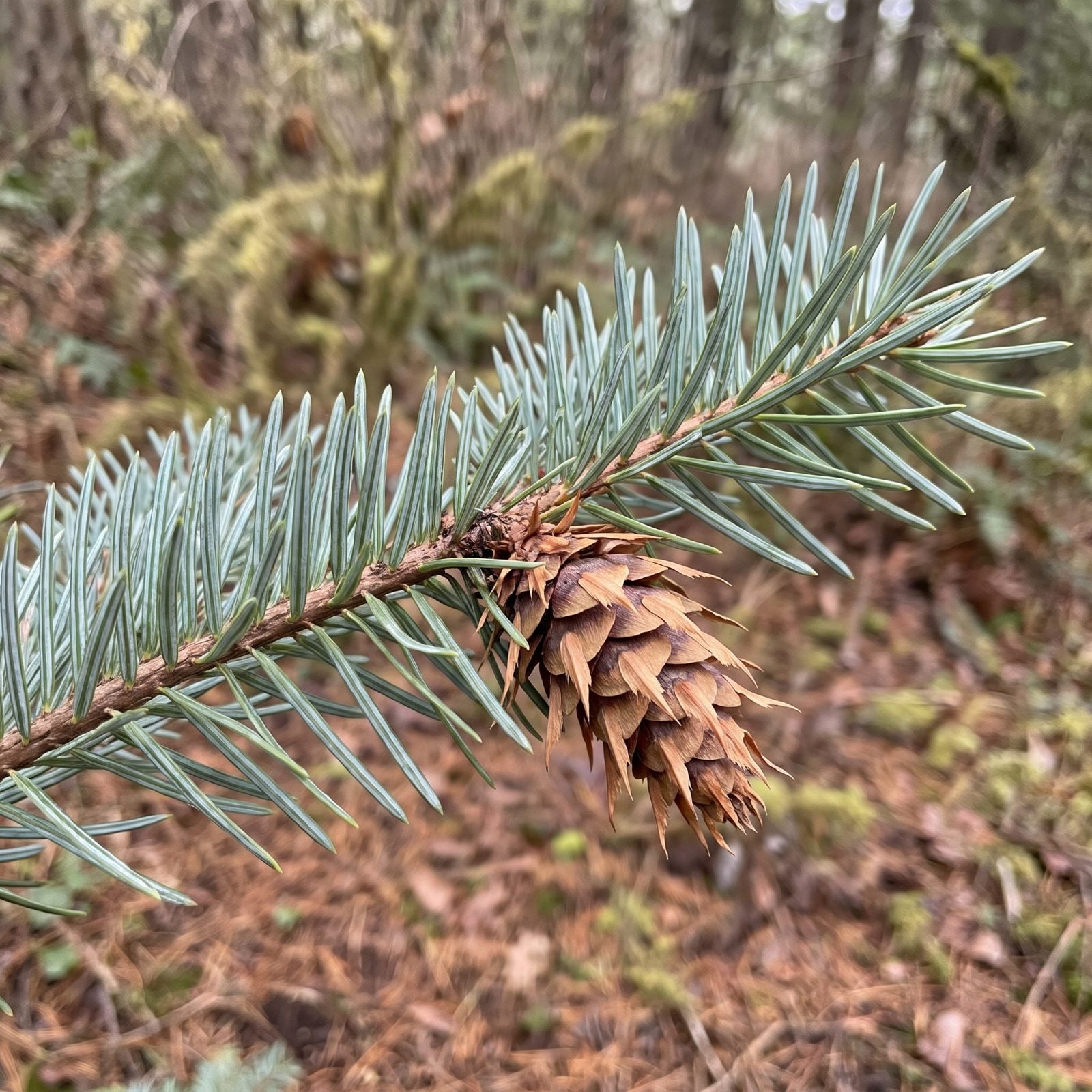
This one trips up even careful shoppers. Douglas-fir has fir right there in the name, but it isn’t a true fir at all. It sits in its own genus, which is why botanists write it with a hyphen: Douglas-fir, not Douglas fir.
Look at the cone and the whole thing clears up. True firs carry cones that stand upright and crumble apart on the branch. A Douglas-fir drops whole cones with little three-pointed bracts poking out, the ones that look like the back legs and tail of a mouse diving in headfirst. Once you’ve spotted it, you can’t unsee it.
11. Myth 6: Balsam Fir and Fraser Fir Are Basically the Same Tree
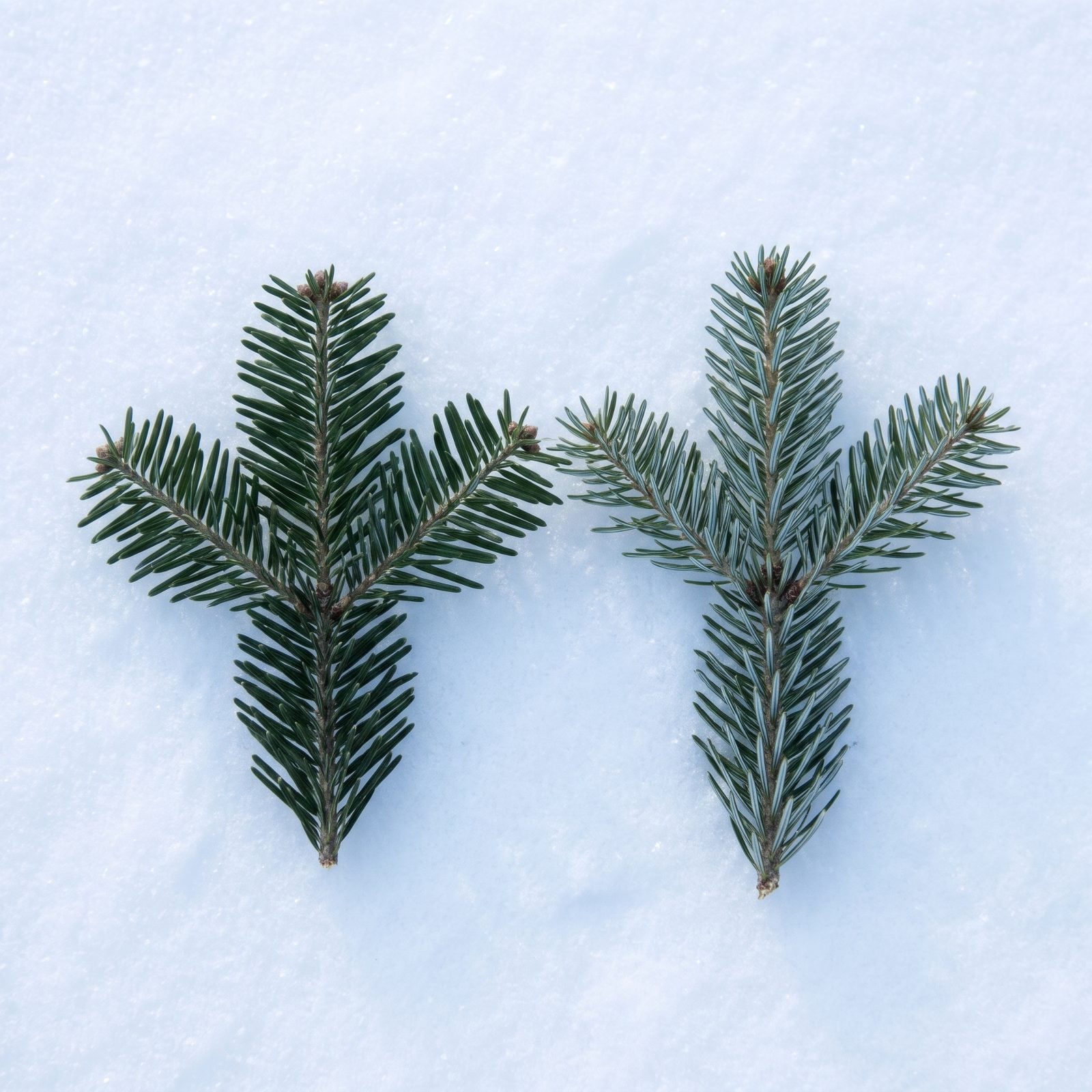
They’re cousins, not twins. Both are prized, both smell like Christmas, and both come from the eastern side of the continent. But they’re different trees with different habits.
- Fraser fir needles wear a frosty silver-white stripe underneath and curve slightly upward, giving the tree that two-tone shimmer.
- Balsam fir needles lie flatter and darker, and the tree carries a stronger, more old-fashioned Christmas scent.
- Fraser ships better and holds needles longer, which is why it travels across the country while balsam often stays regional.
If fragrance is your whole reason for buying real, balsam usually wins. Want needles still hanging on when you finally haul it out to the curb? Lean Fraser.
10. Myth 7: A Flat or Bare Side Means the Tree Is Sick
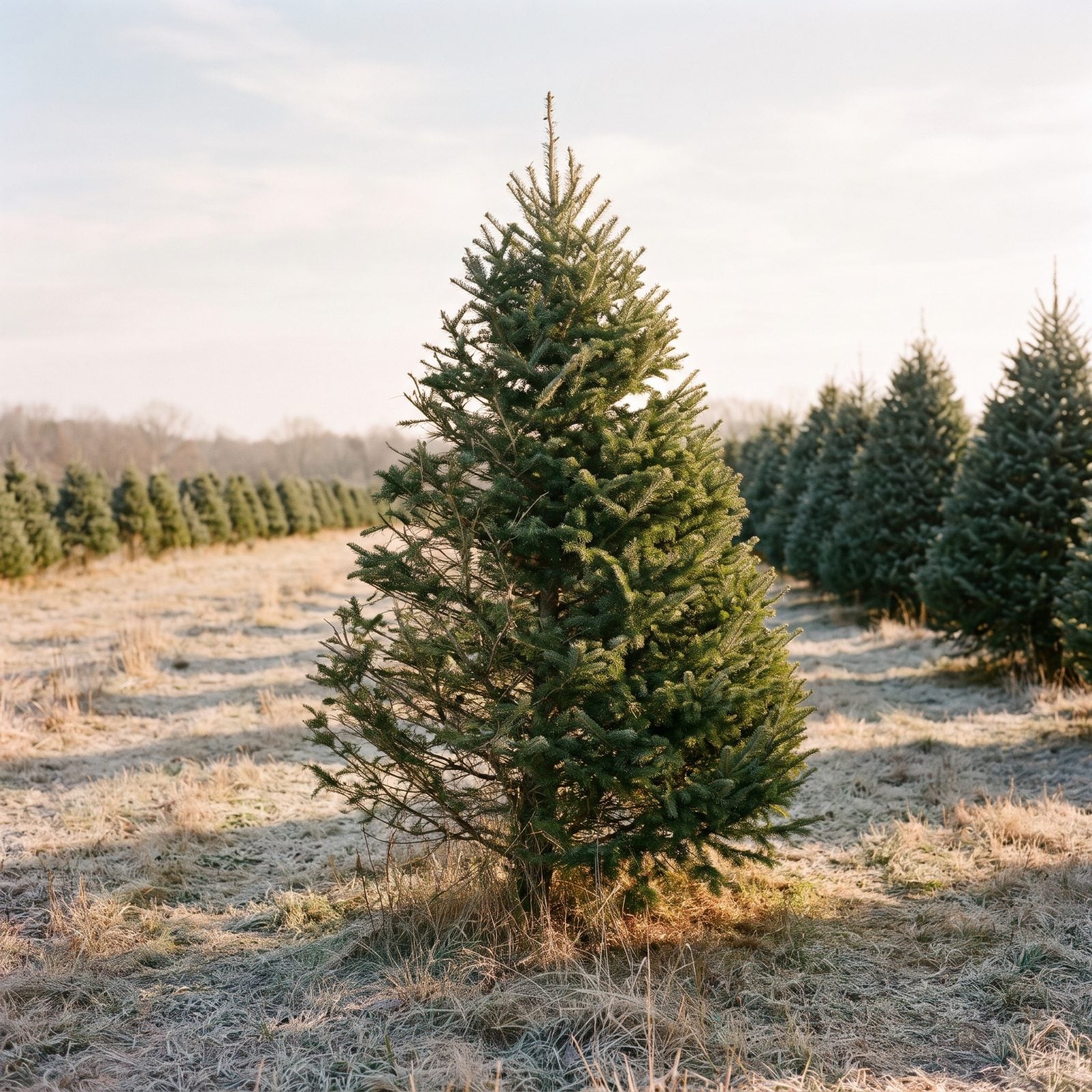
A bare side almost never means a sick tree. It usually means that side grew up exposed.
On a plantation, trees stand close together in rows, and a tree at the edge has one side facing open ground. That side takes the brunt of wind and cold and fills in thinner. That’s exposure, not disease. Growers count on you turning the sparse side toward the wall, which is exactly what the lot assumes when it prices the thing.
9. Myth 8: You Can Read a Tree’s Exact Age Off Its Height
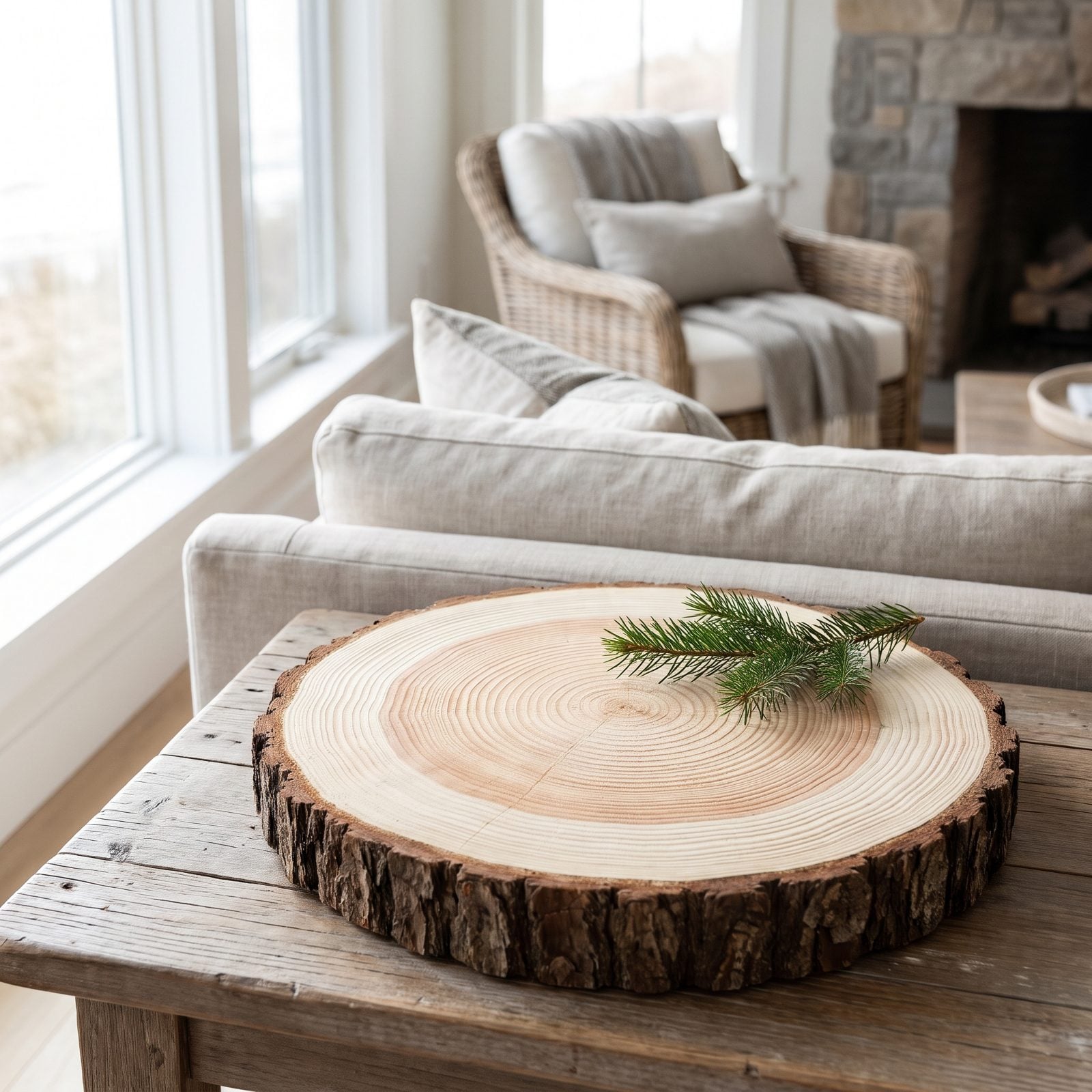
Height is a rough hint, not a birth certificate. Two trees cut the same day can be years apart in age depending on soil, water, spacing, and how hard they got pruned.
As a loose rule, a farm tree spends the better part of a decade in the ground before it reaches living-room height, and that includes a couple of years in a seedling bed before it’s even planted out. Shearing every summer keeps it dense and conical, which also slows the climb upward. So the fat, perfect six-footer might actually be older than the lanky eight-footer leaning beside it.
8. Myth 9: A Real Tree Fills Your House With Pollen
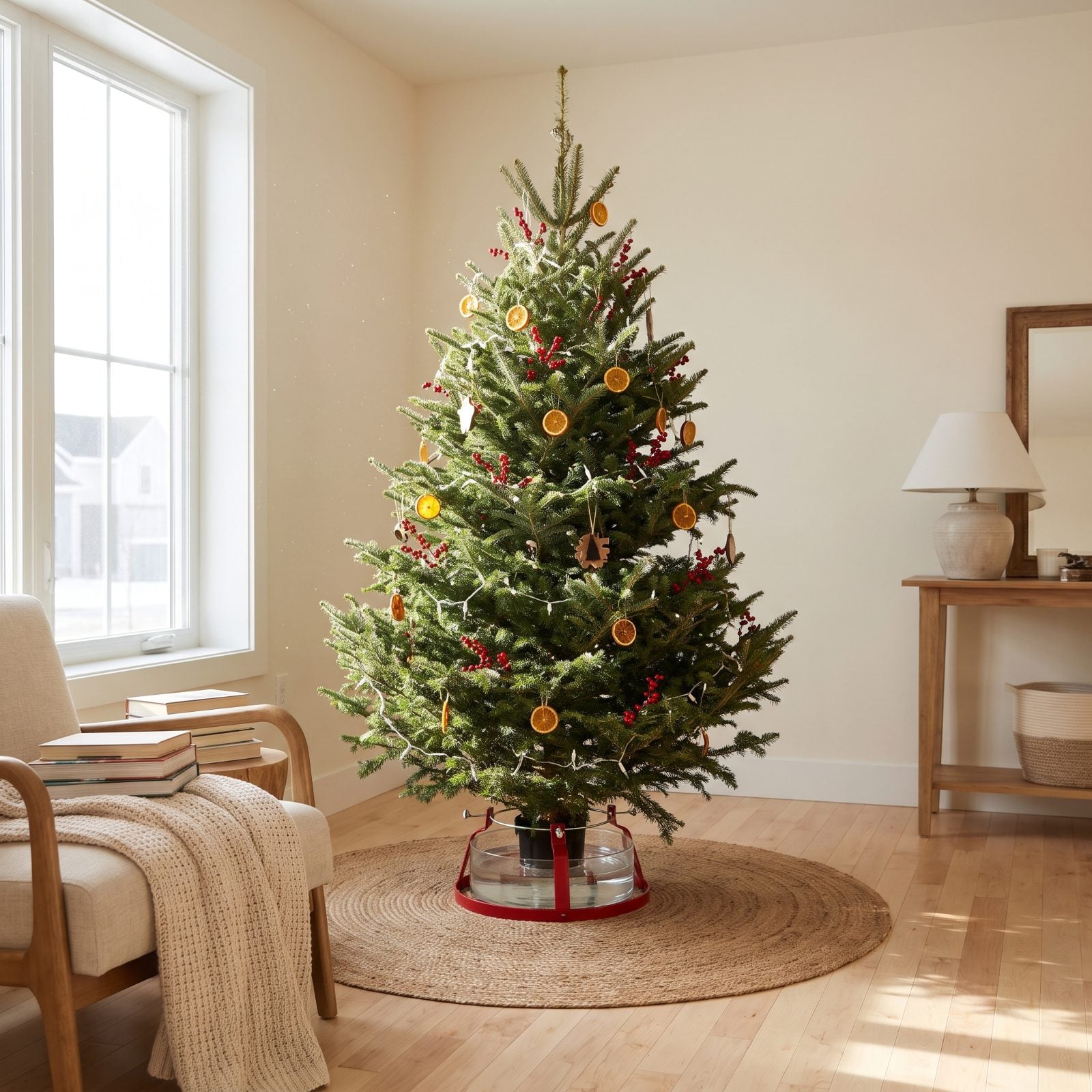
The image of a cut tree puffing clouds of pollen into your den is mostly imagination. Conifers release pollen in spring, not December, and the tree you drag home in winter isn’t making any.
What people actually react to is something else entirely: mold spores that can bloom on a tree kept warm and wet for weeks, plus whatever dust, terpene scent, or outdoor allergens hitched a ride inside on the branches. That’s an irritant question, not a pollen storm. A good shake-out before it comes through the door, and a stand kept clean, handles most of it.
7. Myth 10: Mold Is Just Part of Owning a Real Tree
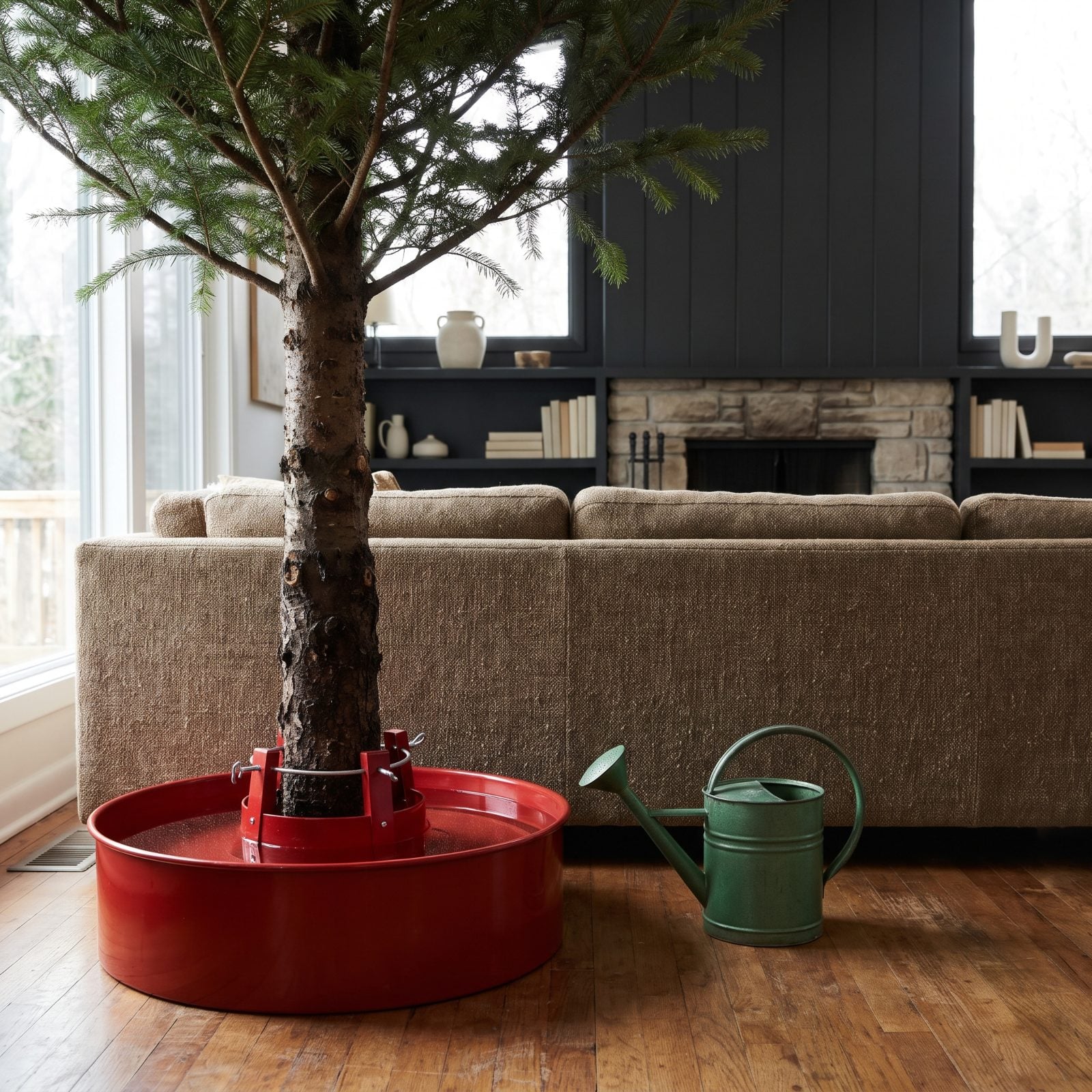
Mold isn’t a guarantee. It’s what you get from neglect and heat, and you can dodge it.
Spores move in when water sits stagnant and the room runs warm for weeks on end. Keep the stand topped off so the cut end never goes dry, change the water the moment it clouds, and if the tree has to sit beside a floor vent or within reach of the fireplace, check the water even more often. And that old advice about dosing the water with sugar, aspirin, or bleach? Skip it. Plain, clean water, kept above the cut, does the job better than any of it.
And when it’s done, don’t send it to the landfill. Most towns run a chipping program, and in plenty of places those chips end up as trail mulch in the local park. A tree that spent most of a decade growing can go right back into the ground.
6. Myth: Every Real Christmas Tree Brings Dangerous Bugs Indoors
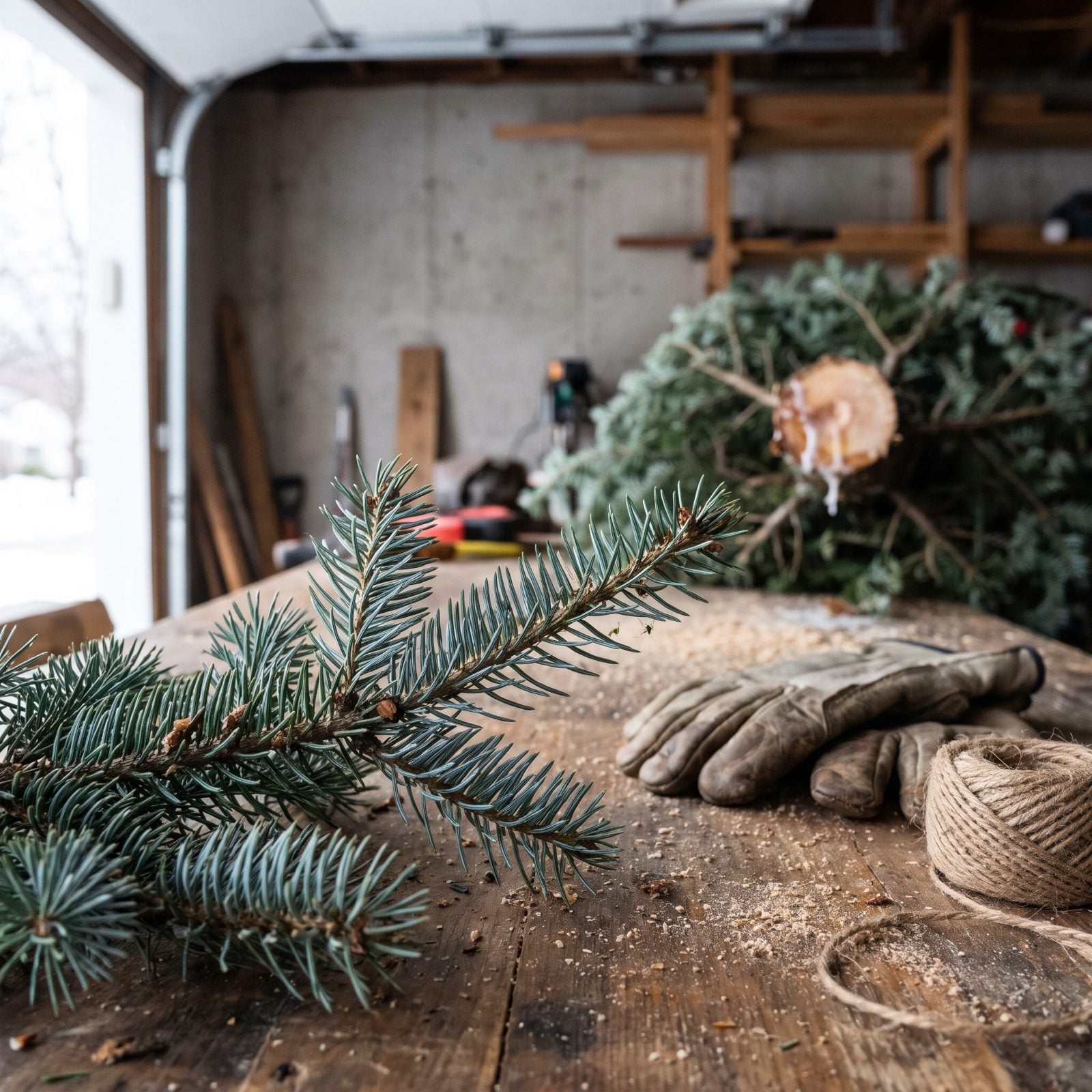
Here’s the part nobody tells you at the lot. A real tree can carry a few hitchhikers, aphids, mites, the occasional spider, maybe a praying mantis egg case if you’re unlucky, but none of them threaten your house. They evolved to live on a tree out in the cold, not to colonize your couch, and most die within a day or two of warm, dry indoor air.
You’ve probably heard that a single tree hides thousands of bugs. True enough for a tree still standing in the field. Completely irrelevant by the time it’s in your living room.
5. Myth: Mechanical Shaking Removes Every Insect and Egg
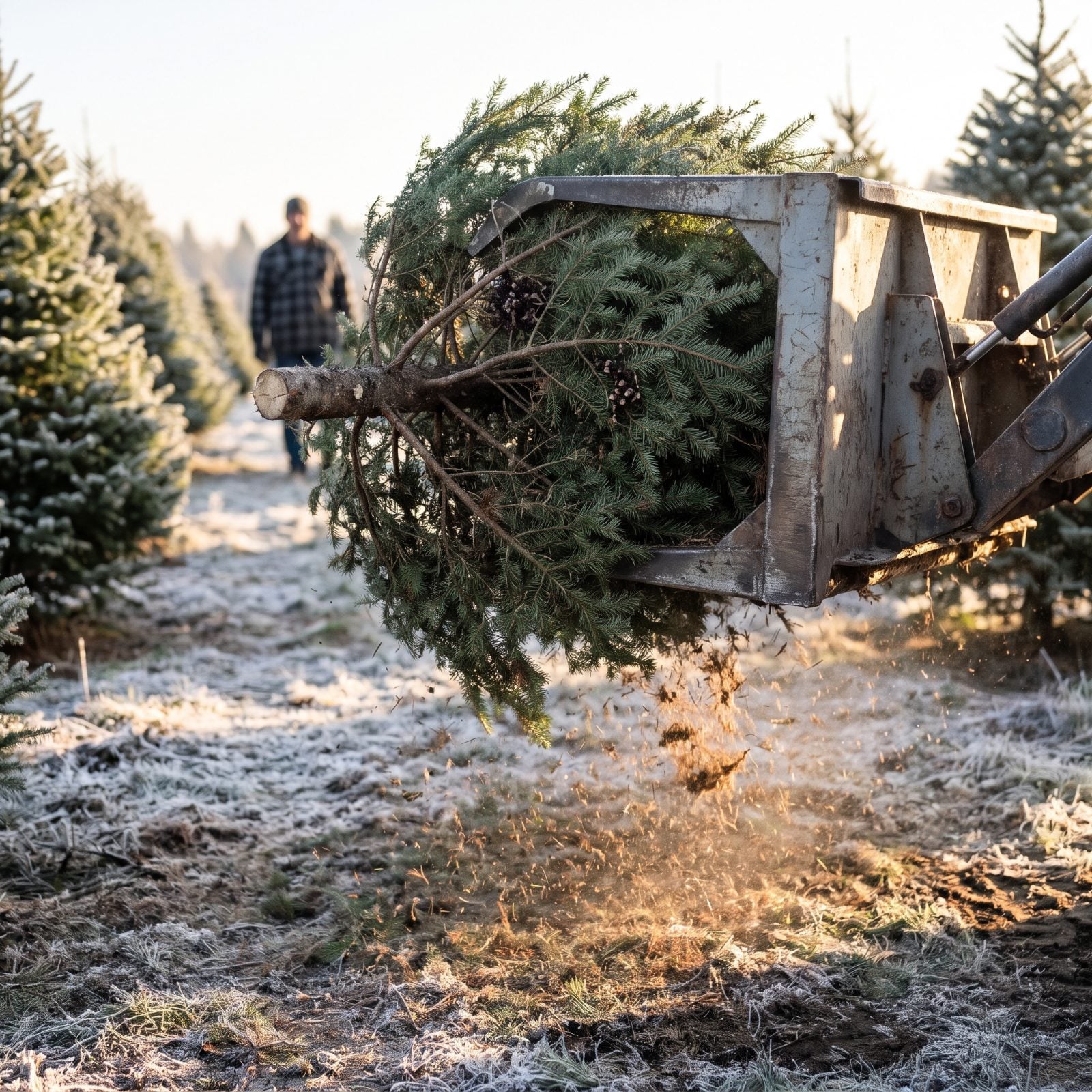
That satisfying rattle of a tree shaker, even one working a frosty tree-farm field at dawn, does real work, clearing out the dead interior needles, the old birds’ nests, loose debris, and most of the free-roaming bugs. What it won’t do is hand you a sterile tree.
Shaking knocks off whatever’s sitting loose. It doesn’t touch eggs glued to bark or insects tucked deep in the bark folds, and that’s fine, because a handful of survivors on a cut conifer in a heated room has no future. It’s easy to assume the shaker is a kill step. It’s a cleaning step. Different job entirely, and the tree is no less safe for it.
4. Myth: Every Flocked Christmas Tree Is Safe to Compost
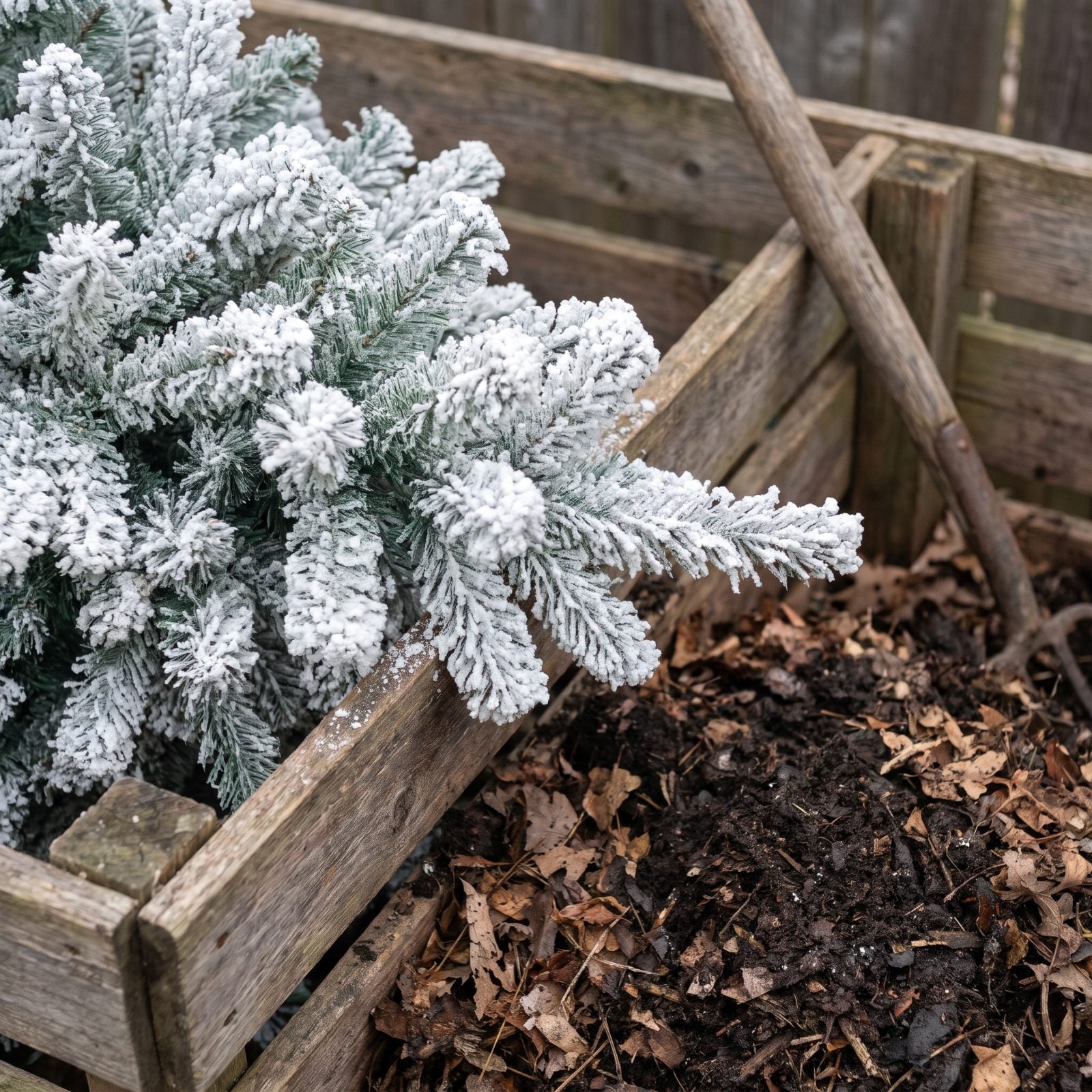
Flocking is not snow. It’s glue and cellulose, sometimes with fire retardant and adhesives mixed in.
A plain tree is one of the best things you can run through a chipper or drop at a municipal recycling site. A flocked tree is a different animal. Most composting and chipping programs won’t take it, and for good reason, because you don’t want that coating breaking down into your garden beds or into mulch that ends up on public trails.
Check with your local program before you haul it anywhere. In doubt? A flocked tree goes in the trash, not the compost pile. Call it the one honest exception to the real-trees-are-recyclable rule.
3. Myth: Sinking a Christmas Tree in a Pond Always Helps Fish
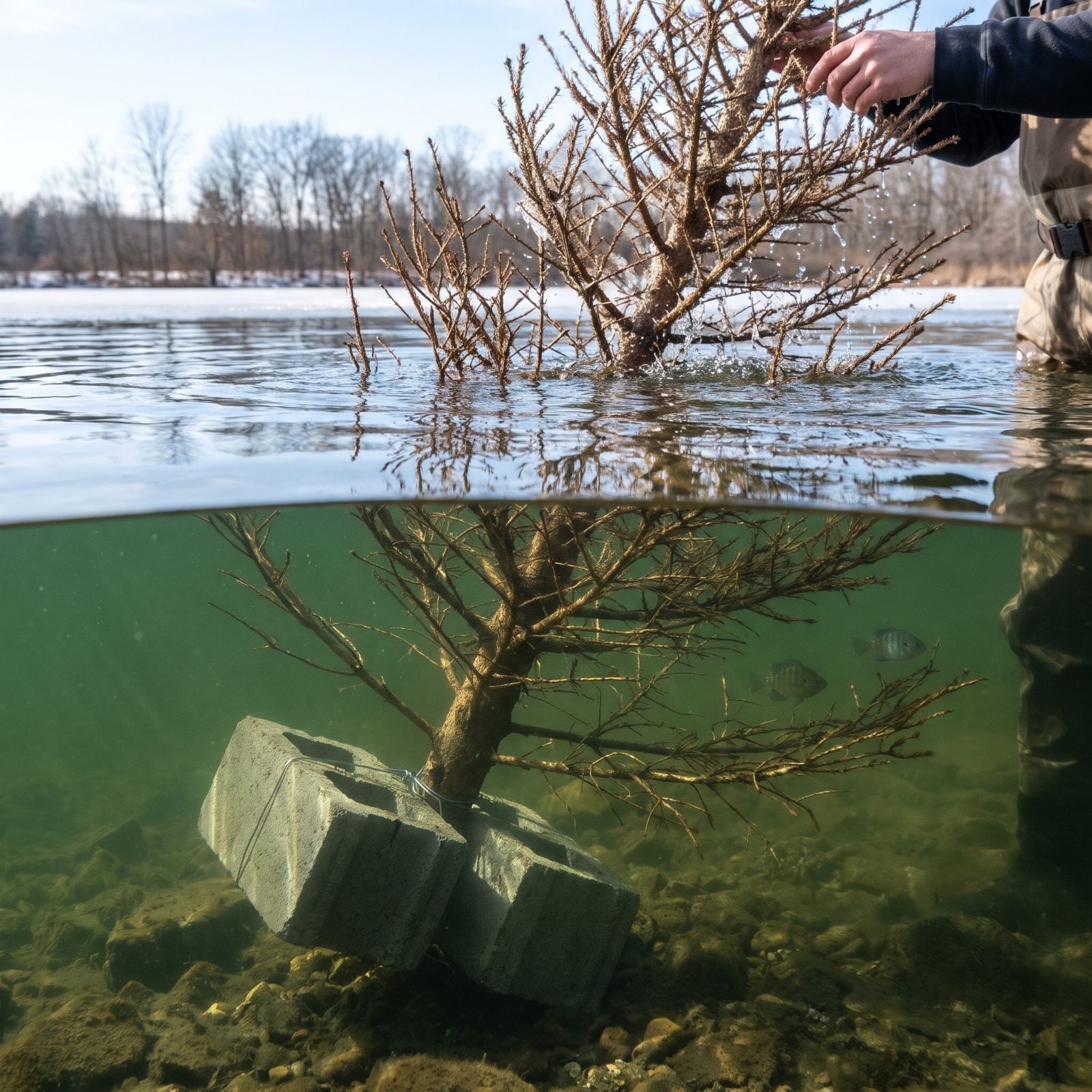
Sunk trees make genuinely good fish structure. Bluegill and crappie love the cover, bass stack up along the edges, and anglers have been building brush piles out of old conifers for generations.
The trouble is that word always. You can’t just drag your tree to the nearest pond and shove it in. On any water that isn’t yours, you need the landowner’s permission, and on public lakes you often need approval from the state agency that manages the fishery. Dumping anything into public water without clearance is illegal in most states, tree or not.
Describing a decades-old program in which an agency sinks thousands of collected trees, a state fisheries management biologist says “Especially in urban lakes that don’t have a lot of habitat to begin with, this really helps provide habitat to those fish that isn’t there for any other reason”
2. Myth: Christmas Tree Wood Chips Make Soil Dangerously Acidic
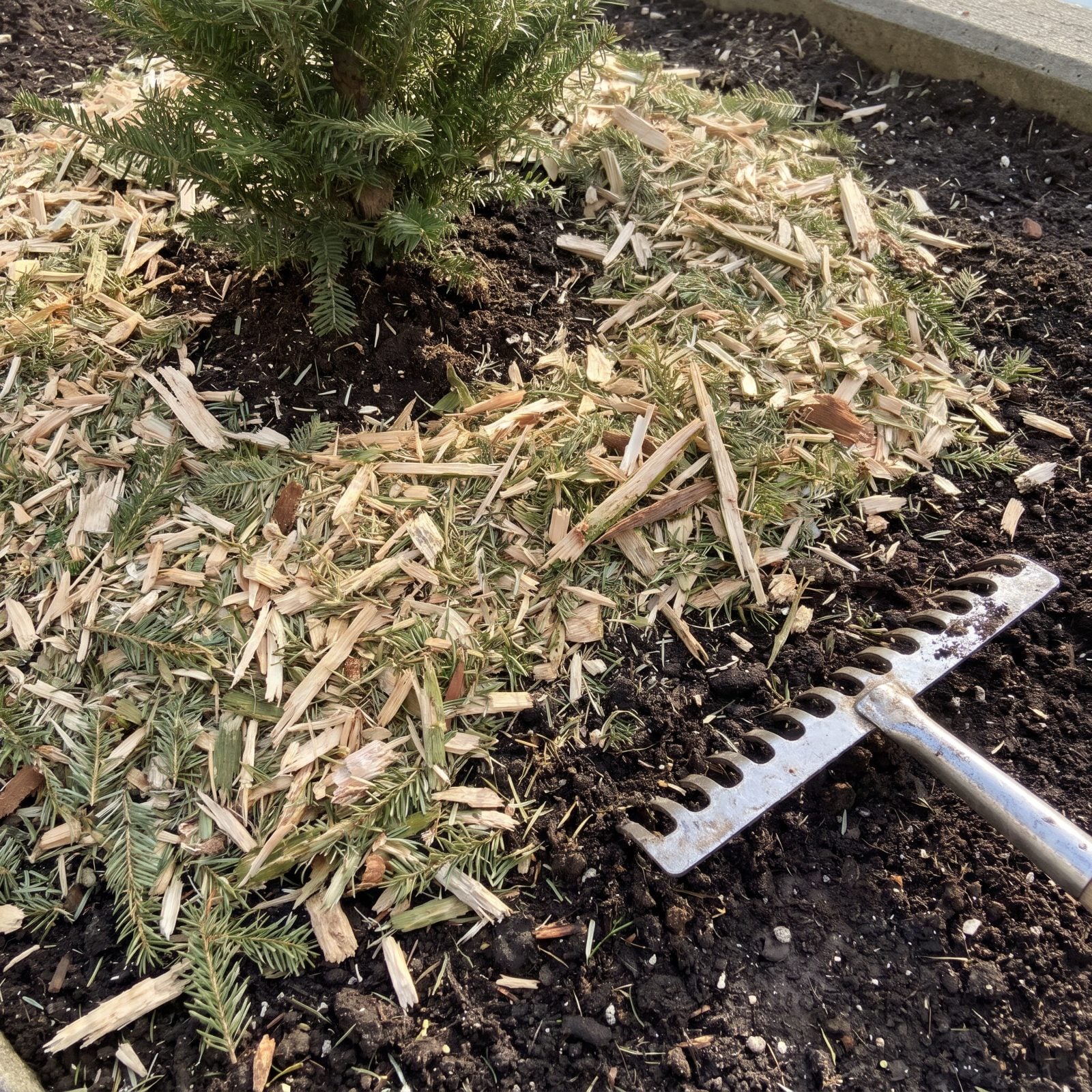
This one has outlived its welcome. The idea that pine or fir chips will acidify your soil has been repeated at garden centers for decades, and it’s mostly wrong.
Fresh conifer needles come off the tree slightly acidic. But by the time they break down into the soil, the effect on pH is small and short-lived, far too weak to turn your beds into blueberry country, and soil microbes neutralize most of what’s left as they go about their work.
Chipped Christmas trees make fine mulch for paths, around established shrubs, or on top of a slow compost pile. I will die on this hill. The acid scare has talked people out of free, decent mulch for no good reason.
Addressing common wood-chip mulch myths, a university extension specialist explains: “Wood chips, or any other organic mulch, will not change the pH of the soil. The soil volume is vast, and any acidification would occur only at the mulch-soil interface where it would quickly be neutralized.”
1. Myth: A Christmas Tree Is Safe to Burn in the Fireplace
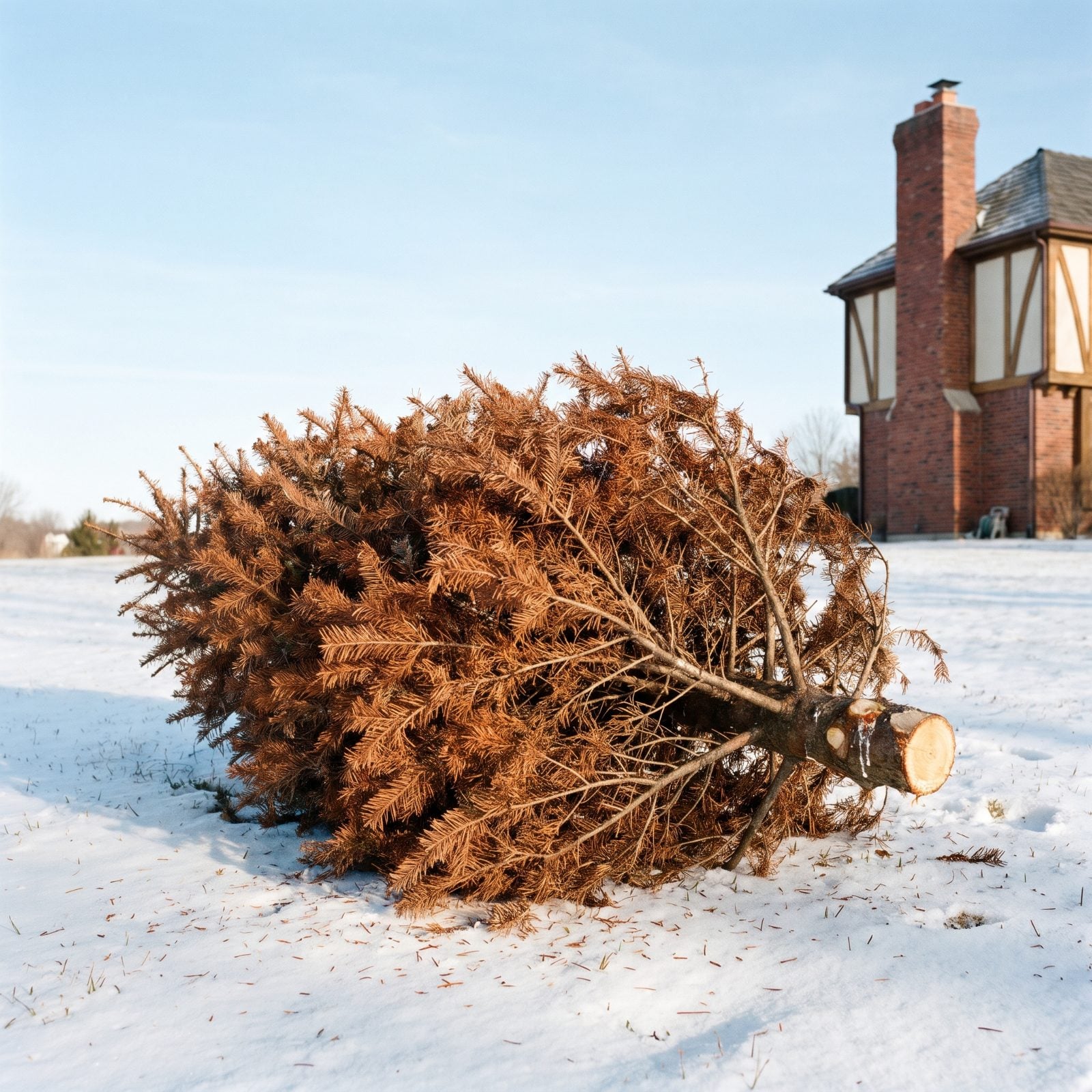
Don’t. Just don’t.
A dried conifer is a chimney fire waiting for a match. Those branches go up fast and hot, and the resin inside the wood burns dirty, coating your flue with creosote, the sticky stuff that fuels the fires nobody sees coming until the chimney roars.
Even cut small and seasoned, Christmas tree wood is soft and pitchy, a poor choice for an indoor fire. A dry tree can flash from smolder to fully involved in seconds, which is the whole reason we keep real trees watered in the house to begin with.
Send it to curbside recycling, a chipper, or a brush pile. Keep it out of the firebox.
After warning that dry evergreen branches can explode in a fireplace, university extension horticulturists add: “Also, burning the tree may contribute to the buildup of creosote and lead to a flue fire.”