

Everyone treats fall color like a one-weekend emergency. Up to the Parkway, elbow to elbow, chasing the same sugar maples as a hundred thousand other people, all in the third week of October. And then, if you miss it, you figure the season’s over.
Please note that some of the images in this article were created with the assistance of AI.
It isn’t. Not in North Carolina. The color rolls downhill and east for weeks after the mountains go bare, peaking in the Piedmont oaks in early November and lingering in the coastal turkey oaks and bald cypress almost to Thanksgiving. These are the trails that pay off once the crowds have gone home. Chase the color east. It waits for you.
16. Moore’s Wall Loop, Hanging Rock State Park (Danbury)
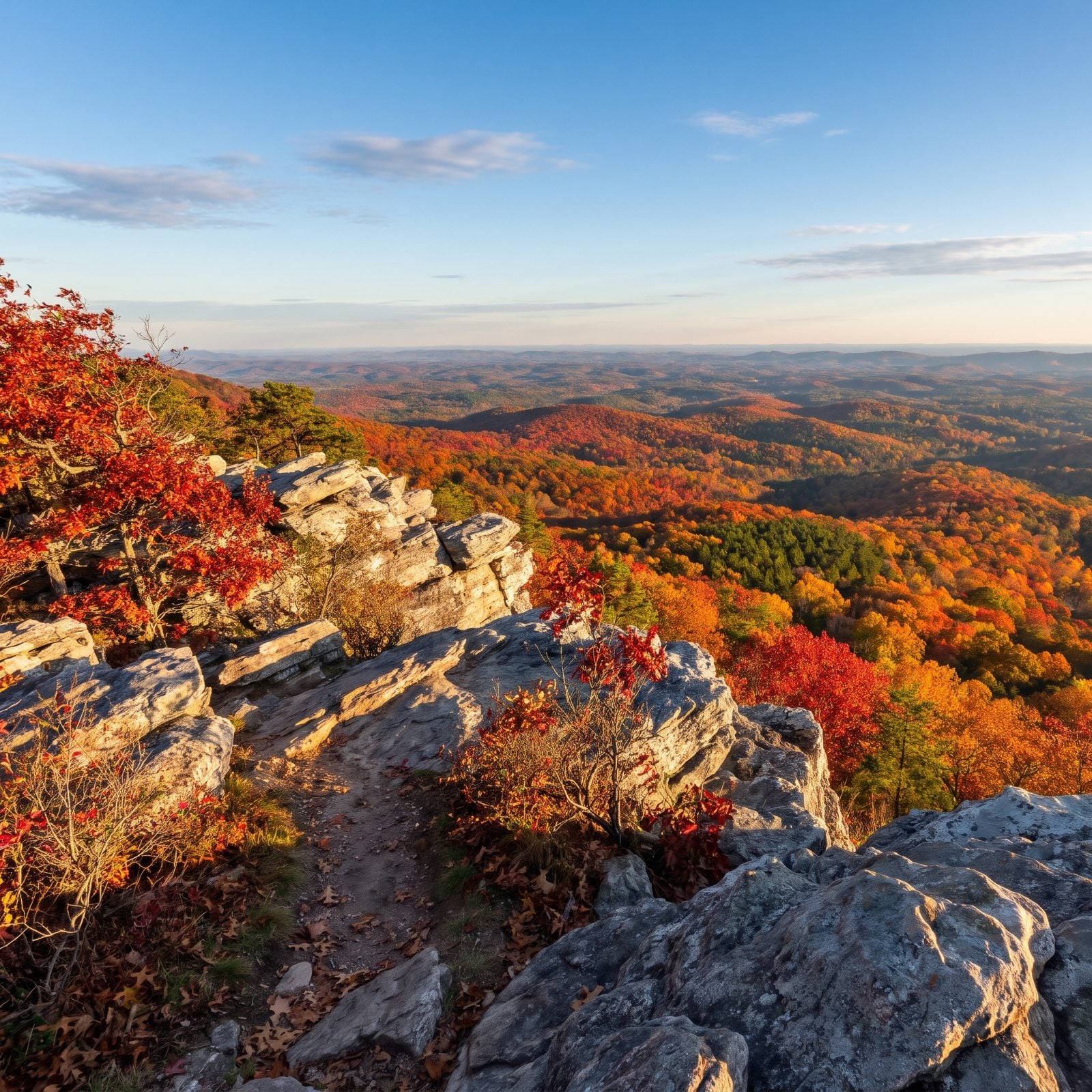
Everyone piles onto the mile-long walk to Hanging Rock itself. The views from Moore’s Knob are better, and you’ll share them with a fraction of the crowd.
This is a loop of roughly 4.5 miles, a steep rocky haul up Moore’s Wall to a summit near 2,600 feet. The payoff is a true panorama of the Piedmont, and come early November the oaks up here go a flaming scarlet that’s as good as the color gets anywhere in the state. The park sits about 30 miles north of Winston-Salem, with miles of trail and the Mountains-to-Sea threading straight through on the Moore’s Wall Loop.
15. Crowders Trail and Lake Trail, Crowders Mountain State Park (Kings Mountain)
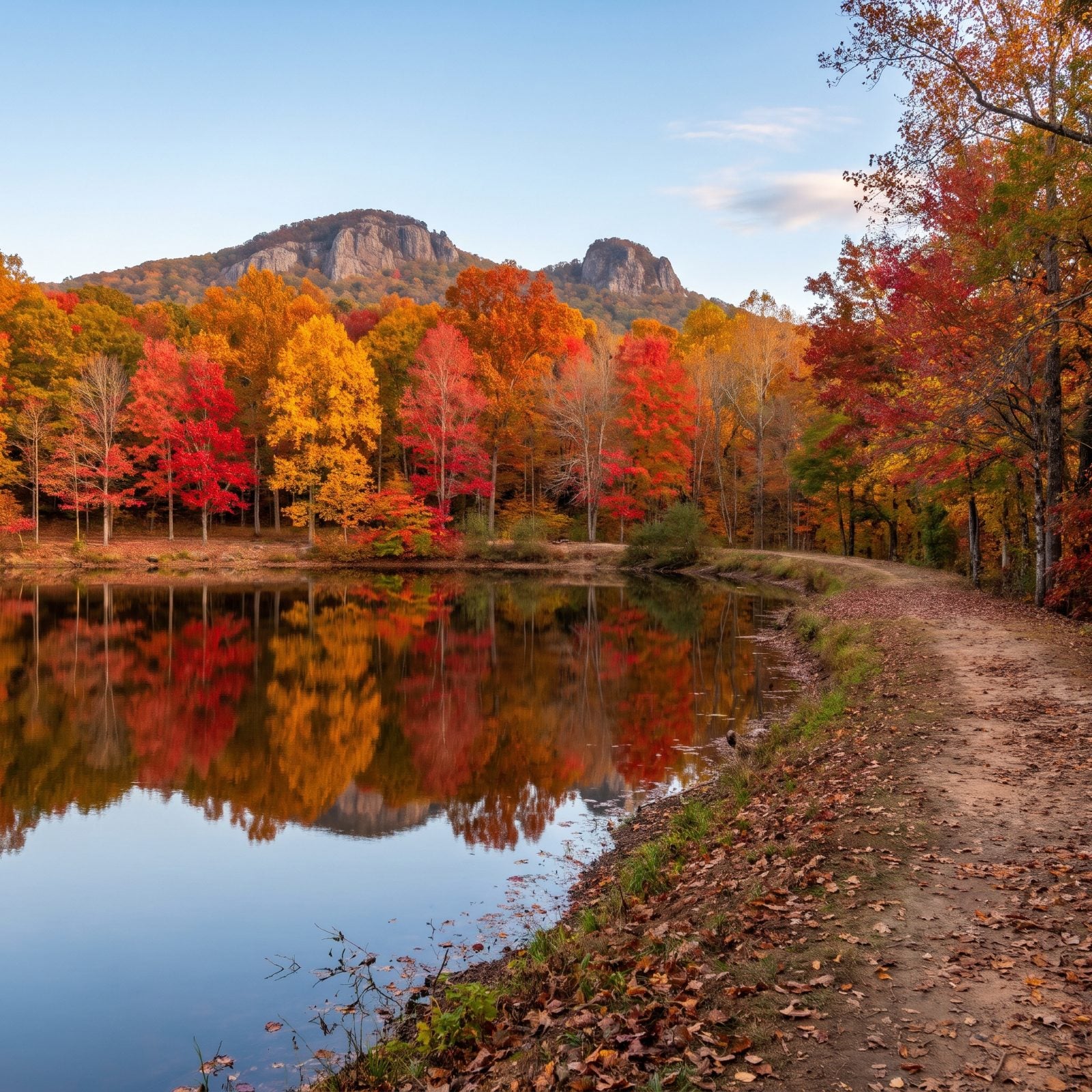
About 32 miles west of Charlotte, this park gives you a choice: work for it or don’t.
Work for it and the Crowders Trail (2.8 miles, moderate) or the strenuous Pinnacle Trail (2.0 miles) carry you up to two rocky peaks, Crowders Mountain at 1,625 feet and The Pinnacle at 1,705. On a clear day the Charlotte skyline shows up from the top of Crowders. Peak color here lands in the first week of November.
Don’t want the climb? Take the Lake Trail. It’s flat, it’s short, and the leaves doubled in the still water are their own reward. Nobody ever regrets the easy walk by the lake.
14. Laurel Bluffs Trail, Eno River State Park (Durham)
Check the park alerts before you load the car. Eno River is only partly open, and the trail you’ve probably heard of is closed.
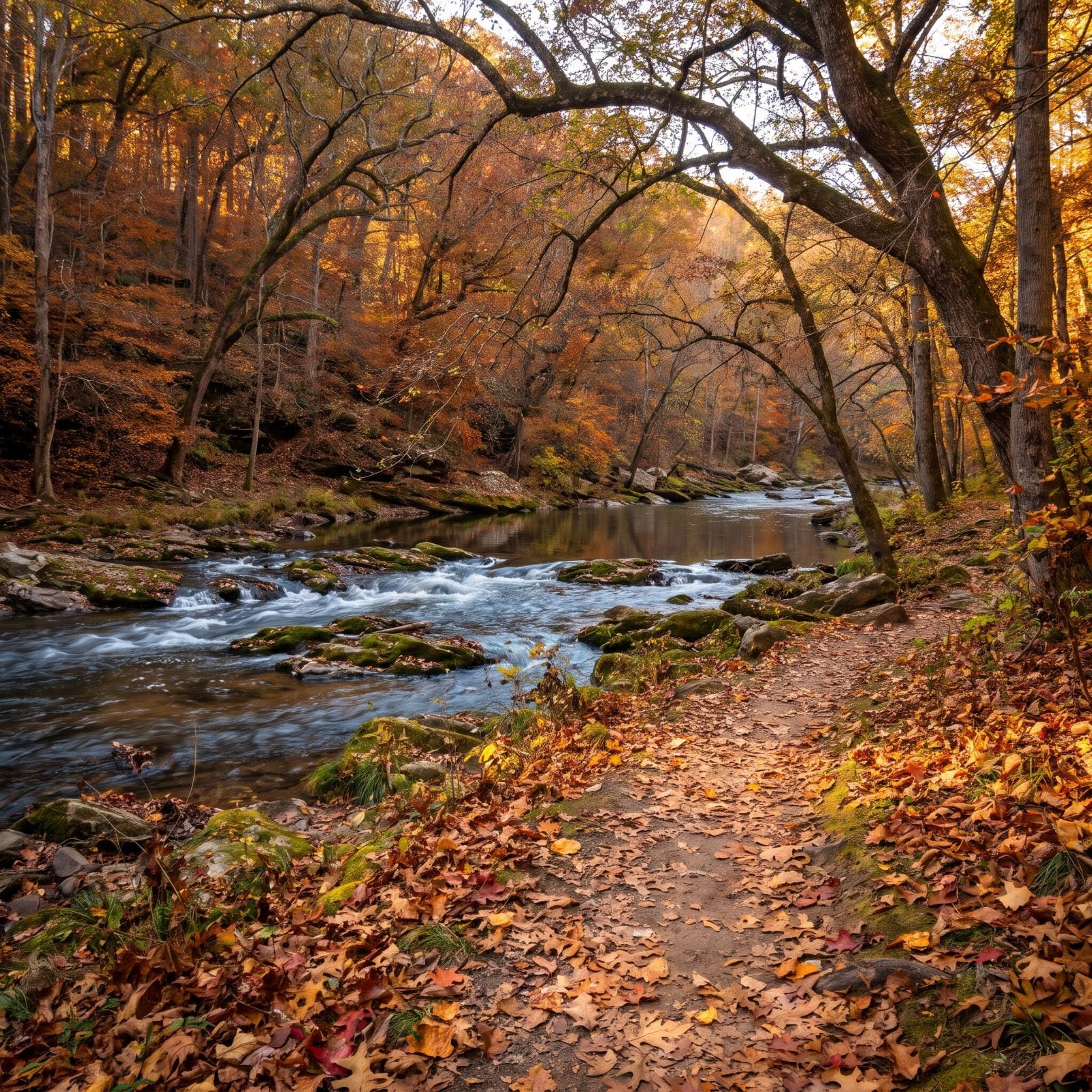
That famous Cox Mountain Trail everyone recommends? Shut right now, along with Cole Mill, Bobbitt Hole, Pea Creek and a handful of others. Don’t drive out there expecting it. What’s open and worth your time is the Laurel Bluffs Trail, running along rocky river bluffs that turn gold and russet in early to mid-November. Buckquarter Creek and the Pump Station trail are open too, about 10 miles northwest of Durham.
13. Lassiter Trail, Merchants Millpond State Park (Gatesville)
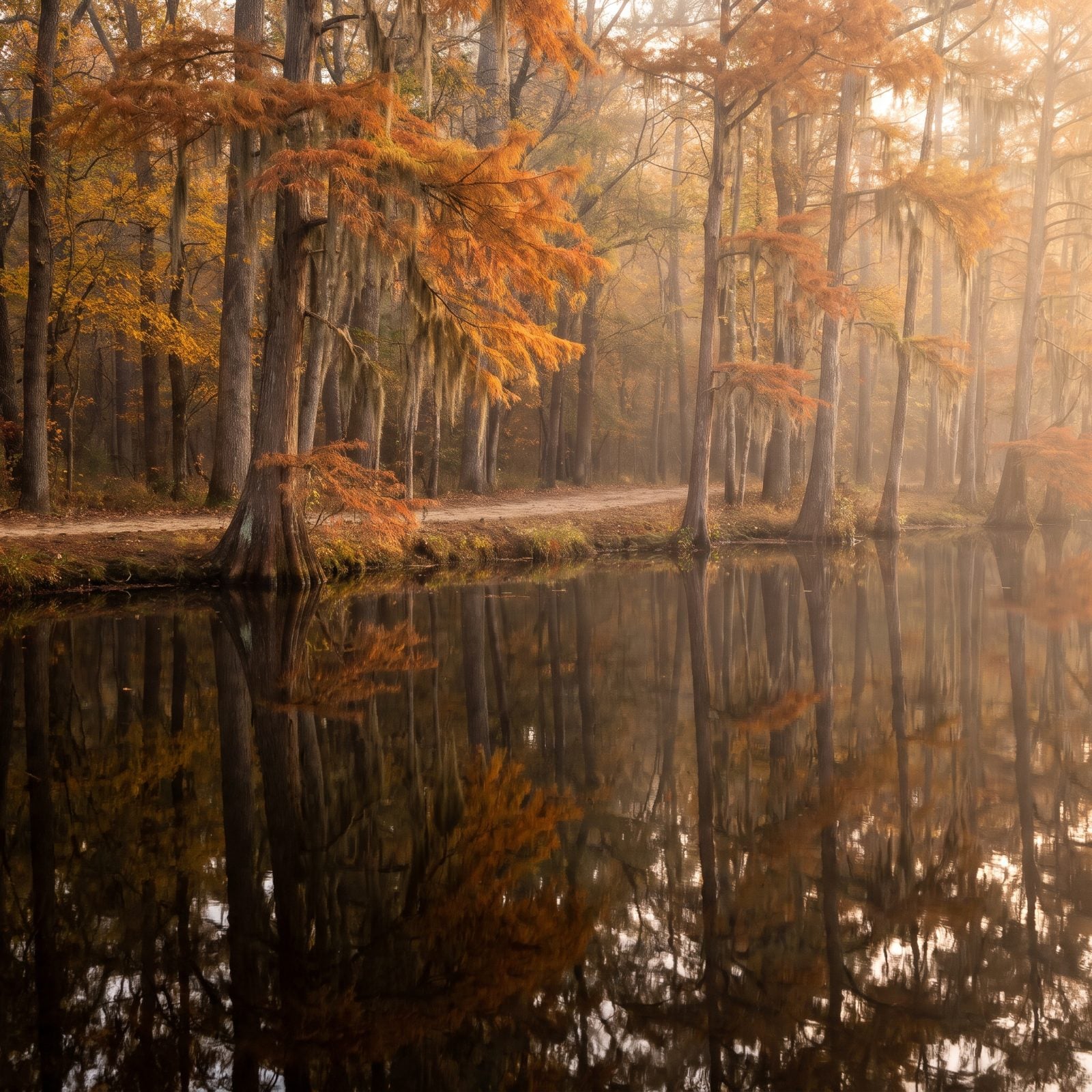
The bald cypress here don’t just turn. They work through a whole sequence: tan, then cinnamon, then a bright burnt orange that sets the whole pond glowing in early November.
The Lassiter Trail is a 7-mile loop, flat and easy, winding through one of the quieter corners of the state in Gates County, about 30 miles northwest of Elizabeth City. For an accessible option there’s the 0.3-mile Cypress Point loop. Rent a canoe if you can, because the state’s second-largest bald cypress sits out in the water where no trail reaches it.
One catch: the family tent and trailer campground is closed for construction until further notice. Day trip only for now.
12. Spanish Moss Trail, Cliffs of the Neuse State Park (Seven Springs)
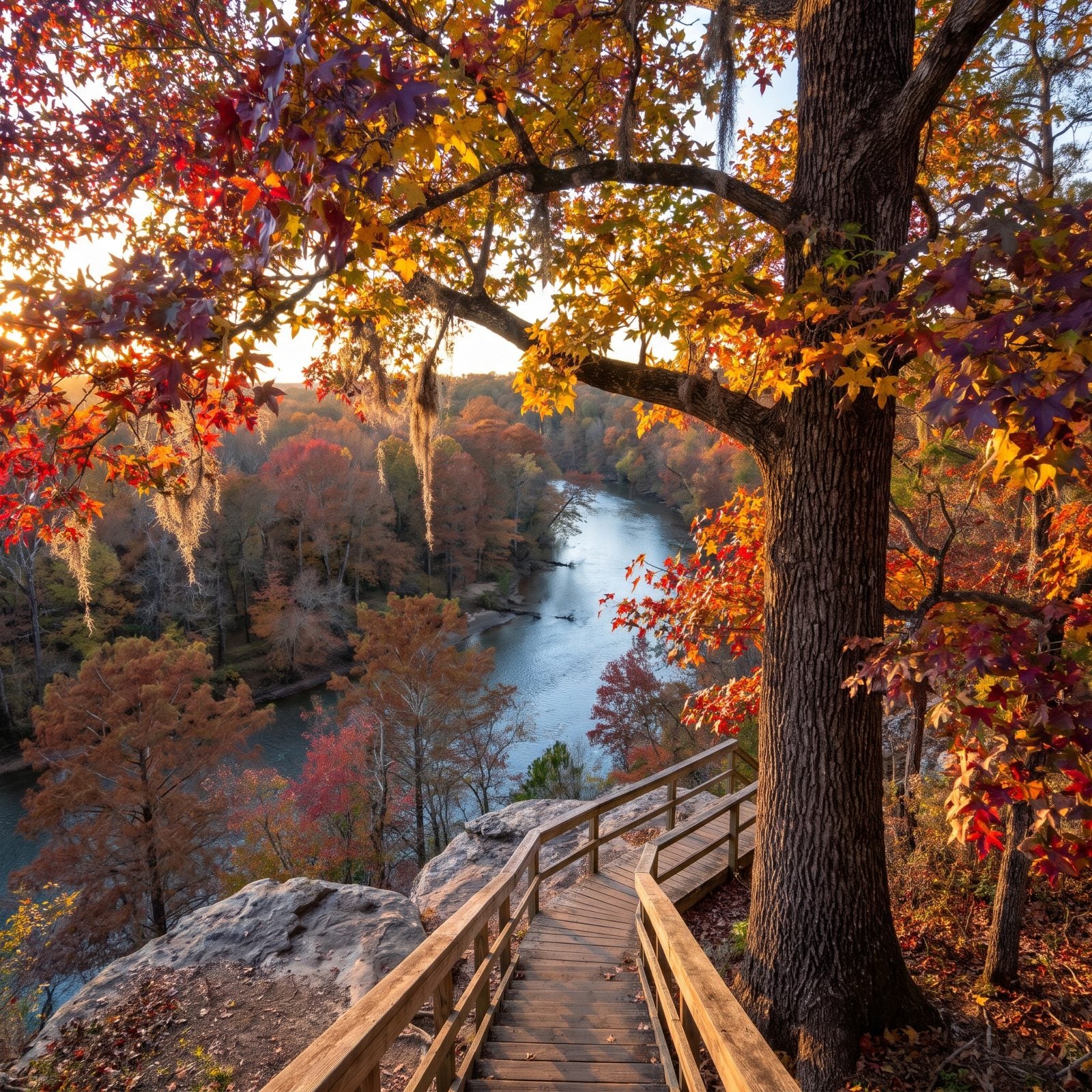
A half-mile loop that’s been here since 1945, and it’s still the reason to come.
The Spanish Moss Trail at Cliffs of the Neuse runs a half mile (rated moderate, with stairs), about 15 miles southeast of Goldsboro. Its centerpiece is a sweetgum more than three feet across at the base, and sweetgums pull off something odd: red, gold and purple all on the same tree at the same time. Peak color lands in early November.
From the cliff overlook, steps drop down into river bottom full of bald cypress and sycamore. A side path leads out to a sandbar where you can drop a line in the Neuse. Heads up on timing, though. The swim beach and boat rentals are closed for the 2026 season. Trails stay open.
11. Summit Loop and Dam Site Loop, Medoc Mountain State Park (Hollister)
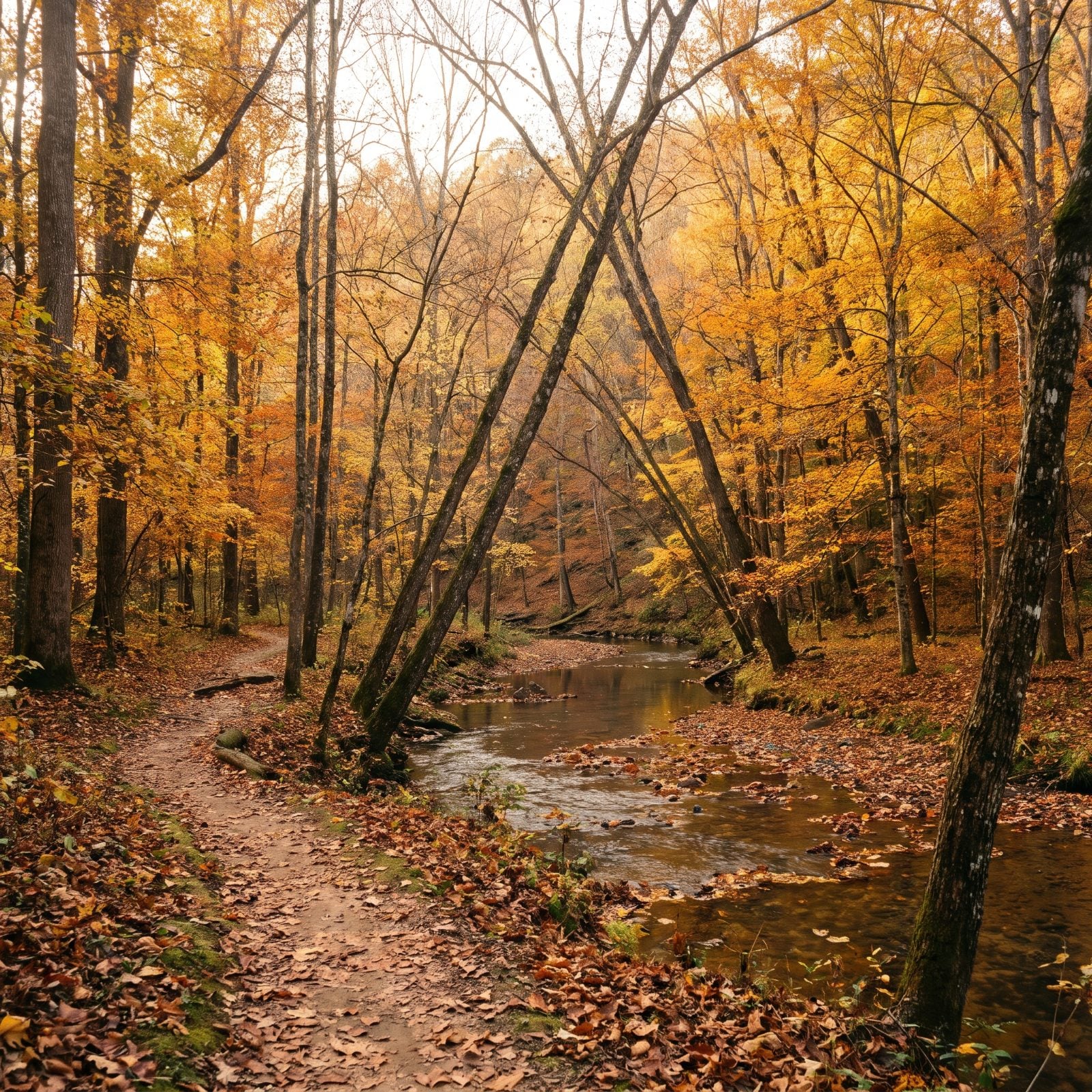
If the rest of the state has already dropped its leaves, Medoc is where you go. Peak color here hits in mid-November, one of the latest around.
The park sits about 30 miles northwest of Rocky Mount, and Little Fishing Creek draws the best color. String together the Summit Loop (3 miles, moderate), the Dam Site Loop (1 mile), and the Fishing Creek Loop (1.5 miles). Starting from the meadow lot, the Stream Loop (0.75 mile) and the Summit Loop (3 miles) wind through lowland thick with sweet gum, river birch, ironwood and alder. Here’s the quiet secret. Medoc sees far fewer visitors than the busy parks around the Triangle, so you get a whole fall afternoon mostly to yourself.
10. Campbell Creek Loop, Raven Rock State Park (Lillington)
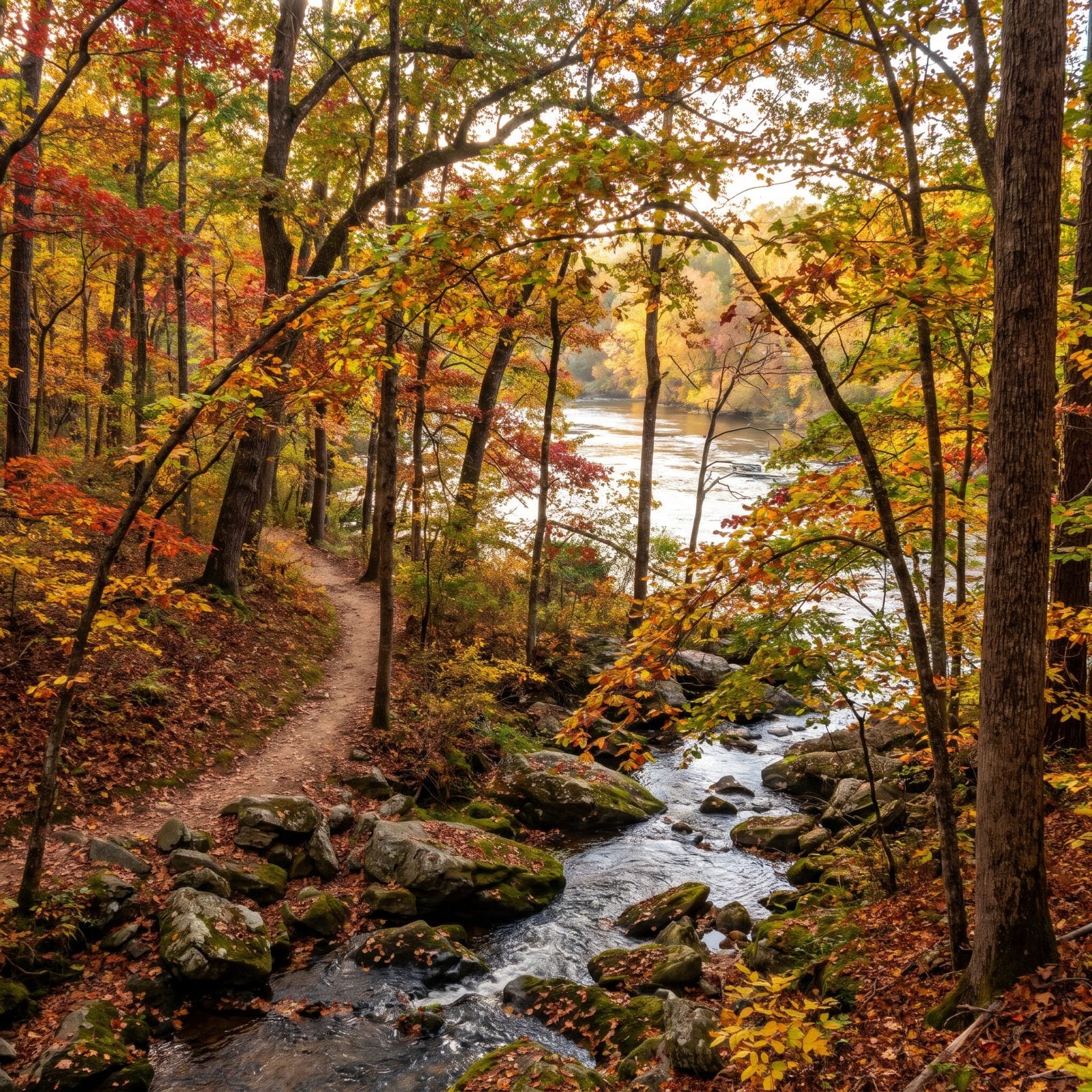
Most people drive to Raven Rock for the flat walk out to the park’s 150-foot bluff over the Cape Fear, snap the photo, and leave.
Hike the Campbell Creek Loop instead. It’s a 4.5-mile loop (closer to 5 with the short side trail to Lanier Falls), rated moderate, and far quieter than the famous overlook. It winds through hardwood forest and along rocky Campbell Creek down to the Cape Fear River, with Lanier Falls just off the loop. The park sits in Harnett County, roughly an hour from the Triangle and 45 minutes from Fayetteville.
Quiet trail, a river, a waterfall, and color you earned. That’s a good Saturday.
9. Lake Shore Trail, Lake Norman State Park (Troutman)
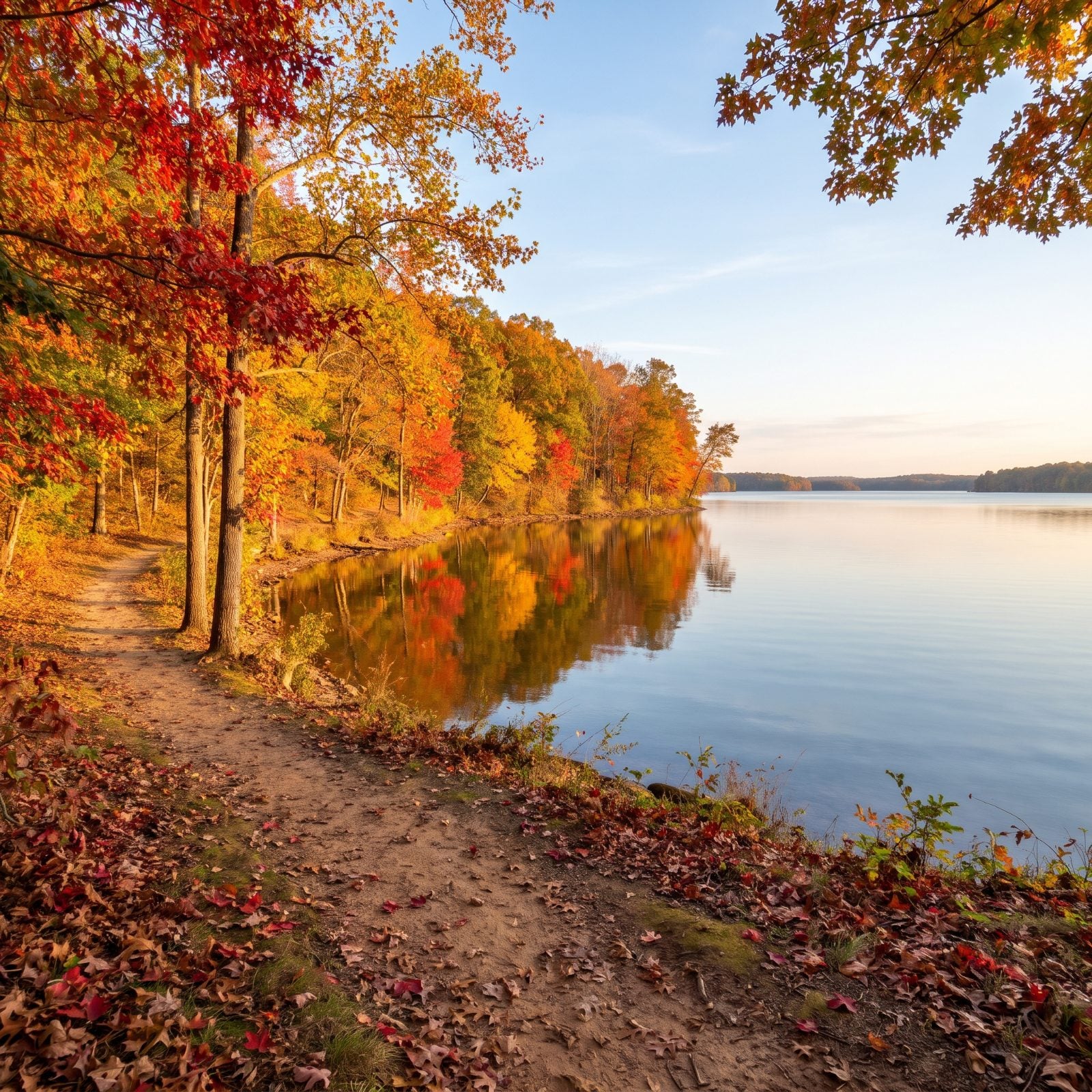
Water does something to fall color that a ridgeline can’t. It doubles it.
The Lake Shore Trail runs 6.2 miles along the edge of Lake Norman, the largest manmade lake in the state. Sweet gums, red maples, dogwoods and oaks change along the bank, and on a still morning the whole color show hangs upside down in the water right beside you. It’s a longer walk than most on this list, but the grade stays gentle, following the shoreline the whole way.
8. Company Mill and Sycamore Trails, William B. Umstead State Park (Raleigh)
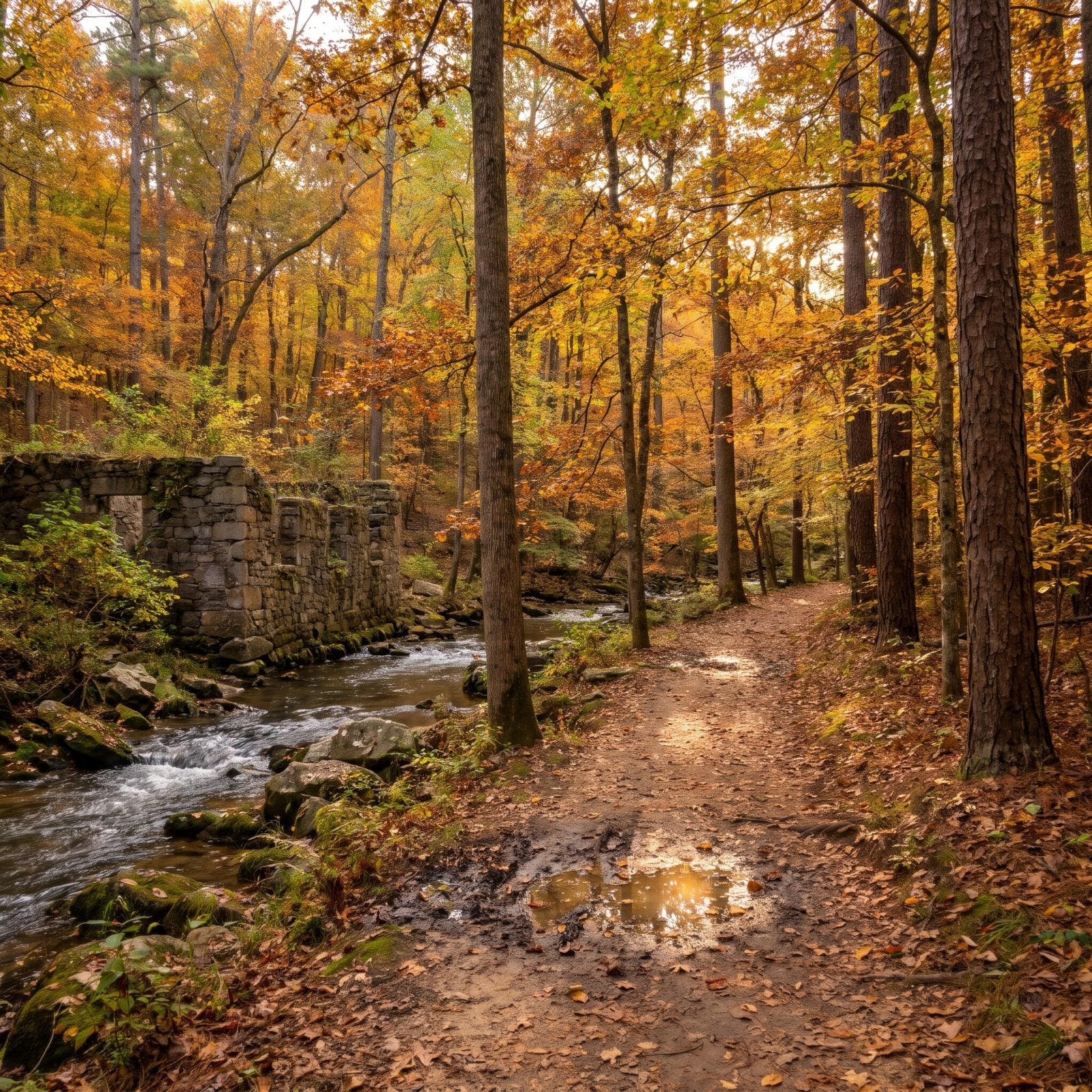
Nearly 6,000 acres of forest with 35 miles of trail, and it sits right inside the Triangle. Umstead is the woods Raleigh forgot it has.
The Company Mill Trail is a 5.8-mile loop that passes old mill ruins along Crabtree Creek. The Sycamore Trail runs about 7.2 miles, and fall is its best season. The forest here is mostly oaks, hickories and sweet gums, all native to North Carolina, so the color reads honest and local rather than planted.
One warning that matters: these trails turn to soup after rain. Sycamore especially. Give it a day or two to dry out or you’ll spend the whole hike watching your feet instead of the leaves.
7. Gum Swamp Trail, Weymouth Woods Sandhills Nature Preserve (Southern Pines)
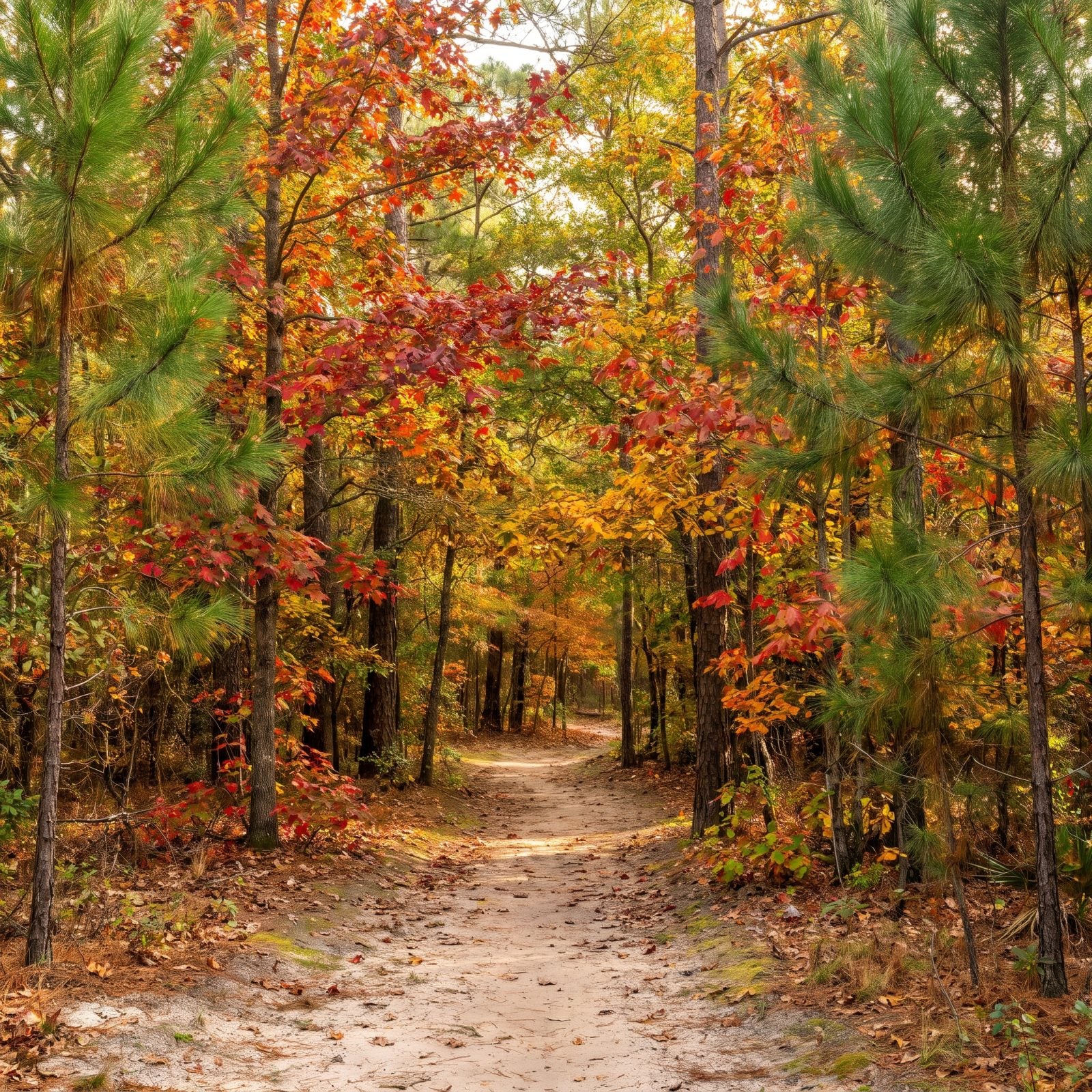
Weymouth Woods is longleaf pine country, and longleaf pine doesn’t change color. So you’d think this is the wrong place for a fall hike.
You’d be wrong. The half-mile Gum Swamp Trail dips off the pine savanna into a hardwood pocket where sweet gums, oaks and dogwoods turn red and gold against all that evergreen. Warm leaves set against dark green needles, a contrast you won’t find in a straight hardwood forest. The preserve holds miles of trail and hundreds of plant species, a lot of botany packed into one small place near Southern Pines.
Short walk, strange landscape, color where you didn’t expect it. Go when the mountains are already bare and you’ll see why we kept this one on the list.
6. Flytrap and Oak Toe Trails, Carolina Beach State Park
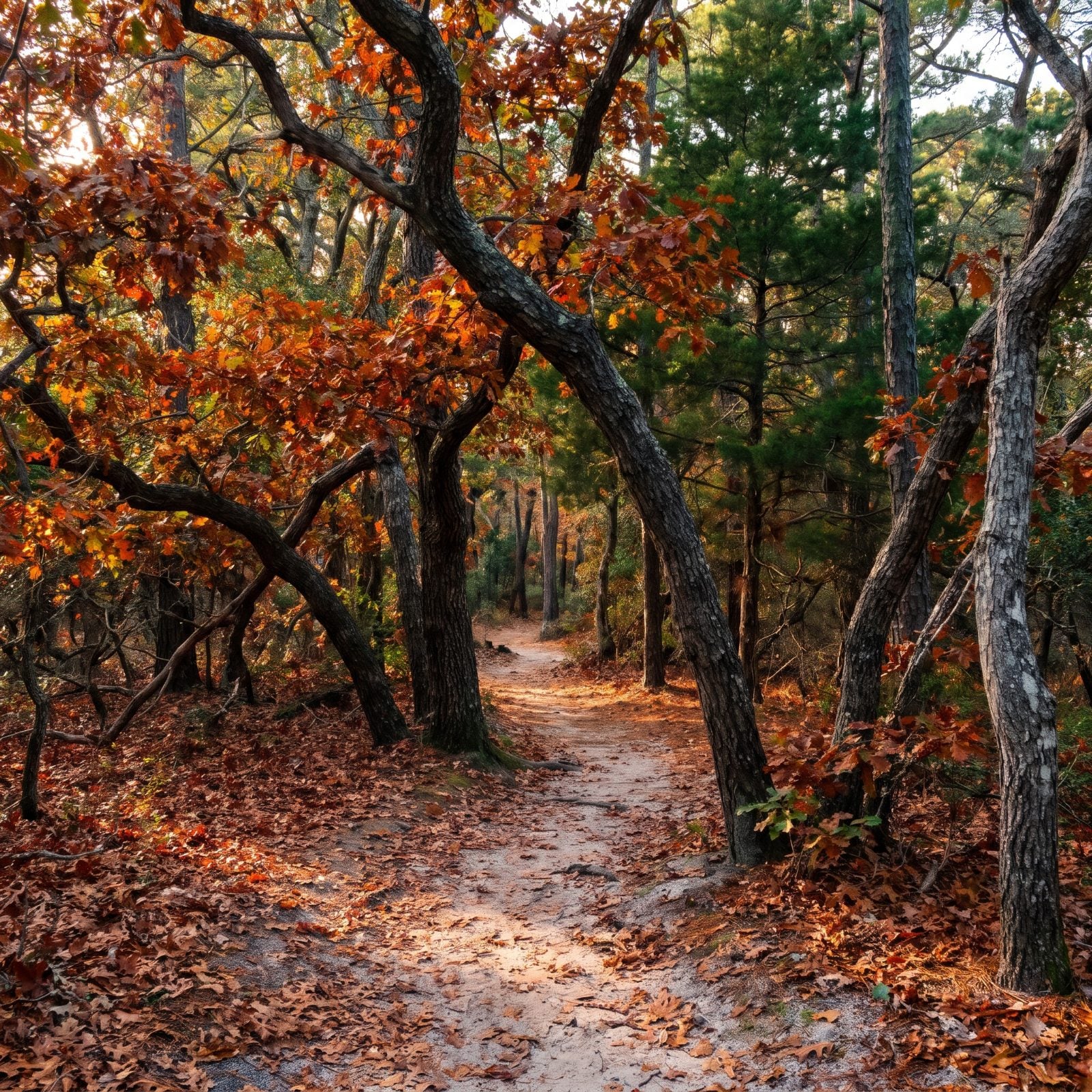
The mountains have already gone bare, but the coast is just getting started. Carolina Beach State Park near Wilmington runs its color late, often holding into November, well after the mountains have peaked. The Flytrap, Swamp and Oak Toe trails are each under a mile, so this is a short-sleeves, no-sweat kind of walk.
Turkey oaks are the stars. They grow happily in sandy soil and throw more color than any other tree in the park — rust and russet against twisted dark trunks. And yes, there are real Venus flytraps along the Flytrap Trail. No, you cannot dig them up, though someone always tries.
5. Dismal Swamp State Park, South Mills
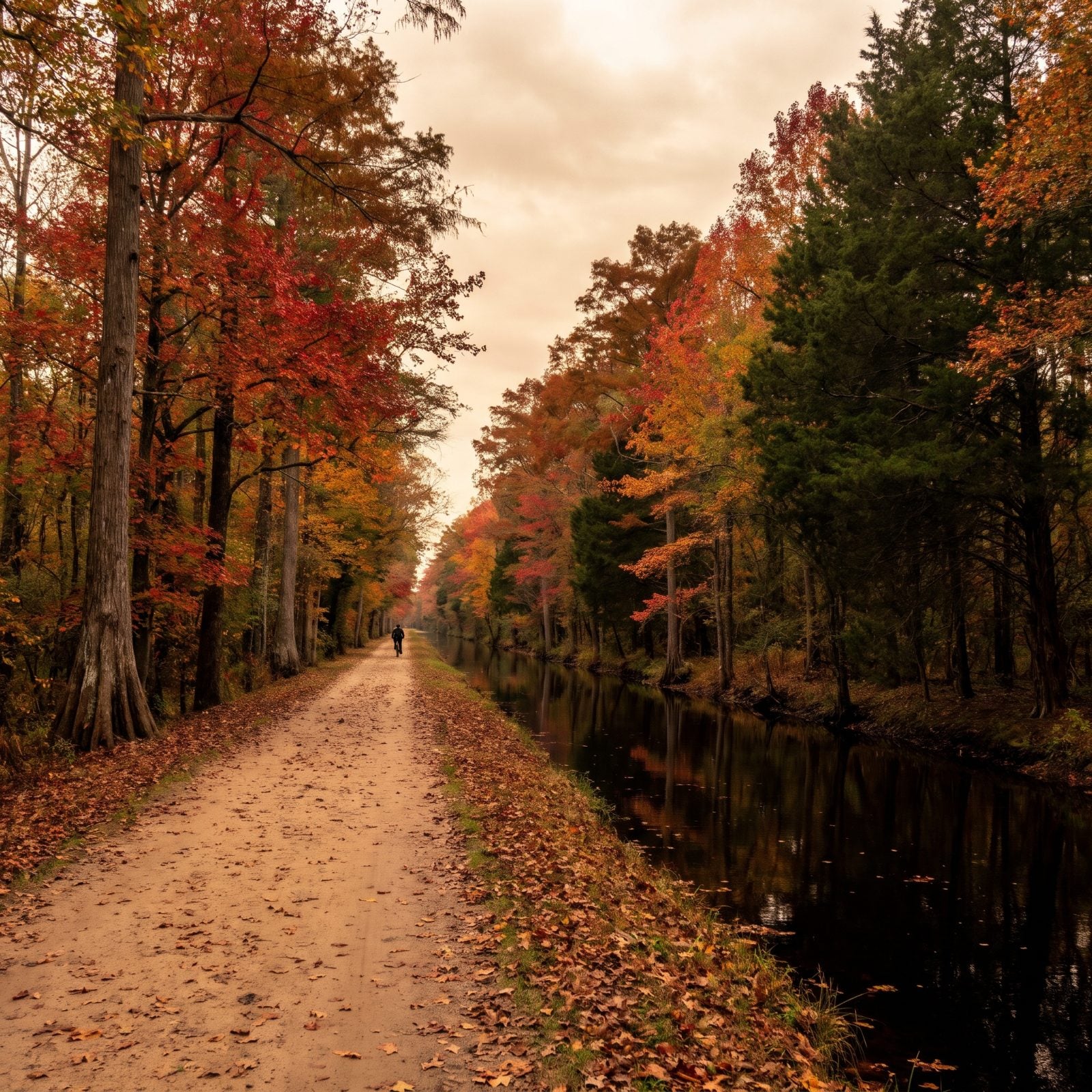
Miles of trail, all of it flat, all of it built on old logging roads that once hauled cypress out of one of the strangest places on the East Coast. Dismal Swamp State Park sits right against the Great Dismal Swamp National Wildlife Refuge up near the Virginia line.
Fall here works by contrast. Cypress, red maple, sweet gum and a handful of oaks light up gold and red, and they do it against a wall of dark evergreen cedar, which makes the color read brighter than it would just about anywhere else. You’ll share these trails with mountain bikers, so keep an ear open. The flat ground lets you cover real distance without wrecking your knees — something I appreciate more every year.
4. Alligator River National Wildlife Refuge, Manteo
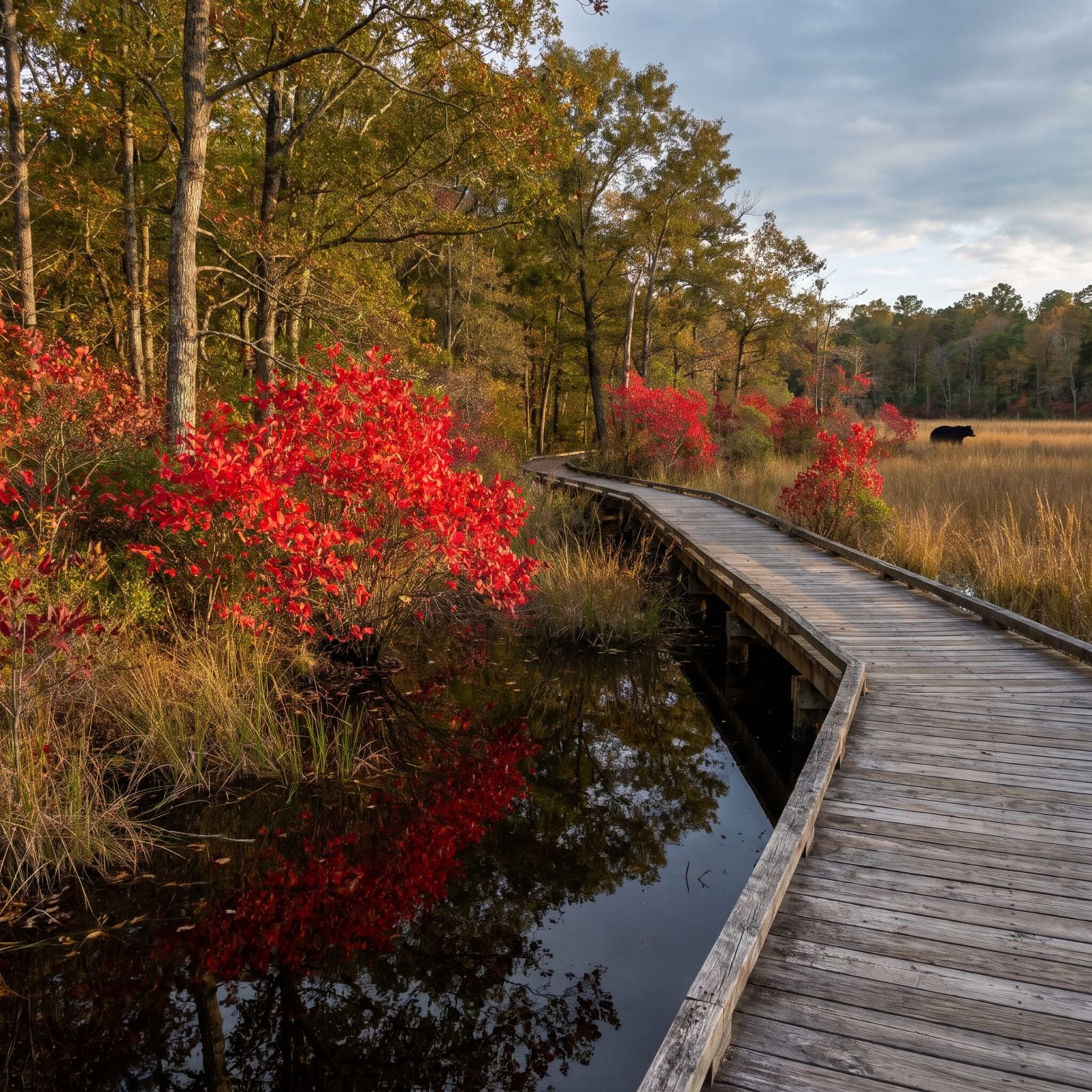
This is the one you come to for the animals, not just the leaves. Alligator River NWR, out past Manteo on the mainland side, is one of the last real strongholds for black bears on the East Coast. If you want a decent shot at seeing one in the wild, few places in the state beat it.
A pair of half-mile trails carry you through brackish water and hardwood swamp. The fall color here is mostly poison sumac, which turns a scarlet so bright it almost looks fake. Admire it from the trail and do not grab a souvenir branch.
3. Birkhead Mountain Wilderness, Uwharrie National Forest
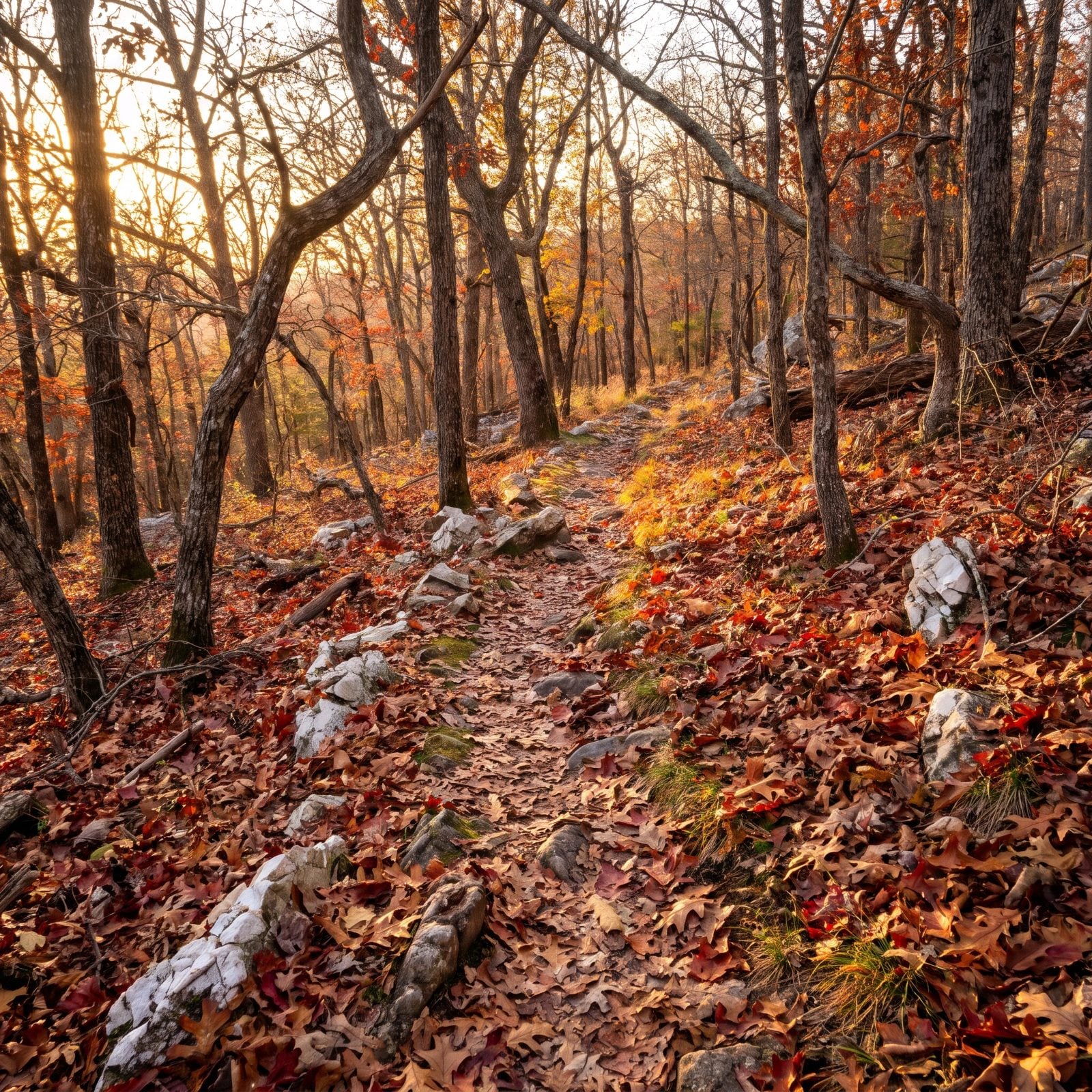
These are some of the oldest mountains on the planet, worn down to nubs over an unfathomable stretch of time. The Birkhead Mountain Wilderness, about 10 miles south of Asheboro in Randolph County, sits inside the Uwharrie National Forest. Almost nobody goes there.
And that’s the draw. The Uwharrie is barely an hour and a half from Charlotte, the Triad and the Triangle, yet even seasoned hikers forget it exists, so fall weekends stay quiet. A good loop runs roughly seven miles from the Lassiter Mill Road trailhead through oak and hickory ridges that burn scarlet and bronze come early November.
2. Fall Mountain Trail, Morrow Mountain State Park
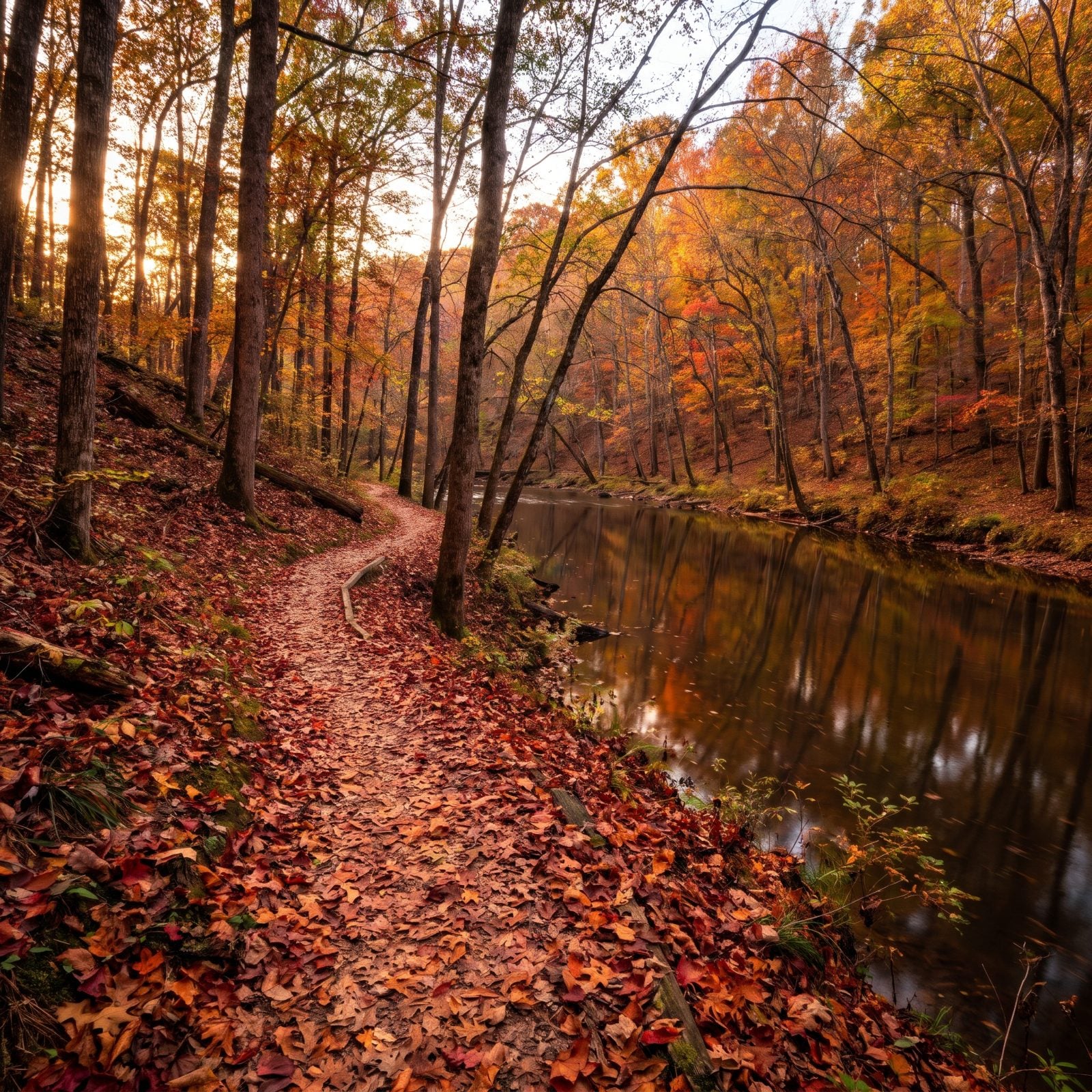
Morrow Mountain spreads across several thousand acres in Stanly County and has been a state park since 1935. The Fall Mountain Trail is one of its most popular routes on AllTrails — around four miles, rated moderate, and the name does half the marketing for it.
Timing is the quiet advantage. This corner of the Piedmont runs warm into November. A Charlotte hiking blogger recently noted that a late warm stretch had pushed the color well into the month. So when the high country is done, when the leaves up top are brown and crunching underfoot, Morrow Mountain can still be holding red and amber along the water.
1. Rendezvous Mountain, Purlear
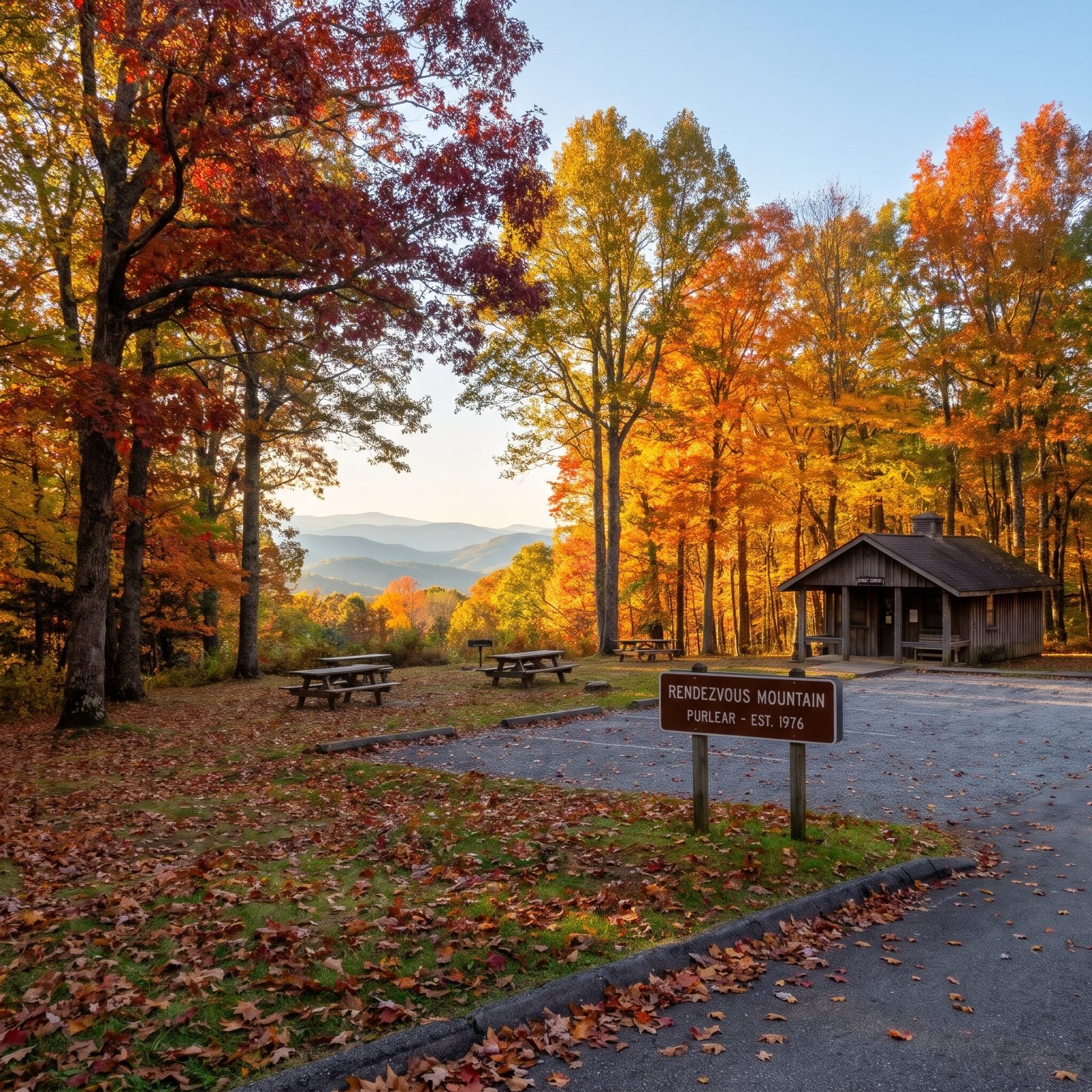
Here’s the one almost nobody has on their list. Rendezvous Mountain, about thirty miles east of Boone, peaks late for a mountain spot — from the tail of October into the first week of November, which buys you an extra beat after the famous ridges have gone past.
It makes a smart alternative to busy Stone Mountain. There’s no camping, so it works as a picnic stop rather than a basecamp. And the best part is almost cheating: strong color stands right at the park office parking lot. Pack a lunch, grab a quiet overlook, and let everyone else fight the crowds elsewhere.