
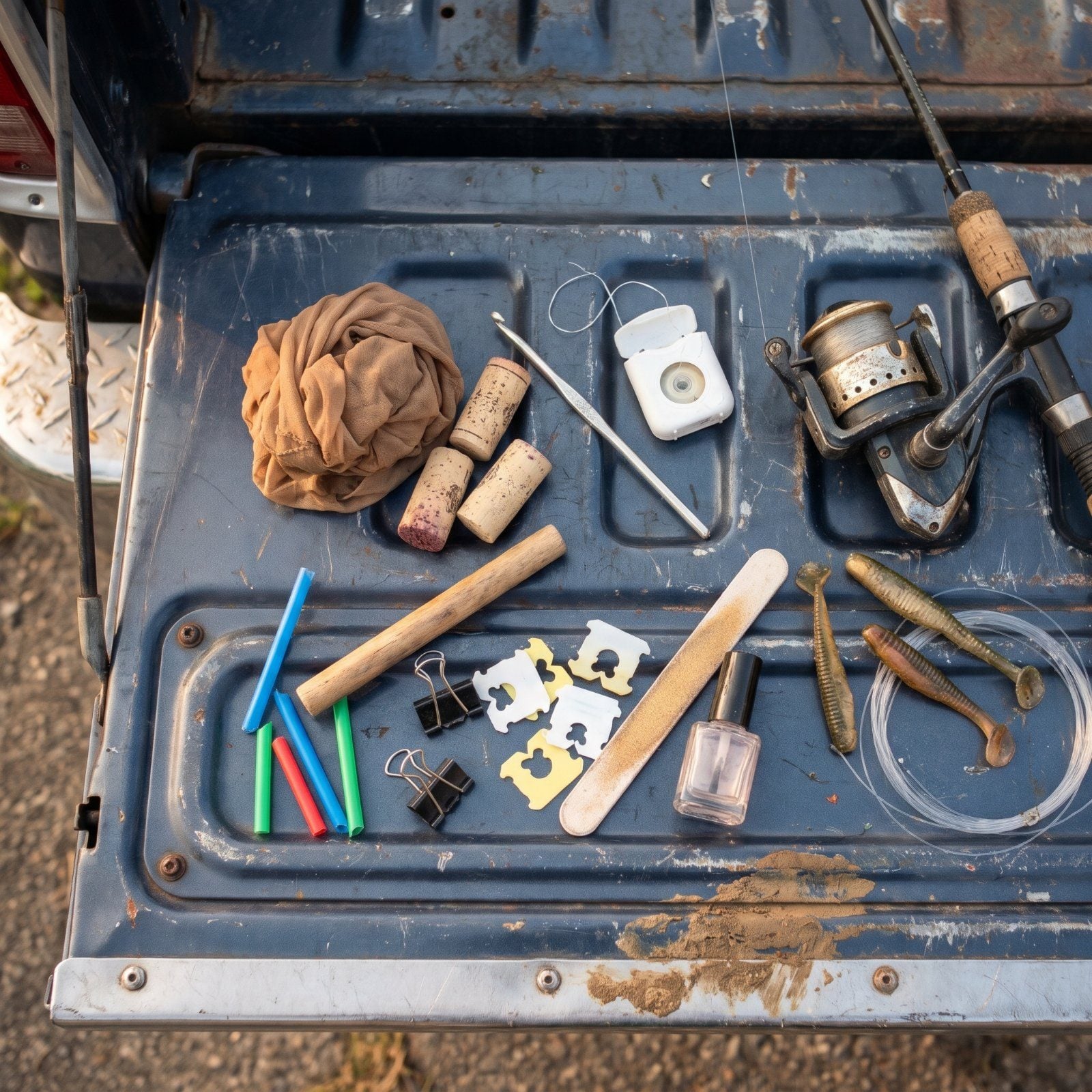
The best-stocked tackle box I’ve ever seen wasn’t a tackle box at all. It was a coffee can rattling around behind the driver’s seat of an old Ford, full of stuff you’d toss while cleaning the kitchen. Pantyhose. Wine corks. A crochet hook. None of it came from a tackle shop, and every piece earned its spot by fixing something on the water when the nearest store was forty miles back the way you came. Gear fails at the worst possible moment — the guide cracks at first light, the backlash nests on your best cast, the hook goes dull on a rocky point just as the fish turn on. Here’s the quiet arsenal that keeps a trip alive.
Please note that some of the images in this article were created with the assistance of AI.
35. Pantyhose for Finding Cracked Rod Guides
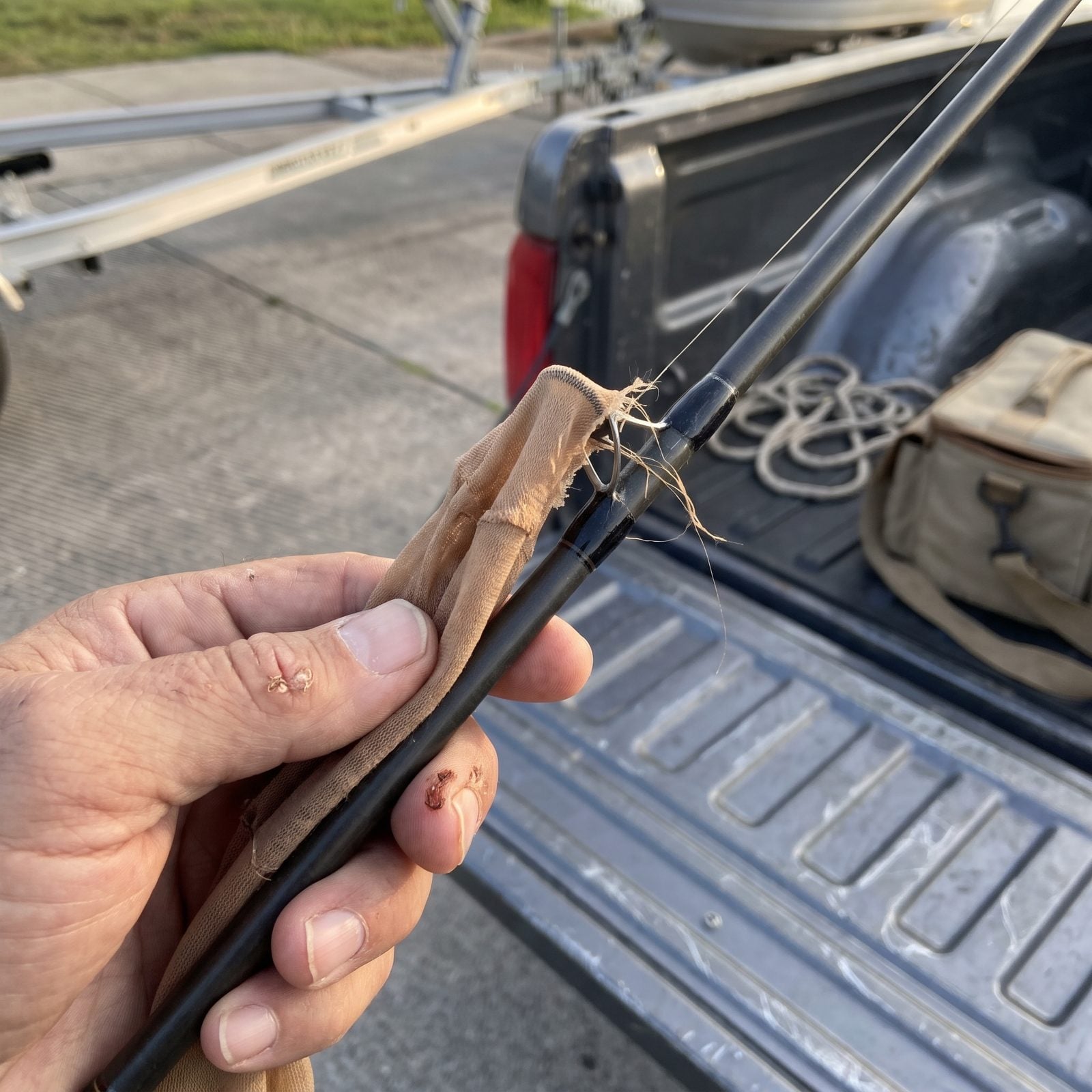
A cracked guide insert shreds a cast of fresh line in an afternoon and you’ll never see it coming, because the crack is hairline and your eyes won’t catch it. Pantyhose will.
Run a wadded-up piece down each guide and it snags on the chip every time, like a splinter catching cotton. I check every rod this way in spring before the first real trip, and I’ve found more bad guides than I’d care to admit to. Cheap. Weighs nothing. Lives balled up in a sandwich bag in the door pocket.
To find guide damage your eyes miss, a veteran outdoors writer who has covered Gulf Coast fishing for two decades suggests sacrificing a pantyhose leg: “Thread the hose through each eye on the rod and run it through several times at different angles to cover the entire guide surface. Any imperfections will be revealed when the fine material snags or pulls nylon strings.”
34. A Crochet Hook for Picking Apart Backlashes
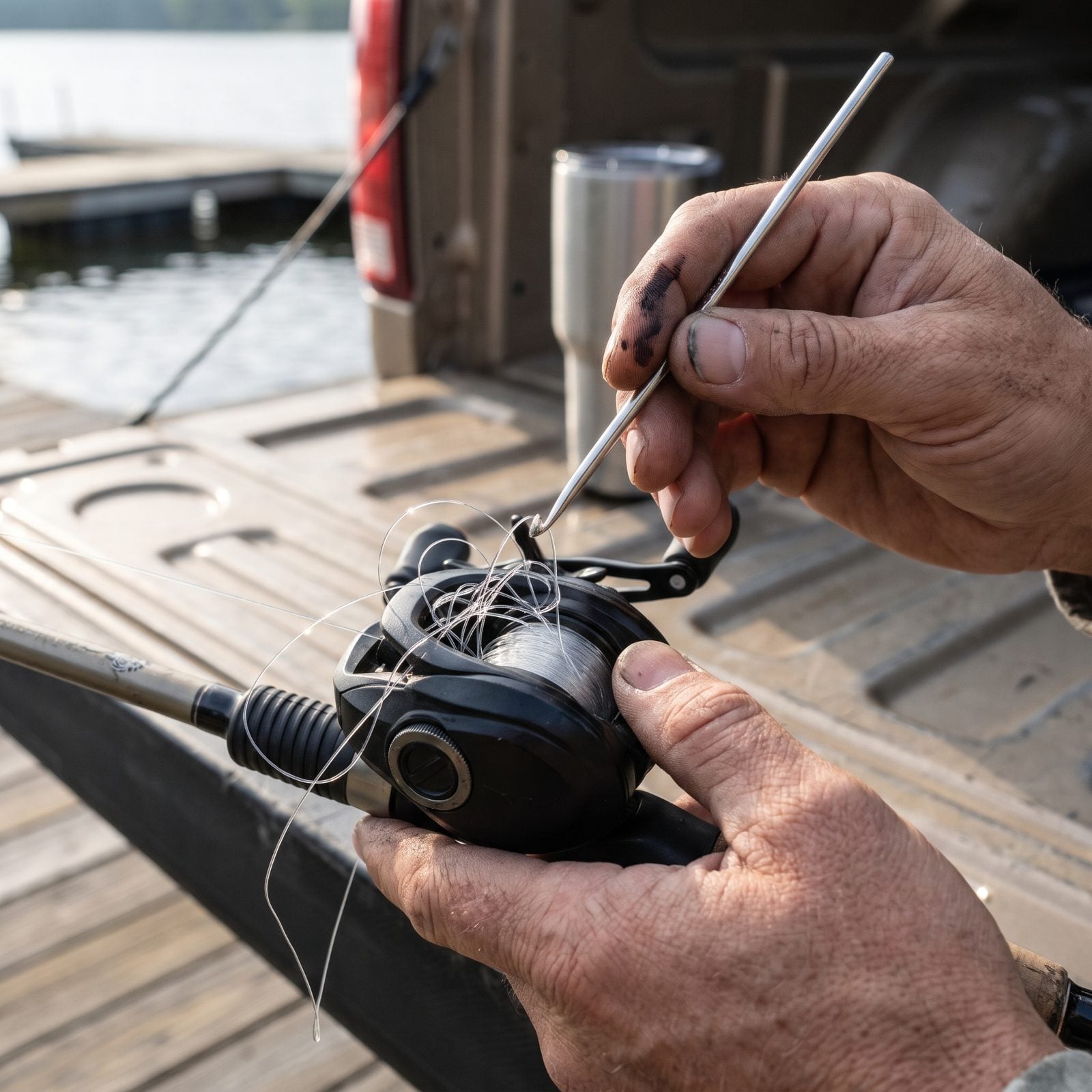
Everybody who throws a baitcaster eventually earns a backlash that looks like a bird built a nest in the spool. Your fingers make it worse. A crochet hook makes it better.
The hook slides under a single loop and lifts it clean without disturbing the ten loops around it, which is exactly the patience a backlash demands. A size G or H works great. I keep one clipped inside the tackle bag, and it has saved more fishing time than any gadget I ever paid money for.
33. Dental Floss for Emergency Rod-Guide Repairs
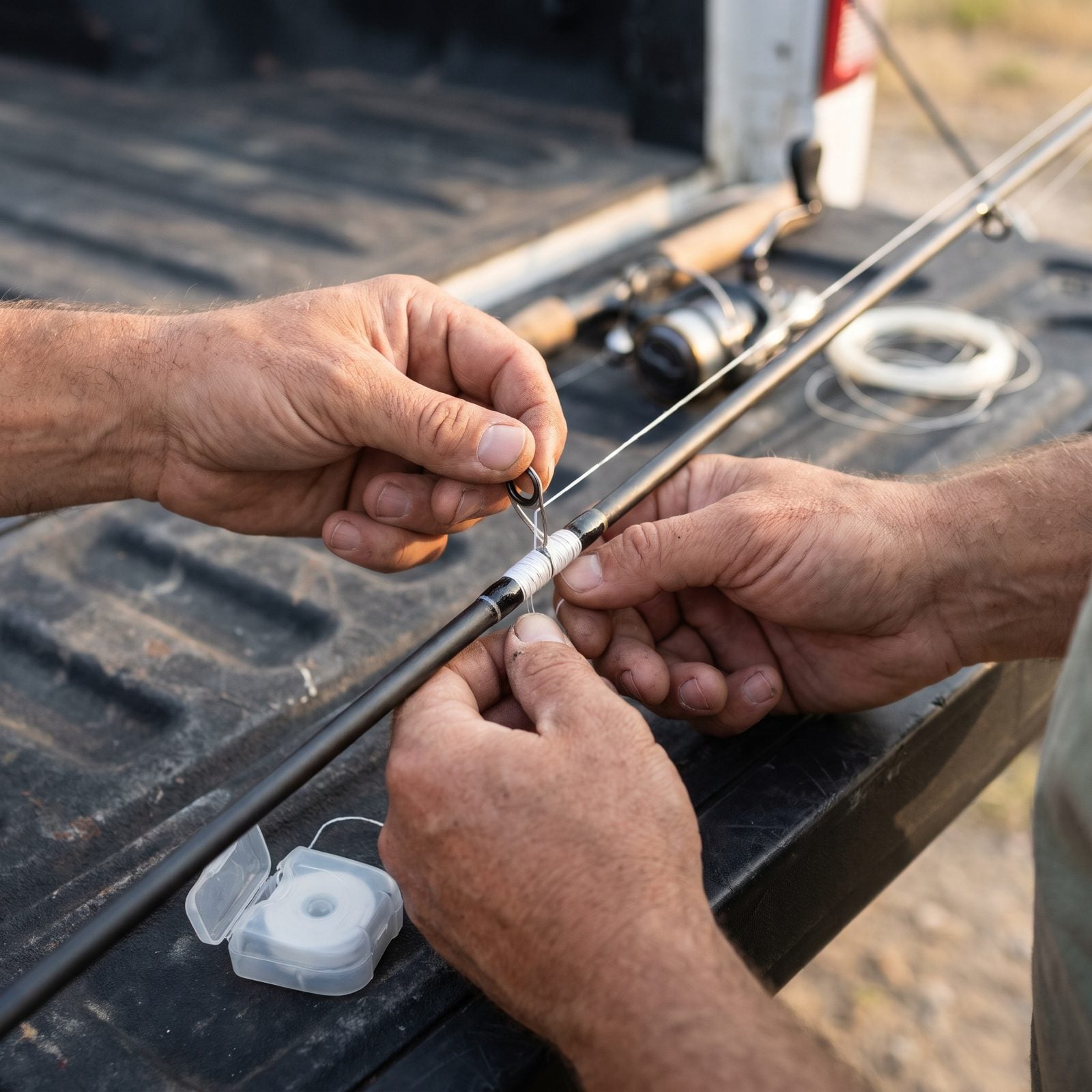
A guide pops loose on day two and you’ve got a choice: fish with a flopping guide or fix it. Waxed dental floss is your field repair.
Wrap it tight and tidy over the guide foot, same as thread wrapping, and the wax helps it bite and hold. It’ll get you through the weekend until you can do a proper job at the bench. Not pretty, but it fishes. The mint flavor is optional and does nothing for the trout.
32. A Wooden Dowel for Breaking Snagged Line Safely
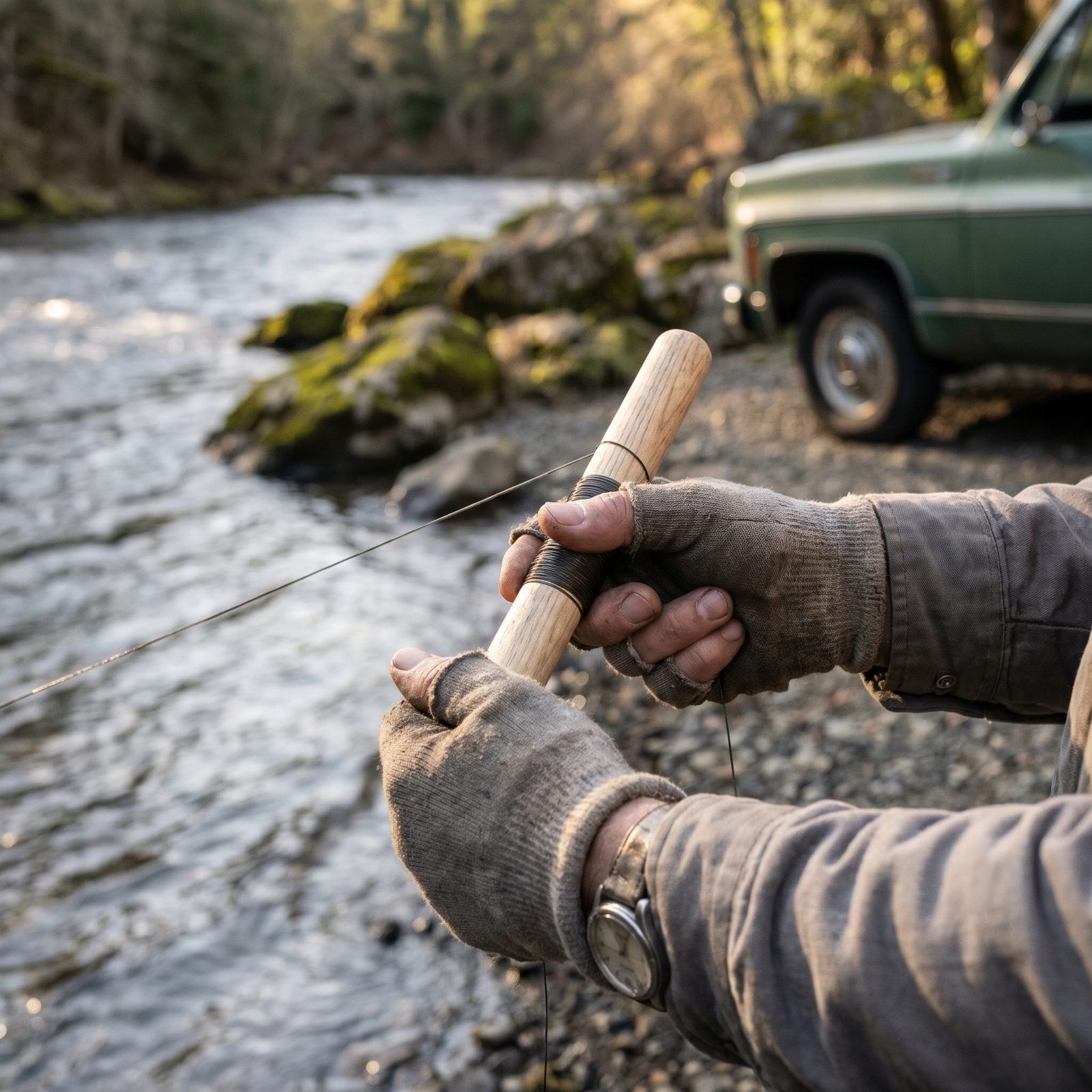
Pulling a snag straight back by the rod is how you shatter a guide or snap a tip. Worse, braid cutting into bare hands opens you up like wet paper.
Wrap the line a few times around a short dowel, point the rod straight down the line, and pull steady. The dowel saves your hands and keeps the strain off the blank. Any broomstick scrap works, cut to maybe six inches. I keep one in the boat and one in the truck, and my fingers have thanked me more than once.
31. Binder Clips for Controlling Loose Line Spools
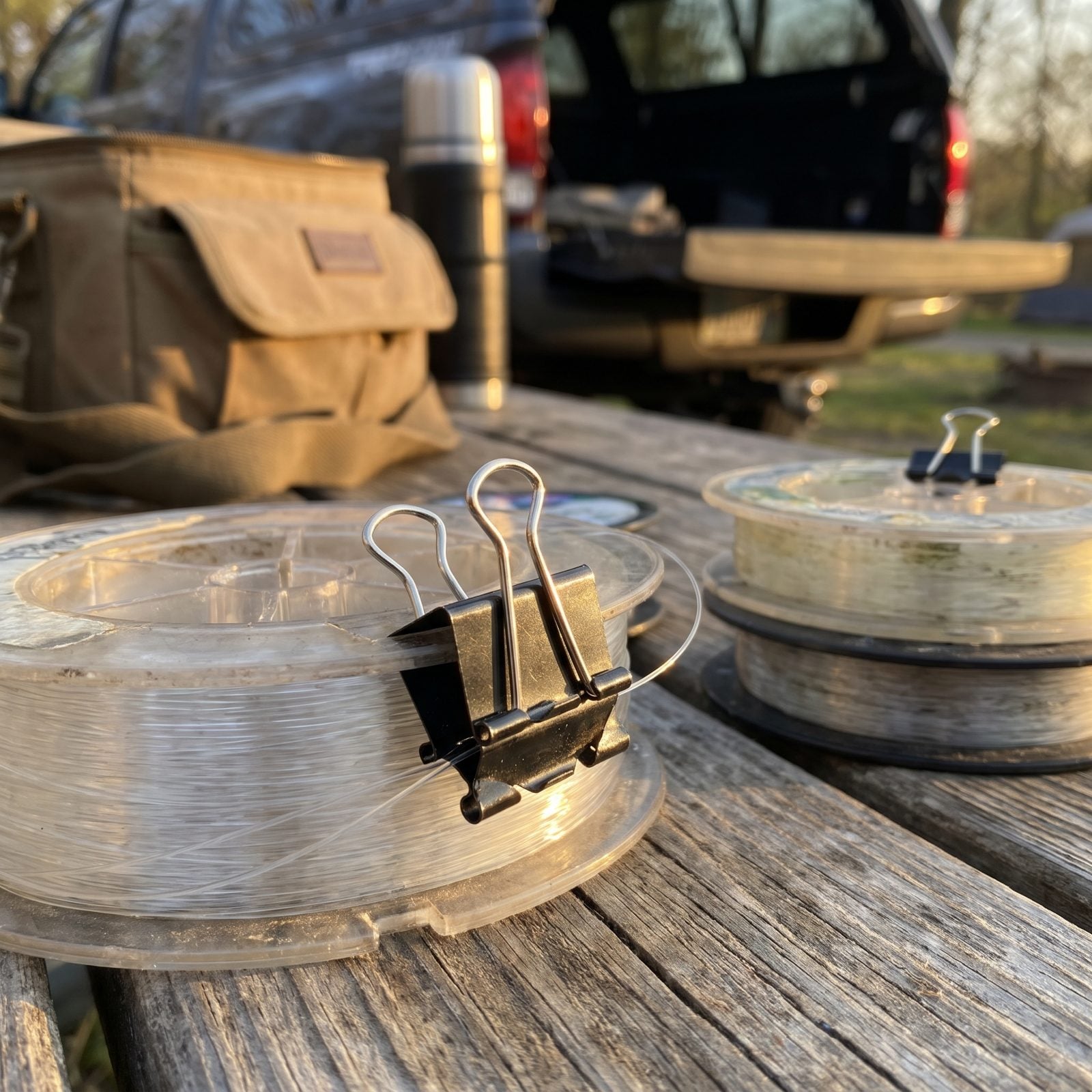
A filler spool with a free tag end will unravel itself across the floor of your truck before you ever reach the ramp. A small binder clip pins the end to the spool, and that’s the end of the chaos.
The clip also holds the line start when you’re spooling a reel, so you’ve got a free hand. A bag of them from the office-supply aisle costs almost nothing and lasts for years. Clip a couple along a cooler edge, too — they’ll hold a tarp down in a gust.
30. Bread Tags for Labeling Line Weight and Age
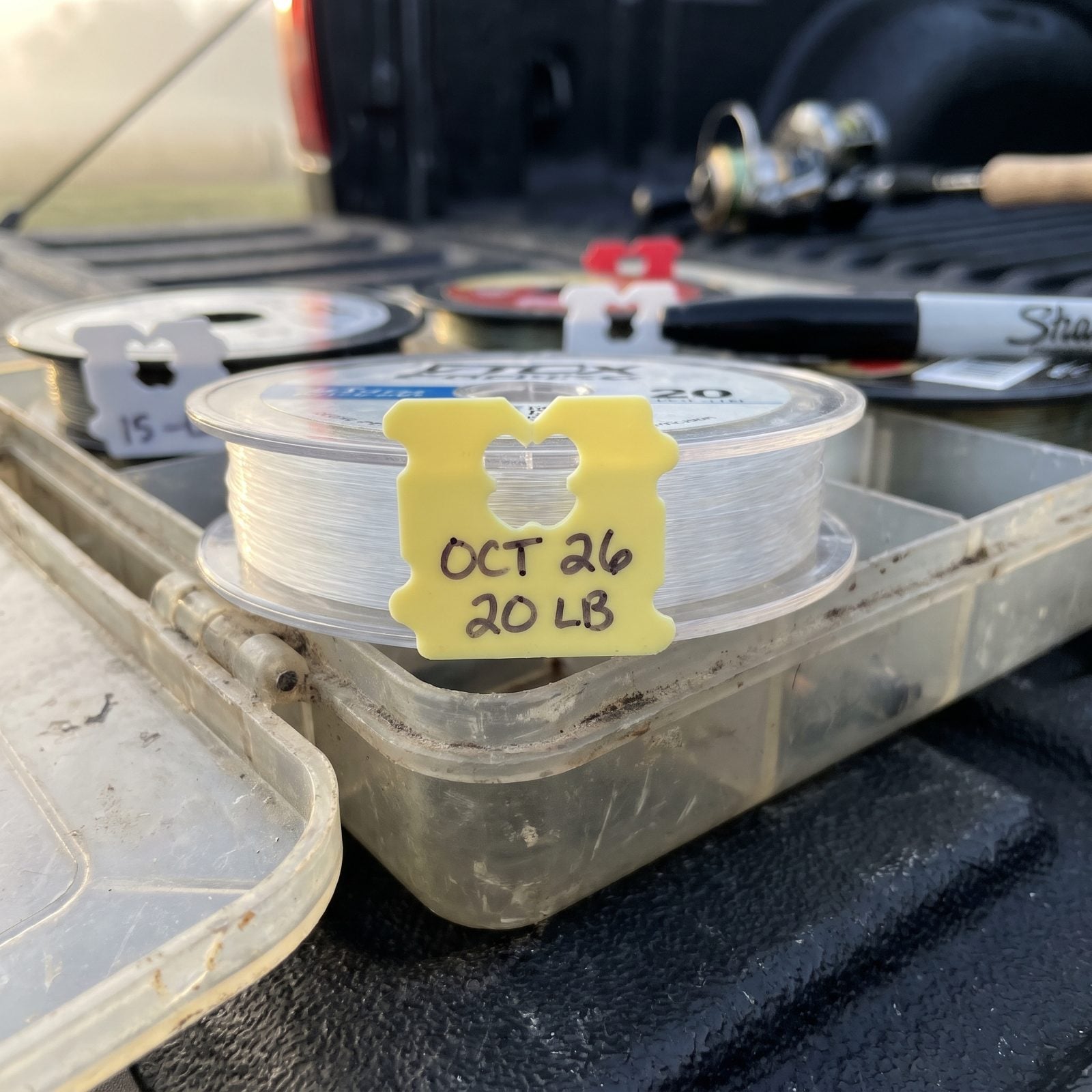
You pick up a spool and you’ve got no idea — is this the 8-pound or the 12? How old is it? Mono goes brittle with age and sun, and old line costs you fish you’ll never know you lost.
A bread tag clips right onto the spool lip. Write the pound test and the date you opened it with a marker, and now you know at a glance when to retire it. Funny how the little things that keep a spool straight are usually the things you were about to throw away.
29. An Emery Board for Touching Up Dull Hooks
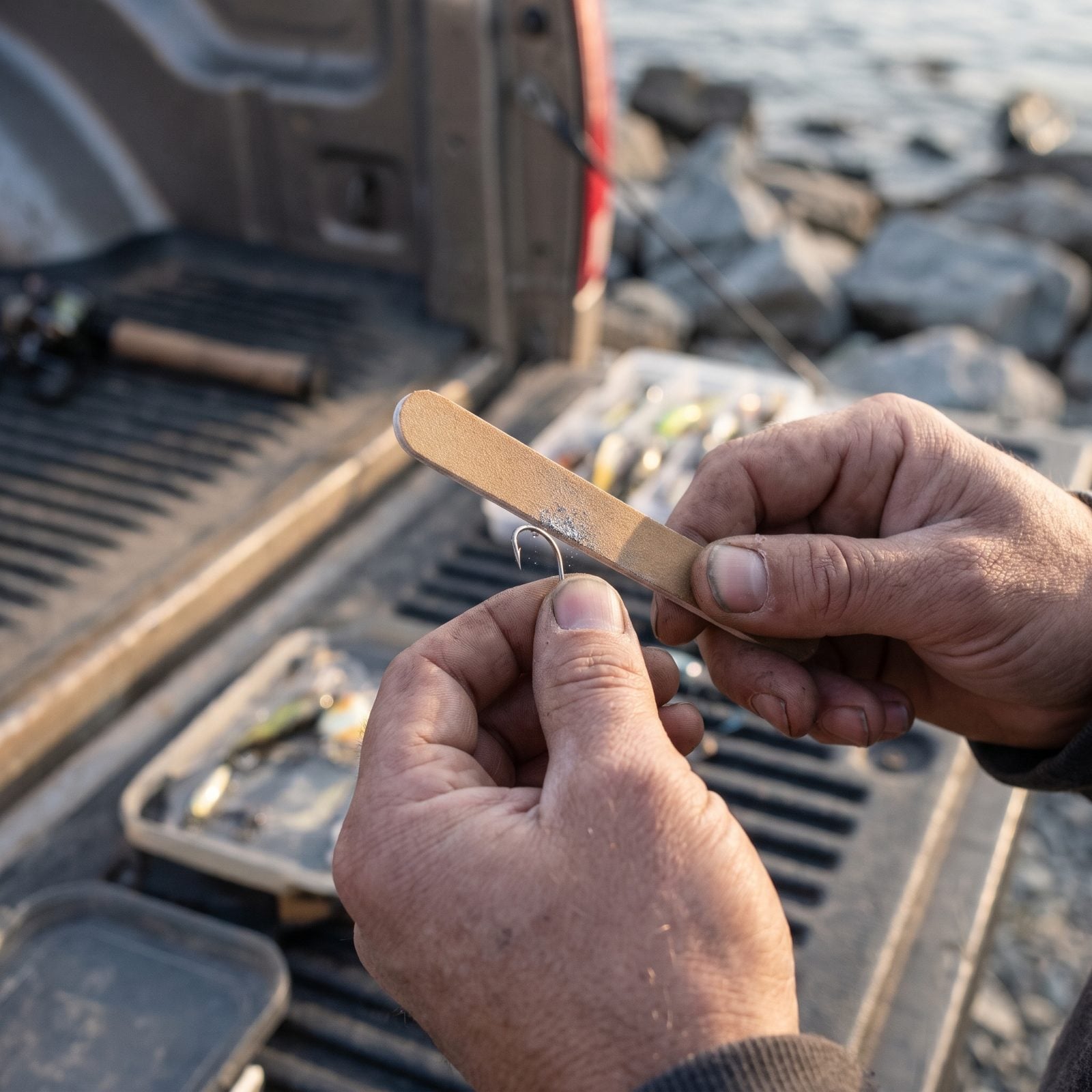
Drag a hook across rock and oyster shell all day and the point rolls over dull, and a dull point bounces off a fish’s jaw instead of sticking.
Run a fine emery board along the point a few strokes and you’ve got bite again. Test it the old way: drag the point across your thumbnail. If it skates, it’s dull. If it bites and sticks, you’re good. A board costs pocket change and sharpens more hooks than most gadget sharpeners before it wears out.
28. Clear Nail Polish for Sealing Frayed Thread Wraps
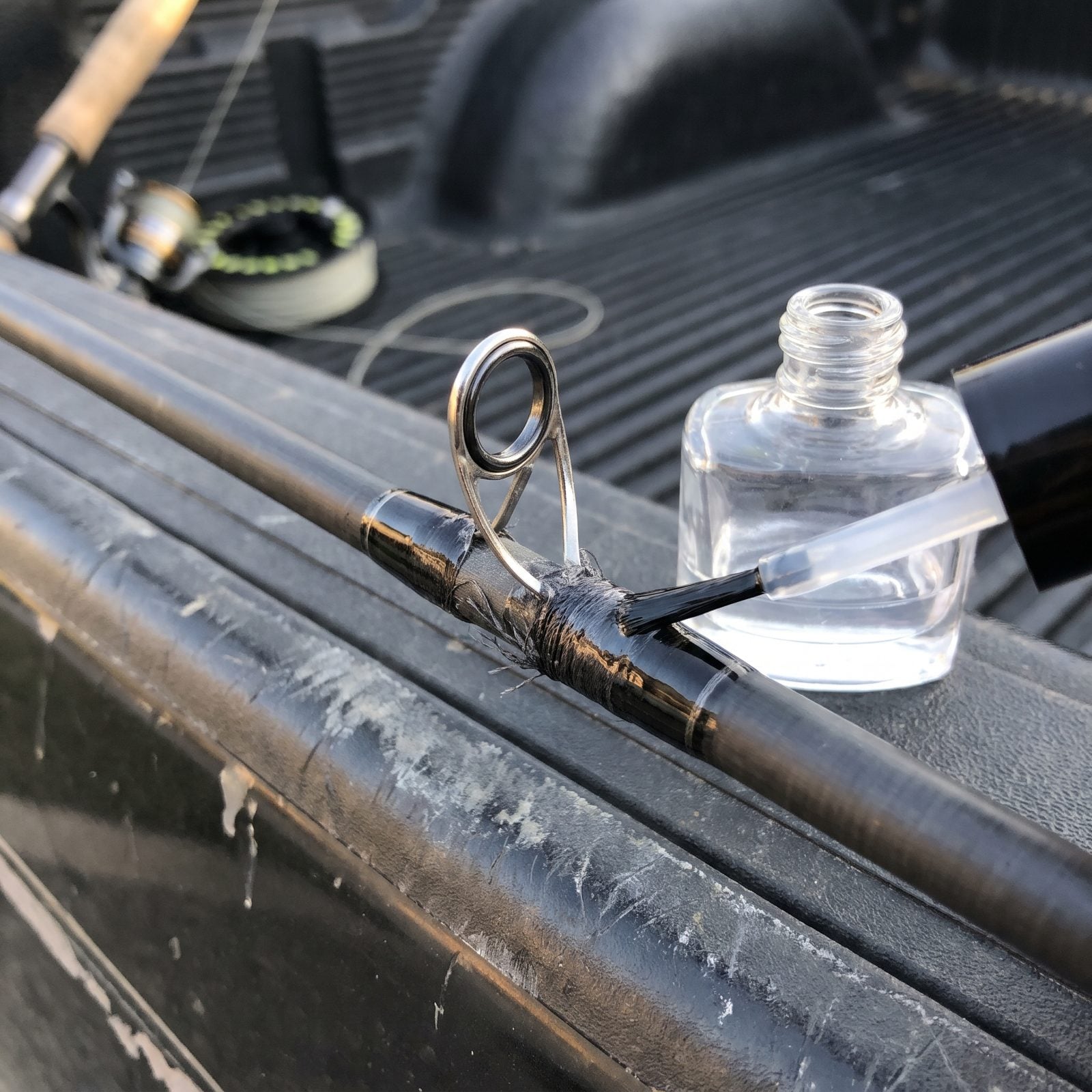
Thread wraps on a guide start to fuzz and lift, and once they let go the guide follows. A dab of clear nail polish locks the frayed threads down and buys you a whole season.
It’s thin enough to soak in and hard enough to hold. It’ll also seal a knot you don’t quite trust, or cap the sharp cut end of a zip tie so it stops snagging your line. One small bottle in the glovebox handles a dozen little fixes. It’s not rod finish, but on a riverbank it’s close enough to fish.
27. A Needleless Syringe for Precise Reel Oiling
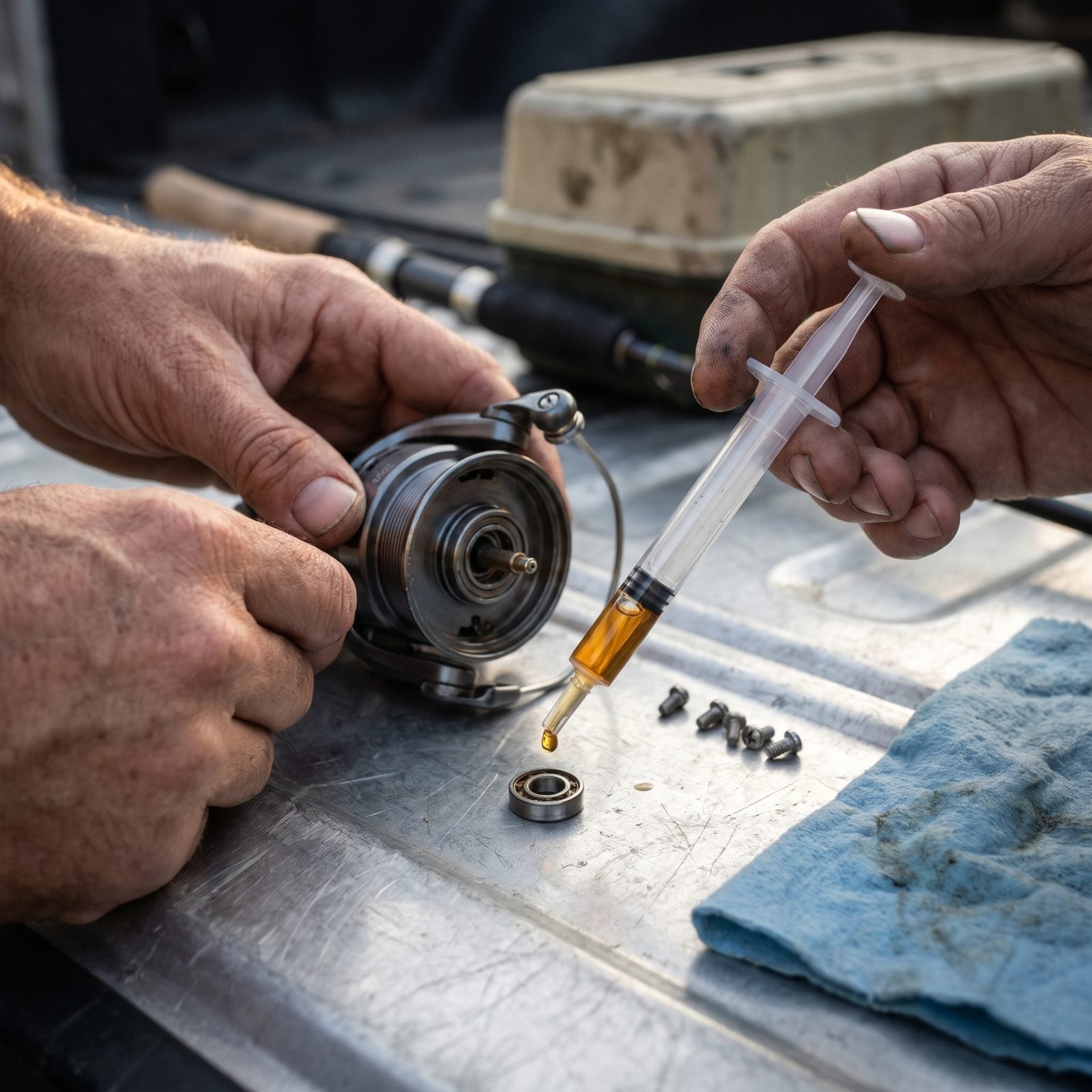
Reel oil wants to go exactly one place, and the dropper bottle it came in has never once hit that place. You squeeze, a fat glob lands on the wrong bearing, and now oil’s creeping into the drag where it has no business being.
A cheap needleless syringe, the kind that comes with children’s medicine, solves it clean. You control the drop — one pinhead’s worth onto the bearing, nothing on the drag washers. Grab a few from the pharmacy for a couple bucks and keep one capped in the glove box.
26. A Rubber Shelf-Liner Square for Gripping Stuck Parts
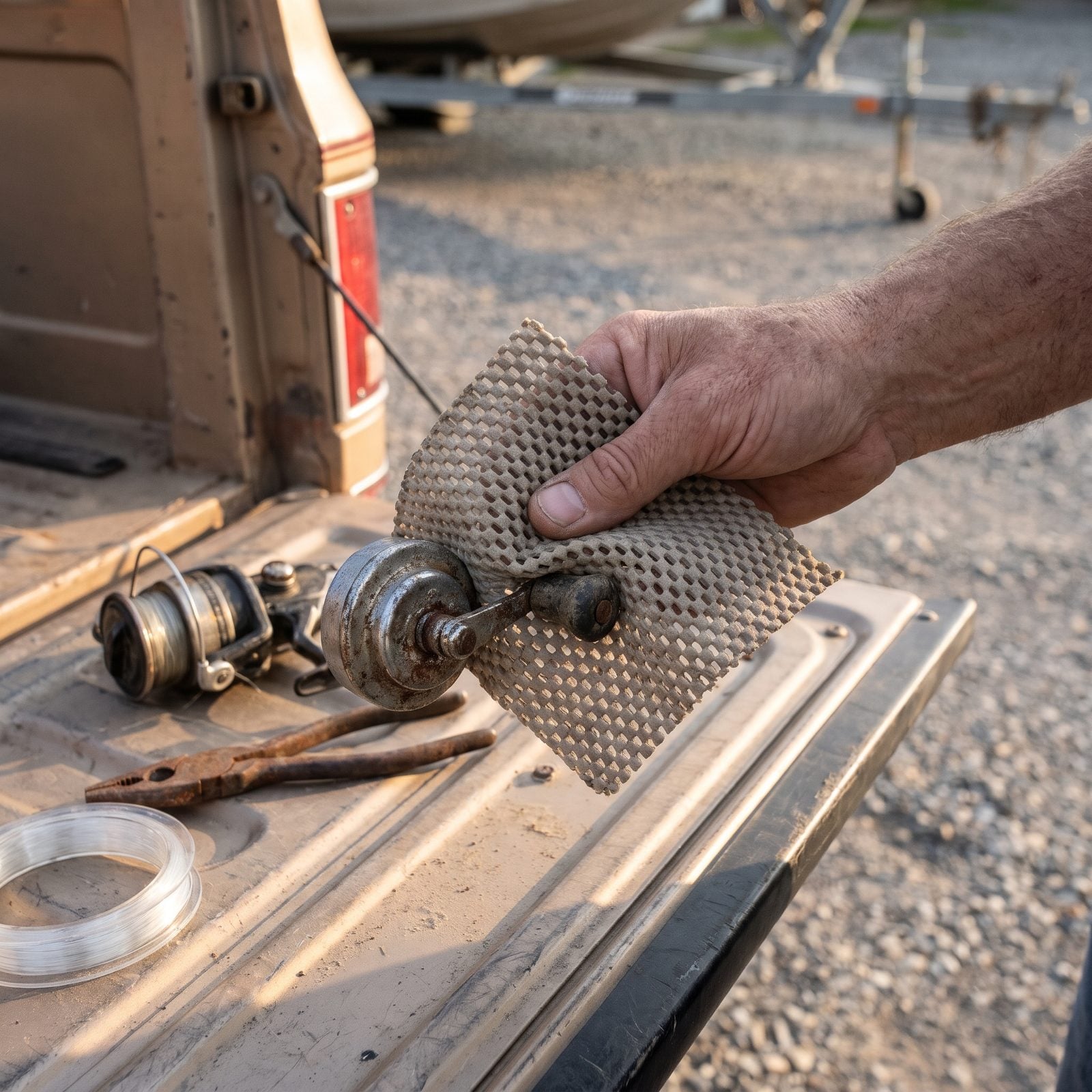
Some fittings seize up like they’ve been welded. A reel handle that froze overnight, a drag cap swollen with salt, a trailer wing nut that laughs at your bare fingers — all of them share one problem, which is that skin slides and metal doesn’t give.
A square of rubber shelf liner, torn off the roll you lined the kitchen cabinets with, turns a slipping grip into a locked one. Wrap it around the part and the ribbed rubber bites where your fingers just skate off. Costs almost nothing. Lives flat under the seat forever. I’ve cracked open bait jars and stubborn reel caps with the same scrap for three seasons now.
25. A Pencil Eraser for Cleaning Battery Contacts
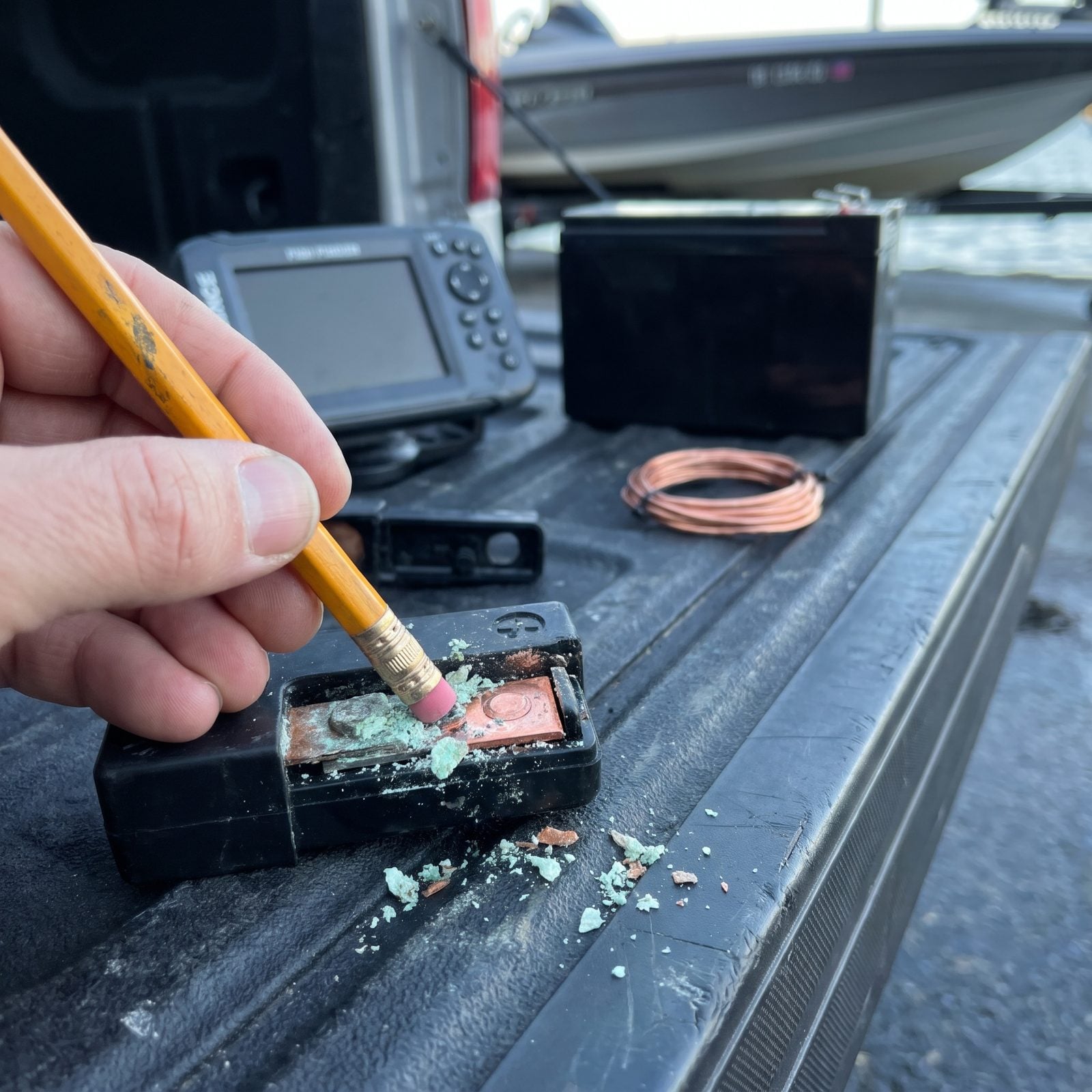
A fish finder that flickers to black isn’t always dying. Half the time it’s a battery contact wearing a crust of corrosion — that green-white fuzz that strangles the current.
A plain pencil eraser scrubs it right off. The mild abrasive works the crust loose, and on a contact this far gone, scale and flaking copper come off in chunks to show bright metal underneath. That’s the wreckage of corrosion, not the eraser’s doing. Sandpaper will chew into the good metal too if you get impatient. Works on trolling motor terminals, flashlight contacts, the whole list of little things that quit for no reason. Keep a short pencil in the truck and forget it’s there until the morning it saves your bacon.
24. A Shower Cap for Covering a Rigged Reel
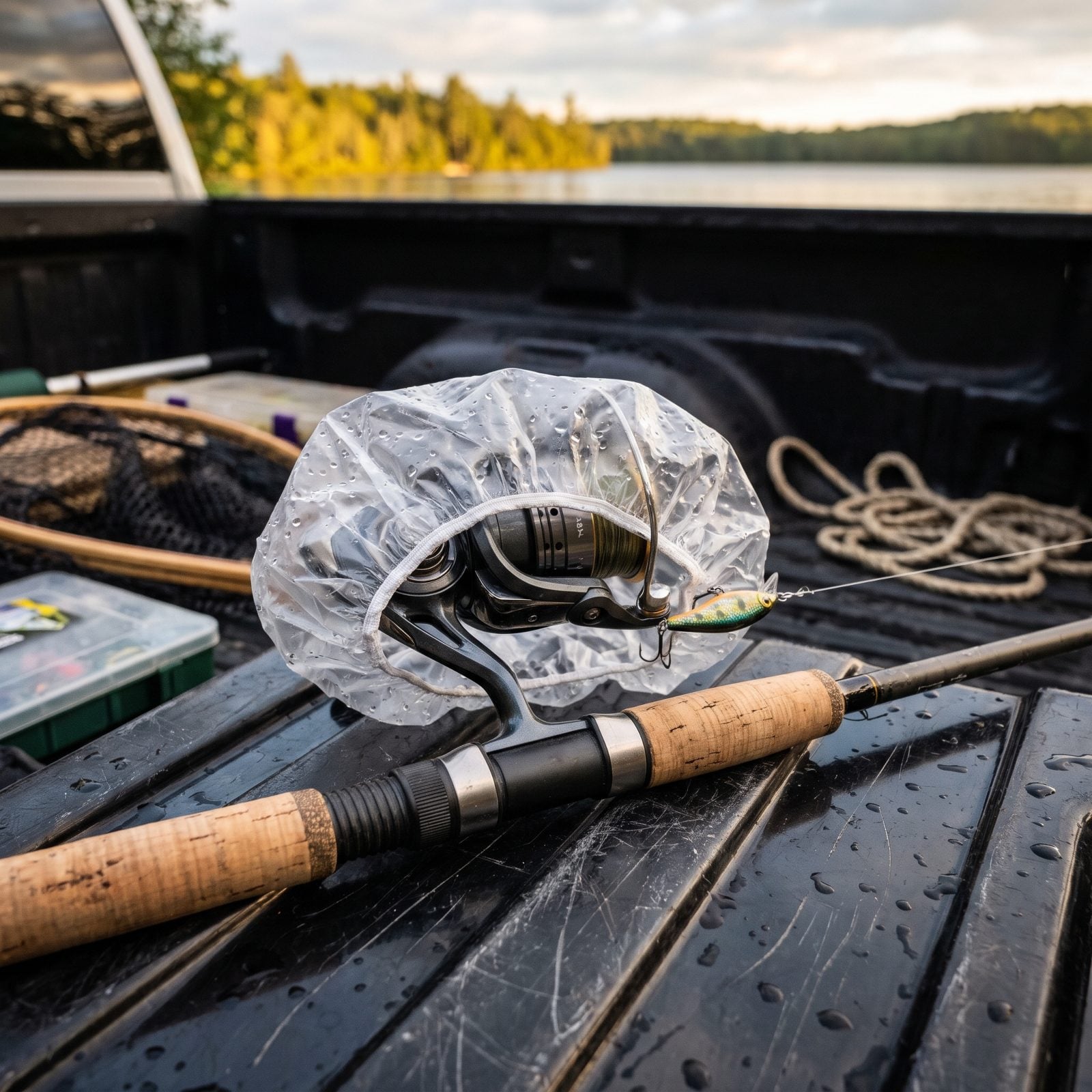
A rigged rod is a time machine. Drive to a second spot, lift the rod out, and you’re casting in ten seconds instead of ten minutes of re-tying with cold fingers.
The trouble is the drive. Road grit, rain, and a reel bouncing around in an open truck bed add up to a gummed-up mess. A free hotel shower cap stretches over the reel, elastic band and all, and keeps the whole works clean until you’re ready. Toss a couple in the console. They weigh nothing, and nobody ever misses them from a hotel bathroom.
23. A Mesh Laundry Bag for Air-Drying Wet Waders
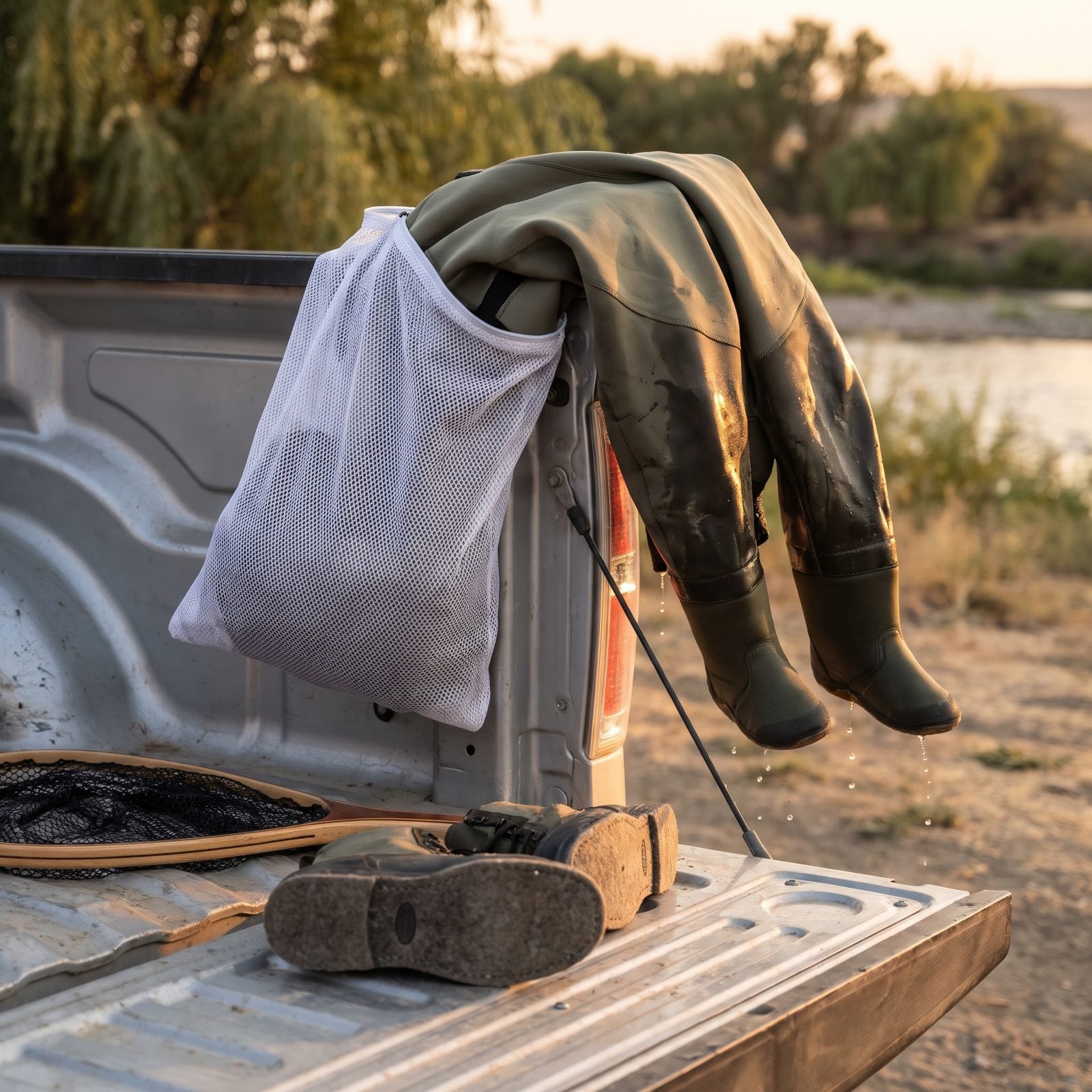
Stuff wet waders in a bucket or a trash bag and you’ve built a swamp. They never dry, they start to smell, and the neoprene breaks down faster for sitting in its own moisture.
Stuff them loosely in a mesh laundry bag instead — the zippered kind meant for delicates — and hang it from the truck rail so they can breathe. Air moves through the mesh the whole time you’re packing up. Mildew needs a closed, wet space to get going. Deny it that, and the problem mostly disappears on its own.
22. Newspaper for Drying the Insides of Boots
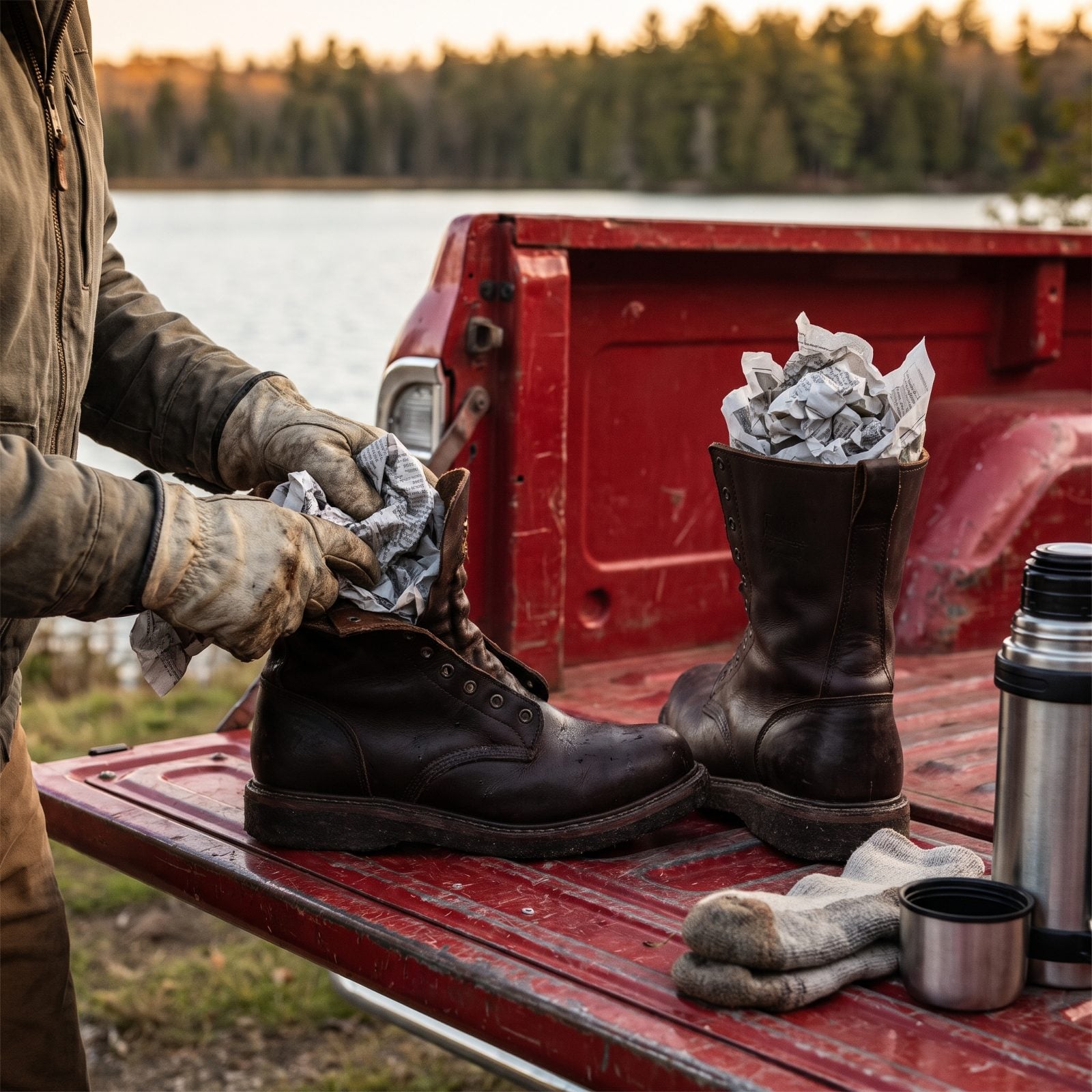
Wading boots dry slowest from the inside, where the damp sits down in the felt and the lining and just refuses to leave. Pull them on the next morning still soggy and you’ve started the day already losing.
Crumpled newspaper, packed tight overnight, pulls the moisture out like a wick. Swap it for a dry batch if the boots were truly soaked. It’s the same trick that’s been saving work boots and sports gear for a century, and it costs you whatever you paid for yesterday’s paper — nothing, usually, if you know someone who still gets one.
21. Baby Powder for Pulling On Neoprene Waders
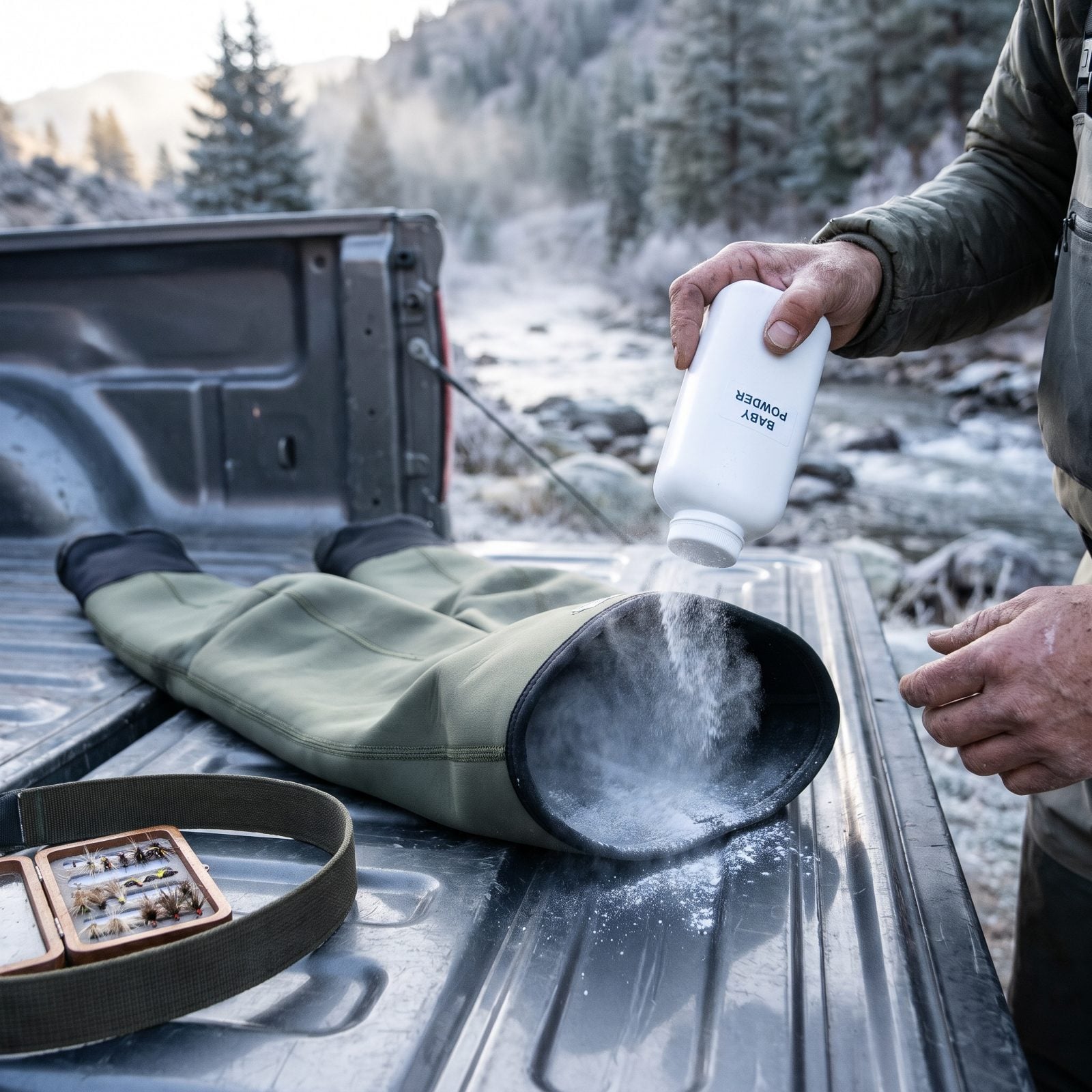
Anyone who has fought wet neoprene onto cold, damp legs at five in the morning knows the specific misery of it. The rubber grabs your skin and won’t slide, and there you are hopping around the truck like a fool before the sun’s even up.
A light dusting of baby powder over the legs turns that wrestling match into an easy pull. It cuts the friction and keeps things dry at the same time. A small bottle rides in the door pocket and lasts most of a season.
20. A Shower Curtain Liner for Protecting Truck Seats
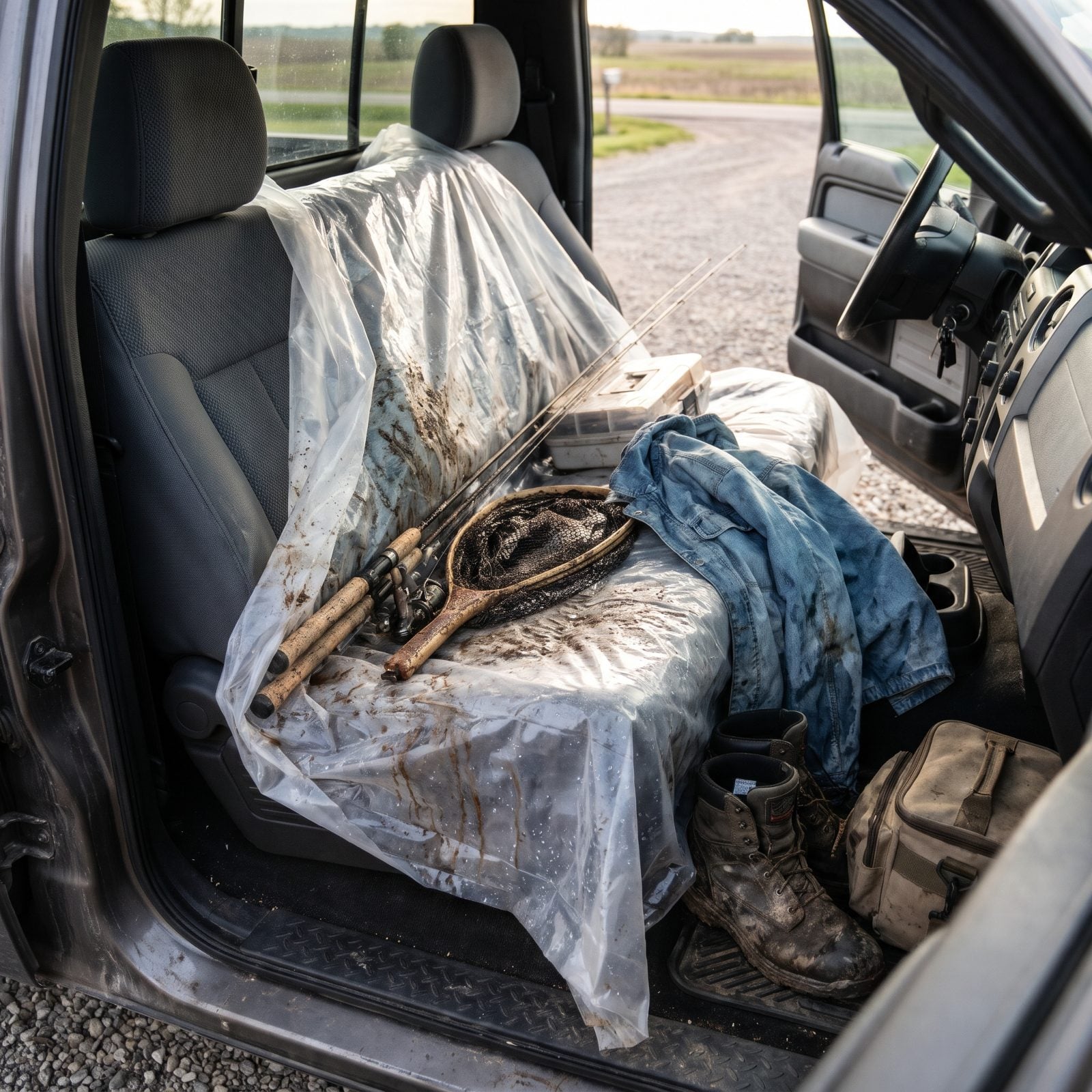
Mud, fish slime, and soaked gear will ruin a truck seat faster than you’d think, and the smell that settles into cloth upholstery never fully leaves.
A dollar-store shower curtain liner spread across the seat catches all of it — wet waders, a leaking cooler, a stringer of fish riding to the cleaning table. Peel it off, hose it down, fold it back into the glove box. I ignored this for years and paid for it with a passenger seat that smelled like low tide until the day I sold the truck.
19. A Milk Crate That Becomes a Rod and Tackle Station
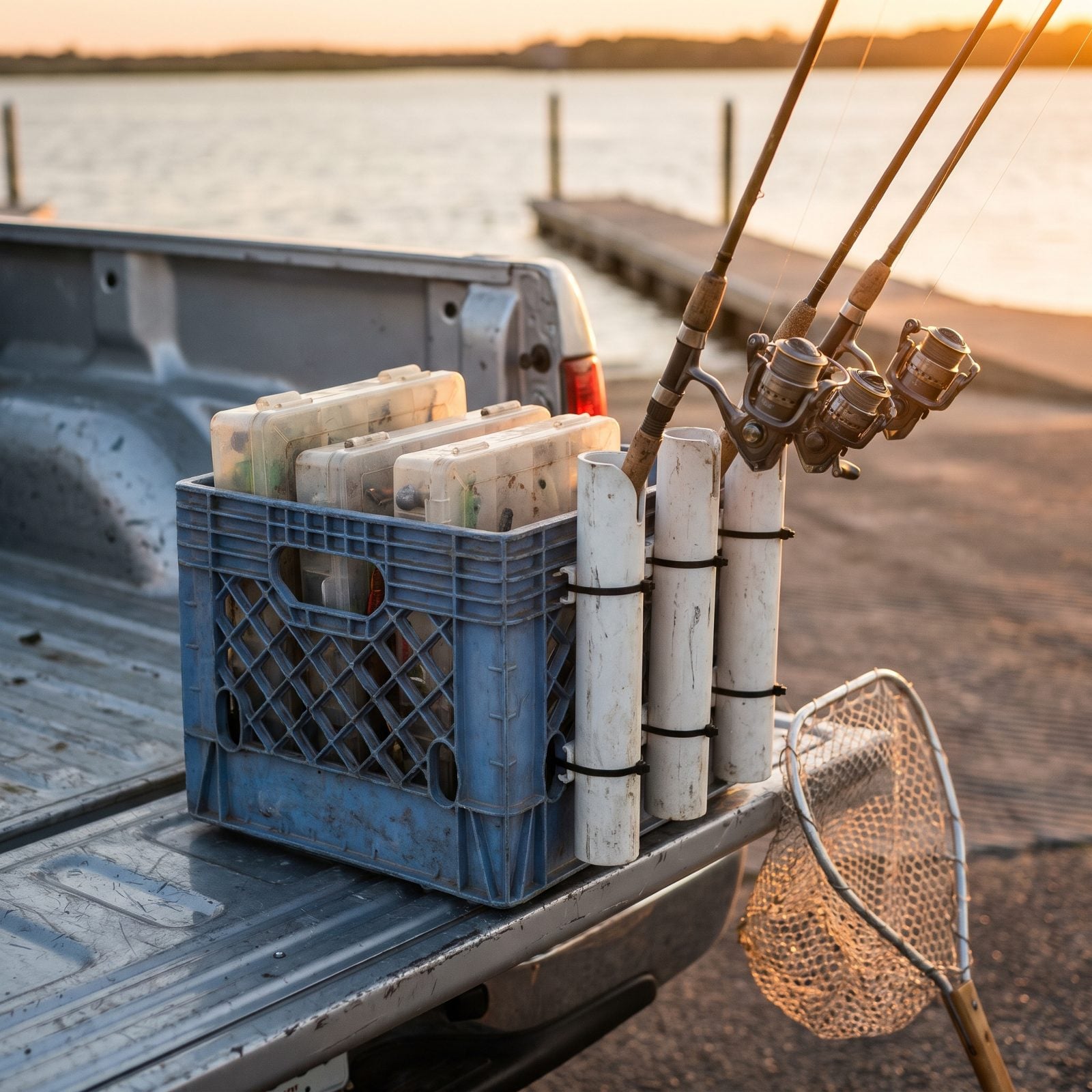
The humble milk crate is the most versatile thing a boat angler owns. It starts as a box and becomes whatever the day needs.
Zip-tie a few lengths of PVC pipe to one side and you’ve got rod holders. Drop your tackle trays inside, and the crate carries everything in one grab from truck to boat. It doubles as a seat, a step, and a dry-storage box when the spray kicks up.
- It’s nearly free and genuinely rugged.
- It stacks and won’t tip in a boat.
- You can rebuild its layout in an afternoon with zip ties and a saw.
18. A Frisbee for Corralling Loose Tackle
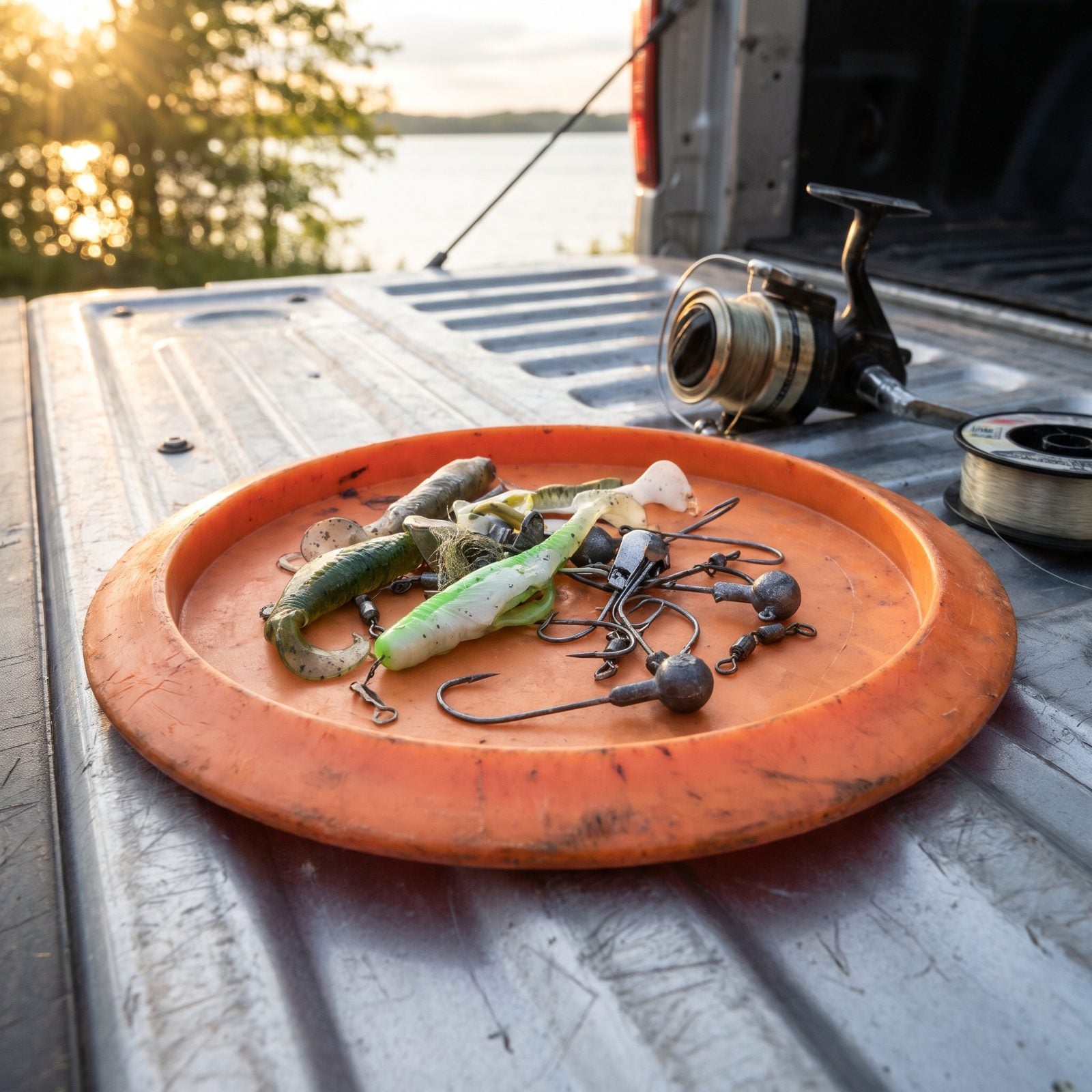
Pour out a tray of jig heads on a flat tailgate and half of them roll straight off into the gravel, gone forever. The curved lip of an old frisbee stops that cold.
Dump your loose tackle into it while you re-rig and nothing escapes. The raised edge keeps hooks and swivels penned up on a windy day, and it doubles as a scoop for bait or a quick bowl to soak soft plastics. A beat-up frisbee from the garage costs you nothing and earns its spot in the truck bed every single trip.
17. A Magnetic Parts Tray That Keeps Split Rings From Vanishing
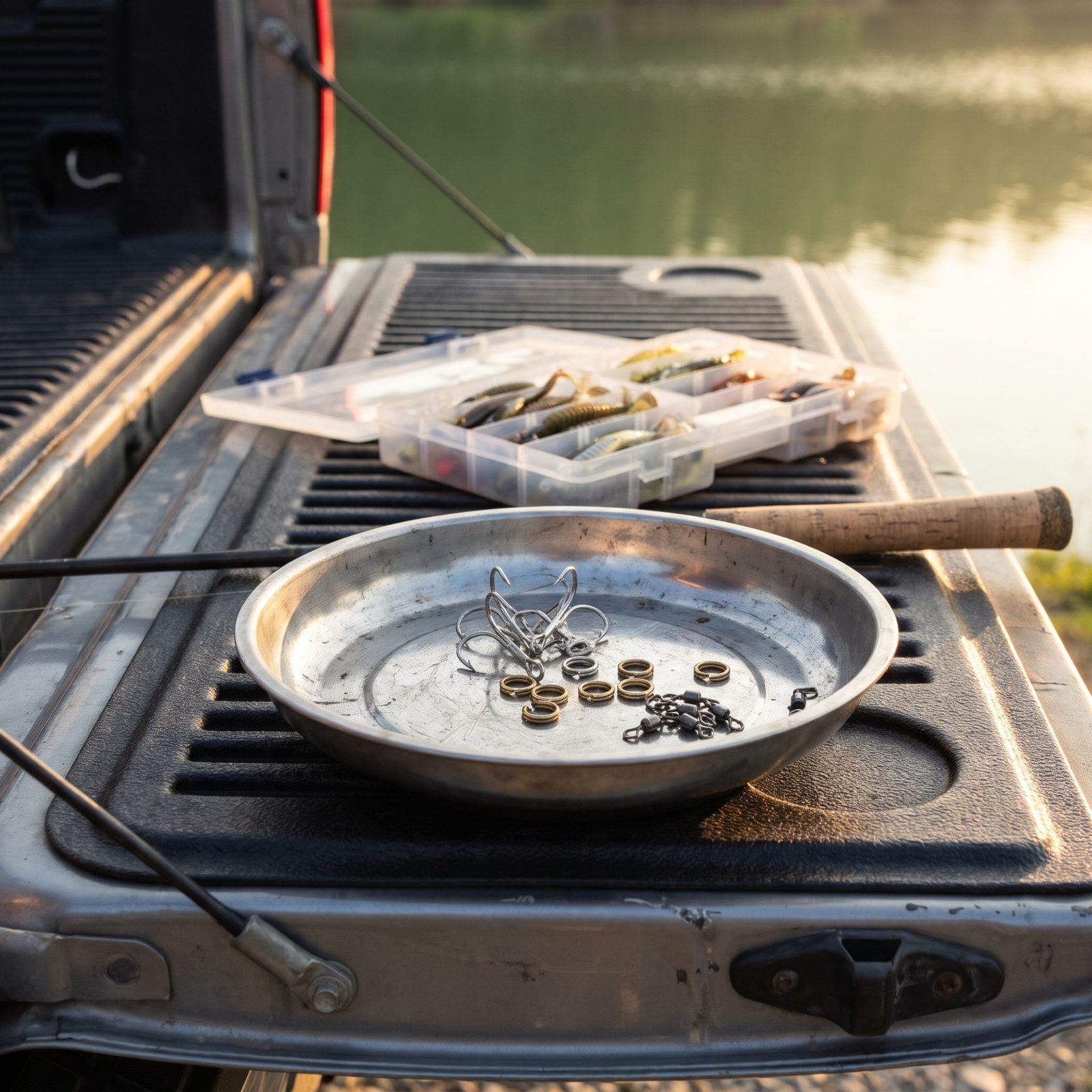
Drop a size-10 split ring on gravel and you can kiss it goodbye. The magnetic tray mechanics use to catch stray bolts does the exact same job for terminal tackle, and it runs a few bucks at any auto parts store.
Set it on the tailgate while you re-rig. Hooks, swivels, rings — they all stick right where you put them, even when the breeze kicks up and your hands have gone numb. No more pinching tiny hardware off a windy truck bed one piece at a time.
16. A Telescoping Magnet for Fishing Dropped Pliers Out of Nowhere
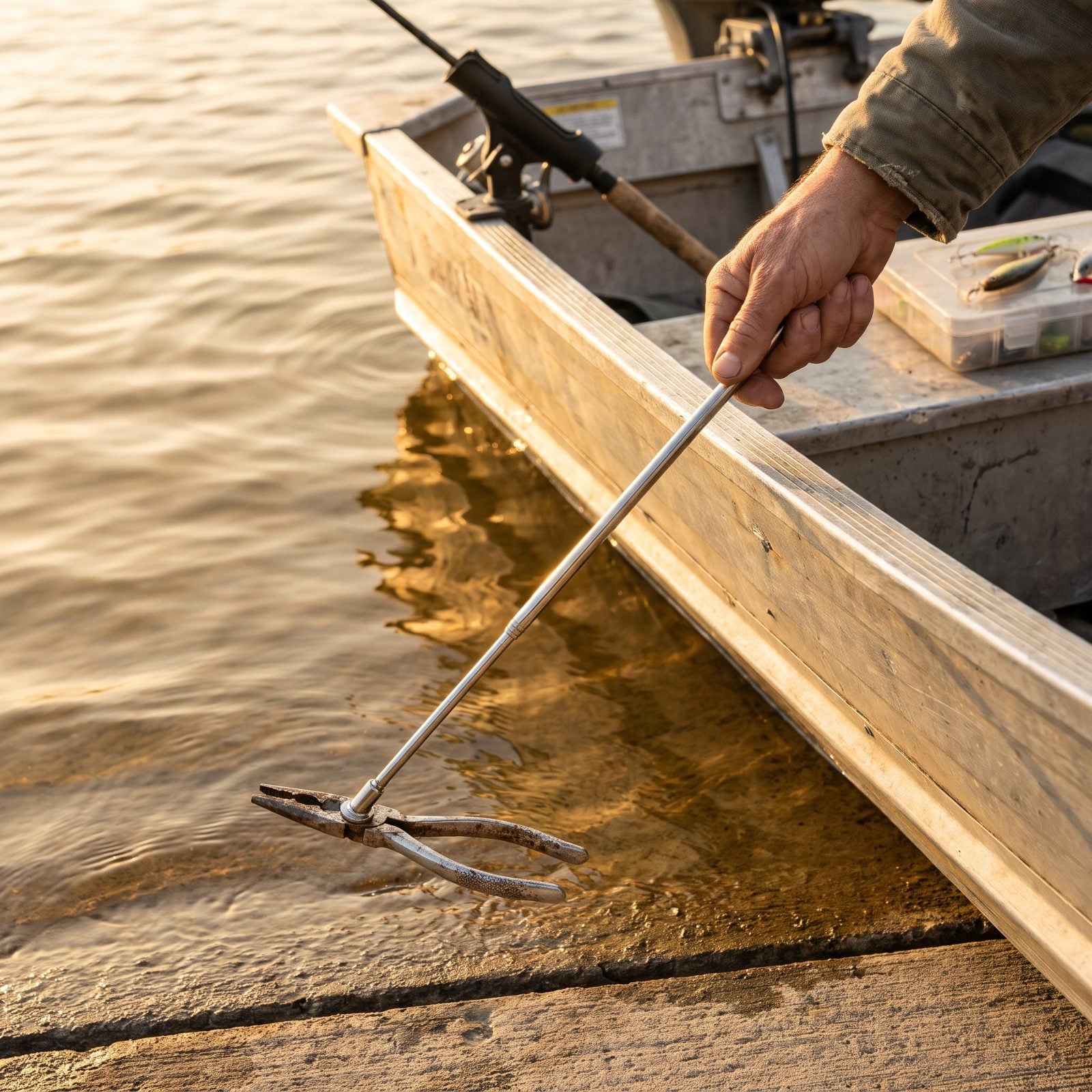
Everyone drops a tool in the water eventually. The lucky ones watch it sink in two feet of clear shallows and only feel like a fool for a minute.
A telescoping magnet — the pocket kind that collapses down to pen size — pulls stainless pliers, hook files and spare hardware right back up before they settle into the muck. It also reaches under seats and seat tracks where dropped bolts love to hide. Costs next to nothing, and it earns its spot the first time it saves a thirty-dollar pair of forceps.
15. Sidewalk Chalk for Marking Where the Trailer Lines Up Every Time
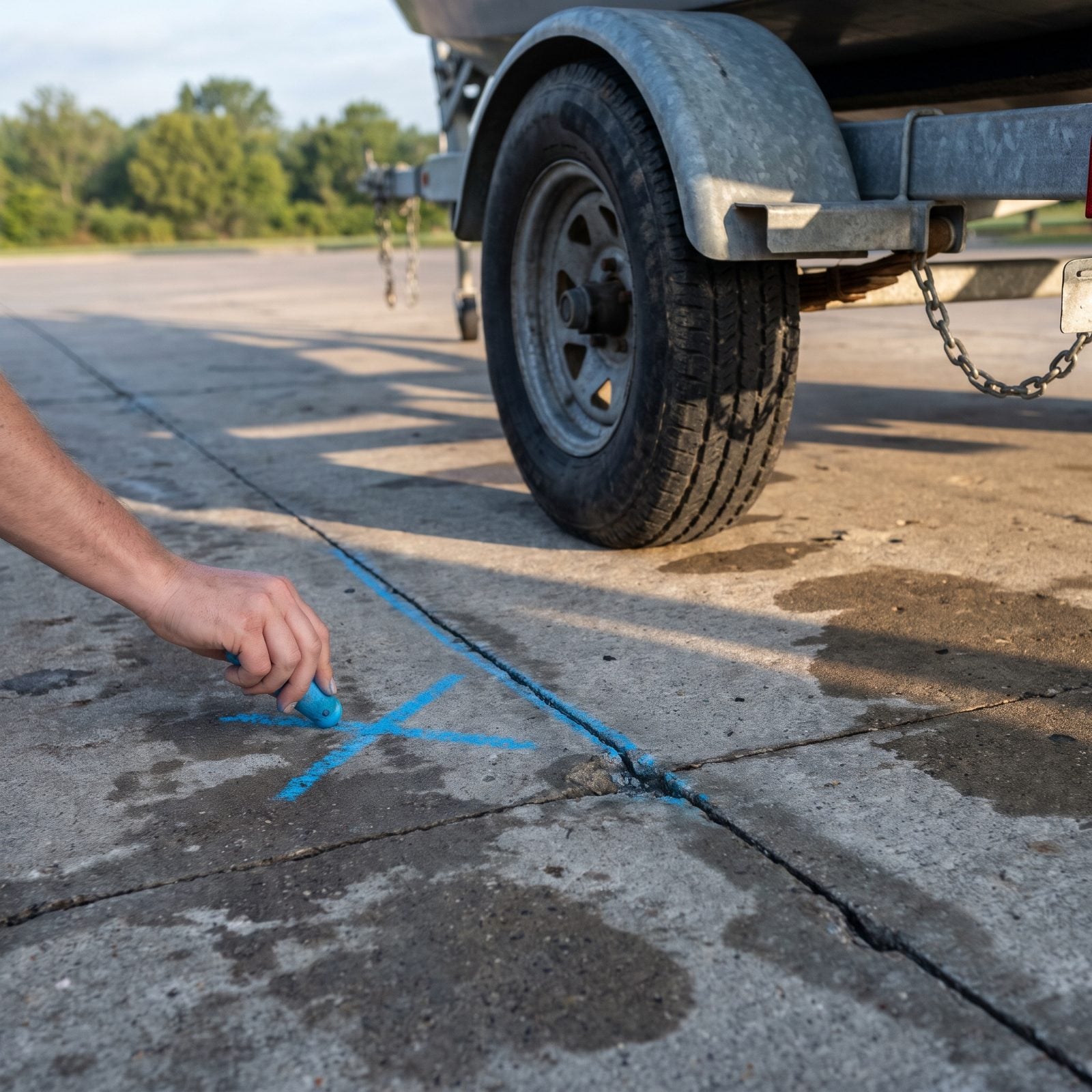
Backing a trailer is where good mornings go to die.
A stick of sidewalk chalk solves a surprising amount of it. Mark your mirror position, your tire line, or the spot on the ramp where the trailer finally sits level once you’ve hunted it down. Next time you back into the dark, you’ve got a reference that doesn’t budge.
It washes off in the next rain, runs about a dollar for a fat bucket, and nobody at the launch has to watch you take eight tries. Bright colors read best against wet gray concrete.
14. A Tennis Ball That Makes the Hitch Ball Easy to Spot
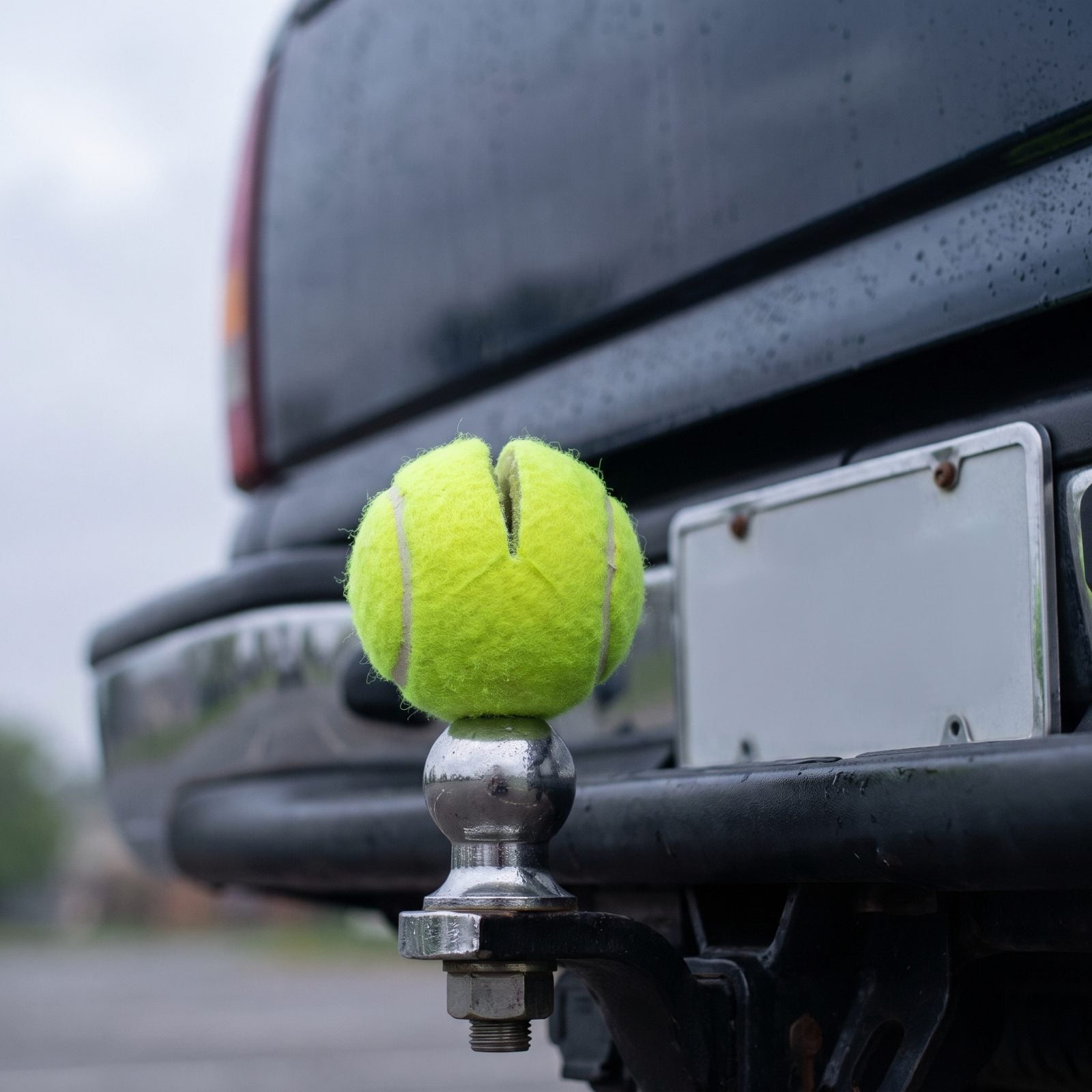
Lining up a hitch solo is a guessing game that ends in a dented bumper or a sore back. Perch an old tennis ball, slit side up, on top of the hitch ball, and suddenly you can see exactly where that ball sits from the driver’s seat.
Back up until it disappears under the coupler. That’s your spot. A dead tennis ball from the garage does this for free, which beats the clip-on hitch guides they sell for twenty dollars and lose in the gravel anyway.
13. A Hockey Puck Doubling as a Pocket-Sized Wheel Chock
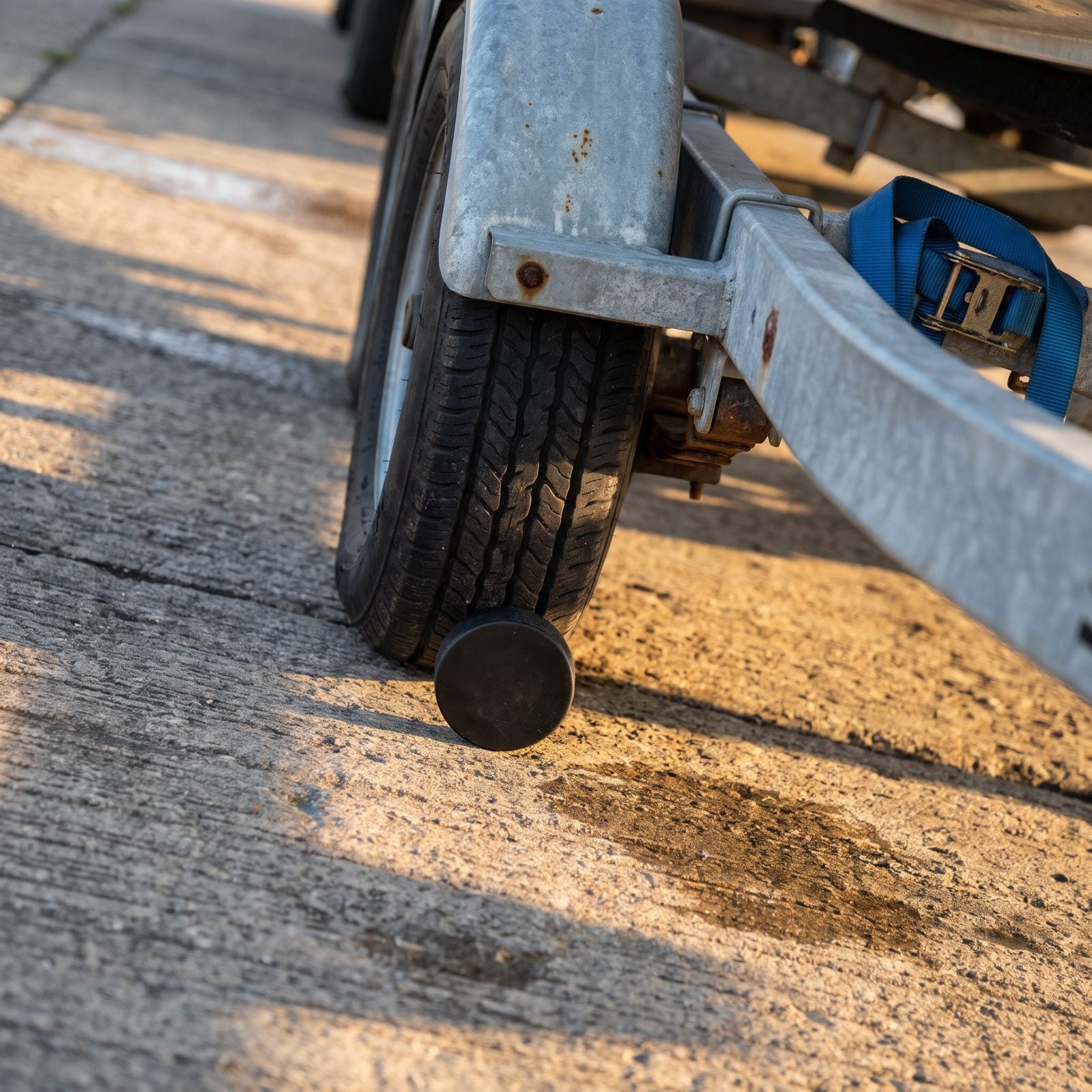
A hockey puck is dense vulcanized rubber that grips concrete hard and takes up almost no room behind the seat. Lay one flat and wedge it against a trailer tire on a sloped ramp and it holds the rig while you cut straps or unhook. Don’t stand it upright on its edge; that way it’s just a little wheel, and the tire will roll right over it.
It won’t replace a proper chock on a steep grade, so don’t crawl under anything trusting it. For keeping a trailer honest on a gentle incline, though, it does the job and shrugs off being tossed around a truck bed for years. A couple bucks at a sporting goods store if you don’t already have one rolling around under a seat.
12. Kitty Litter for Clawing Out of a Slick, Muddy Launch
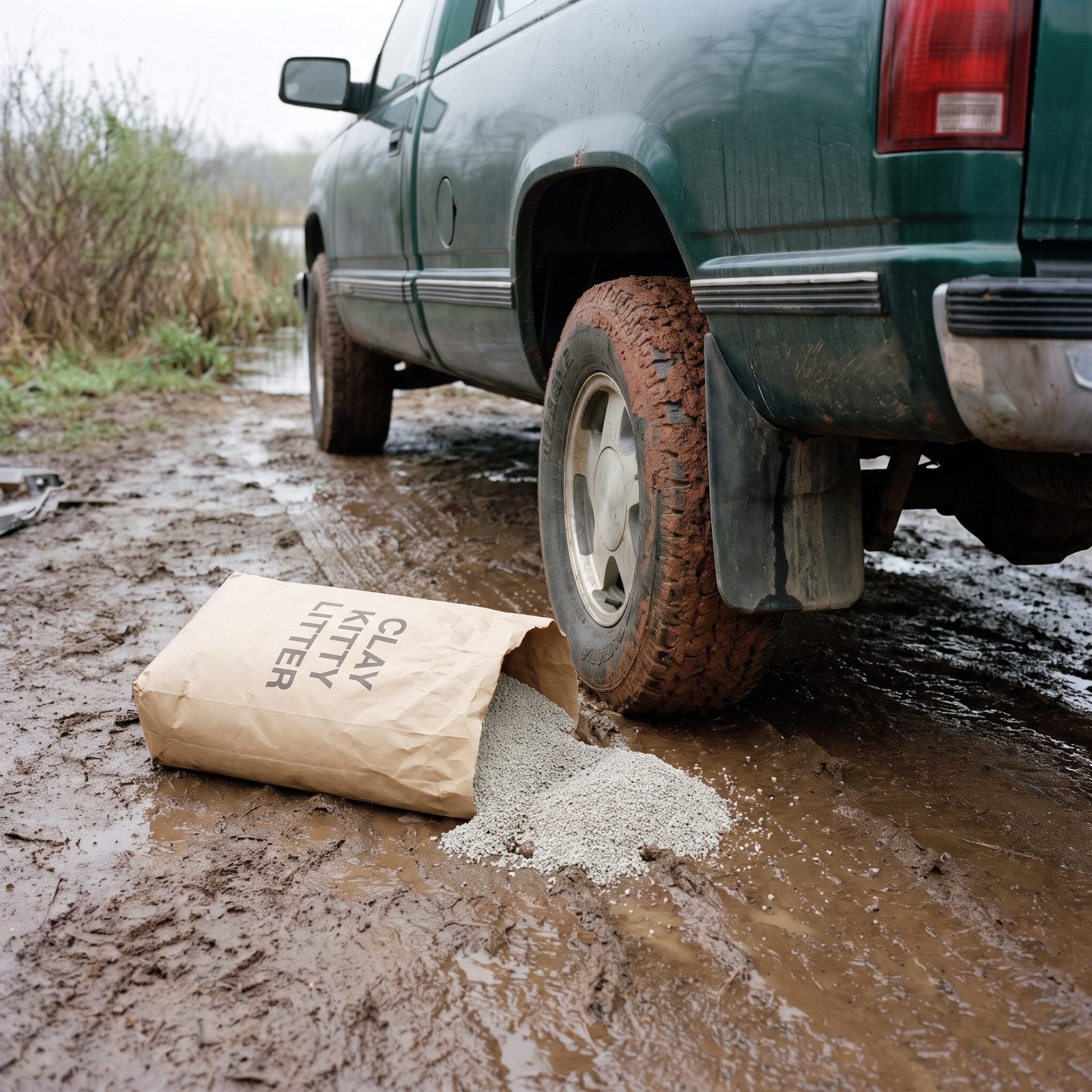
Plain clay kitty litter — the cheap non-clumping kind — is the oldest traction trick in the book, and for good reason. Spread a bag in front of your drive tires when you’re spinning on a greasy dirt ramp and it gives the rubber something to bite into.
A bag or two in the bed adds weight over the rear axle too, which helps on its own. Skip the clumping stuff. It turns to glue the second it gets wet, and wet is the whole reason you’re stuck in the first place. Sand works, but litter stays dry in the bag longer.
11. A Folding Garden Trowel for Bait, Mud and Clogged Tread
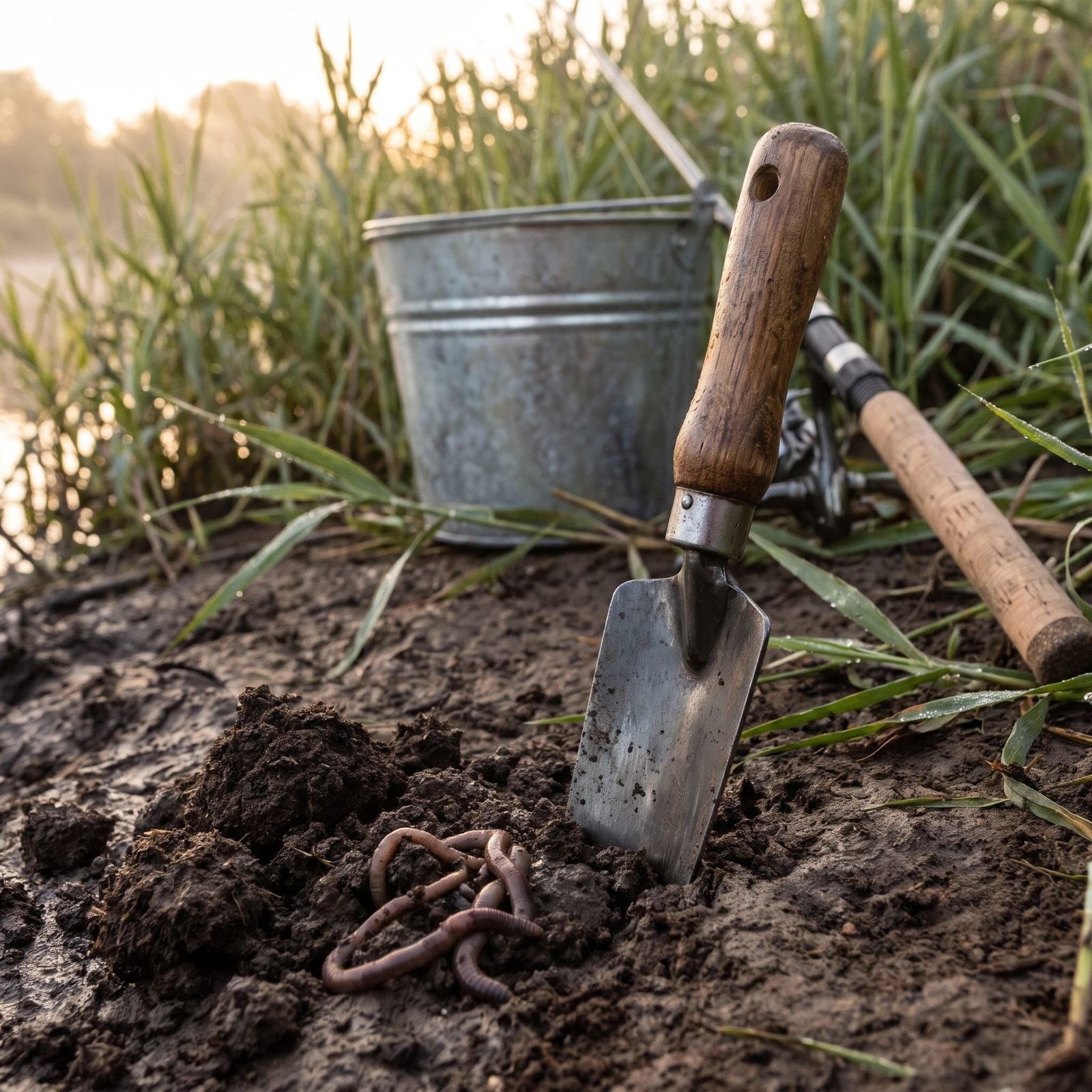
One tool, three jobs.
A sturdy garden trowel digs nightcrawlers out of a damp bank when you’ve run short on bait. It scrapes packed clay out of a trailer tire tread before that mud flings all over the ramp. And it carves a quick drainage channel when your low spot turns into a puddle.
A short one fits behind the seat, and the blade holds an edge far better than those flimsy plastic scoops. Get a steel one with a riveted handle. The cast aluminum ones bend the first time you lean on them in rocky ground — ask me how I know.
10. A Dog Leash for Lashing Down Bulky, Awkward Gear
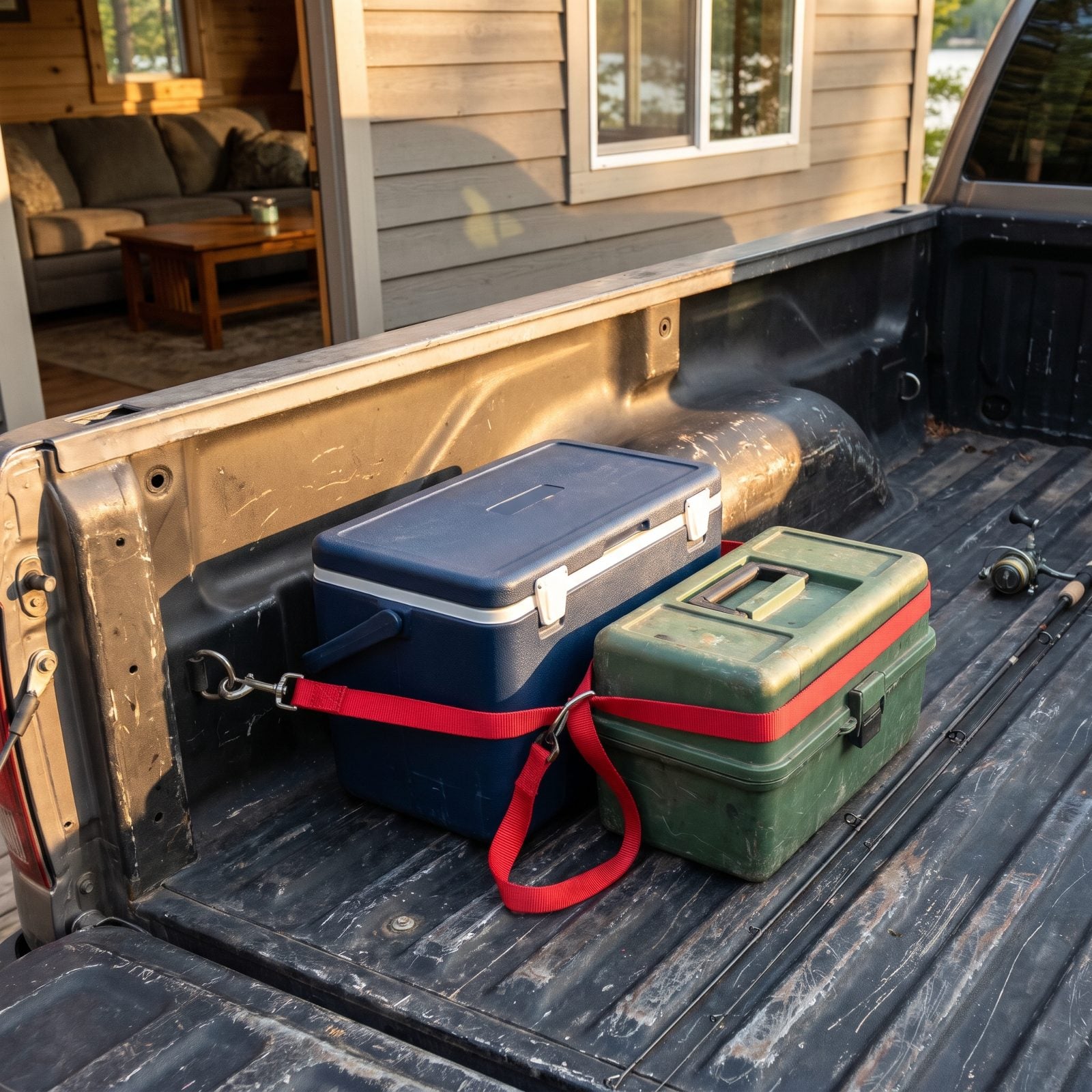
A spare dog leash is a tie-down that already has a clip on one end. Loop it around a cooler, a bait tank or a loose crate, snap it to a bed ring, and the thing quits sliding into your rods on every turn.
The clip is the whole trick. No knots to pick apart with cold fingers, no ratchet strap to wrestle. It won’t hold a kayak at highway speed, so use real straps for anything that matters. For corralling the small stuff that rattles around back there, a six-foot leash does plenty.
9. A Coffee Can for Corralling Old Line Instead of Littering It
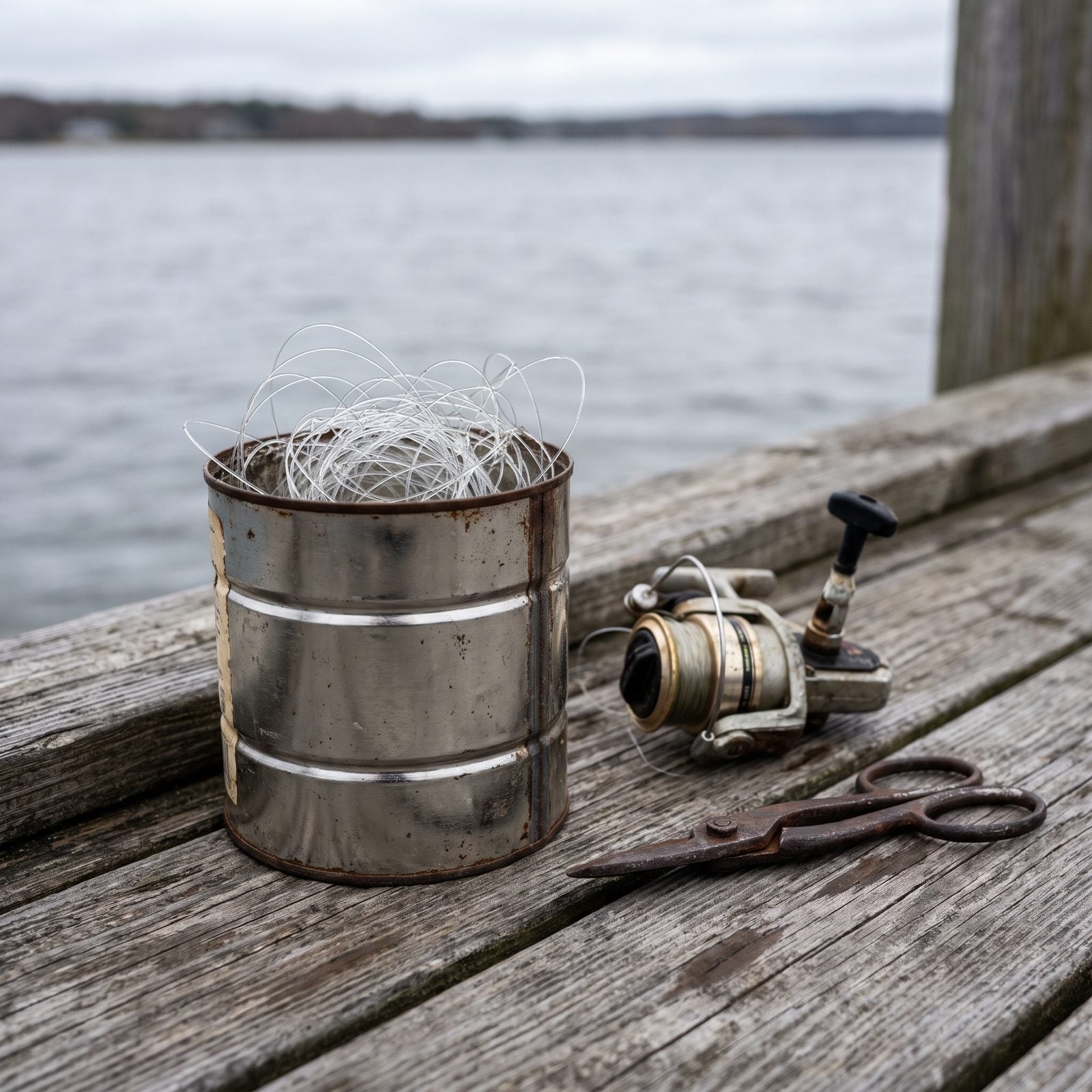
Cut-off line is a death sentence for birds, turtles and your own trolling motor. A coffee can rides in the truck as a dedicated graveyard for the stuff.
Every time you re-tie or strip old mono off a reel, it goes in the can — not in your pocket, not on the ground, not blowing into the water. When the can fills up, most tackle shops and ramps have a line recycling bin that turns it into something useful. Takes zero effort, and it keeps the ramp from looking like a spiderweb exploded across it.
Describing what happens when discarded line wraps tightly around an animal, a wildlife education supervisor says “With time, this can cut off circulation, cause extreme swelling, deep lacerations, and even amputation.”
8. Silica Gel Packets for Keeping Rust Out of Your Tackle
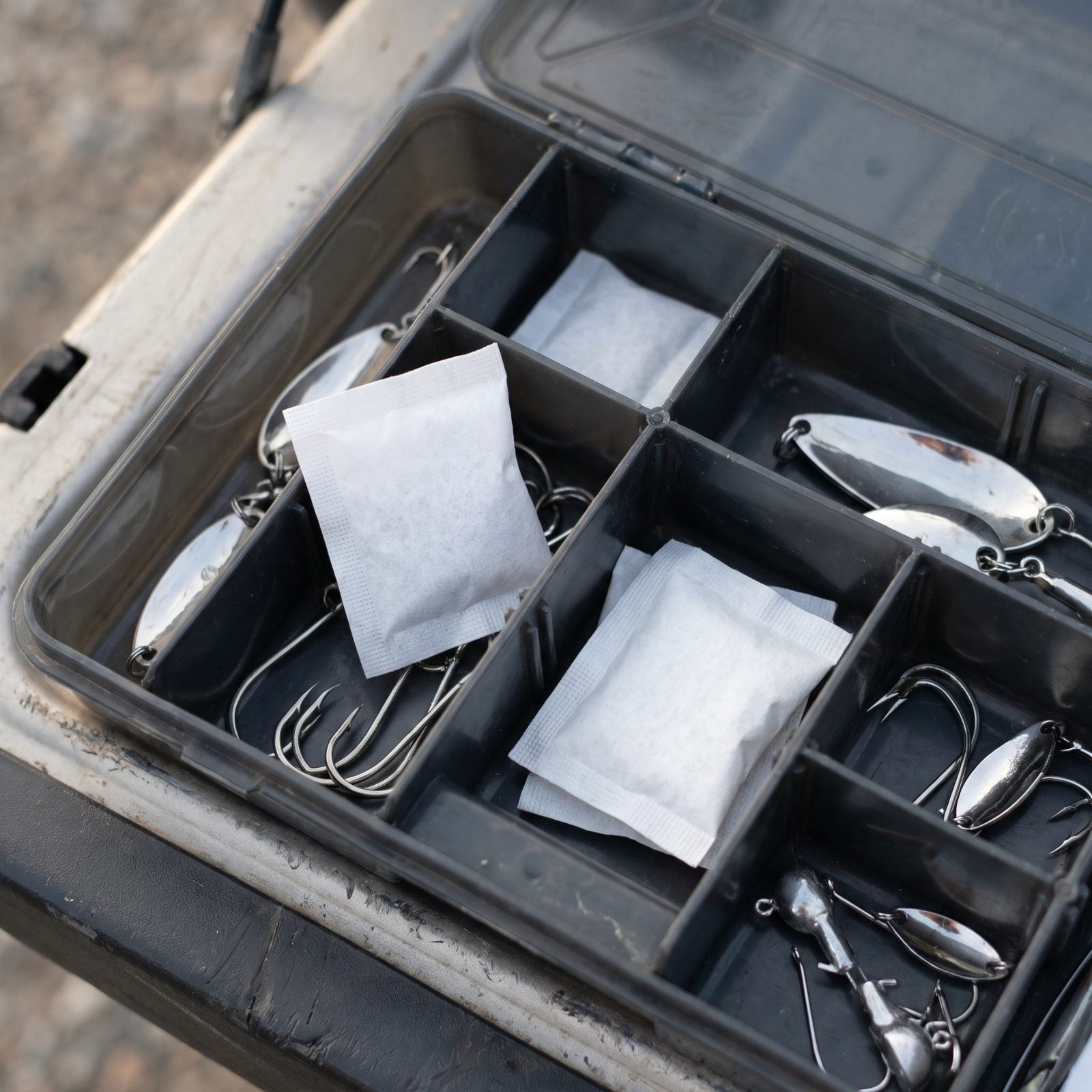
A truck bakes, cools, and sweats condensation all day long, and your tackle box sits right in the middle of it. That moisture is what turns a tray of hooks orange.
Toss a handful of silica gel packets into each tray. They pull the damp right out of the air inside the box and keep blades, hooks and bladed jigs from rusting between trips. Save the ones that come tucked in shoeboxes and jerky bags, or buy a cheap sack of them. When they feel heavy and spent, dry them in a low oven for an hour and they’re good as new.
Collecting the free packets that shoe stores throw away, a freshwater fishing guide says “I put silica gel packets in my crankbait, jerkbait, buzzbait or spinnerbait tackle boxes.”
7. Disposable Diapers for Soaking Up Leaks and Spills
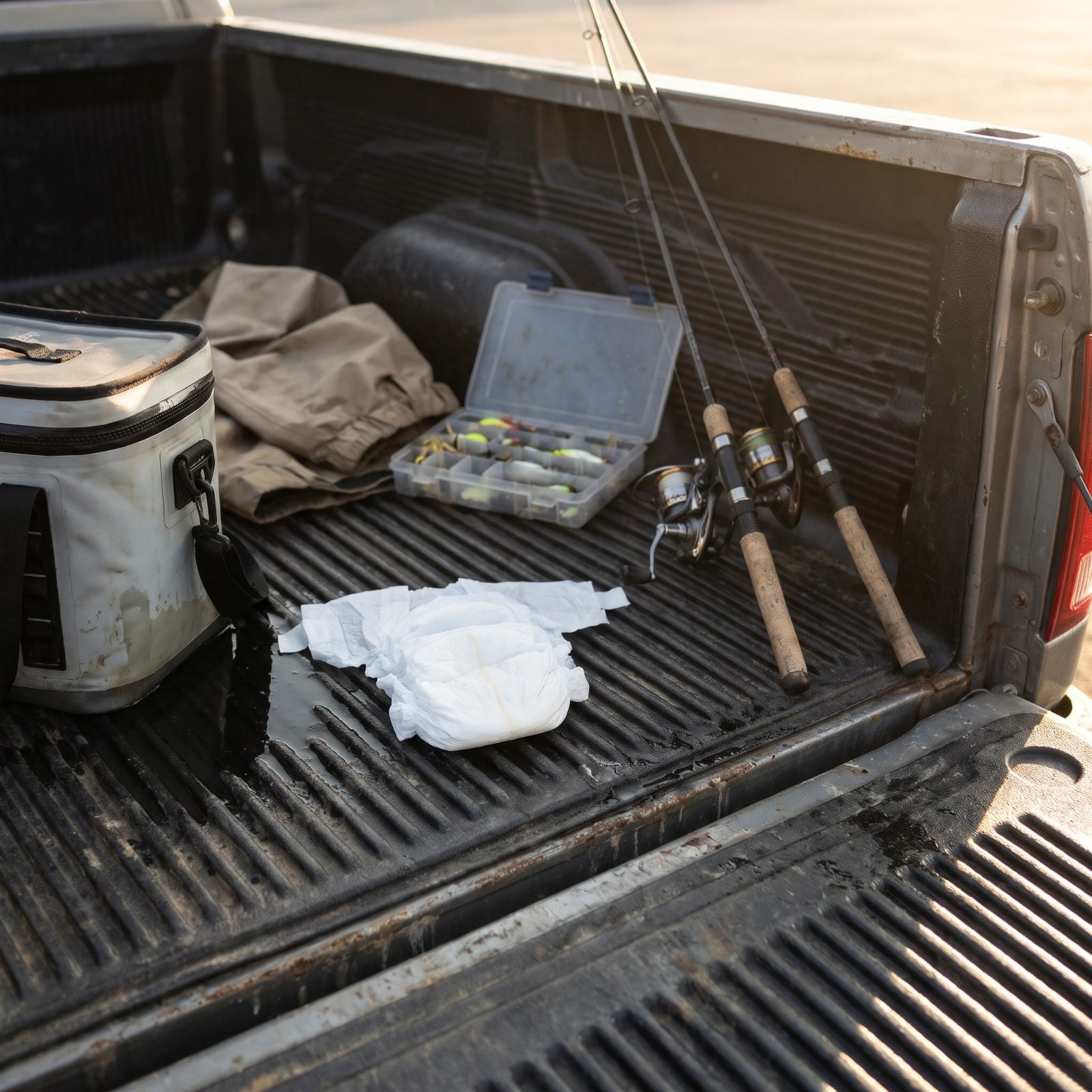
A baby diaper holds an absurd amount of liquid. That’s the whole trick. Keep one or two lying loose in the bed near a leaky cooler, a dripping bait bucket, or that one battery terminal that always seems to weep acid, and when a puddle starts to spread, push one into it and it’ll pull the mess out of your truck bed before it finds the carpet.
I started doing this after a split bag of ice flooded everything I owned on a four-hour drive home. Cheap, flat, stores anywhere. The gel inside locks the water so it won’t wick back out when you lift it. Toss it when you’re done.
6. A Turkey Baster for Sucking Water Out of Tight Compartments
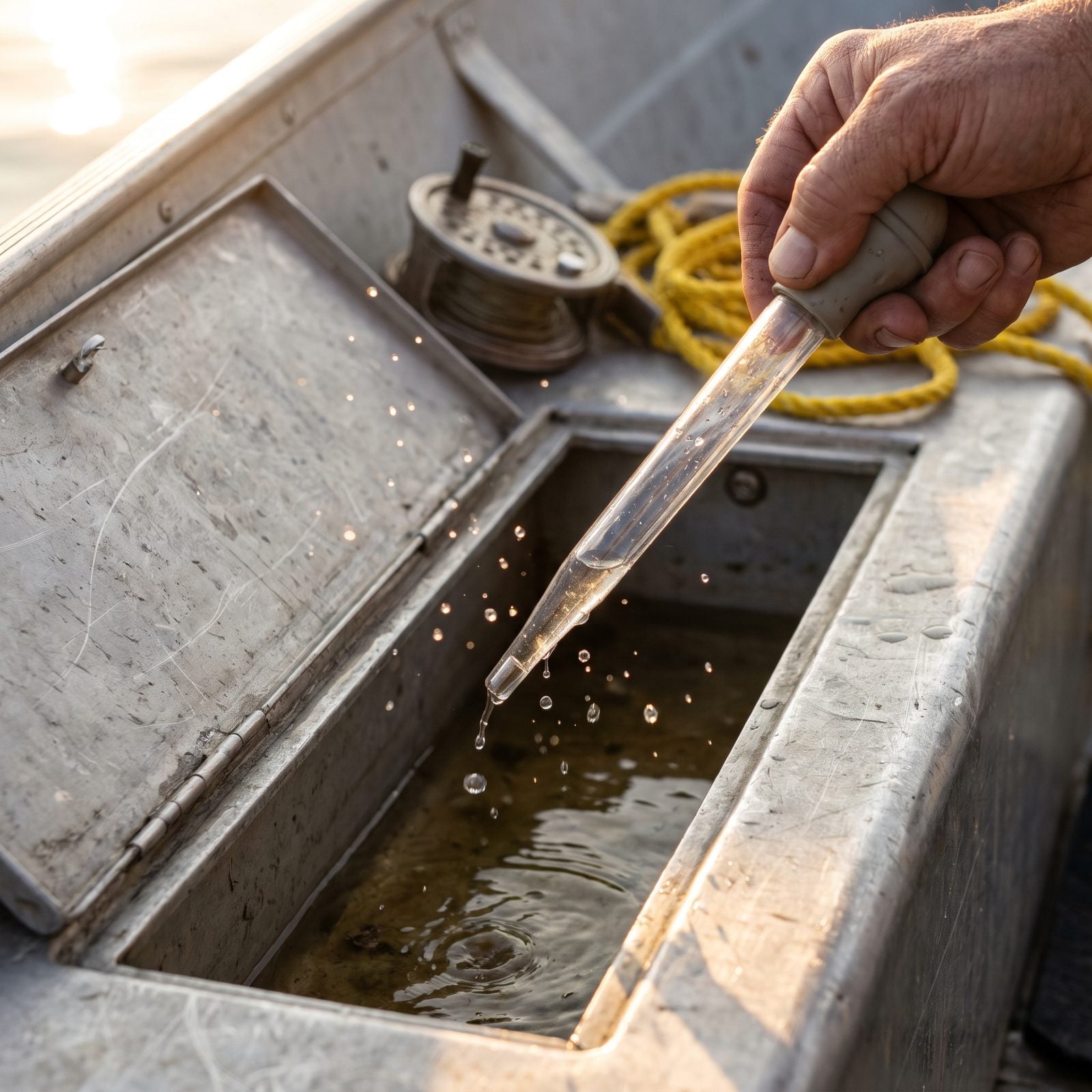
Bilge pumps are great until the water sits in a corner they can’t reach. A turkey baster gets into the spots your hand and your pump both miss: the recessed hatch, the trolling motor well, the console cubby where a half-cup of rainwater hides and breeds that smell.
It’s also perfect for topping off a baitwell without sloshing, or pulling fuel samples to check for water in the tank. Grab one at the dollar store and leave the good kitchen one for the bird.
5. An Aquarium Net for Scooping Live Bait Without the Chase
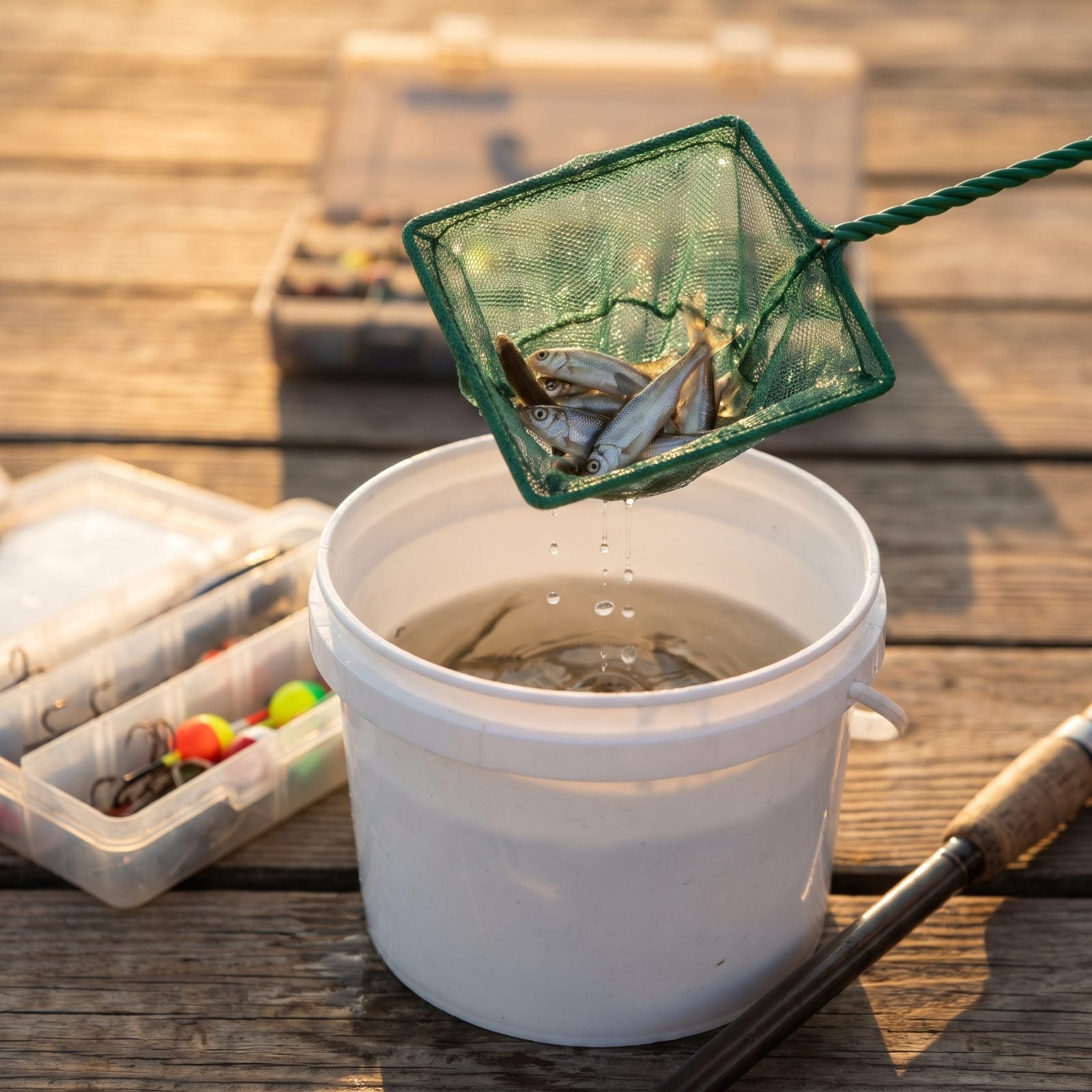
Chasing minnows around a bucket with your bare hand is a losing game. You stress the bait, you warm the water with your fingers, and half of them squirt free anyway.
A cheap fine-mesh aquarium net corners them in one pass. The soft mesh doesn’t scrape slime off a shiner the way a knotted net does, so your bait lives longer on the hook. Keep the smallest size for crappie minnows and a bigger one for shad. Costs a couple bucks and lasts seasons.
4. A Bread Knife for Sawing Through Frozen Bait Blocks
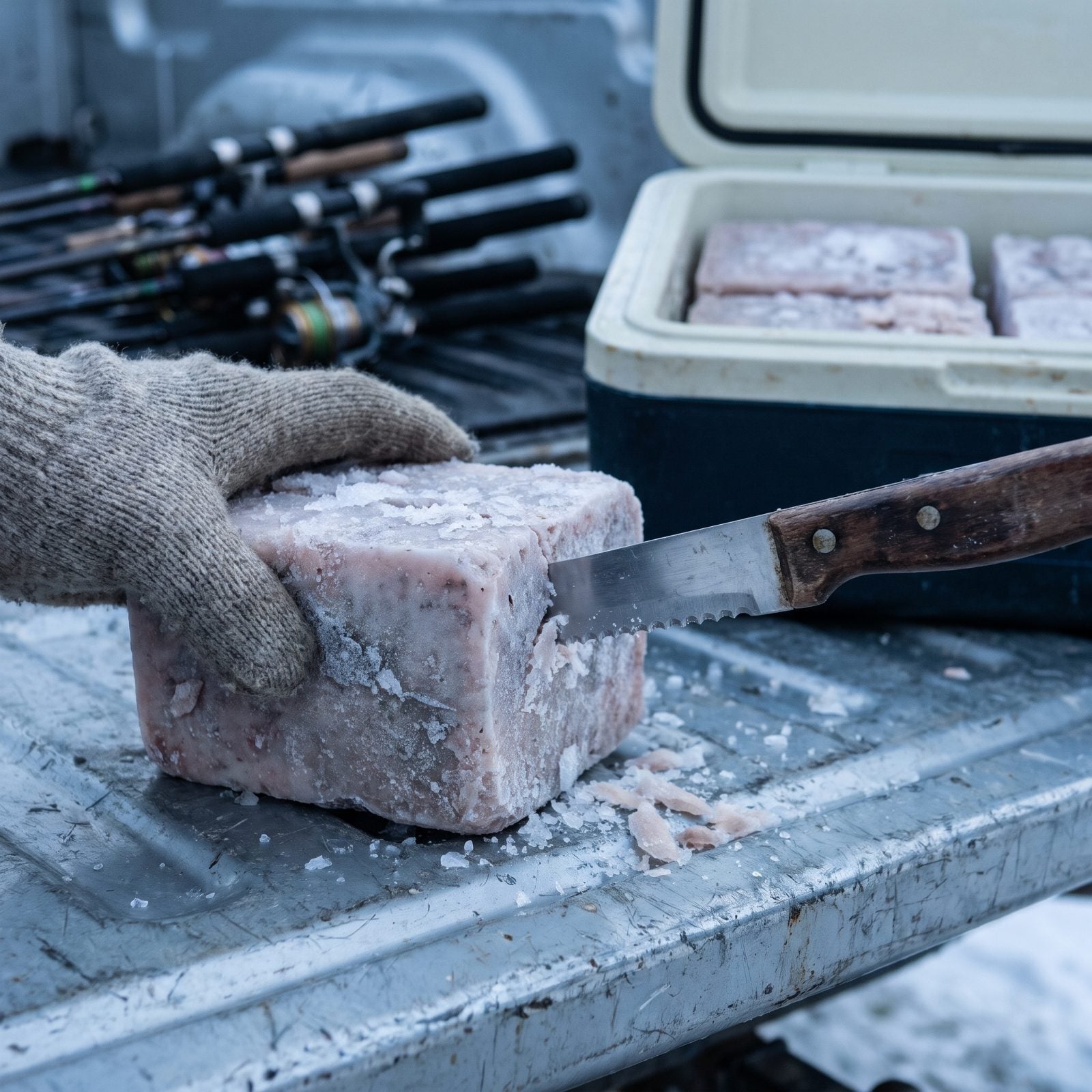
Try cutting a frozen block of chum or a brick of cut bait with a straight fillet knife and you’ll either dull it, bend it, or send it skating off the block into your hand. A serrated bread knife chews right through.
The teeth grab the frozen surface and saw instead of slip. I keep an old one from a thrift store in the bait cooler, rinse it, and nobody at home ever has to know what it’s been cutting. Portion the block, refreeze the rest.
3. A Condiment Squeeze Bottle for Aimed Freshwater Rinsing
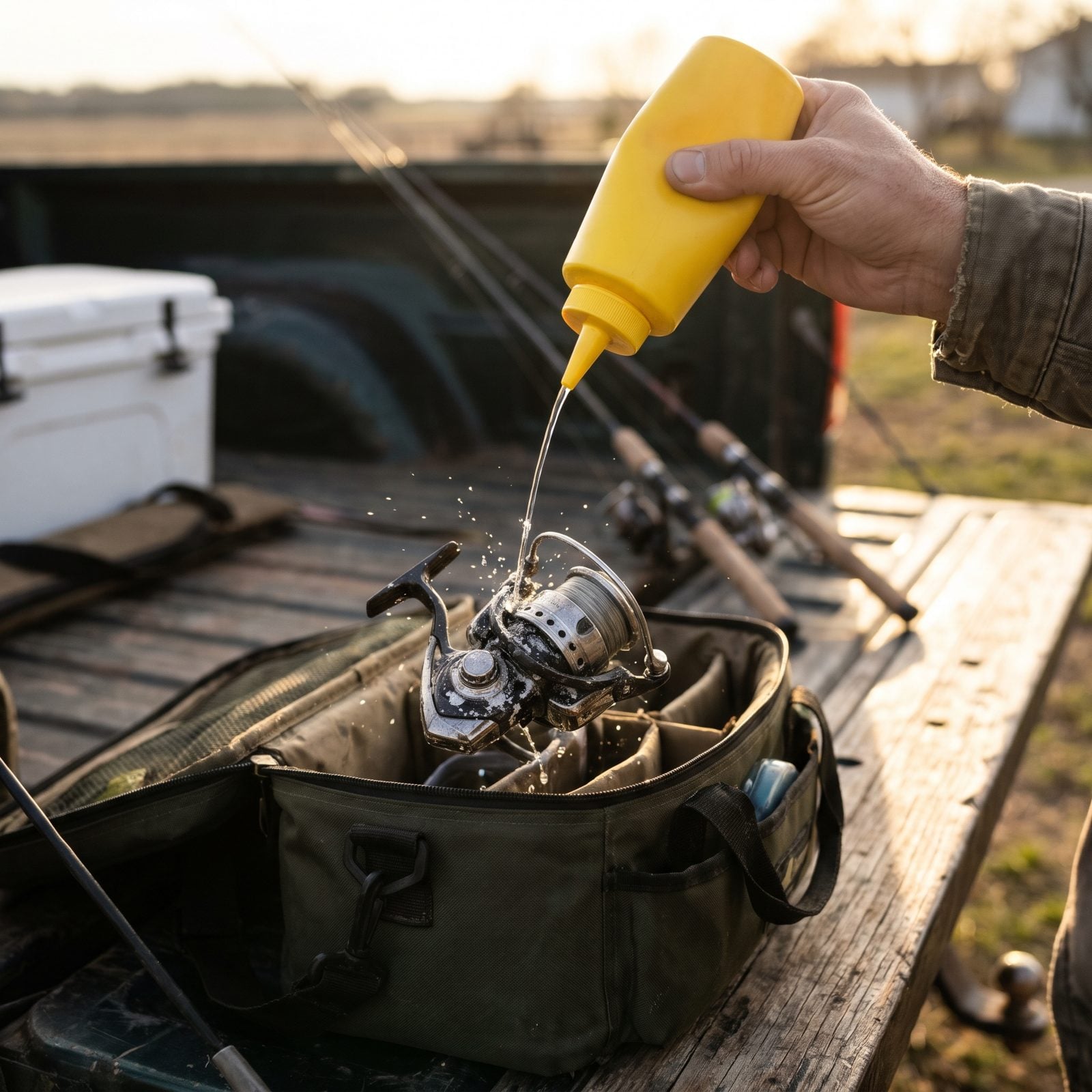
Salt water wrecks reels. A dunk in the lake doesn’t fix it, and a hose isn’t always handy at the ramp.
Fill a squeeze bottle with fresh water and you get a thin, aimed stream right where it matters: the line roller, the bail, the handle knobs. No flood, no forcing water past seals where it doesn’t belong. One bottle does three or four reels after a saltwater trip. It’ll rinse a hook wound, clean a cut of fish, or give the dog a drink too.
2. Frozen Water Jugs for Cooling the Catch Without Watering It Down
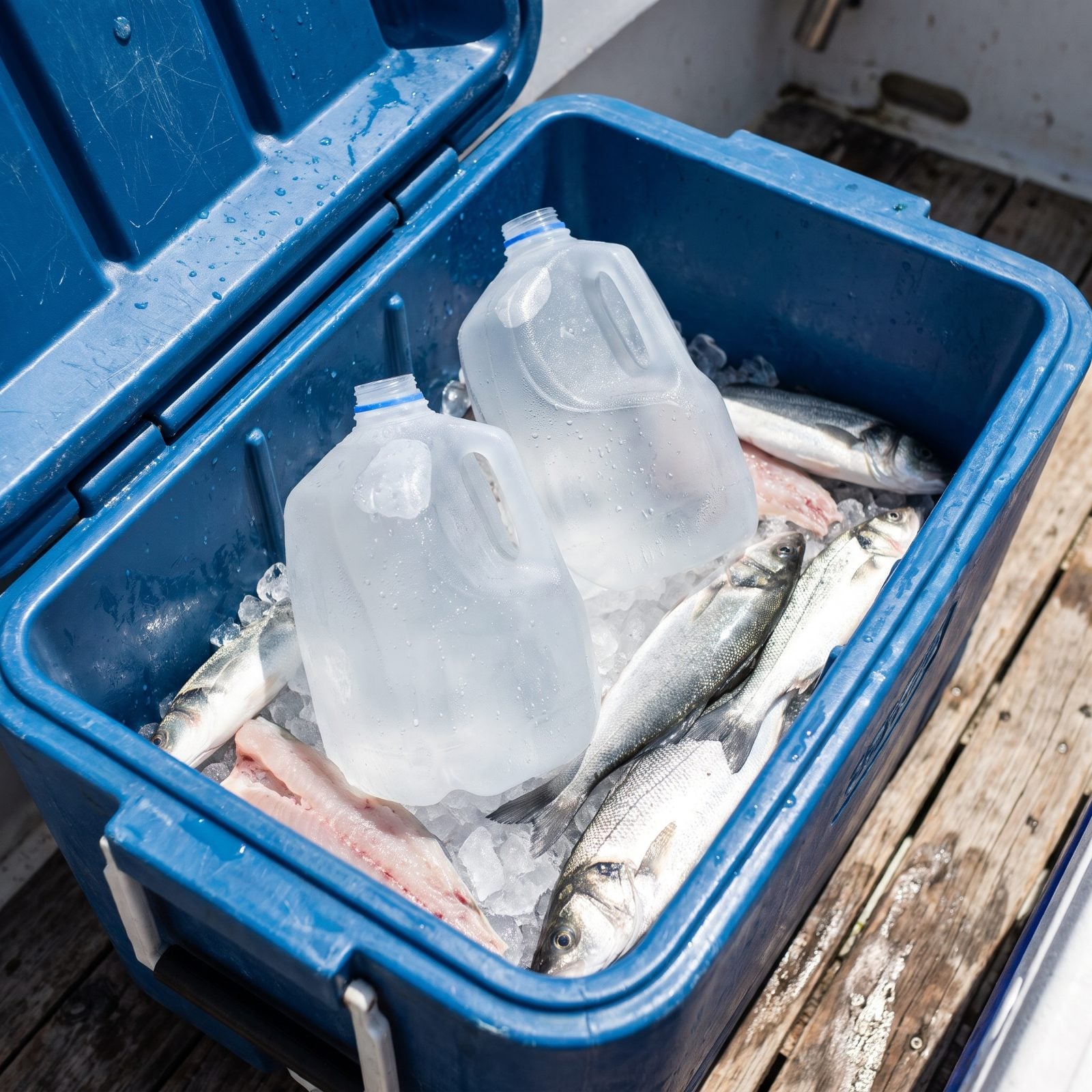
Loose ice melts into a slushy pool, and your fish ends up swimming in warm water by afternoon. Frozen jugs stay cold for hours and never turn to a mess in the bottom of the cooler.
Freeze a couple of gallon jugs the night before. They chill the fish, they don’t dilute anything, and once they thaw you’ve got cold drinking water for the ride home. I’ll run two jugs plus a thin layer of ice on the fish and keep a cooler cold longer than straight ice ever managed.
1. A Plastic Snow Sled for Dragging Gear Down a Steep Bank
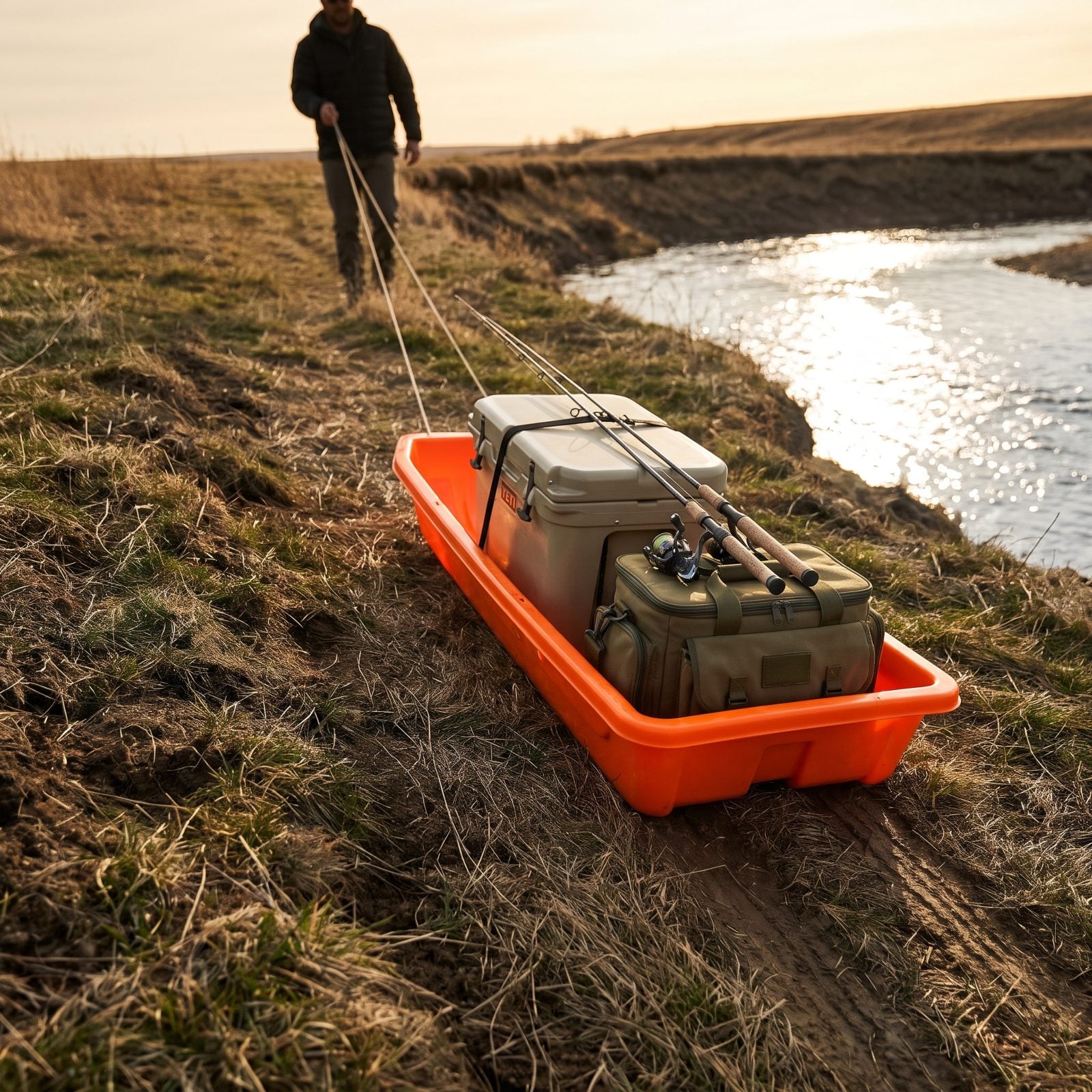
No snow required. A cheap plastic kids’ sled slides over grass, mud, sand, and leaf litter almost as well as it does over powder, and it hauls your whole load in one trip instead of four.
Loop a rope through the front holes, pile on the cooler and rods, and drag it down the bank to the water. Going back up is harder, but it still beats carrying everything cradled in your arms while you slip on wet clay. Flip it over on a sandy flat and it doubles as a dry seat.