
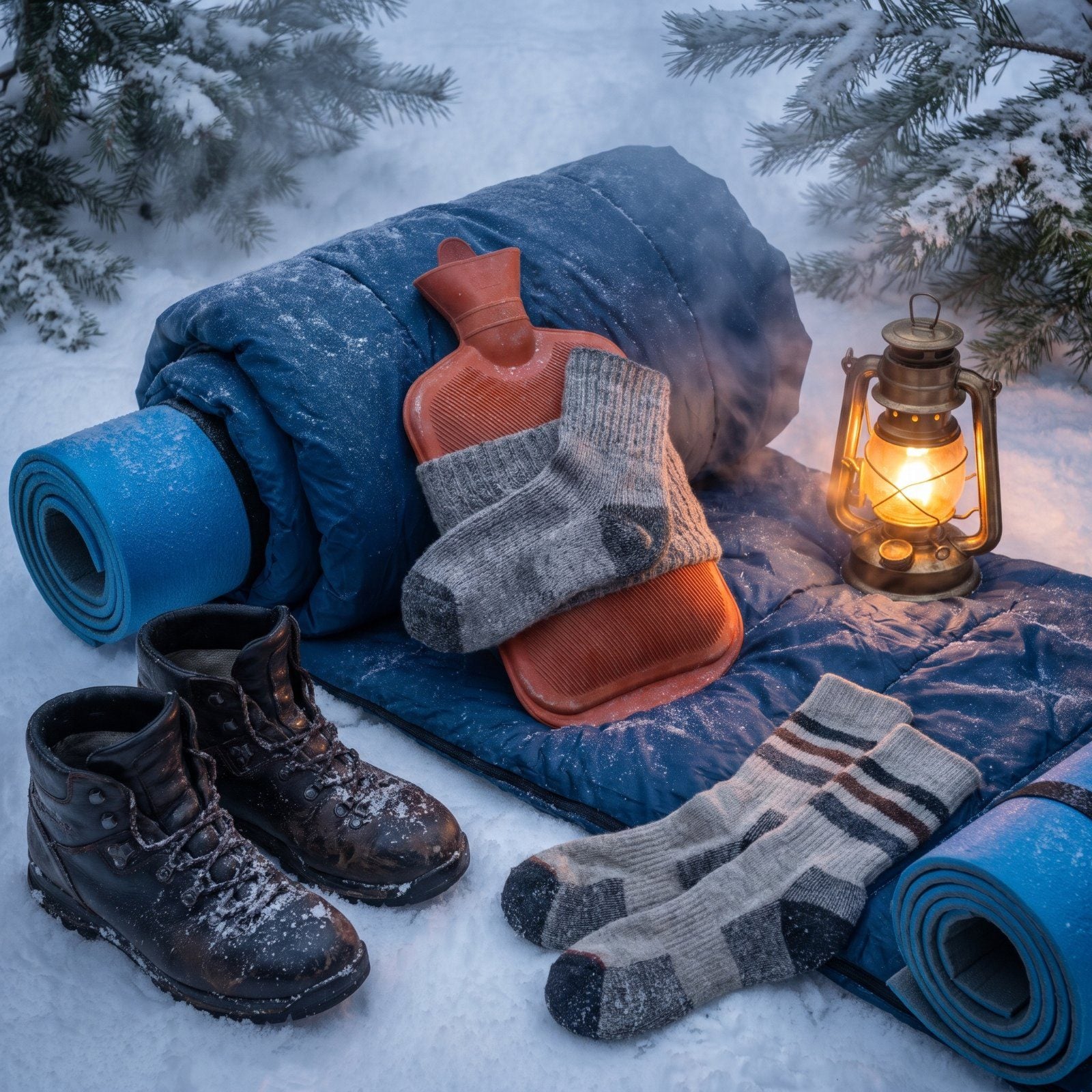
The first time you wake up at 2 a.m. shivering in a bag rated colder than it actually performs, you learn that cold-weather camping gets won in the small decisions. Not the expensive bag. Not the four-season tent. The boring stuff nobody mentions at the gear shop — where you put your socks, what you slide under the air mattress, whether your boots spend the night frozen solid or tucked against your body. These tricks cost almost nothing, and most of them sound faintly ridiculous until the night you actually need them. Try a few before your next frost-covered morning. Your toes will write you a thank-you note.
Please note that some of the images in this article were created with the assistance of AI.
39. Turn a Sock-Covered Hot-Water Bottle Into a Bed Warmer
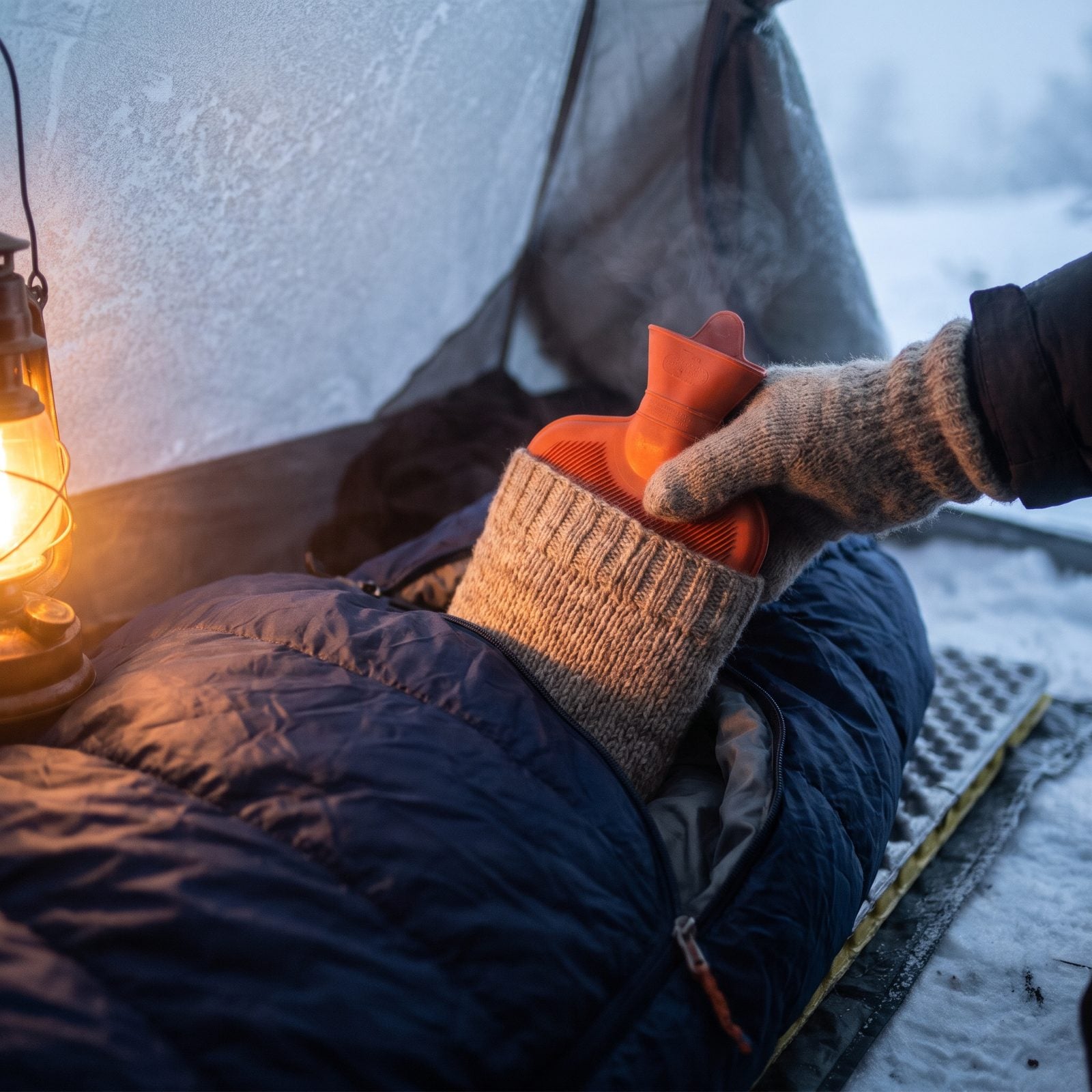
A bare hot-water bottle against your skin is a burn waiting to happen, and a sweat problem by midnight. Wrap it in a thick wool sock first. The sock slows the heat release so the bottle warms you for six or seven hours instead of scalding you for one and then going cold.
Fill it with hot but not boiling water, burp the air out, and tuck it near your feet or the small of your back — never your chest. Those are the spots that pull heat from the rest of you. Warm the extremities and the core follows.
38. Store Tomorrow’s Clothes Inside the Sleeping Bag
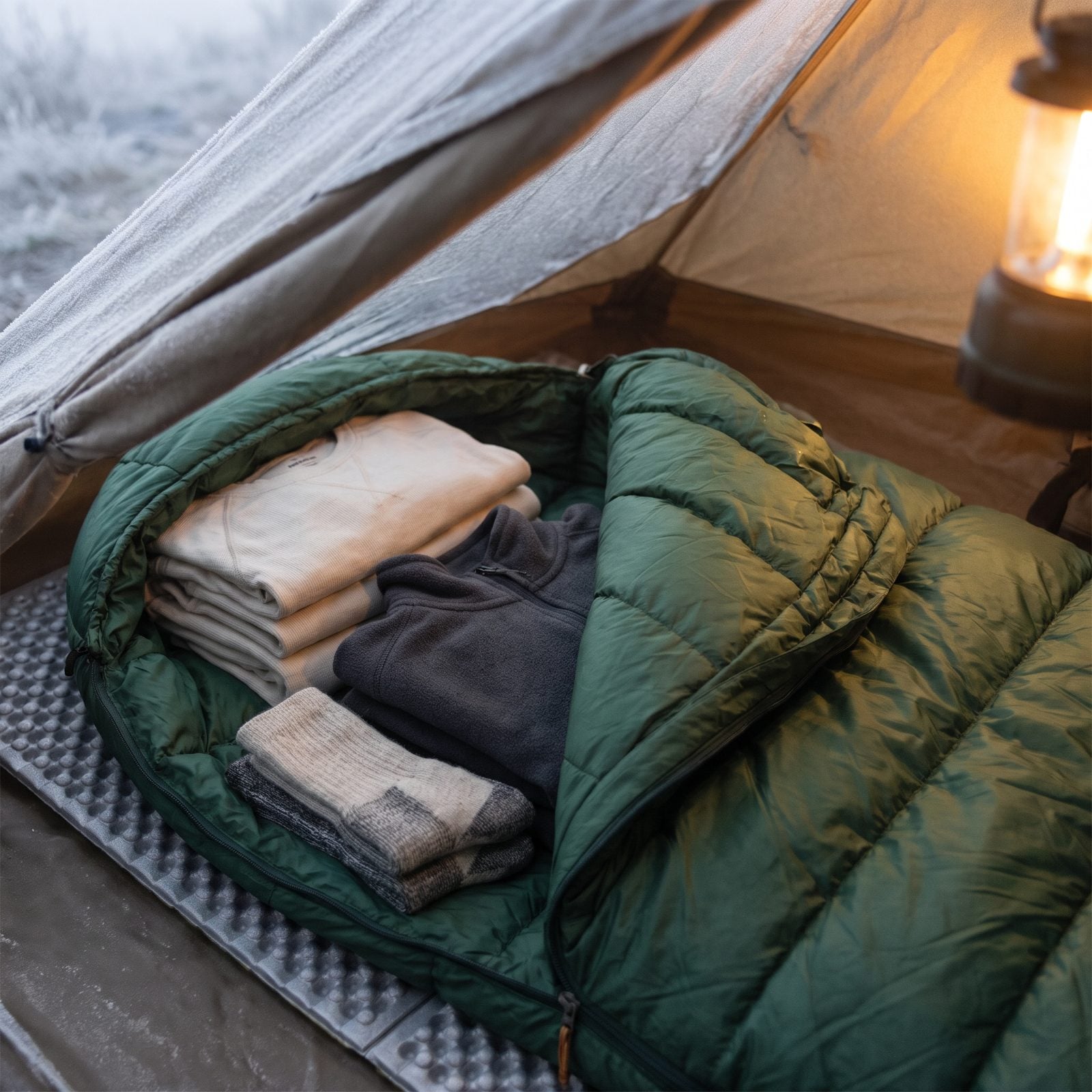
Pulling on cold clothes in the morning is a special kind of misery. So don’t let them get cold. Stuff tomorrow’s base layers, fleece, and socks down the sides of your sleeping bag before you sleep, and two good things happen at once. Your body heat keeps the clothes warm all night, and those clothes fill the empty air pockets your bag otherwise has to heat itself. Less dead space, warmer bag. Getting dressed becomes something you actually look forward to.
As a trail club field coordinator puts it, “Sleep with any clothes you want to wear the next day in your sleeping bag. The heat of your body can dry out damp socks or mittens while you sleep.”
37. Use a Stuff Sack of Clothes as a Warm Pillow
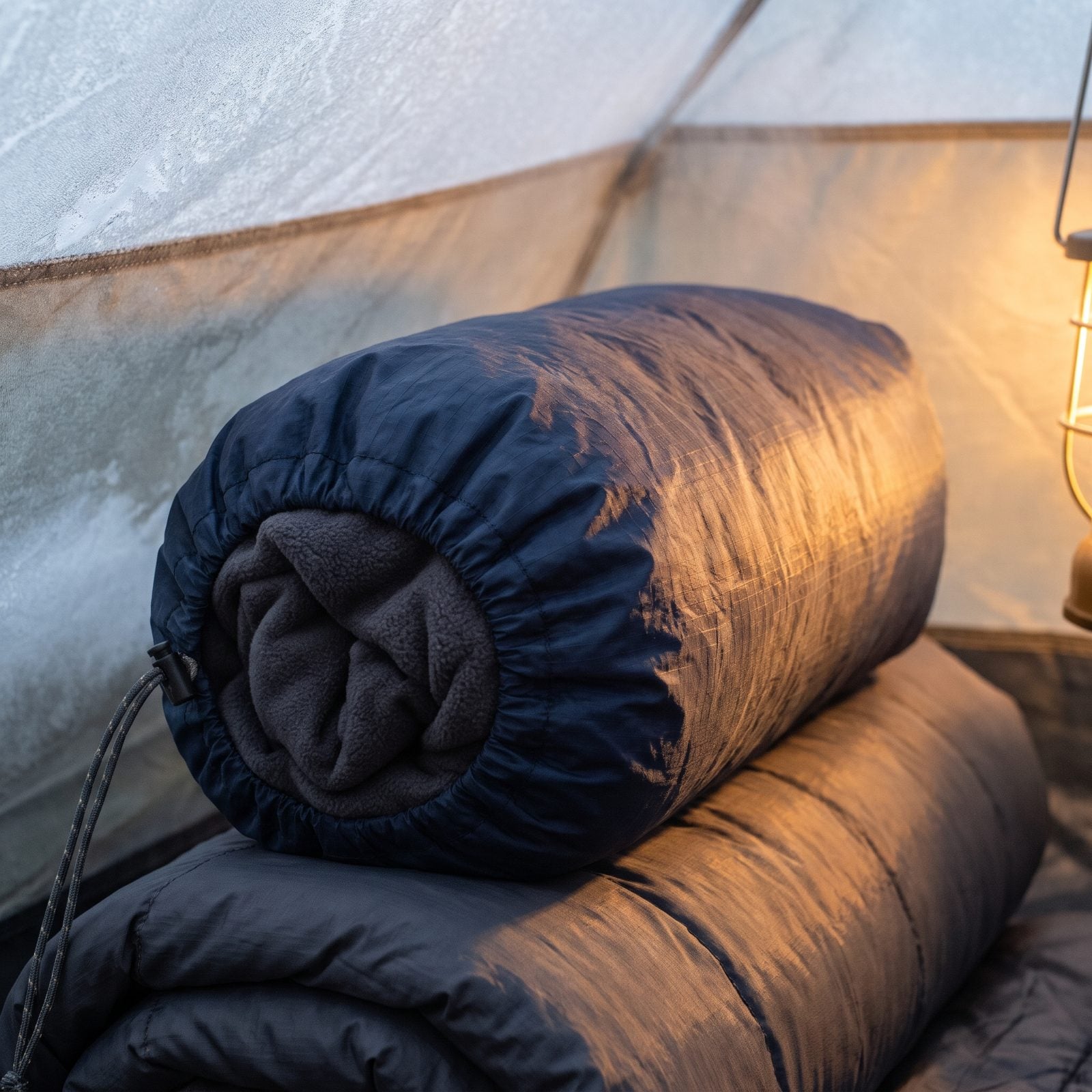
Packing a dedicated camp pillow is fine, until you realize you can carry one for free. Take an empty stuff sack, pack it with your spare fleece and a down jacket, cinch it down, and you’ve got a pillow that doubles as insulation storage.
One catch: turn the sack inside out so the soft seam faces your cheek, or wrap a shirt around it. A hard nylon pillow against your face at 3 a.m. is its own small torture, and you’ve already got the fabric on hand to fix it.
36. Put a Closed-Cell Pad Beneath the Air Mattress
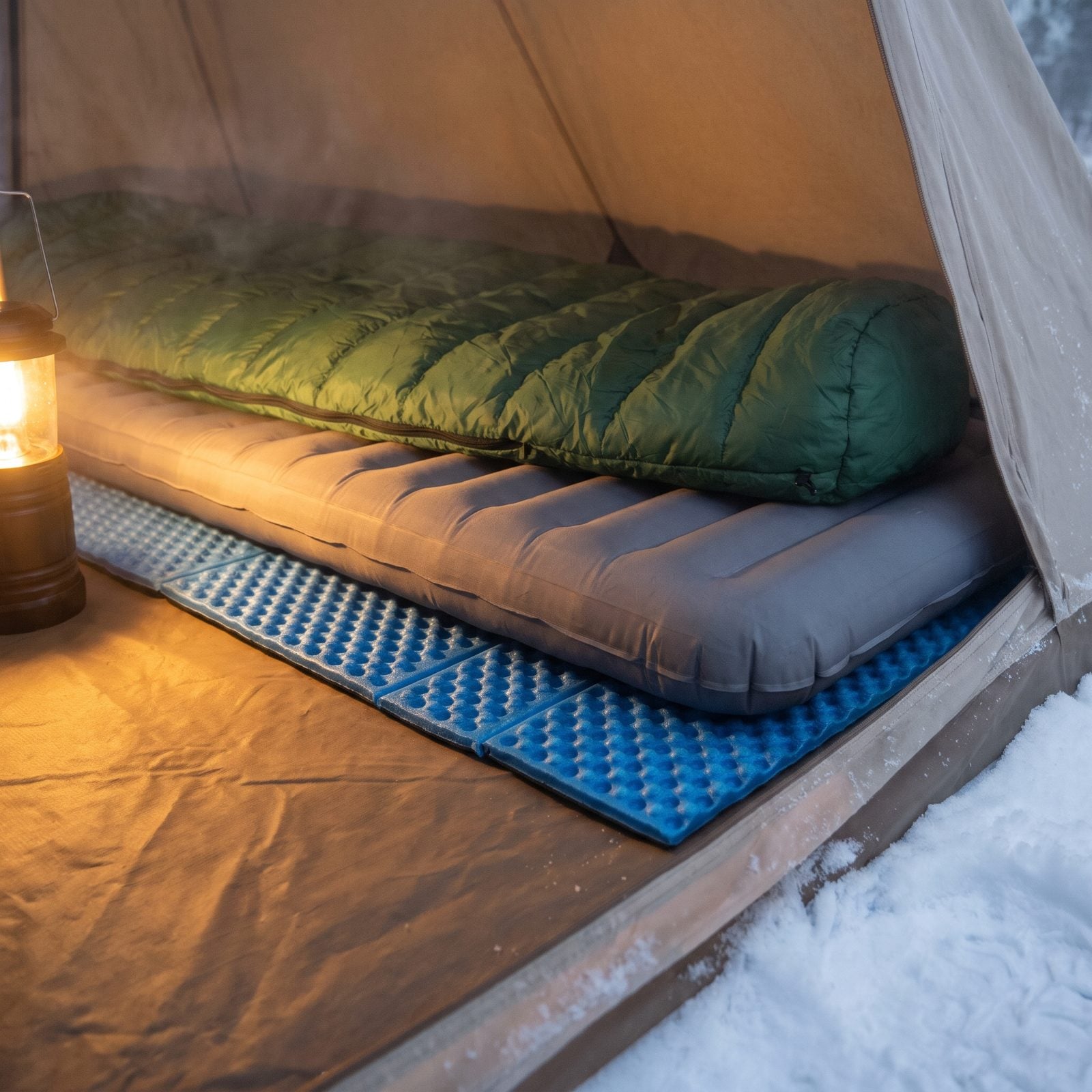
Almost everyone makes the same mistake on their first cold trip. They bring an air mattress and expect it to keep them warm. It does the opposite — a bare air mattress fills with cold air and pulls heat straight out of your body all night long.
Lay a cheap closed-cell foam pad underneath it, and the foam blocks the ground cold from ever reaching the air inside the mattress. It’s the combined insulation that keeps you warm, not the cushion. Plenty of campers sleep cold for years before someone points this out.
For winter pad systems, a hiking club gear columnist writes “In particular, I recommend the combination of one inflatable pad for comfort and one closed-cell foam pad for versatility.”
35. Place a Foam Sit Pad Under Cold Feet
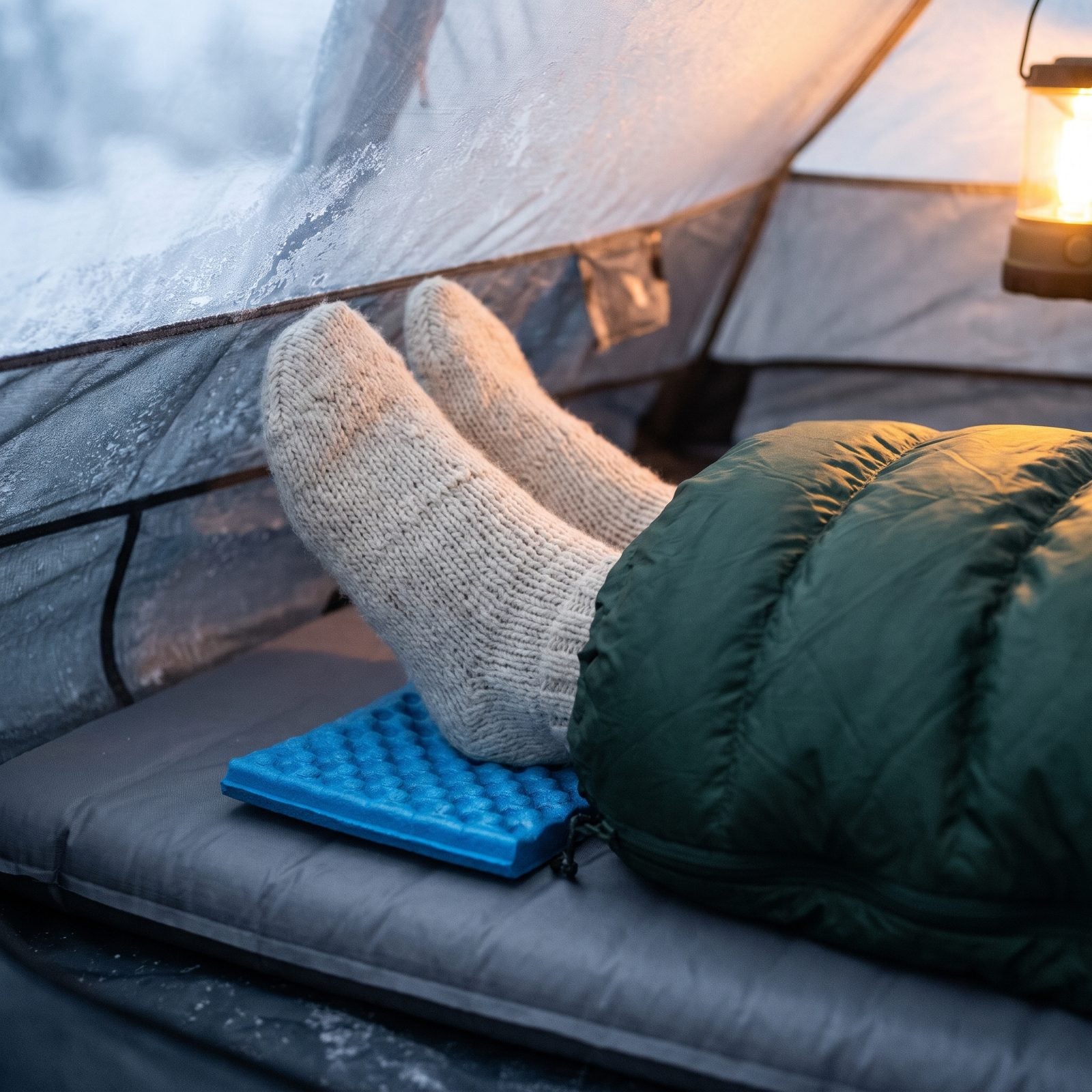
Feet are the first thing to go cold and the last to come back. And the foot end of your sleeping pad is usually the thinnest, least insulated part of your whole setup — right where you need it most.
Set a small foam sit pad under the foot end of your bag and rest your feet over it in thick wool socks. That extra half inch of dense foam cuts the cold coming up through the one spot your body never really heats. It weighs almost nothing, and most campers already carry one to sit on around camp anyway.
34. Pack Dedicated Socks That Never Leave the Tent
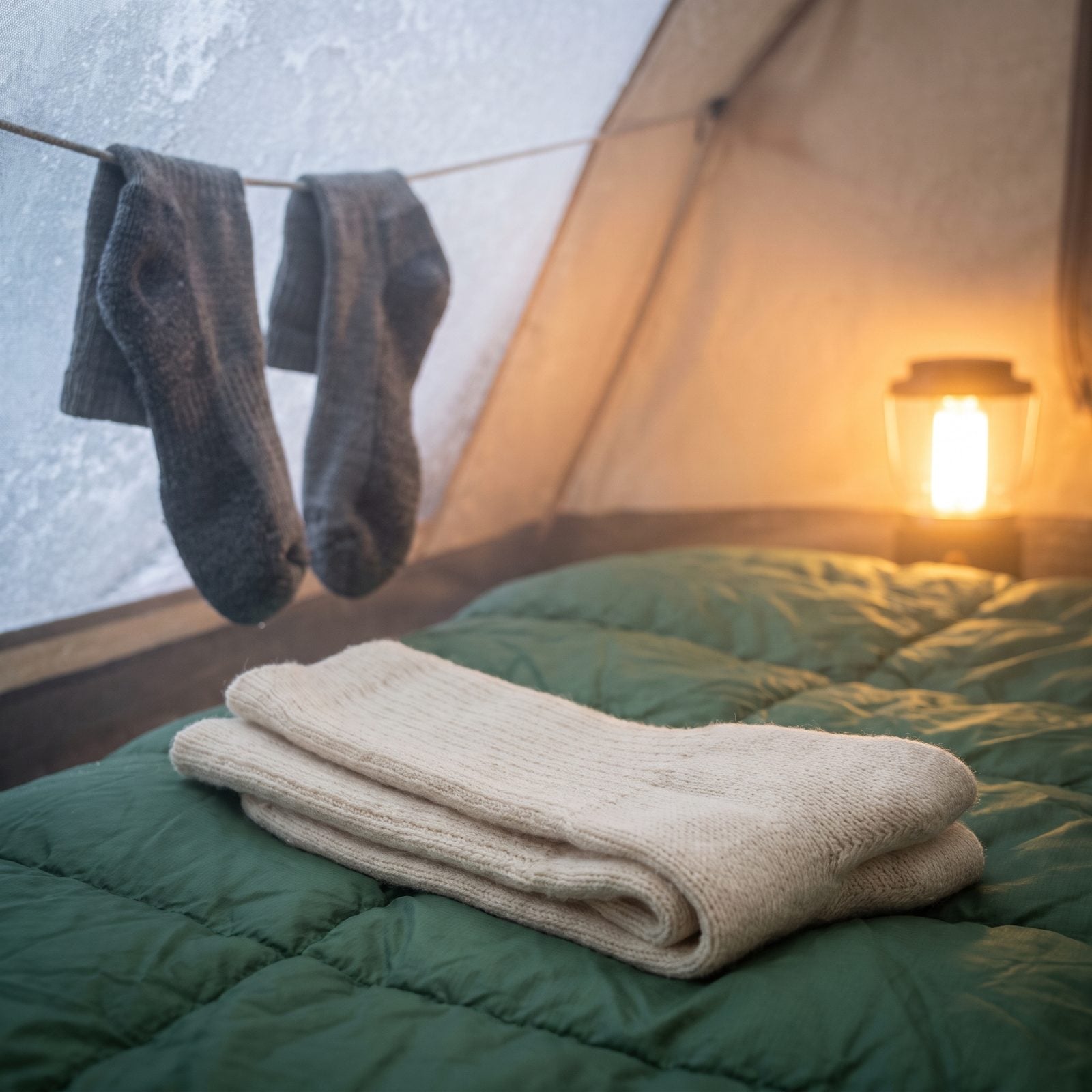
Your hiking socks are damp by the end of the day even when they don’t feel like it. Sleep in them and you’re sleeping in moisture, and moisture steals warmth all night long.
Keep one dedicated pair of thick, dry socks that only ever touch your feet inside the sleeping bag. They never go in a boot. They never see trail dirt. Pull them on last thing before bed, strip them off first thing in the morning. A small discipline that pays off every single night.
33. Remove Boot Liners and Sleep With Them
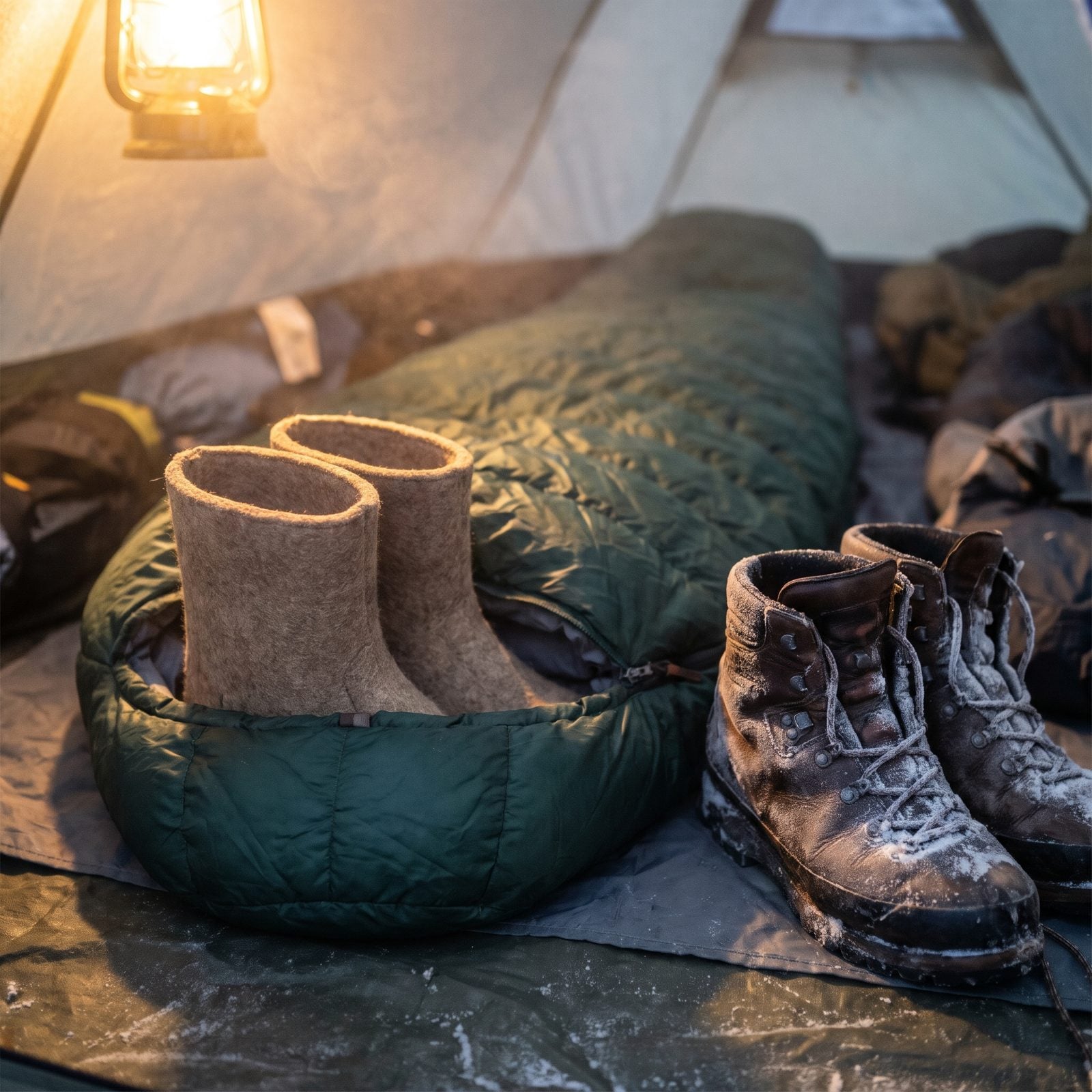
If your boots have removable felt liners, pull them out and bring them into your sleeping bag at night. Leave them out and they freeze solid, and come morning you’re forcing your feet into a brick.
Stuff the felt liners down inside your sleeping bag instead. Your body heat keeps them dry and pliable overnight, and by morning they slide on warm. The leather hiking boots by the door can frost over all they want. It’s the felt against your skin that decides whether your first hour on the trail is pleasant or brutal.
32. Prewarm Boots With Hand Warmers Before Dressing
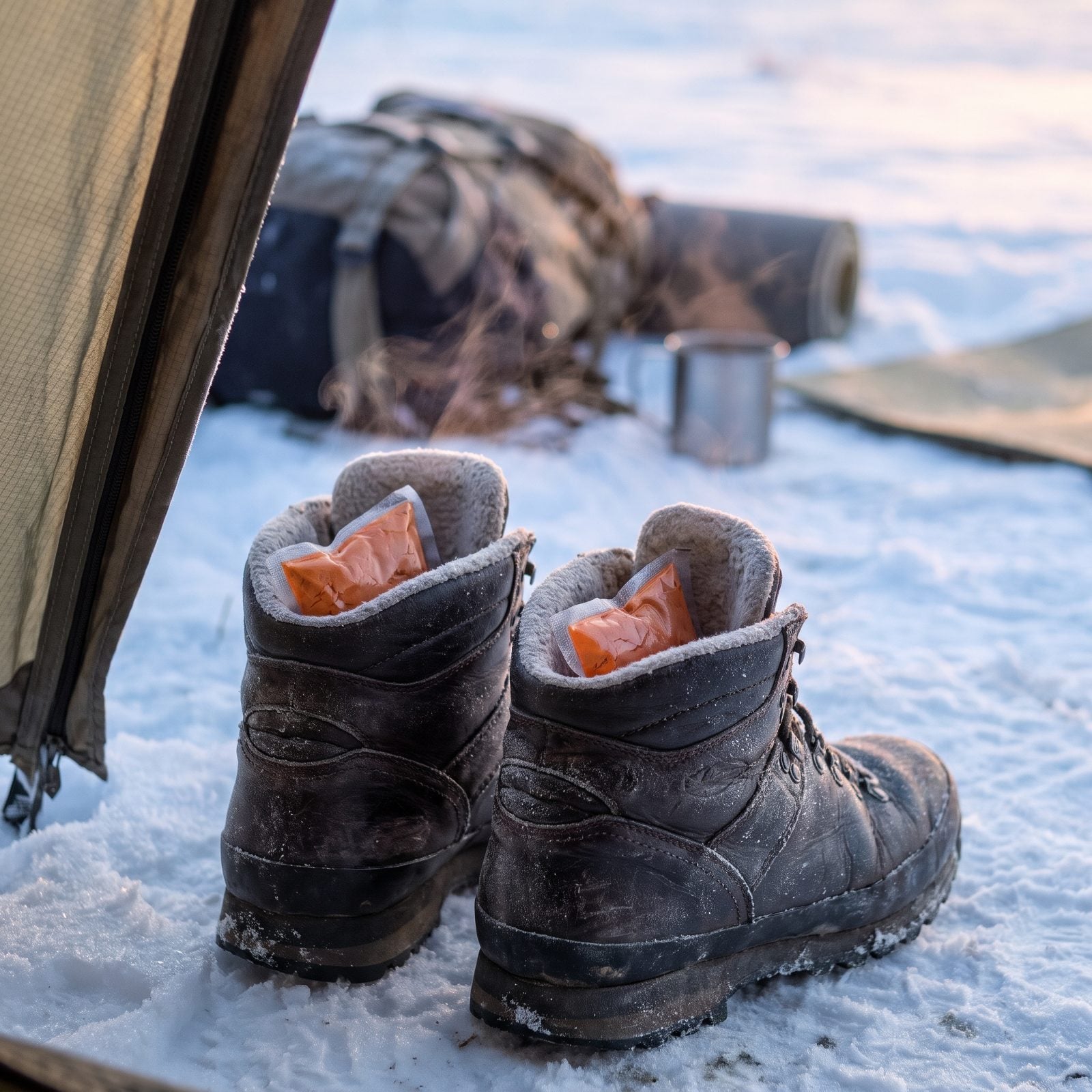
Cold boots at dawn are a shock your whole body remembers. Shake two disposable hand warmers to life, drop one into each toe box, and let them sit while you make coffee.
By the time you’re dressed, the coldest part of the boot — the toes — is warm and ready. Pull the warmers out or leave them in for the first hour of hiking. Either way you skip the ten minutes of frozen agony that usually opens a winter morning.
31. Tuck Mittens Inside the Jacket at Breakfast
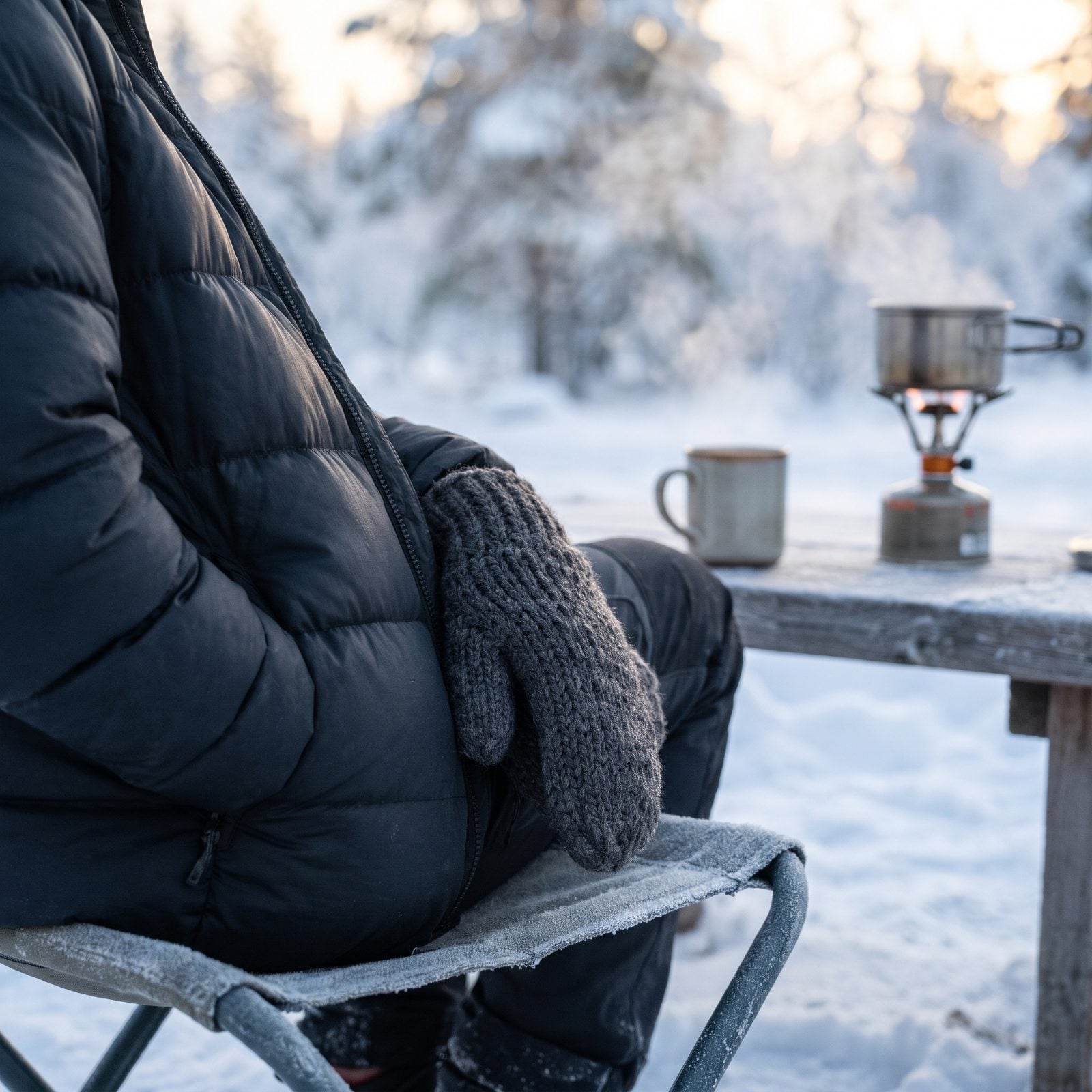
You take your mittens off to cook, they sit on the cold table, and by the time you reach for them again they’ve gone stiff and icy. Small thing, big annoyance.
Tuck them inside your jacket against your chest while you eat. Your core is the warmest real estate you’ve got, and it dries and warms the mittens for free. Same logic works for a damp hat, a phone that’s dying in the cold, or a water filter you can’t let freeze. Keep what you need near your body heat.
30. Bridge the Hat-and-Collar Gap With a Neck Gaiter
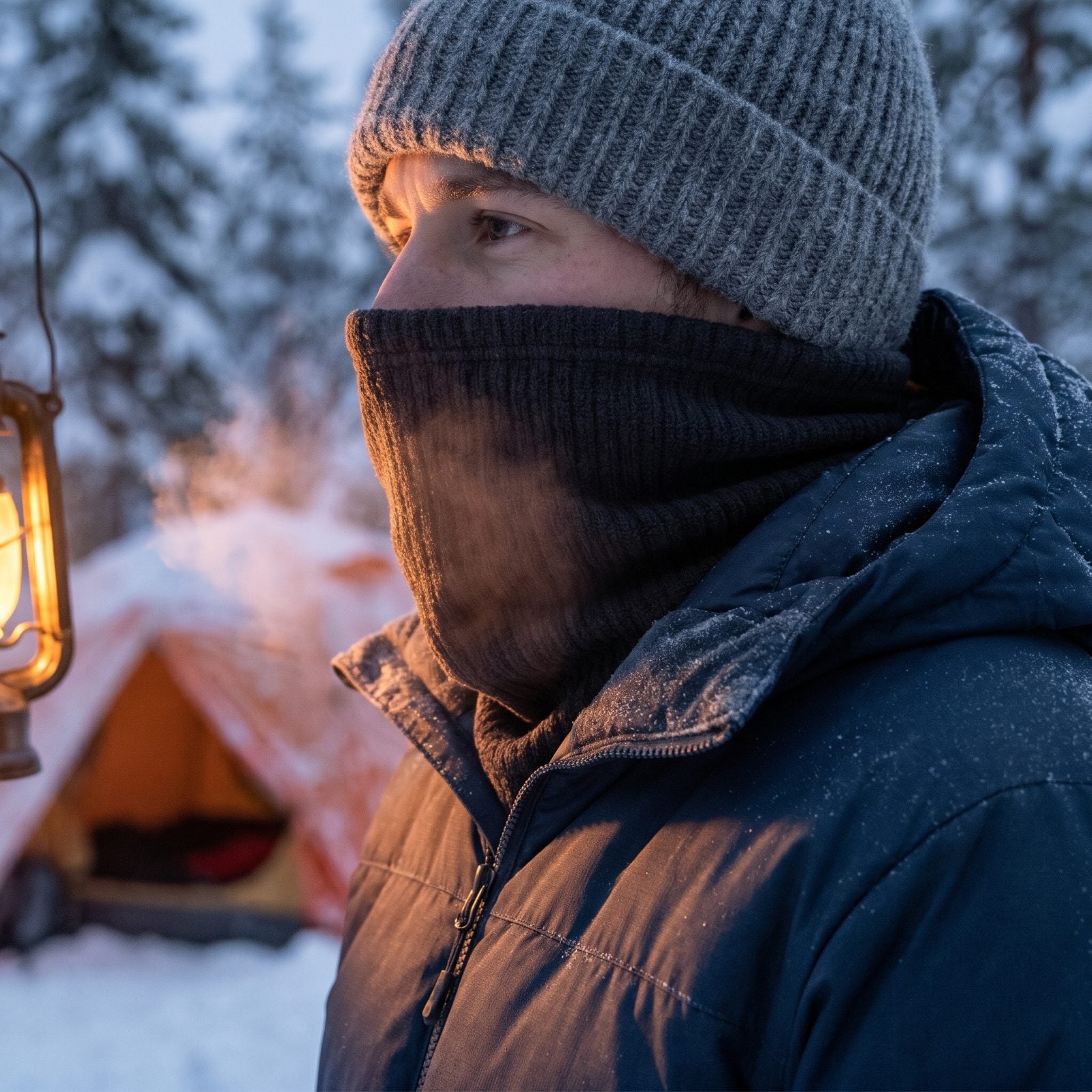
That inch of bare skin between your hat and your jacket collar leaks heat like a cracked window. You don’t notice until the cold has already worked its way down your spine.
A simple fleece gaiter closes the circuit. Pull it up over your chin at night and it traps a little of your own warm breath too, which takes the bite off every inhale. Cheap, light, and it doubles as a face cover when the wind kicks up.
29. Build a Low Snow Wall on the Windward Side
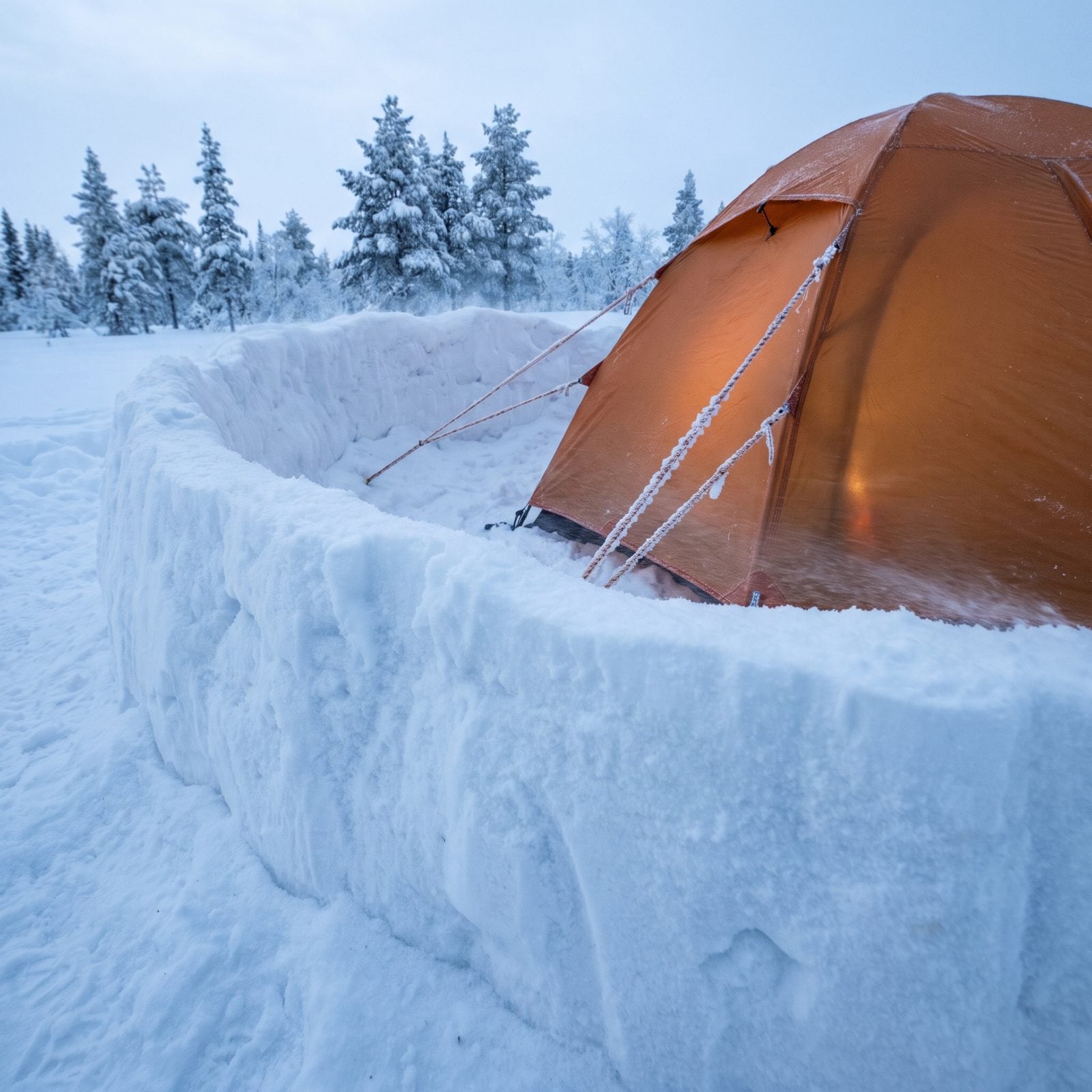
Wind does more damage to your night than temperature. A still 20 degrees beats a breezy 30 every time, because moving air strips the warm layer right off your tent.
Pile a low wall of packed snow, maybe knee high, on the side the wind comes from. You’re not building an igloo. You’re just breaking the flow so the gusts spill over your tent instead of hammering the fabric. Fifteen minutes with a boot and a pot lid, and you’ll feel the difference the moment the wind picks up after dark. Leave a few feet between the wall and the tent so air can still circulate under the fly.
28. Vent the Tent at Both the Roof and Door
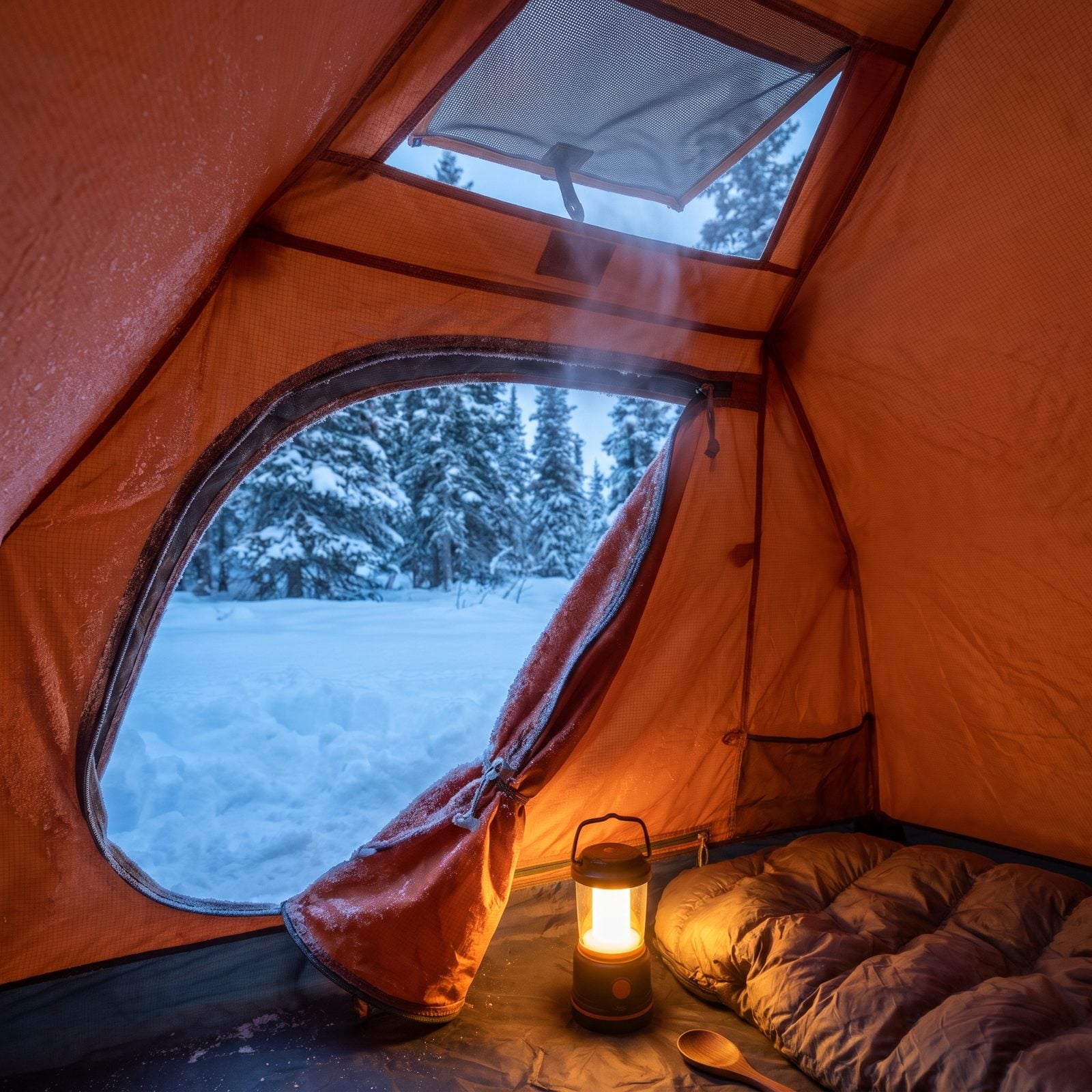
A sealed tent feels cozy and turns into a frost cave by morning. Every breath you exhale carries moisture. With nowhere to go, it settles on the cold tent wall and freezes, then rains back down on you when the sun hits.
Crack a vent high and another low. Cold air sneaks in at the door, warm damp air escapes at the roof, and the current carries your breath out before it can freeze. You’ll lose a hair of warmth and save yourself a soaked sleeping bag. Worth making that trade every night.
27. Brush Frost Off the Tent Before Sunrise
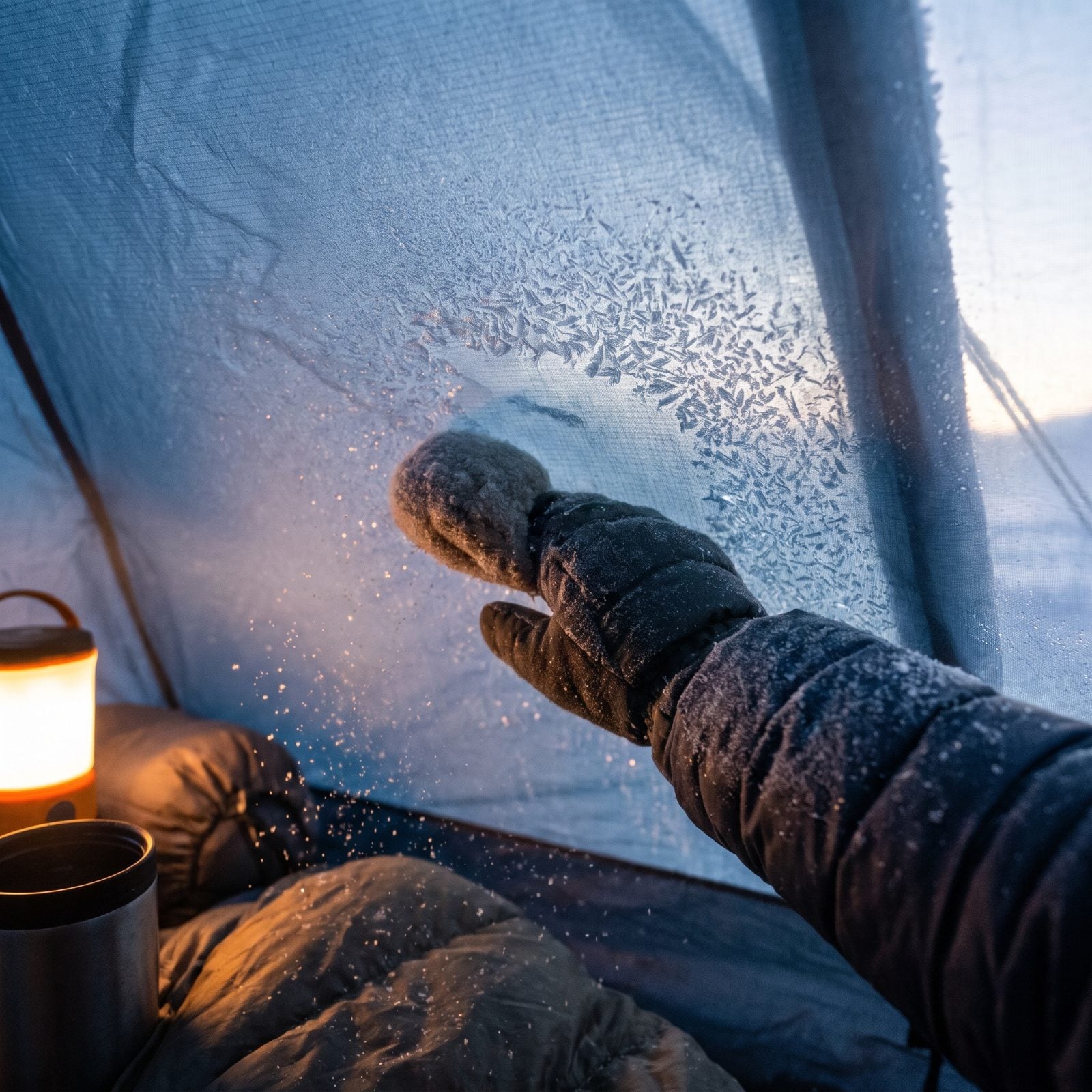
It’s a common mistake: wake to a frost-lined tent, shrug, and pack it wet — then at camp that night, all that ice melts and drips everywhere.
Knock the frost loose before the sun softens it. A quick sweep with a glove or a small brush sends the crystals off in a dry shower instead of a cold puddle. Do it while the frost is still powder, early, before any warmth touches the fabric. Thirty seconds of brushing saves you an evening of damp misery and a tent that actually packs light.
26. Keep a Clearly Marked Nighttime Bottle Beside the Bed
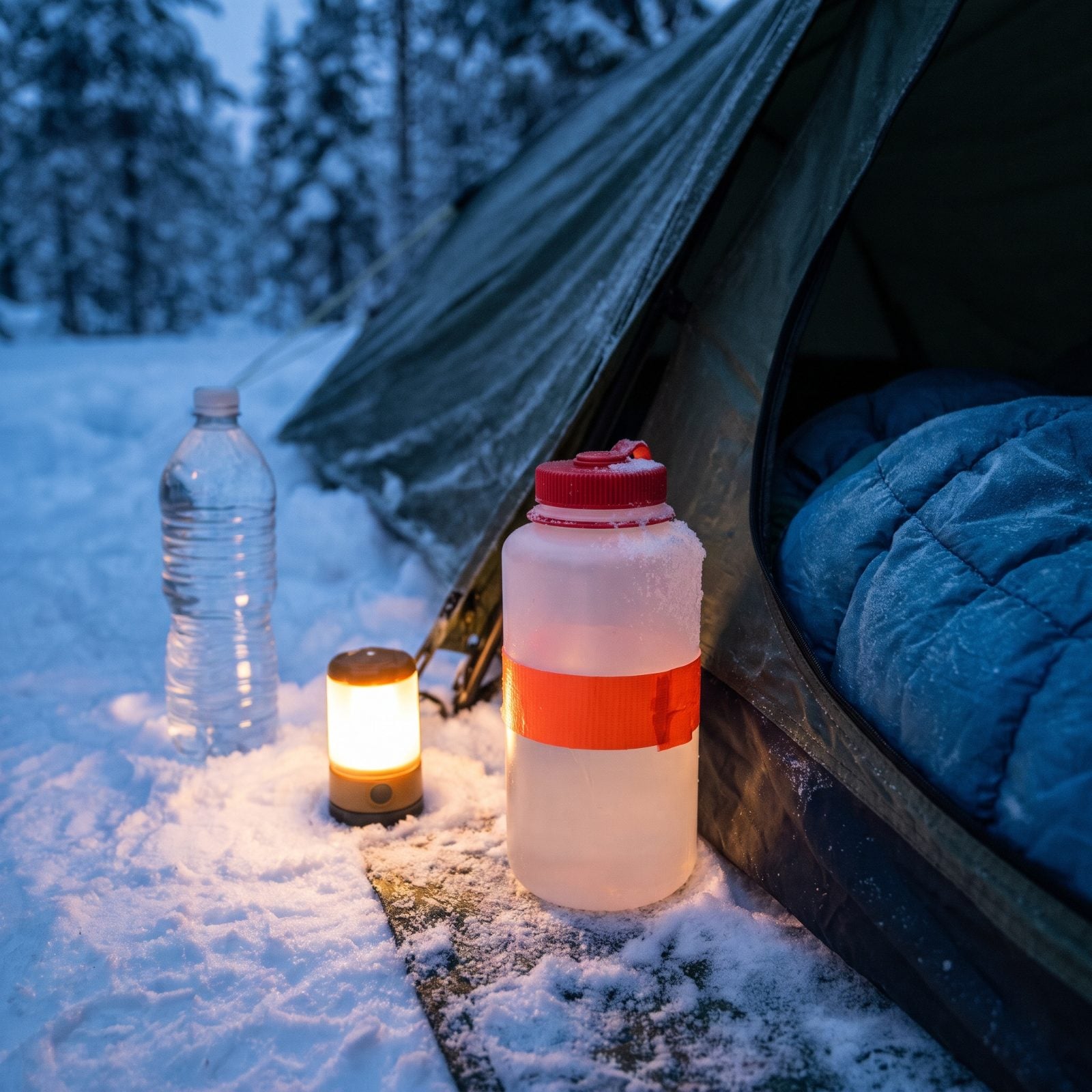
Leaving the warm bag at 3 a.m. to find a tree is its own special punishment. Getting dressed, unzipping, stepping into the dark, standing in the cold, then trying to warm back up. Some campers skip all of it with a dedicated pee bottle.
Wide mouth, a cap you can open one-handed in the dark, and a bright band of tape so there’s zero chance of a tragic mix-up with your water. Keep it on your own side of the tent; your drinking water will probably end up lying close by, so that tape is what tells them apart at a glance. Sounds crude. It’s also the single biggest comfort upgrade on a long winter night, and nobody admits to it until they’ve tried it.
25. Put an Easy-Open Midnight Snack in the Sleeping Bag
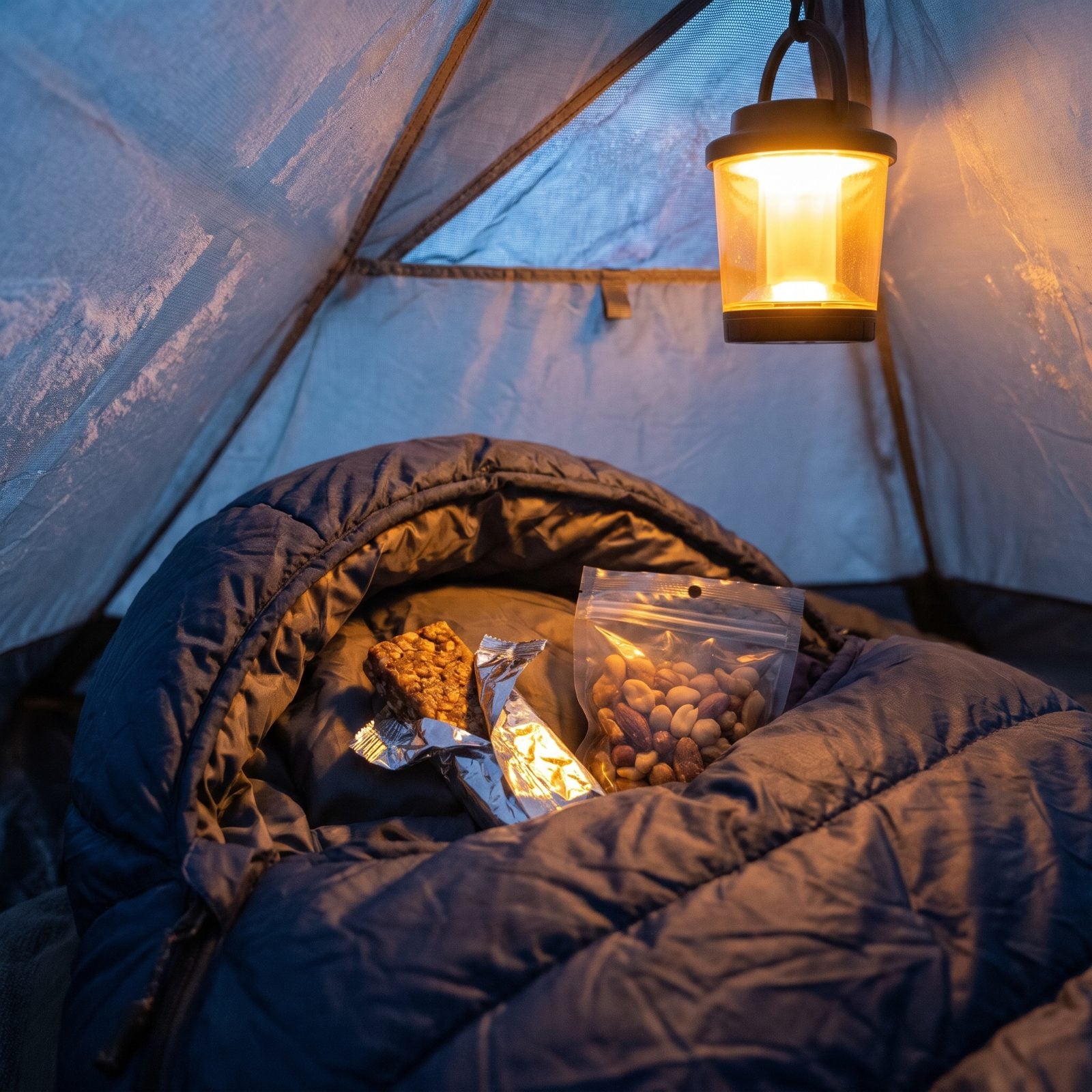
Your body is a furnace, and a furnace needs fuel to burn through a cold night. Wake up shivering and often it’s not the temperature — you’ve run empty.
Stash a snack you can open with cold, clumsy fingers right in the bag with you. A foil bar, a handful of nuts, something with a little fat in it. Eat it and your metabolism kicks the heat back on within minutes, no fumbling with packaging you can barely feel. (In bear country, obviously this one’s off the table. Hang everything.)
24. Fill a Thermos Before Crawling Into Bed
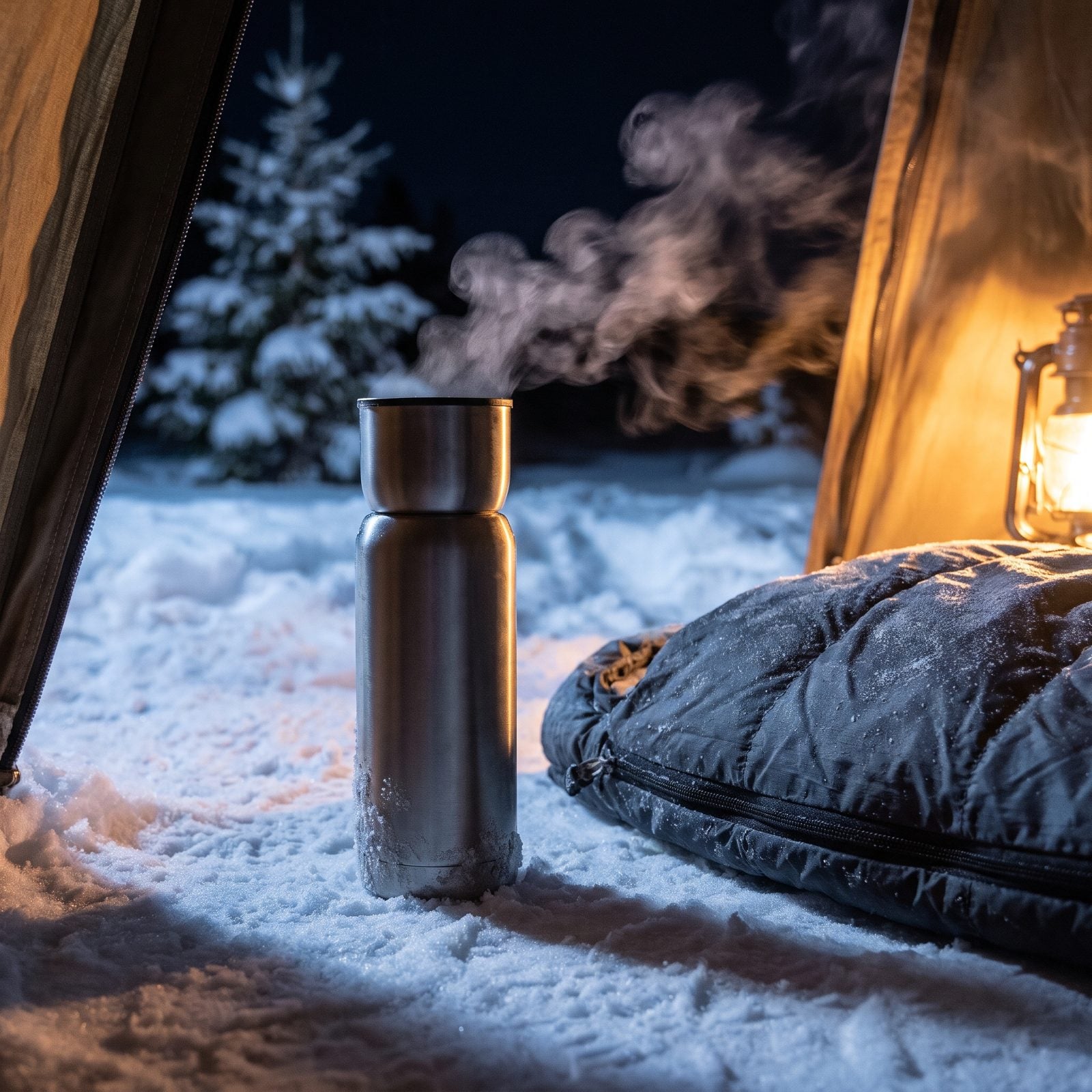
Fill a thermos with something hot before you turn in. Tea, cocoa, even plain hot water. A good vacuum flask holds that warmth for hours.
When you wake at 4 a.m. chilled to the bone, a few sips of something warm goes straight to your core and resets the whole night. No stove, no fumbling with a lighter in the dark, no getting dressed. Just reach over and drink. A small ritual that turns the worst hour of the night into a manageable one.
23. Use Wooden or Silicone Utensils Instead of Bare Metal
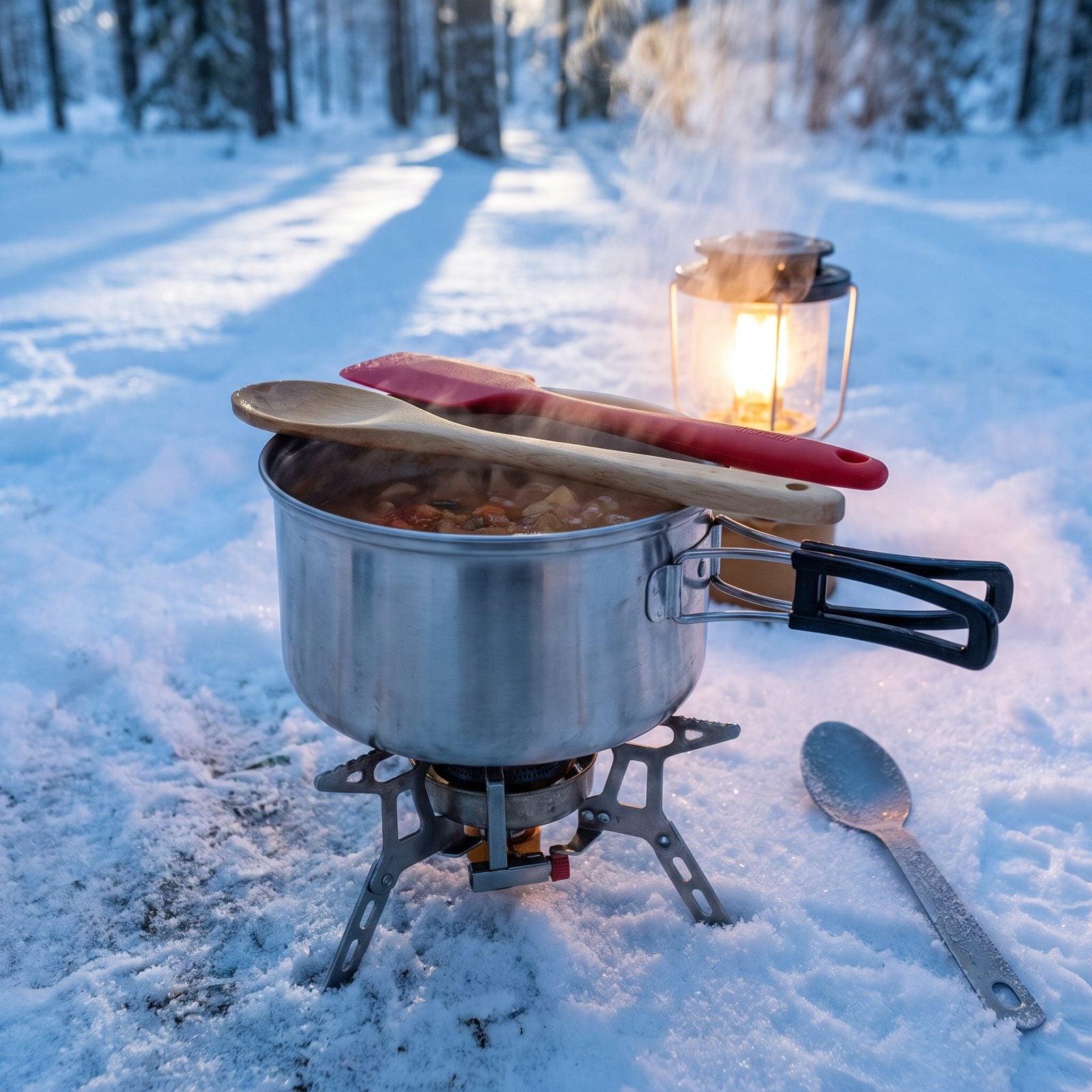
Grab a metal spoon that’s been sitting out in single digits and it bites back. Bare steel yanks heat from your fingers and your lips the instant you touch it, and in a real cold snap, wet skin can stick to it.
Wood and silicone don’t do that. They sit at a friendlier temperature no matter how cold the air gets, so your morning coffee stir doesn’t come with a jolt. A small swap, but the kind of thing you only appreciate once a frozen titanium spork has ruined your breakfast.
22. Store Water Bottles Upside Down So the Caps Stay Clear
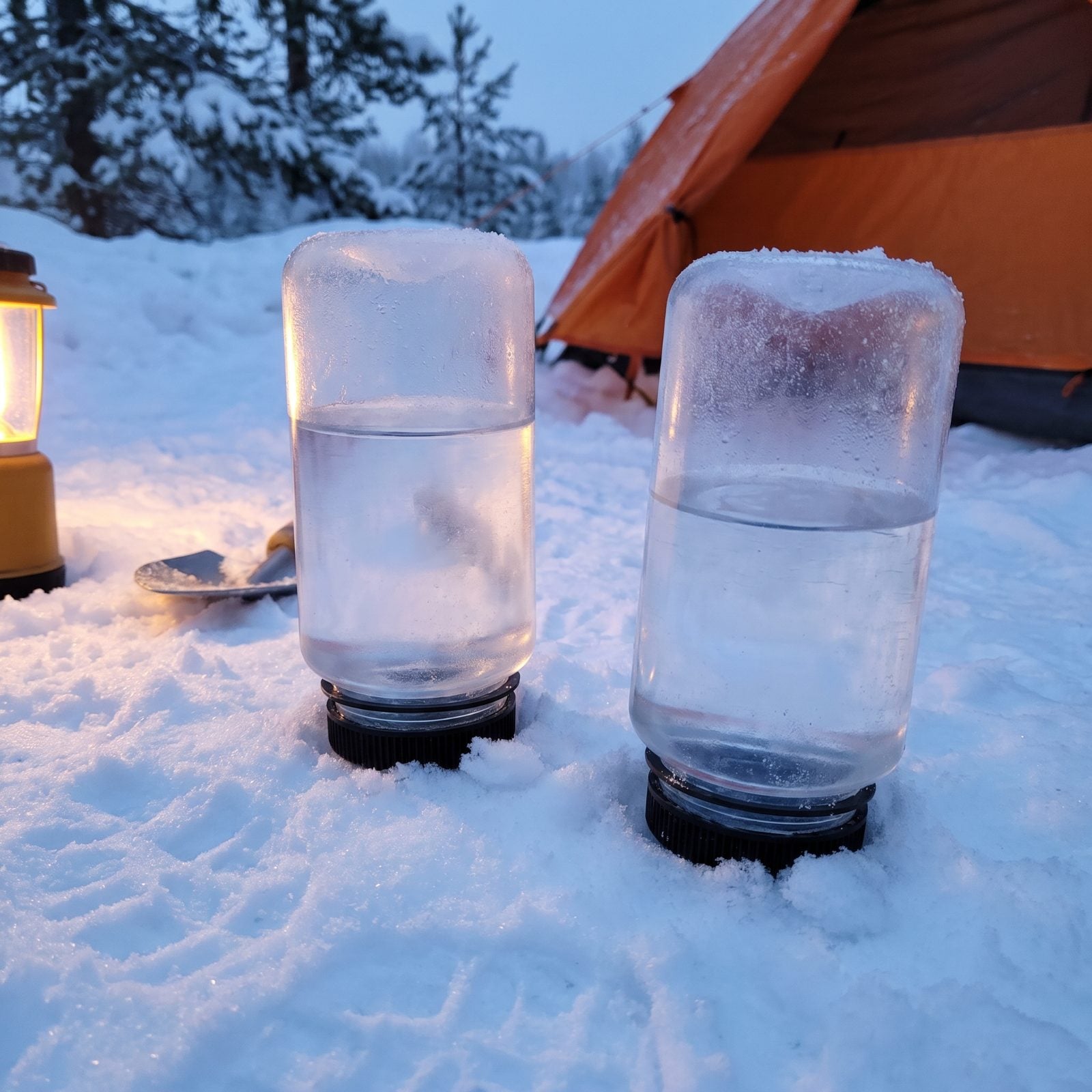
Water freezes from the top down. That’s why you wake to a bottle with a solid ice plug right under the cap, locked shut when you need a drink most.
Flip the bottle upside down before you sleep. The ice forms at what’s now the top — the bottle’s base — and the cap end stays liquid and openable. Works best in snow or a bit of loose insulation so the bottle stands steady. Simple physics doing you a favor while you sleep.
Warning about ice-locked caps, a winter backpacking blogger writes “Be aware that a bottle full of water will freeze top-down, sealing the opening first. You can mitigate this problem by flipping the bottle upside down, but make sure the lid is tight.”
21. Add Oversized Cord Pulls to Every Zipper
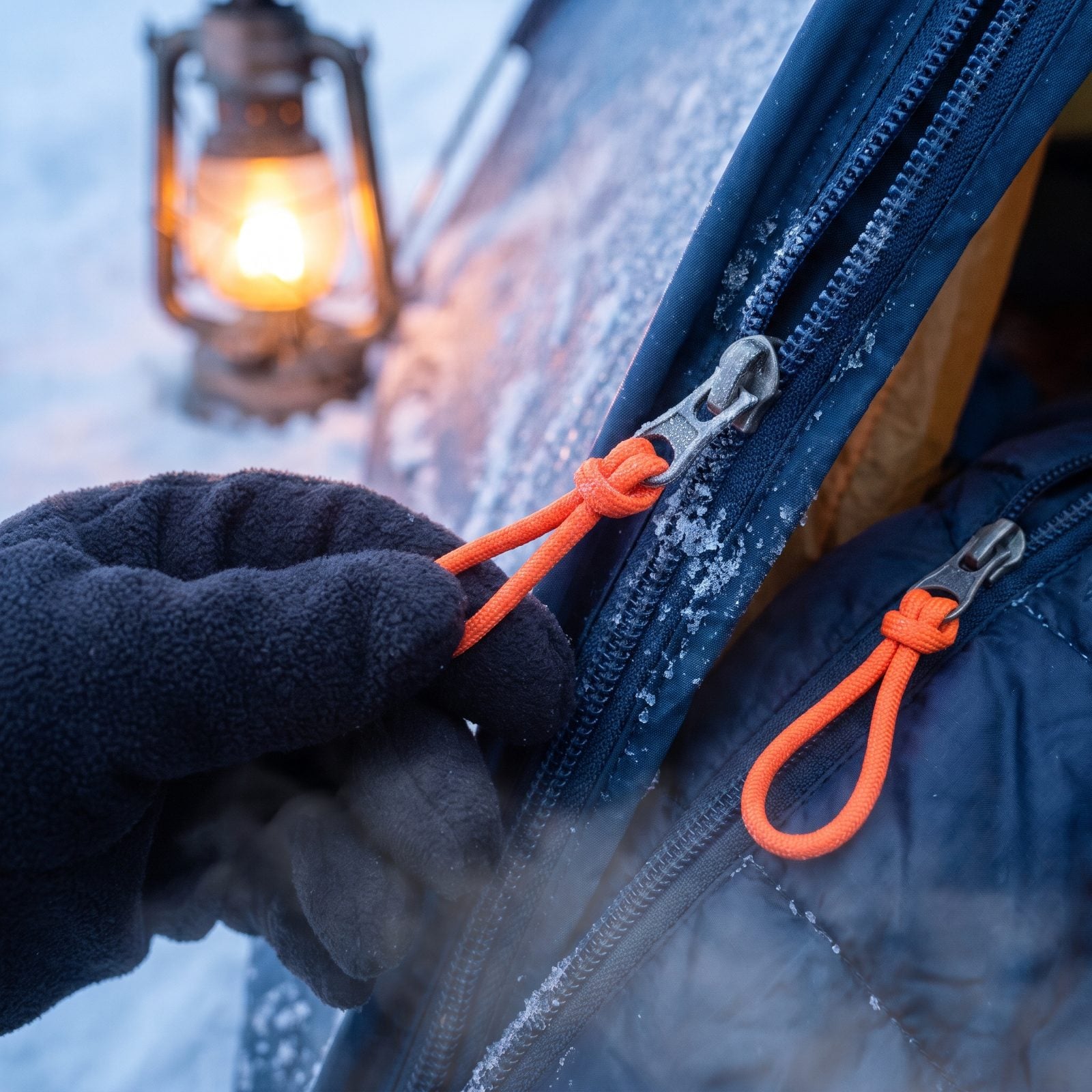
Try working a tent zipper at two in the morning with numb fingers and bulky mittens. You can’t. That little factory pull tab was built for bare hands in a warm store, and winter is neither of those things.
So loop a few inches of paracord through every zipper you touch in the dark — tent door, vestibule, sleeping bag, jacket. Now you can hook it with a mitten still on, or even a crooked finger when your hands have stopped cooperating. Bright orange shows up against snow, it costs almost nothing, and the whole job takes one evening by the fire.
20. Mark Tent Zippers With Glow-in-the-Dark Tabs
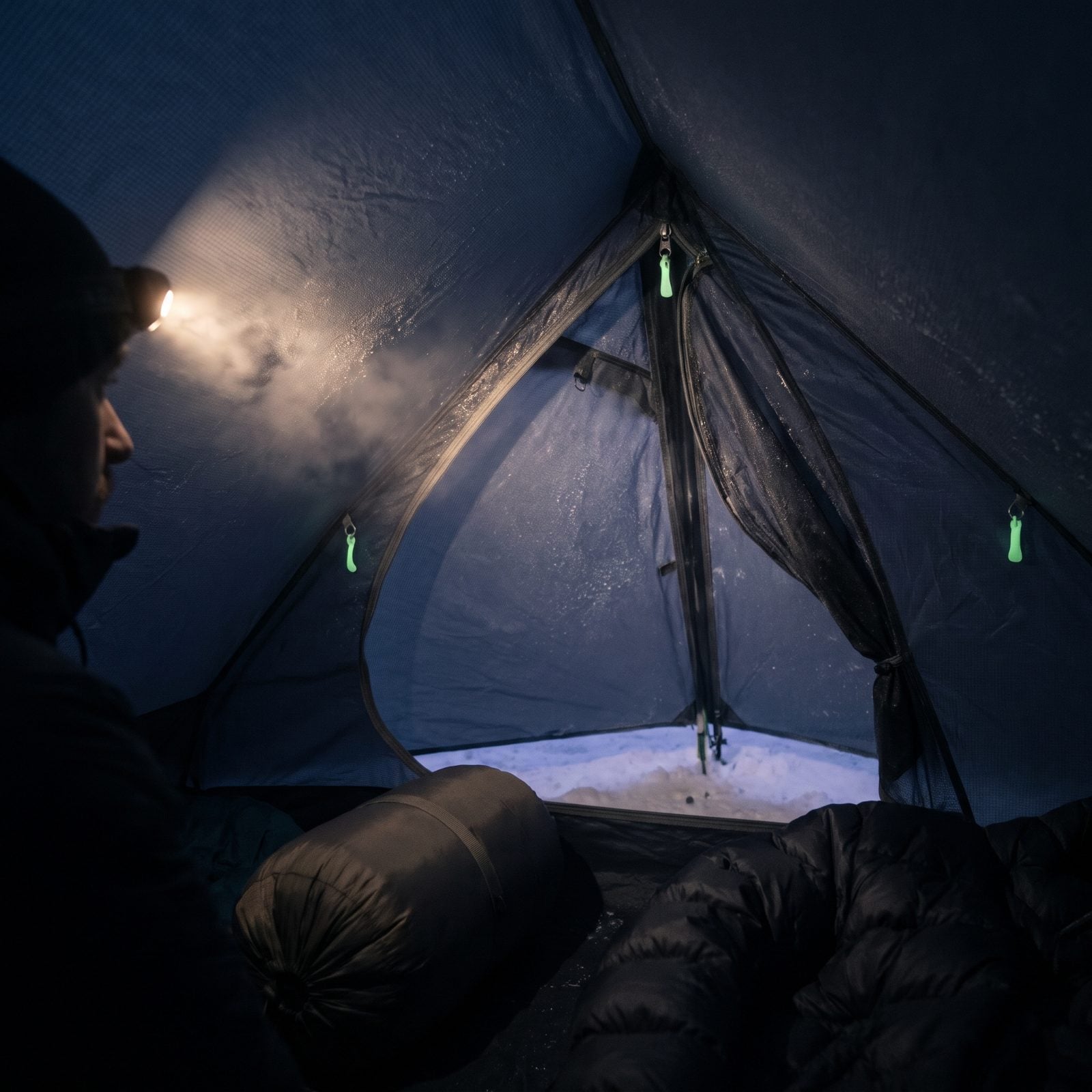
You wake up needing out fast. Maybe nature calls, maybe you just need air. Either way you’re pawing at the tent wall in pitch dark, hunting for the one zipper that opens the door, and your fingers find every seam except that one.
Here’s the fix: stick a small glow-in-the-dark marker or a dab of luminous paint right on the door slider and the vestibule slider, then charge it with your headlamp before you crawl in. Now the exit announces itself without you grabbing a light and blinding yourself blind. Two glows in two colors if you like, so you never confuse the door with the window.
19. Carry a Small Brush Just for Snowy Boots
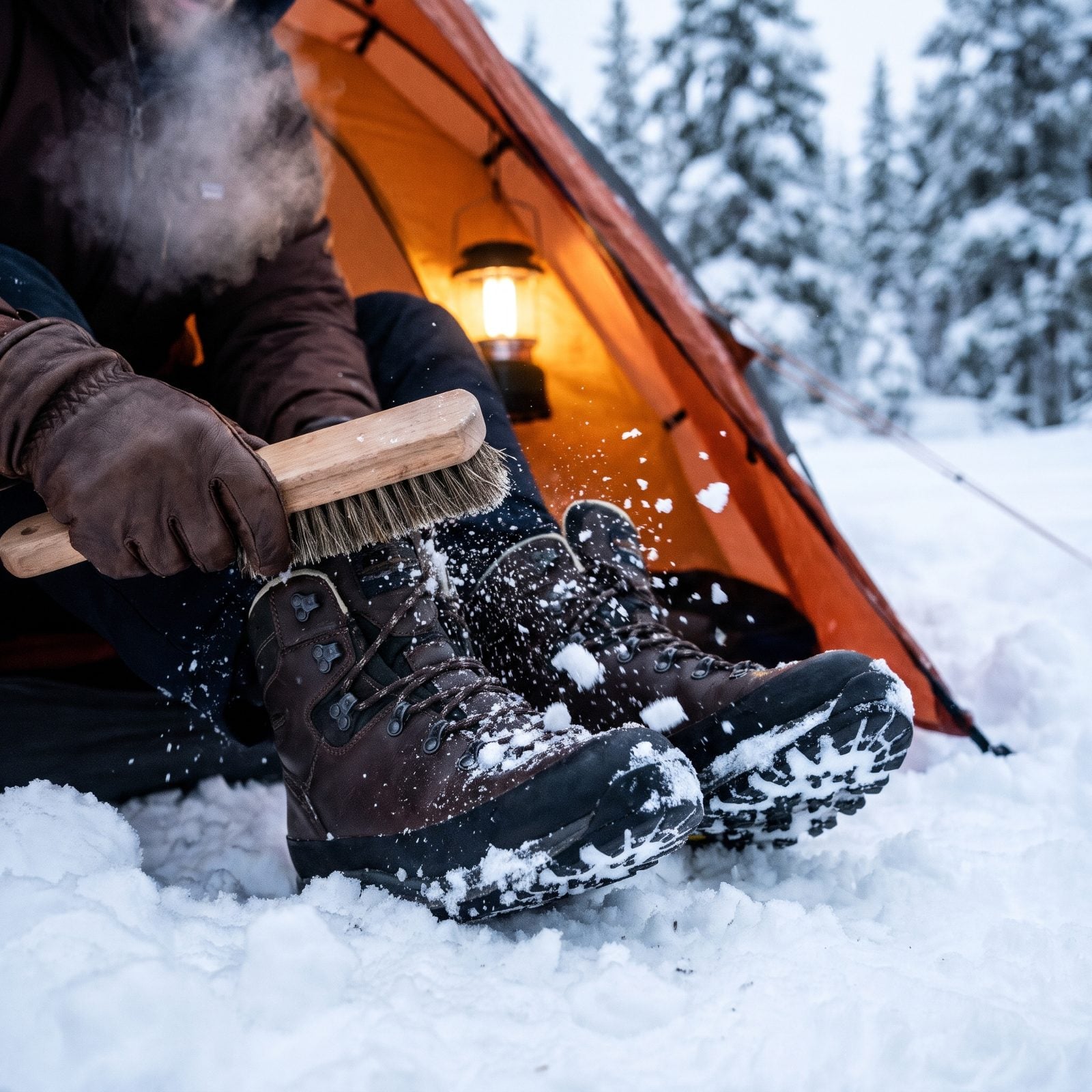
Snow that rides into the tent on your boots doesn’t stay snow. It melts, soaks your pad, and refreezes into a cold damp patch you end up sleeping on all night. A lot of “my bag isn’t warm enough” grumbling traces straight back to this.
A cheap stiff brush — the grill-cleaning kind — knocks the snow off your boots and cuffs before any of it crosses the threshold. Thirty seconds of brushing saves you a wet floor. Hang it by the door so you actually use it instead of just promising yourself you will.
18. Dig a Shallow Footwell in the Vestibule
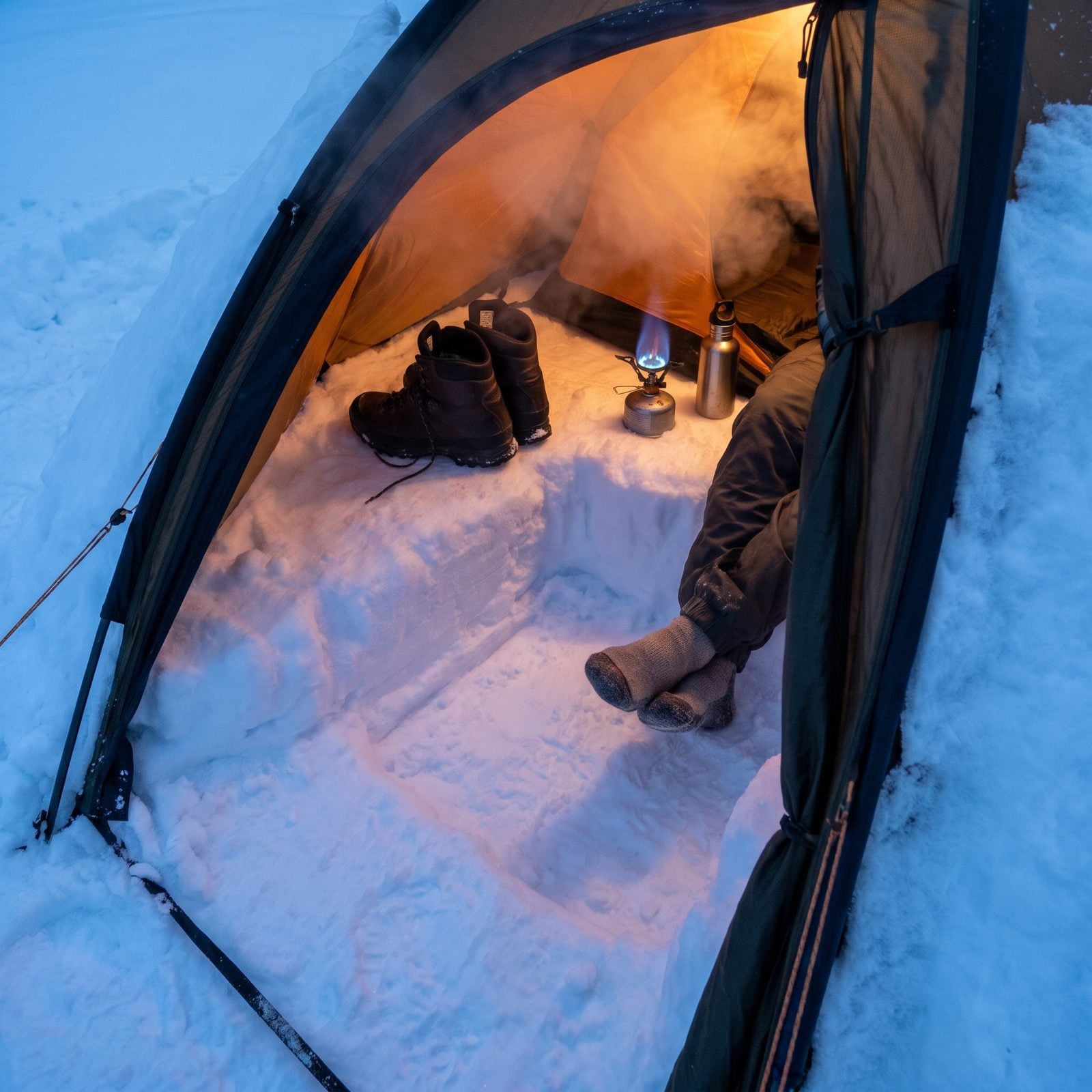
Ever tried to pull your boots on while sitting flat on the ground inside a tent? Knees at your ears, back screaming.
Camped on deep snow, you can dig a shallow pit in the vestibule floor and suddenly the edge of the tent becomes a bench. You sit with your feet down in the well, lace up like a civilized person, and cook on the flat snow shelf at a sane height. Bonus: cold air pools down in the well, below where you’re sitting, because cold sinks.
One caveat, and it matters. Keep any stove use out here in the open vestibule with the door flapped open for airflow — never sealed inside the sleeping area.
17. Make a Boot Tray From a Folded Foam Pad
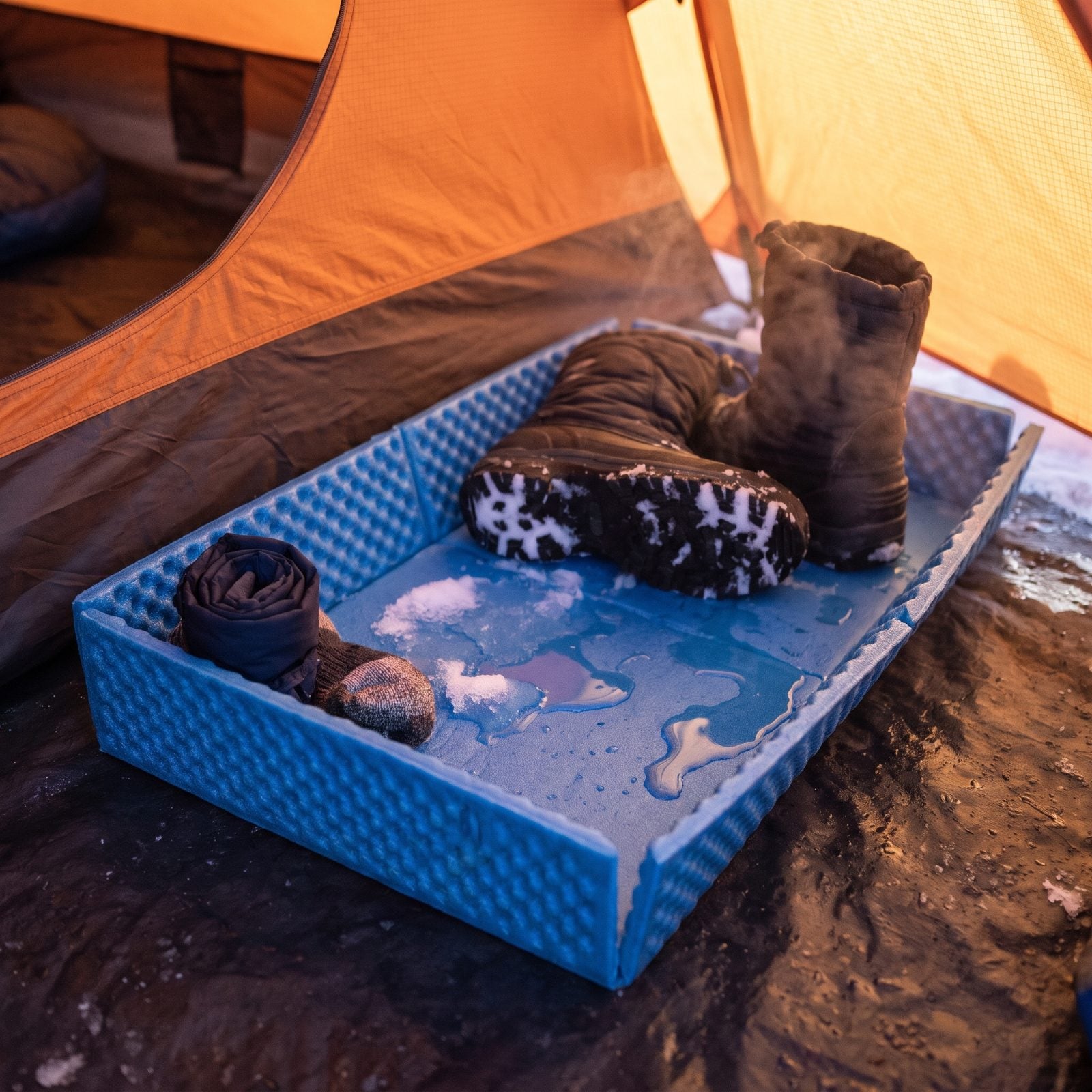
Closed-cell foam doesn’t absorb water. That’s the whole trick.
Cut or fold a short length of a blue foam pad and crease up the edges so it holds a lip, and now you’ve got a little tray that catches all the snow and slush dripping off your boots instead of letting it run across the tent floor and freeze there. In the morning you tip the tray out the door and the meltwater goes with it.
16. Wipe Condensation With a Dedicated Microfiber Cloth
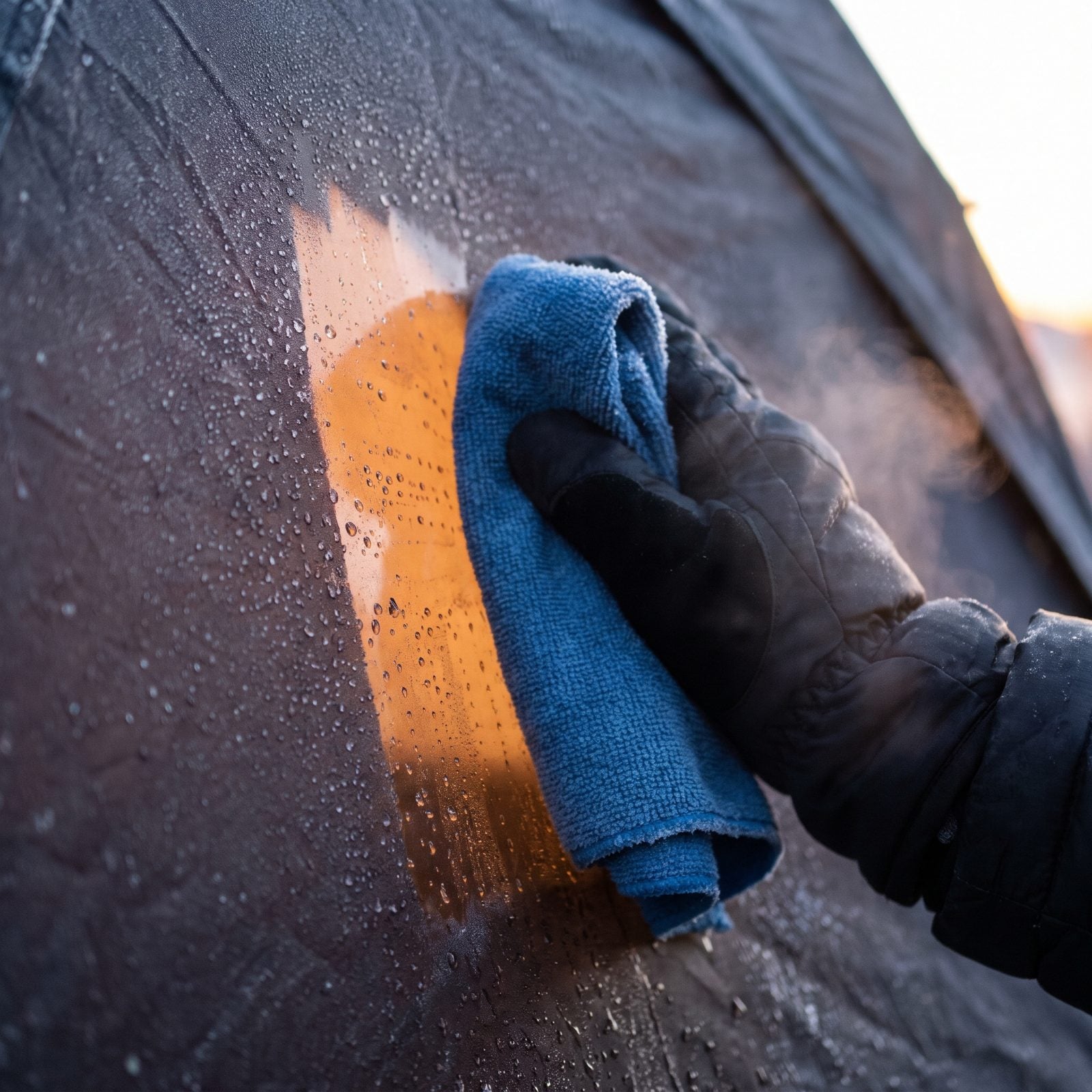
Overnight, moisture settles as frost on the inside of the tent, crusting the fly and clear window, and the moment the morning sun hits it, it melts into cold water that runs down the fabric and seeps in toward you and your bag.
Keep one small microfiber cloth whose only job is wiping that film down before it thickens into ice. Step outside with gloves on for a quick pass over the window and fly before bed, another at first light. Two-dollar cloth doing work that would otherwise soak your down and quietly rob it of loft. Wring it out the door, not inside.
15. Cover Metal Bottles With Fleece Sleeves
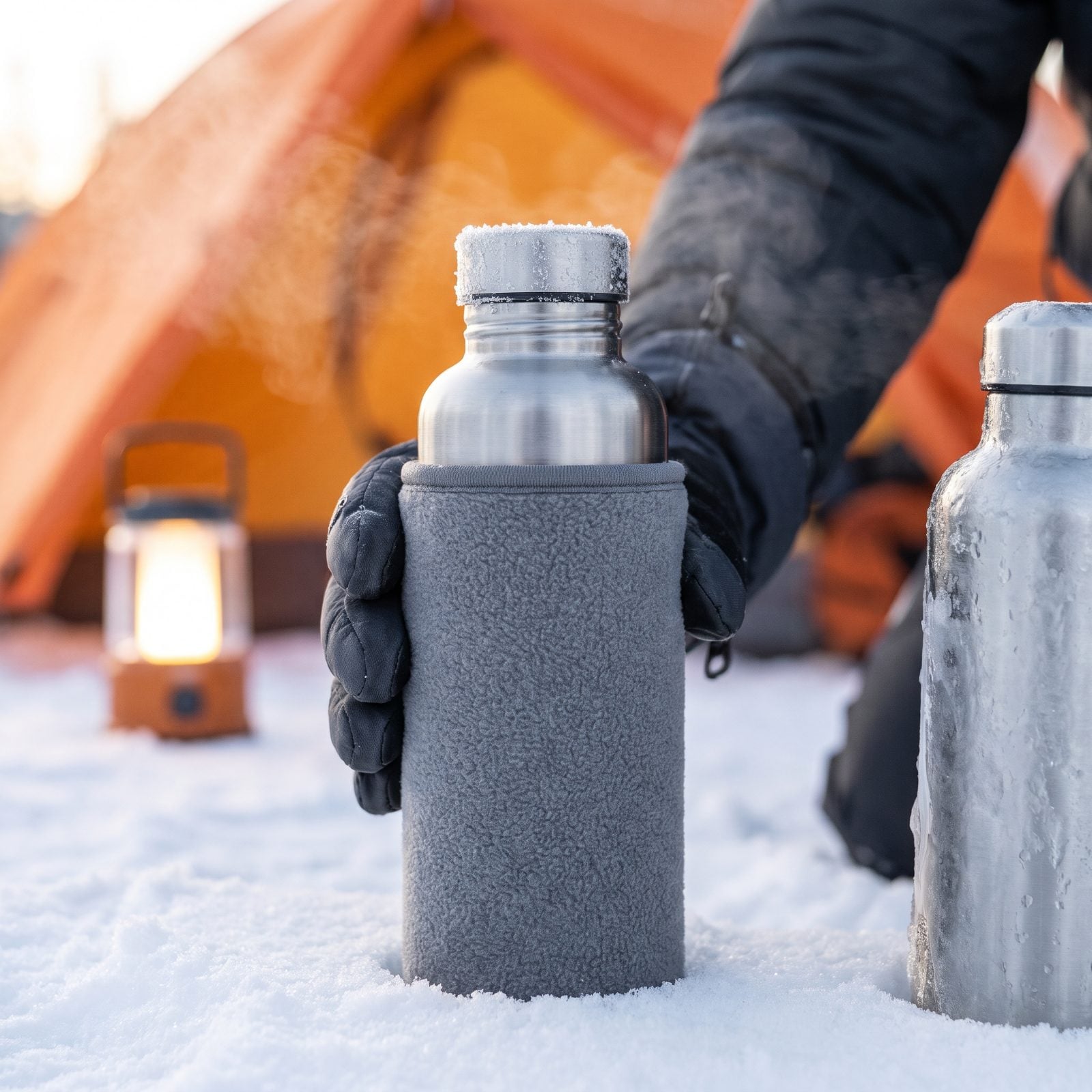
Grab a bare metal bottle at ten below and your skin nearly welds to it. The metal pulls heat straight out of your hand, and that bottle of hot water you filled to warm your sleeping bag bleeds its warmth into the cold air way faster than it has any right to.
Slip a fleece sleeve over your steel bottles — an old cut-off sweatshirt sleeve works fine. It slows the heat loss and makes the bottle safe to grab bare-handed. A hot bottle sleeved and tucked down by your feet stays warm most of the night instead of going stone-cold by midnight.
14. Keep Lip Balm and Lotion in an Inner Pocket
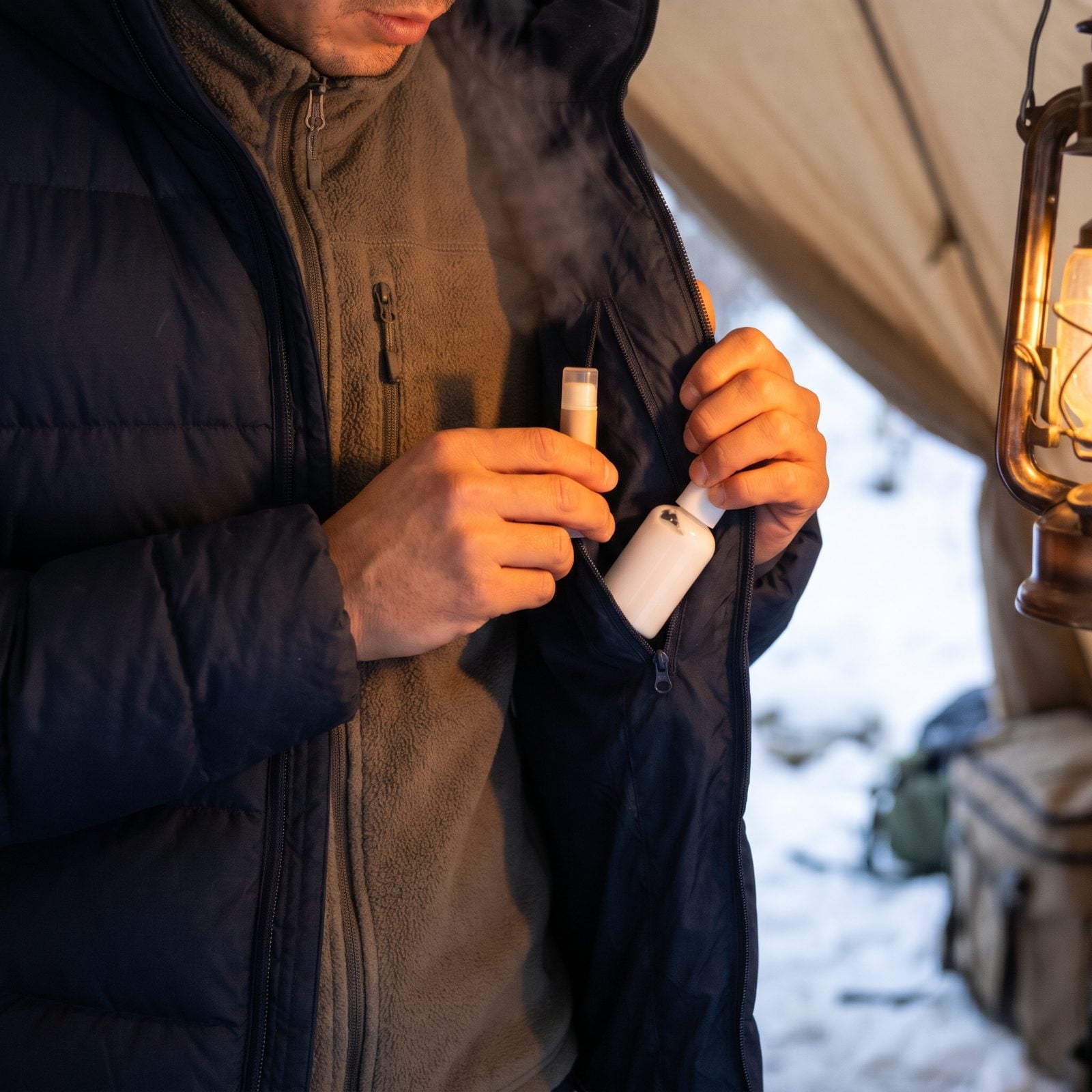
Lip balm turns into a hard useless crayon when it’s cold. Lotion in a freezing tube squeezes out like toothpaste from a frozen pond. And both are exactly what your cracked, wind-burned winter face is begging for.
So keep them in an inner chest pocket against your body all day and all night, where your own heat keeps them soft and ready to go. Same logic for a spare battery, your contact solution, any small gel you don’t want frozen solid. That inner pocket is prime warm real estate — give it to the things that quit on you in the cold.
13. Sleep With the Phone in Airplane Mode Near the Body
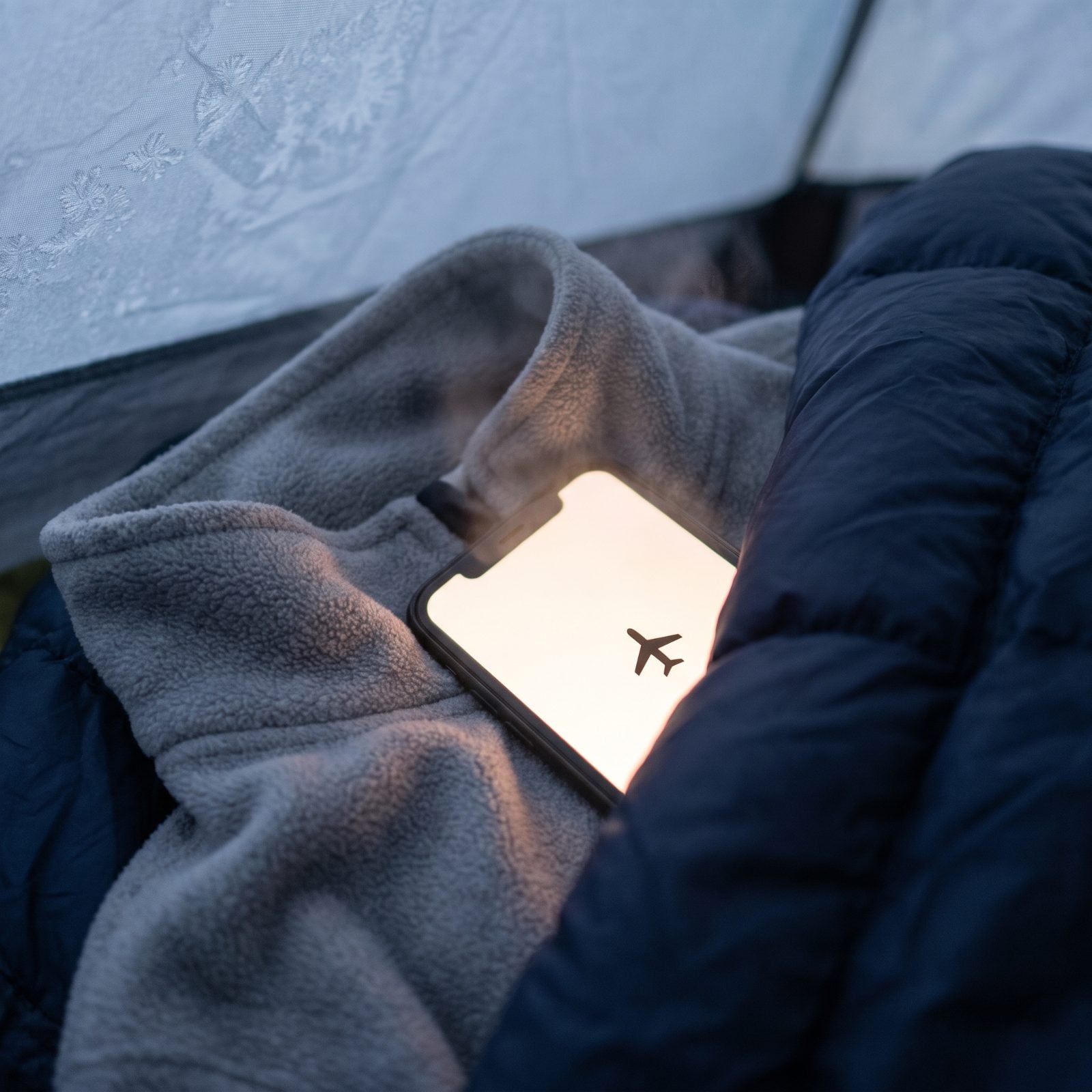
Cold murders phone batteries. You’ve watched a phone at full charge plummet to dead in minutes once it gets properly cold — usually right when you need it to call for help or check a map.
Flip it to airplane mode so it stops hunting for signal and burning power, then sleep with it tucked in an inner layer against your body rather than in the tent pocket by the frigid wall. Your warmth keeps the battery alive while airplane mode kills the drain. Come dawn you’ve got a working phone instead of a frozen brick.
12. Keep Spare Batteries in a Zippered Base-Layer Pocket
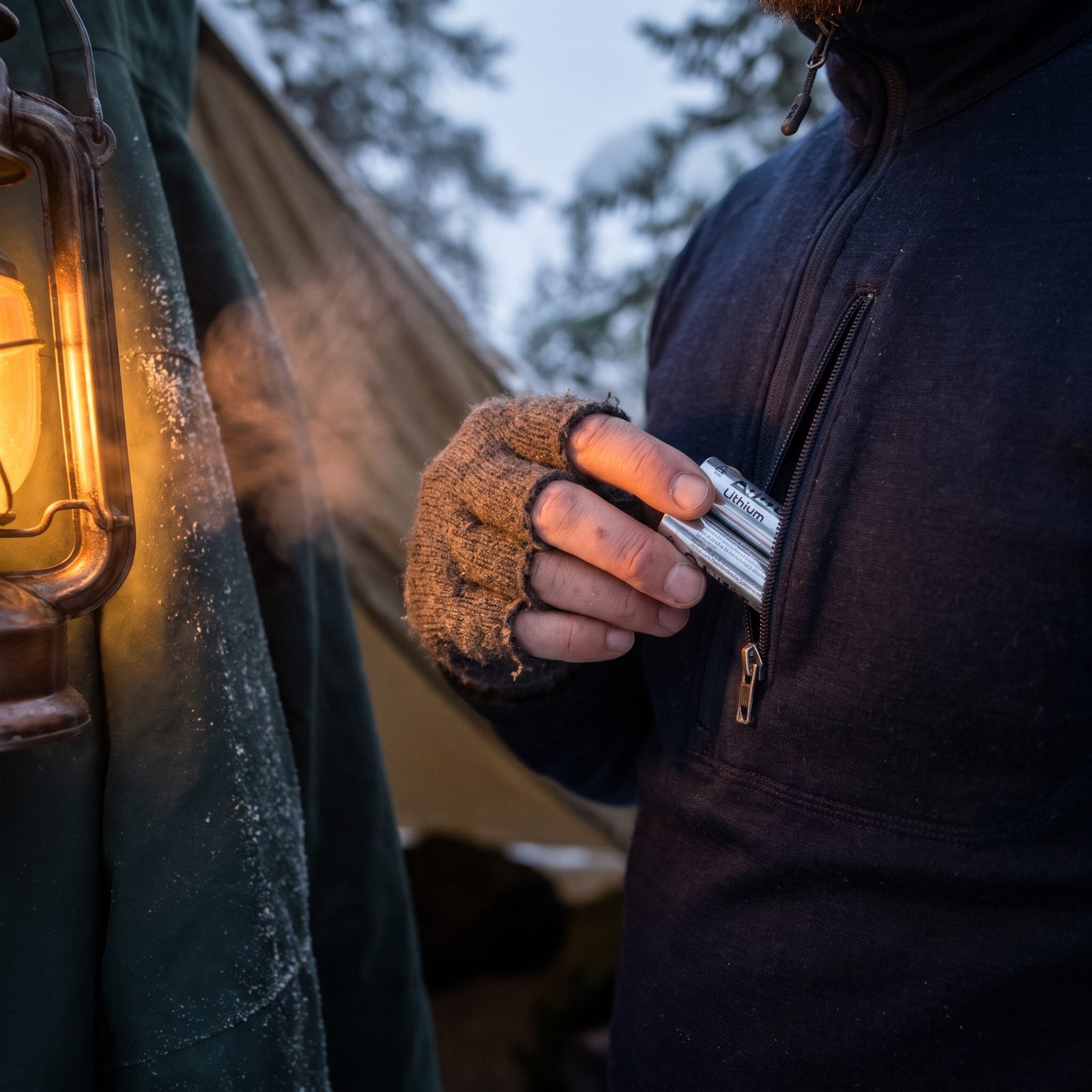
Cold murders batteries. Lithium holds up better than alkaline, but either one drains fast in the teens and twenties, and a dead headlamp at 2 a.m. when you’re trying to find the vestibule is its own special misery.
So keep the spares close to your skin. A zippered chest pocket on your base layer, right over the sternum, stays warm all night off your own body heat. Pull a cold battery from the headlamp, swap in a warm one, and the dead-looking cell often comes back once it thaws. Plenty of campers have squinted at a map by moonlight, cursing a brand-new pack of batteries that weren’t dead at all. Just frozen stiff.
11. Wear the Headlamp Around the Neck for Bedtime Tasks
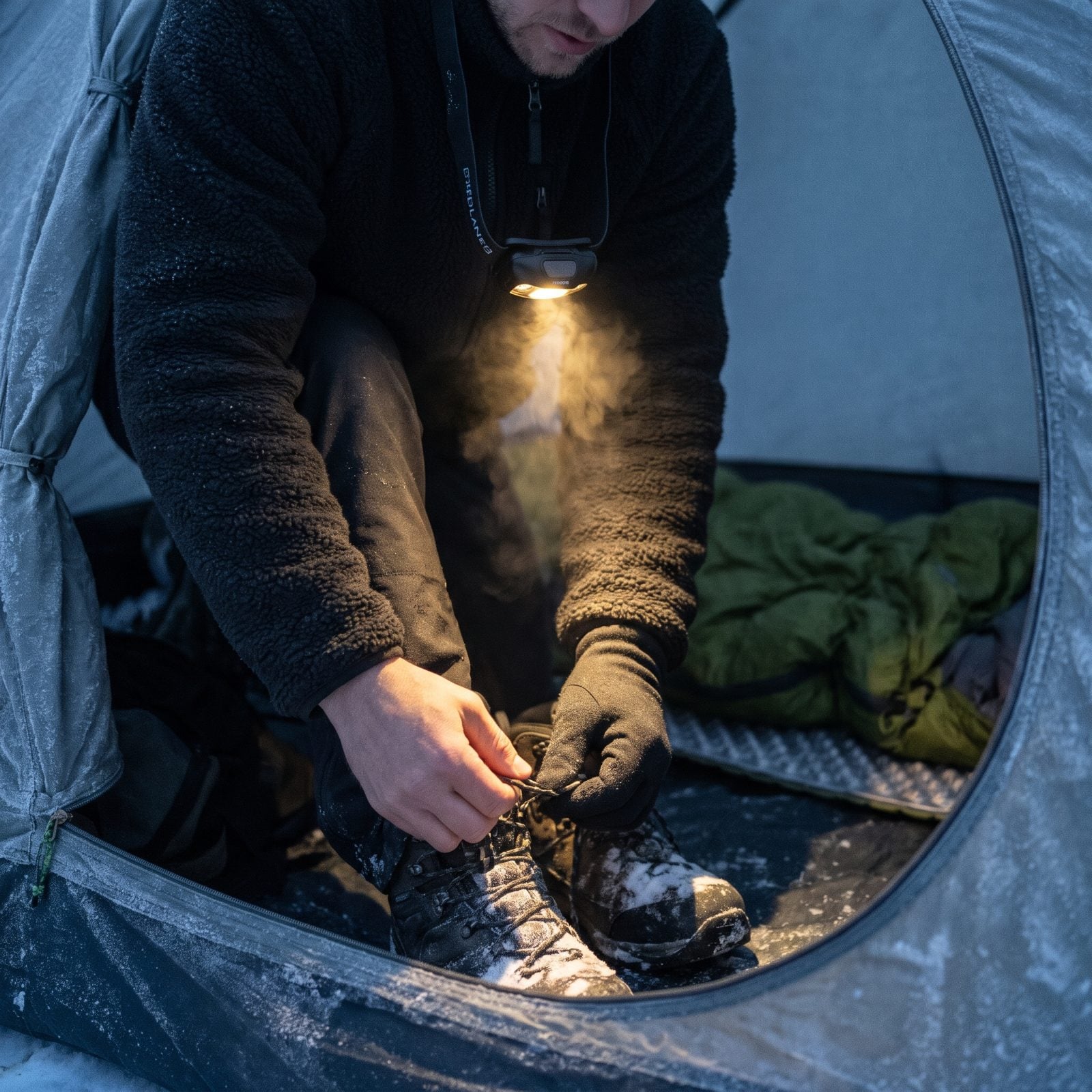
Strapped to your forehead, a headlamp blasts straight into the eyes of anyone you look at and throws a harsh glare onto whatever you’re holding up close. Loosen the strap, drop it around your neck, and point the lamp down.
Now the light falls where your hands are working — boot laces, a zipper jammed with ice, the valve on your sleeping pad. The beam pools on the task instead of in your face, and you quit the lighthouse routine of swinging a hot spot across the whole camp every time you turn your head. For the slow, fiddly jobs that fill the last hour before sleep, a lamp on the chest wins.
10. Bring Separate Hats for Hiking and Sleeping
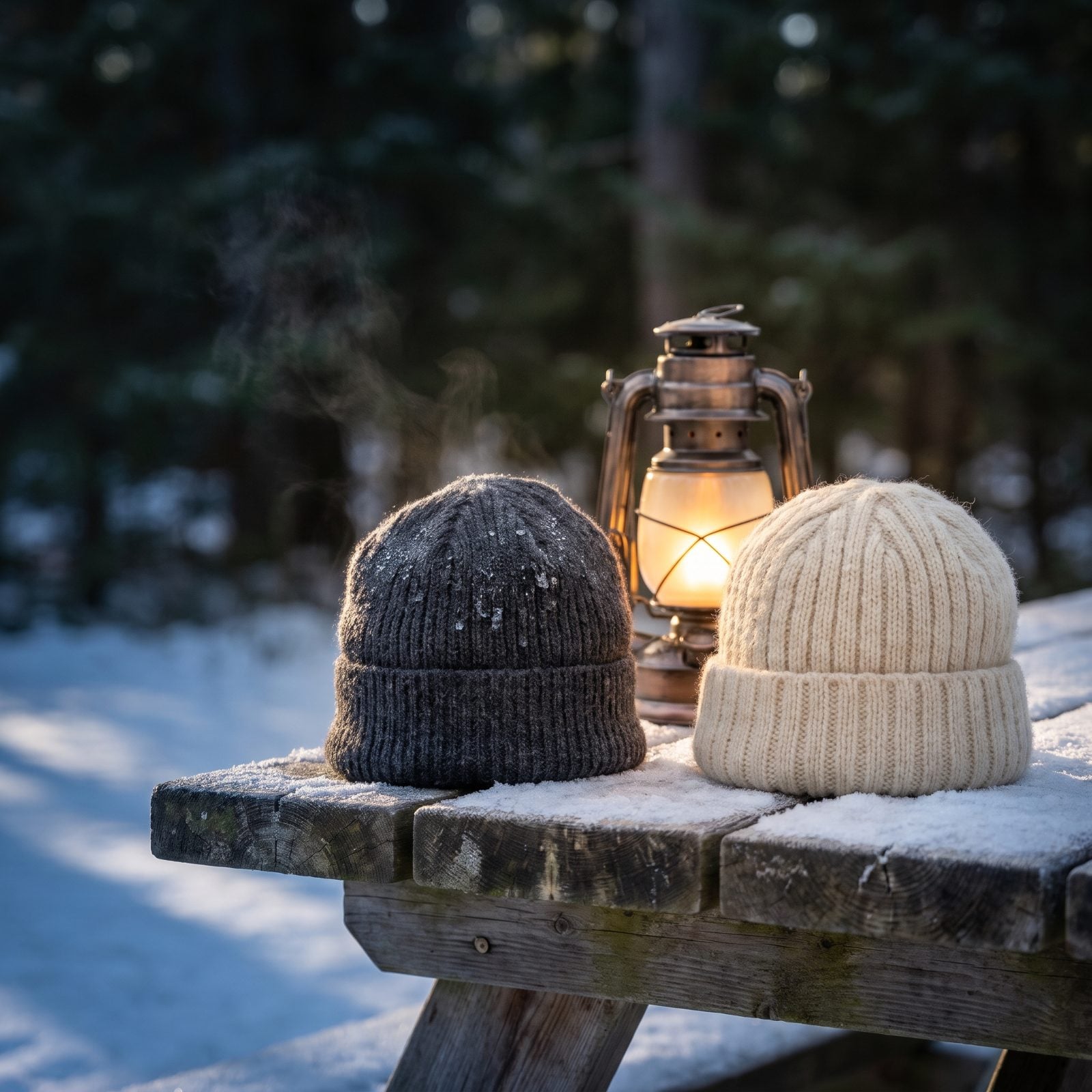
Your hiking hat is soaked and you don’t know it. Climb a hill with a pack on in cold air and you sweat, even in winter, and most of that moisture ends up in the wool against your scalp. Pull that same hat on at bedtime and you’re sleeping in a wet rag that wicks heat away all night.
Carry two. One for moving, and a bone-dry one that lives in the bottom of the bag and only comes out after dark. The sleep hat stays lofty and insulating because it never got sweated into. Weighs almost nothing. Makes a real difference in how long your head stays warm.
9. Shake the Sleeping Bag Loft Back Into Place Before Bed
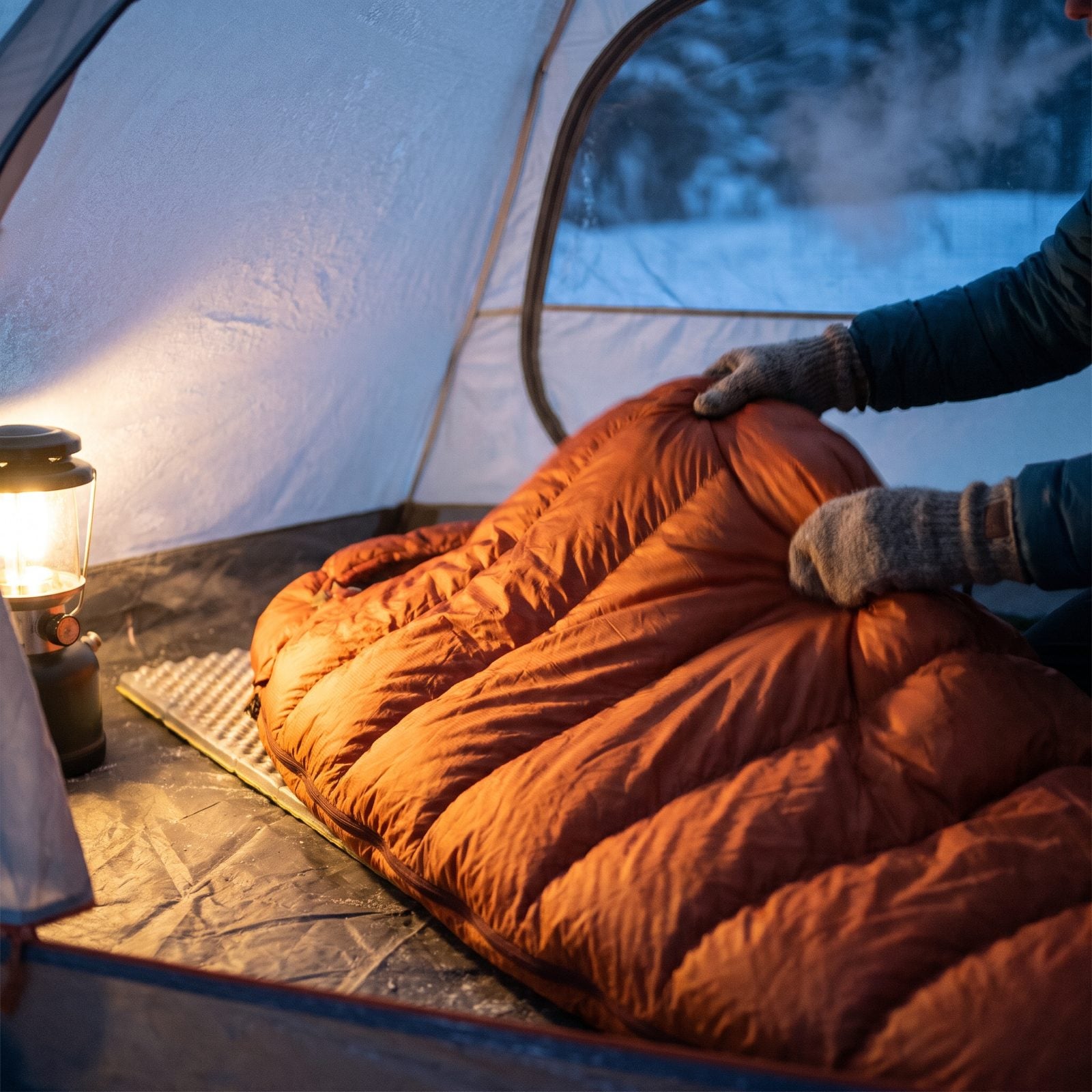
A sleeping bag crammed in its stuff sack all day comes out flat, the down clumped and the baffles collapsed, and compressed insulation doesn’t insulate. That loft — the fluffy trapped air in the fibers — is what keeps you warm. Flat bag, cold night.
Give it a hard shake and a few minutes to breathe before you climb in. Fluff the foot box, work the down back into the empty corners of each baffle, then let it sit while you handle other chores. Synthetic bags bounce back faster. Down needs the help. Two minutes of shaking buys you warmth you already paid for.
8. Warm Up With Gentle Squats Without Breaking a Sweat
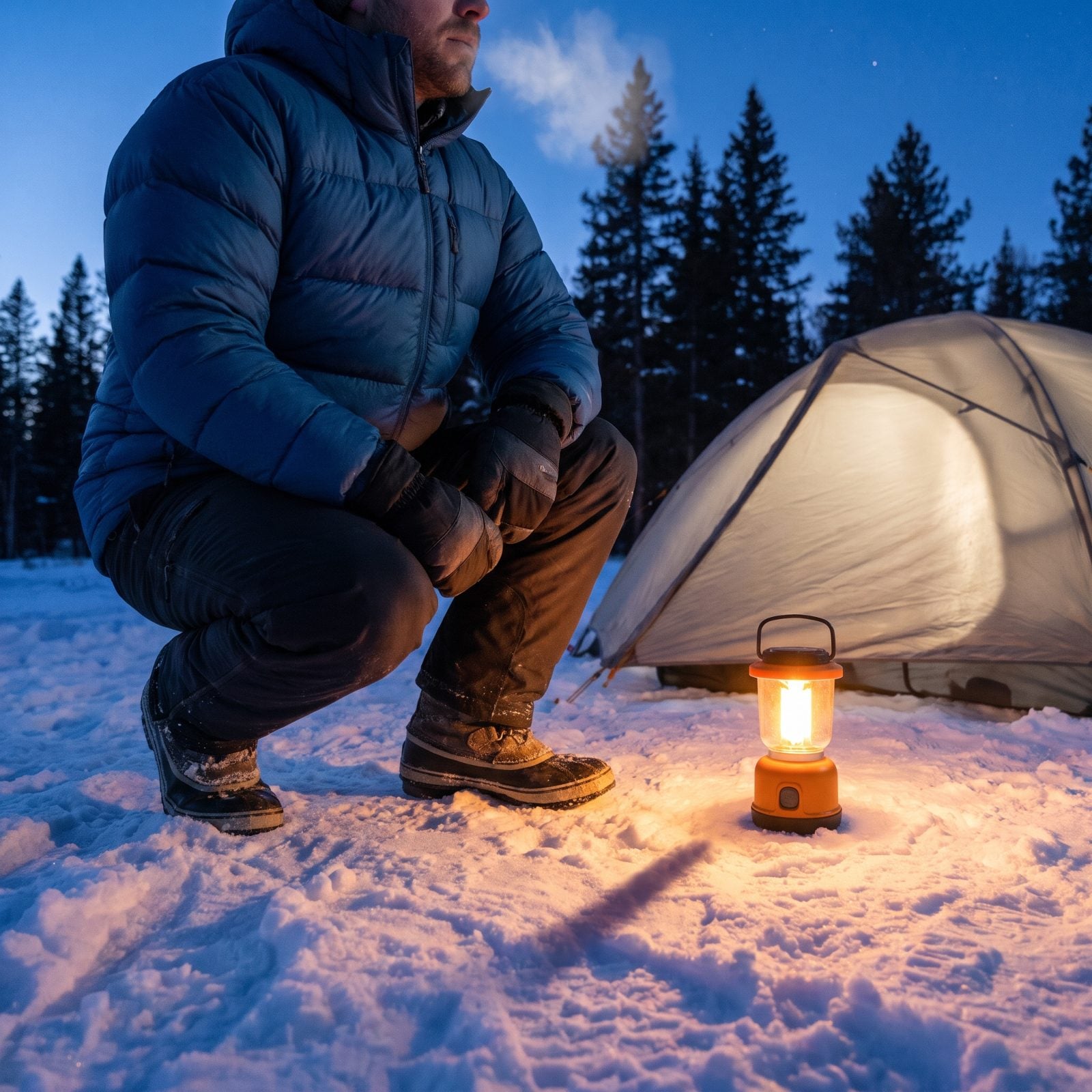
Climbing into a cold bag while you’re already cold is a losing bet. The insulation traps the heat you bring with you, and if you bring none, it has nothing to hold.
So prime the furnace first. A couple dozen slow bodyweight squats, some arm swings, a few minutes of easy movement right before you get in. You’re raising your core temperature, not training for anything, so stop well before you sweat — damp skin in a cold bag is exactly what you’re trying to avoid. Slide in pleasantly warm and the bag starts holding heat the second you zip up, instead of spending the first hour fighting to catch up.
7. Line the Backpack With a Heavy-Duty Trash Compactor Bag
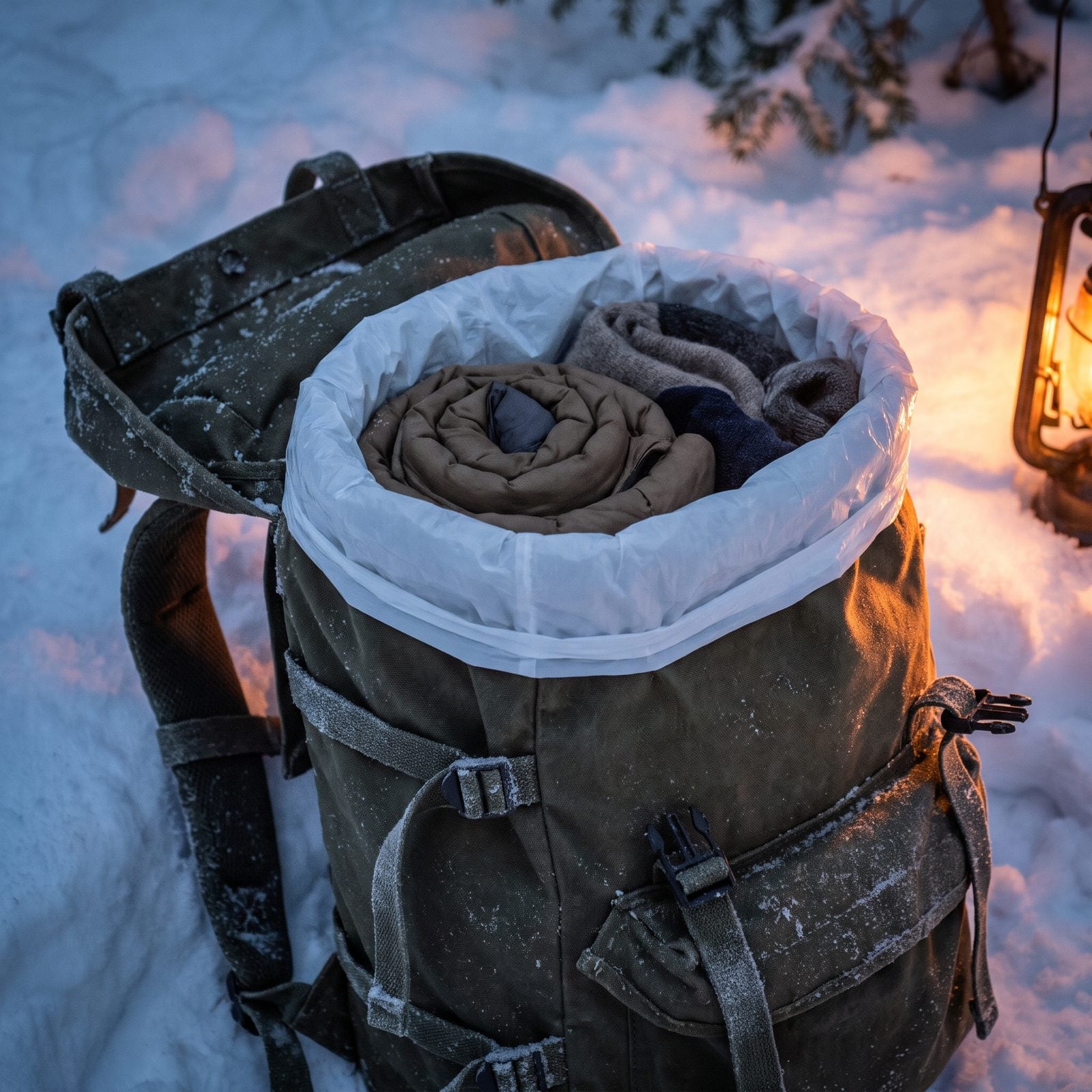
Expensive dry bags are great. A heavy-duty trash compactor bag is nearly as good and costs almost nothing. These are the thick, tough plastic liners meant for compactor bins, not the flimsy kitchen variety that tears if you look at it wrong.
Drop one inside your pack, load your sleeping bag and dry clothes into it, then twist and fold the top shut. Everything inside stays dry through blowing snow, a creek dunk, or a pack tipped into a drift. Wet gear in winter isn’t just annoying — it’s dangerous. A dry sleeping bag is the line between a cold night and a genuine problem.
As a hiking and trail-food blogger puts it, “The white trash compactor bag makes the ideal liner for inside your backpack.”
6. Use Buried Stuff Sacks as Deadman Snow Anchors
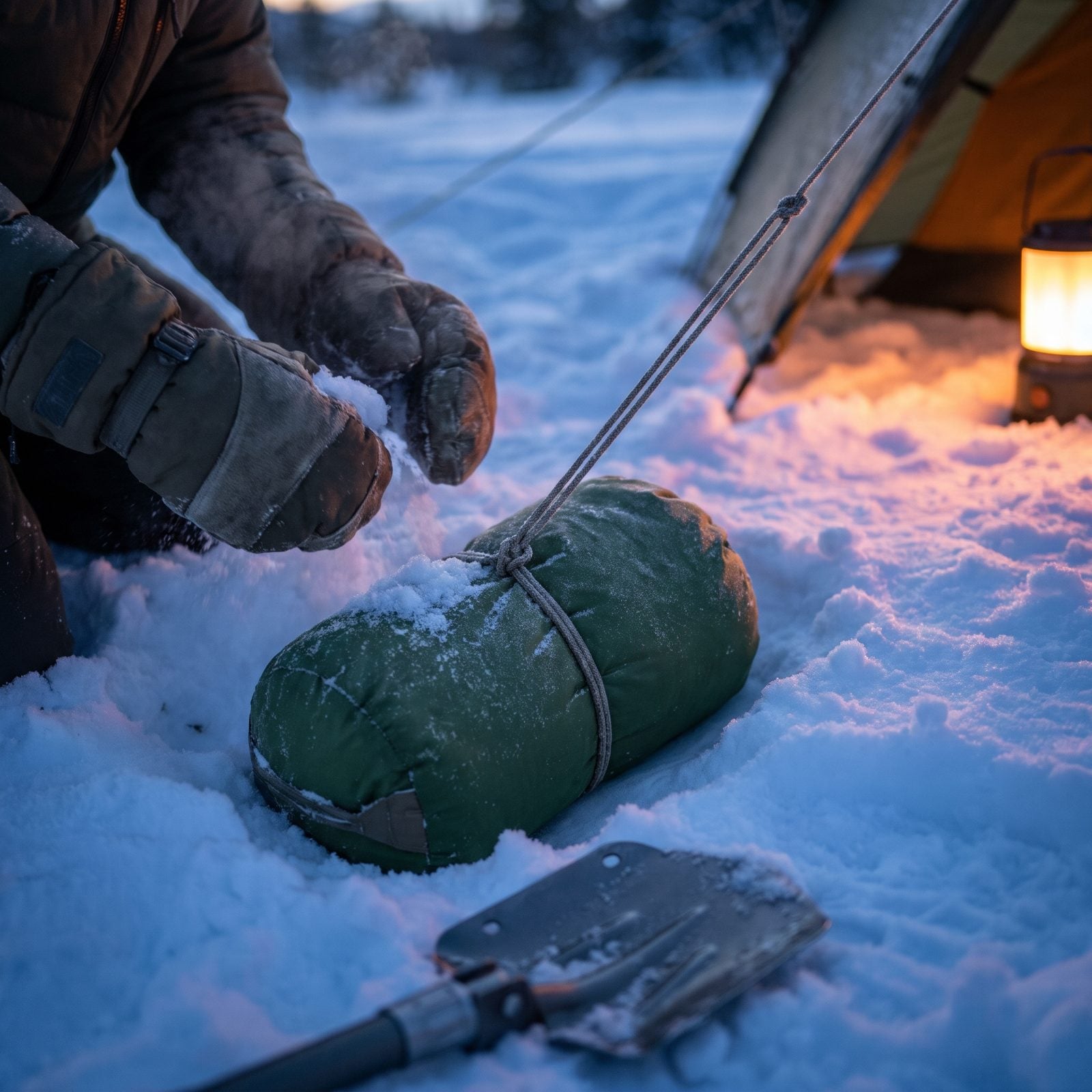
Tent stakes are useless in deep snow. Push one in and it slides right back out the moment the wind leans on your tent. Snow is too loose to hold a point.
The fix is a deadman anchor. Fill a stuff sack with snow, loop your guyline around it, bury the whole thing a foot down in a trench, and pack snow hard on top. As it sets, the packed snow freezes around the buried sack and locks it in place. The holding power is enormous — far more than any stake — and it works with anything you can bury: a sack of snow, a stick, a buried ice axe, even a ziplock full of snow in a pinch. Dig it out in the morning and you’ve got your gear back.
As a special operations survival instructor puts it, “Deadman anchors work well in snow. Bury a filled stuff sack or use other gear as anchors beneath the snow surface.”
5. Cover Cold Cot Rails With Foam Pipe Insulation
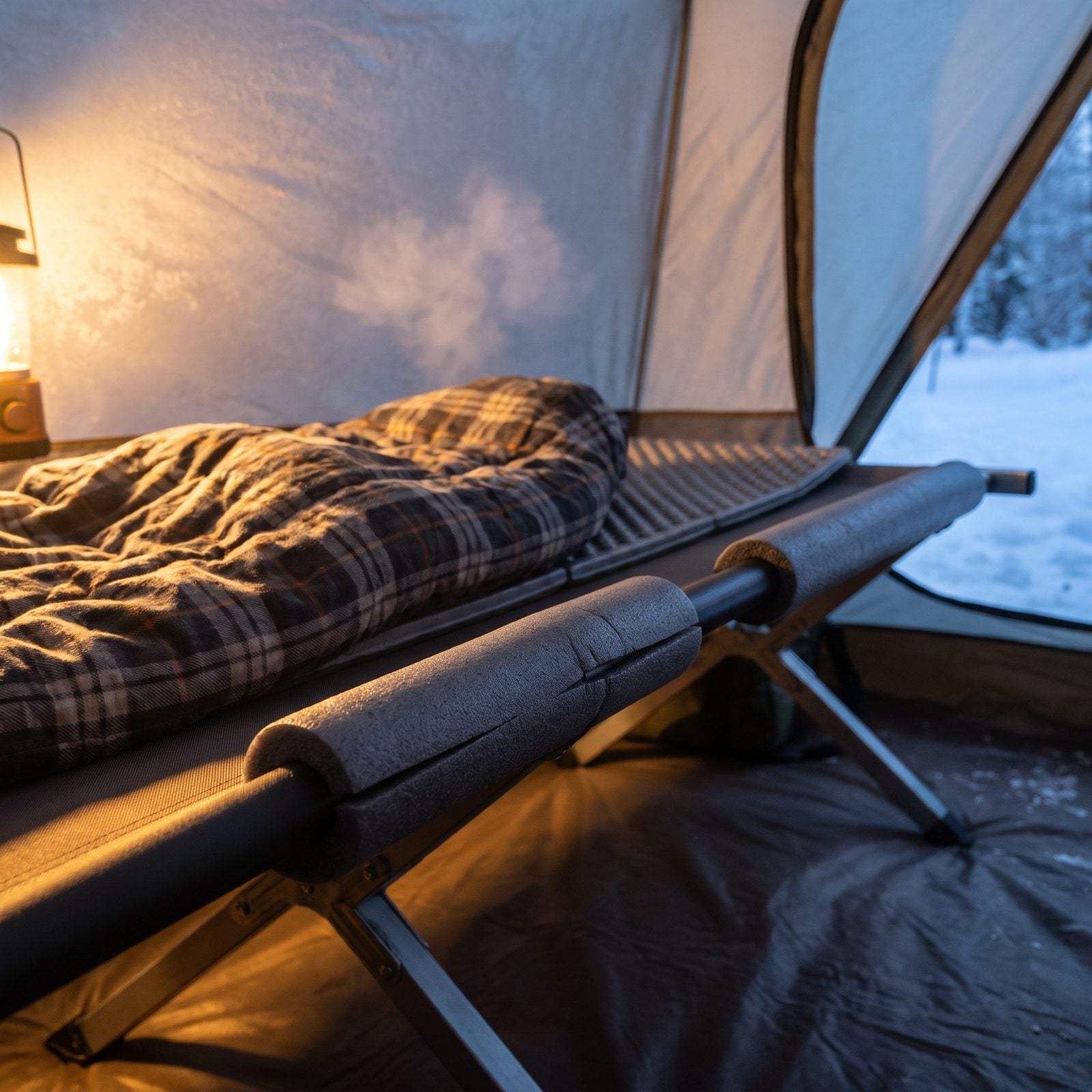
Cot campers learn this one the hard way. A cot lifts you off the frozen ground, which sounds warm until you feel the cold air flowing underneath and the metal rails pulling heat straight out of wherever your body touches them. Aluminum is a fantastic conductor, and in winter that’s the last thing you want against your side.
Hardware-store foam pipe insulation — the split grey tubes that slip over a water pipe — fits right over most cot rails. It breaks the cold contact and softens the edge you bump against all night. A couple of dollars and five minutes of fiddling turns a frigid metal frame into something you can actually sleep on.
4. Wrap a Wool Blanket Around the Back of the Camp Chair
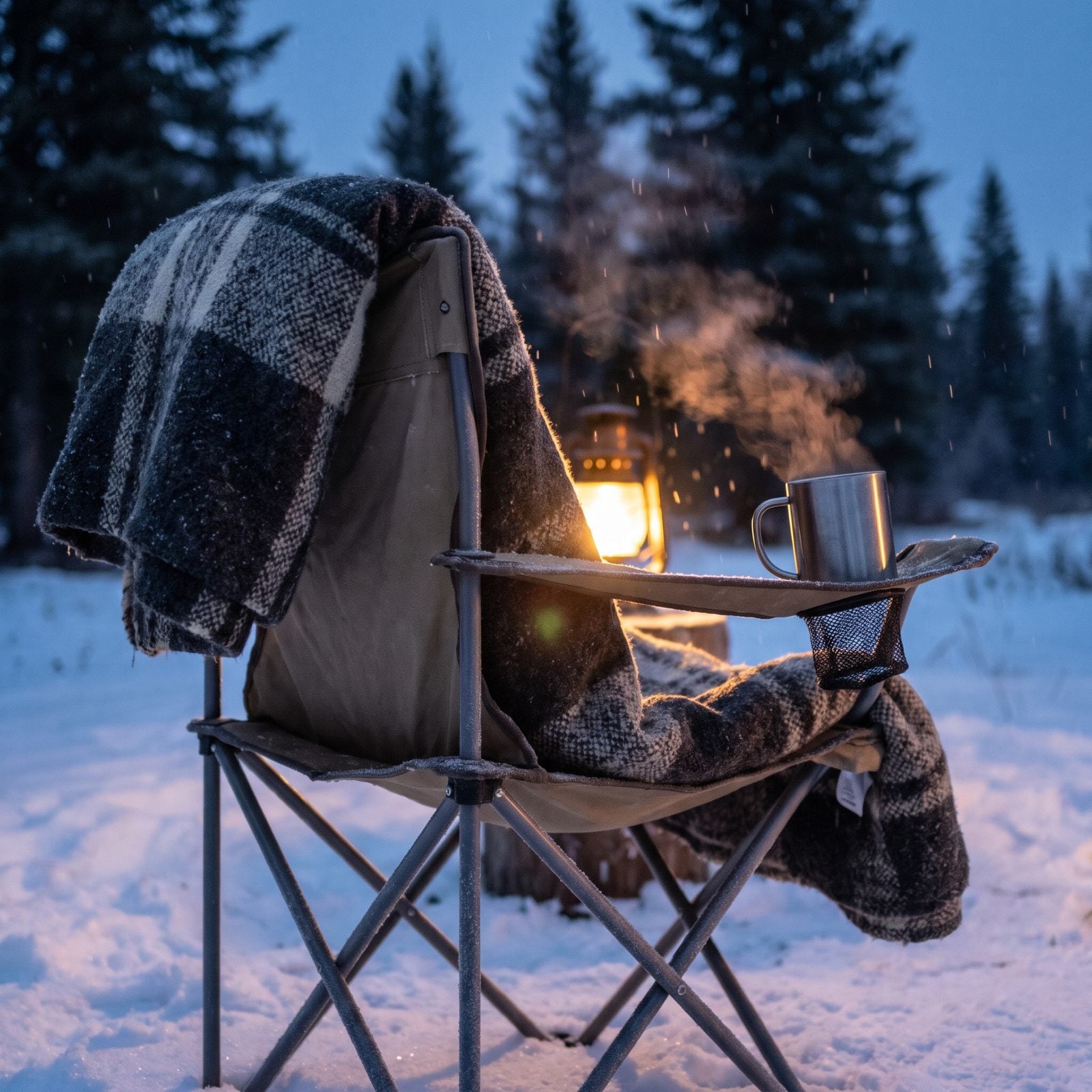
The chair is where you lose the evening. You sit down after dinner, the fire dies, and the cold creeps up your back through the thin nylon sling while you’re too comfortable to move.
Drape a wool blanket over the chair back and wrap the ends around your sides before you sit. Wool holds warmth even when the air is damp, so the heat off your core gets trapped against you instead of bleeding out through the fabric behind you. You’ll stay by the fire an hour longer, and those are the good hours — the stars, the quiet, the last cup of something hot. No reason to hand them over to a cold chair.
3. Keep the Stove Igniter Warm in an Inner Pocket
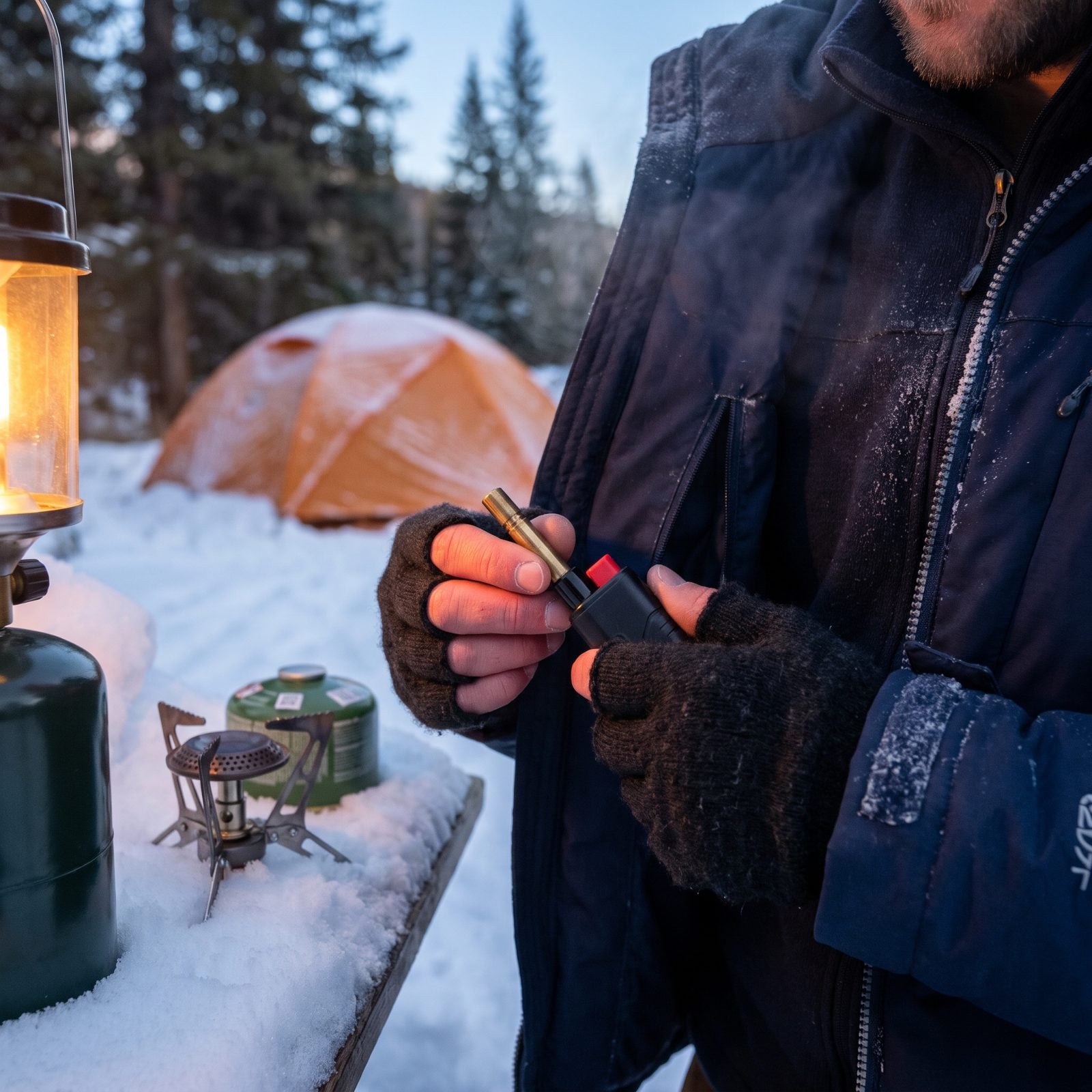
Cold kills igniters before it kills you. Piezo sparkers and canister regulators both turn sluggish once you drop below freezing, and nothing’s more demoralizing than clicking a dead spark while the water you need sits there as ice.
So keep the igniter tucked against your body overnight — inner jacket pocket, bottom of the sleeping bag, wherever. Toss the fuel canister in there too if you’ve got the room. Body heat holds the butane vapor pressure up and keeps the spark snappy. Pull it out warm, light the stove outside in the open, done.
2. Turn a Sled Into a Dry Bedside Gear Platform
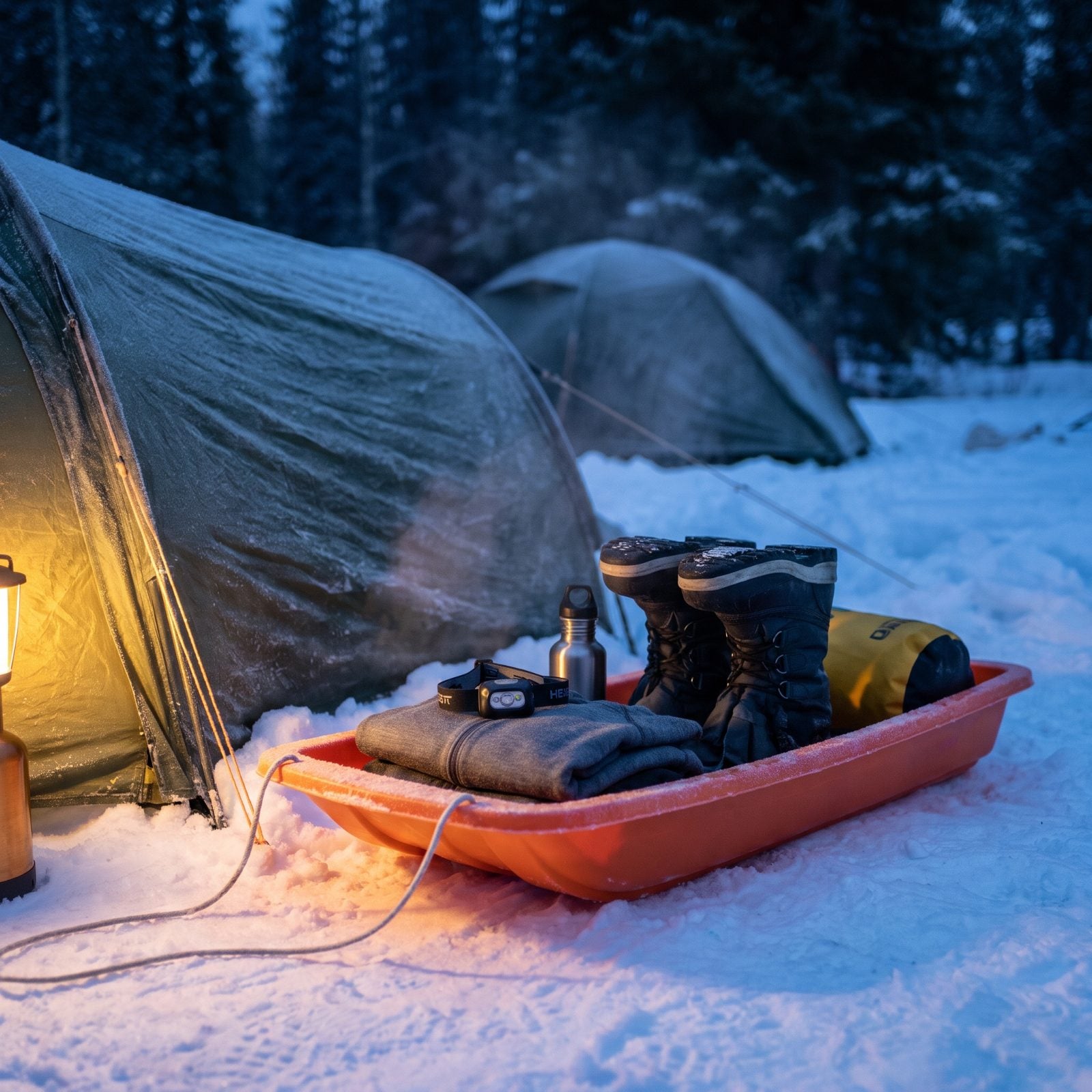
Snow swallows anything you set on it. Boots, bottles, a headlamp put down for two seconds — gone into powder or soaked by melt. That hauling sled you already dragged into camp solves the whole problem for free.
Park it flush against the tent door and you’ve got a raised, dry shelf. Boots stay off the snow and don’t ice up, and your water bottle, stove, and midnight headlamp all live in one spot you can reach without crawling out into the dark. Come morning, nothing’s buried and nothing’s welded to the ground by frost.
1. Pack Breakfast Ingredients Together in One Insulated Bag
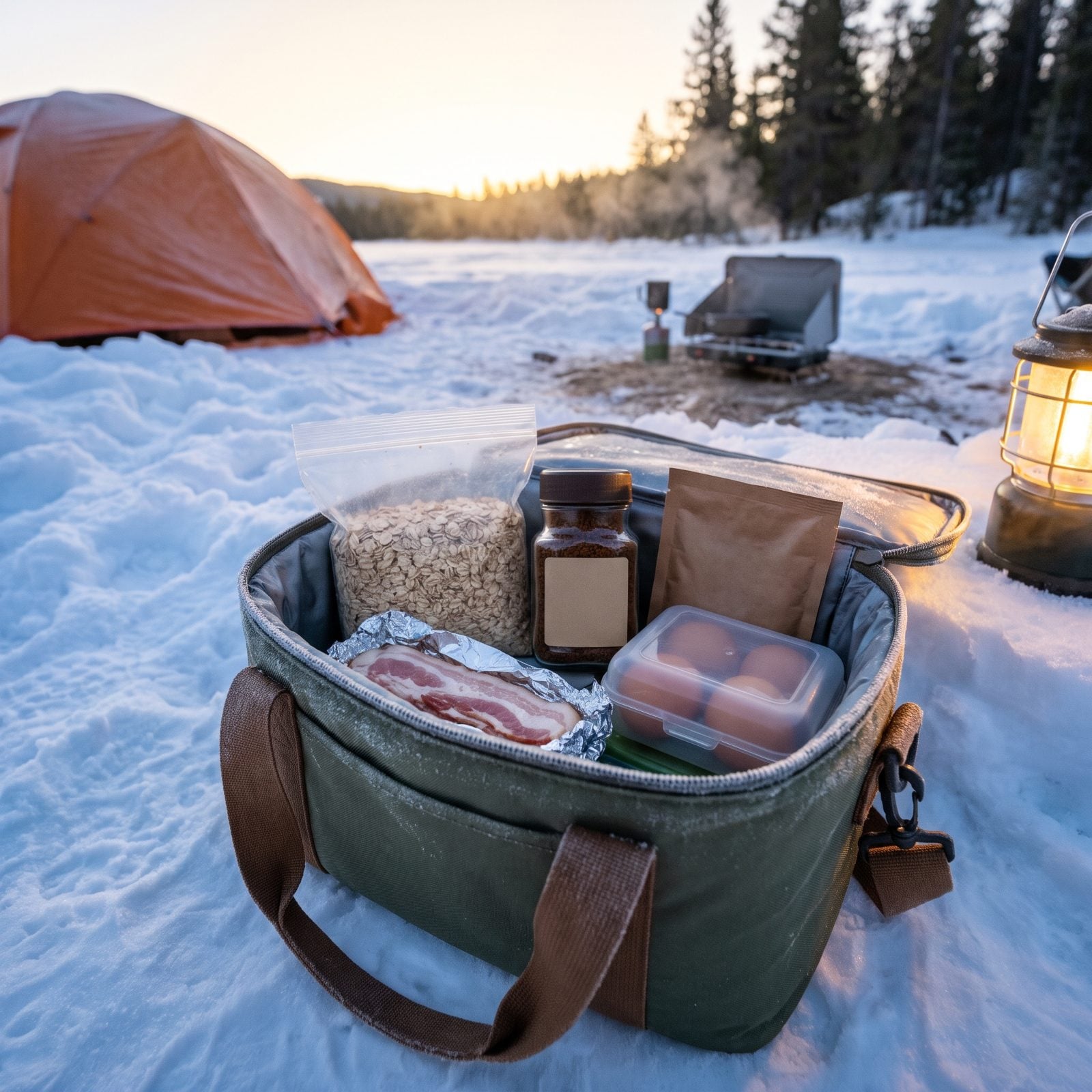
Frozen eggs make for a bad morning. So does digging through a whole pack for the coffee while your fingers go numb.
Group every breakfast item into one insulated soft bag the night before — oats, coffee, cocoa, eggs, whatever you planned. The insulation buffers the hard overnight cold enough to keep the eggs from freezing solid, and you grab the entire breakfast in one motion at first light instead of excavating the bear canister with gloves on.
Anyone who has cracked a brick of frozen eggs onto a cold pan knows they never cook right. One bag fixes the fumbling and the freeze in a single move.