
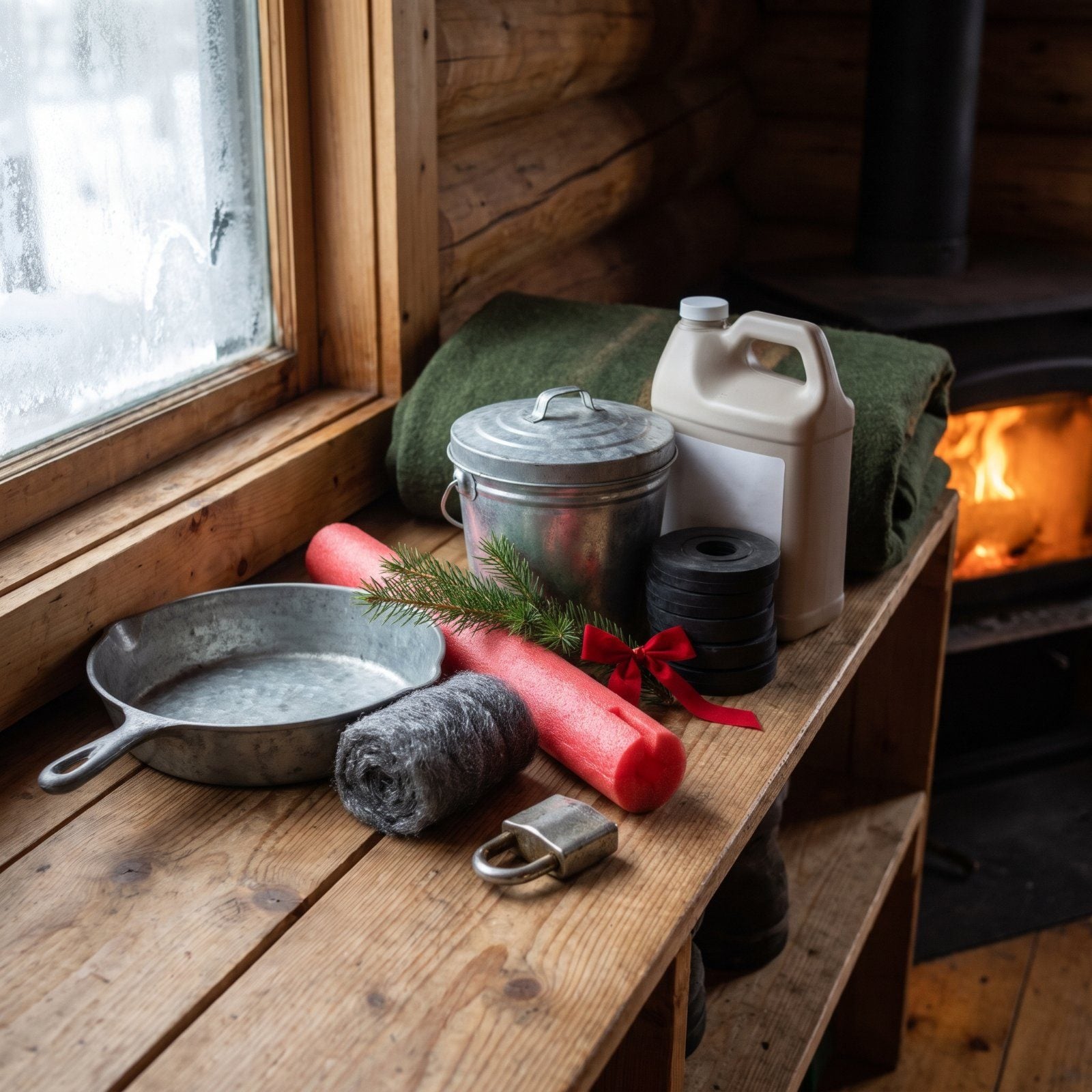
The coffee can on the counter rattled all night, and by morning the window frost had crept halfway up the glass like it meant to stay. A snowbound cabin in late December doesn’t care that it’s the holidays. Pipes freeze, padlocks seize, and boots track in enough snowmelt to float a canoe. The people who spend the whole week warm and comfortable aren’t the ones with the fanciest gear — they’re the ones who threw a few odd, cheap, slightly ridiculous items in the truck before leaving pavement. These are the things that earn their spot on the shelf.
Please note that some of the images in this article were created with the assistance of AI.
40. An Insulated Cooler That Keeps Food From Freezing Solid
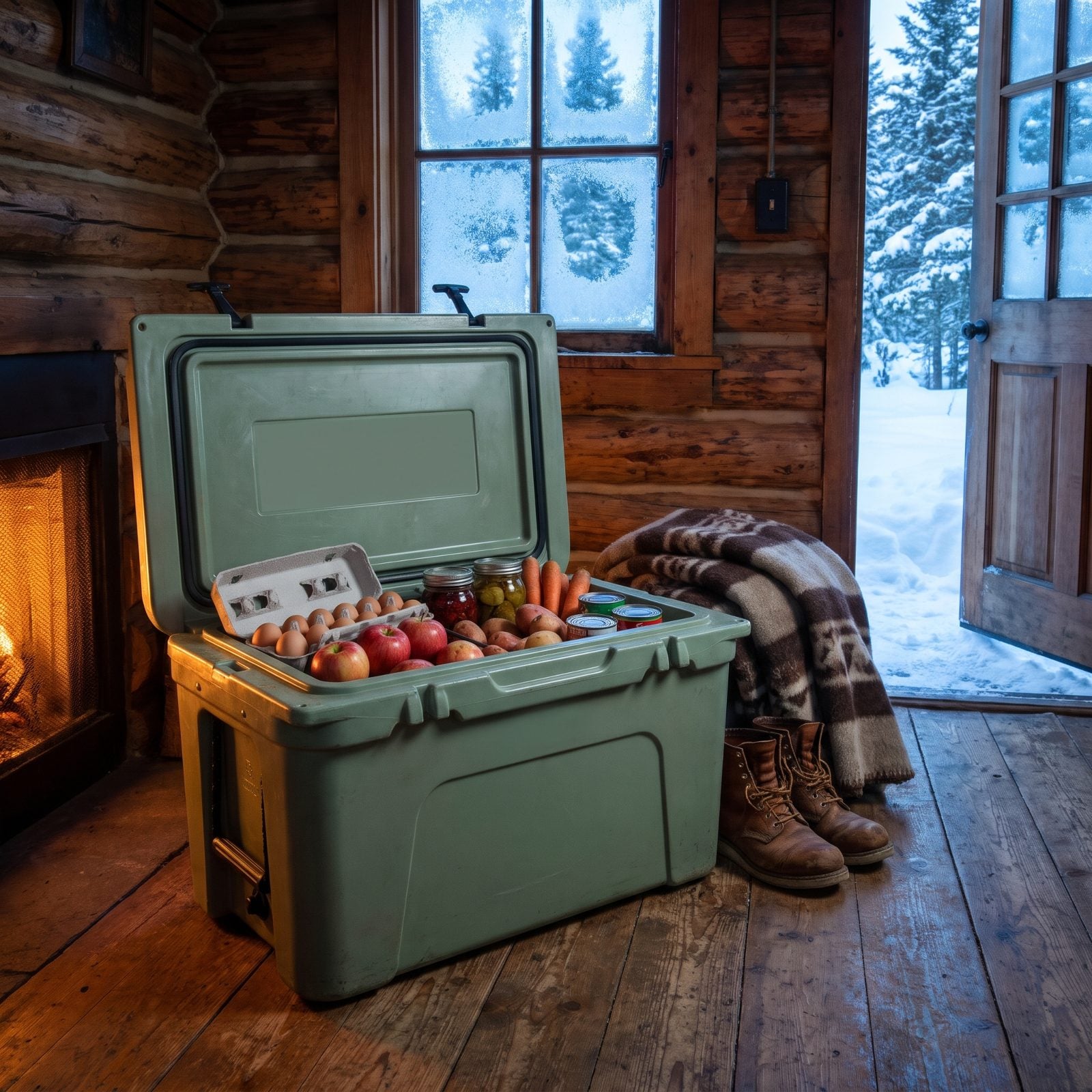
Most people pack a cooler to keep things cold. In a cabin where the pantry drops below freezing overnight, you pack one to keep things from freezing, and that foam does both. Eggs, canned soup, root vegetables, anything that turns to a brick and splits when it ices over — all of it survives the night in a closed cooler sitting on the floor near the stove.
I ruined a dozen eggs my first winter out this way. Froze, cracked, leaked everywhere. Now the cooler lives inside, not on the porch, and it earns its keep as a thermal buffer instead of a cold box.
39. A Galvanized Livestock Feed Pan as a Boot Tray
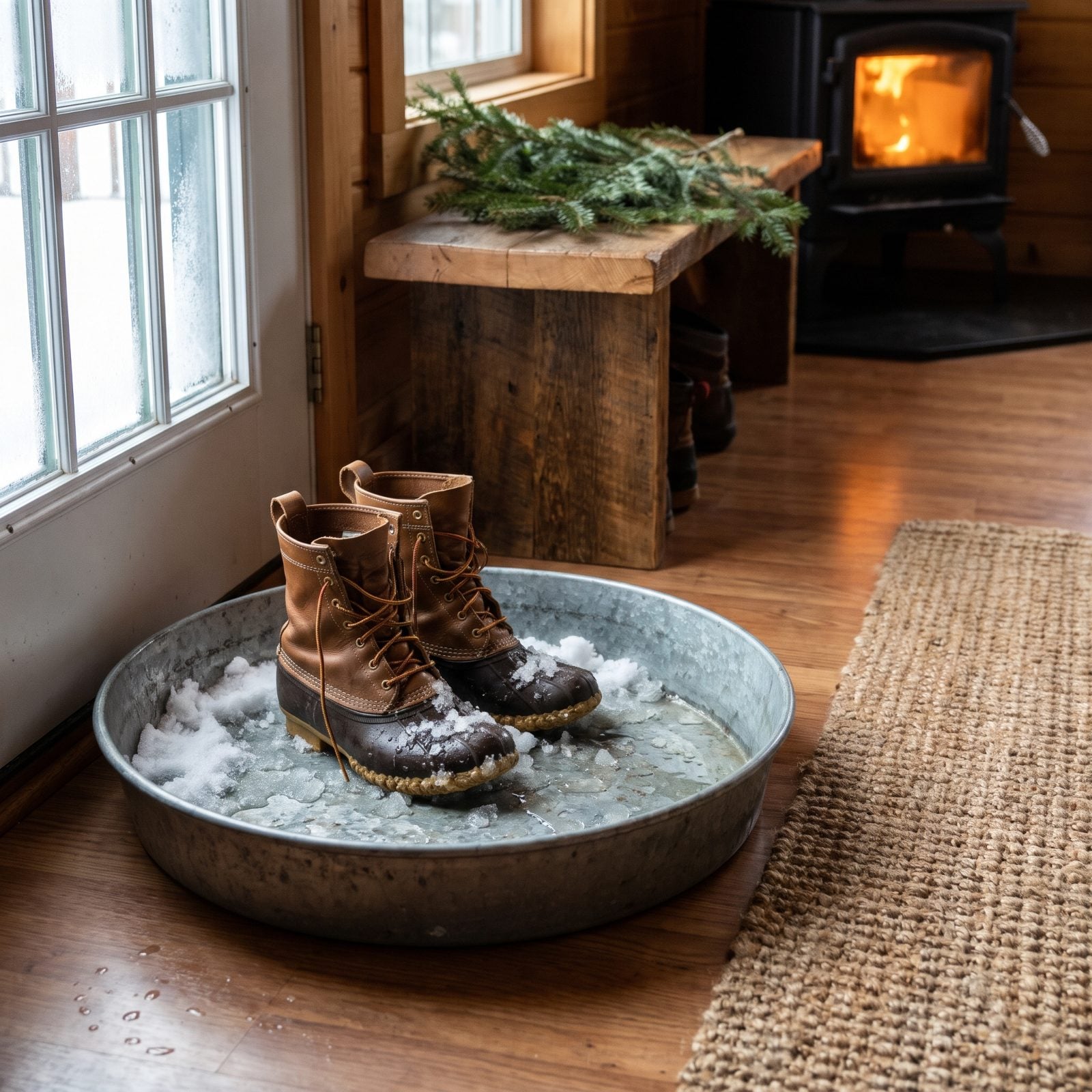
A proper boot tray costs twenty bucks and cracks the first time you drop a frozen pac boot on it. A round galvanized feed pan runs about ten dollars at any farm store, holds a gallon of melted snow without flinching, and will outlive you.
The curved sides are the trick — nothing sloshes over the lip onto your floorboards. Tip the whole thing out the door in the morning and set it back down. Cheap, and the kind of thing nobody dreams up until they’ve mopped the same puddle three nights running.
38. Non-Clumping Kitty Litter for Icy Cabin Steps
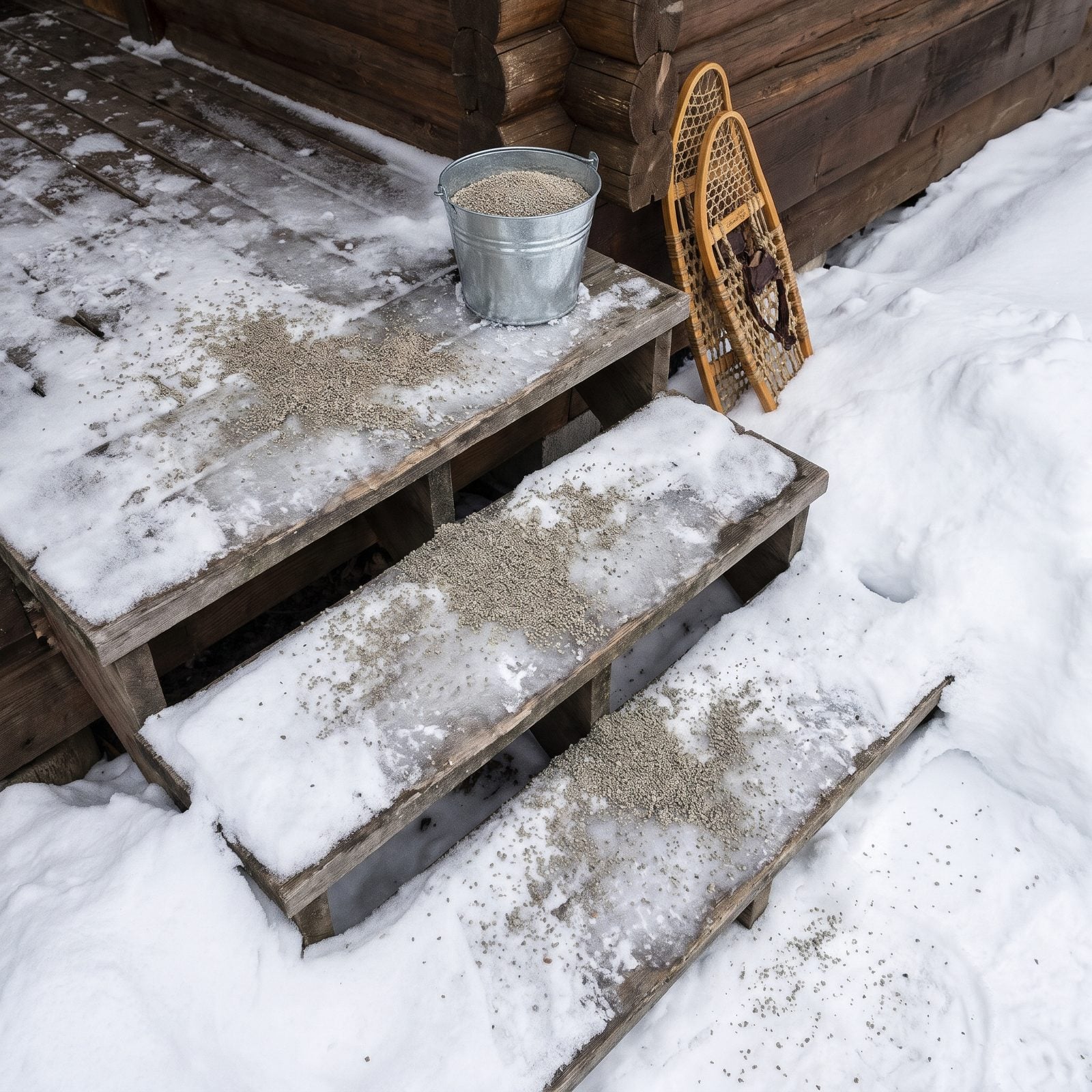
Rock salt eats your boots, kills the plants come spring, and does nothing once the temperature drops past the teens. Plain clay litter, the cheap non-clumping kind, just gives you grip — no chemistry, no melting, only traction on a sheet of ice that would otherwise put you flat on your back on the cabin steps.
Keep a coffee can of it by the door. A handful tossed across a frozen threshold is the difference between walking out for firewood and a slow, ugly fall with an armload of split oak.
37. A Hockey Puck as a Stable Leveling Jack Pad
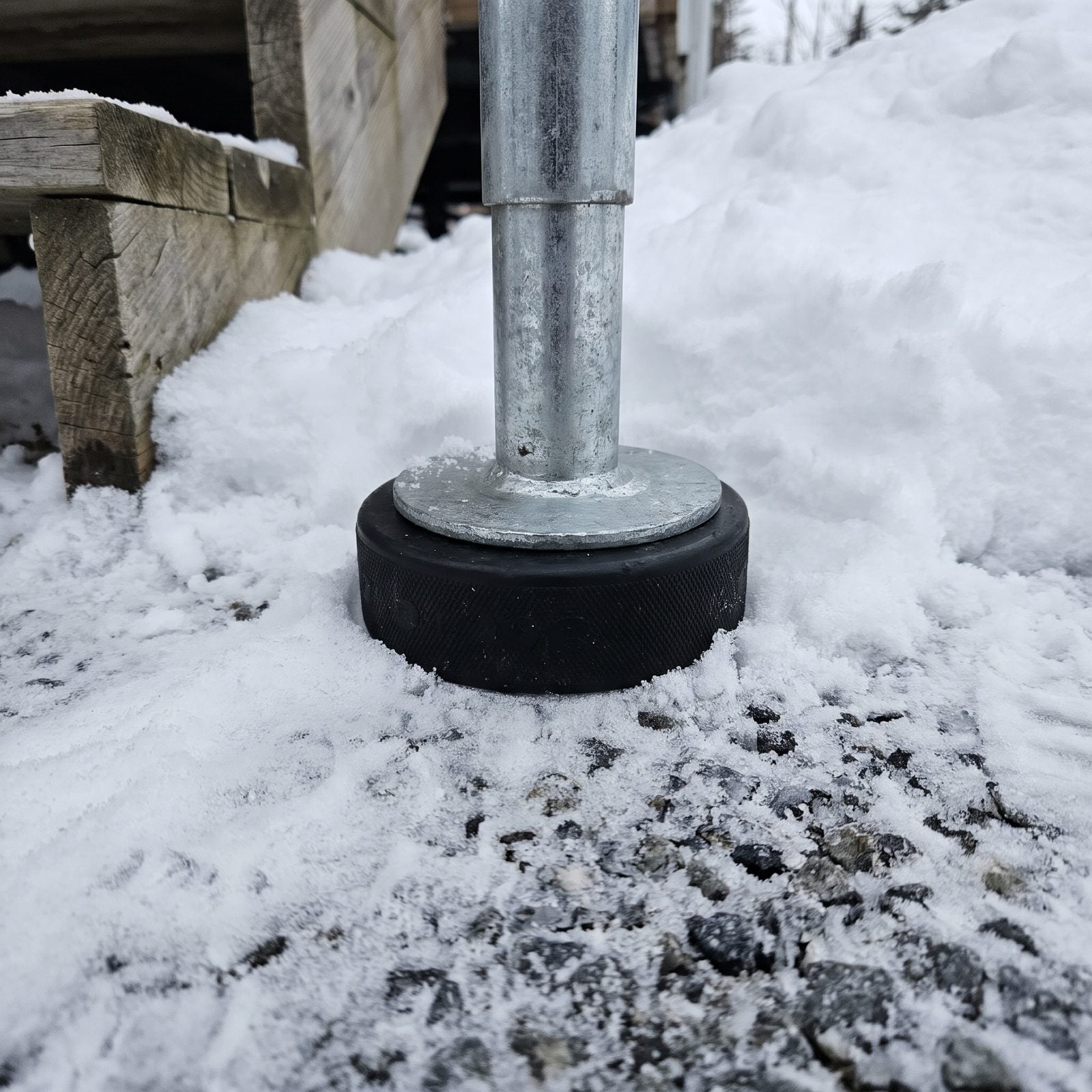
Set a jack foot straight on frozen ground and it sinks, tips, or skates sideways the moment the surface softens in the afternoon sun. A hockey puck under the foot fixes all three. Dense vulcanized rubber, an inch thick, dirt cheap, and it doesn’t split in the cold the way plastic pads do.
This goes for camper stabilizers, porch support jacks, anything that needs a firm, non-slip base on snow or frozen gravel. A couple of them live in my truck box year round. Buy a sleeve of six. You’ll lose a few and never notice.
36. Split Pool Noodles for Emergency Pipe Insulation
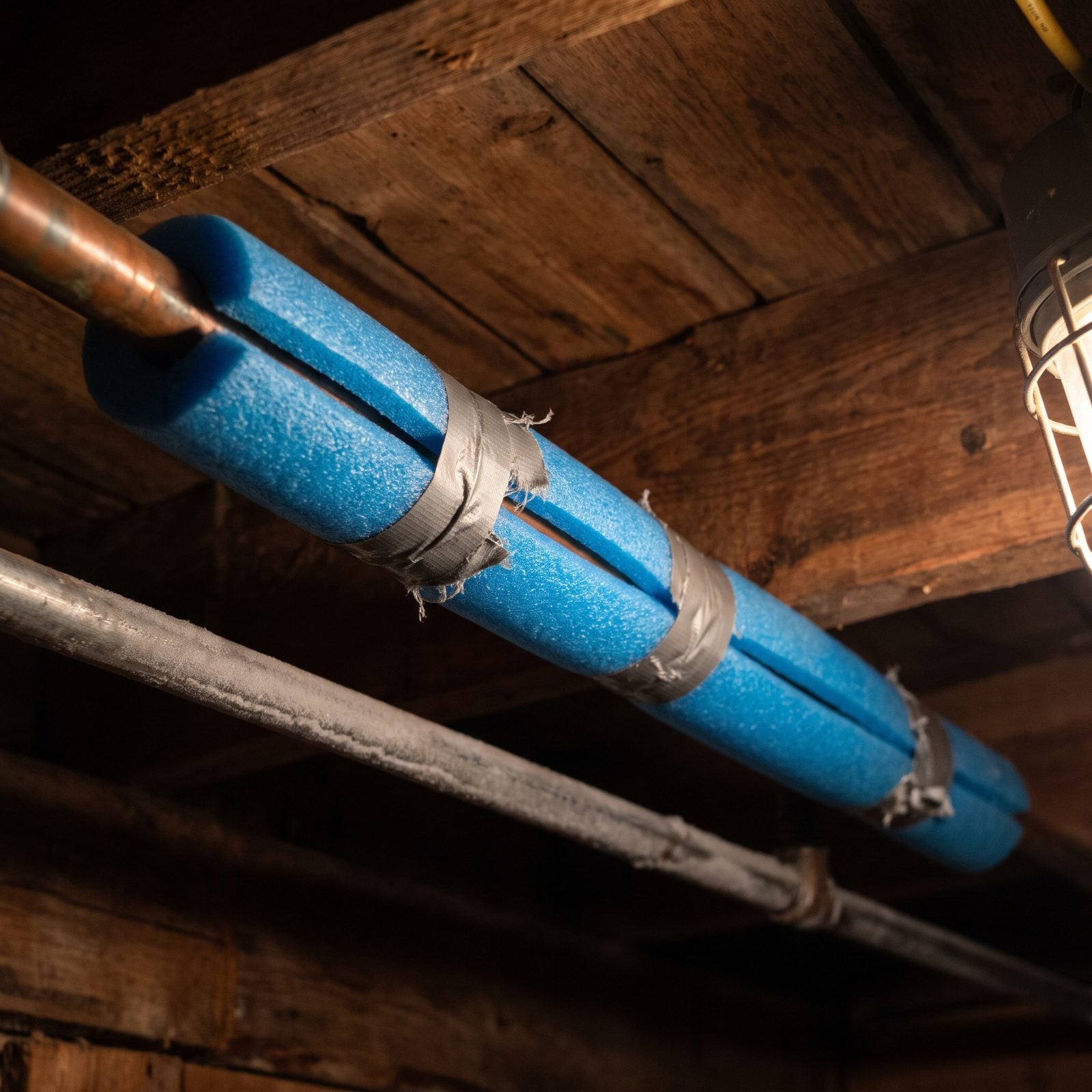
Foam pipe sleeve from the hardware store is better. But at nine o’clock on Christmas Eve with a cold snap coming and the nearest store forty miles of bad road away, a pool noodle you already have beats the pipe you’ll be thawing with a hair dryer at dawn.
Split one lengthwise with a knife, set the two pieces on either side of the exposed run, and wrap a couple of bands of duct tape around the bundle, done. It leaves a strip of copper showing down the middle, it’s not a permanent fix, and I’d never pretend it is. Call it the thing that gets you through the one brutal night when the real stuff isn’t an option.
35. An Infrared Thermometer for Hunting Hidden Cold Spots
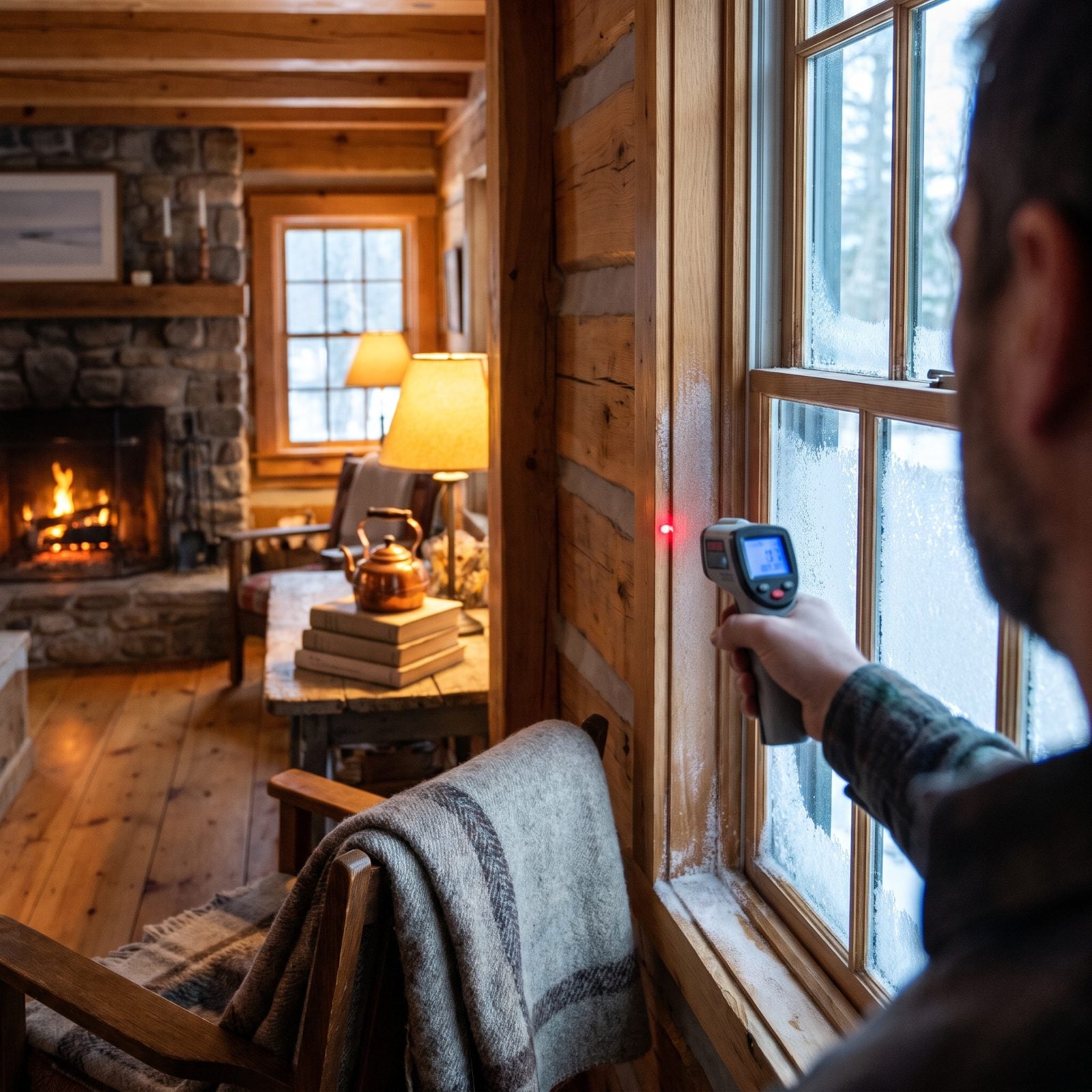
You feel a draft but you can’t find it. The infrared thermometer — the point-and-click kind that reads surface temperature — turns guessing into finding. Sweep it along the baseboards, the window frames, the corners where the logs meet, and the cold spots light up as dropped numbers.
I bought one to check my griddle temperature. Turned out it’s better at finding where a cabin leaks heat than anything else I own. A ten-degree difference on the wall by the door tells you exactly where to stuff a rolled towel before nightfall.
34. Coarse Steel Wool for Mouse-Proofing Small Gaps
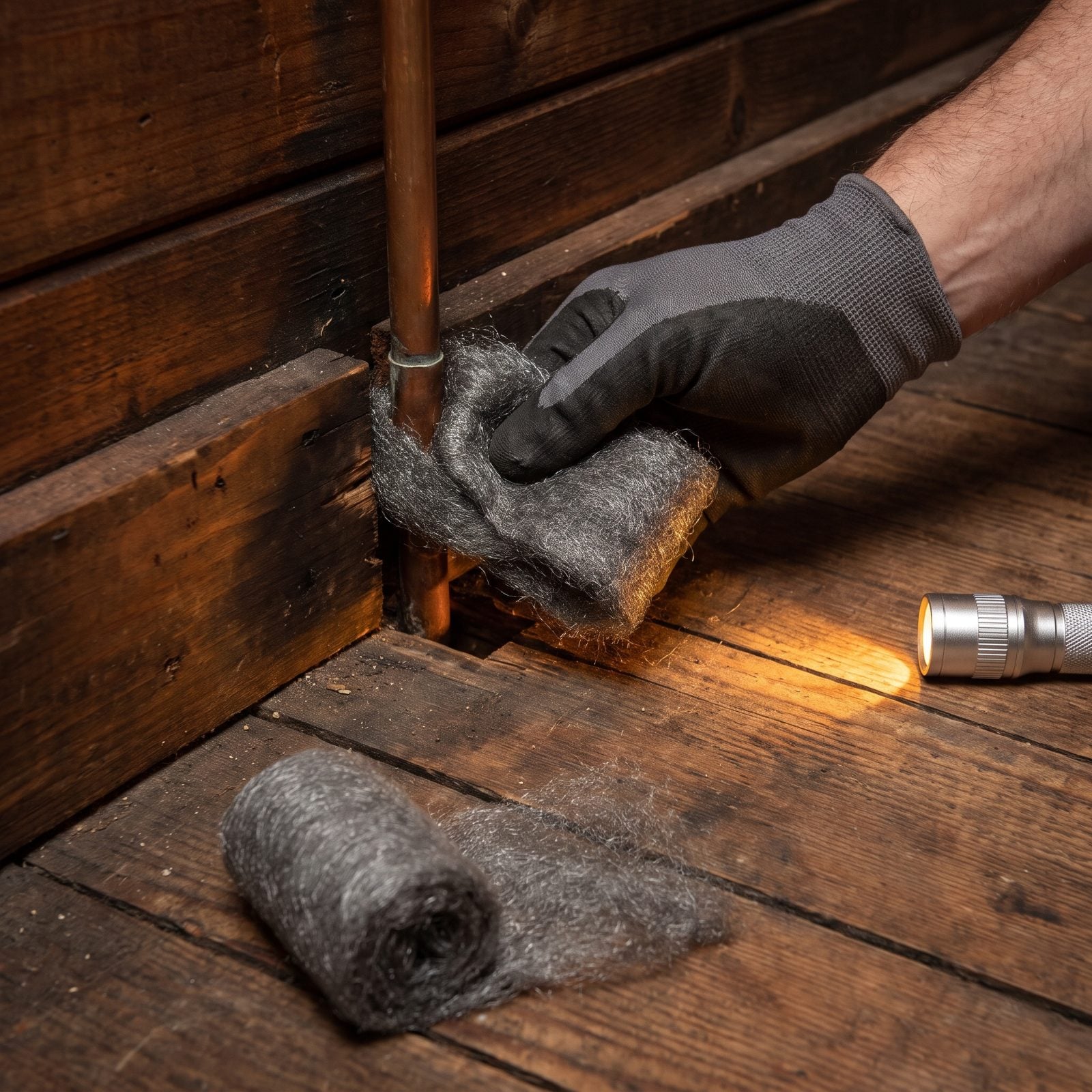
Mice will chew through foam, wood, and most caulk to get into a warm cabin for the winter. They won’t chew through steel wool. The wire catches in their teeth and they quit. Stuff it into the gaps where pipes and wires enter the wall, the spots you can’t easily see but a mouse found months ago.
Coarse grade, not the fine polishing stuff. Pack it tight. For a gap that’s structural, jam steel wool in first and seal over it — that keeps the sealant from being a chew toy, and it’s the one thing that actually stops them cold.
33. Silicone Lubricant for Frozen Door Seals
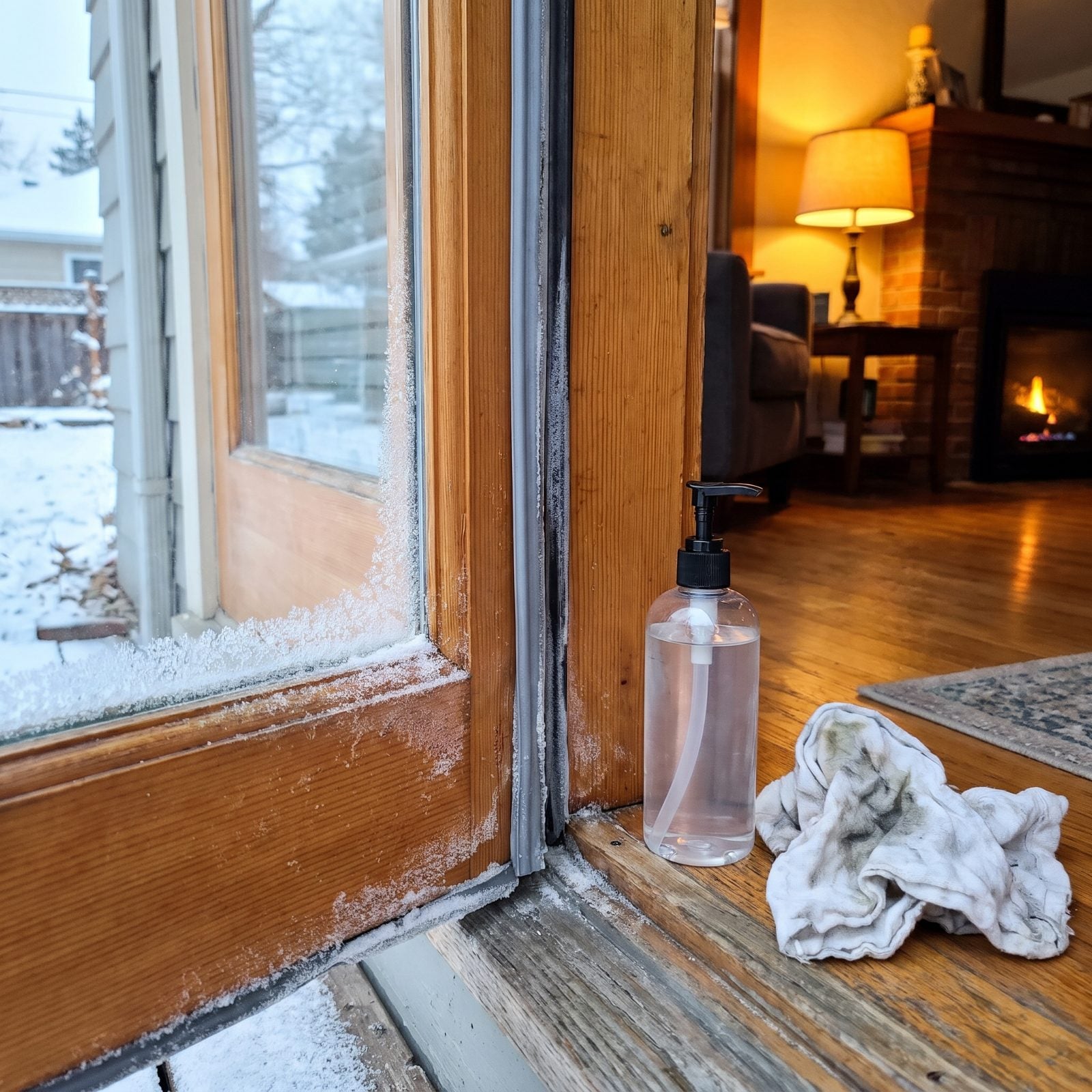
A door that freezes to its frame overnight is a door you tear the weatherstripping off trying to open at six in the morning. Silicone lubricant wiped along the rubber seal keeps the gasket from bonding to the frame when the moisture ices up.
Use silicone, not petroleum-based oils. The oily stuff rots rubber over time and leaves a grime that holds dirt. A thin pass along the seals on the first day keeps every door and the cooler lid closing clean all week. It works on frozen truck doors too, which is how most people discover it.
32. A Lidded Metal Ash Bucket for Banking Overnight Coals
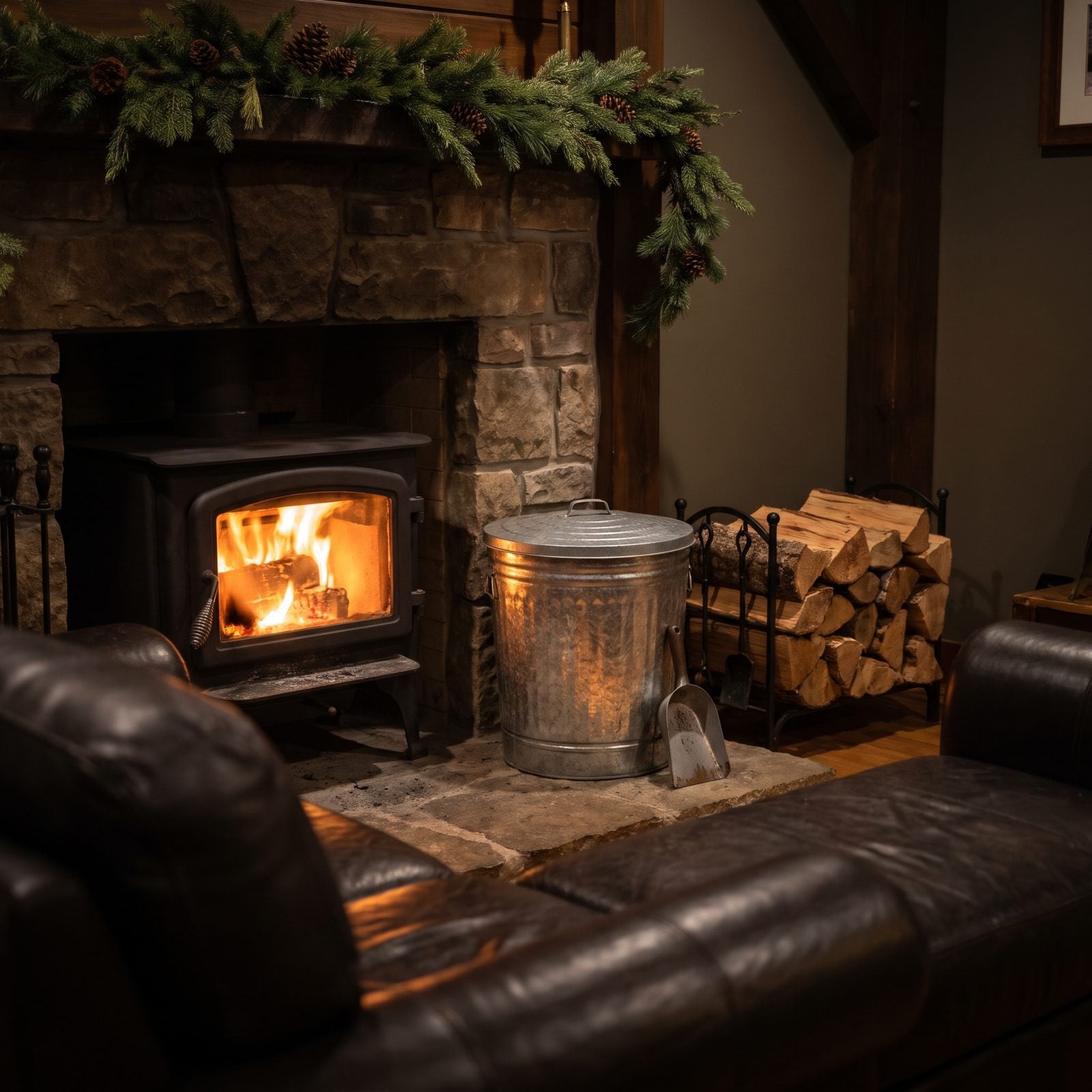
Ashes look dead and aren’t. A coal buried in a cold-looking pile can hold heat for a full day, which is exactly how cabins burn down the week after everyone leaves. A lidded metal ash bucket is the boring, unglamorous thing that prevents it.
Scoop the ashes into the metal bucket, set the lid on, and park it on the brick hearth — never on a wood porch. The lid starves any live coal of oxygen. Come morning, the warm ones go back in the stove to help relight it.
It’s a safety habit more than a convenience, and it’s the one I’d argue for hardest. A plastic bucket or a cardboard box full of ashes is a slow fuse. Spend the fifteen dollars on metal with a lid.
After a string of fires caused by ashes, a state police fire investigator warned “Even a single ember can ignite a deck, garage, or shed. Ashes should always be handled with caution, stored outdoors in a metal container with a tight-fitting lid, and given several days to cool before disposal.”
31. Elbow-Length Welding Gloves for Stove Duty
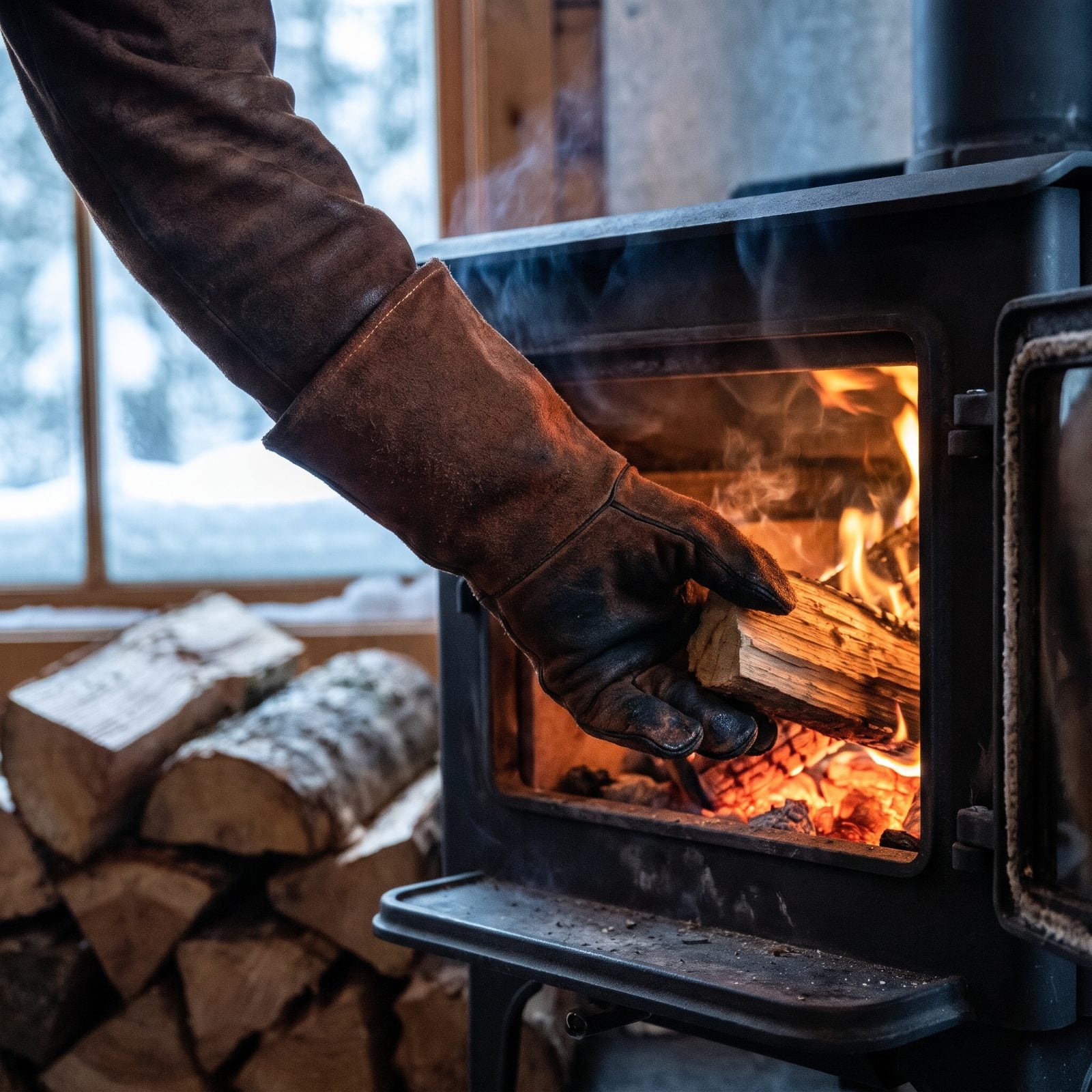
Oven mitts are a joke around a wood stove. They stop at the wrist, which is exactly where a stove door bites you when you reach in to shift a log. Welding gloves run up past the elbow and shrug off both the heat and the stray spark.
You can find a decent pair for twenty or thirty bucks at any farm supply store. I bought my first set after branding a nice crescent scar into my forearm reaching for a rolled log at midnight. Learn from that. The leather also makes a fine grip for swinging a hot cast-iron kettle off the top plate without the usual trivet dance.
30. Chimney-Fire Suppression Stick for Creosote Emergencies
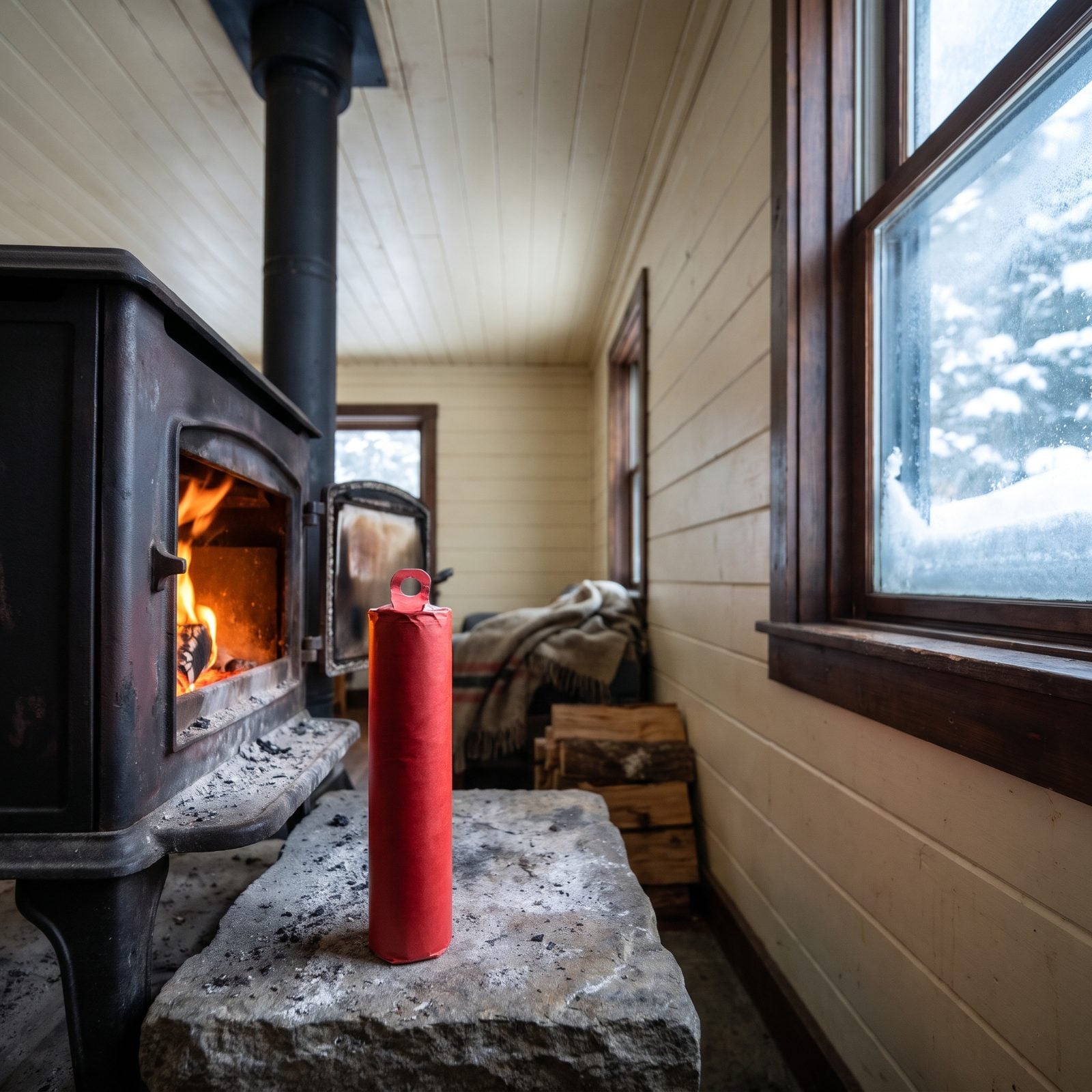
A chimney fire sounds like a freight train in your ceiling. Creosote builds up all season, and a hot burn on a cold night can light it off. In a remote cabin, the fire department is a fantasy. You’re the fire department.
A suppression stick is cheap insurance, usually ten or fifteen dollars. You toss it into an already-burning stove during a chimney fire and it releases compounds that smother the flames up the flue. It won’t replace cleaning your chimney, and anyone who tells you otherwise is selling something. Clean the pipe before the season, then keep the stick on the hearth in case the creosote lights anyway.
29. Magnetic Stovepipe Thermometer for Cleaner Burns
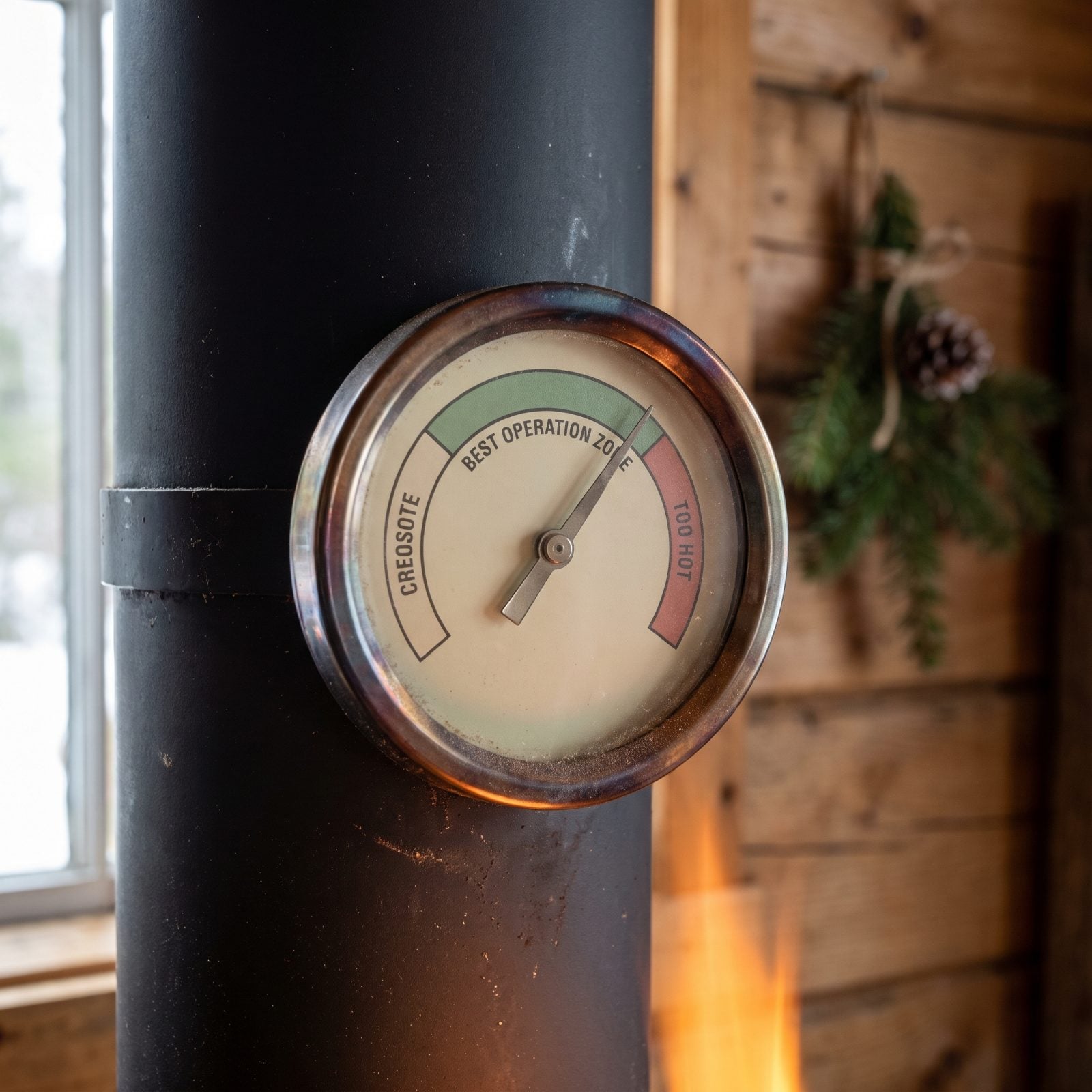
Most people run a wood stove by guesswork and feel. Too cool and you glaze the chimney with creosote; too hot and you’re wasting wood and warping the pipe. A magnetic thermometer sticks right to the stovepipe and tells you where you actually stand.
They cost almost nothing, maybe fifteen dollars, and the dial marks a safe band in the middle. You want the needle sitting in there during a steady burn. I ran stoves for years without one, convinced I could read the flames. The thermometer proved me wrong inside a day.
Helping another burner with a creosote problem, a longtime wood stove owner describes his routine: “Let the fire get going real good, keeping an eye on your stove pipe thermometer. Once that thermometer reaches 500 degrees, close your draft caps, then open them 1/4 turn.”
28. Pocket Bellows for Reviving a Weak Fire
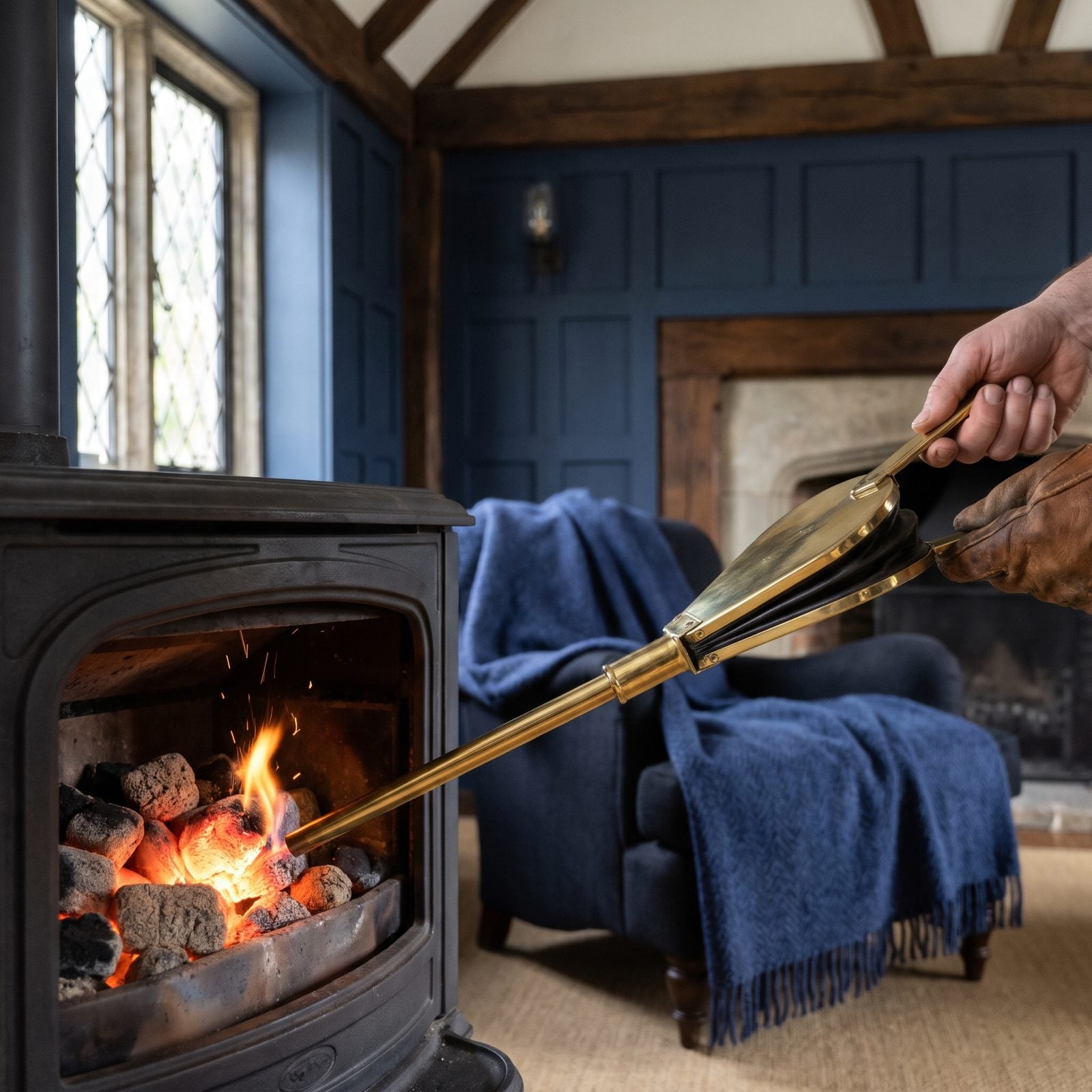
You know the moment. The fire dropped to sullen coals overnight, and blowing on it just gets you a face full of ash and a head rush. A pocket bellows fixes that. It’s a slim telescoping metal tube you extend and blow through gently, sending a tight jet of air straight into the coals.
No ash in the eyes, no lightheadedness, no getting on your knees at six in the morning. The thing is built to last for decades and looks handsome hanging by the stove. Simplest item on this list, and honestly one I reach for most.
27. Hand-Crank Pencil Sharpener for Making Tinder Curls
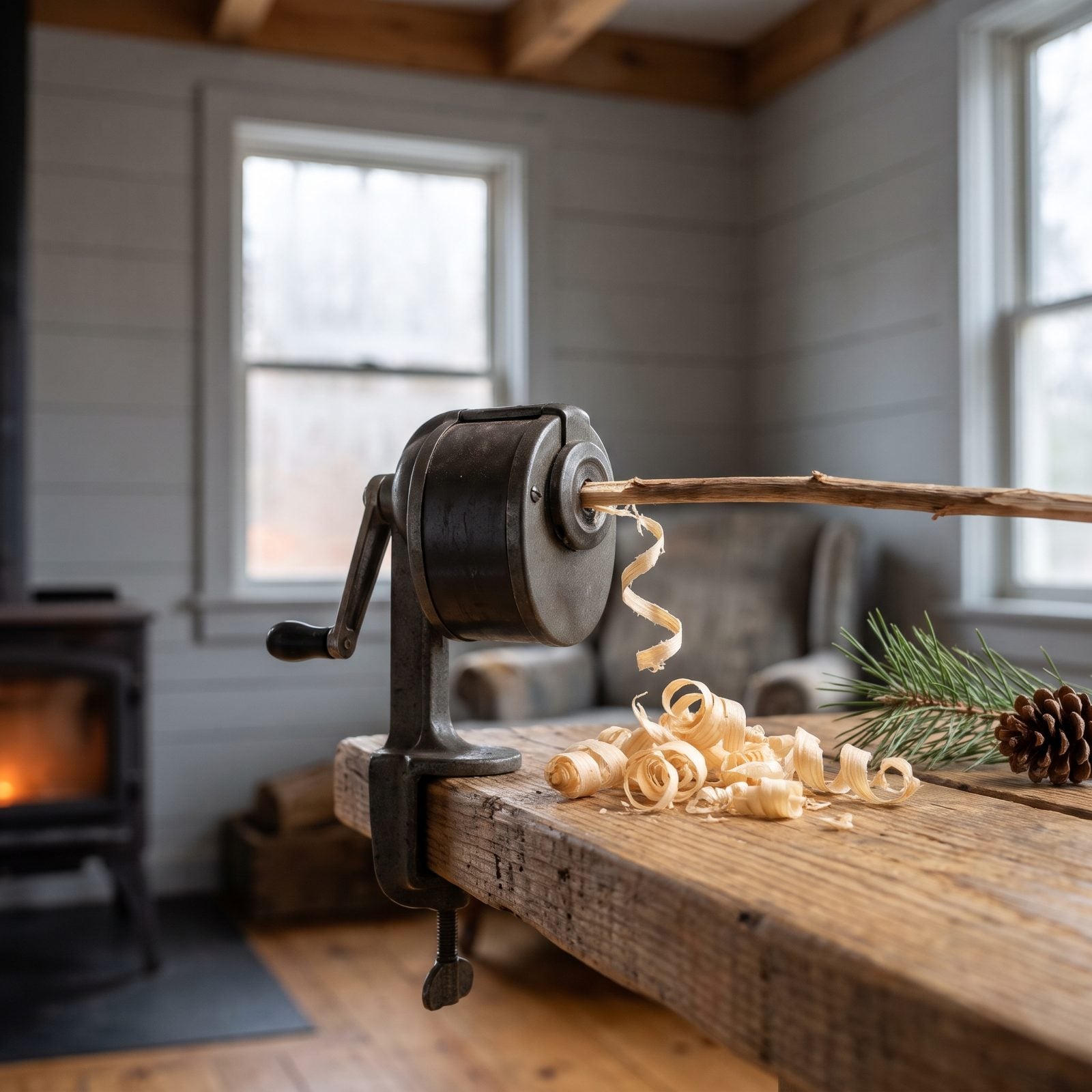
This one gets a laugh until people watch it work. Clamp a hand-crank pencil sharpener to a shelf, feed it a dry softwood stick instead of a pencil, and out comes a steady pile of fine wood curls. Those curls catch a match faster than almost any tinder you can buy.
It’s a trick for the shoulder-season mornings when the kindling box is low and the ground is buried under two feet of powder. A thrift-store crank sharpener runs a few dollars and never needs batteries.
26. Wax-Filled Egg Carton Fire Starters
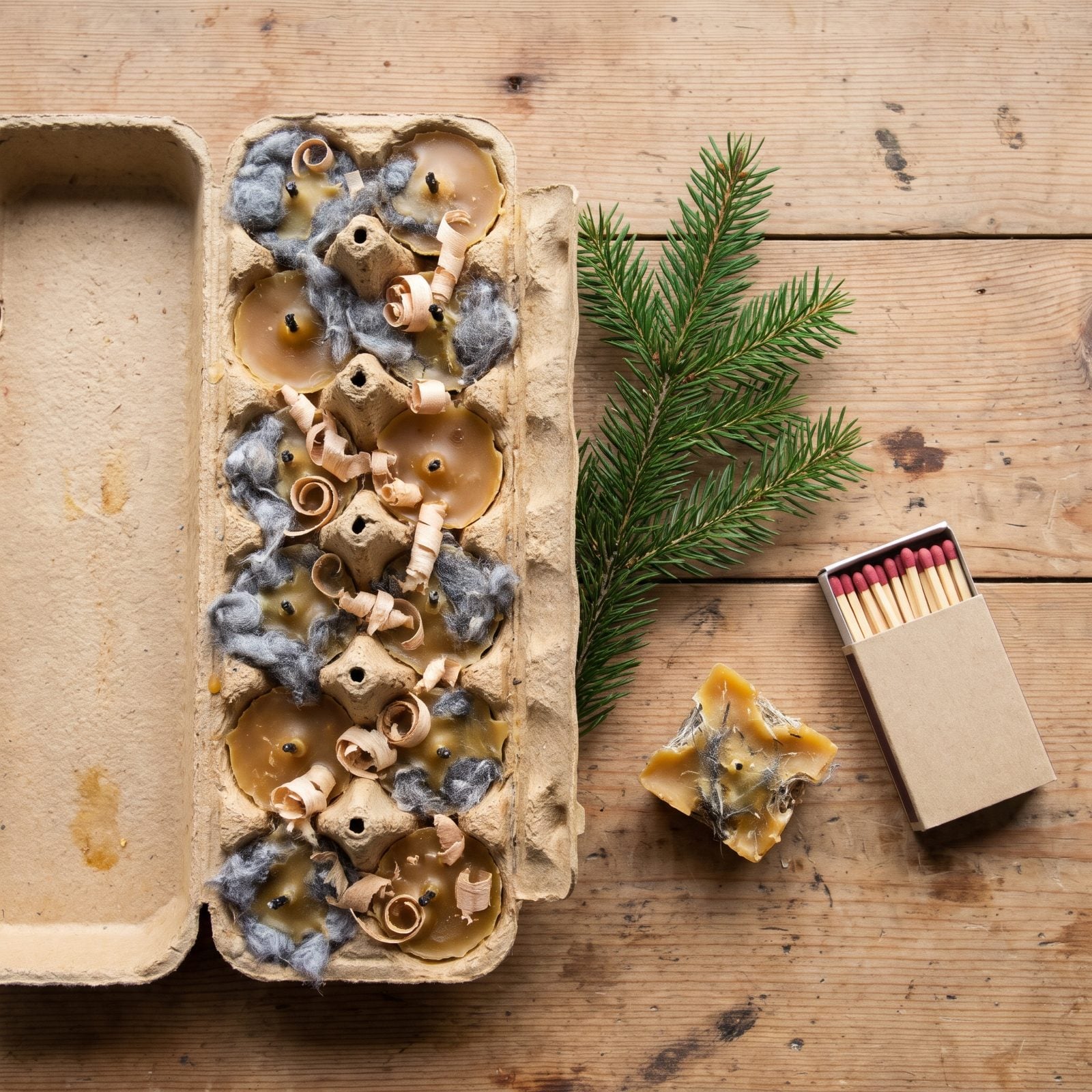
Store-bought fire starters work fine. But the ones packed into egg cartons at the kitchen table are cheaper and, frankly, more satisfying to make. Fill each paper cup with dryer lint and sawdust, pour melted candle wax over the top, let it harden, then tear off a cup whenever you need one.
Each one burns for several minutes — long enough to coax damp wood going on a cold morning. The wax waterproofs them too, so they shrug off the humidity that soaks into everything in a snowbound cabin.
Make a dozen before the trip. They cost next to nothing and they turn a stubborn, sulking fire into a fast one.
25. Folding Boot Dryer That Runs From the Truck
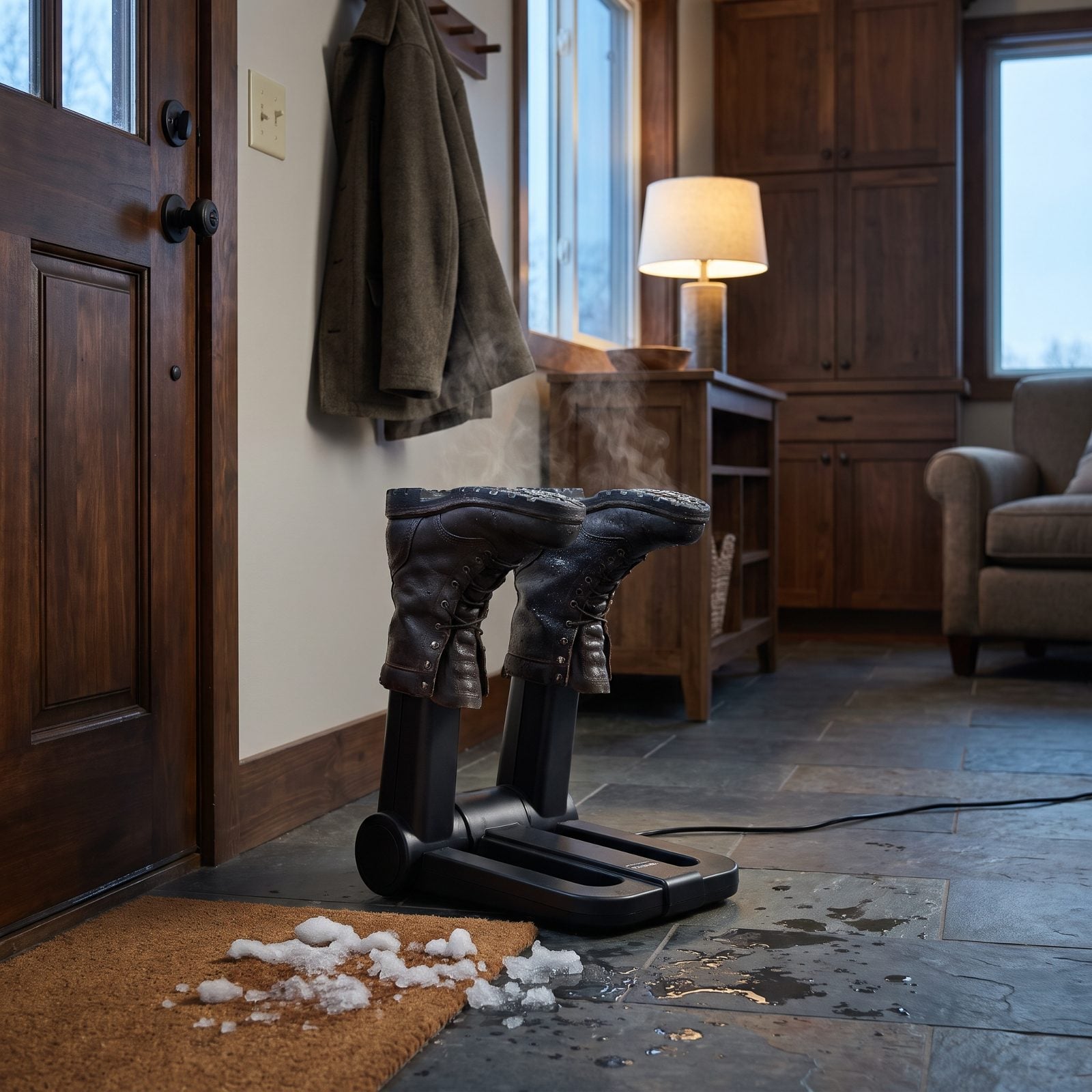
Wet boots by morning are the worst part of winter cabin life. Put them on anyway and your feet stay cold and damp the whole day. A folding boot dryer — the kind that runs off a 12-volt outlet — solves it quietly overnight.
The slick part is that it runs from the truck. No power in the cabin? Run a line out to the vehicle, or lean on a small battery pack. Warm, gently moving air through the boots beats parking them next to the stove, which cracks the leather and sometimes scorches it outright.
24. Oversized Binder Clips for Hanging Wet Mittens
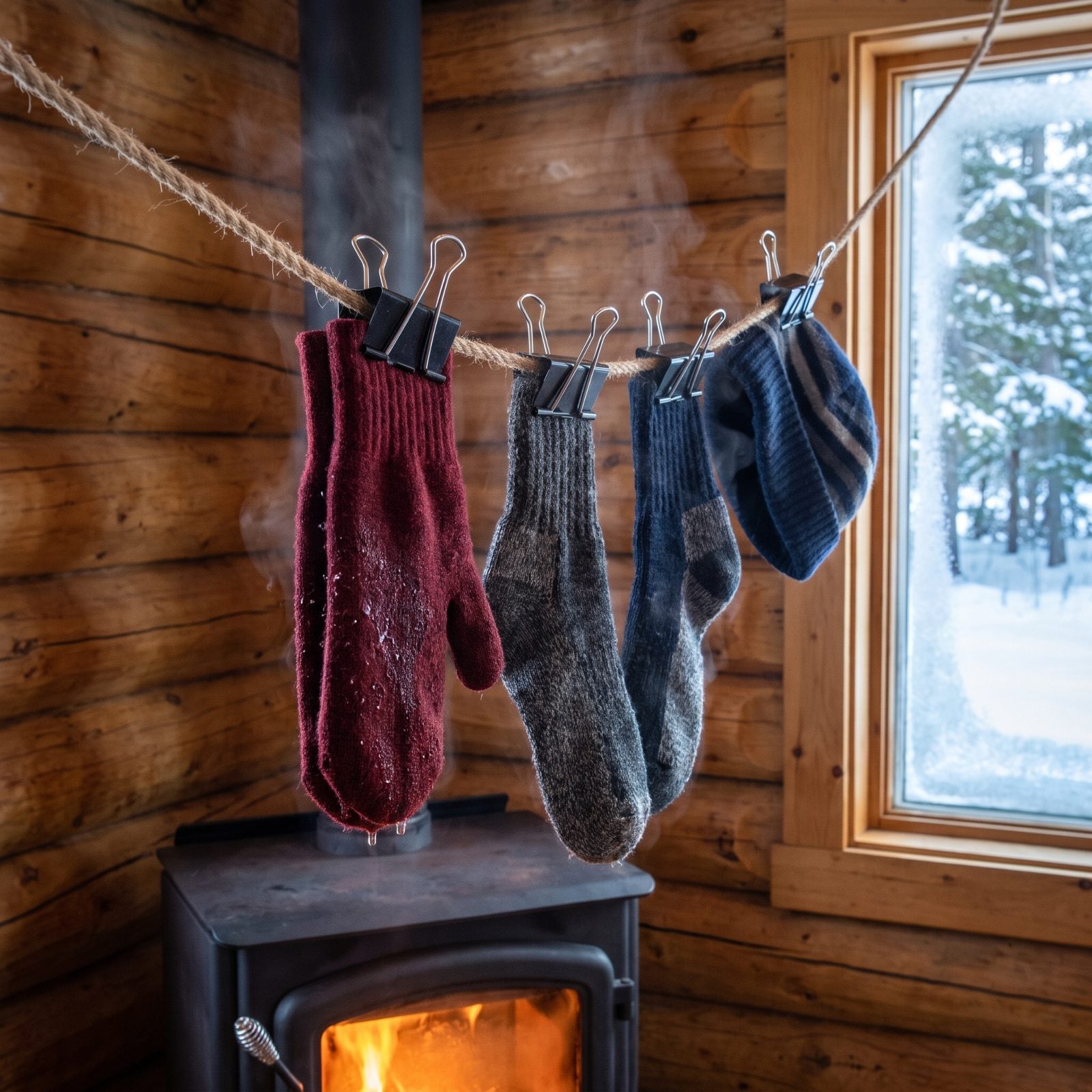
Clothespins snap in the cold and wander off into drawers. Big binder clips don’t. The two-inch office kind clamp onto a cord strung above the stove and hold a soaked wool mitten, a dripping hat, or a pair of liner socks without slipping.
That grip earns its keep when the gear is heavy with meltwater. Hang a whole family’s worth of wet layers in a line and let the rising stove heat do the work. A box of a dozen costs a couple of dollars and takes up no room in the pack.
23. Natural Chamois for Soaking Up Window Condensation
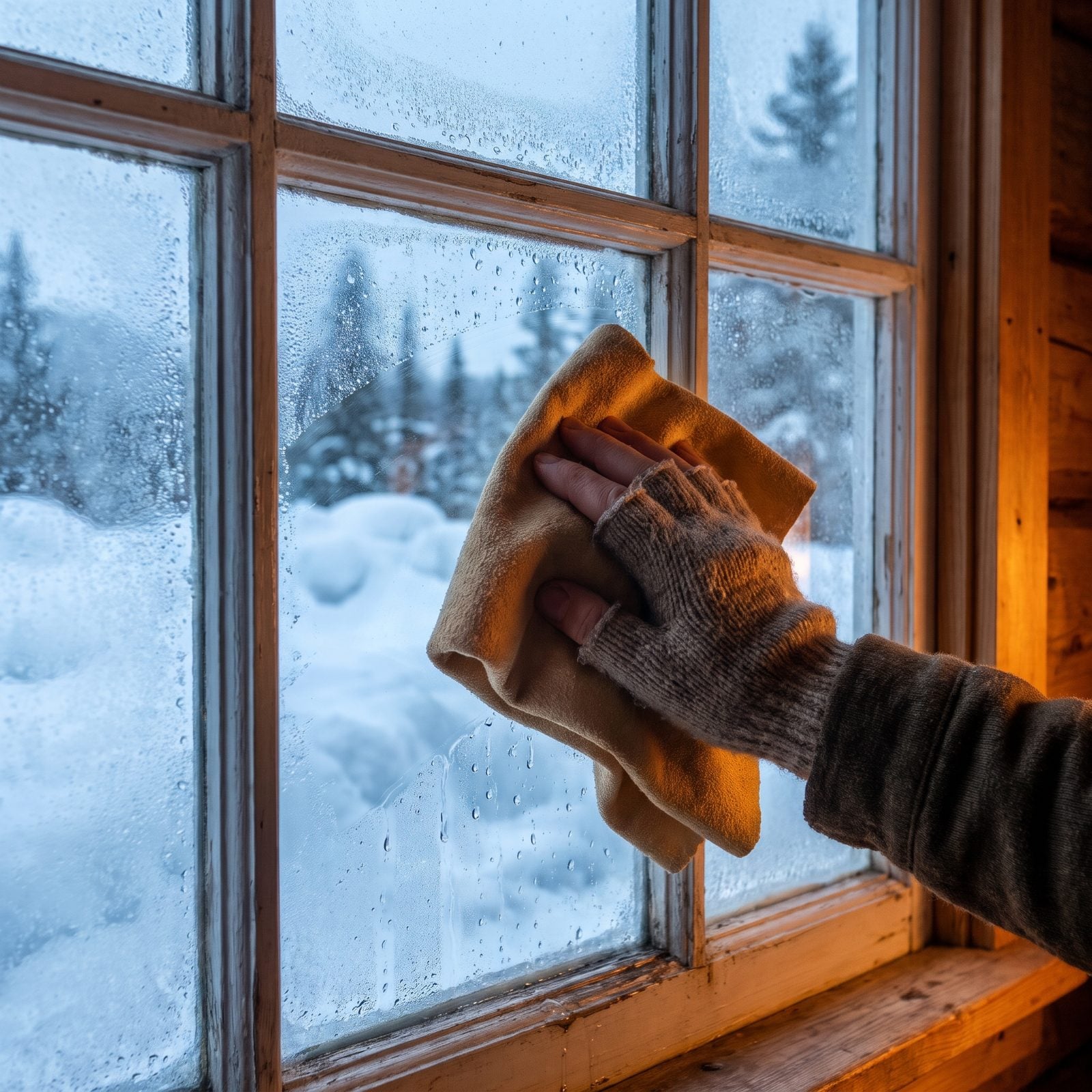
A sealed-up cabin with a stove and a few breathing people turns into a terrarium. Moisture collects on the cold glass, runs down, and rots the window sills over a long winter if you let it. A natural chamois pulls that water off fast, and it holds a surprising amount before you have to wring it out.
Same soft leather you’d use to dry a boat or a truck without streaks. For window duty it beats paper towels, which just shred and smear. Run it over the panes morning and night and your sills stay dry, your view stays clear.
22. Cordless Leaf Blower for Clearing Powder Snow
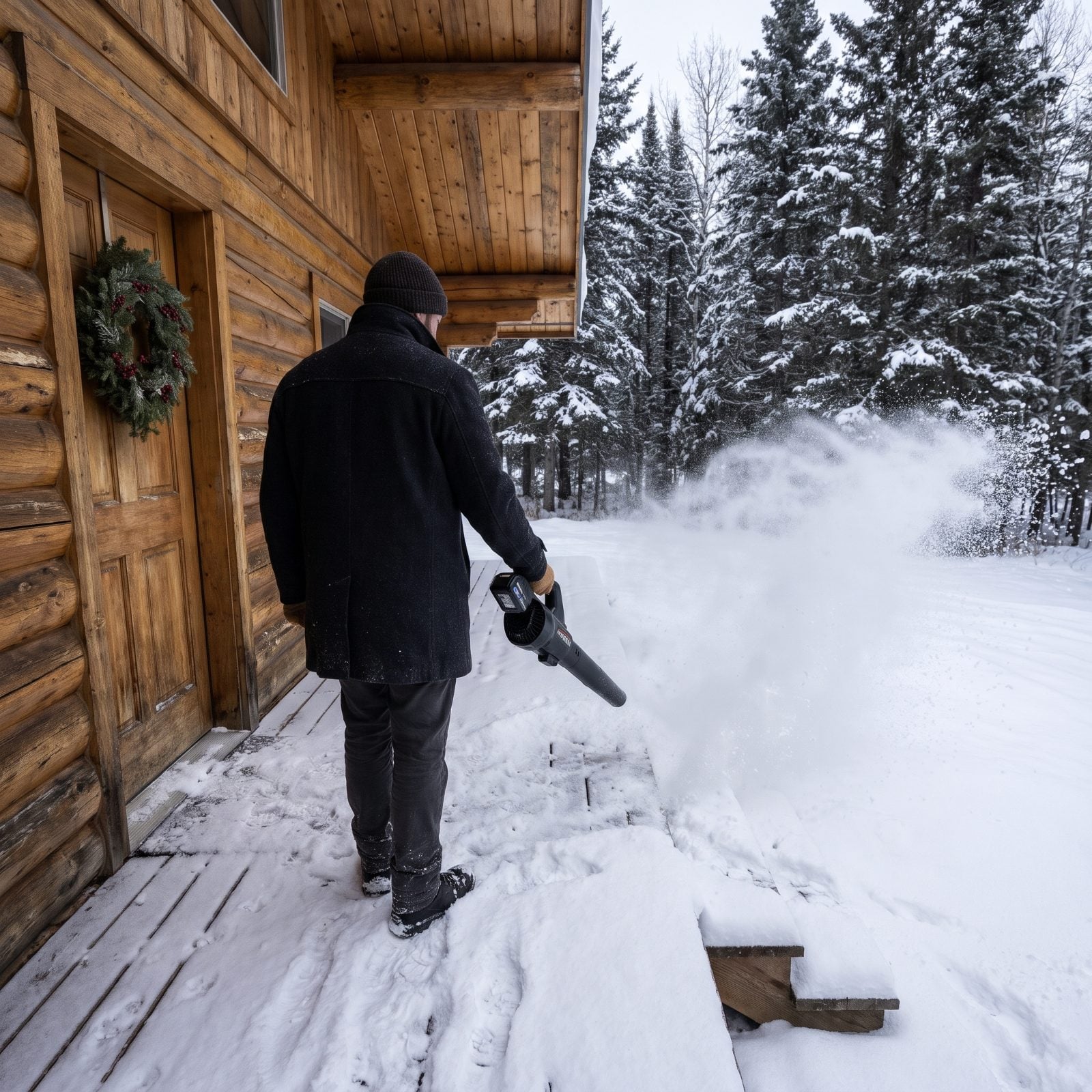
Shoveling fresh powder is a waste of a good back. Light, dry snow — the kind that falls at ten degrees — blows off a porch like dust. A cordless leaf blower clears steps, a walkway, and the top of the woodpile in a fraction of the time a shovel takes.
It only works on the dry stuff. Once the snow gets wet and heavy you’re back to the shovel, no shortcut around it. But for that first few inches of Christmas-morning fluff on the deck, it’s genuinely useful and a little bit fun. Bring a spare battery. Cold weather chews through charge faster than you’d expect.
21. A Plastic Grain Scoop for Clearing the Cabin Steps
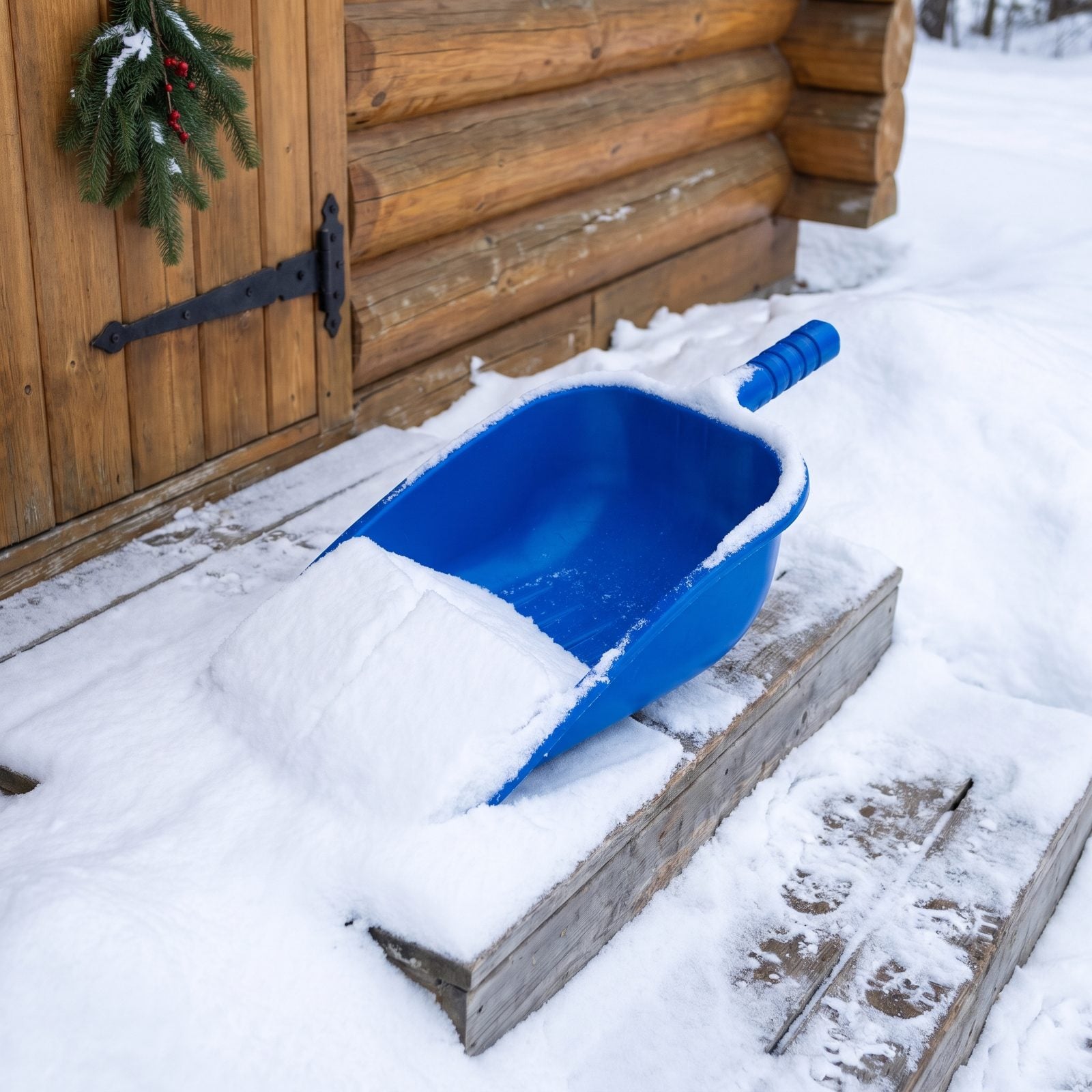
A metal snow shovel is overkill for a set of steps. The blade catches on every board edge, and the weight wears you out by the third stair. A plastic grain scoop — the kind sold at farm-supply stores for moving feed — is lighter, wider, and glances off wood instead of gouging it.
It costs about fifteen bucks and spends its whole life in a barn. Scoop, don’t chop. The lip flexes just enough to ride over an uneven plank without snagging. I kept a steel shovel by the door for years and wondered why clearing six steps felt like a workout. The scoop fixed that in one morning.
20. Reflective Driveway Stakes That Save Your Plow Line
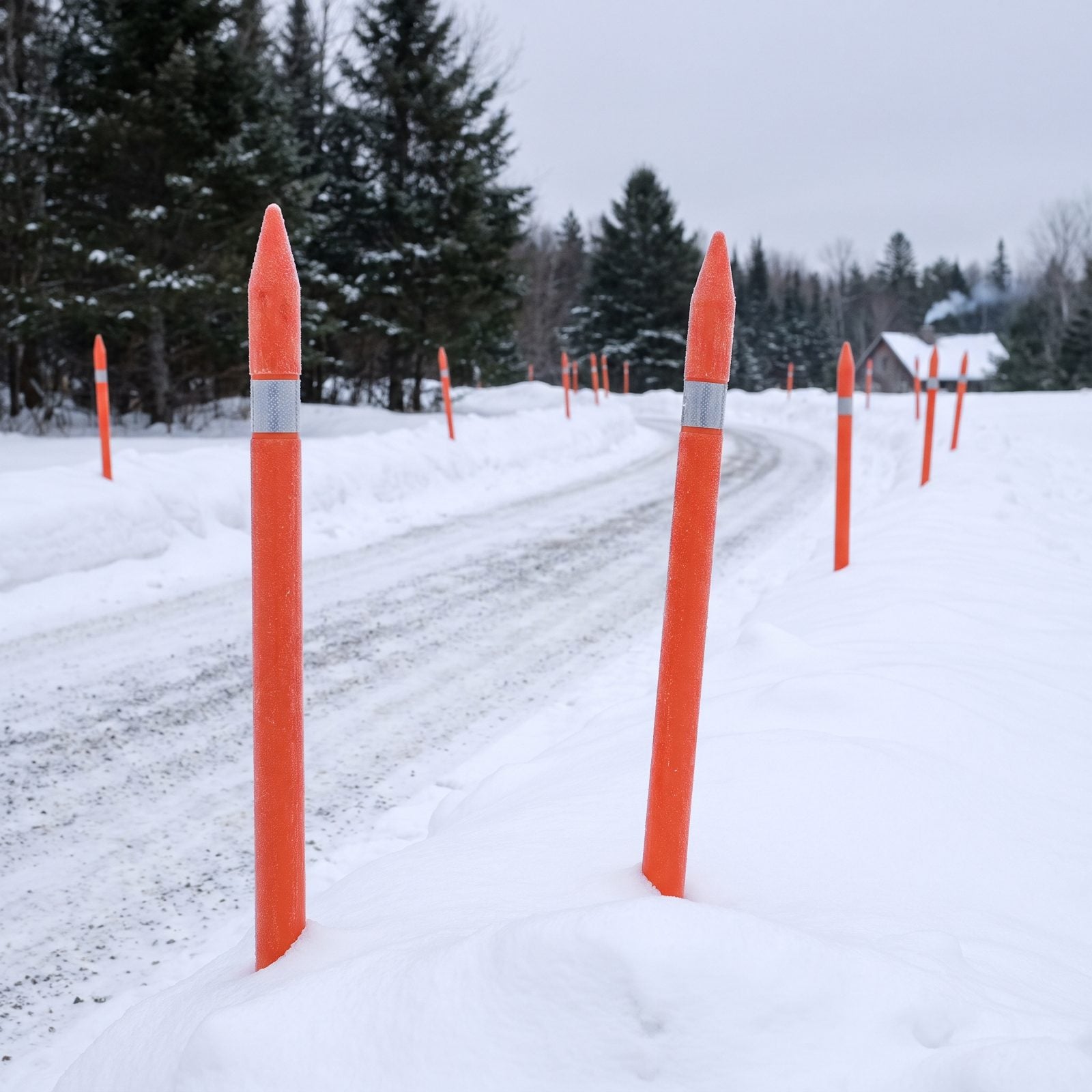
Snow erases a driveway. Once there’s two feet down and more coming, you can’t tell gravel from flowerbed from the drop-off into the ditch — and that’s how a plow blade finds a buried rock or a culvert edge and ruins somebody’s week.
Push a row of fiberglass reflective stakes in along both edges before the first real storm, and you’ve got a line to follow in the dark and in a whiteout. A bundle runs cheap, a buck or two per stake. Set them before the ground freezes solid, because trying to drive a marker into frozen earth at nine at night is a conversation with yourself you won’t enjoy.
19. A Folding Entrenching Tool for Digging Out the Tires
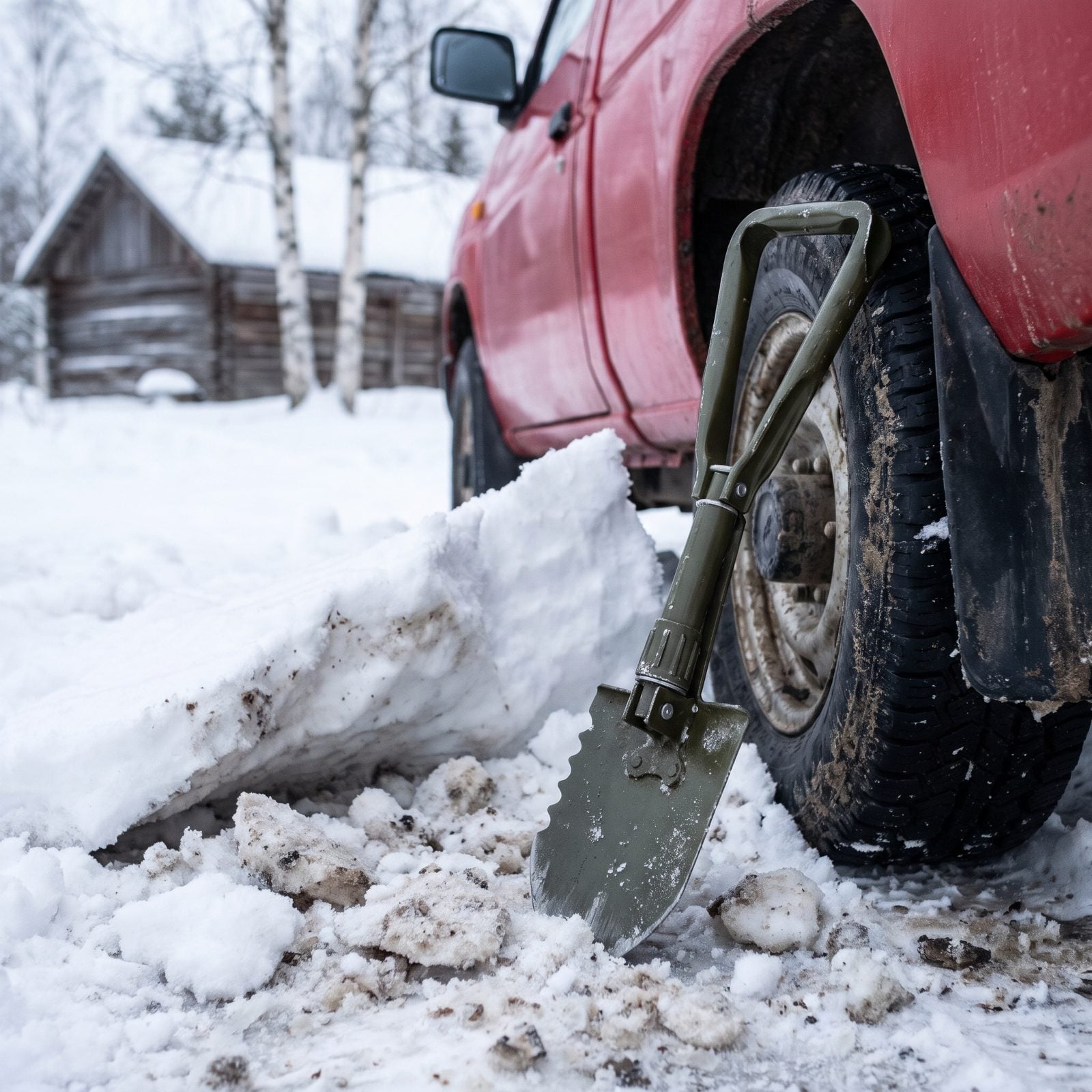
A full-size shovel won’t fit where you need it.
When a tire’s packed into ice and you’re lying on your side reaching under the fender, you want a short tool with a locking blade. The folding entrenching tool — that old army-surplus design — does exactly that. It chops at ice with the edge, scoops with the pan, and folds down to the size of a loaf of bread.
I’ve freed more vehicles with one of these than with anything in the truck bed. Keep it behind the seat, not in the cabin. The whole appeal is that it’s already riding with you when the back wheels decide they’re done.
18. A Child’s Plastic Toboggan for Hauling Firewood
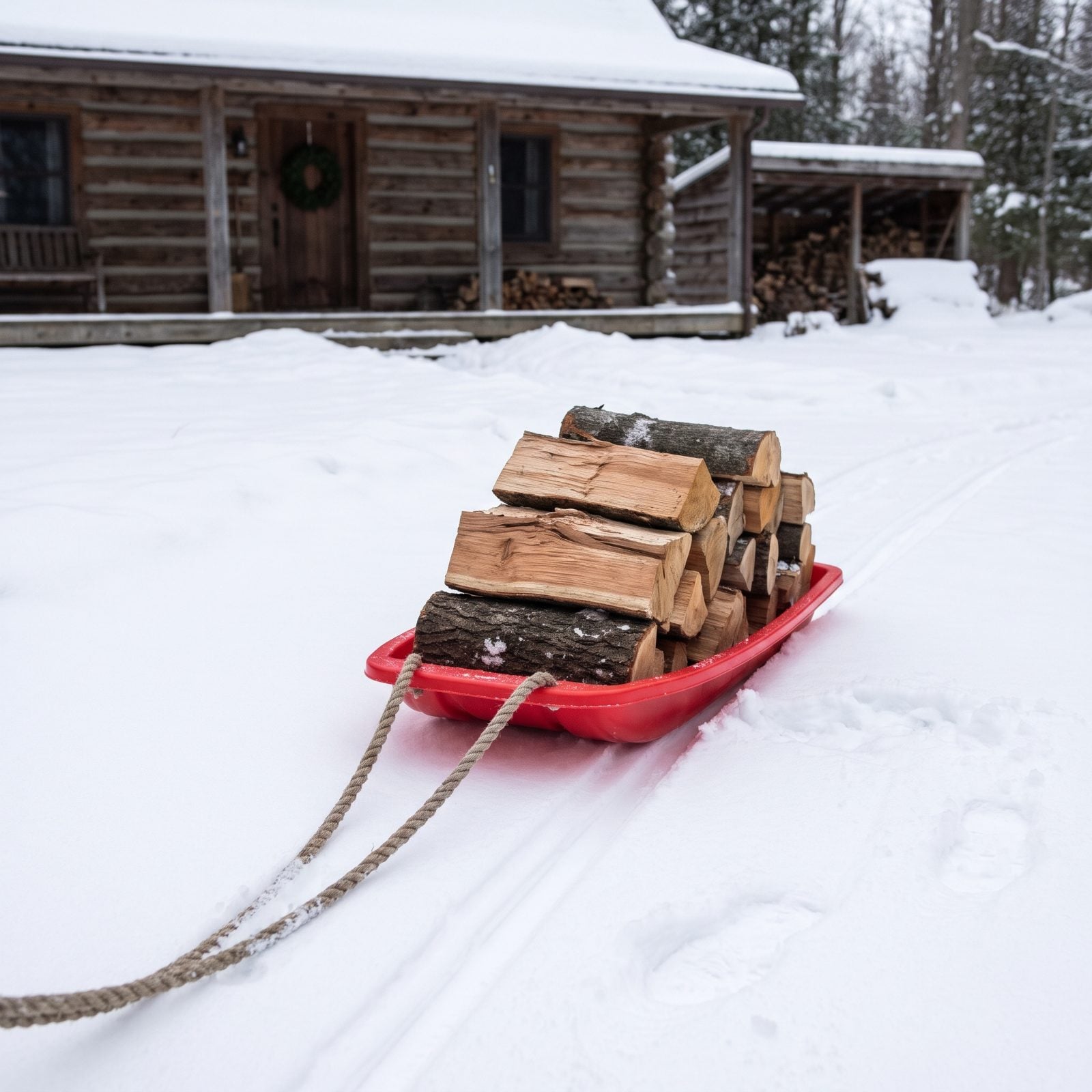
Carrying firewood an armload at a time across a snowed-in yard is how backs give out. A cheap plastic toboggan, the ten-dollar kind kids drag down hills, slides several armloads at once right up to the door.
Two molded plastic runners keep it tracking straight, and there are no wheels to bog down. The sled glides over powder that would stop a wheelbarrow cold. Load it heavy, loop a rope through the front holes, and walk. I’ll admit I bought mine for actual sledding and stumbled onto the firewood trick by accident, which is usually how the good tricks arrive.
17. Tarp Clips That Grip Without Grommets
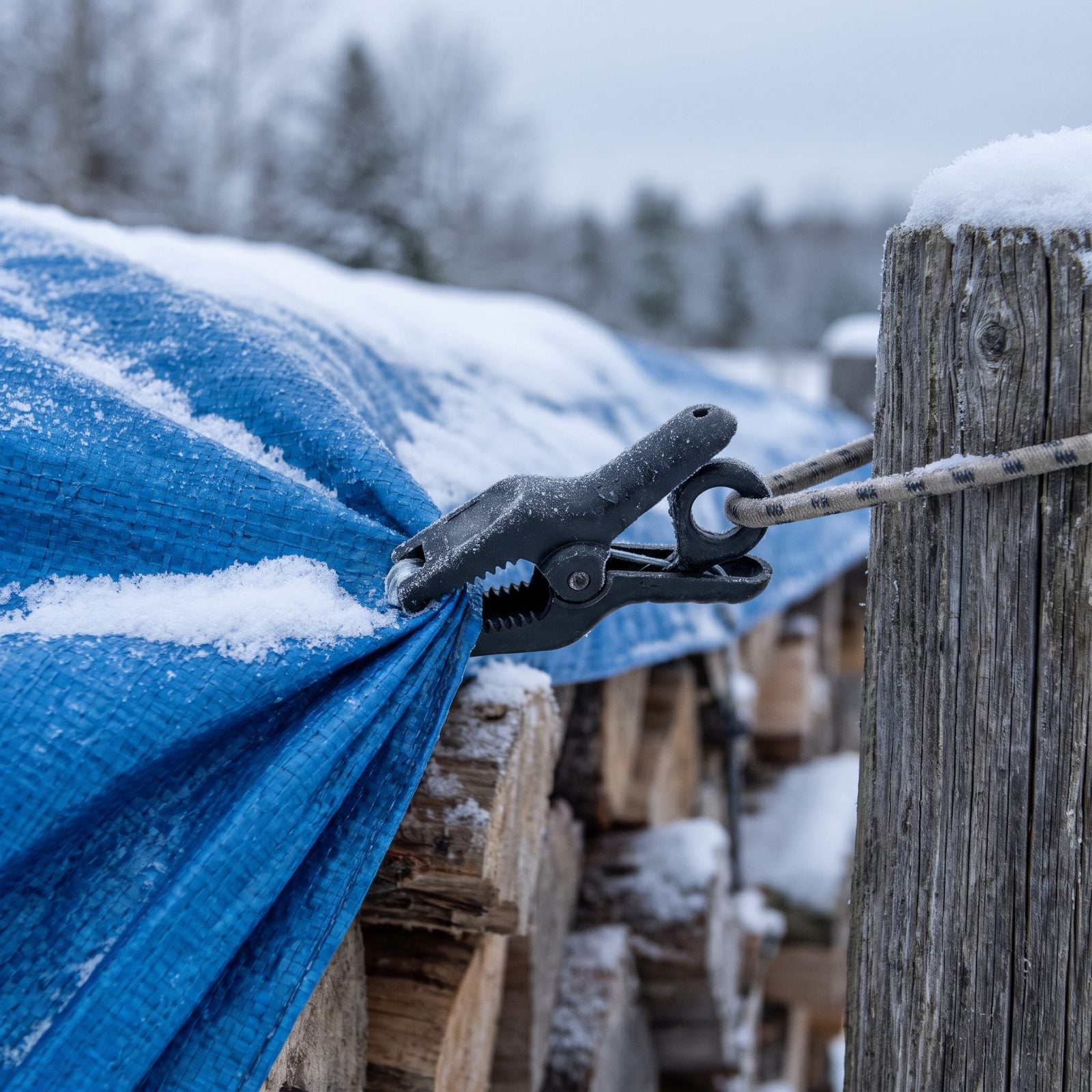
Every tarp tears out at the grommets. You cinch it down, the wind picks up, and by morning there’s a flapping corner with a ripped metal ring hanging off it. Spring-loaded tarp clips skip the grommet entirely.
They bite anywhere on the fabric with plastic teeth, giving you a fresh anchor point wherever the hole tore out. A handful costs a few dollars. Keep a dozen in a coffee can. Over a Christmas week you’ll clamp a tarp over the woodpile, over the generator, over whatever the forecast decides to dump snow on next.
16. A Clear Shower Curtain as a Temporary Draft Wall
Heat goes where it pleases unless you give it a reason not to.
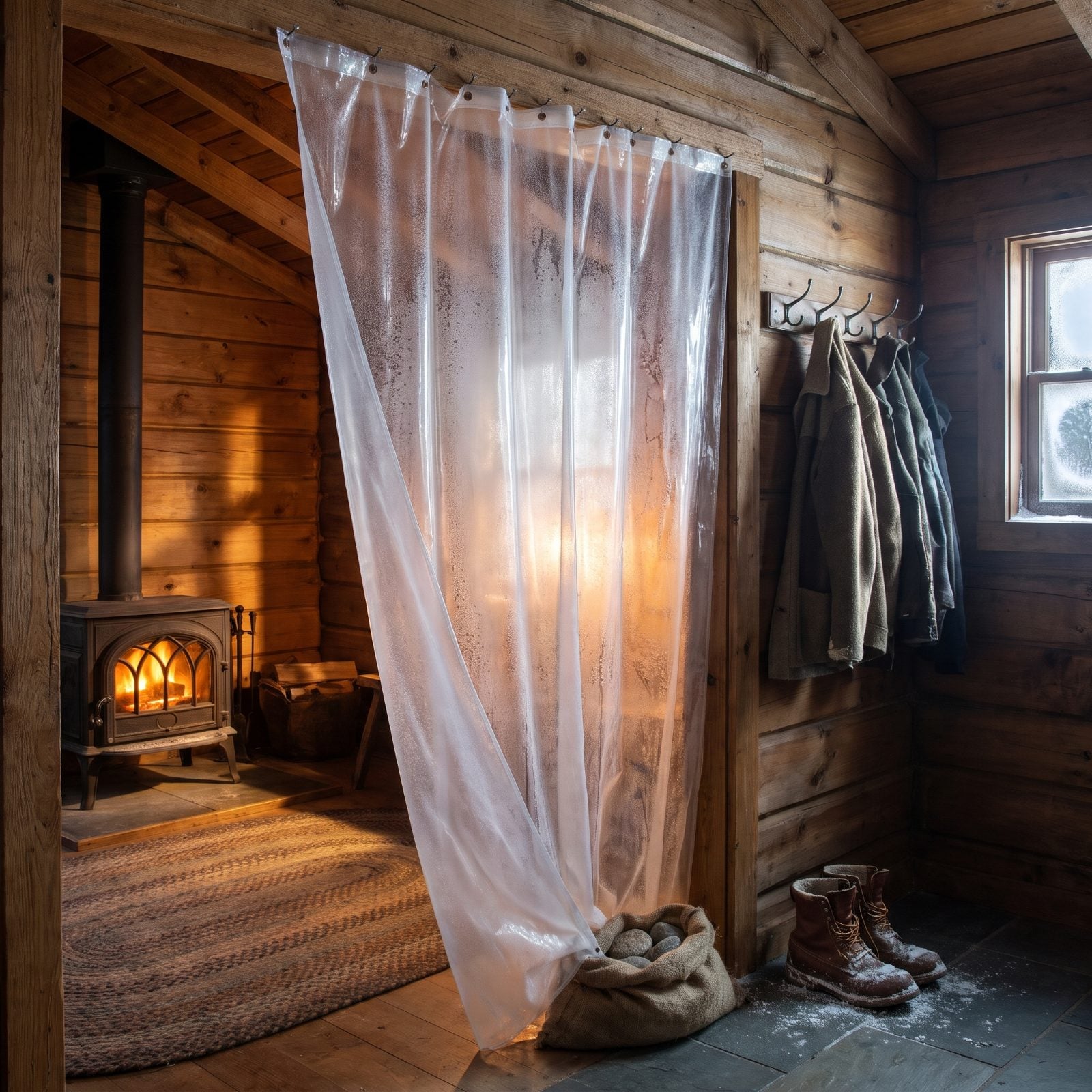
An open cabin with one wood stove bleeds warmth into cold back rooms and drafty entryways. Hang a clear plastic shower curtain across a doorway or an archway, and it pens the heat in the room you’re actually using.
Clear plastic is the detail that matters. You still see through it, light still travels, the cabin doesn’t feel sealed into a cave. Tack the top, weight the bottom with a length of firewood or a couple of books, and you’ve shrunk the space your stove has to heat. It’s crude. It works. I’ve done it in a cabin where the far bedroom simply refused to warm, and the living room climbed three degrees that same night.
15. A Wide-Mouth Vacuum Thermos for Extra Hot Water
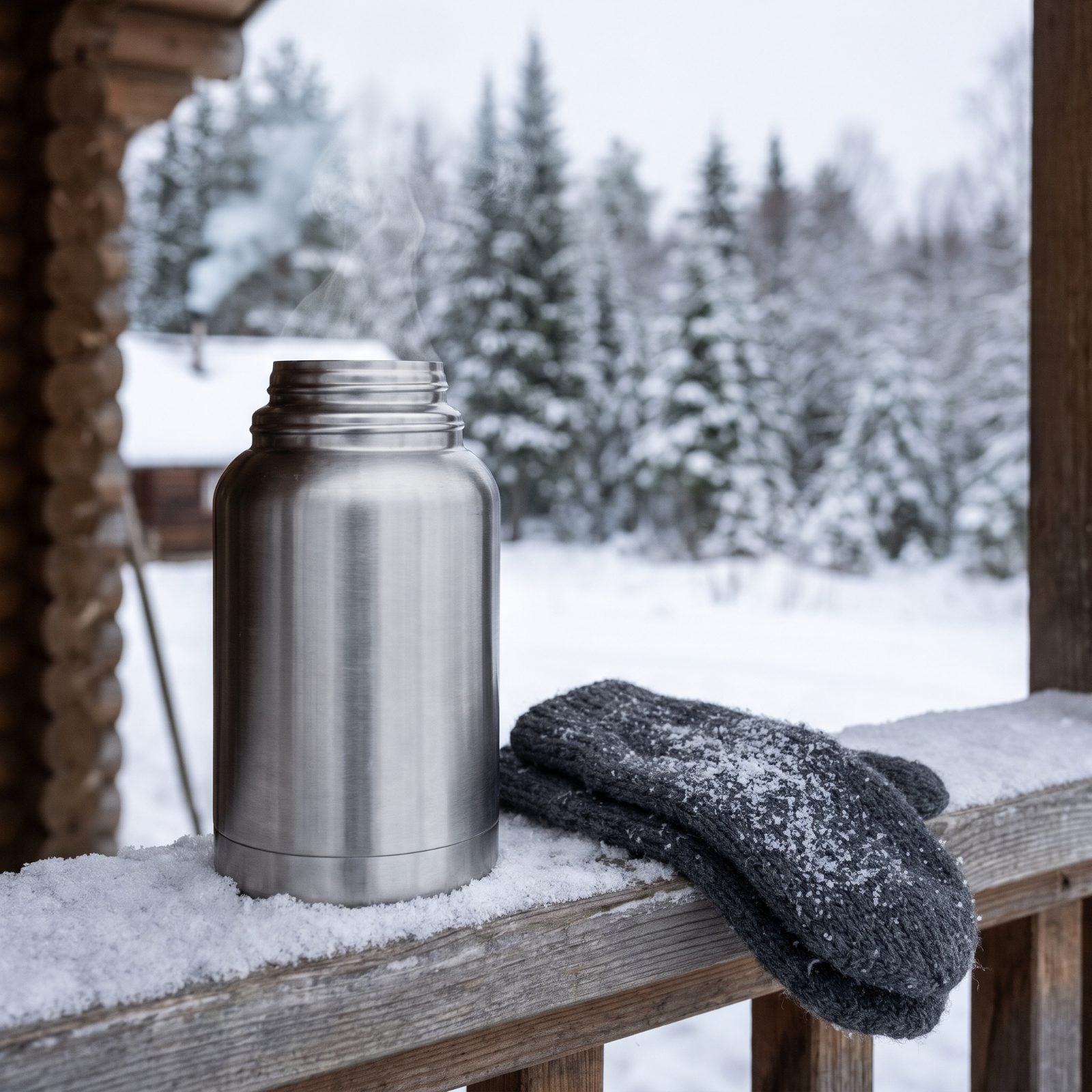
A wide-mouth vacuum thermos isn’t for coffee. Fill it with boiling water first thing and you’ve got a reservoir that’ll still be steaming hours later, long after the kettle’s cold and the stove’s banked down for the night.
That’s water to thaw a frozen pipe, make a late cup of something, or pour into a bottle at the foot of a cold sleeping bag. The wide mouth is key. You can actually pour out of it and dunk things into it, unlike a narrow coffee flask. One that holds a couple of quarts keeps water hot overnight with no fire burning. On a brutal night that’s a small, genuine comfort to have waiting on the counter.
14. Clear Fishing Line for Floating Christmas Decorations
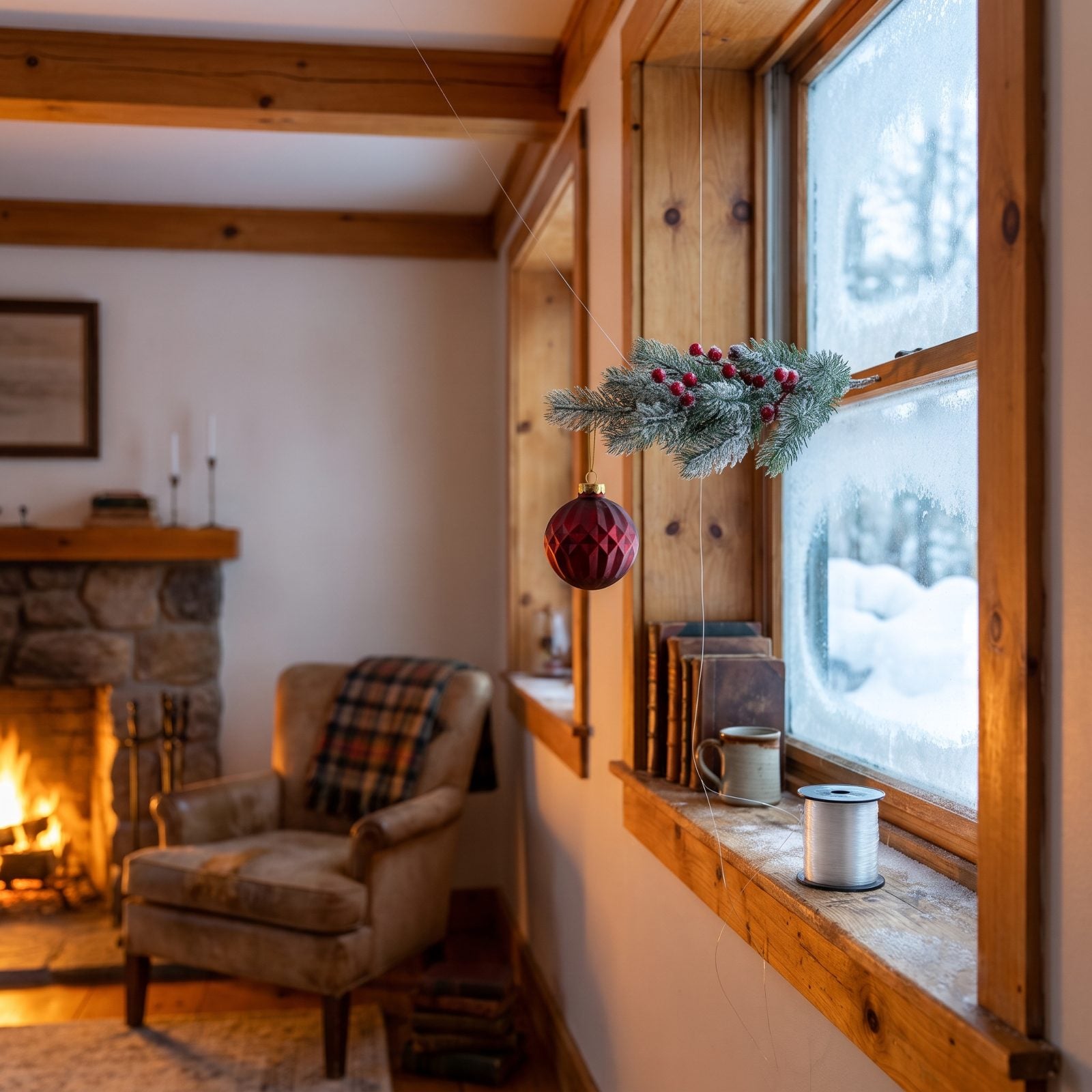
Ornaments look like magic when you can’t see what’s holding them. That’s the whole trick, and clear monofilament pulls it off better than ribbon or wire ever will.
Six-pound test is the sweet spot — light enough to disappear against a frosted window, strong enough to hang a glass ball from a beam without sagging by morning. You already have a spool in the tackle box, which beats hunting for floral wire that nobody can find in a town two hours away.
One warning. Tie it off on something solid, a knotty-pine beam, not a nail you tapped in last summer. I’ve watched a whole swag of boughs come down at two in the morning because the anchor point let go, and that sound in a quiet cabin will take ten years off you.
13. Suction-Cup Hooks for Knotty-Pine Walls
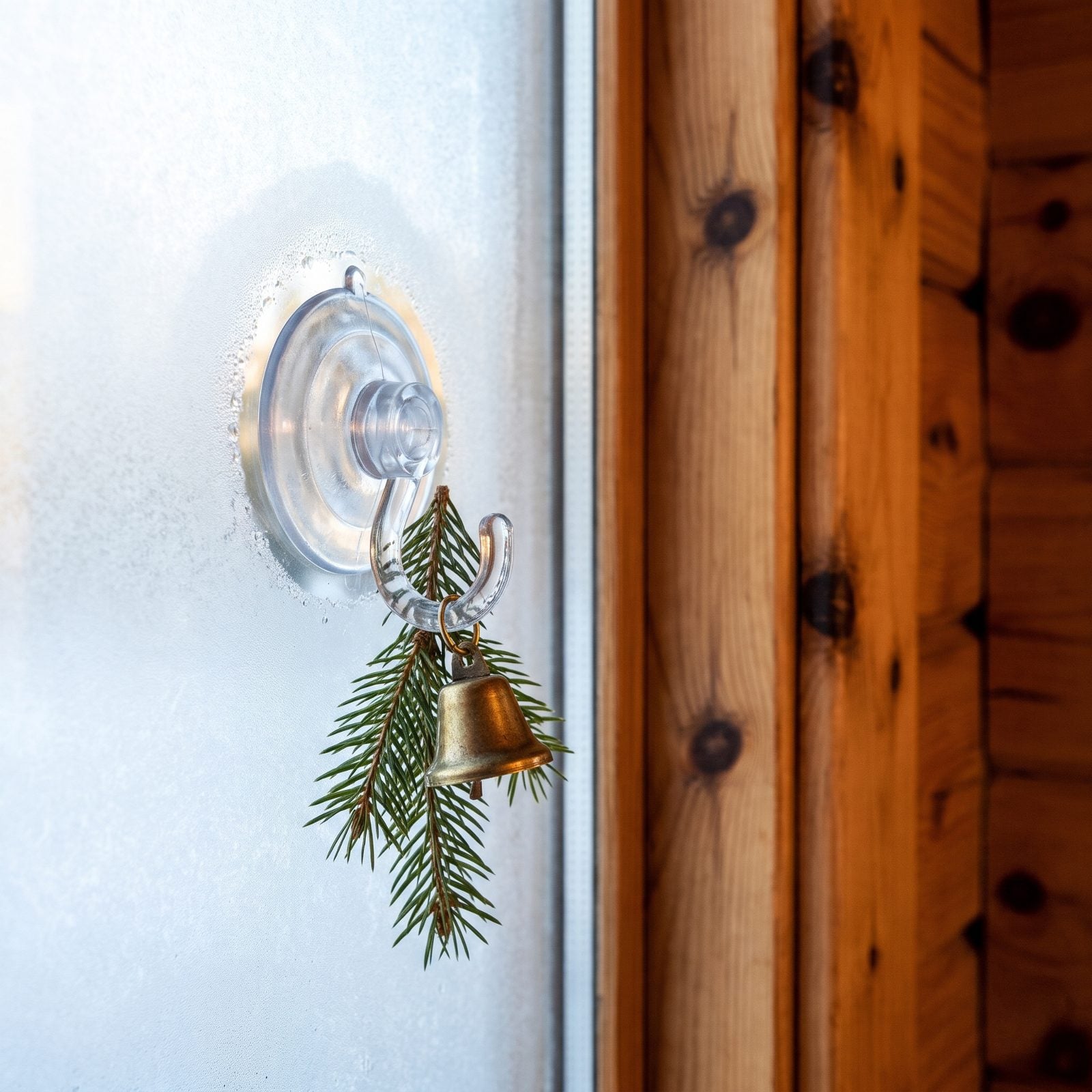
Knotty pine fights you. Drive a nail into it near a knot and the board splits, or the nail skates off and bends. And nobody wants holes punched through the walls of a cabin that took somebody a decade to build.
Suction-cup hooks sidestep the whole problem for anything you want on glass or a varnished surface — wreaths on the window, a garland across a slick-finished door, stockings hung off the side of the fridge.
12. Fluorescent Survey Tape for Marking the Woodpile Route
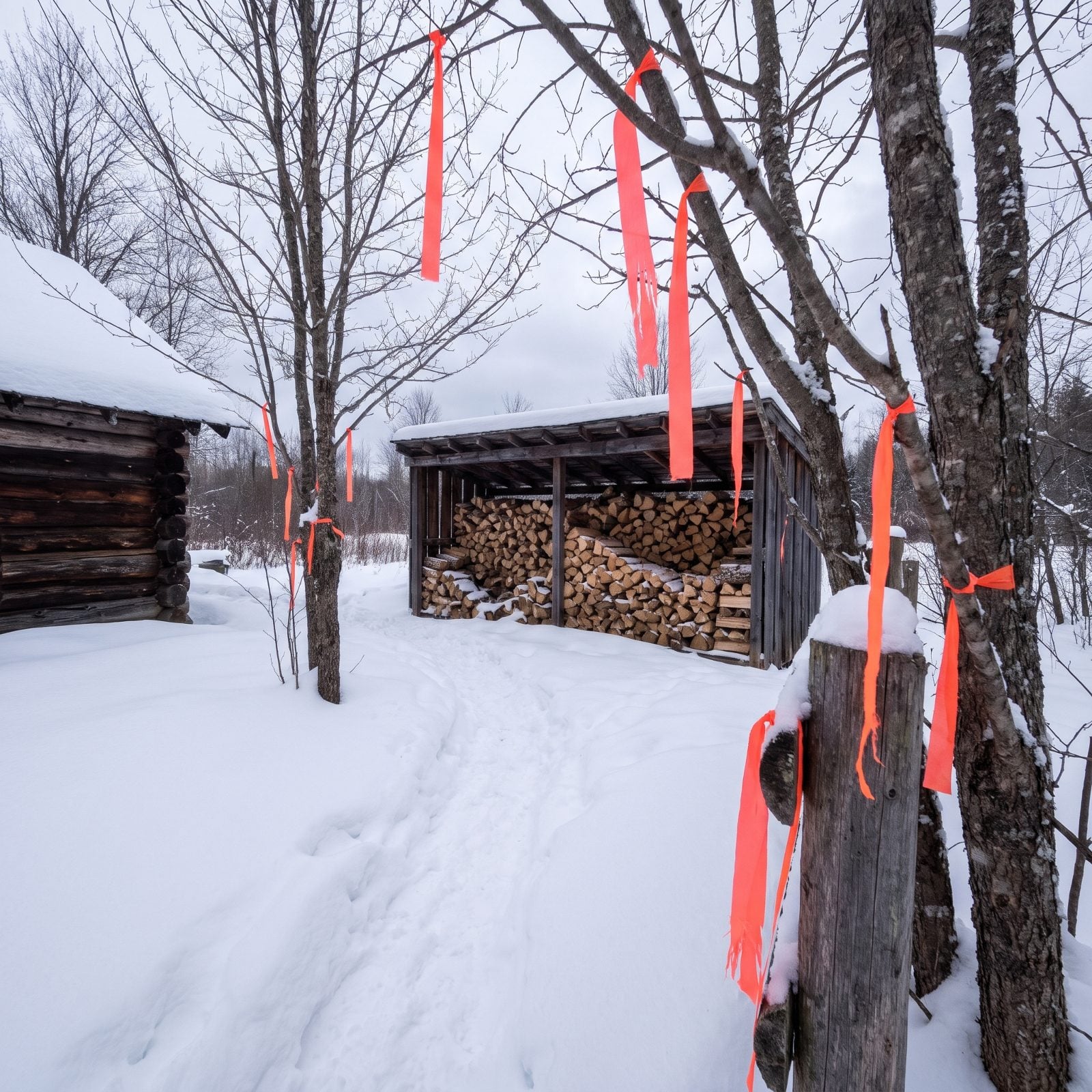
A path you walked twenty times in October vanishes under a foot of fresh snow by Christmas Eve. Landmarks go flat, and the woodpile you could find blindfolded in fall becomes a guessing game in a whiteout.
Tie fluorescent survey tape to branches at eye level every ten or fifteen feet between the door and the wood. Orange reads against snow better than pink or red. You can follow it hauling an armload at dusk, and you can still find your way back when the light drops and the snow starts coming sideways.
Costs a few dollars a roll. Weighs nothing. Lives in the truck year-round if you’ve got any sense.
11. Red Cellophane for a Night-Vision Headlamp Filter
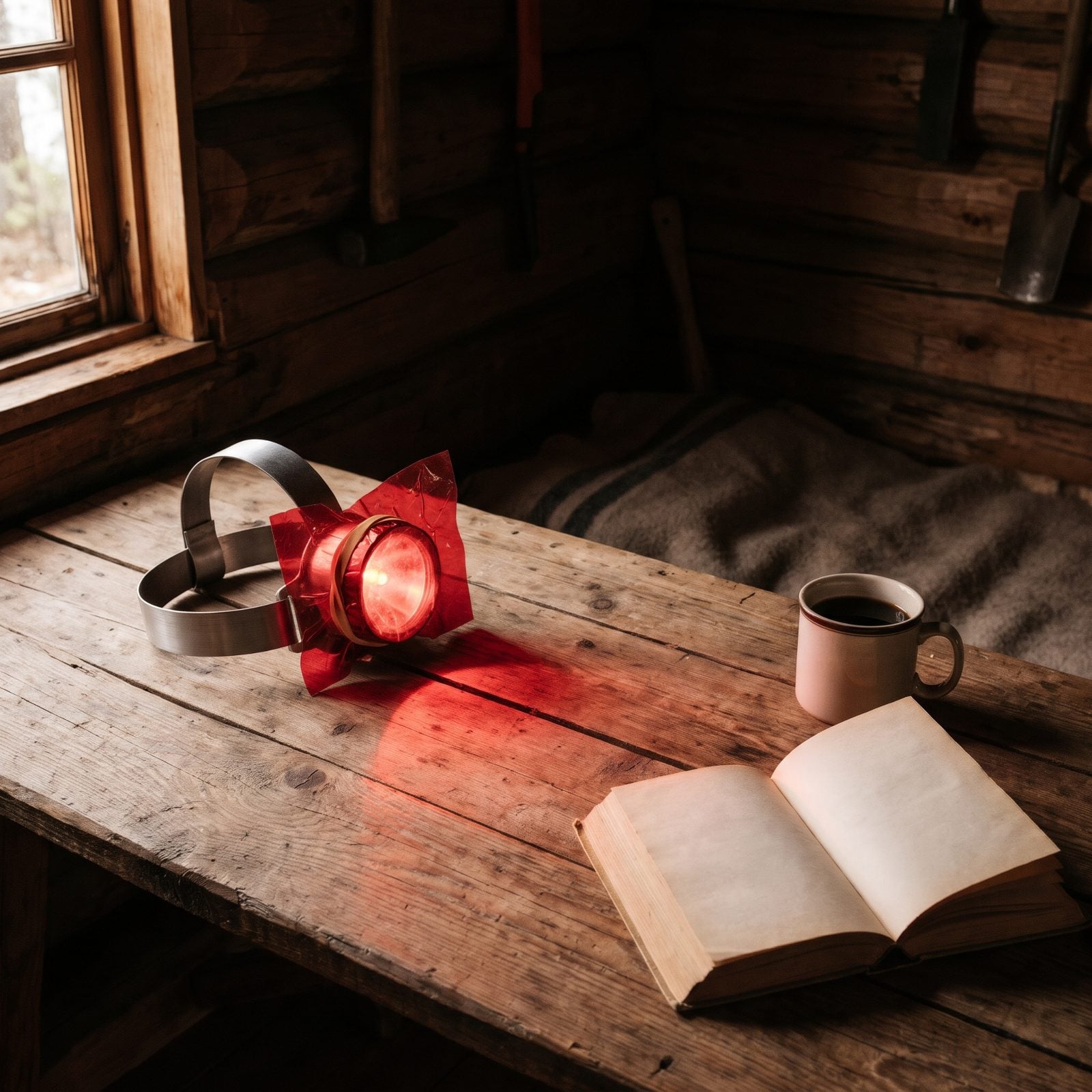
Red light keeps your eyes adjusted to the dark. Flip on a white headlamp in the small hours for a trip to the outhouse and you’ll blow out your night vision, then stumble back half-blind while it slowly comes back.
A scrap of red cellophane rubber-banded over the lens fixes it. You see enough to move around without wrecking your ability to spot the trail markers or the stars. Deer hunters have done this for generations, and it works just as well for finding the coffee pot without waking the whole cabin.
Explaining why red light is worth carrying after dark, a night-sky photographer writes “Unlike white or blue light, red light has minimal impact on the chemical processes your eyes rely on to adjust to darkness.”
10. Solar Garden Lights Used as Snowbank Trail Markers
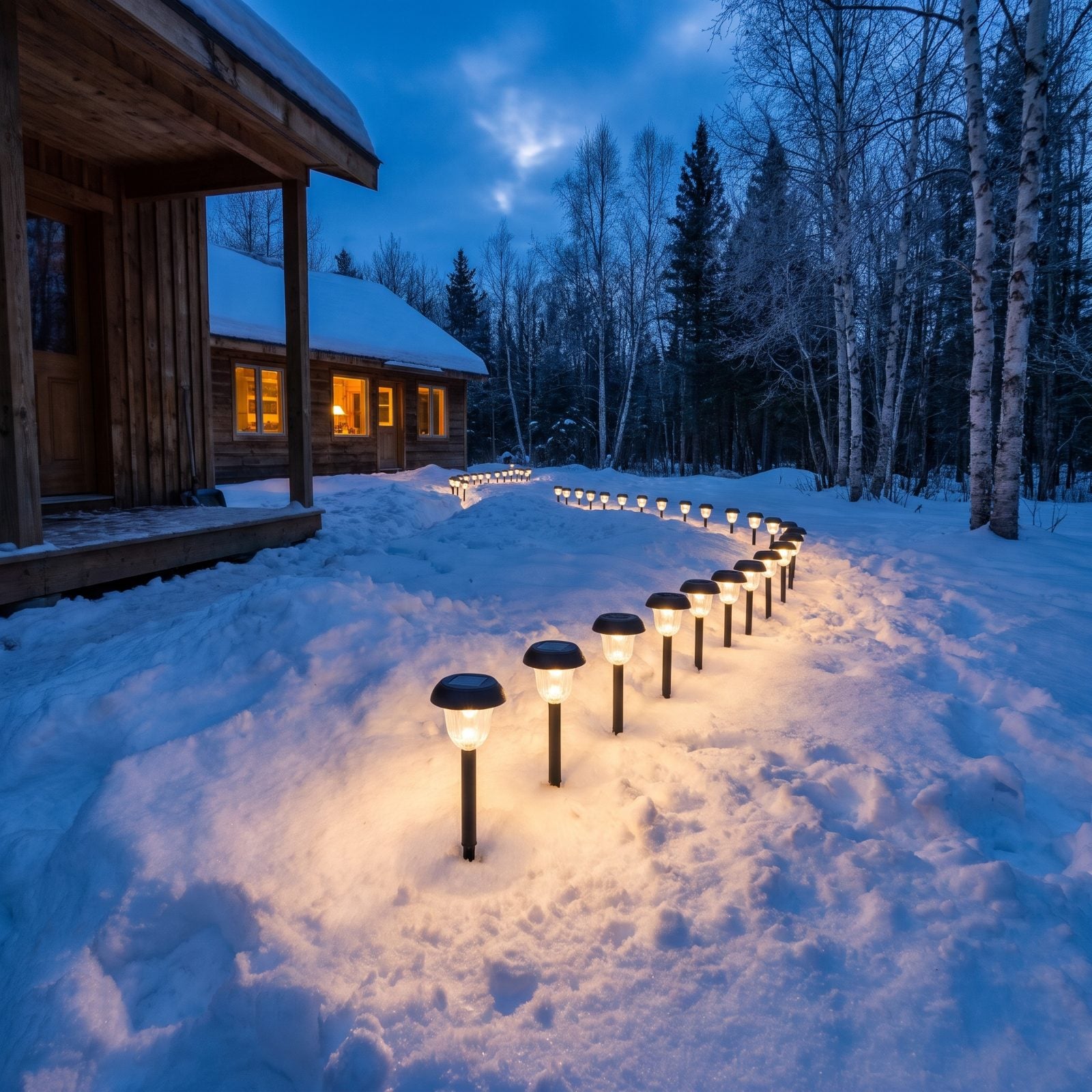
Those dollar-store solar stakes meant for a suburban flower bed earn their keep at a cabin. Push a line of them into the snowbanks along your path and you’ve got a self-charging runway that lights itself every night, no battery to haul in.
They charge even on gray days, just slower. A short winter sun buys you a few hours of glow after dark, which covers the stretch between dinner and bed when people are most likely to wander out for firewood or one last look at the stars.
Buy the cheap ones. You’re going to lose a couple under fresh snowfall, and nobody mourns a buck-fifty light.
9. Closed-Cell Foam Pad for an Icy Outhouse Seat
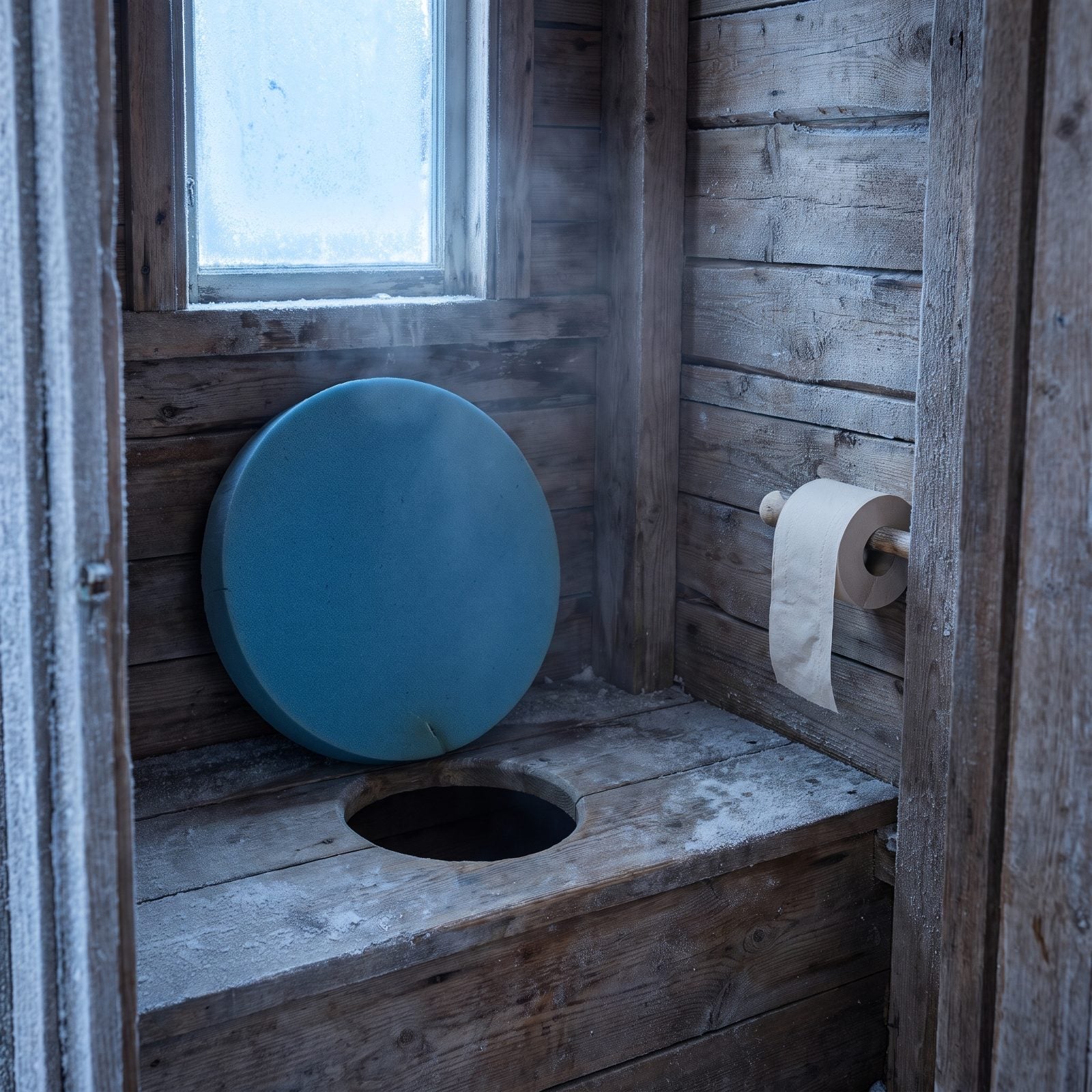
Nobody warns you about the seat. A bare wooden privy seat at dawn after a cold snap is a special kind of unpleasant, and that shock is usually the first thing anyone remembers from a winter cabin trip.
Cut two seat-shaped rings out of a cheap blue closed-cell foam sleeping pad and stack them into a thick cushion that sits around the hole. Foam doesn’t conduct cold the way wood does, so it sits closer to body temperature even at ten below. It wipes clean, won’t soak up moisture, and stows flat on a nail when you’re done.
This is the kind of thing old hands bring and newcomers laugh at — right up until the first morning.
8. Garden Lime for Privy Odor Control
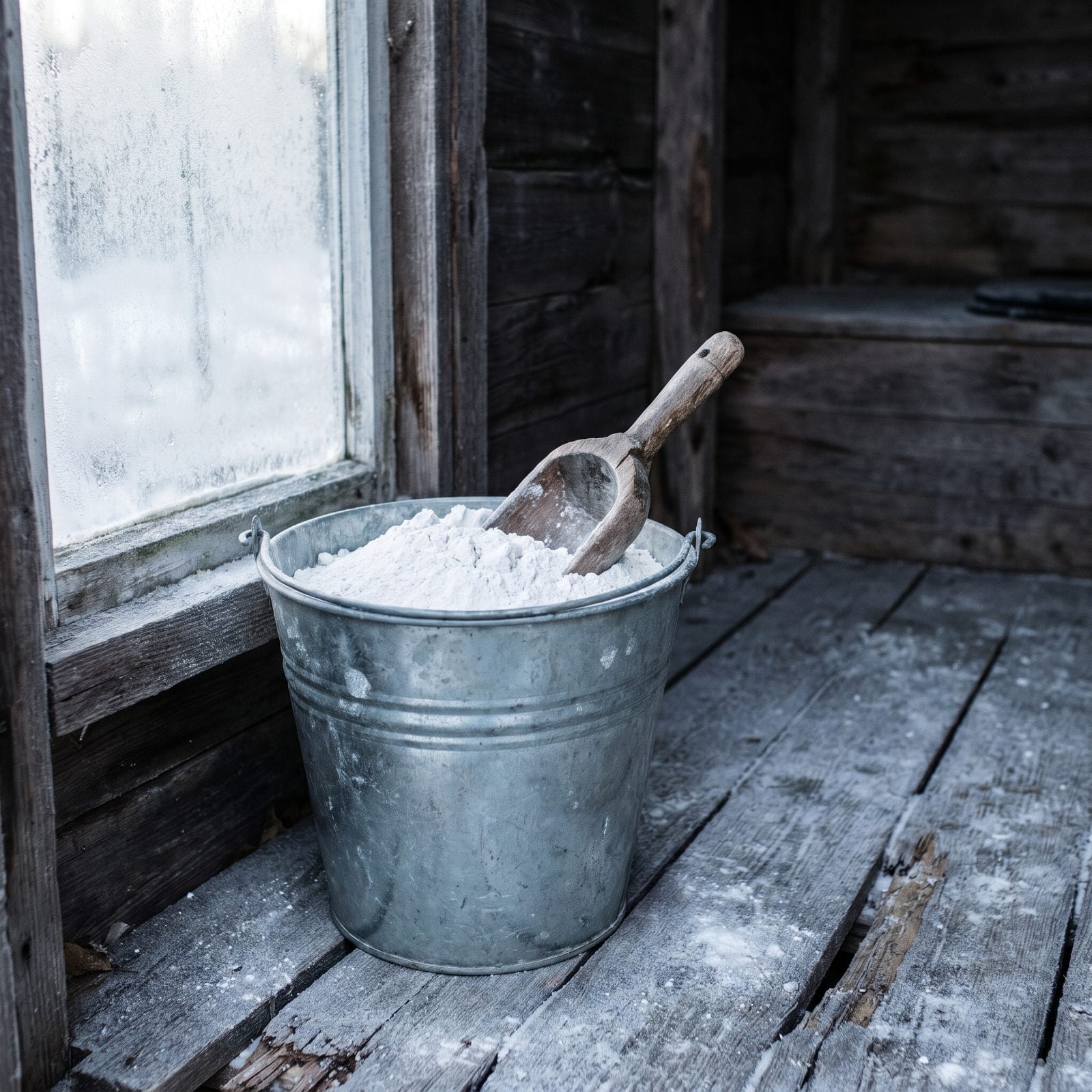
A scoop of garden lime down the privy does more than any air freshener. It cuts odor, dries things out, and slows what’s happening down there — which matters a whole lot more when everyone’s shut inside for a week with the windows closed against the cold.
Hydrated lime is the common choice, but handle it with care. It’s caustic. Keep it off your skin and out of your eyes, and store the bag somewhere kids and dogs can’t reach. A cup or so after each use is plenty.
7. Snap-On Toilet Seat for a Five-Gallon Emergency Bucket
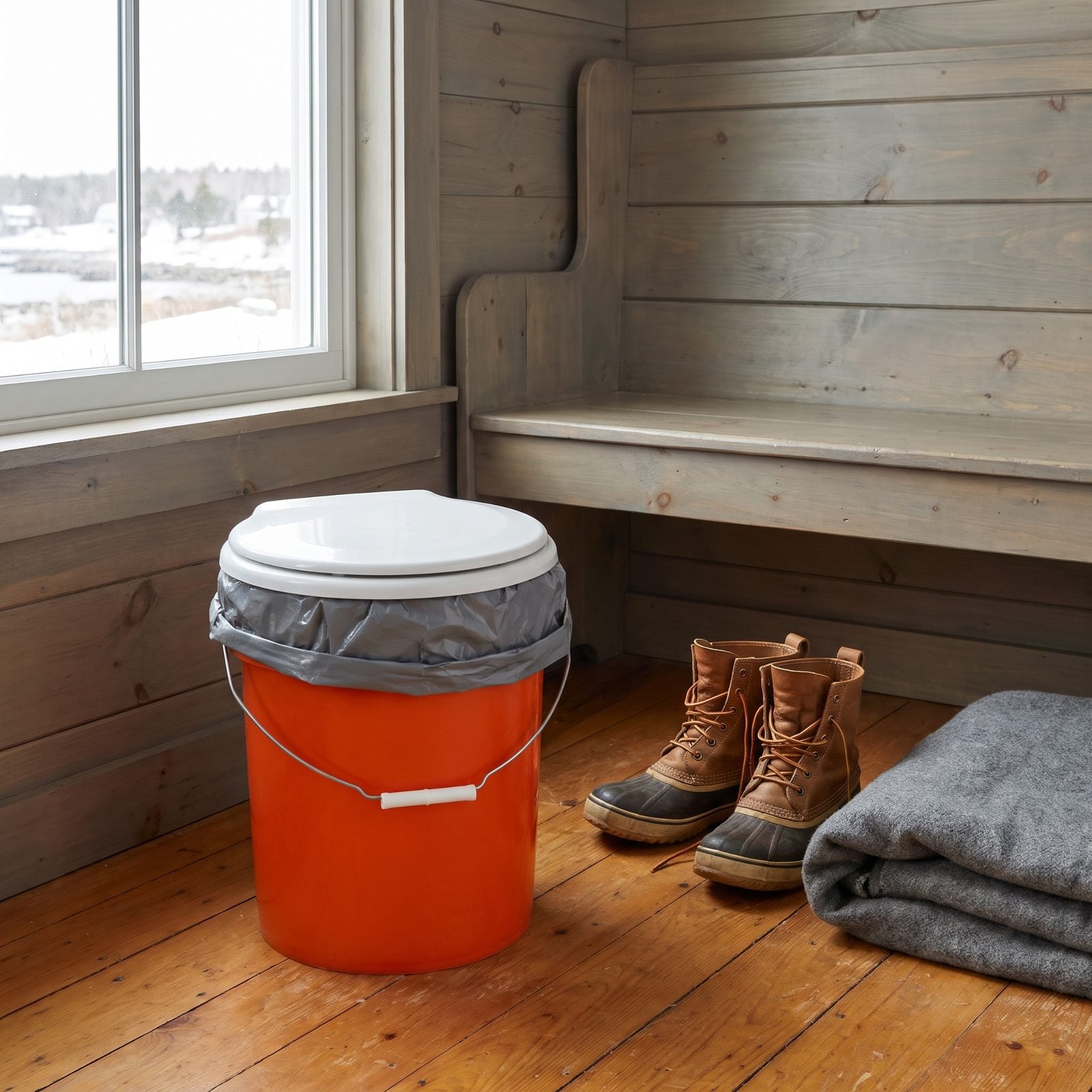
When the overnight temperature drops way below zero and the outhouse is forty yards through drifts, nobody’s making that walk in the dead of night. A snap-on seat turns an ordinary five-gallon bucket into an indoor backup, parked discreetly in the mudroom where you want it.
The seat clips on and off in a second, so the bucket still hauls water or wood the rest of the day. Line it with a heavy contractor bag, add a little lime or sawdust, and swap the bag out when the weather lets you reach the privy.
A ten-dollar part that spares somebody a frostbitten trip at the worst possible hour. That’s a good trade.
6. Unscented Baby Wipes Kept in an Insulated Pouch
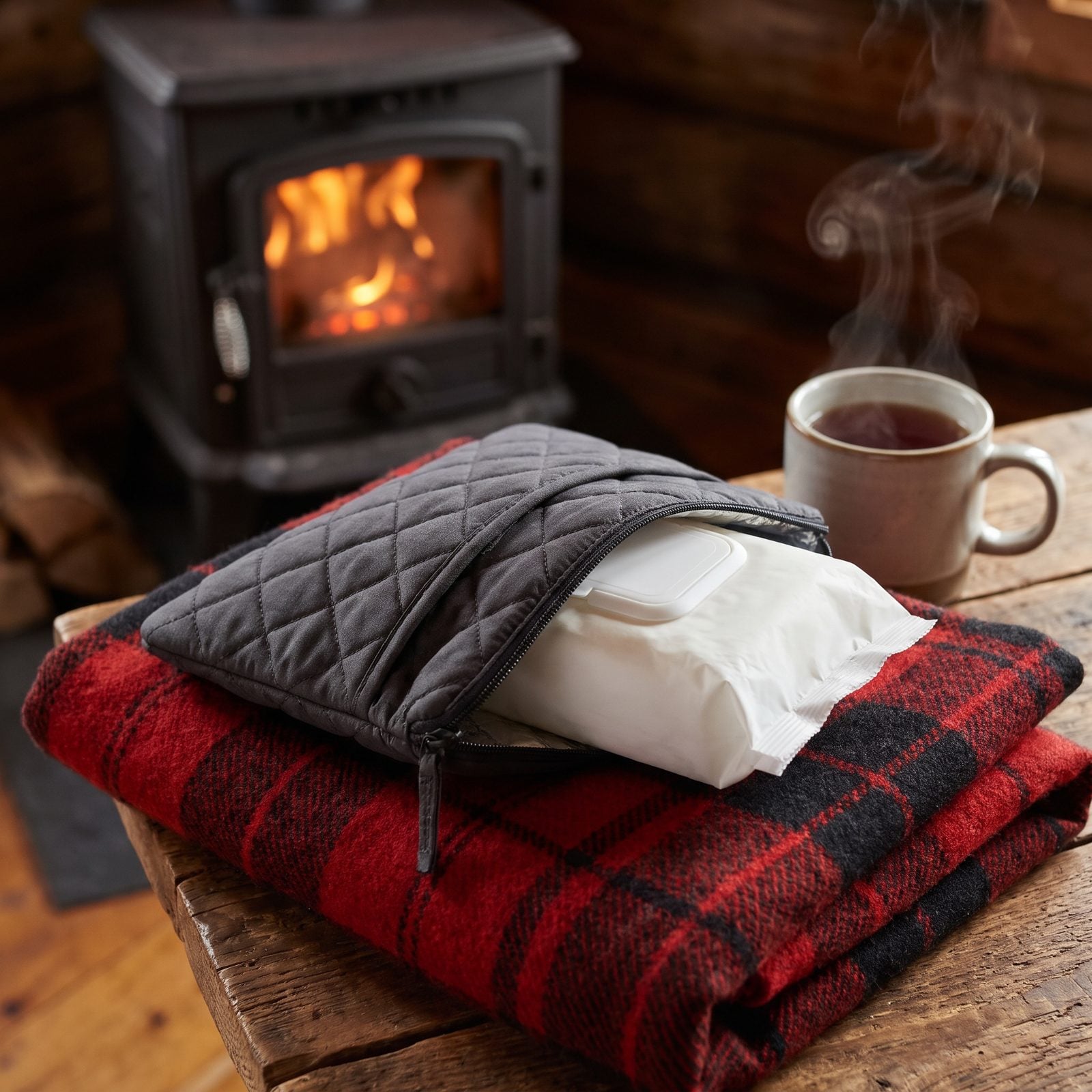
No running water at most remote cabins, and heating a basin to wash up every single time gets old fast. A pack of unscented baby wipes carries the week for quick cleanups, cold-weather hygiene, and the inevitable spilled gravy on Christmas Eve.
The part people miss: wipes left in an unheated cabin freeze into a solid brick, and a half-frozen wipe is useless and miserable. Keep the pack in a small insulated pouch near the stove, or tucked in your sleeping bag overnight.
Unscented matters more than you’d think in a tight space. A whole cabin reeking of fake lavender by day three is its own problem.
5. Chemical Hand Warmer for the Camera-Battery Case
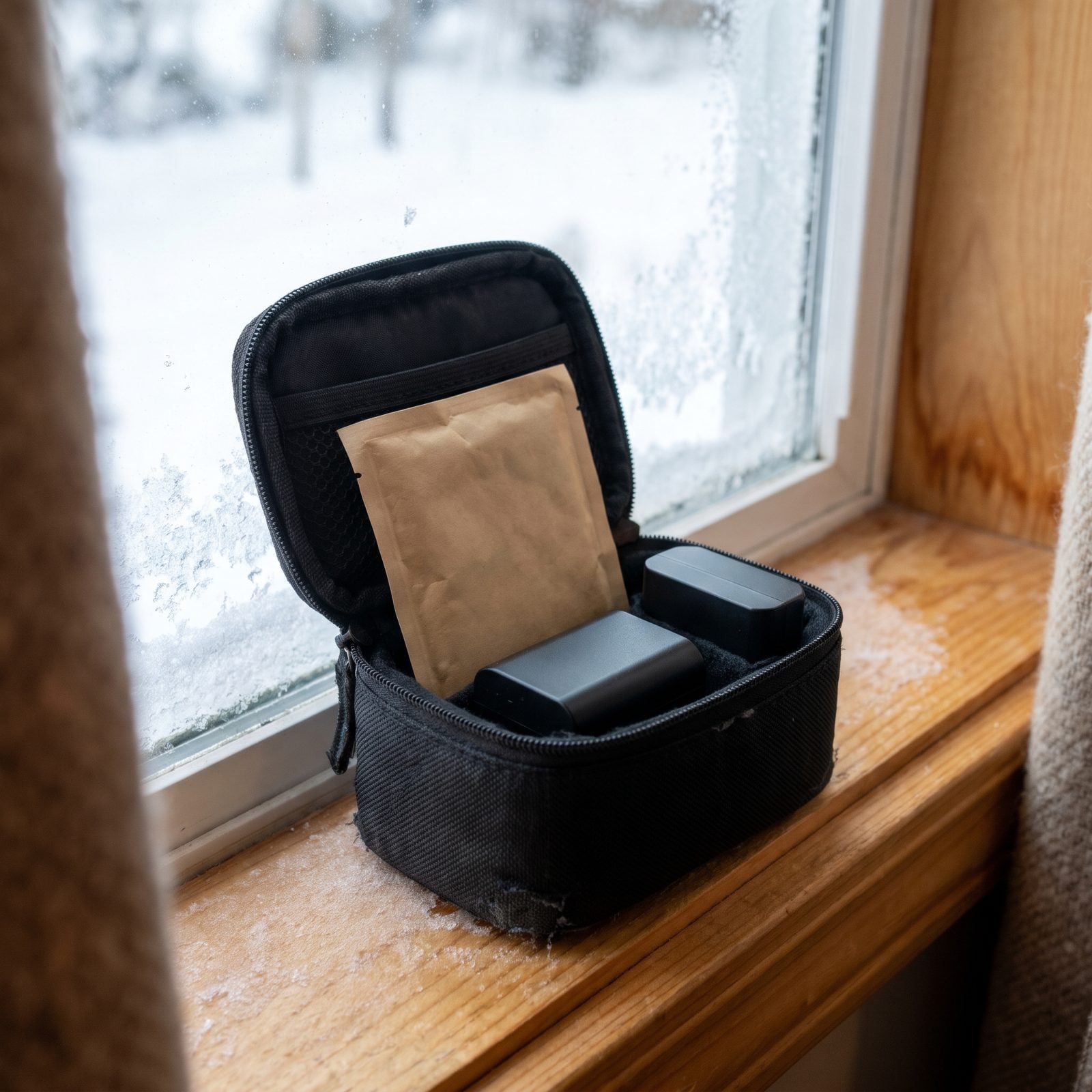
Cold murders camera batteries. You head out to shoot the frozen lake at first light, the meter reads full, and twenty minutes later the thing dies on you mid-frame. The charge isn’t gone — the cold just locked it up.
Drop an activated chemical hand warmer in with your spare batteries, in a padded case or a jacket pocket. Kept warm, the batteries hold their charge and come back to life once they thaw. Same trick saves a phone, a GPS, anything running a lithium cell.
4. Dental Floss for Clean Cinnamon Rolls and Quiet Repairs
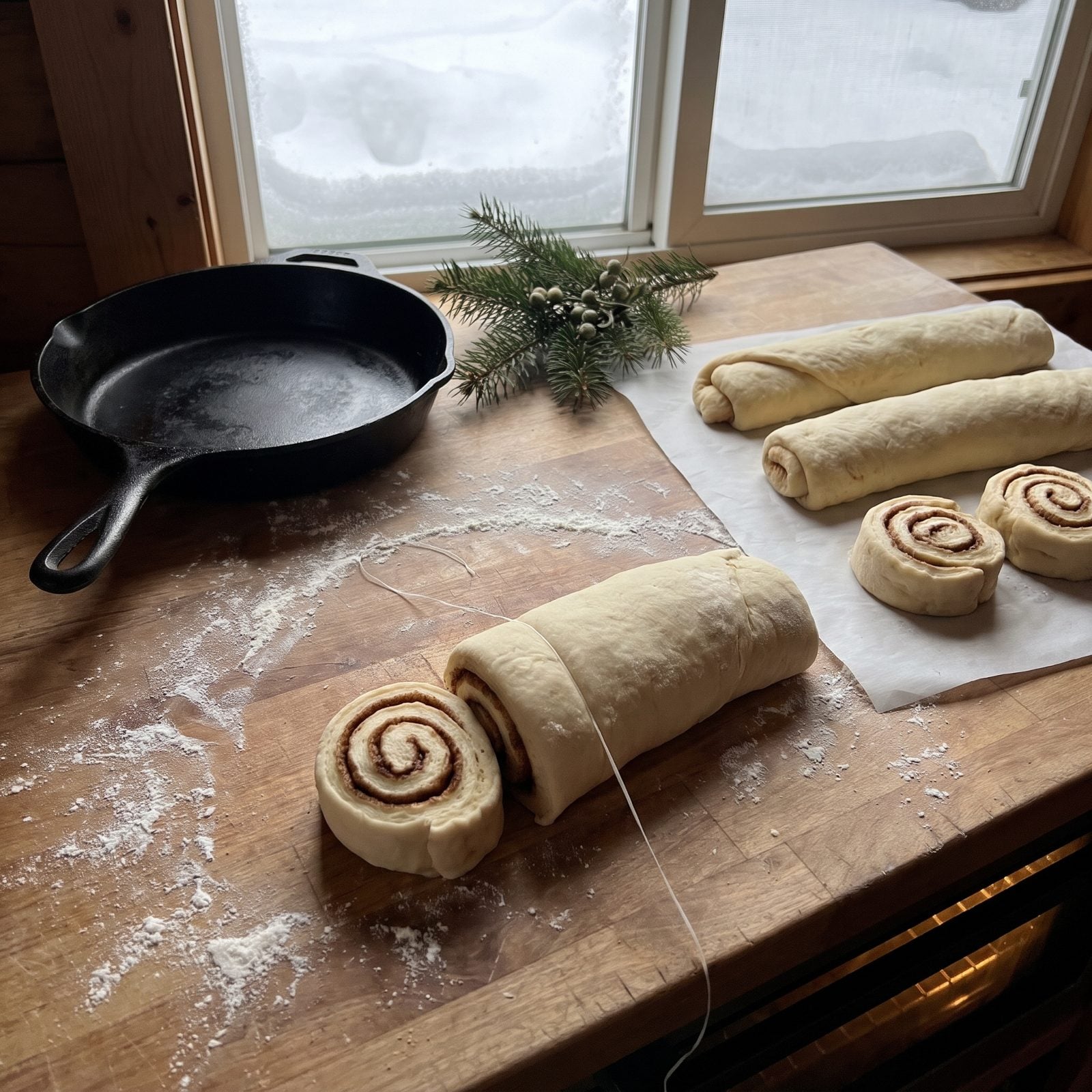
The sharpest knife in the drawer will still smash a cinnamon roll flat. You press down, the soft dough squishes, and that pretty spiral turns into a lopsided lump. A single strand of plain floss, held in one hand and drawn straight across the dough? Clean cut every time, no squash.
It earns its keep the rest of the week too. Floss doubles as emergency thread for a torn pack strap, lashing for a busted bootlace eyelet, or a line to hang a thermometer from the eave. Stronger than it looks, weighs nothing.
Get the unflavored kind. Minty floss on a cinnamon roll is a mistake you make exactly once.
3. A Turkey Baster for Draining Water From Tight Plumbing Spaces
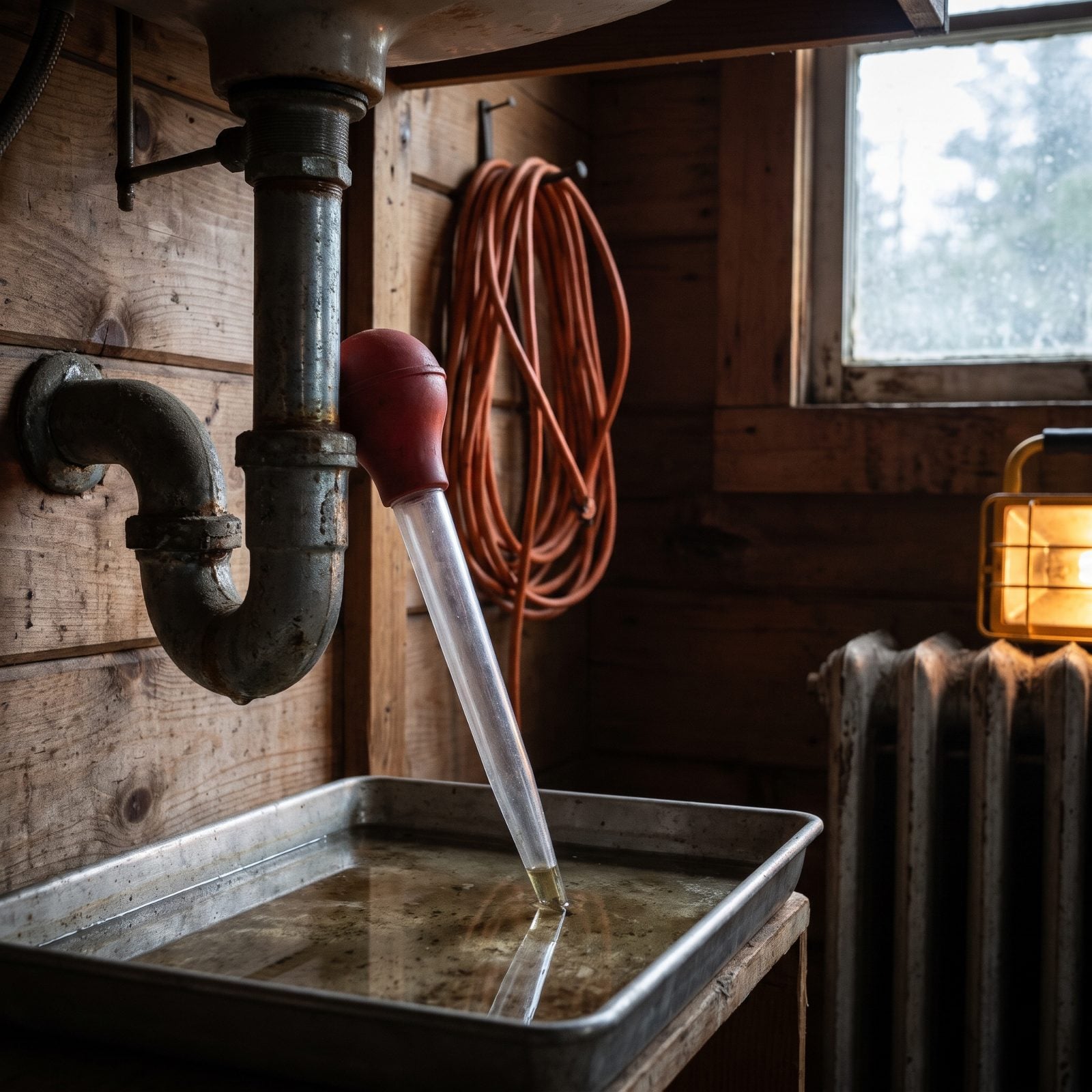
Shut off a valve to work on a line and there’s always water trapped somewhere you can’t tilt anything to pour out. The bend in a trap. The bottom of a filter housing. That last half-cup that drips down your wrist the second you loosen the fitting.
A baster sucks it right out. No contortions, no towel jammed in a corner, no puddle on the floor you’ll step in twice before you remember it’s there.
Keep one with the tools, separate from the kitchen one. You really don’t want to find out later which one spent an afternoon down a drain line.
2. Epoxy Putty to Stop a Pinholing Pipe Until Morning
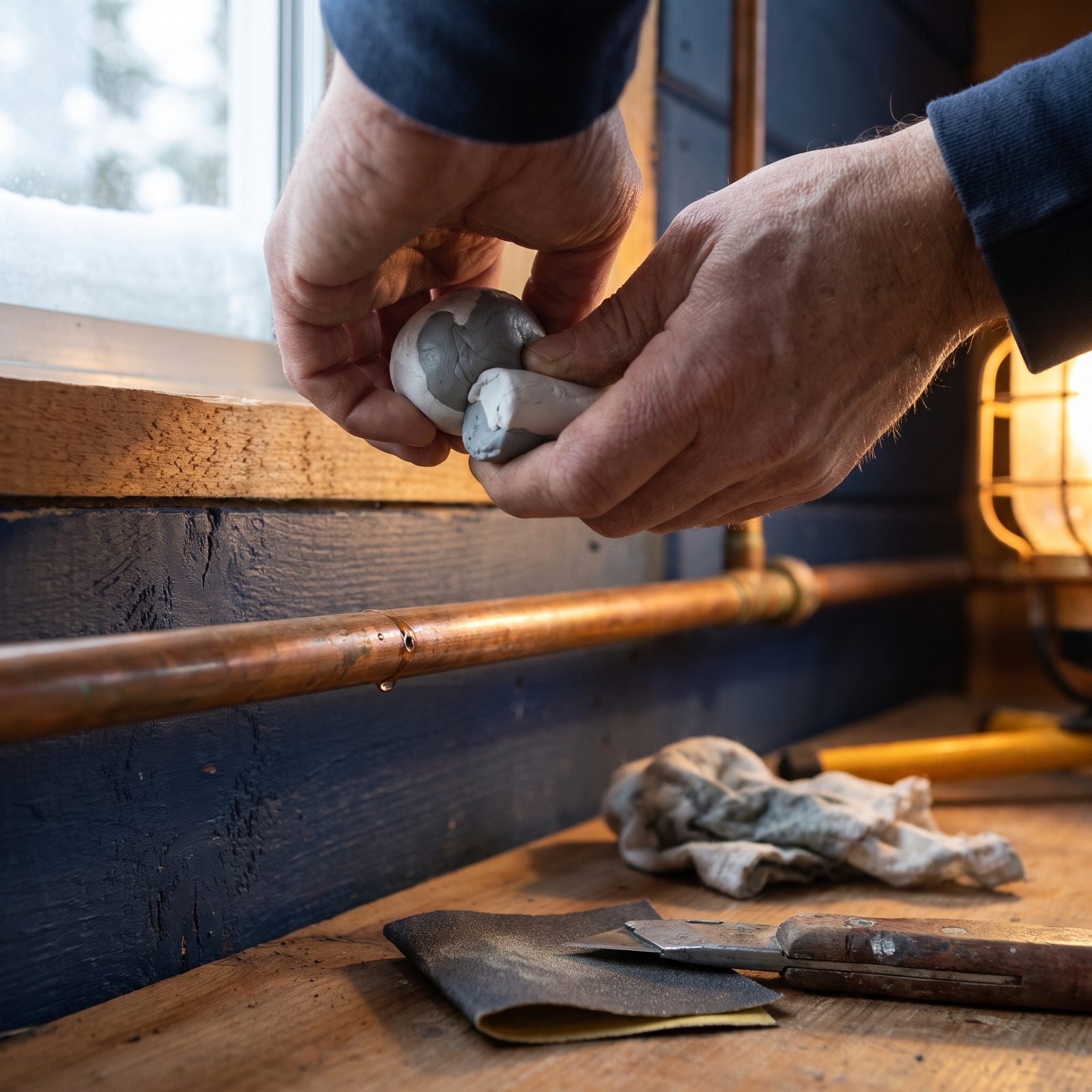
A pinhole leak in an old copper line is the plumbing version of a flat tire at midnight. The plumber is forty minutes of unplowed road away, it’s Christmas week, and nobody’s coming today.
Two-part epoxy putty buys you until morning. Knead the two colors together until it’s one even grey, press it firmly over the dried pinhole, and give it the cure time printed on the package. It hardens like rock and holds low-pressure water.
It is not a permanent fix. Anyone who tells you otherwise is wrong, and you’ll regret believing them. It’s a plug that gets you through the night so you can turn the water back on, make coffee, and call someone who owns a torch.
1. A Pizza Cutter Claimed Permanently for Wrapping Paper
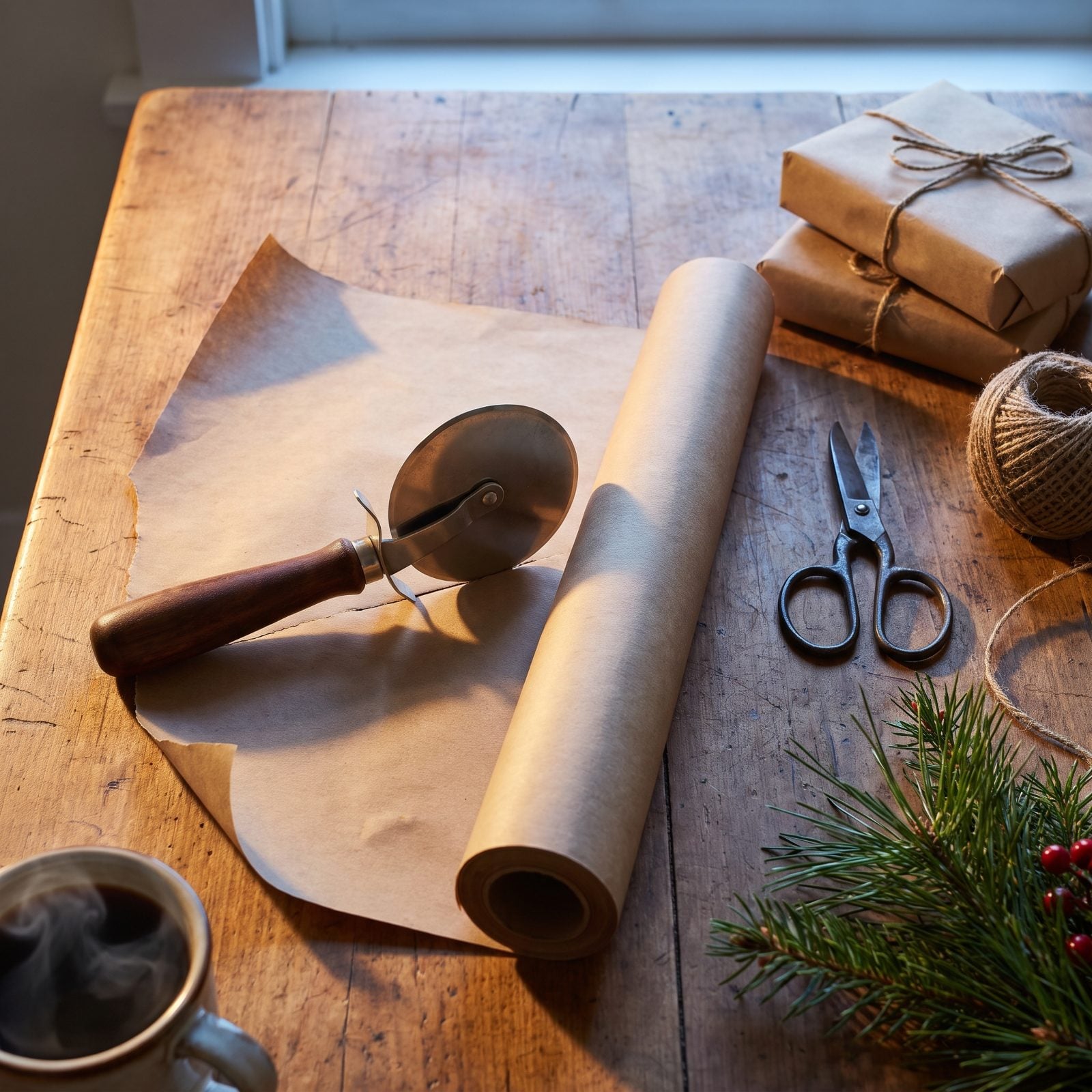
Scissors wander. A straight cut across wrapping paper always ends up looking like a heartbeat monitor.
Run a pizza cutter down a ruler or the edge of the table instead and you get a dead straight line in one smooth pass, no jagged edge to fold under and hide. It glides through kraft paper, cardstock, even a stack of a few sheets at once.
Here’s the catch: retire one from kitchen duty entirely. Mark it, keep it in the wrapping kit, and never let it near a pizza again. Grease and ink don’t belong on the same wheel, and you’ll always want to wrap something the week nobody can get to a store.