
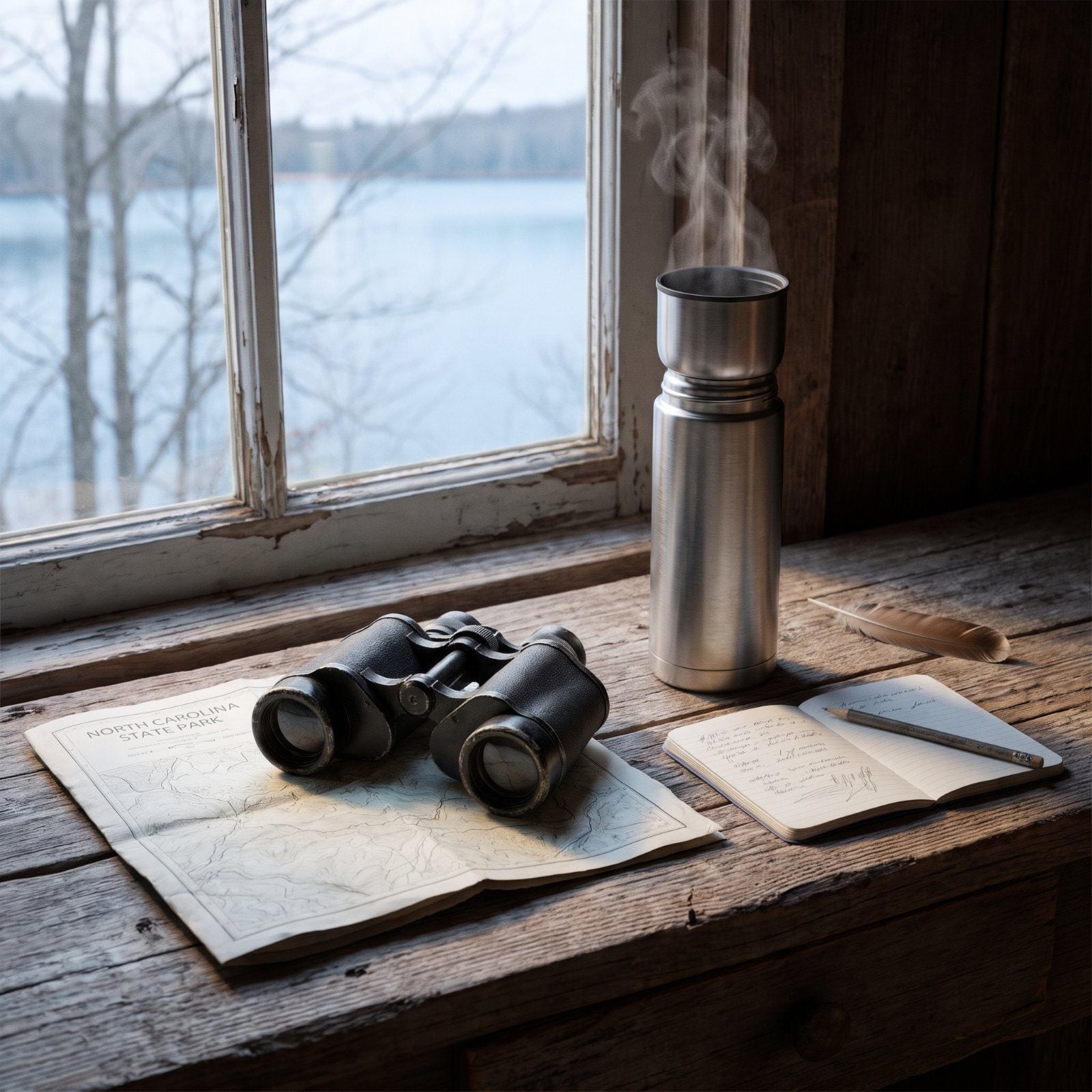
A bald eagle pulling a fish off cold water is the kind of thing you remember for years. North Carolina went from no successful eagle nests after 1973 to birds you can find on a quiet morning across the state, from Piedmont reservoirs to brackish coastal marshes. Winter is the window. Northern eagles push down to join the locals, and bare trees mean you can actually see them before the leaves hide everything. The parks below are real, mapped, and worth the early alarm. Bring binoculars, keep your distance, and get there at first light.
Please note that some of the images in this article were created with the assistance of AI.
14. Jordan Lake: The State’s Eagle Headquarters
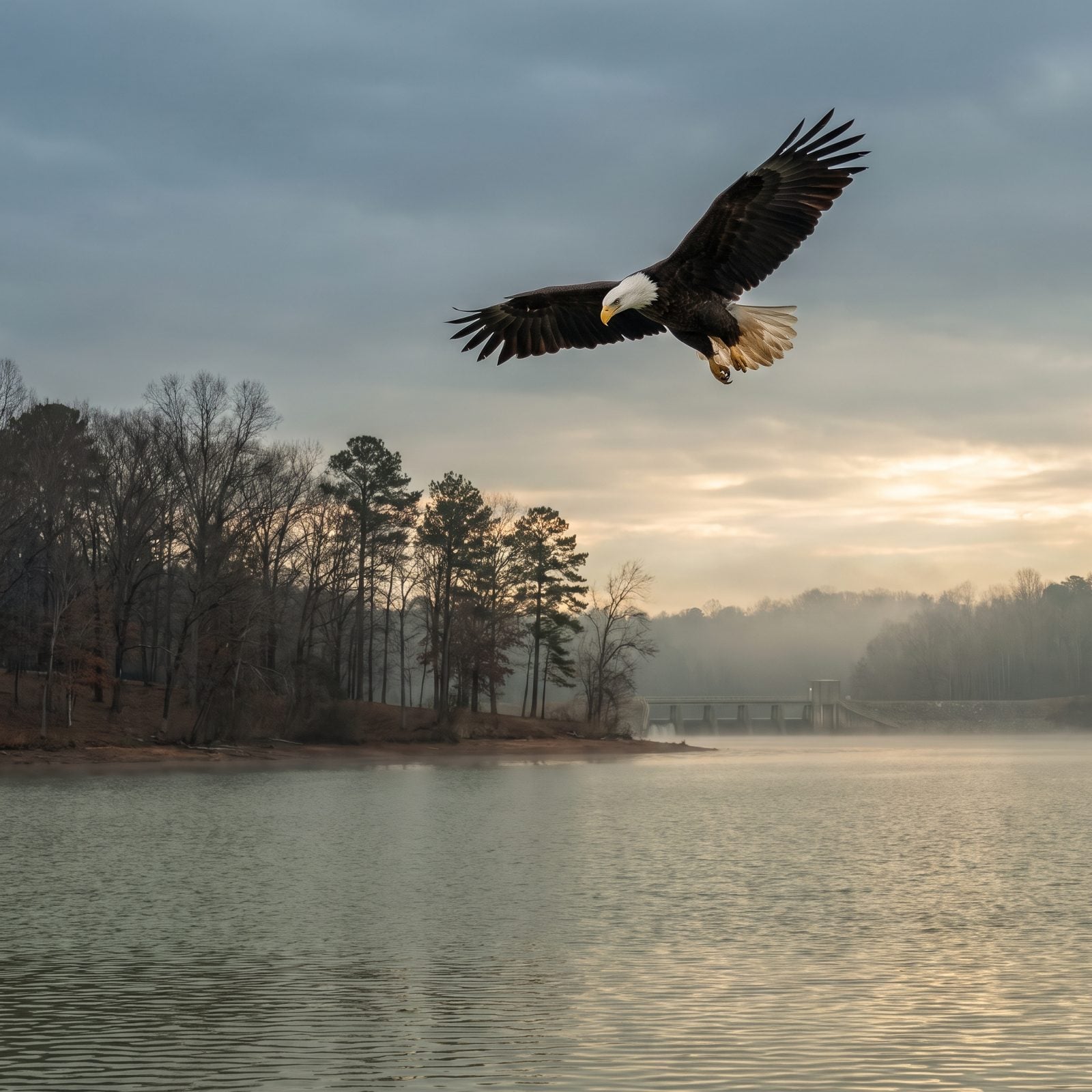
If you only pick one spot, make it Jordan Lake. NC State Parks counts a good number of nesting pairs here in winter, and a park ranger told WALTER Magazine the cold-season population runs north of 60 birds. For the Piedmont, that’s a serious concentration.
Two shoreline spots do the work. The New Hope Overlook on W.H. Jones Road rewards early mornings and evenings. The Ebenezer Church access at Shelter 1 off Beaver Creek Road is wheelchair accessible and gives you open water to scan.
The real show is below the B. Everett Jordan Dam on Jordan Dam Road, where eagles fish the Haw River tailrace through the winter. Walk the Jordan Dam Loop and stand quiet at the top of the dam. Lake on one side, river below, birds working both.
In a magazine feature, a state recreation area ranger estimates that Jordan Lake’s winter eagle population is more than 60 birds and that the lake now holds over 25 eagle nests.
13. Falls Lake: Eagles Year-Round With a Winter Bump
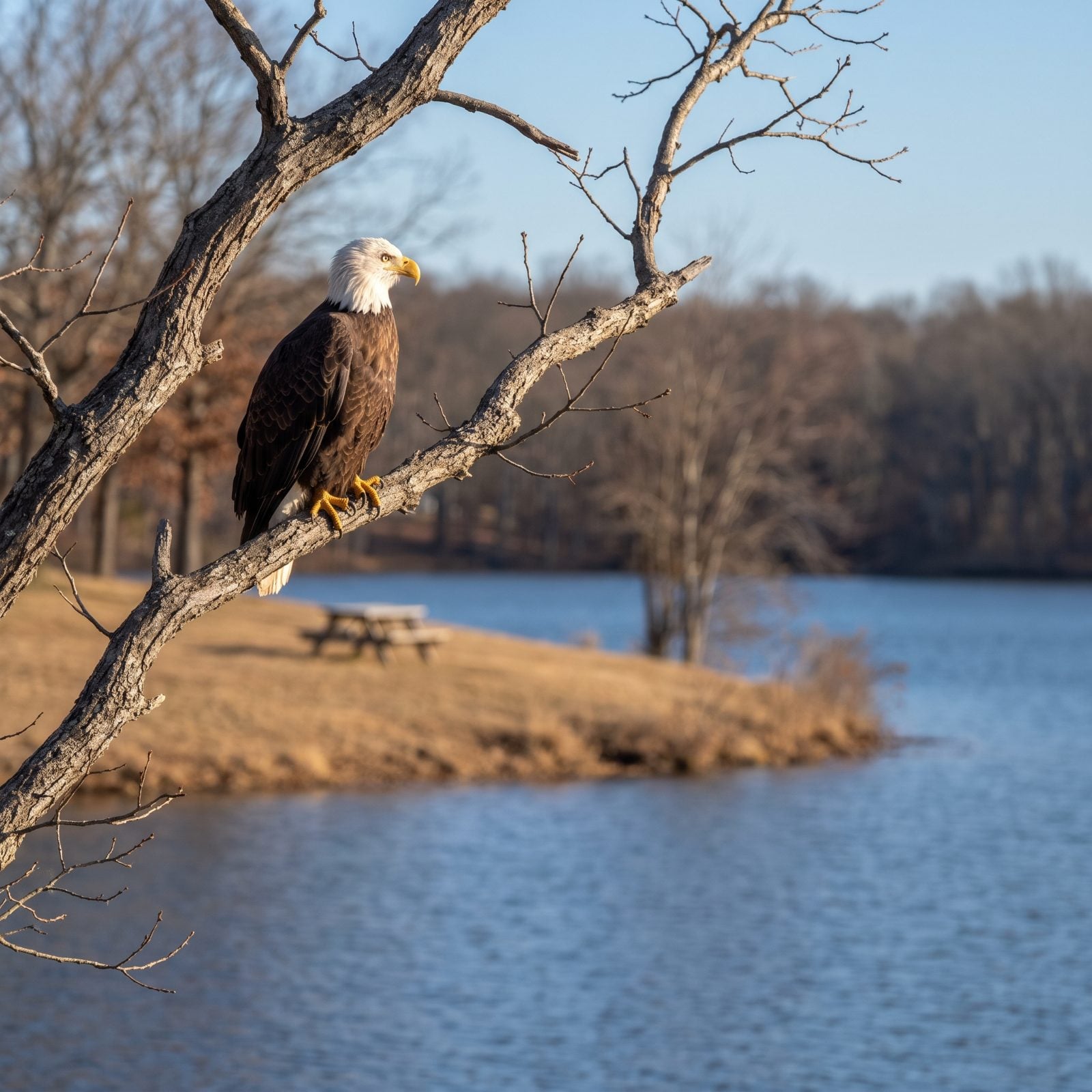
A resident group of bald eagles lives at Falls Lake all year, and winter brings more passing through. The move here is simple and a little low-tech. Head to the Rolling View access on Baptist Road in Durham, then find the single picnic table on the hill just past the boat-ramp parking. Set up there in the morning or late afternoon and glass the water.
The pier behind the visitor center on Creedmoor Road in Wake Forest opens up good lake views too. Skip one thing in the cold months: the Sandling Beach access, with its wildlife viewing platform, is open only April 1 through October 1, so it’s shut exactly when the eagles are easiest to spot. Plan around it.
12. Lake Mattamuskeet: Eagles Over the Largest Natural Lake in the State
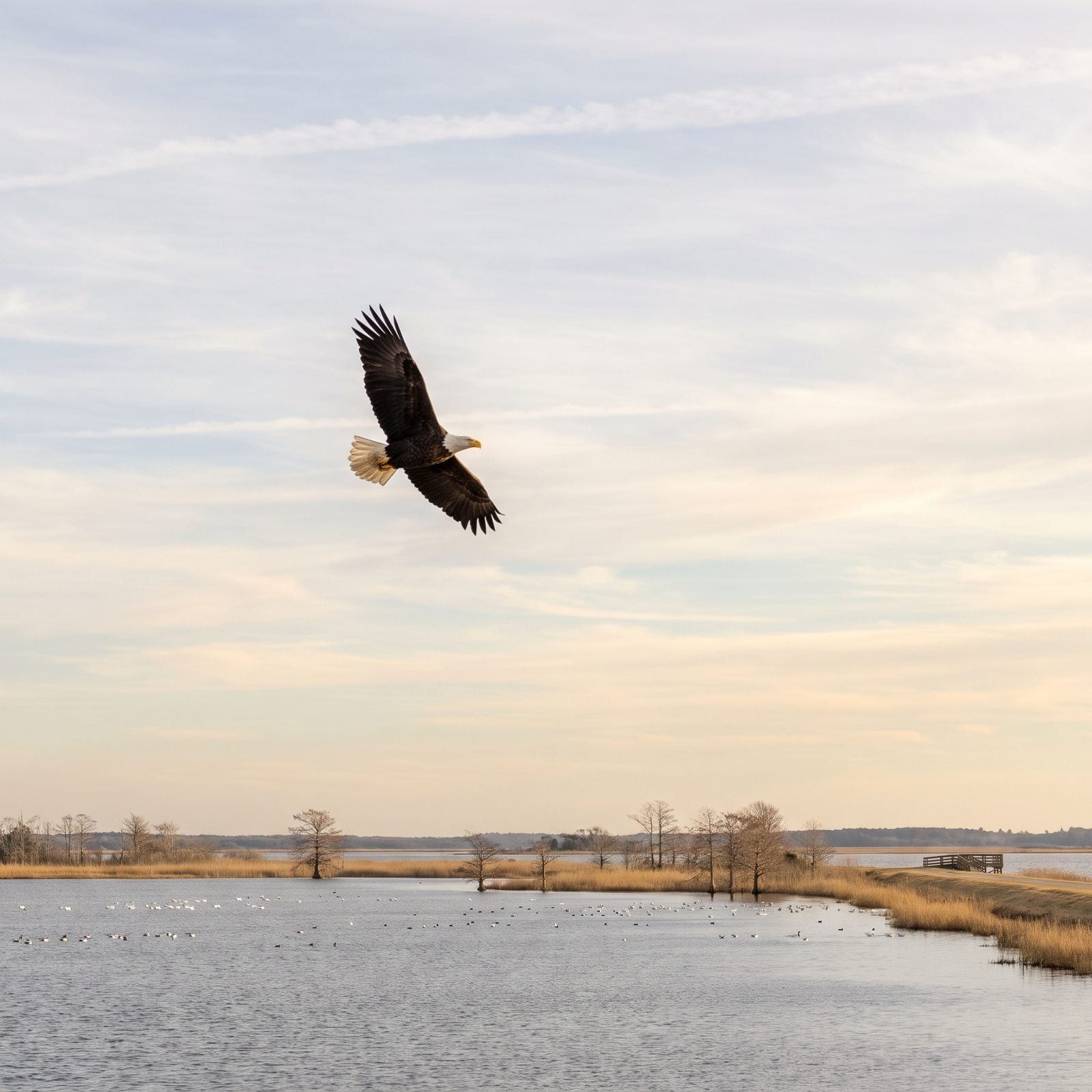
This is the big-sky option. Mattamuskeet National Wildlife Refuge near Swan Quarter protects Lake Mattamuskeet, the largest natural lake in North Carolina, and the bald eagle sits right on the U.S. Fish & Wildlife bird-of-prey list here.
The Highway 94 causeway crossing the lake is the easiest win, with an observation deck built for exactly this. Eagles also turn up along the Entrance Road and Wildlife Drive, sharing the view with swans, snow geese and pintails. Our State calls the refuge a prime wintering ground on the Atlantic Flyway and points birders to the Photo Blind Trail.
There’s history in the water here too. A nest near the lake fledged two eaglets in 1984 — North Carolina’s first successful eagle nesting since 1973. It marked the start of the state’s eagle comeback.
11. Goose Creek: Cypress Swamps and the Pamlico Shoreline
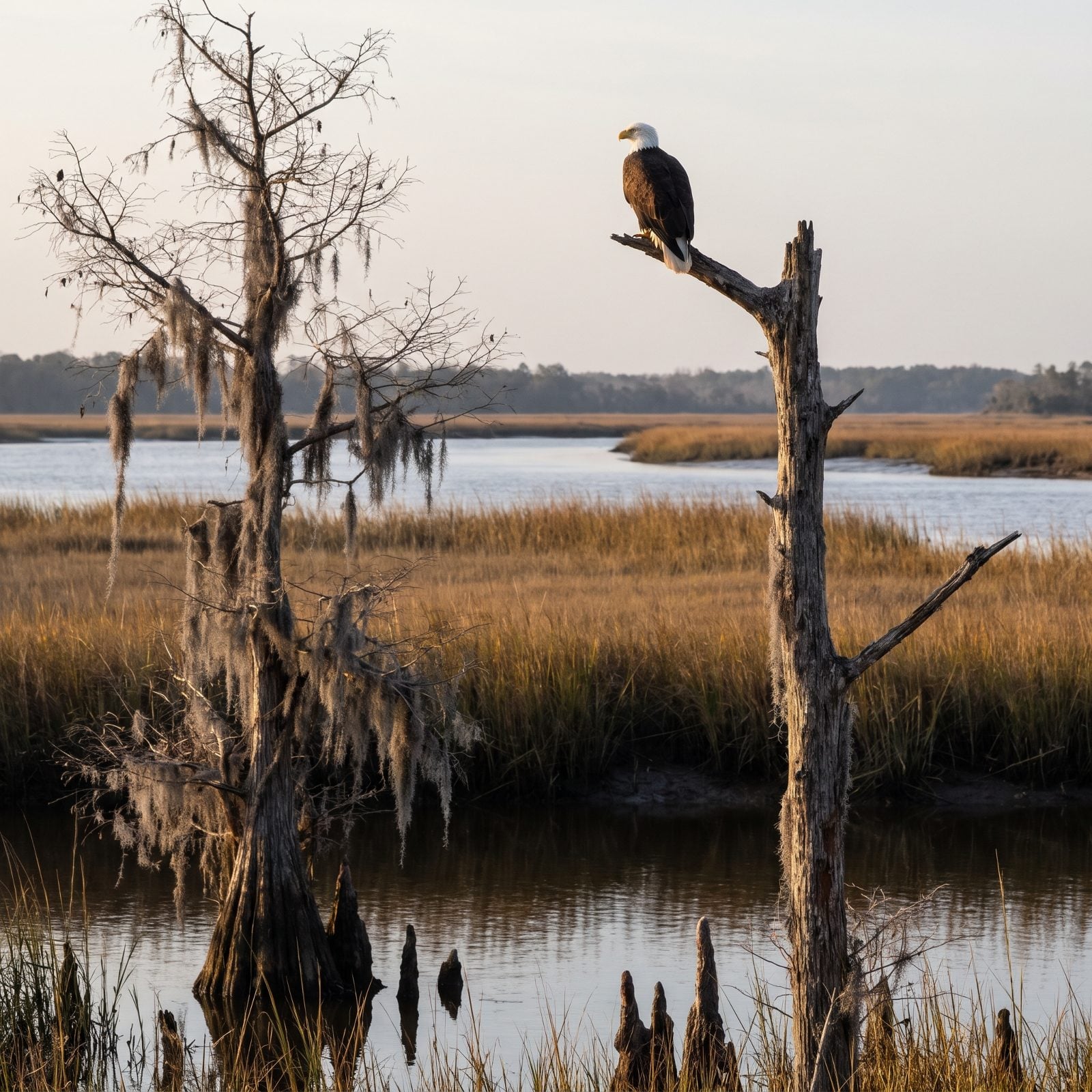
Goose Creek State Park near Washington leans into the kind of ground eagles love: brackish marshes, cypress swamps, and the open Pamlico River shoreline. Plenty of water to fish, plenty of tall trees to perch and nest. The park flatly says winter is the best time to look, because migrants from the north stack on top of the resident birds.
Four trails give you the best odds — the Flatty Creek Trail, the pier off the Mallard Creek Trail, the western stretch of the Goose Creek Trail, and the Ivey Gut Loop. Walk quiet and scan the tallest snags along the water.
10. Raven Rock: Eagles Hunting the Cape Fear River
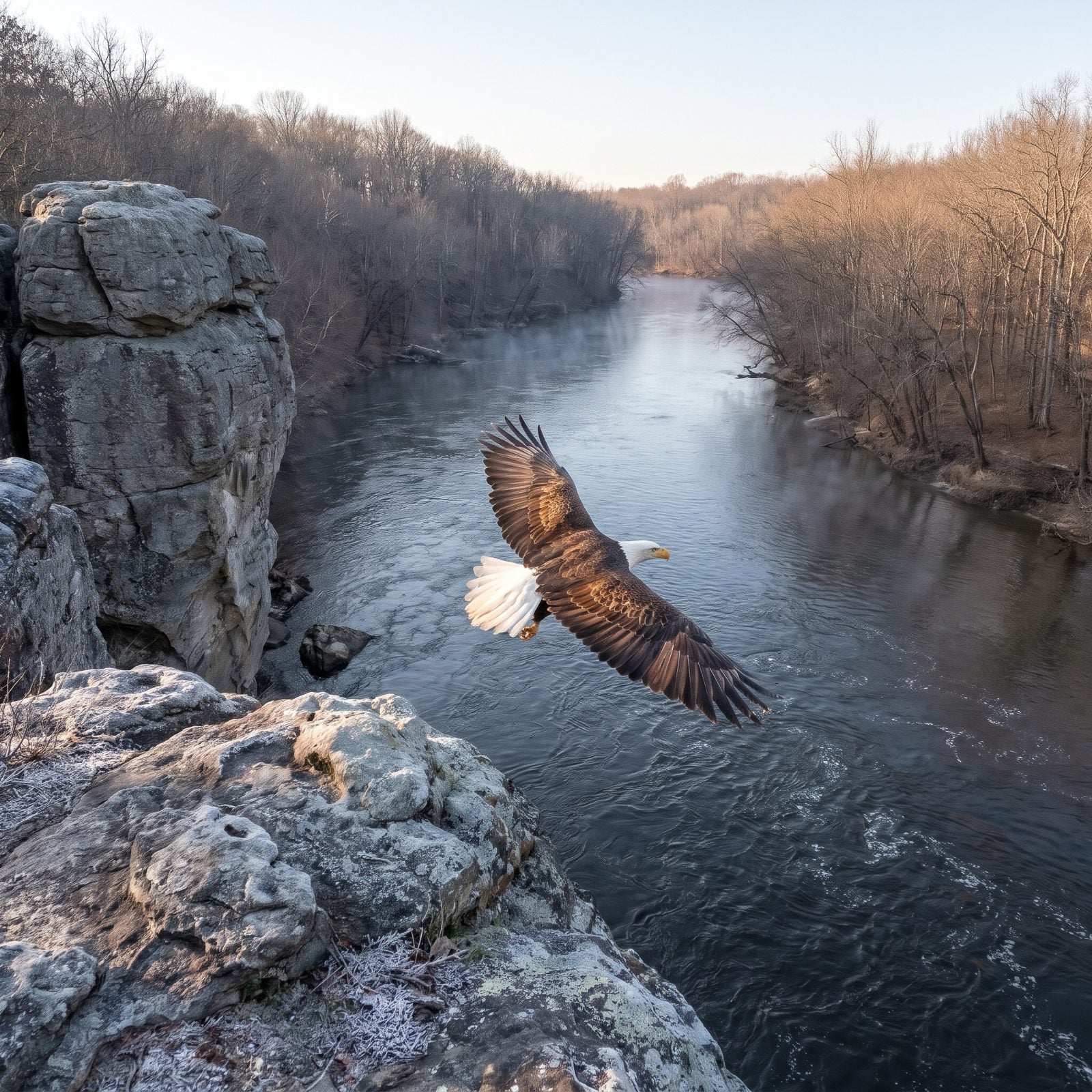
Raven Rock State Park near Lillington puts you above the action. In winter, eagles fly low along the Cape Fear River to hunt fish, pair off and scout nesting trees, and the park names the overlook on the Raven Rock Loop Trail as the best seat in the house.
You earn this one with your legs. But the payoff is watching a bird work a river bend from above instead of squinting at some distant perch across a lake.
9. Fort Macon: Eagles at Beaufort Inlet
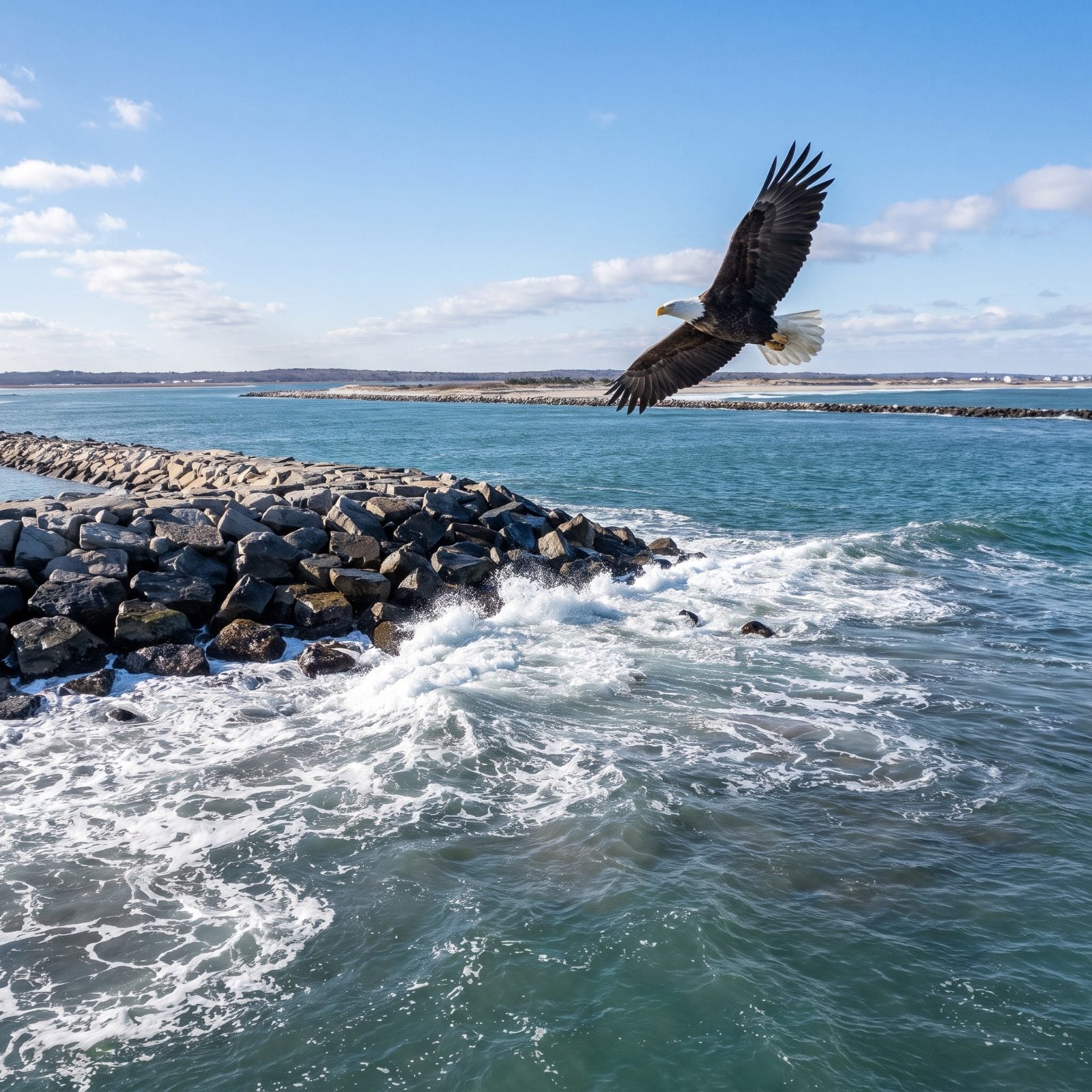
Eagles can show up at Fort Macon State Park on Atlantic Beach any time of year, but the park calls winter the best window. Beaufort Inlet is the prime birding spot, eagles included, where moving tidal water keeps the fishing good.
Here’s the bonus. While you’re watching for eagles along the jetties, winter puts rare visitors in play too, including purple sandpipers and the occasional common eider. You go for one bird and end up with a notebook full.
8. Carolina Beach: Eagles on the Lower Cape Fear
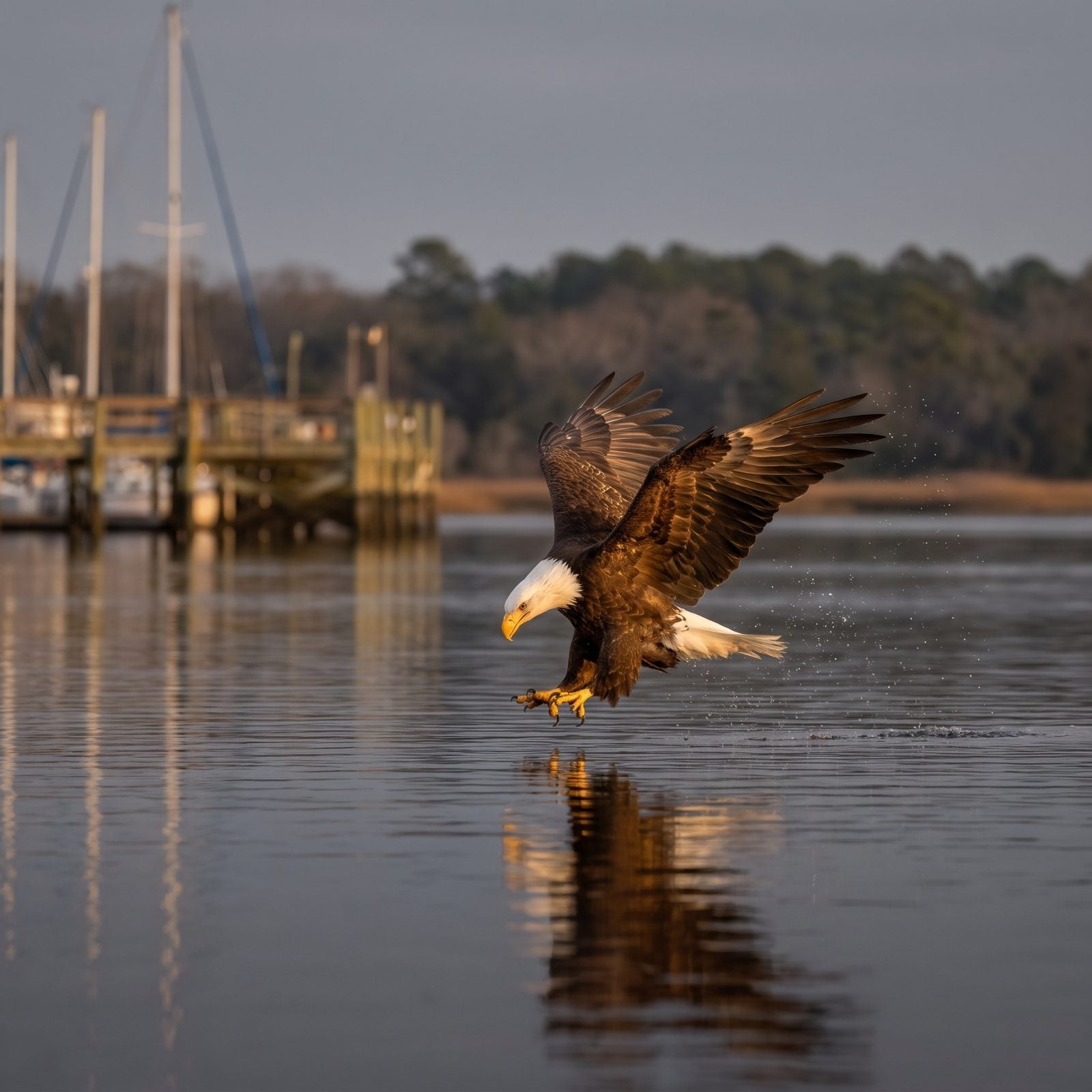
Carolina Beach State Park has logged a long bird list — well over two hundred species — and your best shot at a bald eagle lands in fall and winter. Point yourself at the Cape Fear River from the marina or the nearby fishing deck and watch for birds dropping to the surface after fish.
Easy, flat, low-effort. Which makes it a good call if you’re bringing someone who doesn’t love a long hike before sunrise.
7. Lake James: Foothill Eagles Over the Catawba
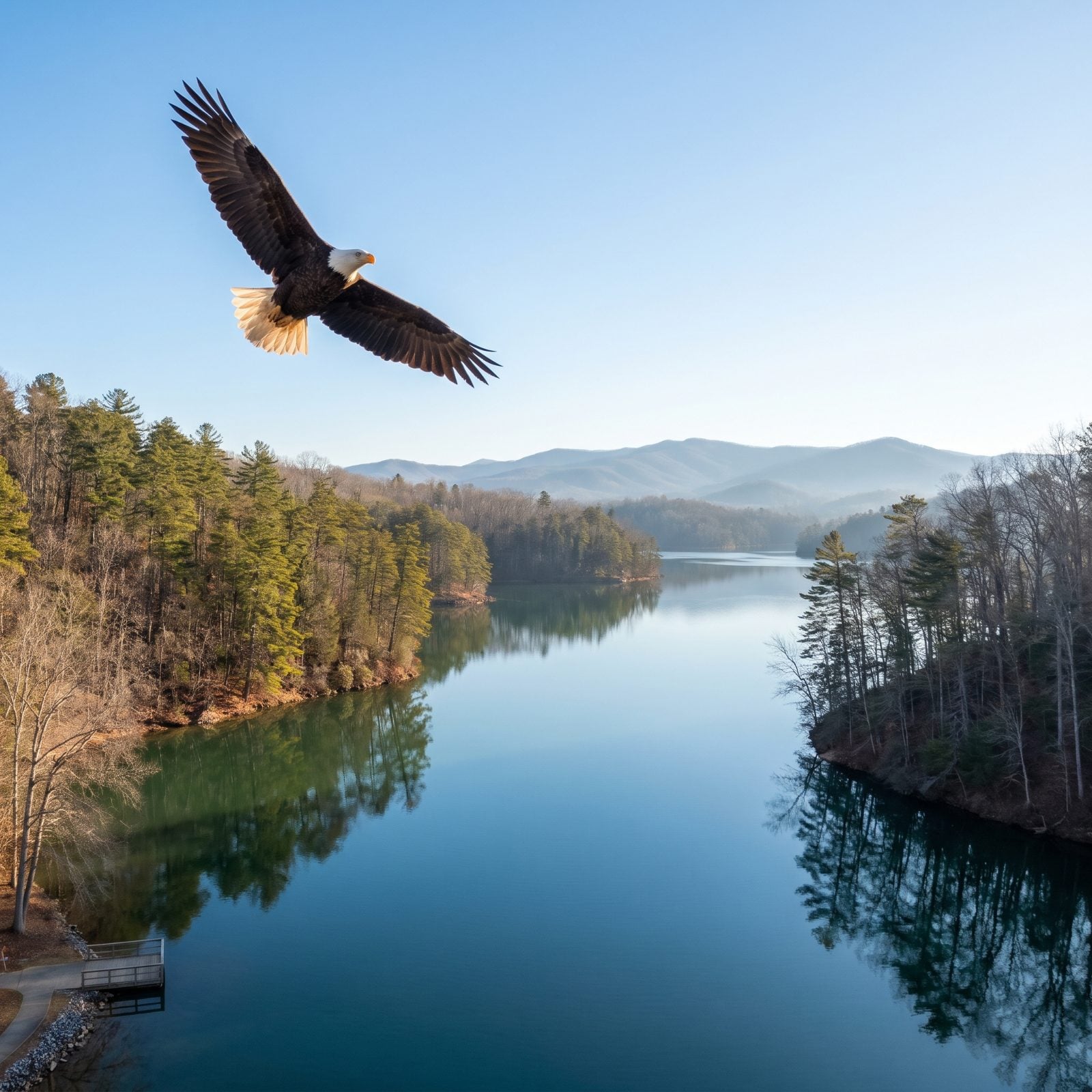
Lake James State Park near Nebo gives you eagles with a mountain backdrop. Birds are often seen soaring over the Catawba River access, where mature trees make good nesting sites, and the park describes them defending territory, pairing off and building nests through the cold months.
Two overlook trails deliver: the ends of the Lake Channel Overlook and Sandy Cliff Overlook trails. If stairs and rough ground aren’t for you, there’s a wheelchair-accessible pier at the end of the paved path past the restrooms. Few spots let you watch an eagle with the Blue Ridge foothills stacked up behind it.
In a utility company feature, one environmental scientist on an aerial survey checks a bald eagle nest near Lake James from a helicopter hovering 500 feet above it.
6. Morrow Mountain: Eagles Below the Yadkin-Pee Dee Dams
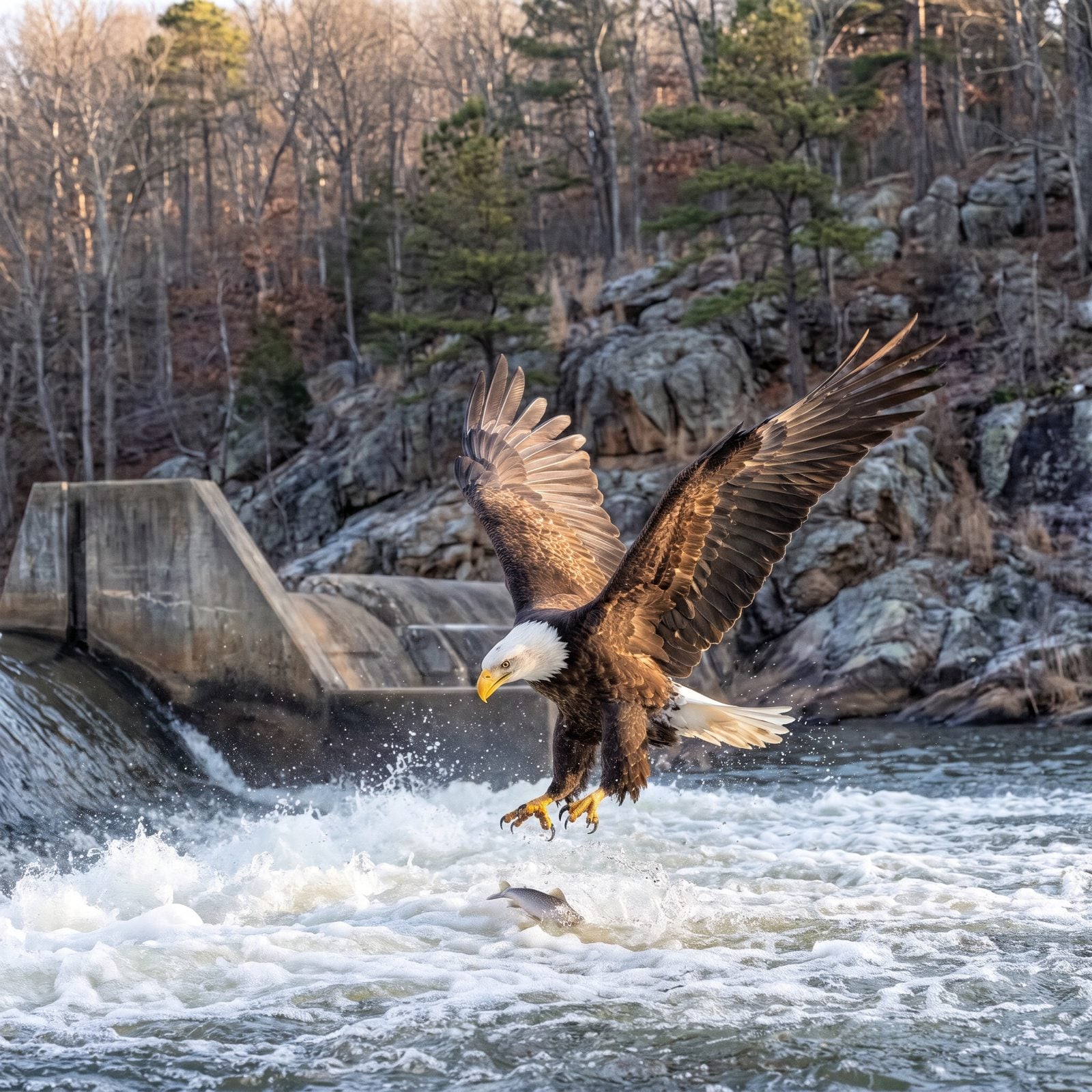
Morrow Mountain State Park near Albemarle sits in the old, worn Uwharrie hills, and that rugged ground gives eagles perches and possible nest sites. The fishing pier and boardwalk are the easiest viewing, best in the morning when the birds are most active.
Here’s the detail nobody mentions. Eagles here grab stunned fish from below the dams on the Yadkin-Pee Dee lakes, so the water does the hunting for them. Paddlers can go about a mile upstream from the boathouse to Falls Dam and watch it happen. Worth confirming whether the boathouse rents boats in winter before you count on a paddle.
5. Kerr Lake: Eagles and a Winter Full of Ducks
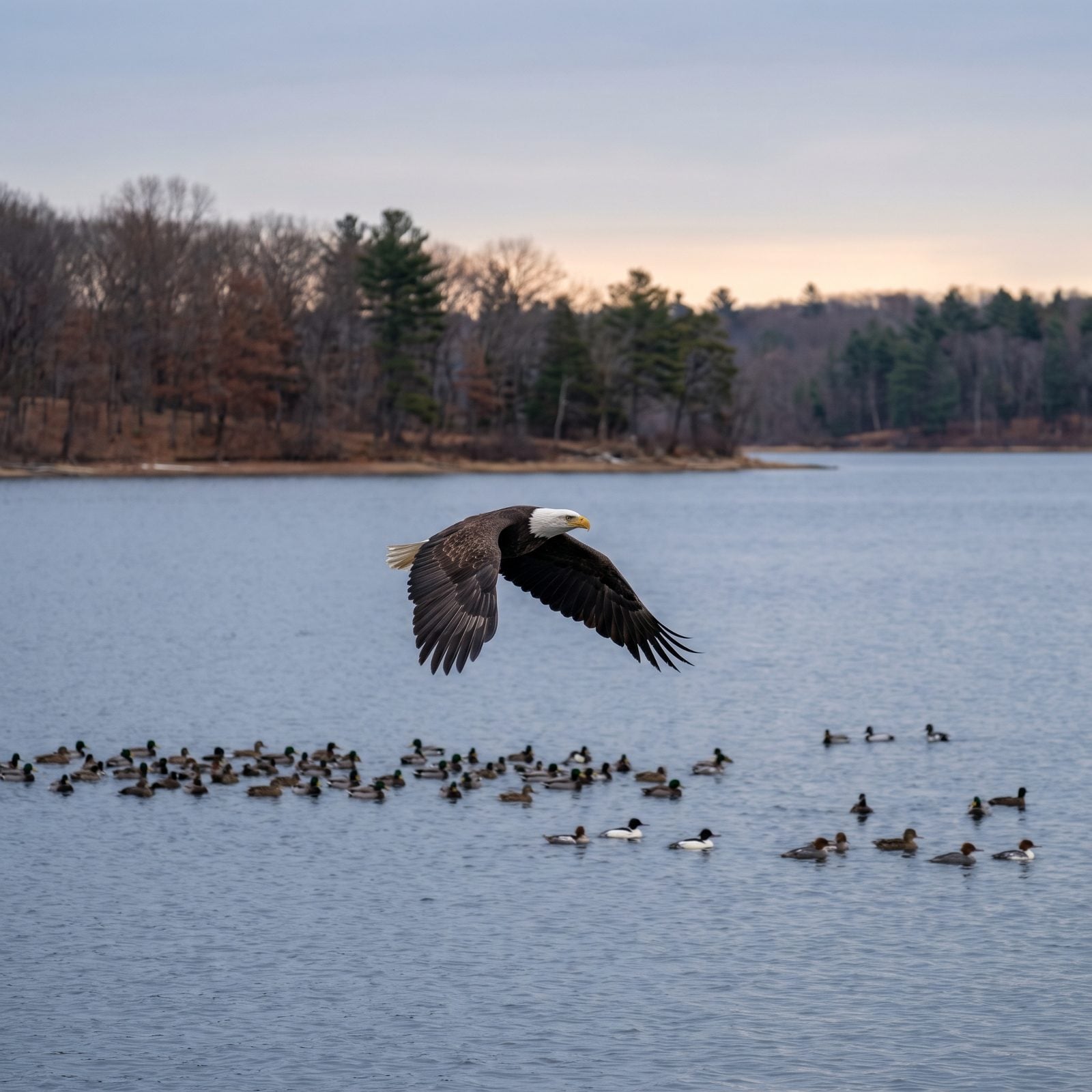
Kerr Lake State Recreation Area near Henderson is the big-water pick. Bald eagles cruise over the lake and scavenge fish from any of the park’s access areas, so you have room to spread out and still find birds.
Winter does something extra here. The lake pulls in large numbers of migrating ducks, mergansers and loons, which means your eagle outing doubles as serious waterfowl watching. Pick an access, set up where you can see open water, and give it time. The birds move on their schedule, not yours.
4. Mayo River State Park, Mayodan: Quiet River Mornings in the Northern Piedmont
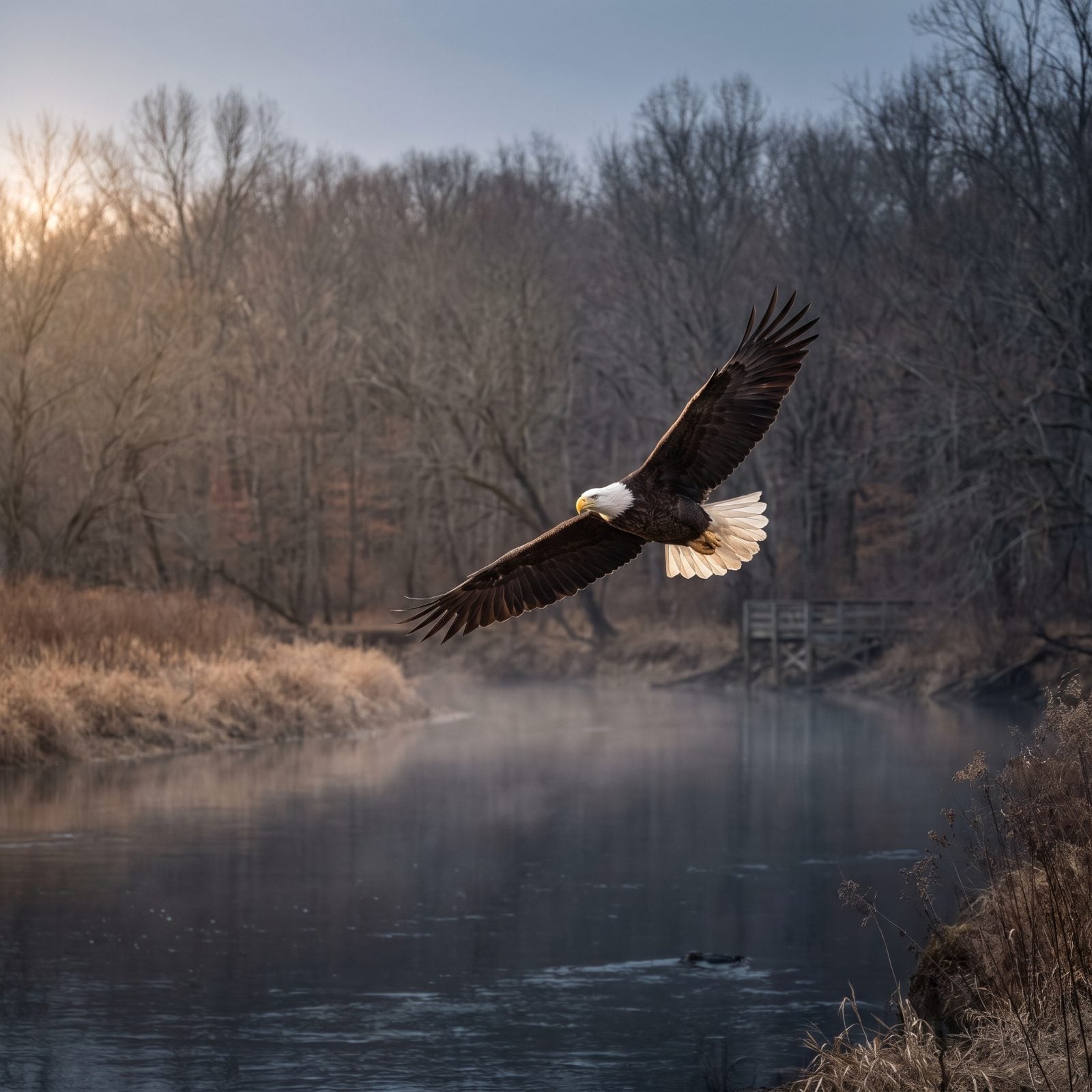
This one rewards the people who show up before the coffee kicks in. Eagles nest near the park, and you’ll most likely catch them working the water from the Mayo River and Riverwalk trails at the DeShazo Mill access, 113 DeShazo Rd in Stoneville.
Early morning or evening, from the river overlooks, when the place is empty and the air hasn’t warmed yet — that’s your window. Bring patience and a thermos.
3. Singletary Lake State Park, Kelly: A Carolina Bay With a Juvenile Problem (The Good Kind)
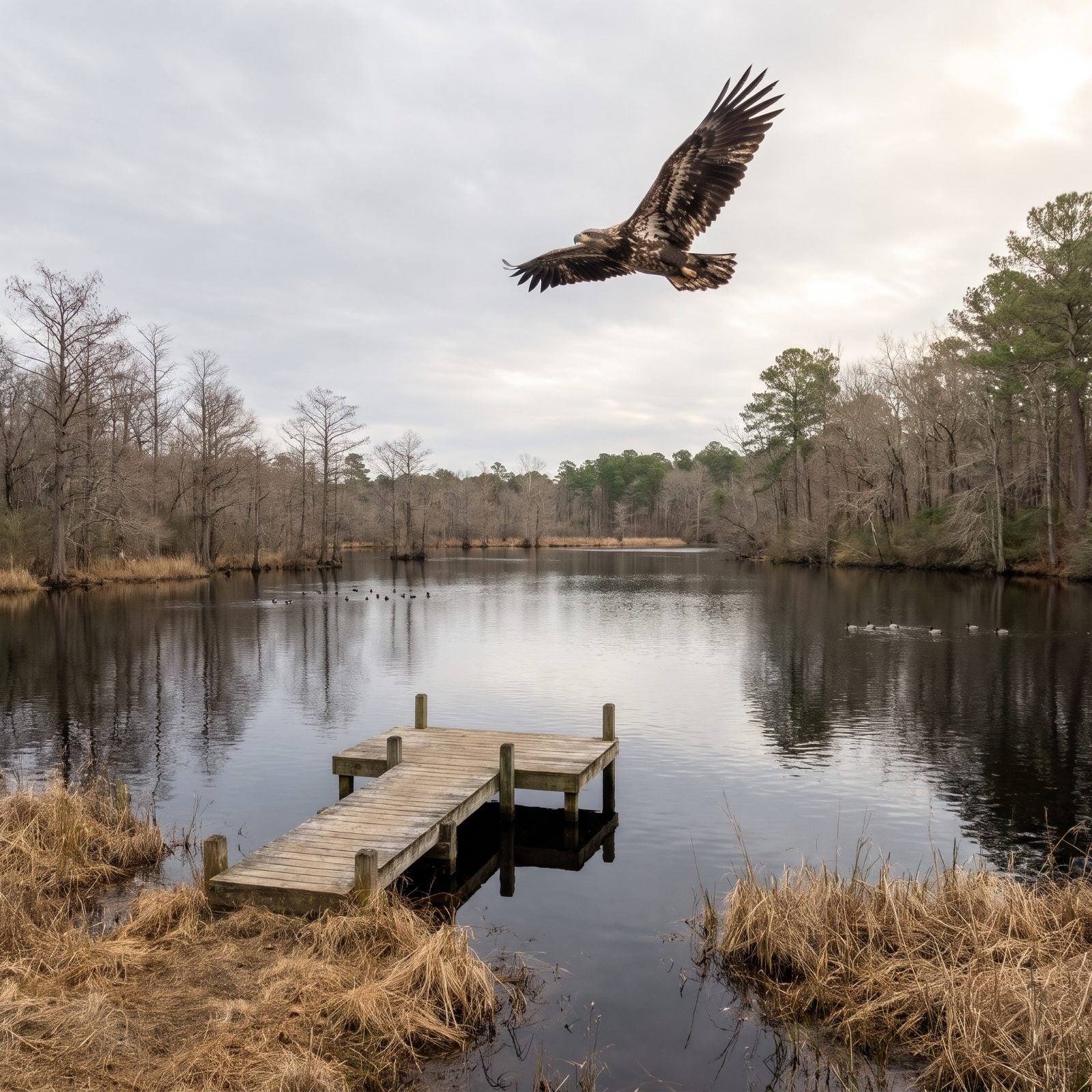
Juvenile eagles have been working the lake lately, and that tells you something — there’s probably a nest nearby. Watch for the mottled brown young birds mixed in alongside the adults.
Your best bets are the pier and the water’s edge along the CCC Loop Trail. A paved, wheelchair-accessible path runs out to the pier from the Educational Building parking area, which makes this one of the easier eagle spots on the list to reach. Morning or late afternoon, when the birds are most active. And winter stacks the lake with migrating ducks, which is honestly half the reason to stand out there anyway.
2. Lake Norman State Park, Troutman: Three Active Nests on the State’s Biggest Reservoir
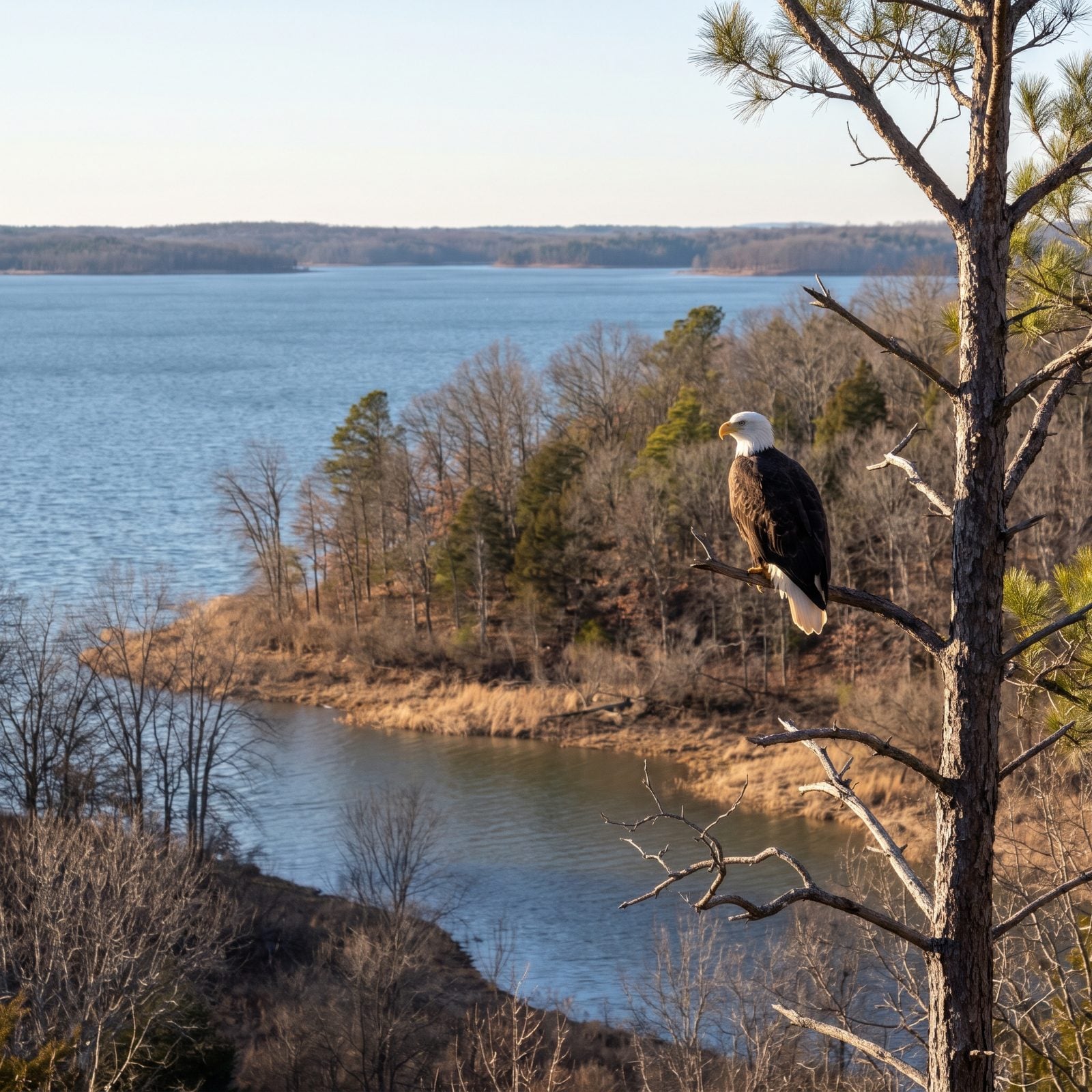
The numbers back this spot up. Duke Energy’s 2019 aerial survey turned up three active eagle nests on Lake Norman, which gives you a real reason to point your binoculars here rather than guess.
Look for eagles soaring over Park Lake or working the quieter, less-developed shorelines of the main lake. The built-up areas crawl with boats and houses, and eagles want that about as much as you do. Find the empty coves.
According to a local news report, one utility environmental scientist and a colleague reported three active eagle nests on Lake Norman, plus two near Mountain Island Lake.
1. Pea Island National Wildlife Refuge, Rodanthe: 370 Bird Species and an Eagle Among Them
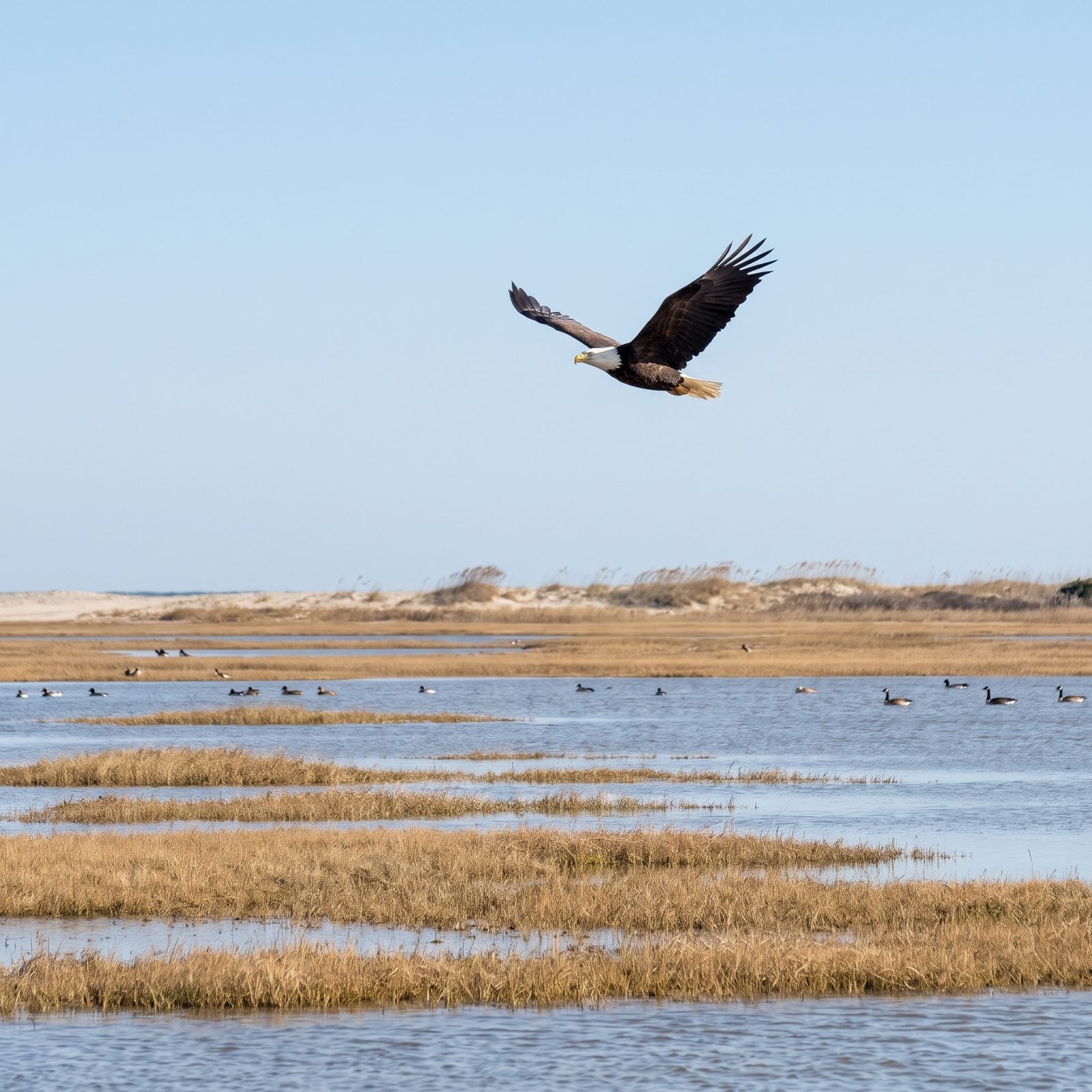
More than 370 bird species have been recorded here, and the bald eagle sits on that list alongside everything else that funnels down the Outer Banks in winter. So the eagle isn’t the only show. It might not even be the main one on a given day.
Start at the North Pond Wildlife Trail, which runs from the visitor center at 14500 NC Highway 12 in Rodanthe. Our State recommends it for winter birding, and it’s flat, open, and generous with sightlines over the impoundments.
Honestly? Come for the eagle and you’ll leave talking about something else entirely. Welcome to a barrier island in January.