
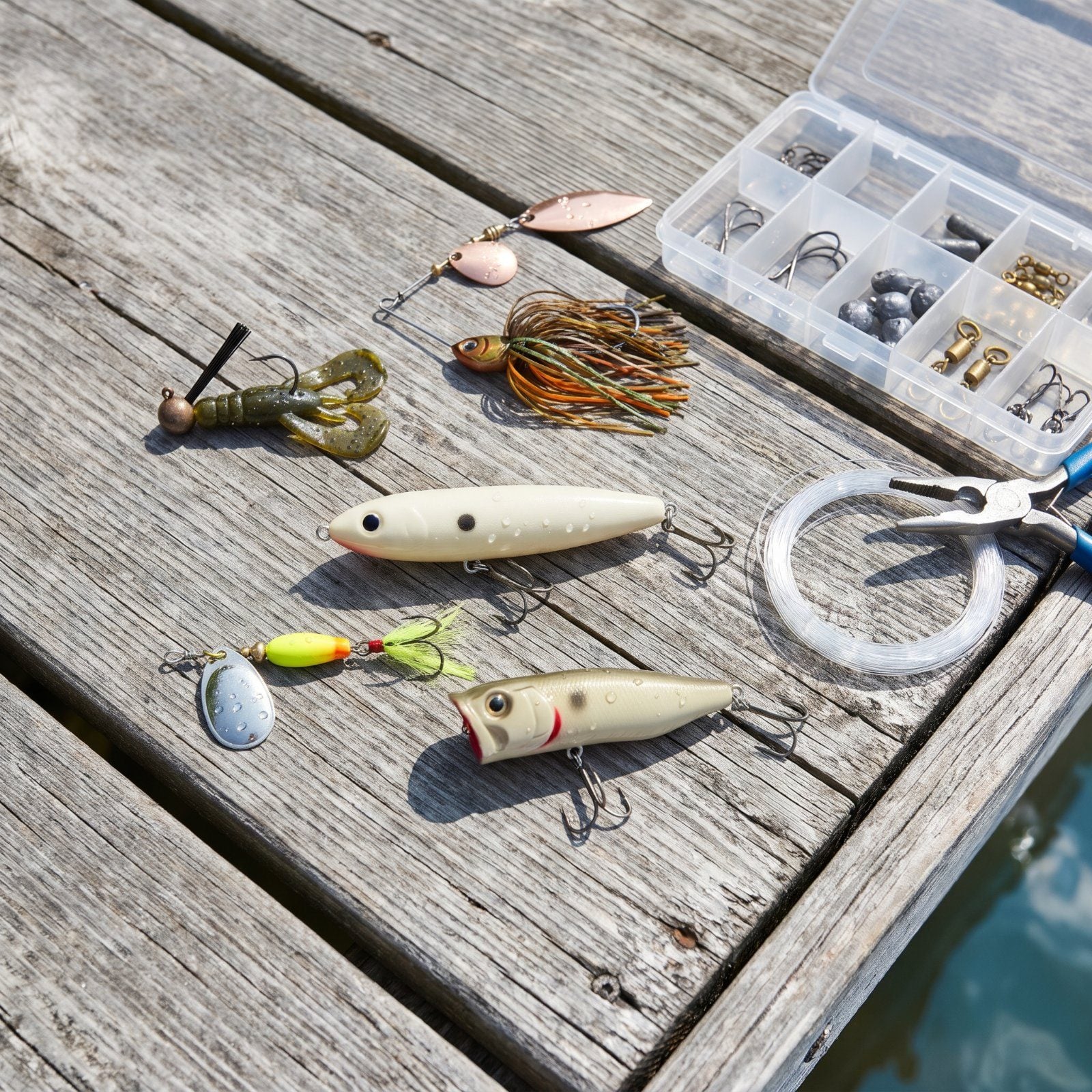
A tackle box is a museum of good intentions. Half the lures in yours got bought on a boat-show hangover or a YouTube thumbnail, and most of them have never touched a fish. The baits moving off the shelf fastest aren’t the ones putting bass in the net. Some of the quiet, ugly, cheap stuff out-fishes the flashy hardware by a wide margin. Here’s a plain look at what earns its spot on the deck and what belongs in the attic with the rest of your mistakes.
Please note that some of the images in this article were created with the assistance of AI.
38. Underrated: The Ned Rig That Out-Fishes Baits Costing Ten Times More
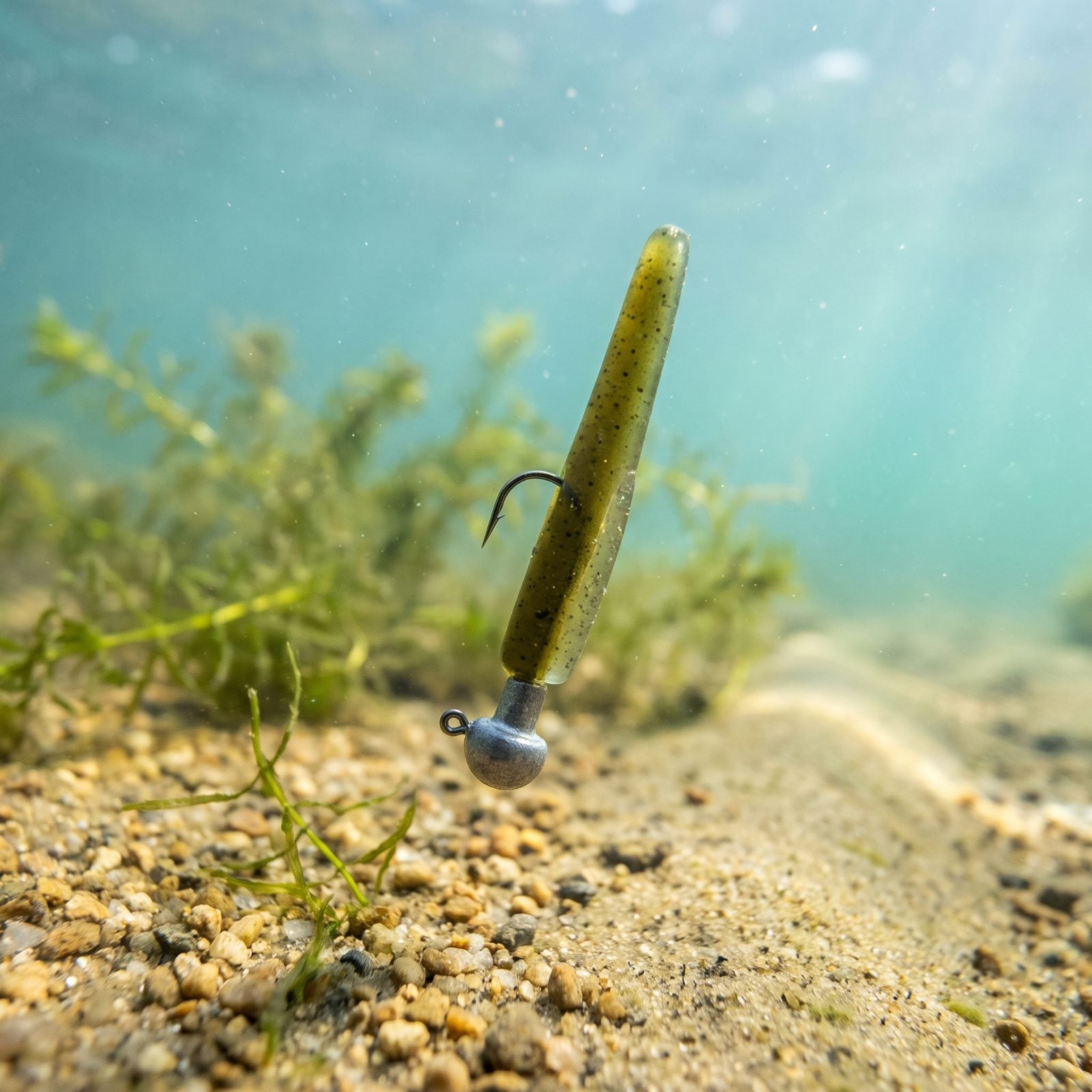
Nobody poses for a hero shot with a Ned rig. It looks like half a worm somebody stepped on, costs about two dollars rigged, and catches bass when everything with blades and treble hooks gets ignored.
The magic is the buoyant plastic standing up off a light mushroom head. It quivers in place on a dead stick, which is exactly what a pressured bass wants to eat on a bright day in clear water. I ignored this thing for years because it looked like kid stuff. Now it’s the bait I reach for when the bite dies and everyone else quits.
37. Overrated: The Giant Glide Bait Built for a Photo, Not a Day of Fishing
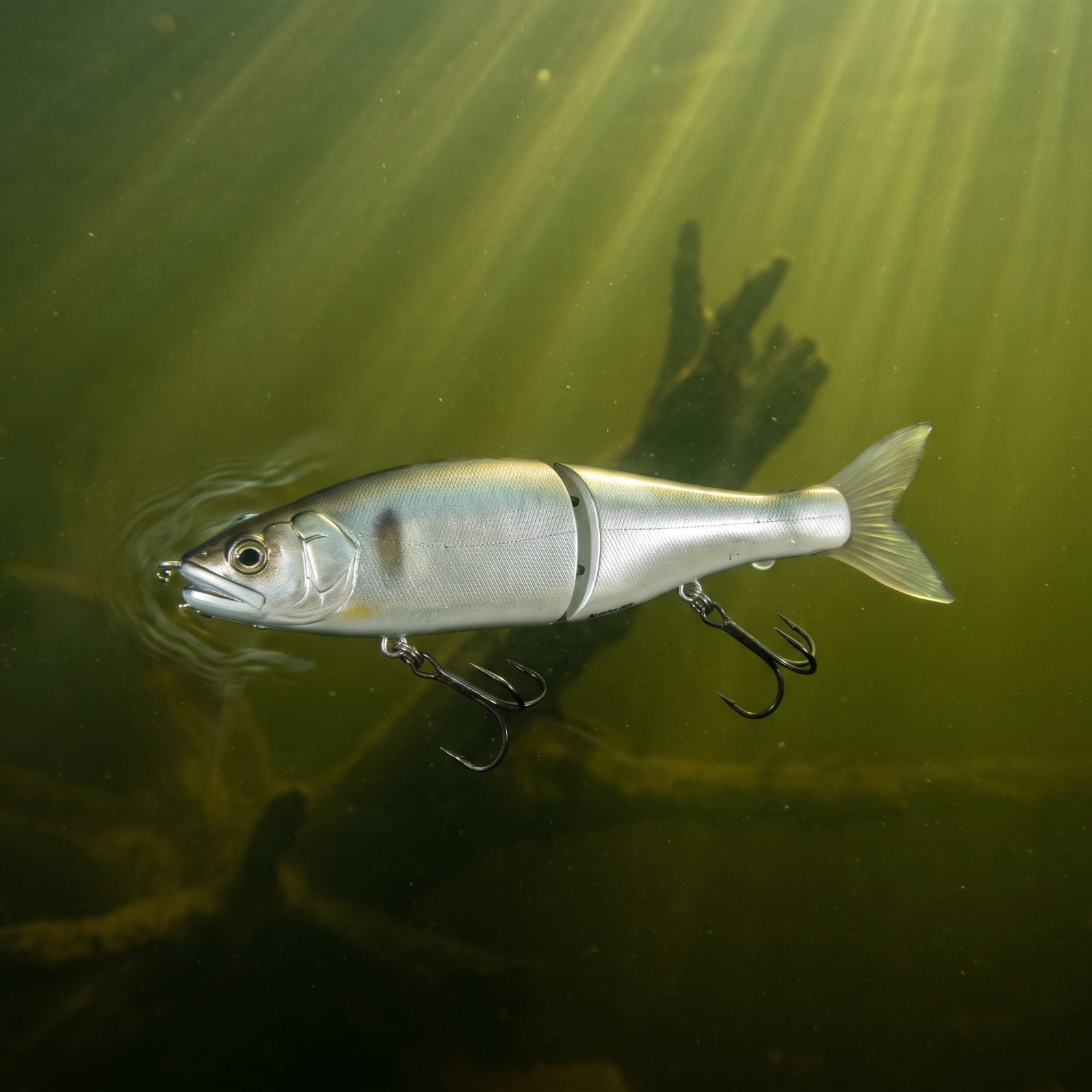
Giant glide baits sell a fantasy: one cast, one tank, one video that breaks the internet. Most days the reality is a sore shoulder and a cooler full of nothing.
They genuinely can draw out the biggest fish in a system. But they demand a dedicated heavy rod, hours of casting for a single bite, and water clear enough to show off the glide. For the guy who gets on the water twelve times a year, that math doesn’t work. You’ll throw it until your wrist aches, then quietly tie on a jig. Buy one when you have a specific trophy and a lot of patience. Not before.
36. Underrated: The Compact Colorado-Blade Spinnerbait That Owns Muddy Water
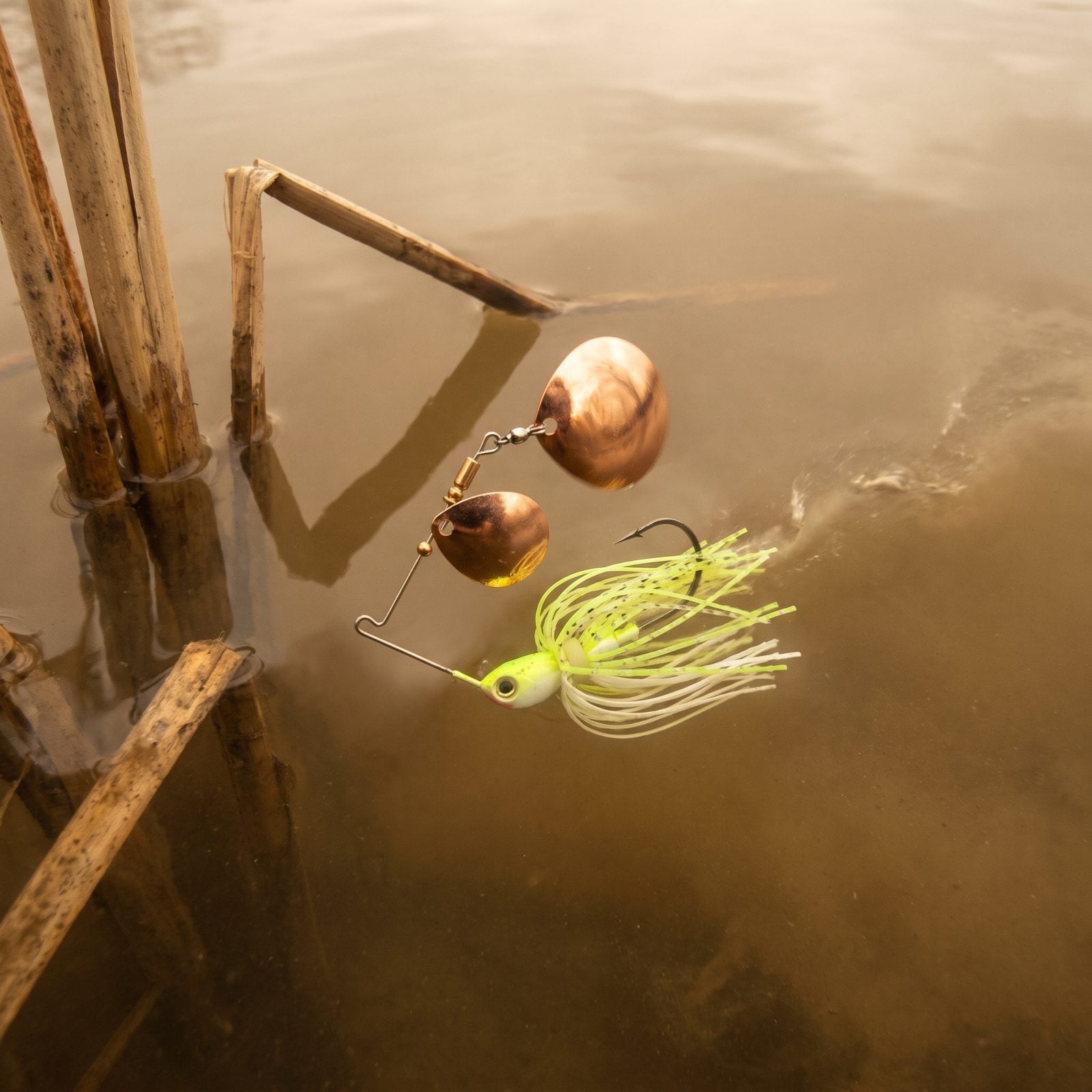
When the lake turns the color of coffee with cream, most lures become invisible. A compact spinnerbait with a big Colorado blade does not.
That round blade throws the heaviest thump of any spinnerbait style, and in muddy water bass hunt by feel long before they ever see the thing. Keep it small, keep the blade copper or gold for off-color water, and slow-roll it along the first drop. It’s a five-dollar bait nobody talks about because it isn’t sexy. It just works when the flashy stuff can’t buy a bite.
35. Overrated: The Premium Bladed Jig With a Price Tag That Doesn’t Match the Fish Count
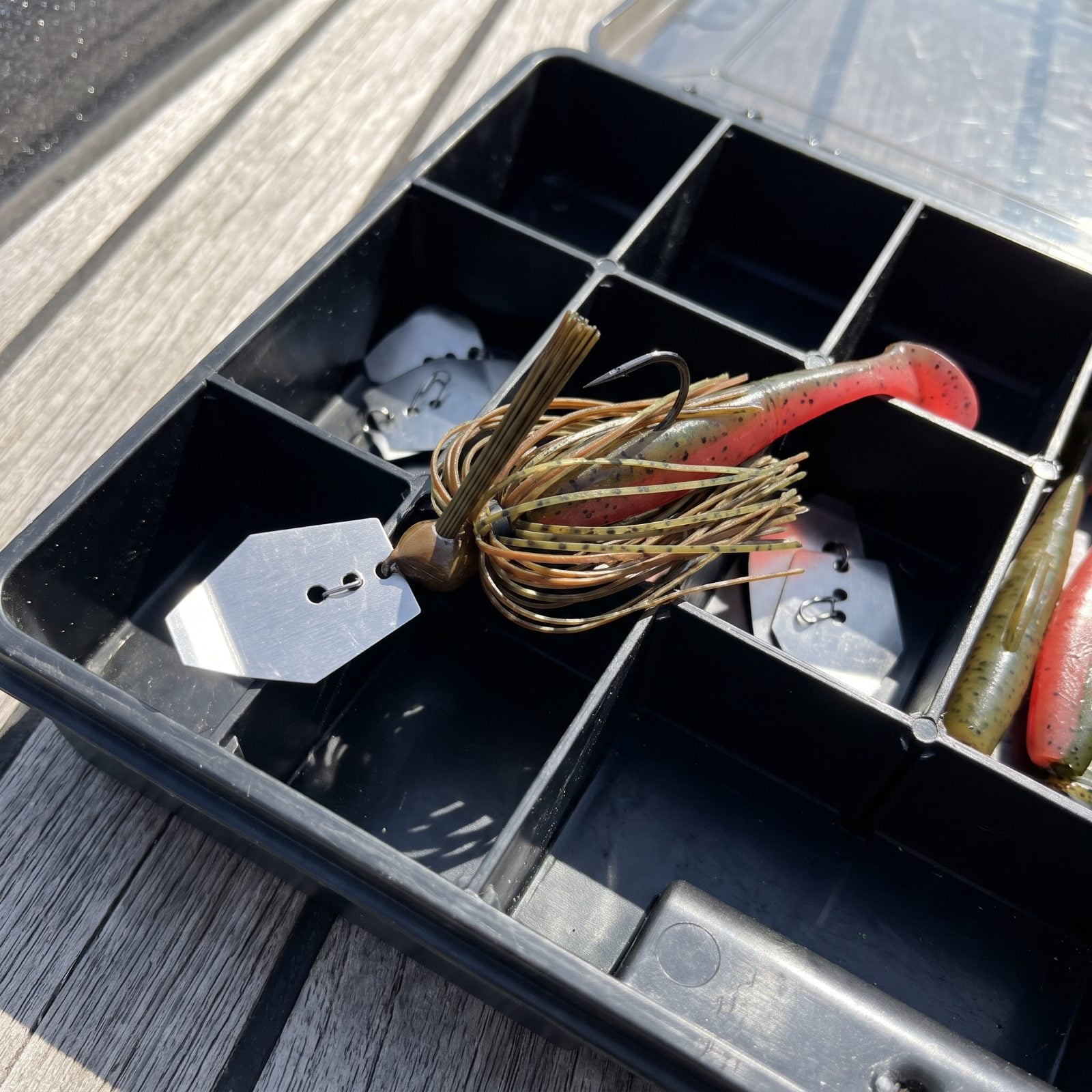
The bladed jig earns a lot of its reputation. The hunting, darting action is real, and it has won more tournaments than most baits ever will. The problem is the premium versions cost what a decent reel used to.
You’re not paying for a better fish-catcher. You’re paying for a laser-cut blade and a fancier skirt. The eight-dollar version with a trailer swapped on catches the same bass. Buy one nice one to learn the action, then stock the cheap ones for the rocks and timber where you’ll lose them. Spending premium money on a bait you’ll break off on a laydown funds the tackle industry, not your limit.
34. Underrated: The In-Line Spinner, an Old-School Search Bait Bass Never Learned to Hate
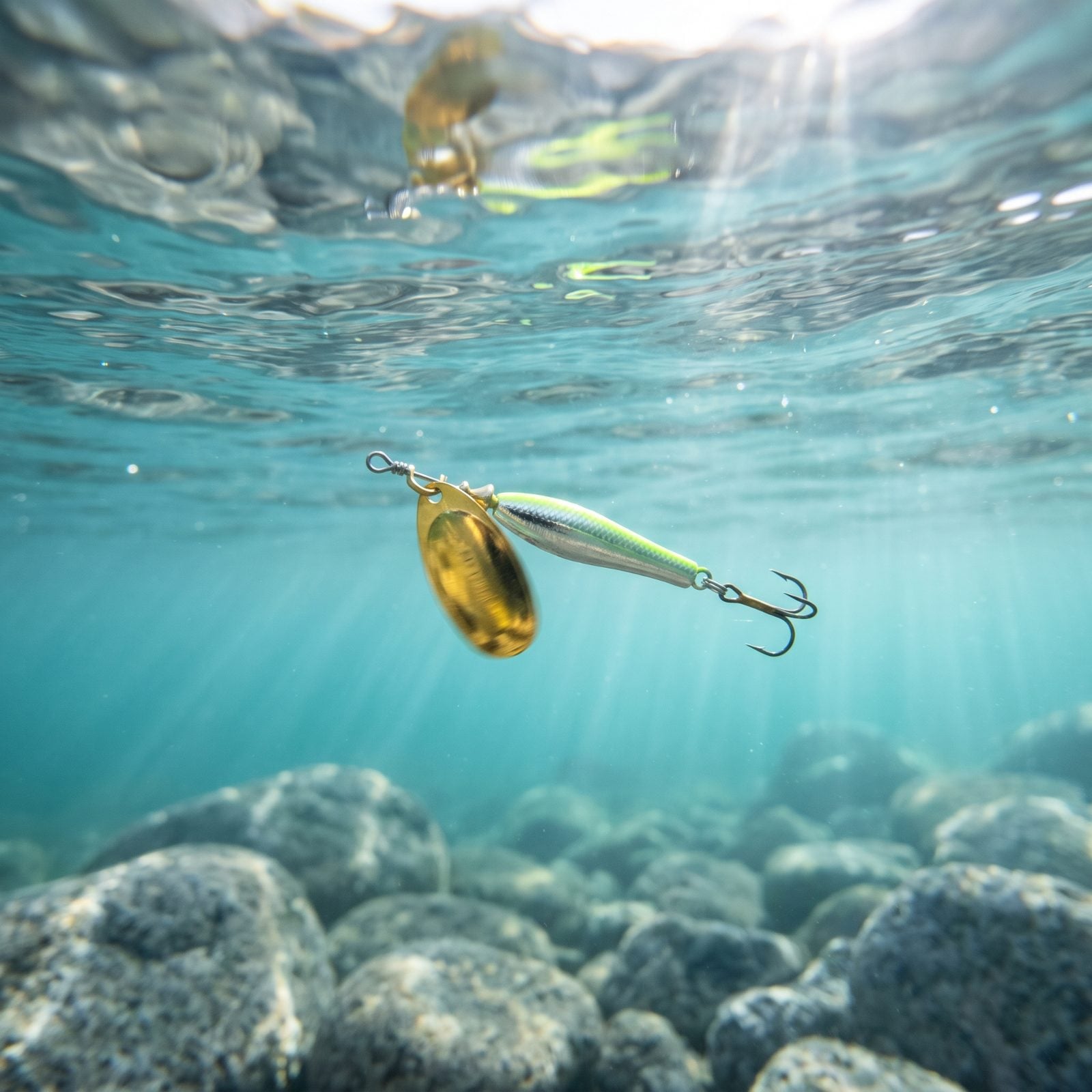
Trout fishermen have known this secret forever. Bass guys forgot it somewhere around the invention of the crankbait.
An in-line spinner is the simplest search bait that exists — a blade, a shaft, a hook. Cast it, reel it, cover water. Smallmouth in particular will chase one down and crush it, and because almost nobody throws them anymore, the fish see something unfamiliar. Ugly? A little. Cheap? Very. One of the best tools you own for finding where the fish are holding before you slow down and pick them apart.
33. Underrated: The Small Concave-Mouth Popper for Surgical Strikes Around Cover
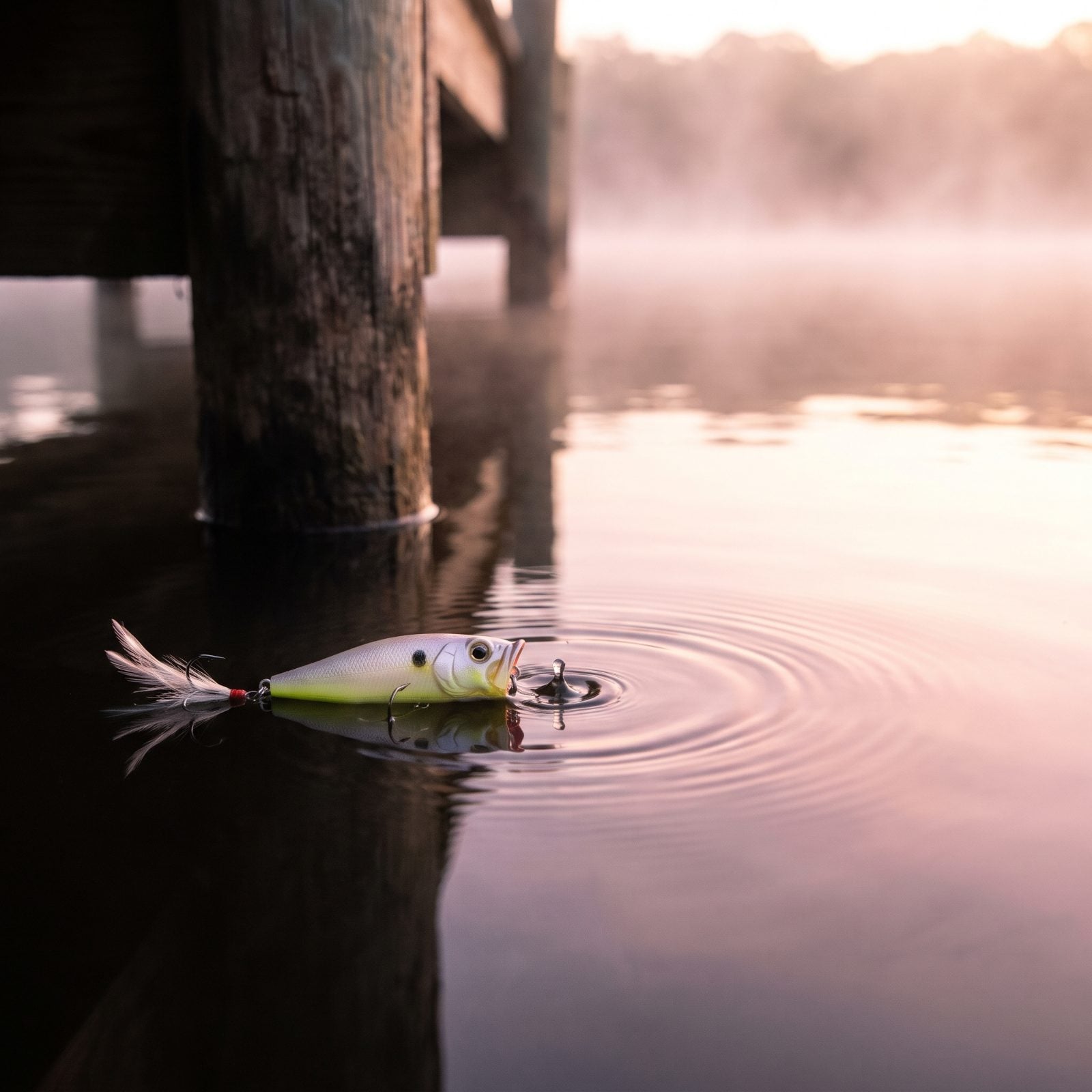
A small popper is a scalpel where a buzzbait is a chainsaw. Drop it against a dock post, twitch it twice, and let it sit dead still an inch from the cover.
That concave mouth spits a tight bloop instead of a big splash, which is exactly right for bass holding tight to shade on a calm morning. It calls fish out without spooking them. The whole game is restraint: cast, pause, one small pop, then pause longer than feels natural. Most guys fish it way too fast and wonder why it doesn’t work. Slow down and it becomes one of the deadliest cover baits you own.
32. Overrated: The Propeller Plopper That Works Right Up Until the Water Gets Rough
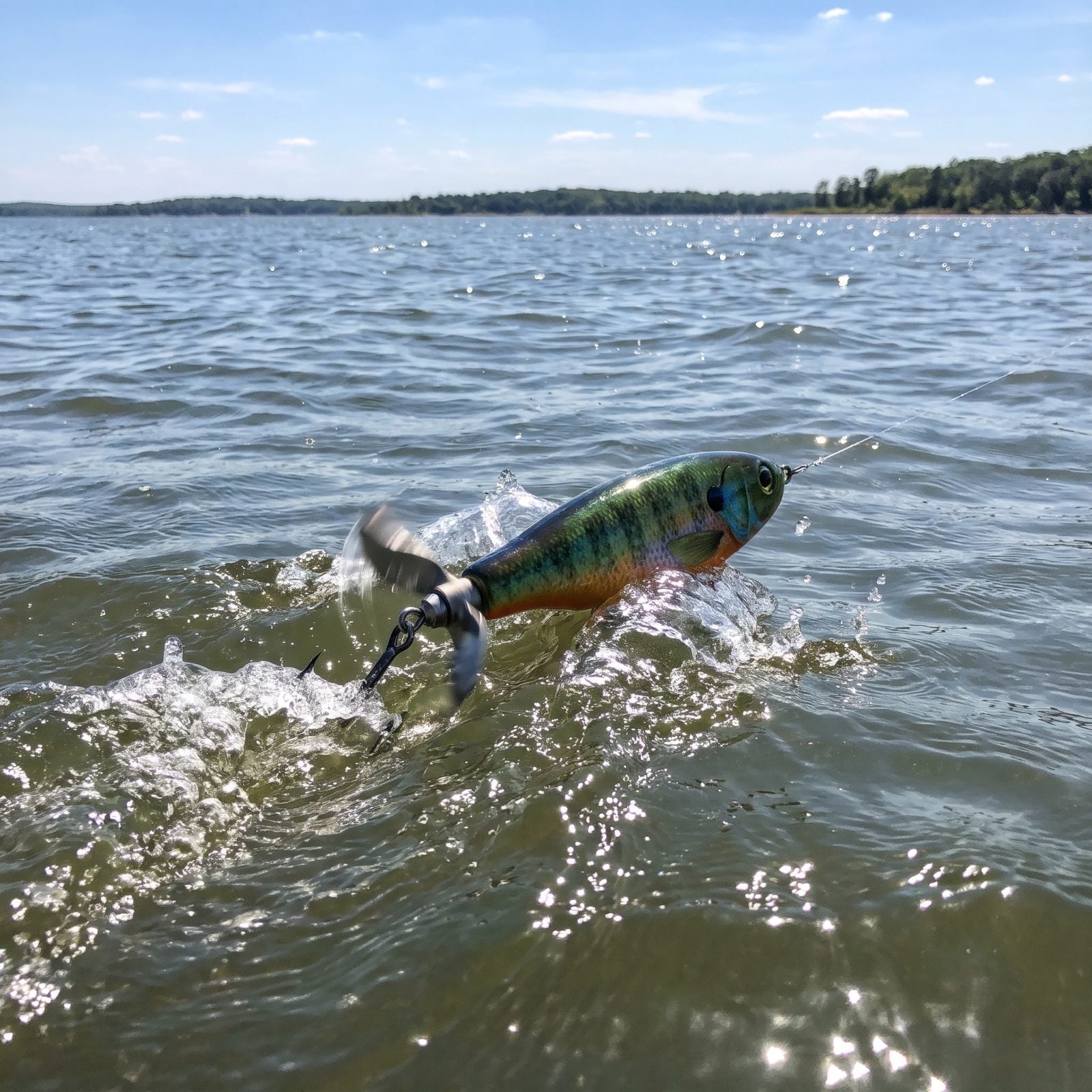
The plopper had its moment and the whole country tied one on. For good reason: on calm water with a steady retrieve, that rotating tail draws bass from a long way off.
Here’s what the hype skips. It needs slick or near-slick water to make its signature sound. Add a little chop and the plop drowns in the waves, and the fish lose the trail. It’s also a one-speed bait — cast it out, reel it in, repeat. Great for beginners, boring for conditions that call for finesse. A good tool for the right window, not the all-day topwater answer the videos sold you.
31. Underrated: The Walking Pencil Bait That Covers Open Water Like Nothing Else
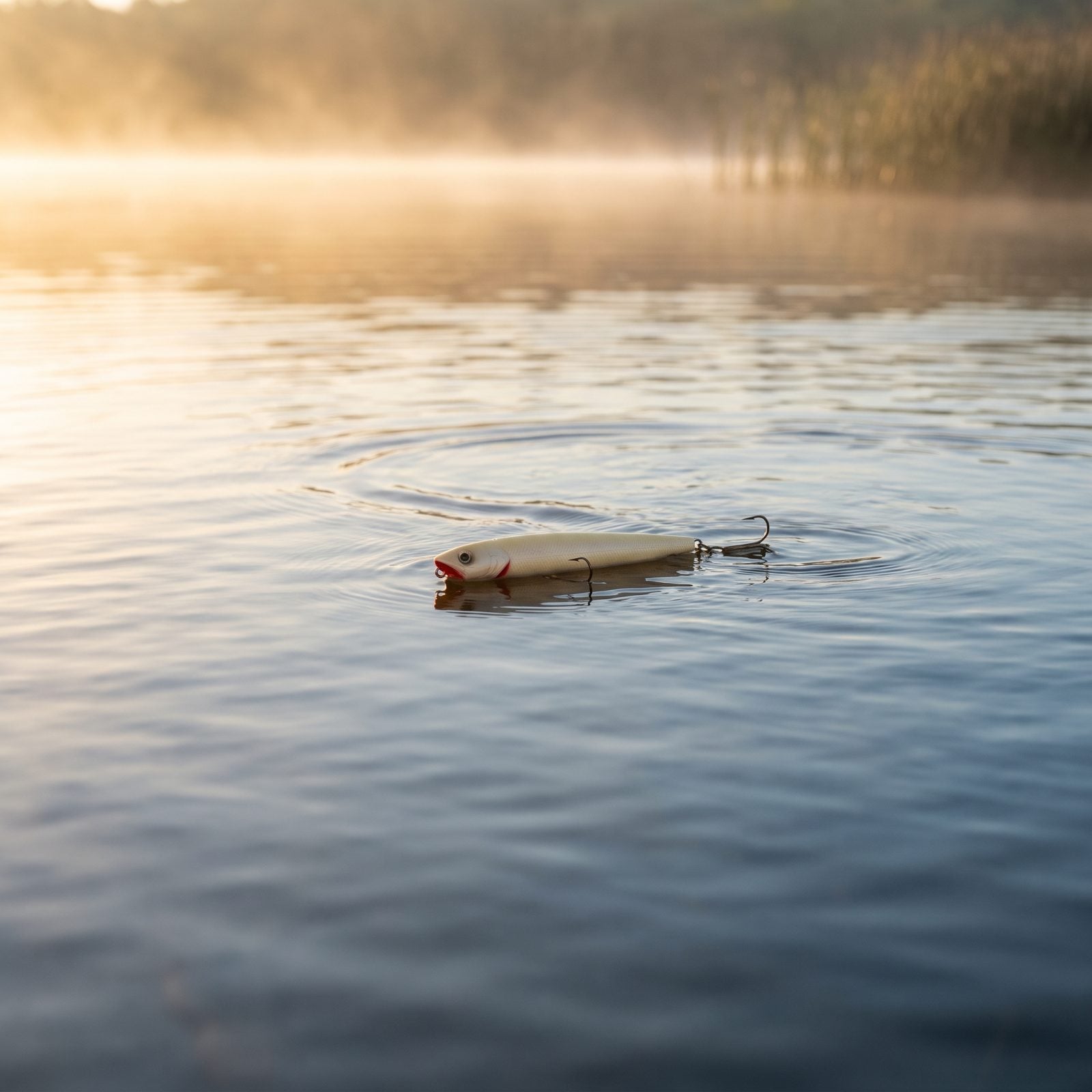
No bill, no blade, no prop. Just a tapered body that walks side to side when you twitch the rod and feed it slack. For searching open water on top, nothing is more efficient.
It casts a mile, calls fish up from deep, and triggers roaming bass over flats and points where a plopper’s noise would be wrong. The retrieve takes a little rhythm to learn, and that’s the only reason beginners skip it. Put in an afternoon learning the cadence and you’ll own a bait that covers more productive water per cast than almost anything else up top.
30. Overrated: The Double-Prop Topwater That Carries More Hardware Than Most Days Need
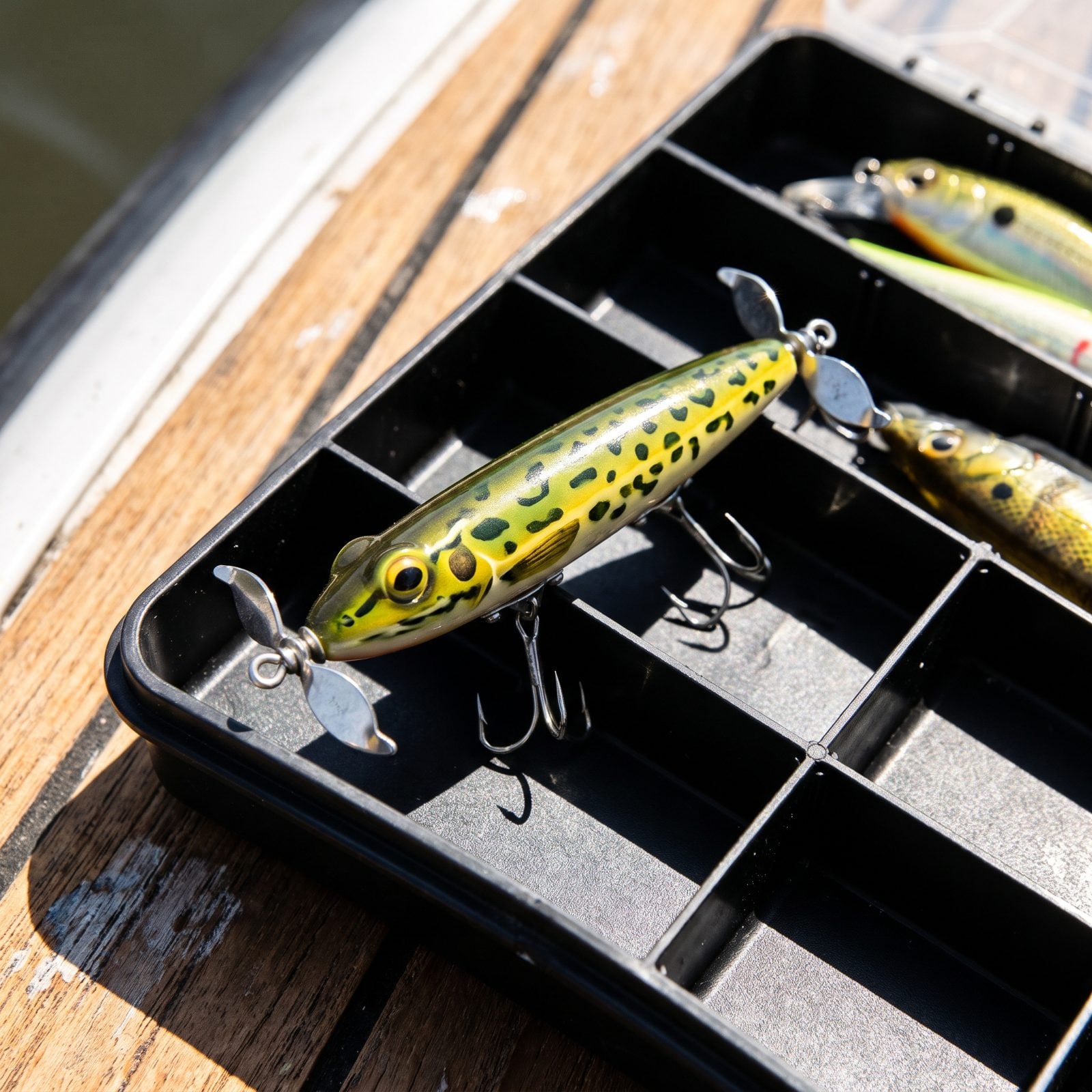
Two props, front and back, double the splash and double the flash. It looks like it should catch everything. On the right spring morning in shallow, calm, clear water, it does draw a crowd.
But that’s a narrow window. The twin props make it a specialty bait, and all that spinning hardware fouls on weeds and tangles your line worse than a cleaner topwater. Most days a single-prop or a walking bait gets more done with less hassle. Keep one for the spawn-time flats where it shines. Just don’t expect it to earn its spot in the box the rest of the year.
29. Overrated, Giant Multi-Jointed Wakebait: Impressive Looks, Awkward Casting
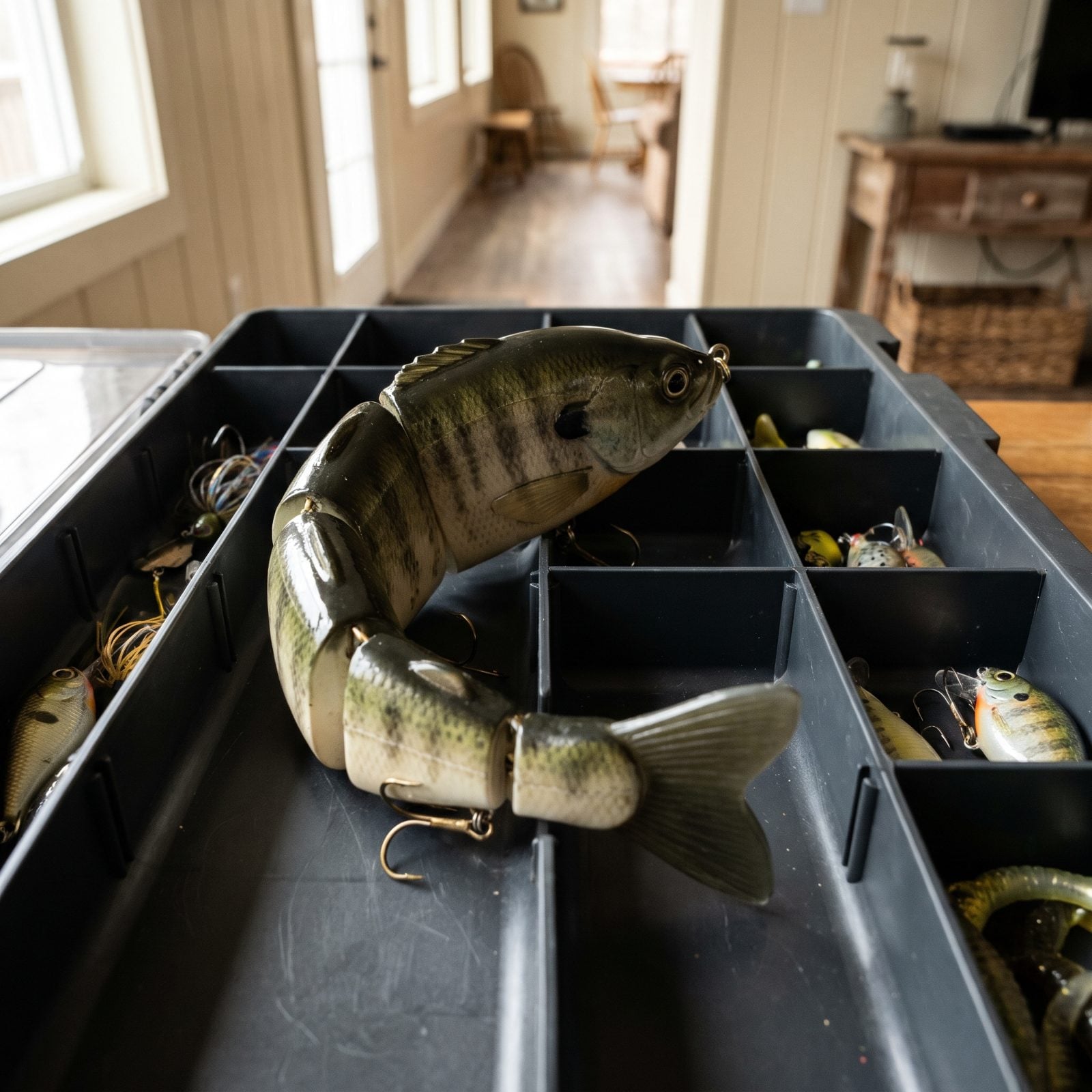
It looks like money in the tray. Two feet of jointed, lifelike swimming action, a paint job you want to frame. Then you try to throw it all day.
Heavy jointed wakebaits wear you out. They demand a stout rod, they foul on themselves mid-cast, and the swimming action that looks gorgeous at the boat often turns stiff and unnatural once it’s out there past the long ropes of line you had to heave to get it anywhere. You’ll spend more time admiring it than hooking fish.
Big swimbaits catch giants in the right water, mostly out West on clear reservoirs with trout forage. For your average pond or river bass? A lot of spectacle for a slow afternoon. Buy it because you want it, not because it out-fishes a four-dollar crankbait.
28. Underrated, Hollow-Body Walking Frog: Dependable Access to Matted Cover
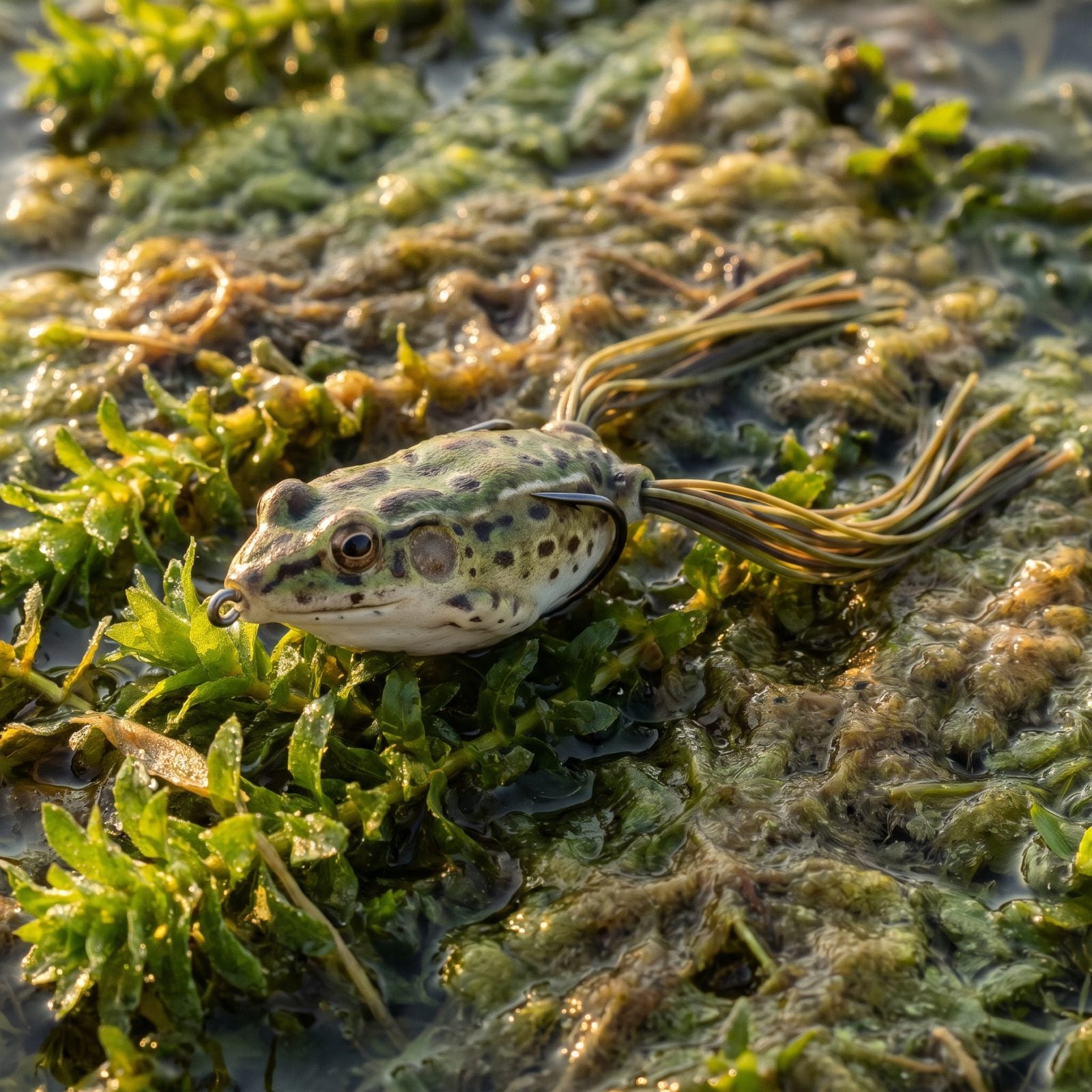
You’ve watched a bass blow a hole in the slop and come up empty because your bait hung in the weeds. The hollow-body frog solves that. Those hook points sit flush against the back, so it slides over matted grass, lily pads and timber without snagging, then collapses into a hookset when a fish eats.
Walk it with slack-line twitches across the mat and it dances in place. That weedless build is the whole reason it earns a spot in the box — nothing else gets you clean casts into cover this nasty.
27. Overrated, Elaborately Legged Soft Frog: Extra Appendages That Tear Quickly

The packaging promises lifelike kicking legs and webbed feet that quiver on the pause. It leaves out how fast those legs shred.
Every extra appendage is one more thing a bass can grab and tear off without getting hooked. After a few fish, a legged soft frog looks like it lost a fight with a lawnmower, and you’re digging for another one. The detail that sells the lure is the detail that ruins it.
A simpler trailer or a plain hollow-body outlasts these by a wide margin. Pretty doesn’t mean durable, and durable is what matters when the bite’s on and you don’t want to stop and re-rig.
26. Underrated, Floating Minnow Jerkbait: A Forgotten Weapon Over Shallow Grass
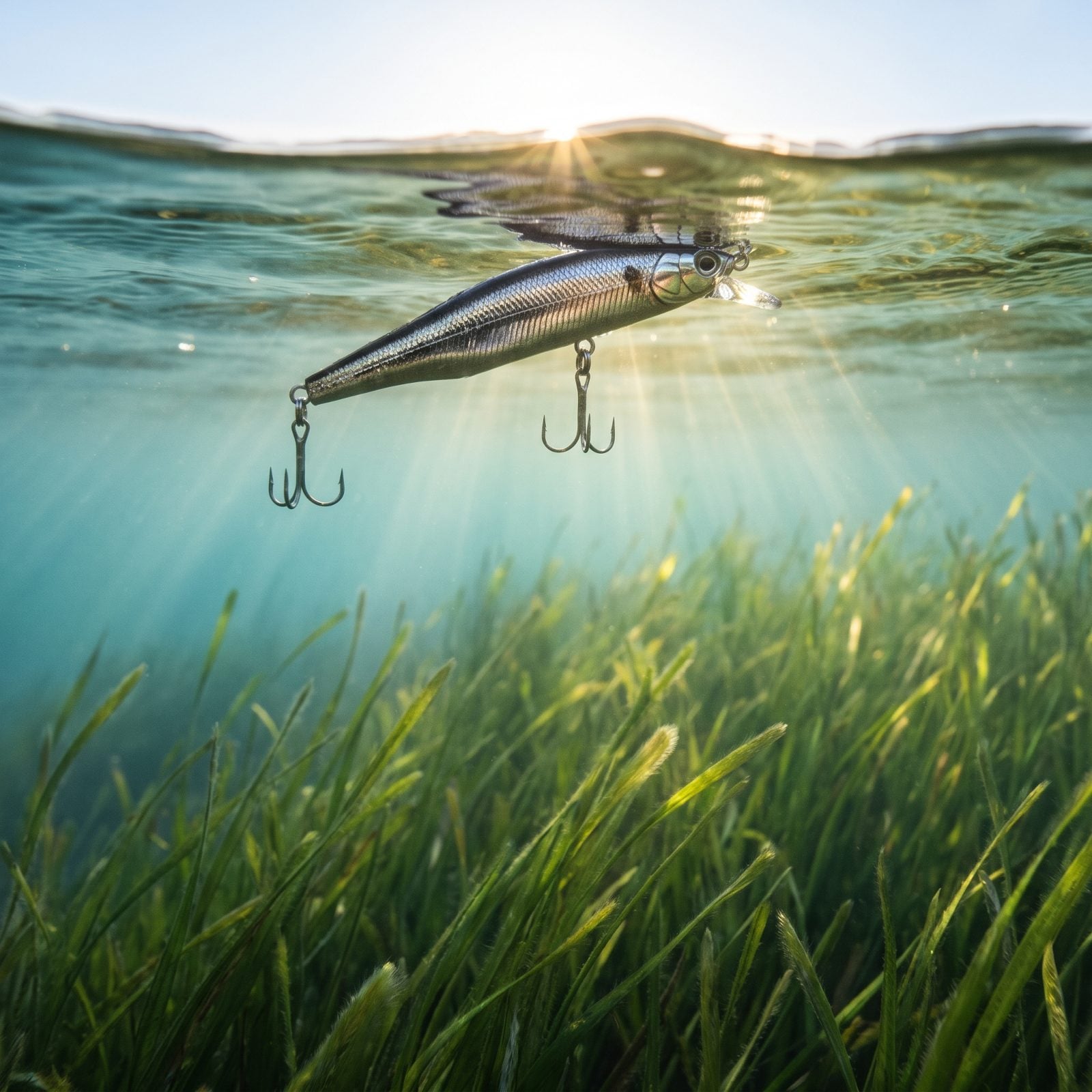
Everybody owns a jerkbait. Almost nobody uses the floating version right.
A floating minnow rides high and rises on the pause, which lets you crawl it over the tops of shallow submerged grass without burying the hooks. Twitch, pause, let it float up a few inches, twitch again. Come spring, when bass push onto shallow flats and the grass is just starting to come up, this gets bit while heavier baits hang constantly.
It fell out of fashion when suspending models took over. That’s the opening. Fish ignore nothing, but they do get used to the same four lures everybody throws, and a rising minnow over grass is a look they haven’t seen in a while.
25. Overrated, Premium Suspending Jerkbait: Great Finish, Not Always a Better Bite
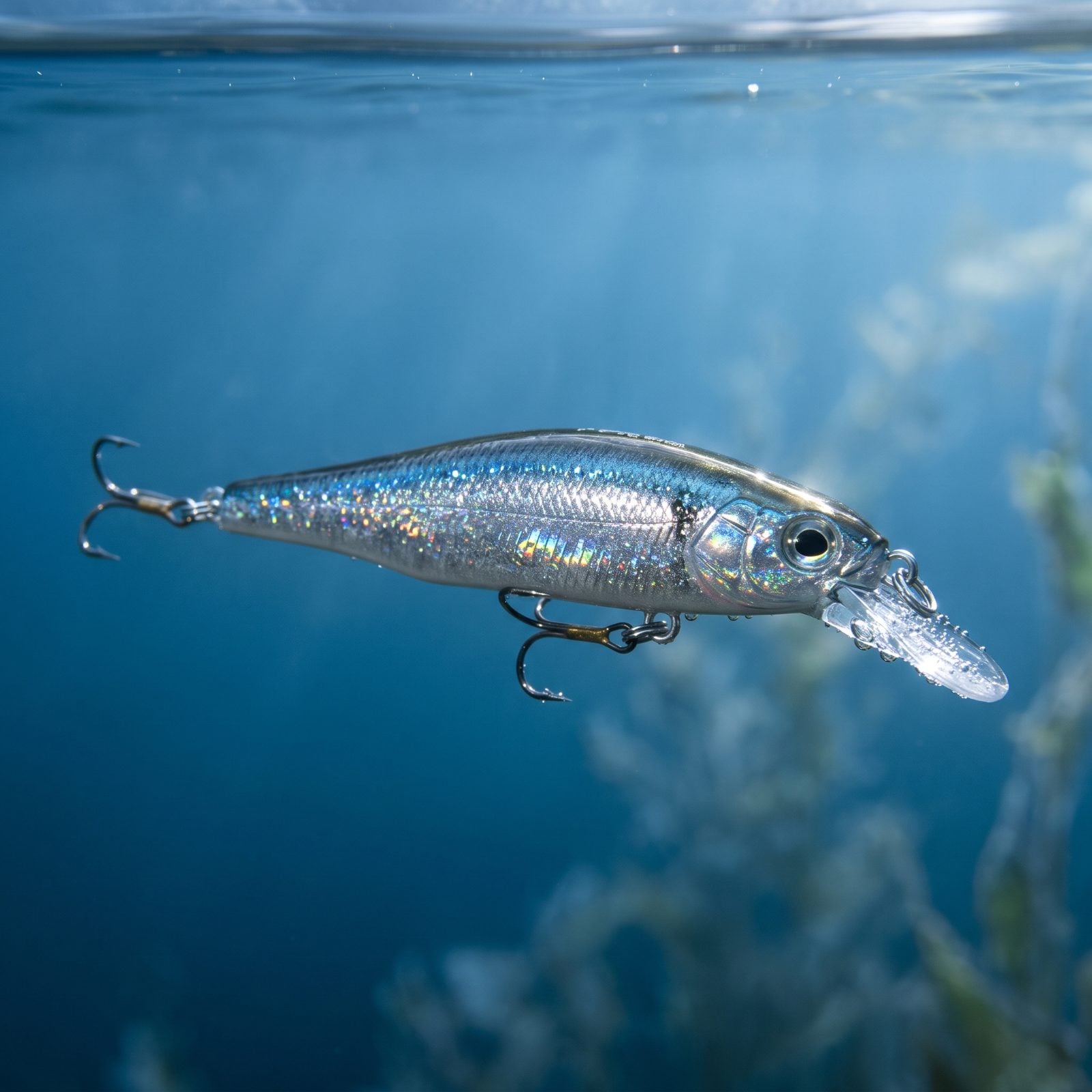
I spent real money on these before I figured it out. The high-dollar suspending jerkbait with the imported hooks, the holographic flake, the perfect dead-level suspension. A lovely object.
But a twenty-five-dollar jerkbait doesn’t out-catch an eight-dollar one by three times the fish. The premium model holds its suspension a touch better in cold water, and the sticky-sharp hooks help on light bites. That’s the honest advantage, and it’s marginal.
The paint that convinced you to buy convinces the fish of nothing. In clear water a bass reacts to the cadence of your pause, not the quality of the clear coat. Save the good ones for cold, finicky days and throw the cheap ones everywhere else.
24. Underrated, Silent Squarebill: A Better Choice Around Pressured Shallow Bass
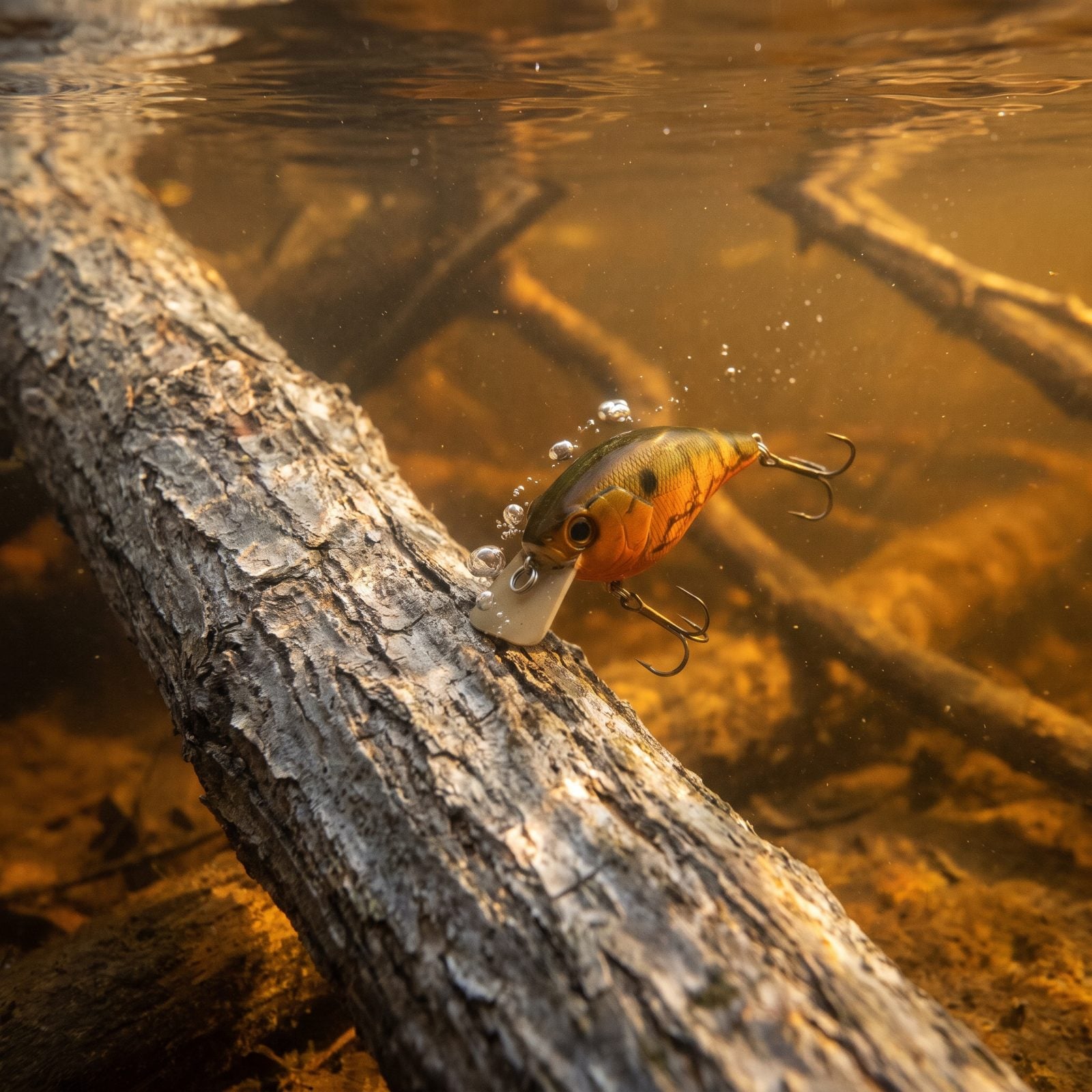
Rattles sell crankbaits. In pressured water they can cost you fish.
A silent squarebill — no rattle chamber, just the thump of the lip deflecting off wood and rock — slips past bass that have heard a thousand clacking crankbaits run by every weekend. On heavily fished lakes and small ponds where everyone throws the same noisy stuff, quiet is the edge.
The squarebill shape bounces off cover and veers sideways, and that erratic lurch triggers reaction strikes. Take the sound out and you keep the deflection trigger without the warning. A subtle swap most anglers never think to make.
23. Overrated, Photorealistic Crankbait: Detailed Paint That Matters More to Anglers
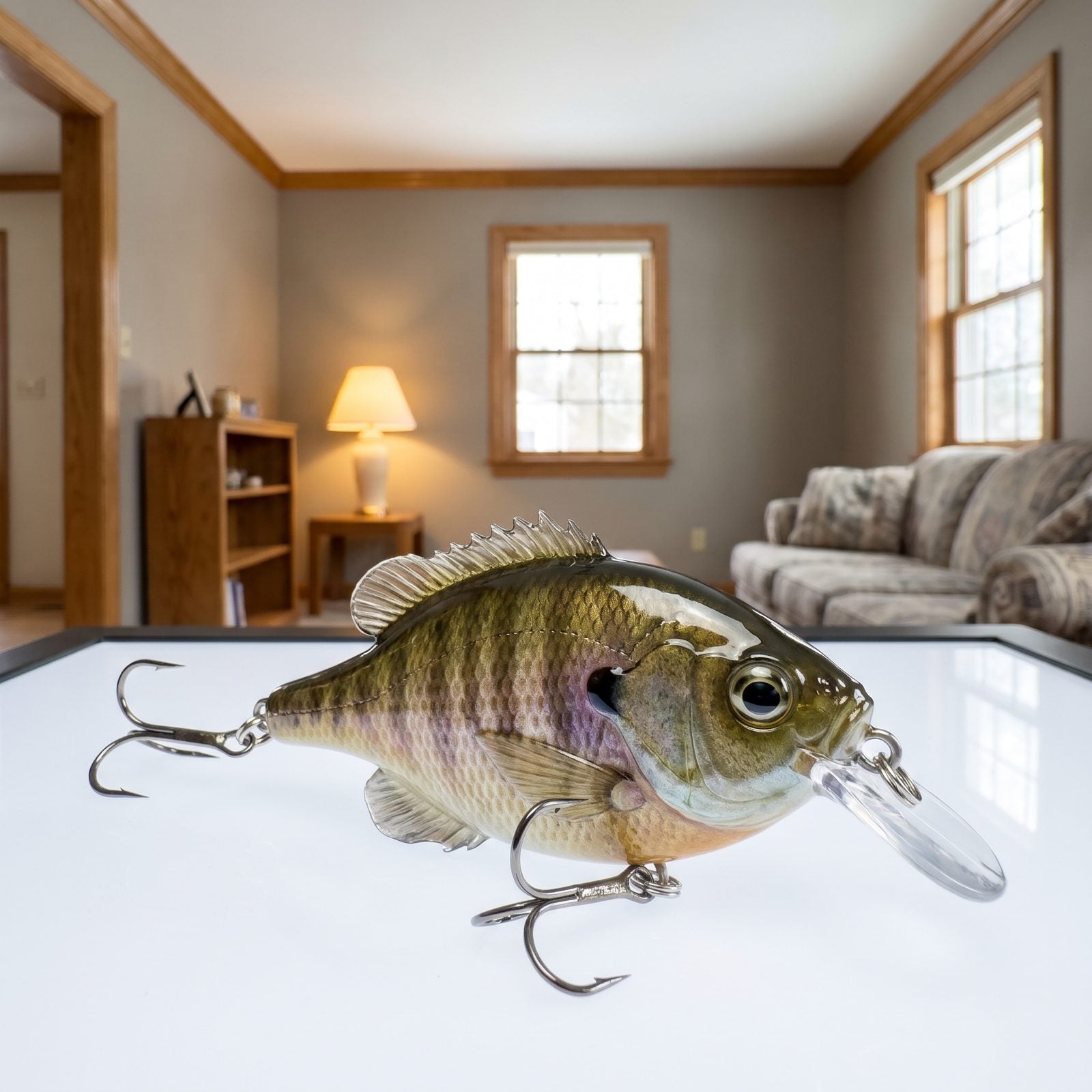
Hold one up and it looks alive. Every scale painted, a 3D eye, gill shading so fine you want to feed it. Now ask who it was designed to impress.
You, mostly. From a bass’s point of view, down in stained water with a lure crashing past at speed, that painstaking paint reads as a smear of color and flash. The silhouette and the action do the work, and the scale detail doesn’t survive the first underwater second.
None of this means a fish won’t eat it. They will. It means you’re paying a premium for a feature the fish can’t appreciate. Match the general size and color tone of the forage and move on. The gallery-grade finish is for the tackle shop wall.
22. Underrated, Flat-Sided Crankbait: Tight Action for Cold, Clear Water
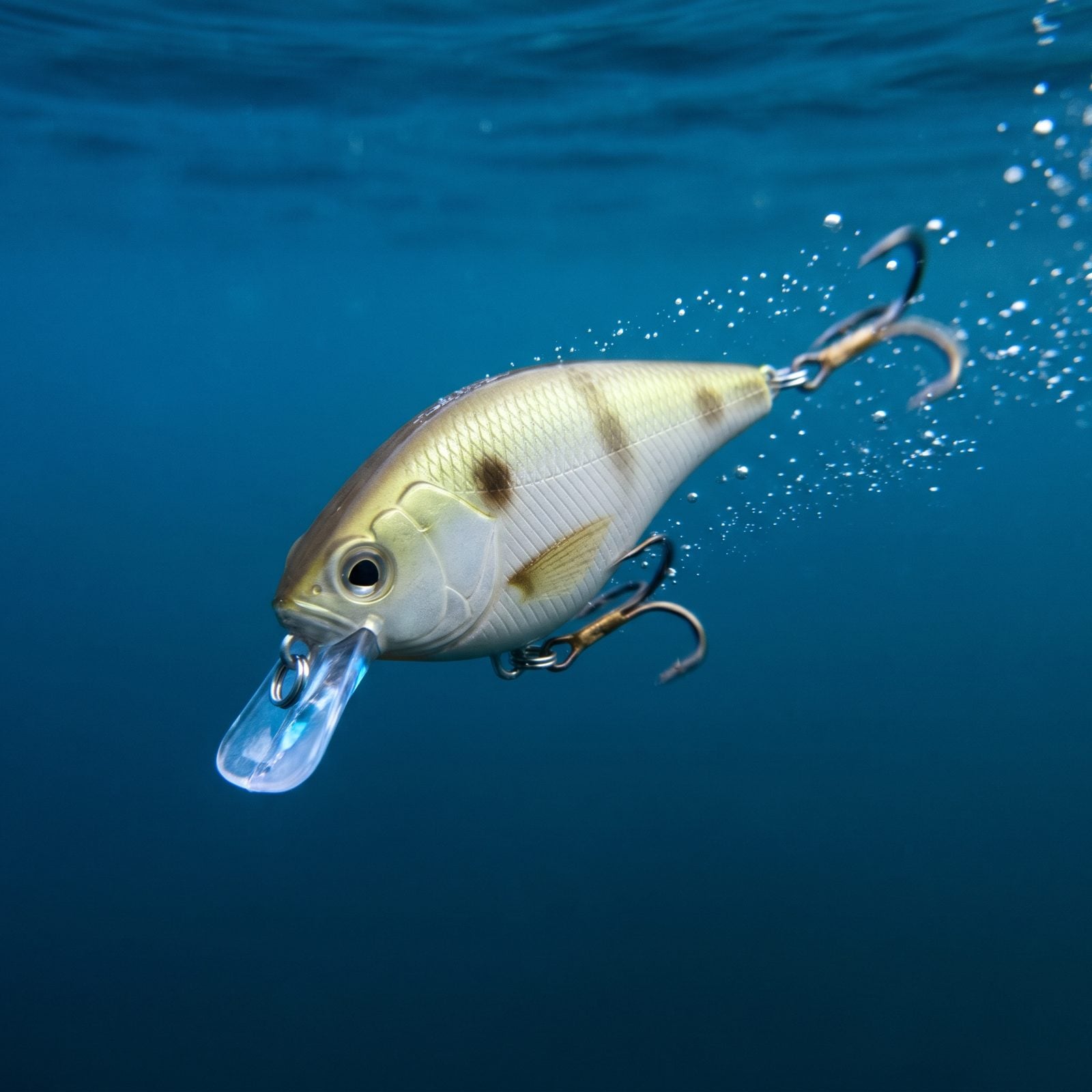
When the water drops into the forties and clears up, fat wide-wobbling crankbaits start getting ignored. This is the flat-sided crankbait’s season.
That thin slab body puts out a tight, subtle shimmy instead of a wide roll. In cold, clear conditions, when bass are sluggish and wary, the tighter action looks more like a struggling baitfish and less like a threat barreling in. It’s a staple on smallmouth rivers and clear highland reservoirs through the cold months.
Fish it slow on a steady retrieve and let it float up on the pause. Few lures are more situational. Fewer are more deadly when the situation is right.
21. Overrated, Extra-Deep Crankbait: Physically Demanding and Frequently Misapplied
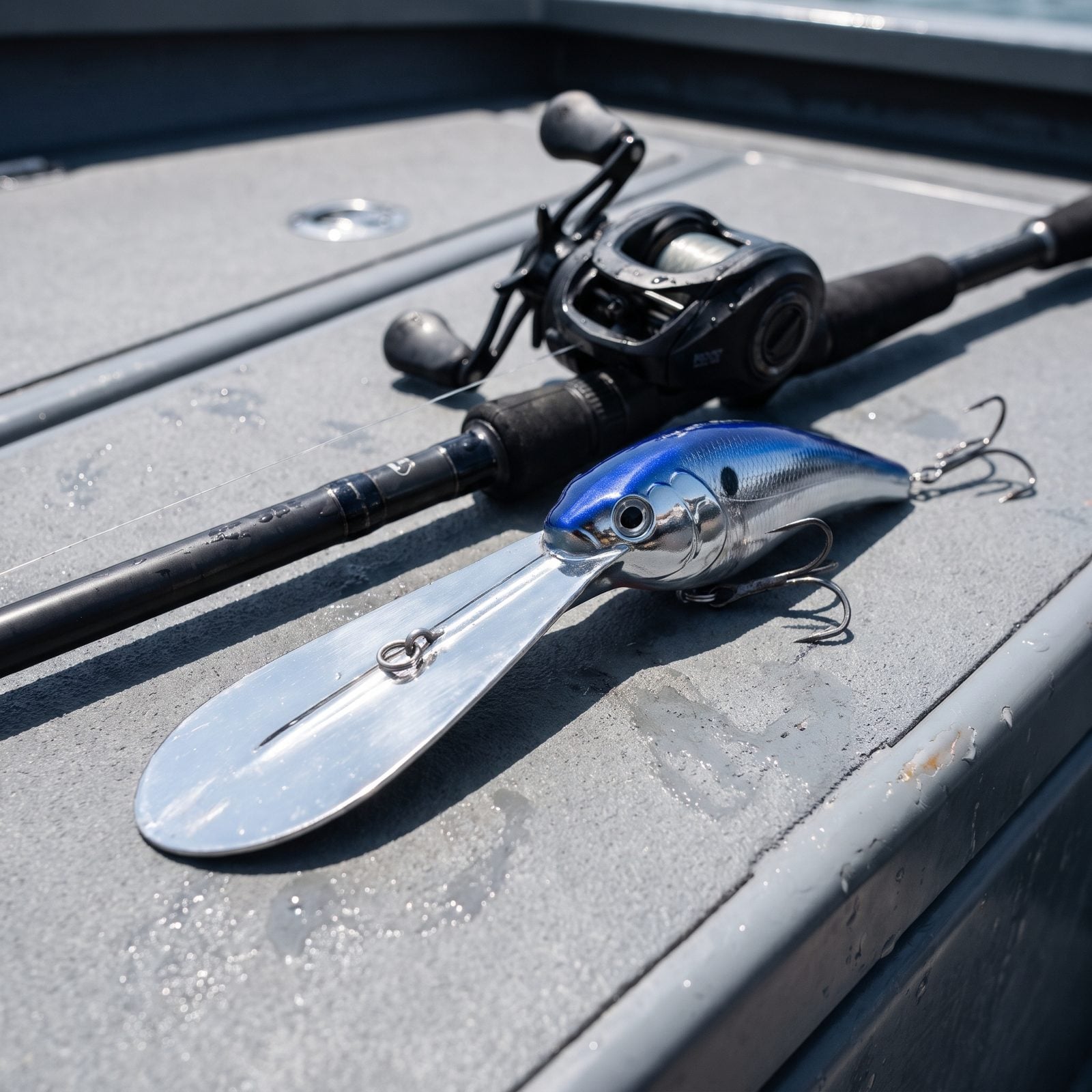
The lip on these is comical — a shovel longer than the bait body, built to dig fifteen, twenty feet down. It’ll get there. It’ll also beat you up doing it.
Extra-deep crankbaits want a long rod, heavy braid or a cranking-specific setup, and a serious retrieve. Haul one all afternoon and your forearm files a formal complaint. Most anglers throw them in water where a Carolina rig or a drop shot would catch more fish with a fraction of the effort.
There’s a real time and place: offshore ledges, deep summer schools, open structure where you need to reach down and stay down. Outside that narrow window, it’s a grind for its own sake. I keep two in the box and leave them there most of the year.
20. Underrated: The Lipless Crankbait That Works 12 Months a Year
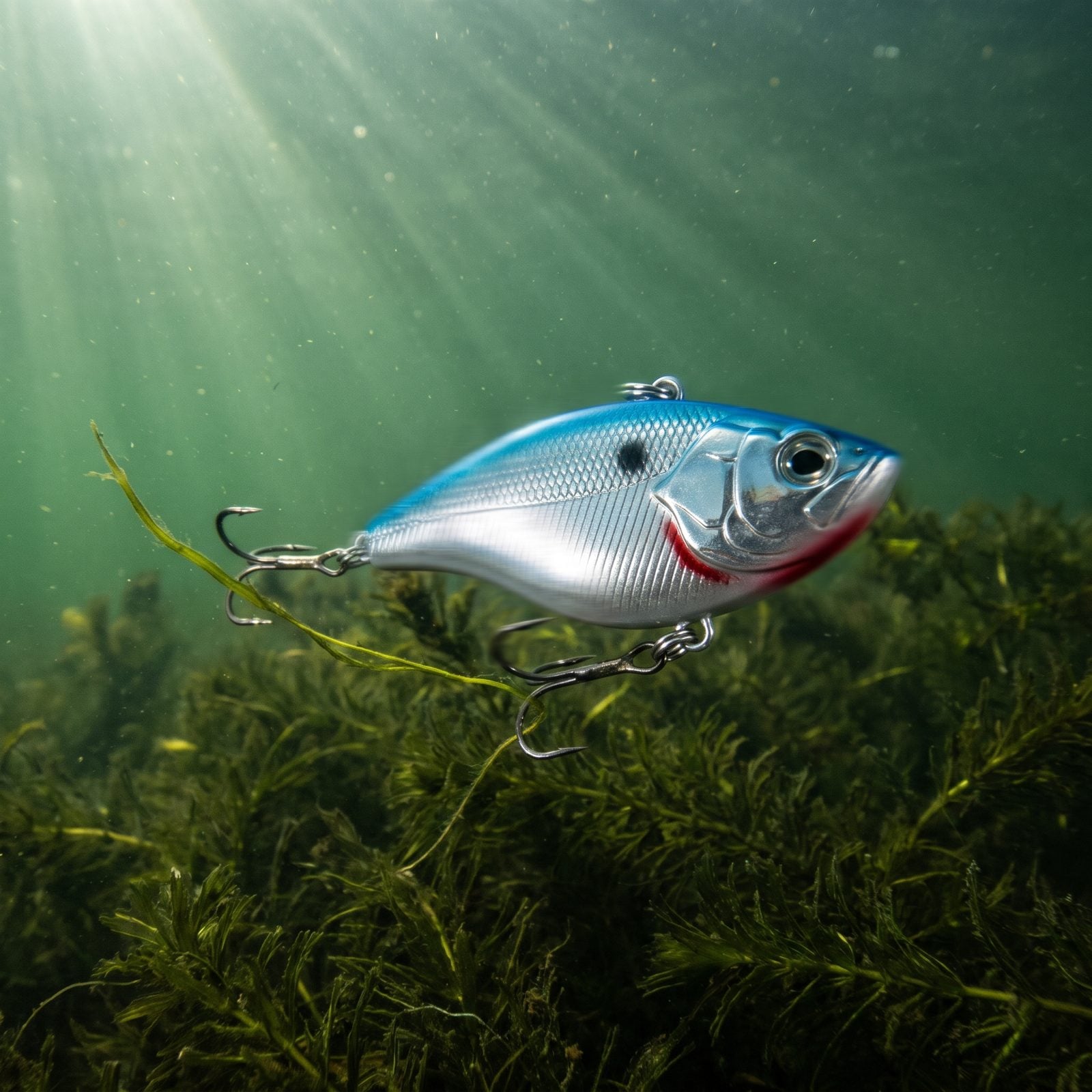
No lure in my box earns its keep like a half-ounce lipless crankbait. Cold water in February, you yo-yo it over deep flats, and when that first warm rain of March comes you rip it through grass so the fish react before they think. Blazing July? Burn it fast and shallow. It covers more water per hour than almost anything you can tie on.
Most anglers fish it too clean. The magic is the rip — let it snag the top of the hydrilla, then tear it loose with a hard snap. That sudden freedom triggers strikes from fish that ignored a steady retrieve. I lost years to slow-rolling this thing before somebody showed me that trick, and I’m still a little sore about it.
19. Overrated: The Bulky Wake Crankbait Sold as a Do-Everything Plug
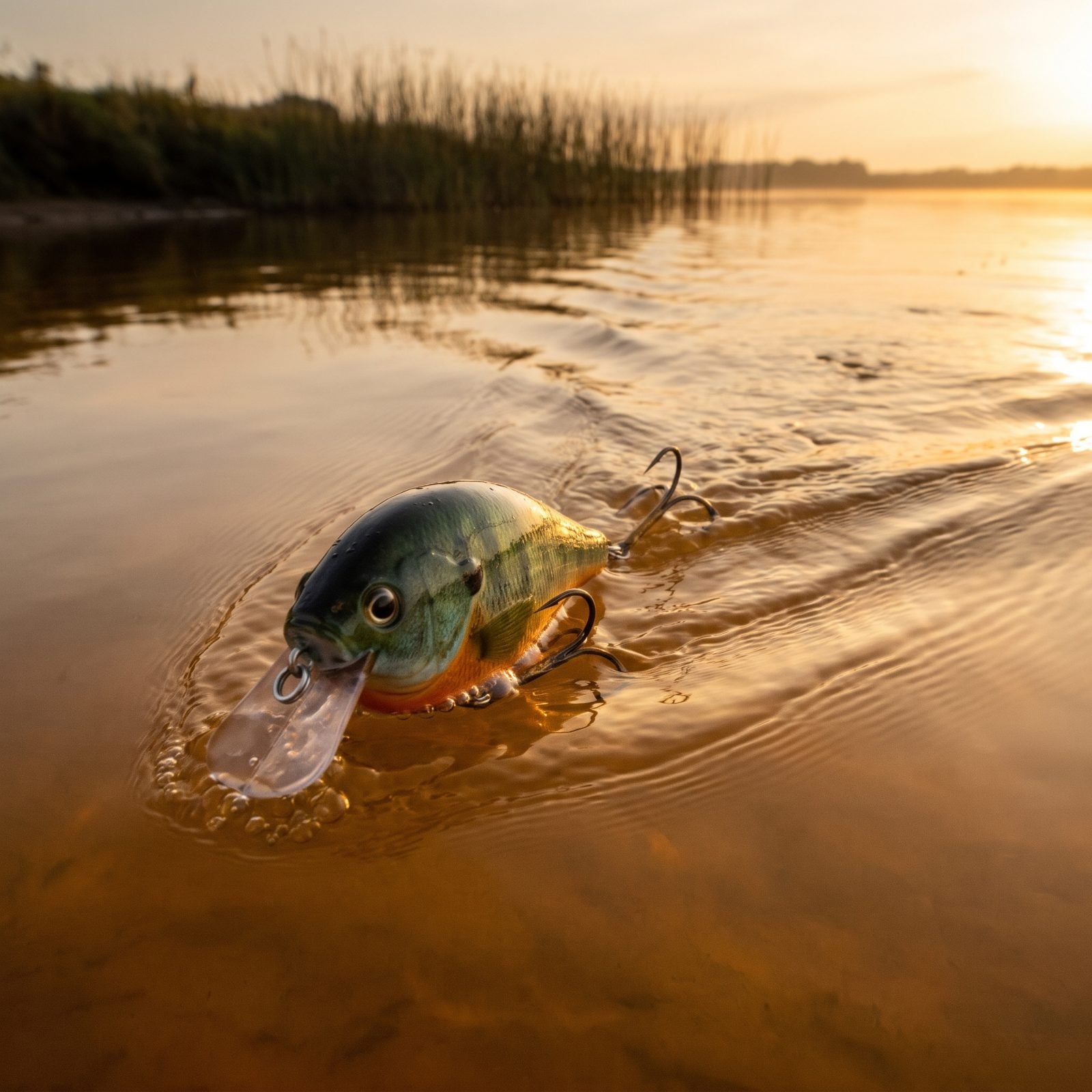
The wake crankbait has a cult, and the cult oversells it. Yes, waking a big plug over shallow cover at dawn can draw violent strikes — but that’s a specific window. Calm surface, shallow fish, low light. Narrow conditions.
Everywhere else it falls apart. The bulk kills casting distance, the wide wobble quits the moment you pick up speed, and in anything but glass it just disappears into the chop. People buy it expecting a shallow workhorse and get a specialist that earns maybe six good mornings a season.
Keep one. Don’t build a tackle tray around it.
18. Underrated: The Metal Blade Bait for Lockjaw Cold Water
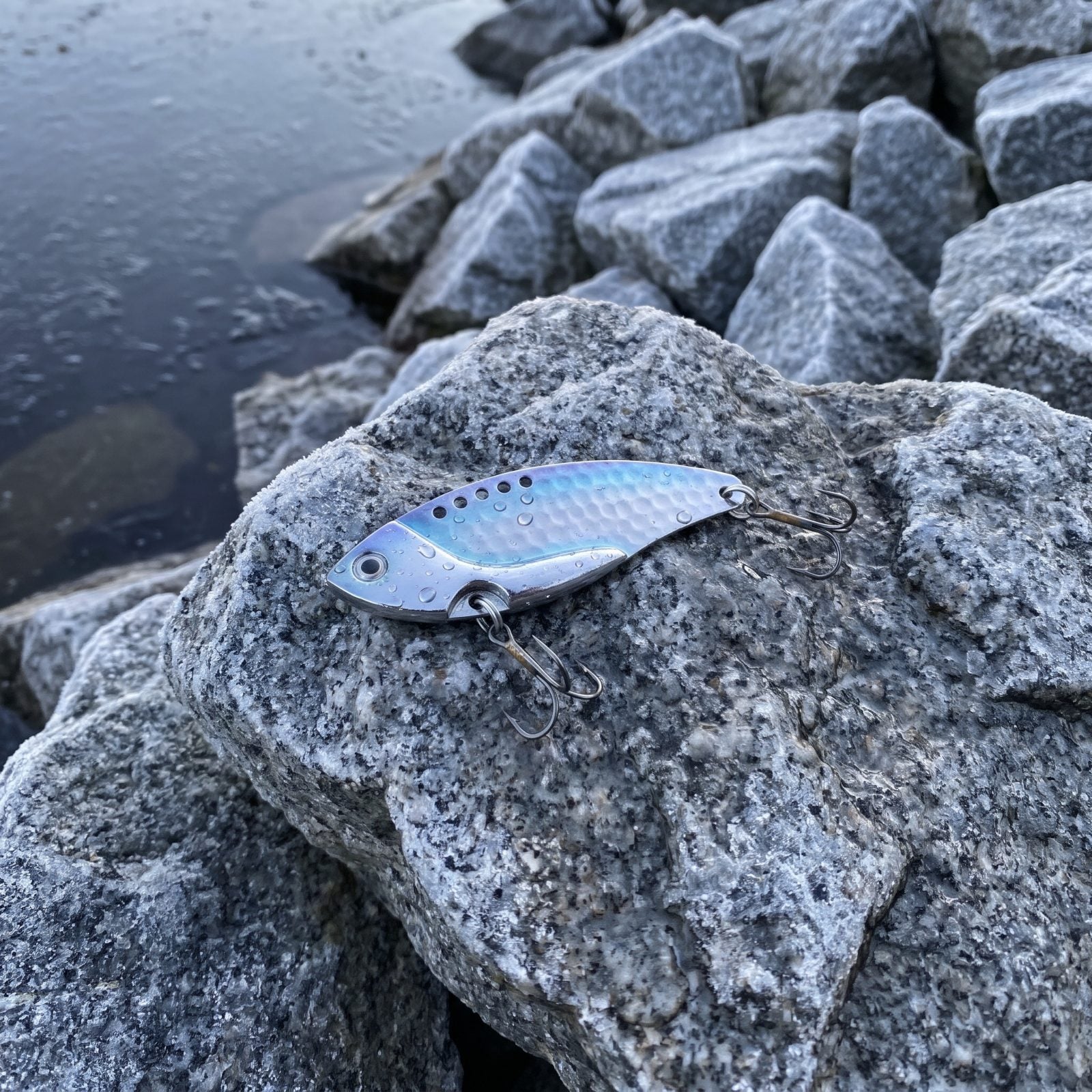
When the water drops into the low 40s and bass glue themselves to the bottom, a blade bait does something a soft plastic can’t. It’s dense, it falls fast, and that short hop off the bottom sends out a sharp, high-frequency buzz you can feel right through the rod.
Cold fish won’t chase. They will react to vibration that lands in their face. A quarter-ounce blade bait, fished on a tight line with slow lift-and-drop hops off a deep rock pile, is one of the most quietly productive cold-water baits going. Costs a few bucks. Most anglers never tie one on.
17. Overrated: The Giant Jigging Spoon That Only Shines in a Tiny Window
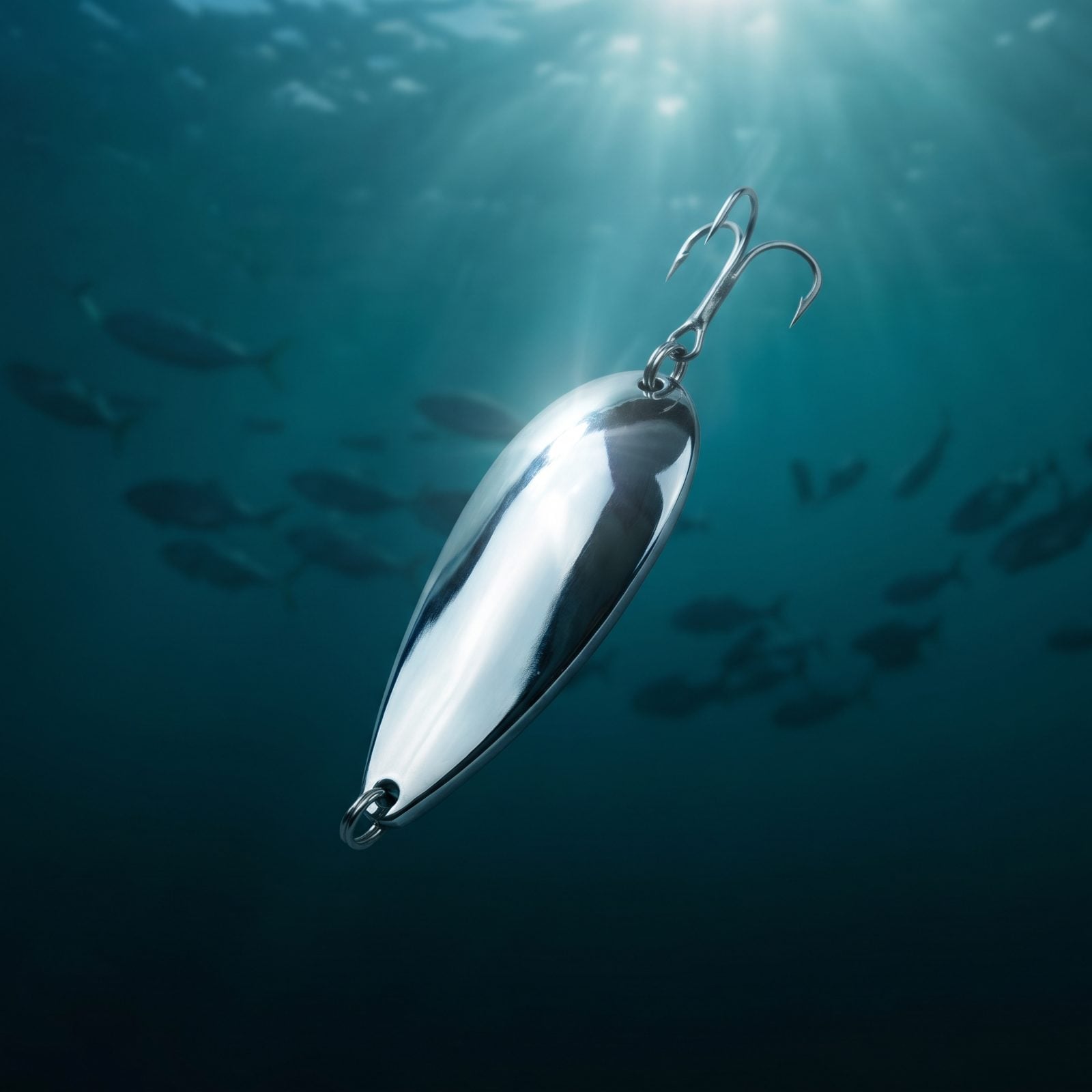
There’s a reason veteran ledge fishermen love a big jigging spoon, and there’s a reason it collects dust in most trays. It flat-out slays bass stacked on deep structure when they’re feeding on shad. That’s the window — fish schooled, electronics lit up, bait present.
Outside that, it’s dead weight. You can’t cast it meaningfully, it’s vertical fishing only, and it demands you already know exactly where the fish are. The spoon doesn’t find bass; it catches ones you’ve already found. So if you don’t fish deep structure with good electronics, this lure will never do for you what the magazine promised.
16. Underrated: The Tail Spinner That Bombs Casts to Deep Schoolers
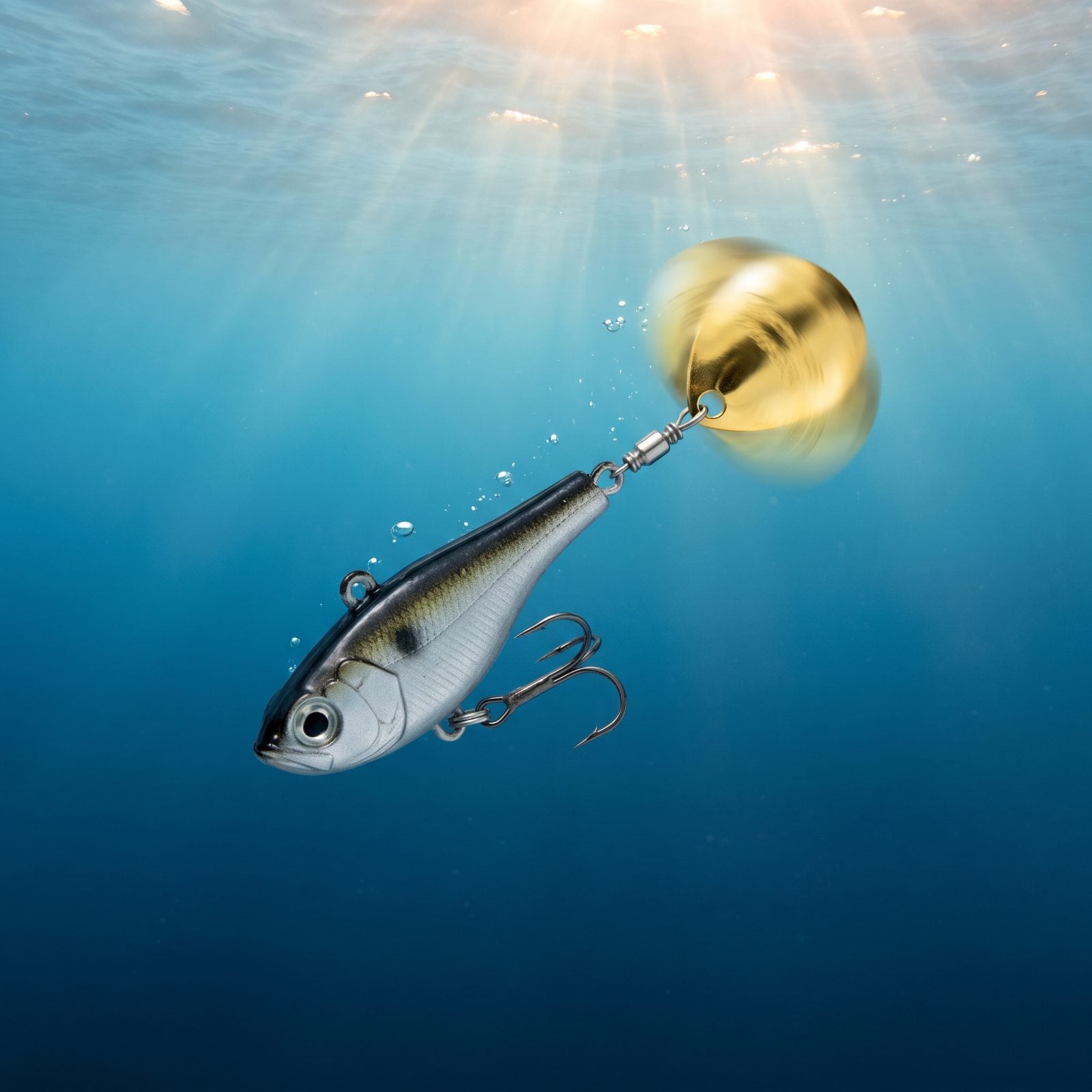
A tail spinner looks like nothing in your hand. Little lead head, a spinner blade on a wire out the back, one treble hook hanging from its belly. Then you cast it and the thing flies, dropping to 25 feet fast without a pound of bulk fighting your line.
For bass busting shad over deep water, this is the sleeper. You reach them, you flash at them, and the thin profile means short strikers still get hooked. A buddy out-fished me three to one on the same deep school once — same spot, better bait. That stung enough to teach me the lesson.
15. Overrated: The Oversized Umbrella Rig That’s More Hassle Than Help
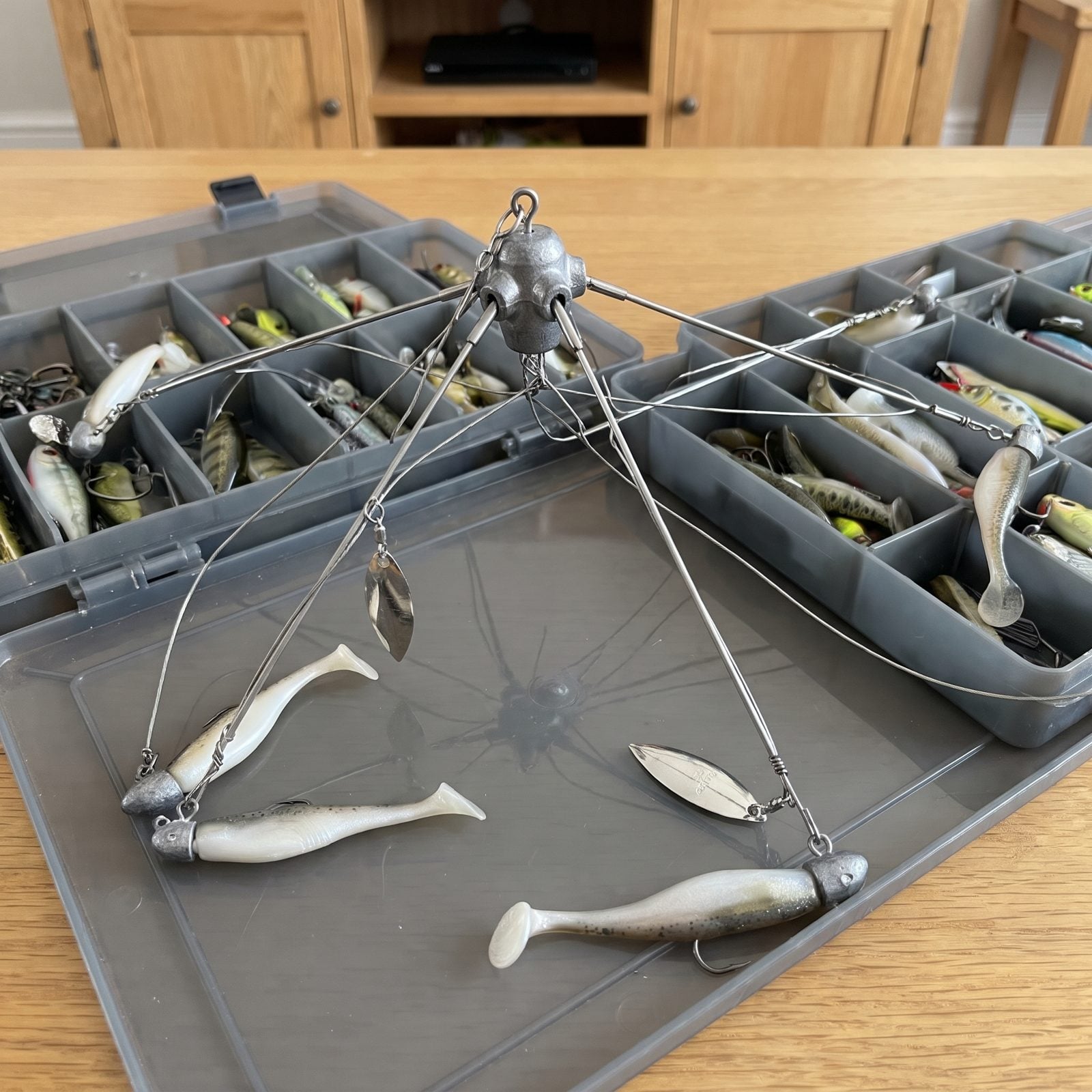
The umbrella rig had its moment, and that moment got oversold into a lifestyle. A big rig with a dozen-odd wire arms does imitate a bait school, and on cold, clear reservoirs with suspended fish it genuinely produces.
The costs rarely make the ad copy. The thing weighs a ton, demands a heavy rod you otherwise wouldn’t own, tangles constantly, and several states ban it or cap the hook count. You’ll spend more time re-rigging and picking out knots than fishing. For the handful of days it beats a single swimbait, you’re hauling a chandelier around all season.
14. Underrated: The Small Underspin That Nails Clear-Water Bass
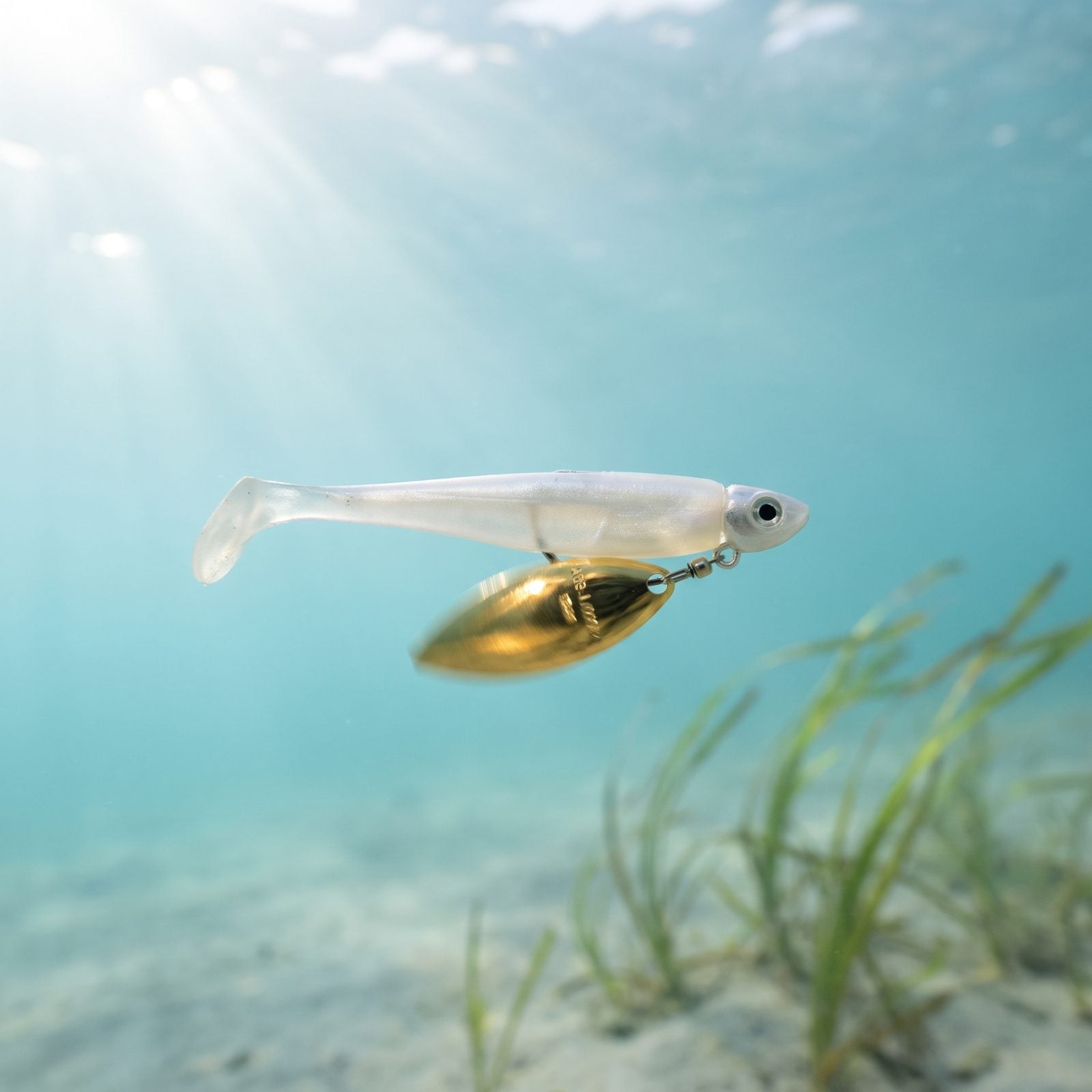
A small underspin is the quiet answer to clear water and pressured fish. Slim minnow on the hook, a little blade kicking flash underneath, nothing about it screams lure. It just looks like a shad that wandered off from the school and forgot to come back.
Spinnerbaits run too loud and jerkbaits too erratic, but this one slips in with a tight wobble and a subtle flash that gets eaten by fish that have seen everything else. Slow roll it through suspended bass over points and flats. It’s the kind of finesse power lure nobody talks about at the ramp.
13. Overrated: The Propeller-Nose Soft Plastic That Adds Hardware for No Reason
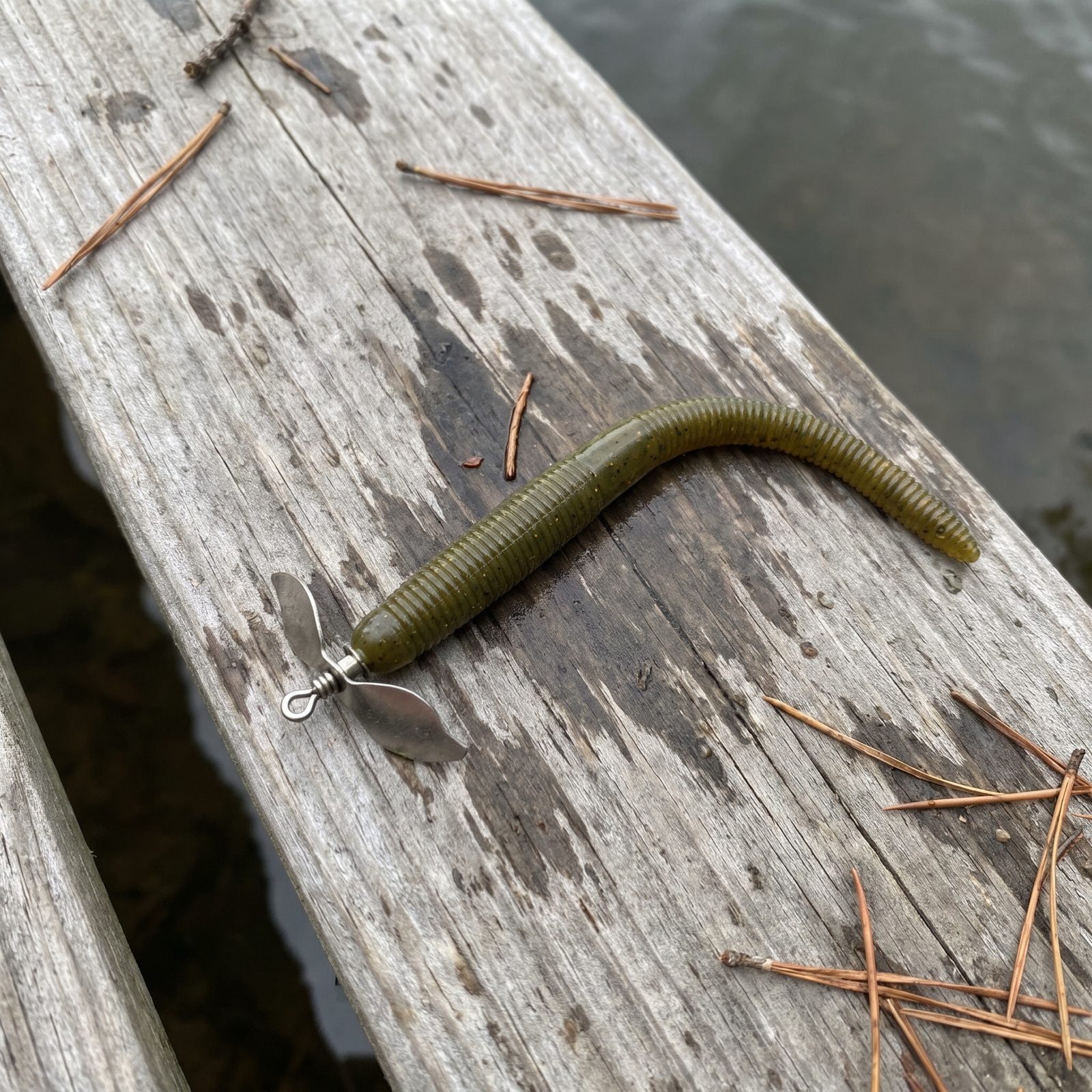
Screw a tiny propeller onto the nose of a soft plastic and the internet tells you you’ve unlocked something. Mostly you’ve added a part that snags more weeds, costs more, and does its little flutter whether or not the fish care.
Sometimes the extra vibration draws a bite in stained water. More often it changes the fall, fouls on the hook, and hands you one more thing to lose. A plain weightless stickbait catches the same fish with none of the fuss. Gimmick hardware sells gear. It doesn’t reliably sell bites.
12. Overrated: The Hyper-Realistic Trout Swimbait You’ll Rarely Need
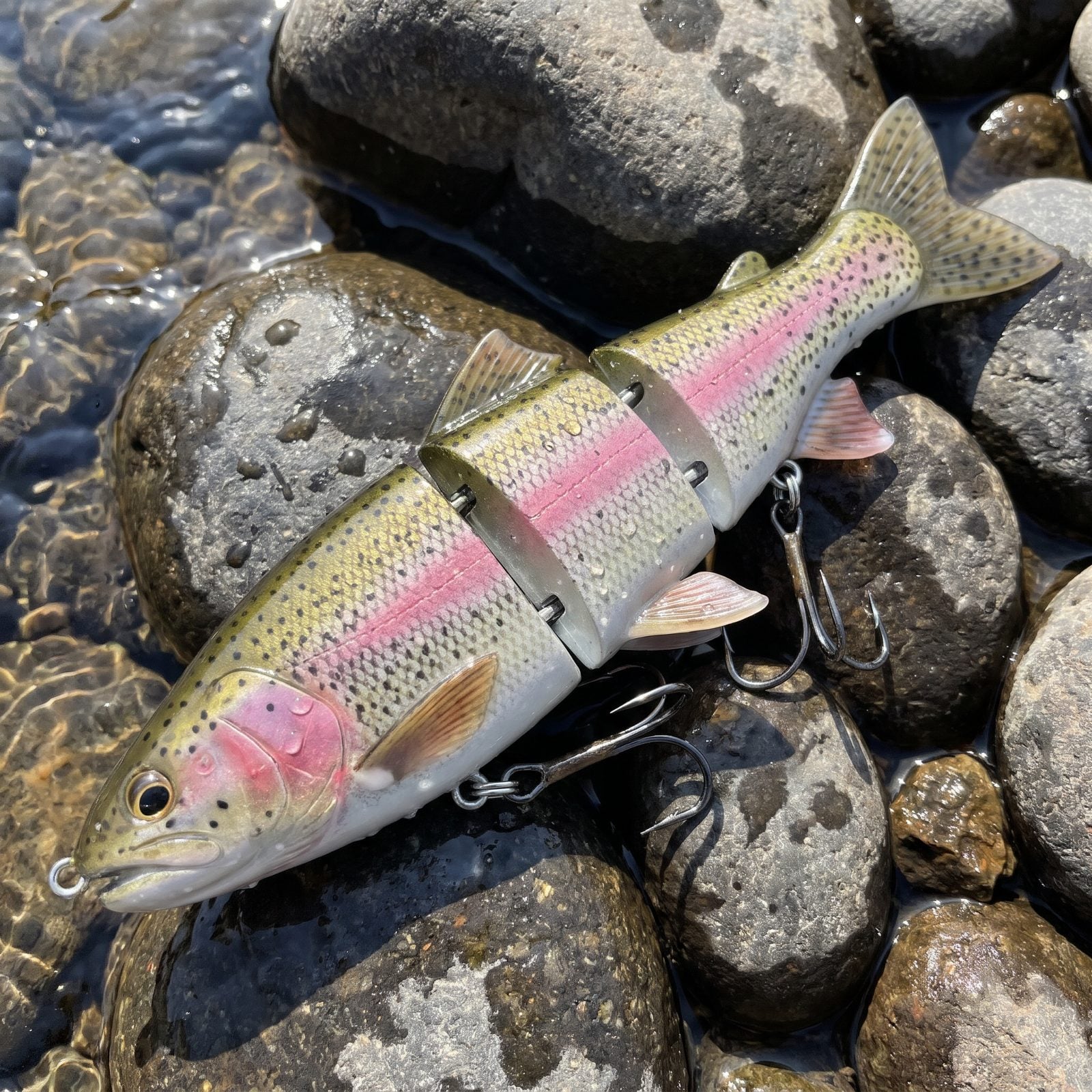
A hyper-realistic jointed trout swimbait is a gorgeous object and a terrible default. On a handful of Western reservoirs where giant bass gorge on stocked trout, it catches the fish of a lifetime. That’s a real thing and a real fishery.
For most of the rest of us, though, it’s a pricey plug imitating a baitfish our bass never eat. The detail you’re paying for matters to the camera, not the fish, and not the ponds most of us wade into on a Saturday. Buy it if you live near a trout lake full of double-digit bass. Otherwise you’re funding a glass-case lure.
11. Underrated, The Single-Jointed Hard Swimbait That Keeps Catching While Everyone Chases Articulation
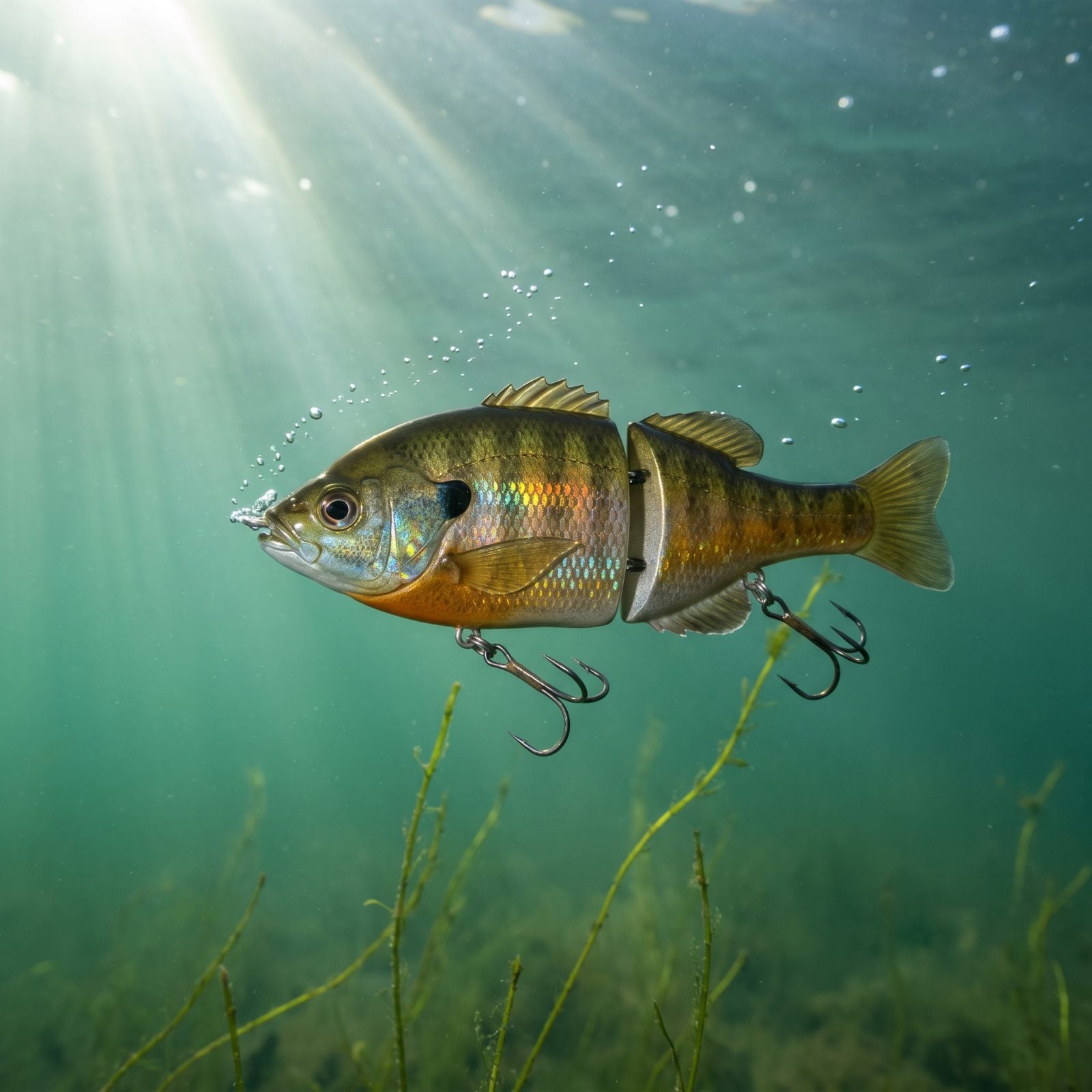
The bait that outfishes its flashier cousins is usually the boring one. One joint, a hard body, a predictable wobble you could read with your eyes closed — and that plainness is exactly why it works.
Crank it, stop it, let it glide, and it tracks true every time. No hinge pinching your line, no limp tail fouling on the cast. These run anywhere from fifteen to forty dollars and they shrug off seasons of abuse that would shred a soft bait.
I ignored them for years. They looked too plain next to the six-segment stuff, and that was a mistake. On tough days a plain wobble is precisely what pressured fish will commit to.
10. Overrated, The Pre-Rigged Multi-Jointed Soft Swimbait That Falls Apart Faster Than It Catches
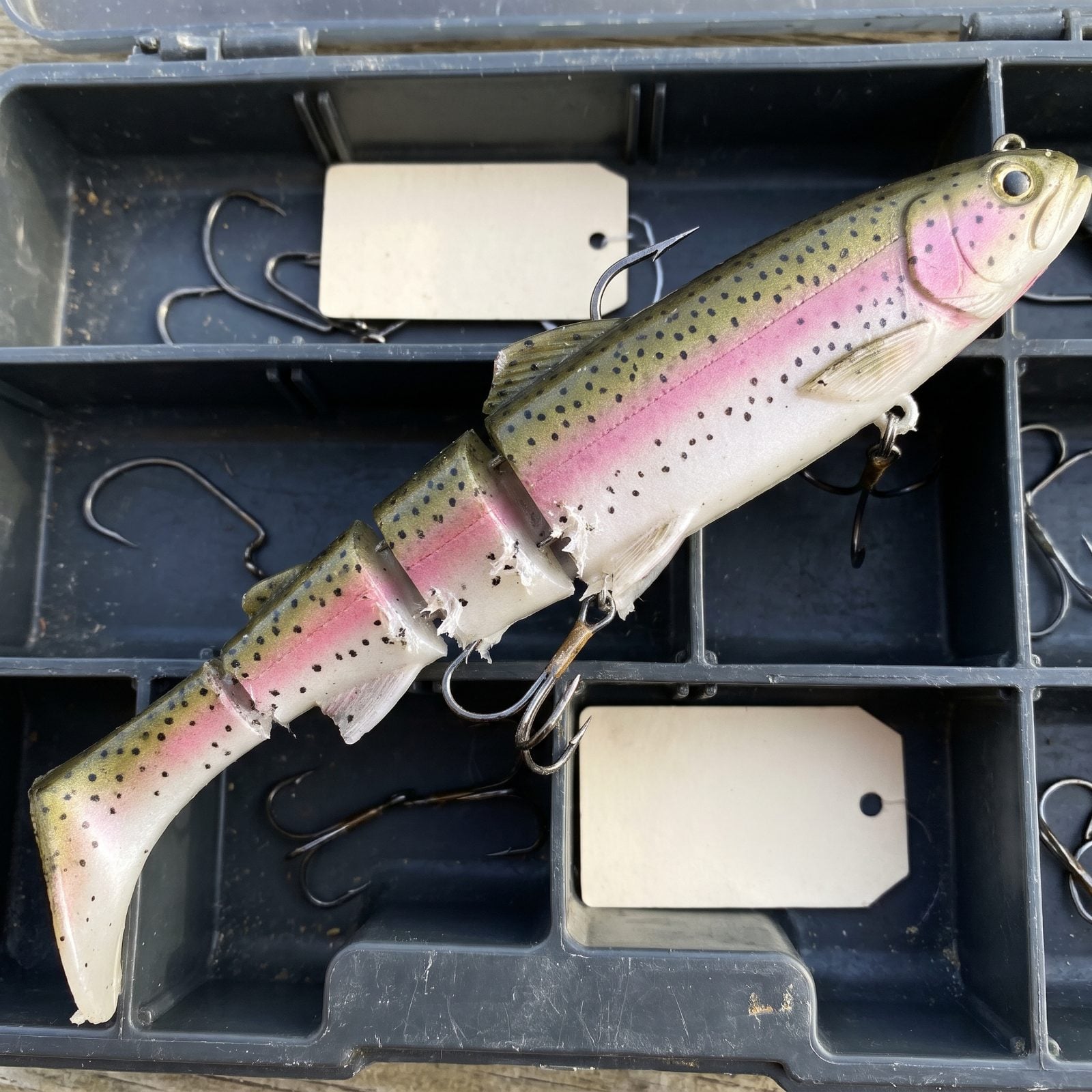
Drop sixty dollars on a soft multi-jointed swimbait and you’re buying a trophy you get to use a handful of times. The segments do look alive in the water. They also split at the joints the first time a decent fish gets hold of one.
The movement is genuinely good — nobody argues that. Durability against cost is where it falls down. One solid bass, or a single pike, and the plastic tears right where it anchors to the hardware.
A lure that catches three fish and then retires belongs in a display case, not a tackle box.
If money’s no object, fine. For the rest of us the cost-per-fish math is brutal.
9. Underrated, The Line-Through Swimbait That Pins More Fish To the Net
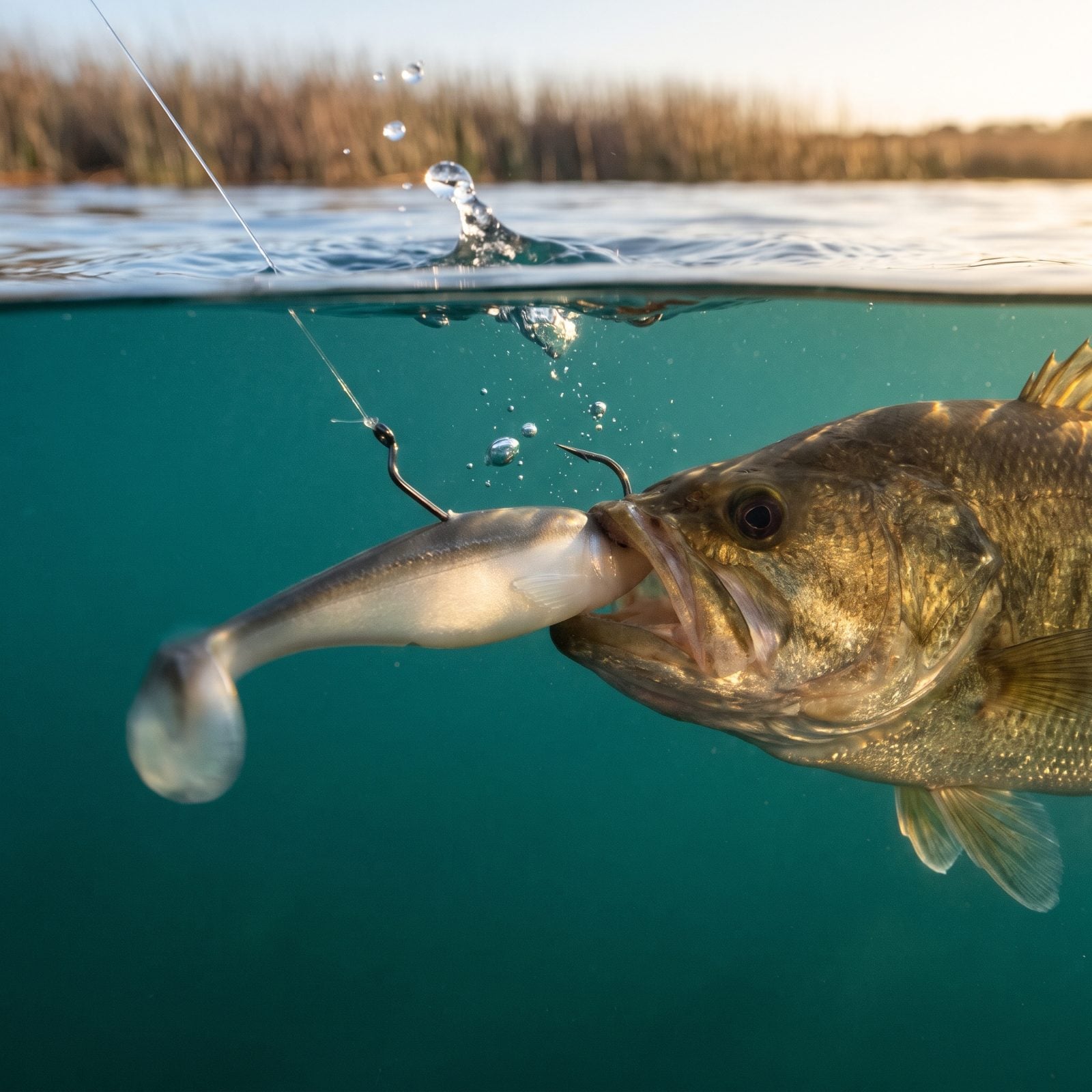
The exposed hooks are the whole trick: the line runs through the body to a hook that hangs free, and the body slides up the line on the strike. When a bass clamps down, a conventional swimbait hands it a rigid body to lever against and throw. This rig keeps both points standing clear of the plastic, so the fish meets bare steel the instant it bites.
Fewer throws. Fewer gut-punch moments at the boat. You still get the natural tracking because the body swims unweighted and uncluttered.
They’re cheap, too — often under ten bucks for the body plus a pair of hooks of your choosing. Rig it once and you’ll wonder why you put up with short strikes for so long.
8. Overrated, The Oversized Boot-Tail Swimbait That Rides Too High To Do Its Job
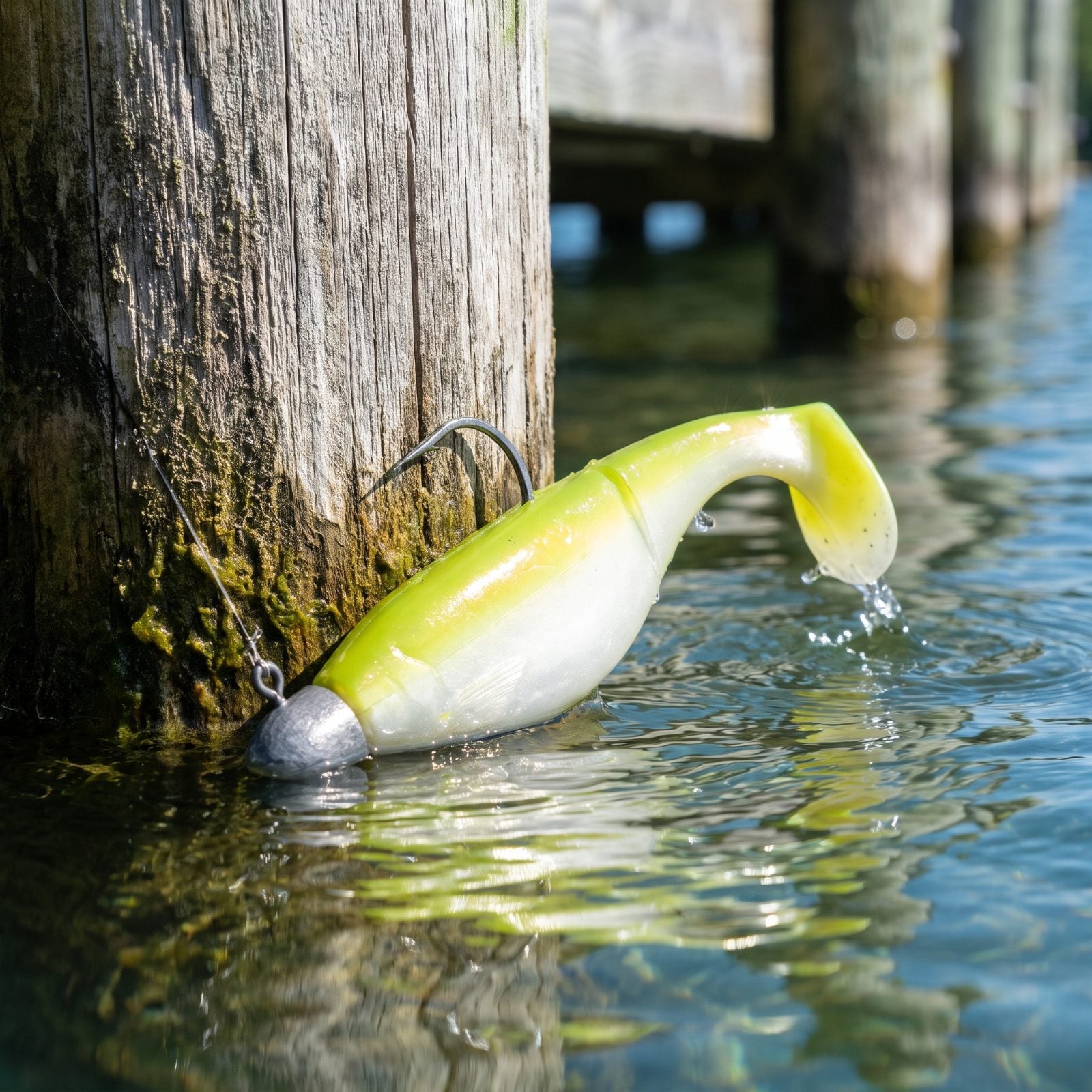
Bigger paddle, bigger problem. The oversized boot-tail throws off so much lift that it climbs toward the surface the second you speed up — right when you need it pinned to a mid-depth line.
These sell on big-fish promise and that thumping tail you can feel through the rod. Out on the water you end up fighting the bait just to keep it down, and a lure wrestling your rod tip is a lure spooking fish.
On a slow, deep crawl they earn a spot. For most presentations, though, you’re better off with a smaller profile or a line-through body that actually stays where you put it.
7. Underrated, The Hair Jig That Breathes When Everything Else Sits Dead In Cold Water
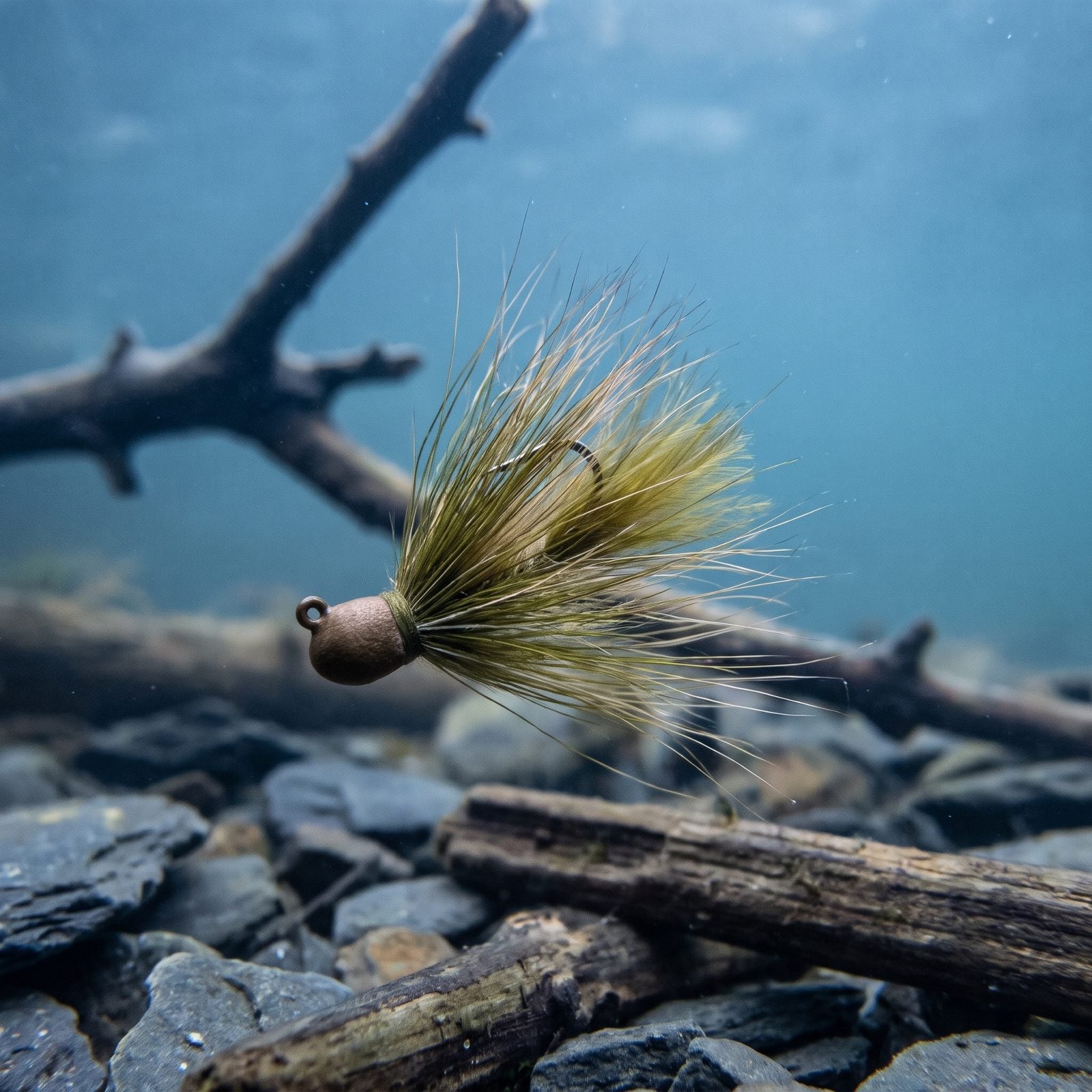
Nothing moves like hair in cold water. Not plastic, not rubber. When the temperature drops and bass turn sluggish, a hair jig barely twitched on the bottom keeps breathing on its own — marabou and bucktail pulsing with the faintest current.
That subtle, involuntary flutter is what a lethargic winter fish will ease over and inhale. Soft plastics need you to feed them action. Hair does the work while you sit there doing nothing.
They cost a few dollars, and old-timers have leaned on them for generations for good reason. I came to them late. One frozen-finger afternoon of cold-water smallmouth made a believer out of me.
6. Overrated, The Oversized Mop Jig That Smothers Bites Outside Warm Water
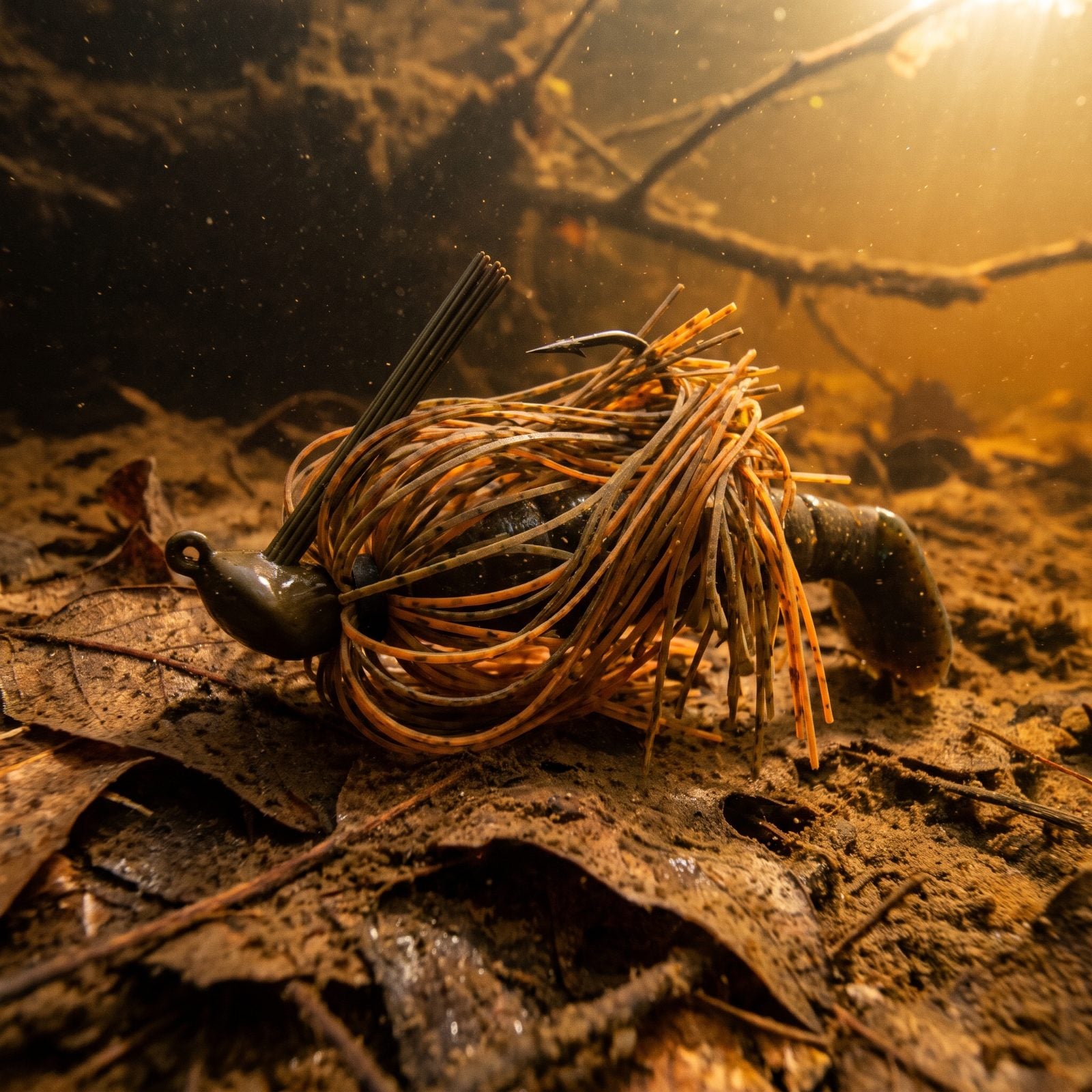
The mop jig earns its name honestly. That dense, billowing skirt looks like a full plate in warm water when bass are gorging and aggressive, and come June it absolutely shines.
Drop the water temperature, though, and all that bulk turns into a liability. A cold, picky fish inhales a small bait and gags on a mop. What you get instead is short strikes, nipped skirts, and a pile of empty hooksets.
Fun to throw when the conditions line up. Just know the window is narrow, and most of the calendar it’s simply too much lure.
5. Underrated, The Compact Finesse Jig That Pressured Bass Still Can’t Refuse
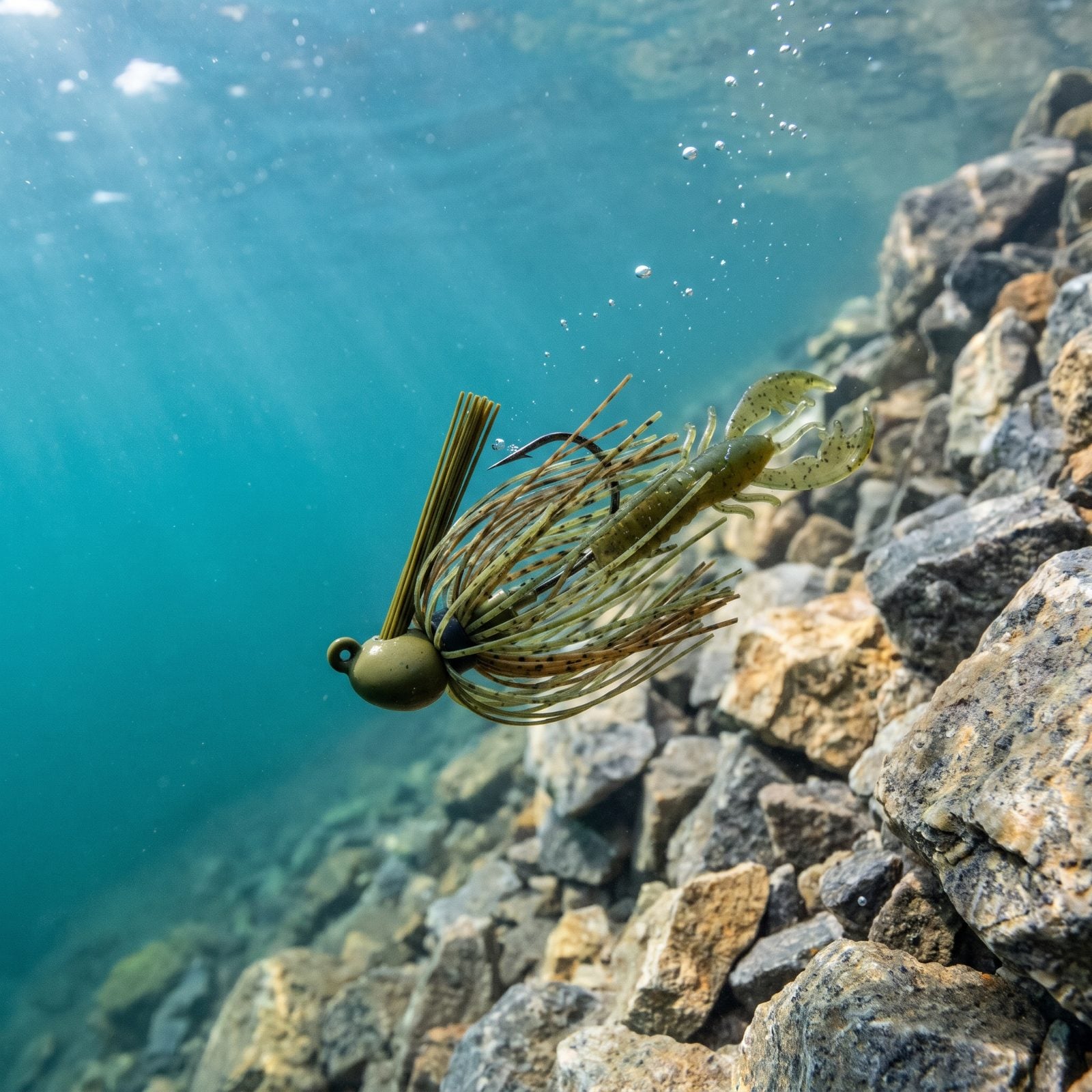
When a lake gets hammered and the fish have seen everything, small wins. A compact finesse jig trims the profile down, lightens the head, and gives pressured bass a mouthful they’ll actually commit to.
Three reasons it stays in my rotation:
- It falls slow and natural, giving wary fish time to decide yes instead of no.
- The lighter head skips under docks and overhangs where big jigs clatter and spook.
- It fishes rock, grass edges, and timber without hanging up on every cast.
This is my highest-percentage jig on clear, tough water. Not even close.
4. Overrated, The Rattle-Loaded Flipping Jig That Rings the Dinner Bell for No One in Clear, Shallow Cover
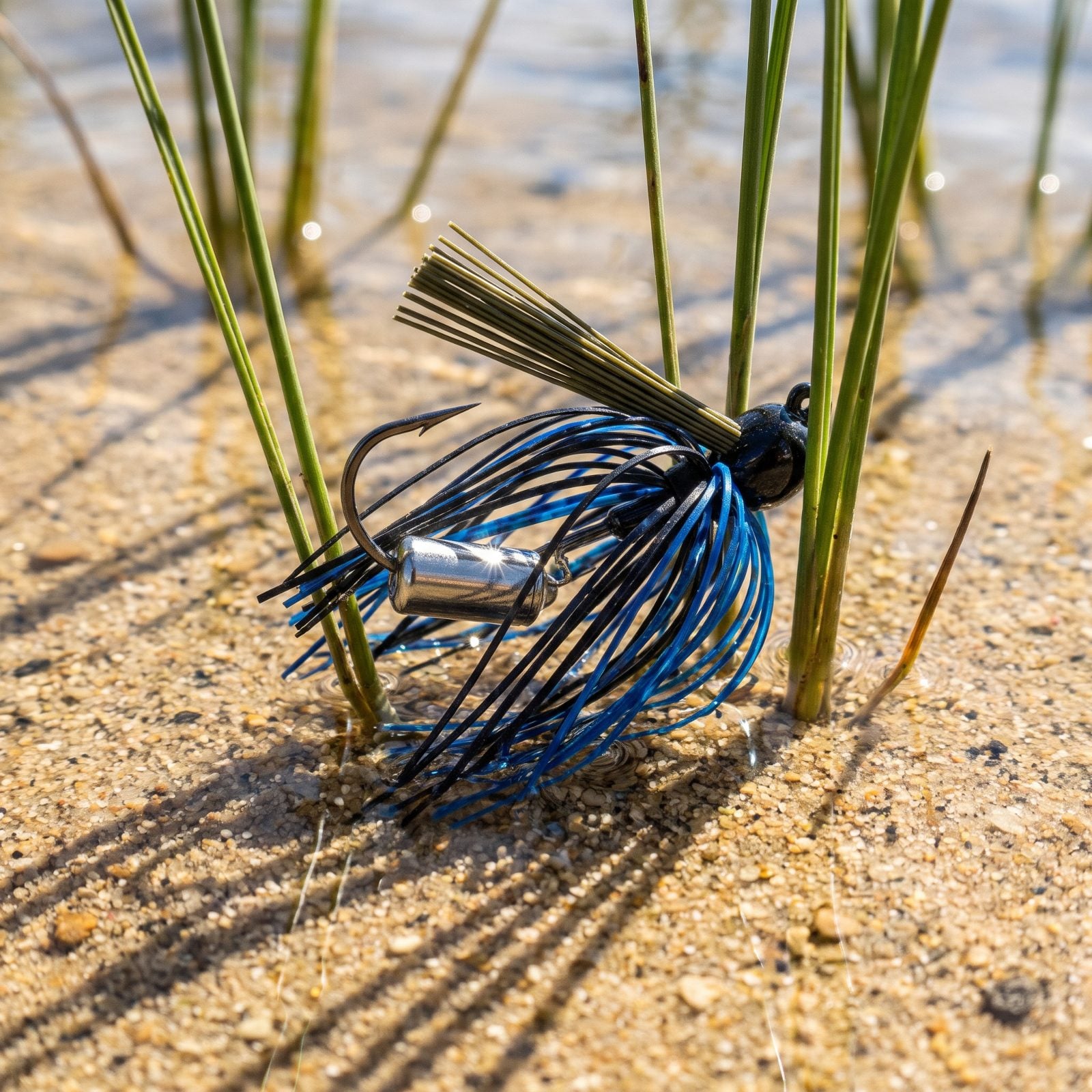
Rattles sell jigs. In muddy water or thick, dark cover that clatter genuinely helps a bass home in, and the marketing just forgets to mention the other half of the story.
Flip a loud rattling jig into clear, shallow cover and you’re announcing yourself to fish that are already on edge and hunting with their eyes, not their ears. The noise that pulls them in dirty water sends them bolting across a foot of gin-clear flat.
Match the rattle to the conditions, not to the hype. Silent is usually the smarter call where bass can watch every move you make.
3. Underrated, The Pointed-Head Swim Jig That Slips Through Grass Like It Isn’t There
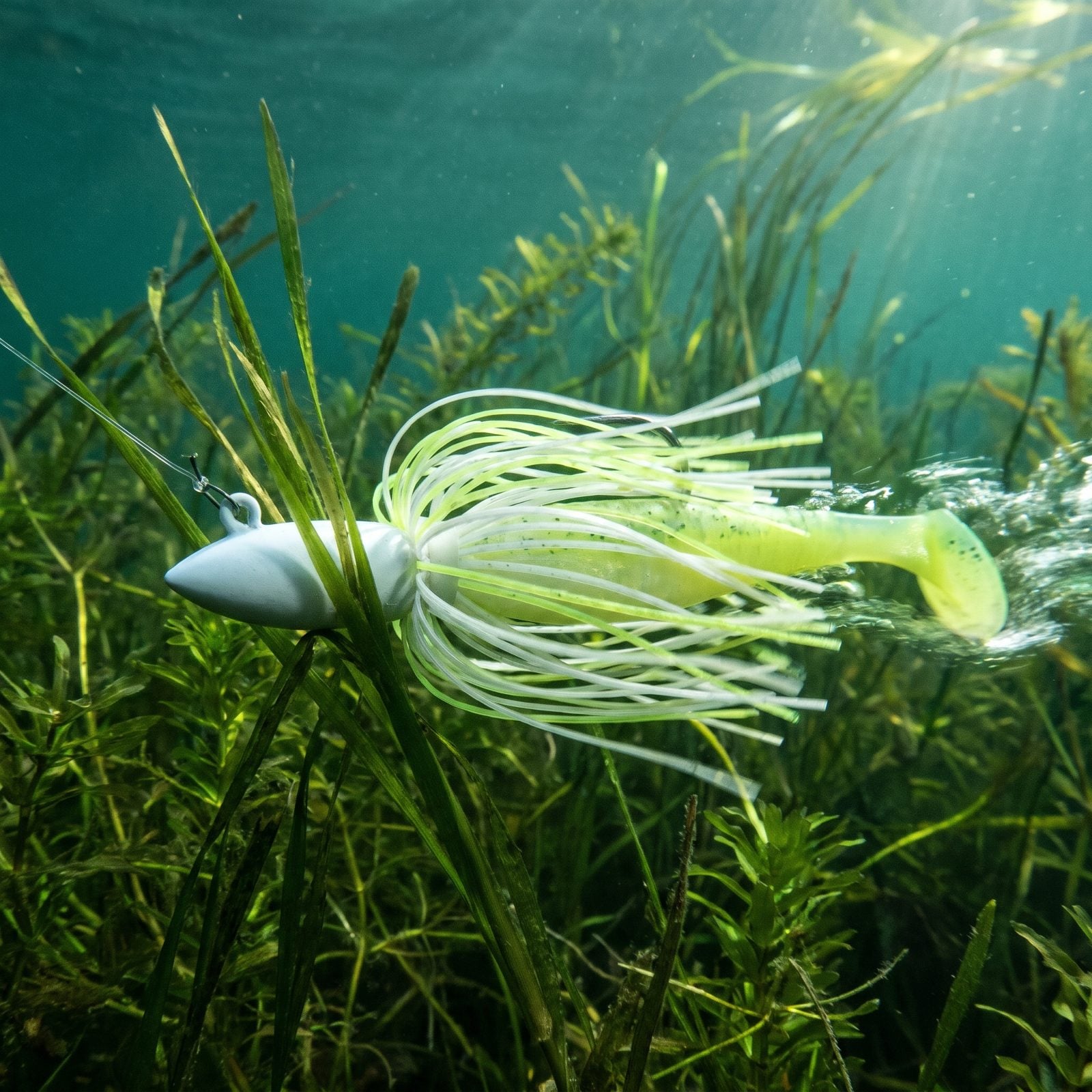
Head shape is everything here. A pointed, bullet-style nose knifes through grass and reeds instead of wedging into them, so you keep a clean retrieve where a blunt-nosed jig would collect salad on every pull.
Swim it steadily through hydrilla, pause it in a pocket, keep it fishing instead of forever picking weeds off your hook. More casts land in the strike zone, and fewer retrieves go to waste.
It gets overlooked because it looks like a dozen other jigs on the peg. The nose makes all the difference, and most anglers never notice.
2. Overrated, The Oversized Punch Jig You Only Need When the Mat Is Truly Impenetrable

Heavy punching gear has a cult following, and inside the thickest matted hyacinth or milfoil it’s the only tool that works. Nobody disputes that. The trouble is how often anglers grab it when the cover doesn’t call for it.
Drag that oversized weight and bulky profile through scattered or moderate vegetation and you crash past fish instead of tempting them. This rig was built for one extreme situation — not as a general shallow-cover answer.
Keep one rigged for the genuinely nasty mats. Leave it in the rod locker the rest of the time and throw something a bass will actually chase. Overkill carries a cost, usually measured in bites you never got.
1. Underrated: The Small Paddle-Tail on a Plain Ball Head
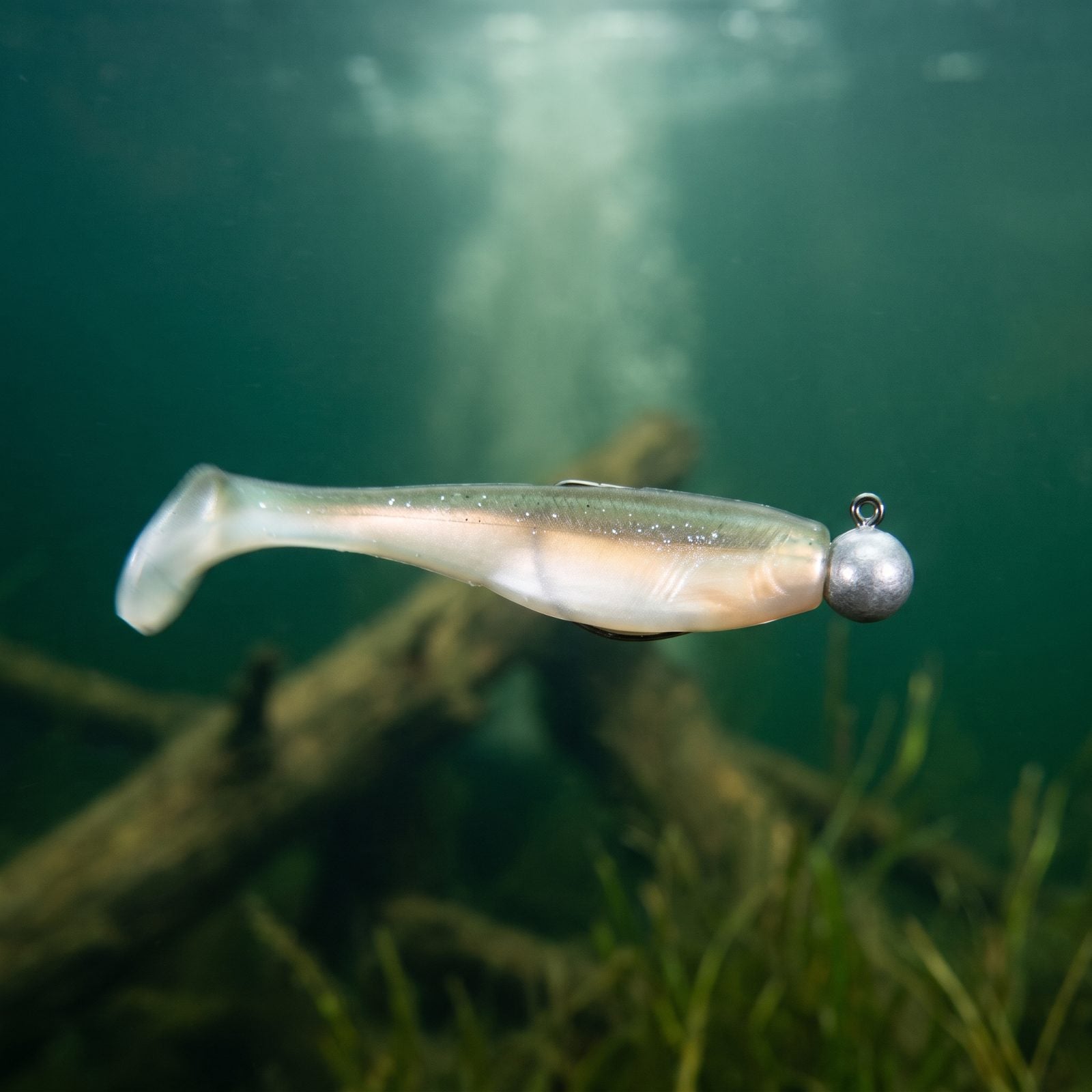
The rig that keeps producing is the one that looks like nothing on the shelf. A three-inch paddle-tail, a plain round ball head, no skirt, no rattle, no chartreuse-dipped tail. Just a small baitfish that swims straight and kicks.
People overthink it. They buy the articulated glide baits and the hollow-body line-through swimmers and leave this little rig buried in a drawer. Meanwhile the small paddle-tail catches everything that swims, from a two-pound largemouth to the occasional crappie that wandered into the wrong zip code.
When you don’t know what they’ll eat, they’ll eat this.
Fish it on a slow straight retrieve six inches off the bottom. The kick does the work. You do almost nothing, which is the hardest part for most of us to swallow.