
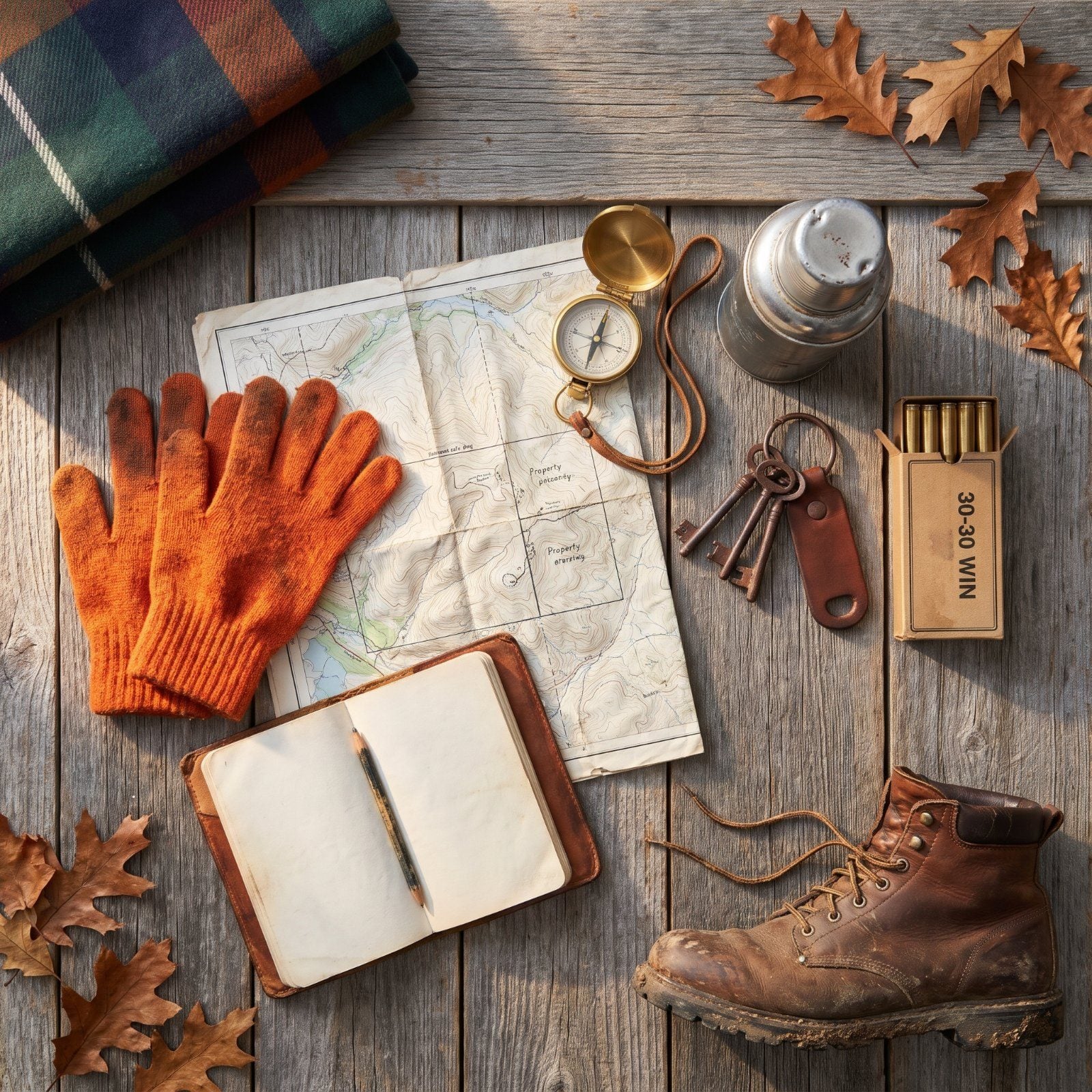
The woodstove’s already cold by the time the arguments start. Somebody climbed into the wrong stand before light. Somebody parked across the gate. Somebody set a loaded rifle on the porch step and walked inside for coffee. None of it was malice — all of it was somebody not knowing the unwritten code that holds a good deer camp together. You won’t find these rules posted anywhere. They get passed down over bad coffee and good bourbon, and they’re what separates a camp you return to for twenty years from one that quietly falls apart after a single bad November.
Please note that some of the images in this article were created with the assistance of AI.
45. Never Hunt Someone Else’s Stand Without Asking
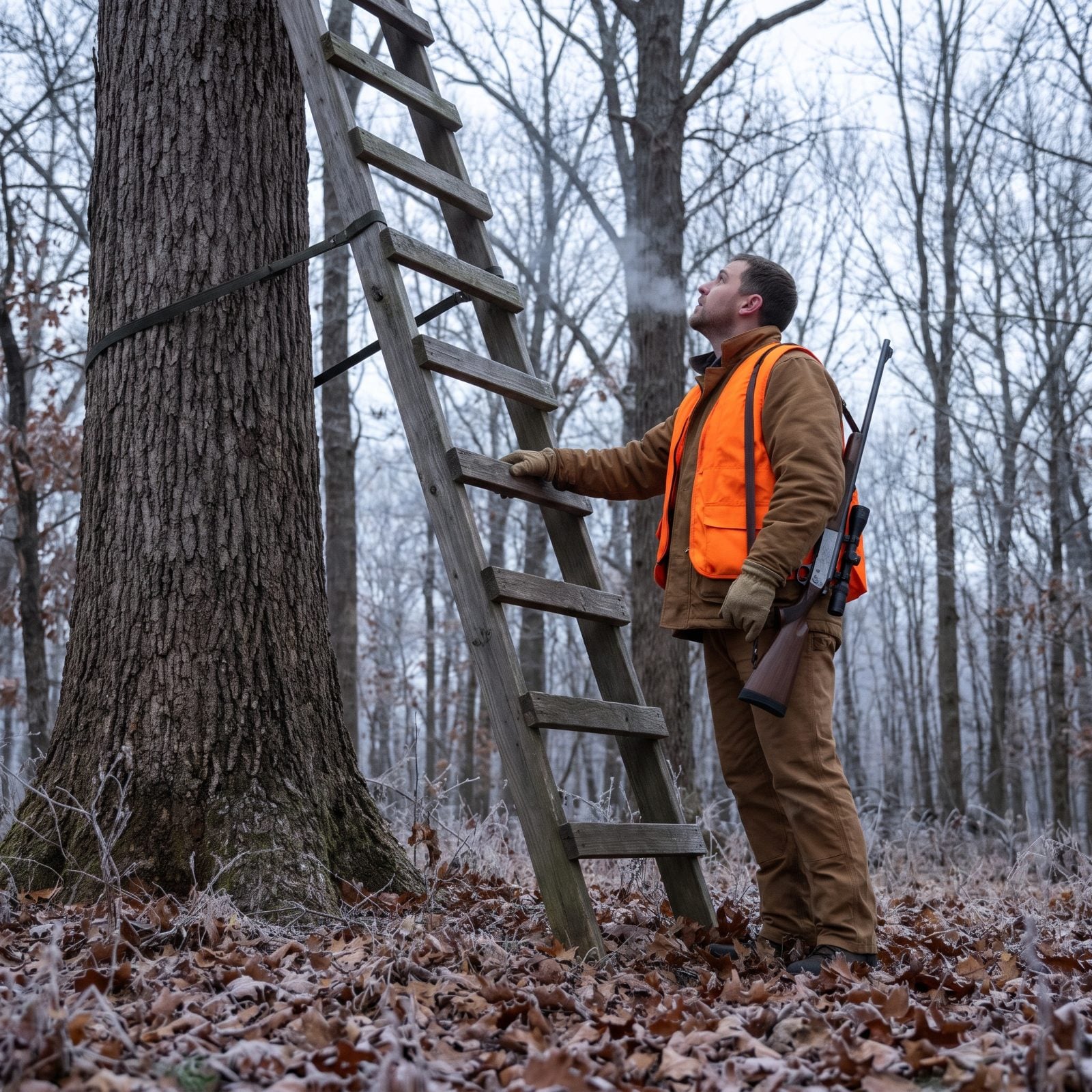
A stand is personal. Somebody scouted that spot in August heat, hung the ladder, cut the shooting lanes, and watched three bucks cross the same draw at last light. Climb into it uninvited and you’re not borrowing a seat — you’re stealing a year of someone’s patience.
Ask the night before. A quick word over supper settles it. And if the answer’s no, let it be no without sulking.
44. Leave the Veteran’s Chair Alone
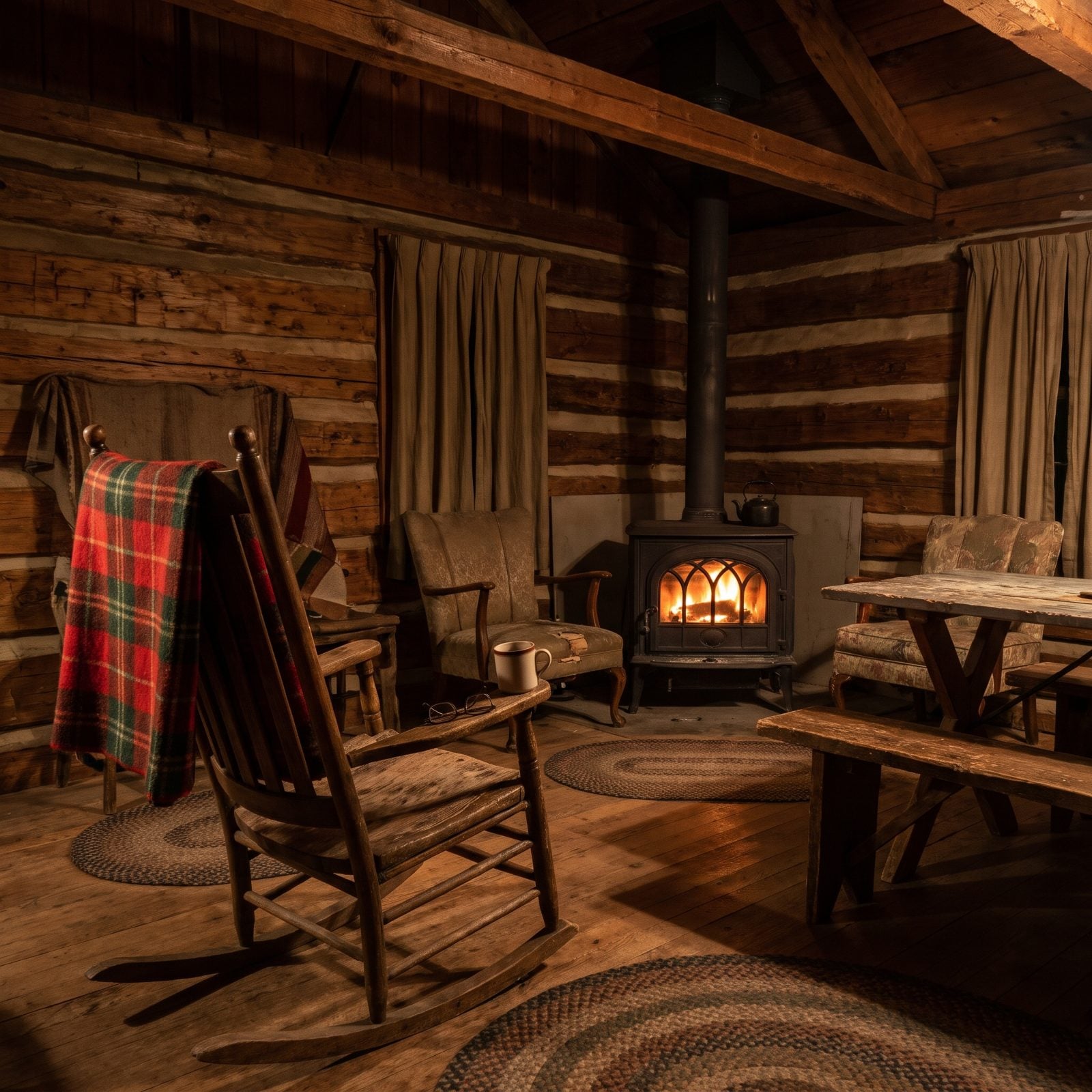
Every camp has one — the chair closest to the stove, worn smooth on the armrests, that belongs to the oldest hand without anyone ever saying so. Sit in it the first night and you’ll learn fast.
This isn’t about rank for its own sake. The man who’s hunted this ground for forty years earned the warm corner, and giving it to him is how a camp says thank you without making a speech. Take the cold bench by the door. Your turn comes, eventually.
43. Ask Before Claiming a Bunk
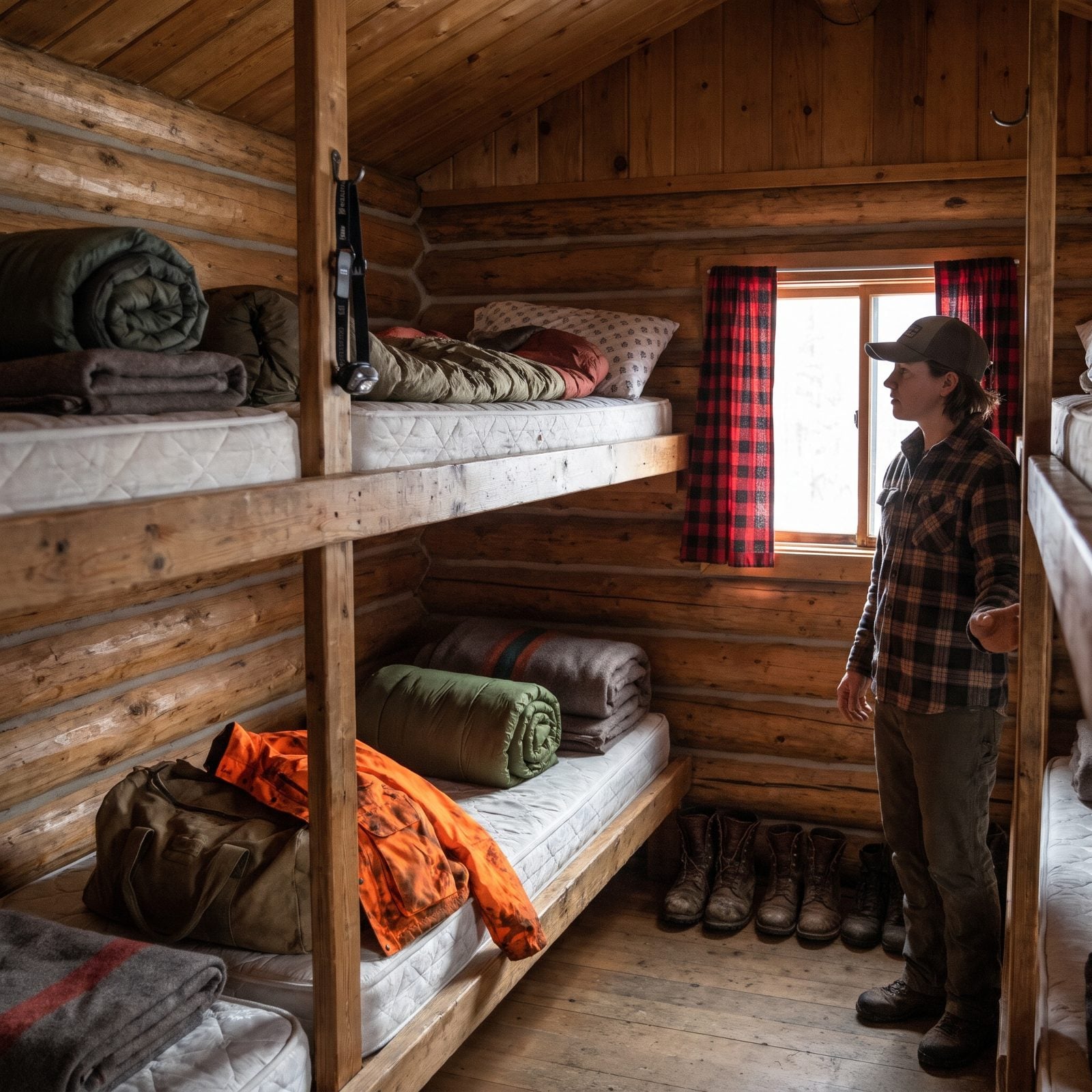
Walk in, throw your bag on the best bunk, and you’ve announced something about yourself before you’ve said a word.
Plenty of camps have a bunk order older than the youngest hunter there. Somebody always takes the bottom by the stove because his knees are shot, and somebody takes the top by the window because he’s up at four anyway. Ask where you should drop your gear. It costs you nothing and saves the kind of quiet resentment that ruins a weekend.
42. Unload Every Firearm Before Entering Camp
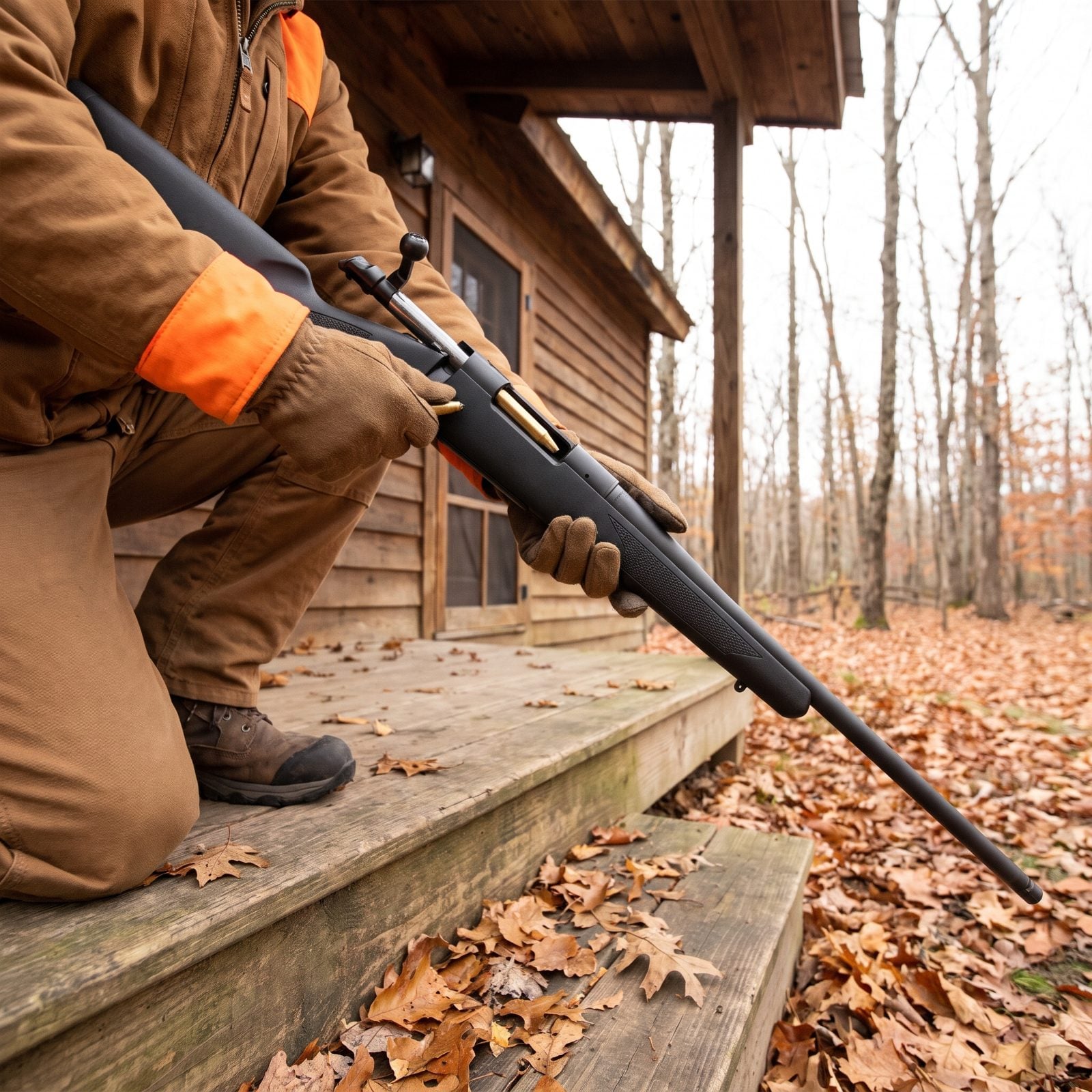
Loaded guns do not come through the cabin door. Ever.
Clear it at the truck or the porch, action open, muzzle down, before your boot hits the step. We’ve seen a man unload three times in front of witnesses because the first two didn’t satisfy the old-timer standing at the door, and nobody in that cabin thought the old-timer was being unreasonable about it.
Picture it. A camp full of tired hunters, a warm stove, somebody bumping somebody else in a dark bunkroom. That’s exactly where a round in the chamber becomes a funeral. The rule isn’t fussy — it’s the whole reason everyone goes home.
41. Leave Actions Open When Firearms Are Set Down
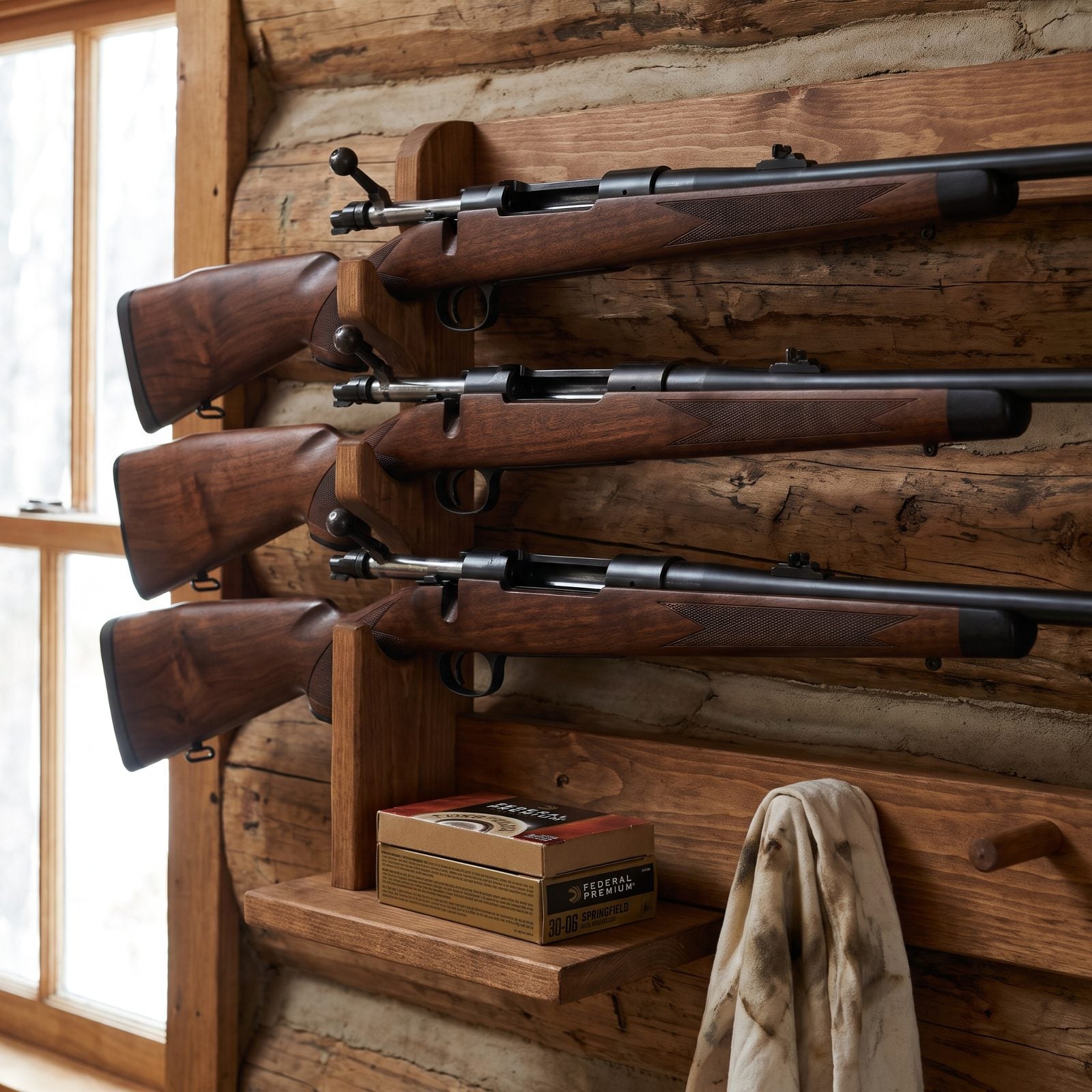
An open action is a promise everyone in the room can read from across the cabin. Bolt back, breech empty, nothing to wonder about.
When you lean a rifle in the corner or rack it on the wall, leave it open. Now the next guy who picks it up doesn’t have to trust your memory, and he doesn’t have to point it at anyone to check. The gun tells the truth about itself, and that’s why the habit’s worth having.
40. Never Sight In a Rifle Beside Camp
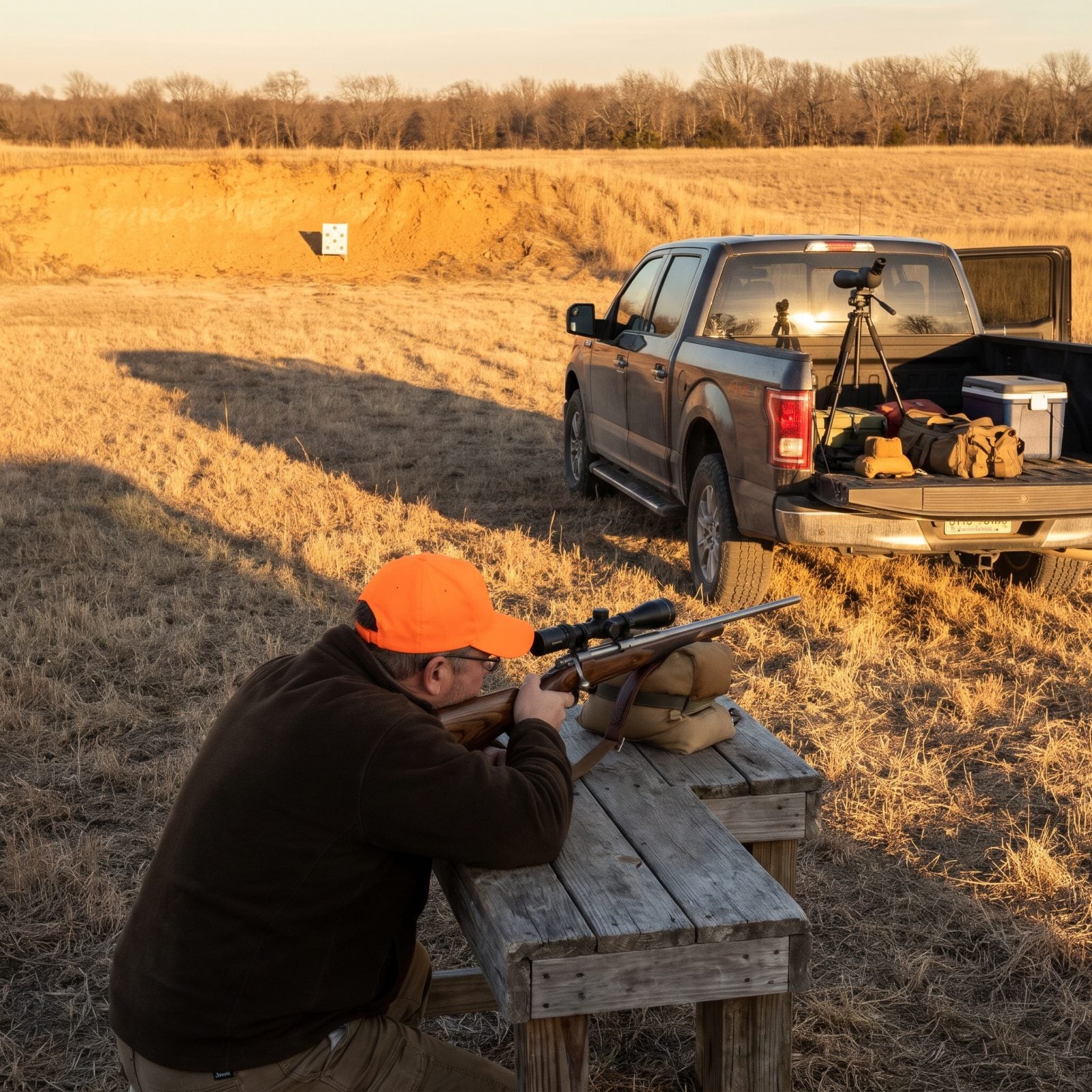
You roll in the night before the opener and realize your scope got knocked around in the truck bed. The urge to touch off a few rounds behind the cabin to confirm zero is strong. Fight it.
A sighting-in session needs a real backstop, a safe lane, and open distance from anything with a heartbeat. Drive out to a field a half mile off, or handle it at home before you ever leave. Three rounds cracking off at dusk thirty yards from the bunkhouse is how you clear a camp of friends in one weekend.
39. Know the Property Lines Before Opening Morning
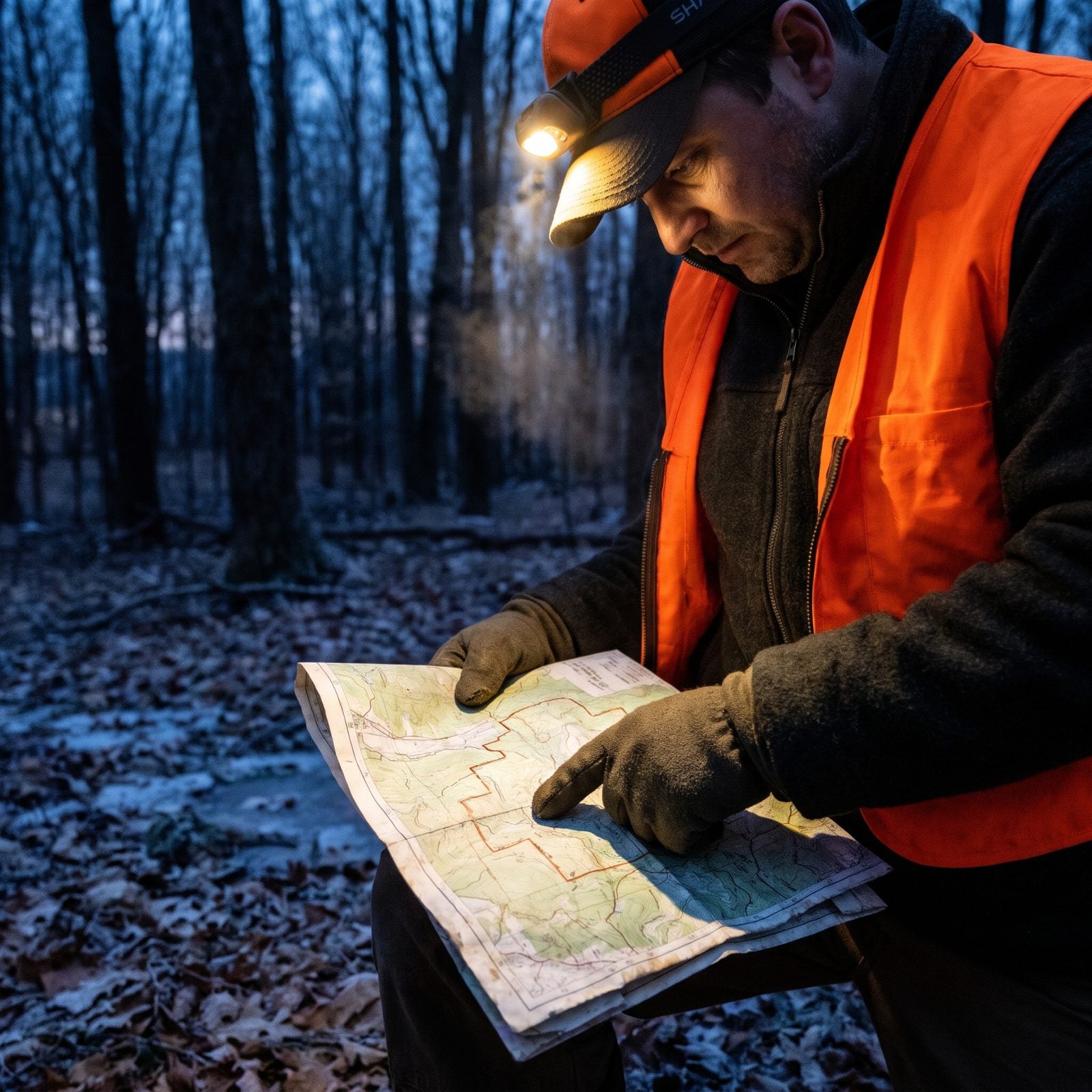
Boundaries matter more here than anywhere.
Cross onto the neighbor’s ground, legal or not, and you’ve put the whole camp’s lease and every relationship that comes with it at risk over one careless drive. Walk the lines in daylight before the season. Mark the corners, note the posted signs, and know where the fence turns. Your GPS helps — but batteries die and signal drops in a hollow.
38. Do Not Crowd Another Hunter’s Access Route
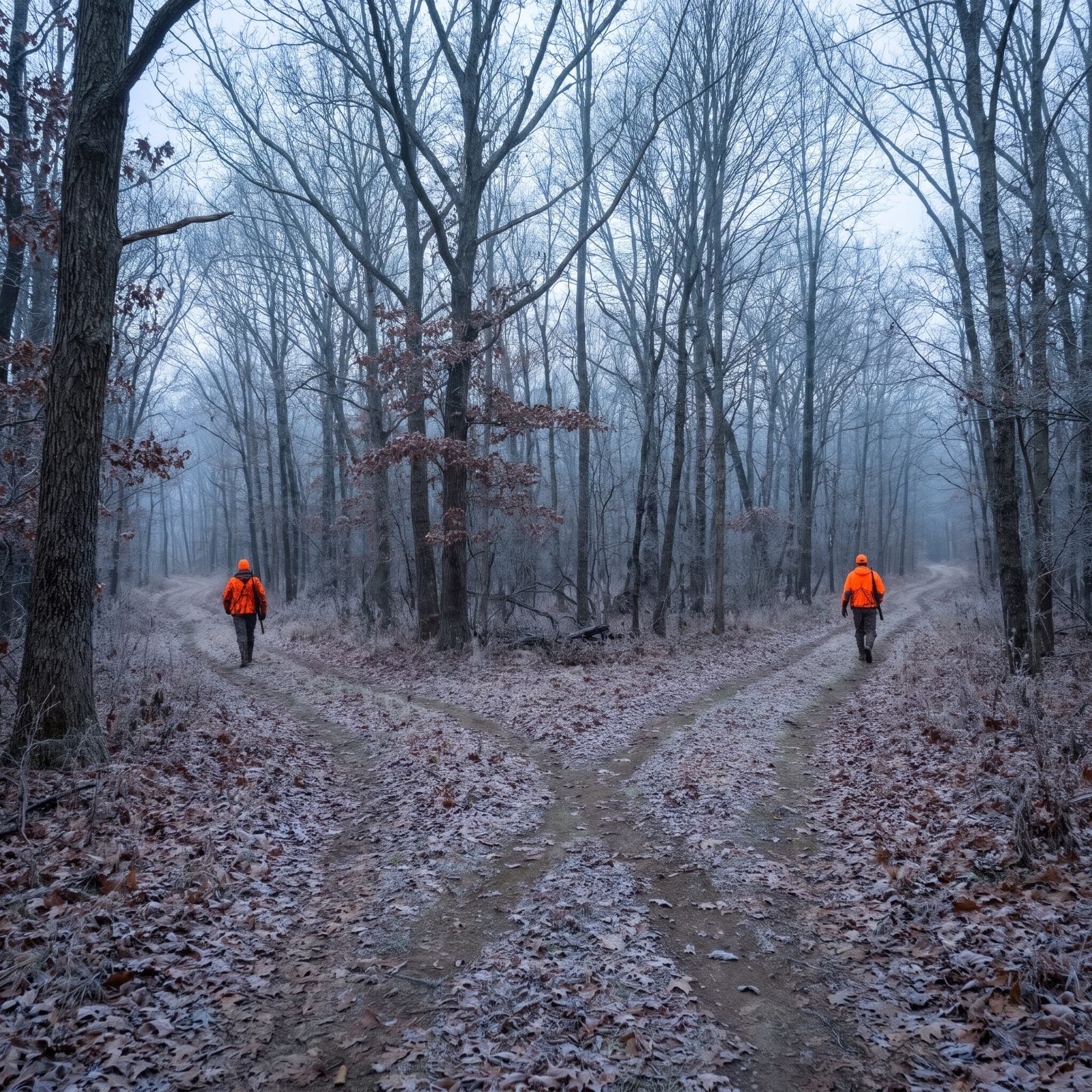
You both park at the same gate. He turns left toward the creek bottom, so you turn right toward the ridge, and you don’t follow him in close on the same trail.
Walking somebody’s access route behind him spooks the deer he’s been counting on and wrecks his morning for no reason. Give him a wide berth, take the long way around to your own spot, and let the woods settle between you. Shared ground works only when people spread out across it.
37. Never Block a Gate With Your Truck
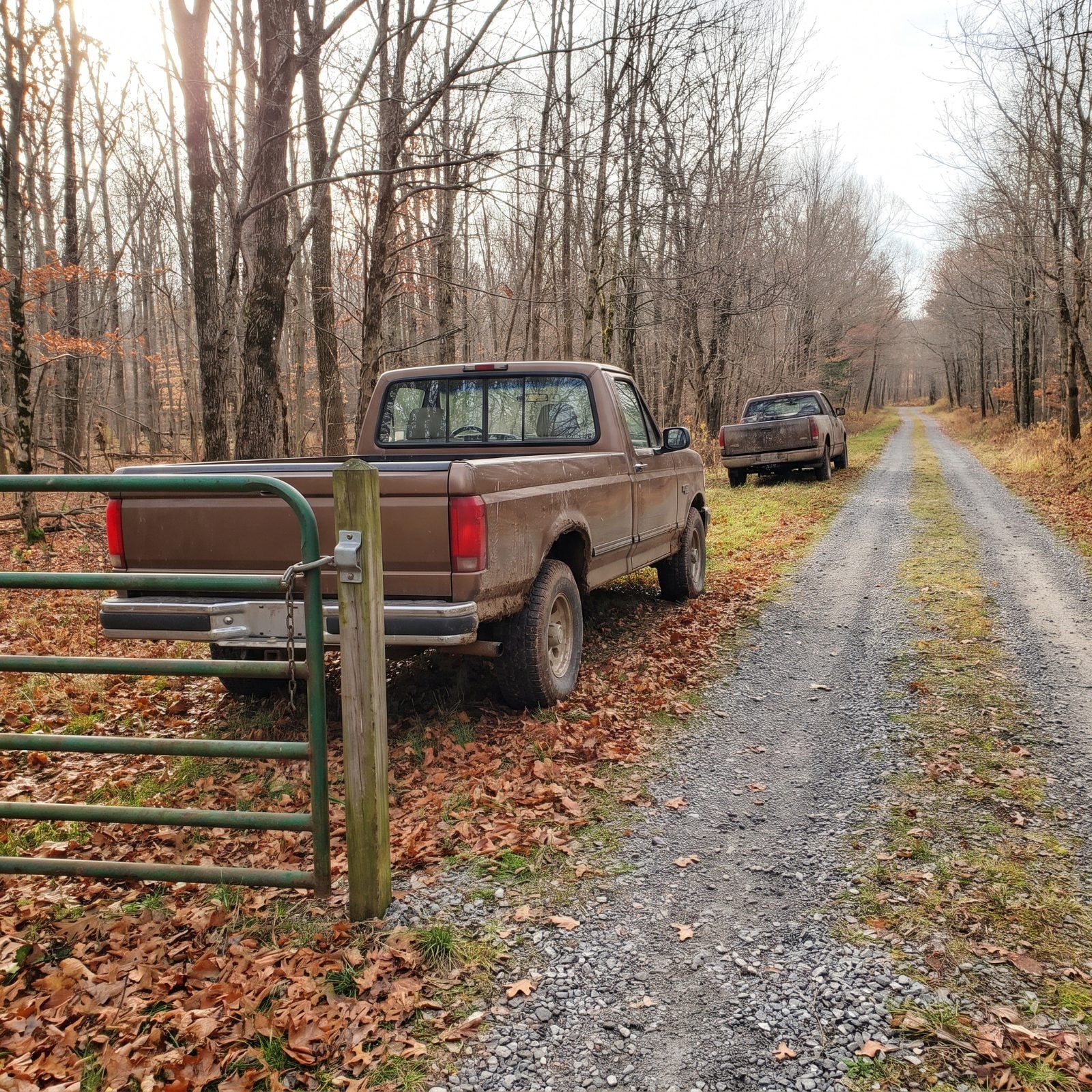
Pull up to the gate, park dead in front of it because it’s convenient, and you’ve trapped everyone behind you. Then a buck goes down at the far end of the property and the guy who needs to drive in and pack it out can’t get past your tailgate.
Tuck in tight against the brush. Leave the gate and the two-track clear, and think about the emergency you can’t see coming — a blocked gate at the wrong moment turns a good day into a long, miserable drag through the dark.
36. Leave Every Gate Exactly as You Found It
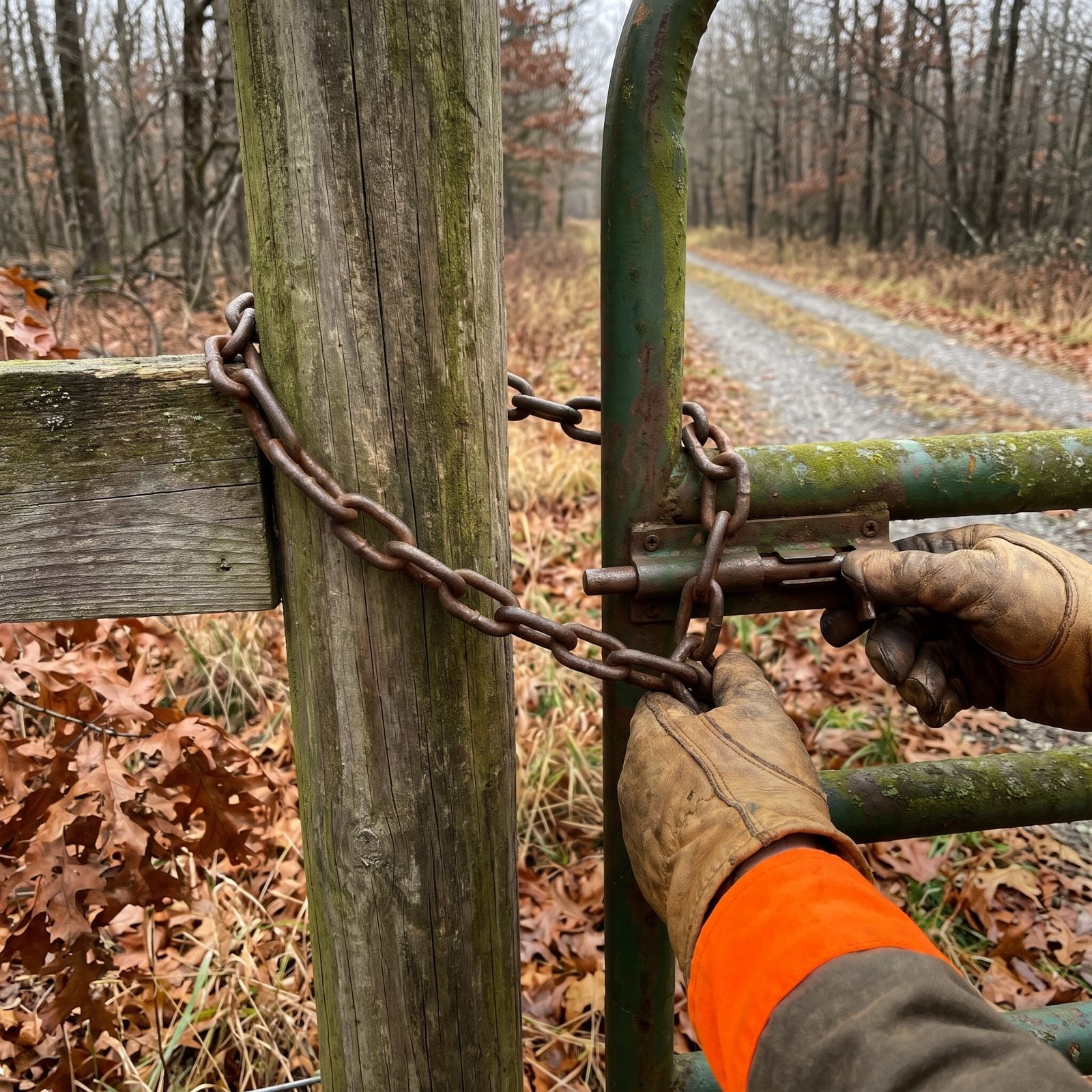
Open gate stays open. Closed gate gets closed behind you. Latched gate gets latched again, chain and all.
This is the oldest rule in the country and the one city-raised hunters break first. A landowner leaves a gate shut because his cattle are in that field, and your open gate turns into fifty head on the highway by dark. Leave it the way you found it, every time, and you’ll keep getting invited back.
35. Sign In and Record Your Route Before Heading Out
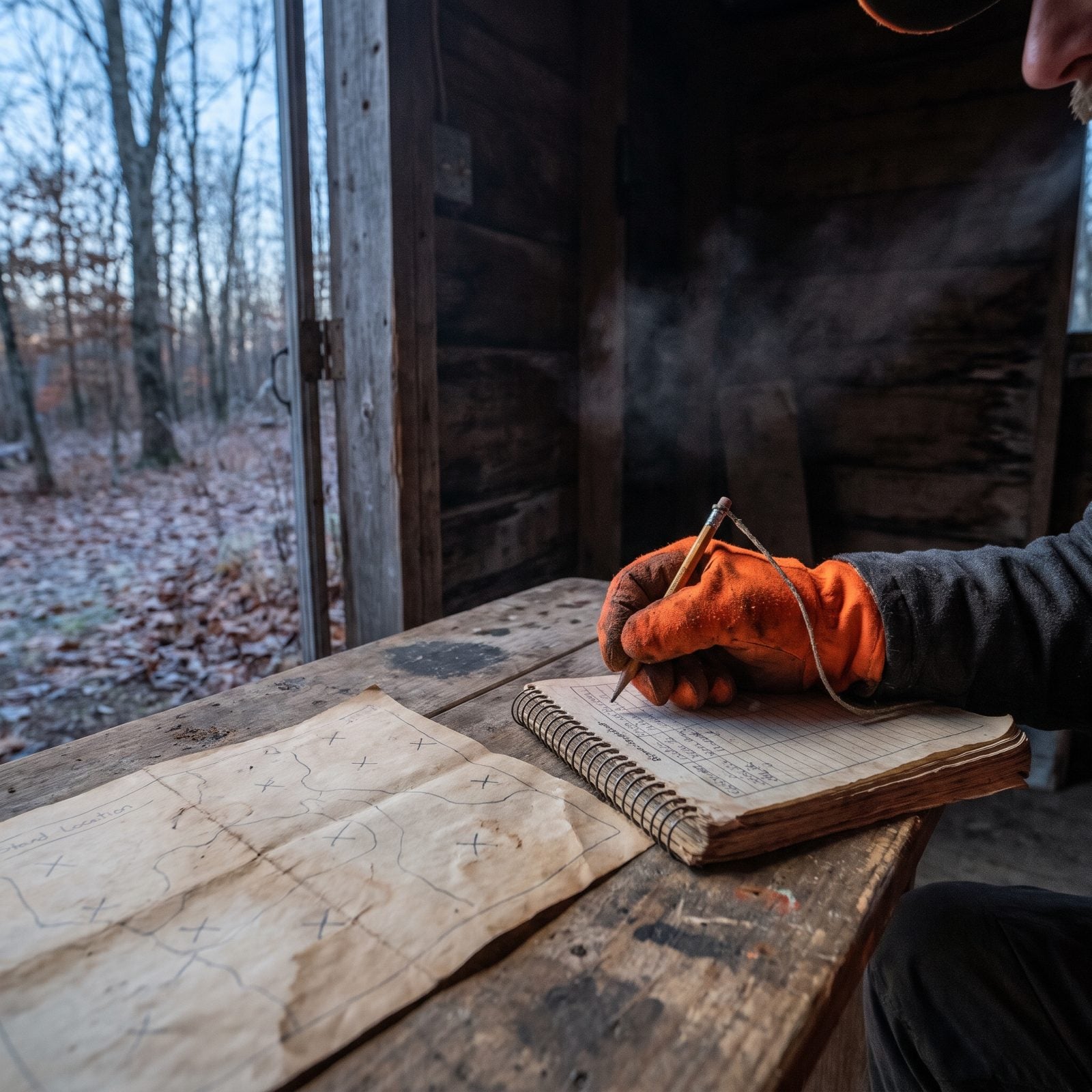
The log sheet by the door is the cheapest insurance in camp. Name, stand number, direction, time out. Thirty seconds of writing that means if you don’t walk back by dark, somebody knows which ridge to search instead of all of them.
Where cell service dies, this scrap of paper is the whole search-and-rescue plan. We’ve watched camps skip it on calm mornings and then burn two hours of flashlight time guessing where a buddy wandered off to. So write it down. Every time, even the short sits.
34. Use a Dim Headlamp Around Other Hunters
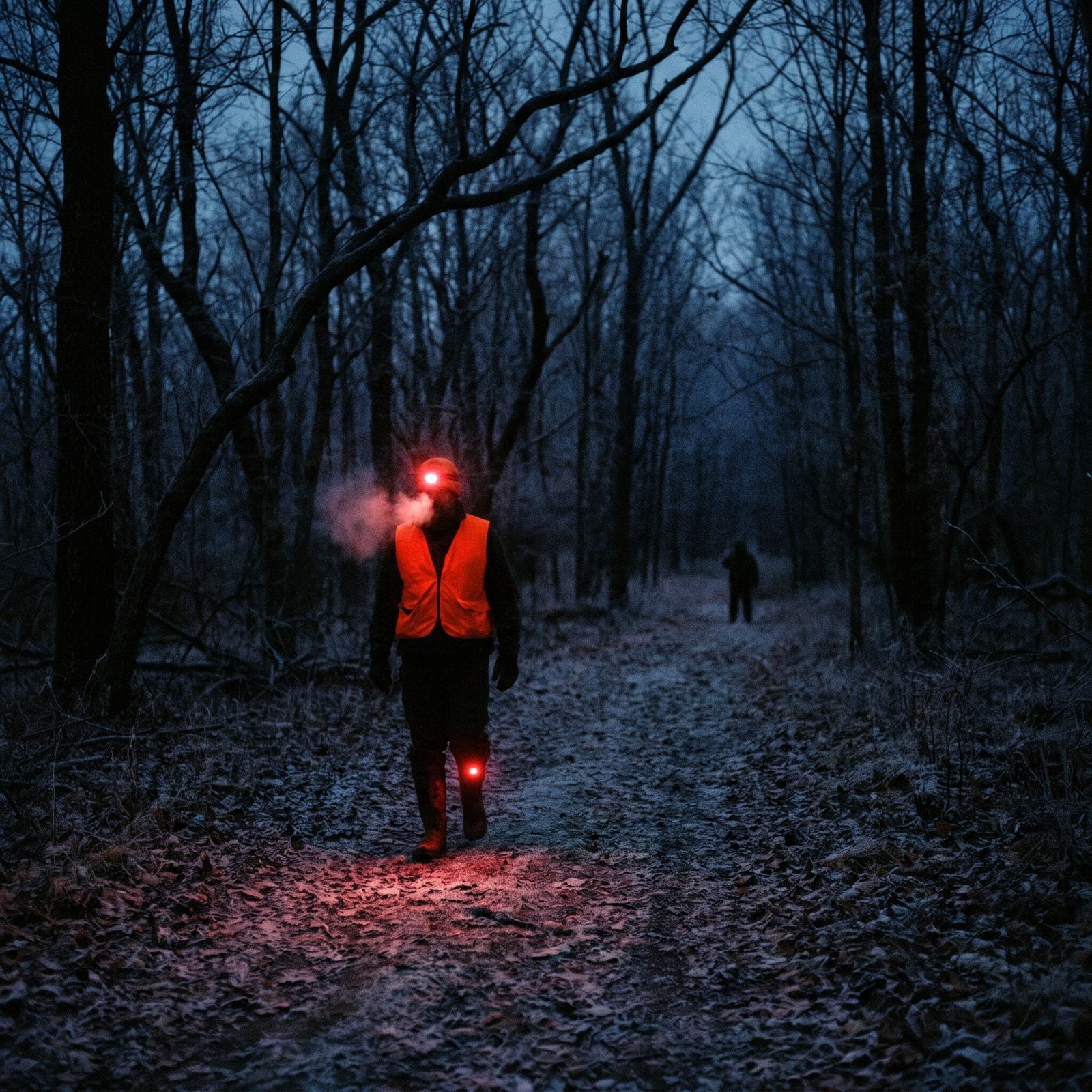
A white headlamp cranked to full blast and swung at eye level wrecks everyone’s night vision for ten minutes and can spook deer three ridges over. Point it down. Keep it dim. Switch to red if your light has it.
Walking out in the dark is when manners matter most, because nobody can see your face, only your beam. The hunter who floods the whole treeline while fumbling with a thermos is the one people remember, and not kindly.
33. Be Ready When the Truck Is Ready
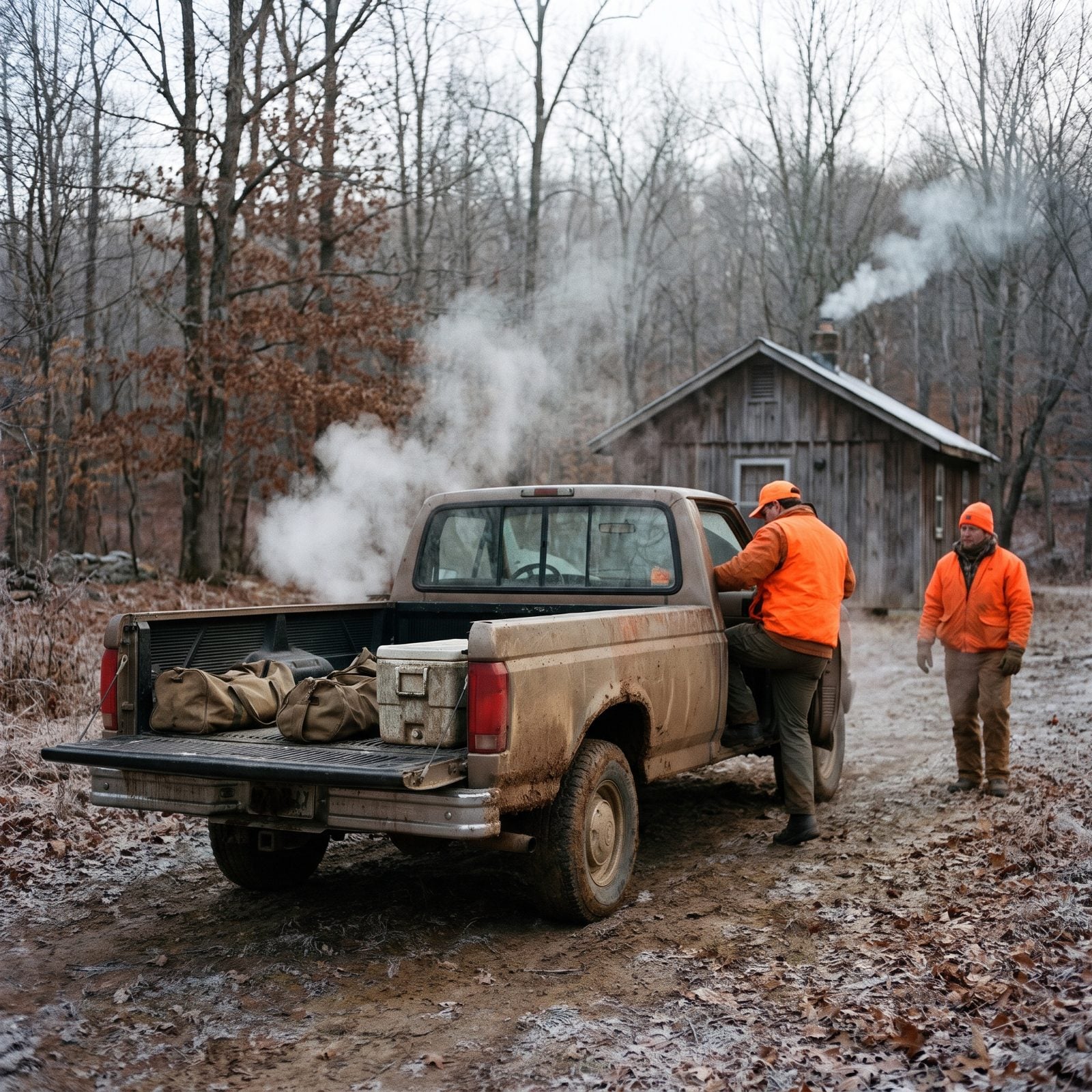
The truck leaves at the time it leaves. On a cold black morning, the one person still hunting for a glove or lacing boots at the door holds up four other hunters and burns legal shooting light nobody gets back.
Pack the night before. Boots, license, thermos, extra layer, all staked by the door so you walk straight out. Being the holdup in a deer camp is a reputation that trails you from one season clear into the next.
32. Contribute More Food Than You Expect to Eat
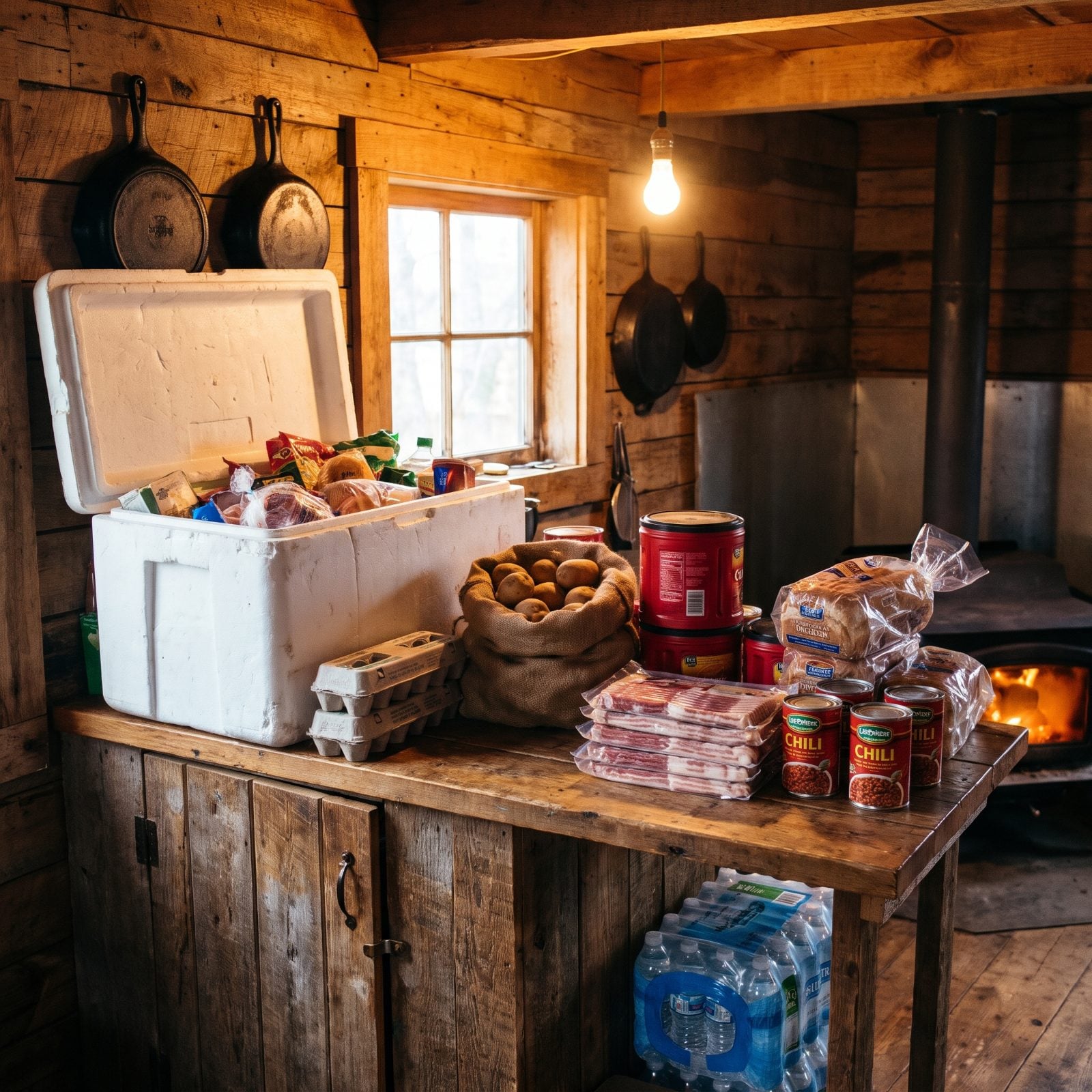
Nobody has ever grumbled about a camp with too much food. Bring more than your share and the surplus feeds the guy whose cooler latch broke somewhere on the drive up.
The math keeps the peace. Figure what you’d eat, then pack a day’s worth for somebody else: coffee, eggs, bacon, something for the group pot. The hunter who shows up with one sandwich and a hopeful look learns fast that camp runs on what people bring, not what they borrow.
31. Take a Turn at the Stove
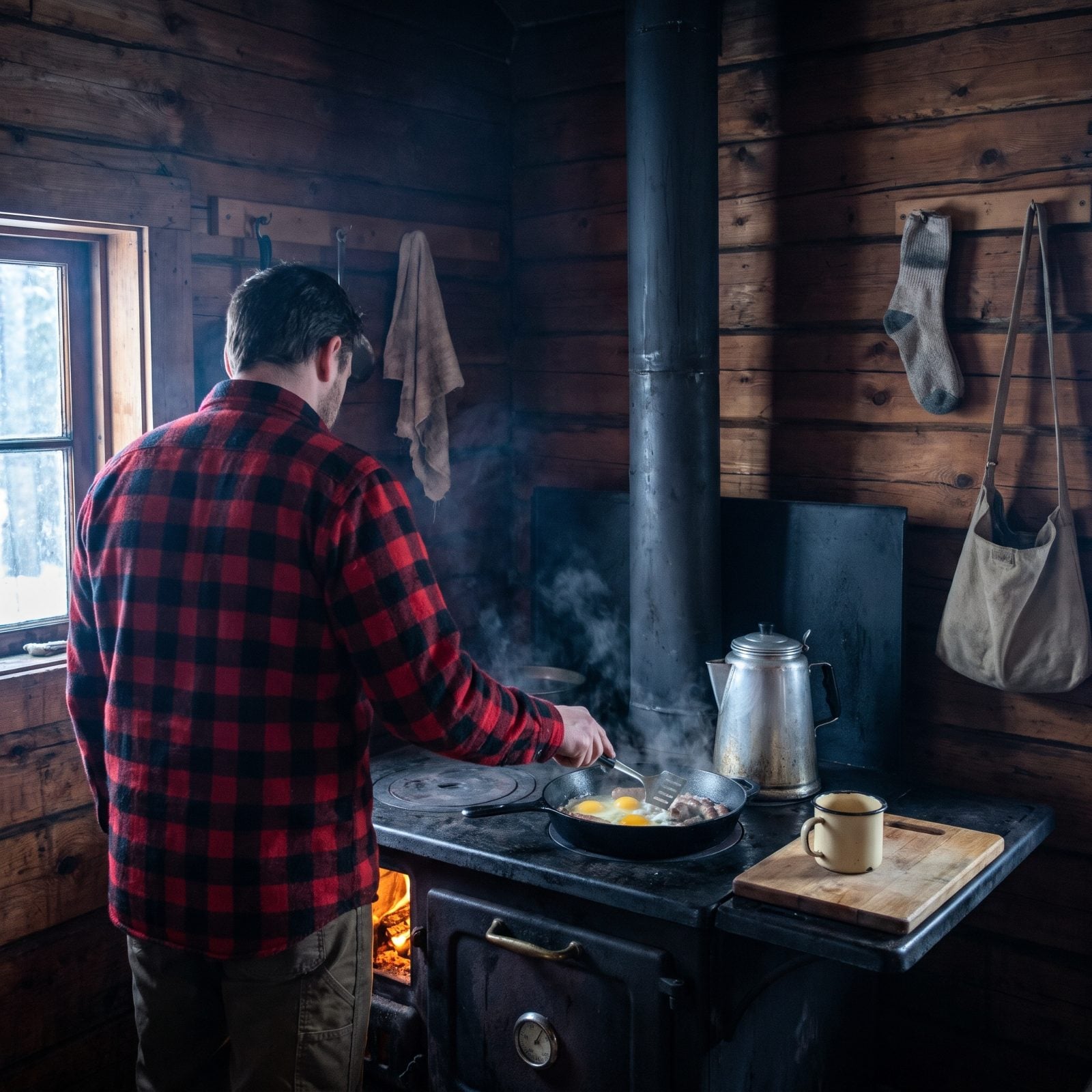
Camp is not a diner, and the same tired soul should not be scrambling eggs every single morning while everyone else sits warming their hands.
Rotate it. Even if your whole repertoire ends at bacon and a pot of chili, take your turn. The meal doesn’t need to be fancy. It needs to be hot, on time, and cooked by somebody other than the one guy who always volunteers because nobody else will.
30. The Cook Should Never Have to Wash Up
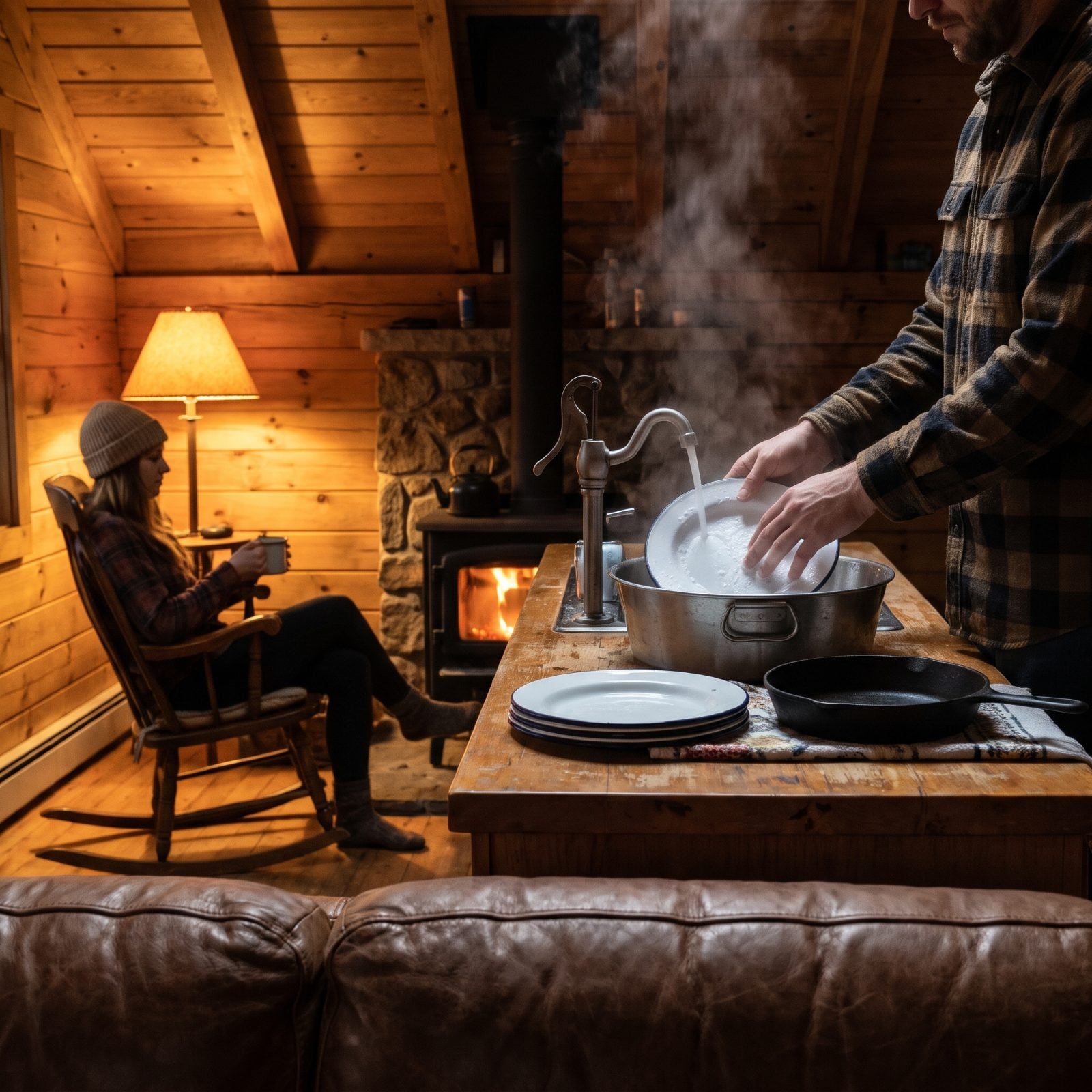
The oldest fair rule in any camp: if you cooked, you don’t clean. The people who ate handle the scrub, the dry, and the putting away.
Small rule, big resentment prevented. Cooking a hot meal for five hunters on a wood stove is real work, and watching the cook then stand over a greasy basin while everyone else leans back is the kind of thing that quietly ends friendships. So grab a towel before you’re asked.
29. Refill the Coffee Maker When You Empty It
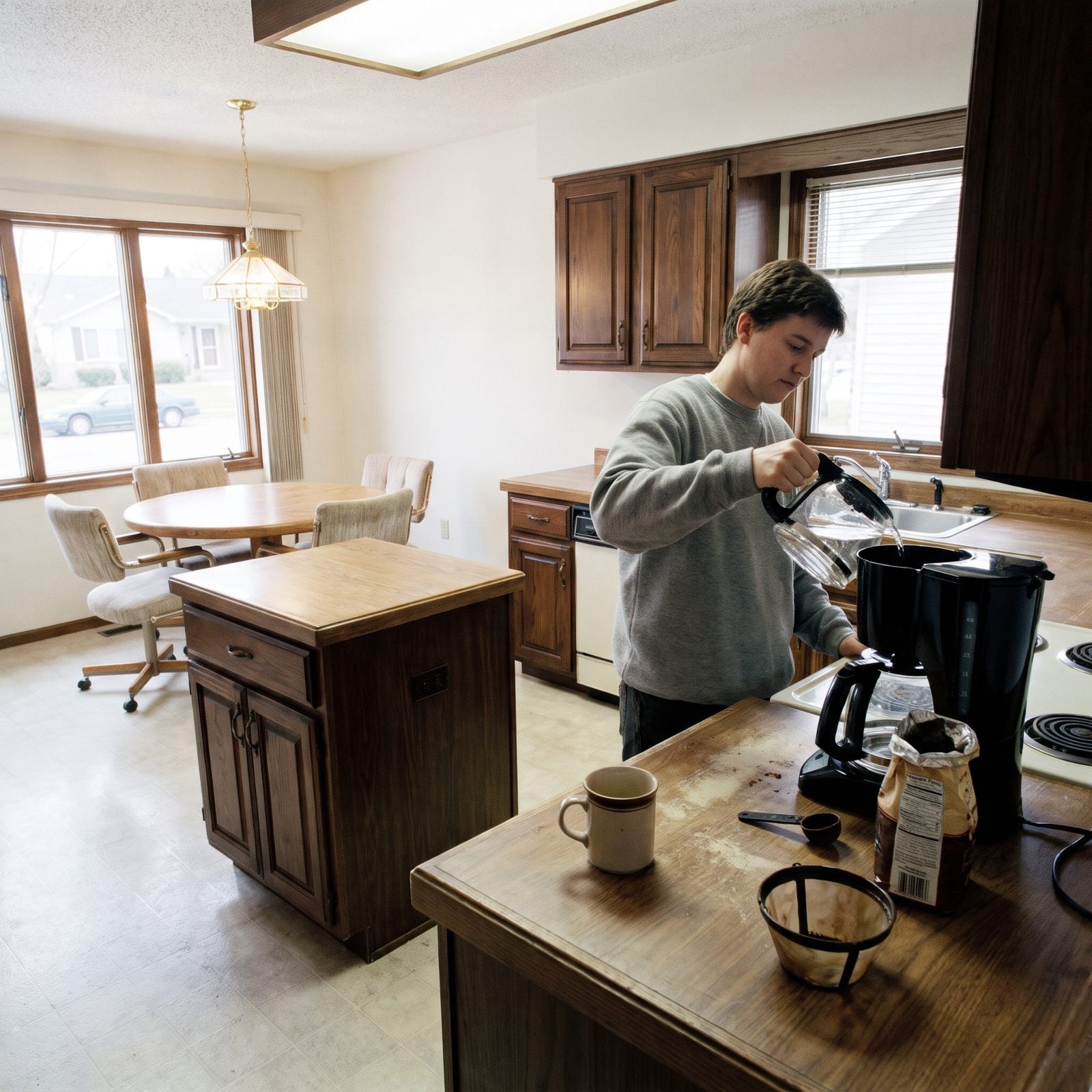
The last cup is a trap. Pour it, and the hunter stumbling in cold at 7 a.m. finds an empty pot and nobody to blame but the ghost who drained it.
Empty it, refill it. Water, grounds, ready to flip on. Takes a minute. In a cold camp, coffee is morale, and whoever leaves a dead machine for the next man commits the smallest crime that earns the biggest glare.
28. Replace the Firewood You Burn
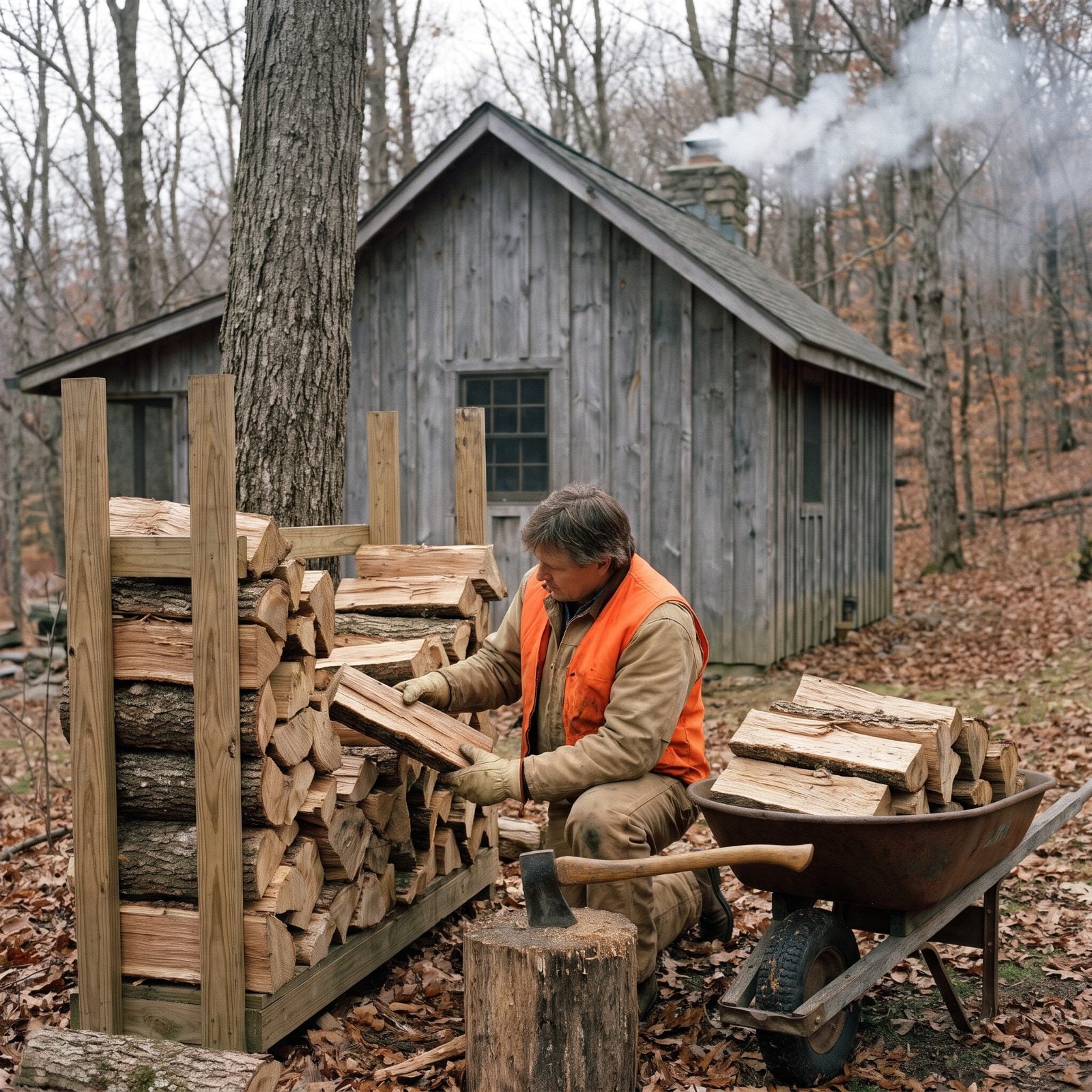
A cold stove at 5 a.m. because the rack sits empty is a sour way to start a hunt. The rule is simple. Burn a stack, split a stack.
Keep the rack full for the next person, not just the next fire. Whoever feeds the stove all evening and leaves nothing for morning has taken warmth and given back cold ashes. Haul and split a little more than you burn. The camp that stays warm is the one where everybody tops off the pile.
27. Leave Muddy Boots by the Door
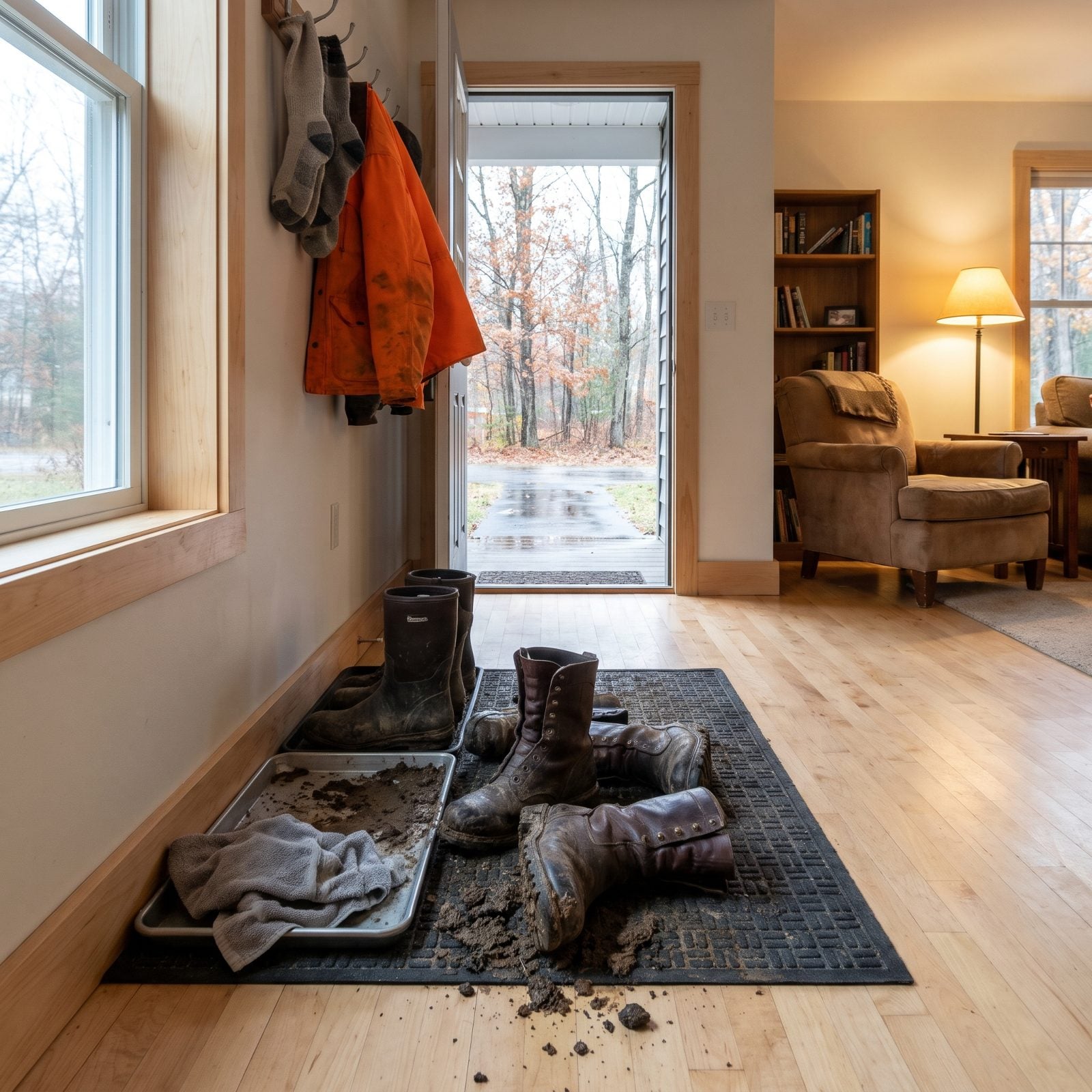
Deer woods in late fall are a mud factory, and dragging it across the cabin floor means somebody sleeps in grit and the cook’s kitchen turns to filth.
Boots come off at the door. A courtesy that costs nothing and keeps the one shared room livable for a week. Set a small bench or a boot tray by the threshold and it goes automatic, so nobody tracks the swamp into the bunkroom.
26. Keep Hunting Clothes Away From Cooking Smoke
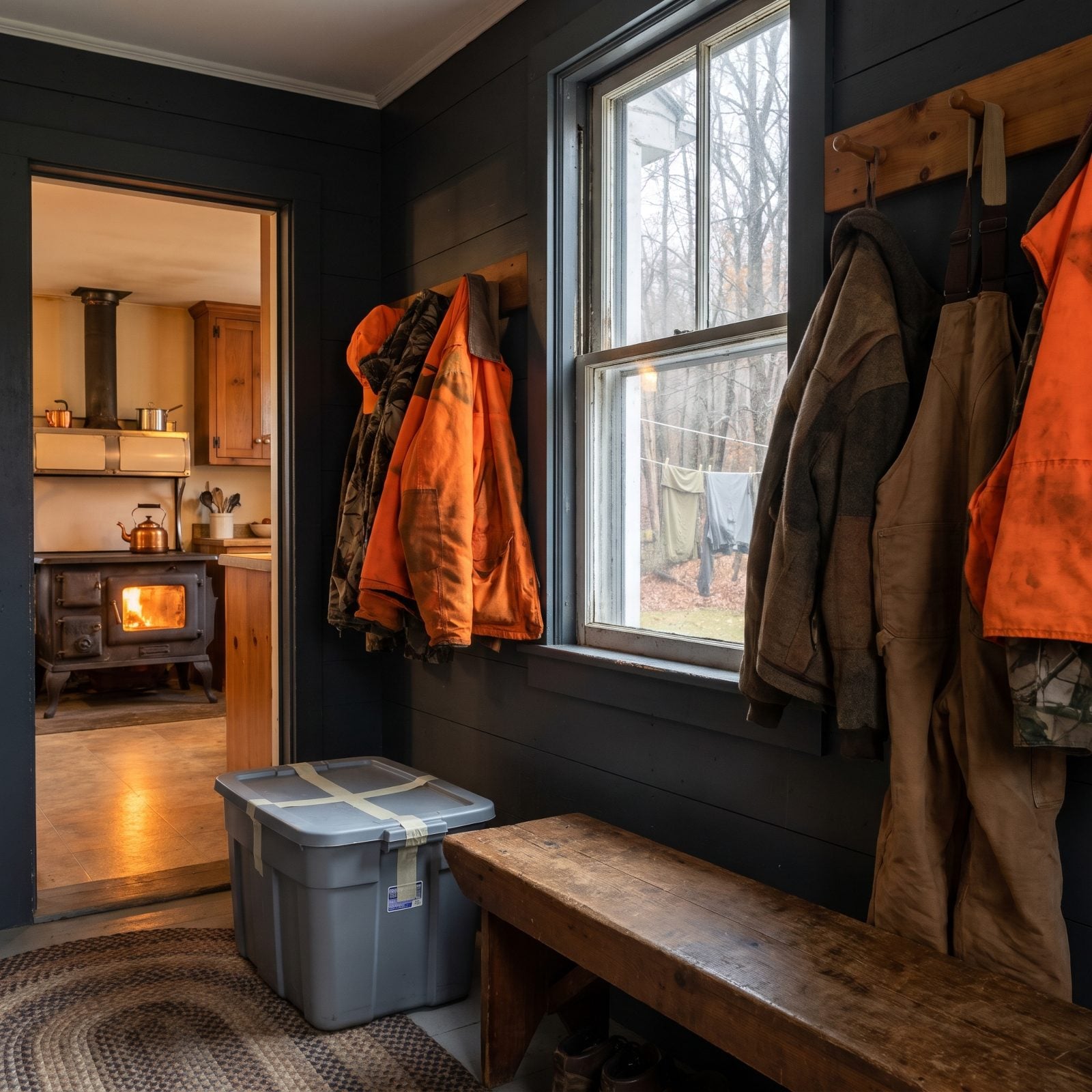
A deer’s nose is the hunter’s hardest problem, and bacon grease, woodsmoke and coffee cling to wool and fleece like they were made to.
Hang your hunting layers somewhere the kitchen air never reaches. A cold porch, a sealed tote, or an entry room with the kitchen door kept shut. Hang them beside an open doorway with a wood cookstove burning and a kettle on, and those coats soak up every whiff. Cook in one jacket, hunt in another. You can scout perfect and shoot straight, but walk to the stand smelling like this morning’s breakfast and the buck downwind files you under danger long before you ever see him.
25. Tag a Deer Before the Celebration Begins
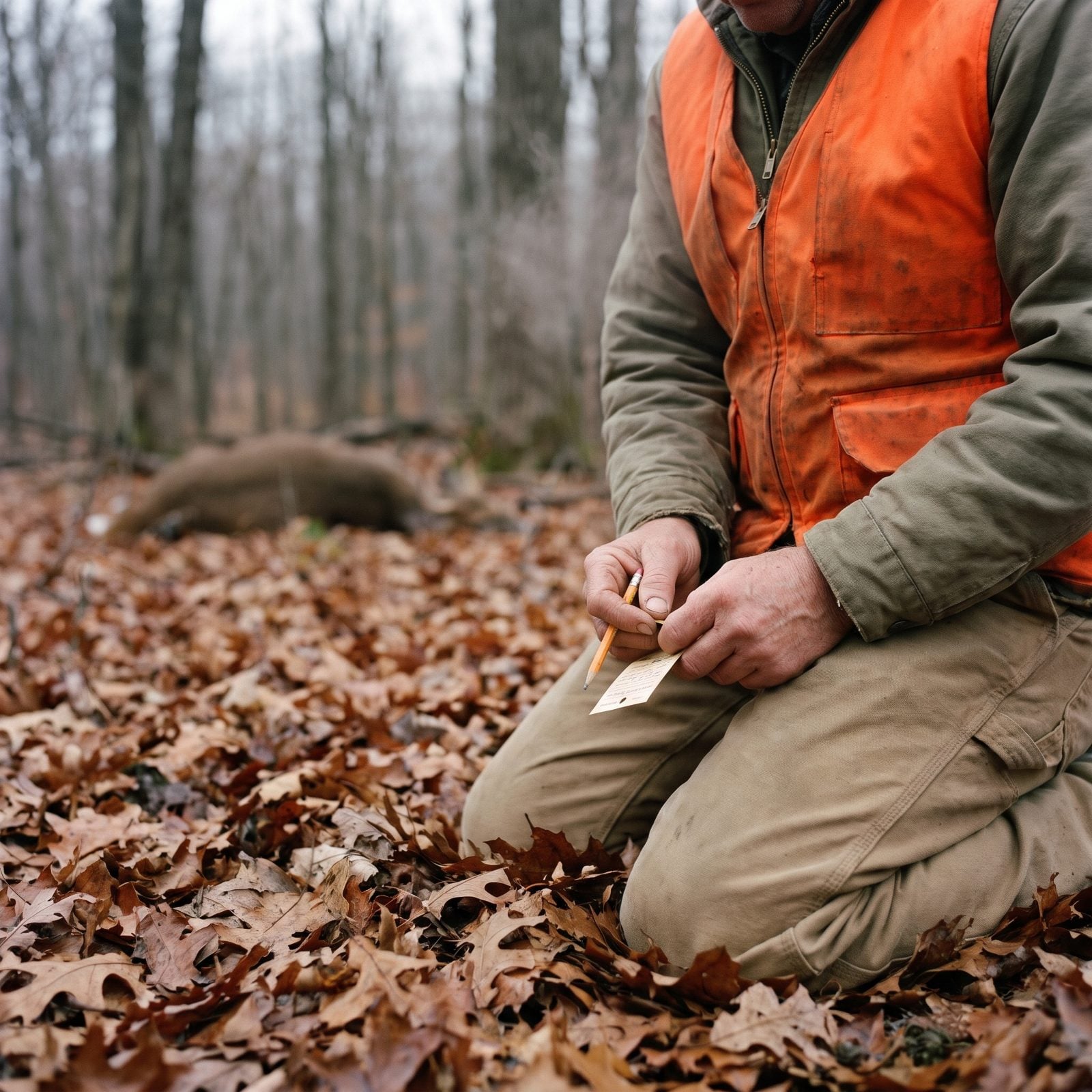
The tag goes on before the handshakes. Before the photos, before the back-slapping, before anyone cracks a cold one. This is the single rule at camp that carries the force of law, not just tradition.
Every state writes it differently, so know your own regs cold. Most require you to notch and attach the tag the moment after a kill, before you move or transport the animal. Game wardens have heard every excuse in existence and believe exactly none of them.
We once watched a grown man do a victory lap around a buck with an unsigned tag still folded in his wallet. Don’t be that guy. The celebration keeps. The citation doesn’t.
24. Return Every Favor on a Deer Drag
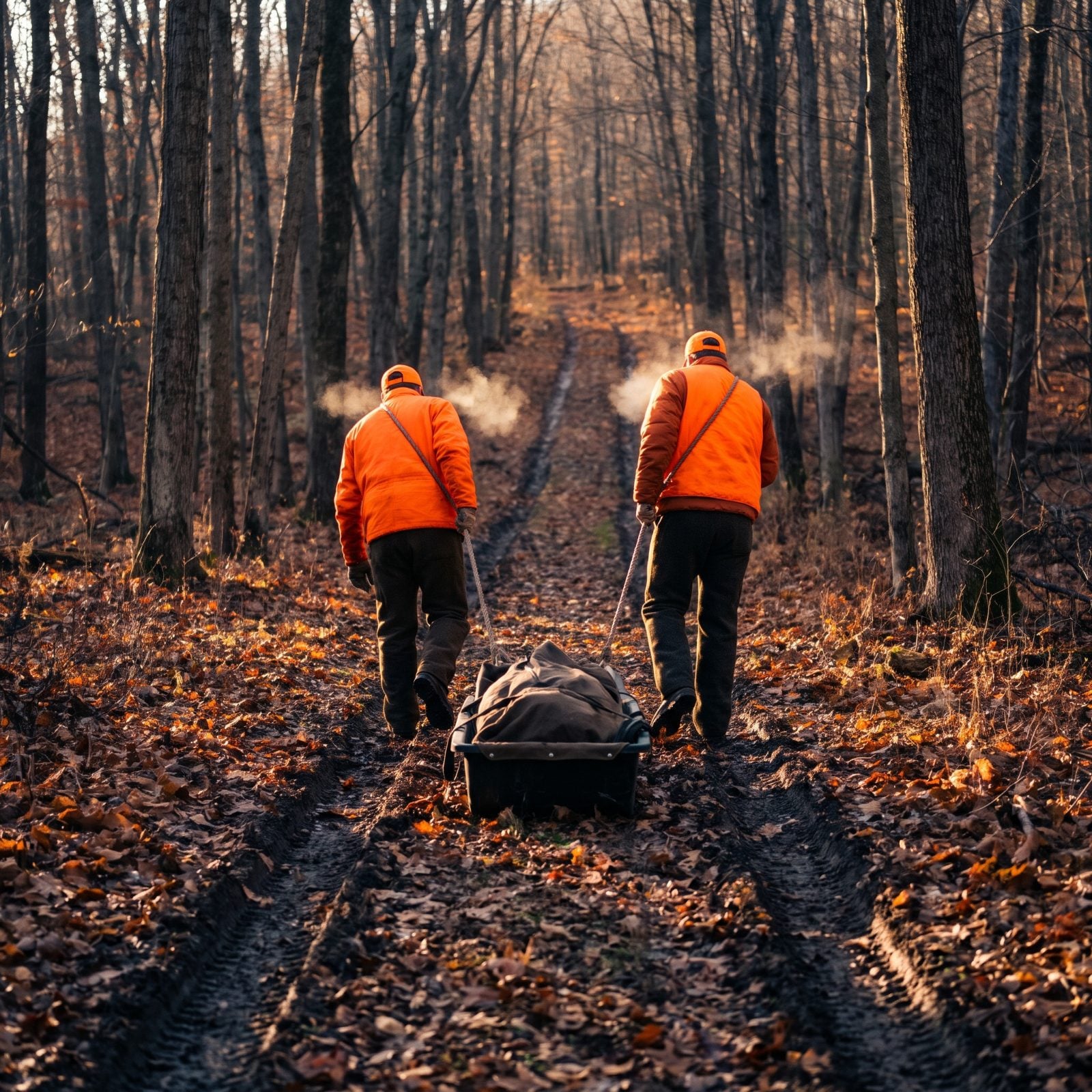
Dragging a deer out of a hardwood bottom is the hardest honest work at camp. A big-bodied buck a half mile from the truck will humble anyone, and nobody does it alone if they can help it.
Here’s the arithmetic that holds a camp together. If three guys hauled your deer out this morning, you show up when theirs hits the ground this evening. No hiding in the cabin with your boots off, no sudden urgent nap. You owe the drag back, every single time, and the camp remembers who pays and who disappears.
23. Respect the Hunter Who Finds First Blood
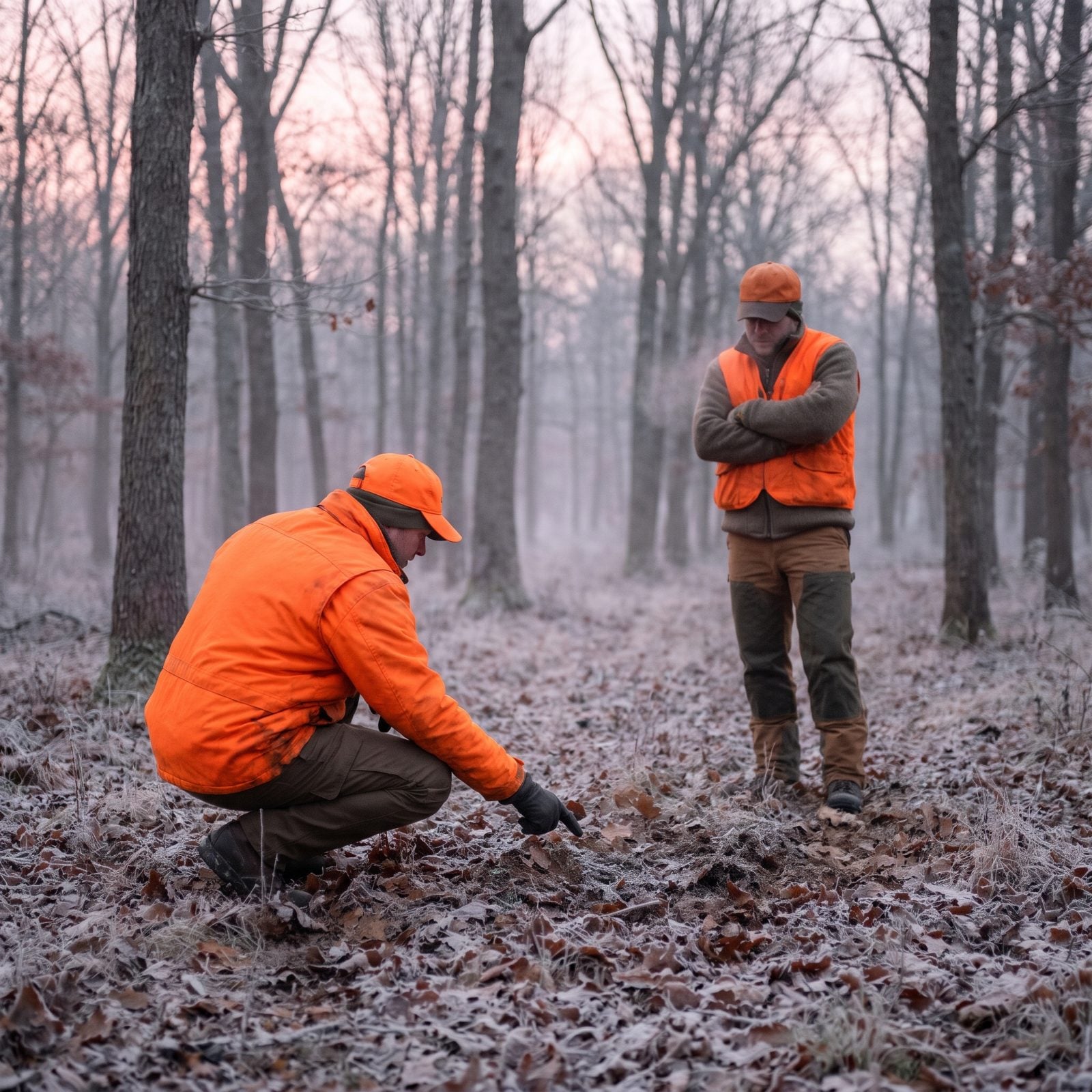
Two hunters, one deer, and a question nobody wants to argue about in the dark.
When a wounded deer takes a second hit and goes down, tradition says the first solid shot owns the animal. The hunter who drew blood put it on the ground. The second shot was mercy, not a claim.
Things get ugly fast when egos run hot and the rack is big. The honest move is to say early and plainly whose shot connected first, then let it go. A deer isn’t worth a friendship. The camp that bickers over tags tends to shrink by one every season.
22. Give a Hit Deer Time Before Tracking
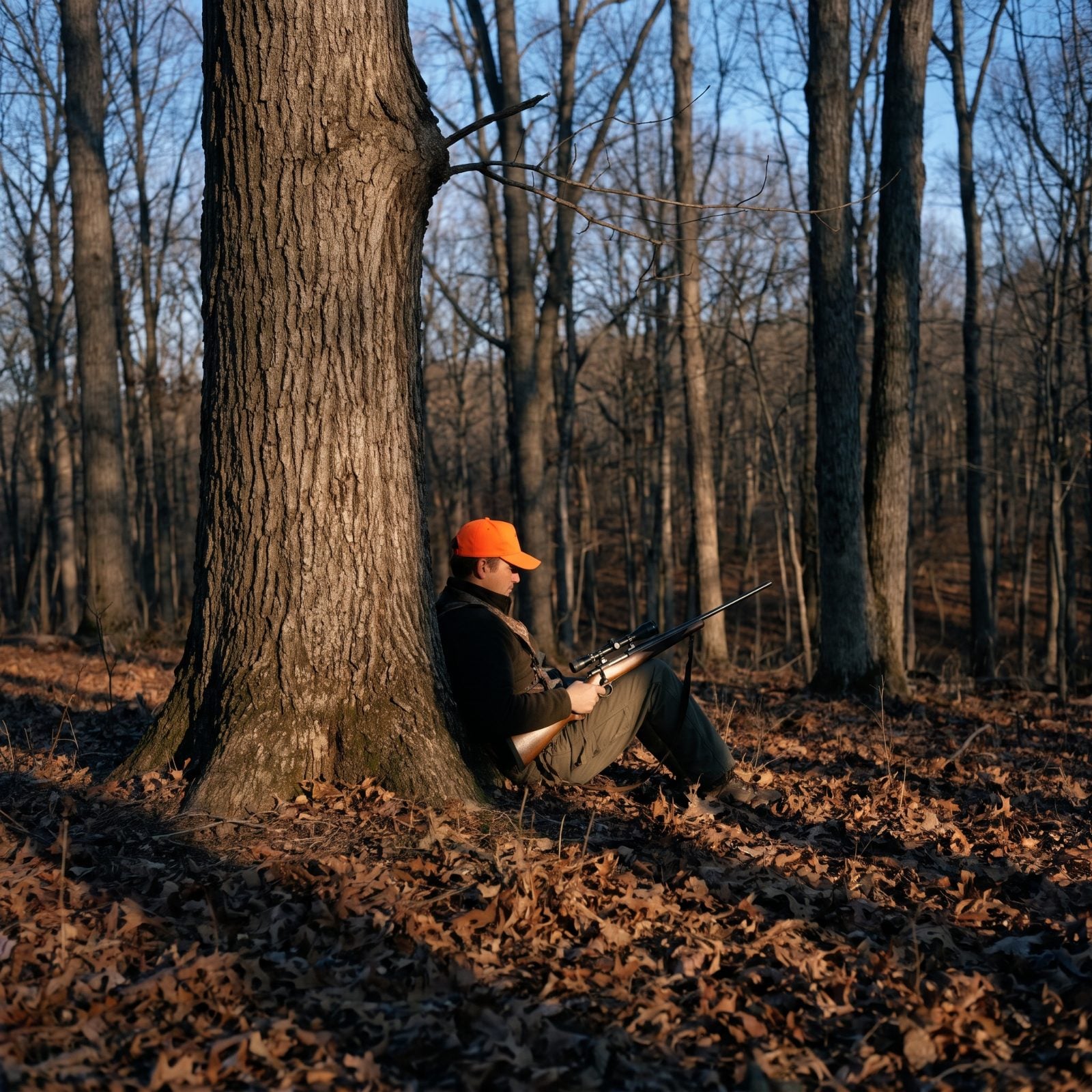
The hardest thing to do after a shot is nothing.
Push a gut-shot deer too soon and it runs a mile on pure adrenaline, but give it time to lie down and expire and you’ll often find it within a couple hundred yards. The old rule runs several hours for a marginal hit, and often overnight for a gut shot, weather permitting. It saves far more deer than it loses.
Waiting feels like torture when your heart’s slamming and the sun’s dropping. Do it anyway. The deer that gets bumped off a good blood trail is the deer you never recover, and that one haunts you all winter long.
21. Never Summon a Tracking Dog Without Permission
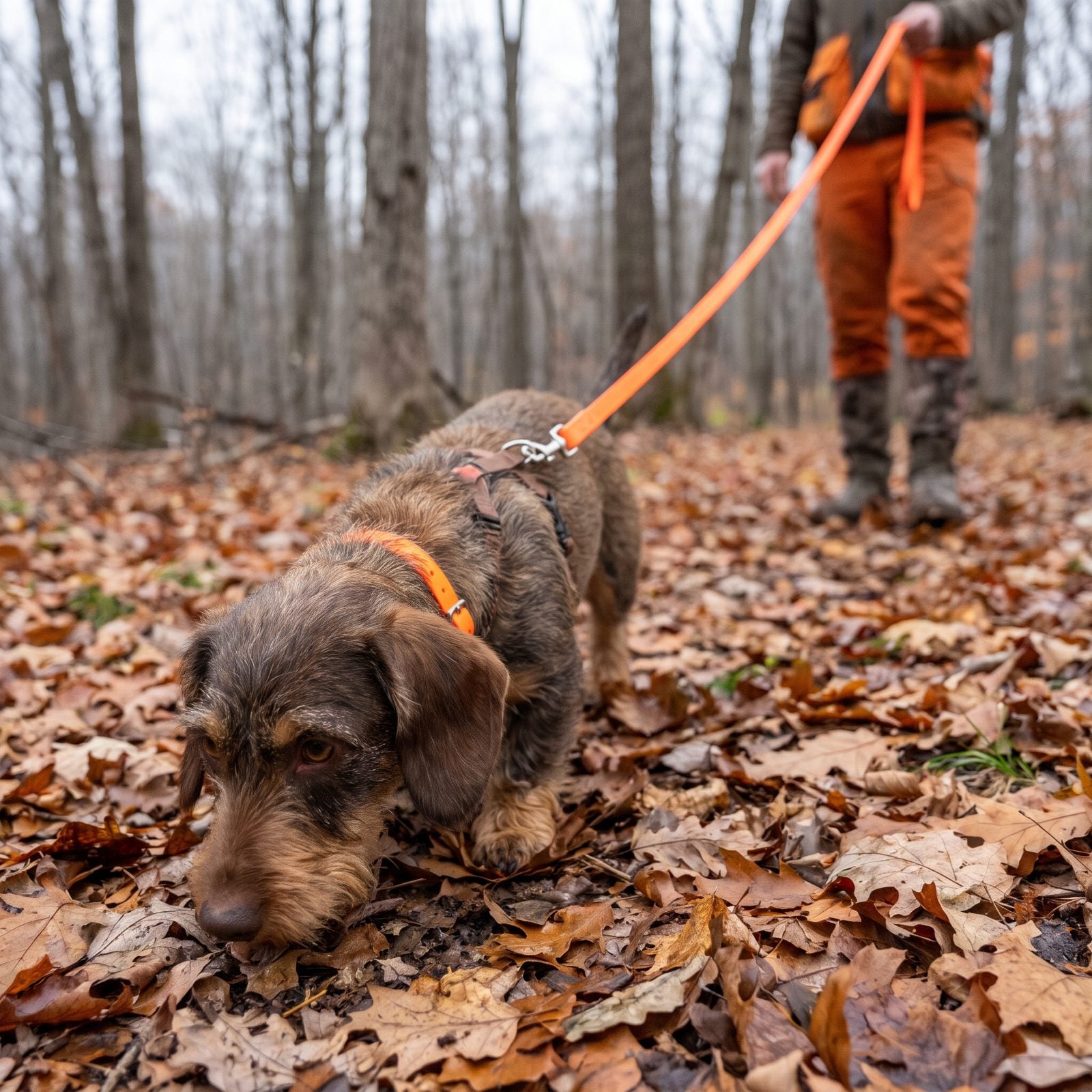
Blood tracking dogs have saved deer no human eye could follow, and a good tracker will drop everything to help you find a hit animal. But you don’t just call one onto a property.
The dog has to work land, and land belongs to someone. Before a handler and hound ever hit the trail, the landowner gets asked, not told. Running a dog across a neighbor’s acres without a yes? That’s the kind of thing that ends hunting access for the whole camp.
Square away permission before the shot if you can. The scramble to find a tracker at last light is a sorry time to be knocking on a stranger’s door.
20. Celebrate the Camp’s Deer, Not Just Your Own
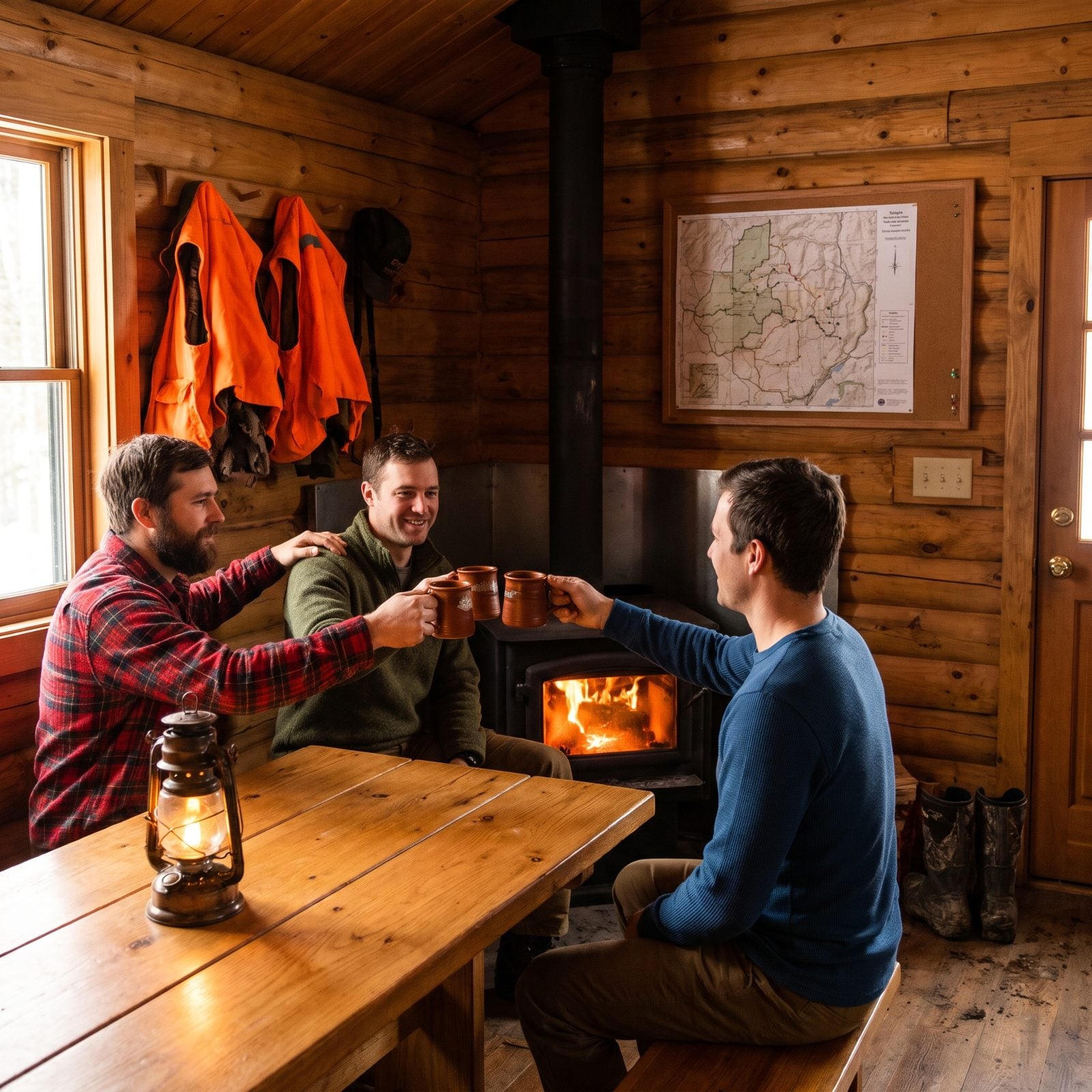
Say the new guy, the one who’s missed three seasons running, finally drops a doe his first morning out. A camp that greets that with a flat nod and a shrug is a camp dying from the inside.
Every deer brought back is the camp’s deer. You whoop for the kid’s first button buck like it was a record-book bruiser, because to that kid it is. Jealousy is the quiet poison here. The old-timers who’ve killed a hundred deer are usually the loudest when somebody else connects, and that generosity is exactly why people keep coming back to their fire.
19. Do Not Shame Anyone Over Antler Size
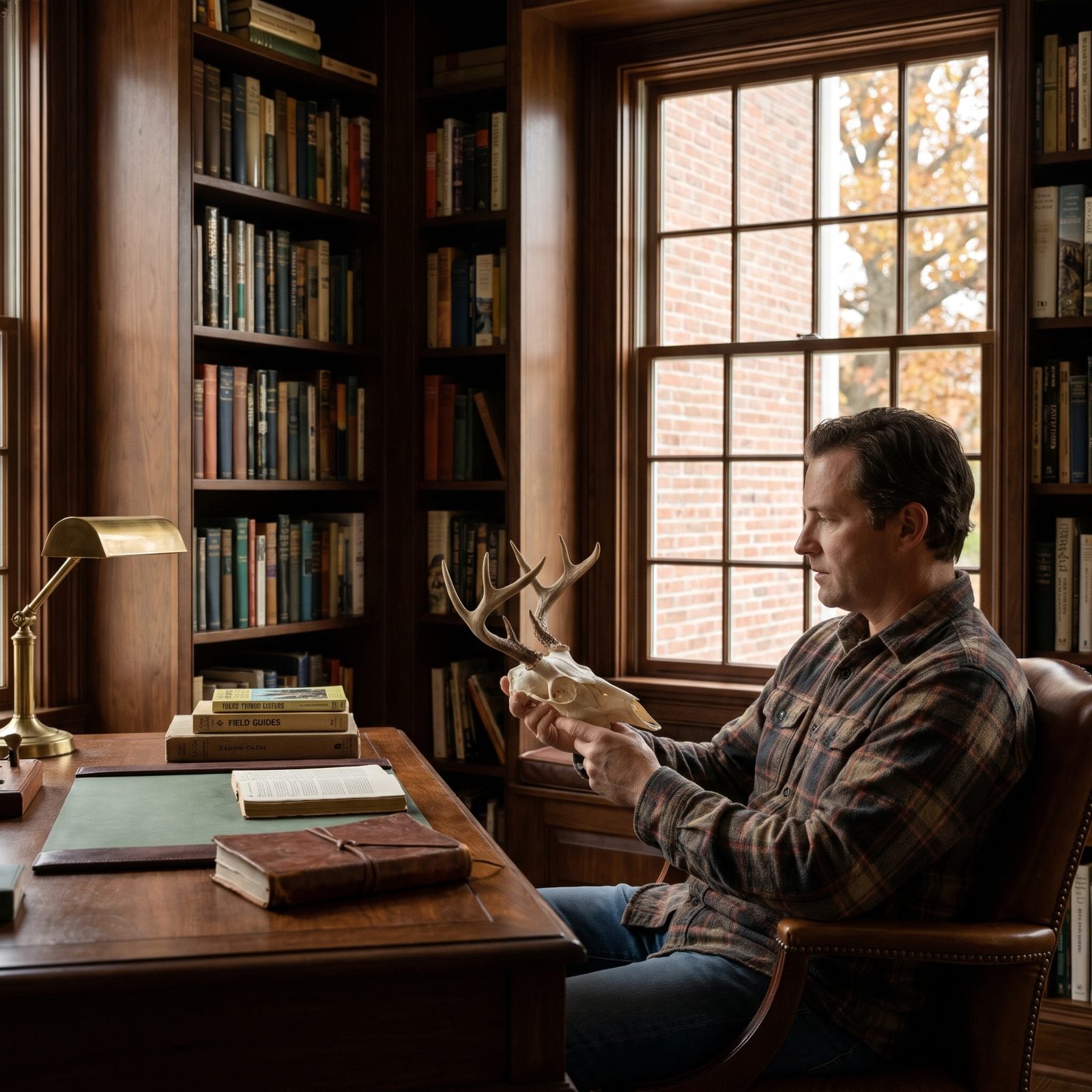
Nothing sours a camp faster than one man ranking everyone else’s deer.
A legal deer is a legal deer. Somebody wants meat in the freezer and takes a spike or a doe, that’s a successful hunt, full stop. The guy who sneers “that all you got?” over a modest rack is telling the whole camp exactly what kind of company he keeps.
Big bucks are luck as much as skill, and everyone who’s hunted long enough knows it. Let people hunt their own way. The quickest route to an empty camp is making folks feel small for filling a tag honestly. We’ll die on this hill.
18. Own a Clean Miss Without Making Excuses
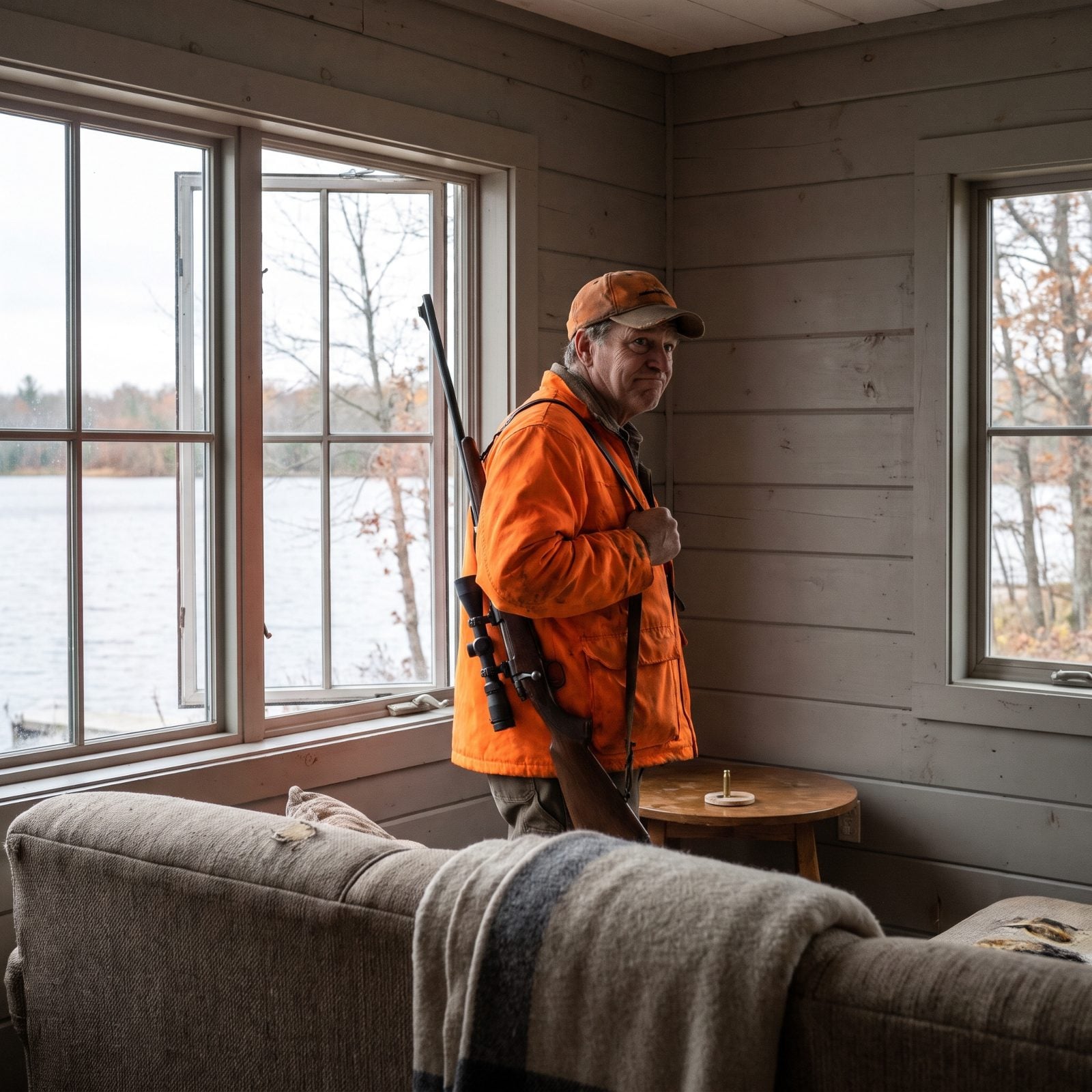
Everybody misses. The buck of a lifetime steps out, the sights are full of fur, and the shot sails clean over his back. Happens to the best shots in camp.
What separates good company from bad is what comes next at the supper table. “I pulled it. I missed him clean” earns respect. “The wind must’ve caught it, and my sights have been off, and he jumped the string” earns a row of eye-rolls. Nobody believes the excuse anyway.
Own the miss, laugh at yourself, and the story turns into camp legend instead of a sore spot. The woods have a long memory for a man who can’t admit he blew it.
17. Respect the Decision to Pass a Legal Deer
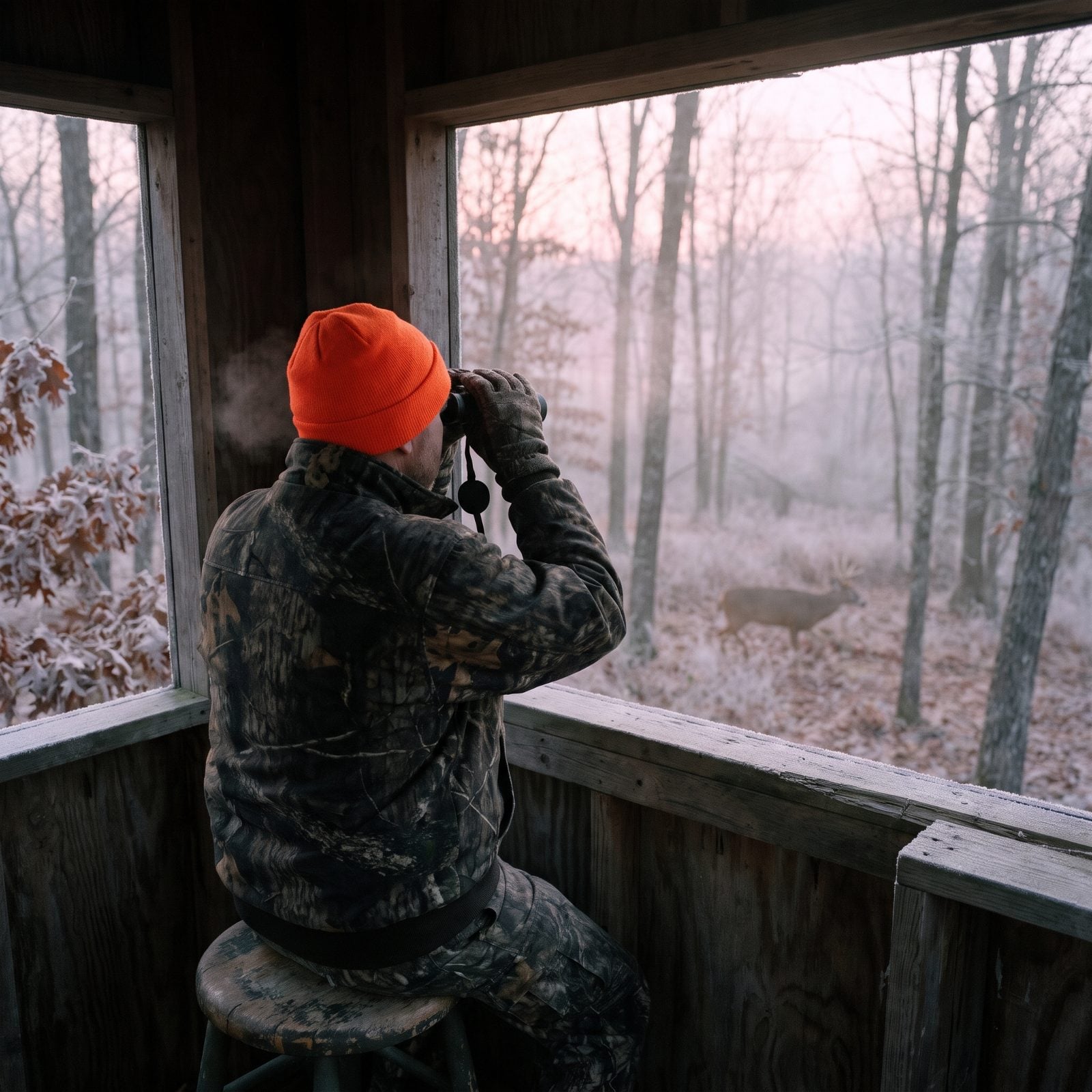
A hunter lets a nice eight-point walk at twenty yards. His reasons are his own. Maybe he’s holding out, maybe he wasn’t sure of the shot, maybe he just wanted to watch it go.
A camp that gives a man grief for passing a legal deer doesn’t understand the sport. Not every hunt ends with a kill, and plenty of the best mornings don’t. Second-guessing somebody’s trigger decision from the warm side of a woodstove is cheap.
Let people hunt on their own terms. The deer he passed today might be the one you’re all talking about next November.
16. Share Fresh Deer Sign Honestly
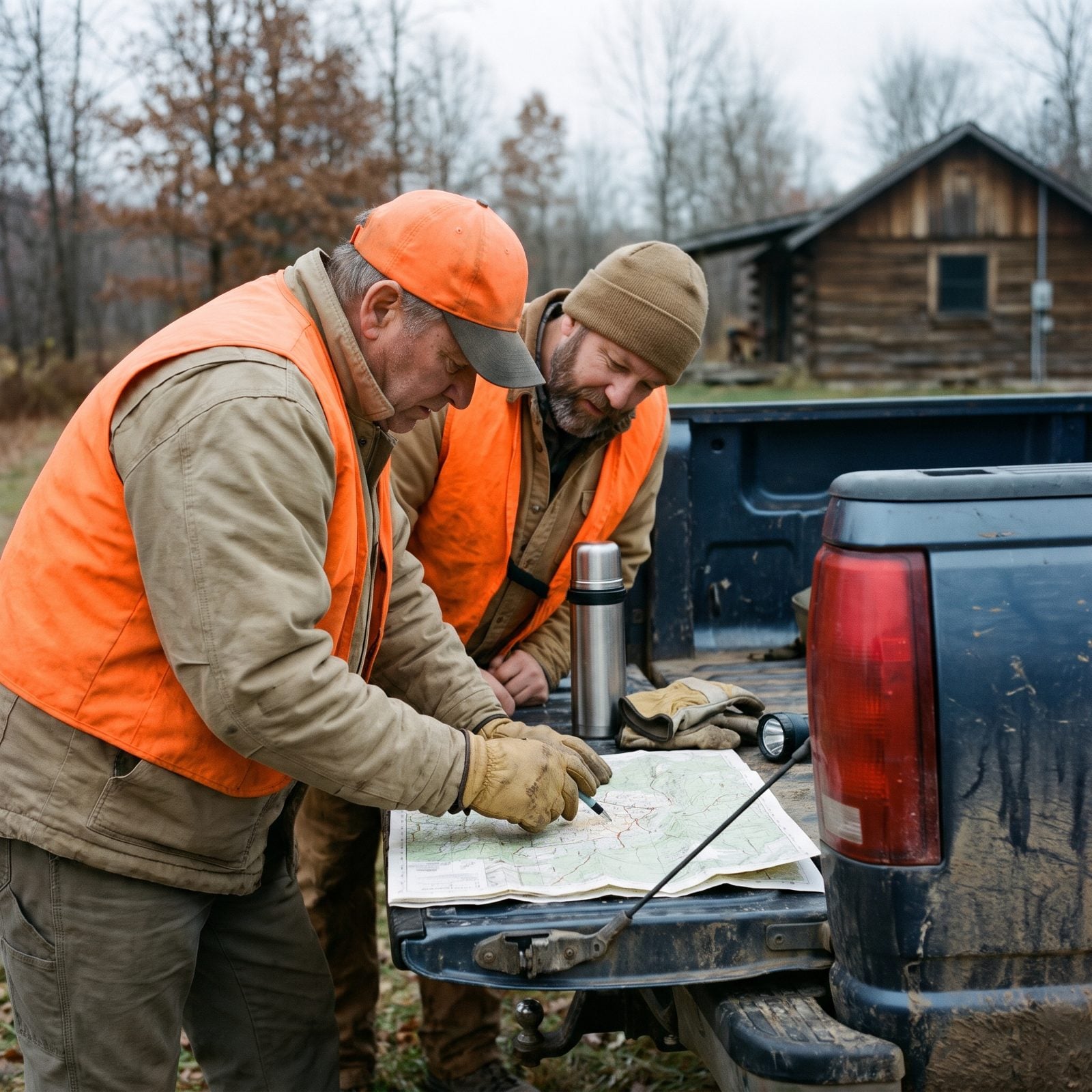
You cut a line of fresh rubs and a scrape the size of a dinner plate on the back forty. Do you keep it to yourself?
A good camp shares sign. Not every honey hole, mind you, and nobody expects you to give up the stand you’ve scouted all summer. But the general intel that a big deer is working an area belongs to the group. Hoard it so you can scoop the buck first and you’ve got the kind of selfishness that unravels a camp over a few seasons.
The trade-off is simple. Share what you see and everyone’s hunting better by the weekend. Play it close and your own well runs dry when nobody tips you off either. That’s how it shakes out around the tailgate map.
15. Do Not Burn Out a Spot Someone Just Found
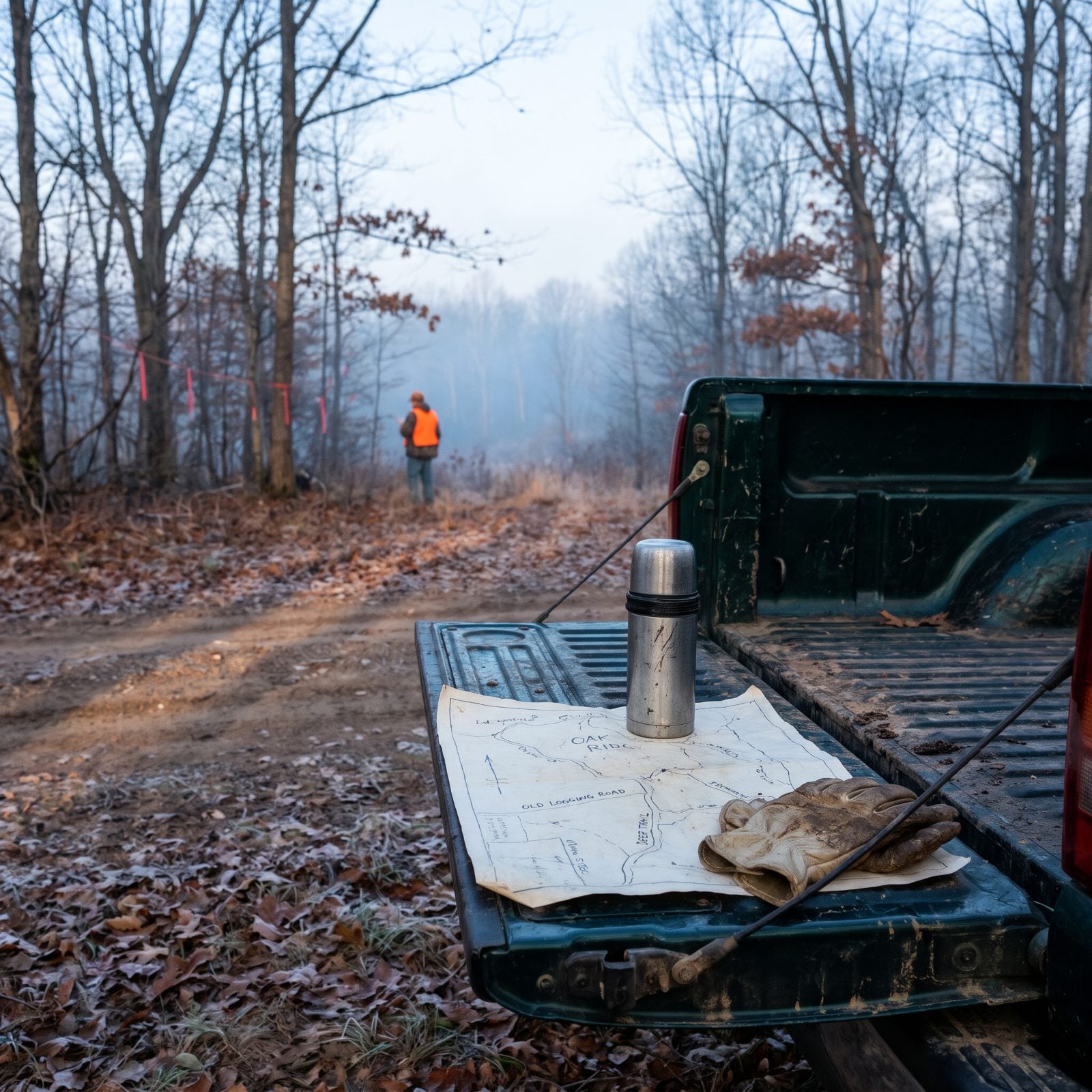
Somebody scouted that ridge back in August, walked it in the heat, found the rub line, hung the stand, and told you about it because they trusted you. That trust has a short shelf life. Sneak back in and park yourself a hundred yards off their spot, and you’ve spent it.
Deer camps run on who-found-what. The fastest way to get frozen out of good intel is to crowd a hunter who earned a honey hole. Ask where they want you, hunt where they point, and remember that a pin on someone else’s map is not an open invitation.
14. Stay on Stand Until the Agreed Pickup Time
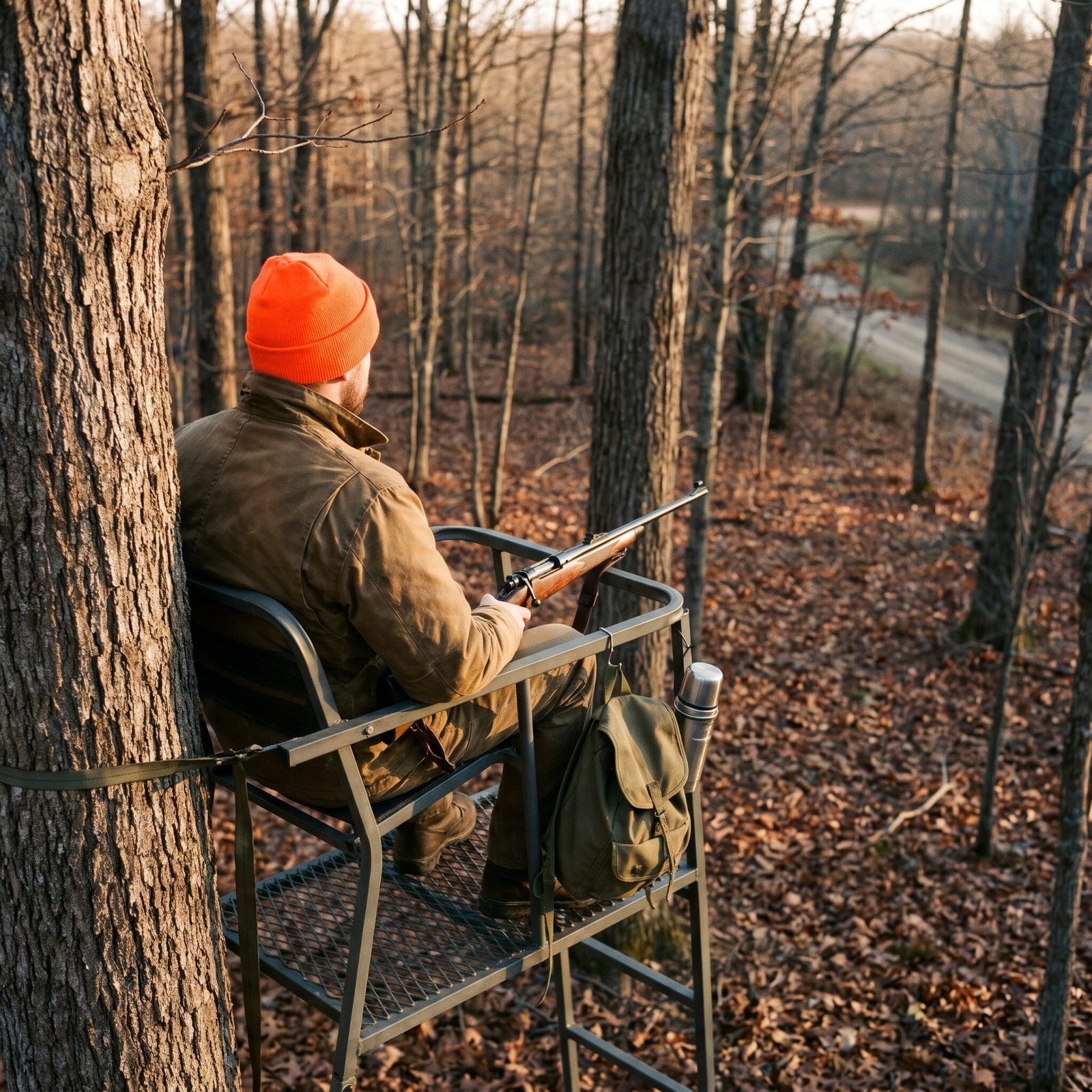
Camp sets a pickup time for a reason. You bail early, start your truck, slam a door — and the buck three stands over that was about to step into the lane is gone. Everybody’s hunt ends when the loudest guy decides he’s cold.
Sit the time you agreed to. If you have to come out early, do it quiet and let people know ahead, so nobody’s waiting on you in the dark wondering if you fell out of a tree.
13. Pick Up Spent Brass and Empty Shells
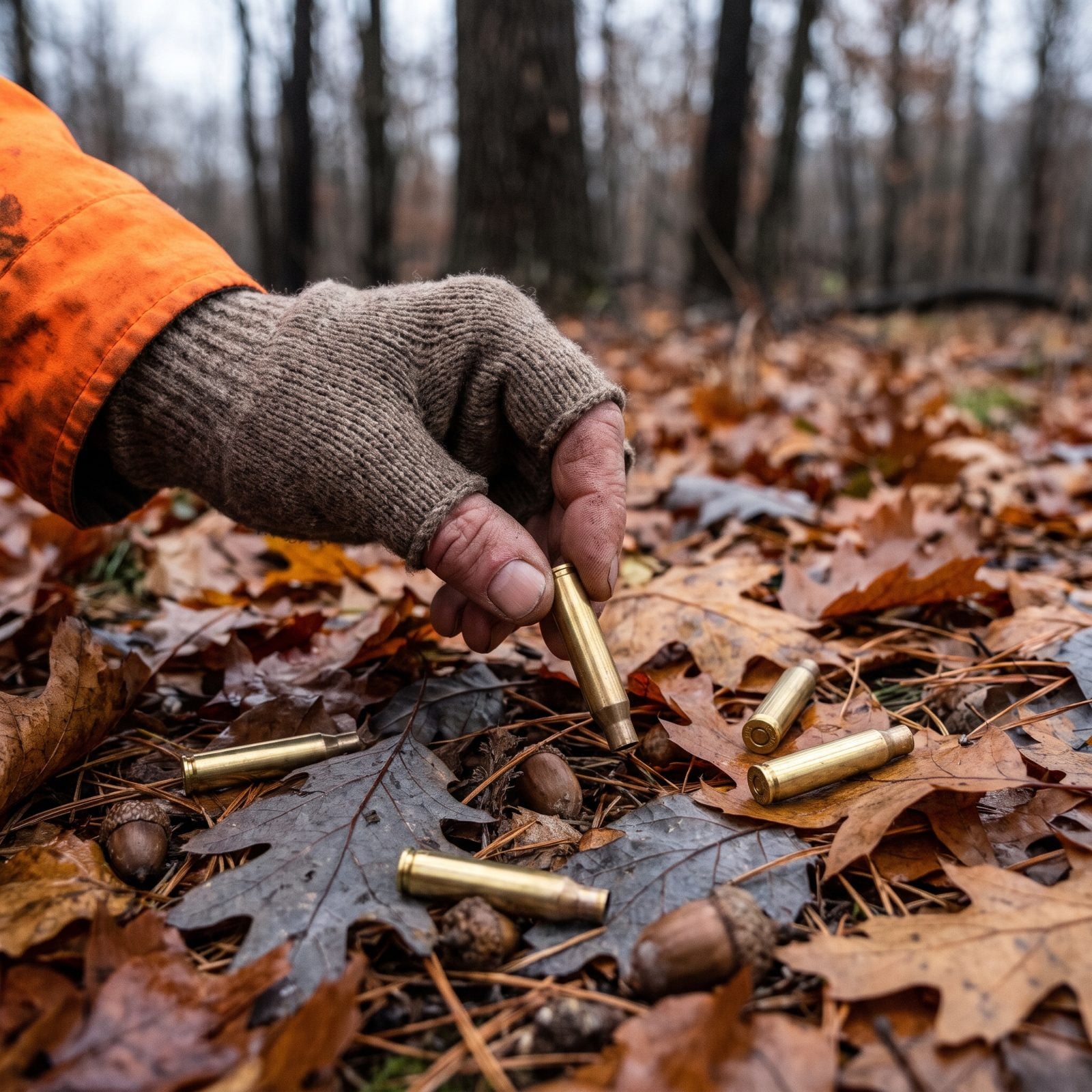
Brass in the leaves is litter, plain and simple. Doesn’t matter that it’s small and shiny and feels like it belongs there. Come spring, somebody’s running a mower down the camp road and that case turns into a projectile — or a kid finds it and starts asking questions nobody wants to answer.
Pocket your empties. Ten seconds, and the place looks like hunters run it instead of slobs.
12. Place Gut Piles Away From Camp and Trails
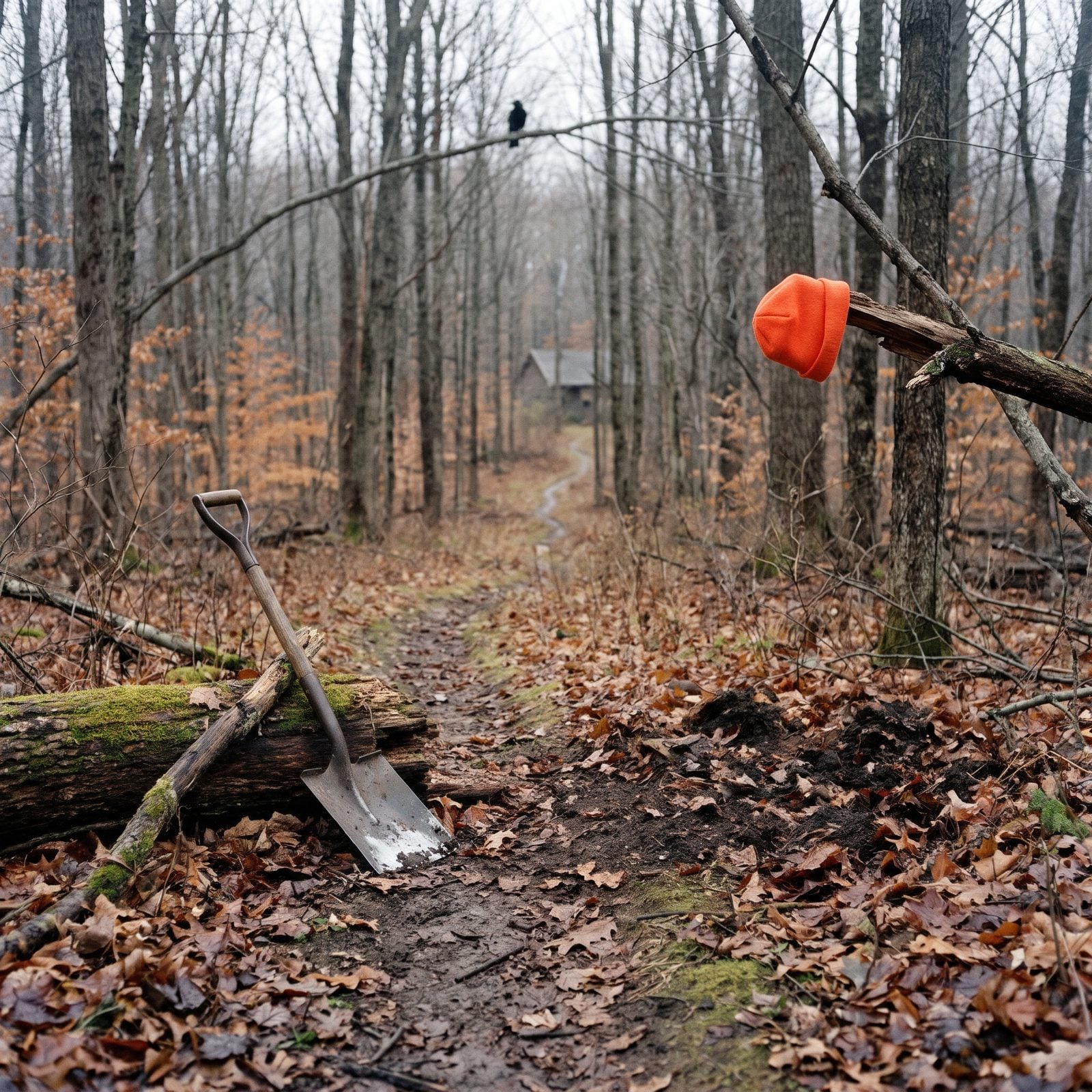
Drag your gut pile well off the trail and well away from camp. Not because it’s gross, though it is, but because you’re baiting in coyotes, bears in some country, and a stink that’ll greet everyone at the cabin door for a week.
A few hundred yards into the brush, downwind if you can swing it. Dig a hole and bury it out there. Right by the skinning pole? It just rots and ruins the walk to the outhouse.
11. Sanitize the Butchering Table After Use
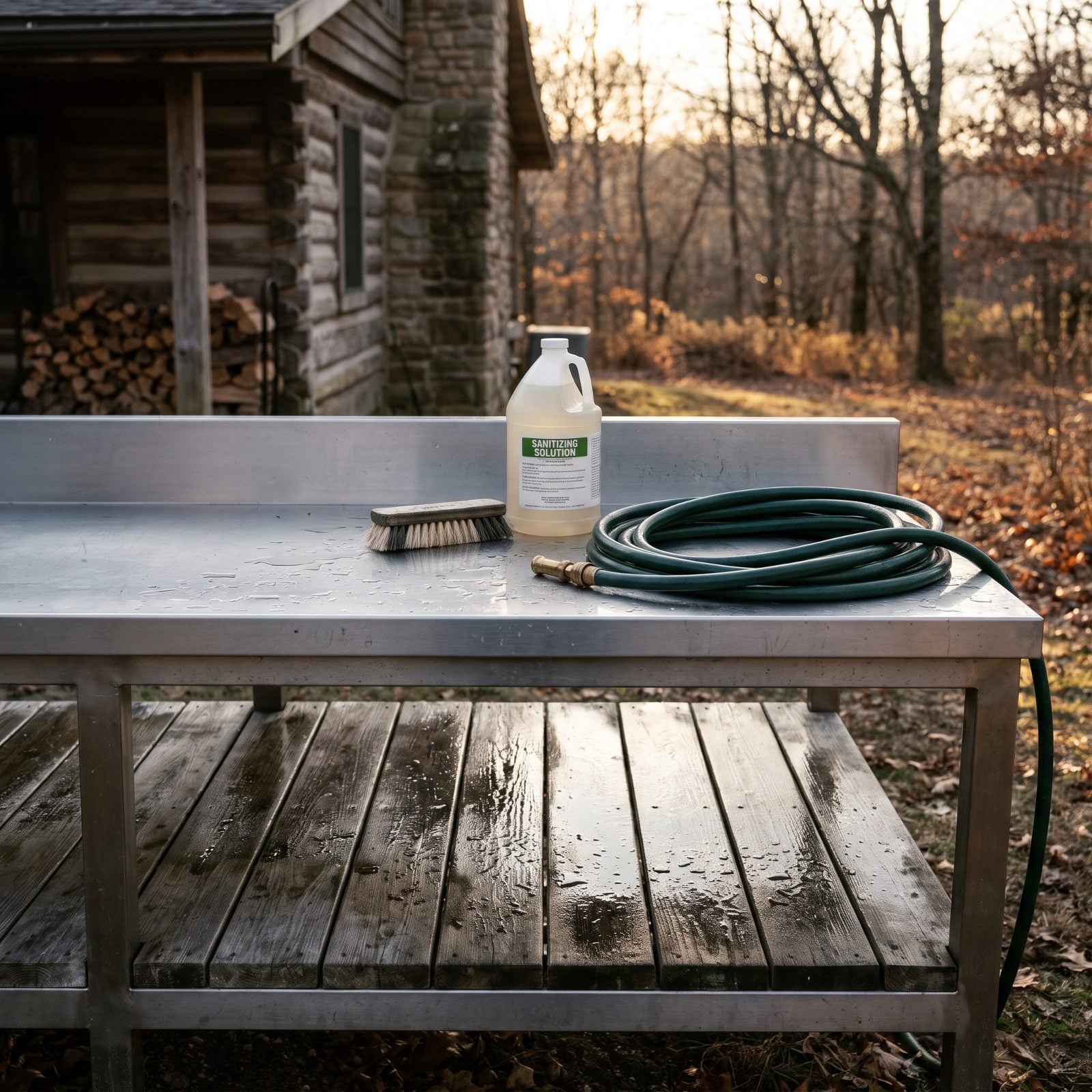
The table is shared. Treat it like a kitchen counter, because that’s exactly what it is.
Everyone’s meat touches that surface. Leave scraps and a slick of fat behind, and the next hunter is working their deer on top of yesterday’s mess. That’s how a camp ends up with spoiled meat and a stomach bug running through the bunks.
Hot water, a stiff brush, a splash of bleach or a food-safe sanitizer, then rinse. Do it the minute you finish — not after a beer, not in the morning. Fat sets up overnight into a scrubbing project nobody wants.
10. Return Borrowed Knives Clean and Sharp
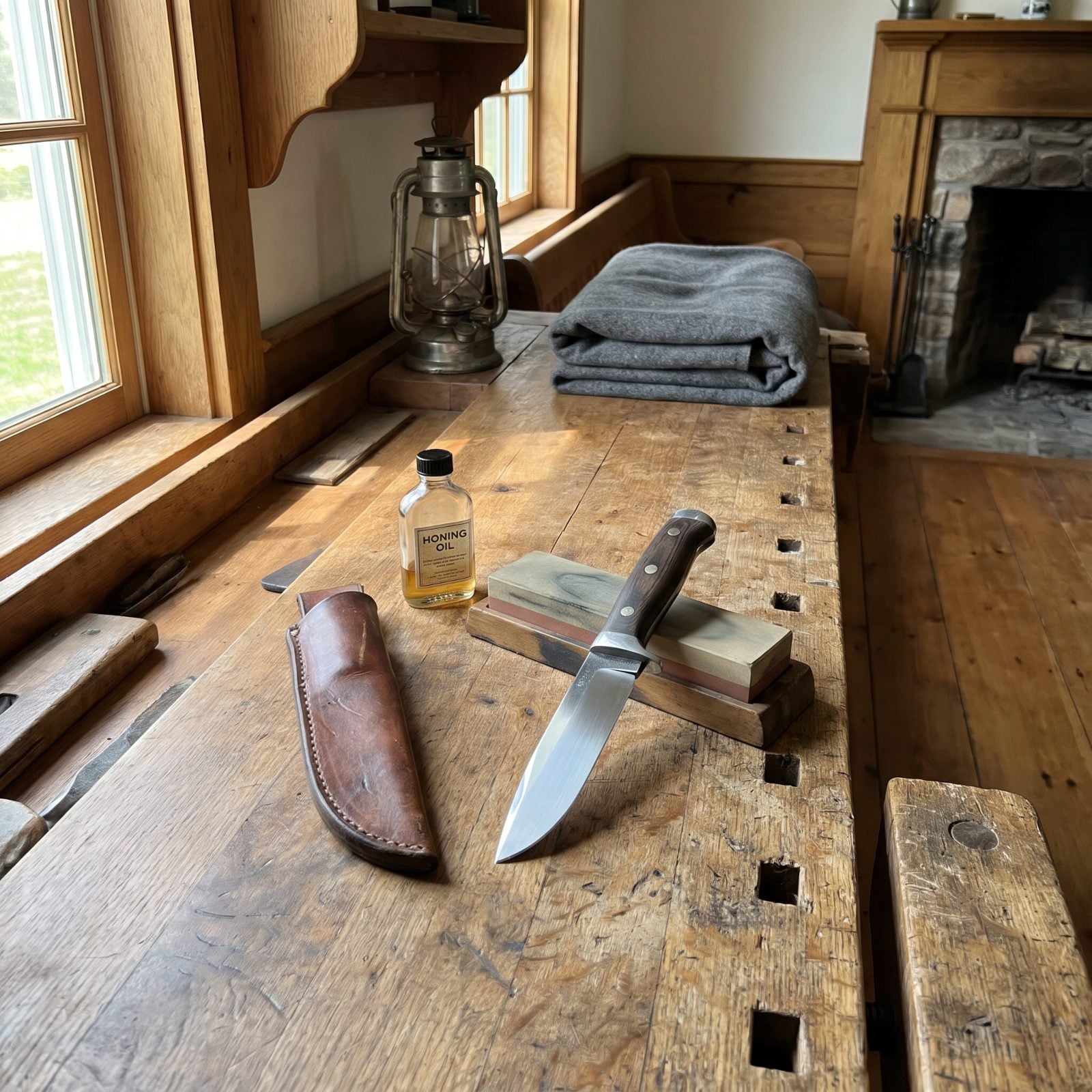
You borrow a man’s knife, you hand it back better than you got it. Wiped down, washed, dried so it doesn’t rust in the sheath, and run across a stone if you dulled it on bone.
Handing back a gummy, dull blade is a quiet insult, even if you never meant it that way. For most hunters who own a good knife, a keen edge is a point of pride.
9. Ask Before Borrowing an ATV, and Refill the Tank
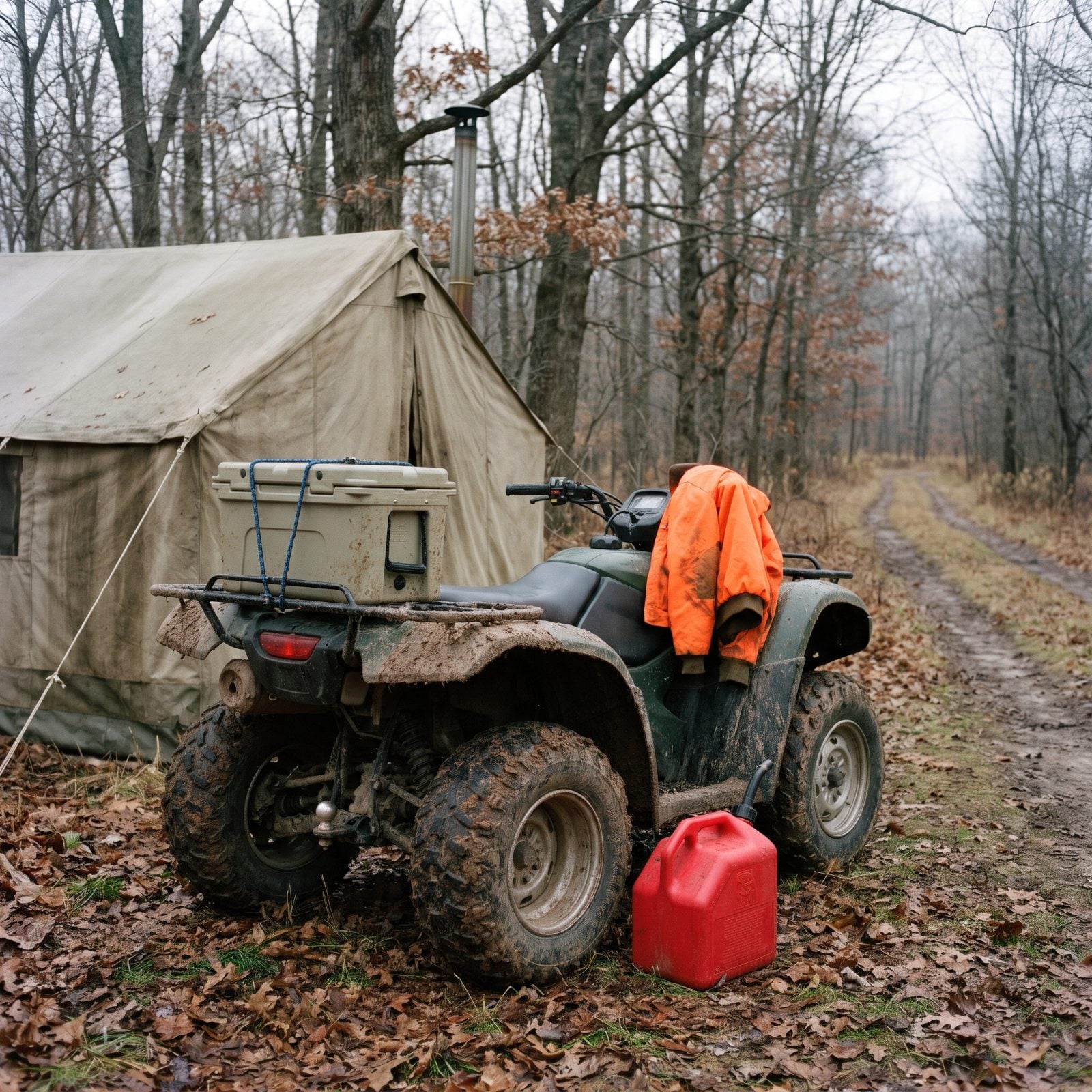
That ATV costs money to run and a lot more to fix. Taking it without asking, even for a quick drag, sours a camp fast. So ask. Every time.
And bring it back with at least as much fuel as you found, or top it off if you’ve got any decency. The owner shouldn’t discover an empty tank at four in the morning while they’re fighting to reach their stand in the dark.
8. Pay Your Share of Camp Expenses Promptly
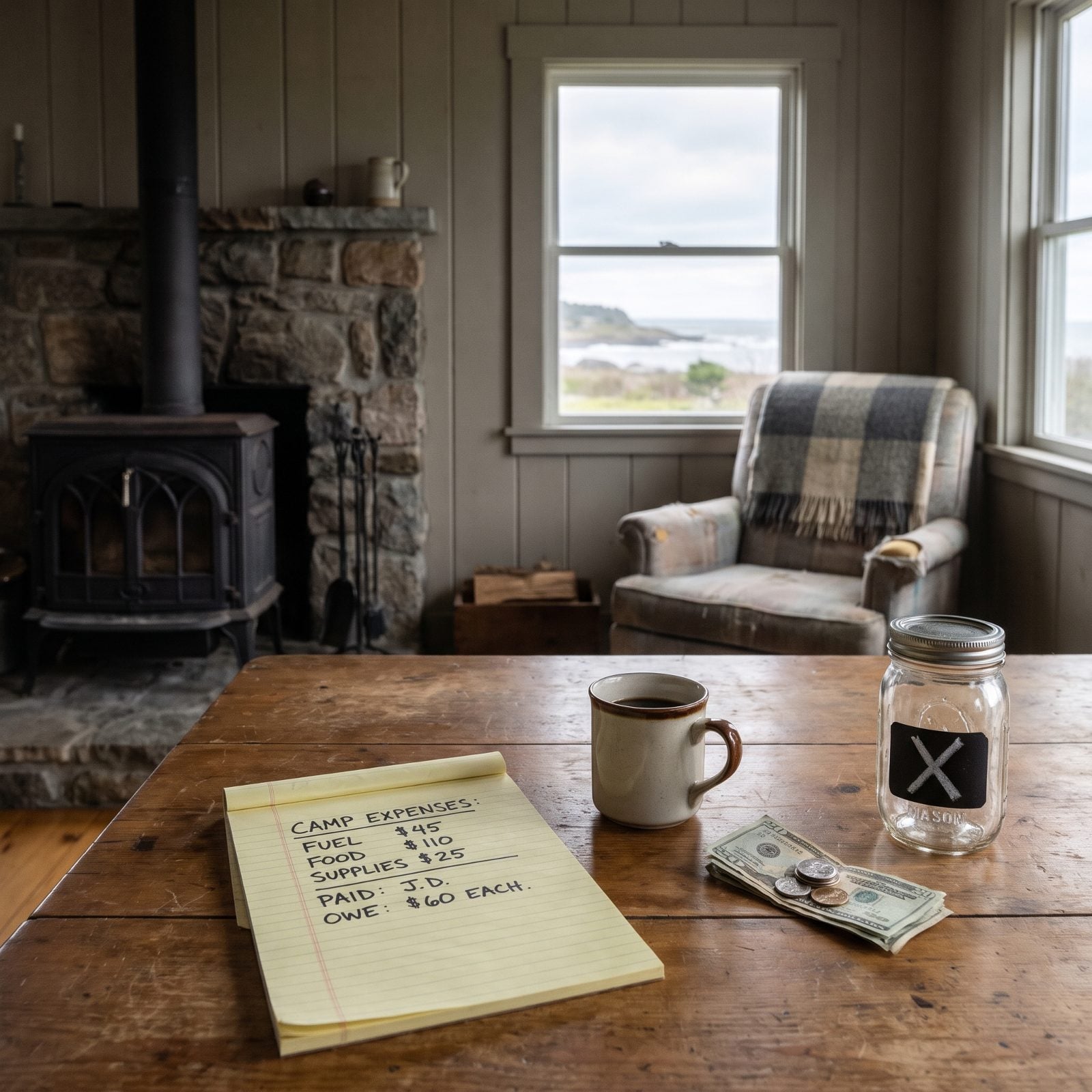
Groceries, gas for the generator, propane, the lease payment — it all adds up, and somebody fronted every dollar of it. Being the guy who’s always a little short, or always “gets you next time,” wears thin by the second season.
Settle up before you leave, or the week you get home. Cash in the jar, money sent that night, whatever the camp does. The hunting is the fun part. Chasing four grown men for twenty bucks apiece isn’t.
A camp splits the cost the way it splits the work: evenly, and without being asked twice.
7. Respect Quiet Hours Before an Early Hunt
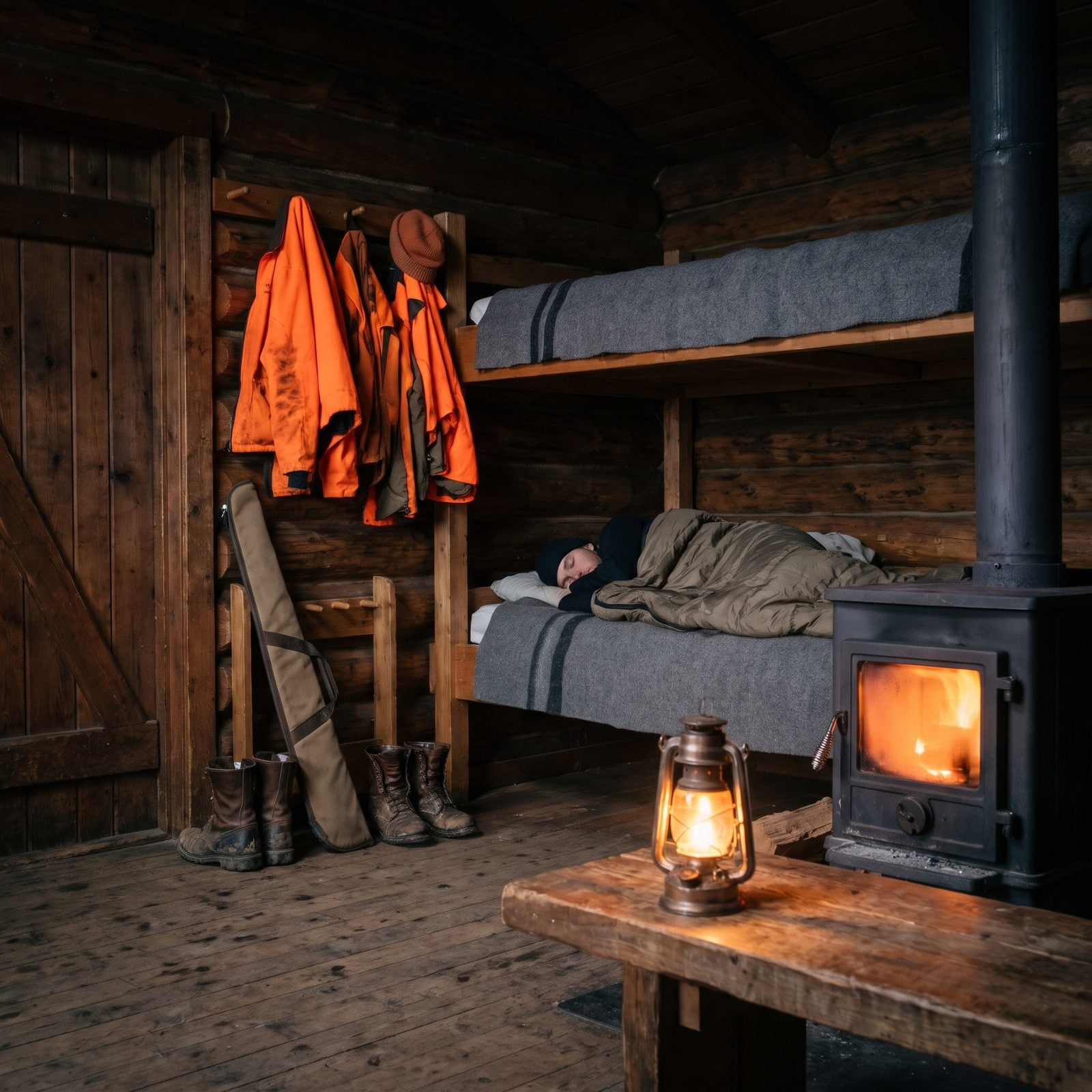
Half the camp is up at four. The card game ends at a reasonable hour, and the last guy to bed doesn’t stomp around with a headlamp blazing and the radio on.
Early risers need their sleep more than you need one more hand of euchre. Keep your voice down. Pack your gear before you turn in so you’re not rooting through bins at dawn, and let the cabin settle.
6. Bring Earplugs Instead of Complaining About Snoring
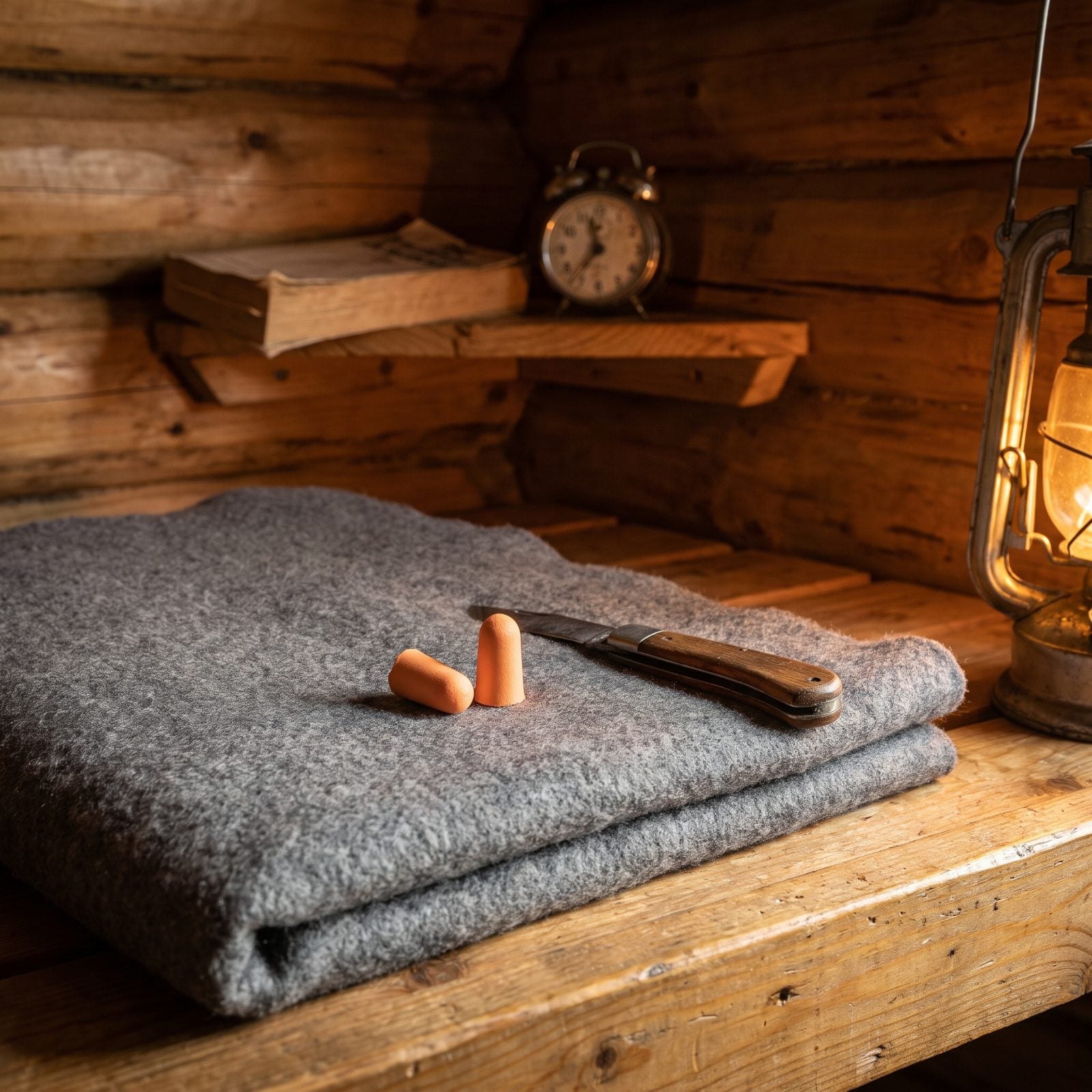
Somebody in that cabin snores like a chainsaw. Maybe it’s you. Complaining about it accomplishes exactly nothing except kicking off the morning with hard feelings, and you can’t very well ask a sleeping man to quit.
Throw a pair of foam earplugs in your bag and the whole problem disappears. Cheap, light, and they’re the difference between four hours of sleep and none. A rested hunter is a safe hunter, the snorer keeps his dignity, and nobody had to say a word about it at breakfast.
5. Don’t Post Photos That Reveal the Camp’s Location
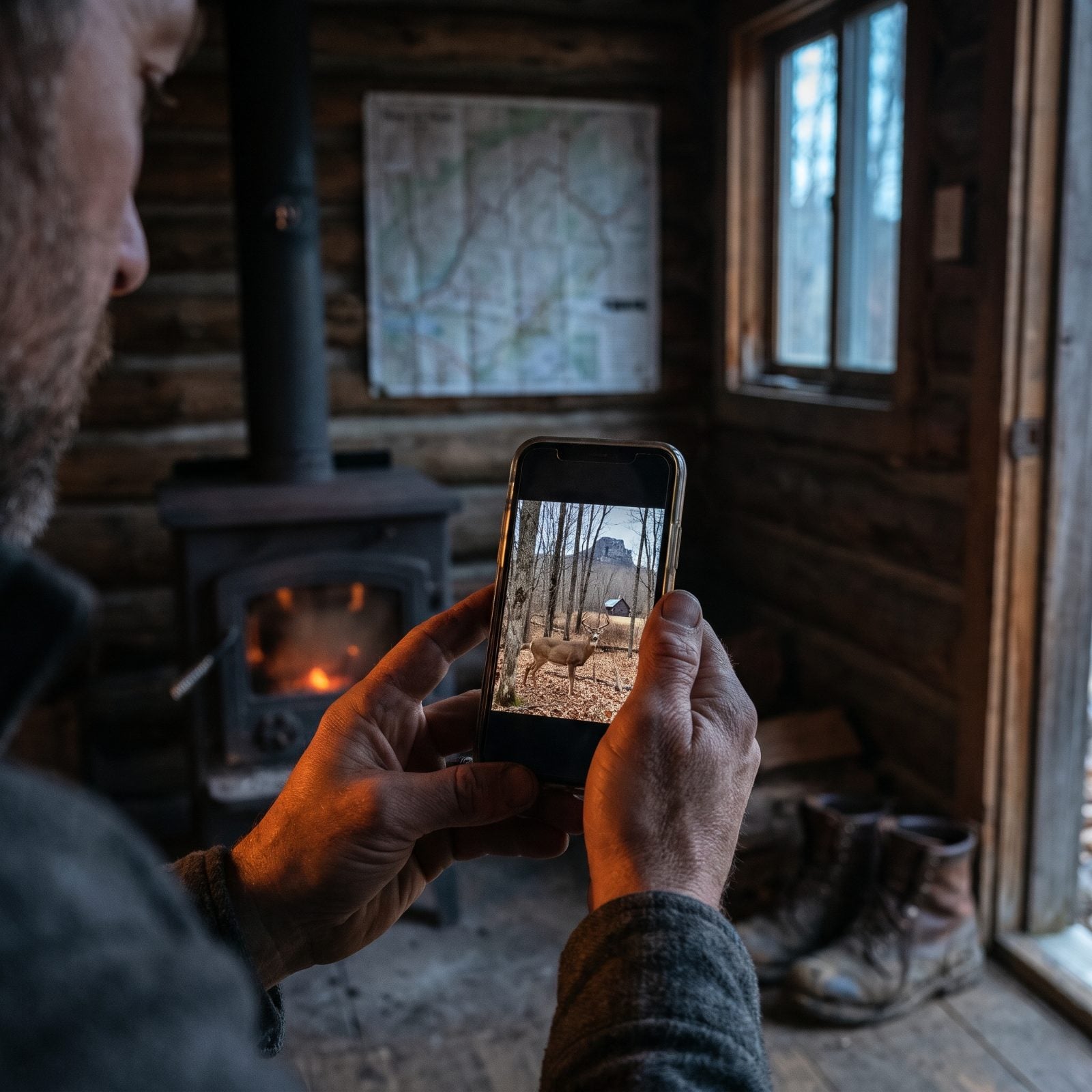
That hero shot against the back of the cabin tells more than you think. A barn-shaped silhouette, a county road sign, the particular bend of a ridge behind your shoulder — people read those details, and some of them are looking for exactly that.
Deer camps get scouted off social media now. A gate left open, a stand cleaned out, a cooler gone missing. The leases that get hit hardest are the ones whose members geotag everything.
So kill the location data on your phone and keep the wide landscape shots for the group text, not the public feed. Nobody needs to find your spot from their couch.
4. Leave Political Arguments Outside the Cabin
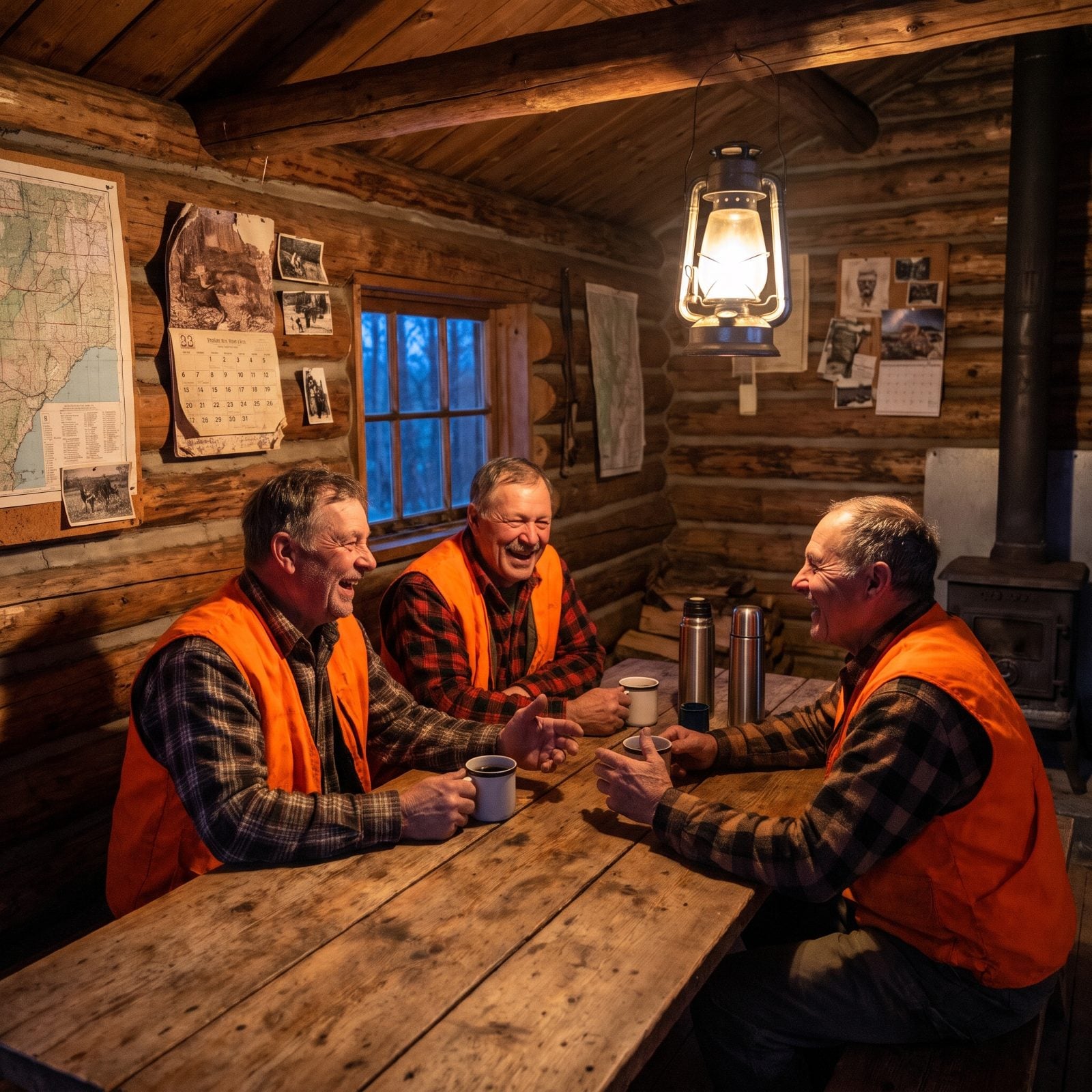
The cabin runs on getting along. Six people, three bunks, one woodstove, and a weekend where you have to hand each other sharp knives in the dark. That only works if nobody is still chewing on last night’s argument.
Camp is one of the last rooms left in American life where a guy who votes one way and a guy who votes the other still share a thermos at 5 a.m. and genuinely like each other. Protect that. The news will keep until Monday.
You can disagree about everything and still be the person who drags a deer out of a creek bottom for someone.
3. Never Run a Propane Heater Unattended or Without Ventilation
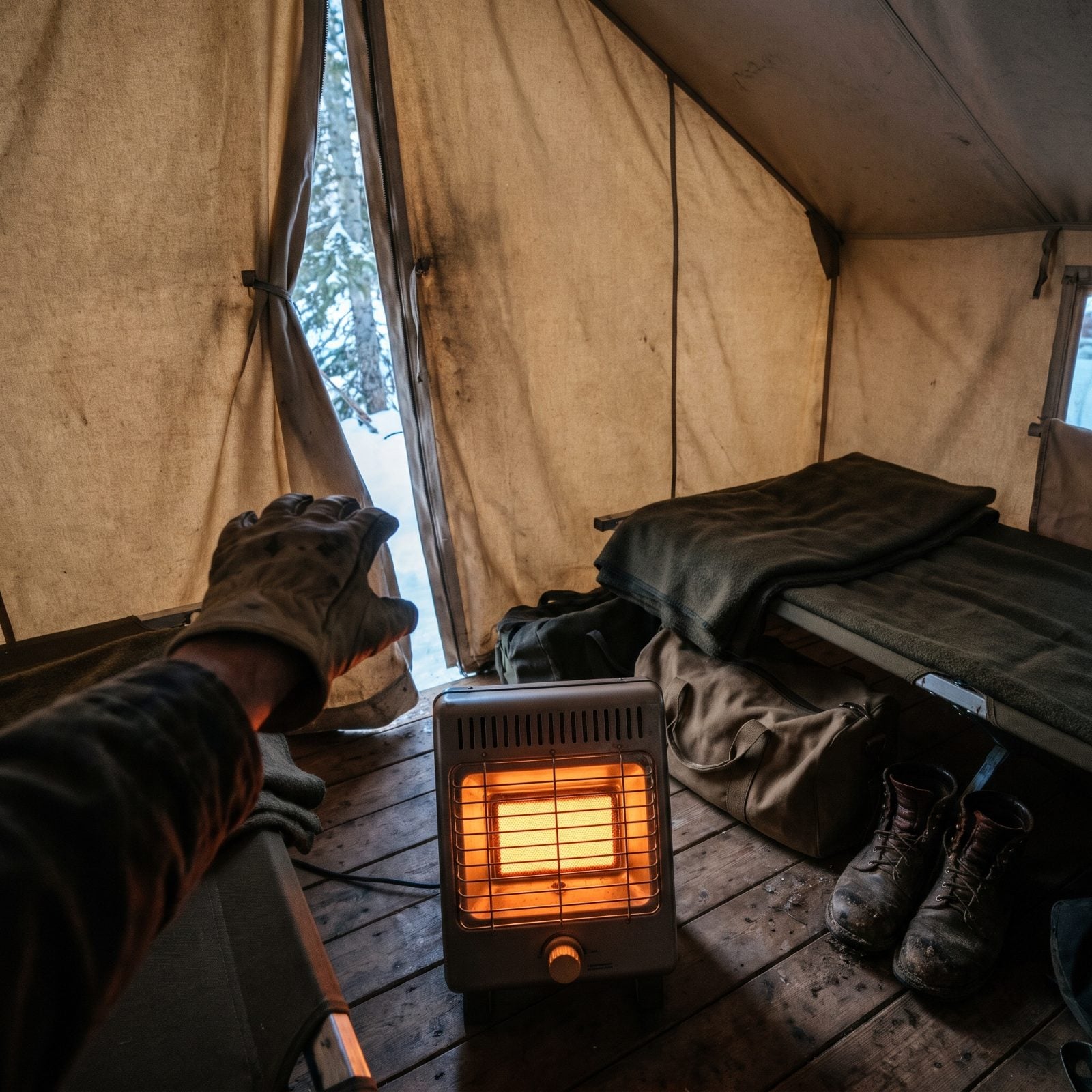
This is the rule that actually kills people.
Carbon monoxide gives you no warning — no smell, no sound, just a headache you blame on the long drive up and a nap you don’t wake from. Every season the news carries a story about hunters found in a sealed tent or a buttoned-up cabin with a heater still hissing away.
Crack a window. Crack the tent flap. A heater rated for indoor use is not the same thing as one that’s safe to run all night behind zipped canvas with six guys breathing.
2. Pack Out Every Bag of Camp Trash
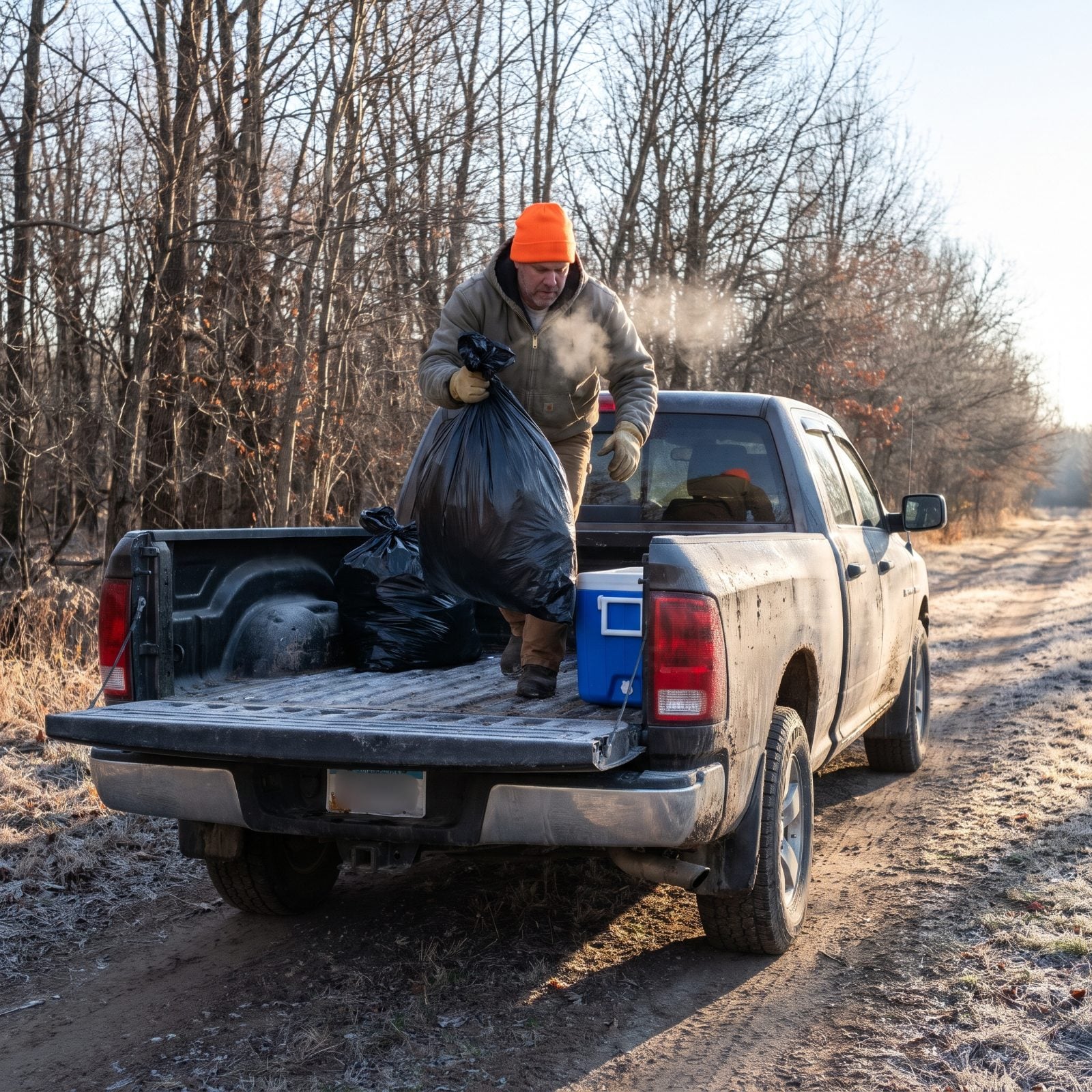
A gut pile is nature’s business. A granola bar wrapper is yours. The two are not the same, and the woods know the difference.
Food trash pulls in raccoons and bears, teaches them your camp means an easy meal, and leaves a mess for whoever shows up next. Leave bottles and cans behind on a lease and watch how fast the landowner stops returning your calls. That’s how good spots get lost for good.
Everything that came in a package goes home in the truck. Fish out the cans that missed the bag, too. The place should look like nobody was ever there.
1. Clean the Cabin Before the Final Truck Leaves
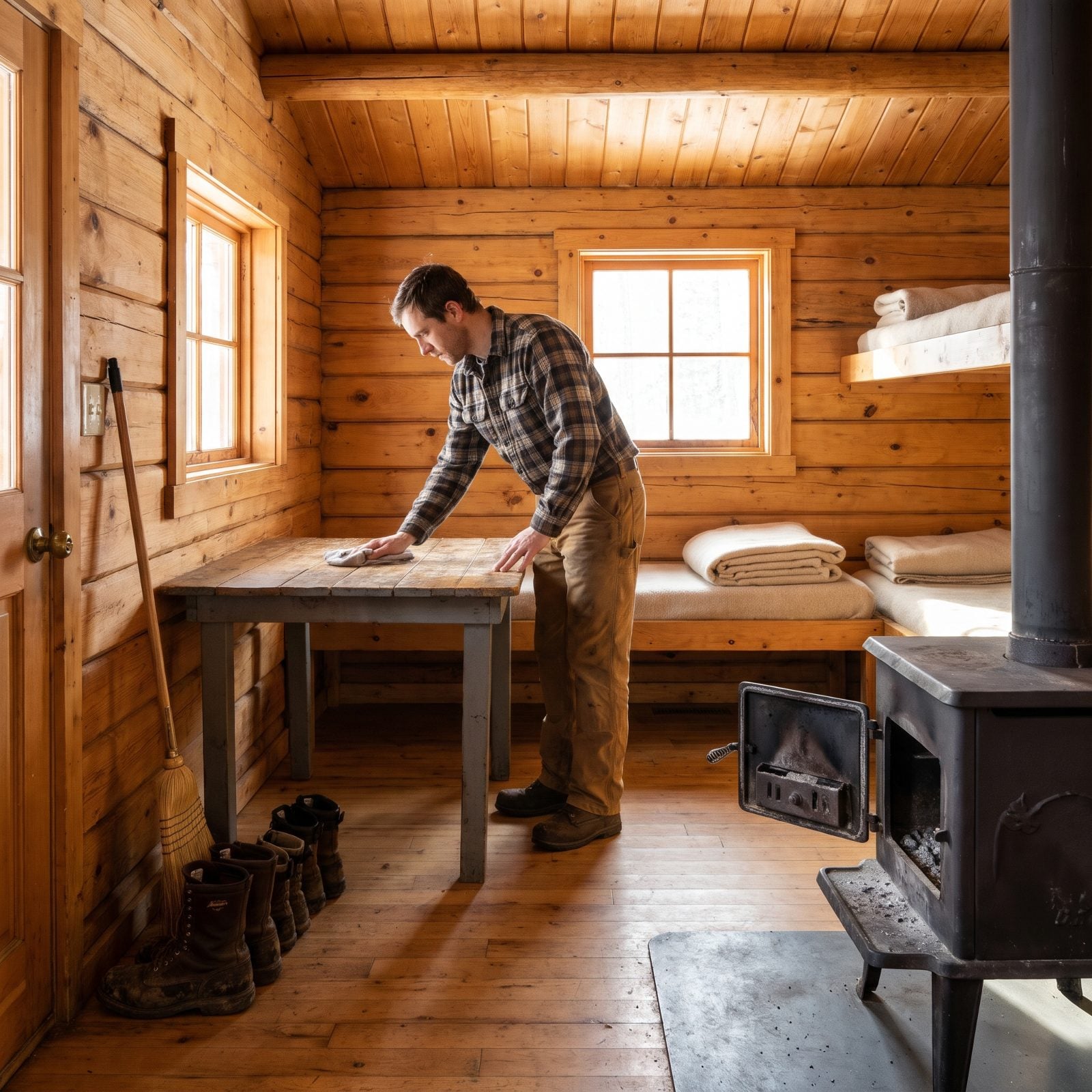
Walking into a clean cabin at the start of a season tells you somebody respected the place before you got there. Walk into a filthy one and you’ll learn the opposite — and you’ll remember whose weekend it was.
Sweep the floor. Haul out the ash. Wipe the table, fold the blankets, check the mousetraps and reset them, and prop the mattresses up so the mice have nowhere cozy to nest over the quiet months.