The best cabin trick nobody teaches you costs a quarter and lives in a cup of ice. Most of what makes a weekend off-grid go smooth isn’t gear — it’s a handful of small moves done the night before, or the minute you walk in, that save you a cold morning, a ruined floor, or a nasty surprise under the sink. Seasoned cabin folks do these without thinking and never bother to explain them. Some sound strange until the moment they pay off. Then you do them every single time. Here are the ones worth stealing before your next trip up.
Please note that some of the images in this article were created with the assistance of AI.
39. Freeze a Coin on a Cup of Ice to Catch a Dead Freezer
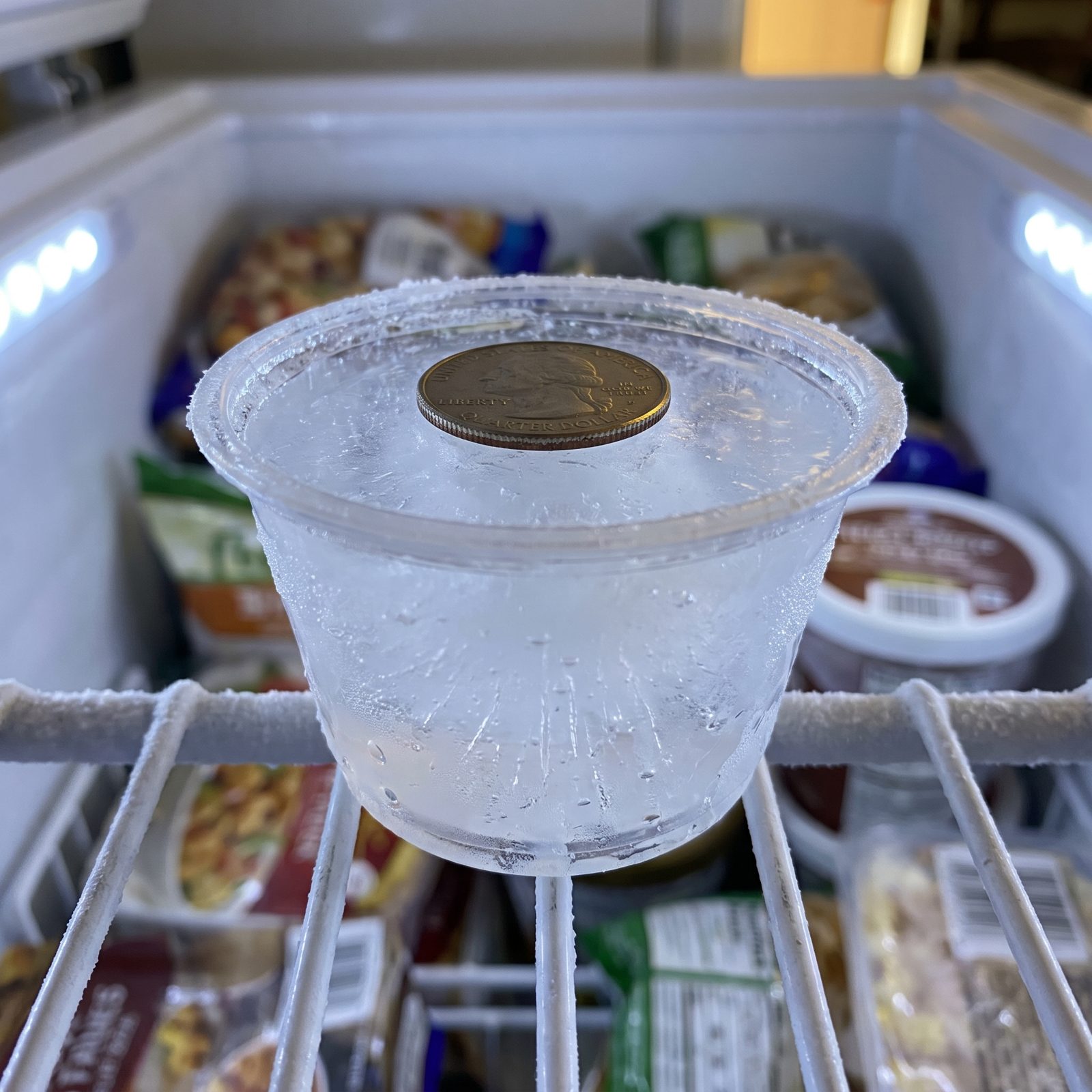
Leave a cup of water in the freezer until it’s solid, then set a coin on top and shut the door. Simple. When you come back, the coin tells a story. Still on top? Power held the whole time. Sitting in the middle, or frozen to the bottom? The freezer thawed and refroze while you were gone, which means whatever’s in there went soft and dangerous before it ever got cold again.
This matters most at a seasonal cabin where the power flickers and nobody’s around to notice. A chest freezer full of venison can look perfectly frozen and still have spent two days sitting at room temperature. The coin never lies.
38. Dust a Thin Flour Line Under the Sink to Expose Mouse Traffic
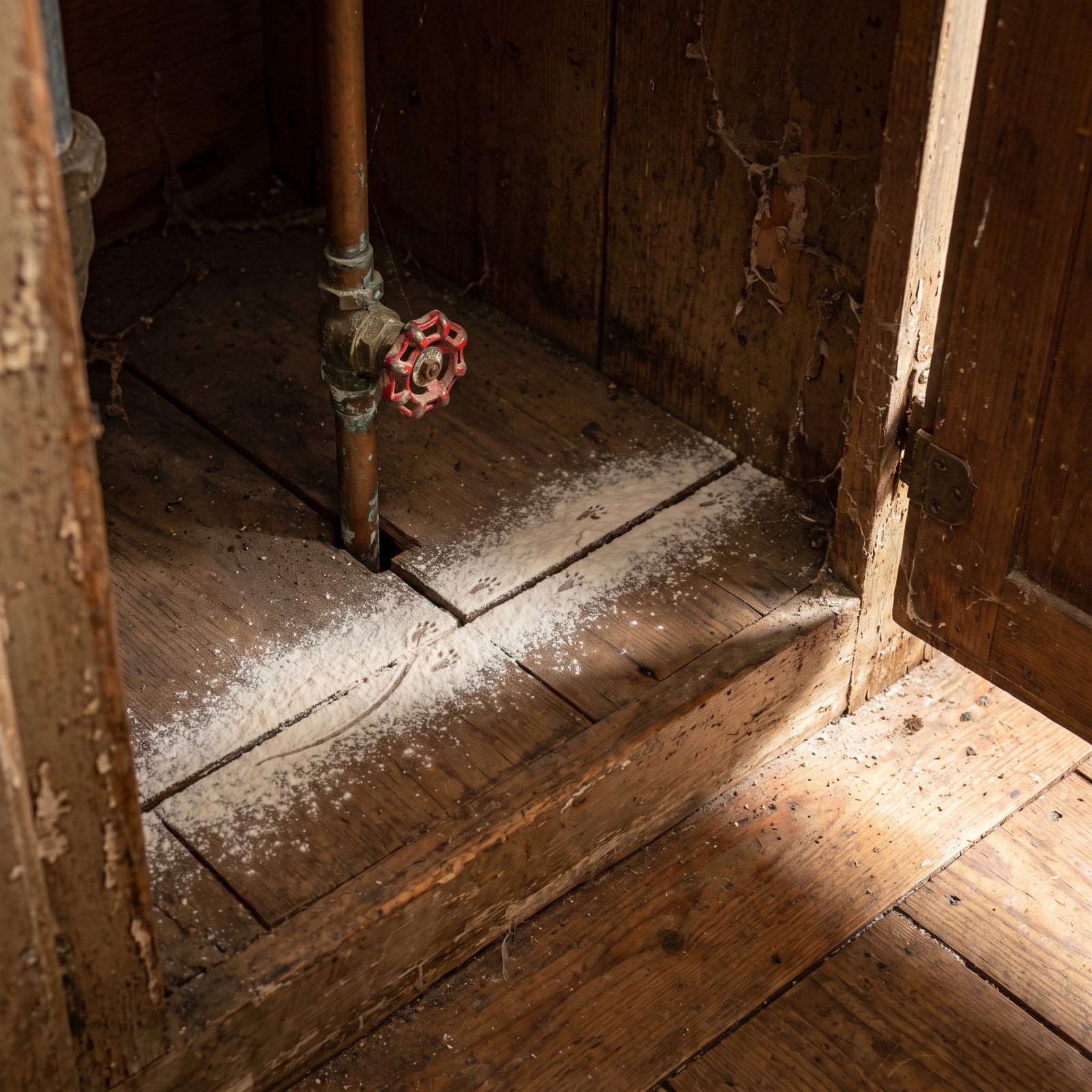
You won’t see the mice. You’ll see what they do at night. A light dusting of flour across the floor under the sink, along baseboards, near any pipe gap, turns an invisible problem into a map by morning — tiny four-toed prints and a thin tail line showing you exactly where they’re getting in and which run they favor.
Most people set traps blind and wonder why they catch nothing. Mice follow lines and edges — even a board seam straight across open floor. Find the actual highway first, then put the trap on it. The flour wipes up in ten seconds and tells you more than a week of lying awake listening in the dark.
37. Soap the Outside of the Campfire Pot Before It Goes on the Flames
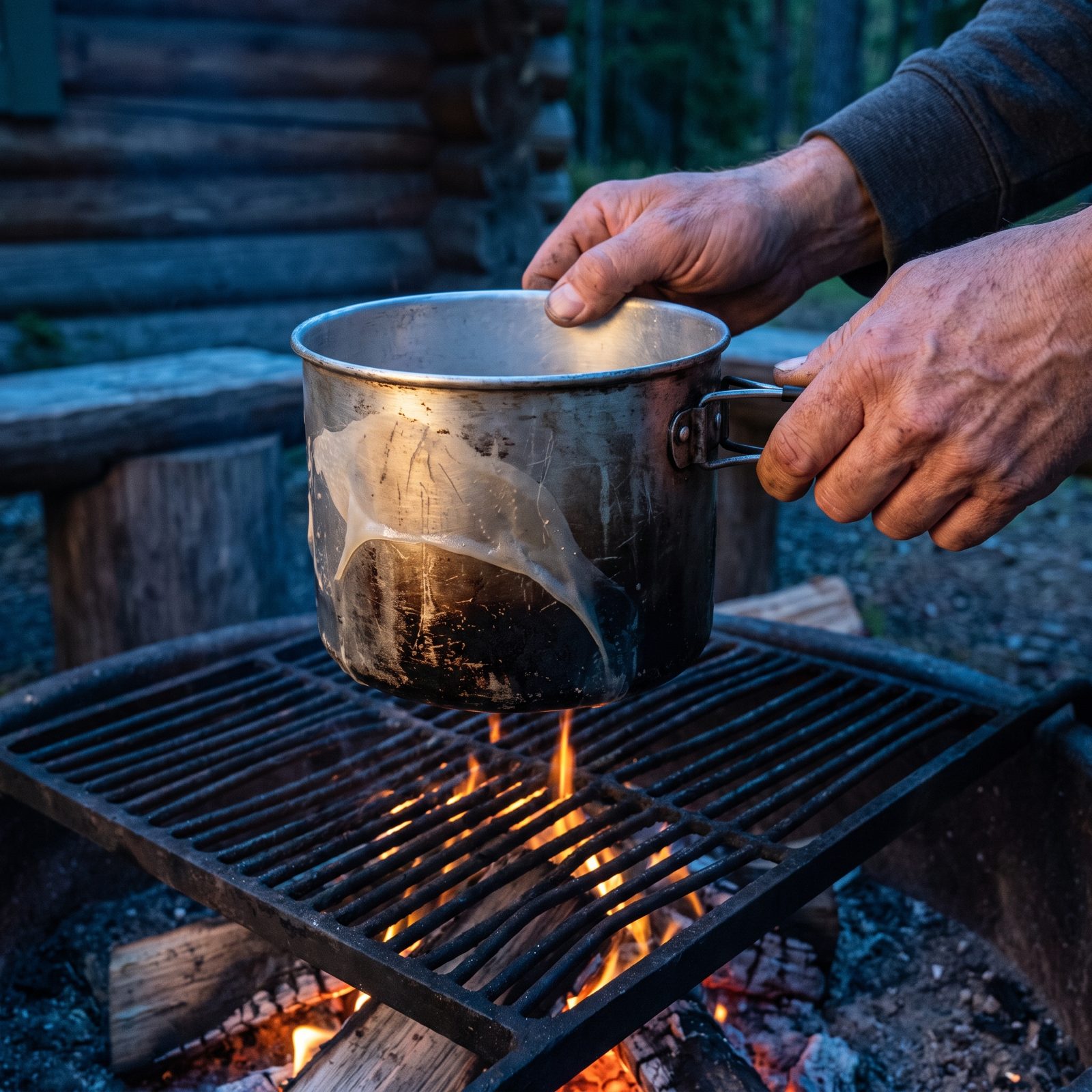
Smear a thin layer of dish soap over the bottom and sides of any pot before you hang it over an open fire. The soot still builds up, black and thick, but it sits on the soap instead of baking into the metal. Come cleanup time, it rinses off in one pass instead of ten minutes of scrubbing with sand and swearing.
Nobody tells you this until you’ve already ruined an afternoon scouring a Dutch oven. One cheap trick buys you cleaner hands and water you can reuse.
36. Test the Chimney Draft With a Tissue Before You Light Anything
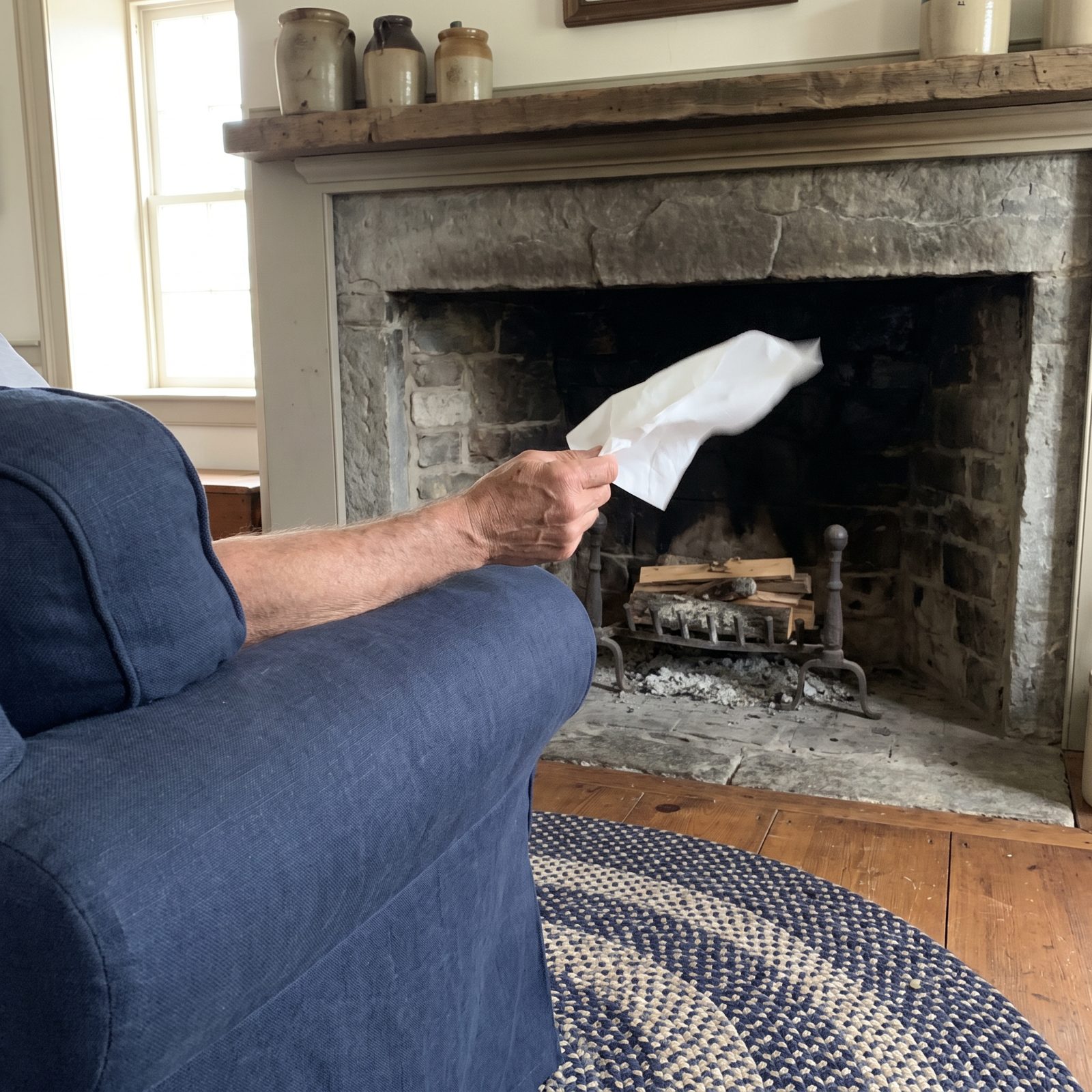
Before the first match, reach over the back of the sofa and hold a sheet of tissue out toward the firebox opening. Get pulled up into the flue and you’ve got draft — your smoke will rise. If it hangs limp or drifts back into the room, something’s wrong: a cold chimney, a closed damper, a bird’s nest up top, or air pressure working against you.
Light a fire with no draft and the cabin fills with smoke in about fifteen seconds. Once that smell is in the blankets it stays all weekend. The tissue test takes five seconds and saves you from throwing open every door in January.
35. Photograph the Propane Gauge the Minute You Arrive
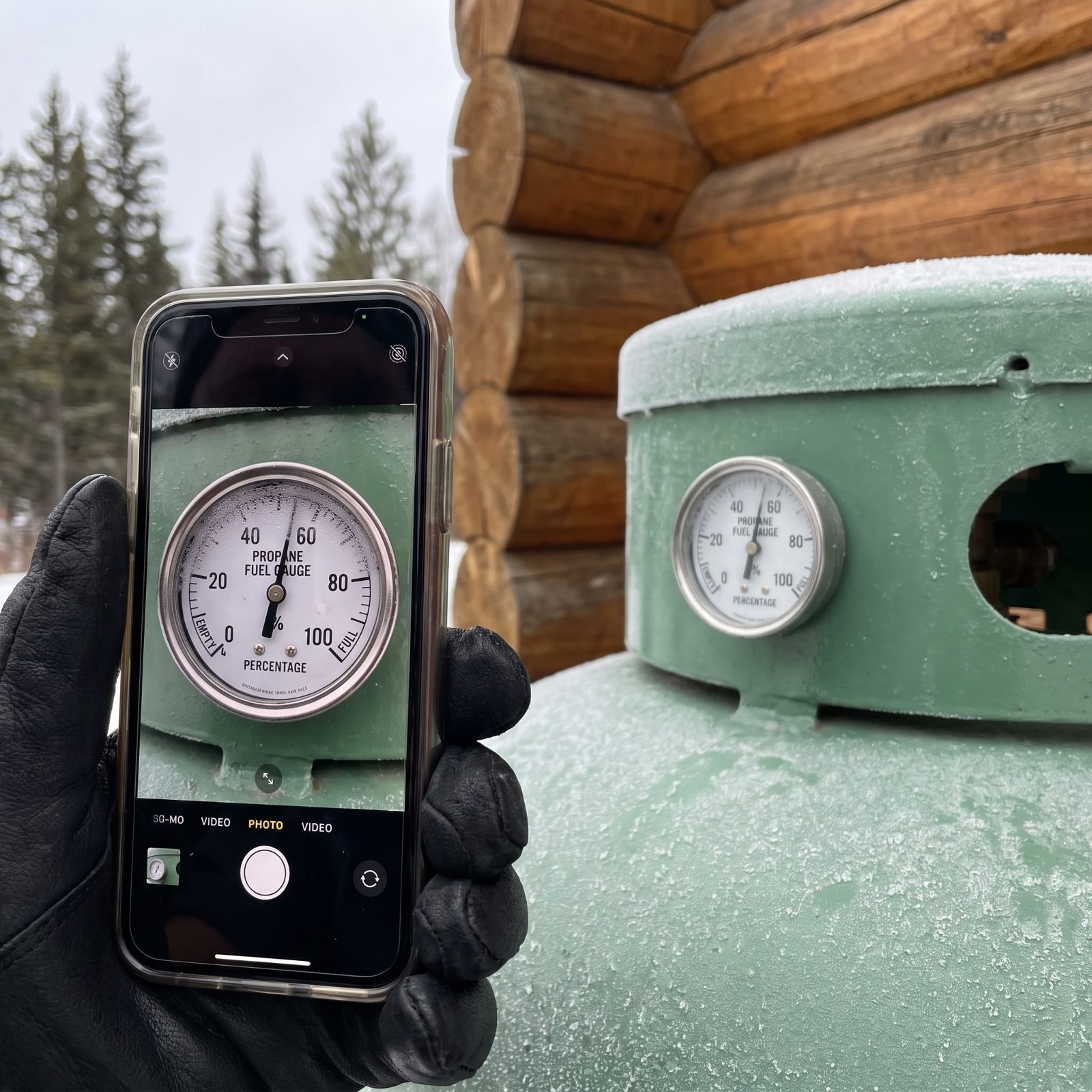
Walk up, snap a photo of the propane gauge, done. The timestamp does the work. Next trip, you compare — and if the needle dropped more than the furnace and water heater could account for while nobody was there, you’ve got a leak or a slow bleed somewhere in the line.
A cabin burning propane with nobody home is a quiet money pit at best and a hazard at worst. One dated image per visit builds a record over the season that tells you whether your consumption is normal. It also settles the argument about who left the pilot cranked.
34. Carry In Only One Night’s Firewood at a Time
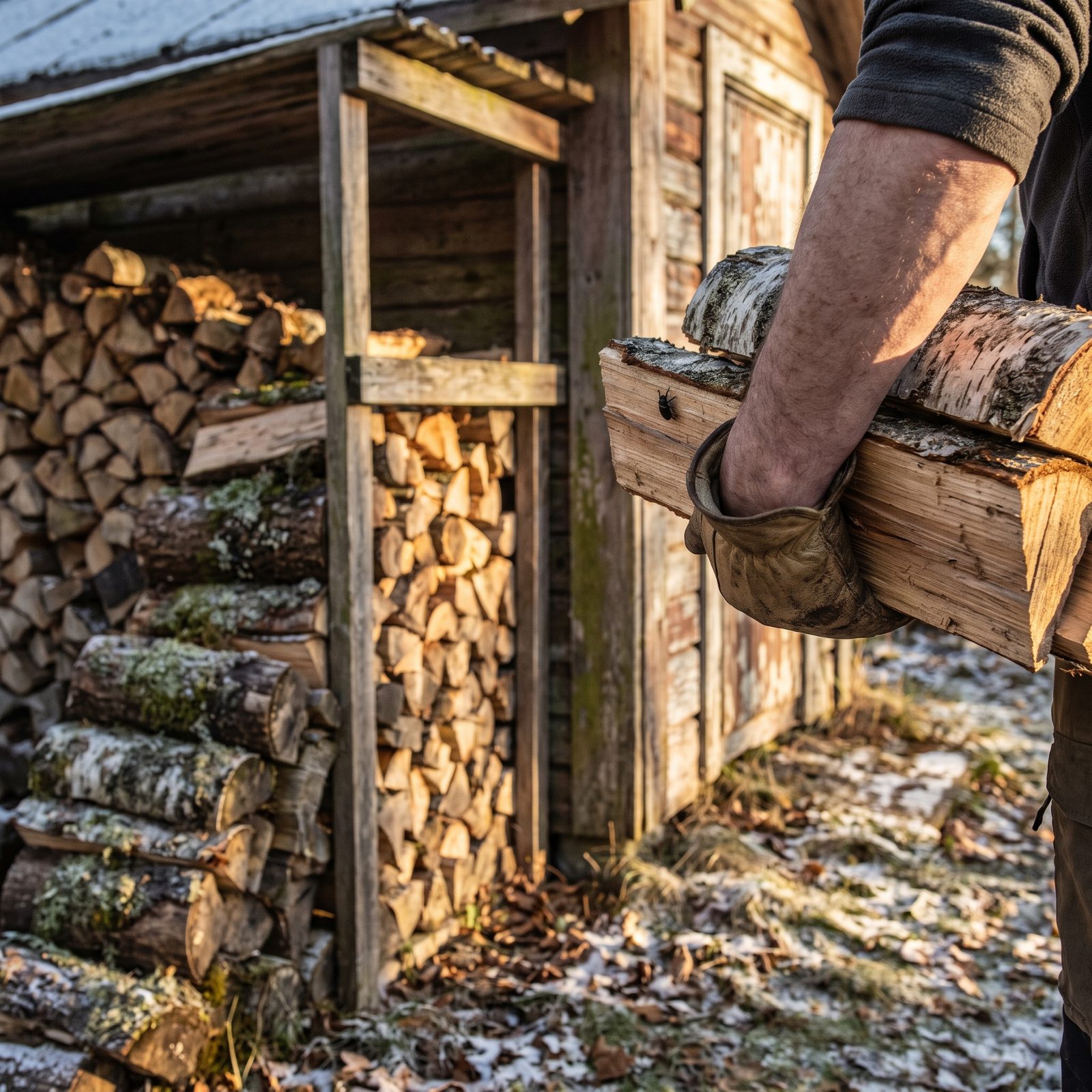
Don’t stack a week’s worth of wood next to the stove. It looks efficient. It also moves a whole insect population indoors. Firewood is full of sleeping beetles, spiders, carpenter ants and the occasional wasp, and a warm cabin wakes them up fast. By day three they’re on the ceiling.
Bring in what you’ll burn tonight, feed it straight onto the fire, and keep the stack outside where the cold keeps the bugs sluggish. Boring advice — right up until you’ve shared a bunk with a lanternfly hatch.
33. Store Cast Iron With a Paper Towel Tucked Inside
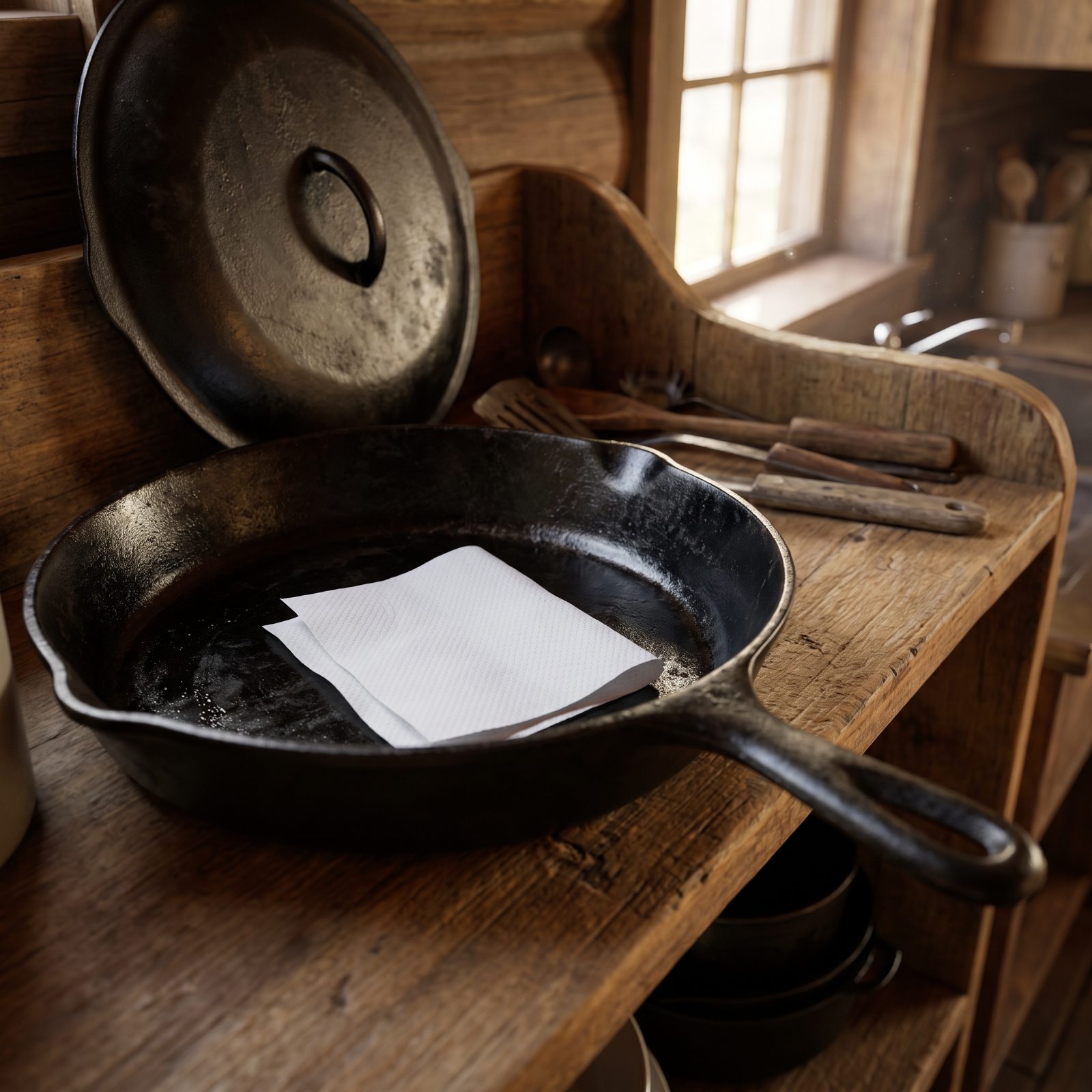
A folded paper towel in the belly of a clean cast-iron pan pulls double duty. It wicks stray moisture out of the air before that moisture becomes rust, and when you come back, the paper is your early warning — a few orange specks on the towel means the seasoning’s breaking down in that spot and it’s time to re-oil before the pitting starts.
Cast iron left in a damp cabin all winter can rust through the seasoning in one season. The towel costs nothing and catches the problem while it’s still a wipe-and-fix, not a strip-and-reseason job.
32. Heat Tomorrow’s Wash Water After Dinner
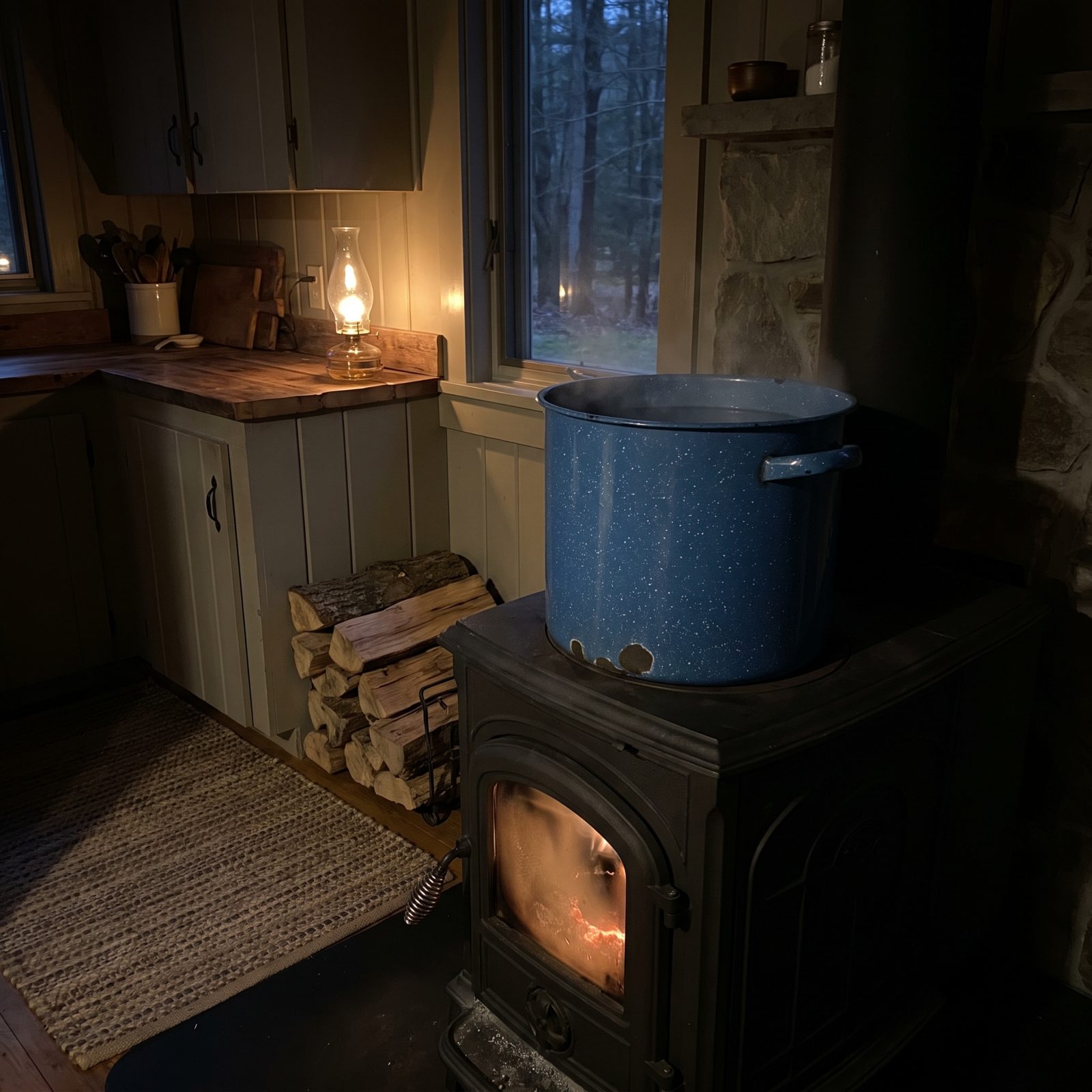
The stove is already hot after dinner, so put tomorrow’s wash water on top and let the dying fire do the work for free. By the time the coals fade you’ve got warm water sitting ready, and the morning routine loses its worst chore.
Nobody wants to split kindling and wait forty minutes for hot water with cold hands at seven a.m. Steal the heat you’ve already made. A cabin runs easier when the next morning gets set up the night before.
31. Tuck Tomorrow’s Socks Into the Bedding
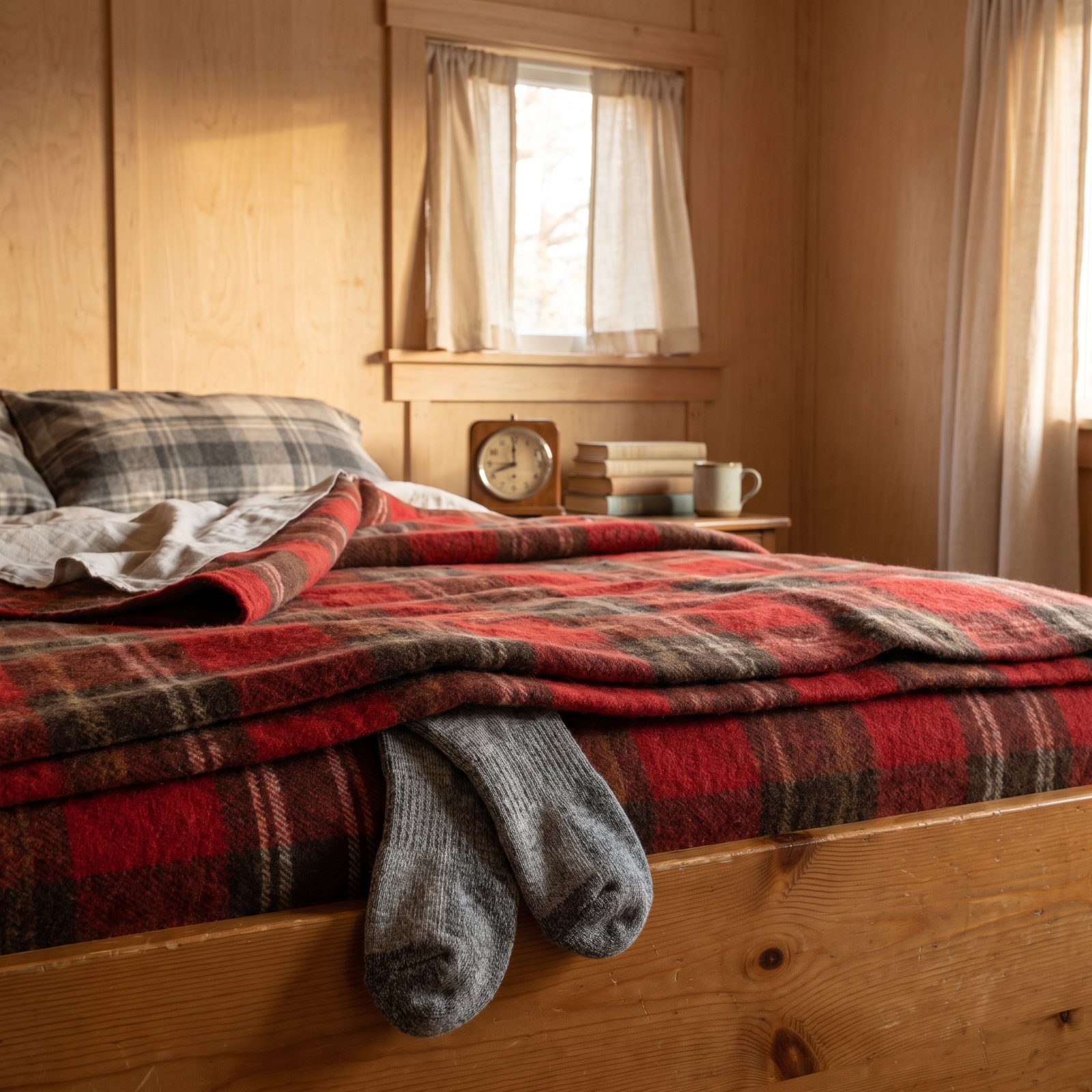
Tuck the tops of tomorrow’s socks into the folded blanket at the foot of the bed before you sleep, letting them hang over the edge of the frame. They’re right where your feet will swing out in the morning, and in a cold cabin how fast bare feet get covered decides whether getting up feels bearable or brutal.
Sounds trivial. It isn’t. What keeps people huddled in the bag an extra hour on a freezing morning is dreading that cold floor. Socks waiting within reach means they’re on your feet and you’re up and moving before the dread sets in — small comfort, big effect on how the day starts.
30. Fill a Thermos With Hot Water Before Bed
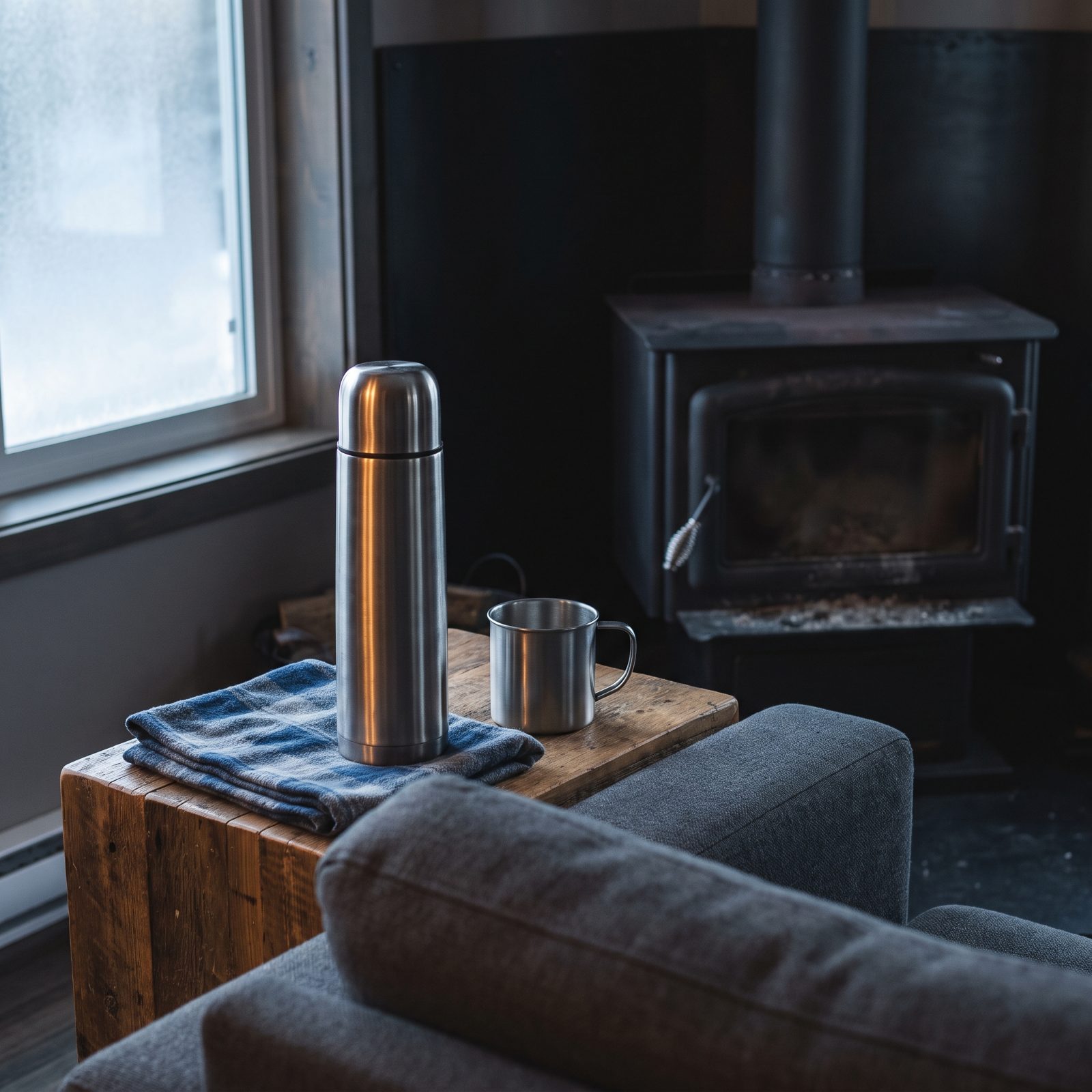
Fill a good thermos with boiling water as the last thing before you turn in. A decent insulated flask holds it hot through the night. Come morning, before anyone’s touched the fire, there’s water ready for coffee, oatmeal, or just warming your hands while the stove catches.
The gap between waking up cold and having the first warm thing of the day is the longest stretch of a cabin morning. Close it with a thermos you filled eight hours earlier and the whole mood of the room shifts. First one up pours for everyone. Nobody waits on the fire.
29. Close the Windows in the Same Direction Every Single Time
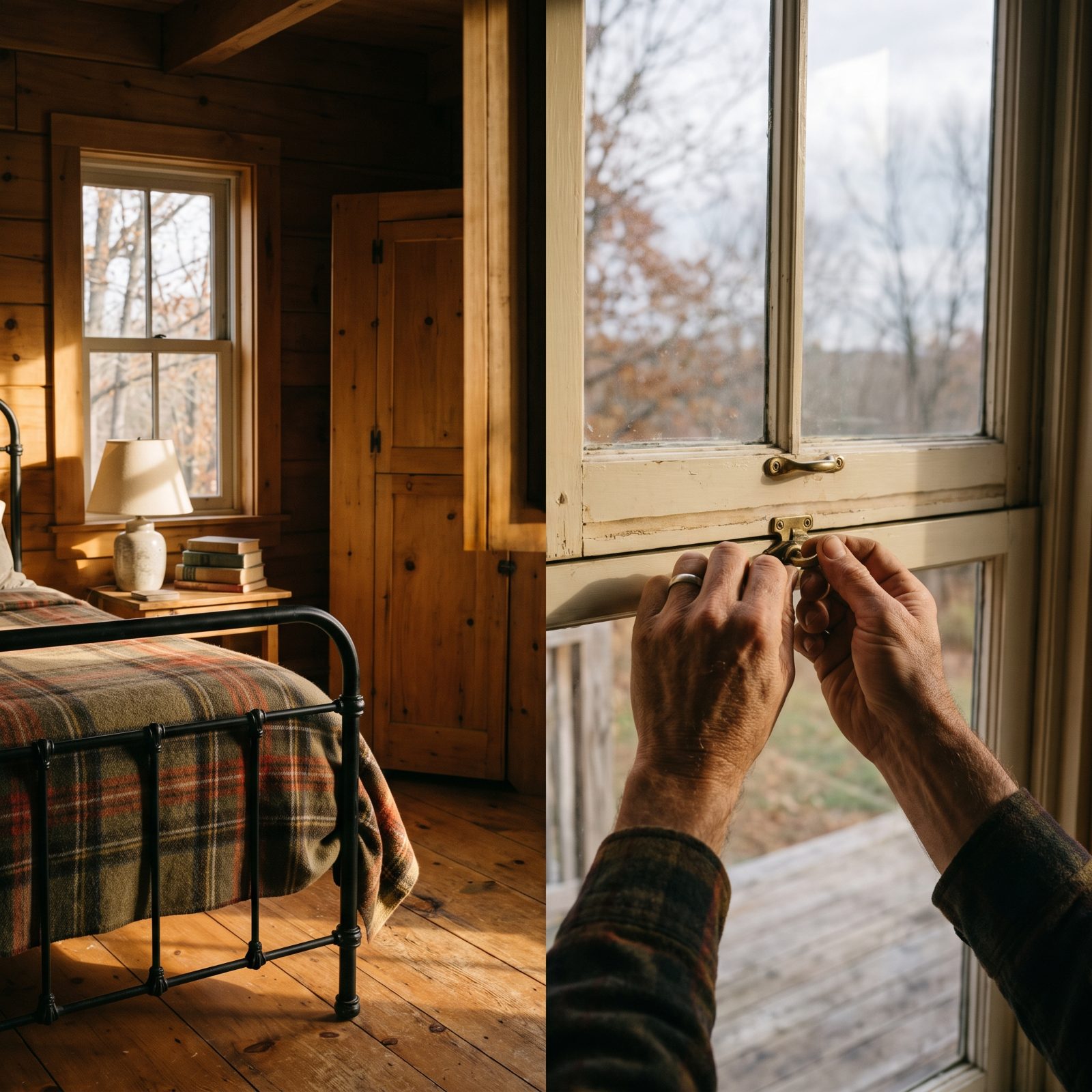
Pick a direction and never deviate. Left to right, kitchen to bedrooms, finishing at the loft. Which way you go doesn’t matter — the fixed path does, because walking the same circuit turns closing up into muscle memory instead of a thing you hope you remembered somewhere around mile ten of the drive home.
Here’s where people fall down. They close windows as they think of them, scattered, and one little bathroom sash gets missed every single time. That’s the one that lets rain in, then rot, then carpenter ants. Walk a route you always walk and you physically pass every opening before your hand touches the lock.
28. Hang the Water-Shutoff Tag Right on the Exit Doorknob
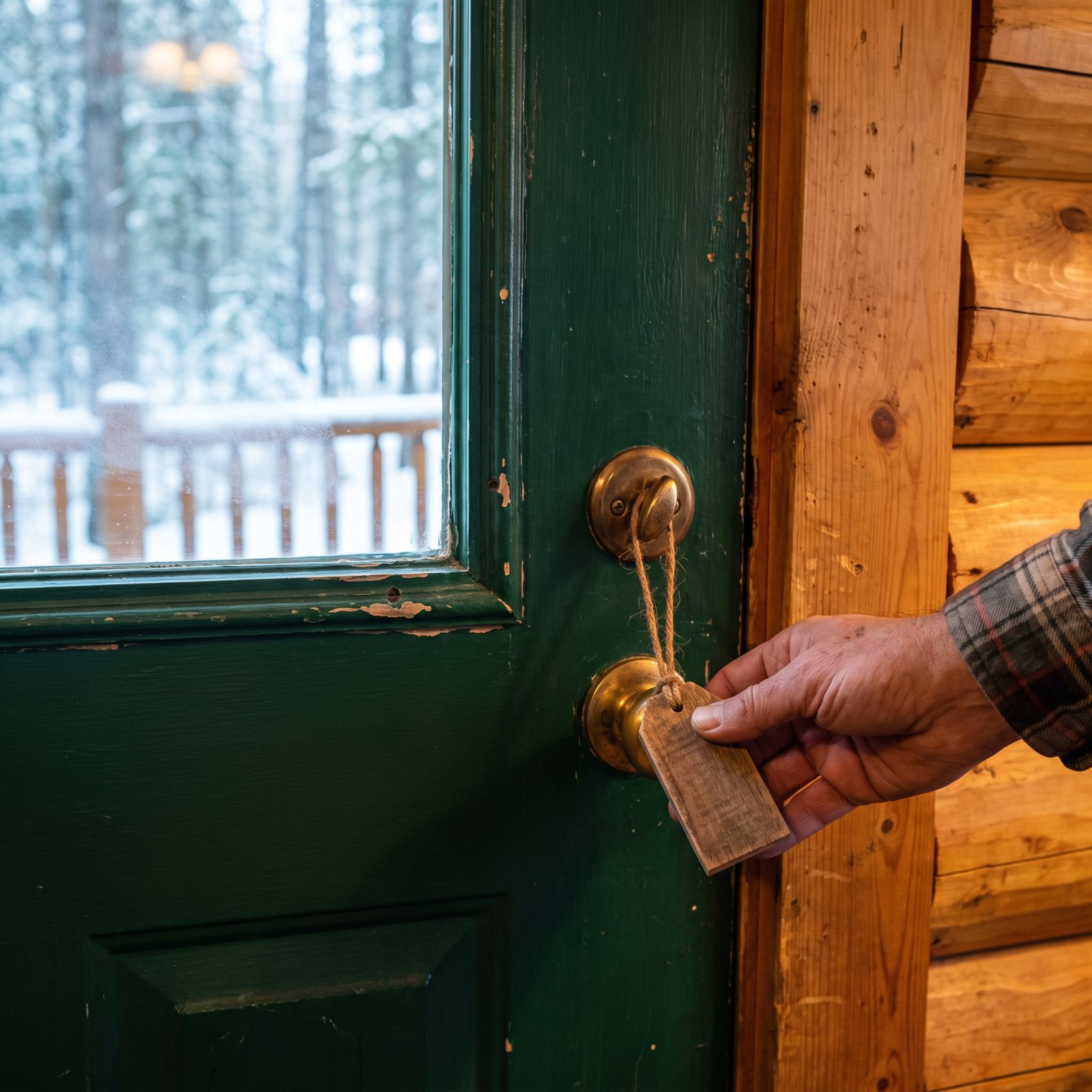
A reminder you can walk past does nothing. Sling it over the knob you have to grab on your way out, though, and suddenly it’s impossible to ignore. Make a simple tag — water off, propane off, whatever your cabin needs — and park it on the handle of the door you always exit through.
You cannot lock up without touching it. That’s the whole trick. Shutting the water main is the one habit that saves cabins from the burst-pipe disaster that floods a whole floor and goes undiscovered until spring. A thirty-second chore, guarded by a scrap of wood on a string.
27. Crack the Sink Cabinets Open When the Temperature Drops
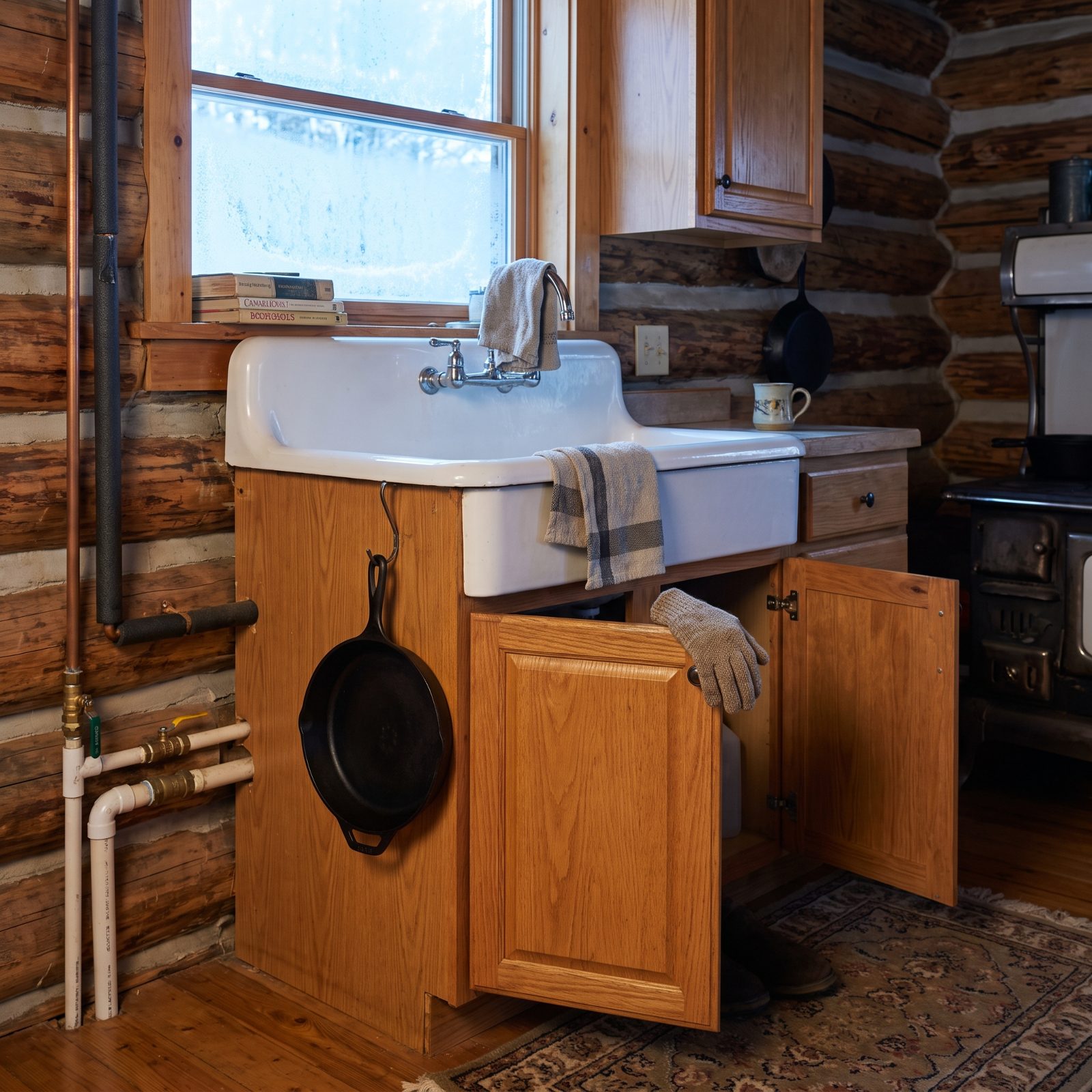
On the coldest nights, open the cabinet doors under every sink that sits against an outside wall. Sounds like nothing. What it does is let the room’s warm air reach whatever plumbing passes into that dead space, where the cold creeps in first and the freeze gets started.
Runs along exterior walls are the usual casualties. In this cabin the copper supply lines and white PVC drain run in plain view along the log wall and the cabinet’s side panel before passing through into the sink base. The stretch behind the doors sits in a pocket of air the woodstove never touches. Pop the doors and you fold that hidden stretch back into the heated room with the exposed runs. Add a thread of running water on a hard freeze and you’ve covered the two cheapest insurance policies a cabin has.
26. Freeze Your Drinking Water in Reusable Jugs Before the Trip
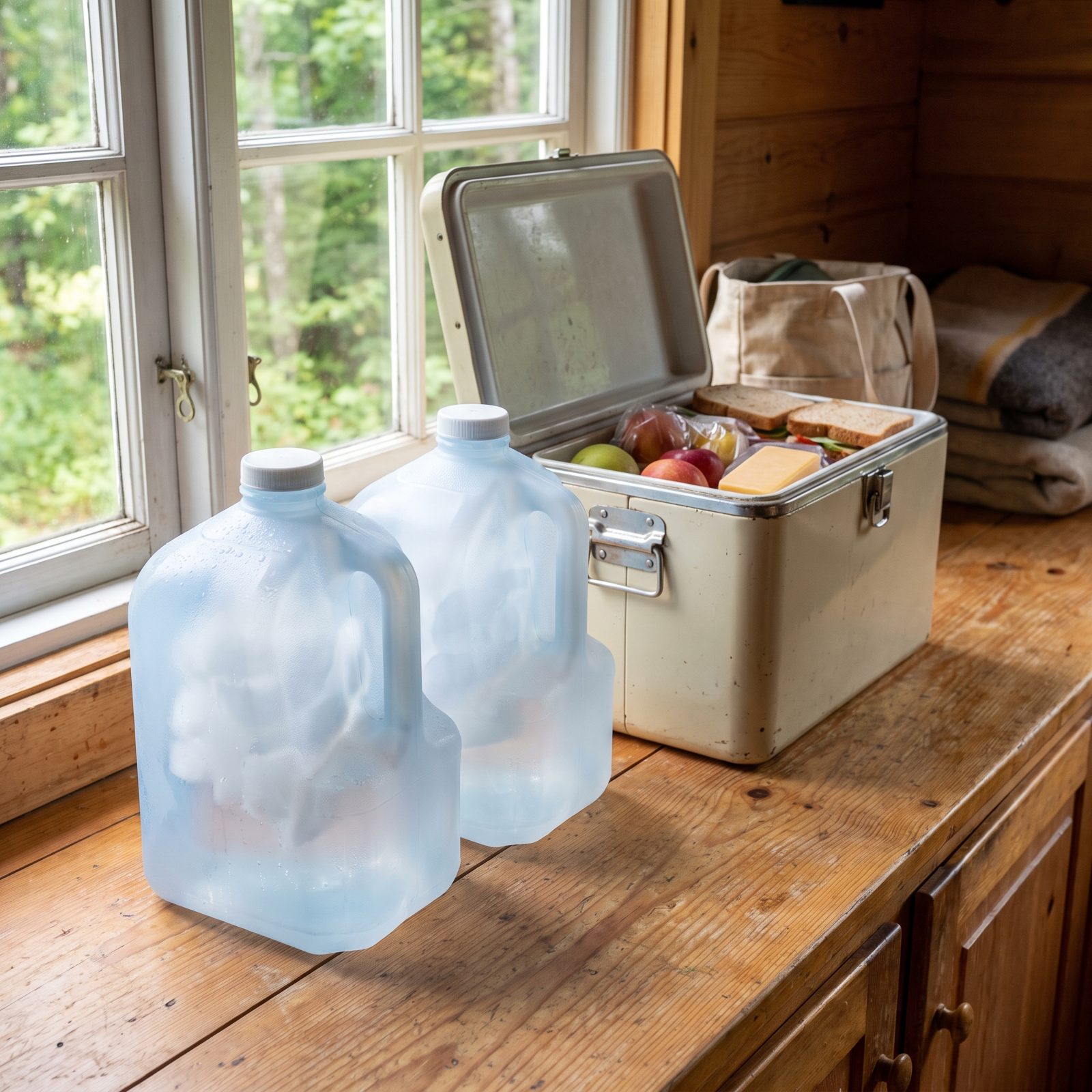
Skip the loose ice. Freeze your water in the jugs you were going to bring anyway and you get two jobs out of one block. A solid mass holds cold far longer than cubes, which turn to a soupy puddle by lunch and slosh warm water across everything you packed underneath.
As the blocks melt across the weekend, you drink the result. No soggy sandwich bags, no mystery melt-water pooling under the cheese. A couple of frozen gallon jugs keep a cooler honest through a two-night stay, and you drive home with less trash and cold water you actually want.
25. Turn a Headlamp Into a Soft Jug Lantern
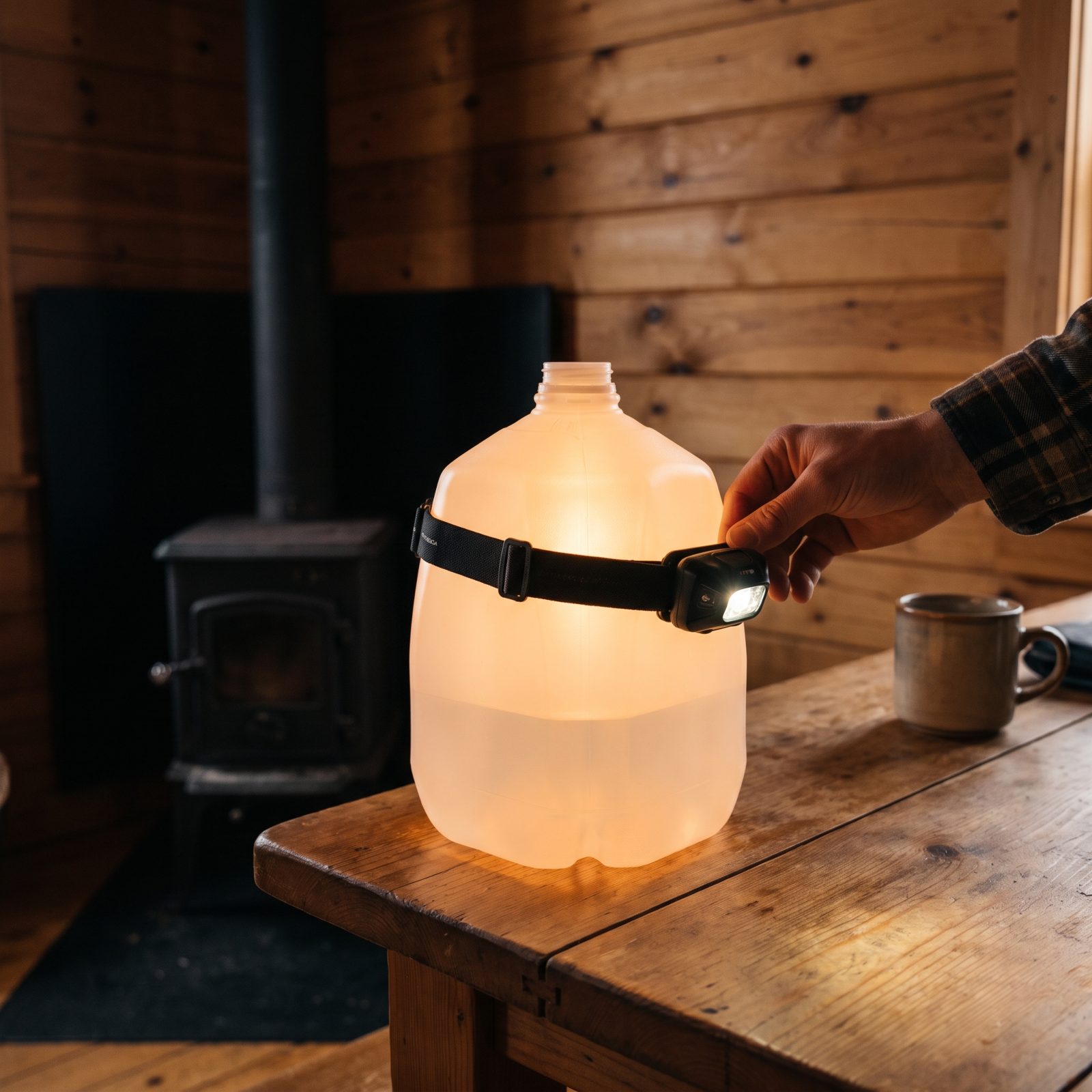
Strap a headlamp around a translucent water jug, lamp clipped against the side, and a harsh little spotlight turns into a lantern. The water scatters the beam in every direction and fills the room with a soft, even glow instead of one blinding cone.
It’s an old paddler’s trick, and it belongs in every cabin. On its own, a single headlamp does next to nothing for a table. Strap it to a gallon of water and suddenly a whole corner is readable. Costs you nothing, uses gear already in your pack, and the light is easy on tired eyes when you’re winding down by the stove.
24. Mark the Steps and Latches With Reflective Tape
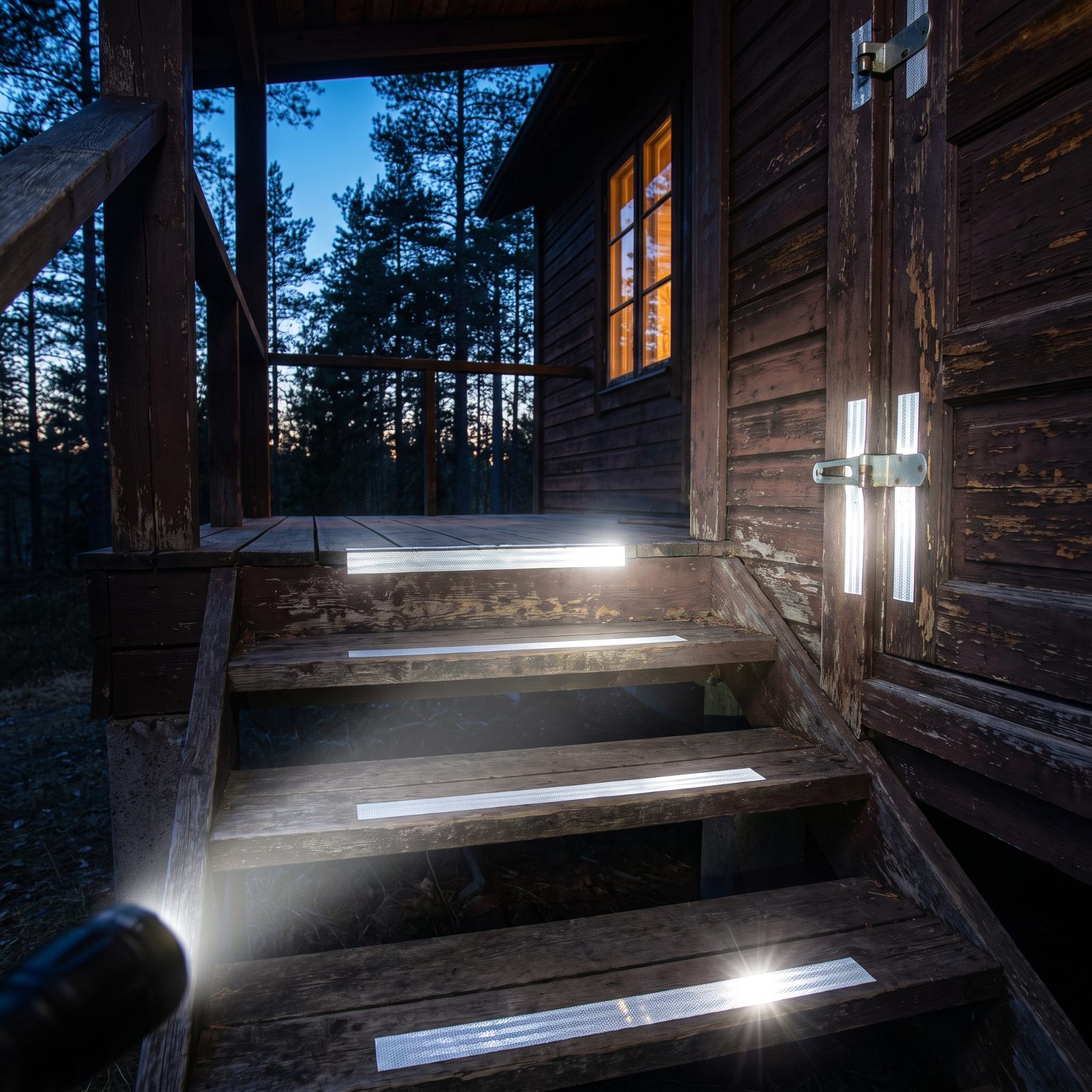
Short strips of reflective tape on the lip of each step, the edge of the dock, the low beam everybody cracks their head on. In daylight you barely clock them. After dark, a headlamp or a phone makes them flare white, and the cabin’s ambush points announce themselves before they get you.
Cabins are full of hazards that don’t exist back home. A single step down into a mudroom. A stub of railing. A trailer hitch someone left in the yard. These are what people go over carrying an armload of firewood at ten at night. A roll of tape runs a few dollars and marks every one of them for years.
23. Walk the Whole Property Before You Unload the Car
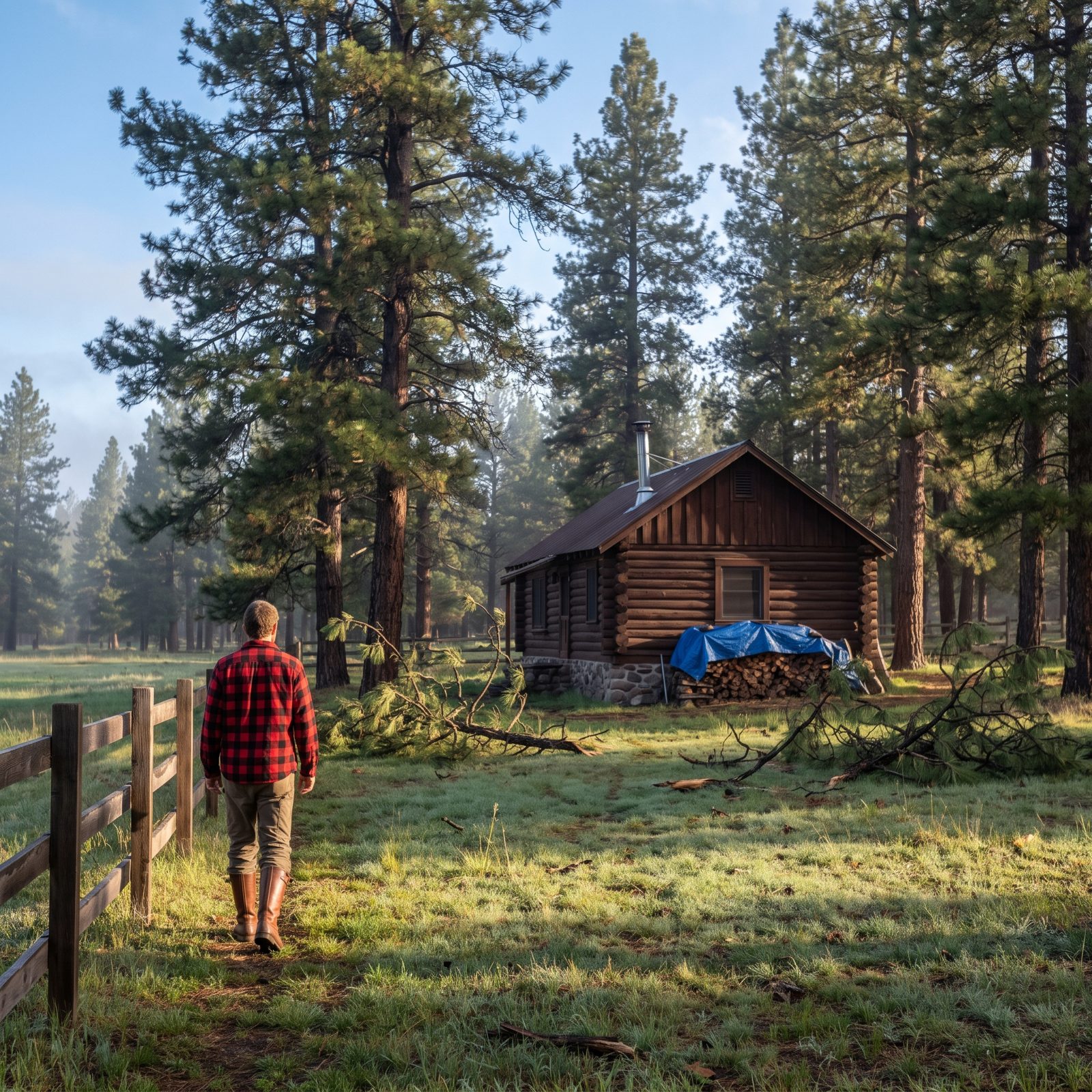
Before the first cooler comes out of the truck, walk the place. The full loop — foundation to roofline, woodpile to water’s edge. That first circuit is when you catch the branch that came down on the shed, the wasp nest over the porch light, the chewed corner of the crawlspace vent.
Catch it now and you fix it in daylight with a clear head. Miss it and you find the leak in the dark during a rainstorm on Saturday night, which is nobody’s idea of a weekend. Look for storm damage, signs of animals getting in, anything blocking a foundation vent or a stovepipe — all before you settle in.
22. Lay the Next Fire Before You Leave, and Don’t Light It
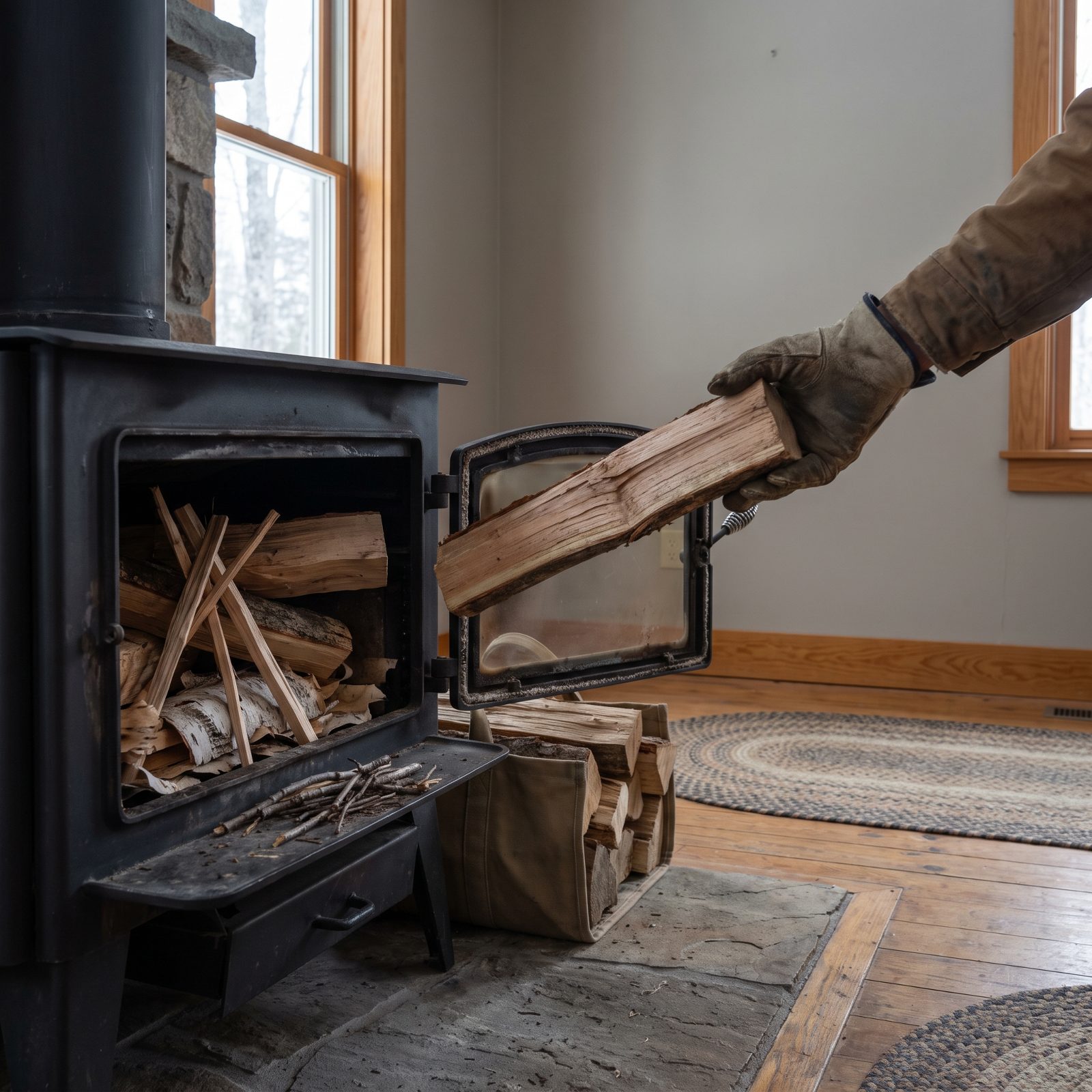
Leaving is the time to build the next fire. Crumpled bark, a nest of dry tinder, kindling stacked into a little teepee, a couple of split logs waiting their turn. Then shut the stove door and walk away without striking a match.
Think about whoever arrives next. Maybe it’s you in three weeks, cold and worn out after a long drive, hands too stiff to fiddle with kindling. Maybe it’s a friend who’s never run the stove in their life. Doesn’t matter — the fire’s already there. One match and the cabin starts warming while you’re still carrying bags in. Call it the kindest thing you can leave for the next person through the door, your future self very much included.
21. Keep a Kettle Sitting on the Woodstove
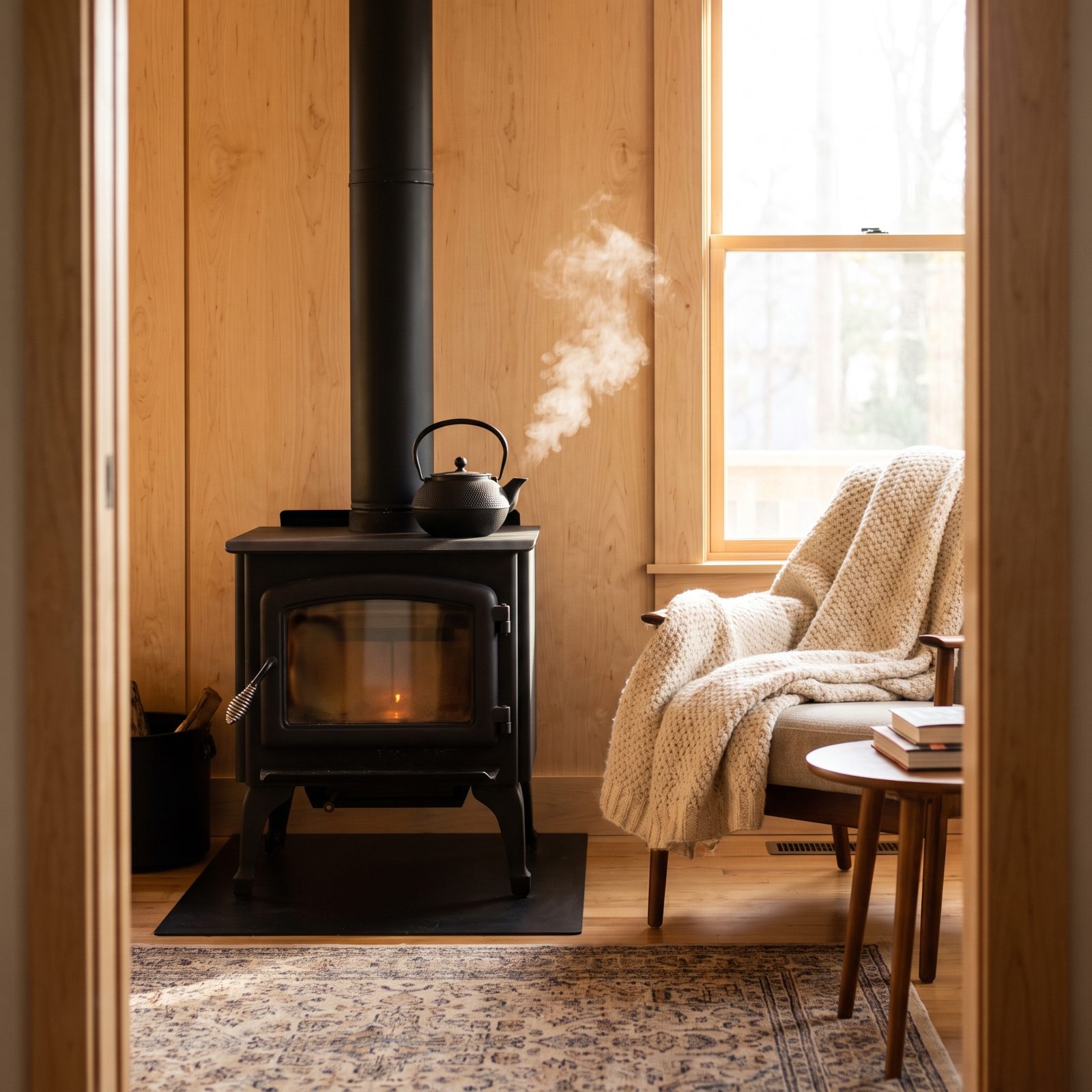
A kettle living on the stovetop earns its keep two ways. There’s always warm water ready for tea, dishes, or a hot water bottle, and the slow evaporation puts a little moisture back into air that a woodstove otherwise dries out to a desert.
Spend a winter weekend with a cranking stove and you’ll feel every bit of it — cracked lips, a scratchy throat, static snapping off every blanket you touch. A simmering kettle softens all of that, no gadget or electricity required. Just watch the level so it never boils dry, and top it off whenever you add wood. Cheap comfort that works while you’re busy doing something else entirely.
20. Flip the Ceiling Fan to Push Heat Back Down
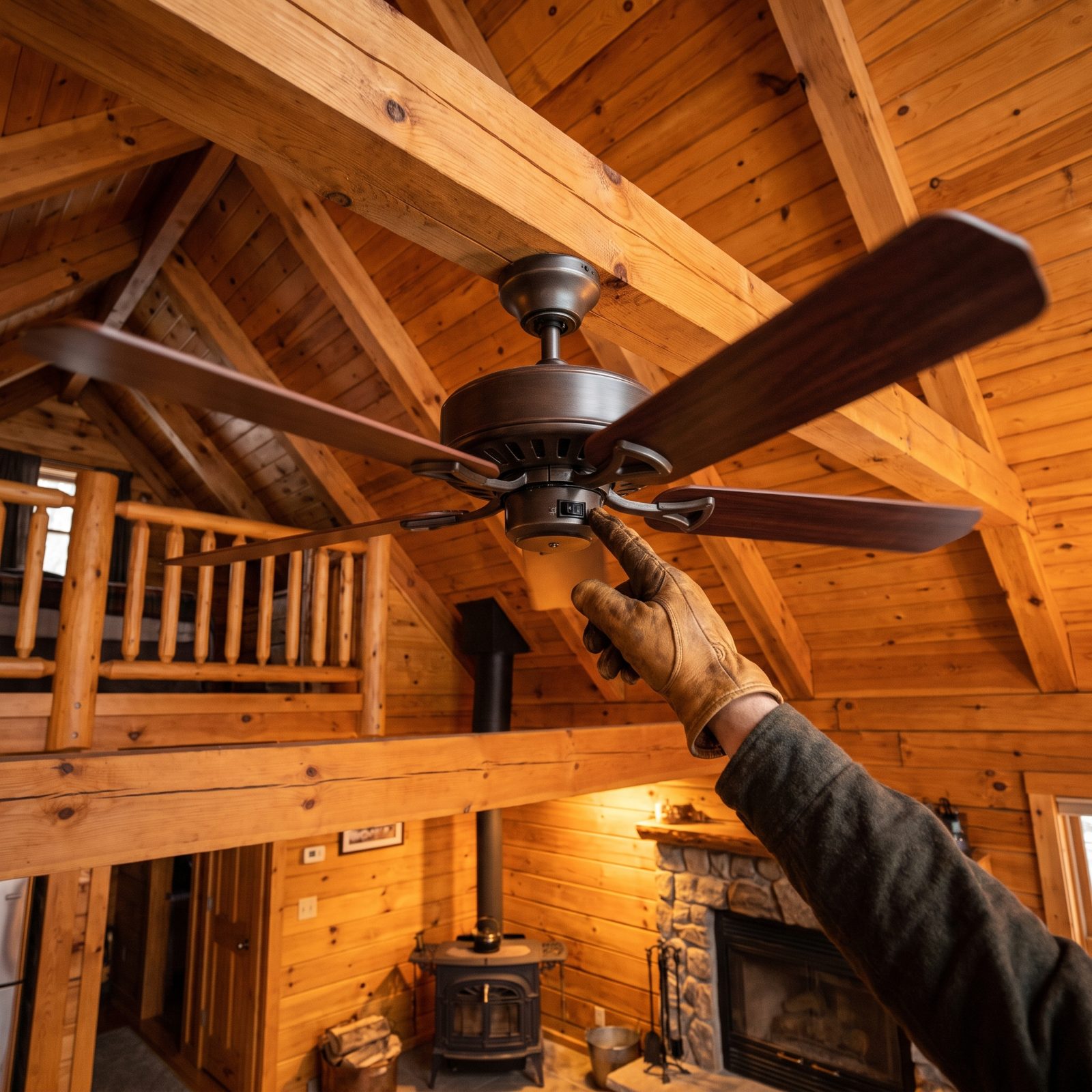
Most people only run a ceiling fan in summer. But in a cabin with a vaulted ceiling, winter is when it actually earns its spot. Flip the little switch on the motor housing so the blades spin the other way, set it to low, and it pulls cool air up while nudging the warm layer stuck against the rafters back down to where you’re sitting.
Heat pools at the peak of a tall cabin and does you absolutely no good up there. A fan turning slow and reversed drags it home without kicking up a draft you can feel. Your woodstove heats the room more evenly, and you burn a little less wood doing it. Hard to argue with that.
19. Store Matches in a Gasketed Glass Jar
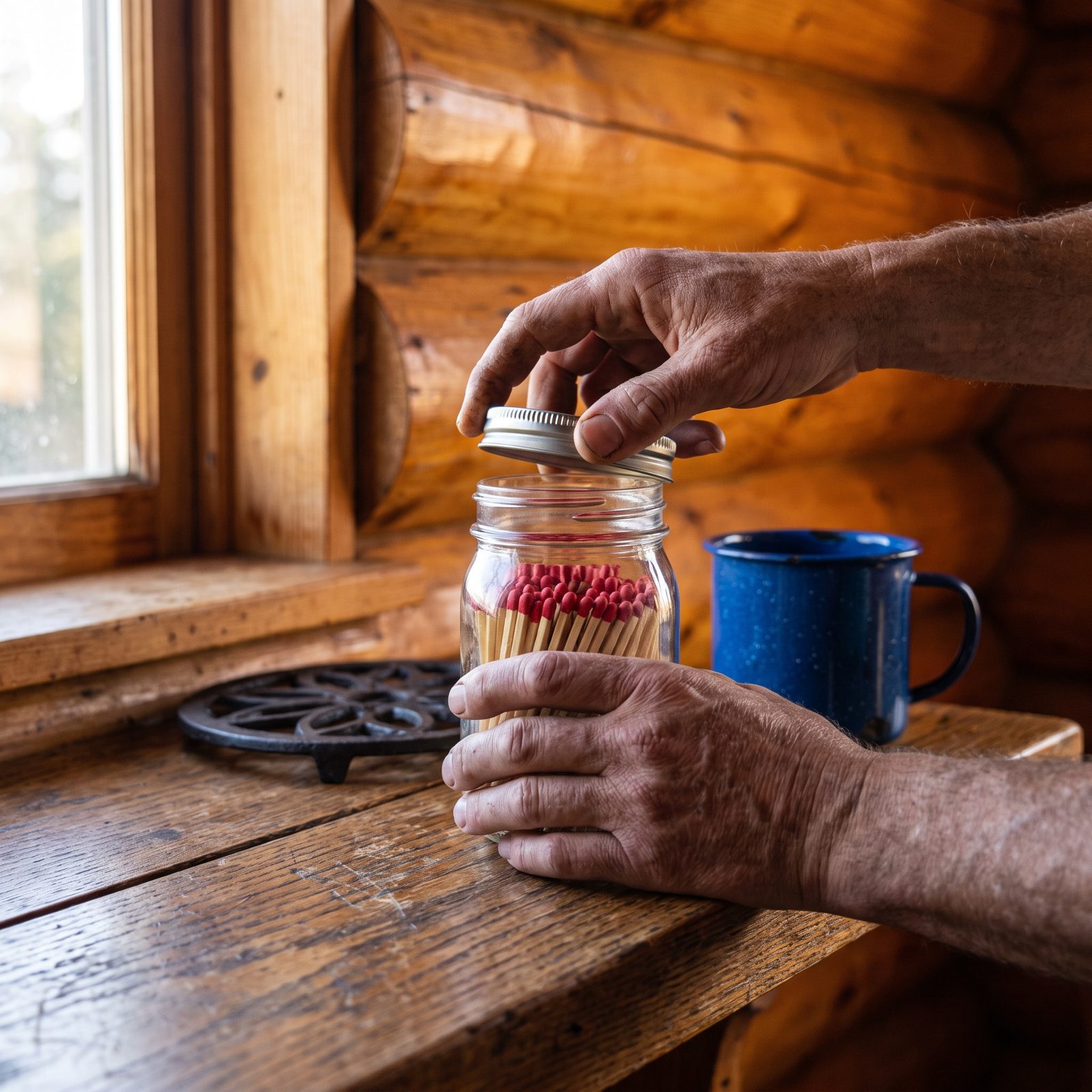
Damp matches are the small betrayal nobody expects until the stove won’t light and the kindling’s already stacked. A cabin breathes moisture through every season, and a cardboard match box soaks it up like a sponge.
A glass jar with a rubber gasket seals the air out, so the matches strike clean after a winter of neglect. And because the glass is clear, you spot it on the shelf in a second instead of pawing through a drawer in the dark.
18. Shake Out Every Boot Before Wearing It
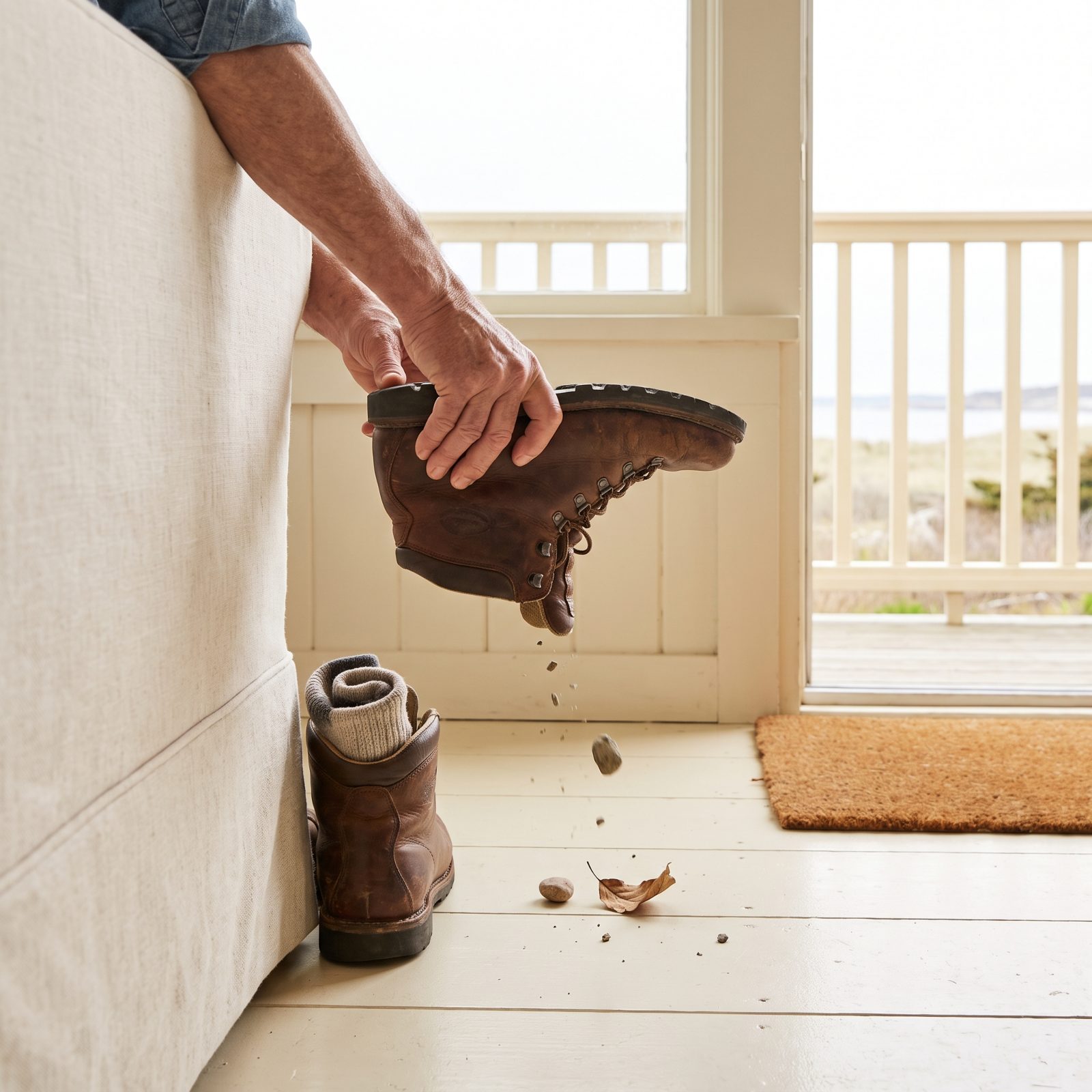
Scorpions and spiders like the dark, and a boot left overnight is the best den in the cabin. You don’t need to live in the desert to meet something unwelcome in there. A beetle underfoot is enough to ruin a morning.
Turn each boot over and give the heel a couple of firm taps before your foot goes anywhere near it. Two seconds, that’s all. It becomes muscle memory fast, and once you’ve shaken a live spider onto the porch, you never skip it again.
17. Hang a Headlamp on Every Bedpost
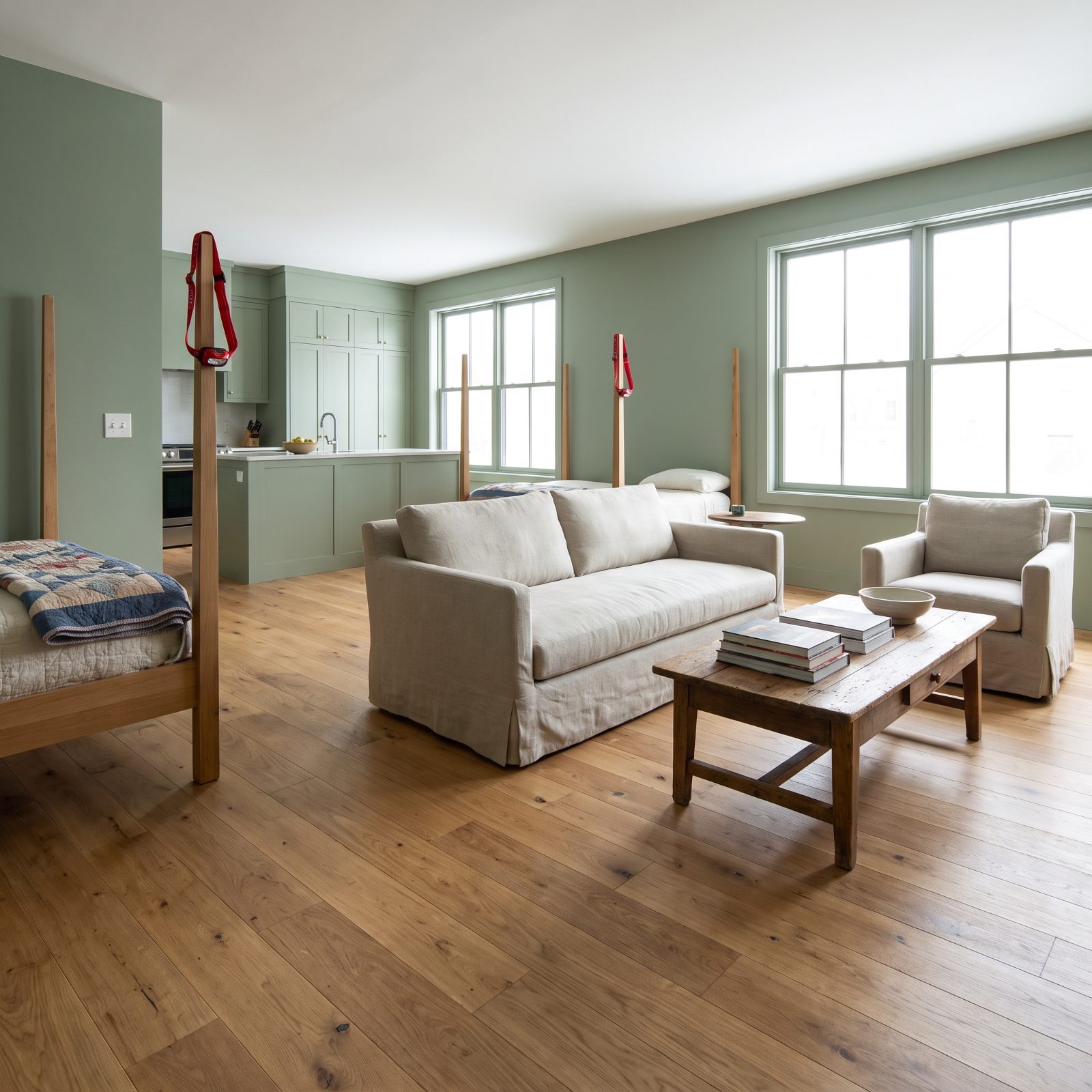
Midnight bathroom runs in an unfamiliar cabin are how people meet the corner of a table with their shin. No hallway nightlight, no glow from a streetlamp, just black.
Hang a headlamp on each bedpost and every sleeper reaches for light without stumbling across a dark room to find the switch. Hands-free beats a phone flashlight, because you’ll want one hand on the ladder and one on the rail. Simple fix. It also spares the whole cabin from being woken by somebody cursing in the dark.
16. Line Up Boots With Toes Pointing Out
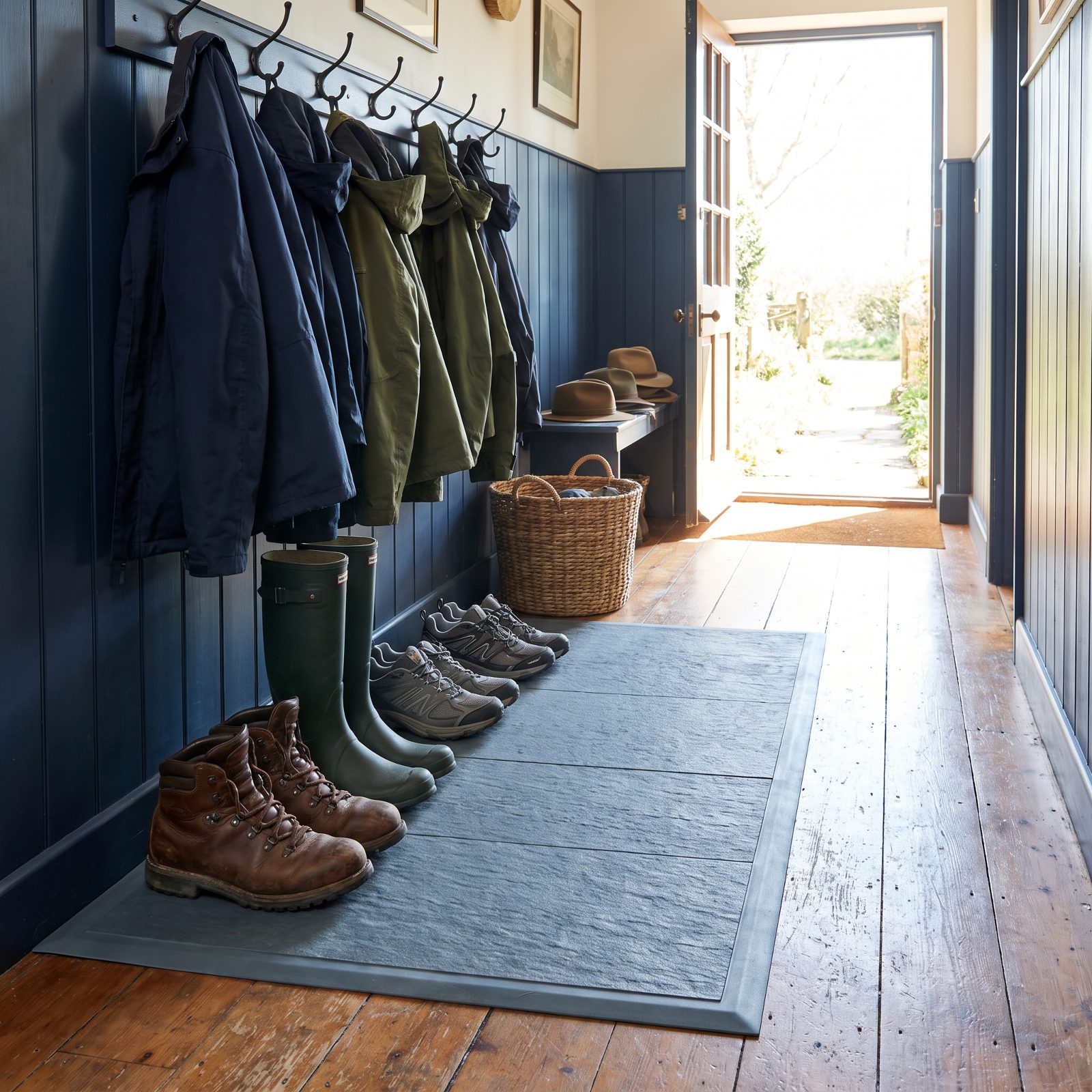
A pile of boots by the door is a daily argument with your own footwear. You bend, you dig, you jam a foot in and realize it’s the wrong one. Now multiply that by a family trying to get out and see a moose before it drifts off into the trees.
Point every toe outward against the wall. Stepping into them becomes one motion: heel down, go. It sounds fussy right up until the morning someone spots something worth chasing and the whole group is out the door in under a minute.
15. Use Two Doormats in Sequence
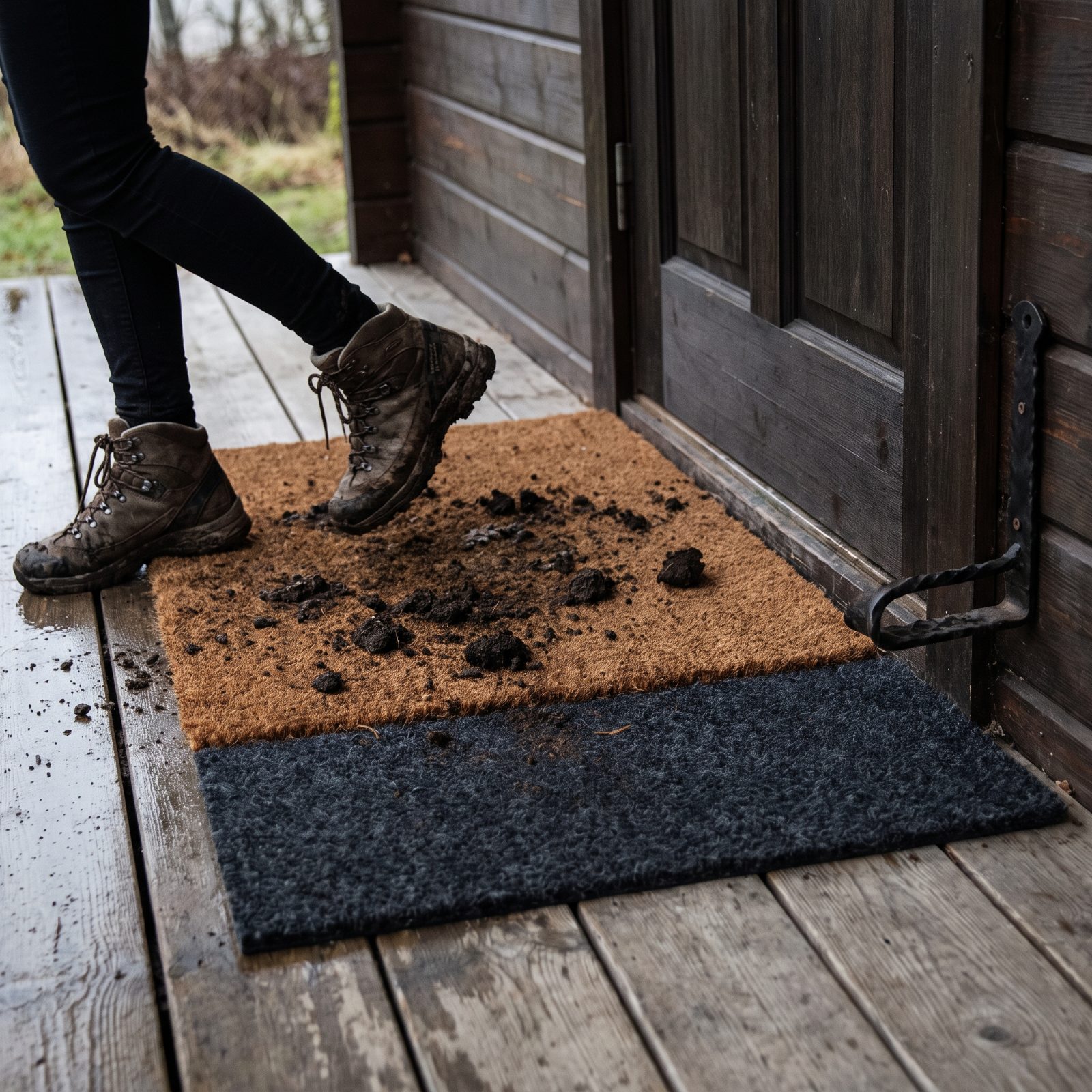
One mat does half a job. Mud sits on top, water soaks through, and the cabin floor collects everything anyway.
Stack the work instead. A stiff coir or bristle mat first, to knock the chunks of trail off the tread, then a thick absorbent mat second, to pull the moisture out before the sock hits clean wood. The sequence matters. Scrape, then dry. Flip the order and you’re grinding wet grit into the fibers of your good indoor mat, which then never dries and starts to smell like a wet dog.
14. Preheat Bedding With a Hot-Water Bottle
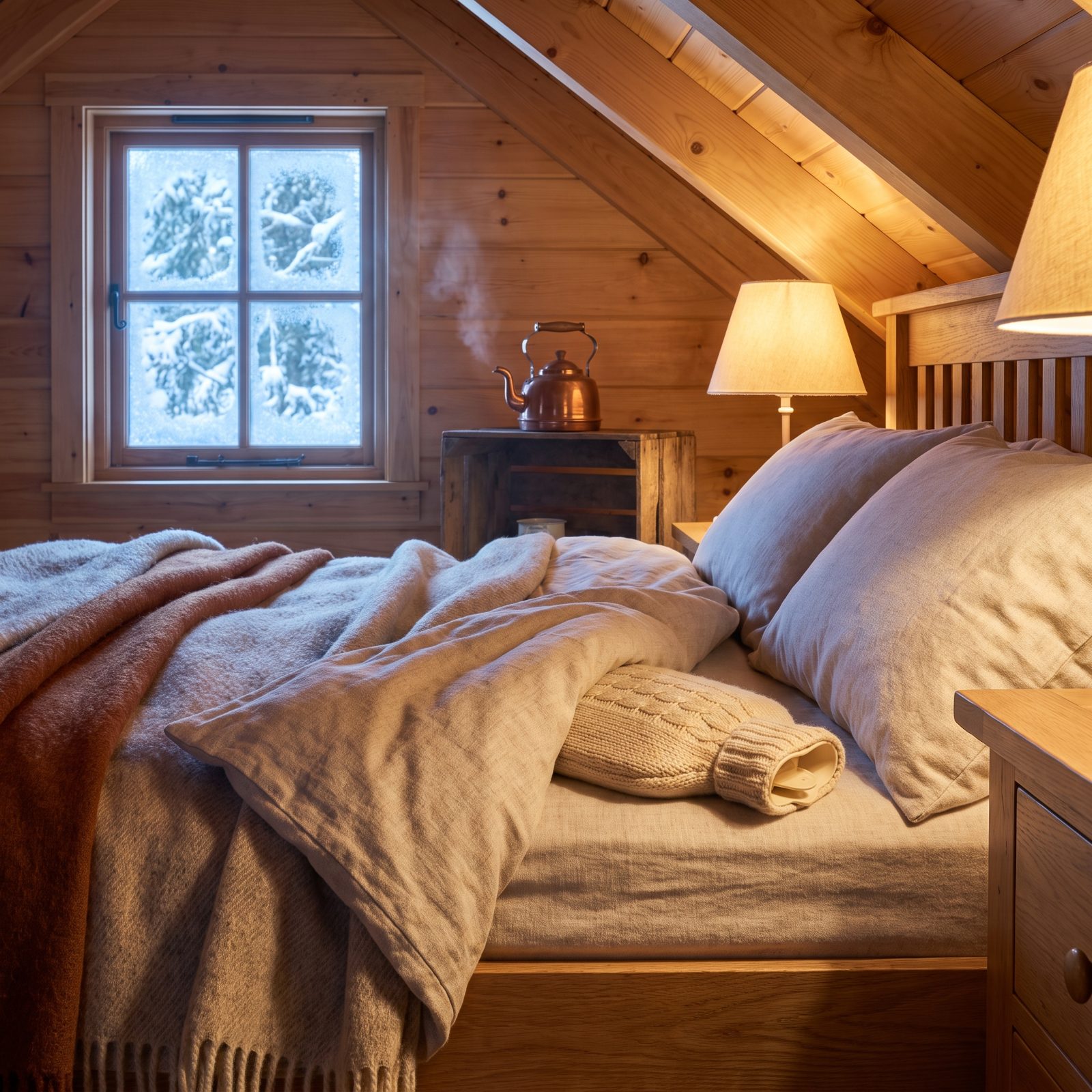
Climbing into cold sheets in an unheated loft is a special kind of misery. Your body heat eventually wins, but you’ve lost half an hour shivering to get there, and nobody sleeps well after that.
Fill a rubber hot-water bottle, slide it down to the foot of the bed twenty minutes before you turn in, and the sheets meet you warm. Cheap, no batteries, no fire risk if you keep the cap tight and a cover on it. An old trick, and a far better one than folks with central heating will ever appreciate.
13. Use a Dishpan as a Table Bus Tub
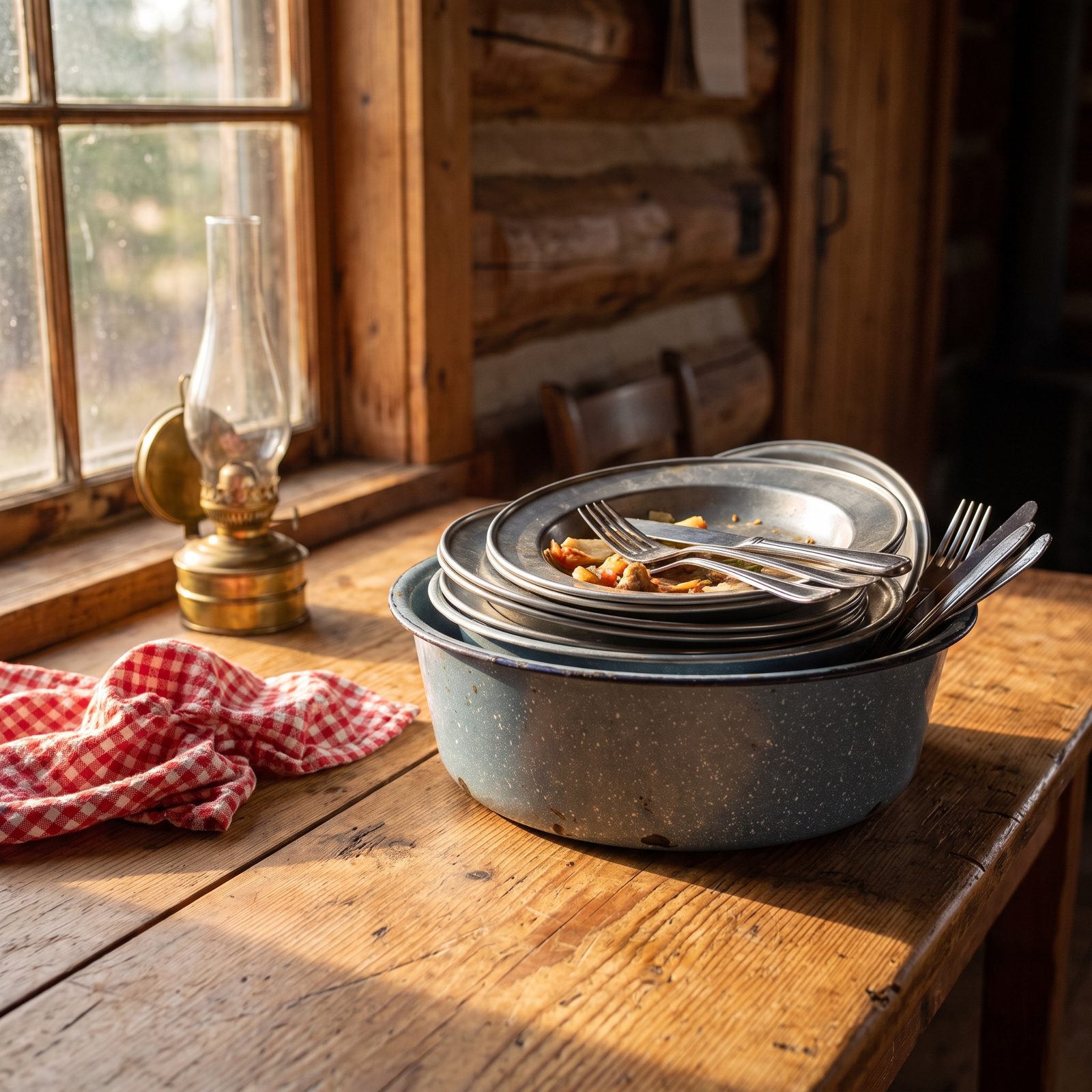
Cabin kitchens are cramped, and the sink usually sits clear across the room from the table. Clearing a meal turns into four trips, a dropped fork, and crumbs tracked over every surface in between.
Park a plastic or enamel dishpan at the table and the whole flow changes. Plates in, scraps in, utensils in, carry it all back in one haul. The pan then doubles as your wash basin, which matters when water has to be hauled or heated. One tub, several jobs, and far fewer crumbs left out for the mice to find overnight.
12. Reserve One Shelf-Stable First-Night Supper
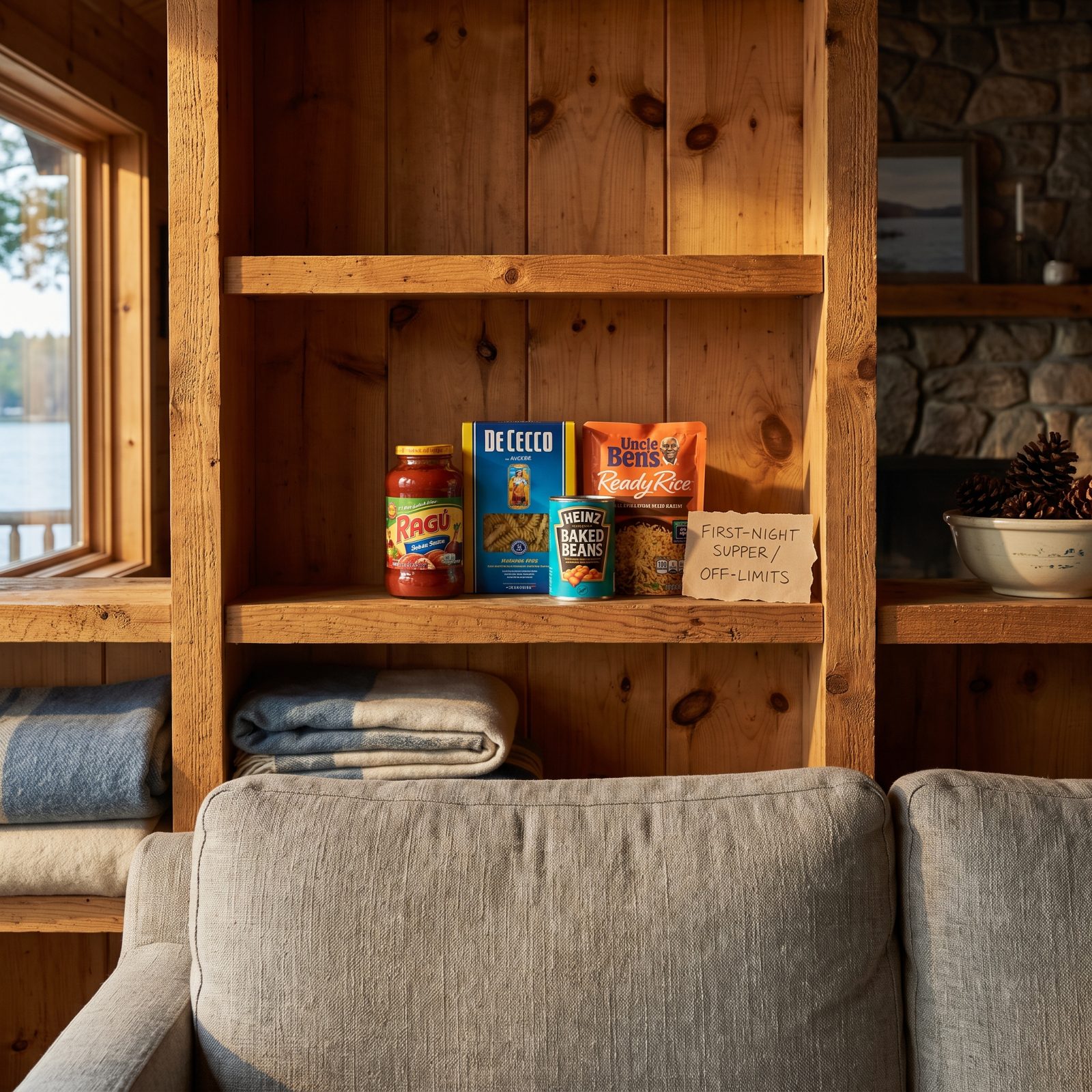
The late arrival is the one that catches everyone out. Traffic, a flat tire, a store that closed at six in a town you didn’t know closes at six. You pull up to a dark cabin hungry, and the fresh groceries are still a plan, not a meal.
Keep one supper that needs no cooler and no shopping. Jarred sauce and dried pasta, a tin of chili, pouches of rice. It lives on the shelf between visits, asks nothing of you, and turns a rough arrival into a warm plate in a quarter of an hour.
11. Transfer Pantry Food Into Metal Containers
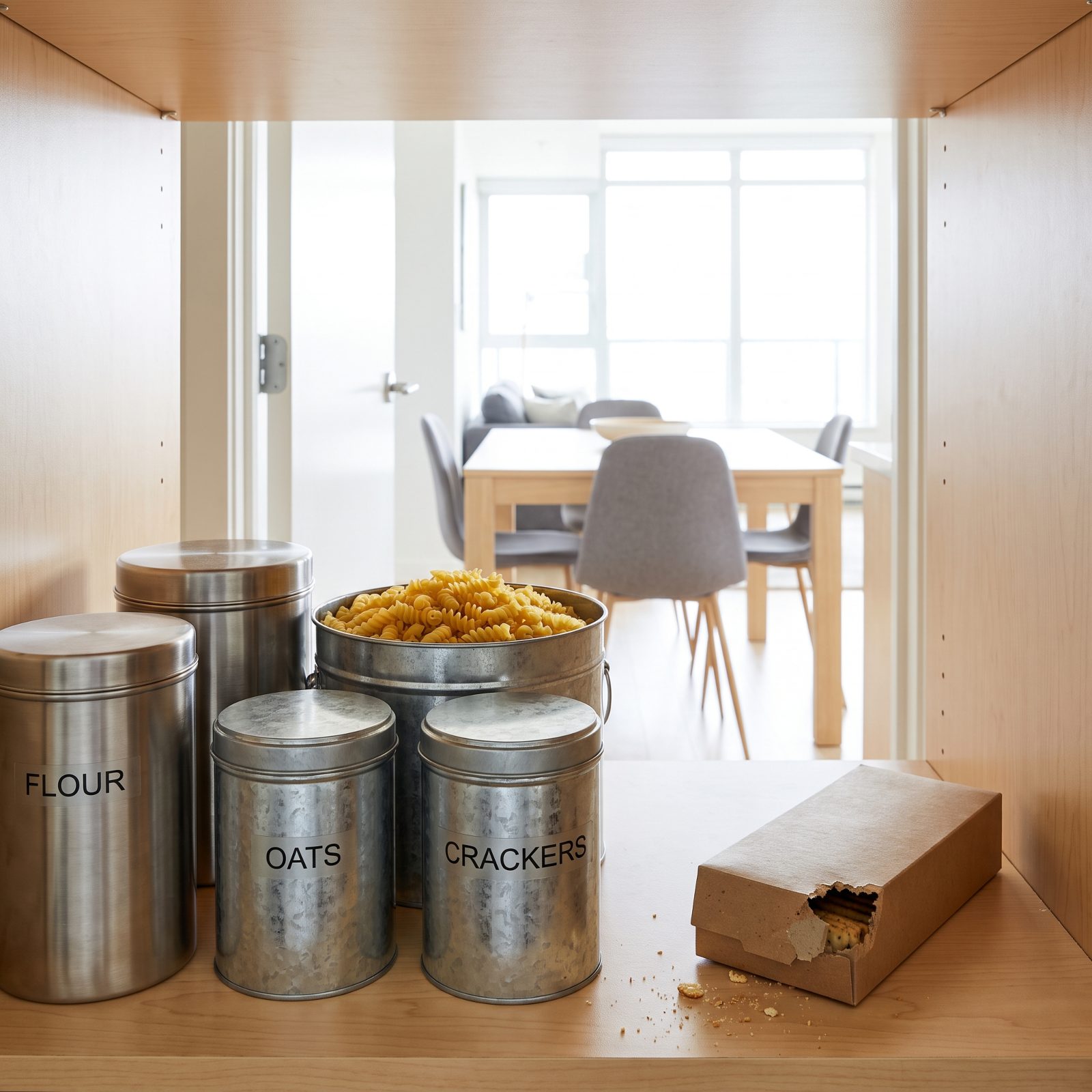
Mice don’t break into a cabin. They already live there, and a cardboard box of crackers is a welcome mat. You come back in spring to shredded packaging and droppings in the oats.
Metal containers end the buffet. Teeth can’t chew through a steel tin or a galvanized canister the way they tear through plastic bags and cardboard overnight. Flour, oats, crackers, anything dry goes behind metal walls, under a lid. Pasta in an open bucket is just a serving bowl to a mouse, so cap it too. Keeps the pantry clean, keeps the critters hunting elsewhere, and spares you the gut-punch of opening a ruined shelf after a long drive up.
10. Leave Binoculars at One Window
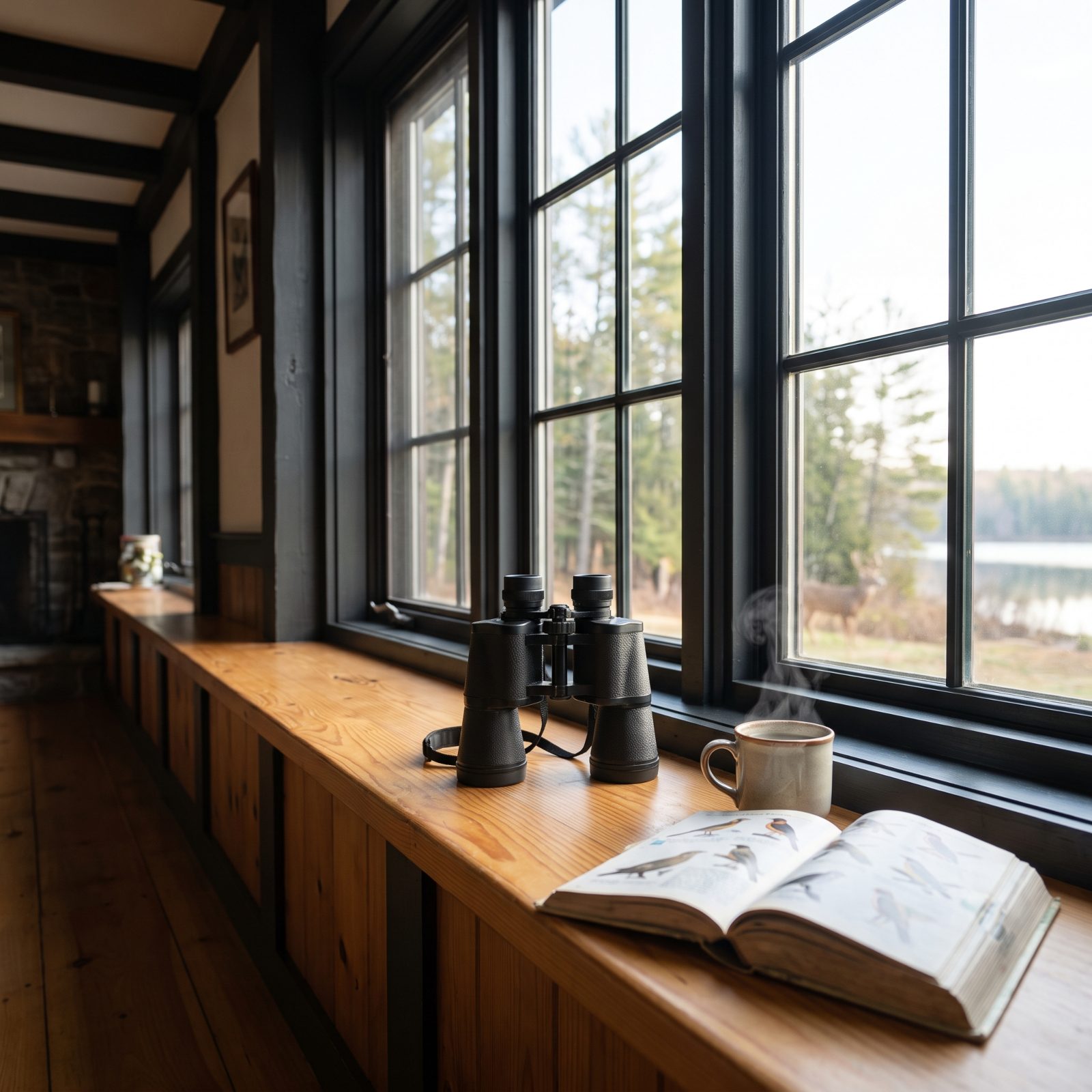
The best wildlife shows up on its own schedule, usually while the binoculars are buried in a duffel in the car.
Give one window the job. A pair parked on that same sill, every visit, means a fox at the treeline or an osprey over the lake gets watched instead of missed. Everyone in the cabin knows where to reach. Over a weekend, that one habit turns a passing glimpse into the moment everybody talks about on the drive home.
9. Keep a Wildlife Ledger by the Window
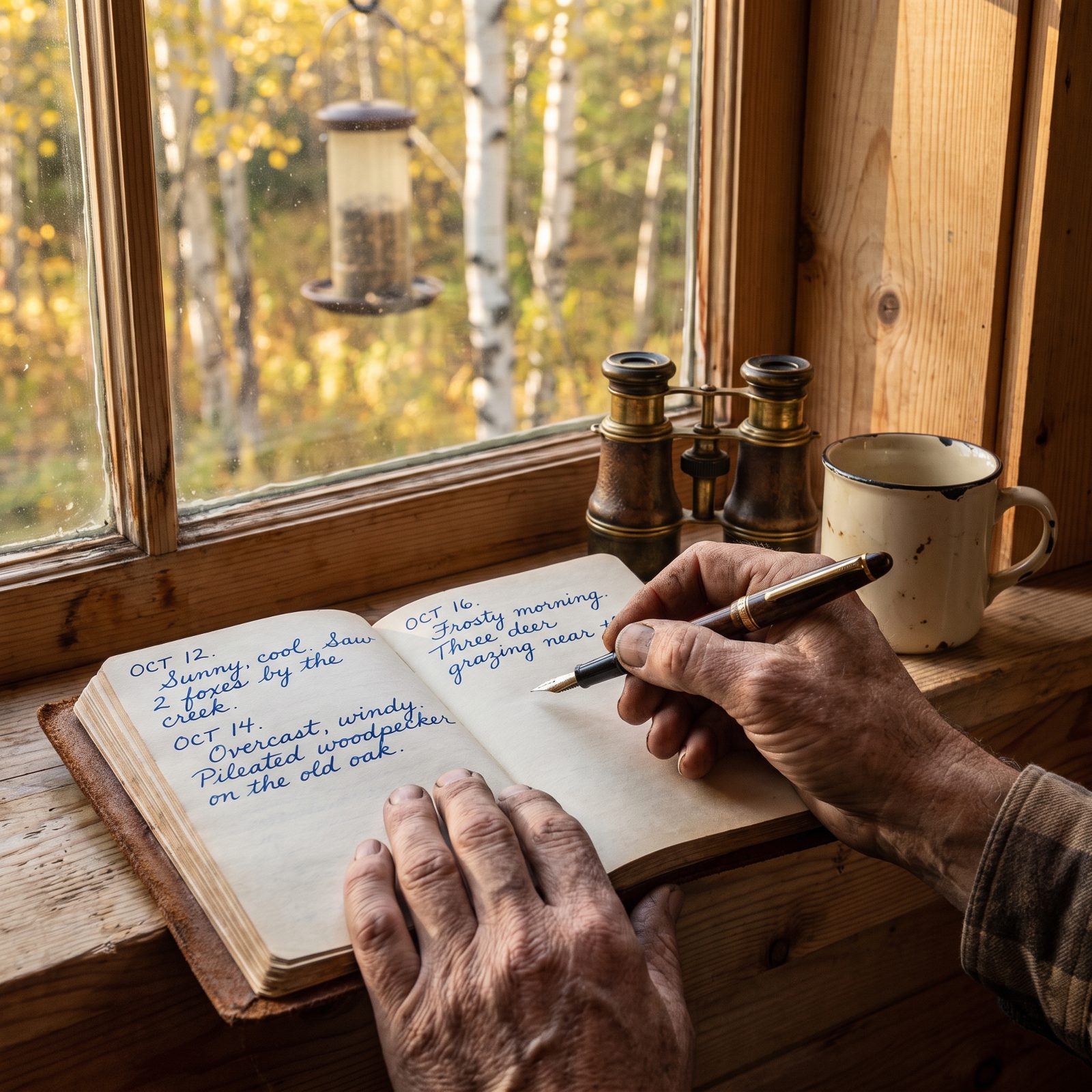
Most people figure a wildlife ledger is a thing for serious birders. It isn’t. It’s a cheap composition notebook that turns scattered luck into a map of habits.
Write the date, the time, the weather, and whatever showed up, and do it for a few seasons until the pattern surfaces on its own. The foxes cross the clearing at dusk in October. The bald eagle works the far shoreline when the water drops. And every year, the bear hits the compost the first warm week of April.
Guests love flipping back through it too. It’s the first thing anyone picks up on a rainy afternoon.
8. Mark Each Day’s Route on a Paper Map
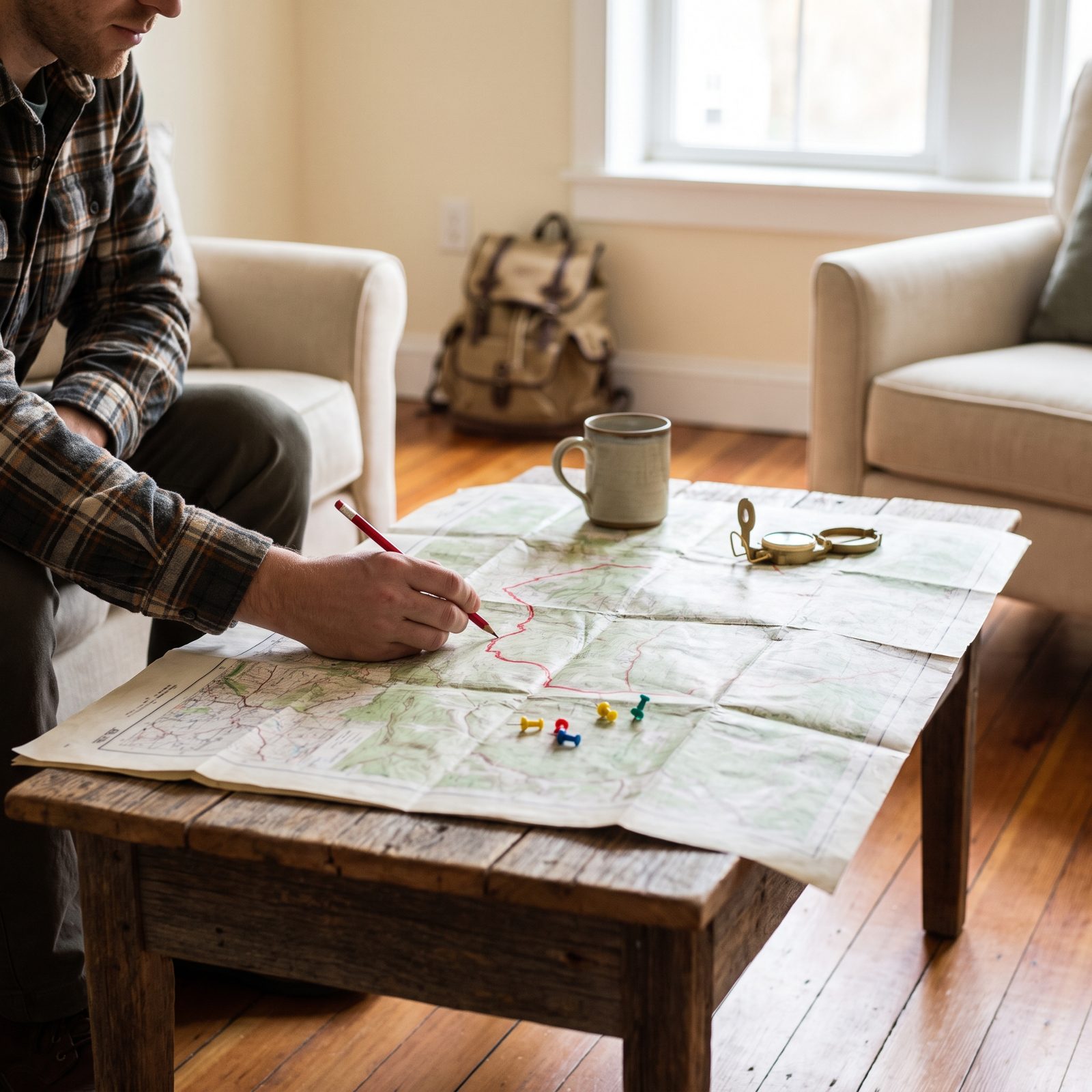
Phones die. Trails look nothing like the GPS line once you’re standing in the brush. A paper map spread across the coffee table solves a problem that has nothing to do with navigation.
Before the group leaves, trace the day’s route in red pencil, drop a pushpin or two at the key stops, and say roughly when you’ll be back. Anyone staying at the cabin now knows where to point search and rescue if the afternoon goes sideways. Thirty seconds, no battery.
And honestly, there’s something good about seeing the week’s rambles stacked up on one map by Sunday.
7. Drop Every Phone in One Basket After Supper
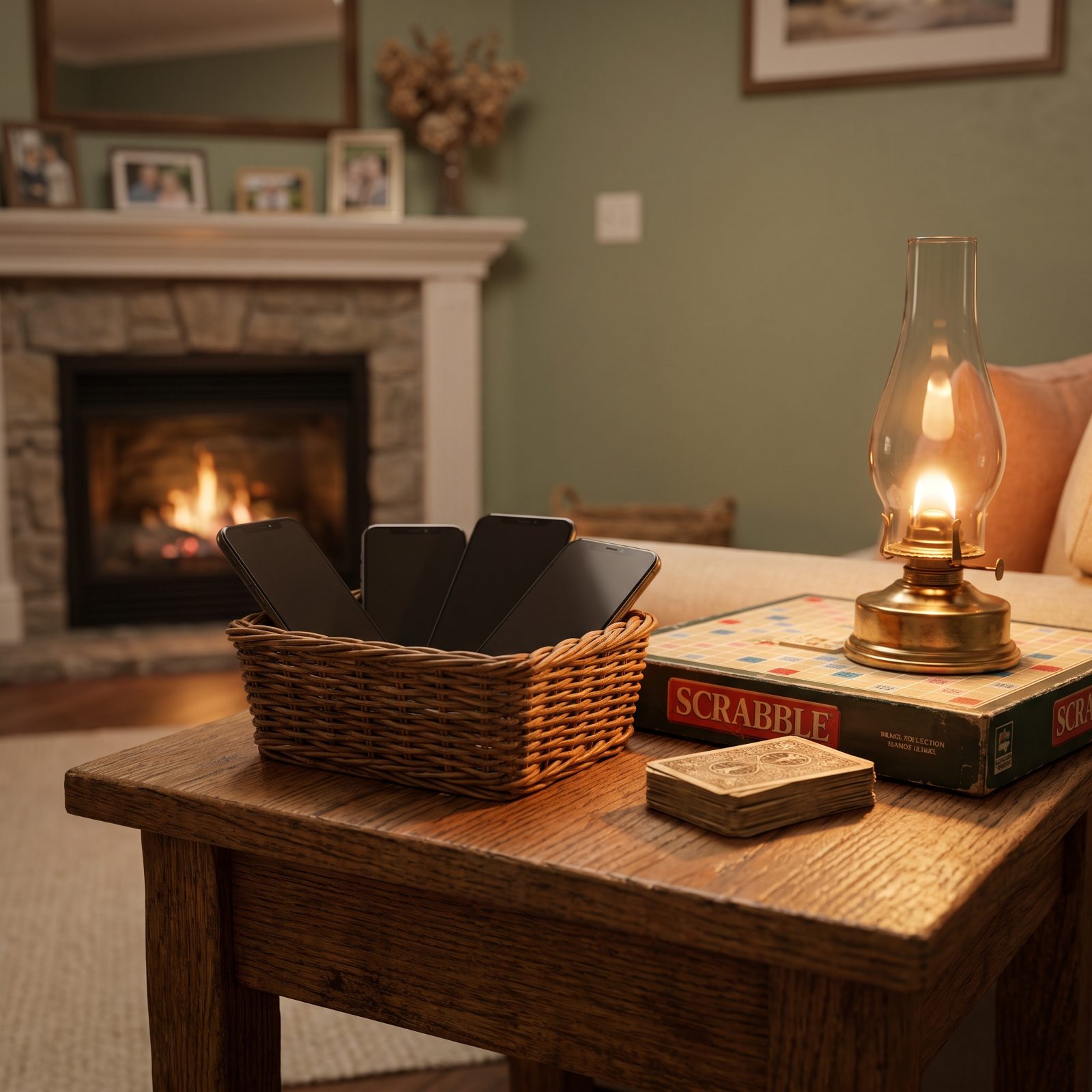
One basket. After the plates are cleared. Everybody’s phone goes in.
Nobody has to announce a rule or give a speech about screens. You just set the basket out and the habit does the rest. The room changes within ten minutes — people actually finish sentences, the card game lasts past one hand, and someone notices the owls started up.
Leave the basket somewhere the group can still hear a ring for emergencies. The point isn’t going off-grid. It’s that an evening at a cabin should feel different from an evening on the couch at home, and the glowing rectangle is what flattens the two together.
6. Sit on the Porch Before You Unpack a Thing
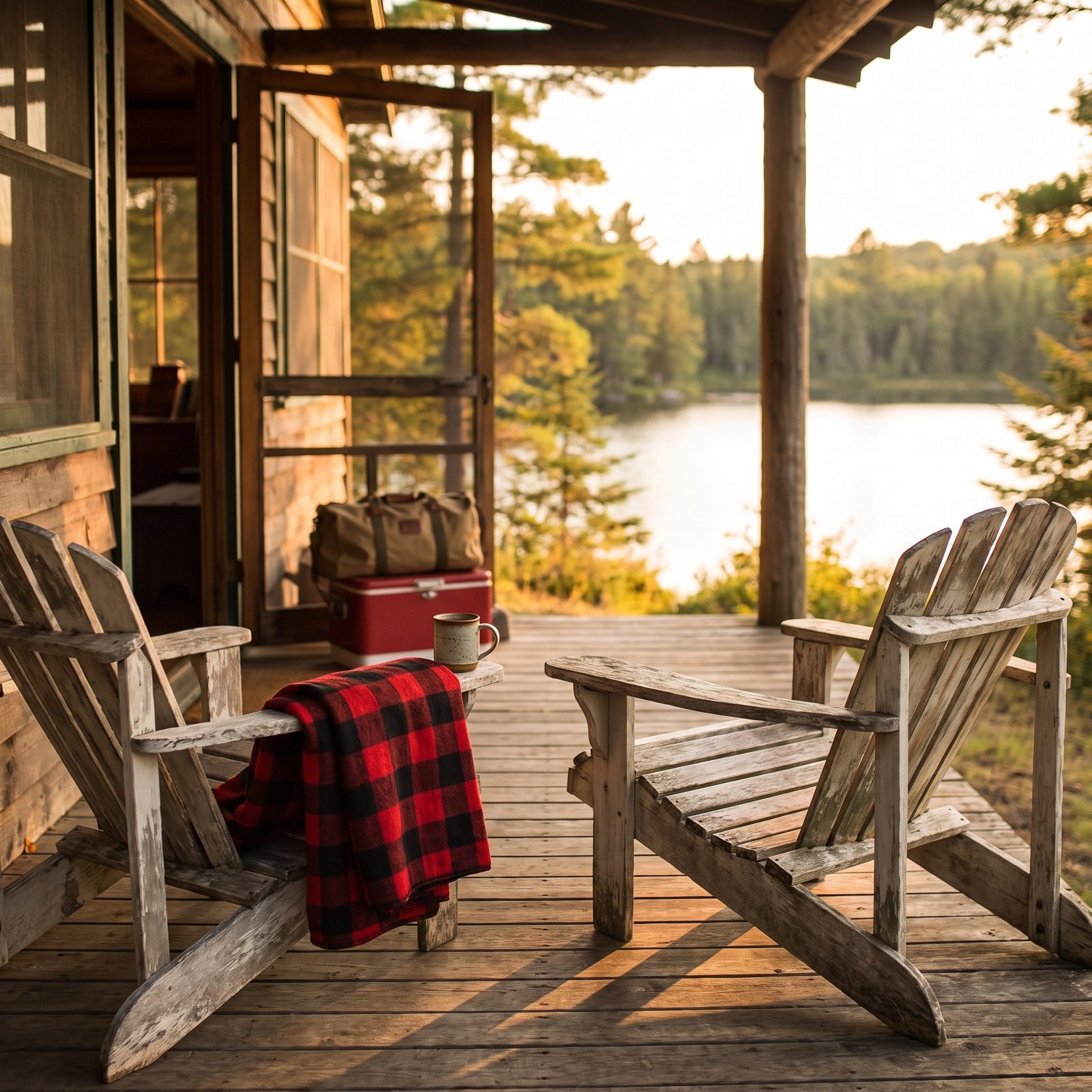
The instinct the second you arrive is to attack the car: coolers, bags, firewood, done. Fight it for ten minutes.
Sit on the porch first. Let the drive drain out of you. Listen to what the place sounds like before you fill it with your own noise. Then unpack.
It sounds like nothing, and it changes the whole weekend. The pace you set in those first ten minutes is the one you’ll keep, and a cabin is the one place you’re allowed to arrive slowly.
5. Check Moonrise Before an Evening Walk
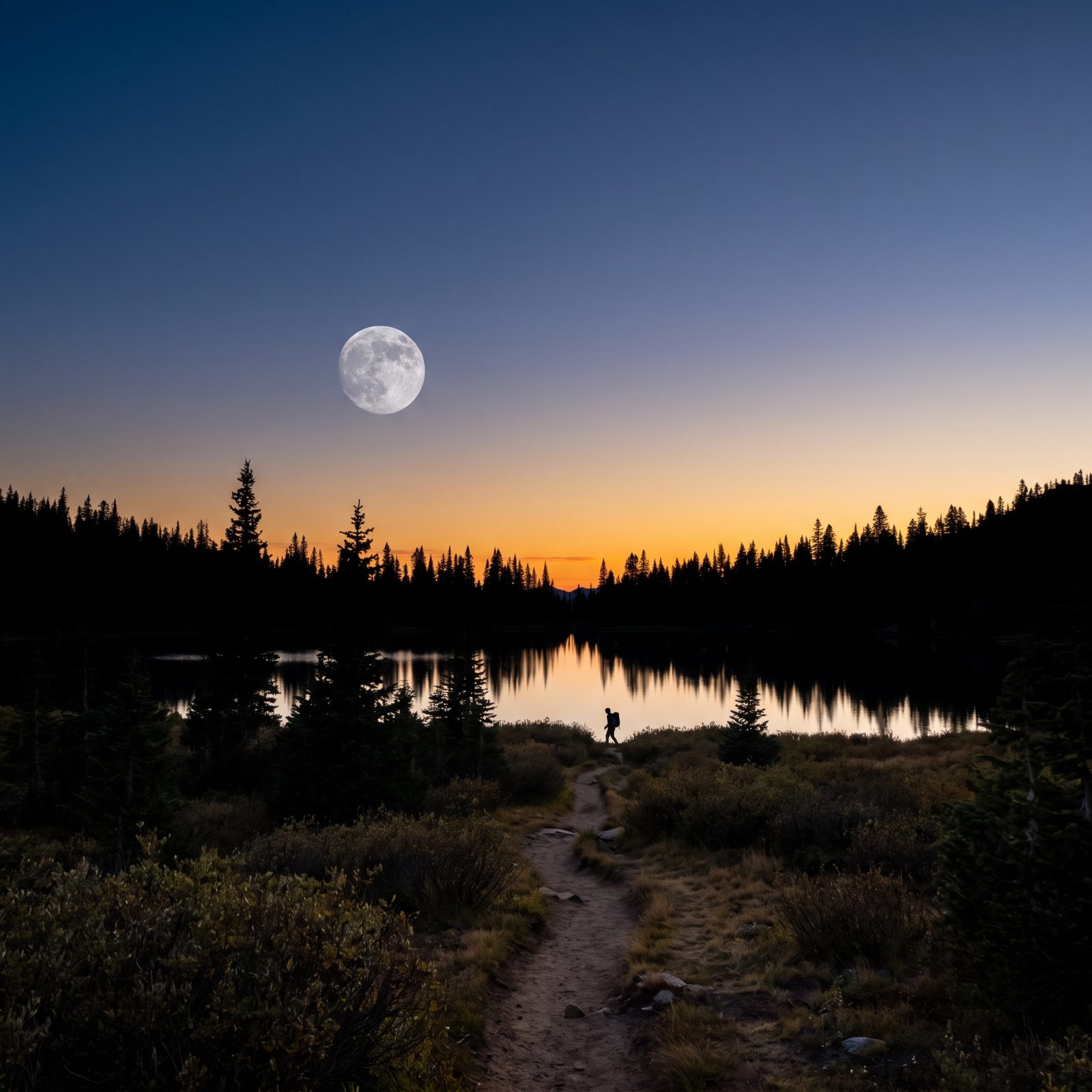
A dusk walk with a full moon already up over the lake is a different animal than the same walk on a new-moon night. One keeps the trail lit after the orange sunset glow fades behind the pines. The other is black enough to lose the path ten feet from the porch.
Look up the moonrise time before supper — a free app or a printed almanac does it. Then plan the stroll around it, head out when the light’s up, and turn back before it drops behind the ridge.
4. Run a Supply Clipboard on the Back of the Door
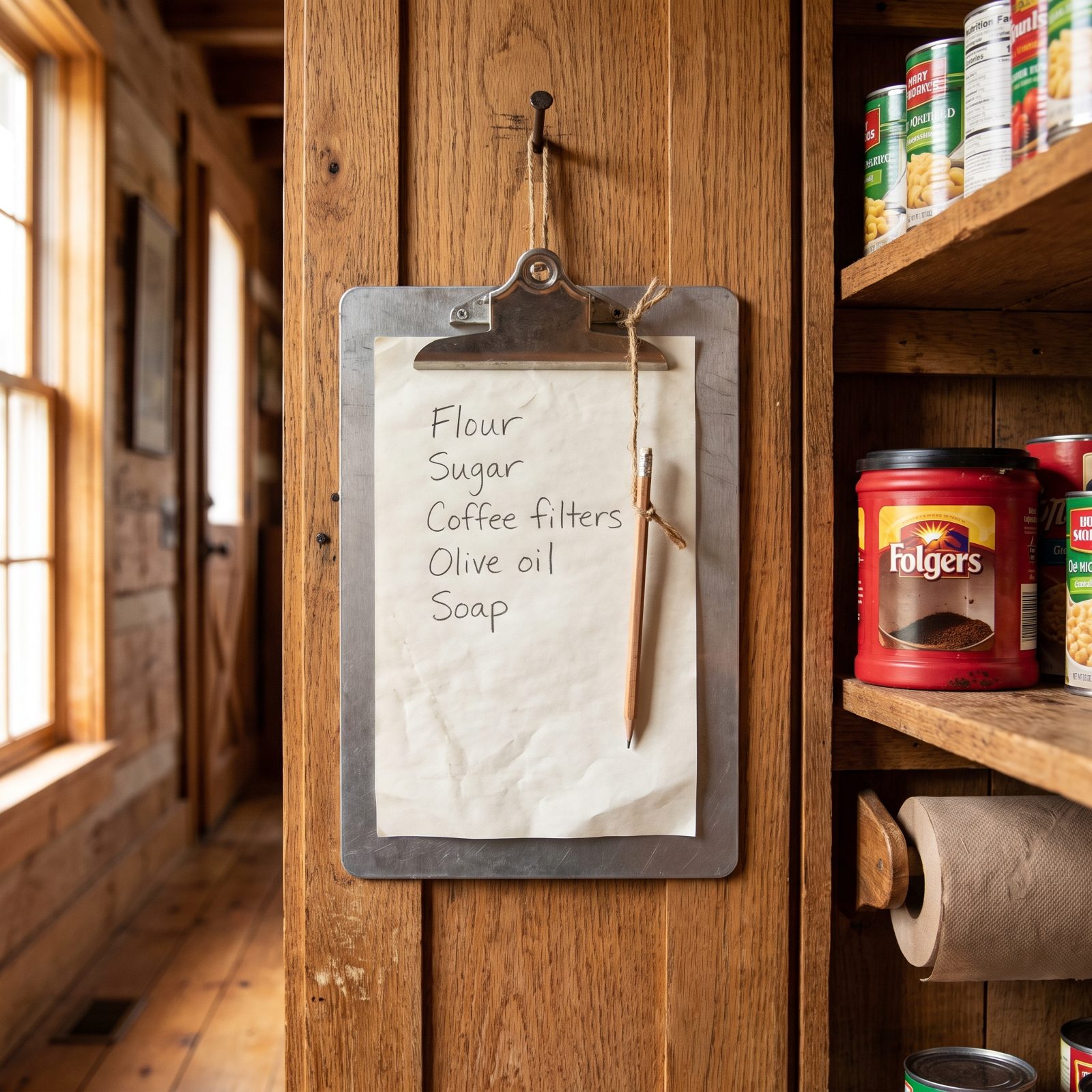
The shopping list people try to reconstruct from memory in the car is always wrong. You remember the coffee. You forget the propane and the dish soap and the single roll of paper towels left.
Hang a clipboard on the pantry door. The rule is simple: when something runs low, you write it down right then, while you’re looking at the empty space. Nobody has to remember anything later.
By the next trip, the list already exists. It built itself.
3. Prop the Unused Fridge Door Wide Open
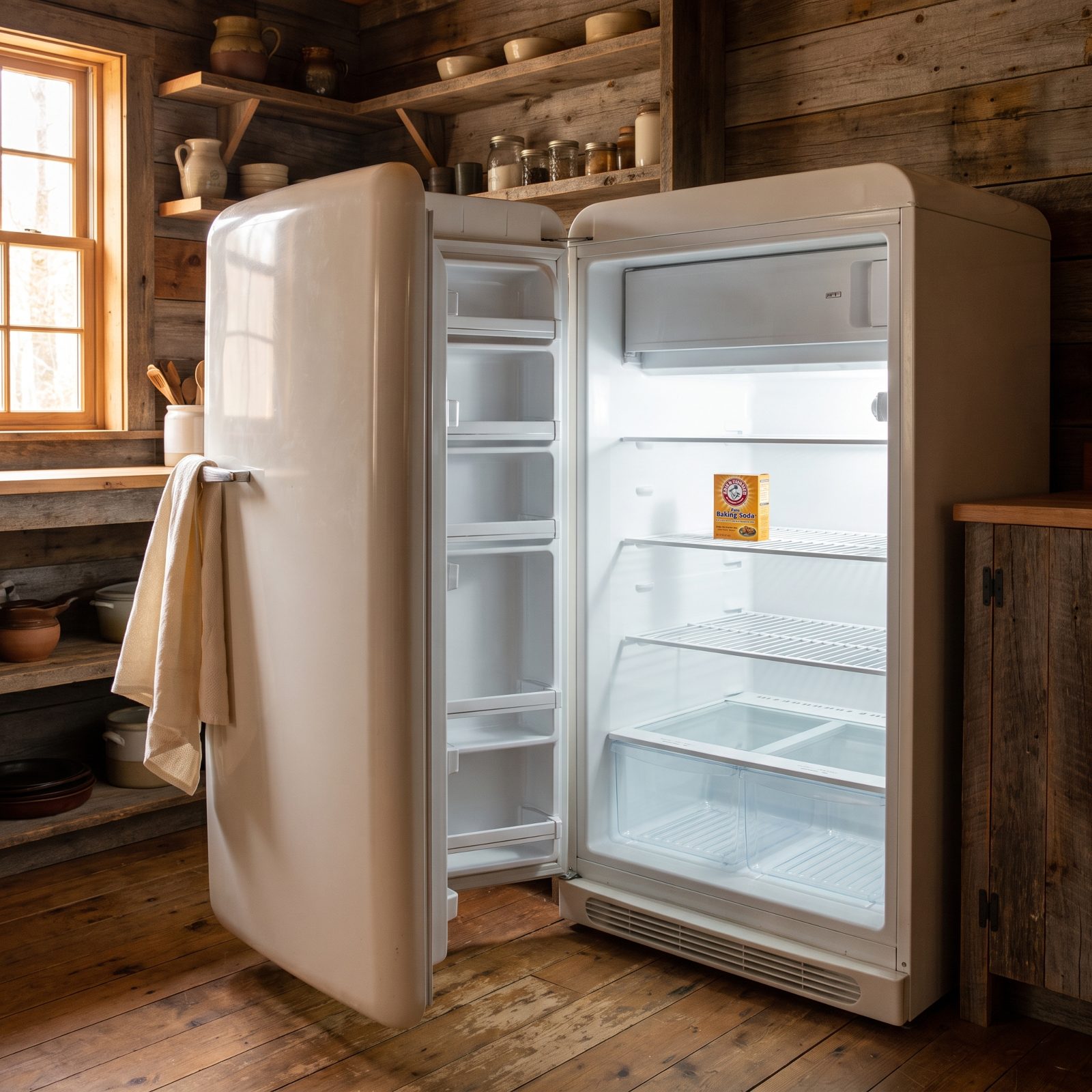
Here’s the one people learn the hard way. You leave the cabin, you shut the fridge, you unplug it to save power. Three weeks later you open it to a smell that makes your eyes water.
A sealed, warm, empty fridge is a mildew factory. Prop the door open before you leave so air moves through it — swing the door wide and leave it standing open — that’s all it takes.
Toss an open box of baking soda on a shelf while you’re at it. Future-you, standing there in week three, will be grateful.
2. Seal the Bedding in Lidded Totes Between Visits
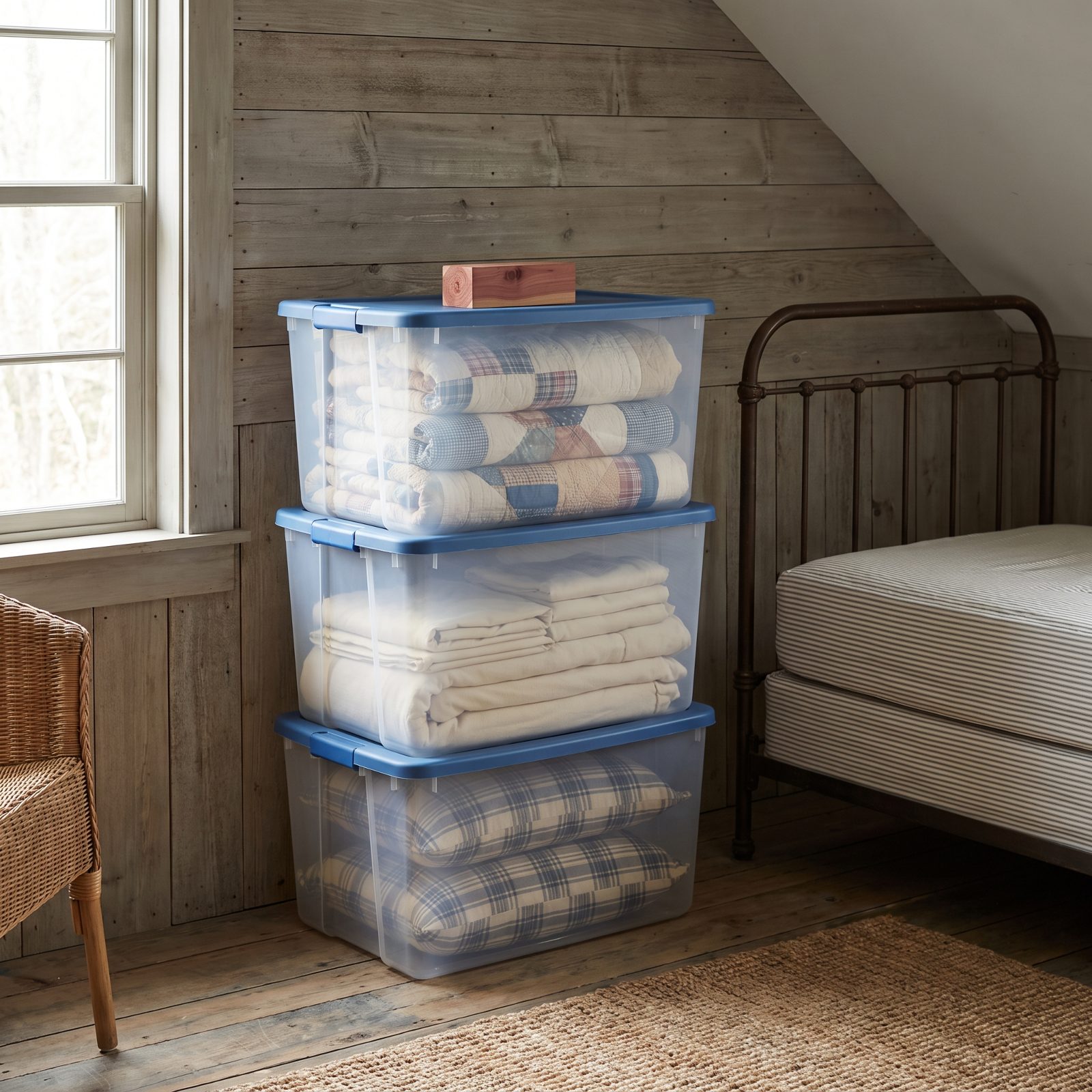
Linens left folded on a shelf are an invitation. Mice shred them for nests, dust settles into them for months, and moths handle the rest. You arrive, pull out the quilt, and find a hole and a surprise.
Fold everything into lidded plastic totes before you lock up. Snap the lids. Set a cedar block on top of the stack. The bedding stays sealed off from all of it until the night you actually need it — warm and dry and bug-free.
1. Post the Cabin’s Exact Address by the Door
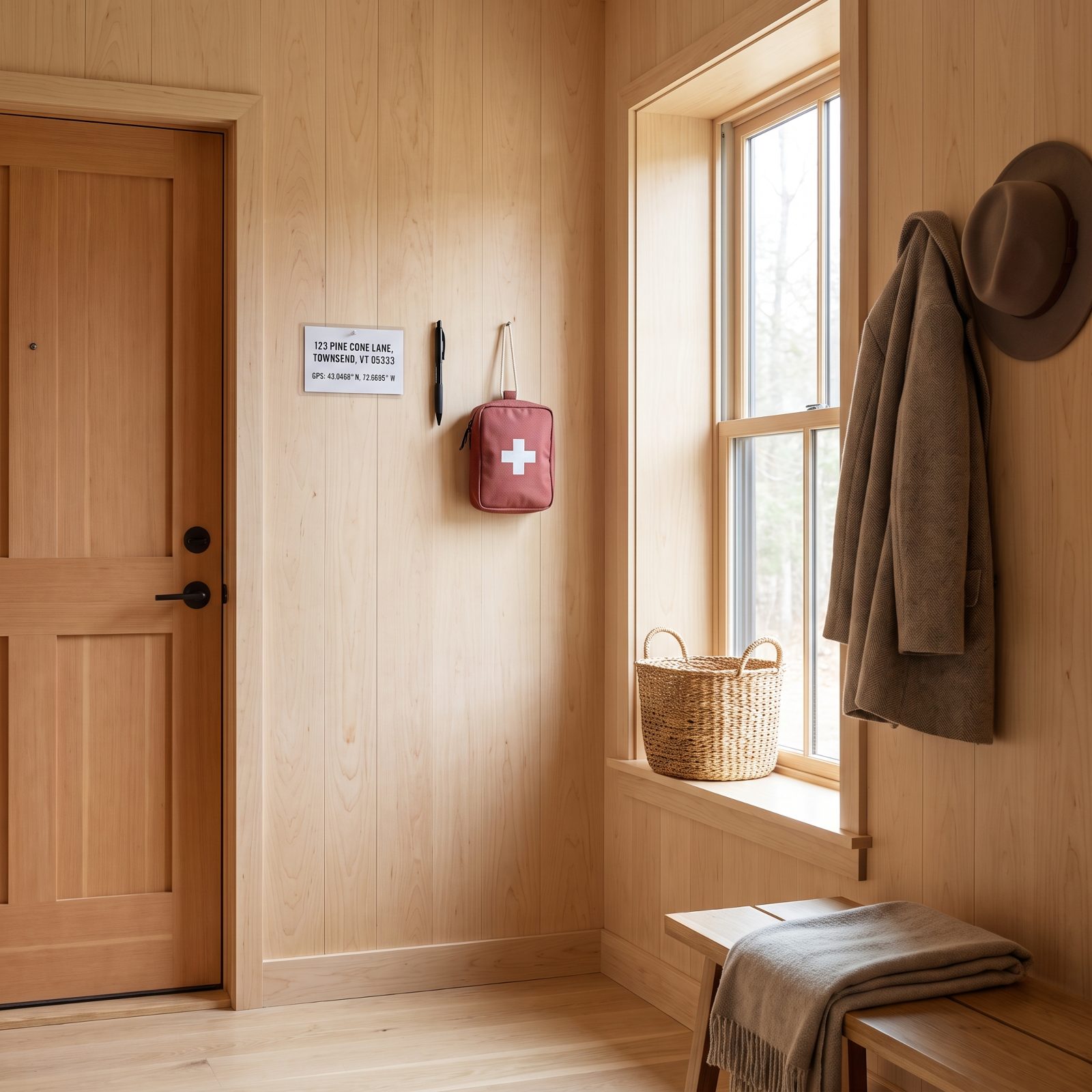
In an emergency, the one thing a 911 dispatcher needs first is where you are. At a remote cabin, that’s exactly the thing nobody can say under pressure. The road has no name you remember, and there’s no house number on the mailbox.
Fix it before anything goes wrong. Post the full address and the GPS coordinates on a card right next to the door, at eye level, where a panicking guest will see it. Anyone can read it off while they talk to dispatch.