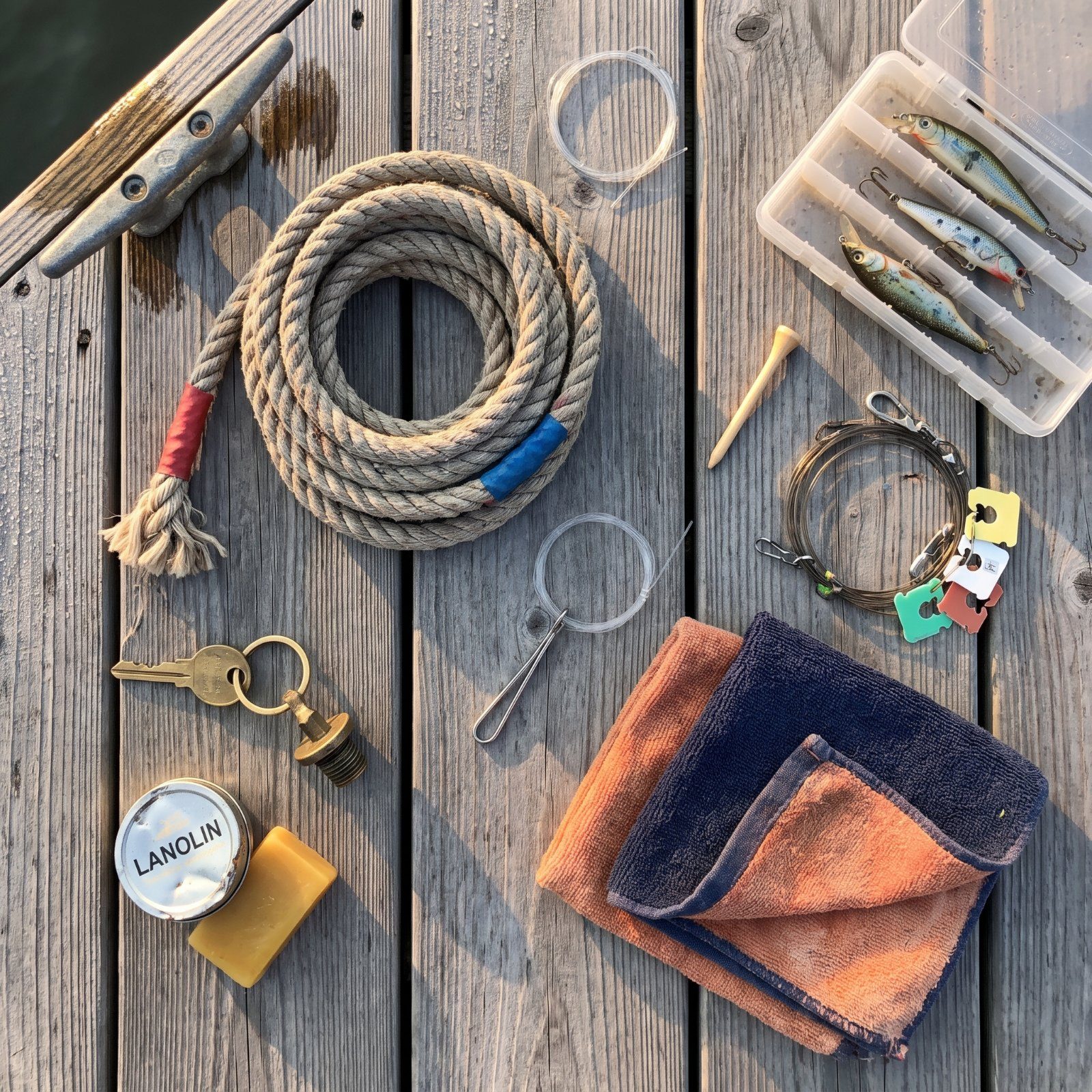
The best gear fix we’ve ever seen on a boat cost nothing. A guy slid his drain plug onto his key ring and never swamped a bilge again. No gadget, no purchase — just a small change that solved a big problem before it happened.
Please note that some of the images in this article were created with the assistance of AI.
Most of what wrecks a fishing day is small. A guide tangled in the wind, a reel seat that won’t budge, a plug left sitting on the dock. The fixes below come from people who’ve made those mistakes and refuse to make them twice. None of them are flashy. All of them earn their place in the boat.
44. Keep a Heavy-Mono Pull Loop for Threading Line Through Rod Guides in Wind
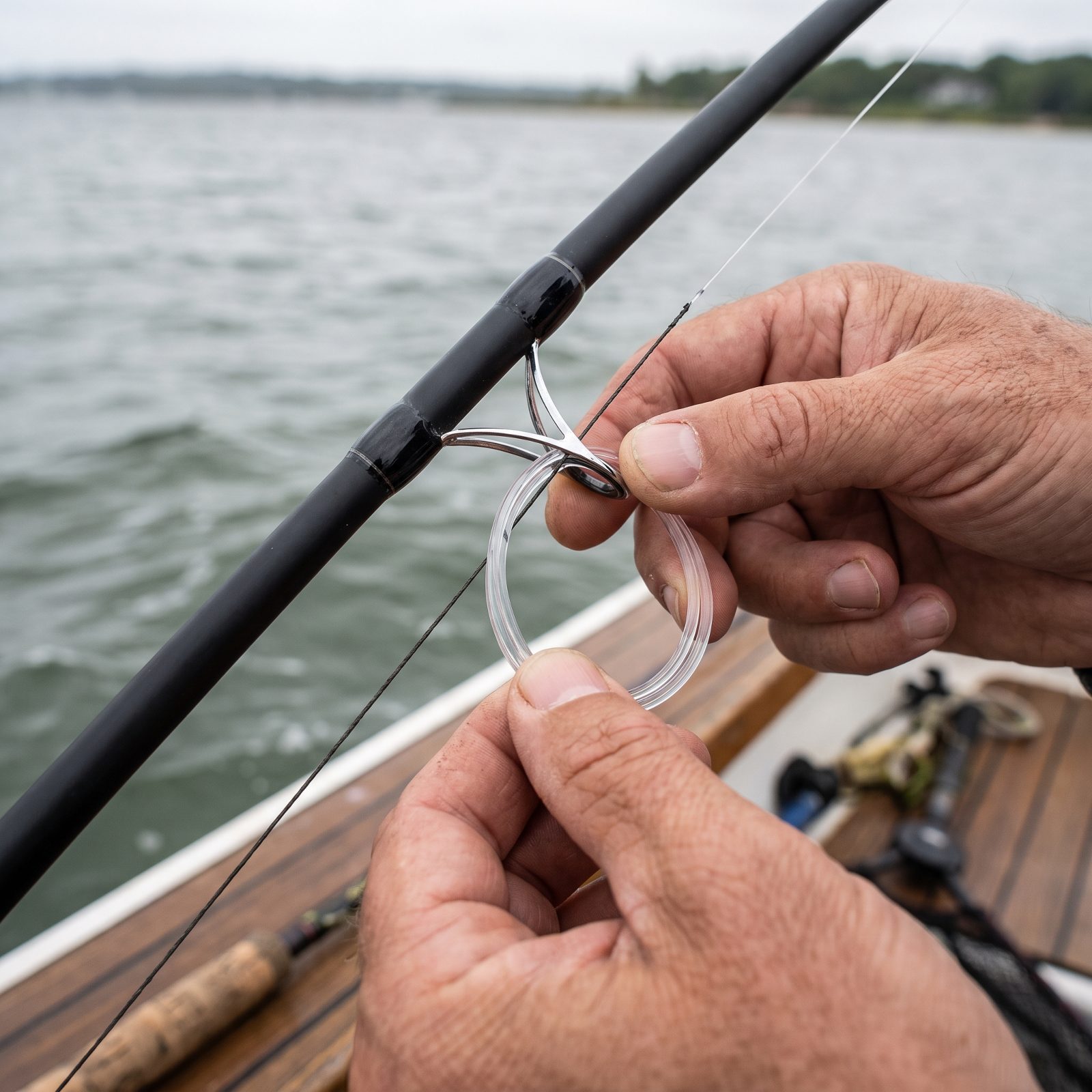
Wind turns a two-second job into a five-minute curse. The braid whips, the tag end dances, and you miss the guide six times before your eyes water.
So fold a long piece of 40-pound mono into a doubled loop, pass it backward through the guides, drop your line inside it, and pull everything through in one motion. The stiff mono won’t flutter the way limp braid does, and it catches every guide on the first try.
43. Give Wet Lures a Ventilated Quarantine Box Instead of Returning Them to Tackle Trays
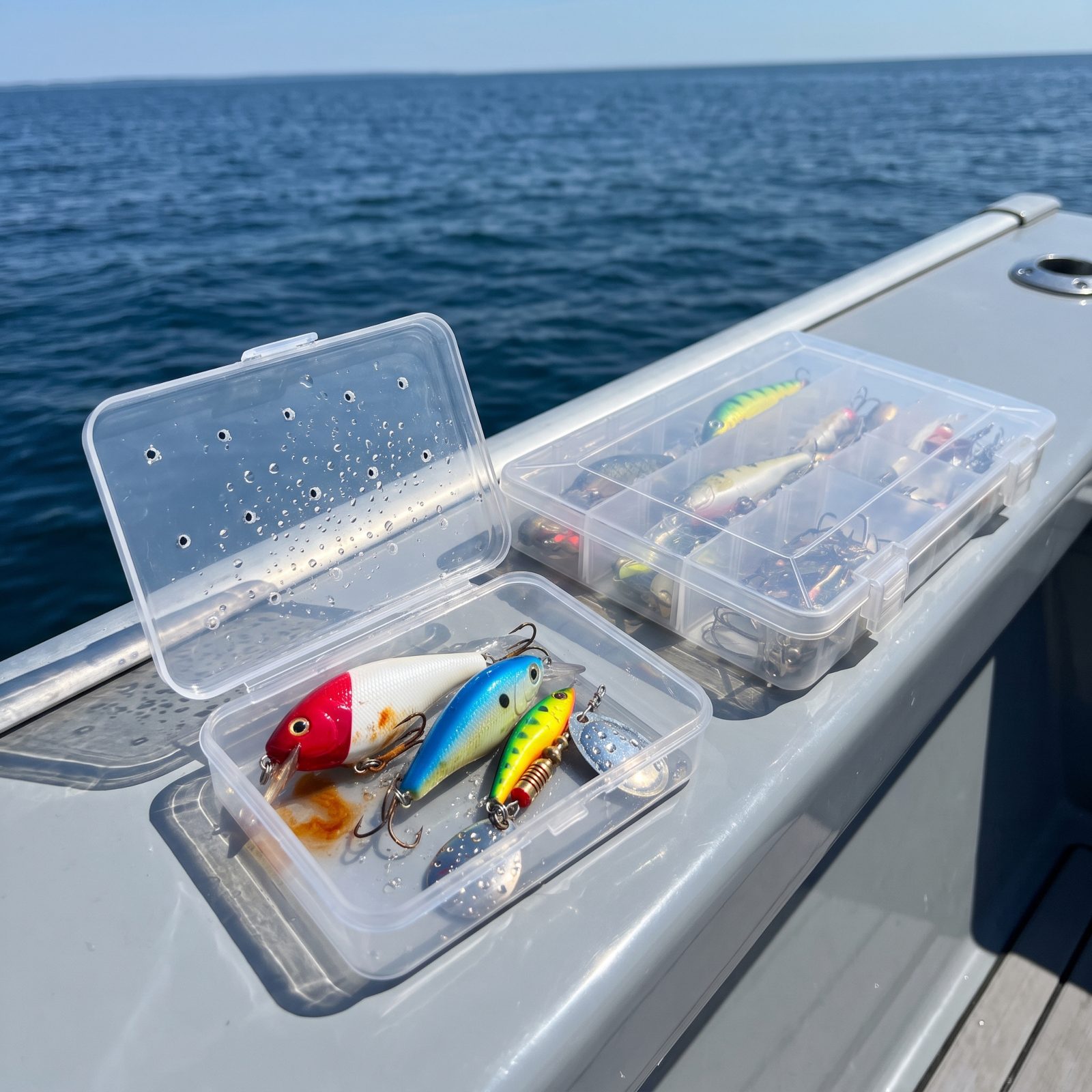
You catch a fish, toss the lure back in the tray, move on. Three weeks later you open that tray and half your hooks have gone the color of old pennies.
Water’s the enemy here. A ventilated box — nothing more than a cheap container with holes drilled in the lid — gives wet lures a place to dry without poisoning the dry ones around them. Everything you used that day goes in it. At home, it all comes out, dries fully, and goes back where it belongs.
Rust spreads. One wet treble can rot a whole compartment. The habit costs nothing and saves a tackle box.
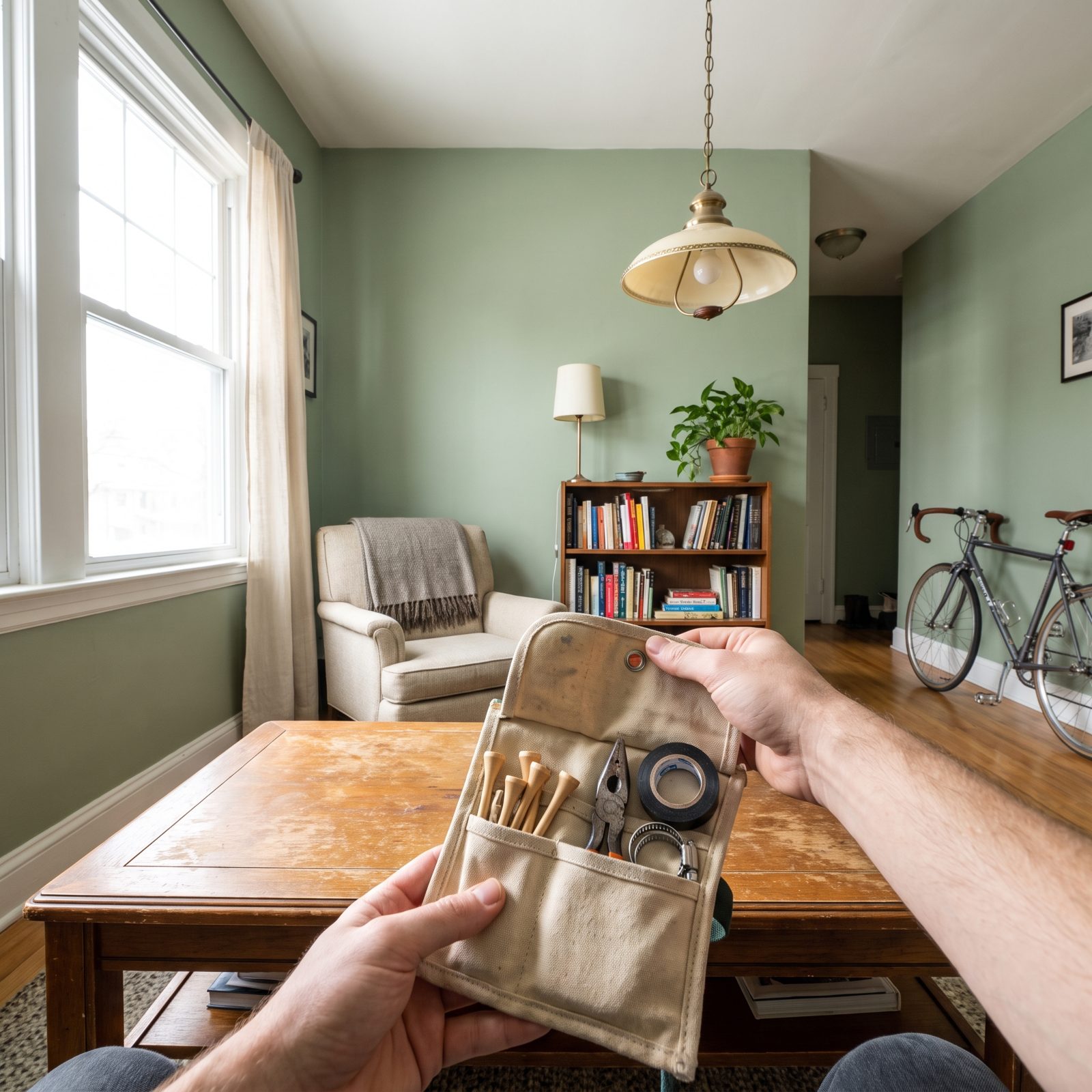
42. Carry a Wooden Golf Tee for Temporarily Plugging a Leaking Small Hose
A small hose splits a mile from the ramp. Now what?
A wooden golf tee is the oldest field repair in the book, and it works because it works. Jam it into the leaking end of a livewell line or a small fittings hose, and it swells against the moisture, sealing the gap long enough to limp home. Three tees weigh nothing and live in a glovebox forever.
41. Mark the Landing Net’s Balance Point With a Textured Grip Band
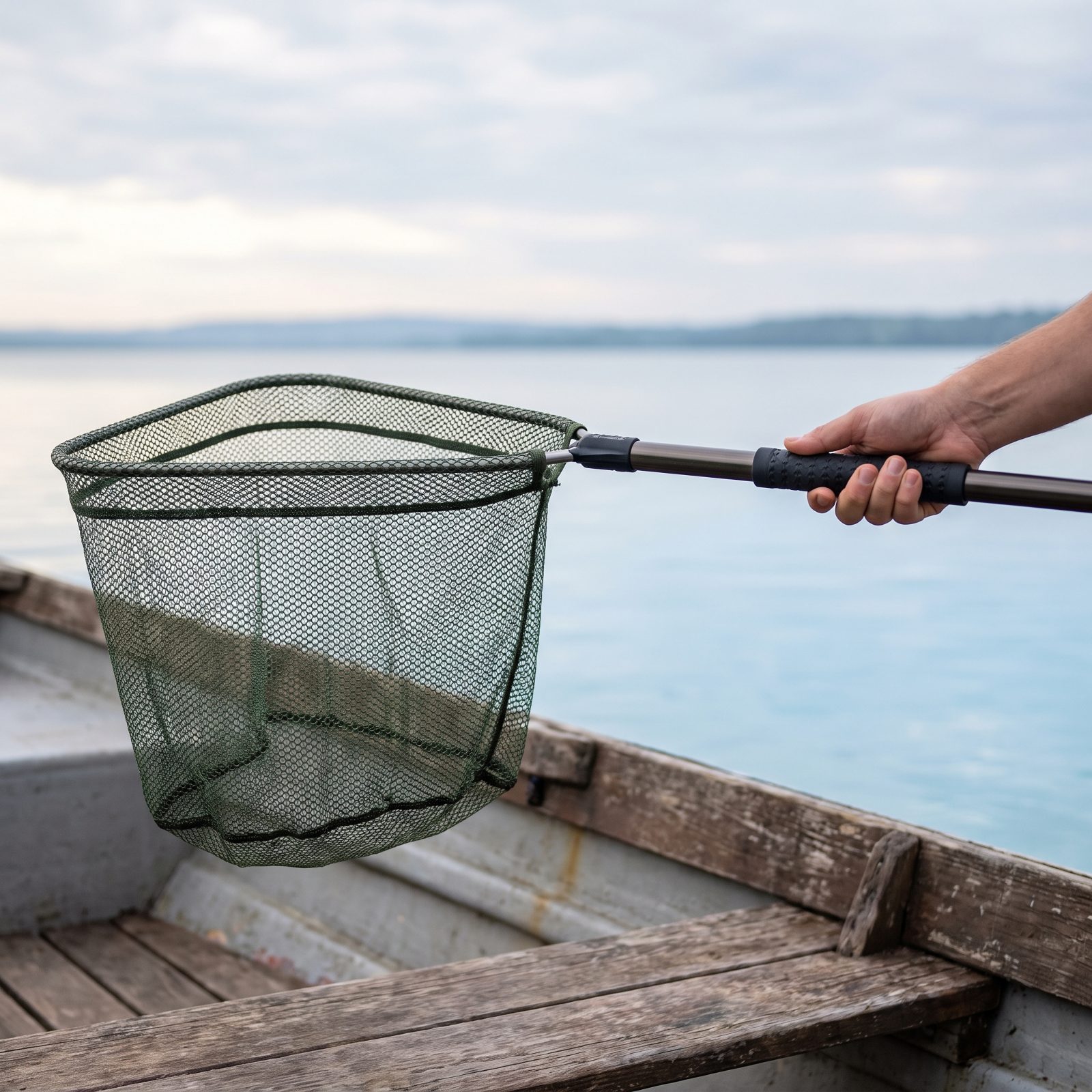
Scooping a big fish one-handed while the other hand works the rod is a balance problem most people never think about — right up until the net tips and the fish rolls out.
Find where the net hangs dead level, usually a little forward of center with a heavy hoop, and wrap a band of grip tape right there. Now your hand finds the spot by feel, in the dark, without looking. The net swings true on the first grab instead of the third.
40. Snap Labeled Bread Tags Onto Leader Coils to Identify Pound Tests Instantly
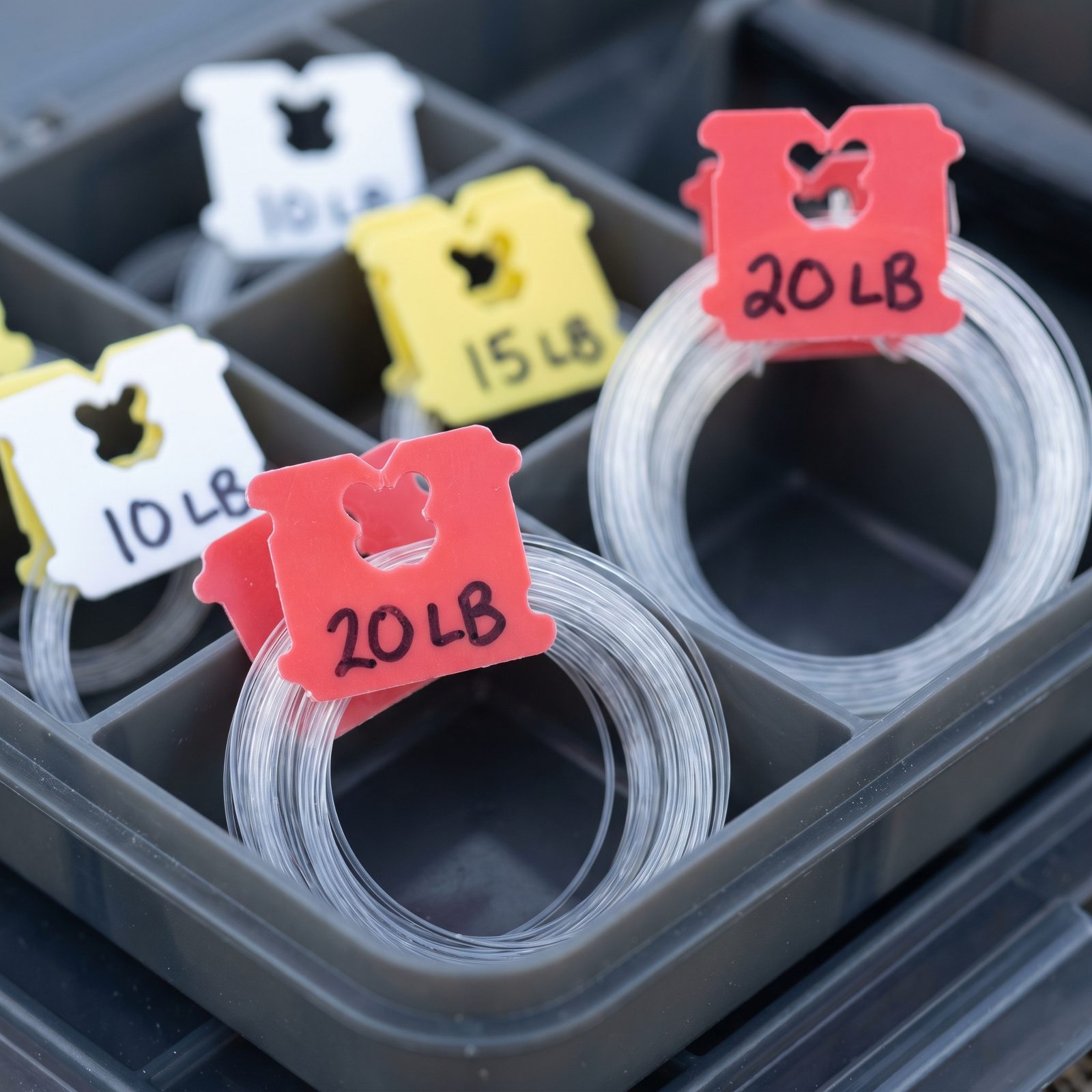
Loose leader coils all look identical. Is that 12-pound or 20? You squint, you guess, you tie on the wrong one and lose the fish you were saving it for.
A bread tag solves it. Snap one onto each coil, write the pound test on it with a marker, and the guessing stops. It holds the coil closed too, so no more nest of tangled leaders in the bottom of a pocket.
39. Use a Two-Color Towel So Fish and Face Never Share the Same Side
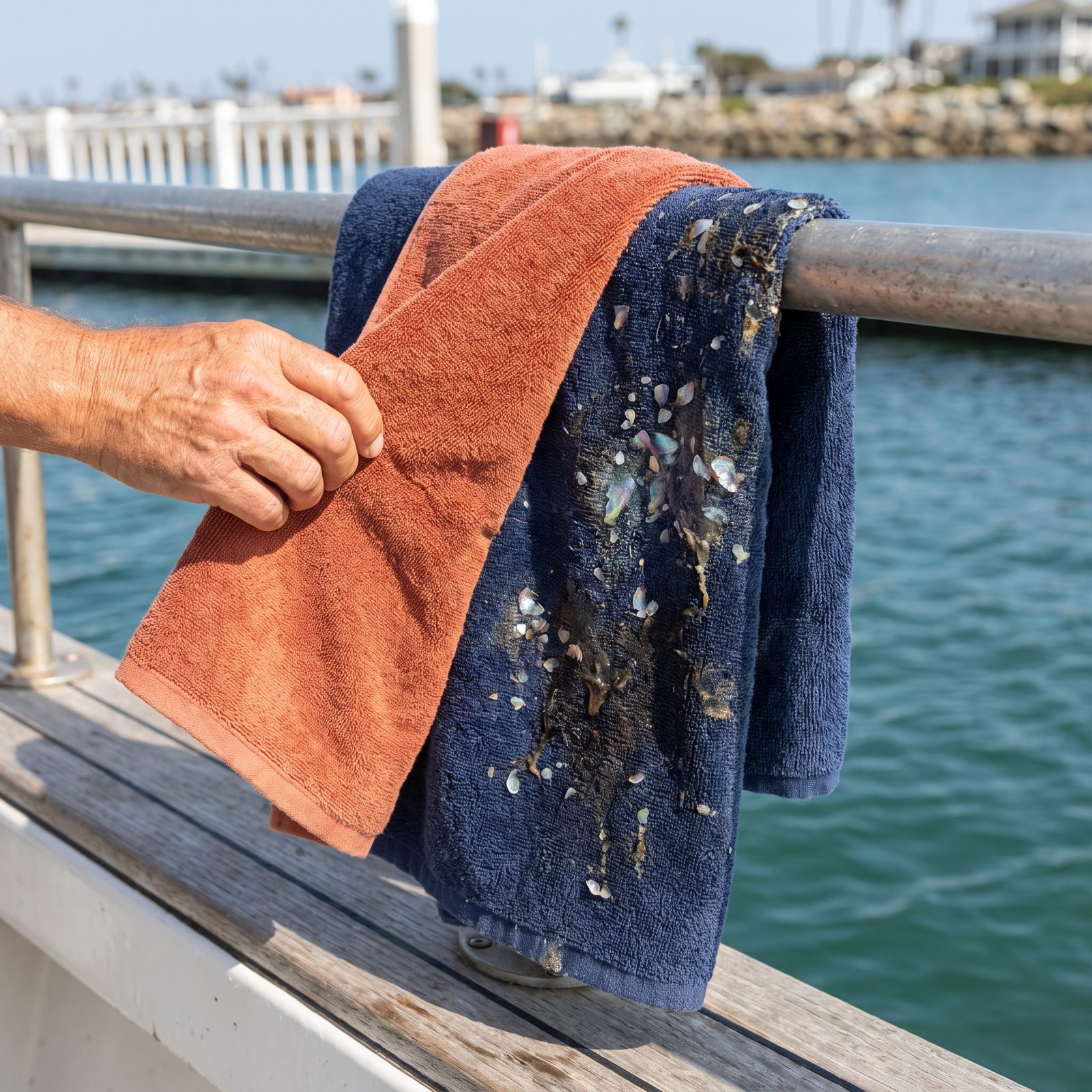
You wipe fish slime off your hands, then an hour later you wipe sweat off your face with the same towel. You’ve done it. Everyone’s done it. It’s revolting, and you only figure it out afterward.
Two colors, two jobs. Dark side for fish, hands, and gore. Light side for your face, your sunglasses, your phone screen. The color tells you which is which before your brain even catches up.
Once it’s a habit, fishing any other way feels careless.
38. Tether the Drain Plug to the Ignition Key So It Cannot Be Overlooked
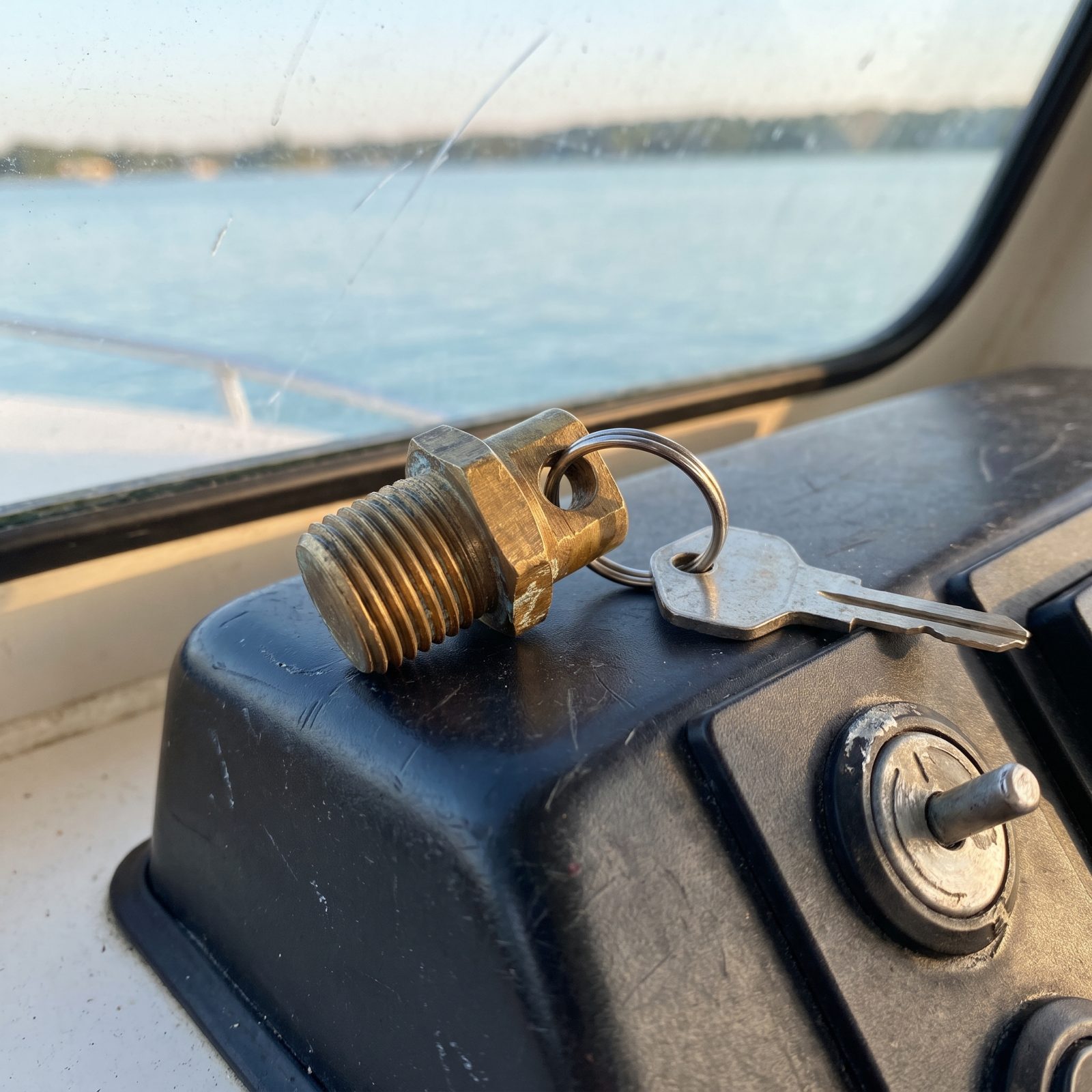
Every boat ramp in America has seen it. A truck pulls away, the boat settles, and the bilge is filling because somebody forgot the plug.
Put the plug on the key ring. Now you physically cannot start the engine without holding the plug in your hand, and holding it is the reminder. No checklist, no sticky note, no trusting your memory at five in the morning.
It’s the kind of fix you wish you’d thought of the first time you ever launched a boat — simple, nearly free, and it makes the worst beginner mistake almost impossible to make.
37. Mark Anchor Rope With Heat-Shrink Depth Bands So Scope Is Never a Guess
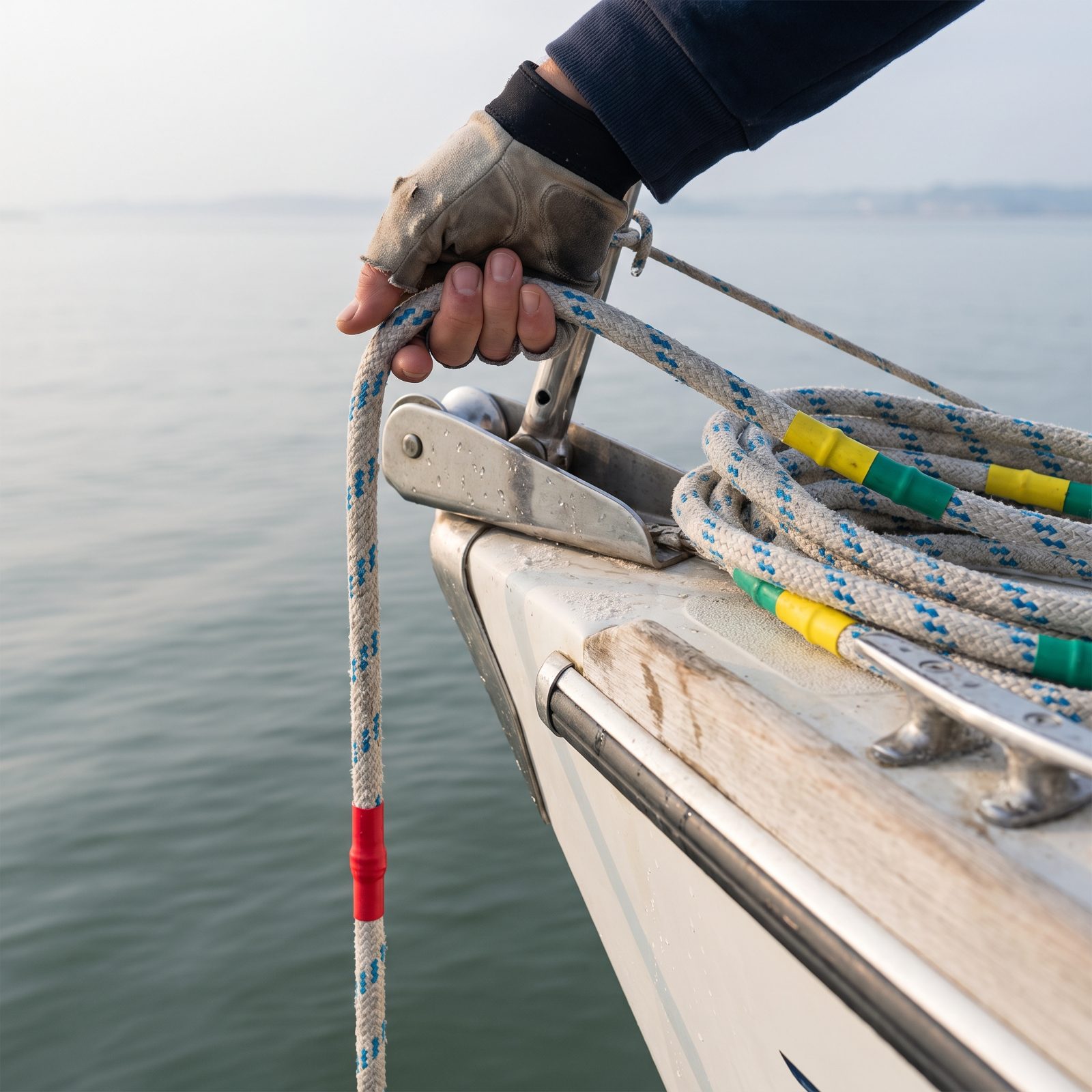
Anchoring well means letting out the right amount of rope — roughly five to seven times the water depth in calm conditions, more in wind or current. Most people eyeball it and either drag or burn through the whole coil.
Slide heat-shrink bands onto the rope at set intervals, say every ten feet, in a color sequence: green, yellow, red, then red, green, yellow. Now you can read your scope as the rope goes out. You know exactly how much is deployed without hauling it back to count.
36. Coat Reel-Seat Threads Lightly With Lanolin to Prevent Seizing
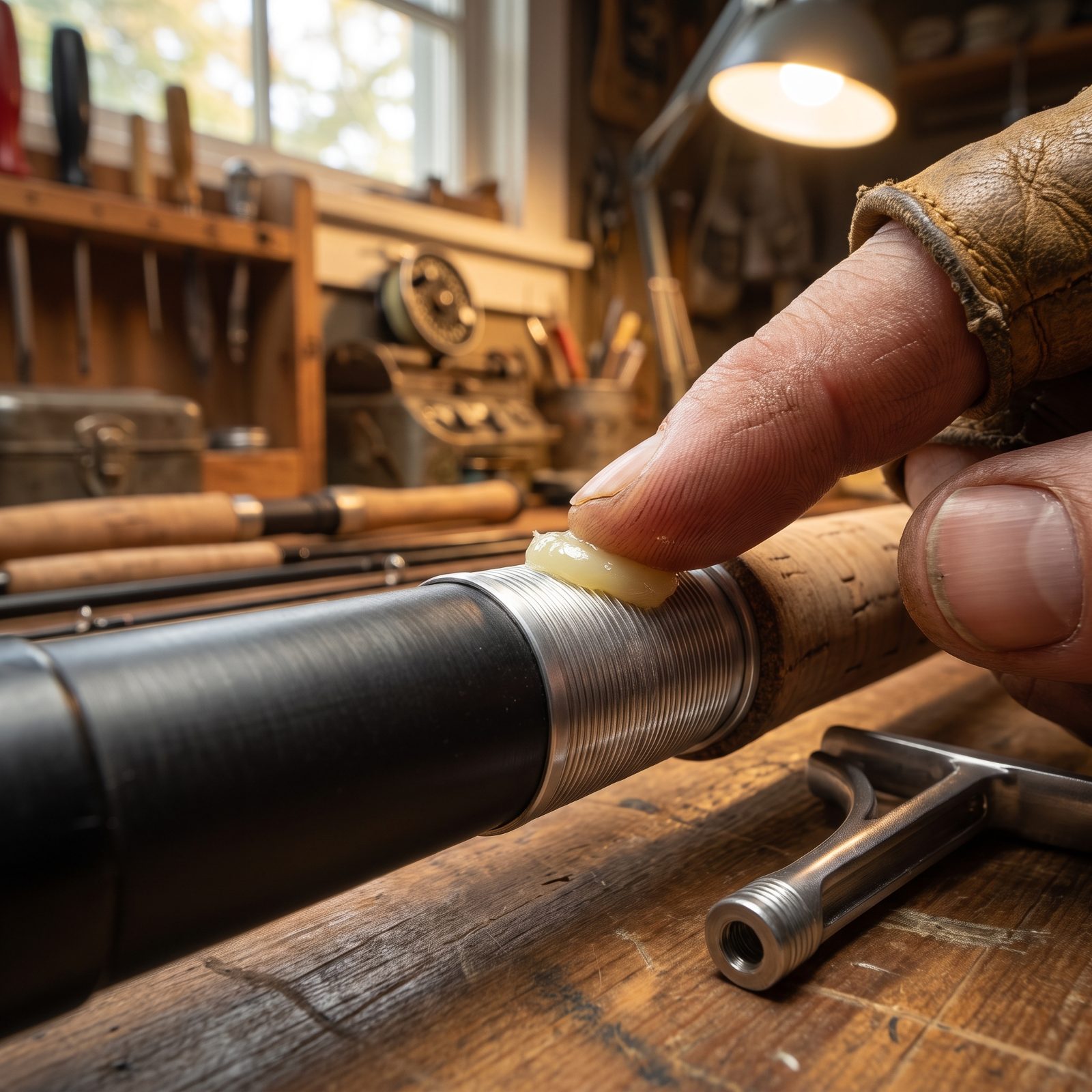
Salt and dissimilar metals are a bad marriage. Leave an aluminum reel on a steel-threaded seat through a few saltwater trips and it corrodes solid. We’ve watched people ruin rods trying to pry a seized reel loose.
A thin film of lanolin on the threads stops it cold. It clings, it repels water, and it won’t wash off the way a light oil does. Smear a little on with a fingertip before mounting, and the reel comes off clean months later.
35. Rub Beeswax on Zipper Teeth to Stop Salt and Grit From Binding Them
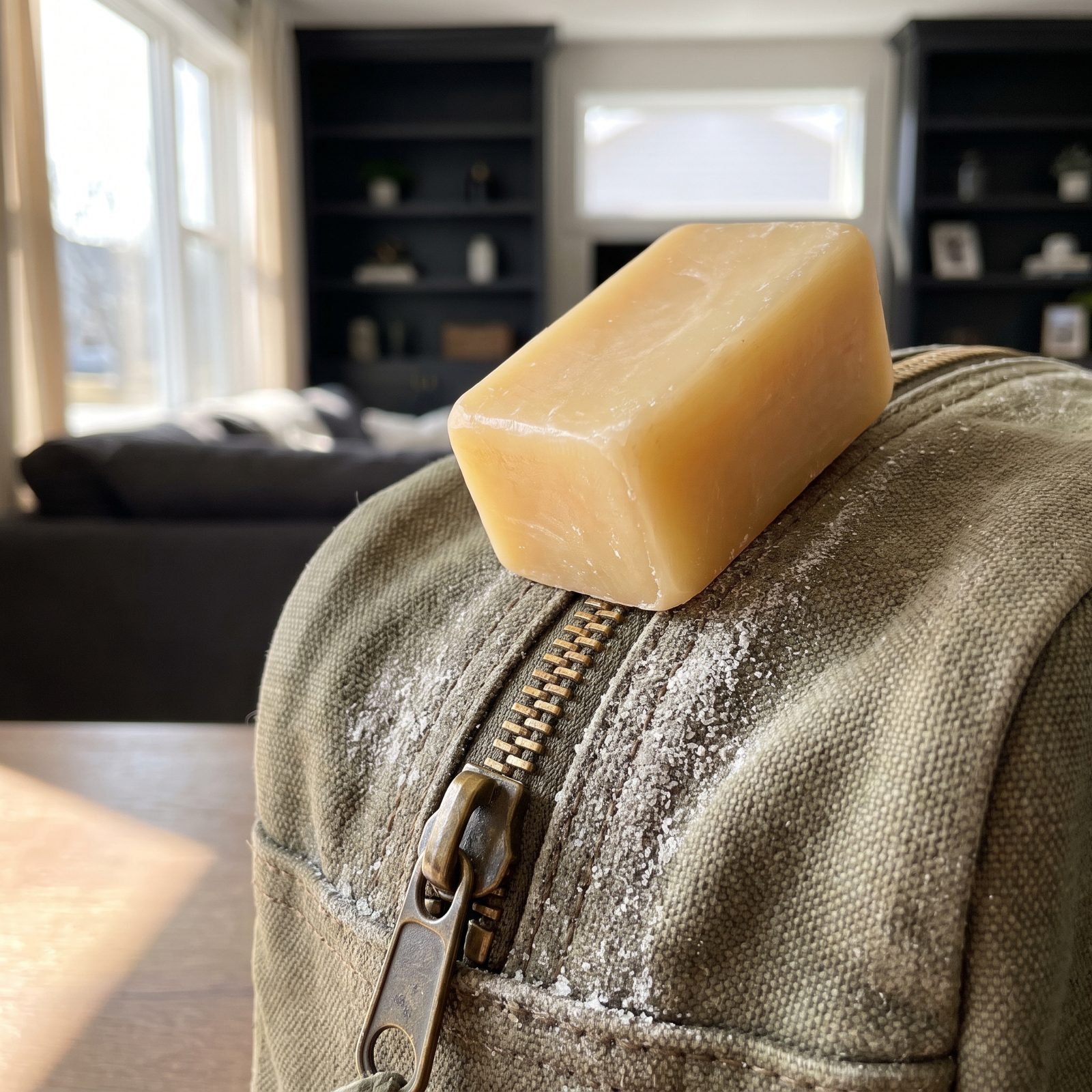
A zipper that won’t close in a cold wind is a small misery that can ruin a whole morning.
Salt dries into crystals inside the teeth, grit works into the slider, and eventually the thing fights you every single time. Run a block of beeswax down the closed teeth, work the slider back and forth a few times, and it glides again. The wax lubricates without pulling in the dust that oil or graphite would.
34. Line the Underside of Hatch Lids With Reflective Tape to Find Compartments Fast
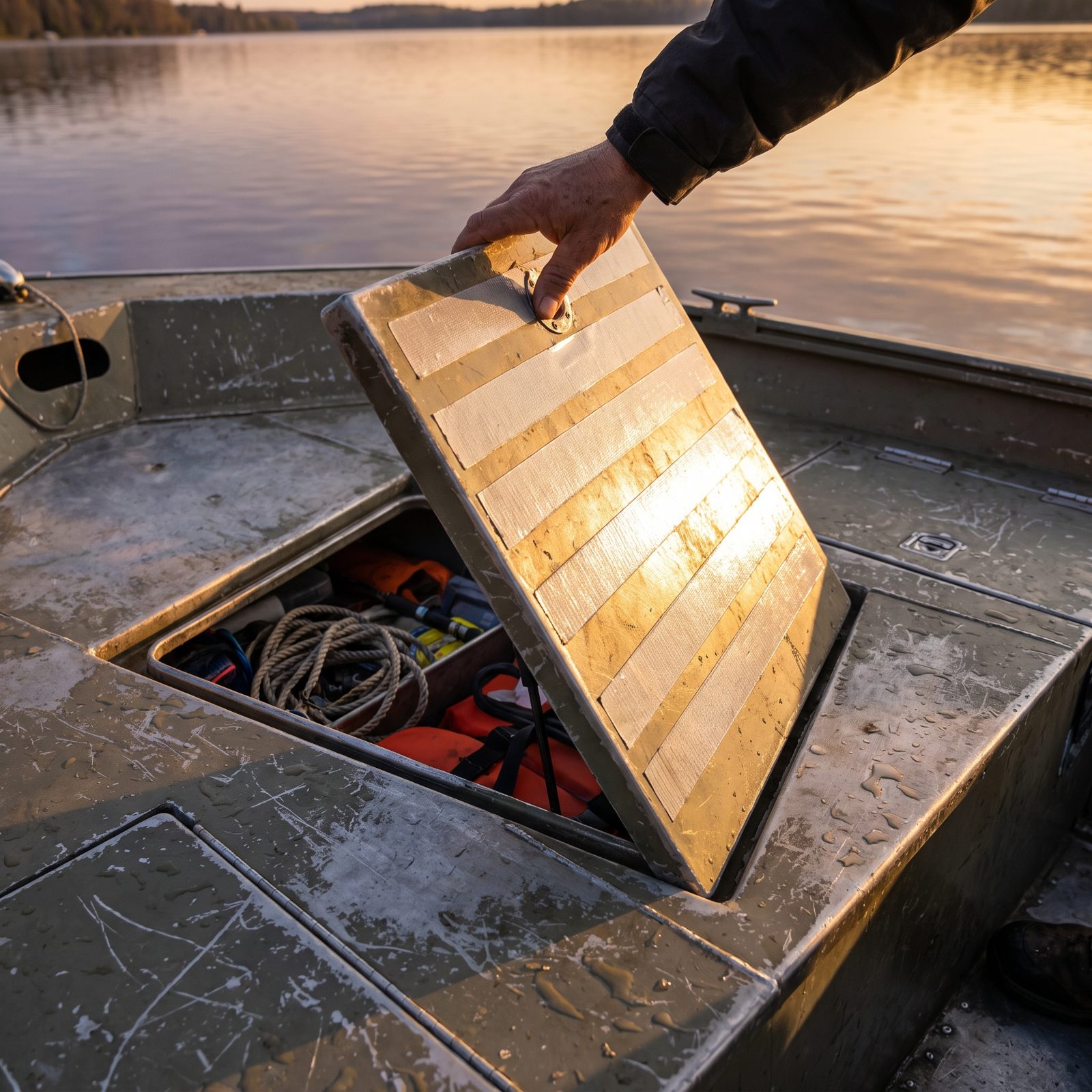
Half the gear hunts on a boat happen in bad light — pre-dawn launch, dusk bite, the one hatch you need buried in shadow under the gunwale. A strip of reflective tape on the underside of each lid fixes it for a few dollars.
Flip the hatch, shine a headlamp, and the tape throws light straight back at you. Color-code it if you want: silver for rigging gear, red for the first-aid and tools. You stop groping blind and start reaching with intent.
33. Keep a Grease Pencil on the Console for Depth and Bearing Notes You Can Wipe Off
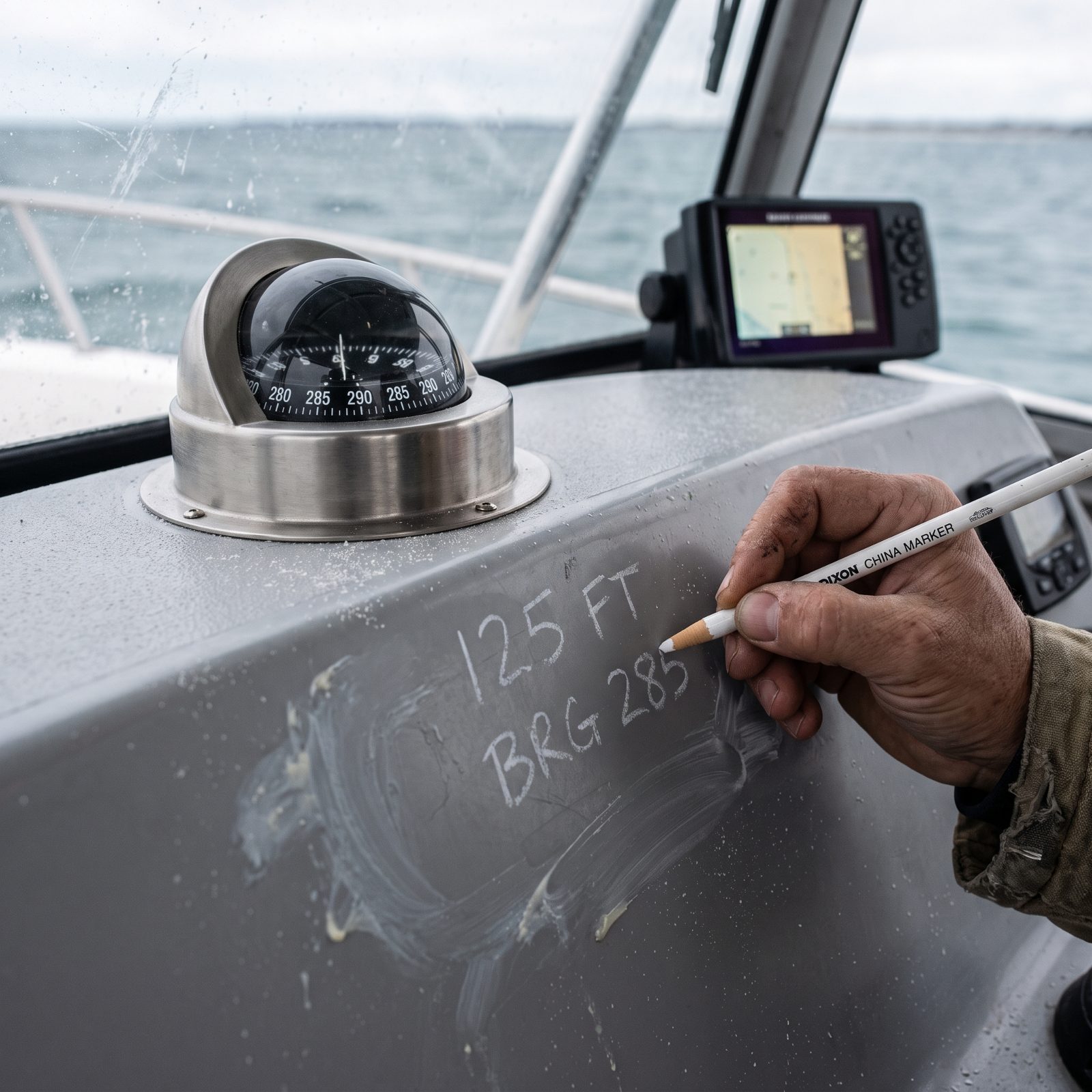
Memory lies on the water. You swear you’ll remember the heading back to the ramp, then fog rolls in and every point of shoreline looks the same.
A china marker — the kind machinists use — writes on a gelcoat console like a windshield and wipes off with a thumb. Jot the depth where you marked fish, the compass bearing home, the GPS numbers you don’t want to lose if the unit blinks. A dollar, no batteries, no fuss. At day’s end one swipe clears it.
32. Bolt a Small Magnetic Parts Dish Where Hooks and Screws Can’t Roll Overboard
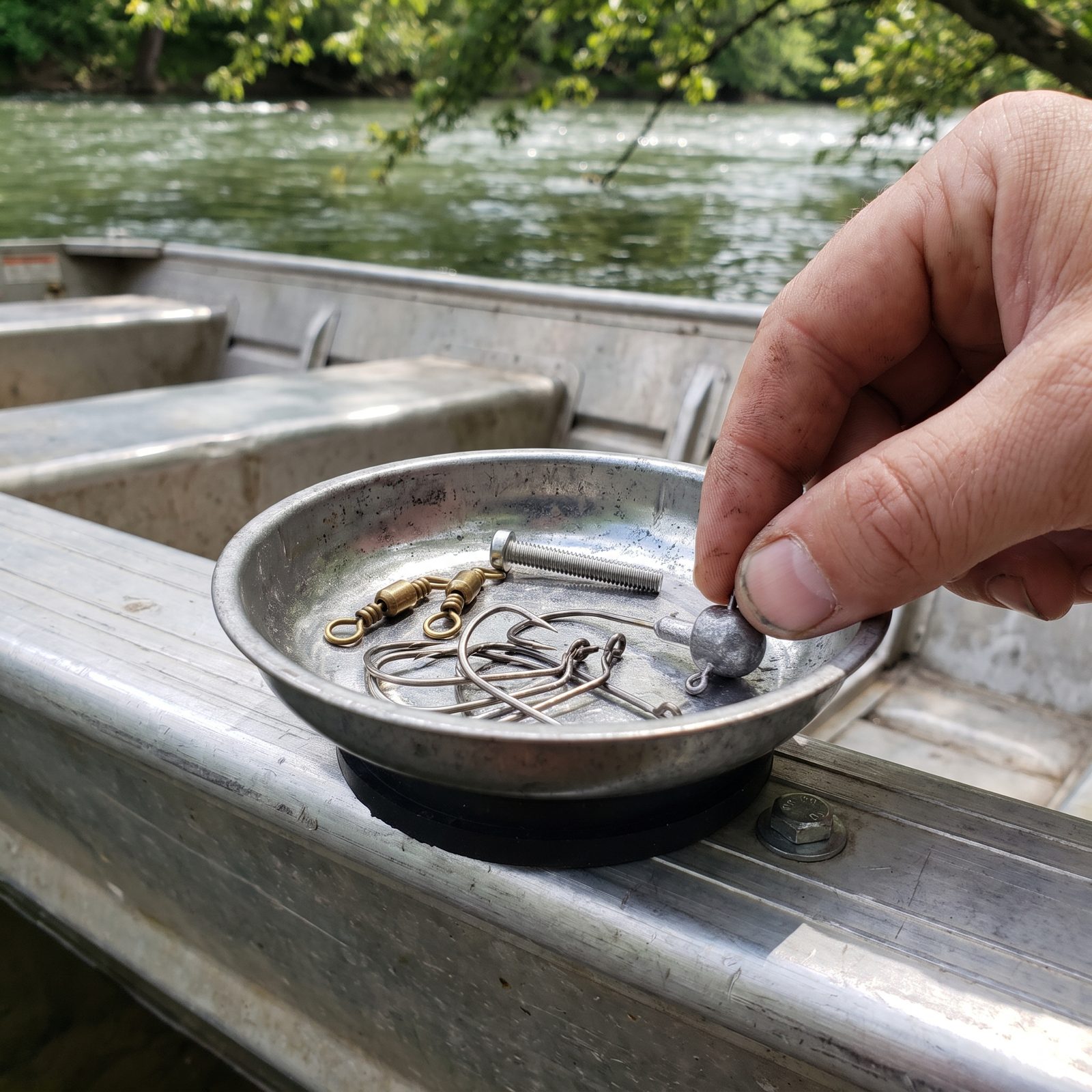
You’ve watched a hook skitter across the deck and vanish into the bilge. Or worse, into a bare foot. Loose terminal tackle is one of those small chaos engines nobody plans for until it draws blood.
A magnetic parts dish from the auto aisle solves it. Stick it to any ferrous surface, drop your working hooks and swivels in, and the magnet holds them through chop. When you’re mid-rig and need both hands, everything stays put instead of rolling toward the scupper.
31. Switch to Pale Tackle-Tray Liners So Dropped Hooks and Swivels Jump Out at You
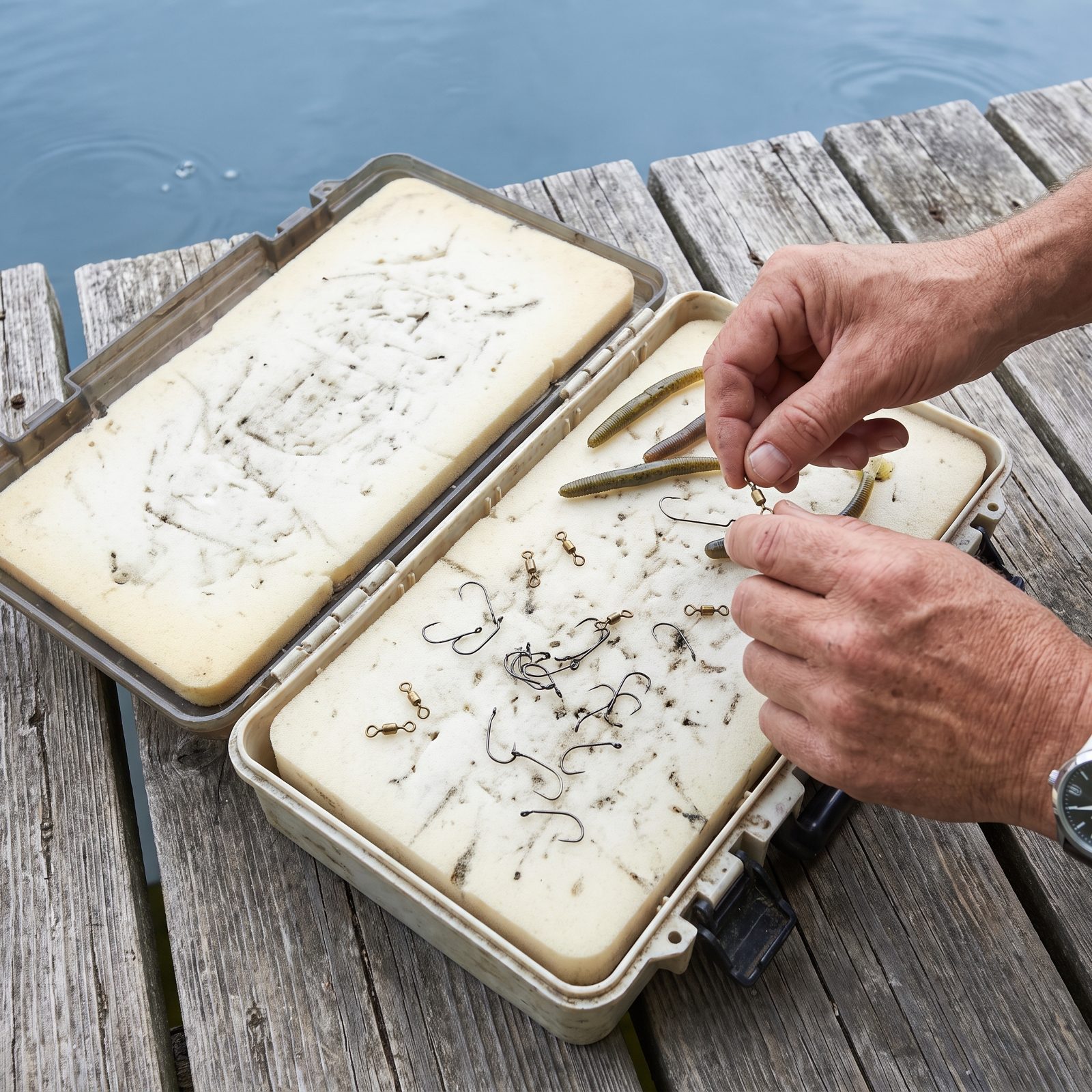
Dark foam liners hide everything. A black treble on a black tray may as well be invisible, and that’s exactly when a thumb finds it.
Swap in a pale liner — light grey, cream, soft tan — and small tackle has nowhere to disappear. Dropped swivels catch your eye. A hook that fell off the leader shows up before it finds skin. Finding the right jig at speed gets easier too, because contrast does the work your tired eyes used to.
30. Slit a Chunk of Pool Noodle Over a Bucket Rim to Park Rigged Hooks Safely
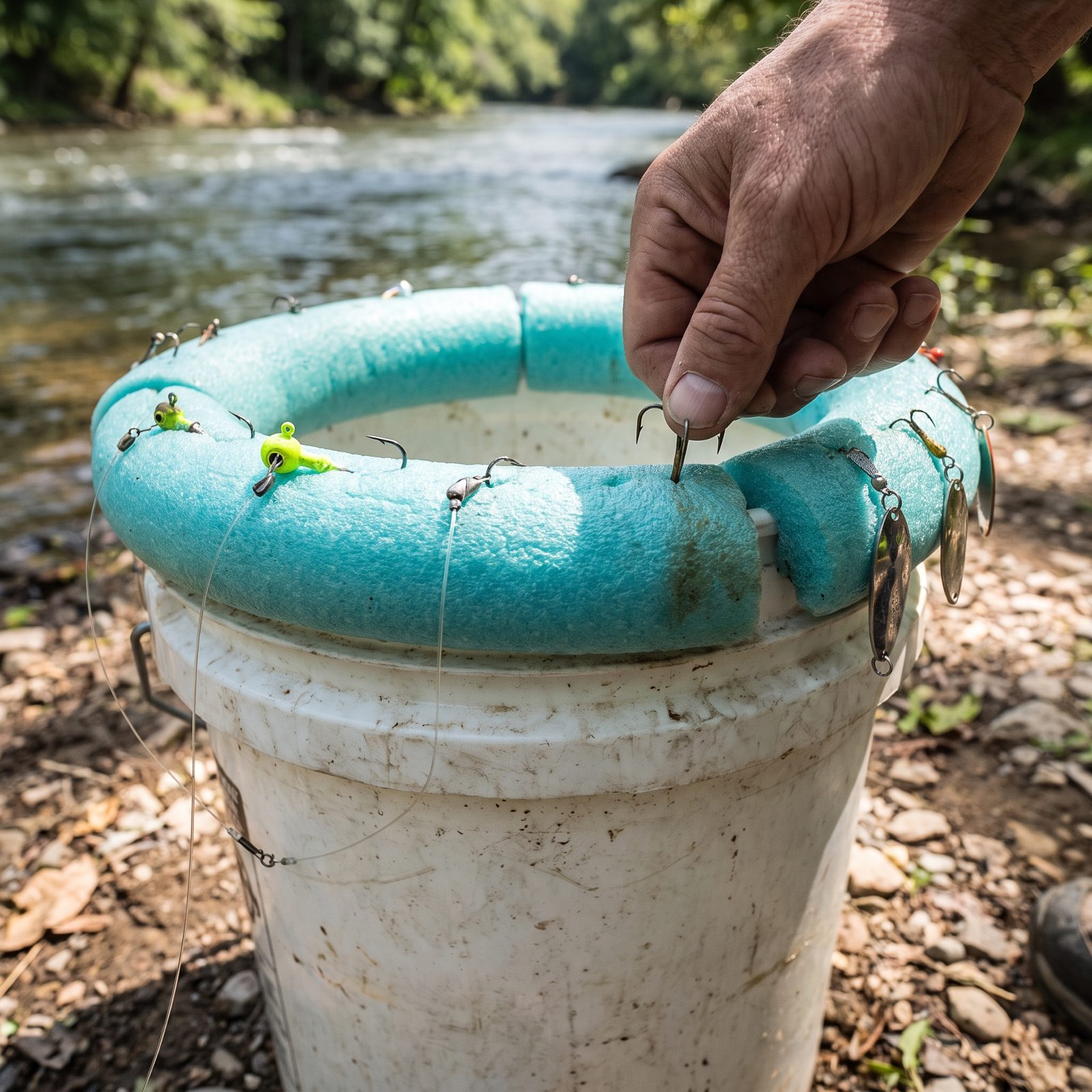
Rigged hooks need somewhere to live between casts. Lay them on the seat and someone sits on them. Leave them dangling off the rod and they tangle with everything within reach.
Cut a foot of pool noodle, slice it down one side, and press it over your bait-bucket rim. Now every pre-tied hook can be pressed point-first into soft foam, leaders hanging tidy below — and do bury the points, since any left resting on top will still snag a careless hand. You can rig a dozen at home, carry them stuck in the noodle, and pull them one at a time without a knot of chaos in your lap.
29. Drop a Rechargeable Desiccant Canister Into the Terminal-Tackle Box
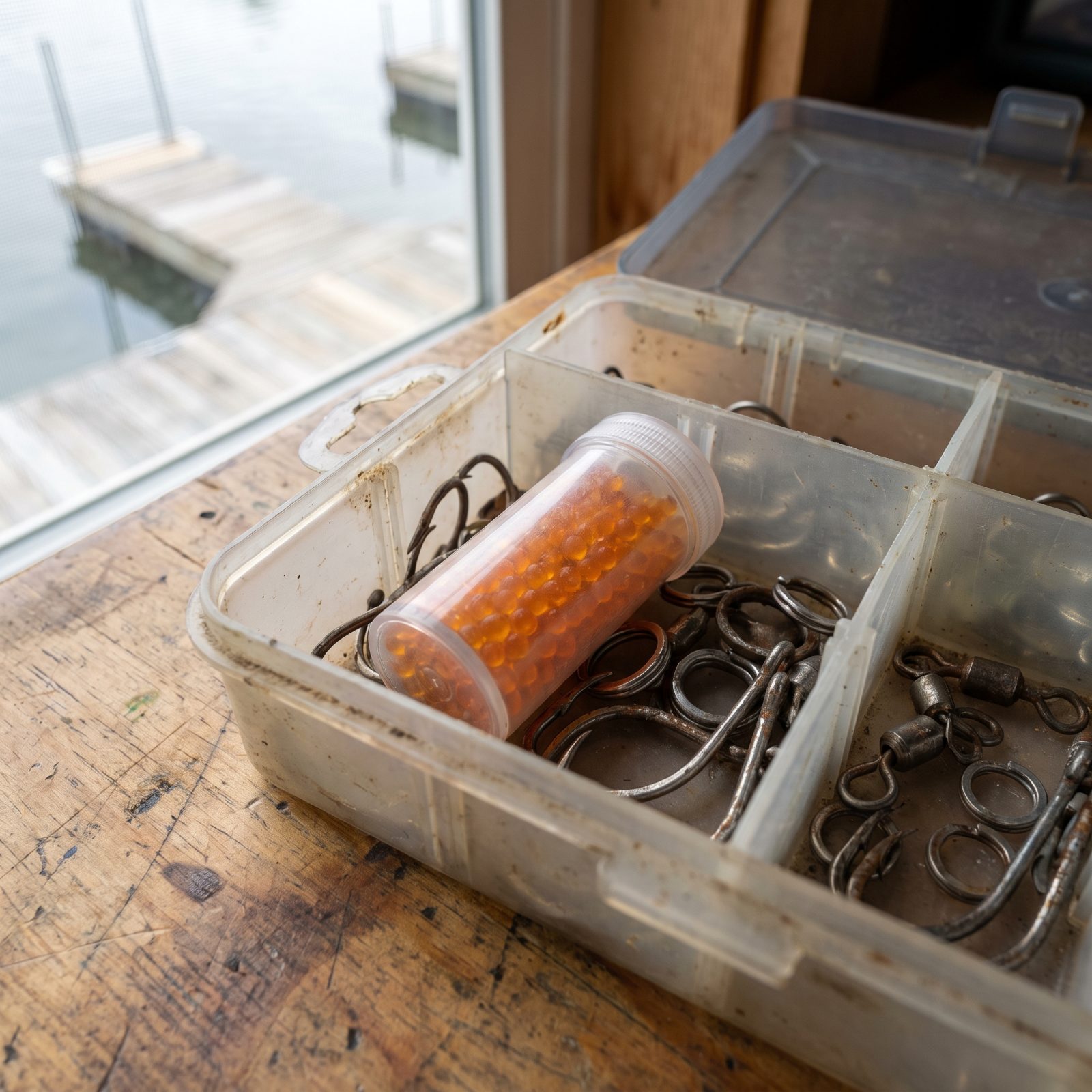
Rust is a slow robbery. You don’t notice it until a hook snaps on a fish or a swivel seizes mid-cast. Humid tackle trays, left in a hot truck or a damp garage, breed it.
Toss a rechargeable desiccant canister into the box. The silica beads pull moisture out of the sealed space, and when the indicator window turns, you bake the canister in a low oven and start over. Same canister, years of service. Your hooks keep their points and your snaps keep swinging.
28. Repurpose a Closed-Cell Kneeling Pad Into a Portable Deck Mat
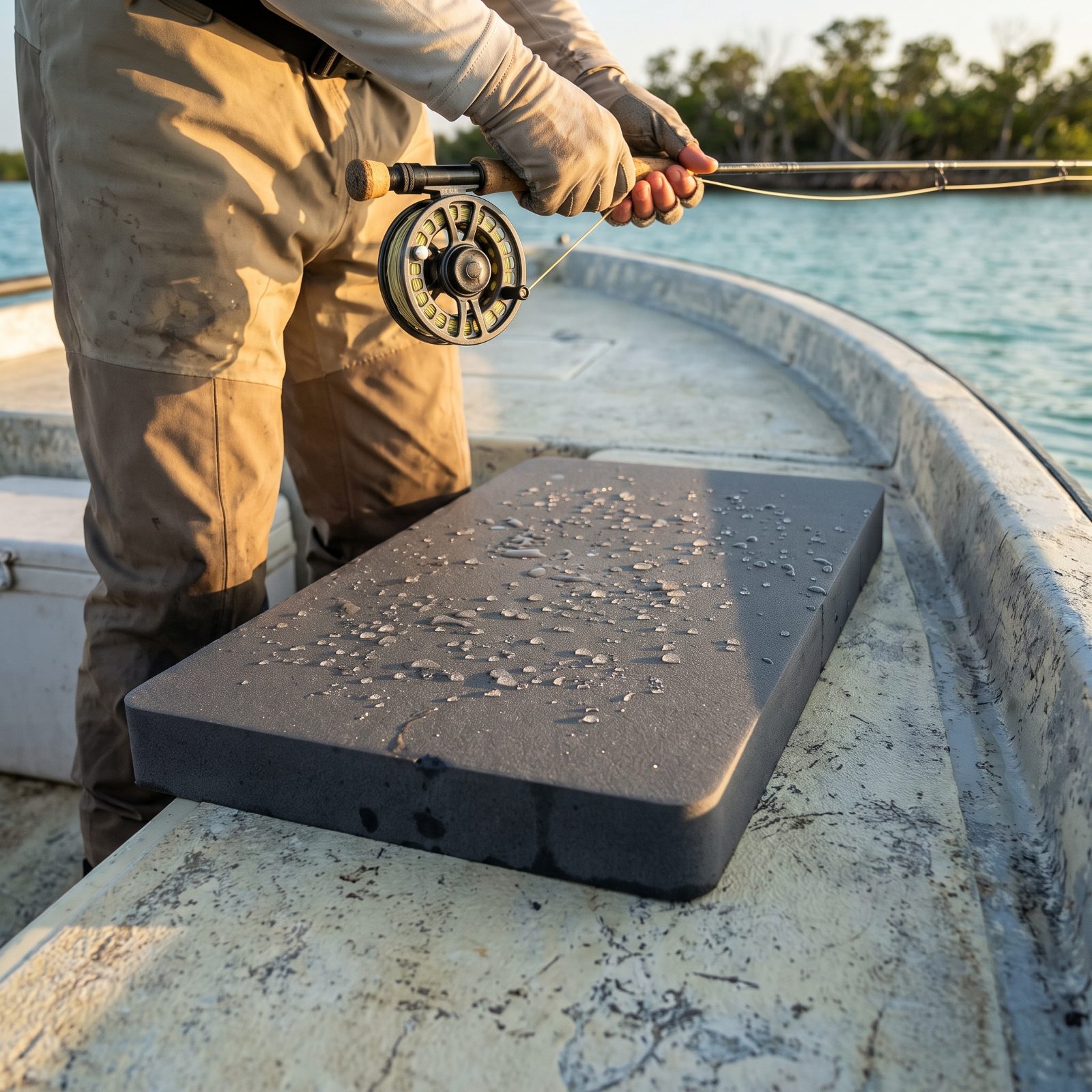
Kneeling on a hard deck to land a fish or dig through a hatch wrecks the knees of anyone past forty. The deck gets wet, cold, and gritty, and closed-cell foam shrugs all three off.
A garden kneeling pad costs little, weighs nothing, and lives in a locker until you need it. Drop it where you’ll kneel, where a cooler sits, under a bucket that slides. Unlike a towel, it never soaks through, and a quick rinse sends the fish slime over the side.
27. Tie a Short Yarn Telltale to the Antenna for an Instant Wind Read
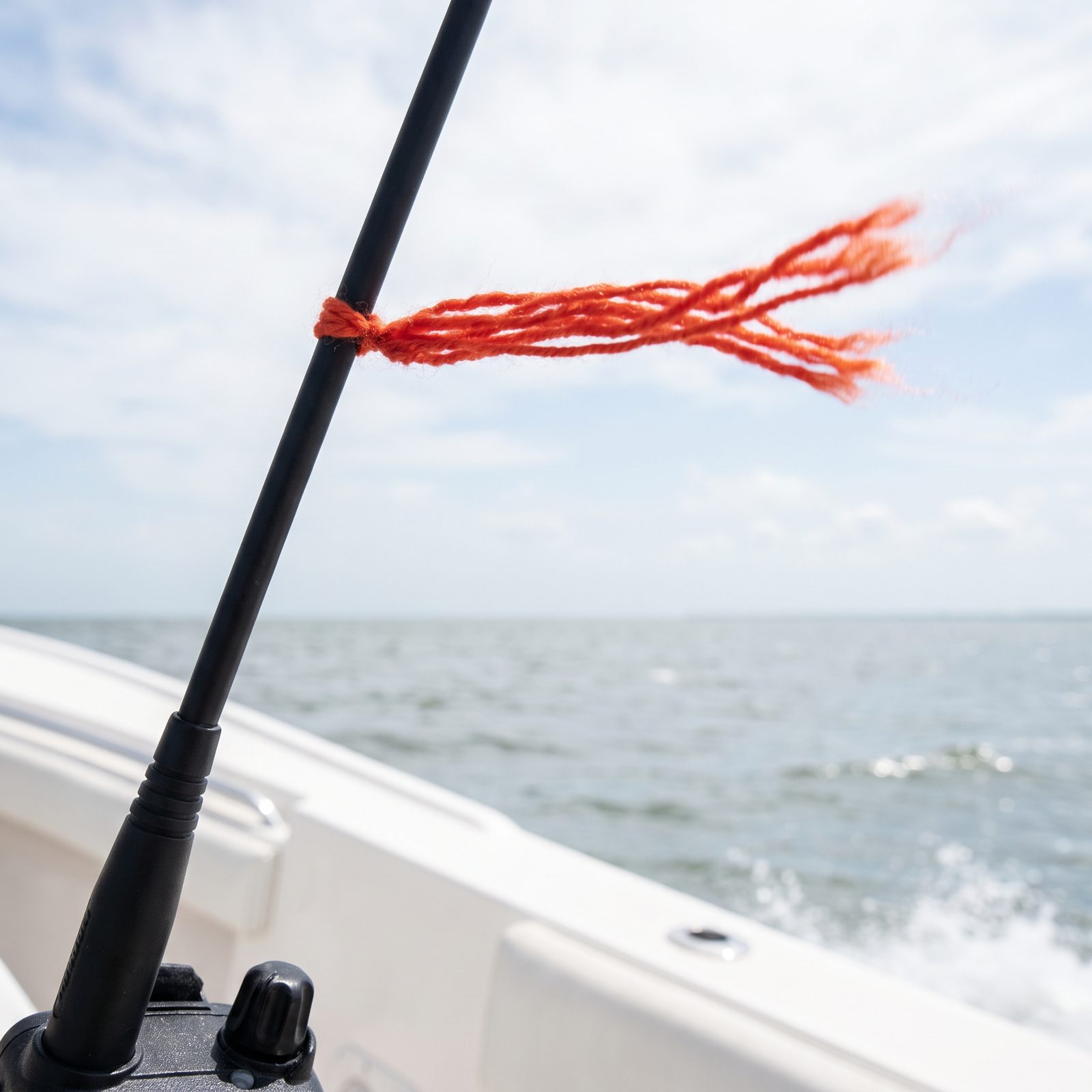
Sailors have done this forever and anglers mostly ignore it. A few inches of yarn tied high on the antenna tells you wind direction at a glance, no squinting at flags or feeling it on a wet cheek.
It matters more than it sounds. Which way to drift. How to set up a cast so the line lays out clean. When a shift means the bite is about to turn. Bright yarn reads from anywhere on the boat, and when it hangs limp you know the breeze died before your presentation suffers for it.
26. Slide Paddle Drip Rings Outward Until Water Stops Running Down the Shaft
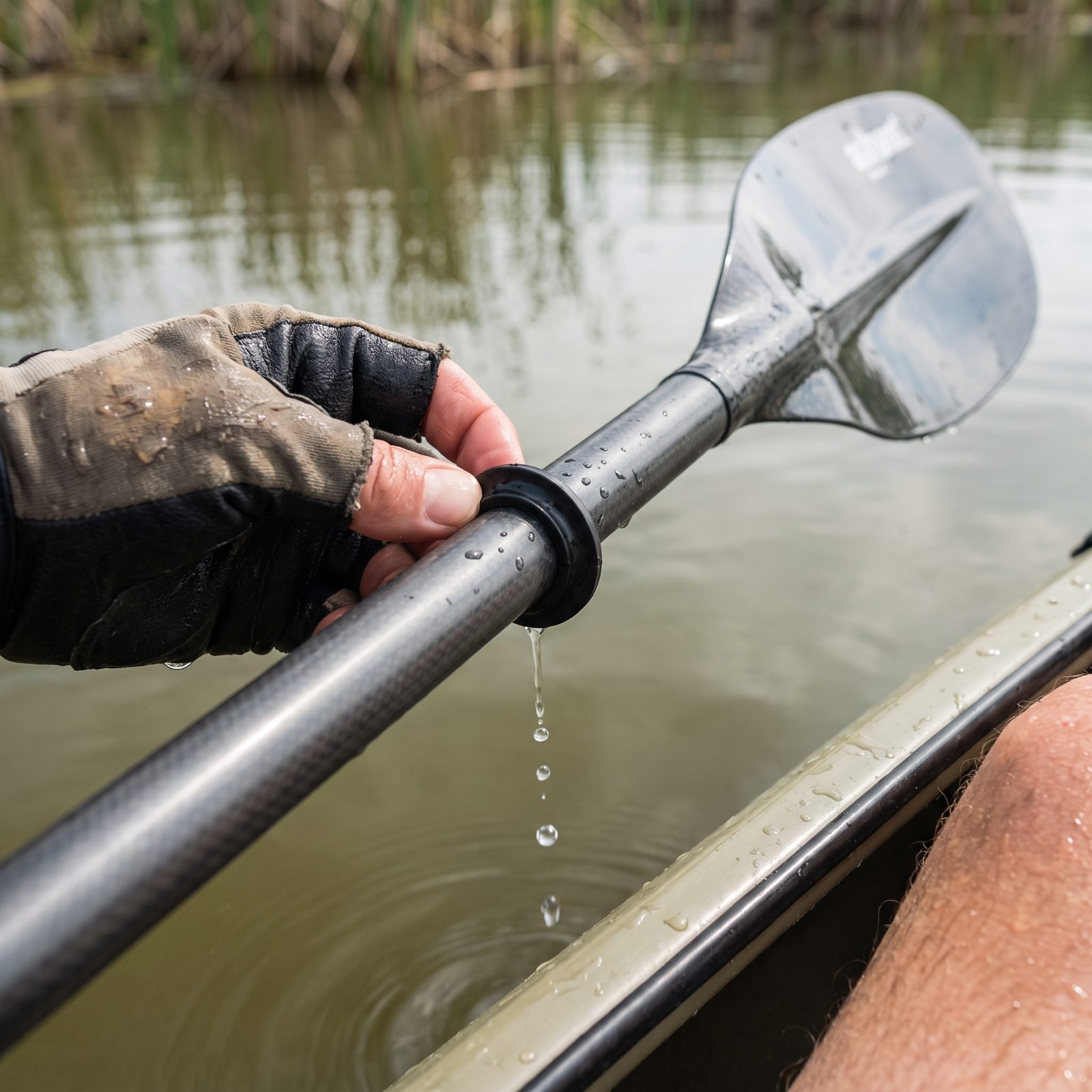
Cold water running down your sleeve on every stroke is the kind of misery you stop noticing and start resenting. Most paddlers never touch the drip rings that came on their paddle. A shame, really, because they slide.
Move each ring along the shaft until it sits just outboard of your grip, between your hand and the blade, so the water sheeting off the shaft drops clear instead of tracking into your lap. A couple inches makes the difference between dry thighs and a soaked seat by lunch. Takes ten seconds, costs nothing, and changes a long paddle day completely.
25. Stuff Soaked Clothing Straight Into a Mesh Laundry Bag That Can Breathe
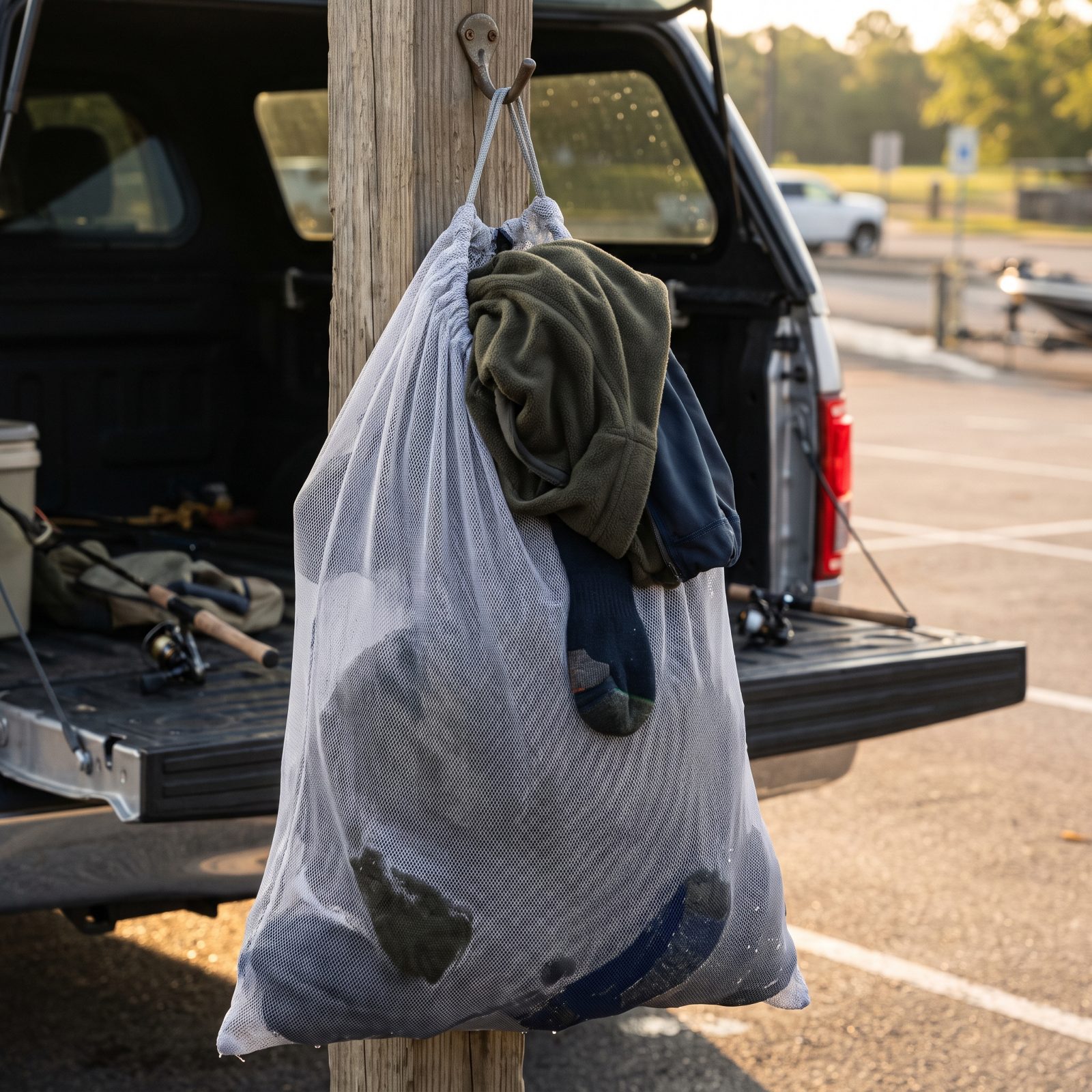
You know the ride home smell. Wet waders and a soaked base layer sealed in a plastic tote, fermenting for an hour, and the whole truck pays for it.
A mesh laundry bag changes the math. Stuff the wet clothes straight in at the ramp, hang it in the truck bed or toss it in the back, and air moves through it the whole way home. Nothing sours. When you get there, the bag goes straight into the wash, clothes and all. One cheap bit of netting and the funk never gets a foothold.
24. Clip a Trash Bag Inside a Bucket With Two Oversized Binder Clips
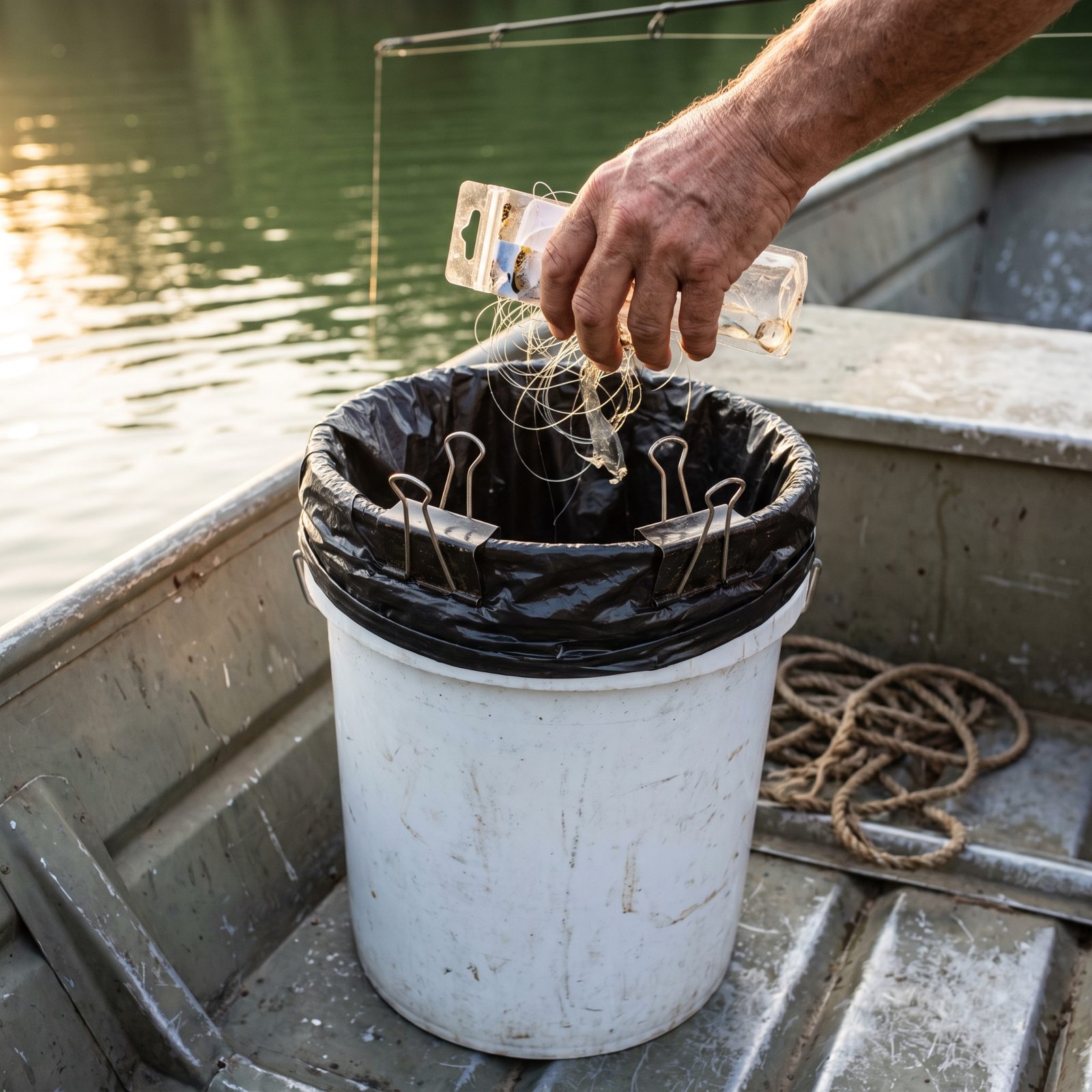
A loose trash bag in a boat is a joke the wind tells all day. It slumps, blows sideways, and tips its whole mess back onto the deck the second you reach for it. Two oversized binder clips fix that for about a dollar.
Clip the bag over the rim of a five-gallon bucket and the thing becomes a real trash can — heavy base, won’t skate across the deck. Snack wrappers, cut leader, bait bags, all of it stays put. At the ramp you pull the bag, tie it, toss it. The clips live on the bucket handle for next time.
23. Give Discarded Fishing Line Its Own Screw-Top Container
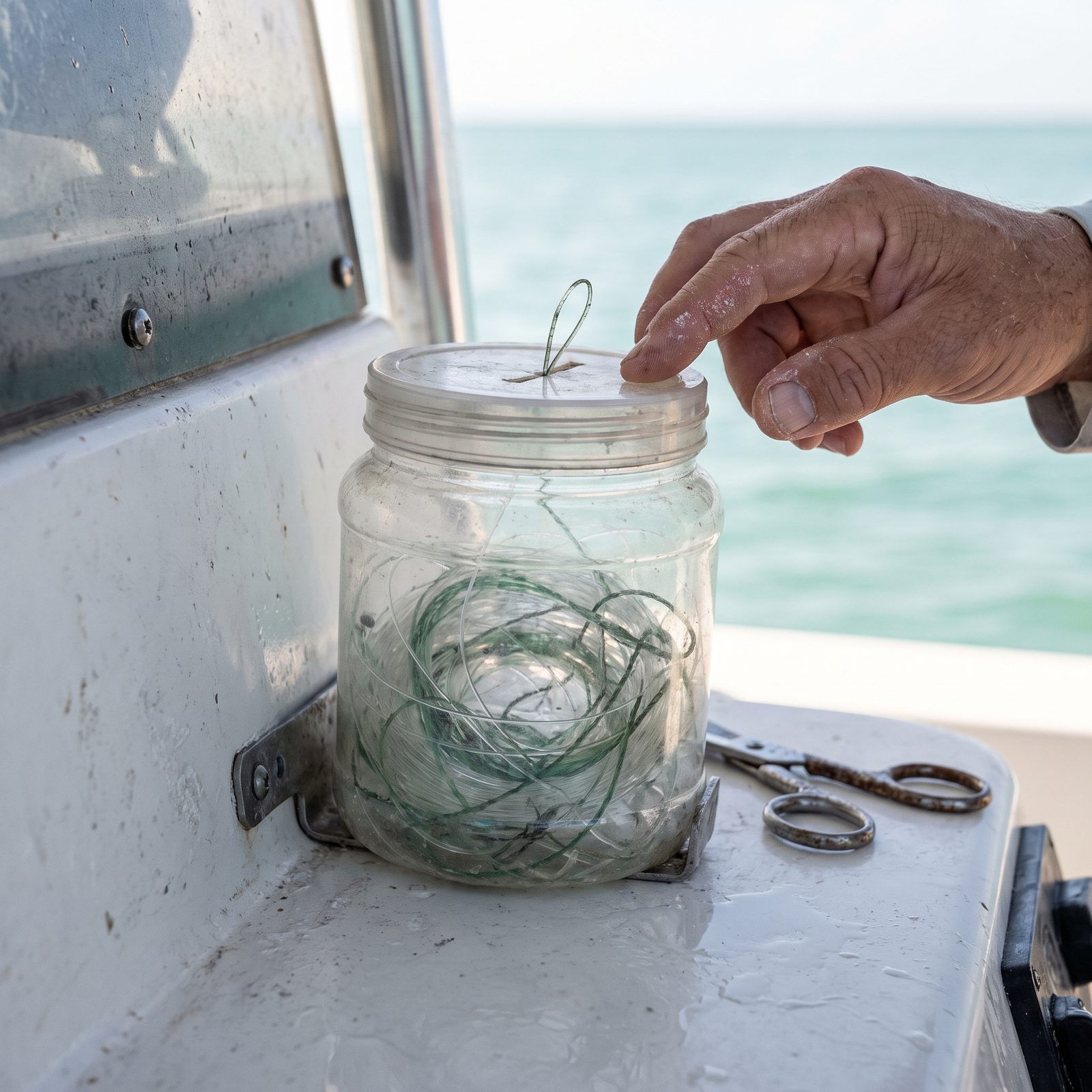
Cut line is the worst litter on the water. It wraps prop shafts, strangles birds, and loose on deck it finds your reel handle at the worst possible moment.
A screw-top container — even an old protein tub — solves the whole problem. Cut a slot in the lid and feed every scrap of trimmed leader and old line straight in. The lid keeps the wind out and the tangle in, and it empties into a monofilament recycling bin at the ramp when it’s full. Birds don’t drown in a bucket you emptied properly.
22. Add Floating Foam Sleeves to Pliers Used Near the Gunwale
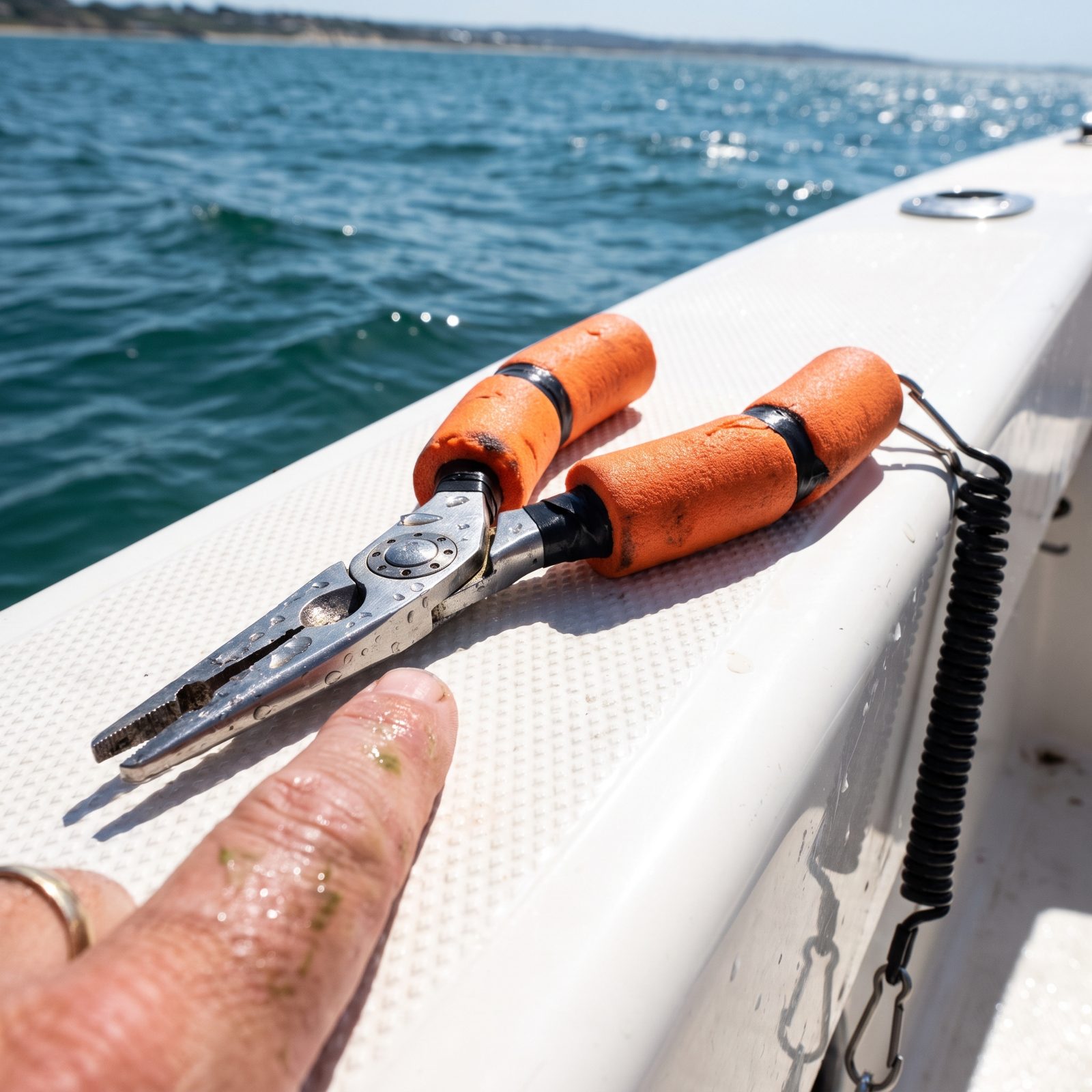
Pliers sink. That’s the entire tragedy.
You lean over the rail to unhook a fish, your wet hand slips, and a good pair of pliers goes straight to the bottom where you’ll never see them again. Slide a short length of orange closed-cell foam over the handle, or buy a slip-on float sleeve, and that same drop ends with the pliers bobbing right there, waiting to be scooped.
The bright color earns its keep twice over. It floats, and it makes a dropped tool easy to spot against dark water before a wave carries it off.
21. Cap Every Hook on a Rigged Rod Before Moving Between Spots
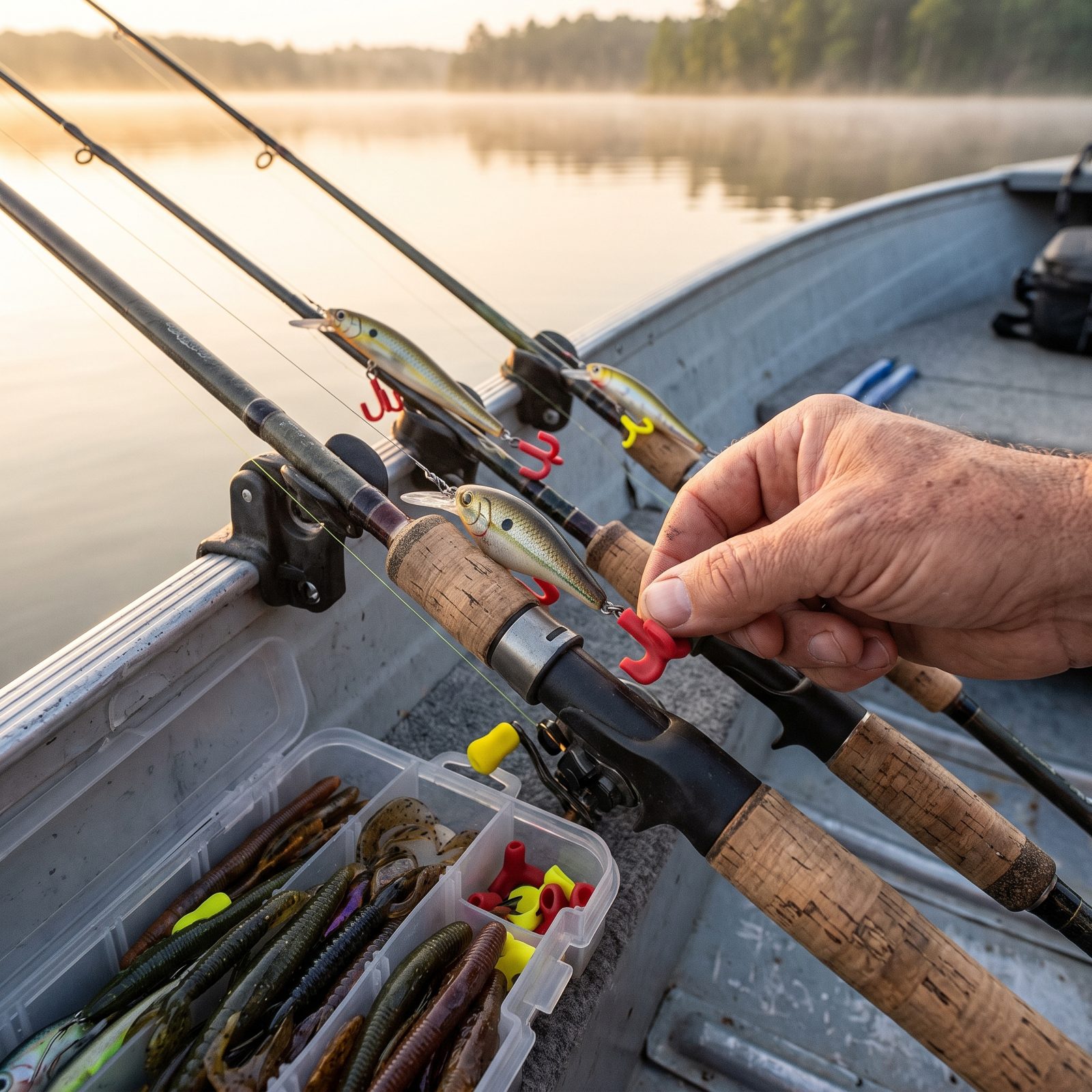
The run between spots is where rods get grabbed, stacked, and shuffled — and that’s exactly when a bare treble finds a thumb or a $90 rain jacket.
Little rubber hook bonnets slip over the points and keep everything behaving. They cost pennies, they stop the rig from snagging the next rod in the holder, and they keep a loaded hook from swinging into a leg when the boat takes a wake. Most anglers learn this after one ugly treble in the hand. Skip the lesson.
20. Clip a Retractable Microfiber Lens Cloth to the PFD
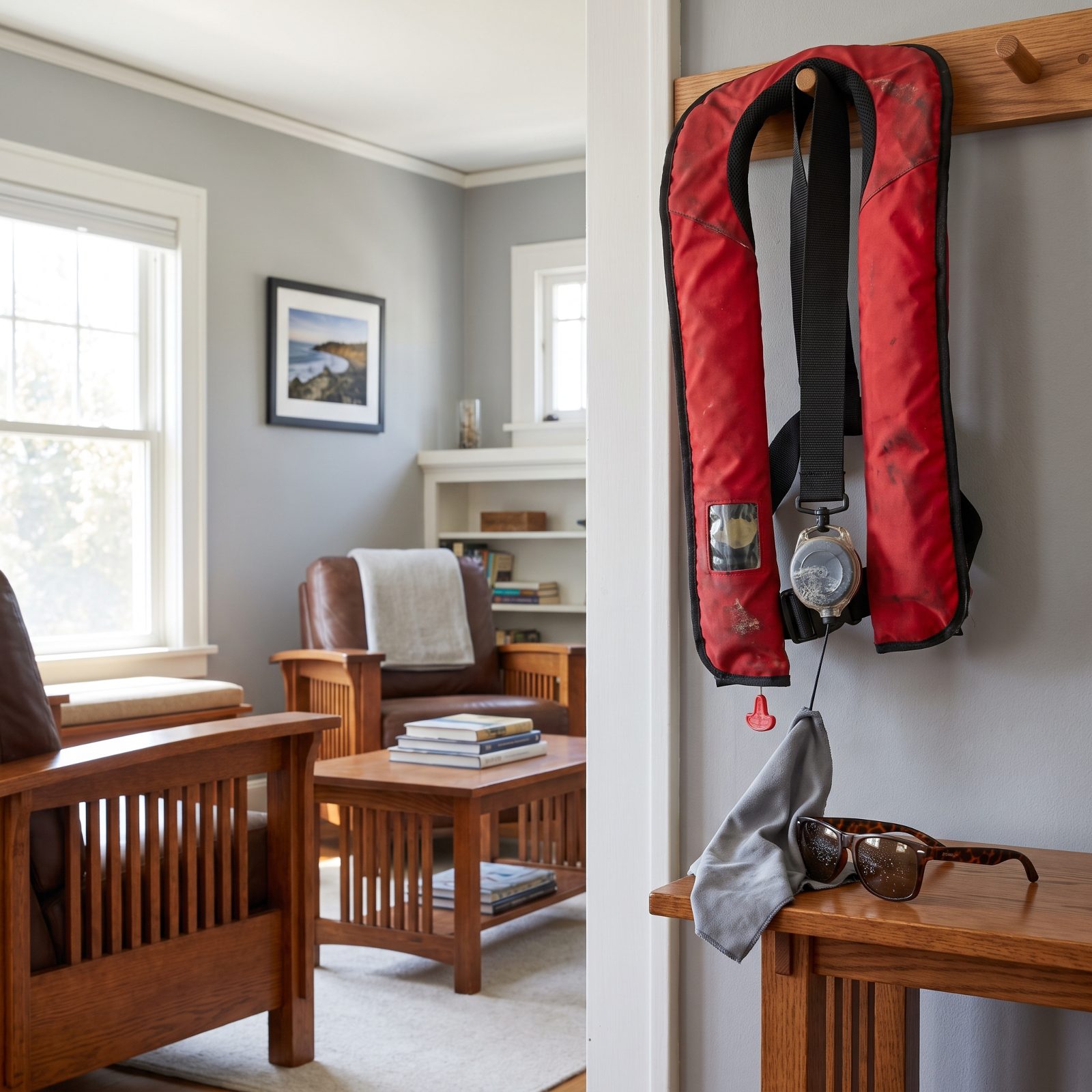
Salt spray fogs a lens in minutes, and a shirt hem just smears it worse while grinding grit into the coating. Then you’re fishing half blind and rubbing your glasses raw.
Clip a retractable microfiber cloth to your life jacket and it’s always a short pull away — never dropped, never buried in a pocket. One swipe and your polarized lenses clear so you can read the water again. The retractor reels it back out of the way so it never flaps around while you cast.
19. Tether Hemostats With a Short Coiled Cord So Unhooking Tools Stay at Hand
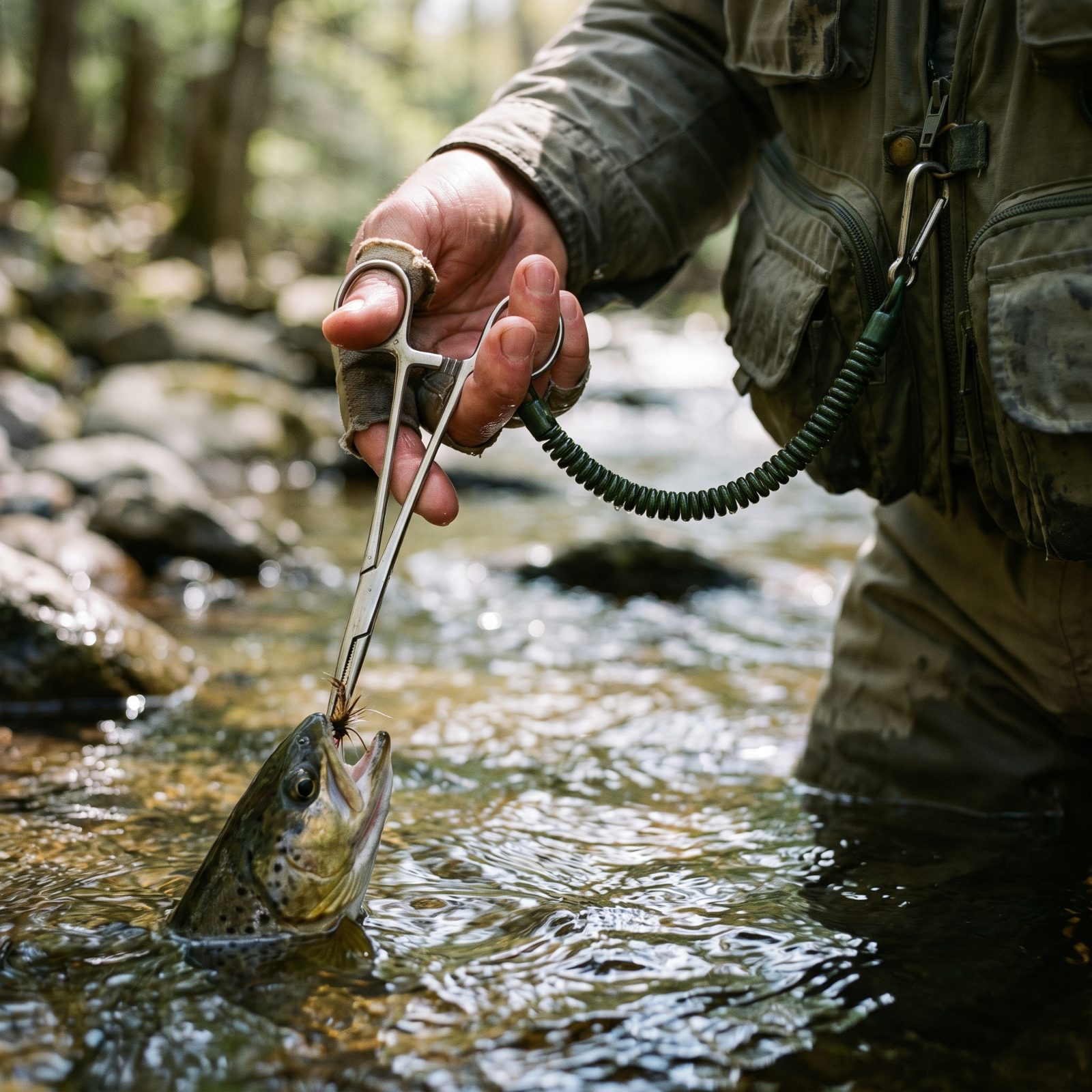
Fast unhooking keeps fish alive. Fumbling for a tool does the opposite.
Hemostats are the best thing going for backing a hook out of a bony jaw, but they’re small and slick and they vanish the moment you set them down. Clip them to a short coiled cord on your vest or PFD and they’re always right there, one grab away, snapping back out of reach when you’re done.
The coiled part matters. It gives you reach to the fish without cranking your arm into some awkward angle, then recoils so it isn’t trailing in the water.
18. Color-Code Rod Butts by Technique Instead of Reading Tiny Labels
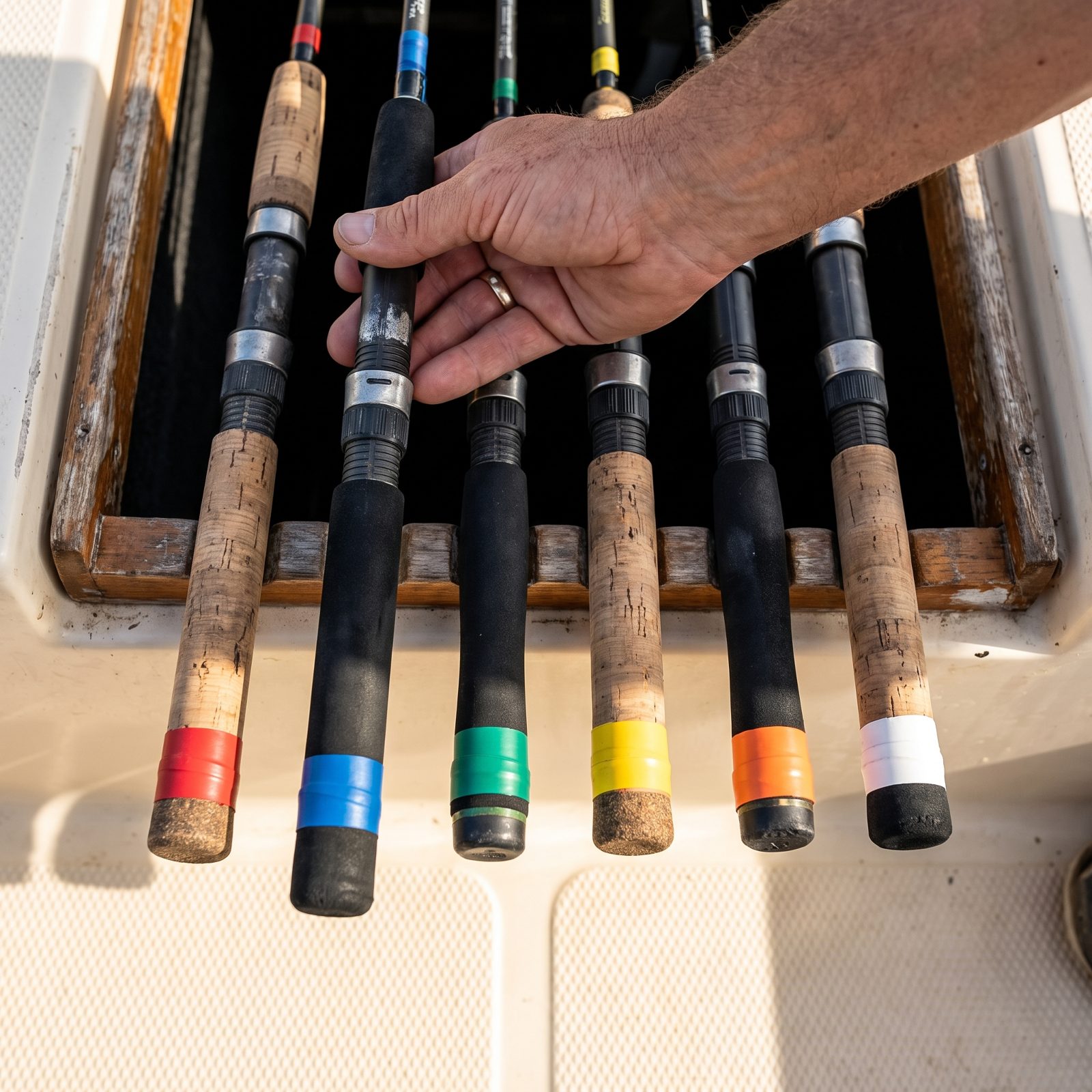
Rods stacked butt-up in a locker all look identical from the top. Squinting at tiny label tape while the bite window closes is a special kind of frustration.
Wrap each rod butt with a band of colored electrical tape by job: red for jigs, blue for cranks, green for topwater, whatever system sticks in your head. Now you grab the right stick by glance alone — even in low light, even with gloves on. One roll of tape, and no more re-rigging because you snatched the wrong setup in a hurry.
17. Use a Floating Bump Board That Cannot Vanish Overboard
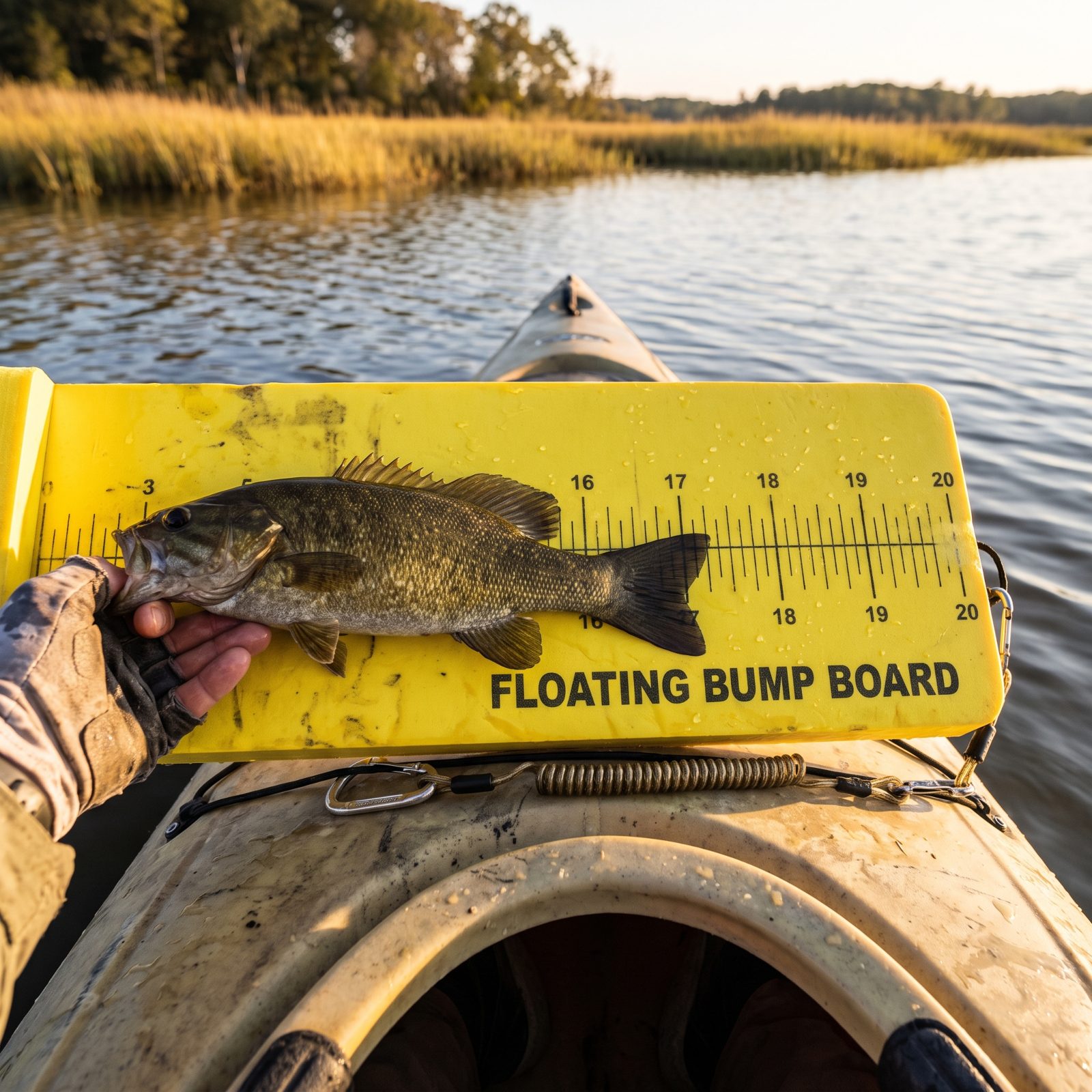
A measuring board that sinks is a board you measure one fish with before it’s gone forever. Hard plastic ones go down fast in the chaos of landing a good one.
A floating foam bump board rides the surface when it goes over, so a bumped kayak or a slippery grip costs you a reach instead of a replacement. The foam is kinder to a fish’s slime coat than slick plastic too, and the bright color makes it easy to find in a cluttered cockpit.
16. Add Removable Side Shields to Polarized Glasses to Block Stray Glare
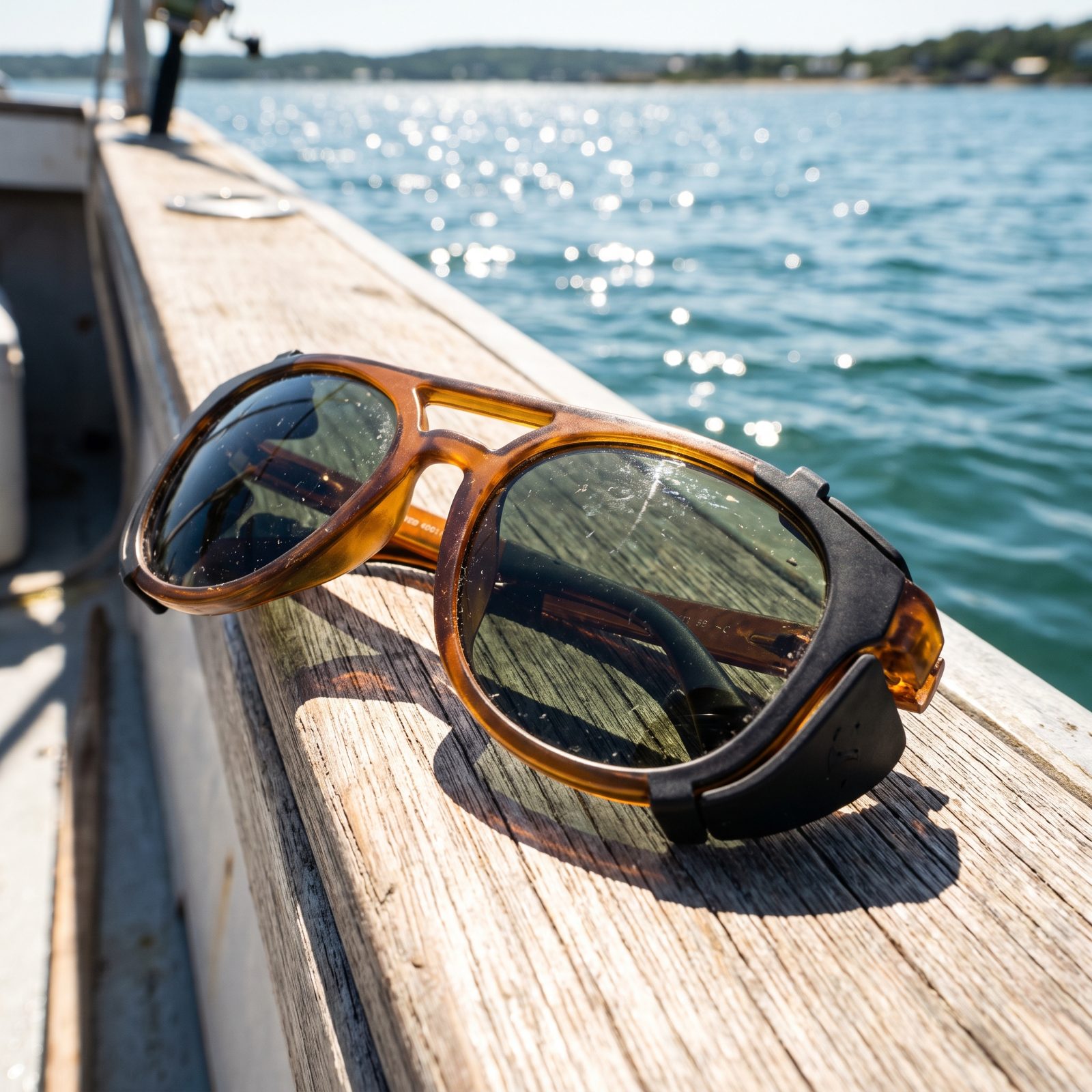
Polarized lenses kill glare coming straight at you. But light sneaks in from the sides and washes out everything you’re trying to spot under the surface.
Slim removable side shields block that stray light so your lenses do their real job — letting you see fish, structure, and color changes instead of a mirror. Pop them off when you don’t want them. On a blazing flat with the sun low and sideways, they’re the margin between seeing a tailing fish and watching glare.
15. Swap a Metal Wedding Band for a Flexible Silicone Ring
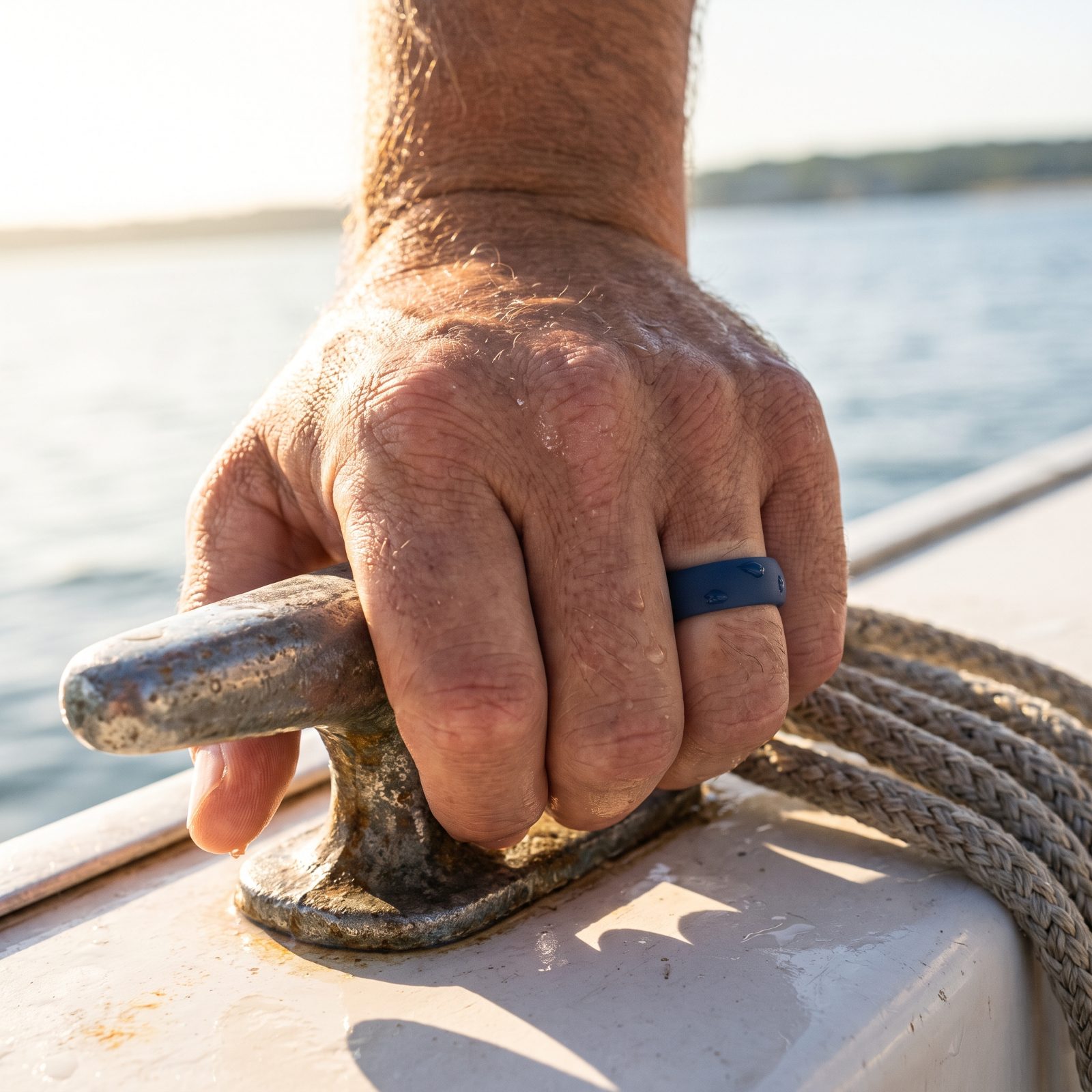
This one is a safety swap, not a fashion call.
A metal ring catching on a cleat, a rail, or a jumping fish can deglove a finger, and emergency rooms see it more than anyone wants to think about. A flexible silicone band breaks away or tears free under that same load instead of taking the finger with it.
It won’t corrode. It won’t conduct heat off an engine cowling. And you stop worrying about dropping the real one in the lake. Keep the good band at home. Wear the silicone where things go wrong.
14. Chill a Neck Gaiter in the Cooler for the Hottest Part of the Day
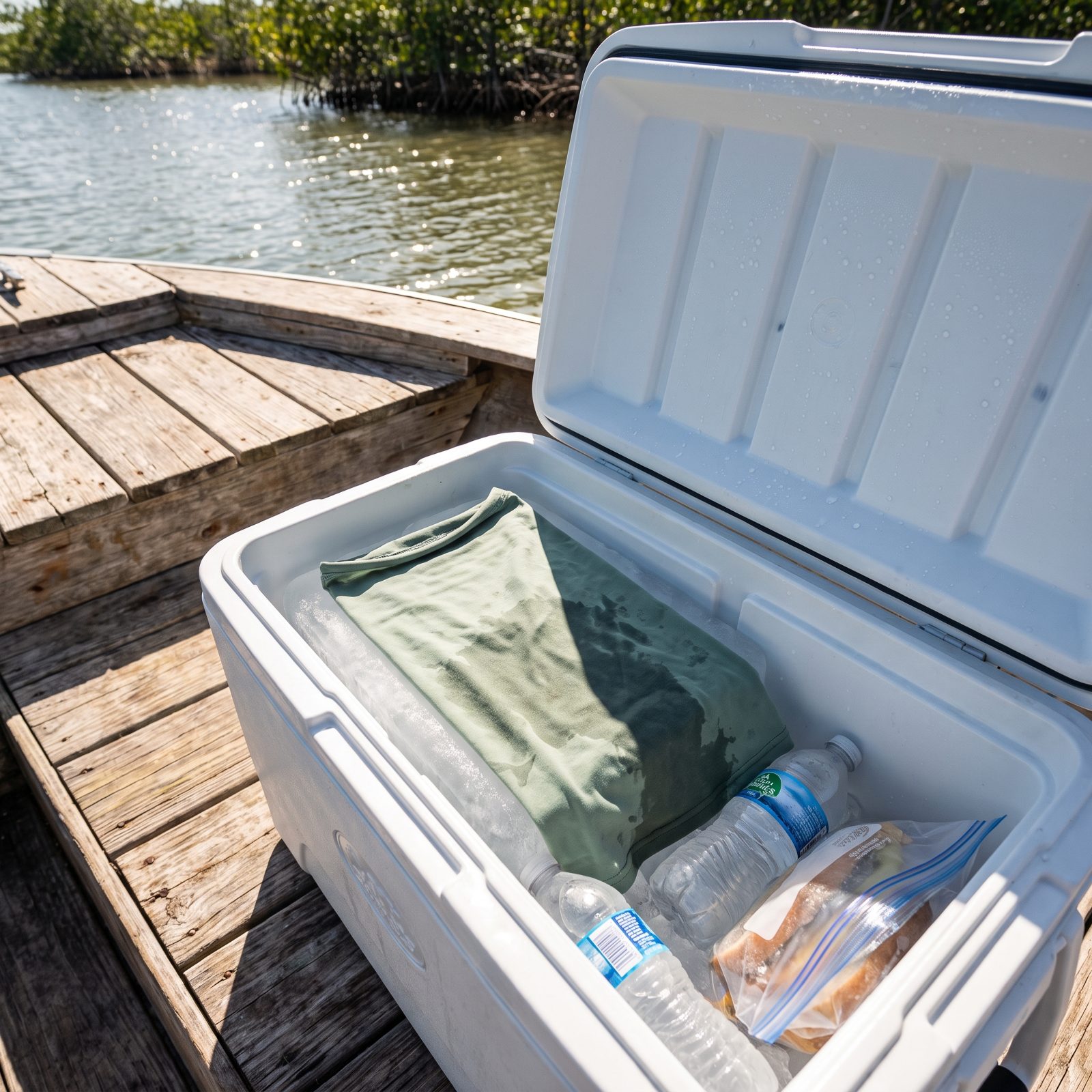
Heat ends fishing days early, not the fish. A cotton bandana soaked in warm bilge water does nothing. But a technical gaiter pulled from the cooler, folded against the ice an hour before the sun peaks? Different animal entirely.
The pulse points in your neck sit close to the surface, so cool the blood there and your whole body reads it as a break. Thirty, forty minutes of real relief. Long enough to fish through the stretch when everyone else is motoring back to the dock sweating through their shirts.
13. Keep a Large Sponge in the Kayak for Spray, Mud, and Small Spills
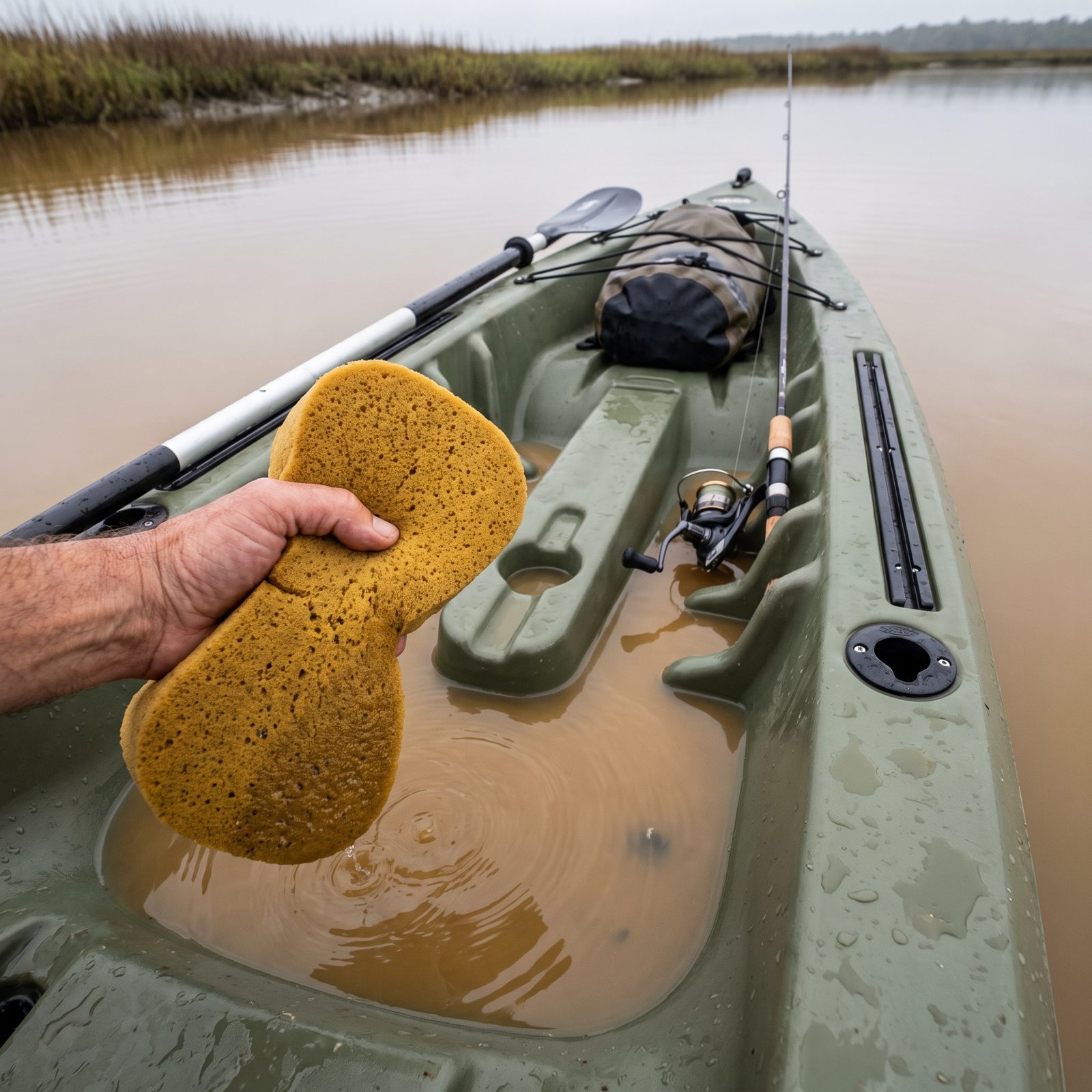
A bilge pump moves water. A sponge handles everything the pump can’t reach.
The last inch in the footwell, the mud that rides in on your boots, the coffee that sloshes over when you hit a boat wake — one big sponge mops it all and wrings dry over the side. Stows flat under a bungee. Weighs nothing.
And here’s the comfort angle people miss: a footwell that stays dry means dry socks, and dry socks mean you’ll fish two hours longer than the fellow sitting in a cold puddle wondering why his feet went numb.
12. Tie Scupper Plugs in Matched Pairs So Loose Singles Cannot Disappear
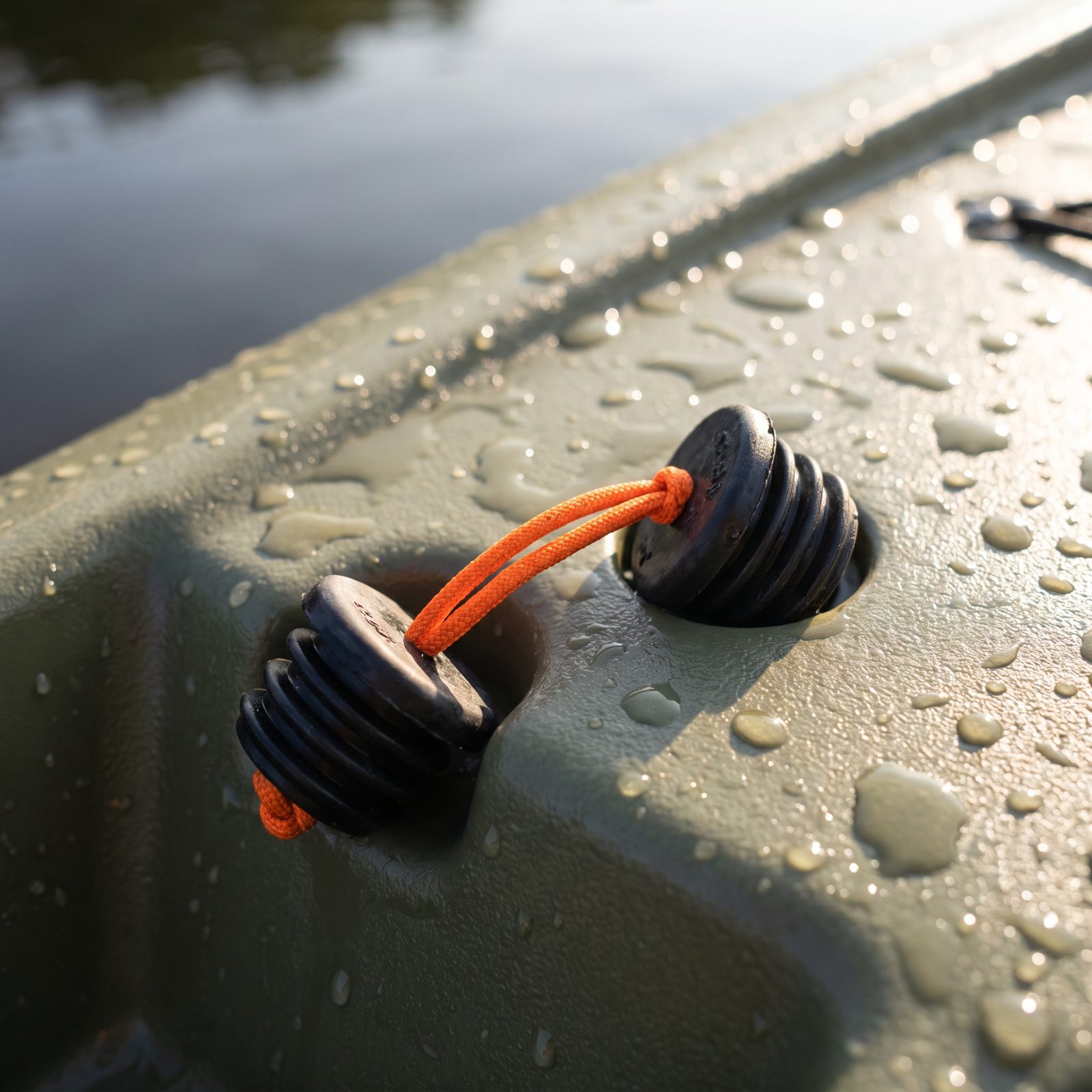
Scupper plugs are the cheapest thing on a kayak and the first to vanish. Pull one to drain the hull, set it on the seat, hit a wake, and it’s gone to the bottom. Now one scupper weeps all day.
Tie each pair together with a foot of bright paracord and they become impossible to lose as singles, because pulling one leaves its partner tethered. The orange cord means you spot them instantly in a dark hatch too.
Small thing. But a self-draining kayak only self-drains when every plug is where it belongs.
11. Switch to a One-Handed Squeeze Bottle That Can Be Used While Seated
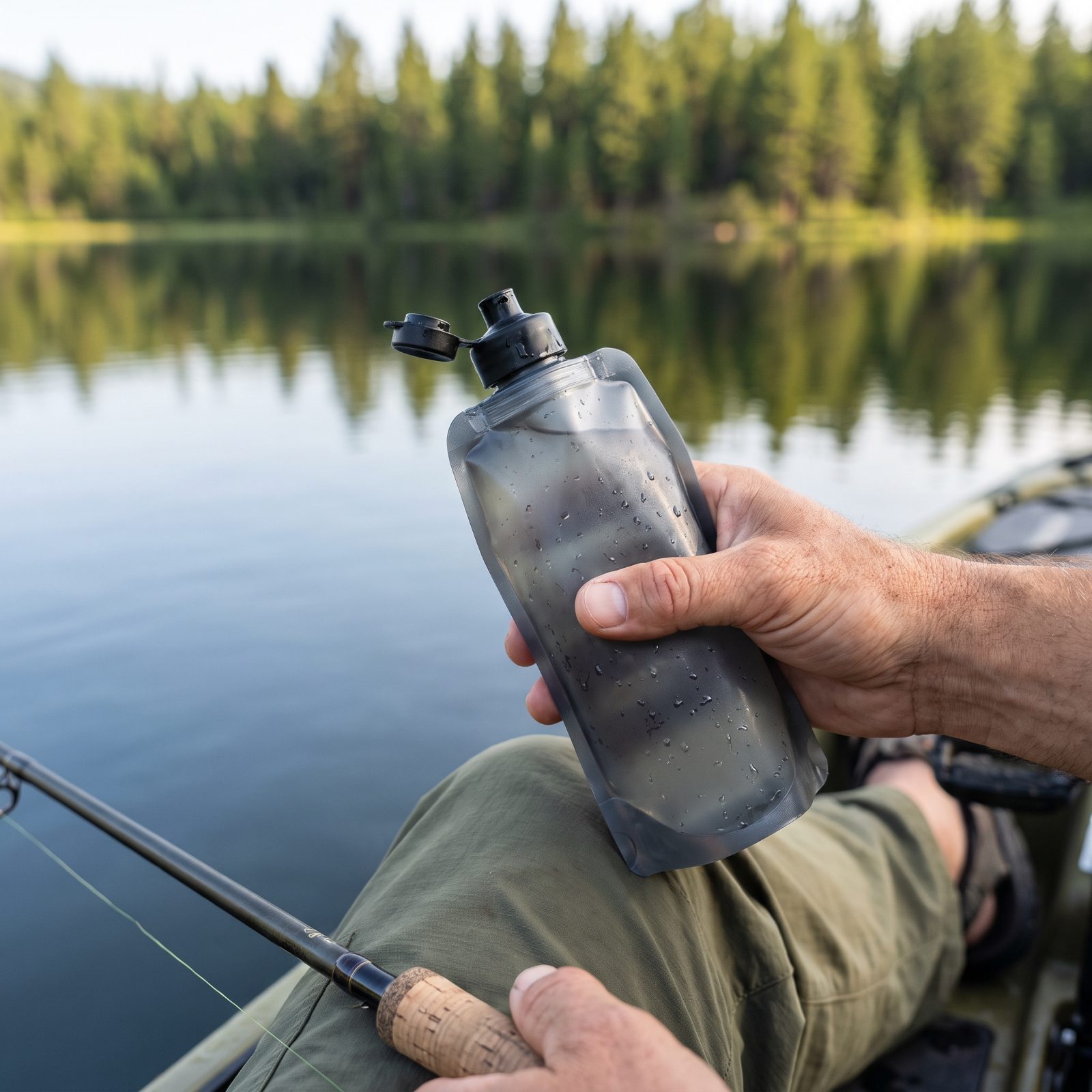
You’ve fumbled a screw-top bottle while a fish was on. Cap in one hand, rod in the other, nowhere to put either, and the bottle rolls under the seat.
A soft squeeze bottle with a bite valve solves it in one motion. No cap, no two-handed wrestling — you drink mid-drift, mid-fight, without standing up or setting the rod down.
Most dehydration on the water has nothing to do with running out of water. It’s that drinking was annoying, so people didn’t bother. Make it a one-second move and you’ll actually do it.
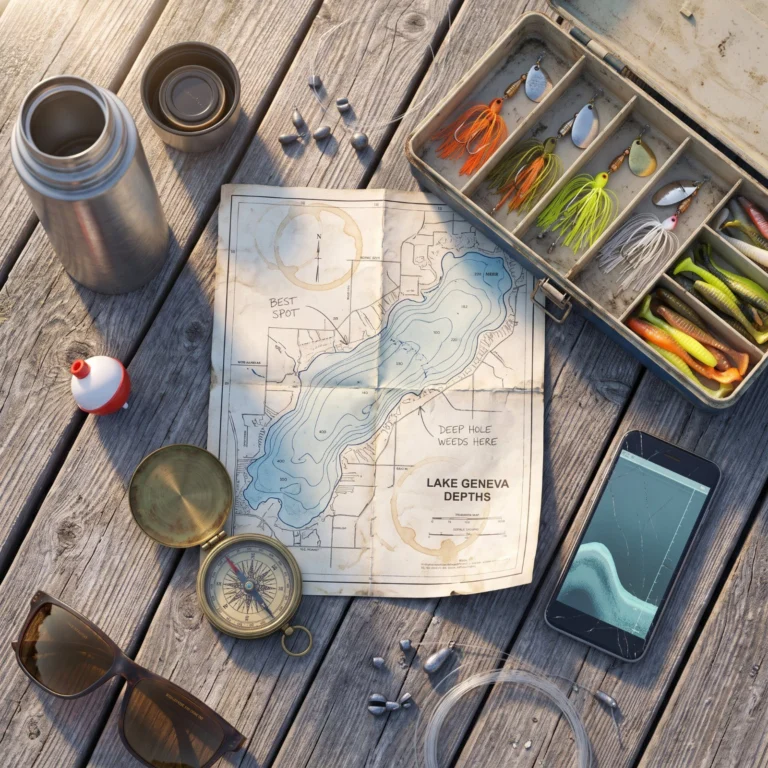
10. Carry a Folded Waterproof Paper Chart as a No-Power Backup
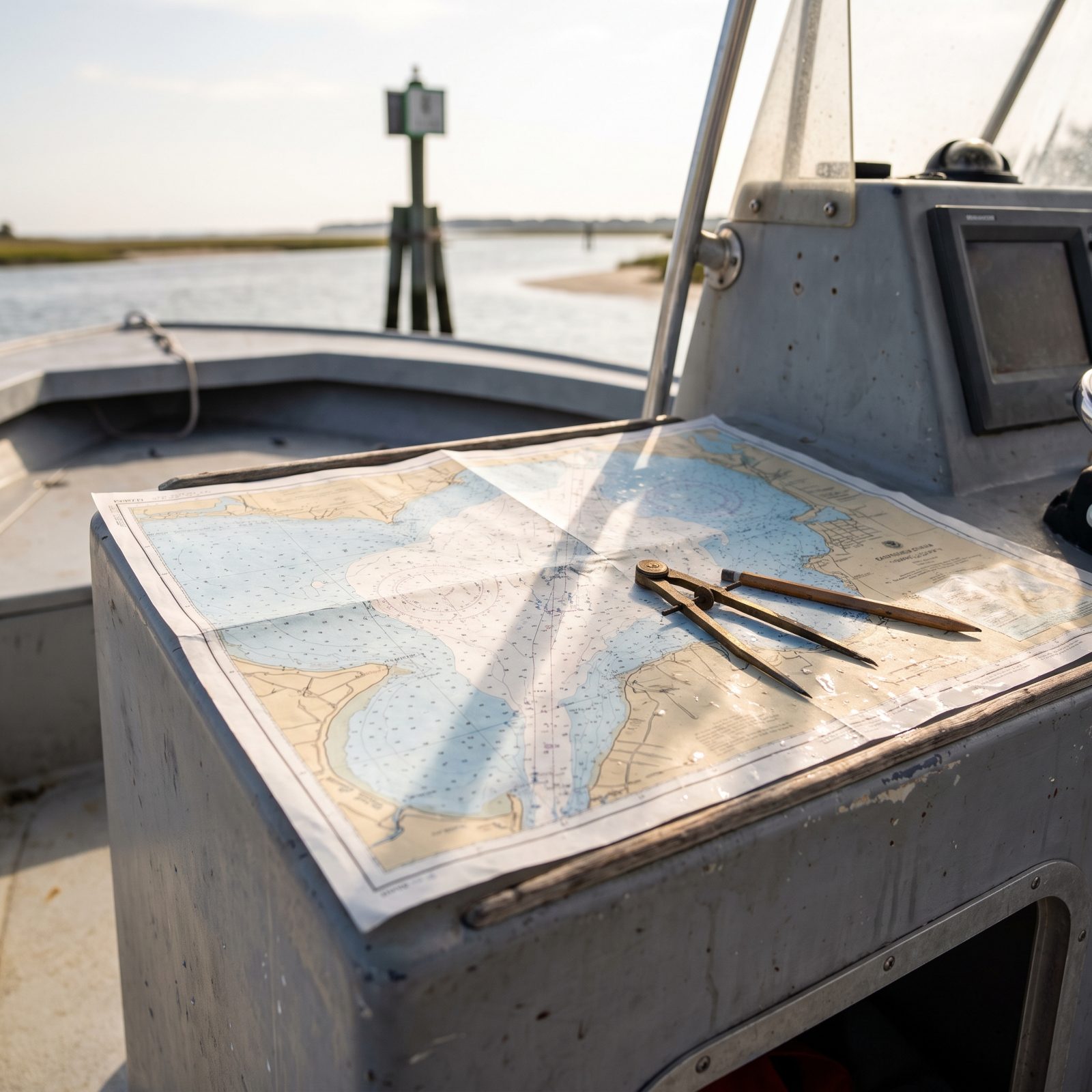
Chartplotters fail. Batteries die, screens fog, a wave takes the whole unit sideways — and they always pick the moment you’re threading an unfamiliar channel at low tide.
A folded waterproof chart of your home water lives in a console pocket and asks for nothing. No power, no signal, no boot-up. It shows depth contours and the channel at a glance, and it survives being dropped in the bilge.
Knowing roughly where you are on paper is the difference between a calm afternoon and an expensive one with a tow-service bill.
9. Stage the Boat Completely Away From the Ramp Before Backing Down
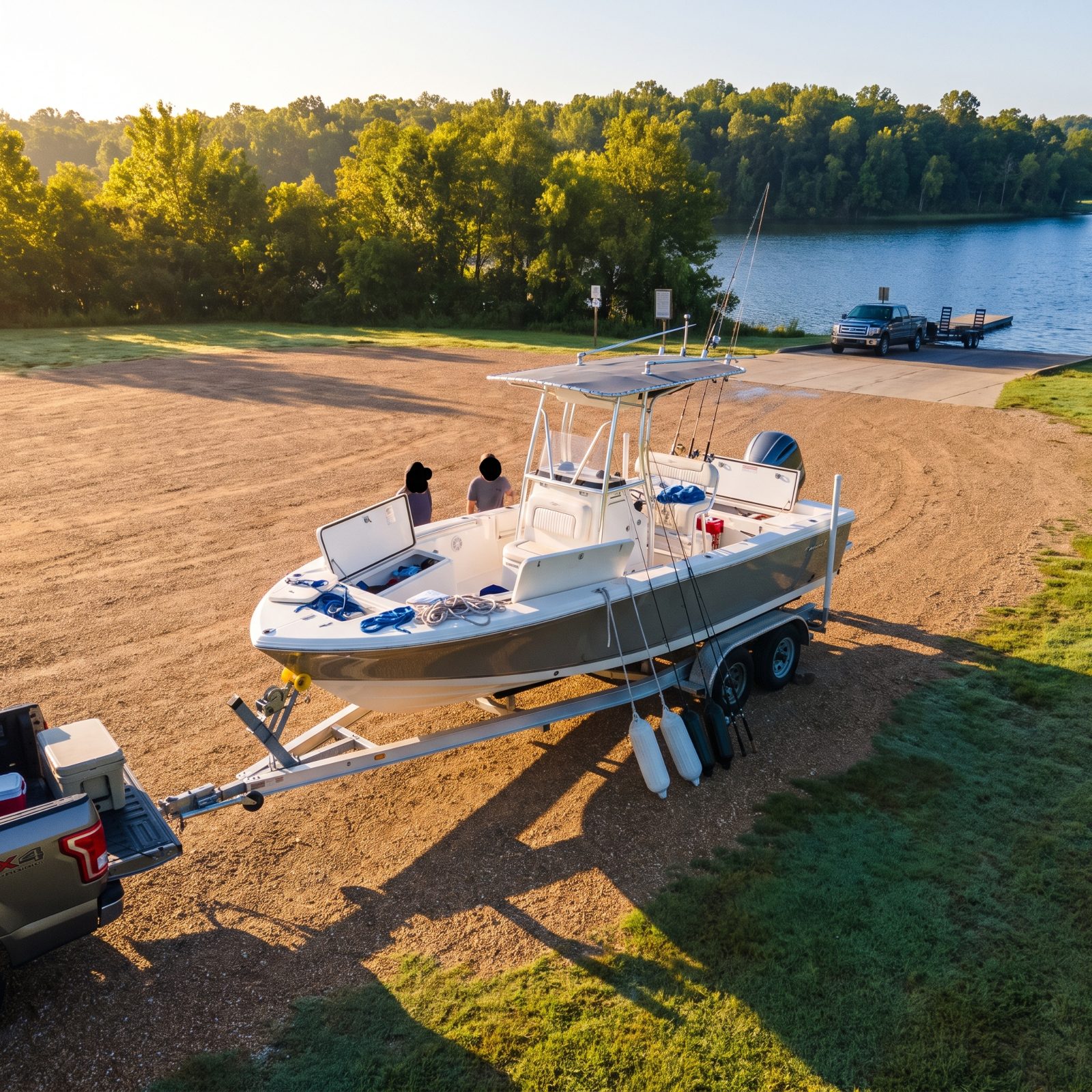
Everyone has watched the ramp meltdown. Guy backs down with the straps still on, the plug out, the lines not rigged, then stands there untangling a tarp while four trucks wait and tempers climb.
Pull into the staging lot first. Straps off, plug in, lines and fenders ready, rods loaded, cooler aboard. Only then do you back down, and your time on the ramp drops to under a minute.
Part courtesy, part safety. A relaxed launch is a slow, deliberate one — a rushed launch under pressure is how plugs get left out and lower units meet concrete.
8. Back a Trailer With One Hand at the Bottom of the Steering Wheel
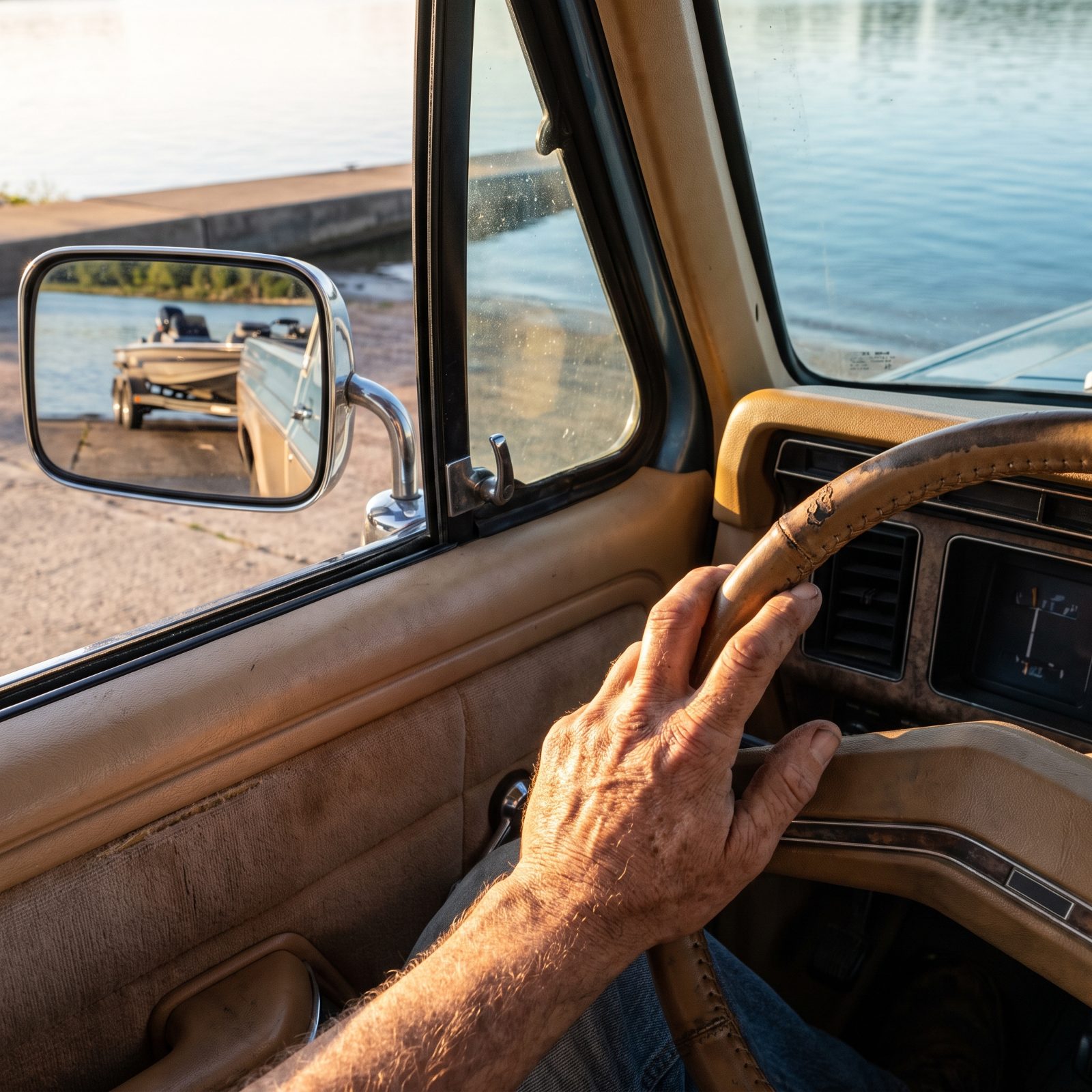
Backing a trailer breaks people’s brains because the wheel works backward. Turn left, the trailer goes right, and now you’re overcorrecting into a jackknife while someone films it.
Drop your hand to the bottom of the wheel, the six o’clock spot, and move it the way you want the trailer to go. Want the trailer to swing right? Slide your hand right. The reversed logic just disappears.
Feels almost too simple. It also works the first time you try it, which is more than most ramp advice can claim.
7. Put the Rig’s Total Travel Height on a Dashboard Label
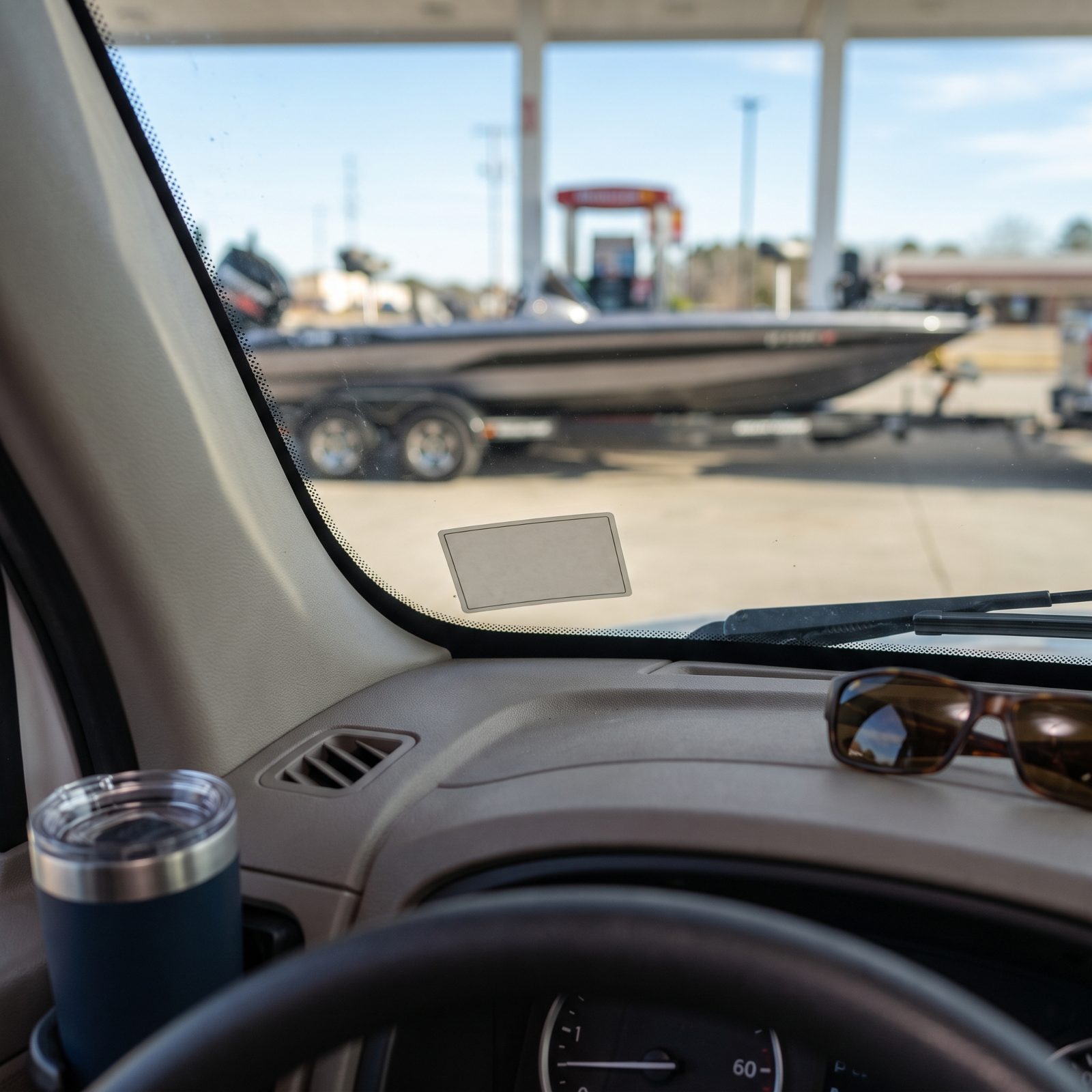
Trying to recall your rig’s height while rolling toward a low bridge or a fuel-station canopy is a bad time to be guessing. Measure once, from the ground to the tallest point with the boat loaded — antennas, T-top, a rod standing in a vertical holder, whatever rides highest.
Write it on a small label stuck to the dash where you’ll see it. Now every clearance sign gives you an instant yes or no. No math, no squinting, no hoping.
Canopy strikes and bridge contact are rare, expensive, and entirely avoidable. This kills the one variable that causes them.
6. Check Trailer-Hub Temperature by Hand at Every Fuel Stop
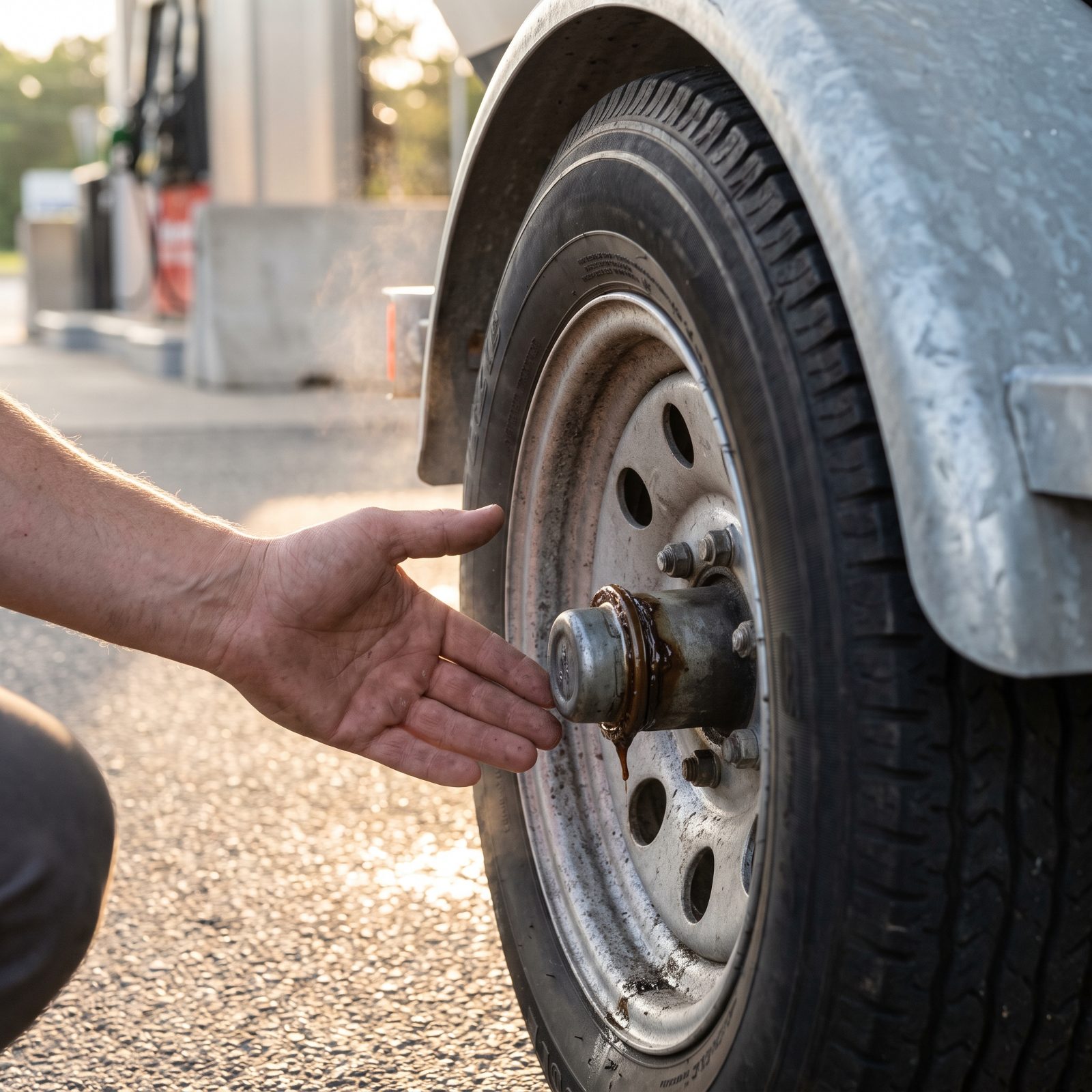
A trailer bearing doesn’t fail silently. It warns you, and the warning is heat. A warm hub is normal. A hub too hot to rest your palm on is a bearing about to seize — and a seized bearing can throw a wheel at highway speed.
Every fuel stop, walk around and hold your hand near each hub. Ten seconds. If one runs noticeably hotter than the others, you’ve caught the problem in a parking lot instead of on the shoulder.
5. Tape a Complete Spare Propeller Hardware Set Together Under a Hatch
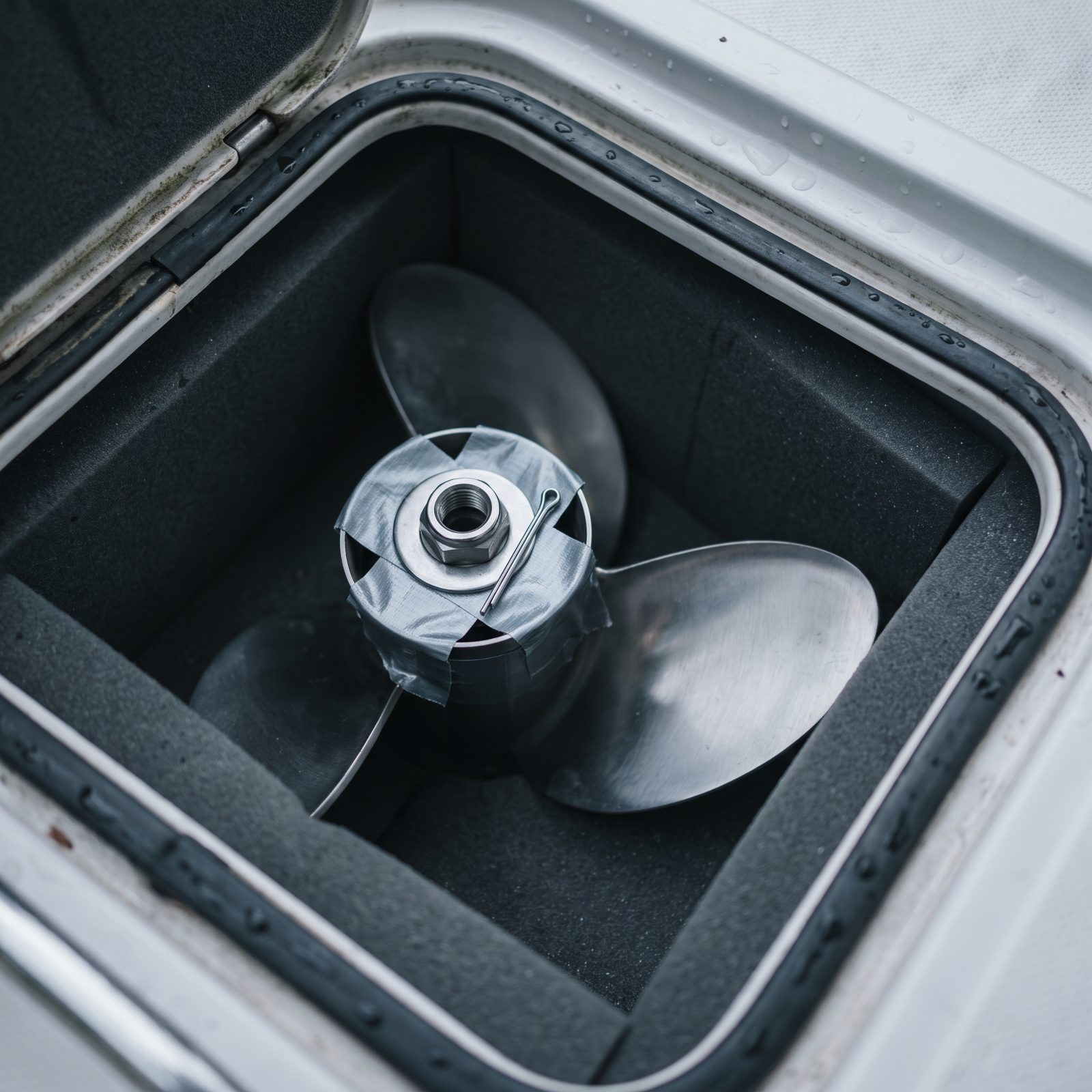
Carrying a spare prop is smart. Carrying a spare prop and then losing the nut over the side while swapping it in two feet of chop is the special kind of frustration nobody warns you about.
So tape the full hardware set into one bundle — prop nut, washer, thrust washer, cotter pin, all in a single taped package stored right next to the spare prop. When you need it, everything’s there in one grab, and nothing rolls into the bilge or over the gunwale.
A dinged prop only cuts your day short if you can’t change it on the water. With the complete set bundled and ready, you’re back fishing in minutes instead of limping home on a bent blade.
4. Dab Dielectric Grease on Trailer-Plug Contacts to Kill Corrosion Before It Starts
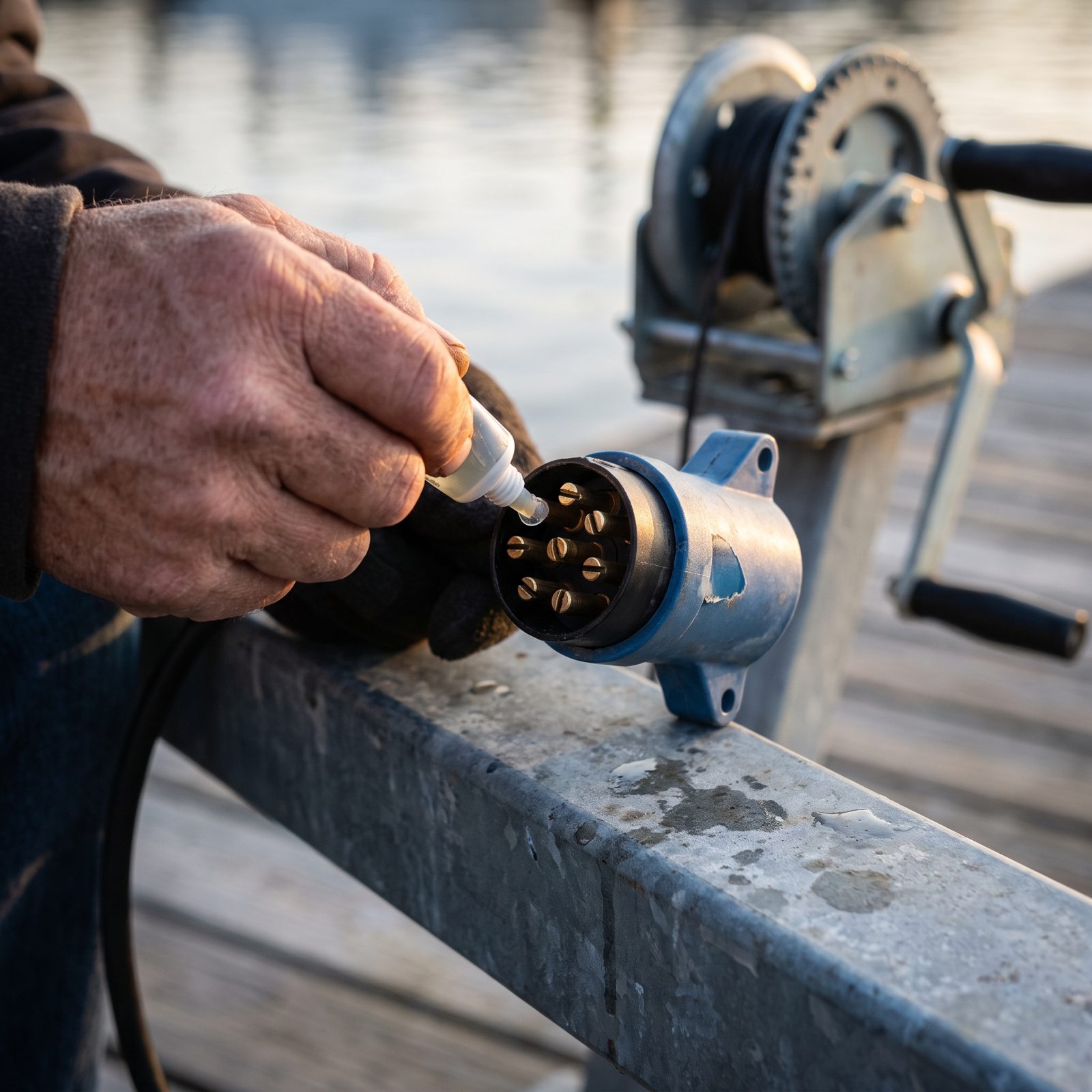
The failure nobody plans for happens at the ramp, in the dark, with a line of trucks idling behind you and no trailer lights. Usual culprit? Green crud on the plug contacts, sped along by salt air or a damp launch.
Smear a dab of dielectric grease on the metal pins and you keep water and air off the copper and brass. Electricity still flows. Corrosion doesn’t. A small tube runs a few bucks and lasts years.
3. Loop the Headlamp Around Your Neck at Dusk Instead of Digging for It Later
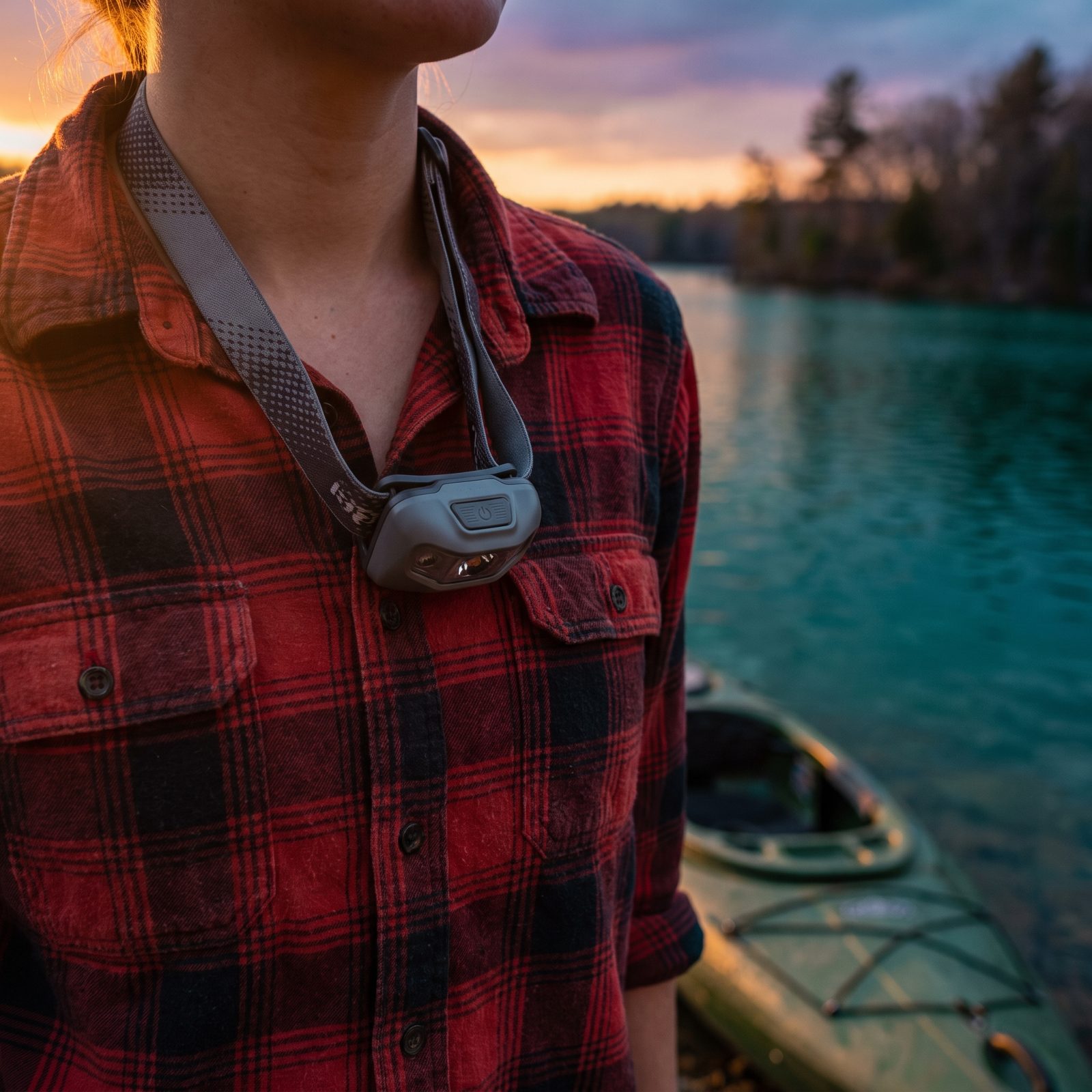
Darkness on the water doesn’t arrive. It drops. One cast you can see your knot, the next you’re squinting at a shadow — and your headlamp is buried under three layers in a dry bag.
So loop it around your neck while there’s still light to work by. It rides there unnoticed, out of the way, and the second you need it your hand already knows where to go. No fumbling. No setting the rod down to go hunting.
2. Switch to a Red Task Light When Retying After Dark to Save Your Night Vision
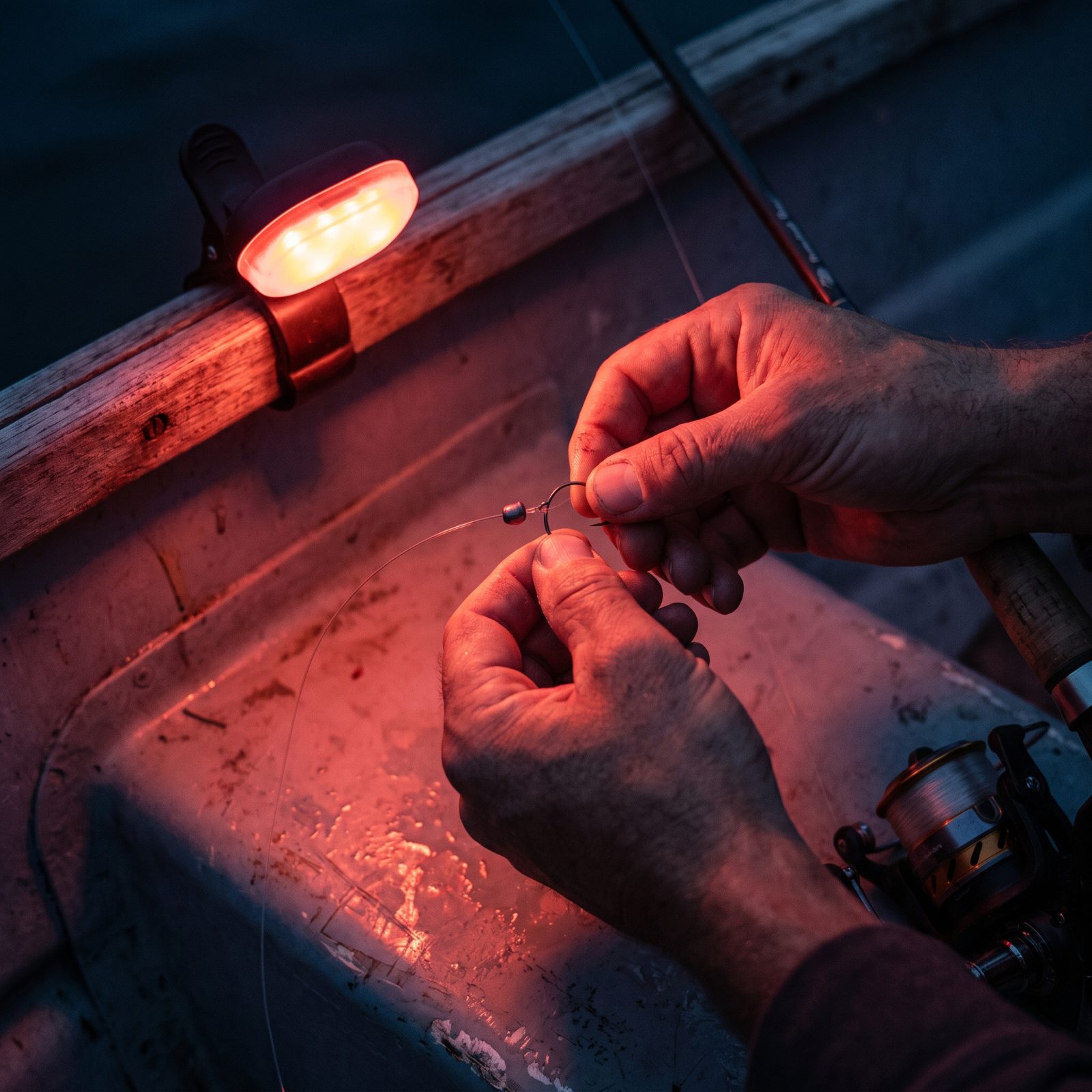
White light wrecks your eyes. Flick on a bright headlamp to tie a clinch knot and you’ll be good as blind to the dark for a solid stretch afterward. Red light spares you that. Your pupils stay wide, your night vision holds, and you can still see line and knot well enough to get the job done.
A small clip-on red light — or a headlamp with a red mode — earns its keep on night bass trips and dawn walleye runs alike. Your eyes stay adjusted, and the water around you stays readable.
1. Clip Open Bait Bags Shut With Wooden Clothespins to Keep the Deck Clean
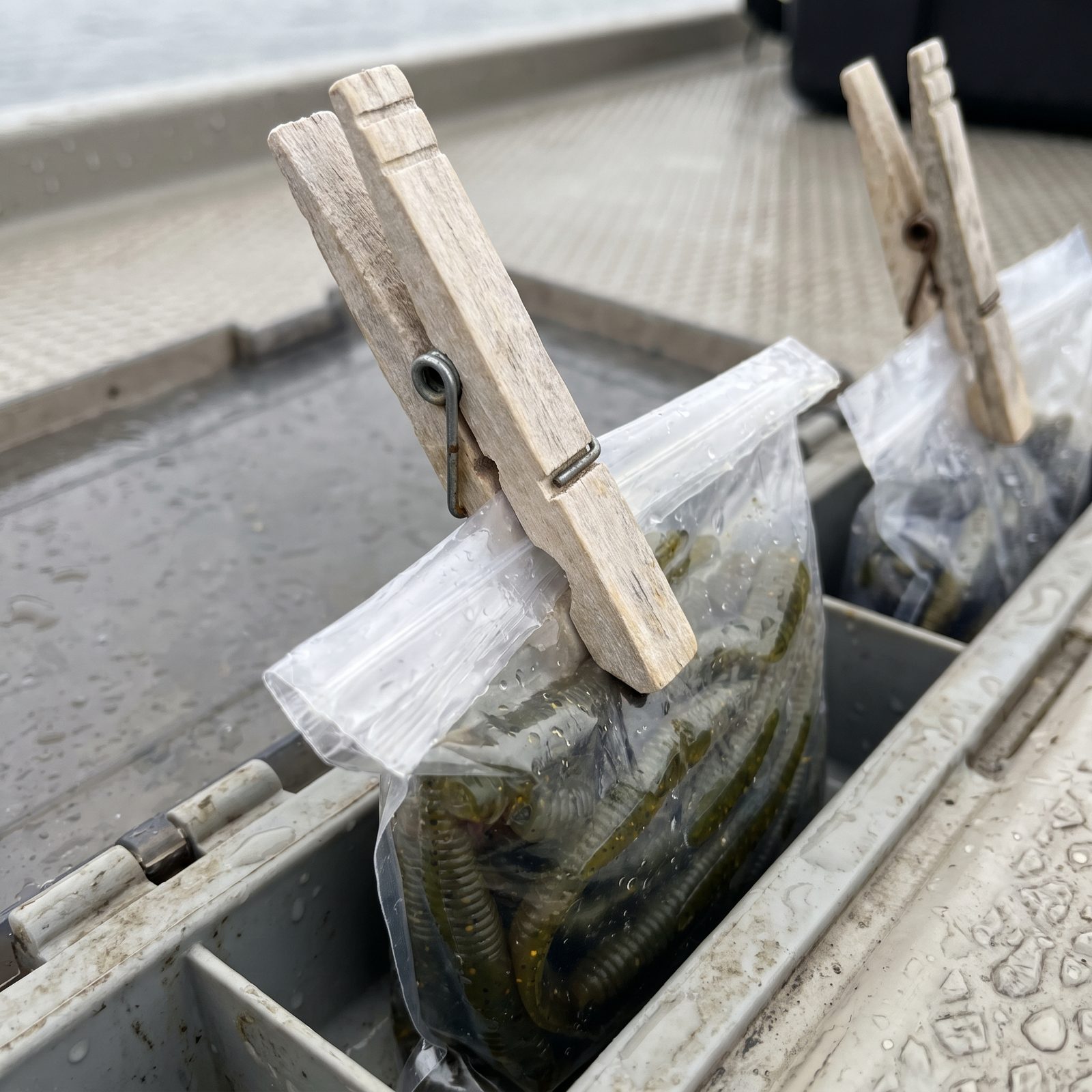
Anyone who’s left a bag of soft plastics open in a rolling boat knows the mess that follows. One wake, one lean into a turn, and your worms are scattered across the deck gathering grit and getting stepped on.
A handful of wooden clothespins fixes it. Clip each open bag shut between casts and the oils stay in, the scent stays in, and nothing spills when the hull rocks.
They cost almost nothing. They float if one goes overboard, and they’ll clip to a gunwale, a cooler lid, or a rag line when you’re not using them. Cheap, and they do the one thing you need.