
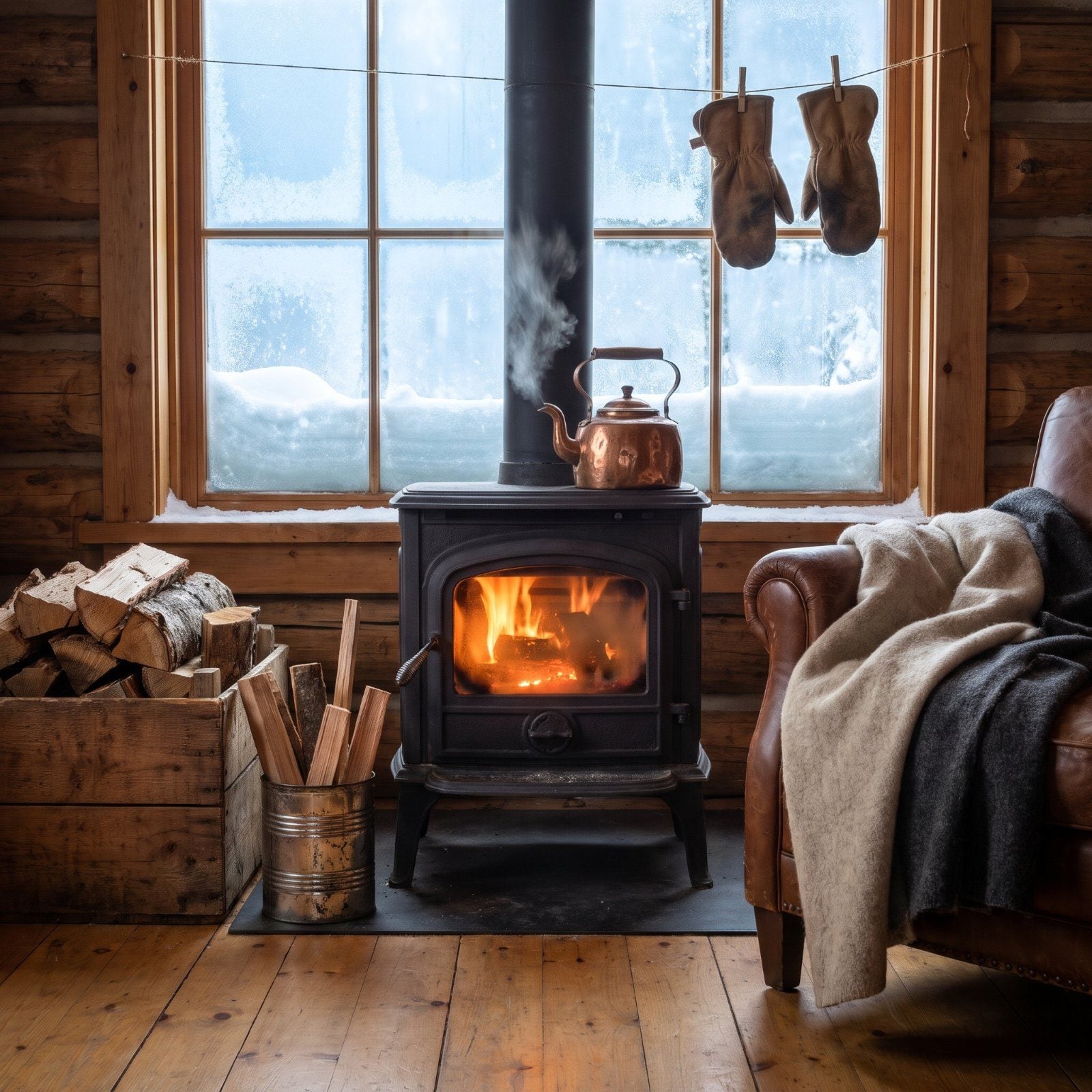
The woodstove ticks. Snow builds against the north window until the glass goes soft and gray, and you’re not going anywhere. That’s the point.
Please note that some of the images in this article were created with the assistance of AI.
A snowed-in weekend sounds romantic until the wet boots start stinking up the entry and the kindling runs out at 6 a.m. What separates a cozy cabin from a damp, cluttered one is a handful of small habits nobody teaches. You pick them up from people who’ve ridden out a few storms without power — the quiet rituals that keep a place dry, warm and pleasant while the plow is still two days out.
37. Build a Snow Shelf for Chilled Drinks
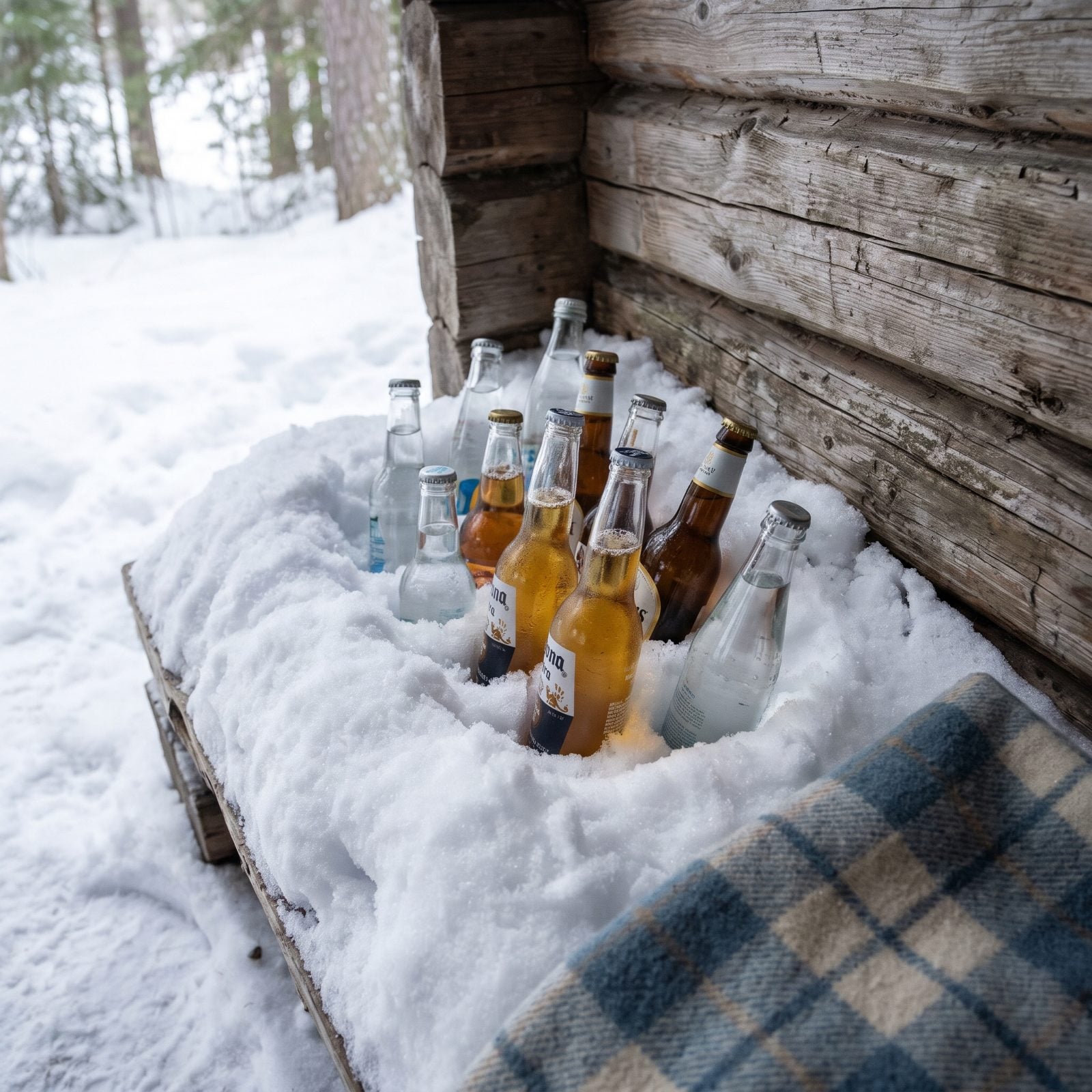
Your fridge is already outside. It’s called January.
Pack a flat ledge into the snow on the shaded north side of the cabin, firm it down with a gloved hand, and line up the beers, the cider, whatever needs to stay cold. A snow shelf holds drinks at a steady thirty-something degrees without sucking power from a generator or crowding a cooler.
Keep it out of direct sun or you’ll find your bottles slumped in slush by mid-afternoon. And mark the spot with a stick — fresh snowfall buries a six-pack faster than you’d believe, and digging blind for a lager at dusk gets old.
36. Leave a Whisk Broom Hanging Outside the Door
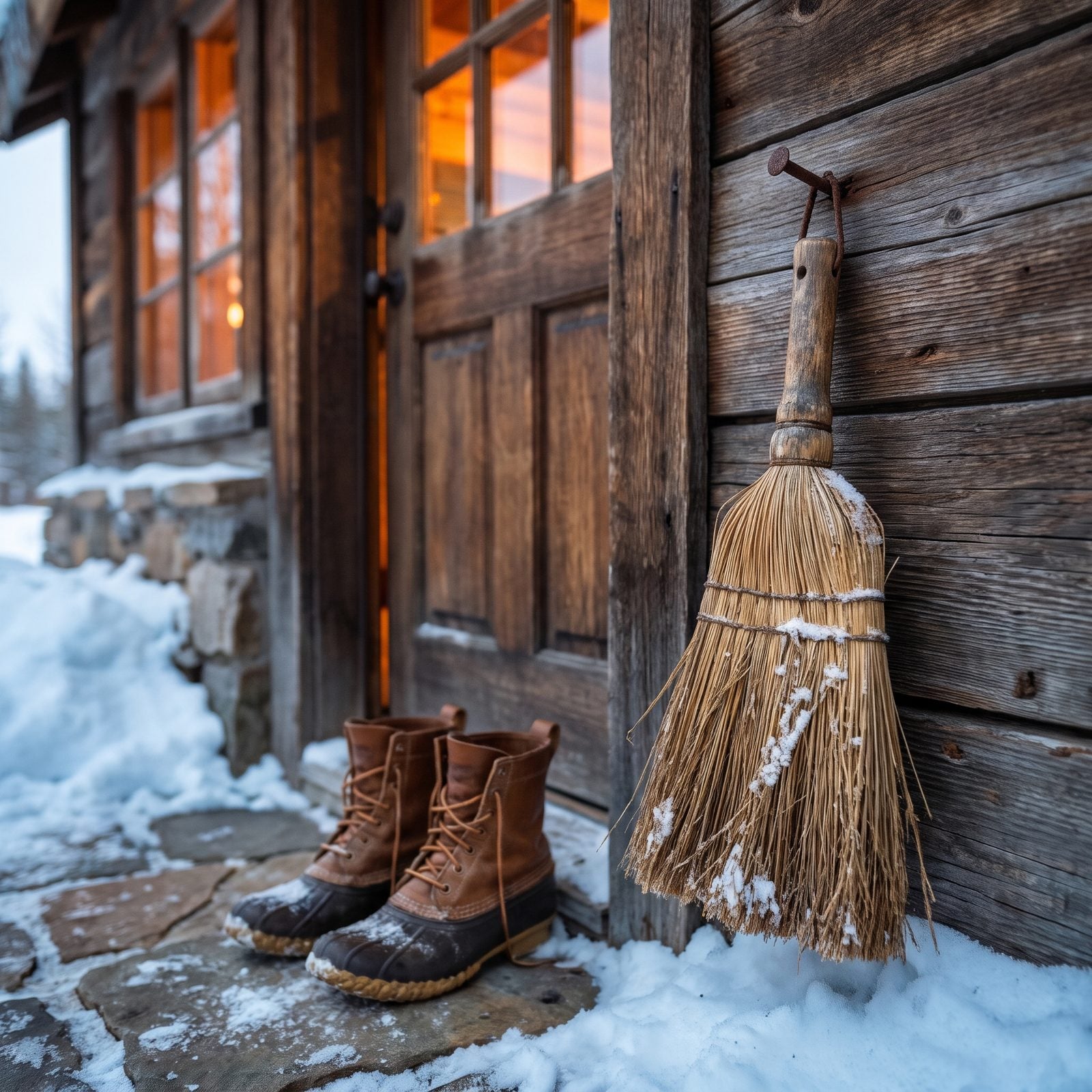
The snow you track in doesn’t melt quietly. It pools under the boot rack and turns the entry into a cold swamp by Sunday.
Hang a stiff whisk broom on a hook right outside the door, and before anyone steps in, they knock the snow off their pants and boots while they’re still standing on the porch. Thirty seconds of sweeping keeps a gallon of meltwater out of your cabin.
I ignored this for years and wondered why my floors were always wet. Turns out the broom does more than the mat ever did.
35. Roll Snowy Pants Inward Before Bringing Them Inside
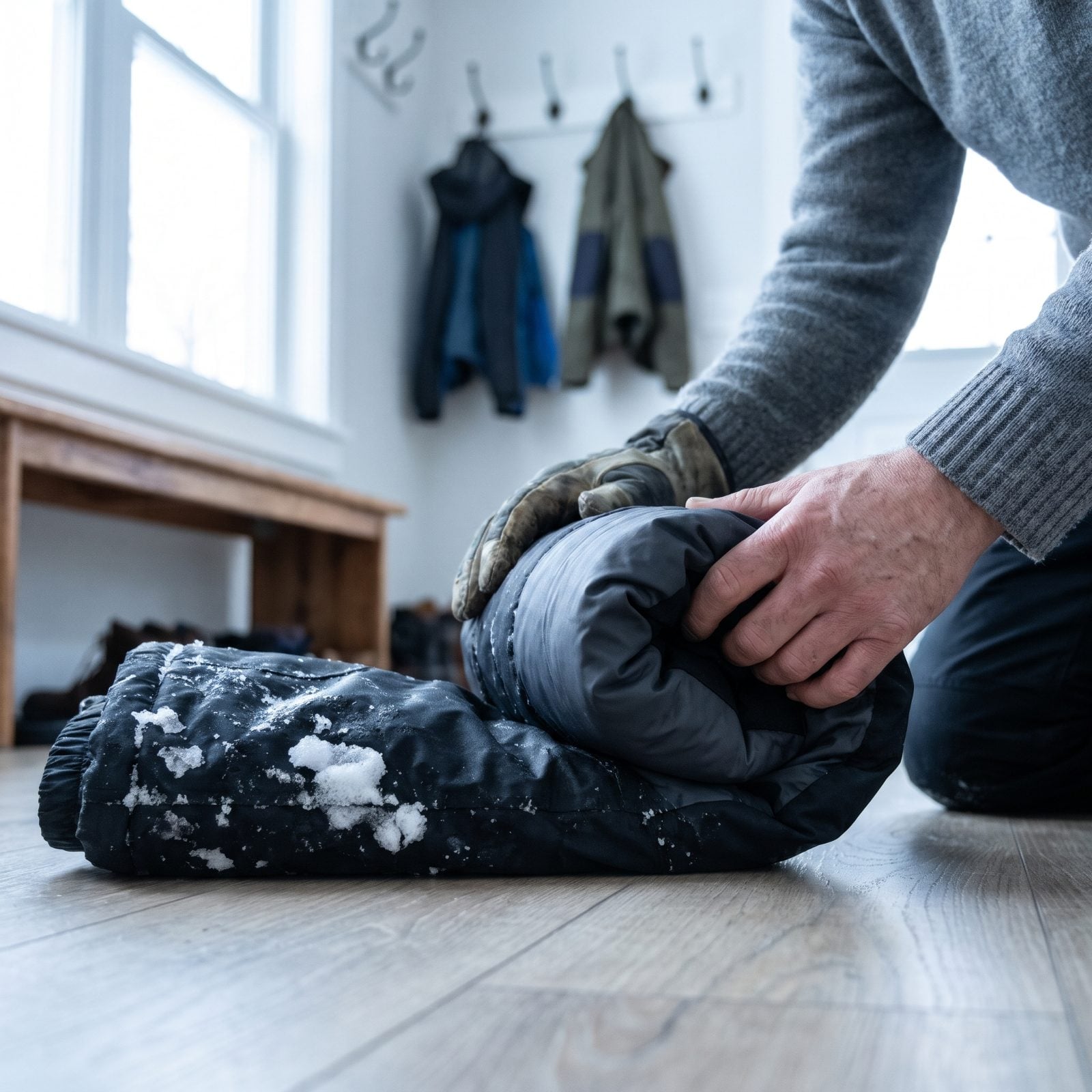
Peel wet snow pants off and most people drape them over a chair, snow side out, dripping onto the floor for an hour.
Roll them from the ankle up instead, trapping the snow and wet inside the roll. The clinging powder stays contained until you carry the bundle to the stove or the drying rack, where it melts into fabric you actually want to dry — not onto the floorboards.
Small move. Saves you a mop.
34. Stuff Newspaper Into Damp Boots Overnight
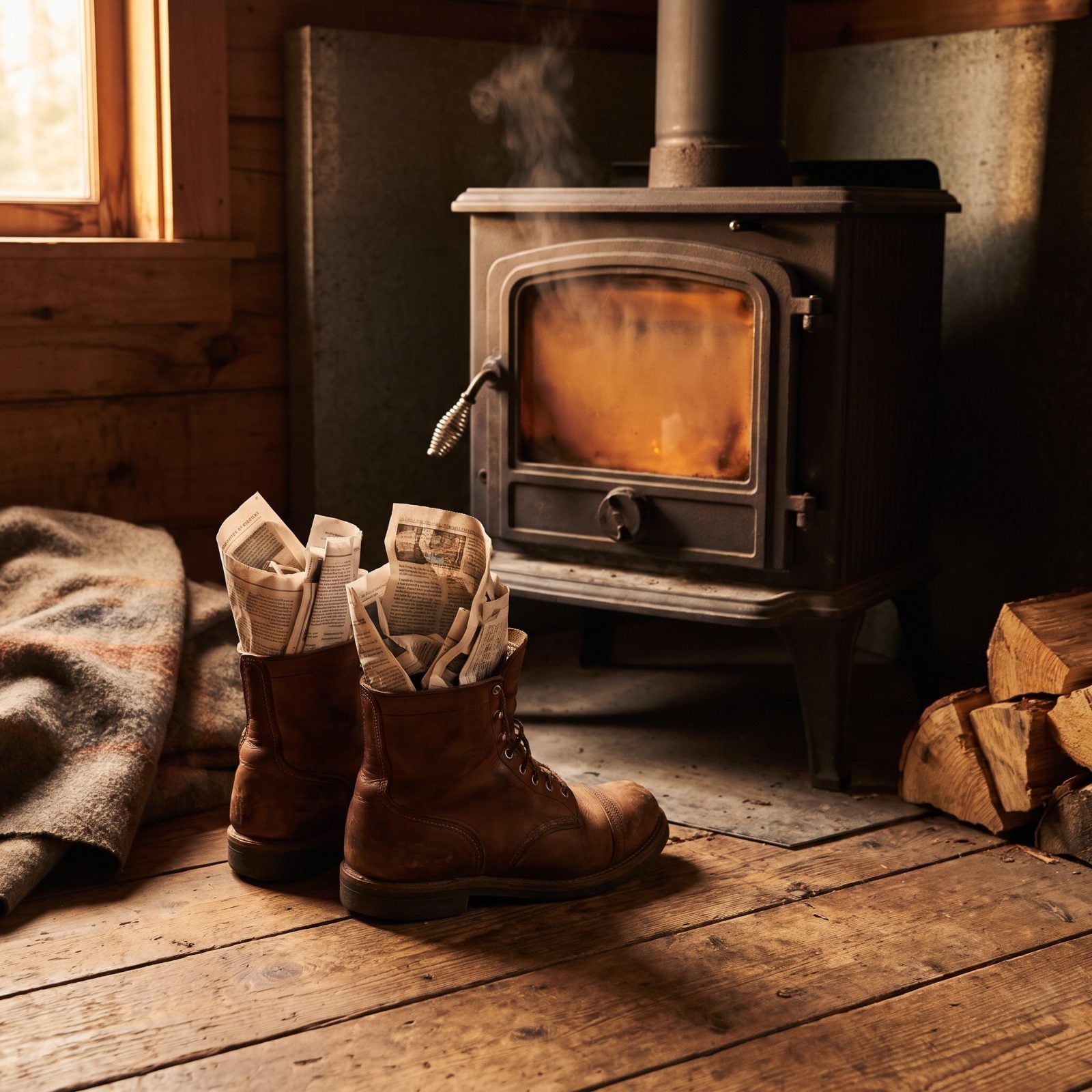
Wet boots are the fastest way to ruin a second day outside. Leather that’s still cold and clammy at dawn is miserable, and it never dries on its own in a humid cabin.
Crumple newspaper and pack it deep into each boot overnight. The paper wicks moisture out of the lining while the loose crumpling holds the boot’s shape. Swap it for fresh sheets before bed if they’re soaked.
Keep the boots near the stove’s warmth but not jammed against it. Leather bakes, cracks and curls if it gets too hot, and a scorched boot is worse than a damp one.
In its guide to drying wet footwear, one leather shoemaker explains “Stuffing your shoes or boots with newspaper is especially useful when they are soaked. The dry newspaper will absorb moisture and draw it out of the leather.”
33. Keep Cabin Slippers in a Basket by the Entry
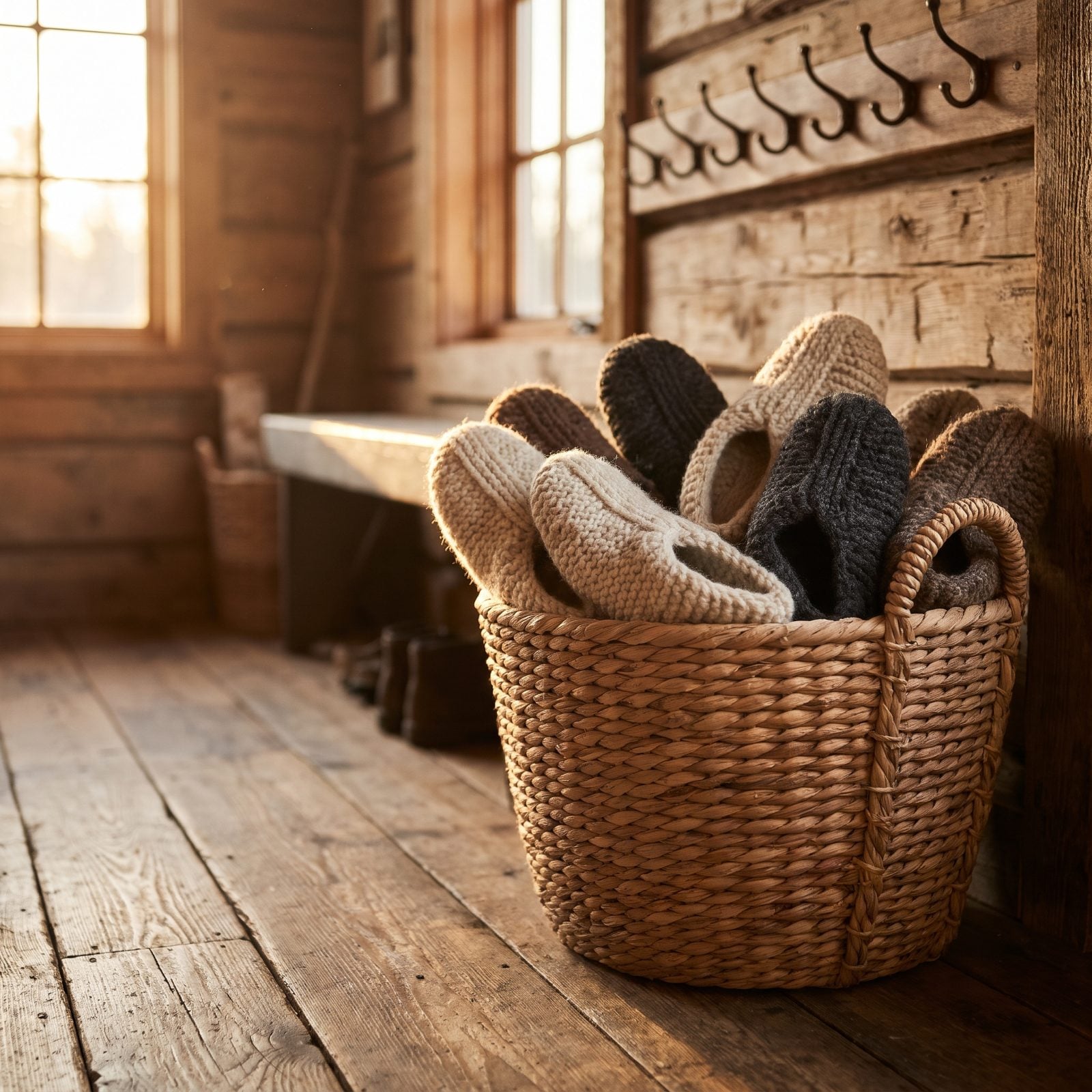
A basket of slippers by the door does two jobs at once.
It gives everyone a warm, dry thing to switch into the second the boots come off, so nobody pads around on cold floorboards in wet socks. And it draws a clear line: boots stay in the entry, feet go into slippers, snow goes no further. Your floors stay drier because the rule is sitting right there in a basket, impossible to miss.
Wool or sheepskin holds heat better than any fleece knockoff. Worth the extra few dollars when you’re snowed in for three days.
32. Hang Mittens From Clothespins Above the Stove
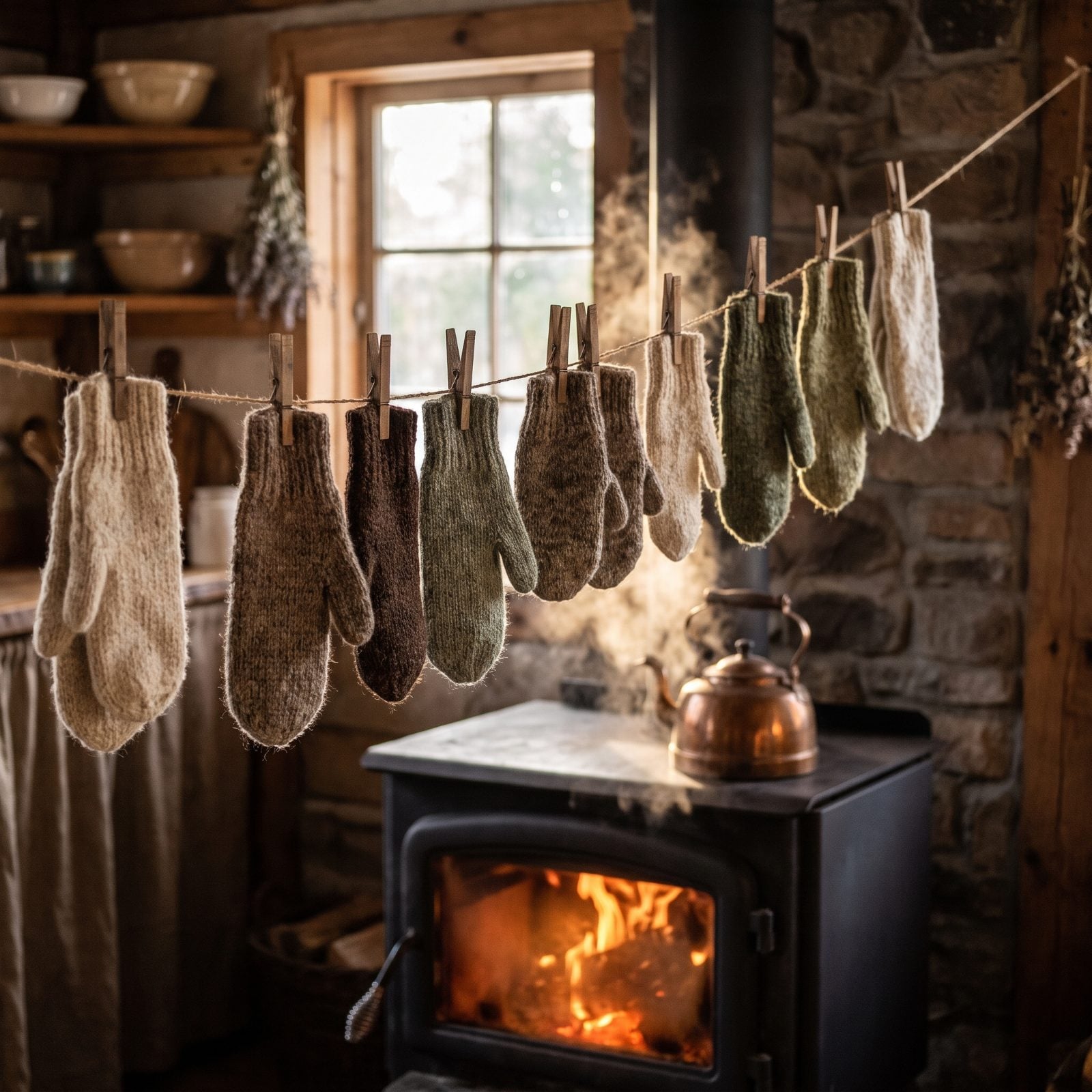
Mittens dumped on a radiator or flat on the stovetop dry on one side and stay damp on the other. Worse, leather left against hot iron scorches.
String a light cord above the stove and clip each mitten by the cuff with a clothespin. Hanging high in the rising heat, they dry evenly on all sides while staying far enough from the metal to avoid cooking. Come morning, your mittens are warm and dry instead of stiff and cold.
Hang them cuff-up so the fingers point down and rising warm air can flow up into the open cuff.
31. Keep Morning Firewood in a Separate Crate
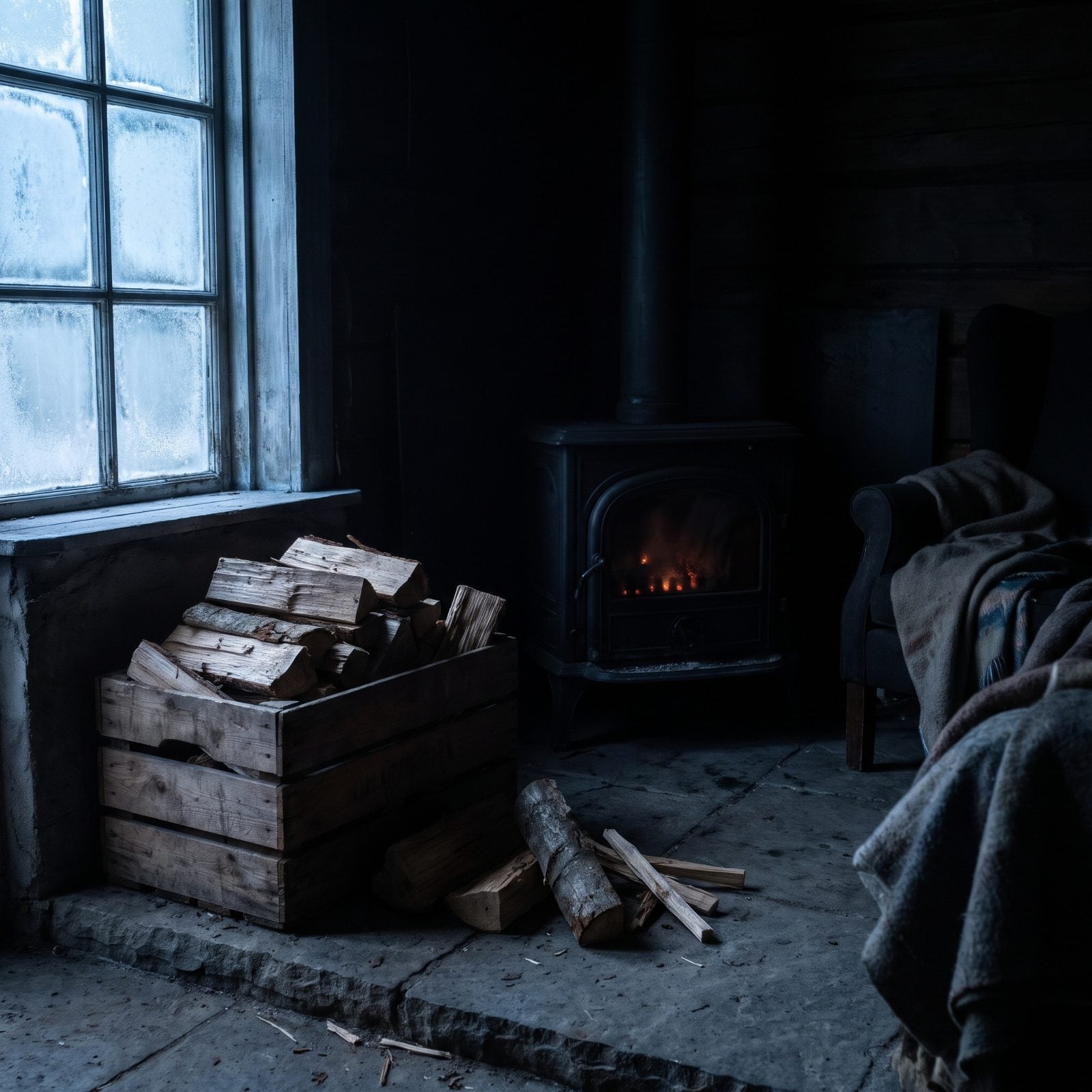
There’s a specific kind of cold at 6 a.m. in a cabin where the fire went out. You do not want to be hunting for dry wood in the dark while your breath fogs.
Set aside a small crate of the driest, best-splitting logs the night before, kept close to the stove where it stays warm. That’s your morning fire, pre-chosen and ready. You shuffle over, load it, light it, and crawl back under the blanket while the room comes up to temperature.
Wood stored near the stove overnight catches faster, too, because it’s already warm and bone-dry.
30. Stack Kindling in a Coffee Can by the Stove
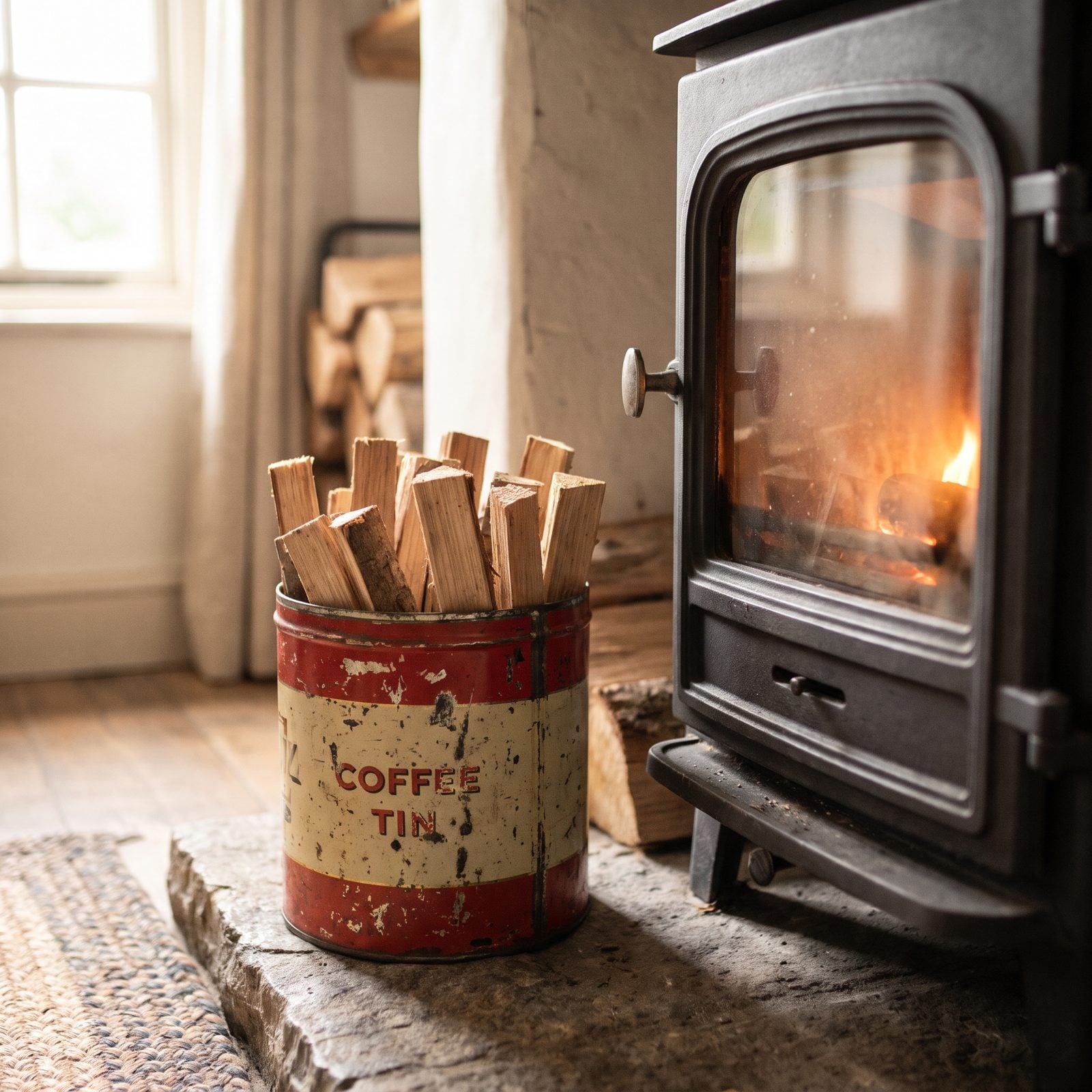
Kindling loose in a woodbox turns into a jumbled mess you sift through with cold fingers.
Stand it upright in an old coffee can instead. Everything’s visible, nothing rolls away, and you grab a handful in one motion. The can also keeps the small stuff from getting buried under the big splits, which is exactly when you need it and can’t find it.
A metal can near the stove stays warm and dry, and warm kindling lights with one match. I keep two cans, honestly — one by the stove, one I refill from the woodshed.
29. Save Birch Bark in a Dry Tin
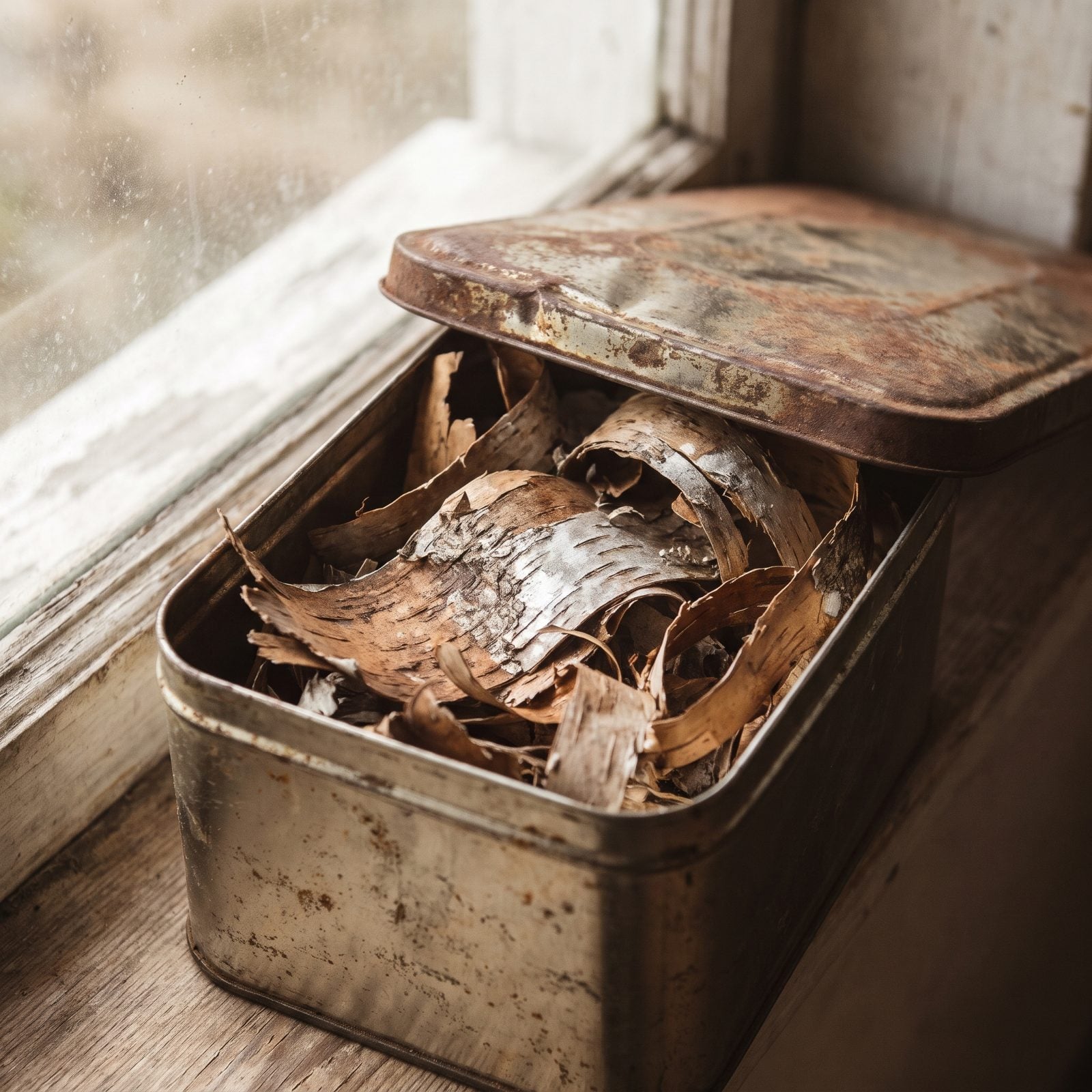
Birch bark is the best natural firestarter there is. The papery outer layer is loaded with oils that catch even when damp, and it burns hot enough to get stubborn kindling going.
Collect loose, fallen bark on your walks and stash it in a dry tin by the stove. Never strip it from a living tree — that can kill the birch and is a quick way to ruin a beautiful trunk. Fallen deadwood and shed bark give you plenty.
A fistful under your kindling lights a fire in seconds. No paper, no fluid.
Describing how to light a fire in Arctic conditions, a Lapland wilderness guide notes “The papery outer bark of birch trees contains natural oils (betulin) that burn even when damp. Peeling thin strips from a fallen birch provides excellent tinder.”
28. Warm the Firewood Gloves Before the First Morning Load
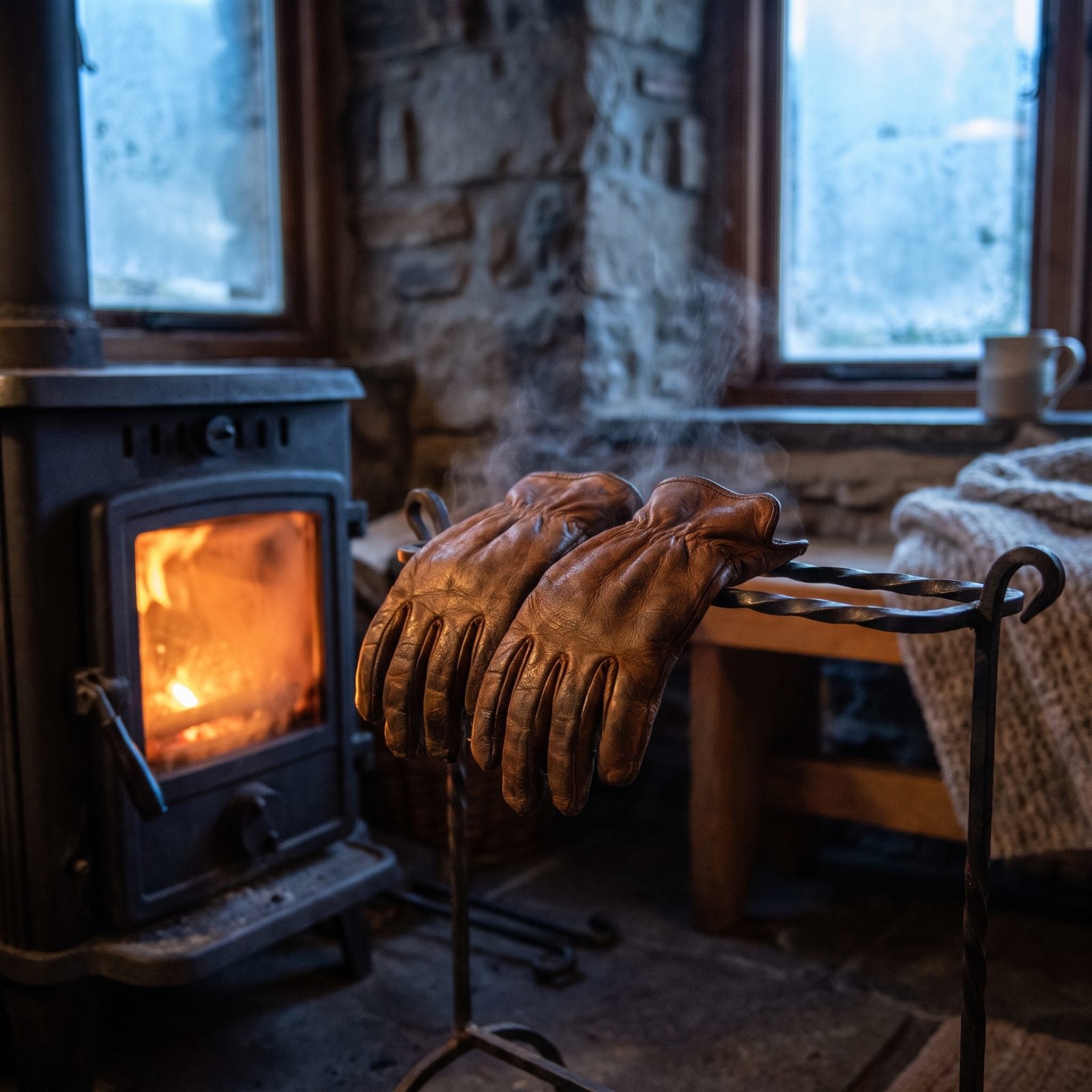
Cold leather gloves at dawn feel like putting your hands into a snowbank. There’s a small fix that makes the whole morning better.
Set your firewood gloves near the stove’s residual warmth the night before, or on a safe warm spot while the coffee heats. By the time you head out to the woodshed for the first load, they’re warm and supple instead of stiff and frigid.
Keep them close to the heat, not on the scorching metal. A few wisps of steam as yesterday’s damp leather dries out are fine — warm, not cooked, is all you want, and your hands will thank you the second you pull them on.
27. Put the Kettle on the Stove Before You Unpack a Thing
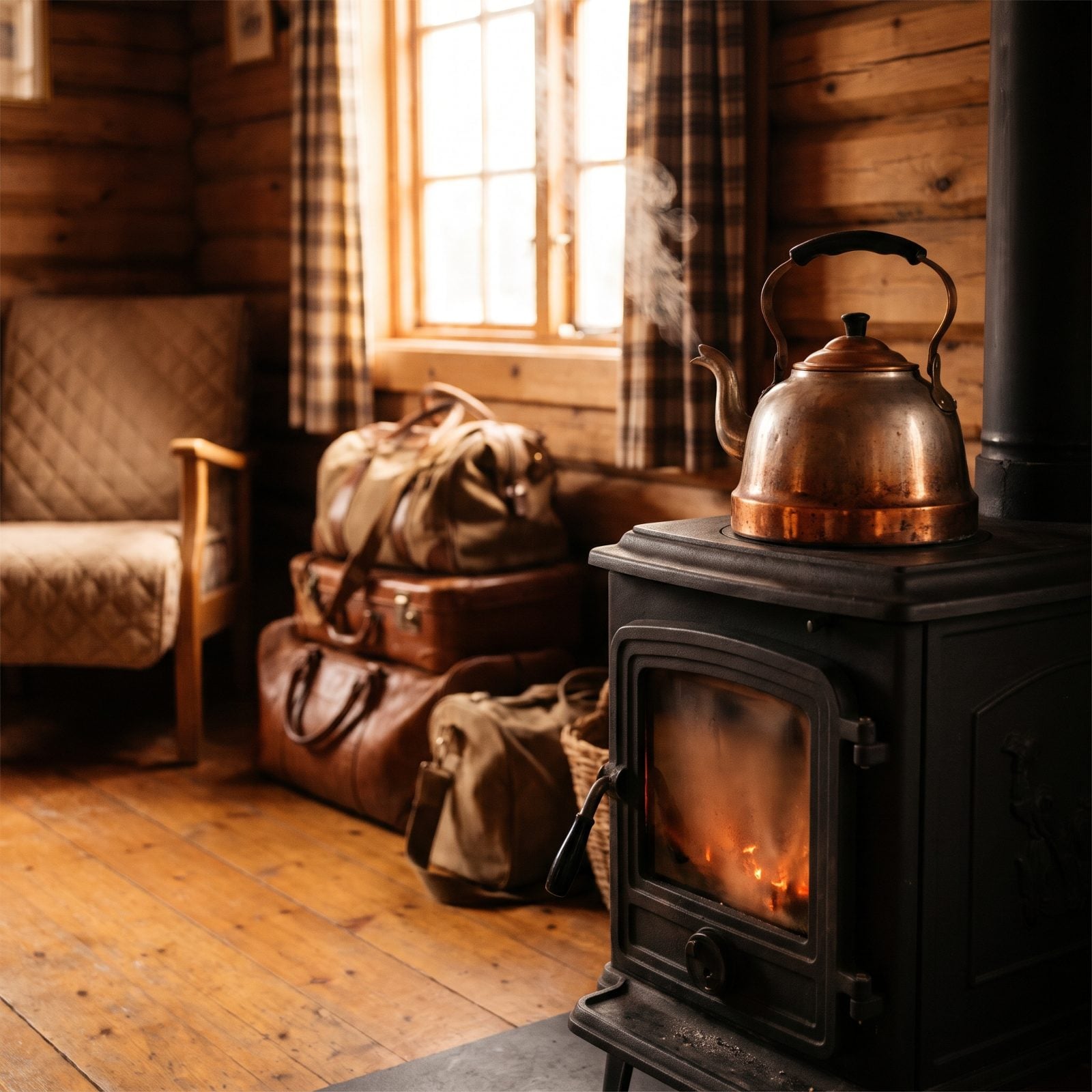
The kettle goes on first. Before the bags, before the boots come off, before you figure out which bunk is whose. A cabin that’s been closed up holds the cold in its walls, and a kettle buys you two things at once: the first warm drink of the trip, and a little humidity thrown into air that went bone-dry the moment the stove kicked on.
I used to unload the whole truck first, then wonder why the place still felt like a meat locker an hour later. Light the stove, fill the kettle, then unpack. The cabin starts working on itself while you work.
26. Drop Citrus Peels Into the Stove-Top Simmer Pot
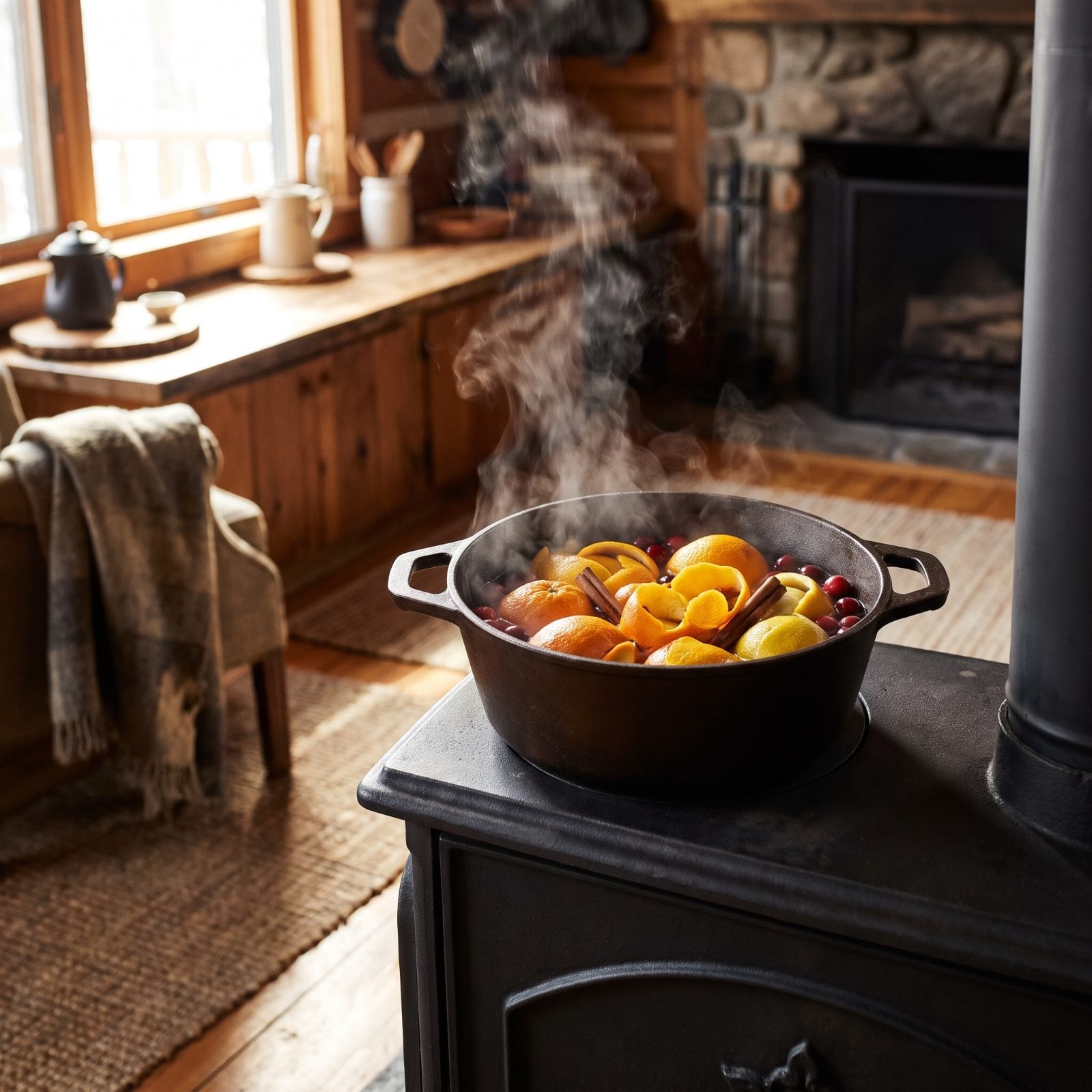
A cabin that’s been shut all week smells like it — dust, cold ash, whatever was left in the pantry. A low pot of water on the stove with orange and lemon peels, maybe a cinnamon stick, fixes the air better than any spray ever will. The steam carries the scent into every corner while it quietly humidifies a dry room.
Costs you nothing. You were going to eat the orange anyway, so toss the peel in the pot instead of the trash, keep it at a bare simmer, and top the water off when it drops. The whole place smells like somebody’s been living there happily for days.
25. Warm the Mugs With Hot Water Before You Pour the Coffee
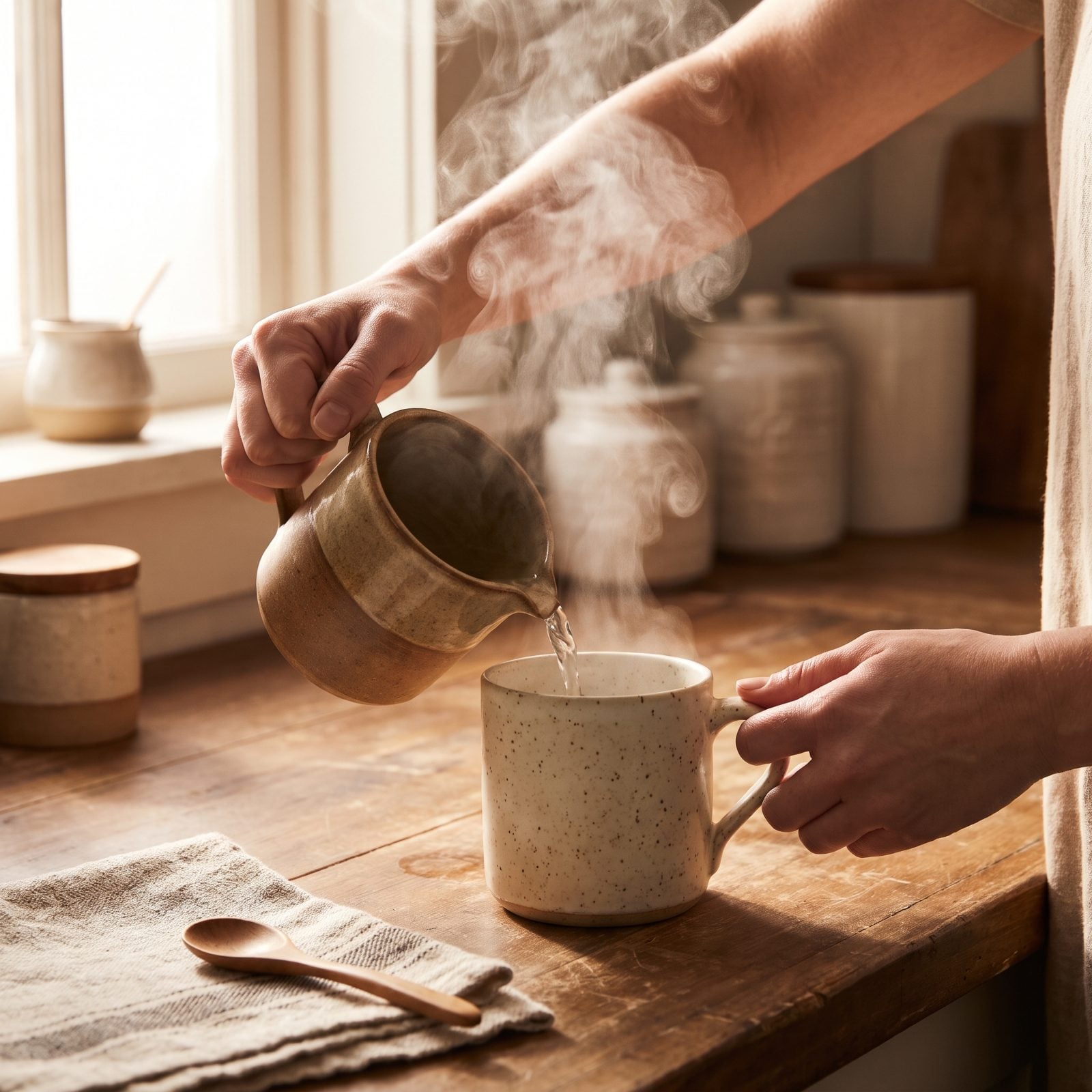
Cold ceramic steals heat from coffee faster than you’d believe. Pour a good hot cup into a mug that’s been sitting at cabin temperature all night and you’ve got lukewarm coffee before you reach the chair.
Swirl a splash of the kettle’s hot water in each mug, dump it, then pour. The mug holds its warmth, the coffee stays hot to the last swallow, and the whole thing takes ten seconds. Small ritual, real difference. I don’t drink cabin coffee any other way now.
Making the case for warming the cup first, a former barista warns “Pour[ing] coffee into a cold porcelain cup can drop the temperature massively; this can ruin the flavor balance of espresso.”
24. Turn a Cast-Iron Pan Into the Morning Toasting Station
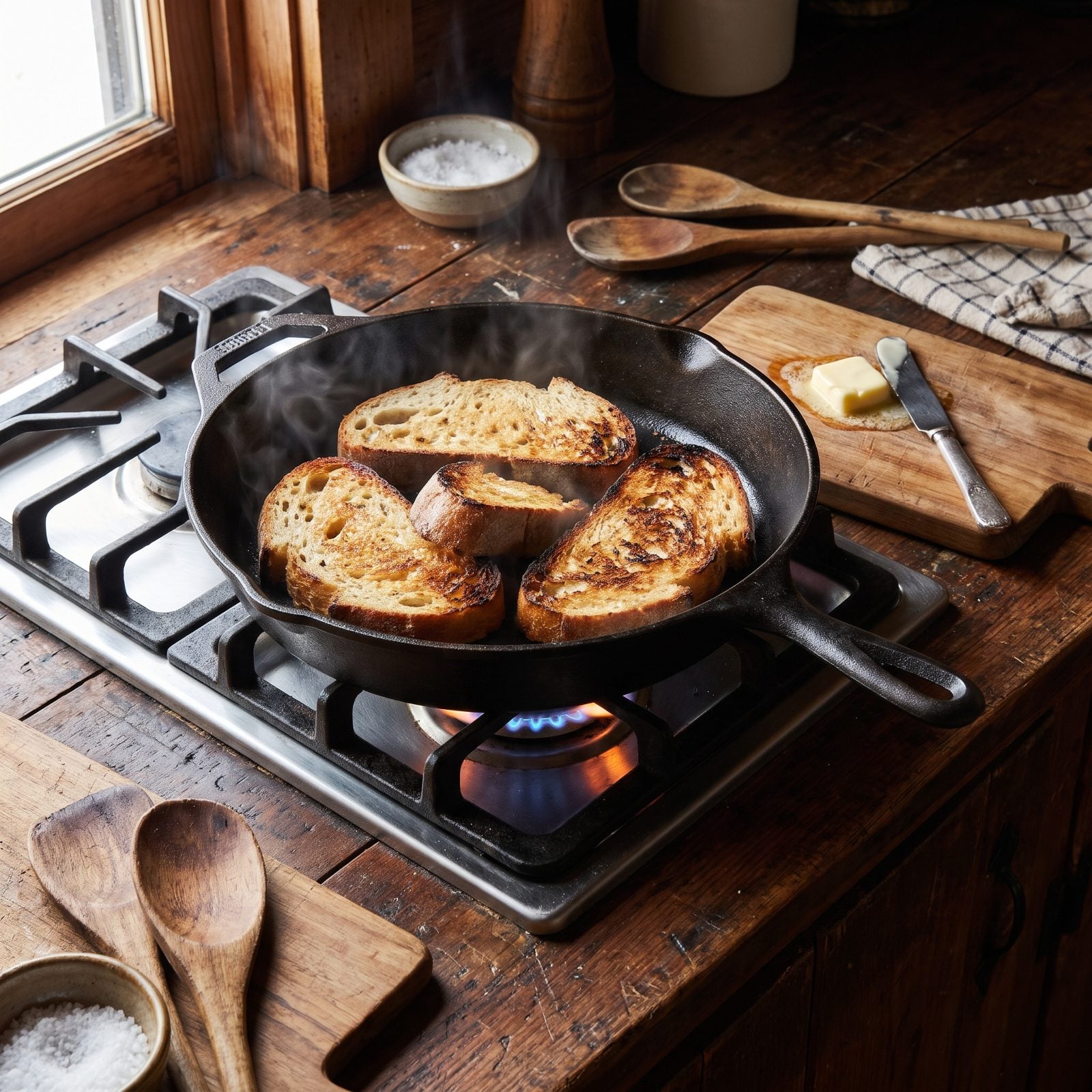
No toaster, no problem — honestly, no reason to want one. A cast-iron skillet set over the stove does toast better than any pop-up ever did. The bread picks up a little butter, a little crust, a faint smokiness from the pan that no toaster can touch.
Lay the slices flat, flip once they go gold, and pull them before they go dark. One pan handles toast, then eggs, then whatever lunch turns into, and it holds its heat so the second round cooks faster. Fewer gadgets, fewer dishes, better breakfast.
23. Eat the First Supper by Lantern Light
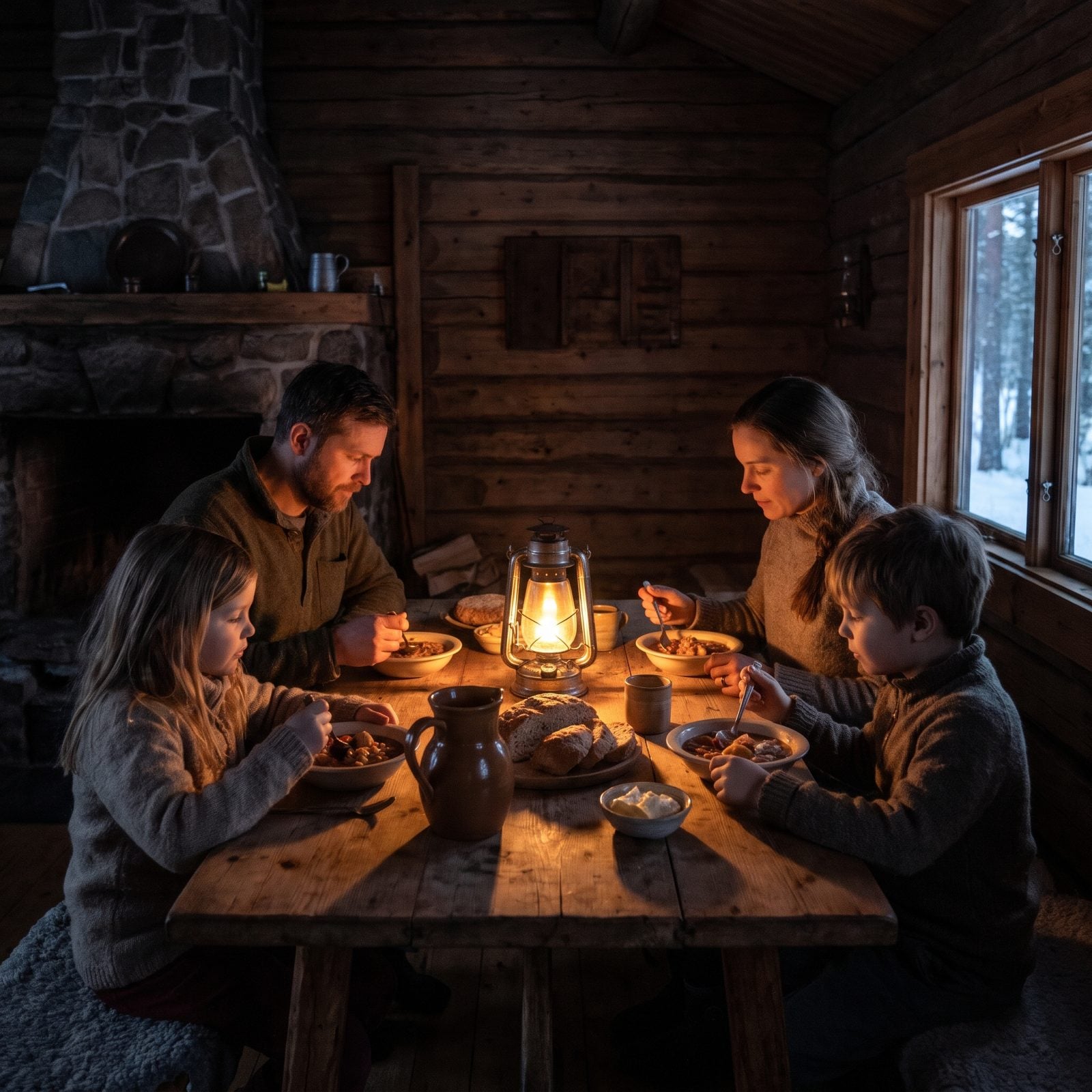
Leave the lights off the first night. You’ll be tempted to flip every switch and chase the dark out of the corners. Don’t. Eat by lantern or candle instead.
There’s a reason this feels better than it should. Lower light tells your body the day is winding down, and after a drive through snow that’s exactly the signal you want. The food looks warmer. Conversation slows. And the storm outside stops being a hassle and becomes the whole reason you came up here.
22. Keep a Midnight Snack Tin Next to the Card Table
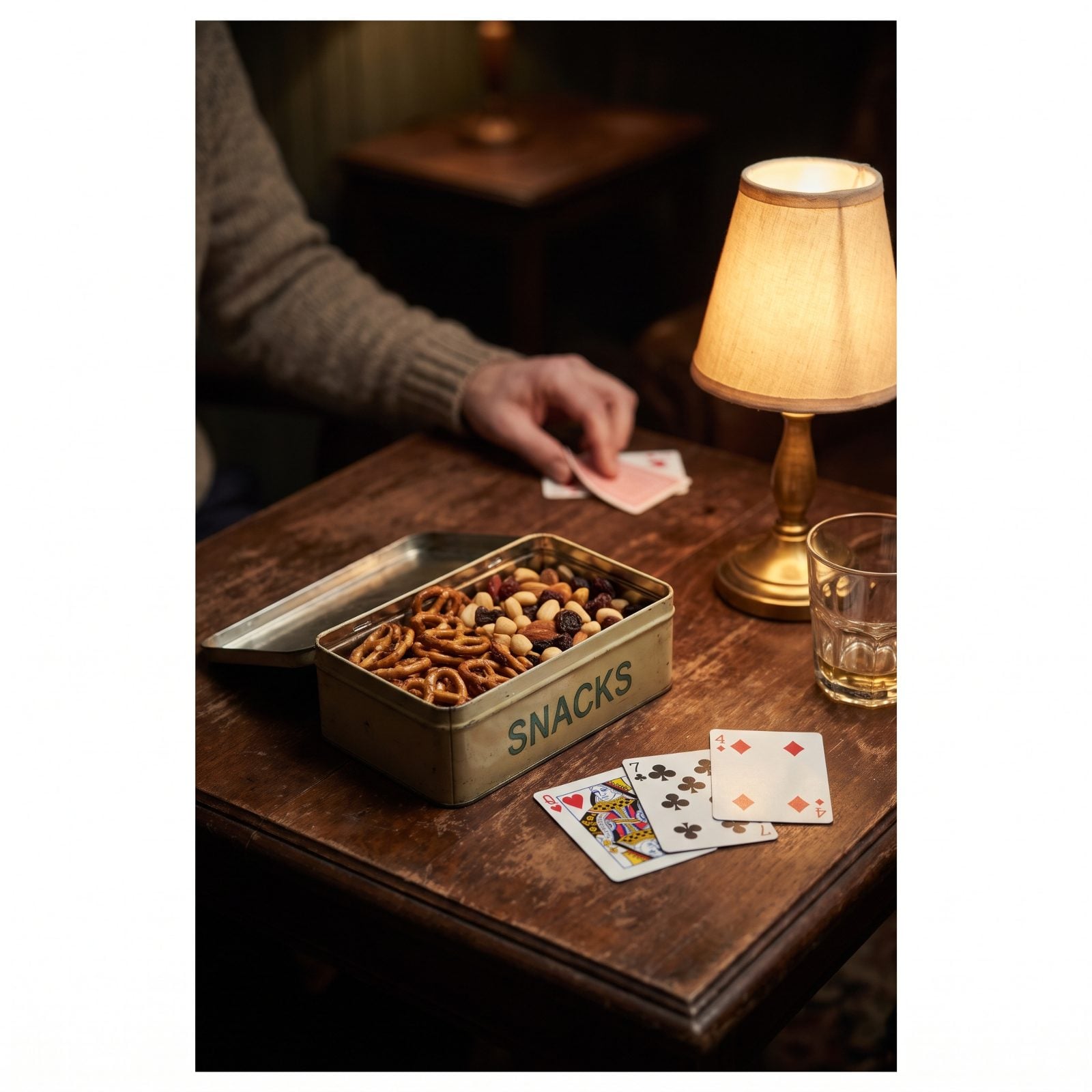
Card games run late in a cabin because there’s nowhere else to be. Somewhere around the second hour someone gets hungry, and that’s when the night either keeps rolling or falls apart while everybody rummages through the pantry.
A dedicated tin fixes it. Nuts, chocolate, dried fruit — whatever travels well and doesn’t need a plate. It lives by the table, lid on between grabs so nothing goes stale, and nobody has to get up and lose their turn. Small thing, but it keeps the good part of the evening going.
21. Set Aside One Mug That Never Leaves the Cabin
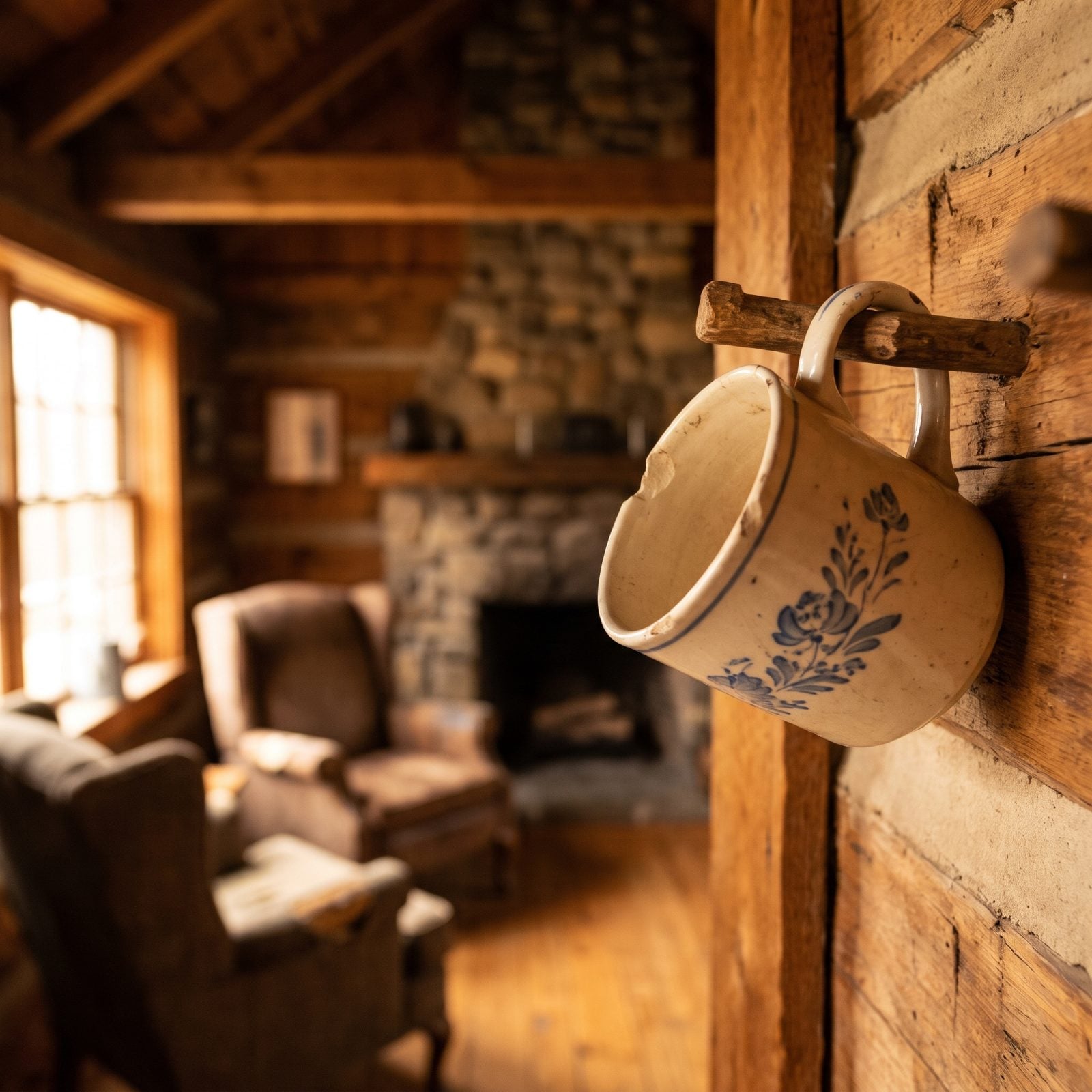
Every cabin worth returning to has one. The mug that doesn’t go home. It stays on its peg all winter, chipped and faded, and it’s always the one you reach for first.
Sounds like nothing. It isn’t. A single object that lives only here starts stitching one trip to the next, so the place feels like yours the minute you walk in instead of a rental you’re borrowing. Pick the ugliest one on the shelf — those age the best.
20. Turn the Chairs Toward the Windows When the Snow Starts
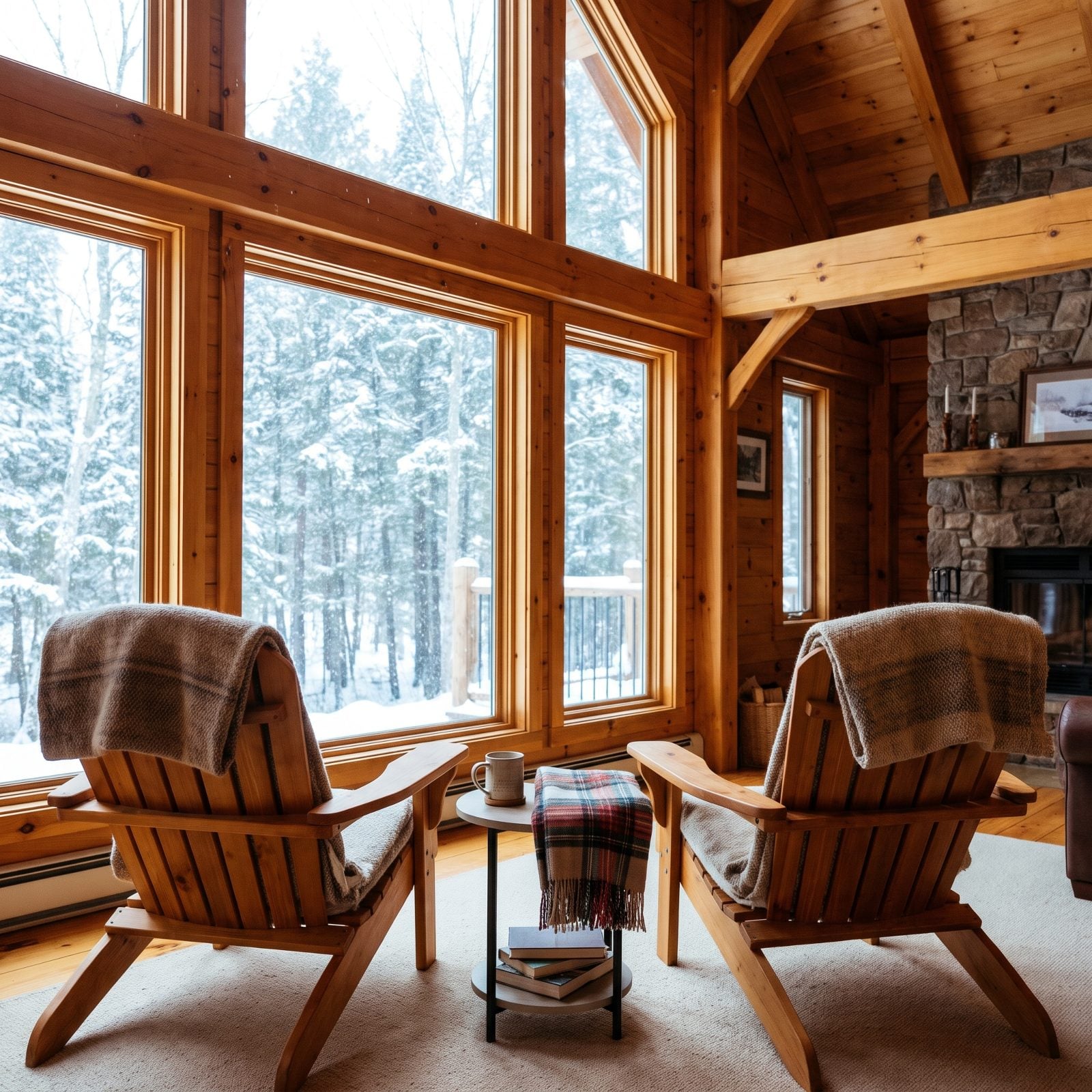
Furniture in a cabin usually points at the stove or the table, because that’s where the heat and the food are. When the snow comes down hard, turn a couple of chairs the other way and face the window.
Watching snow fall is one of those things that doesn’t get old, and most people never set the room up to actually do it. Drape a wool blanket over each chair, put the mugs within reach, and let the storm be the entertainment. You drove up here to be in it. Sit where you can see it.
19. Keep Binoculars on the Snowiest Windowsill
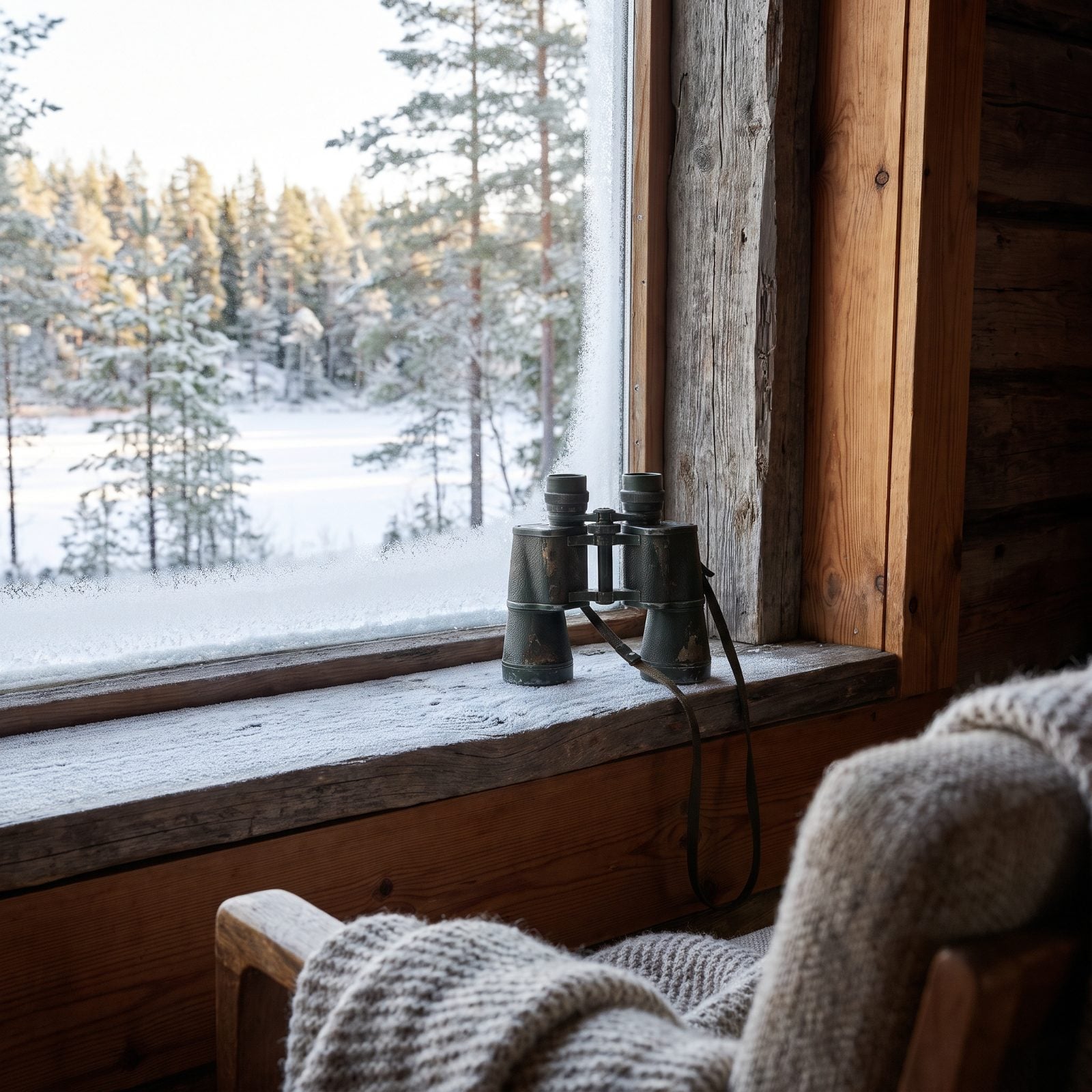
Leave the binoculars where you’ll actually grab them. Not in a bag, not in a drawer — on the sill of whichever window looks out on the most cover. A bird feeder, a tree line, the edge of a frozen pond.
Snow brings animals in close because the weather thins out their options, and a storm often means more movement, not less. Deer drifting through, a fox crossing open ground, chickadees working a branch. By the time you fetch binoculars from across the room, whatever it was has already gone. Keep them at arm’s reach from the chair you sit in.
Snowed in during a major winter storm, an avian biologist wrote “As an avid birdwatcher, I also made sure to fill up my feeder station with fresh suet and birdseed, with a pair of binoculars propped up by the window for easy access.”
18. Mark Overnight Snowfall on the Porch Railing
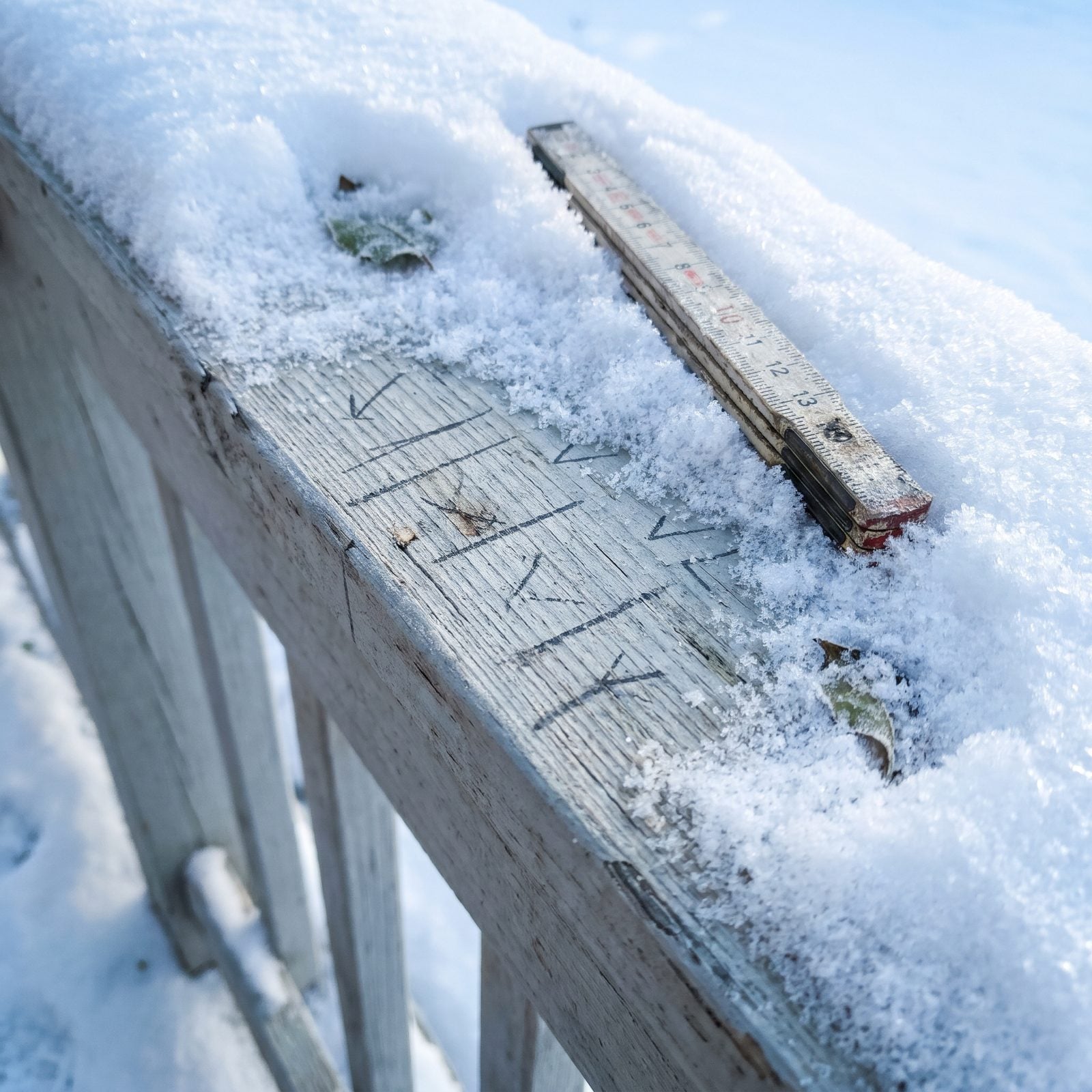
A ruler stuck in the snow tells you nothing a week later, but a pencil mark on the porch rail tells you everything. Scratch a line each morning where the snow tops out, date it, and by Sunday you’ve got a little ladder of storm climbing up the wood.
Kids argue over it. Adults pretend not to care, then check it with their coffee. Accuracy isn’t the point — it’s the small thrill of watching the weekend pile up somewhere you can actually touch.
17. Photograph the Same View Every Morning
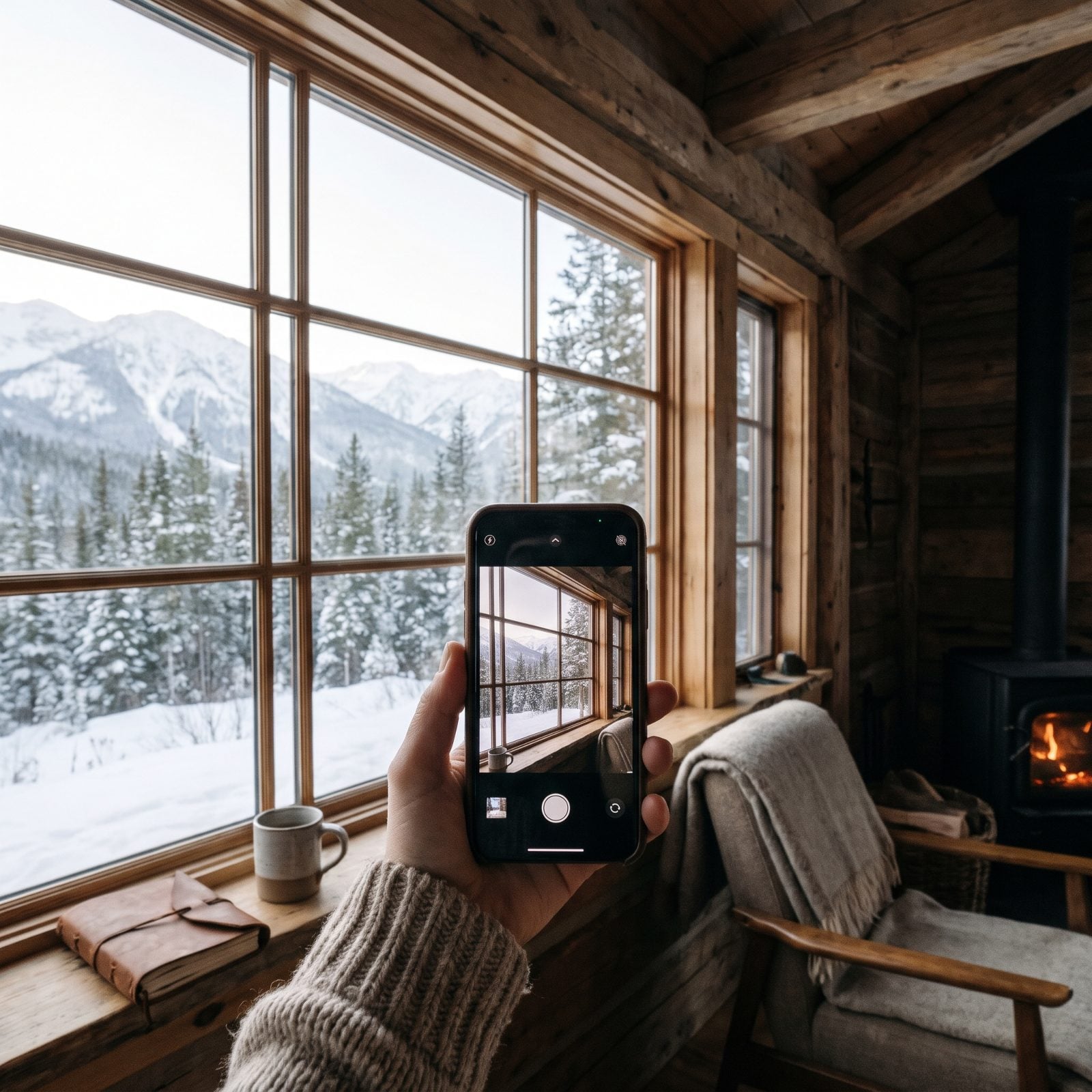
Stand in the same spot, same window, same time, and take one photo. That’s the whole ritual. The snow line creeps upward while the icicles stretch down, a cardinal shows up on day two, and your phone quietly builds a flip-book of the storm one frame at a time.
I started doing this by accident one February and now I can’t stop. The before-and-after between Friday and Sunday is the kind of thing you’ll actually show people.
16. Name the Biggest Icicle Outside the Kitchen Window
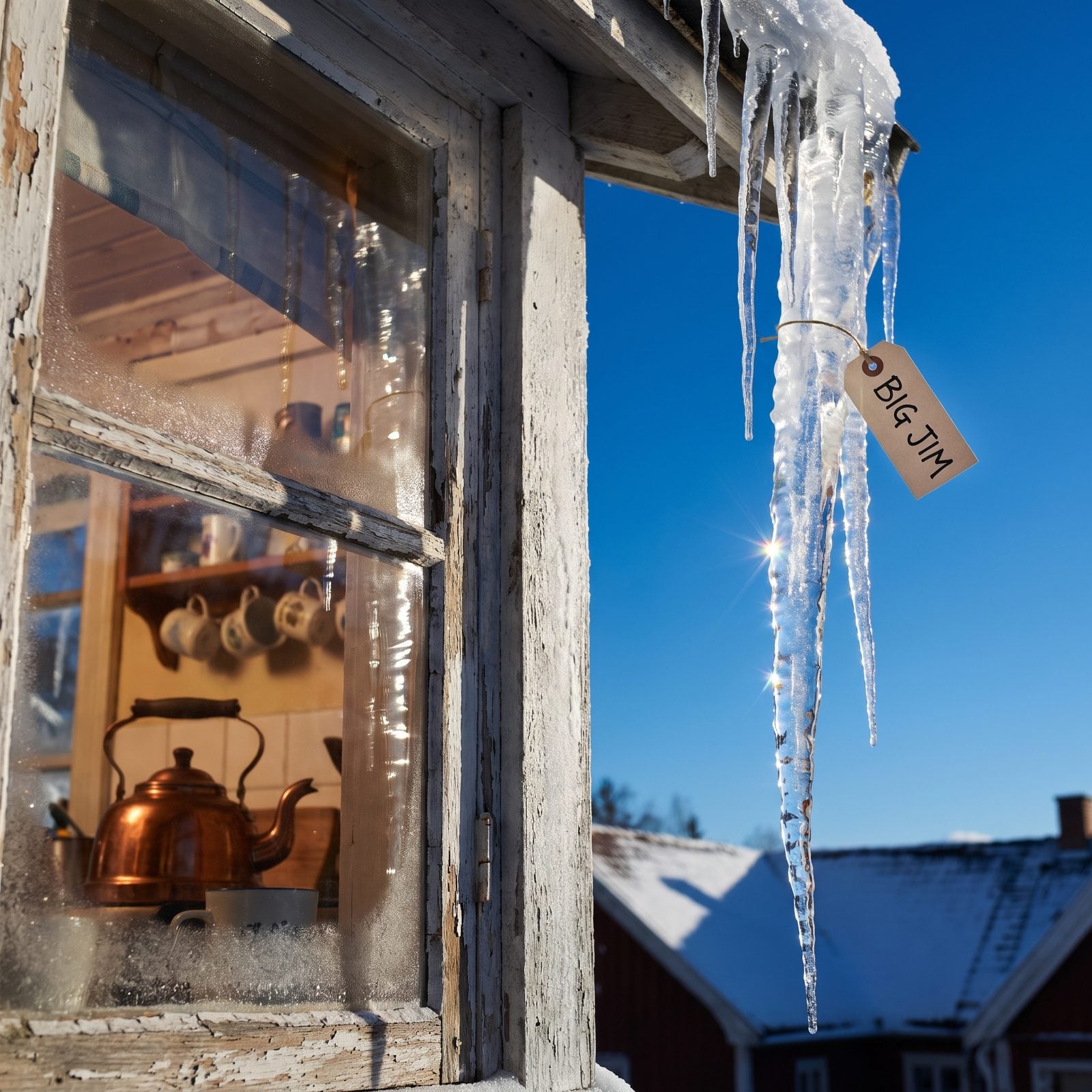
Every cabin eave grows one show-off icicle. Give it a name. Something dumb and grand — Big Jim — and suddenly the whole family is tracking its progress like a sports score.
Does it matter? Not even slightly. But naming the icicle turns a frozen gutter into a running joke, and a running joke is half of what makes a snowed-in weekend feel like a weekend instead of a delay.
15. Use a Cookie Sheet as a Puzzle-Moving Tray
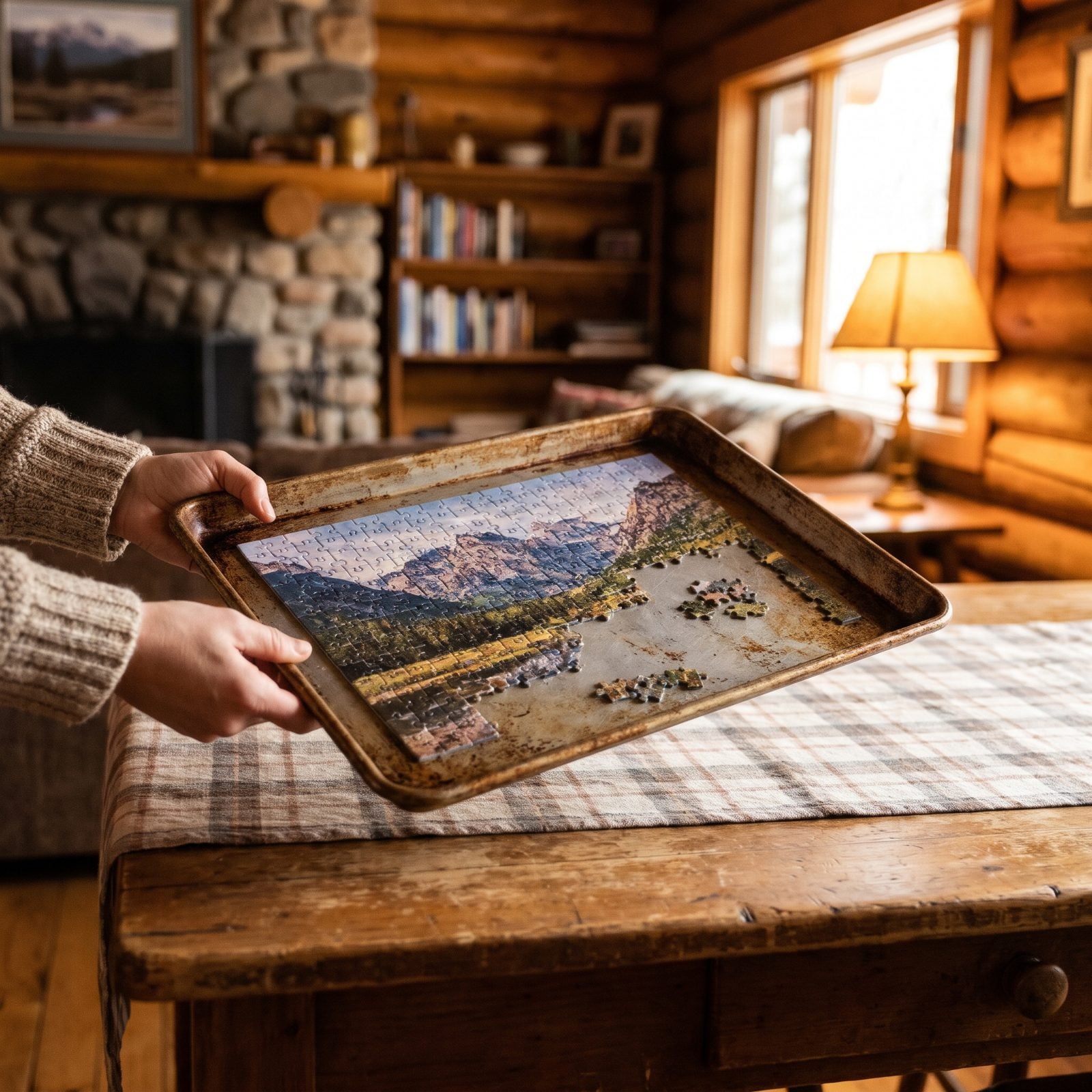
You started the puzzle on the dining table. Now it’s dinner. This is the oldest conflict in cabin history, and a rimmed cookie sheet solves it cold.
Build on the sheet instead of the bare table, and when supper comes you slide the whole half-finished thing onto a bookshelf or a bed, the rim keeping every loose piece corralled. No swearing, no lost corners, no abandoning a thousand-piece mountain because somebody wanted to eat.
14. Keep a Cabin-Only Deck of Worn Playing Cards

These cards never leave. They live in a drawer at the cabin, soft at the corners, one of them water-stained from a spilled hot toddy nobody will confess to. That wear is the whole point.
A dedicated deck means a game is always thirty seconds away, no hunting through luggage, and a beat-up deck carries the history of the place in it — every rummy hand and every gin blitz that ever happened under that roof.
13. Start a Jigsaw Puzzle No One Is Allowed to Finish Alone
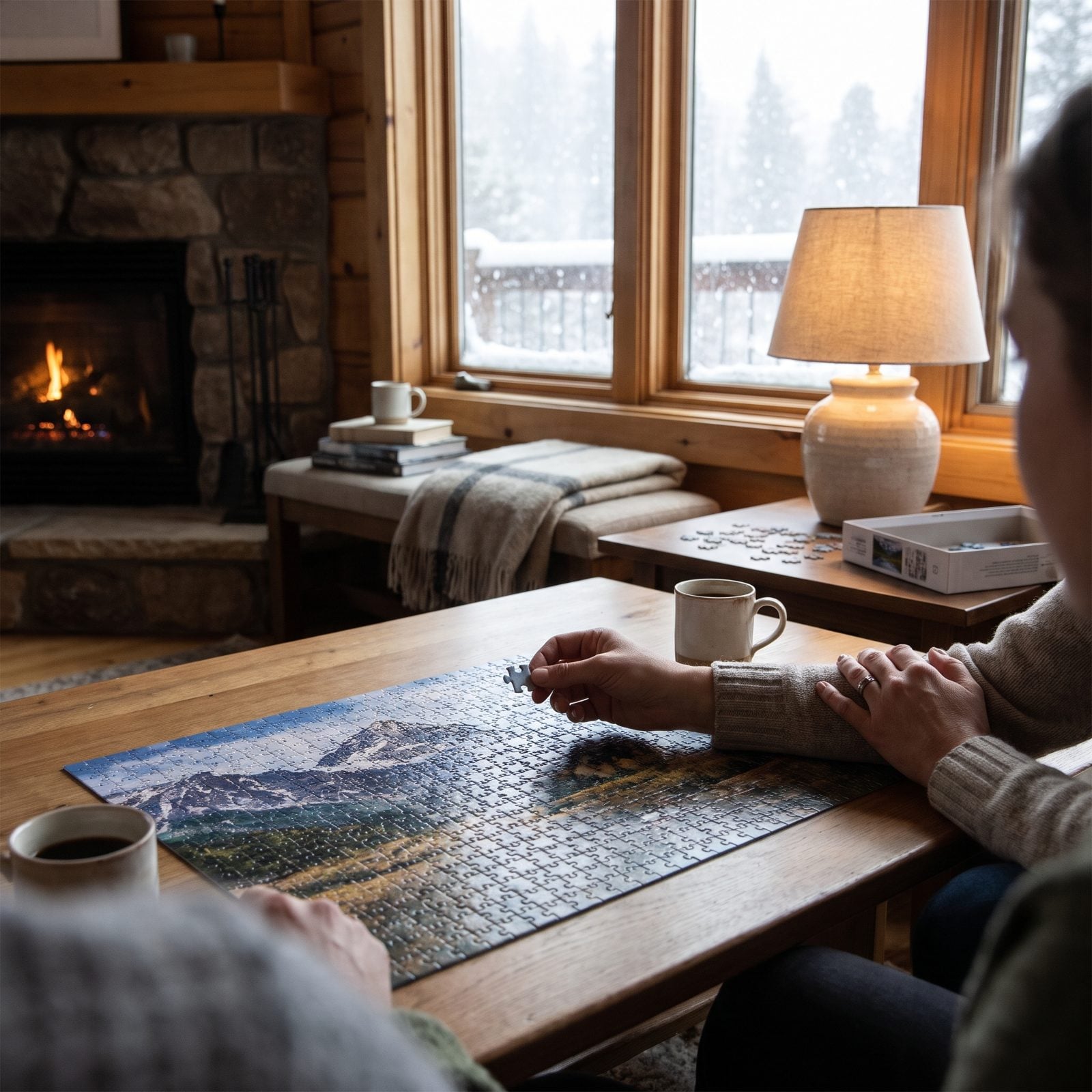
The rule: whoever sets the last piece has to wait until everyone’s in the room. No sneaking down at midnight to steal the glory. The puzzle becomes a slow communal thing instead of one person’s trophy.
Sounds like a silly house law. It isn’t. It hands the weekend a shared finish line, a little moment of ceremony when the storm’s still howling and there’s nowhere to be. Those last four pieces, saved for everybody, beat the whole box.
12. Let Everyone Choose One Record Side
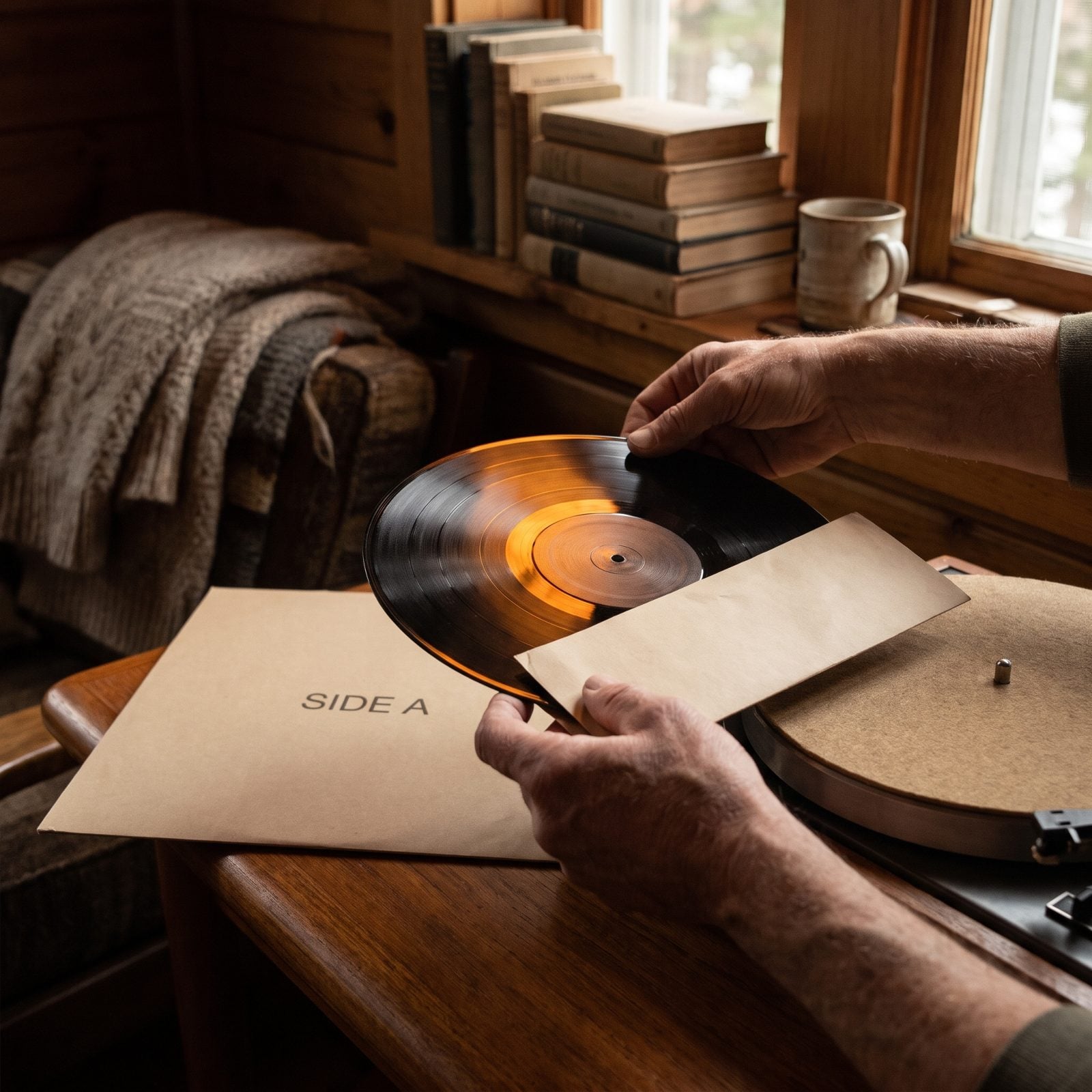
Each person picks one side of a record. Not an album — a side. You get maybe twenty minutes to make your case, then it passes to the next person, and the taste of the whole cabin plays out across an evening.
The flipping is half the fun. Somebody has to get up, choose the next one, set the needle. It’s a small chore that keeps everyone part of the night instead of drifting off into separate corners with earbuds in.
11. Declare One Screen-Free Hour After Dark
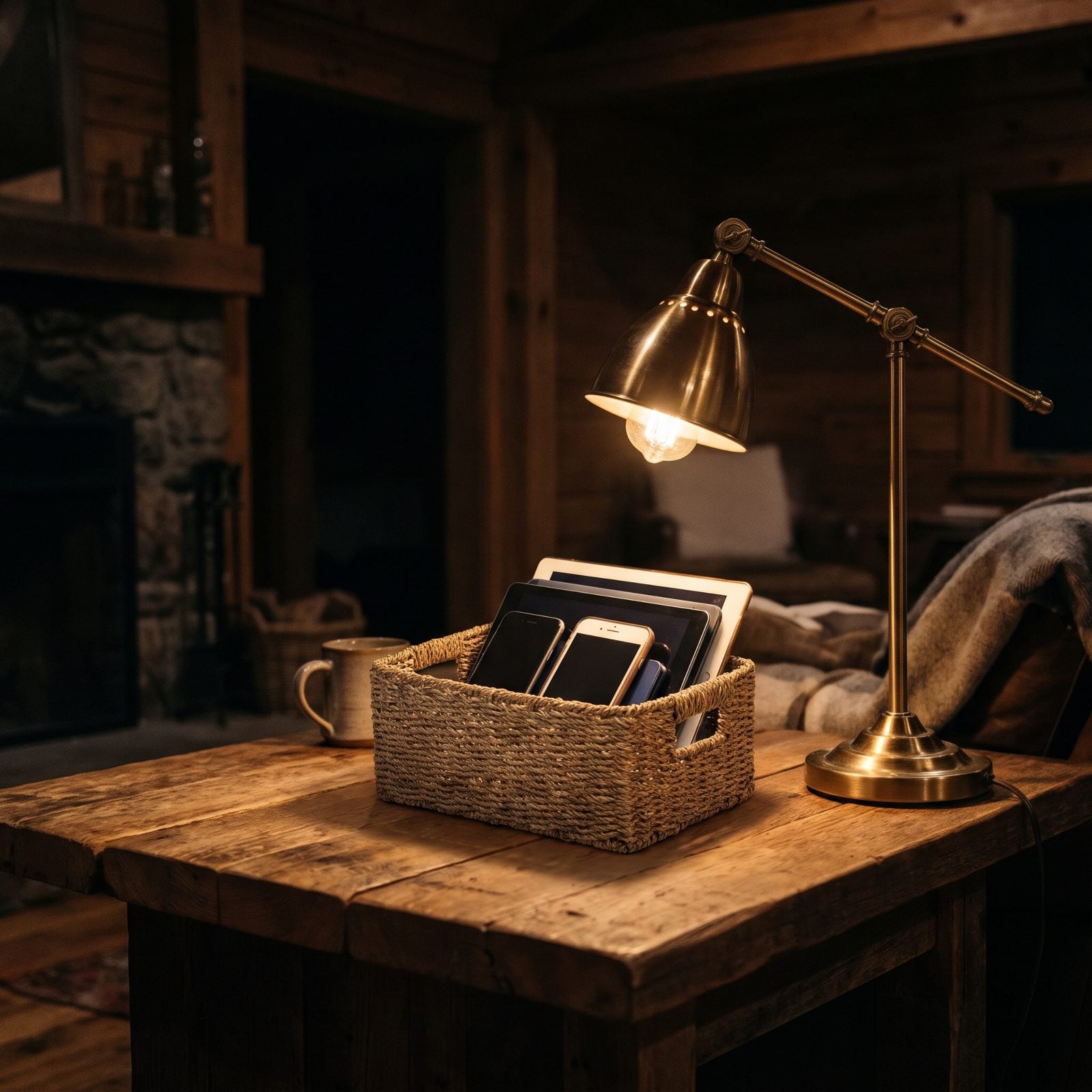
One hour after the sun’s gone, the phones go in a basket. That’s it. No big digital detox speech, no shaming, just a basket and a timer.
What fills the hour is the surprise. People talk. Someone finds the cribbage board, and a kid asks a question they’d never ask with a screen in their hand. The storm outside stops being a reason to scroll and starts being the whole mood of the room.
10. Write Down the Best Story Told Each Night
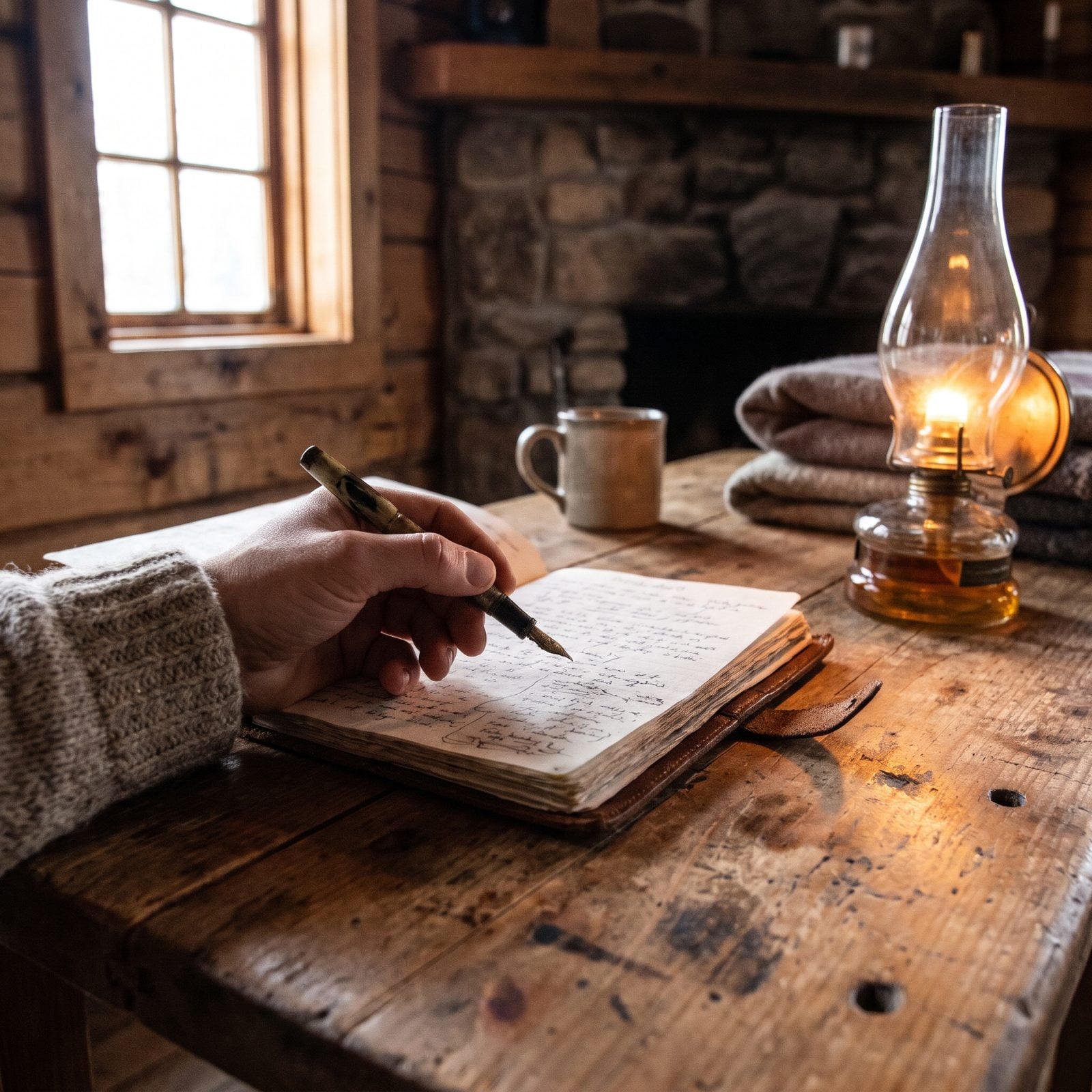
Keep a cabin notebook. At the end of each night, someone writes down the best story that got told, the funniest line, the thing you’ll all forget by March. One paragraph, scrawled by whoever’s least asleep.
Years in, that notebook is the most valuable thing in the place. You’ll pull it out on the next snowed-in weekend, read the entry from three winters ago, and the whole room loses it laughing. Memory is a liar. The notebook isn’t.
9. Hide a Small Treat for the First Person Awake
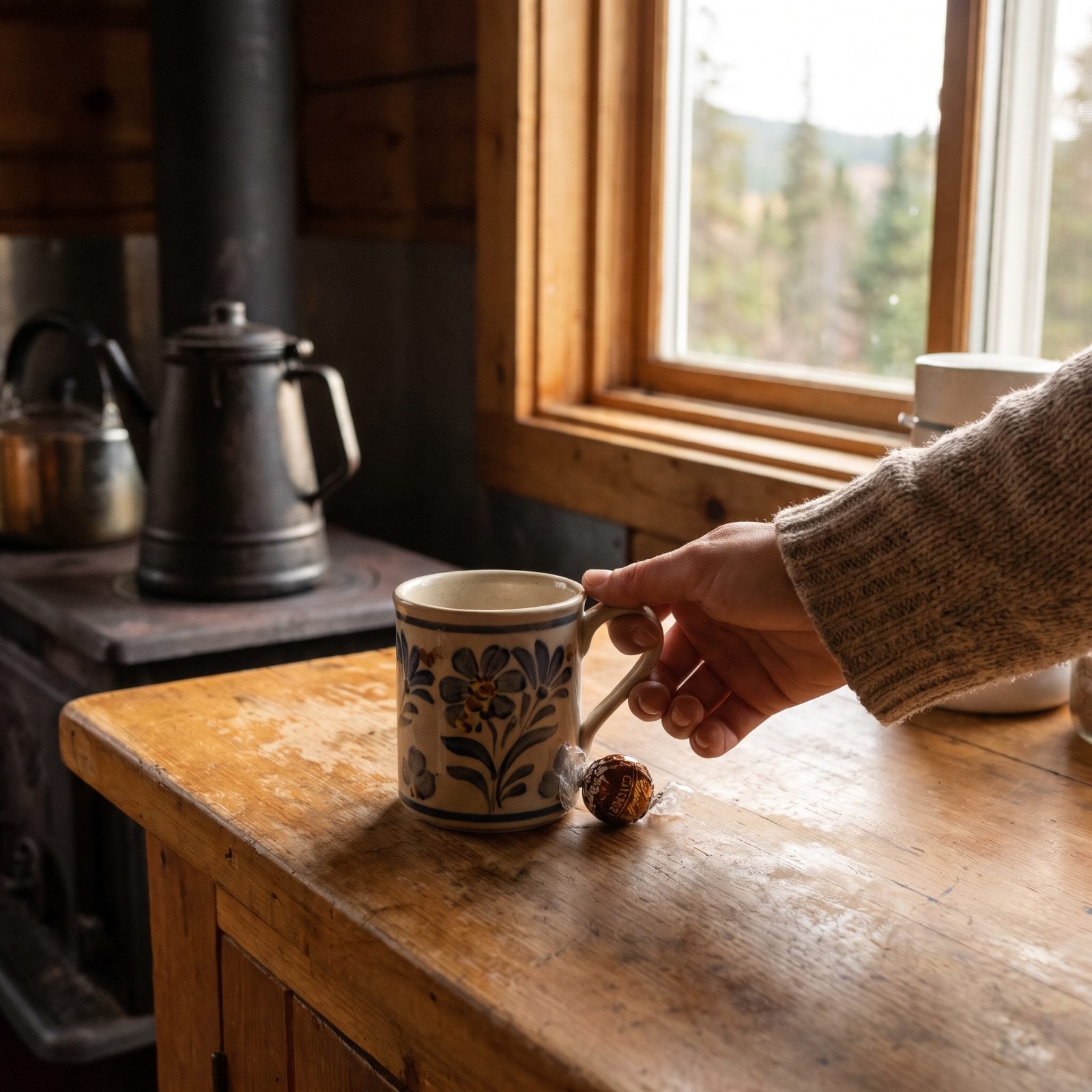
Last one up at night hides a small treat for the first one up in the morning — a chocolate, a good pastry, the last clementine. Whoever stumbles into the cold kitchen first and lights the stove gets a tiny reward for the privilege.
It makes the brutal early shift, the one who has to get the fire going again, feel chosen instead of cursed. Small bribe, big effect. And there’s something sweet about the house taking care of whoever’s brave enough to face the dark first.
8. Put Tomorrow’s Socks Near the Stove Before Bed
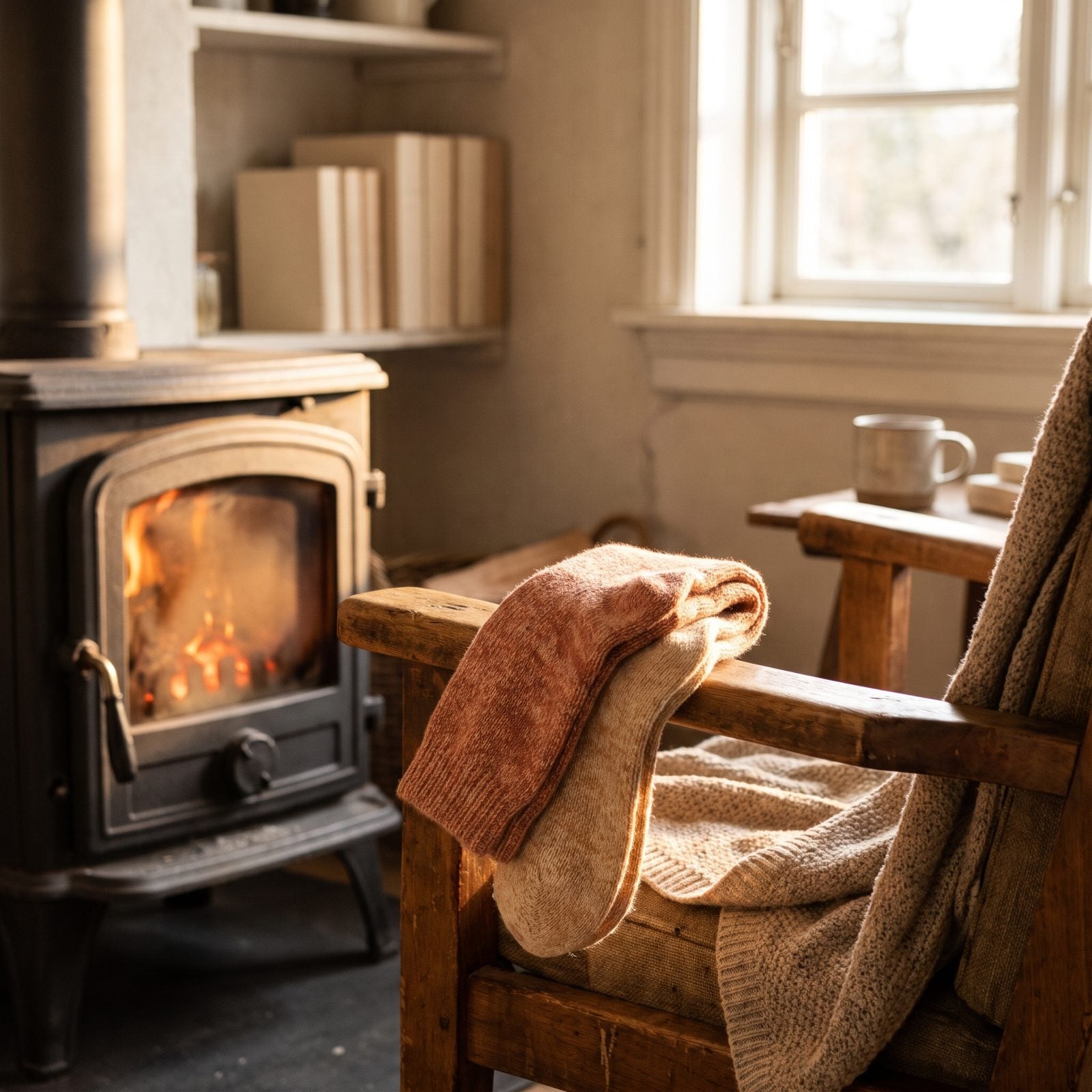
Cold socks at 6 a.m. are a small cruelty you can skip entirely. Set tomorrow’s pair on a chair or rack a couple feet from the stove the night before, and they draw warmth all night without ever getting hot enough to matter.
The trick isn’t the heat — it’s the ambush you avoid. Nobody wants to pull on stiff, clammy wool before the fire’s even going. Warm socks make the whole morning feel like it’s on your side.
7. Fill Hot-Water Bottles Before the Fire Burns Low
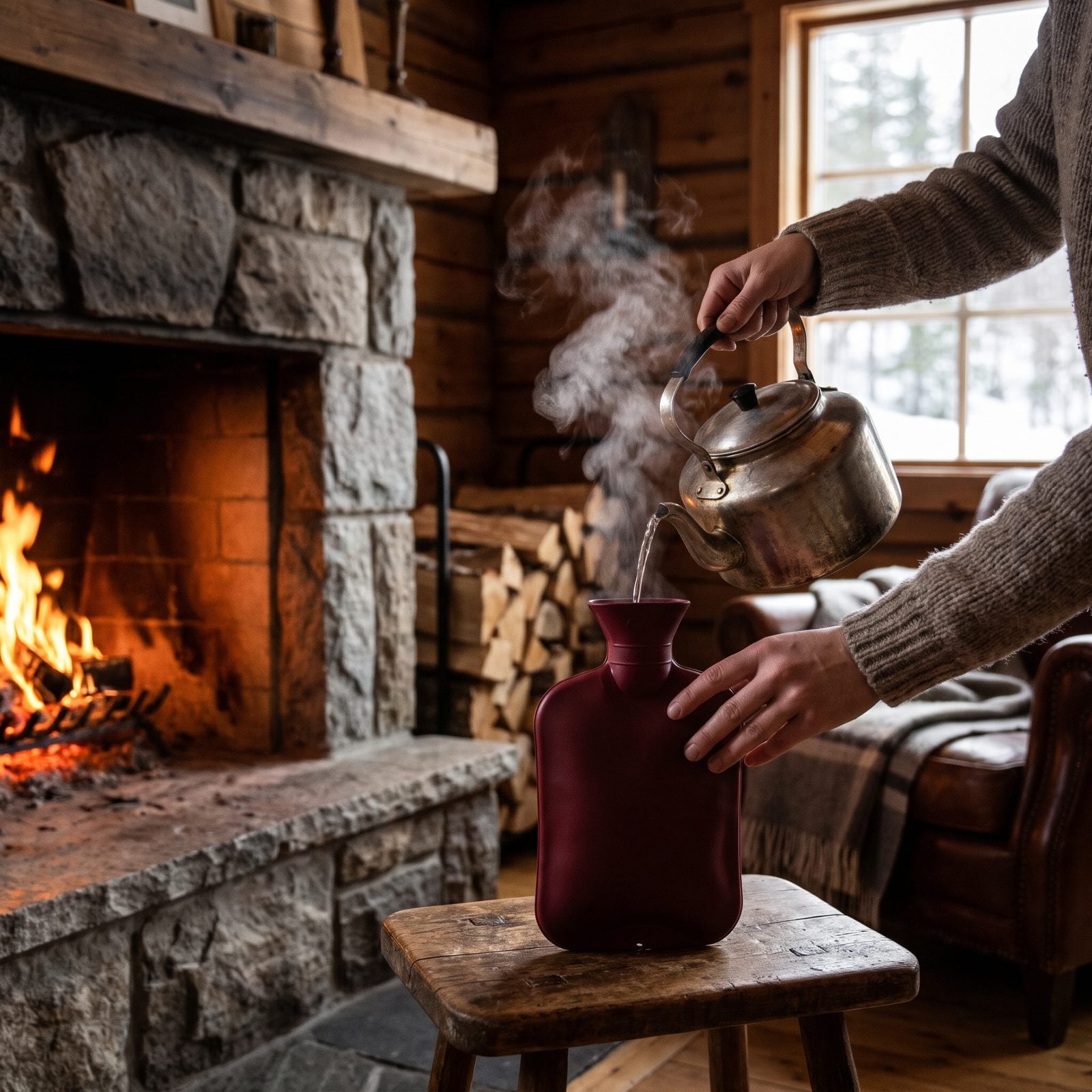
The water’s hottest while the fire’s still roaring. That’s your window. Fill the bottles then — not at the dead end of the night when the kettle’s gone lukewarm and you’re too tired to stoke the coals back up.
Tuck a wool-covered bottle under the covers twenty minutes before you climb in, and you slide into warmth instead of manufacturing it with your own shivering body. In a cabin where the fire dies to embers around 2 a.m., that bottle is still holding heat at dawn. I’ve woken up and found mine barely cool, which feels like a small win every single time.
6. Rotate the Warmest Seat Without Discussing It
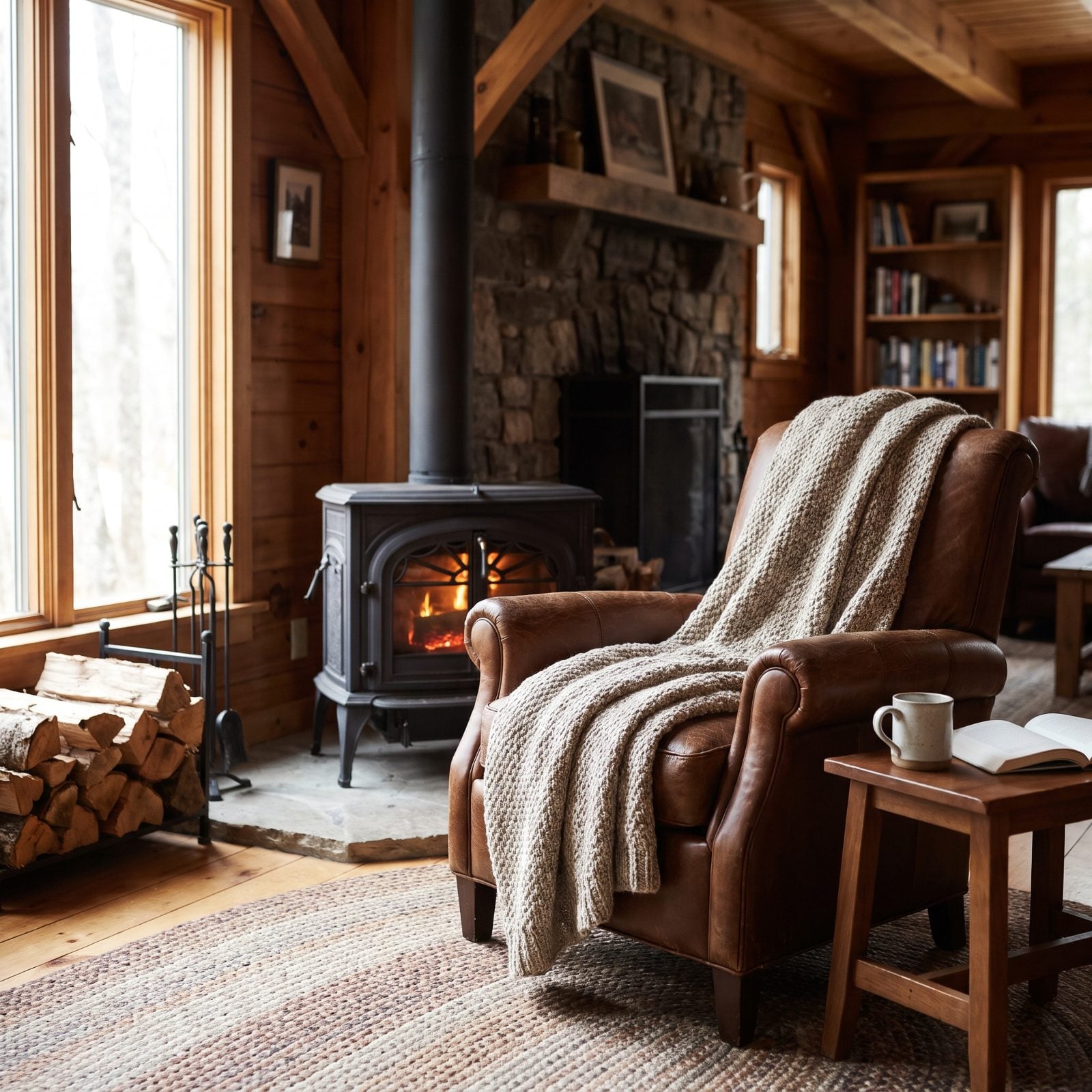
Every cabin has the good seat — the one closest to the stove, catching the most heat and holding it in the cushion. And every cabin has an unspoken rule about it, or it ought to.
The ritual is simple. You get up to add a log or refill a mug, and when you come back you take the next chair over. No announcement, no martyrdom. Over a long snowed-in afternoon everybody cycles through the warm spot without anyone keeping score or planting a flag in it. Call it generosity disguised as laziness, which is the only kind that lasts a whole weekend.
5. Clear One Porch Path Before Breakfast
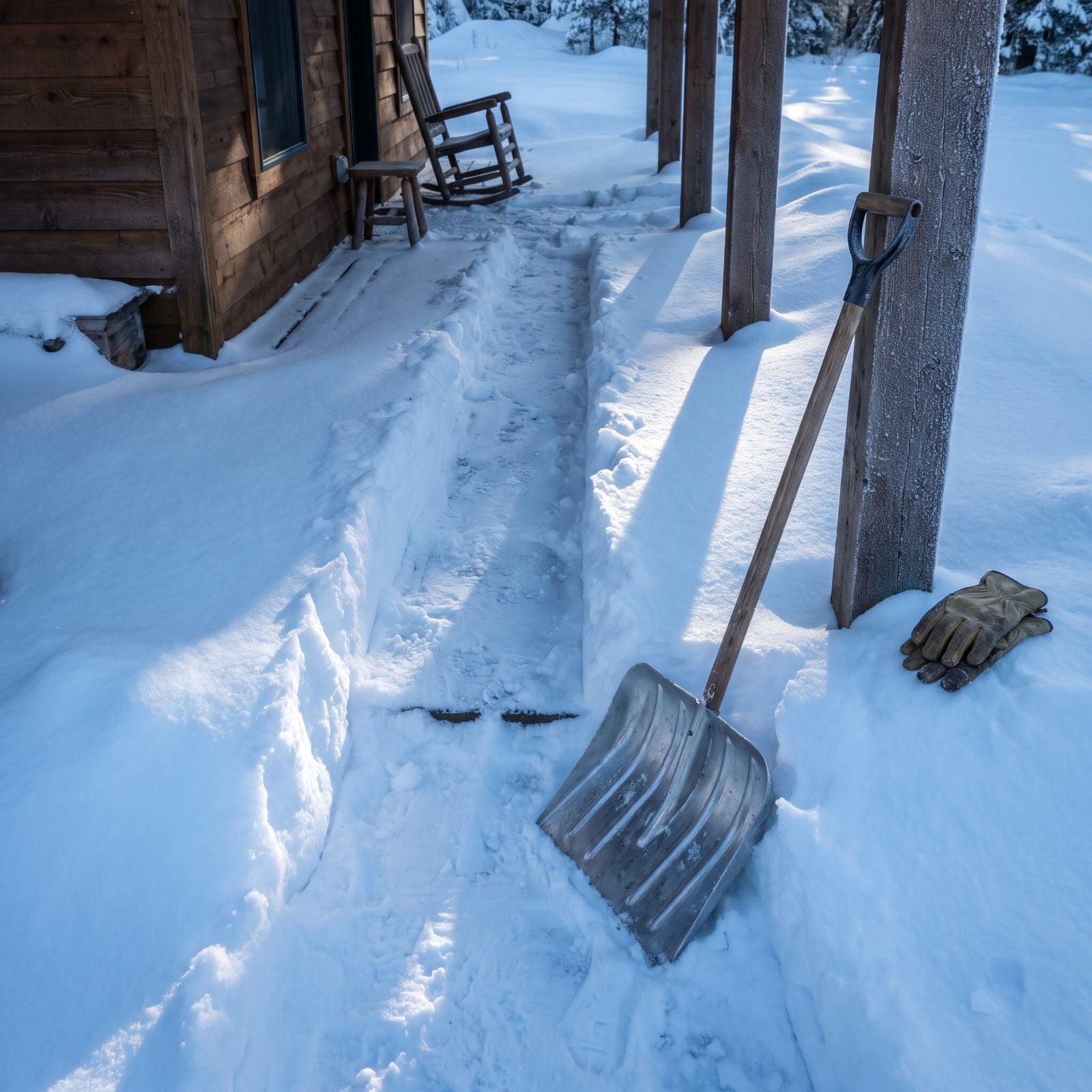
Don’t wait until you’ve got a full day’s accumulation and a bad back to deal with. Cut one clean path from the door to the steps first thing, before you’ve even had coffee, and you’ve solved the real problem of being snowed in: getting out safely if you need to.
Five minutes when it’s a few inches. Forty and a sore shoulder when it’s a foot. And a clear path means nobody slips carrying firewood or a hot thermos.
4. Pack a Thermos Before the Morning Wood Run
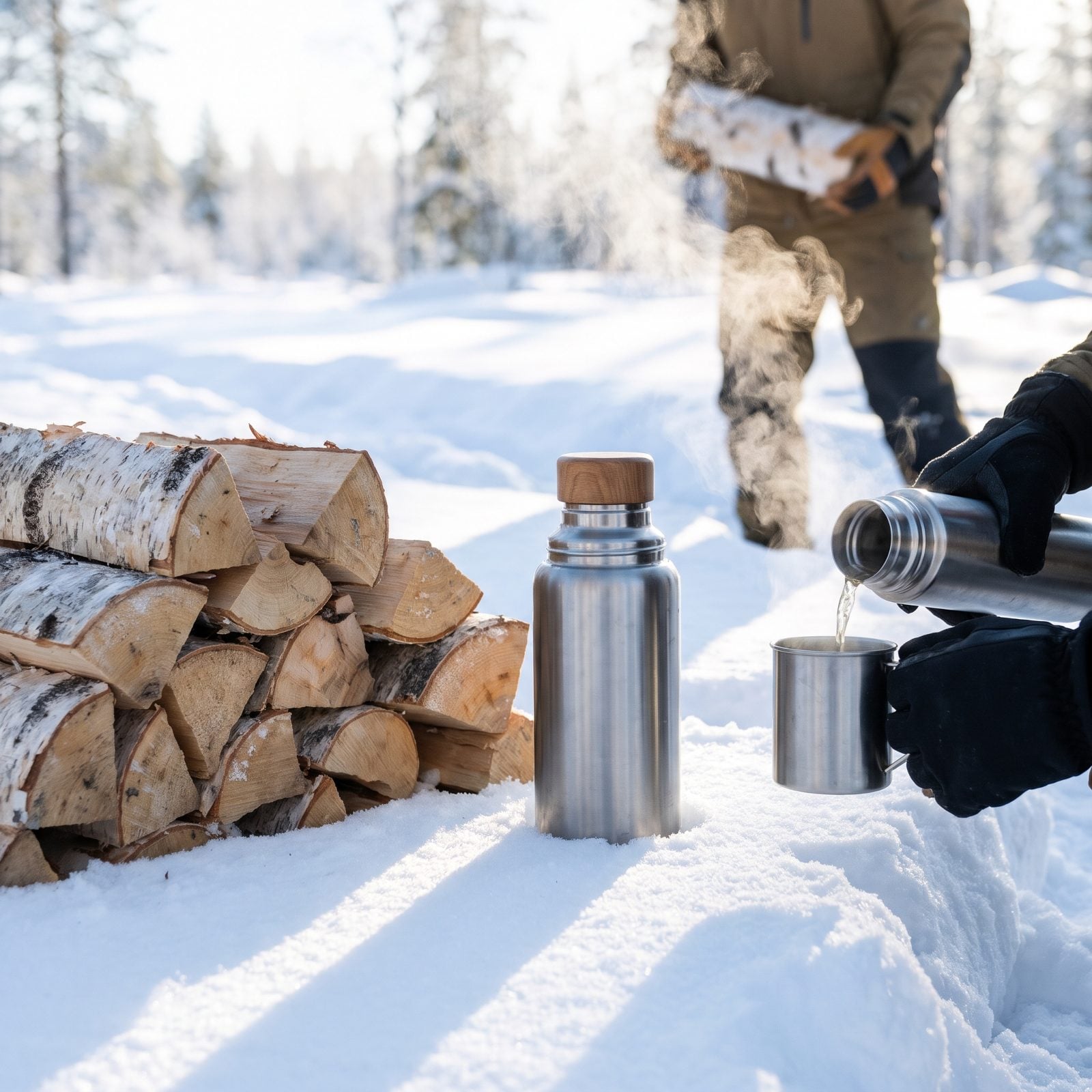
Hauling wood in deep cold is honest work, and honest work deserves a reward waiting for it. Fill a thermos with coffee or tea before you pull your boots on, set it where you’ll pass on the way back, and the whole chore gets a finish line.
There’s a reason this one sticks. You go out, you fill the log carrier, your fingers go numb — and then there’s hot coffee thirty seconds from the door instead of a cold kitchen and a kettle you still have to boil. Small loop, closed well.
3. Make a Tiny Outdoor Lantern From Ice
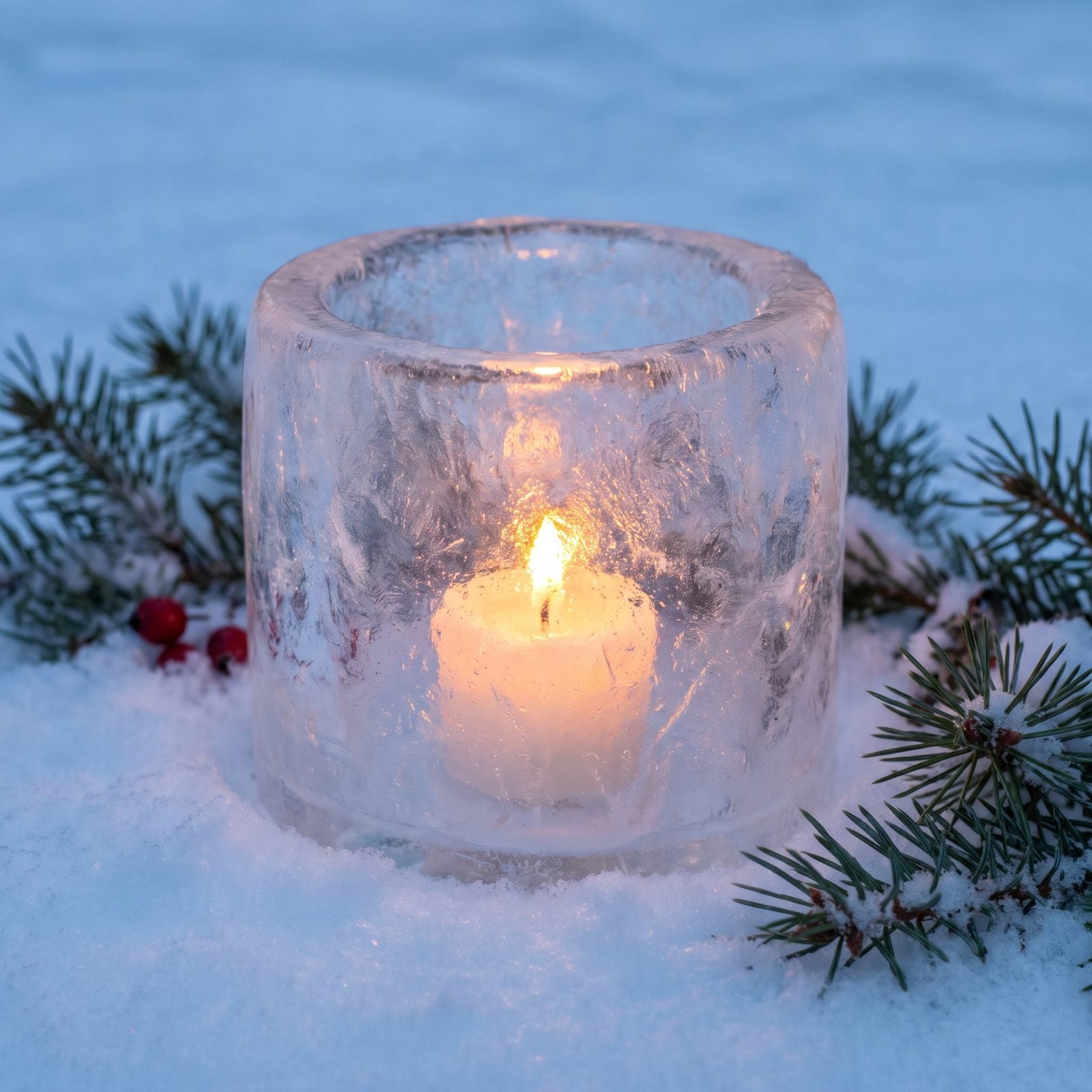
This is the one that turns a kid into a believer, and most adults too. Fill a bucket most of the way with water, let it freeze until the outer shell is solid but the center’s still liquid, then pour out the unfrozen middle and flip it. You’re left with a hollow ice dome.
Drop a tea light inside and set it on the porch rail at dusk. The flame glows amber through an inch of ice while snow falls around it. It costs nothing, it uses the one thing winter hands you in excess, and it’ll outlast the candle on a cold enough night.
2. Take One Silent Walk During Active Snowfall
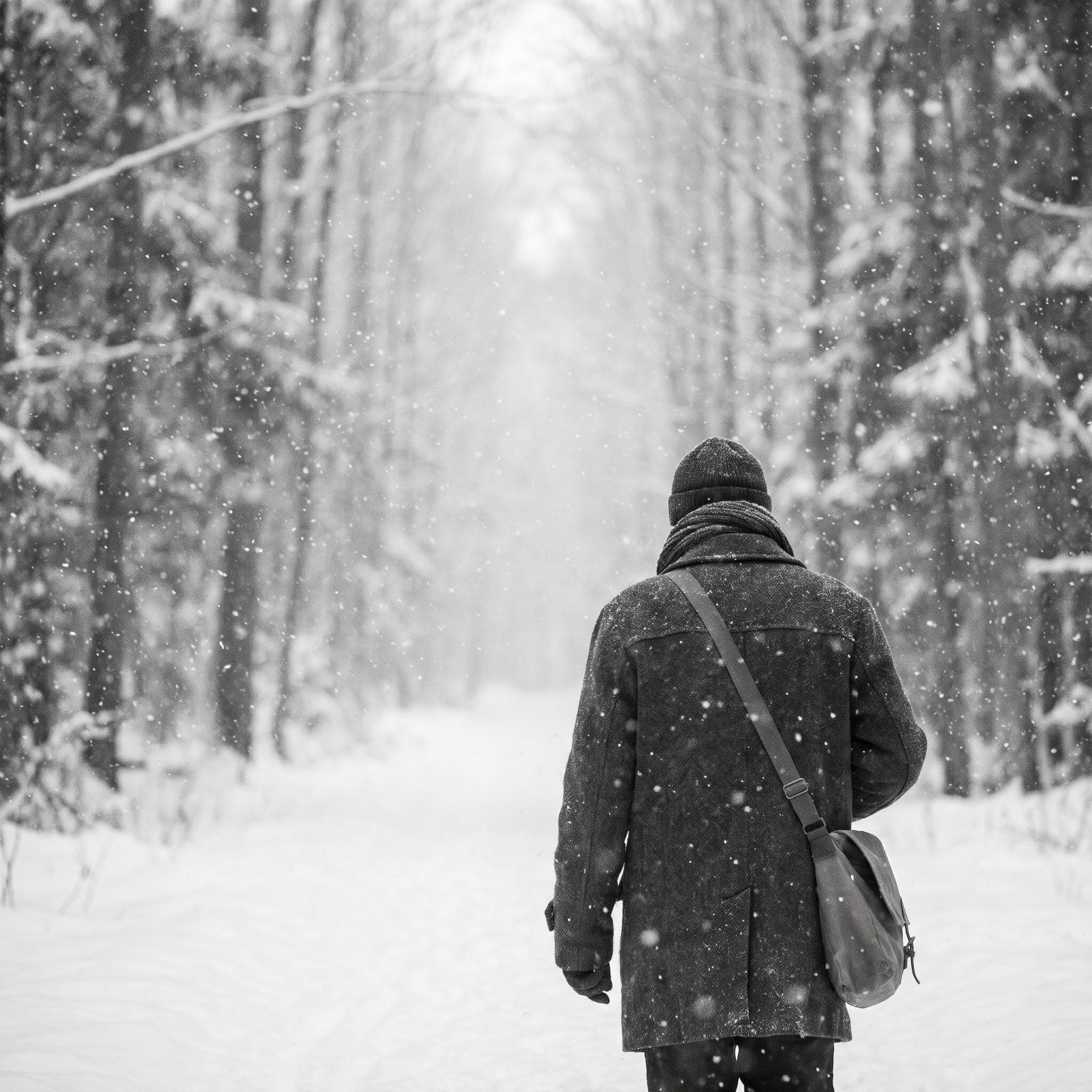
Active snowfall does something to sound. It swallows it. Step out while it’s actually coming down and the whole world goes to that muffled hush where your own breath is the loudest thing out there.
Make the rule that this walk is silent — no talking, no phone, no agenda, just you and your boots in fresh powder and that strange acoustic padding only a heavy snow makes. It’s the closest thing to free quiet you’ll find all winter, and twenty minutes of it resets something you didn’t know had gone tense. Come back and the cabin feels twice as warm by contrast.
Explaining why a snowfall goes so quiet, a meteorologist says “Rather than bouncing off a hard sidewalk, for example, sound waves are absorbed by a porous layer of snow, very similar to how commercial products like foam can reduce sound.”
1. End the Final Night With a Stove-Top Popcorn Batch
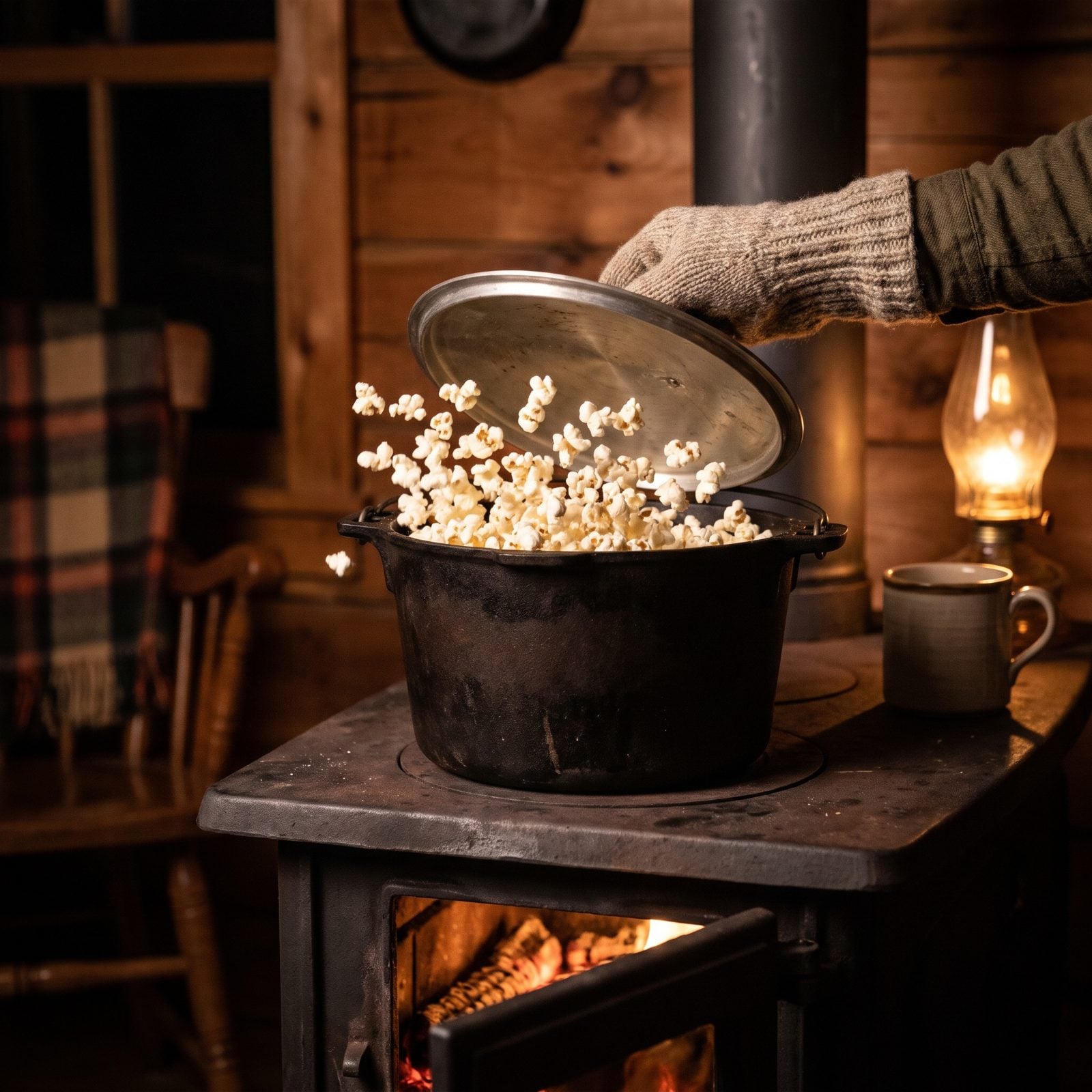
The last night asks for a send-off, and a stove-top popcorn batch is exactly the right size of one. A heavy pot, a little oil, kernels, and the heat the stove’s already throwing. No microwave, no bag — just that slow rattle building to a frenzy and the smell filling the whole room.
It lands better than anything you could’ve bought because it marks the weekend as over in a way that feels earned instead of sad. Everybody crowds the stove. Somebody burns a batch. You salt it and pass the bowl. That’s the memory that comes back next winter when you’re booking the cabin again.