
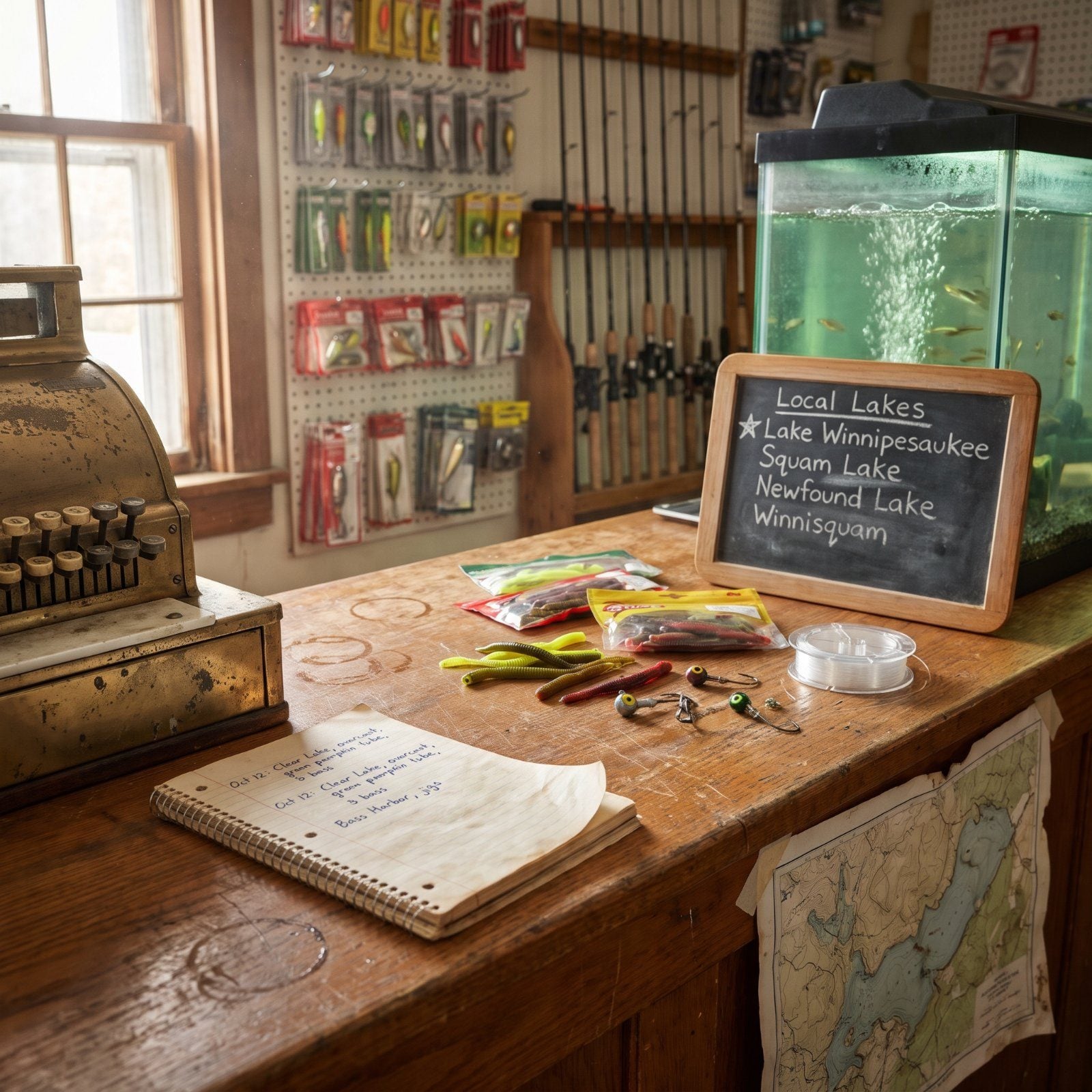
There’s a jar of pickled eggs on the counter and a chalkboard behind it with four lakes listed and a crude star next to one of them. You already know the place. Fluorescent hum, the gurgle of a minnow tank, a guy at the register who has forgotten more about this county than you’ll ever learn. Independent tackle shops run on a code most anglers never crack, and the prices mean something while the advice carries a price too — just not the one on the tag. Spend a little time learning how these places actually work and you’ll leave with better gear, better spots, and a whole lot less wasted gas.
Please note that some of the images in this article were created with the assistance of AI.
34. The Cheapest Purchase May Unlock the Best Local Advice
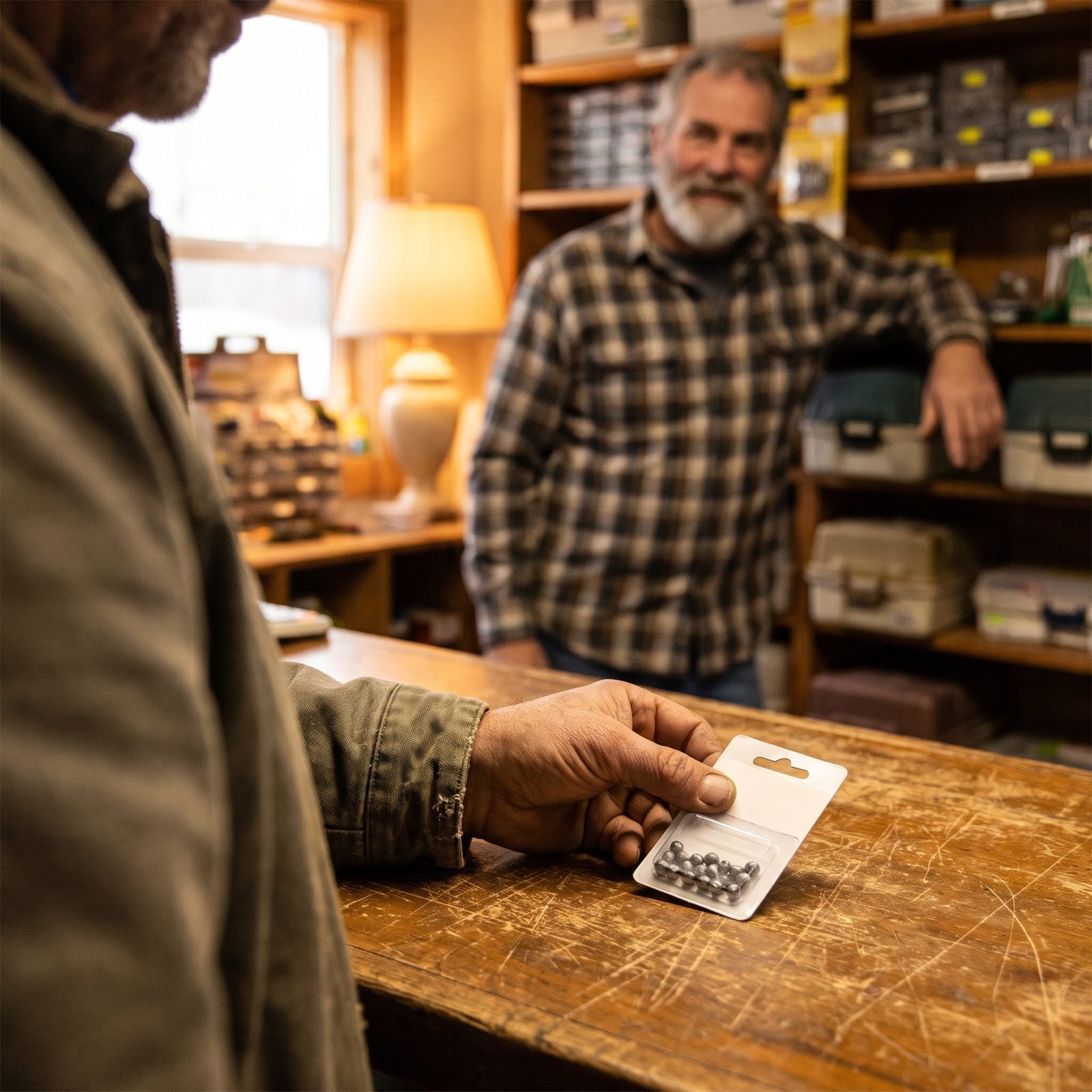
Walk in, buy a dollar pack of split shot, and watch what happens. The guy behind the counter relaxes. You’re not a tire-kicker now — you’re a customer, and customers get the good stuff. Tiny transaction, enormous goodwill.
I’ve pulled more honest water-temperature talk and more real spots out of a two-dollar purchase than I ever did off a forty-dollar one. Big spenders get sold to. Small, genuine buyers get talked to, and that gap is worth knowing.
33. The Best Fishing Report Often Comes With One Crucial Detail Missing

They’ll tell you the fish, the lure, the color, even the depth. What they leave out, nine times in ten, is the exact spot — and not to be cruel. They’re protecting the regulars who feed them that intel in the first place.
A good report gets you to the right lake at the right time with the right bait. The last piece, the precise bank or point, you earn with your own effort over a few seasons. Treat the vague part as a feature. It means the information was real enough to be worth guarding.
32. Specific Questions Get Better Answers Than “What’s Biting?”

Ask “what’s biting?” and you get a shrug and a generic answer, because you’ve given him nothing to work with. But ask “are the crappie still staged on the brush in twelve feet, or have they pulled up shallow yet?” and the whole thing opens up into a real conversation.
Specific questions prove you know enough to use the answer. That changes everything. The person behind the counter stops managing you and starts helping you, because now there’s a point to it.
31. Regular Customers Usually Get More Precise Spot Advice

Spot advice gets better the more they know you. A stranger gets the lake. A regular gets the ramp, the point, and the little trick that makes it all click. Call it trust running both ways — they know you won’t blow up their quiet water on social media by Friday.
Show up more than once. Buy your line and your hooks there instead of online, and report back on how you did. The relationship compounds like interest, and the payout is intelligence you simply cannot buy.
30. A Map Purchase Can Produce Better Intelligence Than an Interrogation

Lay a lake map on the counter and ask “if you had two hours Saturday morning, where would you start on this?” Watch the pencil come out. A map turns a vague request into a shared problem, and suddenly you’re both leaning over contour lines instead of staring each other down.
Buying the map does two jobs. It gives the conversation a surface to happen on, and it tells the shop you’re serious enough to invest in understanding the water. Funny thing — people will mark a spot on a chart they’d never say out loud.
29. Fresh Bait Usually Arrives on a Predictable Schedule

Shiners, crawlers and crickets don’t just show up whenever. Most shops take delivery on set days, often midweek, and the bait you buy on delivery morning is a different animal from the stuff that’s been circling the tank since last Thursday.
Ask when the truck comes. Nobody minds the question, and timing your trip to it means lively bait that actually swims instead of a bag of tired, belly-up shiners.
28. Live-Bait Quantities Are Not Measured Identically at Every Shop

A “scoop” of minnows at one shop is not a scoop at the next. Some count by the dozen, some by the dip of a specific net, some just eyeball a generous handful into your bag. Price-per-fish swings wildly, and the only way to know is to watch and ask.
I’ve handed over the same money for forty shiners at one place and maybe eighteen at another. Neither was cheating me. They just measure differently. Learn which shop runs generous and plan your bigger bait needs around it.
27. Not Every Lure at Eye Level Earned That Position
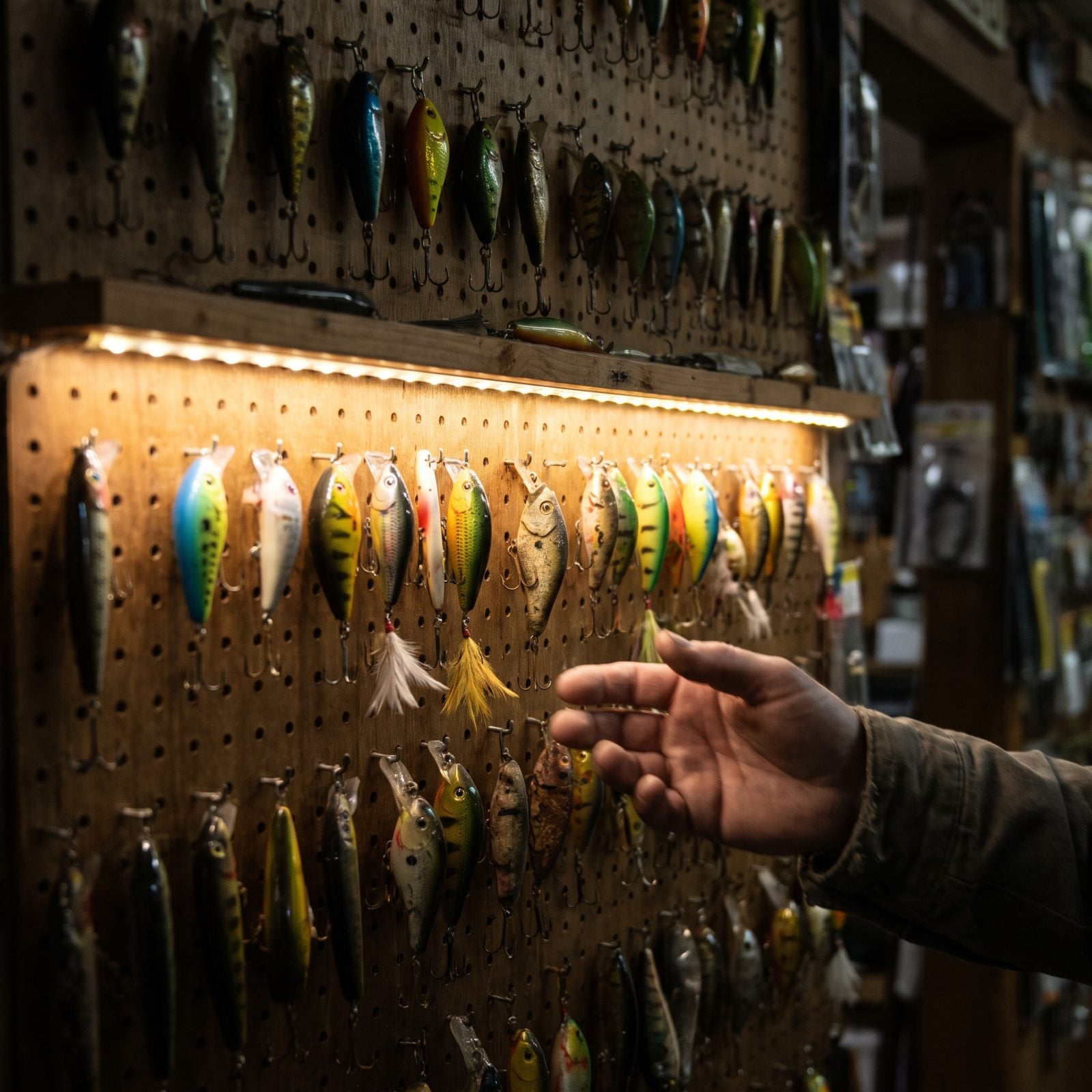
The lures at eye level aren’t necessarily the ones that catch the most fish. That’s prime retail real estate, and it often goes to whatever carries the best margin or came bundled in a dealer deal. The genuine workhorse baits? Frequently down low, up high, or buried in a dollar bin that never gets dusted.
Ask the person behind the counter what they personally tie on when they go. The honest answer is almost never the fanciest package in the glow spot. It’s usually some plain, ugly thing they’ve trusted for years.
26. High-Margin Accessories Help Keep Small Shops Open

Line, leader, hooks, swivels, scent, floats — the small stuff by the register carries the fat margins that rods and reels never will. Nobody’s playing a trick on you. That’s just the economics of a shop staying alive in a world of online discounters.
So here’s the trade worth making. Buy your consumables there even when they run a buck more than the big-box option. That extra dollar funds the aerated tank, the local reports, and the guy who tells you where the fish are. Starve it and the shop closes, and then you’re buying everything from a warehouse with no soul and no spot advice.
Explaining why he always buys something at local shops, a veteran bass fishing writer says “I recognize that their margins are small. I understand that the online and big box competition is brutal.”
25. The Dusty Package May Hold a Discontinued Favorite
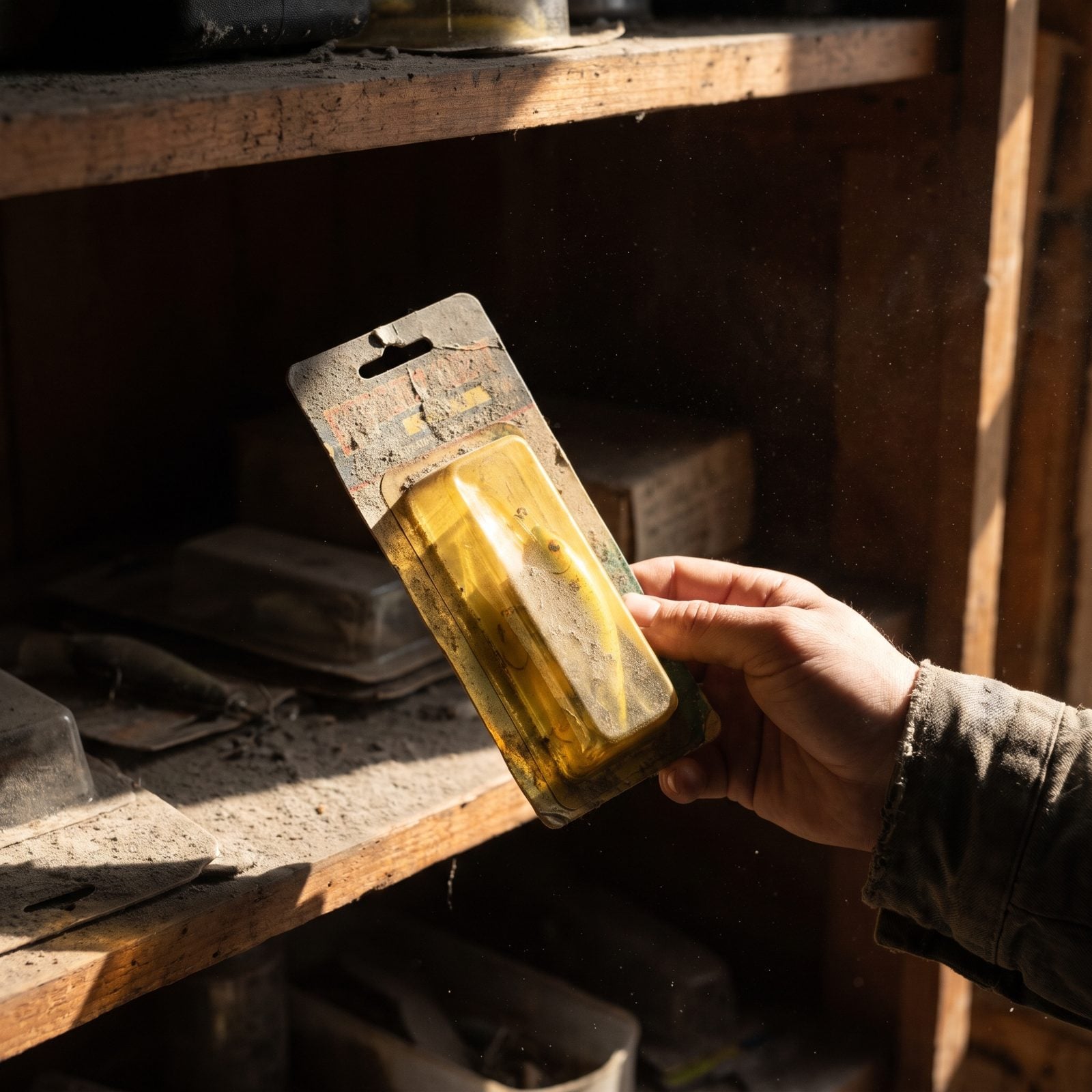
That dusty package jammed on the bottom shelf might be the exact lure a manufacturer stopped making a few years back — the one the forums beg for and nobody can find. Old stock in a small shop is a time capsule. The owner just never cleared it out.
Dig through the forgotten corners. Ask if there’s a back room. I’ve turned up discontinued colors and models gathering dust that I’d have paid triple for online, sitting there at the original marked price because nobody thought to look down. Go poke around. The real finds hide where the light doesn’t reach.
24. A Hot Local Color Can Change From One Lake to the Next
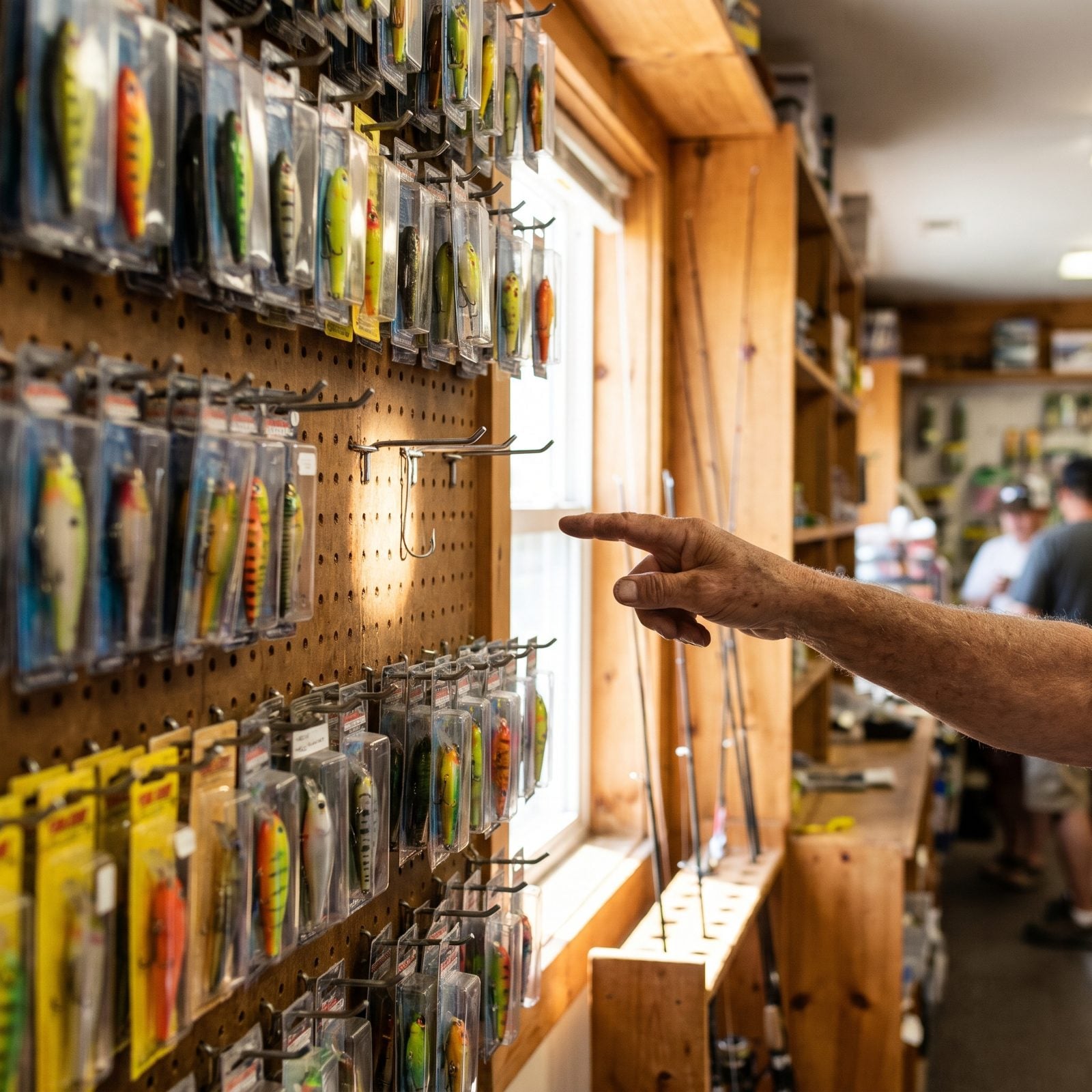
Ask the kid behind the counter what’s catching, and the honest ones point at the empty hooks. That gap in the peg wall is the real fishing report, because the worm color that empties out by Friday is the one the lake is eating this month.
Here’s the catch: it’s hyper-local. Green pumpkin can be gospel on a stained reservoir forty minutes away and dead weight on the clear lake across the county line. Water clarity, forage, the angle of the light — all of it shifts the answer. Magic in one basin, just plastic in another.
23. Employees Notice Which Lures Regulars Replace Most Often
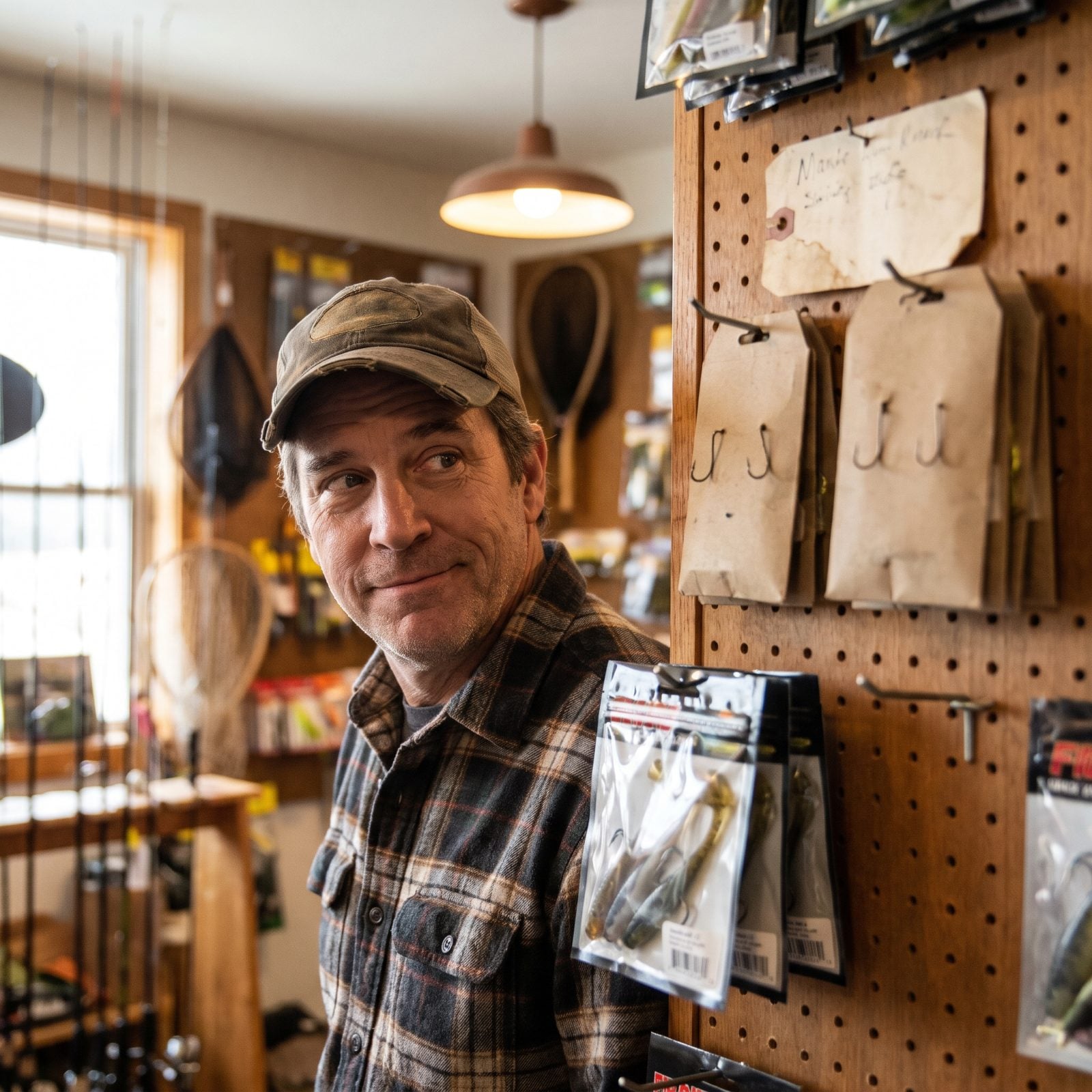
The lures people keep coming back to buy aren’t the ones they brag about. They’re the ones that snag, break off, or get bitten clean on a good day. Counter folks see the churn — a certain jighead, a particular topwater, one crankbait in one size that moves fast because it gets used hard and lost often.
That reorder pattern tells you two things. The bait works, and it works in a spot where you’ll pay for it in retail. So buy a few spares at once. Driving back for a replacement during a bite is how a Saturday gets ruined.
22. Tournament Weekends Can Distort What Appears Popular

A cleared-out shelf during a derby doesn’t mean the lake has fallen in love with that bait. It means fifty guys read the same forum thread, drove in the night before, and grabbed the same thing out of nerves.
Tournament spikes are a crowd buying insurance, not intelligence. The bait that vanishes before weigh-in is usually just the one that got talked up Thursday night. Come back Tuesday and watch what the local sticks who fish every day are quietly restocking. That’s the signal underneath the noise.
21. Displayed Rods May Have Been Flexed Hundreds of Times
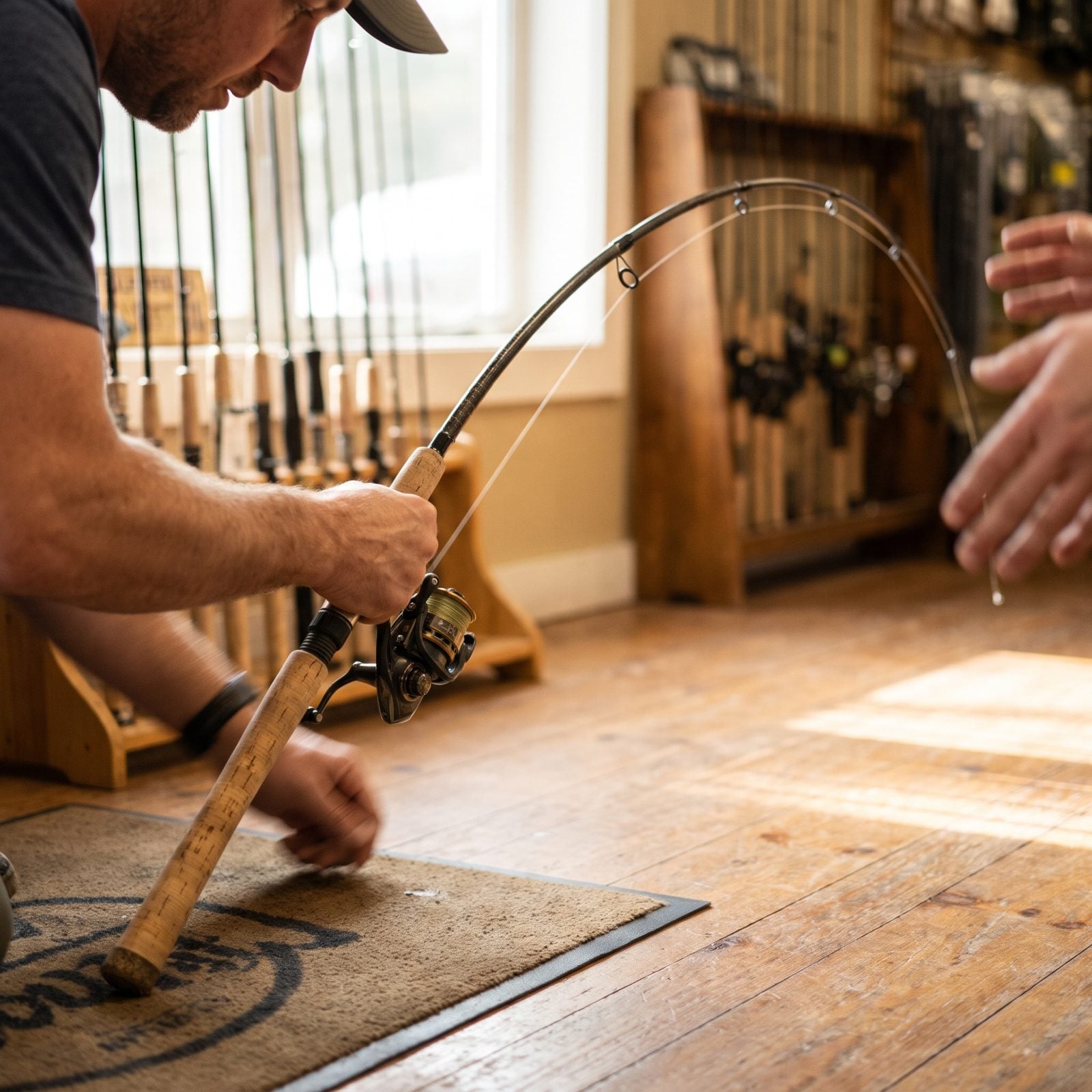
That floor-model rod you keep lifting and wiggling? A hundred other hands did the same thing before yours. Every browser bends it to feel the action, and the cork darkens where thumbs rub. Nothing wrong with that by itself — blanks are built for flex.
But the demo rod has lived a harder life than the one still sealed in the shipping tube. Check the guides for hairline cracks where someone high-sticked it against the ceiling. Run a cotton swab through each one; it’ll catch a cracked insert that would otherwise shred your line all season long. And if the shop has a boxed version in back, ask for it.
20. Rod Warranties Rarely Cover Every Kind of Breakage
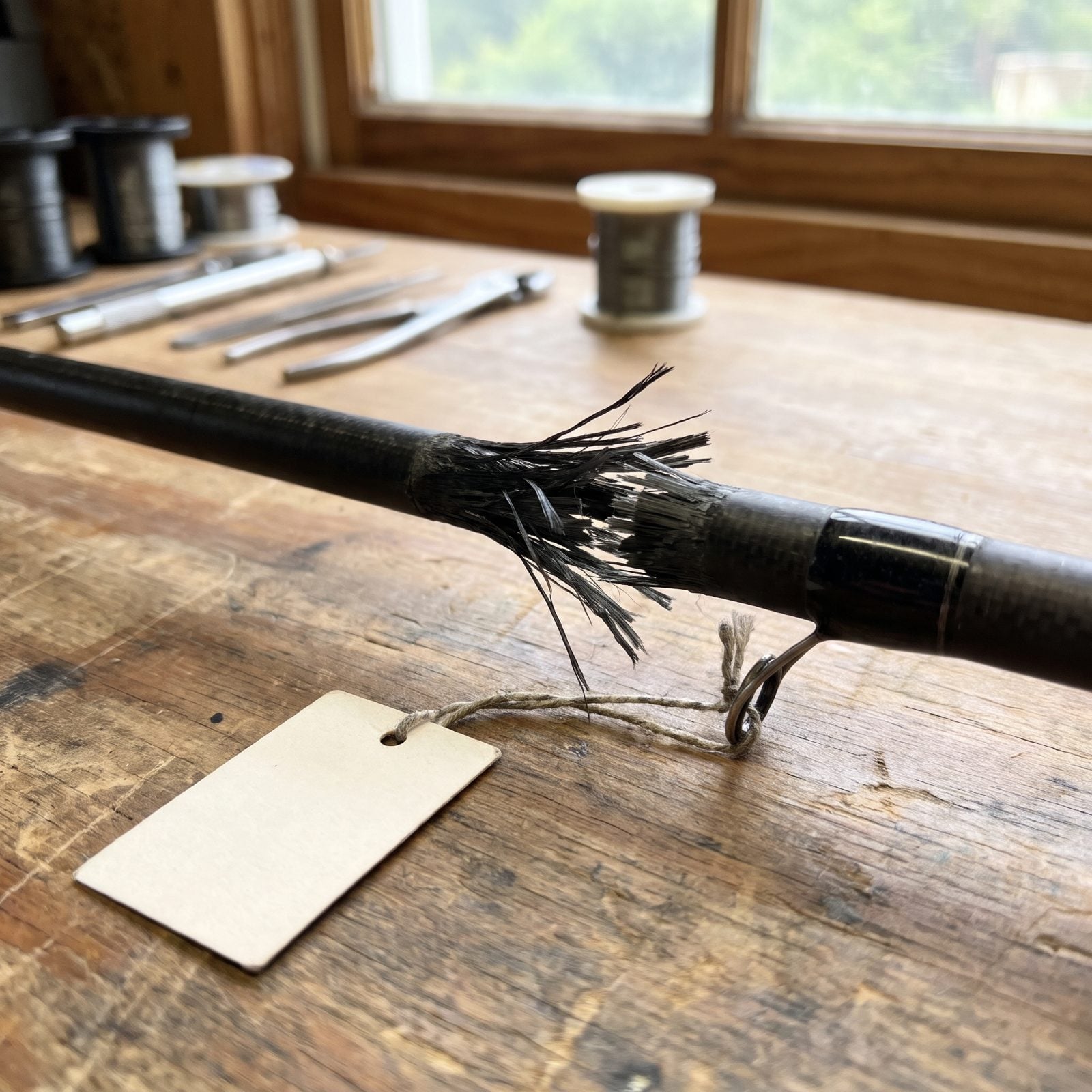
People buy the lifetime-warranty rod thinking it’s armor. It isn’t. Most warranties cover manufacturing defects, not the car door you slammed on it or the ceiling fan that caught the tip. Slam it in the tailgate and that’s on you — the fine print says so.
Say you snap a rod setting the hook. Was it a flaw, or did you lean too hard on a fish of a lifetime? The company decides, and believe me, they’ve seen every excuse in the book. Plenty of them run a replacement-fee program instead of free swaps: you pay shipping plus a flat charge, still cheaper than buying new. Read the actual terms before you assume you’re bulletproof.
19. Floor-Model Reels Deserve a Careful Inspection
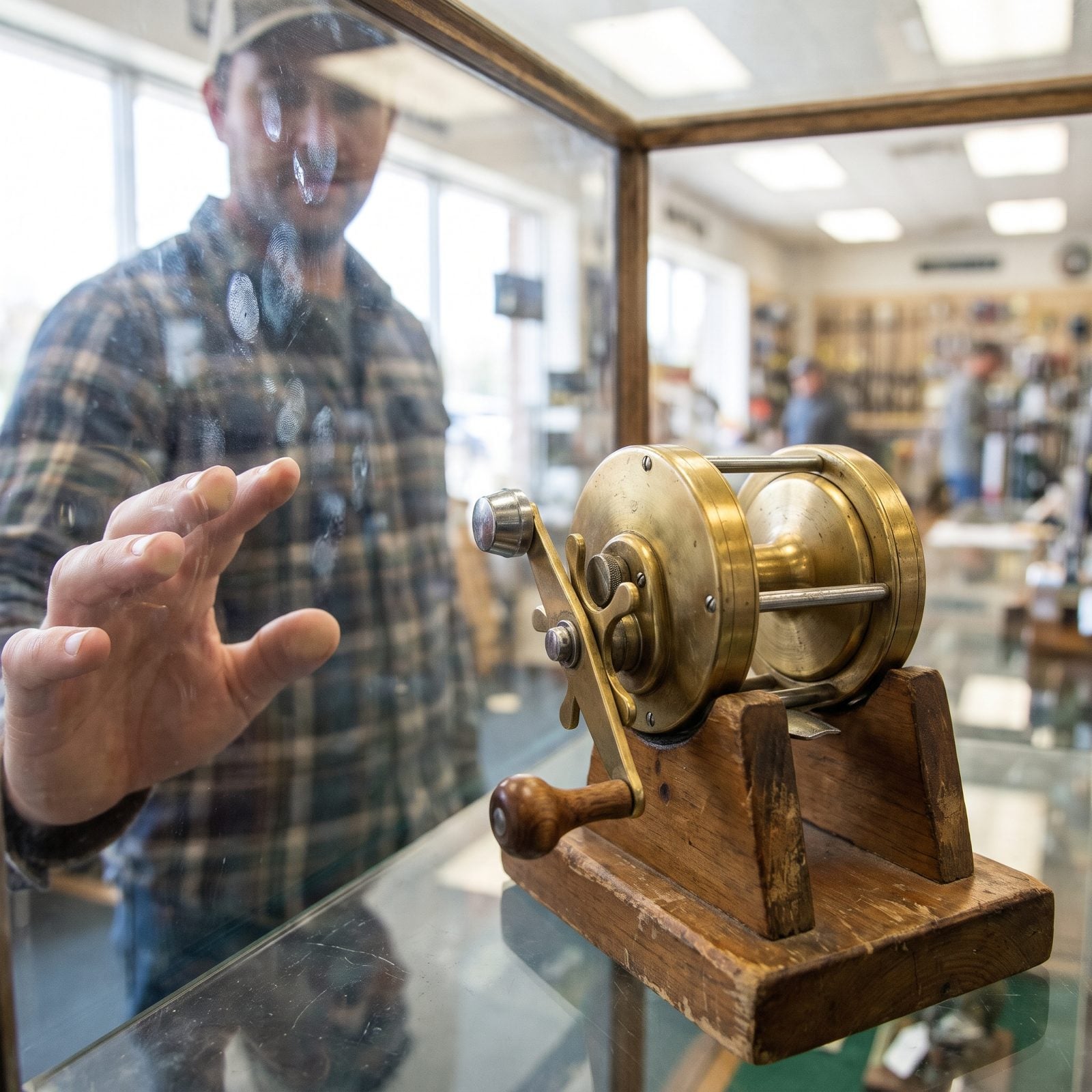
The reel on the display stand sits behind glass smudged with fingerprints from every shopper who leaned in for a closer look. Fine for a showpiece. Less fine when it’s the only one left and the box disappeared months ago.
Ask the clerk to take it out of the case, then spin the spool slow and listen. Grit in the click drag, a wooden handle knob that wobbles, play in the spool when you wiggle it — those are the tells. Pop the spool off and look for a stray hair or thread wound around the spindle. If it’s the floor unit at full price, ask whether there’s a sealed one behind the counter. There usually is.
18. A Reel’s Smoothness Without Load Tells Only Part of the Story
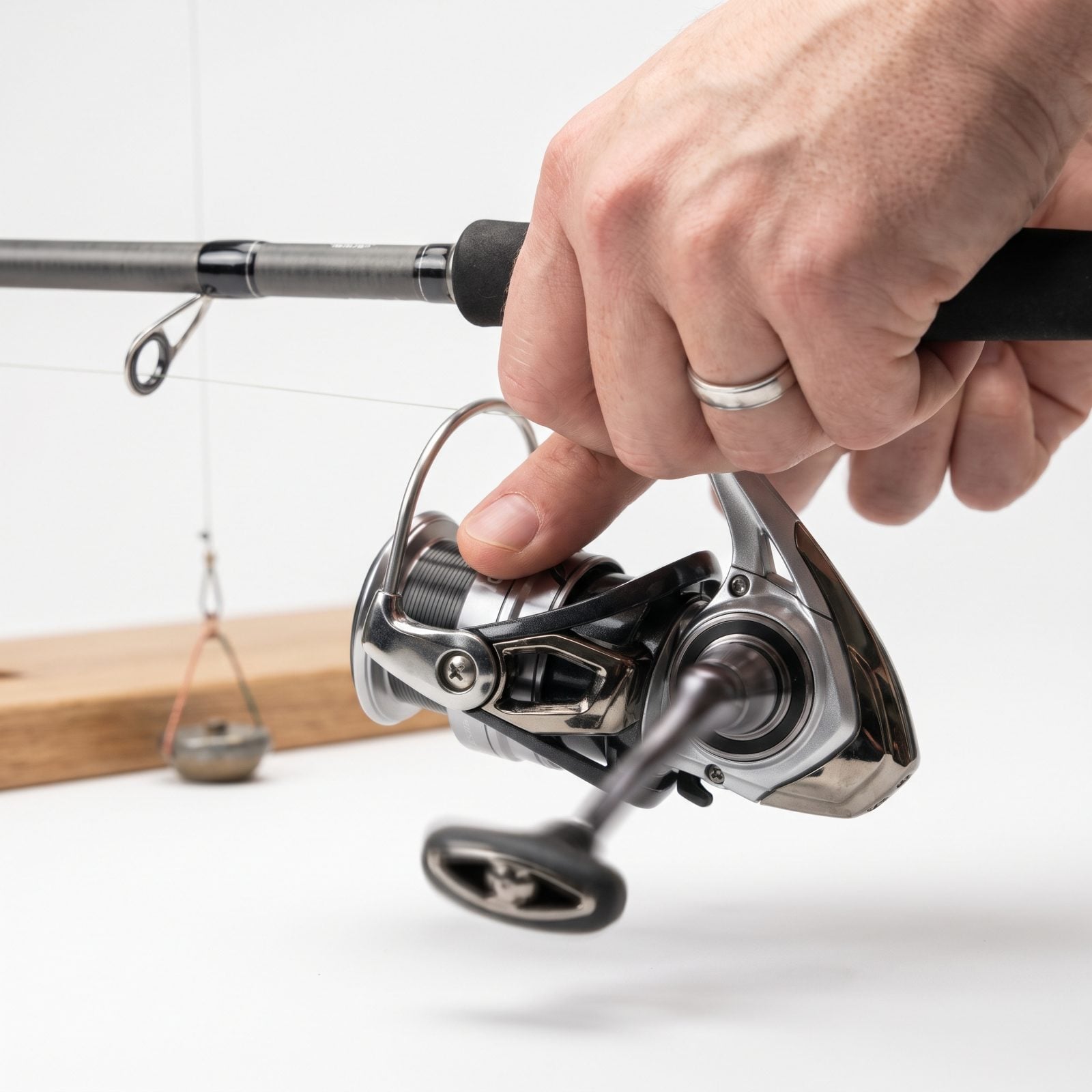
Everybody judges a reel by how buttery the handle spins in the aisle. Free-spin feel is the easiest thing to engineer and the least useful thing to test. A fish doesn’t pull on an empty spool.
What matters is drag under real tension. A reel can turn like silk with no load and still stutter, grab, and surge the second a five-pounder digs. Loop some line around the spool, have a buddy pull against it, and feel whether the drag releases in a smooth steady slide or in jerky starts and stops. That stutter is what breaks you off at the boat. Test the thing that actually fights the fish.
17. The Display Combo May Not Be Perfectly Balanced
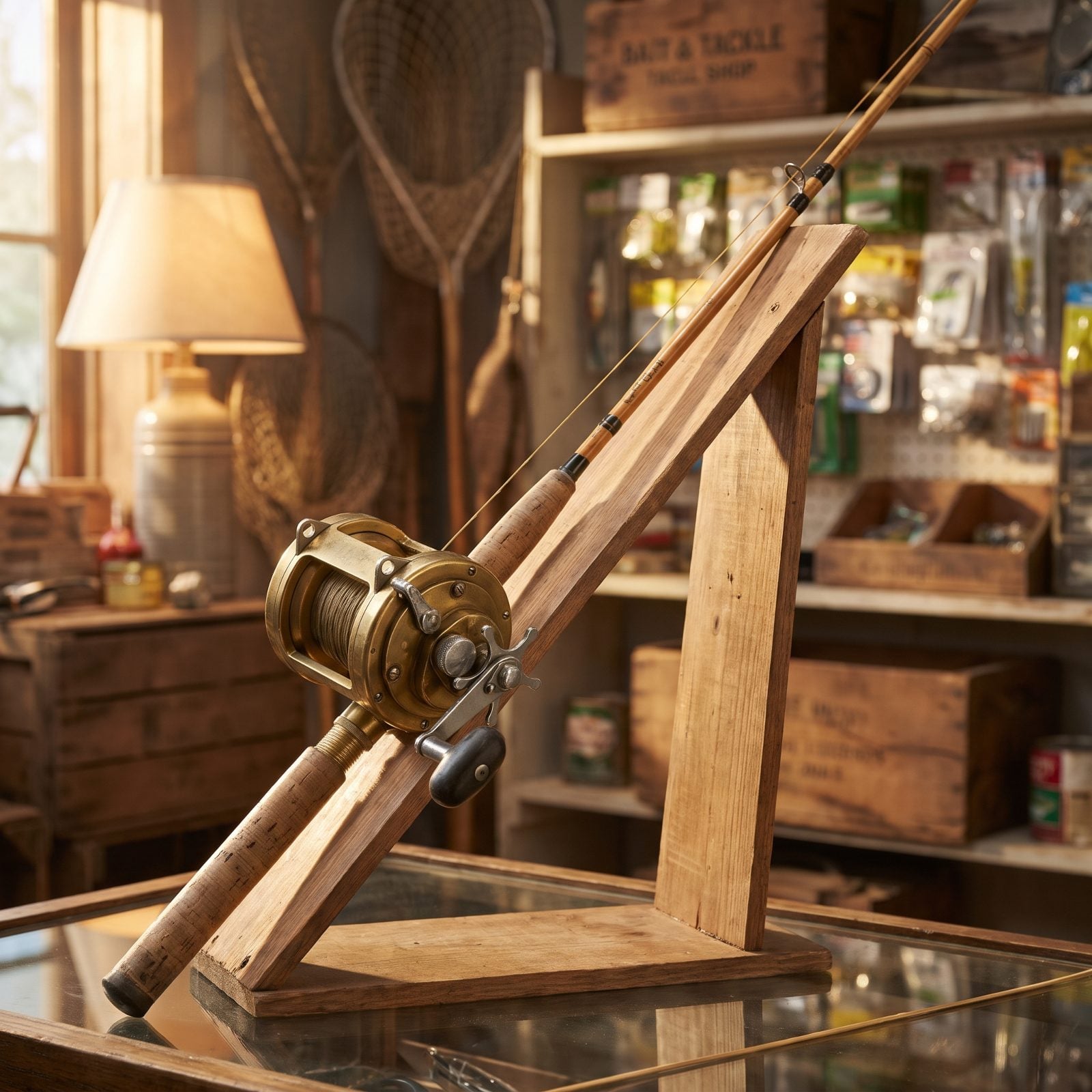
A pre-matched combo looks like a decision somebody made for you. Often it’s just whatever reel the shop had extra of, bolted to whatever rod sat in the same price bracket. Balance is an afterthought.
There’s a cheap test anyone can do. Rest the whole thing on one finger at the front of the reel foot. Hangs level? It’s balanced. If the tip dives for the floor, you’ll feel that dead weight in your wrist after an hour of casting — tip-heavy rods wear you out and cost you accuracy late in the day. Two seconds of checking, or an afternoon of paying for it. Your call.
16. Pre-Spooled Combos Often Use Basic Line
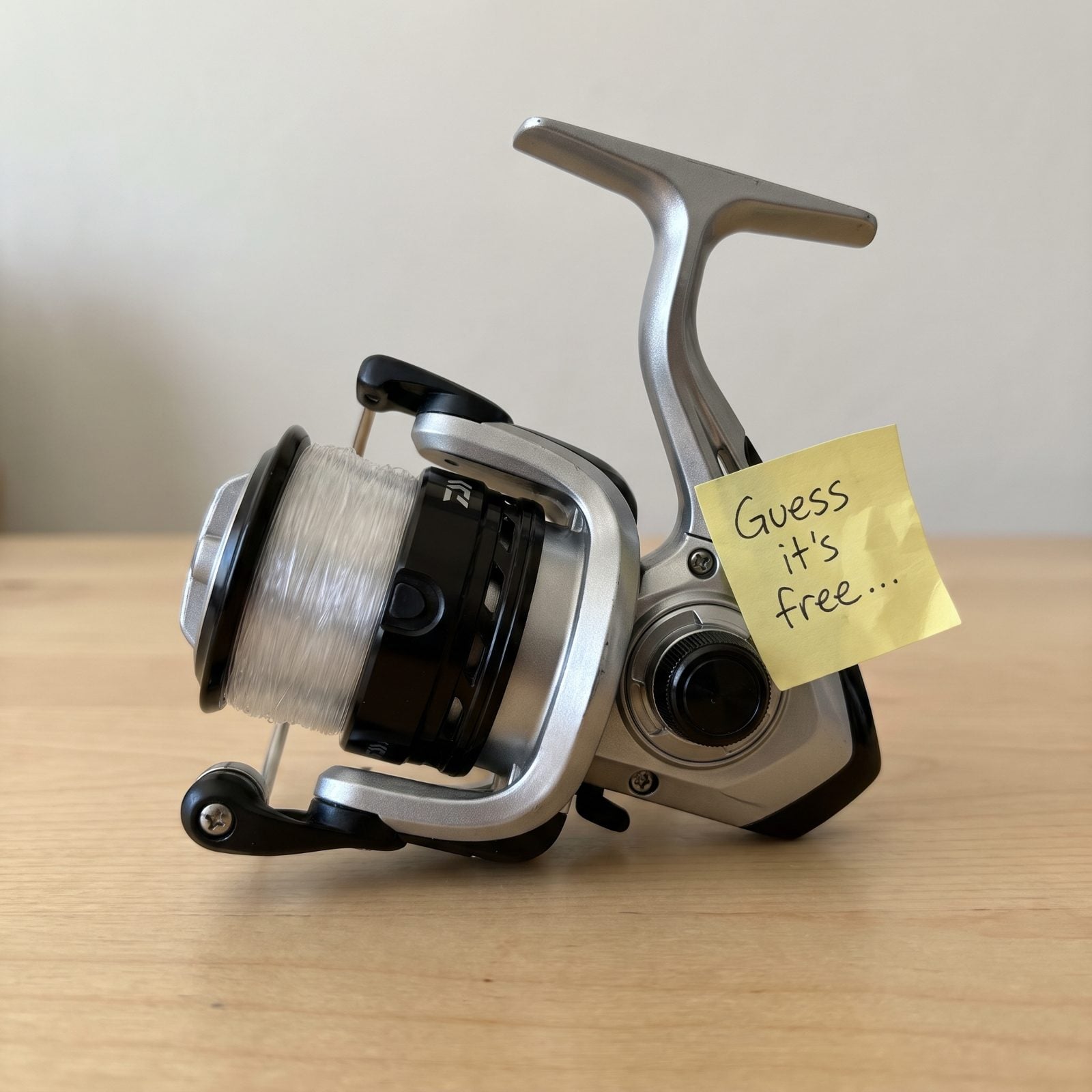
That line already wound on your new combo? Treat it as a free sample, not your fishing line. Factory spooling is almost always the cheapest filler mono the maker can source — it exists to make the reel look ready to fish and little else.
It’s usually old, often memory-coiled from sitting in a warehouse, and rarely rated for what you’ll actually chase. Strip it and respool with line matched to your target before the first trip. The shop will put fresh line on with their spooling machine for a few bucks, and some do it free with the sale. Ask. Worst they say is no.
15. Freshly Spooled Line Can Still Be Installed Incorrectly
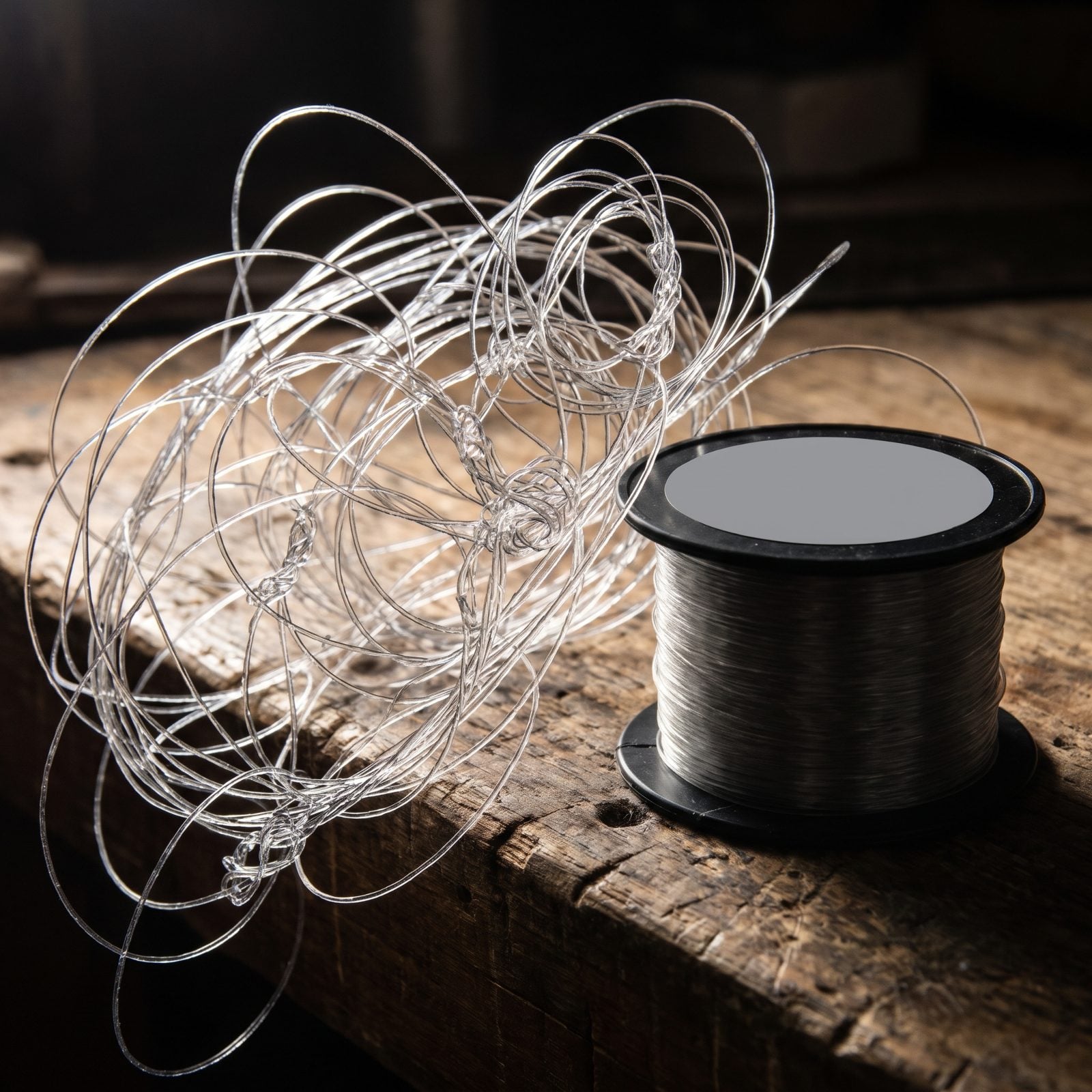
Fresh line is only half the battle. Put it on wrong and you’ve bought yourself a season of twist and wind knots.
The classic mistake is spooling mono onto a spinning reel off a filler spool turning on a pencil through its center, which winds a twist into every wrap. The filler should feed label-up, line coming off the same way it’ll come off your reel. On a baitcaster the orientation flips entirely. A good counter person knows this and checks it; a rushed one doesn’t.
So watch them do it. Ask how they’re tensioning the line. If the answer is a shrug, take your new gear home and respool it yourself with the spool laid right. Twenty minutes on the porch beats a day of untangling on the lake.
In a how-to on spooling spinning reels, an inshore fishing writer warns that line twist can be put on while spooling and calls it a big mistake to face the top of the reel spool at the line spool.
14. Bulk Line Belongs Away From Heat and Sunlight
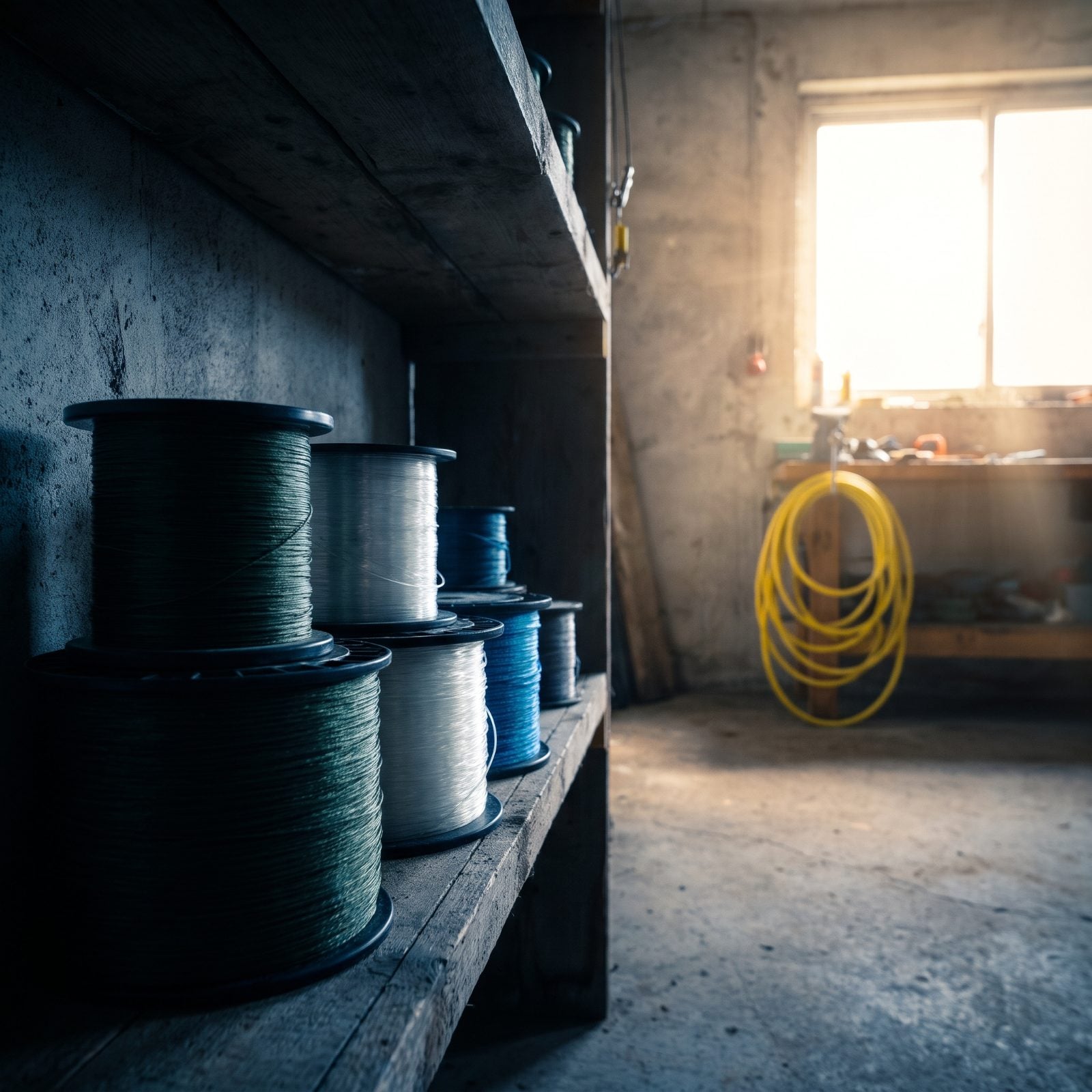
Bulk spools last longest stacked on a dark, shaded shelf, well away from bright windows. Monofilament and fluorocarbon both break down when UV and heat work on them for months.
The line might have been perfect the day it was spooled, but leave it on a sunny truck dash or baking in a hot garage for a season and the chemistry turns on you. It goes brittle, loses its stretch, and snaps right at the knot the moment a fish finally commits.
13. A Quick Knot Test Will Expose Line That’s Already Gone Bad
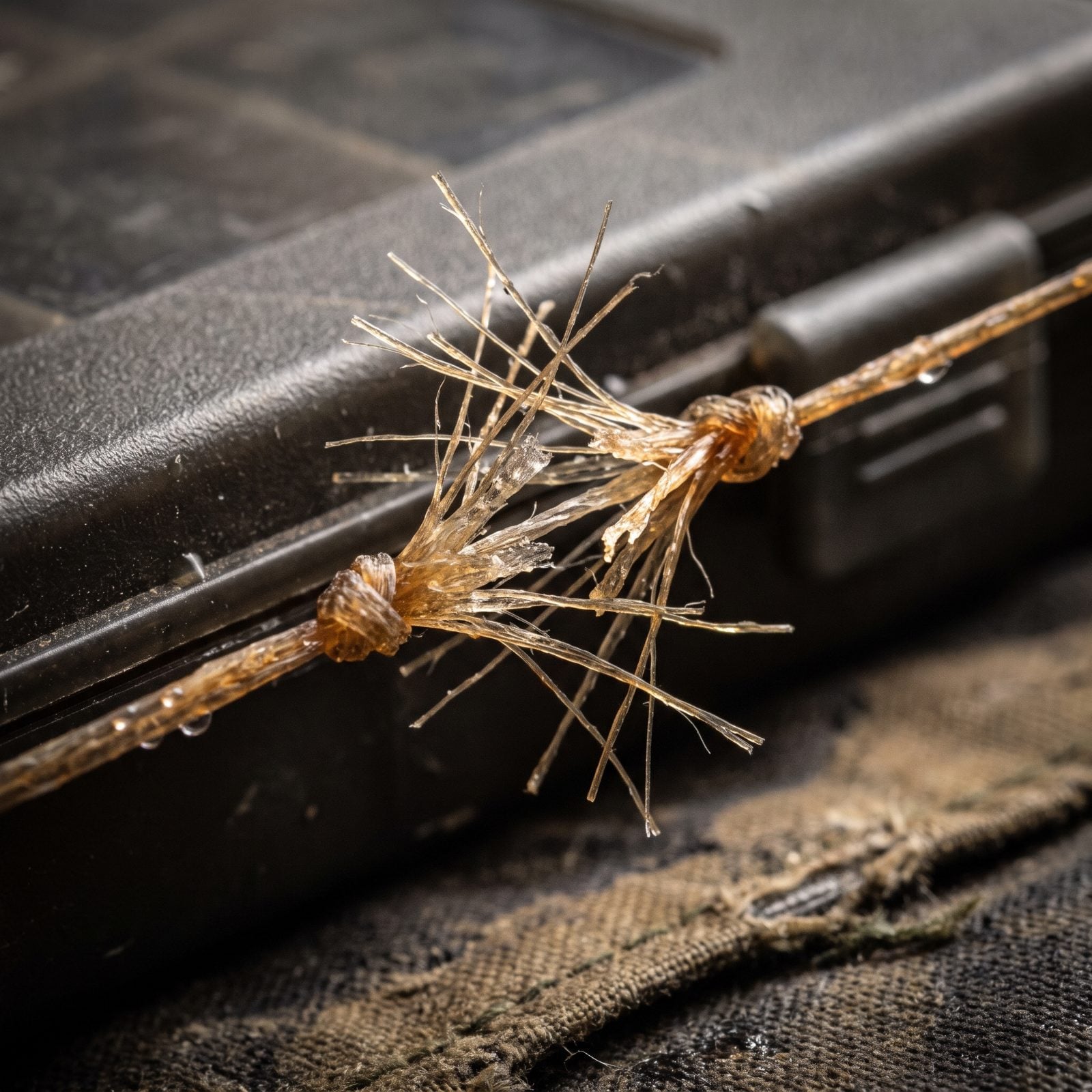
Old line fails at the knot first. Before you trust a reel you haven’t touched since last fall, tie a simple knot in the working end and pull it apart, gripping one end with pliers and the other in a gloved hand.
Good line cinches tight and holds until you’re really leaning on it. Degraded line bursts apart at the knot with almost no resistance, fibers fraying out in a ragged tuft and shedding a puff of dust. There’s your warning. Fail it at the counter and it’ll fail on the hookset with a real fish, and you’ll spend the rest of the day wondering what you lost.
12. Fluorocarbon Leader and Fluorocarbon Main Line Are Different Animals
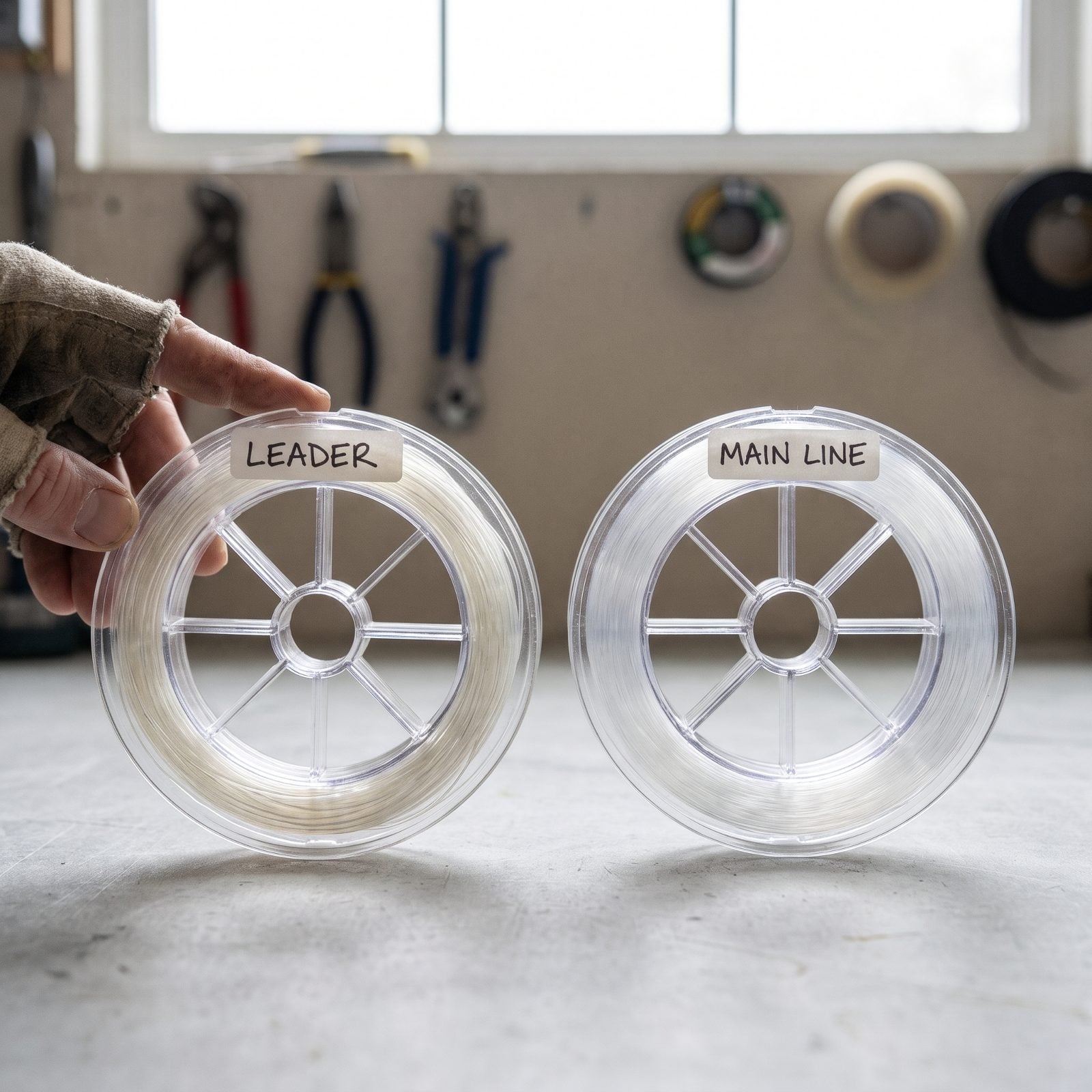
People grab a spool labeled fluorocarbon and assume it’s all the same stuff. It isn’t. Leader fluoro is formulated stiffer and tougher against abrasion, built for a short run near the lure where it fights rocks and teeth.
Main line fluoro runs softer and more manageable, so it behaves on a reel instead of springing into memory coils. Spool a whole reel with stiff leader material and you’ll be picking tangles all day. Tie leader fluoro off a braid main line and you get the best of both.
In its buyer’s guide to fluorocarbon, a tackle retailer explains “The main line and leader made of 100% fluorocarbon are not the same. While the breaking strength and diameter will be virtually identical, the lines’ outside finish will be vastly different.”
11. Swap in Premium Hooks and a Cheap Lure Punches Above Its Price
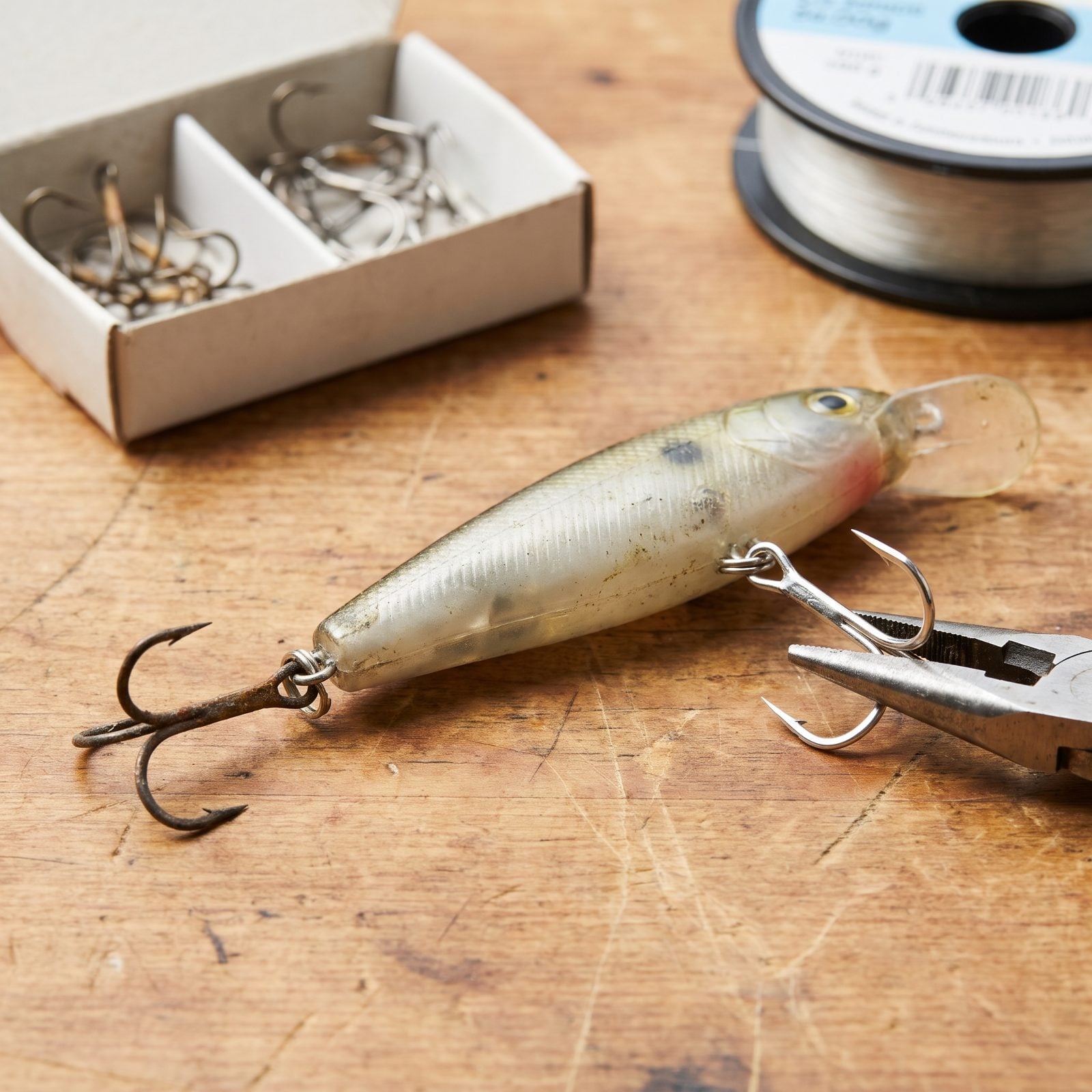
The cheapest part of most lures is the hooks, and that’s exactly where manufacturers cut corners. Factory trebles on a budget crankbait tend to come dull out of the package and bend open under any fish worth bragging about.
Spend a few dollars on sharp, chemically-sharpened replacements and a ten-dollar lure suddenly hooks and holds like something twice the price. The fish doesn’t care what the body cost. It cares whether the point buries on contact and the gap holds when it headshakes.
10. Hook Size Numbers Don’t Mean the Same Thing From Brand to Brand
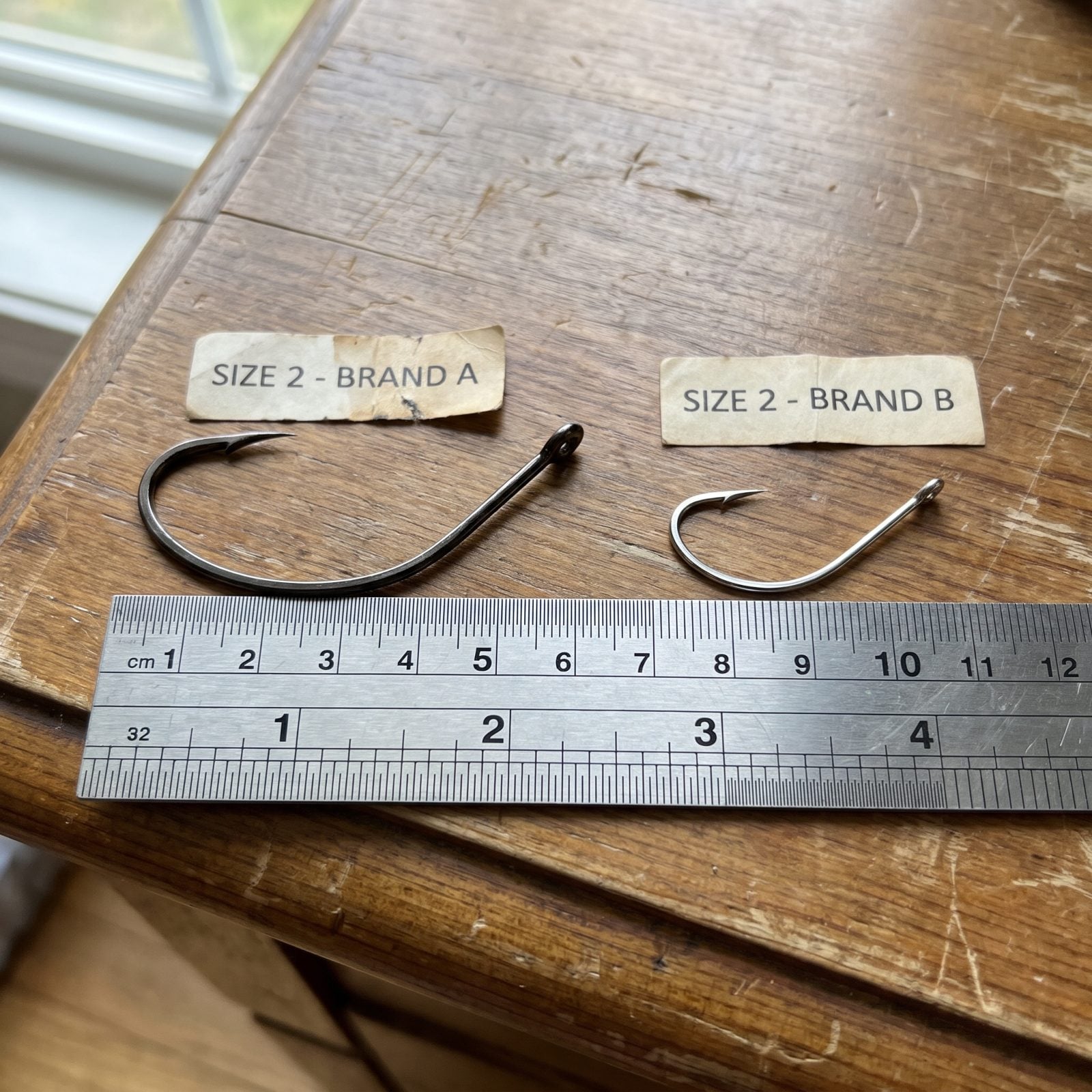
This one trips up even experienced anglers. A size 2 hook from one maker can be visibly bigger or smaller than a size 2 from another, because there’s no enforced standard — just loose convention passed down and ignored at will.
So if you’ve dialed in a size 1 for a particular bait and then switch brands, don’t trust the number. Hold the two hooks side by side before you commit. I’ve bought a fresh pack assuming it matched my old ones and ended up with gaps all wrong for the plastic I was rigging. Annoying doesn’t begin to cover it.
Asked why one of his company’s hooks can look oversized, a hook maker’s technical manager says “We now build in extra size checks before launch. There’s no industry standard—sizing is always relative.”
9. The Split Ring Is the Weak Link Nobody Checks
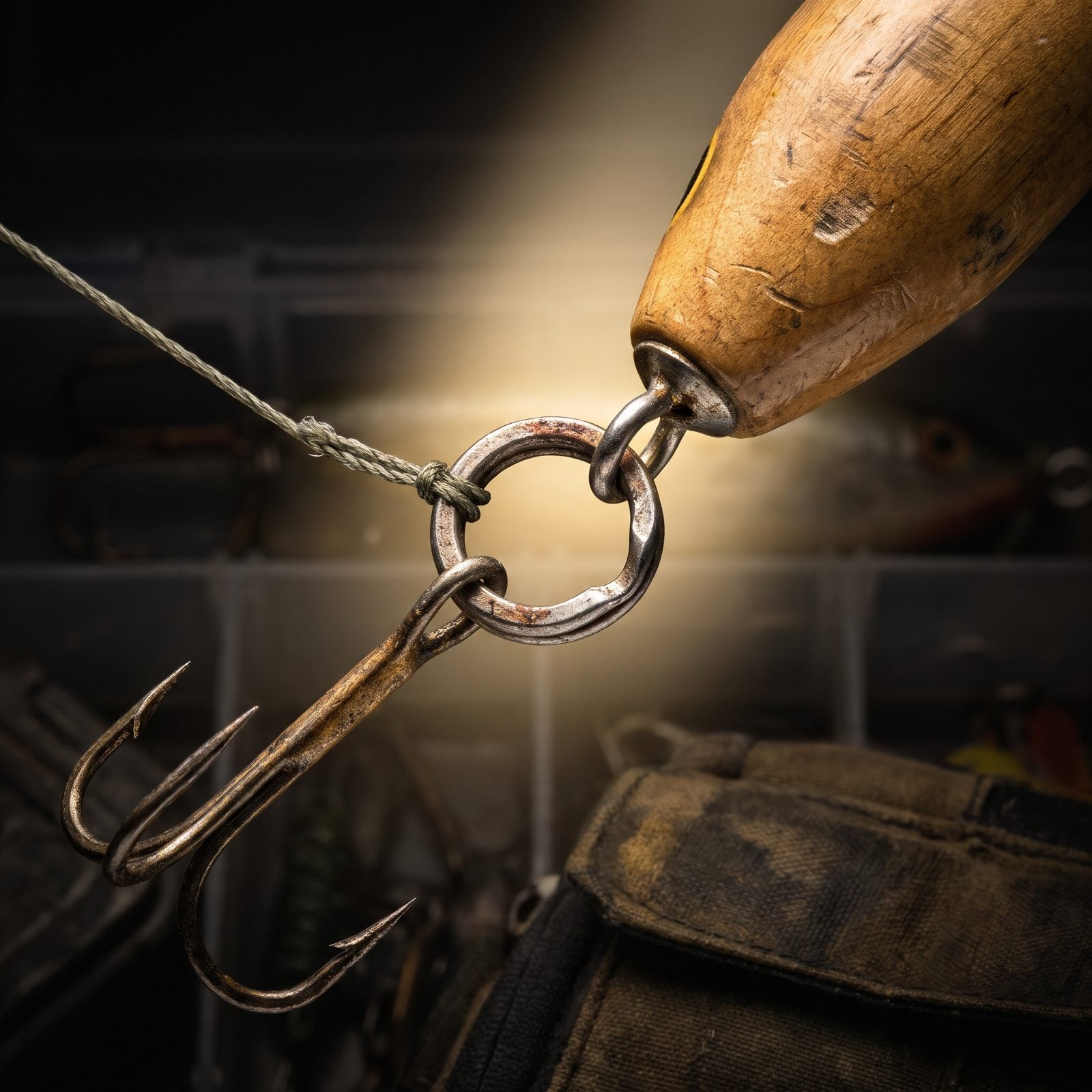
You check your line. You check your knots. You check your hooks. The little split ring tying all three together gets no attention at all, and that’s precisely where plenty of big fish come off.
Cheap split rings spring open under sustained pressure or corrode right at the overlap. Upgrade to heavier rings on your bigger lures and use a proper split-ring tool so you stop mangling them with pliers. It’s a fifty-cent part standing between you and the fish of the season. Treat it that way.
Describing how cheap split rings on lures give themselves away, a terminal tackle company president says “This is apparent by corrosion, flaking of the finish, and rings not closing back because they have been overstretched.”
8. Soft Plastics Will Melt Into Each Other If You Store Them Wrong
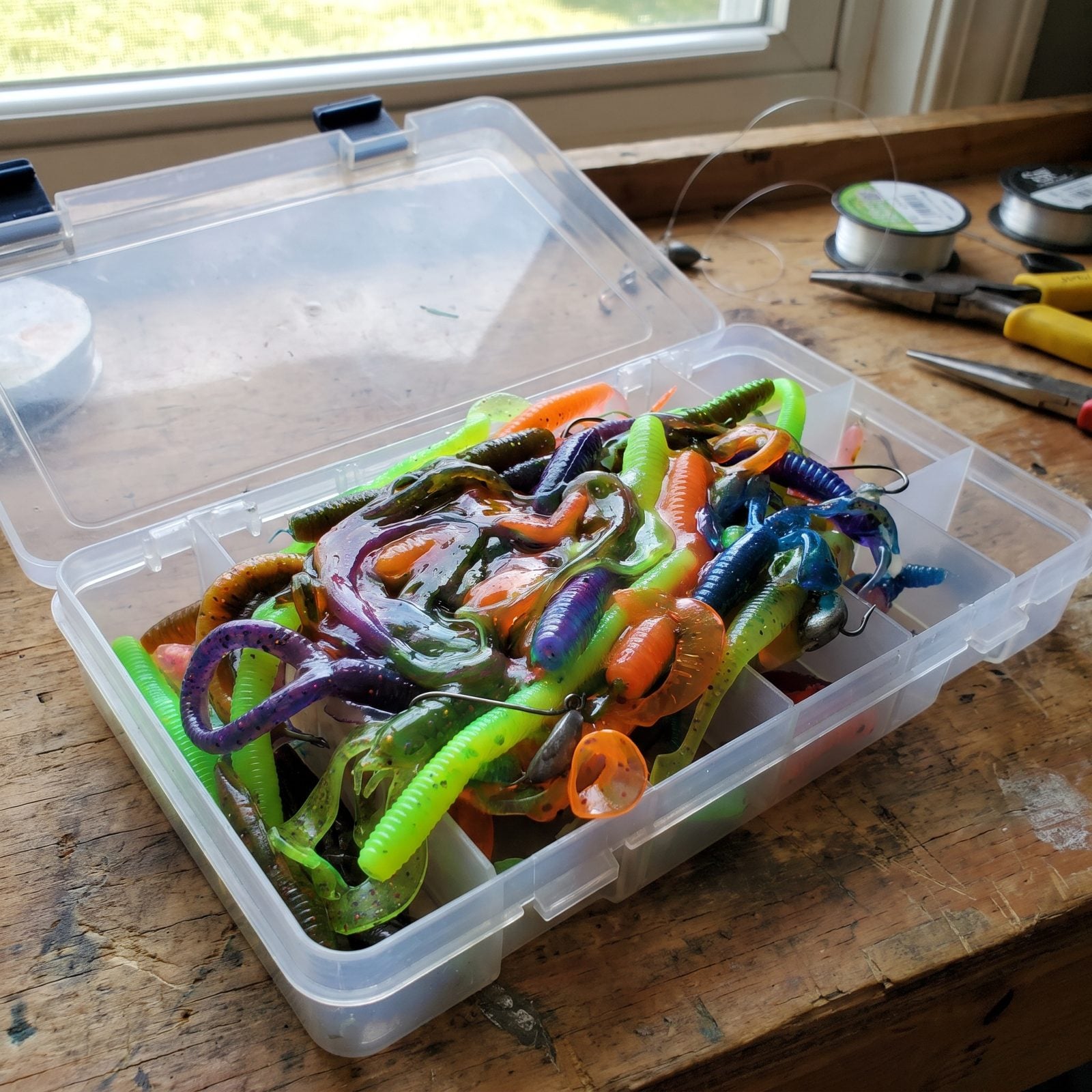
Mix soft plastics of different formulas in the same compartment and you’ll eventually pop the box open to a fused, melted mess. The plasticizers in some baits react with others, especially cheaper blends or different brands pressed together in a warm box.
Keep them in their original bags, or at least separate the colors and brands. Heat speeds the whole thing up — a hot car is the worst offender. And there’s nothing quite like reaching for a clean watermelon worm and finding it married to a chartreuse one in a puddle of goo.
Warning about baits made from certain soft materials, an inshore fishing writer cautions “With these lures, you don’t want them touching any other lures, no matter what they’re made of because they will melt together.”
7. Scented Plastics Can Eat Through the Wrong Tackle Box
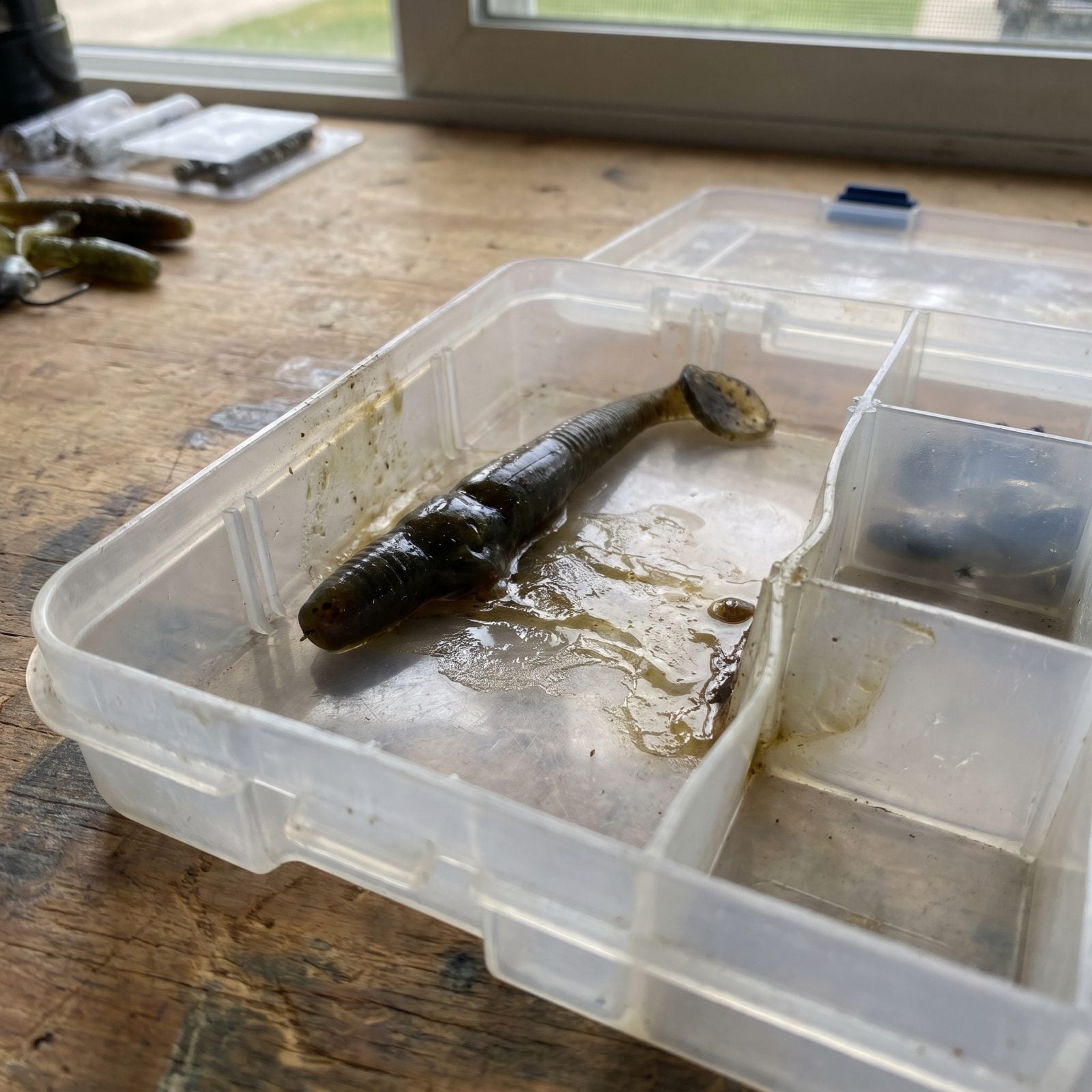
Those scented, oil-heavy baits that fish can’t leave alone? The very same oils soften and cloud certain plastic trays, leaving melted divots and an oily haze that never fully cleans off.
Worm-proof boxes exist for exactly this, built from materials the plasticizers can’t attack. If your box isn’t rated for it, leave scented baits in their original packaging inside the tray. I ruined a perfectly good utility box this way, and I only pieced together the cause when the bottom went soft and sticky under a row of creature baits.
6. Some Clearance Lures Are Only Marked Down for a New Package
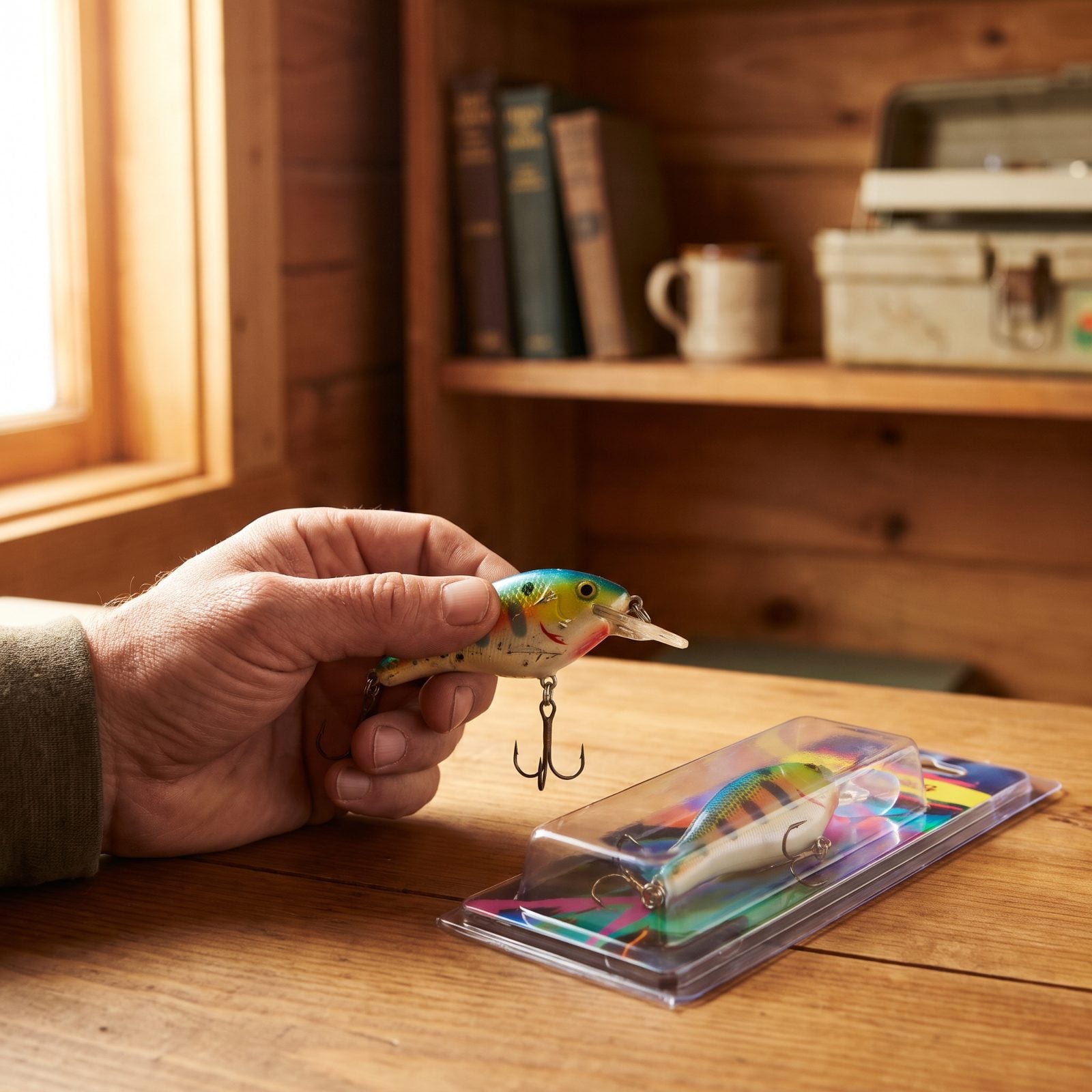
Not every clearance lure is sitting there for a bad reason. A lot of what lands in the discount bin got there because the maker changed the packaging, dropped a color from the catalog, or rebranded the line.
The lure inside matches the full-price version two aisles over — same body, same action, same hooks. You’re just paying less for an older box. Ask the person behind the counter why something’s marked down. Often the honest answer is “new packaging,” which is free money for anyone willing to fish a proven bait out of an unfashionable blister.
5. Used Tackle Trade-Ins Favor Gear That Is Easy to Resell
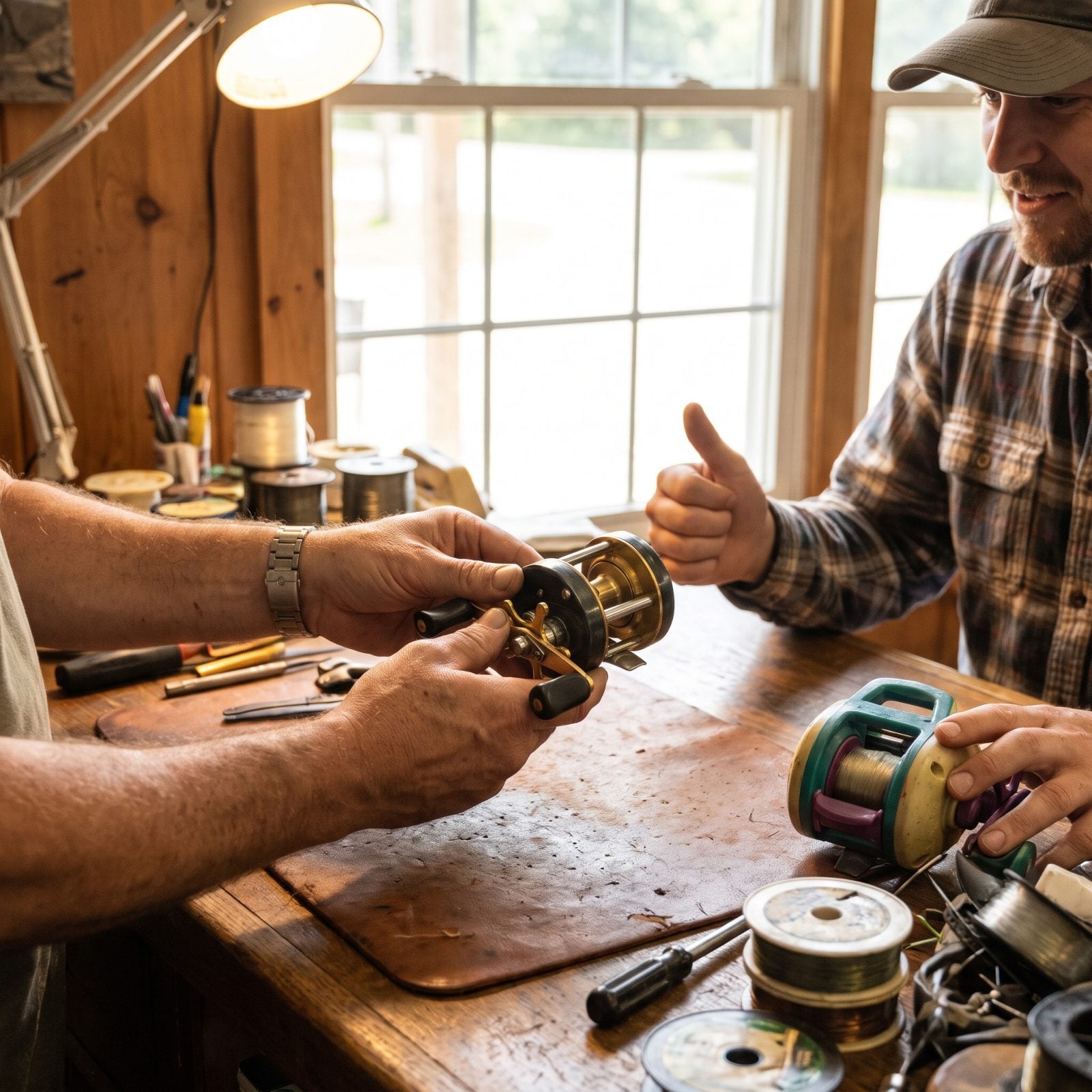
Walk in with a popular midrange baitcaster in decent shape and you’ll get a real offer. Walk in with some oddball reel nobody has heard of, and you can watch the shop owner’s enthusiasm leak out of the room.
Trade-in value tracks resale, not what you paid. Shops want gear that moves off the used rack inside a week instead of sitting there gathering dust and tying up their money. Common sizes, common brands, common actions — the stuff half the lake is already fishing.
I learned this the hard way with a reel I loved and nobody else wanted. Got pennies for it. So if you ever plan to trade up, buy gear with a second life built in.
4. A Quick Cleaning Can Make a Trade-In Reel Feel Much Better
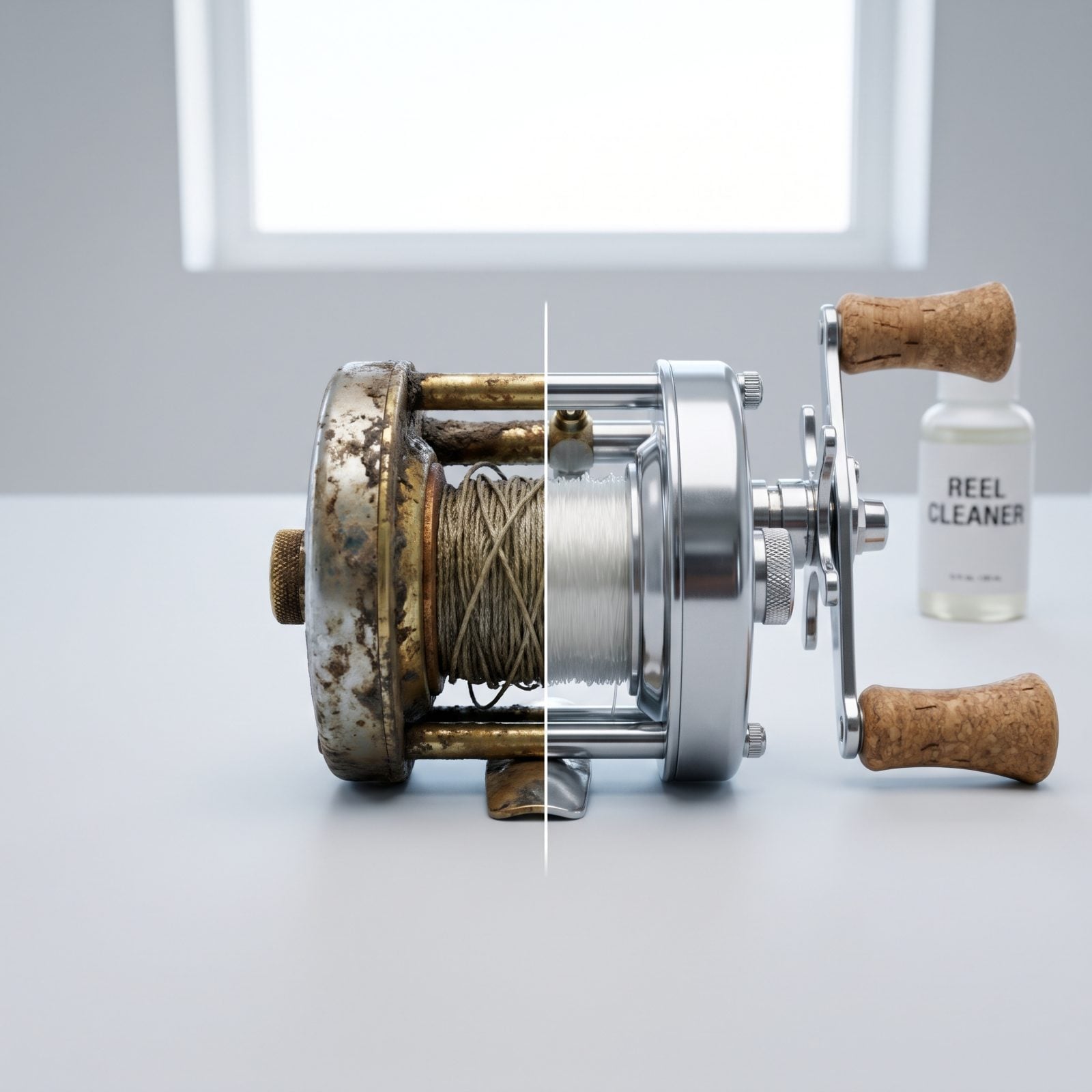
Half the reels people trade in aren’t broken. They’re just filthy — old grease gone stiff, grit in the bail, a drag washer that dried out three summers ago.
Fifteen minutes of cleaning and fresh oil turns a crunchy, grinding handle smooth again. That’s why a trade-in reel on the used rack often feels better than the one you handed over. The shop didn’t fix anything major. They cleaned it.
Do the same before you trade, or before you give up on a reel you already own. Flush the grit, re-grease the gears, a drop of oil on the bail, and suddenly it earns its keep again.
3. Replacement Parts May Be Harder to Find Than the Reel Itself
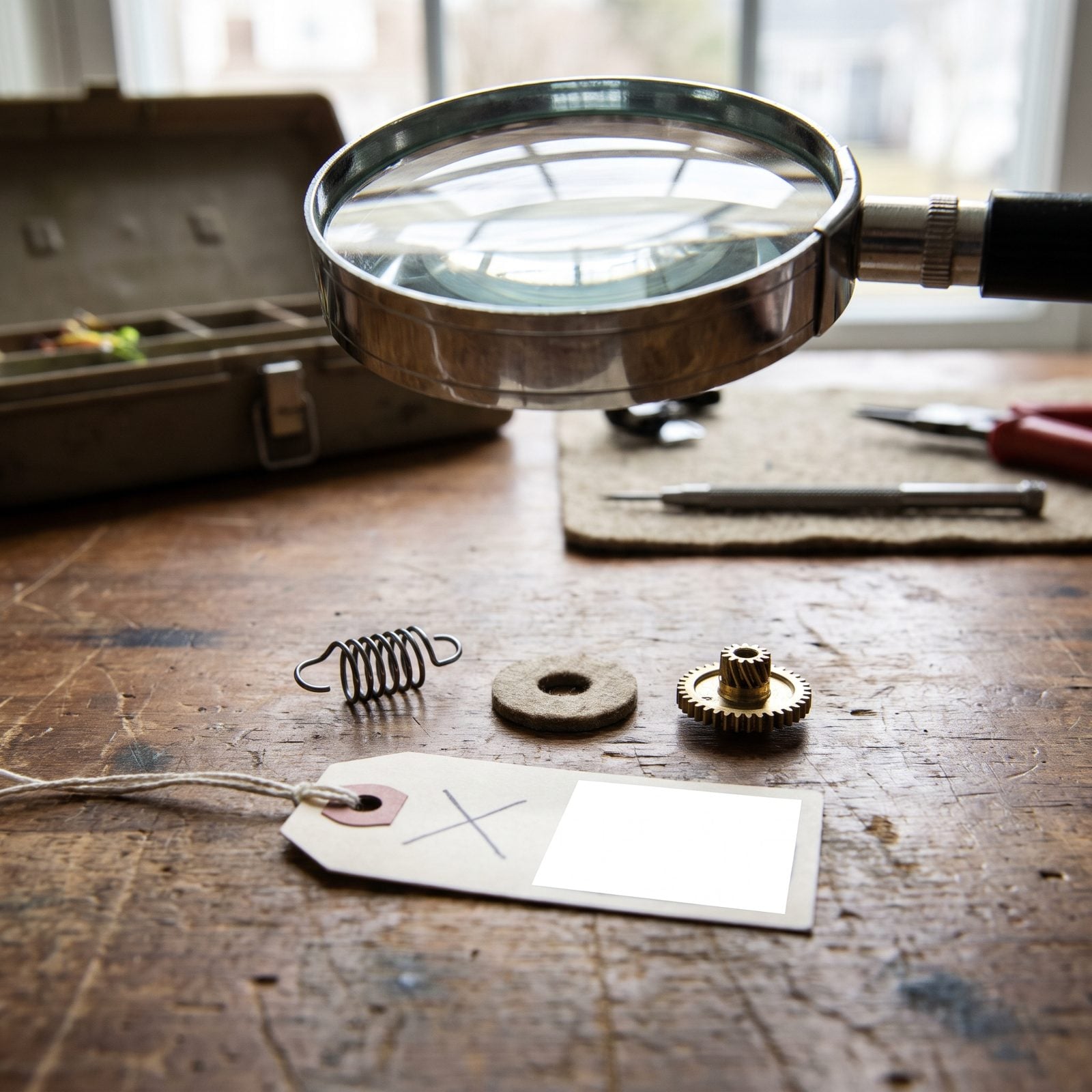
You’d think the little stuff is easy. A bail spring, a drag washer, one tiny pinion gear. Then you find out that exact part was discontinued, or the reel was a store-exclusive model the maker never really stood behind.
Older and bargain reels are the worst offenders, outlasting their own parts supply. A shop can have a perfectly fixable reel on the bench and still hit a wall because that one twelve-cent piece simply does not exist anymore.
Mainstream models from the big names keep their schematics and parts in circulation for years. The off-brand special you grabbed for cheap? Enjoy it. Just don’t count on parts.
2. Special Orders May Beat Online Prices Once Shipping Is Included

That sticker price online is usually the price before the real price. Shipping on a nine-foot rod isn’t cheap — oversized box, length surcharge, and the thing shows up with a cracked tip half the time anyway.
A local shop can special-order the same rod through their distributor. Tally up the free shipping, the lack of damage risk, and the fact that you can actually hold it before you buy, and the gap closes fast. Sometimes the shop just wins outright.
Ask. Most owners will quote you a special order on the spot, because they’d rather make a smaller margin and keep you walking through the door than lose you to a shipping label.
1. Manufacturer Promotions Can Matter More Than Sticker Price
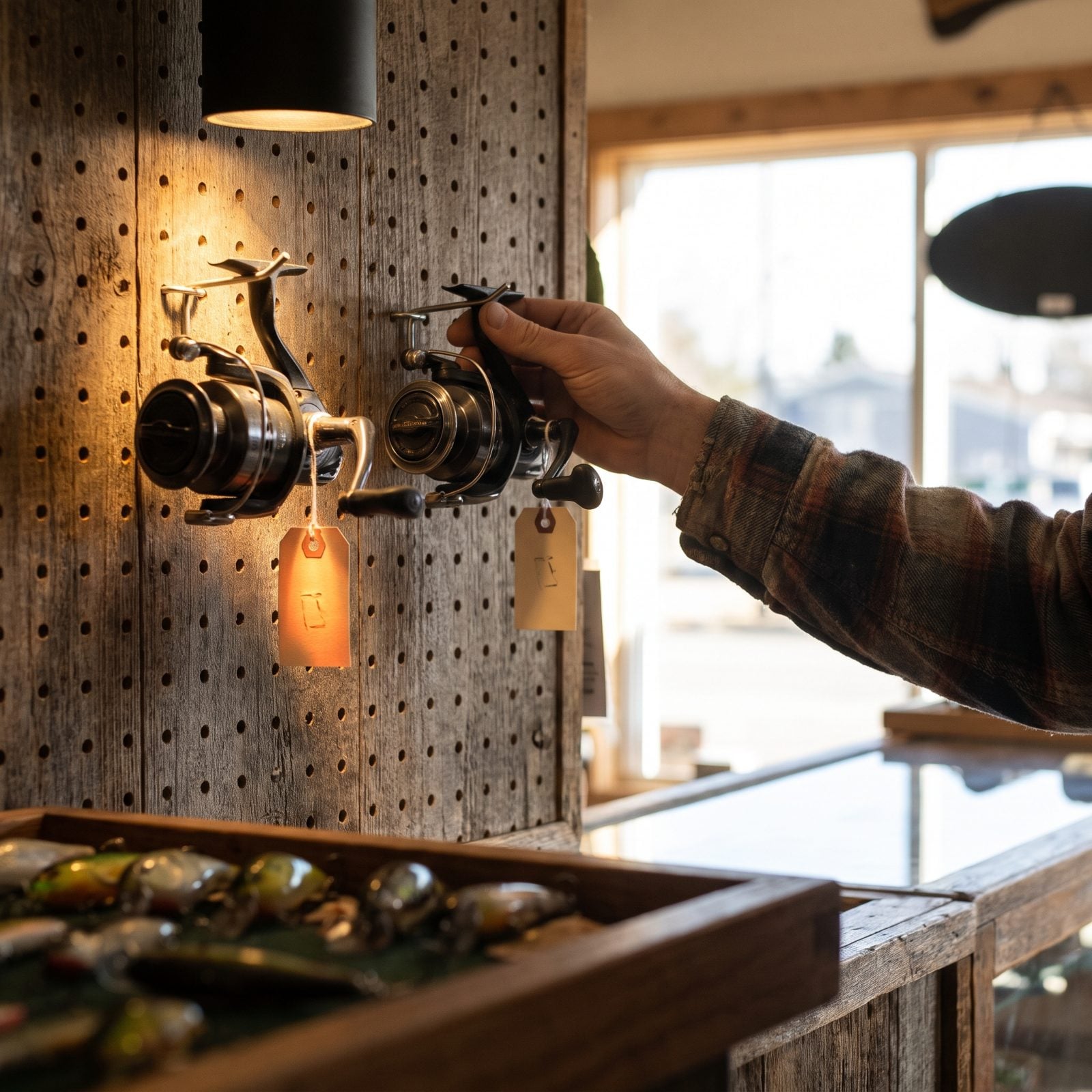
Two reels on the wall, same price. One of them is quietly a much better deal.
Manufacturers run rebates, free-line offers, spare-spool bundles and loyalty warranties that never show up on the price tag. The reel that looks a bit more expensive might come with a mail-in rebate and a free spool of braid, and all of a sudden it’s the cheaper one.
Shops don’t always lead with this. Promos change constantly and the paperwork is a hassle. But ask what’s running this month and a good owner will steer you toward the real value.
Timing matters too. New model years drop in late winter and spring, which shoves last year’s gear onto the clearance rack. Same quality, last season’s label. That’s where the patient angler cleans up.