
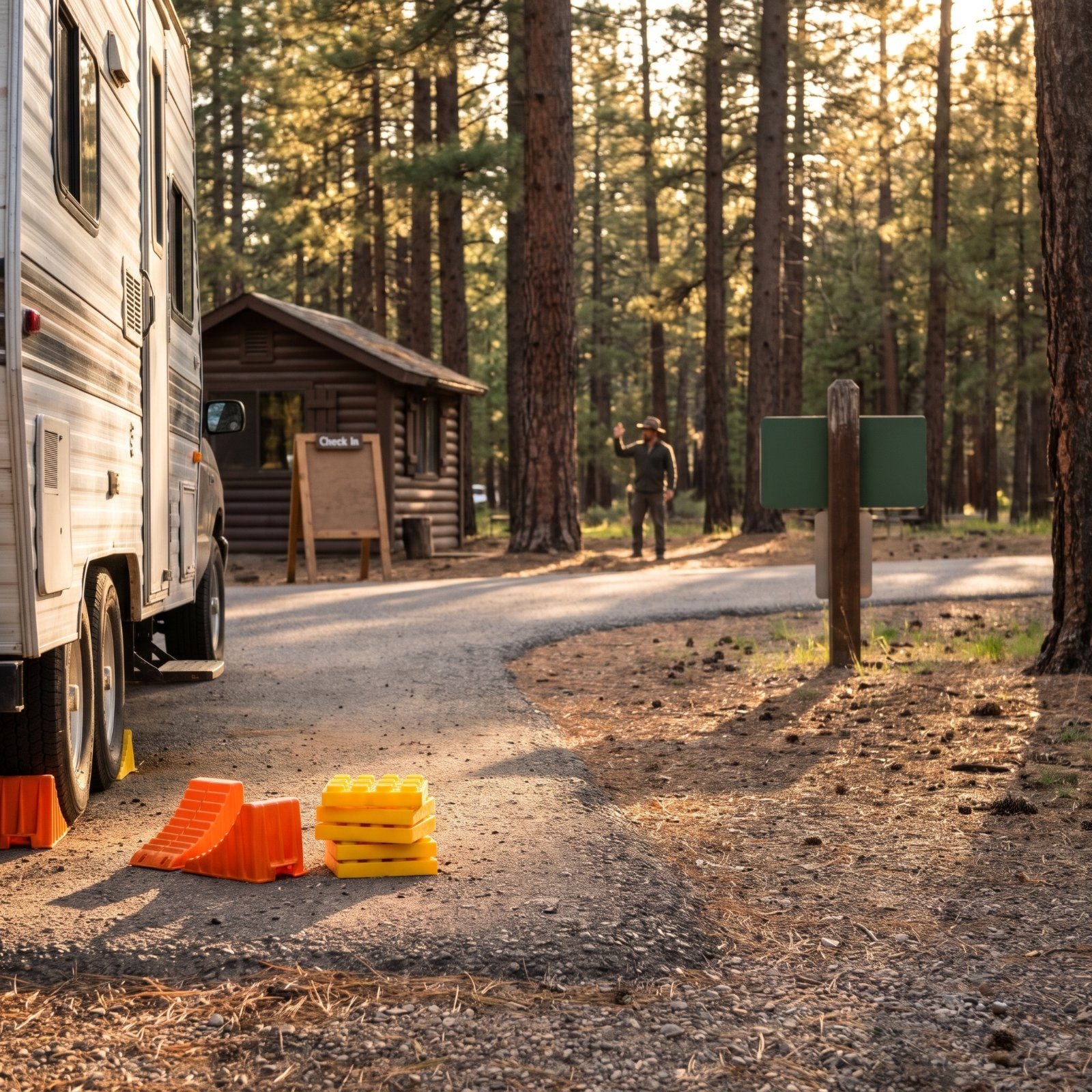
A host can read a rig before the driver even sets the parking brake. Not the brand of trailer or the size of the motorhome — the small stuff. How fast you came down the gravel, whether you stopped at the office, how the person outside waves the driver back. None of it lands on a scorecard. But it tells an experienced host whether tonight goes smooth or whether they’ll be fielding a noise complaint by nine. And here’s the thing: every one of these is a choice you can get right. What follows is what gets noticed, and why it matters more than you’d guess.
Please note that some of the images in this article were created with the assistance of AI.
41. How Closely You Hug the Campground Speed Limit
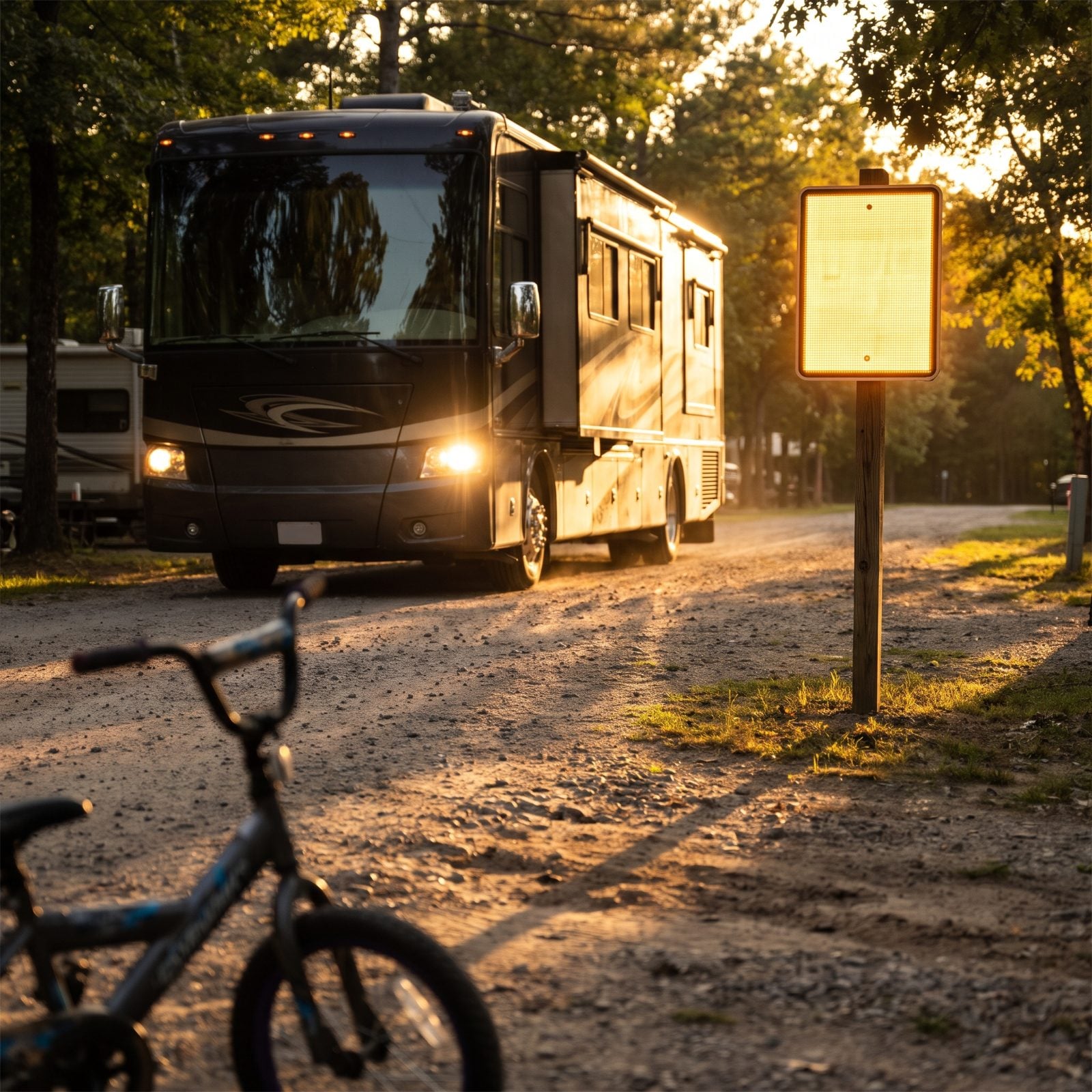
Nobody posts 10 MPH to be annoying. They post it because kids dart out between campers, dogs break leashes, and loose gravel kicks up dust that hangs over somebody’s dinner for a solid ten minutes while they’re trying to eat it.
A host watching you crawl in at a walking pace relaxes a little — they’ve already decided you’re a grown-up. The driver who comes in hot, throwing stones and raising a cloud, gets watched the rest of the weekend. We’ve seen it happen. One fast pass down the loop and you’re on the list.
40. Whether You Arrive Inside the Posted Check-In Hours
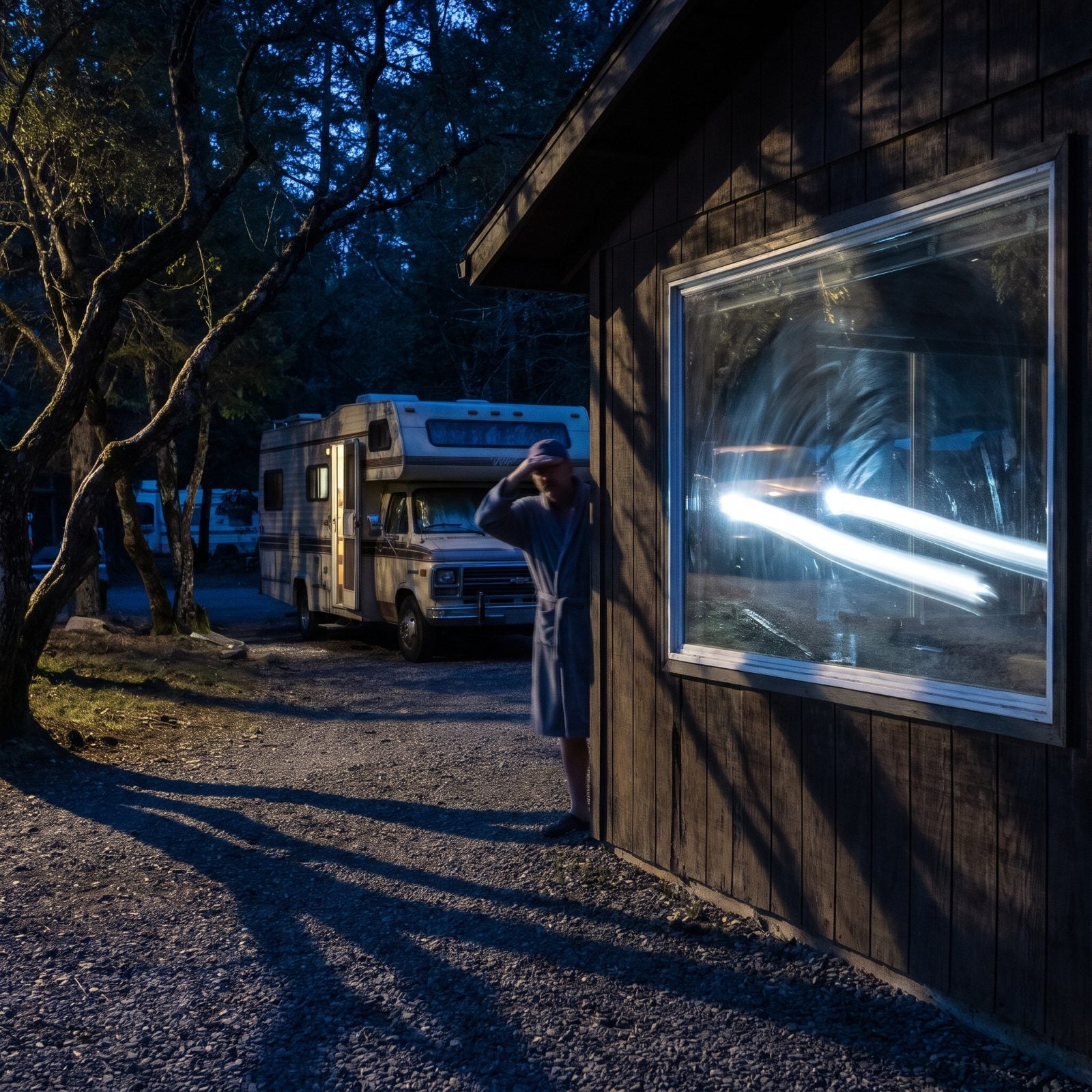
Pulling in at 11 PM isn’t a crime, but it isn’t free either. The host may have turned in even if the office light is still on, your headlights sweep across three sites full of people who were asleep, and your backing beeper wakes a toddler two pads down.
Arrive in daylight if you possibly can. Setting up a rig in the dark is harder, louder, and far more likely to go wrong. Running late? Most campgrounds have a late-arrival procedure posted. Call ahead, park where you’re told, and do the rest at sunrise.
39. Whether You Stop at the Office Before Rolling to Your Site
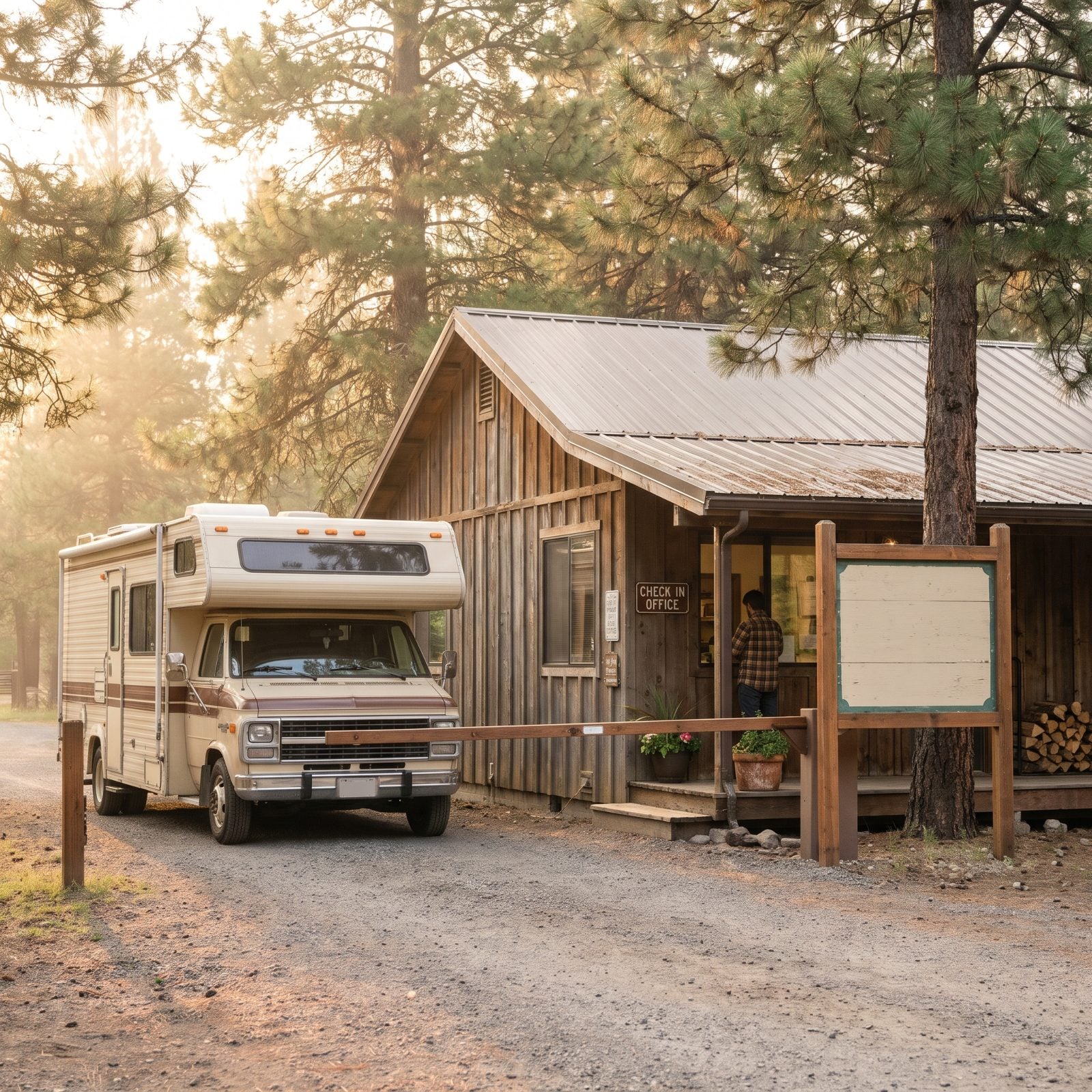
You’d be surprised how many people blow right past the office and drive straight to the number on their reservation. Then the host finds out when someone else shows up to the same site.
Stopping first clears up the stuff that goes wrong behind the scenes — a site that flooded, a double-booking, a pad reassigned because the rig before you left a mess. Two minutes at the counter saves you an hour of untangling later.
38. Whether Kids and Pets Stay Clear While the Rig Backs In
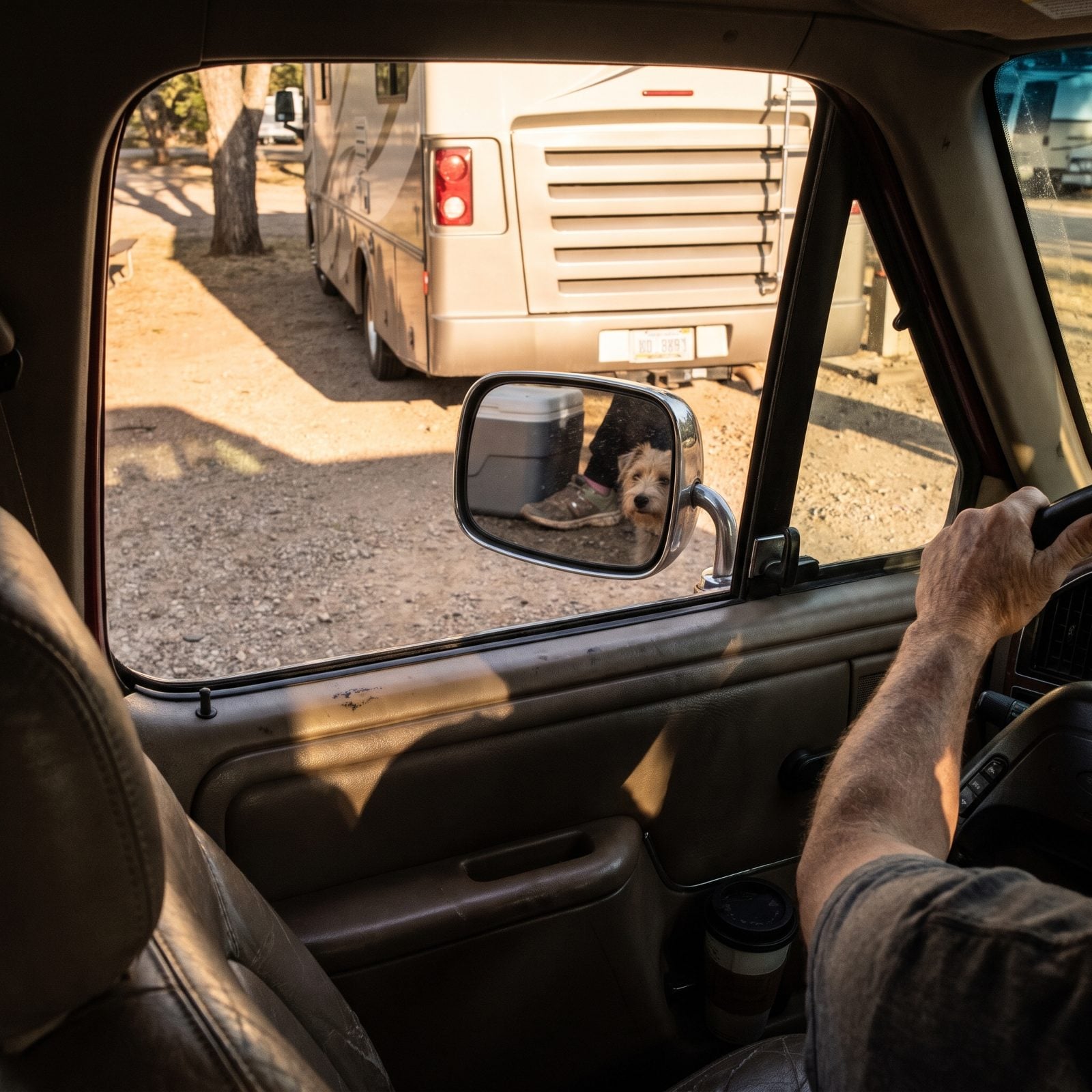
A rig backing up has blind spots the size of a car. The driver can’t see a kid who ducks behind the bumper or a dog that wanders under the tow hitch. This is the one on the list that actually keeps a host up at night.
The sites that do it right park the kids and pets somewhere safe before anybody touches reverse. Picnic table. A chair. The far side of the site. Everyone stays put until the rig is stopped and chocked. Looks like a small thing. It’s the difference between a vacation and a very bad phone call.
37. Whether the RV Actually Fits the Pad You Were Assigned
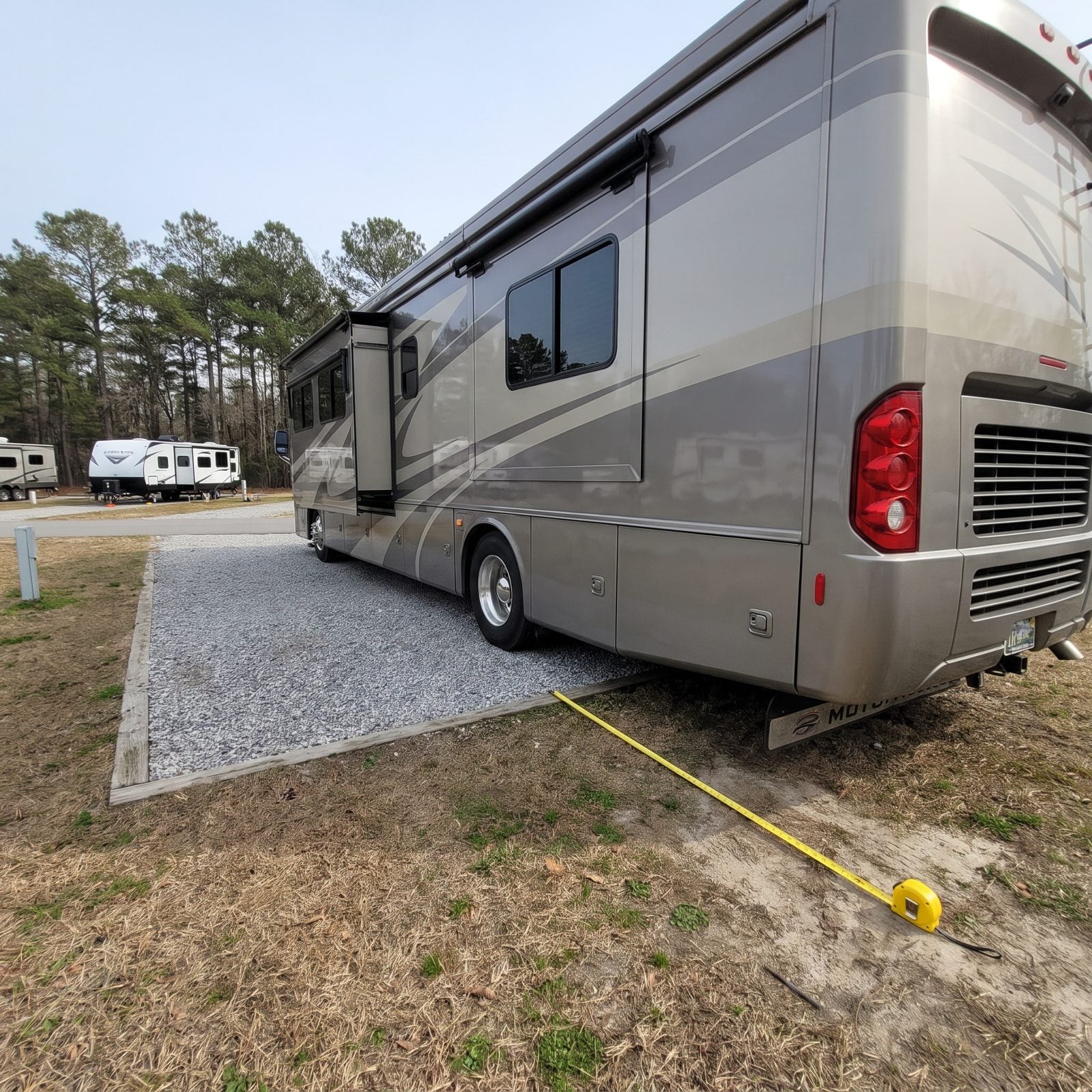
Here’s the mistake nobody admits to: showing up with a 38-foot rig for a site that tops out at 30. The listing gave you the length. You just didn’t read it, or you measured the trailer and forgot about the truck.
A host spots the mismatch immediately, because the rig hangs off the pad into the road or crowds the neighbor. Measure your whole setup, bumper to hitch, before you book. If it’s tight, ask the office for a pull-through. Most will work with you — if you ask before you’ve already wedged yourself in sideways.
36. Where You Stash Extra Cars and the Tow Vehicle
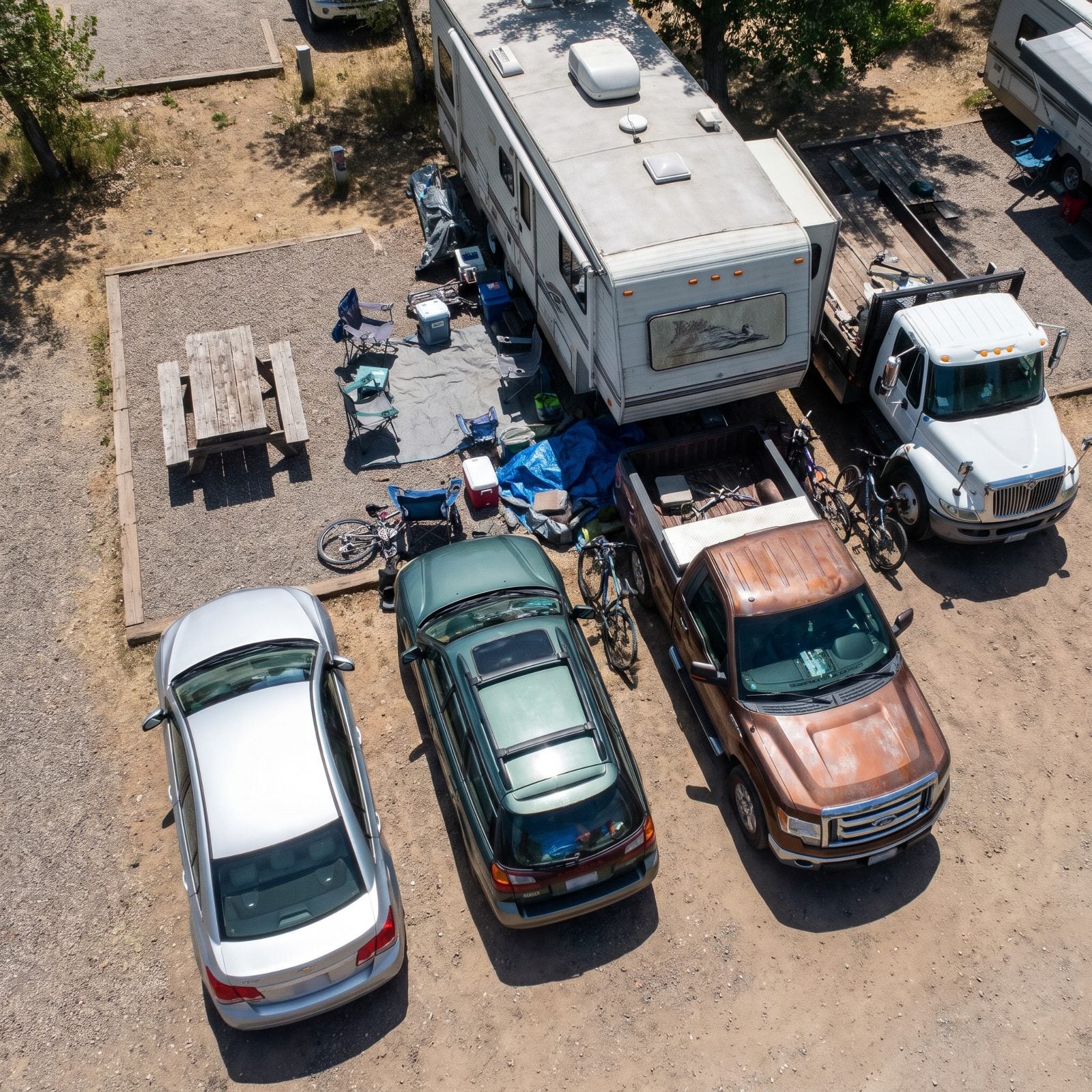
Most sites fit one vehicle plus the rig. You brought three, because the whole family drove separately, and now cars are nosing out into the loop while the host does math about fire-lane clearance.
Ask at check-in where overflow parking is. Nearly every campground has a lot for the extras. Leave a second car blocking the road, or parked across an empty neighboring site you didn’t pay for, and you’ve earned yourself a knock on the door. Keep your pad tidy and the loop clear, and you stay invisible — which is exactly what you want to be.
35. Whether Your Slide-Outs Push Into the Roadway
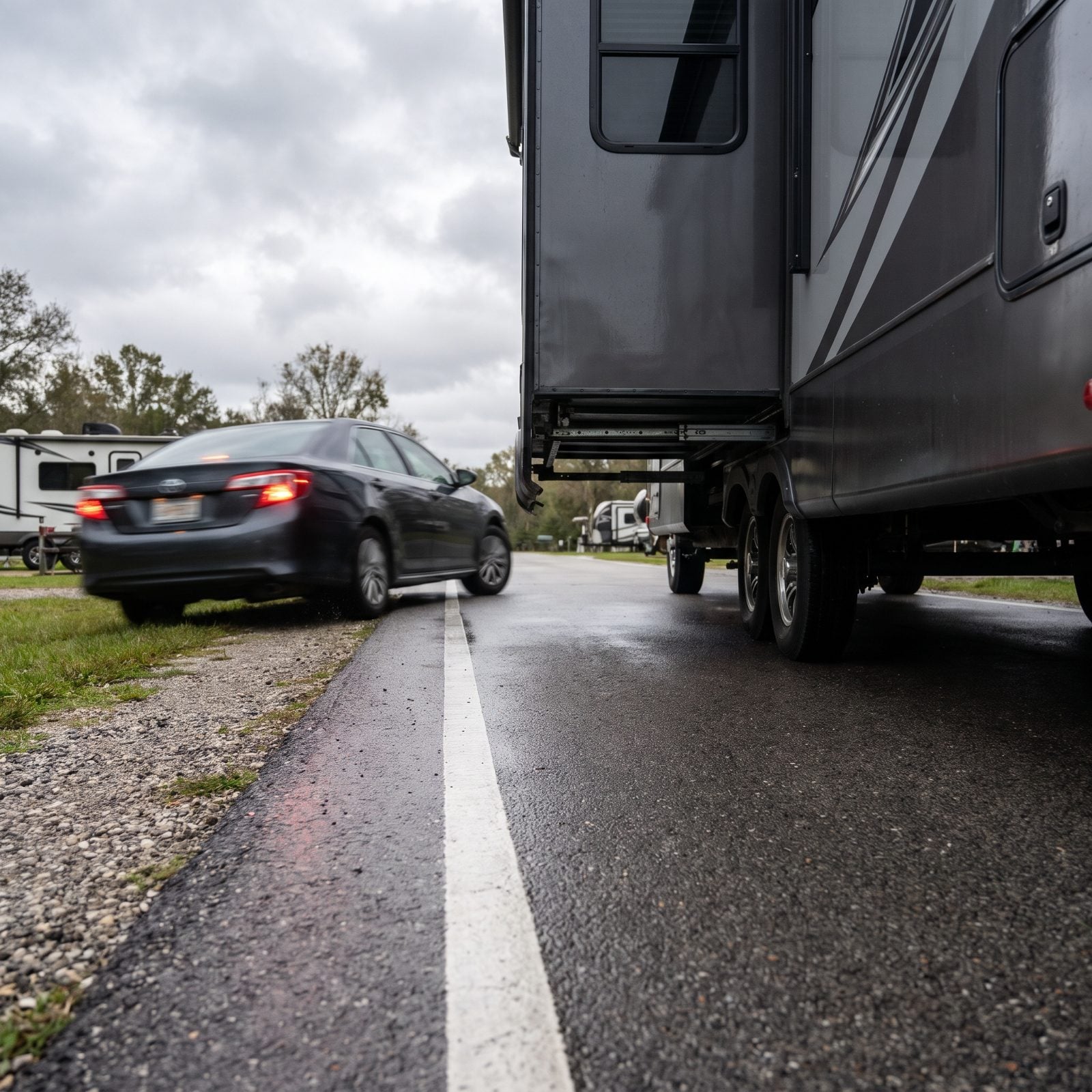
You level the rig, hit the switch, and the slide-out glides open right into the lane. Now every car that passes has to swing wide, and the host is picturing a mirror getting clipped at midnight.
Before you settle on a position, picture where the slides land. On tight sites you sometimes need to park a foot or two off-center to keep the slide on your own pad. Worth a second look before you deploy everything. Moving a trailer after you’ve unhooked is nobody’s idea of a good evening.
34. How You Level the Rig Without Tearing Up the Pad
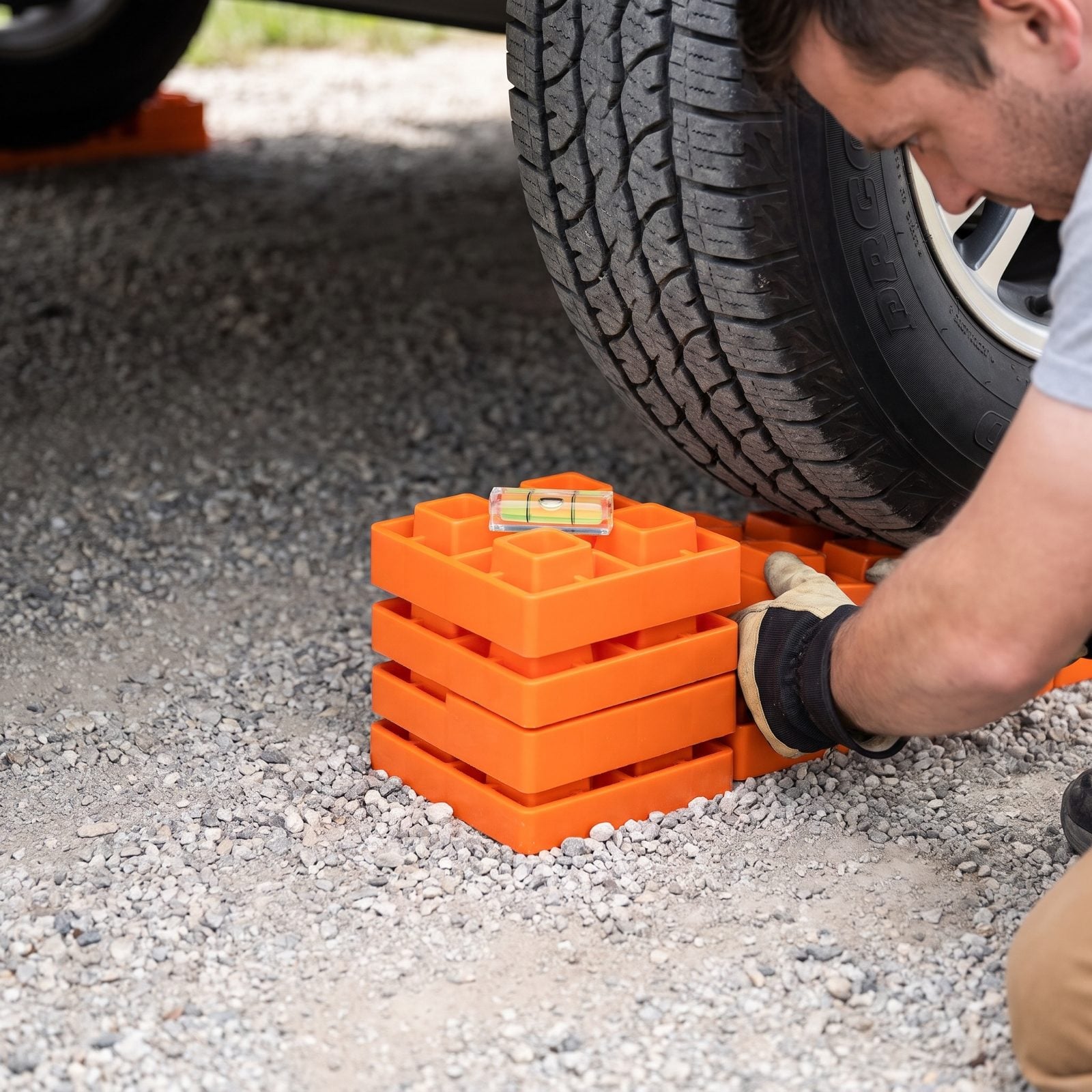
A level rig sleeps better and the fridge runs right. But there’s a wrong way to get there, and the host notices it after you leave. The holes.
Jacks driven straight into soft ground dig craters the next camper has to deal with. Use blocks or leveling pads under the stabilizers and the tires. They spread the weight, keep the jacks from sinking, and leave the pad the way you found it.
33. Whether the Wheels Are Chocked Before You Unhitch
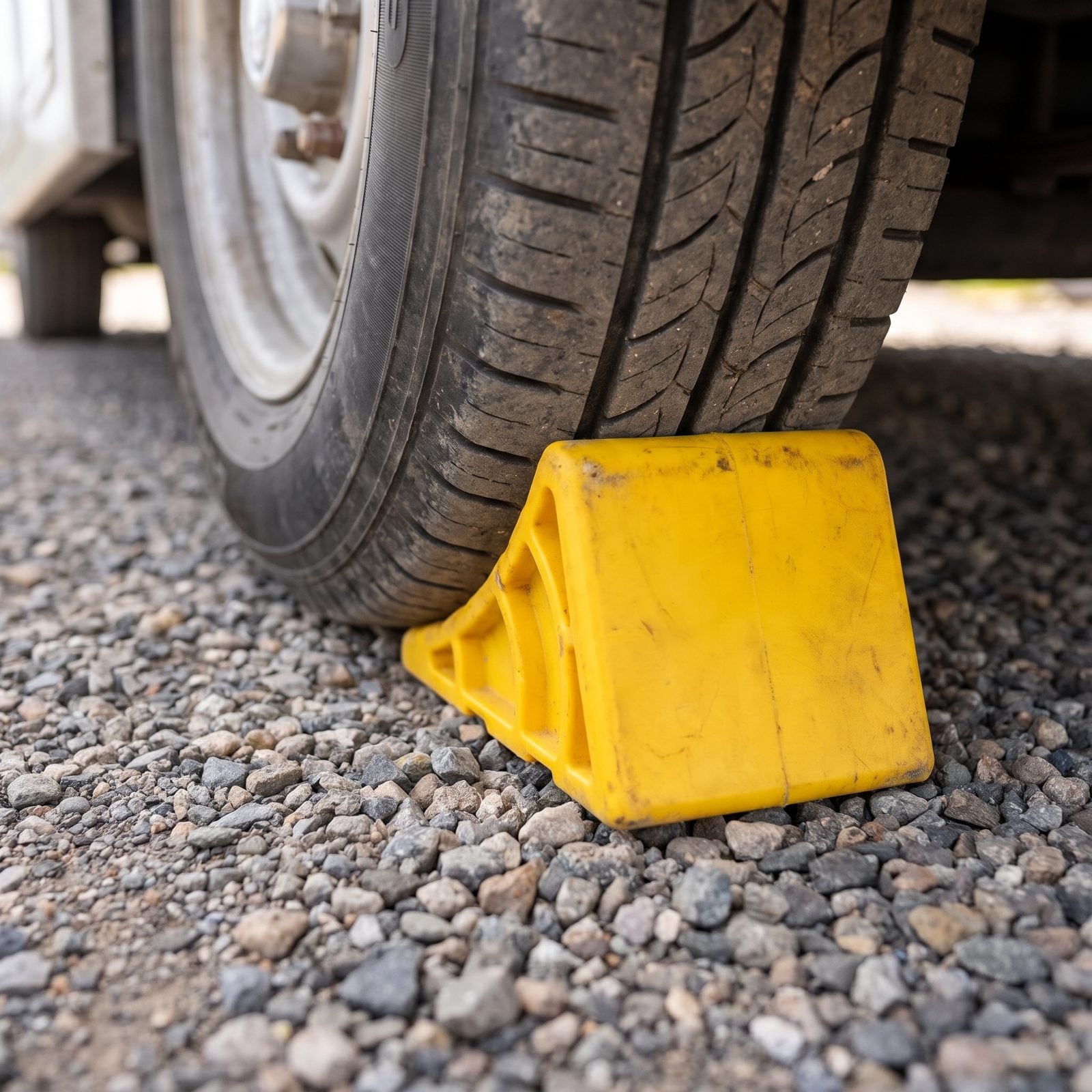
This is the one a seasoned host watches for without seeming to. Chock the wheels before you unhitch. Every time, no exceptions.
An unhitched trailer on even a slight grade can roll the second the weight shifts off the ball. It happens fast and it happens silent, and a loose trailer rolling through a campground full of tents is the stuff of host nightmares. Two chocks, snug against the tires, before the hitch comes up. Takes ten seconds. And it’s the single clearest sign to anyone watching that you’ve done this before.
The camper who chocks first and unhitches second never has to explain anything to anyone. That’s the goal.
32. Whether They Check Overhead Branches Before Raising the Roof
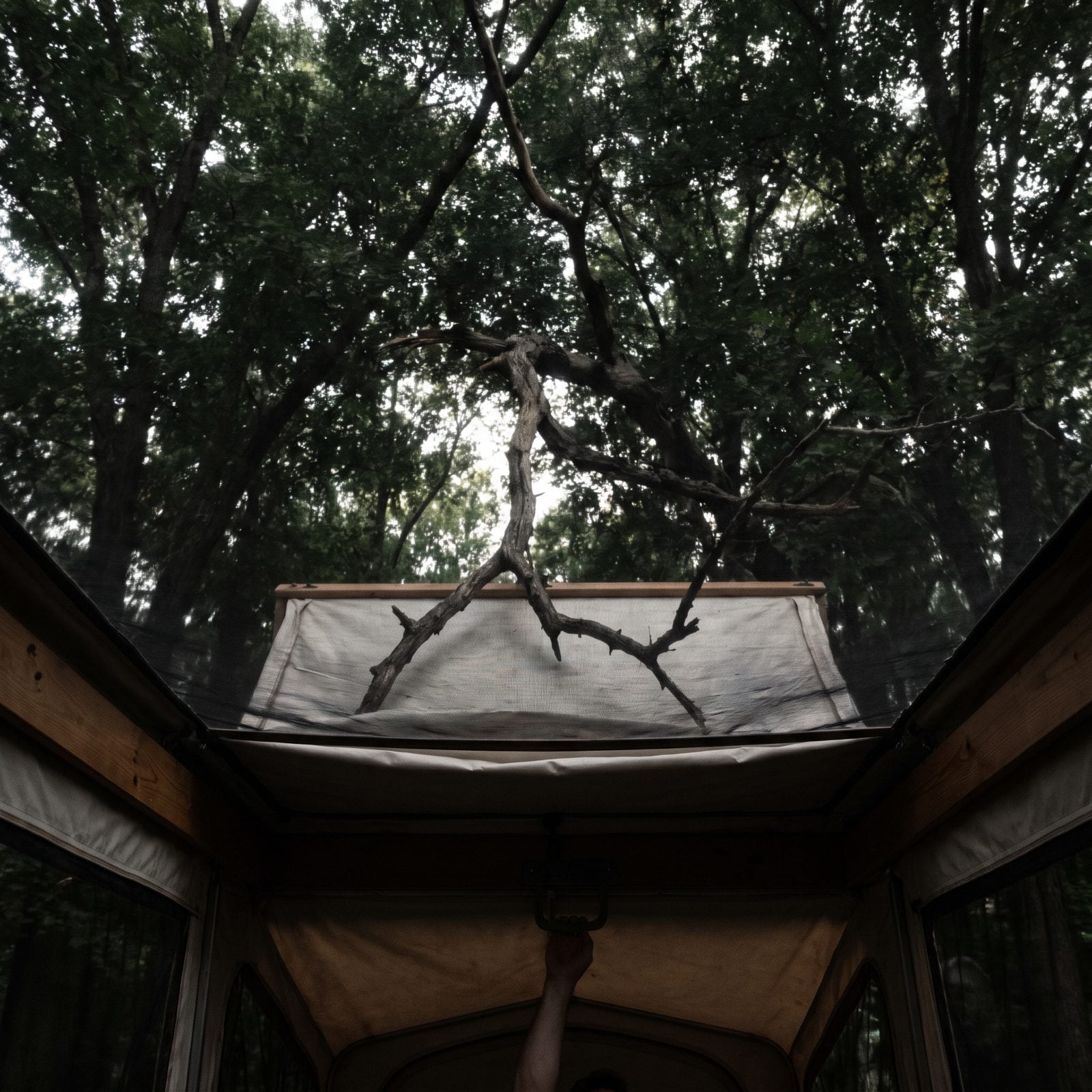
Hosts look up before you do. A campsite under old hardwoods is shade in July and a widowmaker in a windstorm — those dead gray limbs, the ones with no leaves left, come down without warning, and they do not care that your rig cost sixty grand.
The quick tell is where you park. Experienced campers back in, then step out and scan the canopy before they ever reach for the roof vent or the slide-out. Thirty seconds of looking up saves a caved-in Fantastic Fan. Or worse.
31. How Quickly They Address Leaking Utility Connections

A dripping water connection seems harmless. It’s not. That slow leak turns your gravel pad into a mud pit, draws every mosquito in the county, and if it’s the sewer side — well, you already know.
Hosts notice who fixes it in the first five minutes and who lets it run all weekend. The quick-fix crowd carries a washer kit and a short wrench and treats a drip like a flat tire. Everyone else learns later, usually by stepping in the puddle in the dark.
30. Whether They Rely on Lightweight Household Extension Cords
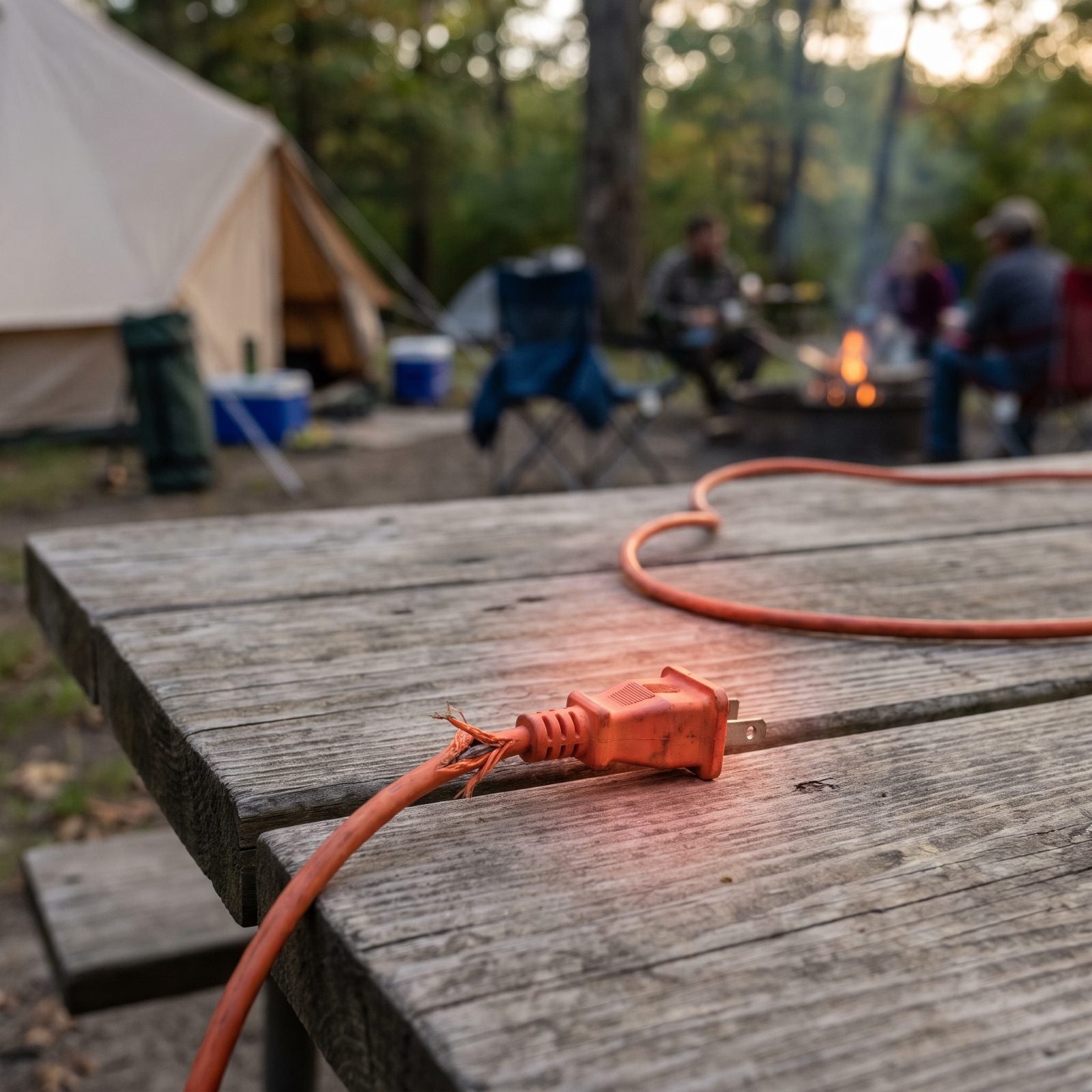
You know the orange cord — the flimsy one from the garage, meant for a hedge trimmer, now feeding a camper pulling fifteen amps. It gets warm. Then hot. Then it’s a problem nobody wants to talk about.
Experienced campers carry the right gauge for the load, usually a proper 30-amp RV cord and a short heavy adapter if they need one. The giveaway is a skinny cord stretched tight across the site, buzzing a little. Hosts clock it immediately, because they’ve seen what a melted plug looks like.
Asked about extension cords heating up under load, an RV electrical safety educator says “However, if it feels like a toaster oven then you’re doing something terribly wrong and you need to shut it off and disconnect immediately.”
29. Where They Aim the Generator Exhaust
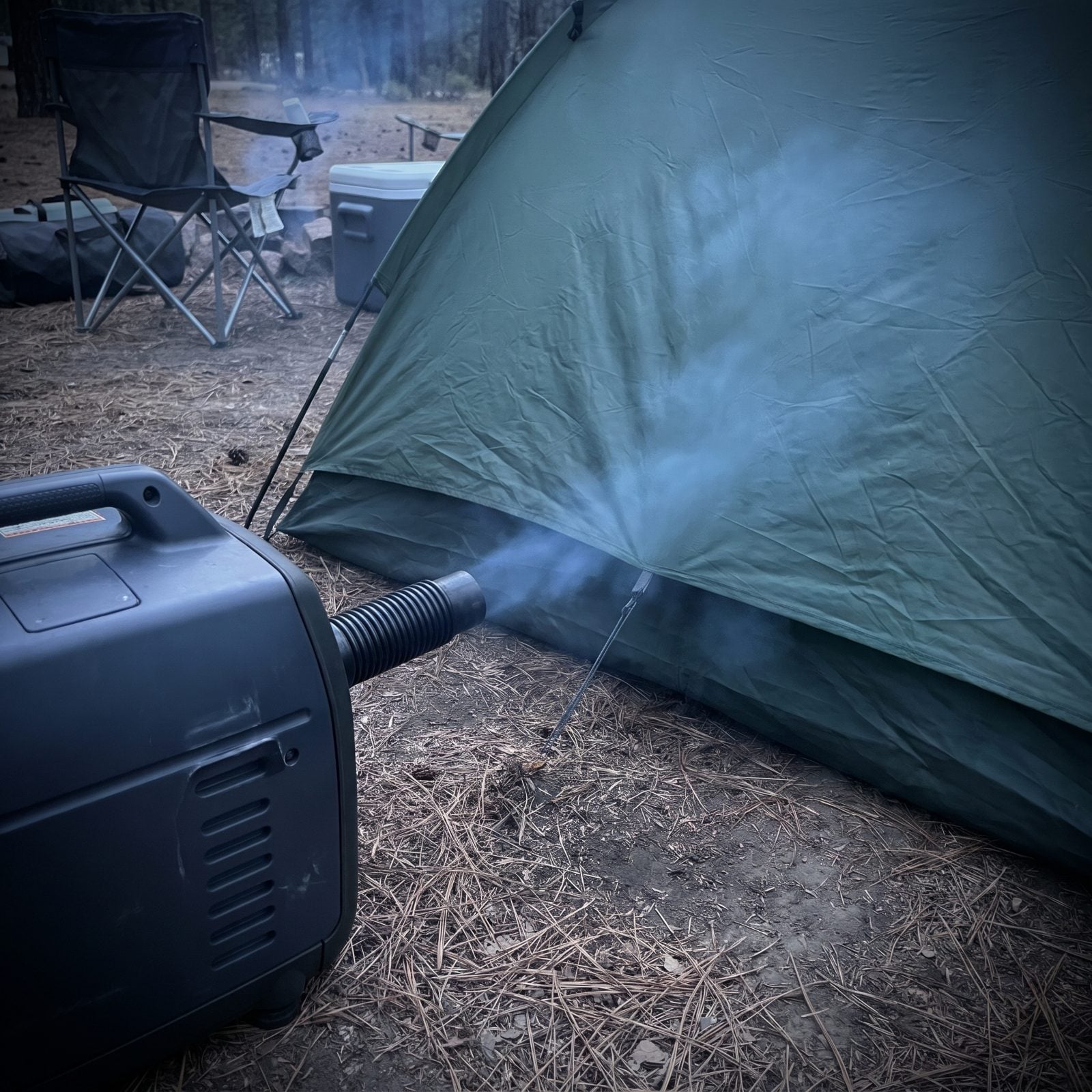
Carbon monoxide has no smell, no color, no mercy. Where the exhaust points is the difference between a good night’s sleep and a tragedy, and it kills campers every single year.
The careful ones set the generator well away from the rig, downwind, exhaust aimed at open ground, never toward a window or a neighbor’s tent. Hosts walk the sites at dusk partly to catch the one aimed back under a slide-out.
28. Whether They Observe Generator Hours
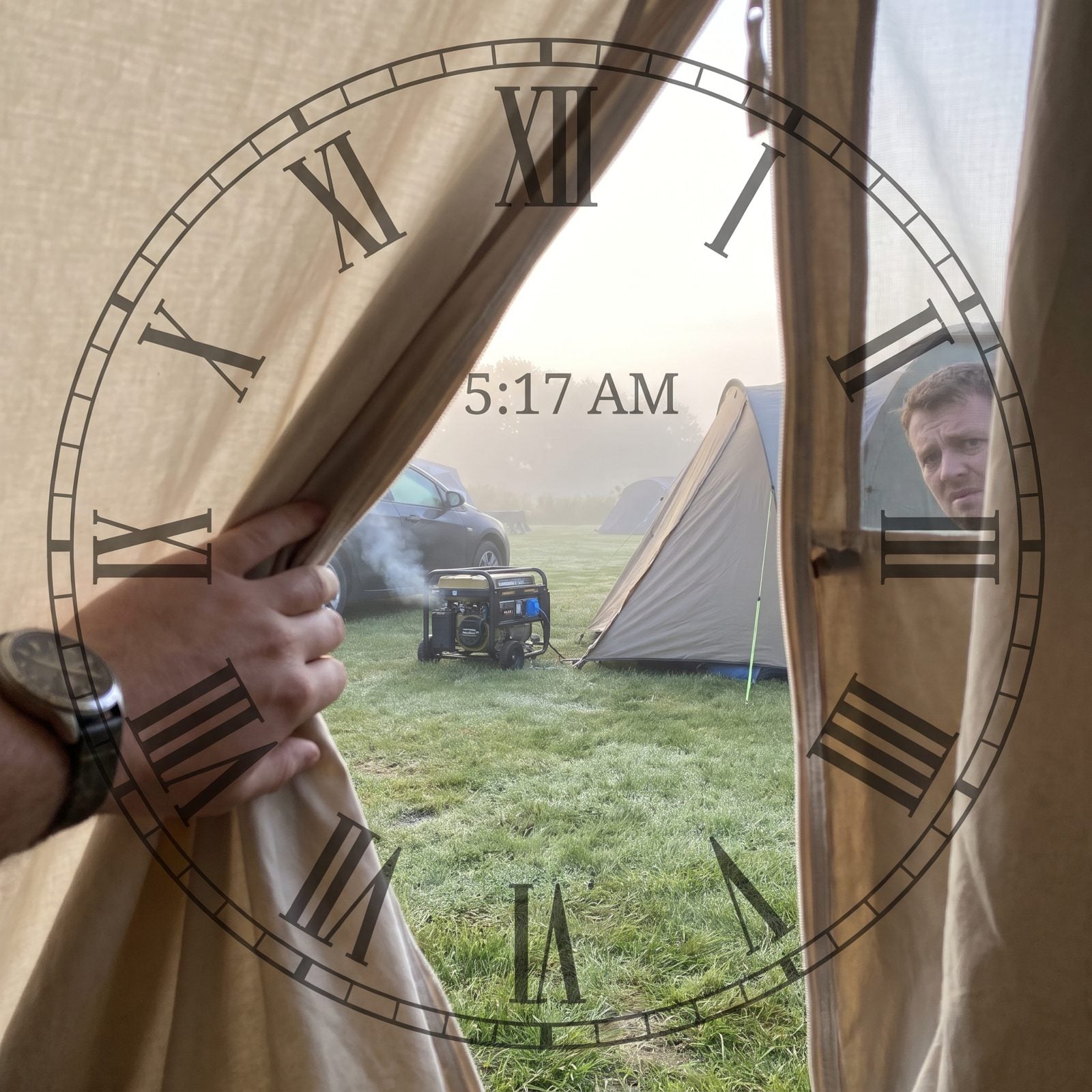
Most campgrounds post generator hours — something like morning and early evening, though every park sets its own. Those hours exist because nothing poisons a quiet evening like a droning engine right as everyone else is settling in around the fire.
Hosts know within one night who read the rules. The considerate ones charge up during the window and go quiet after. The rest run theirs past dark and wonder why the neighbors won’t make eye contact.
27. Whether They Pitch the Tent in the Site’s Lowest Spot
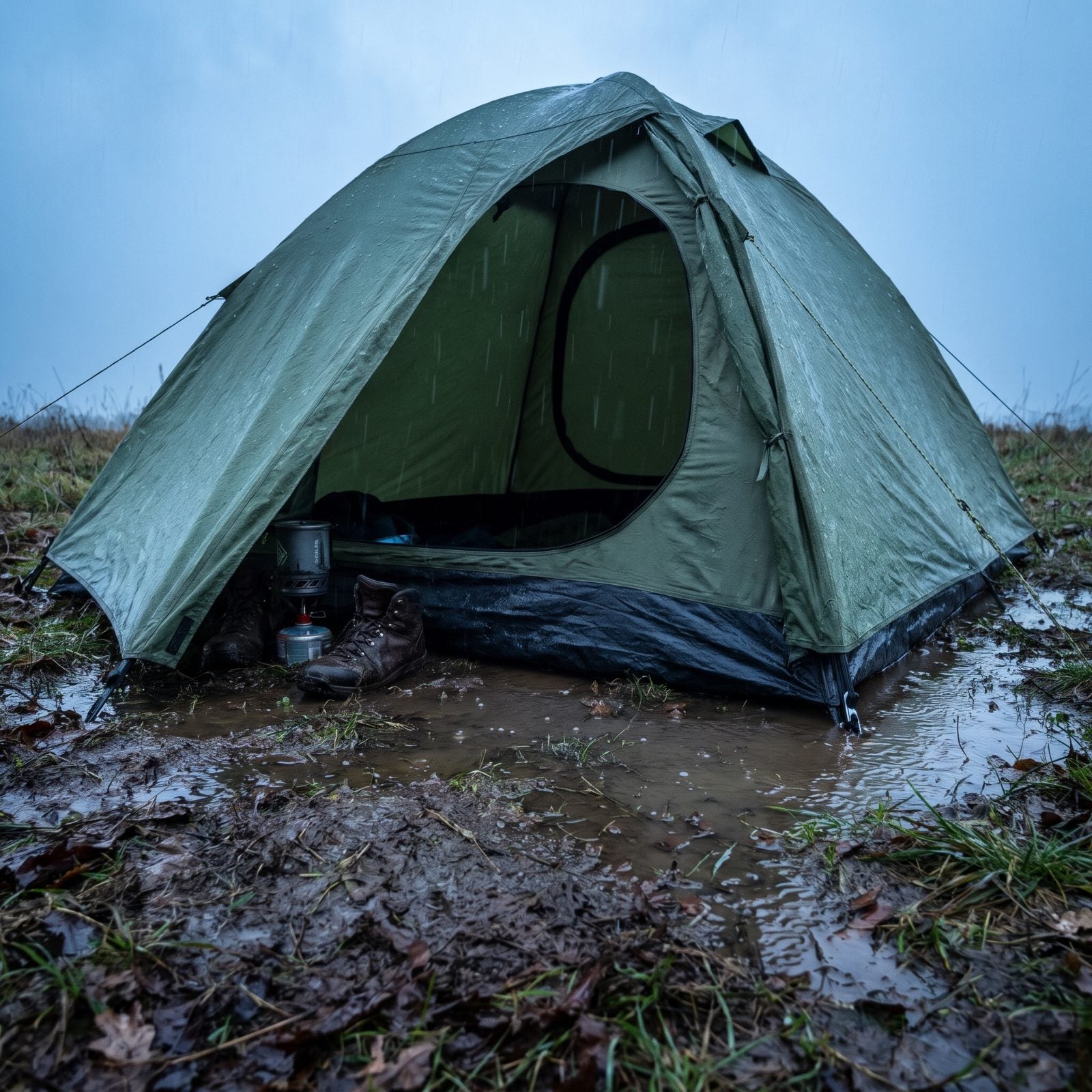
Water runs downhill. It’s the oldest lesson in camping, and people relearn it at 2am, soaked, wondering why the floor turned into a wading pool.
The flattest patch is often the lowest, which is exactly why it’s a trap. Experienced tent campers read the ground, find a slight rise, and pitch where runoff flows around them instead of through them. Hosts can predict a midnight evacuation just by watching where the poles go up.
26. How Close They Pitch the Tent to the Fire Ring
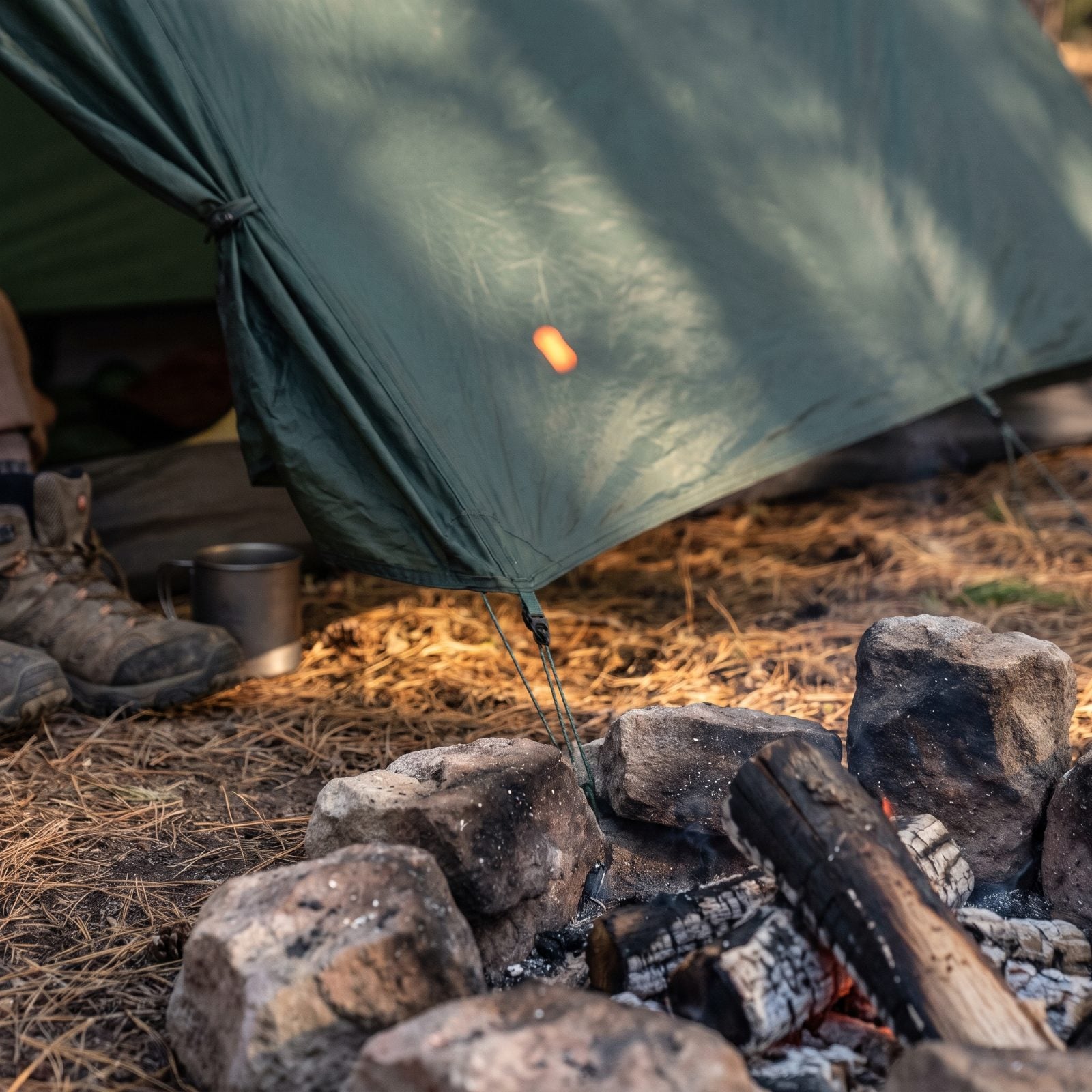
Nylon melts. A single drifting ember can put a hole in a rainfly or, worse, start something you can’t stop. Tents too close to the fire ring make hosts nervous, and they’re right to be.
Give it real distance — more than you think, especially downwind. The careful campers set up so sparks have room to die before they reach fabric, while the ones who crowd the ring usually wake up to a little burn hole they pretend not to see.
25. Whether Tent Guy Lines Are Visible After Dark
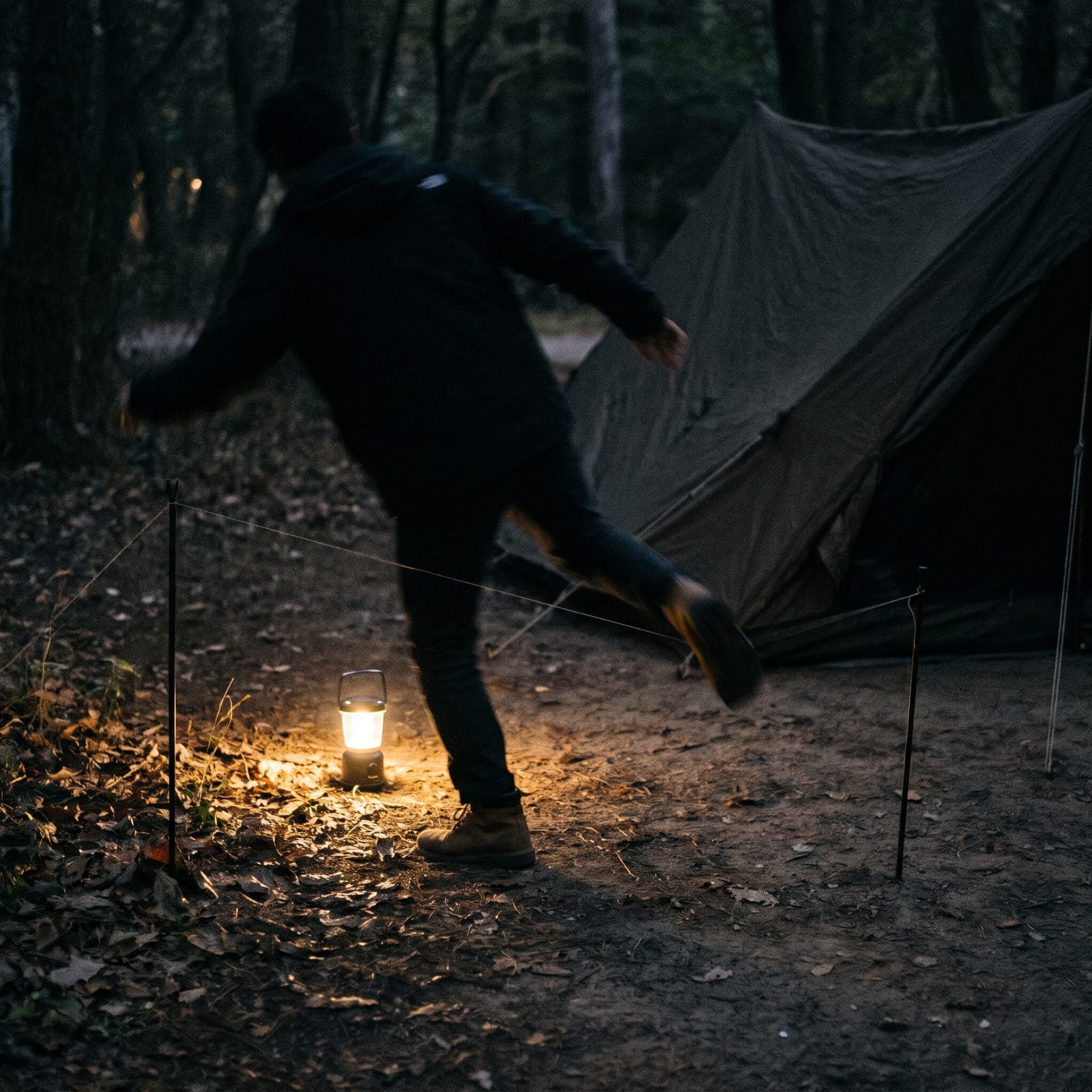
The guy line you can’t see is the one that takes you down at a dead sprint toward the bathhouse. Dark cord strung ankle-high across a path is a trip wire, and the person who hits it usually isn’t the one who tied it.
Reflective guy lines, a glow stick, or a bit of bright tape on the stakes keeps everyone upright. Hosts notice who marks their lines, because those are the ones who haven’t had to apologize to a neighbor with a scraped shin.
24. Whether They Drive Nails or Screws Into Trees
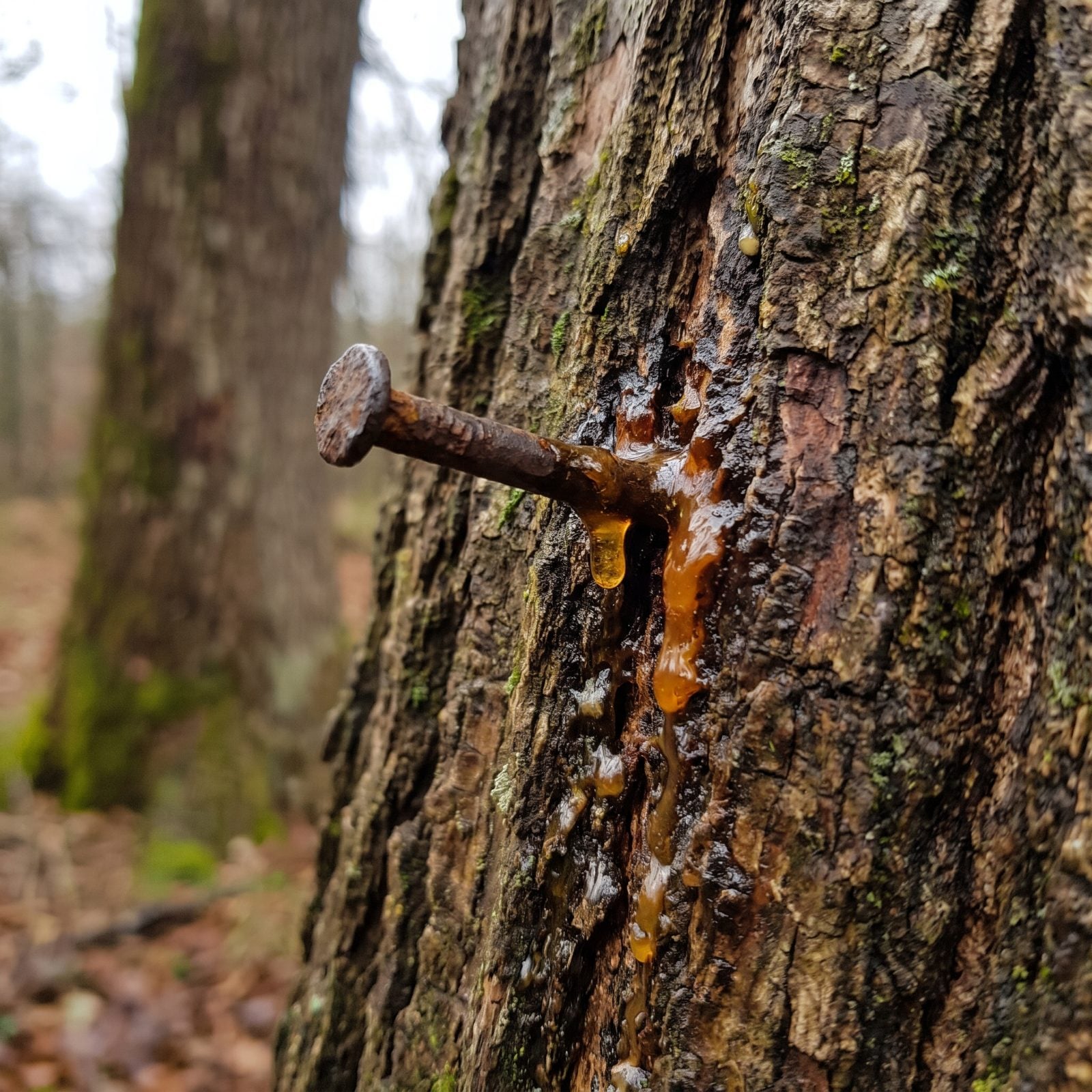
A nail in a tree is permanent. The tree wears that wound for the rest of its life, the metal invites rot, and the next camper leans a chair against a rusted spike nobody pulled out. It’s also against the rules in basically every park in the country.
The folks who’ve been doing this a while use wide fabric straps for hammocks and clotheslines, never hardware. Hosts count the hammer marks on the big shade trees, and they remember which sites keep getting them. Wrap the trunk, leave the hammer in the toolbox, and the tree is still standing for the camper after you.
Writing about the nails they keep finding in campsite trees, provincial park campground staff note “Rusty nails can snag passing campers and staff. Worse, if our maintenance team ever need to chop the tree down from, say, damage due to markings, chainsaws running into nails are a huge hazard.”
23. How Much Vegetation Their Setup Tramples
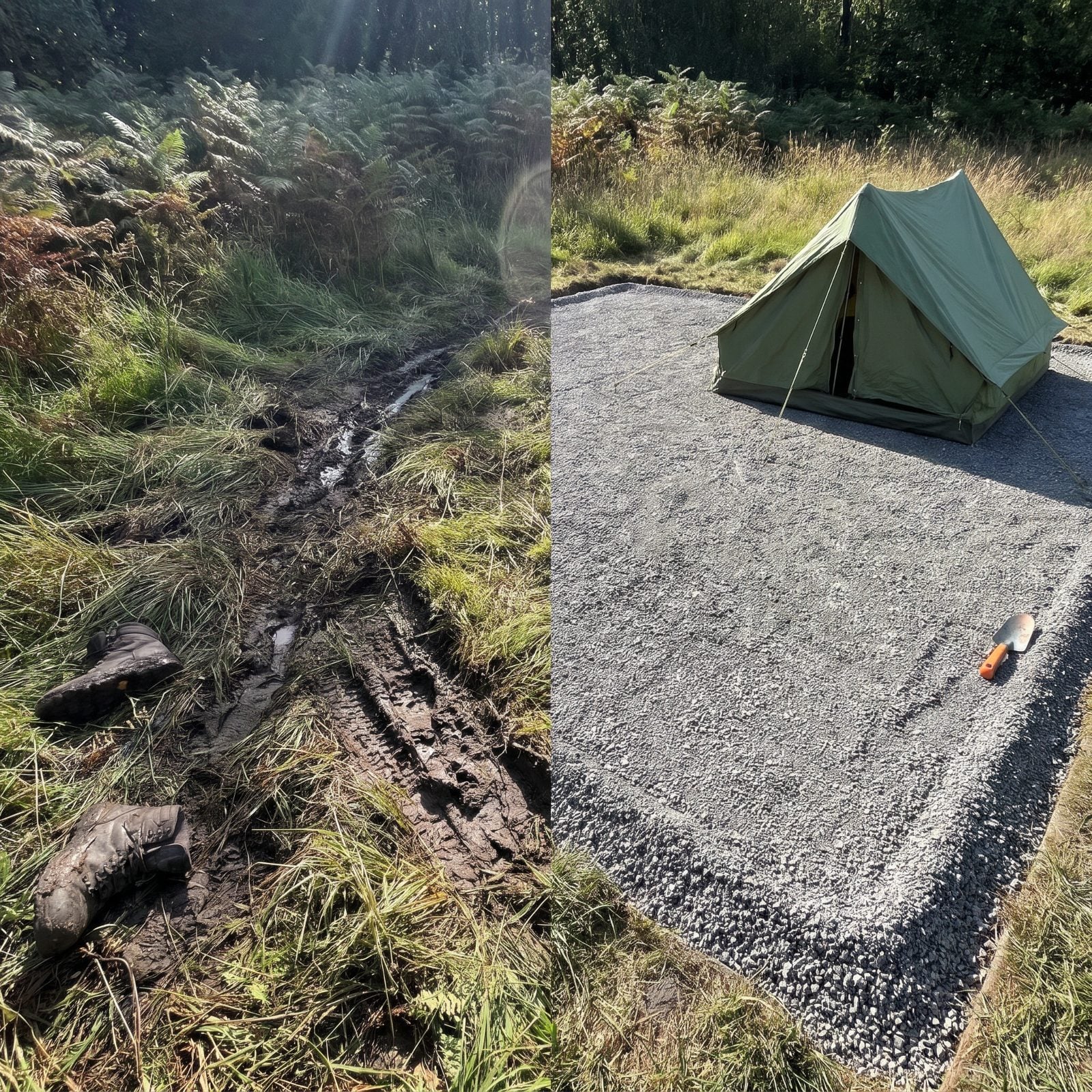
A good host can read your whole trip from where your tent sits. Pitch on the bare pad that’s already compacted and you’ve told them you know what you’re doing. Pitch it on the only soft green patch for forty feet, crushing the ferns, and they wince.
Those pads exist for a reason. Every site has a hardened footprint that’s taken the beating so the living ground around it doesn’t have to, and when you spread out past it you kill a little more each season.
22. Whether They Cut Through Occupied Campsites
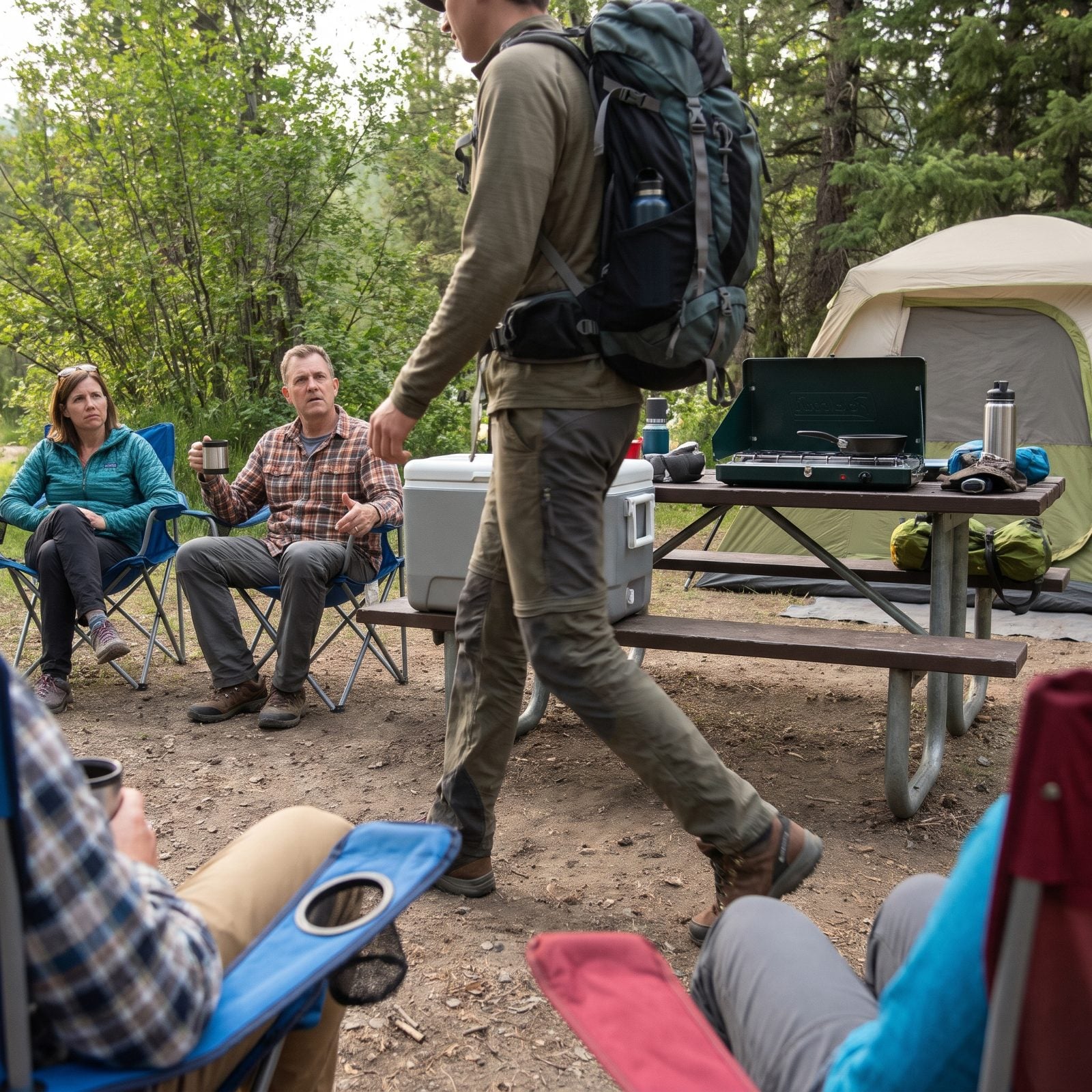
Walking straight through somebody’s site to save thirty steps to the bathroom is the fastest way to be remembered, and not kindly.
Think of each site as a small rented living room. You wouldn’t cut through a stranger’s kitchen because the sidewalk curves, would you? The loop road is longer on purpose. Hosts notice the campers who take it and the ones who treat the whole loop as open ground — one of those gets a friendly wave all week.
21. Whether Their Firewood Is Local or Campground-Approved
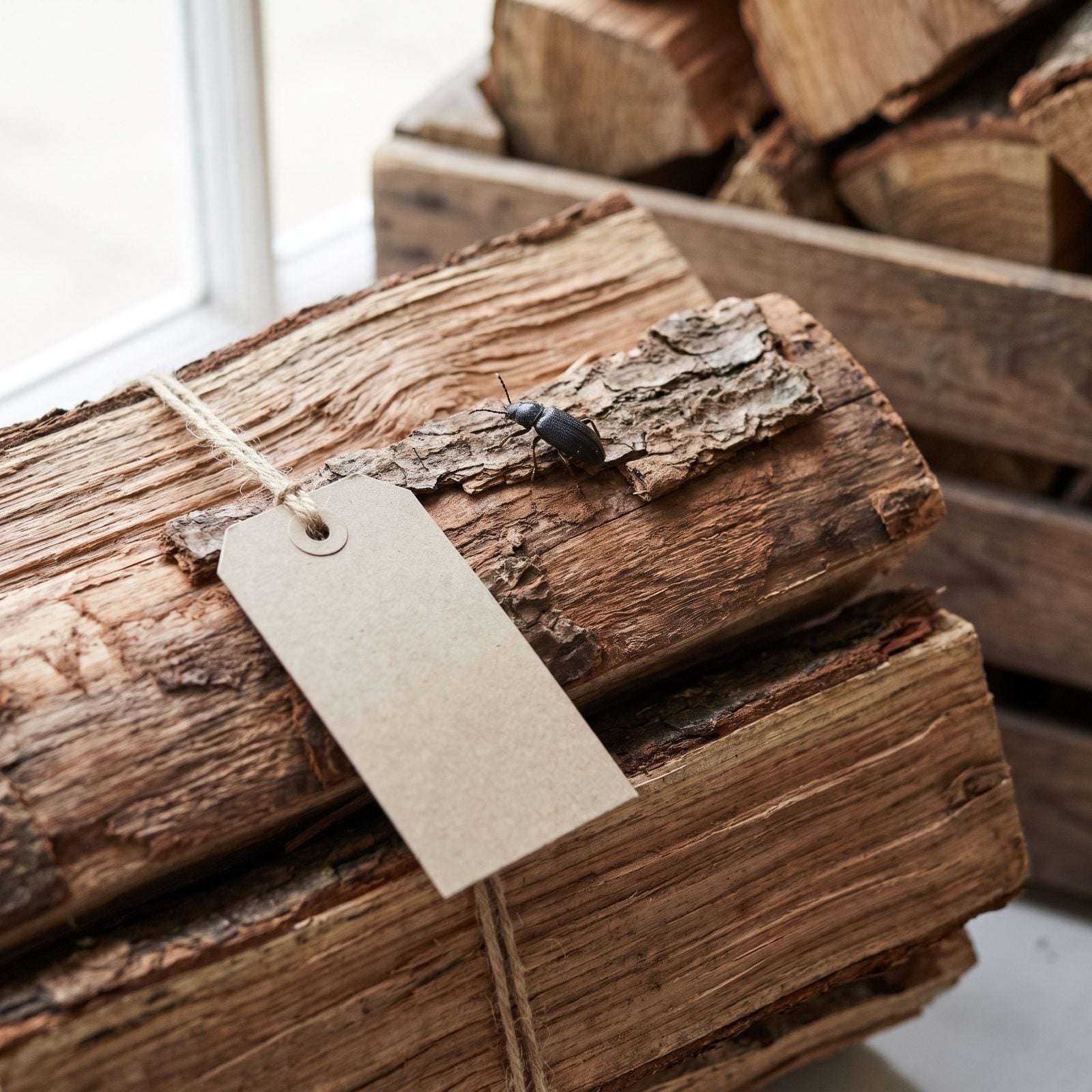
Moving firewood moves bugs. That’s the whole problem in four words. Emerald ash borer, spotted lanternfly, and a handful of fungi have all ridden into healthy forests inside a trunk-load of logs somebody hauled from the backyard “to save money.”
Hosts spot home wood instantly. It’s got bark, bore holes, and the wrong color. Buy it local, usually within fifty miles or so, or grab the kiln-dried bundles at the camp store. Rules vary by state and park, so check the board when you check in.
Urging campers to buy wood near where they burn it, a state forest pest specialist says “Buying local firewood is one way everyone can do their part to protect Wisconsin’s forests.”
20. Whether They Break Live Branches for Kindling
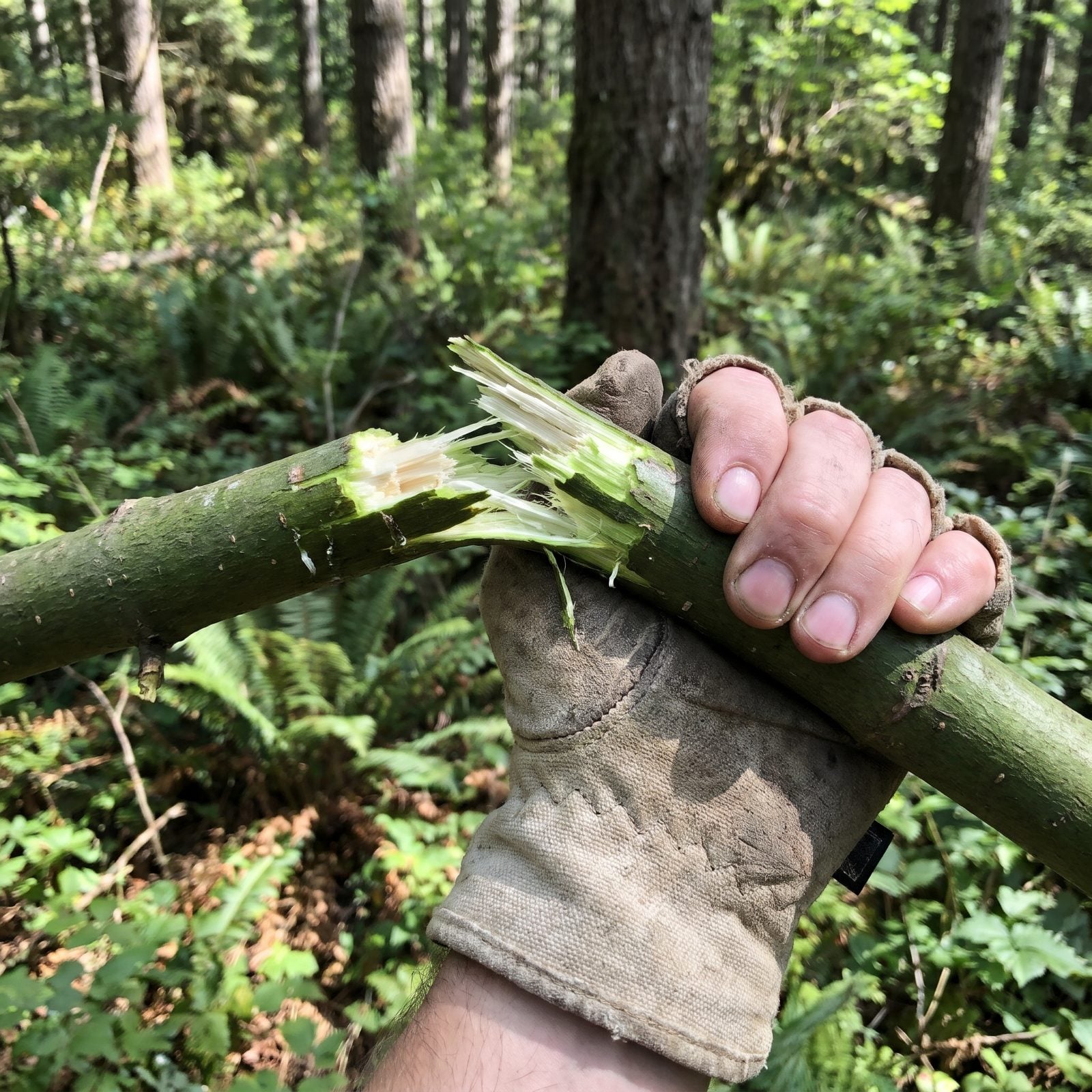
Snapping green limbs off a living tree for kindling tells a host two things: you can’t start a fire, and you don’t know live wood won’t burn anyway.
Green branches are full of water. They hiss, they smoke, they refuse to catch. The dead stuff already on the ground — dry twigs, fallen needles, bark curls — is what actually lights. “Dead and down” is the phrase worth remembering. If it’s attached and alive, leave it. A snapped limb scars the tree for years and does nothing for your fire tonight.
19. Whether They Try to Move the Established Fire Ring
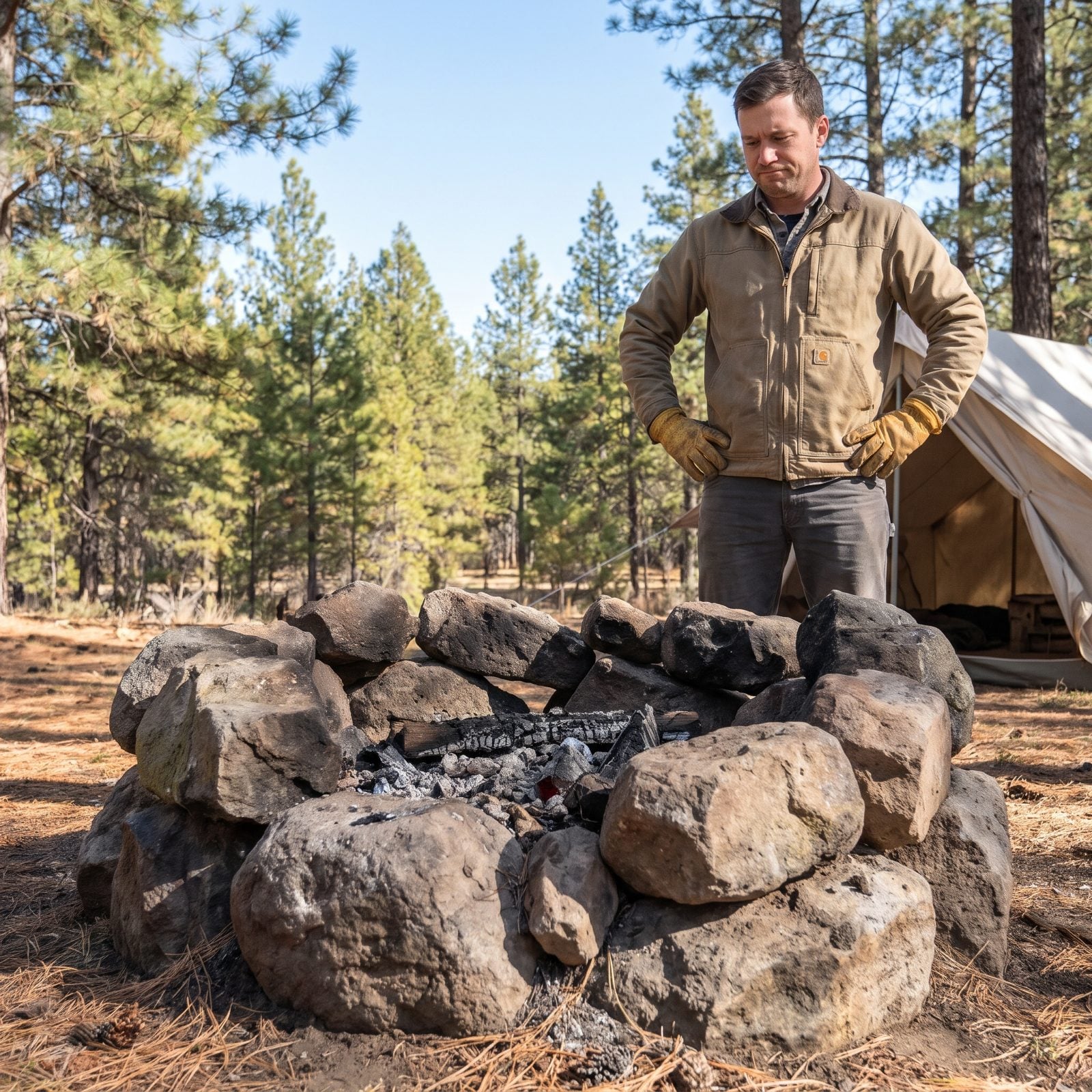
The fire ring sits where it sits for a reason somebody figured out before you showed up — clearance overhead, distance from tents, a patch of ground that’s already burned clean.
Drag it four feet closer to your chairs and you undo every bit of that. Hosts catch the scrape marks in the dirt before they even catch you doing it. That ring is usually bolted down or set in a concrete apron precisely so it can’t wander off. Wrong spot for the fire? Move your chairs. Not the ring.
18. Whether They Check the Current Fire Restrictions
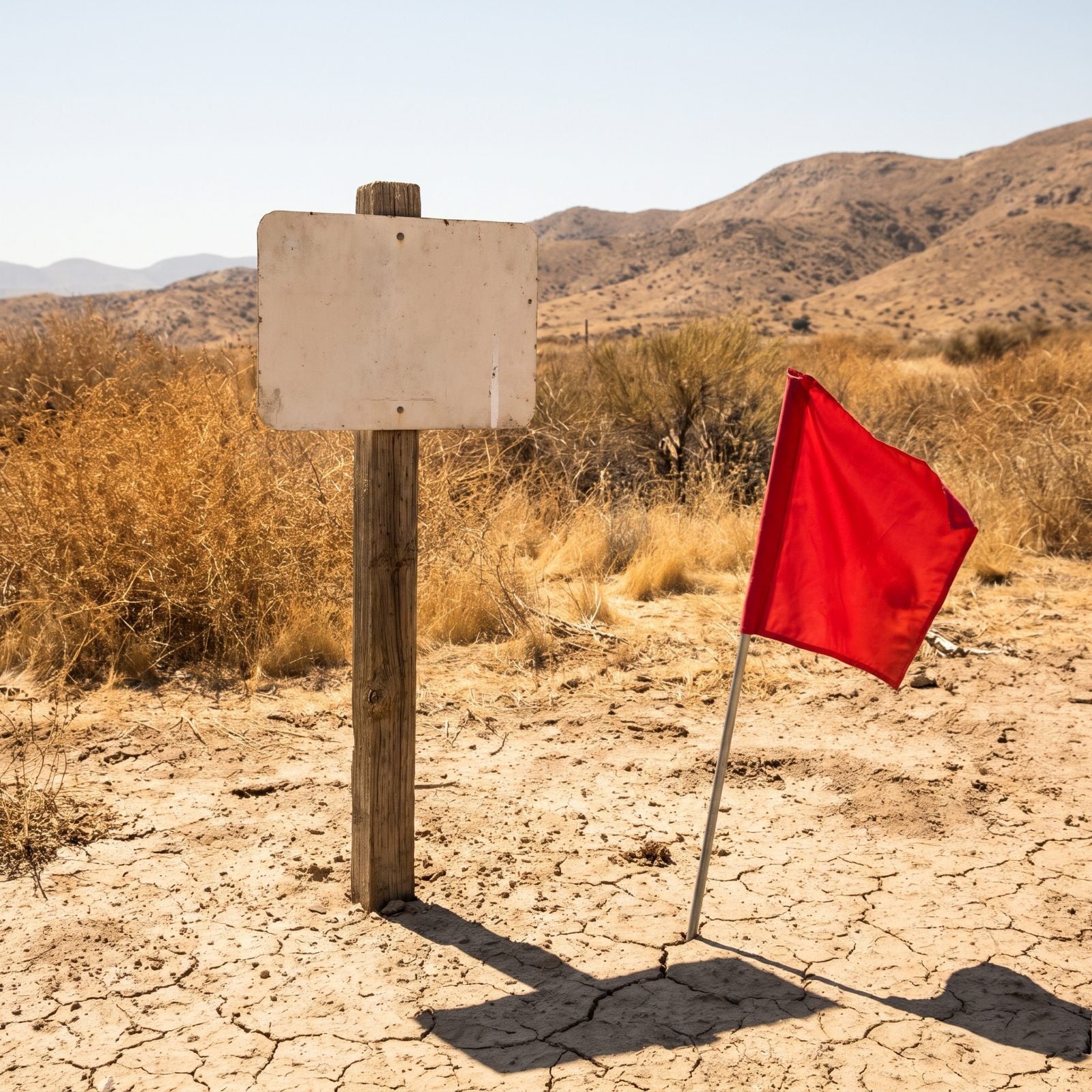
Fire danger changes by the day, not by the season. A site that welcomed a roaring campfire in June might ban open flame entirely by August, once the grass goes tinder-dry.
The campers hosts trust check the board on arrival. Red flag, stage-two restriction, total burn ban — it’s all posted. Roll into a closed-fire week and light up anyway and you’ve gone past rude. That’s how whole forests go up.
17. How High They Build the First Campfire
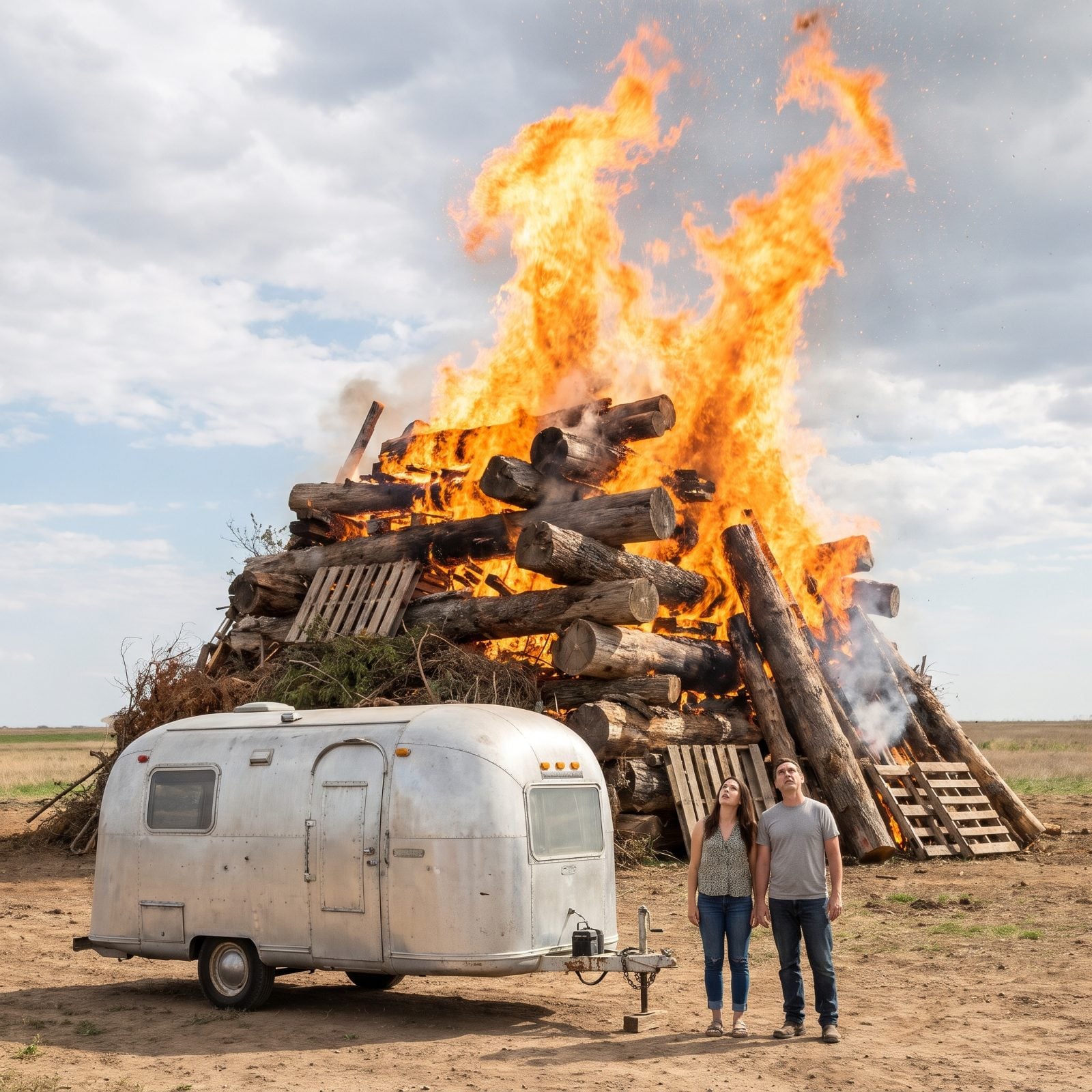
A bonfire is a beginner tell. New campers build a blaze you can see from the next loop, like height equals warmth. It doesn’t. What it buys you is sparks, scorched overhead branches, and a fire nobody can get close enough to actually use.
Keep the flame below the rim of the ring. A small, tight fire throws plenty of heat, cooks fine, and doesn’t launch embers onto your neighbor’s tent fly. Hosts relax the moment they see a sensible fire — and they start watching the second one climbs past your knees.
16. Whether Wet Wood Smokes Out the Neighboring Sites
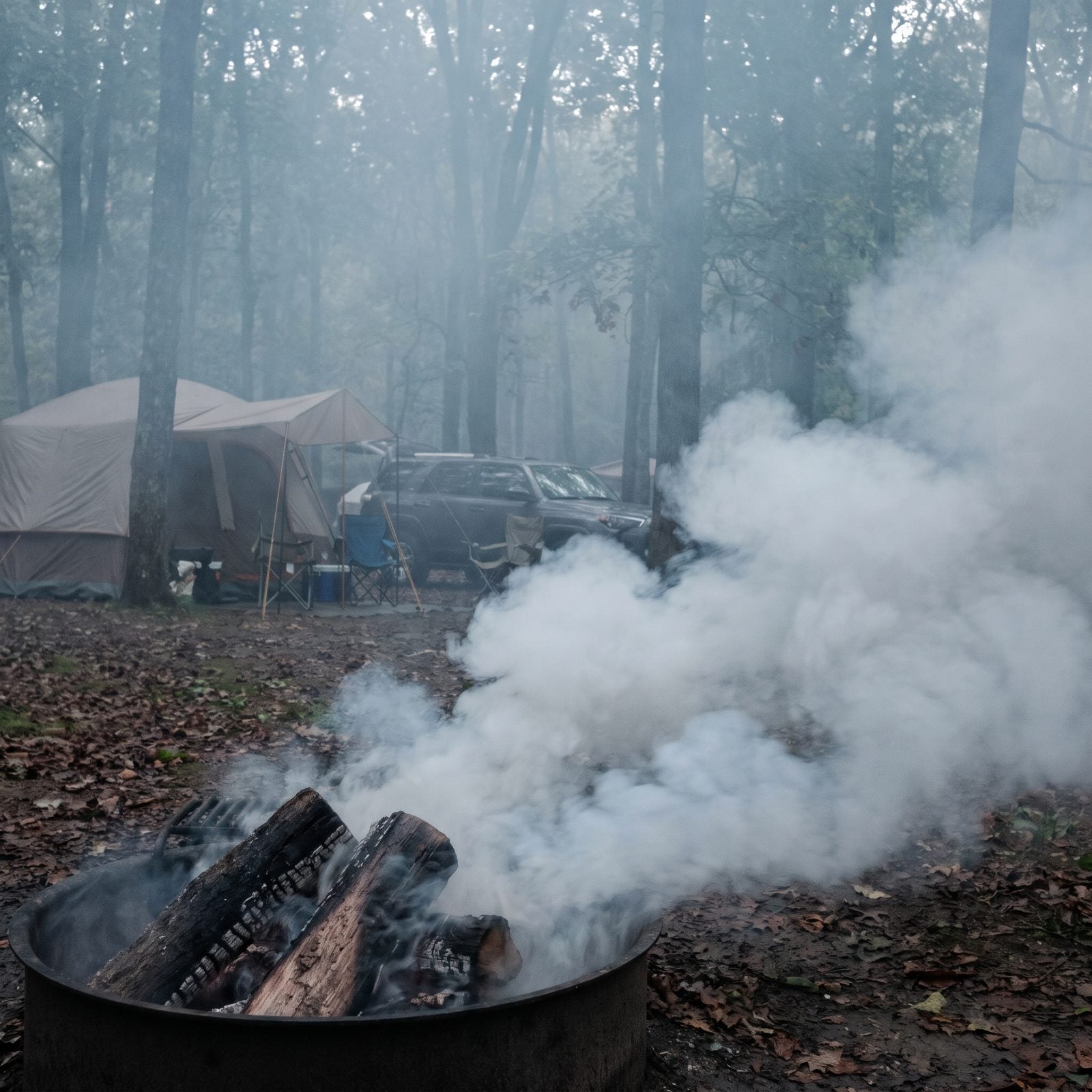
Wet wood doesn’t burn. It stews. And the smoke it pumps out won’t stay over your fire — it rolls sideways into whoever’s downwind, soaking into their tent, their clothes, their dinner.
Seasoned, dry wood is the whole difference between a clean fire and a smoke machine. Dark, heavy logs with no cracks in the ends are too green or too wet. Burn them and your neighbors spend the evening squinting, which is exactly the kind of thing a host hears about before they ever see it.
15. Whether Anyone Stays With the Burning Fire
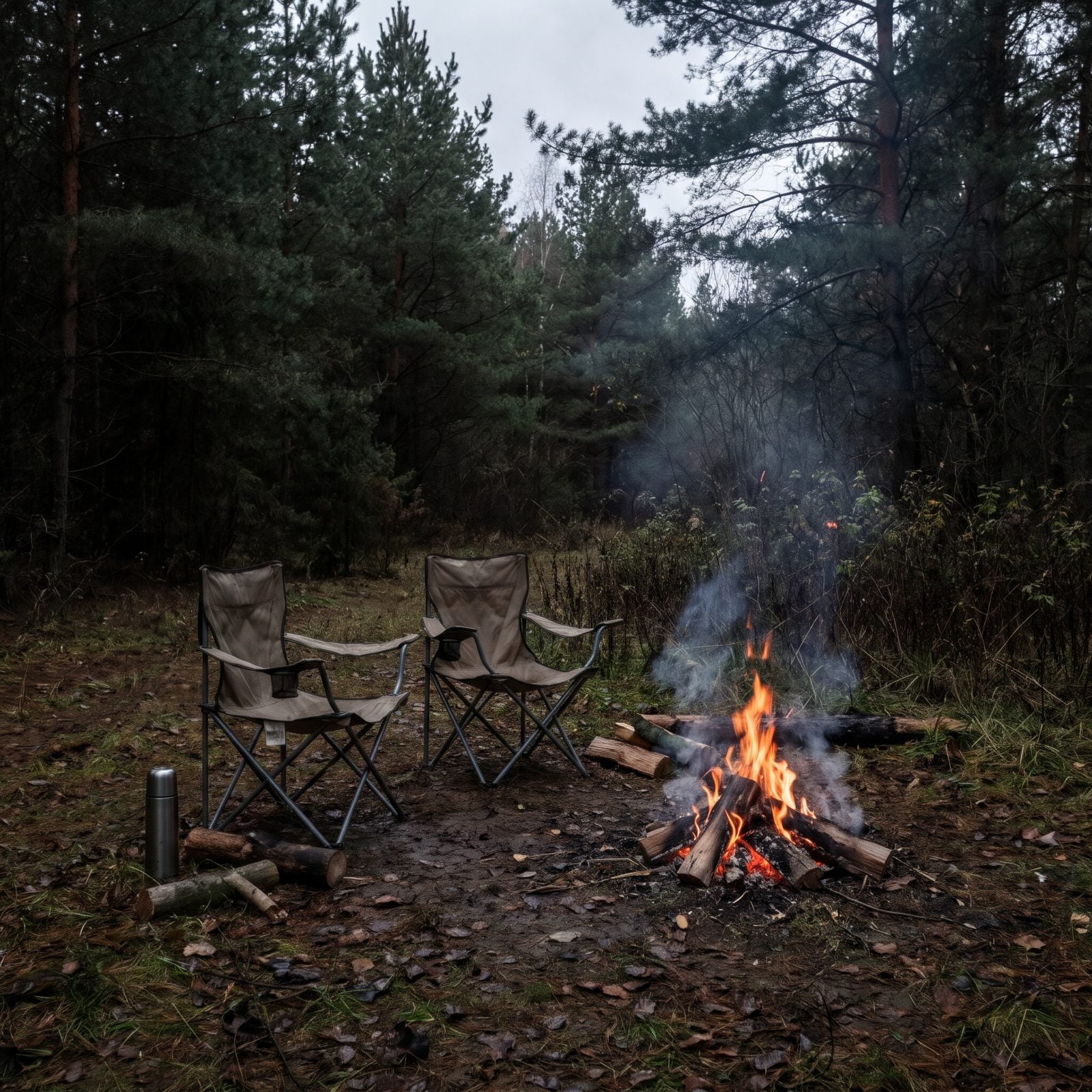
An unattended fire is the single thing that turns a host from friendly to firm. Empty chairs, live flames, everybody wandered off to the bathroom or the lake. It happens constantly, and it’s how campground fires get loose.
Someone stays until it’s out. Not banked, not “mostly done.” Out. Drown it, stir the ashes, drown it again, and feel for heat with the back of your hand. If you can’t touch it, it isn’t out.
14. Whether They Treat Fireworks as Campground Entertainment

Fireworks in a campground are banned almost everywhere, for the obvious reason: you’d be lighting explosives in a forest that’s been drying out since May.
Set the fire risk aside and there’s a simpler problem. People came out here for quiet. A string of bottle rockets at eleven at night wakes every kid, every dog, and every early riser on the loop. Hosts don’t just notice fireworks — they come straight over. It’s the one thing that gets you talked to the same night, not warned about the next morning. Leave them in the truck. Better yet, at home.
13. Whether Your Headlights and Floodlights Blind the Whole Loop
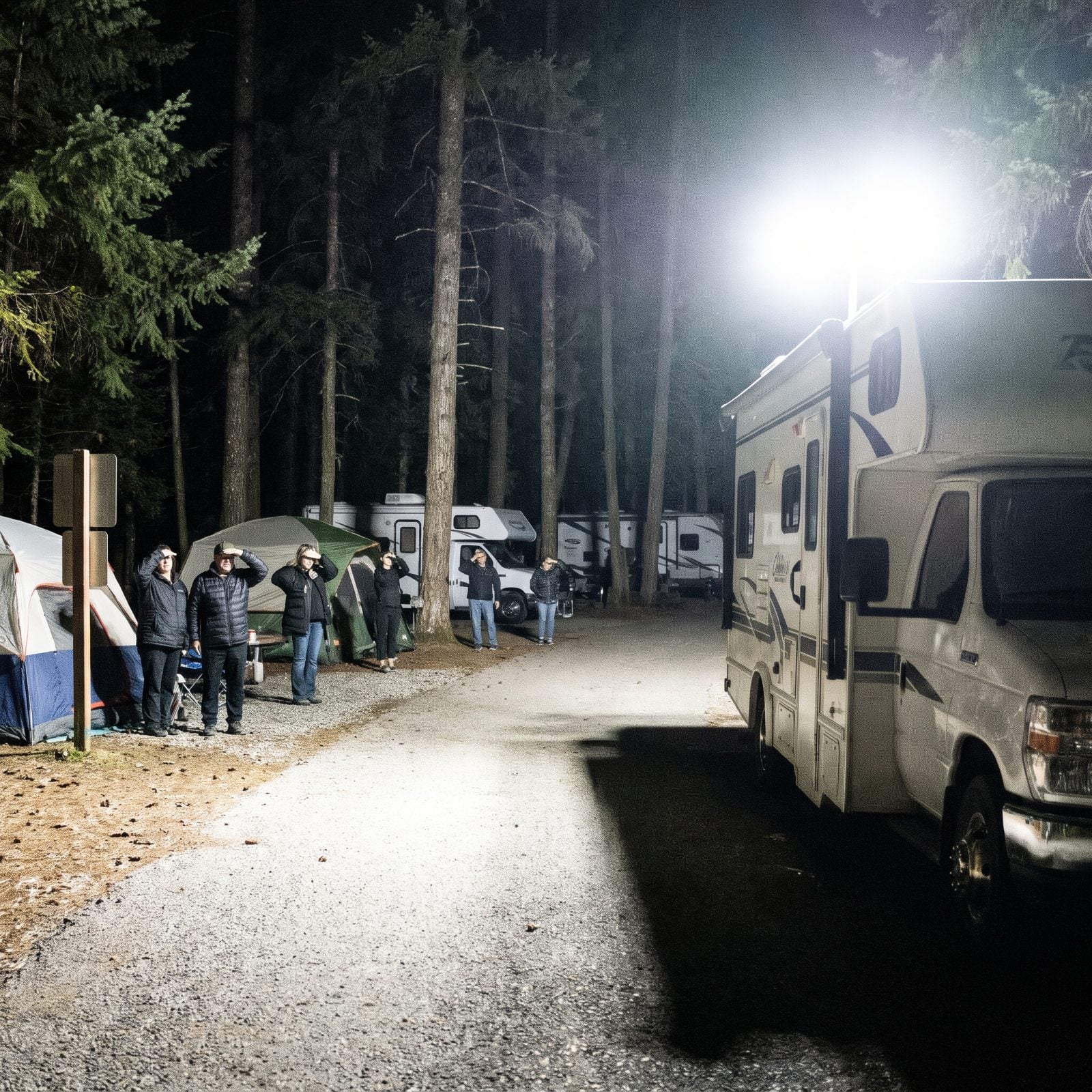
Rolling in after dark happens to everyone. Flat tire, long drive, a wrong turn two counties back — the host gets it. What they’re watching is what you do with those floodlights once you’re close.
A full LED light bar pointed at the loop turns a neighbor’s tent into a lampshade, and people are trying to sleep in there. Kill the aux lights the second you’re lined up, drop to parking lights, and finish the backing with a flashlight or a spotter. Do that, and the host already likes you.
12. How Far Your Music Carries Through the Trees
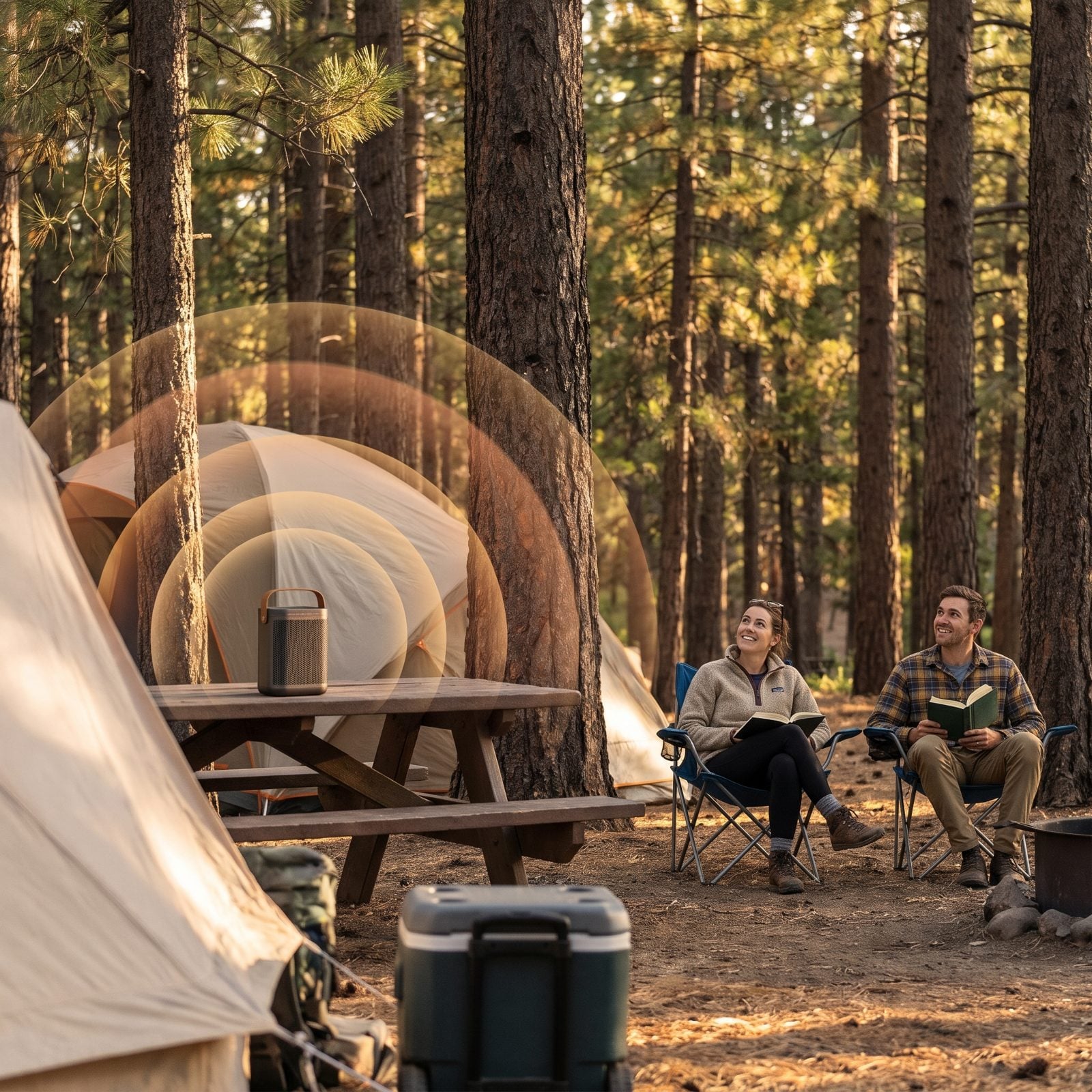
Sound does strange things in a campground. Water carries it, and still evening air carries it even further, so the music that feels background-level at your fire is clear as a radio four sites away. The host knows exactly how your little loop channels it.
The test isn’t your taste — plenty of hosts like the same bands you do. It’s whether a neighbor can hear your playlist better than their own conversation. If they can, it’s too loud, no matter how reasonable it feels from your chair.
11. Whether the Dog Is Leashed the Second the Door Opens
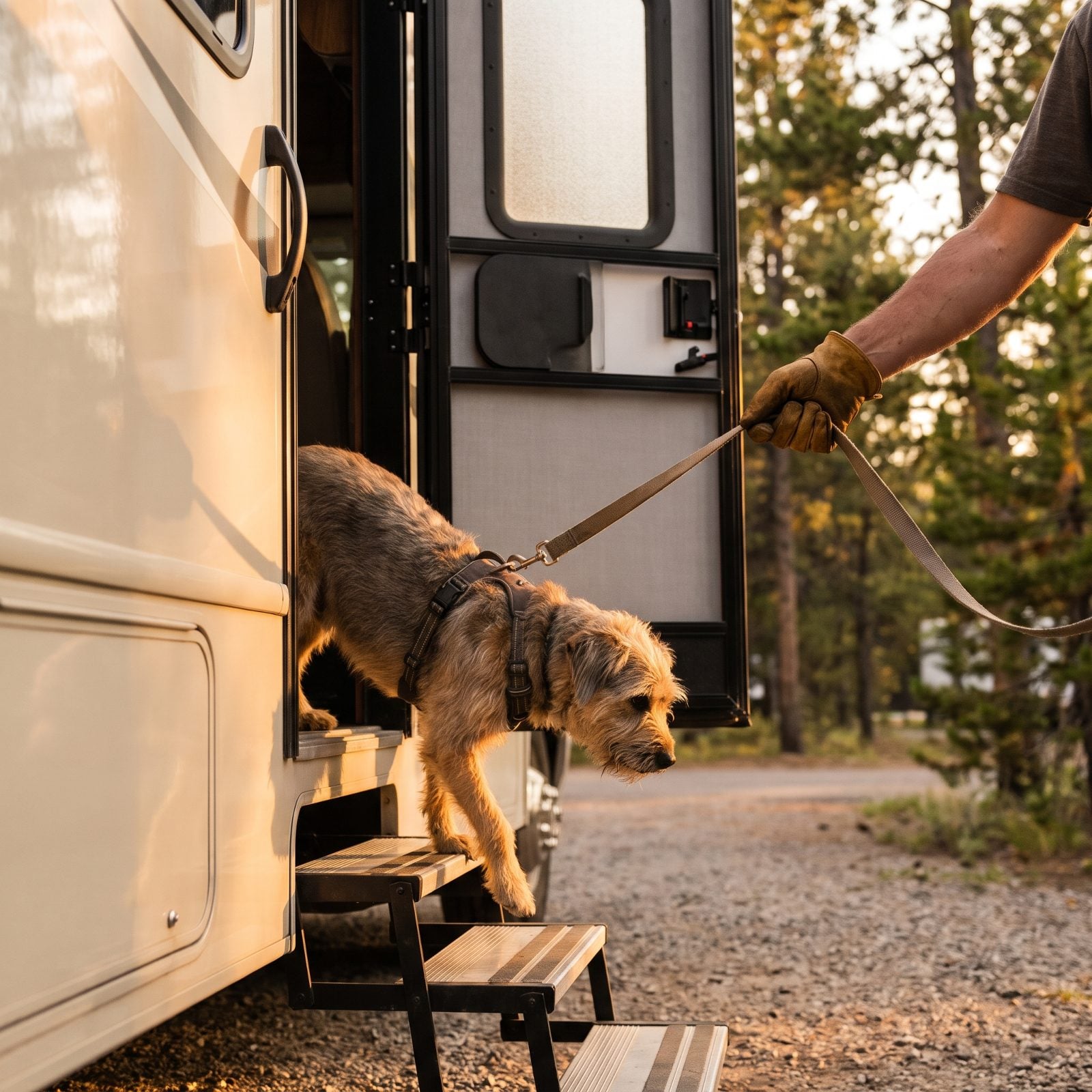
This is the single biggest tell in the whole arrival. A dog that comes out of the door already clipped to a leash tells the host everything about how the rest of the stay will go.
The loose dog that bolts over to say hi to the next site isn’t friendly — it’s a problem waiting for a reason. Other dogs, small kids, a host’s own routine, all of it gets harder the second your dog decides the campground is its backyard. Leash goes on before the paws hit the ground. Every time. Even the quiet dog, even the old one.
10. How Long You Let a Barking Dog Carry On
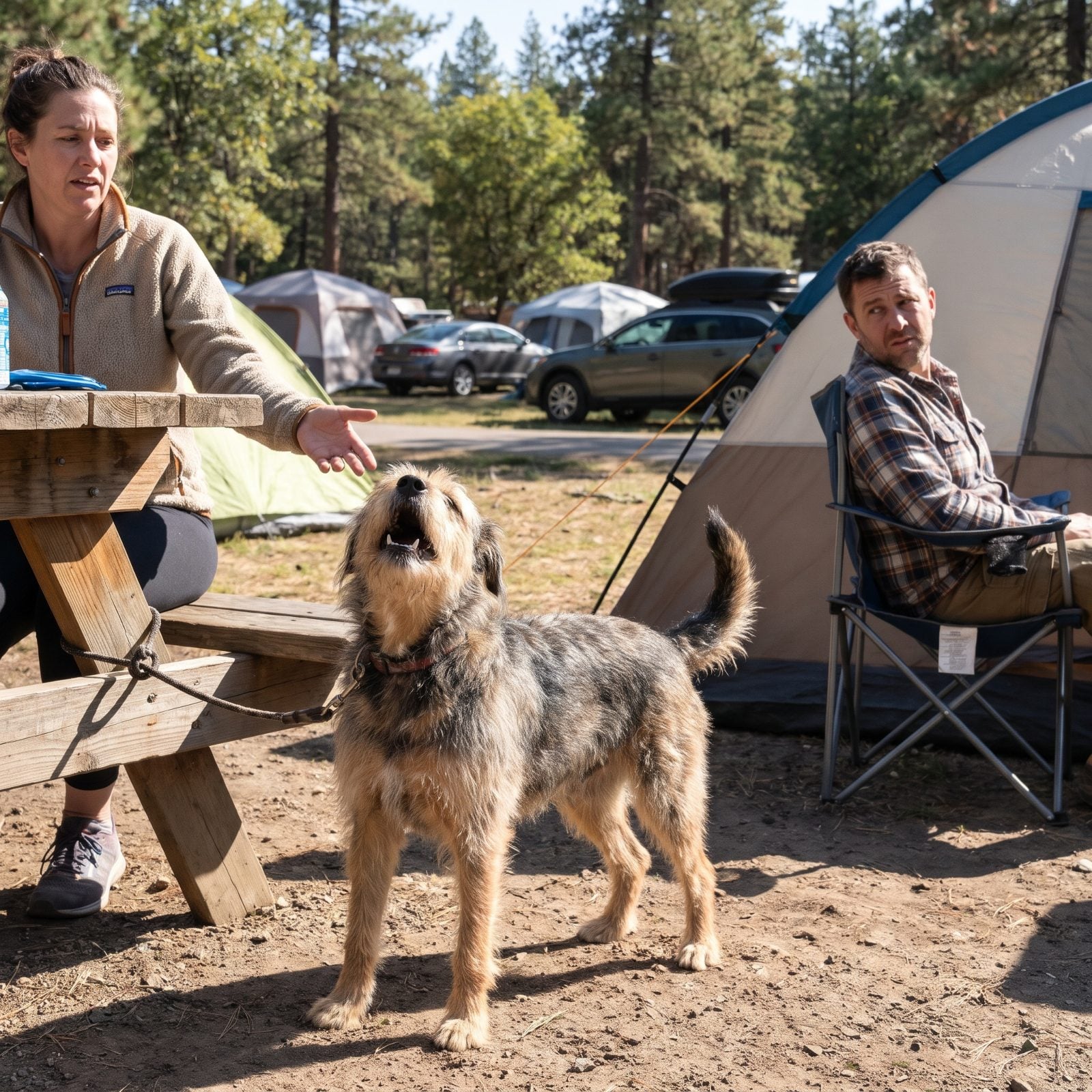
Dogs bark. A couple of warning woofs at a passing raccoon is nothing. The host isn’t counting barks — they’re counting minutes.
The dog left tied outside while you run to the shower, barking steady for twenty minutes because it’s bored and alone, empties a campground of goodwill fast. Get up, go over, bring the dog in, cut the trigger. A dog that quiets inside ten seconds of you reacting reads completely different from one that’s allowed to go until it’s done.
9. Whether the Pet Waste Actually Gets Picked Up
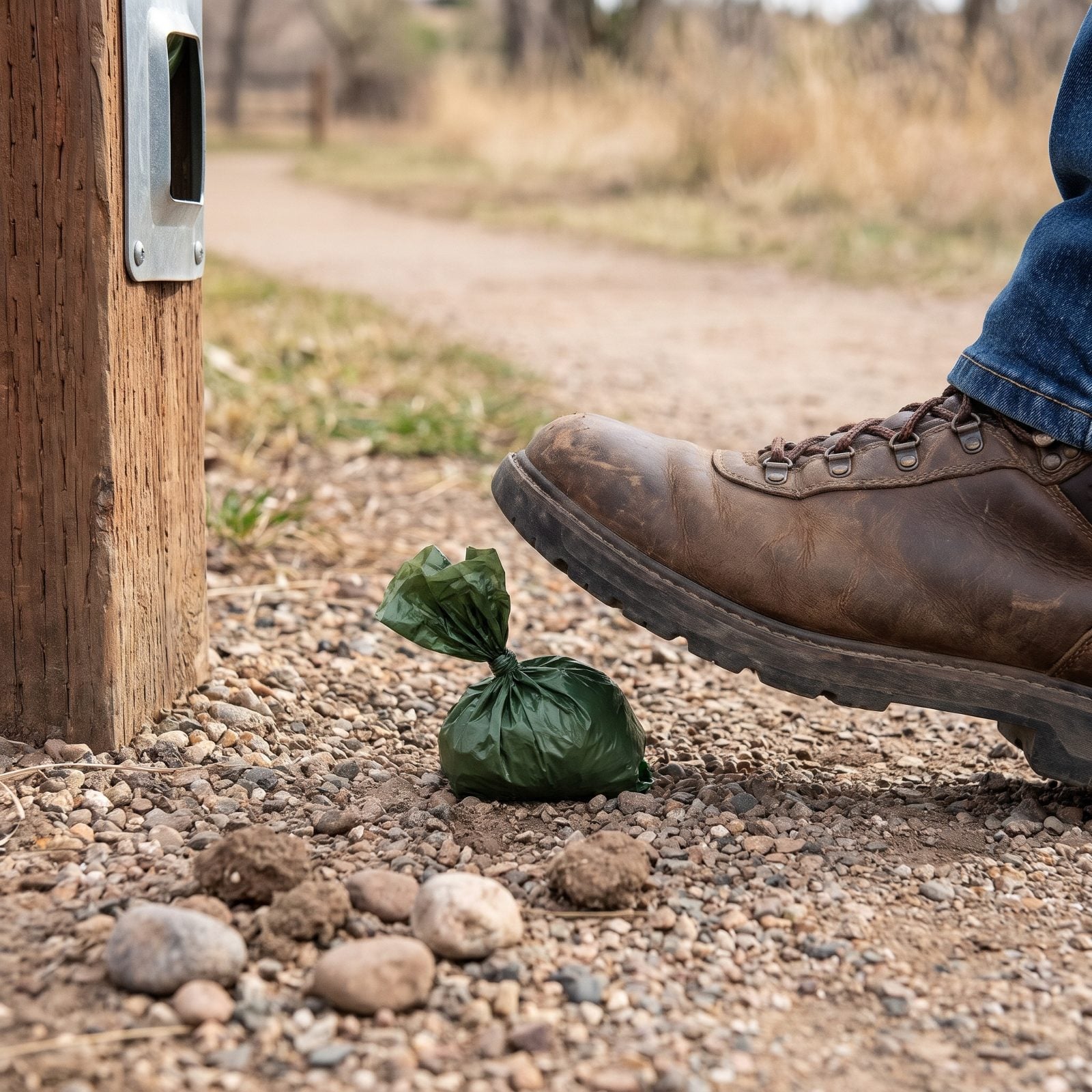
Here’s the quiet math a host runs. Every pile you leave is a landmine for the next camper’s kid, the next dog, the host’s own mower. And they always know whose dog it was, because they watched you walk it.
Pick it up the moment it happens, bag in hand before you even leave the site. And tying off the bag isn’t the finish line: a full bag dumped at the foot of a post and nudged aside with a boot is still a pile someone else has to deal with. Carry it to a bin. Easiest piece of etiquette on this whole list — and the one people skip most.
8. Whether the Kids’ Bikes Have Lights After Dark
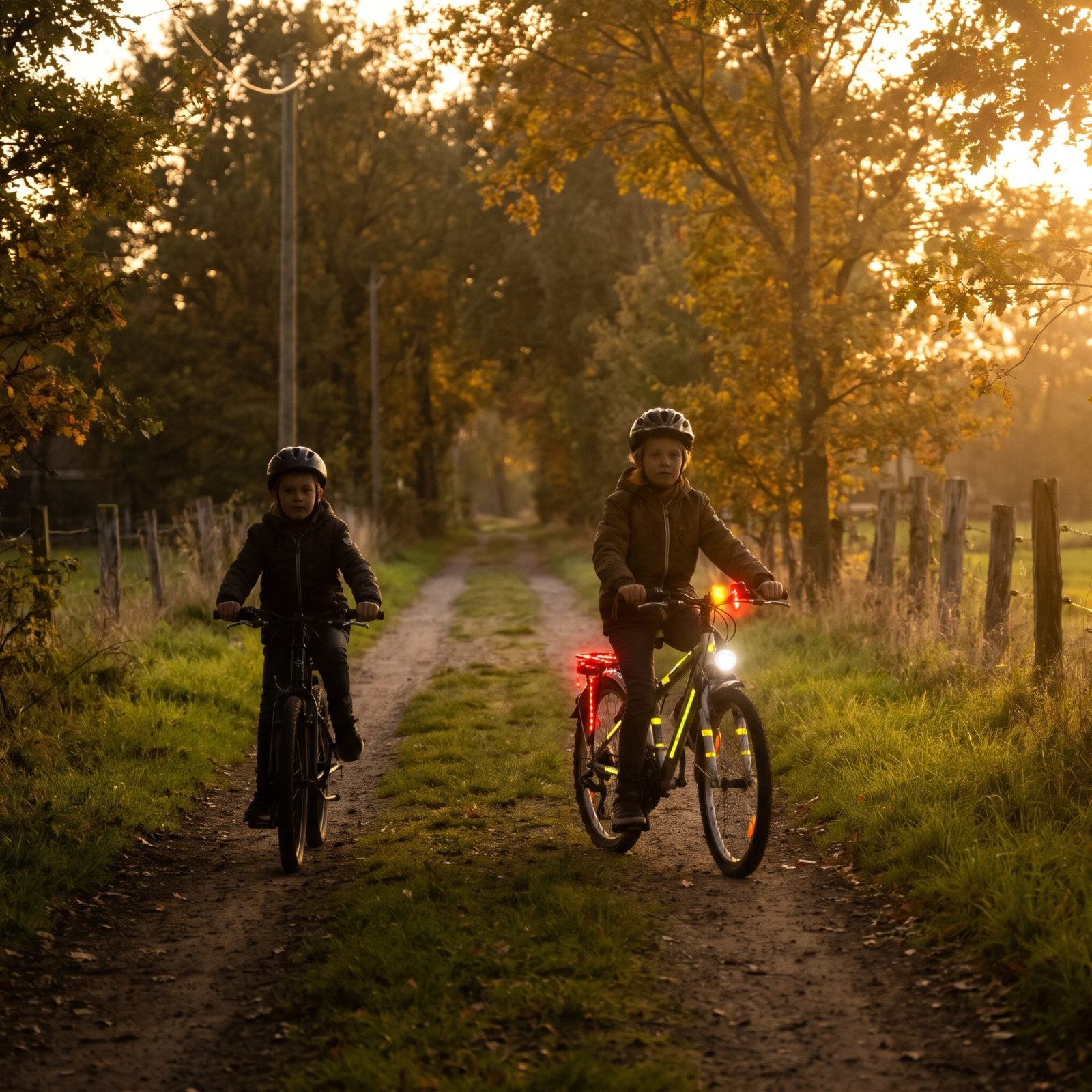
Kids on bikes are half the point of a campground, and the host loves hearing them. What makes the host wince is the dark shape with no reflector cutting across the loop just as a truck backs out of a site.
A two-dollar clip light on the handlebars and a reflector on the back turns a near-miss into a non-event. After dusk, loop roads are a mix of slow vehicles, dark pavement, and headlights pointed the wrong way. The lit-up bike is the one the driver sees in time.
7. Whether Trash Bags Spend the Night Outside Your Door
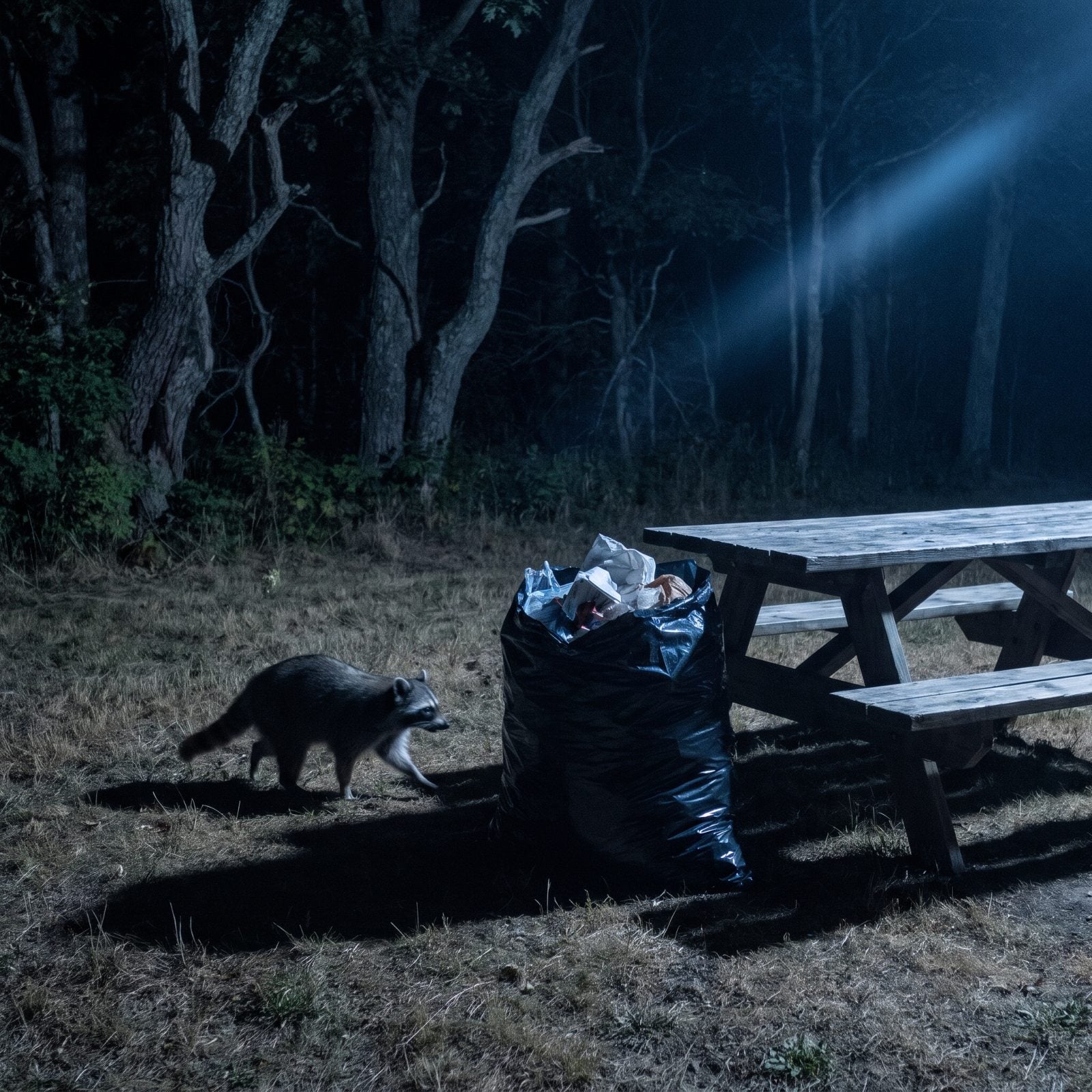
The trash bag set by the picnic table “just for tonight” is a dinner bell. Raccoons work it by midnight. In bear country it’s a far bigger problem, and the kind that gets a campground’s bear box policy tightened for everyone.
Hosts notice the bag the second you set it down, because they know what’s coming. Walk it to the dumpster or the bear locker before you turn in. A clean site at night isn’t fussiness — it’s the difference between your mess and the whole loop’s problem in the morning.
6. Whether You Rinse Sewer Gear at the Drinking-Water Tap

This one makes seasoned RVers flinch harder than anything else on the list. That spigot is drinking water — the whole campground’s drinking water, in a lot of setups. Rinse a sewer hose or your dump gloves under it and you’ve poisoned a water line.
Sewer gear gets rinsed at the dump station, with the dump station’s dedicated non-potable tap and its own hose. Never at your site’s blue spigot. A host who sees you drag the stinky slinky over to the drinking tap will be at your site before you finish, and they’re right to be.
5. Whether the Rig Is Dumping Gray Water on the Ground
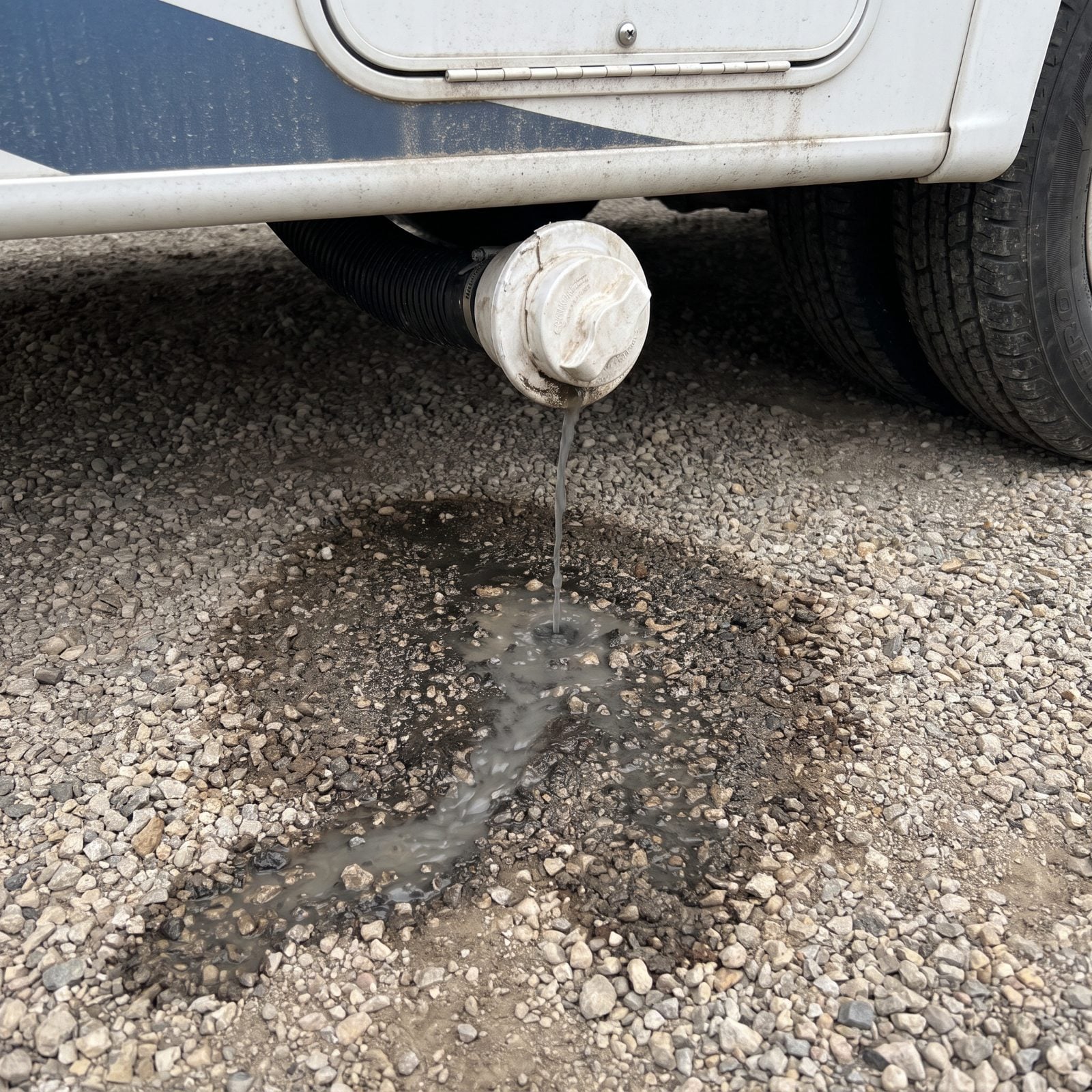
Letting the gray tank trickle onto the gravel feels harmless. It’s just dish and shower water, right? The host has seen what it actually does — a soured, soapy patch that draws flies, stinks by day three, and sits there for the next camper who books that site.
Most campgrounds flat-out prohibit it, full hookup or not. Use a tote, haul it to the dump, or wait for the hookup. The ground under your rig isn’t a drain field, and in a lot of states dumping it is a fine, not just bad manners.
4. How You Leave the Restroom After the First Visit
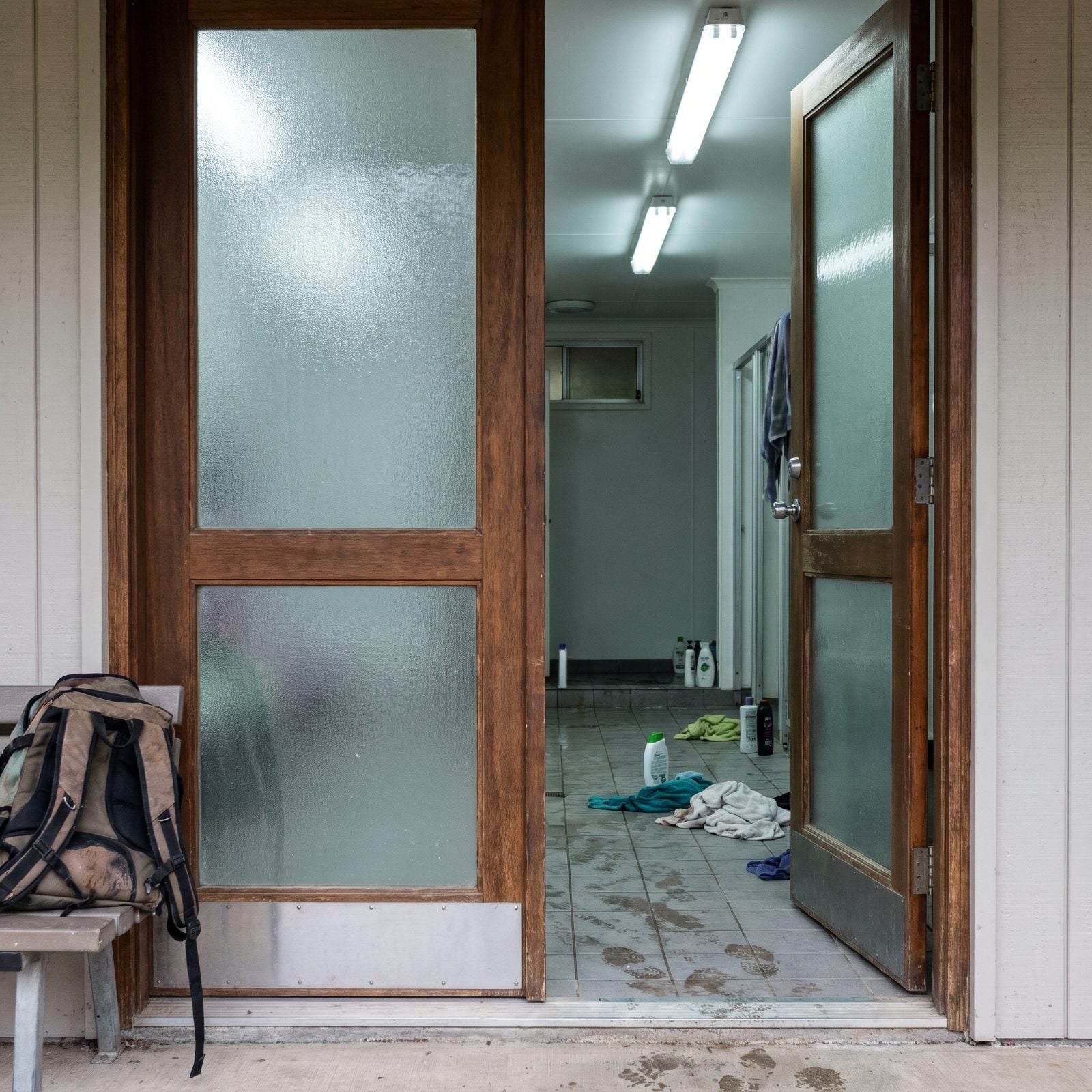
Nobody announces this one, but the host finds out within a day. The shared restroom is the one place in the whole campground where your private habits become everyone’s, and that first visit sets the tone for your whole stay.
Paper towel in the basket, not on the floor. Flush. Wipe the sink if you splashed it. And don’t leave your shower stall looking like a crime scene of other people’s hair you somehow added to. Ten seconds, and it’s the quiet mark of someone who camps like other humans exist. That’s the camper every host hopes pulls into site 1. Go be that one.
3. Whether Food Goes Straight Into the Bear Locker
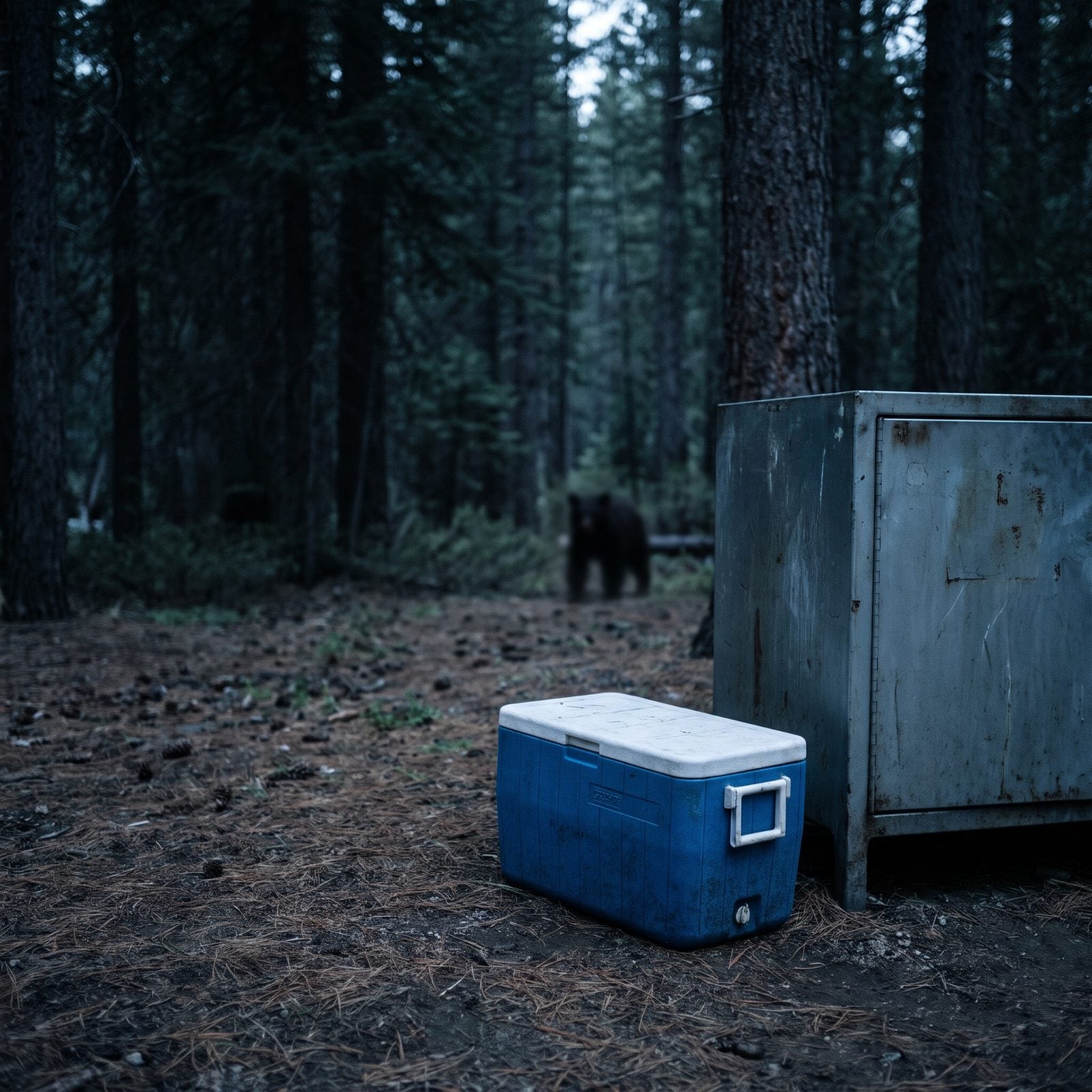
A seasoned host clocks this within the first ten minutes. The cooler left out overnight, the dog food slouched against a tire, the trail mix forgotten on the dashboard — all of it reads like a dinner bell to anything with a nose.
Bear-country rules are not suggestions. In most national forests and parks, food, toiletries and anything scented goes in the locker or a hard-sided vehicle, never the tent. A bear that gets a reward once comes back, and a habituated bear usually ends up dead. That’s the part nobody mentions while they’re tossing a sandwich wrapper in the fire ring.
2. Whether Anyone Tries to Feed Deer, Squirrels or Raccoons
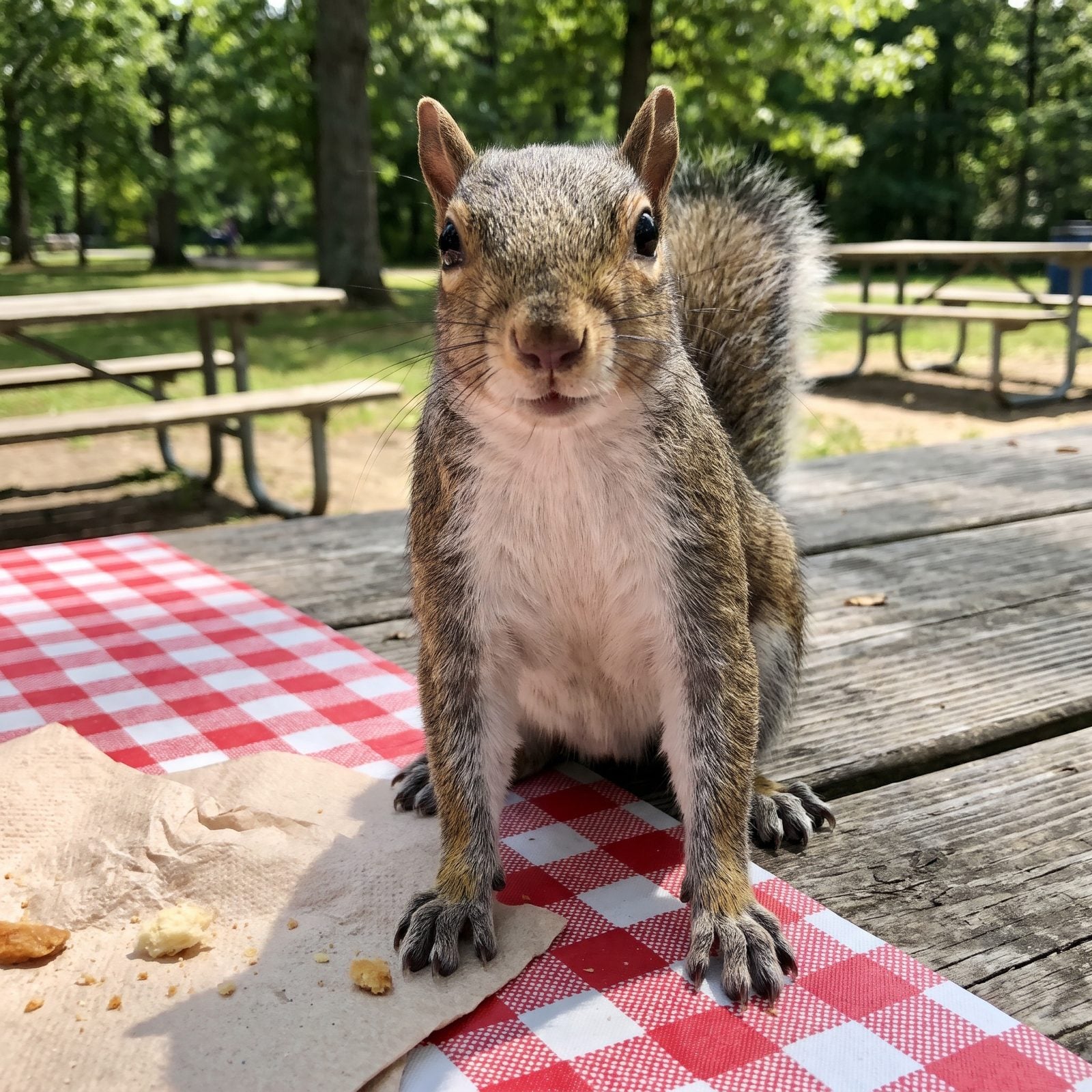
You can always tell when a squirrel has been fed at a site before. It walks right up to the table like it owns the lease.
Feeding wildlife feels harmless. It isn’t. Deer that learn to beg get hit by cars, raccoons that raid coolers lose their fear and start biting, and ground squirrels across a lot of western parks carry fleas that carry plague — a sentence I never enjoy writing, but there it is.
Hosts notice the hand held out, the chip bag tipped toward the chipmunk, the “aw, look” moment. They’ll say something, usually kindly. Keep a clean site and the animals stay wild, which is the whole reason you drove out here in the first place.
Explaining why fed animals turn bold, a naturalist writes “A habituated animal is simply one that no longer fears humans, and sees us as a source of food handouts.”
1. Whether Parked Vehicles Block Emergency Access
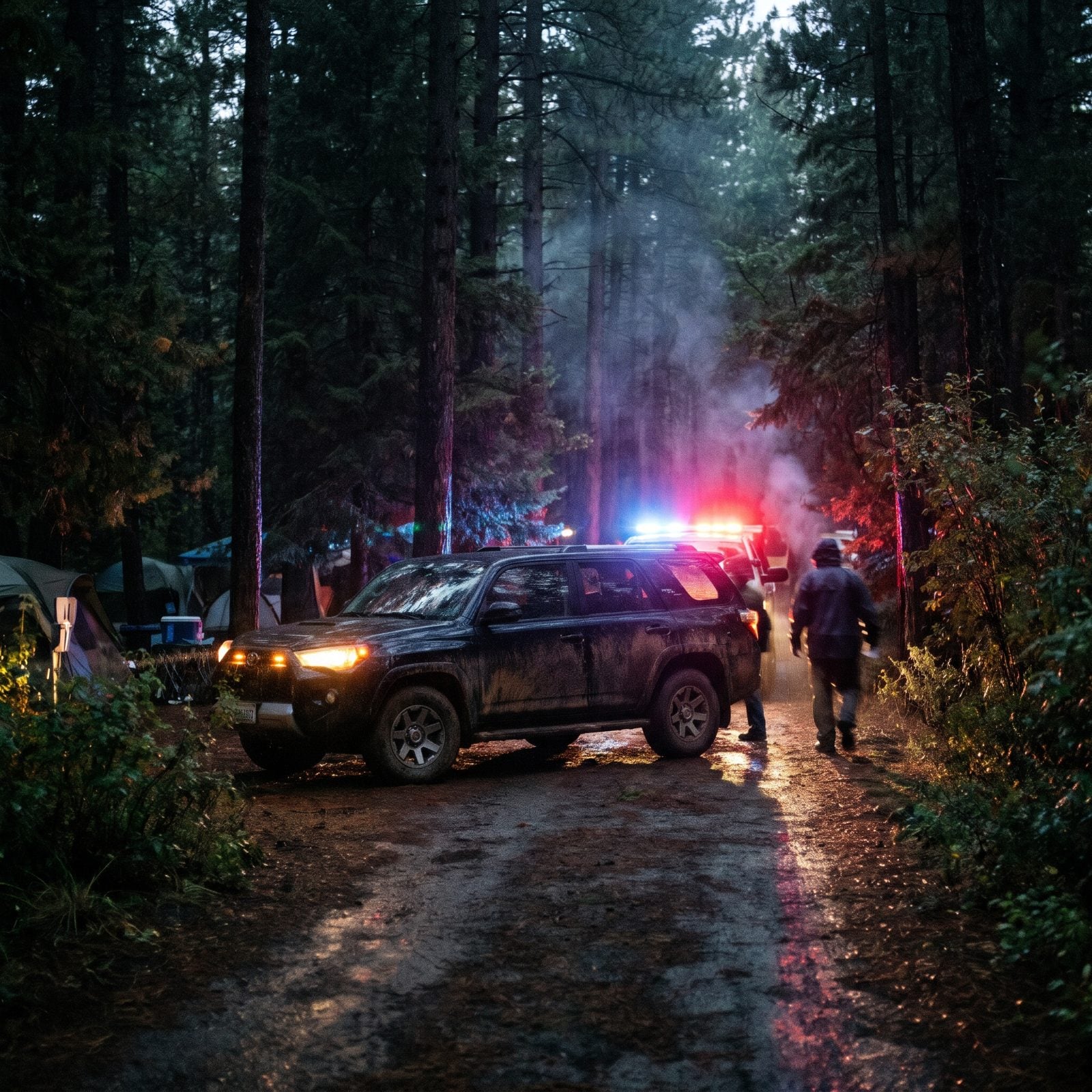
This is the one that actually matters most, and nobody thinks about it until it’s three in the morning.
Camp loops are narrow on purpose, but they still have to let a fire engine or an ambulance through. A truck nosed out past the post, a trailer parked across the pull-through, a car left on the grass apron — any of it can turn a two-minute response into a ten-minute one.
Hosts walk the loop at dusk and eyeball exactly this. So park fully on your pad, keep the road clear, and point your tow vehicle so you could leave without a twelve-point turn if weather or fire moves in fast.