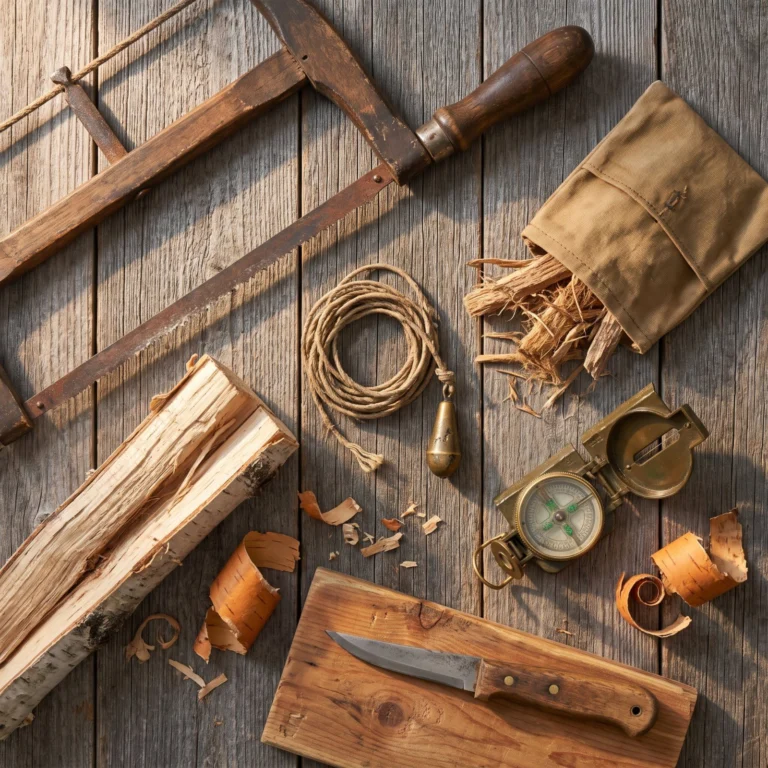
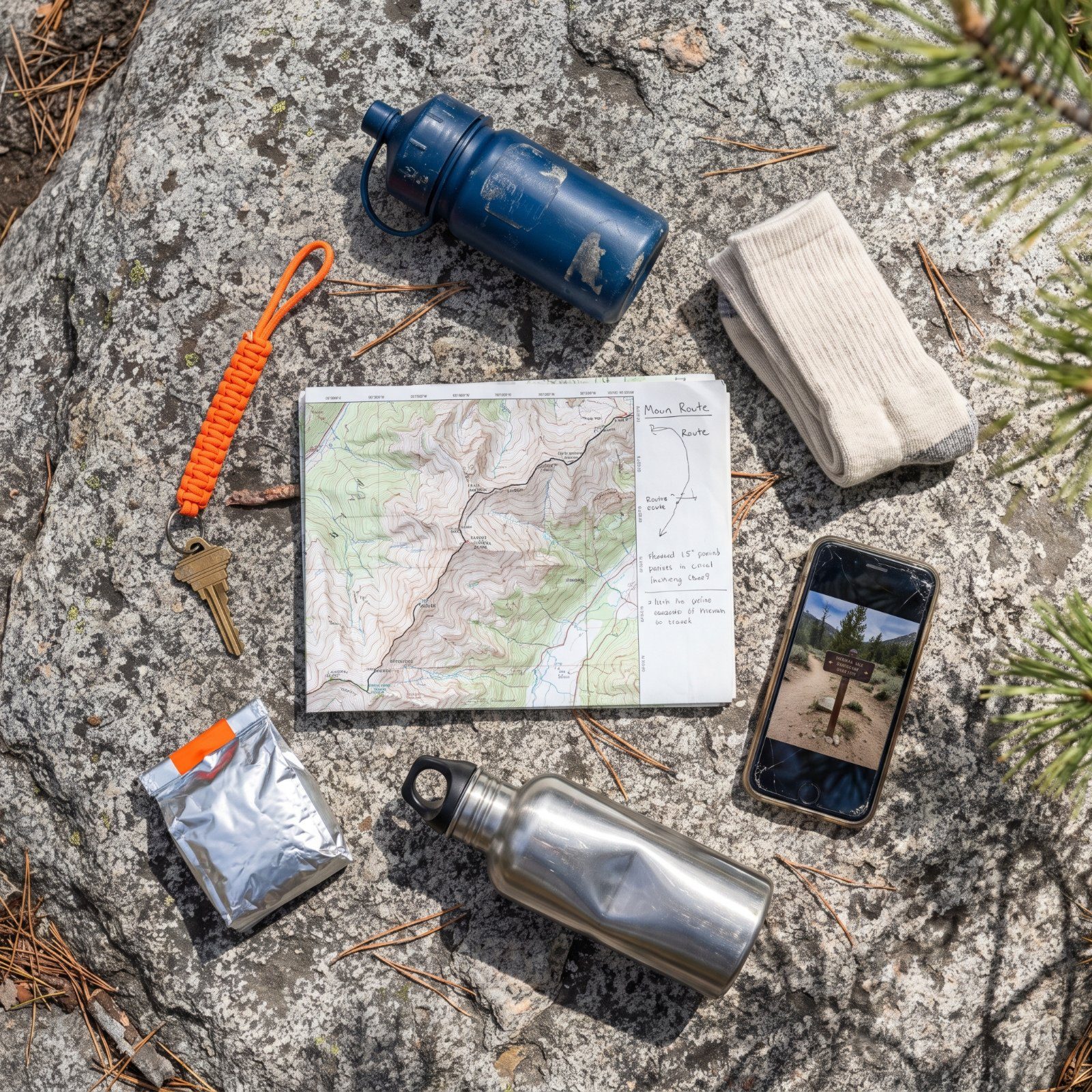
The trail looks completely different walking out than it did walking in. Nobody warns you about this, and then there you are at a junction at dusk, certain you came from the left, dead wrong. The hikers who never get lost or lose a key or spend a miserable night with wet feet aren’t tougher than anybody else. They’ve just collected a handful of small habits that look strange right up until the moment they save the day. None of this is survival-show theater or gear you need to buy. These are little decisions made before things go sideways, the kind you learn from someone who got humbled on a mountain and lived to adjust.
Please note that some of the images in this article were created with the assistance of AI.
48. Reverse-View Junction Photos That Stop Wrong Turns on the Way Back
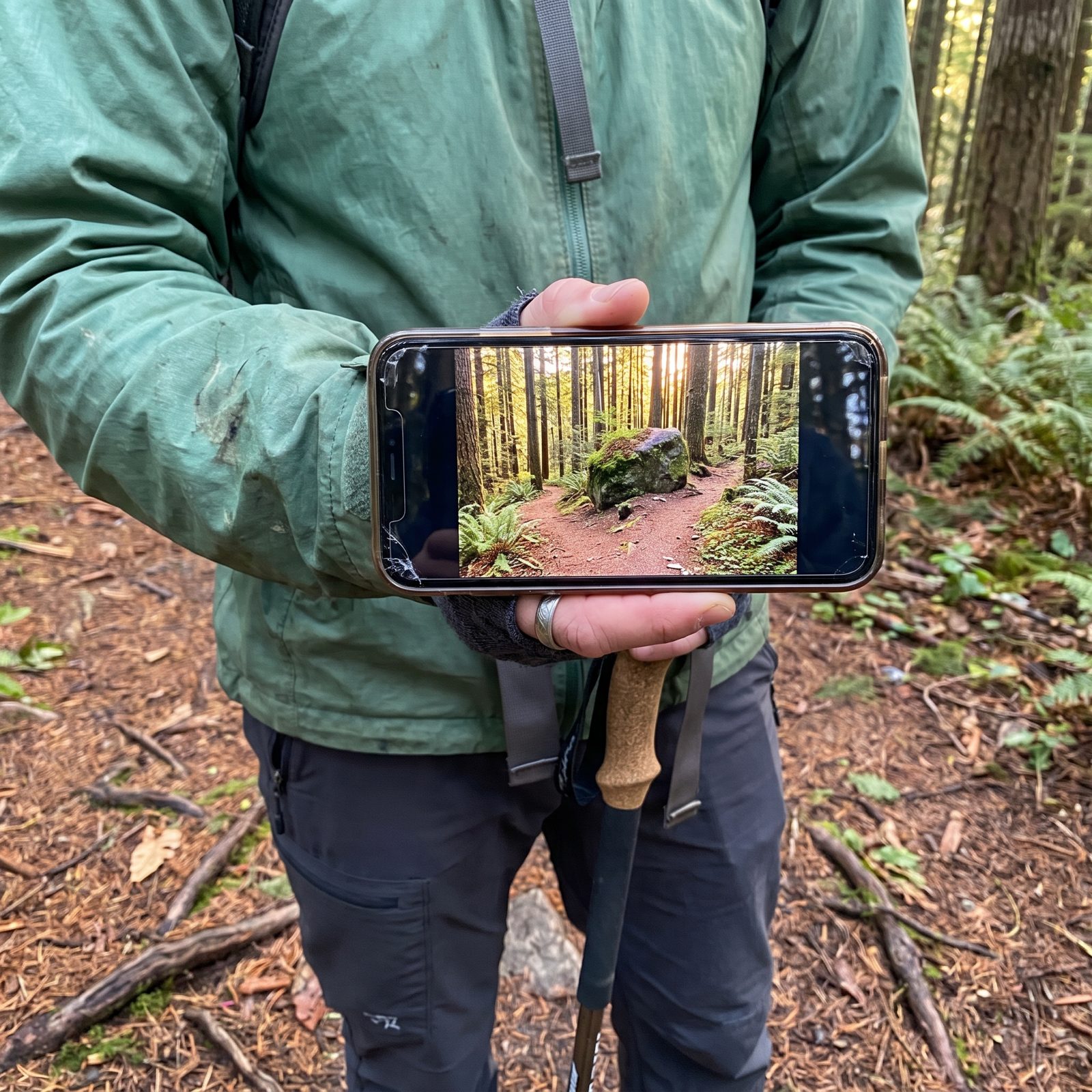
Here’s the trick nobody mentions. At every confusing junction, turn around and photograph the trail from the direction you’ll return. That split that was obvious on the way in becomes a riddle at dusk, when the light flattens everything and both paths look worn.
The return view is a completely different scene. Different shadows, different angle, and your brain filed none of it away because it was busy looking forward. A ten-second photo hands you the exact picture you’ll need later: a mossy boulder on the left, a fallen log pointing the way.
47. Rings Come Off Before Swelling Hands Make Them a Hazard
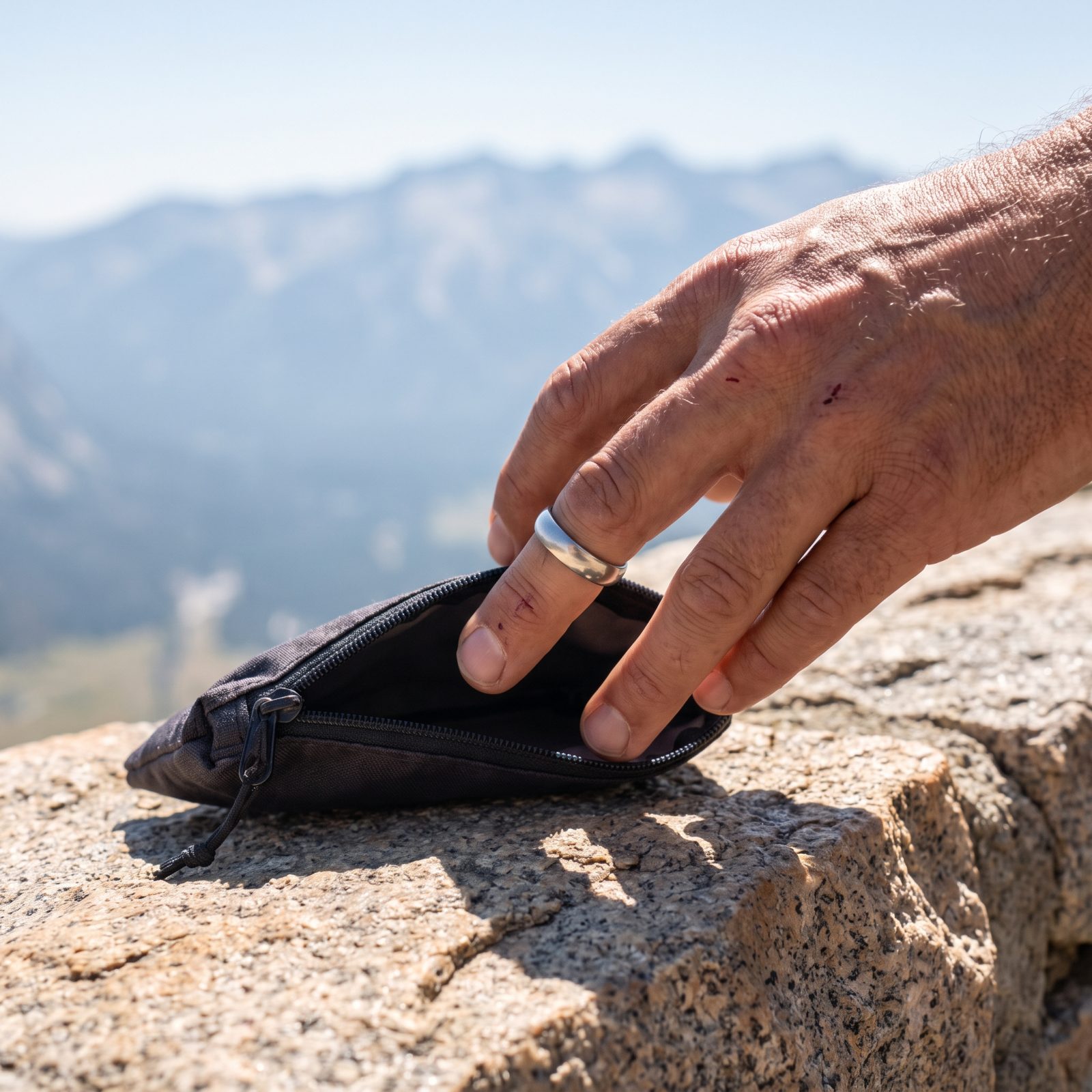
Hands swell on long climbs. Heat, altitude, the steady downhill pounding, it all pushes fluid into your fingers, and a ring that slid on fine at the trailhead can lock itself in place by mile eight.
That’s uncomfortable at best. Catch that ring on a rock while scrambling or a branch while you fall, and it becomes something far worse. Degloving injuries are exactly as grim as they sound.
Veterans pull the ring at the start and zip it into a known pocket. Sounds almost silly until you’ve watched someone try to work a wedding band off a sausage finger with cold creek water and dish soap at camp.
46. The Water Filter Sleeps in the Bag So It Doesn’t Freeze Overnight
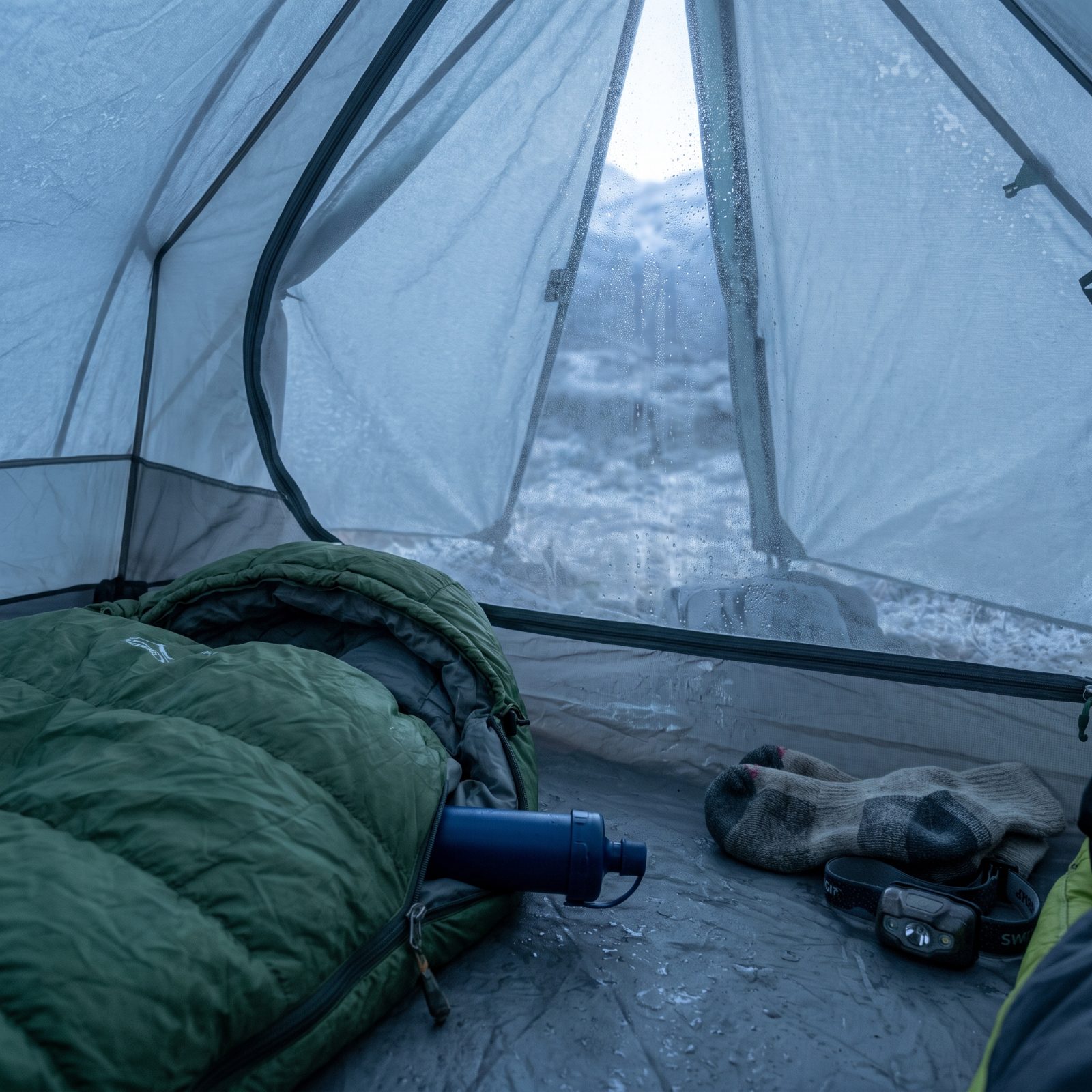
A frozen filter is a dead filter. Those hollow fibers that strain out the bad stuff are full of water after you use them, and freezing water expands and cracks them. The filter looks fine. It just stops protecting you, and you won’t find out until you’re already sick.
So on cold nights, experienced hikers tuck it into the sleeping bag through the zipper opening up near the hood. Push it all the way inside, and your body heat keeps it above freezing all night long.
Cheap insurance. You can’t exactly replace a $40 filter out in the backcountry, and drinking straight from the creek untreated isn’t an option either.
45. A Route Copy Tucked Beneath the Driver’s Seat Gives Searchers a Map
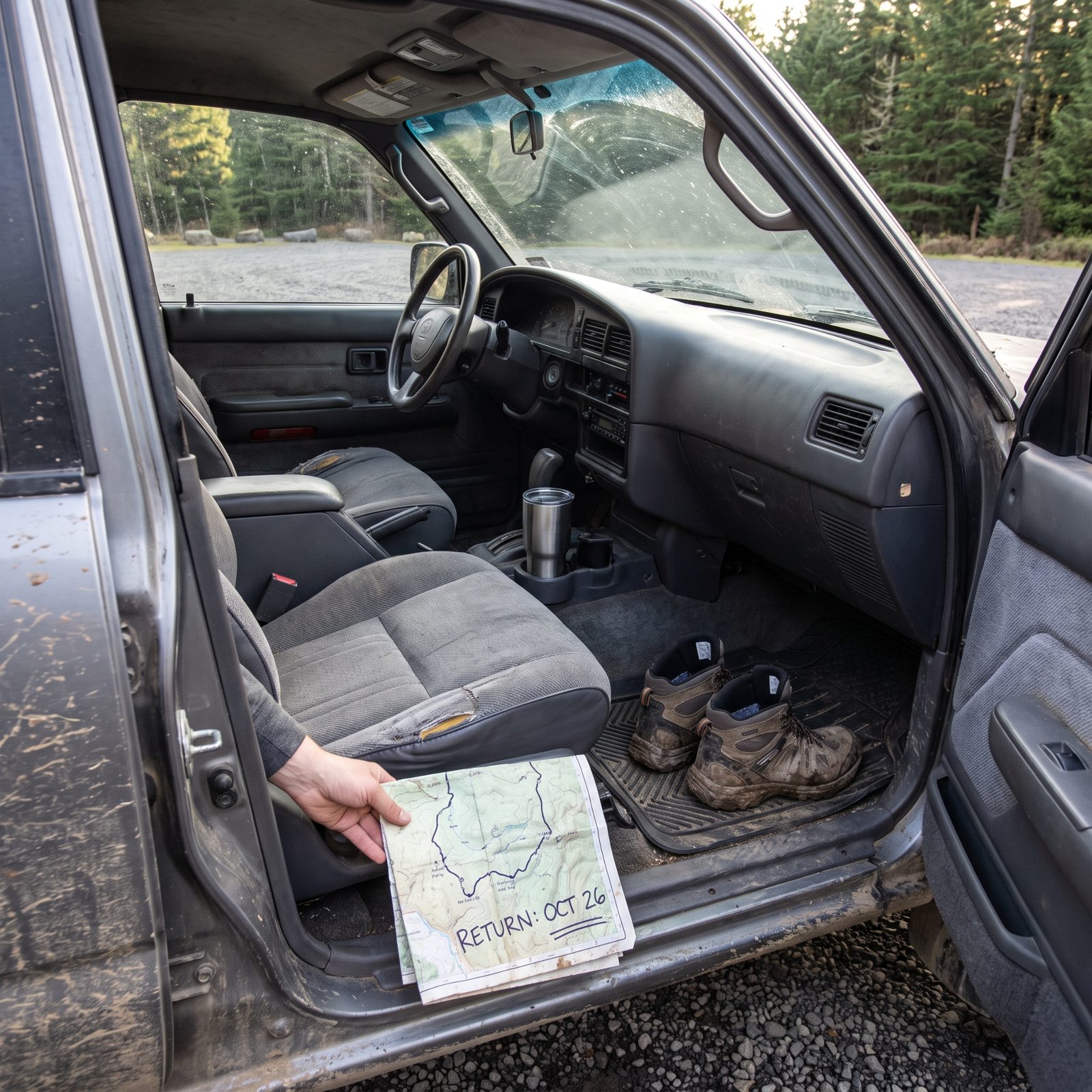
You tell someone your plan before you leave. Good. But plans change at the trailhead, and the person back home only knows what you told them on Tuesday.
Leave a second copy under the driver’s seat: a topo map with your route traced on it and your return date written in big letters. If a search ever starts, rangers check the vehicle first, and a marked-up map found in your car can shrink the hunt from an entire wilderness down to a single drainage.
44. The Car Key Stays Tethered to the Hiker, Never Loose in the Pack
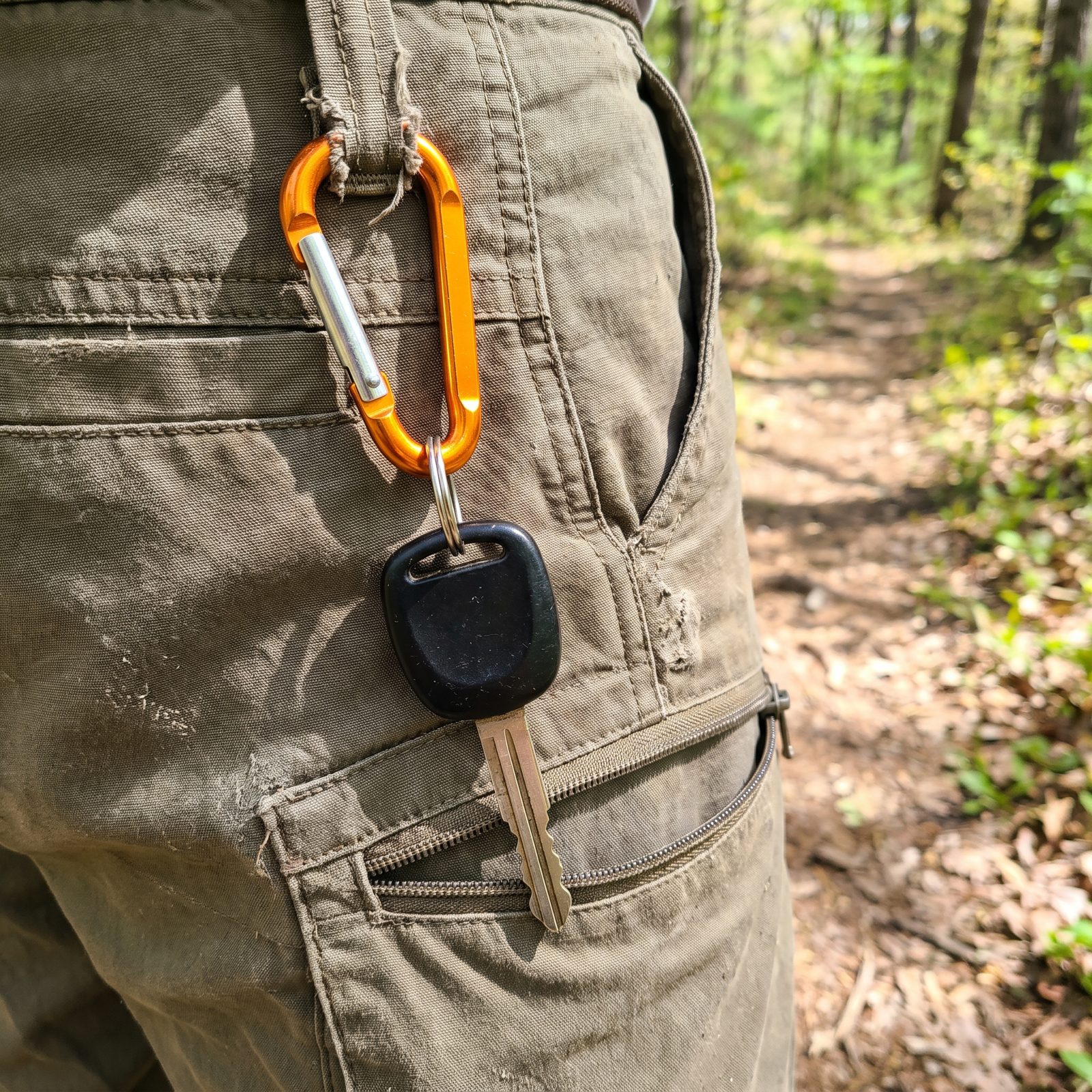
Picture this. You finish a nine-mile loop, legs shot, and you drop your pack to dig for the key. It’s not in the lid pocket where you swore you put it. It’s buried in the bottom under the wet rain gear, or maybe it slid out at that lunch spot three miles back.
Keep the key on your body. Clip it to a belt loop, zip it into a pants pocket, tether it so it can’t migrate. A loose key always finds the one hole in your pack you didn’t know existed.
And mind the fob. Set it off at the car, not deep in the woods where it just drains the battery and spooks every animal within earshot.
43. Water Gets Collected Upstream Before Anyone Steps Into the Crossing
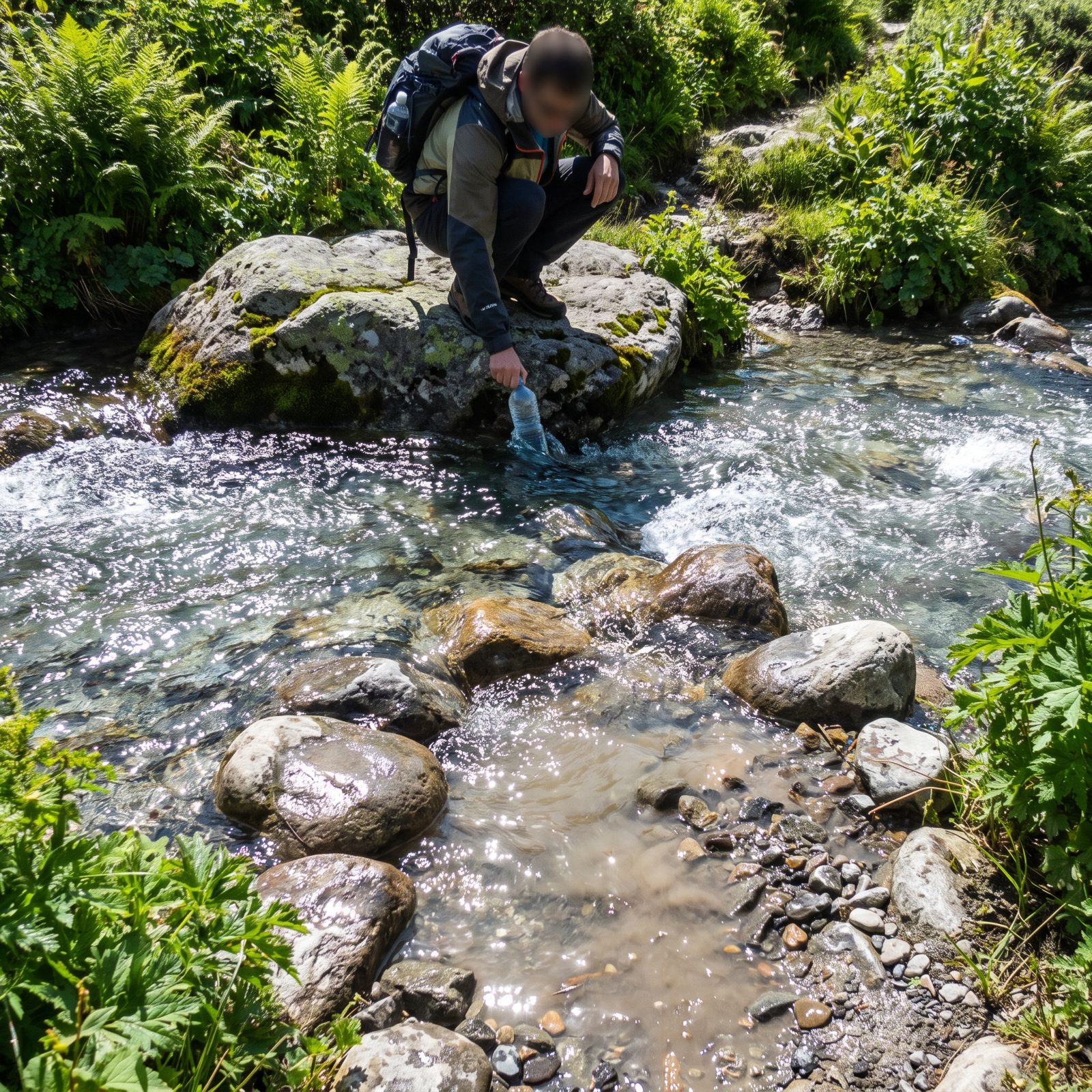
Fill your bottles before boots hit the water. The second someone wades across, they kick up silt, grit, and whatever was sitting on the streambed, and that cloud drifts right down into the spot where you’d be collecting.
Collect upstream, cross downstream. Clean water first, muddy feet second. Obvious on paper. Then watch a tired group reach a ford and you’ll see every one of them splash across, then stand around trying to fill bottles in the murk they just stirred up.
42. Dinner Happens Before the Last Campsite in Bear Country
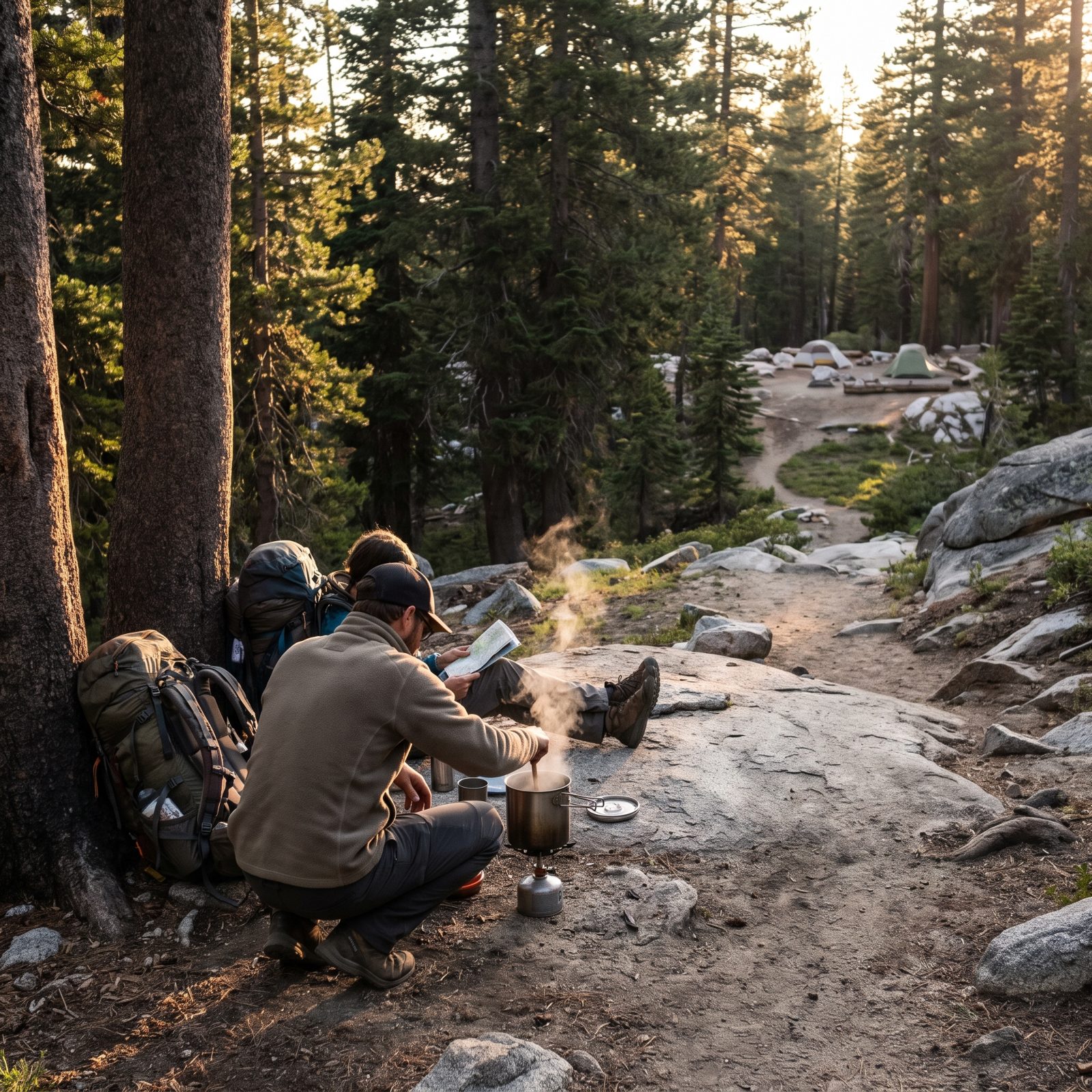
Cooking smells cling to a site long after the pot is scrubbed. And in bear country, the worst place to make dinner is right where you’re going to lay your head.
The smart move is to stop a mile or two before camp, cook, eat, clean up, then hike the rest of the way and pitch your tent on ground that smells like nothing. You leave the meal smells behind you.
It feels backwards the first time. You’re hungry, camp is close, and now someone’s telling you to stop early and cook on a random rock. Do it anyway. A curious bear tracking last night’s noodles to an empty clearing, far from your sleeping bag, is exactly what you want.
41. One Pair of Socks Stays Sacred, Worn Only for Sleeping
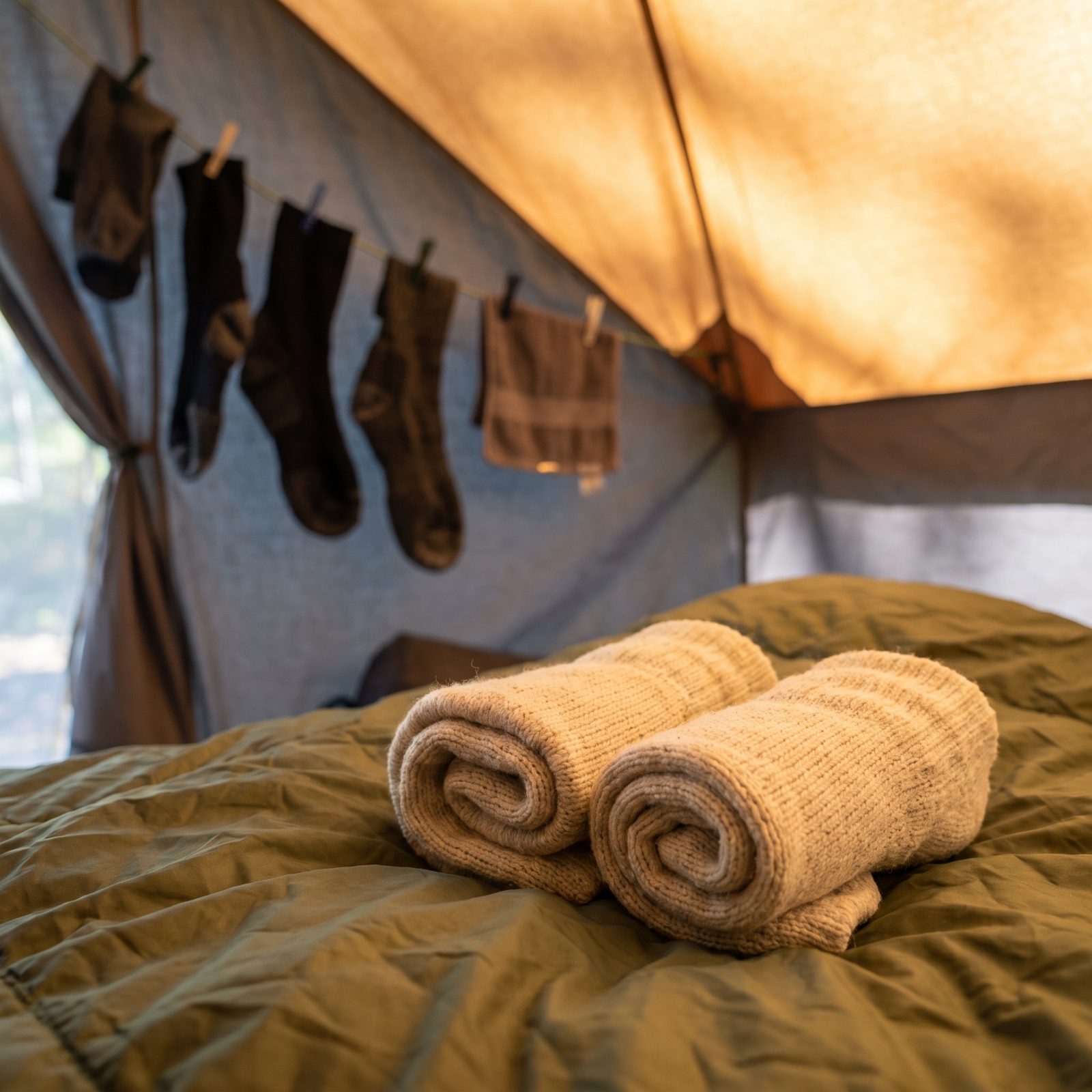
Keep one pair of dry wool socks that never, ever touch a boot. They go on only when you climb into the bag, and they come off before you lace up in the morning.
Warm dry feet are the difference between sleeping and shivering all night. Your day socks are damp with sweat even when they feel fine, and that moisture pulls heat straight out of you the moment you stop moving.
Guard these socks like your last match. Off-limits, no exceptions, no matter how cold and clammy your day socks got.
40. Repeated Stumbles and Short Tempers Trigger a Ten-Minute Reset
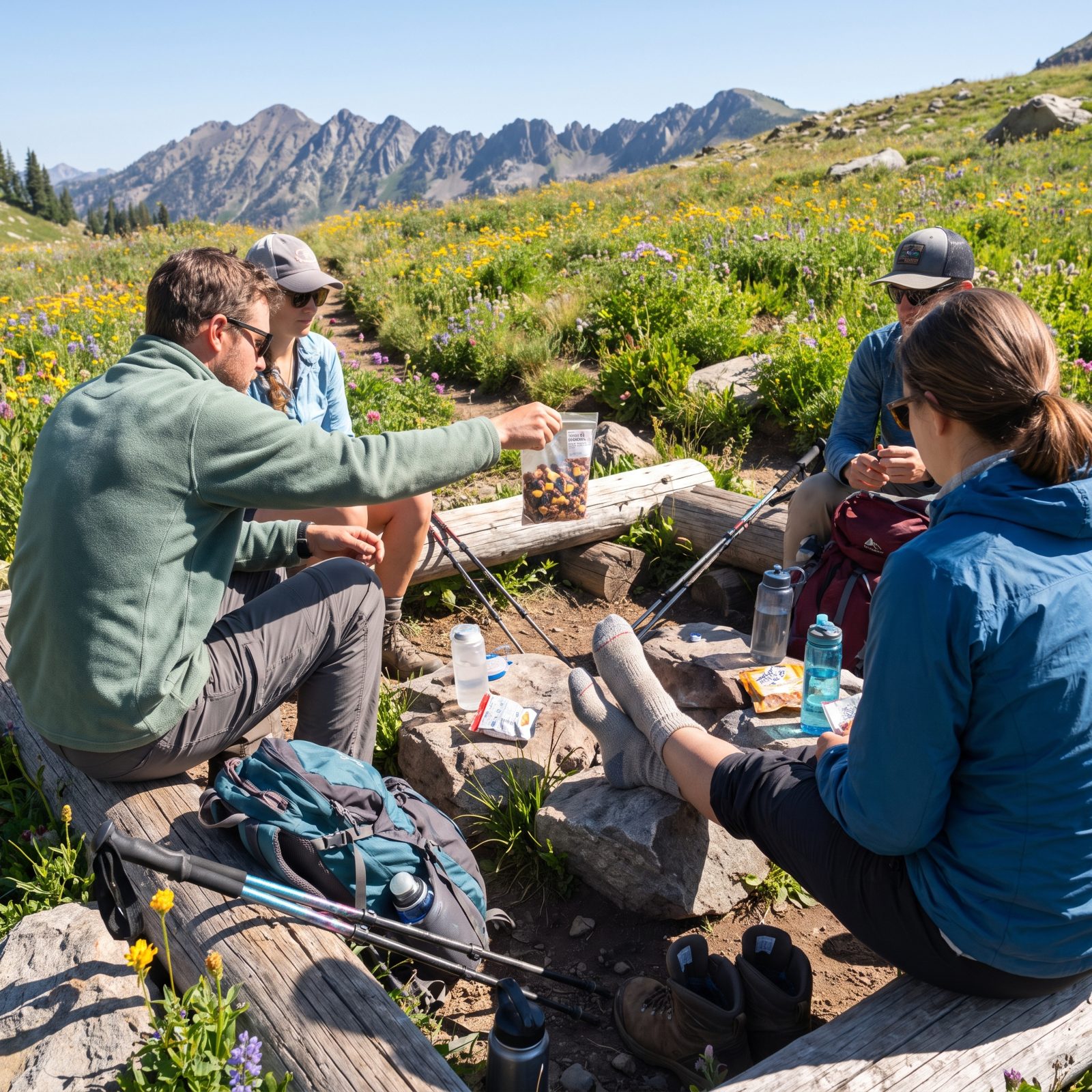
Tripping over nothing is a warning light. So is snapping at someone over where to filter water. When a hiker starts stumbling on flat ground or getting irritable for no reason, the body is quietly running low on fuel, water, or blood sugar, and the brain is right behind it.
Experienced leaders treat that as a hard rule rather than a suggestion. Packs off, sit down, water and food for everyone, ten minutes minimum.
Accidents and bad calls pile up in exactly that window, when a tired group pushes on instead of pausing. The reset costs you ten minutes. Pushing through can cost you the whole trip.
39. Water Bottles Rest Upside Down When the Caps Might Freeze
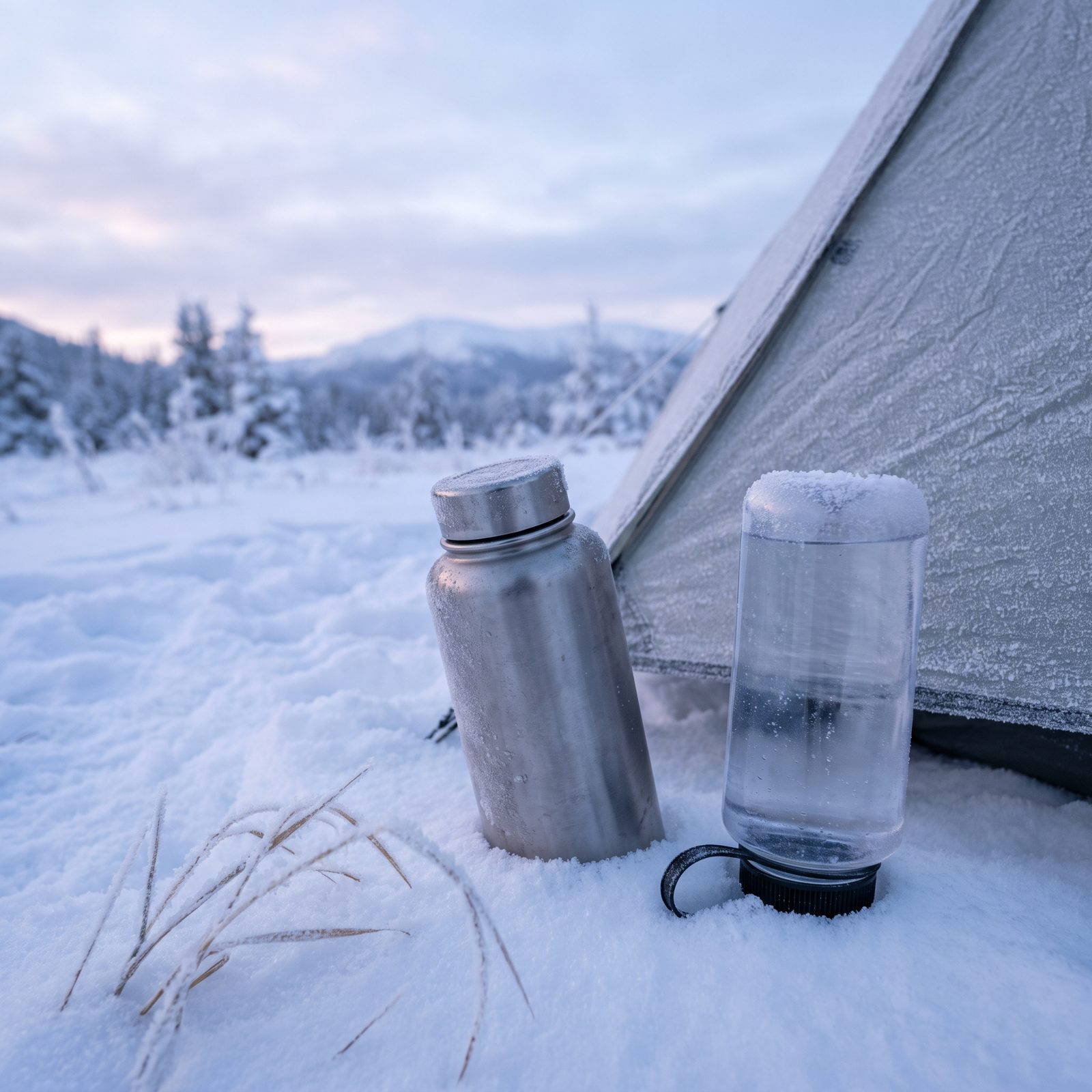
Water freezes from the top down. Leave a bottle sitting upright in the cold and the neck and cap ice over first, which leaves you a solid plug right where you need to drink or pour.
Flip the bottle upside down. Now the ice forms at the bottom and the mouth stays liquid longest, so you can still crack it open and drink in the morning instead of hugging a frozen brick.
Loosen the cap a touch too, so it doesn’t seal shut under pressure if the water does freeze overnight. One quick move at bedtime, and you wake up to water instead of a morning spent thawing a plug of ice with your bare hands.
38. Sweat-Salted Gear Gets Stored Before Animals Start Chewing On It
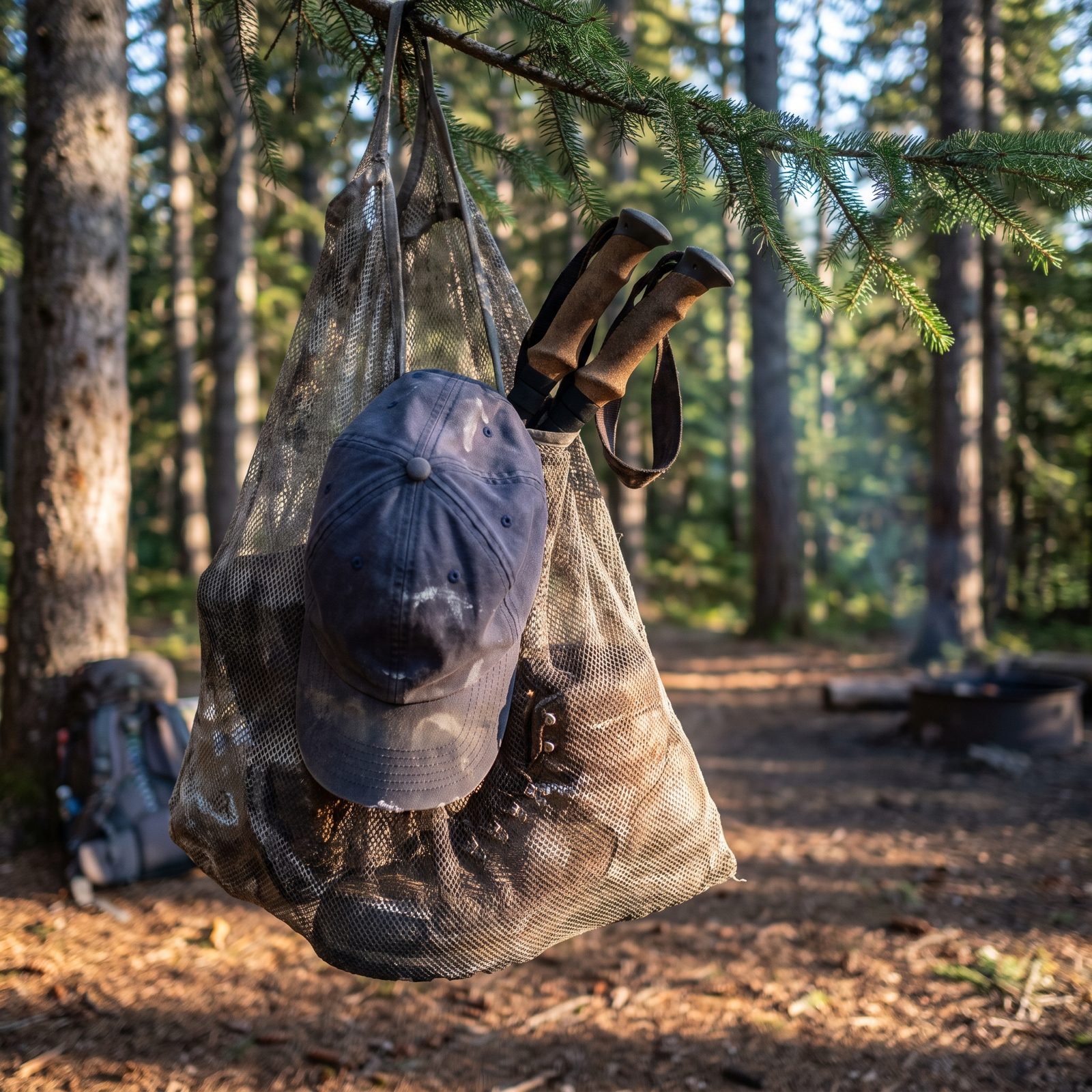
Porcupines, mice, and marmots don’t want your snacks nearly as much as they want your sweat. Salt is the prize. A trekking pole grip, a boot tongue, a pack strap soaked in a week of hard effort reads to a rodent like a mineral lick.
Leave that gear loose under a vestibule overnight and you may wake to chewed foam, gnawed cork, and a hole in an expensive boot. Stash the salty stuff where critters can’t reach it, same as food. Most people never think about any of this until the chewing starts at 2 a.m.
37. Lip Balm, Sunscreen, and Toothpaste Go In the Food Storage
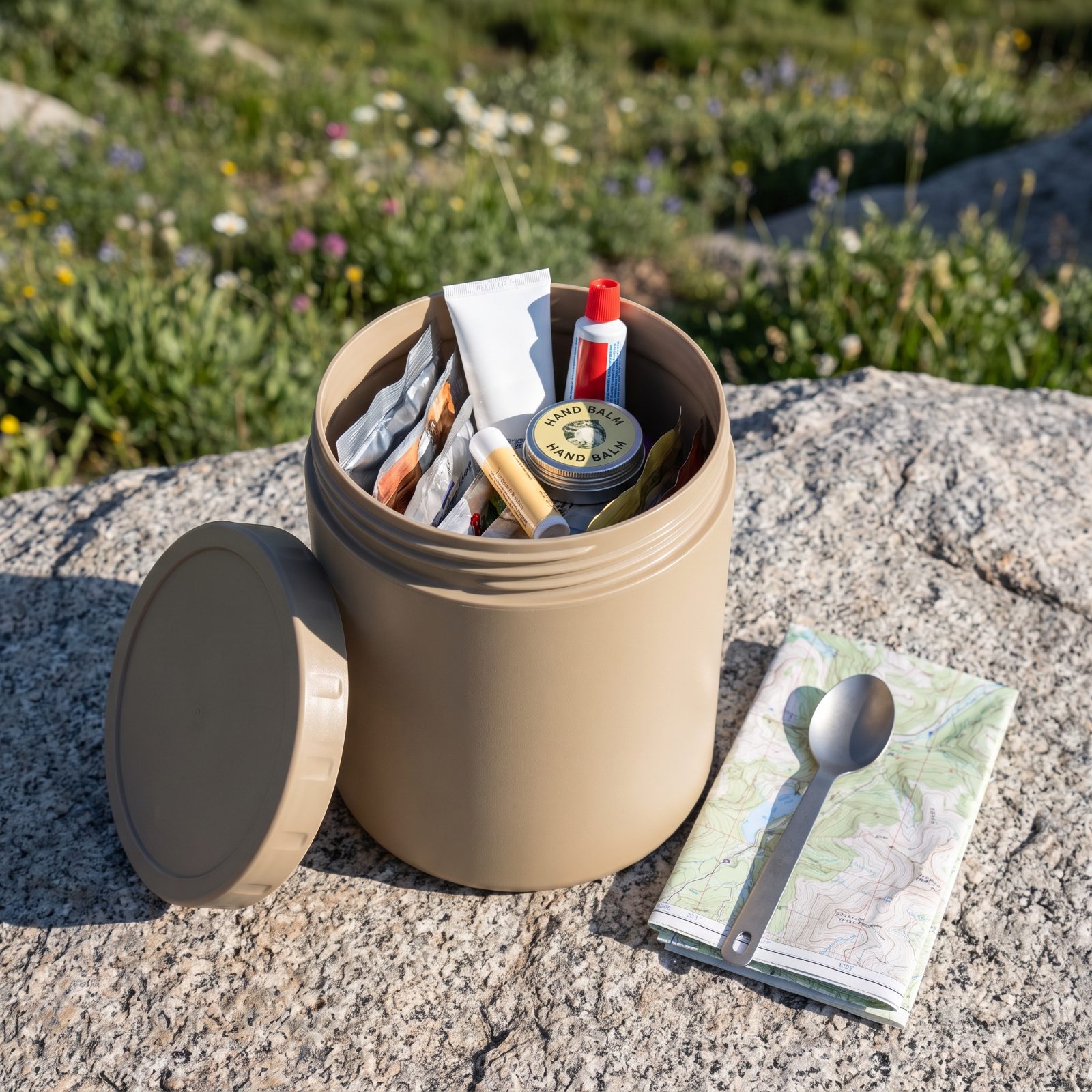
Anything a bear can smell counts as food. That includes the stuff you’d never put in your mouth. Lip balm, sunscreen, bug spray, toothpaste, hand lotion, even scented wet wipes all read as dinner to a nose that outworks yours by an order of magnitude you can’t really picture.
Here’s the maddening part: hikers who guard their trail mix like gold will cheerfully fall asleep with ChapStick in a pocket. Put the scented toiletries in the canister or the hang with everything else. Your tent should smell like nothing at all.
36. The Sleeping Bag Gets Aired Out During the First Dry, Sunny Break

Every night you sleep, your body pushes a surprising amount of moisture into that bag. Down loses loft when it’s damp, and a flat bag is a cold bag. Nobody warns you how fast the warmth drains over a multi-day trip.
So the first dry, sunny break on the trail, unzip the bag and drape it over a sunny rock or a low branch for twenty minutes. The loft comes back. You sleep warmer that night for no extra weight and almost no effort at all.
35. Boot Laces Get Reset Right Before a Long Descent
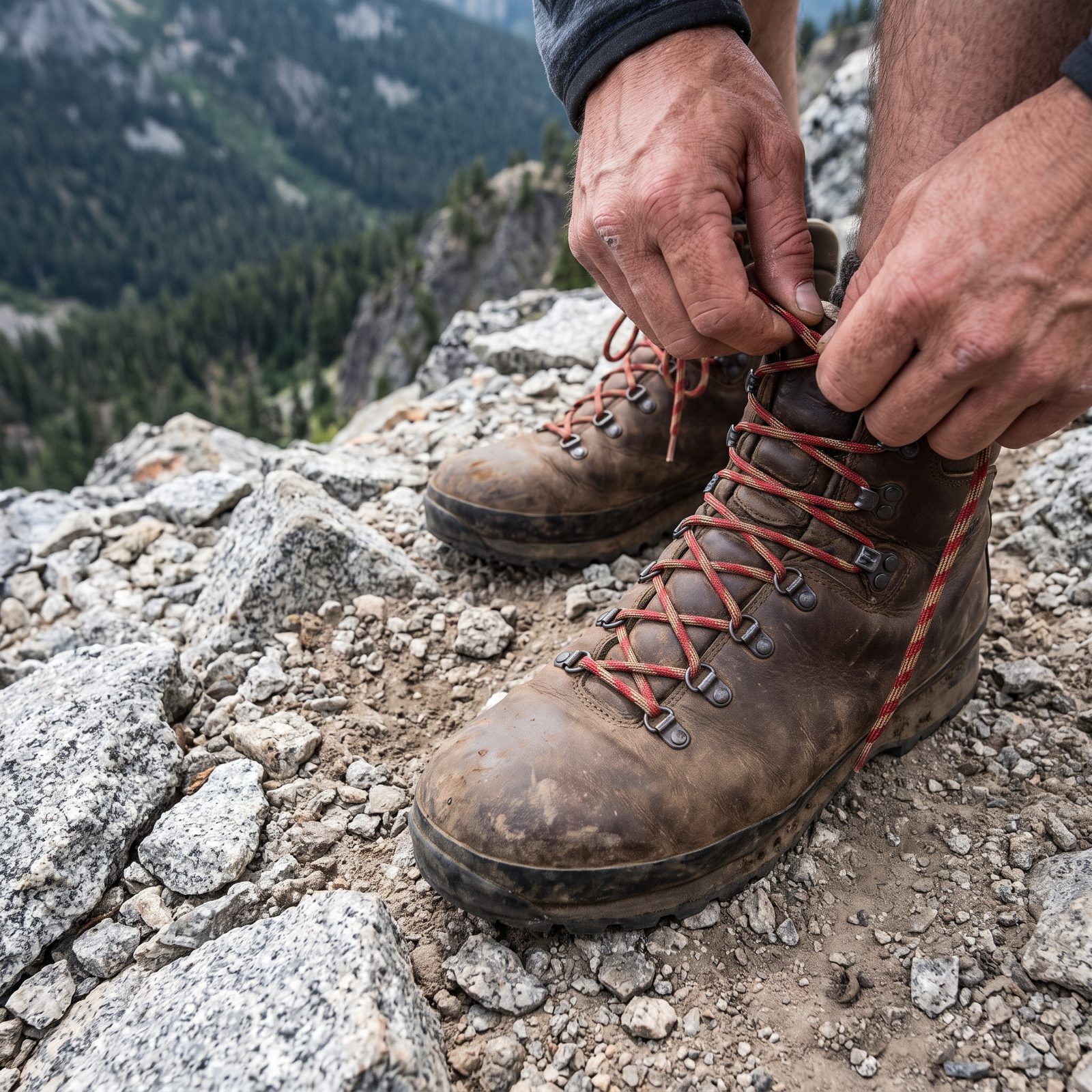
The thing that wrecks your toes on a steep downhill isn’t the distance. It’s your foot sliding forward inside the boot, jamming your toenails into the front with every step. Miles of that and you lose nails.
Before a big descent, stop and re-lace. Snug the lower laces for comfort, then lock the ankle down hard using the top hooks so your heel can’t lift. Ninety seconds, and it saves you the slow agony that only shows up three hours later when it’s far too late to fix.
34. Pole Straps Come Off Near Fast Water and Drop-Offs
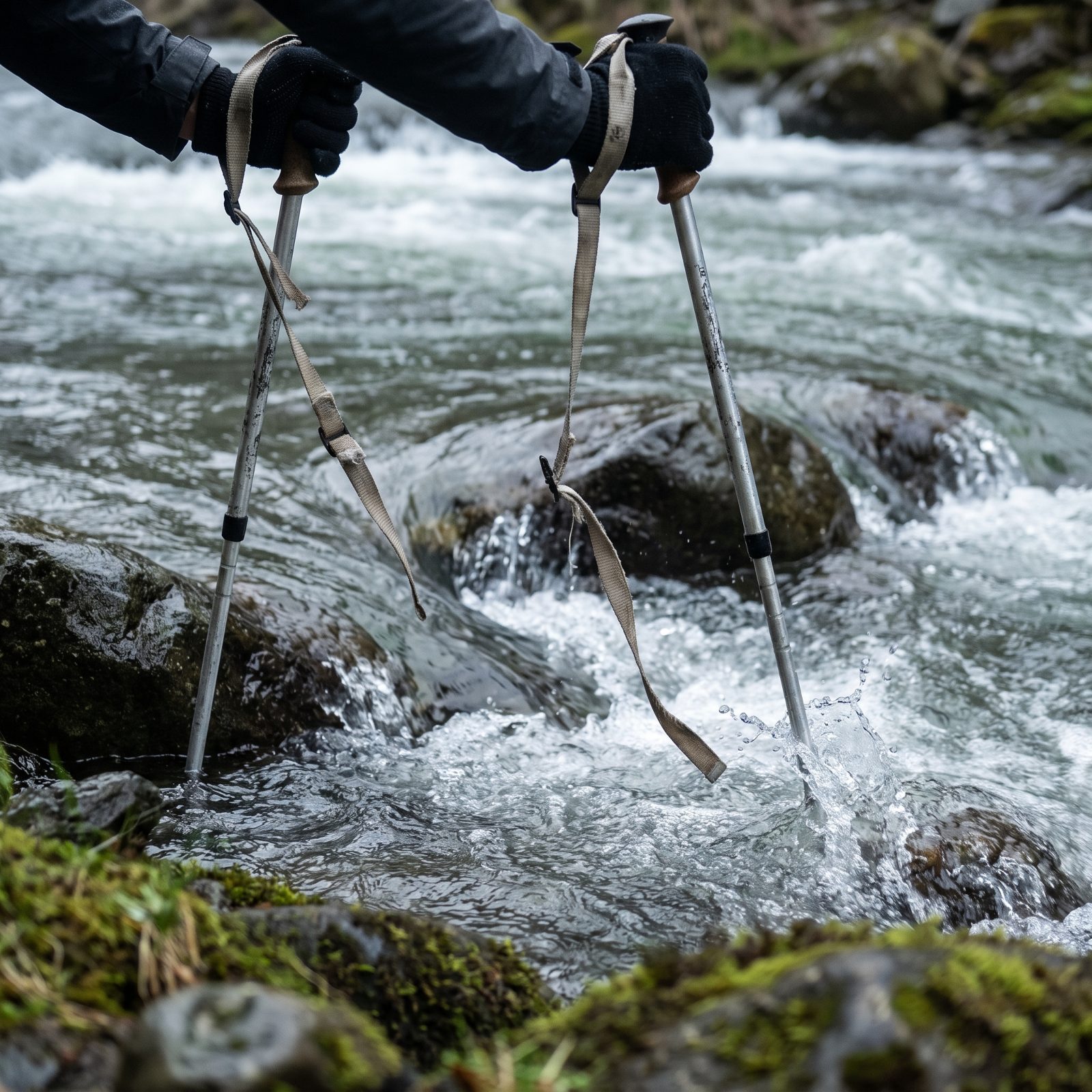
Trekking pole wrist straps are great on flat ground and dangerous near moving water or a ledge. If you take a fall or a pole wedges hard between rocks, a strapped wrist can’t let go.
So the straps come off at creek crossings, on exposed scrambles, anywhere a slip has consequences. You give up a little power on the plant. In return you get the ability to drop the pole and catch yourself in a half second — a trade that’s always worth it.
33. The Pack Comes Off Before Crawling Under Tight Blowdowns
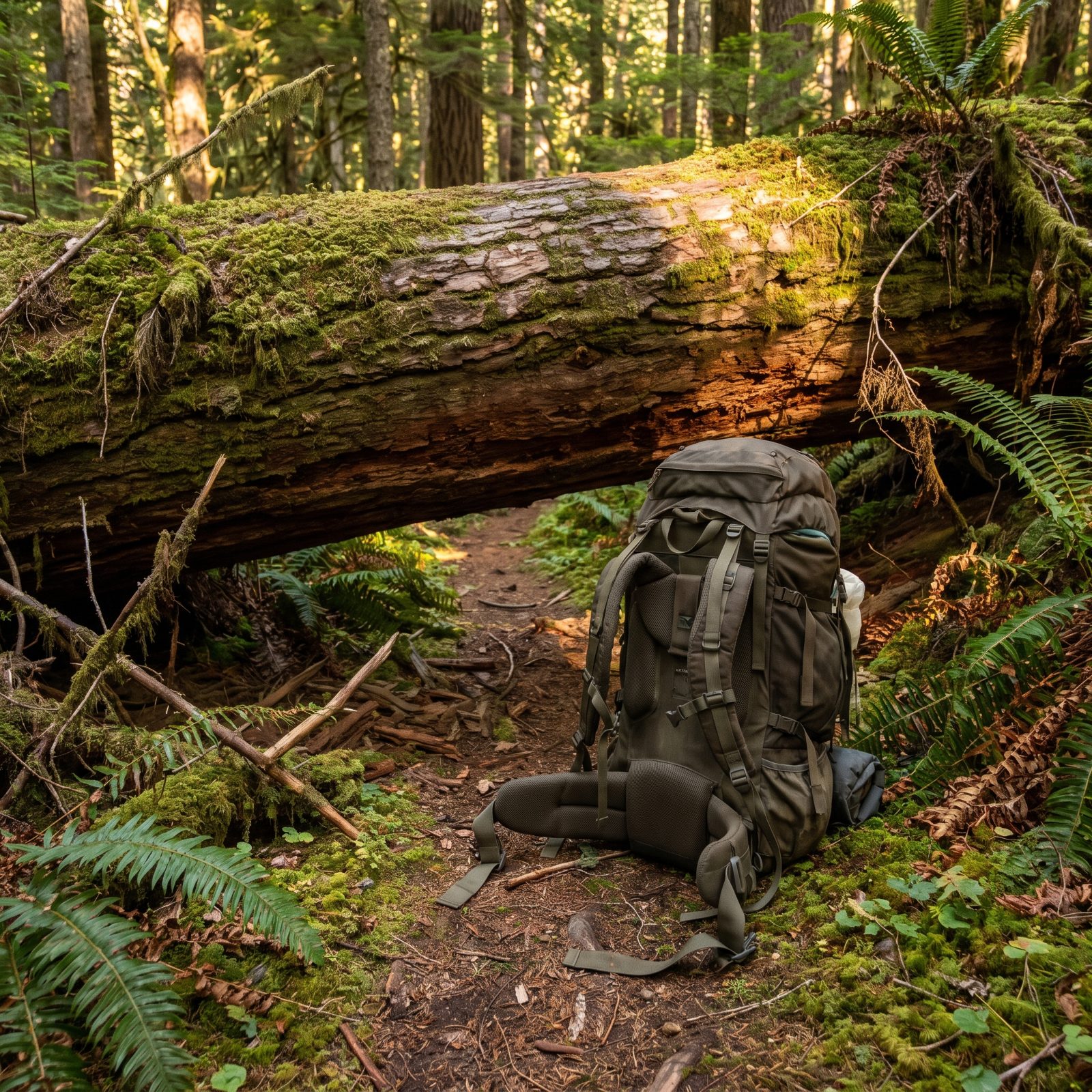
A fallen tree across the trail looks like a simple duck-under. With a tall pack on, it’s how people wrench a shoulder, snap a pole, or get pinned on their back like a flipped turtle.
Drop the pack, push it through the gap first, then follow it. Two extra moves. You keep your balance low, your load off your spine during the awkward bit, and your gear out of the mud. The hikers who muscle through with the pack still on are the ones you later find swearing over a torn hipbelt.
32. Camp Gets Set On a Bench Above the Valley Floor
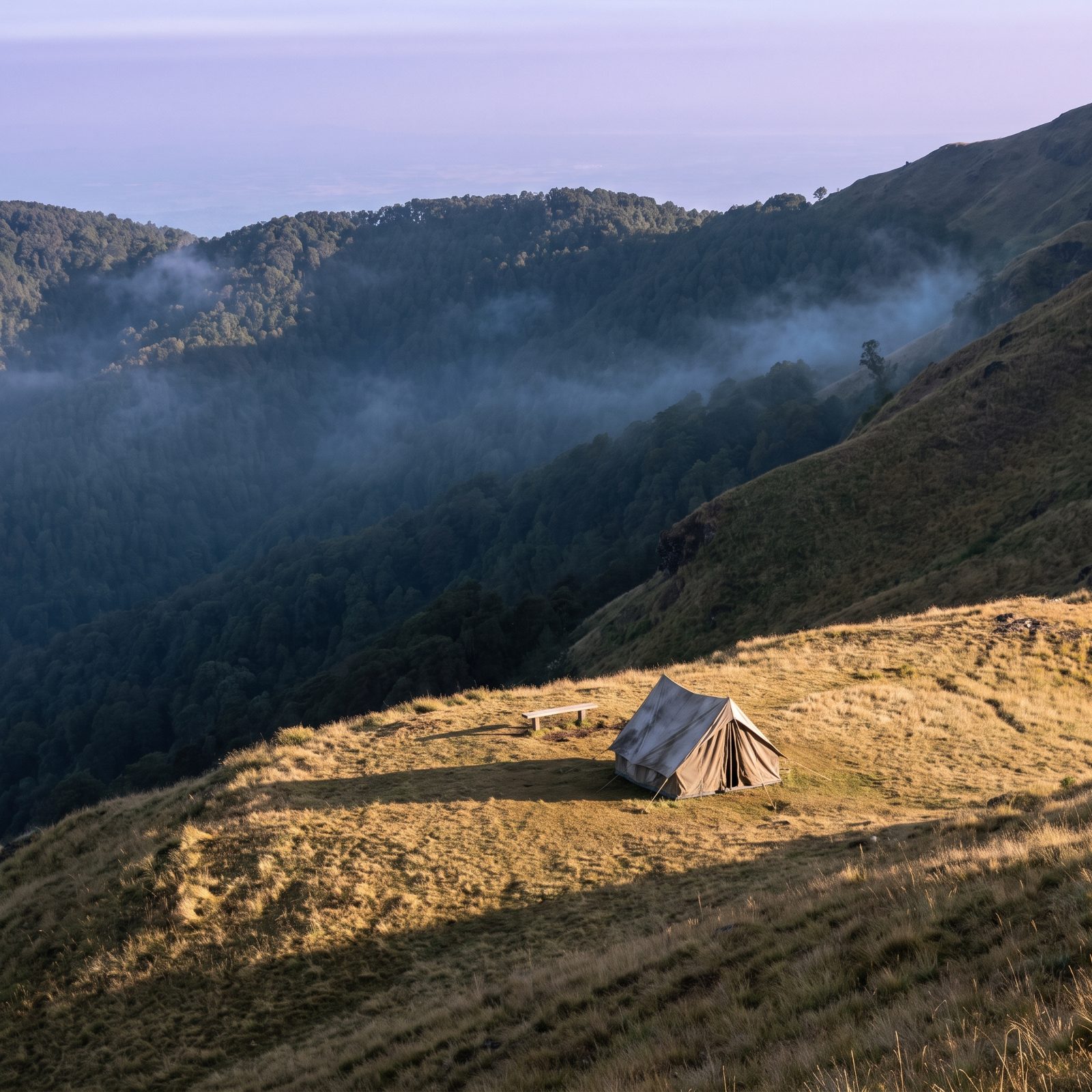
Cold air sinks. On a still night the heaviest, dampest, coldest air drains downhill and settles on the valley floor, right where the flat, inviting campsites usually sit. That pretty meadow by the creek can run well colder than the slope above it.
Look for a bench, a shoulder, a terrace of flat ground partway up. You stay out of the cold pool, you get airflow that cuts condensation, and your tent isn’t soaked with dew by morning. The valley floor charges you a worse night every single time the weather goes calm and clear.
31. Mountain Saddles Get Walked Through, Not Camped On
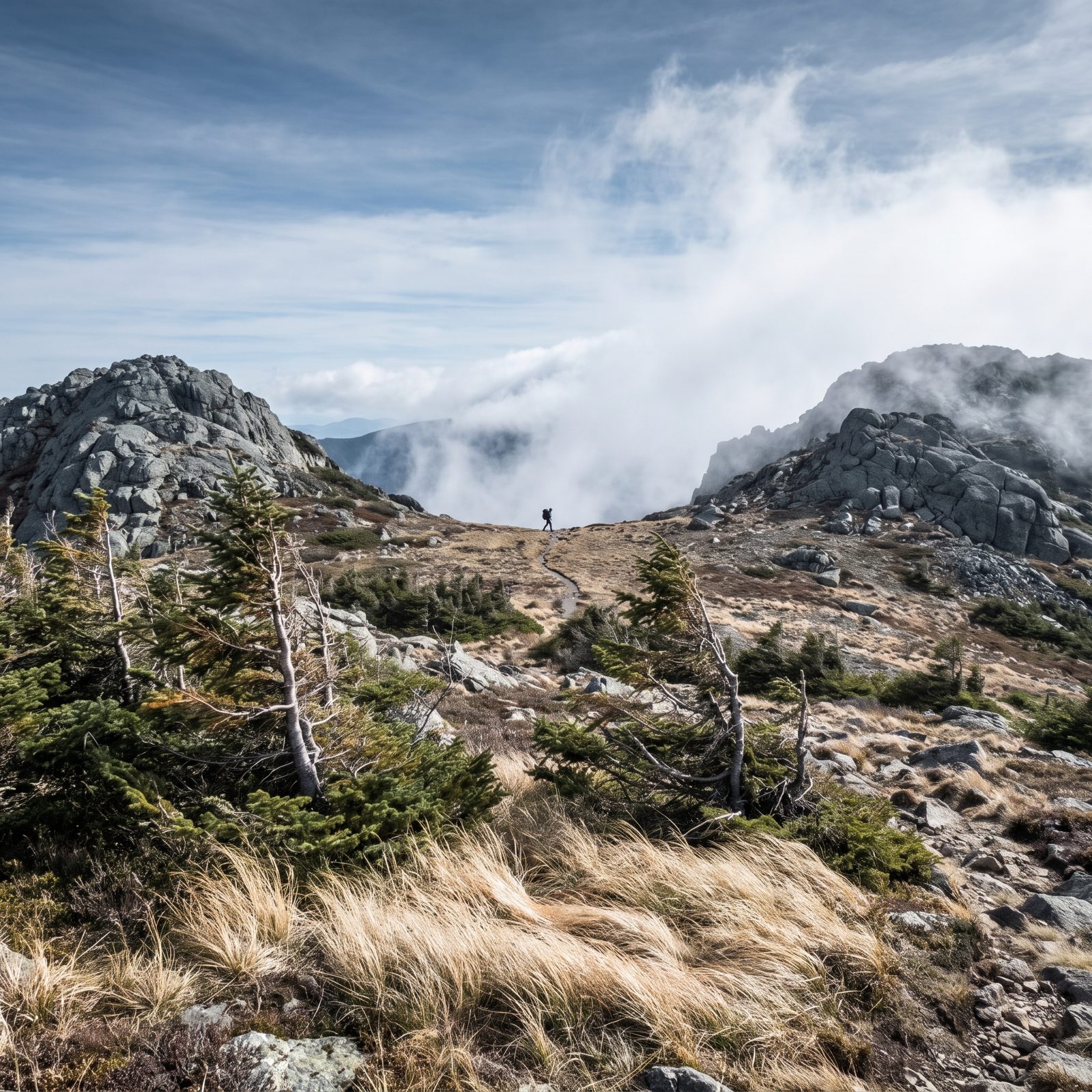
A saddle looks perfect at the end of a long climb — flat, open, a view both directions. It’s also a funnel. Wind accelerates through the low gap between peaks, and a calm afternoon can turn into a tent-flattening gale after dark with nothing out there to break it.
Pass through and drop down the leeward side to find shelter behind a ridge or in the trees. Those bent, one-sided pines growing up there are telling you exactly what the wind does to anything that stays.
30. Animal Trails Are Left Open Instead of Blocked By a Tent
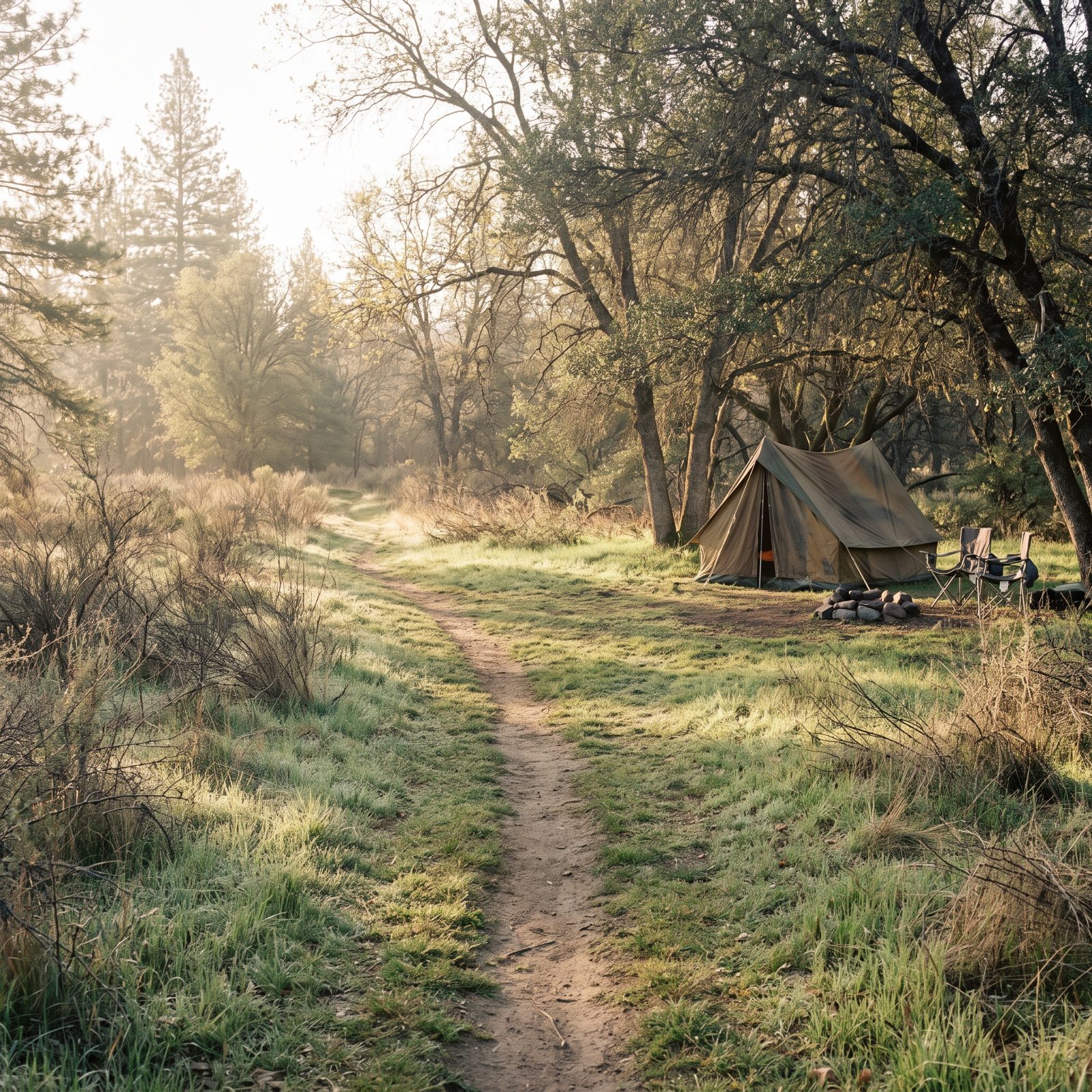
Those faint packed-dirt paths running through brush aren’t shortcuts left by other hikers. They’re highways for deer, elk, and whatever hunts them, used most heavily at dawn and dusk — exactly when you’re asleep or hunched over a stove.
Pitch your tent across one and you’ve parked yourself in the middle of a commute. At best you spook animals and ruin your own calm. At worst you wake a startled bear or moose at close range in the dark. Set up off to the side, keep the trail clear, and let the traffic pass. Good camp manners, and a safer night’s sleep.
29. Your Head Sleeps Slightly Uphill, Not Down
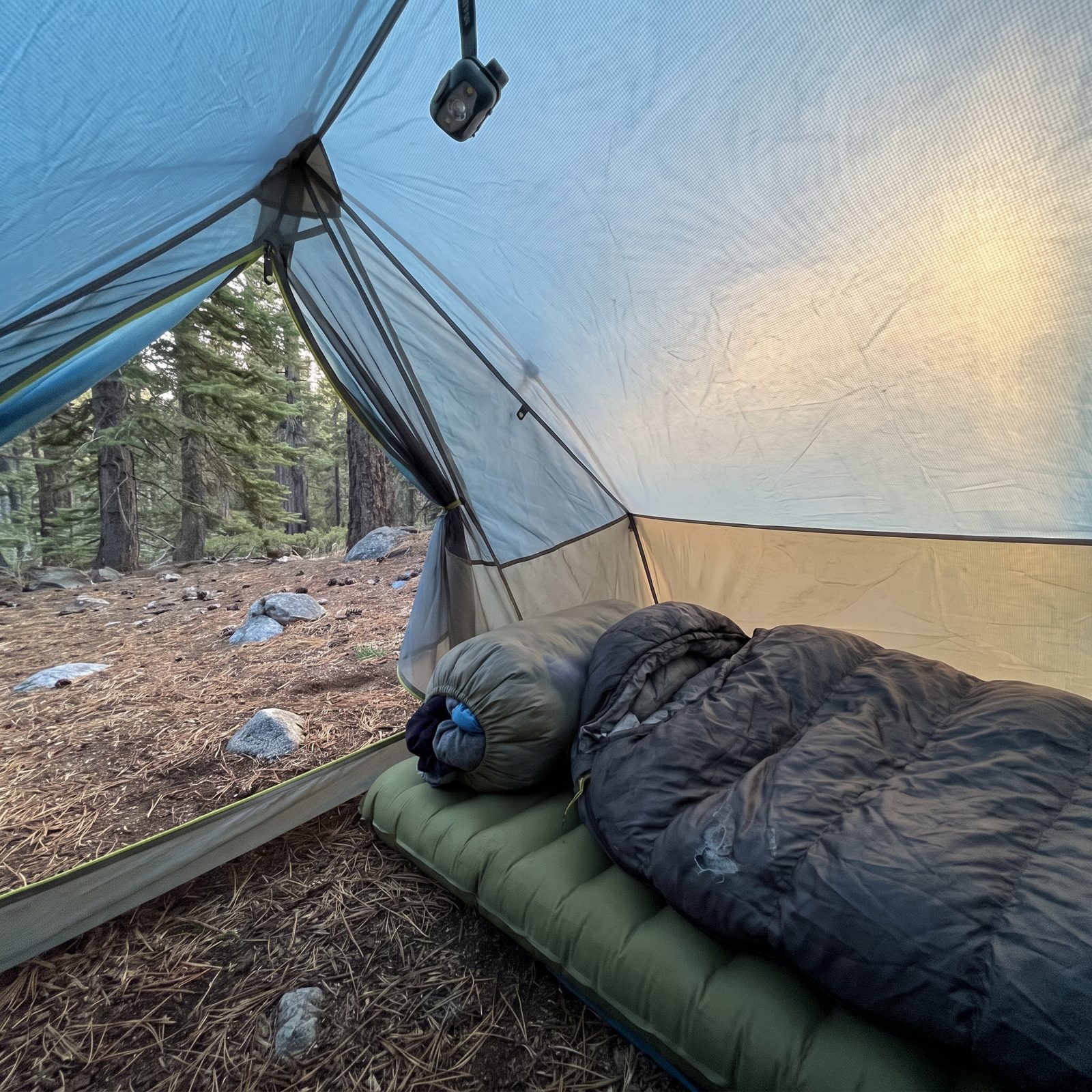
Pitch on anything but dead flat and your body cares which way you point. Head downhill and blood settles in your skull overnight, so you wake groggy and congested, convinced the elevation got you. It didn’t.
Head slightly uphill instead. A couple of degrees changes how you feel at 5 a.m. more than any fancy pillow ever will. Scout the slope before you stake out. Lie down and test it before the tent goes up, because fixing it later means unpacking everything in the dark.
28. The Active Map Panel Stays Folded Out and Ready
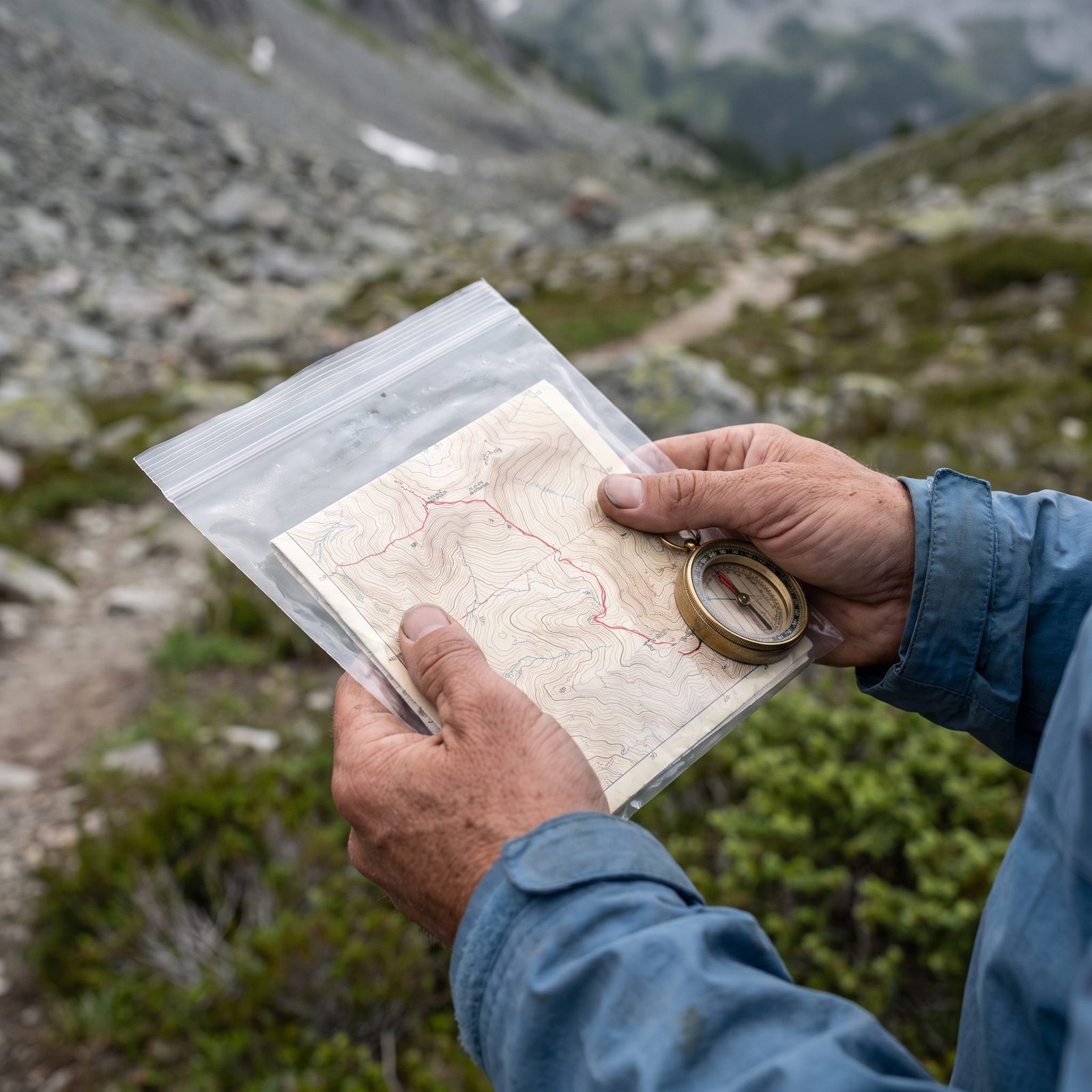
Nobody checks a map that lives folded at the bottom of the pack. That’s the whole problem.
Fold it down to just the section you’re walking through and keep it where you can glance at it, in a hip pocket, a chest pocket, a clear sleeve clipped to a strap. Refolding to find your spot is just enough hassle that people skip the check entirely, and skipped checks are how you end up a drainage over from where you meant to be. Good navigators look at the map constantly. Making it reachable is the only reason they can.
27. Compass Declination Gets Set Before You Leave the Trailhead
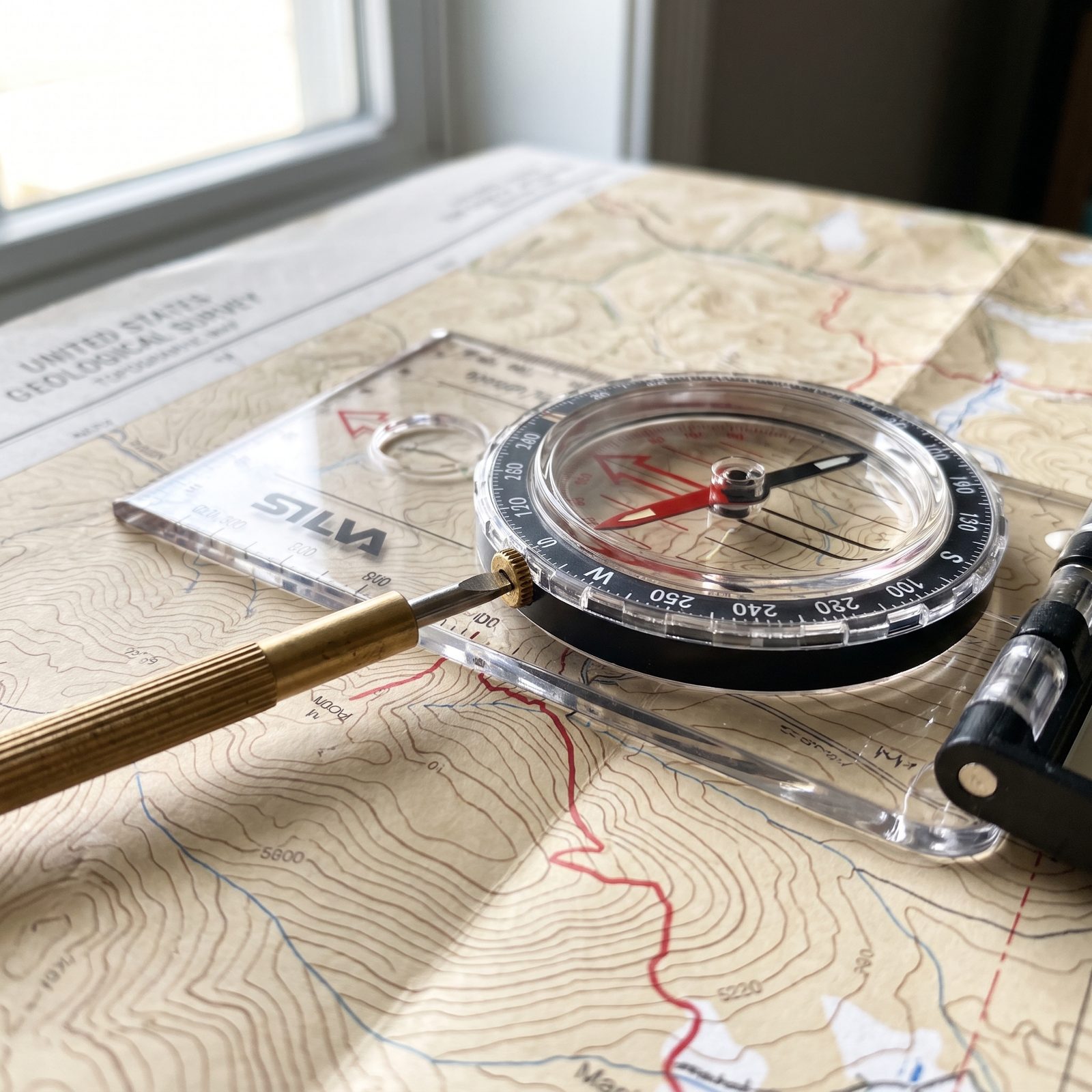
True north and magnetic north are not the same place, and depending on where you stand the gap can run well past ten degrees. Ignore it and every bearing you take drifts, a little at first, a lot over miles.
Set the declination once, at home or at the trailhead, using the value printed on a current map. A good adjustable compass has a tiny screw for exactly this. Do it standing still with coffee in hand, not later when you’re cold, lost, and trying to do trigonometry with numb fingers.
26. Airplane Mode Starts at the Trailhead, Not at Low Battery
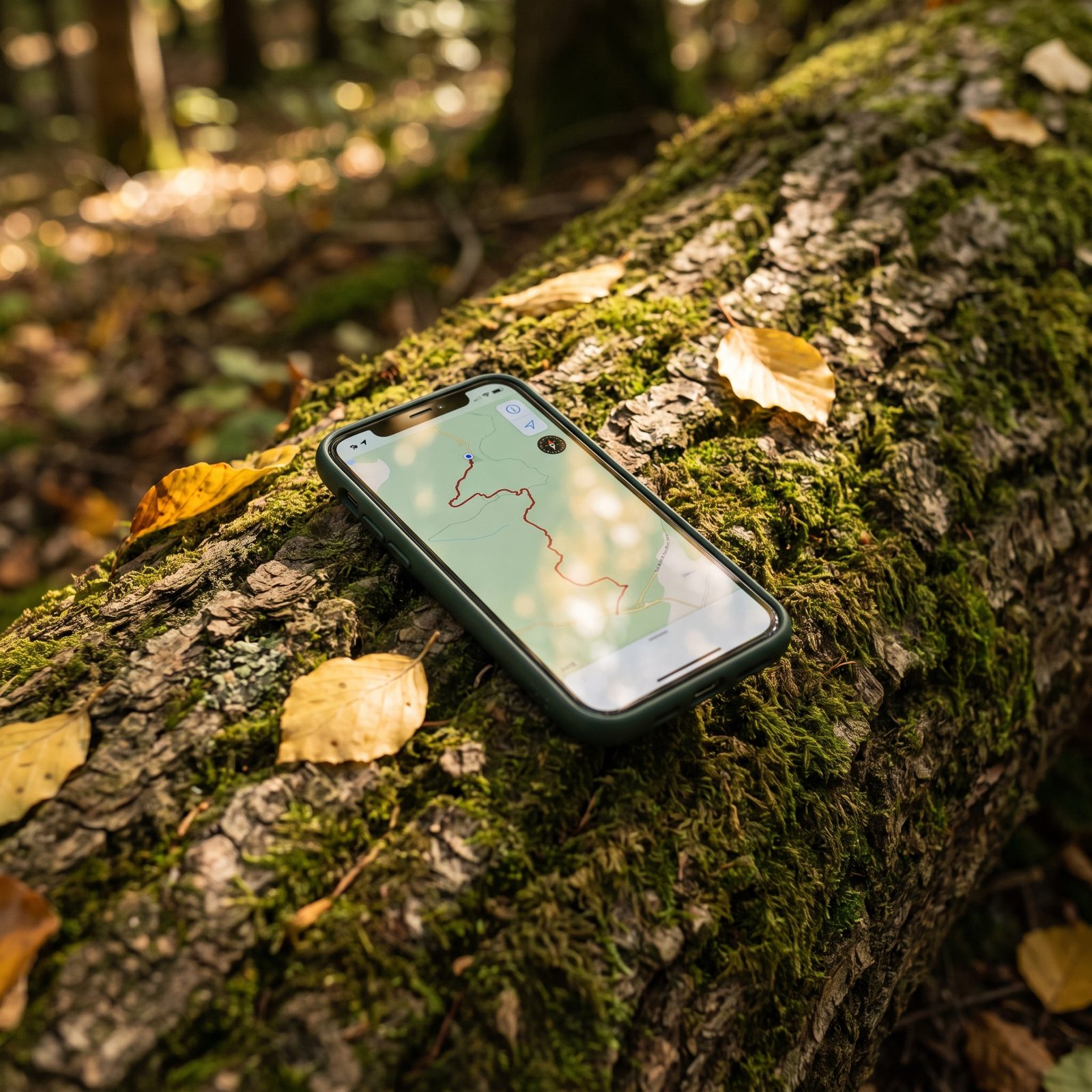
A phone hunting for a signal it won’t find burns battery faster than anything else you’ll do with it. Out of service, it cranks the transmitter trying to connect and drains itself for nothing.
Flip airplane mode on at the trailhead. GPS still works, your downloaded maps still work, your camera still works. You just kill the pointless search for a tower. Waiting until twenty percent to start conserving is like hitting the brakes after you’ve already sailed off the edge.
25. Phones and Spare Batteries Sleep Warm in Cold Weather
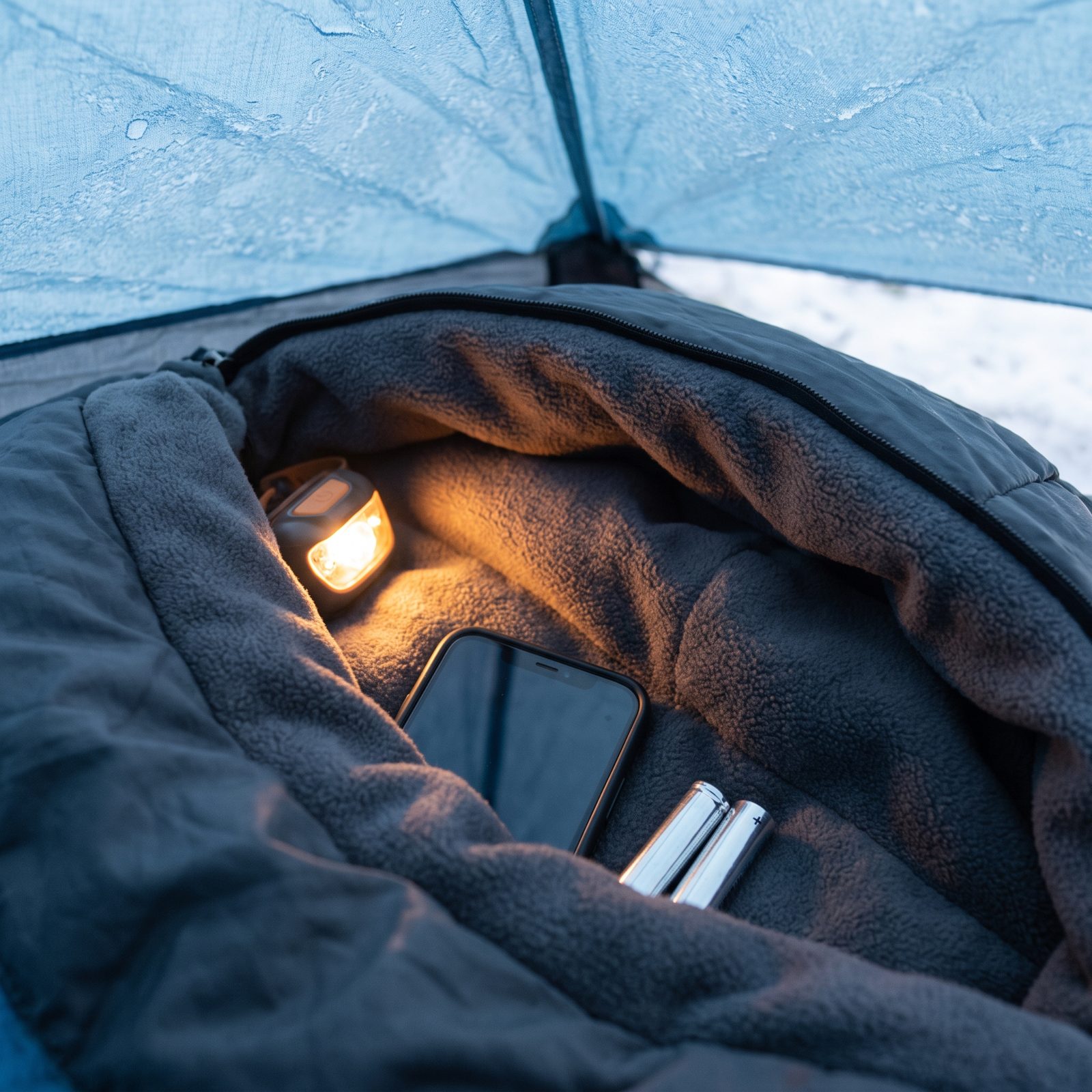
Cold murders lithium batteries. A phone reading half-charged at the trailhead can quit cold in freezing air, then flicker back to life once it warms in your hand. The charge was never gone. The cold just locked it away.
So in cold weather, carry your phone and spares in an inside pocket against your body, and at night pull them into your sleeping bag. A battery left frozen in the vestibule might be useless by morning, right when you need to make a call.
24. Written Turnaround Triggers Kill the Summit-Day Guesswork
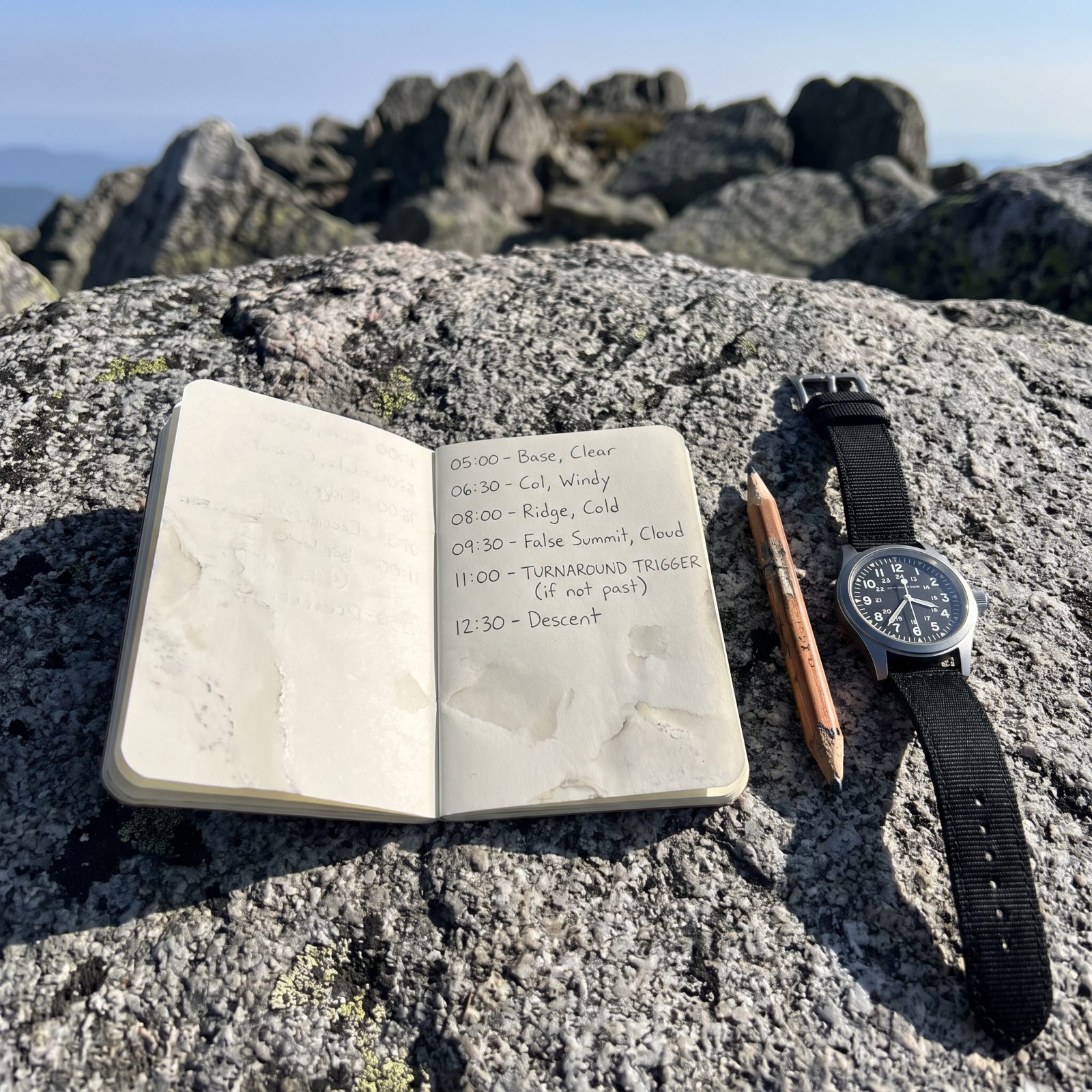
Standing below a summit with weather building, nobody makes a good call. The peak is right there. You’re tired, you’re invested, and your brain will invent reasons to keep going.
Decide the rules before you leave camp, in writing. Not at the ridge by eleven? Turn around. Clouds building before noon? Turn around. Written triggers take the decision out of your exhausted, summit-hungry head and hand it to the version of you that was calm and rested. The mountain will still be there next year. Some of the folks who climbed into an afternoon storm are not.
23. Every Itinerary Carries a Specific Overdue Call Time
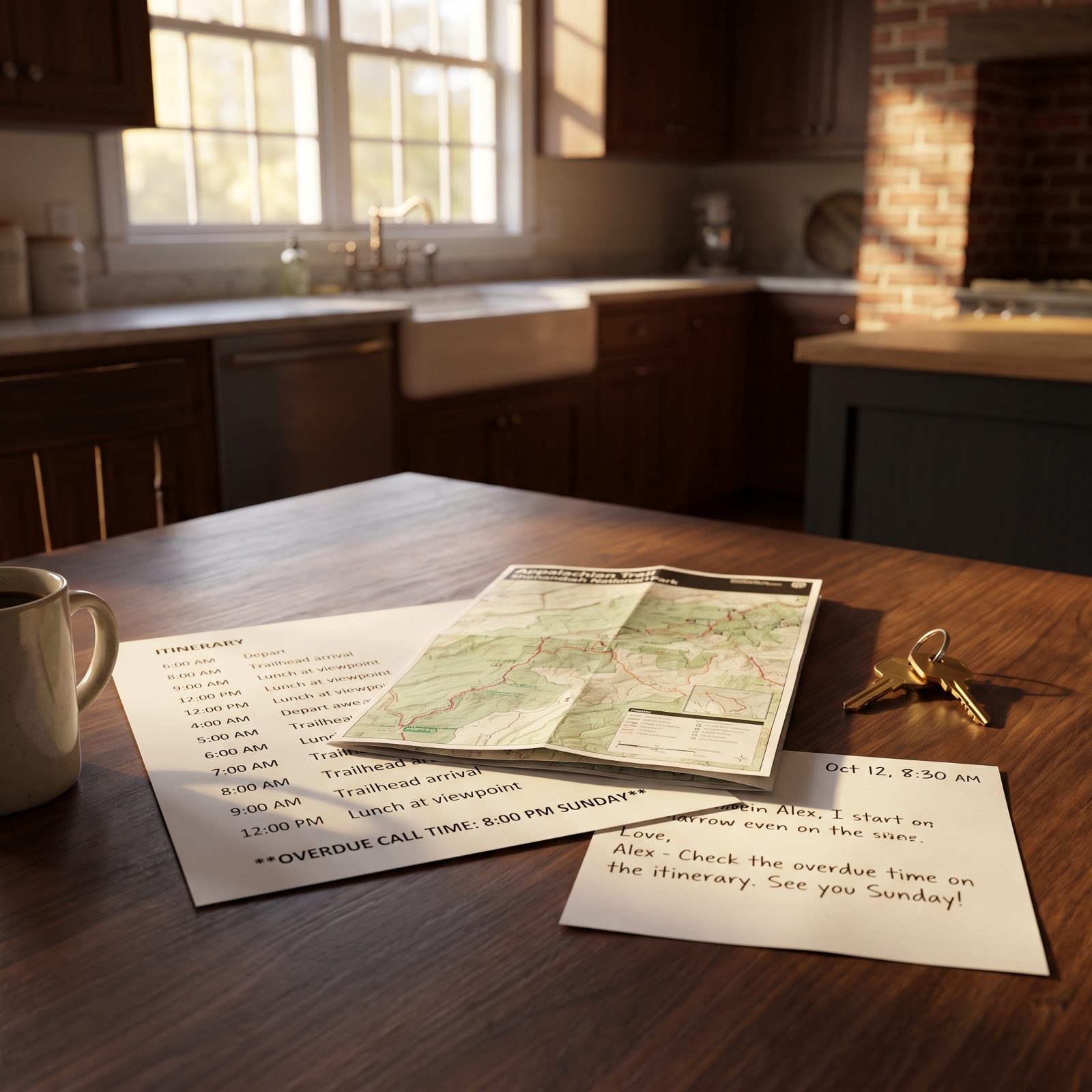
“Back sometime this weekend” is not a plan. It’s a sentence that gives rescuers nothing to work with.
Give a trusted person a real time: if they haven’t heard from you by 8 p.m. Sunday, call for help, and here’s the trailhead, the route, and the car. A vague window buys you a late search or none at all. A specific overdue time means someone knows exactly when to worry and exactly where to send people looking. Write it down and leave it on the table.
22. The Whole Group Reassembles at Every Trail Junction
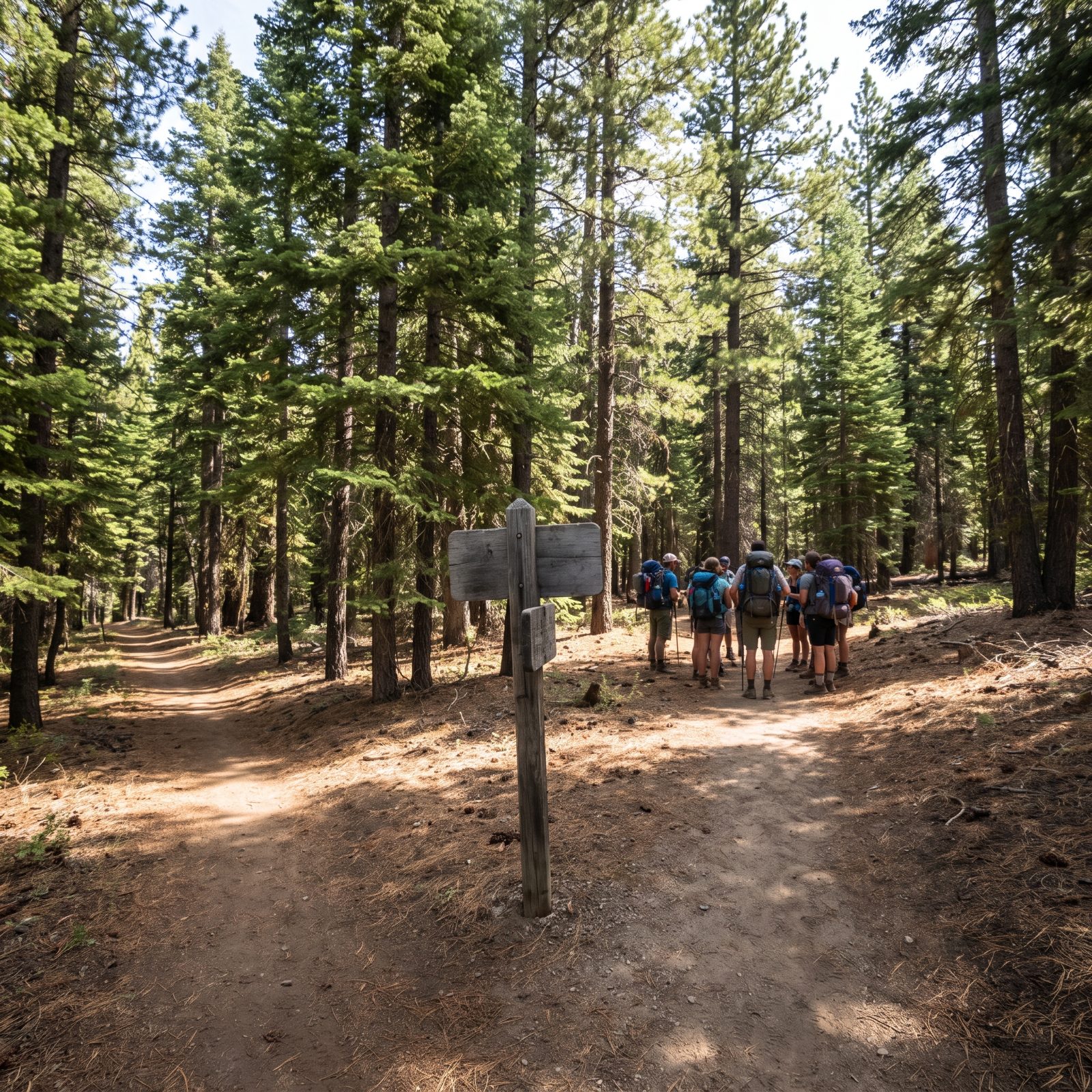
Groups don’t get separated on long straightaways. They get separated where the trail splits, and the fast ones take the wrong fork while the slow ones take the right one, or the other way around.
Simple rule: nobody passes a junction without the group. Fast hikers wait at every fork until everyone catches up, then move together through the choice. It costs the quick folks a few minutes of standing around. It saves the whole group from a frantic afternoon of shouting names into the trees.
21. The Slowest Sustainable Pace Becomes the Group Pace
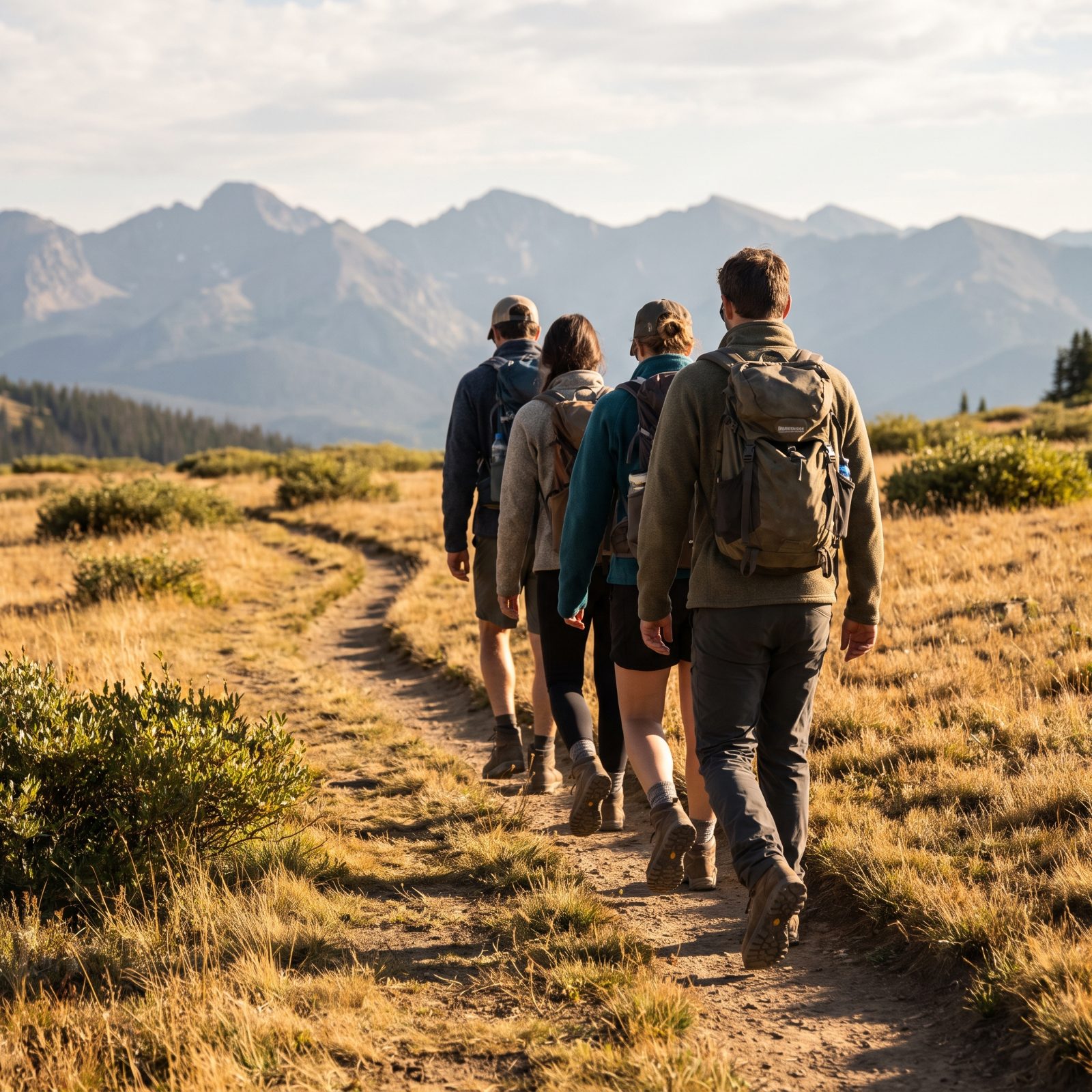
Push the group to the pace of the fastest person and the slowest one blows up. They overheat, they bonk, and by mid-afternoon they’ve become a liability nobody saw coming at the trailhead.
Set the pace to the slowest person who can keep it up all day. This isn’t charity. It keeps the whole group intact and, strangely enough, gets everyone to camp happier and often no later, because you skip the long recovery stops a shattered hiker forces on you. Morale lives or dies here. A group that never has to wait resentfully is a group that still likes each other at the fire.
20. One Snack Stays Reachable Without Taking the Pack Off
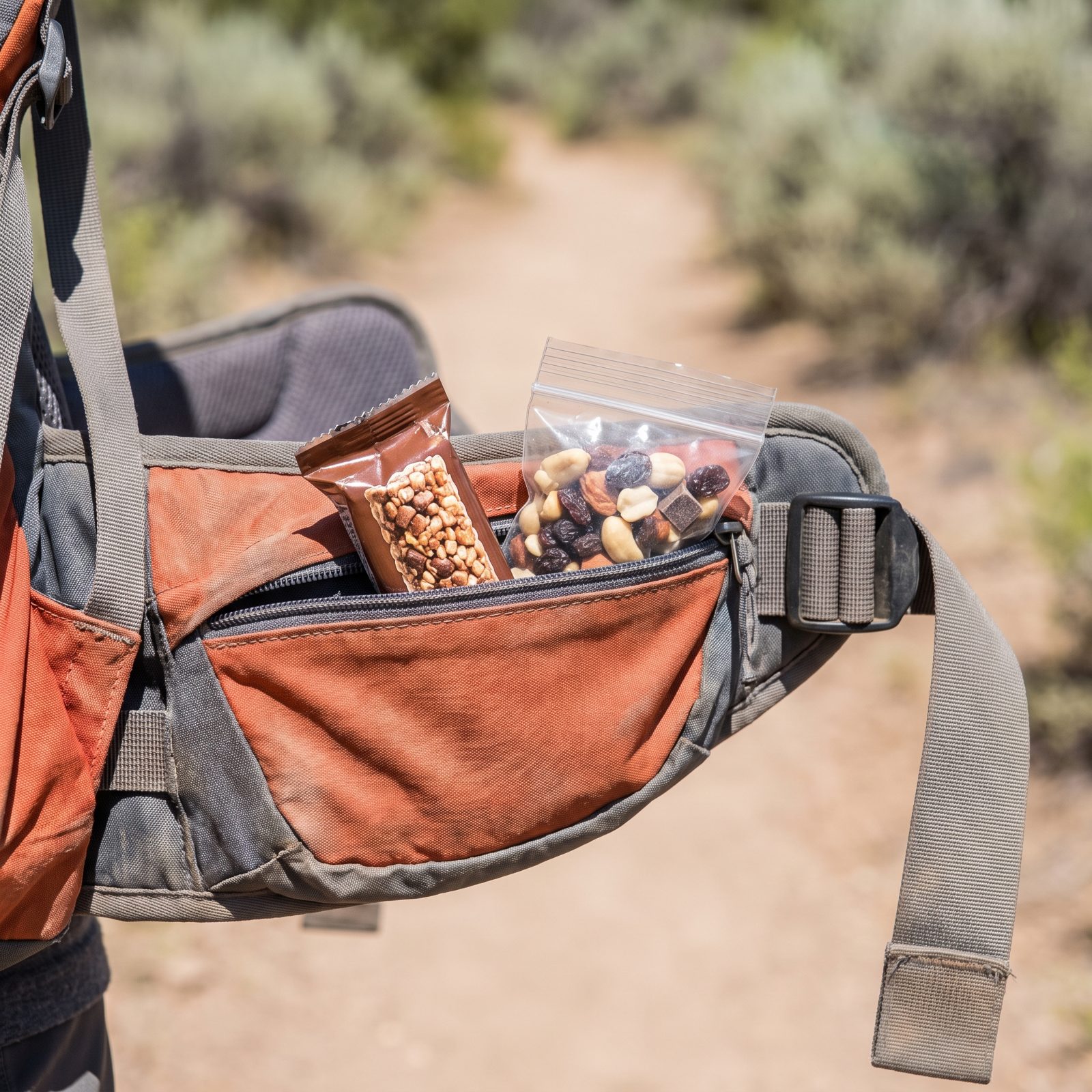
A dumb little truth: people skip calories because getting to them is a pain. Stop, drop the pack, dig through the main pocket, repack, reshoulder. Too much hassle, so they just don’t eat, and then they bonk.
Keep one snack in a hip-belt pocket or a shoulder-strap pouch, something you can reach while walking. A bar, a fistful of trail mix, whatever. Removing the friction does the whole job. Eating small amounts often, before you feel hungry, keeps your energy flat and steady instead of crashing at the worst possible moment. Grab, chew, keep moving.
19. A Hot Spot Gets Taped at the First Hint of Friction
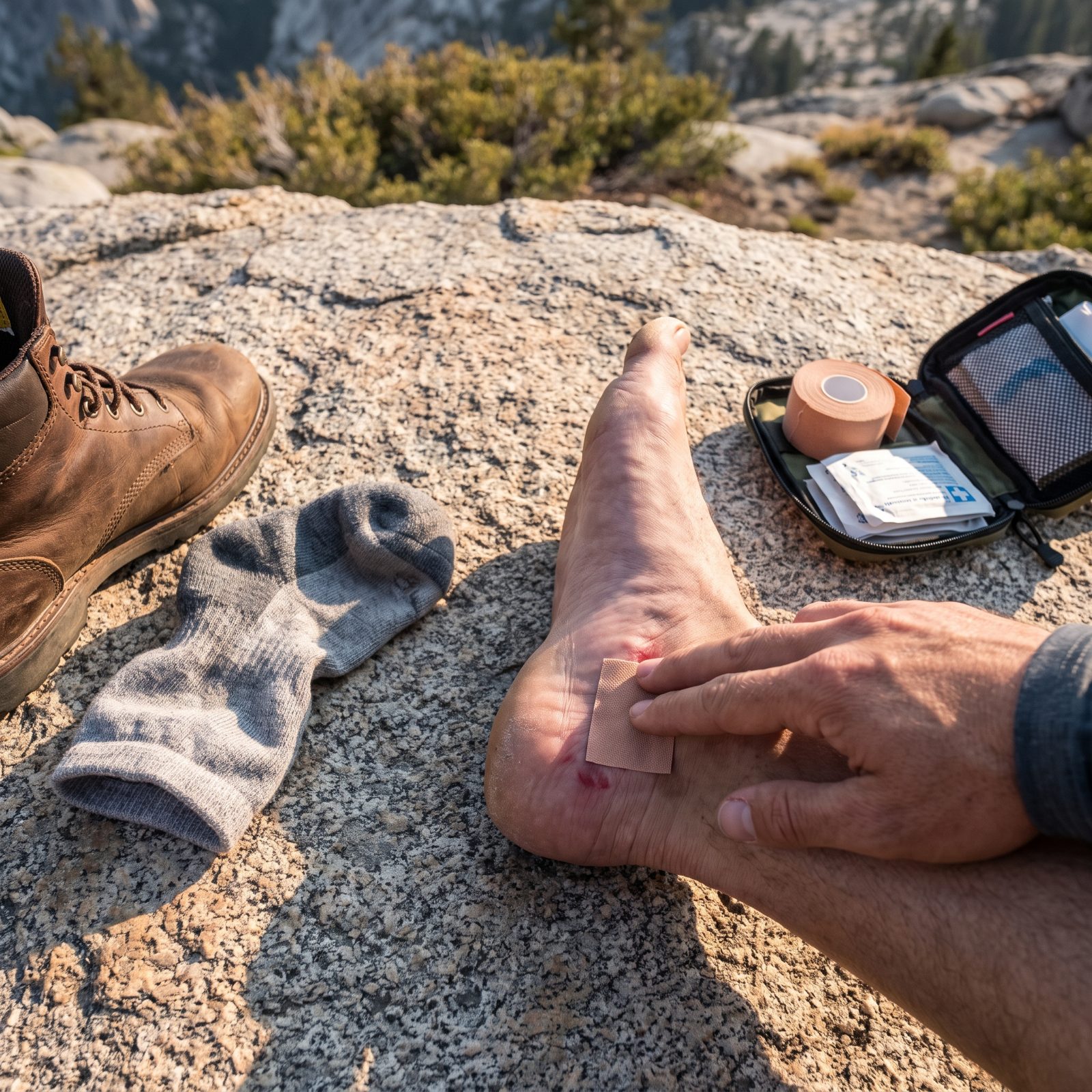
The blister is already lost by the time you feel it. That warm little nag on the side of your heel is the skin telling you it’s about to come apart, and most people ignore the warning because stopping feels like admitting weakness. Dumb. Pull the boot off right then — a square adhesive patch pressed over the first raw, red spots keeps a scrape from turning into a full-blown wound, and a good one holds through sweat and miles better than you’d think.
Four hours of limping on a raw heel ends a trip faster than almost anything, and the tape costs nothing and weighs nothing. No reason to be a hero about it.
18. Feet Get a Midday Airing Before Damp Skin Softens
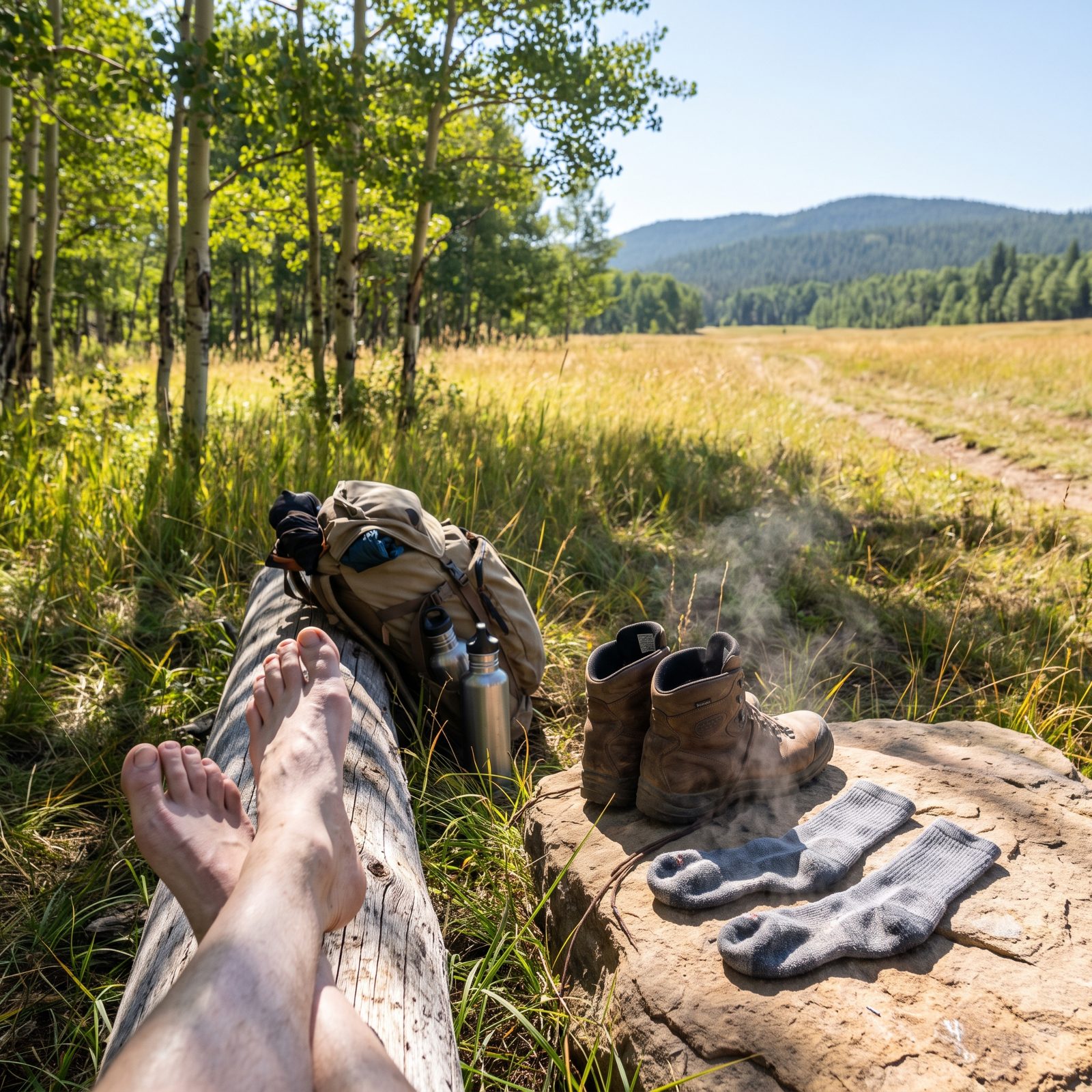
Wet skin is weak skin. Seal your feet in a damp boot for eight hours and the softened flesh starts shredding against the sock like a peeled grape. The fix is almost embarrassingly simple — at lunch, pull the boots, peel the socks, and let your feet see daylight for ten minutes while you eat.
The skin firms back up and the damp socks dry a little in the breeze. Long-distance walkers treat this as non-negotiable, and nobody who hasn’t done it believes how much it matters until their feet come through a brutal day intact.
17. Trekking Poles Change Length When the Slope Changes
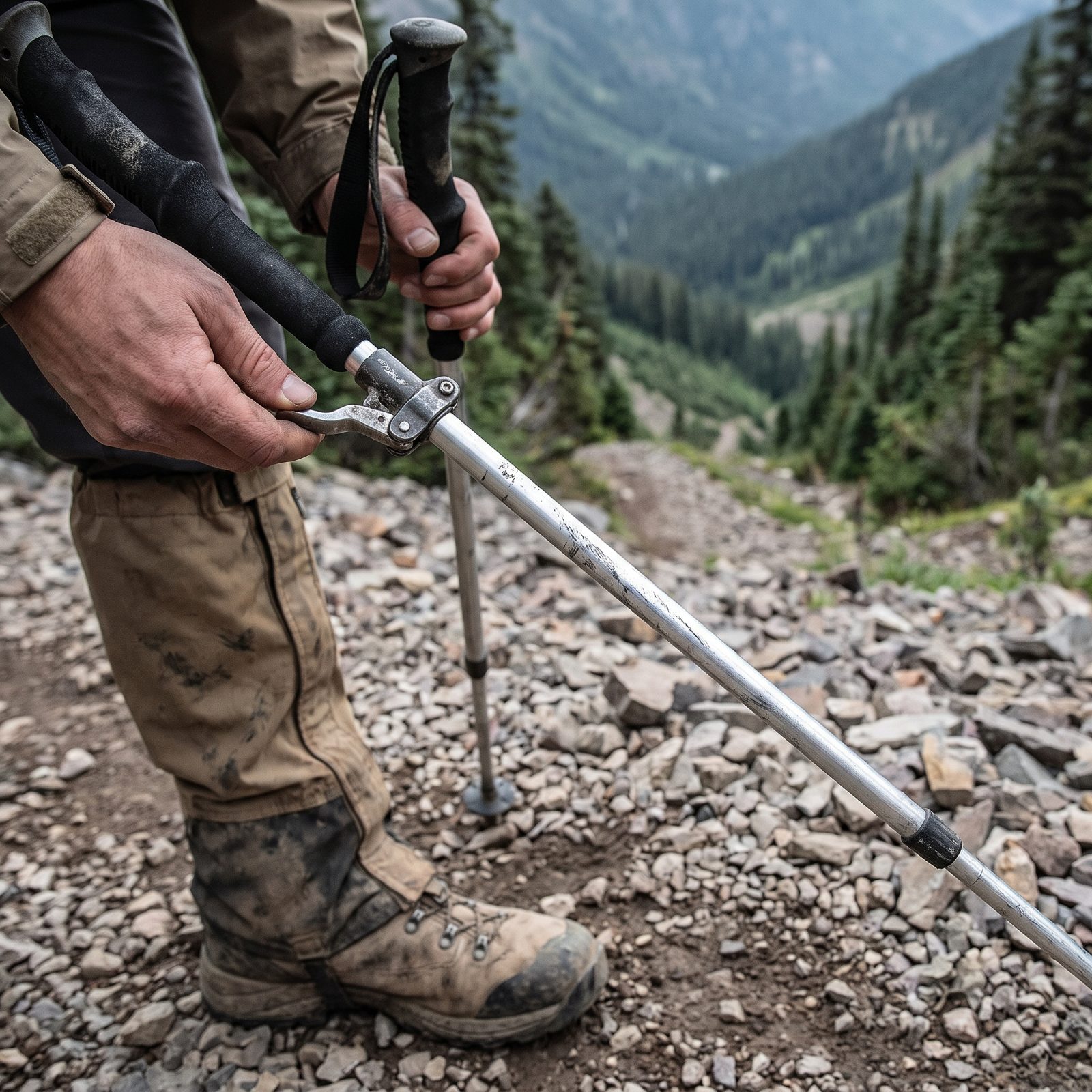
Most people set their poles once at the trailhead and never touch them again. That’s leaving half the tool on the table. On a steady climb, shorten them a few centimeters so your forearms stay level and your shoulders do real work; on a descent, lengthen them so you can reach downslope without hunching forward over your knees.
Your joints feel the difference by the end of a long day. Knees especially. A ten-second adjustment at the top of a grade saves a hiker’s cartilage more than any supplement ever will. Flick-lock poles make it painless — twist-lock makes it a chore, which is why nobody with twist-locks ever bothers.
16. Hands Never Reach Onto an Unseen Ledge
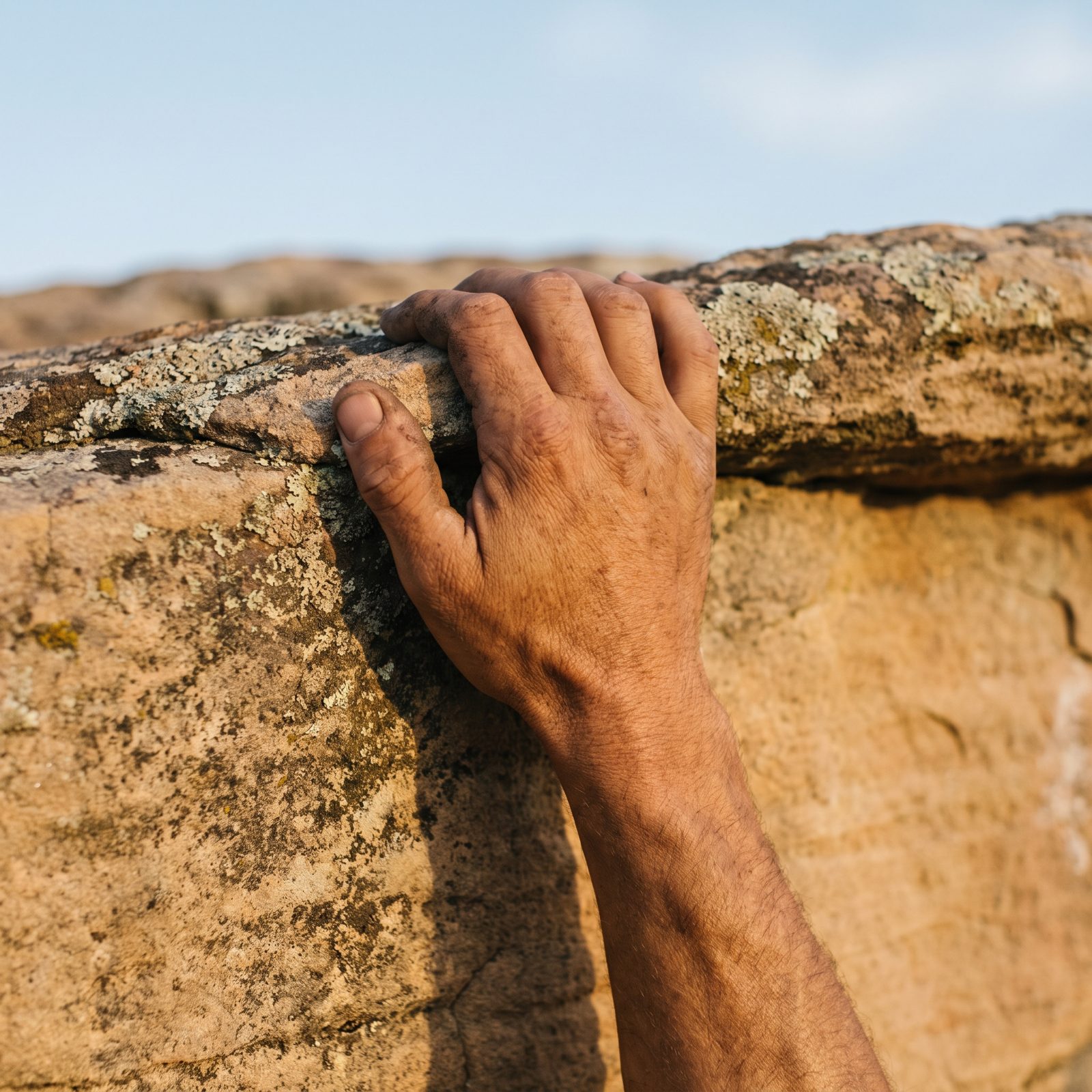
A rattlesnake on a warm ledge does not announce itself. Neither does a scorpion, a wasp nest tucked in a crack, or a loose flake waiting to peel off in your grip. In rocky country the rule experienced scramblers follow is boring and lifesaving: never put a hand anywhere your eyes haven’t gone first.
Can’t see the top of the ledge? You don’t blindly grope for it. Find another hold, or shift so you can look. It slows you down by seconds — and it’s also the difference between a good day and a long hike out with a swollen hand.
15. Snow Sunglasses Stay On Even Beneath Overcast Skies
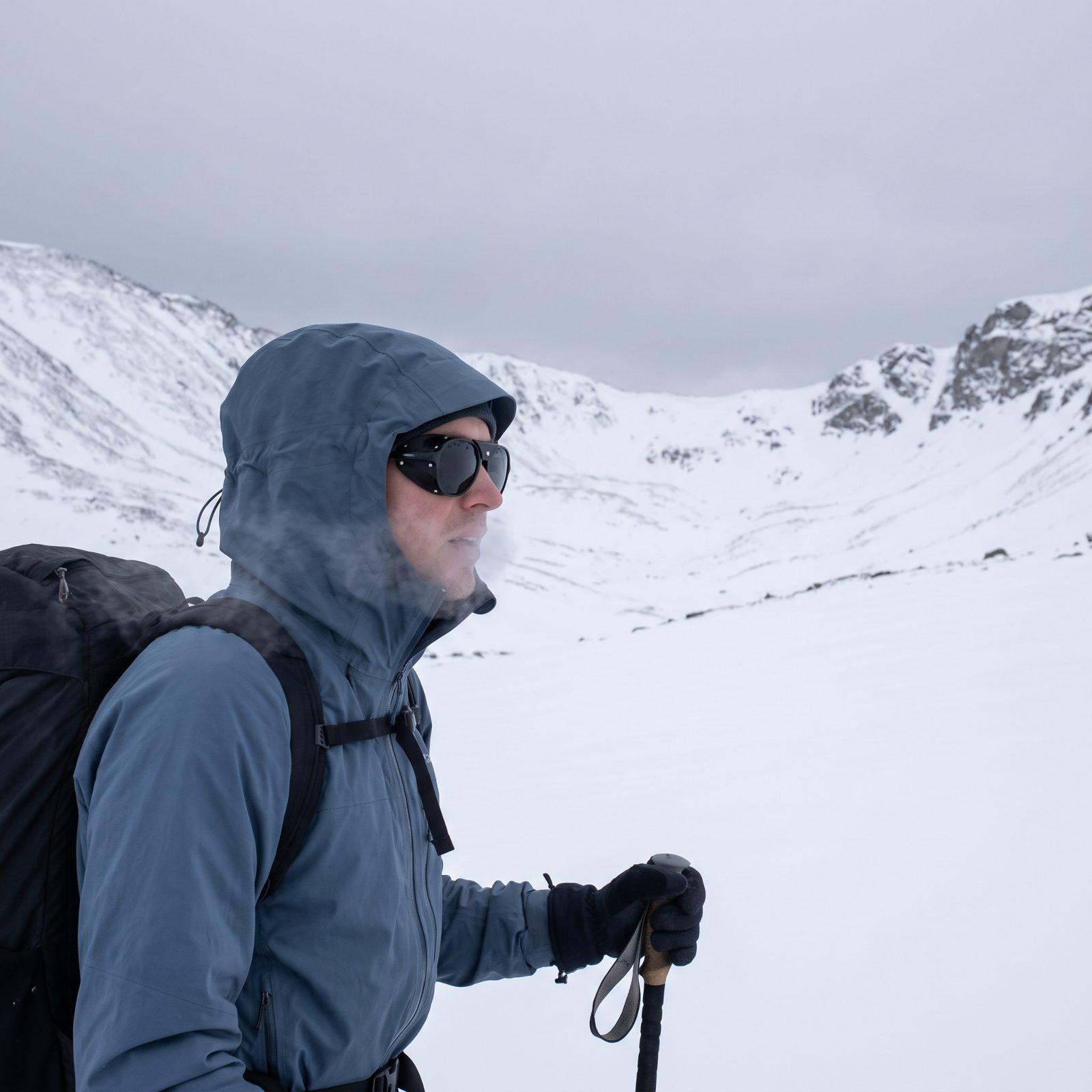
Clouds don’t stop snowblindness. That’s the part that catches people out. A flat overcast day on a big snowfield can scatter more UV into your eyes than direct sun, bouncing off the white from every angle, and the burn on your cornea doesn’t hurt until that night when it feels like sand under your eyelids.
Snow travelers keep dark, wraparound glasses on in gray weather for exactly this reason. Side shields matter too, because the glare sneaks in from the edges. Looks overcautious right up until the one trip it saves your vision.
14. Cold-Weather Layers Change Before Sweat Soaks the Base Layer
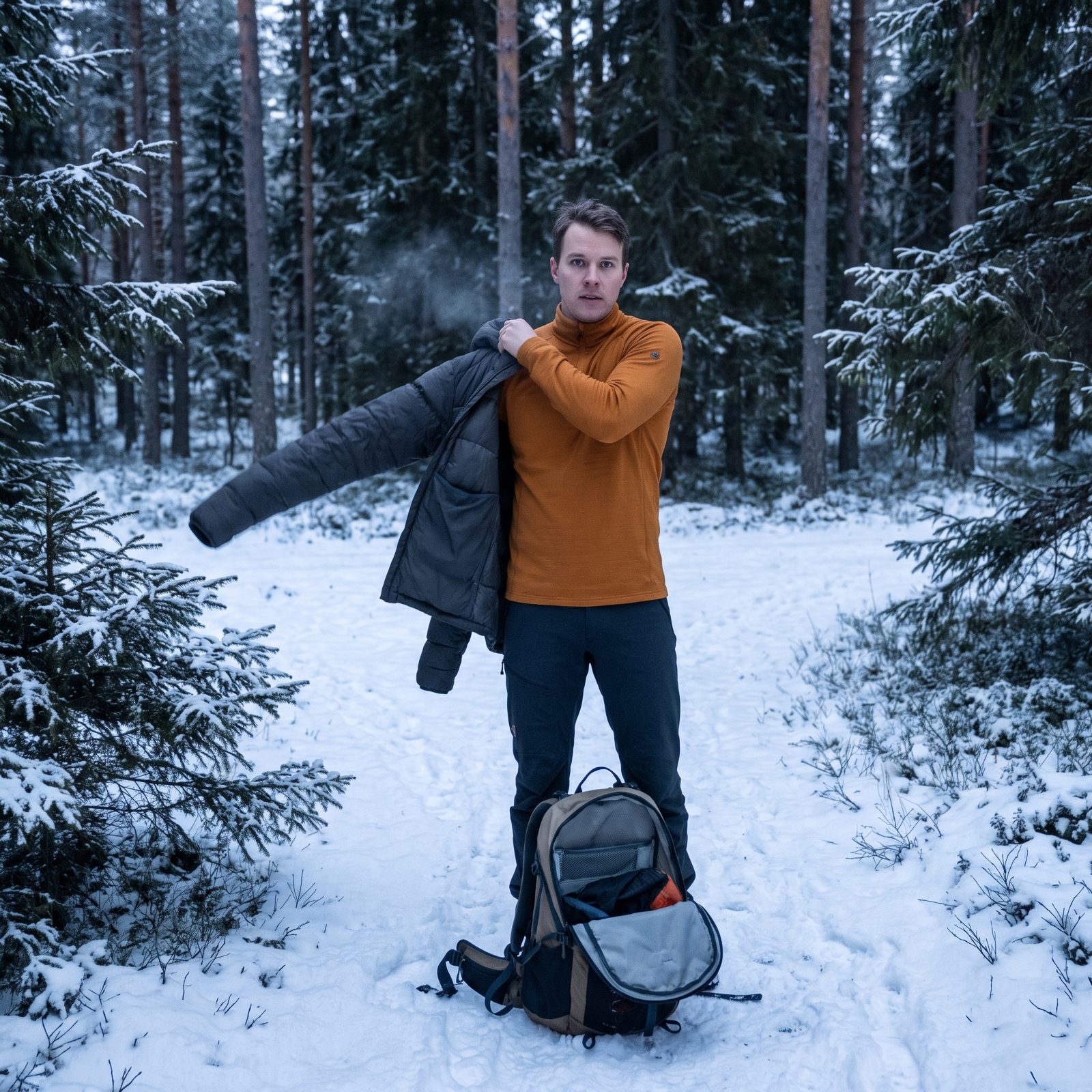
Sweat is the enemy in the cold, not the cold itself. Once your base layer is soaked it stops insulating and starts hauling heat away from your body the second you stop moving. That’s how people get dangerously chilled at a rest break in otherwise survivable weather.
The habit that fixes it feels backwards: you strip a layer before the hard climb, so you start out slightly cold and warm into it without sweating. Winter veterans would rather shiver for two minutes at the bottom than drench a base layer they’ll regret all afternoon.
13. A Wind Layer Goes On Before the Exposed Ridge
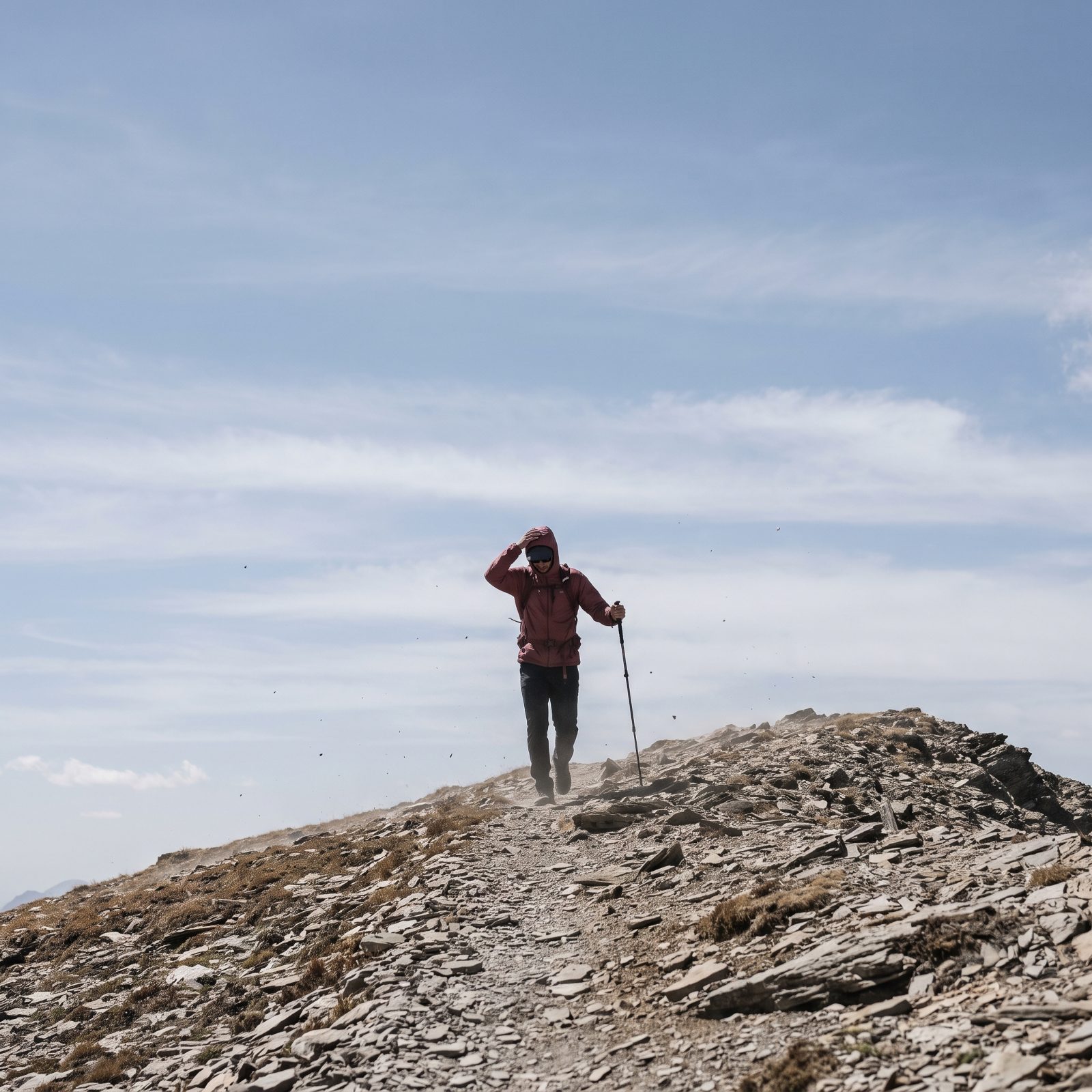
The ridge is the worst place to stop and dig through your pack. Wind that was a background breeze down in the trees becomes a shoving, gear-grabbing mess the moment you step onto open ground — exactly when you don’t want to be fumbling with zippers while the cold eats into you.
Read the terrain ahead and layer up in the shelter of the last trees or the lee of a boulder, before you commit to the open. A featherweight wind shell blocks a shocking amount of chill. Putting it on thirty seconds early beats wrestling it on with numb fingers in a gale.
12. The Headlamp Goes On Before Dusk Reaches Camp
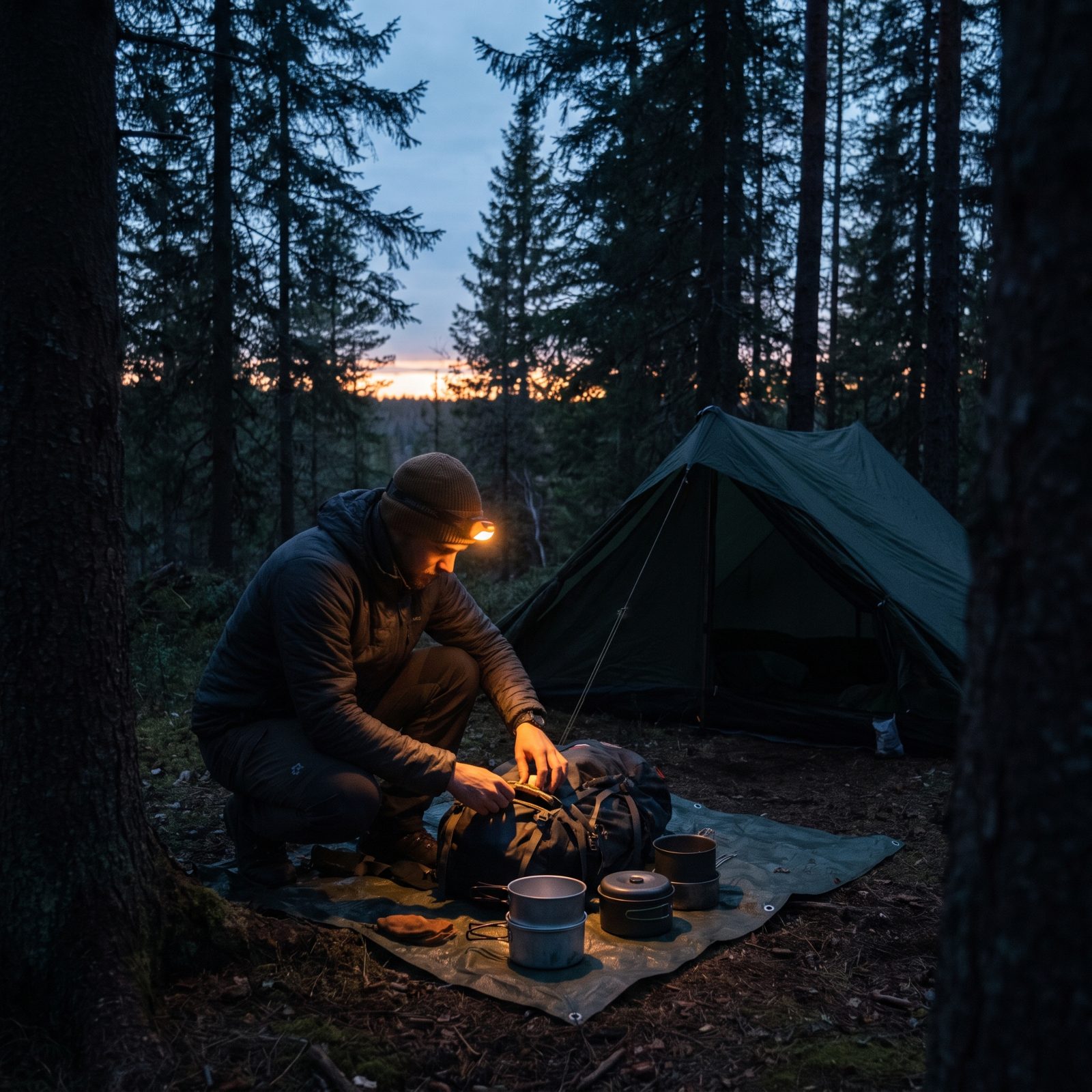
Your eyes lie to you at dusk. They adjust so smoothly to failing light that you keep working in the gloom, convinced you can still see fine, right up until you’re squinting at knots and tripping over roots in near-total dark. By then you’ve burned twenty minutes of setup and your night vision is shot the second you finally click the lamp on.
Flip the headlamp on while there’s still blue in the sky. Camp chores go faster, you pitch the tent on better ground, and you’re not kicking tent stakes into the dark hunting for the one that bounced.
11. Every Tent Site Gets an Overhead Widowmaker Check
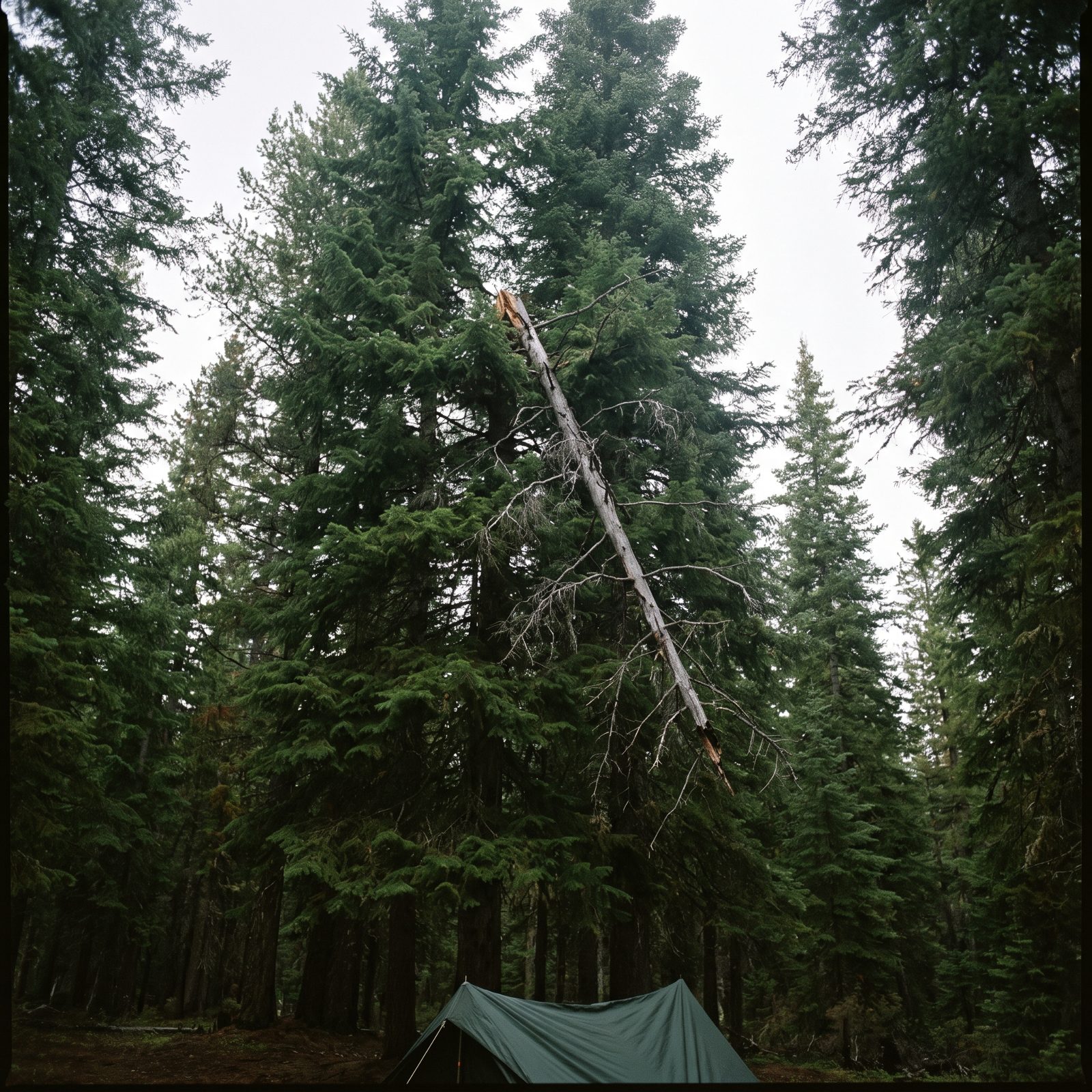
Look up before you look down. That flat, sheltered spot under a big tree is exactly where tired hikers want to pitch, and it’s exactly where a dead limb snapped off in last winter’s storm is hanging high above your sleeping bag, waiting for a gust.
They’re called widowmakers for a reason. Before you drop your pack, scan the canopy straight overhead for dead branches, cracked limbs, dead standing trunks nearby, anything that could come down in wind. Takes one slow look. Rangers see the aftermath of skipping it more often than anyone wants to think about.
10. The Tent Gets Staked Before Any Interior Unpacking Begins
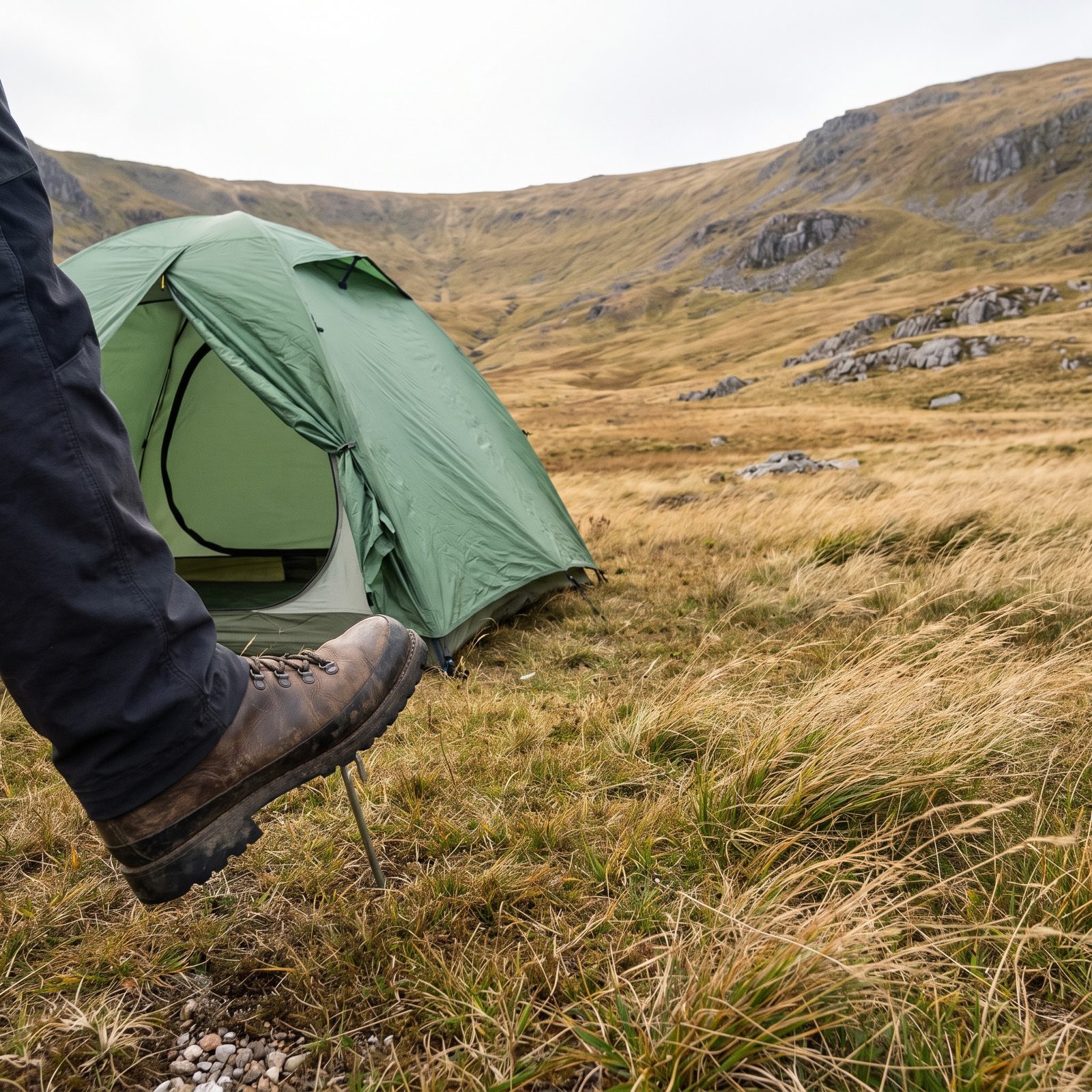
An unstaked tent is a kite with your sleeping bag in it. People get the poles up, decide it looks stable enough, and start tossing gear inside before anchoring the corners. Then a gust catches the empty shell and you’re chasing your shelter across the meadow.
Stake it out fully first — all corners and the main guylines — then unpack. On exposed ground the order matters even more. Sure, a tent weighed down with gear and bodies won’t blow away, but it also won’t survive an all-night flapping fight with the wind if the lines were never tensioned right to begin with. Anchor first. Move in second.
9. Reflective Markers Make Low Guylines Visible After Dark
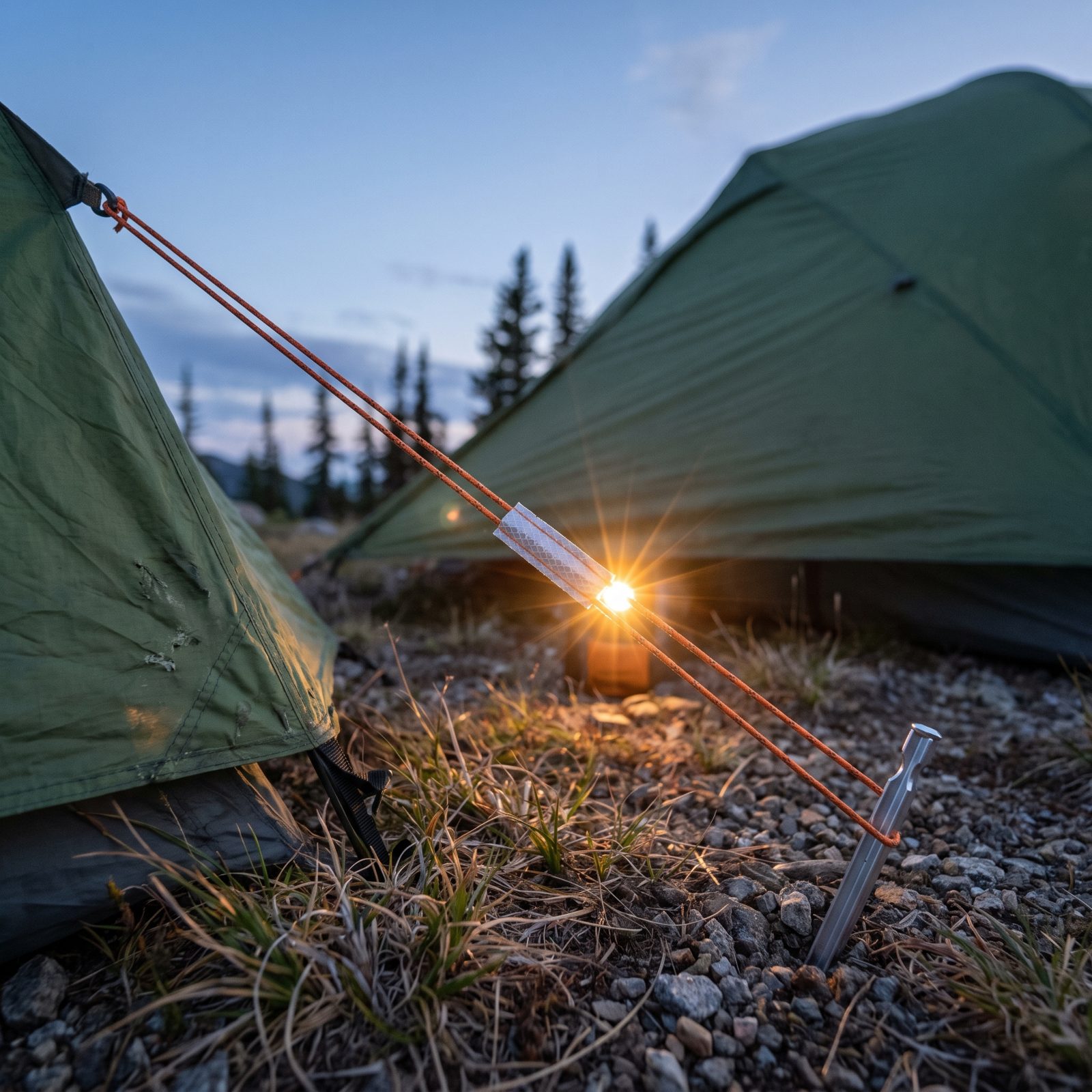
You’ve done the ankle-catch. Crossed camp at midnight for the pee you’d been ignoring, snagged a guyline, and gone down into the dirt with your headlamp pointing straight up at the sky. It’s a rite of passage. It’s also completely avoidable.
A few inches of reflective cord, or a couple of clip-on markers on each low line, turns an invisible tripwire into a bright wink the second your beam sweeps across it. Costs almost nothing, weighs almost nothing, saves you a sprained wrist and a torn fly.
8. Shoes Get Shaken Out Before Every Morning Wear
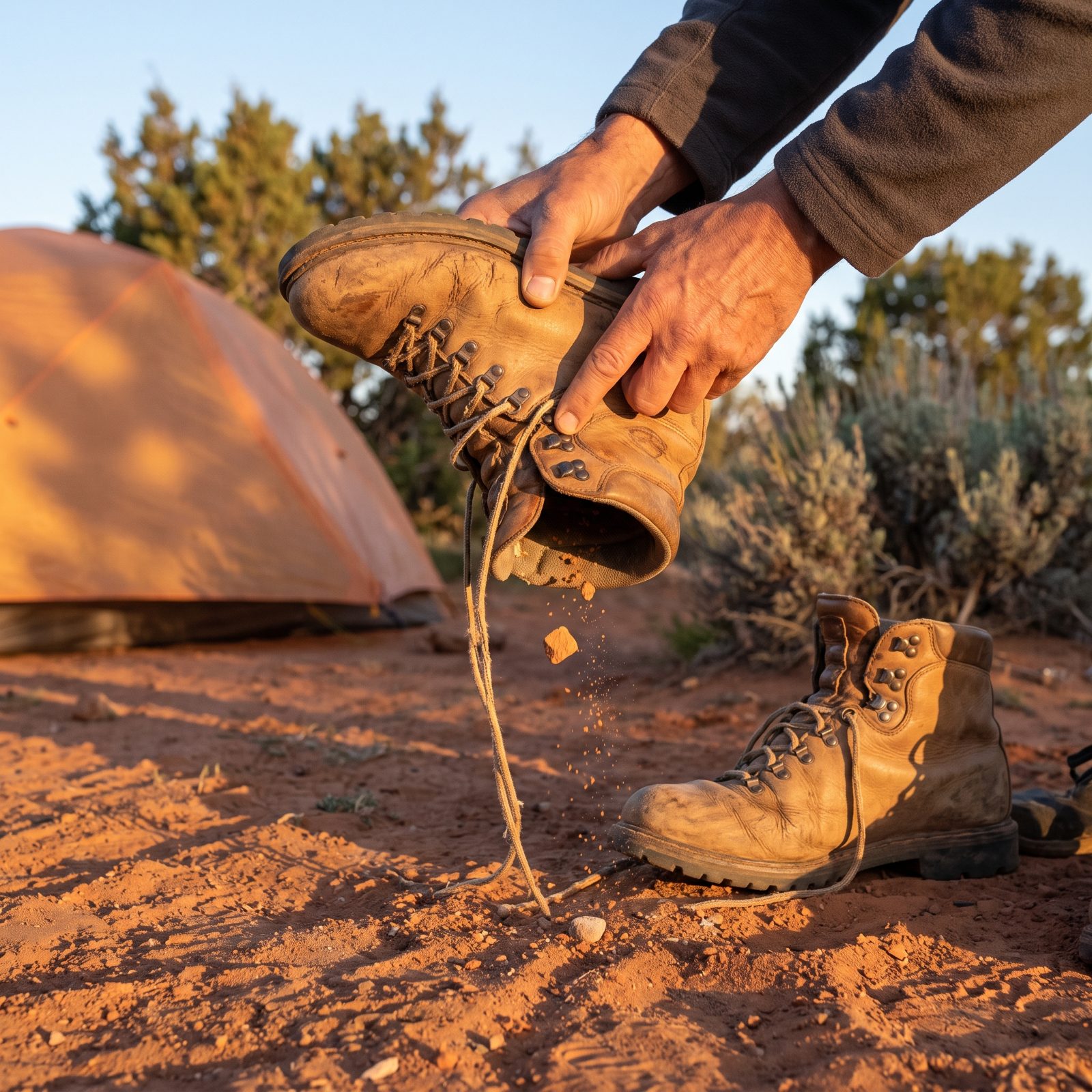
In the desert Southwest and plenty of warm-weather country, a boot left open overnight is an open invitation. Scorpions, spiders, and the occasional small snake like the dark, the warmth, and the shape of a toe box. Most won’t kill you. All of them will ruin your morning.
The habit takes five seconds. Turn each shoe upside down, give it a few firm taps before your foot goes anywhere near it, and you’re done. Desert hikers who’ve been at it a while do it without thinking, the way you glance at your mirrors backing out of a driveway.
7. A Camp Stove Never Enters a Tent or Vestibule
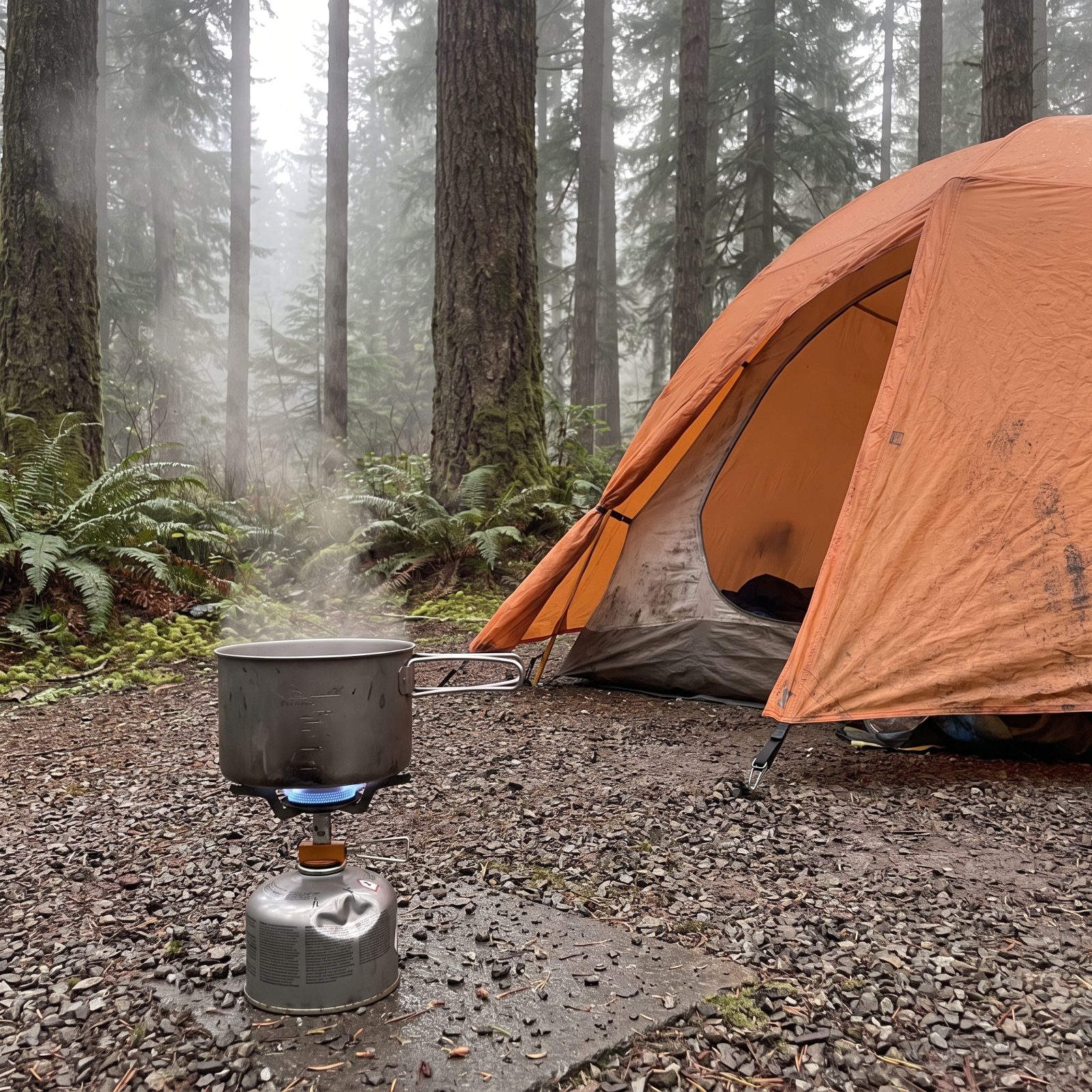
This one gets people killed every year, and almost always the smart, experienced ones. Cooking under cover feels harmless in wind or rain. It isn’t.
A stove burns oxygen and pumps out carbon monoxide you can’t see or smell. In an enclosed vestibule it builds up fast, and the first symptom is often a headache you mistake for altitude or dehydration. Then you get sleepy. Then you don’t wake up.
Cook in the open, downwind, well clear of the fabric. If the weather is genuinely brutal, eat cold food and wait it out. A no-cook dinner has never hurt anybody.
6. A Bear Canister Sits Away From Water, Cliffs, and Camp
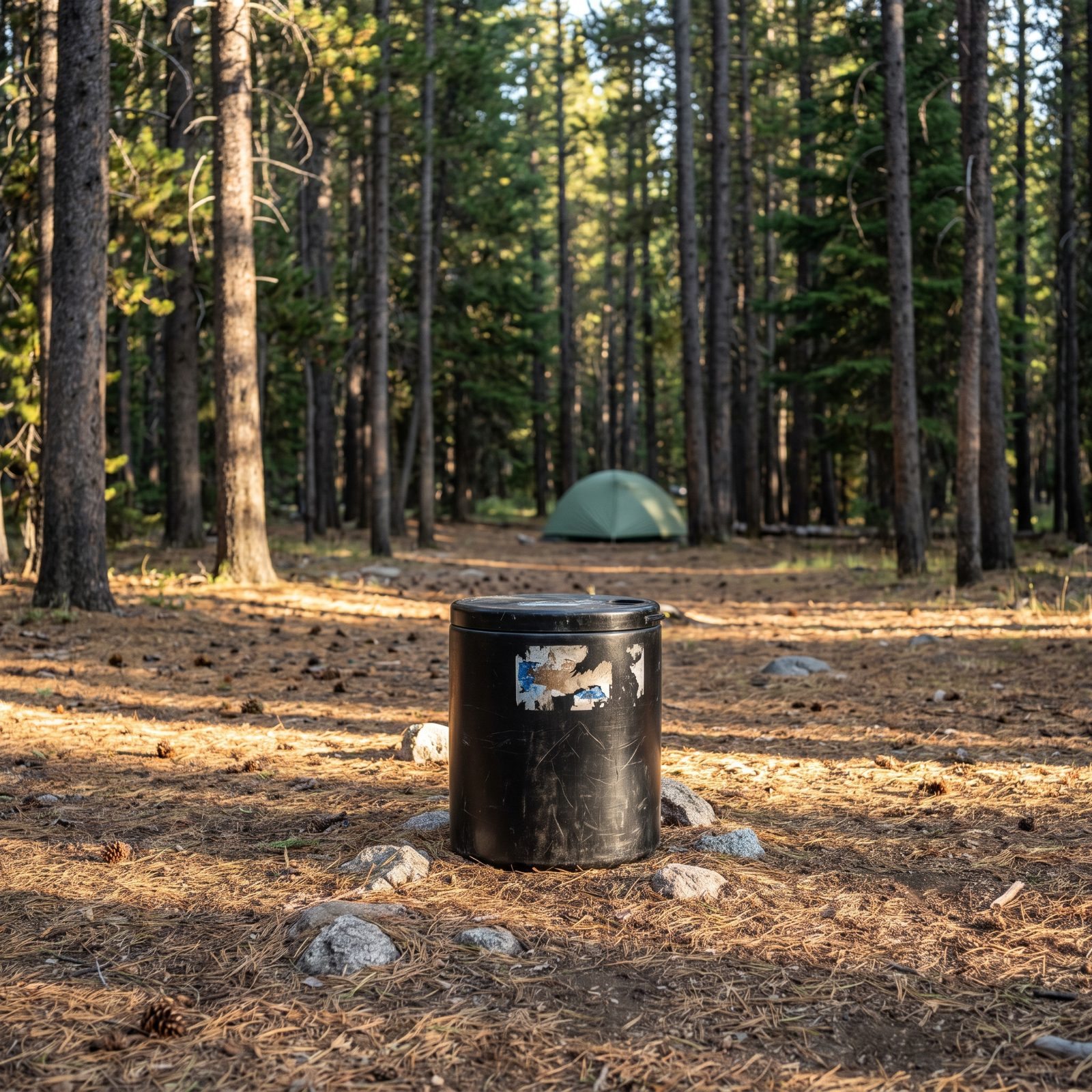
A canister does its job by being boring. A bear bats it, chews it, rolls it, gives up, and wanders off. Your part is making sure where it ends up after that roll doesn’t matter.
Set it a good distance from your tent, so a frustrated bear isn’t frustrated right next to your head. Keep it well back from cliff edges and steep slopes, because a canister that tumbles off a ledge in the small hours is just gone. Same with streams and lakes, partly so it can’t roll into the drink, partly because you don’t want a bear tying your food to the water source everyone shares.
5. Bear Spray Rides in a Reachable Holster, Never Inside the Pack
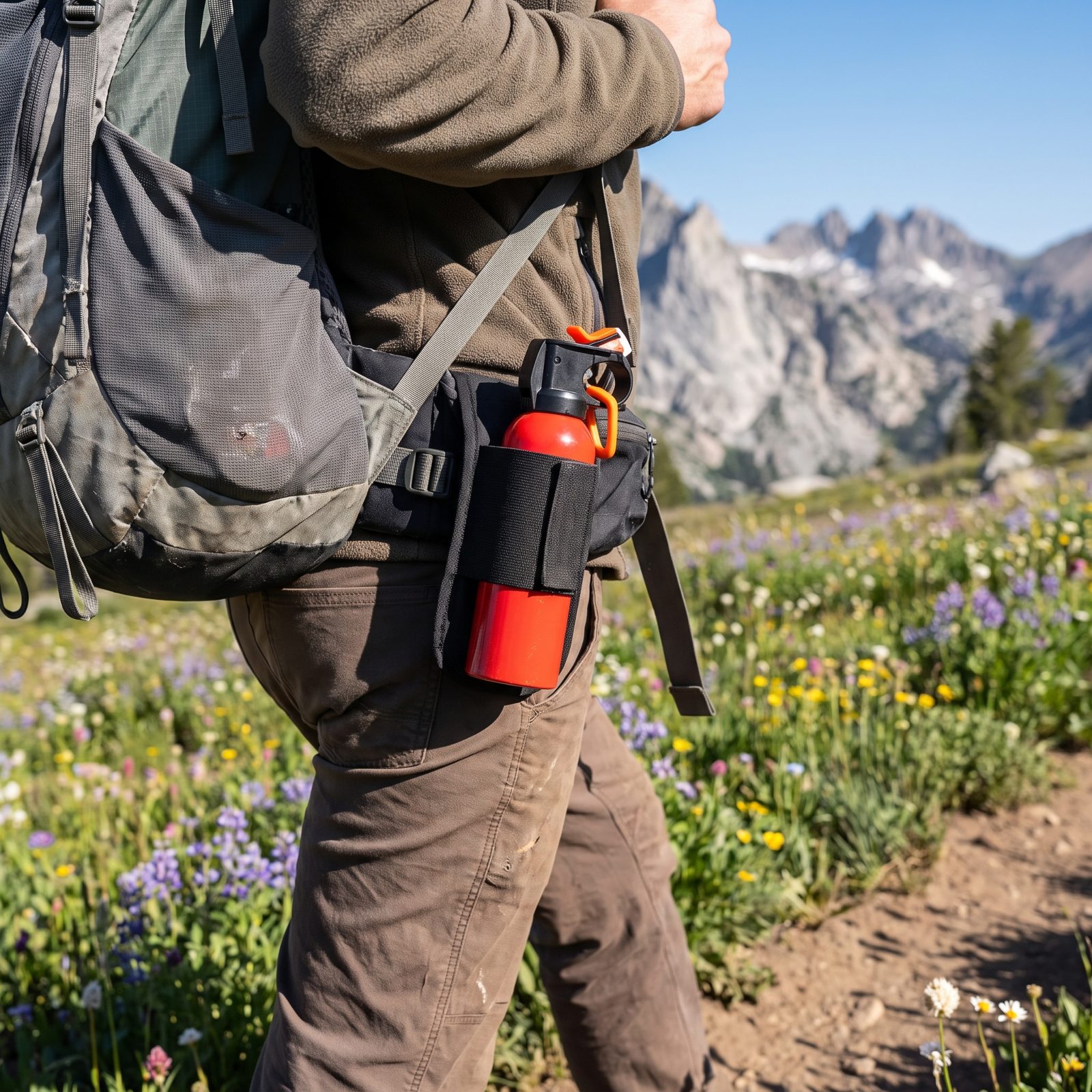
Bear spray buried at the bottom of your pack is a decoration, not a defense. Surprise encounters happen in seconds, and a startled bear at close range doesn’t give you time to drop your load and dig for it.
It belongs on your hip belt or chest strap, in a holster, safety clip intact, your hand able to find it without looking. Practice the draw a couple of times at home so the trail isn’t the first time your fingers try.
4. A Stream Crossing Is Scouted for the Widest Straight Section
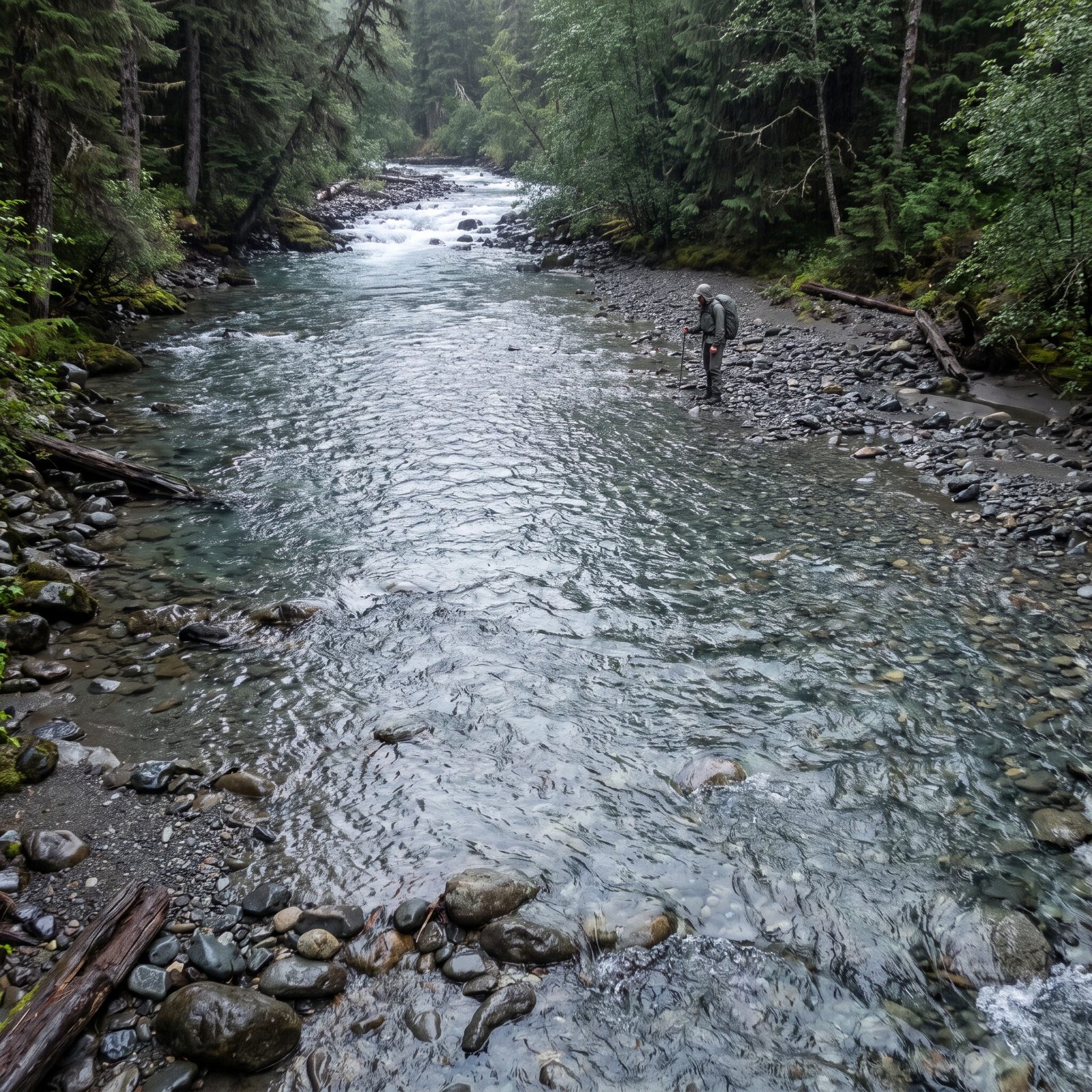
The instinct is to cross at the narrowest point because it looks like less work. It’s a trap. Narrow means deep and fast, where the whole river squeezes through one channel and tries to take your legs out from under you.
What you want is wide and straight. The water spreads thin, the current eases, and you can actually read the bottom. So walk the bank and hunt for the ugly, braided, boring stretch nobody photographs. Bends hide deep undercut holes on the outside of the curve, so steer clear of those. Unbuckle, face upstream, side-step, and move one foot at a time.
3. Hip and Sternum Straps Release Before Entering Moving Water
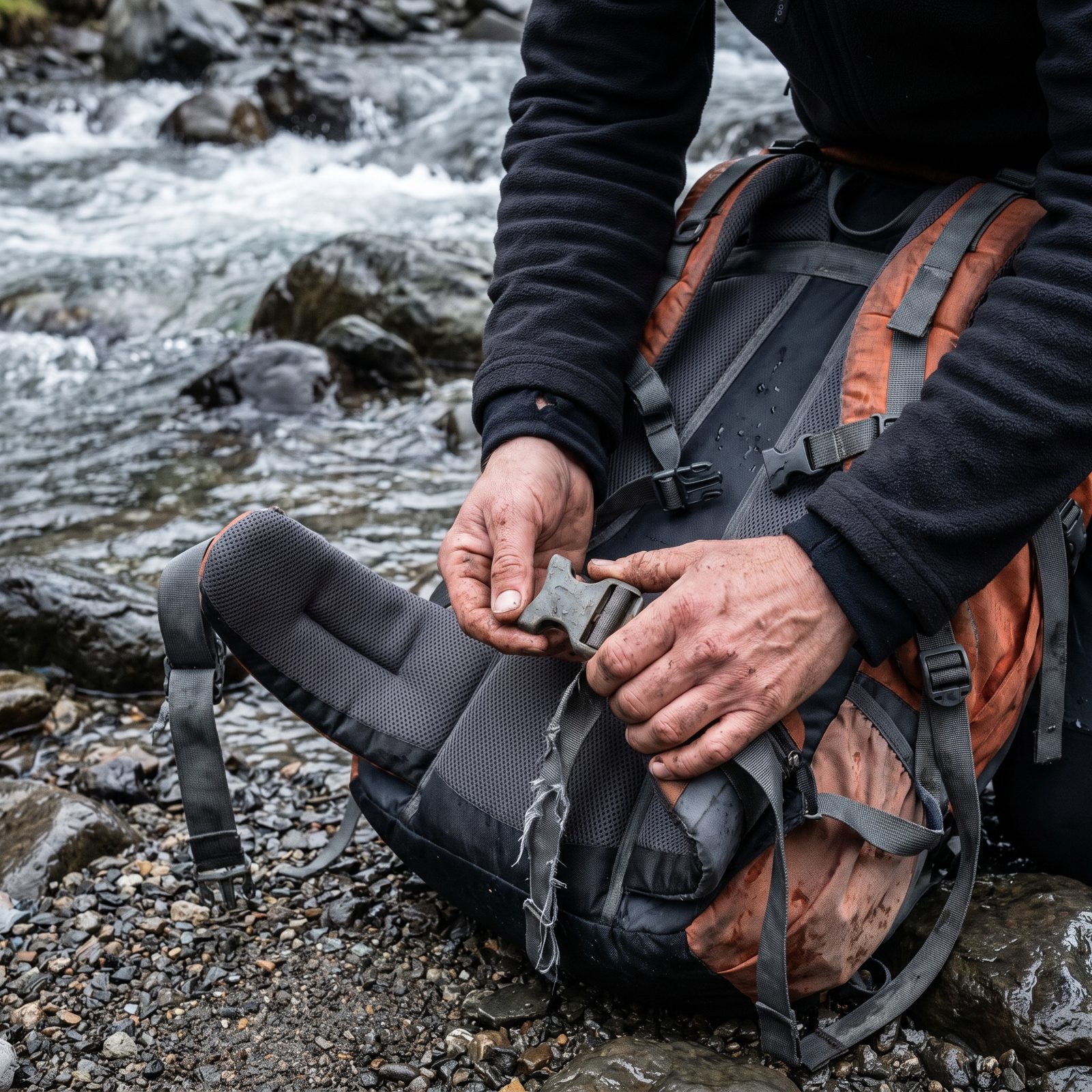
A buckled pack is an anchor the second you go under. If the current knocks you down, a strapped-in pack holds you face-down and won’t let you swim out of it. People have drowned in water that barely reached their knees for exactly this reason.
So loosen the shoulder straps, unclip the sternum strap, and unbuckle the hip belt before you step in. A loose pack you can shrug off in a heartbeat. Yes, it feels unstable, and that’s the trade you make. You’d rather lose a pack than go down with it.
2. Getting Lost Activates Stop, Think, Observe, and Plan
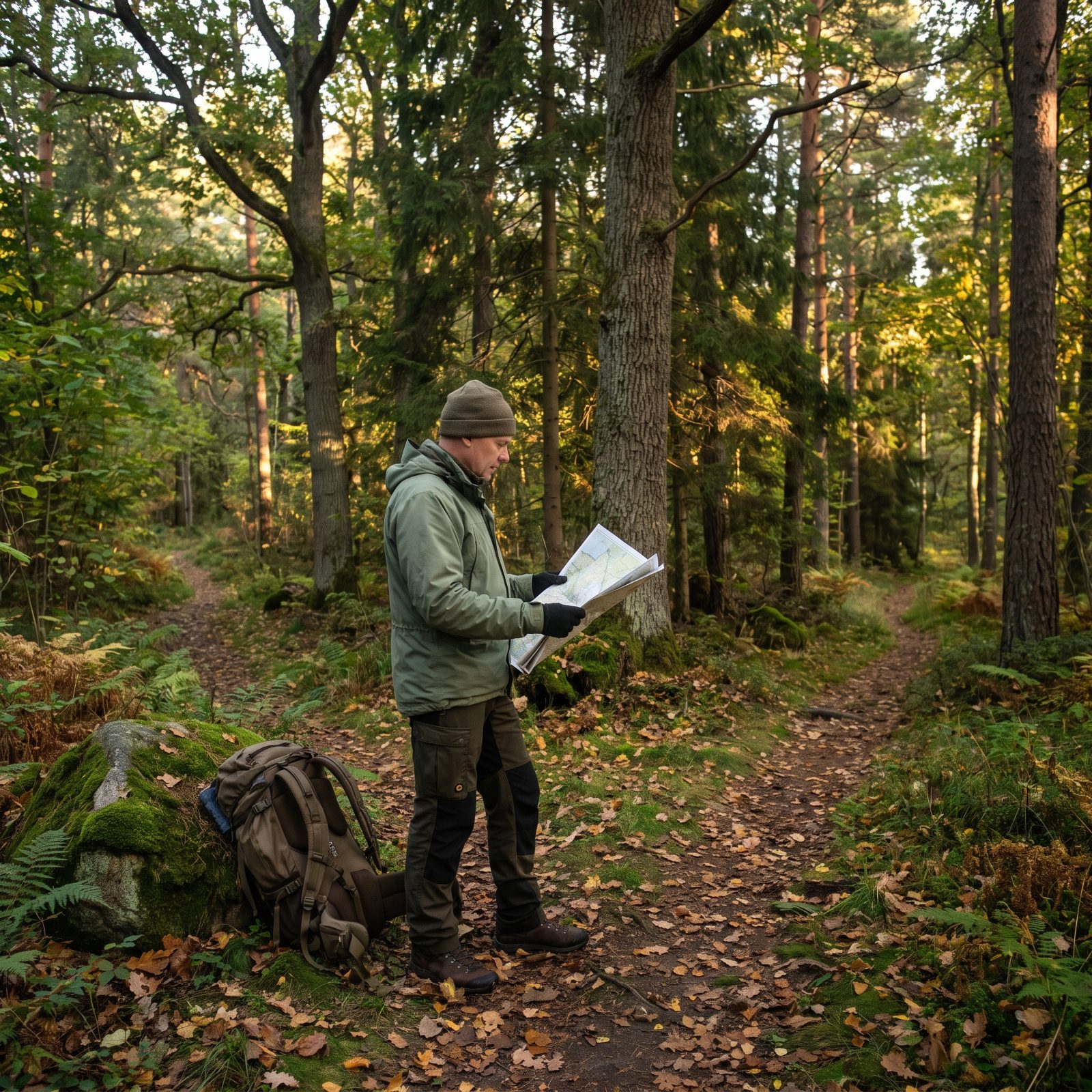
The moment you realize you don’t know where you are, your body wants to do the worst possible thing: keep walking, faster, downhill, toward anything that looks familiar. That’s how a short detour turns into a search-and-rescue call.
Four letters that keep you alive
- Stop. The second you feel the doubt, plant your feet. Don’t take another step until you’ve done the rest.
- Think. Where were you last certain of your position? How long ago? What have you passed since?
- Observe. Pull the map and compass. Look at terrain, drainages, ridgelines. Match what you see to what’s printed.
- Plan. Decide on a route, then follow it deliberately. If nothing is clear, staying put and staying visible beats wandering.
1. Lightning Sends the Group Downward and Spaced Apart
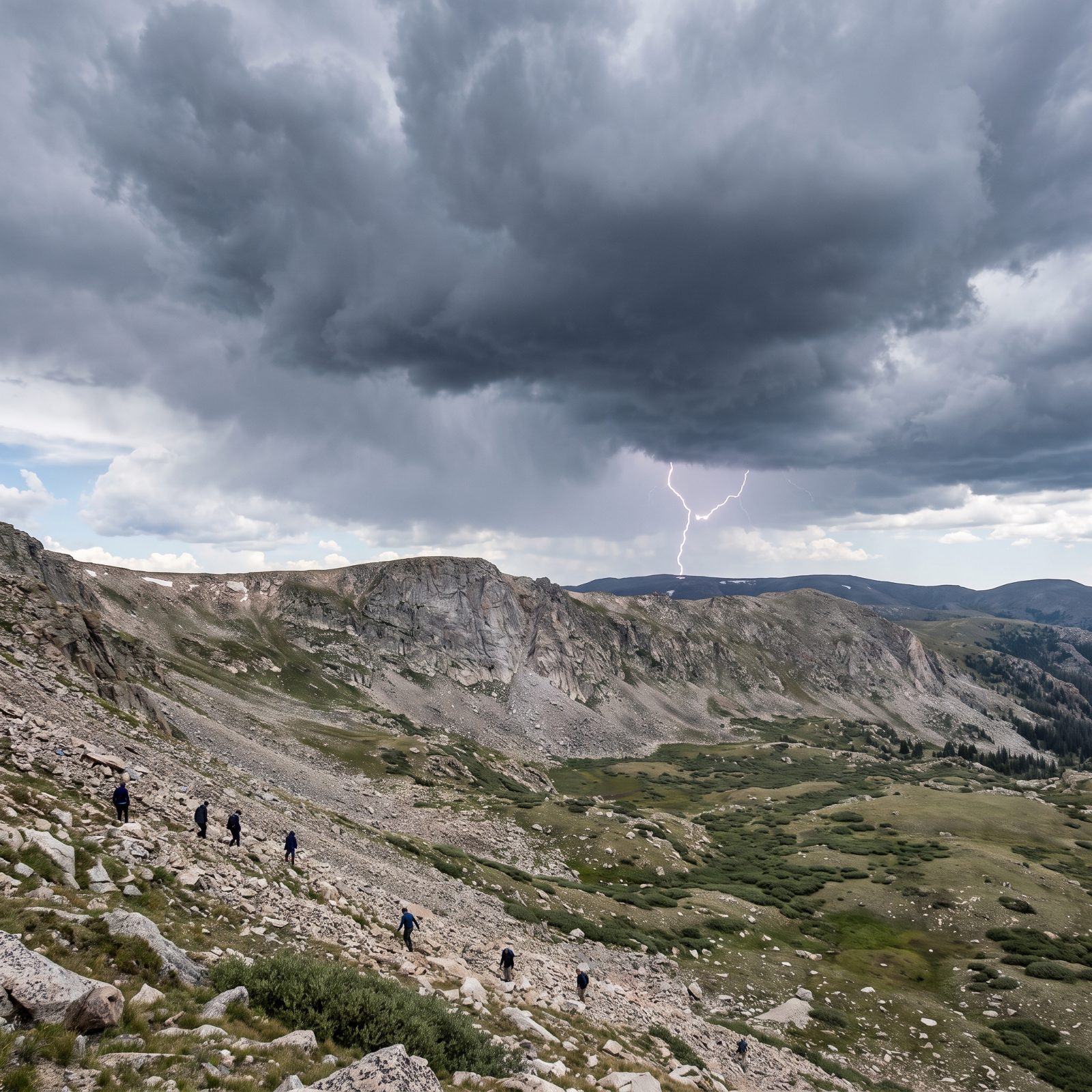
You’ve been there: leaning into a scree slope toward the ridgeline, packs on and poles out, while a dark cell boils up and lightning strikes the next ridge over. That’s your cue to turn around, and it comes earlier than most people want to admit.
Get off high ground, even if the ridge is just above you. Summits, exposed ridge flanks, ridgelines, and lone trees are exactly where you don’t want to be, so head down toward lower, uniform terrain and ditch the metal-frame pack and the trekking poles.
The part people forget: spread the group out, a good fifty feet or more between you. If a strike does hit, that spacing means it can’t take everyone at once, and someone is left standing to help the rest. Crouch low on your pack, feet together, heels up. Don’t lie flat. You want as little of yourself touching the ground as possible.