
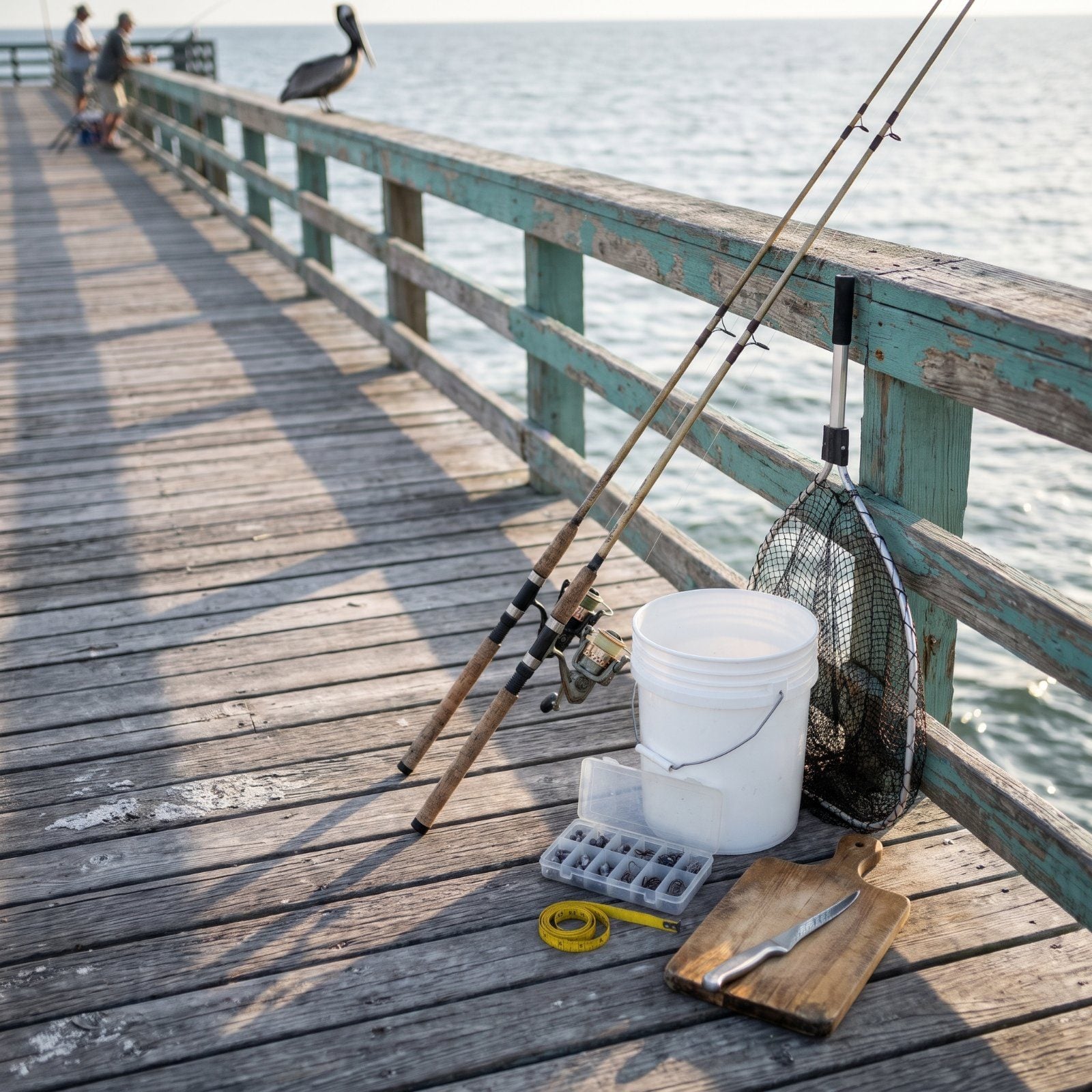
The guy with the sand spike jammed into the rail at 5 a.m., three rods fanned out, a cooler blocking the walkway, nobody within thirty feet of him. You’ve seen him. Everybody has. A fishing pier is a shared platform where strangers stand elbow to elbow over moving water, and the ones who’ve logged real time out there know the whole thing runs on a handful of quiet agreements. Break one and you’ll feel the stares before anyone says a word. Keep them and you’ll get waved into the good spot next time. Here’s how the regulars keep lines clear, fish landed, birds unharmed, and tempers level at the rail.
Please note that some of the images in this article were created with the assistance of AI.
28. Never Reserve Rail Space With Unattended Gear
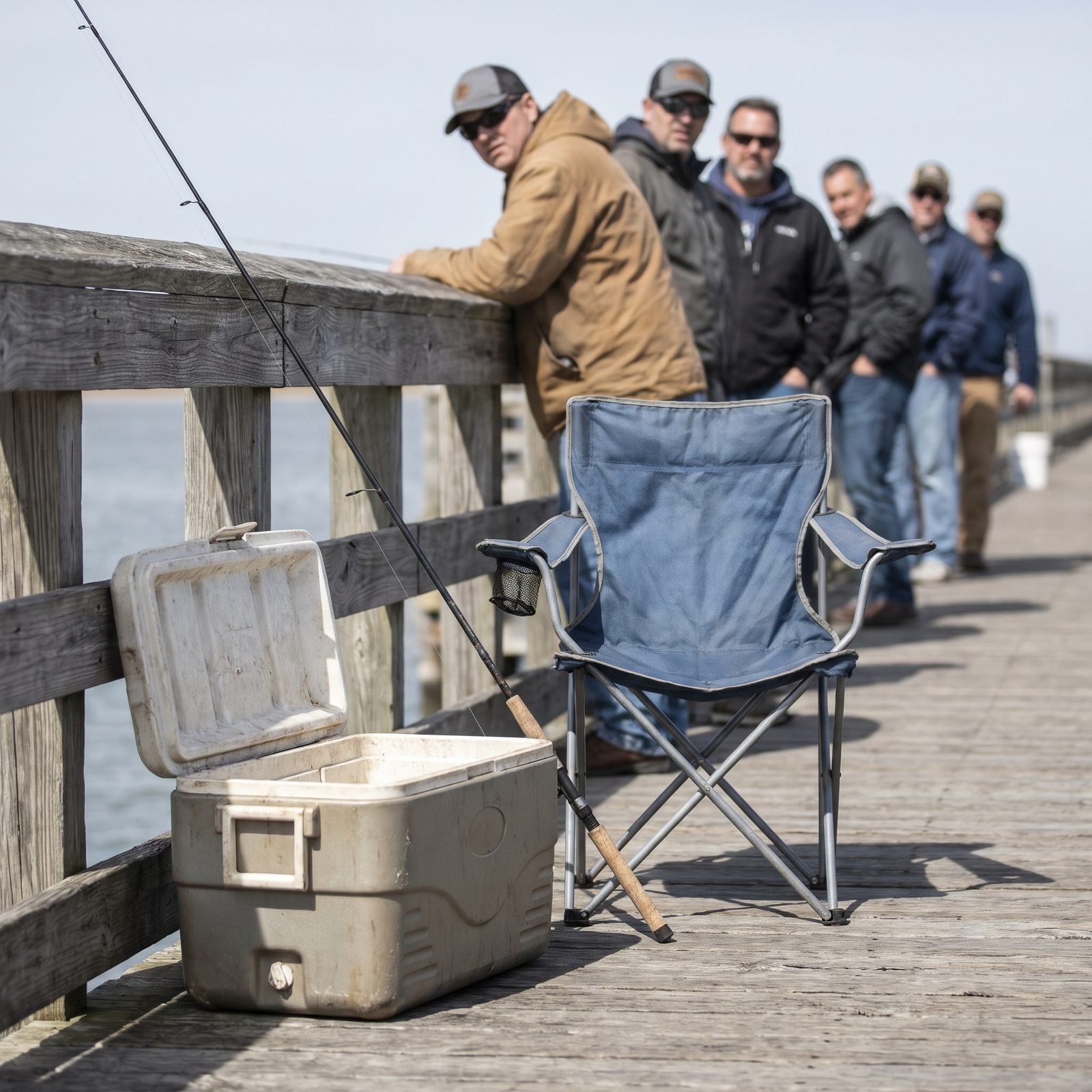
A pier isn’t a beach towel. You can’t stake out ten feet of rail with a cooler and a chair, wander off for coffee, and expect it to still be yours when you amble back. It won’t be, and nobody out there thinks it should be.
The rule is simple. If you’re not fishing a spot, you’re not holding it. Rail space goes to whoever is actively working water. Regulars spread their rods only across what they can watch and tend at once, and everything else is open ground.
27. Keep Your Whole Setup Within One Angler’s Footprint and Out of the Walkway
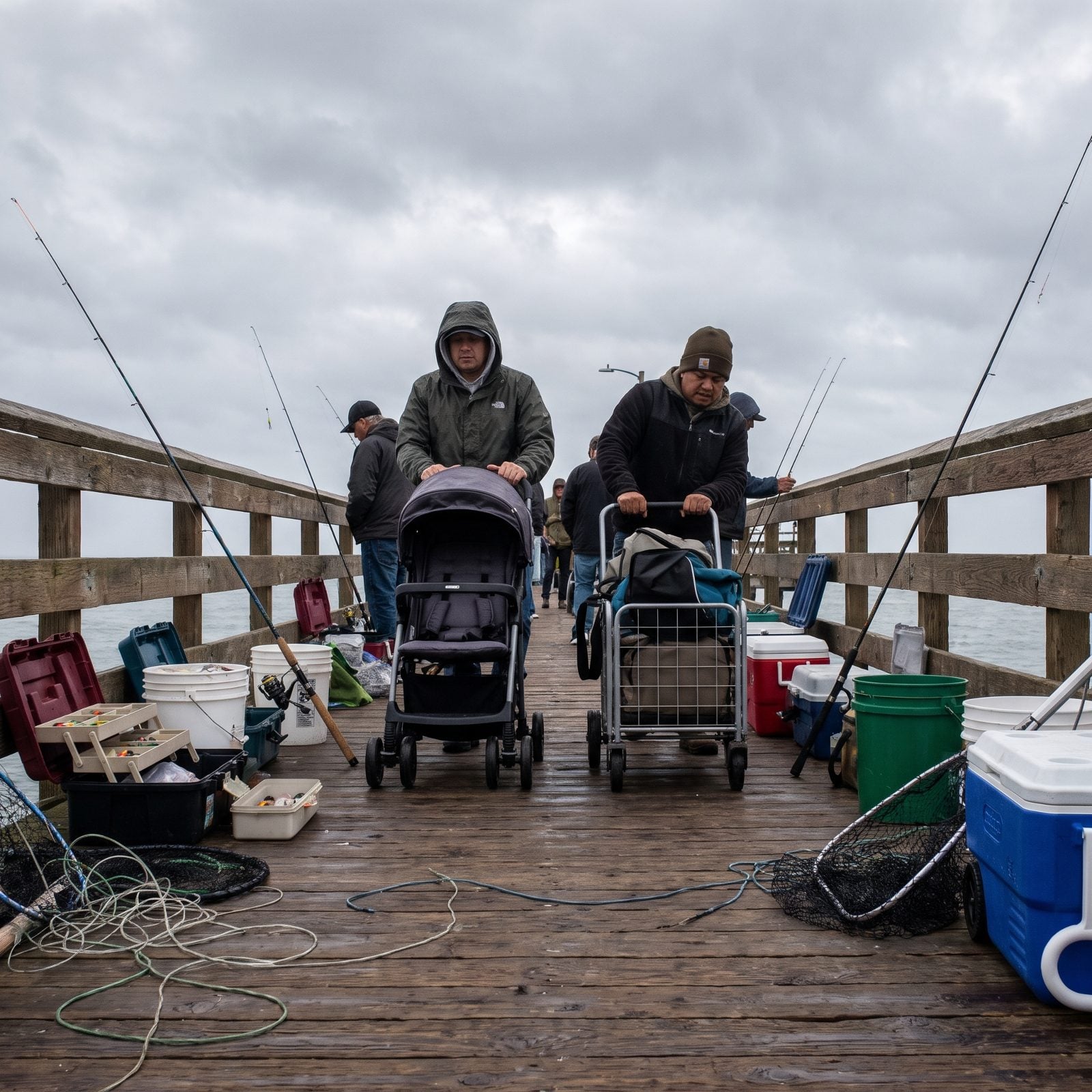
Pier walkways carry a lot more than fishermen. Carts, strollers, folks headed to the cleaning station, somebody hauling a grouper they can barely carry — your gear sprawl is their obstacle course.
Compress everything to the width of your own shoulders. Rods in a tight holder or leaned against the rail, bucket tucked under the lip, tackle bag between your feet. A clean three-foot lane behind you keeps the whole operation moving and stops strangers from kicking your rig into the drink.
26. Ask Before Squeezing Into a Narrow Opening at the Rail
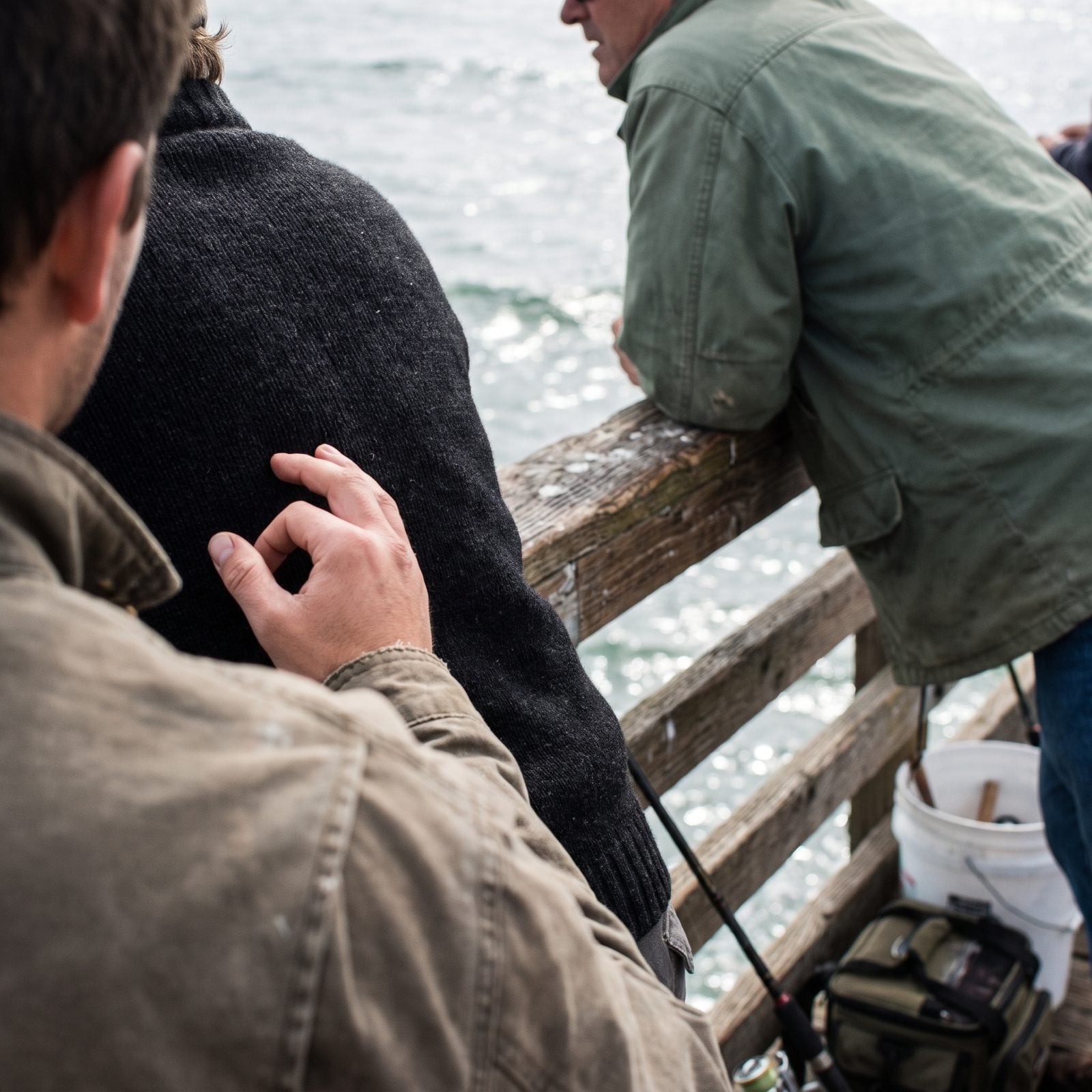
That narrow walkway opening between two anglers, each leaning on their own section of railing, looks empty. It isn’t. One of them is probably casting at an angle into it, or planning to shuffle over. Wedging yourself in without a word is how lines get crossed in the first thirty seconds.
A quick “you got room here?” costs nothing and changes everything. Nine times out of ten you get a nod and a step sideways to make space. The tenth time they tell you they’re fan-casting that lane, and you just dodged a tangle and a scowl.
25. Check Behind You and Warn the Rail Before Swinging a Heavy Sinker
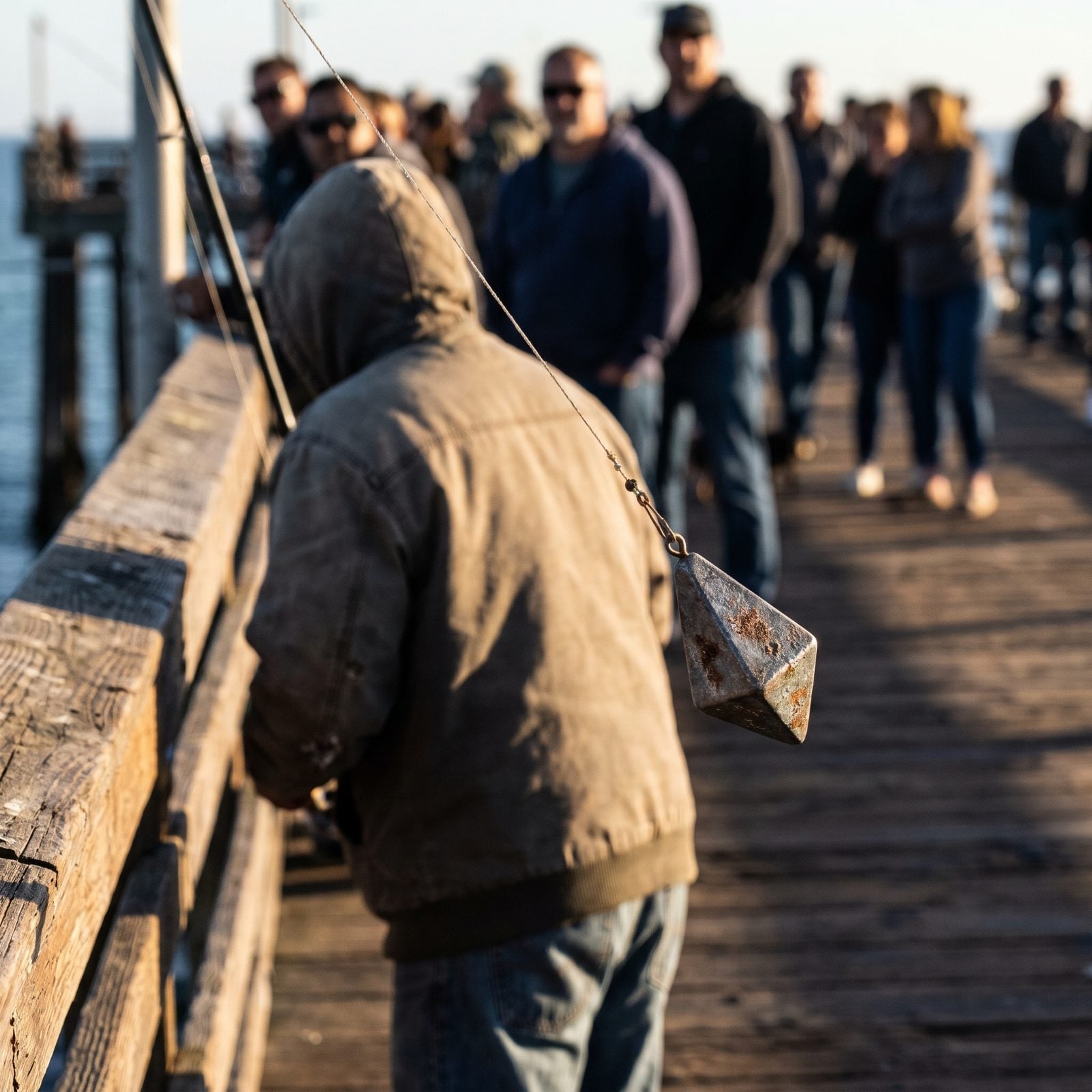
A four-ounce pyramid sinker on a long pendulum cast is a projectile. It’ll open a scalp or crack a windshield in the parking lot behind you. People forget the danger isn’t only in front of the rail — it’s at your back too.
Before any heavy, winding cast, look behind you. All the way back. Then a loud “heads up” gives anyone nearby a second to step clear. It feels unnecessary right up until the one time it isn’t.
24. Use Enough Weight and Retrieve Quickly When Your Rig Starts Drifting
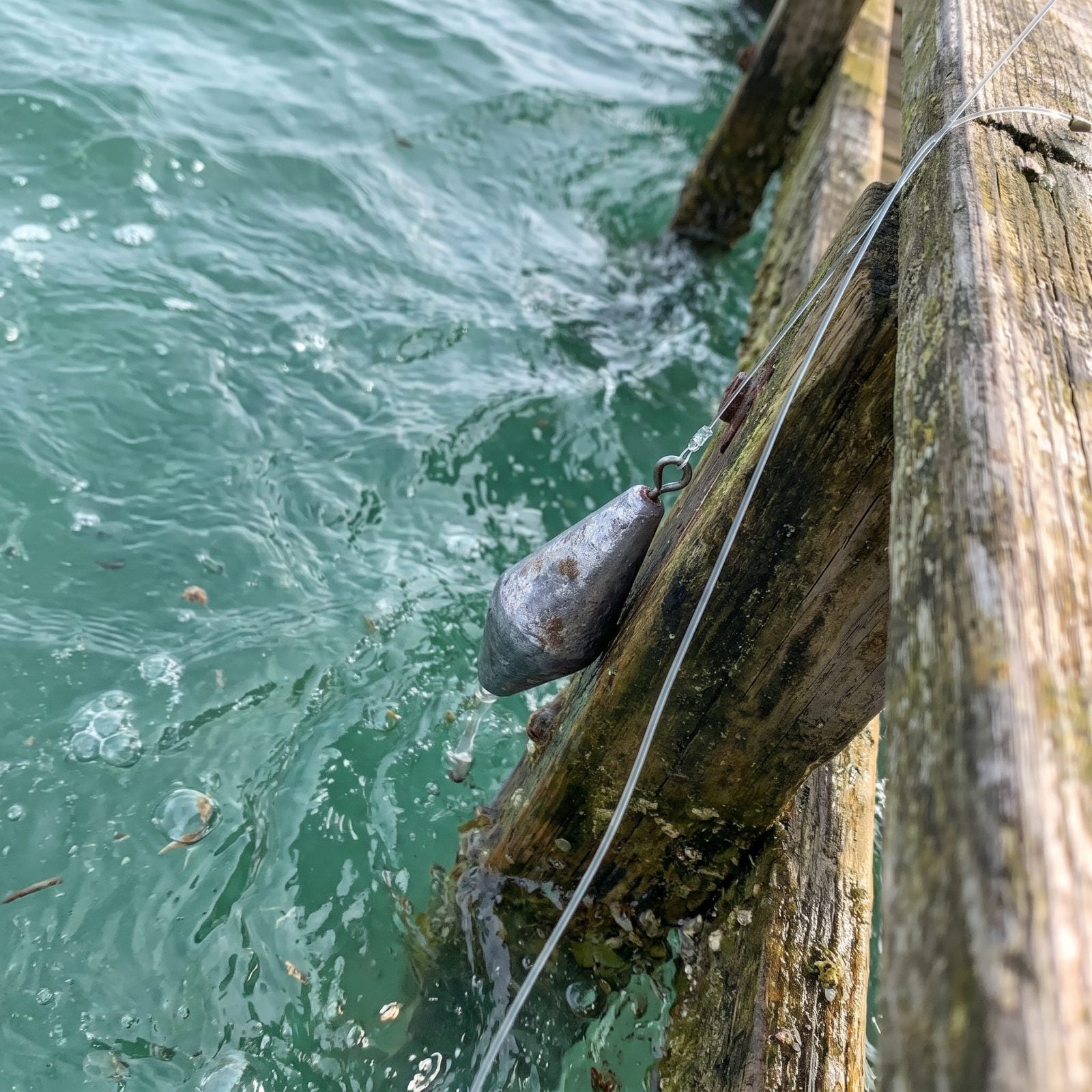
Current is the silent tangle machine. A sinker that’s too light lets your rig belly down the rail until it’s parked under three other anglers, and now you’re the problem nobody’s talking about yet.
Two fixes, both yours to make. Carry heavier lead than you think you need so your bait actually holds bottom. And when the water picks up and you feel your line sweeping, reel in fast and recast rather than letting it drag. A quick retrieve beats a slow apology.
23. Make Room for an Angler Following a Fish Along the Rail
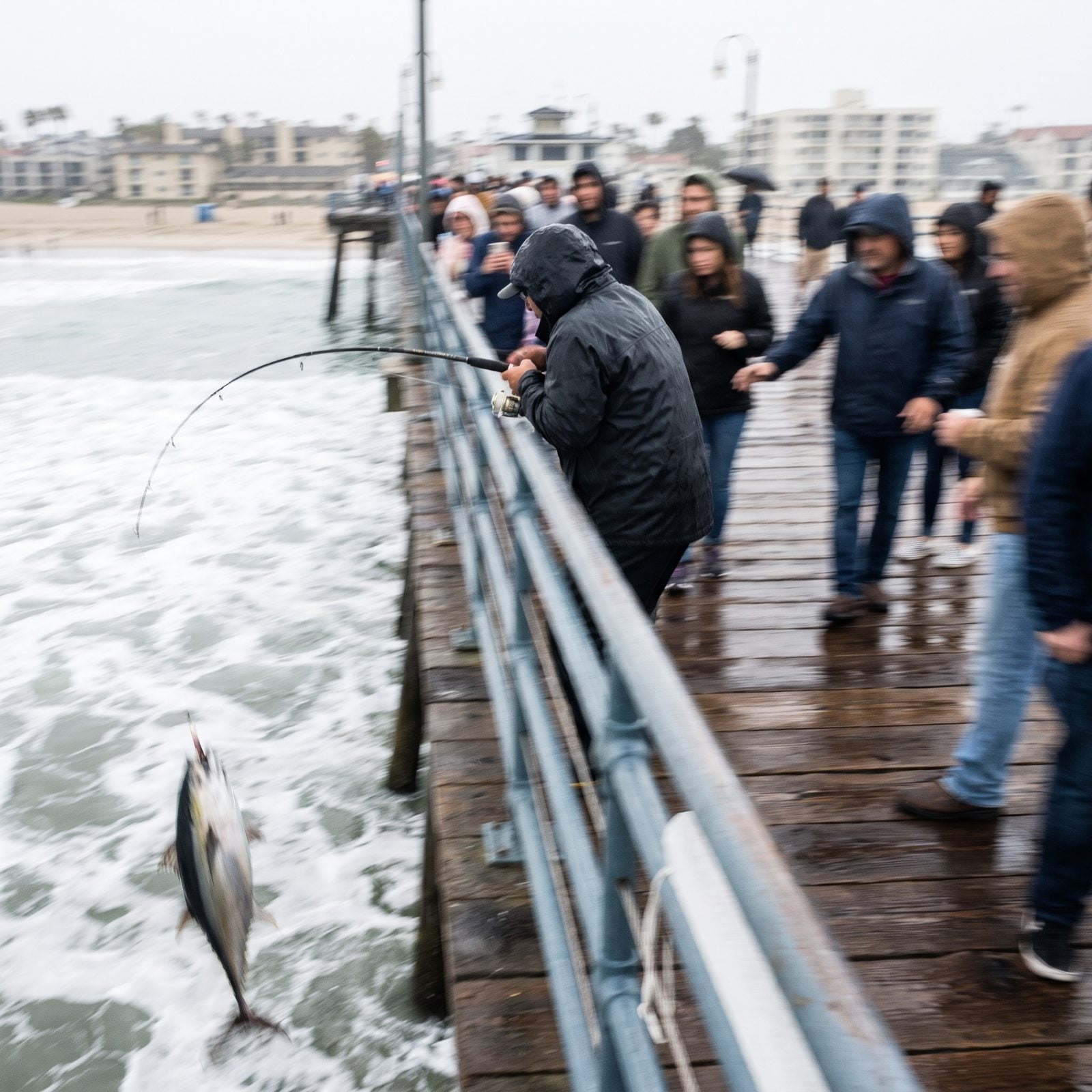
Big fish on heavy structure will drag you down the pier whether you planned on walking or not. A bull red or a king mackerel runs, and the only way to keep up is to follow it along the rail, rod held high.
If that angler is coming your way, lift your line and step back. Let them pass. A few feet of clearance and a quick lift of your rod is the difference between a fish on the deck and a fish lost in somebody’s unmoved line. You’ll want the same courtesy the day it’s your turn to go for a walk.
Describing the so-called pier shuffle on a Gulf Coast pier, a longtime coastal outdoors writer notes that when someone hooks up, “Nearby anglers easily make way for that angler or quickly reel in their line to get out of the way.”
22. Never Step Over or Stand on a Taut Fishing Line
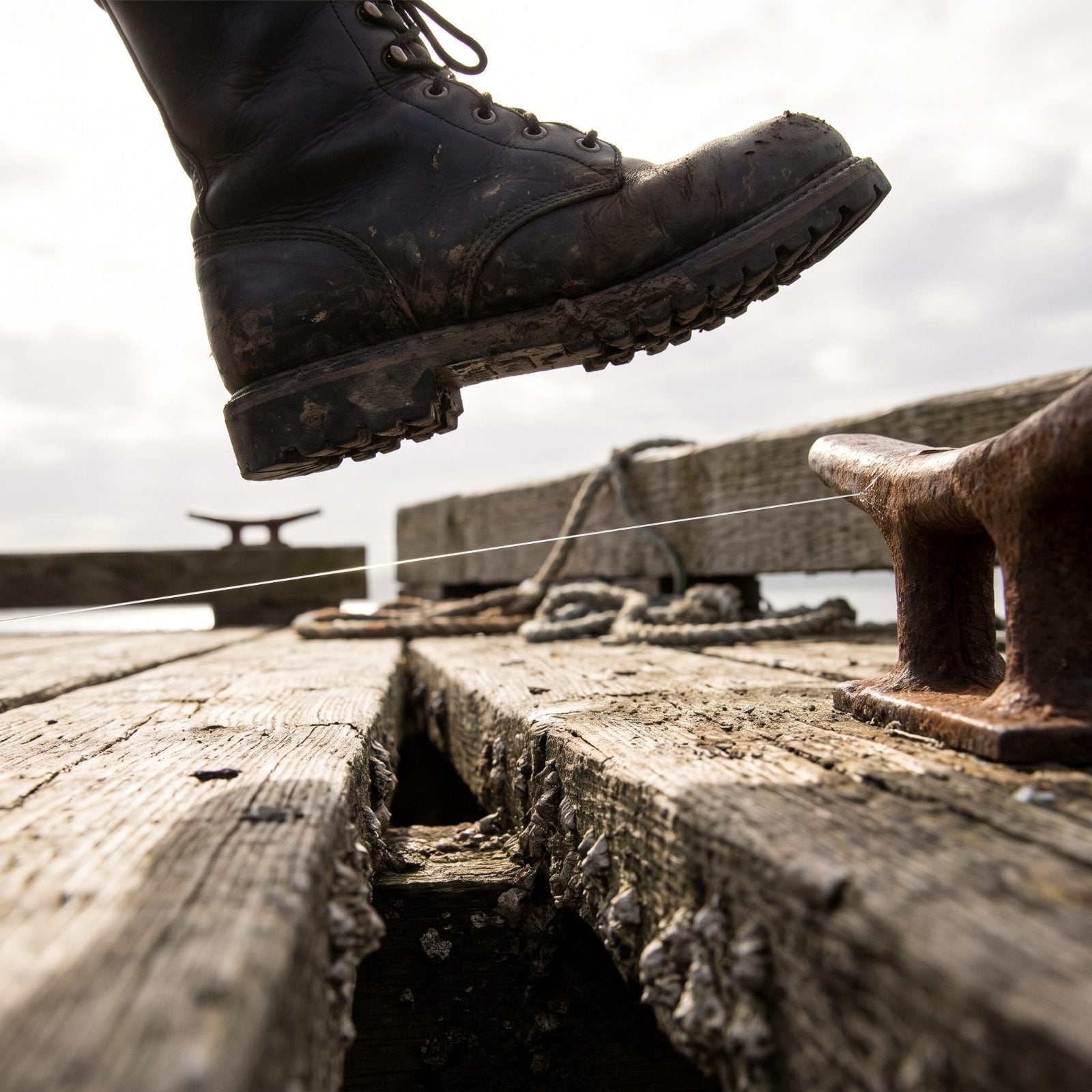
A line you cannot see is still a line. Step on taut mono while something is fighting on the other end and you part it clean — or worse, send a loaded rod skating off the rail. The angler loses the fish, and you get a look you’ll remember for a while.
Watch the rod tips, not the deck. A bent tip and a line cutting hard into the water means somebody’s hooked up. Walk behind the rods and you’ll never cross a working line by accident.
21. Clear Buckets and Tackle From the Fish-Landing Zone
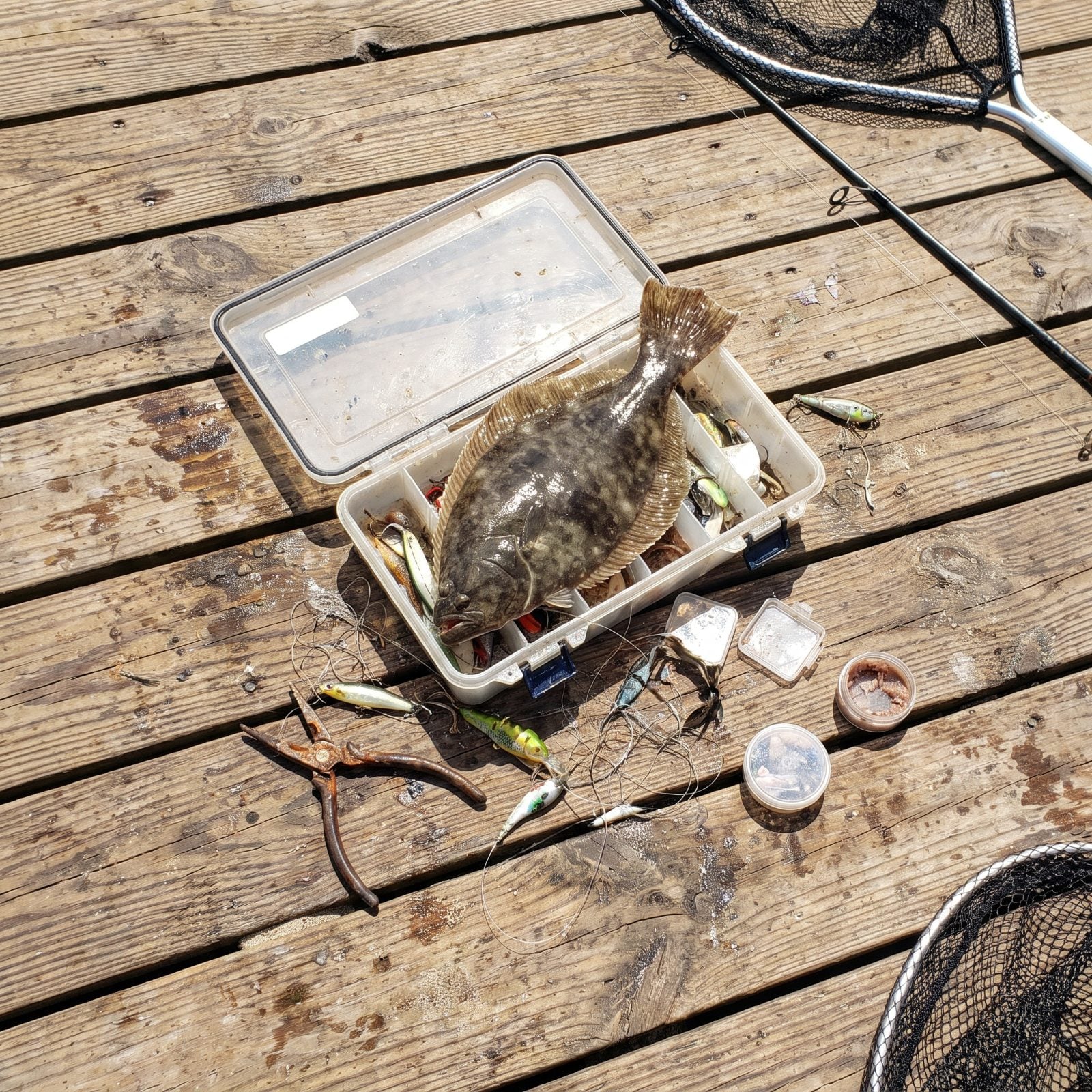
When a fish comes up over the rail, there needs to be floor for it to land on. A tackle box parked in the drop zone turns a clean catch into a tangle of trebles, spilled sinkers, and a flopping fish rolling toward the water.
Keep your gear tucked against the bench or the rail base, not spread across the deck like you own the whole pier. Leave a clear lane in front of your spot and the person next to you tends to do the same. Everybody lands cleaner for it.
20. Ask Before Grabbing Someone Else’s Net
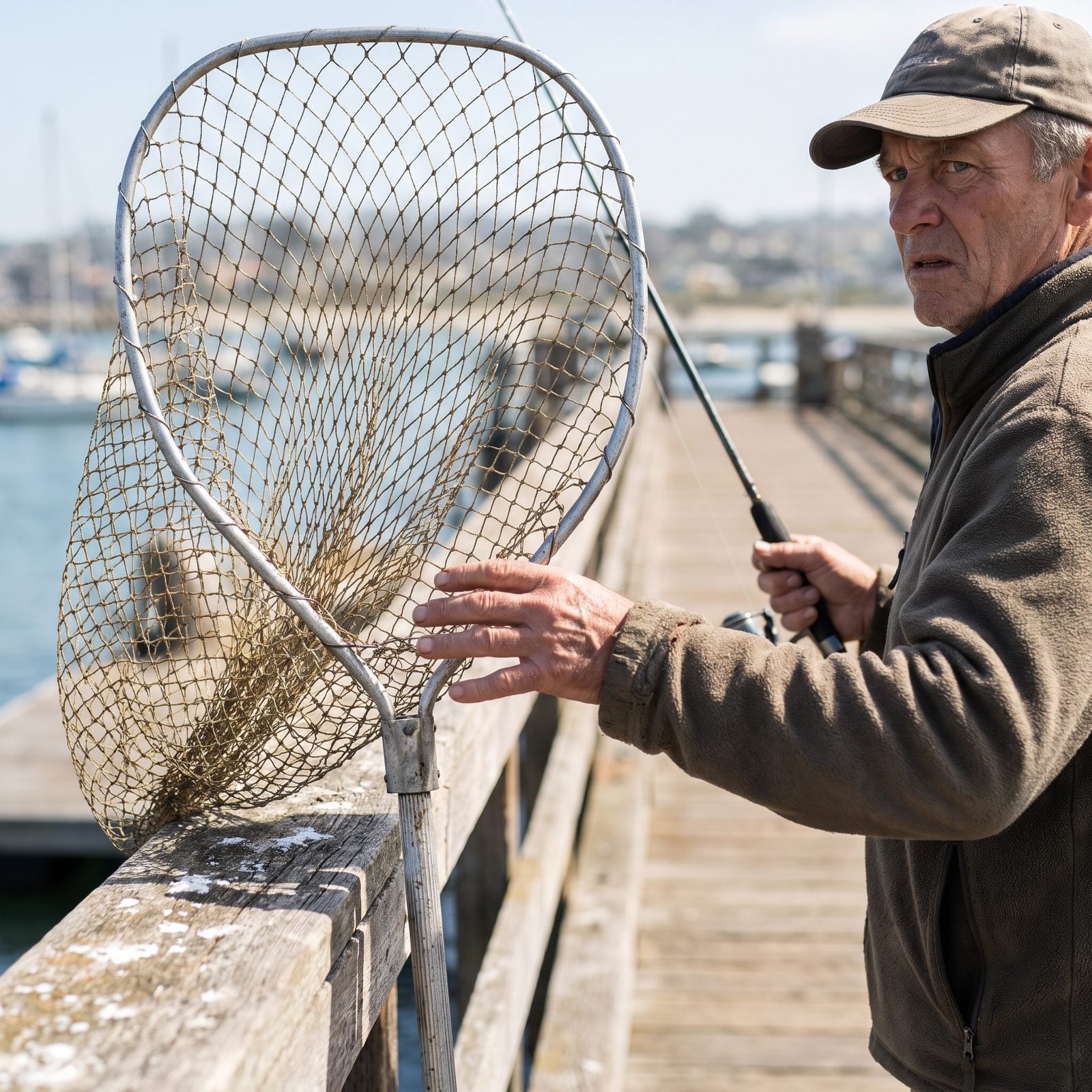
A net in reach is not a net you are owed.
Somebody brought that net, rinses it, patches the holes, keeps it ready. Grabbing it without a word while they’re fighting their own fish is how arguments start at the rail. So just ask. Nine times out of ten the answer is yes, and often they’ll offer to work the net for you.
I’ve watched a shared net turn two strangers into fishing buddies for a whole afternoon. The courtesy costs you three seconds and buys a lot of goodwill.
19. Use a Drop Net Instead of Hoisting a Heavy Fish by the Line
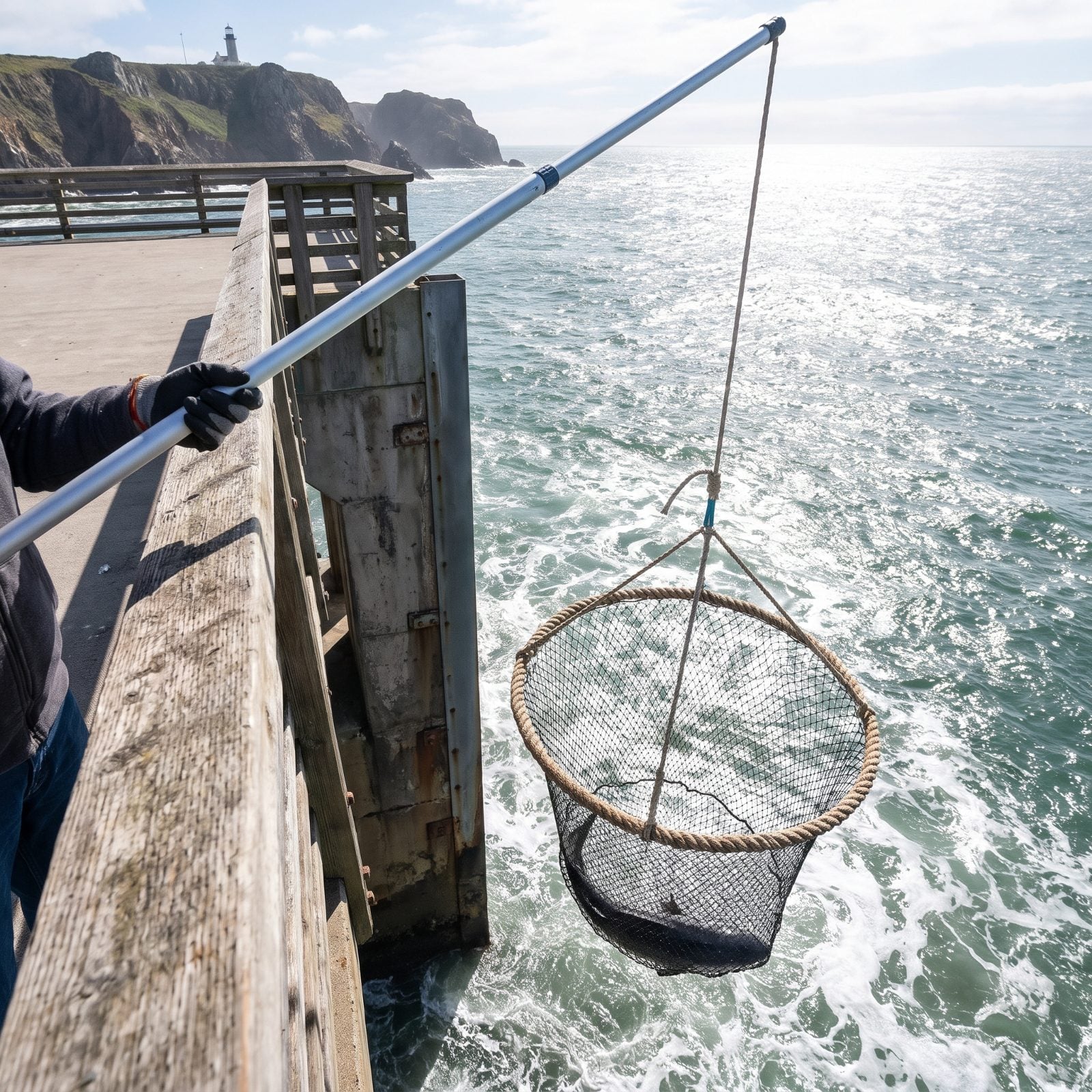
On a high pier, the drop between the rail and the water can run ten or fifteen feet. Crank a solid fish straight up by the line and you’ll pull the hook, break the leader, or drop the whole thing back into the sea from a height that stuns or kills it.
A drop net — that hoop on a rope you lower to the waterline — lets you scoop the fish and raise it with no strain on the tackle. Saves your fish. Saves your leader. And if you’re turning it loose, it gives the fish an actual chance.
Writing about landing big fish from elevated piers, an avid pier angler warns: “Hook into your first big fish on a pier and it becomes quite apparent that using your rod to yank it up isn’t going to cut it.”
18. Never Touch Another Angler’s Rod Without Permission
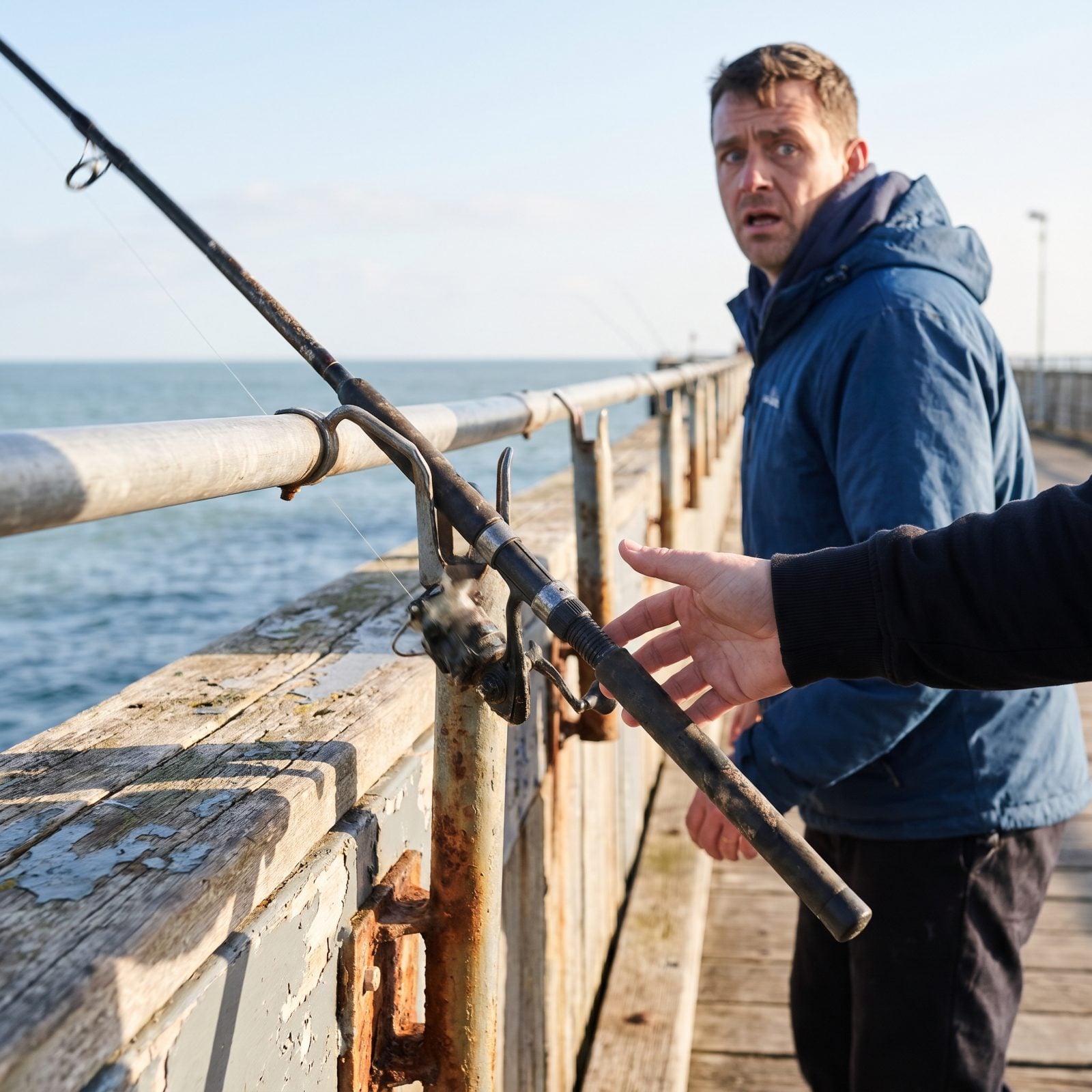
A rod set in a holder with the drag singing is the owner’s business, nobody else’s. Pick it up to “help” when a fish hits and you can bury a hook, blow out the drag setting, or lose a fish that was being played on purpose.
If their tip is hammering and they’re clearly not around, call out instead of grabbing. Alert them, point, do whatever it takes to get them back to the rail. The rod is theirs to pick up. Handling a stranger’s reel uninvited is one of the fastest ways to sour a whole pier.
17. Ask Before Handling or Photographing Someone Else’s Catch
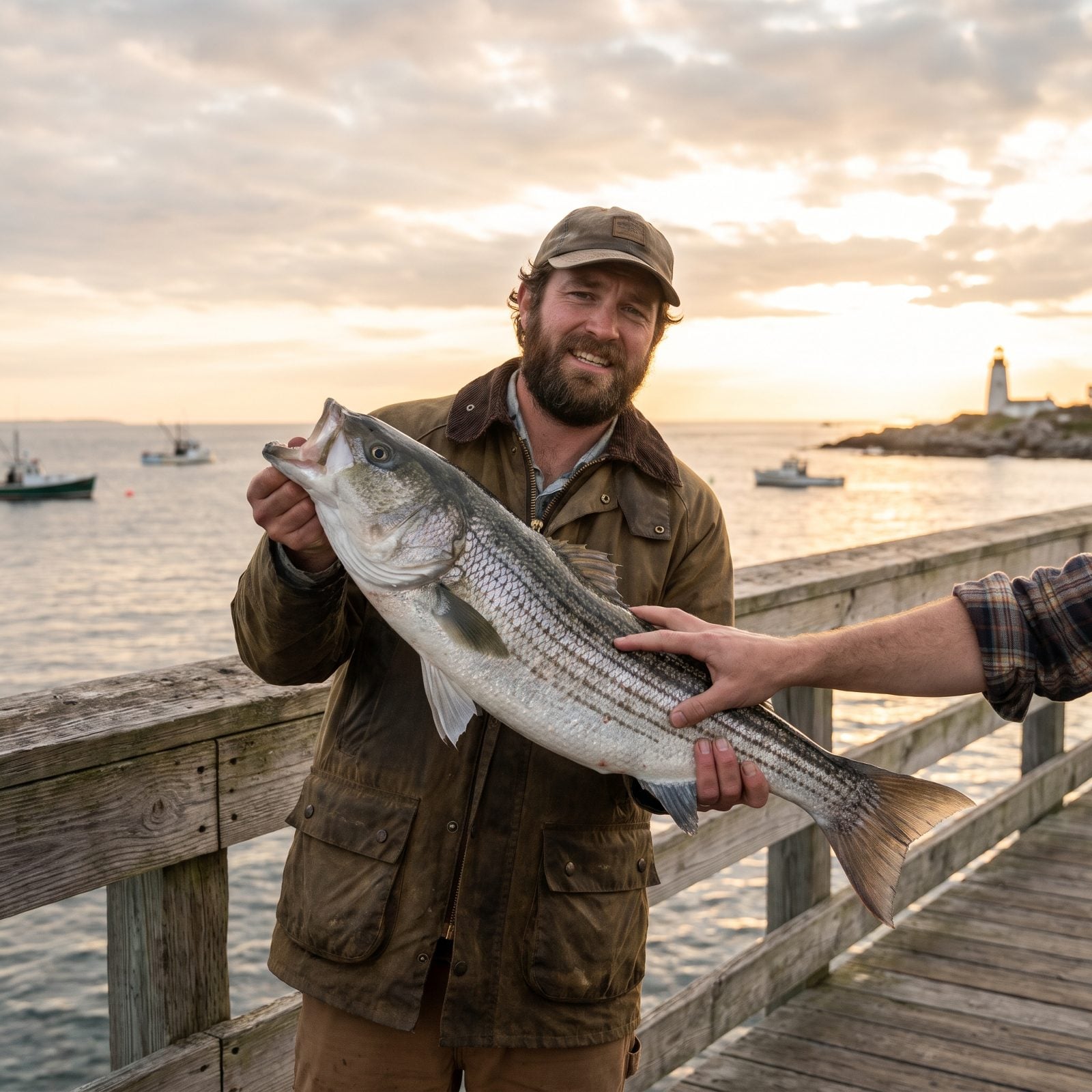
That fish is a story somebody earned, and it is theirs to tell first.
Reaching in to heft a stranger’s catch, or leaning over it with your camera before they’ve even got the hook out, reads as rude — and with sharp spines or a thrashing fish it can get you cut. Ask first. Most people are proud and happy to show it off, maybe even hand it to you for a photo.
If the fish is going back, remember that every extra second it spends in the air for your picture is a second it isn’t breathing. Respect that clock.
16. Throw a Cast Net Well Away From Hook-and-Line Anglers
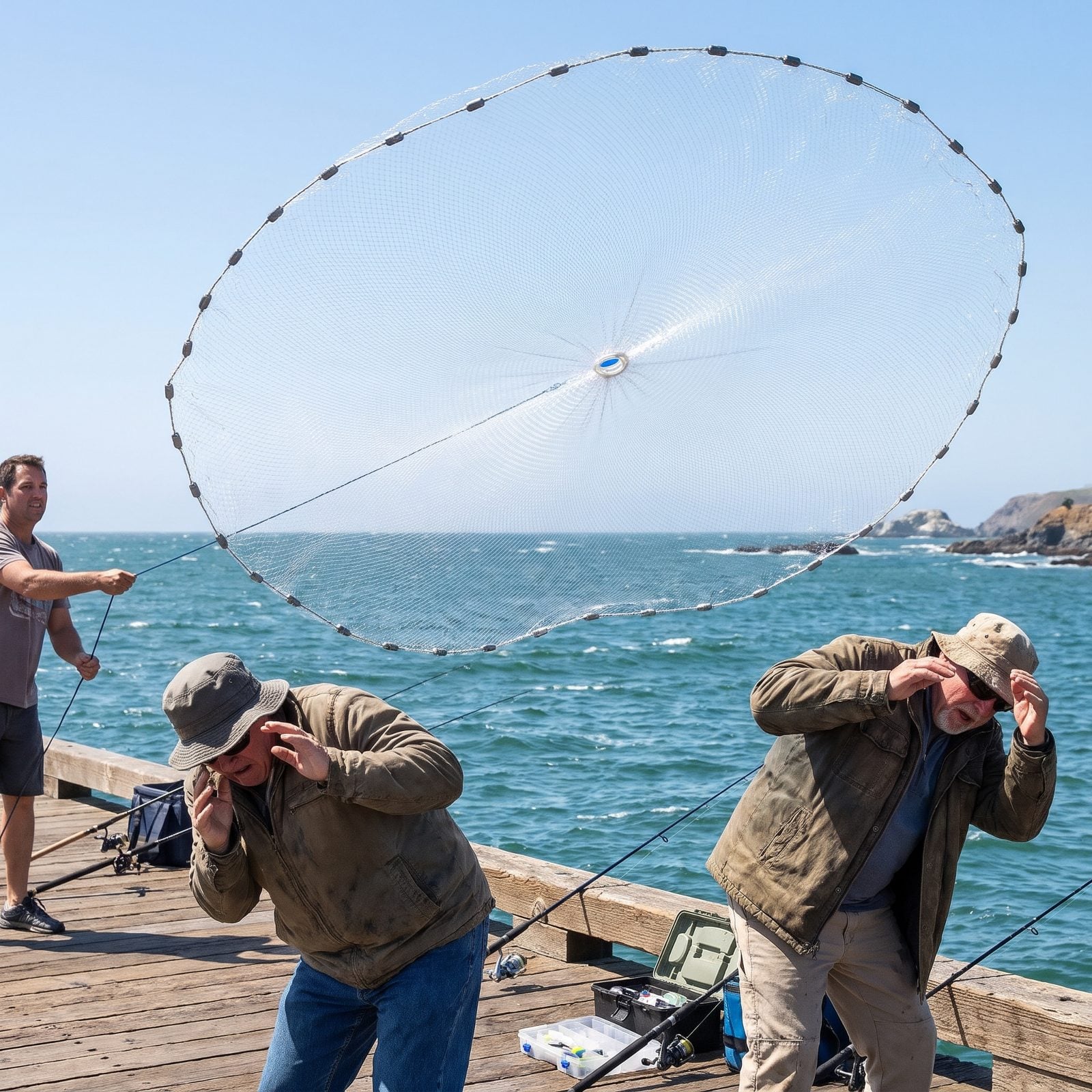
A well-thrown cast net opens into a six- or eight-foot circle, and all that mesh and lead comes down hard. Sling it next to somebody’s lines and you’ll wrap their leaders, nick their mono on the edge, and spook every baitfish they were working.
Find an open corner or an empty stretch of rail to throw from. Give yourself room so the net lands on clean water, not on top of somebody’s set lines. Bait catching is part of pier life — it just doesn’t get to steamroll the folks already fishing.
15. Pick Up and Seal Bait Scraps Instead of Leaving Them on the Deck
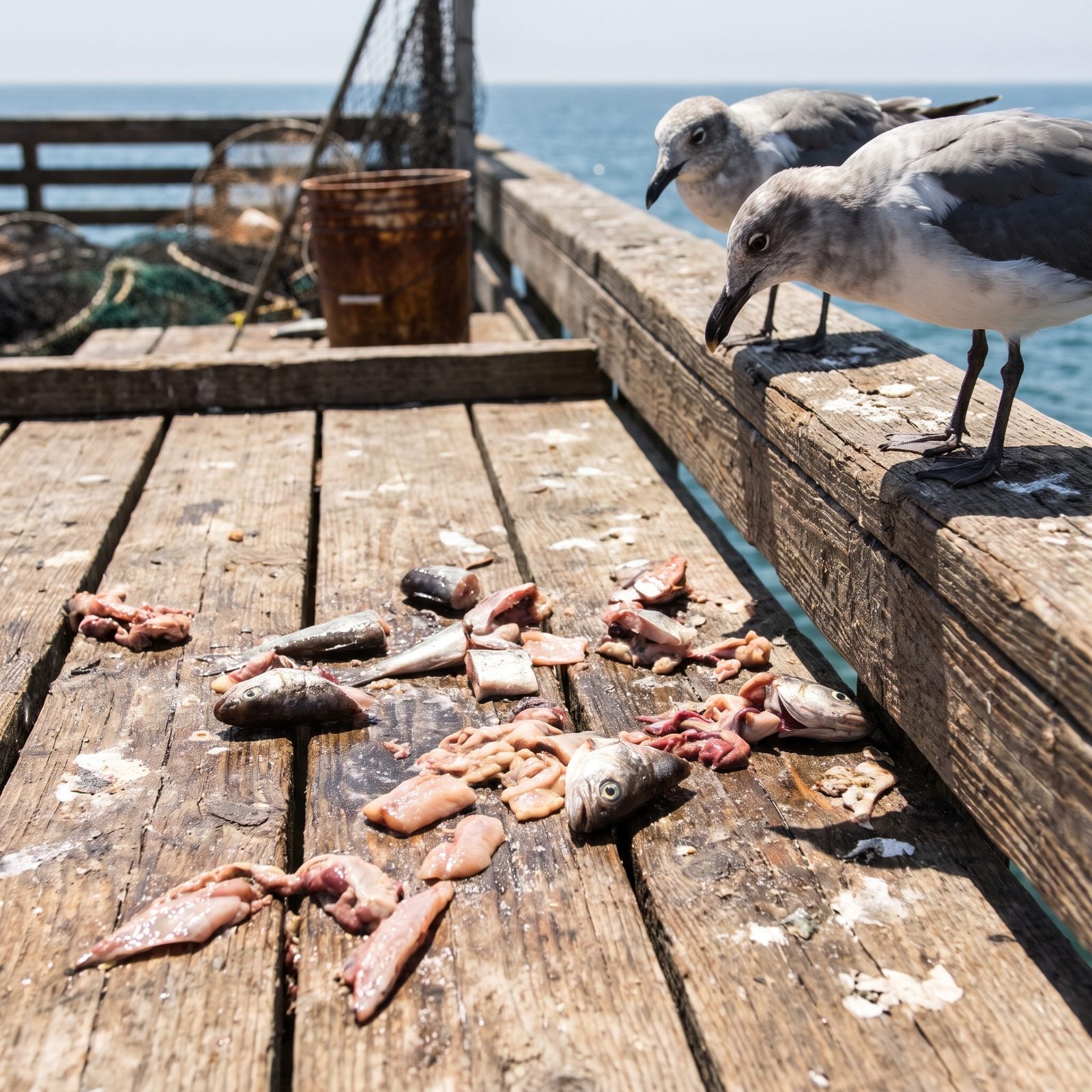
Cut bait and fish guts left baking on the planks do three things, all bad. They stink, they turn the deck into a slick hazard, and they draw a mob of gulls and pelicans that’ll dive at anybody’s rig.
Scrape your scraps into a sealed bag and bin them, or drop them off the back if local rules allow. A quick rinse of the deck after you clean a fish keeps the whole section usable for the next person. Nobody wants to set their bucket down in yesterday’s mess.
After treating pelicans hurt by fishing scraps and tackle, a wildlife clinic veterinarian said “We support responsible fishing practices which include disposing of fish carcasses in a lidded container, as well as disposing of fish hooks and line in appropriate recycling containers”
14. Wait Your Turn at the Cleaning Station and Rinse It When You Finish
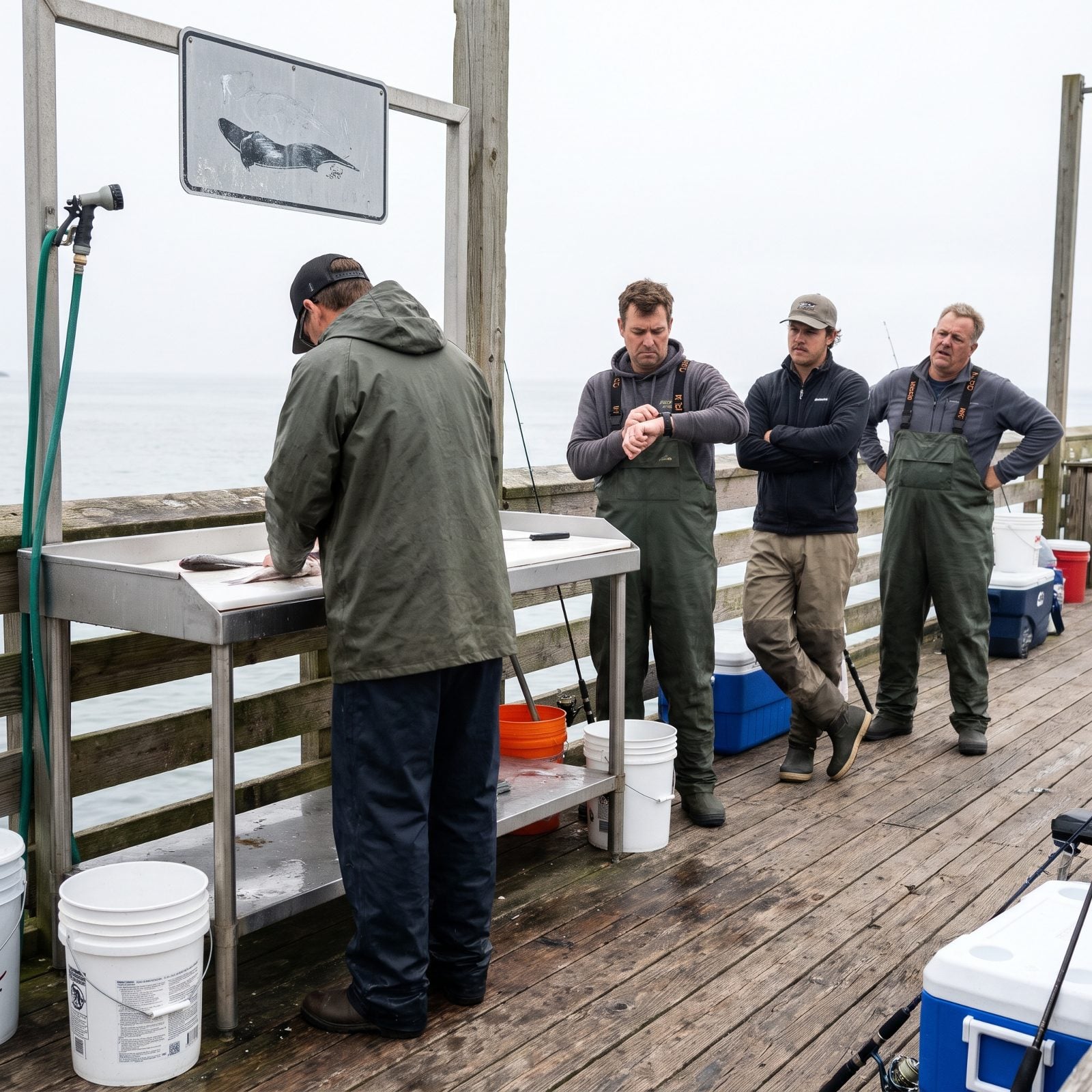
The cleaning station is shared property, and on a busy weekend there’s usually a line. Don’t park at the board filleting a cooler’s worth of fish while four people wait with a snapper each. Read the crowd and keep it moving.
When you finish, run the spigot over the board and hose the scraps down the chute. Leaving a slab of guts and scales for the next person is the pier equivalent of not flushing. A thirty-second rinse is the whole deal, and it’s the difference between a station people can use and one that turns your stomach.
13. Cut Up and Bin Discarded Line So Wildlife Cannot Find It
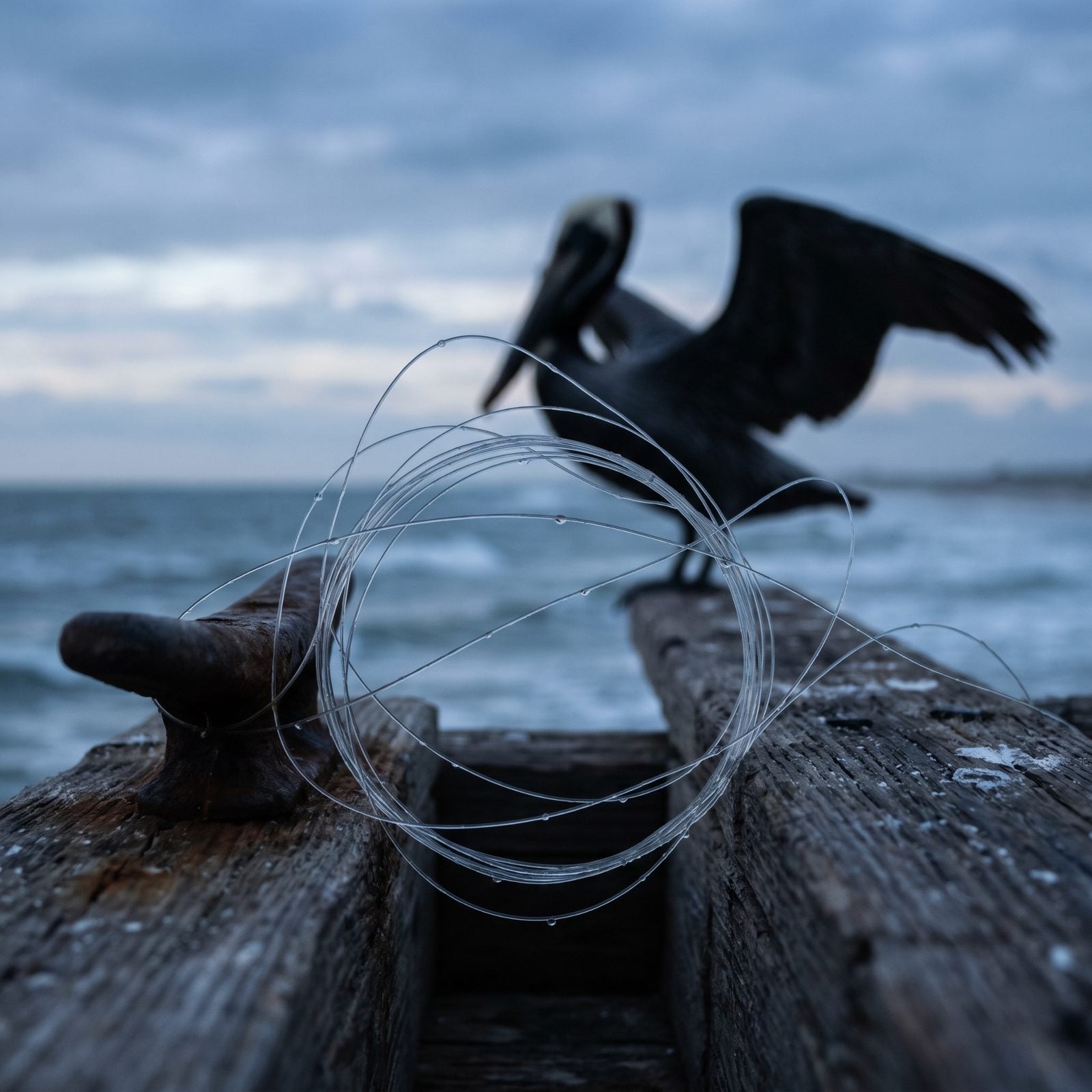
A loop of discarded mono is a snare. Birds get it wrapped around legs and wings, and a pelican tangled in line usually doesn’t make it. Loose loops in the water catch turtles and seals too.
Snip old line into short pieces before you toss it so nothing can form a loop, then drop it in a monofilament recycling tube if your pier has one. No tube? Bin it sealed so the gulls can’t drag it back out.
I used to just stuff cut-offs in my pocket, and half of them ended up on the deck anyway. A few inches of clipped line is nothing to carry out. A whole bird is a lot to answer for.
12. Lift or Retrieve Your Lines When a Boat Passes Close to the Pier
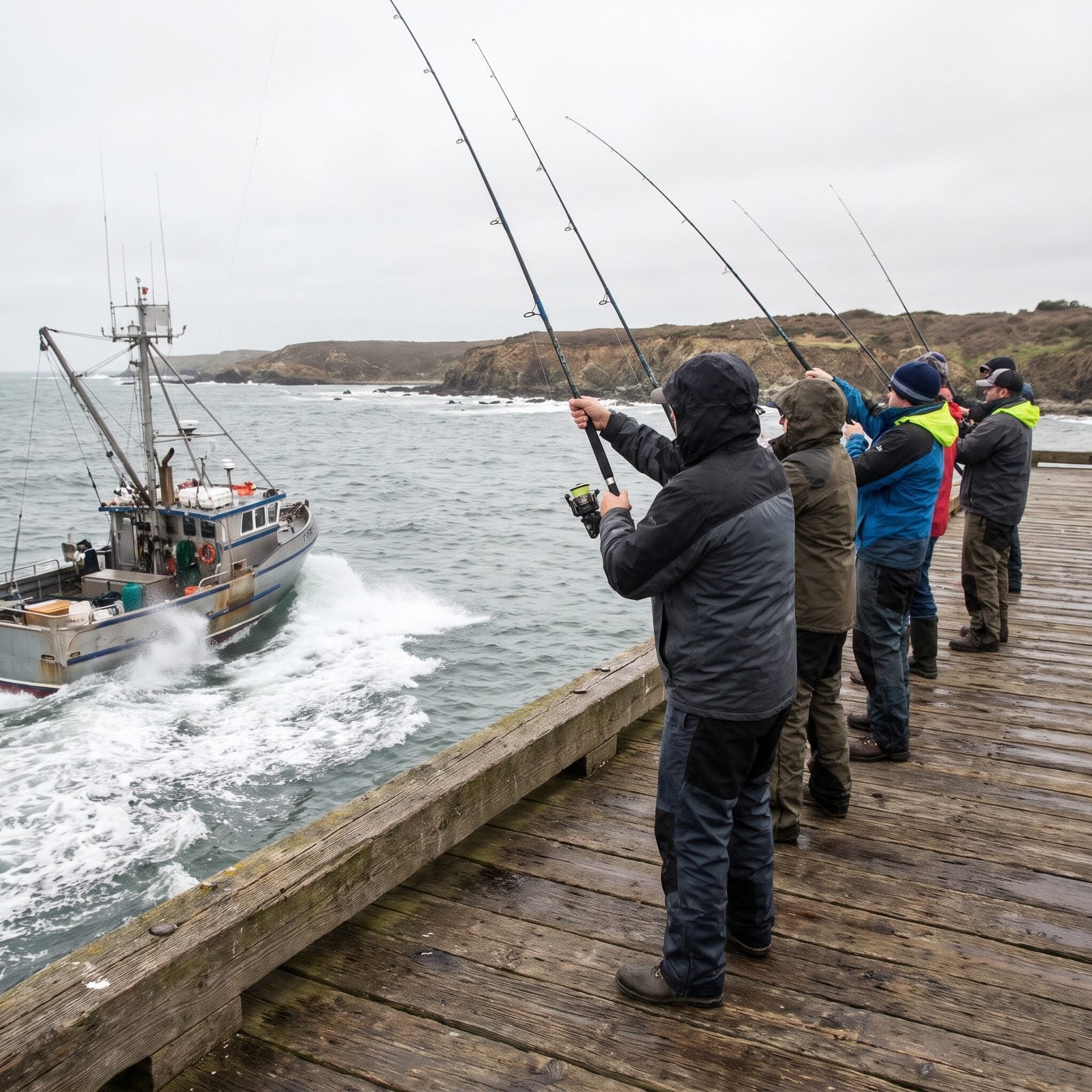
A boat captain reading your line too late is a bad afternoon for everyone. Props chop mono like thread, and a fouled prop means a stalled boat drifting toward the pilings. So the moment a hull turns in close, you reel up or lift your tip and get your line vertical against the rail.
Nobody owes you a warning shout. Watch the water yourself. The regulars clock an approaching boat two hundred yards out and they’re already cranking before anyone says a word.
11. Stop Casting When Swimmers, Surfers or Paddlers Enter Range
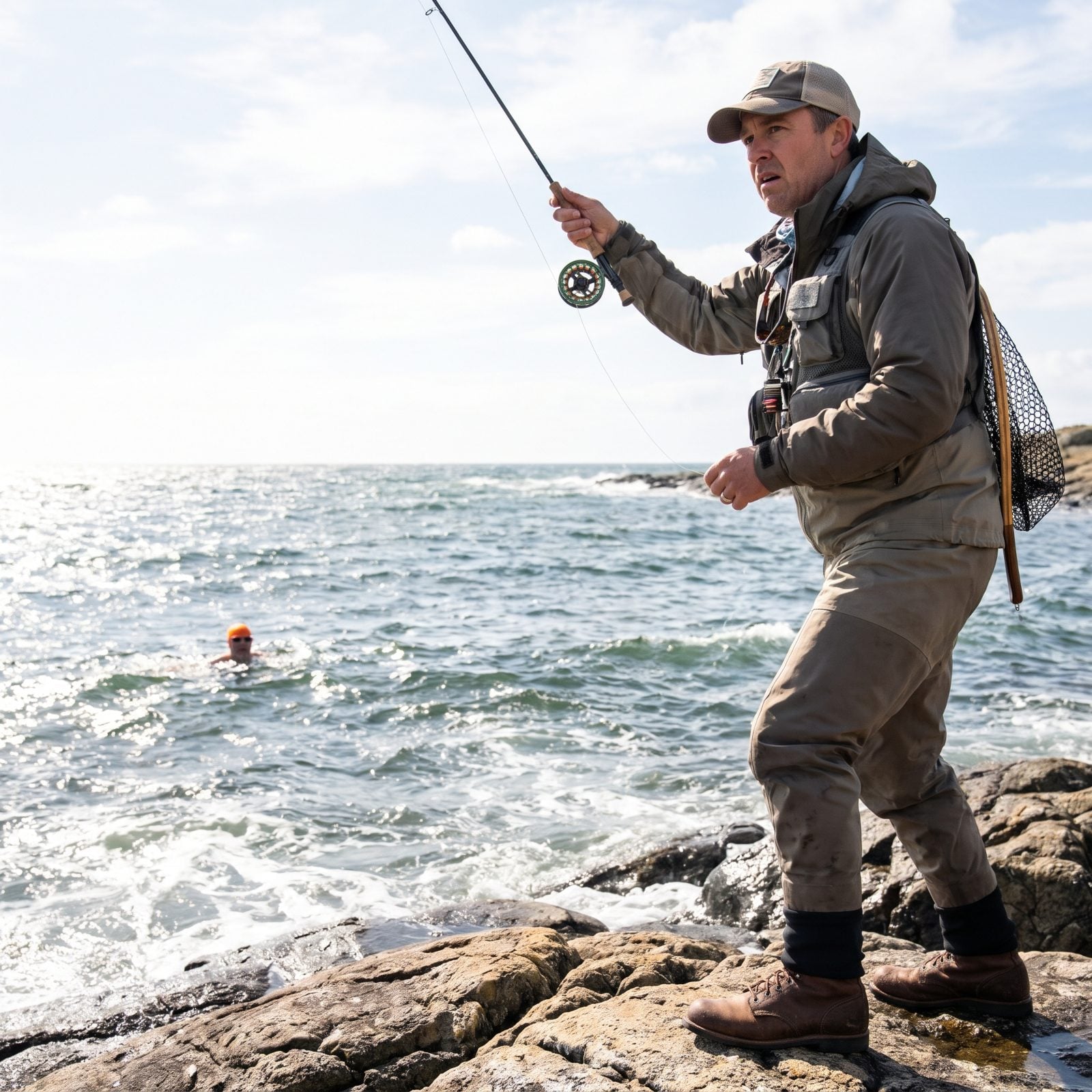
A three-ounce pyramid sinker to the back of the head is a trip to the ER, not a funny story. The second a swimmer, surfer or paddler drifts into your casting arc, you stop. Not after this one cast. Now.
People wander, kids especially, and the water looks empty right up until a head pops up exactly where your lead was going to land. Reel in, wait them out, and cast again once the lane clears. Thirty seconds of patience against somebody’s skull isn’t a close call.
10. Pause When Diving Birds Move Into Your Casting Lane
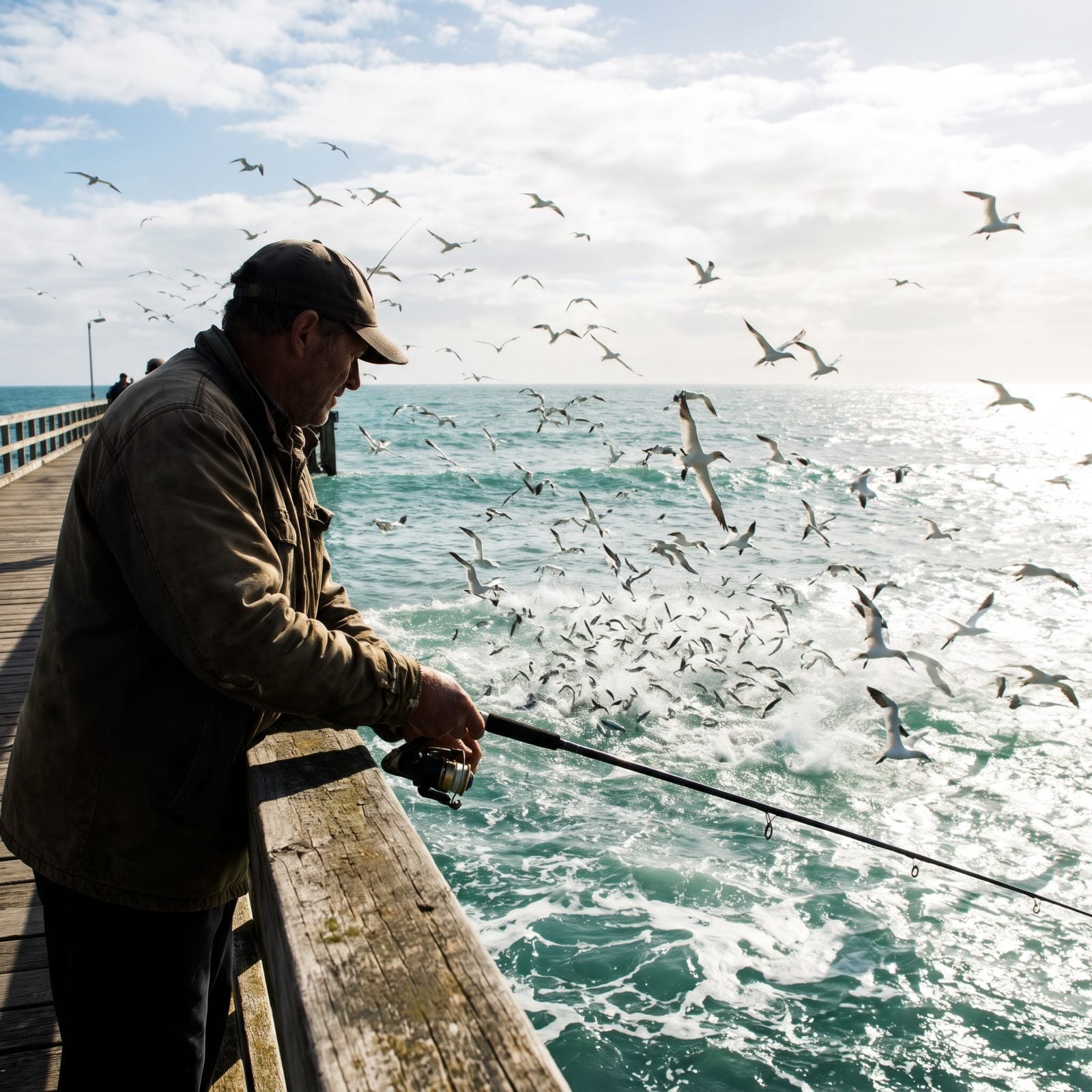
Birds diving means bait is up. Tempting as it is to fire a cast right into the chaos, that’s how you foul a pelican’s wing or set a treble into a gull’s throat.
Wait for the frenzy to drift a little off your line, or cast short of it. The bait school will still be there, and so will the birds. Hook one and you’ve lost your whole rig, twenty minutes you didn’t want to spend, and a bird that may not make it. A short pause is cheaper than all of that.
9. If You Hook a Seabird, Stop Yanking and Get Wildlife Help
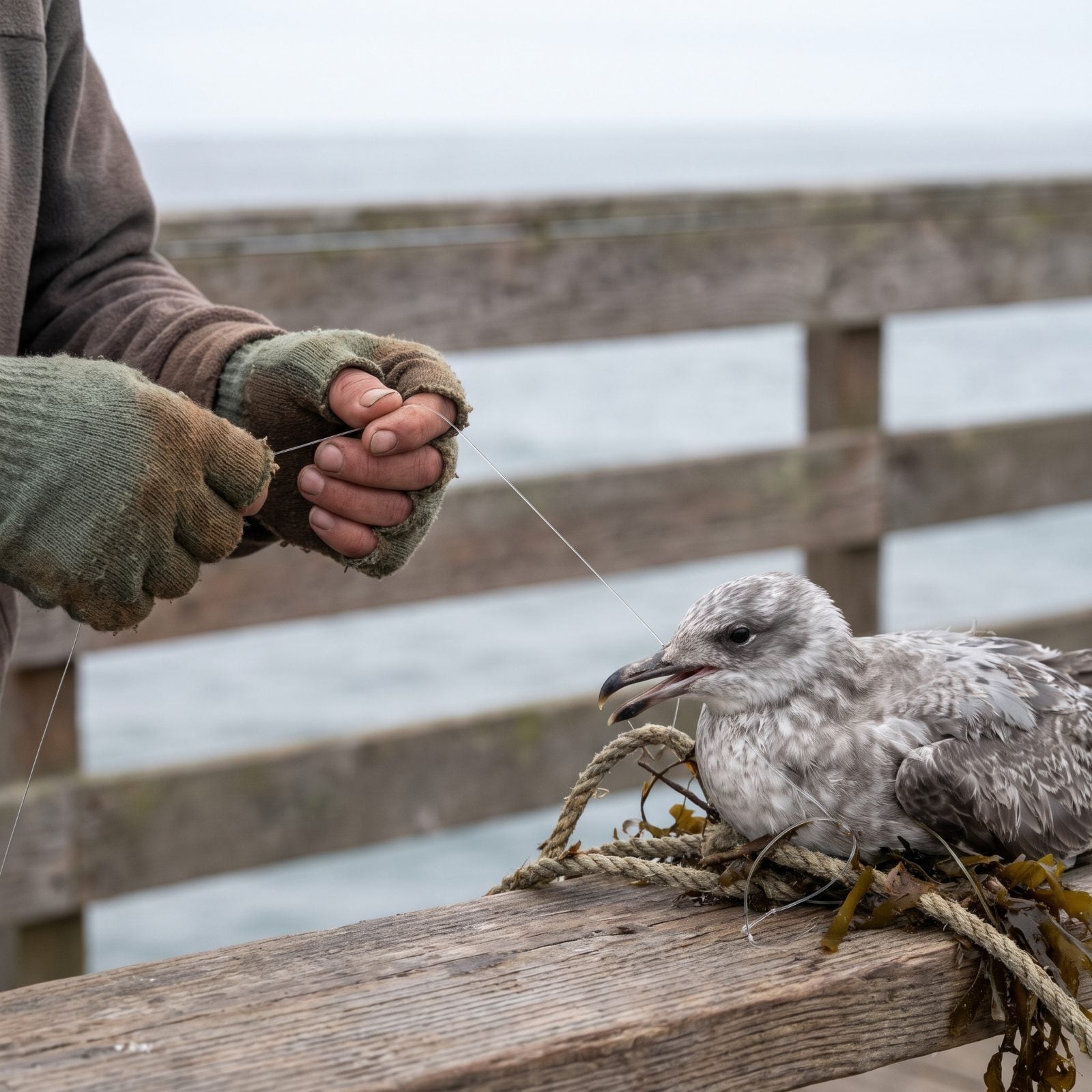
First instinct is to pull. Don’t. Jerking the line drives the hook deeper and can snap a wing against a piling. Stop reeling, keep gentle tension so the bird can’t fly off trailing fifty feet of mono, and bring it in slow and steady.
Then call for help. Most piers post a local wildlife rescue number, and plenty of coastal states run seabird rescue lines you can save in your phone. Whatever you do, don’t rip the hook out of a pelican’s pouch yourself. You’ll make the wound worse and risk a bite that opens your hand.
8. Never Feed Pelicans, Gulls or Herons From Your Catch
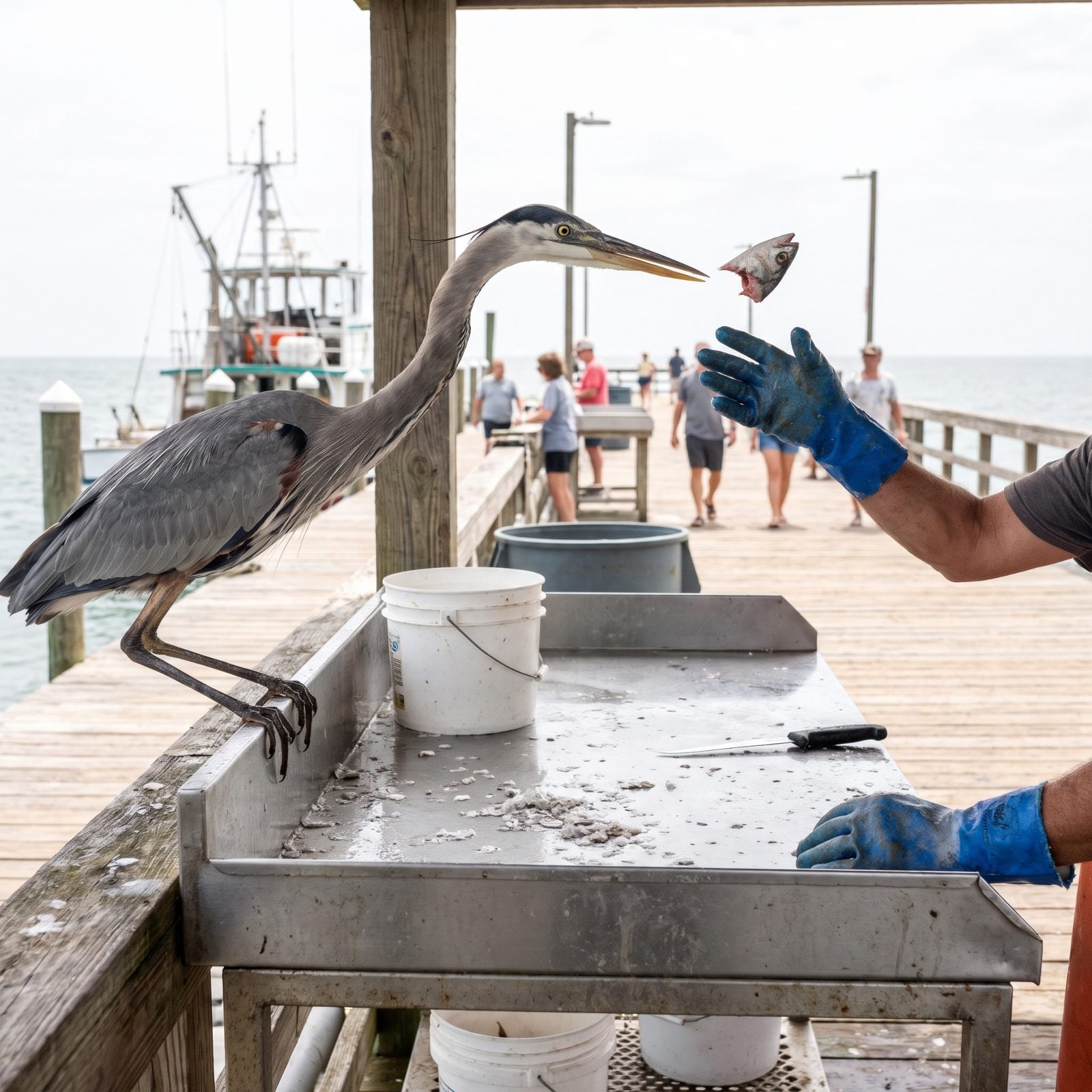
One tossed scrap teaches a heron that people mean food. After that it crowds the cleaning station, snaps at hands, and swallows discarded hooks and line. Fed pelicans get bold enough to steal fish off the deck and linger until a hook finds them.
It feels generous. It isn’t. You’re training a wild animal to hurt itself and harass the next angler who shows up. Bag your scraps or drop them off the end where the current carries them away, and let the birds stay wild.
7. Release Unwanted Fish Without Kicking or Tossing Them
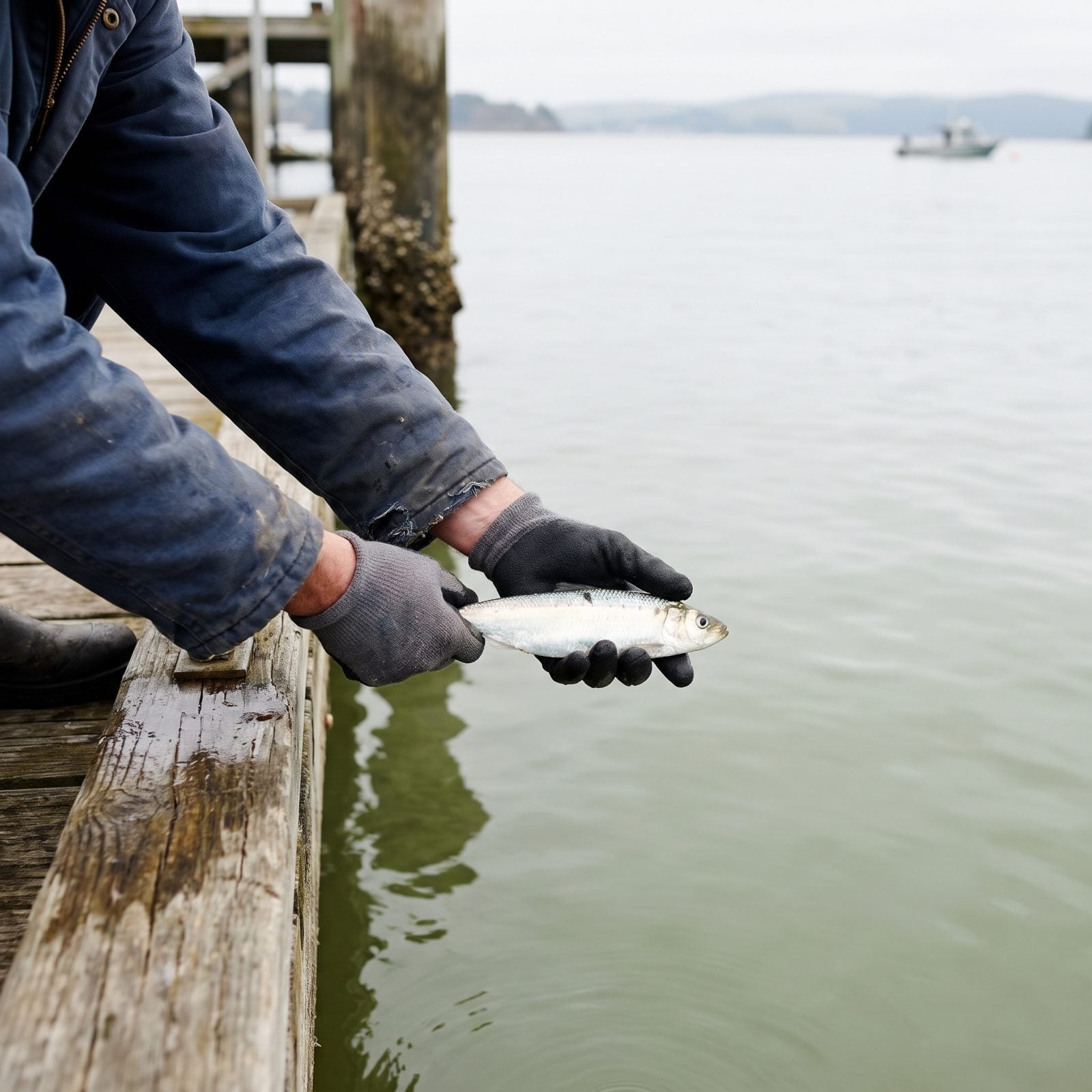
Punting a sea robin off the pier like a football gets a laugh and kills the fish. The slam onto the water, or worse onto a piling, ruptures organs even when the fish swims off looking fine.
If it’s going back, it goes back right: wet your hands, support it, and lower it over the rail close to the surface. Undersized keepers, out-of-season species, trash fish you don’t want — doesn’t matter. A healthy release today is the fish somebody catches next season. Treat it like you’d want yours treated.
6. Do Not Crowd an Angler Just Because Their Spot Turns Hot
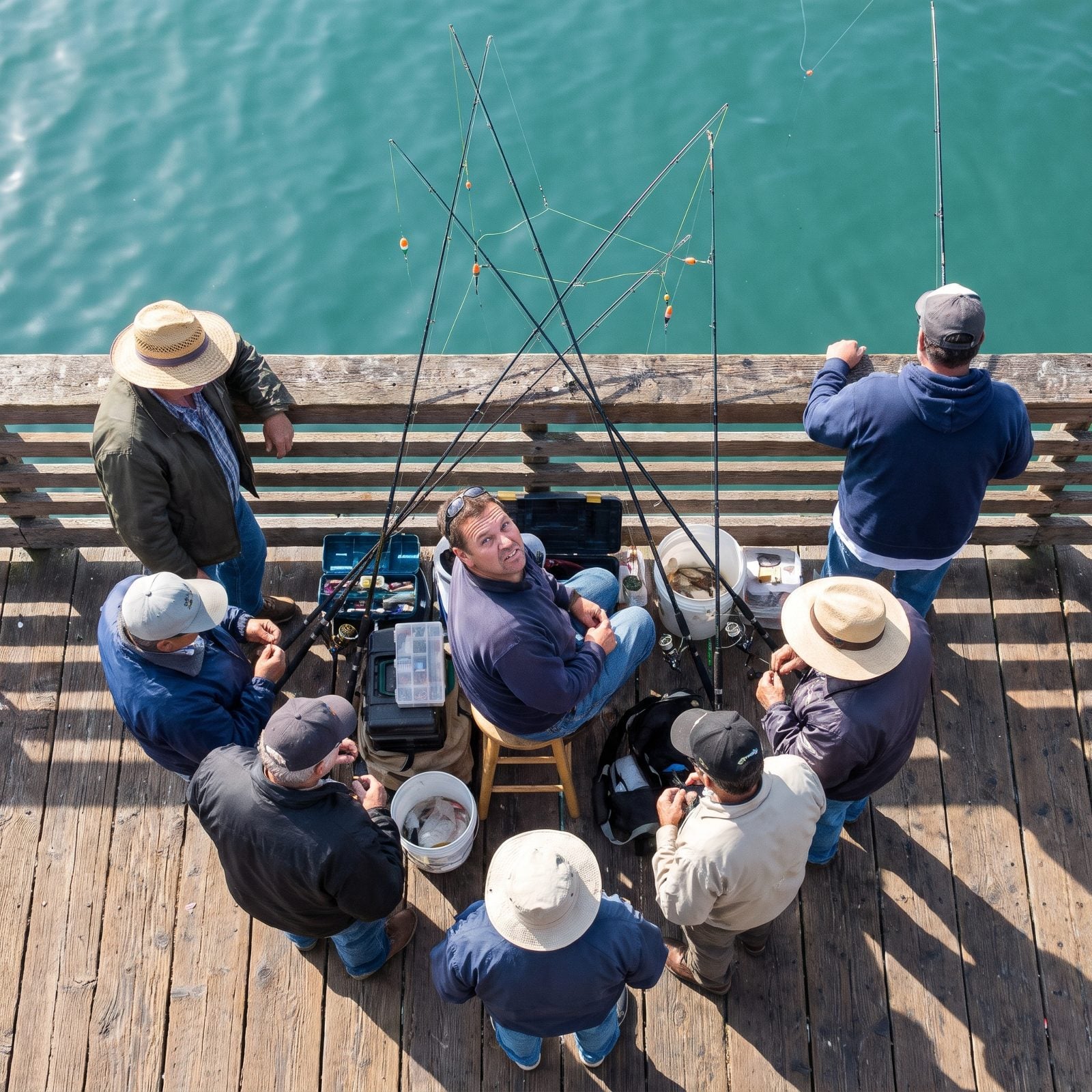
Somebody starts catching, and suddenly five rods pile in on top of them. That’s how you get crossed lines, tangled rigs, and a fight at the rail. The bite doesn’t belong to whoever elbows in fastest.
Give a working angler room. If the fish are moving down the rail, they’ll come to you. Squeeze into eighteen inches of space next to a bent rod and you just tangle you both and sour the whole stretch of pier.
5. Keep Unsolicited Fishing Lessons to Yourself
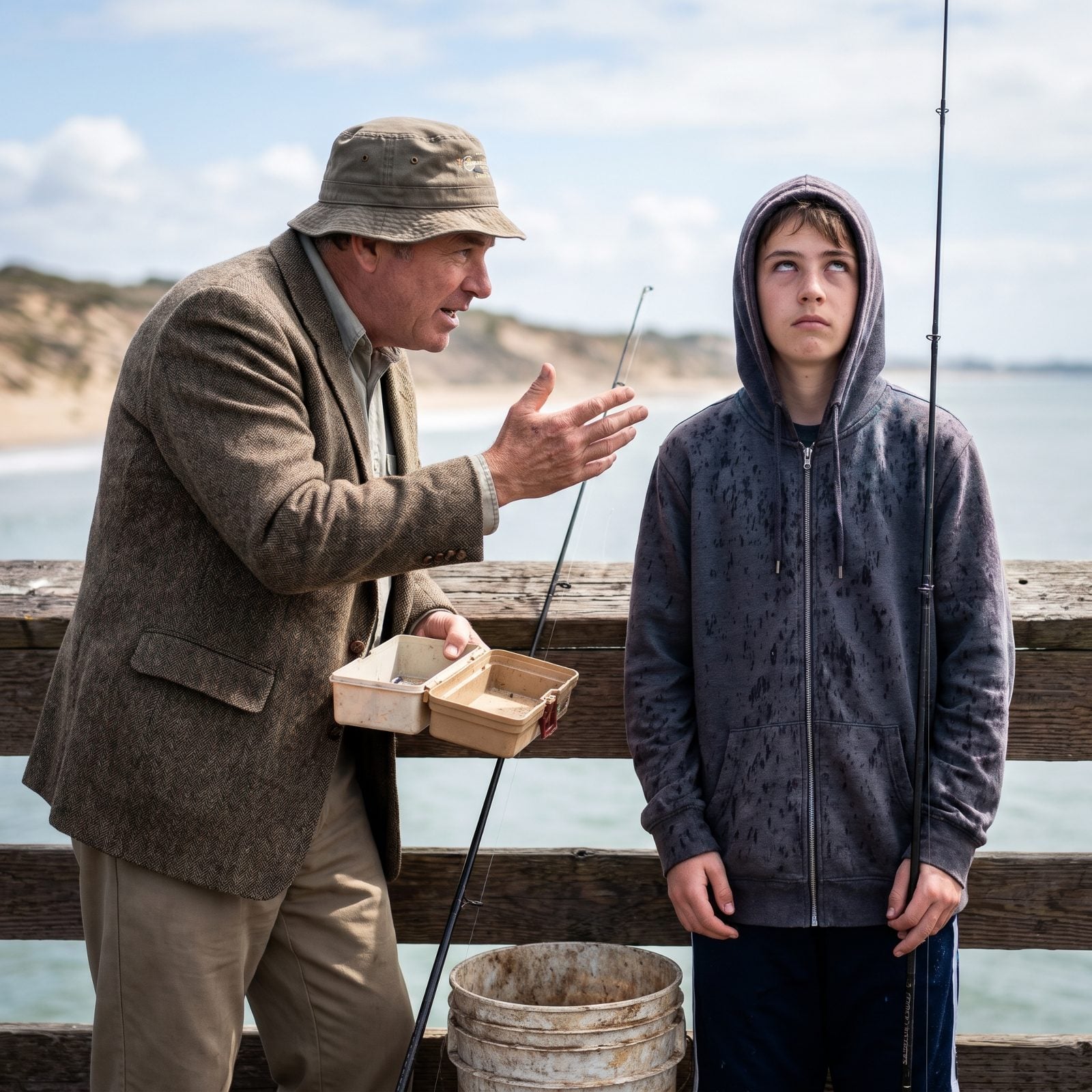
Nothing drains the goodwill off a pier faster than the guy who narrates everyone else’s technique. Wrong knot, wrong bait, wrong spot, wrong rod. Unasked for, every time.
Maybe you do know more. Doesn’t matter. The person next to you came to fish, not to attend your seminar. If they ask, help freely and happily. If they don’t, let them work it out. Half the fun of this whole thing is figuring your own way into it, and nobody learns a thing with a stranger hovering over their shoulder.
4. Angle Headlamps Down and Away From Other Anglers’ Eyes
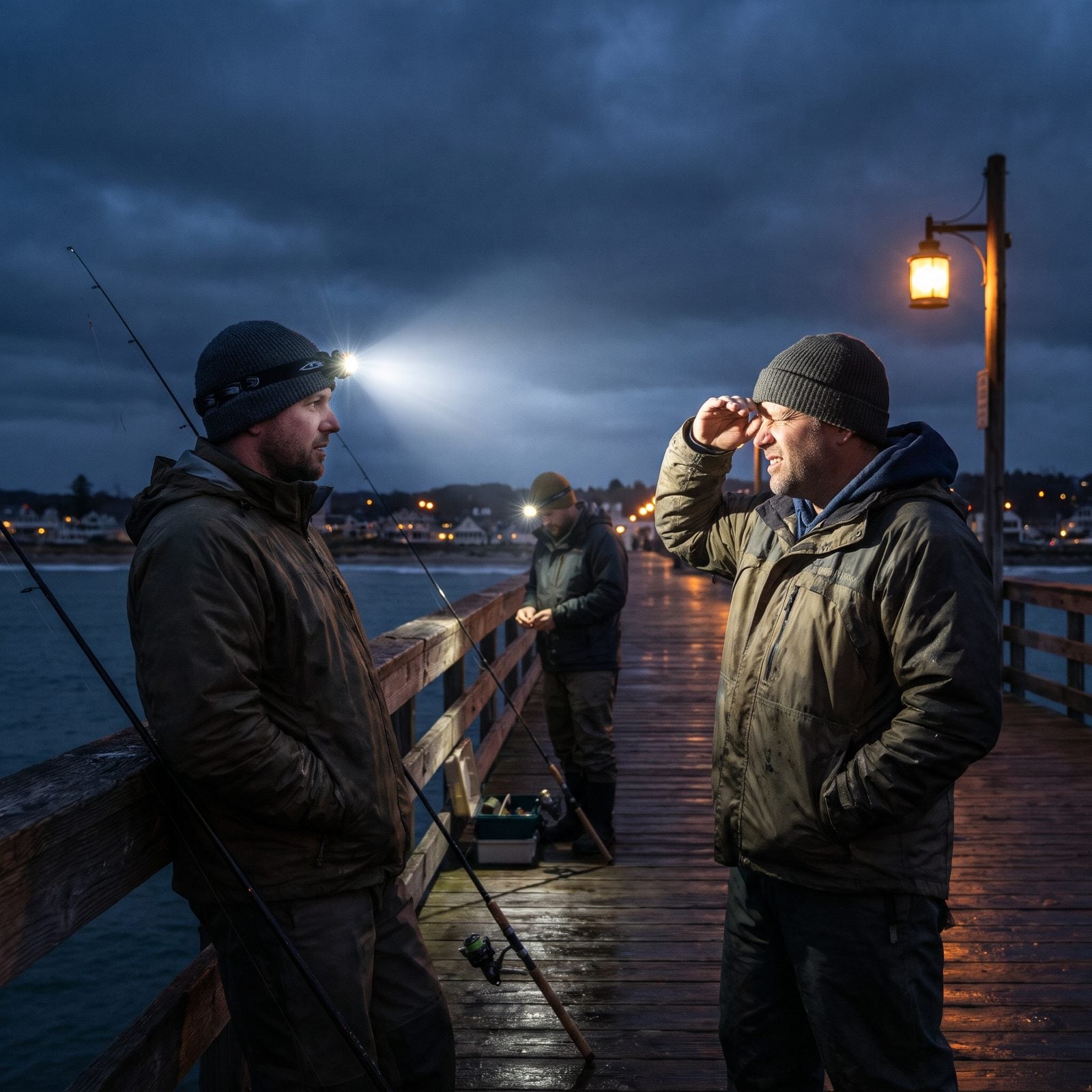
A headlamp at eye level wrecks everyone’s night vision and spooks fish right off the lights where they’re feeding. One swing of your head and the guy down the rail is blinded for a full minute.
Point the beam down at your bucket or rig, click it off when you’re not tying on, and run a red setting if your lamp has one. Red keeps your own eyes adjusted and doesn’t carry down the pier the way white light does. The dark is part of the night bite. Don’t blow it out for everyone.
3. Keep Music Low Enough That Warnings Can Be Heard
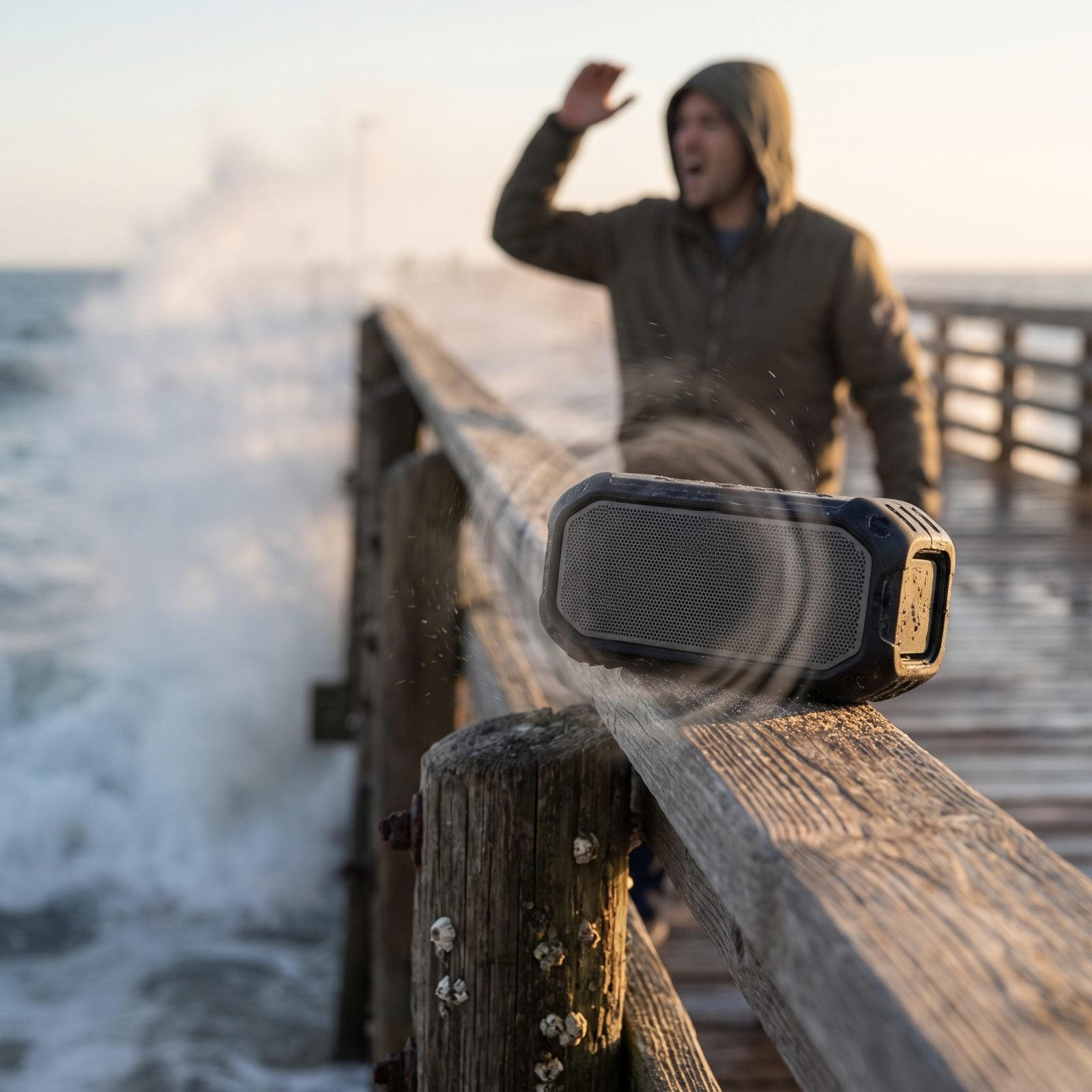
Crank the speaker up and you miss the “line coming over!” shout, the kid who fell in, the captain throttling down close to the pilings. Sound is half the safety on a crowded pier.
Nobody’s asking for silence. Play your music. Just keep it down to your own little stretch so a warning can cut through it. A pier is shared ground, and the guy forty feet away didn’t sign up for your playlist at full tilt. Keep it low, keep it yours, keep your ears open.
2. Carry Your Cigarette and Cigar Smoke Downwind of the Rail Crowd
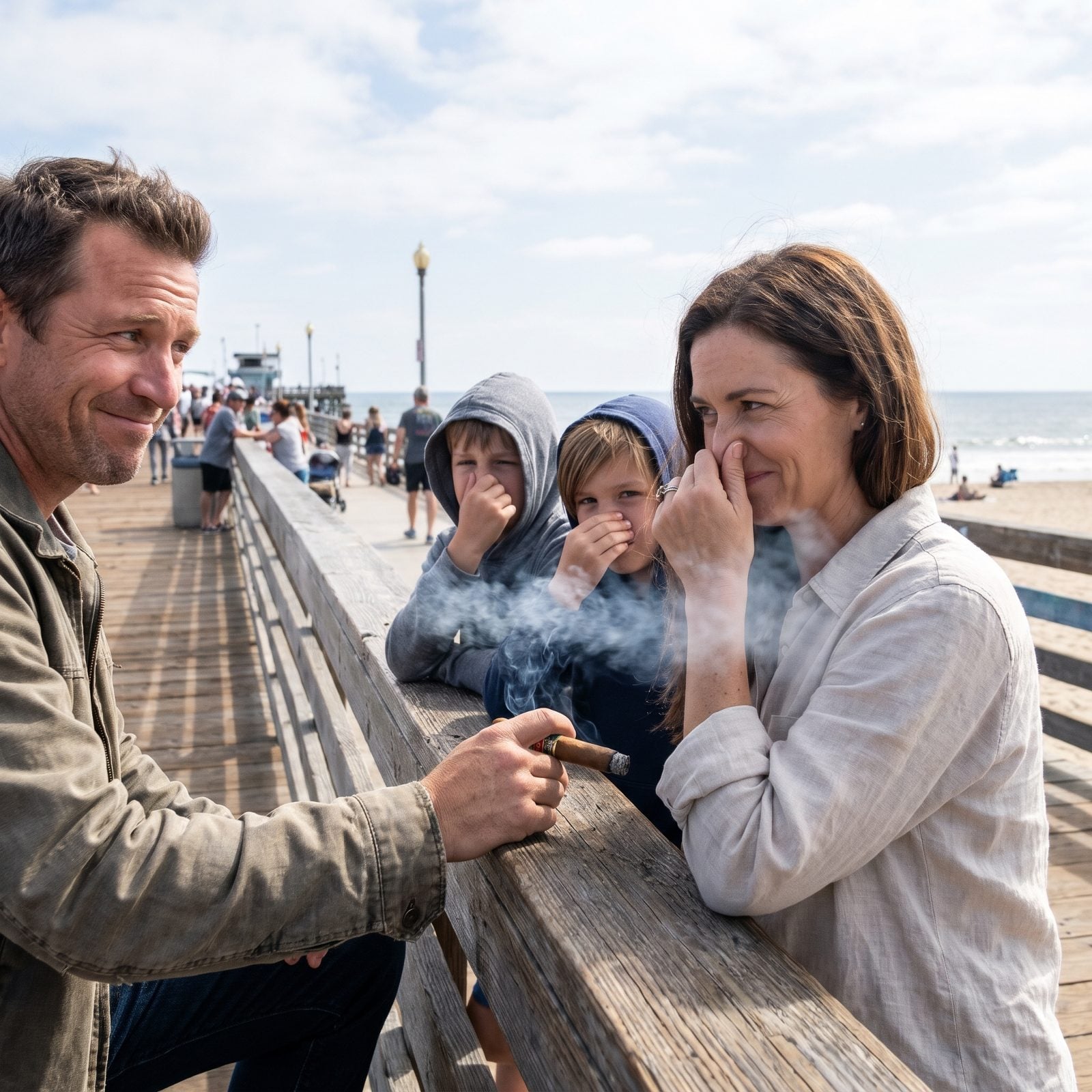
Smoke carries. You might not smell your own cigar, but the family three rods down does, and the guy fighting a fish toward the rail sure does. On a crowded pier the wind decides where your smoke goes, so read it before you light up and walk to the downwind end.
It costs you ten feet. That’s the whole ask. Park a cigarette on the rail cap in the middle of the action and you become the fellow people quietly drift away from — and they’ll remember your face next time there’s an open spot.
1. Keep Kids Within Arm’s Reach of Hooks, Knives and Open Railings
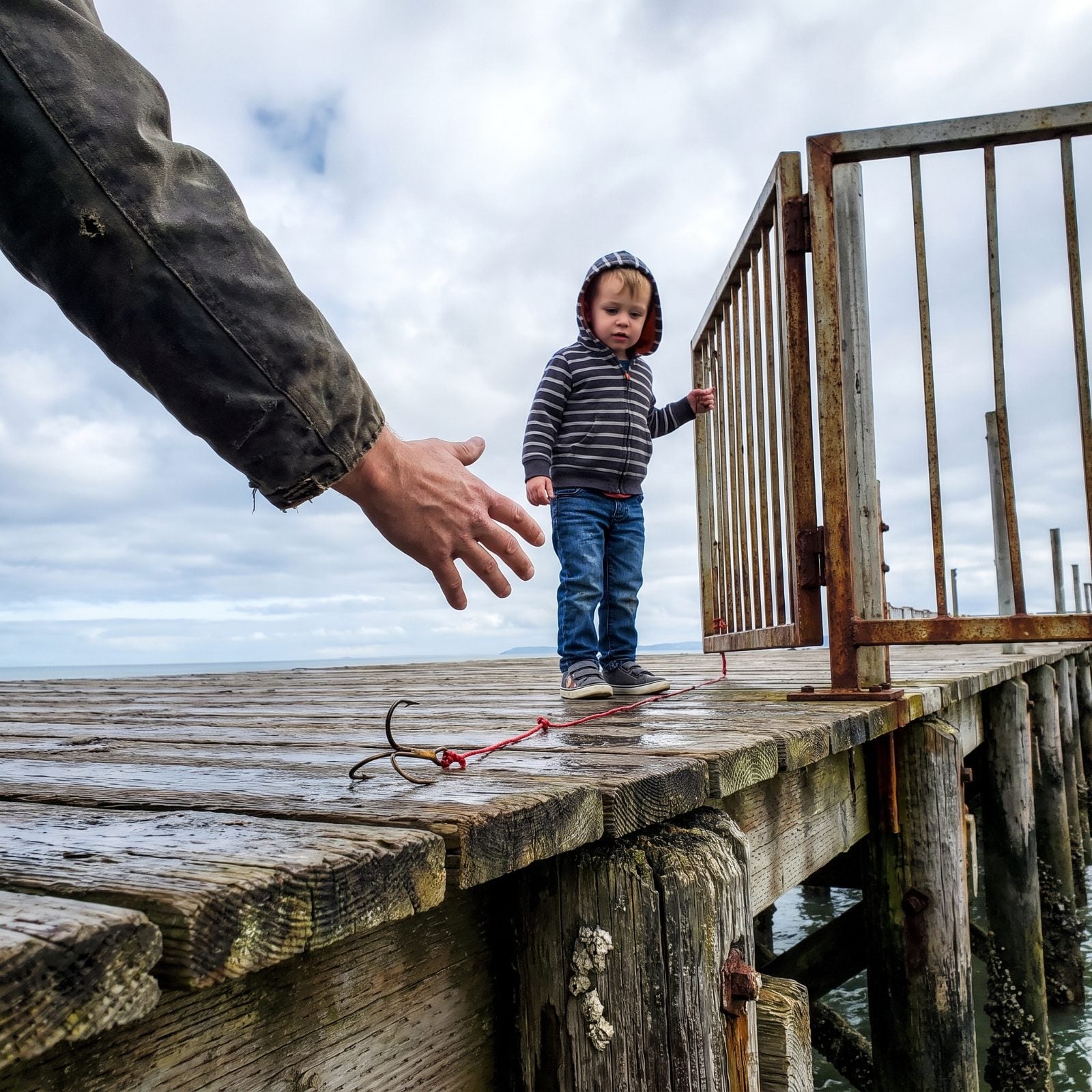
A treble hook finds a bare foot faster than you’d believe. Kids love piers for exactly the reasons that make them dangerous — open water, shiny tackle, sharp everything, rail gaps sized for curiosity. Seasoned anglers keep the little ones within arm’s reach and the sharp stuff well out of it.
Sheath the fillet knife and set it back from the edge the second it leaves your hand. Close the tackle box between rigs so nobody grabs a fistful of jigs. Watch the backcast too — yours and everyone else’s. A kid darting behind an angler mid-cast is how somebody winds up at urgent care while a doctor works a barb out of an ear.