
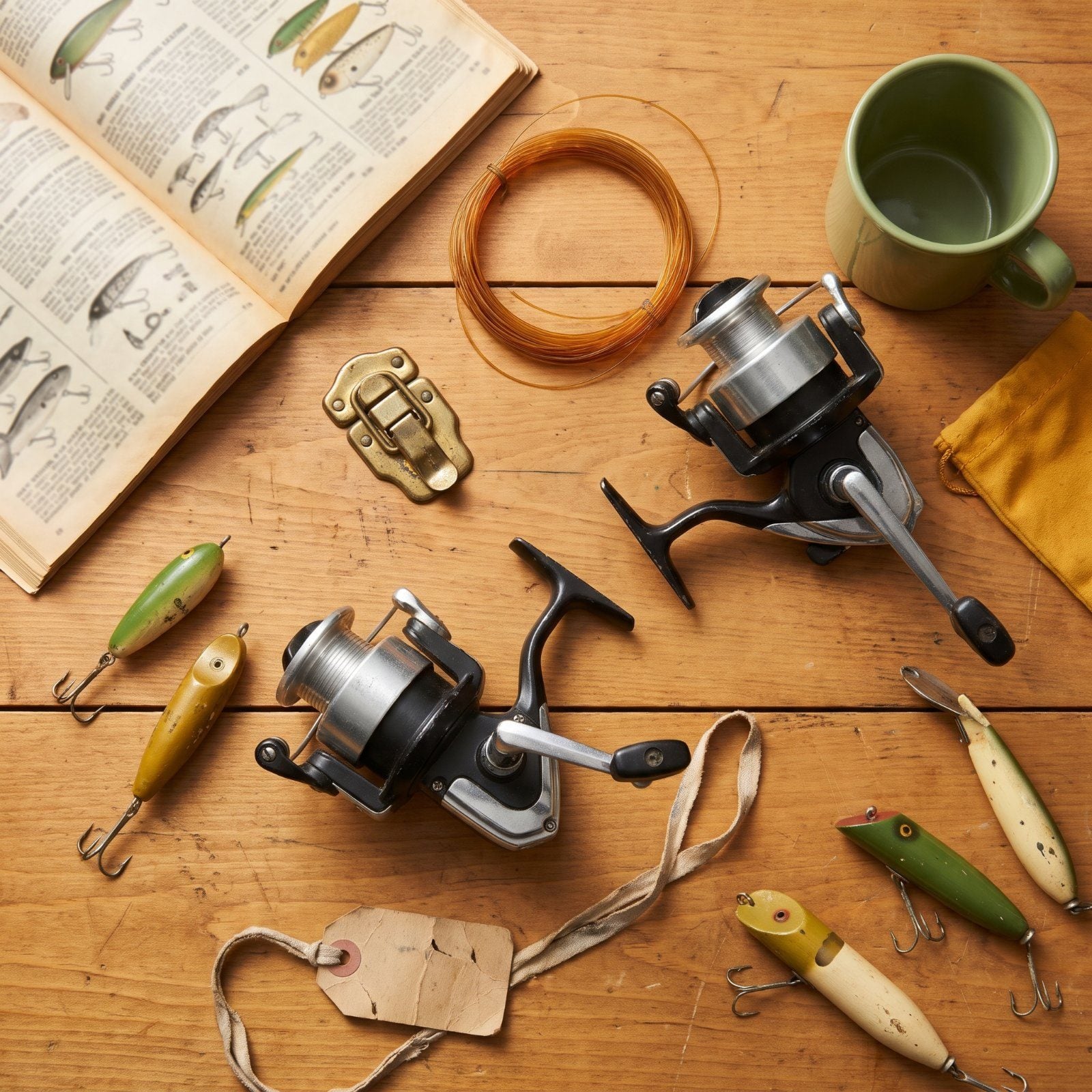
Dig through enough tackle boxes handed down from a father or an uncle and you’ll find the same handful of reels. Scratched, salty, still turning. Most cost less than a tank of gas in 1975, and here’s the part that stings: adjust those old prices for inflation and most cost more than the plastic they sell today, while others were small fortunes nobody remembers paying. We pulled the catalog prices on a stack of legends, ran the inflation math, and lined them up against what you’d spend now. Some will surprise you. One or two might make you angry.
Please note that some of the images in this article were created with the assistance of AI.
41. Zebco 33 Spincast Reel: The Reel That Taught America to Fish
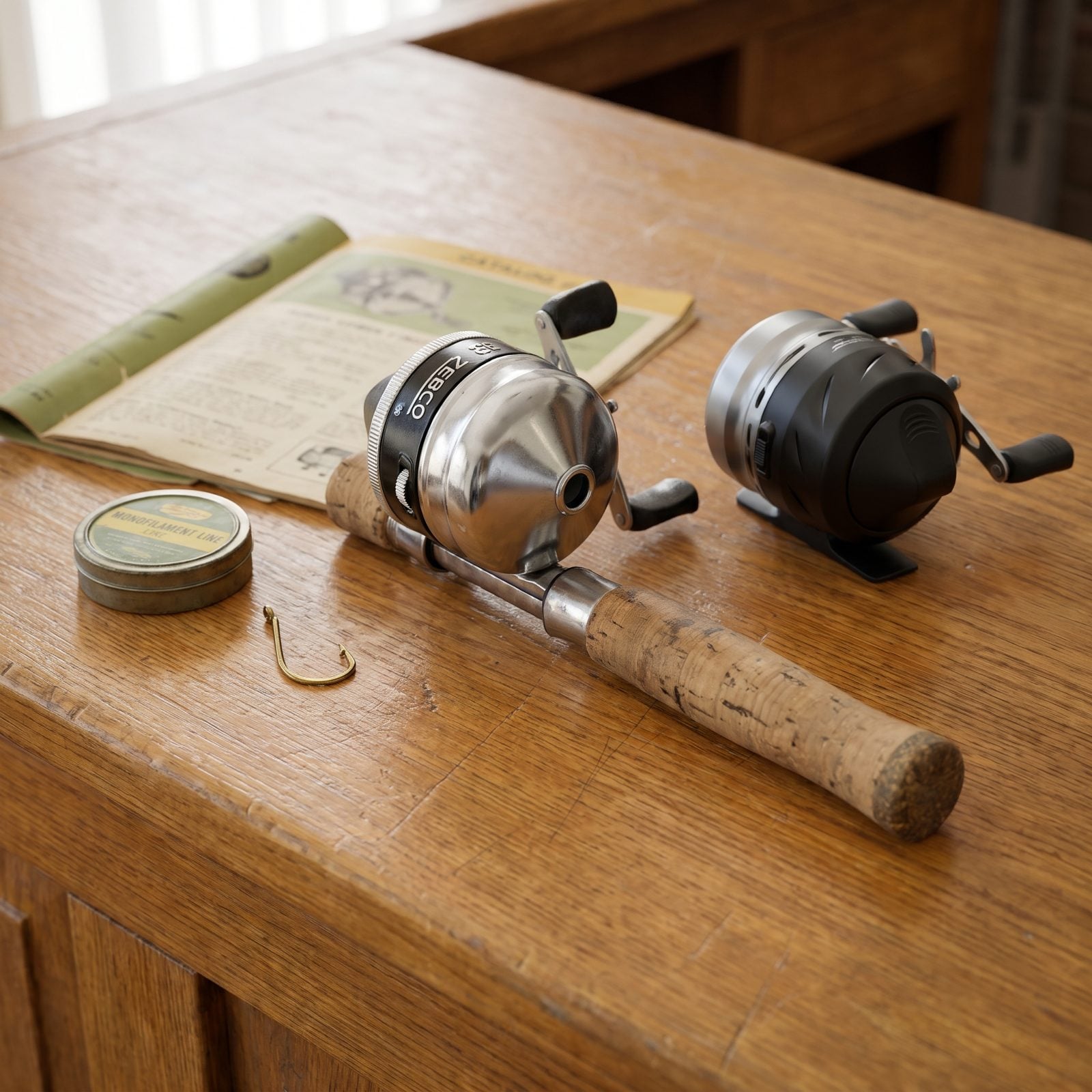
More people learned to cast with a Zebco 33 than with any other reel ever made, and that’s not marketing fluff, that’s just true. In 1975 it ran about ten or twelve dollars at the hardware store, which runs forward to roughly sixty or seventy in today’s money.
So what’s the surprise? You can still buy a brand-new Zebco 33 for around twenty-five to thirty-five dollars. The modern one is cheaper in real terms than the one your grandfather bought, and it casts smoother thanks to better internals. Thumb the old ones wrong and that push-button backlashes on you. Plenty of us still remember the bird’s nests we made as kids.
40. Mitchell 300 Spinning Reel: The French Workhorse Everyone Owned
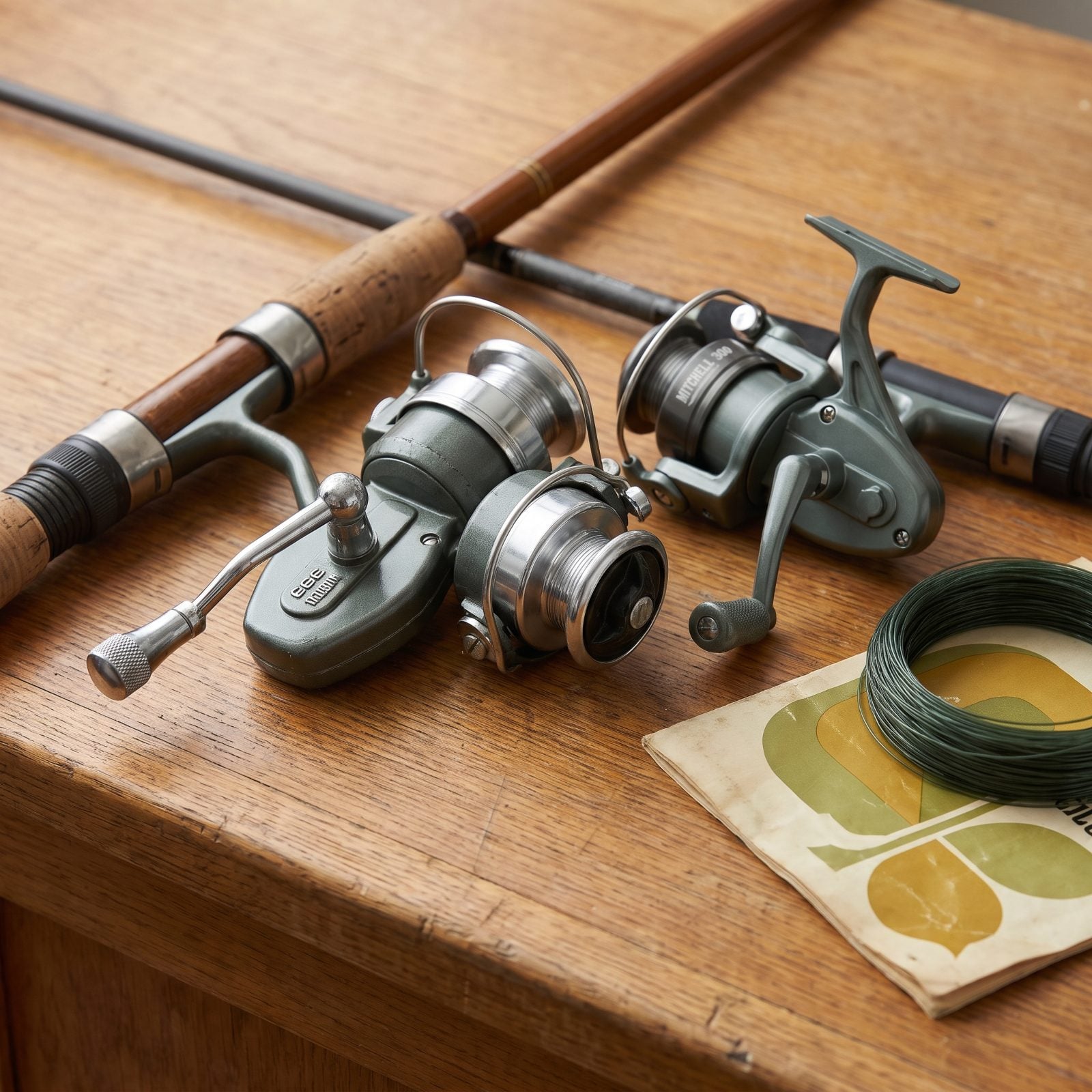
The Mitchell 300 was the open-face reel of the era. Grey-green body, a full wire bail that snapped over when you cranked, a sound like a coffee grinder when you cranked it. In 1975 it sold for around twenty-five to thirty dollars, which lands somewhere near a hundred and forty to a hundred and seventy adjusted.
Here’s where it gets interesting. Mitchell still makes a 300 today (that’s the modern reel wearing the name here), and it goes for about fifty to sixty dollars. The old one was a precision French machine; the new one is a budget reissue trading on the name. Not the same animal, and anyone who’s held both knows it in their hands inside thirty seconds.
39. Abu Garcia Ambassadeur 5000C: The Red Jewel of the Baitcaster World
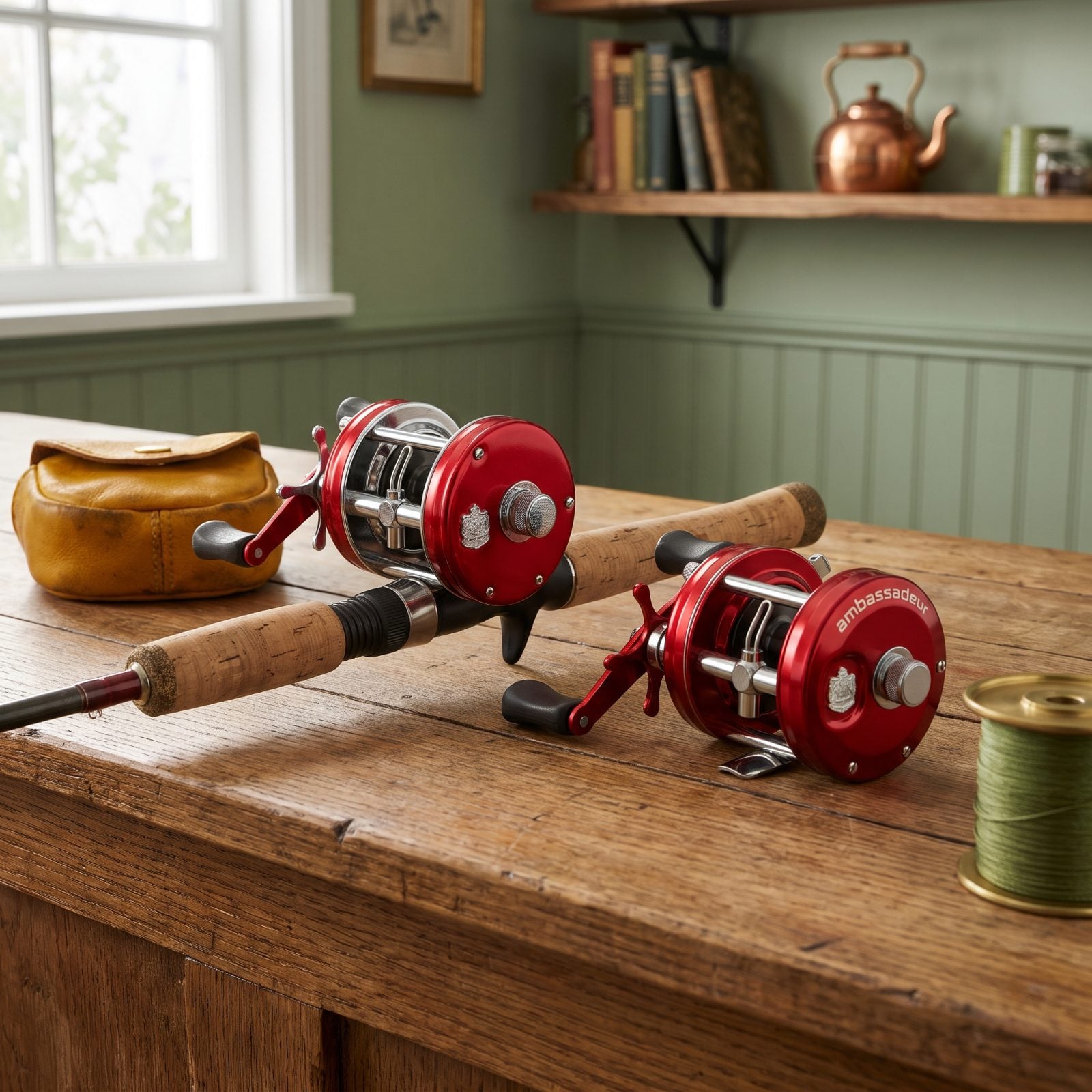
That candy-apple red finish is a sunset in a tackle box. The 5000C was the reel serious casters coveted, and the price said so: figure fifty or sixty dollars in 1975, roughly two-eighty-five to three-forty in modern money. Real cash for a fishing reel back then.
A well-kept Ambassadeur from the seventies will outlast most reels made this century.
Today a new round Ambassadeur reissue runs about a hundred to a hundred and fifty, so you’re paying less in real terms for a reel built to the same bombproof pattern. The Swedish build held up so well that collectors pay more for mint vintage units than Abu charges for new ones. I will die on the hill that these are the prettiest reels ever machined.
38. Penn 209 Level-Wind: The Reel That Pulled a Thousand Catfish
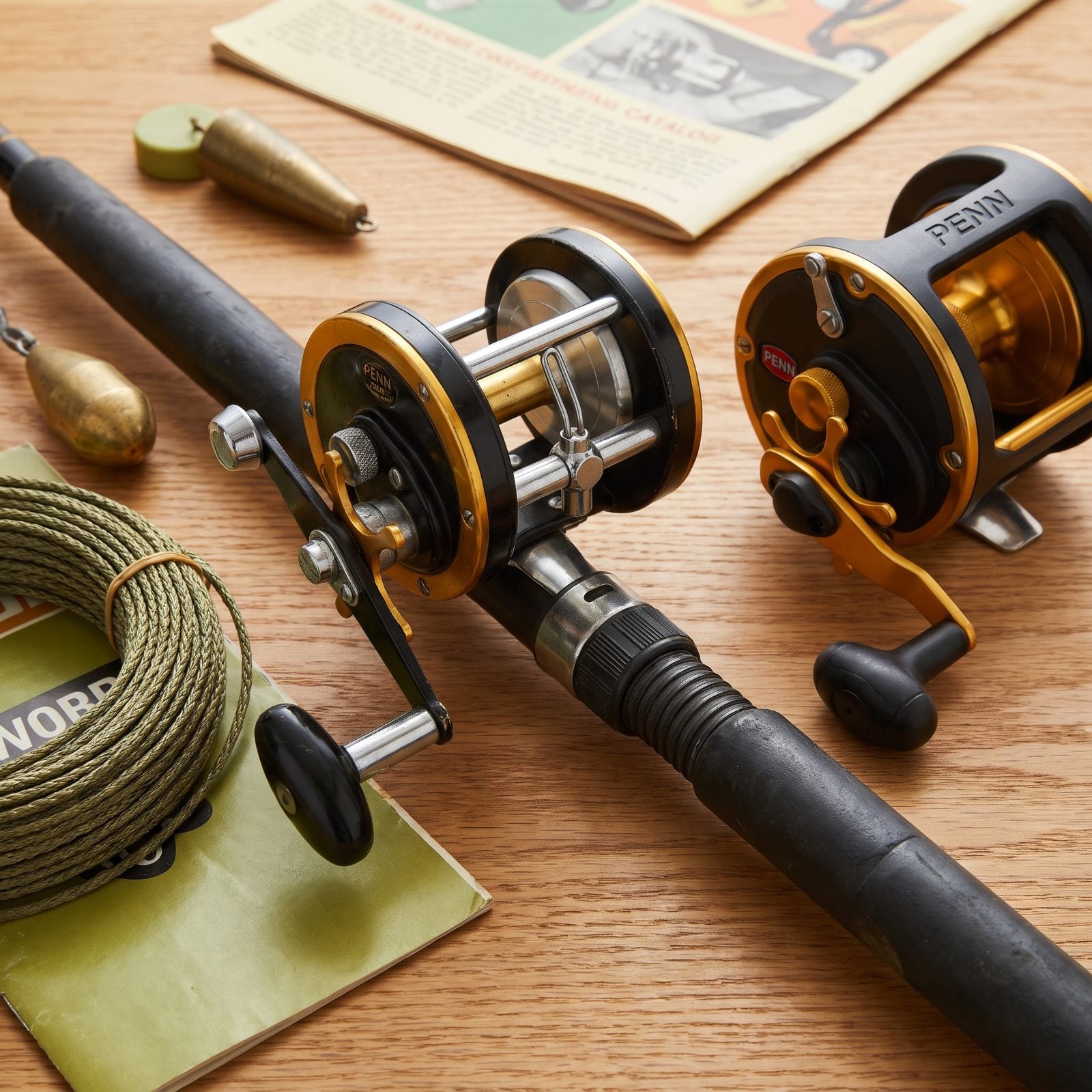
Not glamorous. Never was. The Penn 209 was the honest level-wind that hauled catfish, stripers, and whatever else bent the rod, and it did it for decades without complaint. In 1975 it cost around twenty to twenty-five dollars, so about a hundred and fifteen to a hundred and forty today.
Penn no longer makes the exact 209, but a comparable modern level-wind in the Squall line runs eighty to a hundred and twenty. The old black-and-gold ones still turn up at estate sales for ten bucks, and a drop of oil usually brings them right back to life. There’s something I trust about a reel with nothing to prove.
37. Penn Jigmaster 500: The Surf and Party-Boat Standby
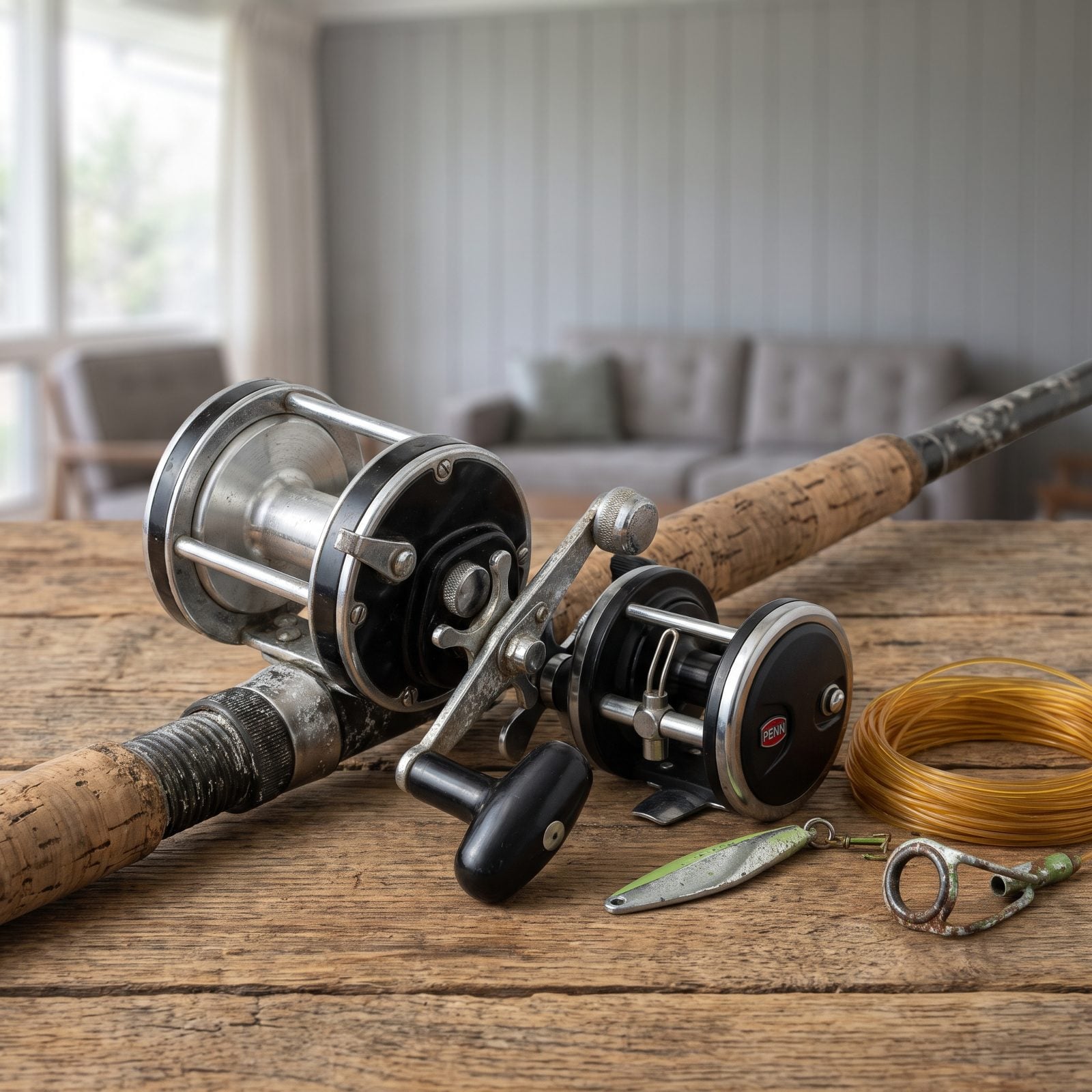
Every party boat on both coasts had a rack of Jigmasters. The reel you rented, the reel you learned on, the reel that survived getting dropped on a steel deck more times than anyone counted. In 1975 it ran about thirty to thirty-five dollars, call it a hundred and seventy to two hundred adjusted.
Penn kept the Jigmaster in production for ages, and used ones are everywhere for forty to eighty bucks. A new comparable Penn conventional today sits around ninety to a hundred and thirty. That aluminum spool was the genius move, light enough to throw a jig a country mile and tough enough to take a beating.
36. Penn Senator 4/0: The Big-Game Reel Built Like a Tank
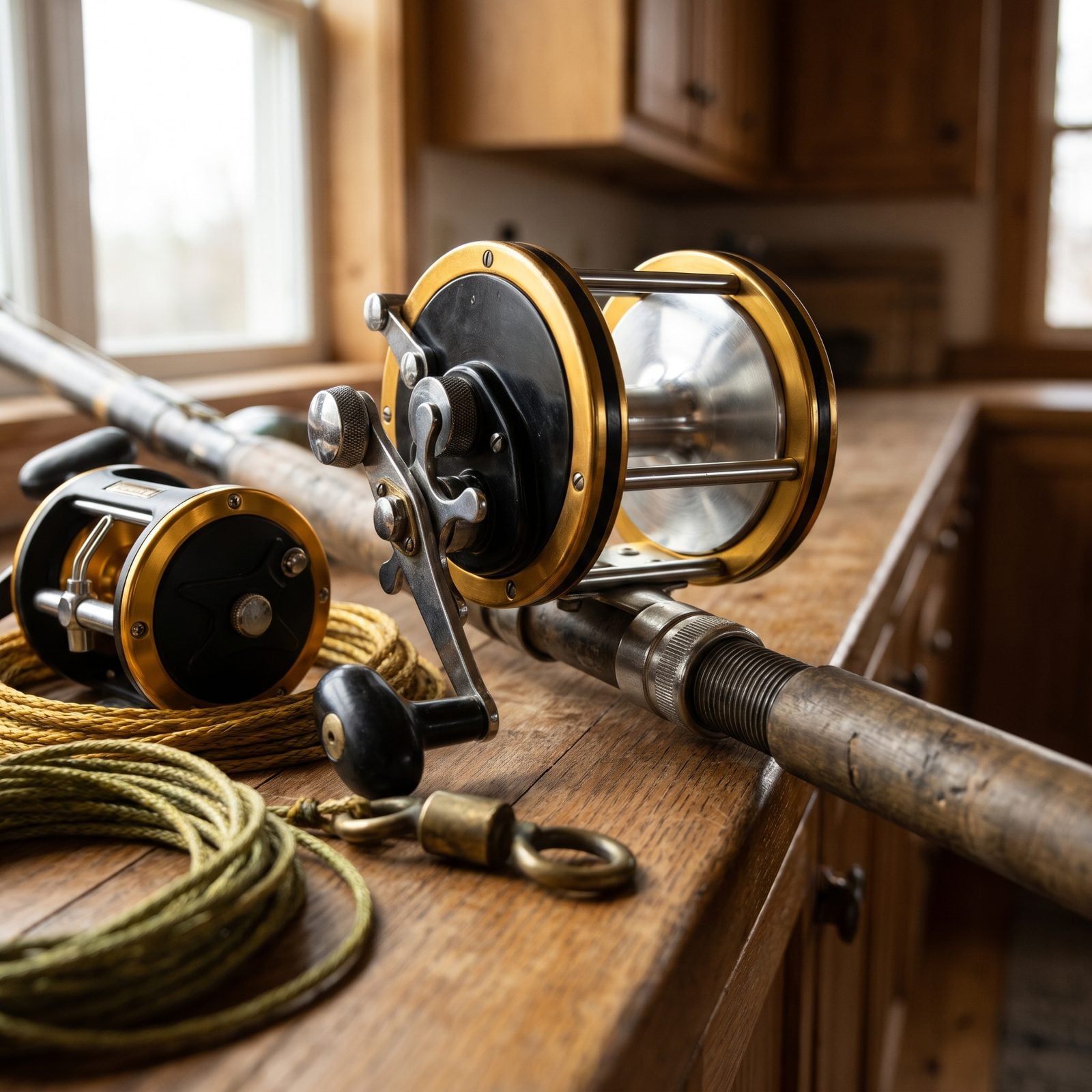
This is the reel that fought marlin and tuna while the angler sweated in a fighting chair. Heavy-duty offshore hardware, priced accordingly. In 1975 you’d pay around fifty-five to seventy dollars, roughly three-ten to four hundred today.
And here’s the kicker: Penn still makes the Senator, nearly unchanged, and it sells for about a hundred and thirty to a hundred and eighty. You pay less than half the real cost for essentially the same reel your grandfather trusted with a four-hundred-pound fish. Few things on earth have stayed that faithful to the original.
35. Pflueger Medalist Fly Reel: The Trout Reel Everyone Started With
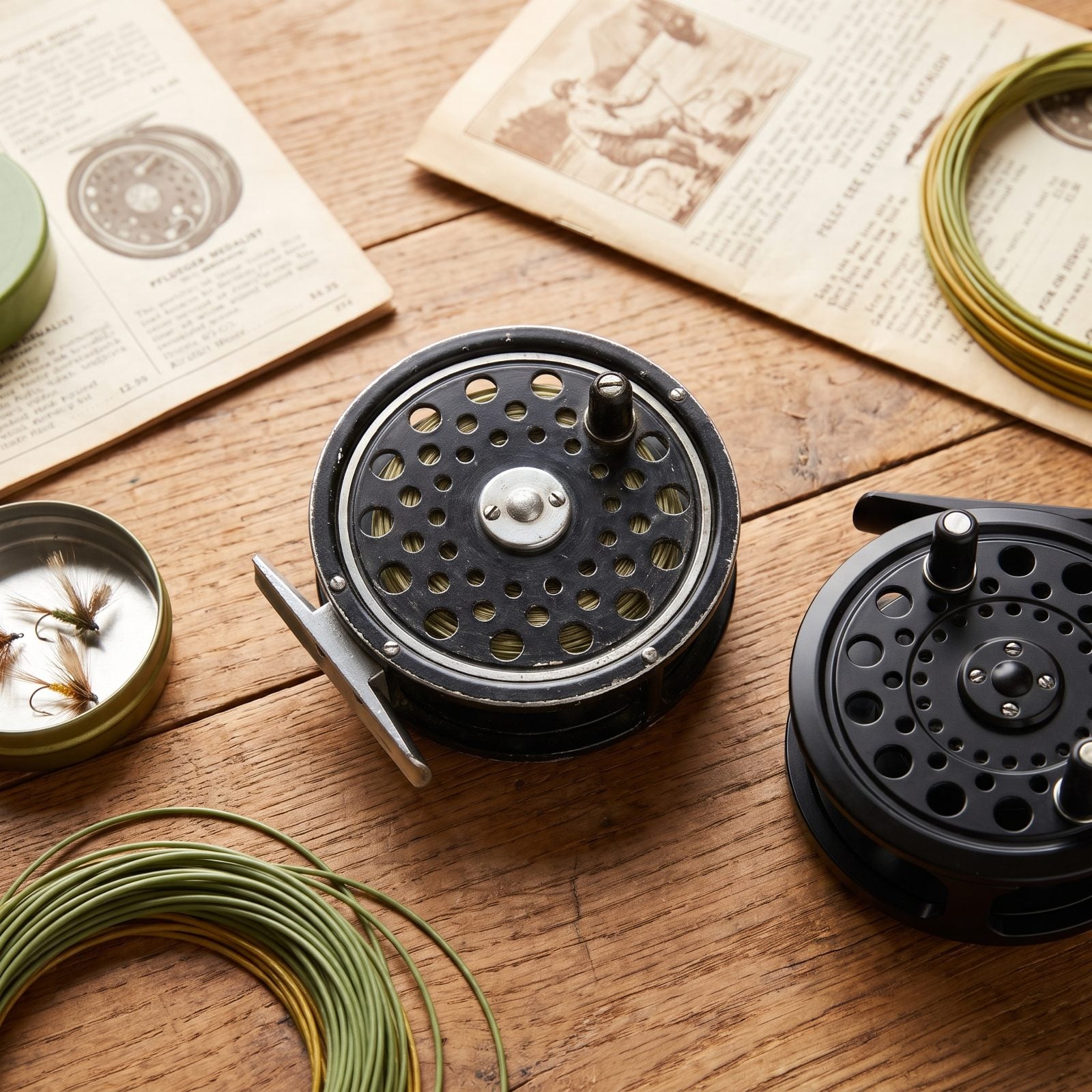
Simple, black, a satisfying click when a trout takes line. The Medalist was the fly reel nearly everyone owned, from mountain brookie creeks to western rivers. In 1975 it cost about twelve to eighteen dollars, so near seventy to a hundred adjusted.
Modern reissues run around forty to sixty, cheaper in real terms. Purists argue the old ones had a better click drag and nicer machining, and they’re not wrong. Find a vintage one for twenty or forty dollars and it’ll outperform plenty of pricier modern reels on a small stream. Plenty of anglers got into fly fishing on a hand-me-down Medalist and never saw the point of spending more.
34. Johnson Century 100B Spincast Reel: The Underdog of the Push-Button Crowd
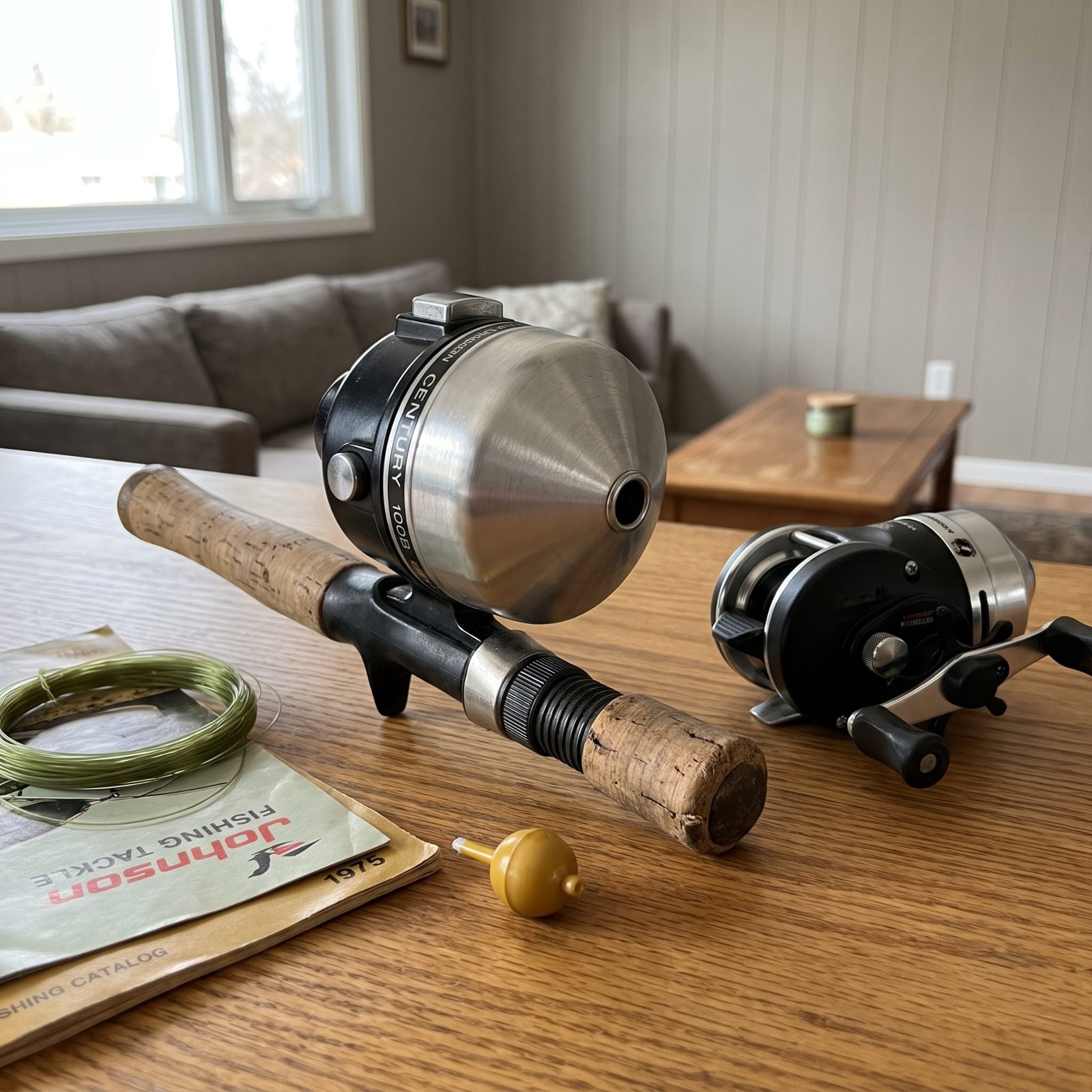
The Johnson Century was the quiet rival to the Zebco, and plenty of old-timers swear it was the better reel. That dual-trigger design let you feather the cast with real control, something the single-button crowd never managed. In 1975 it ran about eleven to fifteen dollars, roughly sixty-five to eighty-five today.
Johnson eventually folded into other brands, so finding a true new Century 100B is tough. A comparable spincast now runs thirty to fifty. Honestly, the vintage ones at fifteen to thirty dollars are the smart buy, built from more metal and less plastic. Anyone who feathered a cast with that dual trigger remembers why it mattered.
33. Fenwick HMG Graphite Rod: The Blank That Changed Everything
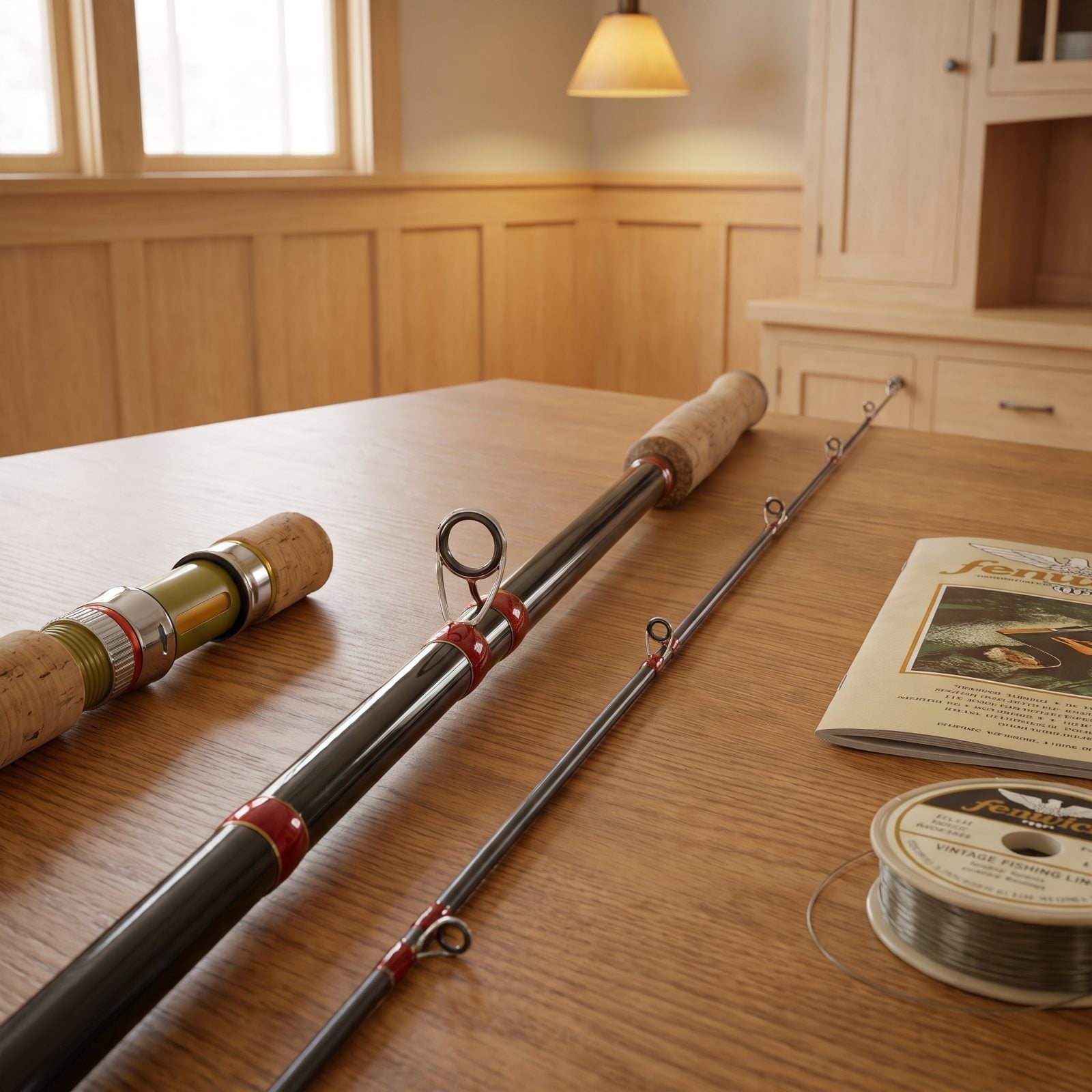
Before the HMG, rods were fiberglass. Heavy, slow. Fenwick introduced the HMG graphite in 1973 and the whole sport tilted. Suddenly a rod could be light, sensitive, and quick enough to feel a fish breathe on your bait.
In 1975 an HMG ran about forty to sixty dollars depending on model, which is two-thirty to three-forty in today’s money. A premium rod, and buyers knew they were paying for new technology. Modern graphite rods of equal or better quality start around eighty dollars and climb from there, so the baseline cost of sensitivity has dropped hard. The HMG name still lives on Fenwick rods today, a nod to the blank that started it all.
32. Eagle Claw Trailmaster Pack Rod: The Backpacker’s Secret Weapon
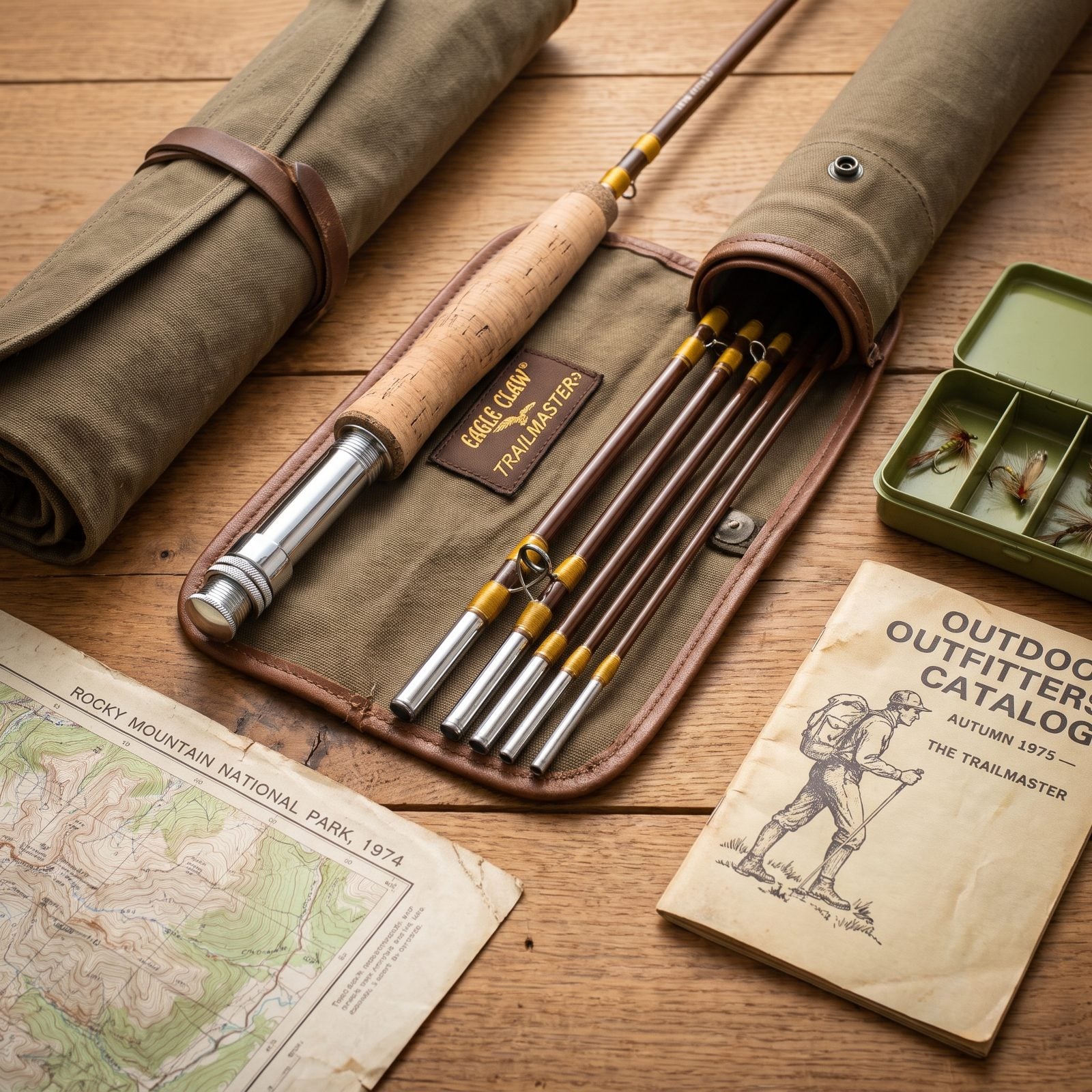
You could stuff a Trailmaster into a backpack, hike miles into a lake nobody else bothered with, and fish all day. It broke down into six or seven short sections that rolled up in a canvas sleeve, and it converted between spinning and fly setups. Clever gear for anyone who walked to their water.
In 1975 it cost roughly fifteen to twenty-two dollars, about eighty-five to a hundred and twenty-five adjusted. Eagle Claw still makes Trailmaster pack rods today for thirty to fifty, so it’s cheaper in real terms and lighter than ever thanks to modern blanks. For the price of a nice dinner you own a rod that goes anywhere your boots do. A pack rod has one job, and this one still does it.
31. Shakespeare Wonderod Fiberglass Rod: The $20 Blank That Taught a Generation to Cast
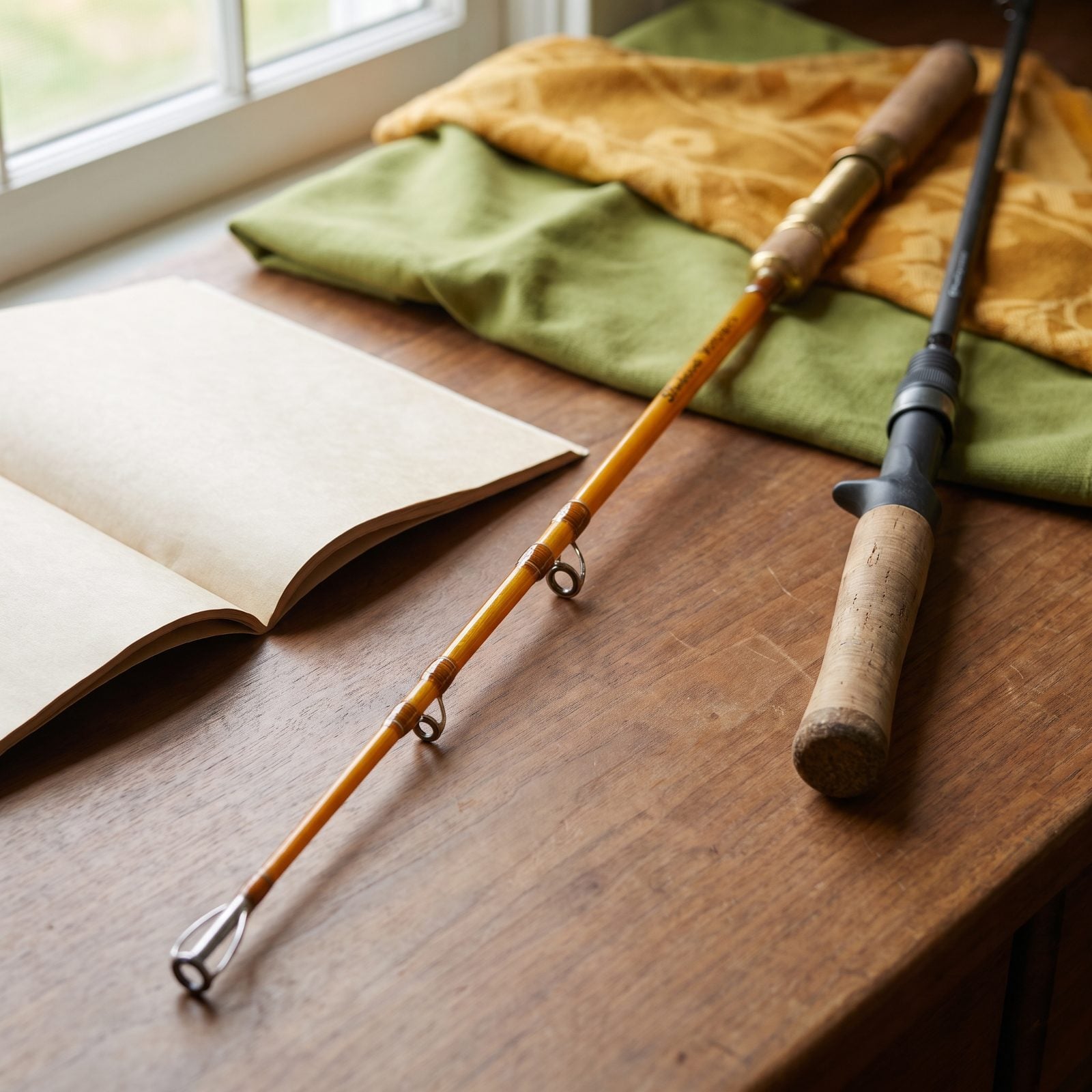
Twenty bucks got you a Wonderod in 1975. Run that through the inflation math and you land somewhere near a hundred dollars today, give or take.
Nobody tells you this part: a hundred dollars still buys a perfectly good fiberglass rod. The Wonderod wasn’t fancy. It flexed deep, forgave a sloppy cast, and survived car doors and tailgates and the occasional stint as a canoe pole. Plenty of us learned on one, and broke one too.
Spend $60 to $120 on the modern equivalent and it’ll cast smoother, thanks to better resins. But it won’t outlive you the way old glass did.
30. Orvis Battenkill Bamboo Fly Rod: When $100 Bought You a Heirloom
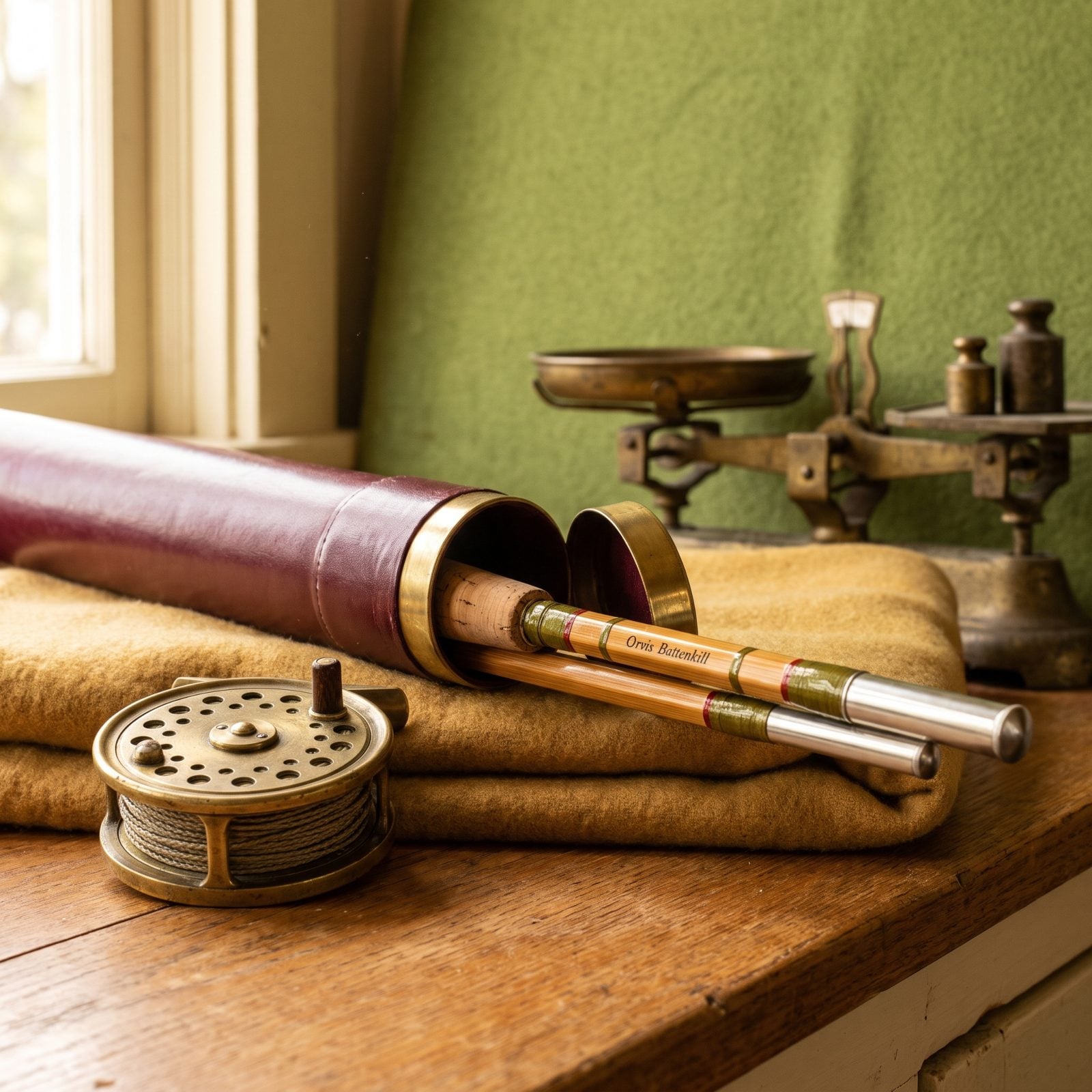
A hundred dollars for a bamboo fly rod in 1975 felt like a splurge, something like six hundred in today’s money. A hand-built bamboo Battenkill now? You’re well north of two thousand, sometimes a great deal more depending on who built it.
The math stings. Bamboo went from a working-angler tool to a collector object and the price followed right along. Graphite killed the practical case for cane because a modern graphite fly rod outcasts bamboo for a fraction of the cost.
29. Lew’s Speed Stick Casting Rod: The Tournament Weapon That Changed Bass Fishing
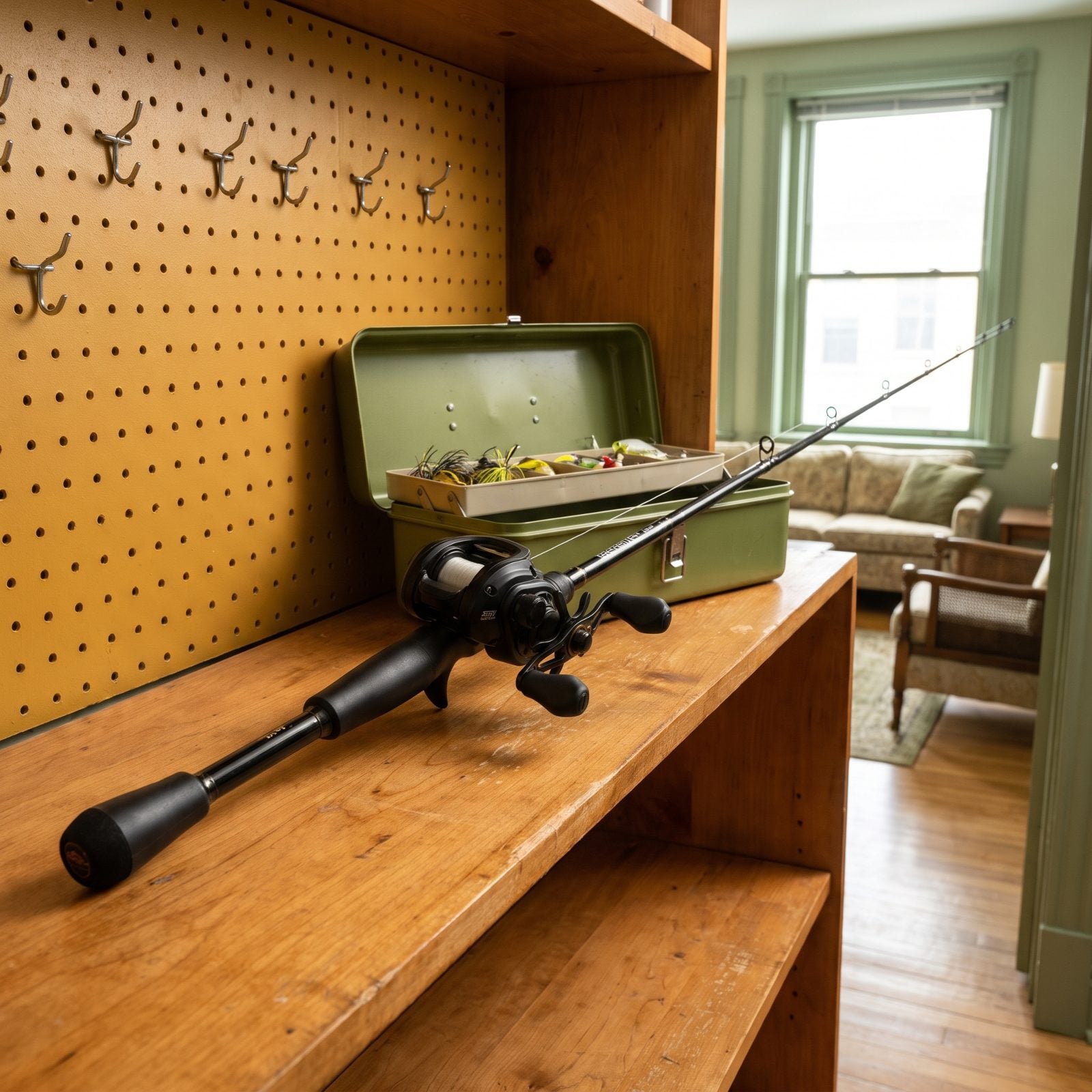
The Speed Stick arrived right as tournament bass fishing was turning into a real sport with real money on the line. Fast, sensitive, purpose-built. It ran maybe $40 in the mid-70s, call it $235 adjusted.
People assume old tournament gear was crude. It wasn’t. The pistol grip and fast taper were a genuine leap forward, and you could feel a jig tick bottom in a way cheaper rods just couldn’t deliver.
Modern Lew’s rods start around $50 and climb past $200 for the high-modulus graphite sticks. Same name, more spine, lighter in the hand.
28. Rapala Original Floater: The Balsa Minnow That Was Worth a Week’s Allowance
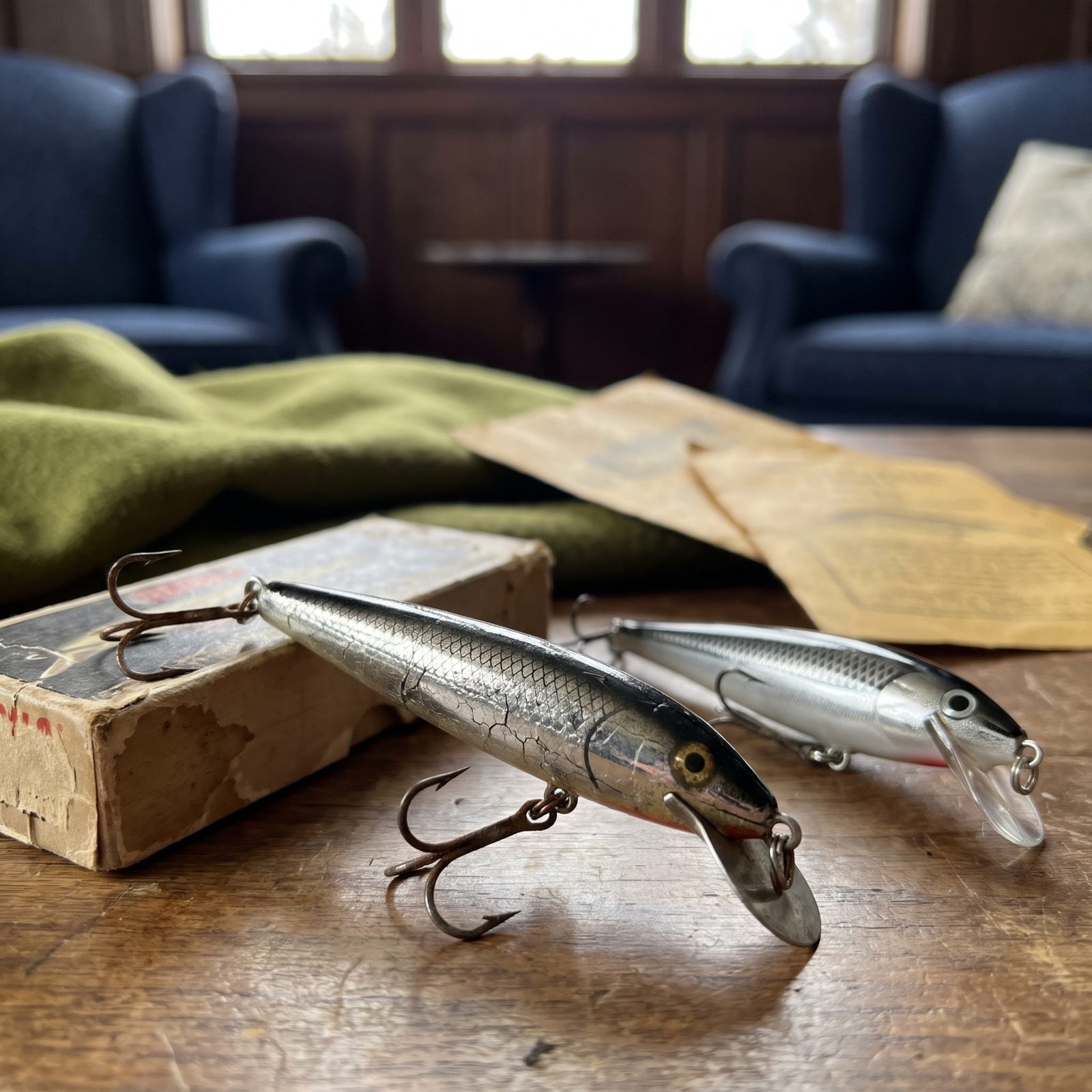
A Rapala in 1975 cost about $2.50, which was genuine money to a kid. Snag one in a tree and you felt it in your stomach the rest of the day.
Adjusted, that’s roughly fifteen dollars. A current Original Floater? Right around eight to ten. Like most lures here, the modern version actually costs less in real terms.
Why does it still sell? Balsa. Light wood with a wobble no plastic has matched. Lauri Rapala hand-carved the first ones in Finland and tuned each by feel, and the ones rolling out today are still hand-tested to swim true before they ship.
27. Heddon Zara Spook: The Walk-the-Dog Plug Older Than Your Grandfather’s Boat
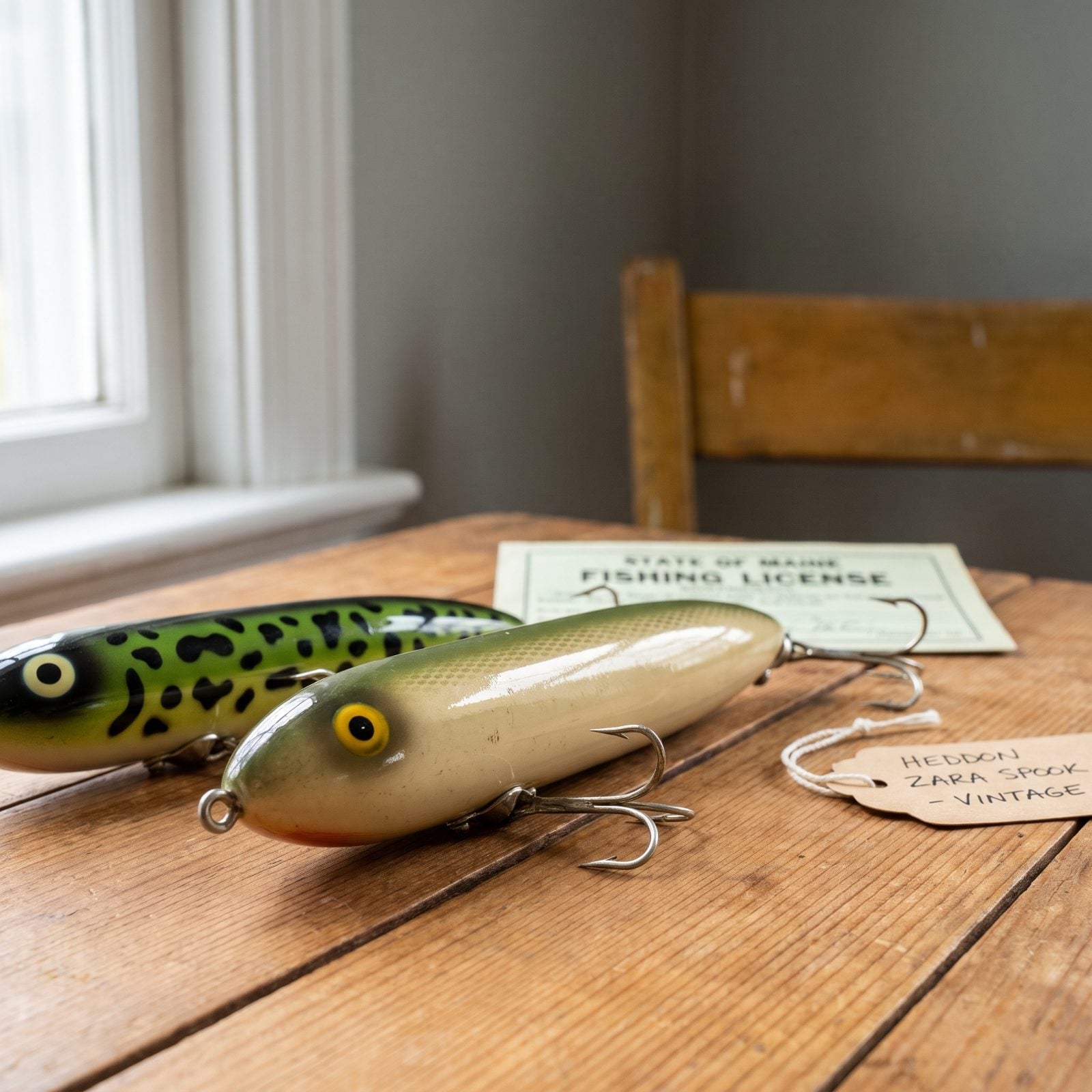
The Zara Spook is old. Really old. Its design traces back to the 1920s, which means anglers in 1975 were already fishing a lure with half a century behind it.
It ran maybe $1.75 then, around ten dollars today, and a current one costs about seven to nine. The walk-the-dog action that made it famous is pure wrist work, side to side across the surface, and a largemouth will absolutely crush it at dawn.
I’ve watched grown men miss the strike three times on a single cast because the blowup rattles your nerves. That’s the fun of it. The lure hasn’t changed because it never needed to.
26. Heddon Tiny Torpedo: The Prop Bait That Spits Louder Than Its Size
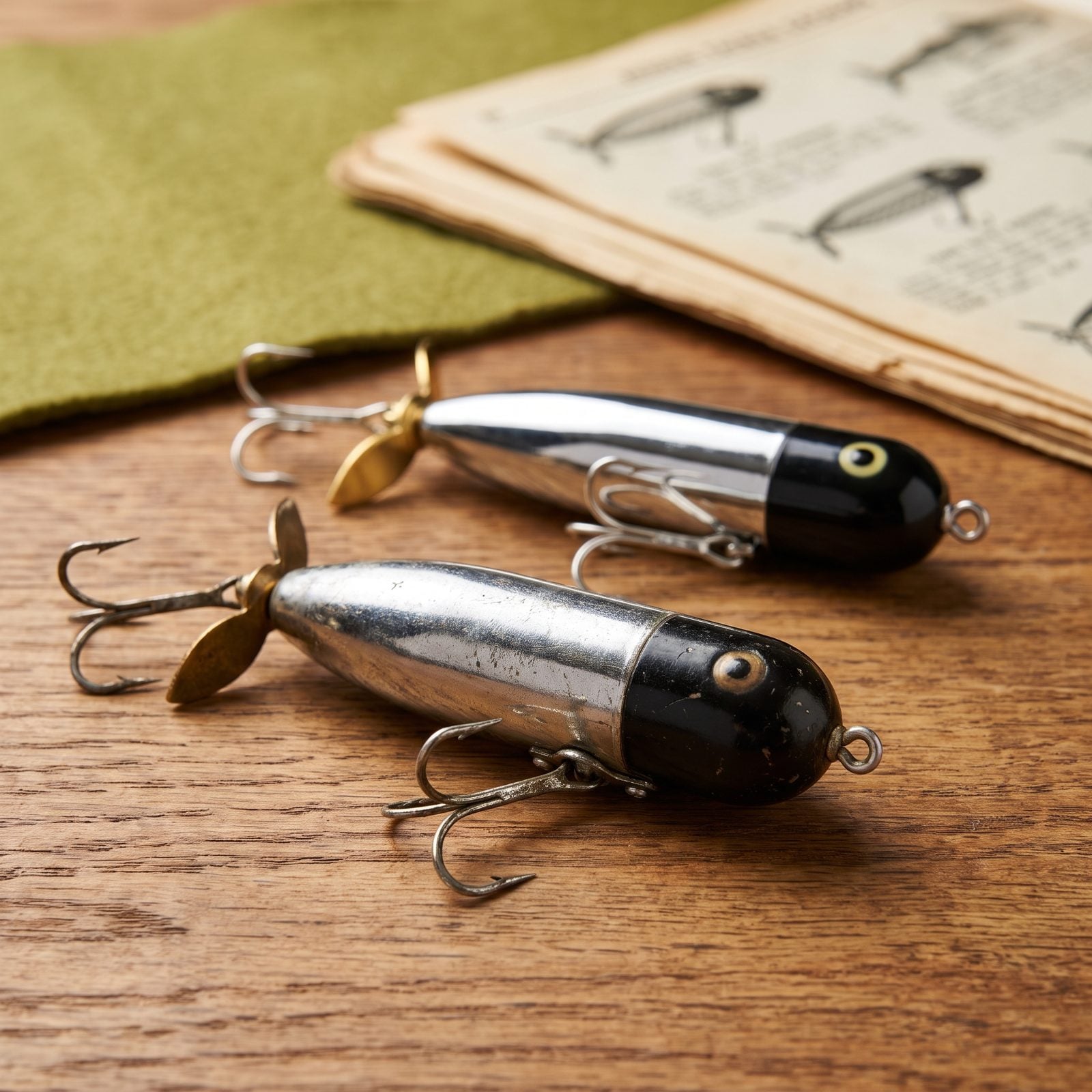
Small lure, big noise. The Tiny Torpedo’s brass prop throws a spray and a buzz that pulls bass out of cover on calm evenings. It went for about a dollar and a half in 1975, call it nine bucks adjusted.
Today it’s around six. What most folks overlook is the prop tuning. Bend the blades a little and you change the sound, and sometimes that tiny adjustment is the whole difference between a looker and a biter.
I keep a few in different finishes. The chrome one in low light has caught me more fish than I can defend with any kind of logic.
25. Arbogast Jitterbug: The Double-Lipped Plug That Gurgles Fish to the Top
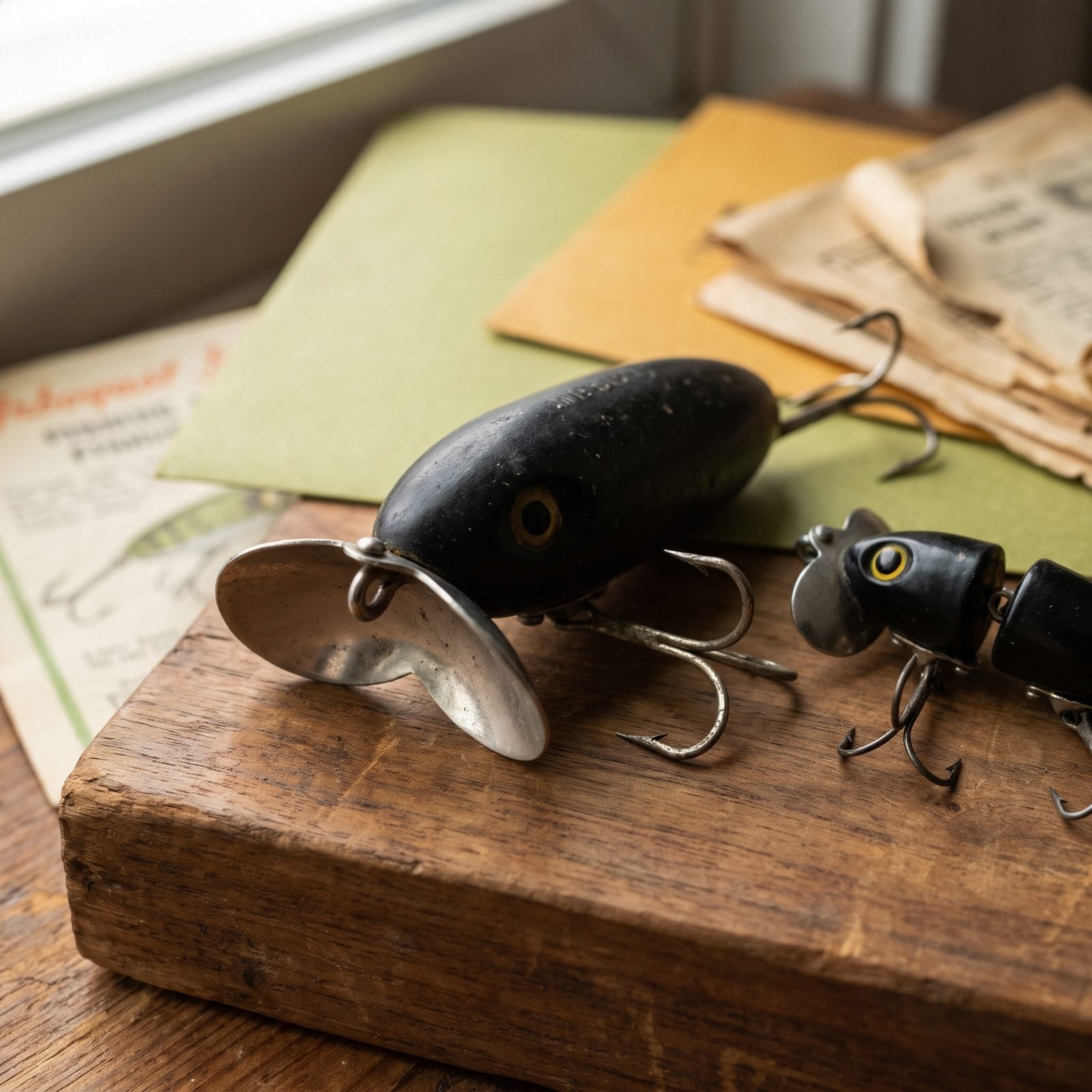
That double-cupped lip is the whole trick. It makes the Jitterbug plow the surface with a steady gurgle, slow and loud, and it earns its keep after dark when a bass is hunting by sound.
About $1.50 in 1975, roughly nine dollars today. A current Jitterbug runs around six to seven.
Fish it slow. If you think you’re fishing it too slow, slow down more.
Black is the classic night color. Not because fish see black well, but because its silhouette reads against a moonlit surface from below. That’s what I tie on when the light goes.
24. Arbogast Hula Popper: The Rubber-Skirted Popper That Made Bluegill Fishing Dangerous
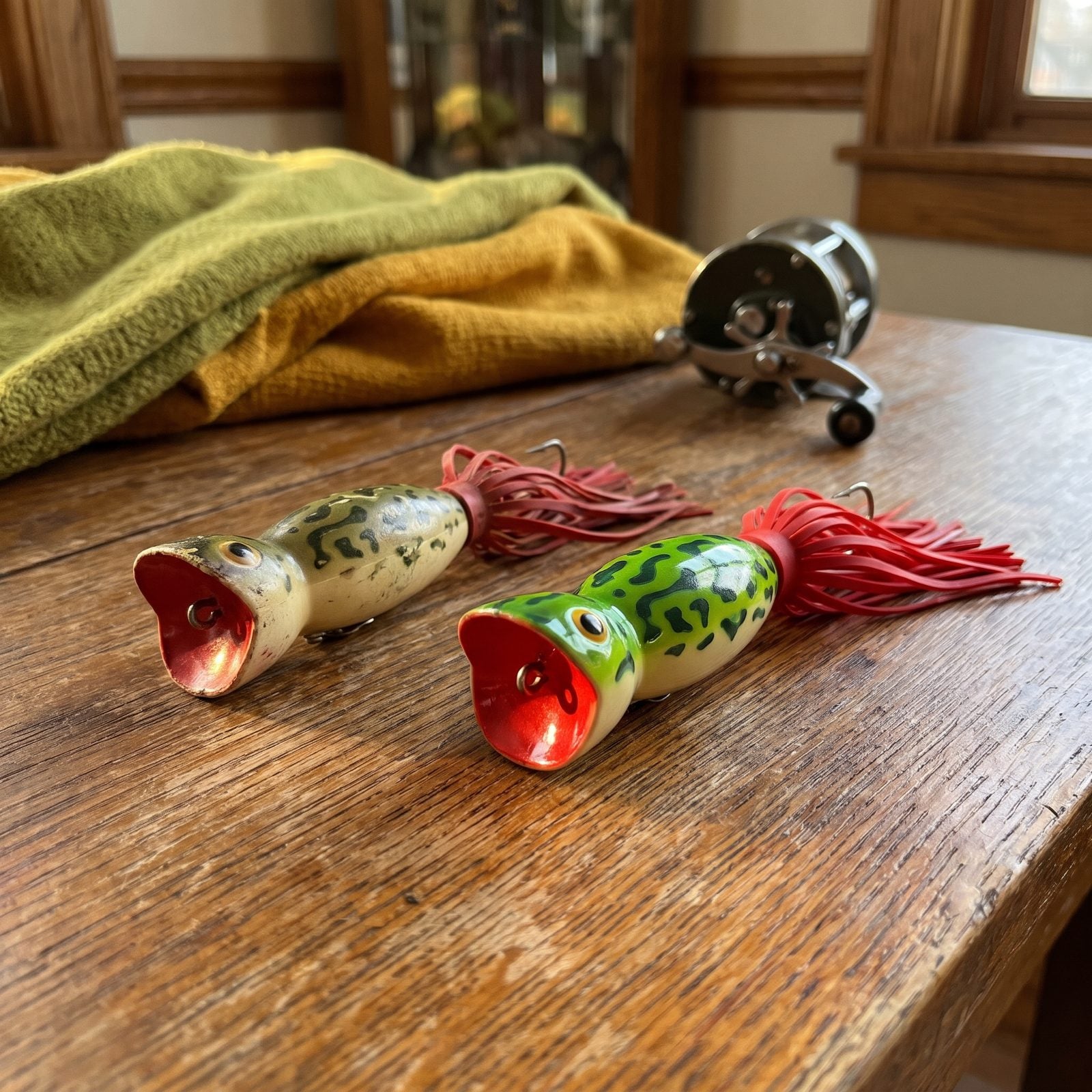
The cupped face pops and the rubber skirt breathes on the pause, and that pause is where the magic lives, because a bass will sit under a stopped Hula Popper and completely lose its mind.
It cost about a dollar in 1975, around six adjusted, and it still sells for roughly six today. Barely moved.
Panfish wreck it too, which is how a lot of us learned topwater as kids. The skirt pulses even when the lure sits dead still, and that subtle quiver fools fish that ignore a motionless bait. Cheap thrill, literally.
23. Heddon Crazy Crawler: The Winged Plug That Crawls Like Something Wounded
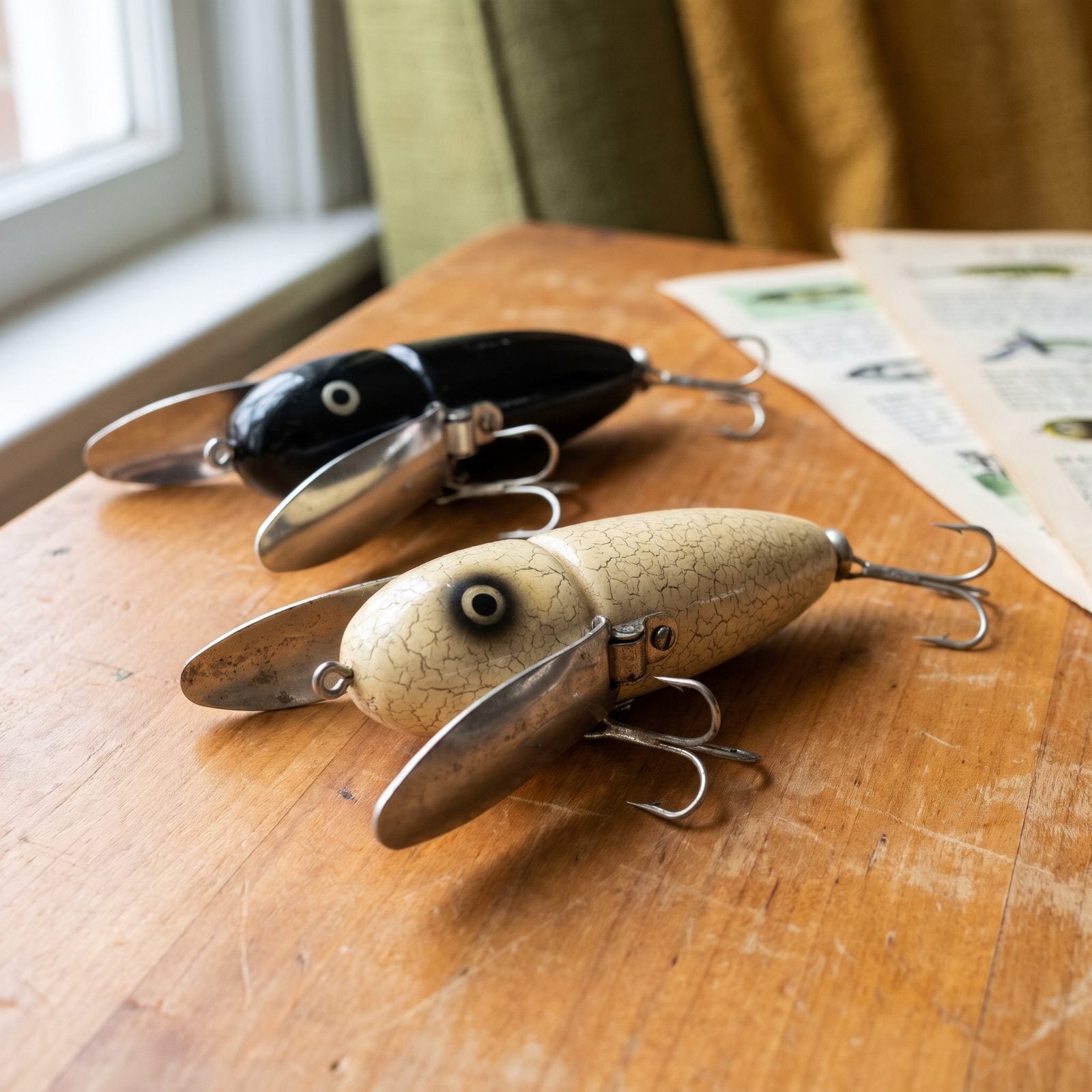
Those two metal wings flap as you reel, dragging the body in a slapping, lurching crawl across the top. It looks ridiculous. Fish disagree.
Around $1.75 in 1975, roughly ten dollars today, and the modern version runs about eight to ten, so the real price has held close.
Here’s a detail nobody mentions: wing adjustment matters. Spread them a touch and it runs wider and slower. The old crackle-finish ones are collector catnip now, and I’d feel sick tossing a mint one into lily pads. So I fish the new ones and keep the old one tucked in a drawer like a coward.
22. Creek Chub Pikie Minnow: The Wooden Jointed Plug That Still Fools Big Fish
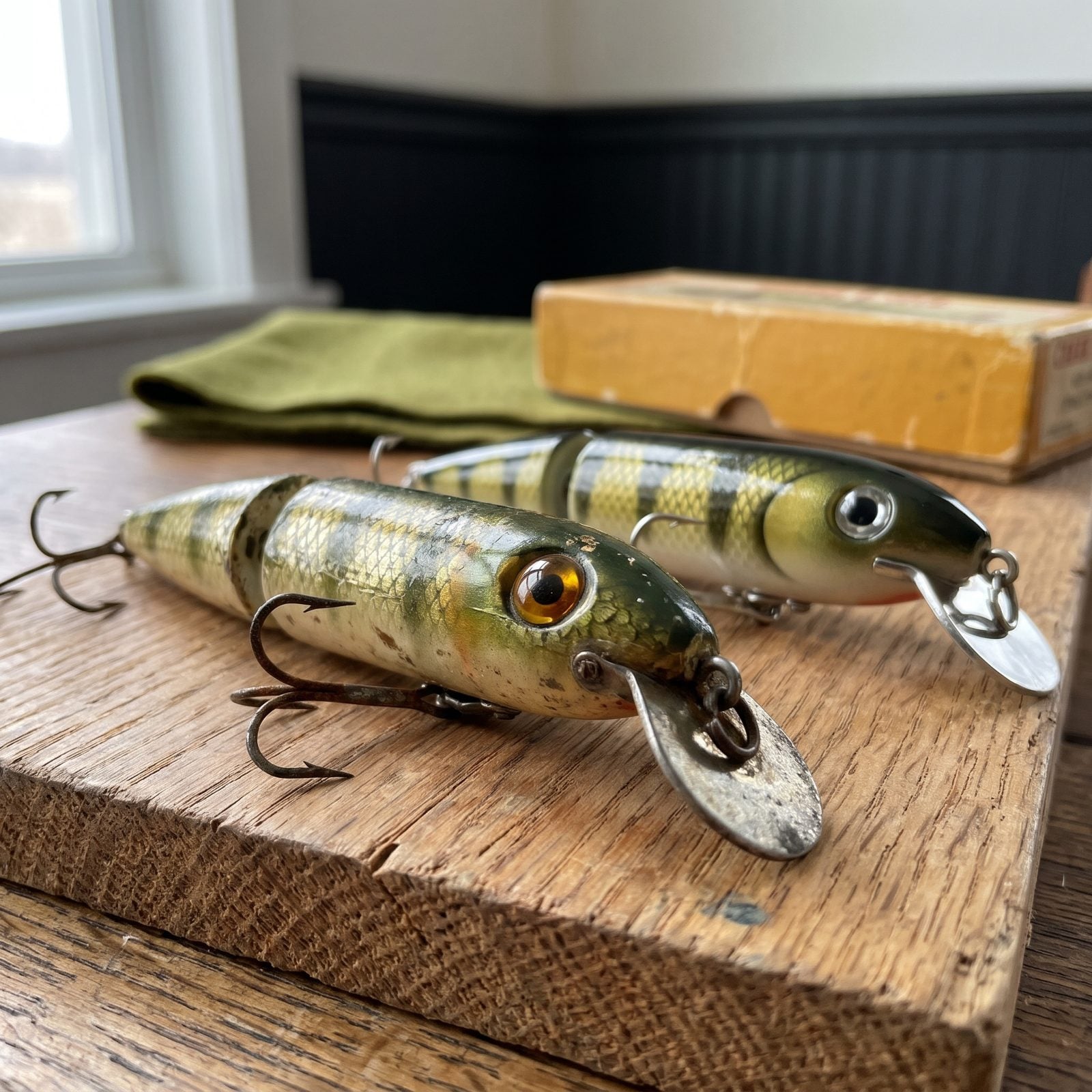
The Pikie Minnow dates to the 1920s and was still catching pike, musky and big bass in 1975 without apology. A jointed wooden body with a swimming wiggle plastic struggled to copy.
It ran maybe $2 then, around twelve dollars adjusted. Modern versions sell for roughly eight to fourteen depending on the model and whether it’s a collector repro.
Glass eyes are the tell on the old ones. Those originals fetch real money from collectors now, sometimes hundreds for rare colors, a strange fate for a lure built to get chewed up by toothy fish. It earned its keep the honest way, in the water, for a hundred years.
21. South Bend Bass-Oreno: The Dime-Store Classic That Still Swims
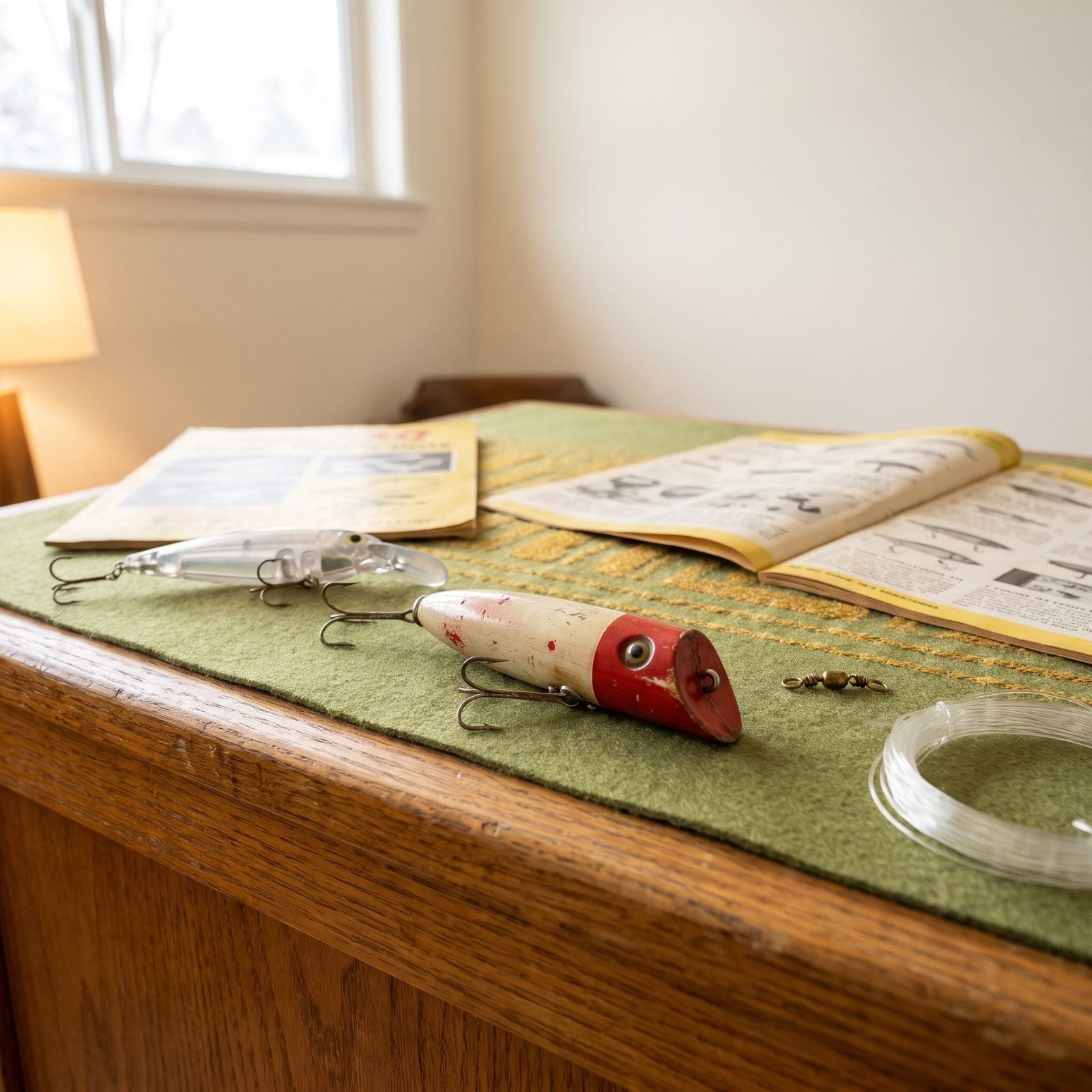
Before plastic took over, the Bass-Oreno was the plug every tackle box owned. You grabbed one off a pegboard in 1975 for about a dollar. That buck, adjusted to roughly six dollars today, buys something like a solid modern wood-bodied topwater, which tells you how little the category has really moved.
Nobody tells you this part: the old cedar-bodied versions are worth more on the shelf than in the water. Collectors pay real money for clean red-and-white ones with intact glass eyes. Find a boxed one at an estate sale for a couple bucks? Grab it and don’t tie it on.
20. Rebel Minnow: The Floating Jerkbait That Got Cheaper
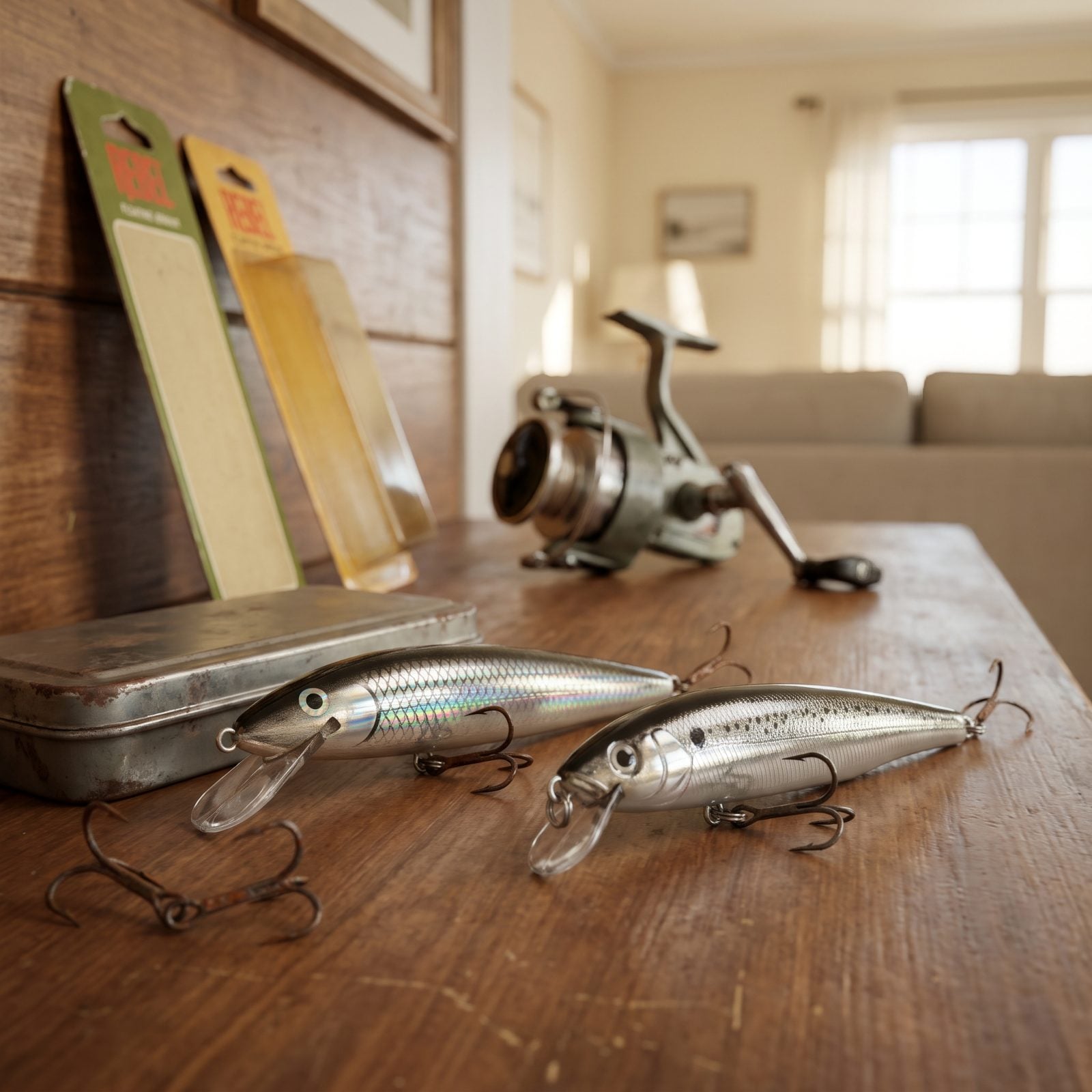
The Rebel Minnow is one of the many items here that costs you less in real terms today than it did in 1975. Back then it ran a buck and a half, which in current money would be somewhere in the high single digits. You can still walk out with one for four or five.
Mass production and plastic did that. The trade-off is that the originals had a tighter wiggle some old-timers swear by. I’ve fished both and honestly can’t tell the difference in the dark at the hour that matters most.
19. Cotton Cordell Big O: The Square-Bill That Started a Craze
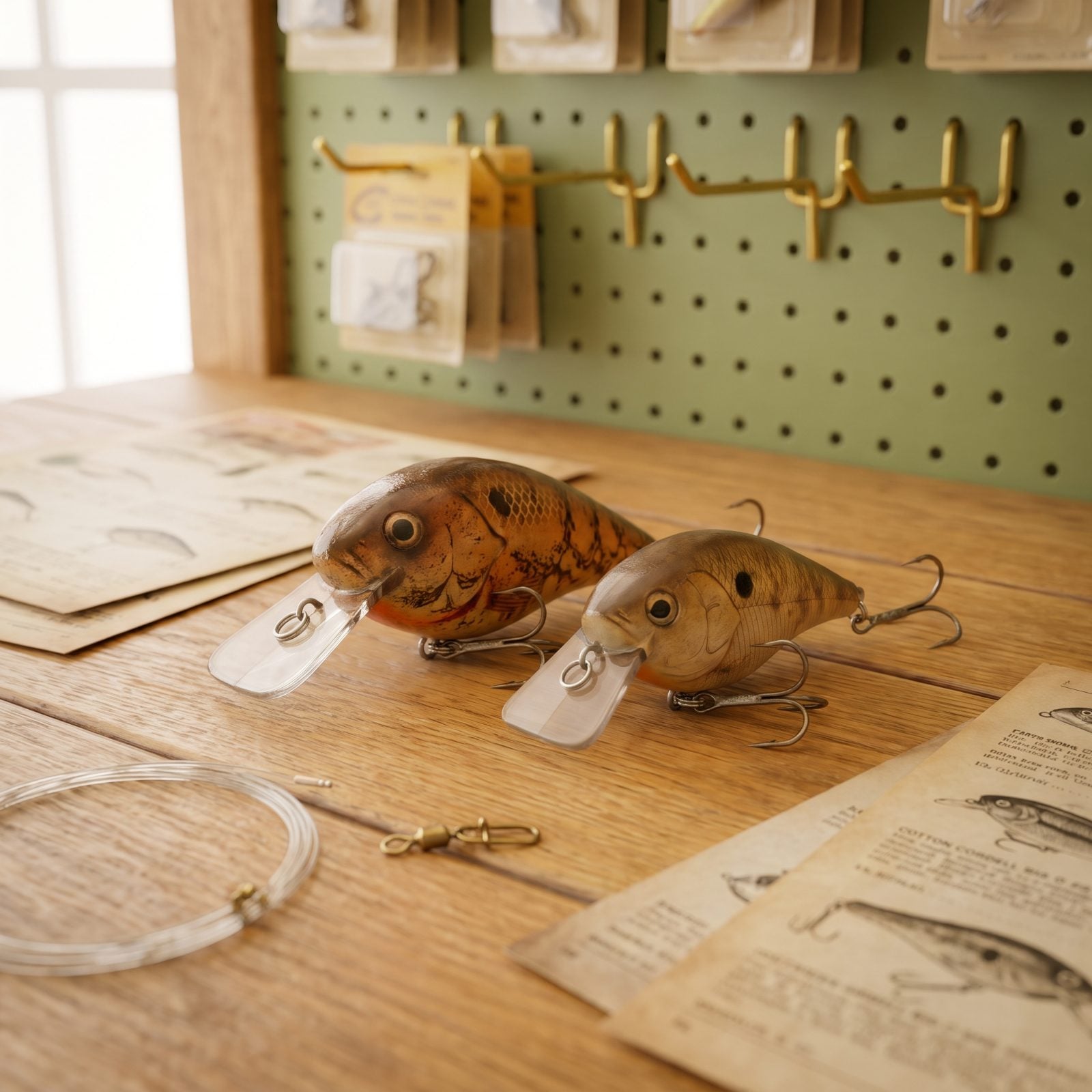
This is the lure that built the modern crankbait market. The original Big O was hand-carved balsa by Fred Young in Tennessee, and in the early ’70s anglers were paying collector-crazy prices just to get their hands on one. Then Cotton Cordell bought the design, molded it in plastic around 1973, and the retail price fell to a couple of dollars.
A plastic Big O cost roughly two dollars in 1975 — call it a sawbuck and change today. A new one runs five or six. The hand-carved balsa originals? Those still trade for serious cash among collectors, because wood casts and wobbles in a way injection molding never fully copied.
18. Smithwick Devil’s Horse: The Prop Bait That Spits and Sputters
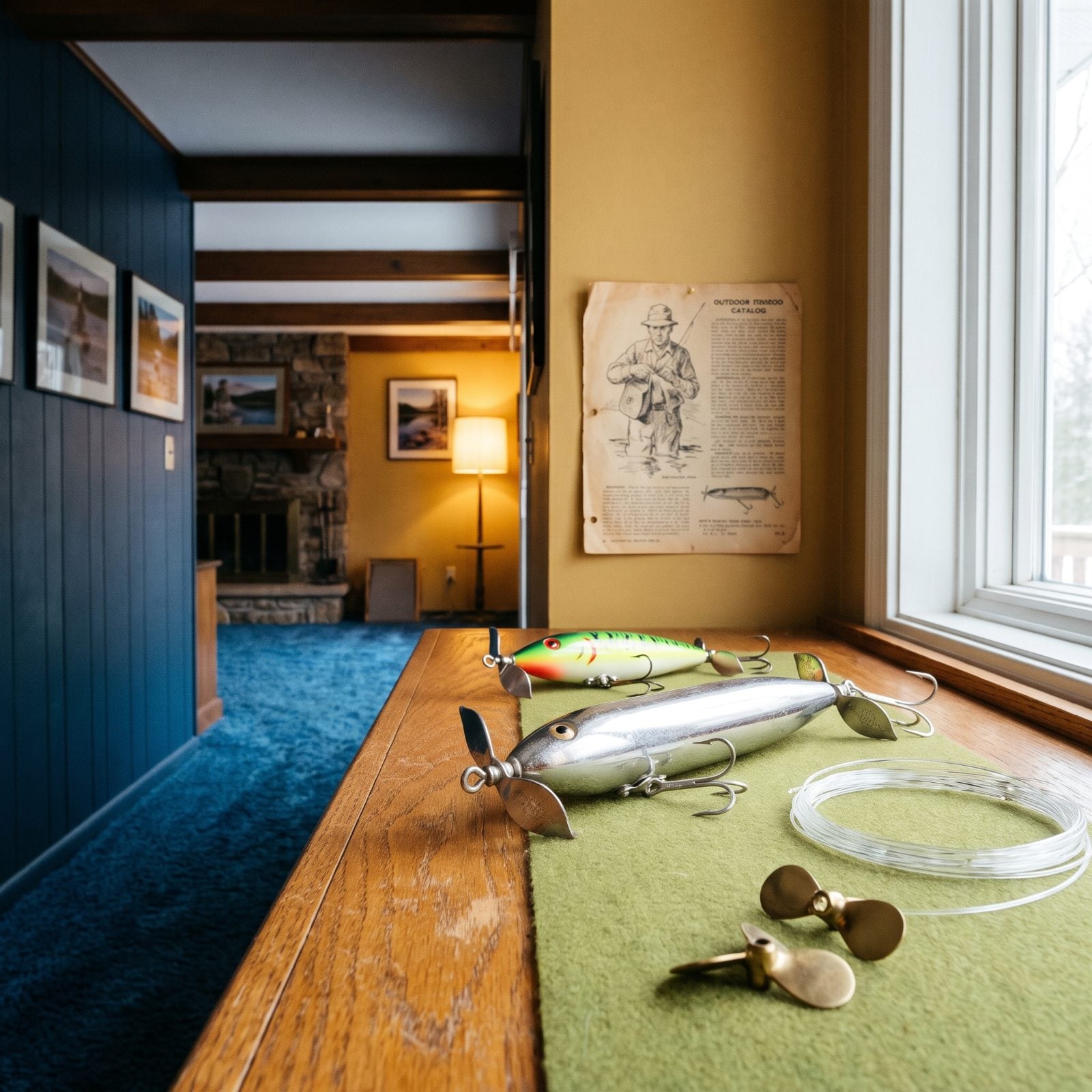
Twin propellers, a straight stick body, and a sound like angry breakfast cereal spitting across the surface. The Devil’s Horse has been catching topwater bass since the 1940s and barely changed its DNA since.
In 1975 it cost around a dollar seventy-five, which lands somewhere around ten or eleven in today’s money. You’ll pay about eight now, so the price has held roughly flat. The props still need the same thing they always did: bend them with pliers so they spin freely. Straight out of the package they’re lazy, and a lazy prop is a quiet lure.
17. Bagley Balsa B: The Hand-Painted Crankbait Worth Hoarding
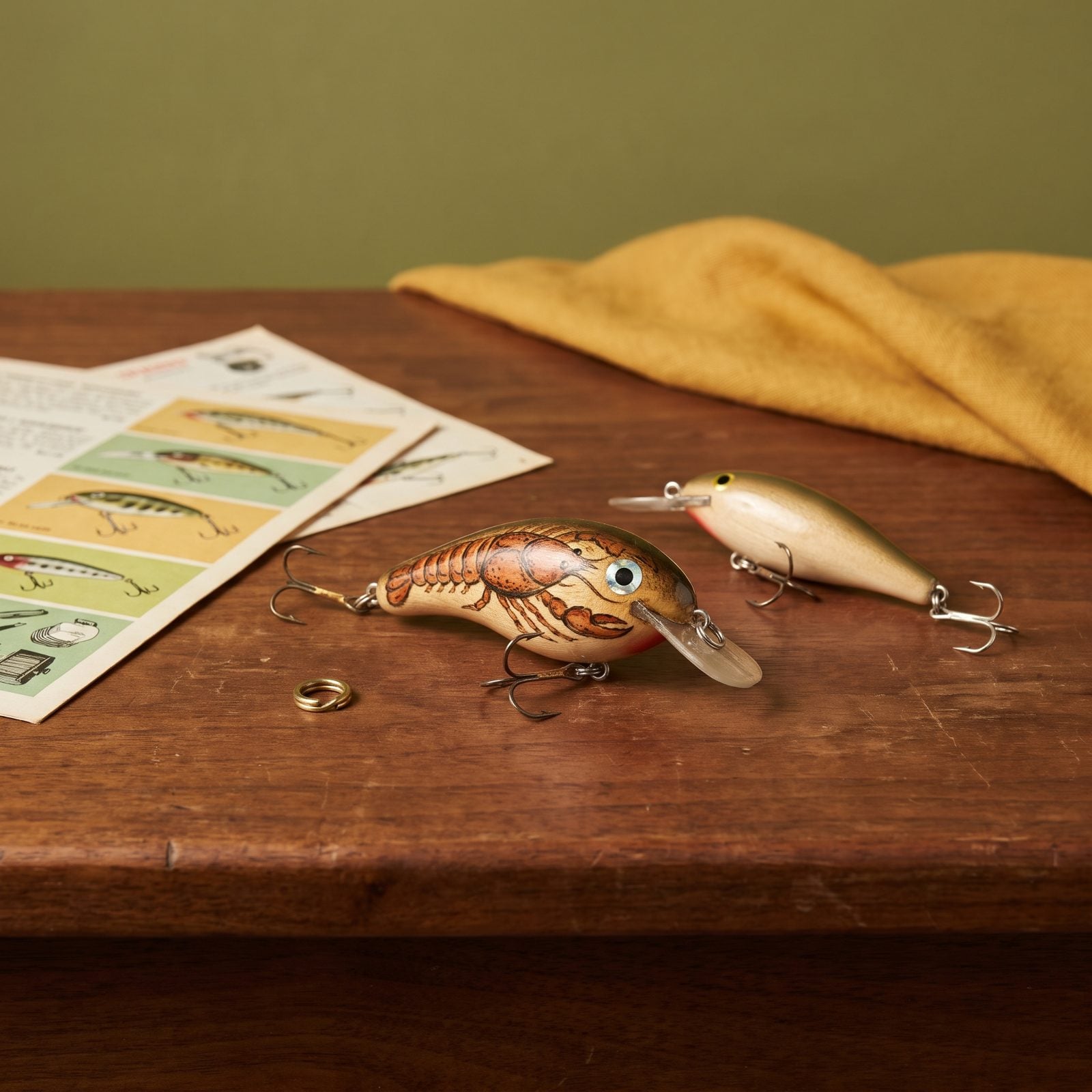
Balsa floats high, wobbles wide, and paints up beautiful. Bagley leaned into all three, and the Balsa B became the crankbait serious bass fishermen reached for when the plastic ones felt too tame.
In the mid-’70s a Balsa B ran about two-fifty. Run that through inflation and you land in the mid-teens today — and wouldn’t you know, a genuine balsa Bagley still runs twelve to fifteen. Some things resist getting cheap.
Wood costs more to shape and more to paint, and balsa anglers have always been fine paying for it.
The old Florida-made ones with the script lettering are the grails. If an uncle’s tackle box turns one up, do not throw it in a jon boat and bang it on rocks.
16. Helin FlatFish: The Banana-Shaped Wiggler That Refuses to Die
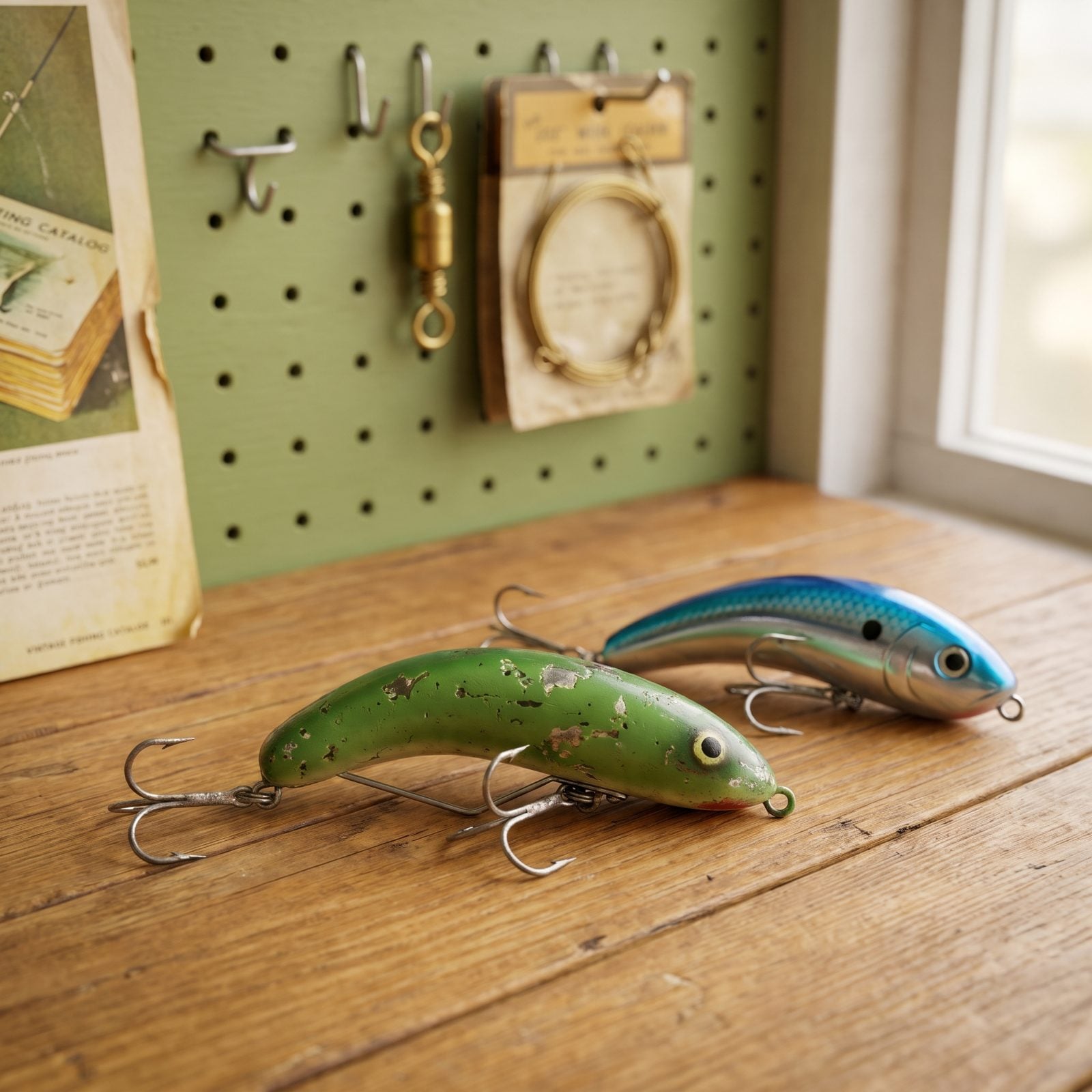
That odd banana curve isn’t a gimmick. It makes the FlatFish shimmy at dead-slow speeds where other lures just sit there, and that’s why trollers and river drifters have trusted it for decades.
In 1975 a FlatFish cost about a dollar fifty, which puts it around nine dollars now. The modern version — and its cousin the Kwikfish — runs seven to ten. Barely moved.
15. Worden’s Rooster Tail: The Inline Spinner With the Hackle Skirt
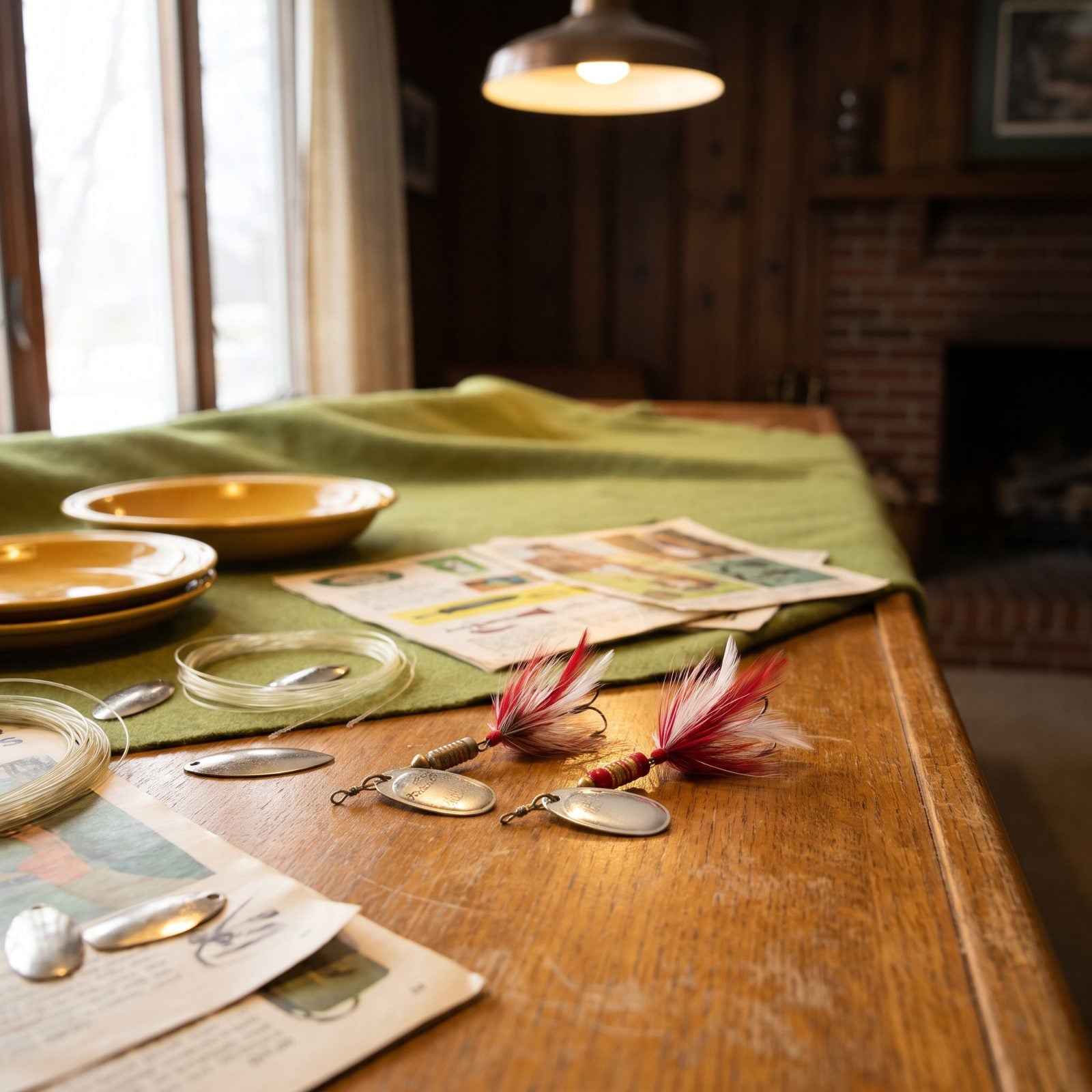
Trout anglers know this one cold — the Rooster Tail’s spinning blade and that little hackle-feather skirt pulsing behind the hook has fooled stream trout since the ’50s.
Here’s a cheap-stays-cheap story. A Rooster Tail cost maybe eighty cents in 1975, around five bucks adjusted, and you can still buy one for three or four. The skirt is the whole trick, by the way. It breathes when the lure pauses, and that breathing is what closes the deal on a following fish.
14. Mepps Aglia Spinner: The French Blade That Set the Standard
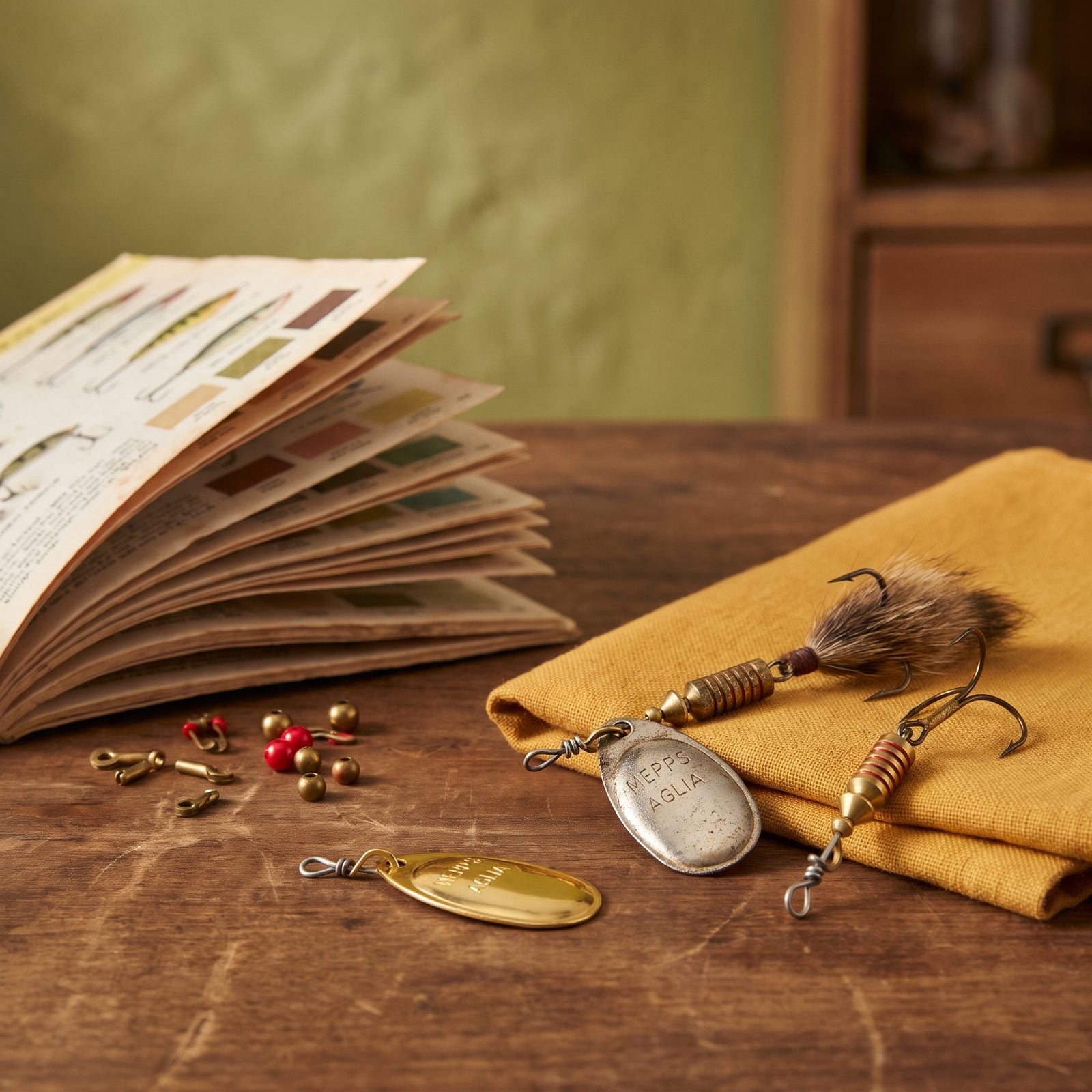
The spinner every other spinner copies. Mepps started in France, and the Aglia blade angle became the benchmark worldwide. Simple, nearly indestructible, catches everything from brook trout to smallmouth.
An Aglia ran about a dollar in 1975, roughly six today. A new one costs five to seven — so the real price held almost perfectly flat across half a century. That’s rare.
The dressed-tail versions with the squirrel hair cost a touch more and foul less in weeds. Plain treble for open water, dressed for cover. I’ve lost count of how many I’ve left hanging in streamside brush, and I’ll lose more.
13. Eppinger Dardevle Spoon: The Red-and-White Stripe That Caught Everything
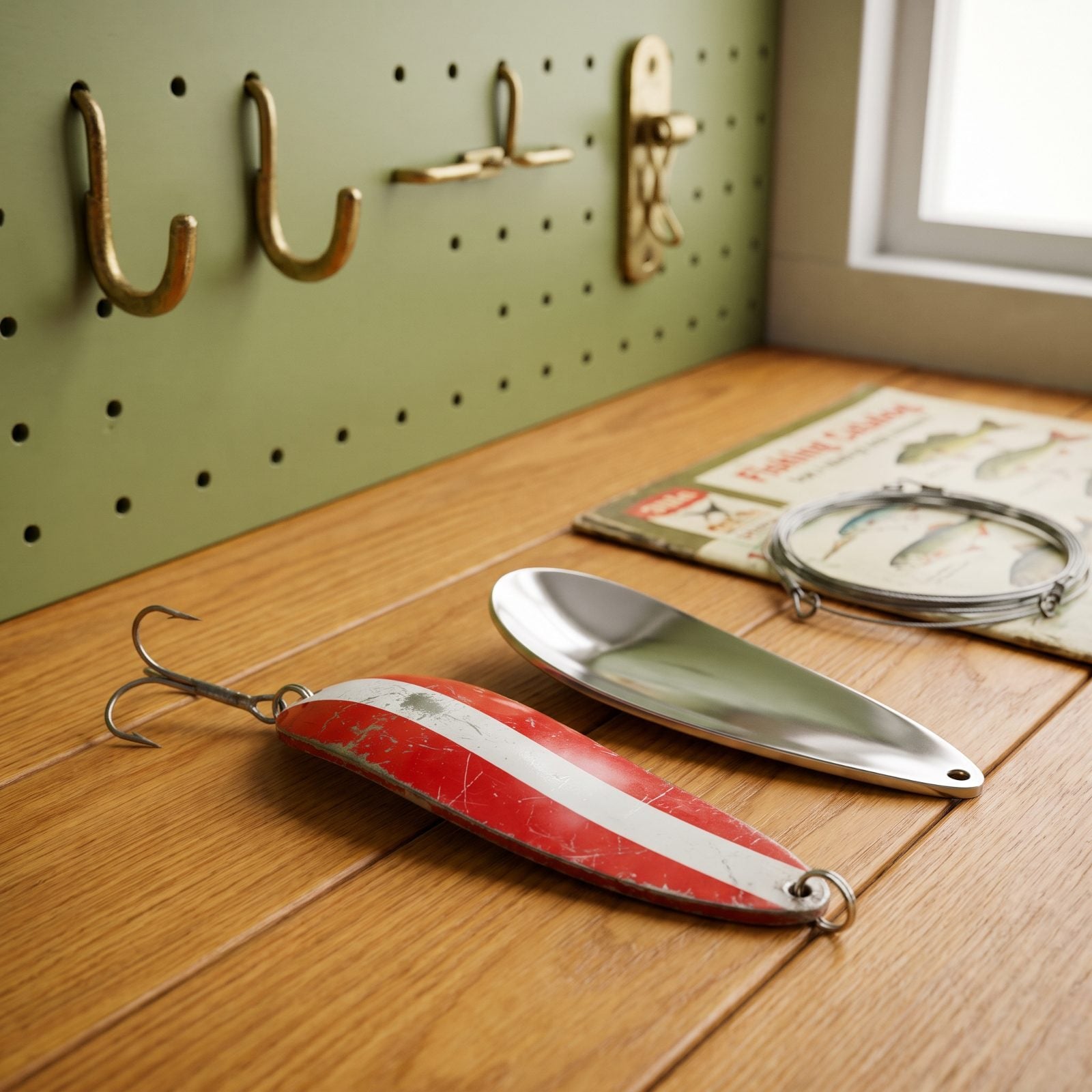
Walk into any bait shop in America and that red-and-white diagonal stripe was hanging on the wall. The Dardevle caught pike, bass, trout, and more than a few surprised walleye.
It cost around a dollar and a half in 1975, roughly nine dollars now, and you’ll pay six to eight today. The stamped-brass construction hasn’t changed one bit — which is why a spoon your grandfather tied on still works identically to one bought this morning.
12. Johnson Silver Minnow: The Weedless Spoon for Slop and Lily Pads
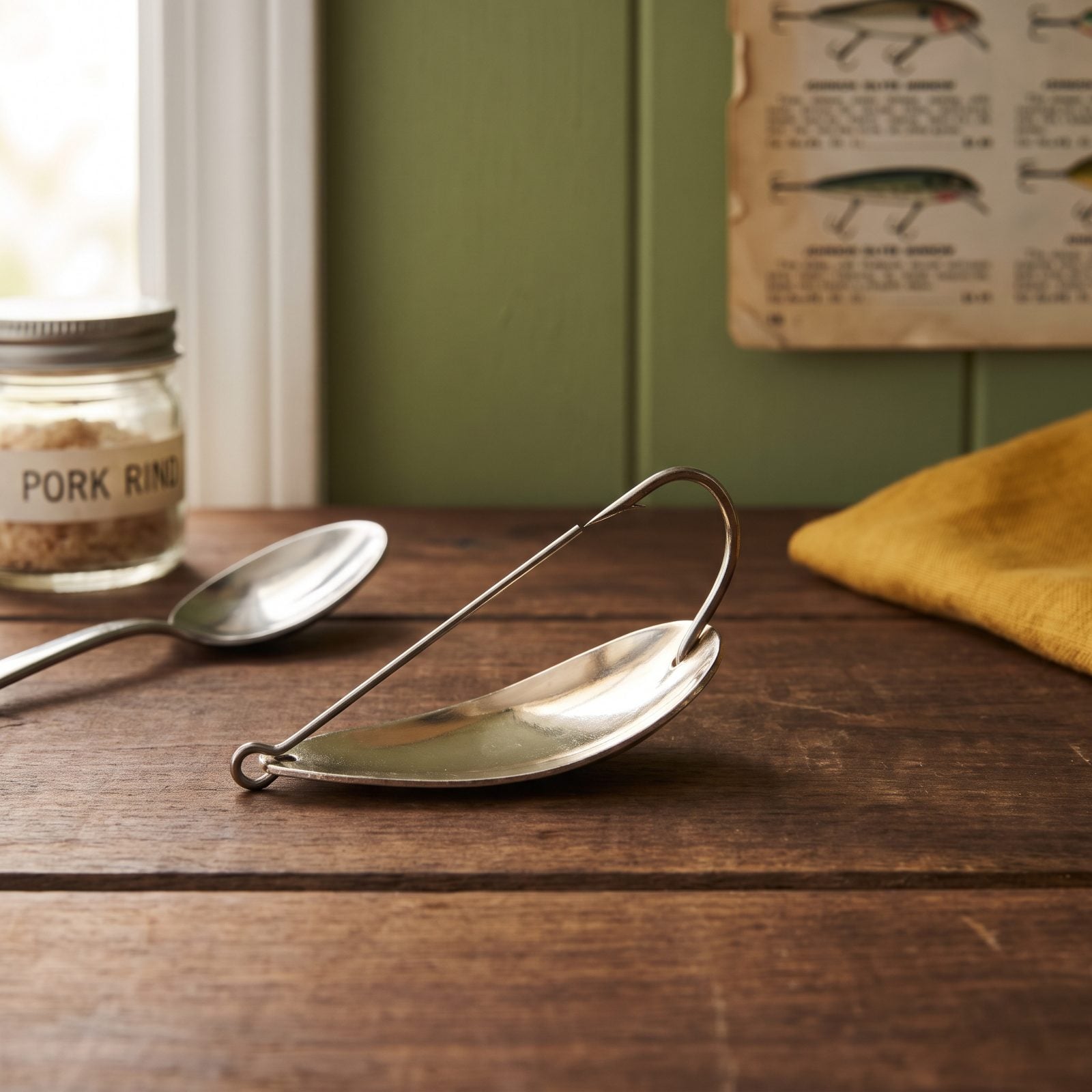
This is the one you throw into the junk nothing else can touch — lily pads, matted grass, duckweed so thick it looks like a putting green. The Johnson Silver Minnow slides over all of it on that single upturned hook and wire guard. A plain kitchen tablespoon shows where the idea came from — same shiny bowl, but the Minnow’s guarded hook is what lets it come through the weeds clean.
It cost about a dollar in 1975, call it six adjusted, and a new one runs five to seven. The price barely budged. Tip it with a pork trailer or a soft-plastic grub and you’ve got a largemouth machine in the slop. Nothing modern does this job better, which is why they never bothered redesigning it.
11. Acme Kastmaster Spoon: Still Chucking Chrome After All These Years
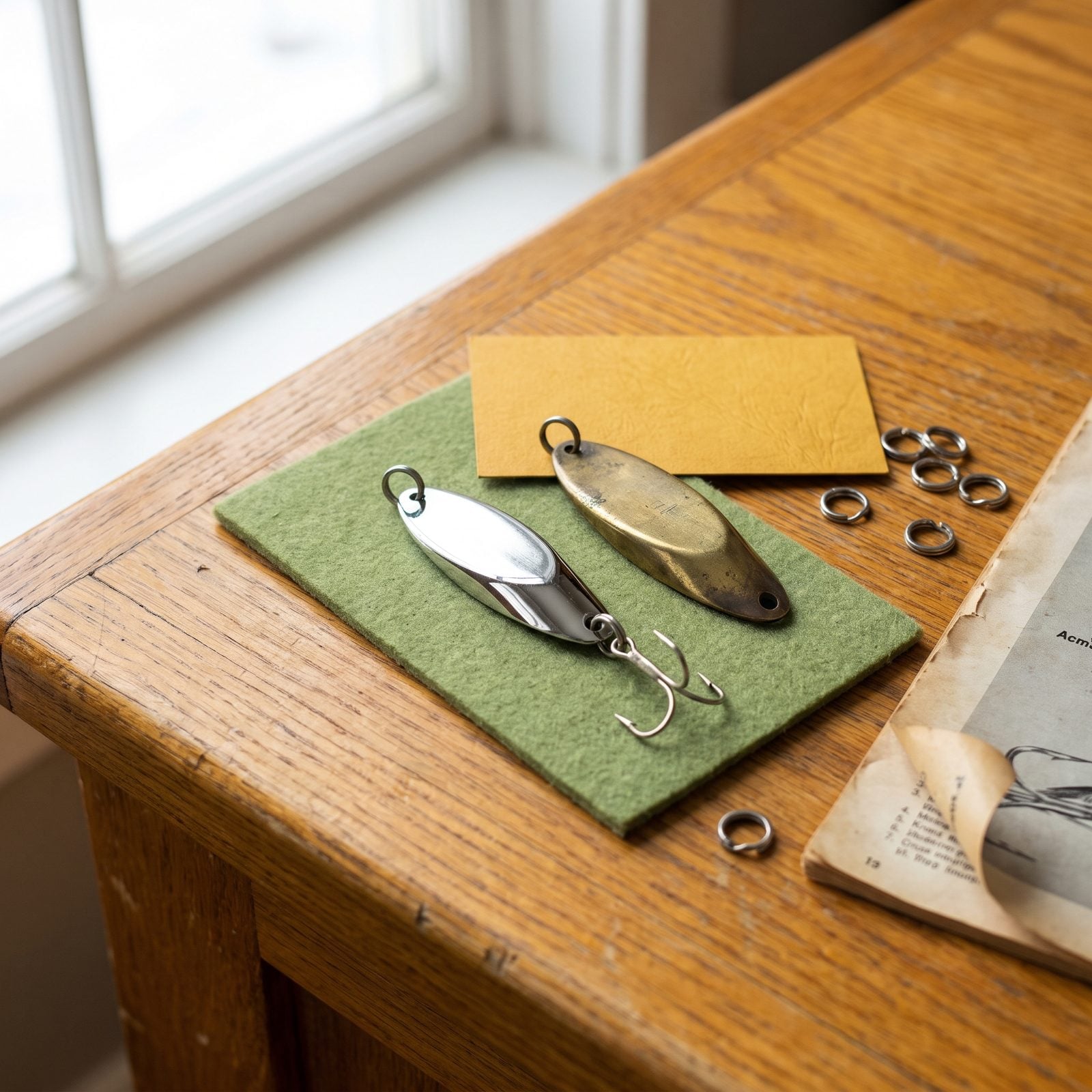
A Kastmaster is a block of machined brass plated in chrome, and the whole trick lives in the shape. That asymmetrical body wobbles and flashes on the drop and the retrieve, so it’ll fool trout in a creek and schoolie stripers off a jetty with equal ease.
Back in 1975 a small one set you back around a dollar, which lands near five or six bucks today. A modern Kastmaster in the common 3/8-ounce size runs maybe four to seven dollars. So the lure costs roughly what it always did — rare in tackle, that. Nobody ever needed to fix the design, which is exactly why they still stamp them out the same way.
10. Bay de Noc Swedish Pimple: The Ice Jig That Outlived the Hardware Store
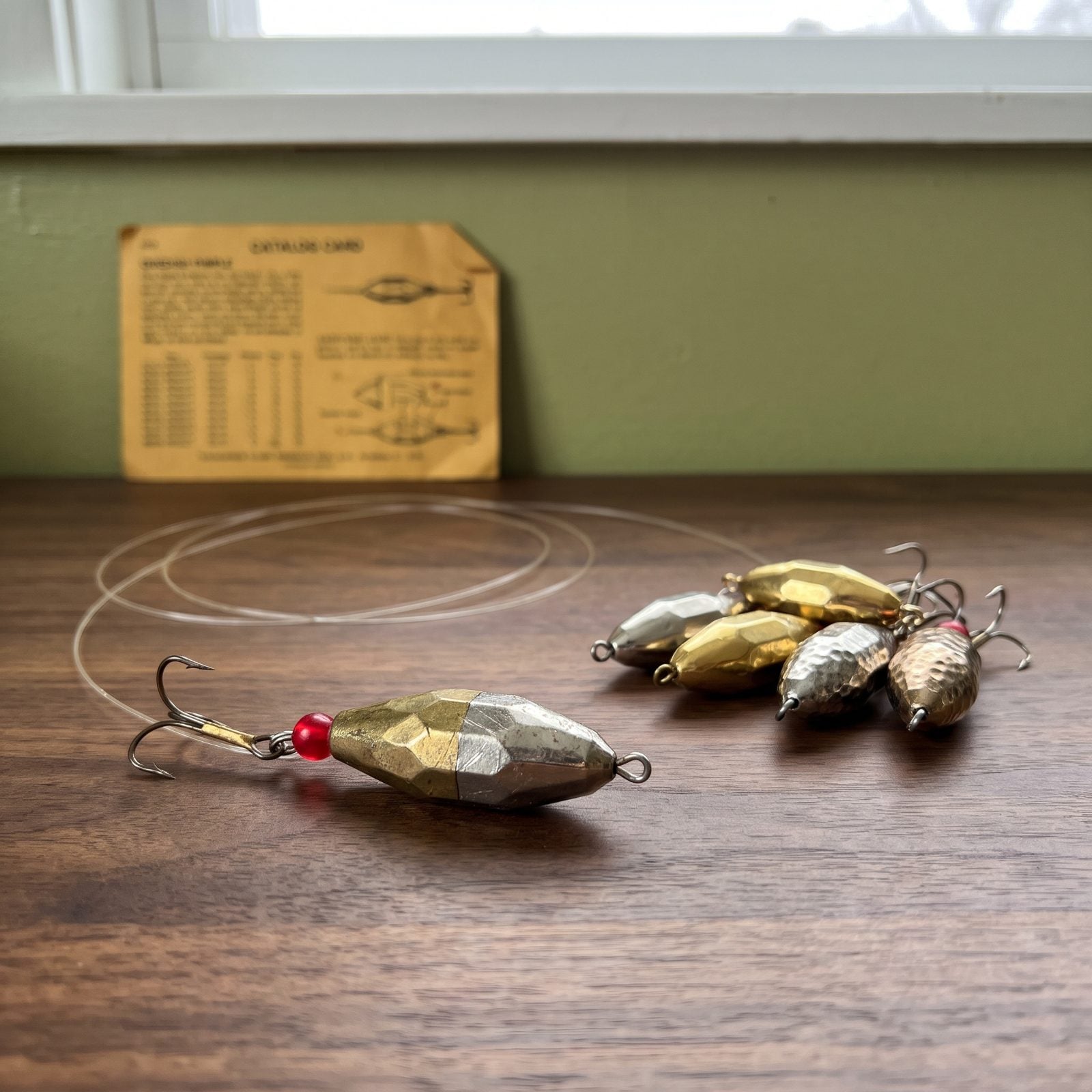
Ask anyone who drills holes in January and they’ll tell you the Swedish Pimple earned its name the hard way — by catching fish when nothing else so much as twitched.
In the mid-70s one cost you maybe sixty cents to a dollar. Adjusted, call it three to five dollars now, which is about what the current ones go for too. Flat. What changed is the finishes. You can buy glow and holographic patterns nobody dreamed up in 1975.
9. Creme Scoundrel Plastic Worm: The Bait That Started a Whole Industry
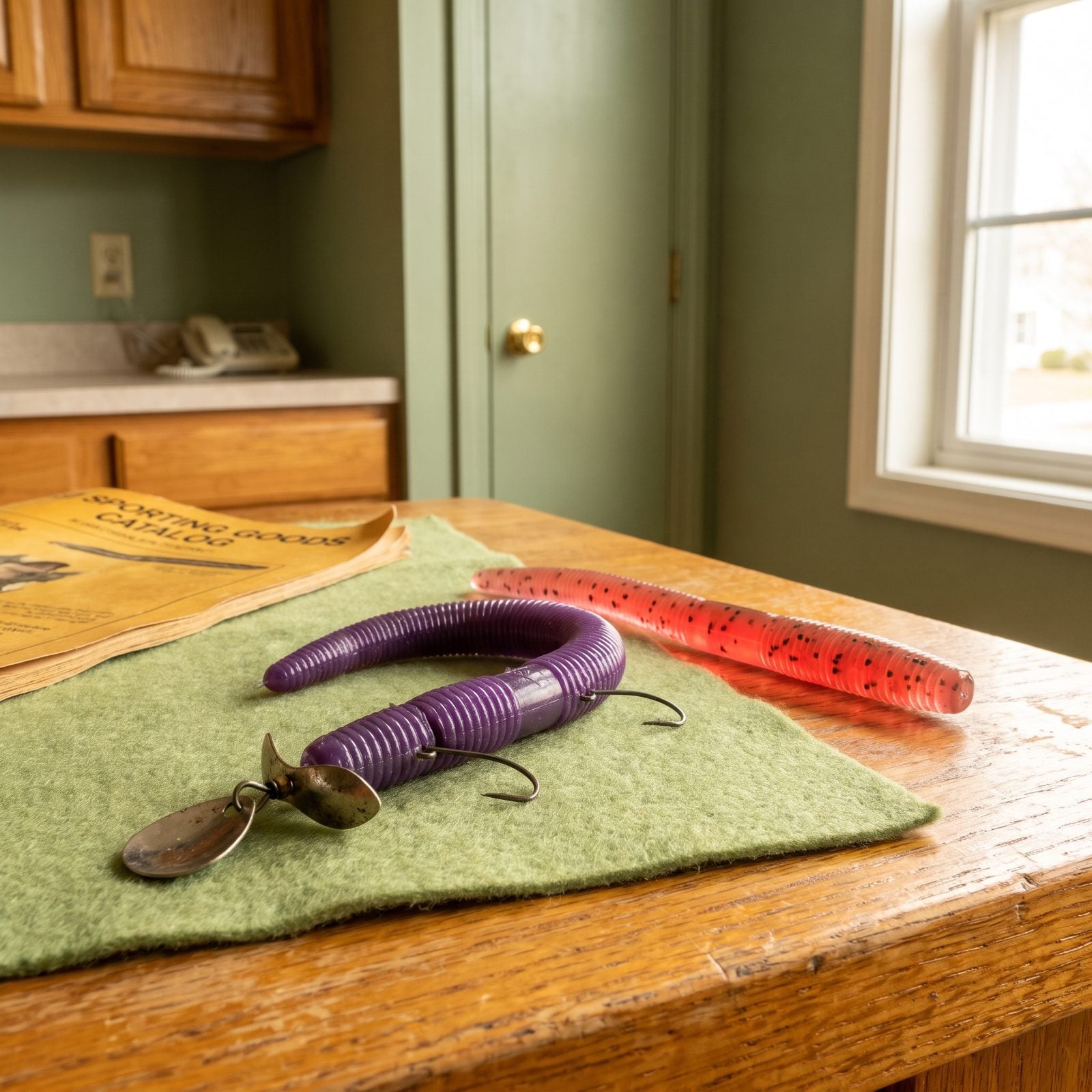
This is the worm that invented the modern bass lure. Nick Creme poured the first soft plastic worm in his own kitchen in the late 1940s, and the pre-rigged Scoundrel went on to become a fixture on every lake in the South.
A pack in 1975 ran well under a dollar — maybe fifty to seventy cents, roughly three to four dollars today. A modern bag of soft plastics runs four to six dollars and gives you more worms than the old pre-rigged packs ever did. But price isn’t the real shift. The pre-rigged style mostly died off. Everybody rigs their own now, Texas or wacky, and an old Scoundrel with a spinner blade at its nose and a pair of dark gunmetal hooks riding along its body looks downright quaint. Still catch fish, though.
8. Mister Twister Curly Tail Grub: The Two-Inch Tail That Changed Everything
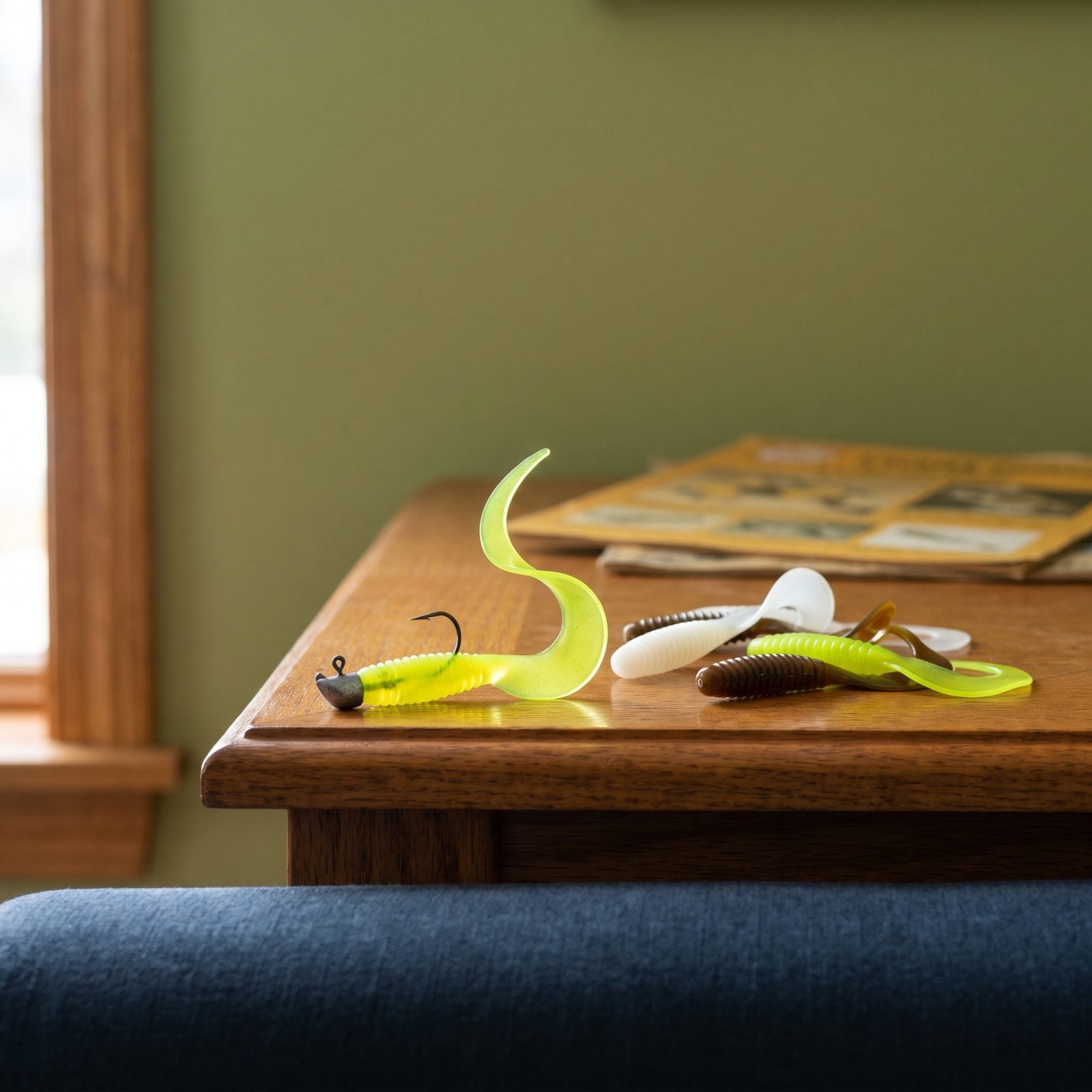
The curly tail does its best work doing absolutely nothing. Drop a Mister Twister grub and that spiral tail quivers on the fall without a lick of help from you, which is how it manages to fool everything from crappie to walleye to schoolie bass on the same afternoon.
A pack cost around a dollar in the mid-70s. Figure five or six bucks adjusted. Today a bag runs three to five, so soft plastics actually got cheaper per bait. Hard to argue with the math, or the catch rate.
7. Uncle Josh Pork Frog: The Trailer Soaked in Brine and Memory
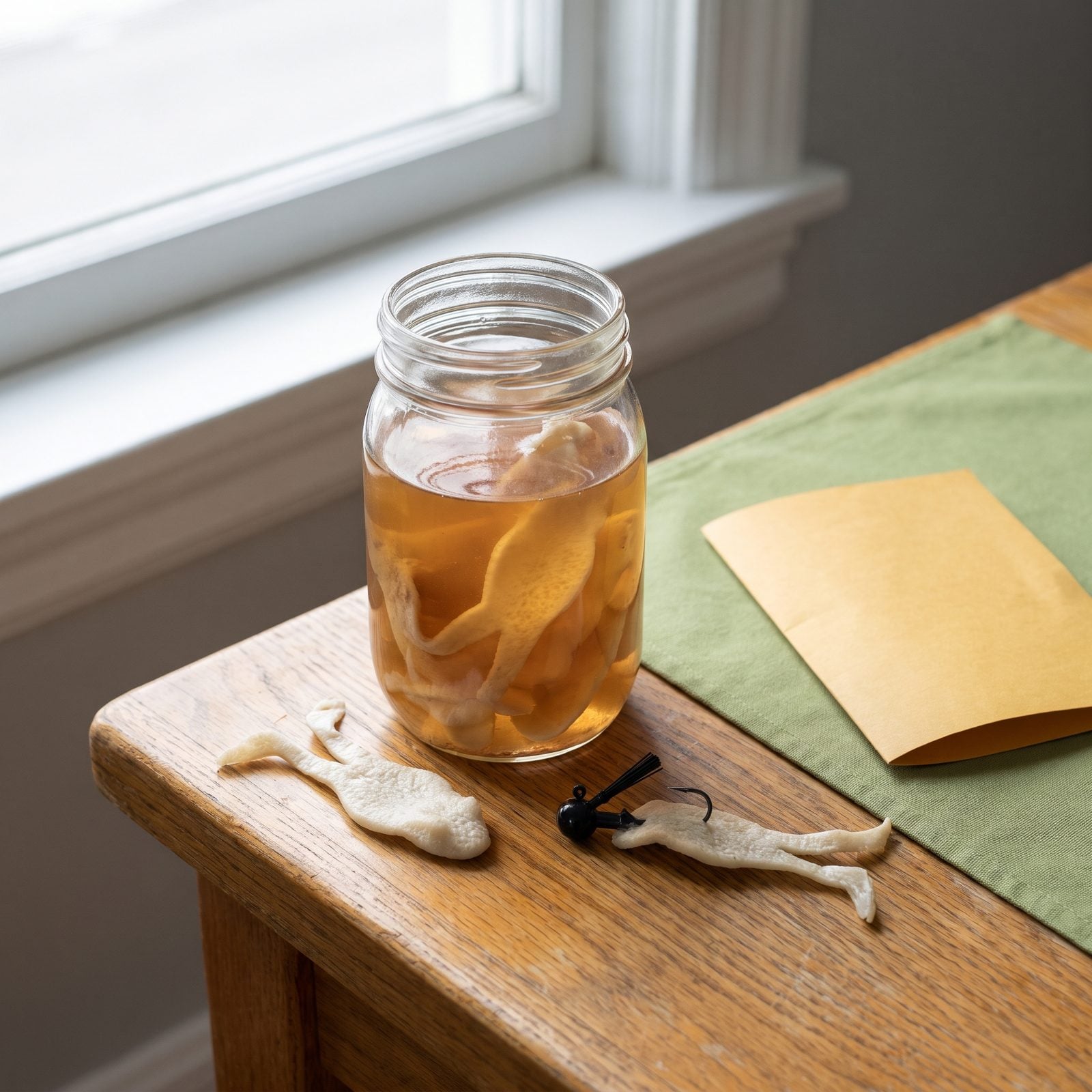
Pork rind in a jar of brine. Few things in a tackle box feel more like a grandfather’s garage than Uncle Josh.
A jar ran maybe a dollar or so in 1975 — call it five adjusted. And here the story bends. Uncle Josh stopped making pork baits around 2016, so you’ll only find old jars on auction sites now, sometimes going for more than they ever cost new, snapped up by folks who remember. The modern stand-in is a soft-plastic chunk trailer at two or three dollars, and it works fine. It just doesn’t smell like the real thing drying on a dock in July.
6. Johnson Beetle Spin: The Safety-Pin Spinner Grandpa Swore By
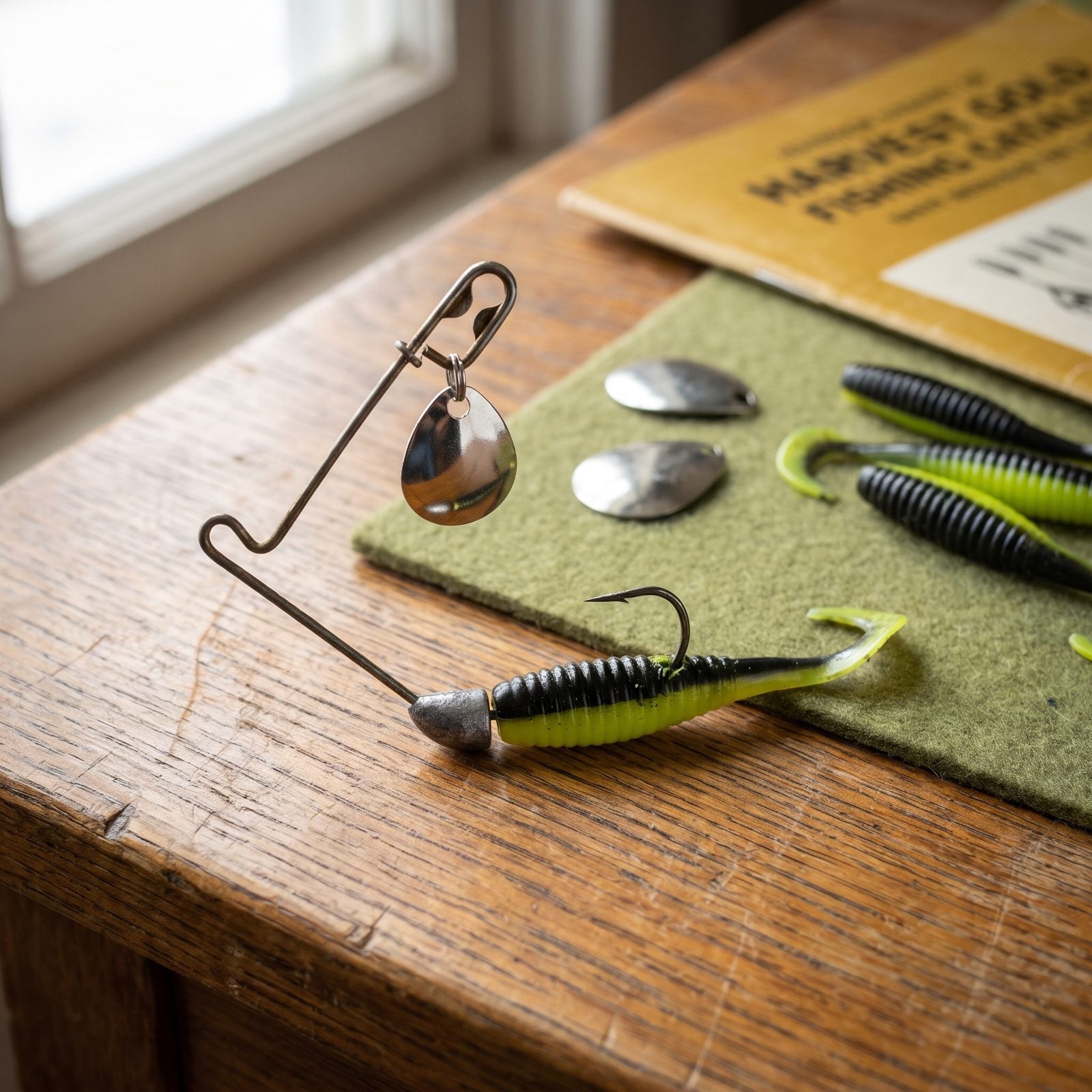
The Beetle Spin is the first lure a lot of people ever tied on, and it still outfishes fancier stuff on a bad day. Simple safety-pin wire, a Colorado blade, a soft grub body — flash plus wiggle that calls in bluegill, crappie and bass without asking a thing of your skill.
In 1975 it cost well under a dollar, which adjusts to three or four bucks. A modern Beetle Spin runs about three to five, basically unchanged. Buy a card of them, lose half in the brush, and still come out ahead.
5. Stren Monofilament Line: The Gold Spool in Every 70s Tackle Box
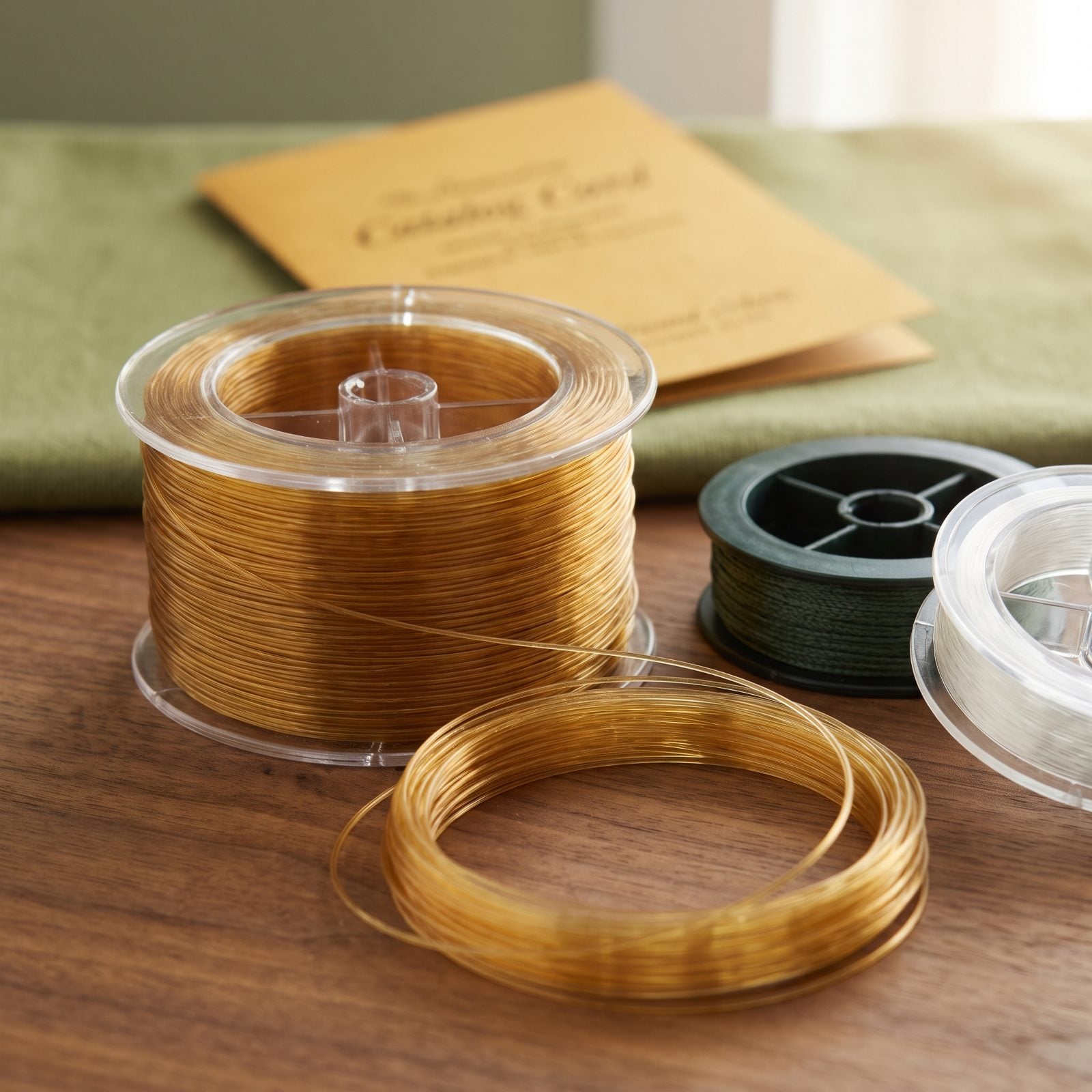
That faint gold tint. Anyone who fished the 70s can picture a spool of Stren without even trying.
Stren pretty much made monofilament a household word. A filler spool in 1975 cost a dollar or two — call it six to ten dollars adjusted. You can still buy Stren today for roughly eight to twelve a spool, so the price held.
What’s different is the company it keeps. You’ve got braid now for no stretch and thin diameter, fluorocarbon for near-invisibility down where the fish are. Mono didn’t get worse. It just got options around it, and plenty of us still spool up with it because it’s forgiving and cheap.
4. Cortland 333 Fly Line: The Peach Line That Taught a Generation to Cast
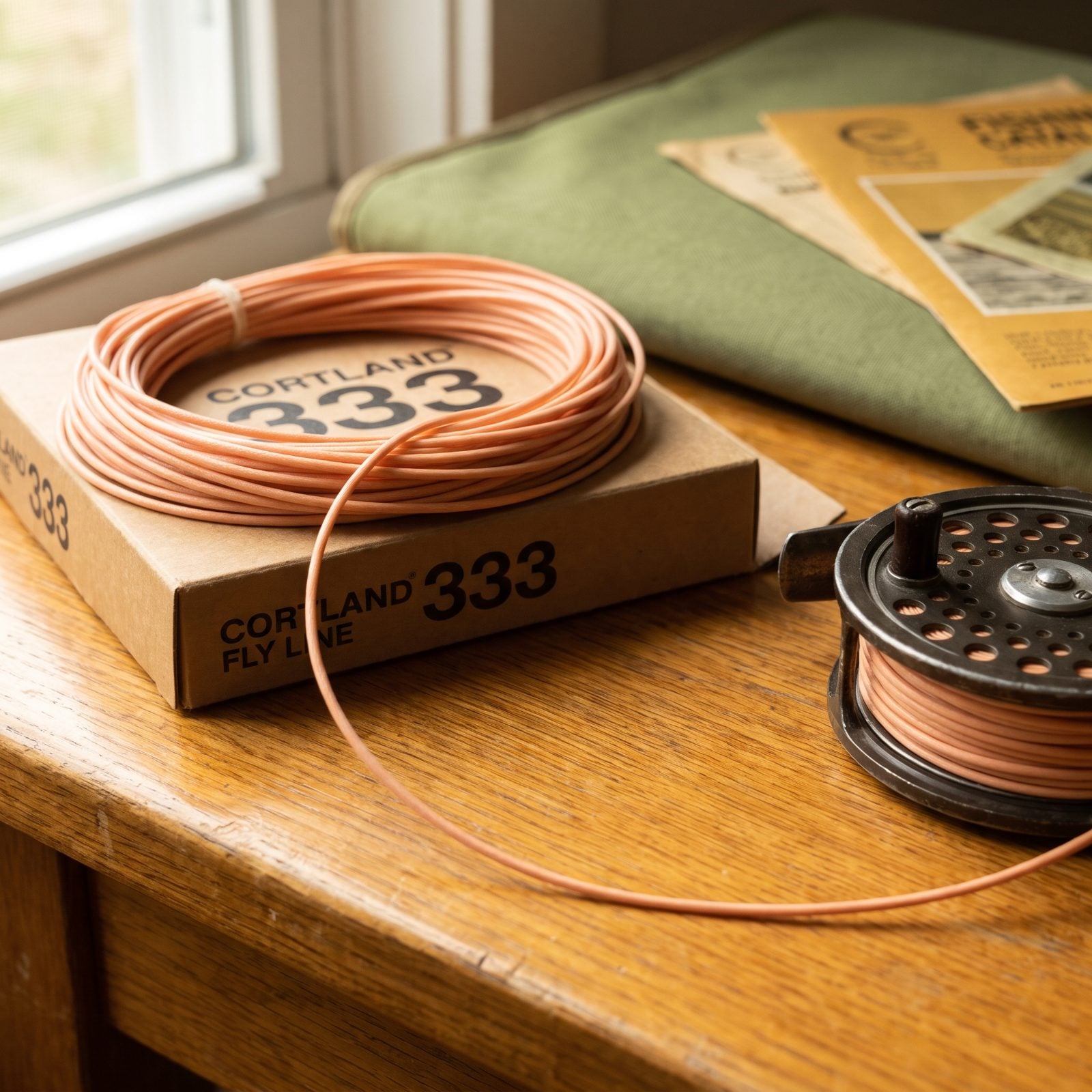
If you learned to throw a fly rod in the 70s or 80s, odds are it peeled off a peach-colored Cortland 333.
It was the affordable workhorse — forgiving enough for a beginner, cheap enough to replace without a second thought. A box ran a few dollars back then, maybe three to five, which adjusts to around twenty. And here’s where the sticker shock lives. A premium fly line today runs sixty to a hundred dollars, with the fancy welded-loop, textured-coating stuff perched at the very top. The 333 still hangs on at the budget end for twenty-five to forty. Fly lines are one of the few corners of tackle where modern tech genuinely costs more — and, now and then, earns it.
3. Plano 747 Tackle Box: The Avocado Workhorse That Still Rattles in the Garage
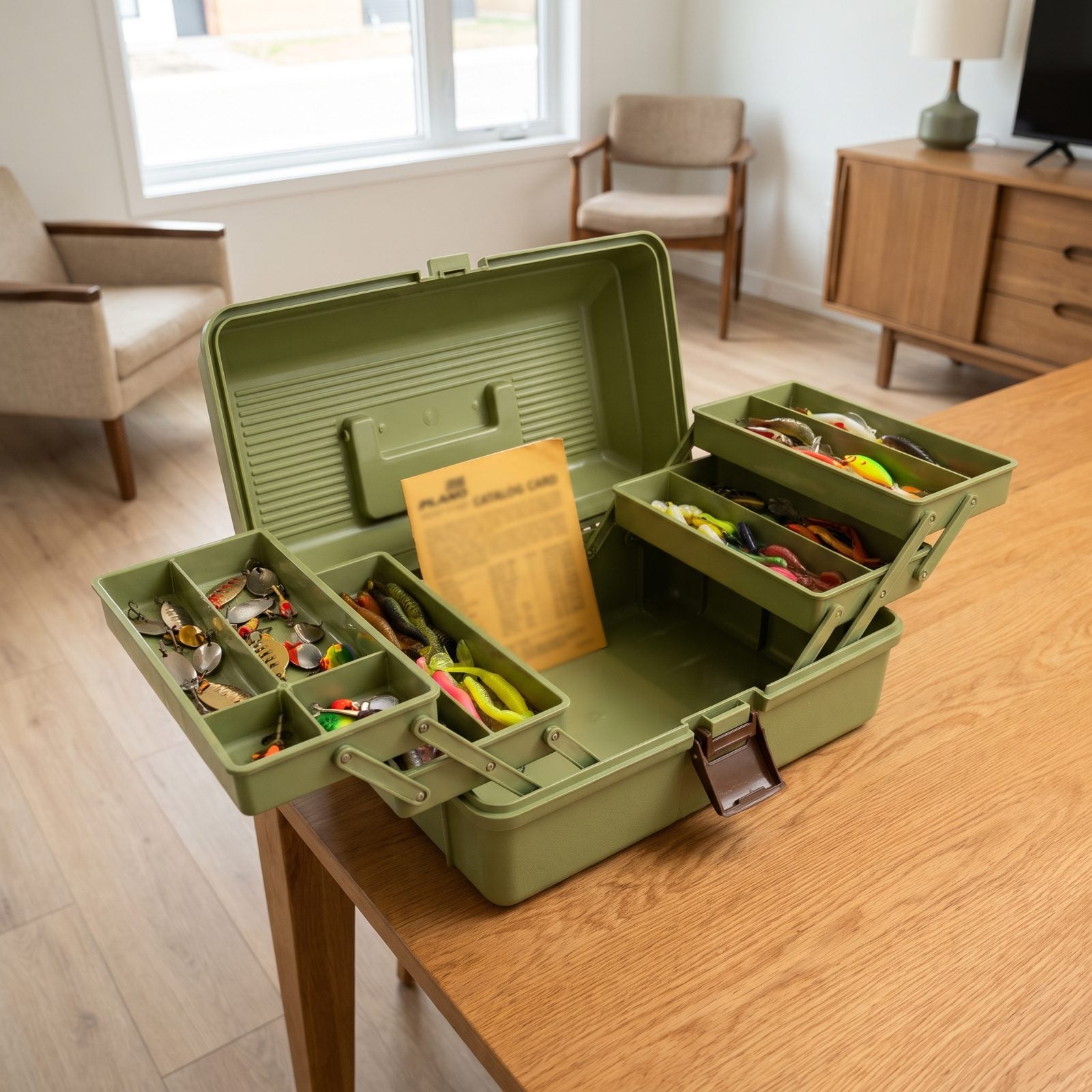
The hip-roof Plano in that unmistakable avocado green is practically the official color of 1970s fishing. Fold-out cantilever trays, a deep bottom, a handle that cut into your fingers on the long walk down to the dock.
A box like the 747 cost maybe eight to twelve dollars in 1975, which adjusts to somewhere around forty to sixty today. A comparable hard-sided Plano now runs thirty to fifty. Flat, maybe a touch cheaper.
The bigger change is that most of us switched to soft-sided bags with removable Plano StowAway trays tucked inside. Lighter, easier to haul, easier to swap out for whatever the day calls for. But the old hard box still lives in a lot of garages — lid cracked, rattling with lures nobody’s tied on in years.
2. Lowrance Fish Lo-K-Tor: The Green Box That Became the Modern Fish Finder
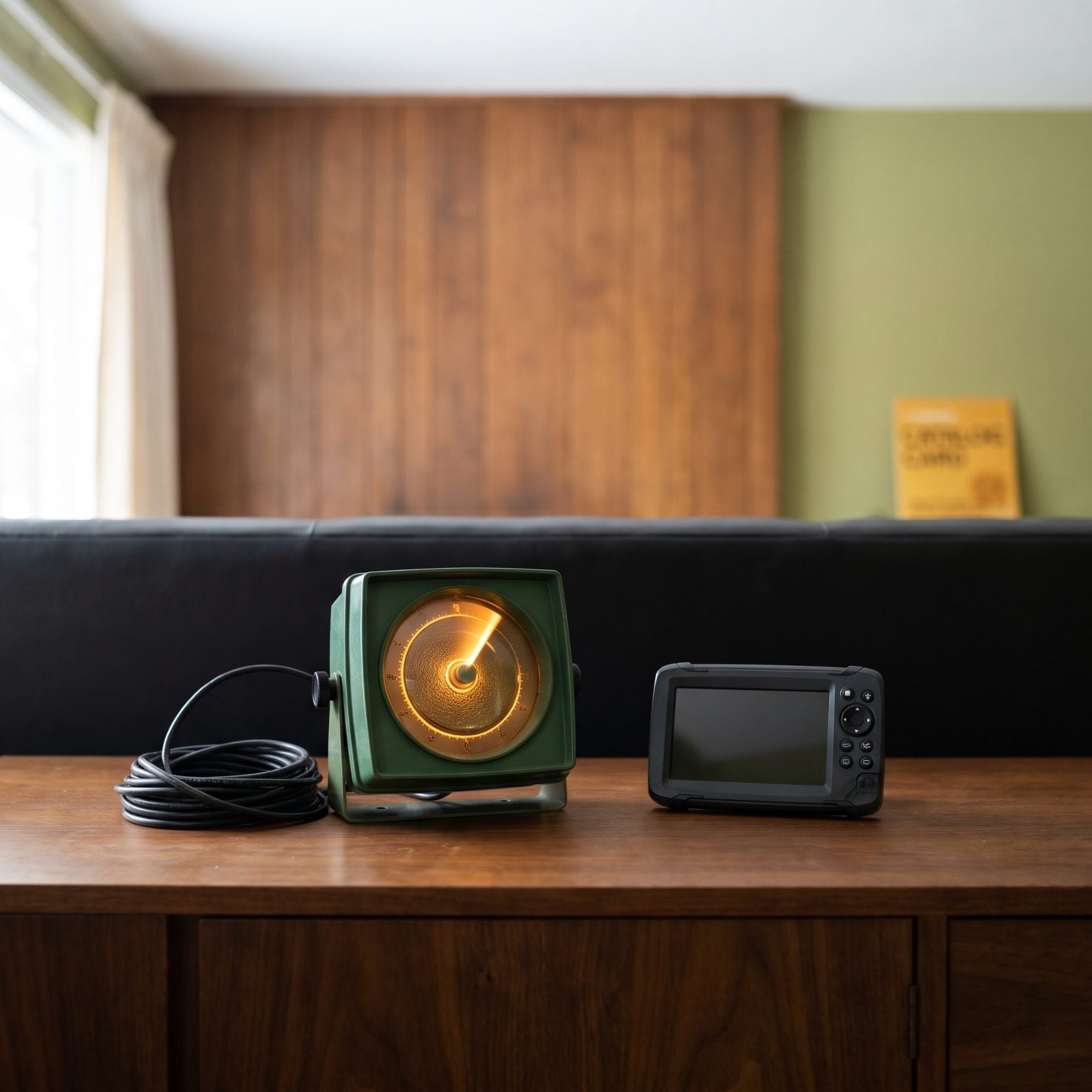
Everyone called it the Little Green Box. The Lowrance Fish Lo-K-Tor flasher clamped a round dial onto your gunwale, and a spinning neon flash on the dial told you fish were down there. Felt like pure magic in 1975.
One cost somewhere in the neighborhood of a hundred and twenty-five to a hundred and fifty dollars new. Adjusted for inflation, that’s roughly seven to eight hundred of today’s dollars for a single needle dial. Now think about what that money buys you now.
A modern color fish finder with GPS mapping, side-scan and down-imaging that draws your boat right onto a chart runs three hundred to eight hundred dollars. You get a crisp picture of the bottom, waypoints, even live sonar at the high end. This is the one category where the old gear cost a fortune and the new gear does a hundred times more for the same money or less. Electronics is where everything actually turned over.
1. Penn Spinfisher 704: The $60 Workhorse That Costs $300 Now
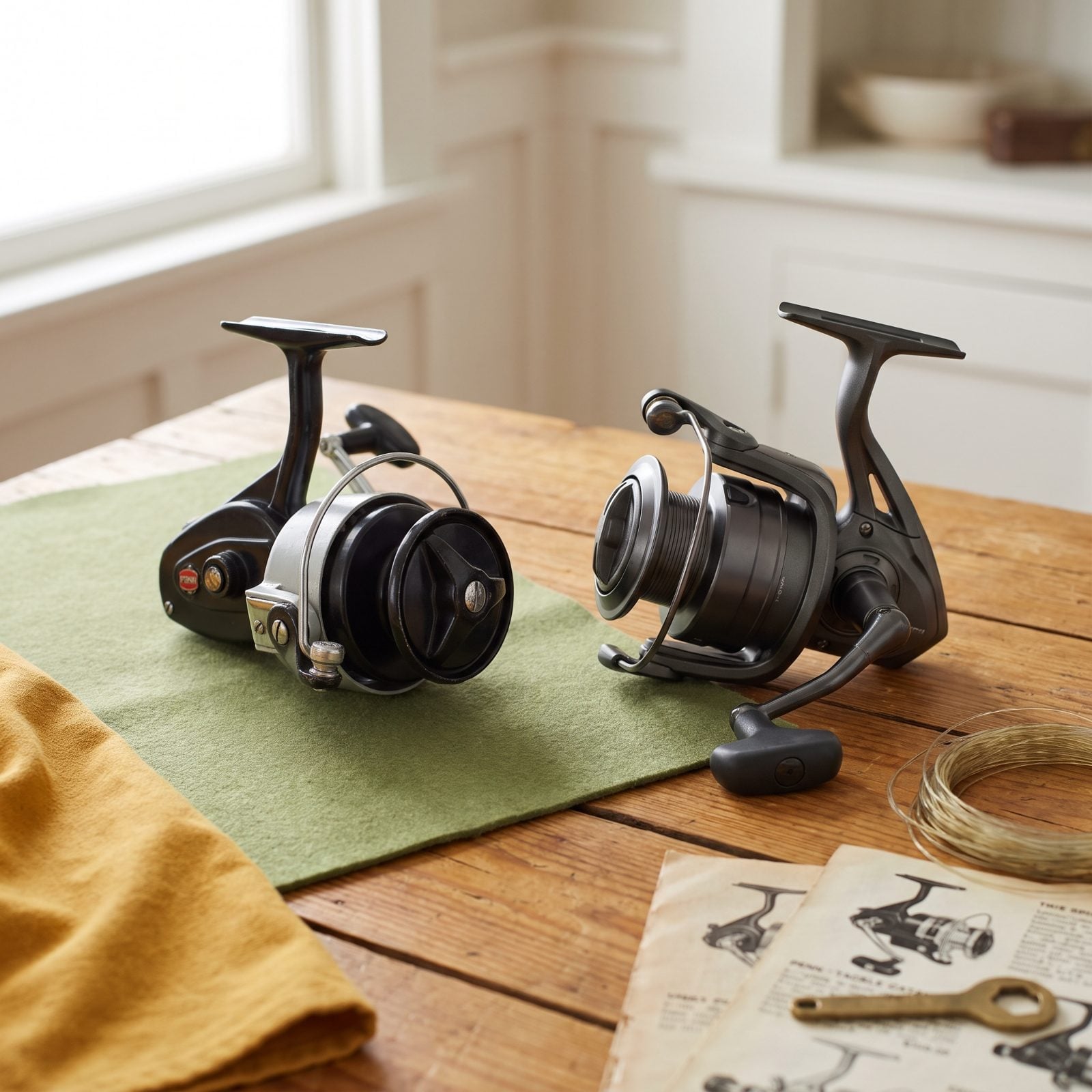
Saltwater guys talked about the Spinfisher the way deer hunters talk about a rifle that never jams. In the mid-1970s it ran around sixty dollars, which stung at the time. Run that through inflation and you land somewhere north of three hundred in today’s money — almost exactly what a sealed, current-model saltwater spinner costs now.
So the price barely moved. What you get for it did. The old Spinfisher had a metal body you could drop on a jetty and a drag that held, but you rinsed it and re-greased it religiously or it froze up on you. I’ve cracked open plenty that spent a single season forgotten in a garage and seized solid. The equivalent today is sealed against salt and sand, and you can abuse it for years without ever reaching for a screwdriver.
Here’s what nobody mentions. A clean, working vintage Spinfisher still sells secondhand for real money, sometimes more than it cost new. People trust the metal. Find one that’s been cared for and it’ll outfish its price tag — I’d bet on it.