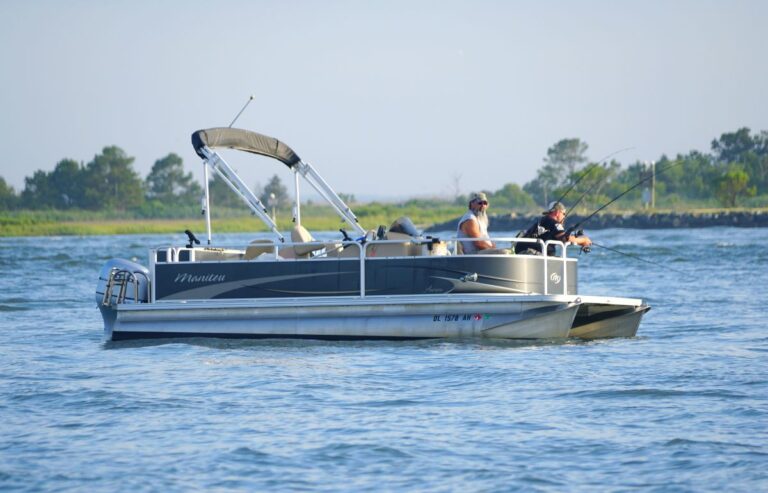

There’s a smell to a boat that’s been sitting too long. Mildew in the cushions, old fuel gone sour, the faint tang of salt that worked its way into fittings nobody checked. You stand on the dock looking at her and feel two things at once: this is too far gone, and I can’t let her go. If you’ve ever poured a year of weekends into a hull that leaks faster than you patch it, you already know something about loving a thing past the point where logic quit. The same wiring that keeps us bailing a boat keeps us staying up late, trying to fix what two people built and let slip. Here’s what the boatyard and the kitchen table have in common, and why your brain treats both exactly the same.
Please note that some of the images in this article were created with the assistance of AI.
12. You Remember Her First Launch Better Than Her Leaks

The first launch is burned in. The way she dropped off the trailer and sat right, the engine catching on the second turn, the stripe of wake behind her clean as a signature. You can still feel all of it, and if someone asks about that day you’ll grin without meaning to.
Ask about the slow leak in the aft bilge and your face goes flat. Funny how the good day stays vivid while forty small failures blur into one gray fog.
This is the same reason a marriage in trouble keeps replaying the wedding, the early apartment, the trip where everything was easy. Psychologists call it the peak-end bias: we don’t store a relationship as an honest average, we store the highest moment and the most recent one. The launch is your peak. You keep it polished because it justifies the leak you’re bailing right now.
11. Fresh Paint Feels Easier Than Probing the Transom
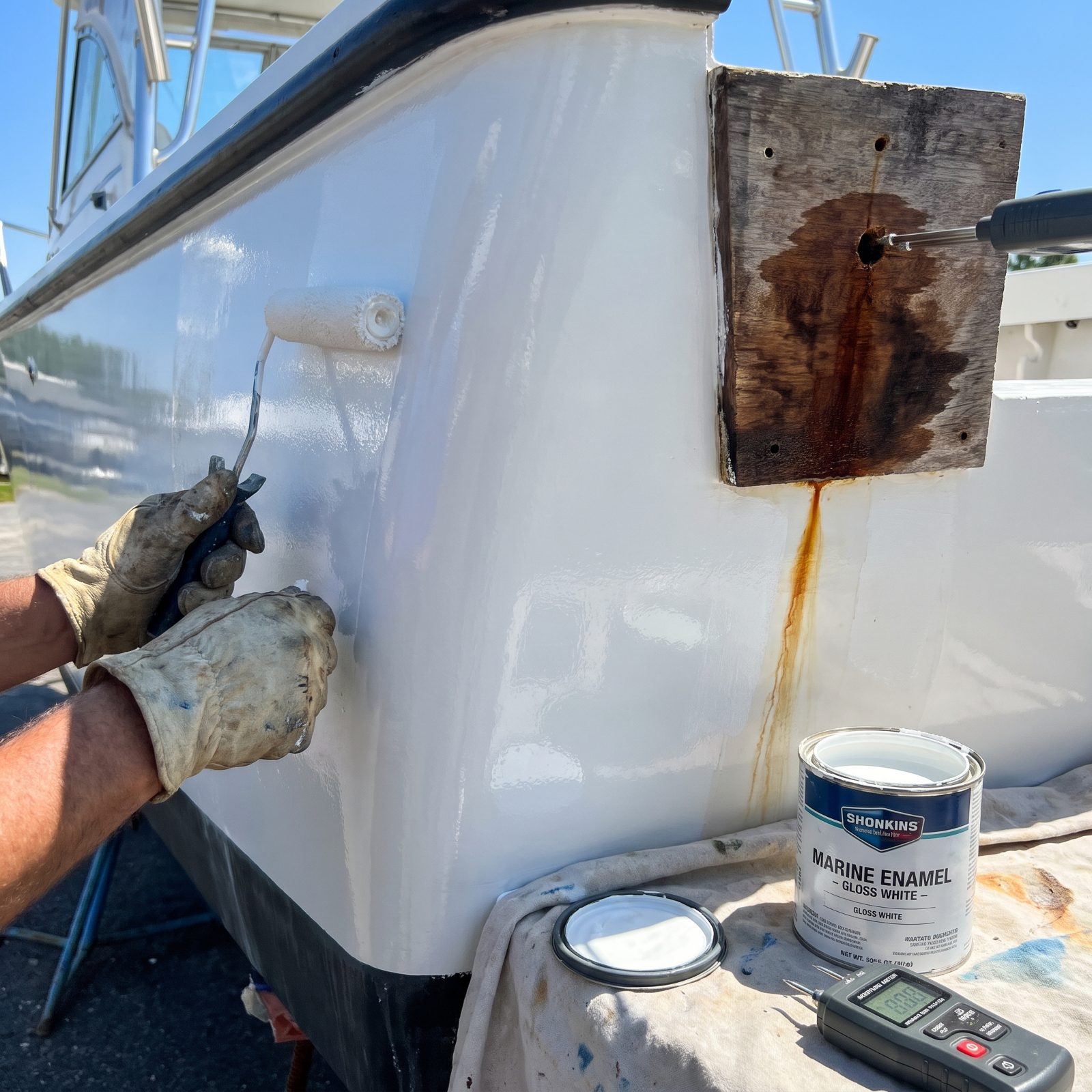
Paint is the honest man’s procrastination. You tell yourself you’re making progress, and technically you are. The hull looks a hundred times better and the dock neighbors nod approvingly, while the transom, the part that actually holds the engine to the boat, sits there with a probe sunk in its rust-stained wood and a moisture meter waiting on the drop cloth, while you keep rolling paint.
We do the visible, satisfying, low-stakes work because the deep work is frightening and might reveal something we can’t afford to find. In a strained marriage this looks like planning a nice vacation instead of saying the hard sentence. Date night as fresh paint over rotten wood.
The technical name is effort substitution. Your brain accepts easy, measurable effort as a stand-in for hard, uncertain effort, and it genuinely feels like you tried. You did try. You just tried the wrong thing on purpose.
10. You Blame the Storm for Years of Neglected Caulk
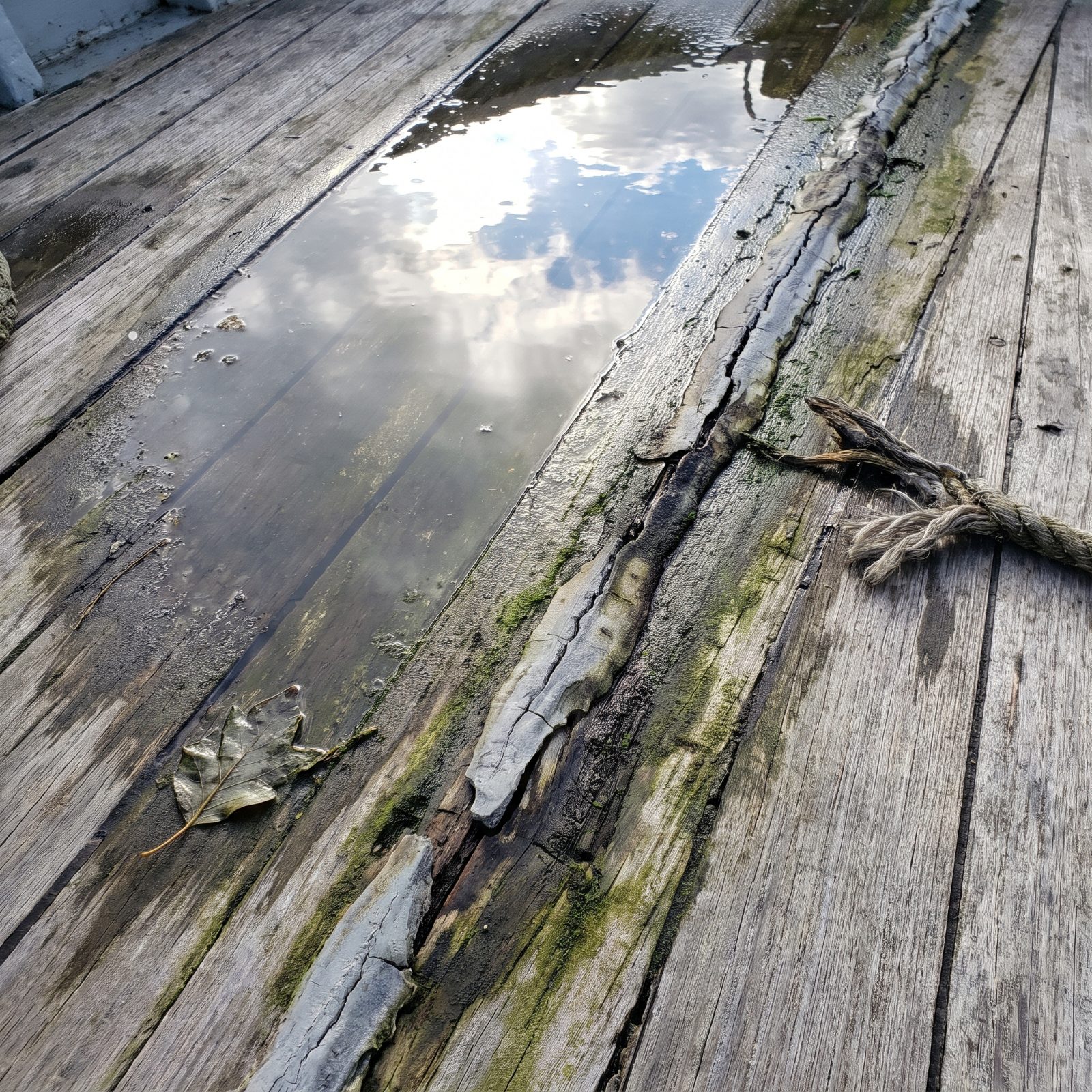
“That nor’easter did it.” Easy to say. One dramatic night, an act of weather, nobody’s fault. Except the water got in through a seam that had been open for three seasons, caulk you walked past a hundred times and told yourself you’d get to.
The storm didn’t sink the boat. It found the hole you ignored. Big arguments go the same way. Couples point at the blowup, the bad weekend, the thing one person said, because a single event is cleaner to blame than the slow erosion of a thousand un-had conversations.
It’s attribution bias, and it protects us. Pinning the damage on an external event means we didn’t cause it by neglect. The storm is innocent. It just showed up.
9. Calm Water Hides What the First Chop Exposes

At the dock she’s perfect. Rock steady, dry, quiet. You could sell tickets. Then you clear the breakwater, the first two-foot chop rolls under her, and suddenly a rail you never noticed is loose, a fitting weeps, something groans that shouldn’t.
Calm never tests anything. Stress does. A boat that seems fine in flat water is just a boat that hasn’t been asked to work yet.
Relationships hide their cracks in the easy stretches too. Everything looks fine until money gets tight, a parent gets sick, a kid goes sideways, and the first real chop shows you what was always loose below the waterline. We confuse the absence of pressure for the presence of strength. They are not the same thing, on the water or at home.
8. The Surveyor Finds Problems Sentiment Made You Miss
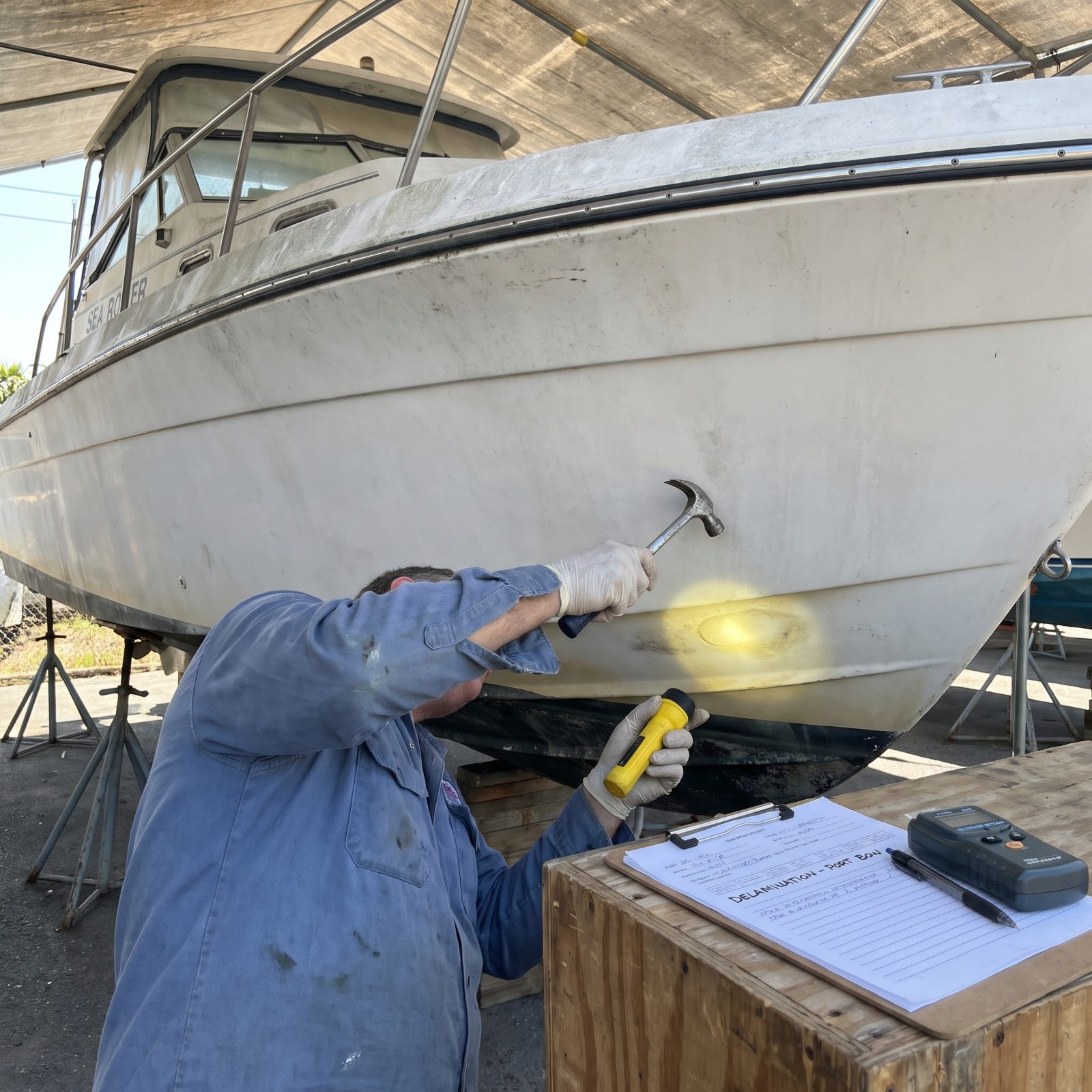
You hire the surveyor because the bank requires it, not because you want the truth. Then he walks the hull with a little hammer, tapping, and the sound changes over a spot you’ve stood on for years. Delamination. Soft stringer. A list of things you genuinely could not see, because you loved her and love is a terrible inspector.
An outsider sees what the insider can’t. The counselor, the honest friend, the sibling who finally says the thing out loud. Not because they’re smarter, but because they’re not emotionally invested in not noticing.
This is motivated blindness, and it’s not stupidity. It’s loyalty misfiring. We don’t see the problems we most need someone else to point out, specifically because seeing them would hurt.
Love is a terrible inspector. That’s not an insult. It’s just not the surveyor’s job.
7. You Keep Buying Parts Because You’ve Already Bought So Many
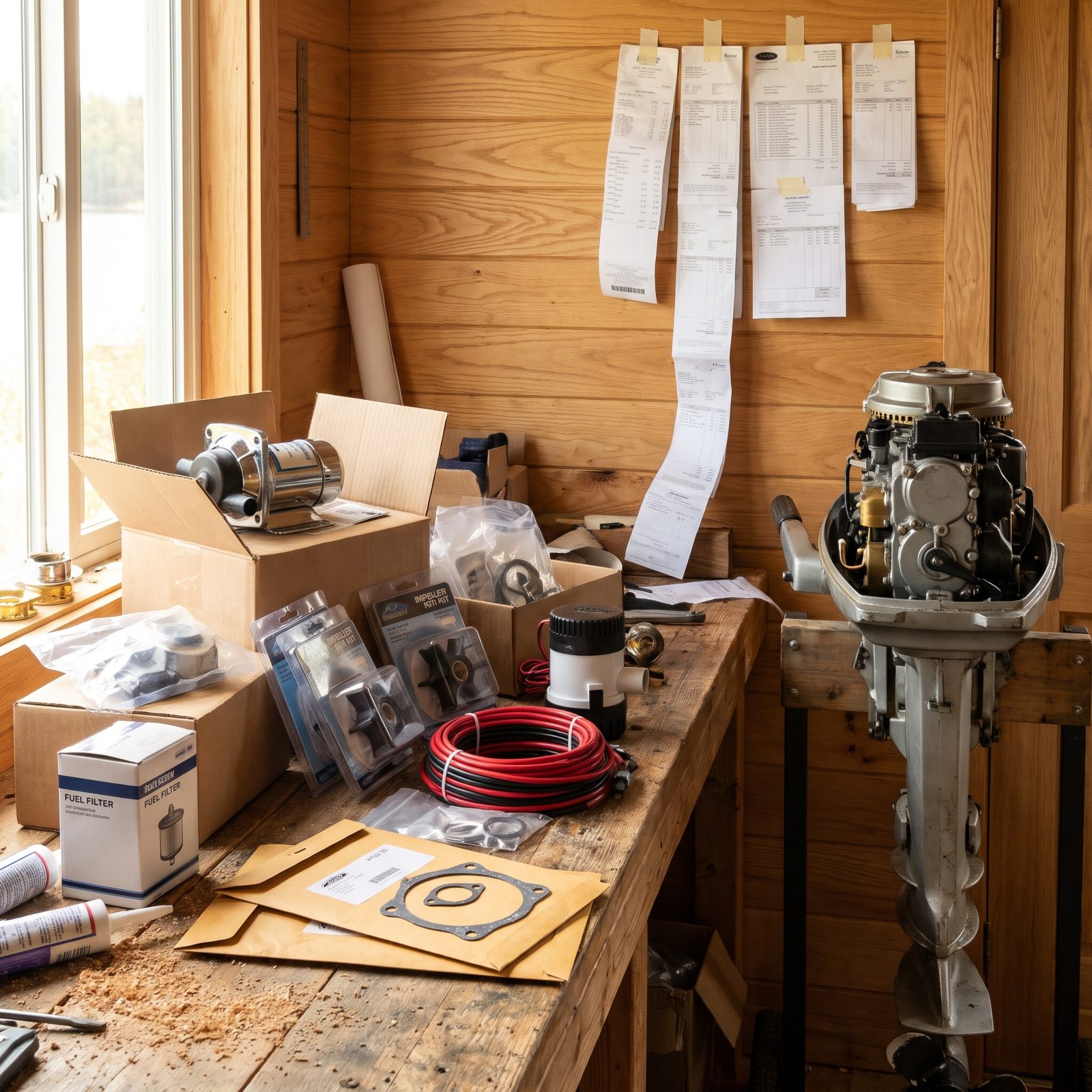
You added it up once by accident and nearly got sick. The parts alone could’ve bought a decent used boat that already runs. New impeller, new pumps, new wiring harness, another gasket set because the first didn’t fit. And the next time something fails? You order the part. Of course you do. You’re this deep.
That “this deep” is the whole trap. It’s the sunk-cost fallacy, the most expensive words in any garage: I’ve already spent so much. Economists will tell you past money should have zero vote in the next decision. Try telling that to the guy with a wall of receipts in his shed.
Couples do it with years. “We’ve put fifteen years into this” becomes the reason to put in a sixteenth, whether or not the sixteenth is wise. The time already gone can’t be refunded by staying. But oh, how the brain wants to try.
6. One Good Sea Trial Can Restore Dangerous Optimism

She ran. For one glorious hour she ran perfectly, hit plane, cut the chop, came home dry. And on the drive back you were already planning next summer like none of the last two years happened.
One good day is a powerful drug. It wipes the ledger clean, and suddenly the soft transom and the stack of receipts don’t seem so bad, because look, she runs.
In a struggling marriage this is the one wonderful weekend that convinces you everything’s fixed, right up until the old pattern comes back Tuesday. The recency effect lets your most recent good experience overwrite months of evidence. One sea trial feels like proof. It’s actually just a sample size of one, and you’re betting a whole season on it.
5. You Stop Inviting Friends Aboard During the Mess
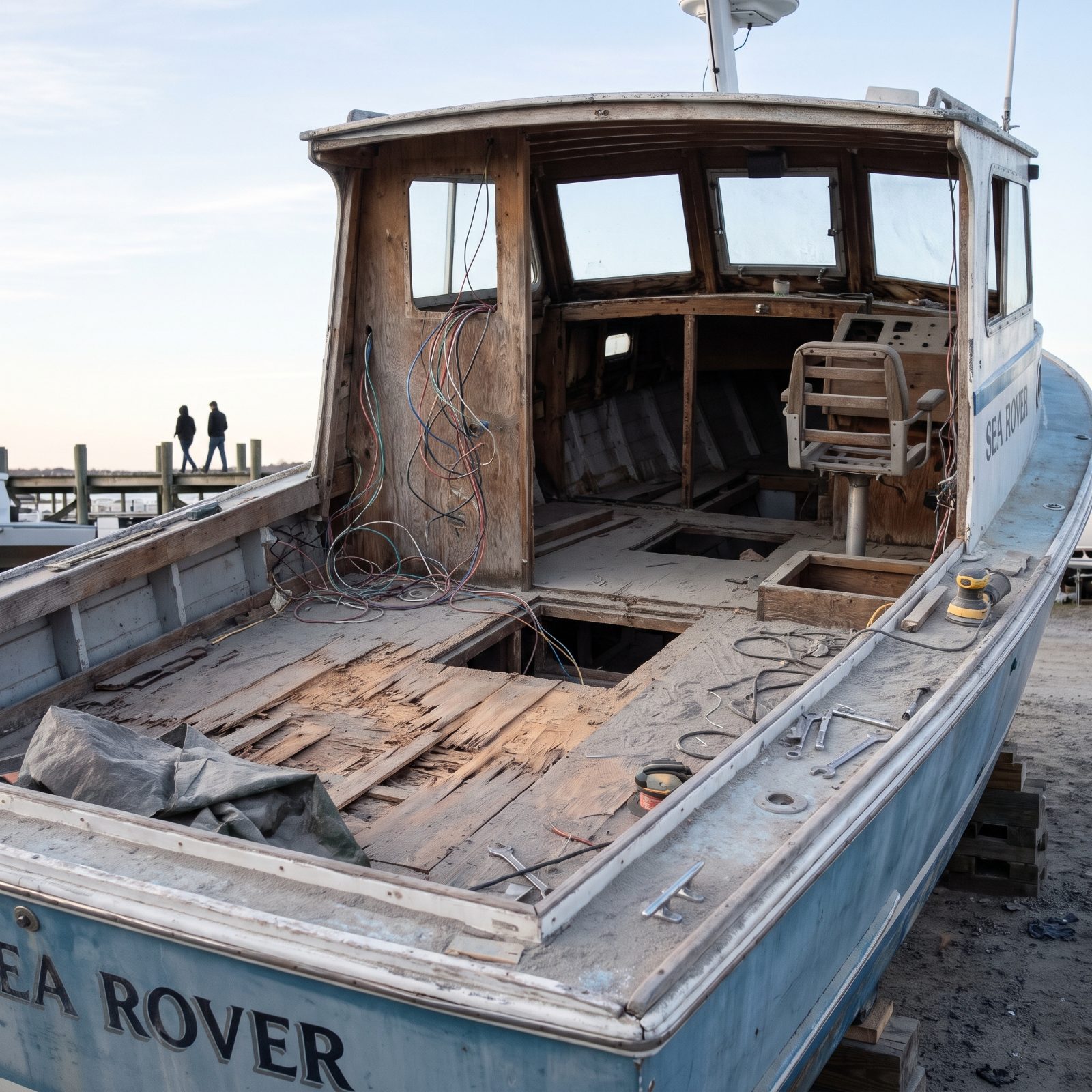
There’s a stage in every restoration where you quietly stop having people over. The deck’s ripped up, wires hang like veins, nothing’s where it should be. “Come see the boat” turns into “maybe once she’s back together.” You don’t want anyone seeing her like this. More honestly, you don’t want them seeing what you’re dealing with.
Troubled couples go silent the same way. The dinners thin out, the double dates stop, the easy “come on by” dries up. Not because you love your friends less, but because keeping up appearances takes energy you no longer have, and letting them see the mess means admitting there’s a mess.
Image management is exhausting. We withdraw to protect the story we’ve told everyone, and the withdrawal itself becomes a symptom. The boat gets lonelier. So do we.
4. Dry Dock Gives You Space Without Ending Everything

Pulling a boat for the season isn’t quitting. You haul her, block her up, let the wood breathe, let your wallet recover, and come back with clearer eyes in spring. Distance does something no amount of grinding in the water can. It lets you see the whole hull at once.
Space inside a relationship works the same, and we confuse it with the end far too often. A little room, a pause, a stretch where you’re not in each other’s chop, isn’t the same as splitting the assets. Sometimes stepping back is the most committed move available.
We read all distance as rejection because the brain treats separation as threat. But dry dock is not divorce. It’s maintenance. Some problems only get solved when you stop and look from the ground.
3. Small Weekly Repairs Beat One Heroic Weekend
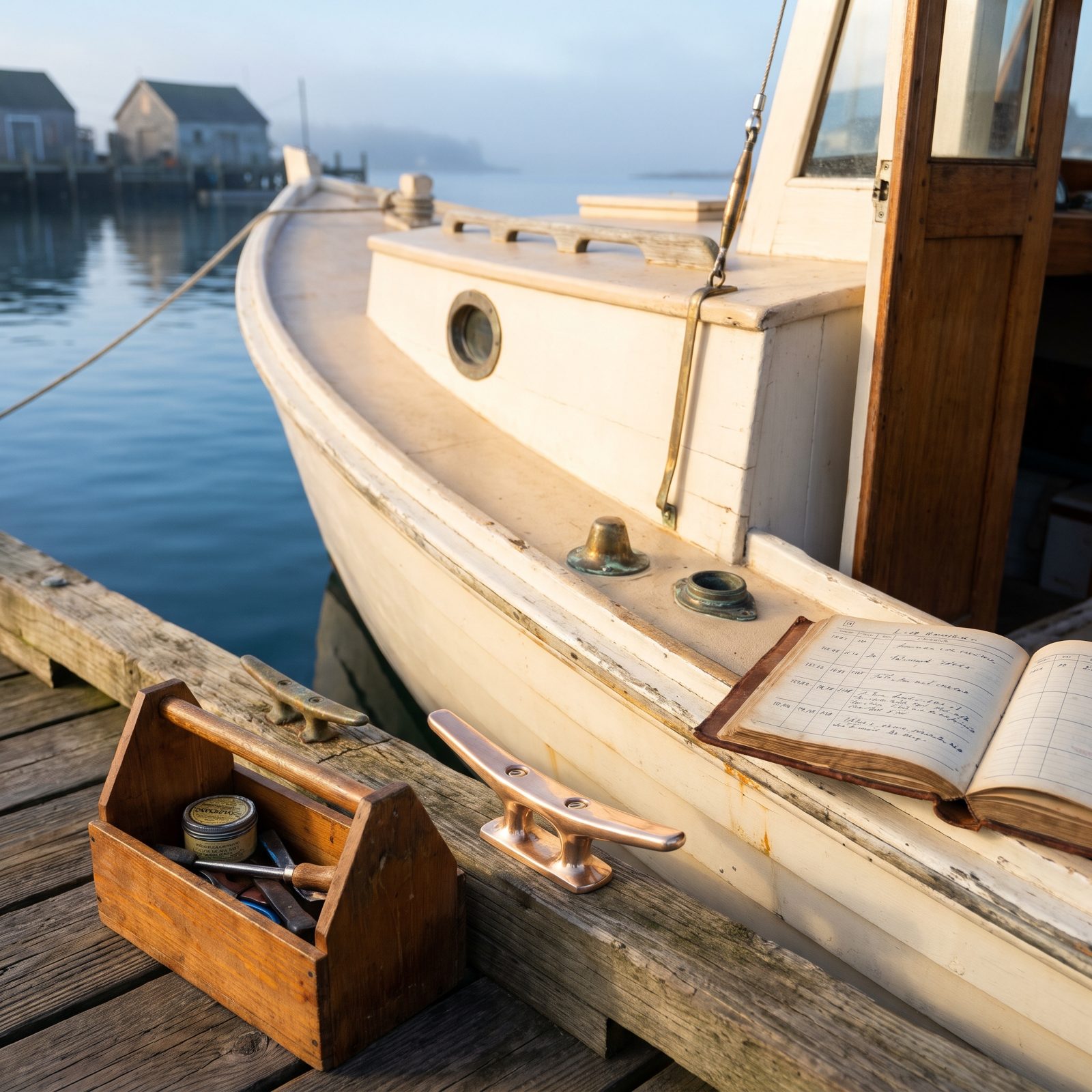
Everybody wants the one heroic weekend. Block off two days, caffeine up, fix the whole boat in a frenzy. It never works. You burn out by noon Saturday, half the jobs reveal three more jobs, and by Sunday night the boat’s worse than when you started.
The hulls that come back are the ones somebody touched a little every week. One fitting Tuesday. One seam Thursday. Small, boring, unglamorous, relentless.
Marriages mend the same dull way. Not the grand gesture, the flowers-and-fireworks apology that fixes everything for a weekend. The small daily deposits. The coffee made, the thing noticed, the short conversation nobody skipped.
There’s a reason the big-fix fantasy is so seductive and so useless. It lets us stay passive most of the time, then feel virtuous in a burst. Real repair is the opposite of a burst. It’s showing up Tuesday, when nobody’s watching and nothing’s dramatic, and doing the small thing again.
2. You Notice Who Sands and Who Only Chooses Paint
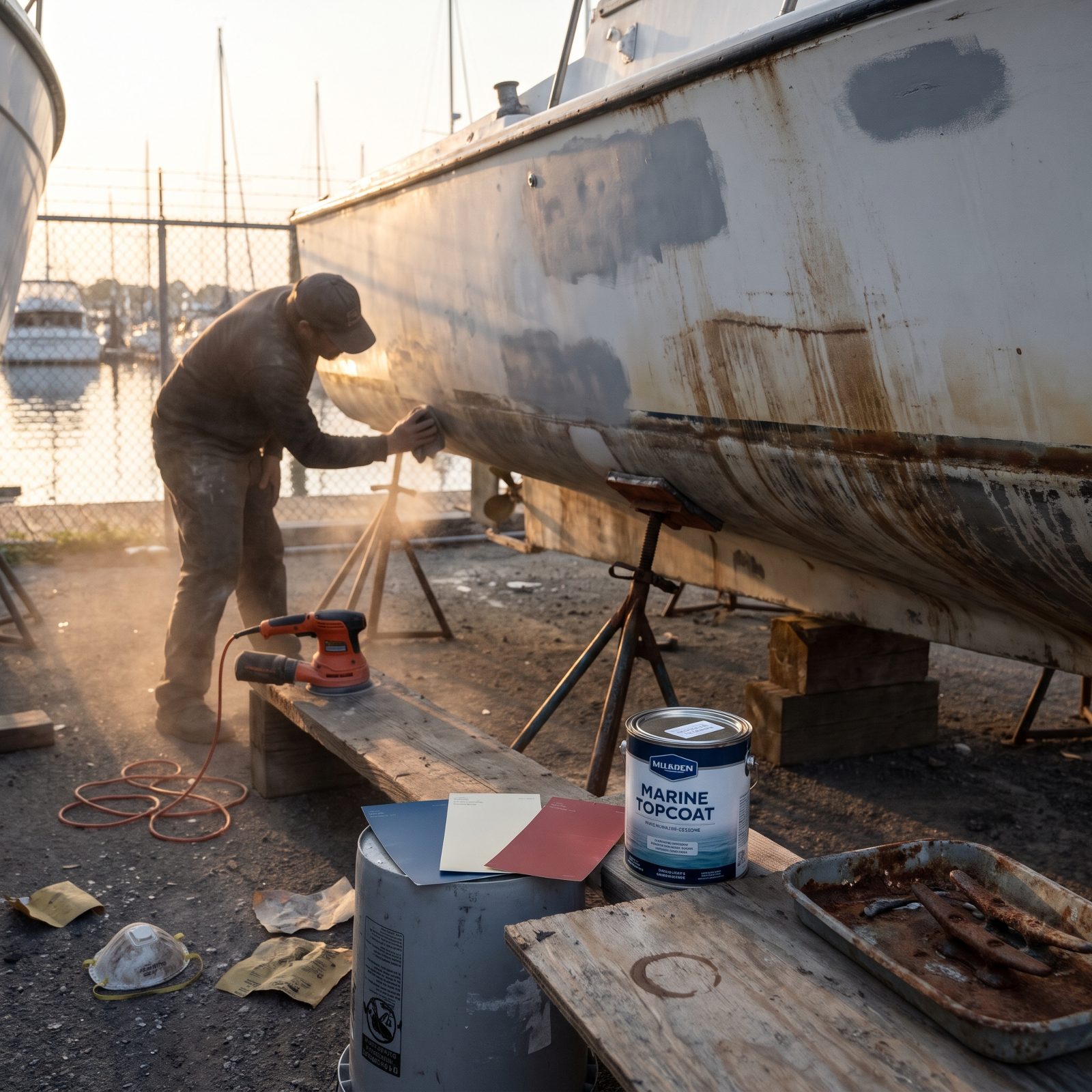
One person stands at the hull. He’s on his feet with a sanding block, knuckles gray, breathing dust, chasing a soft spot in the fiberglass that nobody else can even see yet. Nearby, paint chips sit fanned out on a bucket, unattended, waiting for whoever’s busy picturing how she’ll look at the dock. Everyone says they want the boat back, but only one is doing the part that hurts.
A struggling marriage sorts itself the same way. There’s the slow, unglamorous labor — the hard conversation, the apology that costs something, showing up on a Tuesday when nothing feels romantic. Then there’s the fun stuff: the fresh-start talk, the big gesture, the vacation meant to fix everything in one shot. The gesture is the paint. The sanding is the marriage, and don’t let anybody tell you different.
Psychologists call this the planning fallacy mixed with a little wishful thinking. We fall for the finished picture and lowball the grind that gets us there. Paint is visible. Sanding stays invisible right up until you skip it, and then it’s the only thing anyone sees.
Watch who reaches for the sander. That’s your answer.
1. You Finally Ask Whether She’s Actually Safe to Save
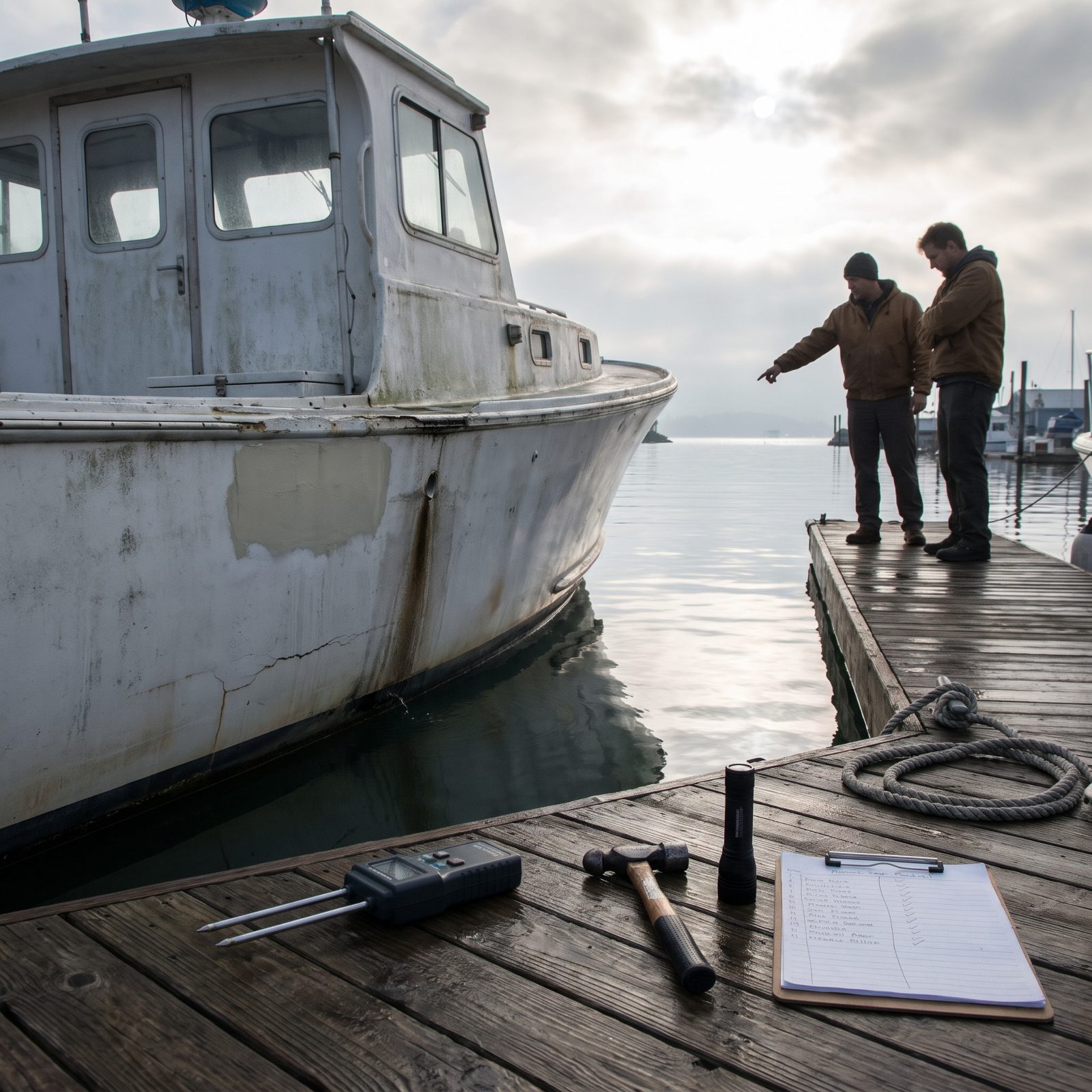
Every restoration reaches the moment nobody wants. The surveyor runs the moisture meter along the hull, taps for soft spots, and finds water coming in from somewhere you can’t quite trace. Some boats are just tired and worth every weekend you’ll give them. Others are structurally gone, and no amount of fresh paint changes what the keel’s doing down there. The honest question isn’t “can I fix her?” It’s whether she’s safe to put back on the water at all.
Here’s the parallel people dodge the longest. Not every struggling marriage is a tired boat waiting on patient hands. Some have rot clear through the stringers. A hull that needs work is one thing; a hull taking on water faster than you can bail is another, and pretending the two are the same keeps nobody afloat.
Effort can repair a leak. Effort cannot fix a boat that was never seaworthy to begin with.
This is where confirmation bias does its quietest damage. We go hunting for reasons the boat can be saved, because we’ve already decided we want to save her, and we wave off the survey that says otherwise. Loving something and that thing being safe are two different animals.
A good surveyor tells you the truth even when it stings. And the bravest thing a restorer ever does is listen — then decide, clear-eyed, whether to launch her or let her go.