Nobody scheduled it. You walked out the back door after breakfast and the day was yours until the streetlights came on or somebody’s mom hollered down the block. What happened in those hours wasn’t play the way a tablet game is play — it was an apprenticeship. You learned to read a tree limb, to settle a fight, to wait out a bluegill without losing your mind, and none of it had a lesson plan. All of it stuck anyway. These are the skills that came free with a pair of scuffed sneakers and an afternoon with no supervision, and the ones most kids now miss entirely.
Please note that some of the images in this article were created with the assistance of AI.
27. Building a Fort From Fallen Branches and Scrap Wood
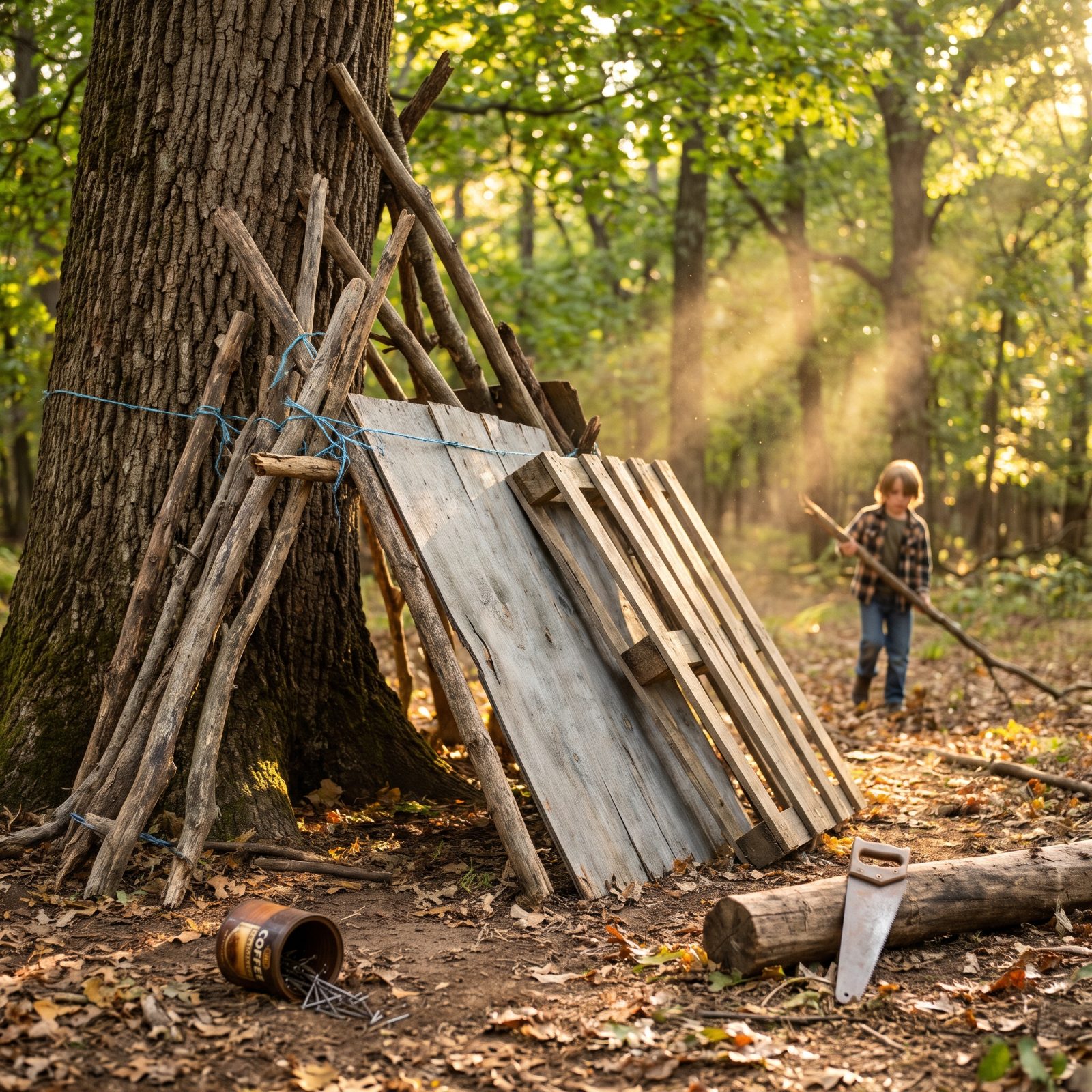
Before a fort could stand, you had to figure out why it kept falling down. Engineering, learned by failure, in a single afternoon. You discovered that a branch leaned too steep slides right off, that a flat roof needs something holding the middle up, and that your little brother sitting on the wall is a load you never accounted for.
No instructions came with any of it. You negotiated for materials, split the labor, and defended the thing you built against all comers. A collapsed roof taught more about gravity than a worksheet ever could.
26. Climbing a Tree and Judging Which Limb Would Hold
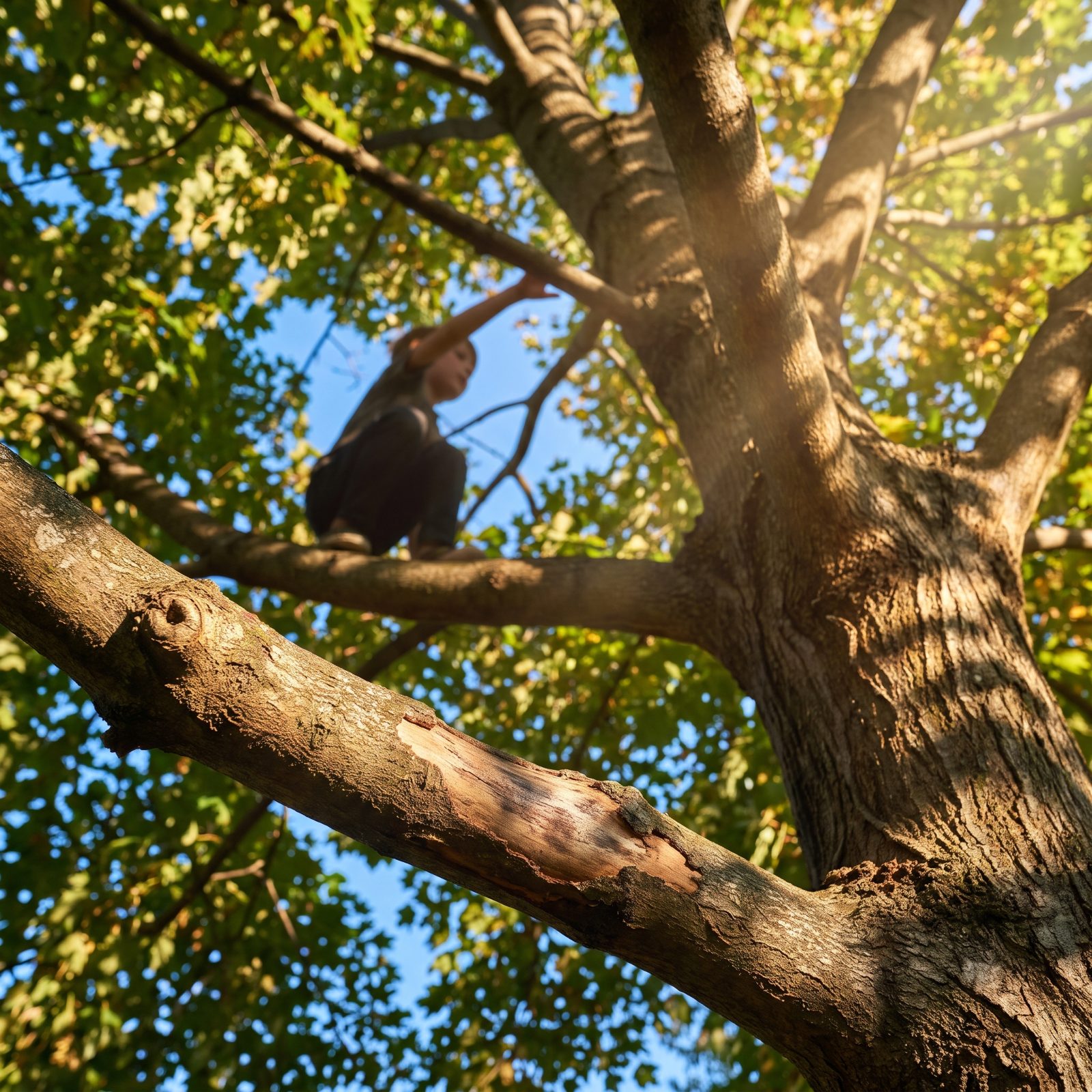
A tree is a risk assessment you run with your whole body. You learn to tell live wood from dead by the color and the give, that the branch close to the trunk holds while the one near the tip does not, and you test weight in stages rather than all at once.
Honestly, a few scraped shins were part of the curriculum. You came down with a sense for your own limits that no safety rail ever gives you. Kids who never gauge a limb grow up without that instinct, and it shows up later in all kinds of quiet ways.
25. Tying a Knot That Actually Stayed Tied
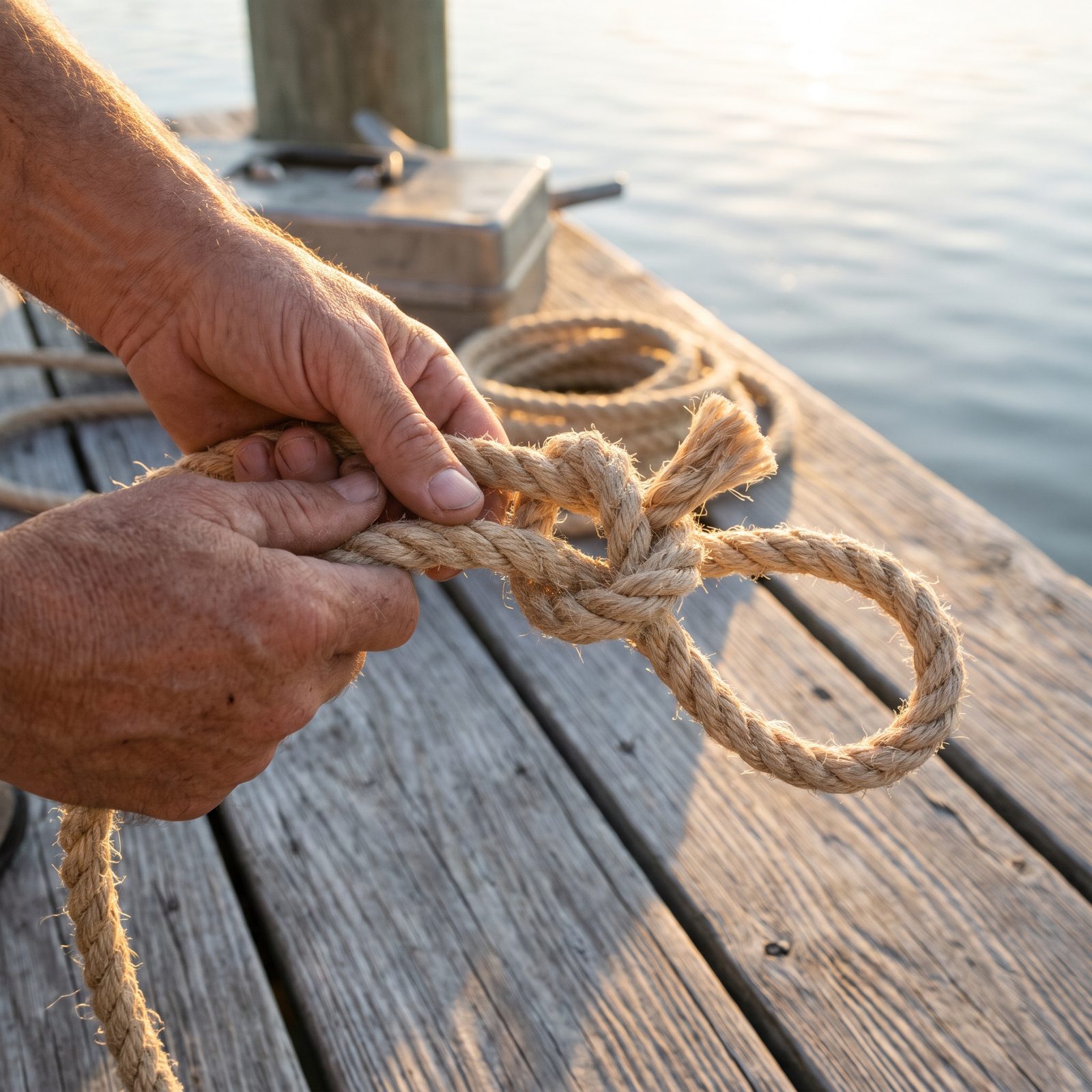
A granny knot slips. A square knot holds. The difference is which way you cross the second loop, and you learned it the hard way the first time your swing came loose halfway up.
Tying a knot that stays put teaches cause and effect you can feel in your hands. No partial credit here. It holds or it doesn’t, and the pond tells you which.
24. Catching and Releasing Frogs, Crawdads and Bugs
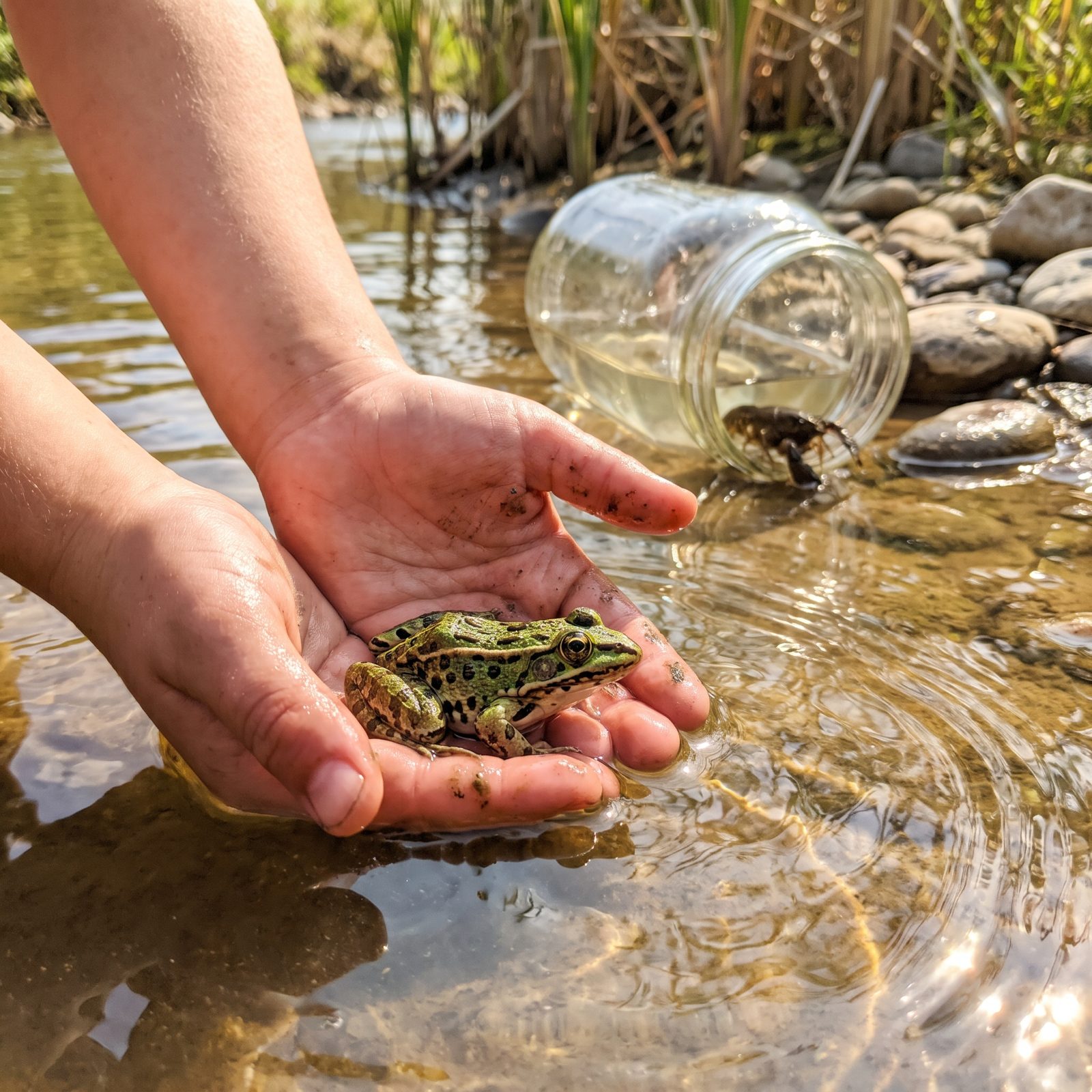
Catching a crawdad means learning how a crawdad thinks. You work out that frogs bolt forward, that crawdads dart backward, that cupping slow beats grabbing fast. Without meaning to, you became a field biologist.
And then you let them go. That part mattered more than anyone said out loud. Holding something alive and fragile, then opening your hands, teaches a respect that doesn’t fit on a flashcard. A creek, you learned, is full of lives that have nothing to do with you.
23. Finding Your Way Home Without a Phone or Map
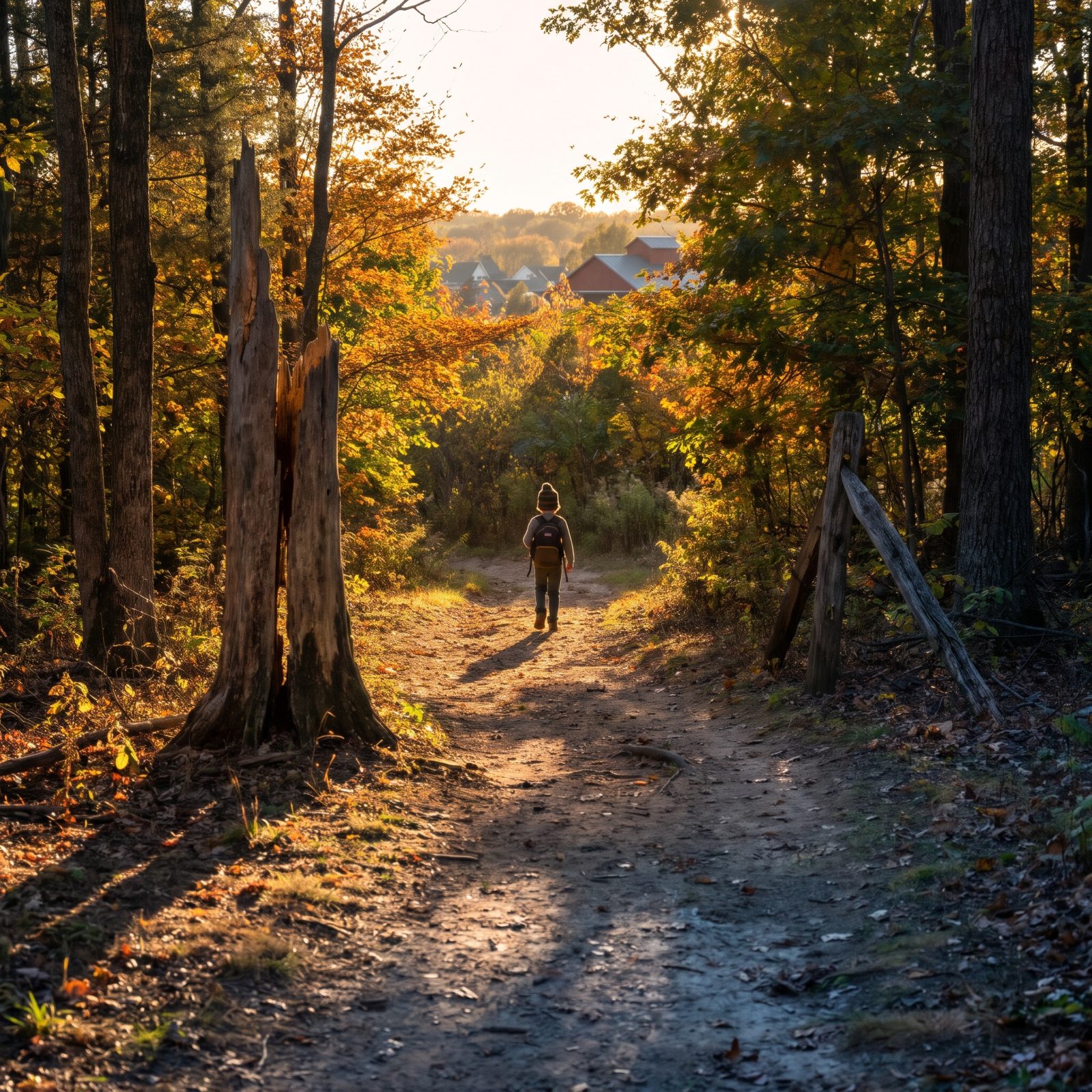
You built a map in your head out of landmarks. The split stump. The house with the mean dog. The crick you cut across to shave ten minutes. Nobody drew it for you, and nothing recalculated when you took a wrong turn.
That’s spatial memory doing real work, and it’s a muscle that atrophies fast once a blue dot does the thinking for you. A kid who can find their own way home carries a confidence that follows them everywhere. You know where you are. You know how to get back. Rare thing, now.
22. Negotiating Fair Rules for a Backyard Game
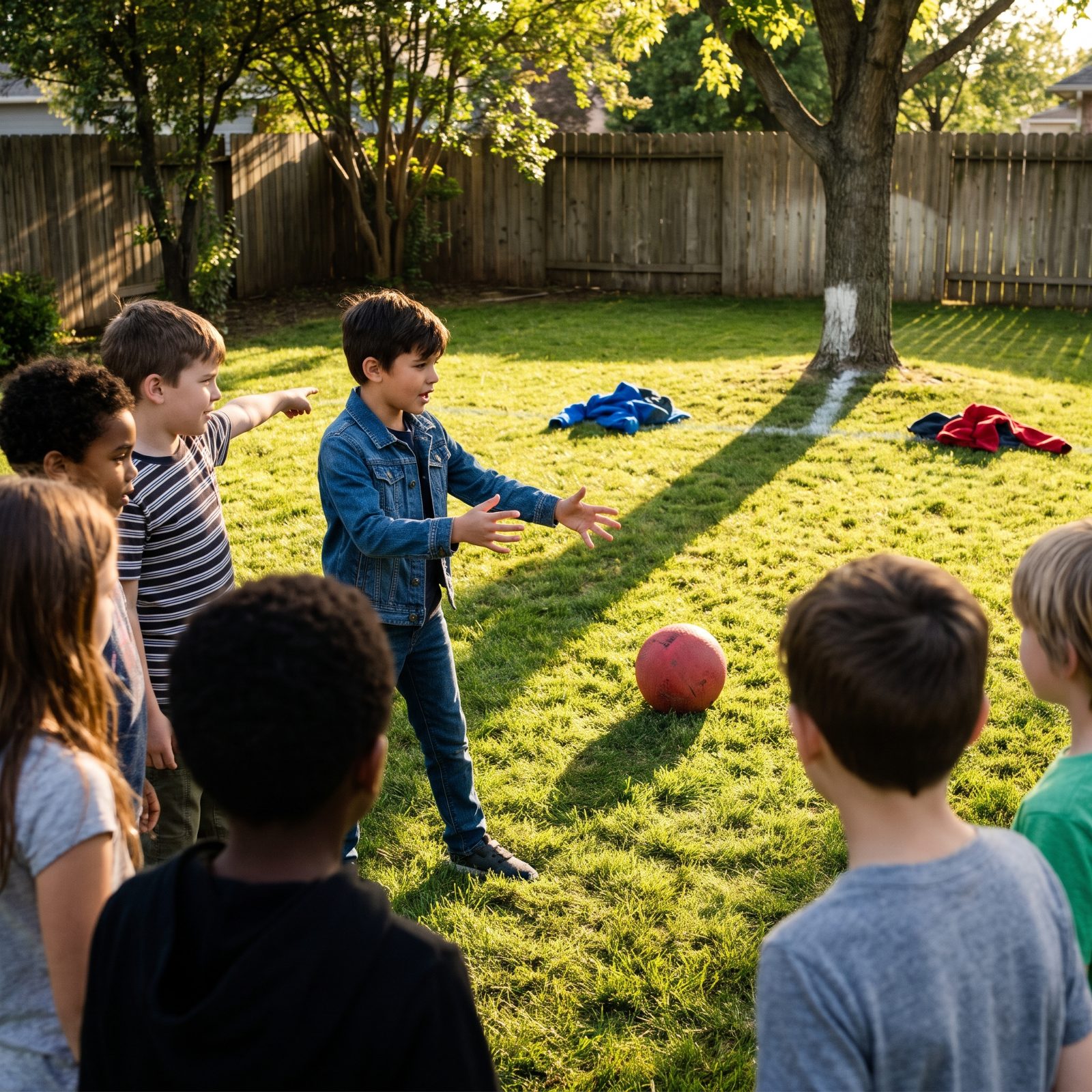
Every backyard game started with a parliament. What counts as out. Whether the tree is a base or just a tree. What happens if the ball sails into the Hendersons’ yard. You hashed it out standing up, because without agreement there was no game at all.
Negotiation with real stakes and no referee. You learned to read the room, to offer a compromise, to know when a rule was worth fighting for and when it wasn’t. Kids in refereed, adult-run leagues get the game handed to them. They miss the harder, more useful part — building it.
21. Settling Arguments Without an Adult Stepping In
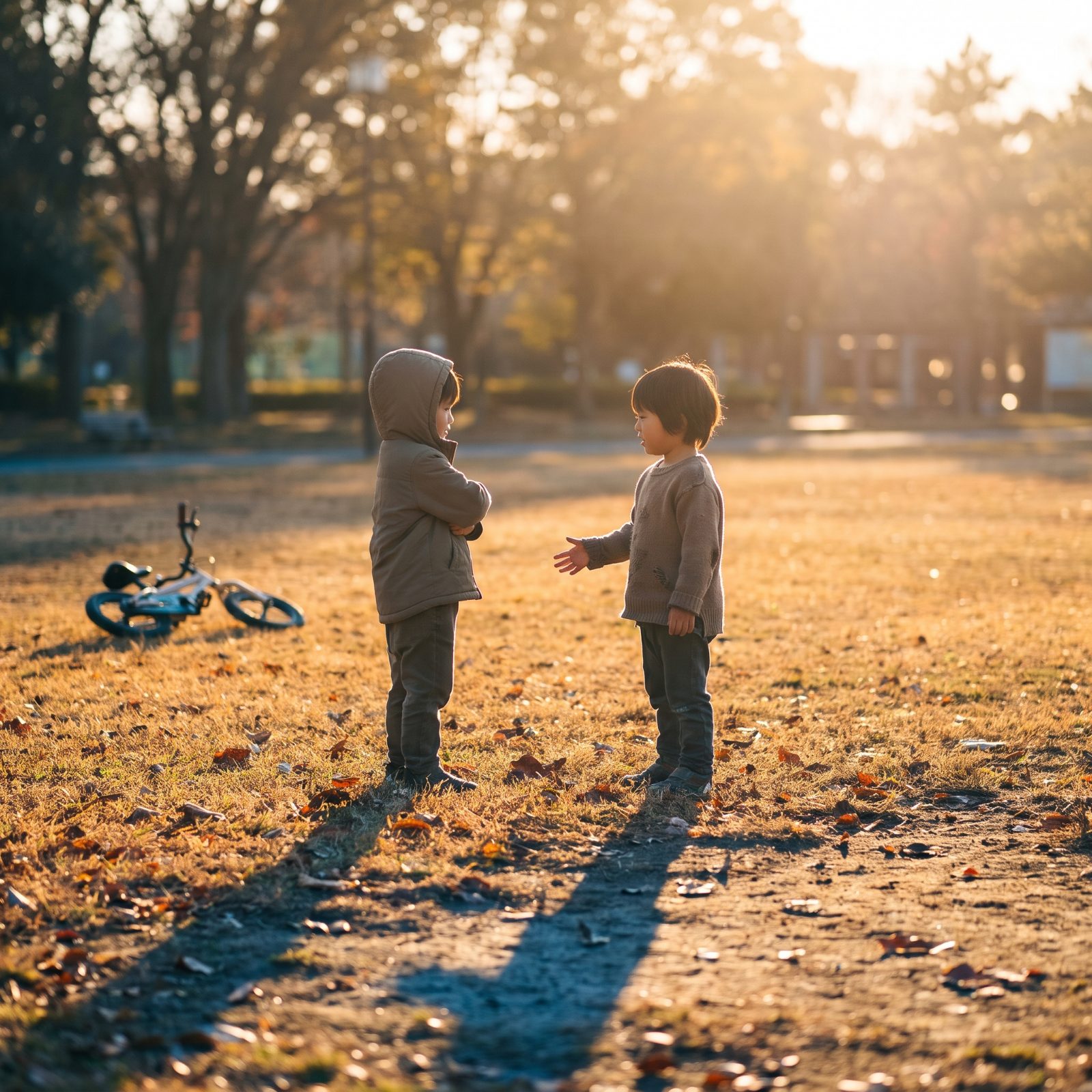
No adult was coming. That changed everything about how you fought.
When you knew nobody would arbitrate, you learned to actually resolve things. You read faces, you backed down when you’d pushed too far, and you figured out that the kid you froze out today was the kid you’d need on your team tomorrow.
A grudge is expensive when you’ve only got six kids on the block.
Working out a conflict with no referee is one of the hardest skills there is, and it used to come standard with an empty afternoon.
20. The Patience That Comes From Waiting for a Fish to Bite
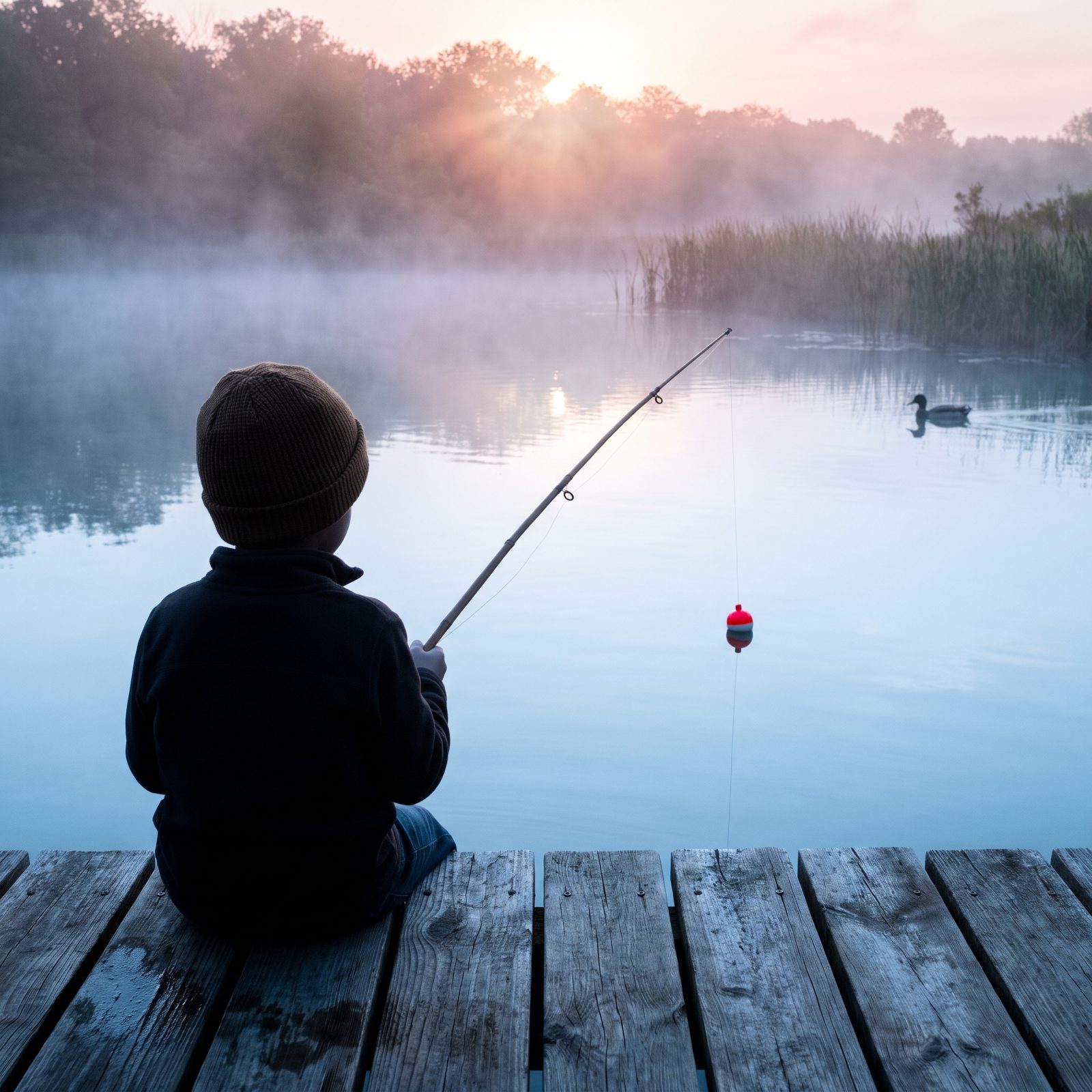
Fishing teaches patience the only way patience can be taught: by making you sit with nothing happening and liking it anyway. The bobber doesn’t move. You watch it not move. And somewhere in that stillness, something settles.
You can’t rush a bite or fast-forward it. A kid used to a reward every few seconds finds that first slow morning on the water almost unbearable, which is exactly why it’s worth it. Learning that good things come to those who outlast the quiet pays out for the rest of your life.
19. Skipping Stones Across a Pond
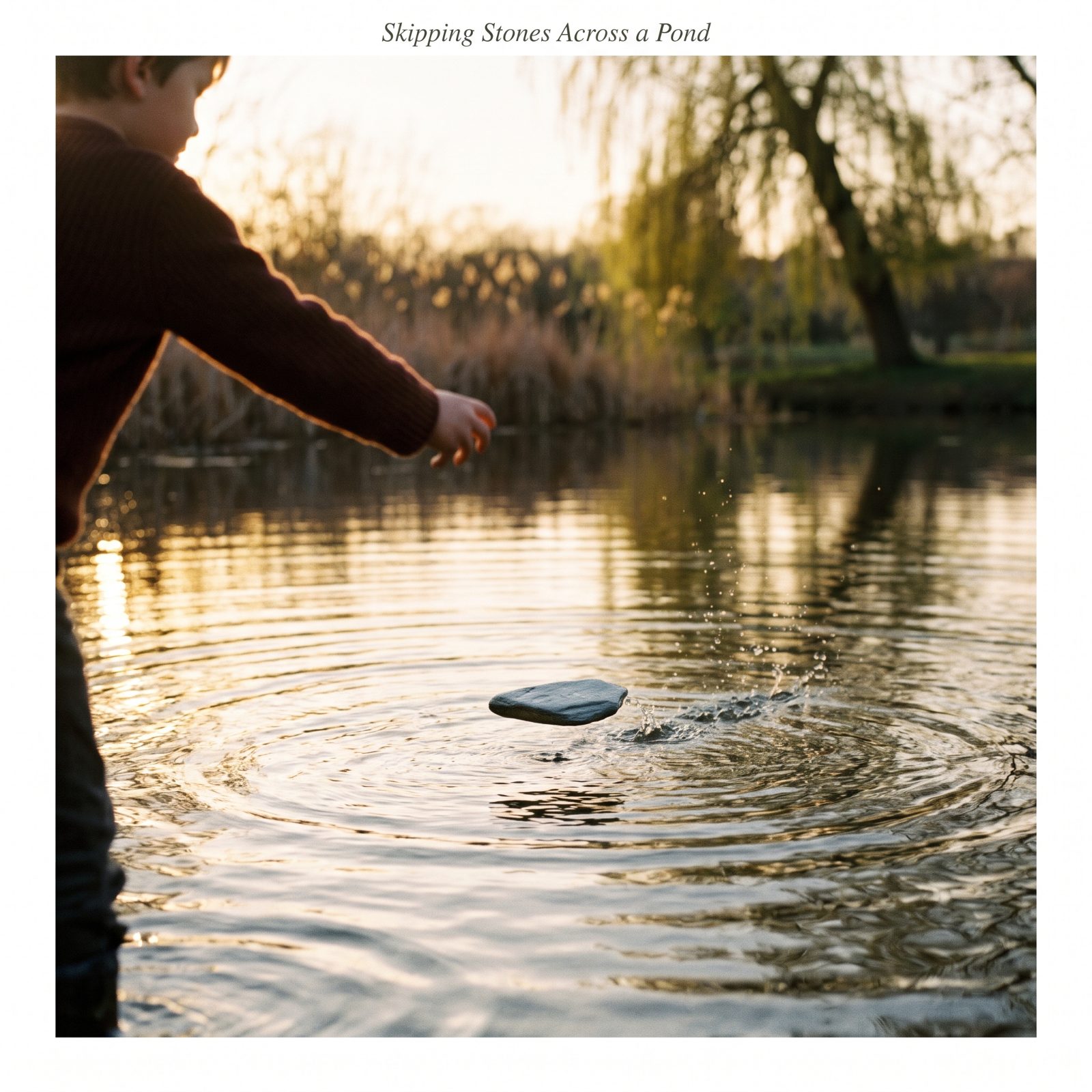
Flat stone. Low throw. Spin on the release. You worked out the physics of angular momentum without ever hearing the words, just by wanting four skips instead of two.
Skipping stones is trial and error you could run a hundred times in one afternoon. You learned to pick the right rock before you even picked it up, to feel the wrist flick that made it dance across the surface. Small skill, small joy — but it taught you that getting good at anything is mostly just reps and attention.
18. Telling the Edible Berries From the Ones to Avoid
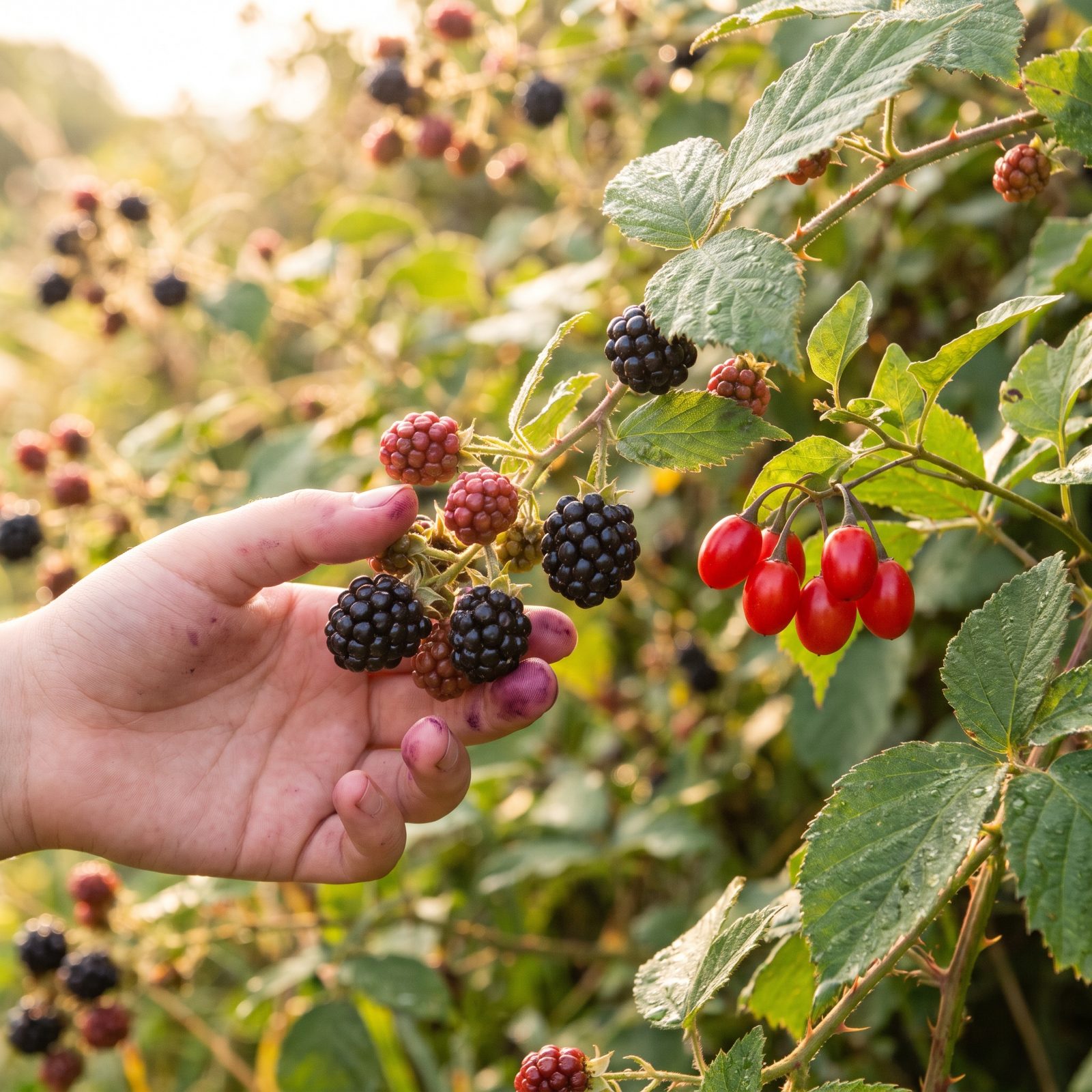
Knowing a blackberry from a nightshade is old knowledge, passed hand to hand along a fence line. You learned which hedge had the sweet ones, when they ripened, and which glossy red berry the grown-ups said flat out: never, not ever.
This one comes with a serious caveat, because the stakes are real. Some lookalikes can make a kid very sick. The old skill wasn’t recklessness — it was careful teaching. Here is what you eat, here is what you leave, and when you aren’t certain, you leave it. That instinct for the natural world, part trust and part healthy caution, is almost gone now.
17. Starting a Small Campfire Without Burning the Place Down
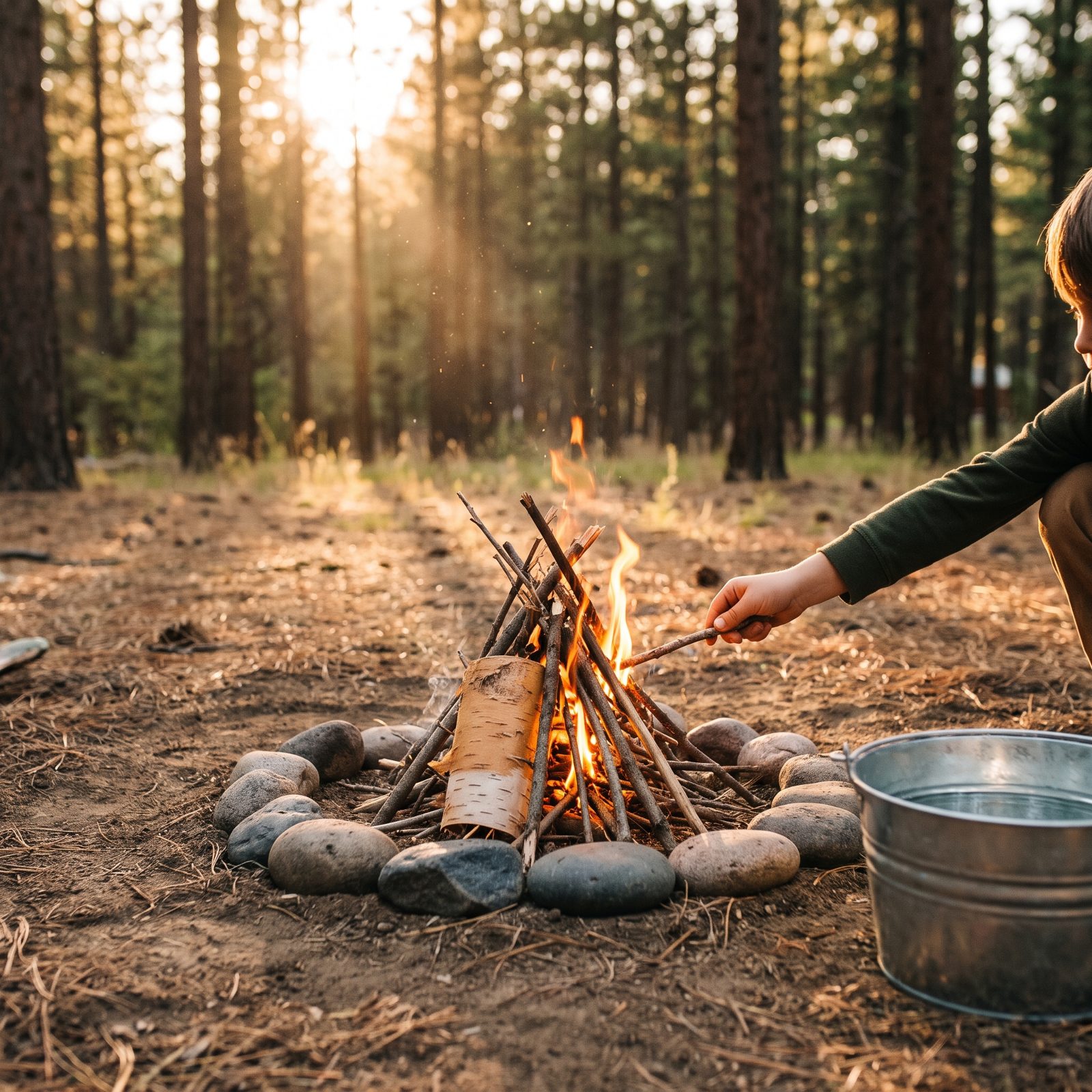
A fire is a negotiation with physics, and most kids used to learn it the hard way: pile the logs on first and watch the whole thing suffocate. Start small. Tinder, then kindling, then the real wood, in that order, with air gaps so the thing can breathe.
What almost nobody mentions now is the respect part. You stay with it, you keep water close, and you scrape the ground down to dirt so nothing creeps. That restraint — knowing when a fire is done and drowning it properly — is the actual skill.
16. Whittling a Stick Down to Something Useful
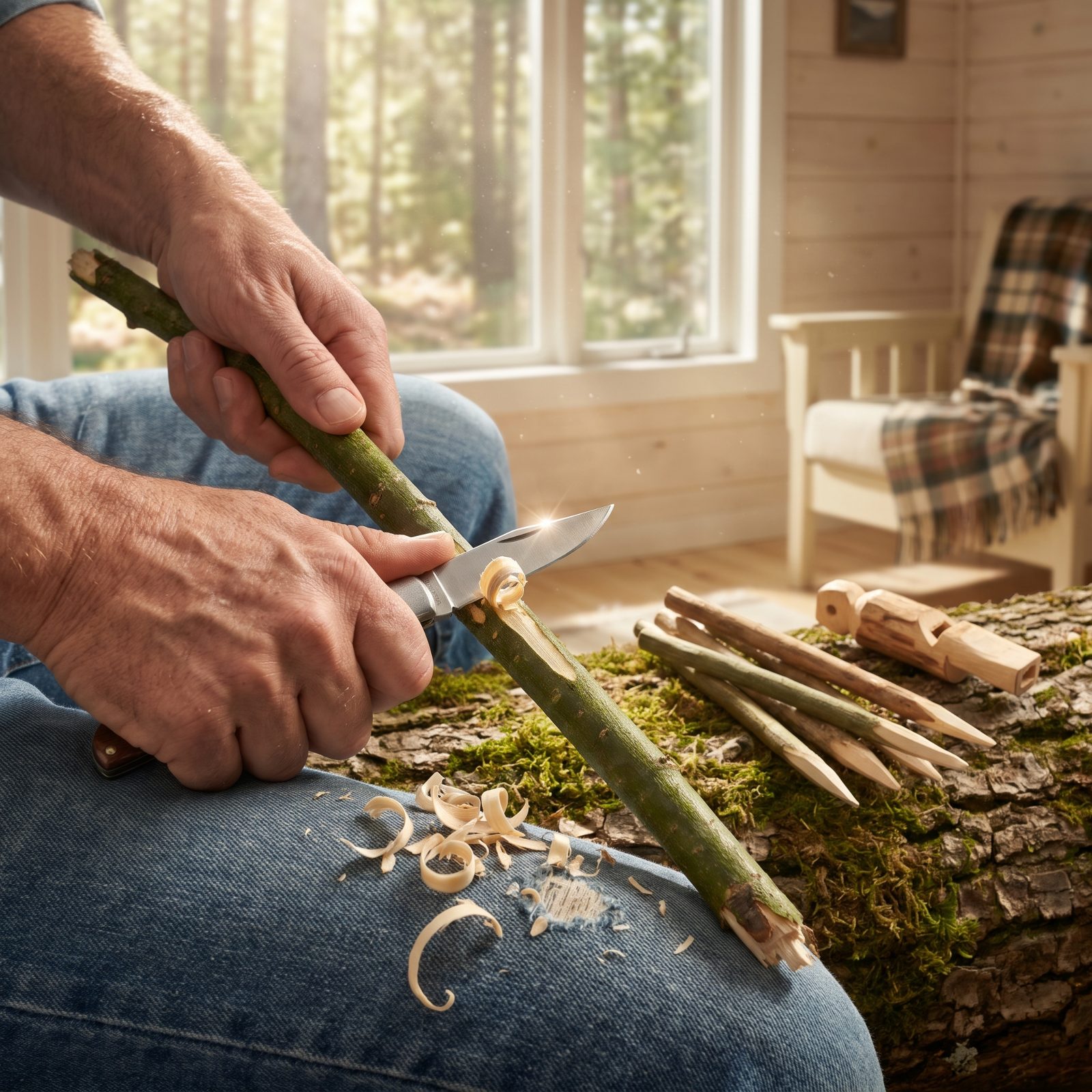
First thing you learn whittling is that the blade goes away from your thumb. You learn it because the other way teaches you fast, and badly.
There’s real patience baked into carving a stick into a point, or a letter, or a halfway-decent whistle that never quite whistles. You can’t rush it — the wood decides. An hour disappears and you’ve got one sharpened spear and a small hill of shavings, and somehow that felt like a good hour. Try handing a kid that today and watch how long it takes before the stillness stops feeling like boredom and starts feeling like focus.
15. Handling a Scraped Knee Without Falling Apart
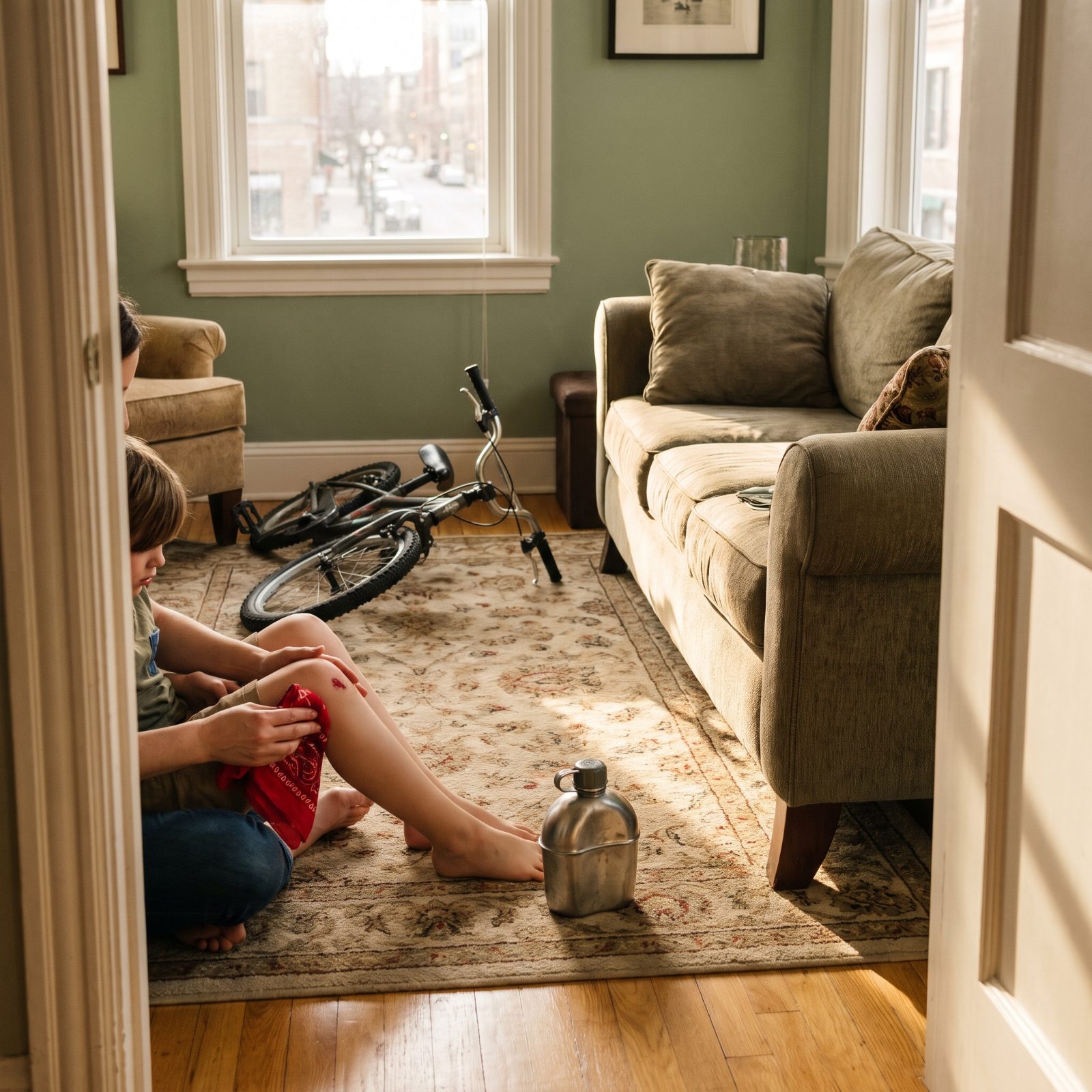
Blood looks dramatic and usually isn’t. That was a lesson you absorbed around age seven, when you ate the pavement, saw red, panicked for ten seconds, then realized you could still walk.
Rinse it. Look at it. Decide if it’s a big deal, and most of the time it isn’t. That whole loop — the quick self-assessment that keeps a small thing small — is a kind of composure kids used to build one gravel rash at a time.
14. Reading Animal Tracks in Mud and Snow
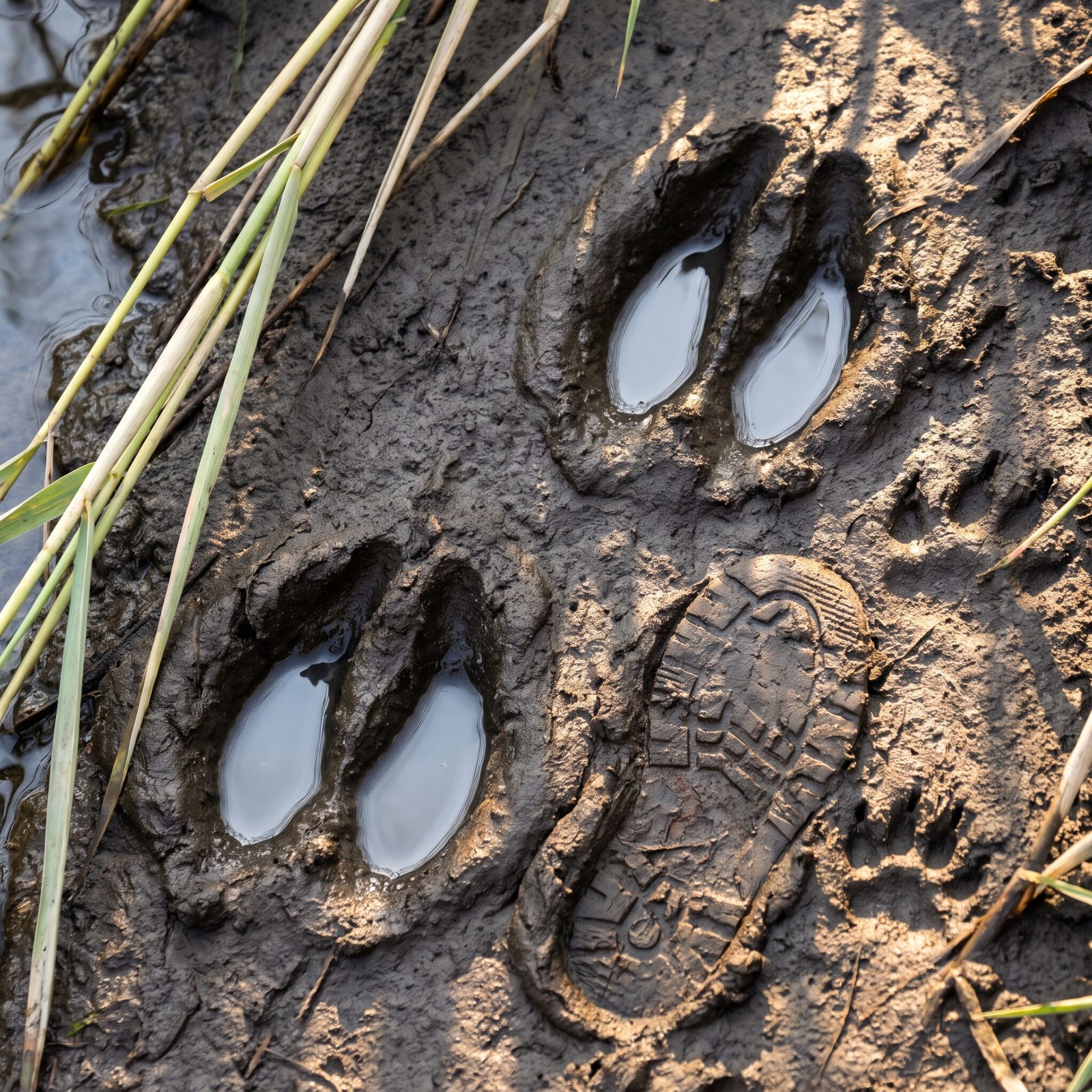
Mud remembers everything. A raccoon’s handlike print, the twin punctuation of a deer, a dog’s rounded toes against a cat’s. You didn’t study this. You crouched by a creek one morning and worked out that something had come through before you did.
The payoff is observation that carries everywhere — looking closely, drawing a conclusion from small evidence, noticing what most people walk straight past. Snow is the best classroom for it, honestly. A fresh dusting turns the whole backyard into a page of overnight news.
13. Entertaining Yourself With Absolutely Nothing
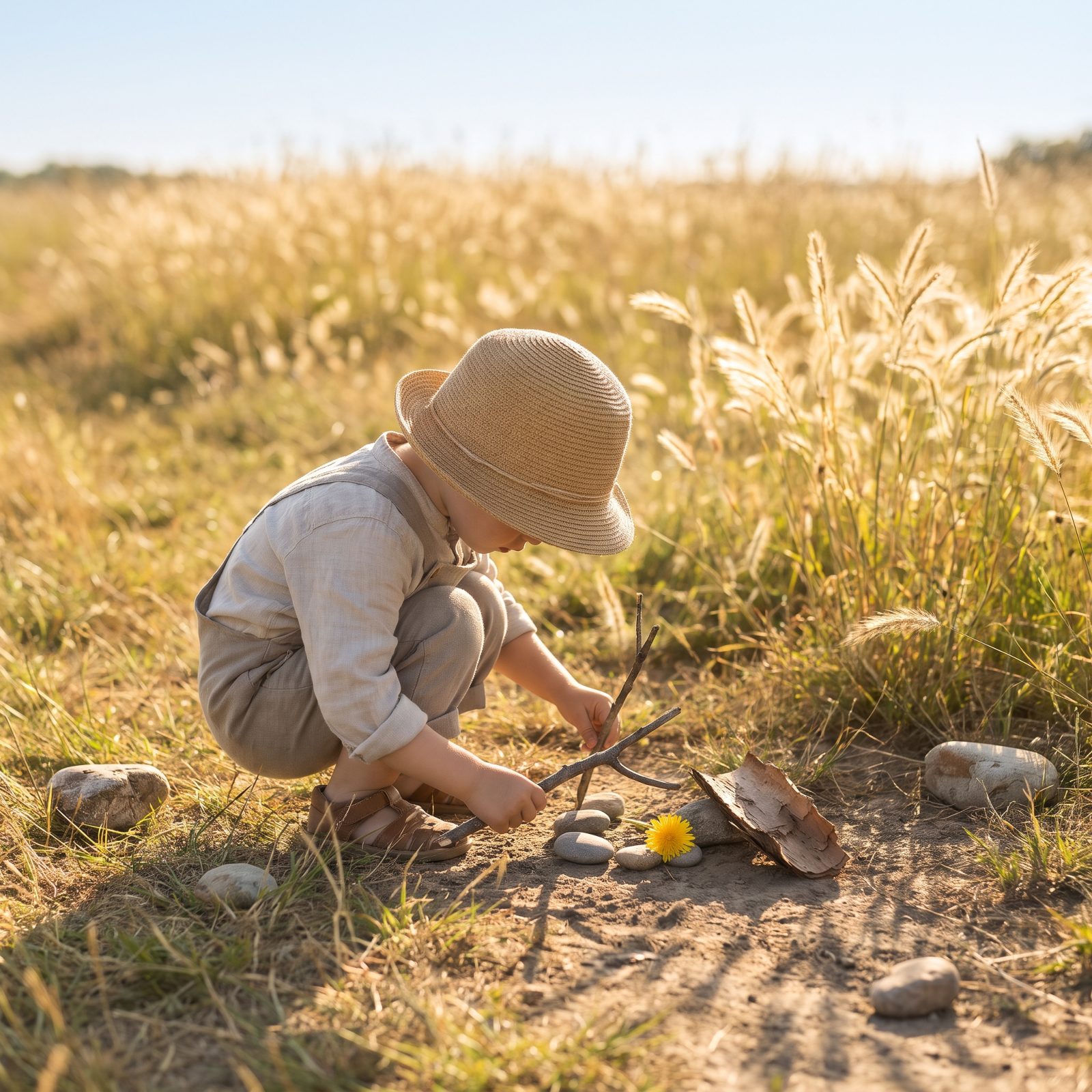
Boredom was the engine. Nobody was coming to fix it, so you built something out of a stick, three rocks, and a story you made up as you went.
This might be the one we’ve lost hardest — the ability to sit in an empty afternoon and generate your own reason to be interested in it. A dirt pile became a construction site. A fallen branch became a fort beam. Nothing handed you entertainment, so you grew the muscle that makes it yourself. And that muscle doesn’t come back easy once a glowing rectangle offers to do the work for you.
12. Judging Whether You Can Actually Make That Jump
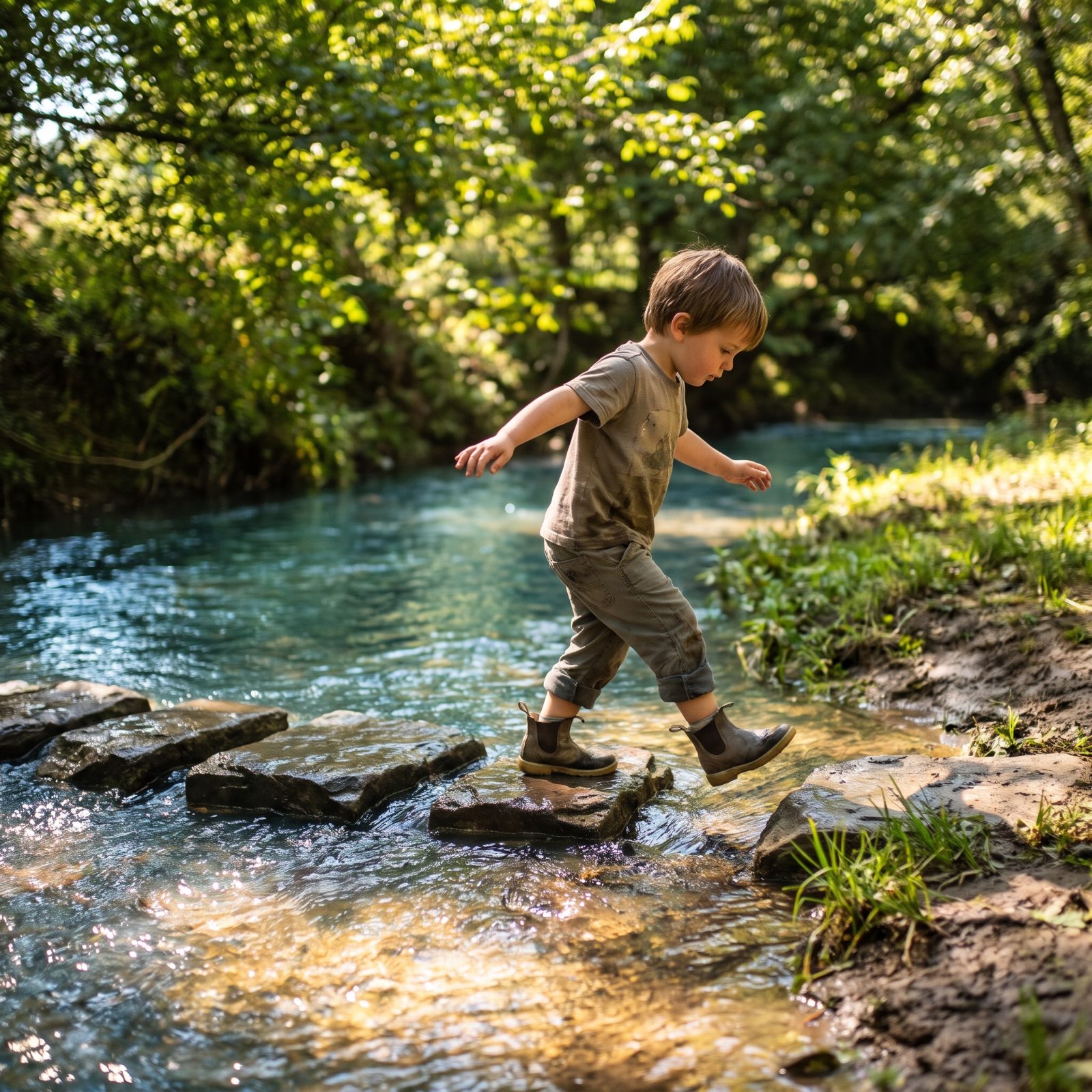
Every creek crossing is a tiny risk calculation, and kids used to run thousands of them. Is that rock far enough? Is the water moving faster than it looks? Can my legs make the gap, or am I about to go in up to the waist?
You got it wrong plenty, and wet socks were the tuition. But that constant low-stakes practice built a real instinct for distance, speed, and your own physical limits — risk assessment with a soft landing. So much of modern childhood has been padded that the line between can and can’t never gets tested until it suddenly matters.
11. Giving Bees and Wasps the Space They’re Owed
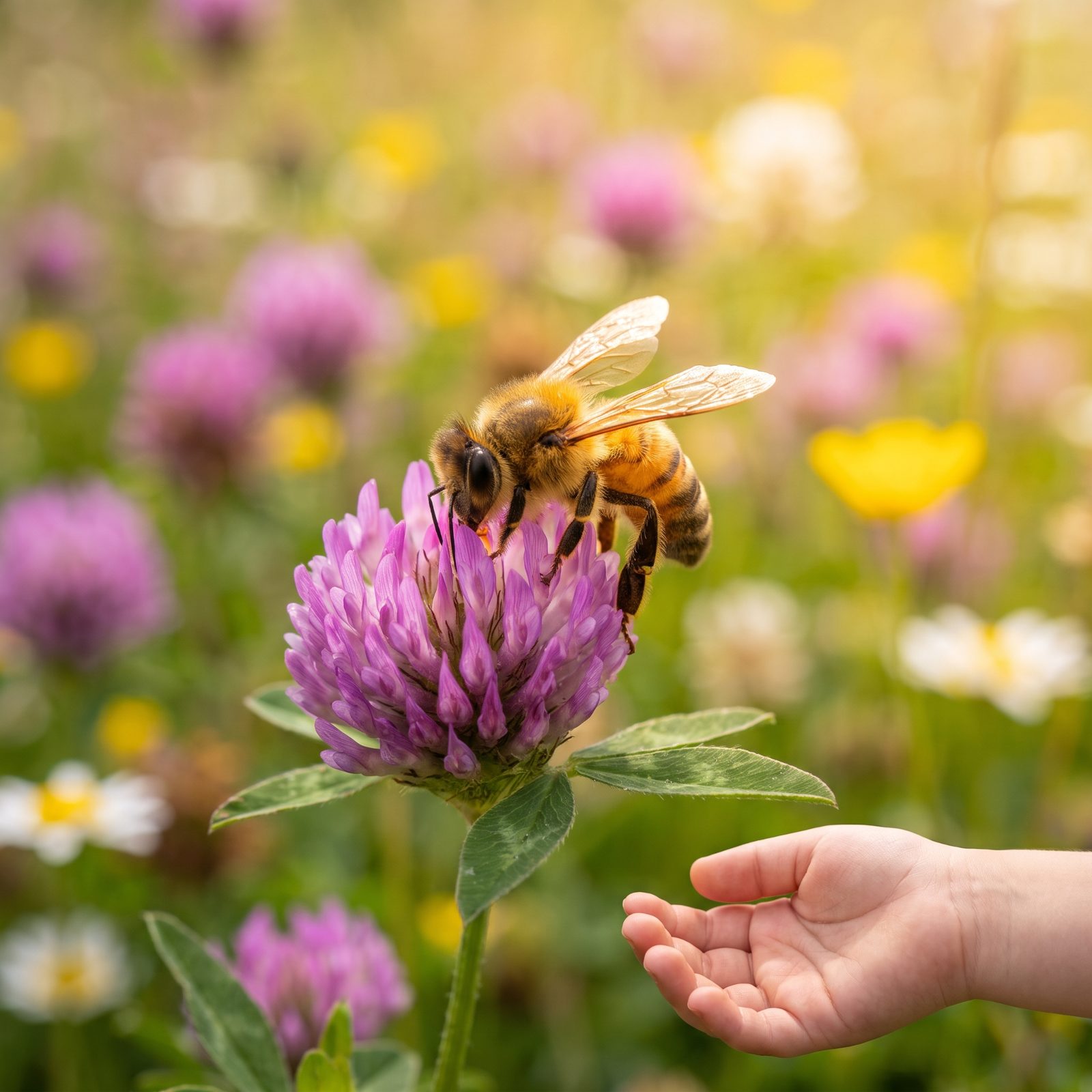
Flail at a wasp and you escalate it. Stand still and it usually loses interest. Better to learn that before you’re an adult swatting wildly at a picnic and making everything worse.
Outdoor kids figured out the difference between a bee bumbling across clover and a yellowjacket nest you do not poke. Stay calm, move slow, and read the body language of something that can hurt you — then respond with respect instead of panic.
10. Learning to Swim in Actual Lake Water
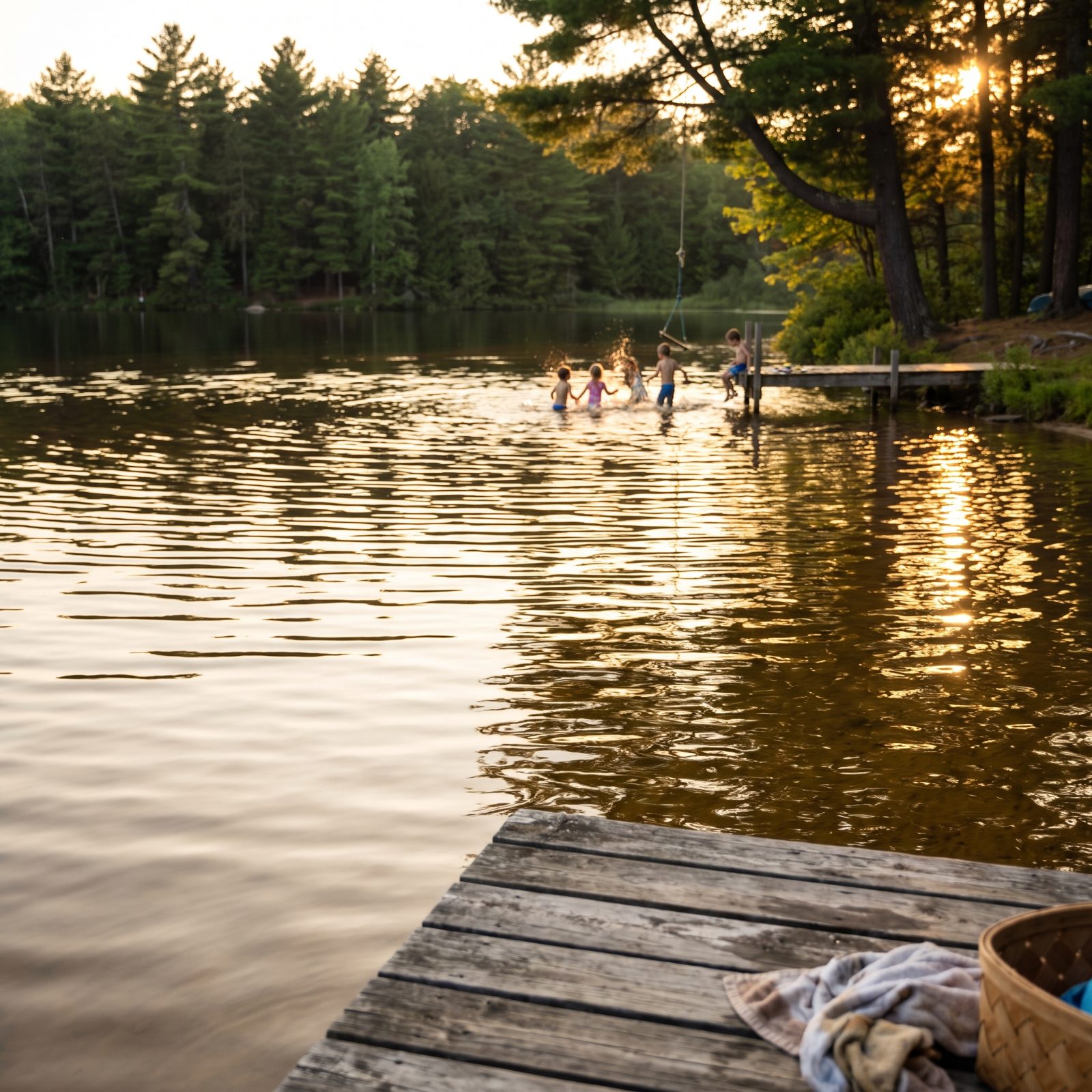
Pool swimming is a clean, controlled version of the real thing. Lake swimming teaches you the truths a pool hides: you can’t see the bottom, the temperature drops as you go deeper, and there’s mud and weeds and a current you didn’t expect.
Open water builds a different, tougher confidence. You learn to trust yourself where there’s no painted lane and no shallow end clearly marked.
9. Telling Time by Where the Sun Sits

You knew it was time to head home when your shadow got long. You didn’t need a clock. The sun told you.
Spend enough afternoons outside and the sky becomes a rough timepiece. High and overhead means midday. Dropping toward the trees with the light going orange means the streetlights are about to come on and you’d better be moving. It isn’t precise, but it ties you to something steady — the day actually turning, the hours passing in a way you can feel instead of check. The little screen clock on the windowsill reading 4:45 is handy, but the light slanting across the floor tells you the same thing.
8. Sharing One Bike Among Six Kids
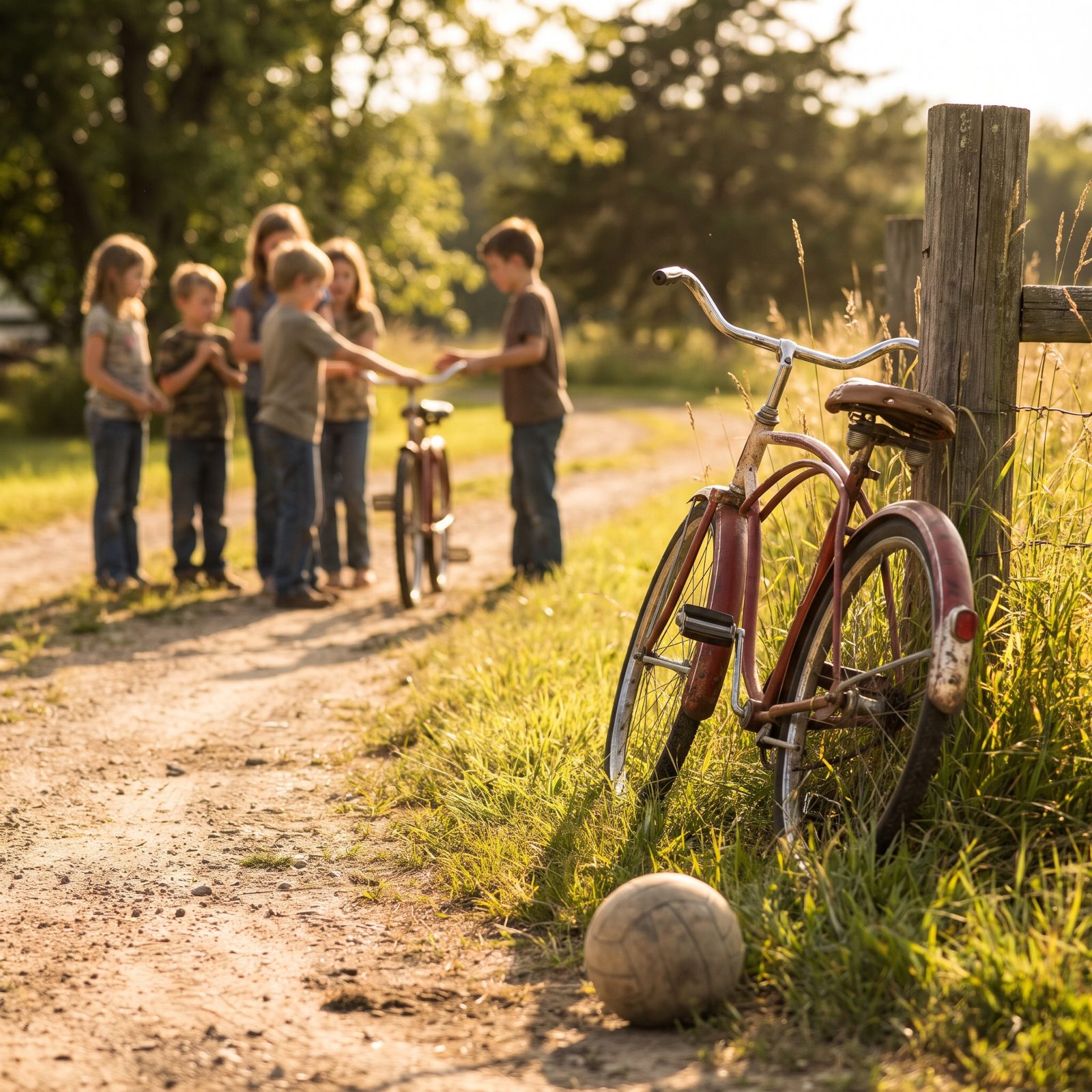
One bike. One ball. A pile of kids who all wanted it. That was a social contract getting written in real time, and nobody handed out the rules.
You worked out whose turn it was, how long a turn lasted, what happened when somebody hogged it. Negotiation, fairness, patience, and the occasional loud argument that got resolved because the alternative was going home. No adult refereeing every exchange — scarcity taught cooperation better than any lecture could.
Give every kid their own of everything and that whole classroom quietly closes. Turns out the shortage was the point.
7. Bouncing Back After a Hard Fall Off the Bike
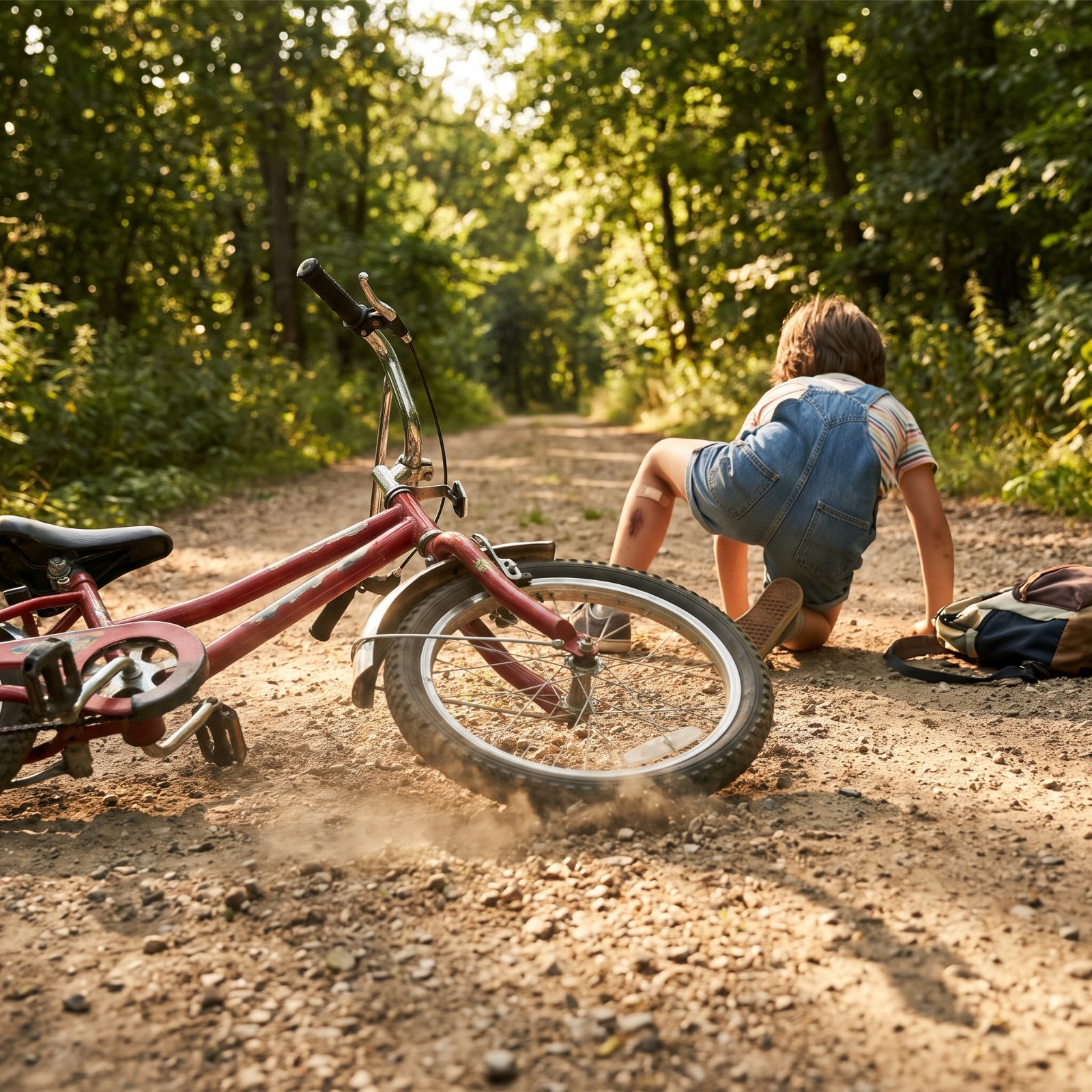
You went over the handlebars, cried for about ninety seconds while nobody filmed it, then got back on because the alternative was walking home. The scab was a souvenir, not a trauma.
Resilience doesn’t come from a sit-down talk. It’s built in the gap between the fall and the getting-up, and that gap used to be yours alone to cross. Hover too close and you fill it for them. Then the lesson closes before it can land.
6. Making Friends With the Neighborhood Kids You Didn’t Choose
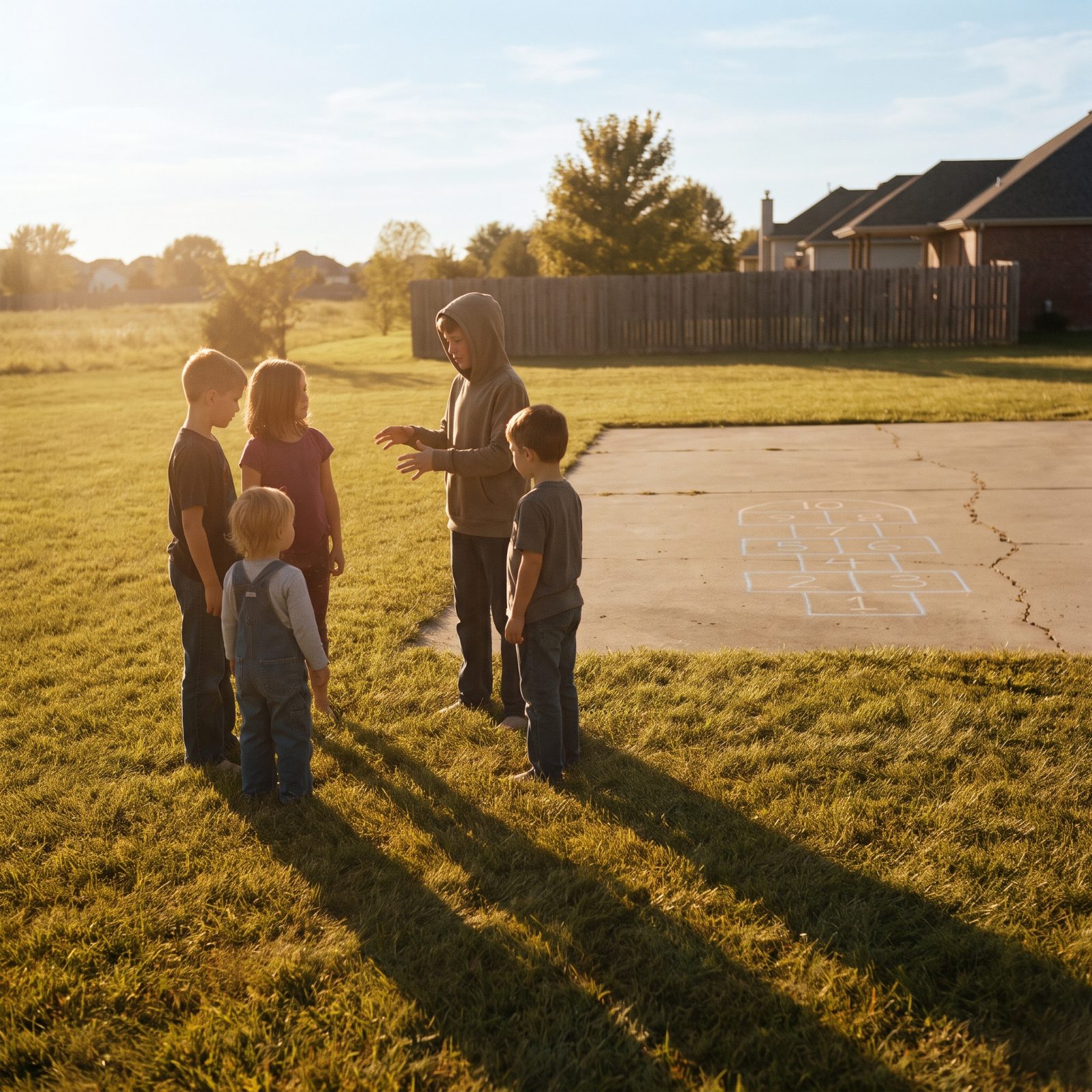
You didn’t pick them. They just lived on your street — the kid two doors down who was a year younger, the one across the way who was too old to really want you around. You figured out how to get along with all of them because the only alternative was playing alone.
Curated friendships are a modern luxury now. Playdates are vetted, and kids assemble a social circle the way you’d build a playlist. The old way threw you in with whoever happened to be there and made you work out the fit.
5. Caring for a Turtle You Found or a Nest You Watched
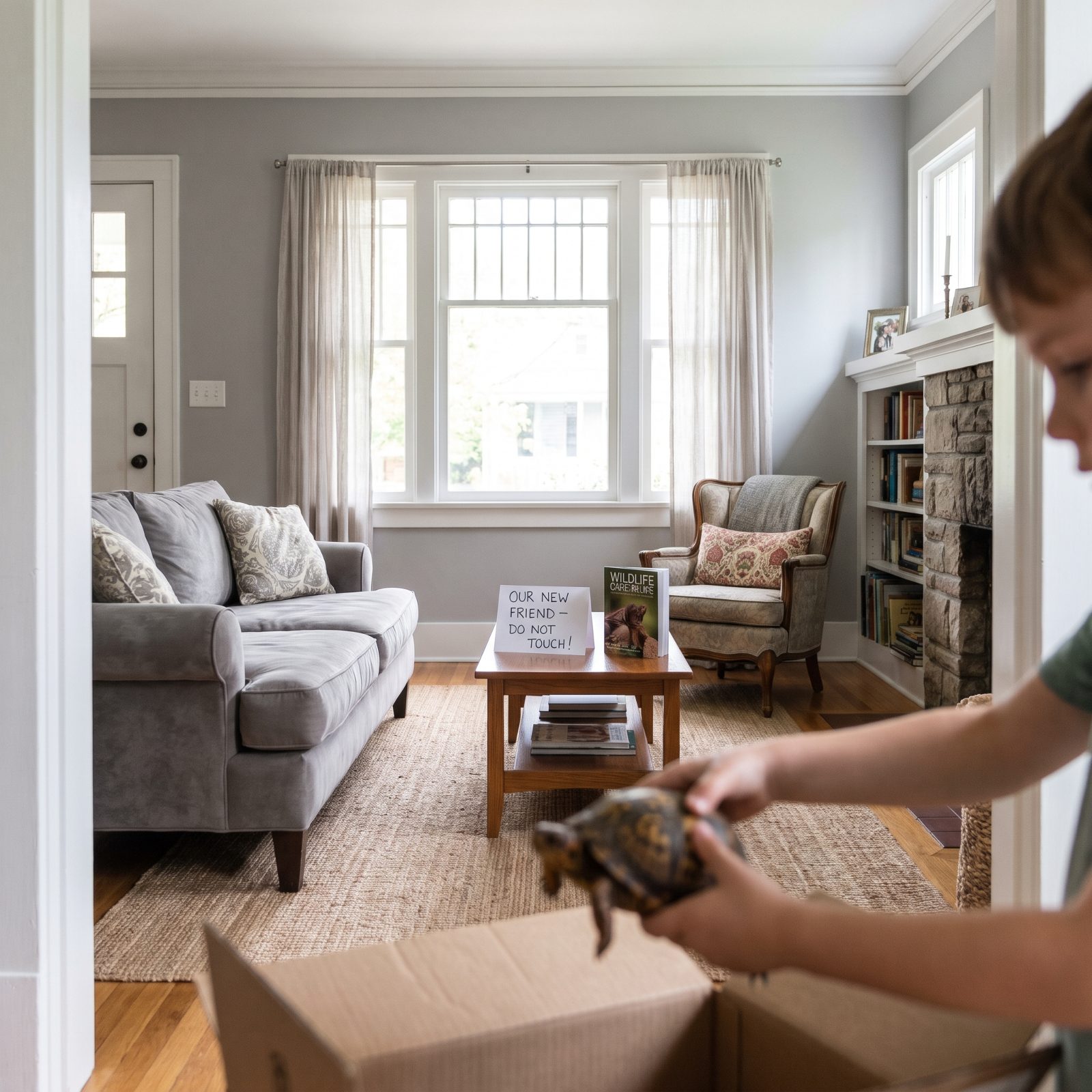
Maybe it was a box turtle you kept in a shoebox for a weekend. Maybe it was a robin’s nest you checked every morning, learning not to touch the eggs, learning to watch instead. Either way, something small depended on you paying attention.
That’s where responsibility starts — not with a chore chart but with a living thing and the quiet understanding that your choices land on it.
4. Pitching a Tent and Sleeping Out in the Backyard
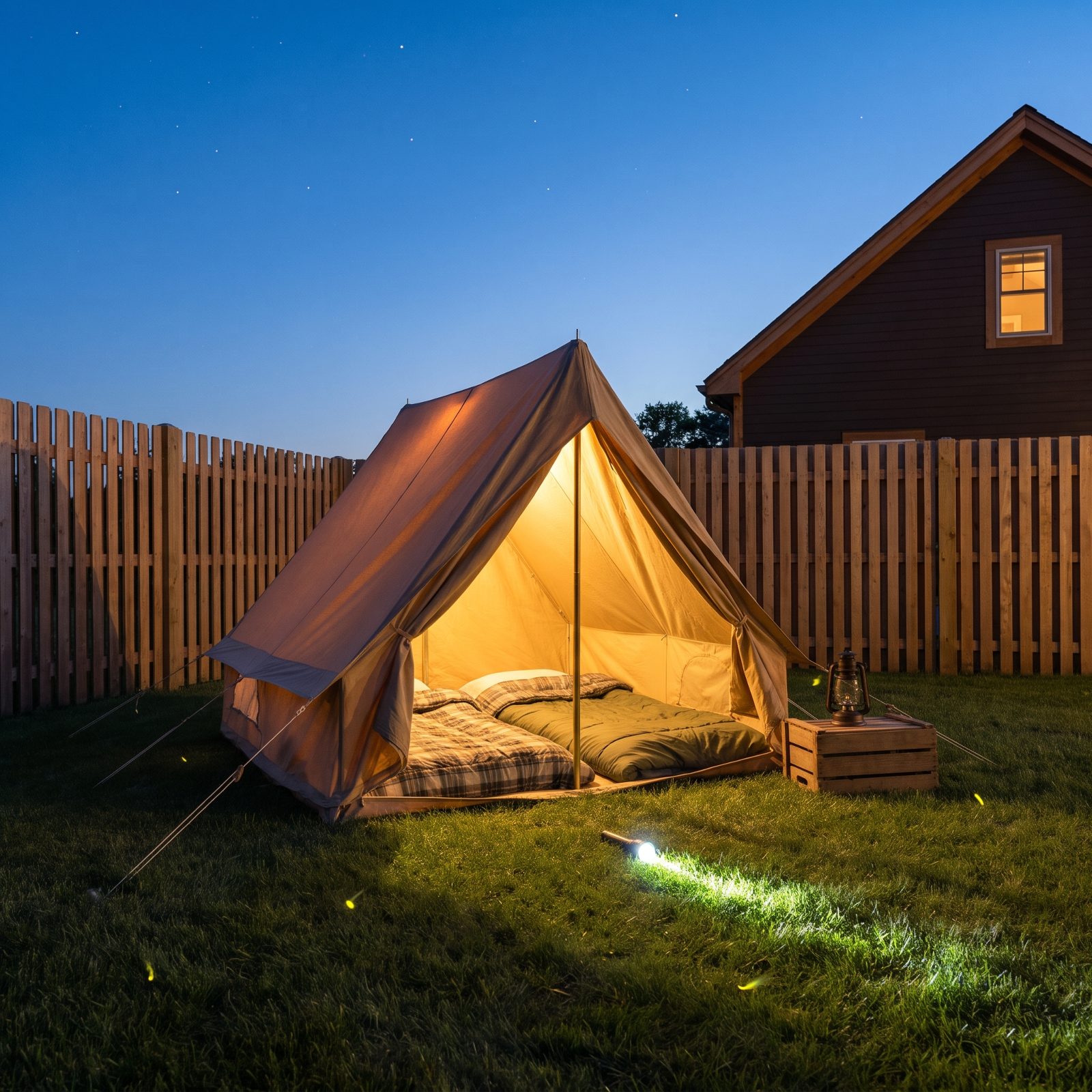
The first night out taught you the tent leaks if the poles aren’t right, and that the dark backyard sounds nothing like the daytime one. And you learned you could handle both.
Setting up a shelter, even a cheap pup tent twenty feet from the kitchen door, packs a full lesson in self-reliance into one evening. You plan, you build, you fix what fails, you spend the night in what you made. Hotel childhoods skip the whole chain.
3. Reading the Current Before You Waded In
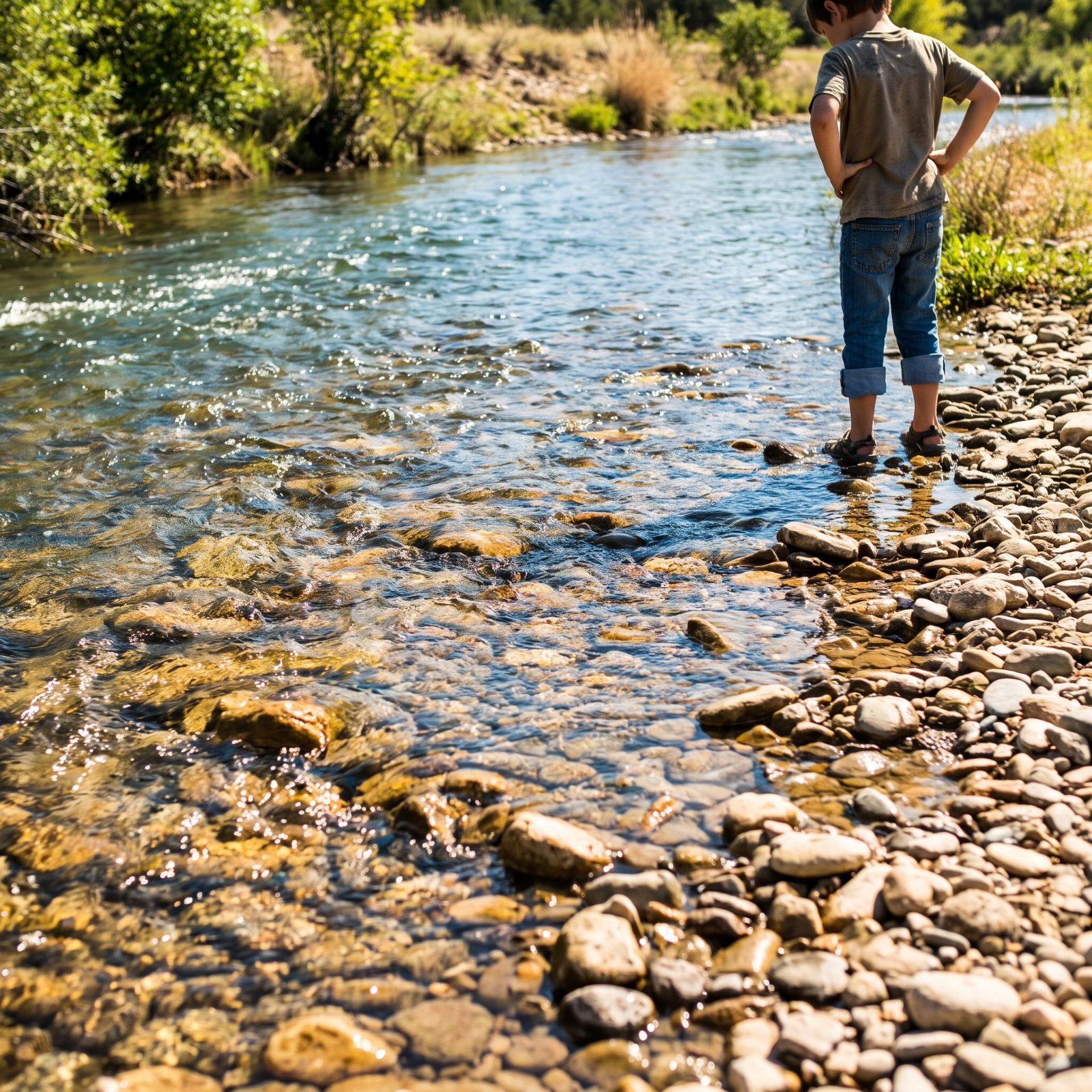
You learned to look before you stepped. Fast water that’s smooth on top runs deeper than it looks. Still water near a drop can grab you. The stones under the riffle are the slick ones.
Nobody handed you a safety pamphlet. You watched the water, tested with a foot, and built a gut read on moving water that stays with you for life. That instinct — judging risk by reading the thing itself — carries over to everything, and it only comes from being in it.
2. Fixing a Thrown Chain or a Flat Yourself
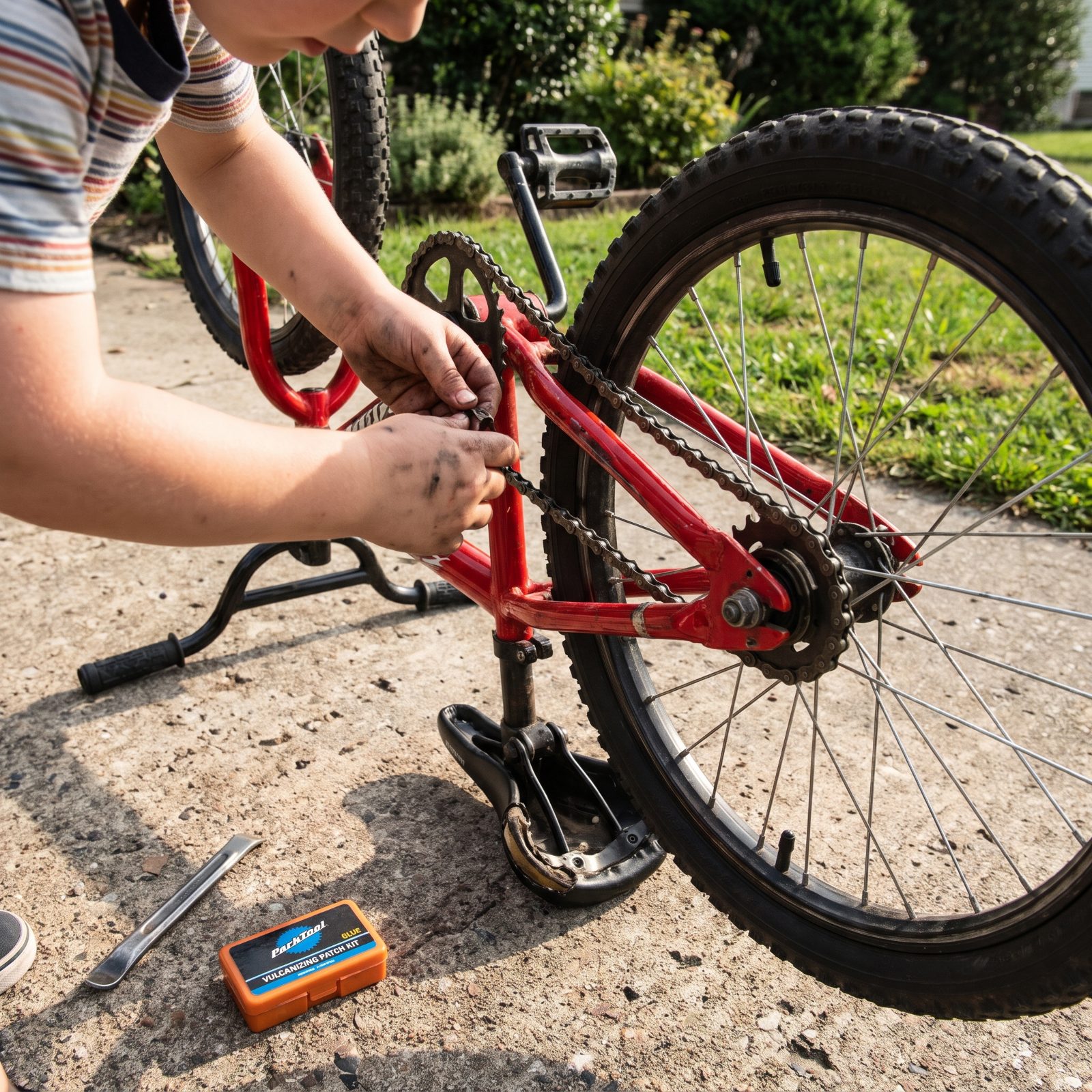
The chain came off a mile from home and the choice was clear — figure it out or push the bike. So you laid it down on its side, got grease all over your hands, and worked the chain back onto the sprocket with your thumbs.
Mechanical confidence starts right here. Not in a shop class, but in the driveway with a problem you caused and have to solve. A kid who patches a tube at ten won’t be intimidated by the car hood at thirty. And “I’ll just call someone” is a habit too — one that also starts young.
1. Spotting Poison Ivy Before It Got You
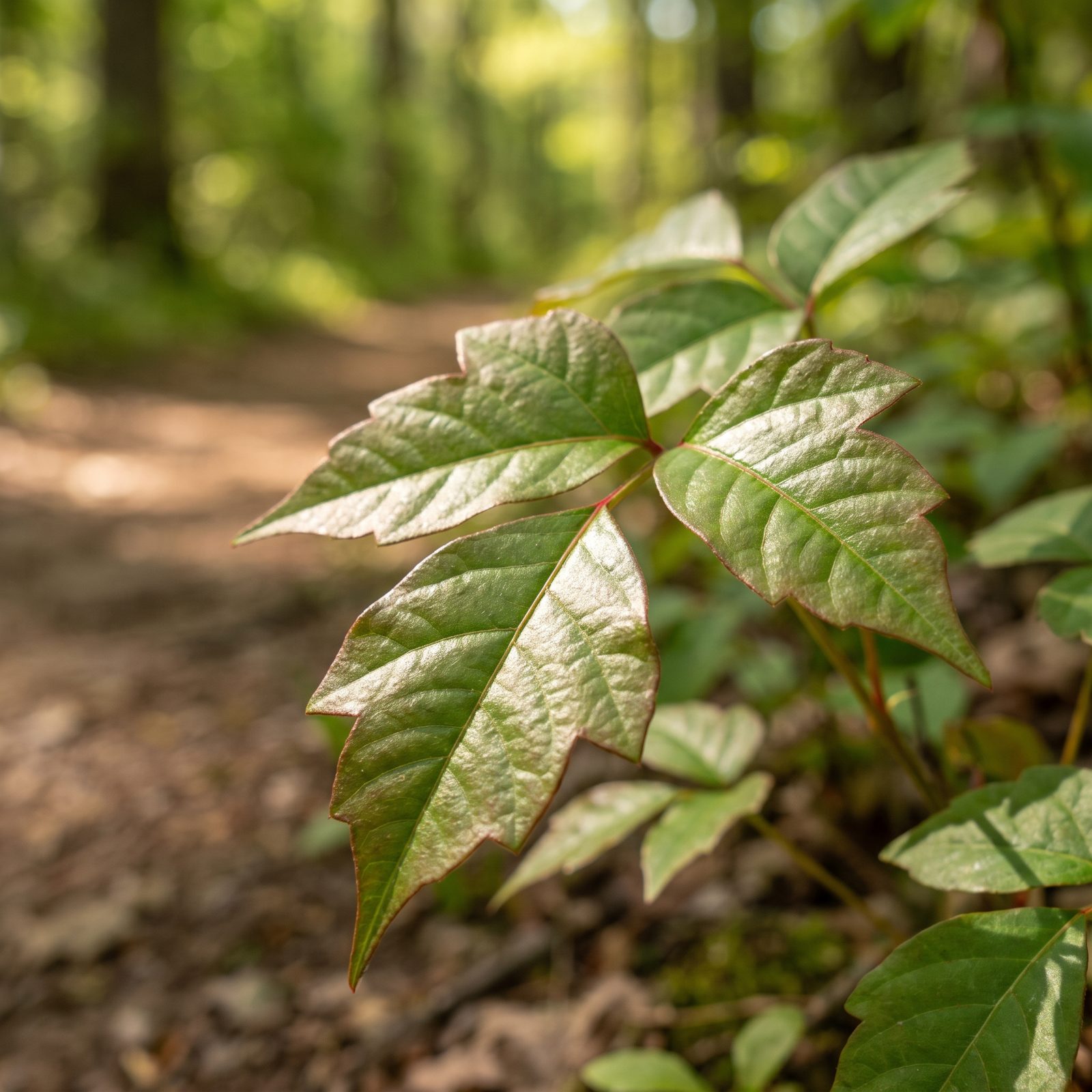
Leaves of three, let it be. You learned the rhyme and then you learned the plant for real — the glossy three-leaflet clusters, the reddish edges in spring, the way it climbs. Usually you learned it the hard way first, with a week of calamine lotion and misery.
Plant literacy, knowing what in the green world will hurt you, was common knowledge for anyone who played in the woods. Now it’s a specialist skill. A whole generation can’t tell poison ivy from Virginia creeper, and the woods don’t grade on a curve.