
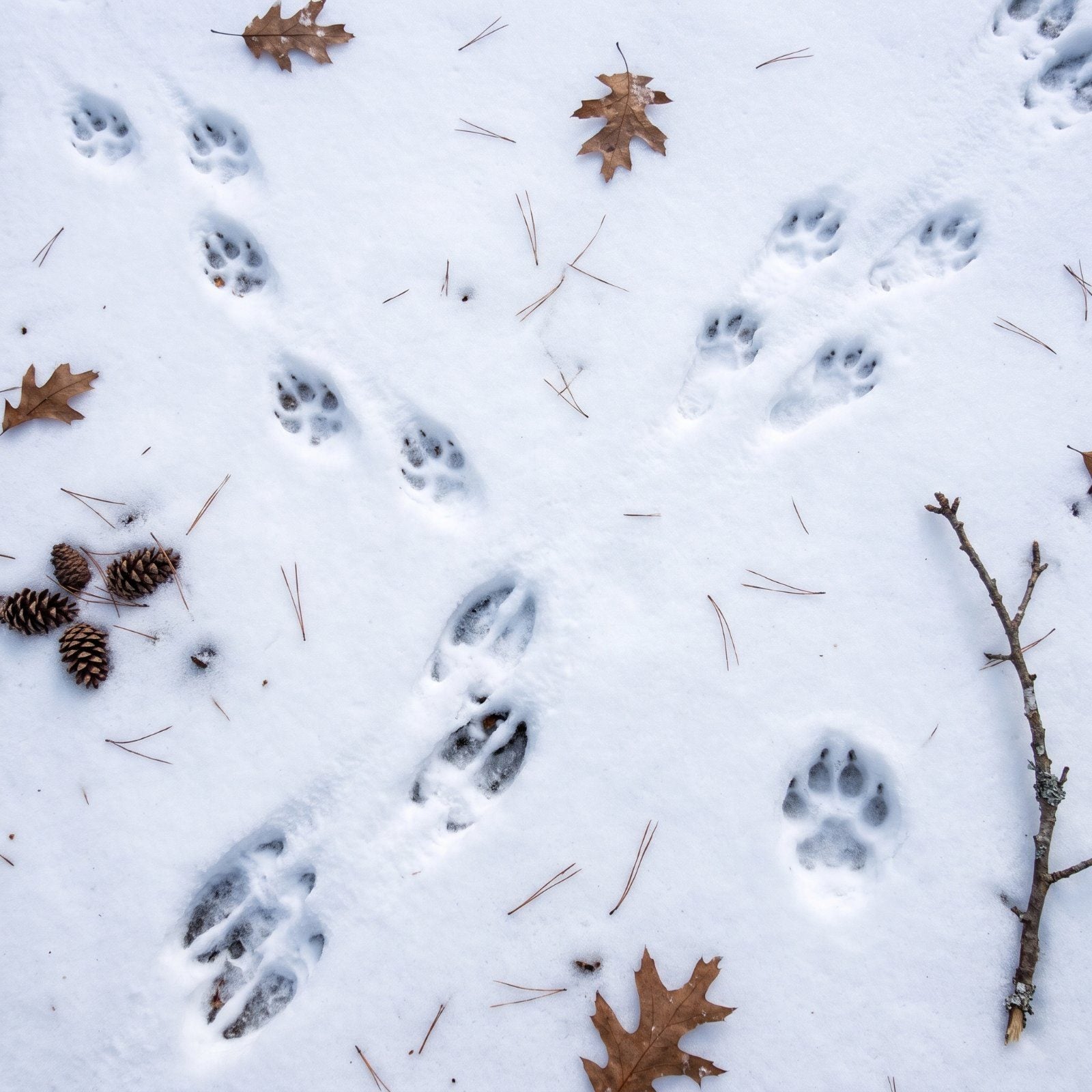
Fresh snow is the best field notebook you’ll ever read. An hour after it falls, the woods fill up with a record of everything that moved overnight, and most of us walk right over all of it without ever looking down. To a beginner, a cat and a dog leave prints that look identical — until you learn the one detail that gives the game away every time. Beds. Feeding scraps. Tail drags, and the strange backwards hop of a hare. It’s all right there in the white, waiting on you. Learn a handful of these and a quiet winter walk becomes a story you can follow step by step.
Please note that some of the images in this article were created with the assistance of AI.
37. The Cougar’s Big Round Print With No Claw Marks
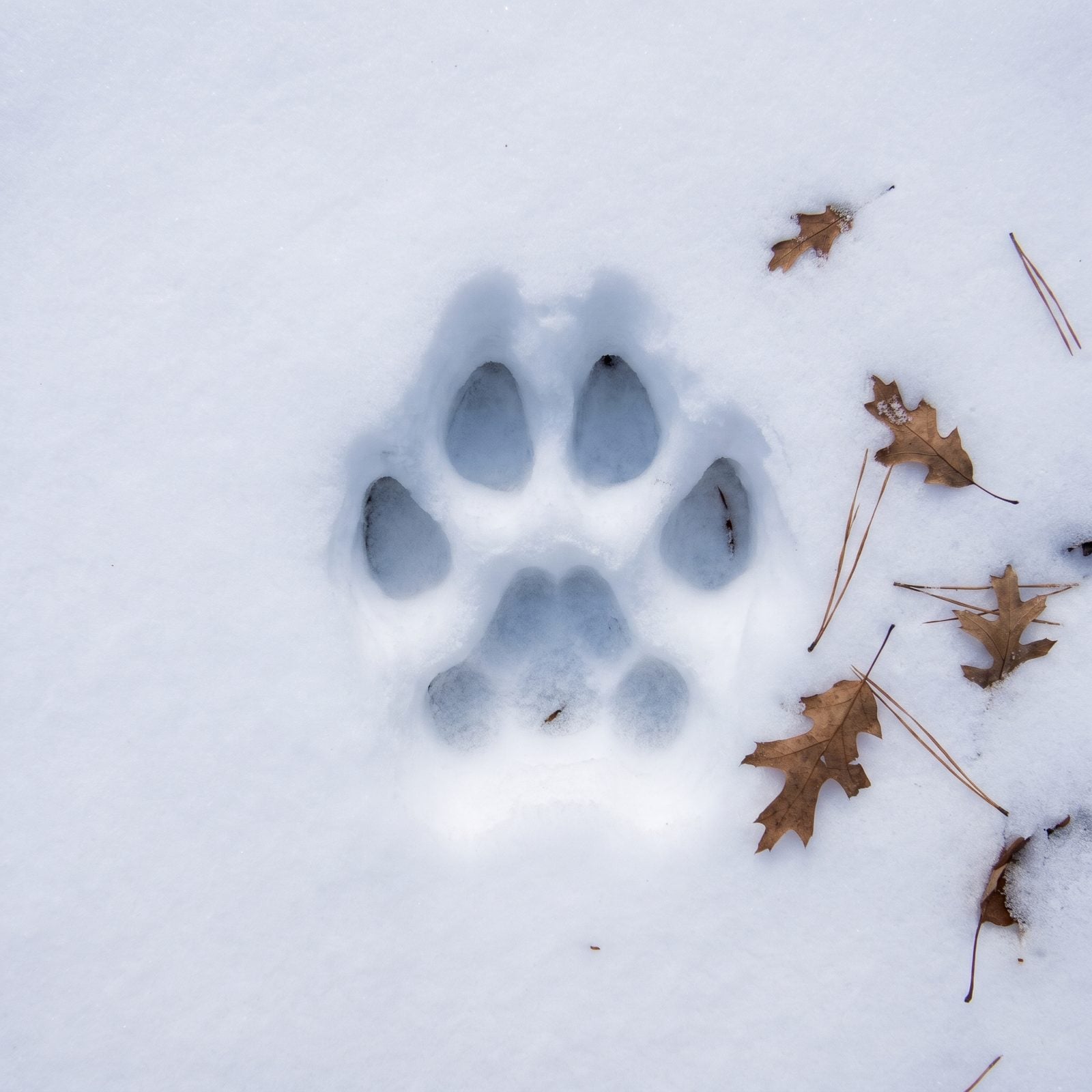
The detail that settles every argument is no claws. A cat walks with its claws pulled in, so a cougar print comes out round and clean and clawless, while a big dog or wolf plants four blunt nail dents out front every single time.
Now look at the heel pad. It sits as one broad pad with three lobes along its back edge, where a dog’s heel pad shows only two. The toes sit asymmetrical, same as your own hand where the middle finger leads. A front print runs around three to four inches across, usually a touch wider than it is long.
36. The Snowshoe Hare’s Giant Hind Feet Landing Out Front
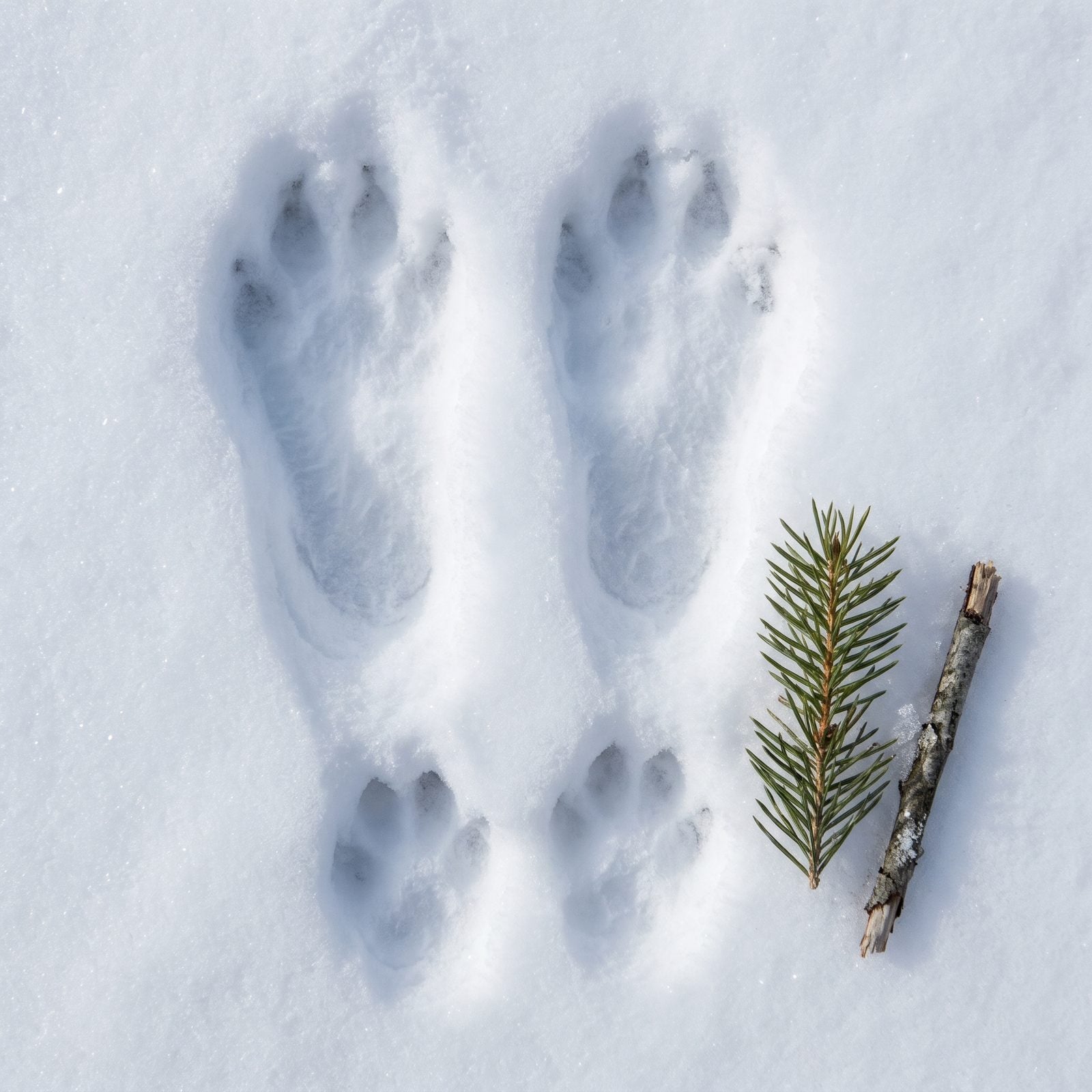
The key is simple: the big prints are the back feet, and here they land ahead of the little ones. In this set the hare’s oversized hind feet swung forward and came down in front of its front paws, toes pointing away up the trail, so the track reads backwards from what your brain expects.
Those hind feet are basically what the animal is built around. Splayed wide and thick with fur, they work like the snowshoes we named them for, spreading the hare’s weight so it floats over powder a fox would sink straight into. Follow the trail far enough and it vanishes under a low spruce. That’s where the hare was headed all along.
35. The Raccoon’s Little Human Hands in the Snow
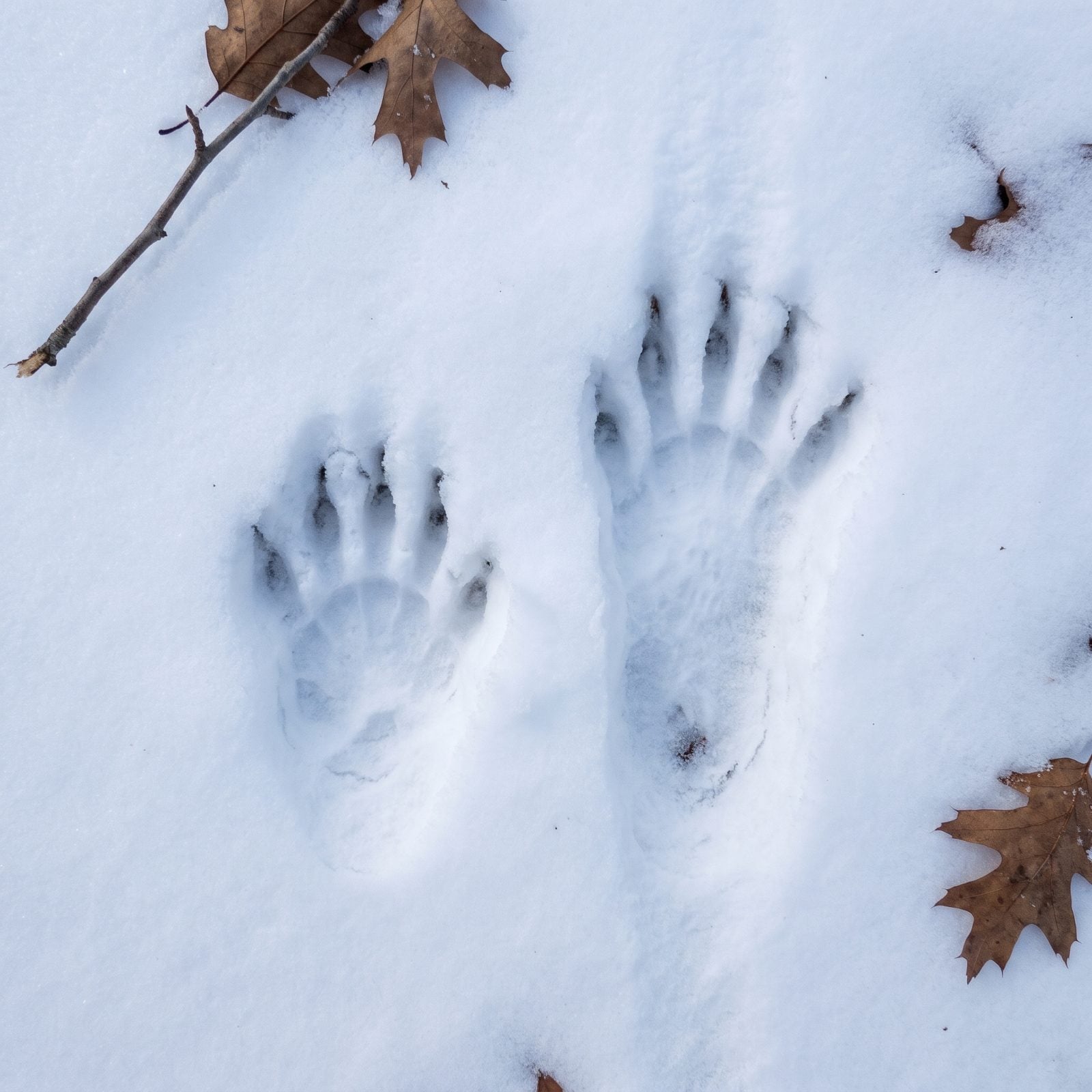
Nothing else out there leaves prints that look so much like a child crouched down and pressed two bare hands into the snow. Five long fingers, splayed and spread, front feet and hind.
The giveaway is the pairing. A raccoon shuffles along dropping a front foot next to the opposite hind foot, so you get two differently shaped prints sitting side by side, over and over down the trail. The hind print is longer, almost a small human foot. The front is rounder. Find these near open water or a tipped-over trash can and you’ve found your culprit.
34. The Opossum’s Weird Opposable Thumb on the Back Foot
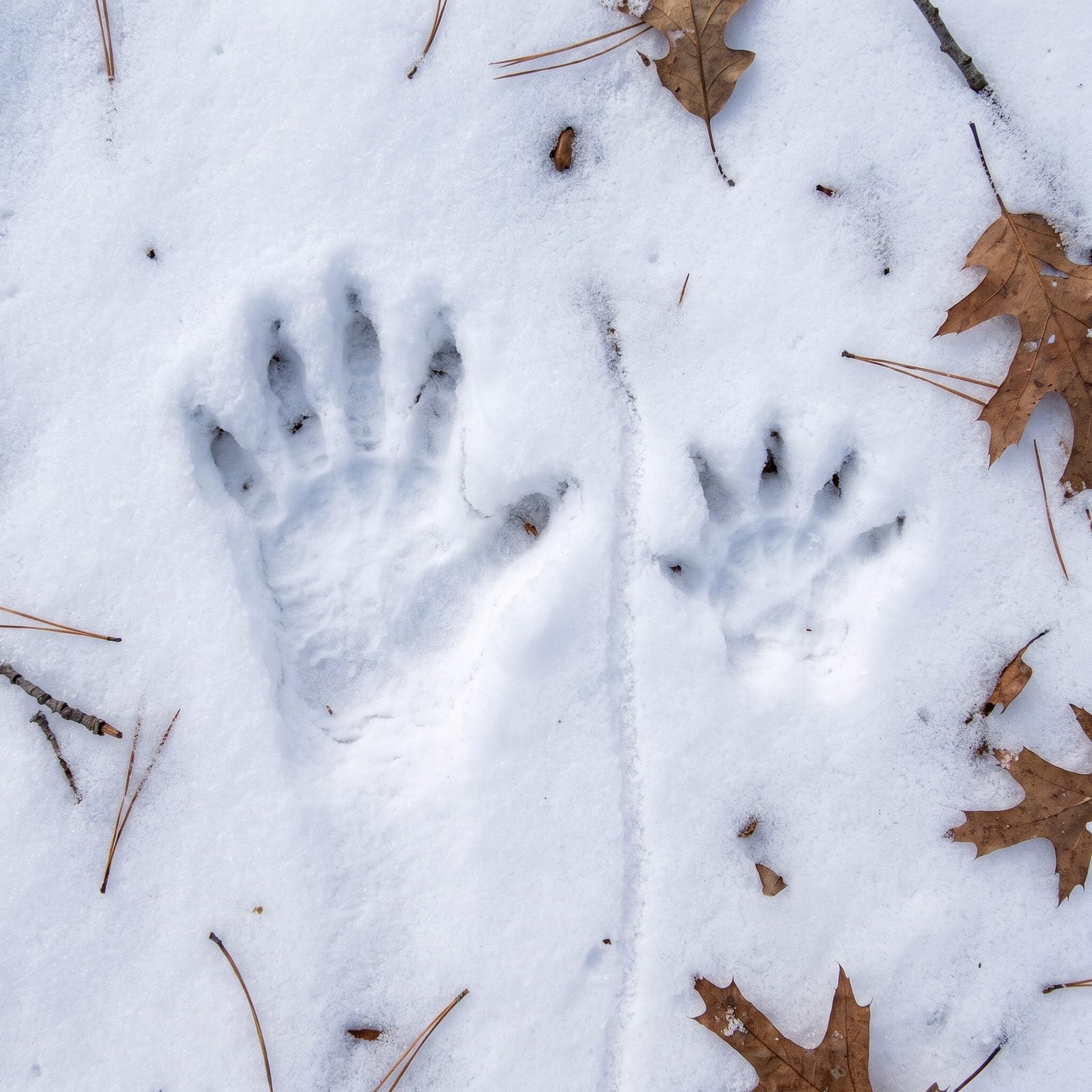
Check the hind print and you’ll find something almost unsettling. A thumb. The opossum’s inside hind toe juts out at a wide angle, no claw on it, set against the palm the way your own thumb sits. No other North American mammal track pulls this off.
The front print opens into a five-pointed star, every toe splayed. Between the prints you’ll often catch a thin wavering line where the naked tail dragged along. Opossums despise the cold — their tails and ears frostbite easily — so fresh tracks on a bitter night mean one was out when it would rather have been anywhere else.
33. The Moose’s Long Splayed Hoofprint the Size of Your Hand
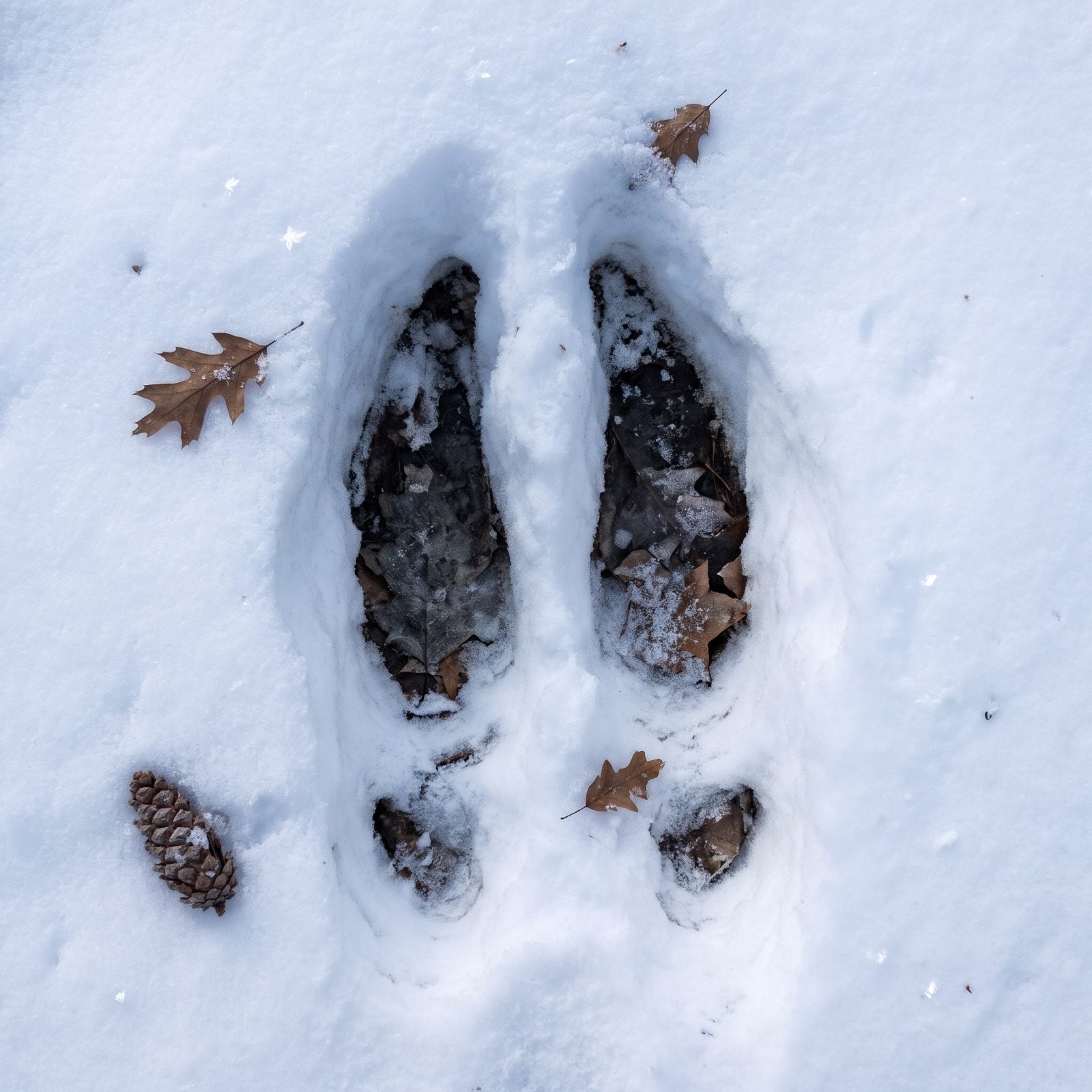
Size alone usually gives it away. A moose hoofprint runs five to seven inches long, about the length of your hand, and it punches clean through deep snow to the leaf litter below because the animal weighs about what a small car does.
The two hoof halves are long and pointed, splaying apart when the moose crosses deep snow or soft ground to carry all that load. Behind the main print you’ll often see two round dewclaw dents where the leg sank far enough to leave them. Look nearby for stripped willow and aspen stems chewed off at a sharp angle. That’s breakfast.
32. The White-Tailed Deer’s Tidy Heart-Shaped Hoof
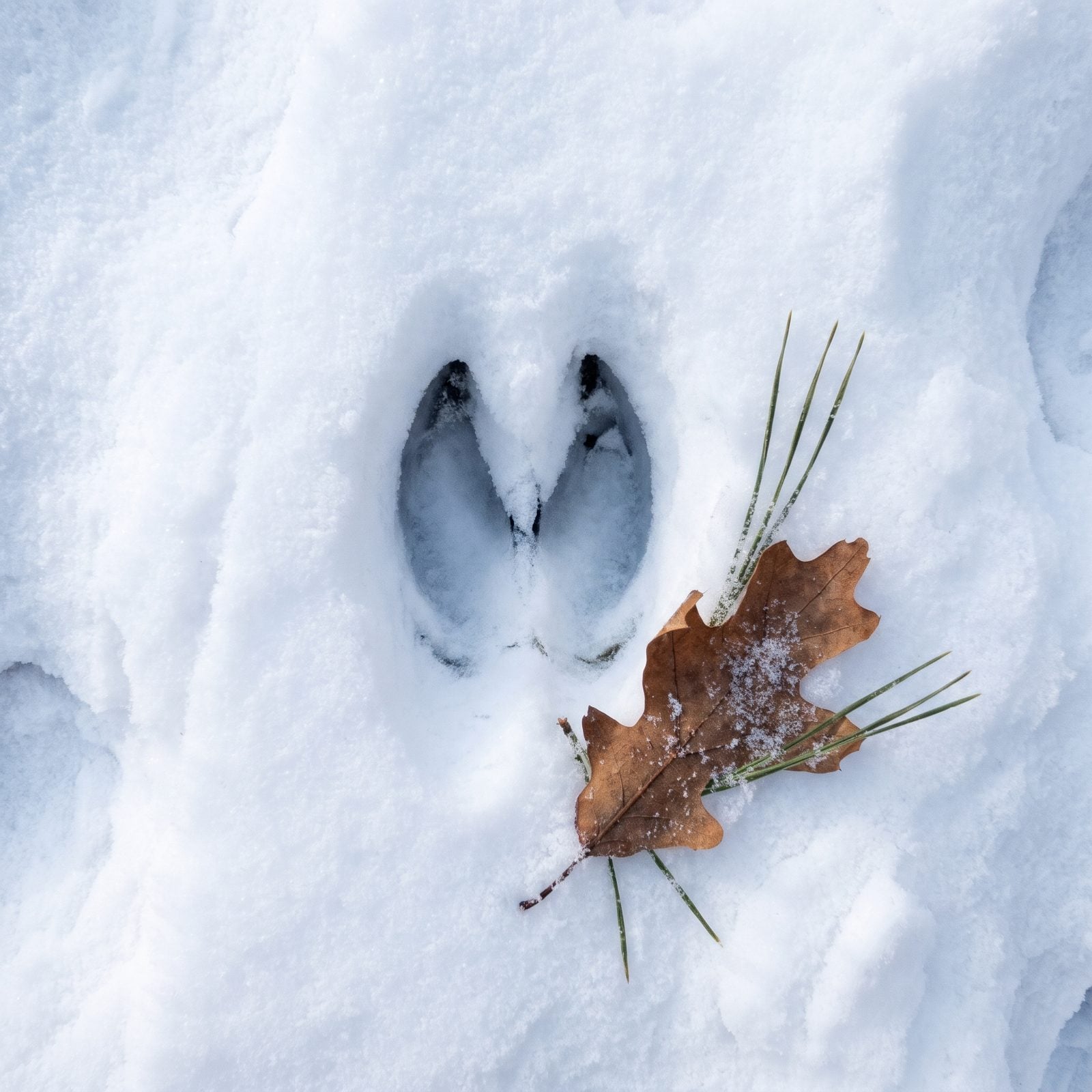
This is the track most folks learn first, and for good reason — it looks like a little valentine stamped in the snow. Two halves of the hoof meet in a point, which gives you that heart shape, and the point aims whichever way the deer was walking.
A whitetail print runs small and tidy, usually two to three inches long. Where it crosses a road or a field edge you’ll see them bunched up in a browsing pattern, then suddenly stretched long and leaping where something spooked the animal. Splayed halves with the dewclaws showing? The deer was big, running, or crossing soft ground.
31. The Caribou’s Wide Round Hoof With Dewclaw Dents
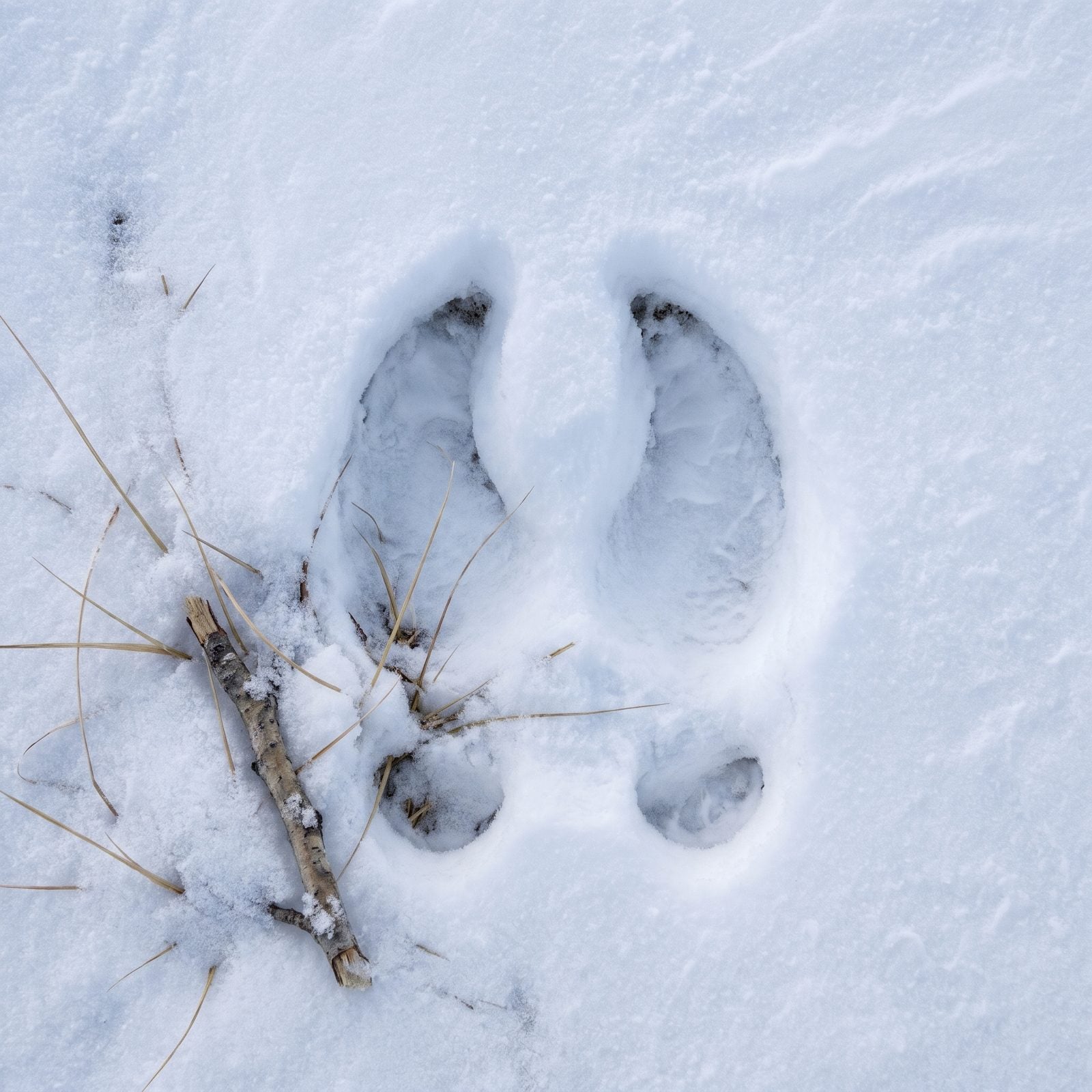
A caribou track looks purpose-built for the job it does, and it is. The hooves are wide and round, spreading almost into a half-moon and scooped out underneath so they shovel snow aside and float the animal across tundra and deep drifts.
What most trackers rely on here is the dewclaws. On caribou they sit large and low and print clearly behind the main hoof, far more reliably than you’ll ever see on deer or moose. Up in the right country — the far north, or where woodland caribou still hang on — a wide splayed track with two bold dewclaw dents behind it is a strong call. And here’s the odd part: a tendon in the caribou’s foot makes a soft clicking sound as the animal walks, which the herds use to stay together in a whiteout.
30. The Black Bear’s Flat Five-Toed Hind Print
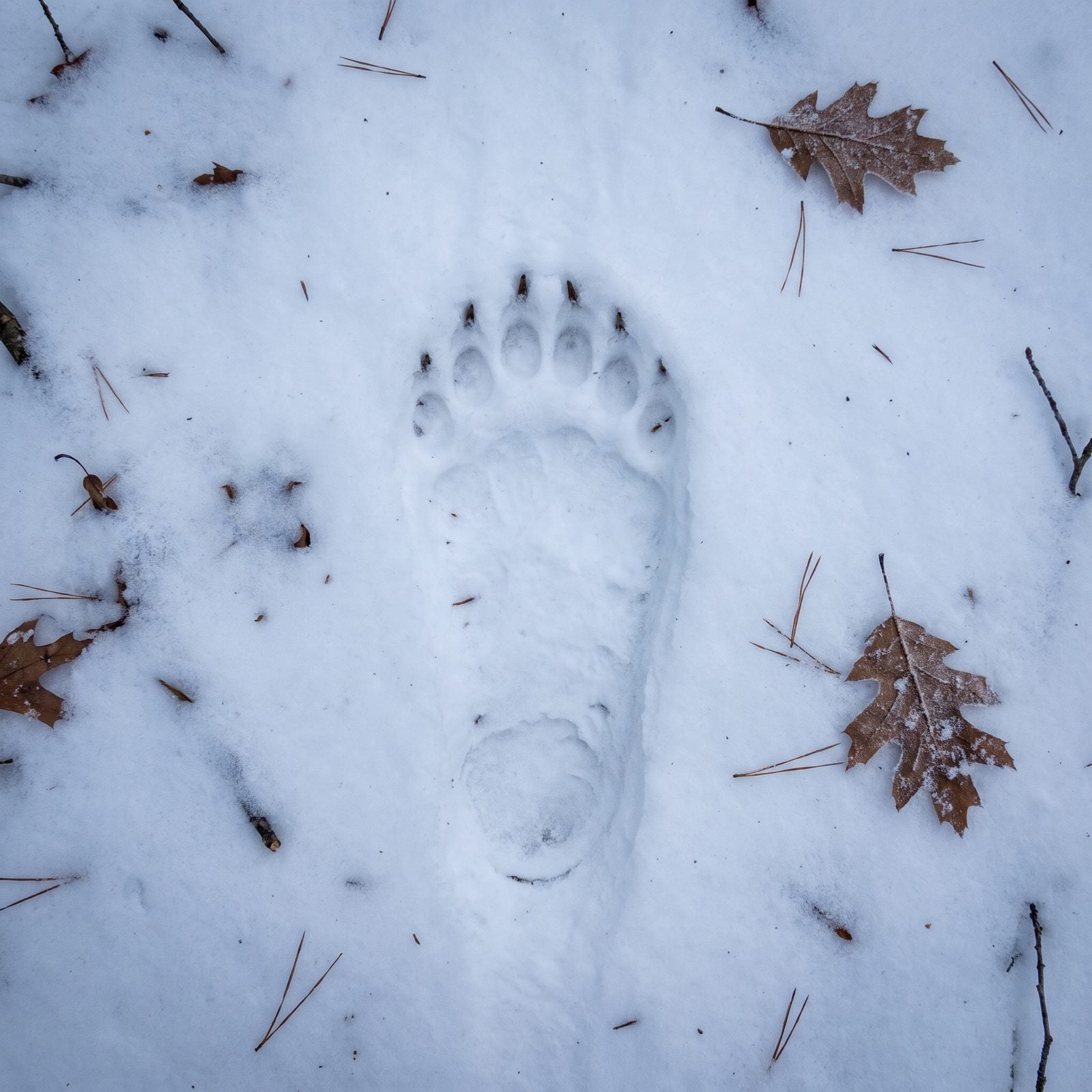
The hind print of a black bear stops people cold because it looks human. Long, flat, five toe pads in a neat curve, a heel that prints all the way back — like a wide barefoot person wandered through.
Short claw marks sit just ahead of the toes, right up near the tips, which is how you separate a bear from the long reach of a grizzly’s claws. One quirk worth filing away: the toes line up in a shallow arc, and the smallest one is on the inside, the opposite of your foot. Most black bear tracks you’ll ever find date to fall and spring, since a true deep-winter bear is usually denned up and sleeping.
29. The Grizzly’s Front Track With Claws Way Out Front
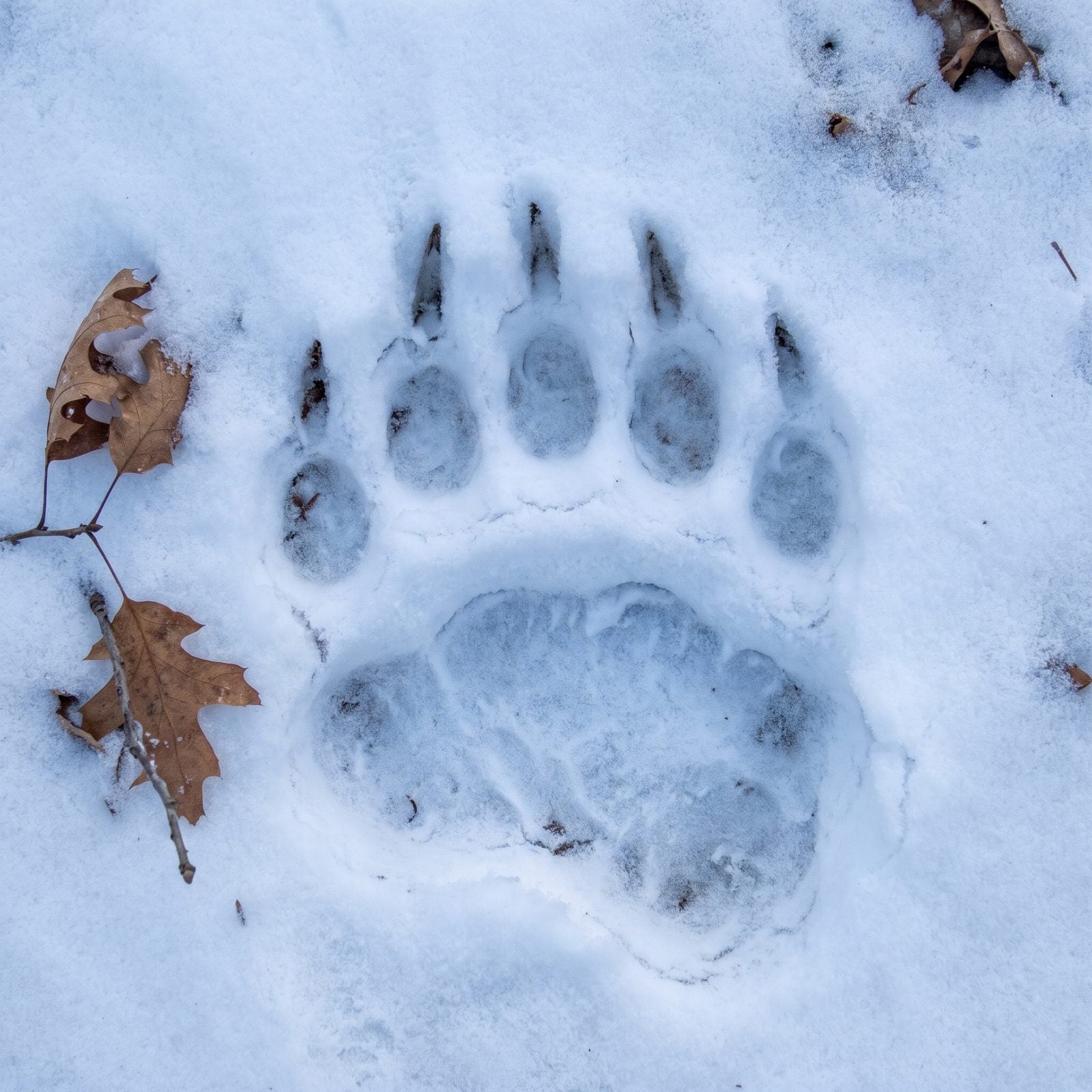
The claws tell the whole story. A grizzly’s front claws are long and only slightly curved, built for digging, and they print well ahead of the toes — often two inches or more out front. On a black bear those claw marks sit tight against the toes. That gap is the single most reliable difference you’ll find.
A grizzly’s toes line up in a fairly straight row, where a black bear’s sweep in a strongly curved arc. Broad track, deep track. Draw a line across the top of the toes. On a grizzly it runs nearly straight, and with those long claws reaching out beyond it, you’d better know whose country you’re in.
28. The Gray Wolf’s Long Oval Track With Four Blunt Claws
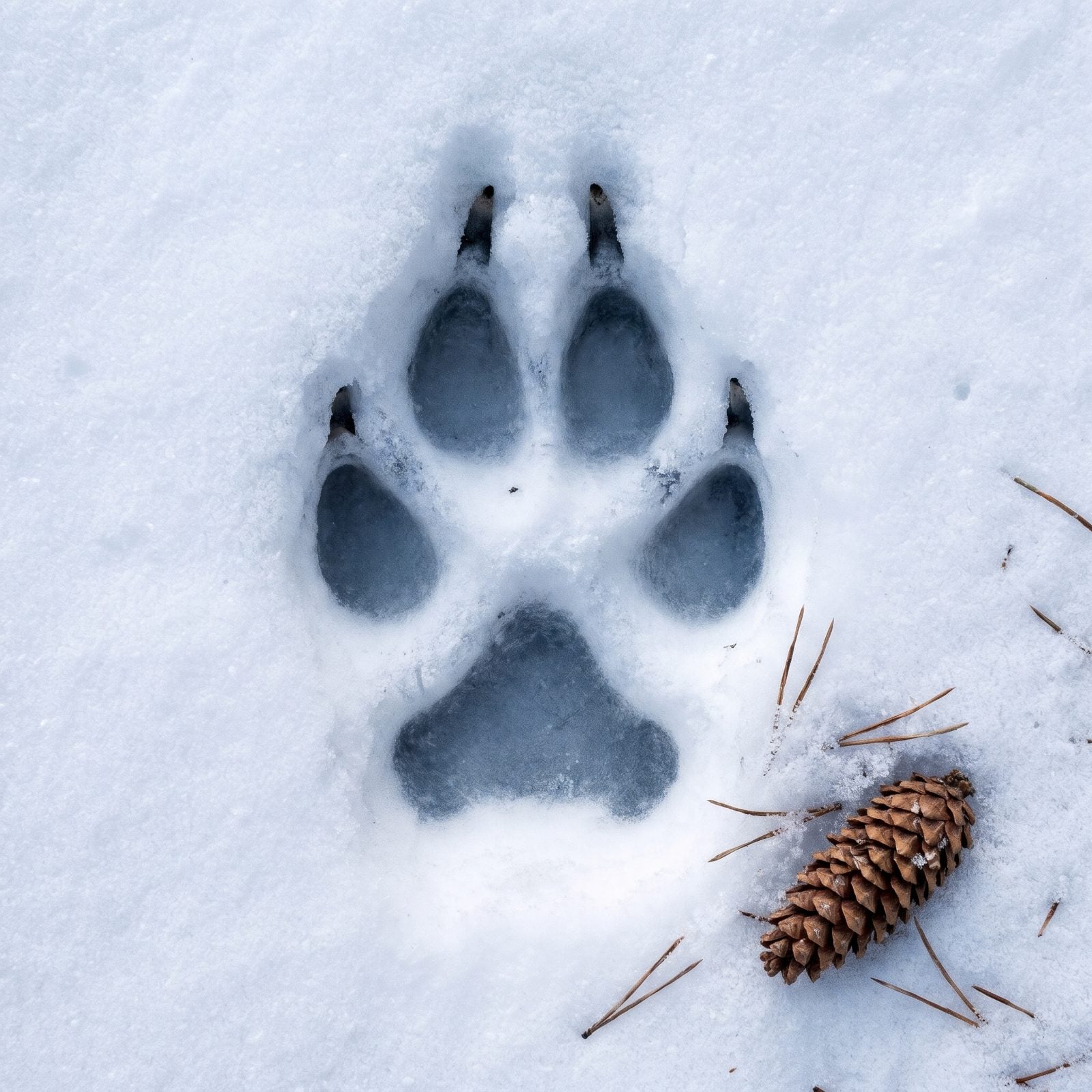
A wolf track is big, oval, and businesslike. Four toes, a triangular heel pad, and claw marks printing out front because a dog-family animal simply can’t retract them. That’s your first split from any cat.
Size is the second clue. A gray wolf print runs four to five inches long, noticeably larger and more oval than a coyote’s rounder, tidier track. Wolves travel in straight, efficient lines too, often stepping right into each other’s prints so a whole pack leaves what reads like one animal’s trail. Find a lone set of oversized dog prints marching dead straight across a frozen lake, barely wandering off line, and you’re probably not looking at somebody’s lost husky.
Cats go round and clawless. Dogs go oval with claws showing. Get that one difference down and half the winter woods opens up to you.
27. Coyote’s Tight, Straight-Line Trot
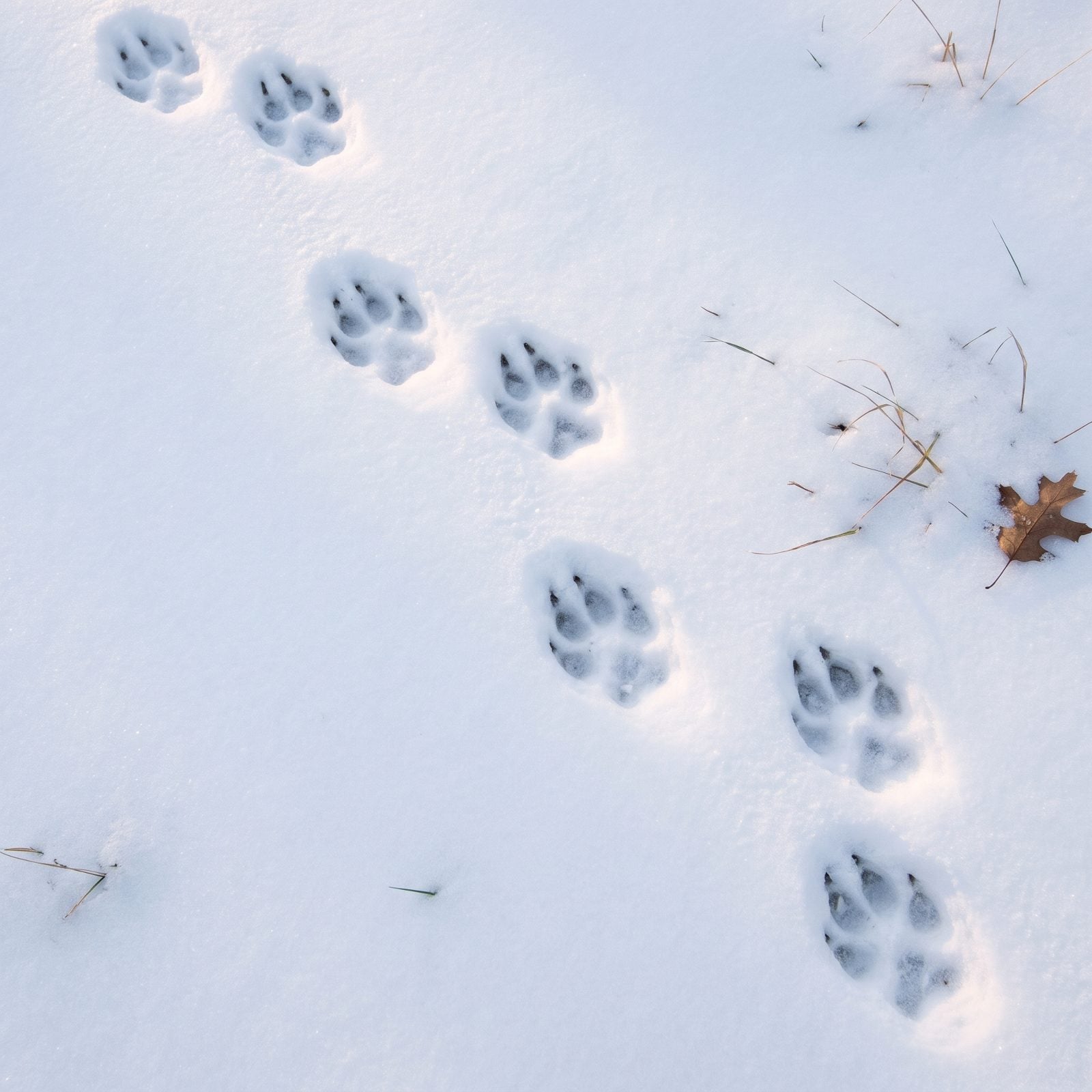
The giveaway with a coyote is efficiency. The trail holds a steady heading, the prints falling in a tight, nearly single-file line. Domestic dogs wander and sniff and double back and leave a sloppy meandering mess, because they’ve got nowhere to be. A coyote is always going somewhere.
Each print is a neat oval, a shade longer than wide, with two front claws usually showing, and you’ll catch that compact triangular heel pad when the snow takes a clean impression. People mix them up with dog tracks constantly. The steady direction is the tell — a wild animal conserving energy moves with purpose, not play.
26. Red Fox’s Delicate Single-File Trail
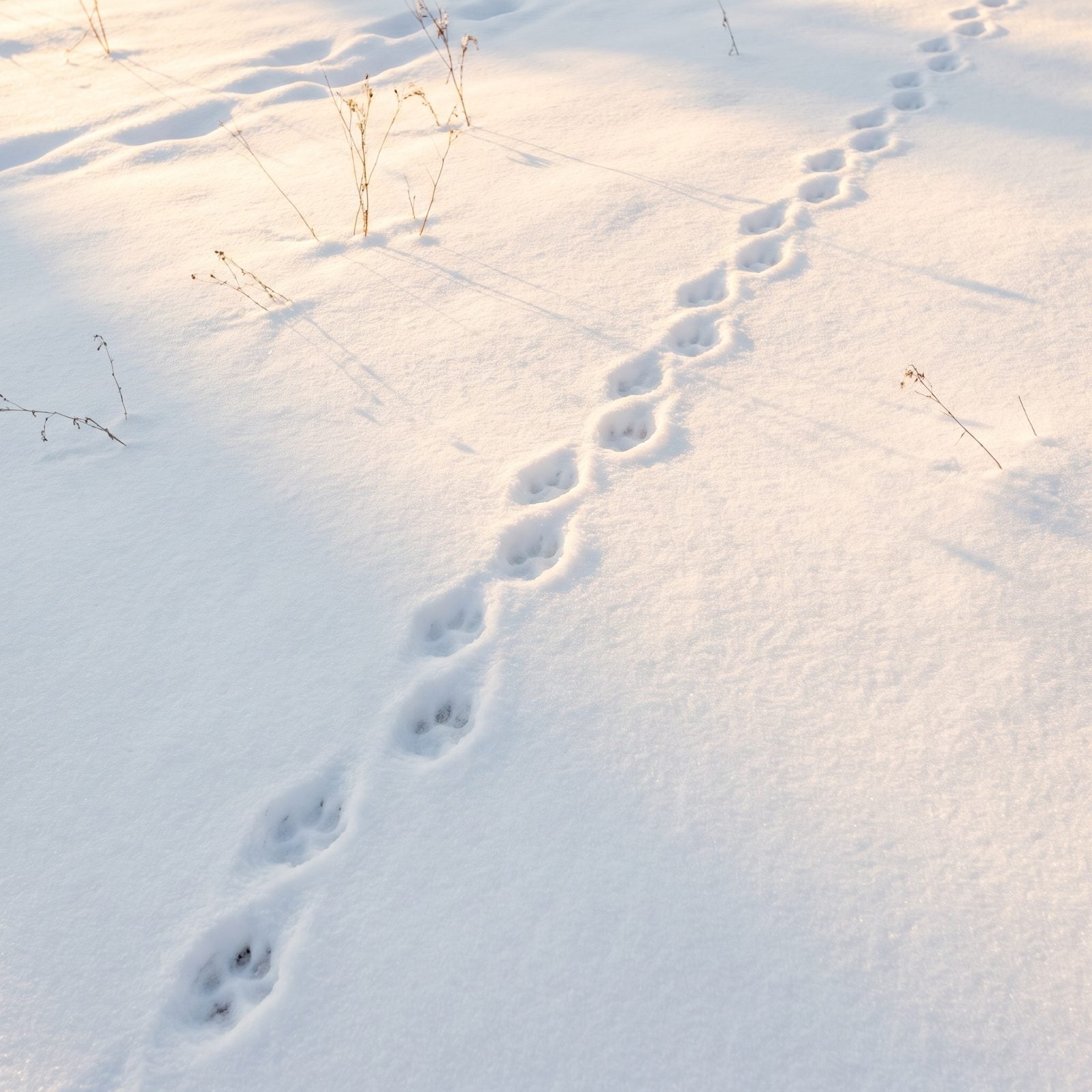
A red fox walks like it’s trying not to wake anyone. The trail is almost absurdly neat — a single-file line of small oval prints drilled one ahead of the next, straighter and daintier than anything a coyote leaves.
Look close and you’ll often catch a little bar or chevron across the heel pad, a ridge of callus unique to red fox. Furred feet blur the toe edges in soft snow, so the prints can read slightly fuzzy rather than sharp. Follow these for a quarter mile and you’ll often realize you’re walking a hunting route along a field edge, which is exactly where you’ll find them, working the seam between cover and open ground.
25. Canada Lynx’s Oversized Snowshoe Paws
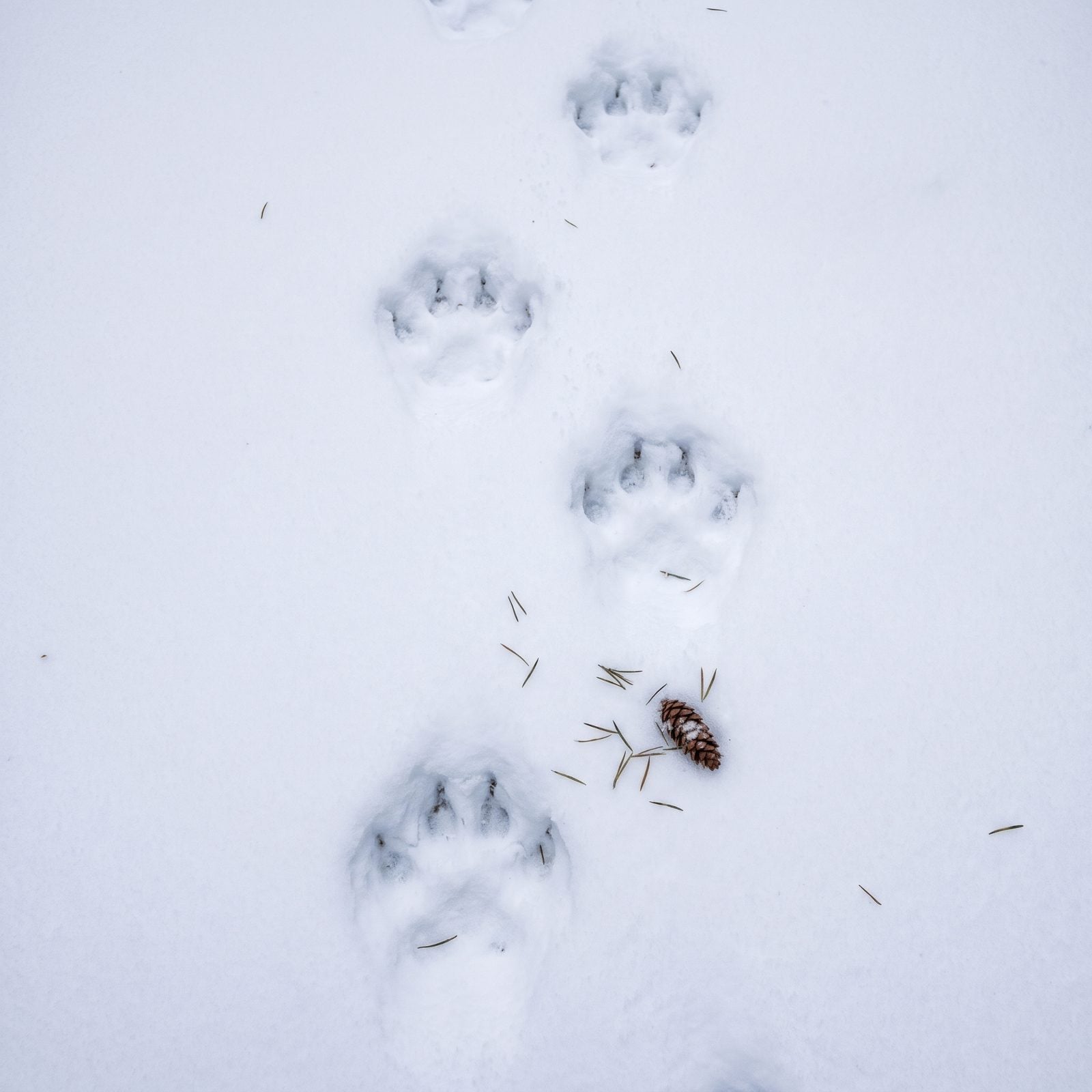
Big cat, small weight, giant feet. A lynx print looks far too large for the animal that made it — broad and splayed, toes spread wide, each pad crisply outlined. That’s the design. The foot works as a snowshoe, so the cat floats on powder that would swallow a coyote.
No claw marks, since cats keep theirs sheathed. In soft, fresh powder the print leaves only a shallow, soft-edged impression, because those wide feet spread the load far better than you’d expect from something that size. You’ll only find these in the far north and the high mountain conifer country, following their one obsession.
24. Wolverine’s Massive Five-Toed Loping Trail
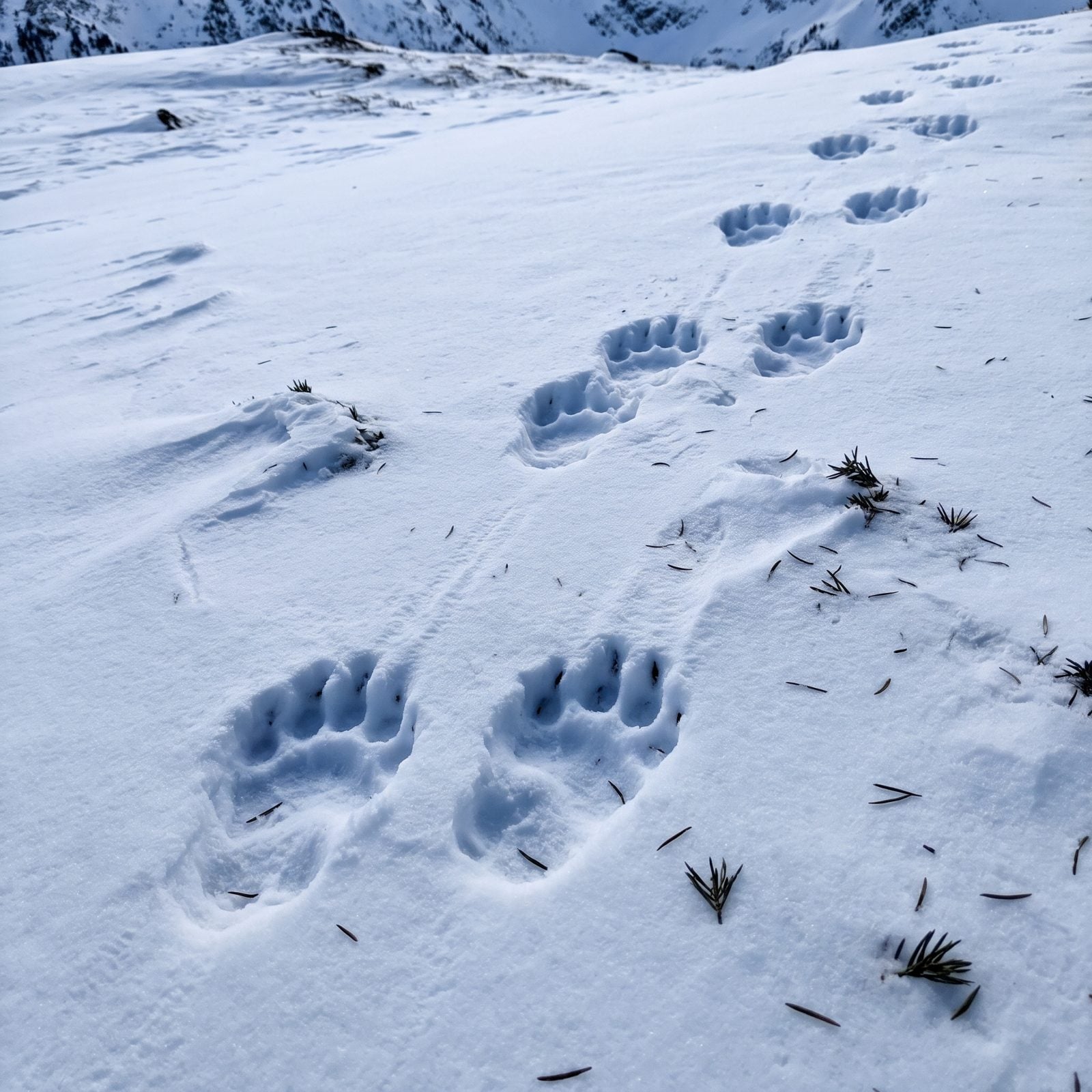
If you ever find these, you’ve found something rare. A wolverine print is broad and heavy, five toes and claws showing plainly, far bigger than a thirty-pound animal has any business leaving.
The pattern is the loping two-two bound of a mustelid — prints paired up, then a gap, then another pair — the gait of a creature that chews through absurd distances across brutal country. Deep wilderness only, high alpine basins and remote boreal forest. See one in the snow and you’ve got a story you’ll tell for years. That fifth toe and the stocky breadth set it apart from any fox or coyote cleanly.
23. American Badger’s Inward-Turning Clawed Prints
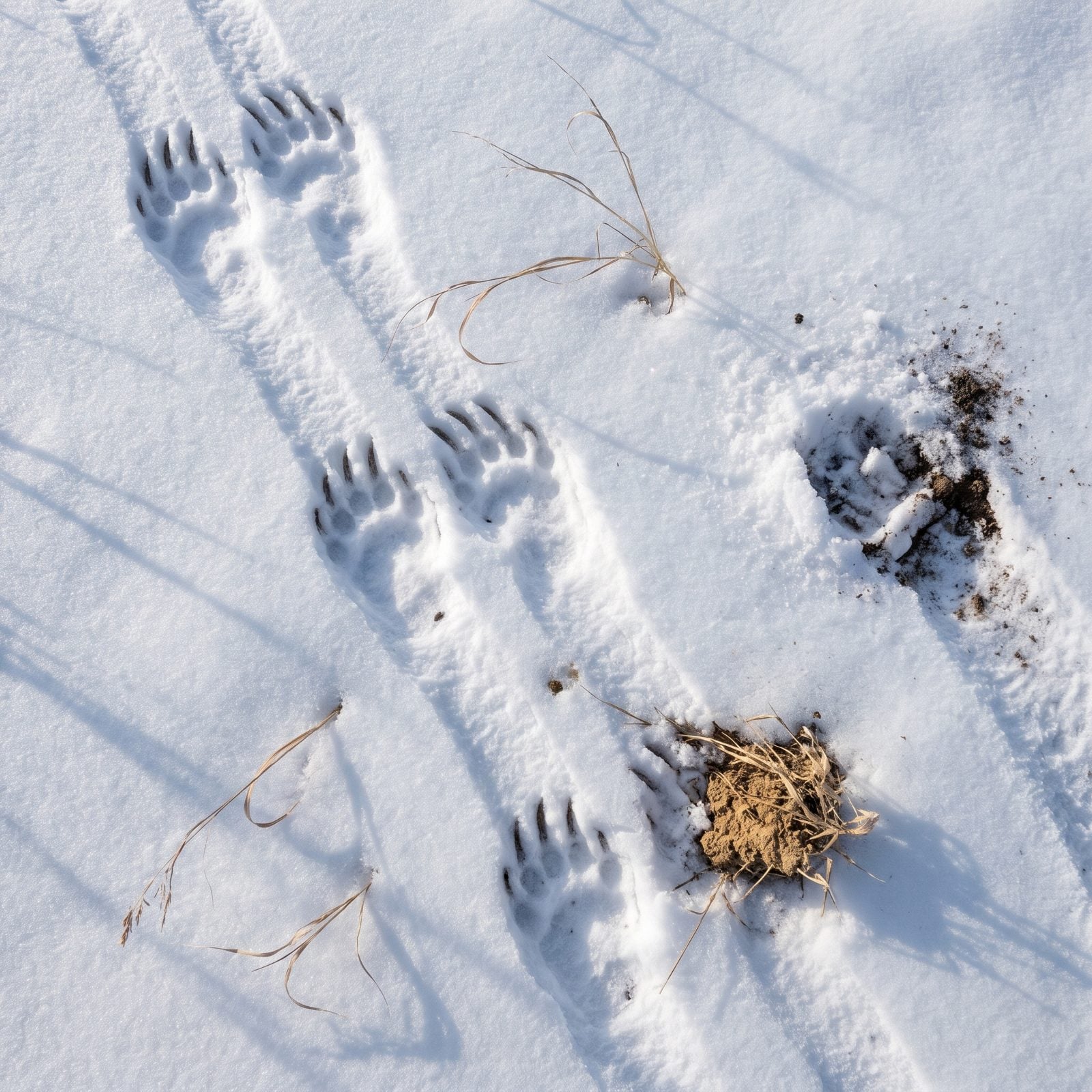
A badger leaves the claws of a small backhoe. The front prints show long digging claws that bite down well ahead of the toe pads, and the feet angle distinctly inward, giving the whole trail a pigeon-toed slant.
Low, wide, short-legged tracks — the signature of a heavy animal built to go down rather than across. Often the trail just stops at a fresh dig, snow and dirt flung out in a fan where it went after a ground squirrel or a vole. Open prairie and grassland is where you’ll cross them, and those inward-turning clawed fronts are hard to confuse with anything else.
22. Striped Skunk’s Long-Clawed Front Feet
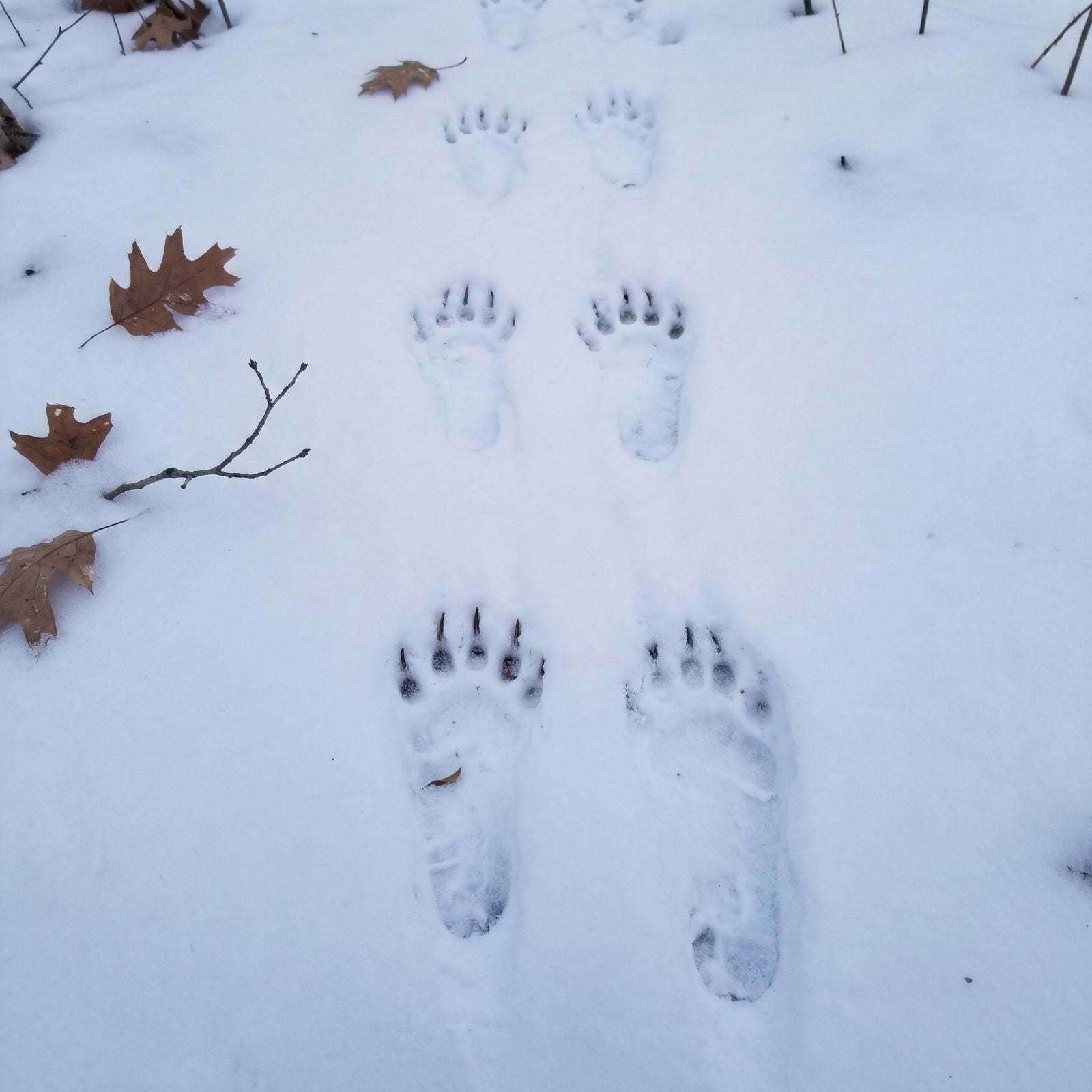
Skunk tracks catch people off guard because the hind foot looks like a miniature bear — flat and long, a full heel-to-toe plant, while the front foot shows five toes tipped with long slender claws.
The stride is short and shuffling. A skunk is in no hurry, low to the ground and ambling. They don’t truly hibernate, so you’ll find fresh tracks on mild nights near den sites, brush piles, and the edges of outbuildings. Those long front claws and the little bear-foot hinds together nail the ID.
21. Porcupine’s Pigeon-Toed Waddle and Tail Brush
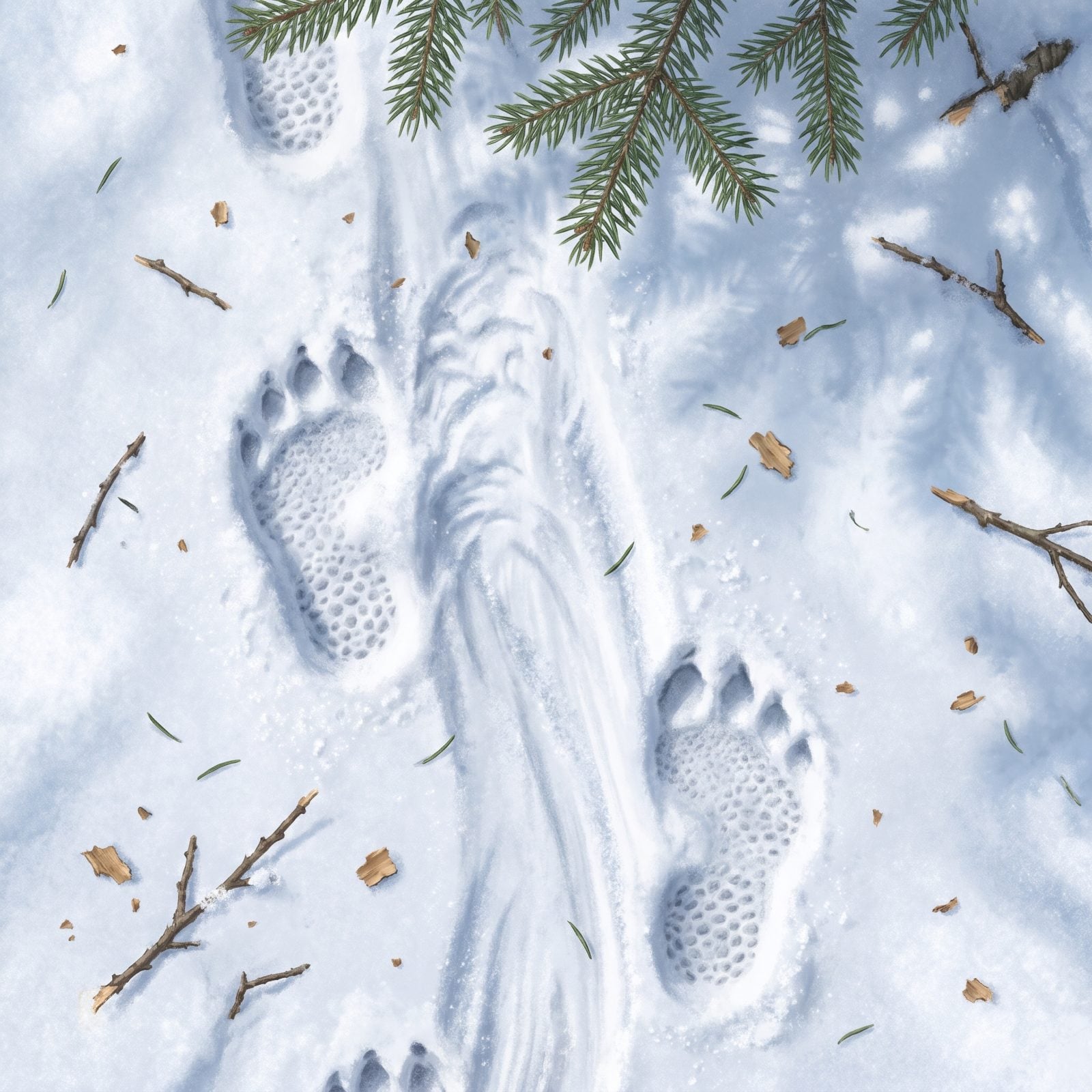
You’ll notice the bark litter before you make sense of the porcupine trail itself. The tracks are pigeon-toed and oddly textured, with a pebbly sole that prints like coarse sandpaper.
But the tail is the real signature. That quilled broom drags behind, sweeping a broad swishing mark through the snow that often wipes the footprints out entirely. Follow it and the trail usually dead-ends at a tree scarred with fresh chew work, a pile of nipped twigs scattered below. Slow, deliberate, waddling along and dragging that armored tail the whole way. Nothing else leaves a trail quite so clumsy.
20. Beaver’s Webbed Hind Feet and Tail Drag
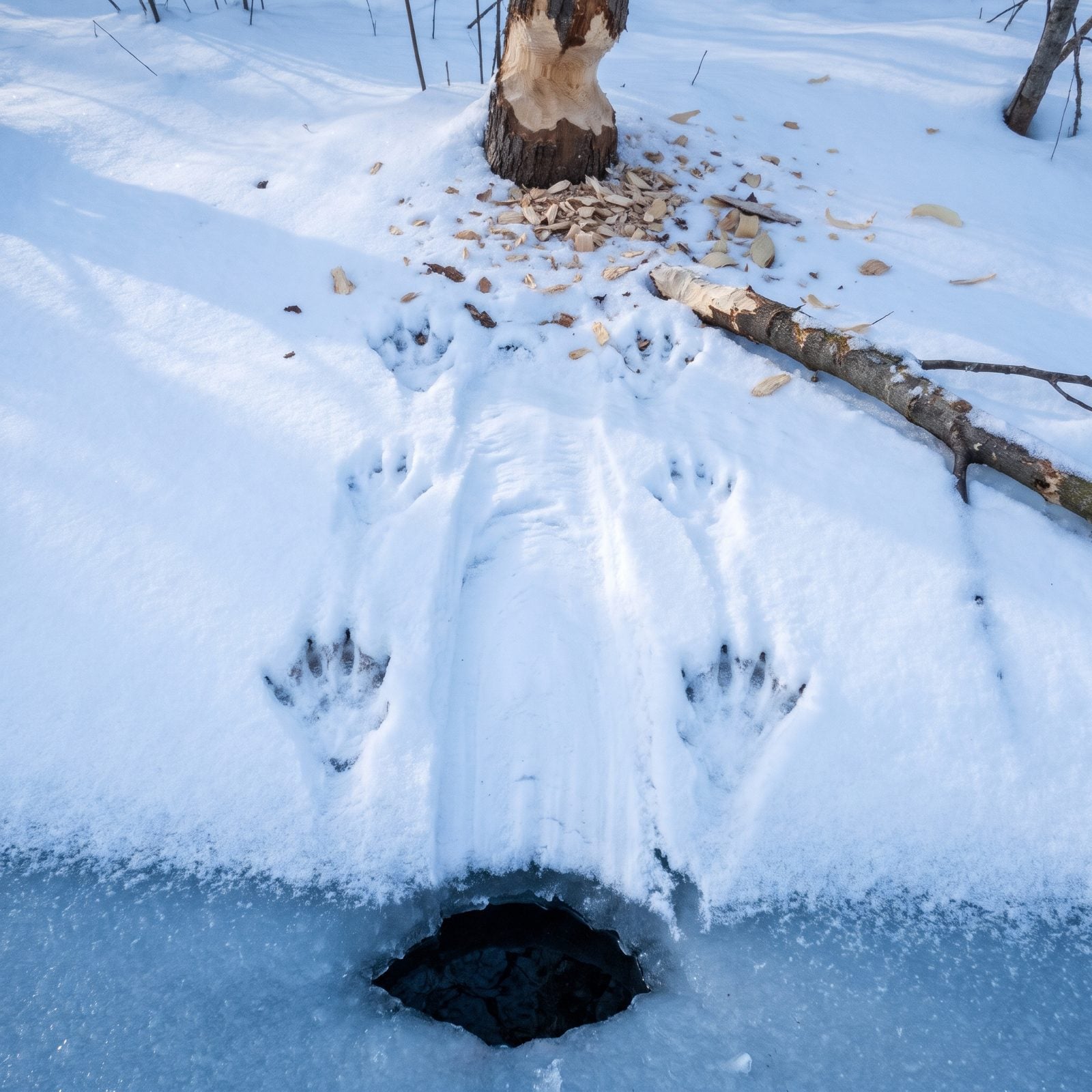
Beavers don’t stray far from water, so their trail tells a short, obvious story: out of the pond, up the bank, to a tree, and back. The hind foot is your key — large, long toes, faint webbing printed between them when the snow cooperates.
Front prints come smaller and hand-like, and down the middle runs a wide flat smear where the paddle tail dragged. Most trails read as a mess because feet and tail overlap in a slurry of marks. Follow it anyway and you’ll usually land on fresh gnaw work and bright wood chips scattered across the snow. Even when the webbing doesn’t print, the drag plus the pond settles it.
19. North American River Otter’s Belly Slide
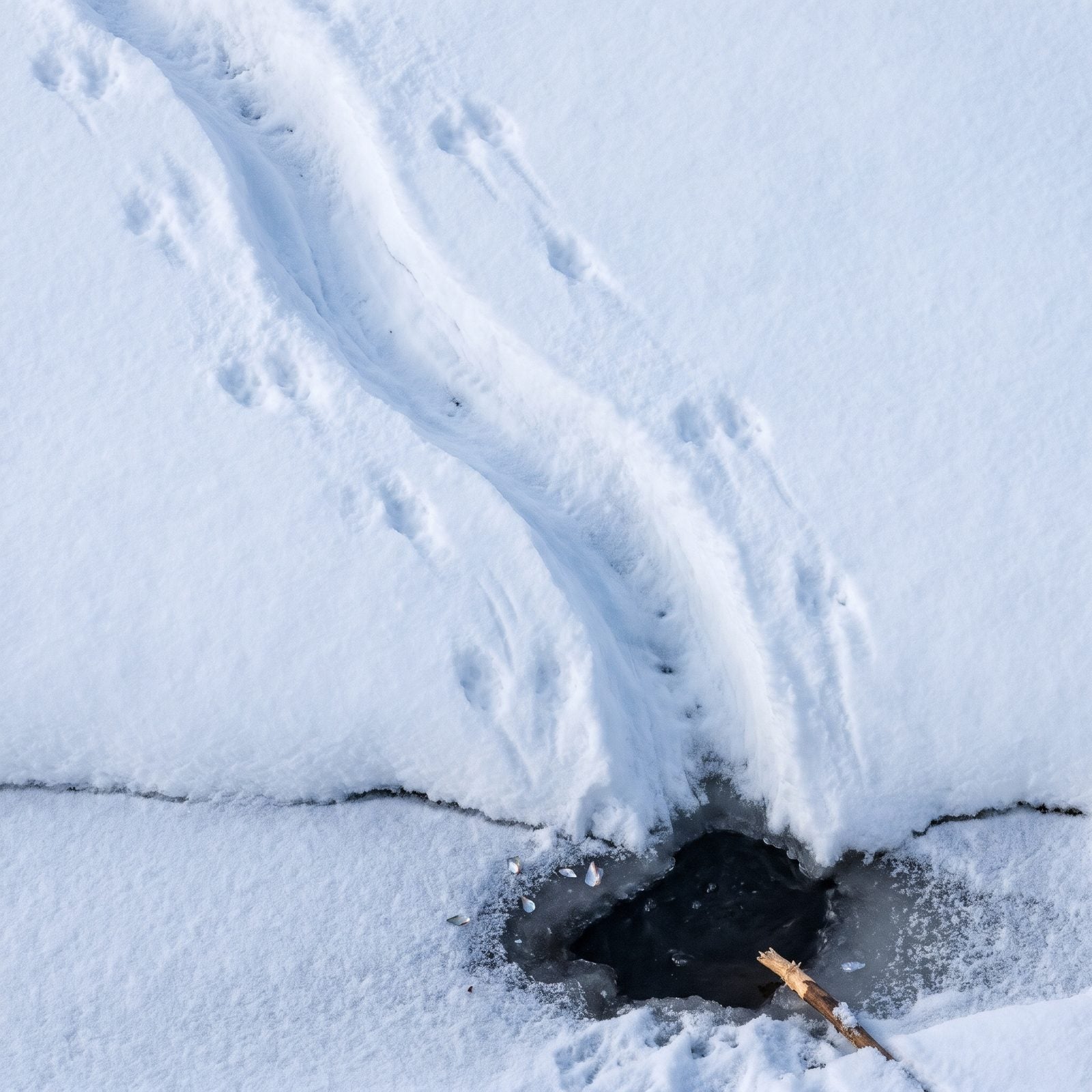
Otters are the one animal that makes winter look like a good time. Rather than just walk, they fire off a few bounding steps, flop onto their bellies, and slide — carving a smooth trough through the snow about the width of their body.
The trail turns into a repeating rhythm of push-marks and slides, almost always headed downhill toward water and an open hole in the ice. Nothing else plays like this in the snow. Find a slide and you’ve found an otter. No guessing.
A slide trough aimed at open water is one of the few tracks you can name from fifty feet away, before you ever see a single toe.
18. Muskrat’s Narrow Tail Line Between Prints
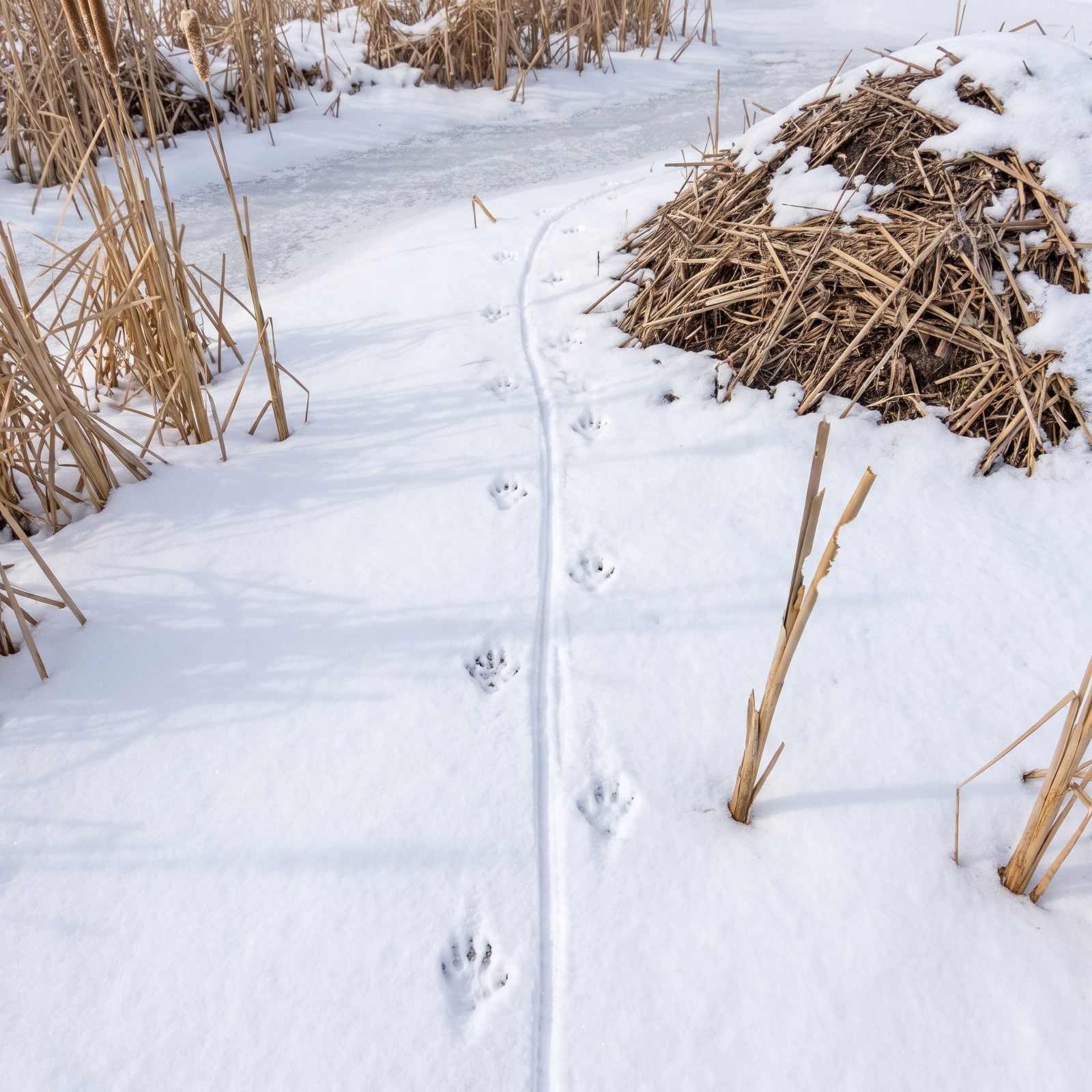
A muskrat trail reads like a tiny beaver’s until you check the tail line. Where a beaver drags a wide flat paddle, a muskrat leaves a thin clean groove — a single pencil line running straight between the footprints.
The prints are small and hand-like, hugging close to marsh channels, cattail stands, and those dome-shaped lodges. That narrow continuous drag is the whole ID. Find it threading between a frozen waterway and a mound of piled vegetation and you’ve read it right. One line in the snow, and you know exactly who walked through.
17. Fisher’s Wide Bounding Pattern Across Open Snow
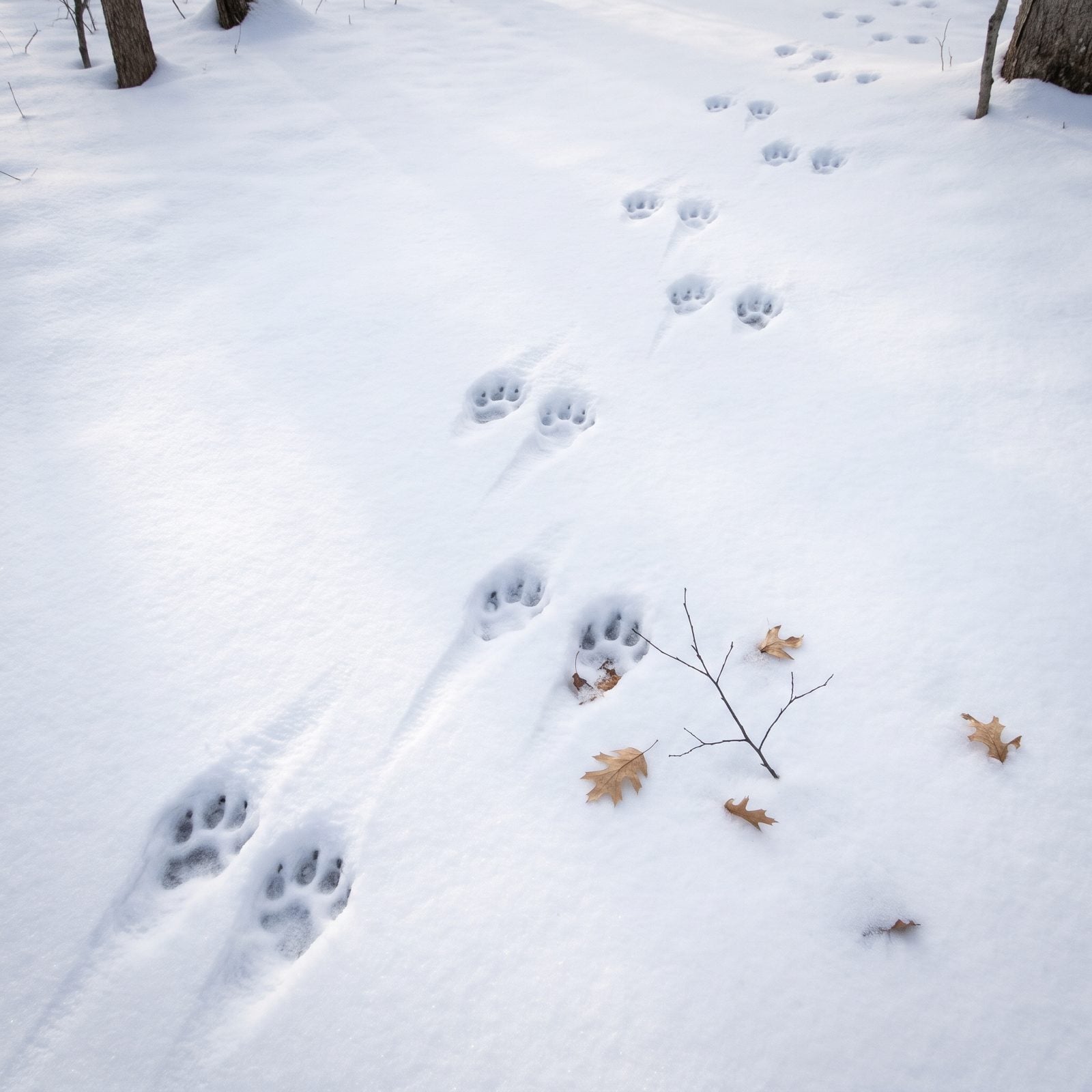
You’ll notice the spacing before anything else. Fishers travel in long, loping bounds, and the gap between paired prints can run a couple of feet or more in deep snow. That distance is the giveaway. A house cat never covers that ground, and a weasel’s leaps are a fraction of the length.
Look close and you’ll find five toes, though the smallest often fails to register. The prints land at a slight diagonal, offset rather than square. Fishers are heavy enough to crush through a crust that holds a fox, so you’ll sometimes see them punching down where lighter animals skated over the top.
16. The Short-Tailed Weasel’s Tiny Loops Between Cover
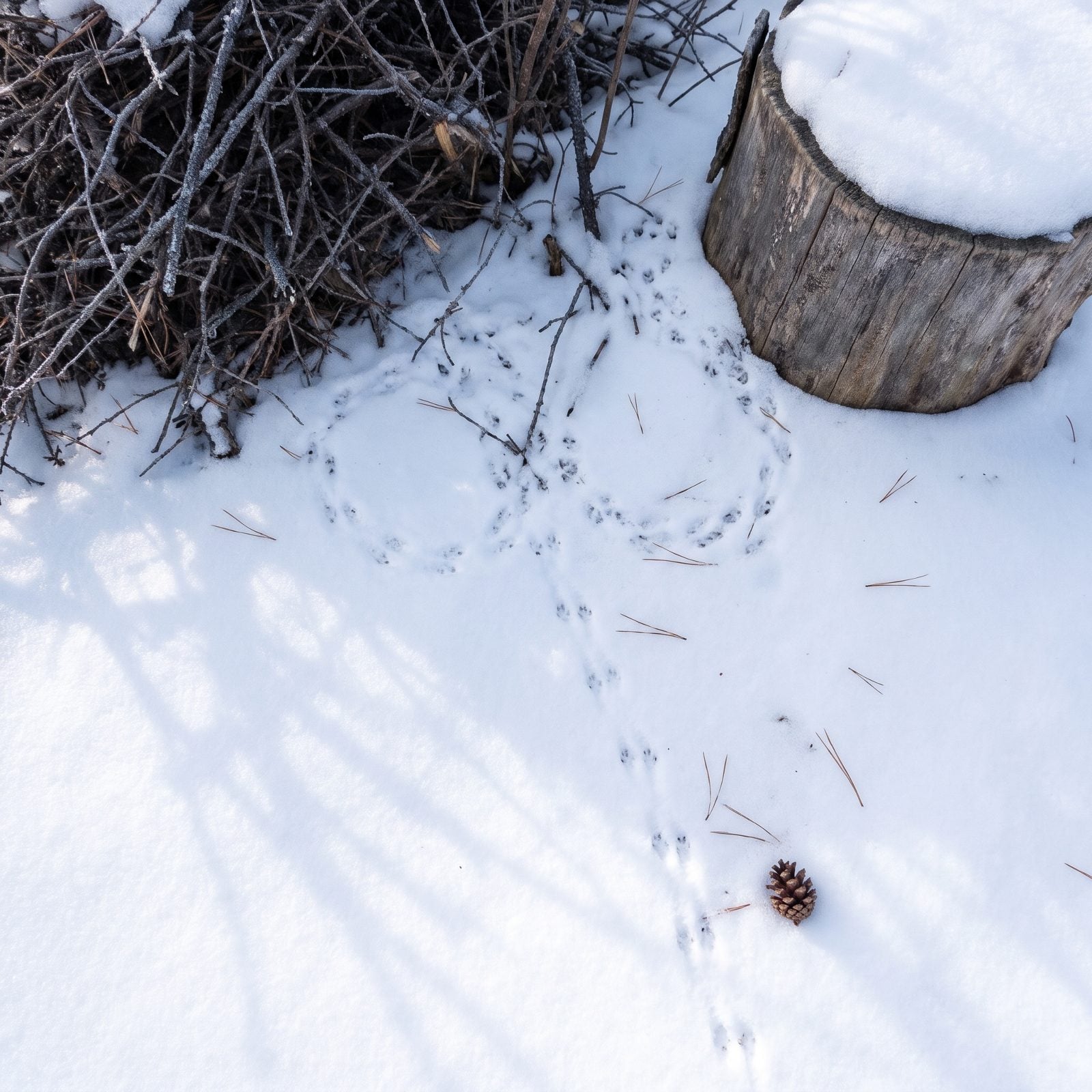
Everything about this trail is small and nervous. The short-tailed weasel bounds like its larger cousins but in miniature, each leap often a foot or more, the paired prints hardly bigger than a fingertip. What tells you it’s a weasel and not a mouse is the pattern: clean paired tracks spaced well apart, with no tail drag between them.
These trails rarely run straight. A hunting ermine threads from one bit of cover to the next, loops a brush pile, vanishes into a vole hole, pops out somewhere down the way. Follow one and you’re following an animal that almost never stops moving.
15. The Meadow Vole’s Subnivean Tunnel Network
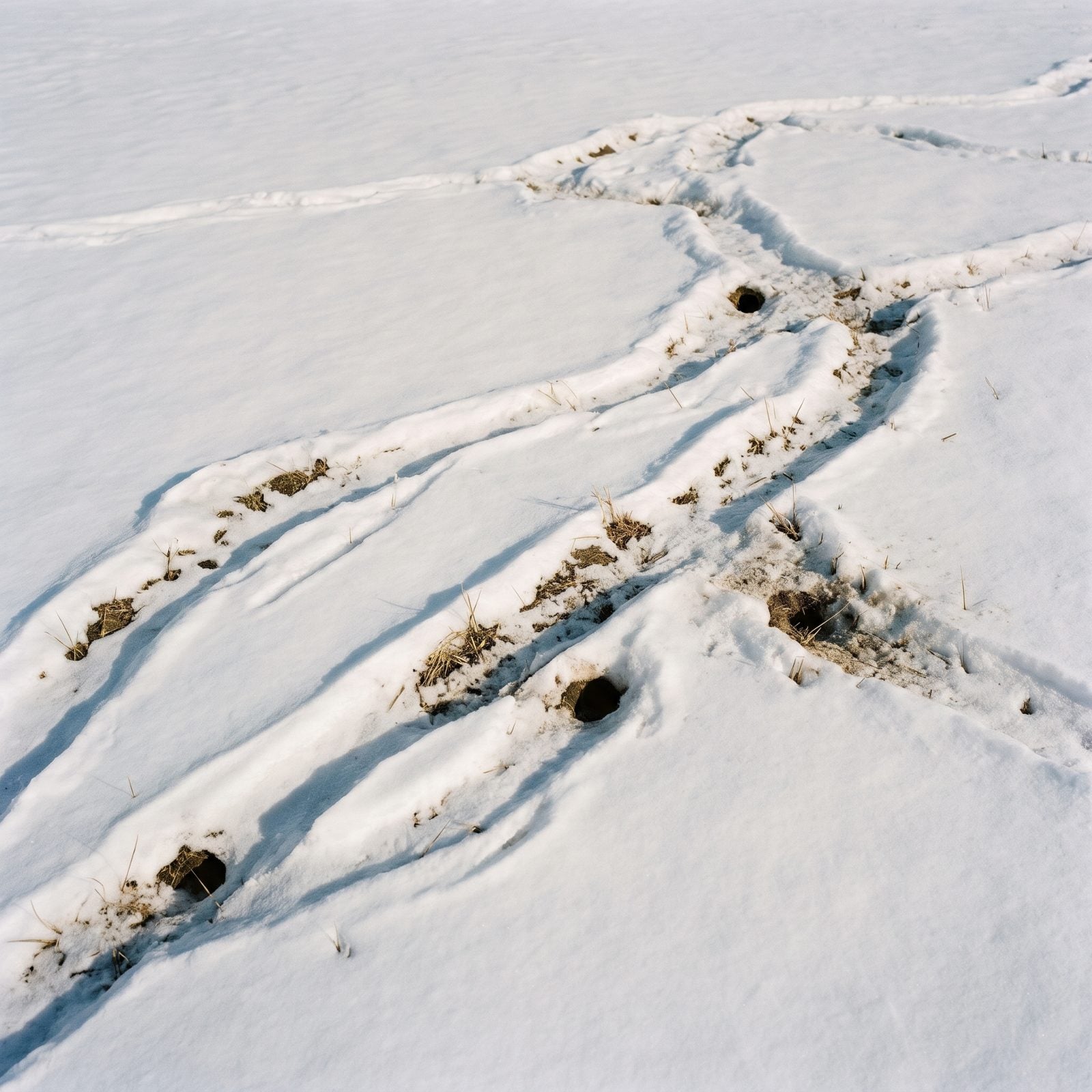
This one you mostly see in reverse. Voles live in the gap between the snowpack and the ground, a hidden layer biologists call the subnivean zone, and they build a whole city of tunnels down there all winter long. You won’t notice it until a thaw drops the snow and lays the runways bare: shallow grooved channels winding across the grass, little entrance holes punched here and there.
It looks like someone ran a garden hose under the snow. Those tunnels are why owls and foxes hunt by sound in winter, listening for movement under a foot of white. That hidden plumbing feeds half the predators in the field.
14. The Wild Turkey’s Three-Toed Walking Prints
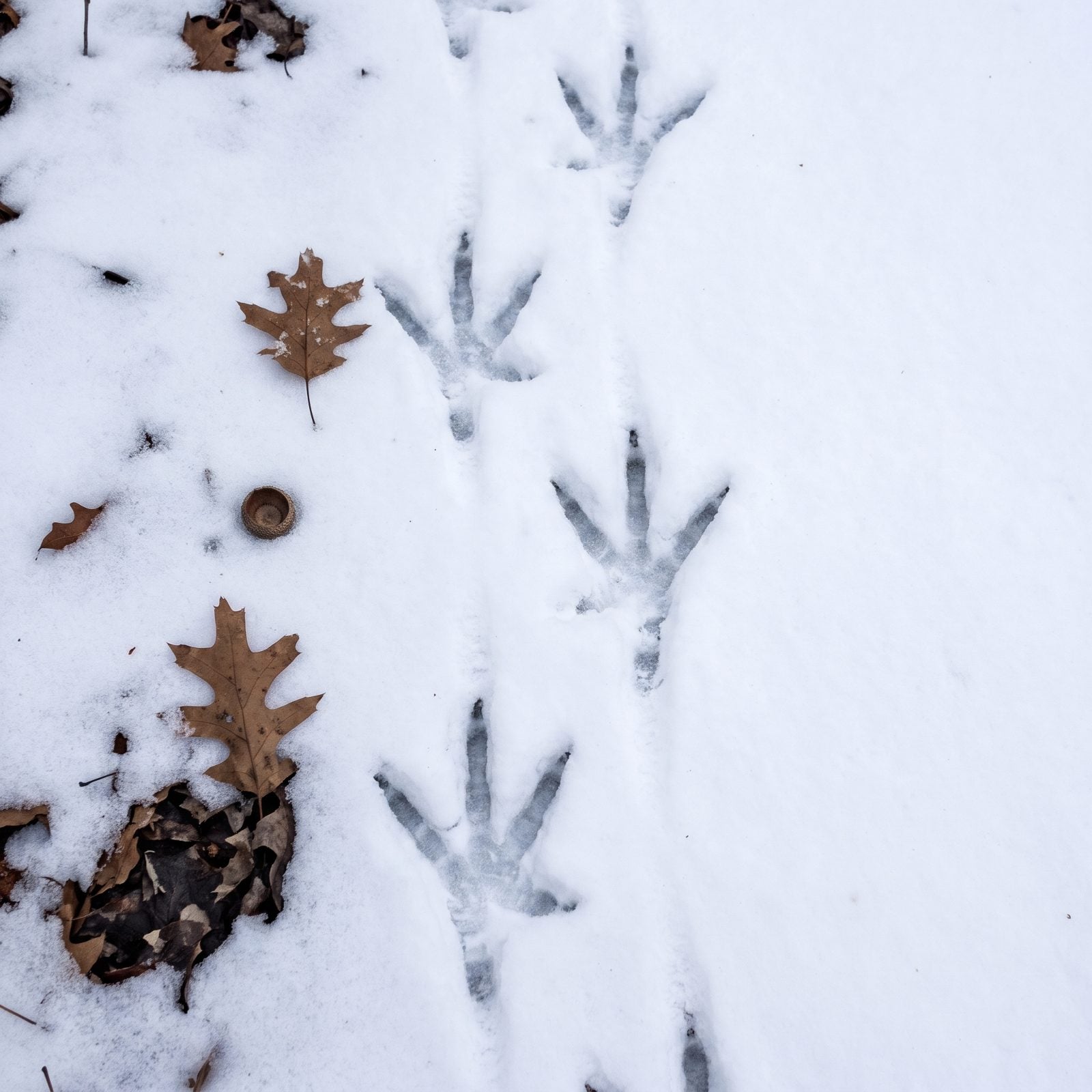
Big, blunt, and unmistakable. A wild turkey print spans three or four inches, three thick toes spreading forward, sometimes a faint dot behind from the back toe. No songbird comes close to this size, and the stride tells you the rest: turkeys walk, so you get a steady alternating line rather than the paired hops of smaller birds.
Find a flock’s worth of these churning through snow under an oak and you’ve found where they’re feeding on last fall’s acorns. Follow the line uphill at dusk and it’ll often lead you toward roost trees.
13. The Ruffed Grouse’s Feather-Fringed Toe Tracks
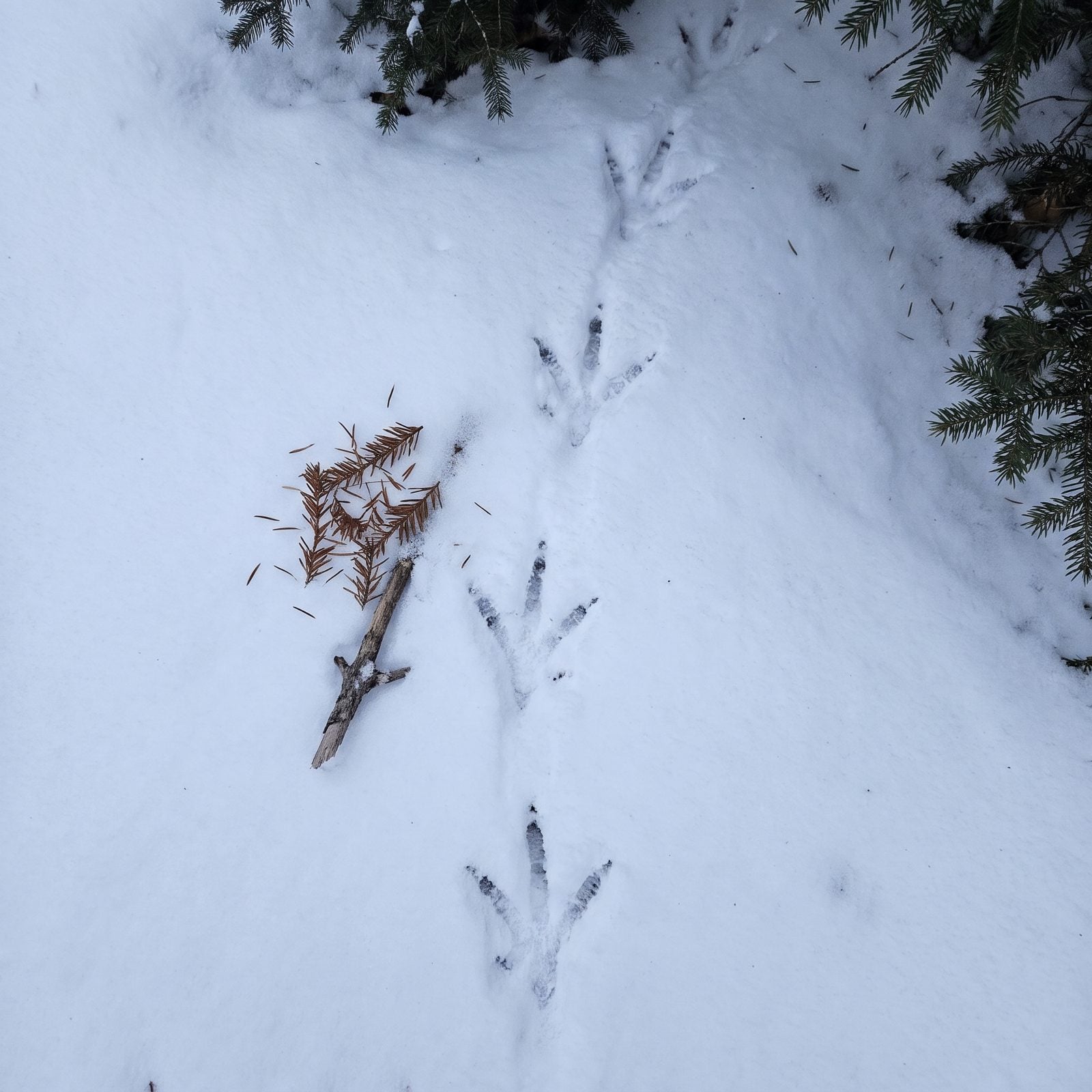
Here’s a detail almost nobody mentions. Come winter, a ruffed grouse grows tiny comb-like projections along the edges of its toes, natural snowshoes that spread its weight across soft powder. Those fringes print too, giving the track a faintly serrated, feathered edge no other bird leaves.
The prints are smaller than a turkey’s and walk in a tidy line near thick cover. Keep following and you may stumble onto something startling. A shallow hole where the bird burrowed straight into the snow to roost, then exploded out in a thunder of wings if you got too close.
12. The Great Blue Heron’s Star-Shaped Footprints
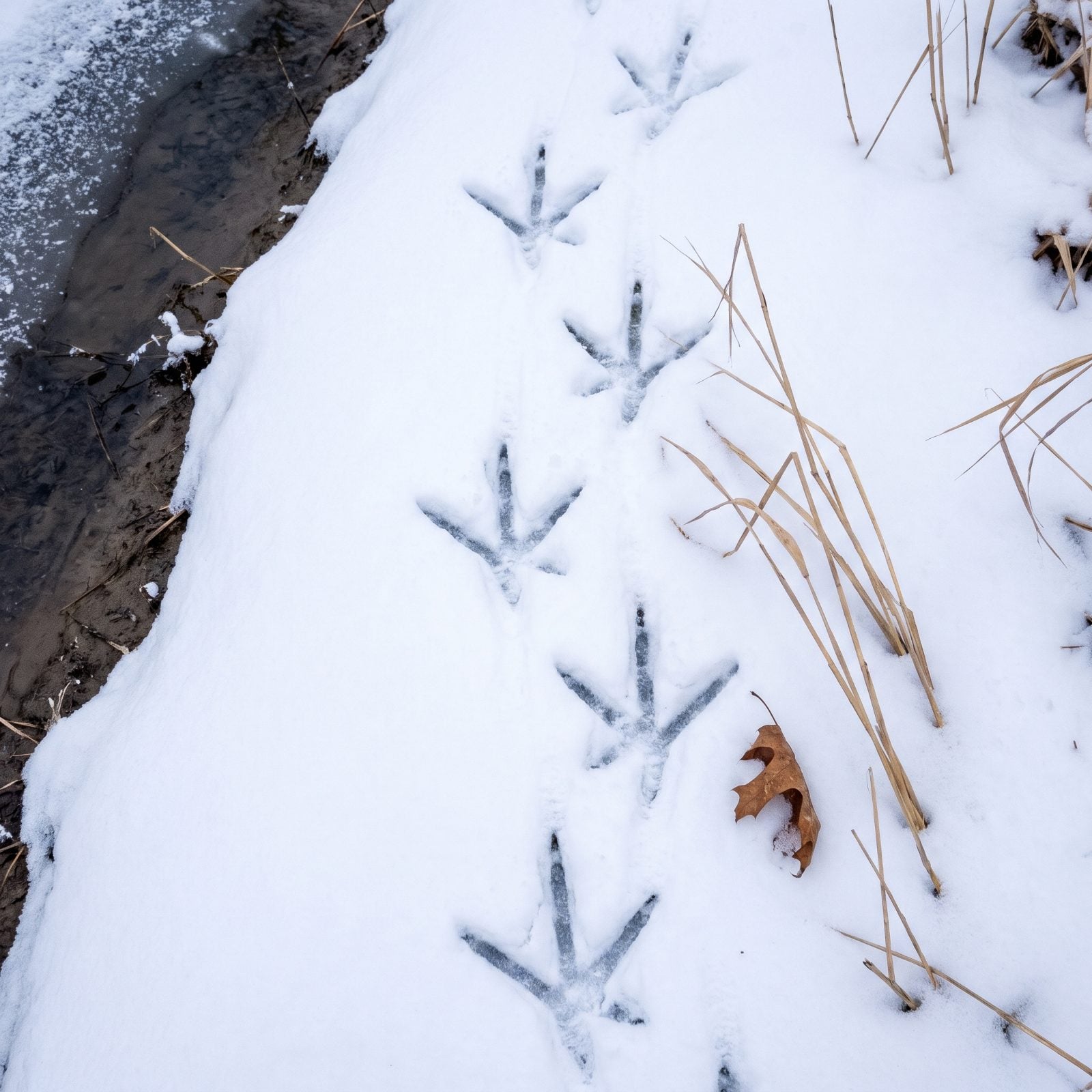
These look almost prehistoric in the snow. A great blue heron track sprawls six or seven inches, three long thin forward toes and a strong rear toe pointing back, the whole thing splayed into a loose star. Nothing else on a northern shoreline leaves a print that large and that spidery.
You’ll find them where open water persists through winter, along a spring-fed creek or the unfrozen tail of a pond. Herons that don’t migrate stand hunched at the ice edge, waiting on a fish, and their long striding gait leaves plenty of space between those great splayed feet.
11. The Canada Goose’s Webbed Waddle Along the Shore
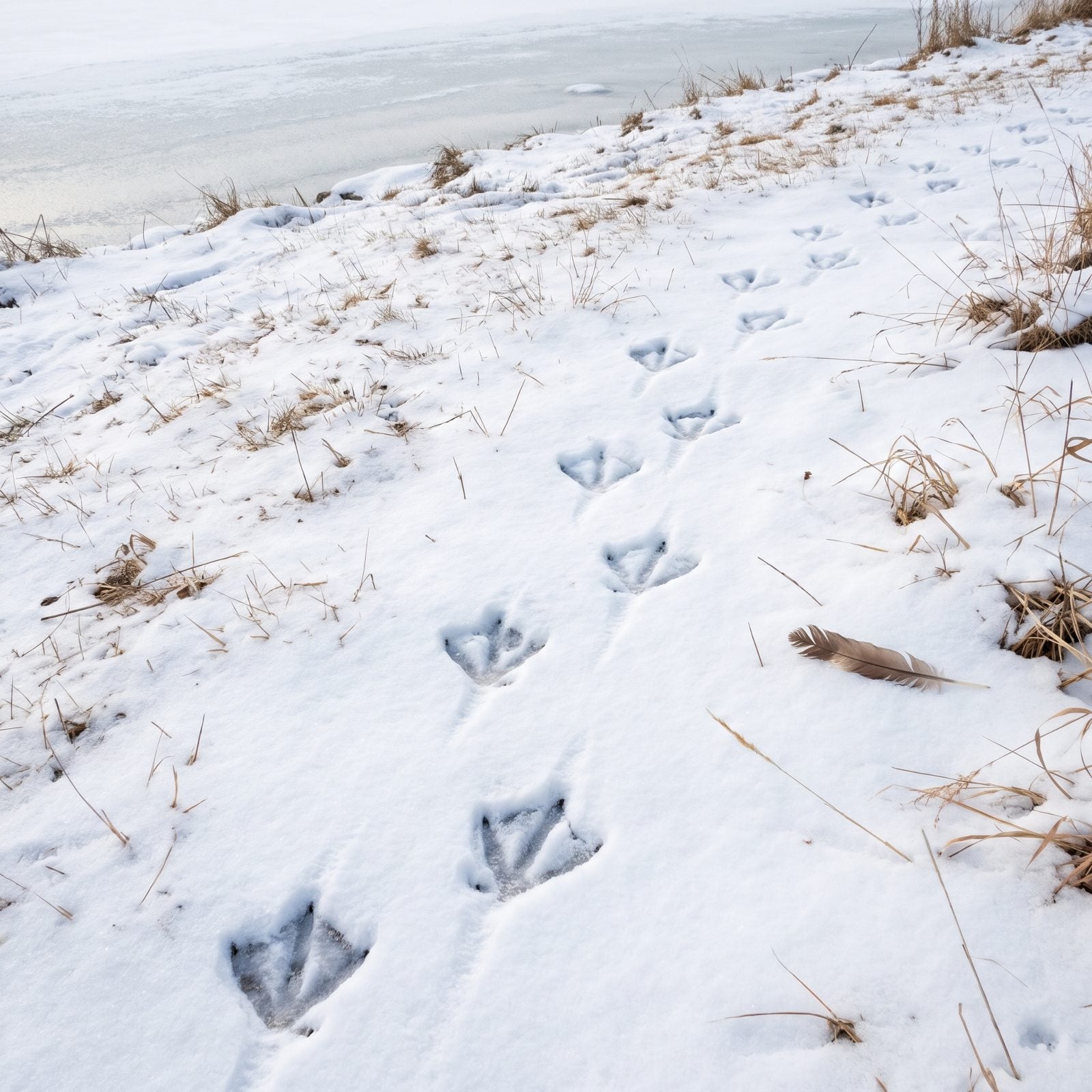
You can read the web in the snow. A goose plants a broad three-toed foot with clear webbing stretched between the toes, and in clean powder that triangle of membrane prints as plainly as the toes themselves. The track runs in a waddling line, prints turned slightly inward, the way a goose rocks when it walks.
Find these marching up from open water toward a grassy field and you’ve found a flock loafing out the winter where the lakes don’t fully freeze. The size alone, four inches or so, rules out most other ducks.
10. The Common Raven’s Large Hopping Pairs
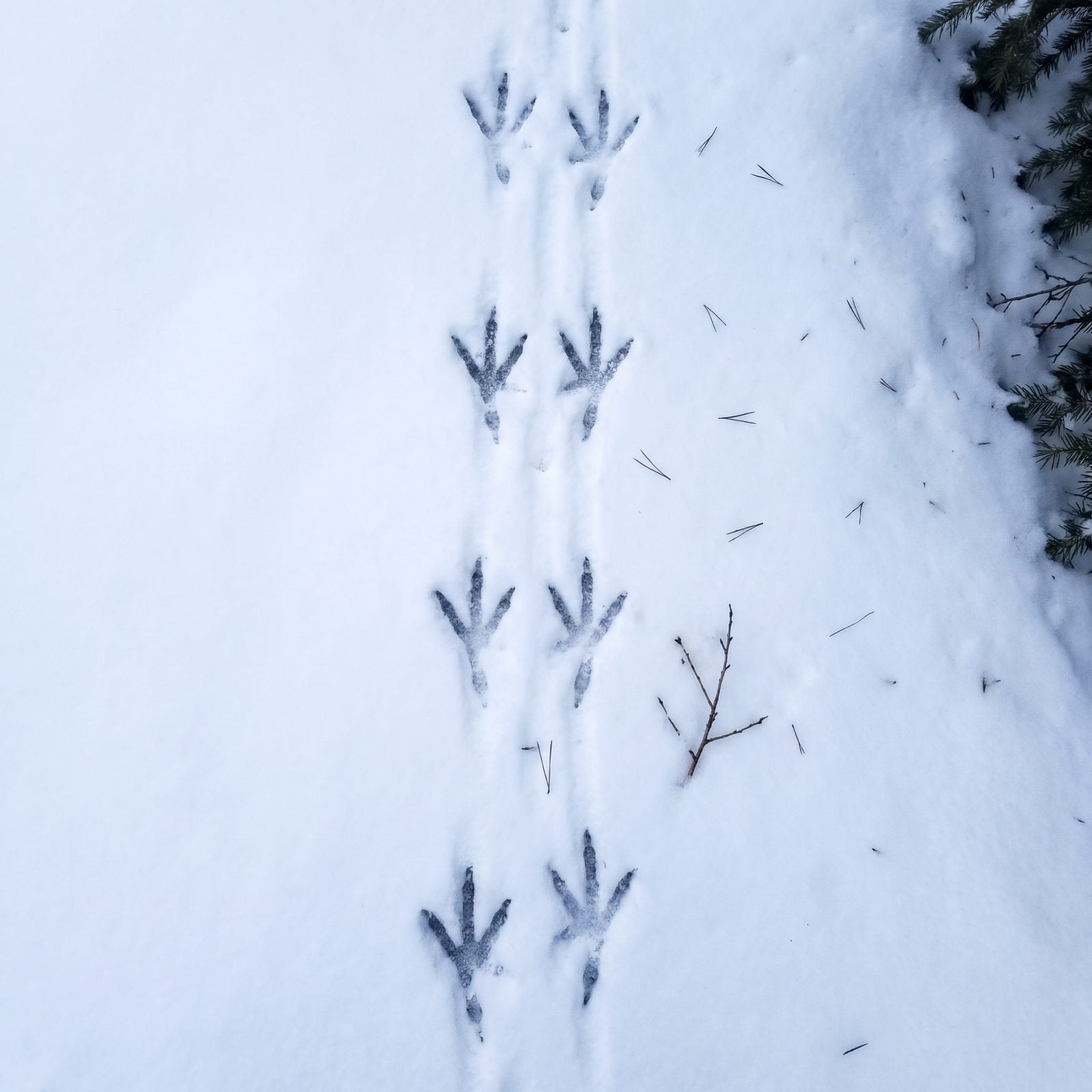
Ravens give you two gaits in one trail, which is itself a clue. Sometimes they walk, alternating prints, and sometimes they hop, landing both feet side by side in neat pairs. Catch that switch in a single line and you’re almost certainly looking at a corvid.
The prints are big for a bird, three slender forward toes and a long rear toe, often around four inches. Crows leave the same shape smaller. Where the trail converges with gull or coyote sign around a carcass, you’ve found the winter dinner table the whole neighborhood shares.
9. The Fox Pounce: Four Prints, a Dive, and a Snow Hole
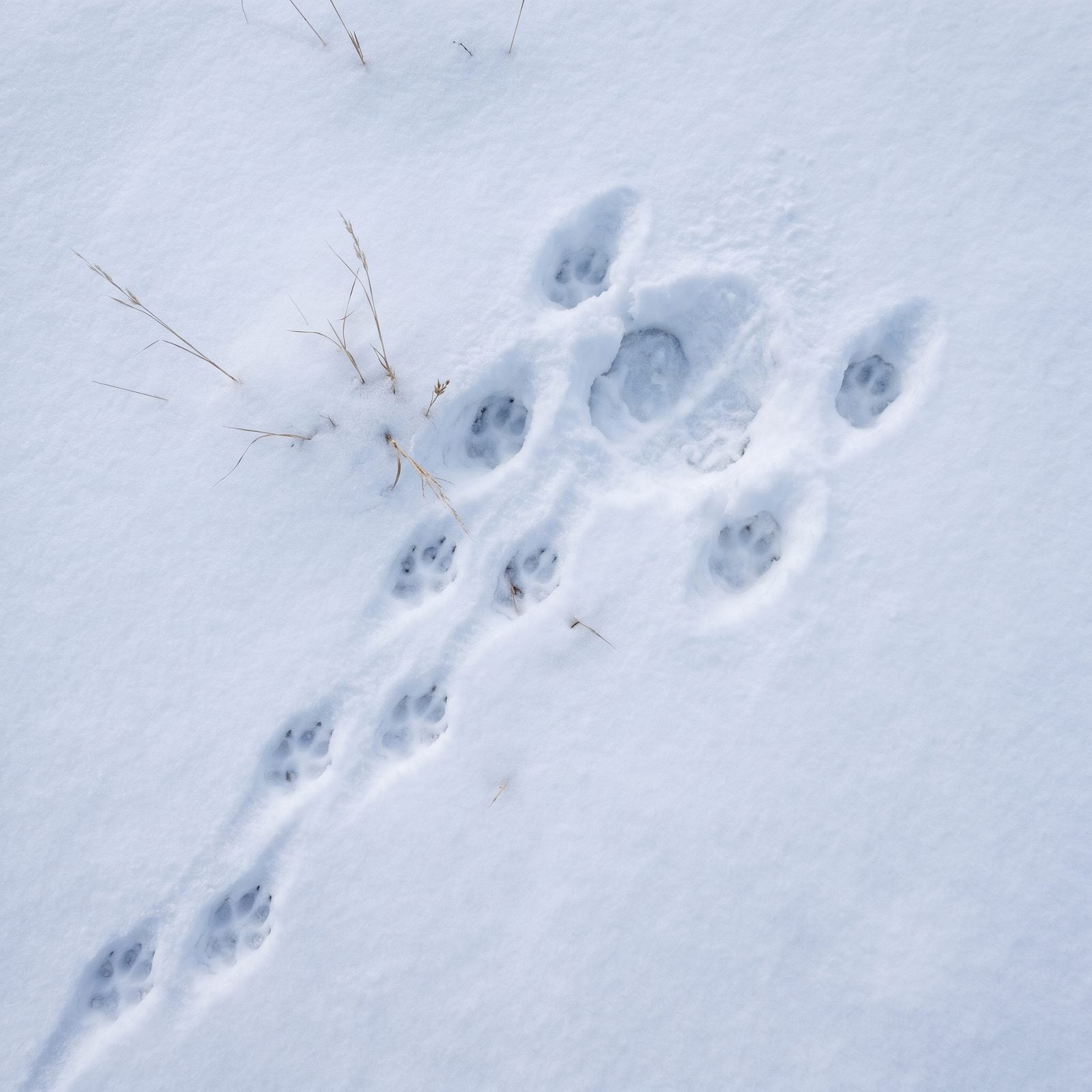
This is the most dramatic sign you’ll read all winter, and it tells a whole hunt in a few feet of snow. A red fox walks a tidy single-file line, each print almost in front of the last, until it hears a vole moving under the surface. Then it stops, rears, and dives nose-first into the snow.
What’s left is a story. The trotting trail, a tight cluster of four prints where it launched, and a small plunge hole where its face punched down after the prey. Sometimes a scuff and a drop of blood. Sometimes just the hole and the trail resuming, a little faster, a meal lighter in the field below.
The whole chase is written in ten feet of snow: the approach, the launch, the dive, and whether or not breakfast was waiting.
8. The Grouse’s Explosive Snow-Roost Exit
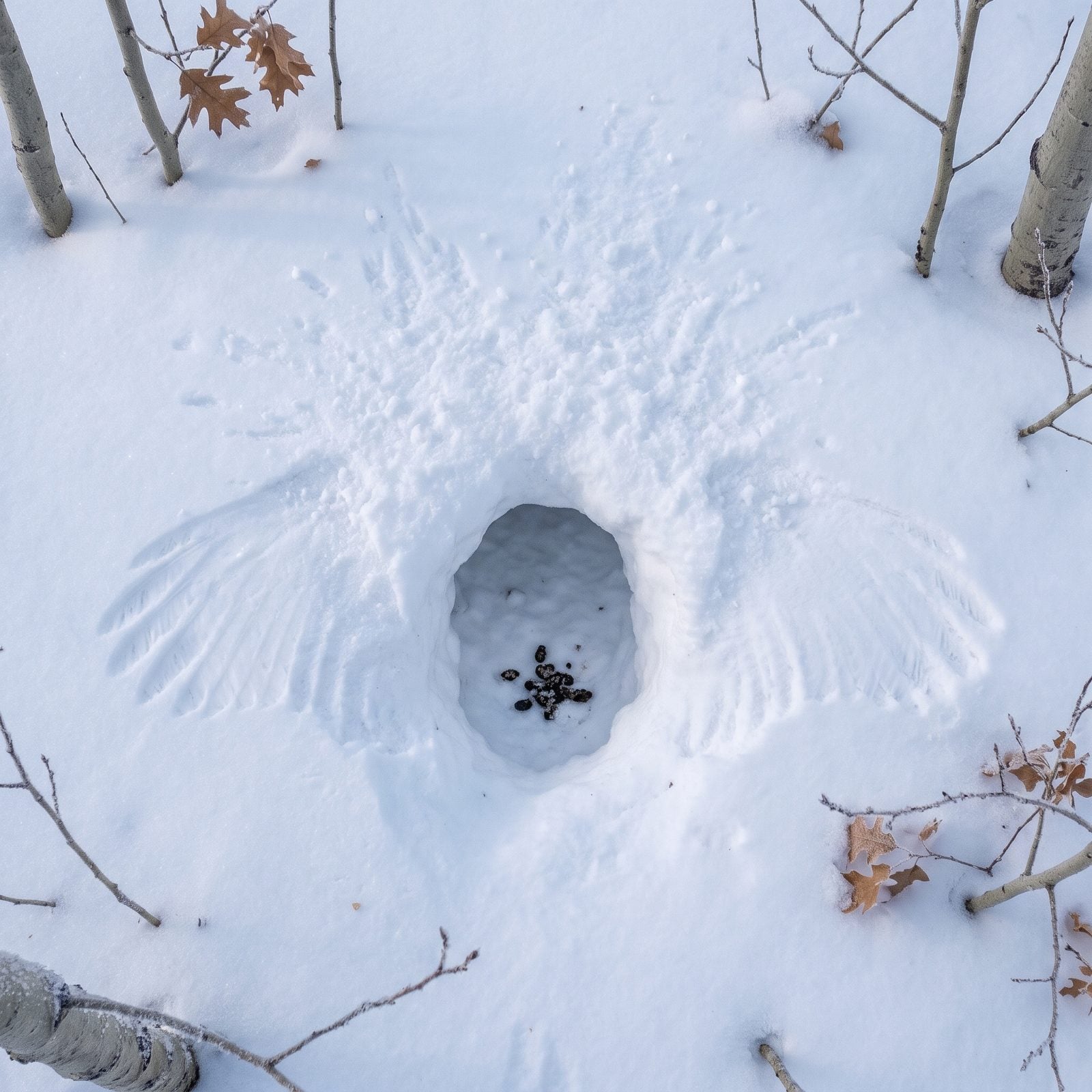
You walk up on what looks like a tiny bomb crater in the snow, and your brain reaches for predator before it reaches for prey. It’s the opposite. A ruffed grouse spent the night buried there, dropped in from flight and let the snow close over it like a blanket.
The giveaway is the exit — two broad fans of wing-tip marks spraying outward where the bird blew out at full panic, usually with a scatter of droppings left behind in the hollow. Snow roosting keeps a grouse warmer than any tree branch on a brutal night. The catch? A fox can smell them down there too.
7. The Deer’s Oval Snow Bed
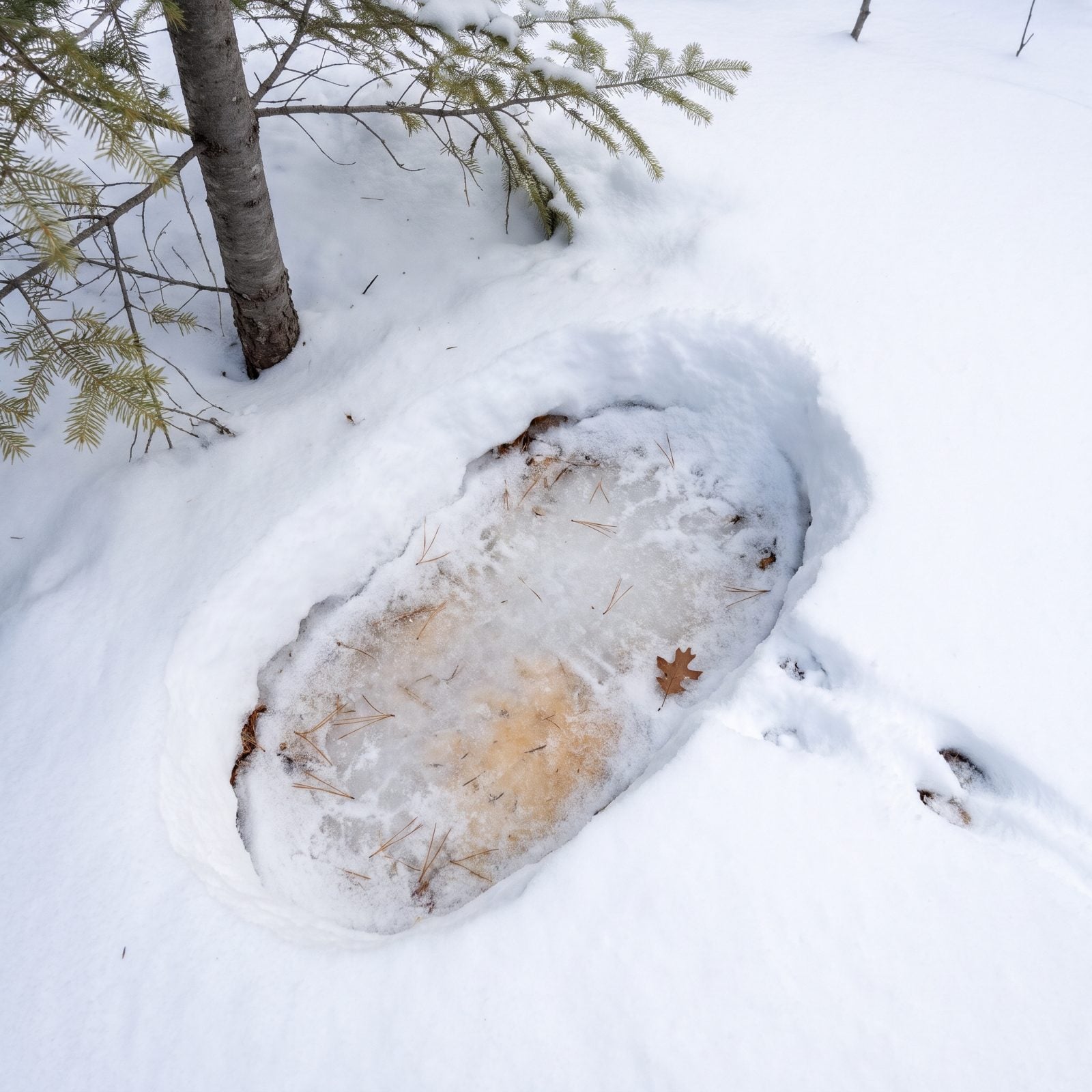
Deer beds read like a diary if you slow down. Look for a clean oval melted into the snow, often tucked against a conifer trunk or a deadfall that blocks the wind. That floor is usually glazed — body heat melted it, then the cold refroze it into a thin shell.
Count the beds and you learn the group. Several ovals clustered together mean does and fawns yarded up for the cold, while a single large bed off on its own tends to be a buck who’d rather sleep where he can see trouble coming. Fresh beds feel firmer underfoot and still hold hoof prints at the entry.
6. Moose Browse and the Ragged Twig Ends They Leave
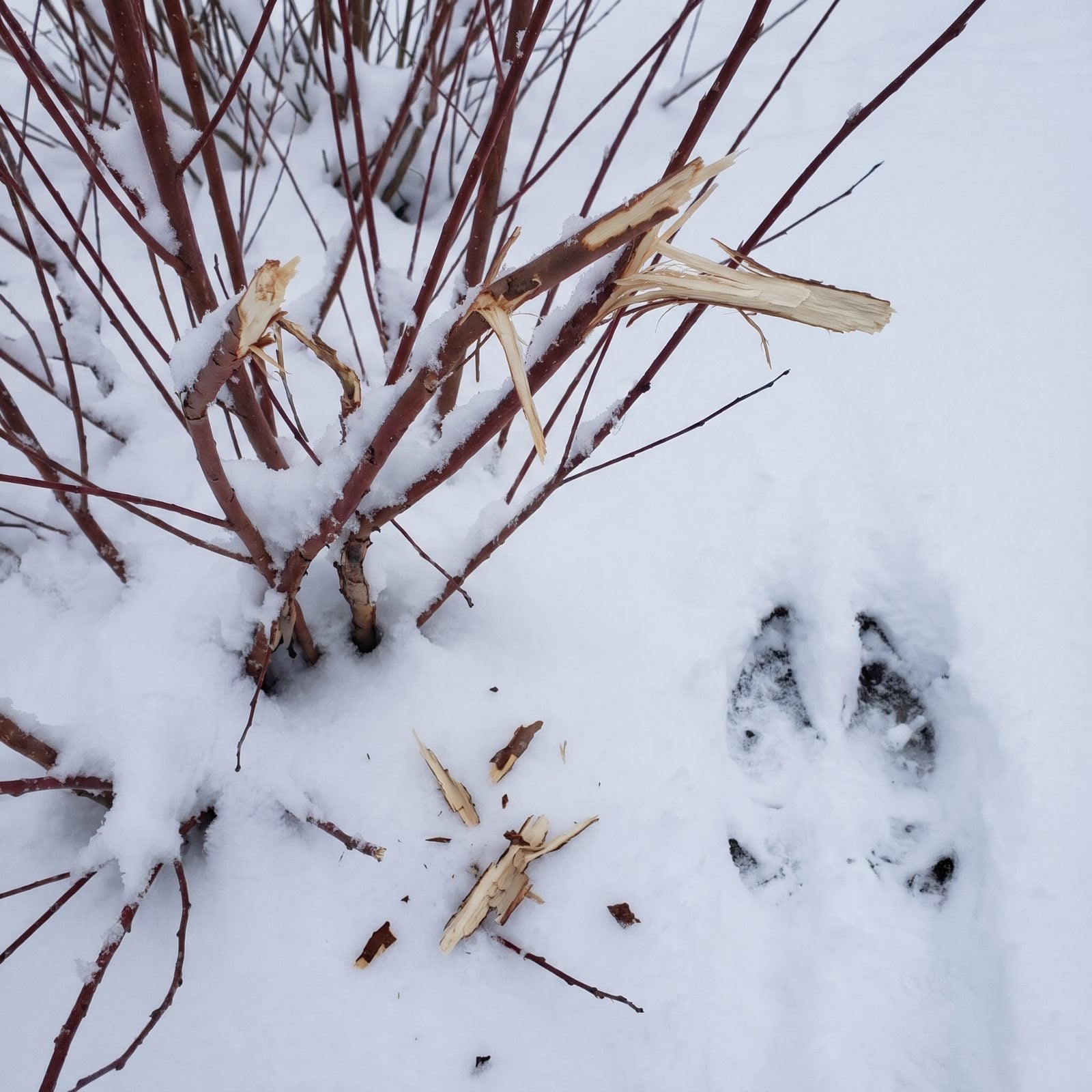
Moose don’t nibble, they wreck. Where a rabbit leaves a tidy clip, a moose grabs a willow or aspen twig and tears it, because it has no upper front teeth to shear cleanly. The ends come away ragged and splintered, hanging in frayed strings.
Size tells you the rest. A moose is strong enough to break stems as thick as your thumb, so you’ll see stout, snapped stems high on the shrub, often well above where a deer can reach, with a litter of bark bits and torn stems sprinkled on the snow around the base. Add the splayed, dinner-plate tracks and it’s unmistakable. Nothing else in the woods eats quite so rudely.
5. Elk Cratering Through Snow to Reach Buried Grass
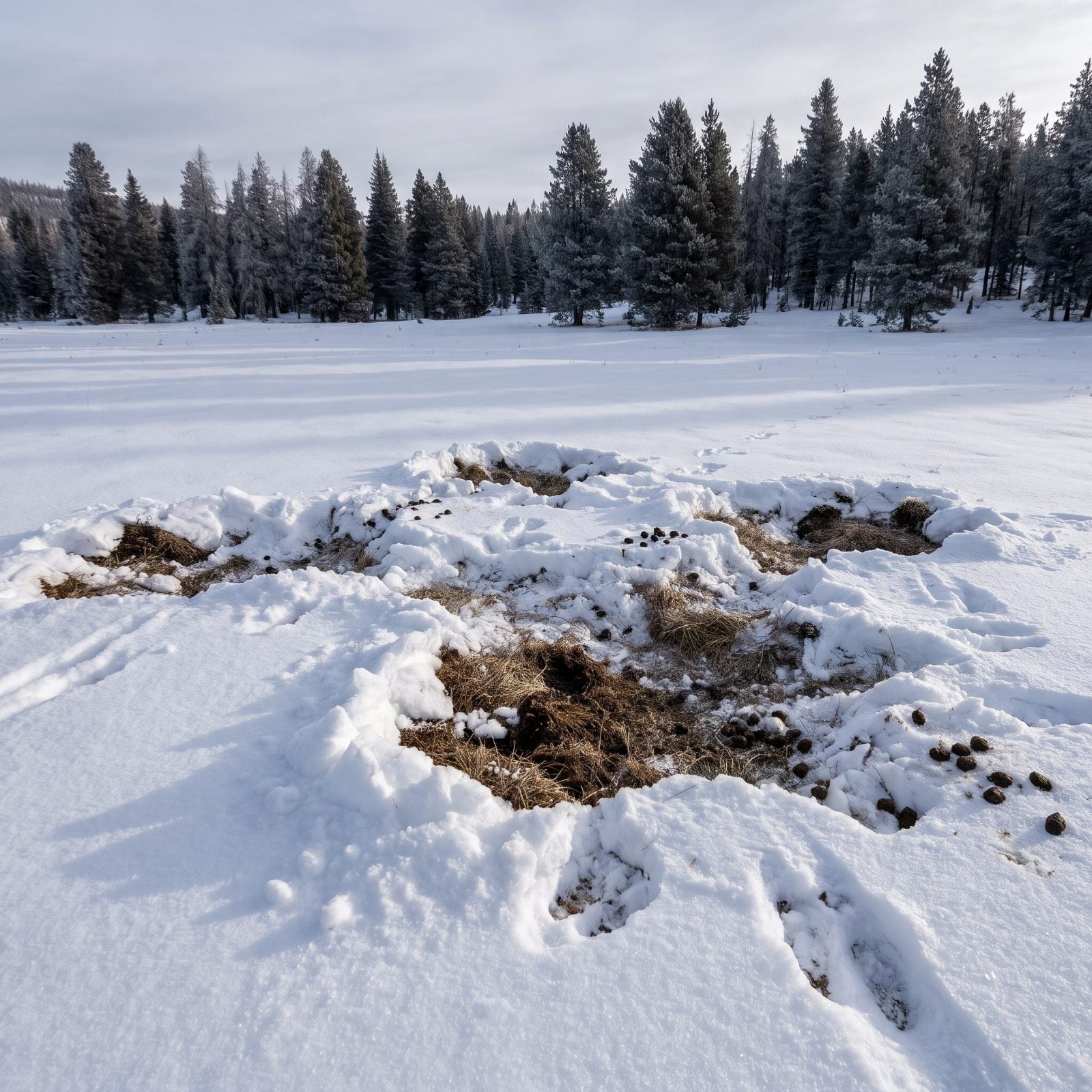
Step into a snowy meadow pocked with dug-out pits and you’ve found an elk feeding ground. They crater, pawing and swinging their muzzles to shove snow aside until they hit the dead grass buried underneath.
Each crater is a small bowl with snow heaped along one edge and brown grass or bare dirt showing at the bottom. You’ll find them in clusters where a herd worked a slope, usually ringed with big tracks and droppings. Hard digging, all of it — which is exactly why elk drift to windswept ridges and south faces where the pack thins out.
4. The Rabbit’s Cleanly Clipped Twigs
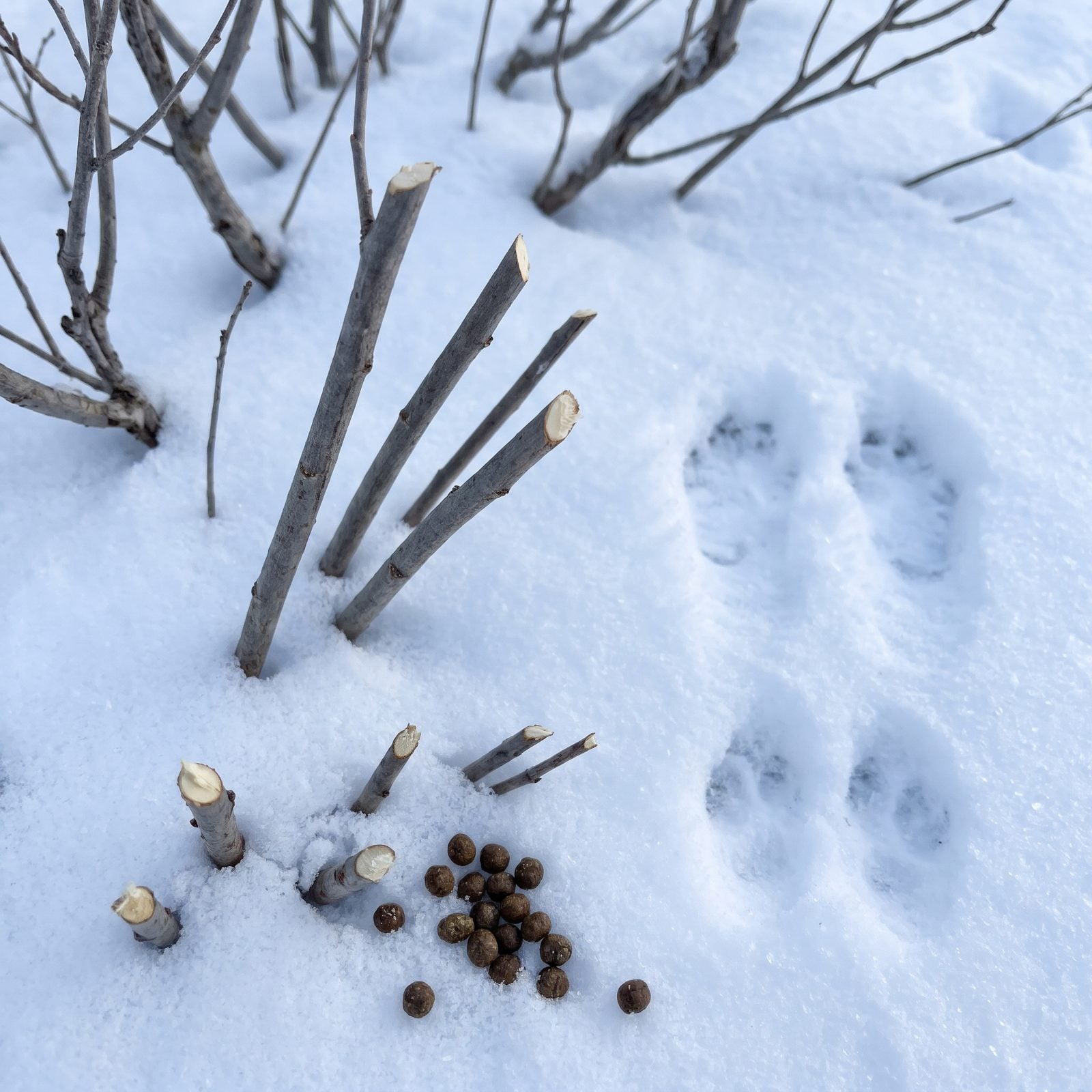
Here’s the detail nobody mentions. Rabbits and hares cut twigs cleanly, often at a clean 45-degree angle, like someone went through with pruning shears — their sharp incisors shear rather than tear, so the cut face comes out flat and smooth.
Compare that to deer and moose, who leave ragged, frayed ends because they lack upper front teeth. Neat clip, knee-high or lower? Think rabbit or snowshoe hare. The clipped tips often lie scattered in the snow below, sometimes with a few round pellets nearby.
3. Beaver’s Fresh Wood Chips Scattered on Snow
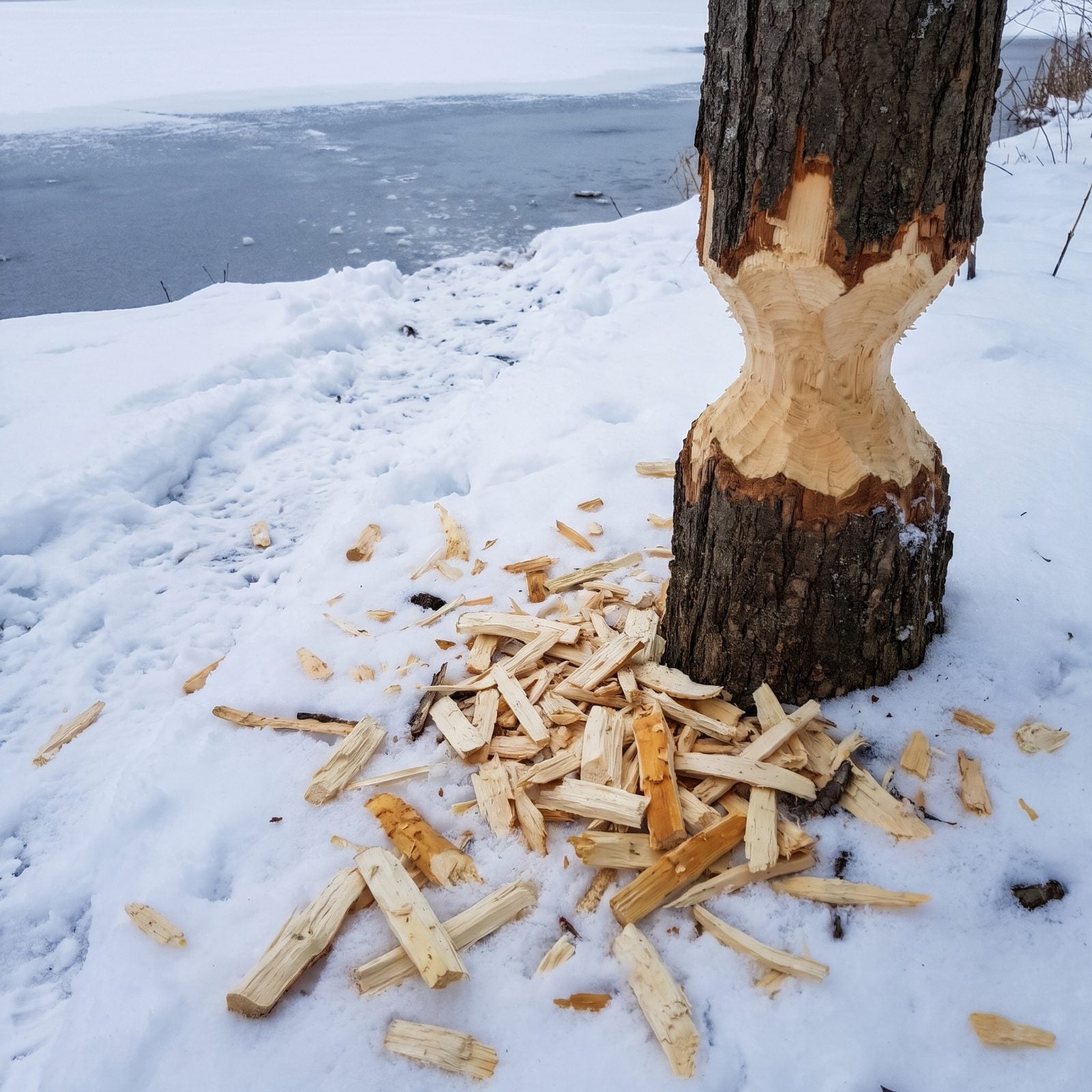
Beavers slow down in winter but they don’t fully stop. Find a sapling chewed into that unmistakable hourglass point near open water or a pond edge, then look at the ground. Fresh work leaves a scatter of pale, chunky wood chips across the snow, some as long as your finger.
The chips are the clock. Bright and blond, sitting on top of recent snow? A beaver was out gnawing within the last day or two. Weathered gray chips sunk into old crust are history. And those big, broad tooth gouges on the cut face separate beaver work from the smaller, neater chewing of a porcupine.
2. The Squirrel’s Shredded Cone Midden
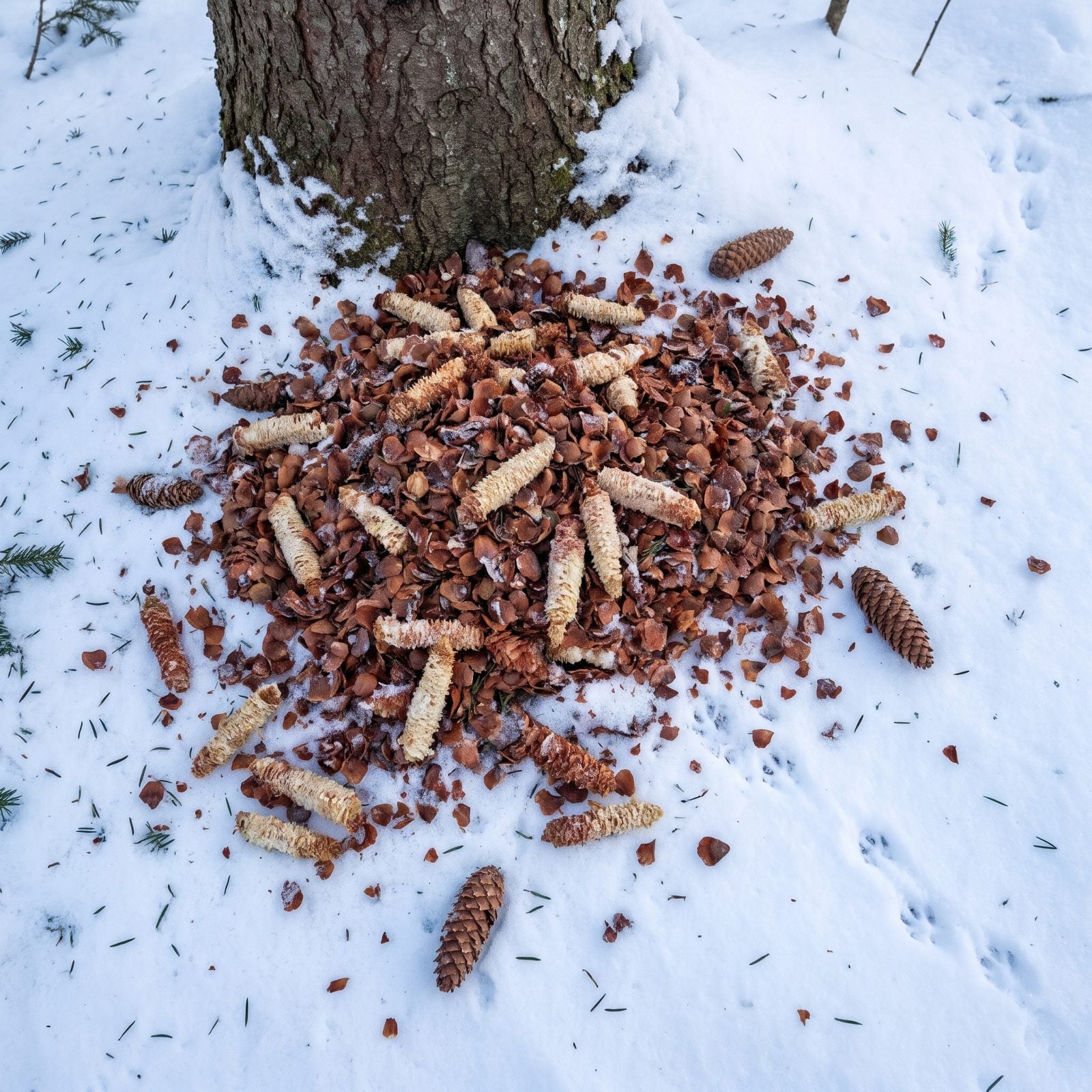
A red squirrel is a hoarder with a favorite table. Over the years it strips cone after cone in the same spot, and the discarded scales pile into a reddish midden that can grow a foot deep, studded with gnawed cores that look like tiny corncobs.
In fresh snow, a working midden shows bright, loose scales on top and a web of light bounding tracks leading in and out. None of it is random. The squirrel caches food inside the midden’s cool, damp mass, and kick one apart and you’ll often find stored cones tucked below — which is exactly why you shouldn’t.
1. The Great Horned Owl’s Wing-and-Body Strike Print
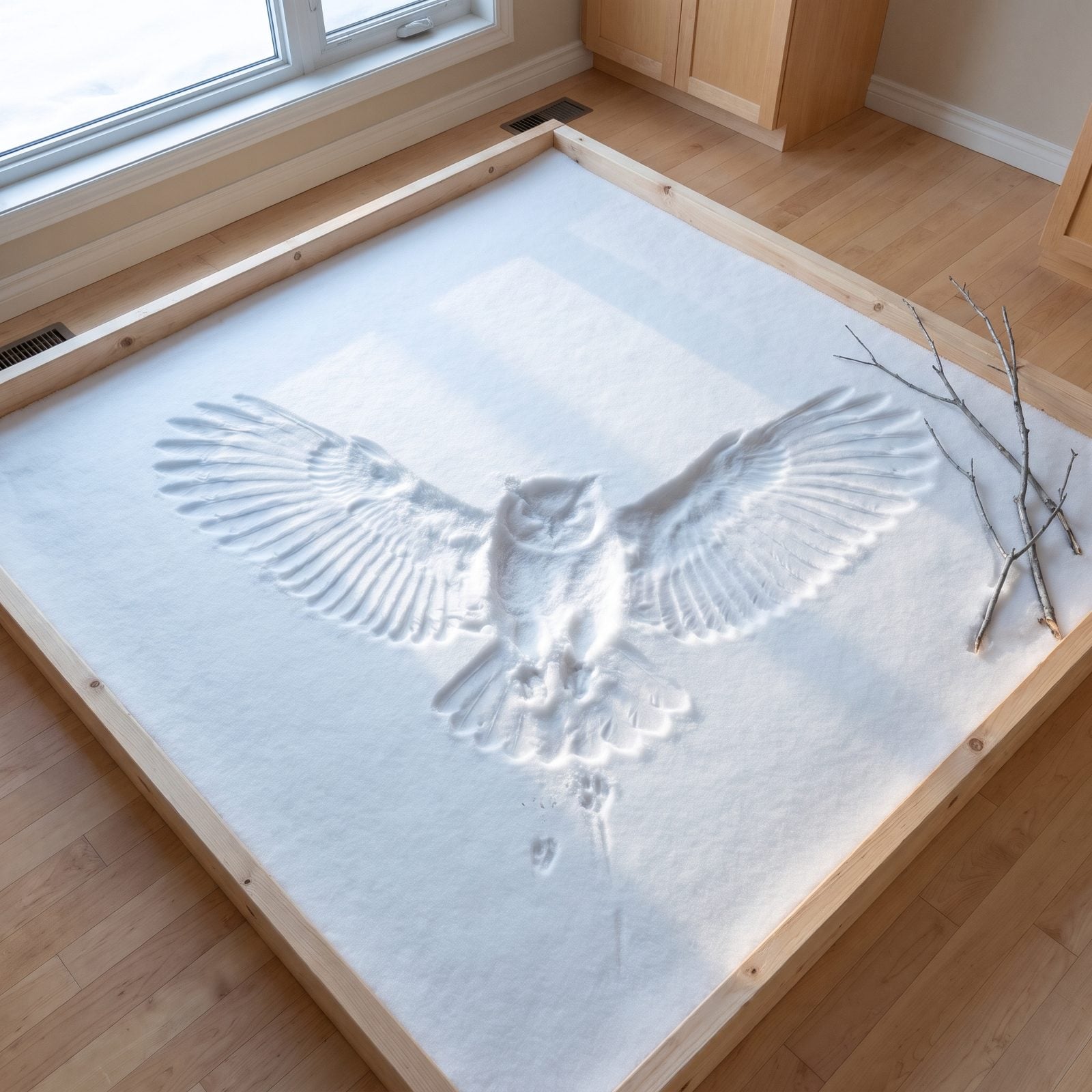
Of every sign in the snow, this is the one that stops people cold. It shows what happens when an owl drops on a mouse or vole: when the wings spread to brake and lift off, they press a full feathered print into the powder — two broad sweeps, each primary feather drawn in fine detail, with a rounded head and body at the center and a blurred, fan-shaped mass where the tail and feet would be.
Often you’ll find a line of small tracks that simply ends at the strike. Great horned owls hunt silent in the dark, and the snow holds the only evidence of a kill you’ll never hear happen.
Find one of these and you’re looking at the exact frame where a life ended, printed in the snow.