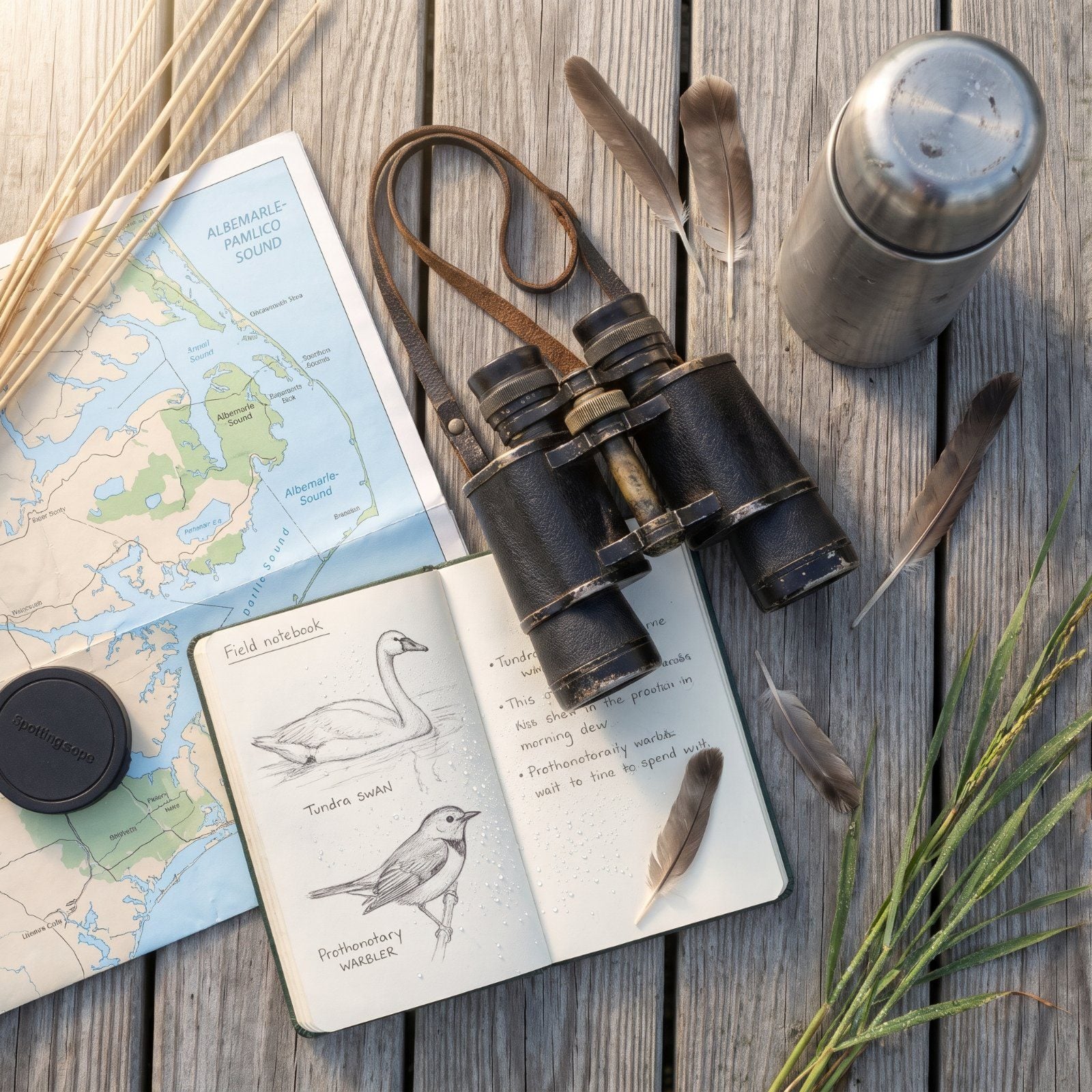
A tundra swan sounds like a distant pack of hounds. You hear thousands of them before the sun clears the pines, a low whooping roar rolling across a flooded field in Hyde County while your coffee goes cold in the cupholder. North Carolina keeps a chain of national wildlife refuges along its coastal plain and sounds, and in winter they fill with ducks, geese and swans by the tens of thousands. Spring swaps the waterfowl for warblers you can barely see but can’t stop hearing. Each one has its own rhythm, its own road, its own bird you drove all that way to find. Here’s where to point the truck.
Please note that some of the images in this article were created with the assistance of AI.
10. Pea Island: 370 Species on a Thin Ribbon of Hatteras
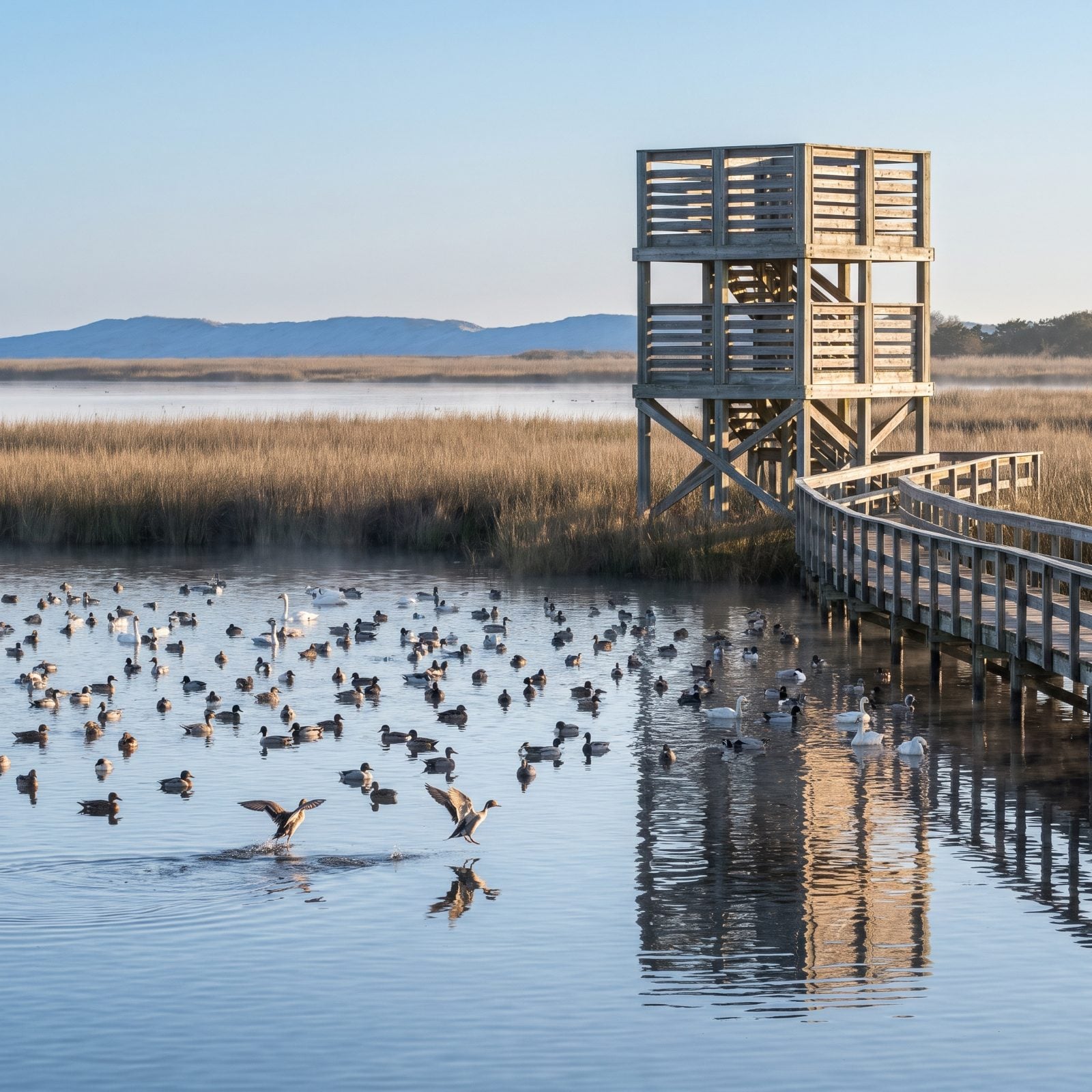
More than 370 species have been logged on this narrow strip of Hatteras — a staggering number for a place you can walk across in ten minutes. North Pond is the heart of it. You glass the water from the three-level tower at the end of the half-mile North Pond Wildlife Trail, or from the Salt Flats overlook, and come fall and winter the ducks, swans and geese stack up by the thousands.
This is where the oddities show. Eurasian wigeon, Ross’s goose, the occasional snowy owl. Bald eagles and peregrines slide through on fall migration.
9. Mattamuskeet: Standing on the Causeway While the Swans Come In
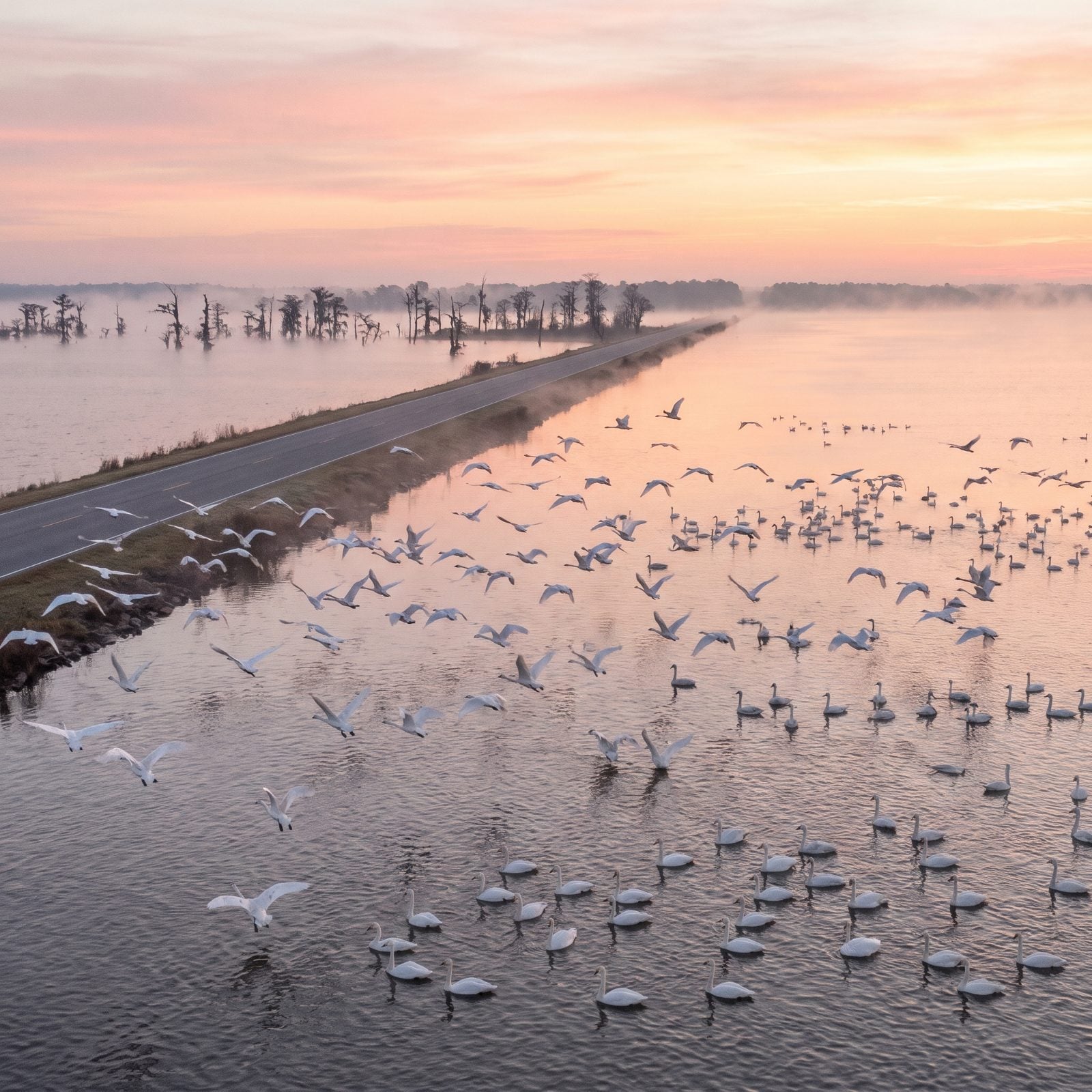
Lake Mattamuskeet is the biggest natural lake in the state, 40,000 acres of shallow water ringed by refuge. Most of North Carolina’s wintering tundra swans end up at or near here. Refuge literature counts tens of thousands of swans, Canada geese and snow geese, plus more than a dozen kinds of ducks, spending the cold months on it.
Work the NC 94 causeway, the entrance road, and the three-mile Wildlife Drive loop with its platforms over the main impoundment. Anglers pull largemouth and striped bass, crappie and catfish from these same waters.
8. Pocosin Lakes (Pungo Unit): Snow Geese at Dusk and Bears in the Margins
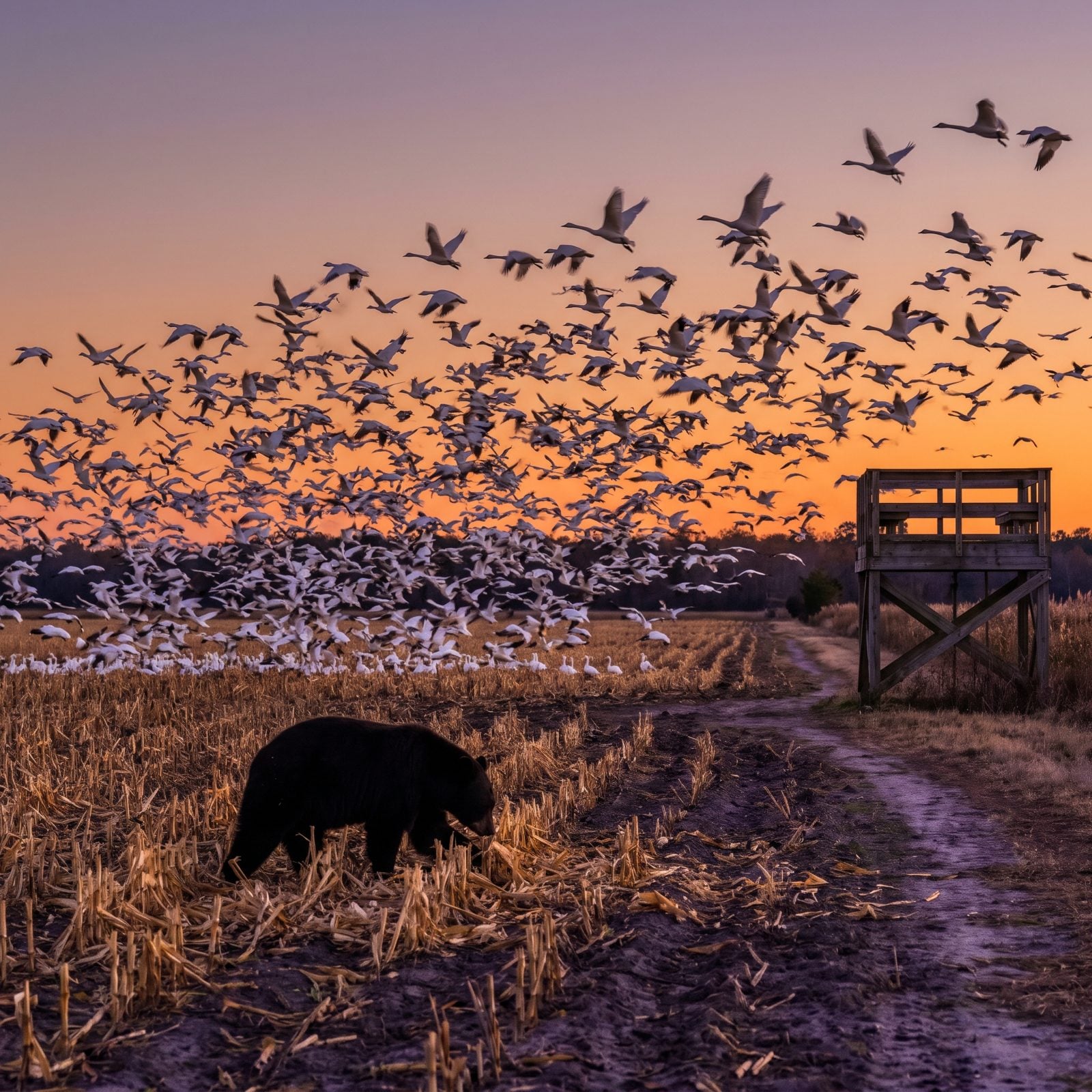
If you only make one winter waterfowl trip in North Carolina, make it the Pungo Unit. Tens of thousands of ducks, geese and swans gather across this refuge each winter, and the snow geese put on a show most people never forget: a white tornado lifting off the lake at dusk, the roar of it carrying for a mile.
Coastal Review points to the elevated south-lake platform on the Charles Kuralt Trail at Pungo Lake as one of the best seats for it. And the bears. This refuge holds one of the densest black bear populations anybody’s reported, and you can spot them in the field margins nearly year-round. The Walter B. Jones Center for the Sounds in Columbia has the exhibits and the Scuppernong River Boardwalk if you want something gentler.
One catch: the Pungo roads turn to soup after rain and sometimes close. Call ahead. We’ve turned around at a locked gate more than once, and it’s a long way to drive to read a sign.
7. Alligator River: Where You Might Hear a Red Wolf Howl
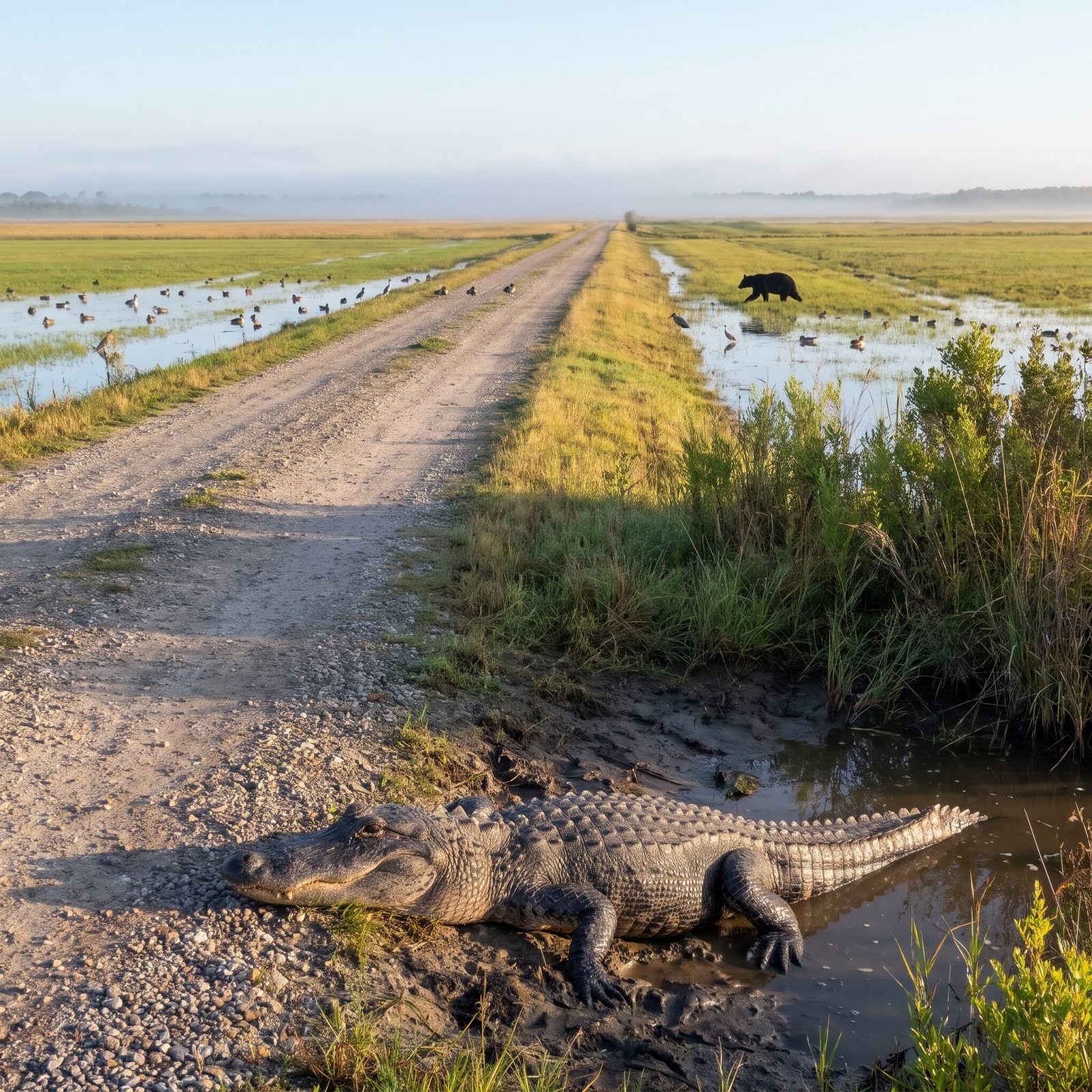
158,000 acres of pocosin and farm field on the Dare County mainland, and one of the only places on earth with wild red wolves. You probably won’t see one. On a still evening you might hear them, which is better.
Drive the Murphy Peterson Wildlife Drive for waterfowl, black bears and alligators in the moist-soil units. Two half-mile trails are fully accessible, there are more than 15 miles of color-coded paddling trails, and the refuge runs open-air tram tours. The free visitor center sits over on Roanoke Island.
Each fall this refuge co-hosts Wings Over Water, the big migration festival. Check the road status page first, because water moves across this country fast.
6. Roanoke River: The Warbler Capital Nobody Talks About
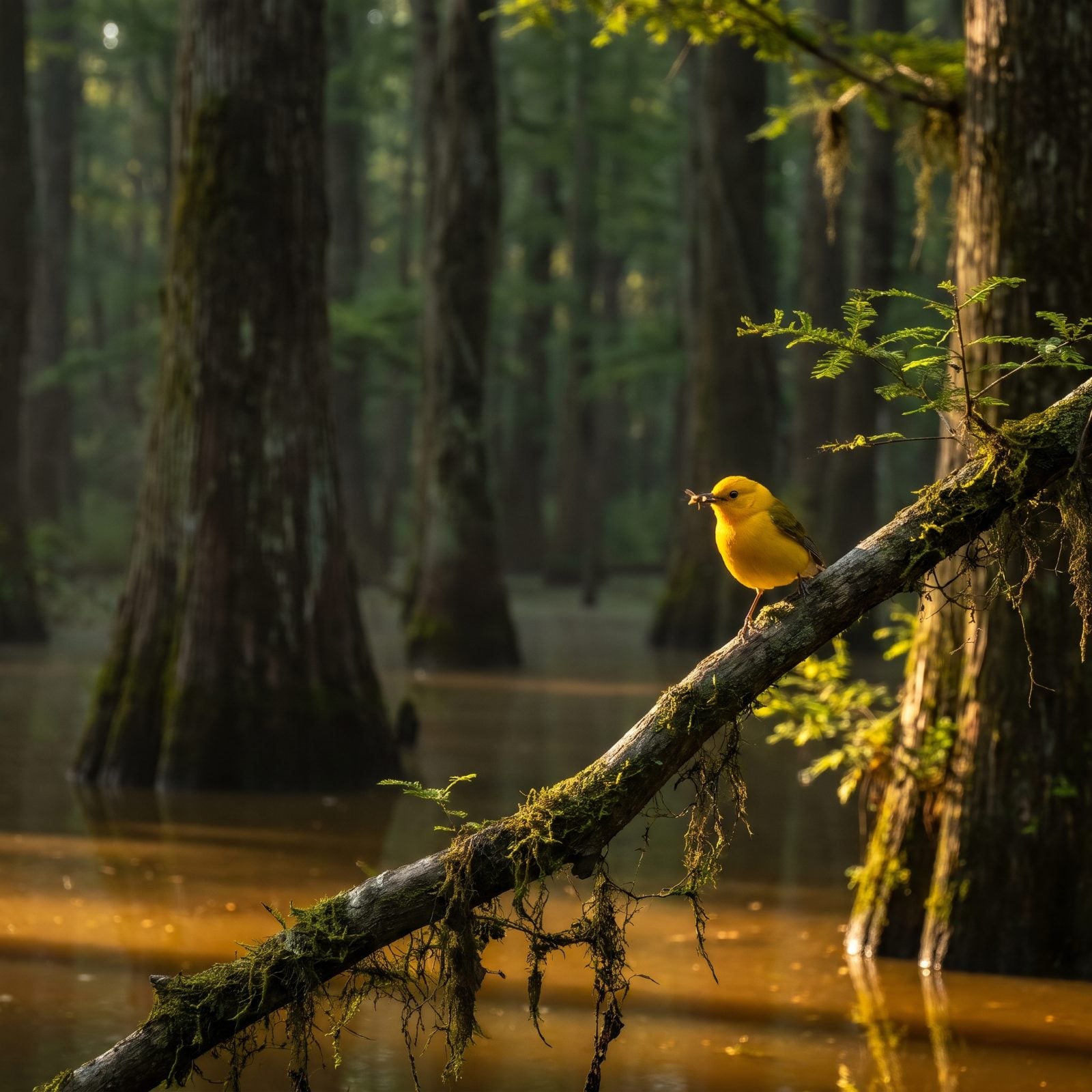
The Roanoke River floodplain holds the highest density of nesting birds, songbirds especially, of anywhere in North Carolina. That’s not a brochure line. At least 219 species have been found on or near the refuge, and 88 of them breed here.
Spring is the move. Swainson’s, cerulean and Kentucky warblers nest in the bottomland hardwoods, and the prothonotary warbler — a yellow bird that glows in the swamp gloom — is the signature. Barred owls call in the half-dark.
The Kuralt Trail off Hwy 13/17 is the one designated trail, 0.65 mile each way, with dirt roads nearby open for walking. Some tracts you can only reach by boat. The refuge closes on permitted deer and turkey hunt days, so check the calendar.
5. Pee Dee: The Piedmont Outlier in the Bluebird Kingdom
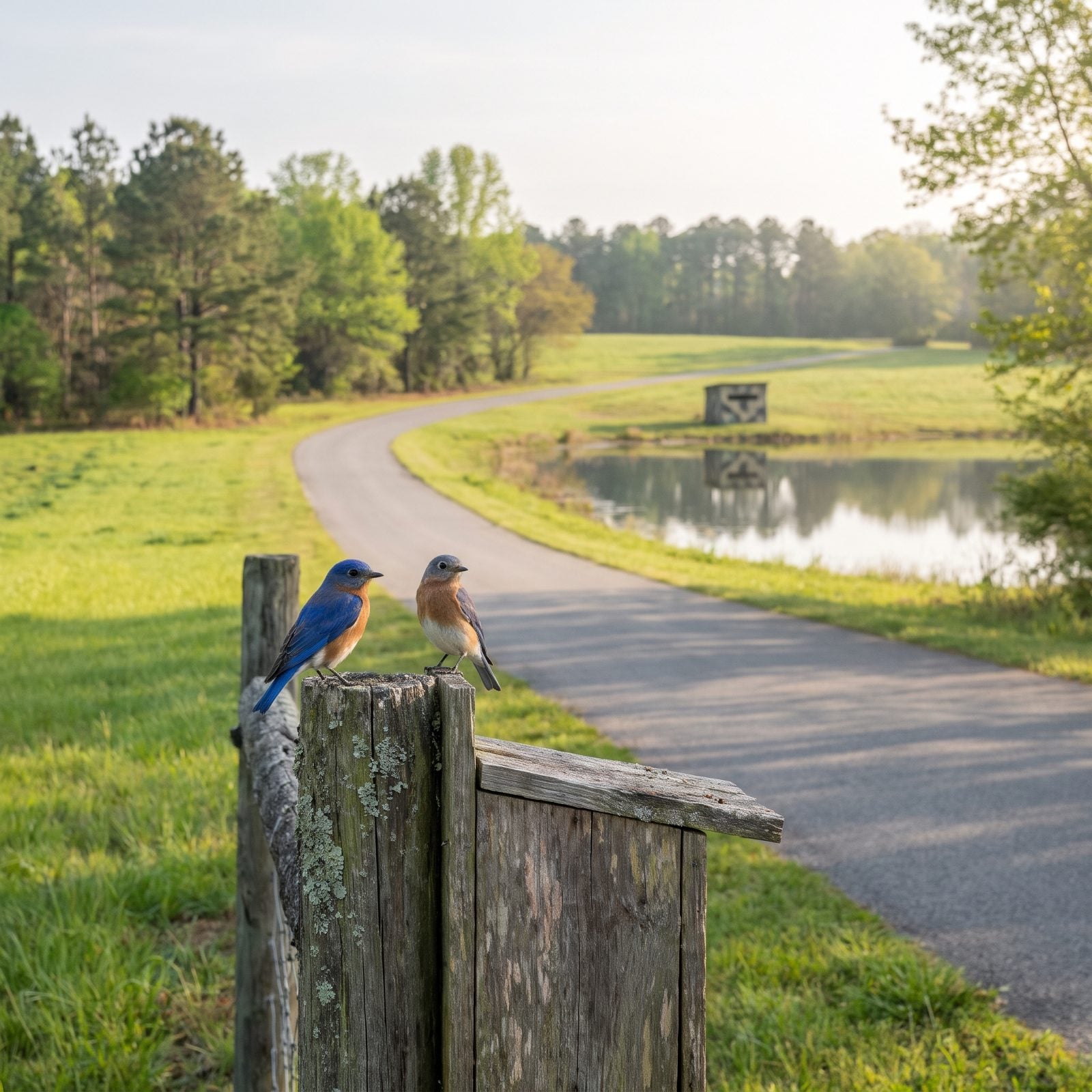
The only inland Piedmont refuge on this list, which makes it the odd one out — and worth the trip for exactly that reason. It sits at 5770 US-52 North in Wadesboro, in Anson County, nicknamed the Bluebird Kingdom of the World. The eastern bluebirds live up to it.
Nearly 8,500 acres. More than 180 bird species, over 20 miles of public gravel roads and a three-mile paved Wildlife Drive with two hiking trails, an observation blind and a fishing pier on Sullivan Pond.
Spring and fall migration run busiest, and late winter puts waterfowl on the Sullivan Impoundment. Kentucky and Swainson’s warblers and Mississippi kites nest here. Ponds and part of the Pee Dee River are open to fishing seasonally; check the refuge’s current regulations for dates.
4. Cedar Island: Diving Ducks and the Secretive Black Rail
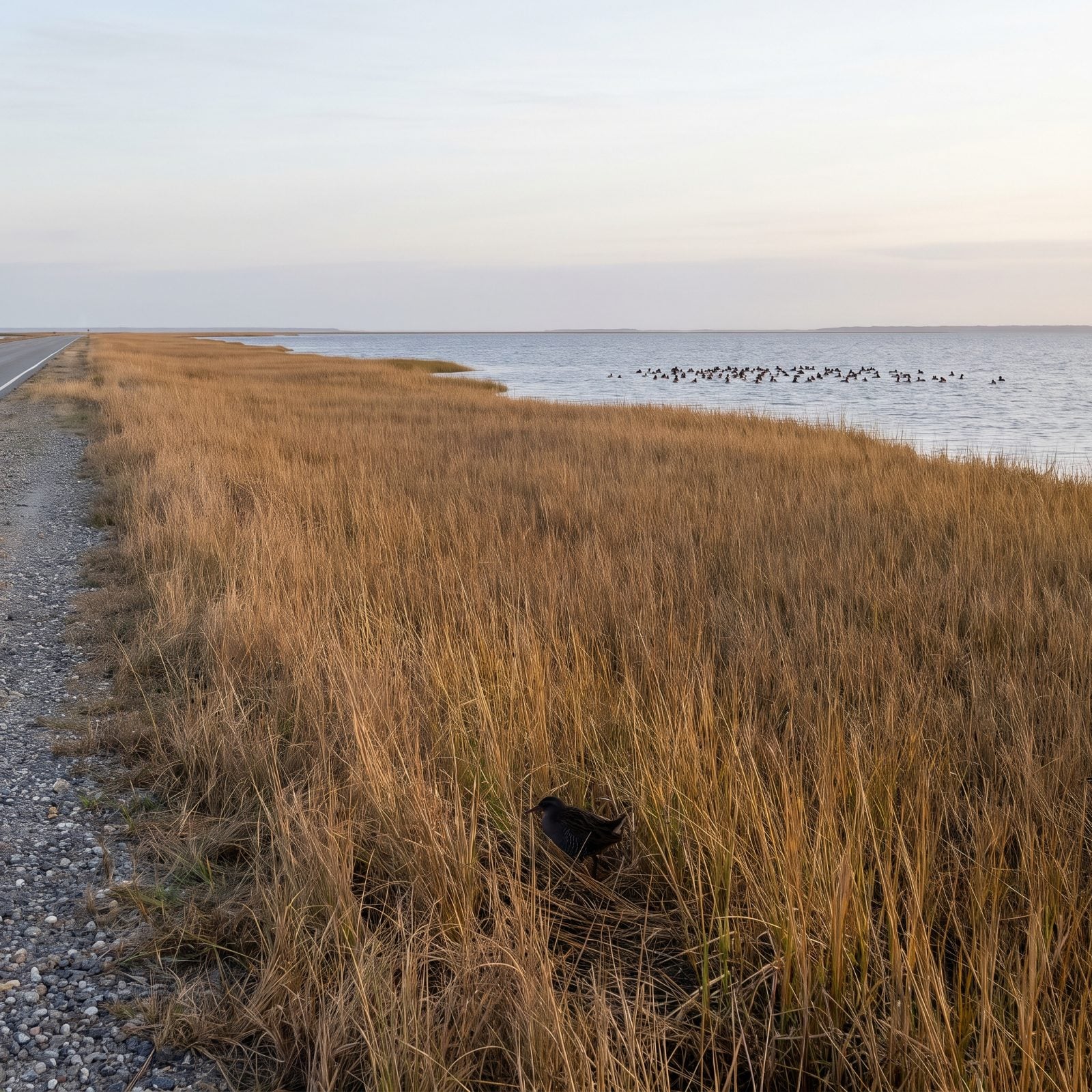
270 species may turn up here, 99 of them nesting, and in winter the diving ducks, dabblers and sea ducks pile into the sound in big numbers. NC 12 cuts straight through the refuge, so you can pull off carefully and glass the water from the shoulder.
The real prize is the black rail. USFWS calls these brackish marshes some of the most important breeding sites for that secretive little bird, and clapper rails, king rails and seaside sparrows share the ground too. No marked trails out here — just unmarked gravel firebreaks open to walkers, including the four-mile Cuddagan Creek route. Two public boat ramps get you onto the water.
3. Mackay Island: Winter Ducks on Knotts Island, Reachable by Ferry
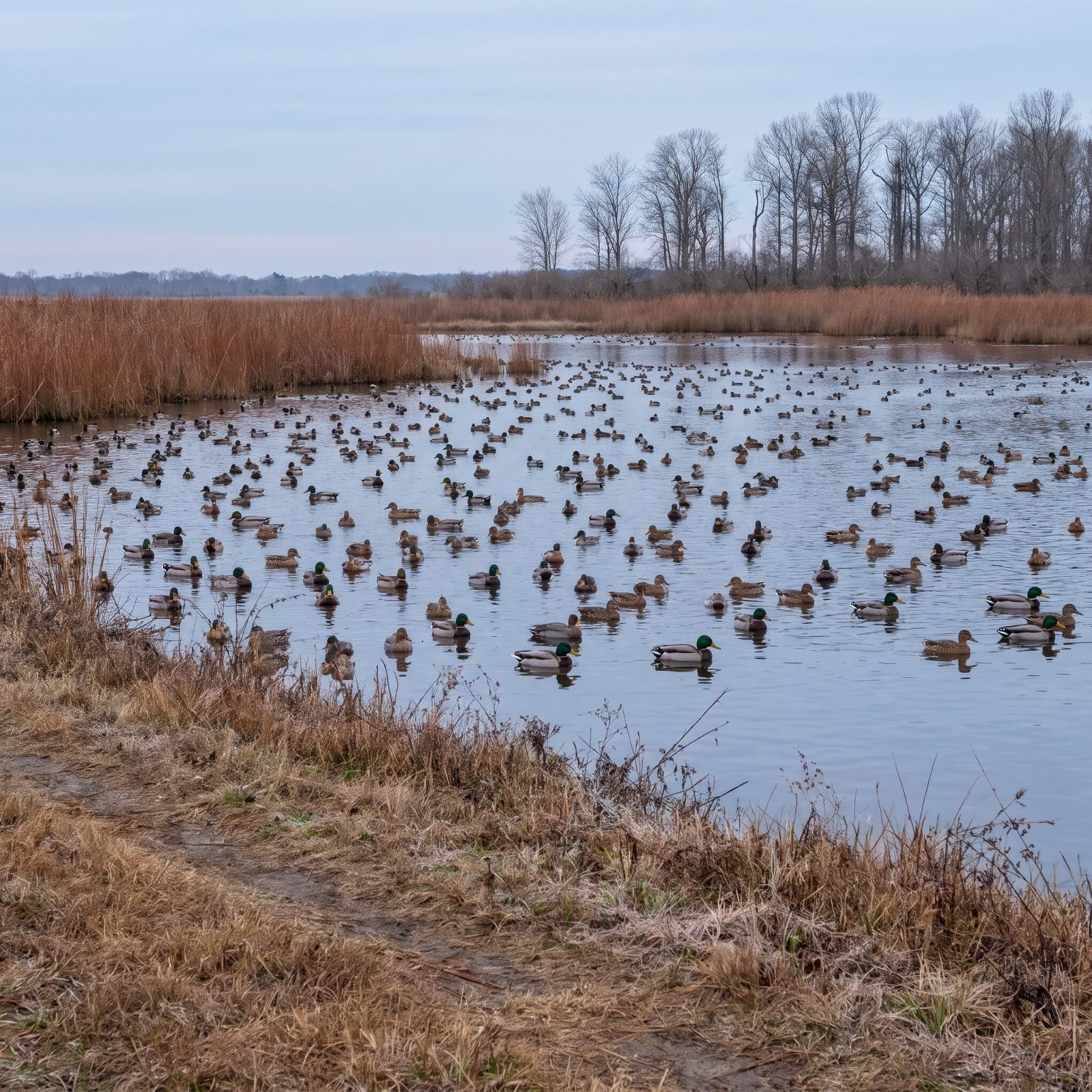
Tucked on Knotts Island in Currituck County with 187 species on the books. Tens of thousands of mallards, teal, gadwall and wood ducks winter here, and come summer the marsh birds like king rail move in.
Timing is everything at Mackay Island. March 15 through October 15 the whole refuge opens up. From October 16 to March 14 most of it closes to protect wintering waterfowl, but Mackay Island Road, the Great Marsh Loop Trail, the Kuralt Trail Overlook and the Marsh Causeway stay open all year, sunrise to sunset. Watch the events page for Open Roads Day, when the dike roads open to driving.
Getting there is half the fun. Vacationers on the Outer Banks can drive over to Currituck on the mainland and ride the free Currituck to Knotts Island ferry. Bank fishing is popular, and cottonmouths live here, so watch where you step.
2. Swanquarter: The Bell Island Pier Over Pamlico Sound
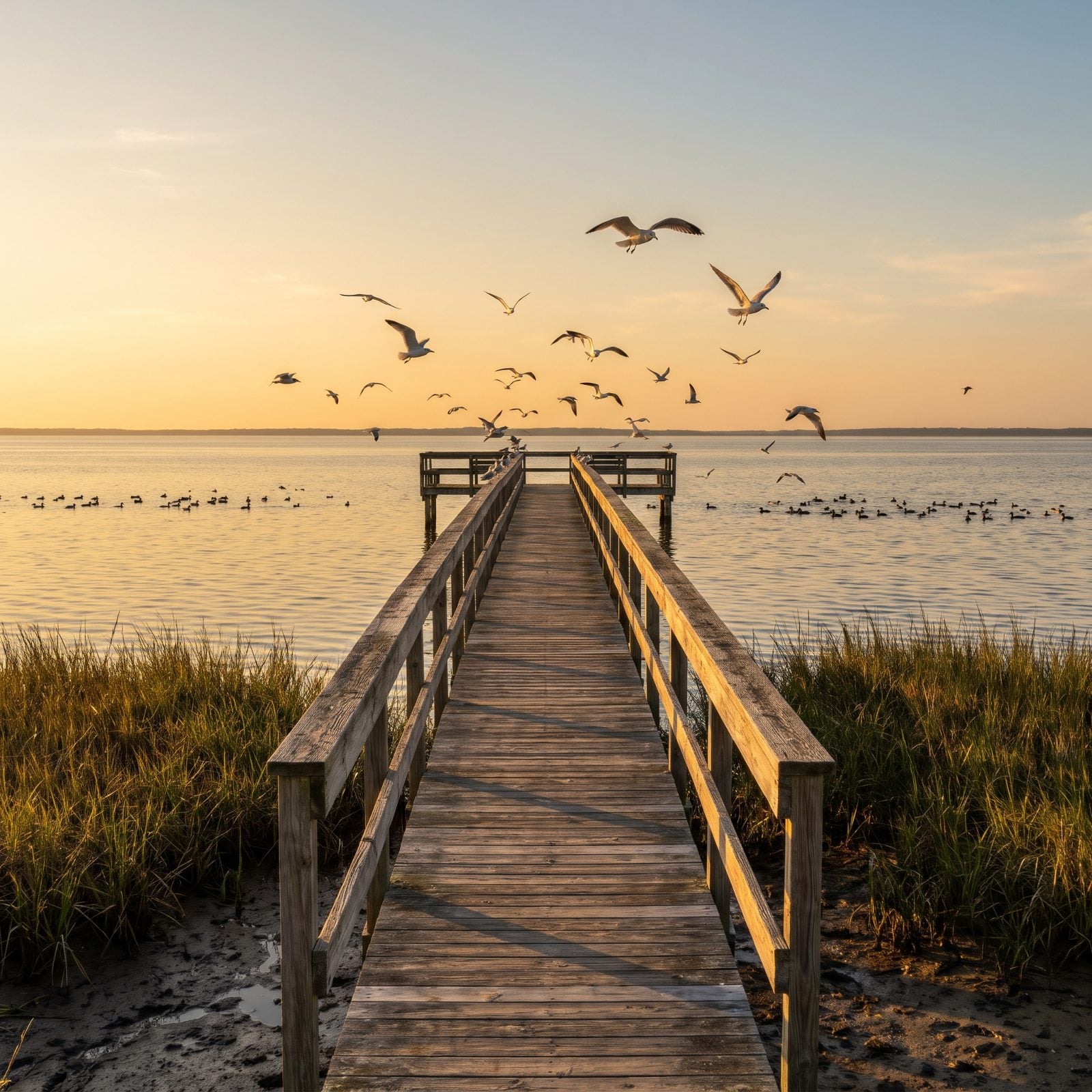
Established in 1932 to protect brackish marsh on Pamlico Sound. Winter brings thousands of waterfowl — American black ducks, buffleheads, northern pintails. The 1,000-foot Bell Island Pier gives you a clean view of ducks, terns and gulls out on the open sound, and the two-mile gravel entrance road puts you near rails, marsh wrens and prairie warblers.
Important detail: the pier got new decking and railings in 2026, and USFWS reports the pier and entrance road reopened to the public on August 1, 2026. Open daylight hours only, and the pier doubles as a good spot for fishing and crabbing.
1. Currituck: Wild Horses, Snow Geese and No Roads at All
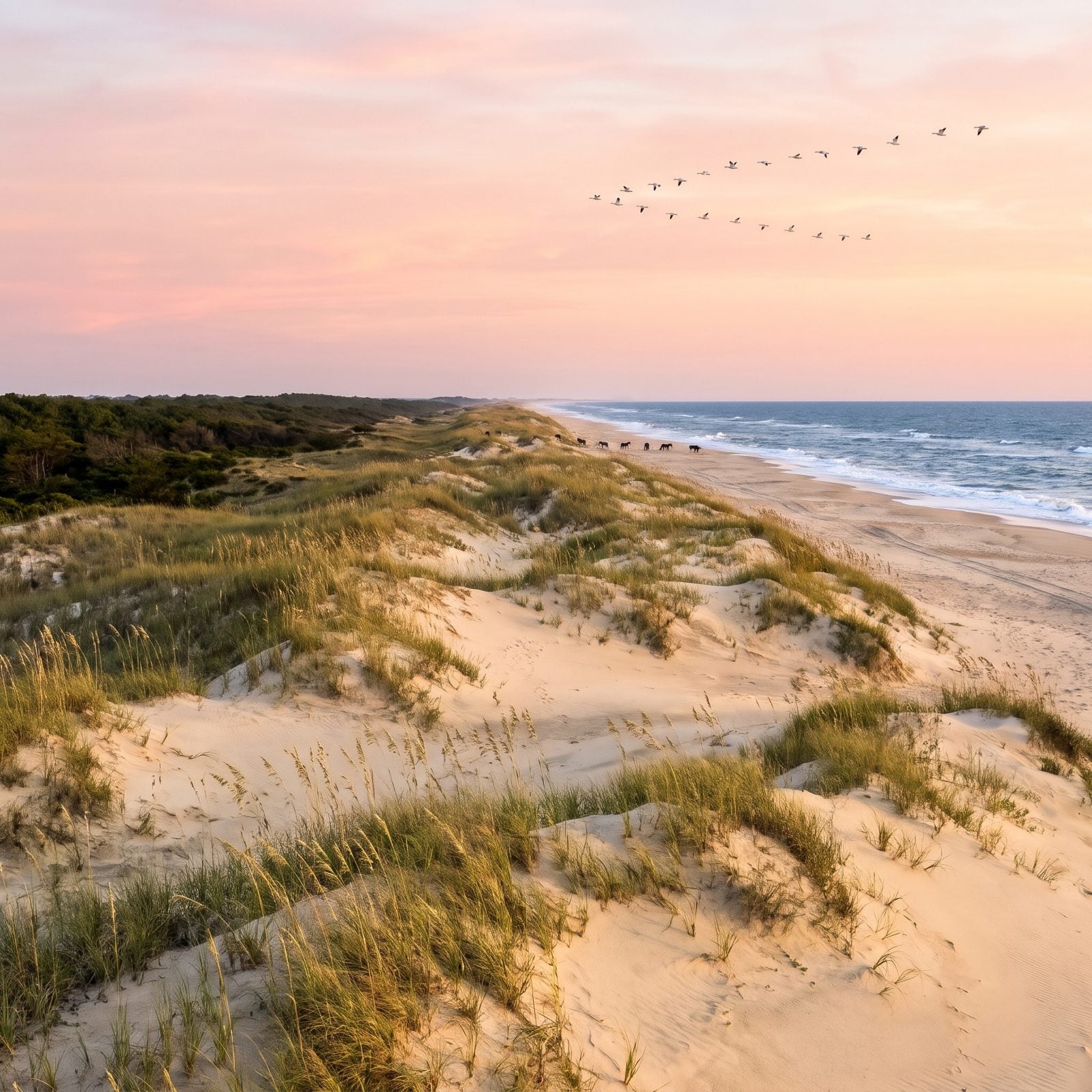
This one earns its place by being hard to reach. More than 200 species use the dunes, maritime forest and marsh on the northern Outer Banks: snow geese, tundra swans, wood ducks, blue-winged teal.
There are no roads here. No trails, no restrooms, no visitor station. You get in by four-wheel-drive on the beach, and Currituck County may require a summer beach parking permit. Open sunrise to sunset.
The famous Corolla wild horses roam this stretch, and you might see them — but you keep your distance. Pack out every scrap of trash, bring your own water and plenty of bug spray. This is the refuge that reminds you the coast looked like this everywhere once, before the pavement. Go stand in it while you can.