
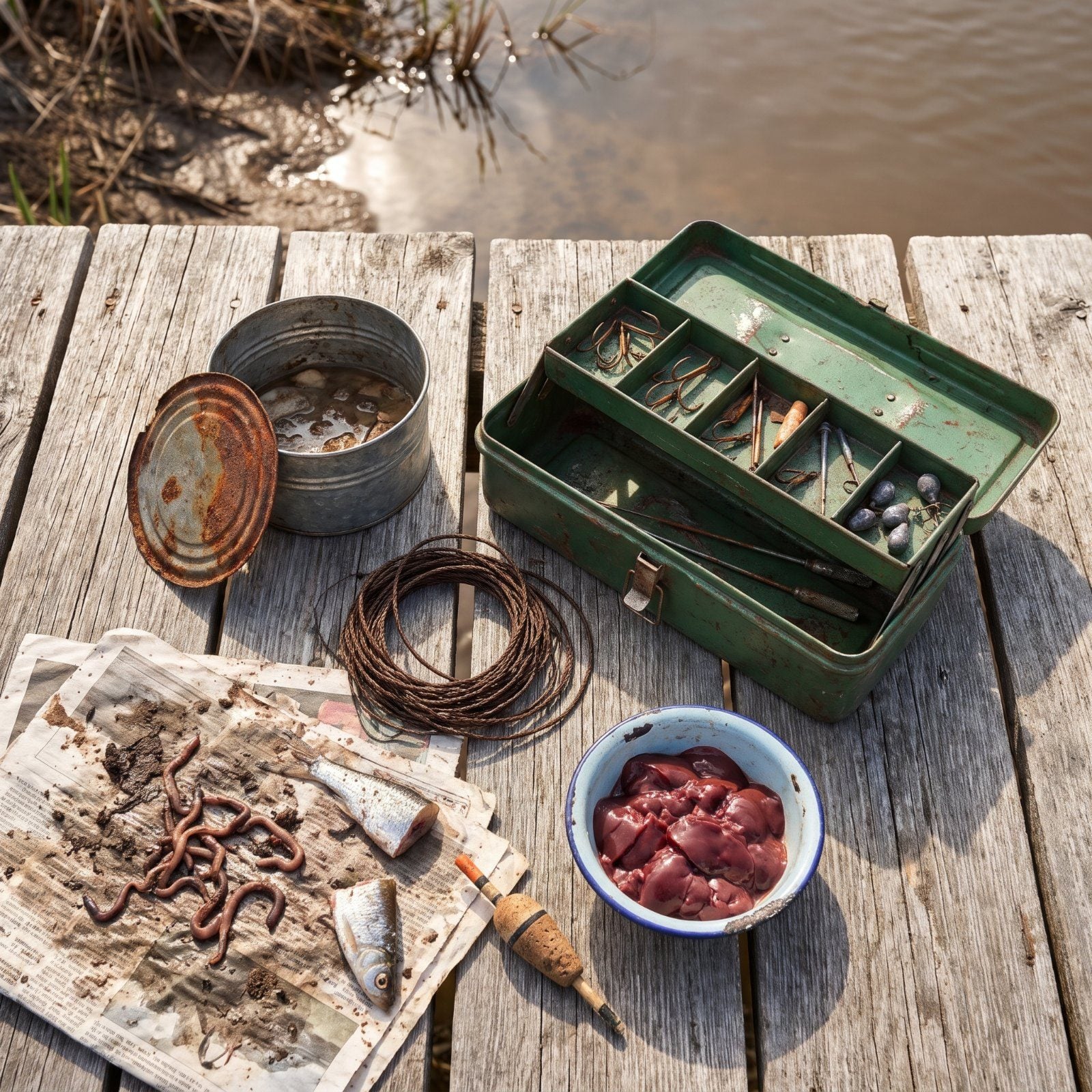
The best catfish bait almost never comes shrink-wrapped. It comes from a coffee can in the shed, a minnow trap left overnight, or the back of the fridge when the cheese goes past its prime. Catfish are scavengers with a sense of smell that borders on unfair, and they don’t care one bit about marketing. What pulls a big flathead or a mess of channel cats out of muddy water is usually something cheap, smelly, and handed down. These are the baits that filled stringers long before the tackle industry got clever, and most of them still outfish the fancy stuff.
Please note that some of the images in this article were created with the assistance of AI.
49. Chicken Liver on a Treble Hook
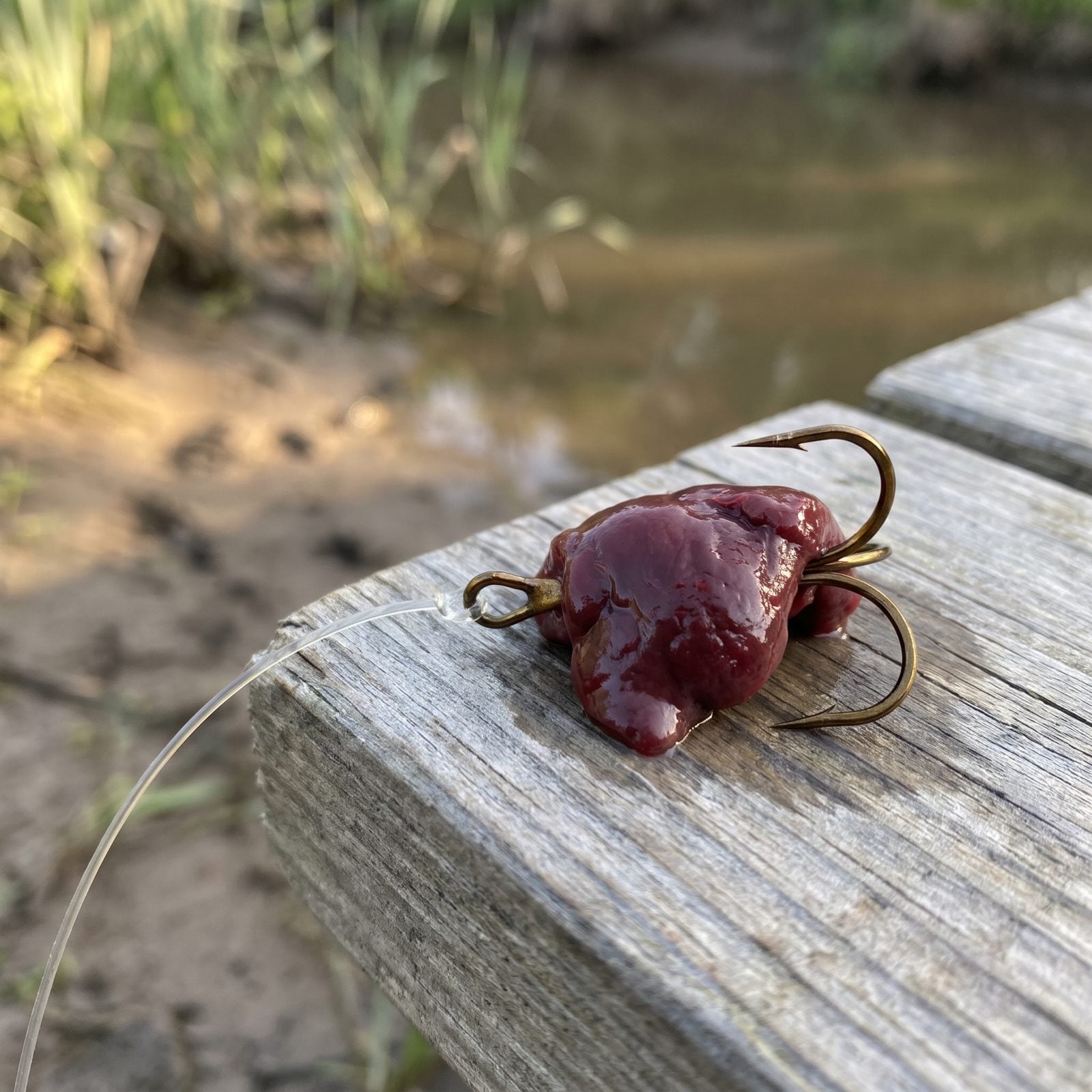
Nothing drops catfish into a feeding mood faster than blood in the water, and liver is cheap blood in the water. A dollar’s worth from the grocery store will outfish a lot of pricier options for channel cats.
The trick everybody gets wrong is the hook. Liver tears off a single hook on the first cast, and then you’re fishing with a bare shank for twenty minutes before you notice. A treble holds the lobe together and gives you three points. Fresh liver stays on better than frozen, which turns to mush. Some folks swear by letting it air out an hour so a skin forms over the outside. I’ve done both, and the fish didn’t file a complaint either way.
48. Fresh Nightcrawlers Pulled After Dark
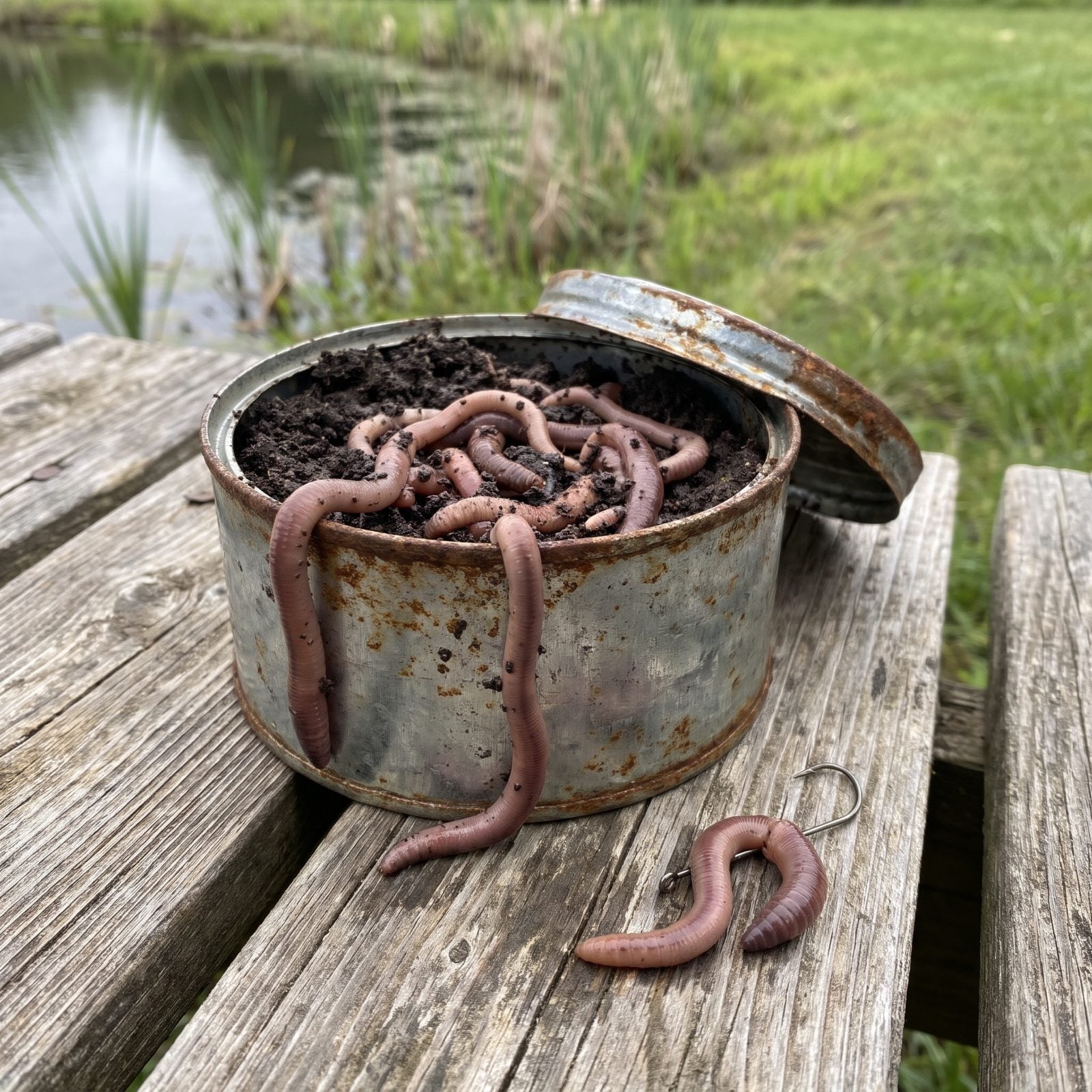
Everybody starts here, and plenty of people never needed to leave. A gob of nightcrawlers threaded on a hook will catch channel cats, bullheads, bluegill, bass, and just about anything else with a mouth.
The mistake is fishing one skinny worm like you’re after trout. Catfish want a mouthful. Pile three or four on and let the ends wiggle. Crawlers you pull from your own yard after a rain are fatter and livelier than anything sold in a foam cup, and they cost nothing but a flashlight and a slow hand.
47. Cut Gizzard Shad for Big Flatheads
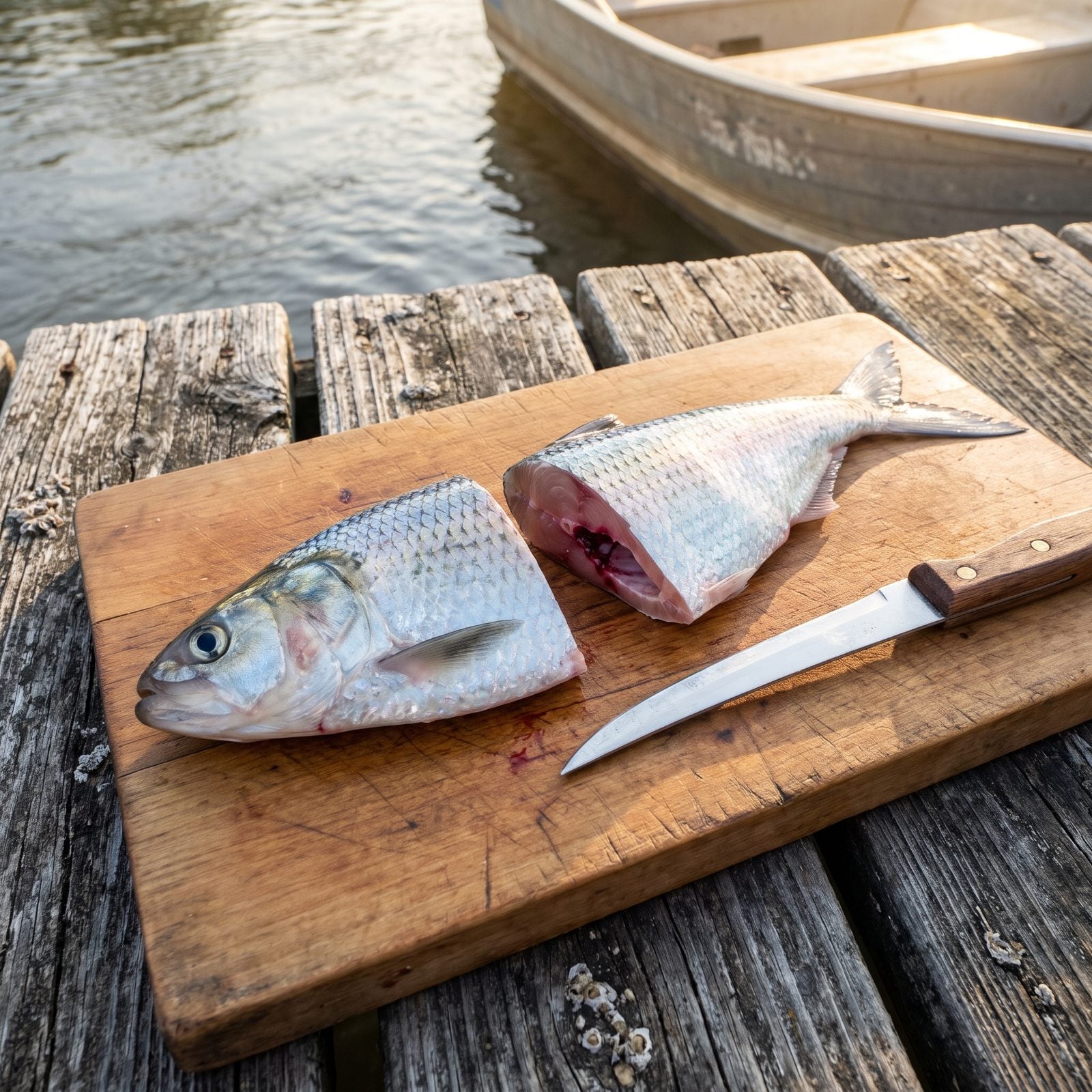
If you want a flathead, think bigger. Gizzard shad are the native forage in a lot of catfish water, which means the cats are already hunting them. Match the local diet and you’ve won half the battle before you ever bait up.
Fresh beats frozen by a wide margin, because the oils and blood that leak into the water are what you’re after. Cut a shad into chunks, hook a section through the tough part near the backbone, and let it soak. The head, oddly enough, is often the best piece — more bone, more scent, and it hangs on when the small fish come pecking.
46. Skipjack Herring Chunks for Blue Cats
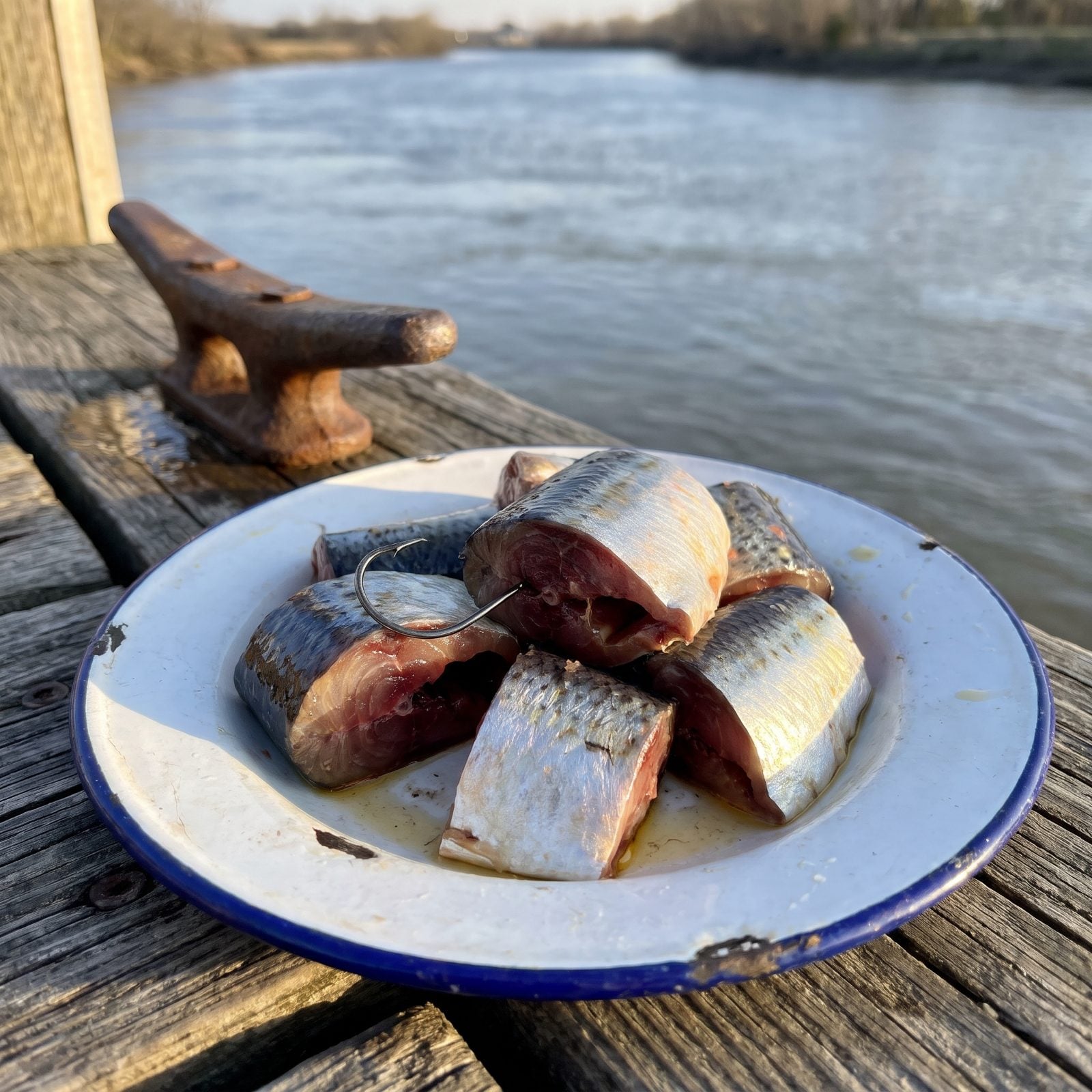
Ask a serious blue cat angler what they want on the hook and skipjack will come up fast. The flesh is oily, dark, and absolutely loaded with scent — exactly what pulls a big blue off a deep channel ledge.
Skipjack are a pain to catch, usually on tiny jigs or sabiki rigs below a dam, and that’s part of why they work. Fewer people bother. Freeze what you catch in meal-sized portions. A chunk the size of your palm on a big circle hook, fished on the bottom in current, is about as good as cut bait gets.
45. Whole Crawfish Hooked Through the Tail
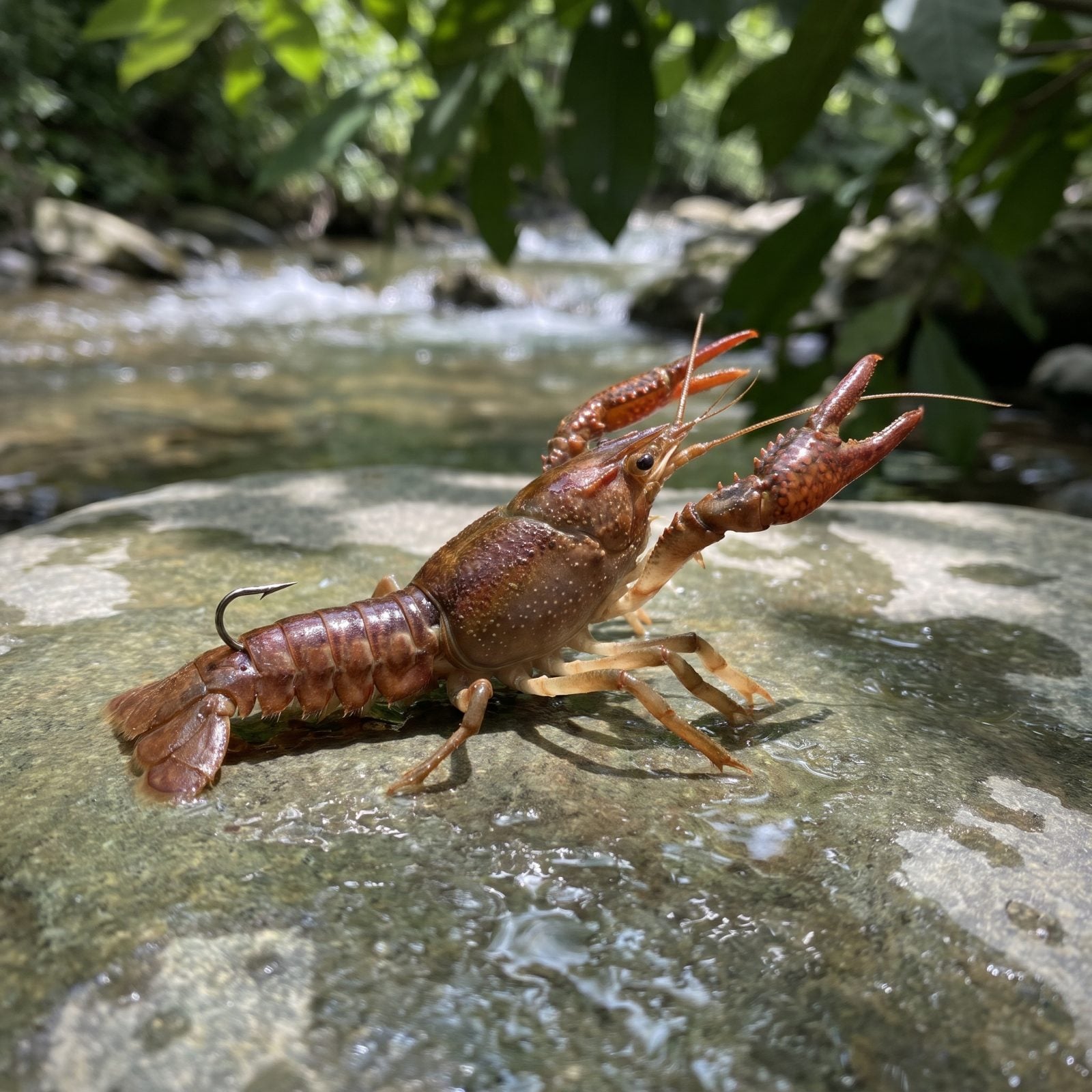
In rocky rivers and clear creeks, crawfish are candy. Channel cats and smallmouth both key on them, and a live one scrabbling across the bottom is hard for either to ignore.
Hook it through the tail so it stays lively and crawls backward, which is how a crawfish moves anyway. Dead ones still catch fish on scent, but a kicking crawfish draws bites you won’t get otherwise. You can trap your own under rocks in the shallows, which is half the fun and turns a slow afternoon into something to do.
44. Live Bluegill for Trophy Flatheads
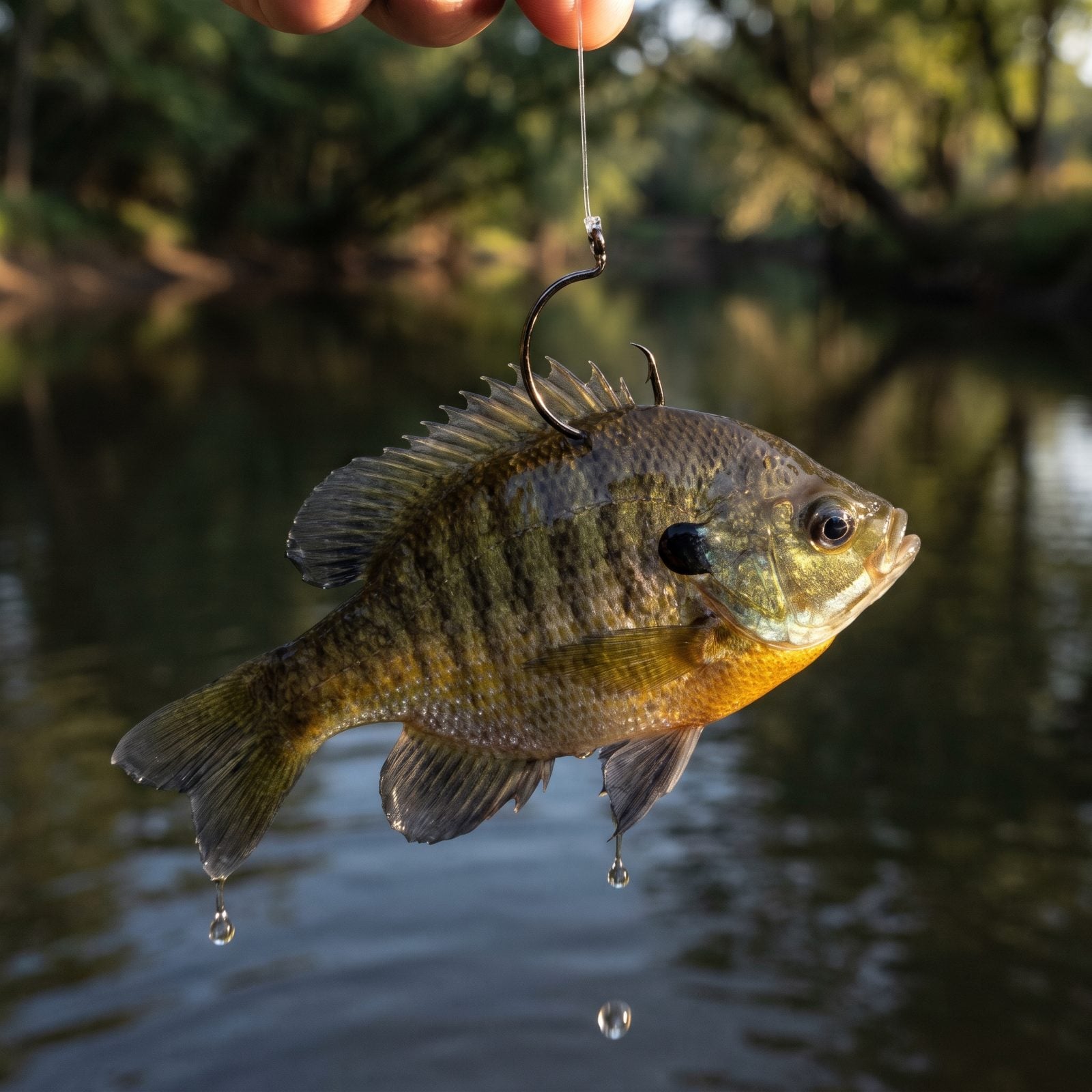
A big flathead wants its dinner alive. These are ambush predators that favor live prey even more than a blue cat does, and a frisky bluegill on the hook is exactly the panicked signal they’re listening for.
Check your state rules first. Using game fish as bait is legal in some places and flatly illegal in others, so this one really varies, and you need to know before you do it. Where it’s allowed, hook a palm-sized bluegill through the back and fish it near cover after dark. That thumping on the rod tip in the black is a feeling you don’t forget.
43. Catalpa Worms Straight Off the Tree
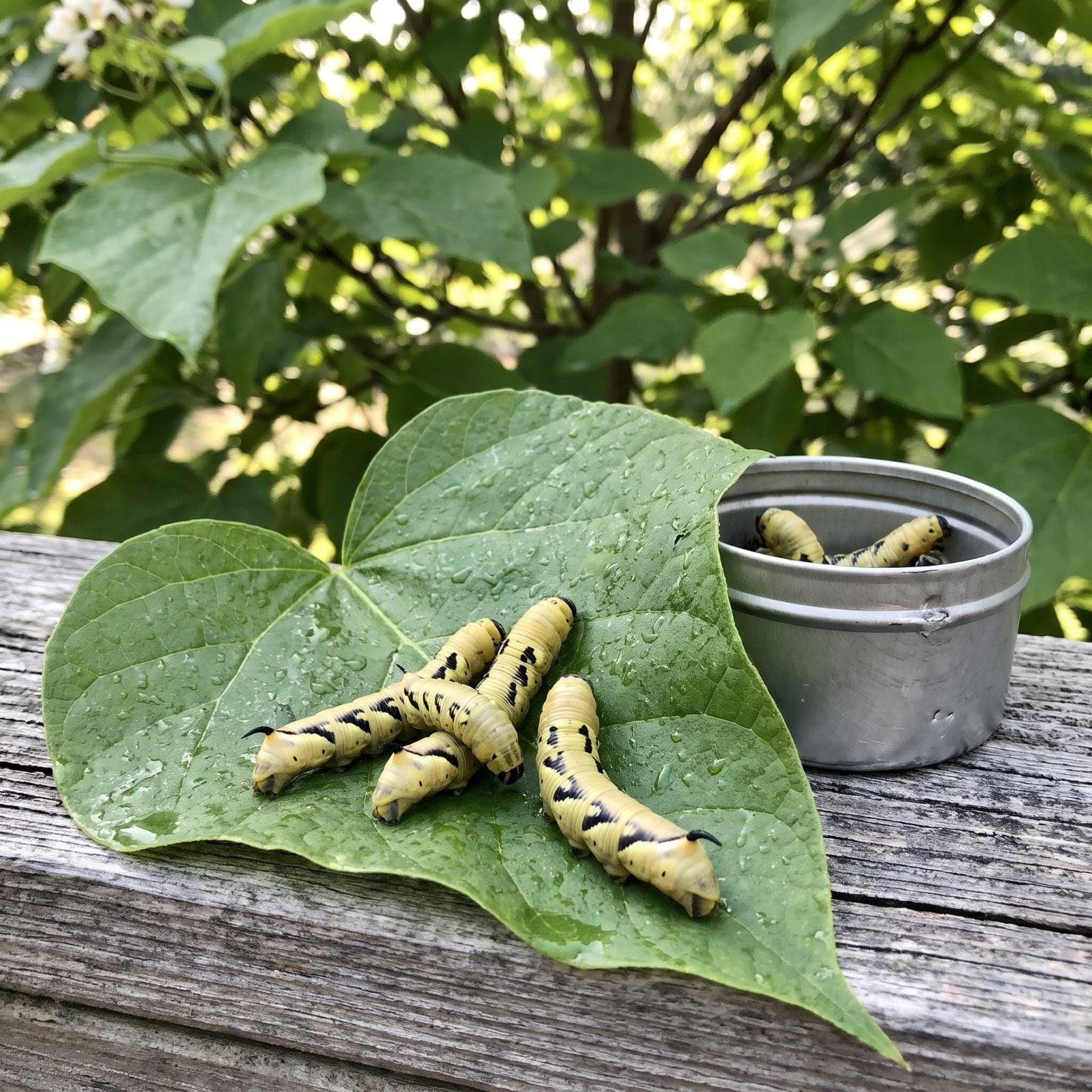
Here’s a bait with a cult following, and for good reason. Catalpa worms are the caterpillars of the catalpa sphinx moth, and they show up on catalpa trees in waves through summer. Catfish go stupid for them.
Old-timers plant a catalpa tree near the house just for the bait. You can turn them inside out over a nail for extra scent, or fish them whole. The best part? You can freeze a year’s supply when they’re thick. A bag of them in the deep freeze is a kind of insurance, and anybody who grew up fishing the South knows exactly what I mean.
42. Hot Dog Pieces Soaked in Garlic
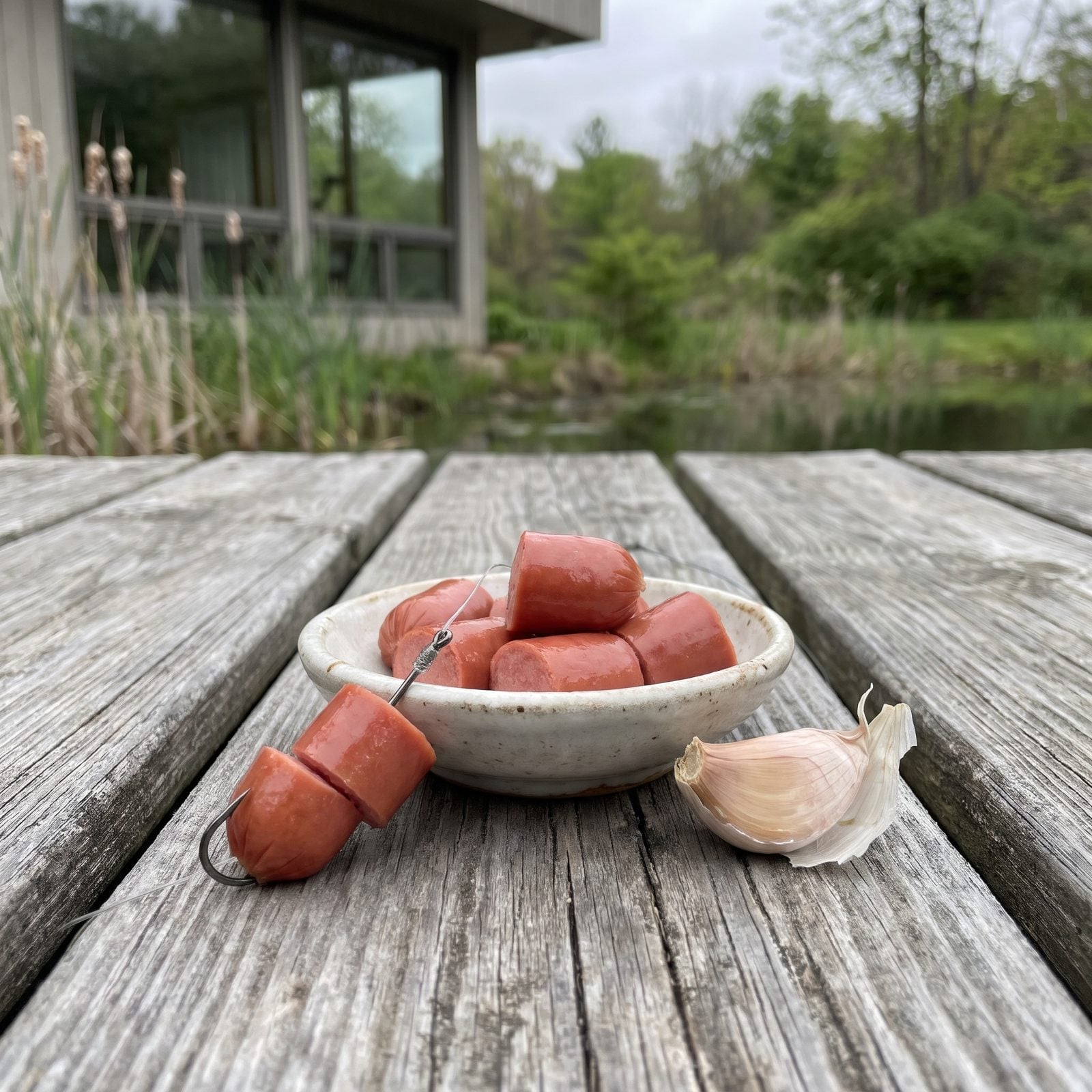
Cheap, convenient, and it genuinely works. Hot dogs are a staple bait for channel cats, especially with kids, because they stay on the hook and don’t require handling anything slimy.
What separates a good hot dog bait from a mediocre one is scent. Cut a pack into chunks, drop them in a jar with garlic powder and a little strawberry Kool-Aid, and let them sit overnight in the fridge. Sounds ridiculous. Catches catfish. The sugar and strong smell do the work. Warn the rest of the household first.
41. Coagulated Blood Bait for Channel Cats
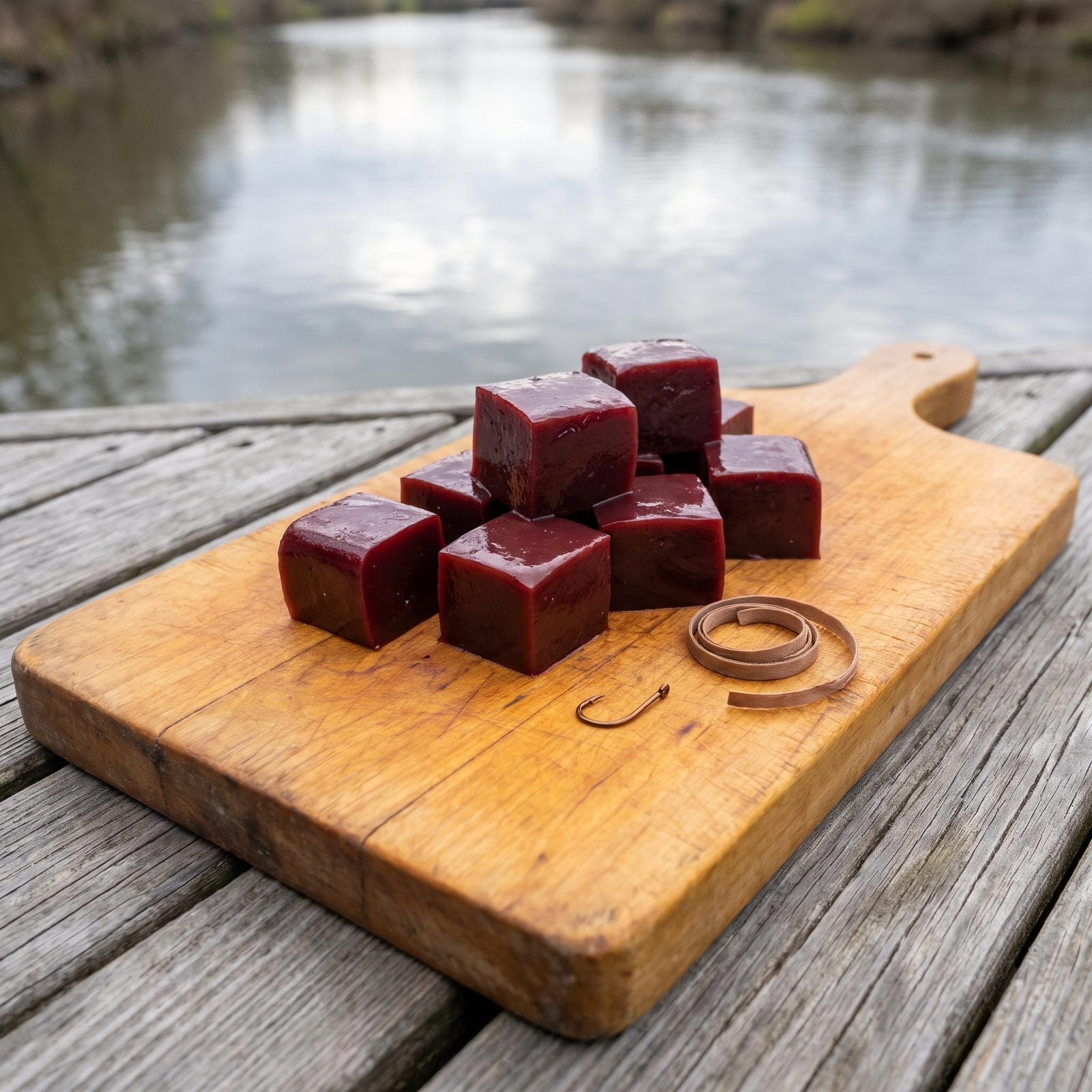
Blood is the shortcut straight to a catfish’s brain. Fresh blood won’t stay on a hook, so the old method is to let it coagulate in a shallow pan until it firms into a dark, jelly-like slab you can cut into cubes.
Beef or chicken blood both work, picked up from a butcher who’ll usually hand it over cheap or free. Texture is everything here. Too soft and it washes off, too dry and it won’t release scent. You want it firm enough to thread on, loose enough to bleed into the water. It’s messy, it stinks, and channel cats find it from a long way off. Fish it in slow current and let the scent trail do the advertising.
40. Firm Cheese Cubes That Stay on the Hook
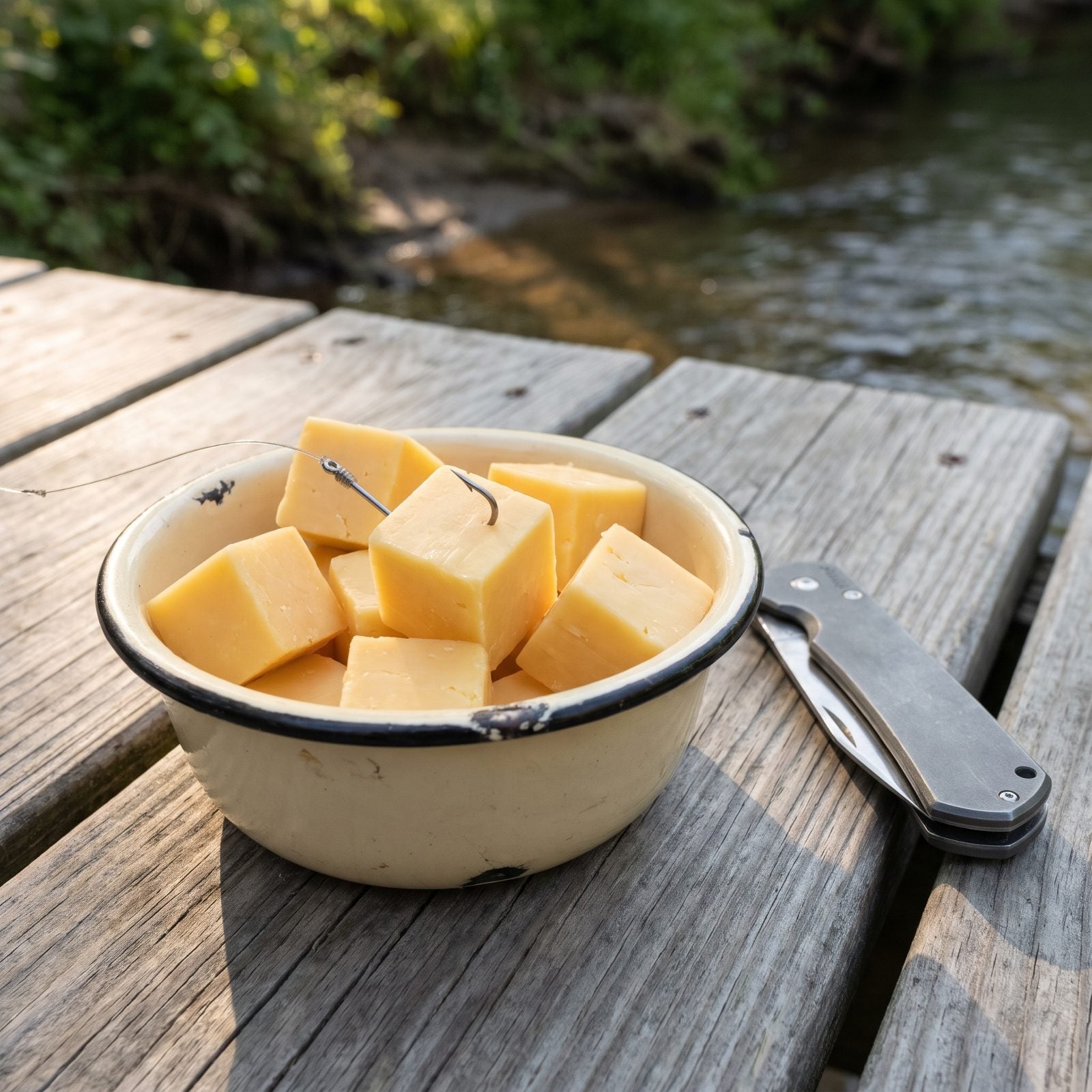
Cheese is one of those baits that sounds like a gimmick until you try it. The strong smell carries in the water, and the firm varieties stay on the hook far better than soft ones that crumble the second they get wet.
Go for a dense, hard cheese and cut it into cubes. Some anglers let it sour a few days in a warm spot, which turns an already pungent bait into something that will clear a tackle box. Channel cats don’t mind. A cube on a single hook, soaked near the bottom, is a quiet little secret that keeps catching fish long after the fancy dough baits dissolve.
39. Cut Sucker Meat, the Oily Standby That Never Lets You Down
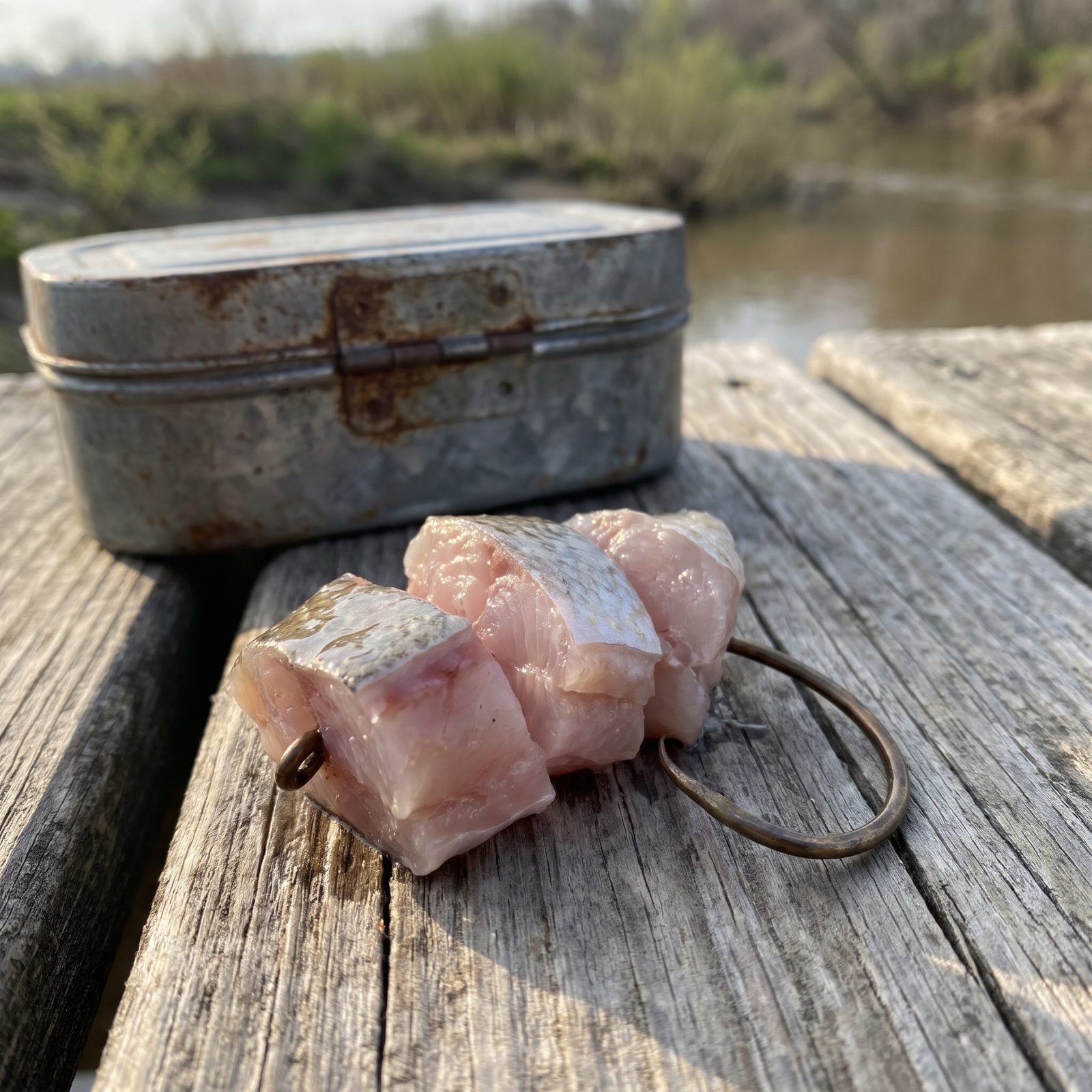
Every catfish angler worth his salt keeps a sucker or two in the cooler. The meat is oily and tough, and it bleeds a scent trail that channel cats follow like a thread through dark water.
Cut it into inch-wide chunks, skin left on so it stays put on the hook. That skin is the part that matters, because it holds through a long soak and keeps the oil leaking out slowly instead of washing off in one blast. I wasted a lot of bait early on, filleting the skin away and then wondering why the chunk vanished on the cast.
38. Golden Shiners, the Flashy Minnow Big Cats Can’t Ignore
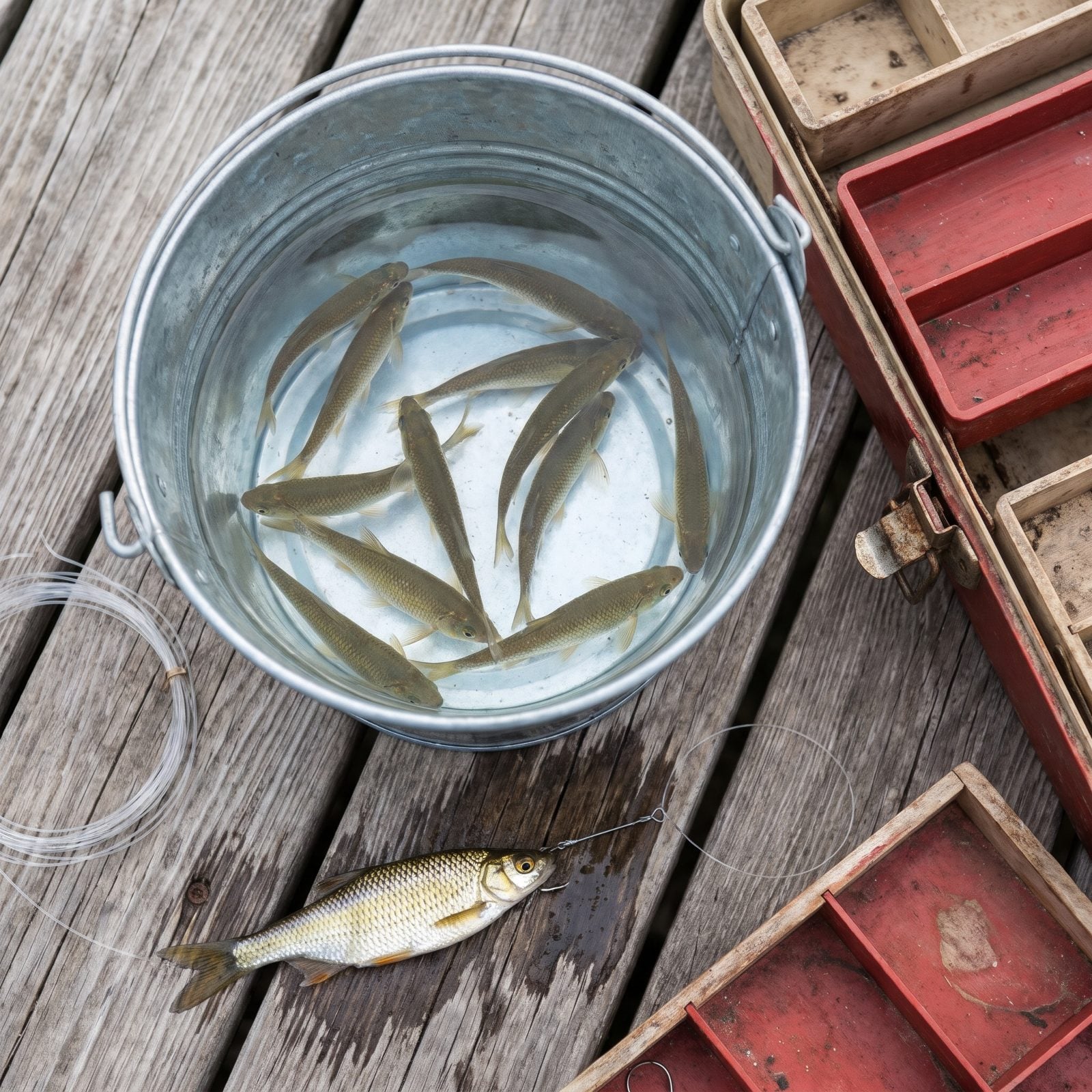
Flash and motion. That’s what a golden shiner brings that cut bait never can. These deep-bodied, brassy-gold minnows dart and panic on the hook, and a cruising flathead reads that distress from a long way off.
Hook one lightly through the nose and let it swim. Hooking through the back kills them faster, and a dead shiner defeats the whole purpose, since flatheads plainly prefer their meals still arguing. Keep your bucket aerated and shaded or you’ll have a tub of floaters by noon.
37. Live Creek Chubs Straight From the Riffle
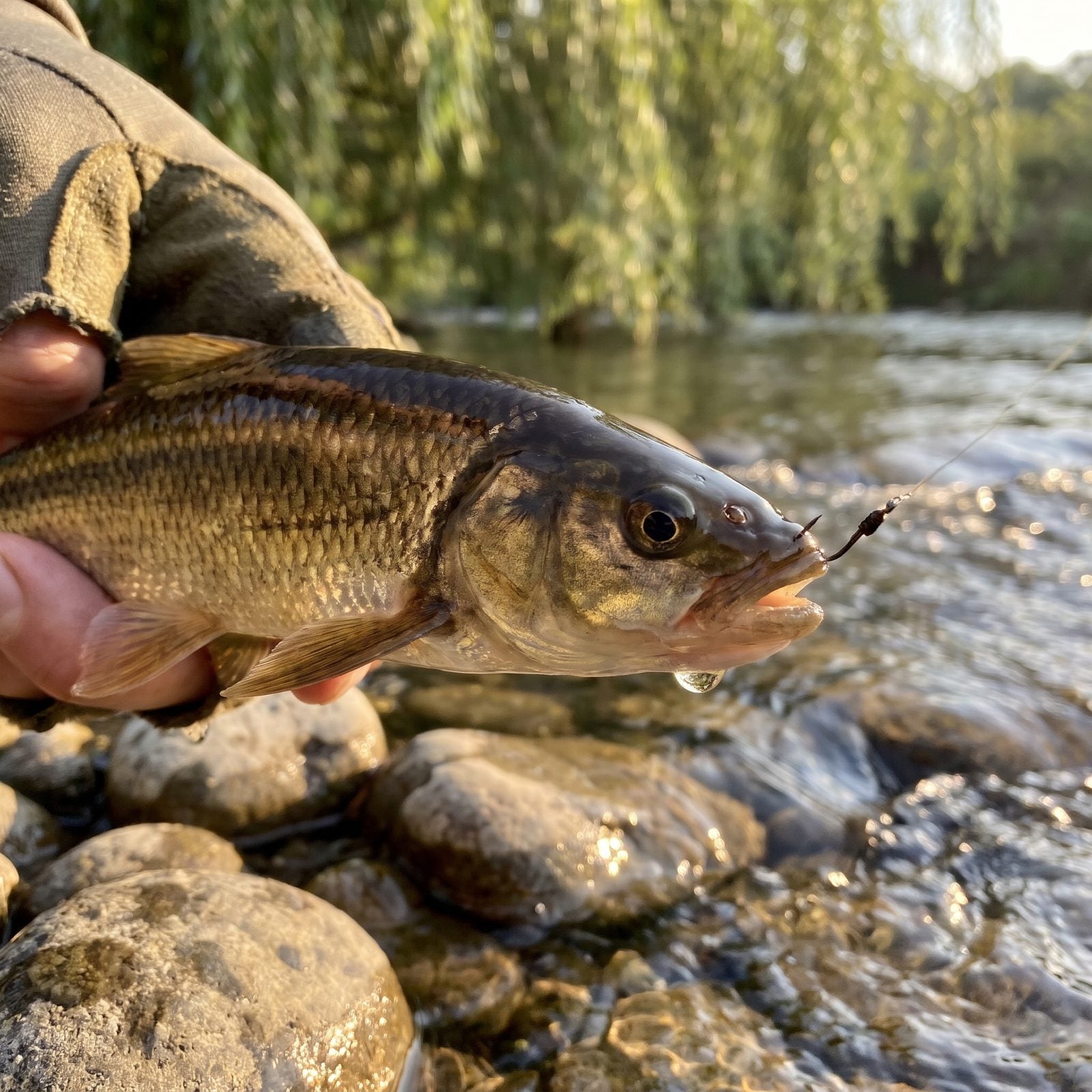
There’s an old logic to catching your bait in the same creek you fish. Creek chubs are hardy, tough, and already on the catfish menu in that exact stretch of water.
Trap them in the riffles with a minnow seine, or drop a few bread balls into a wire trap and wait. Fish them live on a slip-sinker rig and they’ll last through strikes that would leave a shiner in pieces. Toughness is why they earn a spot in the bucket. A chub keeps wriggling long after softer minnows give up, and that persistence turns a passing channel cat into a committed one.
36. Small Live Bullheads, the Bait That Fights Back
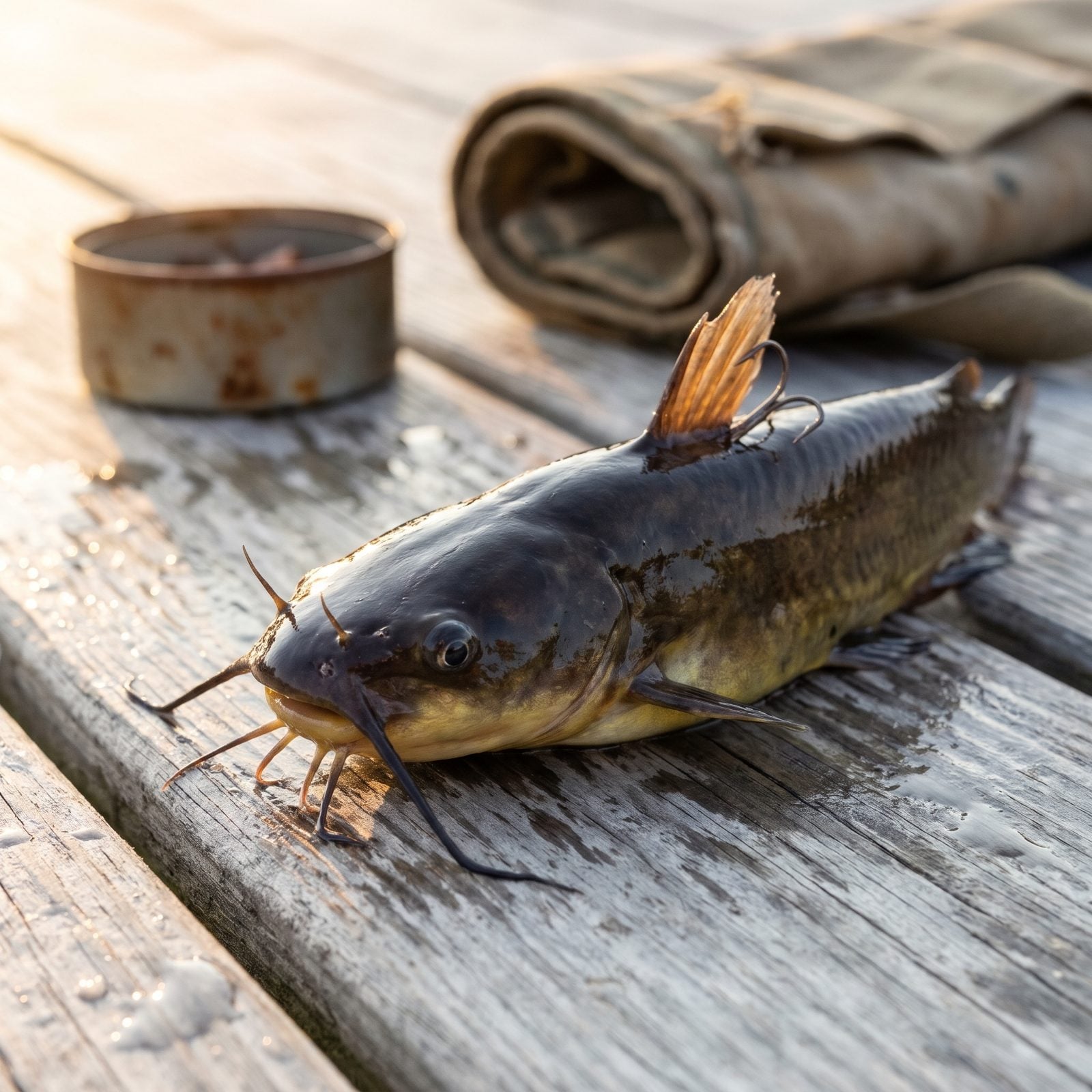
Flatheads eat bullheads. They do it in the wild constantly, so handing a big flathead a small live bullhead is as close to a sure thing as this game offers.
Clip the sharp dorsal and pectoral spines first, or hook it carefully through the back and mind your fingers. That spine will put a hole in you that aches for days, and I’ve got the scar to prove I learned slow. Check your state rules too, since using game fish as bait is regulated in plenty of places. Where it’s legal, few baits pull a trophy flathead like one of these hardy little bruisers.
35. Live Leeches, the Wriggling Secret of Northern Rivers
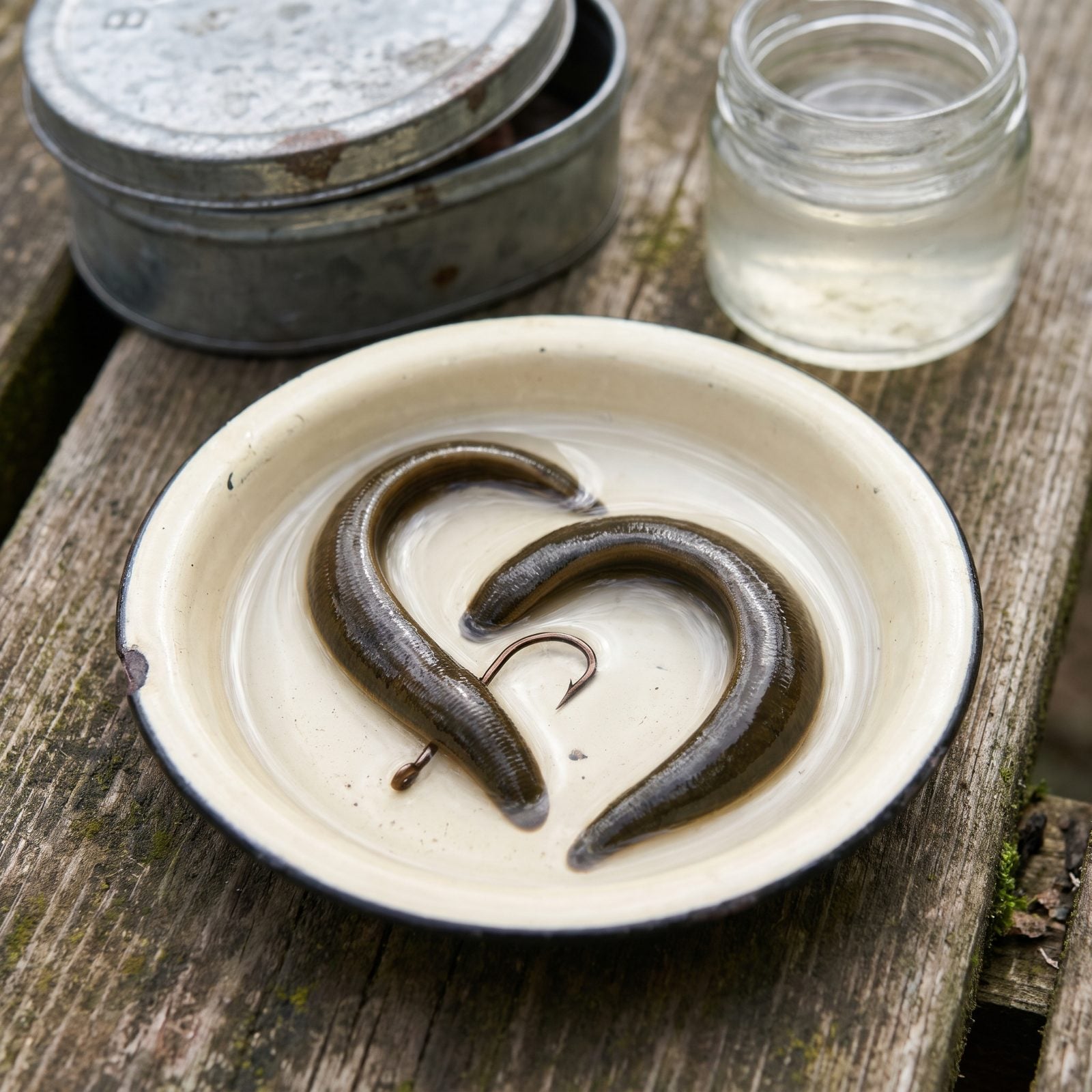
Leeches get written off as walleye bait, which is a shame. Channel cats love a leech wriggling on a hook.
Buy the jumbo ribbon leeches, not the bloodsuckers, and keep them cold so they stay firm and active. Hook one through the sucker end and it’ll swim and twist for hours, throwing off motion and scent at once. They’re a warm-water river favorite up north, and they really shine when the cats are picky and ignoring stinkbait. Cheap, clean to handle, and tougher on the hook than any worm.
34. Freshwater Drum Fillets, the Underrated Cut-Bait Gold
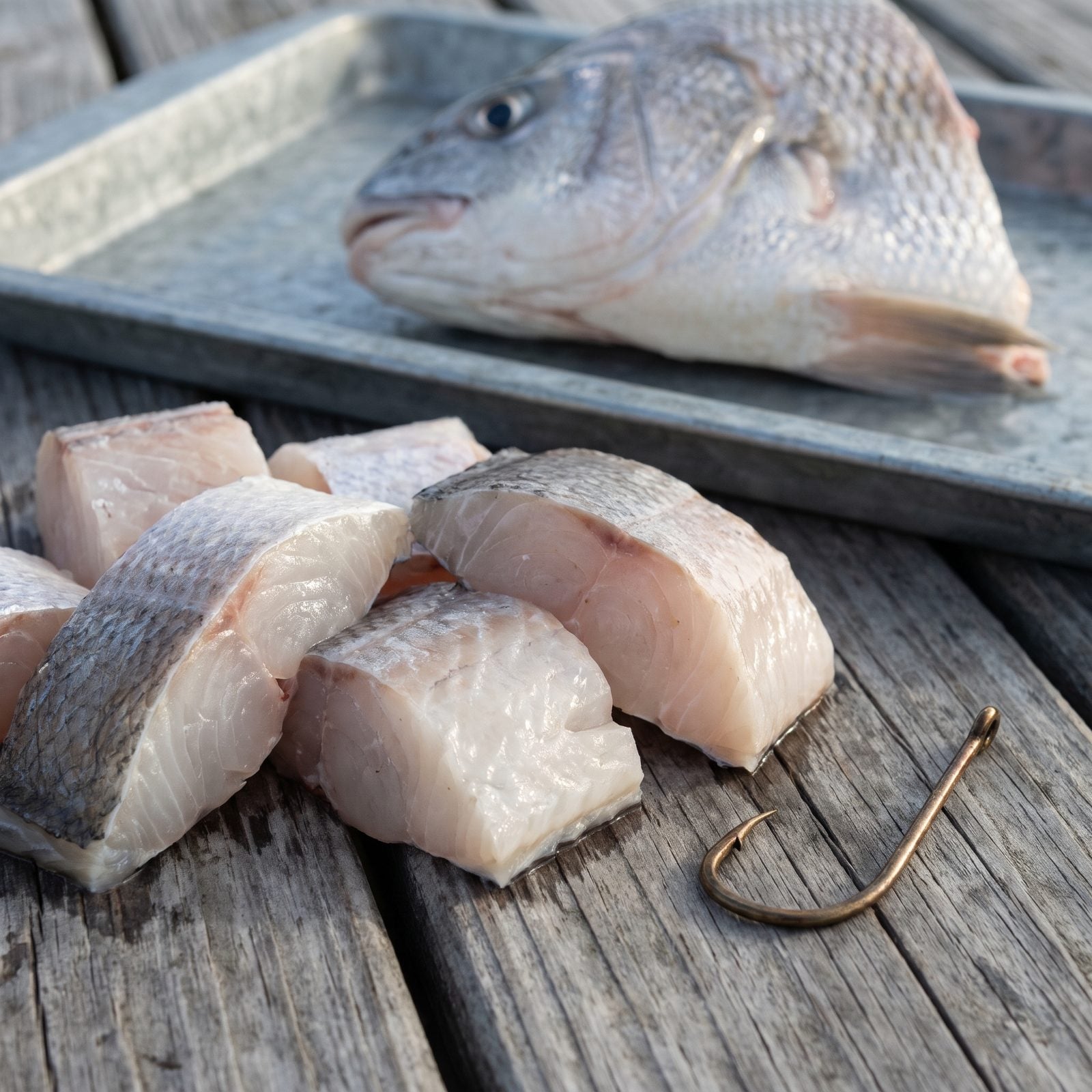
Nobody keeps drum to eat, and that’s exactly why they make such good bait. Freshwater drum, sheepshead to most folks, carry tough firm flesh that holds a hook through the worst current you’ll ever fish.
Cut them into strips with the skin on. The meat is dense and oily enough to throw a scent, and it won’t turn to mush the way soft shad does over a long soak. You’ve probably caught a few drum by accident and tossed them back annoyed. Next time, keep one. That fish you didn’t want becomes a cooler full of cut bait that outlasts almost anything off the shelf.
33. Carp Chunks, the Rough-Fish Bait That Pulls the Giants
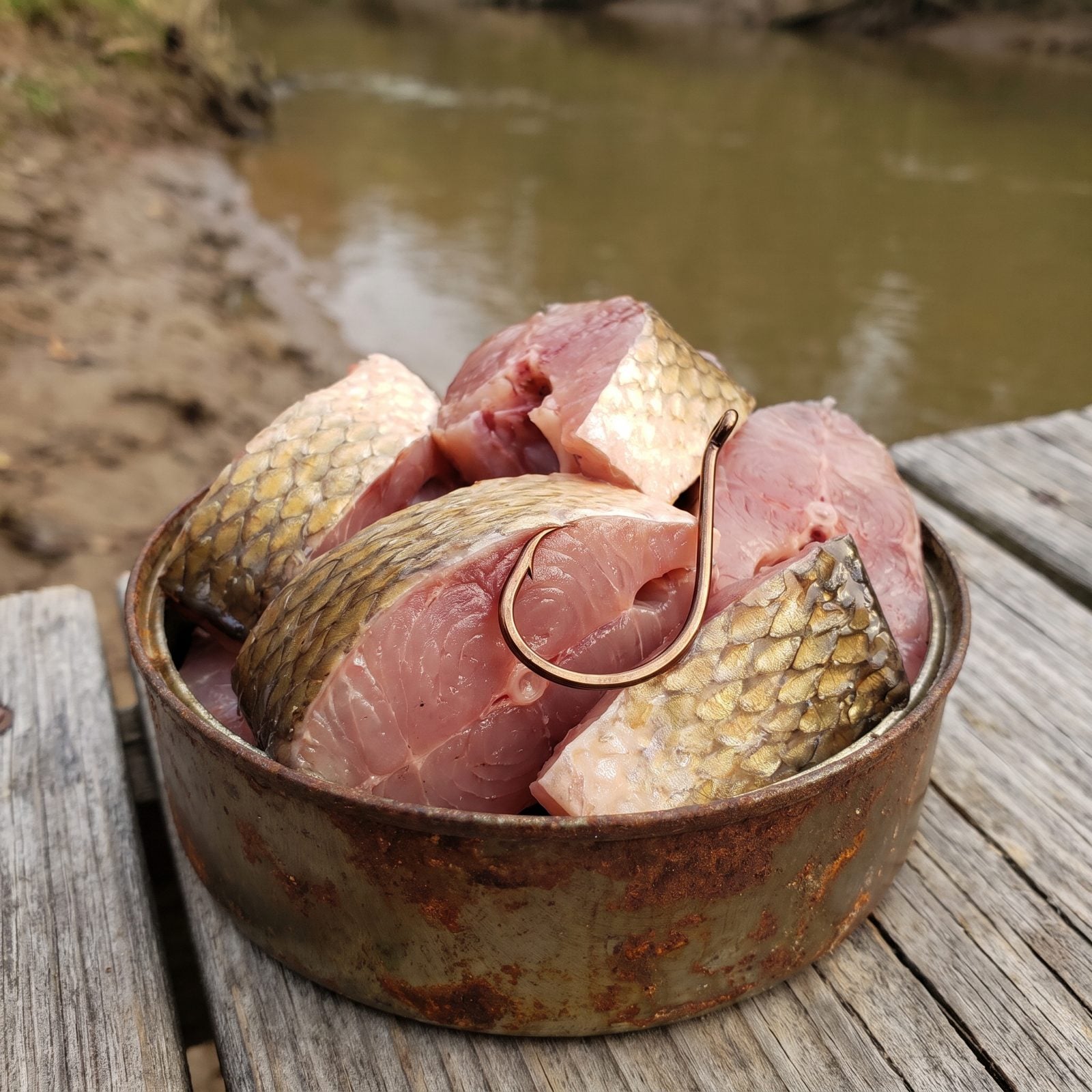
Big baits, big cats. Carp chunks are what you reach for when you’re hunting the fish that bend rods in half.
Cut a fresh carp into fist-sized pieces, scales and all, and rig them on heavy tackle. The bloody, oily flesh soaks a slow river hole with a scent trail that pulls trophy blues and flatheads out of hiding. And carp are everywhere. They’re legal to harvest as rough fish nearly everywhere, and they cost you nothing but the time to snag one. The bigger the chunk, the more it screens out the dinks and waits around for a heavyweight.
32. Buffalo Fish Strips, the Old-Timer’s Cut Bait
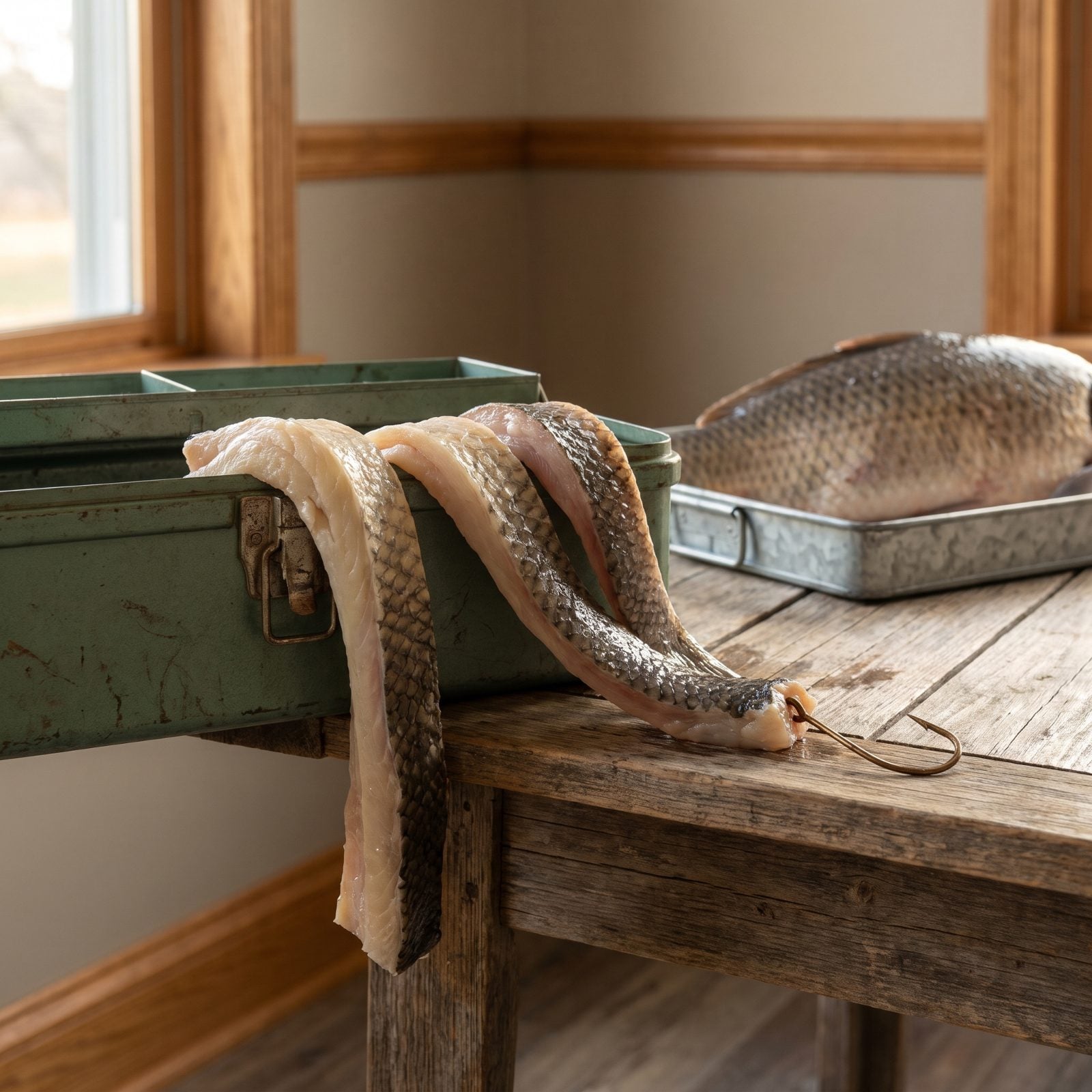
Ask an old river catfisherman what he runs on his trotline and buffalo will come up fast. These big suckers have fed catfish on the Mississippi and its tributaries for about as long as anyone’s been setting lines.
Slice them into long strips, skin on, and the meat stays firm through a hard current. It’s oilier and tougher than shad, so it survives both the soak and the smaller fish picking at it. Buffalo and drum fill a similar role, but the old boys will swear the buffalo holds its scent just a little longer. Hard to argue with a lifetime of trotline hooks.
31. Raw River Shrimp, the Pantry Bait Hiding at the Grocery Store
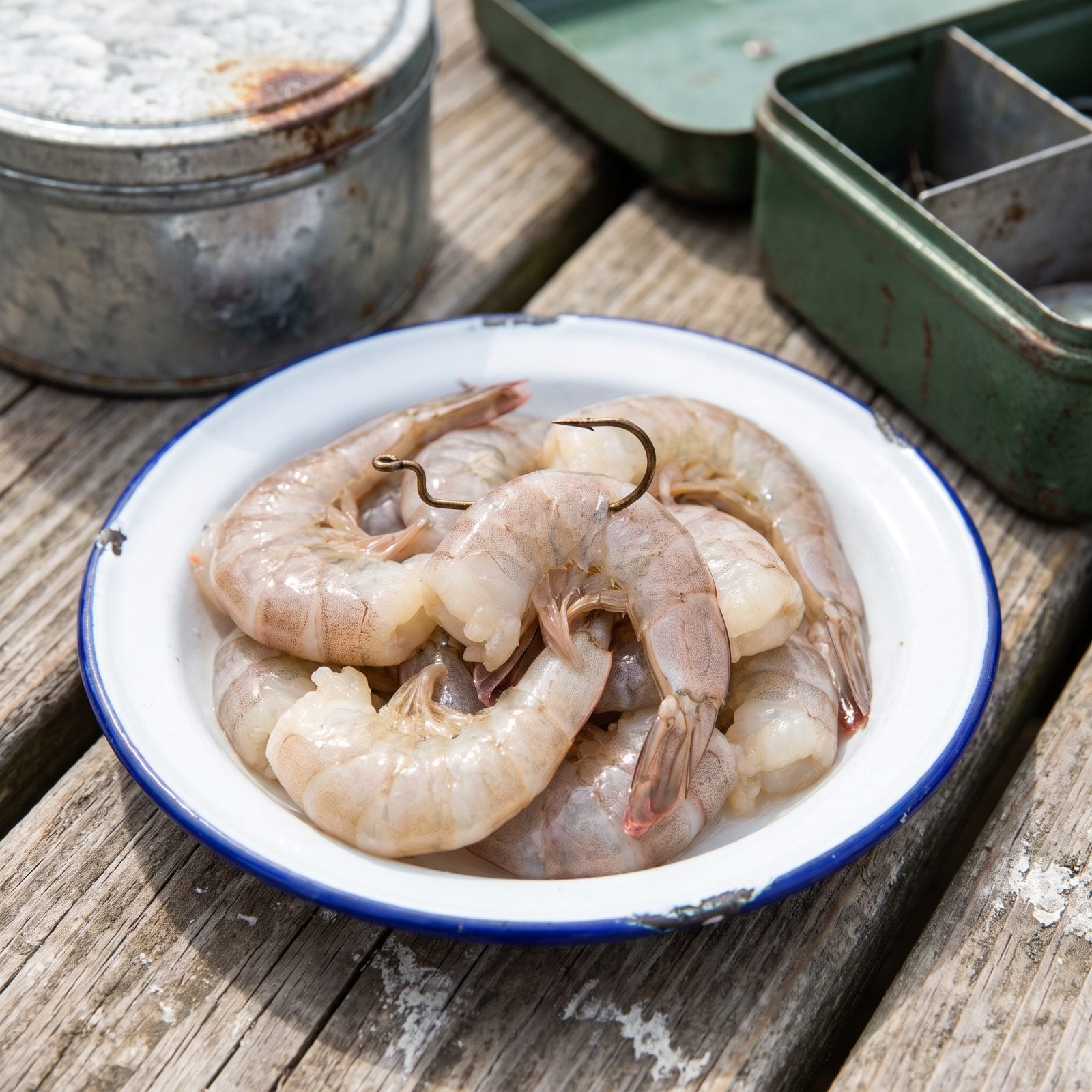
The cheapest catfish bait in the world is sitting in the frozen aisle. A bag of raw shrimp, the small ones nobody wants to eat, is a channel cat magnet.
Thread two or three on a hook, shell and all, and let that natural scent do the work. They tear off easy on the cast, so hook them firmly and don’t whip your rod. Leave a few in a cup in the sun for an hour and they ripen into something a catfish finds downright irresistible. Dollar for dollar, few baits catch more eating-size channels off a river bank.
30. Freshwater Mussel Meat, the Riverbed Delicacy Cats Already Eat
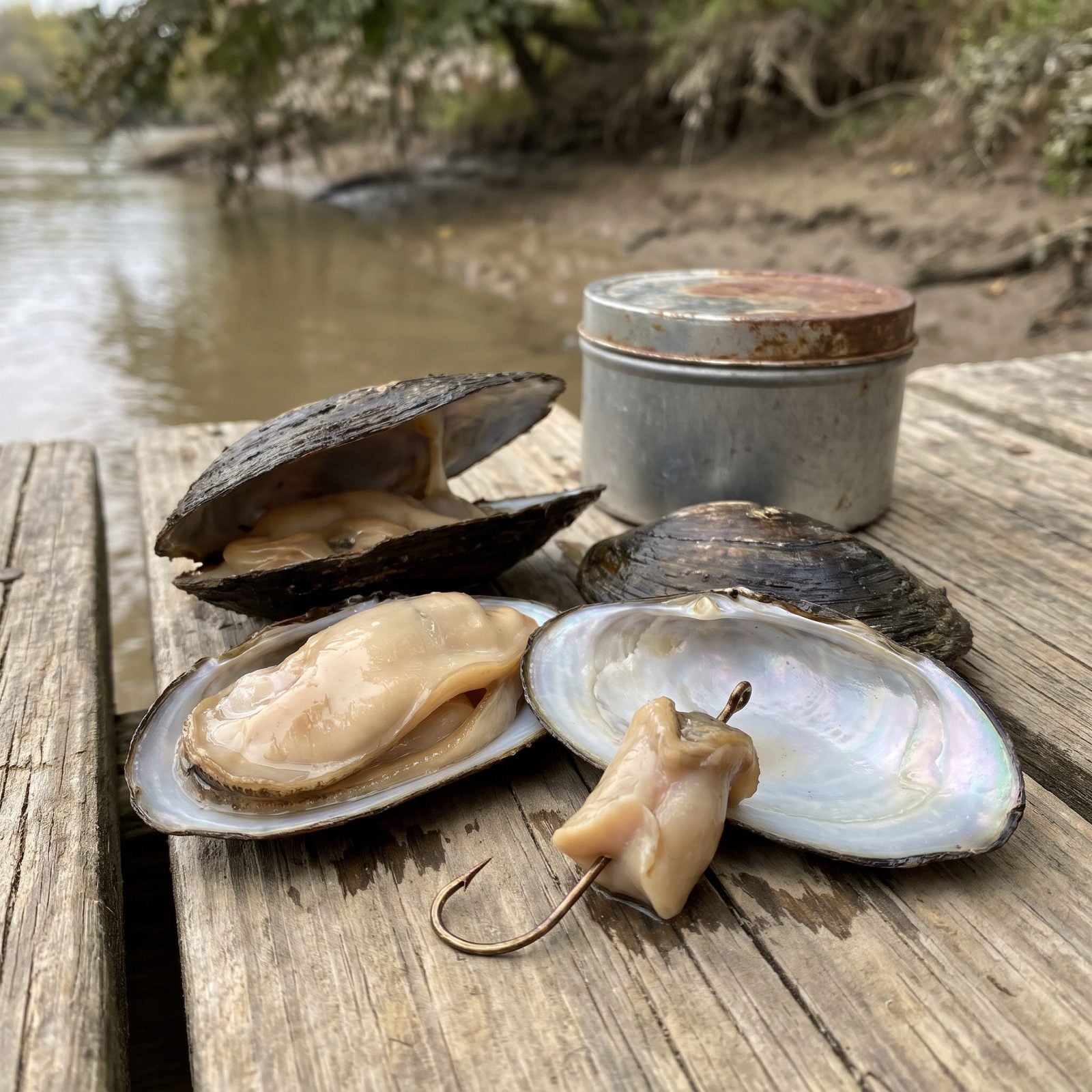
Catfish root through the riverbed for mussels every day of their lives. Hand them one on a hook and you’re offering a food they already hunt.
Pry a few open, cut out the firm orange foot along with the softer belly meat, and fish it on a small hook. The soft parts throw scent fast while the tough foot stays on through the strike. Now here’s the catch, and it’s a big one. Many freshwater mussel species are protected, and harvesting them is illegal or tightly regulated in most states. Know your local law cold before you ever touch one. Where it’s allowed, it’s an old bait that works for the plainest reason there is: it’s what the cats were eating all along.
29. Fish Roe Sacks Tied in Mesh
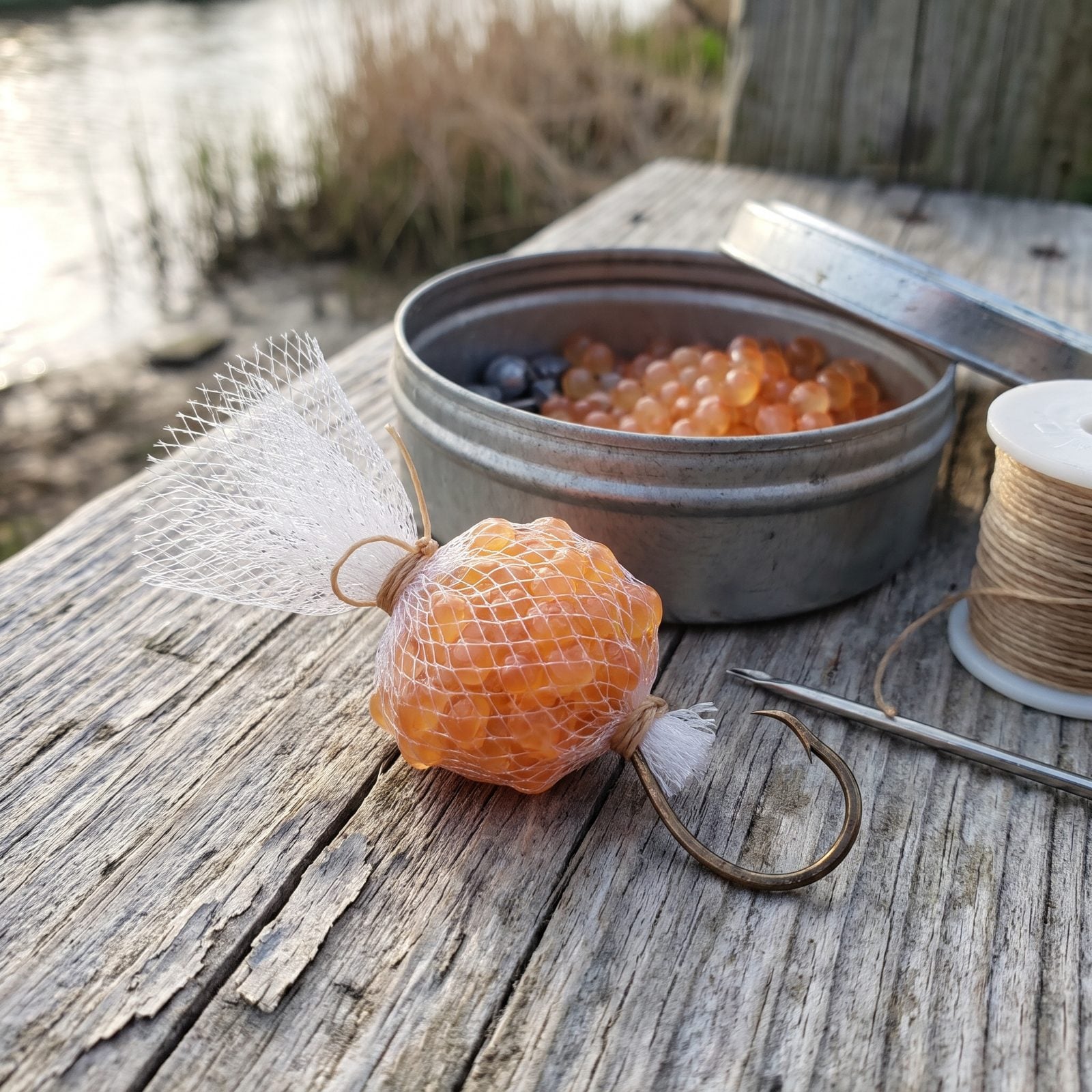
Roe is catfish candy, and most folks waste it. Fresh eggs from a cut panfish or sucker fall apart on the hook within seconds. The fix is mesh. Tie a fist-sized gob of eggs into a scrap of tulle or spawn-sack netting, cinch it, and you’ve got a bait that bleeds scent for a good while instead of a few blinks.
Channel cats follow that slow leak of amino acids upstream. I ignored roe for years because it was messy — dumb of me, honestly.
28. Hellgrammites Pulled From Under River Rocks
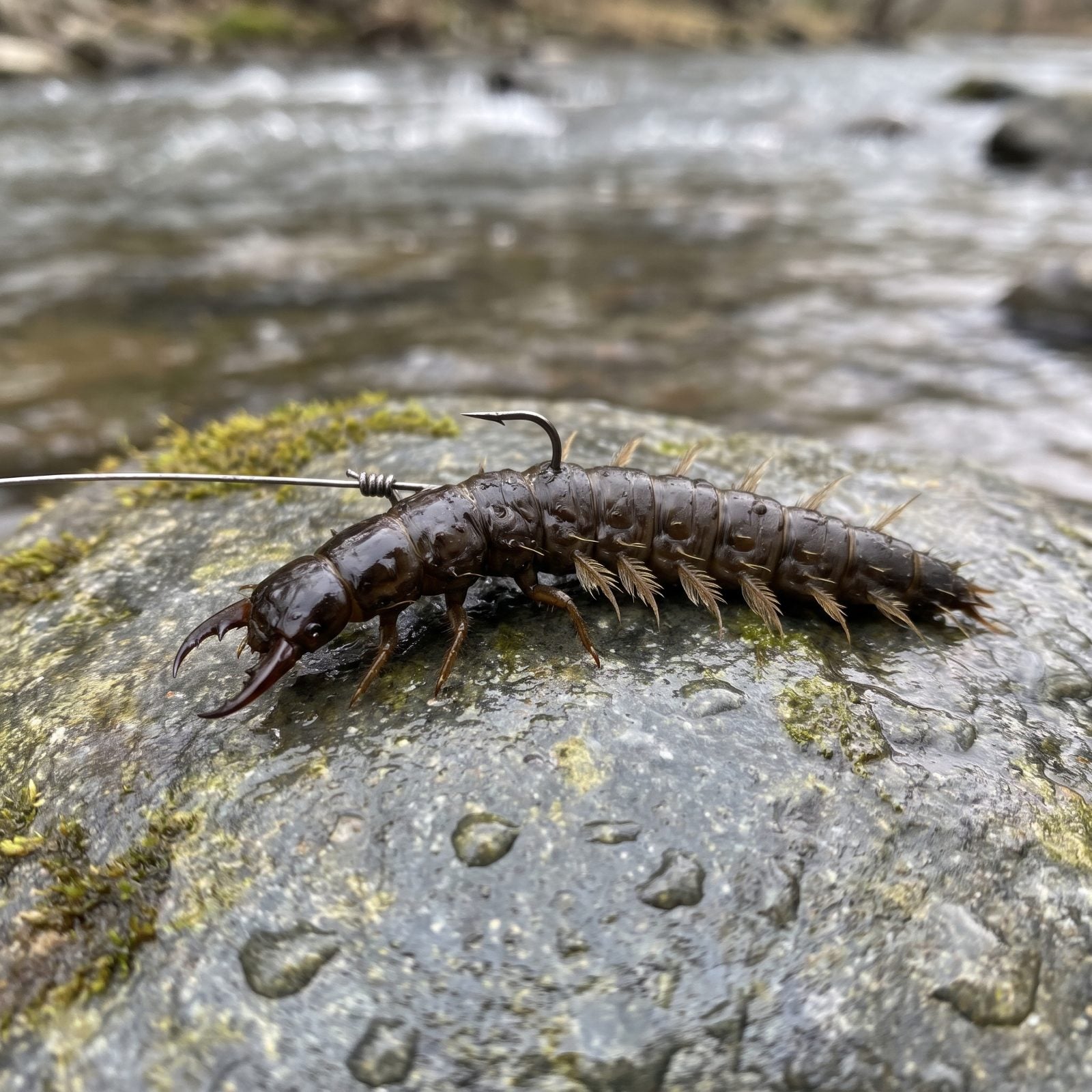
You catch these before you catch fish with them. Flip flat rocks in moving water, hold a kick net downstream, and grab whatever wriggles loose. Hellgrammites are dobsonfly larvae, and they come armed — pinch behind the head or those pincers will find your fingertip.
Channel cats, smallmouth, and bullheads eat them without a second’s hesitation. They’re a native food living right where the fish feed. Hook one through the middle of the body, well behind the head, so it stays alive and squirming, and that motion does half the work for you.
27. Freshly Caught Cicadas in Emergence Years
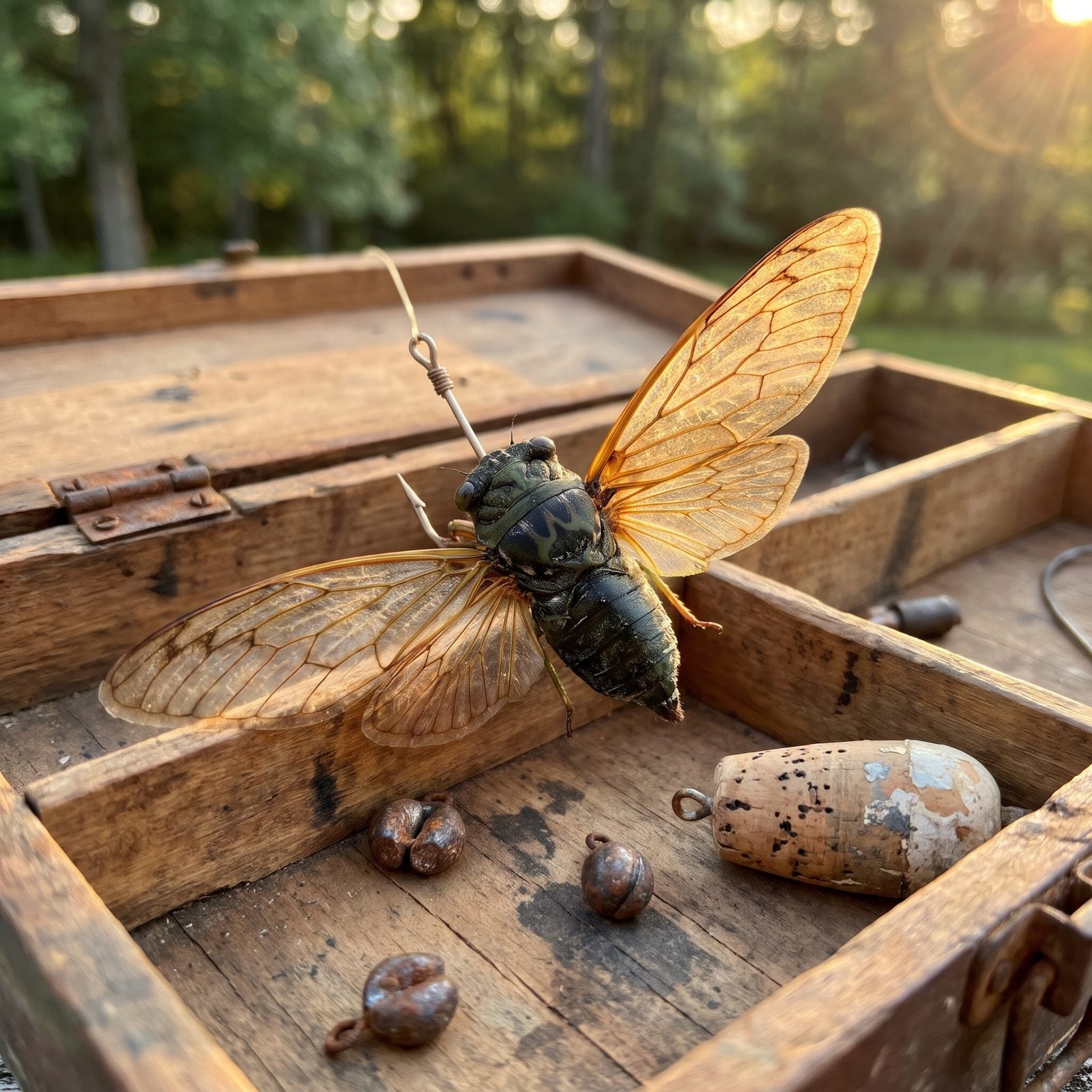
When the broods come up, the whole river goes stupid. Periodical cicadas emerge on 13 and 17-year cycles, and in those summers catfish gorge on the ones that drop in the water.
During a big emergence, a live cicada floated near an overhanging bank will get hammered. The rest of the time? Good luck finding them in any number. If you’re lucky enough to fish a brood year, don’t bother with anything else. Thread one through the thorax, let it flutter on top, and hold on.
26. Field Crickets Hooked Through the Collar
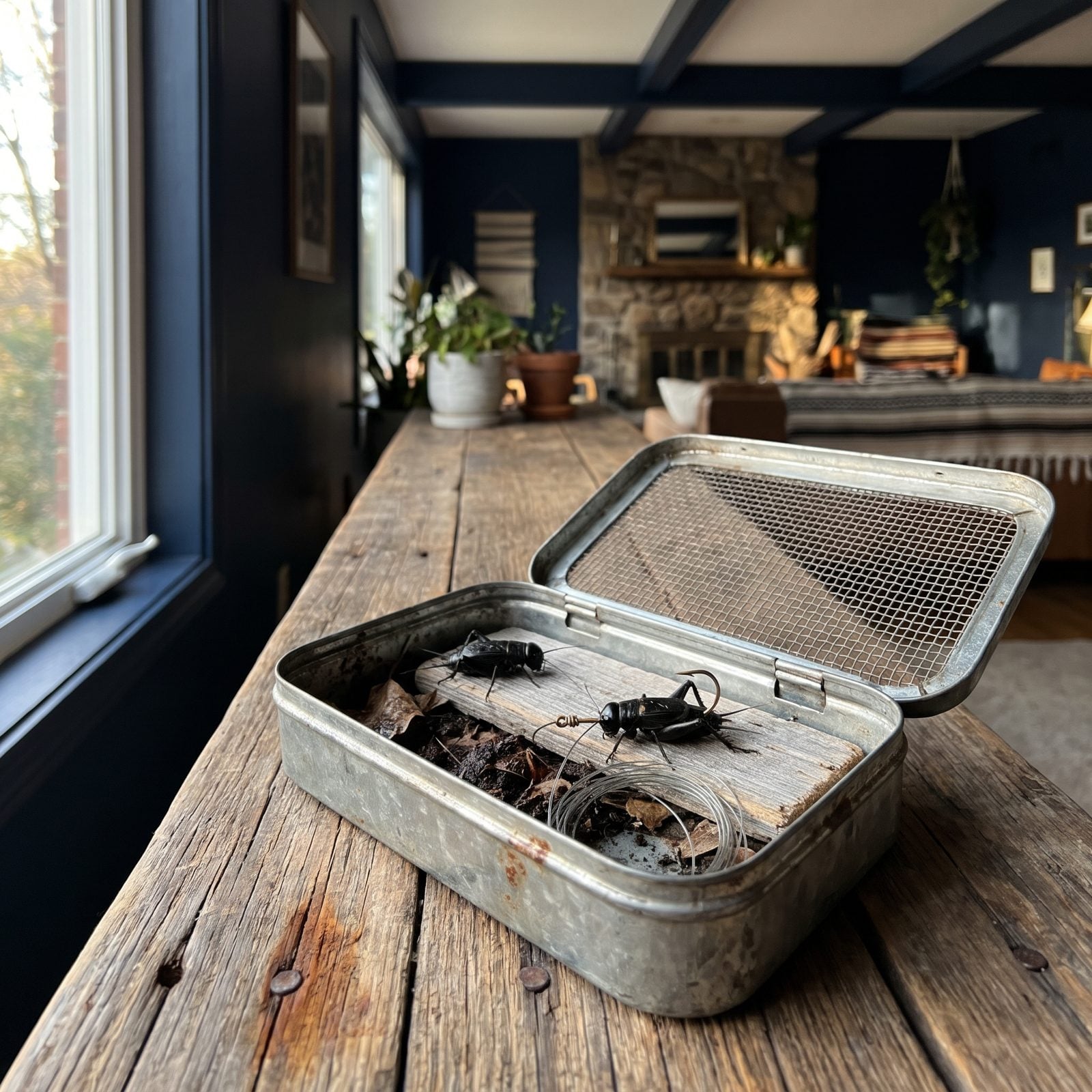
Crickets aren’t just a bream bait. Bullheads and small channel cats eat them all day long, and no live bait is easier to keep alive. A cheap wire cricket cage and a bag of fifty runs a couple bucks at any bait shop.
Hook a single cricket through the collar behind the head on a small Aberdeen hook so the point sits clean. One lively cricket is plenty — enough scent and struggle to pull a fish up off the bottom.
25. Grasshoppers Snatched From Late-Summer Fields
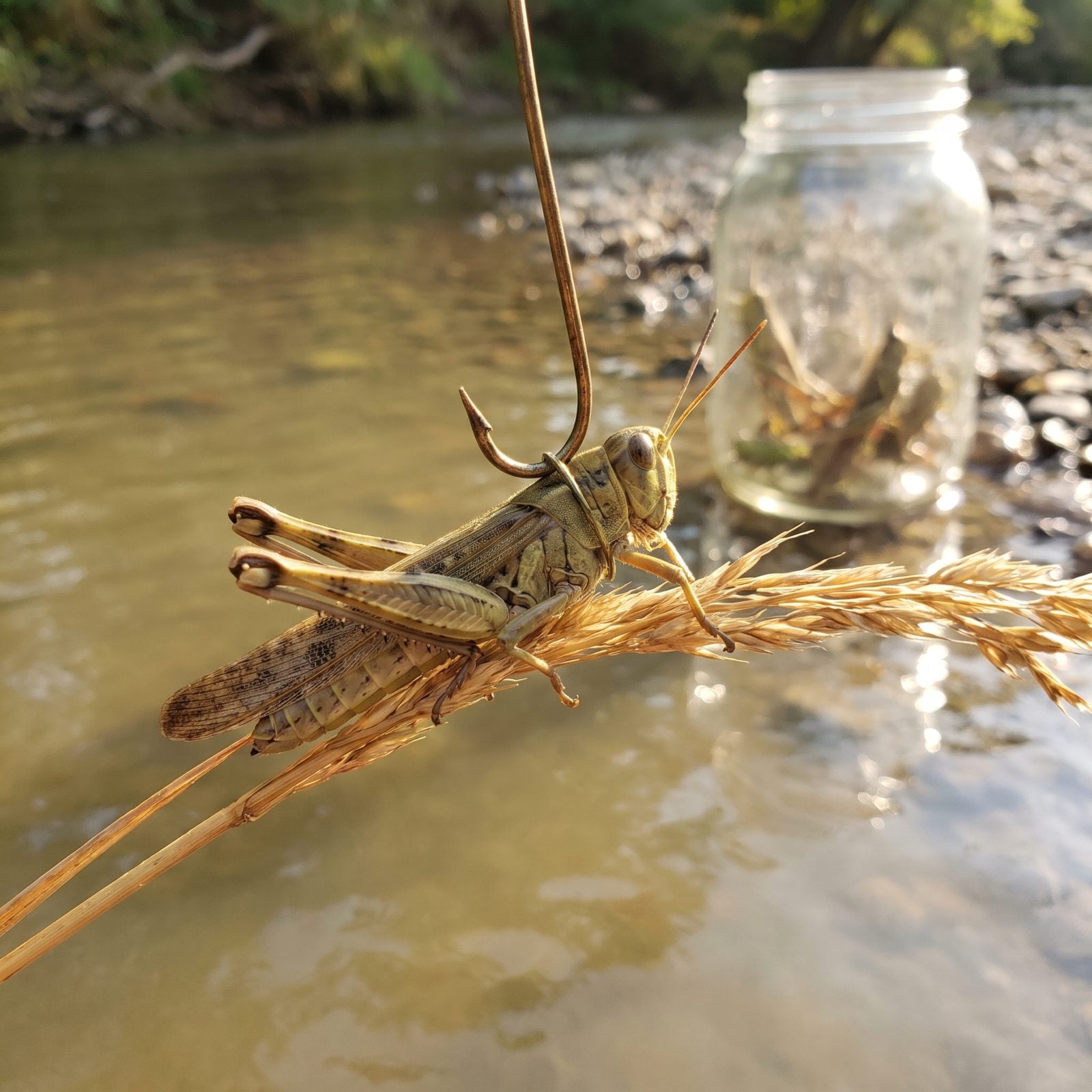
Catch them at dawn, when the dew leaves them slow and cold. By noon a grasshopper outjumps you every time, and you’ll be the one flailing around a hayfield looking foolish.
Big late-summer hoppers get blown and washed into streams by the thousands, so catfish already expect them. Slip the hook bend around its neck like a collar, just behind the head, cast it to a cut bank or a current seam, and let it drift natural. No weight. That little twitch of legs on the surface is the whole trade.
24. Small Frogs for Flatheads After Dark
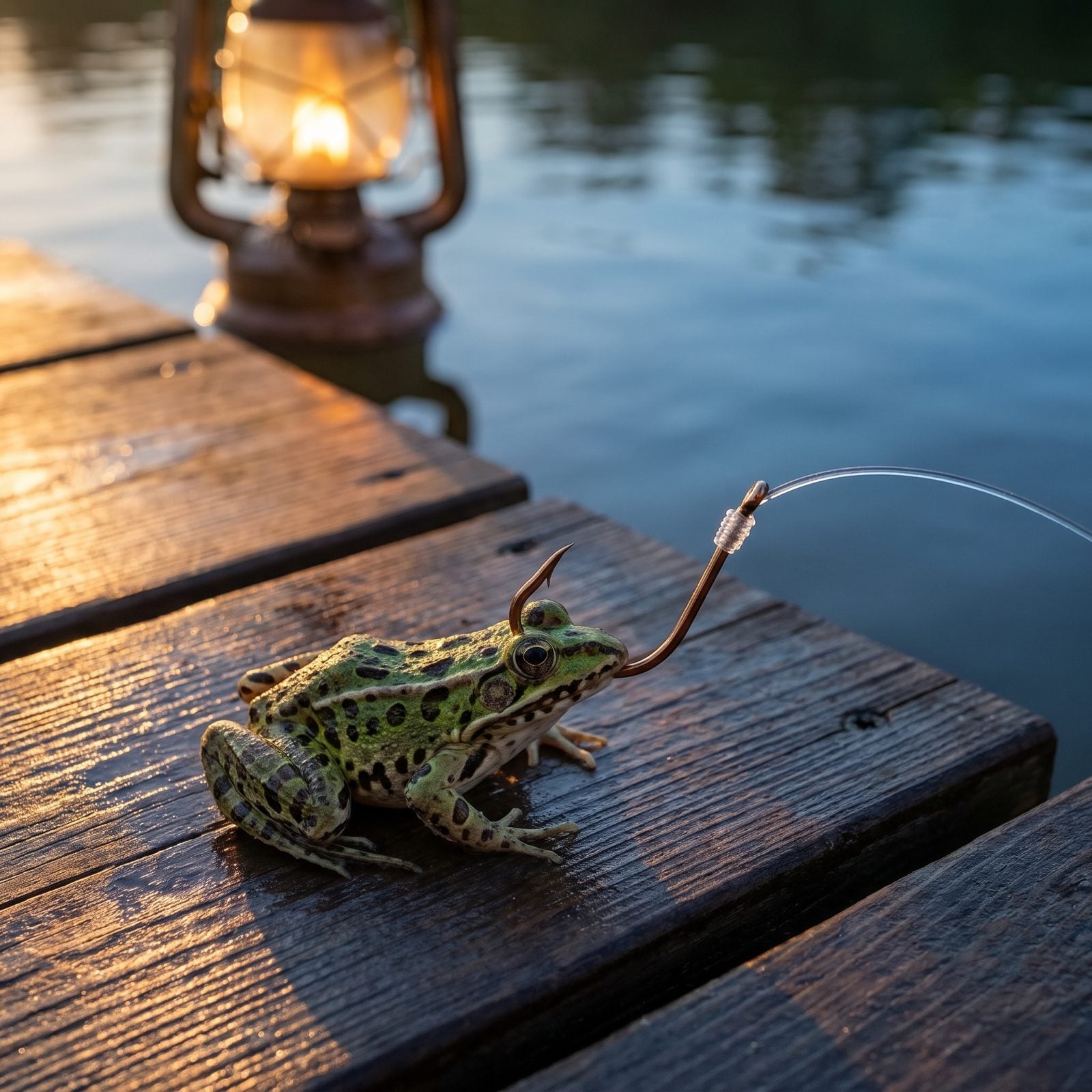
Flatheads want things that are alive and moving, and a frog checks both boxes. This is a night bait for big fish, not a numbers game.
Run a stout hook in through a small frog’s mouth and out the top of its head just behind the eye, fish it near timber or a deep hole, and wait. The flathead comes to the thump and splash. Check your local regs first — frog harvest is tied to season and species in most states, and some are off limits entirely.
23. Waterdogs (Larval Salamanders) on a Bottom Rig
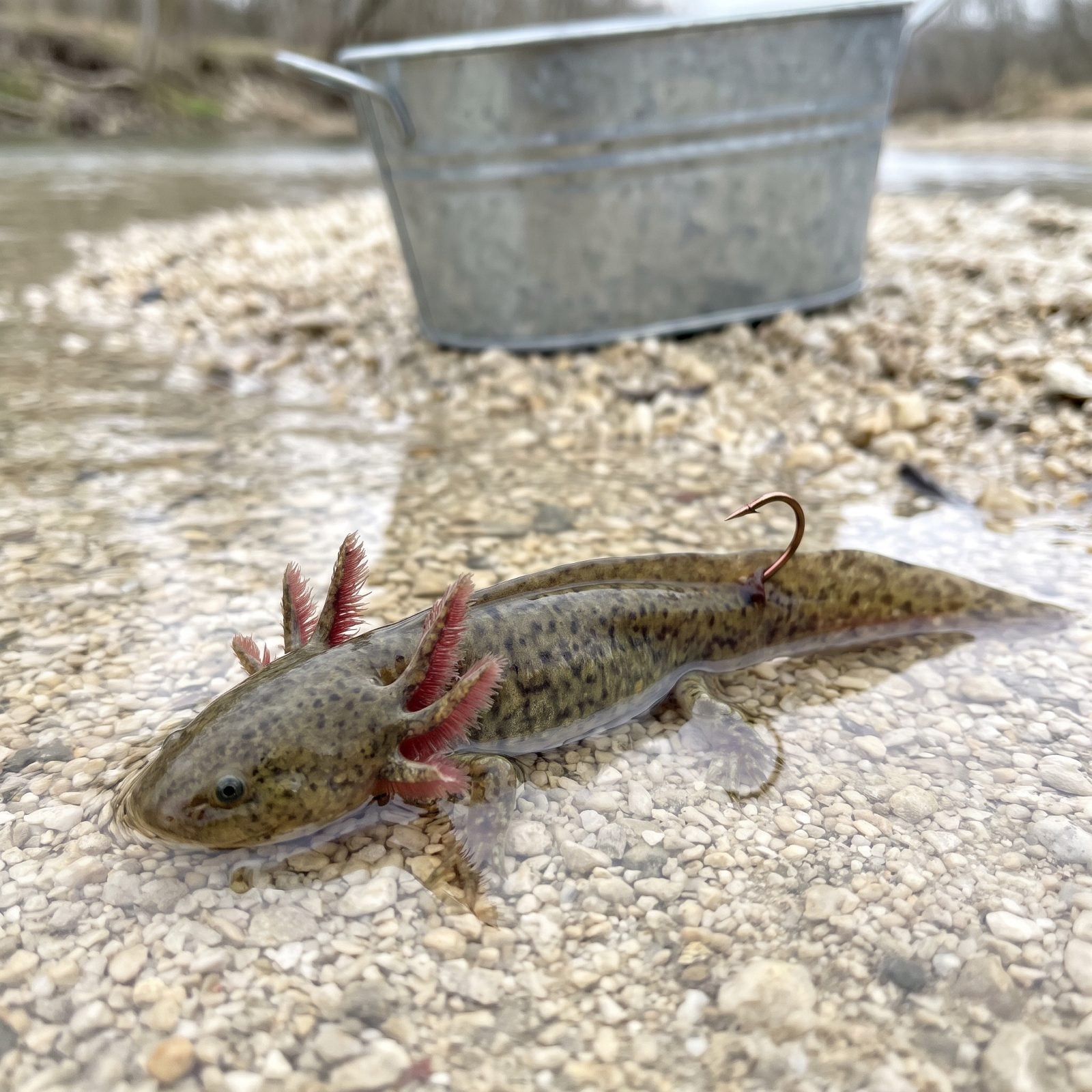
Out West they call them waterdogs. Back East you might hear mudpuppy or aquatic newt. Whatever the name, these larval salamanders are tough and lively, and catfish can’t leave them alone on a bottom rig.
Hook one through the base of the tail so it keeps wriggling. That constant motion sells it even in muddy water, where fish hunt by feel and smell rather than sight. And here’s the real edge — they stay alive on the hook far longer than most live baits, which matters on a long soak. Where you can buy or trap them legally, few baits carry a slow afternoon better.
22. Mayfly Nymphs Scraped From Muddy Banks
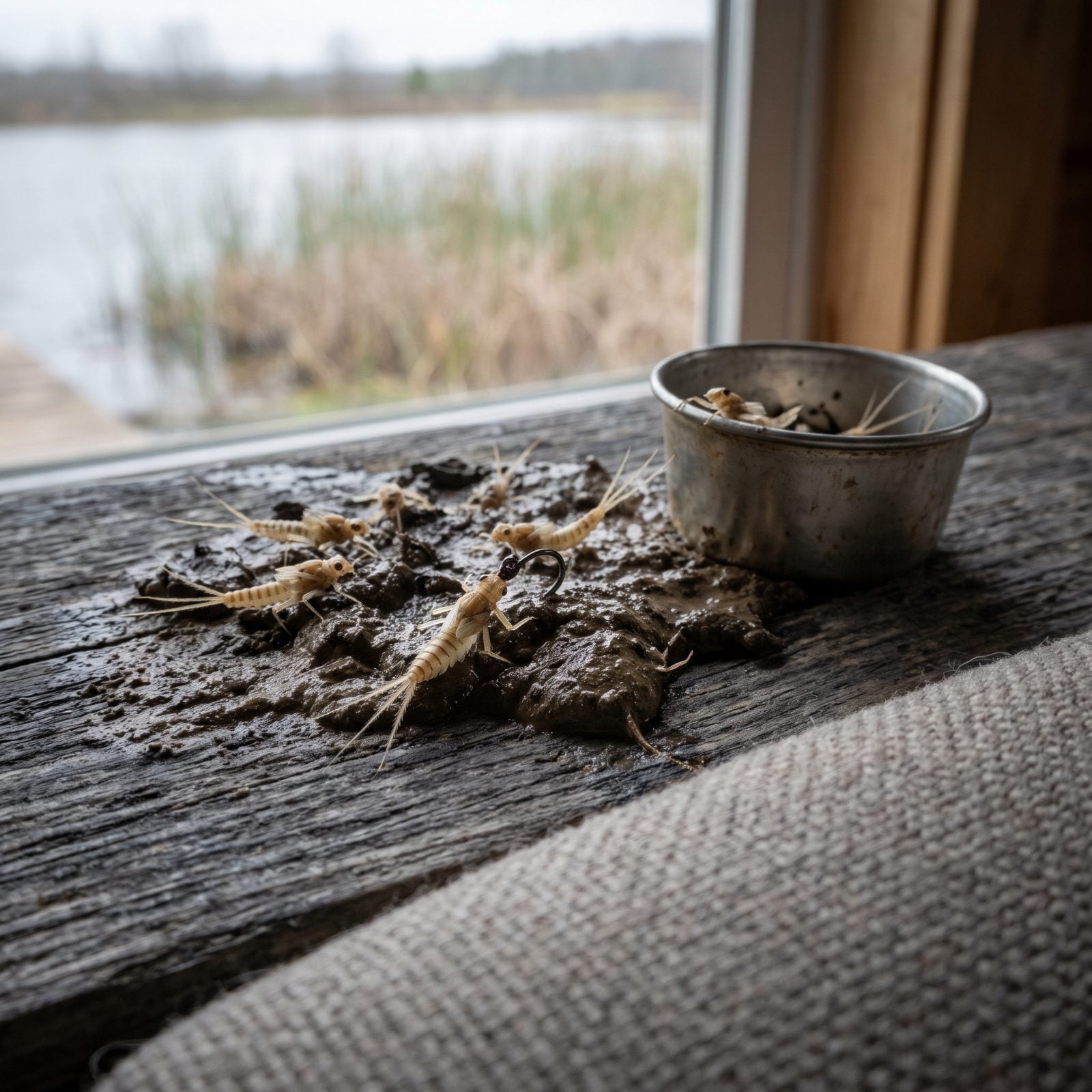
These are small, and that’s the point. When a hex hatch is coming off, catfish and every other fish in the river lock onto mayfly nymphs and ignore the big offerings entirely.
Scrape the pale, tan burrowing nymphs out of soft mud banks with a fine sieve and hook one lightly on a light wire hook. Keep a cup of them ready and hook one on. It’s a finesse play for channel cats during a heavy hatch, and it feels almost too delicate for a catfish — until the rod loads up and you remember they eat whatever’s thick.
21. White Grubs Dug From the Compost Pile
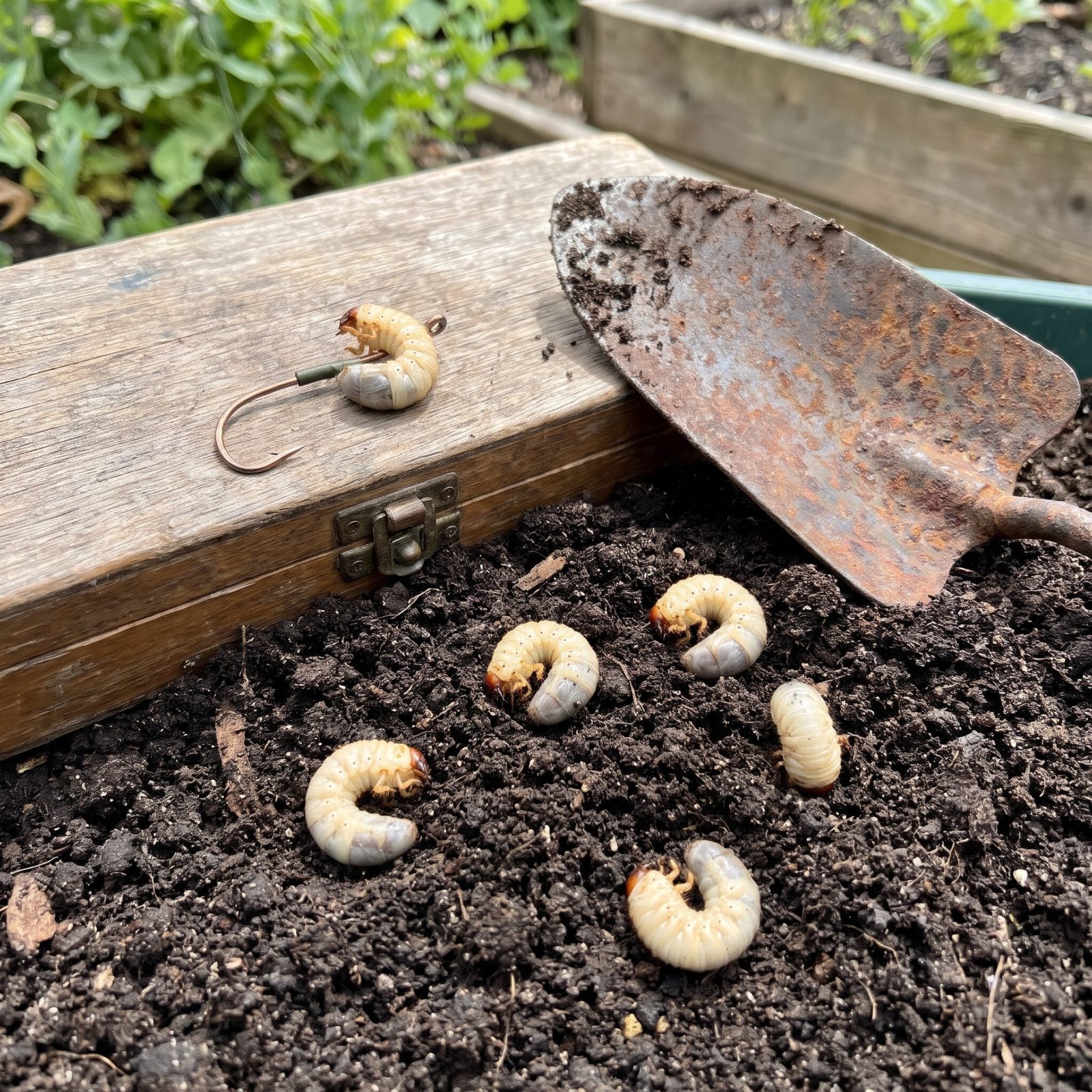
Turn over a shovel of compost or an old stump and there they are: fat white grubs, the larvae of June beetles, curled into tight C-shapes. Free bait, right in your backyard.
They’re pale, soft, and loaded with fat, which is exactly what bullheads and small channel cats want. Thread one or two on a short-shank hook and the milky scent they leak does the advertising. Only trouble is keeping them from mushing on the cast — hook gently and lob, don’t launch.
20. Live Madtoms, the Catfish That Catches Catfish
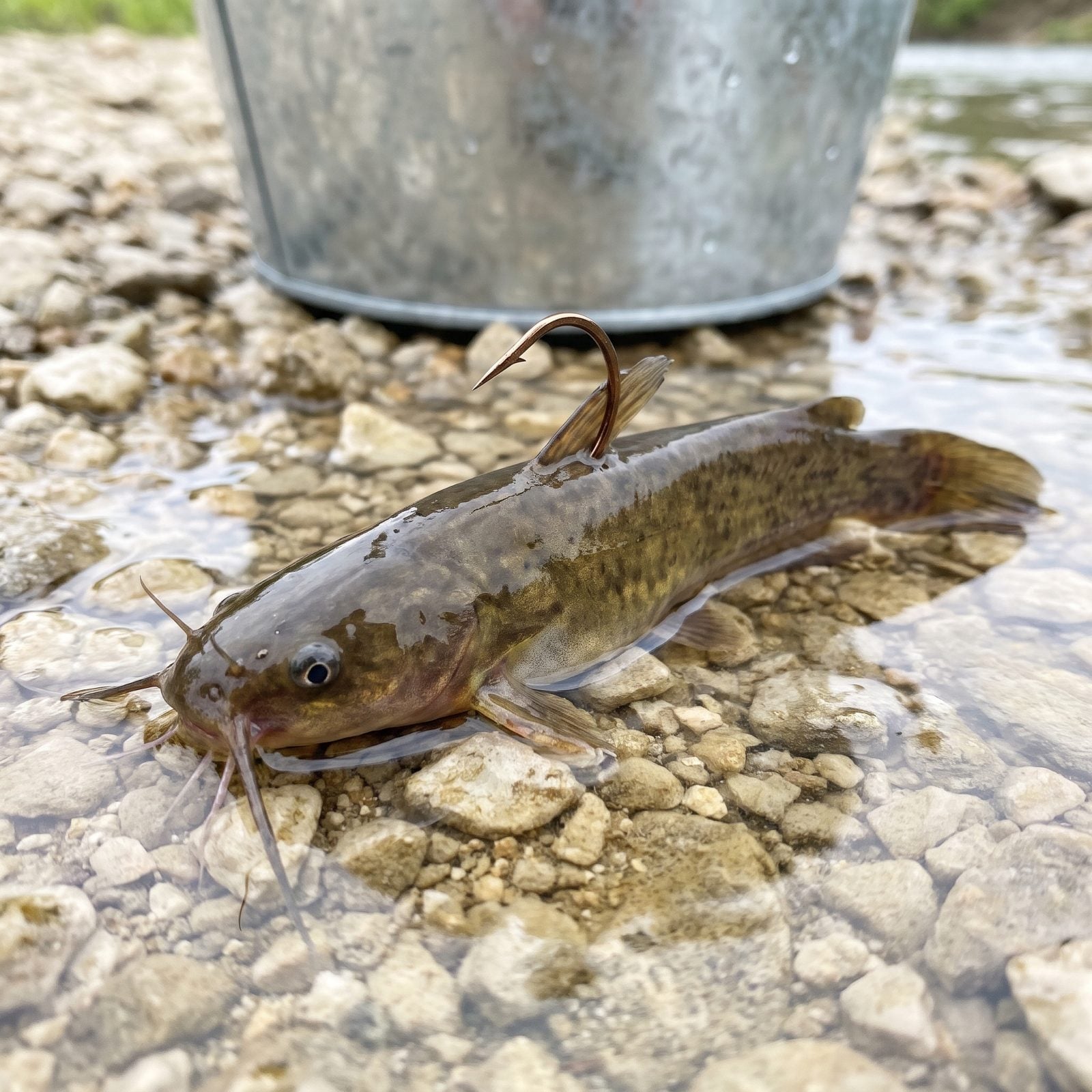
A madtom is a small catfish, though the biggest kind, the stonecat, can reach eight inches or more, and big flatheads treat them like filet mignon. They’re a natural prey fish in the same rocky riffles where cats hang, so nothing about one raises an alarm.
Handle with respect. Those pectoral spines carry a mild venom that stings like a wasp if one gets you, and I’ve learned that the hard way more than once. Hook one through the back, fish it near bottom structure, and let it do what it does. Check your state rules first — some madtom species are protected, and collection is restricted or banned outright.
19. Whole Alewives: The Oily Baitfish Big Flatheads Can’t Ignore
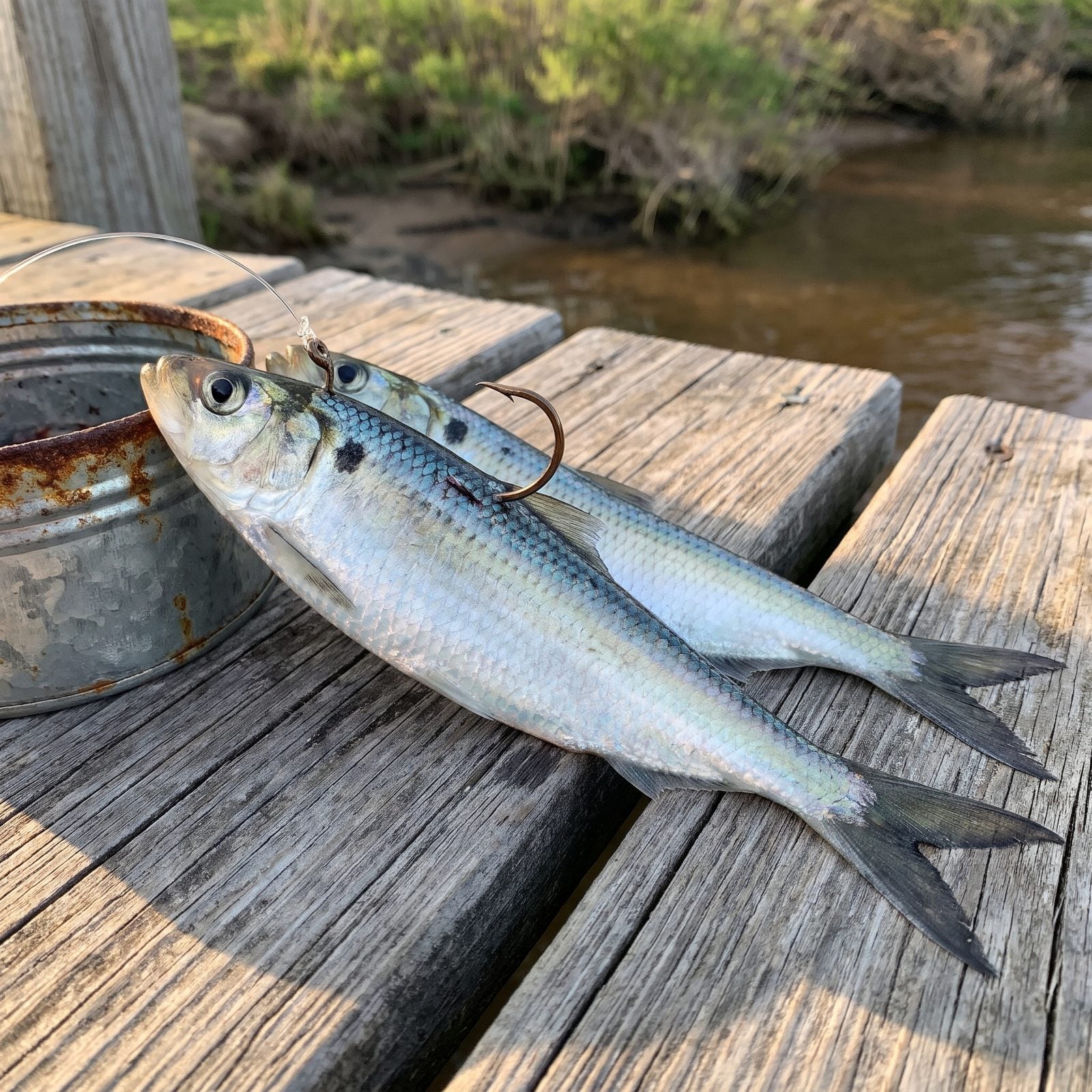
Alewives bleed oil, and that’s the whole appeal. Cut one in half and you’ll watch the slick spread across the water, and that slick is exactly what pulls a big flathead out of a log jam at two in the morning.
Most guys fish them too small. A whole alewife, maybe seven or eight inches, scares off the little channels and gets you down to the fish you actually drove out here for. Hook it through the back so it sits natural on the bottom. Fresh beats frozen every time, but frozen beats nothing, and you can usually grab a bag at a bait shop near any reservoir that stocks them.
18. Rainbow Smelt: Cold-Water Catfish Candy From the Frozen Section
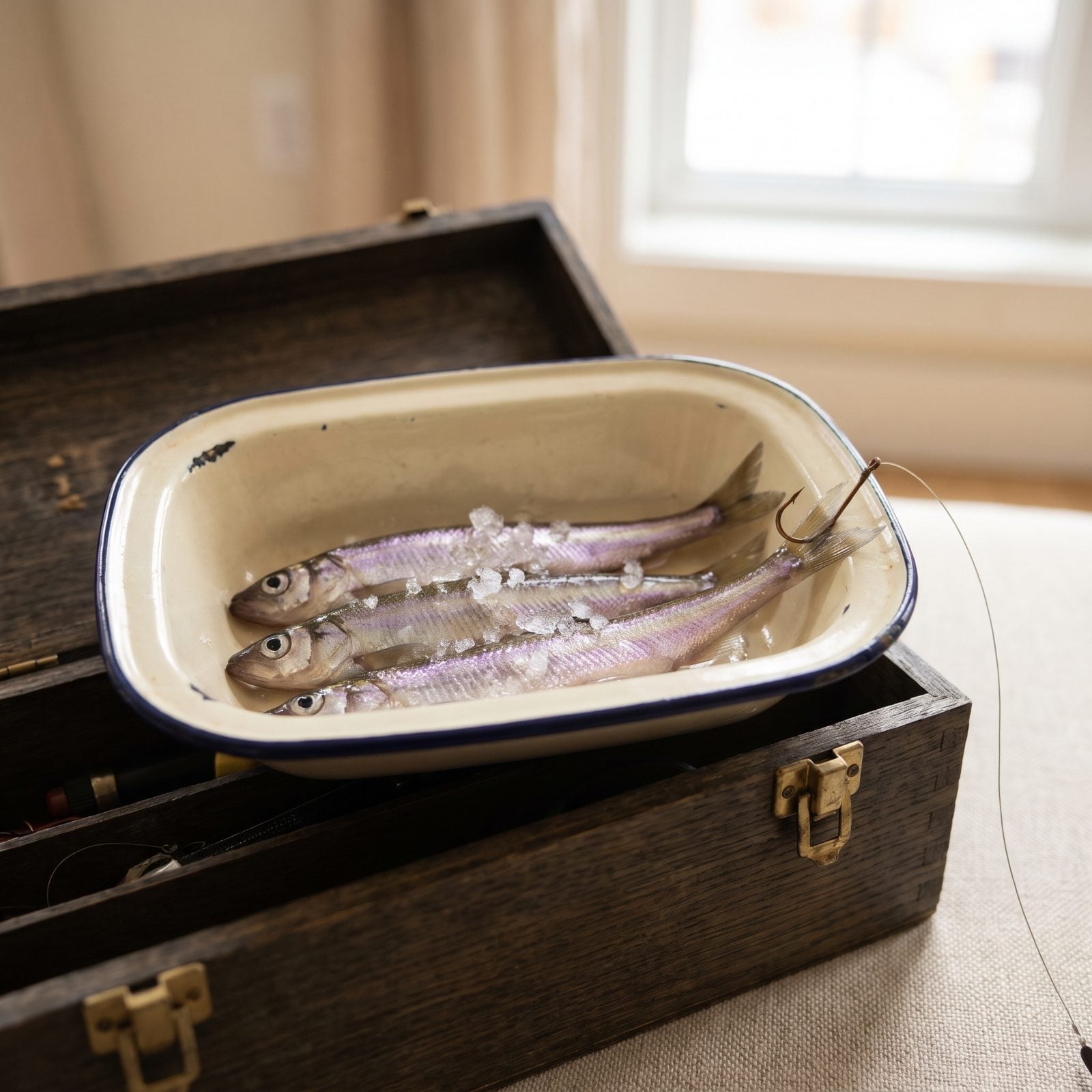
You can buy rainbow smelt by the bag at the grocery store, right next to the shrimp, and they cost next to nothing. A lot of catfishermen keep that one to themselves.
They thaw fast, they’re already the right size, and that silvery flash does real work in stained water. Run a whole one on a hook for channels and small blues, or chunk the bigger ones. The flesh is soft, though. They’ll fly off on a hard cast if you’re not careful, so hook through the tail to keep them on.
17. Eel Sections: Tough, Bloody, and Impossible to Steal Off the Hook
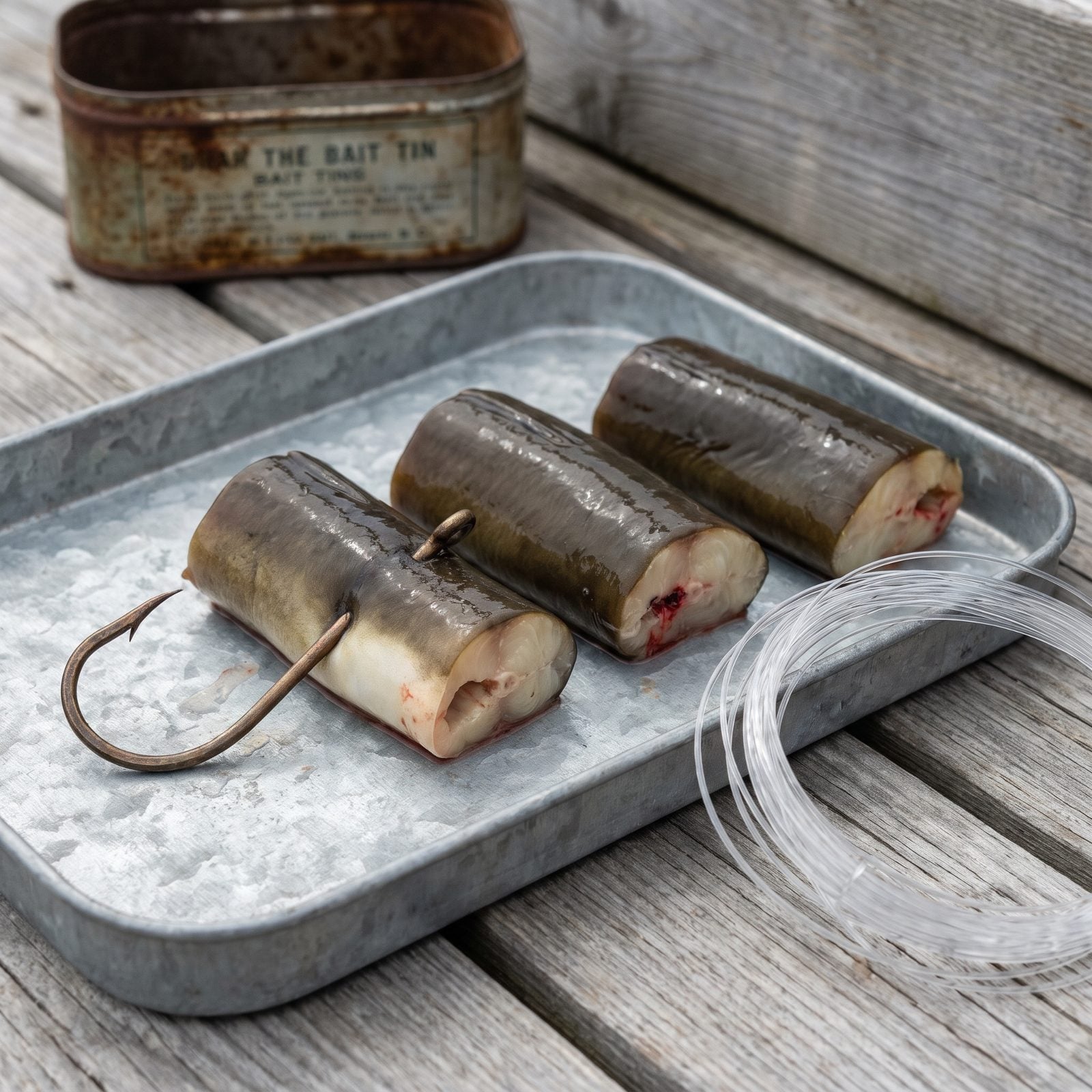
Nothing stays on a hook like eel. The skin is so tough that turtles and bait-stealers just give up, and you can leave it soaking a full hour without ever checking it.
Cut it into long sections, three to four times as long as they are wide, and the blood keeps leaking out for a long time. Blues and big flatheads love it. The downside is honest: fresh eel is slippery as glass and a pain to handle, so bring a rag and don’t expect to feel elegant doing it. Worth every bit of the mess when the rod tip buries.
16. Lamprey Sections: The Ugly Bait With a Scent Trail Like a Siren
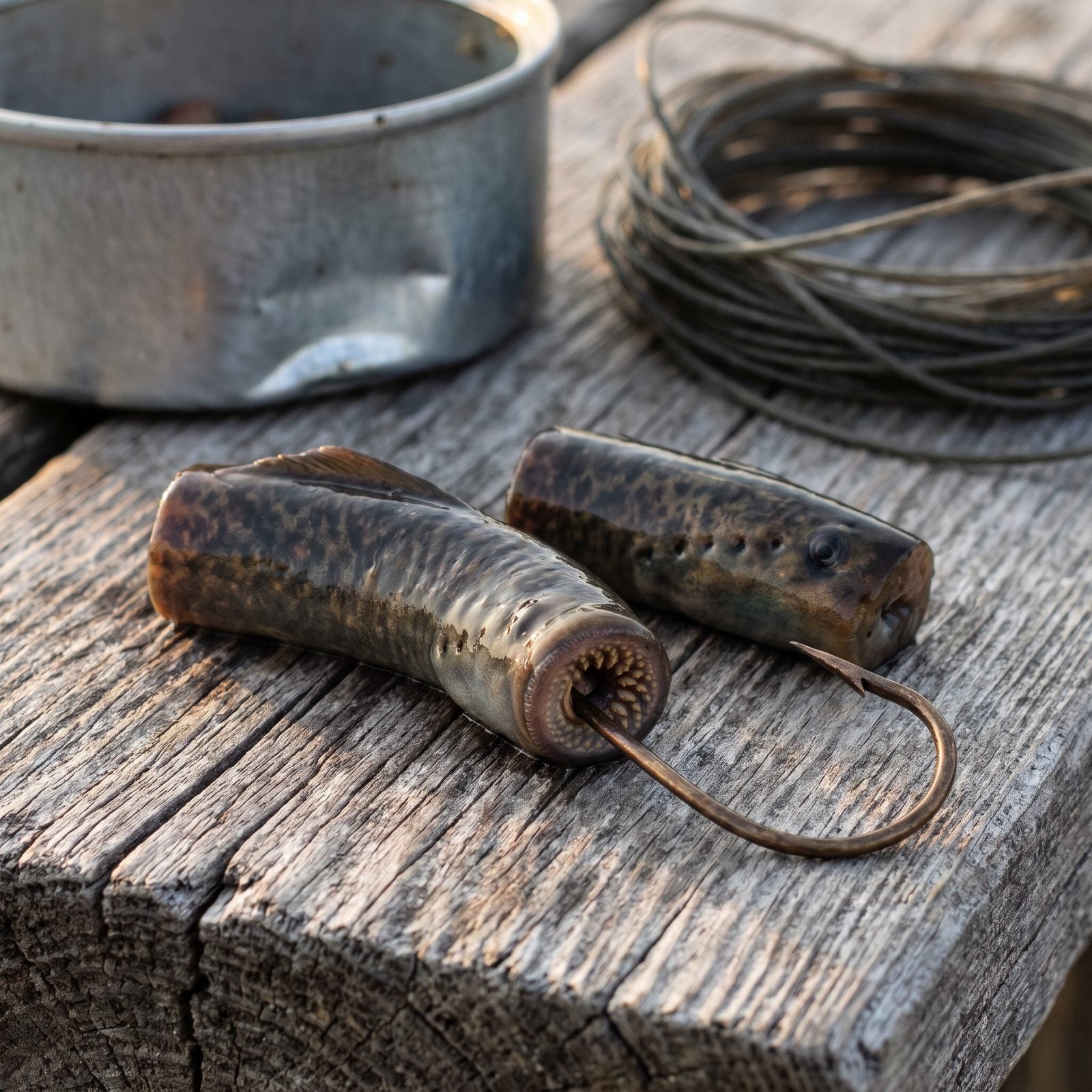
Lamprey look like something crawled out of a nightmare, and that ugliness is precisely why they work. The oily, bloody flesh throws a scent trail that big flatheads track from a surprising distance.
Where you can legally get them, usually a few regions in the Northeast and the Great Lakes, old-timers swear by them for trophy fish. Rules vary by state and some places protect certain species, so check before you harvest or buy. Cut into chunks, hook once, let it sit. This is a patience bait, not a numbers bait.
15. Chicken Hearts: The Grocery-Store Bait That Punches Above Its Price
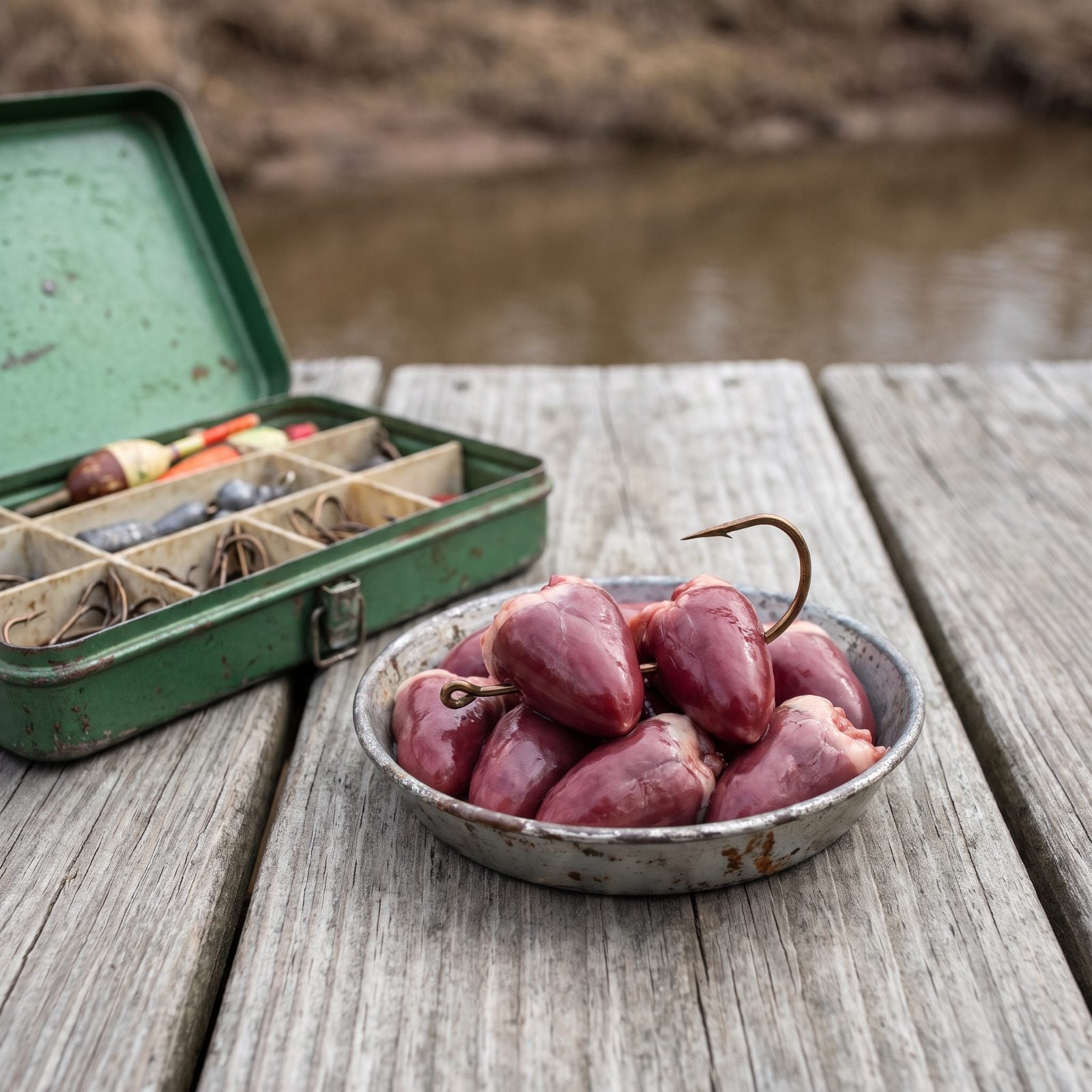
A tub of chicken hearts costs a couple of dollars and outlasts a whole evening on the water. Dense, tough, and they cling to the hook better than almost any soft bait you’ll find.
Channel cats go for them steady. The muscle fiber means a bait-stealing bluegill can’t peck it apart in ten seconds the way it would a nightcrawler. Hook one or two, pinch on a small weight, and you’re fishing. I kept a bag in the cooler for years before I ever touched a fancy dip bait, and honestly I’m not sure the dip bait caught more.
14. Chicken Gizzards: Rubbery, Stinky, and Weirdly Effective
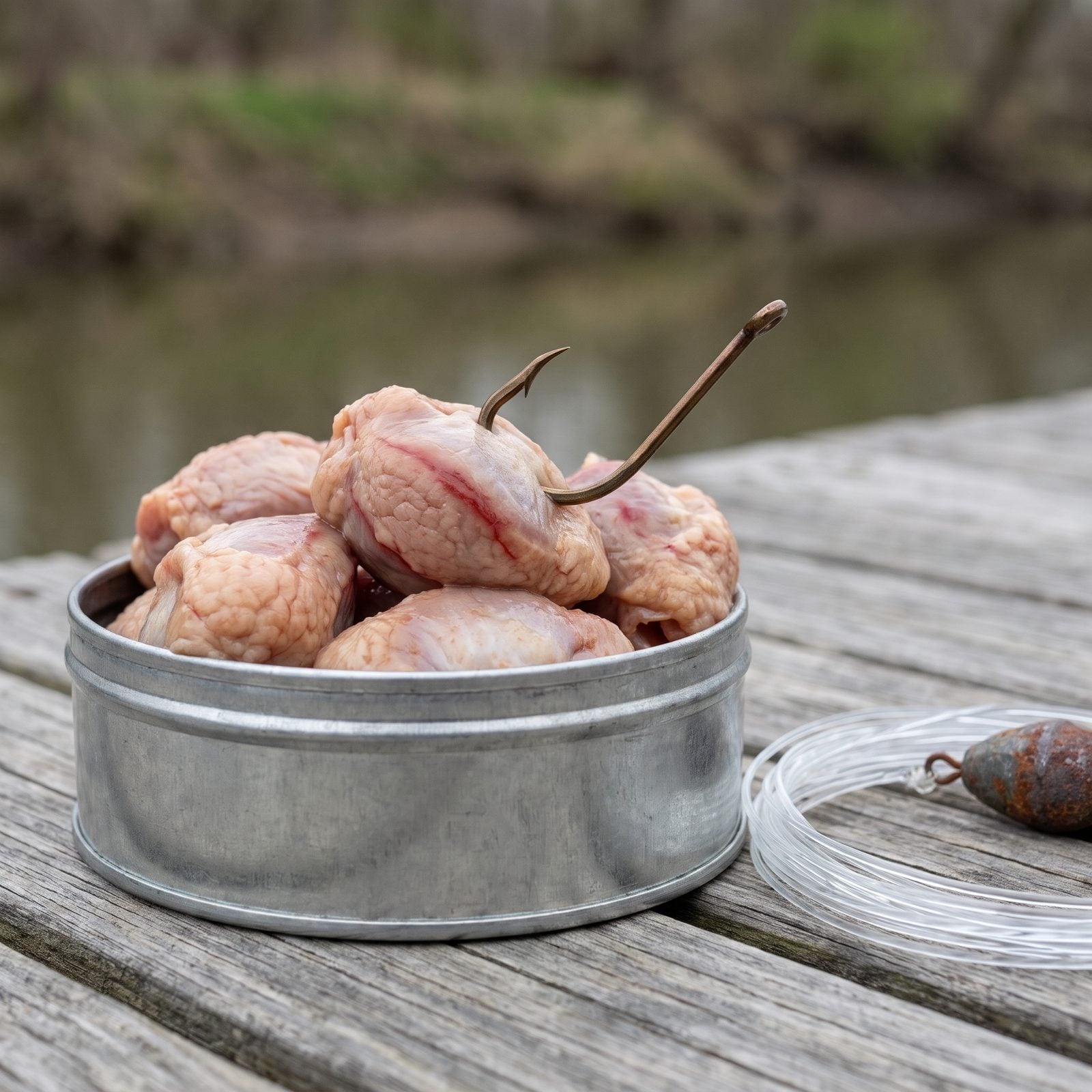
Gizzards are the toughest cut on a chicken, which is their whole value to a catfisherman. Thread one on, cast it hard, and it’ll still be there two hours later.
They develop a smell as they warm up that channels find irresistible. Some folks leave a bag in the sun to ripen them first, and I won’t argue with results, but your cooler will never be the same. Cut the larger ones in half so the hook point sits proud. Cheap, tough, and no need to keep them pretty.
13. Chicken Skin Strips: The Flutter-Bait Nobody Thinks To Try
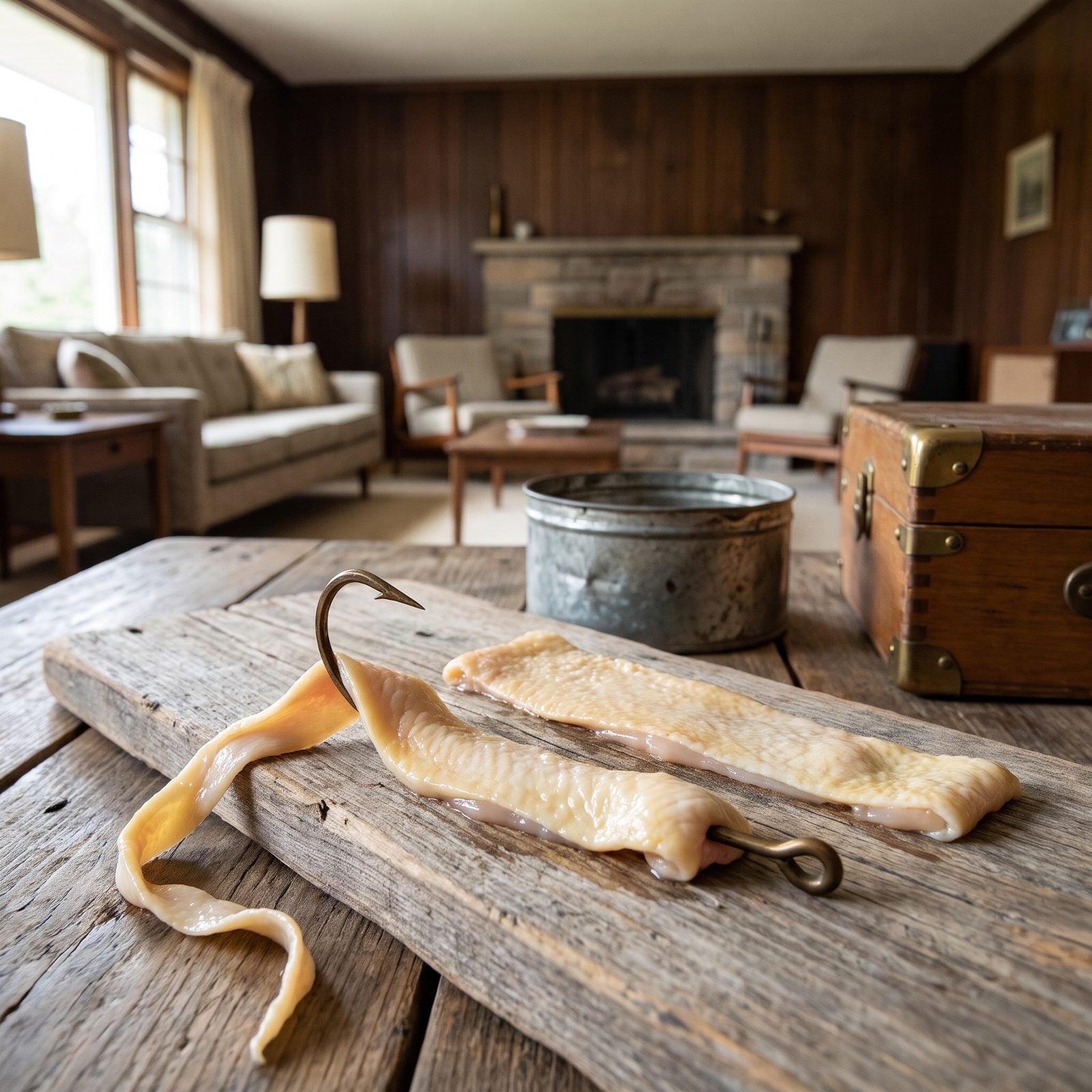
Cut chicken skin into long thin strips and it does something most catfish baits can’t: it flutters in current. That movement, plus the fat leaking off it, draws fish that’ll swim right past a dead chunk sitting still.
It’s dirt cheap and tough enough to survive a cast. Thread the strip on so a tail hangs free. Works especially well drifting a shallow river channel where the current keeps it alive. Nobody talks about it, mostly because nobody wants to admit they’re fishing with the thing they peel off a thigh before cooking.
12. Hog Intestines: The Old River-Rat Bait for Monster Blues
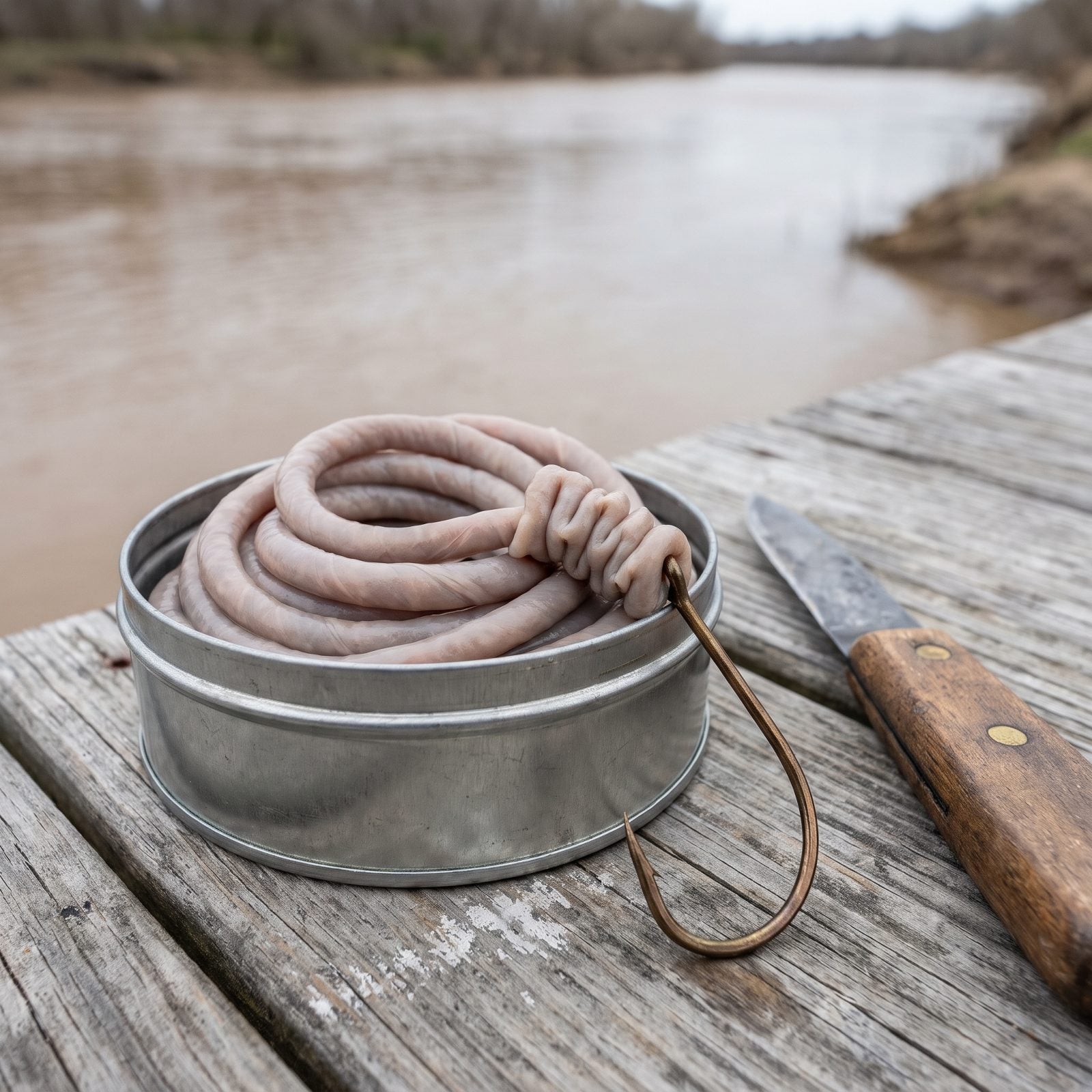
This one goes way back on the big southern rivers. Cleaned hog intestine, cut into sections and bunched onto a big hook, has pulled flathead and blue cats out of the Mississippi for longer than any of us have been alive.
The appeal is the smell and the way it ripples in current. You won’t find it at a shop. You get it from a butcher or a hog you raised yourself. Messy, old-fashioned, and absolutely deadly on a trophy blue. Know a river rat over seventy? Ask him about it and watch his face change.
11. Salt Pork Cubes: The Pantry Bait That Lasts All Season
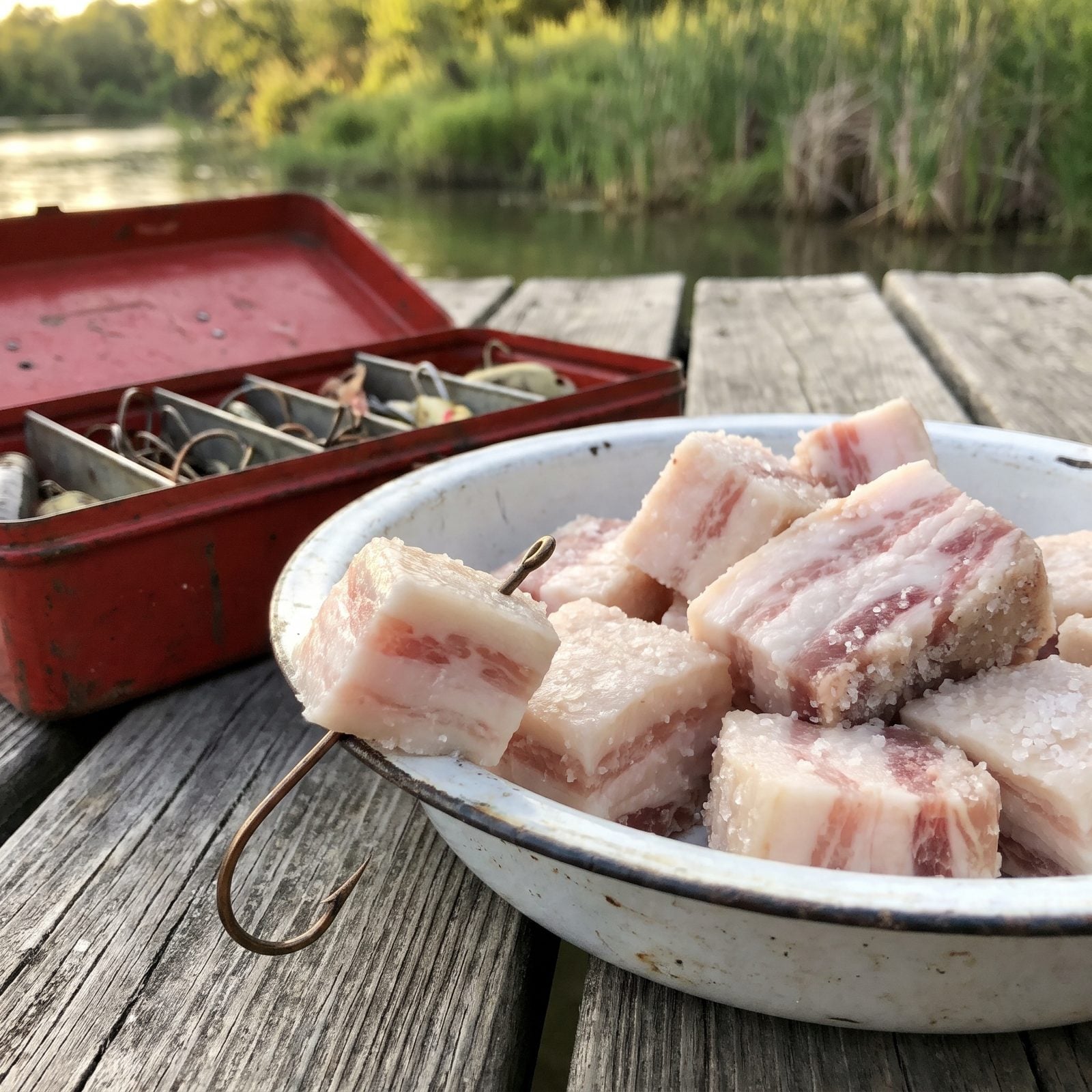
Salt pork sits in your pantry for months without spoiling, which makes it the bait you always have when you didn’t plan to fish. Cut it into cubes and you’ve got something firm, white, and visible in muddy water.
The fat and salt leach out slow, so it keeps working. It won’t out-fish fresh cut bait on a good day, but on a spur-of-the-moment trip with nothing in the cooler, it beats going home empty-handed. The toughness is the real selling point. A cube survives casts and bait-stealers that would shred anything softer.
10. Bologna Chunks: The Cheap Lunchmeat That Fills a Stringer
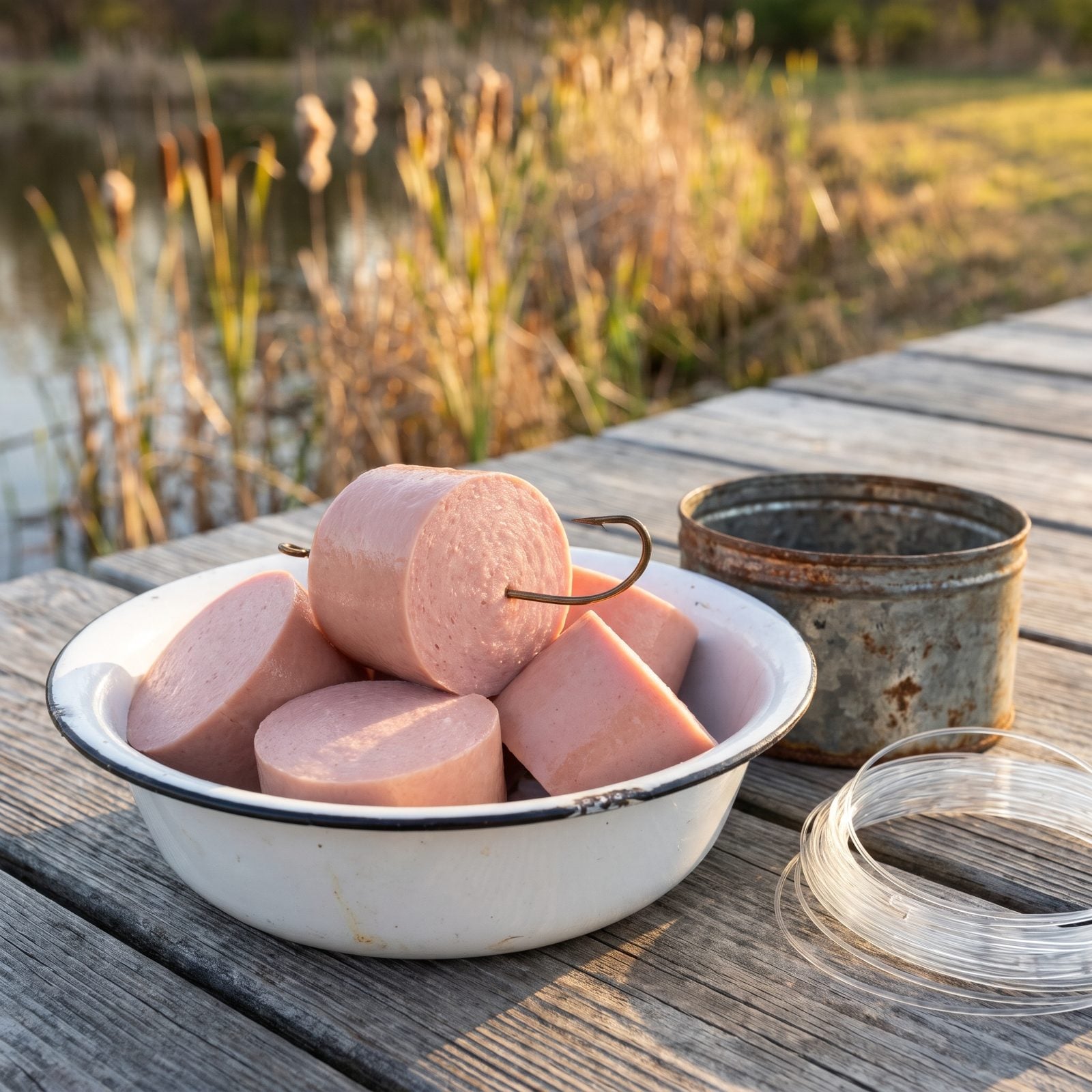
Laugh all you want. Bologna catches catfish, and a pack costs less than a single lure.
Channels in particular can’t leave it alone, especially once the water warms up. The processed fat and salt put off a scent trail that works like a dip bait without any of the hassle. Cut it thick so it stays on the hook, and if you want to juice it up, sprinkle on some garlic or let it sour in a jar for a day. This is the bait that gets a kid hooked on fishing because it works and it’s in the fridge right now. That counts for plenty.
9. Cornmeal Dough Balls Cooked Down on the Stove
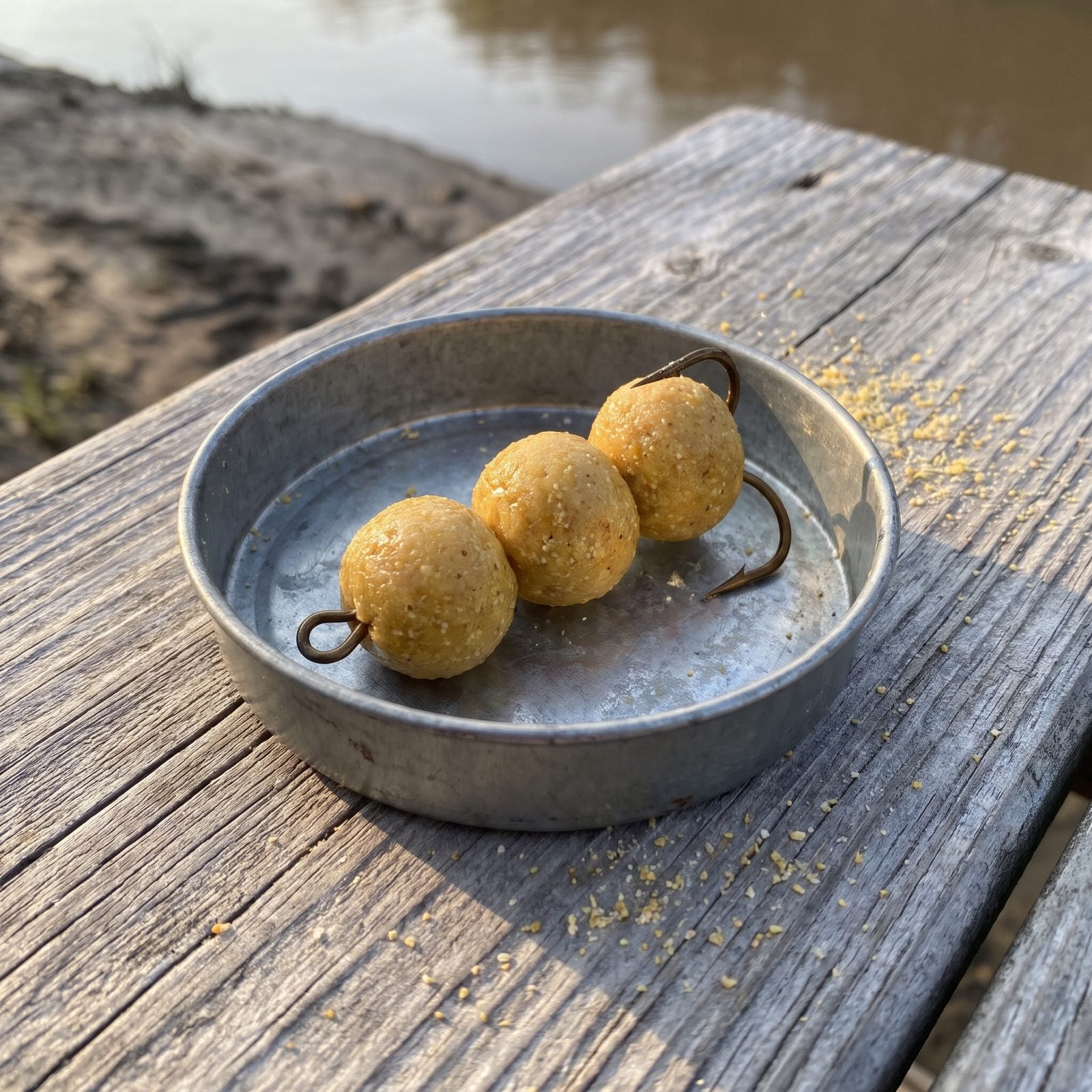
Flour and cornmeal, boiled until it fights the spoon. That’s the whole secret, and most people quit stirring too early. A dough ball that falls off the hook on the cast was never cooked long enough.
You want it stiff enough to roll into a firm ball that holds its shape before it ever meets a double hook, soft enough that a channel cat can mash it. Garlic powder, a little sugar, sometimes a slug of vanilla — everyone’s grandfather had a version and swore by it.
8. Molasses-and-Bran Balls That Smell Like a Feed Store
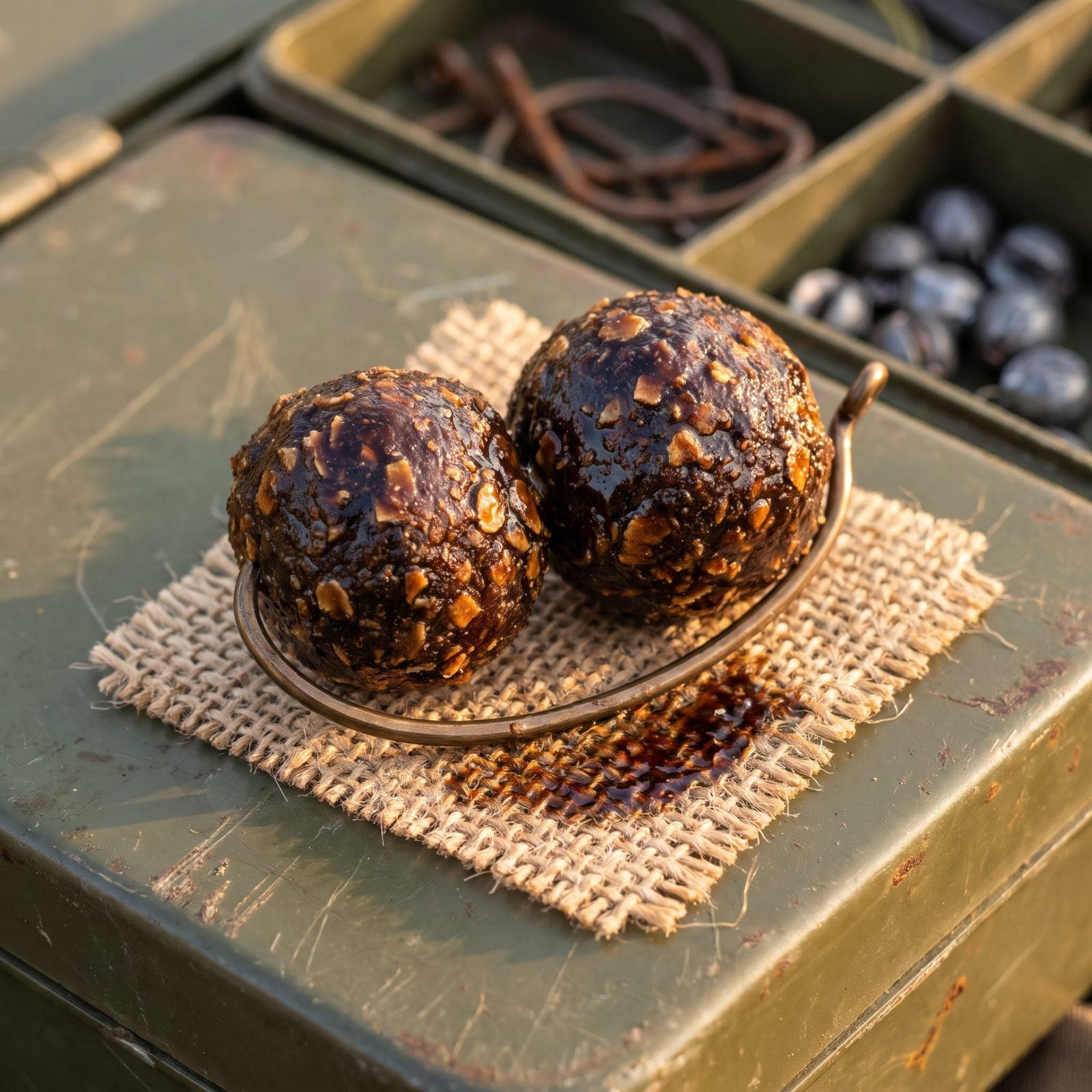
Pour molasses into wheat bran and work it with your hands until it holds a shape. It smells like a barn and a bakery at once, and catfish find it from a long way off in stained water.
The molasses does two jobs. It binds the bran, and it bleeds scent slow. Blues and channels both come to it. Keep a wet rag handy, because you’ll be sticky to the elbow and you won’t care one bit.
7. Soured Field Corn Left to Ferment in a Bucket
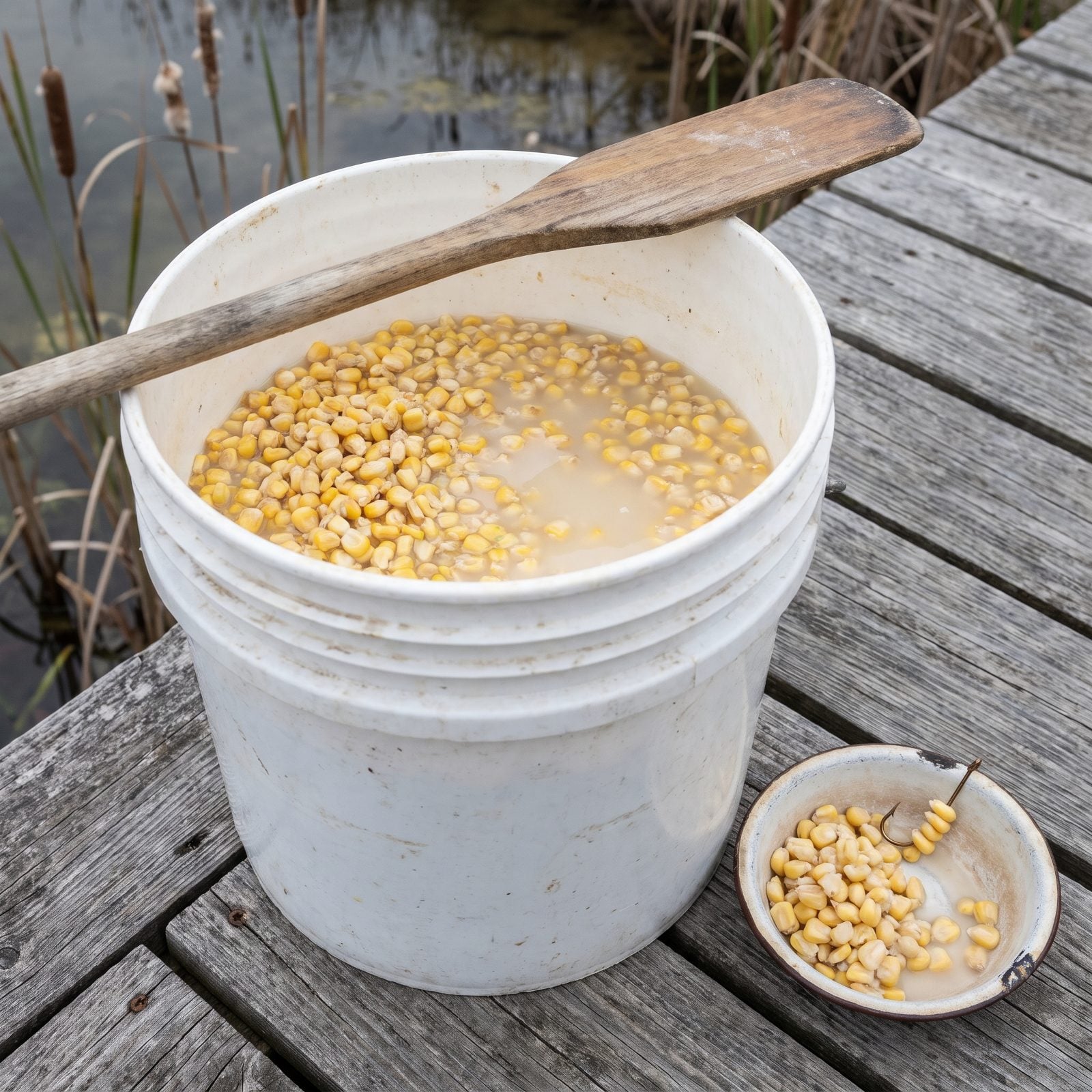
Let it stink.
Whole field corn, water, a warm spot, and a week or two of patience. It bubbles, it sours, and it starts to reek in a way that’ll turn your stomach while ringing a dinner bell for every channel cat in the hole. The worse it smells to you, the better it works.
Thread a few swollen kernels on a small hook, or pack a handful into a feeder. Plenty of folks fish clean corn straight off the can and wonder why the soured stuff outfishes them so badly. The fermentation is the whole point.
6. Ripe Mulberries Dropped Straight From the Tree
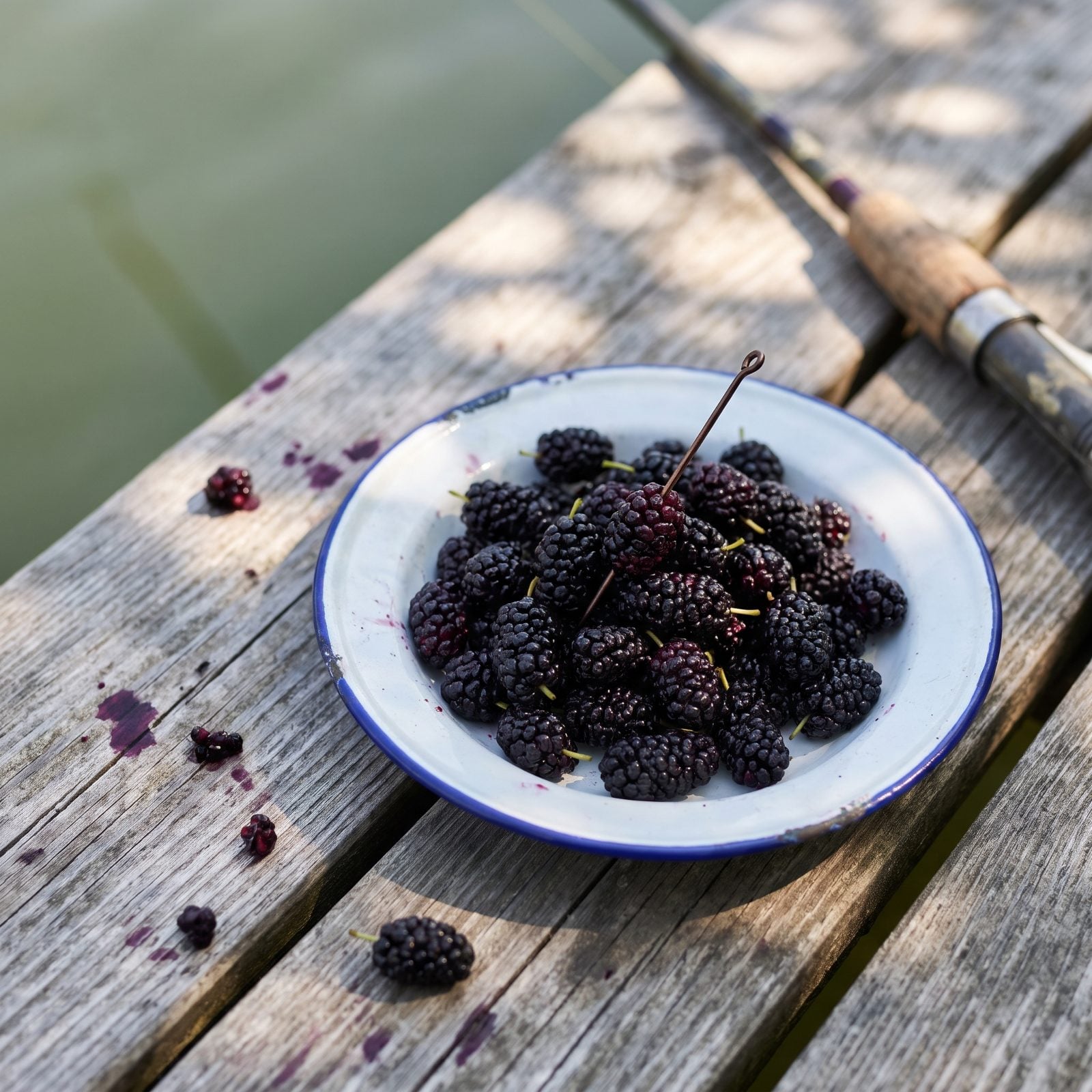
Find a mulberry tree leaning over moving water in June and you’ve found a catfish buffet. The ripe berries drop, the current carries them, and the fish stack up underneath to wait. Smallmouth, carp, and channel cats all key on them.
Fishing them is fiddly. A ripe mulberry is soft and barely holds a hook, so you fish light and you lose a few. But when the berries are falling, matching that drift beats any dough you could cook on the stove.
5. Soft Persimmon Pieces in Fall

Wait for the first good frost, then wait a little longer. A persimmon picked early will pucker your whole face; one gone soft and sweet in October is catfish candy. The astringent ones aren’t just bad to eat, they’re worse to fish.
Pinch off a gob of the ripe pulp and work it onto a hook the way you would a dough ball. It won’t last long on the line. That’s fine — in a good hole it won’t need to.
4. Canned Sweet Corn Straight Off the Shelf
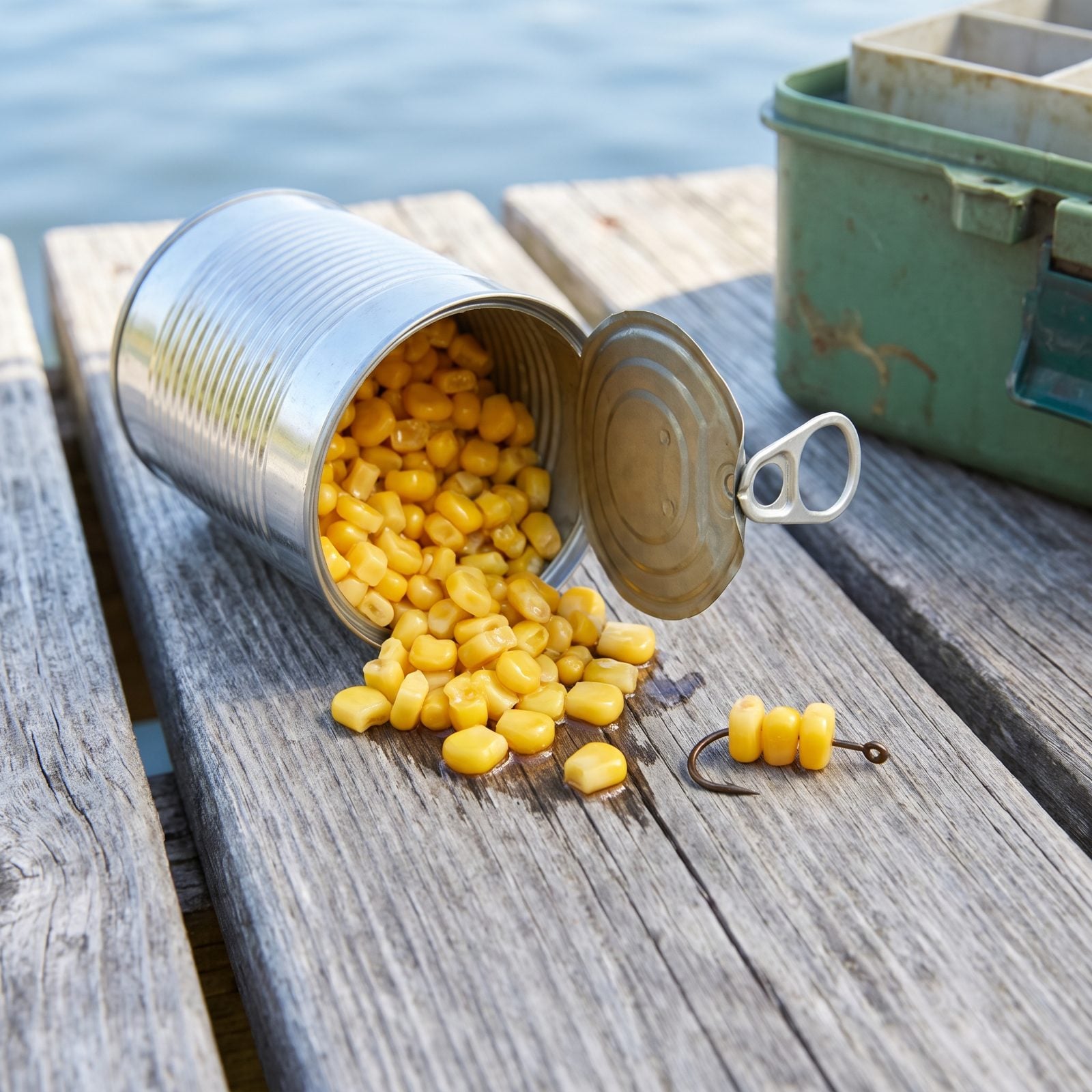
Nothing to cook, nothing to ferment, nothing to apologize for. A can of sweet corn from the kitchen cabinet catches channel cats, carp, and anything else grubbing the bottom. It’s the bait you grab when the live stuff ran out and the store’s closed.
Three or four kernels on a small hook, a light sinker, and you’re fishing. It won’t out-stink a soured bucket. But for a lazy afternoon on the bank with kids along, it’s hard to beat for the trouble.
3. Miniature Marshmallows That Float the Bait Off Bottom
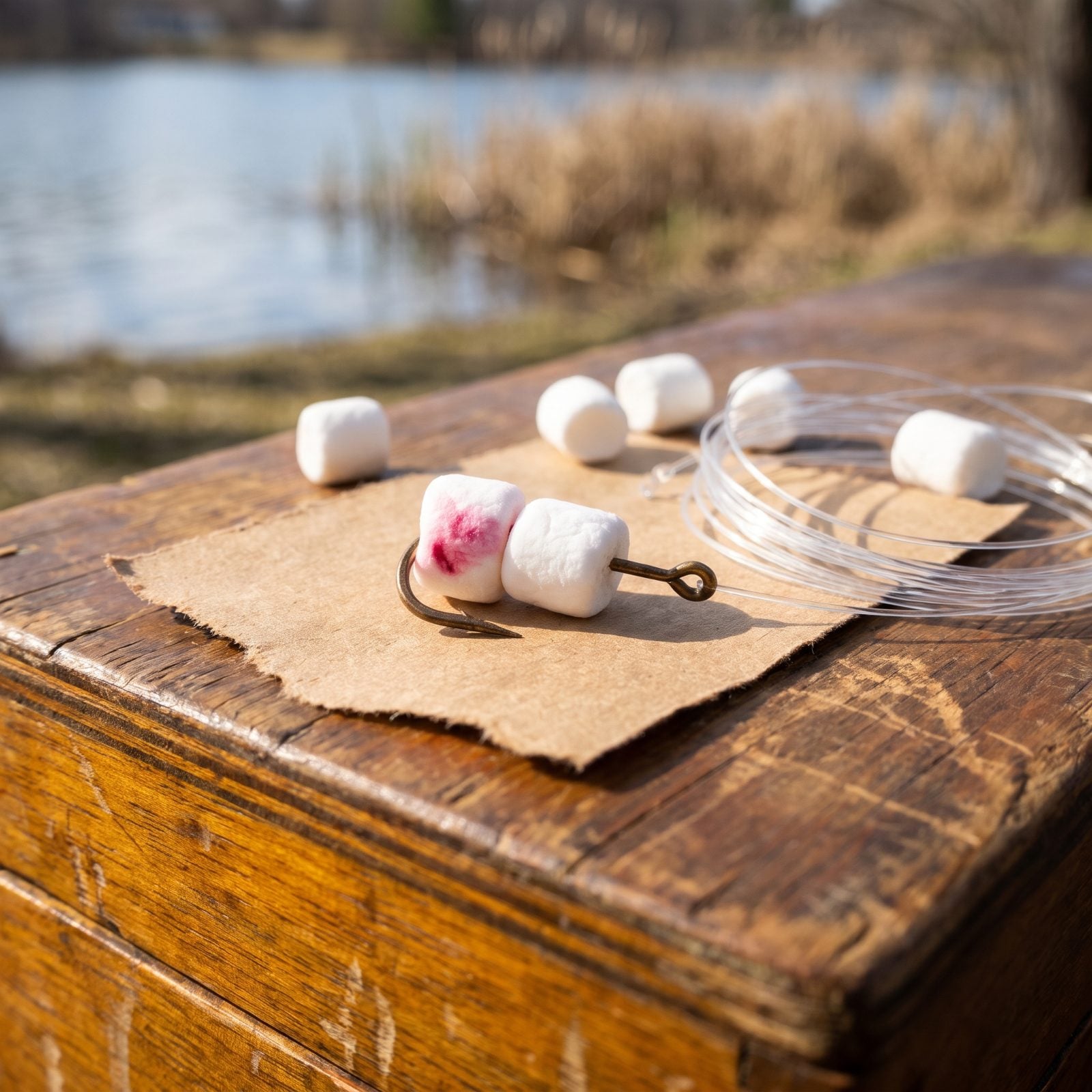
It’s not candy, it’s buoyancy.
A mini marshmallow on the hook does one clever thing. It floats your bait up off a muddy or weedy bottom where a cruising cat can actually see and smell it. Thread the marshmallow above a nightcrawler or a chunk of cutbait and you’ve built a floating rig for free.
Half the people who scoff at marshmallows have never tried the trick. The sugar doesn’t hurt either. Channel cats and even the odd trout will hit it.
2. Canned Dog Food Packed Into a Mesh Bag
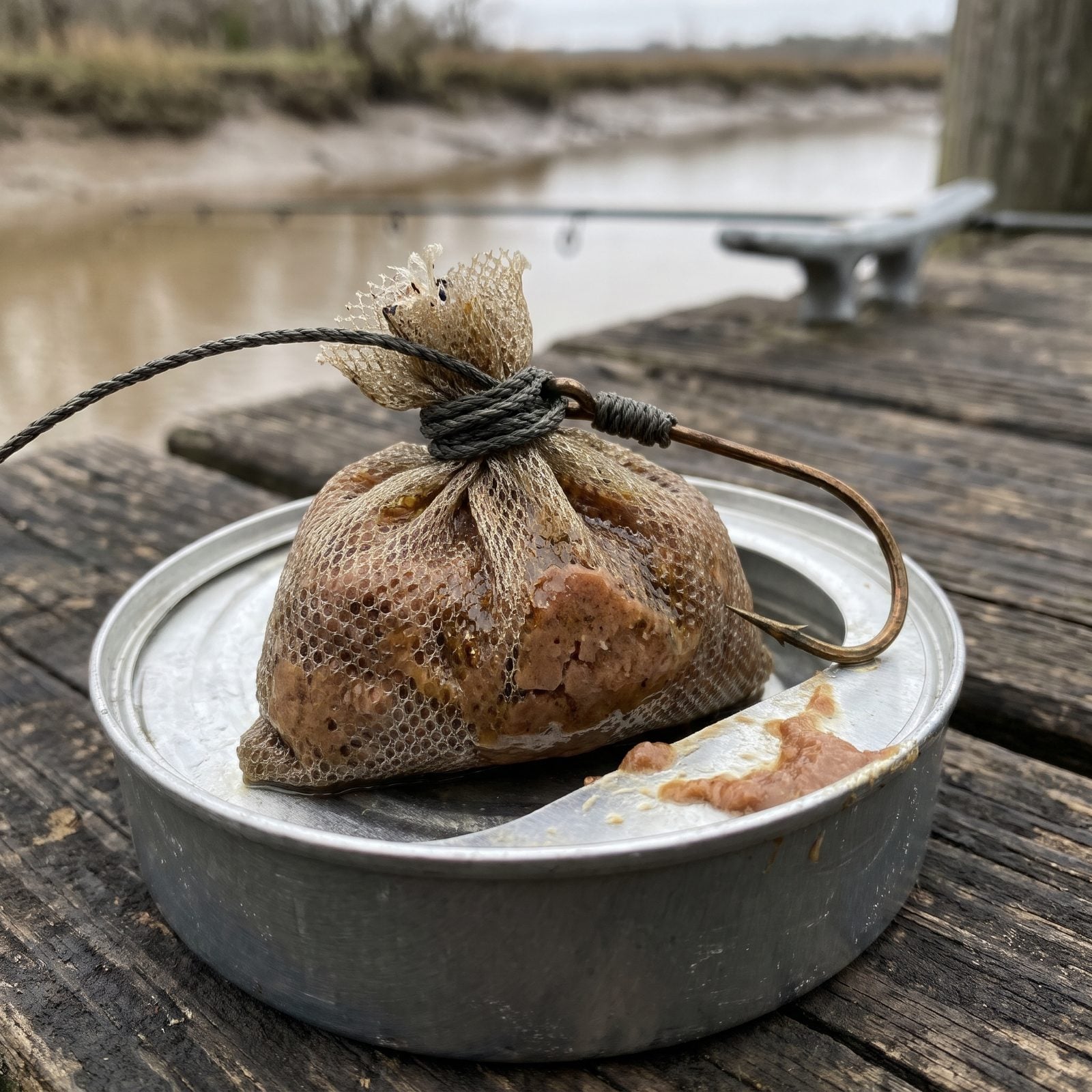
Loose canned dog food washes off a hook in seconds. Pack it into a scrap of mesh or an old nylon stocking, cinch it, and now you’ve got a slow-leaking scent bomb that holds together through a hard cast.
The oily, meaty gravy clouds the water and pulls blues and channels in off the scent trail. It’s cheap, it keeps in the cooler, and it earns its keep in current where the smell gets carried downstream. Bring gloves. Your hands will remember it longer than you’d like.
1. Ivory Soap Cut Into Hook-Sized Cubes
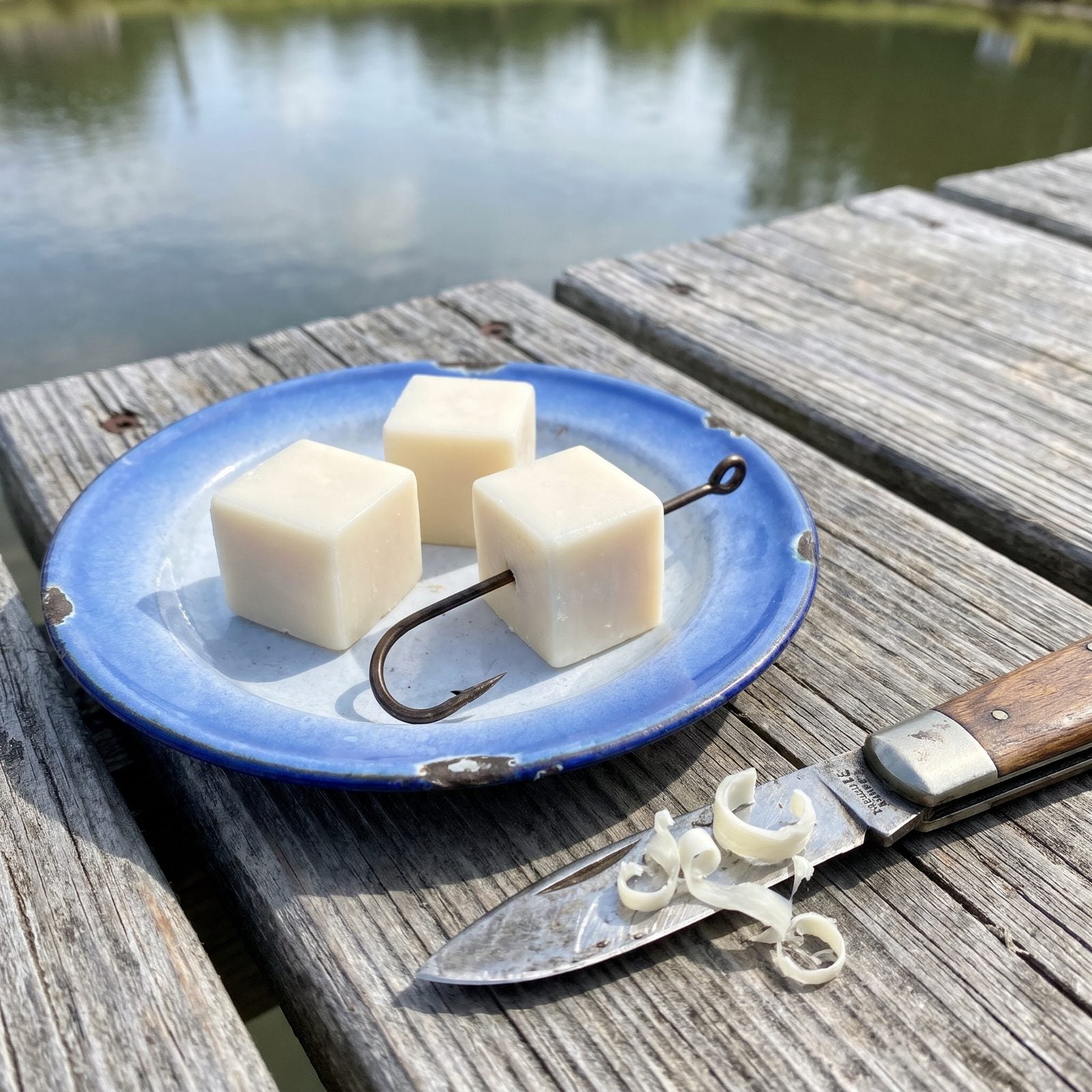
Yes, soap. The old-timers weren’t kidding. A plain, fatty bar cut into cubes puts out a scent channel cats will hit, and it stays on the hook far better than any dough ball you’ll ever cook.
The trick is a soft, high-fat, low-perfume bar fished slow. Some swear by lye-based or homemade bars. It sounds like a bar-stool tall tale right up until the first rod bows over and you’re staring at a chunk of soap in a catfish’s lip.