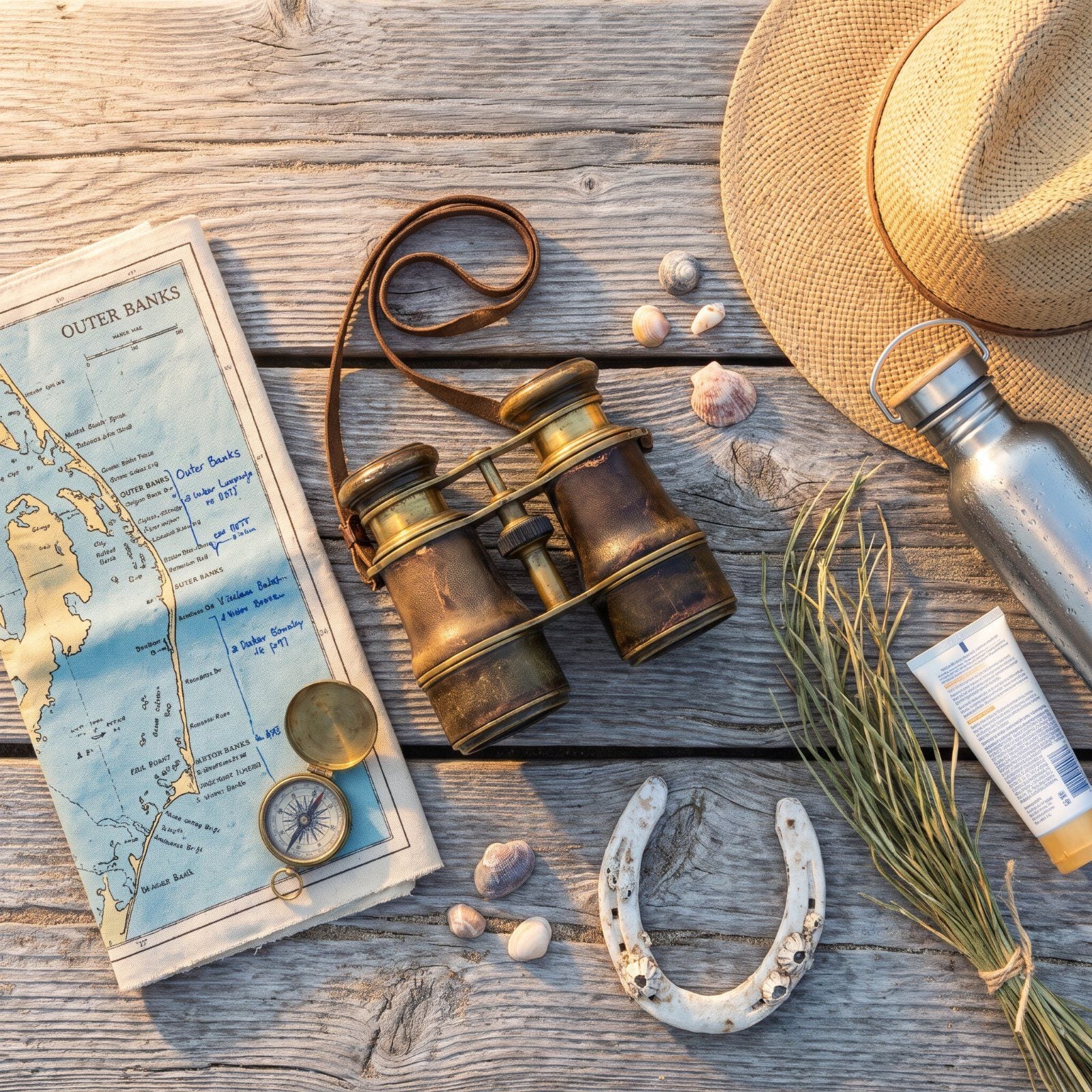
They are smaller than you expect. Not ponies exactly, but close, with thick necks and a stubbornness bred into them over four centuries on sand and salt. These are Banker horses, Colonial Spanish Mustangs that washed up on the Outer Banks from shipwrecks and never left. North Carolina is the only place on the East Coast where you can watch them graze marsh grass with the surf going flat behind them. Some roam free on islands you reach only by boat, others are penned and cared for, and every one of them deserves 50 feet of space and a decent pair of binoculars. Here is where to find them.
Please note that some of the images in this article were created with the assistance of AI.
6. Carova Beach and the Corolla 4×4 Sands, Where the Herd Still Runs Free
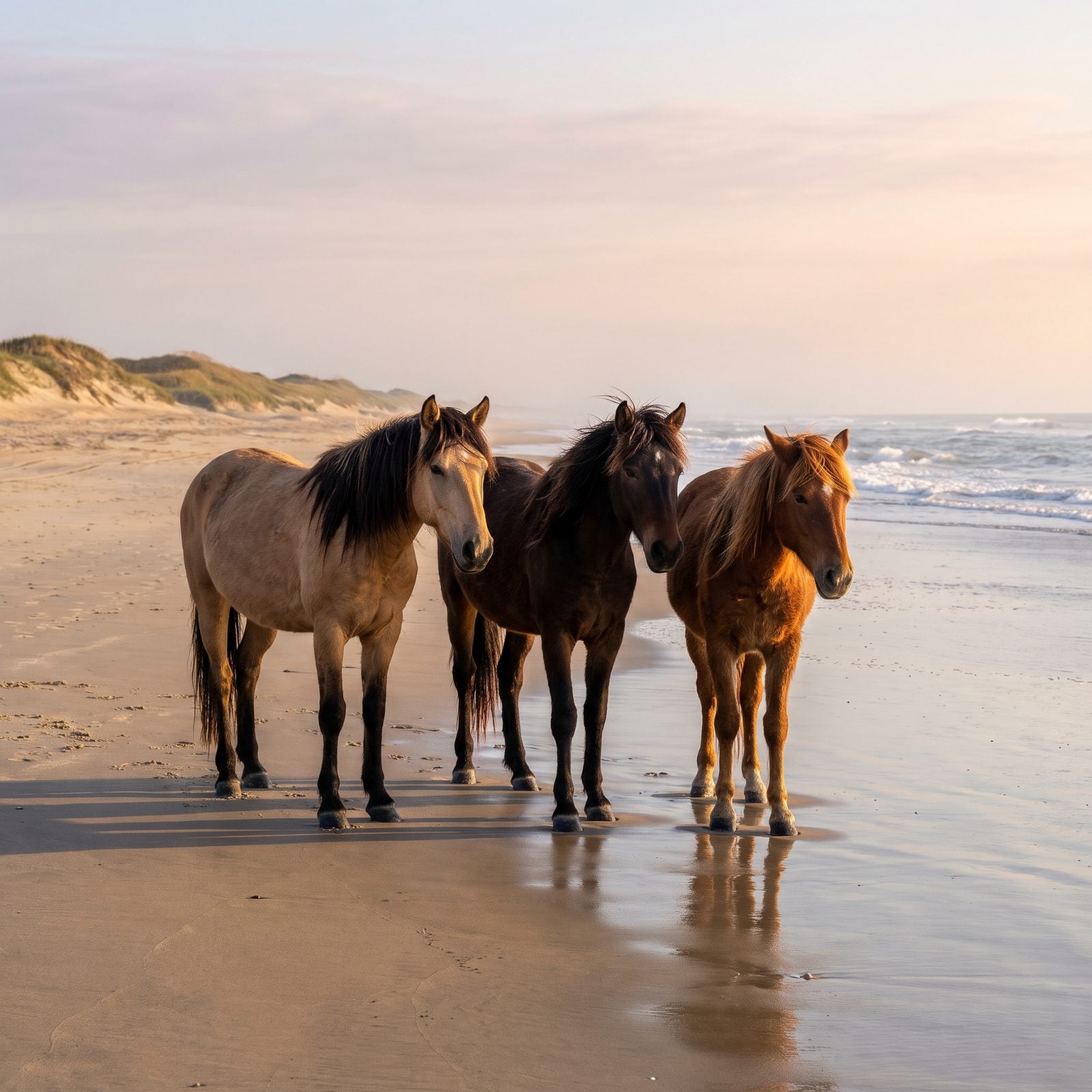
This is the real thing. North of where paved NC 12 quits, about a hundred wild horses share several thousand acres of beach and backland at the very top of the Outer Banks. No barns, no handlers. Just mustangs doing what they have done since the Spanish lost them here.
Leave the sedan at home. The road is the beach itself, so you need four-wheel-drive, and from the second Saturday in May through the last Saturday in September you also need a Currituck County beach parking permit. No 4×4 and no interest in burying your axles in soft sand? Book a guided tour out of Corolla and let someone else sweat the driving.
5. Shackleford Banks, a Boat Ride to the Last Unmanaged Herd
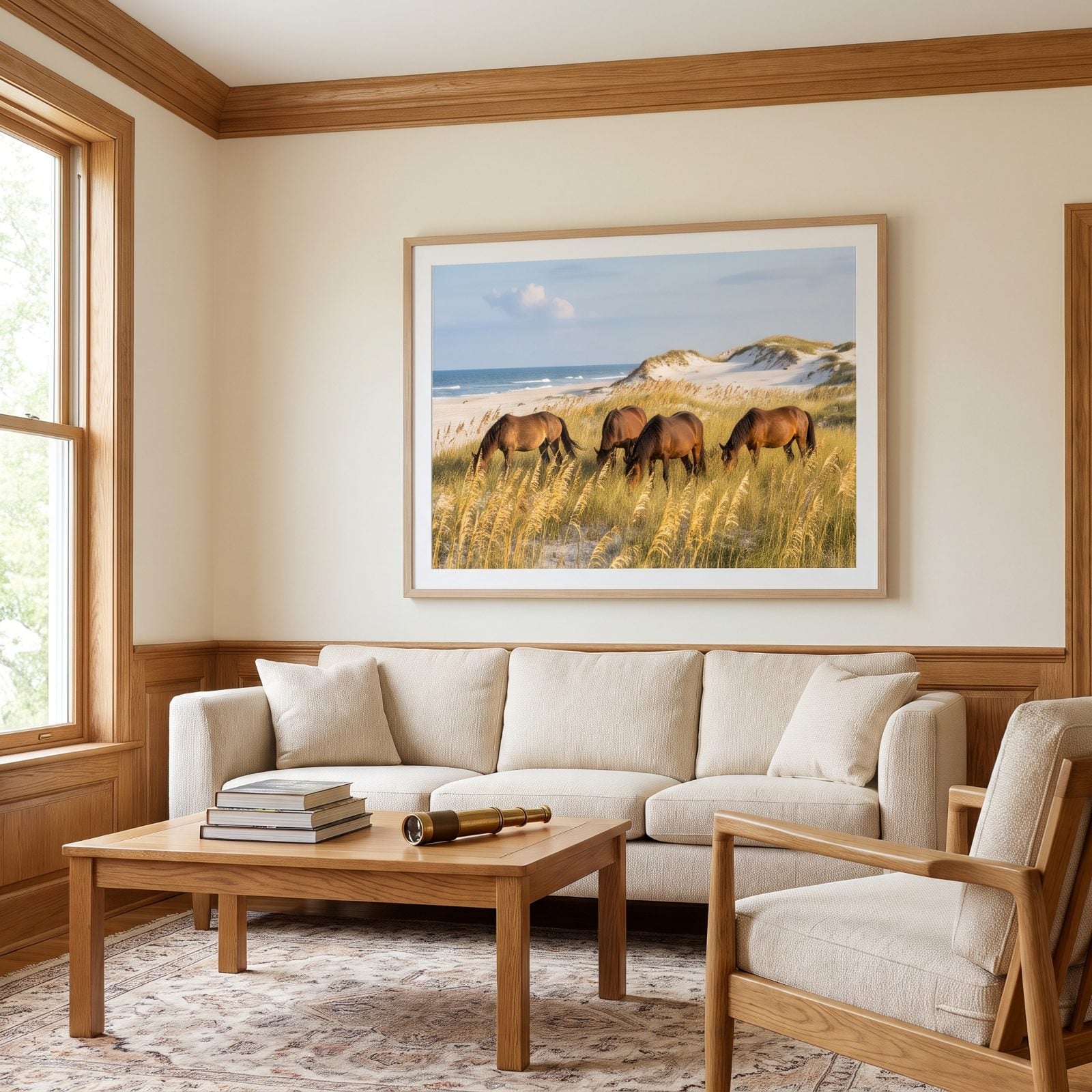
The southernmost island in Cape Lookout National Seashore holds more than a hundred horses that get by with zero human help. Nobody feeds them, nobody trucks in water, no vet makes the trip. They dig for water and drink from ponds, and that’s that.
You reach Shackleford only by boat. The Island Express passenger ferry runs from Harkers Island over to the east end in about half an hour. Pack like the island has nothing, because it does: no restrooms, no water, no food, no shade you did not bring yourself. Water, bug spray, binoculars. Short list.
Some days the horses are standing right at the landing. Other days you climb a high dune and scan toward the freshwater ponds before you spot a single one. Want the stories behind the herd? The park runs ranger-guided “Horse Sense and Survival” tours, and those need reservations.
4. Rachel Carson Reserve, Marsh Islands You Can Paddle To
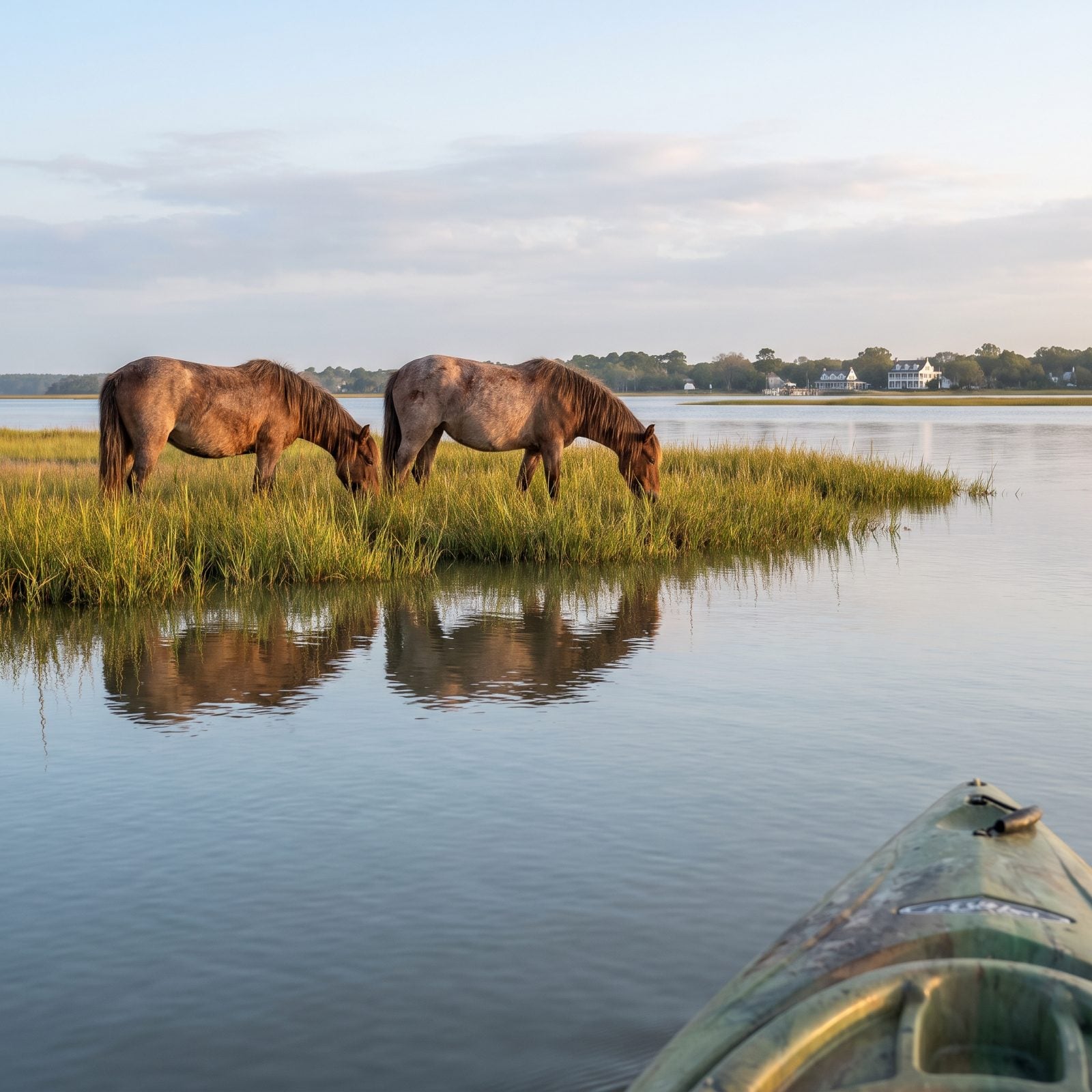
Right across Taylor’s Creek from downtown Beaufort sits a chain of marsh islands: Carrot Island, Town Marsh, Bird Shoal, Horse Island. A small band of feral horses lives out there on saltmarsh cordgrass, digging their own watering holes between the grass flats.
A resident brought horses here back in the 1940s, and the state manages the herd today with a yearly remote birth-control dart to keep the numbers in check. You get there by private boat or passenger ferry. Motorboats launch at the NCWRC access on Lennoxville Road, while kayaks slide in right off the Beaufort waterfront, and most paddlers land at the Town Marsh trailhead or the Carrot Island boardwalk.
Stay 50 feet off. Keep clear of the watering holes and the shorebird nesting areas too, which are closed for good reasons.
3. Beaufort Waterfront Boardwalk, the Sighting You Can Get Without a Boat
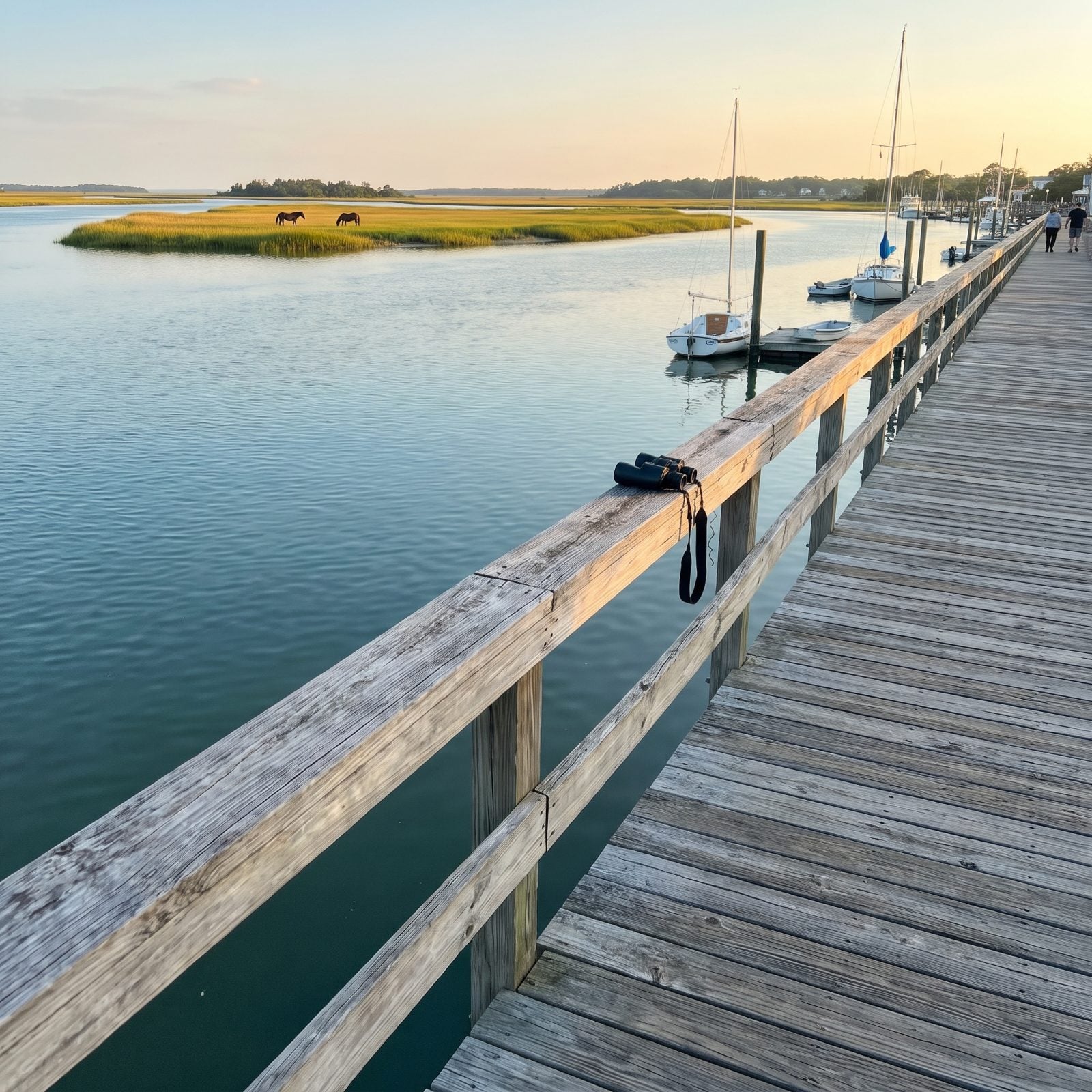
No boat, no 4×4, no reservation. Walk the boardwalk along Front Street and look across Taylor’s Creek at Carrot Island, where the Rachel Carson horses graze. This is the easy one, the sighting you can pull off with an ice cream cone in your other hand.
Bring binoculars, because the horses stay on the far side of the creek and they are not large. If you decide you want to get closer, the ferries to the reserve and out to Shackleford Banks leave from this same stretch of waterfront.
2. Ocracoke Pony Pens, a Protected Herd You Can Watch From a Platform
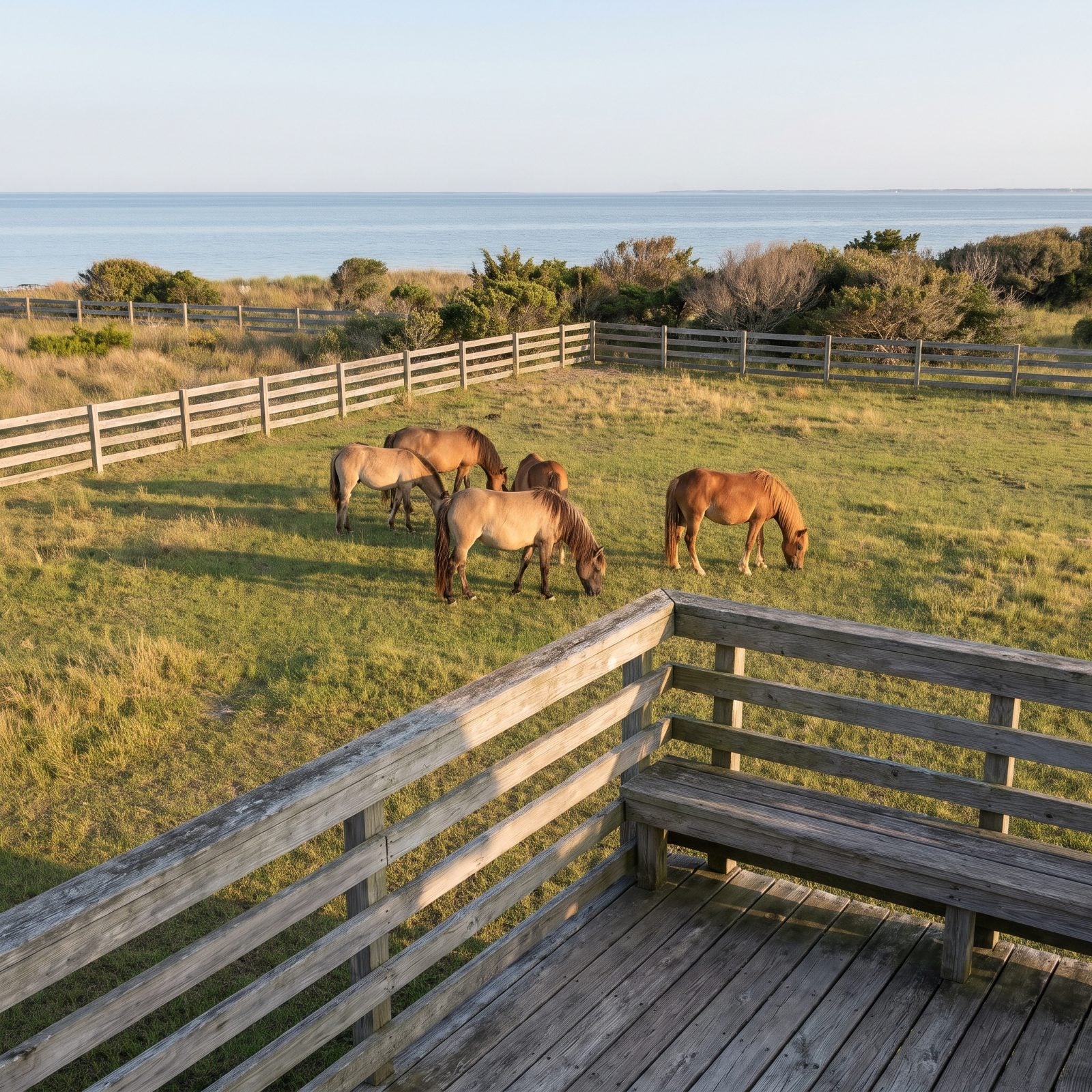
Be honest with yourself before you drive out here: these ponies are penned, not free. The National Park Service keeps Ocracoke’s Banker herd in a large pasture off NC 12, roughly midway down the island on the sound side, and a raised platform lets you watch them graze.
They ran loose until the late 1950s. Then the Boy Scouts and local folks pushed to protect them, and NPS has fenced and cared for the herd ever since. The group is small these days.
You will not get the wild-herd drama of Shackleford here. What you get is a guaranteed look at real Banker horses and some of the easiest access on the list, pavement to platform.
1. Betsy Dowdy Equine Center in Grandy, Where Rescued Corolla Horses Land
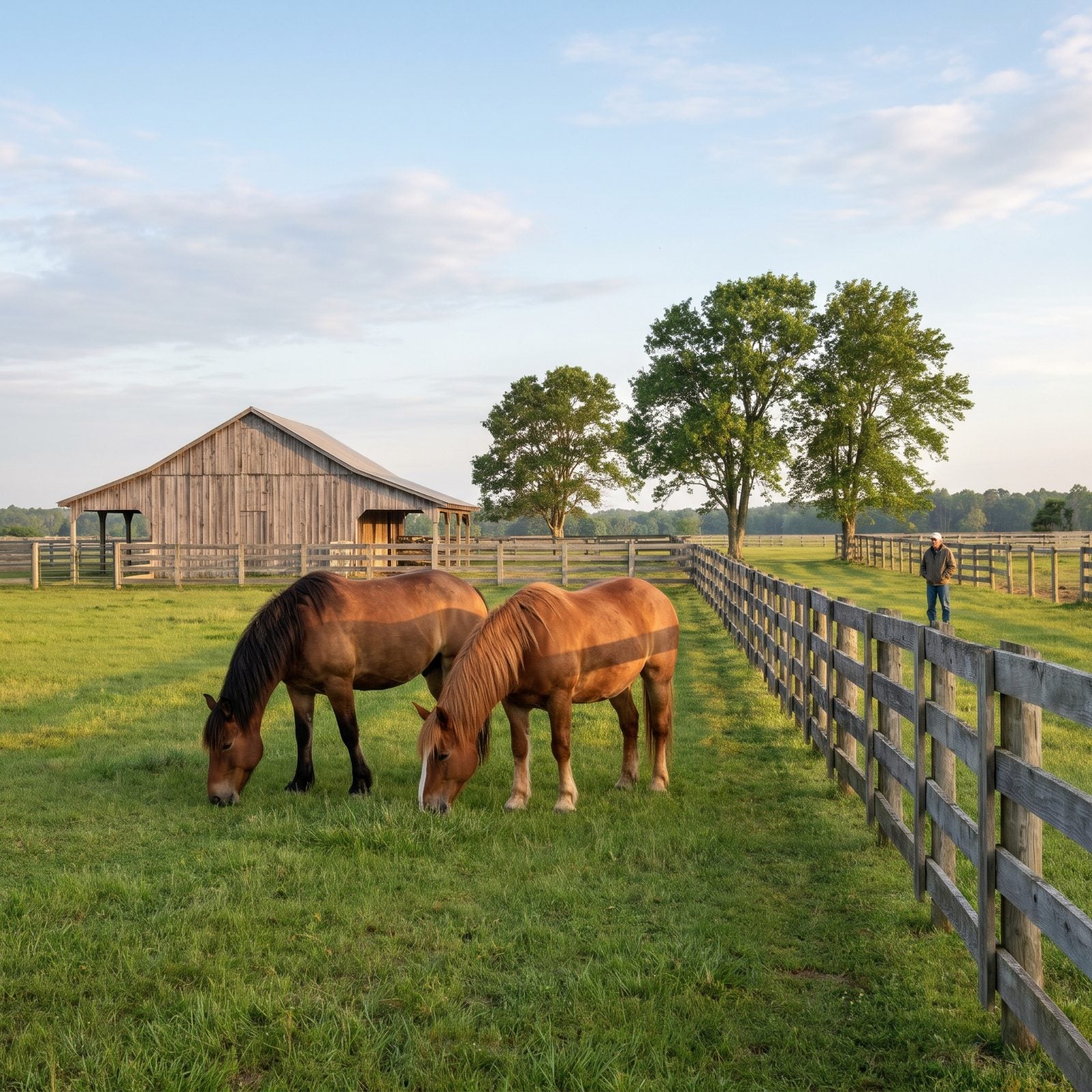
When a Corolla horse gets injured, sick, or has to come off the beach, this is where it goes. The Corolla Wild Horse Fund runs a rescue farm on the mainland in Grandy, and you can meet the rescued Banker horses that live there in human care.
Summer brings “Mustang Mornings” on Wednesdays, from mid-morning into the early afternoon. You get a walking tour and a screening of “The Secret of Corolla,” a short documentary on the herd. There’s a suggested donation per vehicle at the gate.
This is the right call if you skipped the 4×4 rental and still want to stand near a Banker horse. Just know going in that these are rescued animals, not the wild herd, and your donation keeps the next injured one fed.