
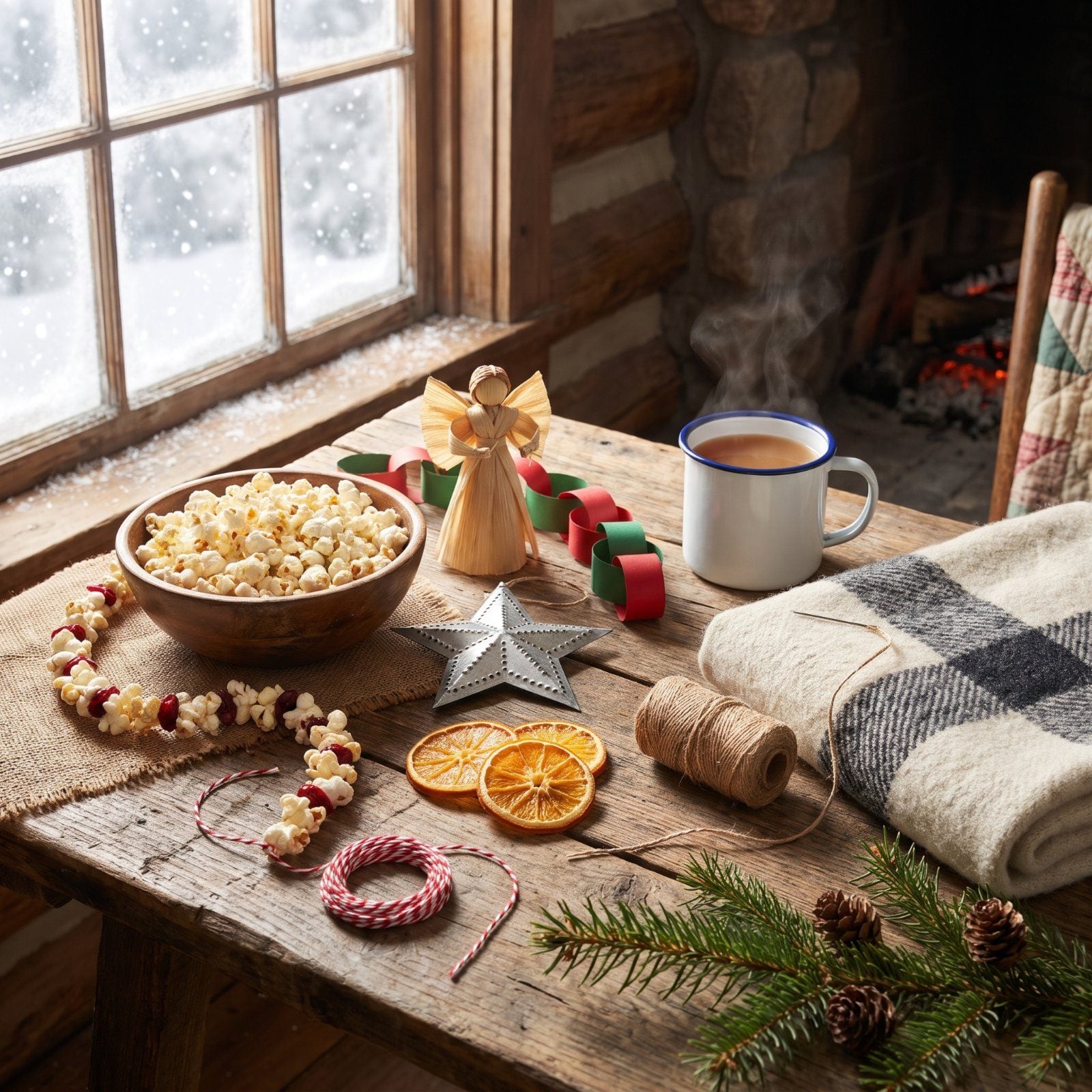
The best Christmas tree we ever had smelled like sap and cost nothing but a cold morning and a sore shoulder. Store-bought ornaments have their place, but they don’t make you slow down. The old ways do — they put a needle in your hand, a pot of cider on the stove, and ask for an afternoon in return. A cabin rewards that kind of Christmas: thick walls, a stone hearth, snow piling against the windows, and a tree you made yourself instead of ordered. Here are the ones worth bringing back, the ones that fill a rustic holiday with a warmth no shipping box can carry.
Please note that some of the images in this article were created with the assistance of AI.
49. Cut Down Your Own Family Christmas Tree
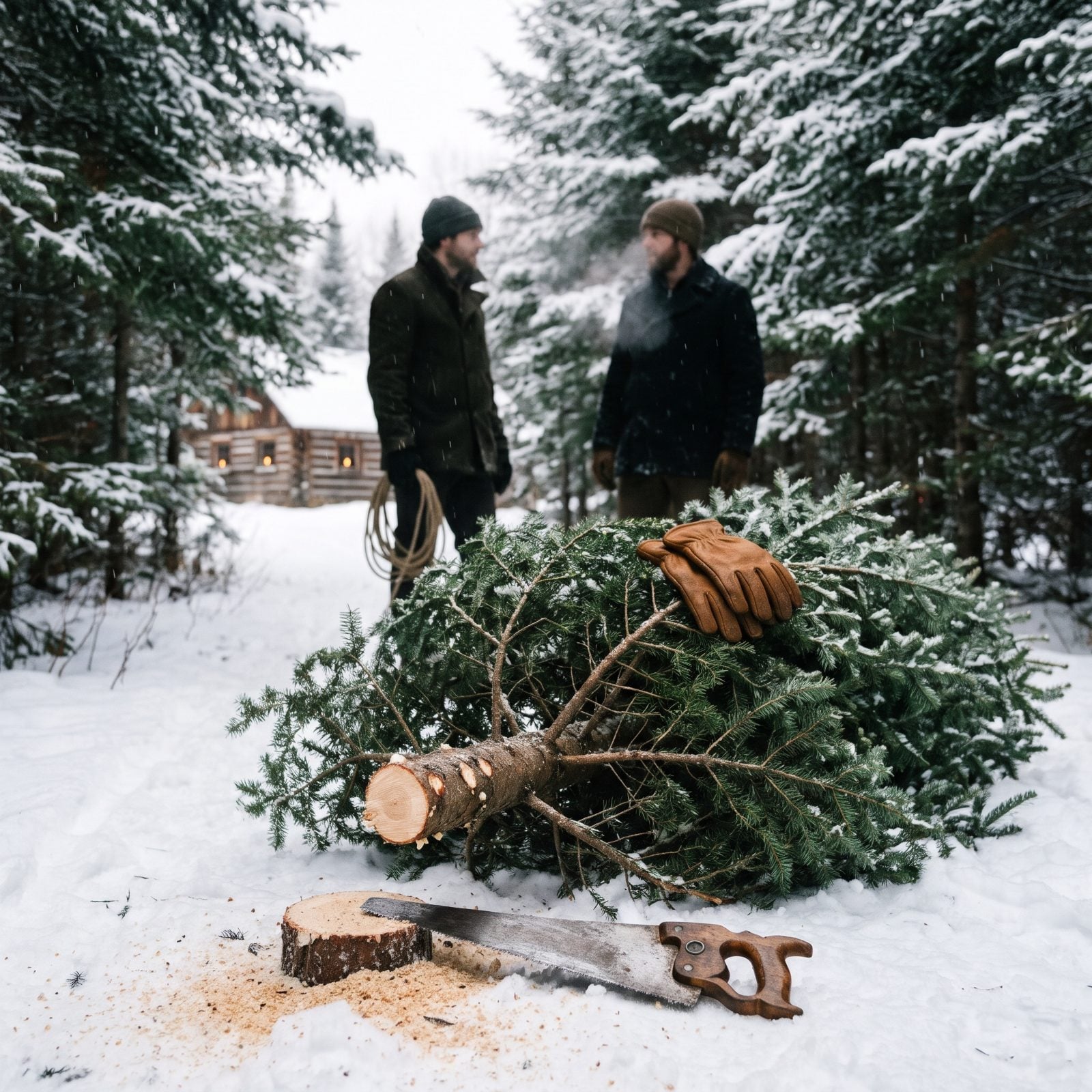
A tree off a lot is already dying when you buy it. The one you cut yourself keeps longer, because the clock doesn’t start until your saw does. Most cut-your-own farms and plenty of national forests sell permits for a few dollars, and the permit day is half the point.
Bring a hand saw, not a chainsaw. Bring rope, gloves, and more patience than you think you’ll need, because the first tree you fall in love with is always too tall for the ceiling. I’ve made that mistake more than once — stood a gorgeous fir up in the living room only to find it bowing against the ceiling like a drunk. Measure the room before you leave.
48. Tell the Story Behind Each Heirloom Ornament
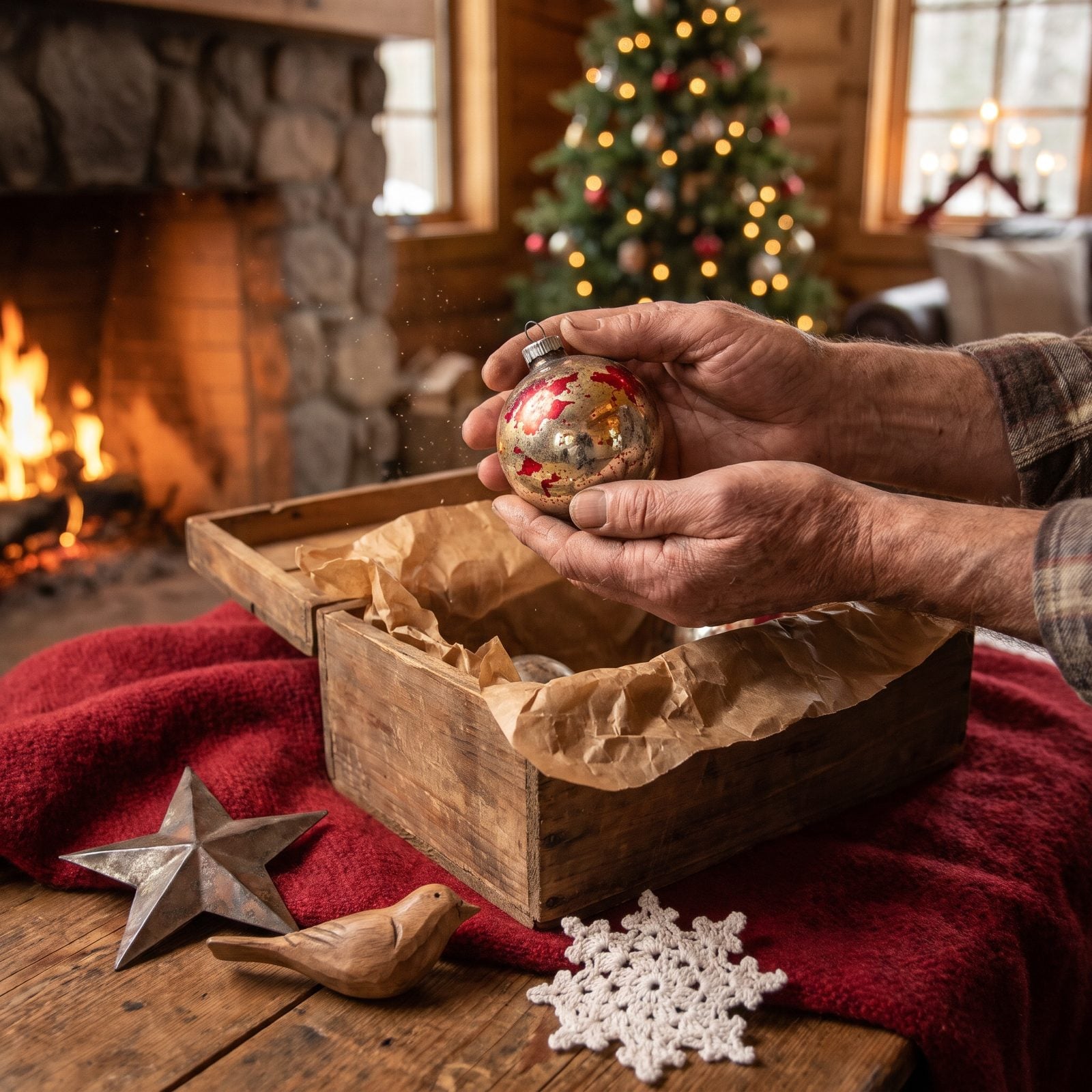
The ornament that matters isn’t the prettiest one on the tree. It’s the chipped glass ball your grandmother bought the year she married, or the clumsy clay thing a kid made in third grade that nobody has the heart to retire.
Before you hang them, say where each one came from — out loud. The year, the person, the story. Kids hold onto the stories long after the gifts are forgotten, and an ornament with a story attached never gets thrown away.
47. String a Popcorn-and-Cranberry Garland
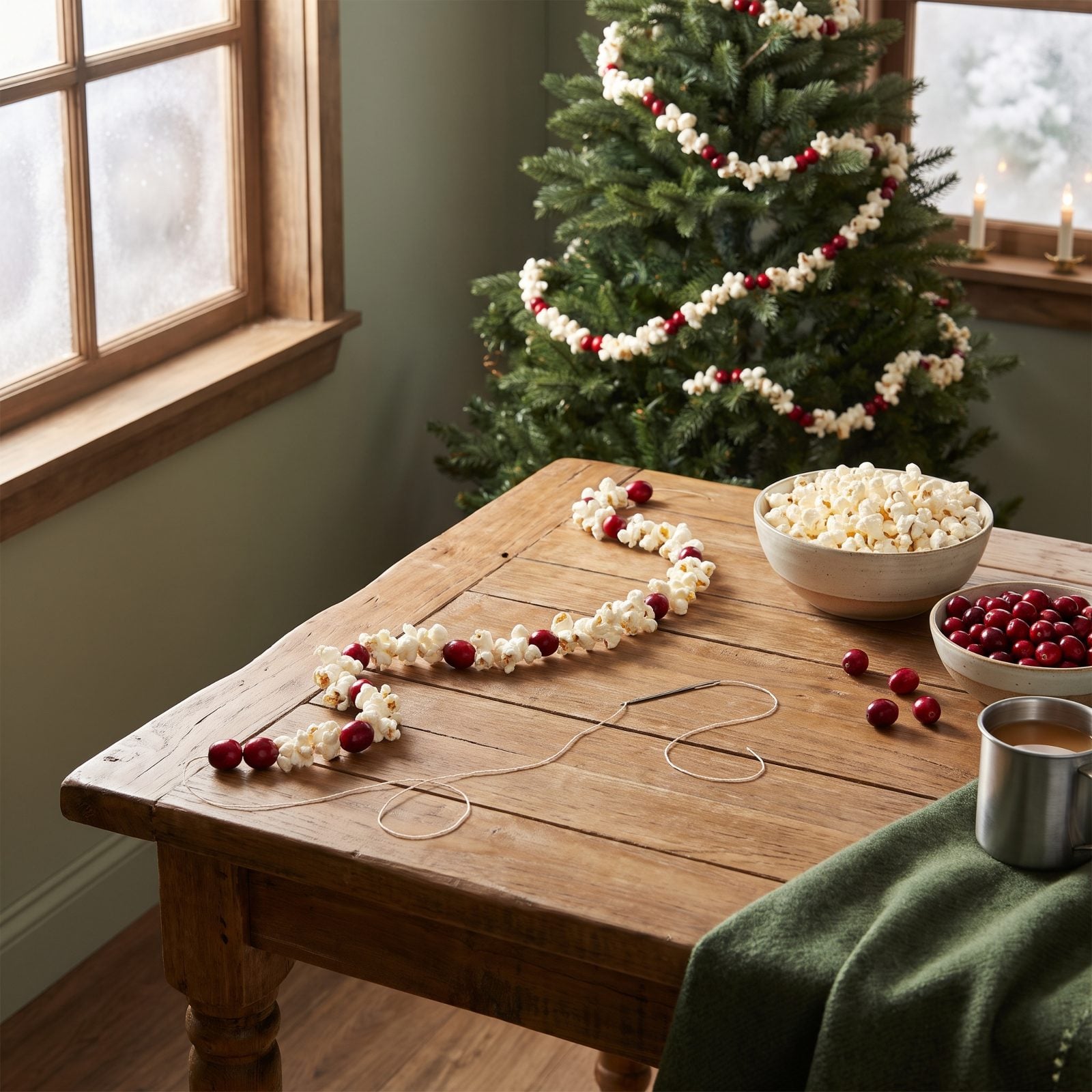
Use popcorn that’s a day or two stale. Fresh-popped is too brittle and shatters on the needle, while day-old holds together. Nobody tells you this until you’ve split a whole bowl’s worth and sworn at the kitchen.
String a cranberry every few kernels for color and weight. Slow work, best done by the fire with cider and somebody to talk to. That slowness is the whole gift. You can’t rush a needle and thread, and after a long year, an evening you can’t rush is worth more than it looks.
46. Hang Dried Orange-Slice Ornaments
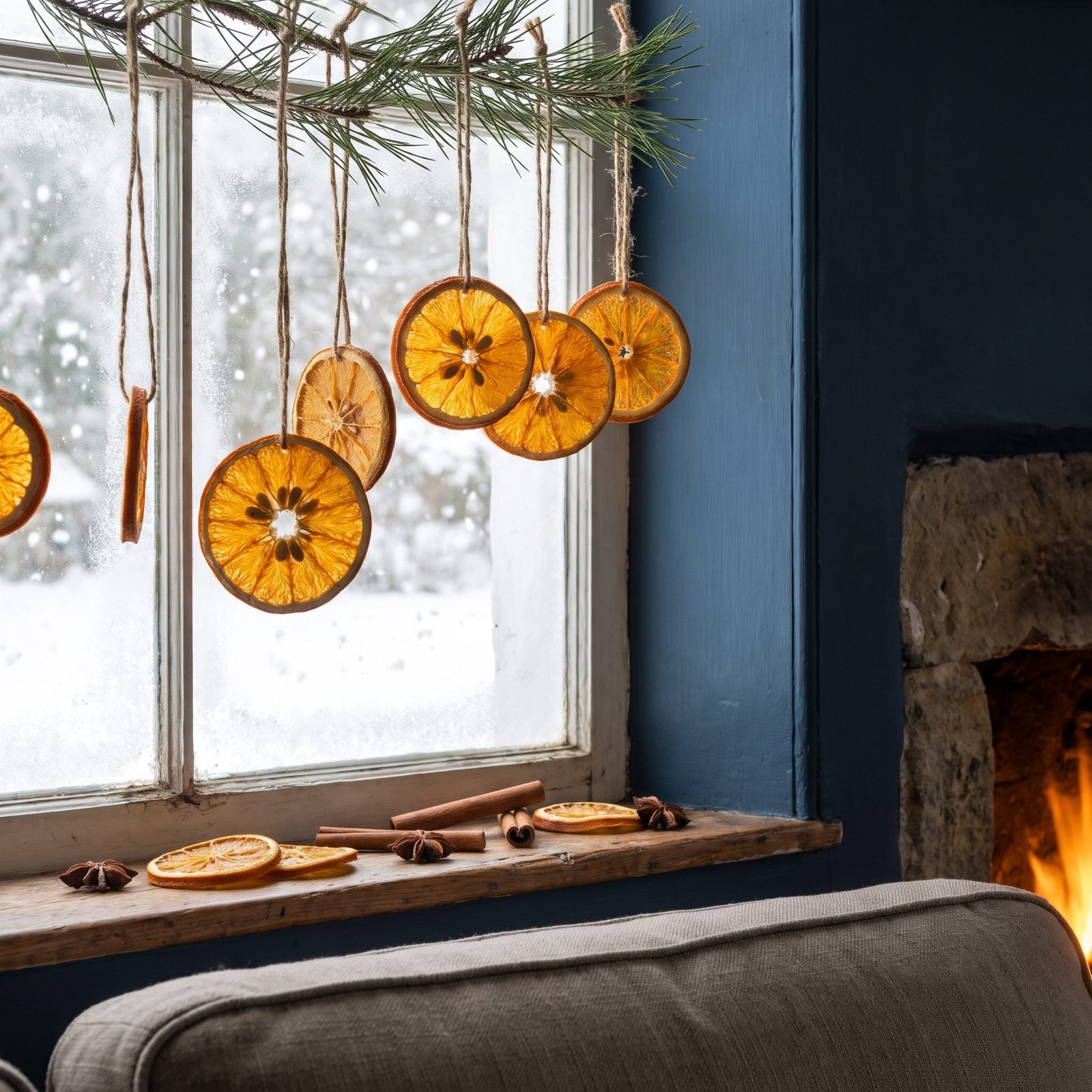
Cut a navel orange into slices about a quarter inch thick, lay them on a rack, and dry them low and slow in the oven until the flesh turns translucent. The smell alone is worth doing it.
Thread twine through the peel and hang them where the light catches. Backlit by a window or the fire, a dried slice glows amber like a little pane of stained glass. Tuck a cinnamon stick behind one and the whole tree starts to smell like the season, no candle required.
45. Make Colorful Paper Chains by the Fire
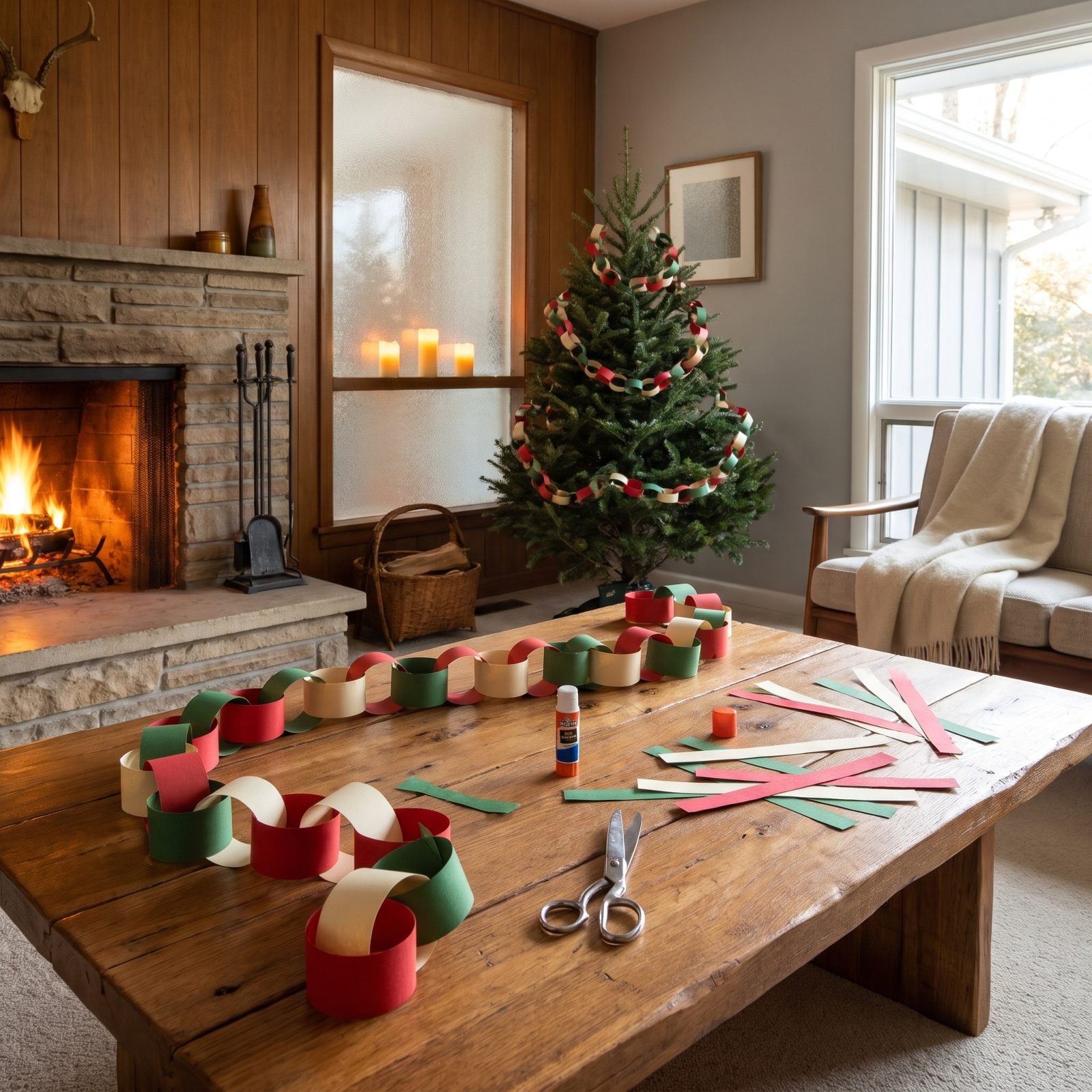
The humblest tradition on this list — and the one kids fight over. Strips of colored paper, a loop, a dab of glue, repeat. A toddler can do it badly and still be proud of it, which is exactly the point.
Count the loops if you want an Advent chain, then tear one off each day until Christmas morning. There’s a reason this one has outlasted a century of fancier decorations. It costs almost nothing and buys a whole quiet afternoon.
44. Craft Cornhusk Angels by Hand
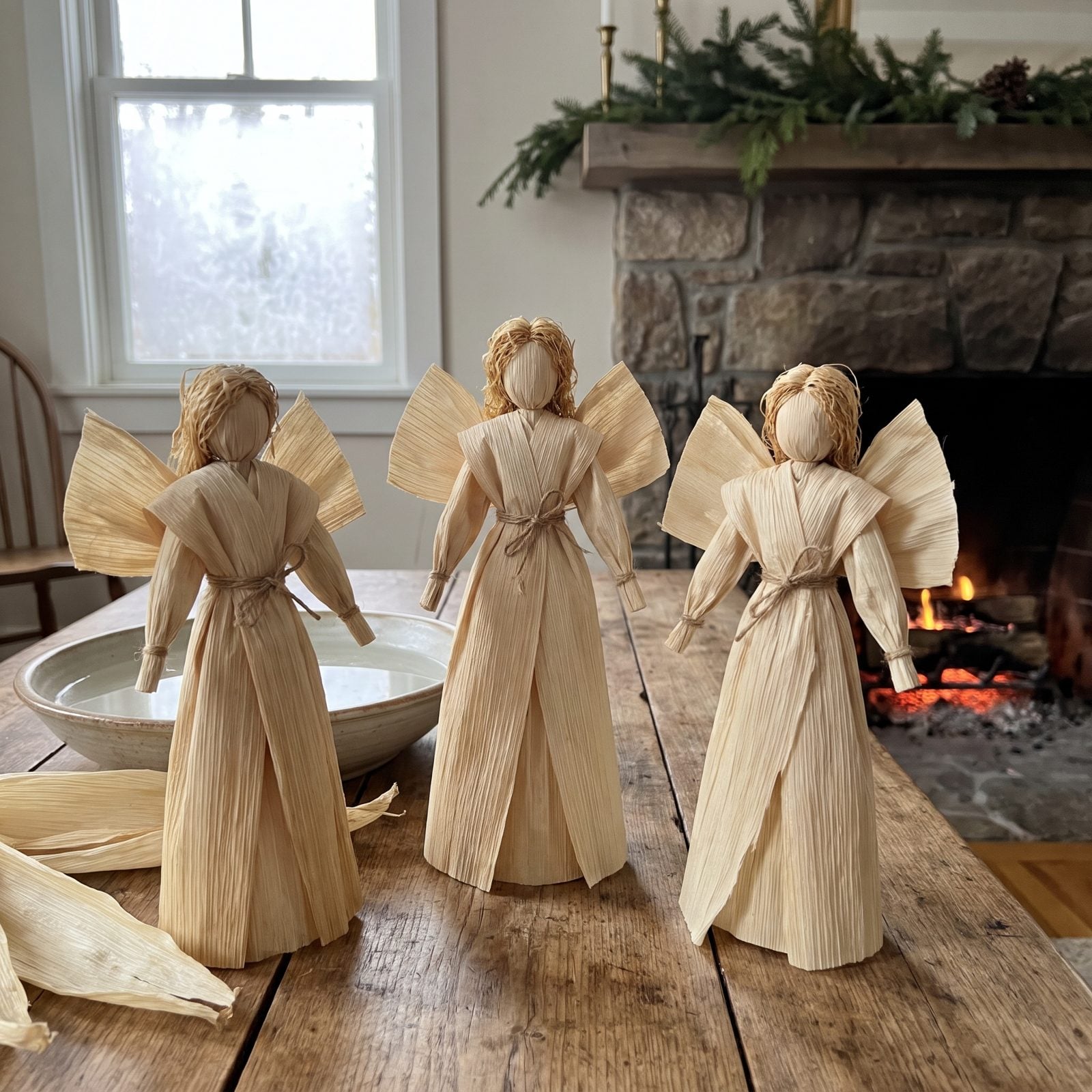
Cornhusk angels go back to frontier homesteads, where people made Christmas out of whatever the farm left behind. Soak dried husks in warm water until they’re pliable, fold them into a body and wings, tie off the waist and neck with thread, then let them dry into shape.
No two come out the same, which is the charm. One always leans like it’s had a long night. Set a few along the mantel or wire a tiny one to a branch.
43. Punch Christmas Stars From Tin
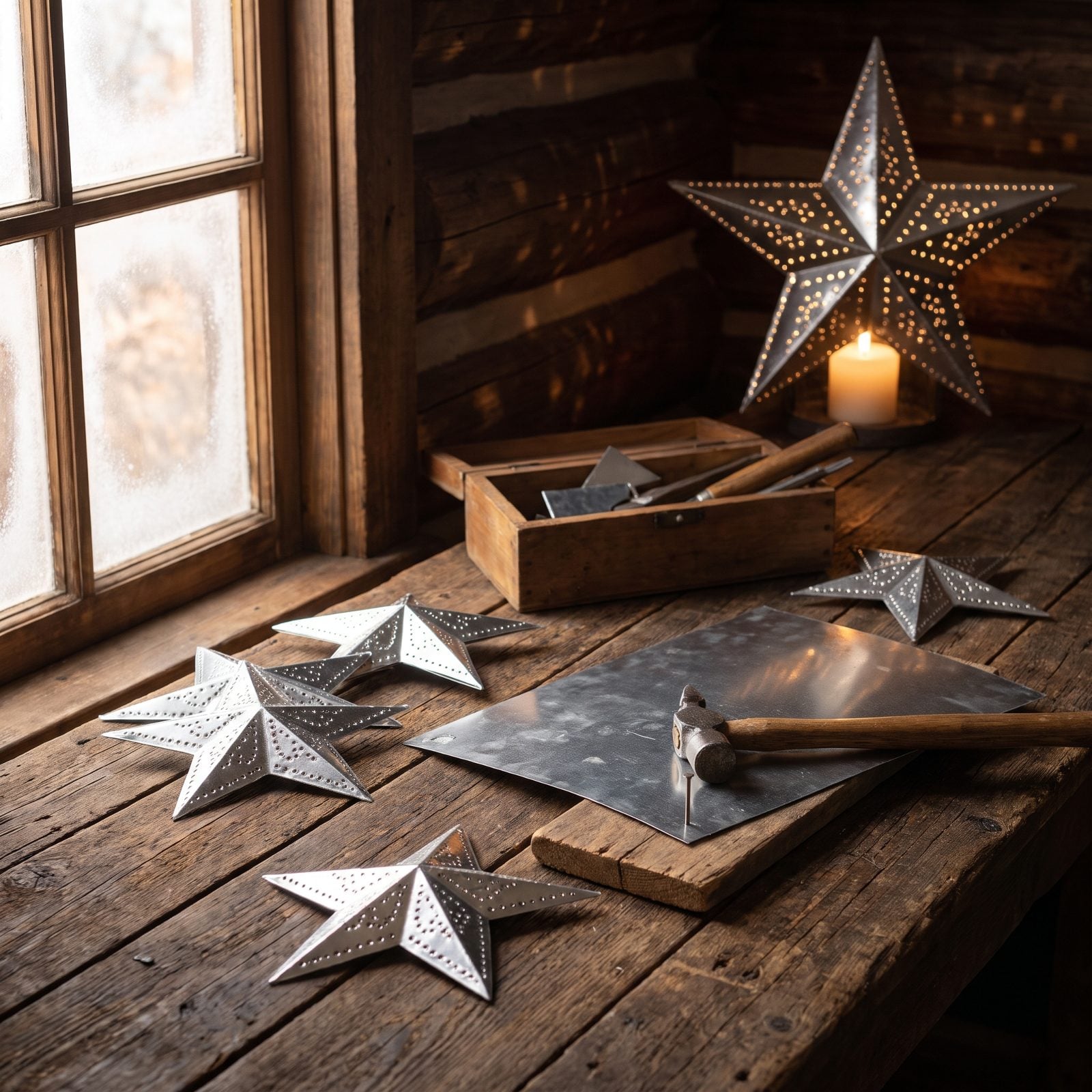
Punched tin is old mountain-cabin work, the same technique behind pie safes and lanterns. Lay a thin sheet of tin or a cleaned flat can over a scrap of soft wood, mark a star, and tap a nail through along the lines to pierce a pattern of holes.
Hung near a window or a candle, the light comes through in pinpricks like a constellation. Loud, satisfying work — and wear gloves. Cut tin edges are sharp enough to remind you they mean business.
42. Spread a Handmade Quilted Tree Skirt
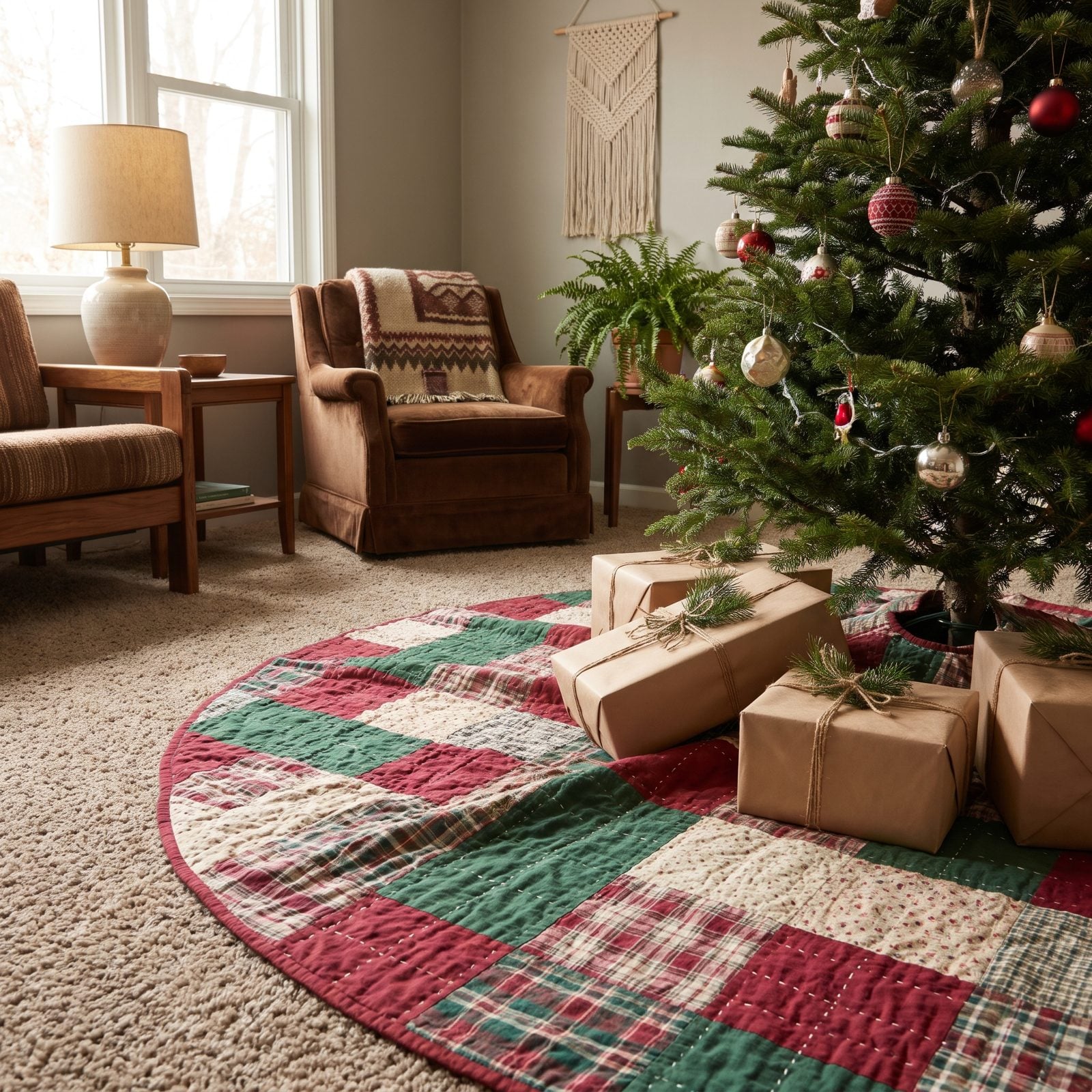
A tree skirt is one of the few holiday projects a beginner can actually finish. It’s a circle. Patchwork squares, a simple batting layer, and a split up one side so it wraps the trunk — imperfect seams vanish under a week of gifts anyway.
Piece it from fabric that already means something: an old flannel shirt, a worn-out quilt past saving, scraps from projects you half-remember. The skirt turns into a quiet record of the house, and it comes back out every December to say so.
41. Top the Tree With a Homemade Star
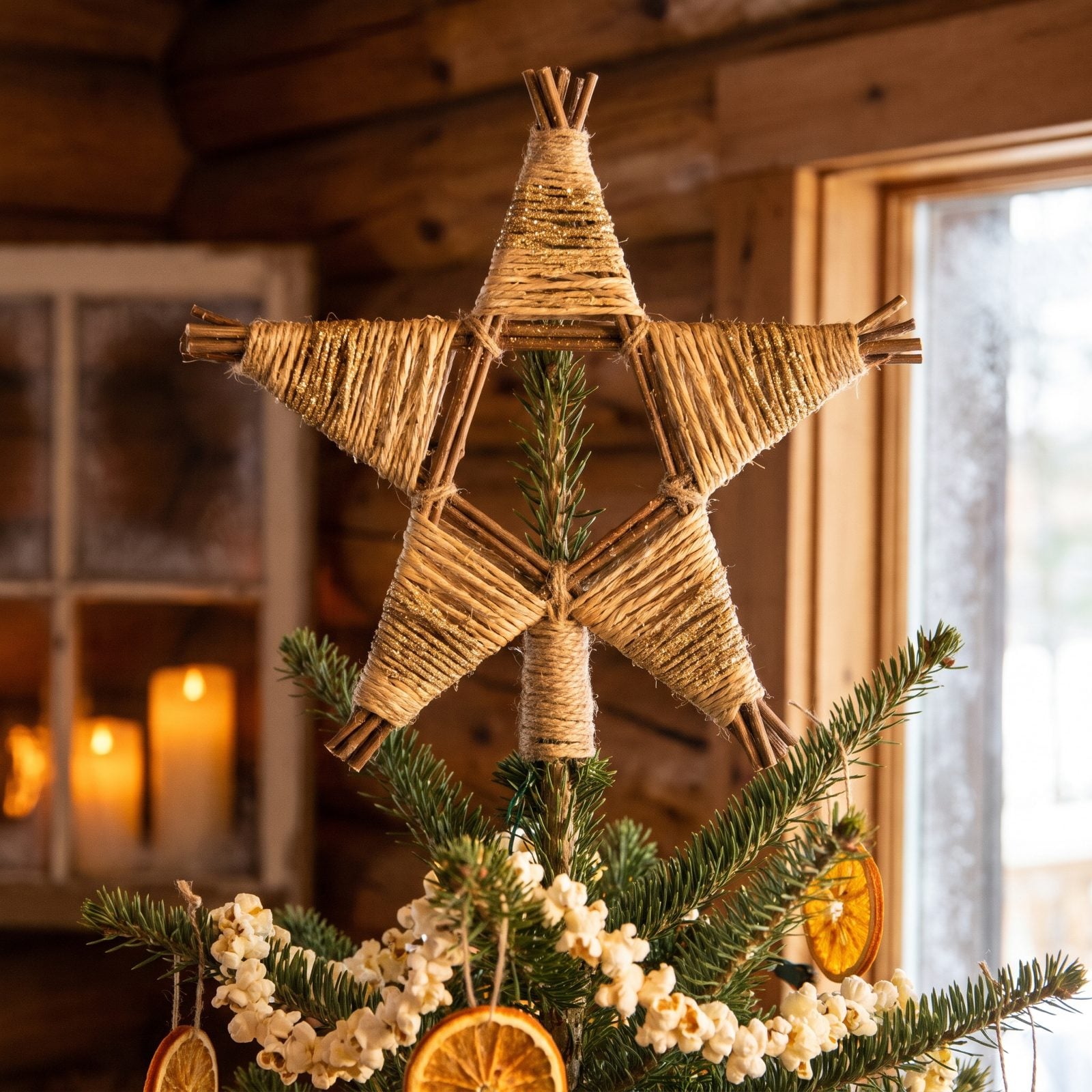
The thing on top of the tree carries more weight than it should, and a store-bought plastic one never earns it. A homemade star does.
Bind five straight twigs or dried wheat stalks into points with twine, or bend heavy wire into shape and wrap it in straw. Dust it with a little gold if you want. It won’t be symmetrical — and that’s fine. The slightly crooked one you made beats the flawless one you bought, every single year, and it’s the piece the kids will fight to put up.
40. Place a Candle in Every Window
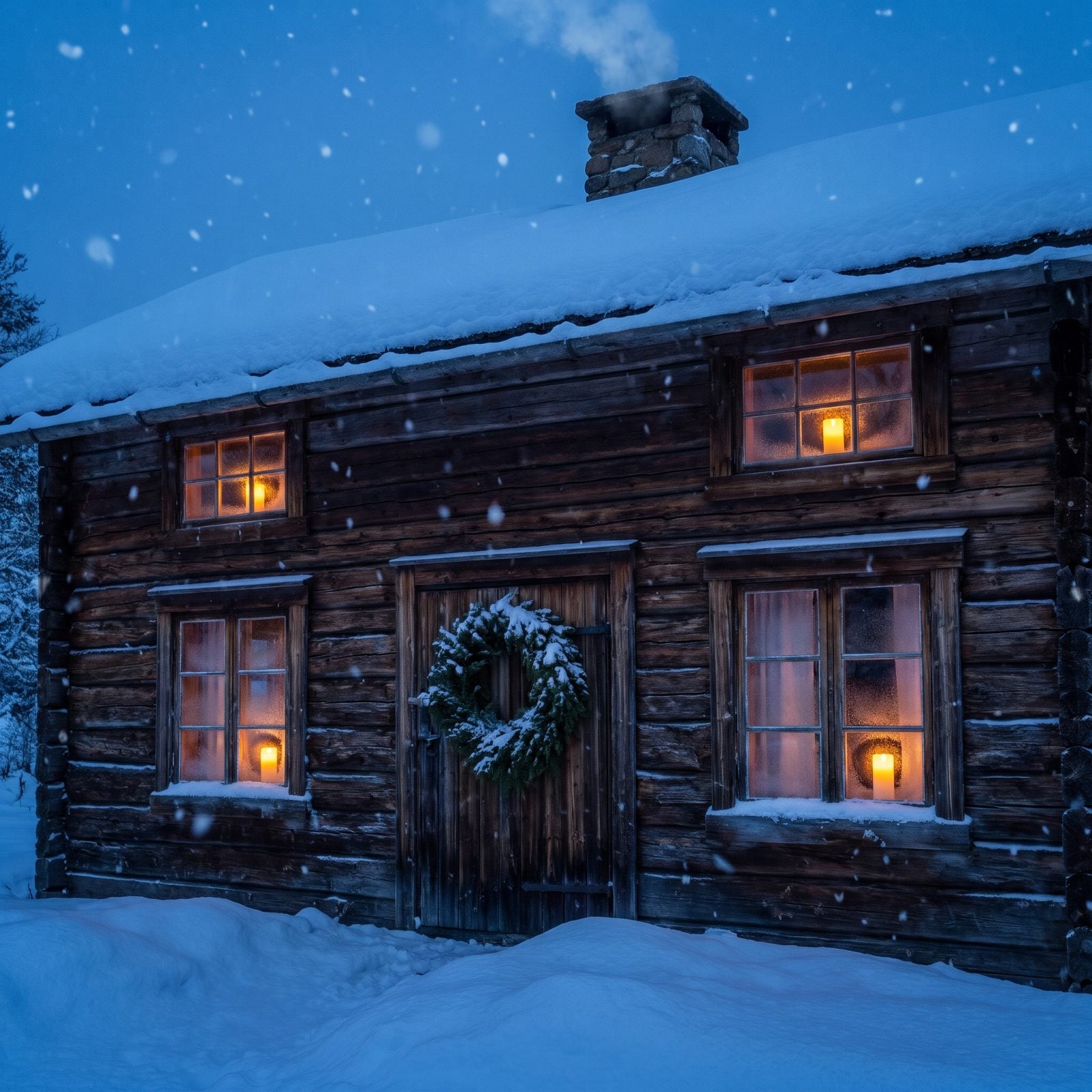
A single light in each window is the oldest welcome there is. It began as a signal — a candle set out to say travelers were safe to stop here — and it still reads that way from a snowy road.
Skip real flames near curtains and greenery. Battery LED candles with a flicker and a dusk timer give you the same warm glow and switch themselves on when the light drops. From outside at blue hour, a cabin with a light in every window looks like the one place in the cold worth walking toward.
39. Gather Fresh Greenery for the Mantel
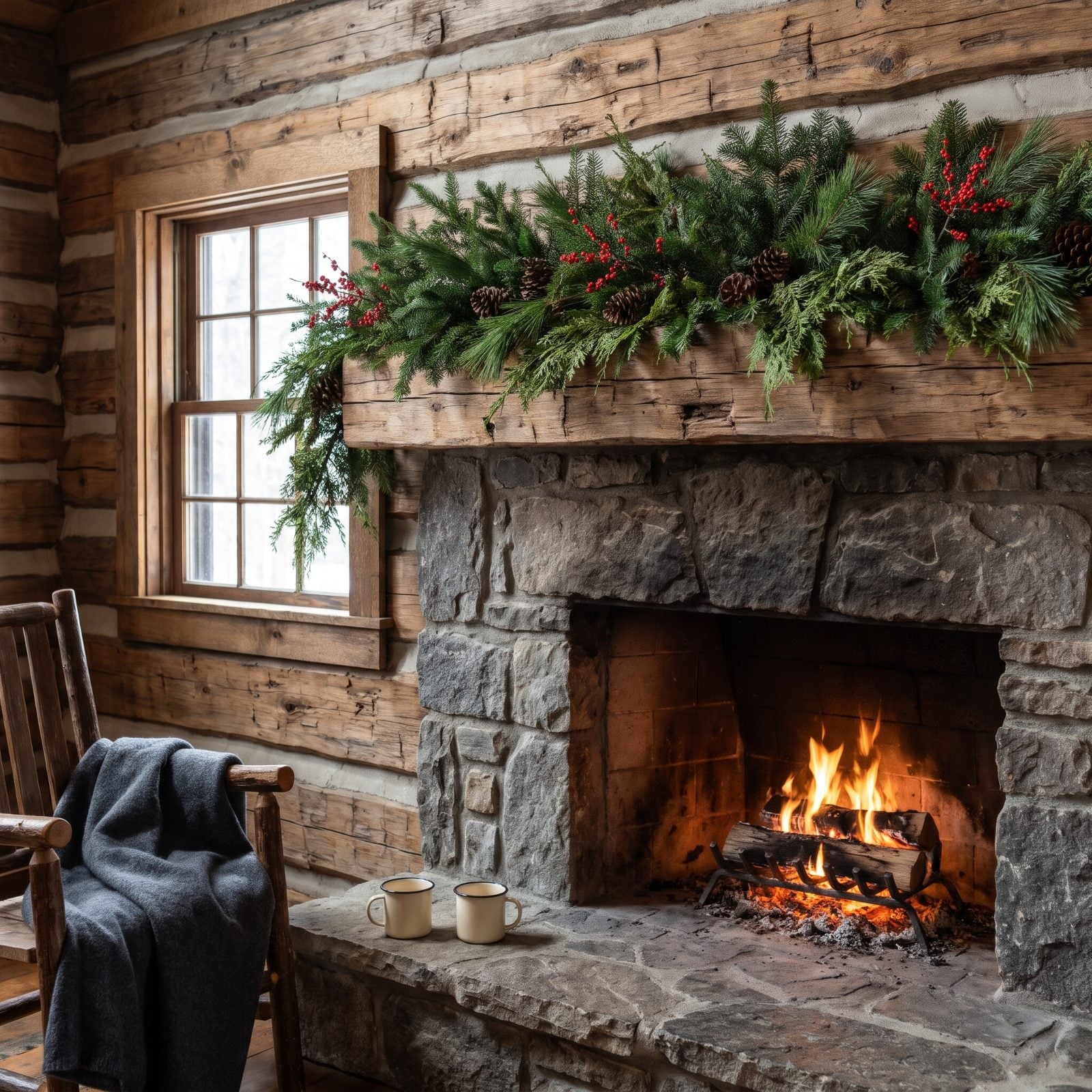
Cut it yourself and it lasts. Boughs you snip from your own woodlot — or gather legally from a managed forest with a permit — hold their needles for weeks, while the pre-made garland from the store is already drying out by the time you slit the box open.
Balsam fir is the one you want for scent. White pine gives you that soft, drapey look, and cedar adds a little blue-grey if you’re after it. Lay them thick across the mantel, overlapping toward the center, and tuck pinecones in the gaps.
38. Hang Mistletoe Above the Cabin Door
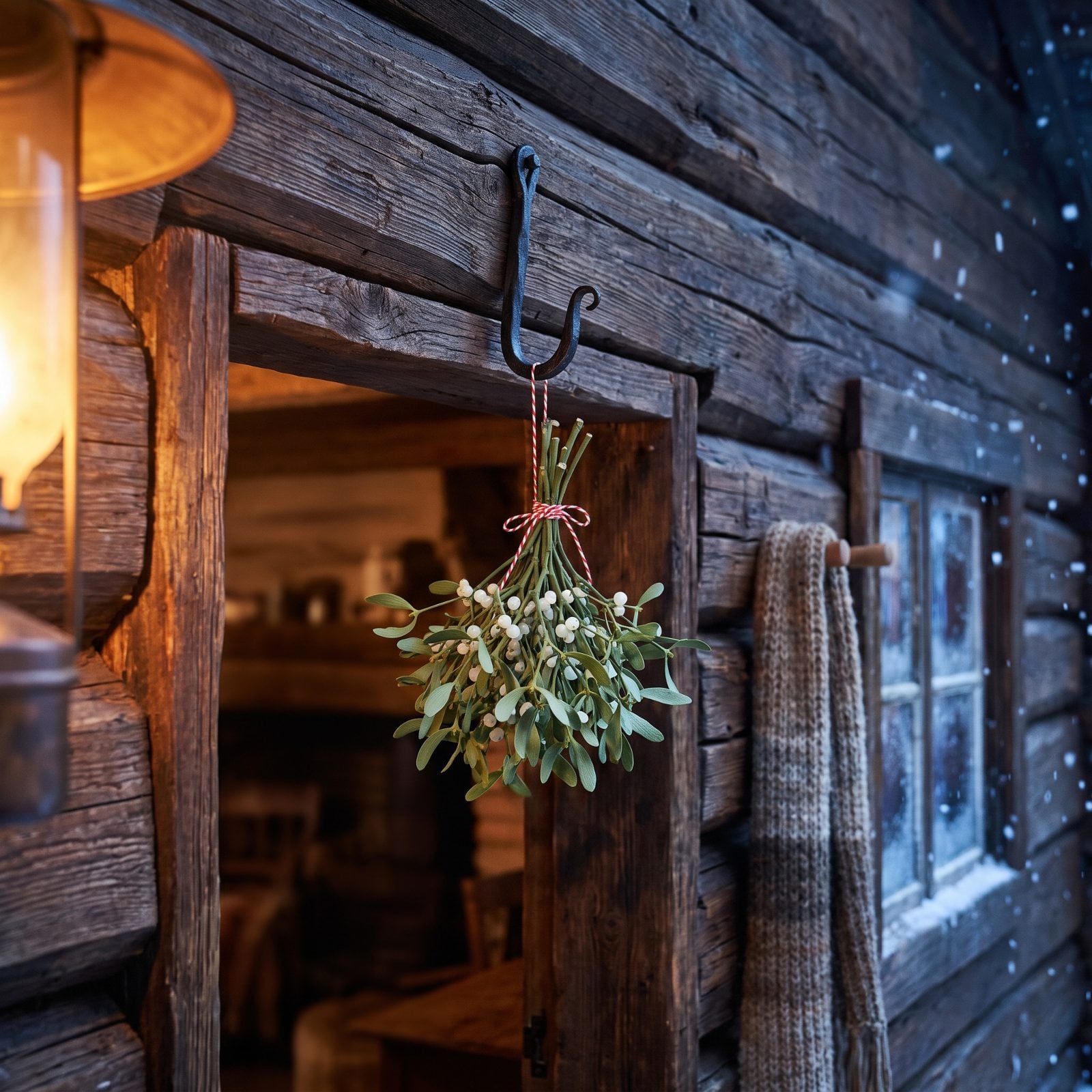
Most of what gets sold as mistletoe is plastic, and everyone can tell. The real thing has waxy pale-green leaves and small white berries, and it grows as a parasite high in oak and apple trees across much of the country.
Hang it where people actually pass under it — the doorway between the kitchen and the main room is the classic spot — not stuffed in some corner nobody walks through.
And one caution worth saying plainly. The berries are toxic if eaten, so keep it up high if you’ve got small grandkids or a dog that jumps.
37. Decorate an Outdoor Tree for the Birds
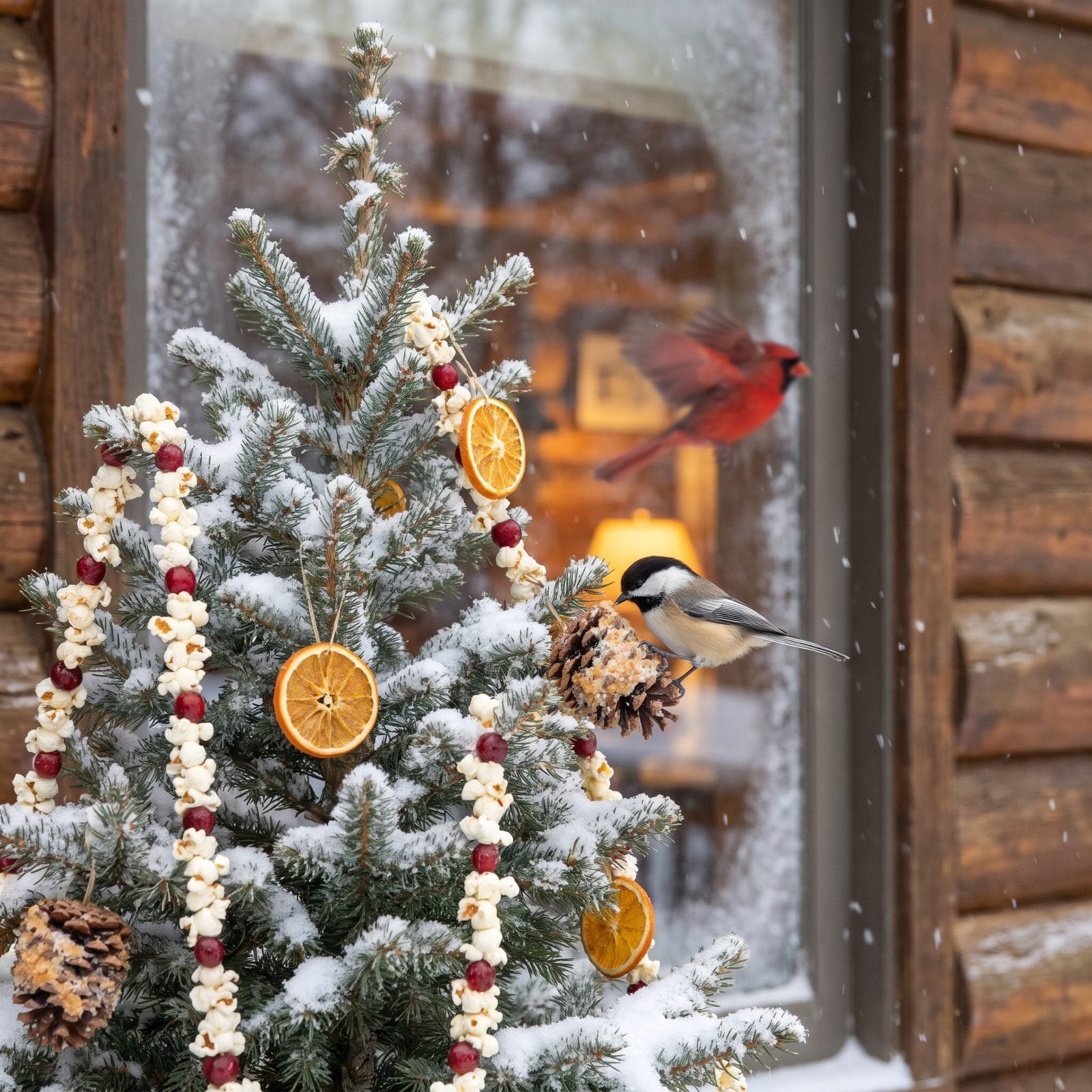
This one keeps giving long after the holiday ends. String popcorn and cranberries, slice oranges and let them dry, and smear pinecones with suet or plain peanut butter rolled in seed. Hang it all on a spruce or pine within view of a window.
Chickadees show up first. Then nuthatches, cardinals, and if you’re lucky, a flock of cedar waxwings working the cranberries. Skip anything salted or chocolate-coated, and leave off the plastic garland that birds can tangle in.
36. Display a Simple Wooden Nativity
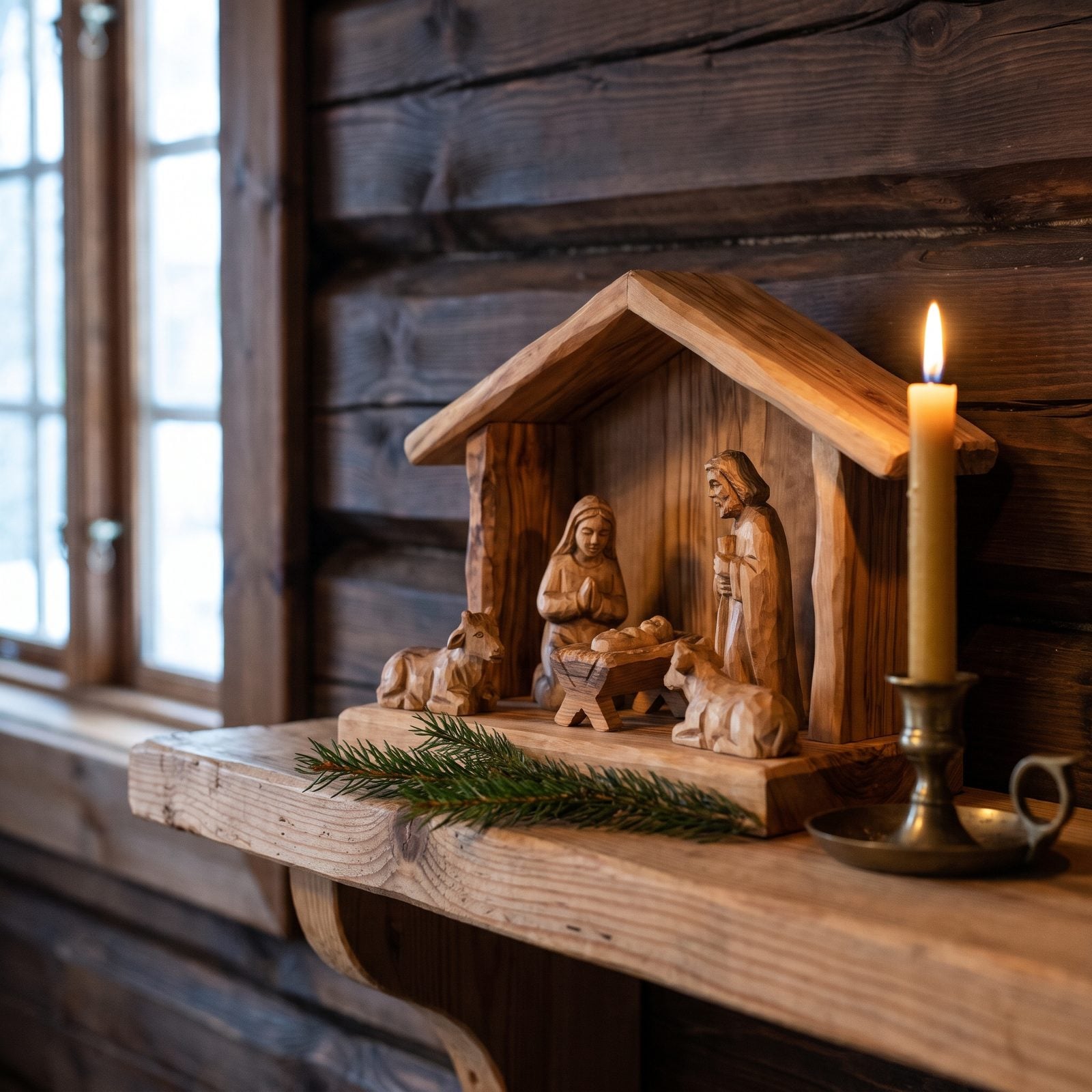
Skip the glittered ceramic set. A plain carved-wood nativity, the kind with visible tool marks and no paint, says more with less. Olive wood from the Holy Land is the traditional choice, but a set whittled from local basswood or pine carries its own honesty.
Set it low, where kids can move the figures around. That’s half the point. A nativity you can touch becomes a story children tell themselves, not a decoration they’re told not to break.
35. Hang Hand-Knit Stockings by the Hearth
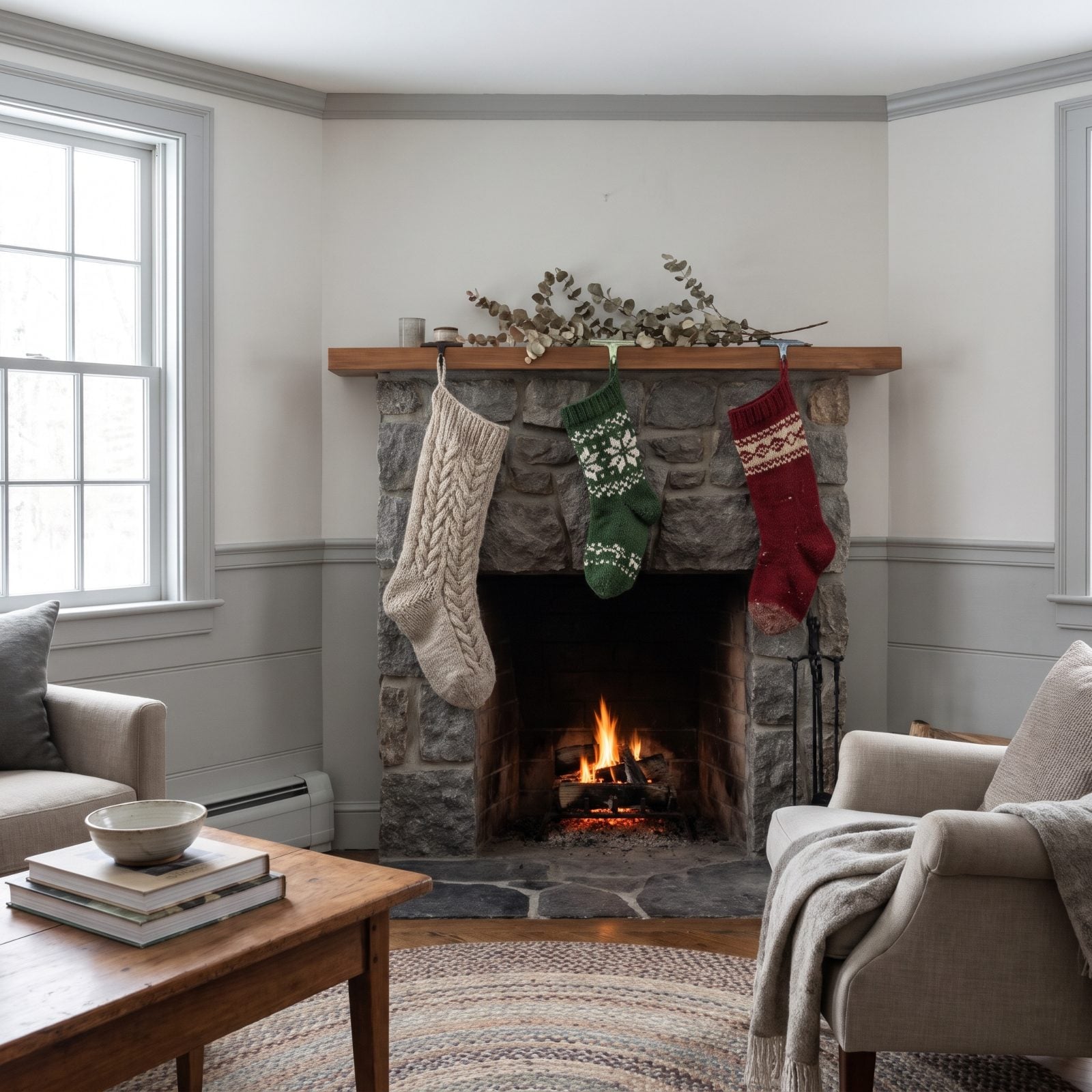
A store-bought stocking is a felt pocket. A hand-knit one is somebody’s winter evenings turned into wool.
They don’t have to match. The lumpy one Grandma made in 1987 hanging next to a newer cream Fair Isle, next to a kid’s first wobbly attempt, tells the whole family history in a row along the mantel. That mismatch is the charm, not a flaw to fix.
34. Make Clove-Studded Orange Pomanders
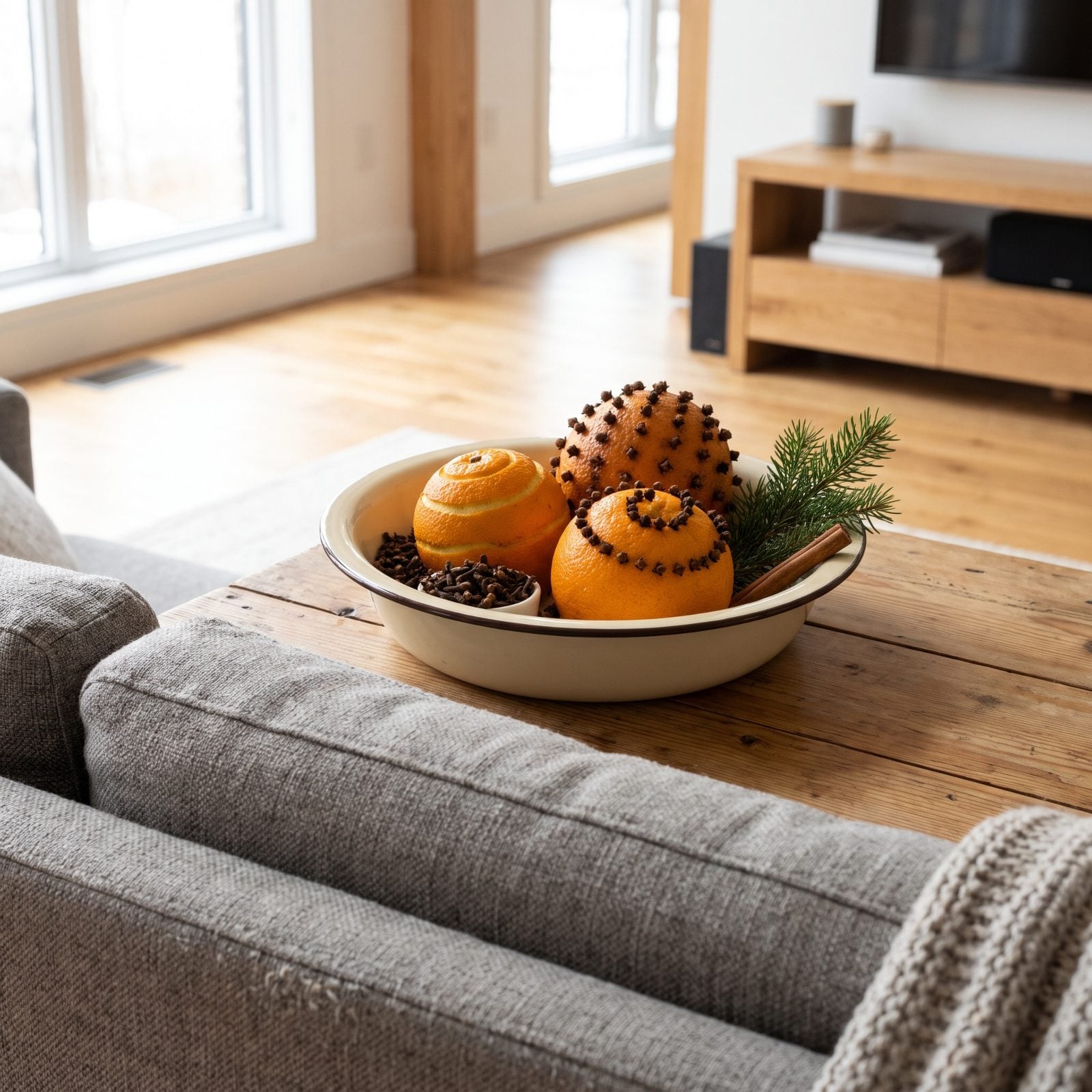
Oldest air freshener there is. Press whole cloves into an orange, ring after ring, and the fruit slowly dries into a hard, spiced ball that scents a room for months. People were doing this in medieval halls to mask less pleasant smells, and the technique hasn’t budged since.
Roll the finished orange in cinnamon and orrisroot if you want it to cure harder and keep for years. Slow, fiddly work that keeps hands busy by the fire. Start each hole with a paring knife or toothpick and you’ll save your thumbs.
33. Light an Advent Candle Each Evening
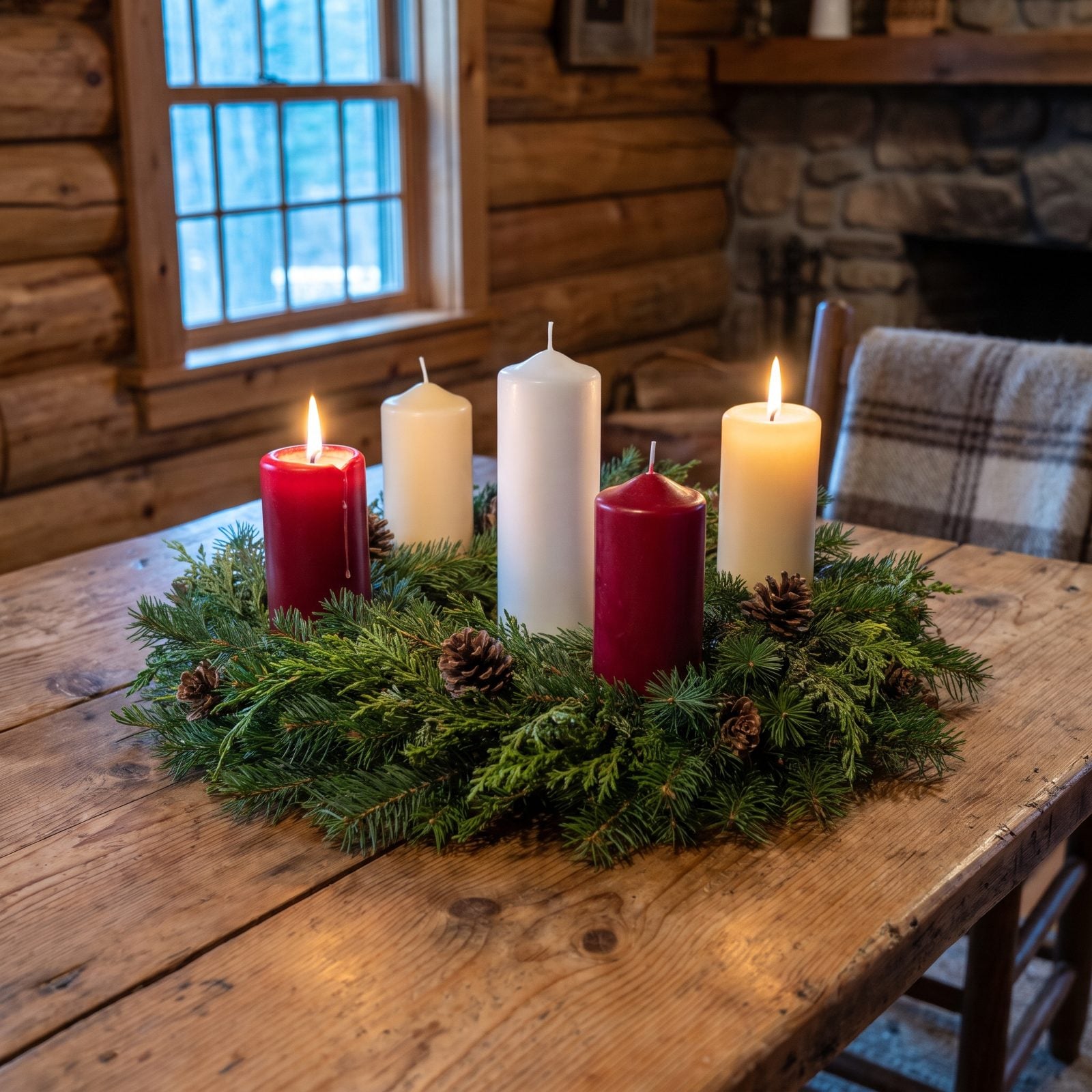
The ritual matters more than the theology. Lighting one more candle each week of December gives the month a slow, measured count toward Christmas that no calendar app on your phone can match.
Build the wreath from the same fresh greenery you cut for the mantel. Keep the flames well clear of the needles, and never leave them burning in an empty room. A little attention is part of the practice anyway.
32. Choose and Burn a Traditional Yule Log
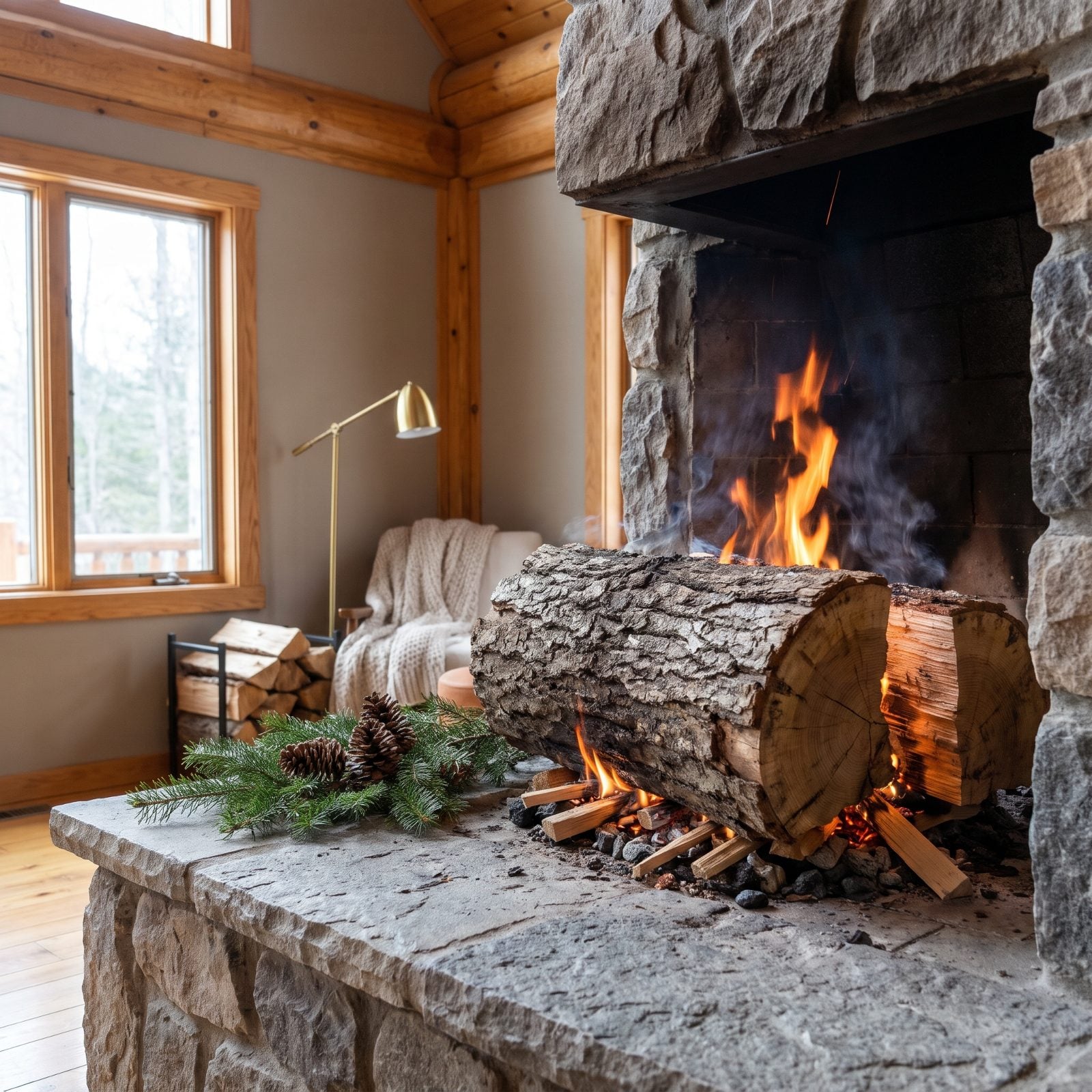
Pick the log in advance, not the night of. A dense hardwood like oak or hickory, well-seasoned and split, burns long and slow the way the tradition intends. Green wood hisses and dies. A punky old log is gone in twenty minutes.
The old custom held that a piece of this year’s log, saved and dried, should light next year’s fire. A nice thread to run from one Christmas to the next.
The Yule log isn’t about the fire. It’s about keeping one small ember of this year alive long enough to start the next one.
31. Read the Christmas Story by Firelight
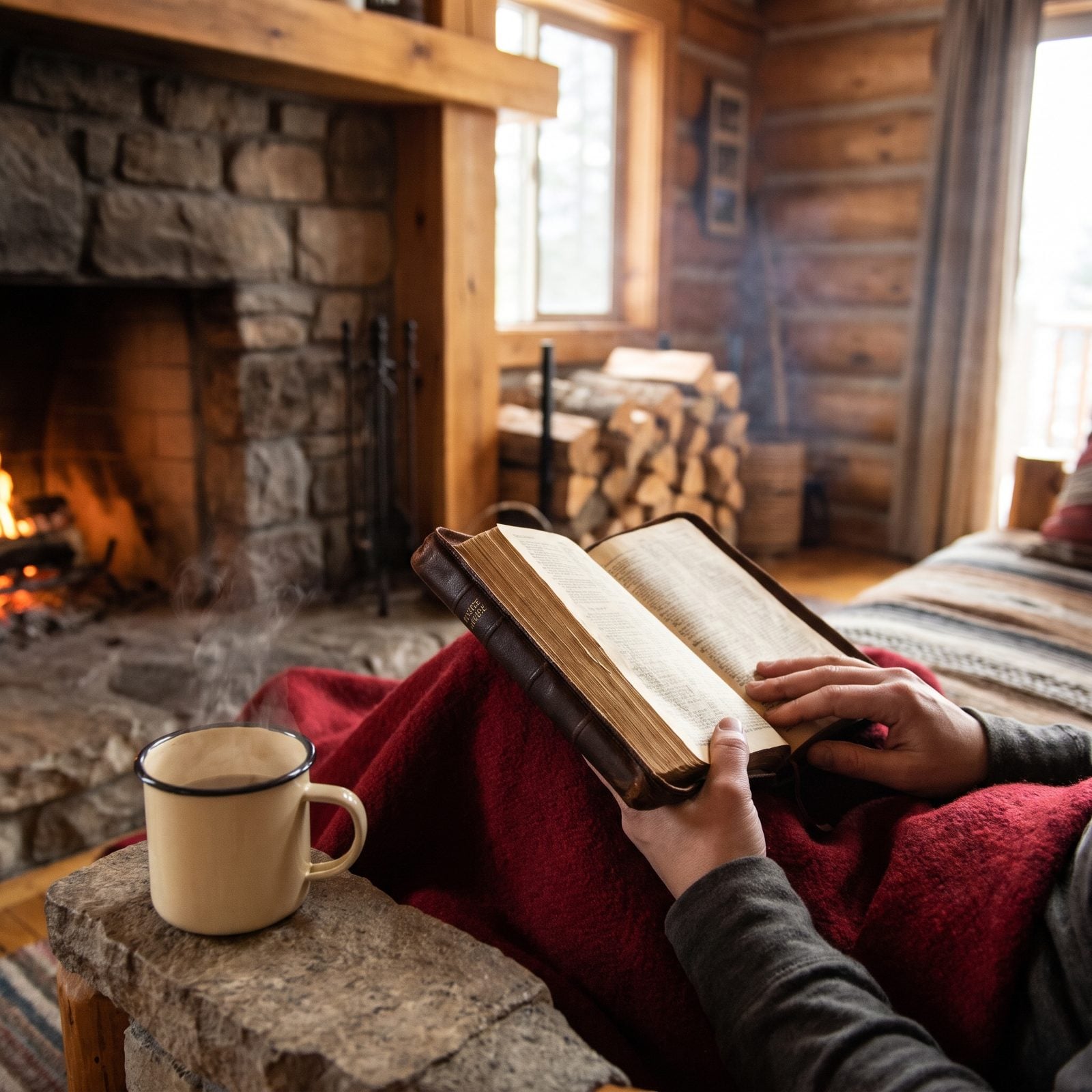
Firelight isn’t the easiest light to read by, and the flicker can make the page dance, but the warm low light pulls everyone in toward the hearth and settles the room.
Luke’s account of the shepherds is what most families read on Christmas Eve — short enough to hold attention, old enough that the words carry weight. Pass the book around so each person reads a few verses. The kids remember it longer that way.
30. Read The Night Before Christmas Aloud
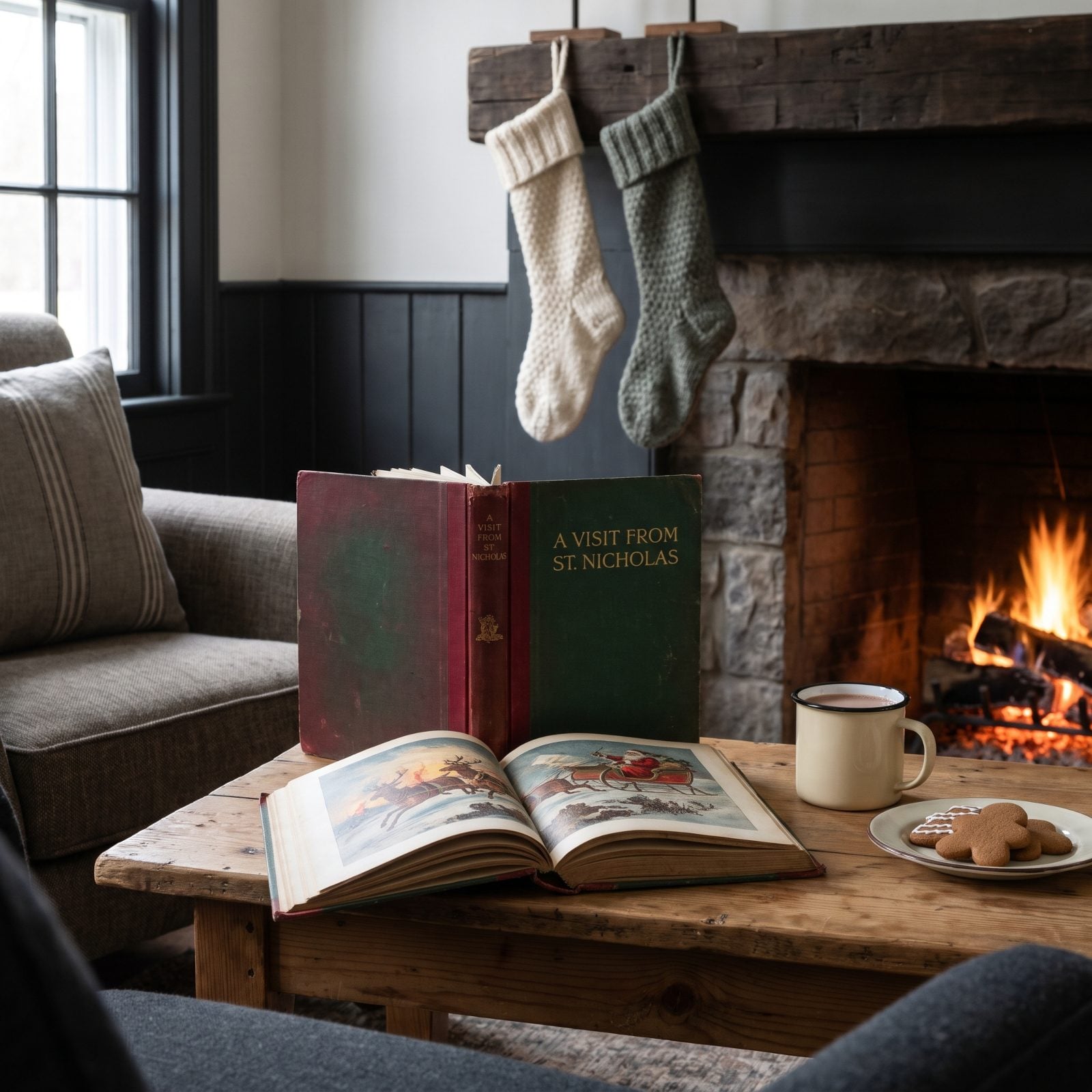
Everyone knows the first line, and that’s exactly why it works. Read “A Visit from St. Nicholas” aloud on Christmas Eve and the youngest ones mouth along to the parts they’ve memorized without ever meaning to learn them.
First published anonymously in a Troy, New York newspaper in 1823, it’s the poem that shaped how Americans picture Santa, right down to the eight reindeer and their names. Read it the same night every year and it becomes the thing that marks the day.
29. Send Handwritten Christmas Cards
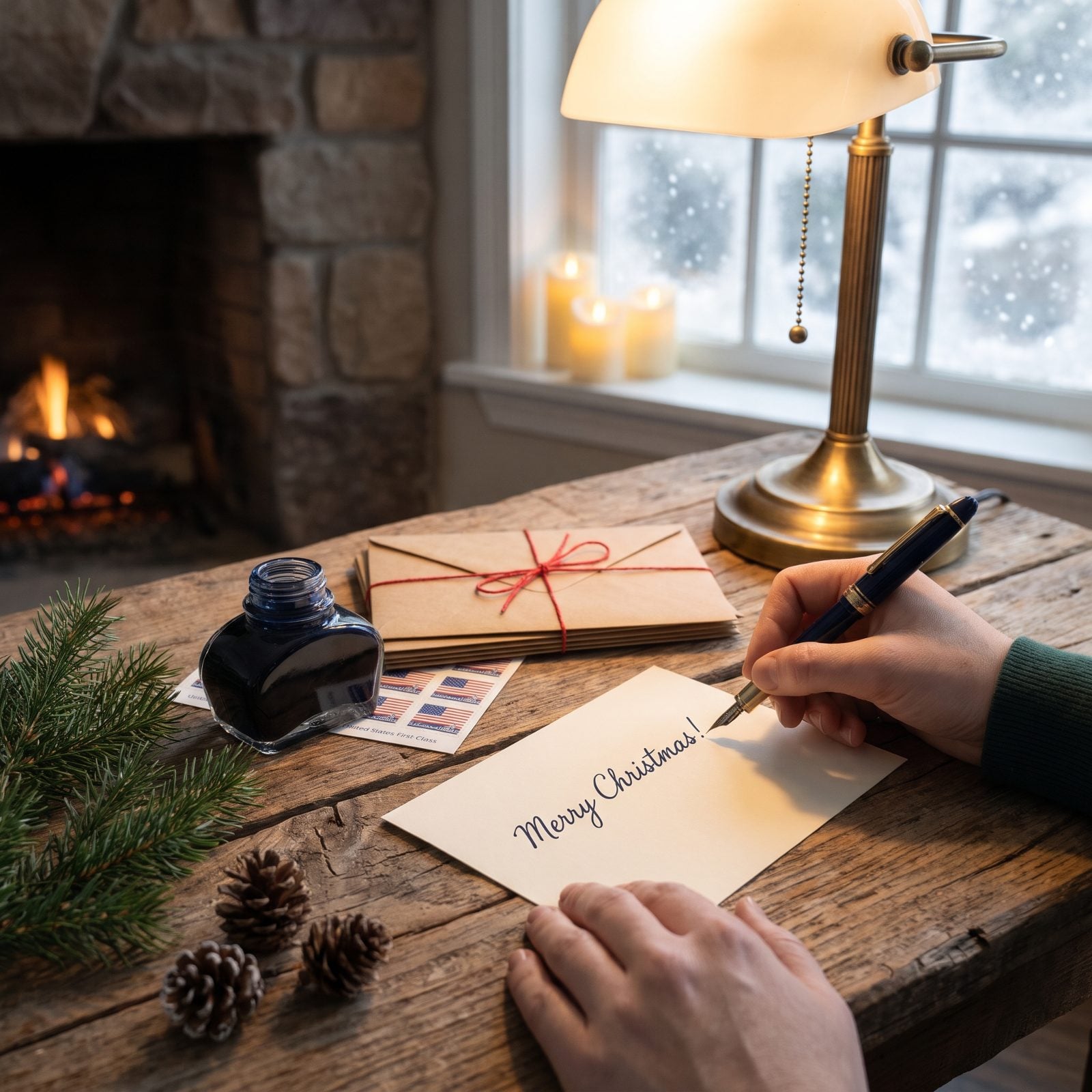
A text message says I remembered you existed for four seconds. A handwritten card says I sat down, thought about you, and used my actual hand. People can tell the difference instantly.
You don’t need good penmanship. I write like a startled raccoon and nobody has ever complained. What matters is one real line that isn’t the pre-printed verse — reference the thing only the two of you know about. The fishing trip. The bad casserole. The dog.
28. Wrap Presents in Brown Paper and Twine
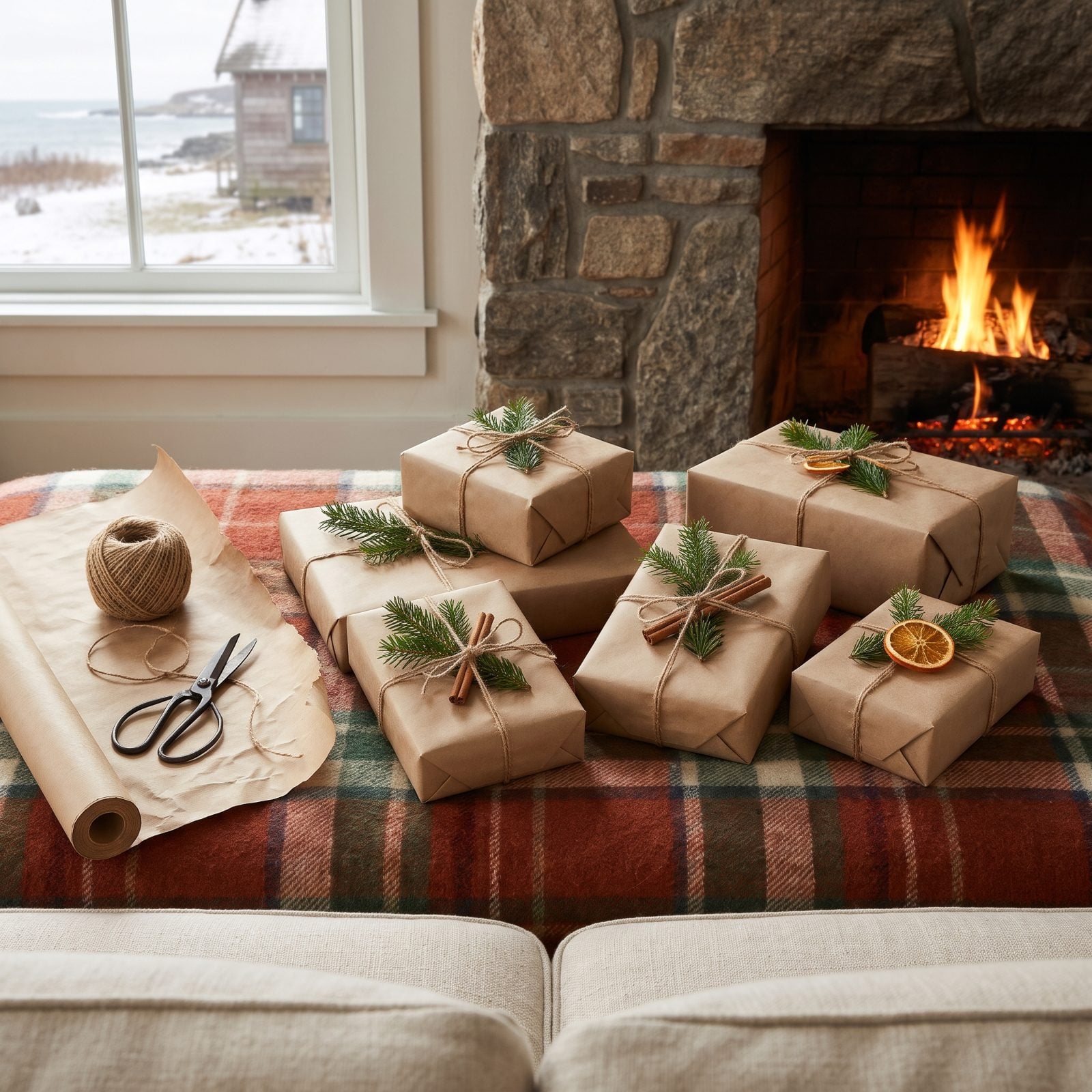
Brown paper is cheaper than wrapping paper and looks ten times better. That’s the whole pitch, and it holds up. A roll of kraft from the hardware store wraps thirty gifts for a few dollars and never clashes with your tree.
The twine does the heavy lifting. Tie it crosswise, snug, and tuck a sprig of cedar or a cinnamon stick under the knot. Suddenly it looks like you tried hard. You didn’t — you just skipped the aisle full of cartoon snowmen.
27. Exchange Gifts Made by Hand
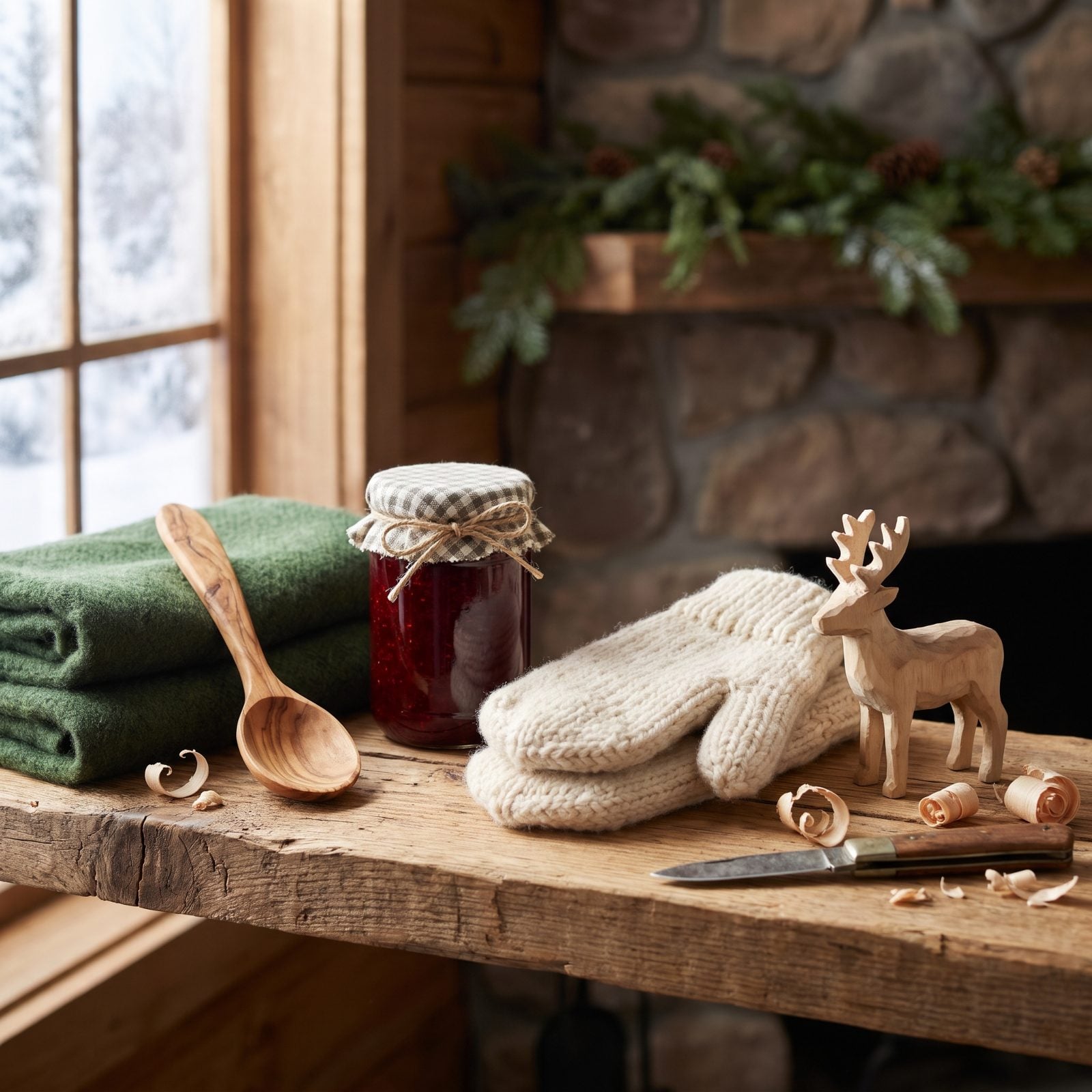
The gift that gets remembered is almost never the expensive one. It’s the wobbly carved spoon, the jar of jam with your name on the lid in marker, the scarf that took four tries.
Handmade gifts carry a strange weight: they hold the hours you spent. The recipient knows you traded part of your life for theirs, and you can’t buy that feeling.
Start small. A loaf of bread counts. A tied fly for the fisherman in the family counts double. Nobody is grading the craftsmanship — they’re reading the time.
26. Deliver Christmas Baskets to the Neighbors
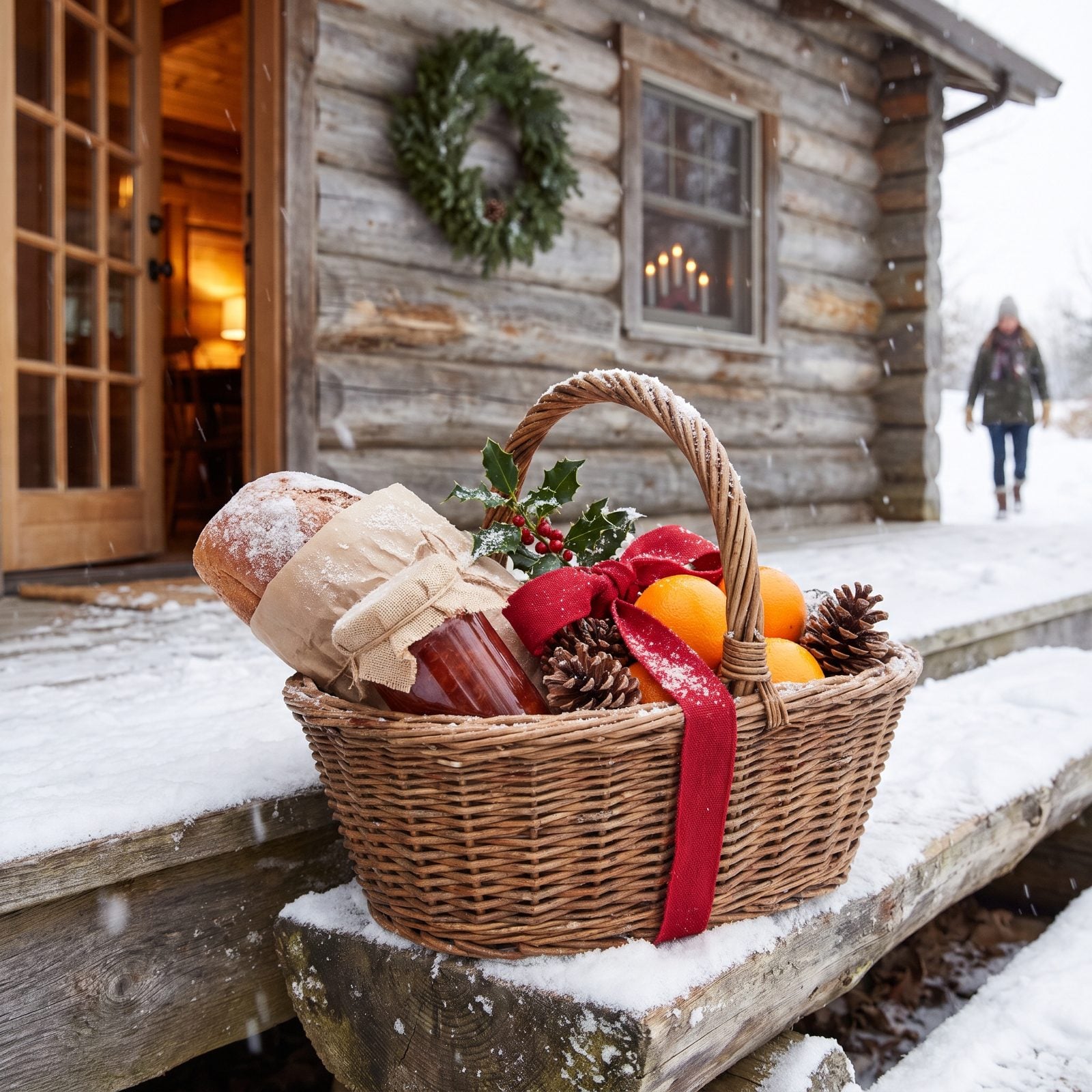
You know the neighbor who waves but you’ve never actually talked to. A basket fixes that in about ninety seconds on their porch.
It doesn’t need to be fancy — half a loaf of bread, a jar of something, a handful of oranges, maybe a card. The act of walking it over in the cold is the gift. The food is just the excuse.
Hit the people living alone first. The widower down the road. The couple whose kids moved out of state. A knock on Christmas Eve means more to them than you’ll ever know, and it costs you a short walk through the snow.
25. Fill Stockings With Oranges, Nuts and Small Toys
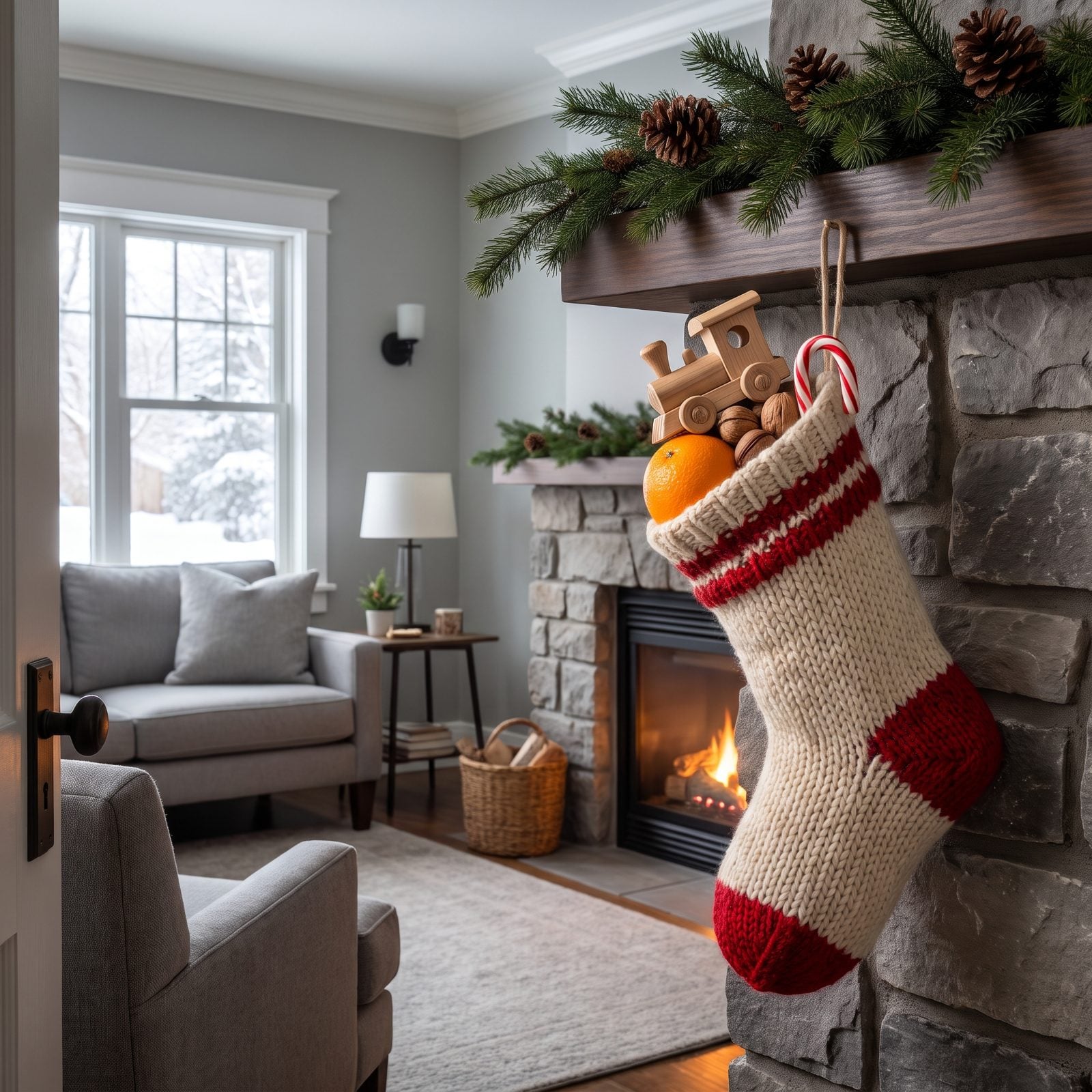
An orange in the toe of a stocking used to mean something. In lean years it was a real treasure — a bright round sun in the dead of winter, back when fresh fruit was rare and dear.
Keep the tradition even now that oranges cost nothing. The point isn’t scarcity. It’s the ritual of reaching deep into the stocking and finding that cold weight at the bottom.
Fill the rest with walnuts in the shell, a few peppermints, a whittled whistle, a pocketknife for the older kids. Small, useful, no screens. A stocking should take two minutes to empty and all morning to enjoy.
24. Write Letters to Santa by Hand
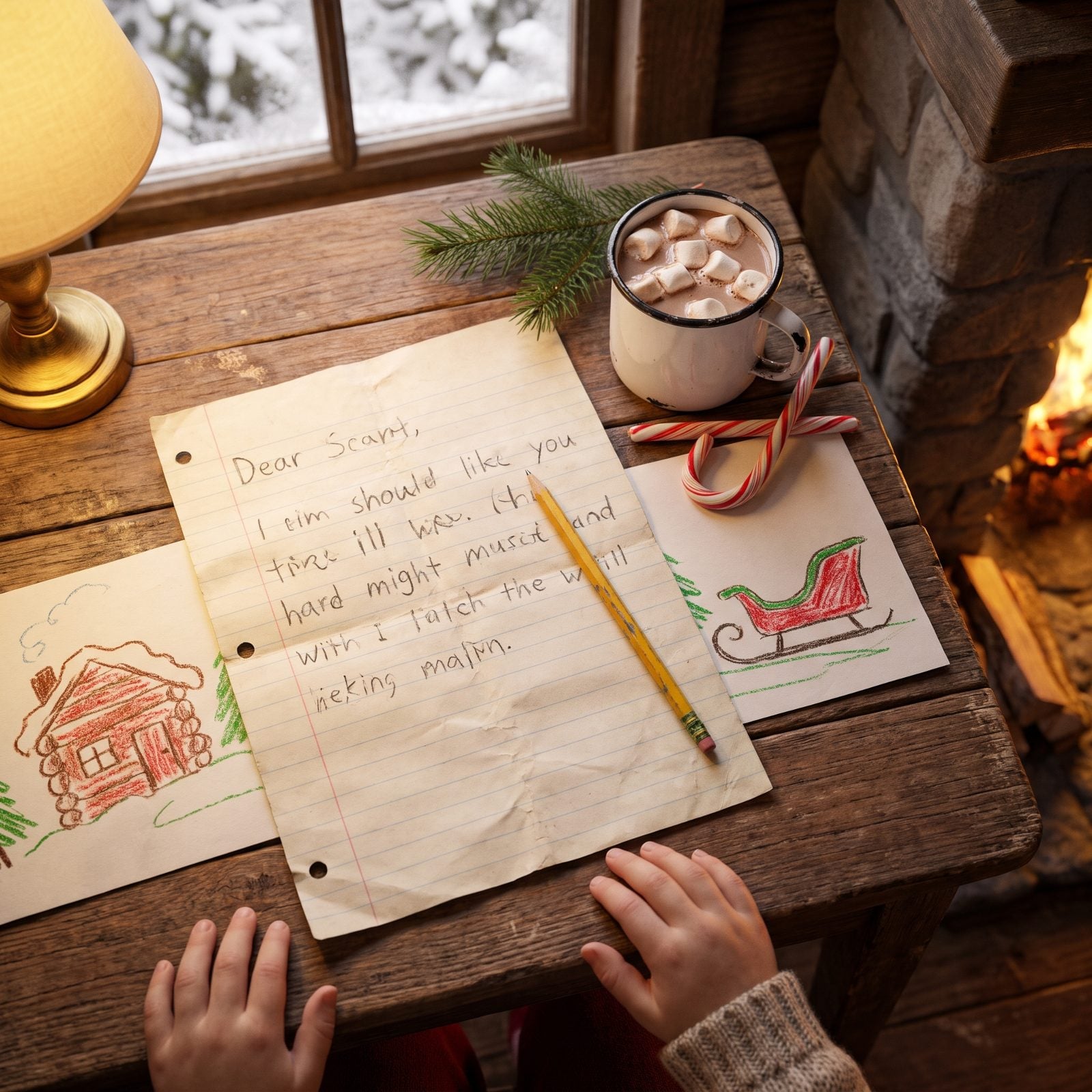
A letter to Santa on a screen is just not the same animal. The crooked pencil lines, the backwards letters, the drawing of a reindeer that looks like a dog — that’s the keepsake.
Save them. Tuck each year’s letter in a box. Twenty years later that box is worth more than anything that ever sat under the tree.
23. Attend a Candlelight Christmas Service
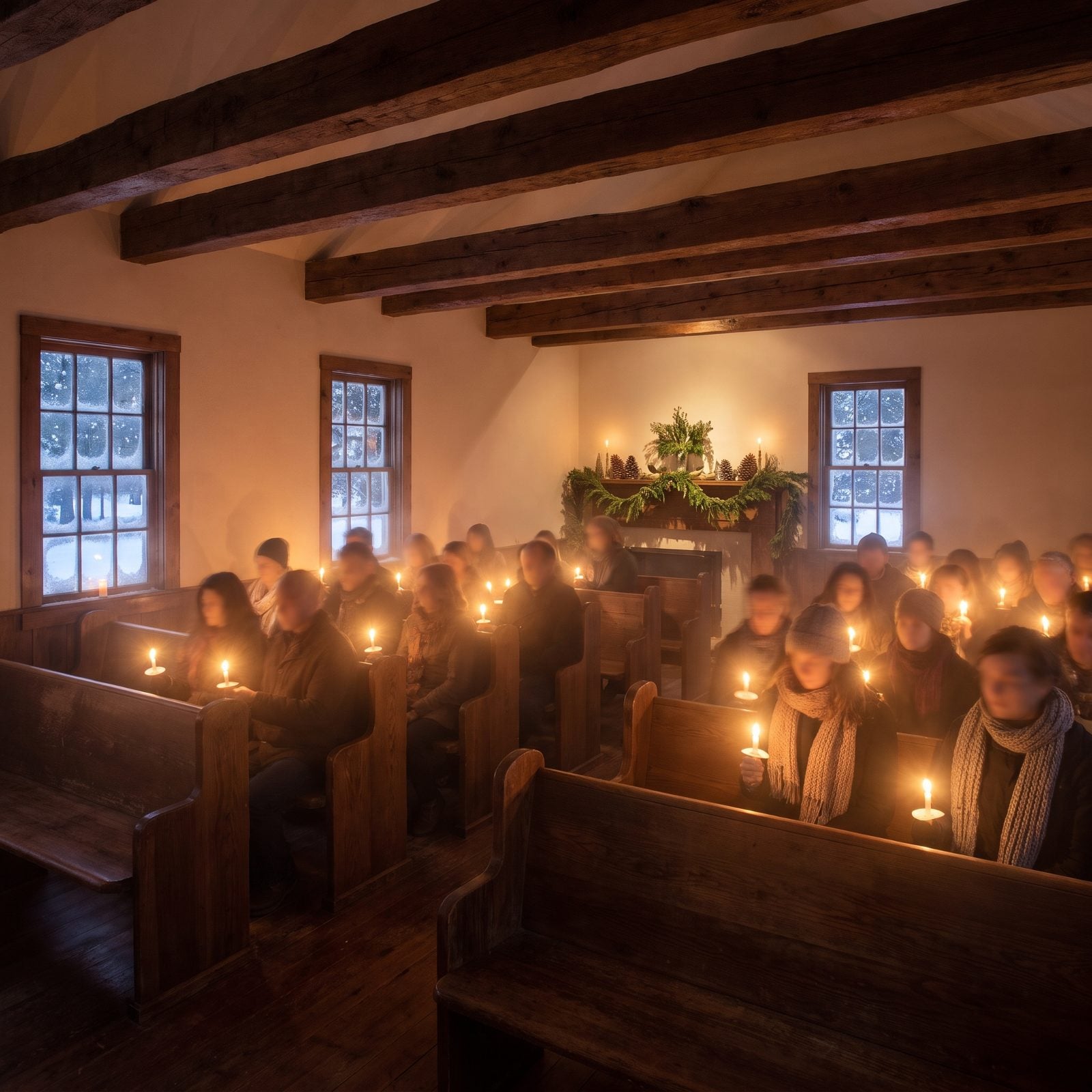
There’s a moment in a candlelight service when the lights go down and the flame passes from one person to the next until the whole room is glowing. You feel it in your chest whether you’re religious or not.
Small country chapels do this best. No projector screens, no rock band — just voices, a few candles, and a room full of people who mostly know each other.
Go even if you haven’t been in years. Nobody’s checking your attendance. Sit in the back, hold the candle, let the quiet do its work.
22. Deliver Split Firewood to Someone Who Needs It
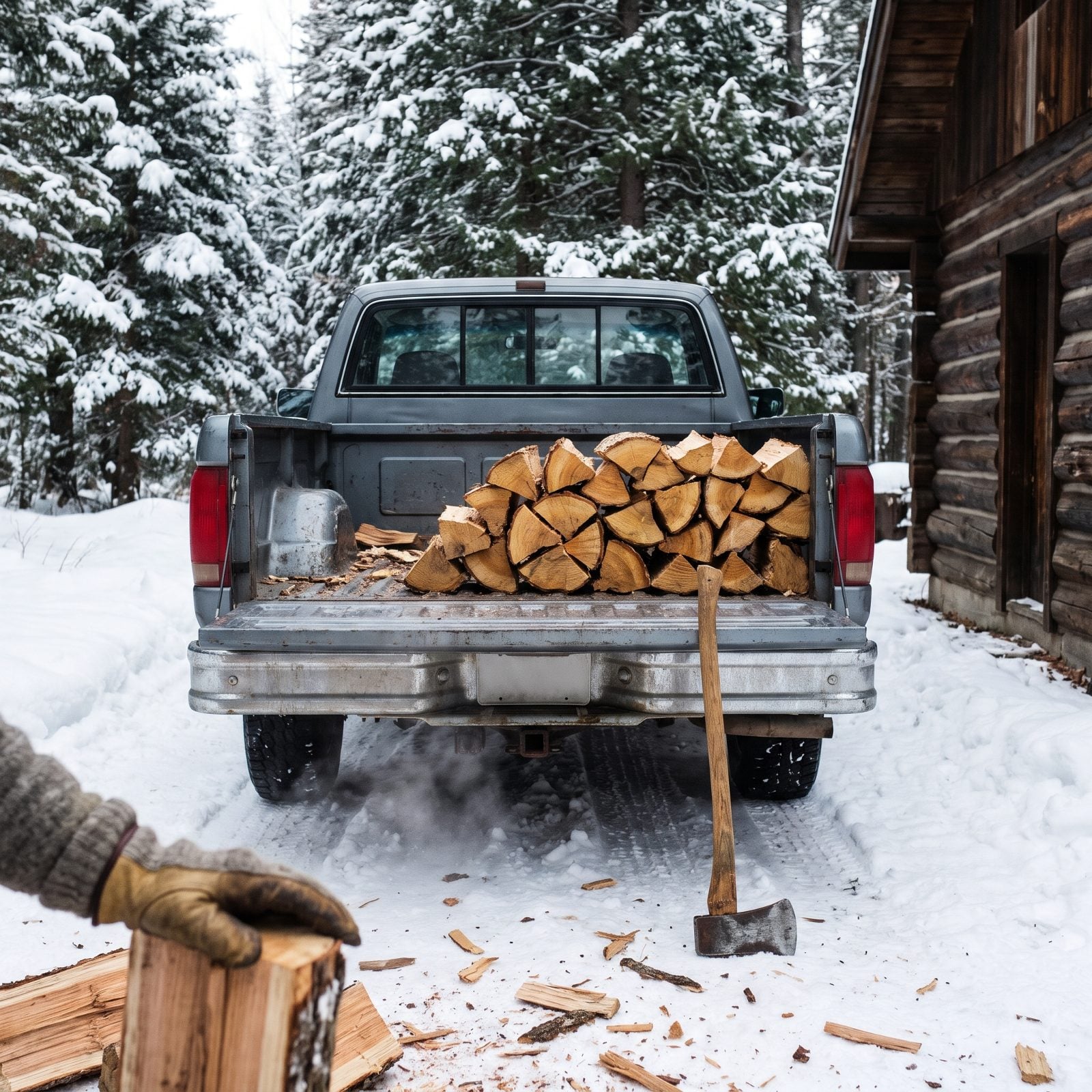
Heat is not optional in January. Somebody near you is rationing their woodpile right now and hoping the cold breaks early.
A truckload of split, seasoned wood dropped off quietly is one of the most useful gifts a person can give. It’s warmth you can measure, a worry lifted off someone’s shoulders for a week or two.
Make sure it’s seasoned, not green. Green wood hisses and barely burns and does nobody any good. Split it this fall for next winter if you want to do it right. And don’t make a show of the delivery — stack it, knock, and go.
21. Hold an All-Day Christmas Cookie Bake
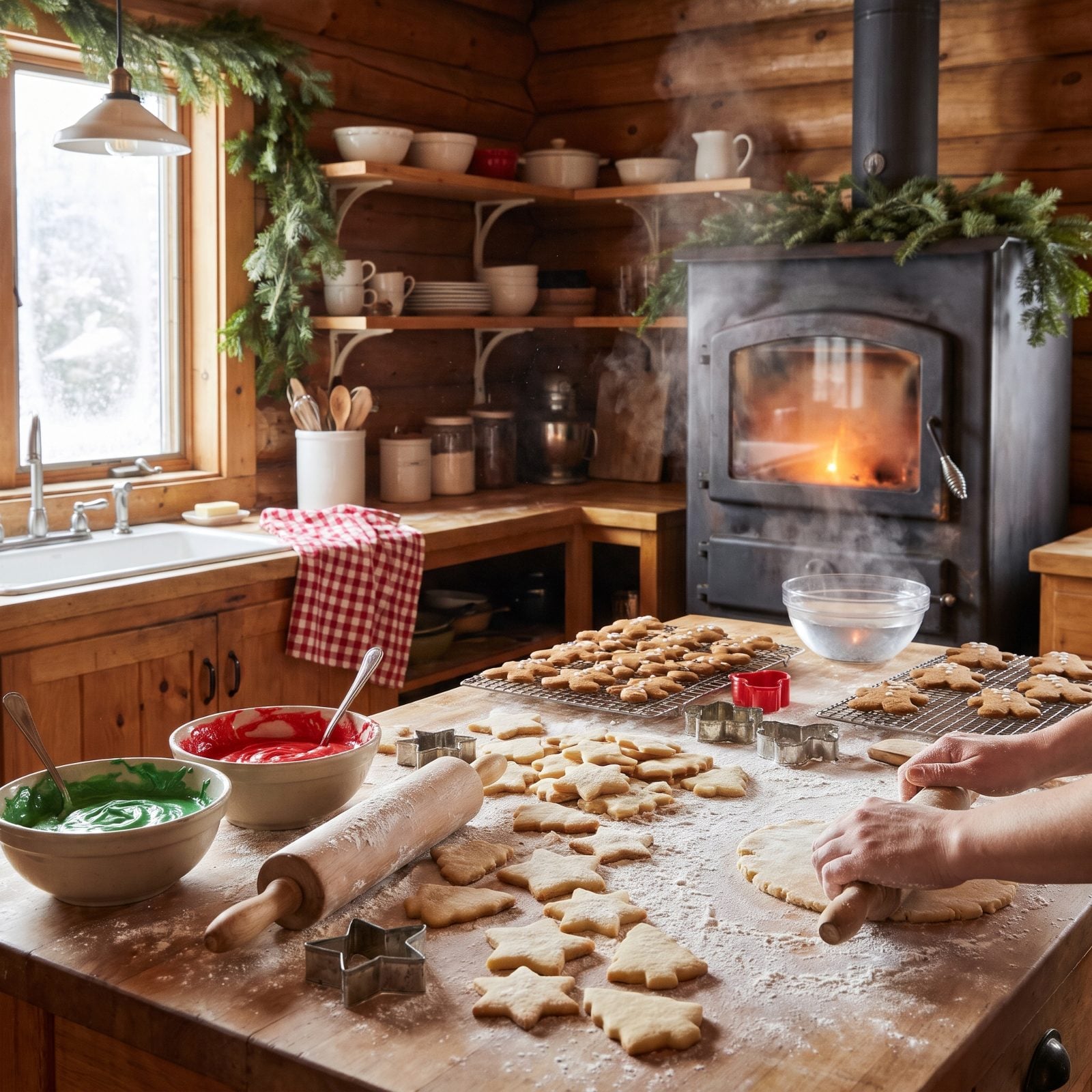
Block off a whole day. Not an hour between errands. A whole day where the flour gets everywhere and nobody minds.
The all-day bake is less about the cookies and more about the kitchen filling up with people. Somebody rolls, somebody cuts, somebody ices badly and laughs about it. The radio’s on. The oven never stops.
- Make a double batch of everything so you have plenty to give away.
- Keep the recipes simple enough that kids can run them.
- Save the decorating for last, when everyone’s loose and the strict ones have given up on perfection.
You’ll remember the burnt batch and the frosting fight long after you’ve eaten the cookies.
20. Build a Gingerbread Cabin From Scratch
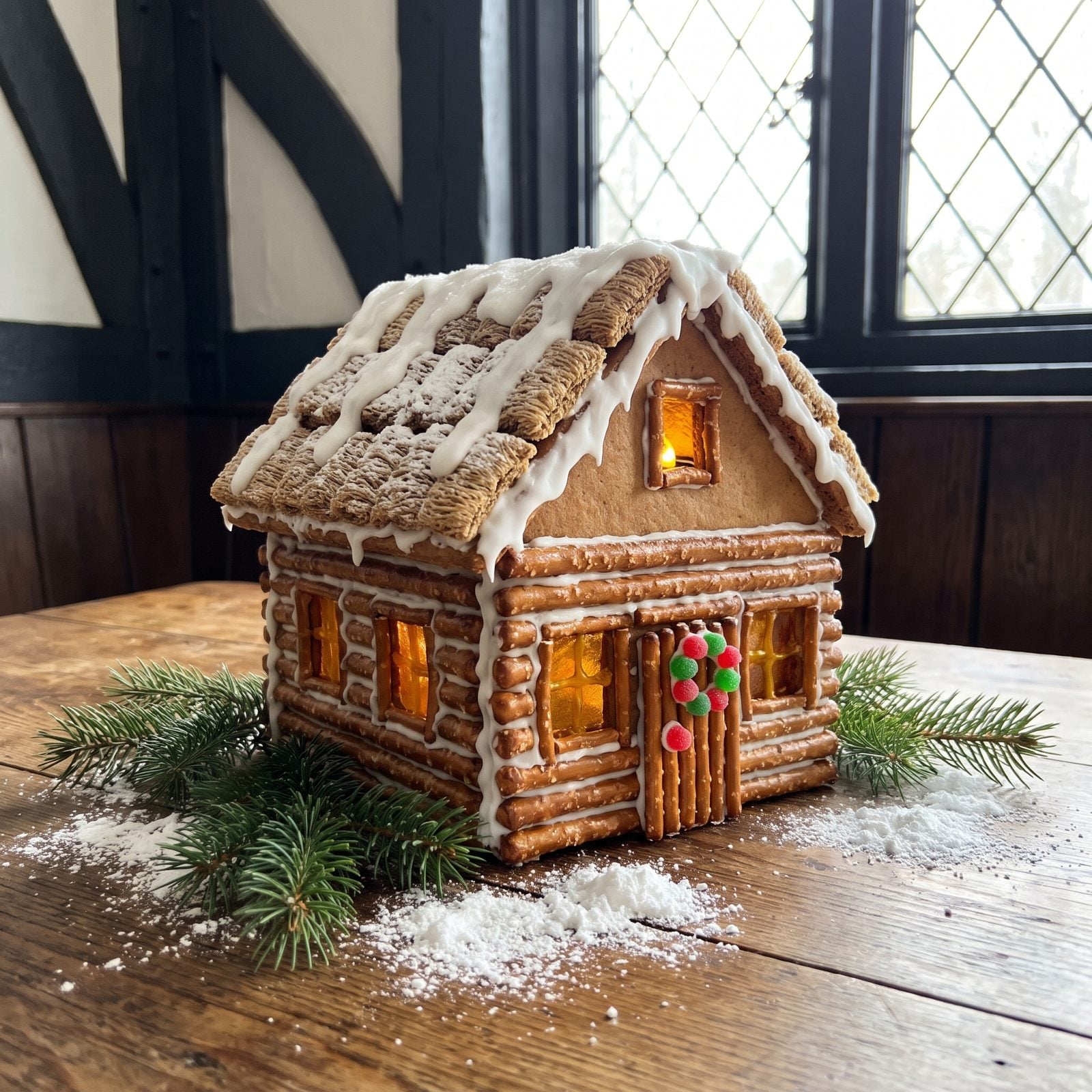
Skip the kit. It’s a box of stale panels and a tube of cement icing, and you already know how that ends.
A gingerbread cabin built from scratch is a different thing entirely. Pretzel rods for the log walls, shredded wheat for the thatch, a dab of icing for snow on the roof. Tuck a tiny LED inside so the windows glow at night.
It will lean. Something will collapse. A wall slides off around hour two and you shore it up with a stack of gumdrops and sheer willpower — that’s the fun of it. By New Year’s it’s a glorious ruin, and you’ll be plotting next year’s before you sweep up the crumbs. Stoke the stove and go make a mess.
19. Pull Old-Fashioned Ribbon Candy by Hand
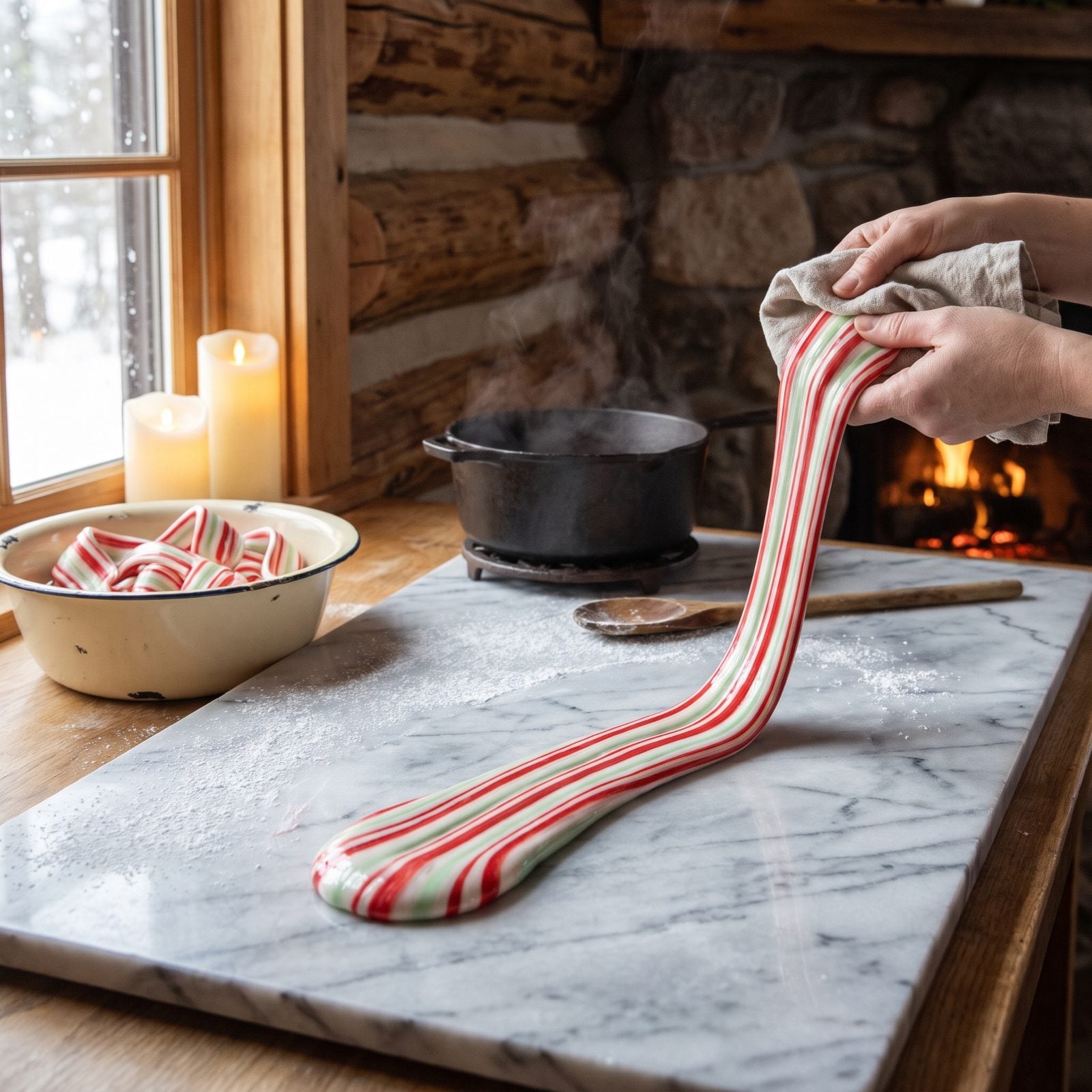
Ribbon candy looks fussy and store-bought until you watch it happen. Boiled sugar comes off the stove molten, you add color and a drop of peppermint, and then it gets pulled while it’s still too hot to be sensible about. The folds happen fast. Cool a few seconds too long and it cracks instead of ribboning.
Most people have never seen it made and assume it comes from a factory. It did, for about a century. But the hand-pulled version has a brittleness and shine the machine stuff can’t touch, and kids are useless at this part and love it anyway — which is pretty much the point.
18. Shape Sticky Popcorn Balls Around the Kitchen Table
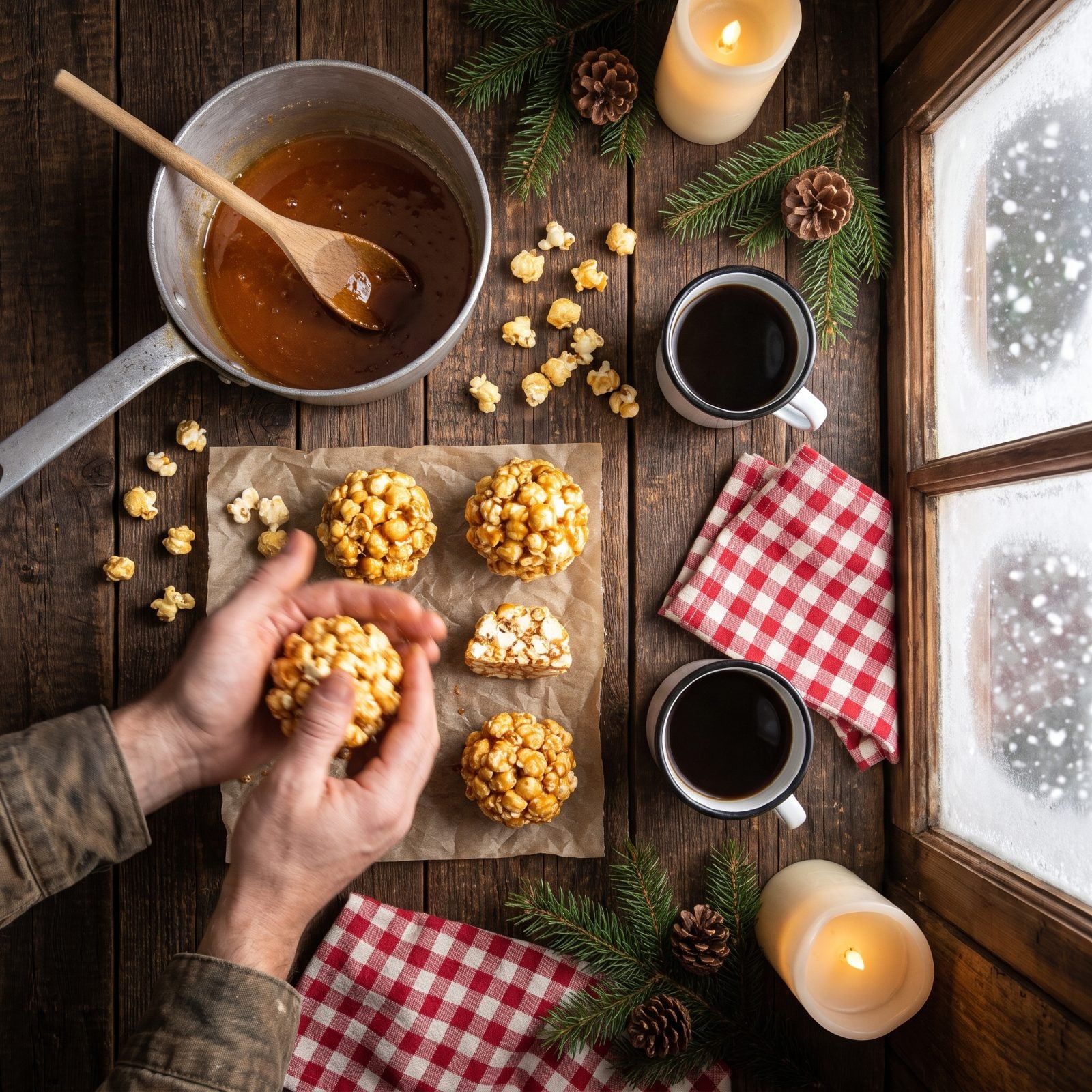
The trick nobody tells you: butter your hands or you’ll lose a layer of skin. The syrup is hot and sticky and it wants to weld your fingers together. Wet or greased hands, work fast, press firm but don’t crush.
Popcorn balls were a thrift thing. Popcorn was cheap, molasses or corn syrup lived in the pantry, and you could feed a houseful of kids something sweet for almost nothing. Wrap them in wax paper, twist the ends, and you’ve got gifts for the neighbors too.
17. Age a Traditional Christmas Fruitcake for Weeks
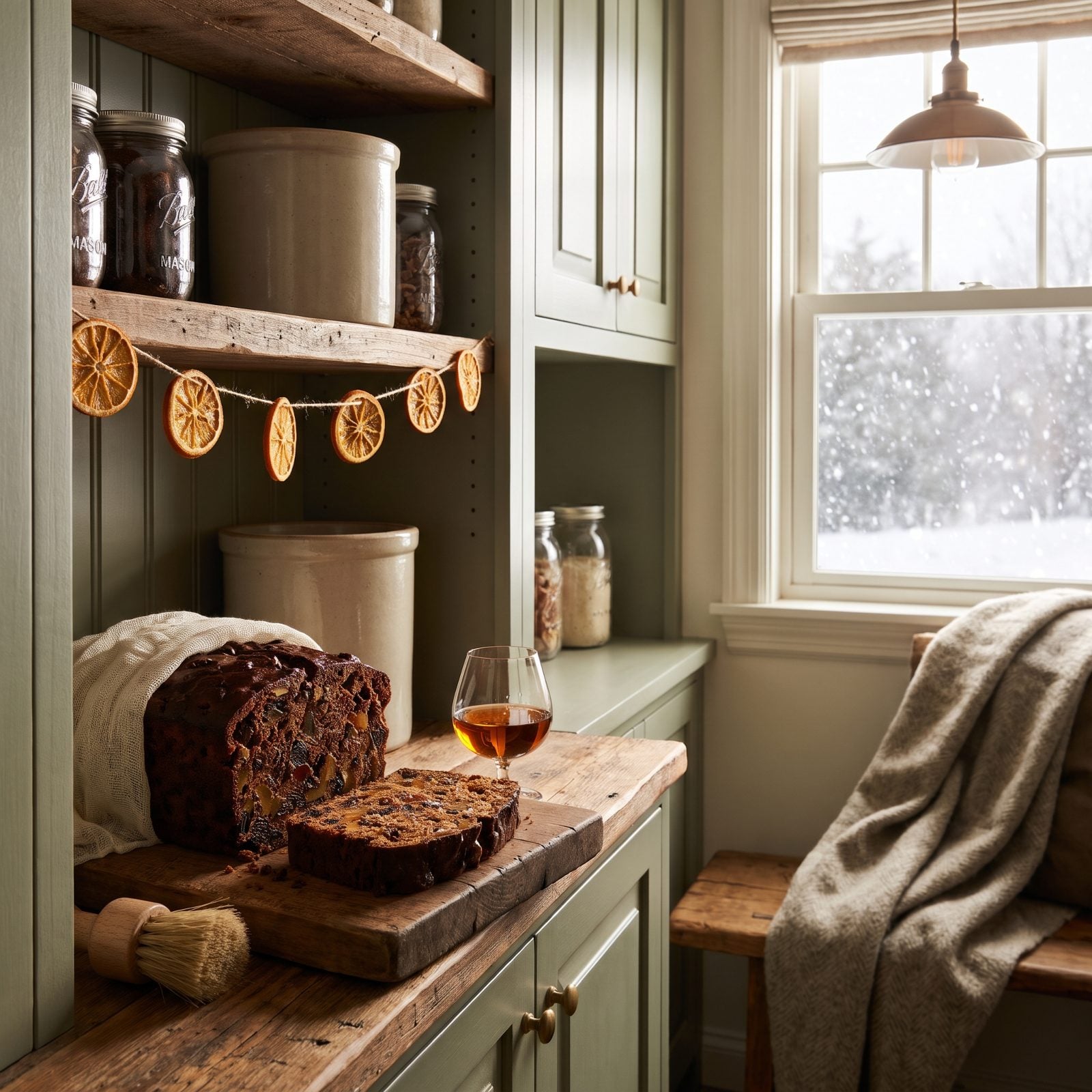
Fruitcake has a reputation problem, and it’s almost entirely undeserved. The grocery-store brick that gets regifted every December is not the same food as a proper aged cake.
The real thing starts in November. You bake it dense and dark, wrap it in brandy-soaked cheesecloth, and let it sit in a cool spot. Every week or so you unwrap it, brush on more brandy, and rewrap. The alcohol preserves it and the flavor deepens into something closer to a good aged cheese than a dessert.
By Christmas it slices clean and tastes like patience. A well-aged fruitcake beats most holiday desserts. I will die on this hill.
16. Serve a Flaming Plum Pudding to the Table
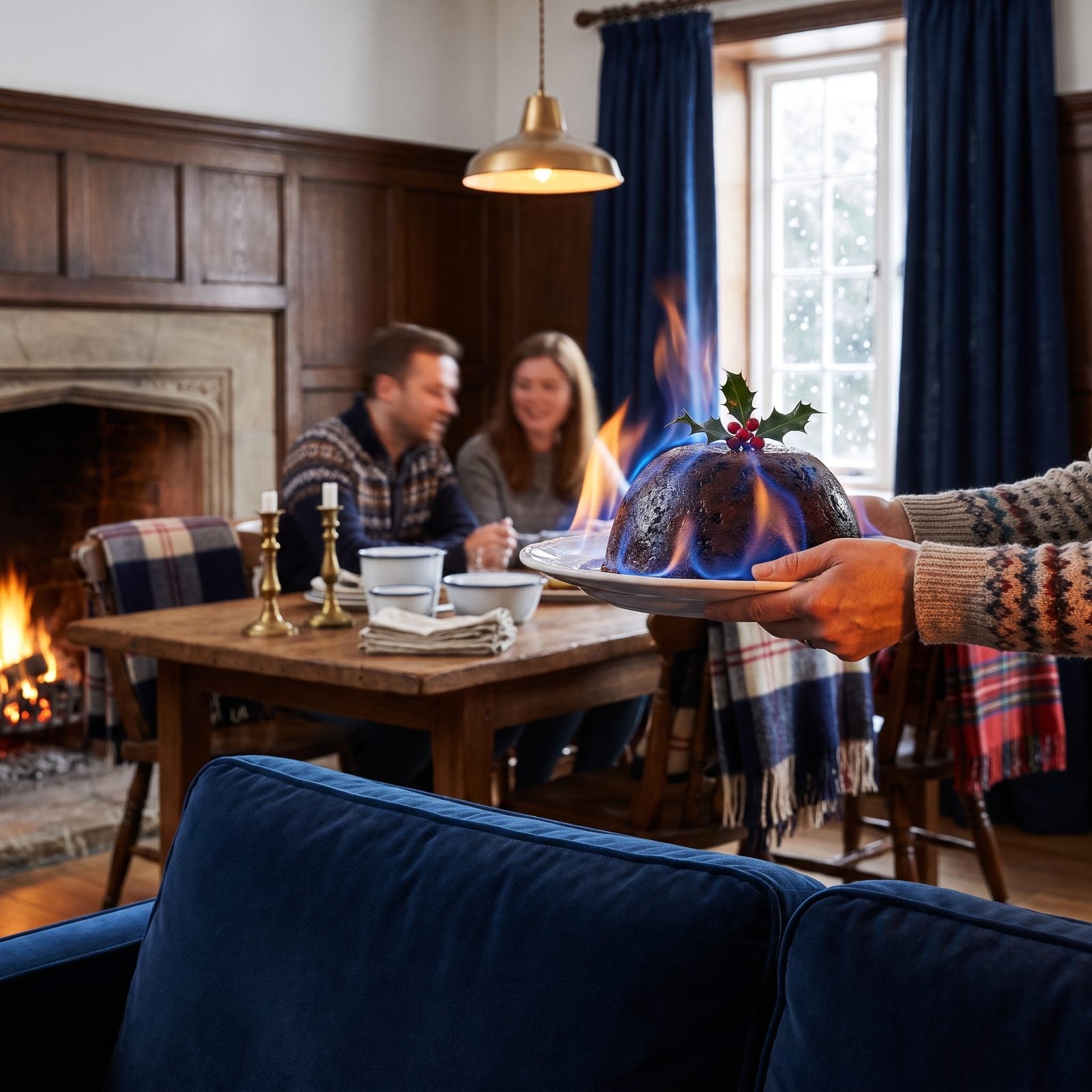
The flame is the whole event. You warm a spoonful of brandy, light it, pour it over the dark steamed pudding, and carry it to the table while tall orange flames still leap up around it. The room goes quiet. Somebody always gasps.
It’s mostly theater, and that’s fine. The flame burns off in seconds and leaves a faint boozy warmth behind, while the pudding itself is dense, dark and spiced — a cousin of fruitcake that got steamed instead of baked.
Dim the lights before you bring it in. A flaming pudding under bright overheads looks like a kitchen accident.
15. Roast a Goose for Christmas Dinner
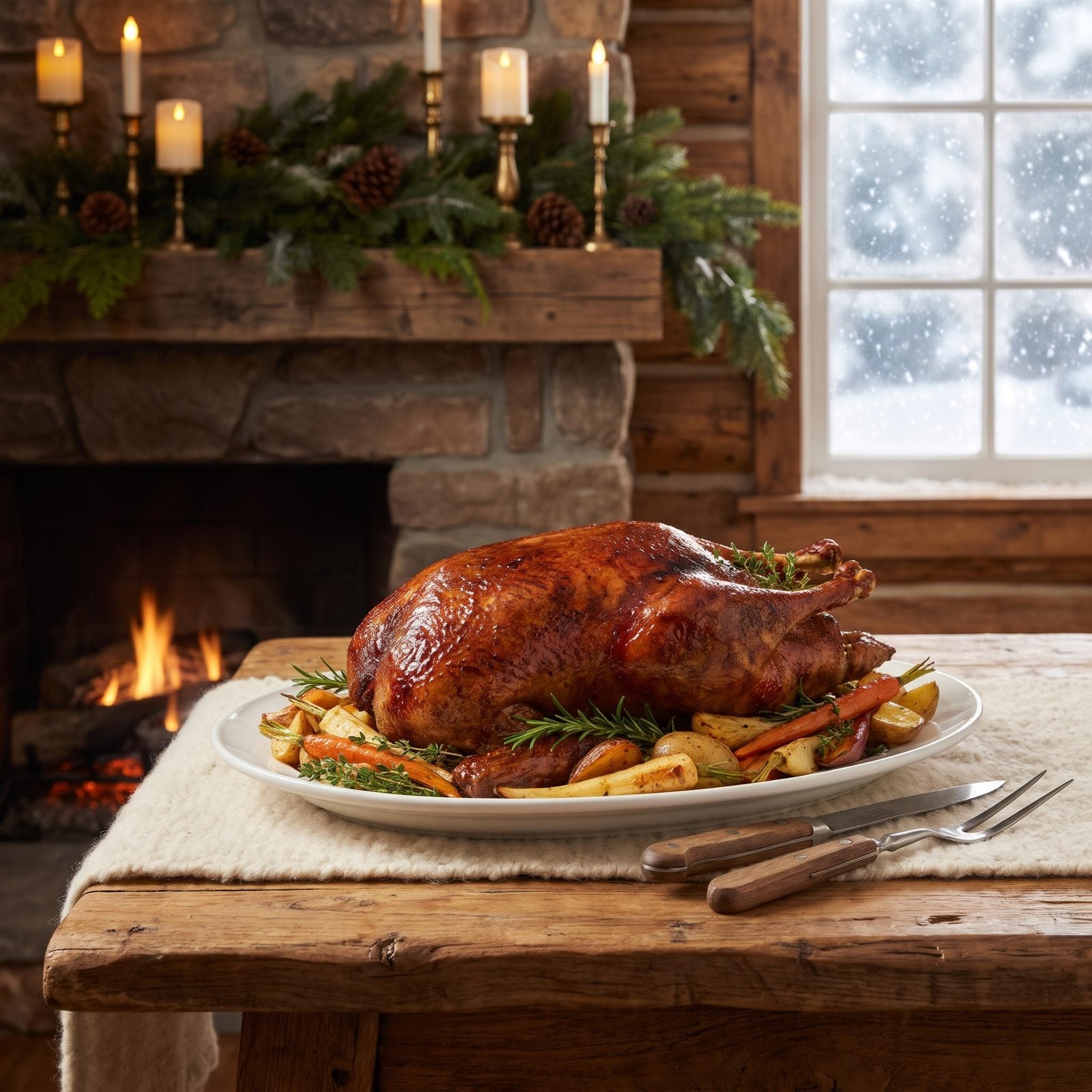
Turkey took over American tables, but goose was the Christmas bird for centuries, and there’s a reason it refuses to disappear entirely.
Goose is fatty. That’s the headline. The meat is dark, rich, almost beefy, and the bird renders out an astonishing amount of fat as it roasts. You prick the skin so the fat can escape, then catch every drop — because goose fat makes the best roast potatoes on earth, and that’s not opinion, that’s chemistry.
The catch: a goose feeds fewer people than its size suggests. Lots of frame, less meat. Plan on a smaller crowd or a second dish.
14. Serve Oyster Stew on Christmas Eve
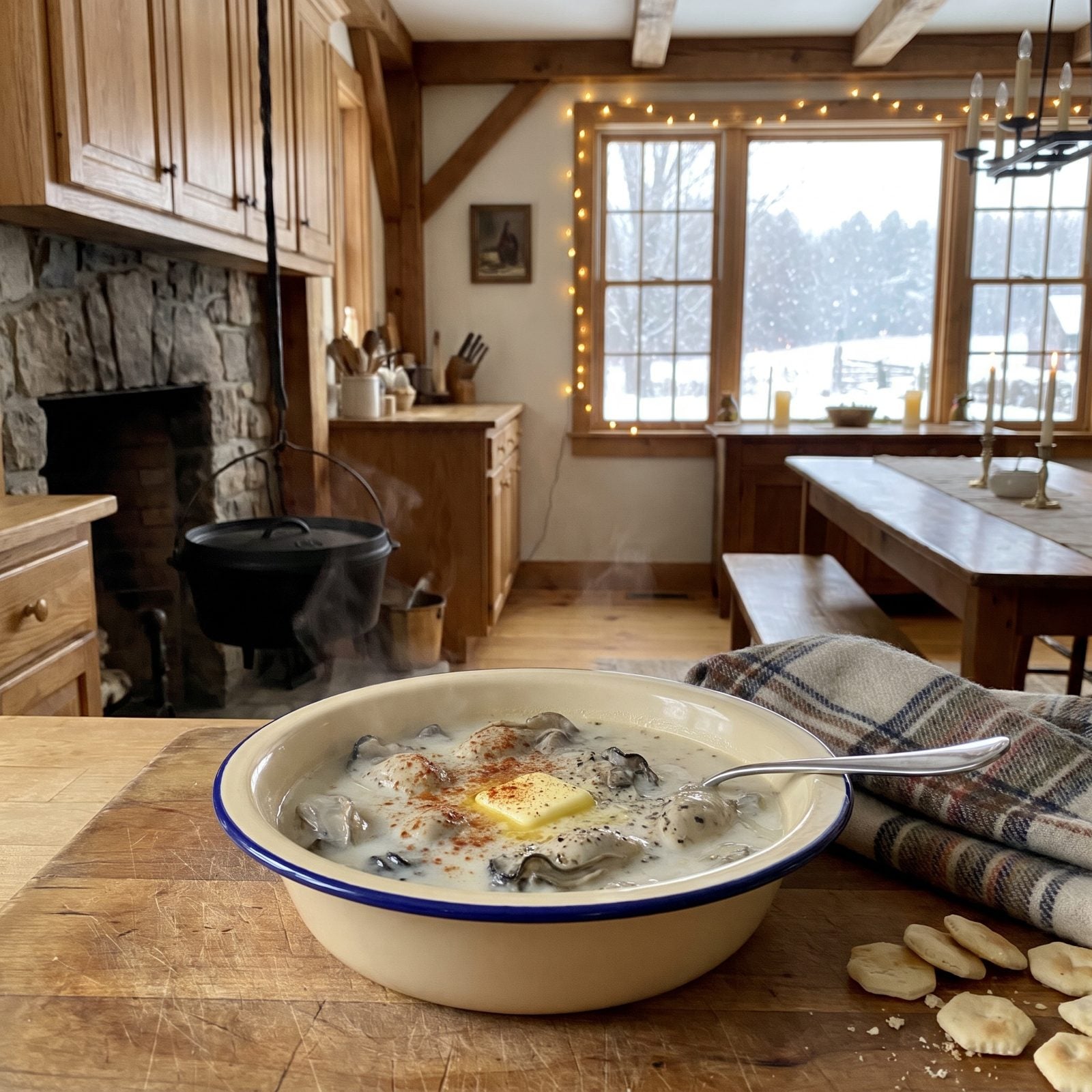
Simple to the point of looking like nothing. Milk or cream, butter, oysters barely cooked, salt and pepper, a dusting of paprika. The whole thing comes together in about ten minutes, and the hardest part is not overcooking the oysters into rubber.
This one runs deep in a lot of American families, especially where Irish and coastal roots mix. Oysters were cheap and plentiful once, and a meatless Christmas Eve meal fit the old Catholic tradition. The stew stuck around long after the reasons faded.
13. Bake Cinnamon Rolls on Christmas Morning
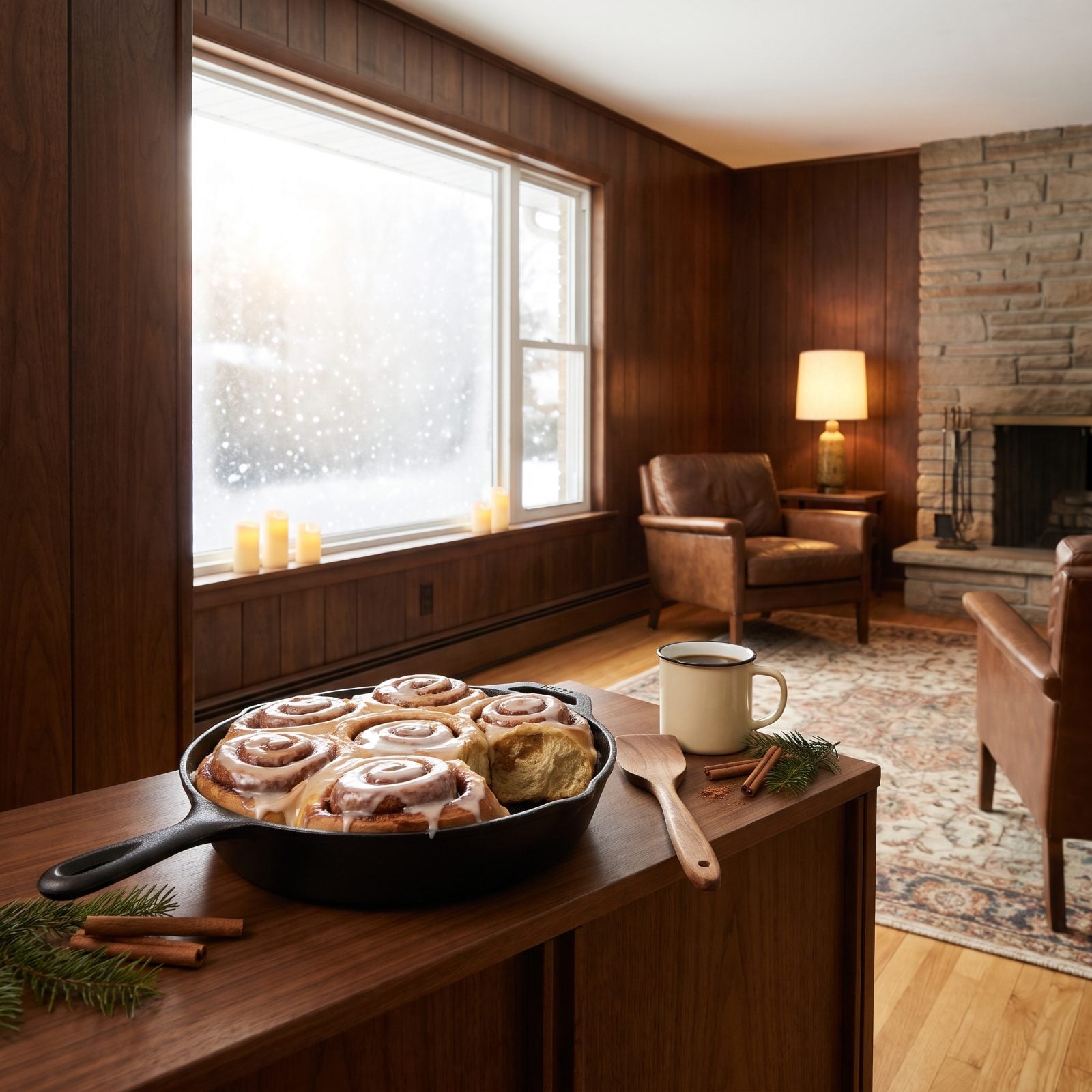
The smell is the gift. You can set an alarm with cinnamon rolls. Nobody sleeps through that drifting up the stairs.
And here’s the move that makes Christmas morning actually work: do the labor the night before. Mix and shape the rolls, let them do their slow rise in the fridge overnight, and all you do at dawn is slide the pan in the oven. Coffee, presents, a warm pan ready right as the paper comes off the last gift.
12. Pass Around a Bowl of Wassail
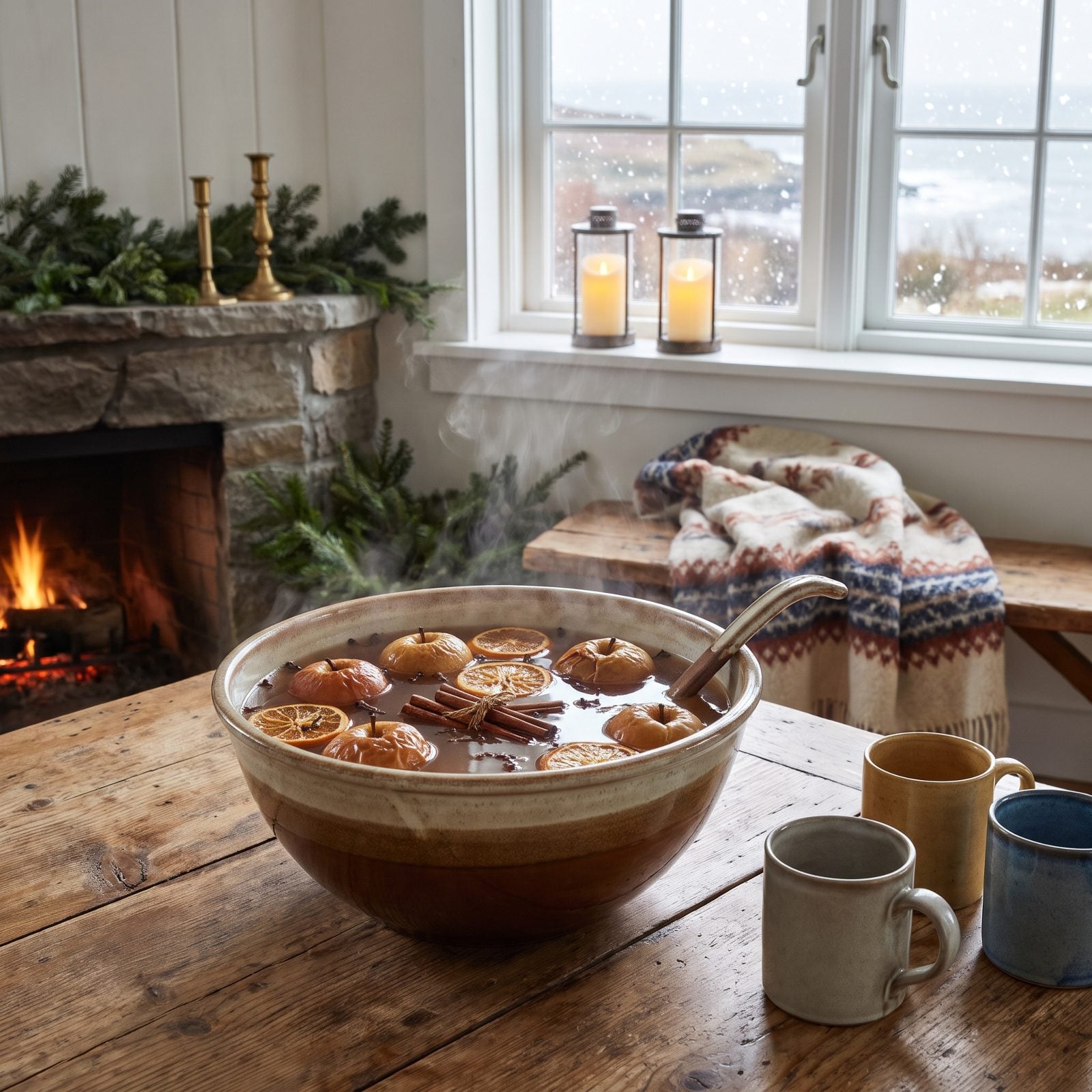
Wassail is mulled cider with ambition. Apple cider or juice, warmed slow with cinnamon, cloves, allspice, orange and a splash of something stronger for the adults. Old recipes floated whole baked apples on top. Some still do.
The word comes from Old English, roughly “be in good health,” and the custom of carrying a bowl door to door is where a lot of our caroling traditions trace back. Keep it in a pot on low all evening and let people ladle their own. A simmering pot does more for a room than any candle.
11. Roast Chestnuts Beside the Fire
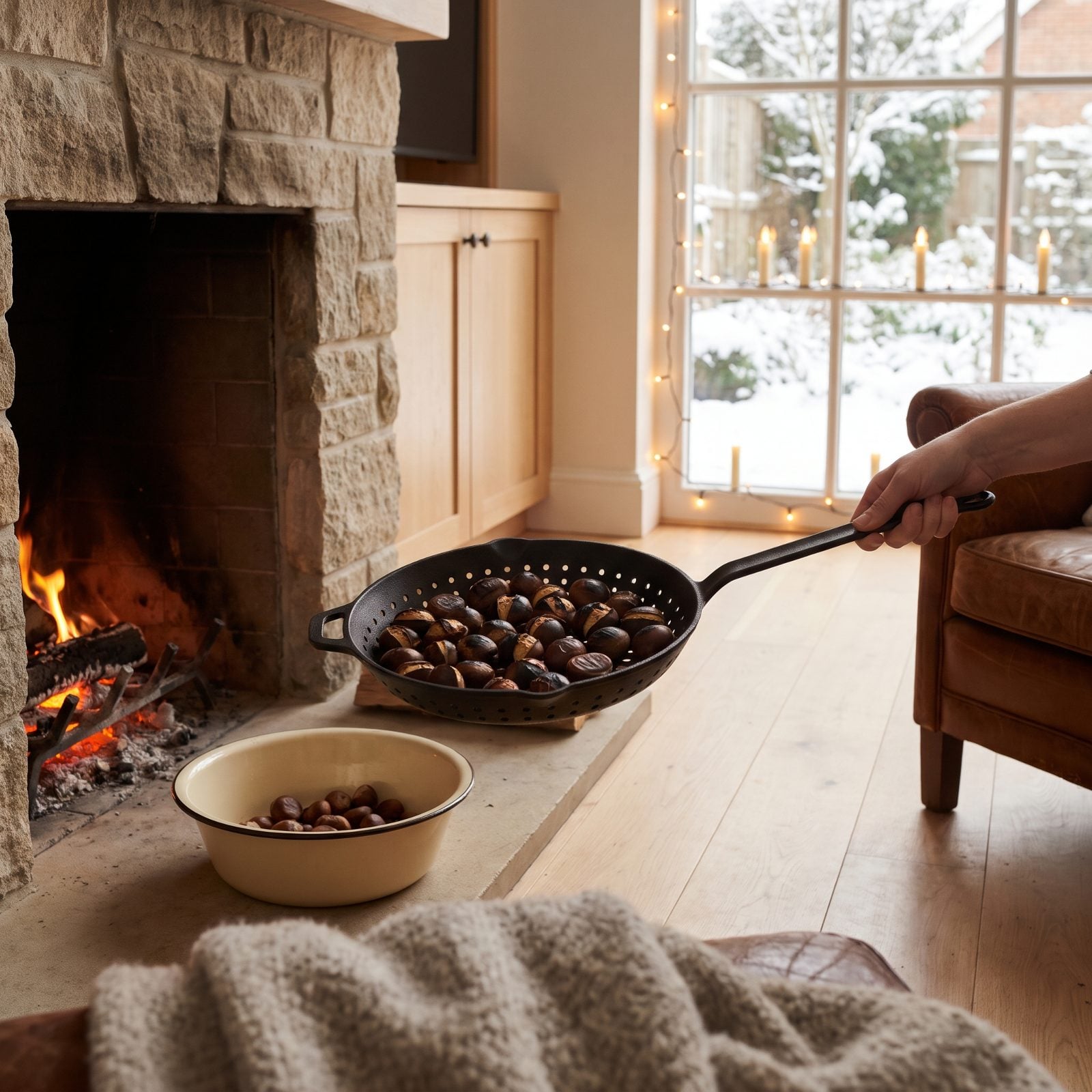
Everybody sings about it and almost nobody does it. Which is a shame, because roasted chestnuts are genuinely good and the ritual is half the pleasure.
The one thing you must not skip: cut an X into the flat side of each shell before roasting. Skip it and the steam builds with nowhere to go, and a chestnut can pop in a fire with real force. I learned that one the hard way, picking shell out of the rug.
Roast them until the shells peel back at the cut, let them cool just enough to handle, and peel while warm. Cold chestnut shells fight back.
10. Set Out a Bowl of Nuts With a Nutcracker
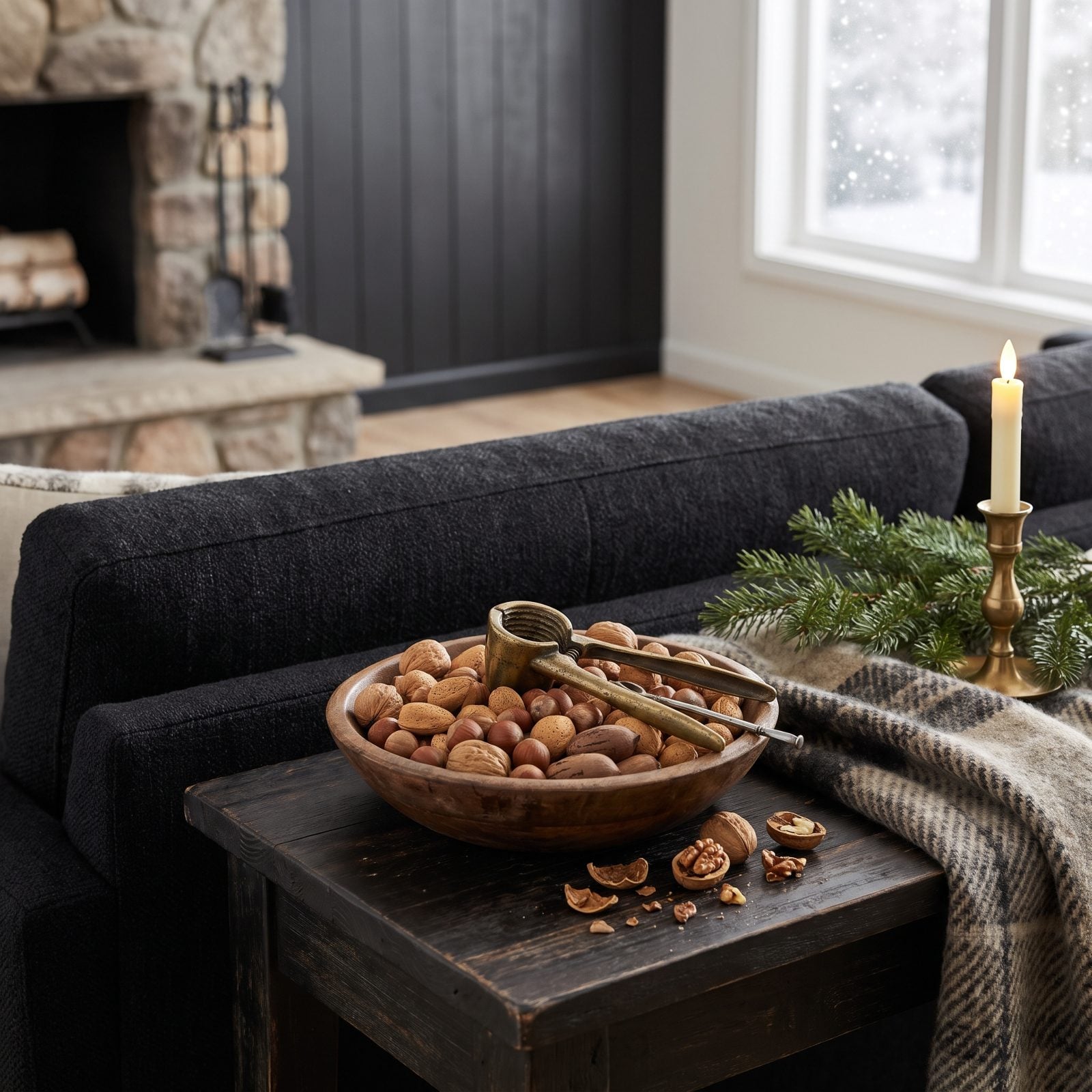
One of the humblest traditions on this list, and maybe the most underrated. A bowl of mixed nuts in the shell, a nutcracker, a couple of picks, set out where people gather.
It does something screens can’t. Cracking a walnut takes just enough effort to keep hands busy and conversation loose, so people sit longer and talk more, and the slow work of digging a pecan out of its shell fills those comfortable quiet stretches between stories.
Buy them in the shell, not the bag. Half the appeal is that small satisfaction of the crack — and the shells smell like Christmas when they hit the fire.
9. Go Door-to-Door Christmas Caroling in the Snow
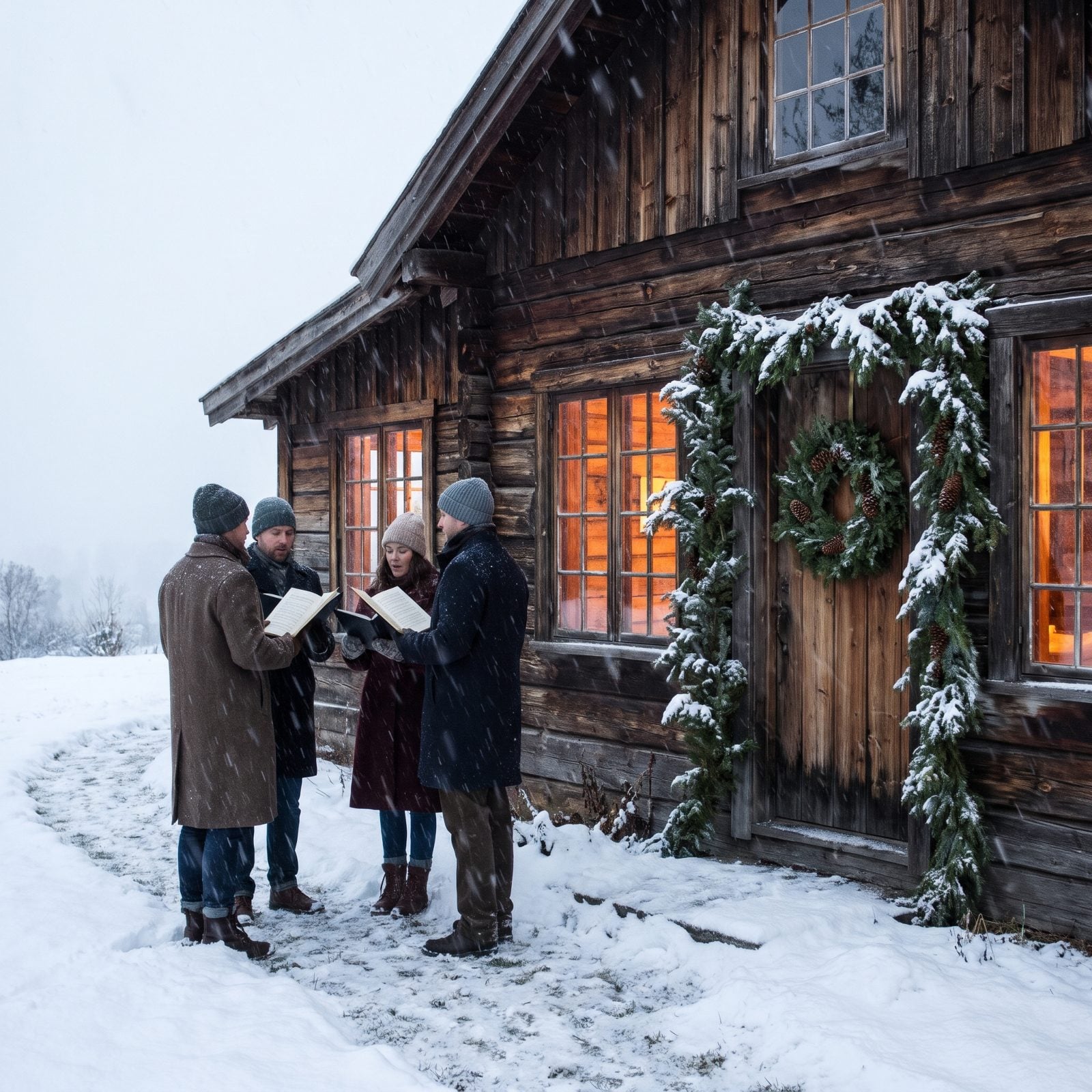
Caroling works because it asks nothing of your voice and everything of your nerve. Nobody at the door cares that you’re flat on the high note in Silent Night. They care that someone bothered to stand in the cold and sing at their window.
Up at a cabin, the distances between neighbors stretch things out. You walk a quarter mile through packed snow between stops, breath fogging, boots squeaking in that specific way cold snow squeaks. Bring a thermos. And a printed sheet of lyrics, because everyone forgets the second verse of everything.
8. Play Christmas Tunes on a Fiddle by the Fire
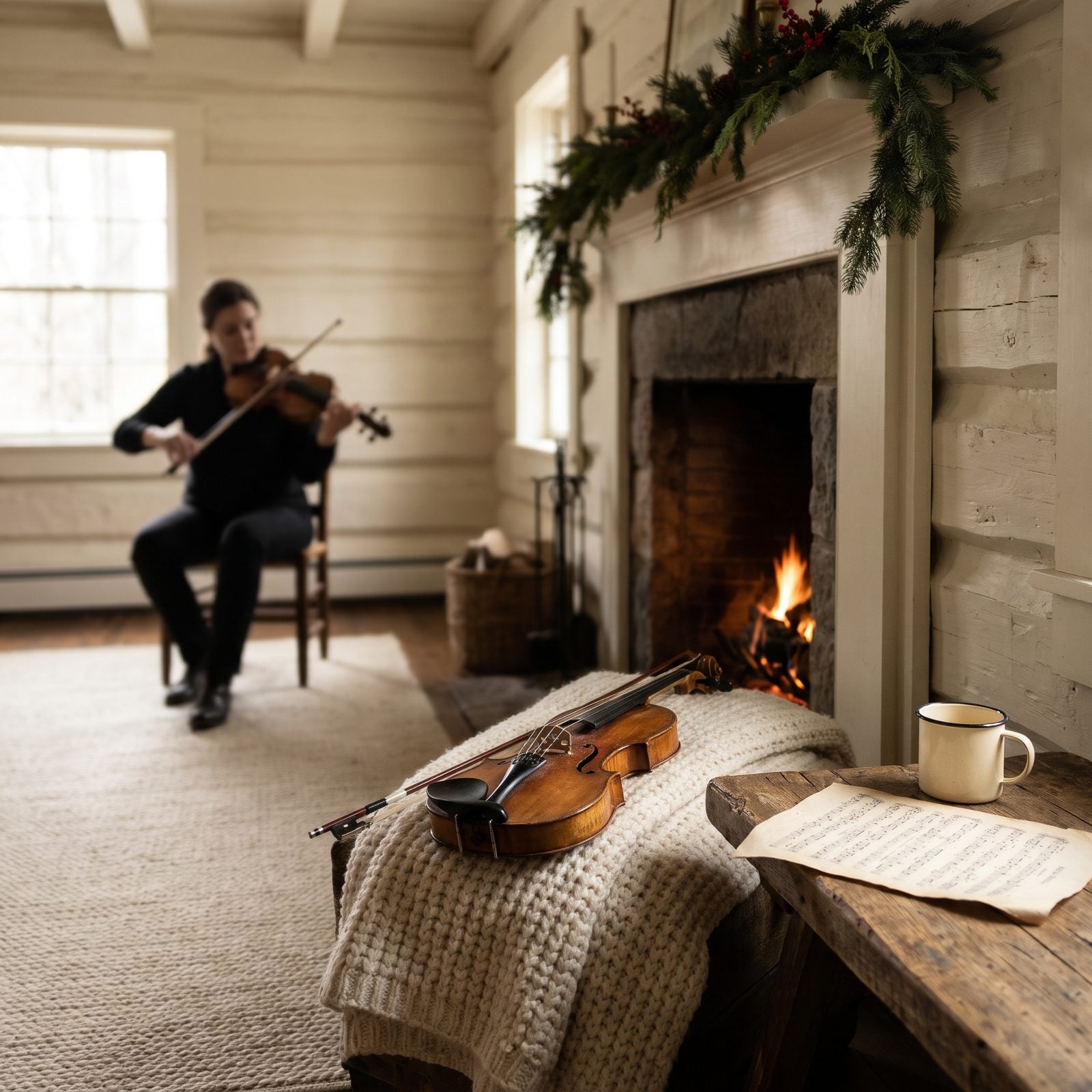
A fiddle carries a room better than any speaker. The sound is small and human and a little imperfect, and that’s exactly why it works.
You don’t need to be good. Jingle Bells is three chords and a prayer, and Away in a Manger runs slow enough that even shaky fingers can find it. The old-time tradition was never about performance anyway. It was one person playing while everyone else did something else, the music threading under the conversation like heat under a floor.
The best cabin music is the kind nobody’s really watching.
7. Take a Horse-Drawn Sleigh Ride Through the Woods
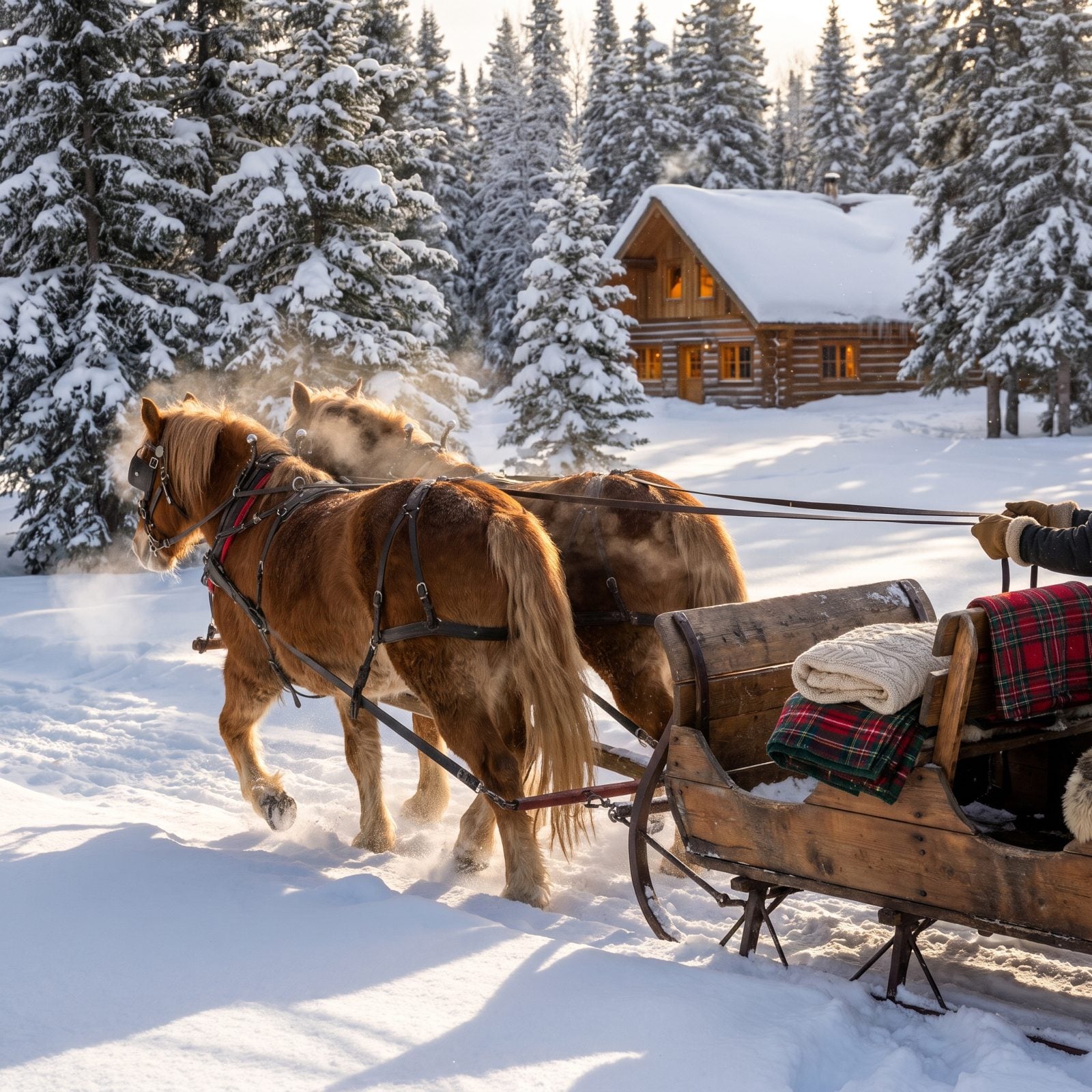
This is the one that costs money, and it’s worth it. A guided sleigh ride near most cabin country runs a fair bit per person depending on the outfit and the length, though it swings a lot by region and whether you’re sharing the bench or riding private.
What you’re paying for isn’t the distance. It’s the sound. Harness bells, runners hissing over snow, and a quiet so complete you can hear the horses breathing. No engine. Nothing to narrate. Just the woods sliding past at the speed a horse feels like going.
6. Walk Through the Snow Carrying Lanterns
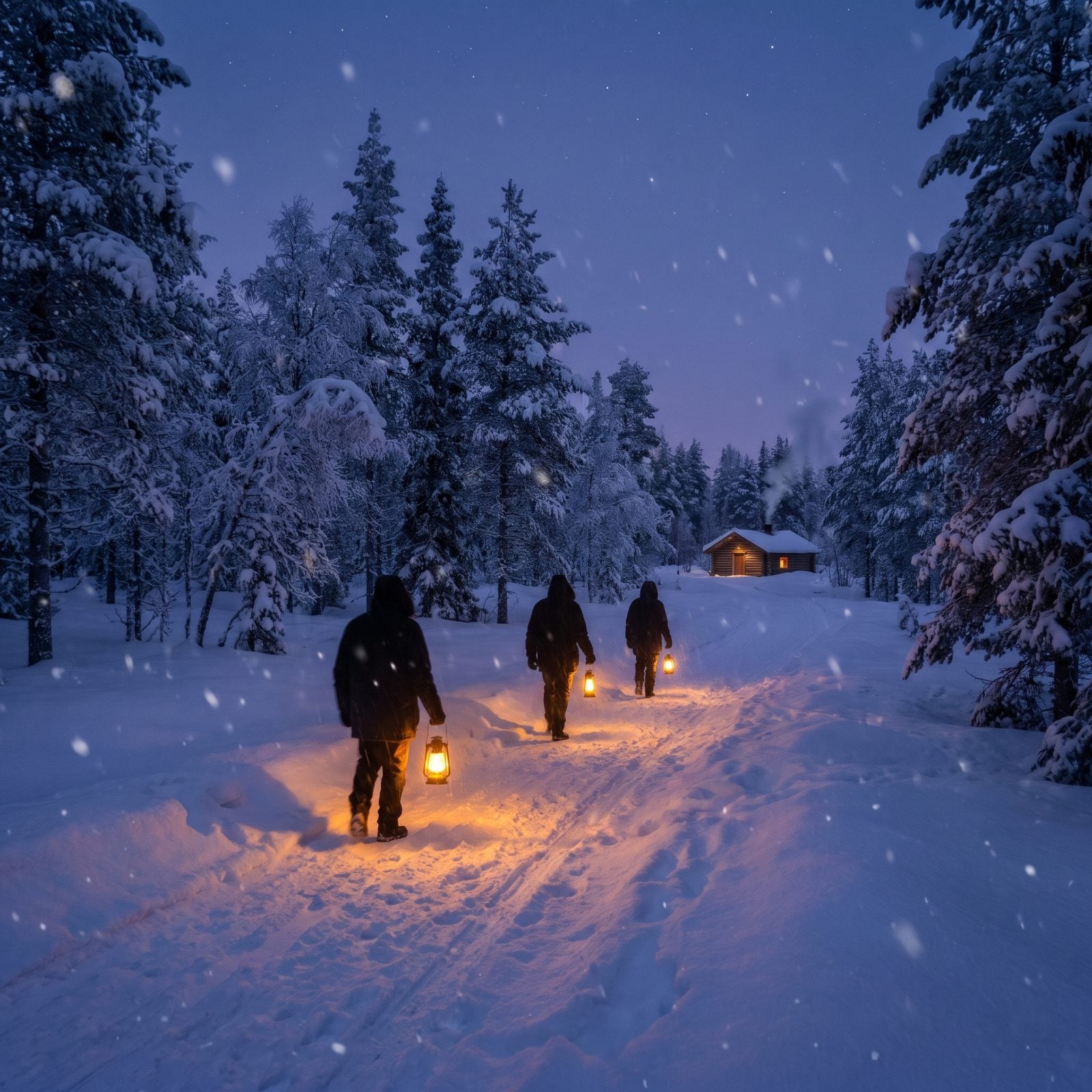
A lantern in the dark feels different from a flashlight, and there’s a reason. A flashlight points. A lantern just glows, and you walk inside the light it makes.
A short lantern walk after dinner resets the whole evening. The cold wakes you up, the snow throws the light back at you, and a group that was half-asleep by the fire suddenly has something to talk about. Keep it short. Twenty minutes in single digits is plenty, and the cabin feels twice as warm when you come back in.
Use battery lanterns with the warm-toned bulbs if there are kids or dry greenery around. I know the real flame is prettier. It’s also a bad idea next to a wreath.
5. Race Wooden Sleds Down the Nearest Hill
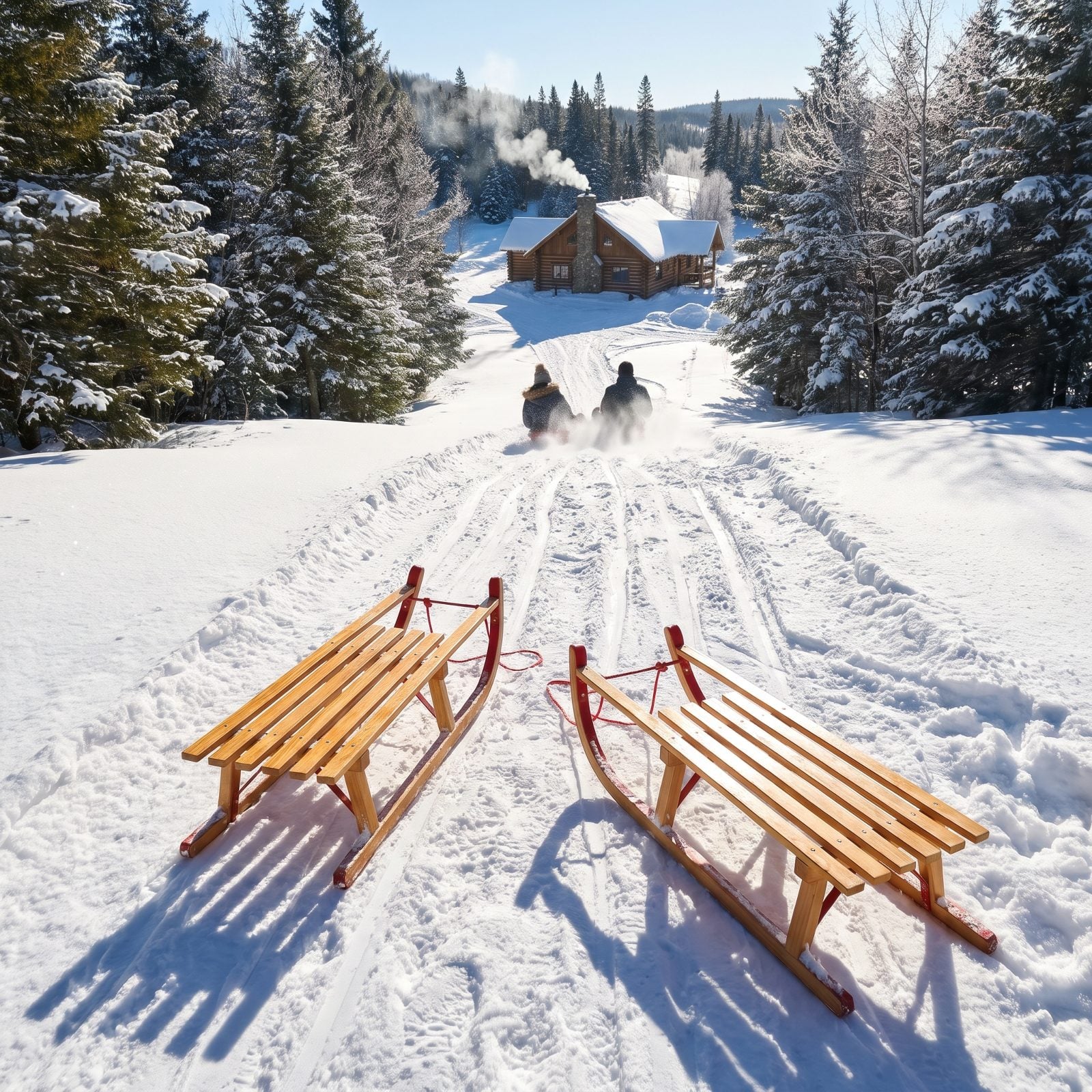
Plastic sleds are faster. Wooden sleds are better. I’ll take the slower ride that doesn’t crack in half on the first icy run and end up in a landfill by February.
A good wooden toboggan or a steel-runner Flexible Flyer handles a packed hill the way nothing molded in a factory does, and it teaches you something about steering, because you actually can. Lean, drag a boot, commit to the turn.
Walk the hill first. Look for the rock nobody can see under four inches of fresh powder. That’s the one that ends the day early.
4. Skate on a Frozen Cabin Pond
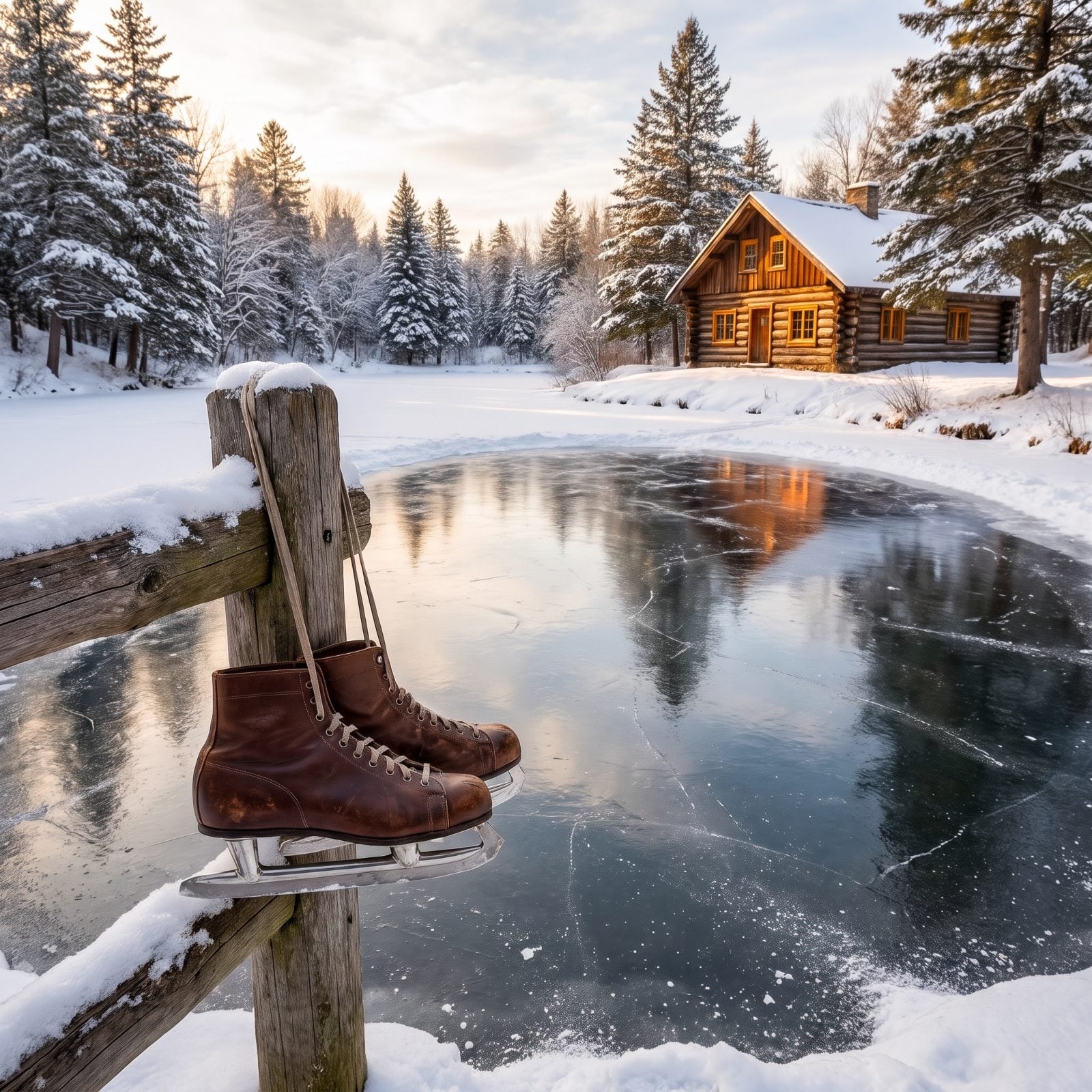
Pond skating is one of the great simple pleasures and one of the easiest ways to get hurt if you’re careless. So here’s the part nobody romanticizes.
Clear black ice needs to be at least four inches thick to hold a person, and more if there’s a group. Don’t guess. Check it, ideally more than once across the surface, and never trust ice near inlets, outlets, or anywhere current moves underneath. Don’t know the pond? Don’t skate the pond.
When it’s right, though, there’s nothing like it. A cleared patch of natural ice under bare trees, blades cutting that clean hollow sound, the cold burning your cheeks. It beats any rink I’ve ever paid to use.
3. Spend Christmas Evening Playing Board Games
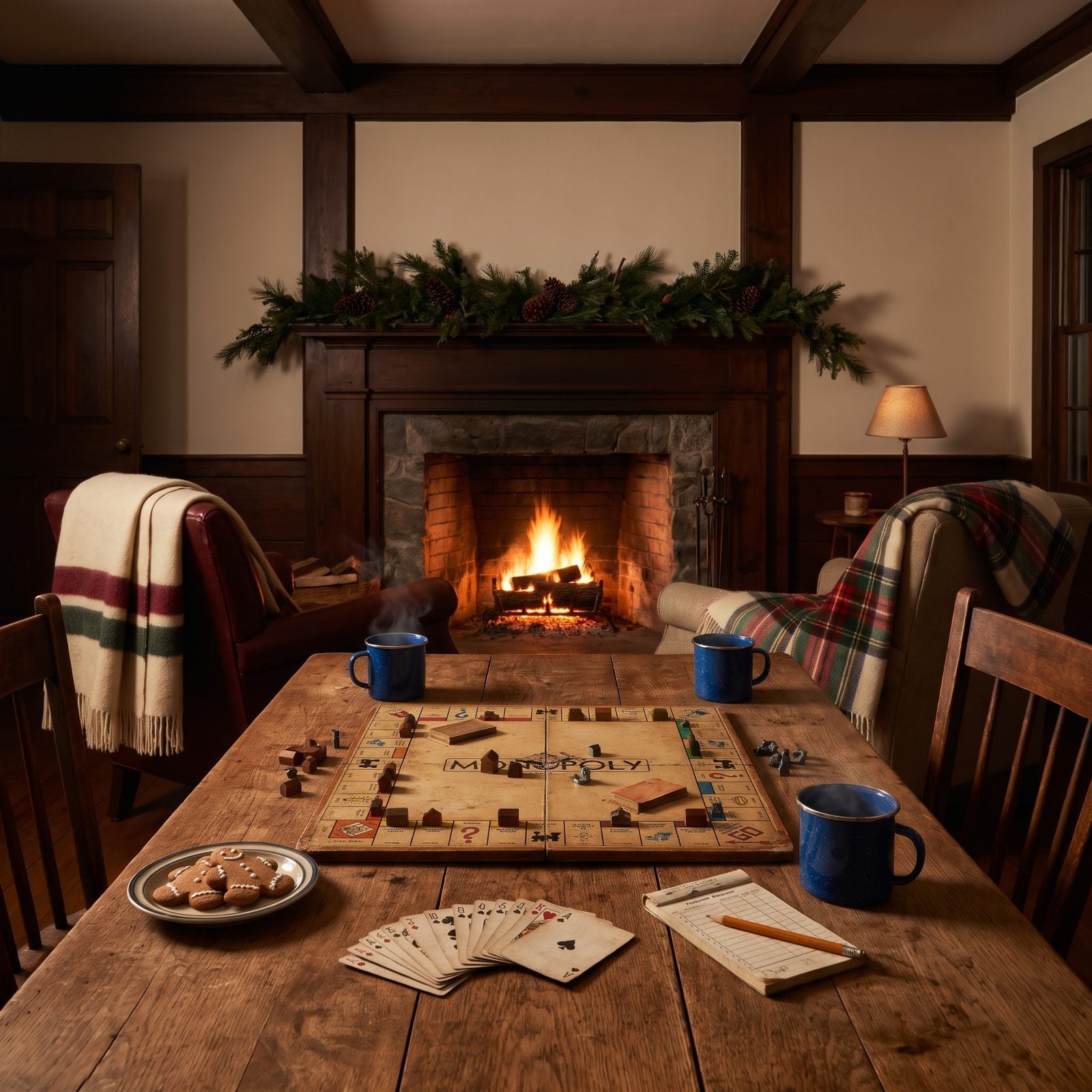
A board game does something a screen never will. It makes everyone look at the same thing and argue about it good-naturedly for two hours.
Cards and dice travel best to a cabin. They pack small, they work by firelight, and they don’t need instructions read aloud for twenty minutes while the youngest kid loses interest. Cribbage, hearts, a worn deck, a cup of dice. That’s all it takes.
The score pad from last Christmas, still tucked in the box with somebody’s victory circled, is half the reason to bring it back.
2. Share Family Stories Around the Hearth
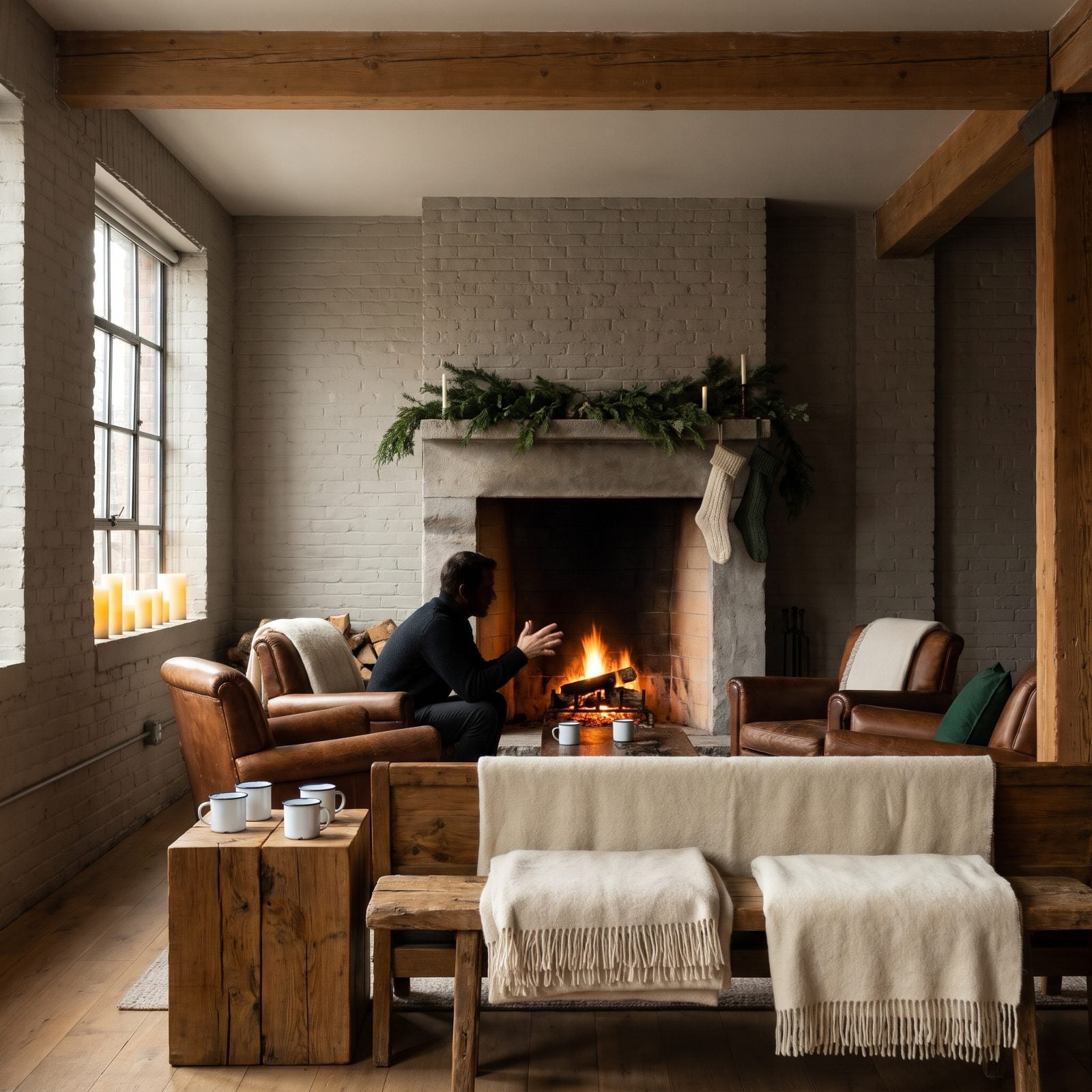
The best stories come out after the games are packed away and the fire’s burned down to the good orange coals. Something about low light loosens people up.
Here’s the trick the old folks knew: ask the specific question, not the general one. Not “tell us about Grandpa.” Instead, “what’s the worst Christmas you ever had?” or “what did this cabin look like when you first saw it?” Pointed questions pull sharp memories, and those are the ones worth keeping.
1. Mark the Children’s Heights on the Cabin Doorframe Each Christmas
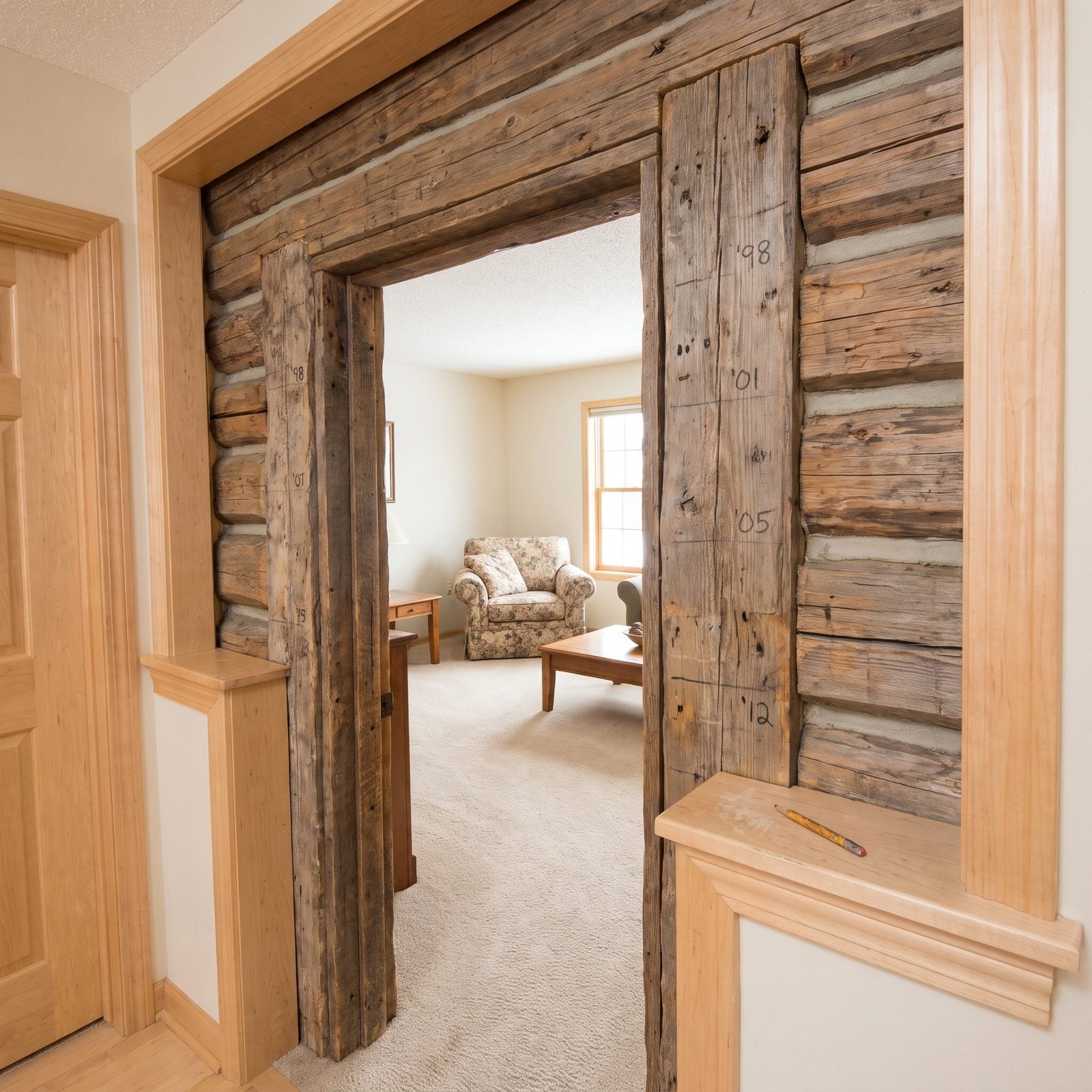
This is the one that pays off slowest and matters most. A black marker line on the doorframe with a name and a year beside it. That’s the whole tradition.
Do it the same day every Christmas and the frame fills up over the years into something you can’t fake and can’t buy. The gap between one year’s mark and the next tells you how fast it all went.
One rule, learned by people who regretted ignoring it: marker, not pencil, and never, ever sand it off or paint over it. That doorframe is the one thing in the cabin that only gets more valuable.