
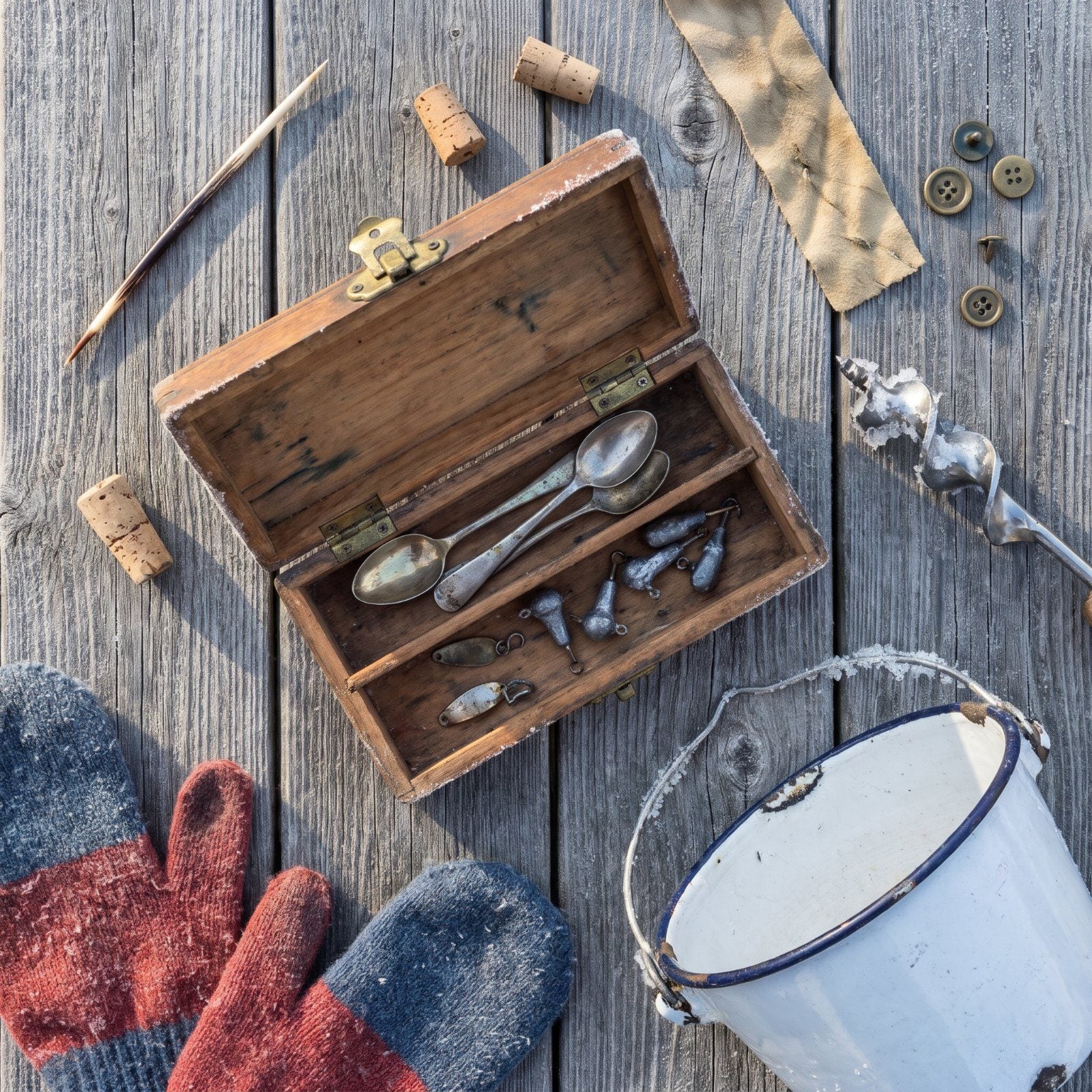
The auger squeals through eighteen inches of blue ice and then nothing. You sit. The flag stays down, and the fancy electronics show a mark that will not commit. This is where the old-timers earned their reputation, not with gadgets but with porcupine quills, bacon rind and a pocketful of buttons. These tricks come from a time when a man fixed his own tackle on a frozen lake with whatever was in his coat, and most of them still work better than what you paid real money for. A few will make your neighbor in the next shanty lean over and ask what the devil you are doing.
Please note that some of the images in this article were created with the assistance of AI.
40. Make a Bite Indicator From a Porcupine Quill
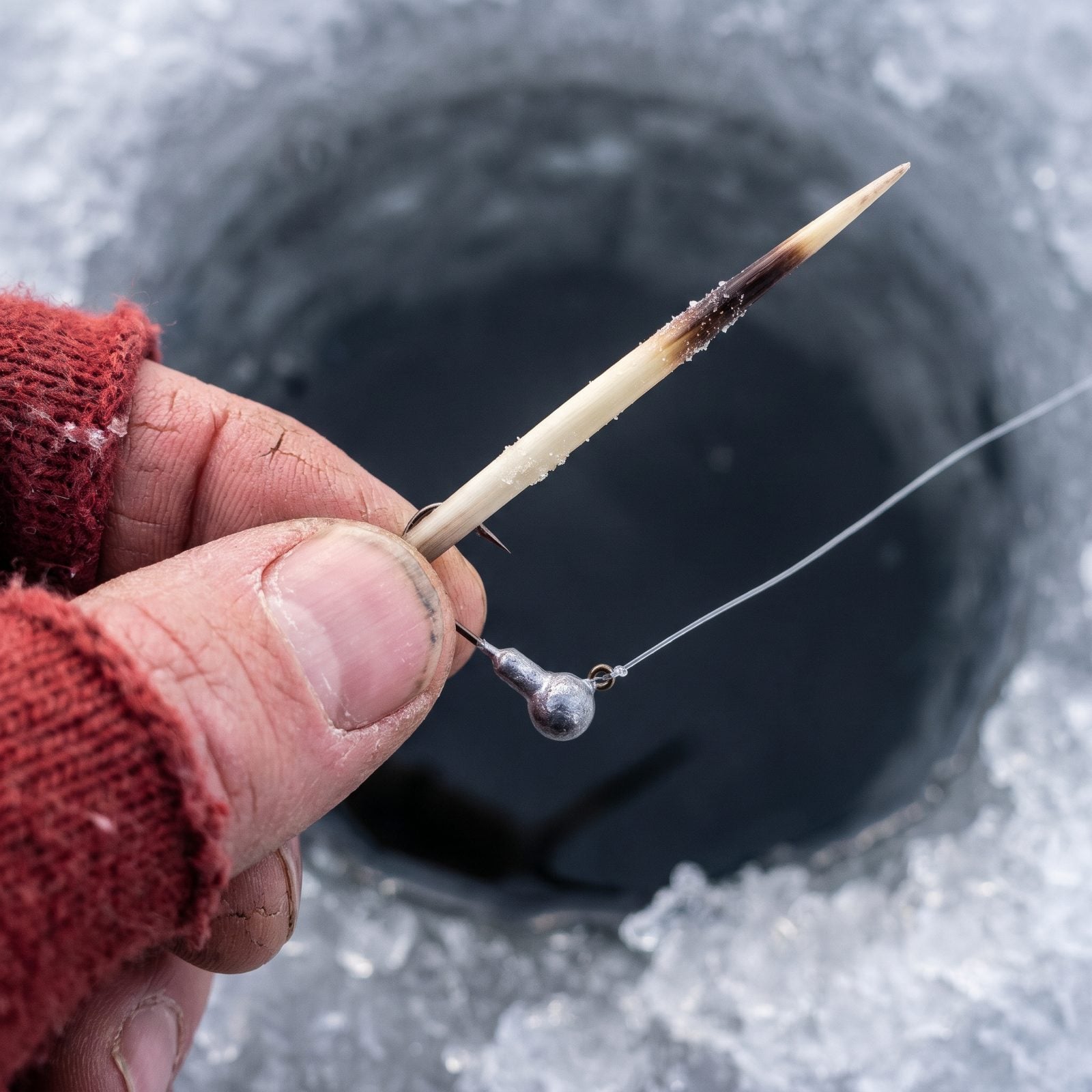
A hollow porcupine quill is the lightest bite indicator ever made, and nobody sells it. Push your jig’s hook through the quill like bait, tie the line straight to the jig eye so it runs free of the quill, and it rides along light as a feather. The faintest lift — a panfish just mouthing the bait — tips that quill sideways before your rod tip ever twitches.
The trick is piercing the quill cleanly with the hook point so it sits snug on the shank while the line stays clear of it. Trout anglers in the north woods were using these long before plastic bobbers existed, and they catch fish electronics miss entirely, because a lethargic winter bluegill barely moves the bait at all.
39. Tip a Jig With a Thin Strip of Bacon Rind
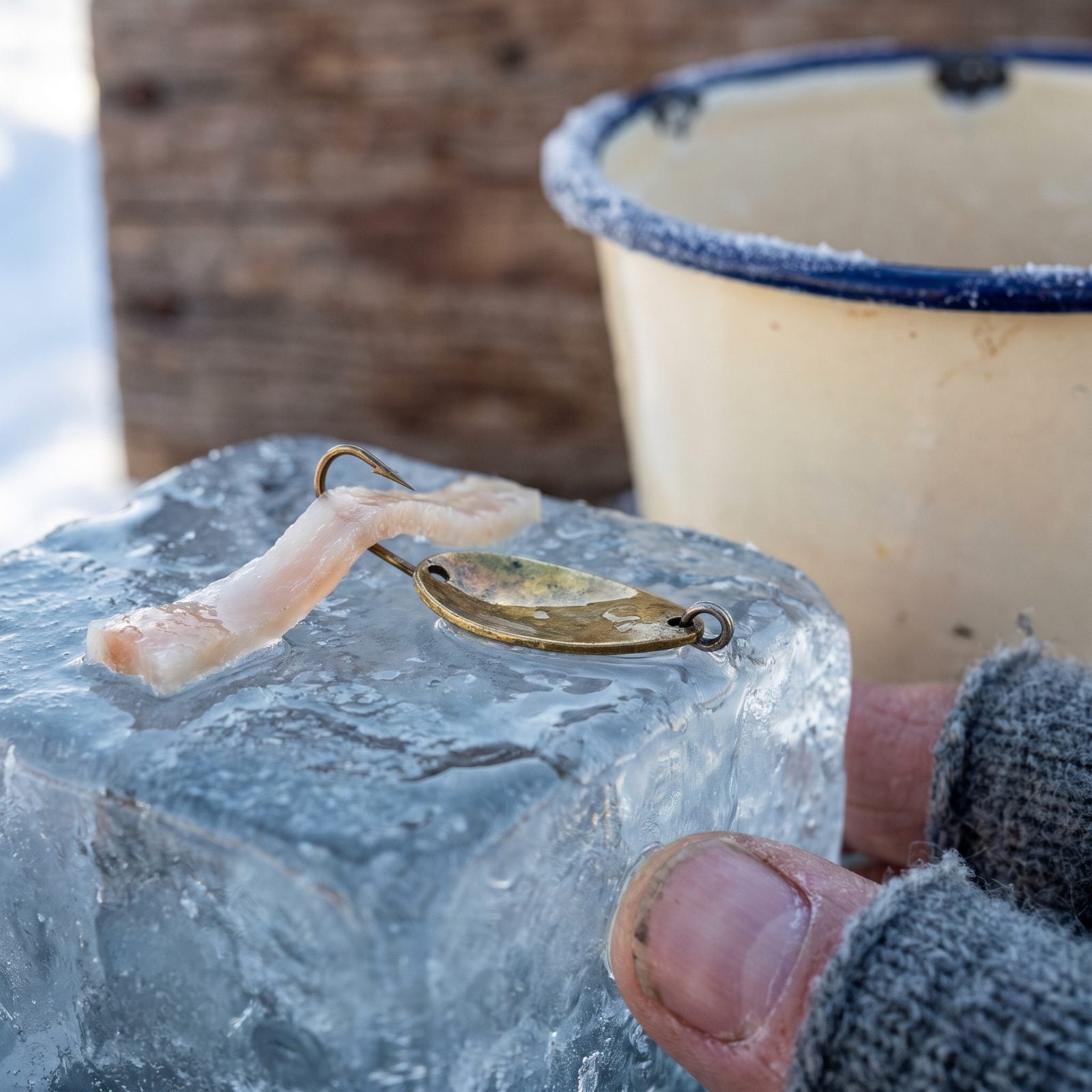
Bacon rind on a jig sounds like a joke until a perch inhales it. The fat is tough, so it stays on through strike after strike instead of shredding like a minnow. It wiggles with almost no current, and the scent leaches out slow in cold water.
Cut a strip about a finger wide and drape it over the hook so the points stay exposed. Bury them in fat and it fouls the hook gap. I kept a strip pinned to my coat lapel for years so it rode along without a second container, and the cold keeps it fine all day.
38. Slide a Shirt Button Onto the Line as a Depth Marker
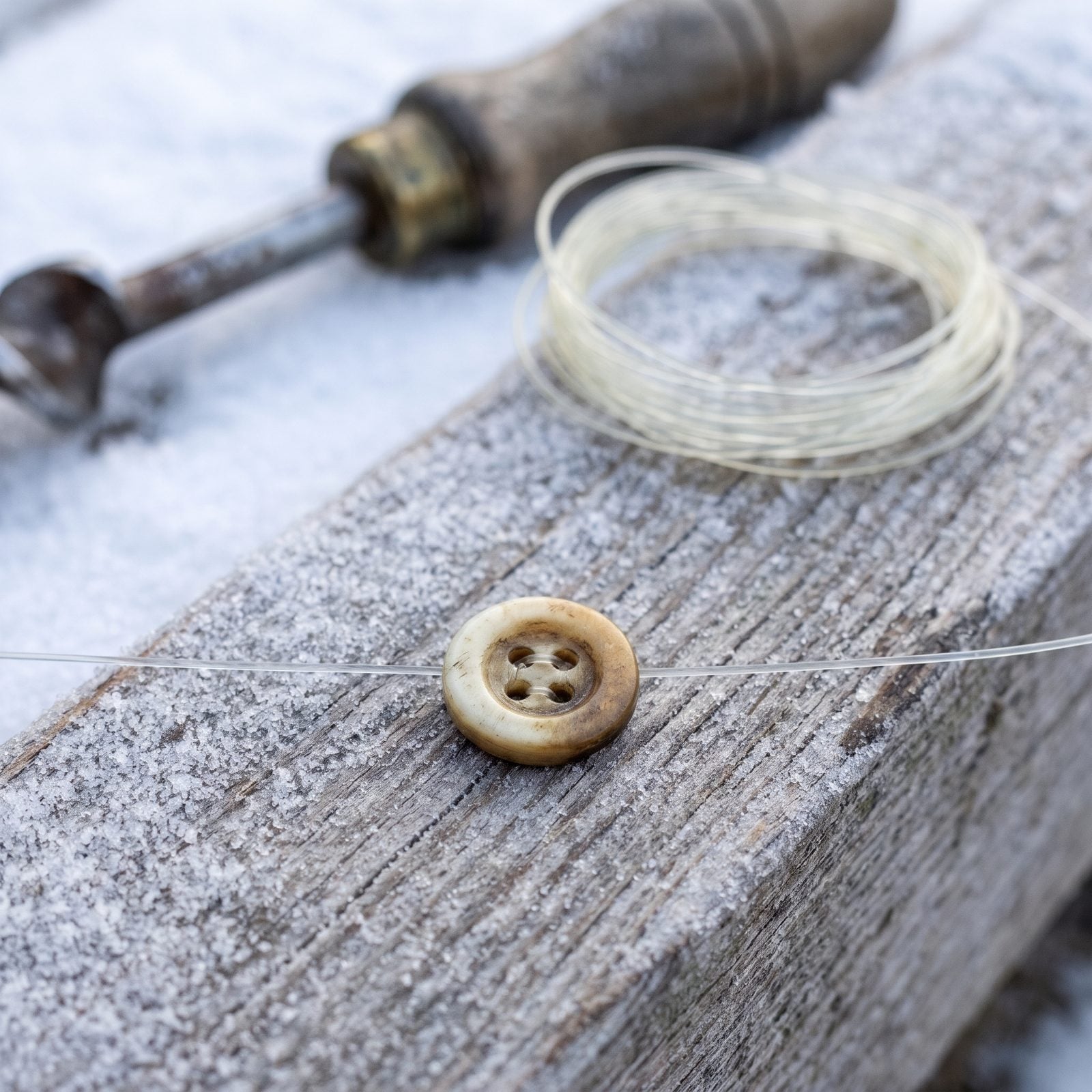
Finding a fish at nineteen feet means nothing if you cannot get back there. Slide a shirt button up the line, snug it against your depth once you find fish, and you have a marker that drops right back to the exact spot every time you reset.
A two-hole or four-hole button grips the mono enough to hold but slides when you push it. No knot to retie, no bead to buy. Move holes and you just thumb it to the new depth. Cheapest depth counter going, and it never needs a battery in the cold.
37. Build a Spring Bobber From an Old Clock Spring
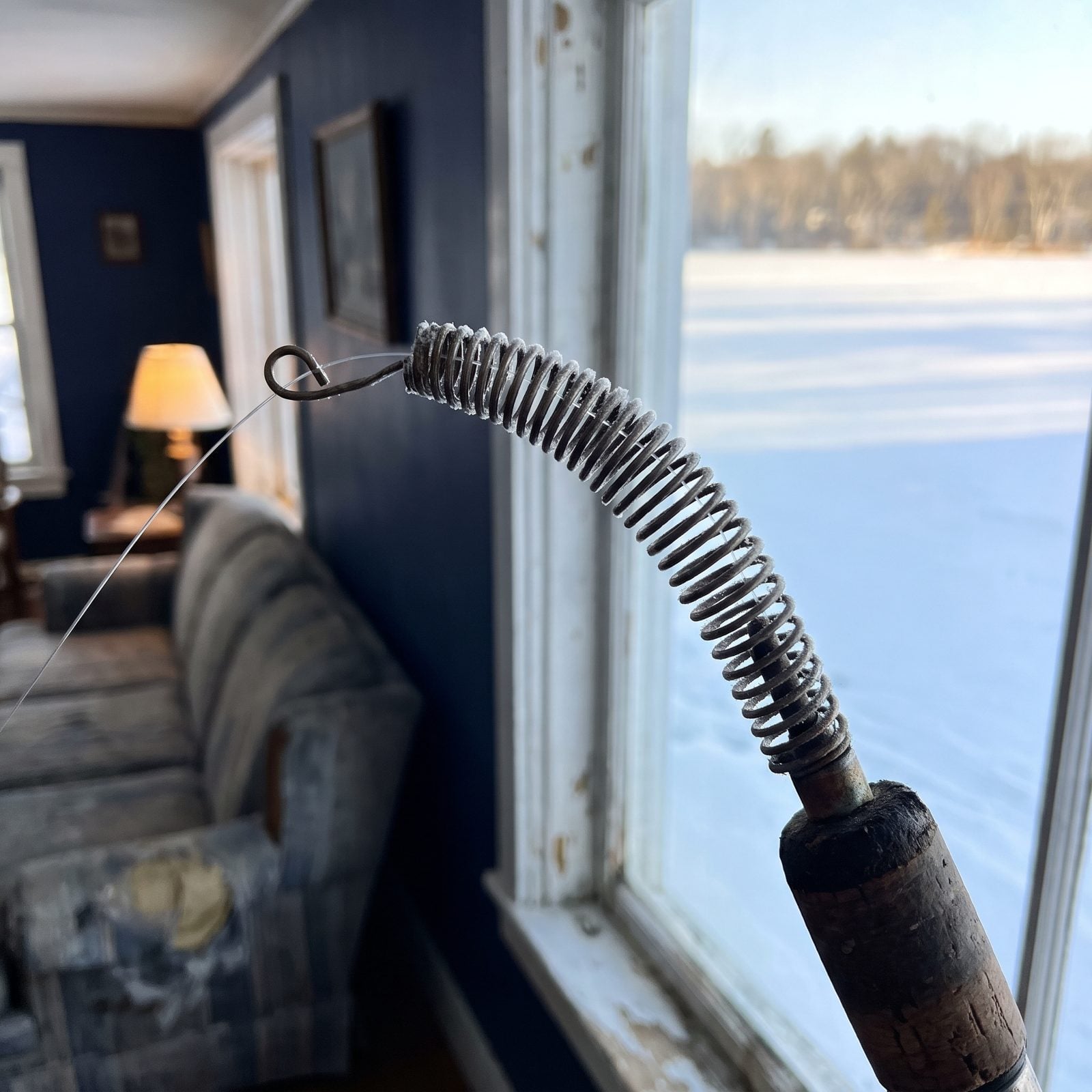
A spring bobber is a tight coil of spring wire off the end of your rod that bows under the weight of a jig. A fish lifts the bait, the spring straightens, and you see it move a quarter inch before you feel a thing. An old wind-up clock spring has the right temper for this — springy, not brittle.
Cut a length of coil, slip it over a short metal stub set in the cork handle, run the line through the coil and out a wire loop at the end. Set the bow by raising the rod until the end of the coil just lifts. Then watch that coil like your life depends on it.
Half the bites in dead winter are a fish lifting the jig, not pulling it down. The spring bobber is the only thing that shows you.
36. Balance a Coin on the Reel Spool as a Bite Alarm
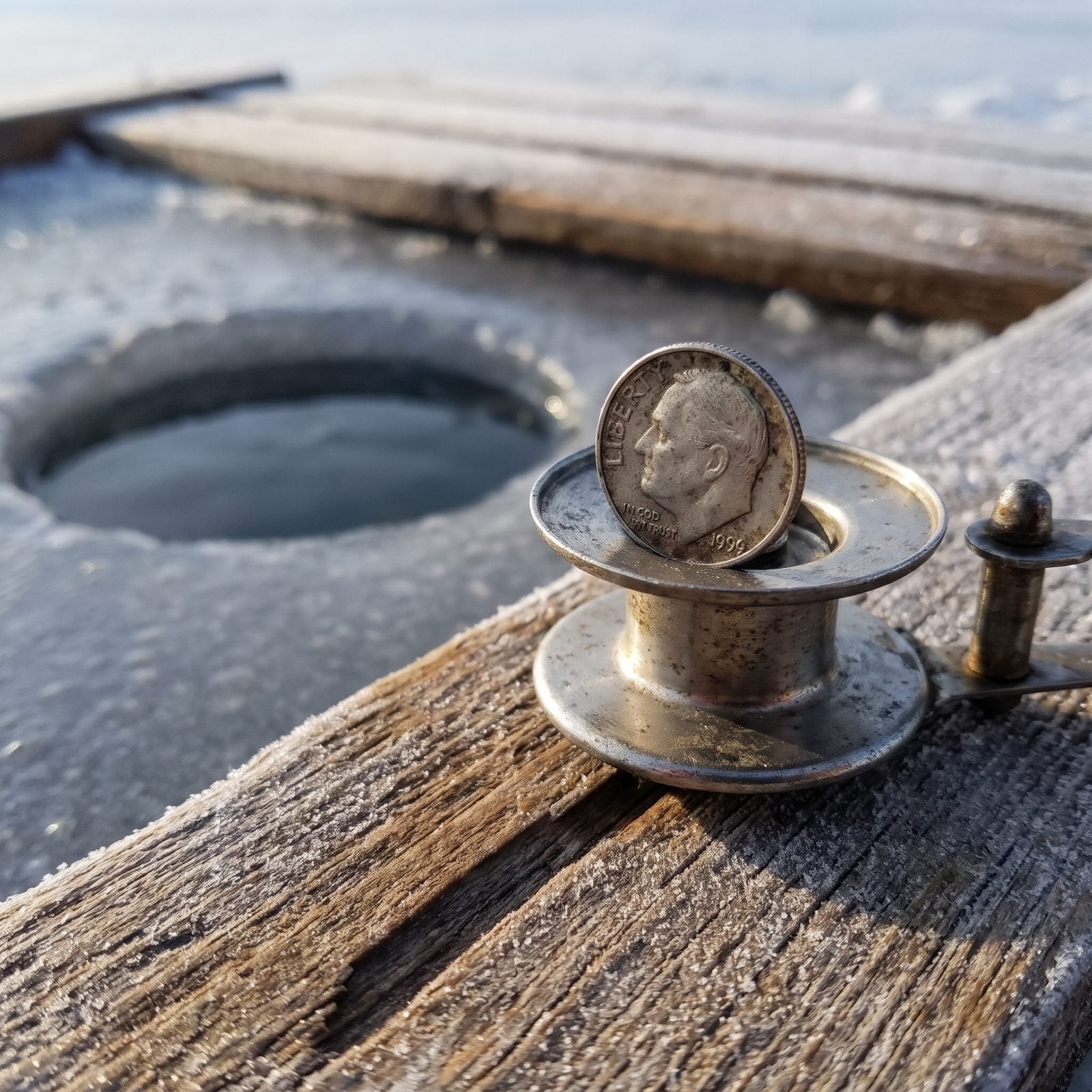
Set the spool flat on the board beside the hole and stand a dime on edge inside its top rim. Once it’s loaded with line and rigged, a fish taking line turns the spool and the coin drops with a tink against the frosty wood. Cheap alarm, and it works while you pour coffee from the thermos.
It only trips for fish that run with the bait, so match it to what you’re after. A lazy crappie leaves it sitting there. A pike or a decent walleye will knock it clean off. Get the coin truly balanced on edge, not flat, or the whole thing is pointless.
35. Carry Salt-Cured Minnows That Will Not Freeze Solid
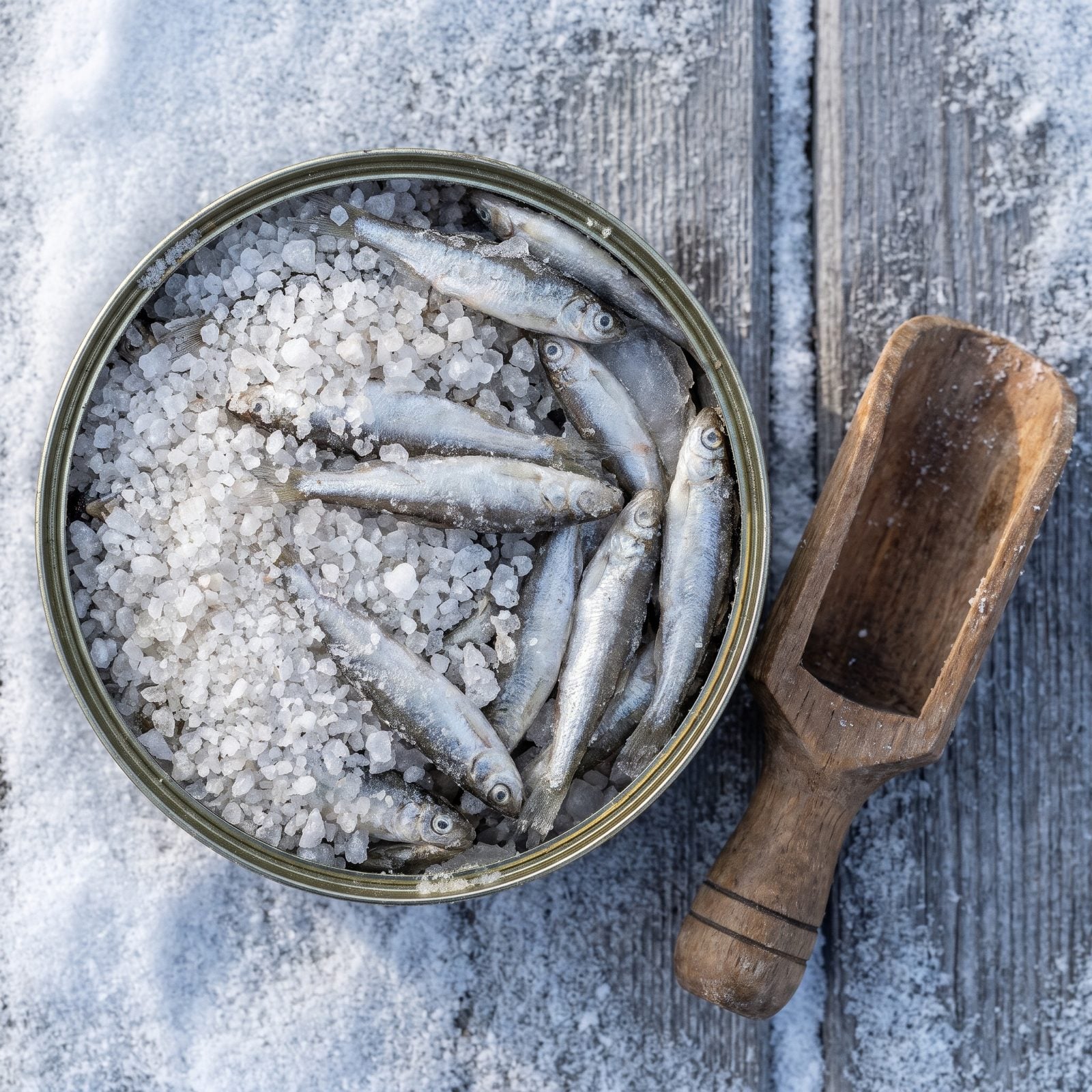
Live bait is a losing battle on a brutal day. Cold water, a hole skimming over, minnows going belly up in the pail. Salt-cured minnows dodge all of it, because the salt pulls moisture out and firms the bait so it stays supple instead of freezing into a little silver icicle.
They do not swim, so you give them the action with your rod. But they stay on through repeated hits and they keep in your coat pocket all season. Check your local regs first — some waters restrict preserved or imported bait, and it varies by state.
34. Rub Beeswax on Rod Guides to Slow Ice Buildup
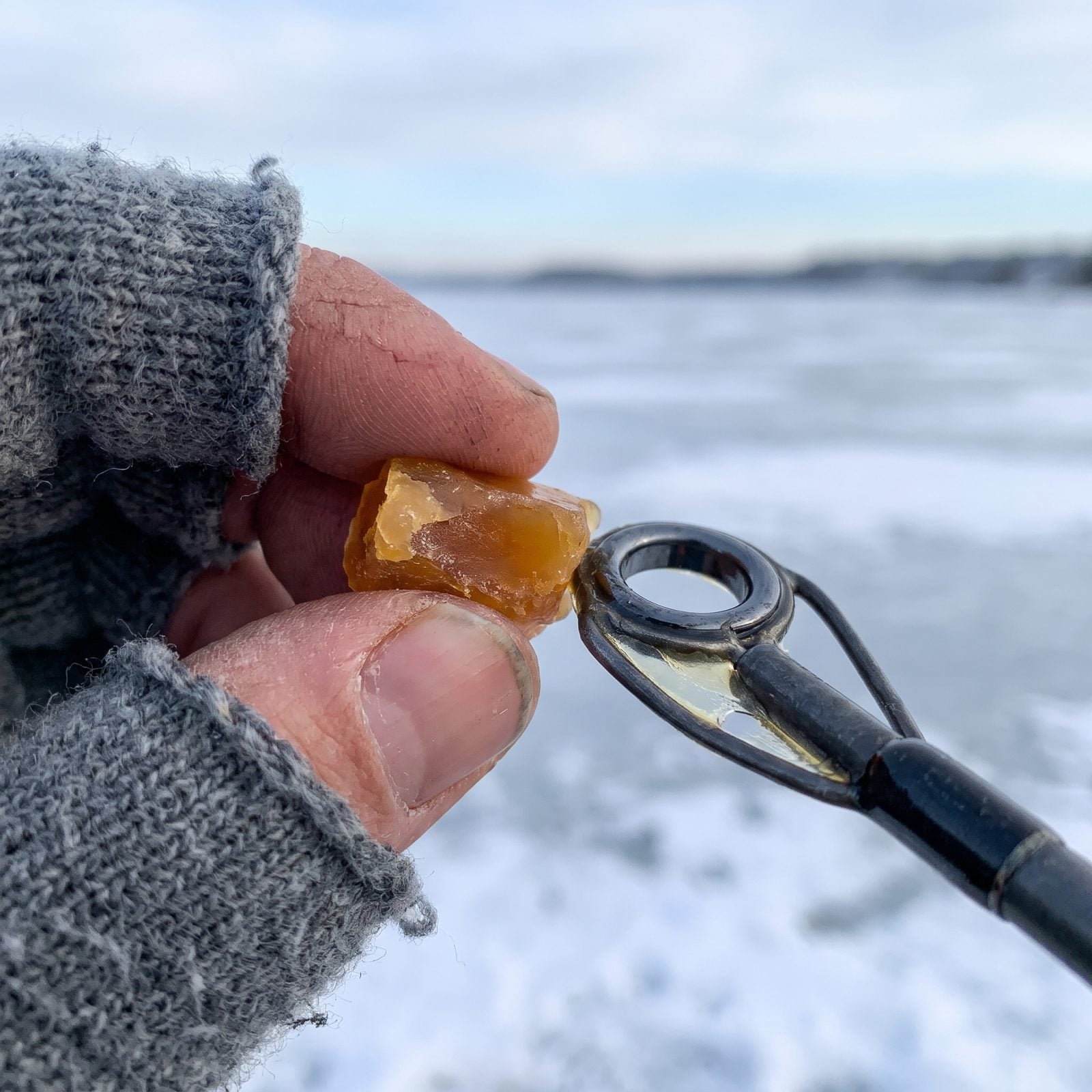
Ice in the guides is the quiet misery of the sport. Line freezes, drag seizes, and you lose the fish because the guide iced shut on the hookset. A thin smear of beeswax gives the water nowhere to grab, so ice slides off instead of clinging.
It is not permanent. Reapply every hour or two in bad weather. Lip balm works in a pinch and so does nonstick spray, but beeswax lasts longer and does not run into your line. A little nub lives in the bottom of my bucket and has for years.
33. Use a Tiny Chamois Strip as a Soft-Plastic Substitute
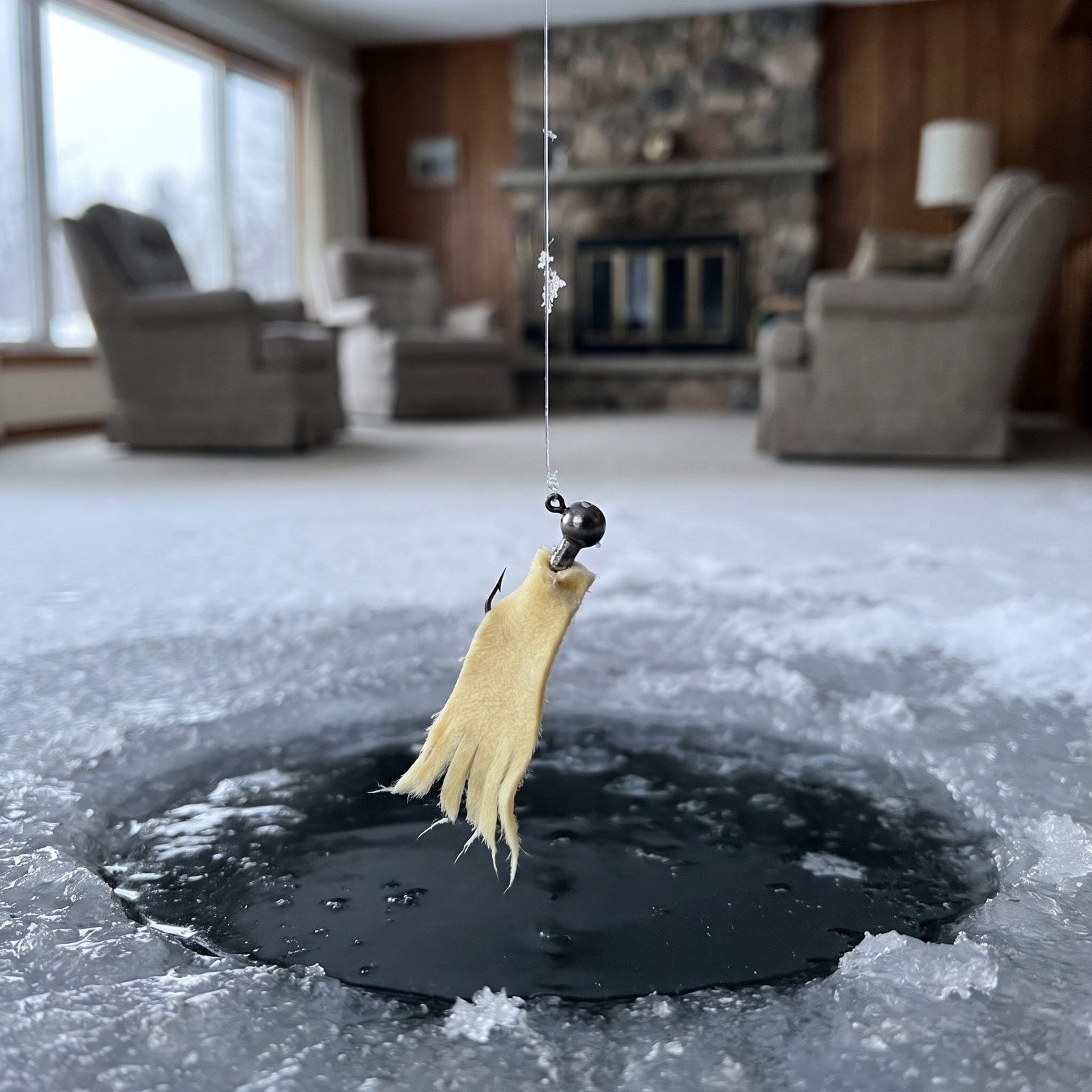
Thread a ragged, tasseled strip of chamois leather on a small jig and it undulates underwater like a soft plastic, except it soaks up scent and holds it. Dip it in whatever attractant you like and it keeps working long after a plastic trailer has gone stiff and dead in the cold.
Chamois does not get brittle the way cheap plastics do when the mercury drops. Cut it wide, maybe two inches long, and snip the end into several ragged fingers. Panfish worry it, trout chase it. Rinse it, let it dry, and it lasts a dozen trips.
32. Use a Clothespin to Hold a Deadstick Line
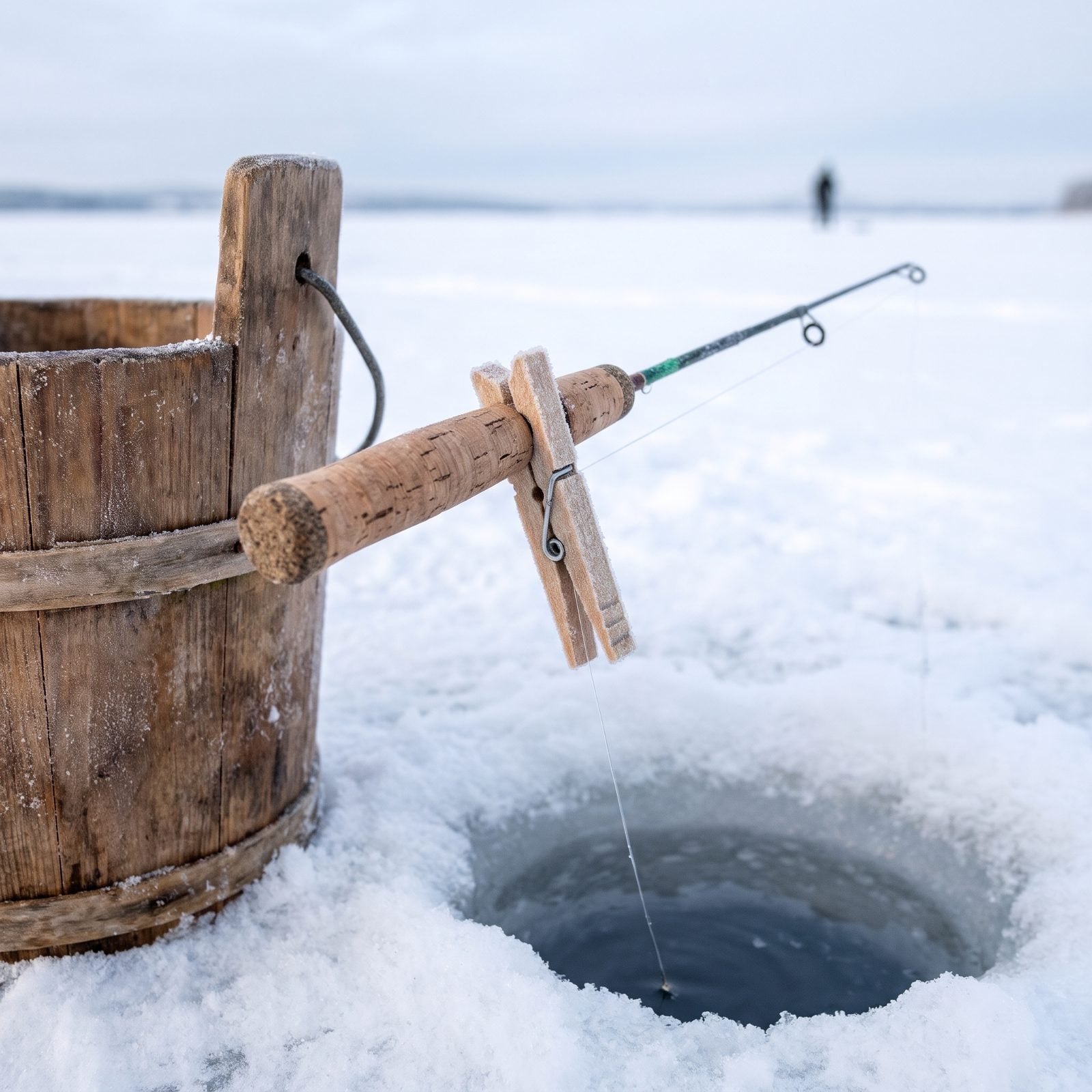
A deadstick is a second rod sitting still with bait at a set depth while you work your jigging rod. The trouble is the line creeping or the rod tipping over. Clamp a wooden clothespin on the cork handle with the line pinched in its jaws and it holds position, then pops free when a fish pulls hard enough.
Set the tension by how deep you seat the line in the pin. A light panfish gets a loose grip, a pike gets a firmer one. And it gives line instead of snapping it, which is more than a rod holder does.
31. Touch Up a Hook on a Matchbox Striker
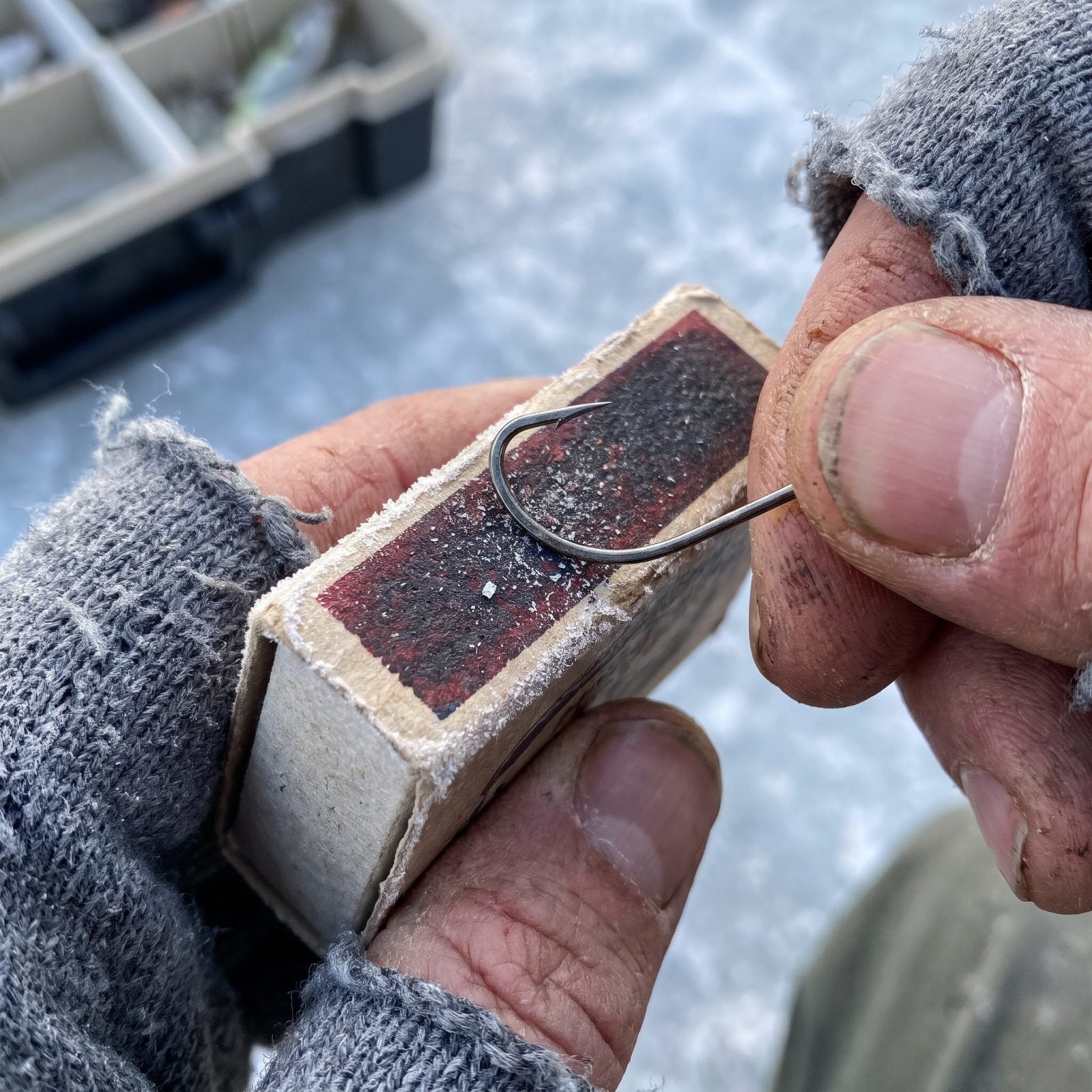
The striker strip on a matchbox is fine abrasive grit, which makes it a hook hone that fits in your shirt pocket. A few light strokes and a dulled point will grab your thumbnail again the way a sharp hook should.
I check every hook against the nail. If it skates instead of catching, it needs a touch-up — and more lost fish come from dull hooks than any other single cause. A wet, cold hook dulls fast on the ice lip. Four passes on the striker and you are back in business. The old boys carried matches anyway for the stove, so the sharpener came free.
30. Loop a Rubber Band Around the Spool for Makeshift Drag
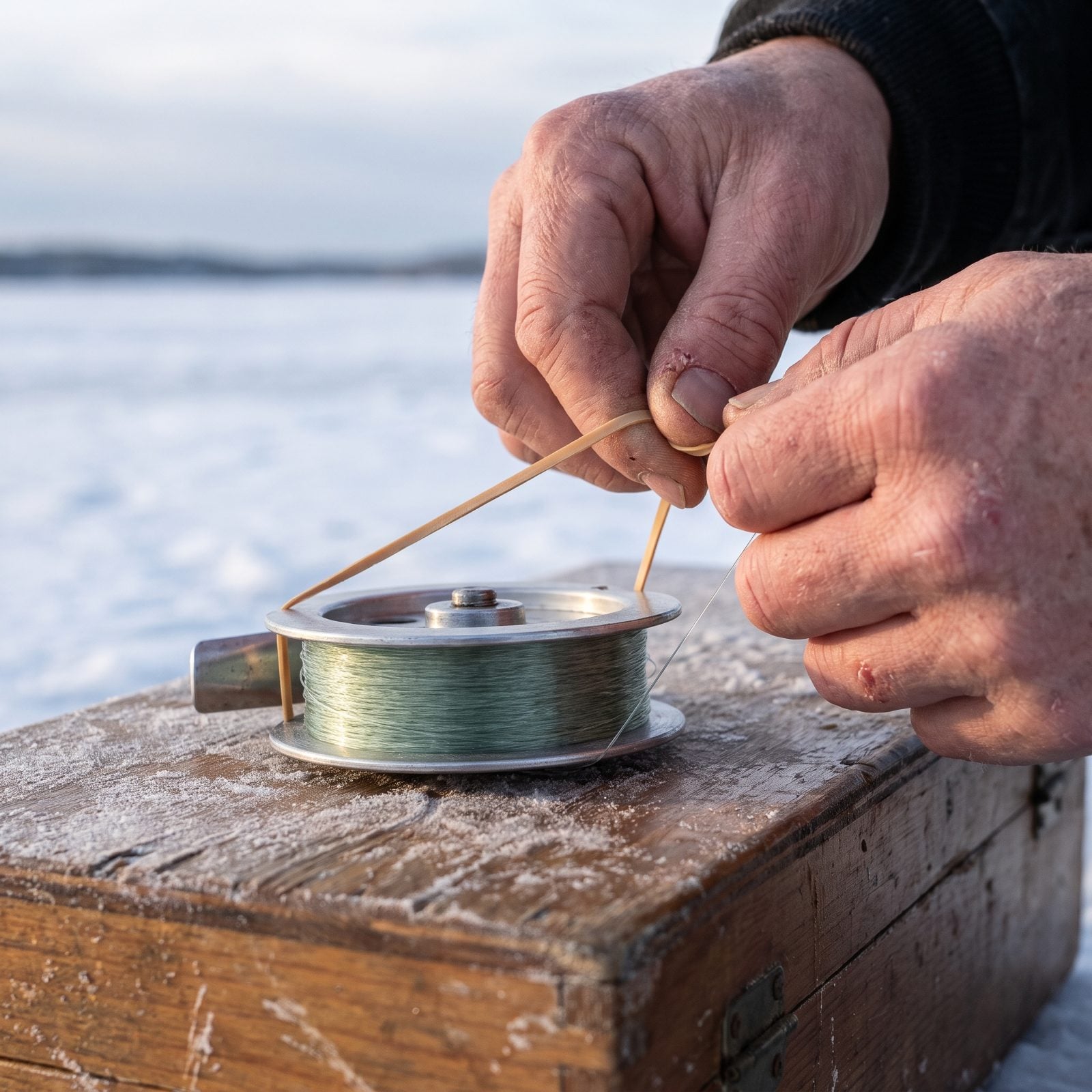
Maybe your reel’s drag freezes up, or maybe the cheap one never had much to begin with. A rubber band fixes that. Wrap one around the spool so it presses lightly against the line coming off, and you’ve got just enough tension to keep a big perch or walleye from burning line straight down into the rocks.
The band stretches when a fish lunges, then settles, forgiving in a way a locked drag never is. I lost a good pike years ago to a seized reel in brutal cold, and I’ve carried a few bands in an inside pocket ever since.
29. Wax the Auger Flighting to Shed Sticky Snow
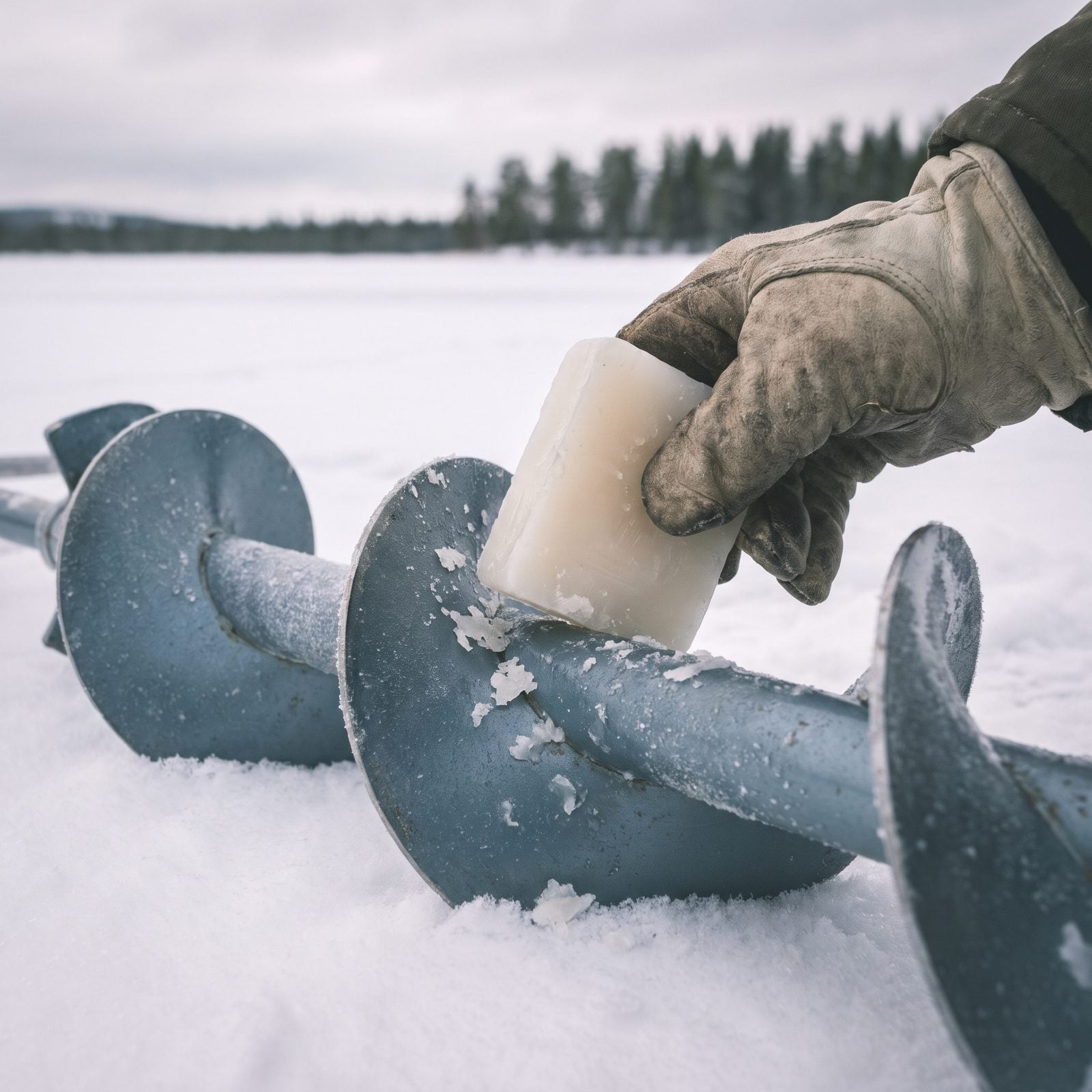
Slushy, wet snow clings to auger flighting and turns every hole into twice the work. A rub of plain paraffin, a candle stub, or ski wax along the spiral fixes it — the snow sheds instead of packing, and the blades cut cleaner on the way down.
Do it right out on the ice before you drill, gloves on. Takes a minute. You’ll notice the difference on the second hole, when your arms aren’t already shot.
28. Tie Red Wool Behind a Plain Hook for Extra Color
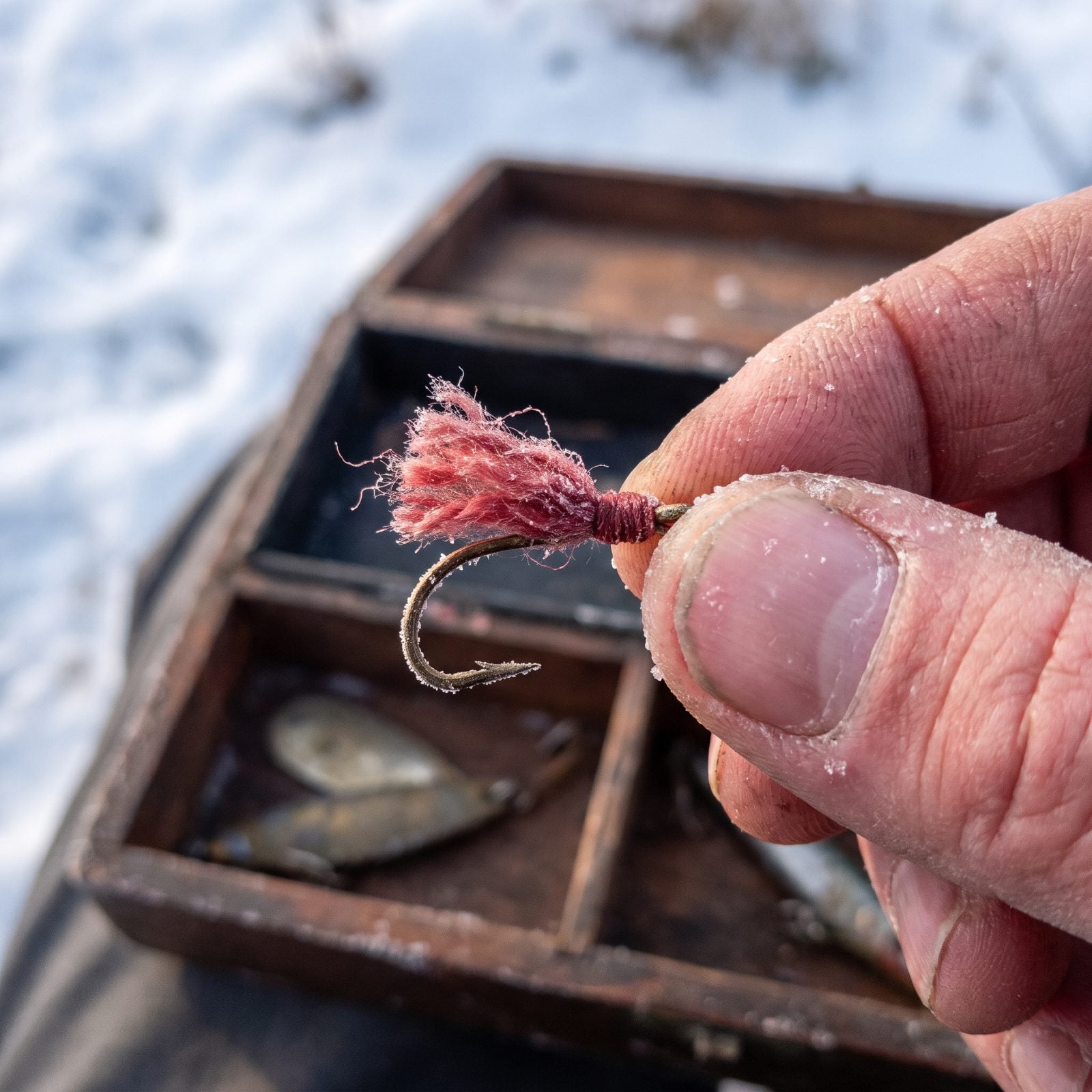
A plain hook catches fish. A plain hook with a scrap of red wool catches more of them on slow days.
Tie a short tuft behind the hook and it does two things: holds a hint of color down in dim water, and traps bits of bait scent in the fibers. Panfish and perch key on that little flag of red when nothing else is moving.
27. Flash a Few Loose Fish Scales on a Bare Hook
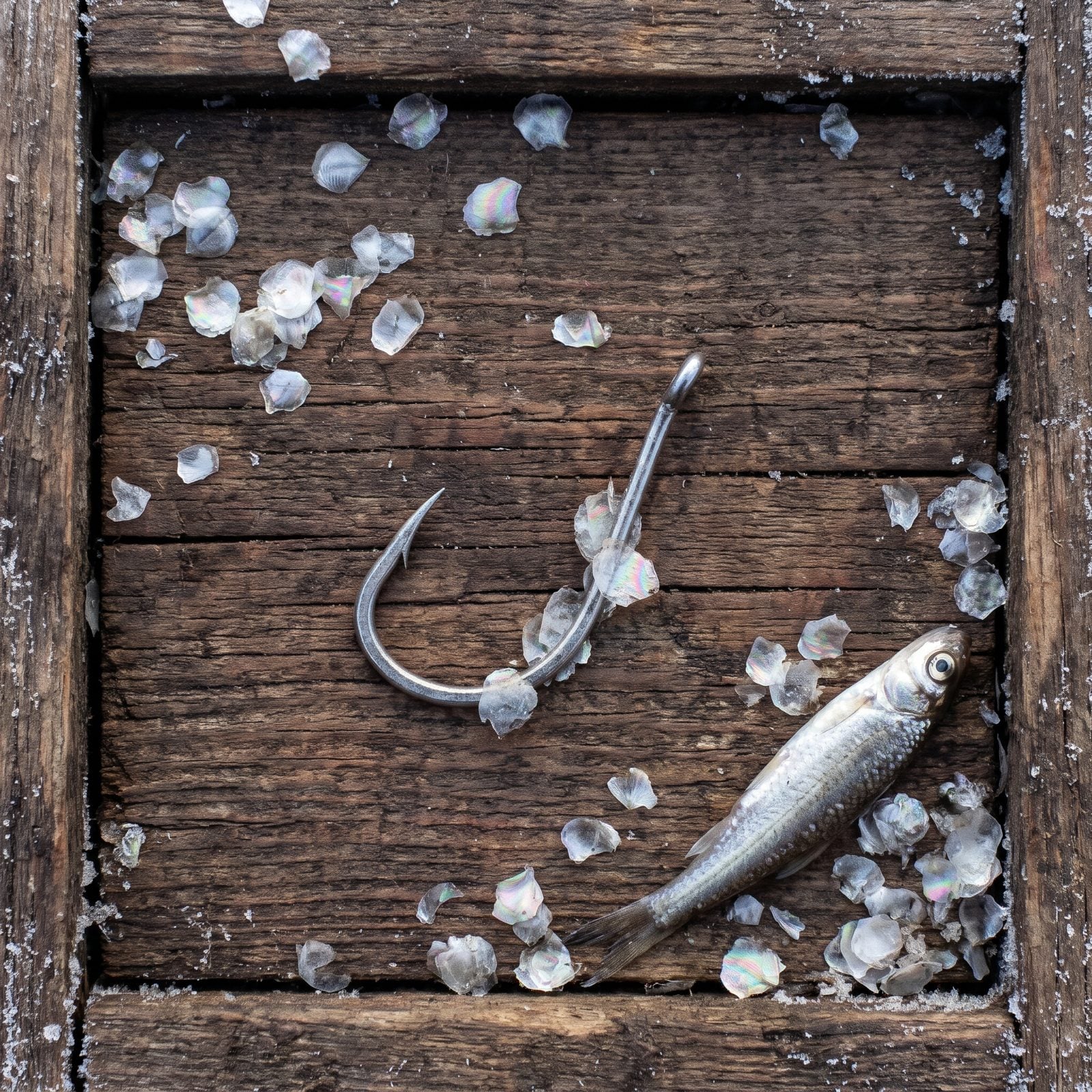
Nothing on your hook and the fish won’t commit? Press a couple of loose scales from a dead baitfish onto the shank. They flash like a tiny dying minnow when you jig, and that flutter triggers strikes a static lure never will.
It’s a scrounger’s move, the kind of thing you do when you’re out of real bait and too stubborn to go home. Works better than it has any right to on crappie holding in the middle of the water column.
26. Add a Perch Eye for Scent Where Regulations Allow It
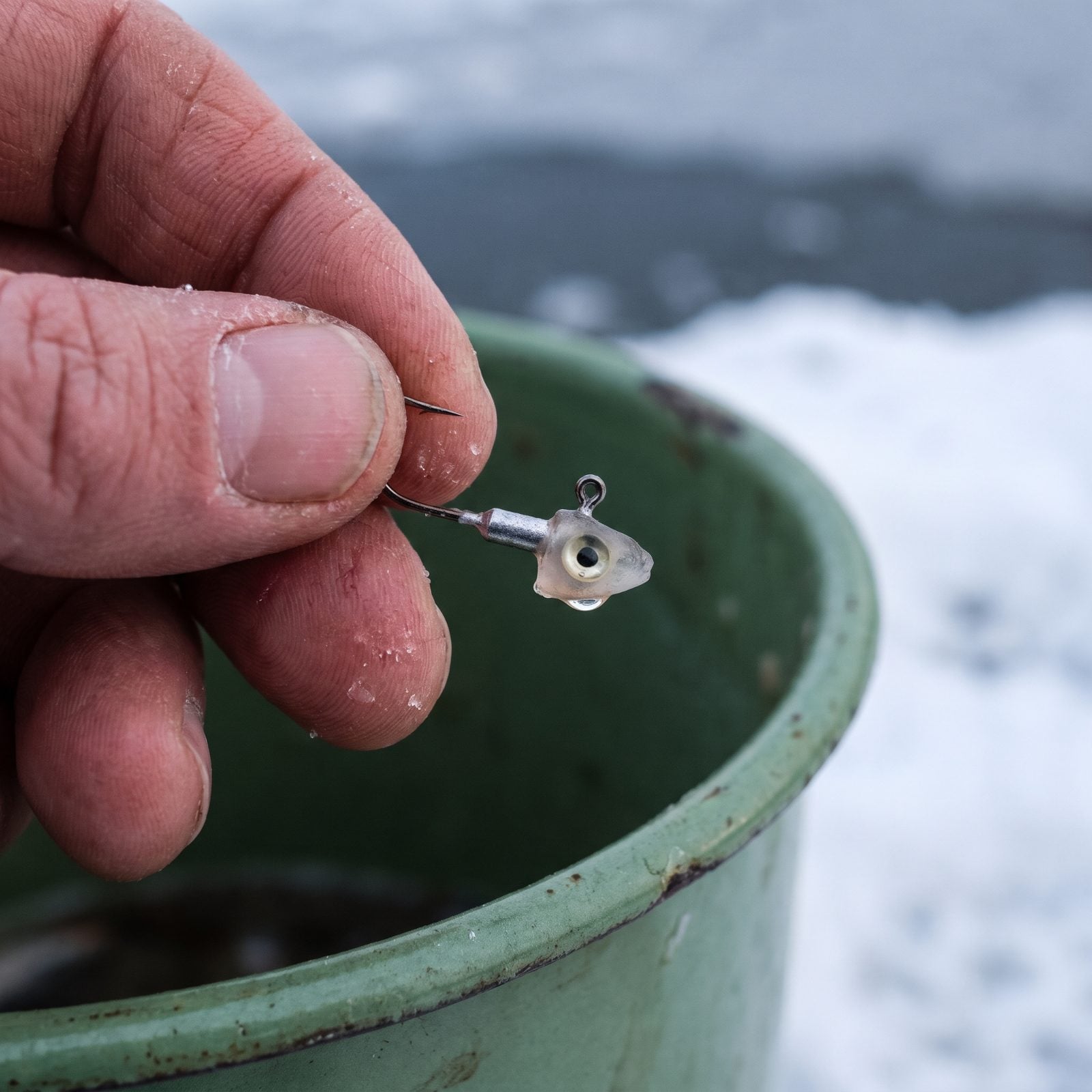
Old-timers tip a jig with a perch eye and swear by it. The jig shown here has only a molded eye on its head and a bare hook, so it still needs one. A real perch eye bleeds a slow trail of scent, and it clings to the hook better than soft flesh that tears off after one hit.
Before you do any of this, check your state’s bait and gamefish rules. Using parts of certain fish as bait is illegal in a lot of places, and species restrictions vary by water. Confirm it’s legal where you are, then decide. The scent edge is real, but it isn’t worth a ticket.
25. Pinch a Minnow’s Tail to Reduce Its Circling
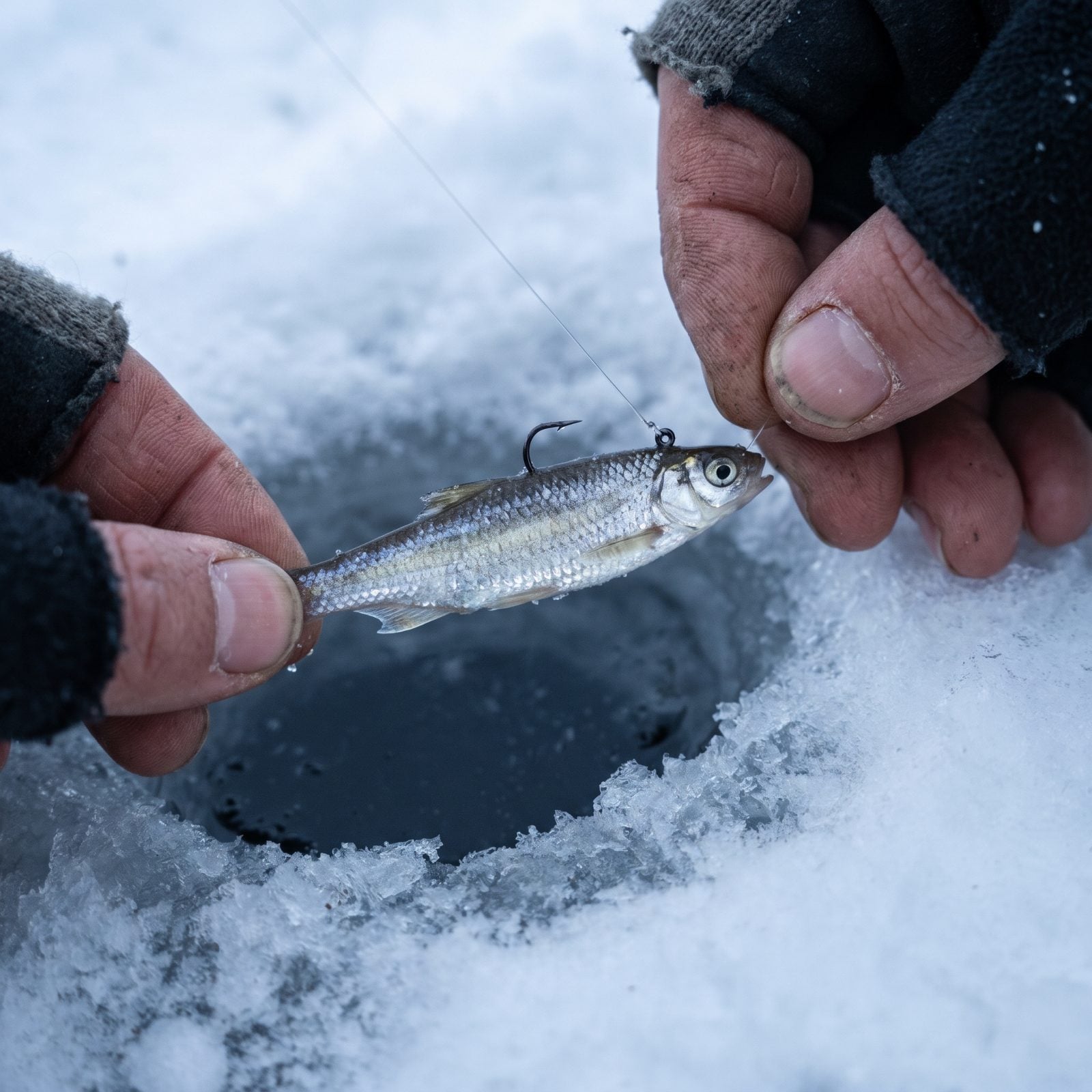
A soft-plastic minnow lure rigged a bit off-center spins in tight circles and winds your line into a knot nobody enjoys untying with numb hands. Pinch the very tip of its rubbery tail, just a little, and it still wobbles on the drop but can’t spin into those spirals.
It reads as a struggling baitfish, which is exactly what a hungry walleye is listening for. You want a believable wounded wobble, not a dead drift.
24. Crush a Dead Minnow’s Head to Release More Scent
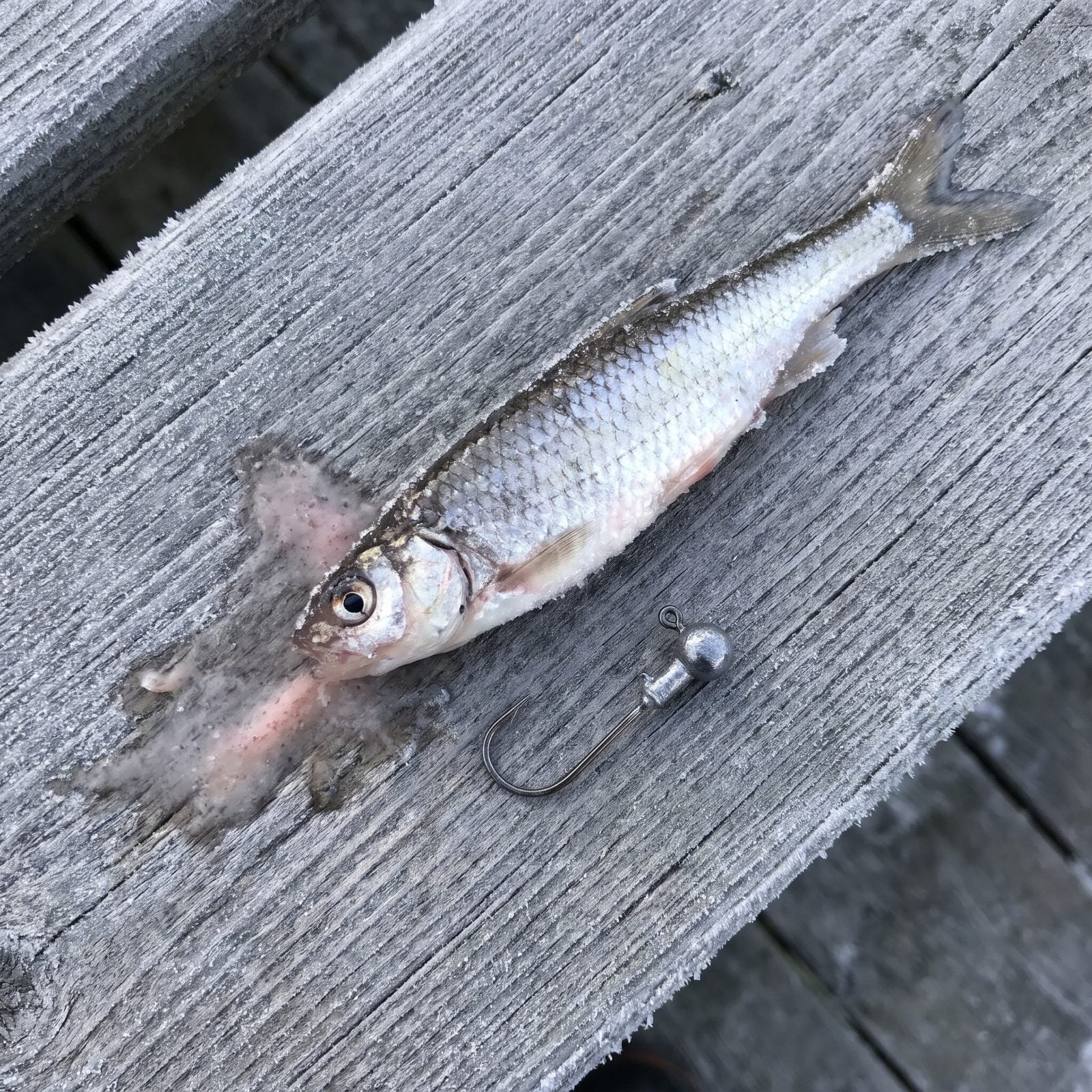
Don’t toss the dead minnows in your pail. A crushed head puts a scent cloud in the water that a whole live bait never will, and fish nose into that plume to find your hook sitting at the center of it.
This is a cold-water, low-light trick. When the bite goes dead and nothing’s chasing flash, scent brings them in slow. Rough, a little gross, and it flat out works.
23. Build a Collar of Spikes Around the Hook Shank
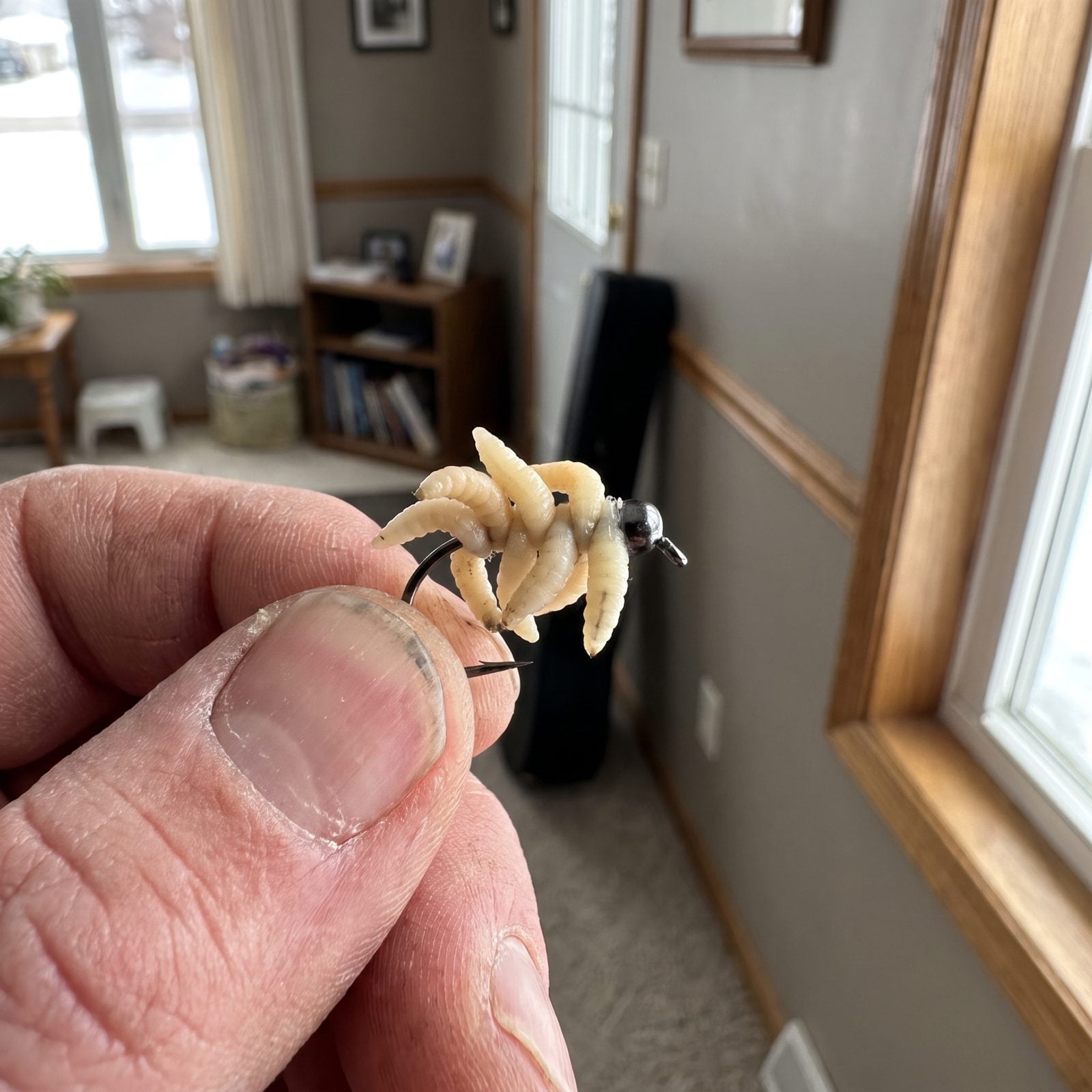
One spike on a jig is fine. A collar of four or five bunched tight around the shank is a meal — the cluster wiggles on its own, makes a fatter profile, and gives picky panfish something worth coming up for.
Lash them to the shank with thread and a little dubbing behind the bead so they stay put and splay out in every direction, like a tied fly. A good collar can carry you through a whole school without rebaiting, which matters when your fingers quit cooperating at zero degrees.
22. Pound the Jig Into Bottom Before Lifting It
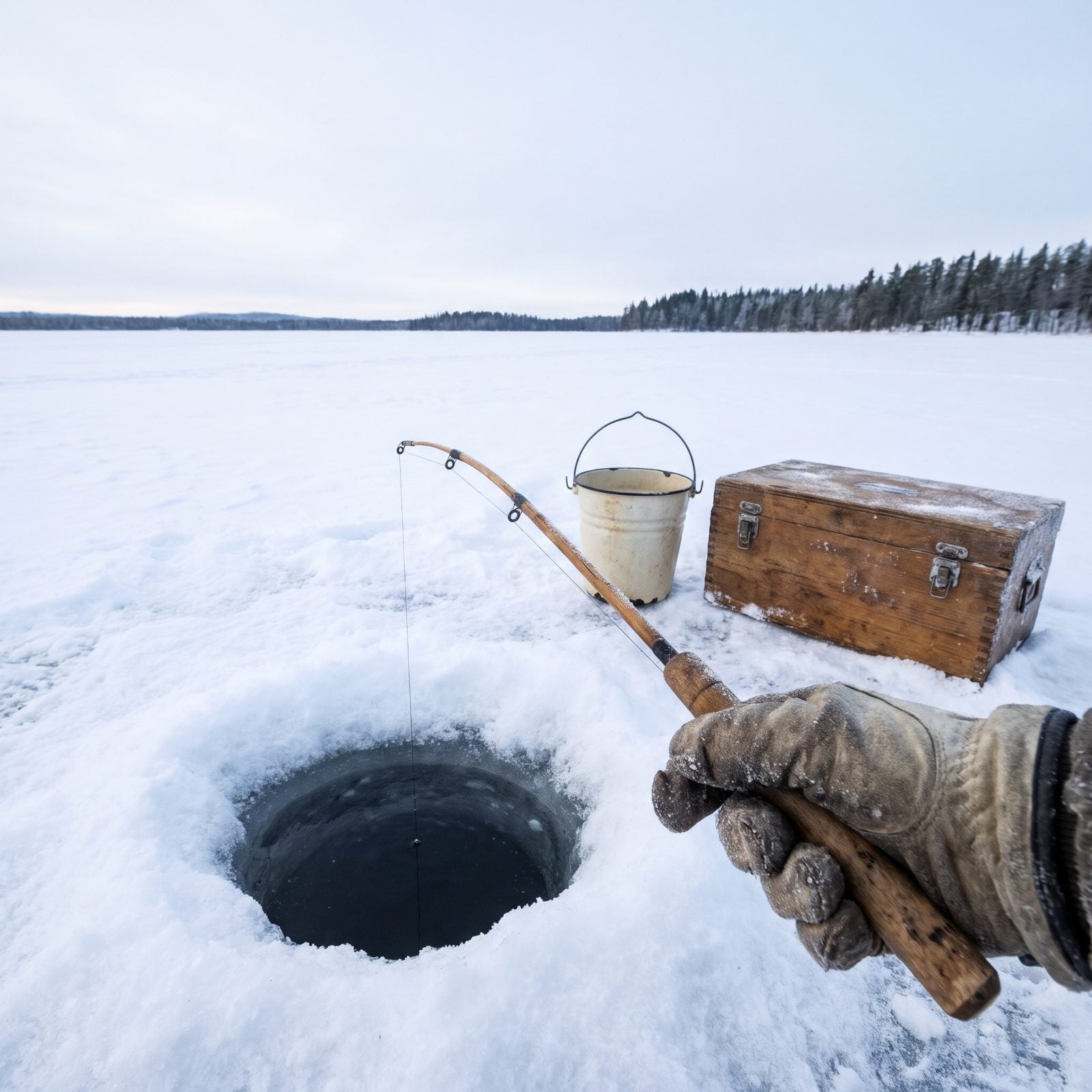
Tap your jig into the lake bottom a few times before you lift and work it. You stir up a little silt cloud, and that puff of disturbance mimics a baitfish or crayfish rooting in the muck.
Fish tied to the bottom, perch especially, come to investigate the commotion. Then your jig rises right up through the cloud. Natural order of events, and they fall for it every time.
21. Jig Hard Three Times, Then Hold Perfectly Still
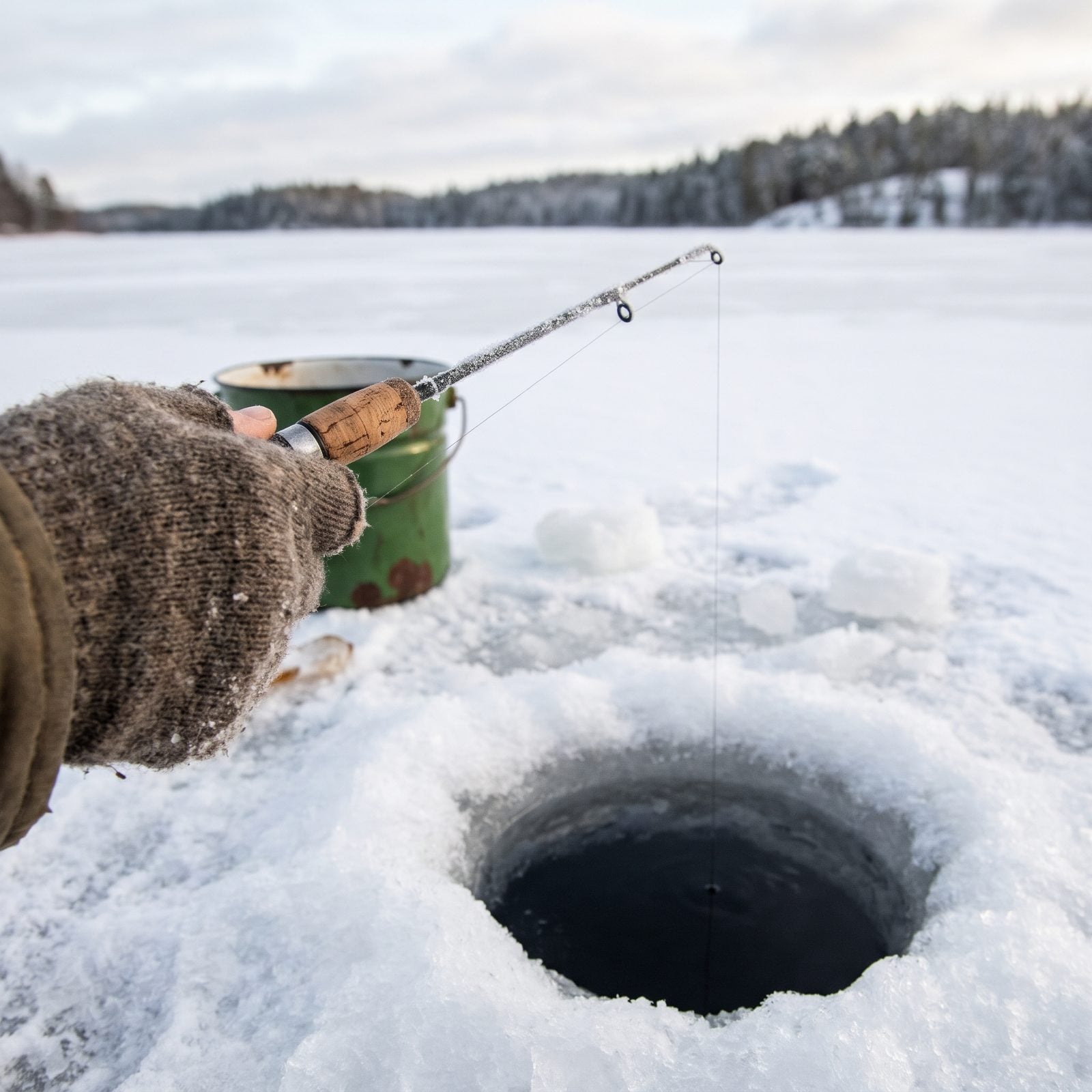
Most fish don’t hit the action. They hit the pause.
Three sharp jigs call them in from a distance, flash and vibration they can feel through the water. Then you stop. Hold the lure dead still, line tight, and wait. That motionless hang is when a following fish makes up its mind and eats.
Watching the line do absolutely nothing while a fish stares down your jig takes more patience than the electronics crowd ever gives it credit for. Count to ten before you move again. The strike almost always comes on the stillness, not the shake.
20. Tap the Rod Blank With One Finger for Tiny Vibrations
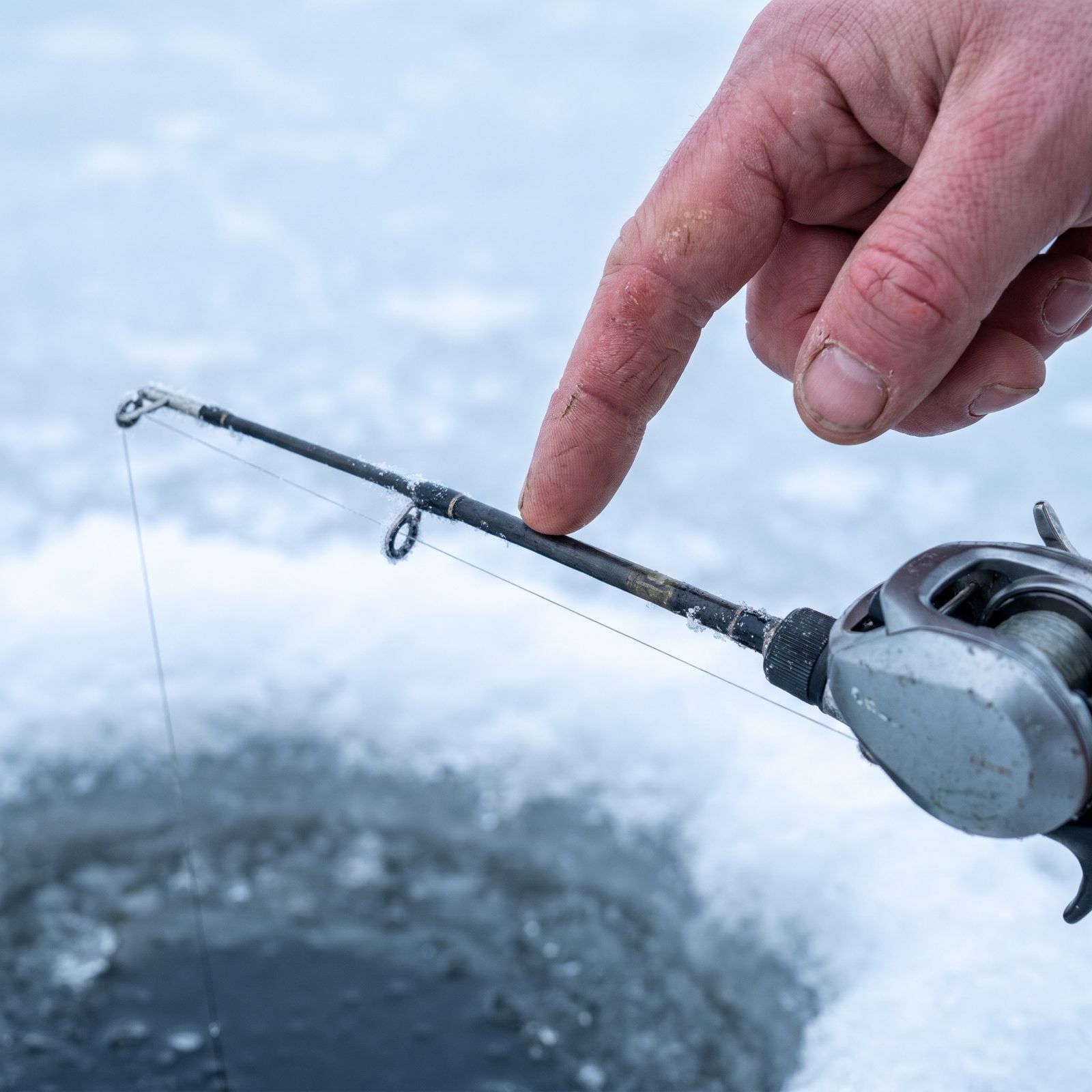
Lethargic fish under thick ice want motion so small your wrist can’t make it. Your wrist is clumsy. Your fingertip is not.
Hold the rod steady and tap the blank with one finger, right above the reel seat, and the vibration travels down and quivers the lure a hair at a time. It’s a shimmer, not a jig. Panfish and winter walleye that ignore a full lift-drop will often sidle up and inhale a bait that looks like it’s barely alive — because barely alive is exactly what they’re hunting in forty degrees of dark water.
19. Pinch the Line Between Bare Fingers to Feel Light Bites
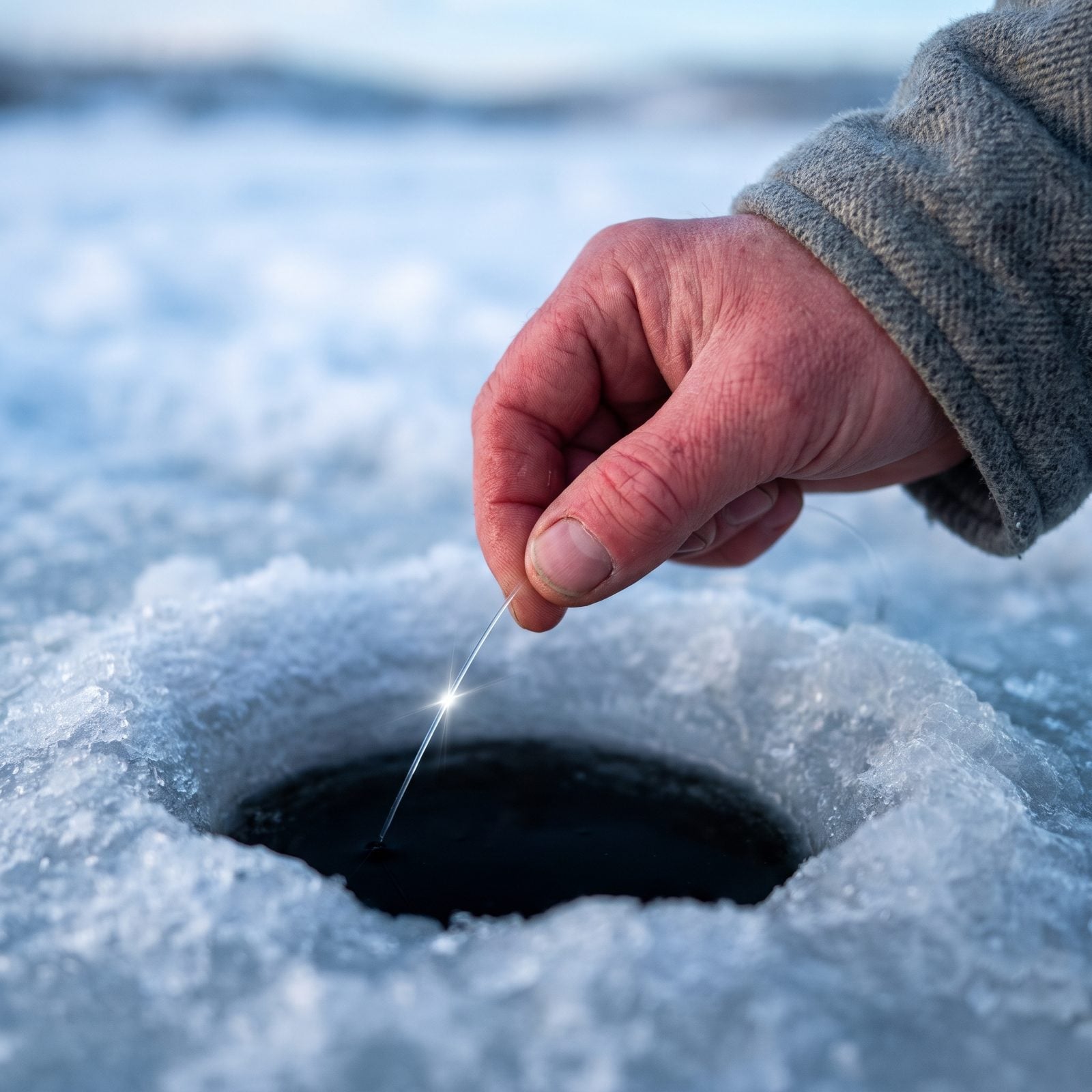
Forget the fancy strike indicator for a minute. Your fingers are the oldest bite detector there is, and they don’t freeze up in the cold the way electronics do.
Set the rod down across the hole, run the line over a bare fingertip, and pinch it light. You’ll feel a crappie breathe on your bait before the spring bobber ever moves — a tap, a tick, a sudden slackness when a fish rises and swims up with the jig in its mouth. That last one, the slack bite, is the one anglers miss their whole lives. You can’t see it. You can absolutely feel it.
18. Soot-Blacken One Side of a Spoon for Two-Tone Flash
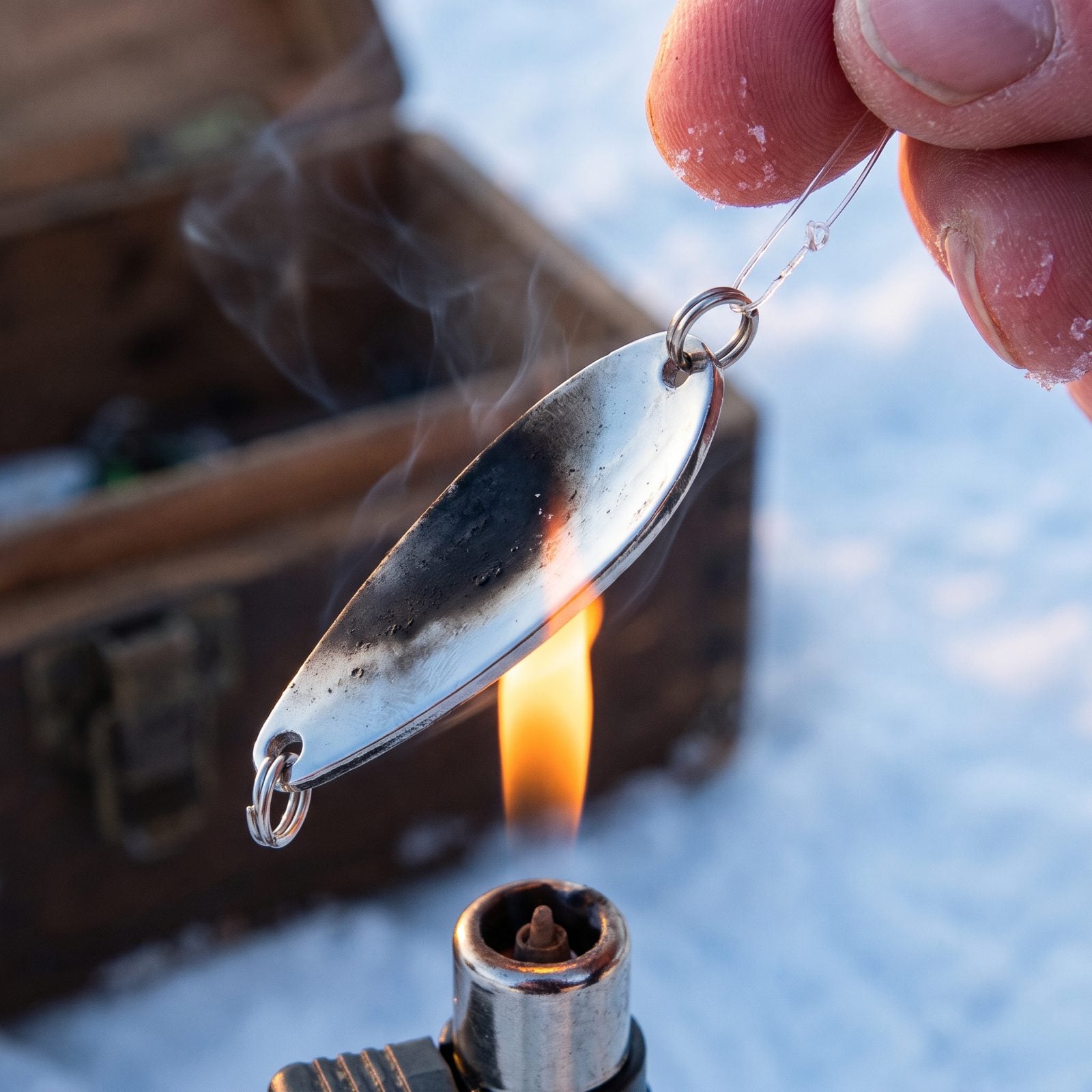
A spoon that flashes on both sides can look fake. Real baitfish don’t strobe — they flicker, bright then dark, as they turn.
Hold one long edge of a cheap silver spoon over a lighter or a match for a few seconds until the soot blackens half of that face, lengthwise, leaving the other half bright silver. Now it flashes and goes dark in the same wobble as it rolls. That broken rhythm reads as a wounded minnow to a fish that has seen ten thousand uniform spoons go by. Wipe it, rough it up again whenever it polishes off. Costs nothing, and it gives a tired lure a brand new look.
17. Hammer Dimples Into a Copper Spoon for Broken Reflections
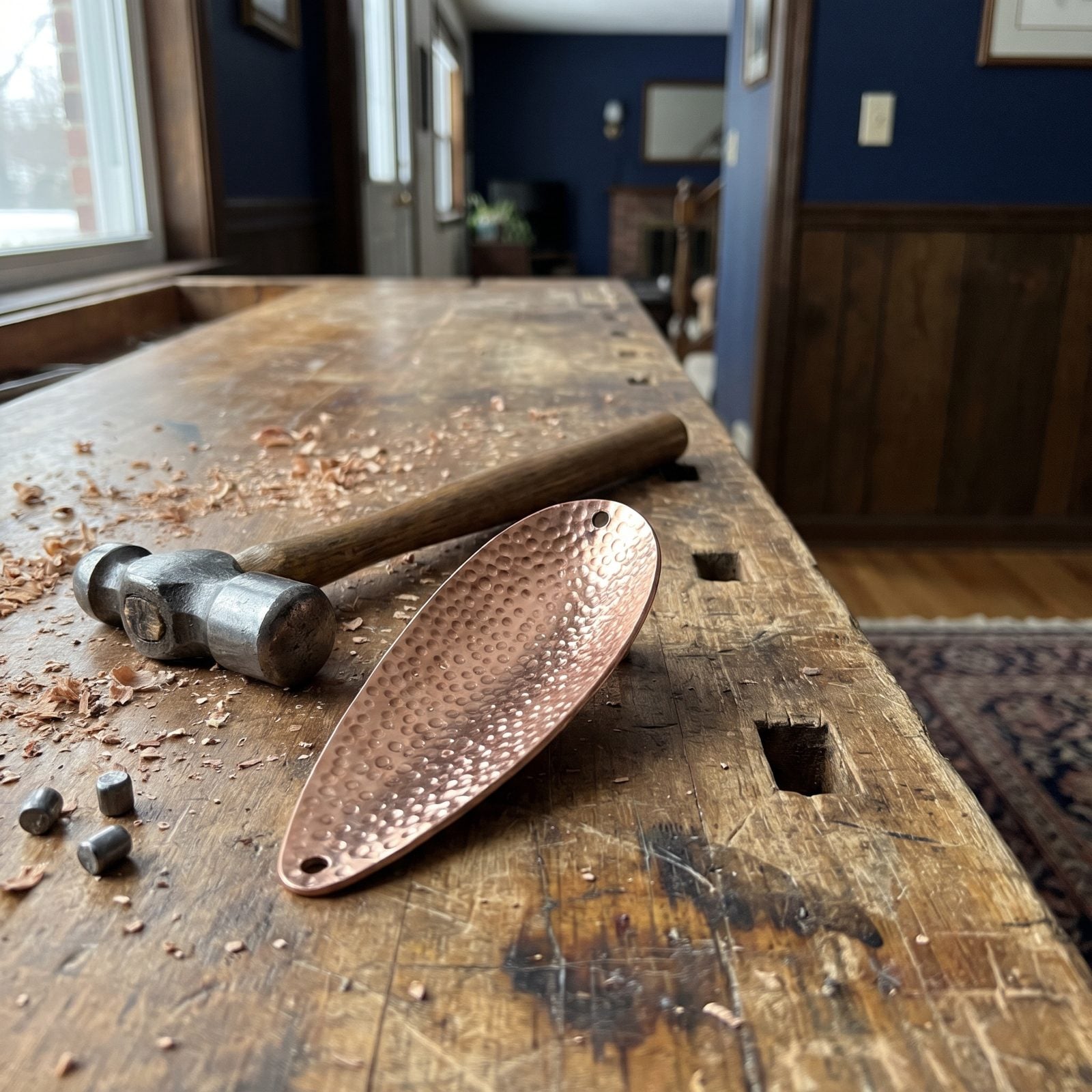
Lay a copper spoon on a block of wood and tap small dents into it with the round end of a ball-peen hammer. Don’t be precious about the pattern.
A flat spoon throws one big slab of light. A dimpled one shatters that light into a scatter of little glints, the way sun breaks across the flank of a shiner. In stained winter water, that broken flash pulls fish from farther out than a mirror finish ever will. Copper’s also softer than chrome, so it dents easy and holds a warm tone that reads well in tea-colored lakes. I keep a hammered one and a smooth one in the box and let the fish vote.
16. Hang a Short Chain Dropper Beneath a Flashing Spoon
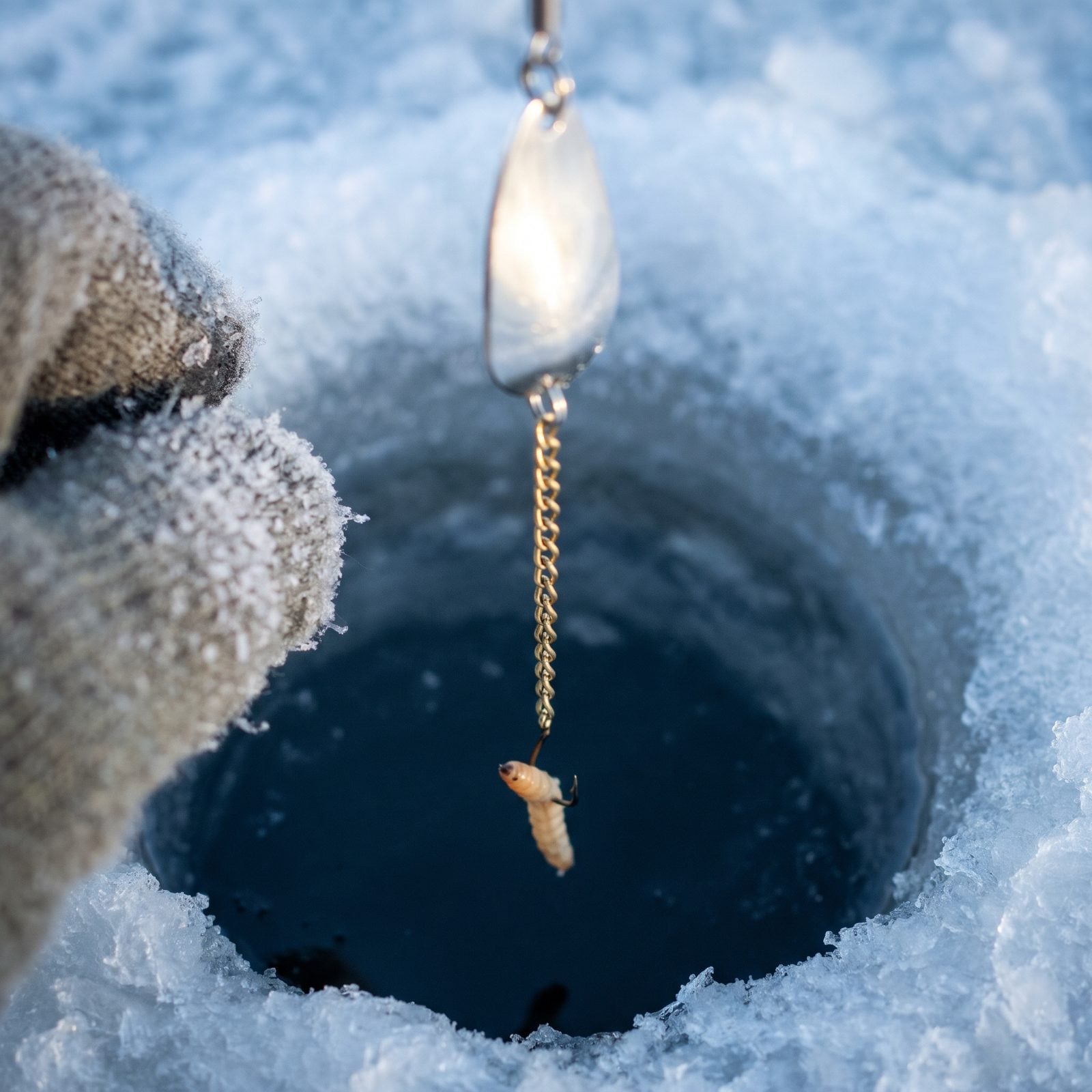
The spoon is the siren. The chain dropper is the dinner bell.
Tie a short piece of light brass chain, an inch or two, off the bottom of a flashing spoon and finish it with a tiny baited hook. When you jig, the spoon flashes to draw fish from distance, and the loose chain lets the little hook swing and settle on its own schedule. Fish that come to inspect the big flash find a small, soft-moving meal hanging right there. Old attractor-and-target logic, and it predates every commercial version of the same idea.
15. Place a Loose Split Shot Above the Jig to Make It Click
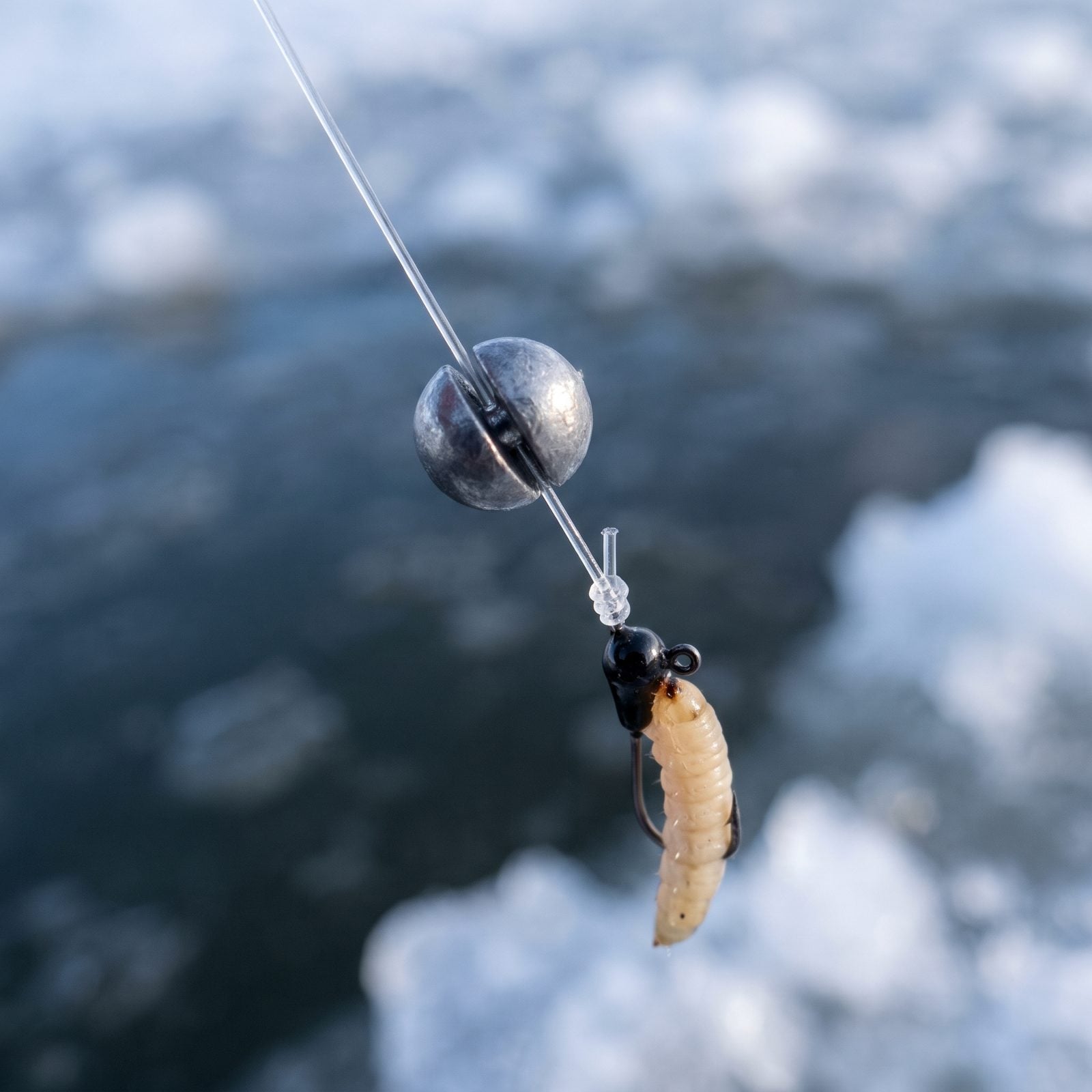
Sound matters more under the ice than most people think. Winter water is quiet, and a little click carries a long way.
Crimp a split shot loosely on the line a few inches above your jig, loose enough that it slides. Snap the rod tip and the shot drops and taps the small clear plastic stop threaded on the line just above the jig with a faint tick. Perch and sunfish home in on that sound, then find the bait — it mimics the click of a feeding crawler or a bug bumping bottom. Keep the crimp gentle so it can travel. Pinch it tight and you’ve just added a sinker instead of a noisemaker.
14. Mount a Tiny Brass Spinner Blade Above a Baited Hook
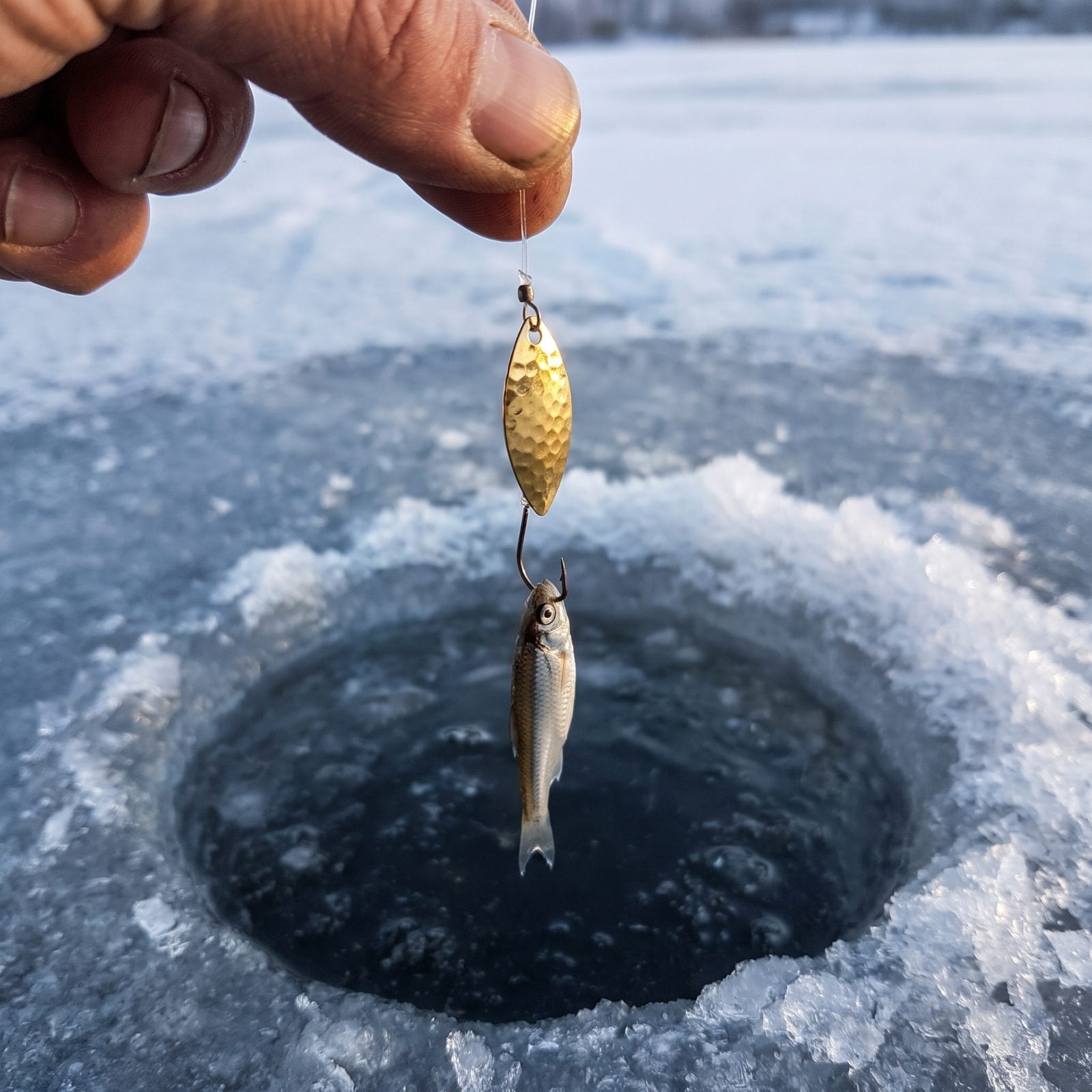
A plain baited hook is honest but boring. Add a spark of movement above it and the whole conversation changes.
Clip a small brass willow-leaf blade to a tiny swivel on your line and hang your hook straight off the blade’s bottom tip, so the blade rides in-line just above the bait like a little spoon. Even the slow rise of a fish breathing on your minnow sets the blade wobbling, and that flutter of brass pulls curious fish the last few feet. Old spinner-rig logic, shrunk down for the hole. Keep the blade tiny — a big one overpowers a delicate bait and spooks the light biters you’re after.
13. Call Fish In With a Large Spoon, Then Drop a Tiny Bait
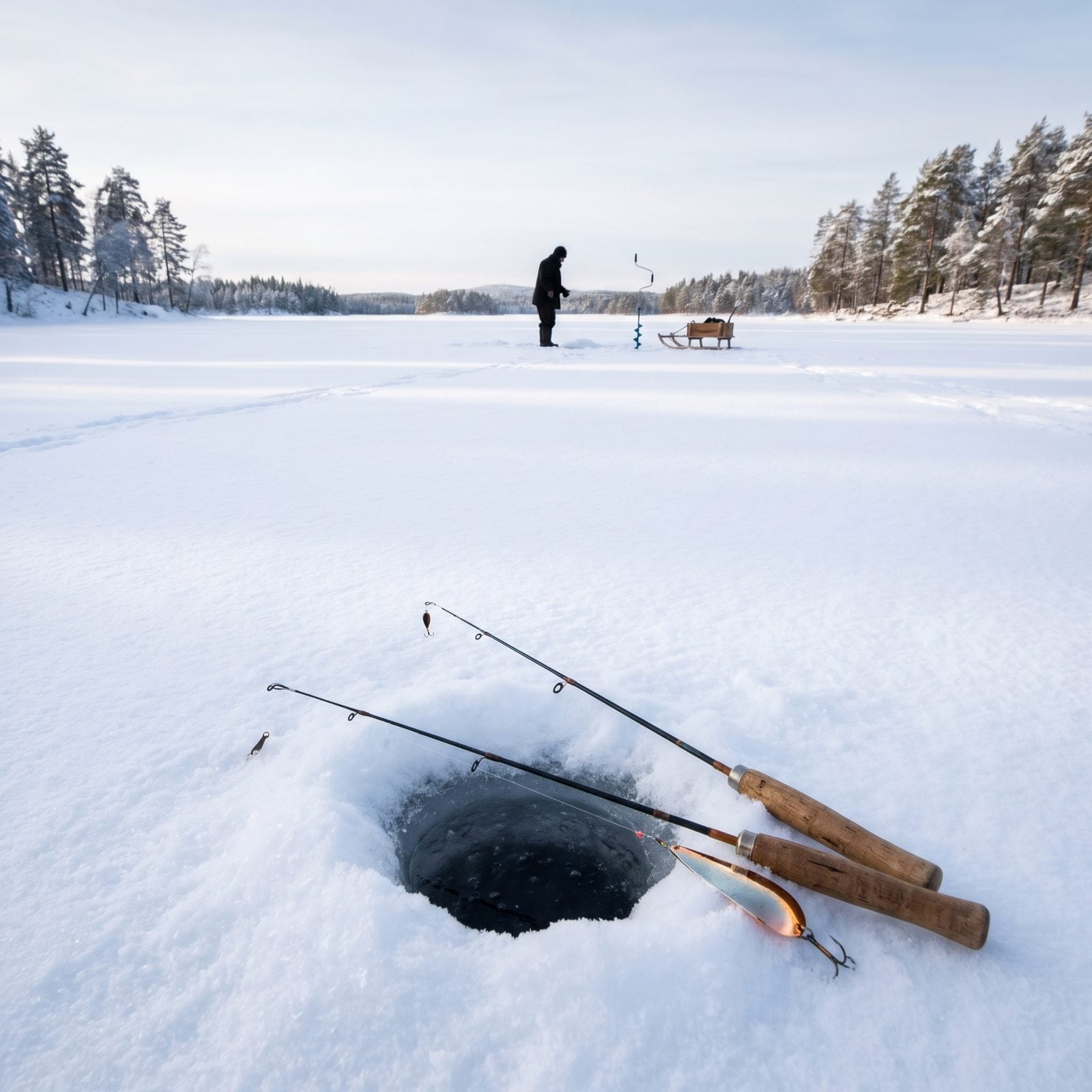
A two-rod play where the lake rules allow it, and one of the oldest tricks going.
Jig a big, loud spoon hard in one hole to ring the dinner bell and pull fish in from across the flat. Once they show up and lose interest in the heavy metal, feed them a tiny jig or a single minnow in a nearby hole. The spoon does the advertising; the small bait closes the sale. Lake trout, walleye, and big perch all fall for it. Check your state regs on how many lines you can run before you set up two holes, because that number varies and the warden doesn’t care about tradition.
12. Search From the Bottom Up Instead of Dropping From Above
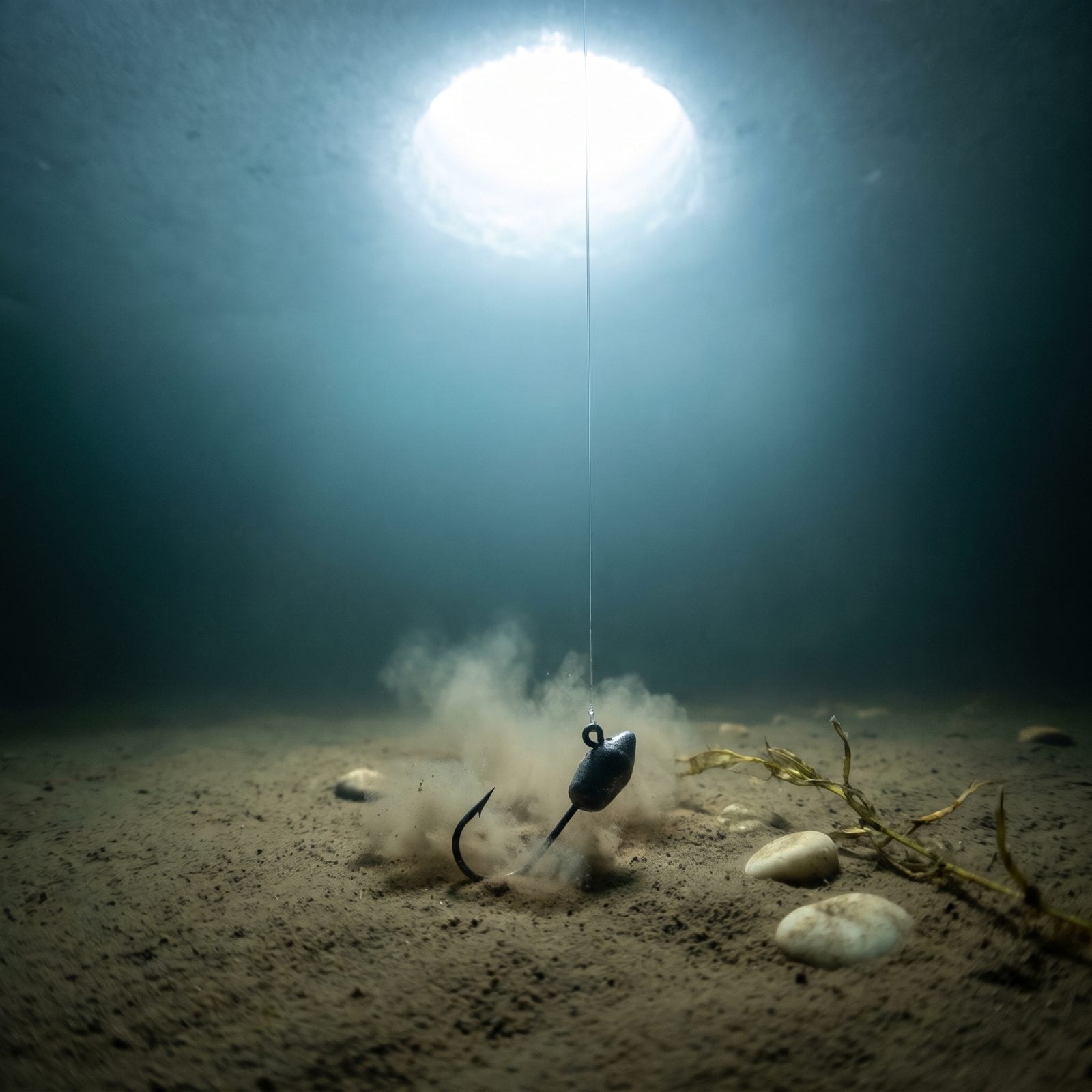
Most people drop a weighted rig partway down and start working it where they guess the fish are. That guess is usually wrong.
Send the sinker and hook all the way to the bottom first. Let it tick the mud, kick up a little silt, sit a beat. Winter fish hold tight to bottom more often than not, especially perch and walleye rooting for invertebrates. Once you’ve worked the bottom foot hard, lift in slow stages and pause at each level, reading the whole water column from the floor up instead of fishing blind in the middle. It’s slower. It also finds the fish the drop-and-hope crowd swims their rig right over.
11. Check Immediately Beneath the Ice Before You Fish Bottom
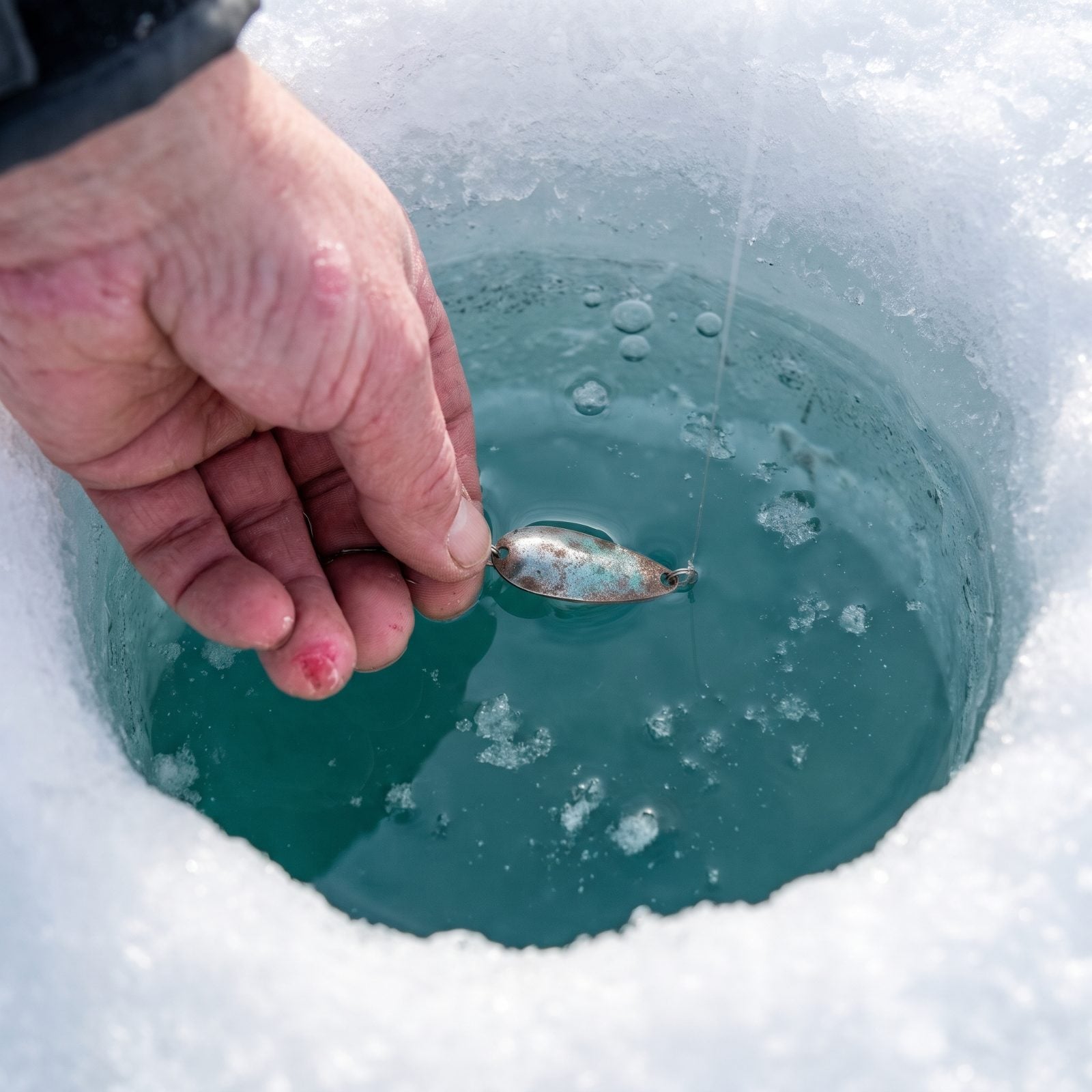
Don’t head straight for the bottom without a look up top first. In cold water, panfish and even trout tuck right up under the ice ceiling where the light pulls in tiny forage.
Before you weight anything down, hang your lure a foot under the hole and watch. If something slides in, you’ve just saved yourself an hour of staring at the wrong depth. I ignored this for years because it felt backwards. It isn’t.
10. Drill a Zigzag of Holes to Trace an Underwater Drop-Off
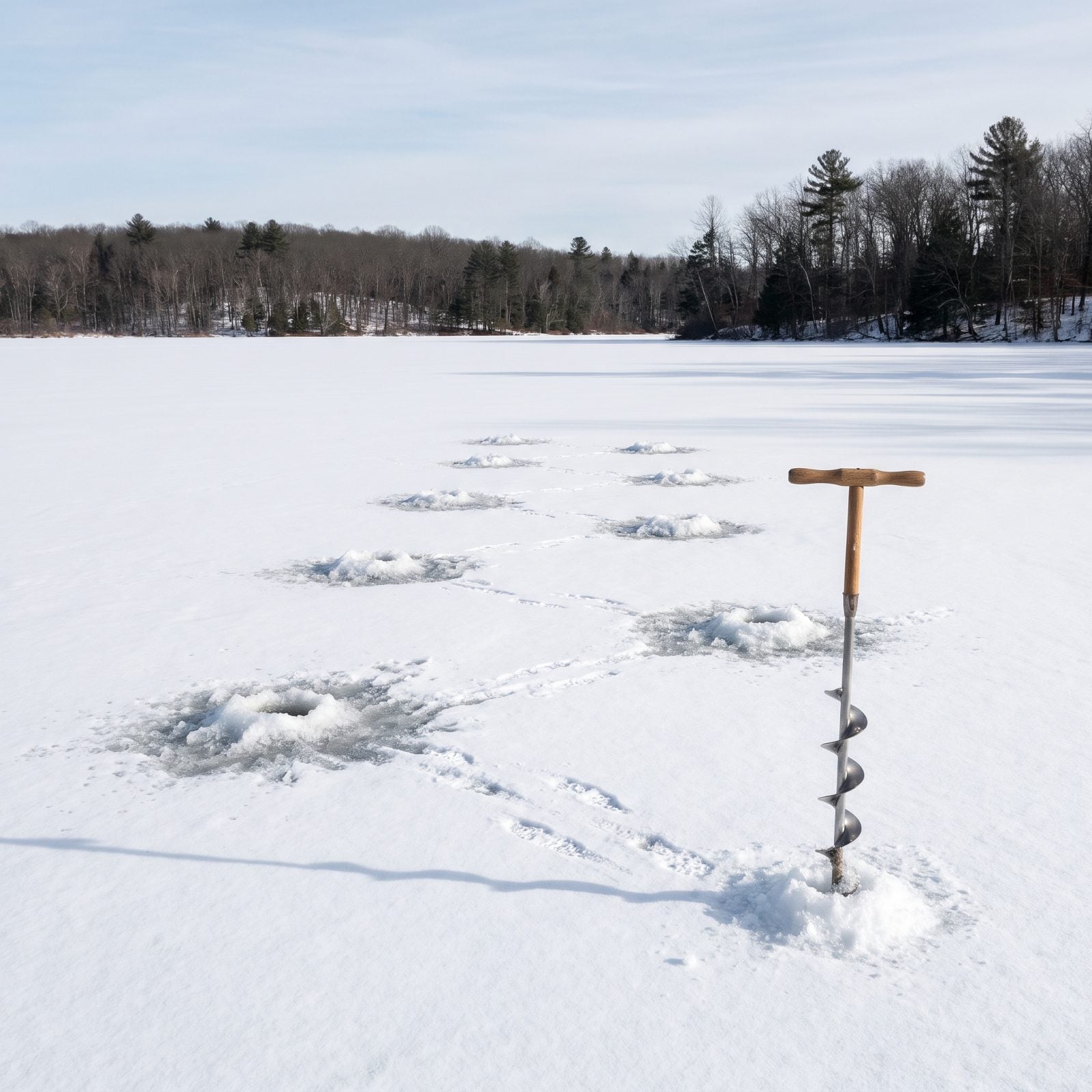
A drop-off is where fish stack up, and you can map one without a single gadget. Drill a zigzag of holes working out from shore and drop your weighted line in each one. The numbers climb, then suddenly jump — and that jump is your edge.
Fish patrol that break like a hallway. Once you’ve found where the shelf falls away, set up on the lip and wait. The drilling is work, no getting around it. But a hand auger and twenty minutes beats guessing all day.
9. Triangulate Your Spot With Two Shoreline Landmarks
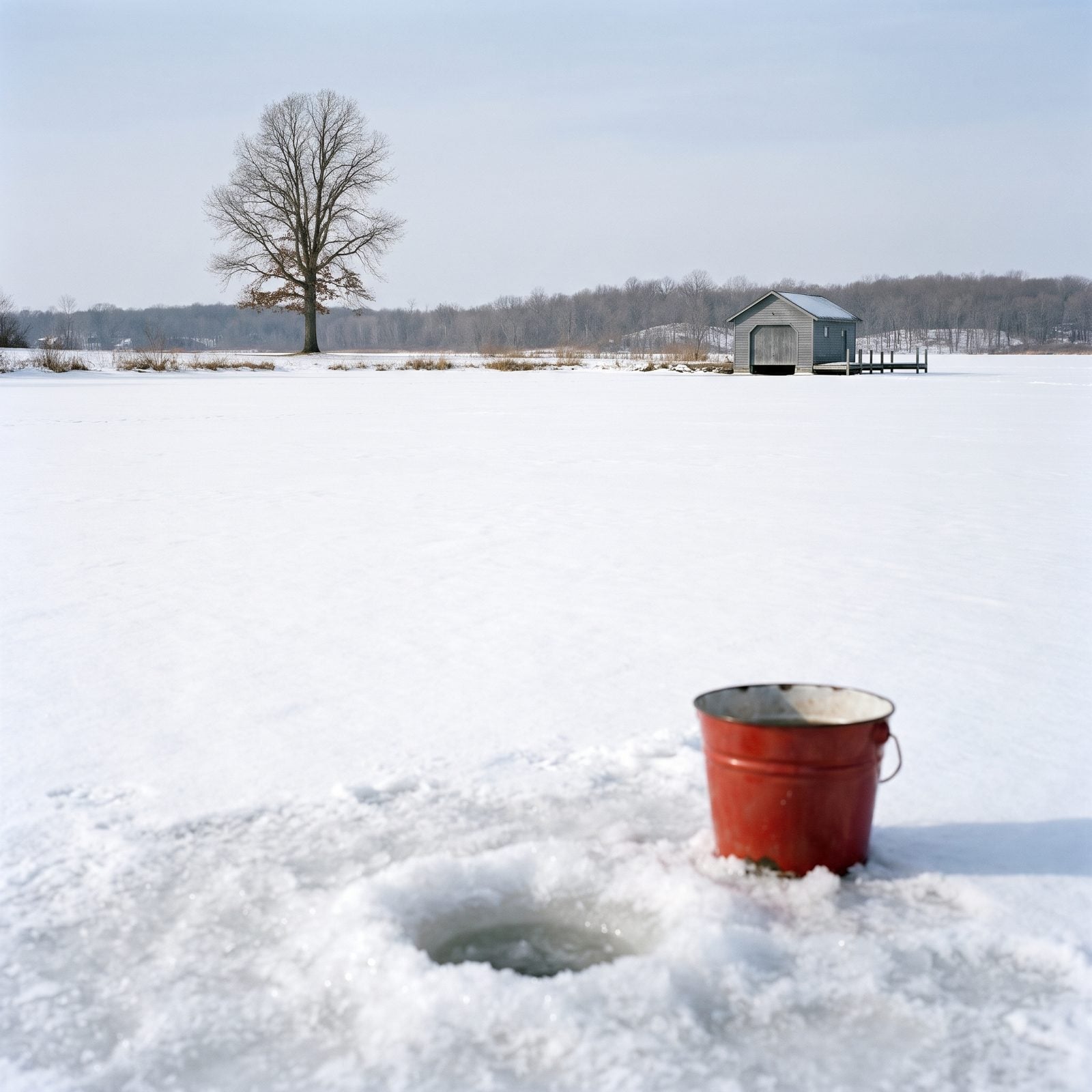
Find a hot hole today and you’ll never find it again tomorrow on a sheet of blank white ice. Here’s how the old guys marked it without GPS.
Line yourself up with two landmarks on shore that sit at roughly a right angle to each other. A chimney lined up with the barn behind it off your left shoulder, a dead pine lined up with a far ridge straight ahead. Where those two sightlines cross is your spot, down to a few feet, and it works just as well next winter.
8. Use a Knotted Cord and Weight to Read Exact Depth
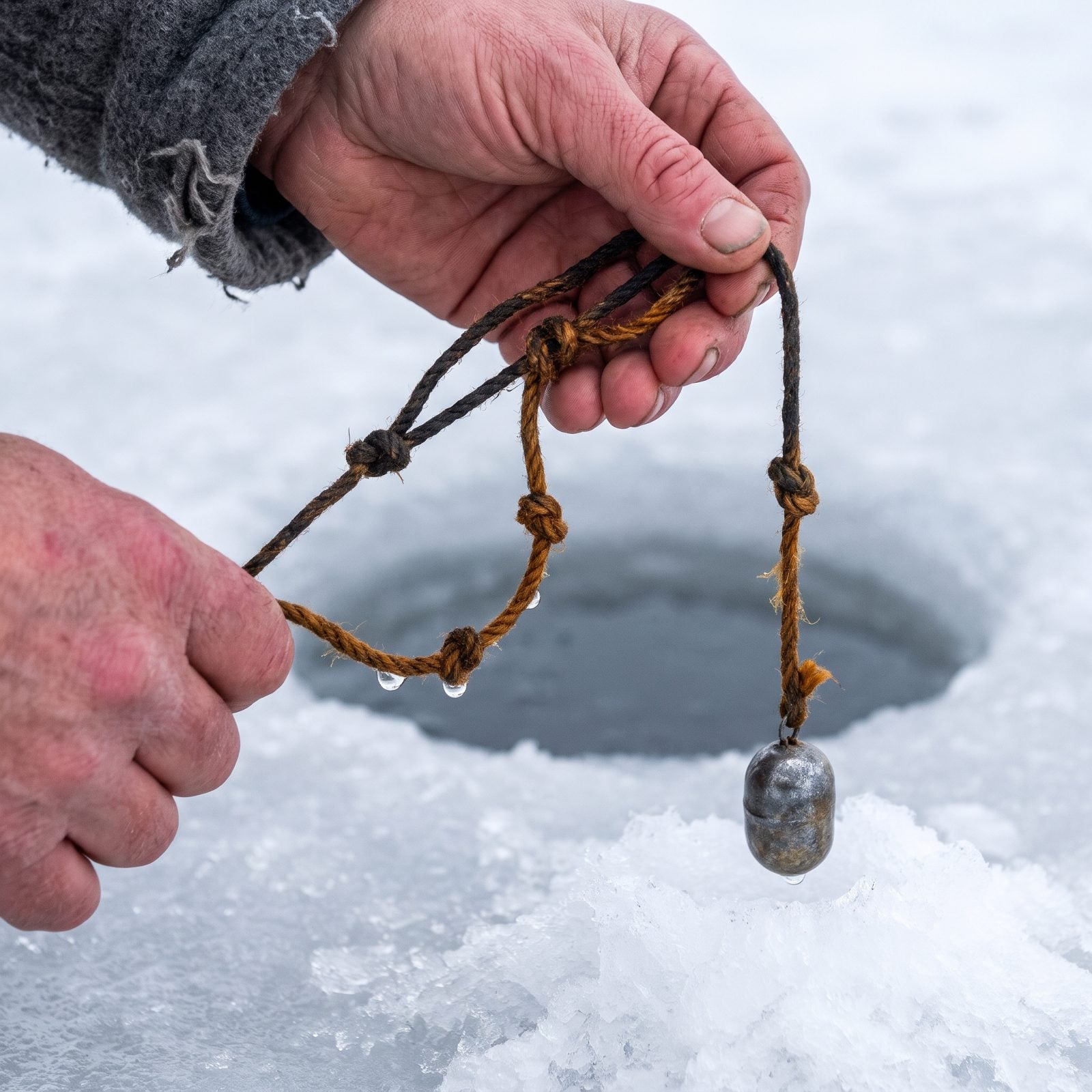
Before fancy line counters, depth was a piece of cord and a sinker, with knots tied every foot. Drop it till the weight hits bottom, pull it taut, count the knots. Done.
The beauty is repeatability. Hit eleven knots on a hole that produced, and you can set every bait on the lake to that exact depth in seconds. Suspended crappie especially reward this — they hold a precise band and ignore anything a foot off.
Costs nothing. Weighs nothing. Lives in the bottom of the tackle box forever.
7. Read Frozen Weed Stalks to Find a Shallow Weed Bed
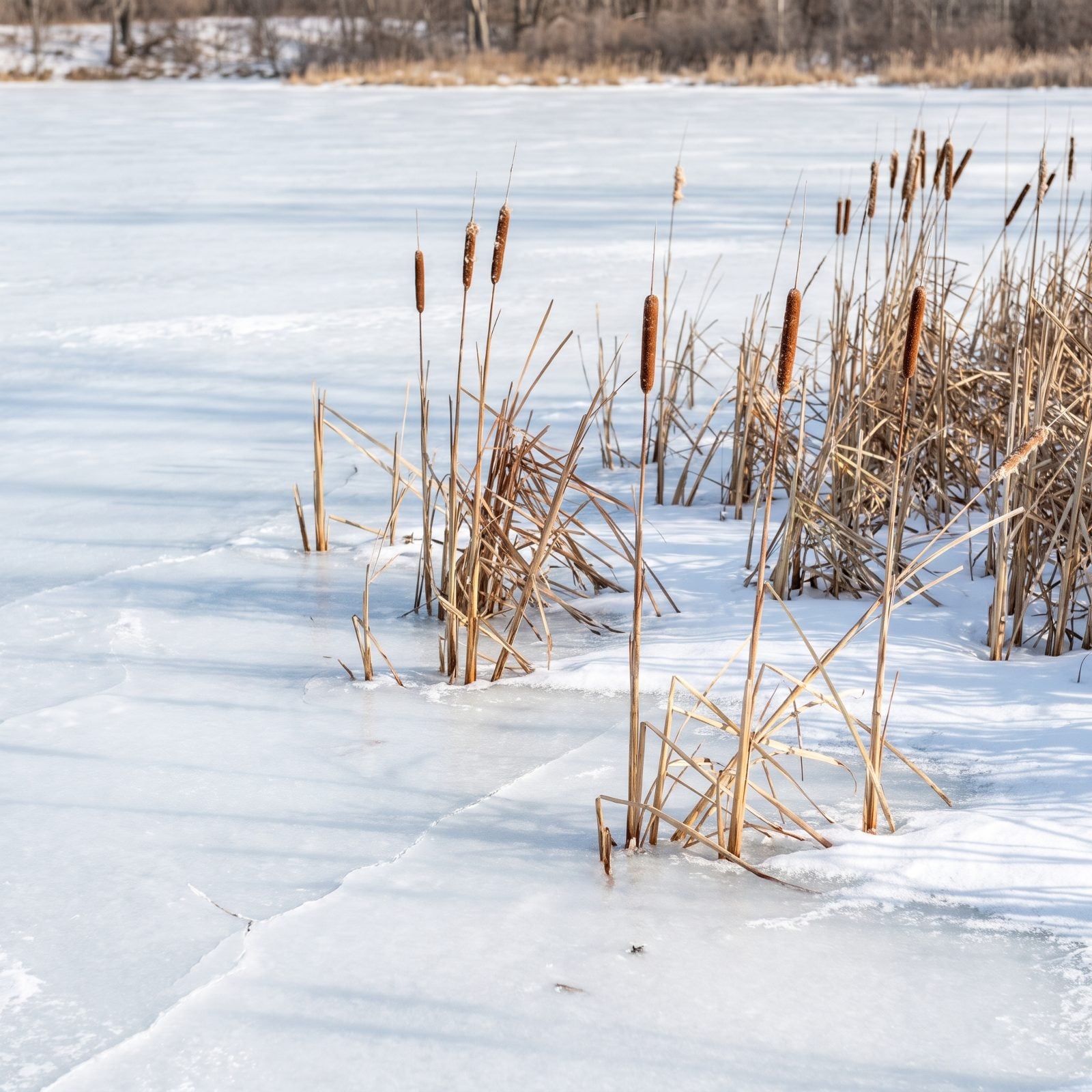
Those dead stalks sticking up through the ice near shore aren’t trash — they’re a map. Where you see reeds and cattail frozen in place, there’s a weed bed underneath that held green growth late into fall.
That vegetation is where panfish and the pike that hunt them spend winter. Drill the outside edge of the stand, not the middle. Fish cruise the border where cover meets open water, same as deer work a field edge at dusk.
6. Drill the Morning’s Holes Early, Then Let the Water Settle
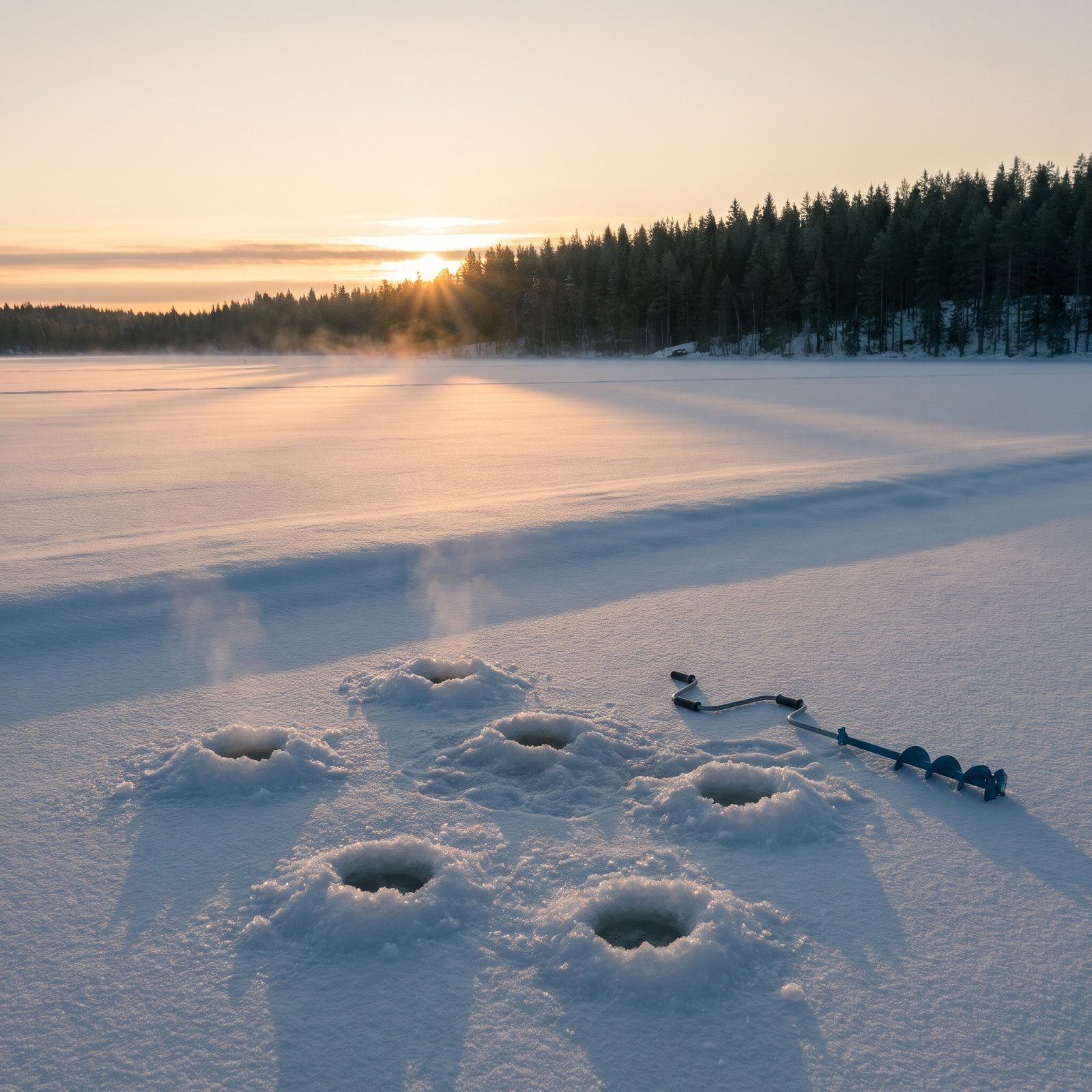
Noise travels through ice like a drum. The auger grinding, your boots thumping, the slush scoop clattering — fish feel all of it and slide off.
So drill your spread of holes early, in the gray before real light, then walk away. Go pour coffee. Rig up. By the time you come back the water has quieted and the spooked fish have drifted back in. The guys who catch the first-light bite aren’t luckier. They did their loud work before the fish cared.
5. Leave a Thin Slush Plug to Dim an Overly Bright Hole
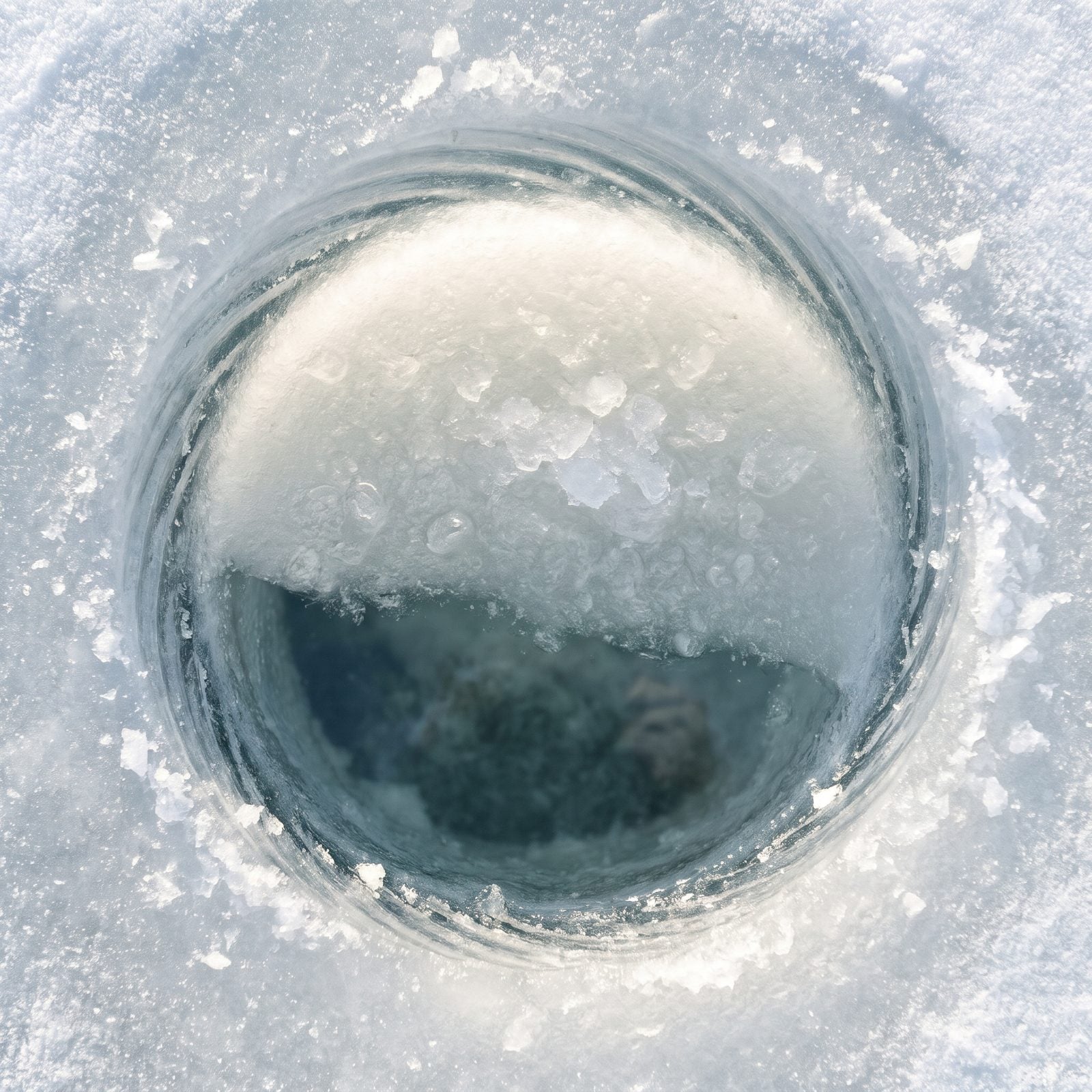
On a blinding sunny day over clear shallow water, an open hole is a spotlight pointing straight down at your bait. Skittish fish in two feet of water want nothing to do with that column of glare.
Scoop back a thin skim of slush over the hole and leave it. It cuts the light to a soft diffused glow, and your lure stops looking like it’s under interrogation. You lose nothing on the hookset through that thin crust. I was skeptical until a day the shallow crappie turned on the second I quit clearing the hole clean.
4. Pull a Dark Coat Over Your Head for Clear Sight-Fishing
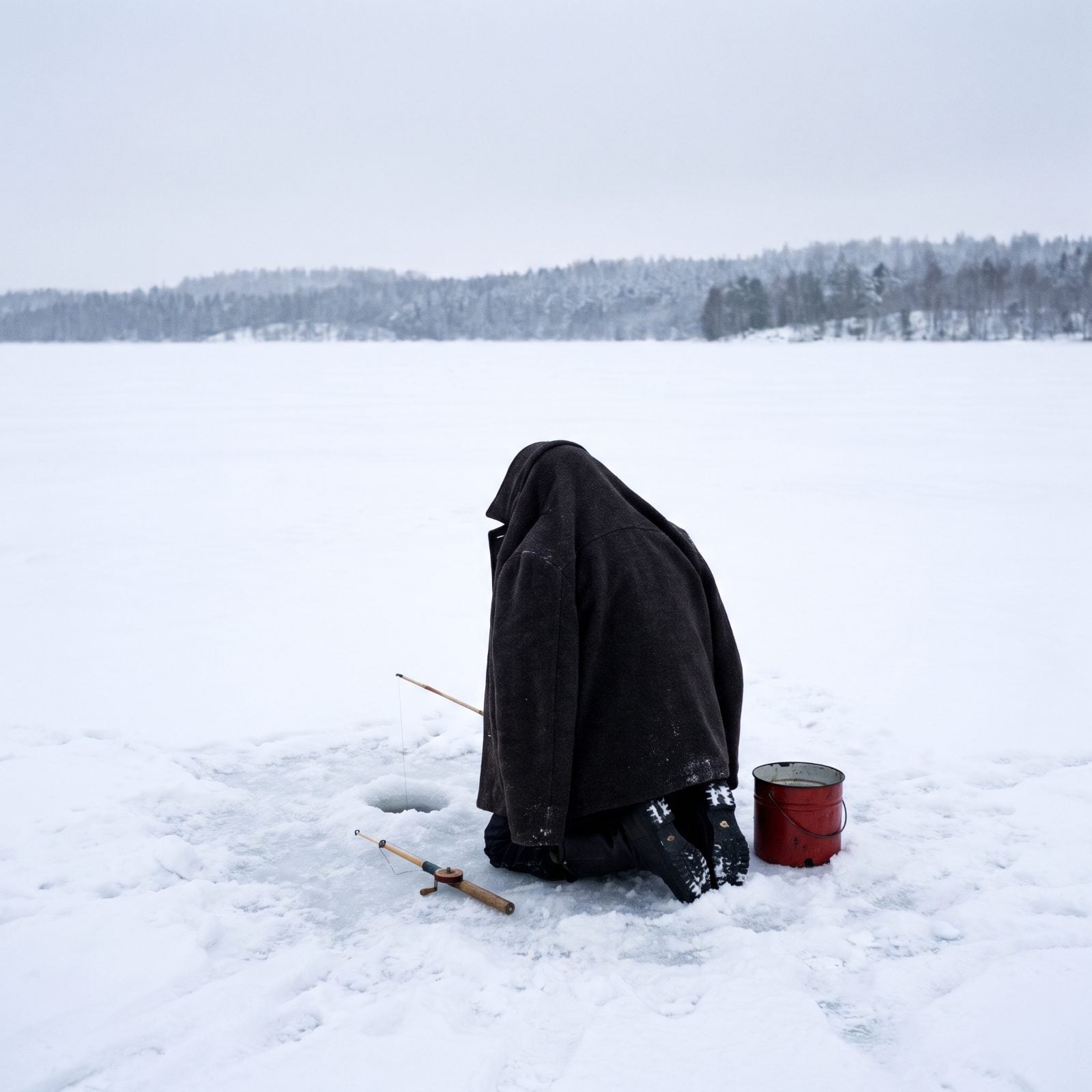
Sight-fishing a clear hole, your biggest enemy is the glare bouncing off the surface. Can’t see the fish, can’t see your jig, can’t see the take.
Drape a dark coat or blanket up over your head and kneel down an arm’s length or so back from the hole, hands tucked in against your body to stay warm. When you’re ready to look, lean in so the coat shades the water, and it goes from a mirror to a window. You’ll watch a crappie ease up and inhale the bait, and your hookset gets ten times better because you’re reacting to eyes, not a rod tip.
3. Insulate a Bait Pail Inside a Sawdust-Filled Outer Bucket
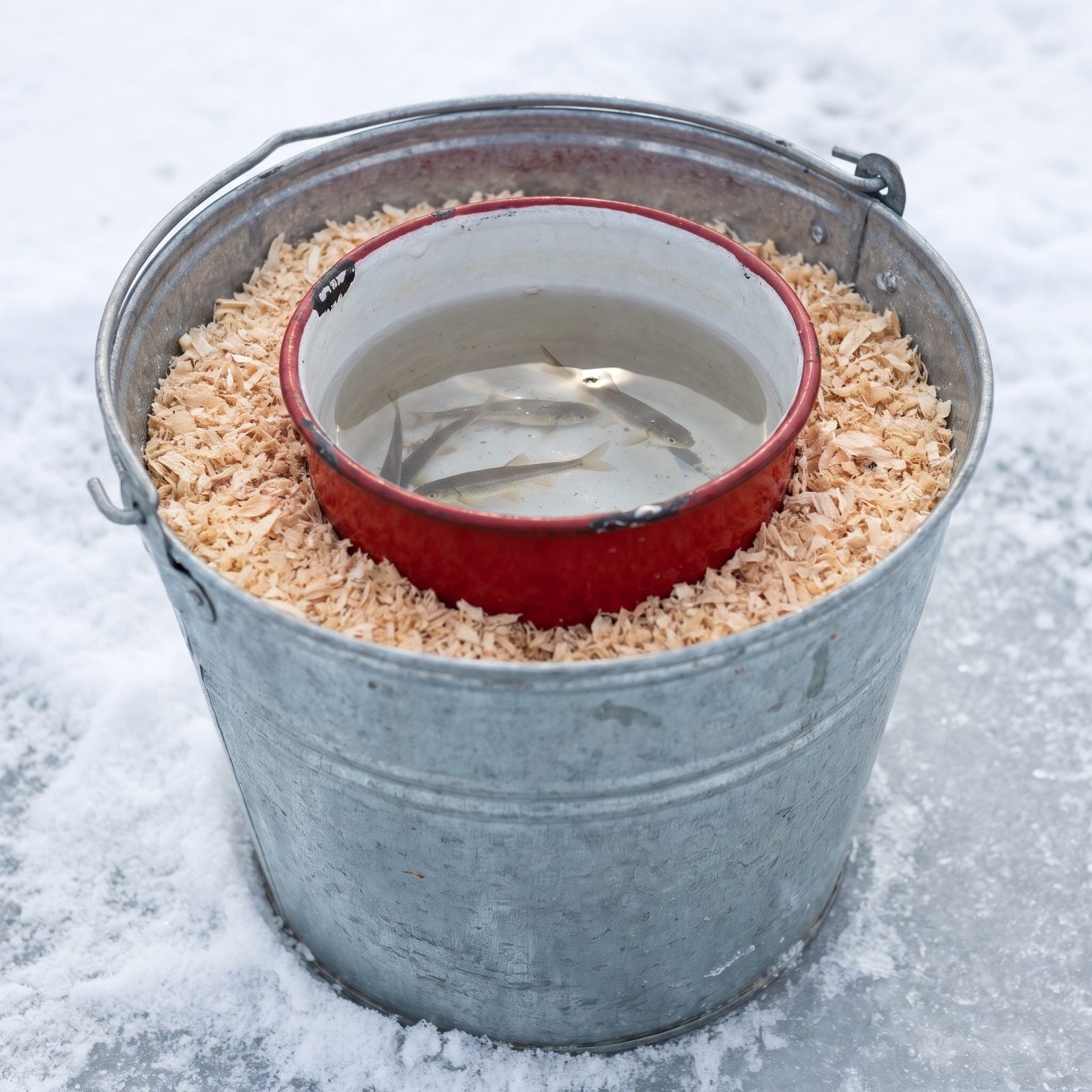
Live minnows die two ways in winter: the water freezes solid, or it swings warm and cold until they stress out and belly up. A sawdust jacket fixes both.
Set your bait pail inside a larger bucket and pack the gap with dry sawdust. It holds the water temperature steady for hours, even with the whole rig sitting out on the ice. Steady water keeps minnows frisky, and a frisky minnow out-fishes a sluggish one every time.
2. Turn an Empty Bucket on Its Side as a Portable Windbreak
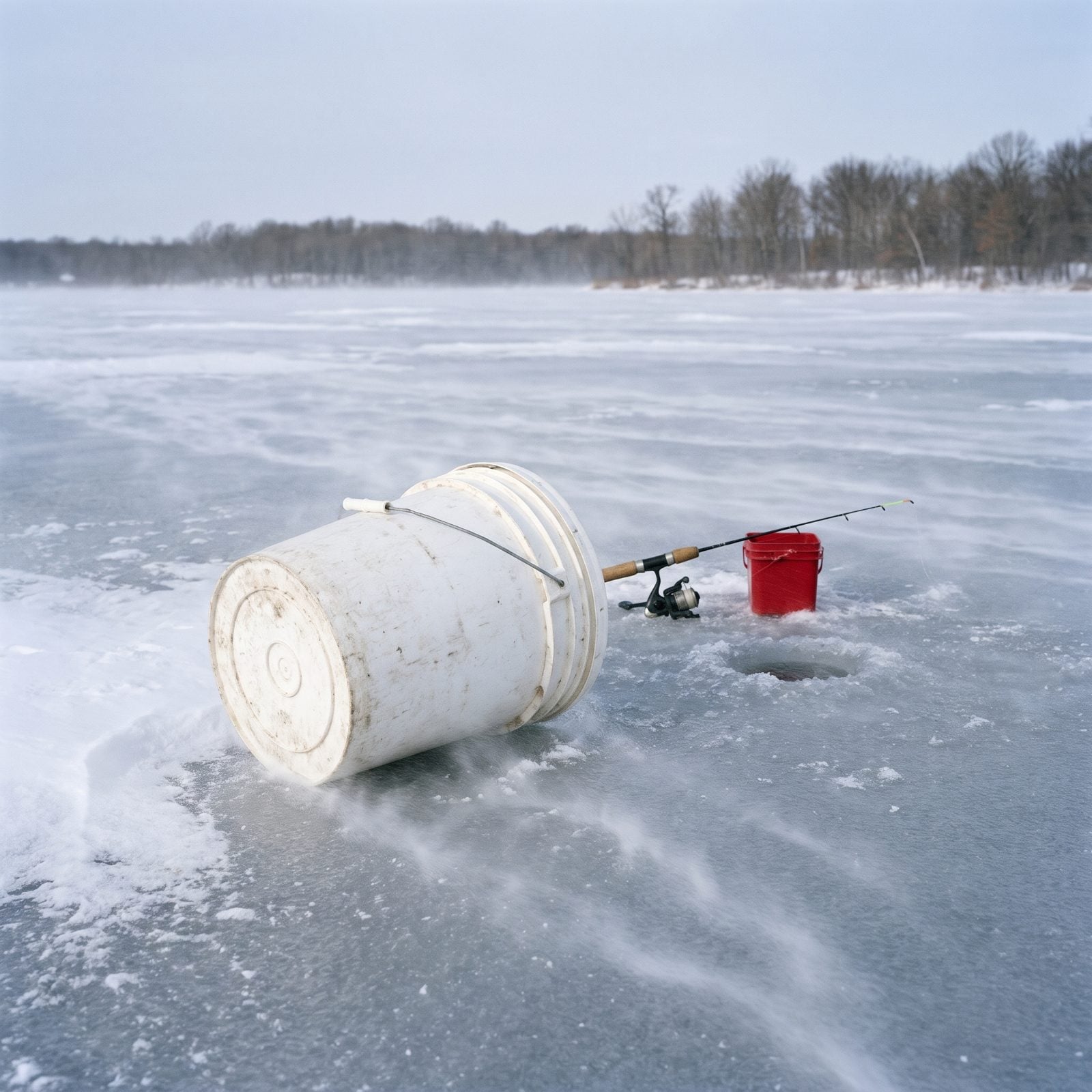
Wind is what actually ends most ice days, not cold. A steady breeze over open ice pulls the heat out of you and freezes a hole shut in minutes.
Tip your five-gallon bucket on its side, mouth toward you, hole on the lee side. It’s no shanty. But it cuts the wind off your rod hand and your bait, and it keeps your fingers working long enough to feel a light bite. Same bucket you sat on, hauled your gear in, and iced your catch. Make it do one more job before you pack it out.
1. Carry Wooden-Dowel Ice Picks Inside Your Coat Sleeves
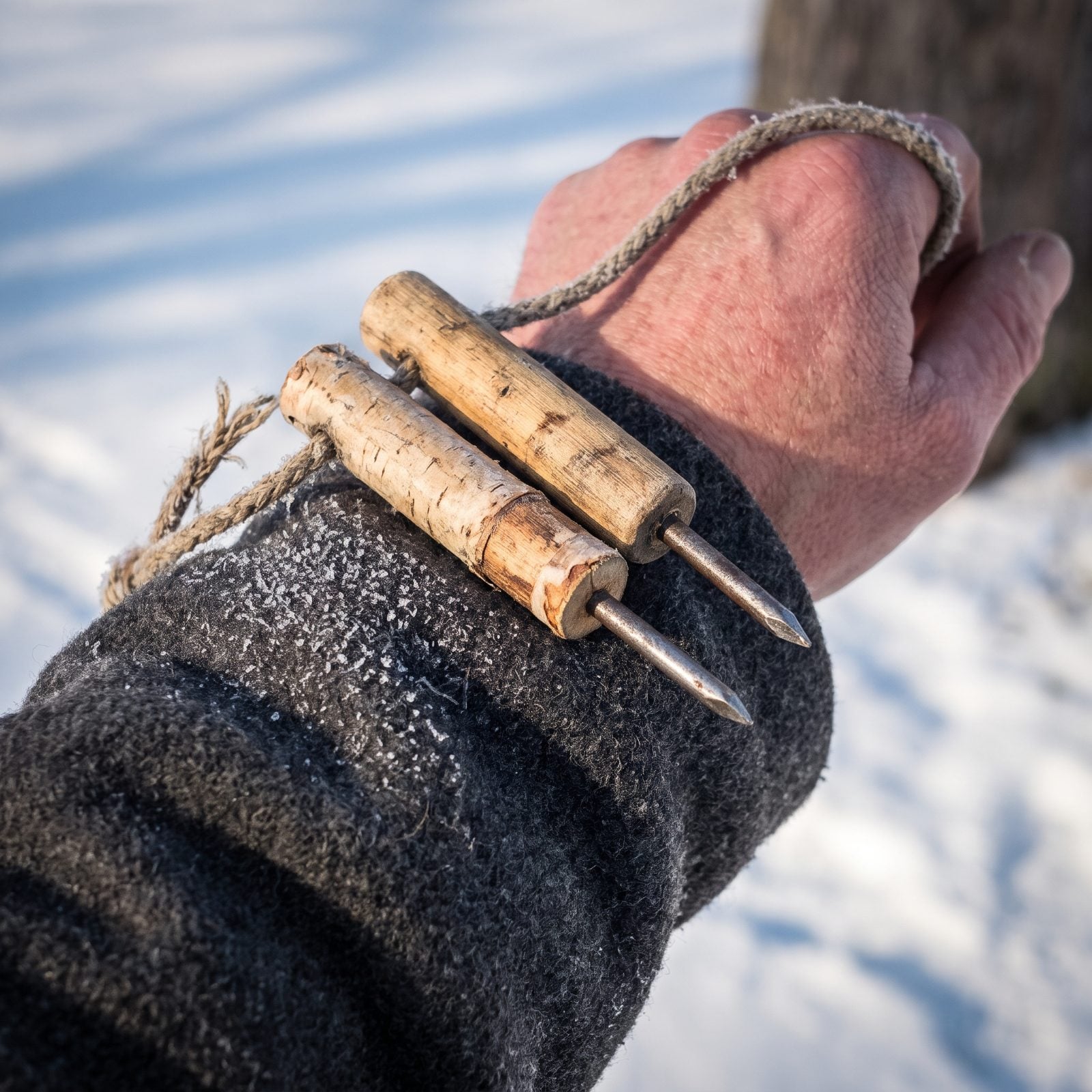
The old guys who fished shanty lakes their whole lives never walked out without a pair of these, and there’s a reason. A wooden dowel floats. Drop a metal awl and it’s gone to the bottom the second you let go — which is exactly the second you’d need it.
The build is nothing. Two hunks of broom handle, a nail driven into the end of each, a cord run through both so they hang down your sleeves like a kid’s mittens on a string. Go through the ice and you jam the points in and claw yourself out. Bare ice is slick as glass when you’re wet and panicking, and your fingers alone won’t get you over the lip.
Keep them where you can grab them fast, not buried in a pocket. Cap the points with a cork or a short piece of hose so you don’t gouge yourself reaching for a jig. And no first-ice, late-ice, or unfamiliar water without checking thickness as you go. The picks are your backup. Never your plan.