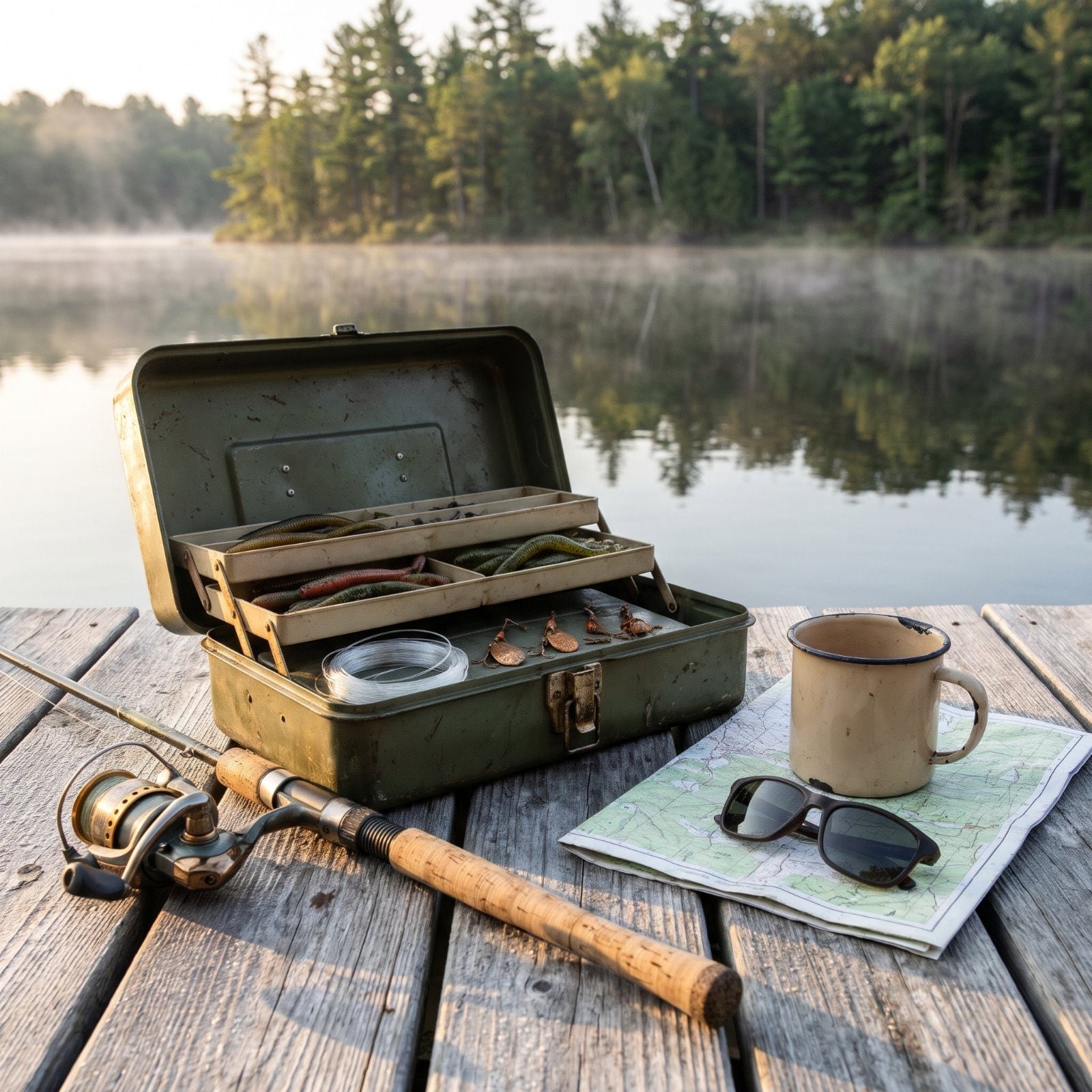
Some of the best bass we’ve ever caught came out of a lake most anglers drive past without a second look. No ramp wait, no tournament trailers stacked three deep, just a shoreline, a few herons, and fish that had never seen a crankbait. Famous water earns its fame and then pays for it in pressure. The lakes below trade name recognition for elbow room and fish that still make mistakes. Some you can reach by car. Some want a kayak. All of them give you back something the crowded reservoirs quietly took away.
Please note that some of the images in this article were created with the assistance of AI.
46. Karick Lake, Florida, Trophy Largemouths in a Tiny Panhandle Lake
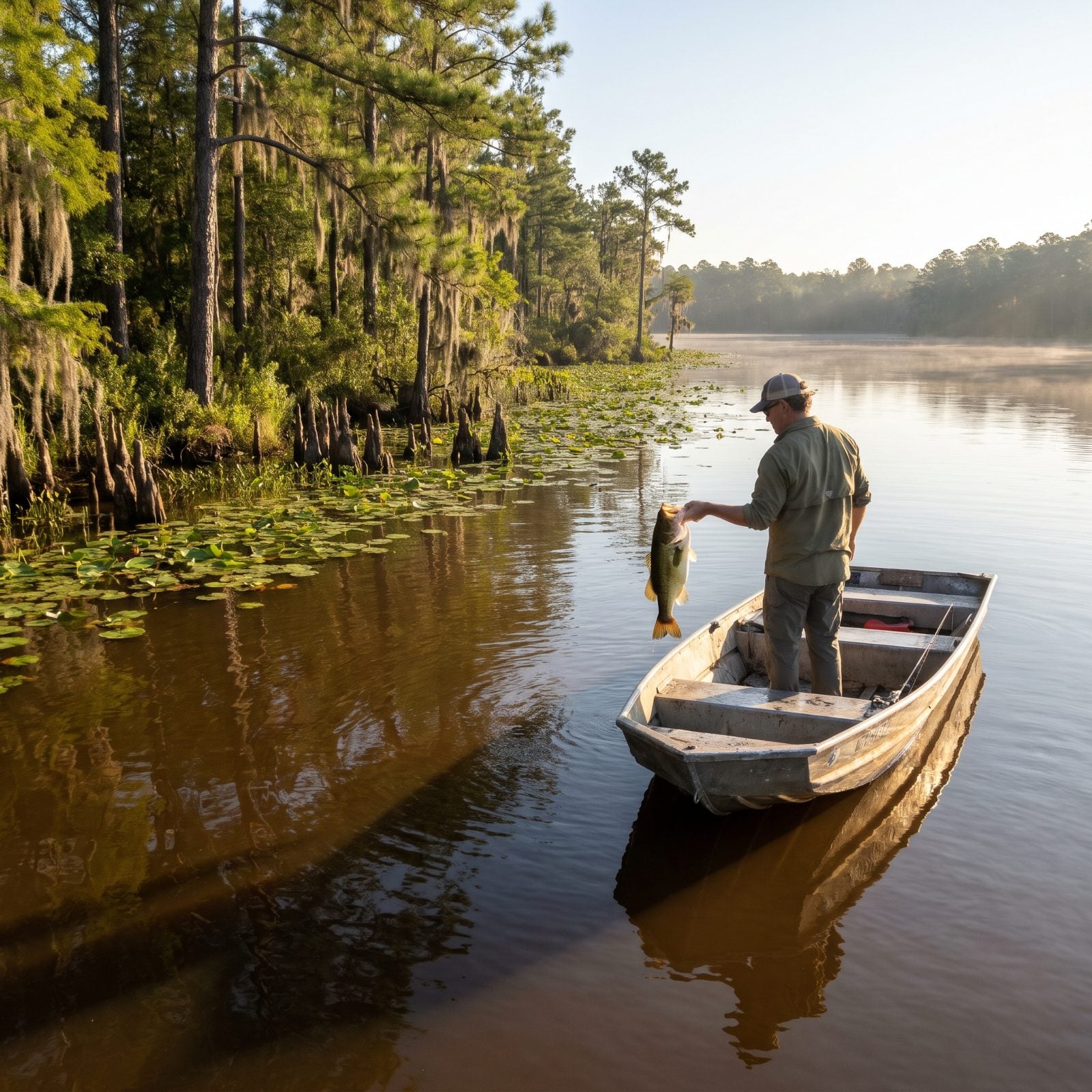
This tiny lake sits off a dirt road in the Blackwater River State Forest, and that remoteness is the whole point. Karick doesn’t get hammered because nobody’s driving two hours to fish water they’ve never heard of. Their loss.
The lake runs dark with tannin, fed by cypress swamp, and the largemouths grow thick on a forage base that never gets thinned by pressure. Fish the flooded timber and pad edges early. A single battery trolling motor and a jon boat is all this place asks of you.
45. Georgetown Lake, Montana, Trophy Brook Trout in a Scenic Basin
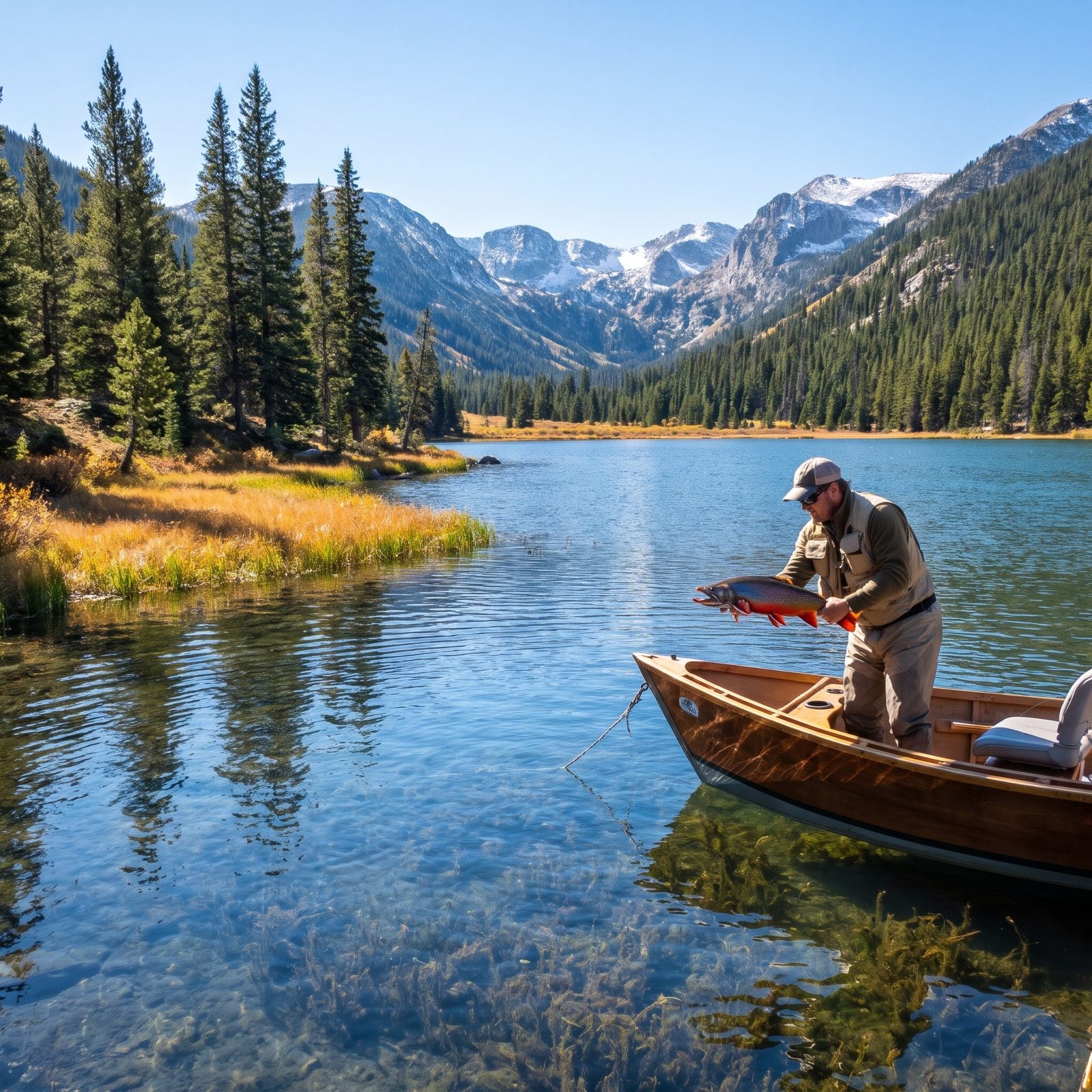
Perched high between Anaconda and Philipsburg, Georgetown is one of the few places in the Lower 48 where you can genuinely land a brook trout over three pounds. That’s a giant for a fish most people pull out of a backcountry creek at six inches.
Shallow and weedy, the lake runs like an insect factory, and the trout fatten on all of it. Ice fishing here draws its own cult following. Come summer, fly anglers pick apart the weed edges with damsel and scud patterns and mostly leave each other alone.
44. Davis Lake, Oregon, Shallow-Water Fly Fishing for Largemouth Bass
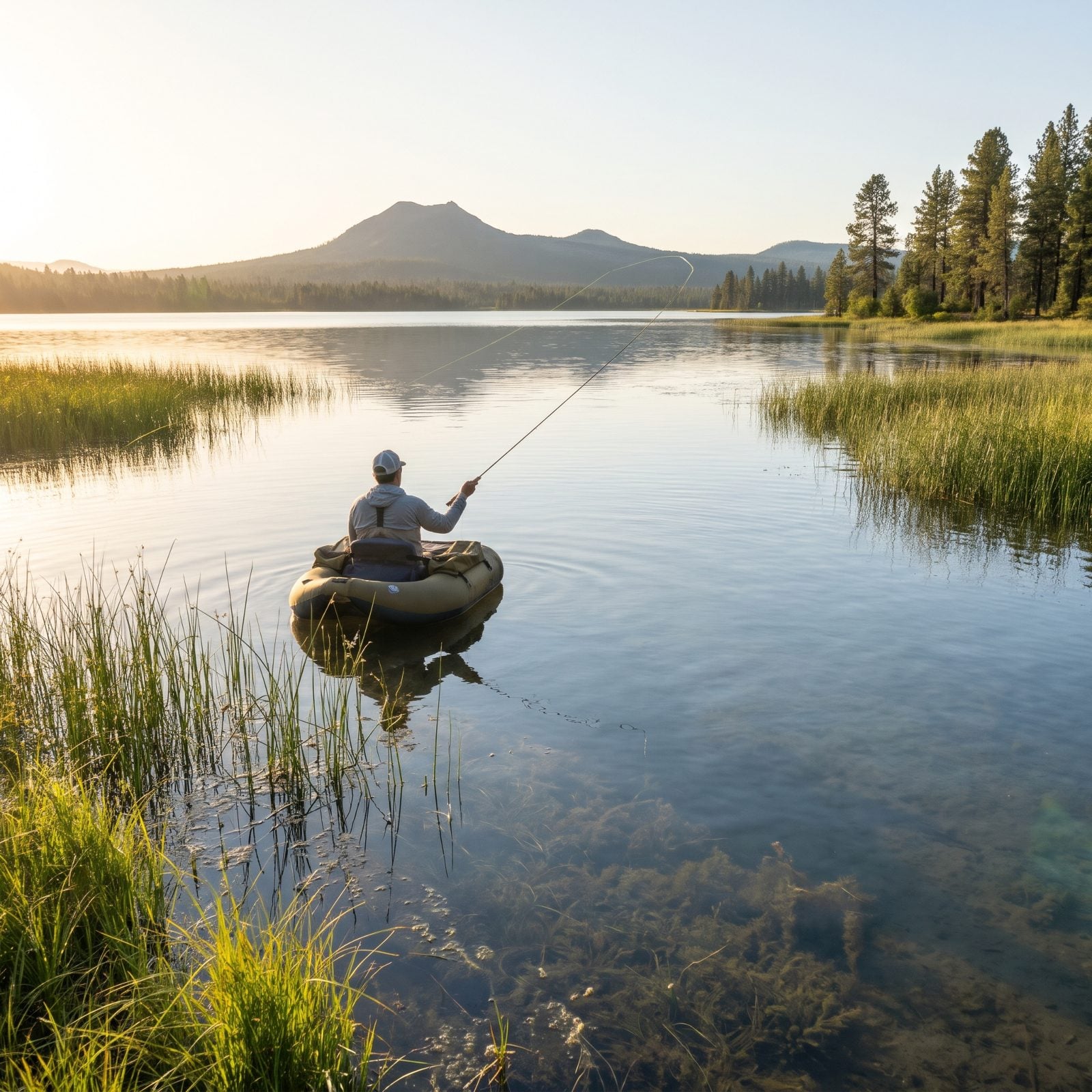
Here’s an oddity: a high-desert Oregon lake known for both blue-ribbon trout fly fishing and largemouth bass you can sight-cast with a fly rod. Davis is shallow, clear, and rimmed with tules, which means you can watch a bass turn and crush a popper in two feet of water.
It’s fly-fishing and non-motorized or low-horsepower only, depending on season, so check current regulations before you trailer anything. That restriction keeps the chaos out.
43. Quartz Lake, Alaska, Road-Accessible Trophy Rainbow Trout
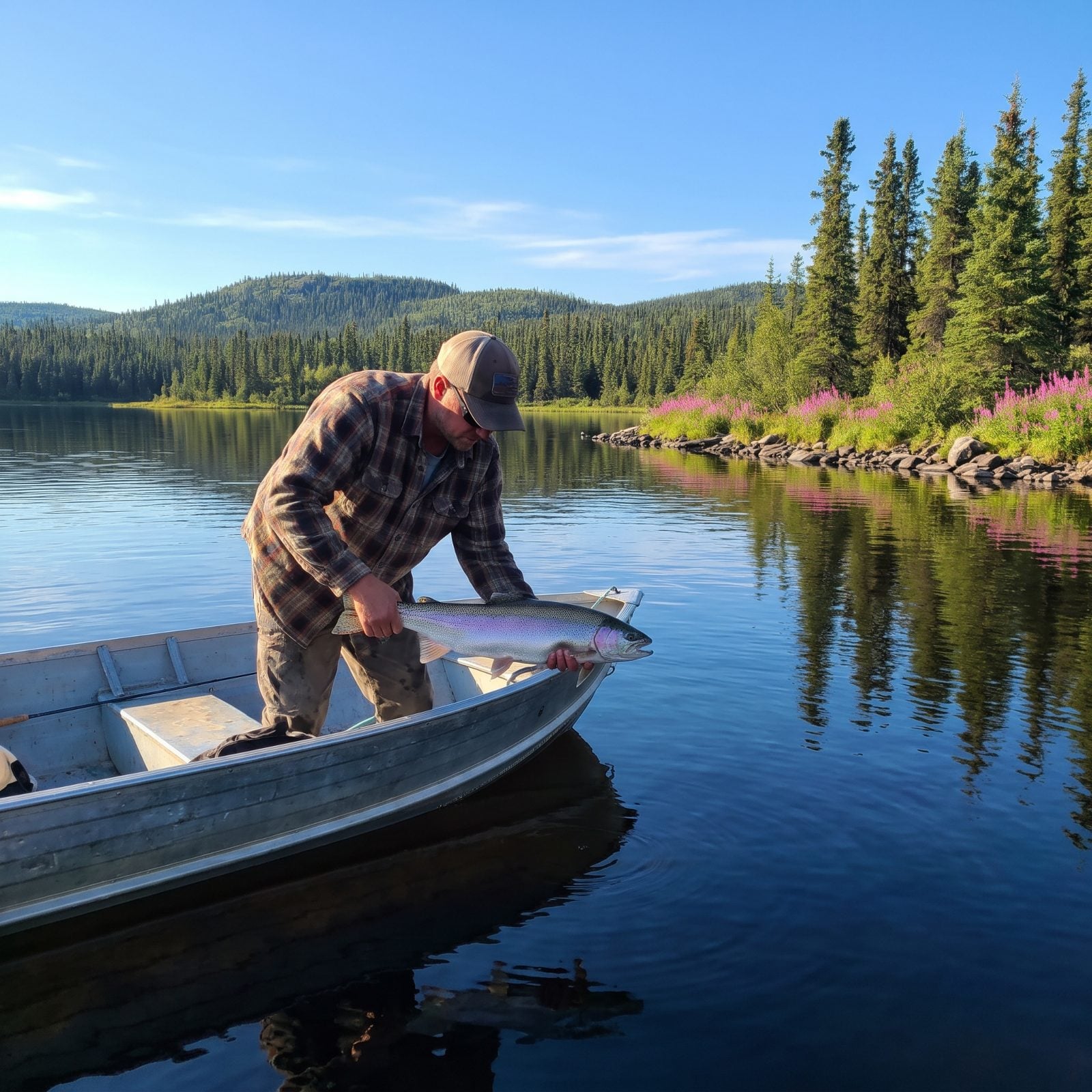
Alaska trophy trout usually means a floatplane and a five-figure trip. Quartz means a turnoff on the Richardson Highway and a short drive. Almost unfair, really.
The lake is stocked heavily and grows rainbows to serious size, with Arctic char in the mix too. There’s a state recreation area, a campground, and a boat launch right there. For a road-system lake in interior Alaska, the fish quality has no business being this good.
42. Lake Jocassee, South Carolina, Clear Water and Heavy Brown Trout
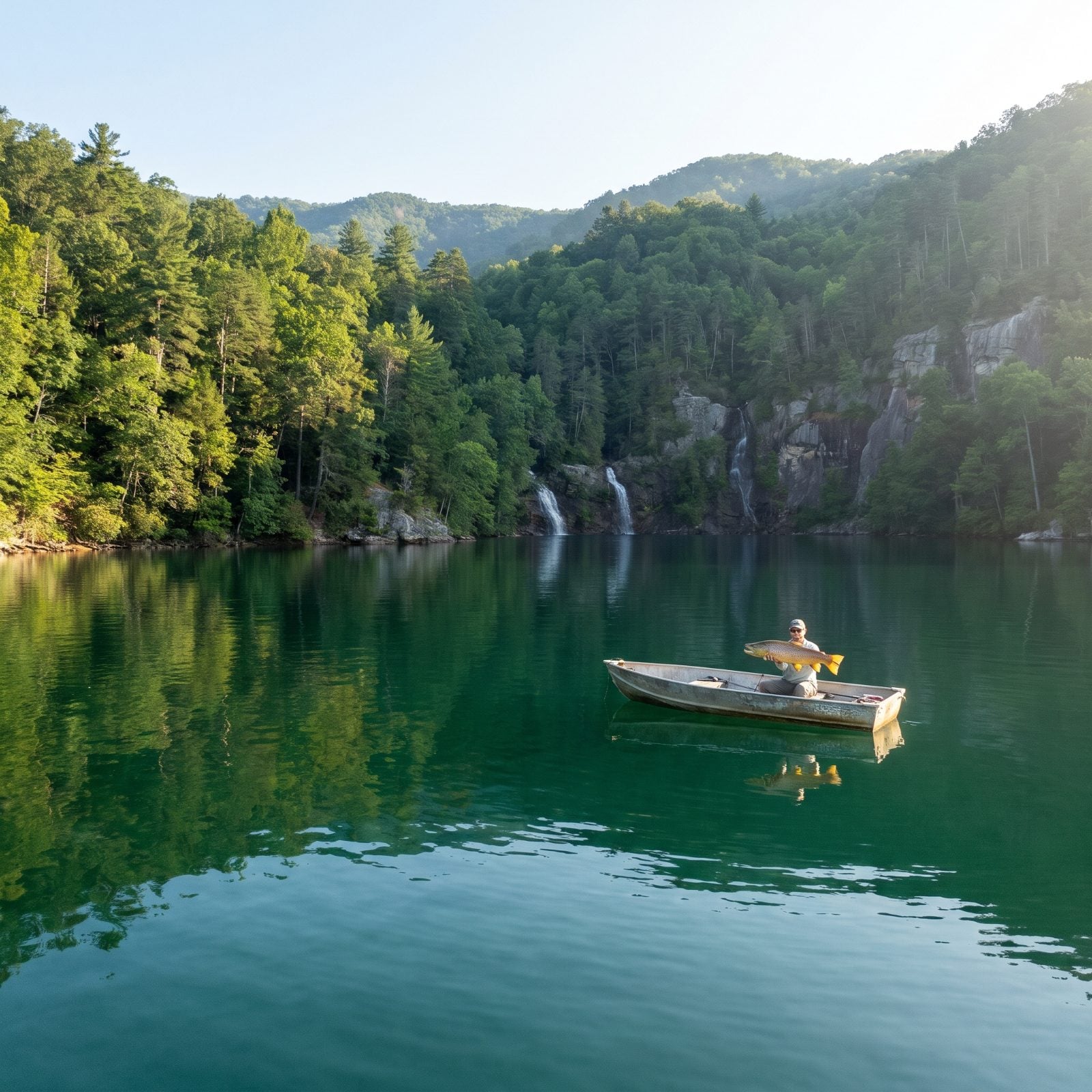
The water is so clear it looks fake. Jocassee is fed by cold mountain rivers and waterfalls, and that cold, oxygen-rich water lets brown and rainbow trout thrive in a Deep South lake where they have no business living.
The catch, literally, is depth. These trout hold deep most of the year, so this is downrigger and leadcore water, not a casting lake. Learn the thermocline or get skunked while the scenery mocks you.
41. Lake Naconiche, Texas, Flooded Timber and Fast-Growing Bass
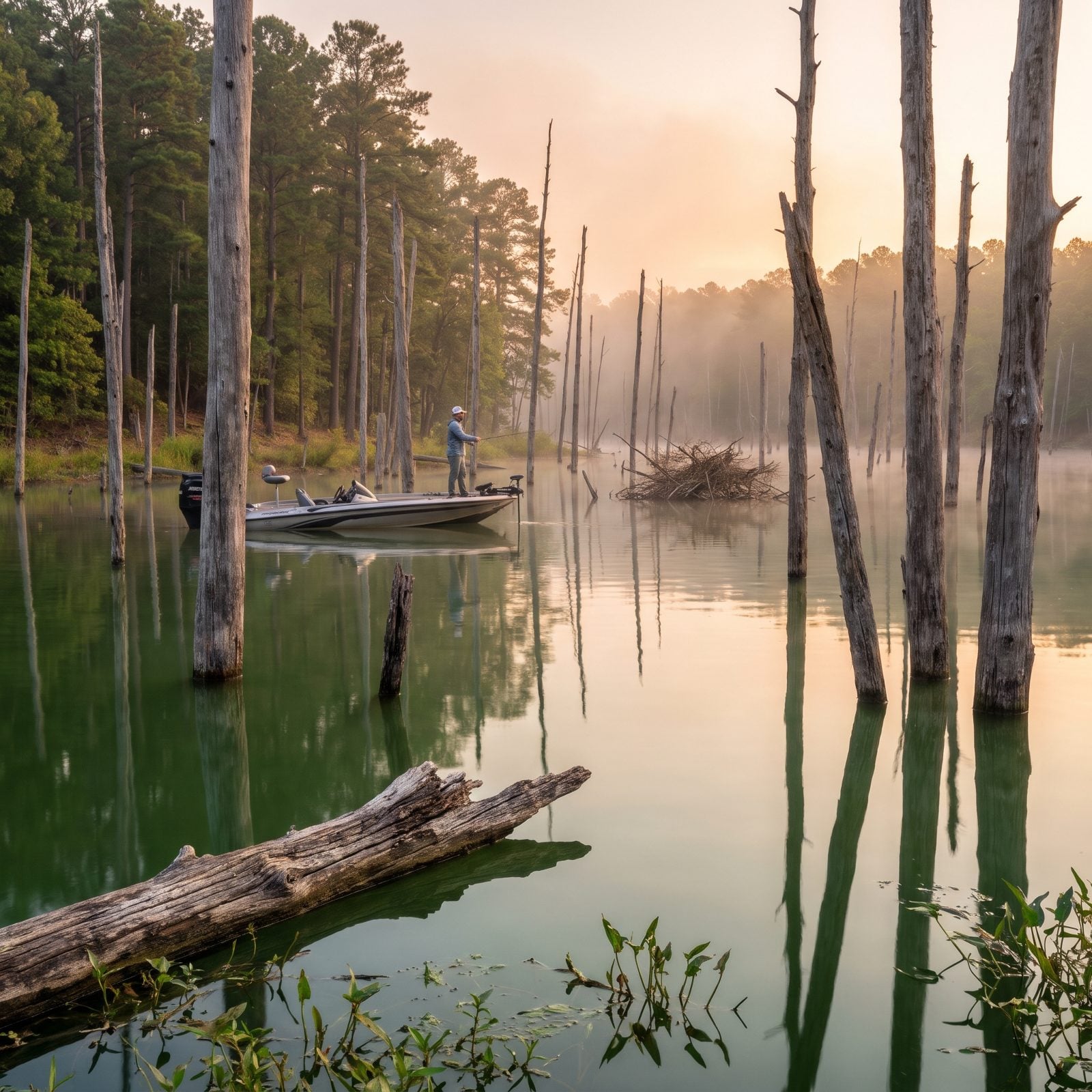
Opened to fishing in the late 2000s, Naconiche is a small East Texas lake built with structure in mind, and the bass grew up fast and mean. A young lake loaded with flooded timber puts weight on fish quickly, and they get big before anyone’s paying attention.
At roughly 700 acres it stays off the radar of the Sam Rayburn and Toledo Bend crowds. Work the standing timber and brush piles. Bring extra baits, because you will lose a few.
40. Lewiston Lake, California, Cold, Clear Water and Rainbow Trout
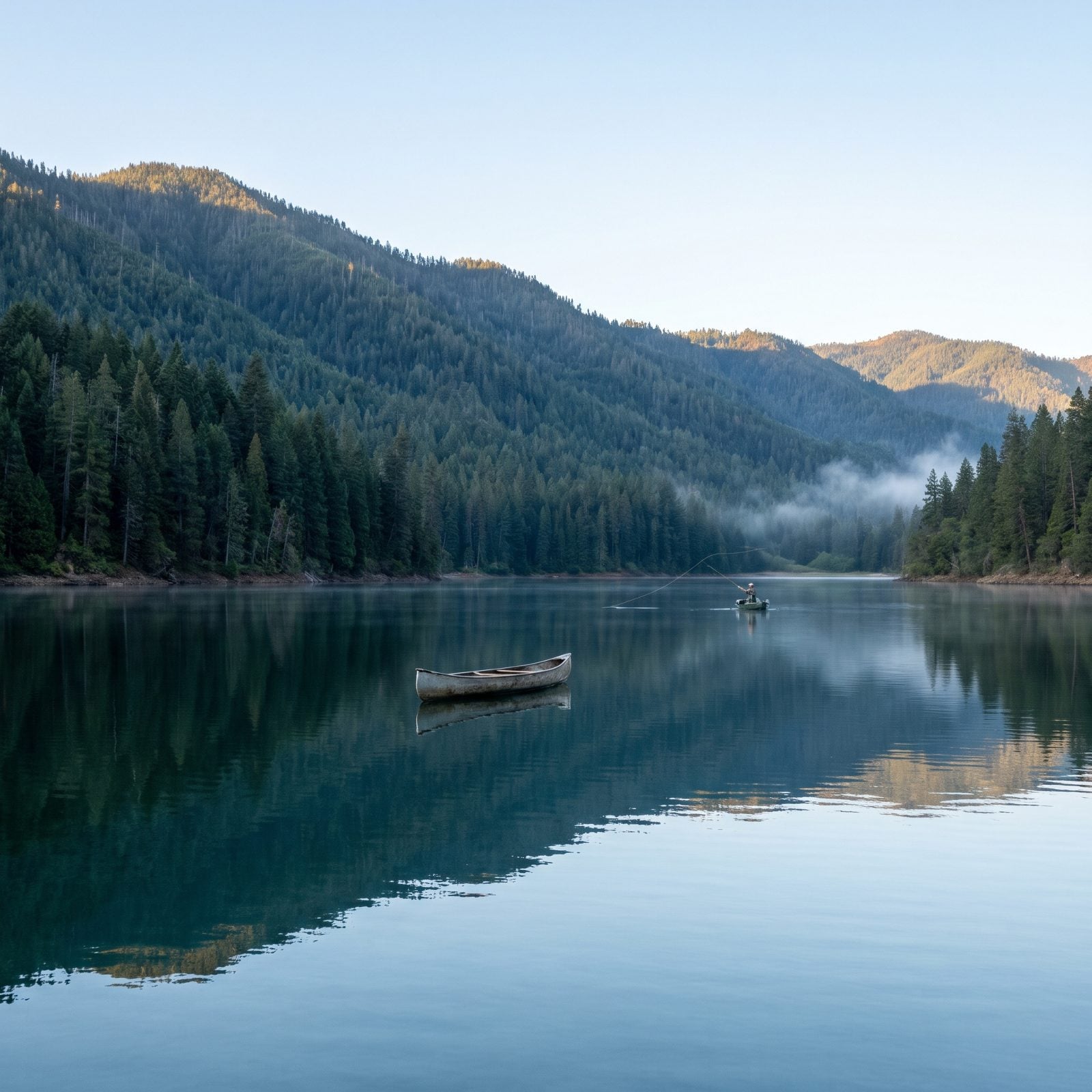
Downstream of the big, busy Trinity Lake sits a quiet little sister almost nobody talks about. Lewiston stays cold year-round because it’s fed from the bottom of Trinity’s dam, which makes it a trout haven in a state that bakes.
A 10 mph speed limit keeps it peaceful and the water like glass. Fly anglers and trollers both do well. It’s the kind of place you fish slow, in a canoe, and feel no rush to leave.
39. Grafton Pond, New Hampshire, Kayak Fishing Through Granite and Timber
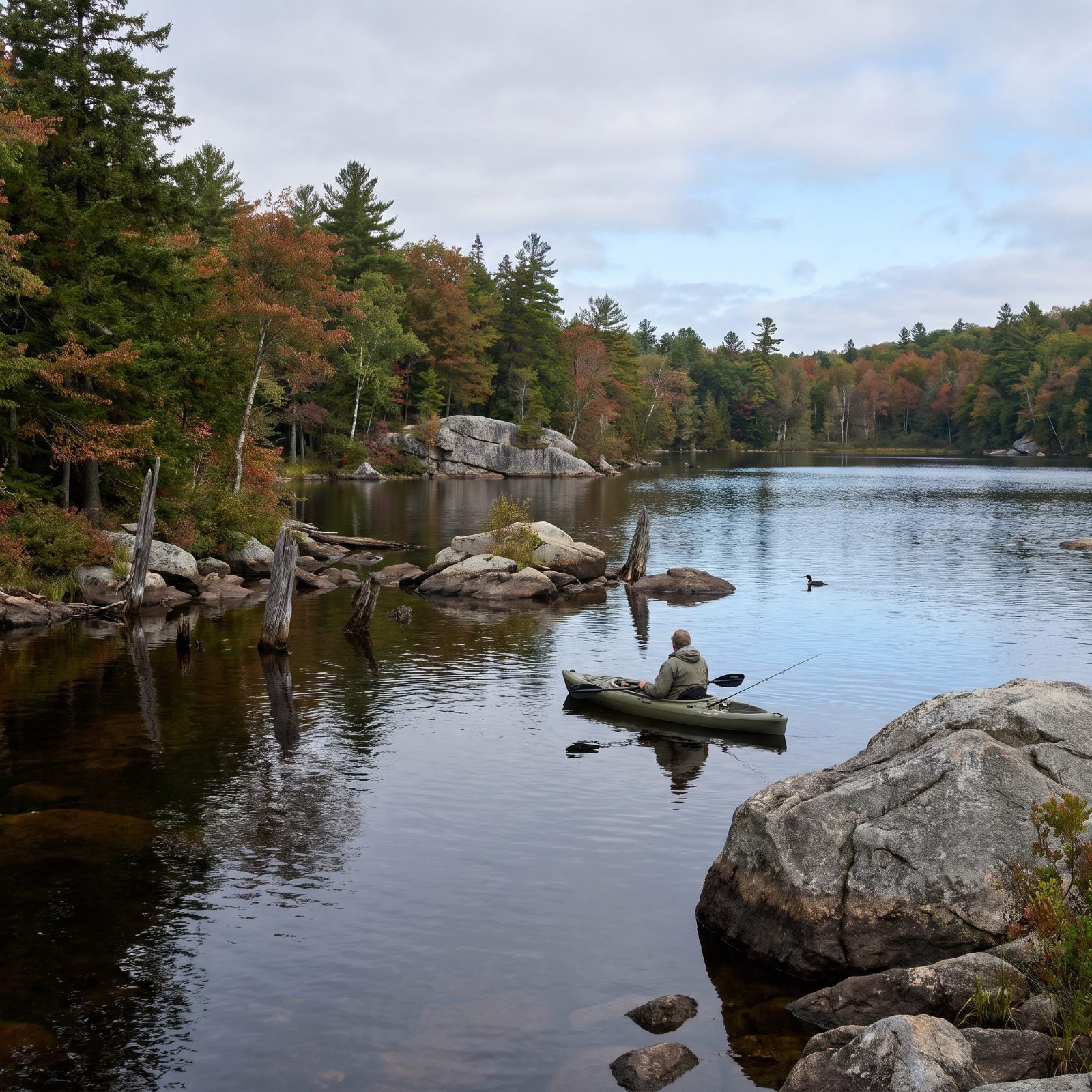
Boulders break the surface, dead timber snags lean out of the shallows, and loons call across the water. Grafton Pond is a kayak angler’s dream and a nightmare for anyone trailing a prop.
There’s a boat launch but a horsepower restriction keeps the big motors off, so the quiet stays intact. Smallmouth and largemouth hold tight to the granite structure. Pickerel too. Weave the kayak through the snags and you’ll have whole coves to yourself.
38. Lake Wingra, Wisconsin, Urban Muskie Fishing in Madison
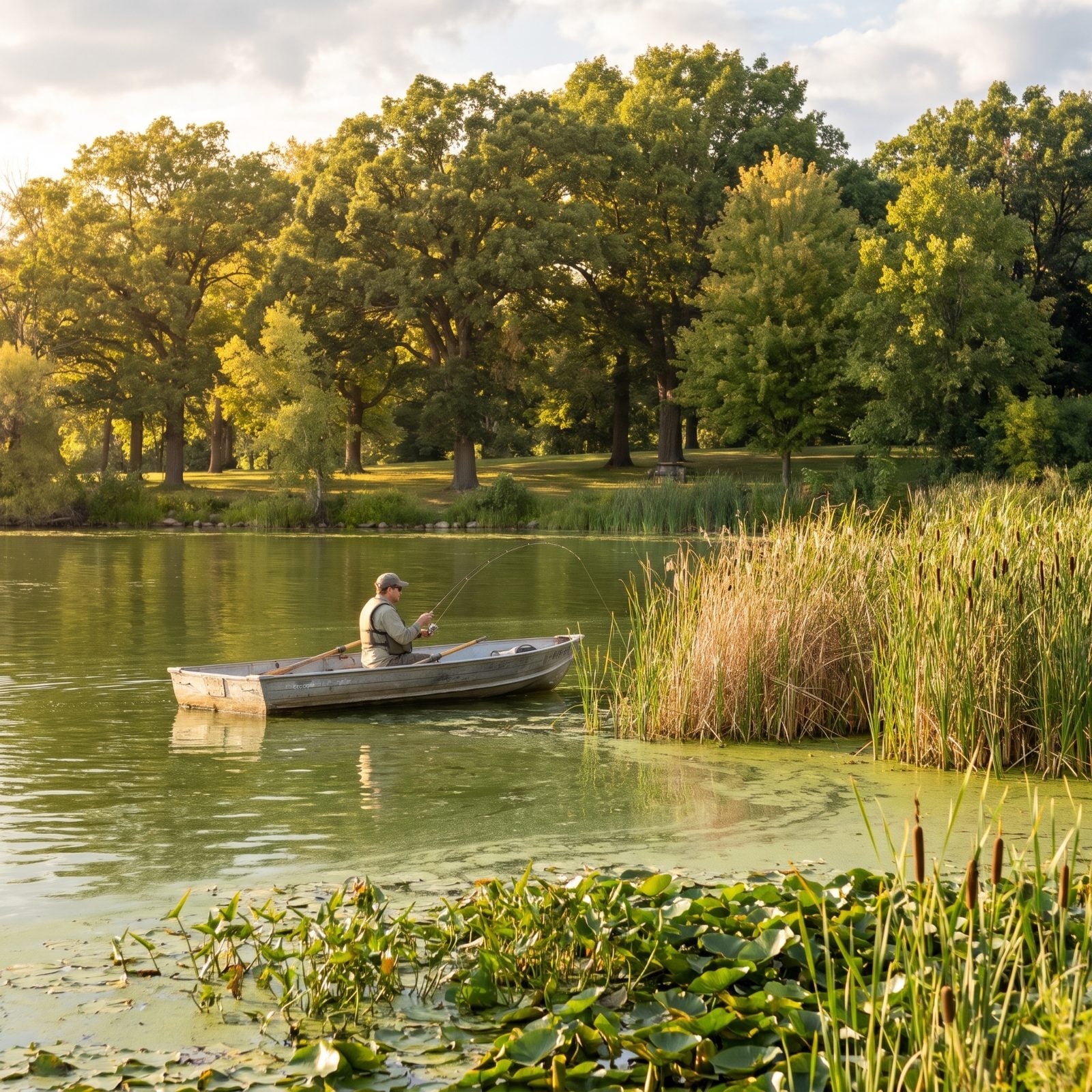
You can catch a muskie within sight of a city neighborhood. Wingra sits in Madison, small and shallow and loaded with weeds, and a no-gas-motor rule keeps it eerily quiet for a lake inside a capital city.
It’s electric-motor and paddle only, which turns a lot of anglers away and leaves the muskie, panfish, and bass for the ones who show up. Fishing a trophy predator five minutes from downtown never stops feeling strange, in the best way.
37. Lake Selmac, Oregon, Trophy Bass in a Wooded County Park
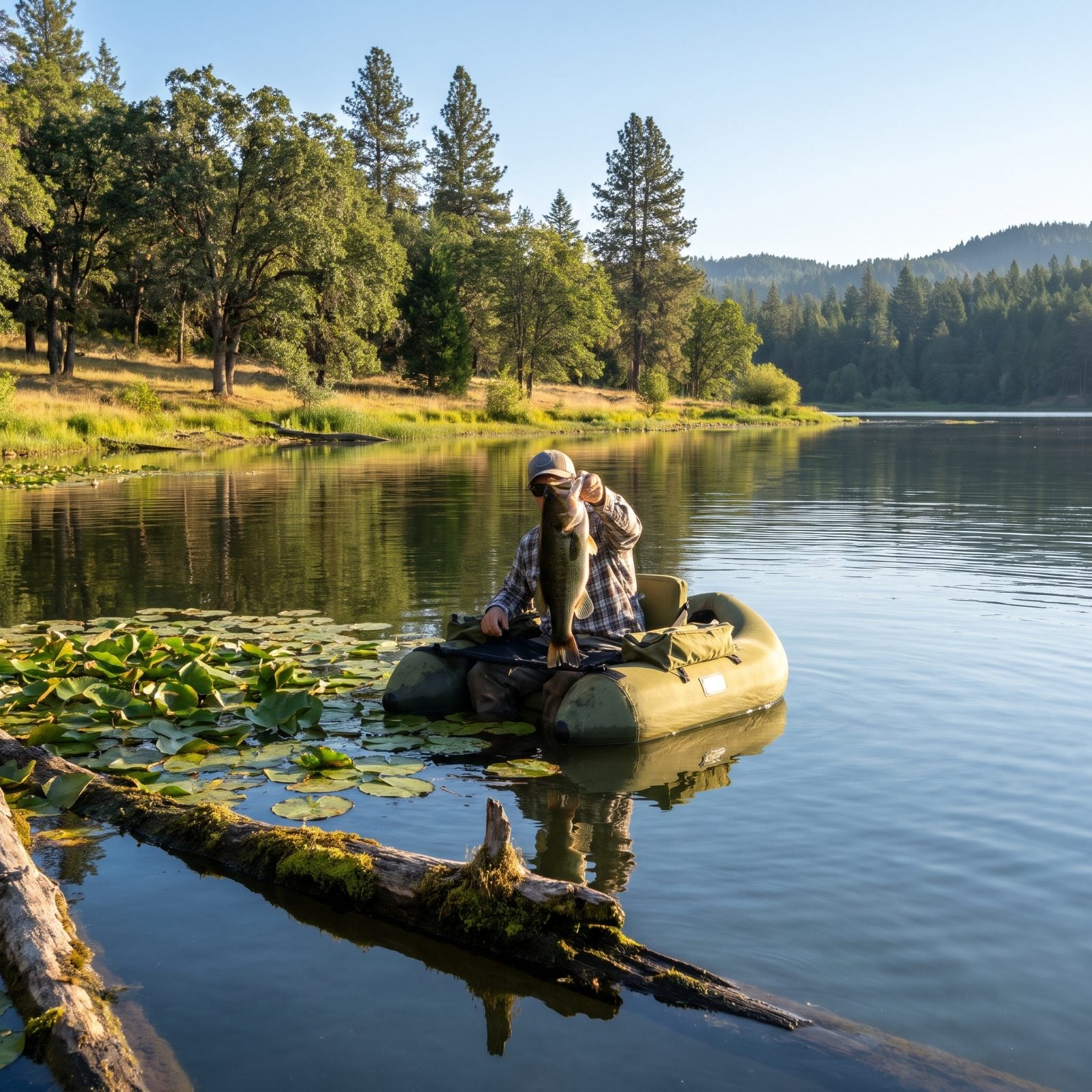
A county park lake in Josephine County has quietly produced some of Oregon’s heaviest largemouth bass. Selmac runs under 200 acres, ringed by campgrounds and picnic areas, and people treat it like a place to grill hot dogs, not land giants.
Which is exactly why the bass get big. Light pressure, warm shallow water, forage everywhere. Fish the pads and downed timber early and late. And because there’s a campground, you can stay and fish both ends of the day, which is where the trophies come from.
36. Horsethief Reservoir, Idaho, A Small Mountain Lake Packed With Trout
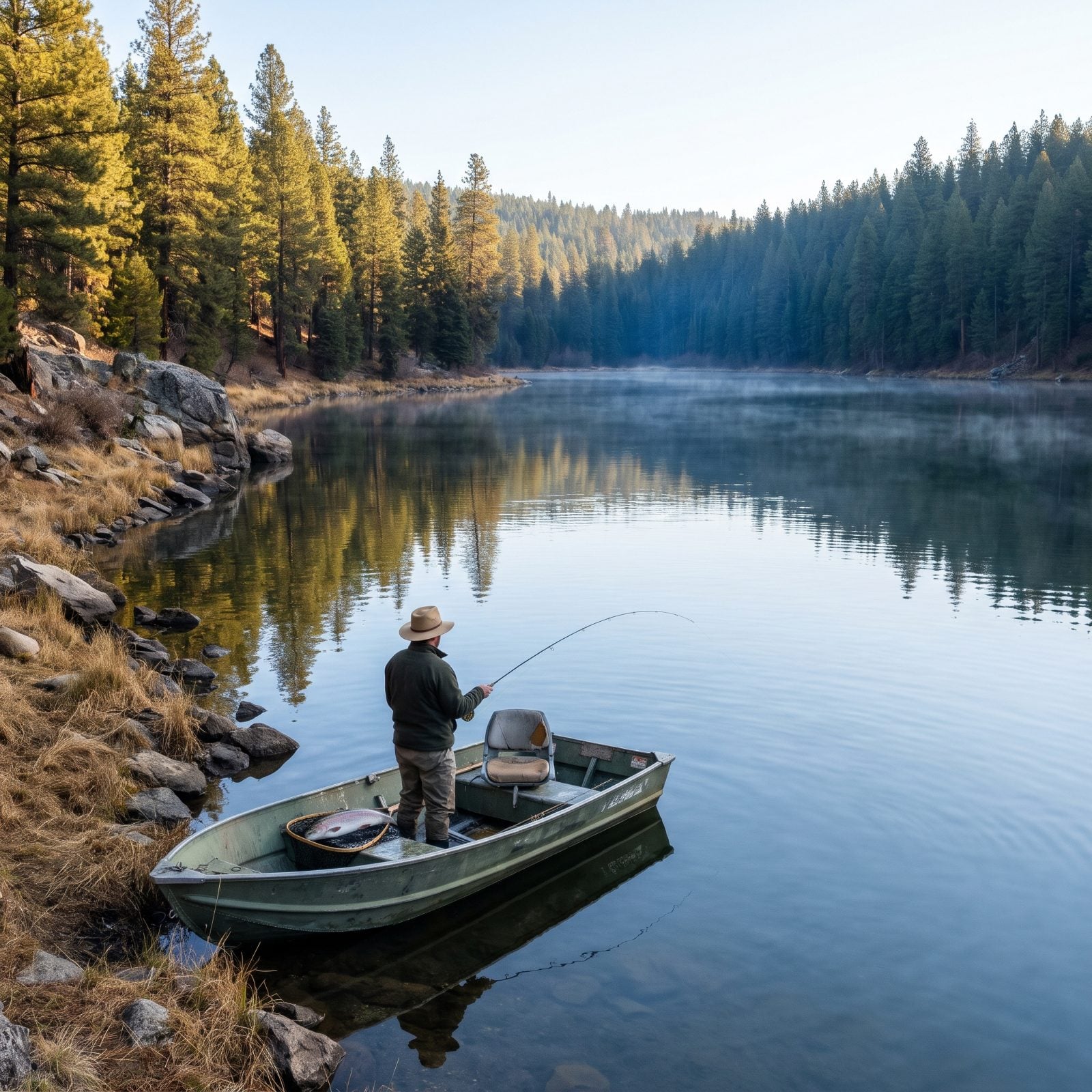
Most people drive past the turnoff on their way to McCall and never look back, and that suits the regulars just fine. Horsethief sits at about 6,000 feet in the mountains east of Cascade. It’s stocked heavily with rainbows, and the fish run bigger than the hatchery plants would suggest.
The ramp is small and the water is cold. Some years the ice doesn’t fully clear until late May. Fish the inlets right after ice-out and you’ll find trout stacked where the cold water pushes in. Here’s the part that surprises people: bank anglers do nearly as well as boats, which you can’t say about most mountain reservoirs.
35. Hemlock Lake, New York, Protected Shorelines and Cold-Water Trout
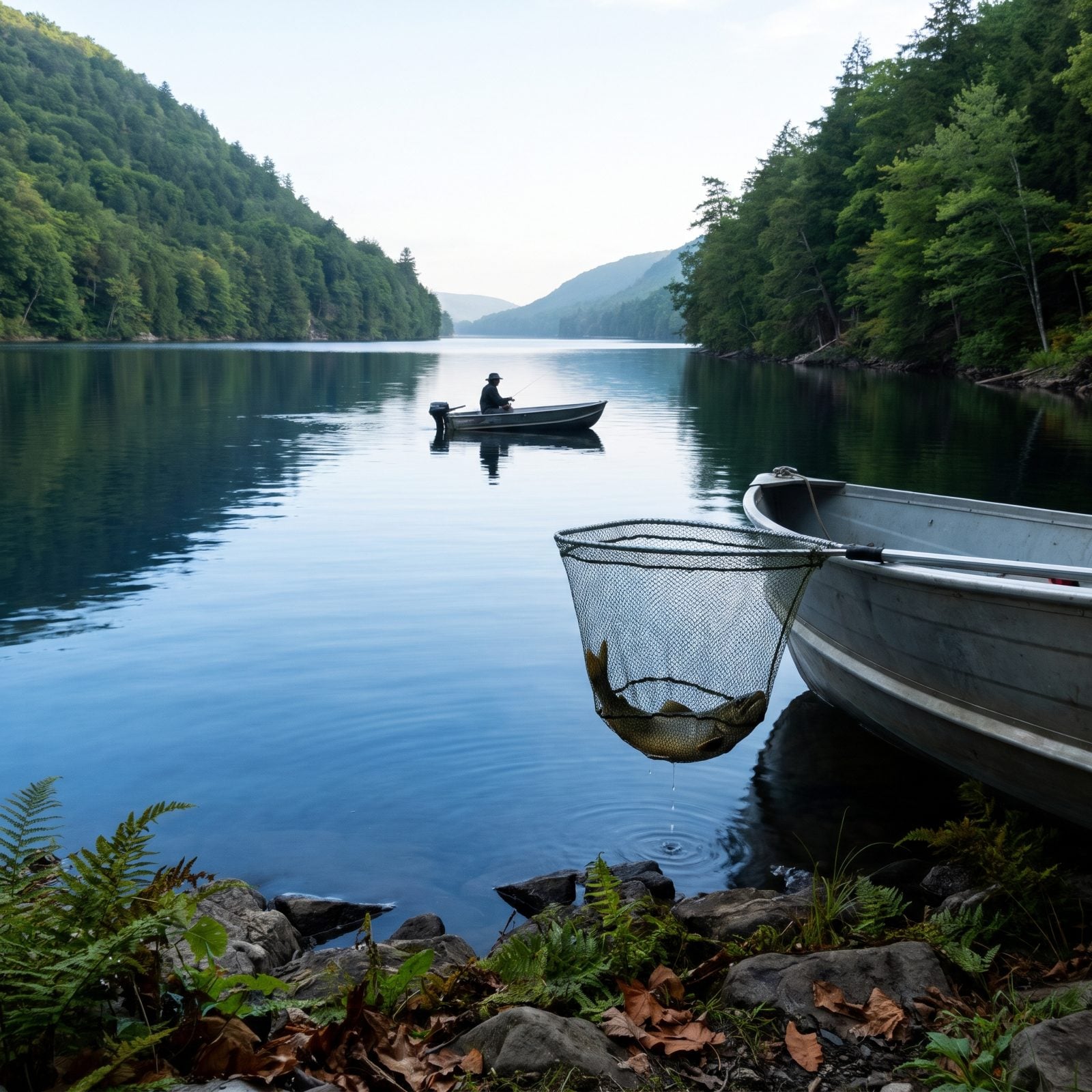
No houses. No marinas. No jet skis. Hemlock and its neighbor Canadice are the two undeveloped Finger Lakes, held as watershed land for the city of Rochester, and the shoreline looks about the way it did a century ago.
All that protection keeps the water clean and cold, which is precisely what lake trout and landlocked salmon want. There’s a public launch, though you’ll need a free permit to set foot on the land, and horsepower limits keep the boat traffic civil. Troll the deep water in summer. Come spring the browns move shallow, and you can take them from the bank if you’ve got the patience for it.
34. Curlew Lake, Washington, Perch, Trout, and Muskie in Pine Country
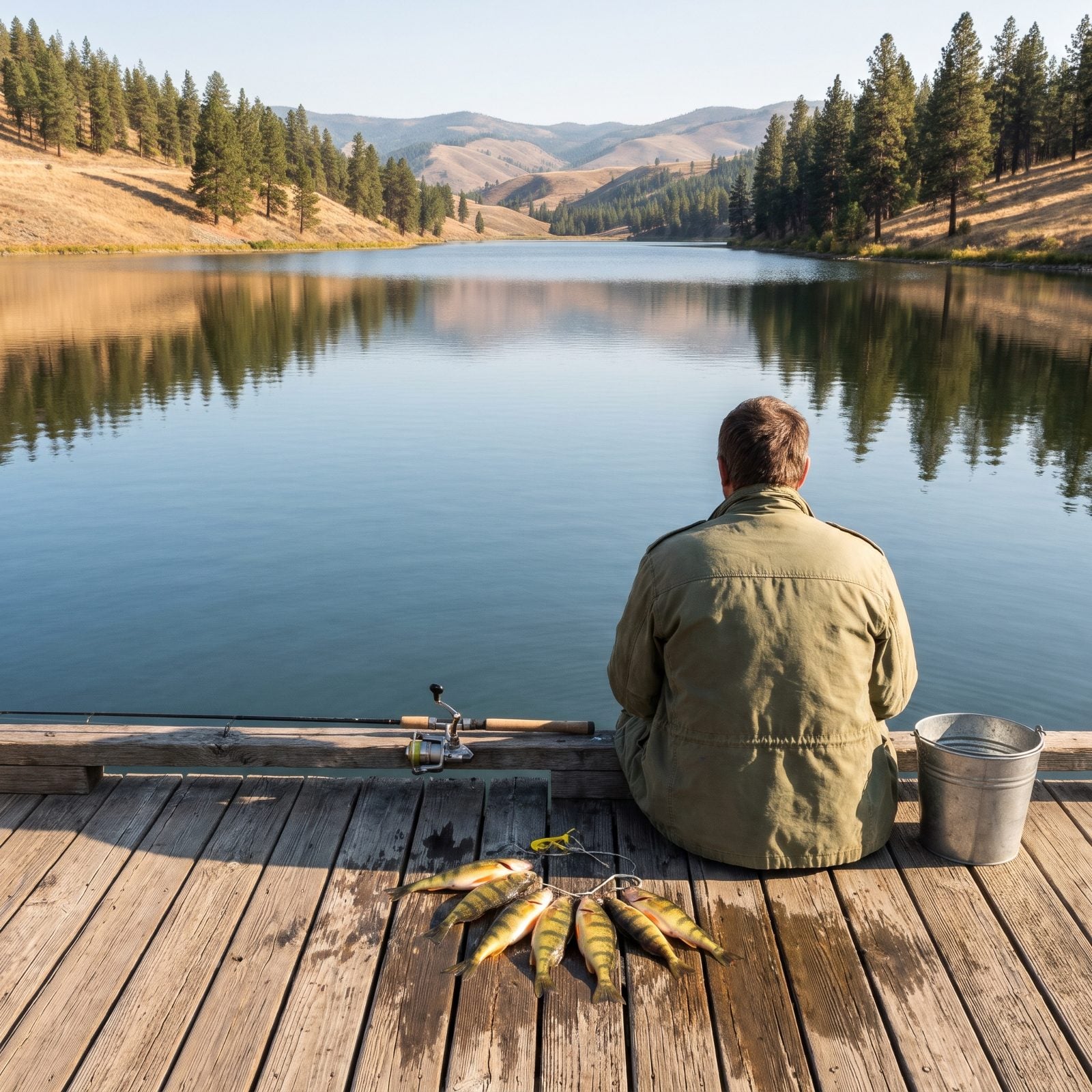
Curlew is the oddball of eastern Washington. One lake hands you jumbo yellow perch, planted and holdover rainbows, and a shot at a tiger muskie, all from the same water. The perch alone are worth the drive. They run thick and fat, and a slow afternoon of jigging fills a bucket fast.
The muskie are the quiet secret. The state put tiger muskie in here to knock back the northern pikeminnow, and the ones that survived got large. You won’t catch many. You’ll remember the one you do.
33. Lake John, Colorado, High-Desert Water Known for Large Trout
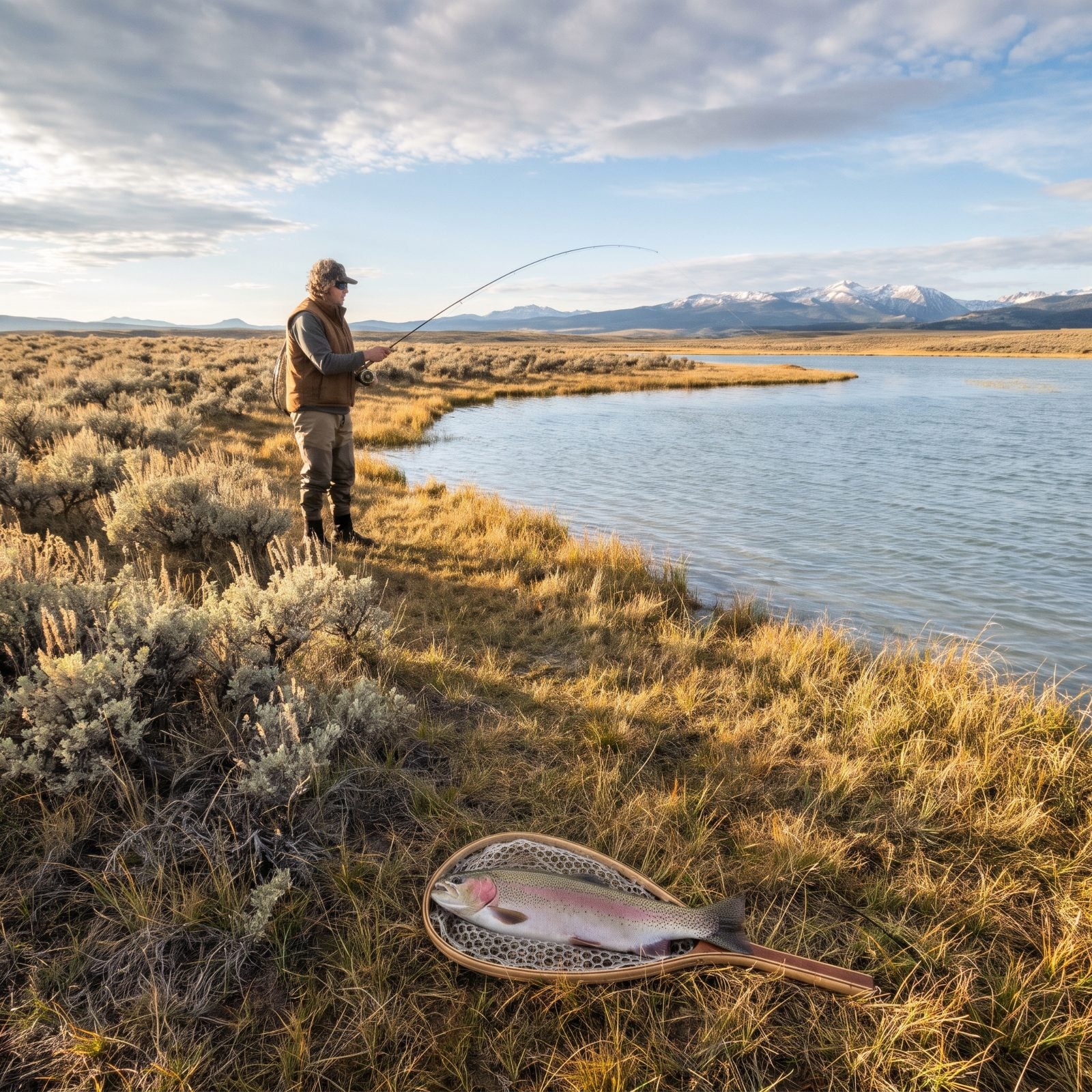
The wind here will test your patience. Lake John sits in a wide-open basin above 8,000 feet, and the chop gets serious by midday. Fish early, before the valley wakes up.
What keeps anglers coming back is the heft of the trout. The lake’s shallow, nutrient-rich water grows rainbows and cutthroat-rainbow hybrids to real weight, and the fall bite can be something else. Nearby Delaney Butte Lakes pull more attention, which works in your favor. Bring a float tube or a small boat and work the weed edges where the big ones cruise.
32. Otisco Lake, New York, Tiger Muskie and Walleye Without the Finger Lakes Hype
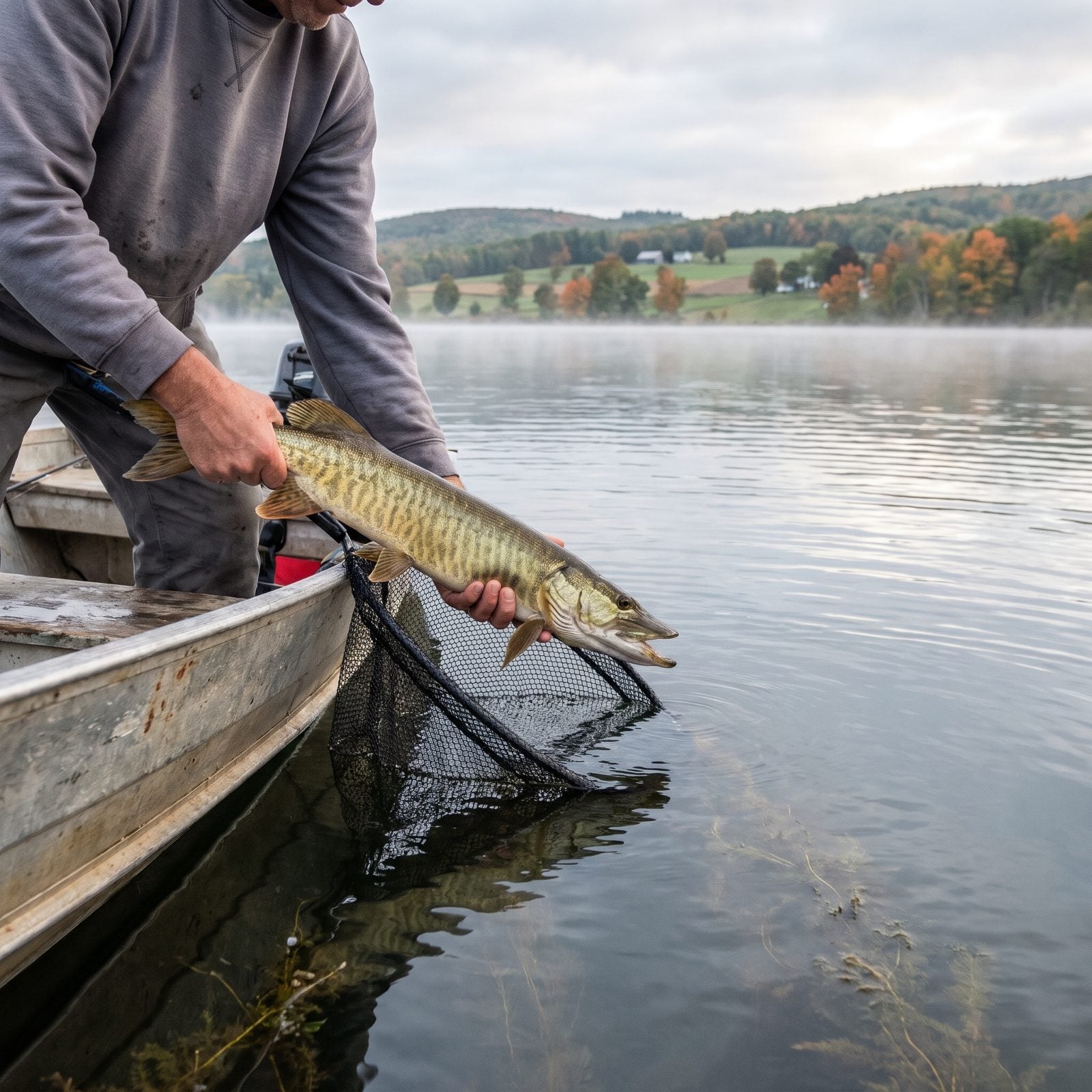
Otisco gets skipped. It’s the easternmost Finger Lake, and everyone’s bombing west to Cayuga or Seneca for the lake trout. Let them.
This is a tiger muskie and walleye lake, and a good one. The causeway at the south end breaks the water into a shallower, weedier basin that holds fish you can target from a modest boat. The tigers get big. Otisco has coughed up some of the state’s larger specimens over the years. Work the weed lines at dawn and dusk.
The lake nobody talks about is usually the one worth driving to.
31. Lake Raven, Texas, Big Largemouths Beside Piney Woods Trails
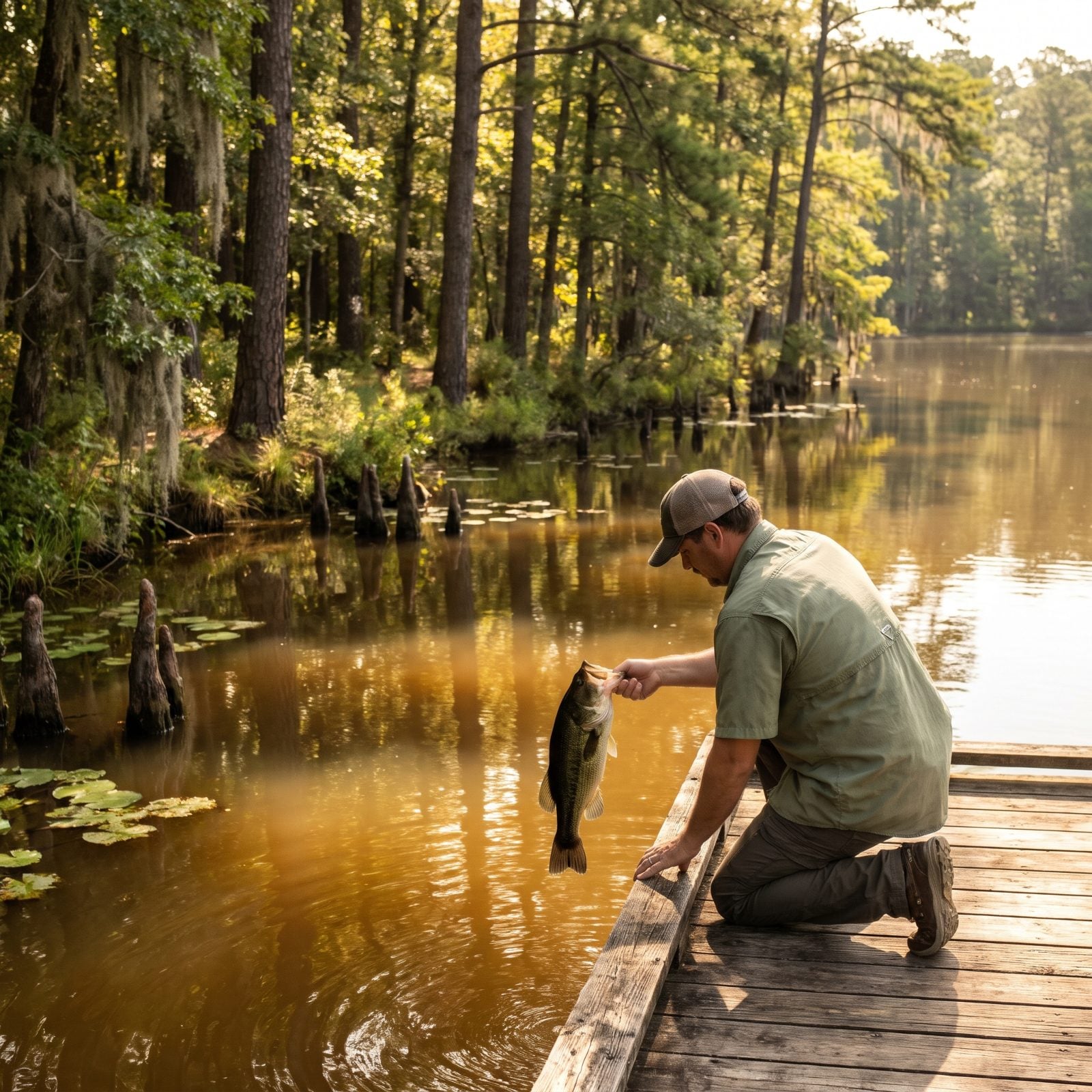
Huntsville State Park wraps around Lake Raven, and most of the people here came to hike the pine-shaded trails, not to fish. That leaves the water to you.
It’s a tannin-stained, cypress-lined lake that holds genuinely good largemouth. No gas motors allowed, so it stays quiet. Paddle a kayak or run a trolling motor along the flooded timber and throw something weedless. A campsite, a hiking network, and honest bass fishing in one state park an hour north of Houston? Hard to beat for a weekend.
30. Eagle Nest Lake, New Mexico, High-Country Trout and Kokanee Salmon
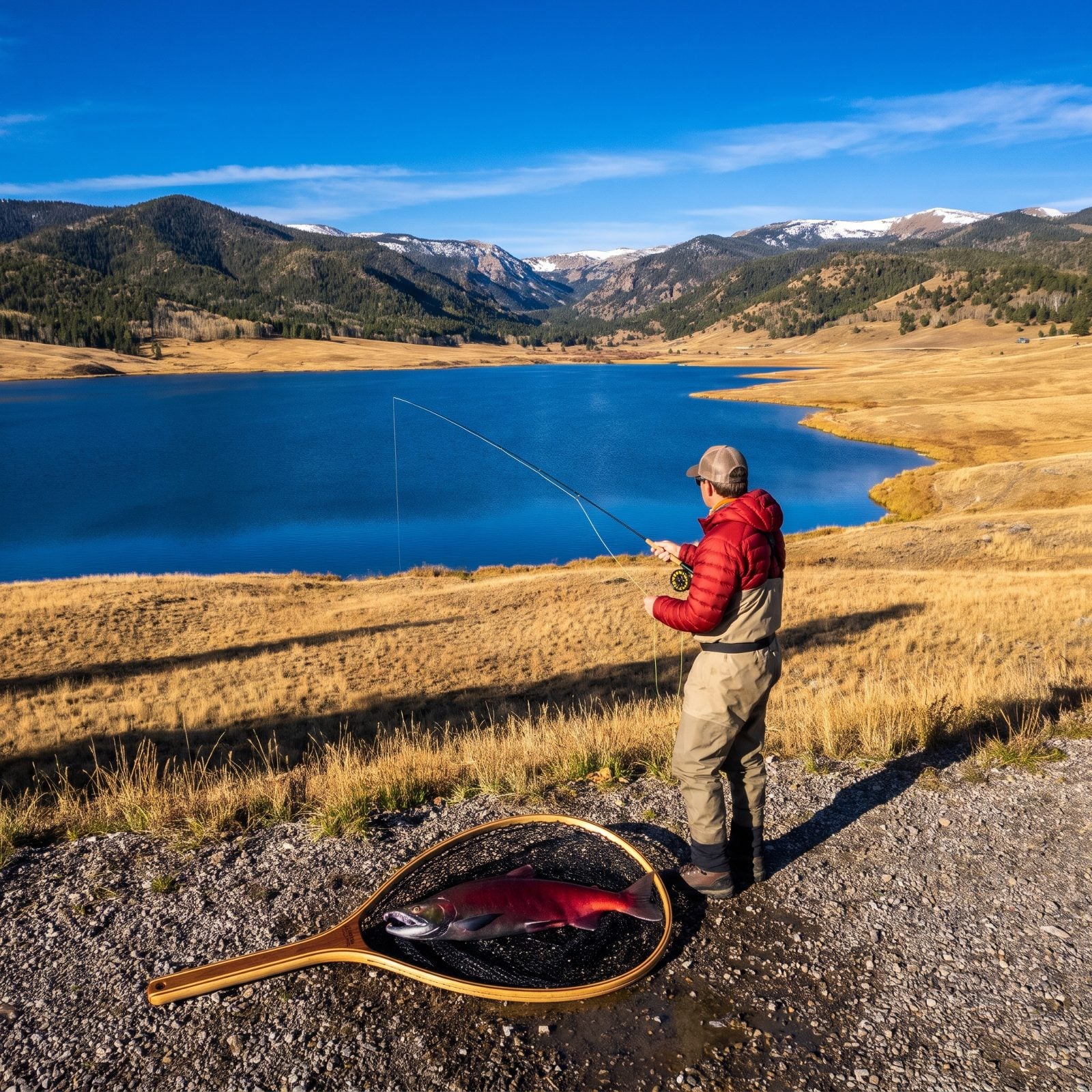
Above 8,200 feet the air is thin and the water stays cold year-round. Eagle Nest sits in the Moreno Valley with the Sangre de Cristos behind it, holding rainbows, cutthroat, pike, and a run of kokanee salmon.
The kokanee are the reason to pay attention. These landlocked sockeye flush bright red in fall as they stage to spawn, and the state runs a limited snagging season for them in late autumn. Once the cold sets in, ice fishing takes over. Check current regulations before you go, because kokanee rules shift year to year.
29. East Lake, Oregon, Kokanee and Trout Inside a Volcanic Caldera
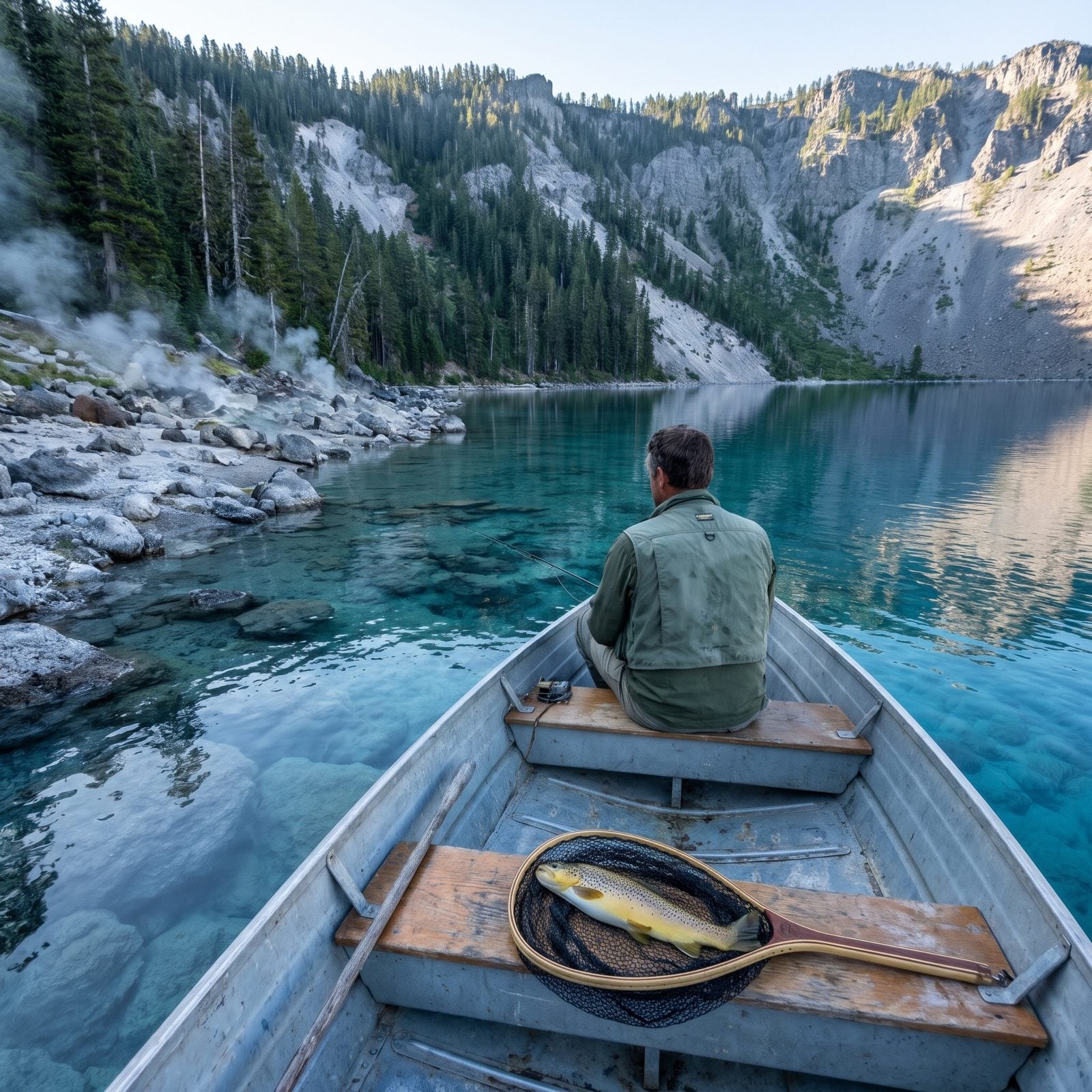
You’re fishing inside a volcano. East Lake sits in the Newberry caldera at about 6,400 feet, with hot springs seeping along parts of the shore and water clear enough to watch a trout drift up, study your fly, and turn away.
It grows some of the best brown trout in Oregon, plus kokanee, rainbows, and the occasional German-strain brown that pushes real weight. Access means driving up the caldera road, which keeps casual traffic down. The season is short, roughly late spring through fall once the snow clears, so plan around it.
28. Dogwood Lake, Indiana, Quiet Timber and Quality Largemouth Bass
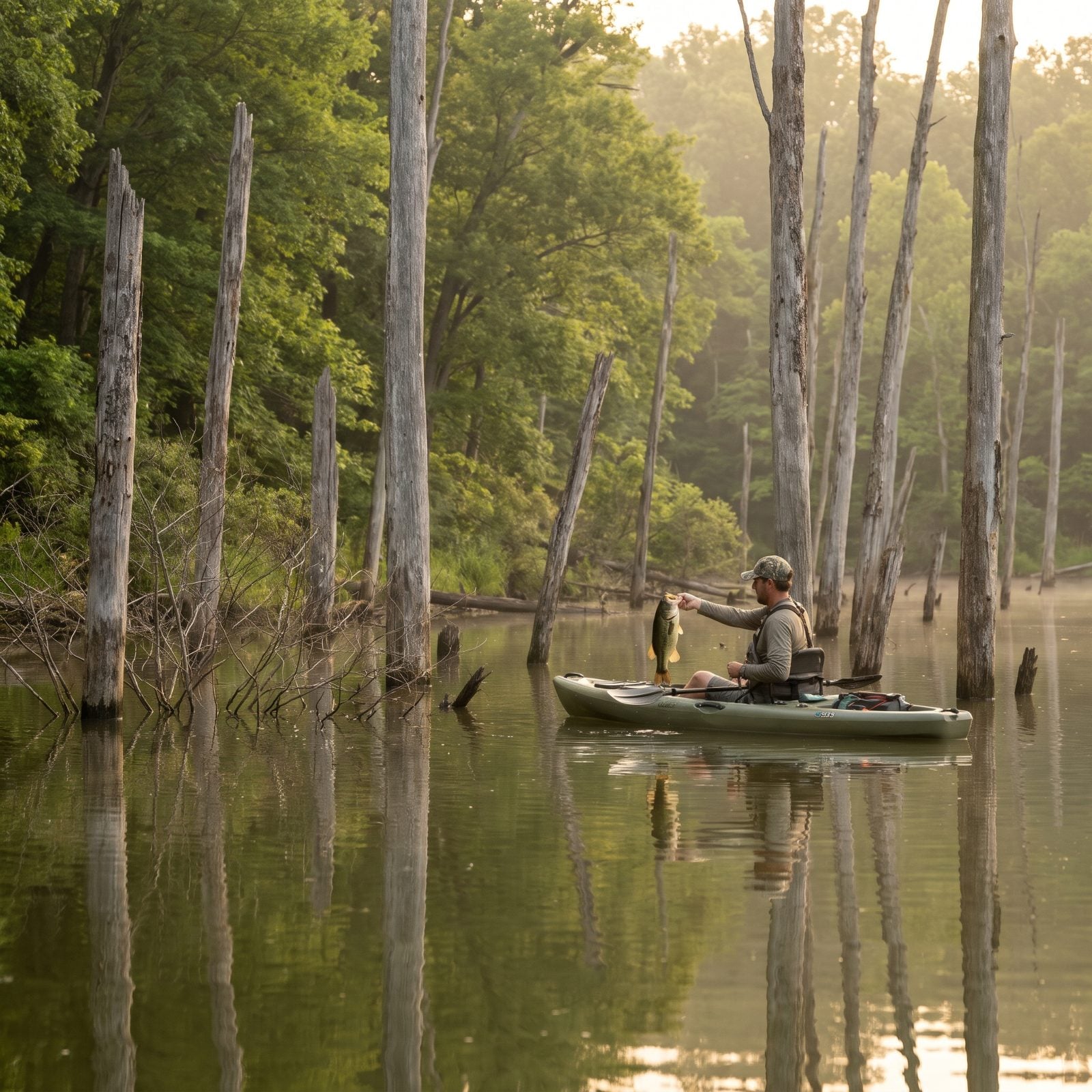
Standing timber everywhere. Dogwood Lake at Glendale Fish and Wildlife Area was flooded over old woodland, and the drowned trees and stumps make it a largemouth factory and a navigation puzzle all at once.
Go slow or you’ll find a stump with your lower unit. A kayak or a shallow jon boat is the right tool. Flip jigs and soft plastics into the cover and hold on. This is unpretentious southern Indiana fishing, with no lodges and no crowds, just good bass water and a whole lot of wood to pick apart.
27. Bone Lake, Wisconsin, A Compact Lake With Serious Muskie Potential
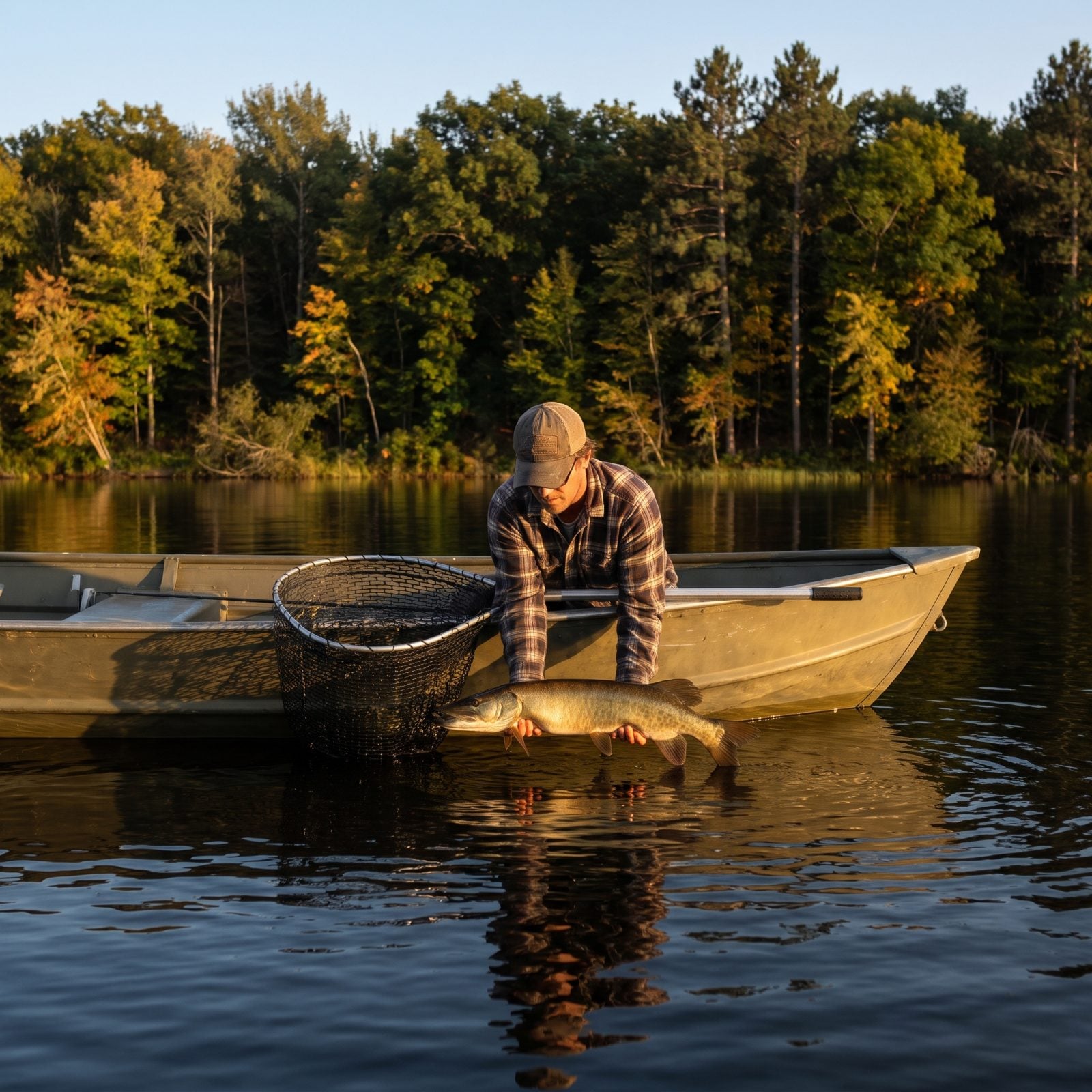
Wisconsin has famous muskie water, and Bone Lake isn’t on most of those lists. It’s a smaller lake in Polk County that quietly hands out quality fish to the anglers who put in the hours.
Muskie fishing is a grind no matter where you do it. On a lake like this the payoff is that you’re grinding in solitude instead of trading figure-eights with ten other boats. Work the weed edges and the breaks at dawn and dusk. Then come back and do it again, because that’s muskie fishing.
26. Lake Cuyamaca, California, Year-Round Trout a Short Drive From San Diego
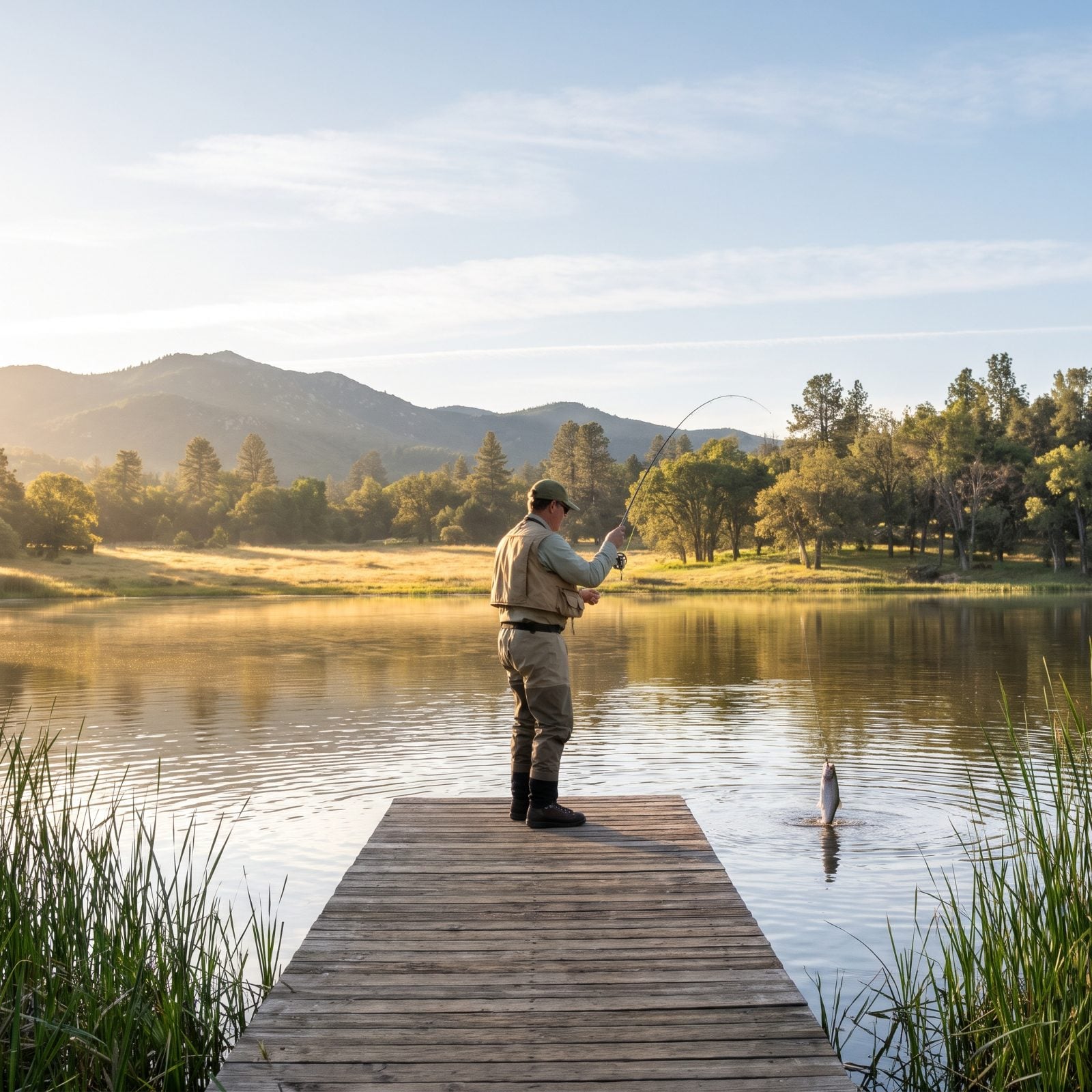
Cold water sits closer to the coast than most San Diego anglers think. Cuyamaca perches around 4,500 feet, which is exactly why it stays trout-friendly while the valleys bake all summer long.
The state and the local reservoir stock it hard, so you can pull rainbows here in nearly any month of the year, which almost nowhere else in Southern California lets you do. Troll the dam area or soak PowerBait off the pier, both produce. There’s a daily use and fishing fee that changes year to year, so check before you load the cooler.
25. Lake Atkins, Arkansas, A Small Reservoir That Grows Big Bass
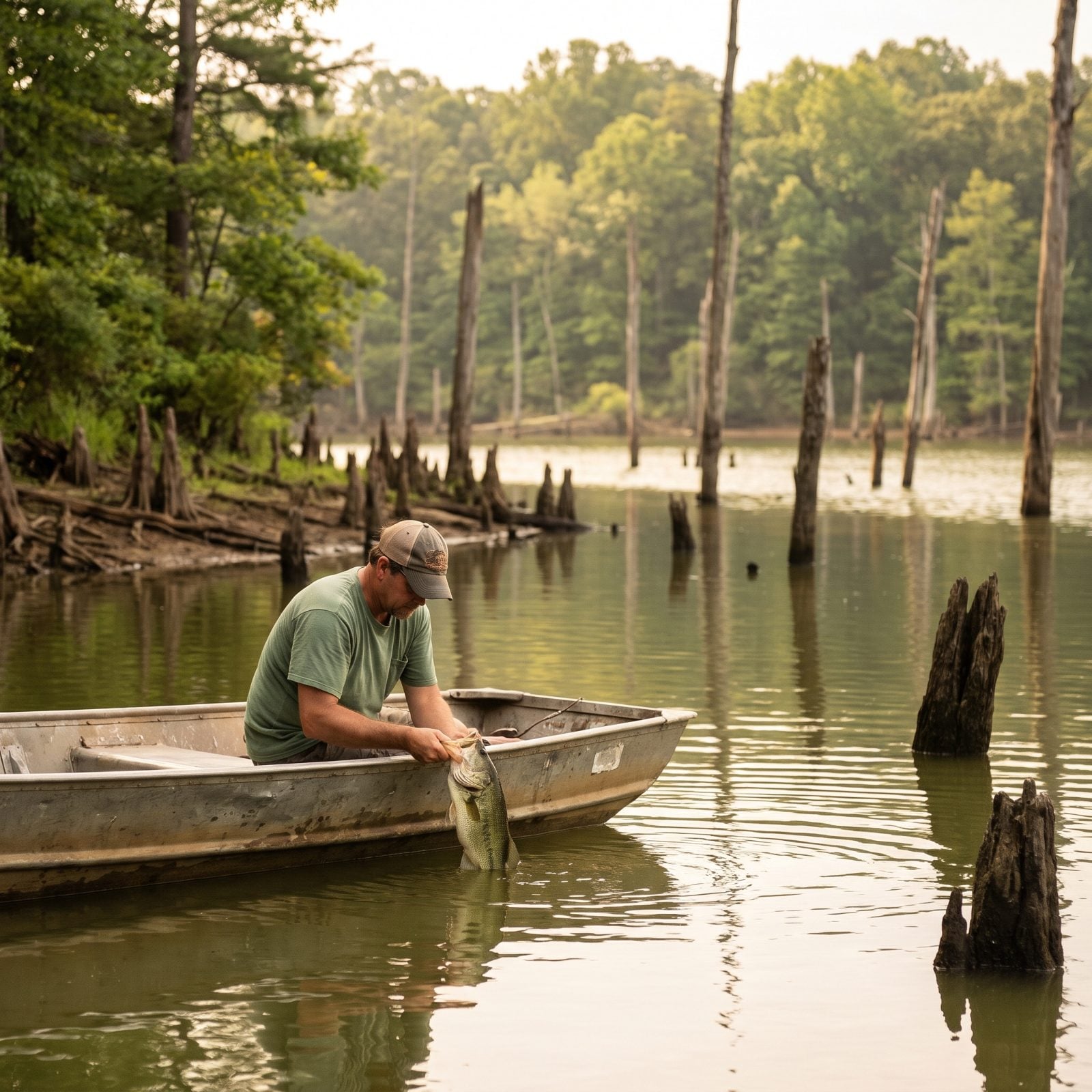
A small reservoir with a reputation that punches way above its size. Atkins is shallow, stumpy, and loaded with cover, which is exactly the recipe for fat largemouth.
Fish it long enough and you learn where the good ones hide. The standing timber in the creek arms holds the better fish. Flip a jig tight to the wood and hang on. The lake drops and rises with the seasons, so the productive cover keeps moving around on you.
24. Lake Moomaw, Virginia, Mountain Smallmouth Over Deep, Cold Water
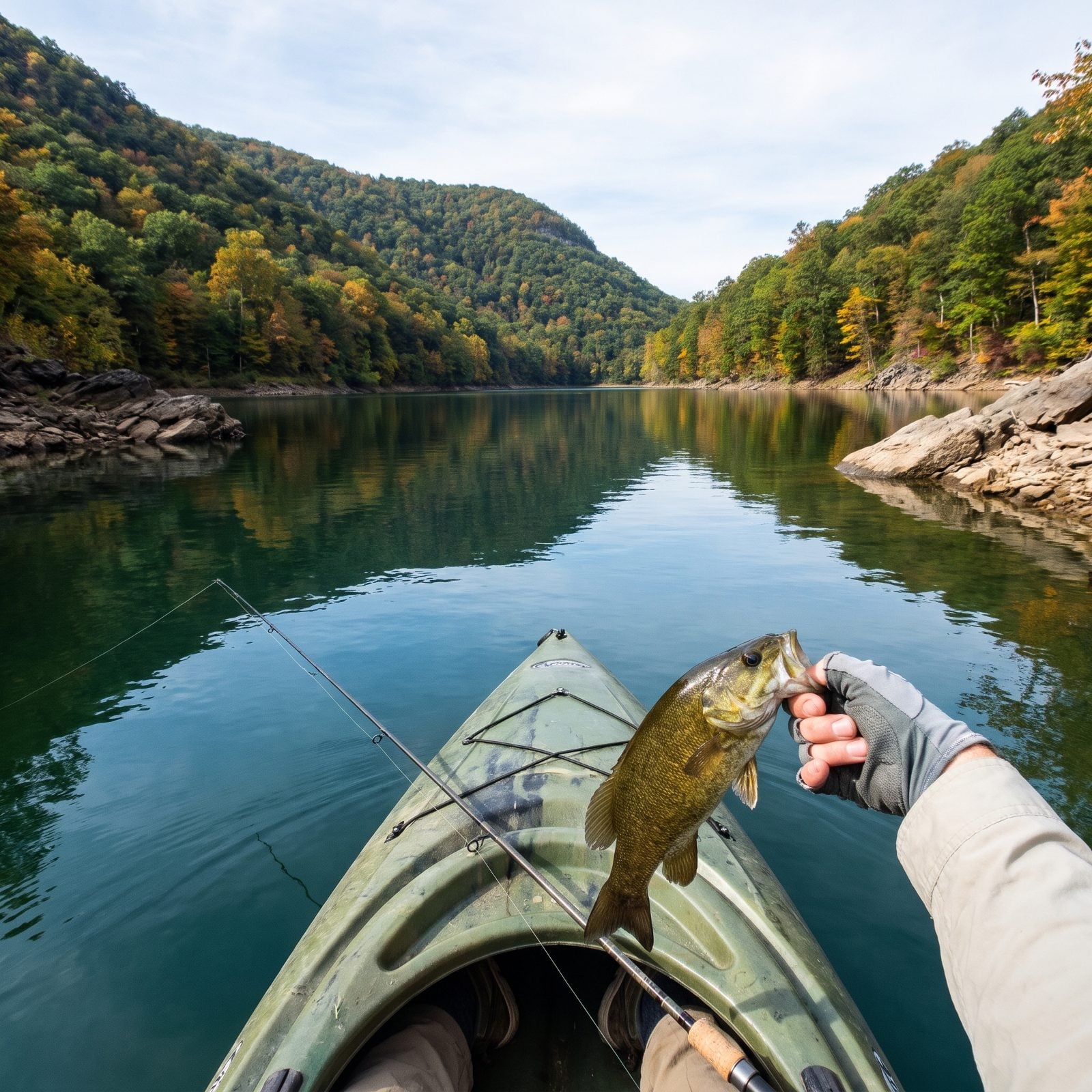
Moomaw feels like a place you had to work to find, and you did. It sits deep in the George Washington National Forest with no town leaning over it, no marina neon, nothing but ridgeline and water.
The lake runs deep and cold, holding a solid smallmouth fishery up top and stocked trout down in the cool layers. That split personality is what keeps me coming back. Fish the rocky points for bronzebacks, then go deep when summer heat pushes everything down.
23. Big Lake, Arizona, High-Country Trout in the White Mountains
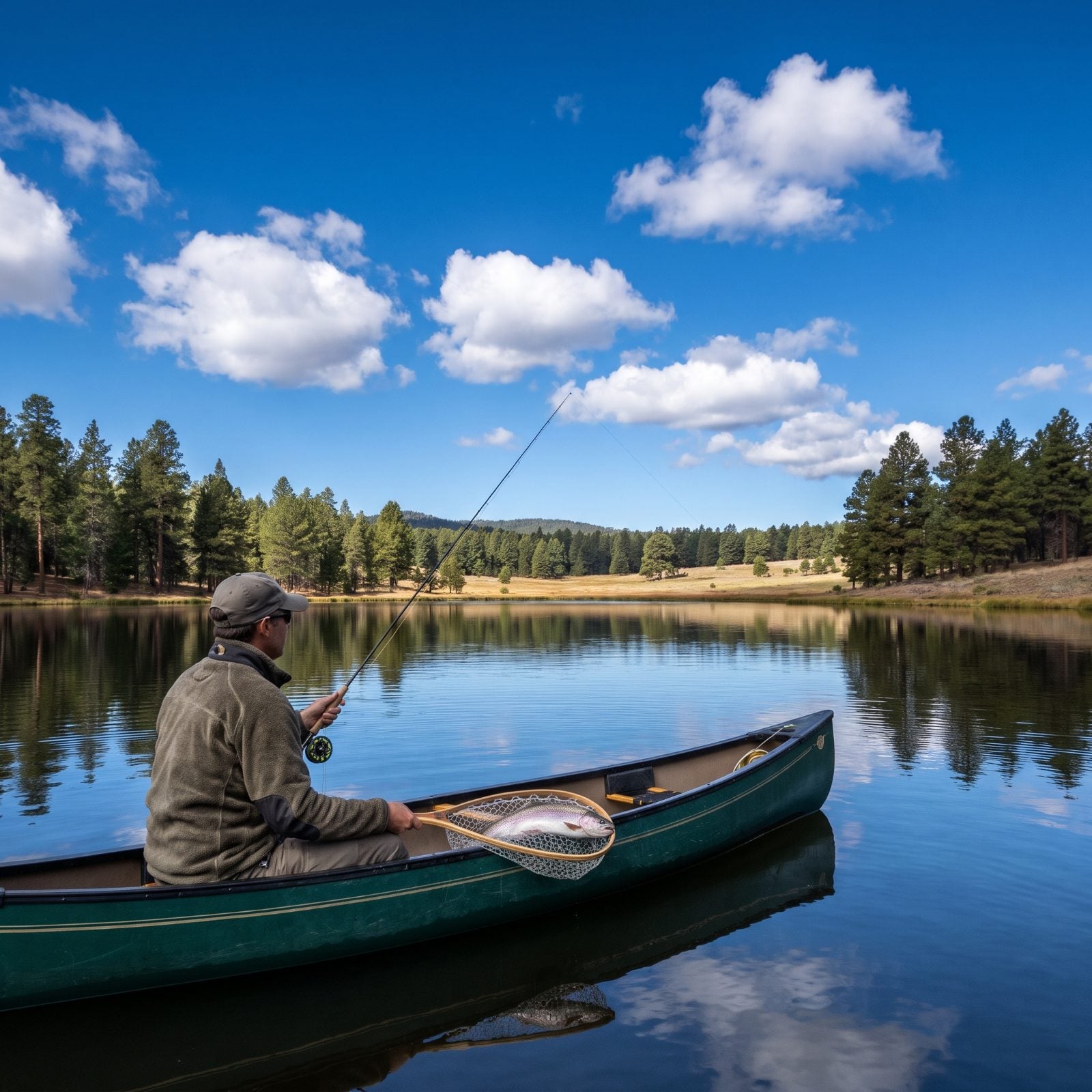
Most people drive past the famous rim lakes and never climb high enough to reach Big Lake. Their loss.
At roughly 9,000 feet, this is genuine cold-water country, stocked heavily with rainbows, brookies, and the occasional cutthroat. The season runs short because it ices over in winter and the road can stay snowed in well into spring, which is part of why it stays so quiet when you finally get up there. Bring layers. Summer mornings up here bite even in July.
22. Tally Lake, Montana, The Deepest Lake in the Flathead Forest
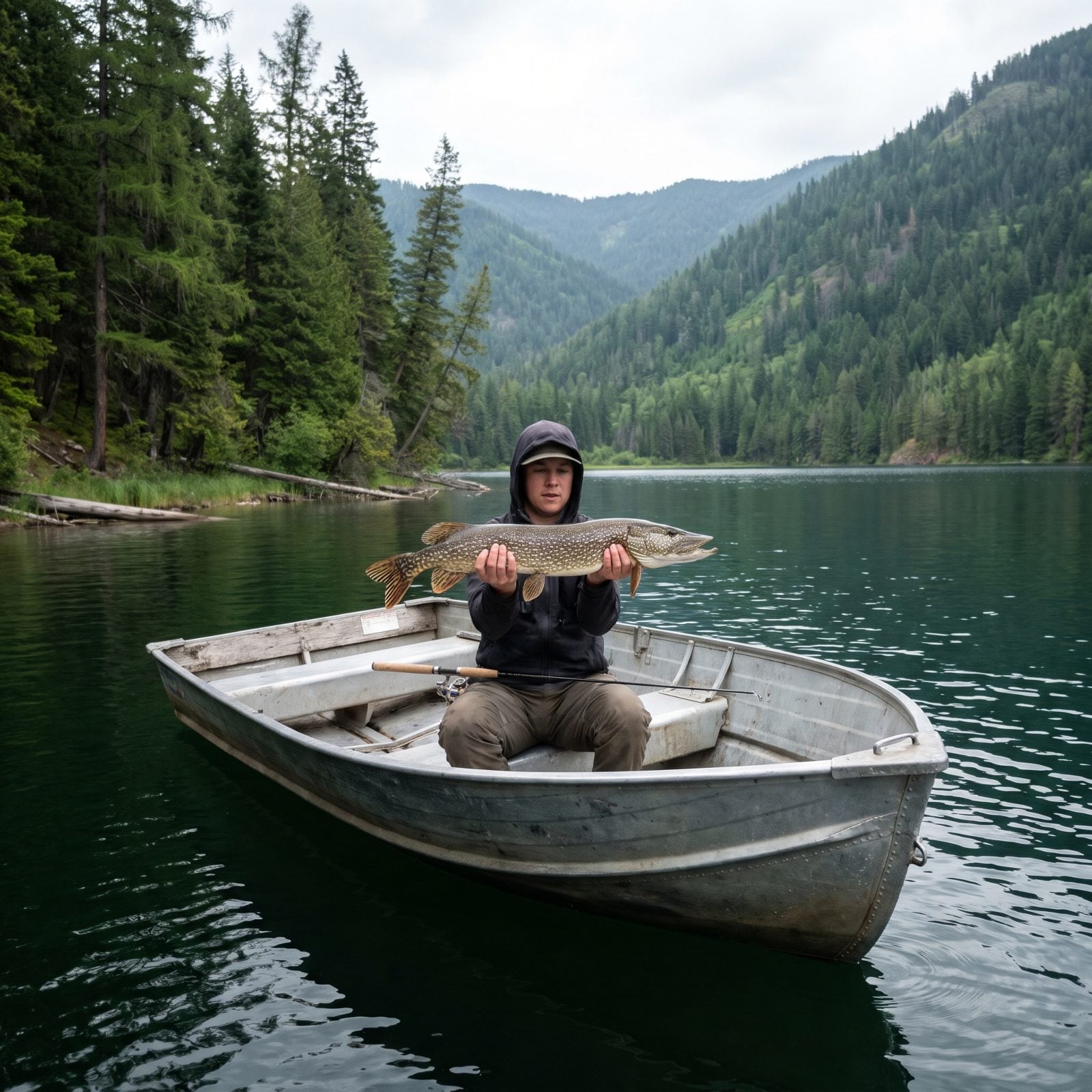
Tally is the deepest lake in the Flathead National Forest. Drop a line near the middle and you’re fishing over hundreds of feet of water, which is what gives it that nearly black look.
That depth supports a mixed bag most small lakes can’t: northern pike in the weedy bays and trout holding deeper and cooler. Early season, work the shallow weed edges for pike with spoons and spinnerbaits. The campground here draws families all summer, so a weekday morning on the water is your best shot at having a cove to yourself.
21. Harvey Gap Reservoir, Colorado, Pike and Perch Beneath the Cliffs
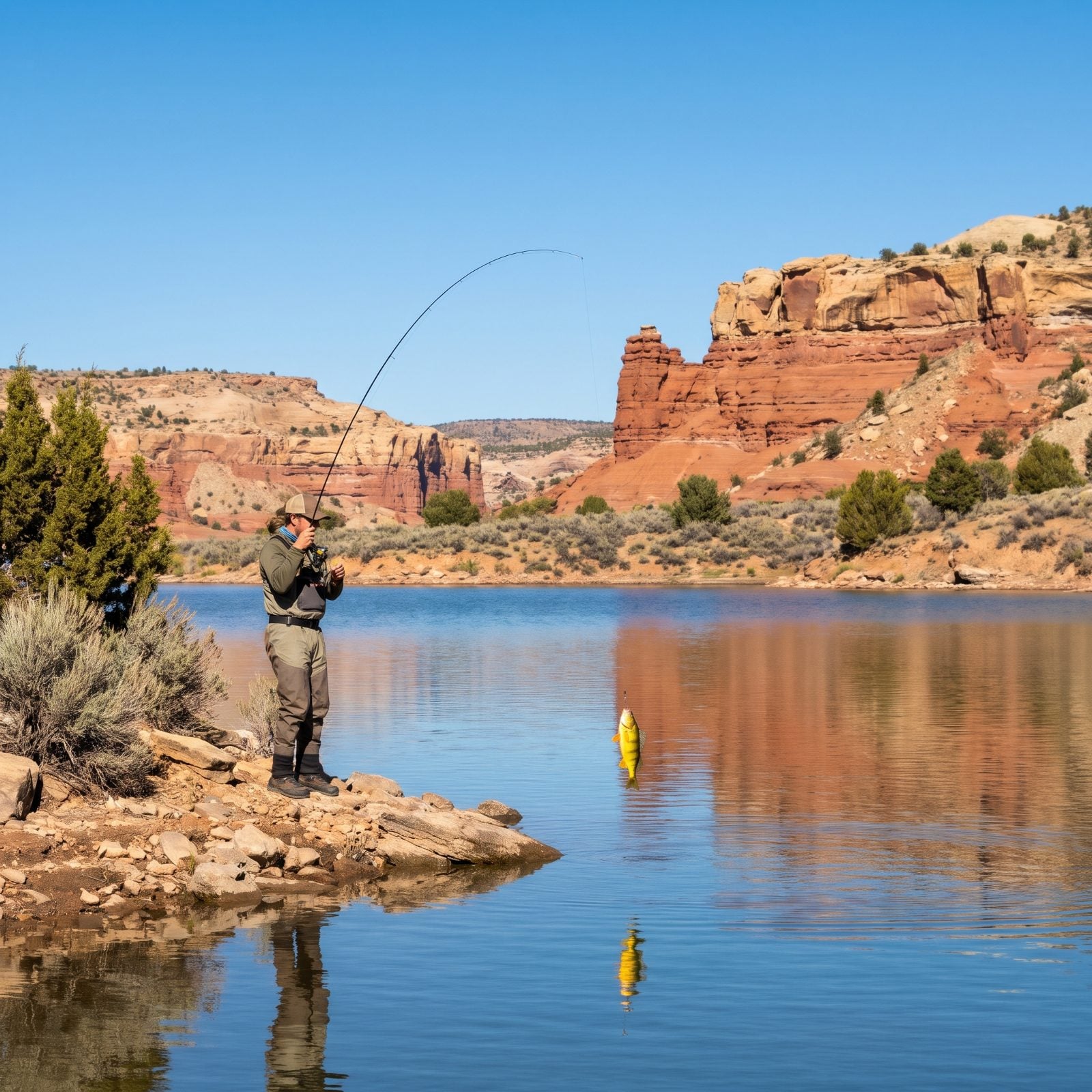
You come around the bend and the cliffs stop you cold. Harvey Gap sits in a pocket of red rock near Silt, small enough to fish in a morning and strange enough to stick in your memory for years.
It holds northern pike, yellow perch, and some bass, an oddball mix for a reservoir this size. On a good day the bites come steady, and you might swing a bright yellow catch, as uniform and glossy as a lure, up out of the glassy water. It’s a state park, so you’ll need a pass along with your license.
20. Patagonia Lake, Arizona, Winter Bass and Crappie in the Desert Hills
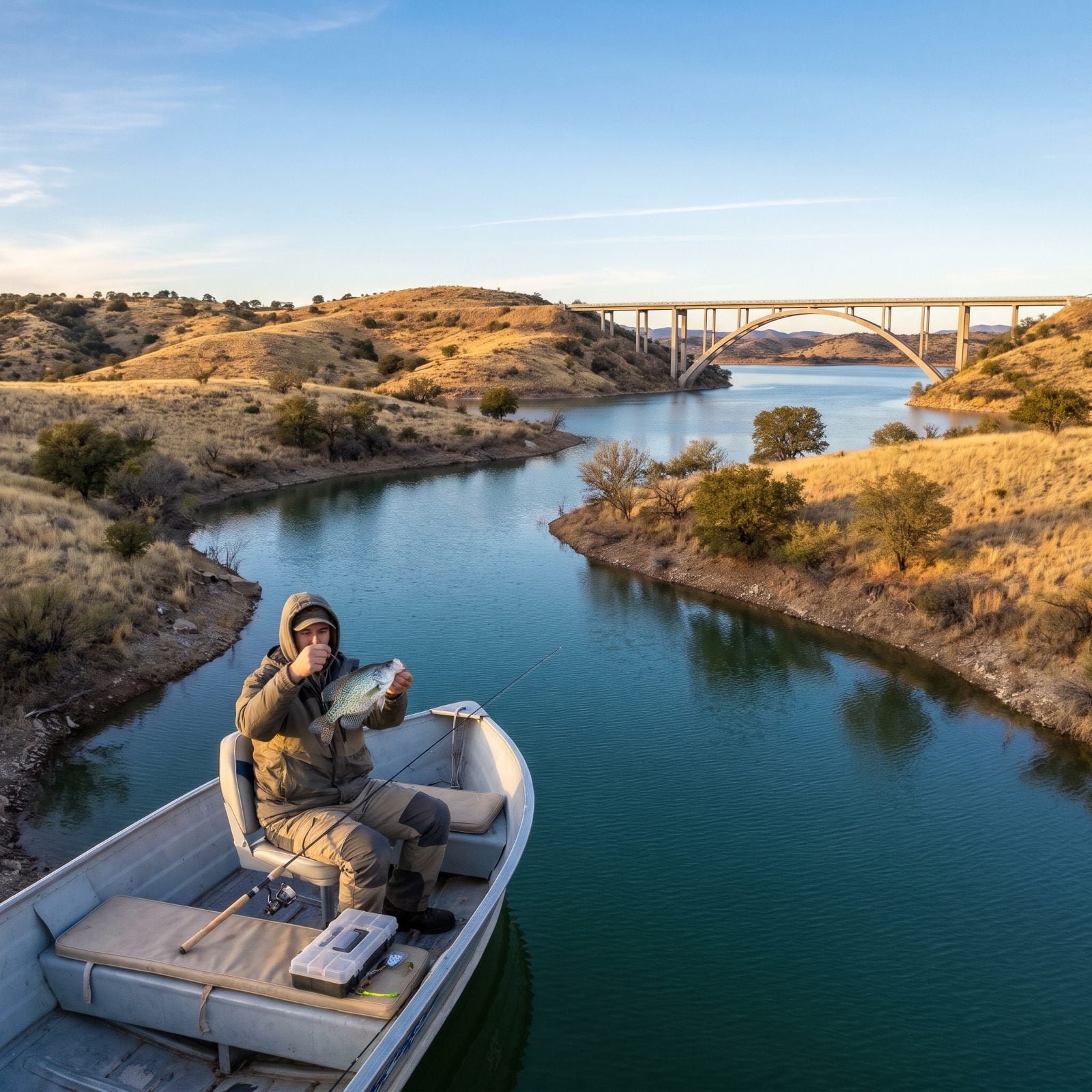
While the rest of the country is drilling through ice, southern Arizona anglers are out in hooded jackets working crappie beds on open water. Patagonia Lake is the reason.
This narrow desert reservoir fishes best once the air cools and bass and crappie get active in the coves. The lake is also a birder’s dream. Don’t be surprised if you spend half your morning watching herons instead of your rod tip. State park entry fee applies, and it fills up on holiday weekends.
19. Lake Amador, California, Stocked Trout and Surprisingly Heavy Bass
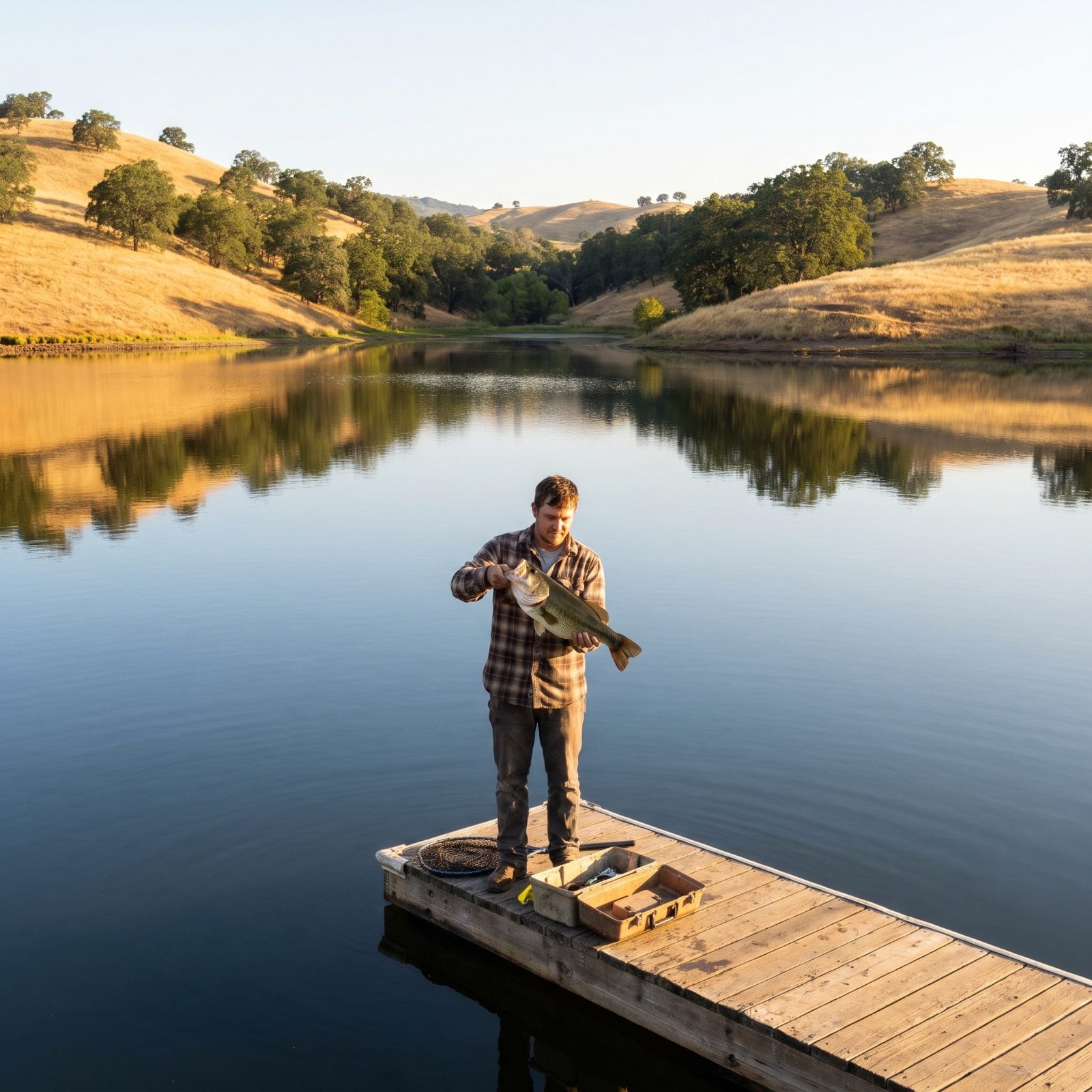
Amador runs a private stocking program that puts fish in the water other lakes only dream about. They raise their own strain of bass here and dump trout steadily through the cool season.
So you get a foothill lake where you can boat a limit of rainbows in the morning and tangle with a genuinely heavy bass by afternoon. Shore access is good, the camping is decent, and the day-use fee won’t make you wince. This is the one I’d point anyone toward who’s trying to get a kid into fishing, because the odds of actually catching something are high and nothing kills a young angler’s interest faster than a blank day.
18. Byers Lake, Alaska, Trout and Grayling in the Shadow of Denali
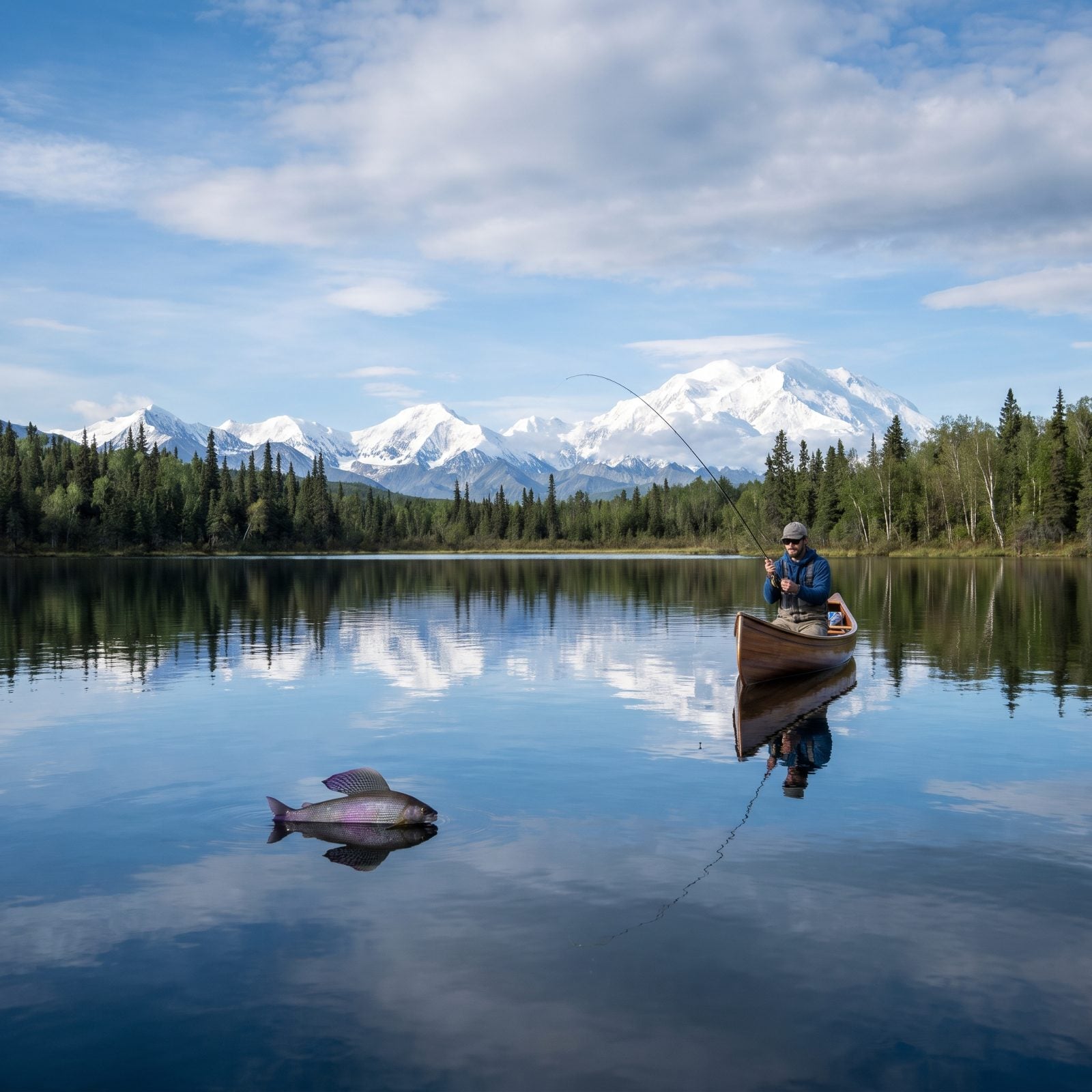
You can see the Alaska Range from the water here, and on a clear morning Denali itself shrugs off its clouds. That view alone would justify the drive.
Byers sits right off the Parks Highway in Denali State Park, reachable without a floatplane, which is rare for fishing this good so far north. It holds rainbow trout, lake trout, and arctic grayling, that gorgeous sail-finned fish that’s rare in the Lower 48. A canoe or float tube opens up the whole shoreline.
17. Lake Wabaunsee, Kansas, Flint Hills Bass in Quiet Prairie Country
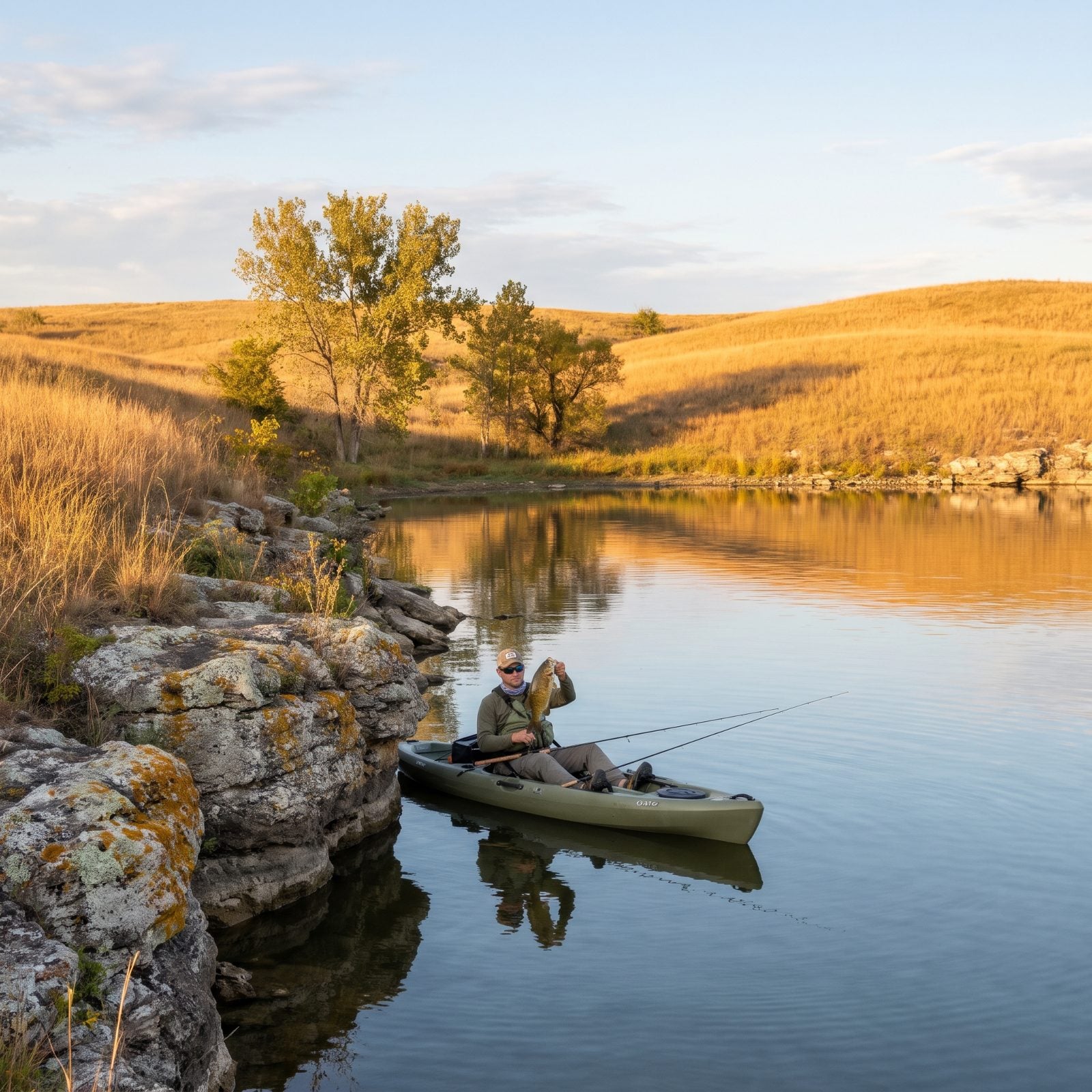
Kansas doesn’t come up when people talk fishing, and that’s fine by the folks who fish Wabaunsee. This Flint Hills lake holds both largemouth and smallmouth, and the smallmouth are the real draw.
Rocky points and limestone ledges give the bronzebacks the habitat they want. It’s a quiet, old lake with a scattering of cabins, the kind of place where a weekday evening on the water feels like you borrowed it from somebody and forgot to give it back. Bring light tackle and work the rock.
Some of the best fishing in the country hides in the states nobody brags about.
16. Shabbona Lake, Illinois, Muskie and Bass in a Small State Park Lake
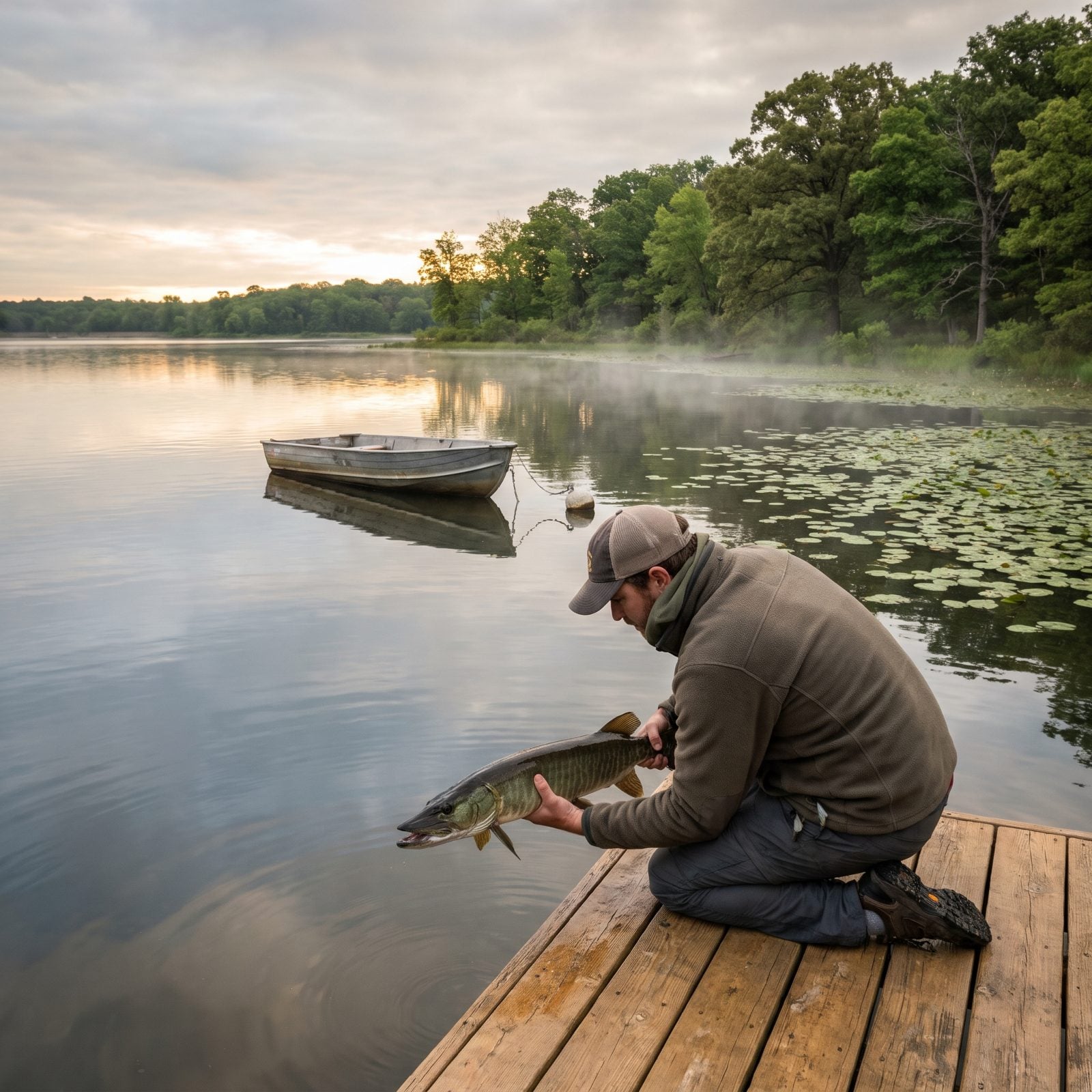
You would not guess a muskie fishery sits forty minutes from DeKalb. Shabbona is small, under 320 acres, and that’s exactly why it fishes bigger than it should. Fish get stocked, the cover is thick, and all the pressure bunches up near the launch while the good water sits ignored along the timbered shorelines.
Largemouth and crappie carry the daily action. The muskie is the reason people drive out at dawn and then keep their mouths shut about it. Boat rentals and a state park launch mean you don’t need a bass boat to get on fish here.
15. Fellows Lake, Missouri, Muskie and Bass Minutes From Springfield
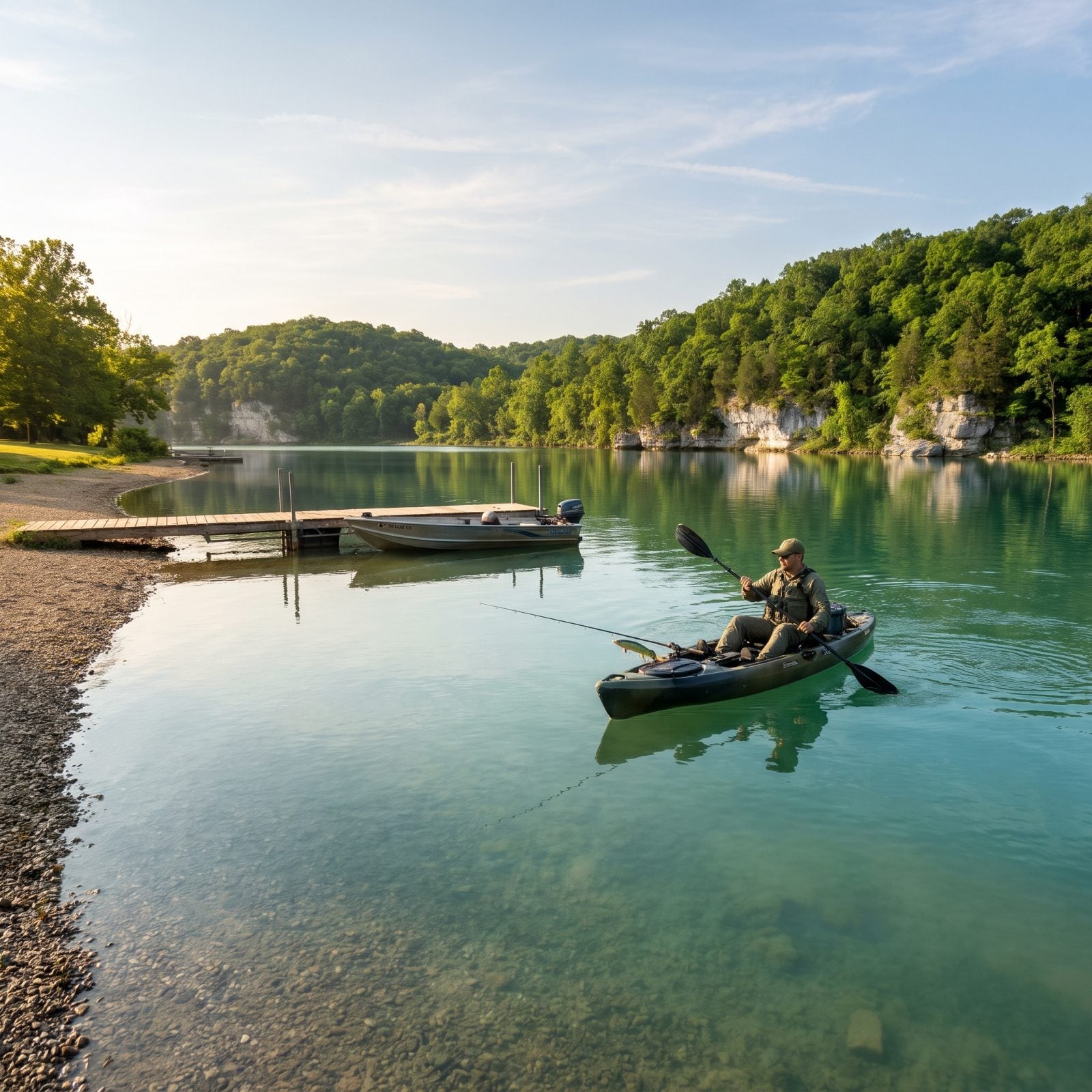
Twenty minutes from downtown Springfield, and most anglers never fish it seriously. Fellows is a city water-supply lake, so it stays calm and clean. No big wakes, no jet skis tearing through your drift. Just over 800 acres of clear water and a muskie program that quietly produces.
The bass fishing alone justifies the trip. Smallmouth hold on the gravel points while largemouth tuck into the brush, and the fact that muskie swim here too feels almost unfair. It’s the kind of lake you keep meaning to tell people about and then never do.
14. Merrill Creek Reservoir, New Jersey, Deep-Water Trout and Smallmouth Bass
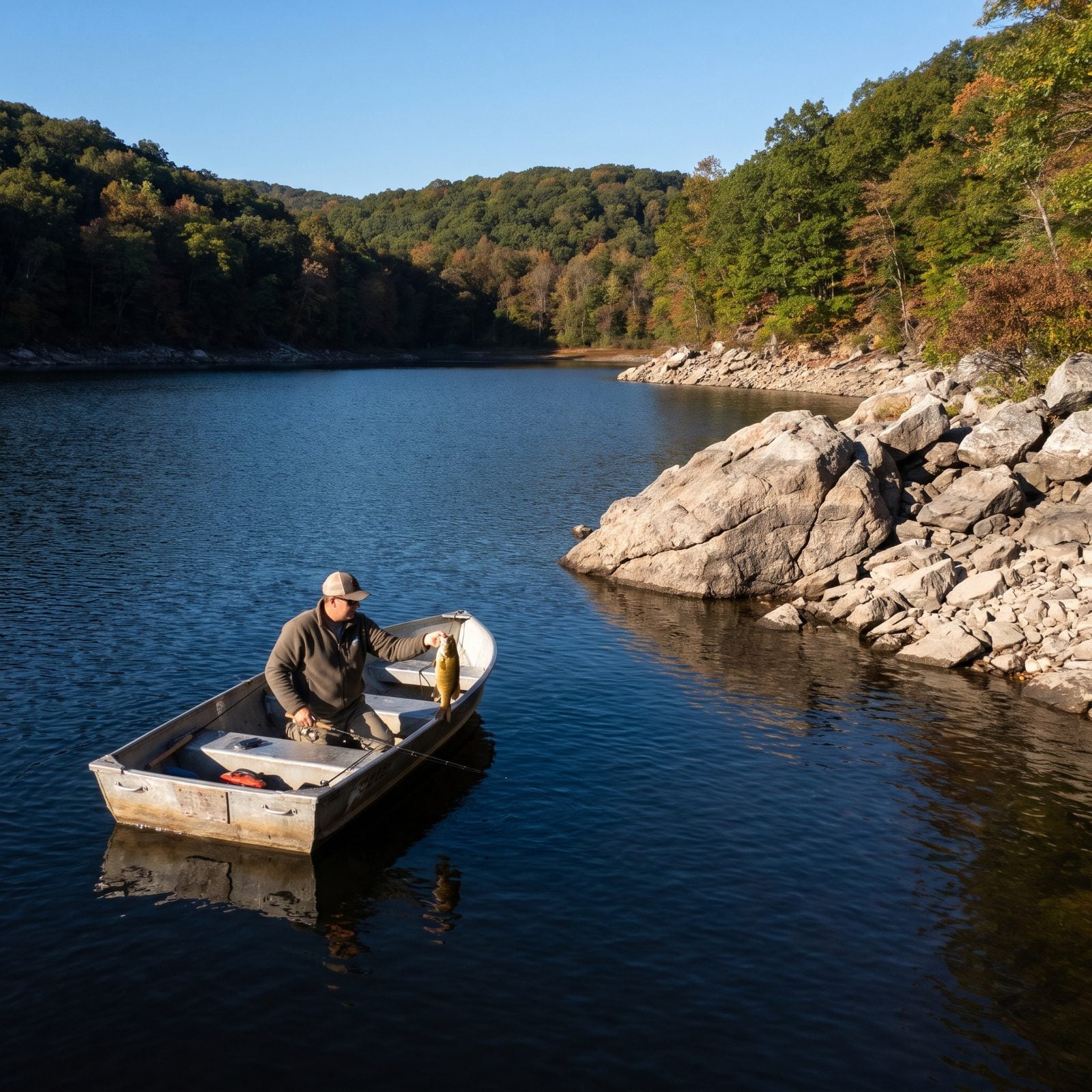
Most people drive past Merrill Creek on the way to somewhere flashier. Their loss. It’s a pumped-storage reservoir, so it runs deep and cold — deeper than anything else around. Lake trout survive here year-round in New Jersey, which still rattles people who think the state is all turnpike.
The smallmouth fishing is genuinely good, structure-heavy and clear. Electric motors only on the main reservoir keeps it quiet. Bring something that reaches the bottom, because the fish often live down where the water never warms.
13. Megunticook Lake, Maine, Smallmouth Bass Below Camden Hills
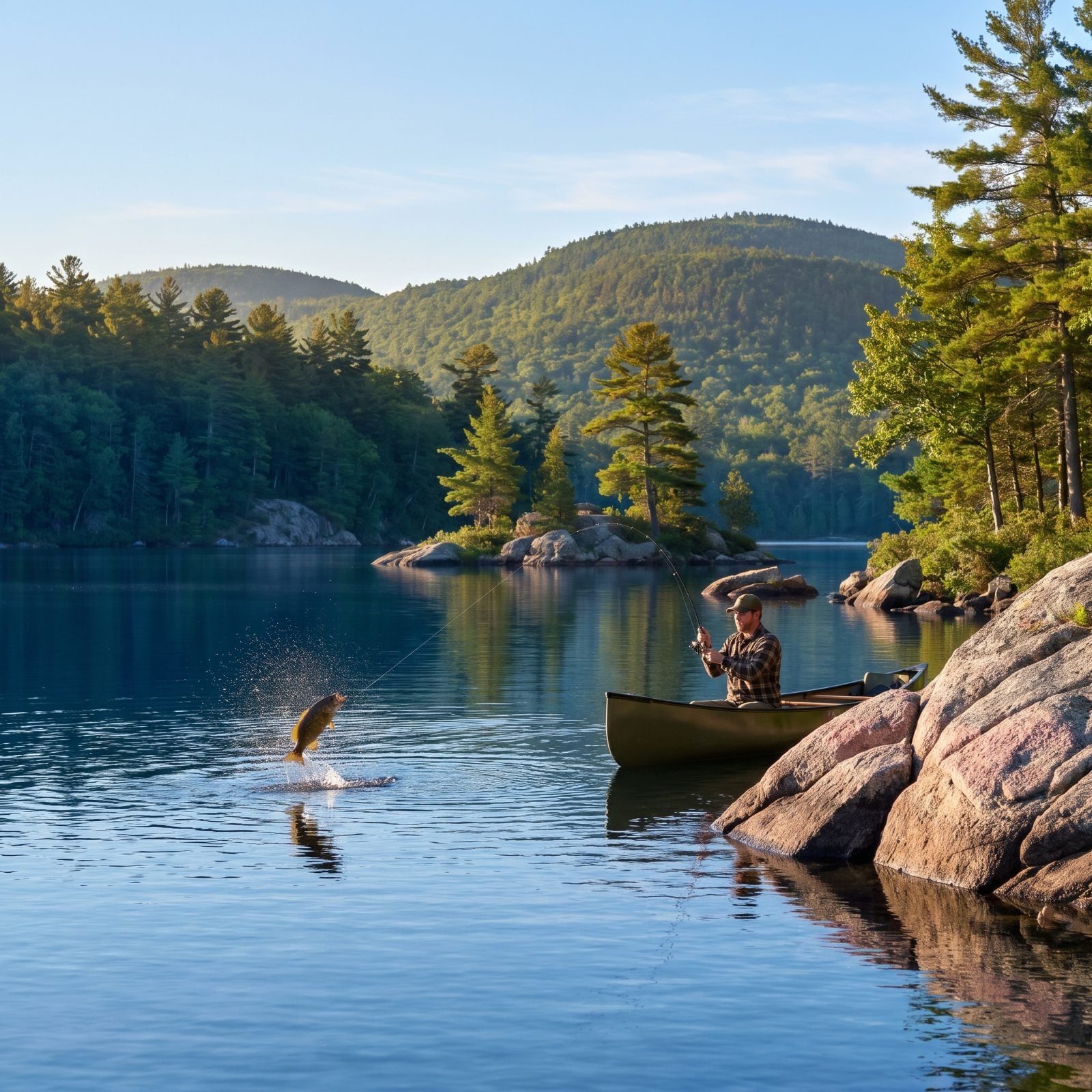
The hikers all go to Camden Hills. The lake below the ridge belongs mostly to the anglers, and Megunticook is rocky, deep, and loaded with smallmouth that fight like they’ve got something to prove.
Granite shorelines and island structure hand you endless places to work a tube or a topwater at first light. The water clears up fast once summer settles in, so the bass turn spooky and you earn every one. Part of why it never feels crowded: finesse water weeds out the casual crowd.
12. Quail Creek Reservoir, Utah, Warm, Clear Water for Bass and Crappie
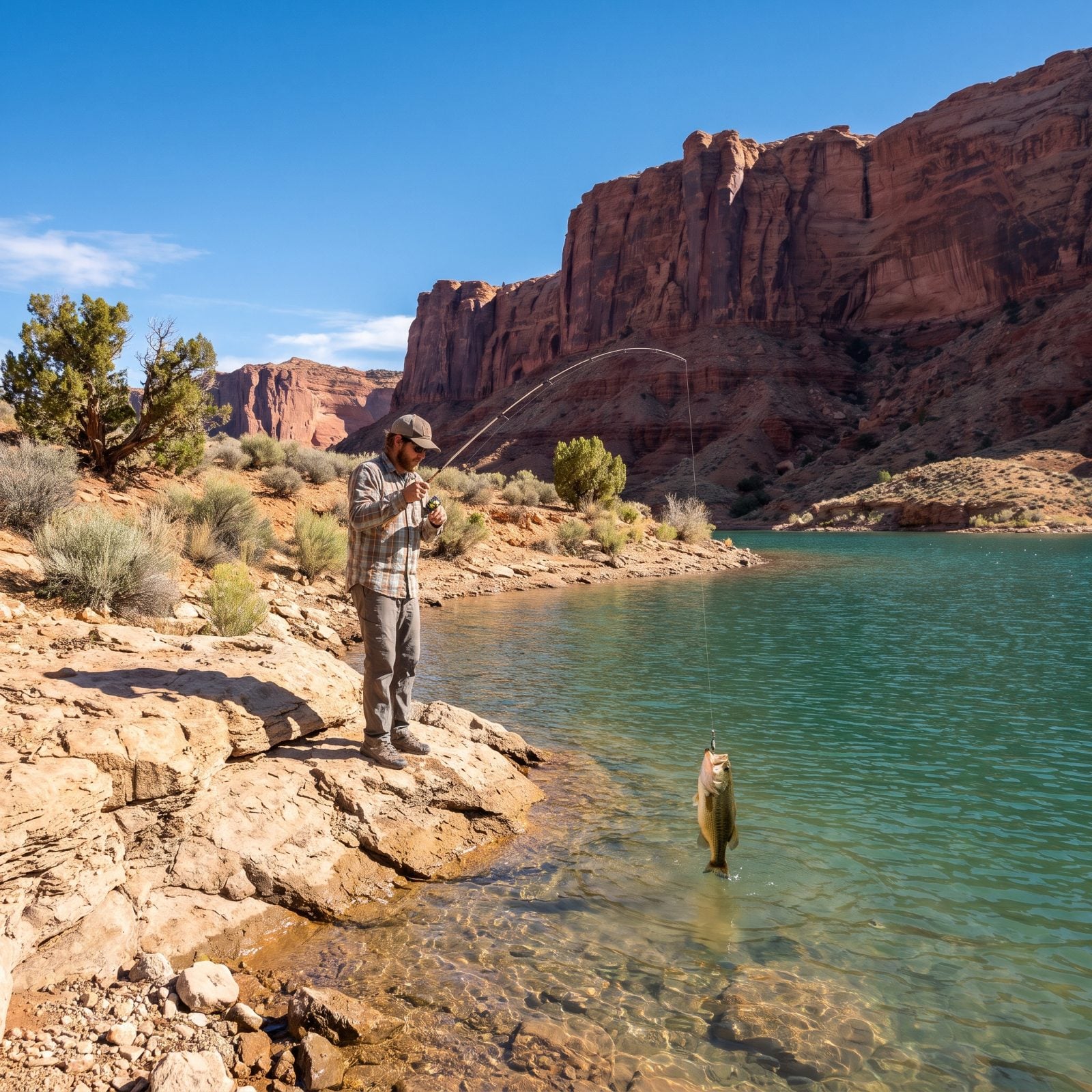
Red rock and bass in the same frame. Quail Creek sits in the desert near St. George, which keeps it warm and clear while northern lakes are still locked under ice. The scenery alone pulls campers off I-15. The fishing is the quiet draw.
Largemouth, bluegill, and crappie all thrive in that warm clean water. The crappie bite around the brush and the dam gets good, and most anglers never key into it. On the surface it’s a swimming-and-boating lake. Underneath, there are more fish than the beach crowd ever suspects.
11. Lake DeSmet, Wyoming, Hard-Fighting Trout on Wide-Open Water
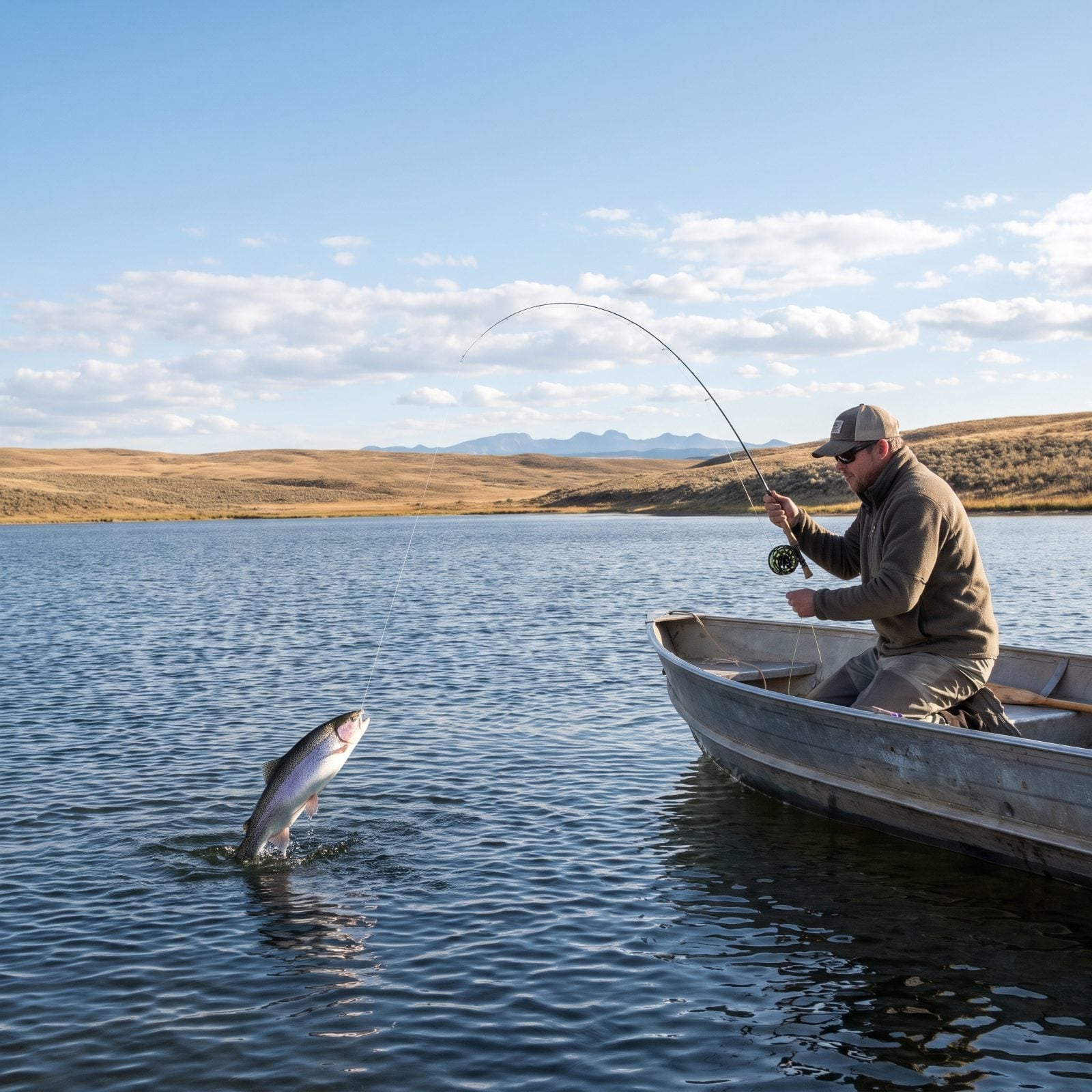
No trees, no shelter, and a wind that means business. Lake DeSmet is wide-open plains water near Buffalo, and the exposure scares off anybody looking for a cozy day. The ones who show up get big, strong trout and all the elbow room they could want.
Rainbows and browns grow heavy on the rich water here, and there’s walleye too. Pick a calmer morning or lean into the chop — the same wind that makes it miserable is what stirs up the feed. Legend says something lives in the deep. The trout, at least, are real.
10. Lake Carl Etling, Oklahoma, Panhandle Trout, Walleye, and Catfish
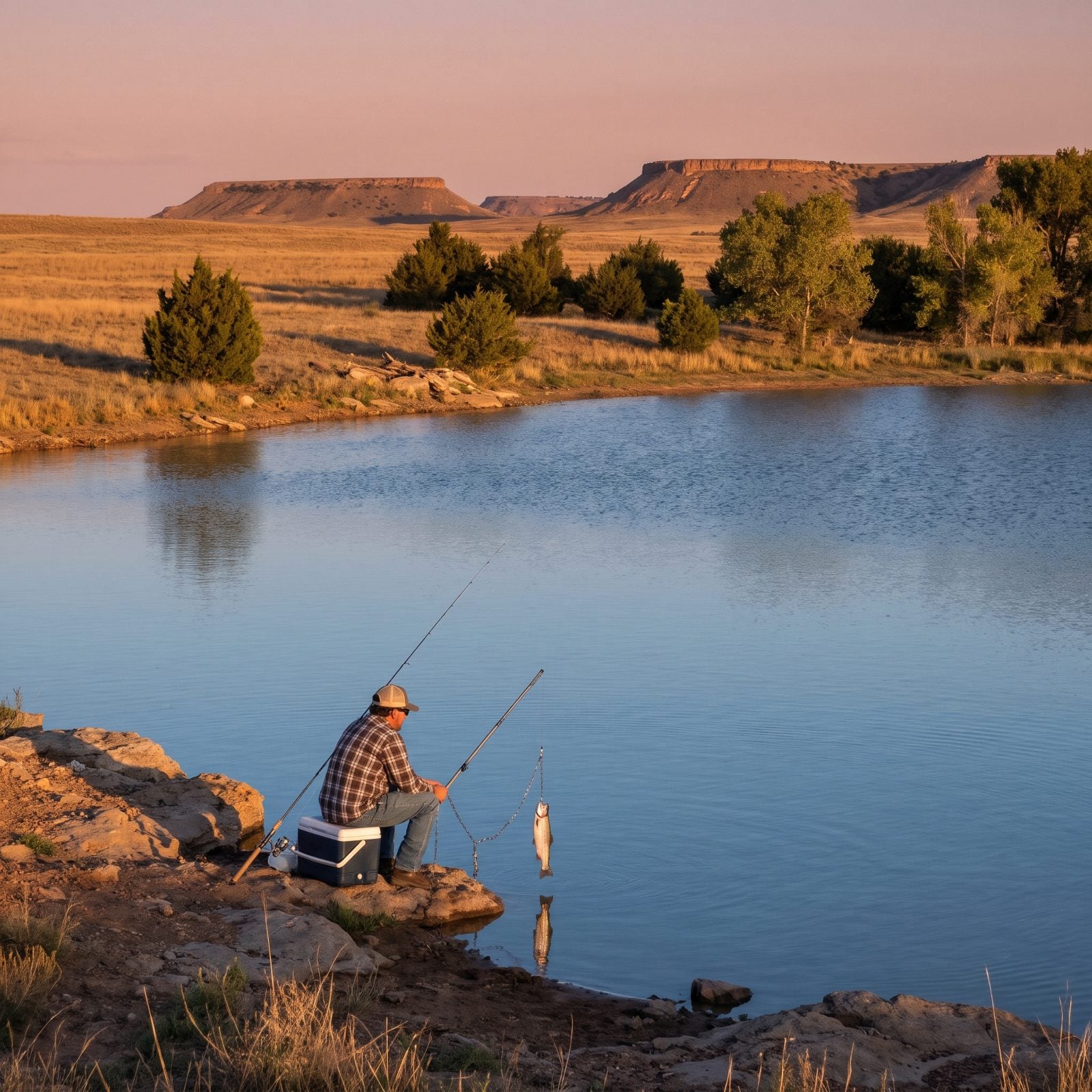
This one is remote. Lake Carl Etling sits in Oklahoma’s far panhandle, out by Black Mesa, about as far from anywhere as the state gets. The isolation is the whole draw. Fish a winter trout stocking with mesa country at your back and you’ll barely see another vehicle all day.
Walleye, catfish, and seasonal trout share the water. It’s small, and the levels swing with drought, so call ahead before you load the truck. When it’s up and stocked, it’s one of the quietest good-fishing spots in the southern plains.
9. Brushy Creek Lake, Iowa, Clear Water, Walleyes, and Submerged Timber
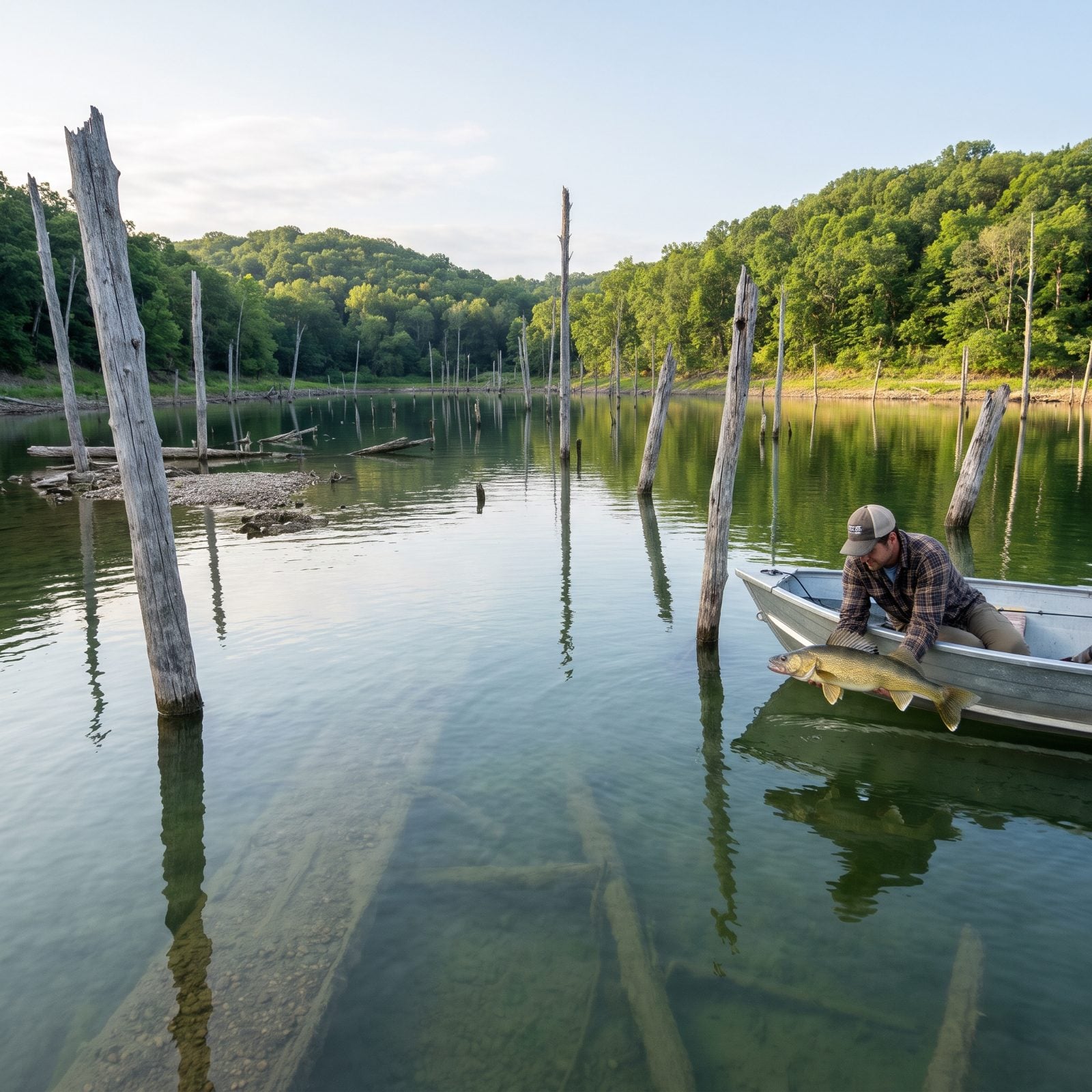
Flooded timber and clear water don’t usually go together in Iowa. Brushy Creek pulls it off. The lake was built over standing trees, and those bleached gray trunks are fish magnets — walleye, crappie, and bass all stacking up in the wood.
The clarity surprises anyone used to muddy farm ponds. You can sight-fish structure in a way the rest of the state rarely allows. It’s a big state park lake, so there’s room, and the timber spreads the boats out. Nobody fishes the exact same brush you do.
8. Lake Sugema, Iowa, Trophy Bass and Channel Catfish in Farm Country
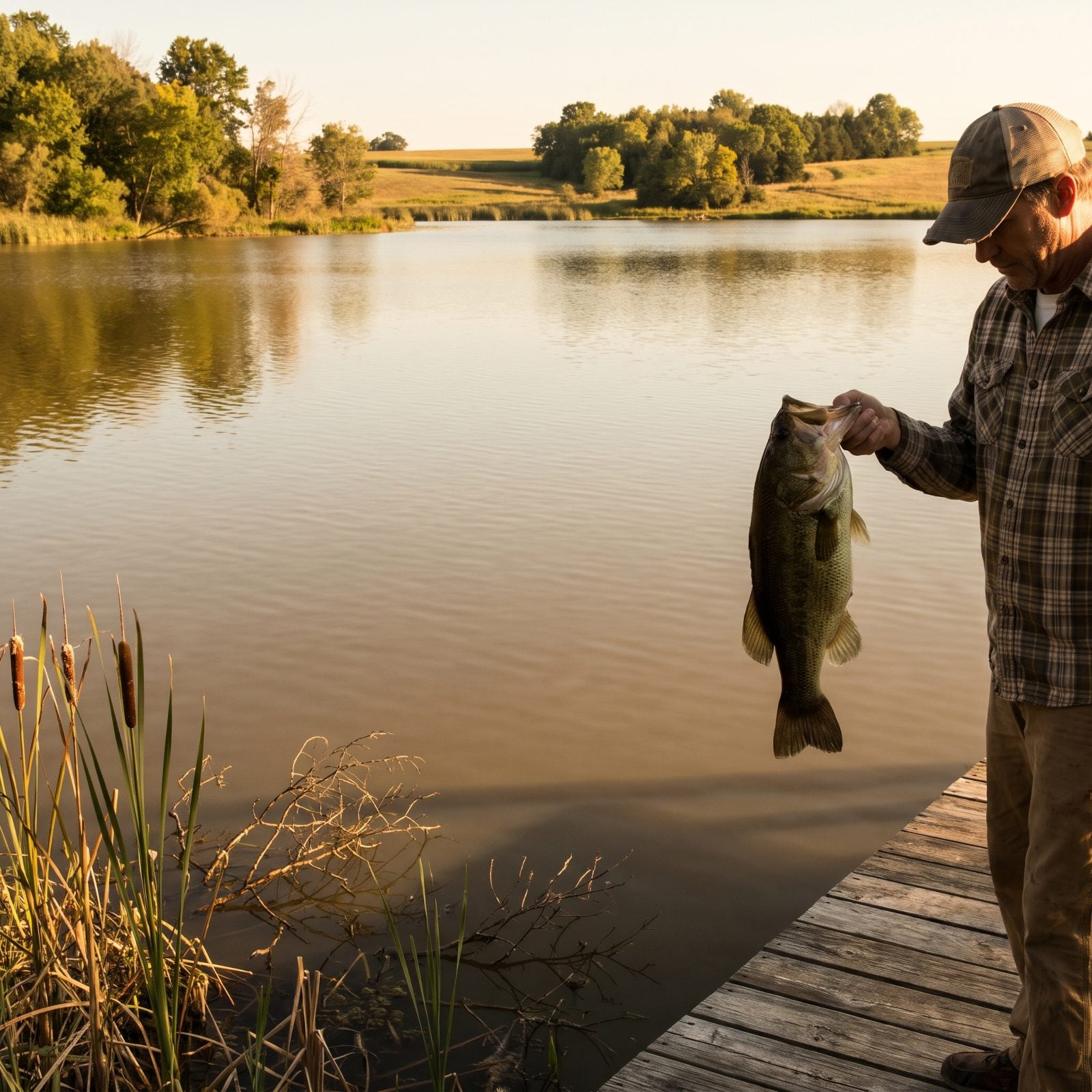
Trophy bass regulations, and nobody fighting you for a launch spot. Lake Sugema, down in Van Buren County, was built with fish in mind. The length limits on largemouth let them grow into the fish you drive for.
The channel catfish run big and steady too, so you can bring the whole family without anyone going home skunked. It’s buried deep in the farm country of southeast Iowa, well off the usual circuit — and that obscurity is doing you a favor.
7. Lake Wanahoo, Nebraska, Accessible Bass, Crappie, and Catfish Water
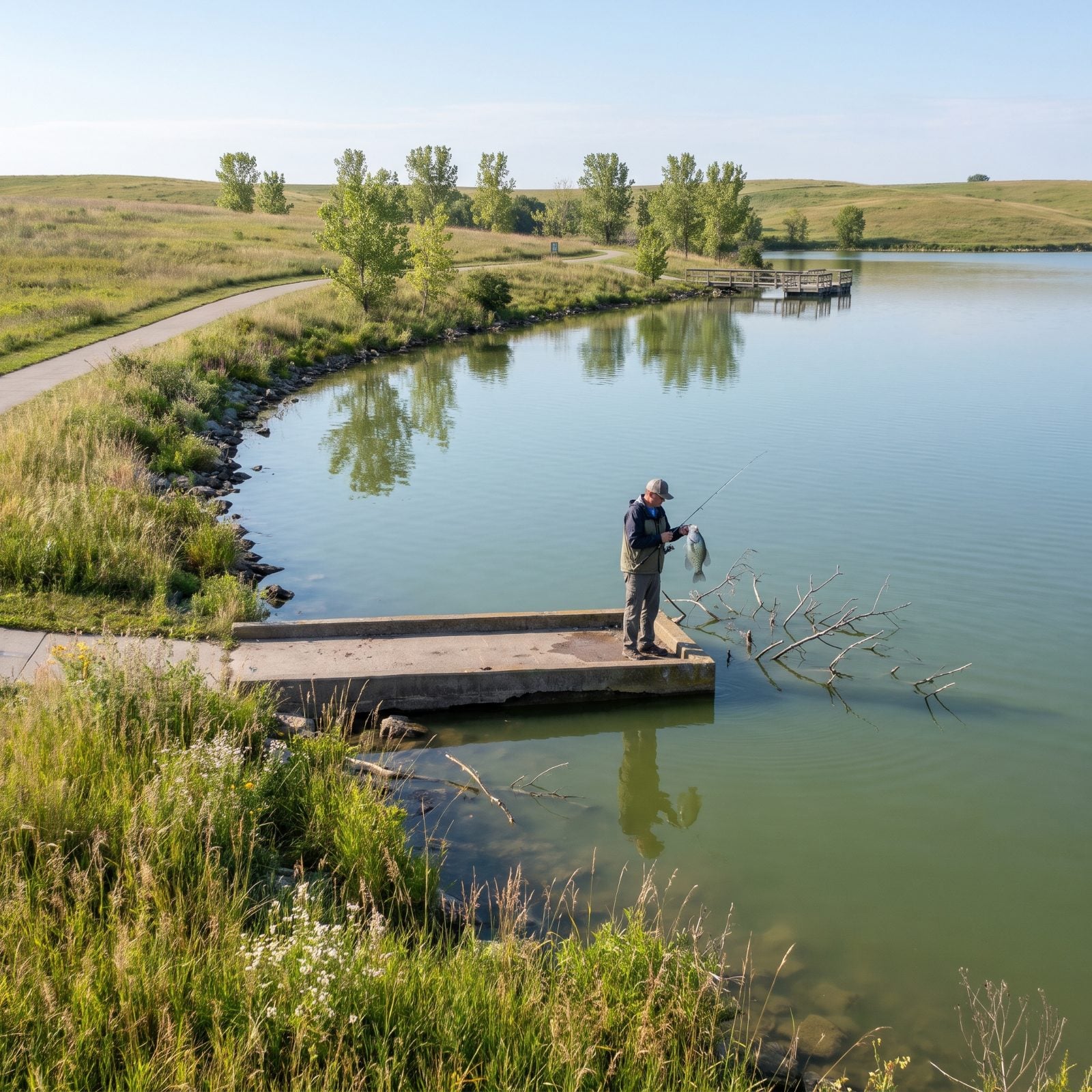
Not every good lake has to be hard to reach. Lake Wanahoo near Wahoo is a newer flood-control reservoir just outside the Omaha metro, built with bank anglers in mind — jetties, accessible paths, a dock. No boat required to catch fish here.
Crappie around the brush piles, bass along the flooded structure, catfish for the evening. It’s the opposite of a remote wilderness lake, and that’s precisely why it earns a spot on this list. Good fishing close to home, open to anyone willing to show up. Go fish it.
6. Lake Metigoshe, North Dakota: Pike, Walleye, and Bluegill a Stone’s Throw From Canada
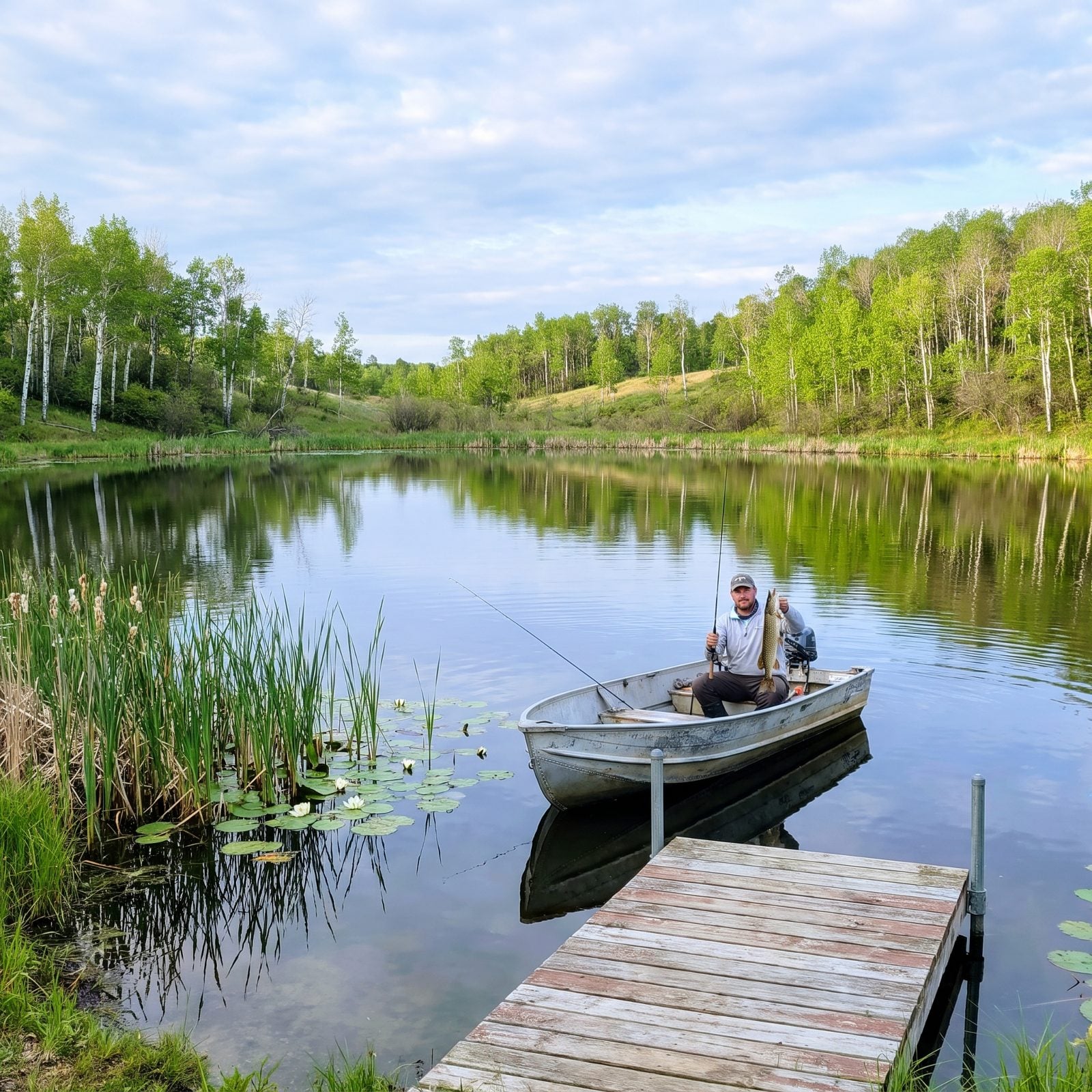
Tucked into the Turtle Mountains right against the Manitoba line, Metigoshe doesn’t look like serious fishing country, and that’s exactly why it fishes well. The lake holds northern pike, walleye, perch, and some of the fattest bluegill in the state. The state park on the shore makes it easy to post up for a few days without fighting anyone for a ramp.
What most people drive right past is the bluegill fishing in early summer, which borders on comical. Find the bulrush edges, drop a worm under a bobber, and you’ll run out of patience before you run out of fish.
5. Lake Dunmore, Vermont: Trout and Bass Under the Green Mountain Shadow
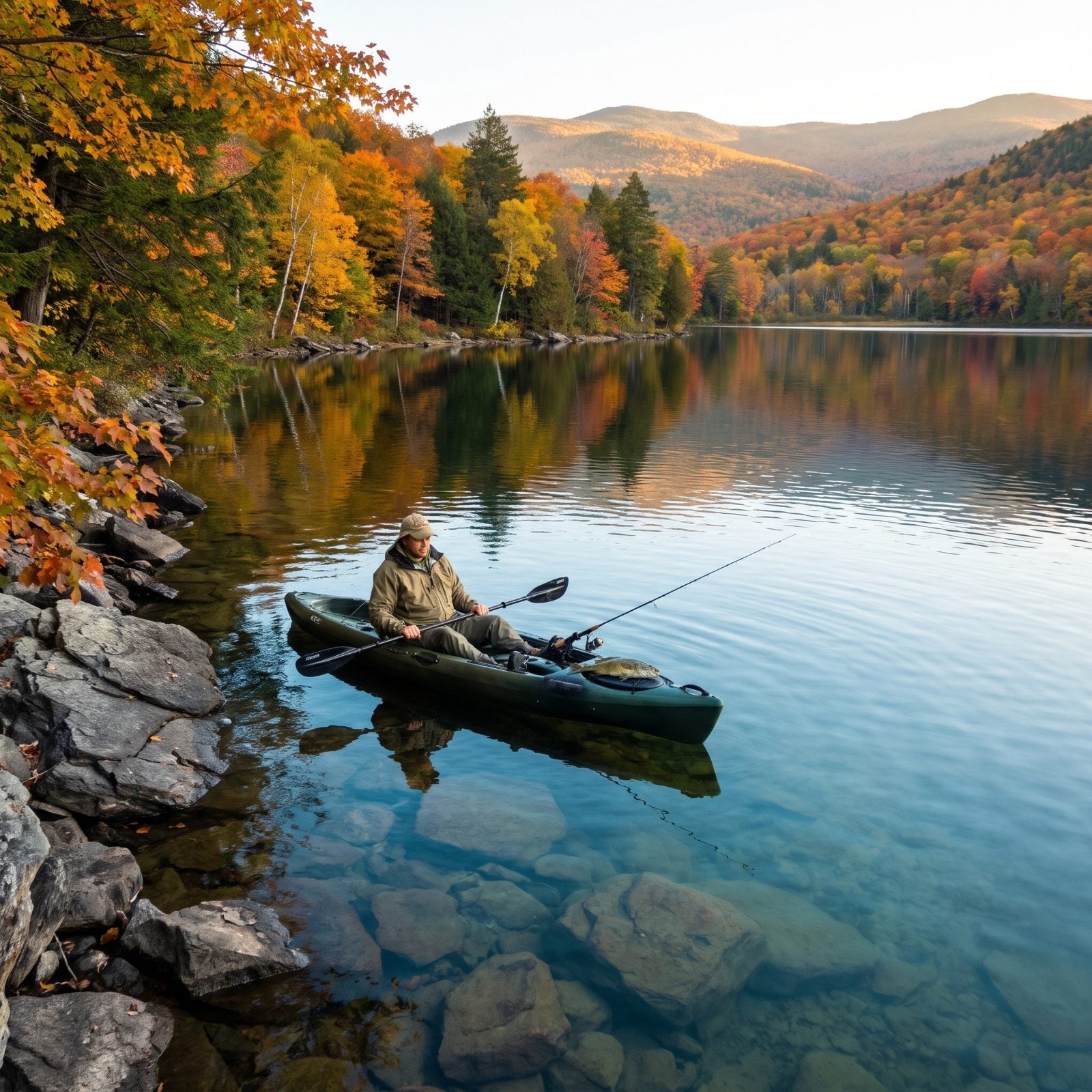
Dunmore sits below the long ridge of the Green Mountains, deep and cold enough to hold rainbow and lake trout alongside a solid population of largemouth and smallmouth. That’s rare. Cold-water trout and warm-water bass, both thriving in the same modest lake.
Spring and fall are when the trout come shallow and findable. In summer you’re fishing deeper water or working the weedlines for bass in the morning before the pleasure boats wake up. Access is public and uncrowded if you have the sense to avoid July weekends.
Cold water on the bottom, warm water up top, and two completely different fisheries stacked in the same lake.
4. Clear Fork Reservoir, Ohio: The Quiet Muskie Water Nobody Brags About
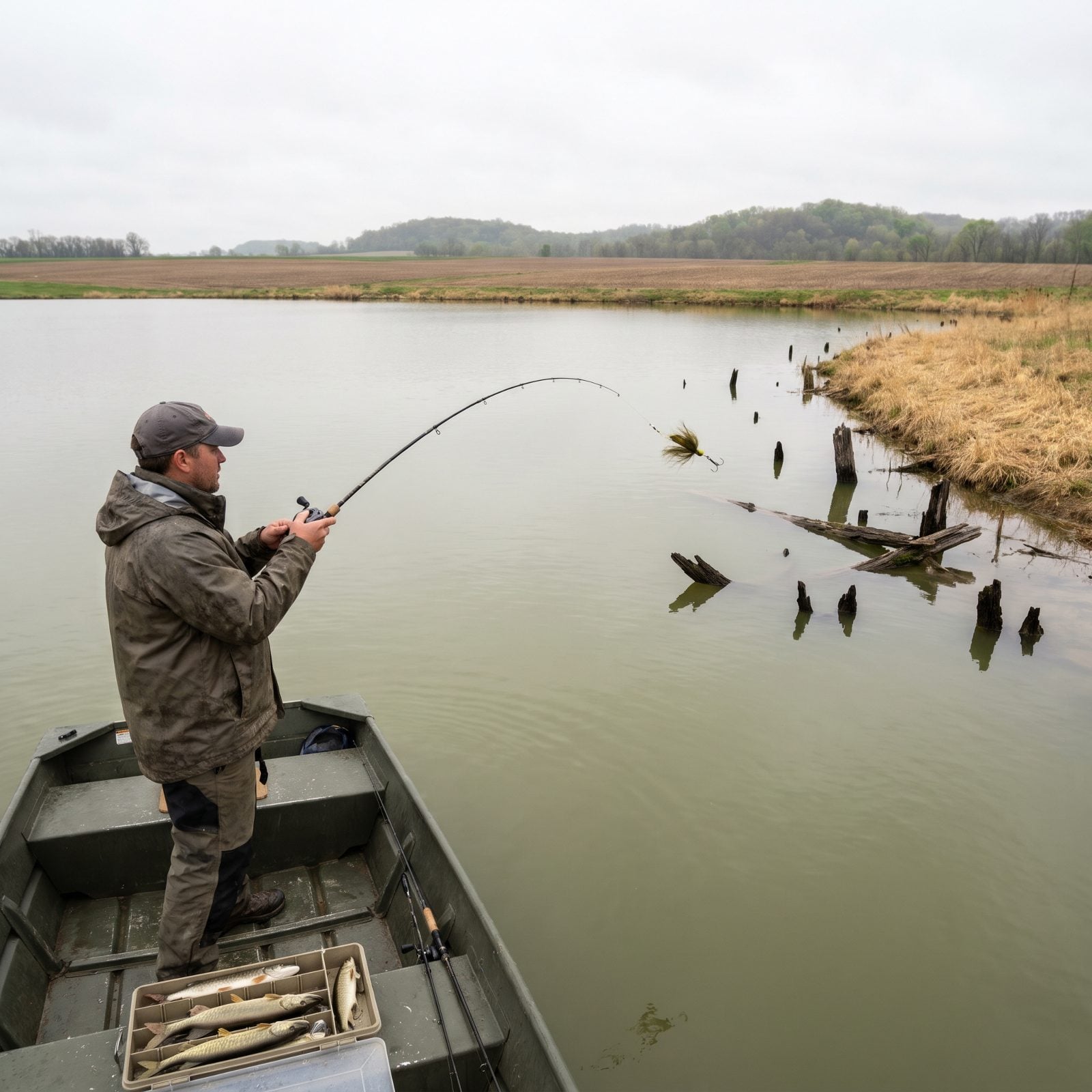
Muskie fishing in Ohio sounds like a punchline until you fish Clear Fork. This reservoir near Mansfield is one of the state’s most reliable musky waters, stocked and managed for the fish of ten thousand casts. Small, calm, and held to a 40-inch minimum, which gives the fish that live here a chance to actually grow.
Patience is the whole game. You’ll cast an arm-numbing number of times for a single follow. But a lake this size means you can cover the productive timber and weed edges in a day without a big motor burning a hole in your afternoon.
3. Nimisila Reservoir, Ohio: Largemouth in the Lily Pads and Reeds
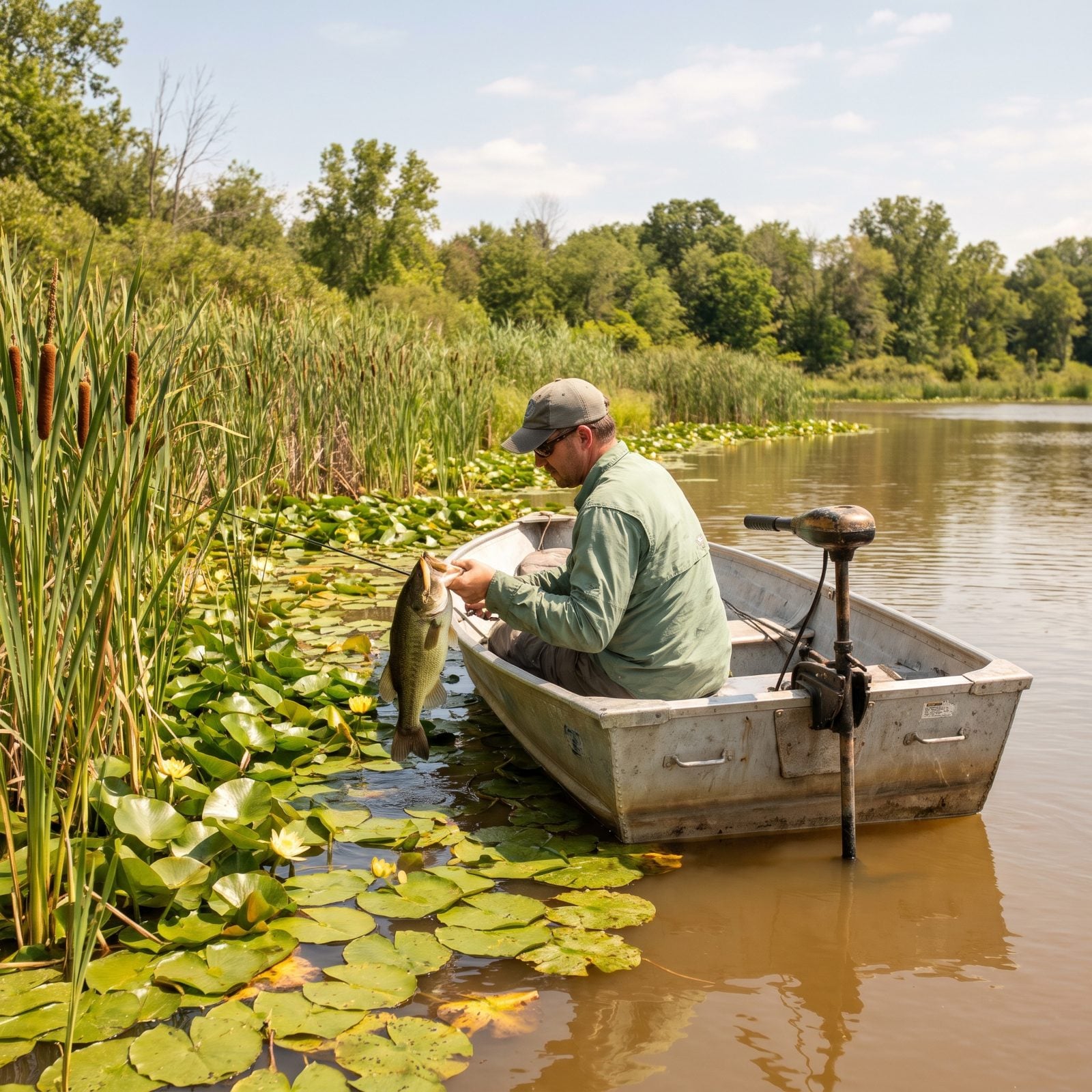
Nimisila is electric-motor-only, and that one rule does two jobs. It keeps the water calm and it keeps the crowds thin. No roaring outboards, so the largemouth settle into the heavy vegetation and stay catchable all day.
Come summer the reservoir chokes up with lily pads, reeds, and submerged weeds, which is precisely what bass want. Flip a weedless soft plastic into the open pockets and hold on. It’s close to Akron, so it does catch weekend pressure, but the no-gas rule filters out most of the hurry.
2. Mineral Lake, Washington: Rainbow Trout With Rainier Looming Over Your Shoulder
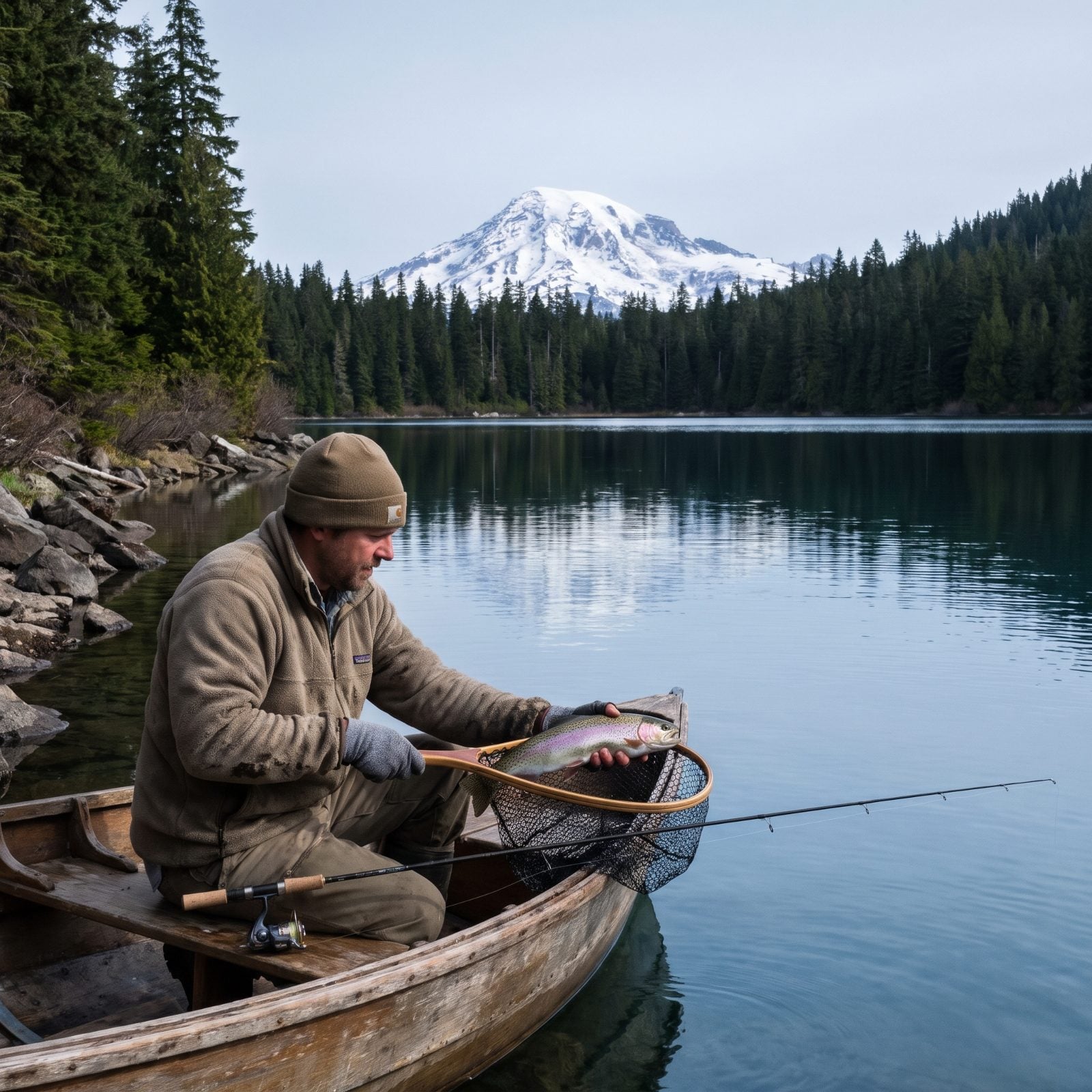
Mineral Lake is a put-and-take trout fishery stocked heavily with rainbows, and it happens to sit under one of the finest mountain backdrops in the Lower 48. On a clear morning, Rainier fills the whole sky behind you while you fumble a trout off a worm.
This isn’t trophy water. It’s catch-your-limit, feed-the-family water, and there’s not one thing wrong with that. Troll a small spinner or still-fish a worm and bobber, and the stockers turn up fast after the spring plants.
1. Wilson Reservoir, Hawaii: Peacock Bass in a Tropical Freshwater Lake
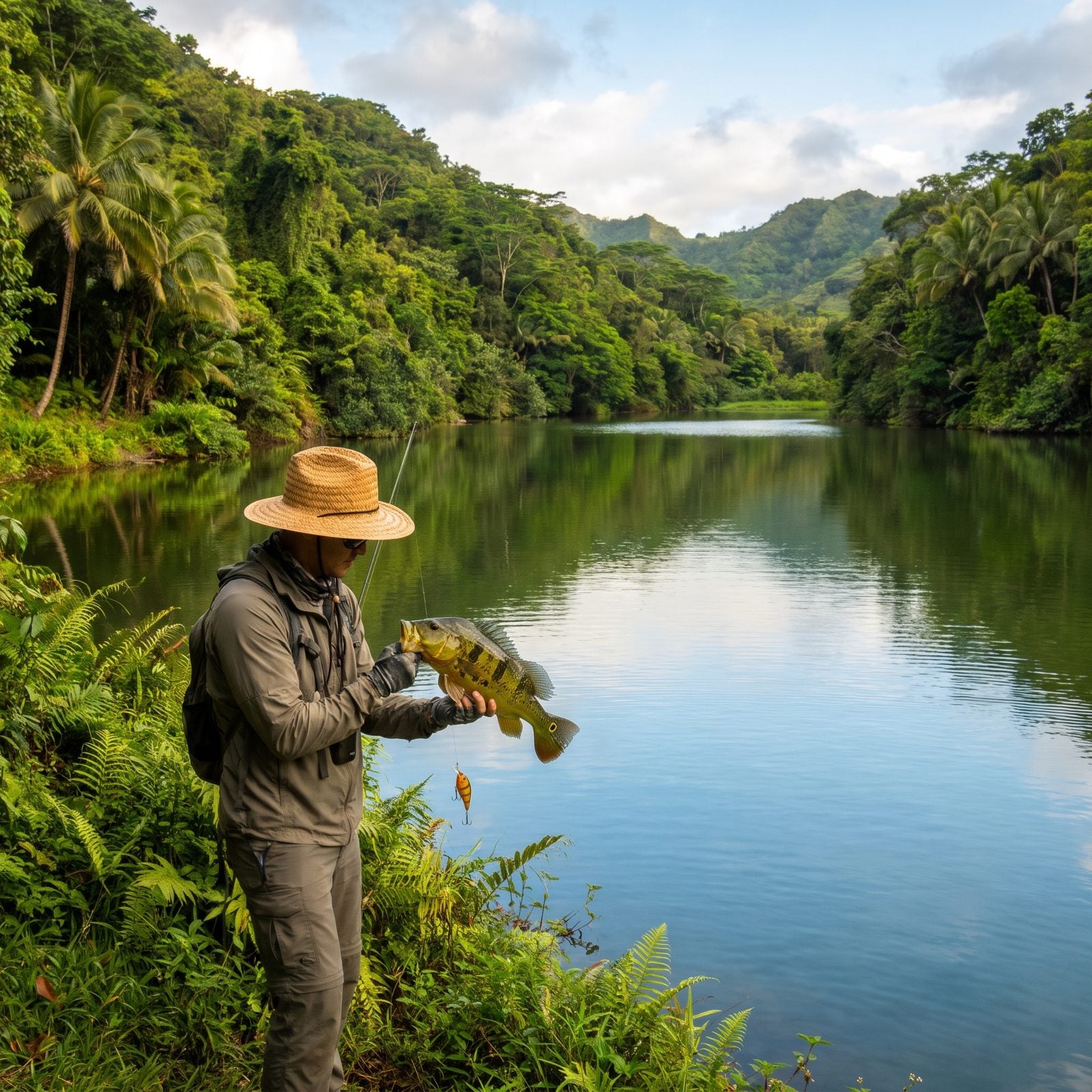
Freshwater fishing in Hawaii catches most mainlanders off guard, and peacock bass are the reason to care. Wilson Reservoir on Oahu holds these aggressive gold-and-green imports that fight like they’re settling a personal score. Access can be restricted and the water is part of a managed system, so check the current rules before you make the drive.
They hit hard, and they hit topwater, which makes them a blast on light tackle. Small crankbaits and jerkbaits worked along the vegetated banks draw the strikes. And the scenery? Jungle ridges stacked over still water, worth the trip even on a day when nothing bites.