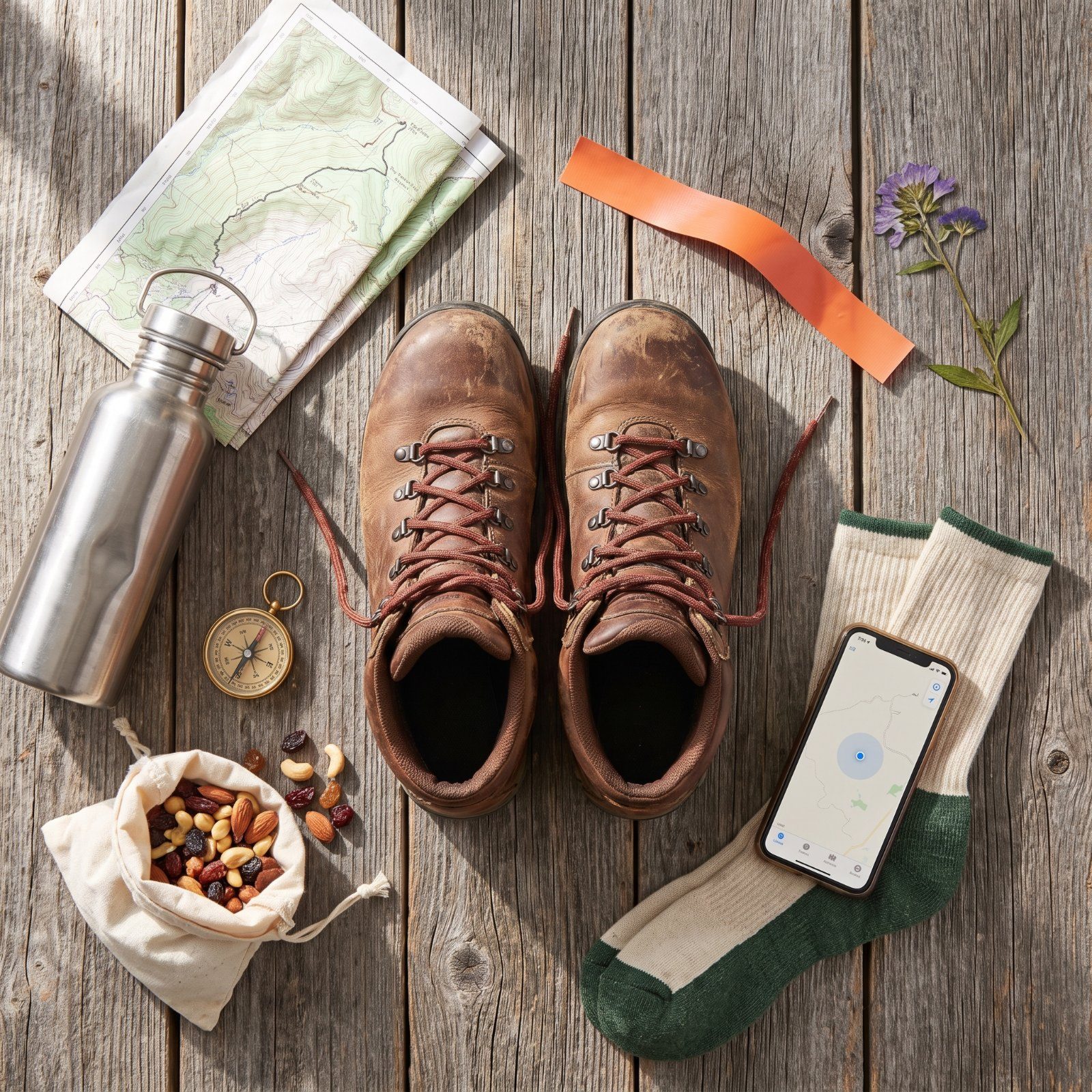
The strange part isn’t the trail. It’s standing in the parking lot at the trailhead, car keys still in your hand, realizing you don’t have to check with anyone about how long you’ll be gone. Nobody’s waiting on dinner. Nobody will ask why you picked this loop instead of the easier one. The quiet is total, and for a minute it feels less like freedom and more like being dropped off the edge of your old life.
Please note that some of the images in this article were created with the assistance of AI.
Then your boots hit the dirt. Something old wakes up that you’d half forgotten you owned. Rebuilding an identity after it comes apart runs on the same wiring as learning to hike — autonomy, small wins, trust in your own two feet. Here’s how the woods quietly hand it back.
14. You Buy Boots for the Person You’re Becoming
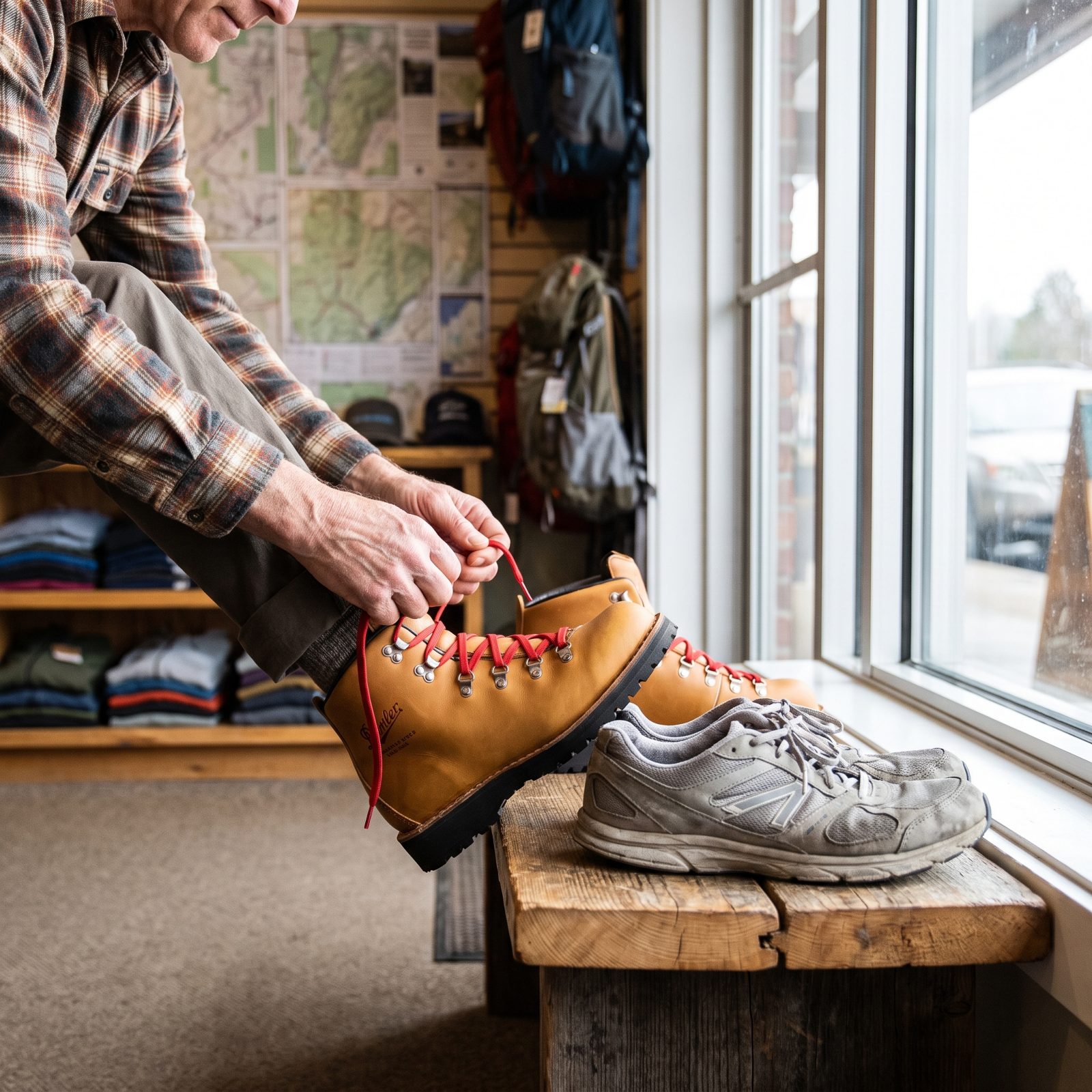
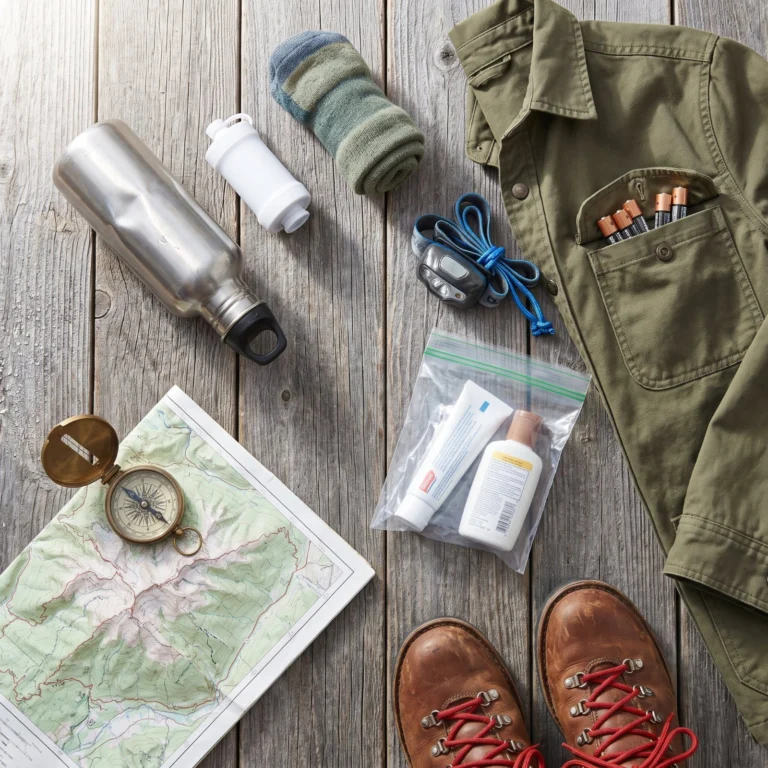
Nobody needs waterproof boots to walk a flat suburban loop. You buy them anyway. The trekking poles too, and the wool socks, and the little dry sack for your phone, and some part of you knows you’re not shopping for the person standing in the store. You’re shopping for the one you intend to become.
Psychologists call this the symbolic self-completion effect. When an identity feels thin or newly rebuilt, we reach for the objects that signal it — props that tell us and everyone else who we are now. The hiker buys gear before the miles. The newly single person buys the gear of a life they haven’t fully lived yet.
13. Choosing the Trail Yourself Makes Freedom Feel Official
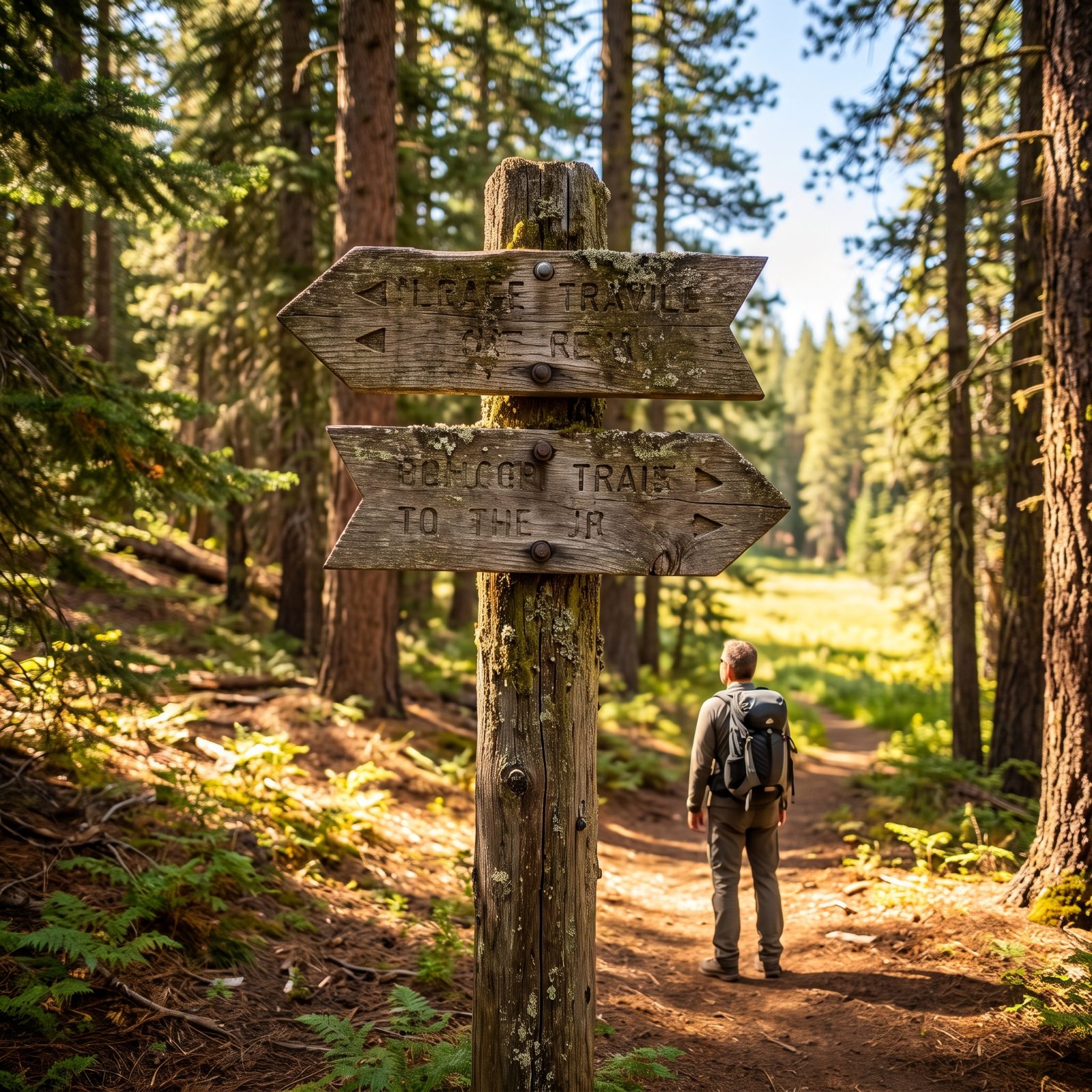
For years, decisions were committee work. Which route, which pace, which season, which anything — all negotiated, compromised, sometimes surrendered. Then you’re standing at a fork with a carved wooden sign, and the choice is yours and only yours. Left is steeper. Right is longer. No one to consult.
That small authority lands bigger than it should, and there’s a reason. Self-determination theory puts autonomy at the center of well-being — the felt sense that your actions come from you. Divorce can gut that feeling fast, because a shared life trains you to check, to defer, to run choices past someone first.
Picking the trail yourself is a rehearsal. You make a low-stakes call, you live with the outcome, you survive it. Do that enough times on dirt and the muscle starts working again off the mountain, in the choices that actually scare you.
12. Trailhead Nerves Disappear Once Your Feet Start Moving
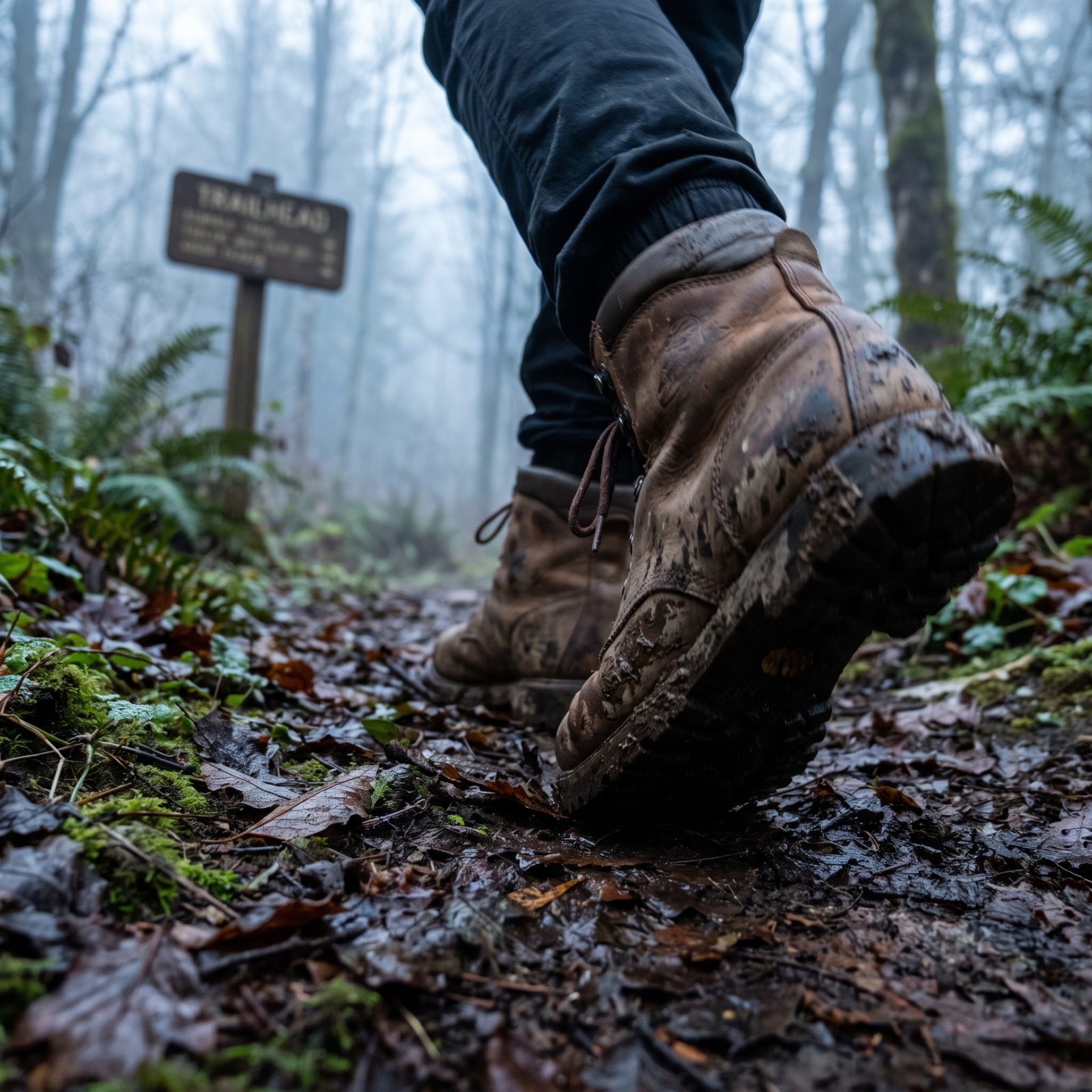
The worst moment is always before. You sit in the armchair by the window, boots unlaced on the rug and the map spread over your pack, inventing reasons to stay home — what if you’re not fit enough, what if you look foolish, what if you get out there and feel nothing. The dread is loud and specific and it feels like truth.
Then you lace up, get yourself to the trailhead and walk. Fifty yards in, the chatter drops off a cliff. By the first bend it’s gone.
This is the gap between anticipatory anxiety and lived experience, and it’s enormous. The brain is terrible at predicting how we’ll actually feel once we’re inside a thing — a bias researchers call affective forecasting error. We overestimate the pain of starting almost every time.
11. You Start With Short Loops and Collect Proof
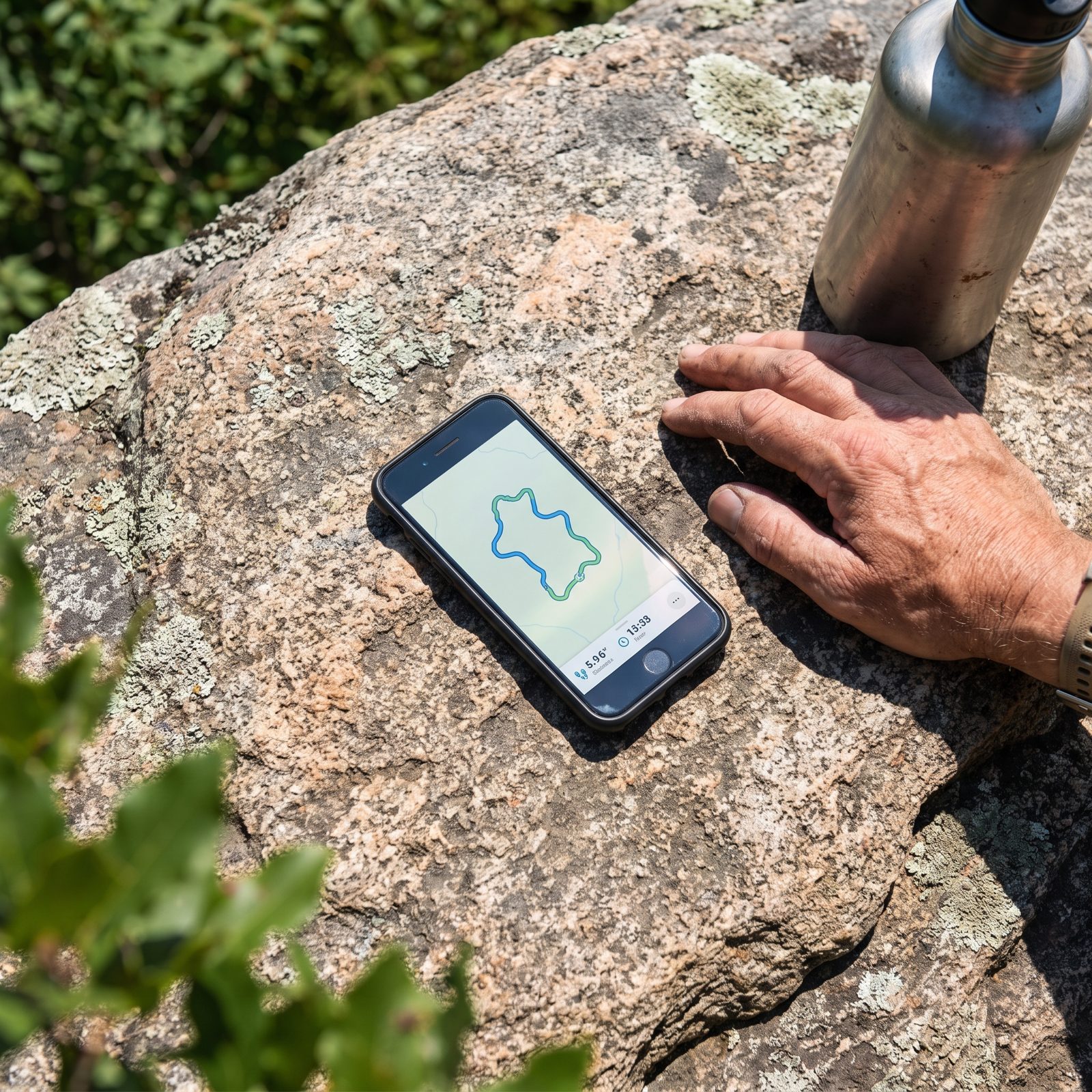
You don’t start with the long ridge trail. You start with the short loop by the reservoir, the one that barely counts. Then you do it again. Then a slightly longer one. Each finish is a data point you can hold in your hand.
Mastery only ever gets built this way — in increments small enough to guarantee the win. Competence compounds. One completed loop is proof. A dozen of them is a body of evidence you can point to on the days your own mind calls you weak.
After a marriage ends, that internal record is often in ruins, the story you tell about yourself shot through with holes. Short hikes don’t patch it with inspiration. They rebuild it with receipts.
10. Watching Your Blue Dot Calms the What-Now Panic
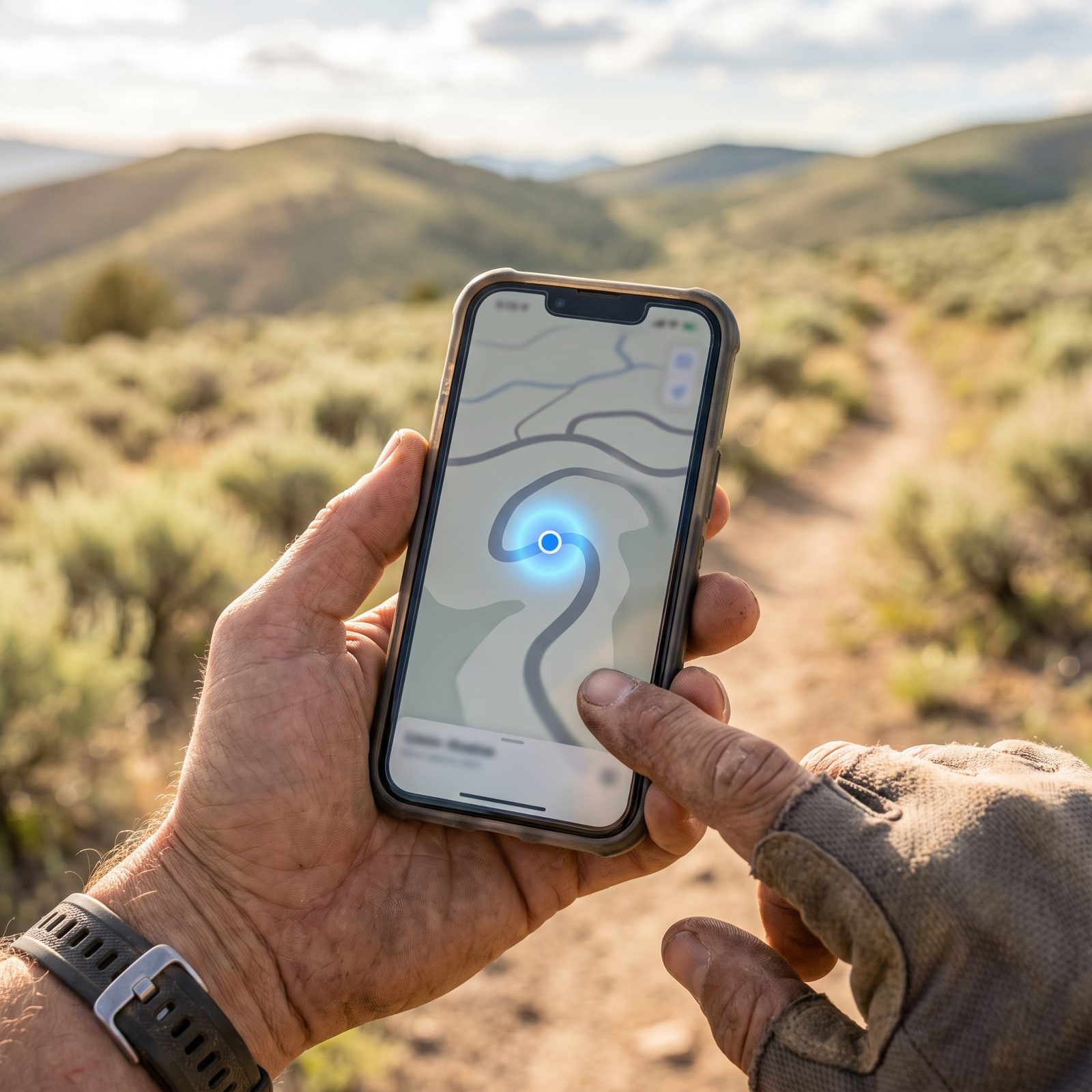
There’s a particular panic on an unfamiliar trail. The path splits, nothing matches the map in your head, and your chest tightens because you have no idea where you are. Then you pull out the phone, and there it is. The little blue dot. You. Exactly here. The panic drains out through your boots.
That dot does something your whole life is screaming for right now. It tells you your position with certainty when everything else feels like open water.
Uncertainty is one of the most stressful states the brain can sit in — in some studies, worse than knowing bad news for sure. We’ll take a hard fact over a vague dread almost every time. Divorce is a season of maximum uncertainty, and the nervous system runs hot for months.
The blue dot is a tiny, repeatable experience of knowing where you stand. You can’t buy that for the big questions yet. But you can practice the feeling, one trail at a time.
9. Switchbacks Teach You Progress Rarely Looks Straight
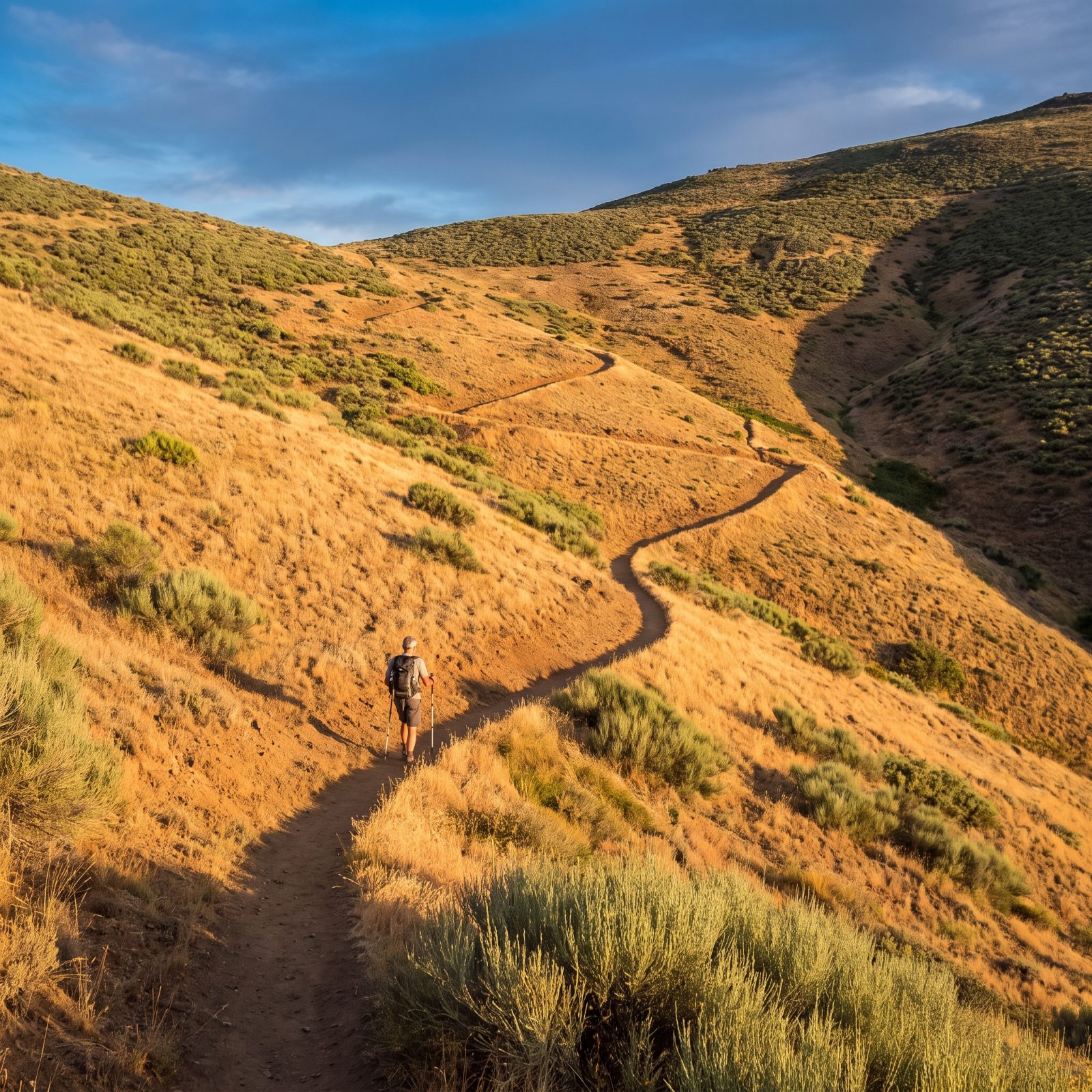
From below, switchbacks look like an insult. You can see the ridge right there, straight up, and instead the trail sends you sideways, back the other way, sideways again. You’re walking more and seemingly getting nowhere. Every instinct wants to just go up.
But you can’t go straight up a steep grade. Nobody can. The zigzag is how anyone makes a mountain survivable, and the gain is real even when the direction feels wrong.
Recovery doesn’t move in a straight line, and the people who quit are usually the ones who expected it to.
Rebuilding after a divorce has the same rhythm. Good weeks, then a song comes on and you’re flattened. Feels like backsliding. It almost never is. The sideways stretches are carrying you up a grade too steep to climb head-on.
8. You Stop Matching the Fastest Hiker’s Pace

Early on you try to keep up. Someone faster blows past, and you push to match them — lungs burning, legs screaming — and you make it maybe four minutes before you have to stop and pretend you’re admiring the view. Truth is you were racing a stranger for no prize.
Then one day you just let them go. You settle into the pace that lets you breathe and actually look around, and the hike gets better instantly.
This is social comparison, and it’s a thief. We measure ourselves against whoever’s in frame, usually the person doing better at the one thing we’re watching. After a split, the comparison engine runs wild — against the ex, against couples, against who you thought you’d be by now.
7. The Turnaround Point Becomes a Boundary, Not a Defeat

You set out to reach the lake. At the two-thirds mark, your knee is talking, the light is shifting, and a cold wind is coming over the ridge. The old you would push on, because turning back feels like failing. The new you checks the watch, looks at the sky, and says it plainly: this is far enough. We go home.
Here’s what surprises you. It doesn’t feel like losing. It feels like command.
A turnaround point is a boundary you set and honored under pressure, with no one forcing it. For anyone coming out of a relationship where limits got steamrolled or never allowed, that act is huge. You decided where the line was. You held it. Nothing bad happened. The lake will still be there next time, and so will the knee you protected.
6. You Take Water Breaks Before Your Body Demands Them
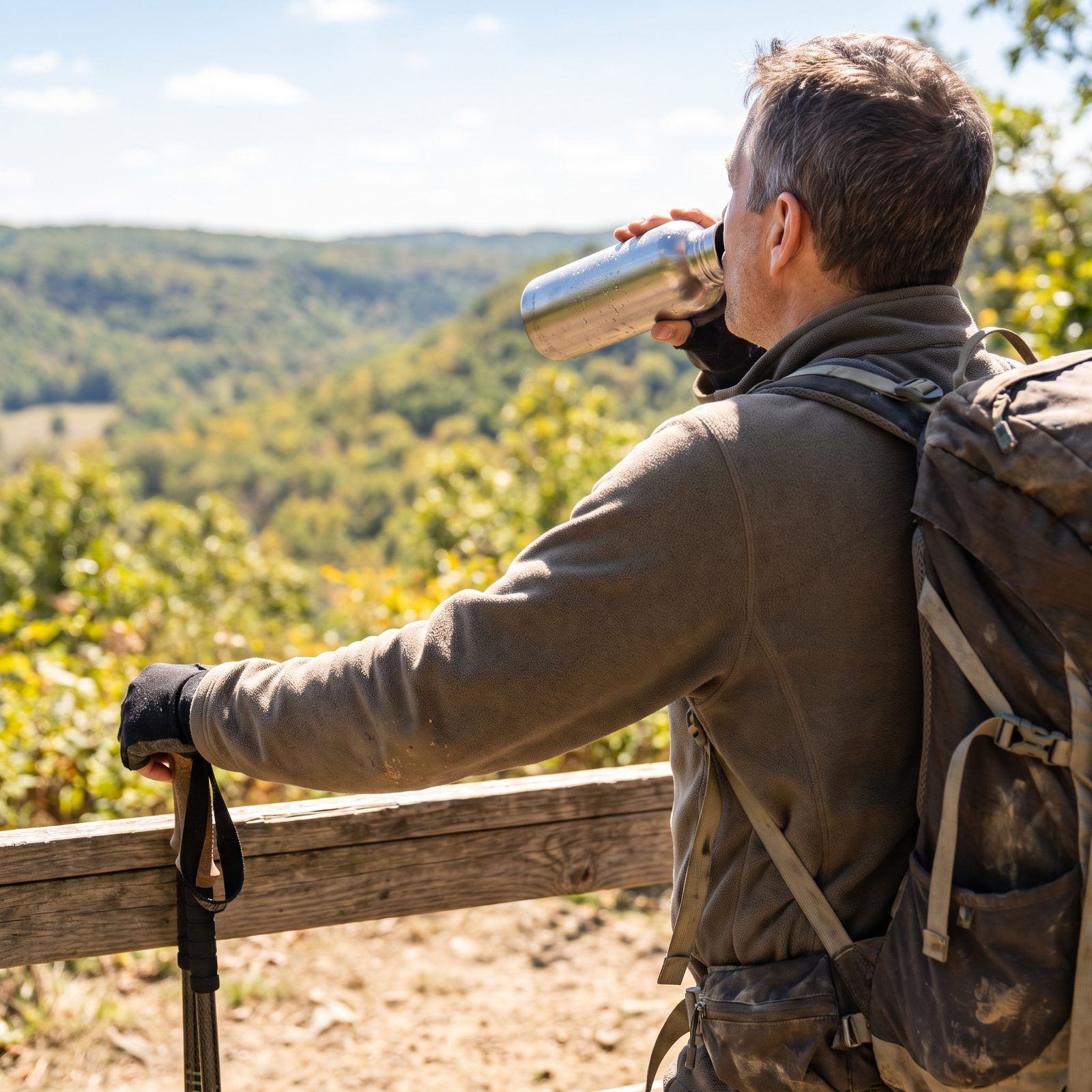
Thirst is a late signal. By the time your mouth is dry, you’re already behind. Experienced hikers know this, so they drink on a schedule — small sips before they need them, topping off before the climb instead of after the crash.
Nobody teaches you to do that with the rest of your life, and for years you didn’t. You ran on fumes, handled everyone else, got to your own needs last, if at all. A marriage can quietly train that out of a person.
Learning to pull the bottle out at the quarter-mile, not the collapse, is preventive self-maintenance. You start to trust that your needs count before they become emergencies.
5. You Ask Trail Strangers for Help Without Apologizing
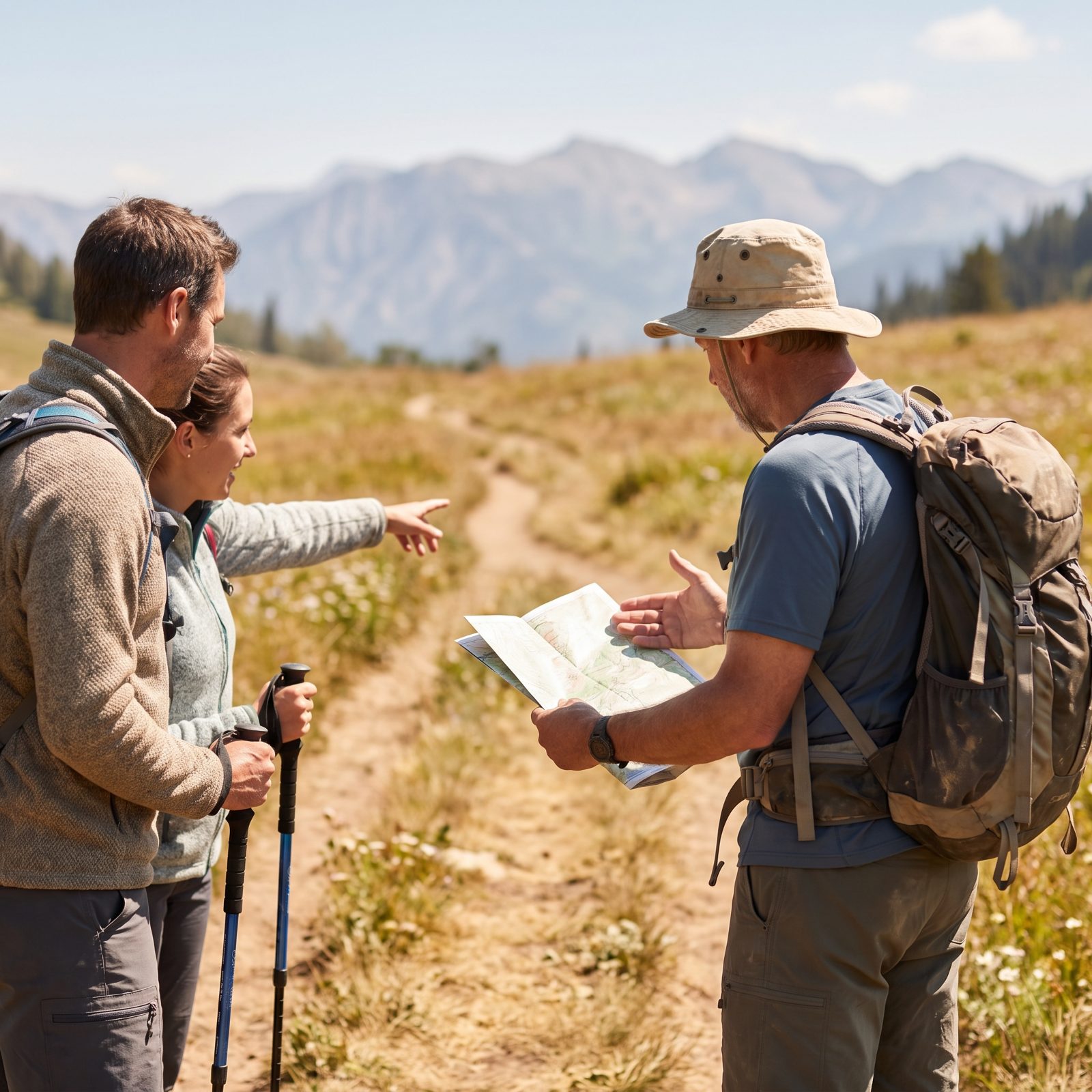
The trail splits and you’re not sure which way. Three hikers come down the other fork. The old reflex is to figure it out alone, to not bother anyone, to apologize for even existing in their path. Instead you just ask. “Which way to the overlook?” They tell you, cheerfully, and mention the viewpoint shortly past it, and you say thanks and go.
No apology. No shrinking. Just one person asking another for a thing, the way it’s supposed to work.
Belonging is a core human need, and divorce tends to shred the social fabric right when you need it most. Shared friends pick sides. The couple invitations stop. You can feel like you’ve been voted off the island.
Trail culture runs on low-stakes reciprocity — strangers warning each other about mud and bears and closed bridges, no history required. Practicing that, asking and receiving without the usual flinch, rebuilds the belief that connection is still available to you. You’re not a burden out here. You’re just another hiker who needed directions.
4. Missing a Turn Becomes Information, Not a Verdict
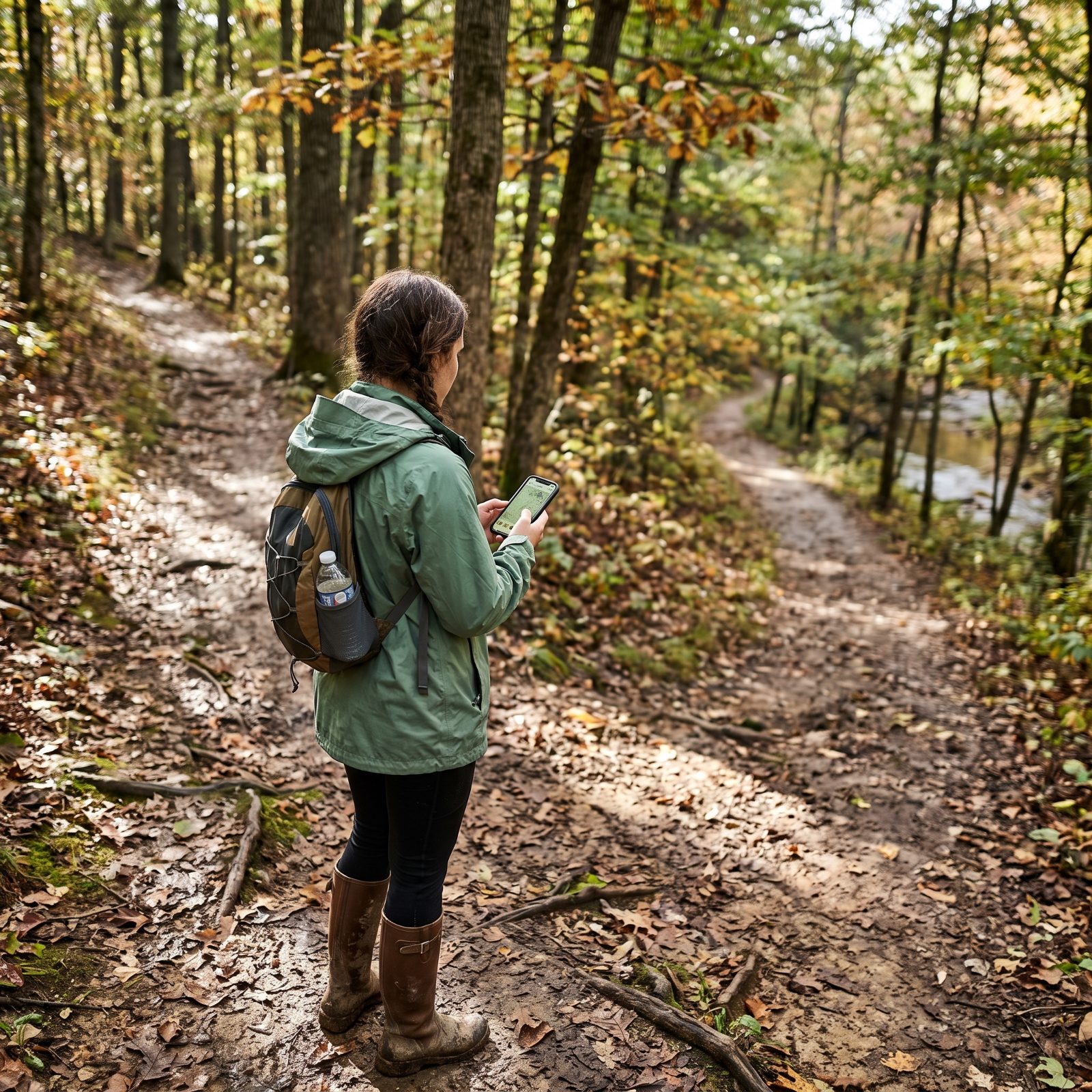
You take the wrong fork. Twenty minutes in, the blazes stop matching the map, and the old you would have heard that as proof — see, you can’t even do this right. The new you pulls out the phone, checks the little blue dot, and mutters to nobody, okay, so it’s the other one. No verdict. Just a correction.
That shift is the whole thing. After a divorce, a mistake stops being a referendum on your worth and starts being plain data. Psychologists hang the fancy labels on it — fixed mindset versus growth mindset — but out on the trail it’s simpler than that. A missed turn costs you a little time and tells you something true about where you are. That’s all it does.
The trail teaches well because it never editorializes. The creek doesn’t care why you walked the wrong way. You backtrack, clock the landmark you missed, keep going. Do that enough times and the voice that used to narrate every error as a character defect gets quieter, because the evidence keeps piling up against it.
3. A Hiking Group Gives Your Week a New Shape
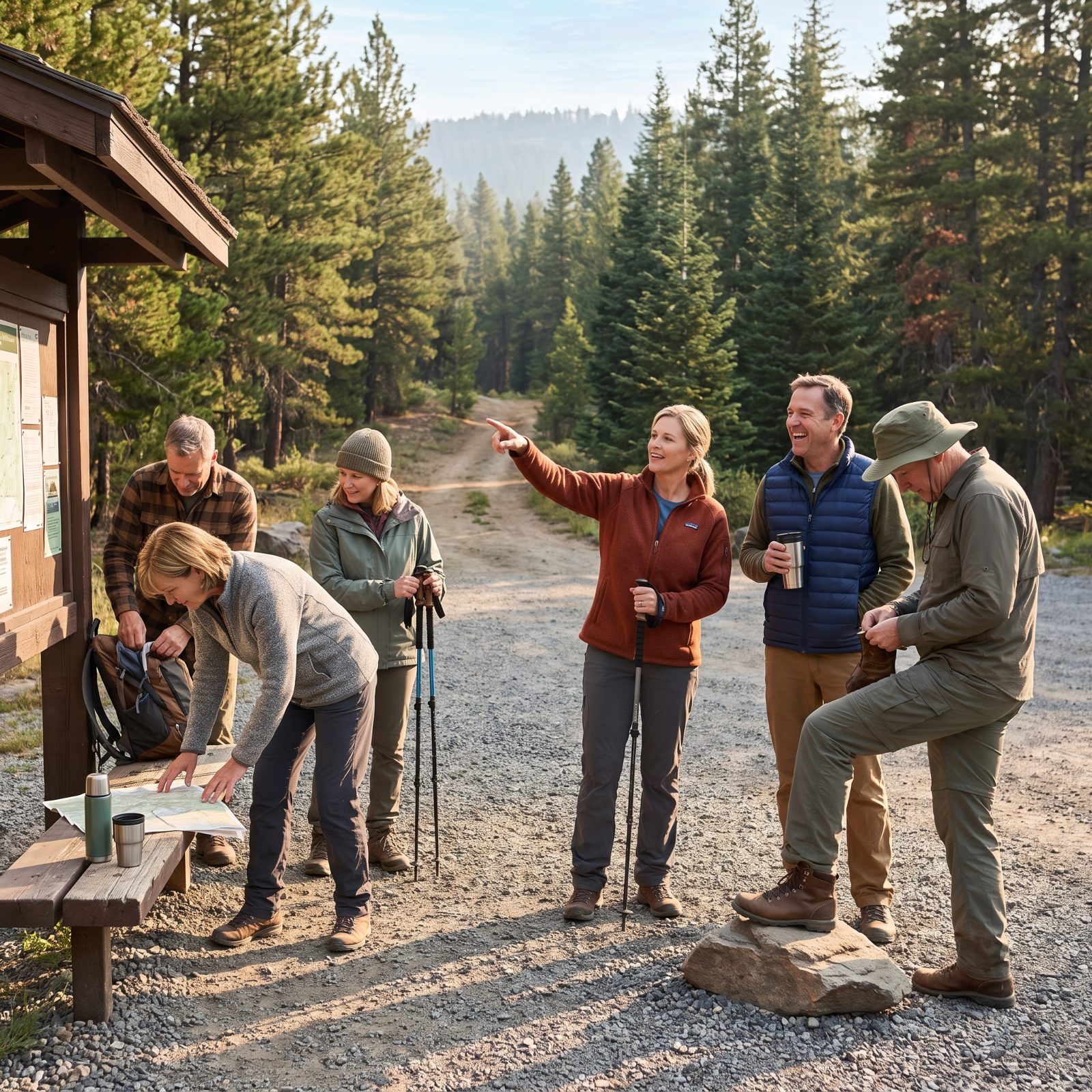
For years the calendar had one gravitational center, and when it left, the week went shapeless. Then there’s a Saturday meetup, 8 a.m. at the same trailhead, and all seven days quietly rearrange themselves around it. Thursday you check the forecast. Friday you pack. Sunday you’re a little sore and already looking forward to the next one.
Belonging does quiet structural work under the surface. We’re wired to read showing up as a signal of membership, and a group that expects you at eight hands you something a solo hobby never can — people who notice when you’re not there. That noticing is the flat opposite of invisibility, which is the thing that hollows people out after a split.
And a walking group is a strange gift socially. You’re side by side, not face to face, moving at a shared pace, which loosens conversation in a way it never loosens across a table. Nobody is interviewing you about how you’re holding up. You’re just two people watching the same ridge get closer, and that turns out to be plenty.
2. Repeating One Local Trail Builds a New Default
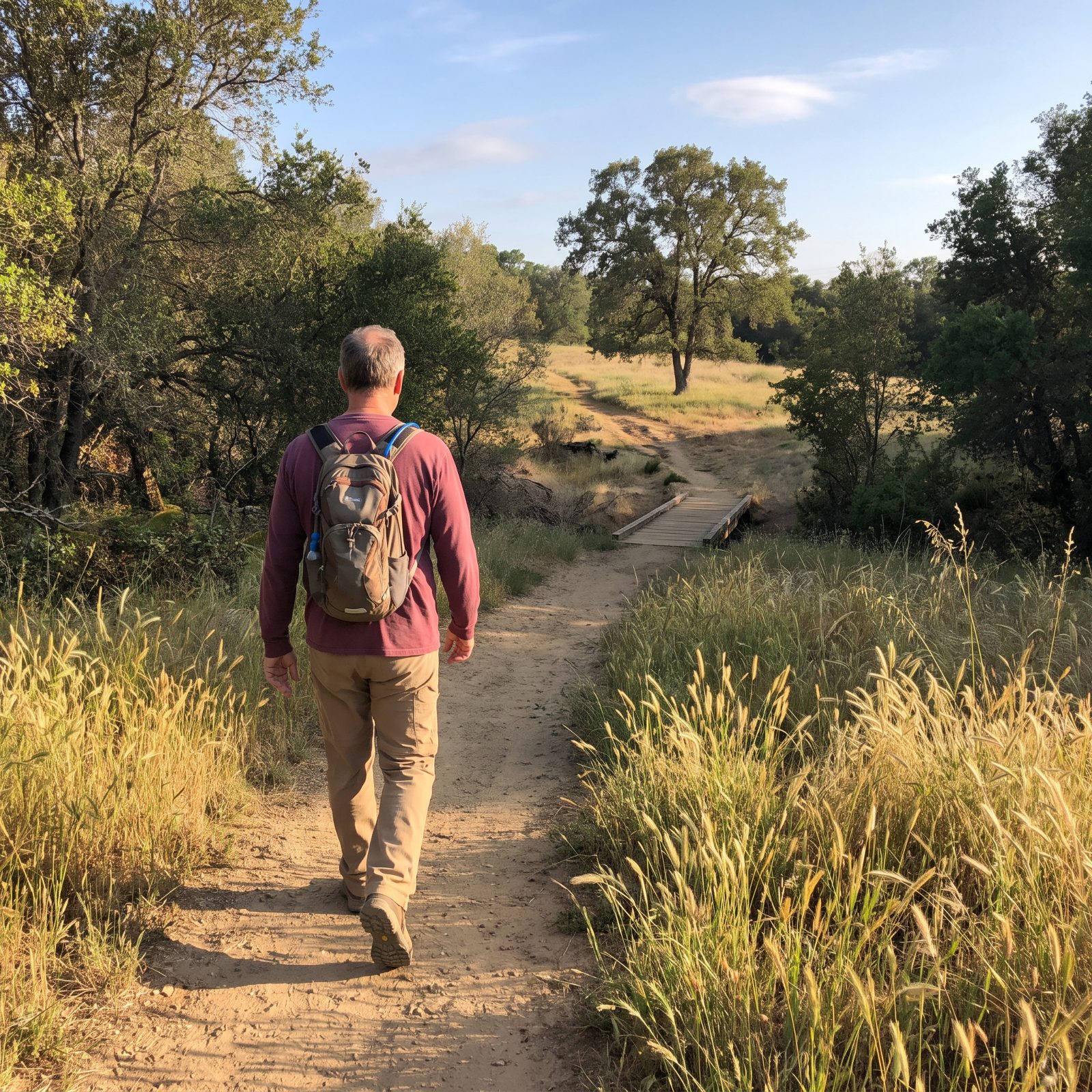
There’s one loop near home. Nothing special — maybe three miles, a wooden footbridge, a lone oak at the top of the rise that tells you you’re two-thirds done. You’ve walked it so many times you know where the mud sits after rain and which bend the deer tend to cross.
Walking the same trail over and over sounds dull until you catch what it’s actually building. Every repetition lays down a habit loop, and habits are how a shaky new life gets a floor under it. When everything else felt chosen for you, this is the thing you chose, and you keep on choosing it. That consistency hardens into quiet proof that you still get to decide things.
The familiar loop isn’t a rut. It’s the one dependable appointment you keep with yourself.
Here’s the part nobody warns you about. The trail changes while staying the same. Same oak, different light. Same bridge, higher water after a wet week. You get to measure yourself against a fixed thing and notice you’re faster now, steadier, less winded on the rise. The route holds still so you can see yourself move.
1. Trail Names Replace Dates in Your Personal Timeline

Ask how your year went and you used to answer in dates. Now you answer in trails. That was the spring you finally did the ridge loop. That was the fall you turned around at the saddle because the weather rolled in — turning around was the smart call, and you knew it in your gut at the time.
Memory latches onto places and sweat far harder than it latches onto a number on a page. Each named trail becomes a marker you can actually feel, bound up with how your legs ached and how the view paid you back for it. Bit by bit your personal history gets rewritten in landmarks instead of anniversaries.
This is sneakier and kinder than it sounds. The old timeline was organized around a relationship and then around its ending. The new one is organized around things you did, under your own power, that nobody gets to take back. You stood on that summit. The haze over the valleys was real. The timeline is yours now, written in granite and switchbacks, and the next chapter is just whatever trail you haven’t walked yet.