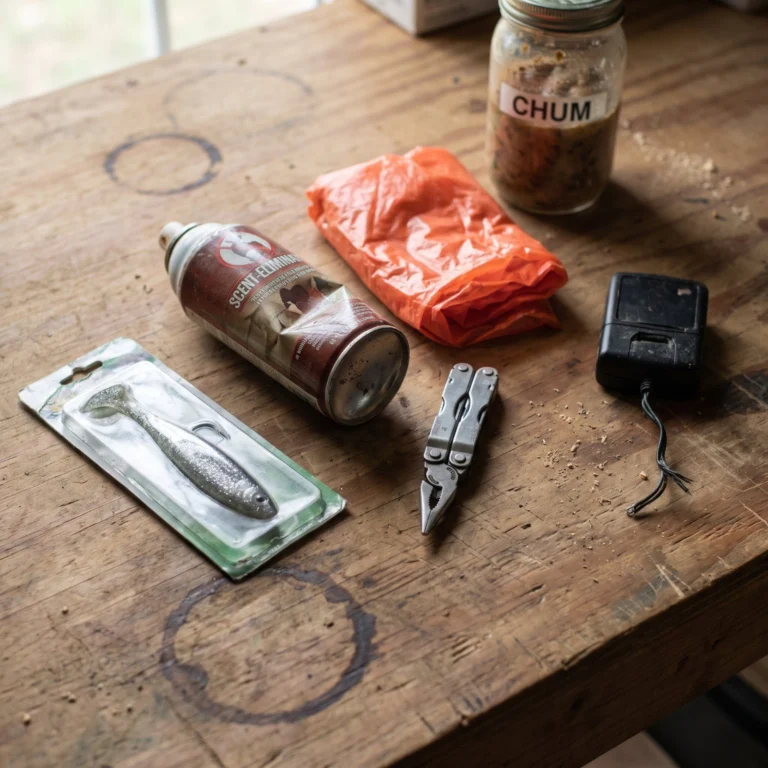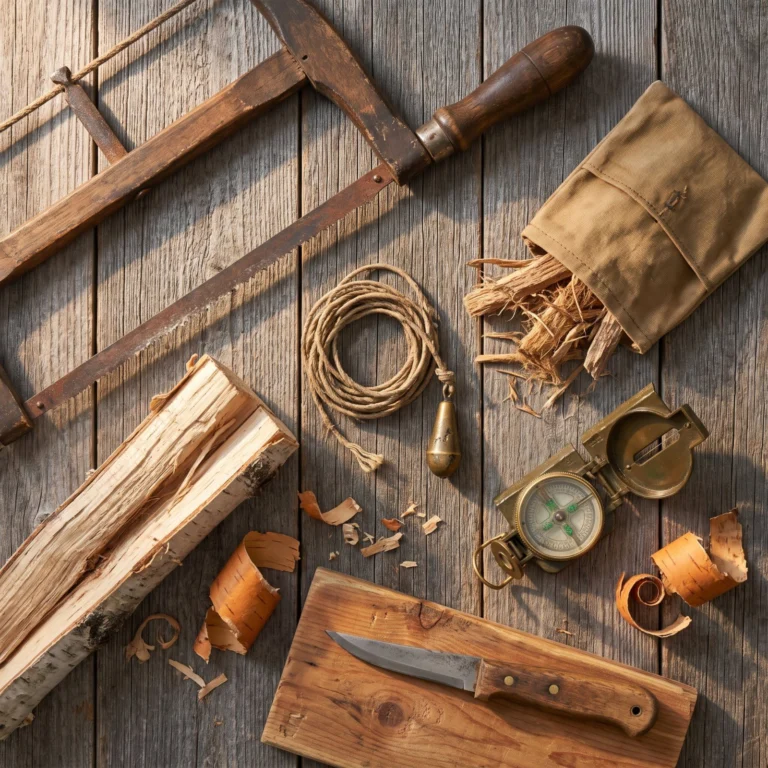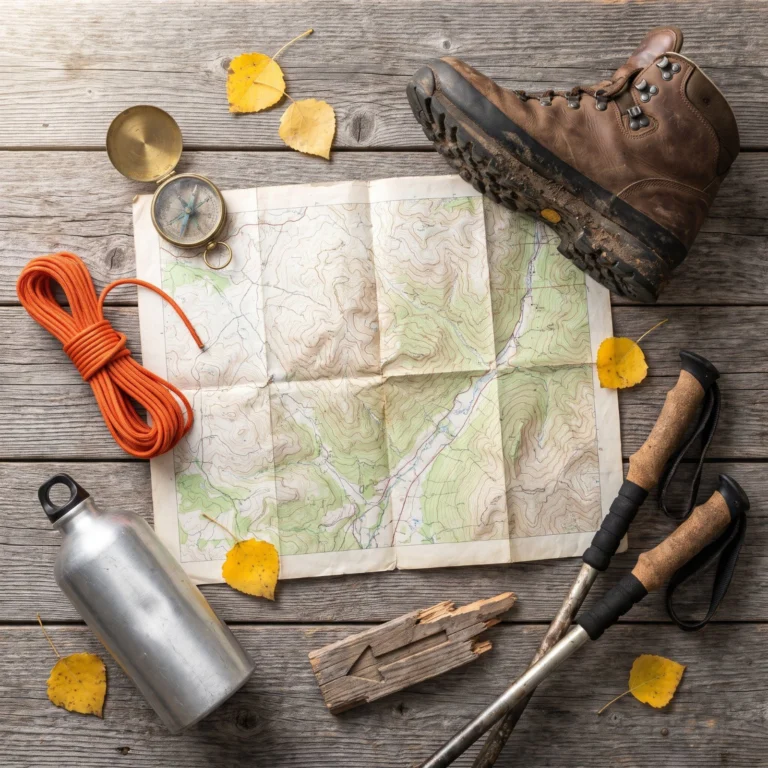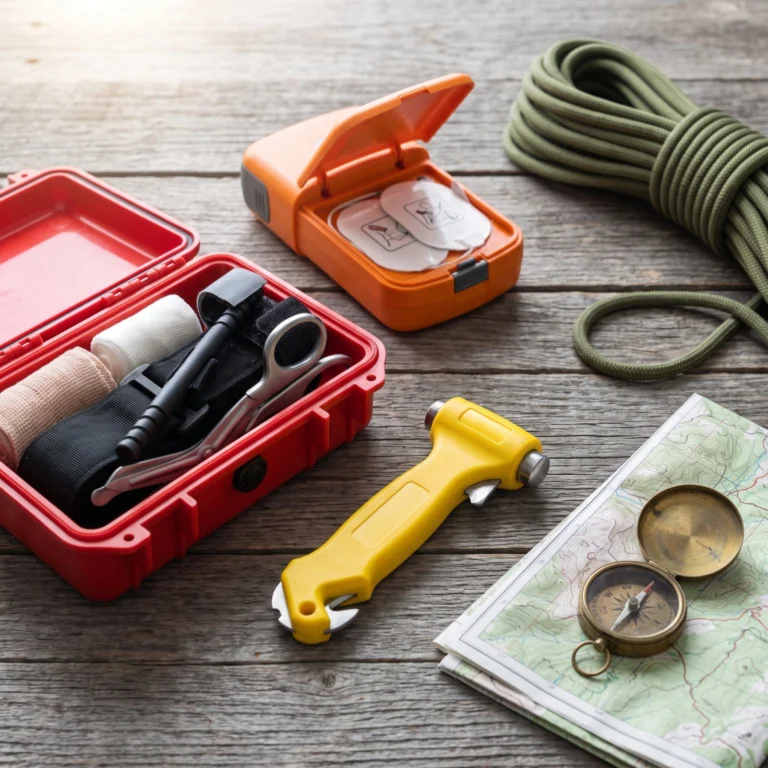
A full fuel canister weighs almost nothing until the valve freezes and your lighter won’t spark. Then it’s just a shiny paperweight. There was a time when nobody carried one, because the skill lived in your hands instead of your pack. Our grandfathers started fires in the rain, read a sky before a storm broke, and found north without a single battery. Those skills didn’t vanish because they stopped working — they vanished because we quit needing them every day. Here are the ones worth getting back, the ones that turn the woods from a place you visit into a place you can actually live.
Please note that some of the images in this article were created with the assistance of AI.
30. Striking a Fire From Flint and Steel
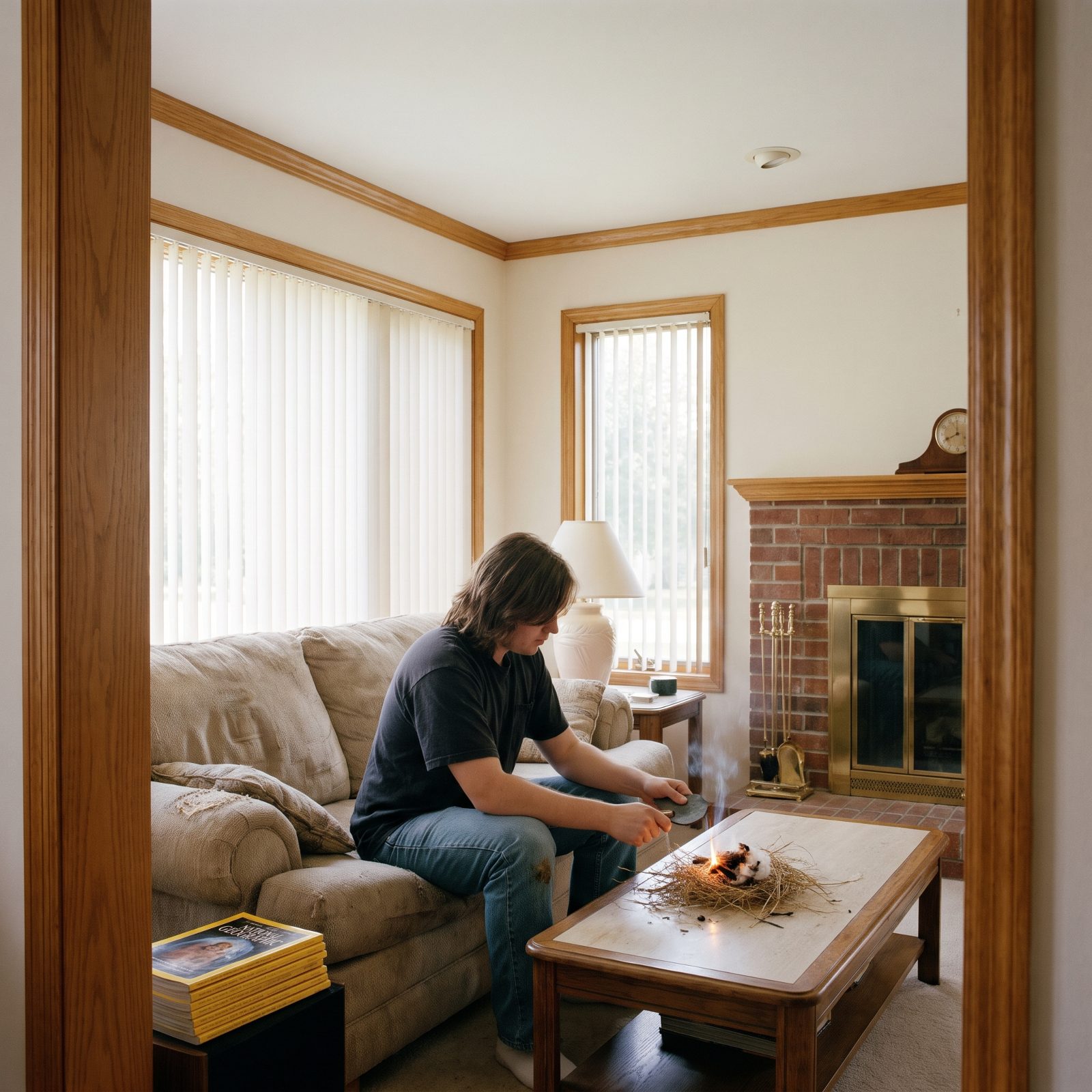
Forget the Hollywood version where one lazy scrape bursts into flame. Flint and steel throws sparks, not fire, and the spark has exactly one job: land on a scrap of char cloth and glow. From there you cradle it in a nest of dry grass and blow it to life.
I got this wrong for years, striking faster and harder because I figured speed was the answer. It isn’t. It’s angle, and a sharp edge on the flint. You’re shaving tiny shards of hot steel off the striker, and those shards need somewhere to land.
29. Building a One-Match Campfire in Pouring Rain
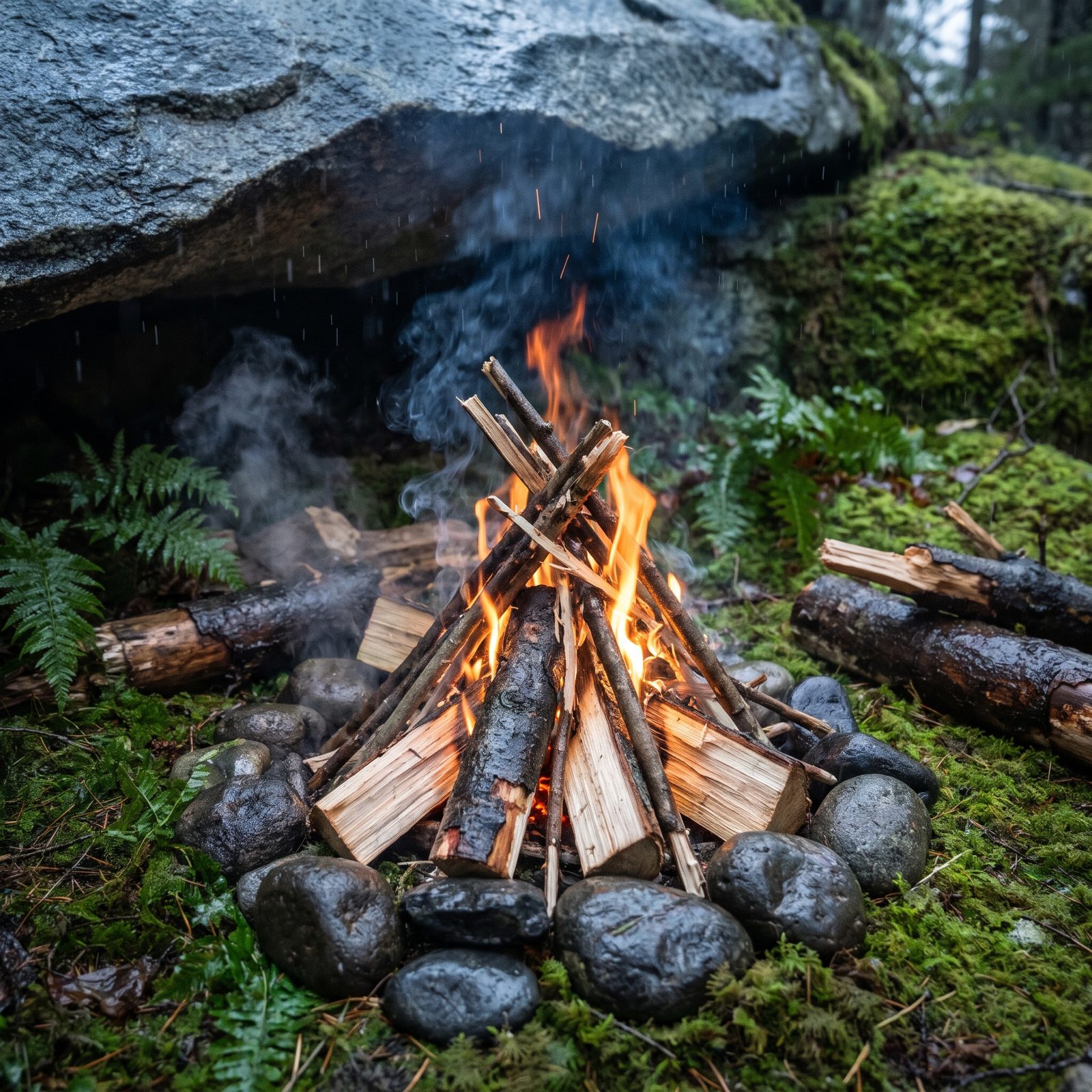
The secret to a rain fire isn’t a trick at all. The dry wood is inside the wet wood. Split a wrist-thick dead branch and the heart is bone dry no matter how long it’s been pouring. That’s your kindling.
Shave feather-sticks off the dry core, and build small before you build big. Find overhead cover too — a ledge, a thick spruce, a tarp, anything — because the match is the easy part. Keeping that baby flame alive through the first two minutes is where most people lose it.
28. Reading Tomorrow’s Weather in Today’s Sky
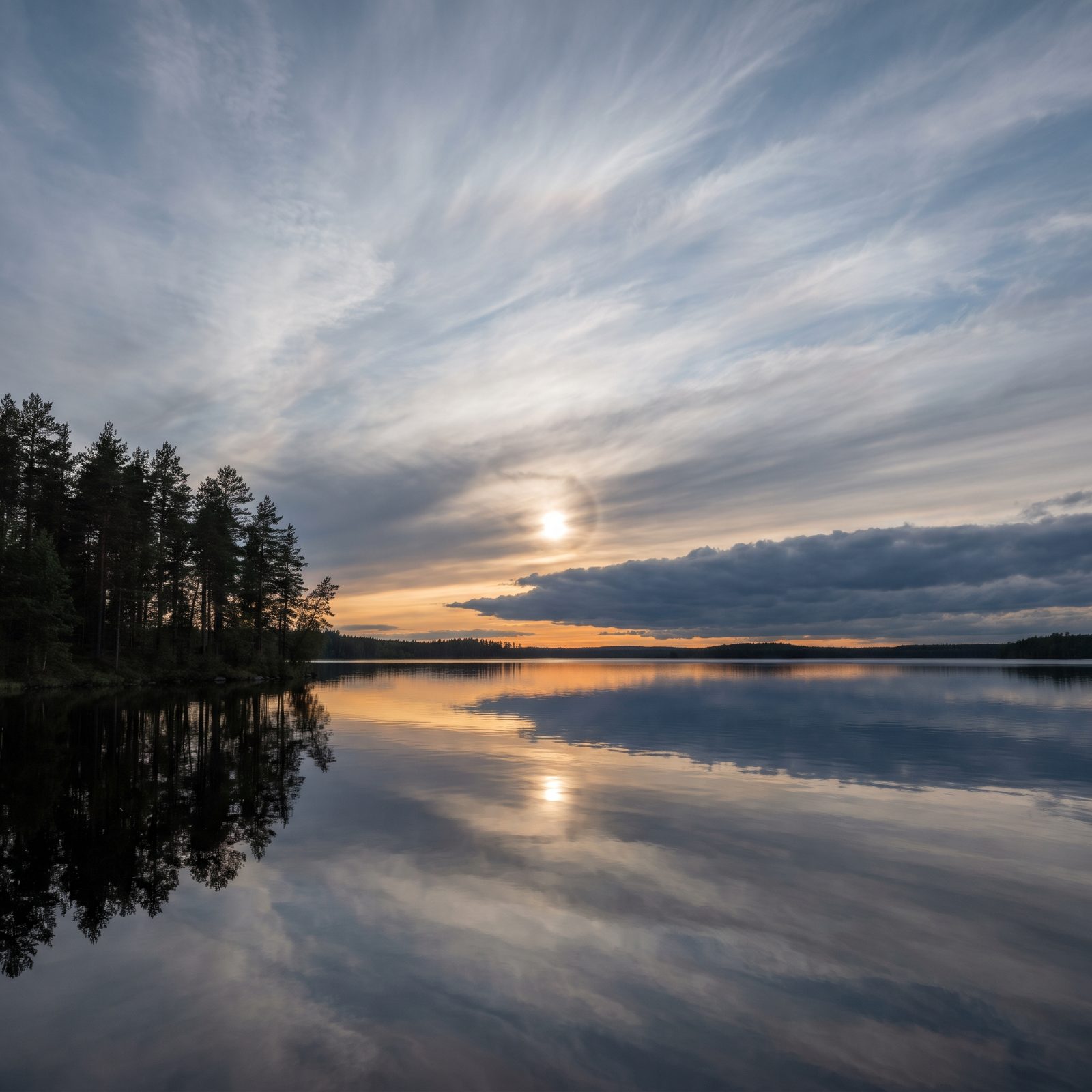
Red sky at night isn’t a nursery rhyme. It’s atmospheric physics that holds up. Weather in North America mostly moves west to east. A red evening sky means the setting sun is lighting high clouds already east of you, with clear air coming in behind. A red morning sky means that clear patch has passed and the next system is bearing down.
Learn three clouds and you’re ahead of most people with a phone. Thin, high cirrus means a front is maybe a day out. A ring around the sun or moon means rain within a day or so. And those towering cauliflower clouds that stack up on a summer afternoon? A thunderstorm is loading up.
27. Finding North by the Sun and Stars
A stick and a sunny patch of dirt will find you north. Push the stick in, mark the shadow tip with a pebble, wait fifteen minutes, mark it again. The line between the two marks runs roughly east to west. Simple, old, and it works on any clear day.
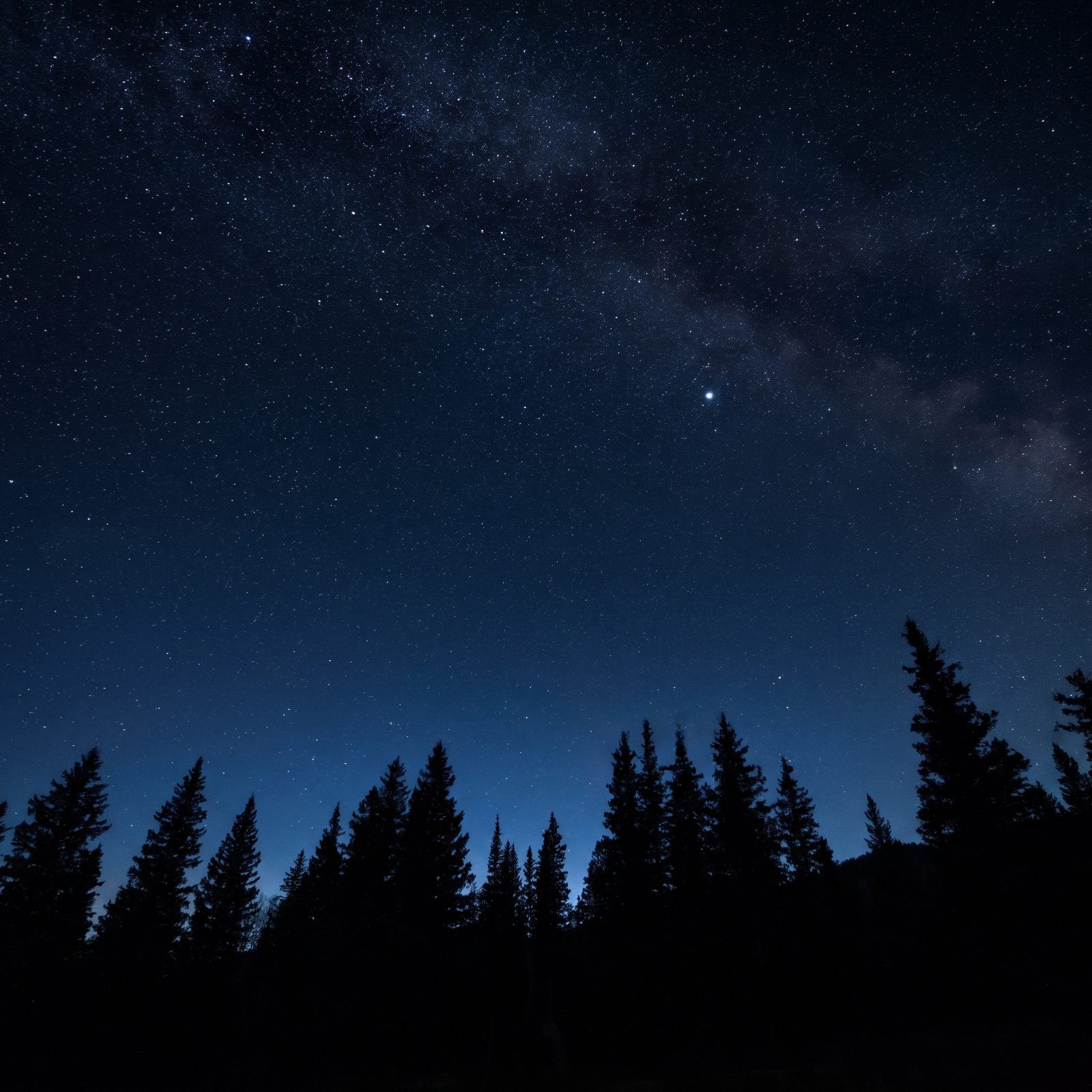
At night it’s easier. Find the Big Dipper, follow the two stars on the end of its cup, and they point straight at Polaris. The North Star doesn’t wander. Face it and you’re facing north — no battery, no signal, no guessing.
Here’s the catch nobody mentions: Polaris isn’t bright. People expect a beacon and look right past it. It’s a modest star that happens to sit almost dead over the pole.
26. Tying the Handful of Knots That Actually Matter
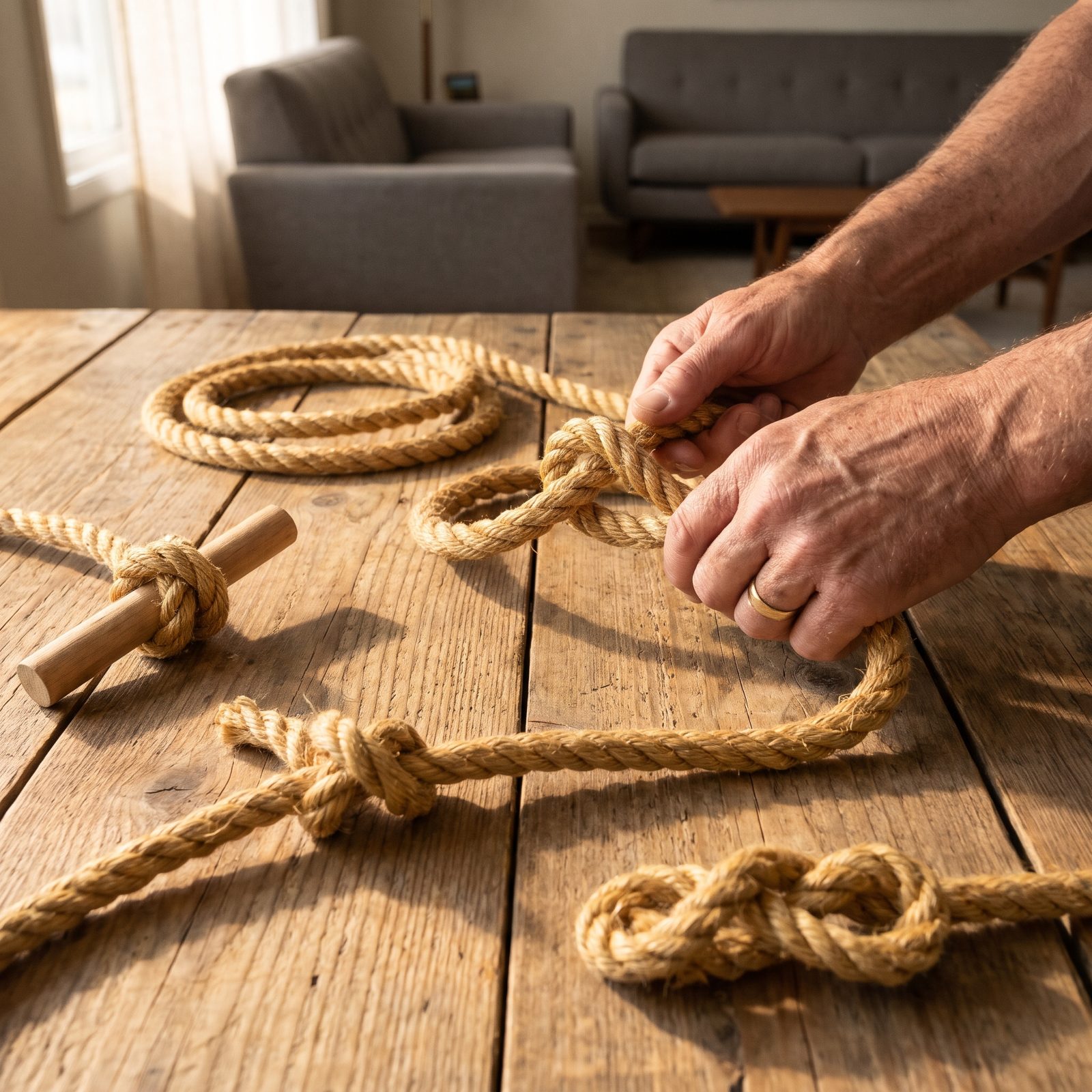
You don’t need fifty knots. You need a handful you can tie in the dark, cold and half asleep.
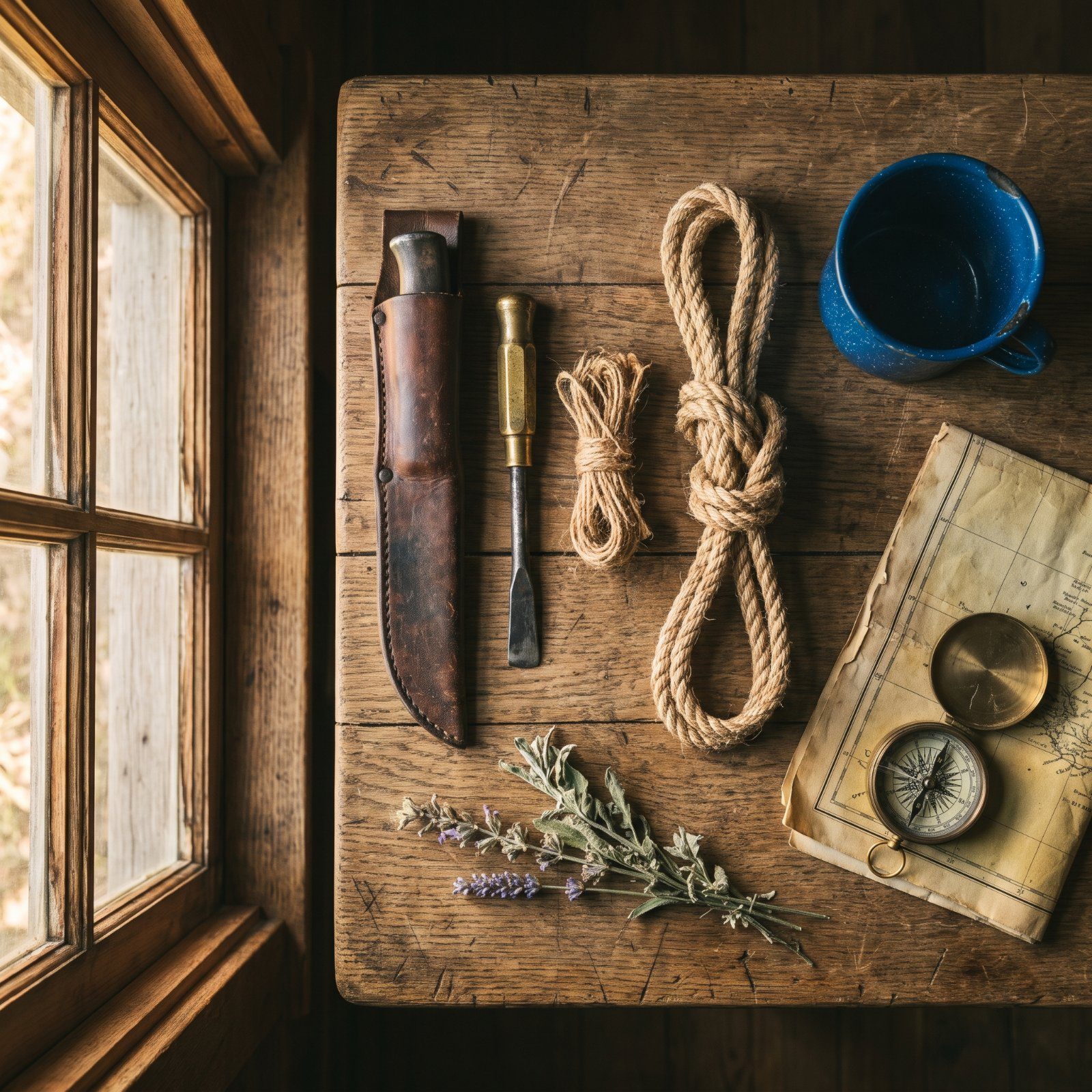
A figure-eight loop gives you a fixed loop that won’t slip, the one you want to drop over a stake or a tree. A snug hitch around a pole or stick starts and ends a lashing. A plain figure-eight in the end of a line keeps it from pulling through. Tie those few shapes snug in natural-fiber rope and they’ll finish off almost anything.
Learn them by feel, not by diagram. The woods is the worst possible place to be squinting at a book about knots while your tarp flaps loose over your head.
25. Finding and Purifying Water You Can Actually Drink
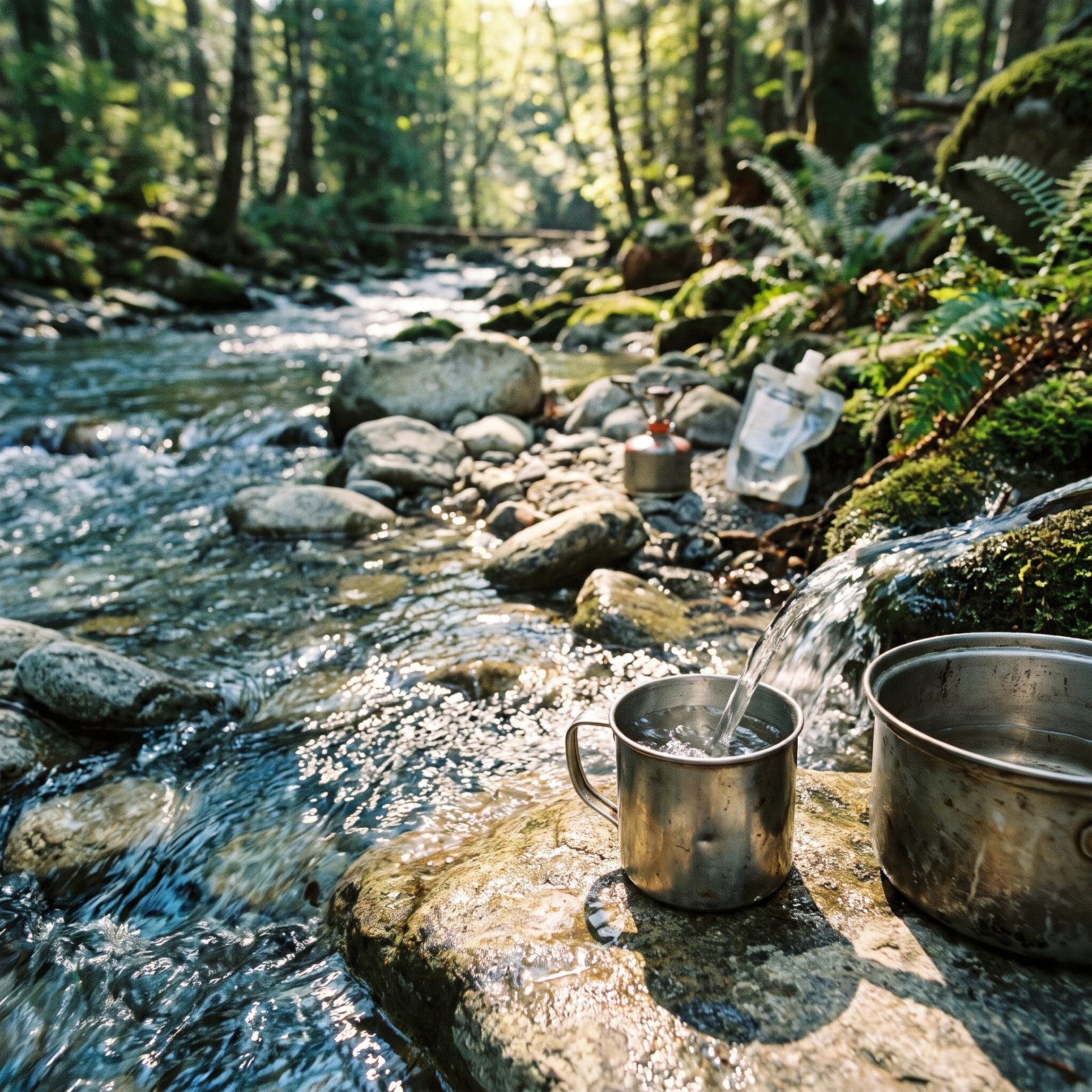
Clear running water looks safe and often isn’t. The thing you can’t see is the thing that ruins your trip, and giardia doesn’t care how pretty the stream is.
Moving water high up, above any sign of livestock or beaver, is your best bet for a source. But sourcing it is only half the job. Boiling is the old reliable — a rolling boil for a minute kills what matters, and at high elevation give it three. No filter, no chemicals, just fire and a pot. Our ancestors never trusted a water hole until it had steamed.
24. Setting a Snare for Small Game
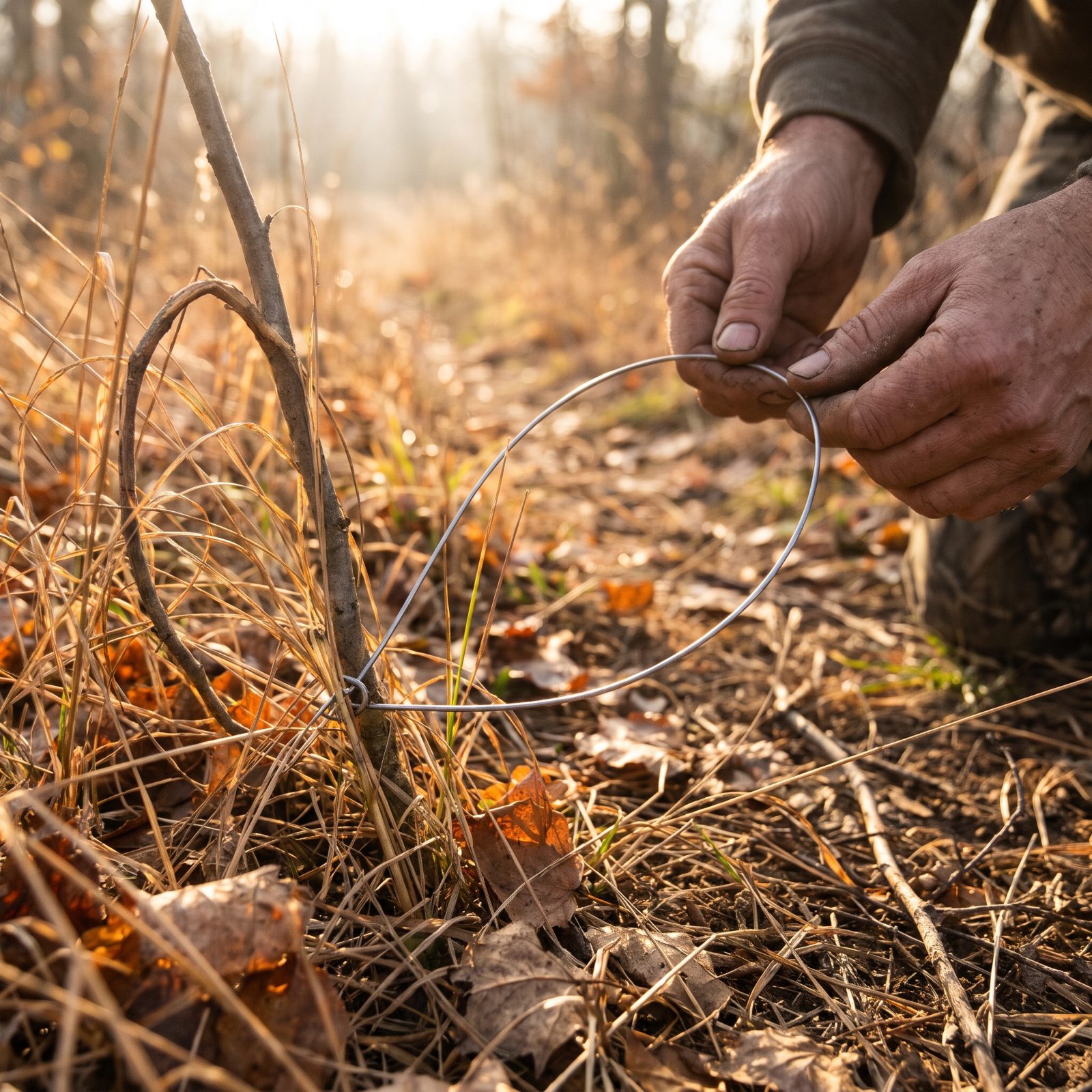
A snare is patience, not force. It works because an animal follows the same trail every day, through the same gap in the brush, and you set the loop where its head goes.
The craft is in reading the sign. Pressed-down grass, droppings, a worn run under a fence line. Set it wrong and it sits empty for a week.
One hard rule, and I mean hard: snaring is tightly regulated and illegal for most animals in most states outside of licensed trapping seasons. This is a survival skill to understand, not a thing to go practice on a whim. Know your state’s rules cold before you ever set one.
23. Cleaning a Fish Right There on the Bank
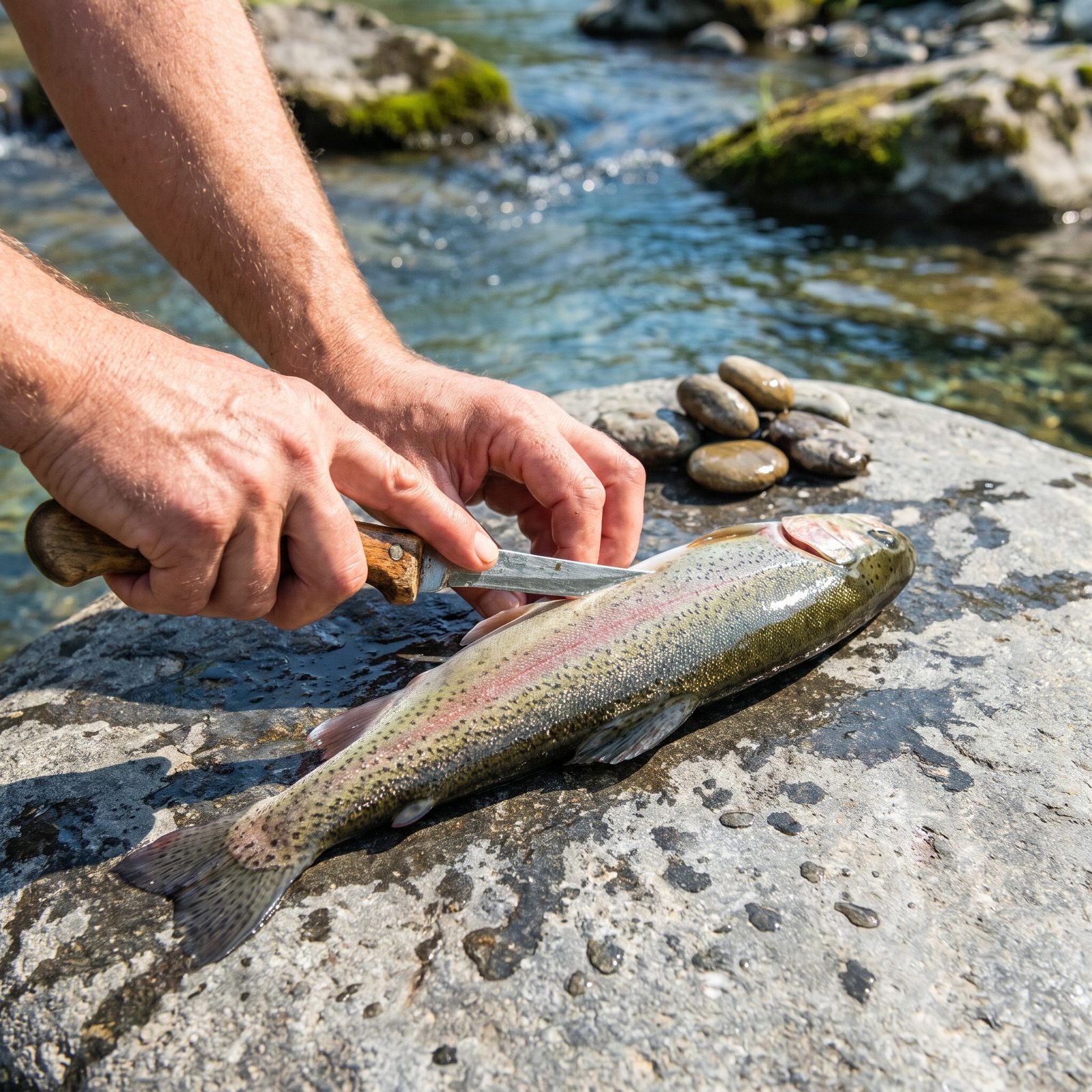
Cleaning a fish streamside takes about a minute once you’ve done a few. Pin the fish flat on a rock with one hand, angle the blade and scrape from tail toward head, and the scales lift off in little silver flakes. Work both sides, then rinse it in the stream. Done.
Don’t skip the scaling. Leave the scales on and you’ll be picking them out of your supper. Scrape them clean, and the skin crisps up beautifully in the pan.
Do it at the water’s edge and the scraps go back to the river where they belong, feeding something else. Clean enough fish and the motion becomes automatic, no thinking required.
22. Field-Dressing and Butchering Your Own Game
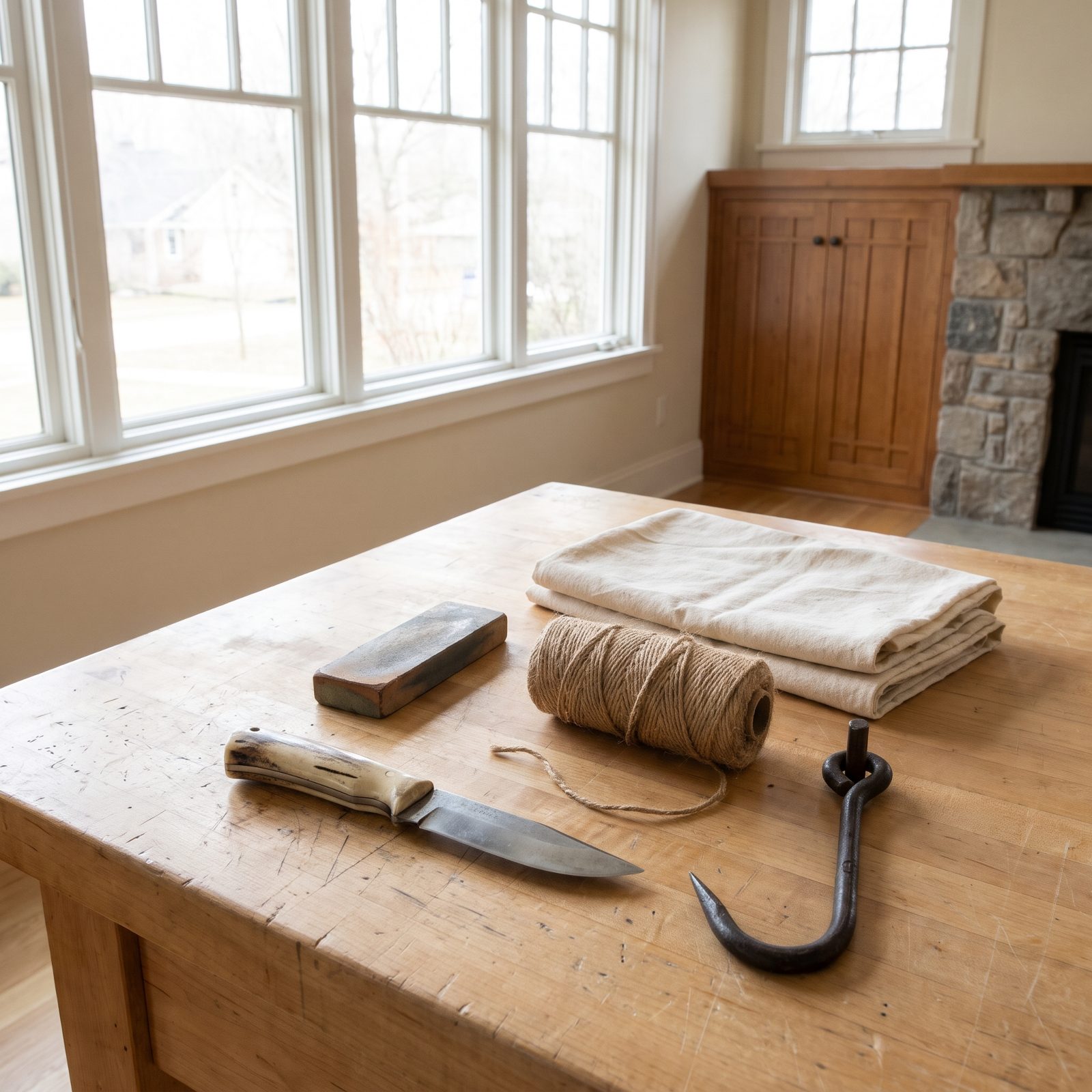
This is the skill that most separates us from our grandparents. They knew where meat came from because they made it themselves, from the field to the frying pan.
Speed matters more than anyone expects. Get the hide off and the carcass cooled fast, because heat is what spoils meat, not time by itself. A deer dressed and hung in cool air keeps for days. One left bloated in the sun is ruined in hours.
Butchering well is mostly knowing where the muscle groups separate. You’re not sawing through, you’re following seams the animal already gives you. A sharp knife and a little patience do more than brute strength ever will.
21. Knowing Which Wild Plants Will Feed You and Which Will Kill You
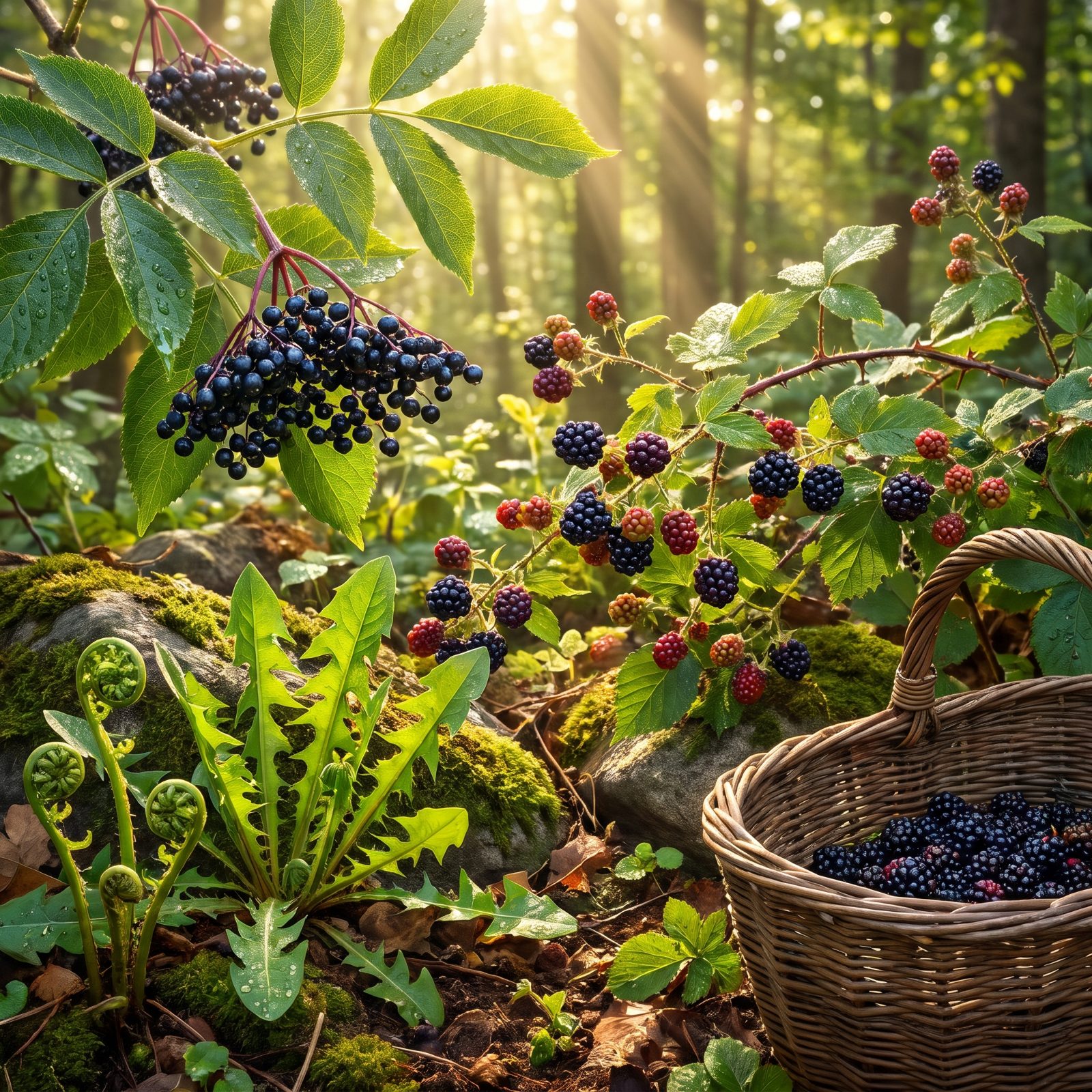
The first rule of foraging is the one that keeps you alive: if you’re not certain, you don’t eat it. Not ninety percent sure. Certain. Plenty of deadly plants have a lookalike cousin that’s perfectly edible, and the woods doesn’t grade on a curve.
Start with the plants that can’t be confused for anything dangerous. Blackberries and raspberries. Dandelion, every part of it edible. Cattail, nicknamed the supermarket of the swamp. Learn five plants cold before you learn fifty badly.
Berries deserve special caution. White and yellow berries are almost always poisonous. Red is a coin flip. Blue and black are more often safe, but more often is not the same as always.
20. Reading the Woods for Medicine Instead of the Pharmacy Aisle
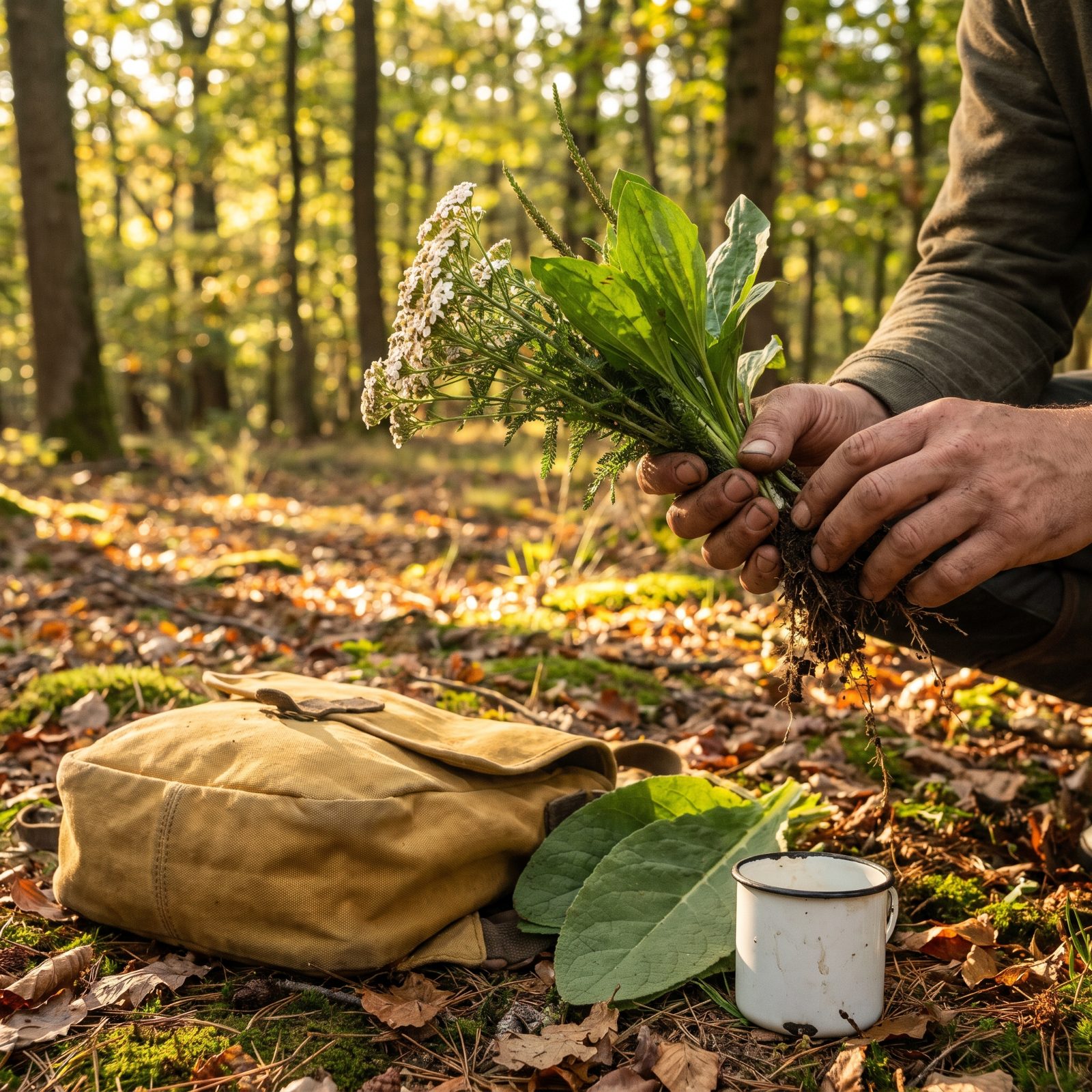
Your great-grandmother knew which weed stopped bleeding and which one just looked like it should. That knowledge didn’t come from a book — it came from somebody older walking her through a meadow, pointing and naming, season after season until the shapes stuck.
Yarrow for cuts. Plantain, the broad-leaf one in every lawn, drawn over a bee sting. Mullein for a cough. None of this is magic and none of it replaces a doctor when you actually need one. What’s gone is the recognition — the ability to look at a tangle of green and pick out a hundred separate plants instead of one undifferentiated blur.
19. Smoking and Salting a Side of Meat Without a Single Watt of Power
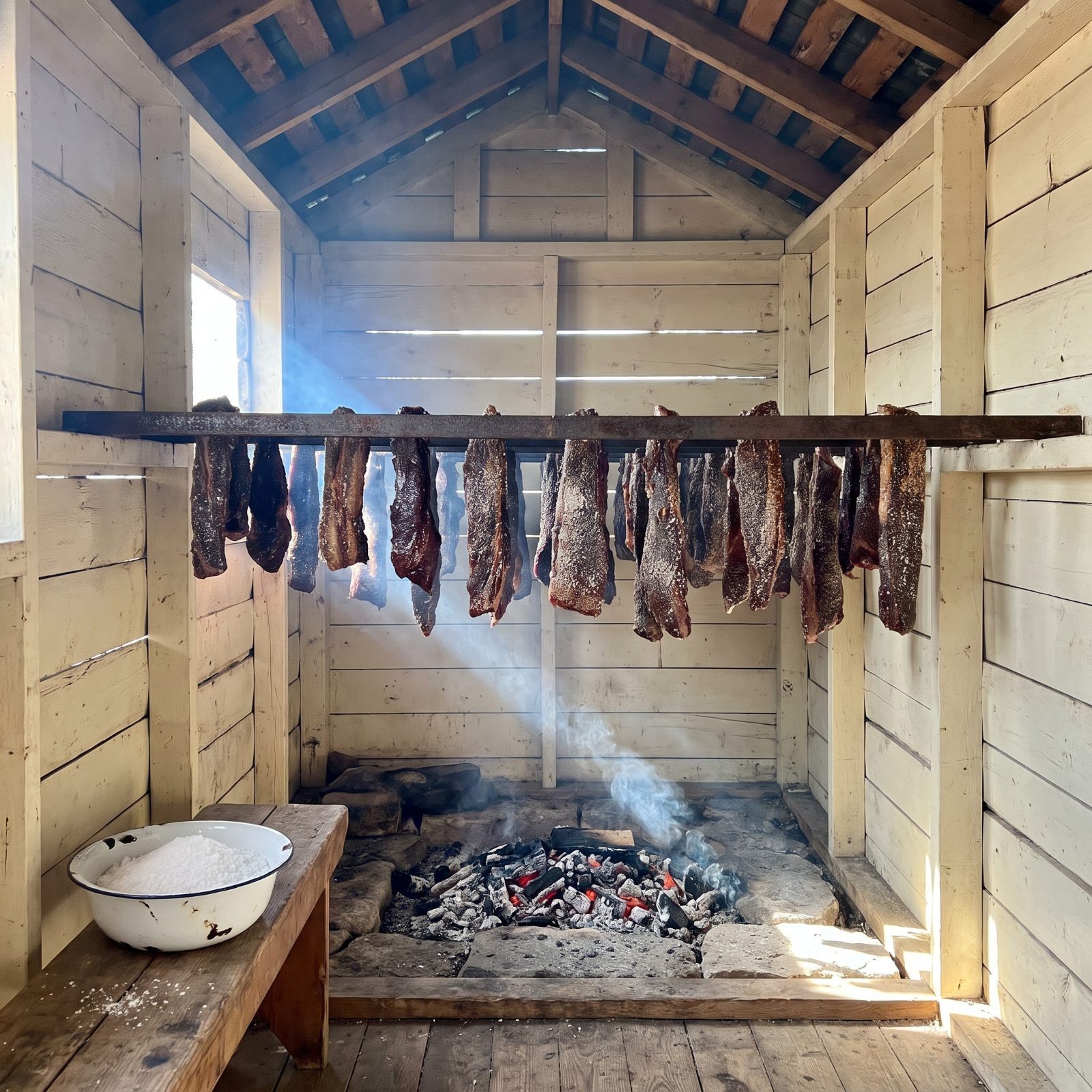
Before the refrigerator hummed in every kitchen, keeping meat meant knowing salt and smoke the way you know your own hands.
Here’s the mechanism. Salt pulls the water out, and bacteria need water, so no water means no spoilage. Smoke lays down a layer of compounds that slow things down further and, as a happy bonus, taste like heaven. Country hams aged this way for a year or more, hanging in a smokehouse and getting better the whole time.
Say “smoked meat” now and most people picture a weekend on the grill with a thermometer app. That’s cooking. Preservation is a different animal — slow, deliberate, demanding a patience nobody budgets for anymore.
18. Putting Up the Summer Harvest in Mason Jars
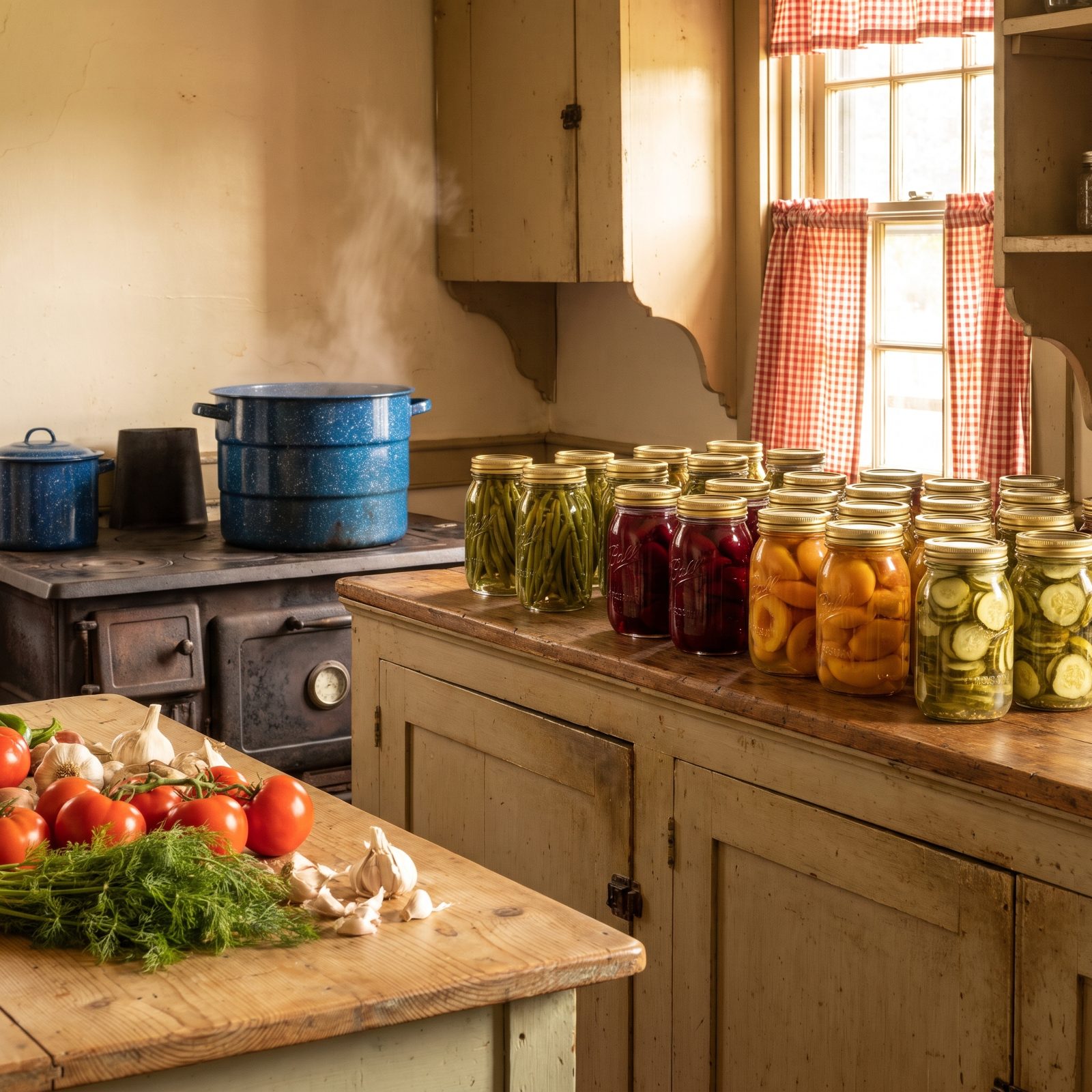
A pantry wall of filled jars is a kind of insurance nobody sells anymore.
You grow it in July when there’s too much of everything, and you eat it in February when there’s nothing. That was the bargain, plain and square. Water-bath canning handles the acidic stuff — pickles, tomatoes, jam. Pressure canning handles the low-acid things like beans and meat, because that’s where botulism lives and only the pressure kills the spores.
Get the acid or the pressure wrong and you can make yourself genuinely sick, which is why this one scares people off. It shouldn’t. Follow a tested recipe exactly and it’s safer than half the things already in your kitchen.
17. Throwing Up a Lean-To From Whatever the Forest Hands You
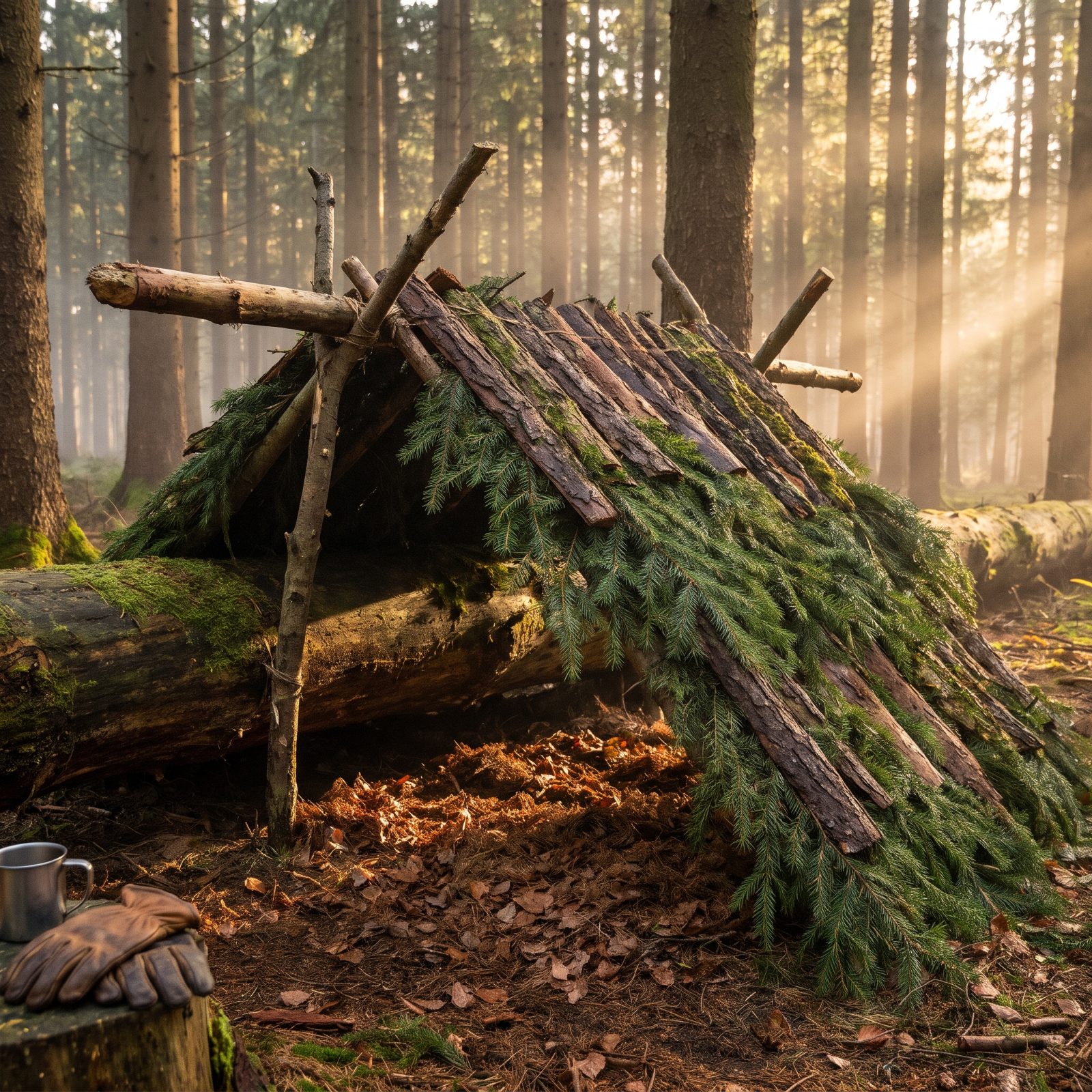
A lean-to is the first shelter anybody learns, because the woods practically build it for you.
One long pole for a ridge, two supports, a slope of branches thatched thick with boughs and bark against the weather, laid so your back faces the wind. The real secret isn’t the roof. It’s the floor. Cold ground steals more heat than cold air ever will, so you pile a thick mattress of dry leaves under yourself and sleep on top of it.
Watch a survival show and you’d think shelter was all about the walls. It isn’t. It’s about keeping the ground from drinking your body heat all night long, and get that wrong and the prettiest lean-to in the forest won’t save you.
16. Bringing a Dull Blade Back to Life on a Whetstone
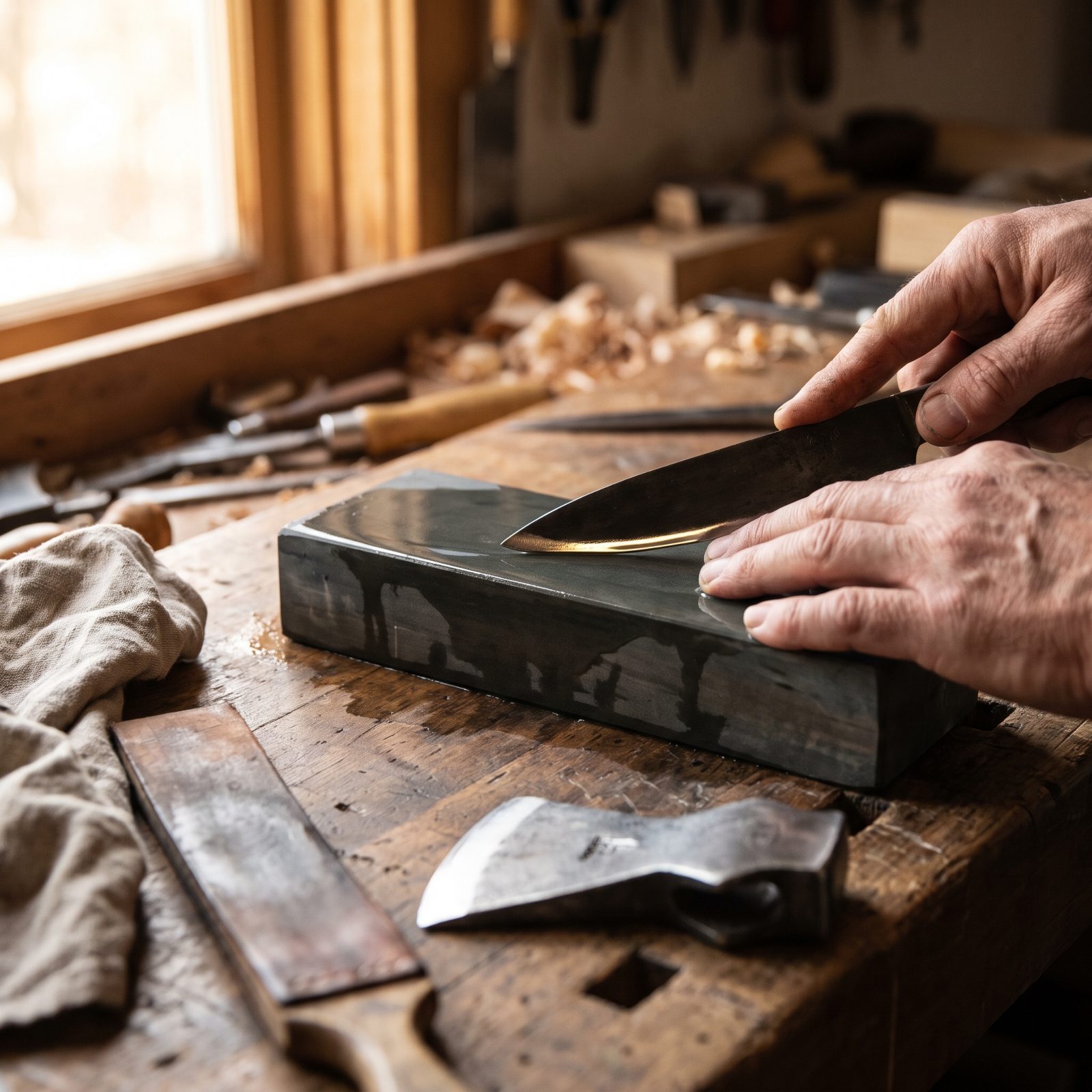
Most people own knives they’ve never once sharpened. They just buy new ones when the old blade quits cutting — a habit that would have baffled anybody born before about 1970.
A whetstone and ten quiet minutes brings any edge back. Hold a steady angle, somewhere around fifteen to twenty degrees, and draw the blade across in long even passes, raising a tiny burr on the far side, then flip and knock it off. Coarse grit to fix. Fine grit to polish.
And a sharp knife is a safer knife. The dull one is what slips and bites you, because you’re leaning your weight into it to make it cut.
15. Splitting a Cord of Firewood That Actually Throws Heat
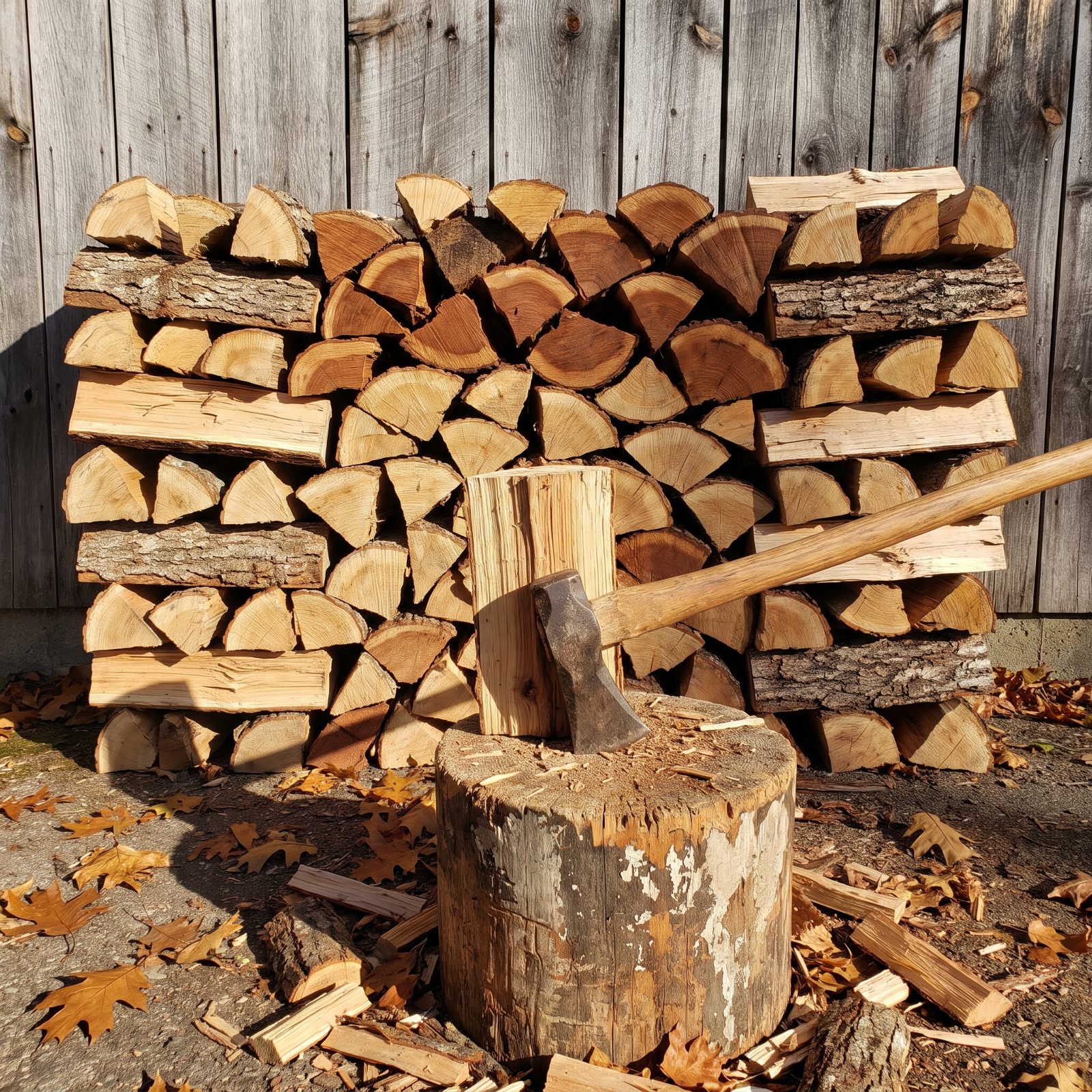
Green wood doesn’t burn. It hisses, smokes, and coats your chimney with the gunk that starts flue fires — the lesson nobody bothers to mention before you buy your first cord.
Freshly cut wood is half water. It needs to sit split and stacked for the better part of a year, longer for oak, before it gives you real heat instead of steam. Split it so the inside can breathe and dry. Once it’s seasoned, you can bring it in and stack it snug on the floor against an inside wall, splits facing every which way, ready for the stove.
Seasoned hardwood like oak, hickory, or cherry burns long and hot. Pine burns fast and gums up your chimney. Old-timers could tell dry from green by the sound two pieces made when knocked together — a clean ring meant ready, a dull thud meant wait another season.
14. Whittling Something Useful From a Stick and a Pocketknife
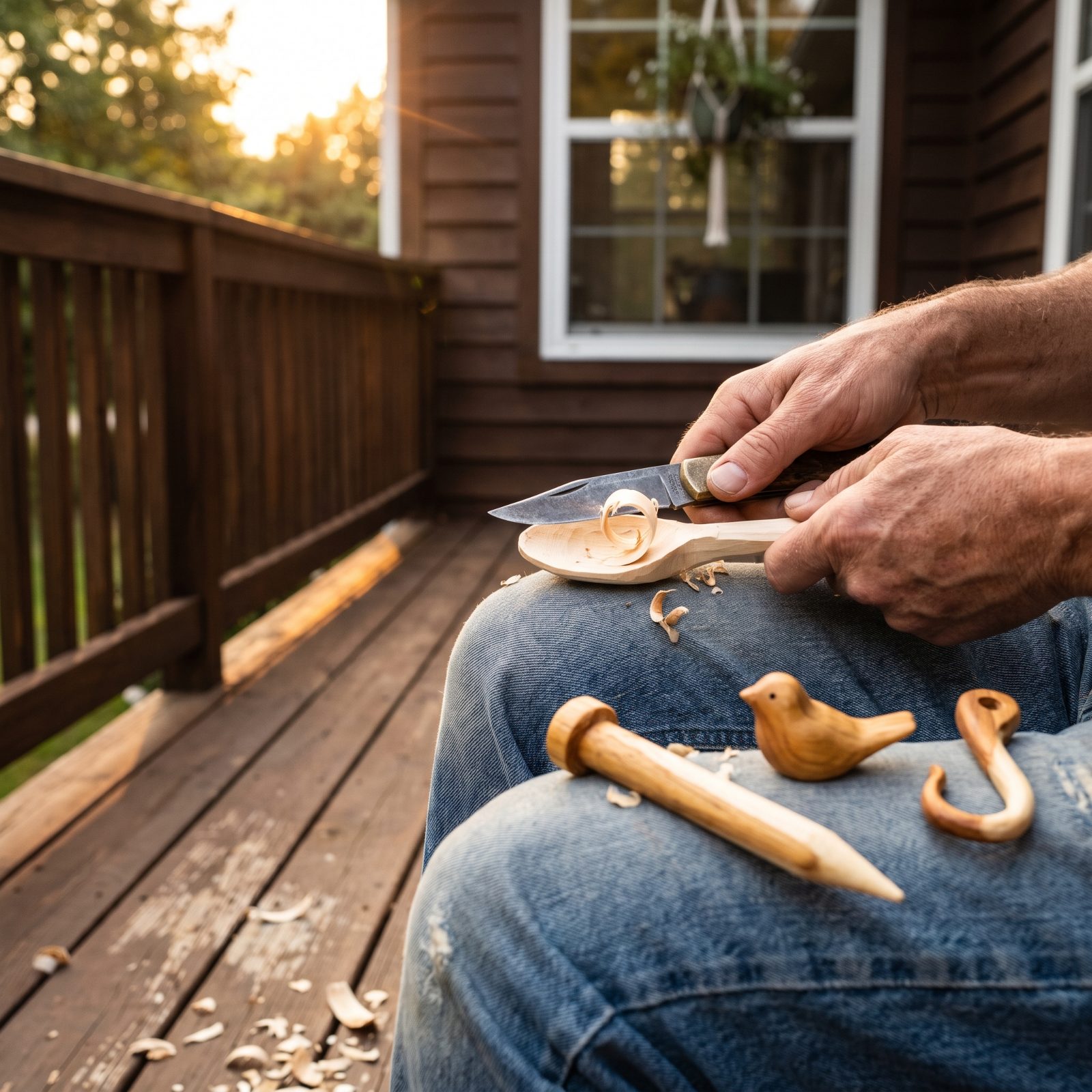
A good pocketknife and a stick used to kill a whole afternoon and leave you with a usable tool at the end of it.
Tent stakes, pot hooks, a spoon, a toy for a grandkid, a handle to replace a broken one. Whittling is the gateway to every other woodcraft skill because it teaches your hands to read grain, to cut away from yourself, to take thin controlled slices instead of hacking away like you’re mad at the wood.
It slows you down, too, in a way almost nothing else manages now. No screen, no notification — just a blade, a chunk of softwood, and the quiet scrape of a curl peeling off. People pay good money for that kind of calm, and a knife hands it over for free.
13. Reading the Story a Deer Left in the Mud
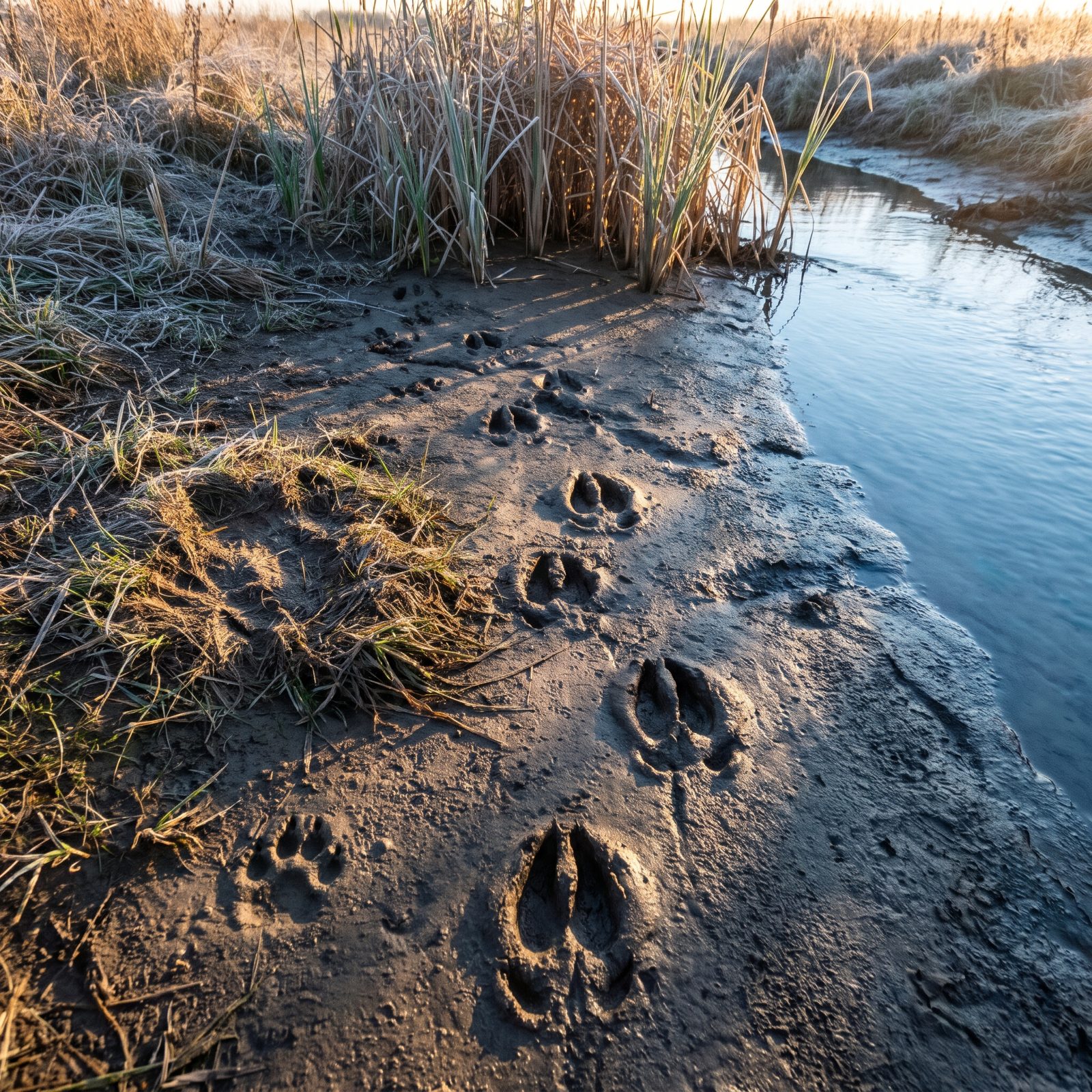
The ground keeps a record, and a tracker reads it like a newspaper from an hour ago.
A deer passed here — the tracks fresh, the edges still sharp, so it was recent, and the stride tells you it was walking rather than spooked. A chewed twig, a rubbed sapling, a pile of droppings still glistening: scat tells you what’s around and how long ago it came through.
Hunters still lean on all this. Birders and hikers mostly don’t, and they miss half the forest for it. Learn the five or six common tracks in your area — deer, raccoon, turkey, coyote — and the woods stop being empty. They fill up with everything that walked through before you did.
12. Casting and Mending a Net the Way Coastal Families Did
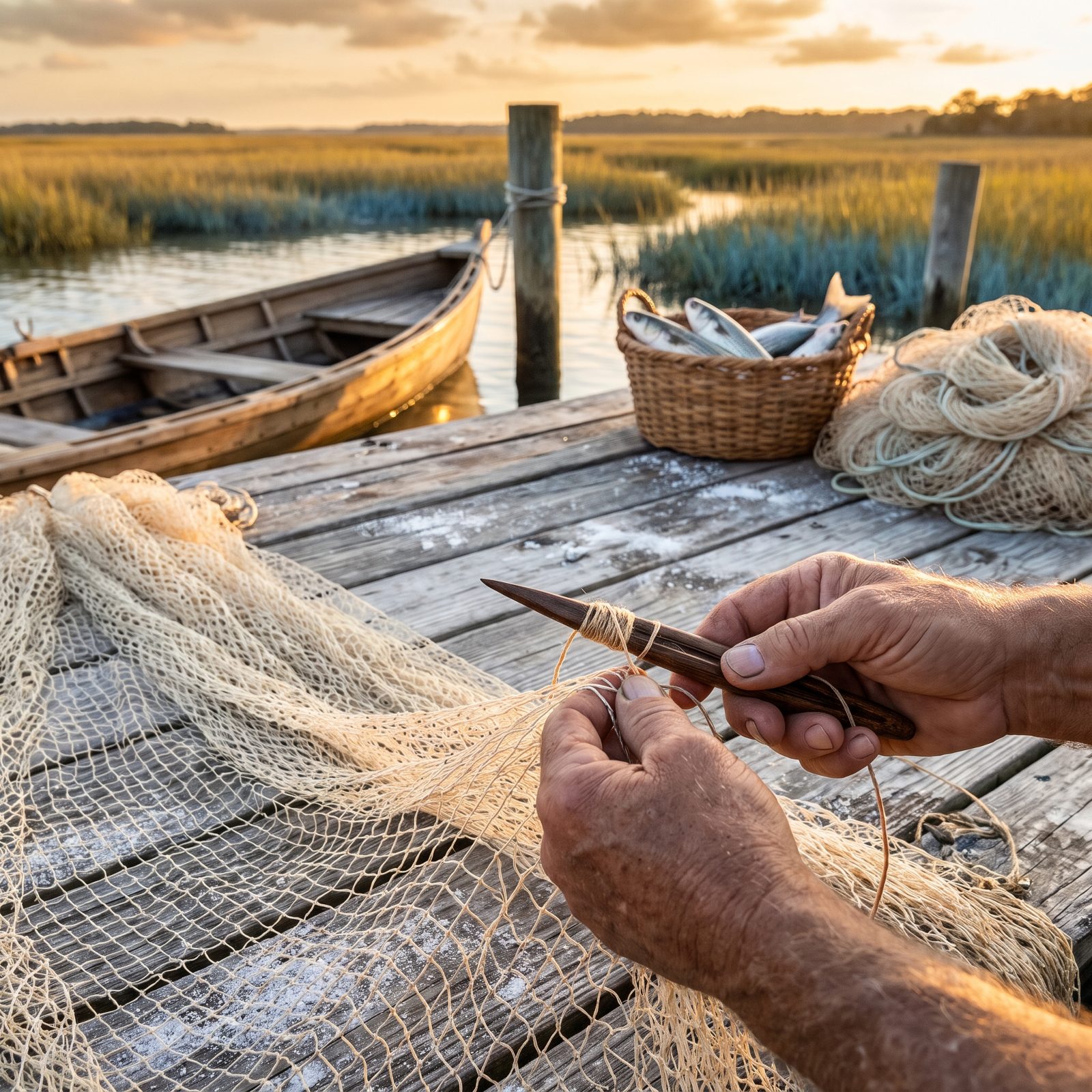
Watch somebody throw a cast net right and it opens into a perfect circle before it ever touches the water. Looks easy. It is anything but.
The throw lives in the load and the release — net draped just so over the shoulder and arm, body uncoiling to fling it flat. Get it wrong and it lands in a sad little clump. Families on the coast taught it to kids as naturally as riding a bike, then used the same patient hands to mend the net afterward with a wooden needle, retying every broken mesh.
Check your local regulations before you throw one, by the way. Cast netting is legal in plenty of places and restricted in others, and the rules shift by state and by species.
11. Twisting Strong Cordage From Plants Growing at Your Feet
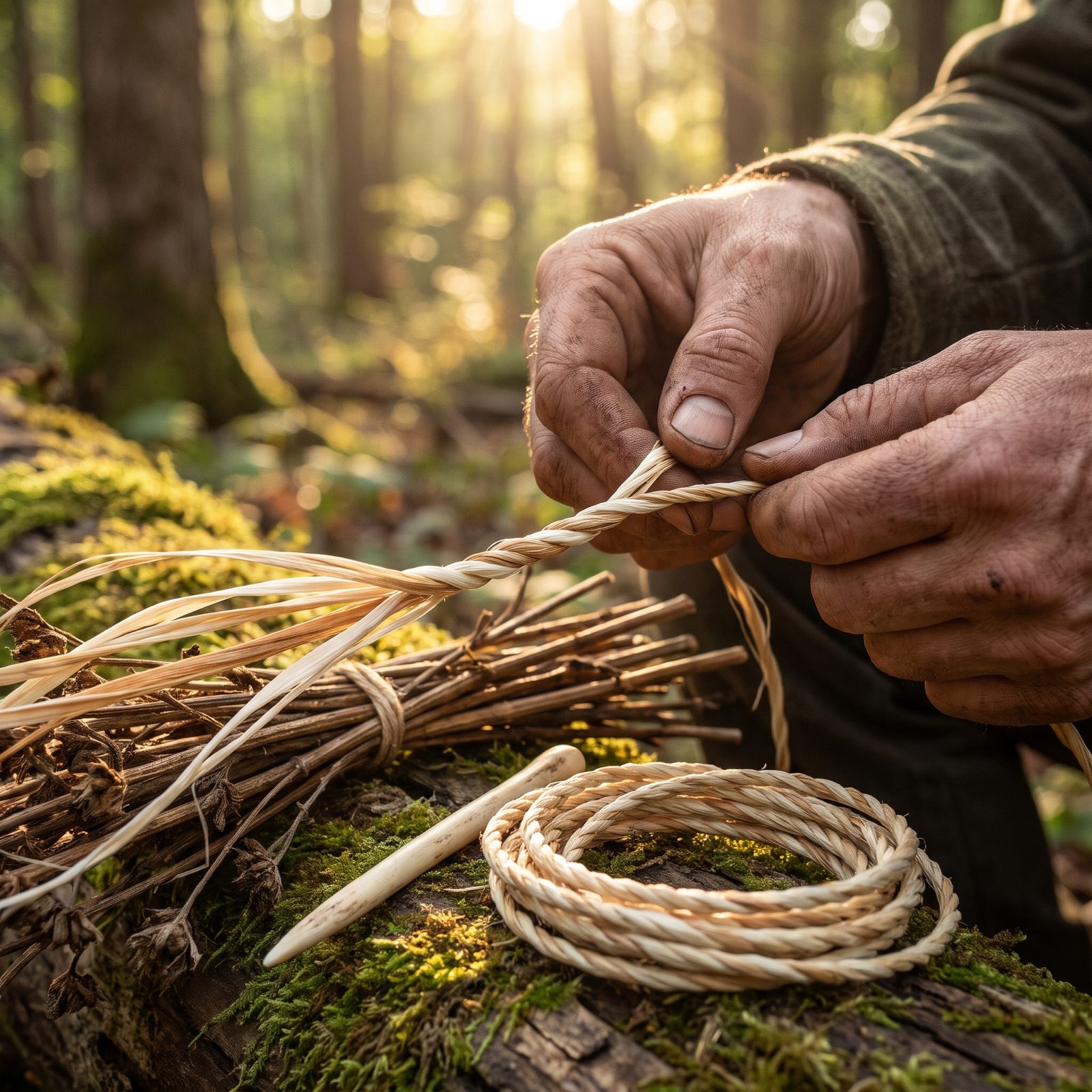
Rope doesn’t grow in the forest. Everything you need to make it does.
Dogbane, nettle, milkweed, the inner bark of certain trees — strip the fibers, let them dry, then twist. The reverse-wrap is the heart of it: two bundles of fiber twisted in one direction and wrapped around each other in the other, so the tension locks them together. Keep feeding in fresh fiber and the cord grows as long as you need.
This is one of the oldest skills here, older than metal, older than farming. Somebody figured out that twisted plant fiber holds a weight no single strand could, and that one trick made nets, snares, bowstrings, fishing line, and bindings possible. Everything downstream of it started with a bored person twisting weeds between their palms.
10. Reading the Night Sky for the First Hard Freeze
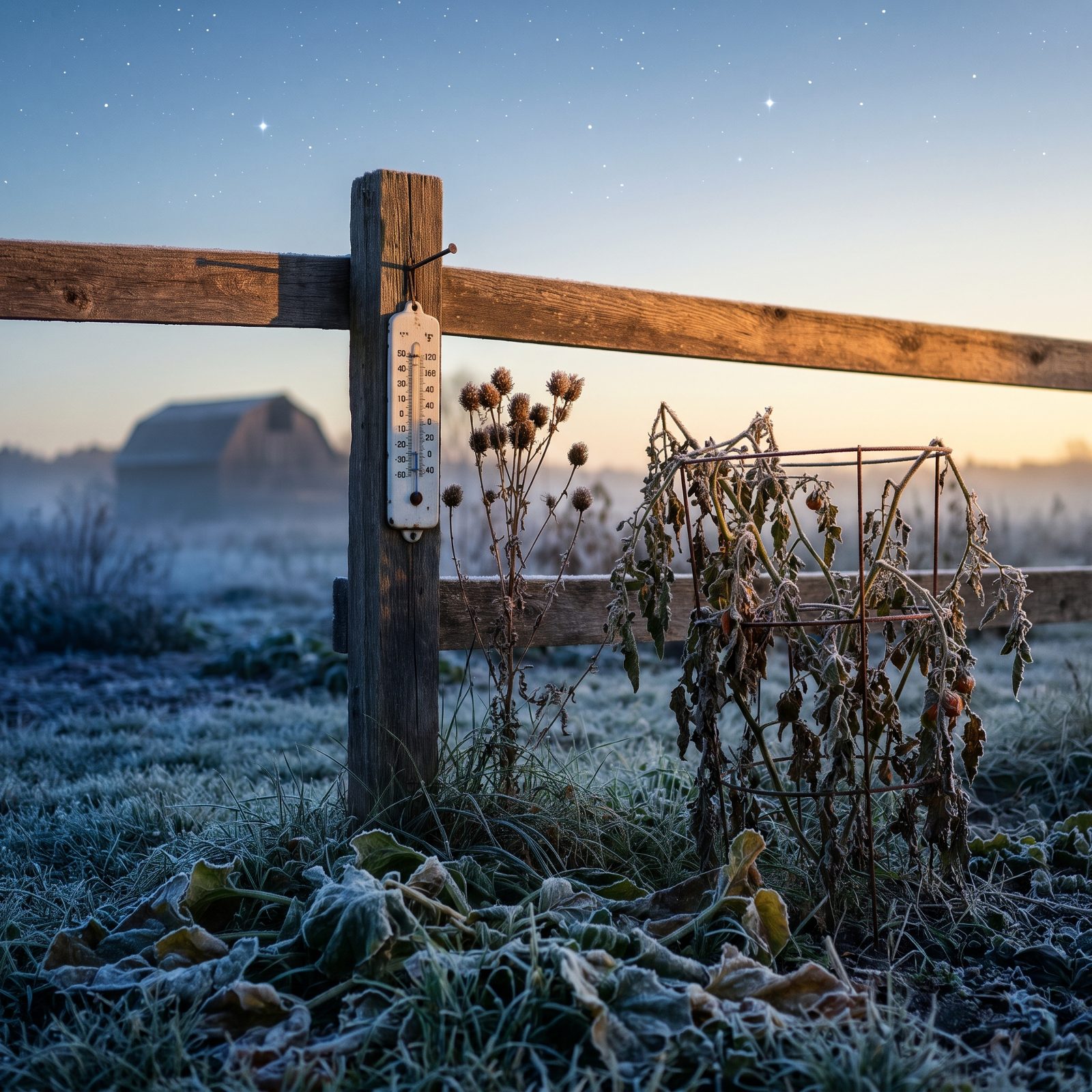
Clear and calm after sundown? Start covering the tomatoes. A cloudless, windless night lets the day’s heat radiate straight up into space, and the ground gives up its warmth fast. Clouds pull a blanket over the whole business, and wind stirs the cold air so it never settles. No clouds, no wind, and a dropping temperature at dusk — that’s the old signal that morning will bite.
Low ground freezes first. Cold air flows downhill like water and pools in the hollows, which is why the valley garden frosts solid while the orchard up the slope comes through fine. Folks used to plant their tender crops on a hillside for exactly that reason, and they weren’t wrong.
9. Keeping Milk and Meat Cold in a Spring House or Root Cellar
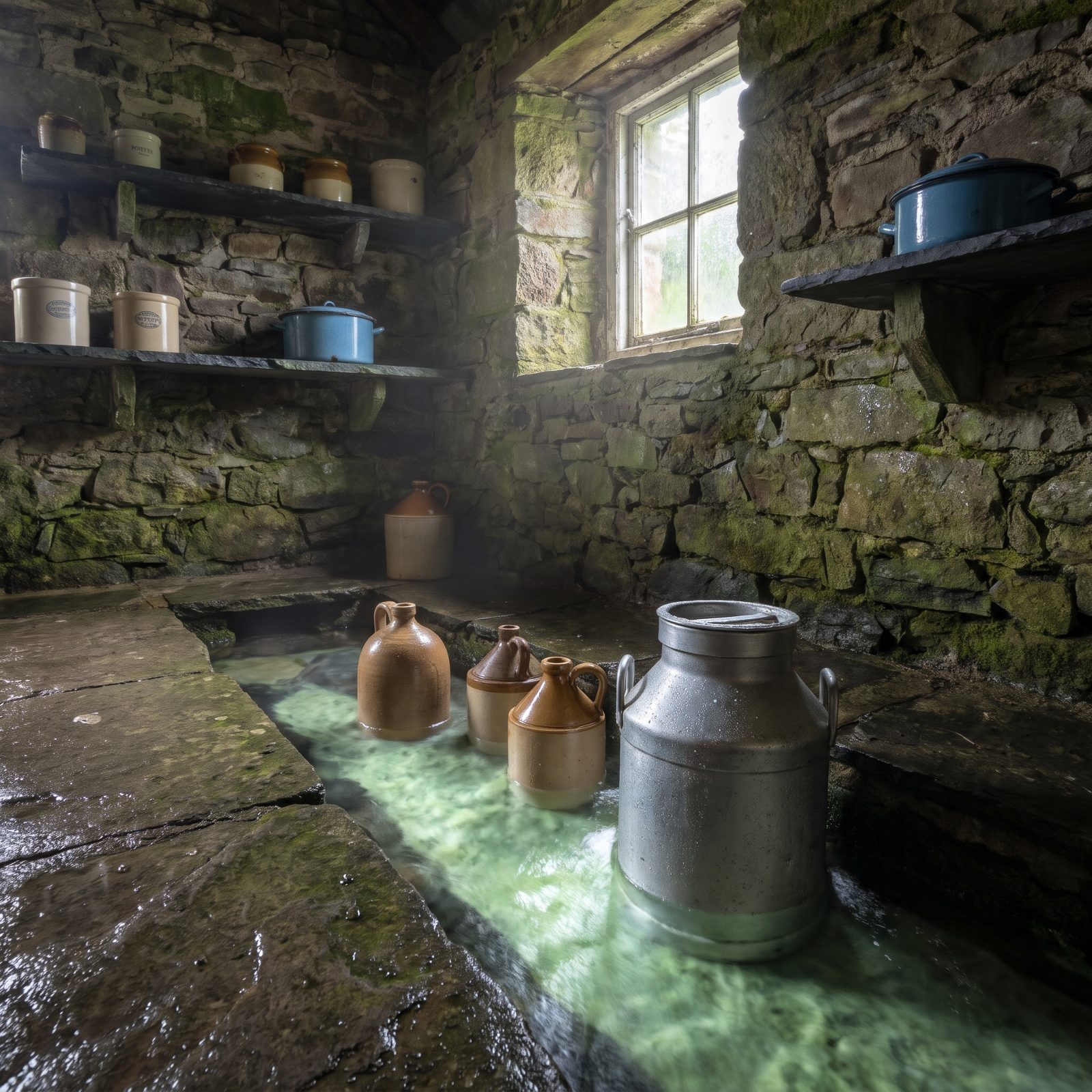
A good root cellar holds right around 50 to 55 degrees year-round, give or take, without a watt of electricity. Dig into a north-facing bank, or down below the frost line, and the earth does the work for you. The spring house went one better — run cold springwater through a stone trough and set your milk cans right down in it.
Where people go wrong trying this today is ventilation and humidity. Potatoes and apples want it damp and dark. Onions and squash want it bone dry. Store them cheek by jowl and you’ll be sorting rot by February. I learned that the slow way, with a crate of apples that soured the whole cellar.
8. Reading a Paper Map and Turning It to Match the Land
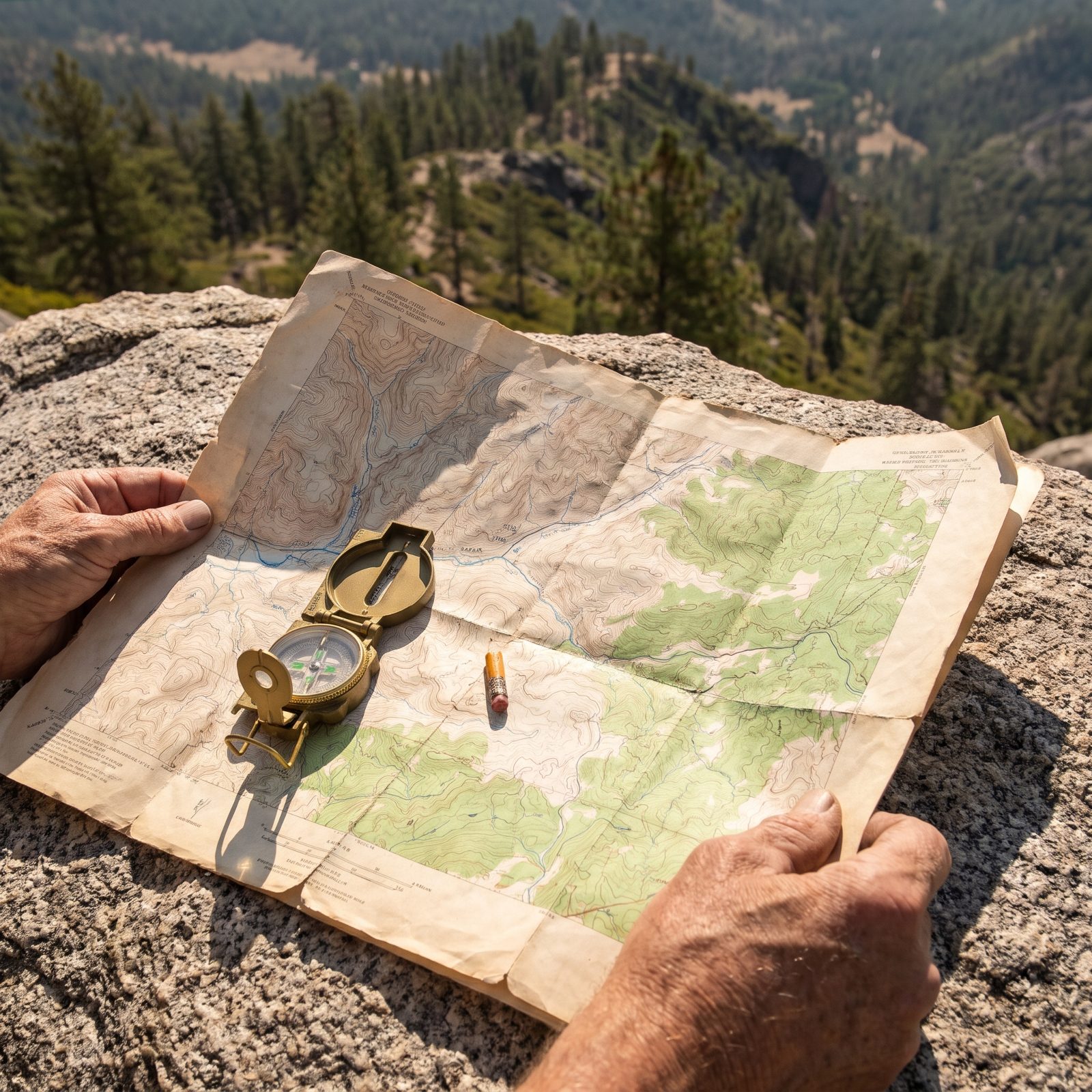
A map is useless flat on your knee if north on the paper points one way and north on the ground points another. The old habit was to lay the sheet down, set the brass compass on it, and turn the whole sheet until the paper lined up with the land around you. Now the ridge on the paper lines up with the ridge in front of you, and the creek on your left is the creek on your left.
GPS killed this skill, and honestly, I understand why. But batteries die, canyons swallow the signal, a soaked phone is a brick. Paper doesn’t crash.
7. Catching Rainwater and Running a Cistern
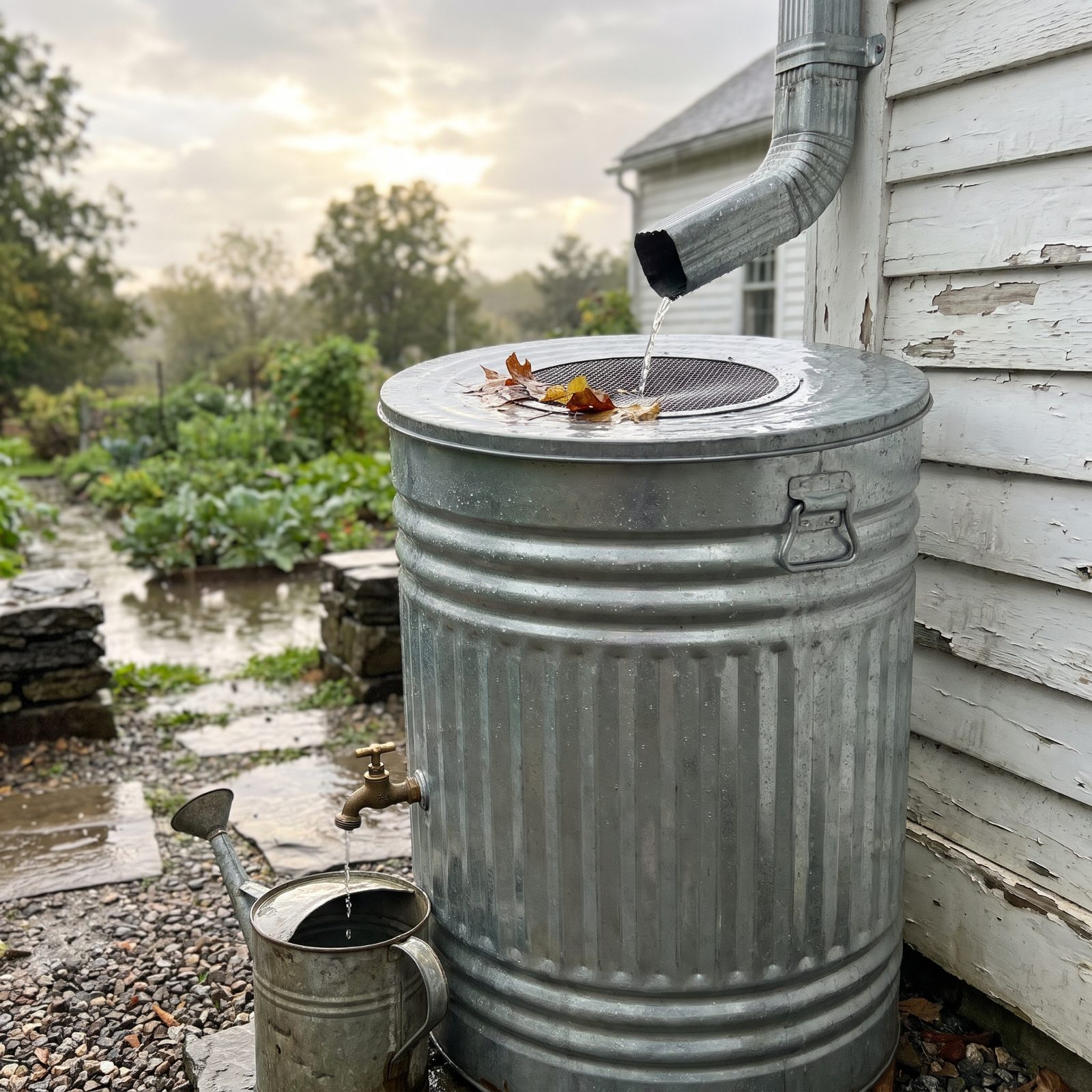
An inch of rain on a thousand square feet of roof gives you somewhere north of 600 gallons. That arithmetic kept whole homesteads alive where the nearest well sat a quarter mile off, and a cistern simply banks all that water underground where it stays cool and clean until you want it.
Here’s the part nobody mentions. The first flush off a dirty roof is the worst water you’ll collect — bird droppings, grit, the whole mess — so the good systems shunted that first gush to waste before letting the clean stuff into the tank. Mosquitoes are the other reckoning. Any standing water needs a tight screen, or you’ve built yourself a nursery.
6. Tanning a Hide and Working It Into Leather
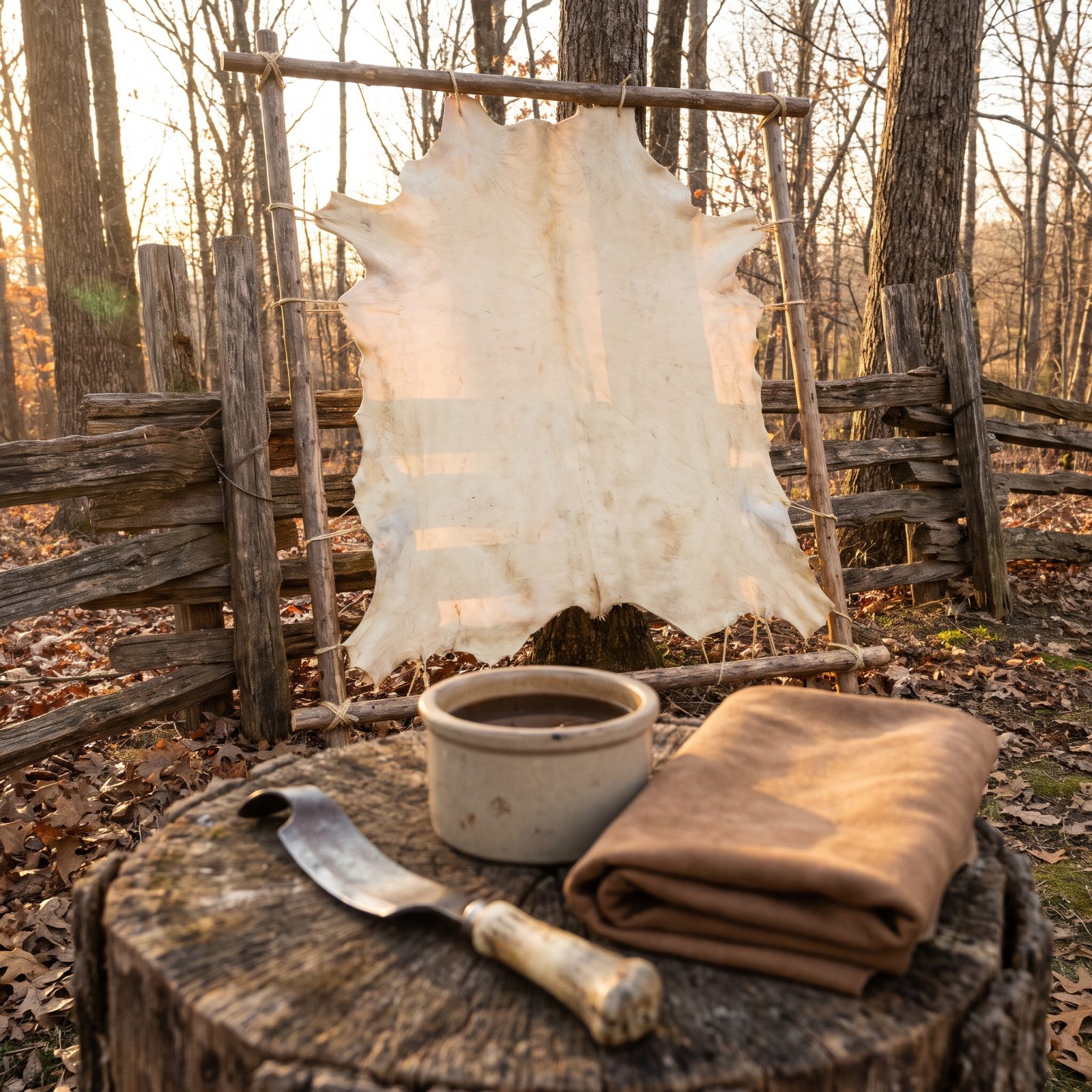
Brain tanning built this continent’s leather long before anybody bottled a chemical, and the old saying held that every animal carries just enough brains to tan its own hide. Roughly true, as it happens — the fats in the brain emulsify into the fibers and leave the skin soft instead of board-stiff.
It’s brutal, honest work. You scrape every scrap of flesh and membrane off, then soften the hide by working it constantly as it dries so the fibers never lock up. Stop working it and it dries hard as plywood. This is a skill you measure in sore shoulders.
5. Rendering Tallow and Cooking Down a Batch of Soap
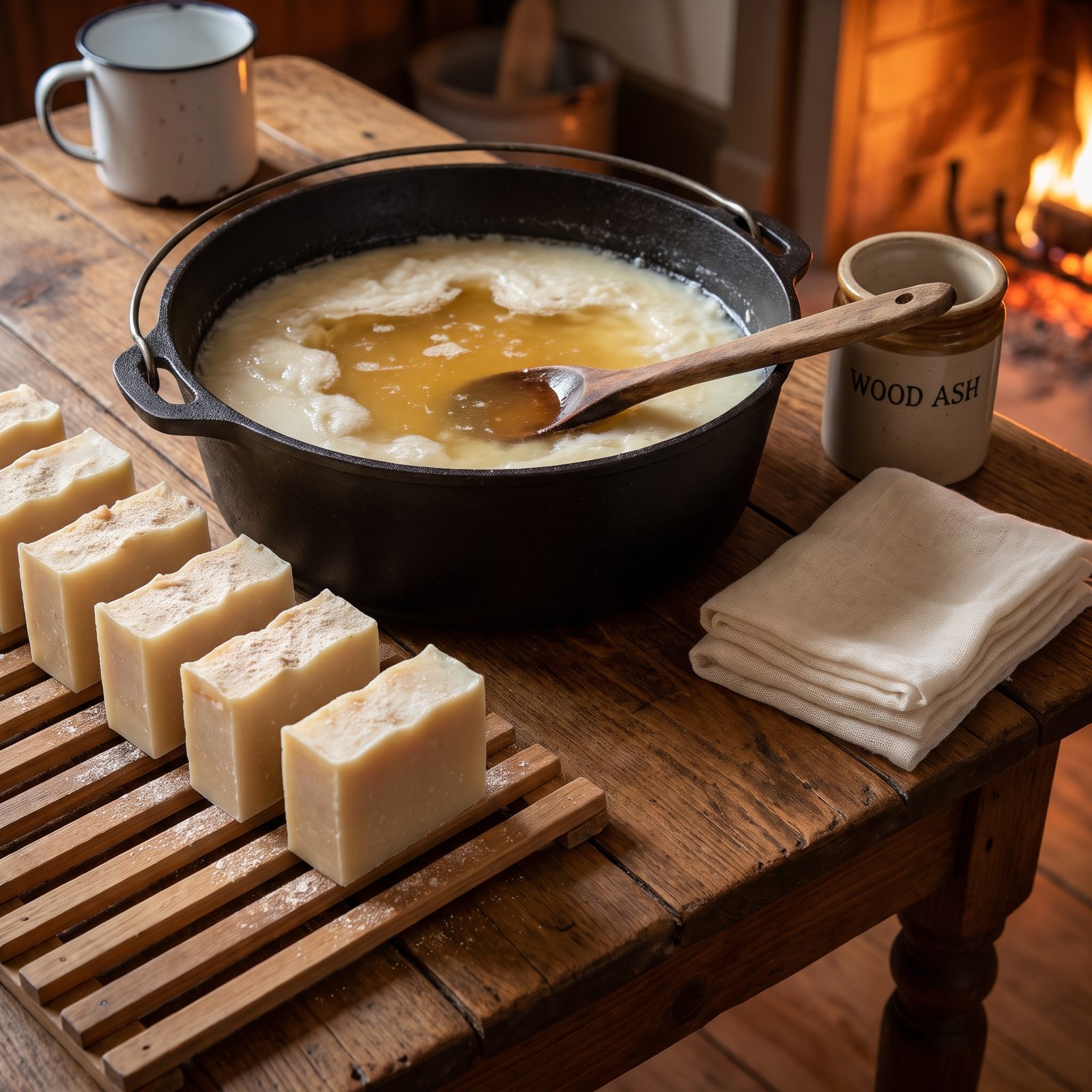
Nothing on a butchered animal went to waste, and the hard fat went straight into the rendering pot. Melt it low and slow, strain off the solids, and you’ve got tallow — shelf-stable for a year or more, good for cooking, candles, waterproofing boots, and the base for soap.
Soap is just fat and lye married by heat. The old-timers leached their lye out of hardwood ashes and tested its strength by floating an egg in it. Too weak and the soap never sets; too strong and it’ll take the hide off your hands. Modern lye is measured and safe, but the chemistry hasn’t changed a lick since the pioneers were stirring their kettles.
4. Baking Bread and Biscuits in a Dutch Oven Over Coals
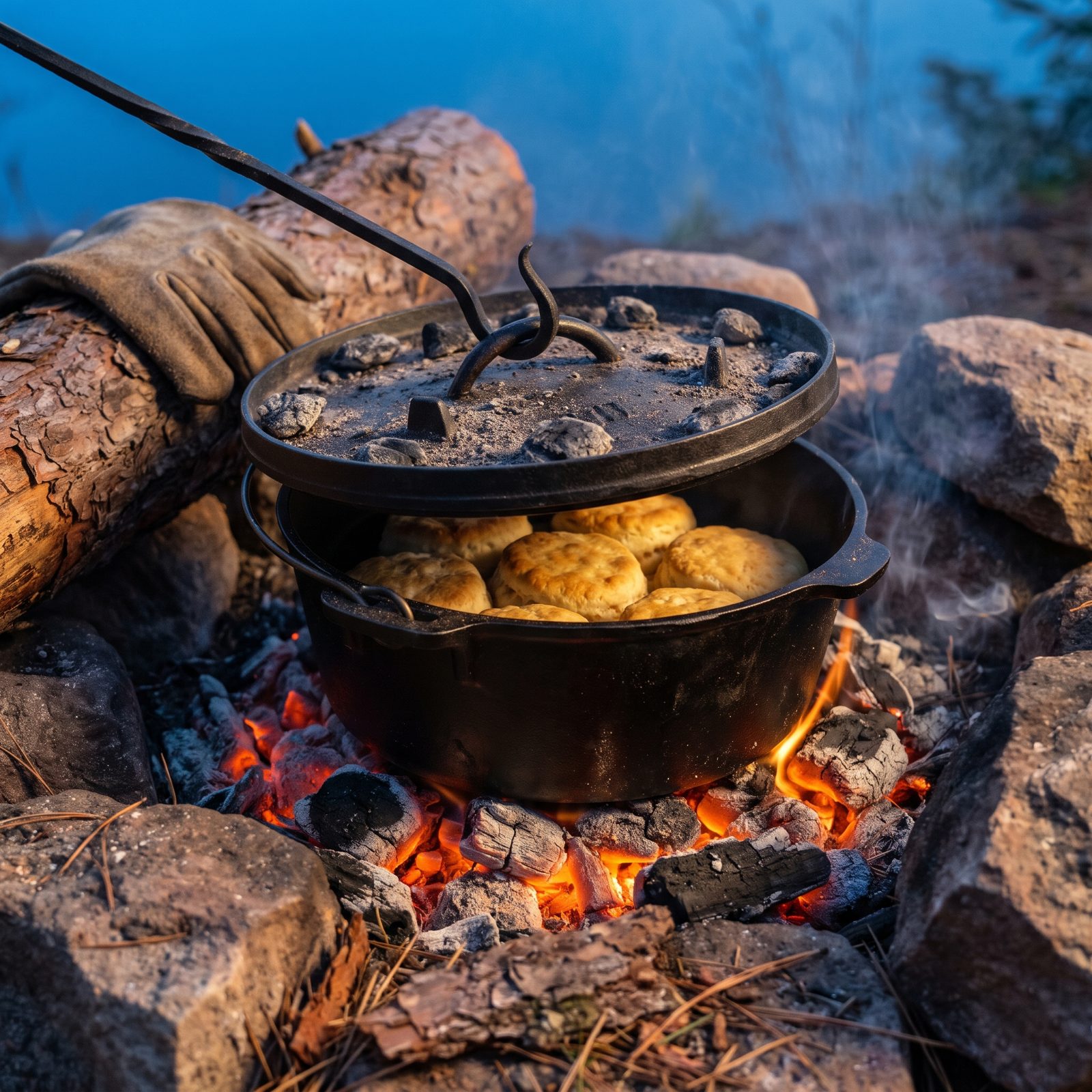
The secret to Dutch oven baking isn’t the recipe. It’s where you put the coals. You want a light ring of embers under the oven and a heavier layer on the lid, with more heat up top than down below so the biscuits bake through without scorching on the base. Rough guide for temperature: the number of briquettes matches the oven’s diameter in inches, plus a few on the lid and minus a few underneath.
Rotate the oven a third-turn every ten minutes, and spin the lid the other way. Fires have hot spots. Skip the rotation and half your loaf comes out raw while the other half turns to charcoal — I’ve eaten that loaf, and I don’t recommend it.
3. Reading the Coming Storm in How the Animals Act
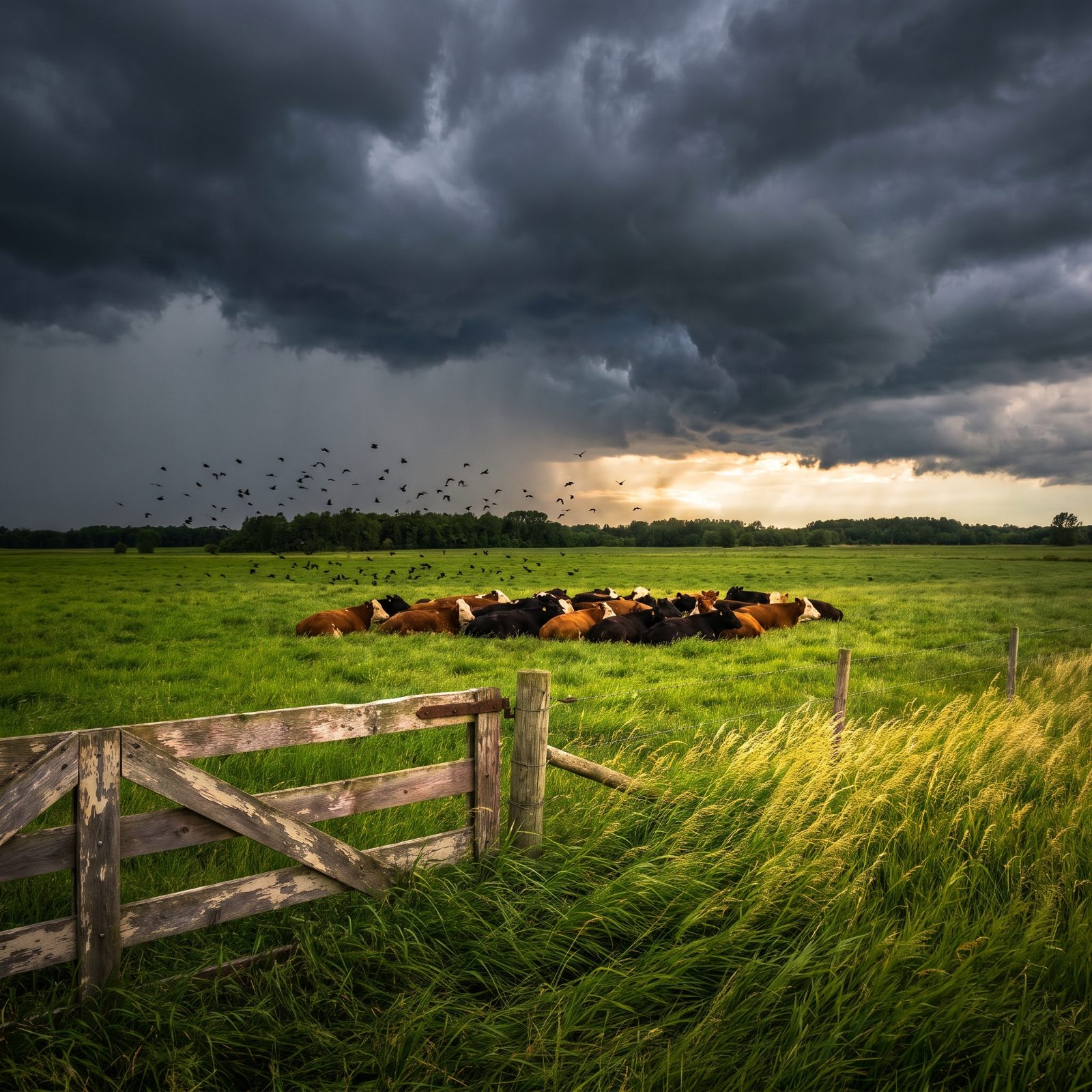
Cattle bunching up and lying down. Swallows skimming low to the ground. Bees hustling back to the hive on a day that looked fine an hour ago. The old-timers read these signs because the animals feel the barometric pressure dropping long before any person does.
There’s real truth under the folklore. Insects fly lower when falling pressure and rising humidity weigh down their wings, and the birds that eat them drop down to follow. Pine cones close their scales when moisture climbs. None of it is magic — it’s creatures tuned to the weather by a few million years, and we’ve mostly quit paying attention.
2. Mending and Patching Gear Instead of Buying New
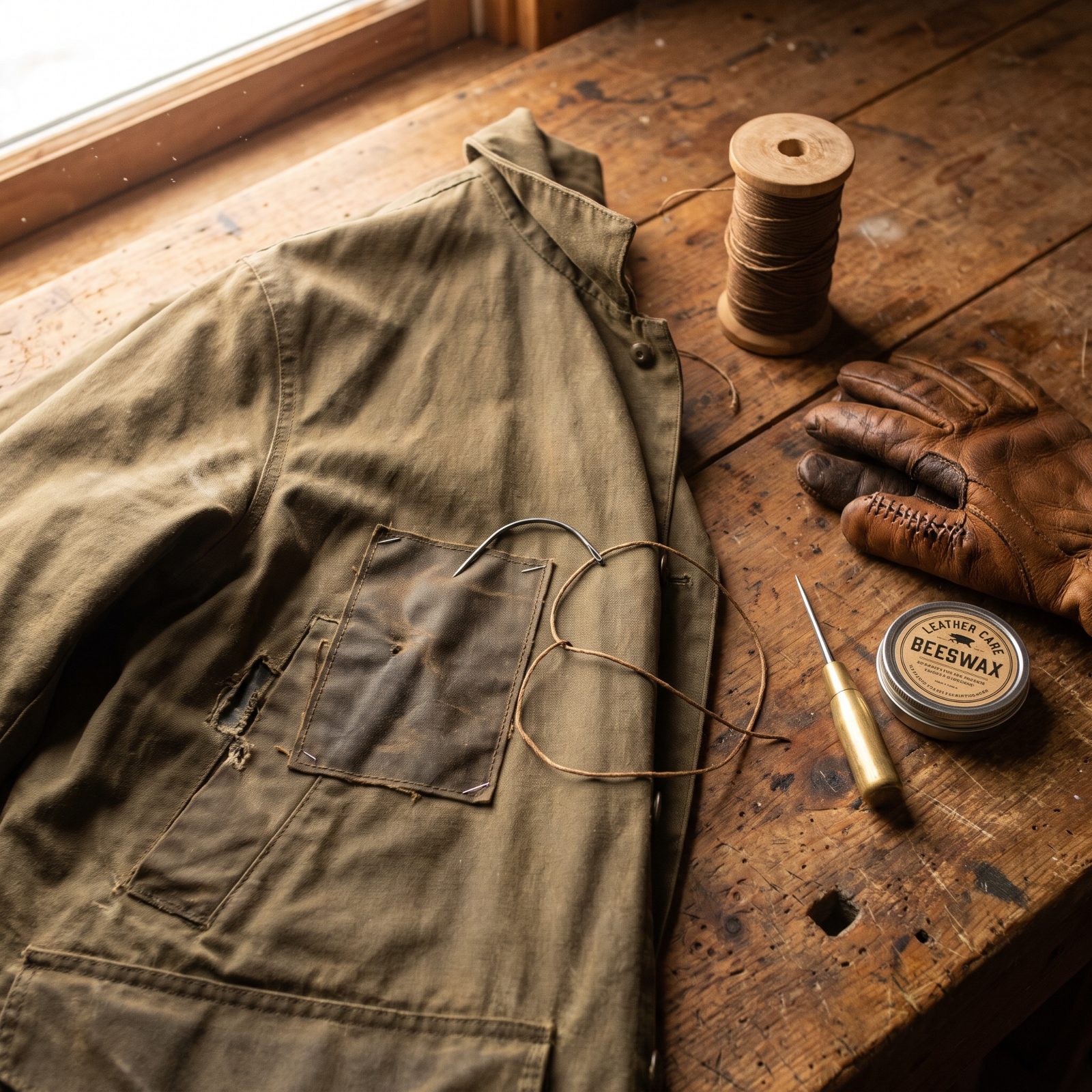
A waxed canvas coat can go forty years if you keep after the seams, and a good leather boot will take a resole half a dozen times. The old economy ran on one assumption: you fixed the thing you had, because the thing you had cost real money and the next one would too.
A few repairs worth knowing cold:
- A canvas patch sewn over a tear, not glued, with waxed thread that won’t rot.
- A sagging boot sole taken to a cobbler before the welt lets go, not after.
- A sprung tent zipper, which usually just needs the slider pinched back into line, not a whole new tent.
We’ve been trained to toss and reorder with two taps on a screen. But there’s a quiet satisfaction in a repair that holds, and no delivery truck has ever once matched it.
1. Blazing a Trail So You Can Find Your Way Back
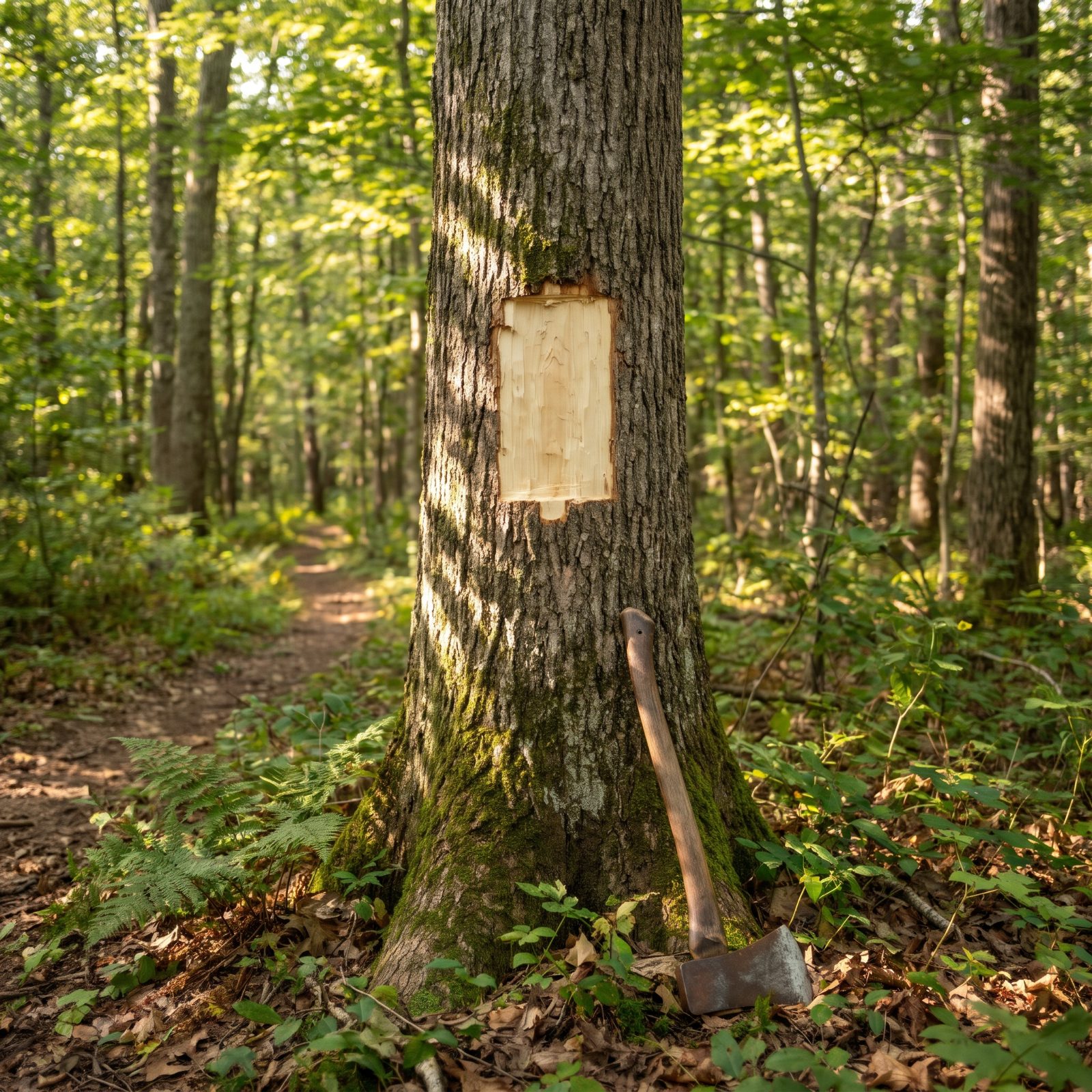
Before painted trail markers, you made your own. A blaze was a patch of bark shaved off a trunk at eye level with a hatchet, the pale wood showing bright against the dark. Cut one facing you and one facing back the way you came, and the trail reads in both directions. That second cut is the one beginners forget, and it’s the one that gets you home.
You don’t always need a hatchet. A rock cairn, a broken branch hung in a fork, an arrow of stones at a creek crossing — all of it says the same thing: someone passed here, and the way out is this way. Low-impact habits matter now, so lean on cairns and broken sticks over cutting live trees. Leave the woods close to how you found them. But know the old way too, because the day you need it, you’ll need it badly.