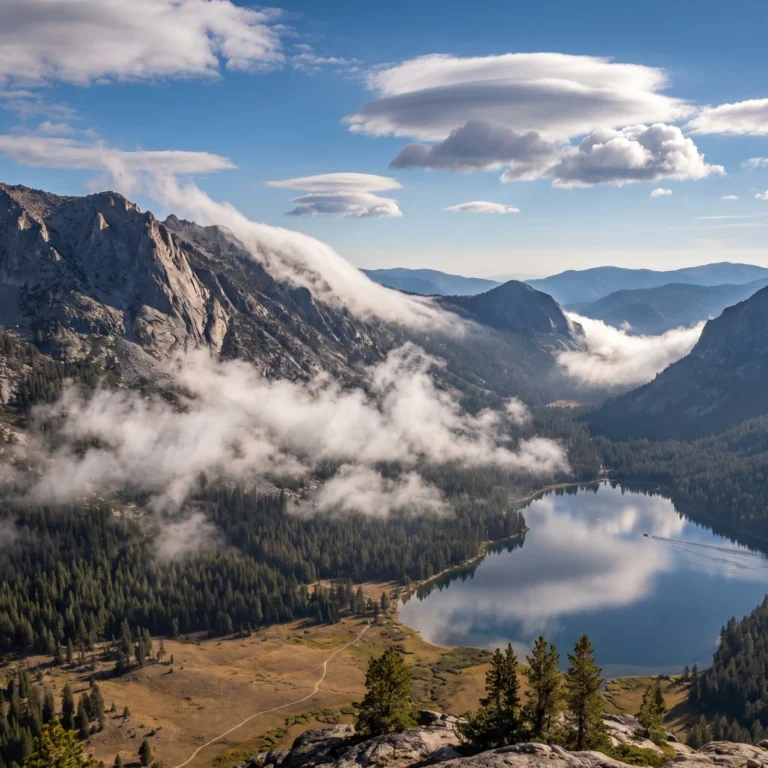
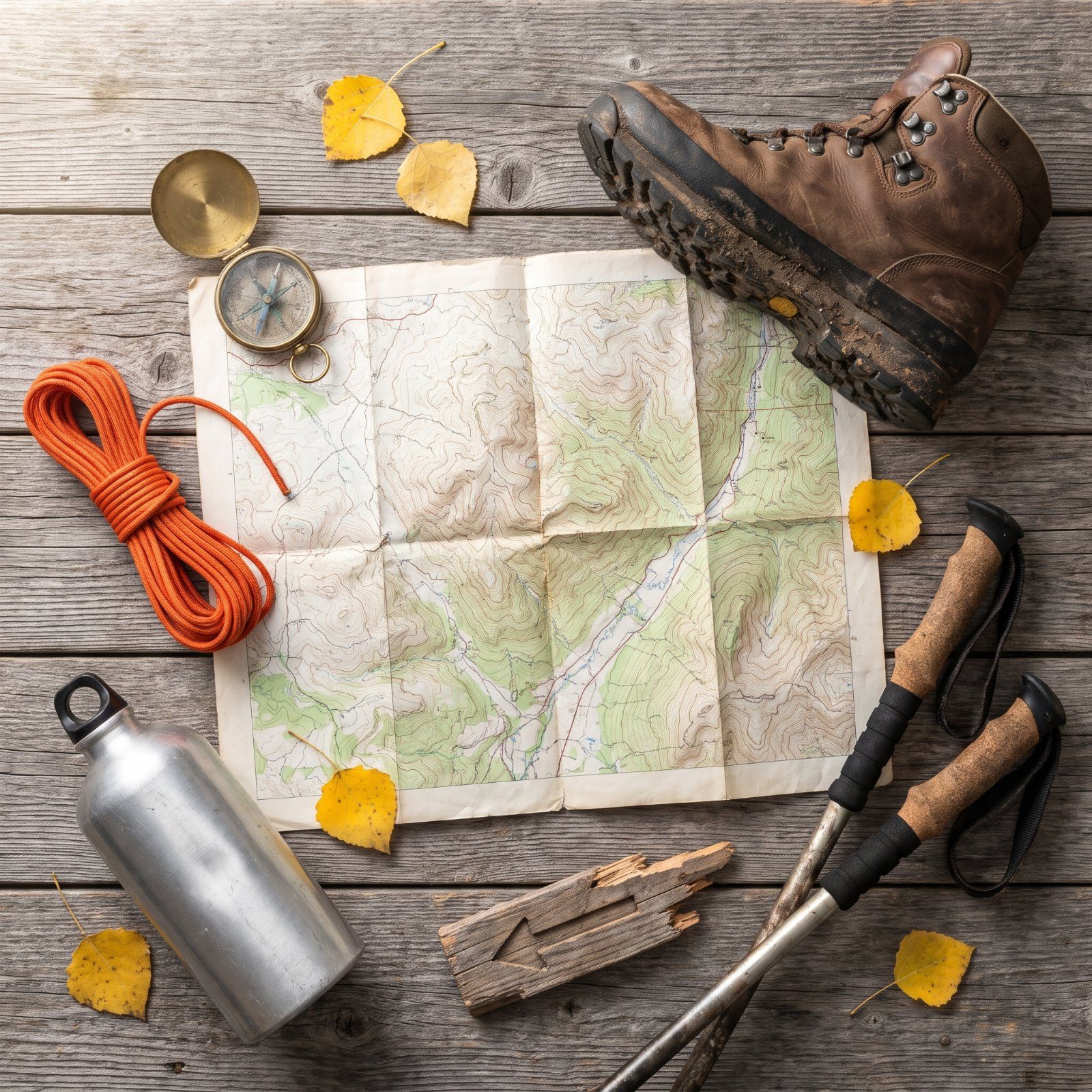
Rangers like to say that nobody plans to get rescued. They plan to be the exception. That line sticks, because it describes a lot more than hiking. The sign says the bridge is out and you figure it’s probably mostly there. The sky darkens and you decide the storm is somewhere else. We’ve all walked past a warning with a little voice behind our ribs saying something’s off, then silenced it with a reason that sounded good enough at the time.
Please note that some of the images in this article were created with the assistance of AI.
Turns out the same wiring that pushes us up a flooded trail keeps people in situations their friends saw coming a mile off. The brain hates turning back. It loves the story where everything works out. So here are the warnings hikers talk themselves out of, and why those exact excuses show up at the dinner table, on the first date, and three years into something that should have ended at month two.
13. You Treat “Trail Closed” Like It’s Just a Suggestion
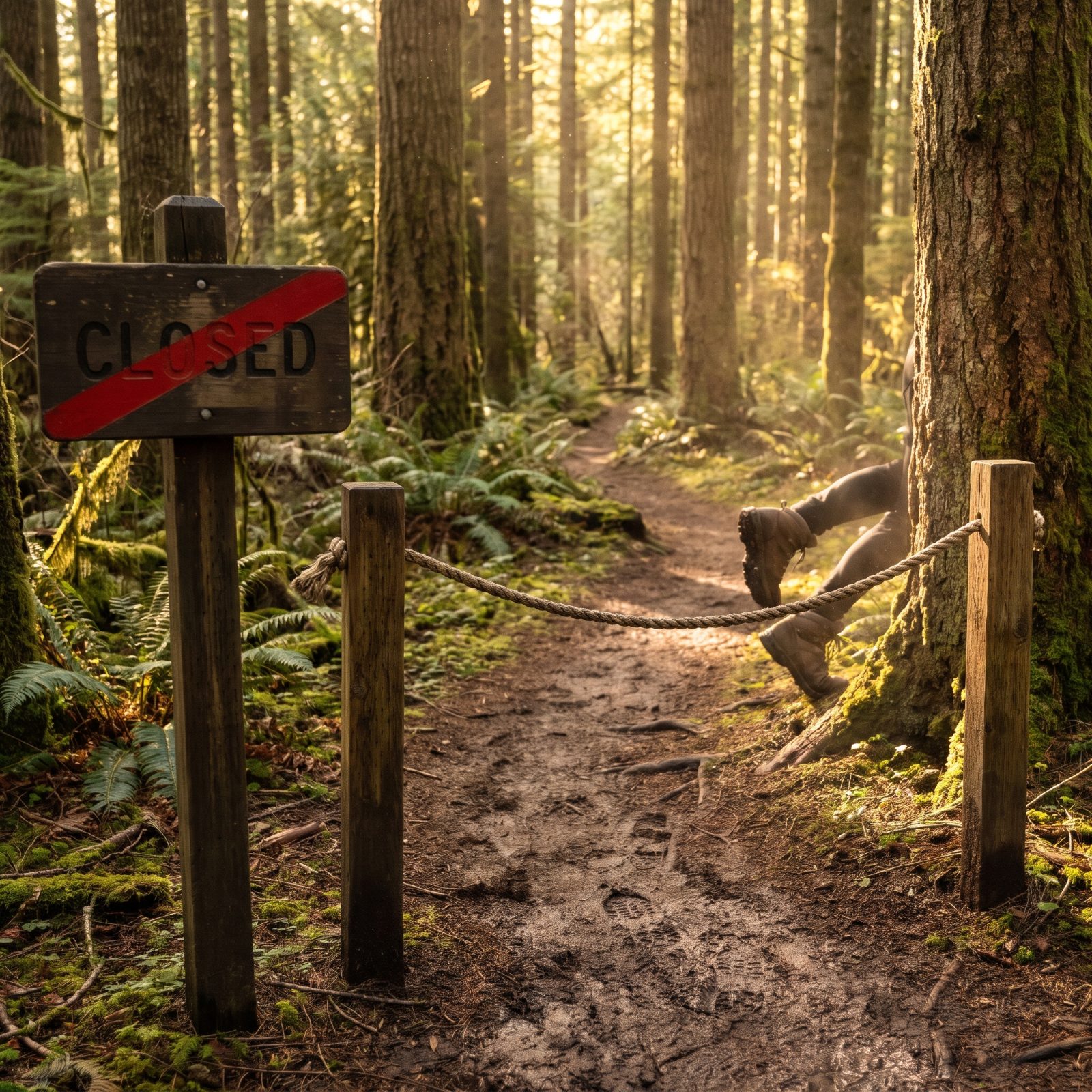
The sign says closed. You stand there doing the math — probably a washout they haven’t cleared yet, probably fine for someone who knows what they’re doing. And there are boot prints churned into the dirt right under the rope, plus somebody in hiking boots and black pants already scrambling past the tree on the far side, so somebody already made the call for you.
People make this exact move with a flaw they’ve decided not to see. The sign is right there. The temper, the vanishing texts, the way they talk about every ex. You read it, you note it, then you override it because you’ve already decided where you’re going. Optimism bias, doing its quiet work. The warning is for average people. You’re the exception.
Here’s what we forget: somebody had to physically walk out and shut that trail. Nobody does it for fun. Same with the red flag — nobody waves one for the entertainment.
12. The Sky Looks Fine, So You Ignore the Forecast
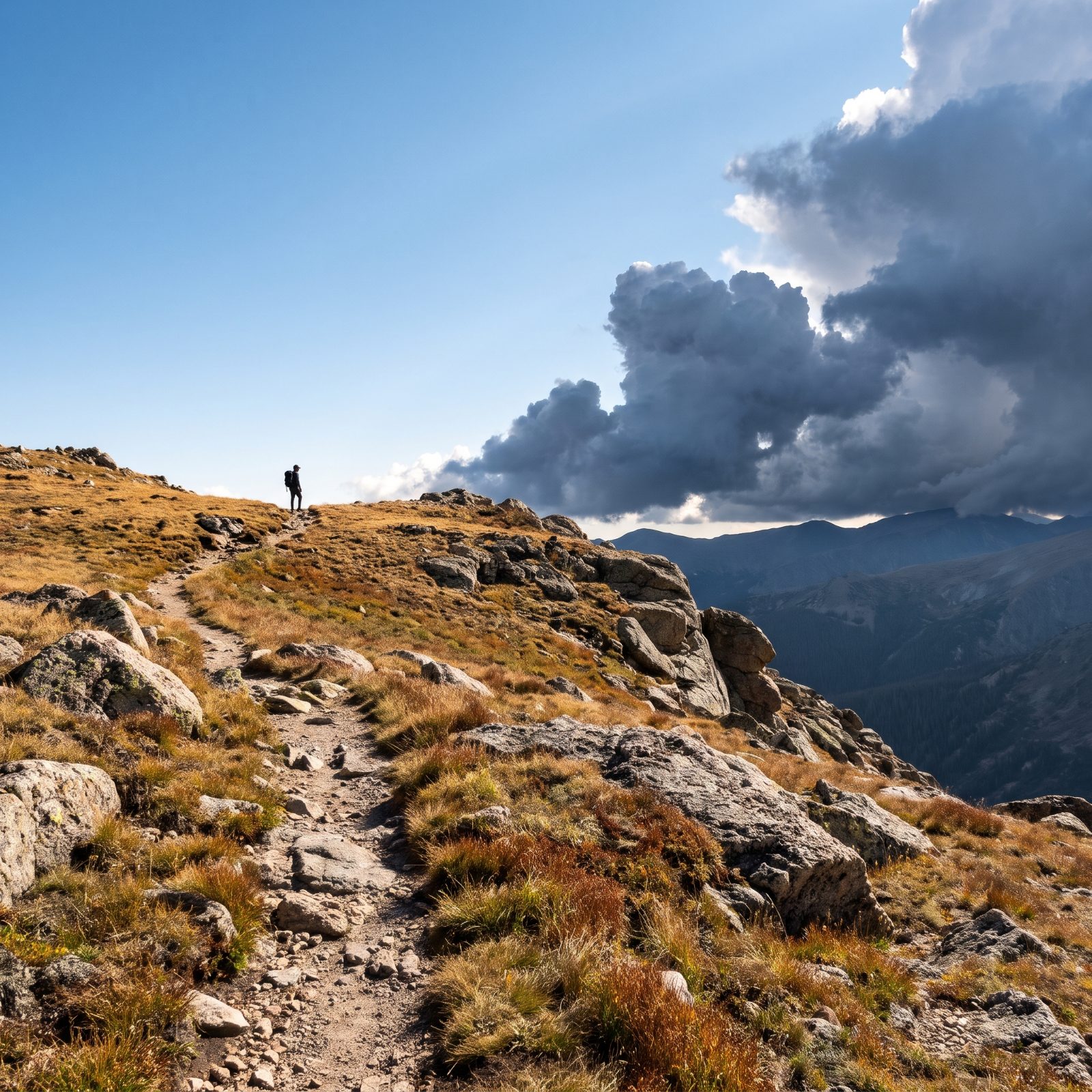
You step outside, tilt your head back, and the sky right over you is blue. Case closed. The weather app warned about afternoon storms, but your eyes say otherwise and you trust your eyes.
Here’s the trap. You’re weighing what you can see against a forecast you can’t feel yet, and present evidence always wins. Same reason a honeymoon stretch convinces people to ignore the pattern their friends keep pointing to. The good day is real and standing right here. The storm is abstract and somewhere else.
A clear morning promises nothing. On exposed ridges the sky can turn in the time it takes to eat a sandwich, and forecasters aren’t guessing for the fun of it. When the whole mountain and someone who loves you are saying the same thing, that’s not two warnings. That’s one warning twice.
11. Everyone Ahead Keeps Walking, So You Follow Them
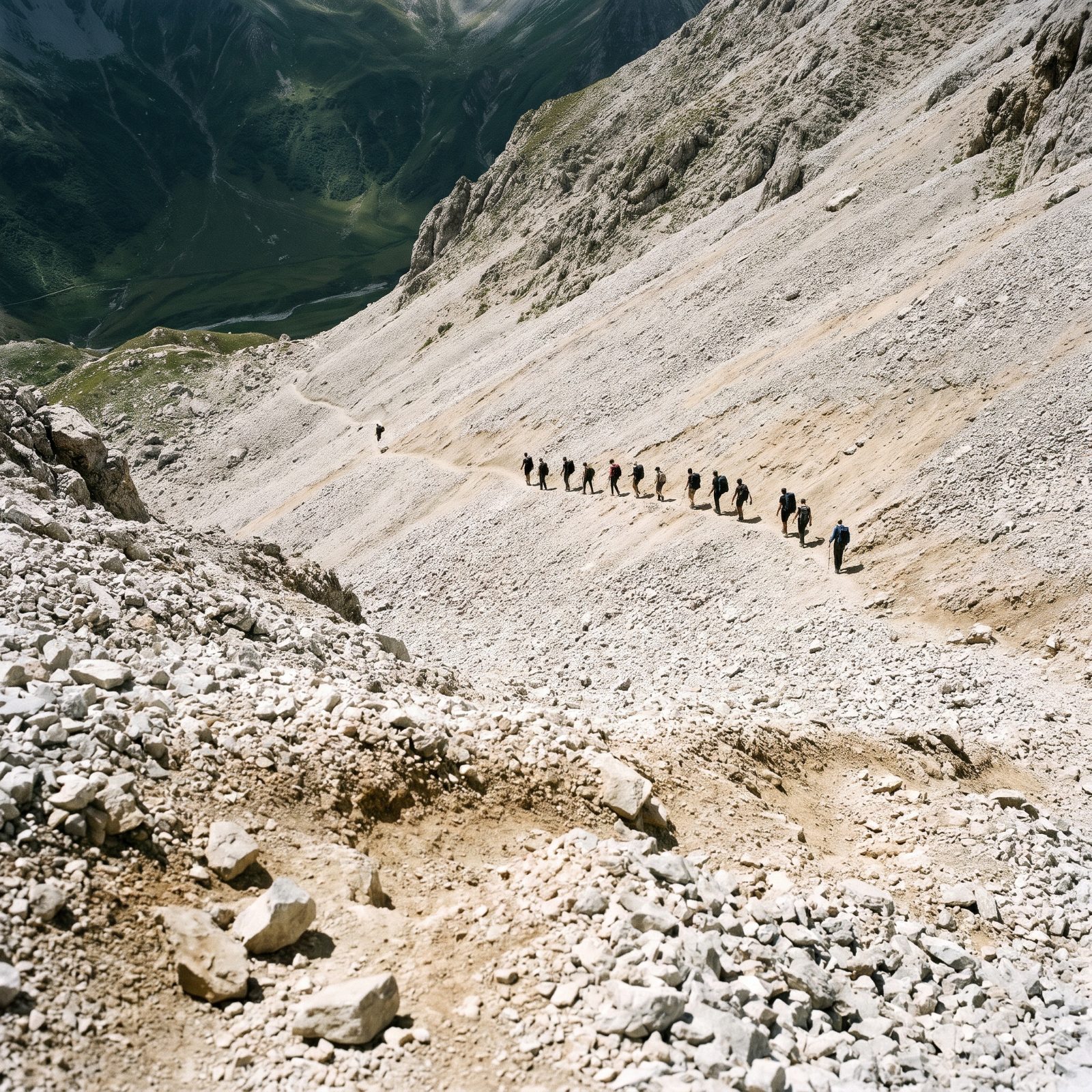
Nobody wants to be the one who stops the line.
The footing gets dicey — loose rock, a drop you’d rather not think about. But the people ahead keep moving, so it must be fine, and the people behind are waiting, so you keep moving too. Everyone’s doing the thing because everyone’s doing the thing.
Social proof. A powerful little lie. We read a crowd’s calm as information when often it’s just everyone else looking at the crowd. It’s how a friend group can watch someone get treated badly and all stay quiet, each one assuming the others would’ve said something if it were really bad.
Those strangers ahead have their own skill, their own luck, their own bad judgment. You’re borrowing confidence from people you’ve never met.
10. You’ve Hiked Six Miles, So Turning Back Feels Impossible
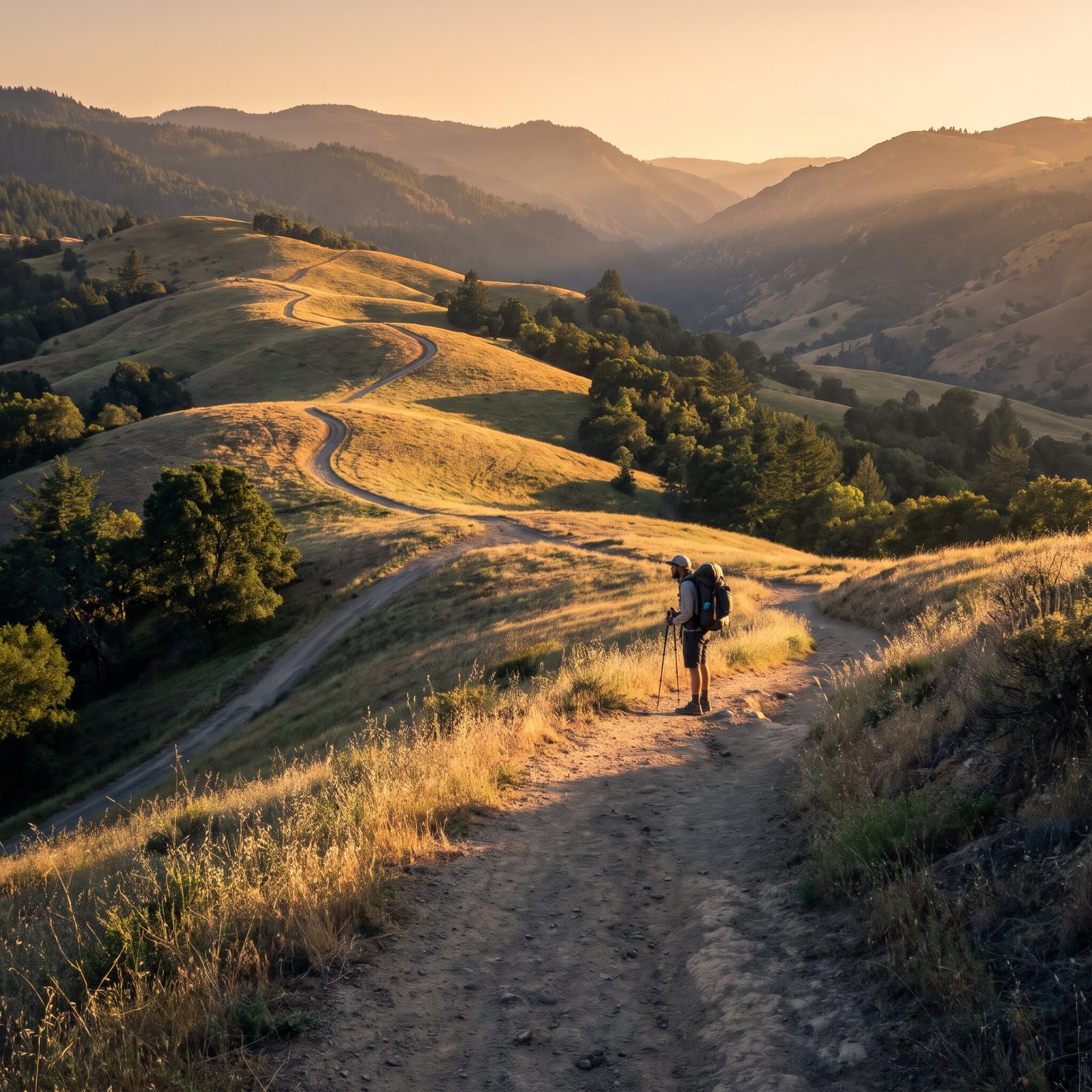
You’re six miles in, legs cooked, and something tells you to turn around. But six miles. You’ve spent them. Going back means admitting they didn’t buy you anything, and your brain flatly refuses that trade.
Meet the sunk-cost fallacy, maybe the single most expensive bug in human decision-making. We keep throwing good effort after bad because quitting feels like losing what we already spent. It’s why people stay years too long in something that stopped working, counting the time invested as a reason to invest more.
Plenty of us have done this on a trail and regretted it in the dark. The miles behind you are gone either way. The only question that matters is about what’s ahead. Those six miles don’t owe you a summit, and they can’t be un-walked by walking seven more.
The distance you already covered is not a down payment on finishing. It’s just distance.
9. One Convenient Trail Blaze Confirms You’re Definitely Not Lost
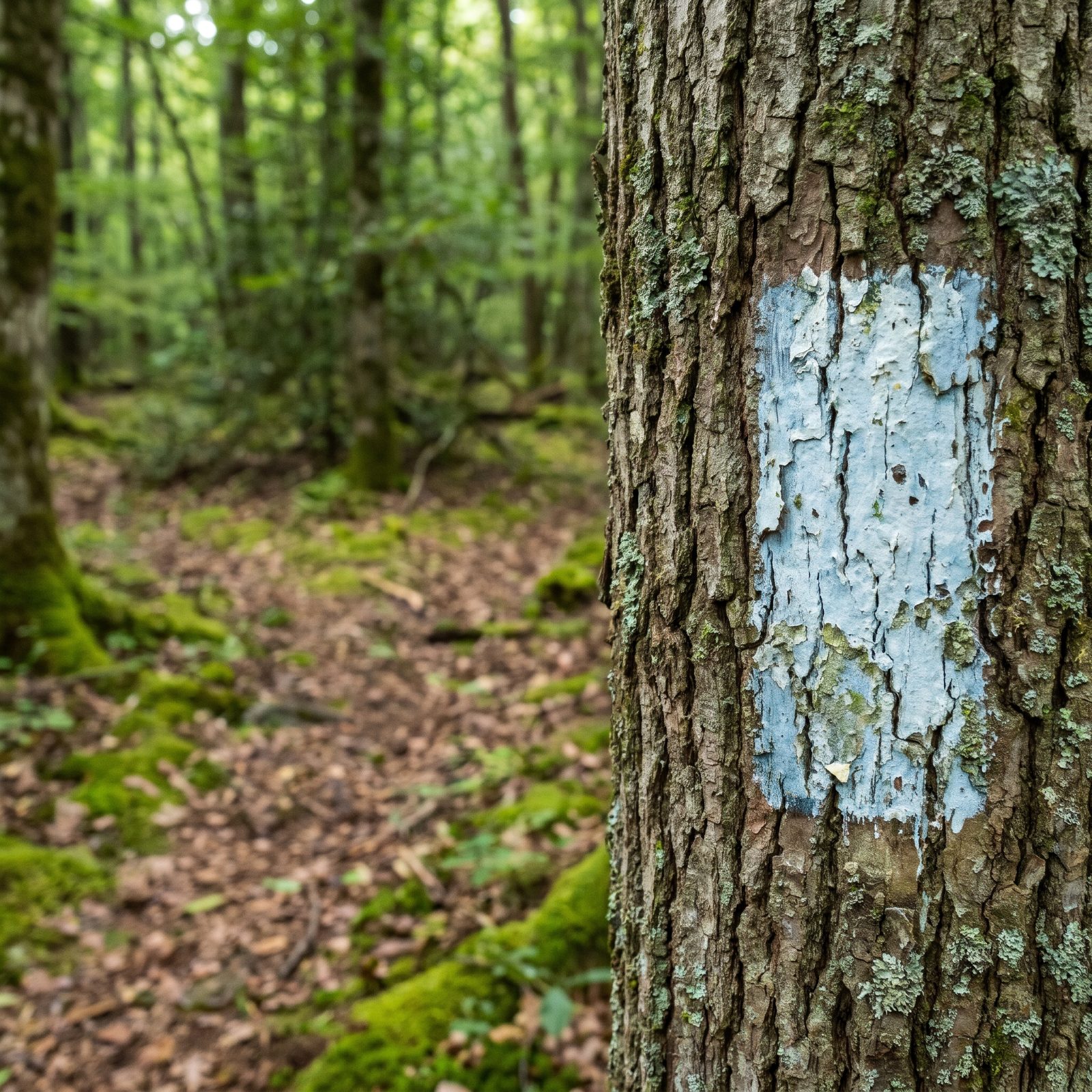
You’ve had a nagging feeling you’re off-route for twenty minutes. Then you spot one faded blaze on a tree and your whole body relaxes. See? On track. The doubt vanishes.
Confirmation bias in its purest form. You weren’t hunting for the truth about where you are — you were hunting for a reason to stop worrying, and one scrap of evidence was enough because it told you what you wanted to hear. People do the same with a partner’s thin excuse. One plausible explanation and the whole uneasy feeling gets filed away.
But here’s the catch. That single blaze could be from a connector trail, an old route, or a different system entirely. The feeling that something was wrong was data. You just traded a lot of data for one comforting data point. Reassurance and accuracy aren’t the same thing, and the brain will grab reassurance every time if you let it.
8. Nothing Happened Last Time, So the Bear Spray Stays Home
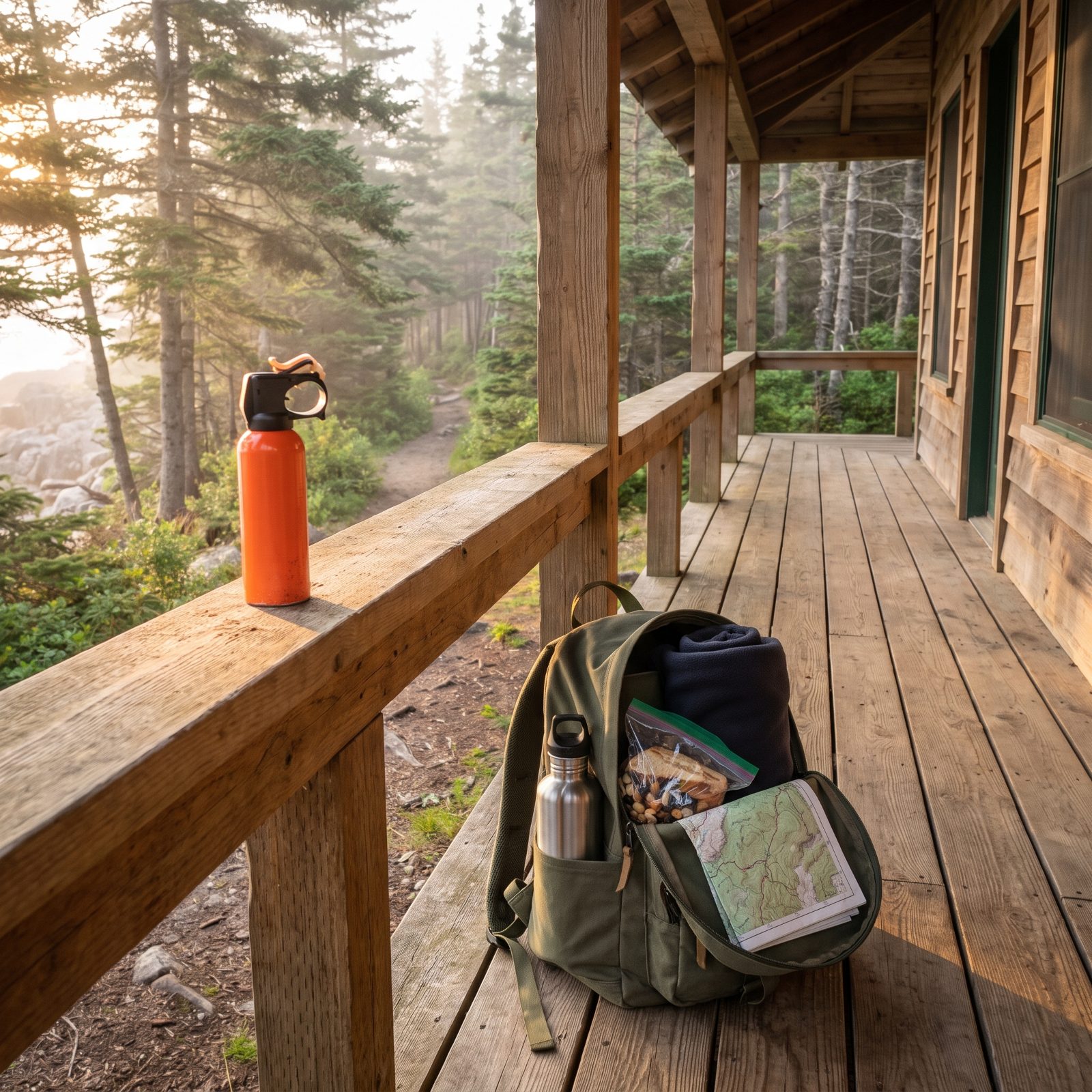
You carried the bear spray for three seasons and never once reached for it. So this morning you leave it on the shelf, because clearly the risk was overblown. Nothing happened. Nothing’s going to happen.
Normalcy bias. Every uneventful trip quietly rewrites your sense of the danger until the precaution feels silly and the odds feel safe. Exactly how people drop their guard around a risk that never bit them yet. The absence of disaster gets mistaken for the absence of possibility.
A precaution exists for the day you need it and didn’t bring it. Every uneventful hike isn’t evidence you were fine. It’s evidence you got away with it.
7. You Hear Thunder but Keep Bargaining With the Summit
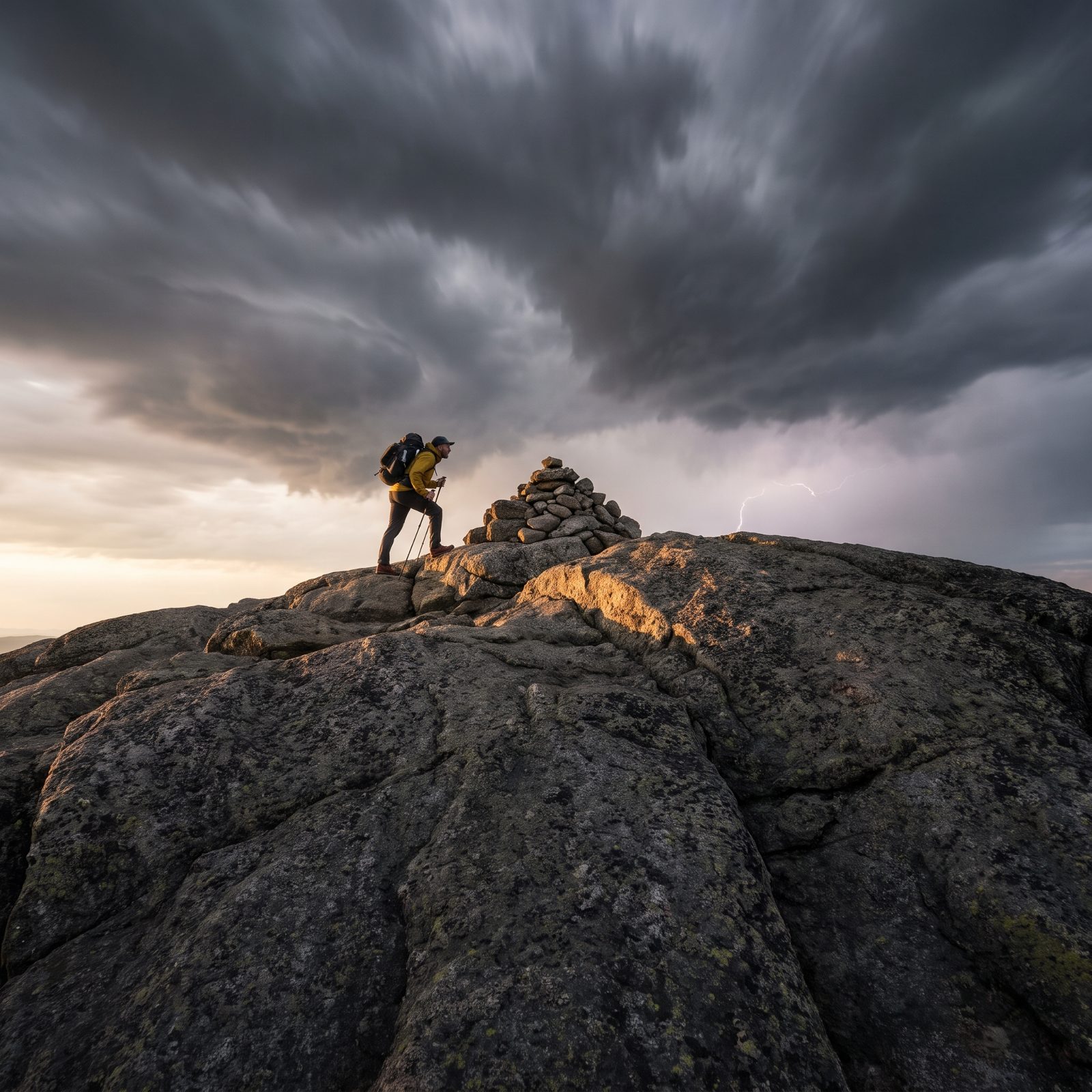
Thunder cracks somewhere close. You’re fifteen minutes from the top, so you start negotiating. Just this last push. One more stretch and I’ll turn. The deal keeps moving as the summit keeps pulling.
Goal fixation with a little bargaining mixed in, and it’s the same tape people play near the end of something they should walk away from. One more try. One more talk. If I just get there, it’ll all have been worth it. The closer the goal, the harder it is to let go, even as the stakes climb.
Thunder on an exposed peak is not a negotiating partner. You’re the tallest thing up there for a reason that doesn’t end well. The summit will sit in the exact same place next weekend. You want to be around to see it.
6. New Gear Somehow Makes You Feel Immune to Bad Decisions
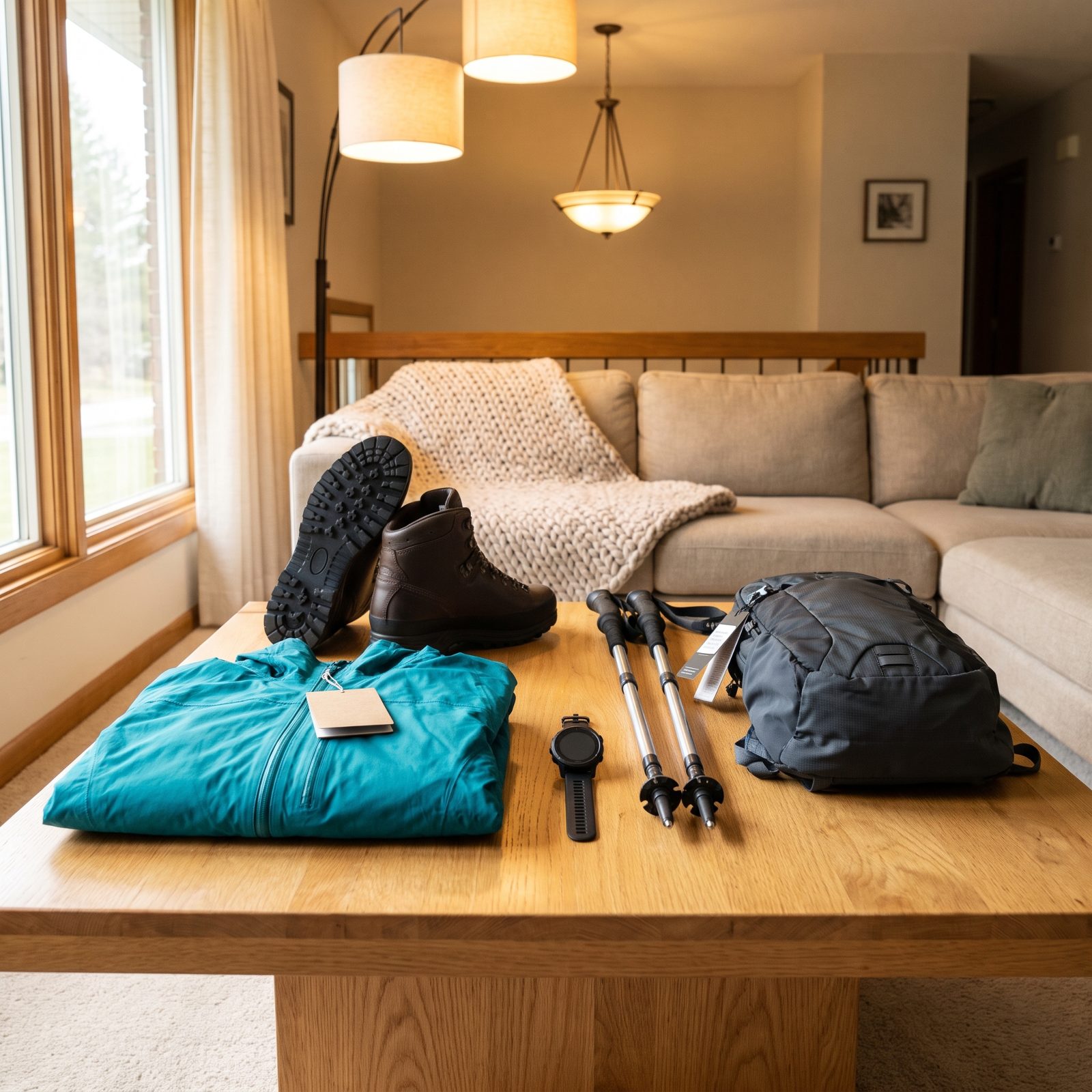
The boots cost a fortune and they feel like armor.
Fresh kit does something strange to the brain. New boots, a bombproof shell, a watch that tracks everything. Suddenly a route you’d have respected last month feels manageable, because you’ve got the stuff now.
Risk compensation — the well-documented habit of taking more chances precisely because we feel protected. Better gear, bolder choices, and the two cancel out. People run a version of this with a relationship, too. A strong start convinces them they can handle warning signs they’d normally sprint away from, because look how good the foundation is.
Gear doesn’t make decisions for you. The watch can’t read the weather, the boots can’t judge the river crossing, and the fancy shell won’t stop you from being somewhere you shouldn’t be. Equipment stretches your margin a little. It doesn’t replace the part of you that’s supposed to say no. The most dangerous hiker on the mountain is often the best-equipped one.
5. You Call Dehydration “Just Feeling a Little Tired”
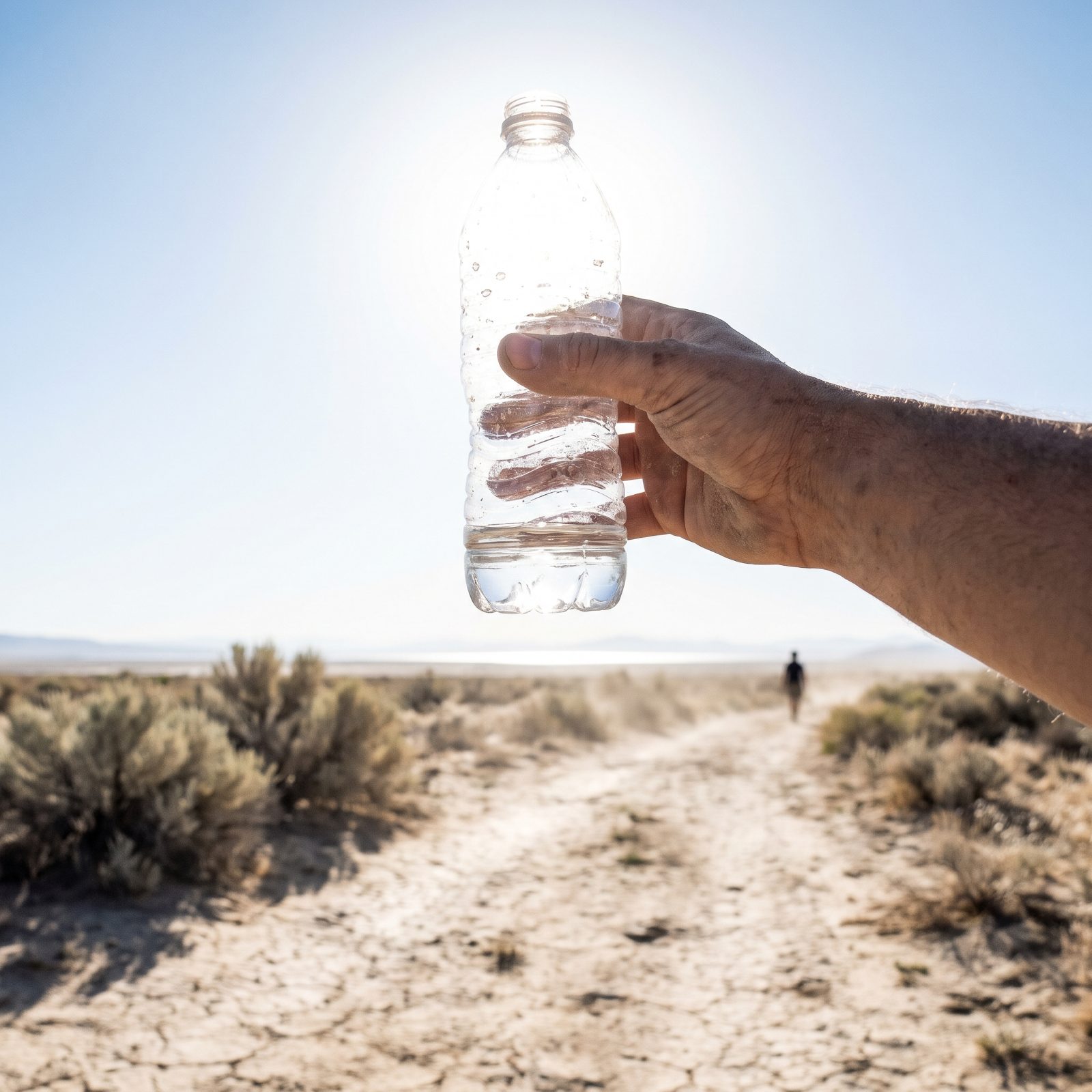
The headache you’ve named a tension thing. The fuzzy focus you’ve blamed on a bad sleep. The drag in your legs you call just tired. Each symptom gets its own innocent story, and the real cause never gets assembled.
This is how we talk ourselves out of a clear picture, one relabel at a time. Minimizing. We shrink each piece until none of them seem to connect to anything serious. It’s the same mental move behind explaining away a partner’s behavior one incident at a time, never letting the incidents sit in the same room together.
Put the symptoms together and they stop being a bad mood and start being a condition with a name. The relabeling isn’t lying. It’s self-protection that protects the wrong thing.
4. You Hide the Blister So Nobody Suggests Turning Around
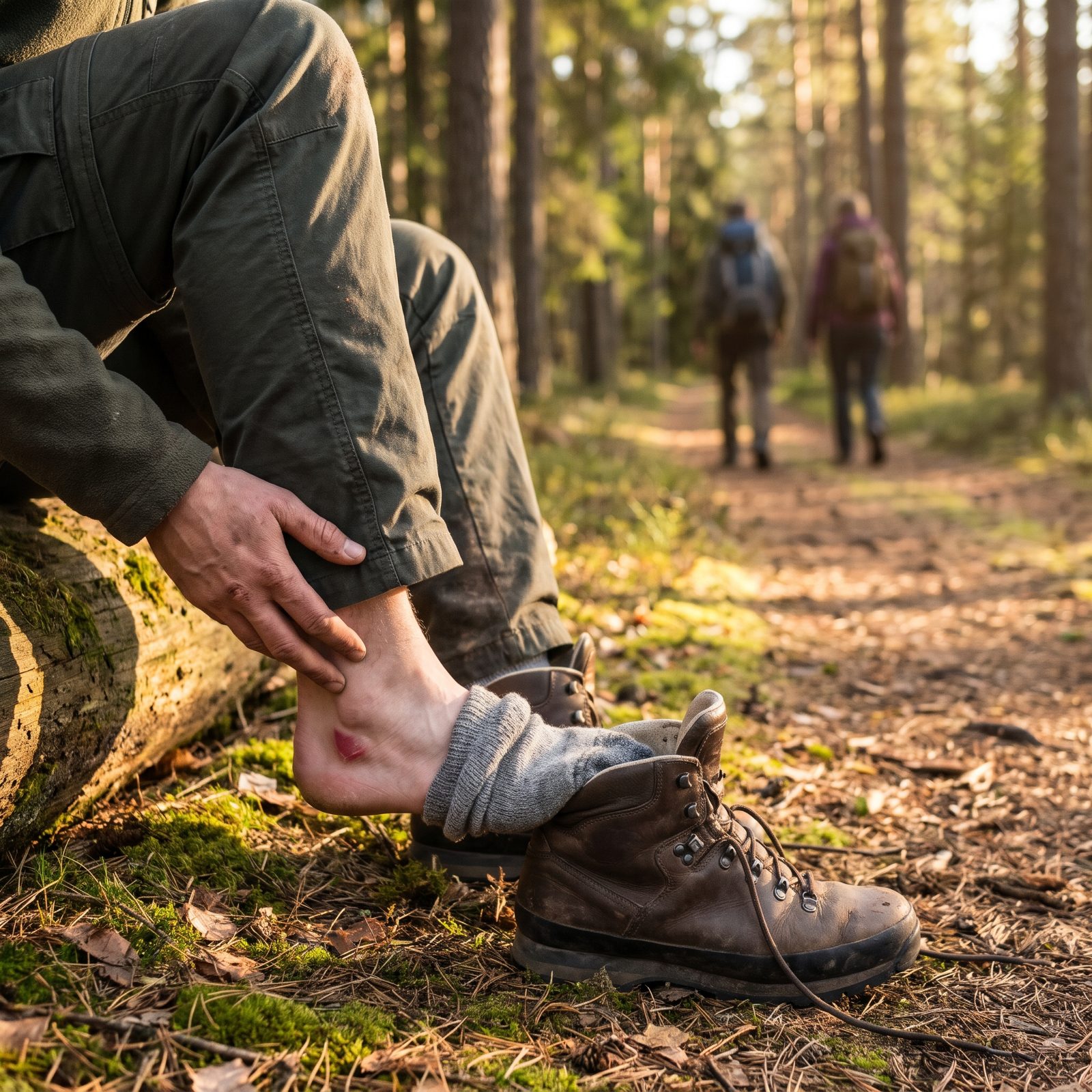
The hot spot has turned into an angry red blister, so you sit on a log, pull off your boot and peel your sock down while the others walk on ahead. But you don’t call out to them. Mention it and someone might suggest heading back, and you don’t want to be the reason the day ends short. So you tend to it quietly at the edge of the trail and plan to catch up before anyone asks.
Impression management, quietly overriding good sense all the time. We’d rather suffer a real problem than look like the weak link or the complainer. It’s the same silence that keeps people from naming a problem out loud, because saying it makes it real and invites a conversation they’d rather dodge.
A blister caught early is a two-minute fix with some tape. A blister hidden for three miles can end the hike and the next three too. The thing you won’t mention doesn’t go away because you didn’t mention it. It just gets worse in private, which is the most human and most costly place for a problem to live.
3. Your Turnaround Time Stays Flexible Until Sunset Isn’t
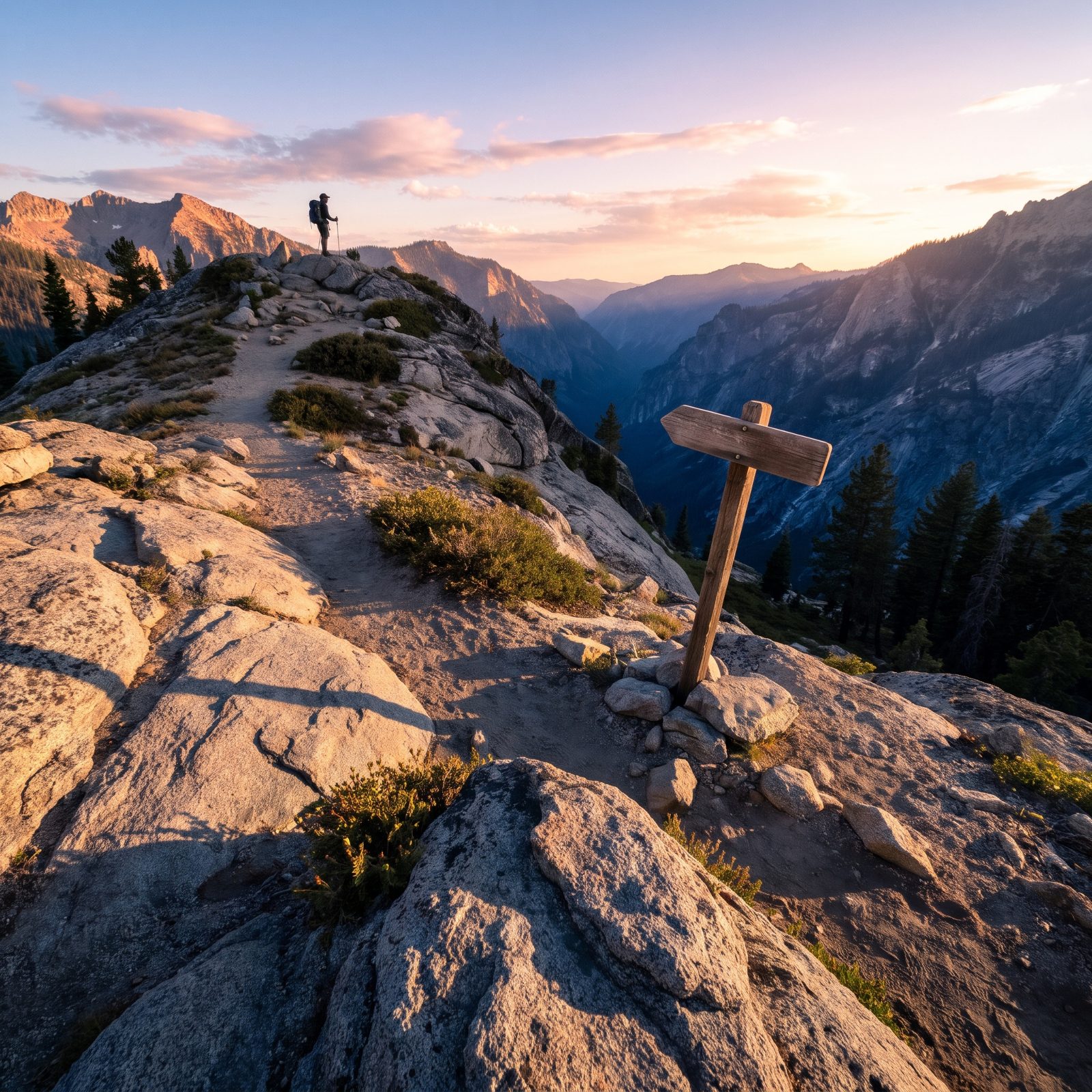
You told yourself you’d turn around at two o’clock. Two comes and the summit looks close, so you give it another thirty minutes, and the thirty becomes an hour. Now the light is going orange and you’re doing math you should have done back at the car.
It’s the same bargaining that keeps people in a relationship three years past the exit. You set a line, he crosses it, and instead of leaving you just move the line. That deadline that was supposed to protect you turns into a suggestion, then a joke, then a thing you quietly stopped mentioning.
Psychologists call it the planning fallacy, with a dose of plain optimism stirred in. We judge how long the rest will take by how we feel right now, not by the evidence piling up in front of us. On the trail, daylight doesn’t negotiate. Patience doesn’t either — it just fakes it longer.
2. You Ignore Three Small Hazards Because None Seems Decisive
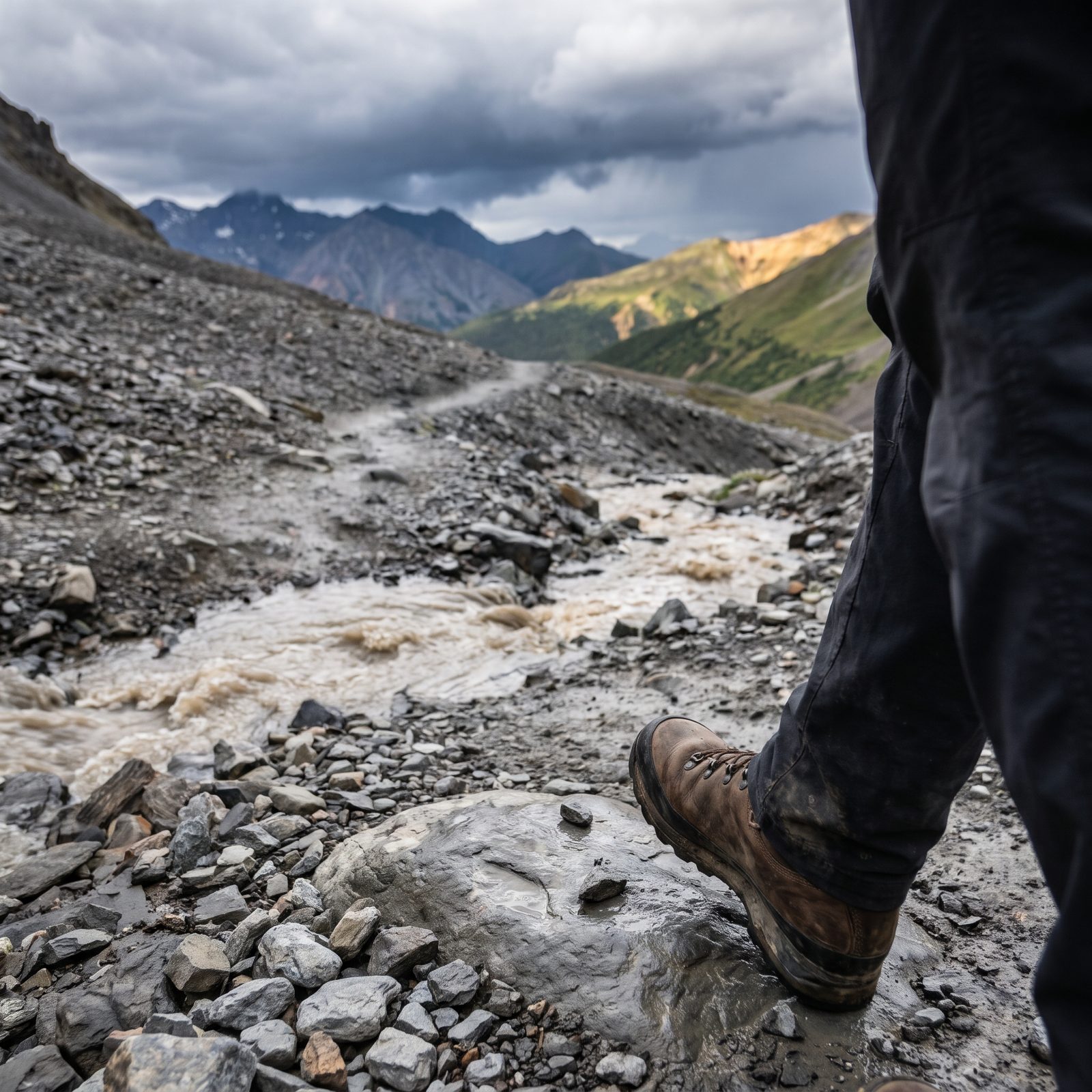
The sky darkened a little. Not enough to stop. Your knee started talking on the descent, but you can push through that. The stream you crossed earlier ran higher than you expected, and you got across fine anyway. Three small things, none of them a reason to quit on its own.
That’s how most trail accidents actually happen — not one dramatic mistake but a stack of minor ones, each too small to overrule the plan. Search and rescue teams call it the accident chain, and every link alone looks survivable.
The same quiet math excuses a bad partner. He’s a little cold. A little dismissive. Forgot again. None of it is grounds for a dramatic exit, so you absorb each one and keep walking. Danger was never going to announce itself with a single decisive flag. It builds.
1. You Blame the Map Before Admitting You Missed the Junction
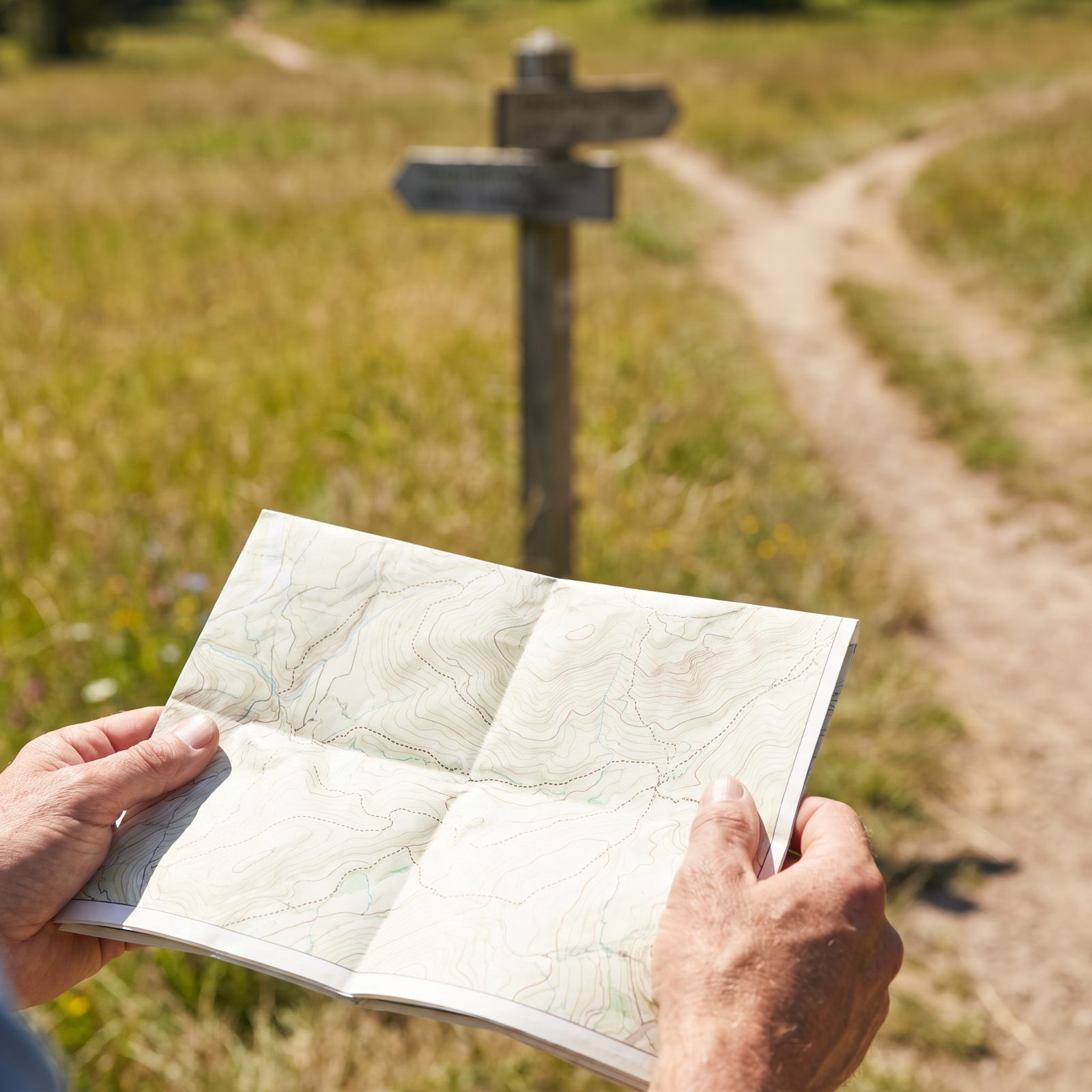
You’re off trail and you know it. The first thing out of your mouth isn’t “I missed the junction” — it’s “this map is garbage.” The blaze was faded. The sign pointed wrong. The GPS lied. Anything but the plain fact that you blew past the fork half a mile back because you were daydreaming about lunch.
Call it the self-serving bias, the last little fort we hold before accountability catches up. When things go well, we did that. When things go wrong, the map did that. In a relationship it sounds identical: the problem is his schedule, her family, the timing, the stress — never the choice we kept making, over and over, eyes open.
The frustrating gift of getting lost is that it’s fixable the moment you own it. Admit you missed the junction and you can backtrack to it. Blame the map and you’ll wander in the same wrong direction, certain the terrain is at fault.
The map can’t backtrack for you. Only the person holding it can.